A crochet hairbrush drying stand cover can add a handmade touch to your bathroom while making an ordinary brush rack look more attractive. These 18 inspiration ideas explore everything from ribbed pedestal covers and decorative petal collars to removable post wraps, delicate lace panels, and modern frame accents. The collection includes warm terracotta, blush pink, cobalt blue, lavender, and rich burgundy designs, offering options for cottage-style, minimalist, and contemporary bathrooms.
The important thing is to decorate the stand without interfering with how the hairbrush dries. Wet bristles need airflow, and any water draining from a freshly cleaned brush should stay away from the crochet. These concepts focus on covering the stand’s dry exterior surfaces rather than the brushes themselves. You can compare different cover shapes, attachment methods, removable sections, and cleaning considerations before choosing a design that suits your existing stand.
These are AI-generated crochet design visualizations for inspiration, not photographs of tested handmade pieces or step-by-step patterns.
Quick Design Selection Guide
- For a round pedestal stand: Crochet Terracotta Ribbed Pedestal Cover adds a simple decorative band around the base.
- For an A-frame drying rack: Crochet Cobalt Lattice A-Frame Cover and Crochet Chocolate Diamond-Trellis Leg Covers decorate the outer legs.
- For a softer floral appearance: Crochet Blush Petal Base Collar and Crochet Butter-Yellow Daisy Base Skirt introduce flat flower-inspired details.
- For easy removal: Crochet Rust Buttoned Post Wrap and Crochet Marigold Snap-On Base Band use visible closures.
- For wall-mounted stands: Crochet Teal Peg-Rail Side Trim covers only unused sections of the mounting rail.
- For larger brush racks: Crochet Peach Modular Front-Panel Cover creates three separate decorative sections.
1. Crochet Terracotta Ribbed Pedestal Cover
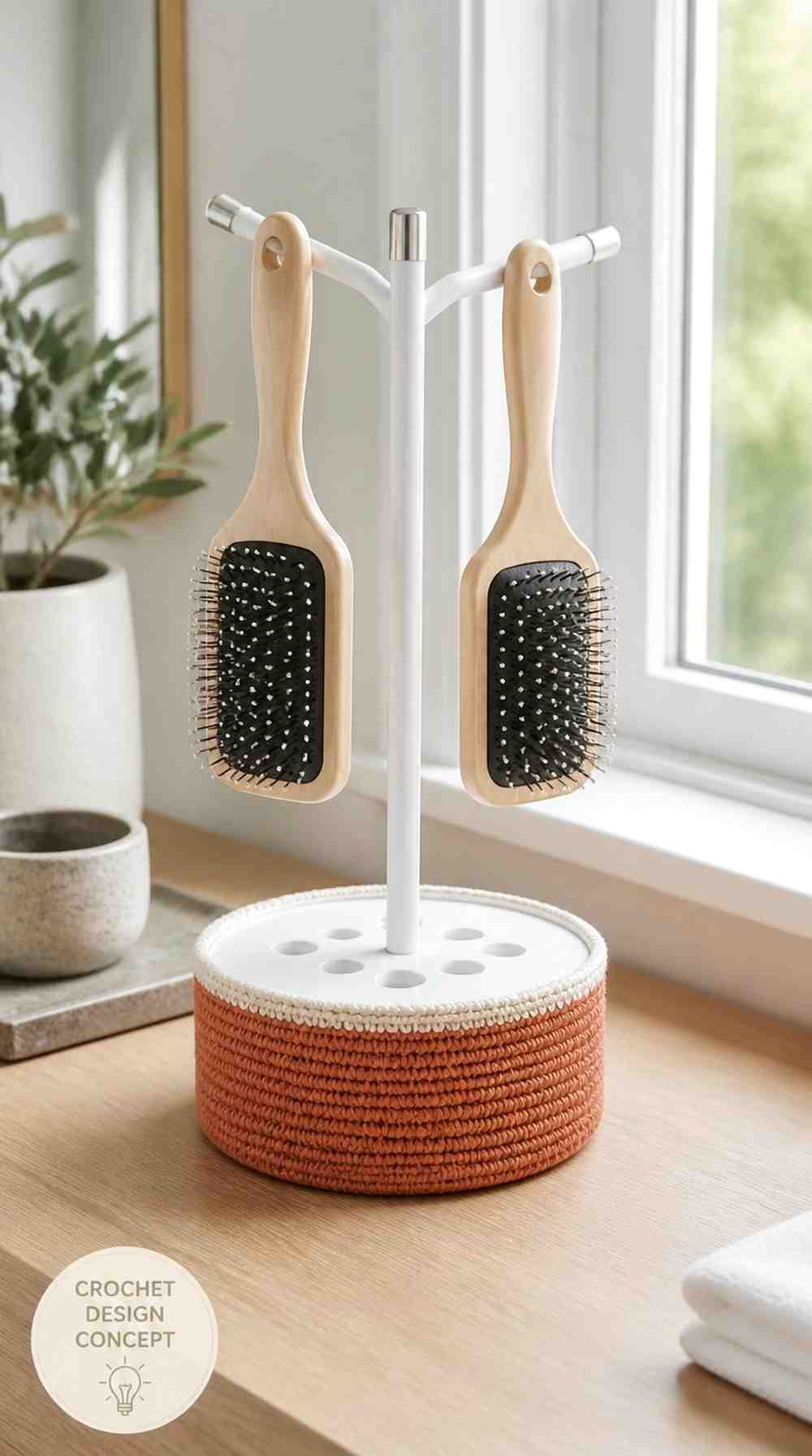
Warm terracotta crochet wraps around the vertical outer wall of a round white-metal drying-stand base. Closely worked horizontal ribs give the band a tidy, slightly raised texture, while narrow cream edging finishes its upper edge. The metal post and two hanging arms remain uncovered.
This concept gives a simple brush stand a softer appearance without changing its basic structure. Because the crochet sits around the base instead of the upper supports, the two paddle brushes can hang freely with their bristles pointing downward.
- Base Fit: Measure the circumference and height of the weighted base’s outer wall, allowing the crochet band to sit neatly without slipping over its top.
- Ribbed Texture: Horizontal raised rows create a defined decorative surface, but the back join should remain flat enough for easy removal.
- Drying Clearance: Keep the base’s upper surface and any drainage area uncovered, preventing the yarn from becoming part of the water-collection area.
2. Crochet Cobalt Lattice A-Frame Cover
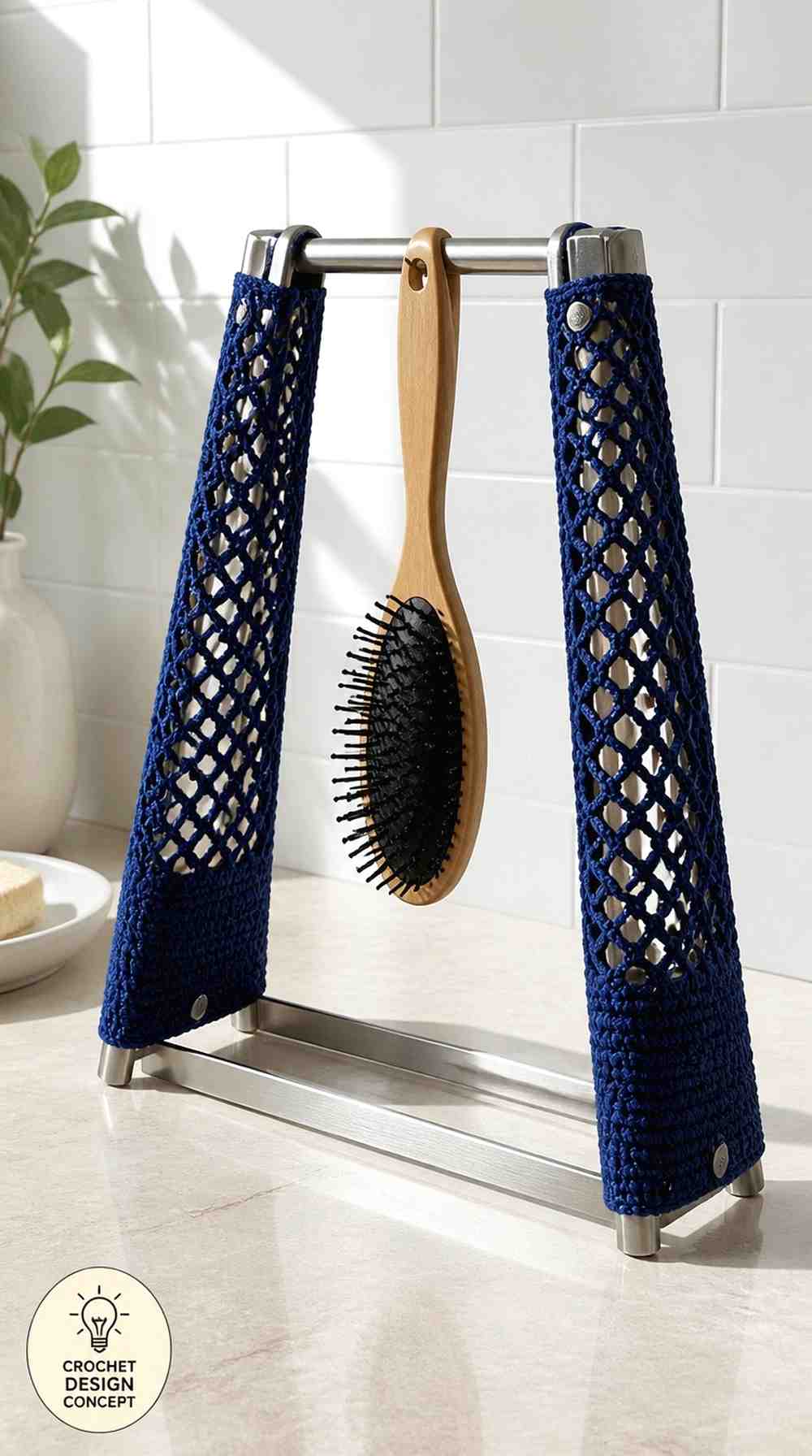
Cobalt-blue crochet gives the sloping legs of this brushed-steel A-frame stand a brighter appearance. Two slim sleeves feature orderly diamond-shaped openings and dense navy borders, while the upper crossbar remains exposed. A single oval paddle brush hangs freely between the covered legs.
The open lattice makes the covers look lighter than solid crochet panels. However, these sleeves are decorative exterior pieces; they should not change the position of the brush or obstruct the metal joints that keep the stand stable.
- Leg Measurements: Measure each sloping leg independently, especially if the frame narrows near its upper joint.
- Lattice Openings: Keep the diamond openings consistent and the fastening seams secure so the sleeves do not twist around the metal supports.
- Open Center: Leave the entire brush-hanging space unobstructed, including enough clearance below the bristles for air circulation.
3. Crochet Blush Petal Base Collar
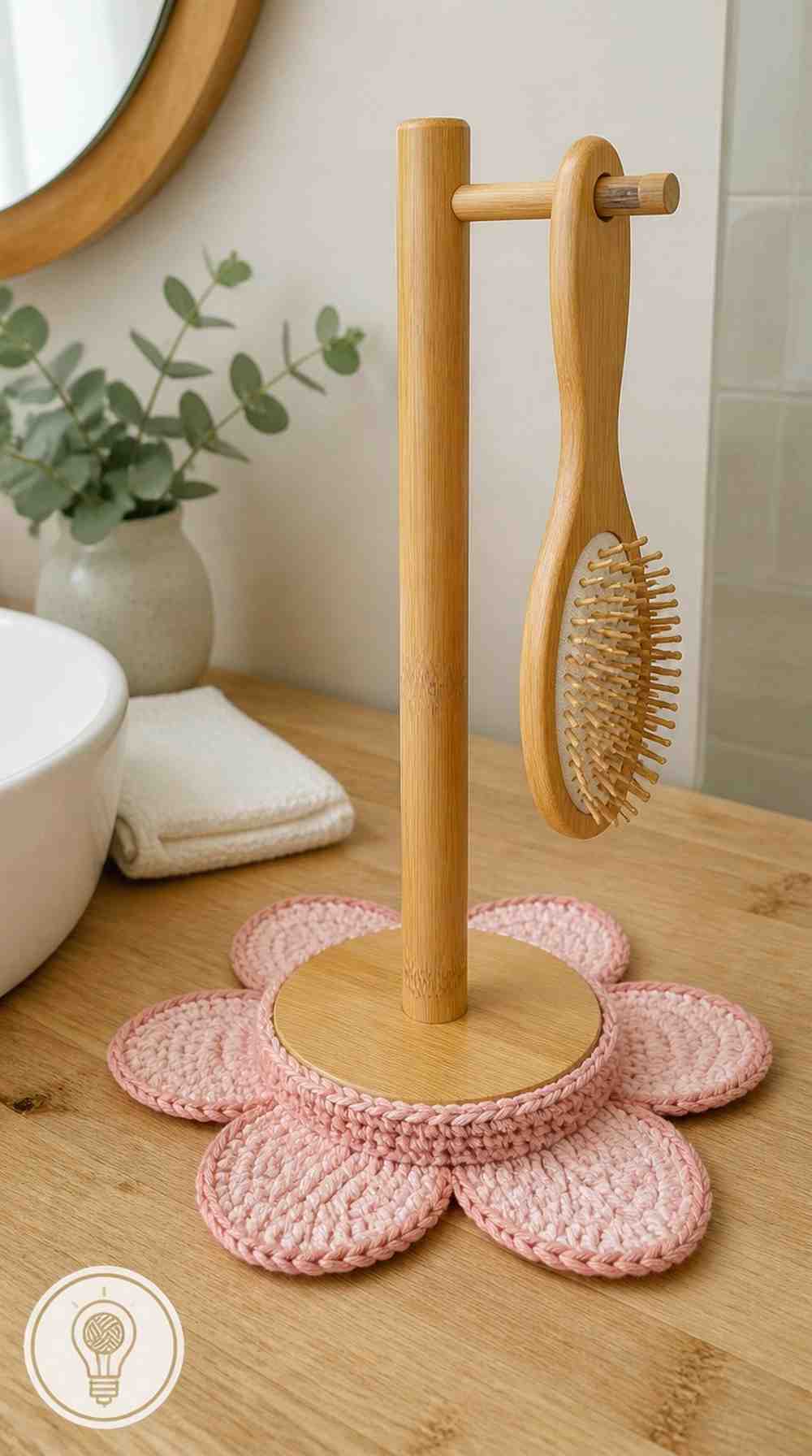
Six rounded blush-pink crochet petals spread outward from a fitted collar surrounding the broad base of a bamboo hairbrush drying stand. Dusty-rose borders define the individual petals, while the wooden upright and hanging peg remain fully visible.
The flat flower shape turns the base into a small decorative feature without surrounding the hairbrush itself. This style would suit a light-colored bathroom vanity, particularly where a bamboo stand already brings natural warmth to the space.
- Petal Arrangement: Keep all six petals evenly spaced so the collar lies flat rather than pulling upward around the wooden base.
- Bamboo Clearance: Fit the central collar around the outer base without trapping water against the wood or restricting access to the stand.
- Decorative Footprint: The petals extend beyond the original base, so allow enough counter space to prevent them from being crushed by nearby containers.
4. Crochet Mustard Checkerboard Rack Cover
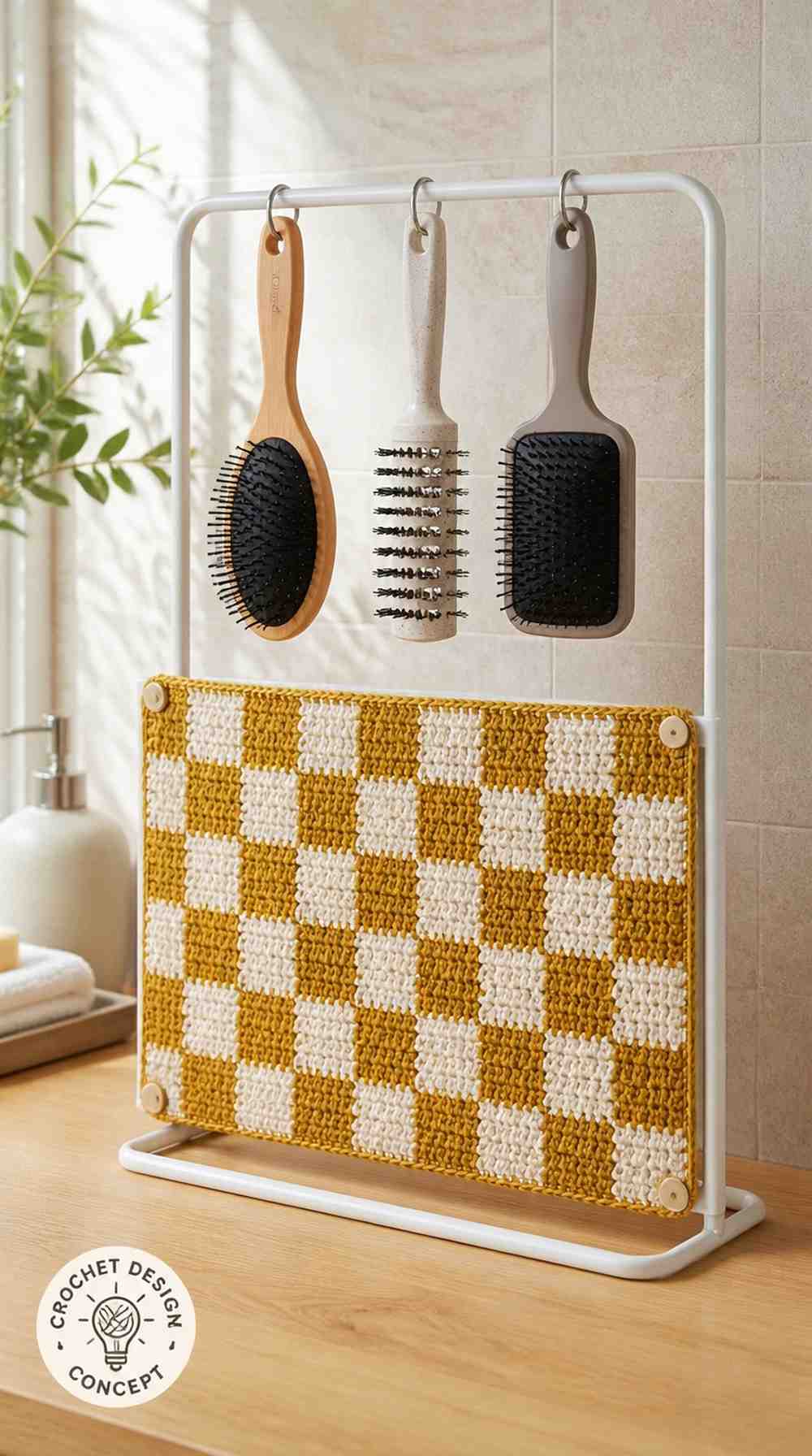
Mustard-yellow and ivory crochet form a checkerboard panel across the outward-facing lower back plate of a white-metal drying rack. Four short fastening tabs hold the panel at its corners, while the upper rail supports three different hairbrushes.
The checked pattern gives this design a cheerful, slightly retro appearance. It also makes a broad metal panel less visually plain, without adding fabric around the brushes or their hanging points.
- Color-Block Alignment: Plan the checkerboard rows around the actual panel dimensions to avoid awkward partial squares along the edges.
- Corner Fastenings: Use the four attachment points to keep the crochet flat against the rigid backing rather than allowing it to sag.
- Rear-Panel Access: Ensure the cover can be removed without dismantling the brush rail or disturbing the stand’s structural connections.
5. Crochet Plum Twin-Panel Stand Covers
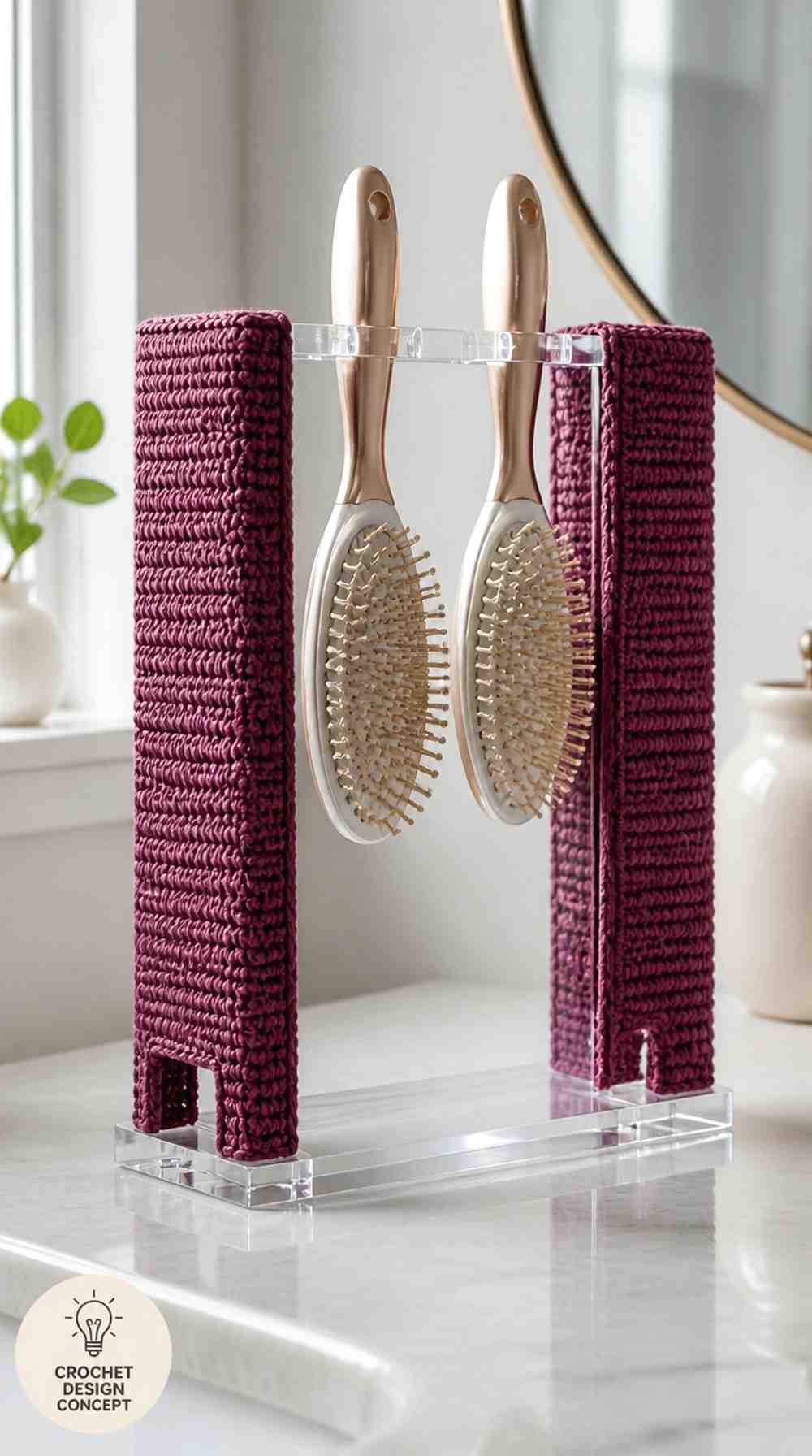
Two plum-purple crochet sleeves cover the outer upright supports of a transparent acrylic hairbrush drying stand. Deep-mauve edging follows the vertical sides, while closely worked horizontal rows add texture to the panels.
The clear middle section remains exposed, creating a contrast between the transparent acrylic and the rich-colored yarn. Two oval hairbrushes hang bristle-down from the uncovered upper support, with plenty of separation from the decorative panels.
- Matching Panels: Work both sleeves to the same finished proportions so the two vertical supports appear visually balanced.
- Acrylic Surface: Avoid adhesives or rough fasteners that could scratch clear acrylic; removable textile attachments are worth considering.
- Central Opening: Leave the transparent middle unobstructed so the brush heads remain visible and the drying area stays accessible.
6. Crochet Butter-Yellow Daisy Base Skirt
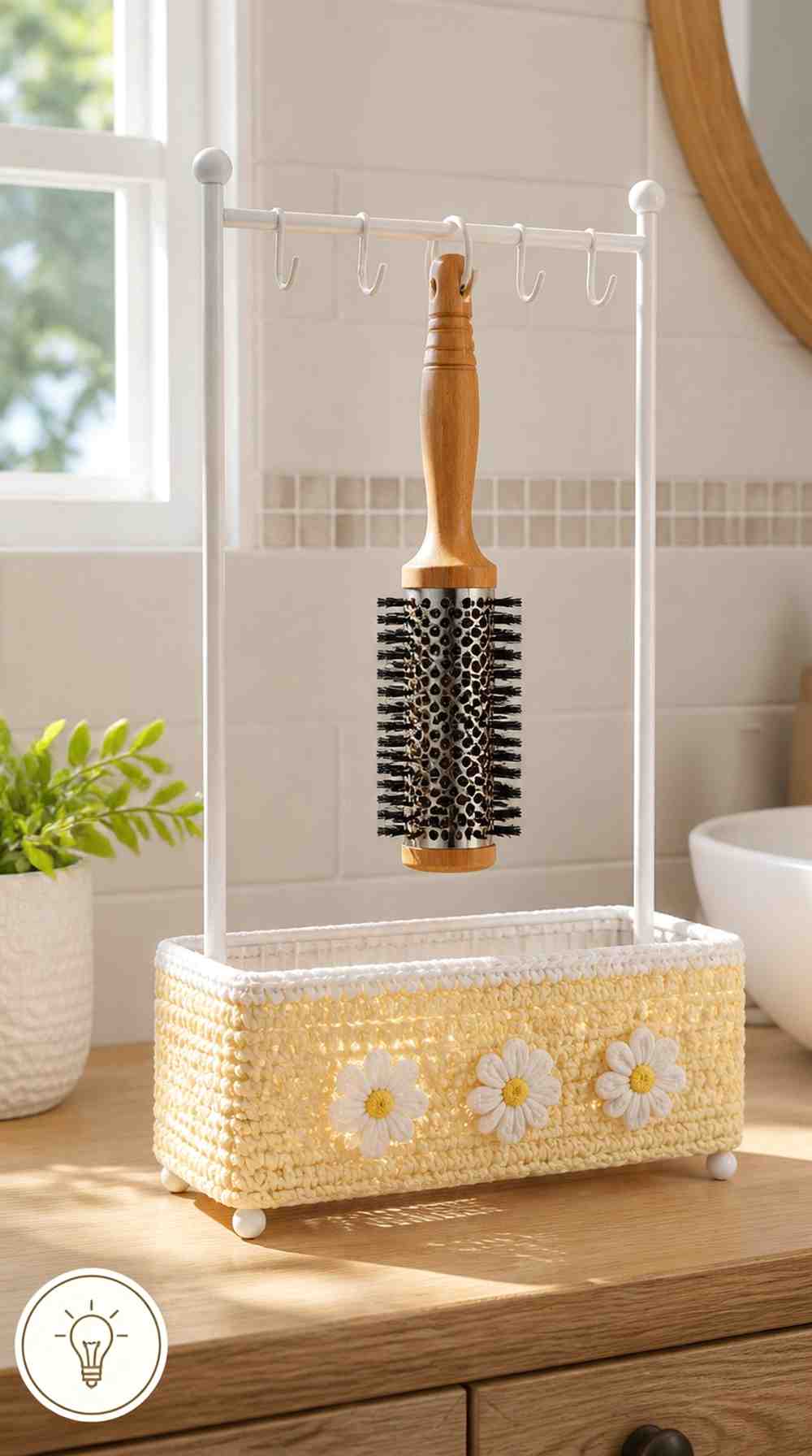
Butter-yellow crochet forms a narrow apron-style skirt across the front and outer sides of a rectangular drying-stand base. Three small white daisies with golden centers decorate the front, while a slim white border finishes the top edge.
This design adds a friendly cottage-inspired detail to a plain white metal stand. The single round hairbrush hangs above the covered base, and the decorative skirt sits away from the brush head and the stand’s open drainage area.
- Daisy Placement: Keep the three motifs flat against the front skirt so they do not catch on nearby bathroom accessories.
- Apron Coverage: Decorate only the dry outer walls of the base, leaving the top and interior water-collection areas clear.
- Floral Details: Attach petals and flower centers with tidy joins, avoiding loose embellishments that may become detached during washing.
7. Crochet Seafoam Scalloped Tray Fascia Cover
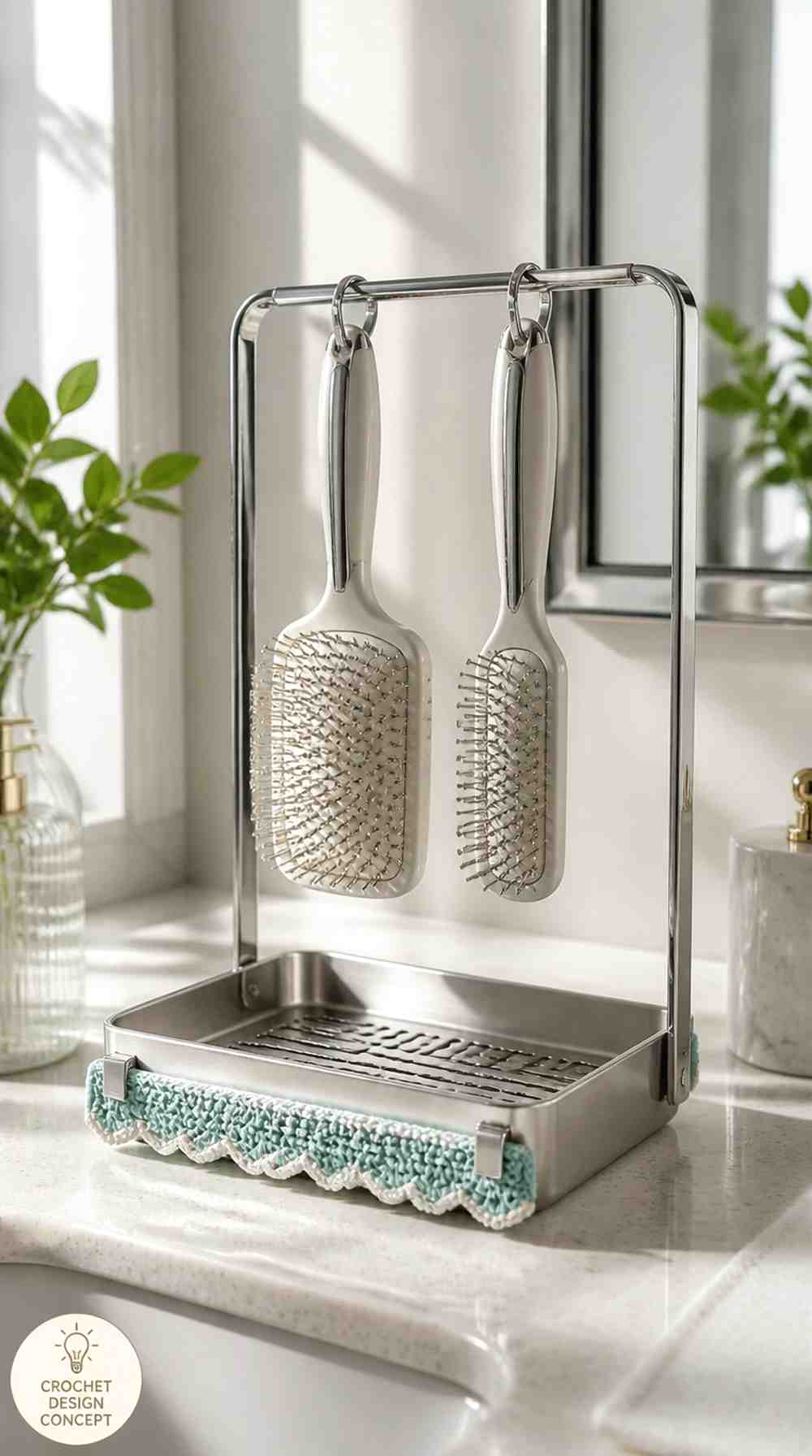
A narrow seafoam-green crochet strip decorates the dry exterior front wall of a stainless-steel drip tray. Small white scallops follow the strip, creating a soft contrast against the smooth metal surface.
Two paddle hairbrushes hang above the tray with their bristles facing down. The top opening and interior drainage surface remain exposed, allowing the stand to function without the crochet acting as a water-absorbing liner.
- Fascia Position: Fit the cover only to the outer vertical tray wall, keeping its upper edge away from the water-collection opening.
- Removable Clips: Small edge clips could make the strip easier to remove before cleaning the tray, provided they do not obstruct its drainage or removal.
- Moisture Limitation: If water regularly reaches the exterior wall, this design may be unsuitable; an uncovered tray would be easier to keep dry.
8. Crochet Rust Buttoned Post Wrap
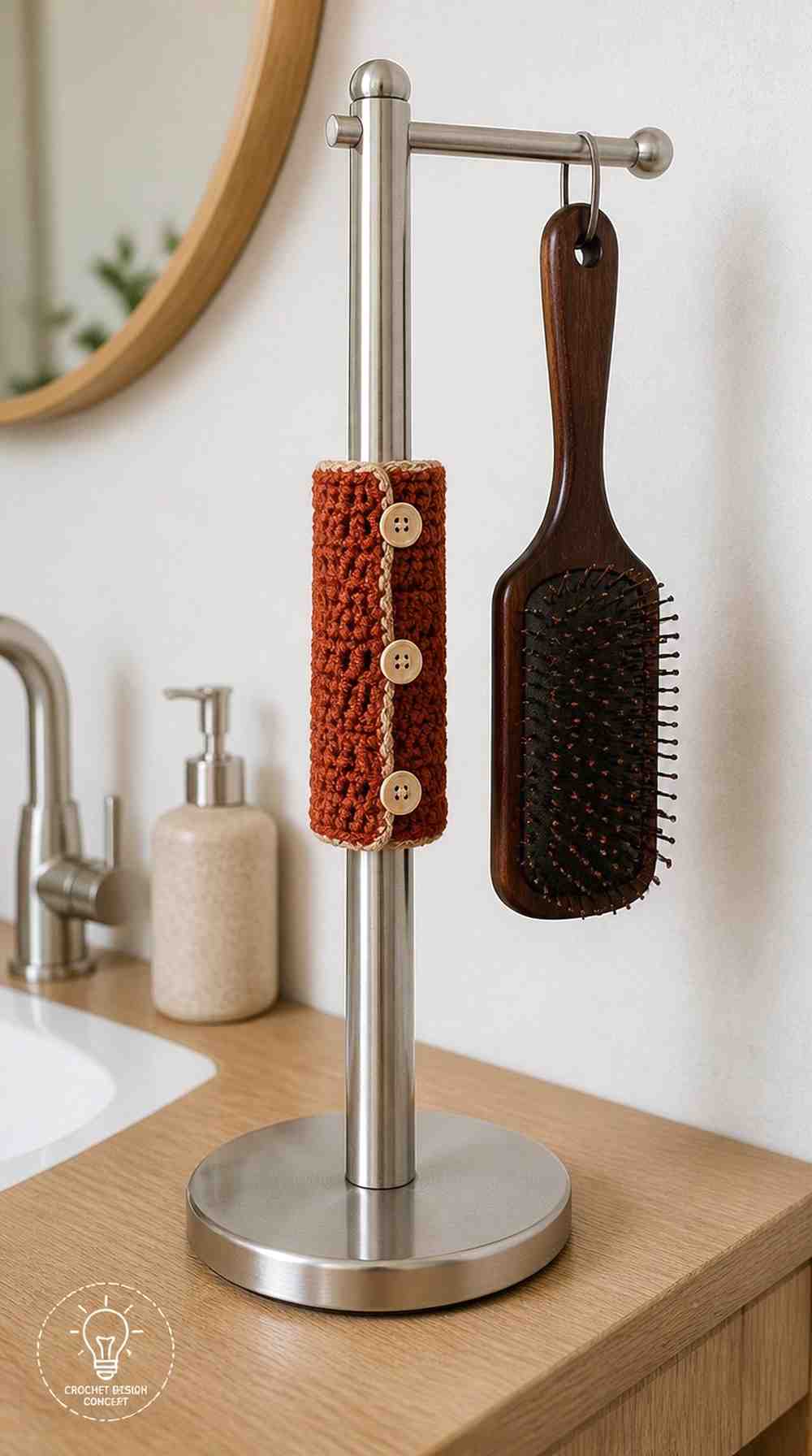
Rust-orange crochet creates a short rectangular sleeve around the middle of a drying stand’s metal upright. Three natural wooden buttons close the overlapping seam, while warm sand-colored edging gives the wrap a finished appearance.
The cover sits below the hanging arm and above the round weighted base. A single paddle brush remains completely separate from the yarn, making the design an example of how a small decorative wrap can change the appearance of a basic metal stand.
- Button Access: Position the three buttons on an accessible side of the post so the wrap can be removed without moving the brush holder.
- Post Fit: Allow a close but nonrestrictive fit that does not slide into the stand’s moving or adjustable components.
- Fastening Choice: Wooden buttons provide a decorative finish, although an optional washable closure could be considered for frequent removal.
9. Crochet Oatmeal Split-Back Frame Cover
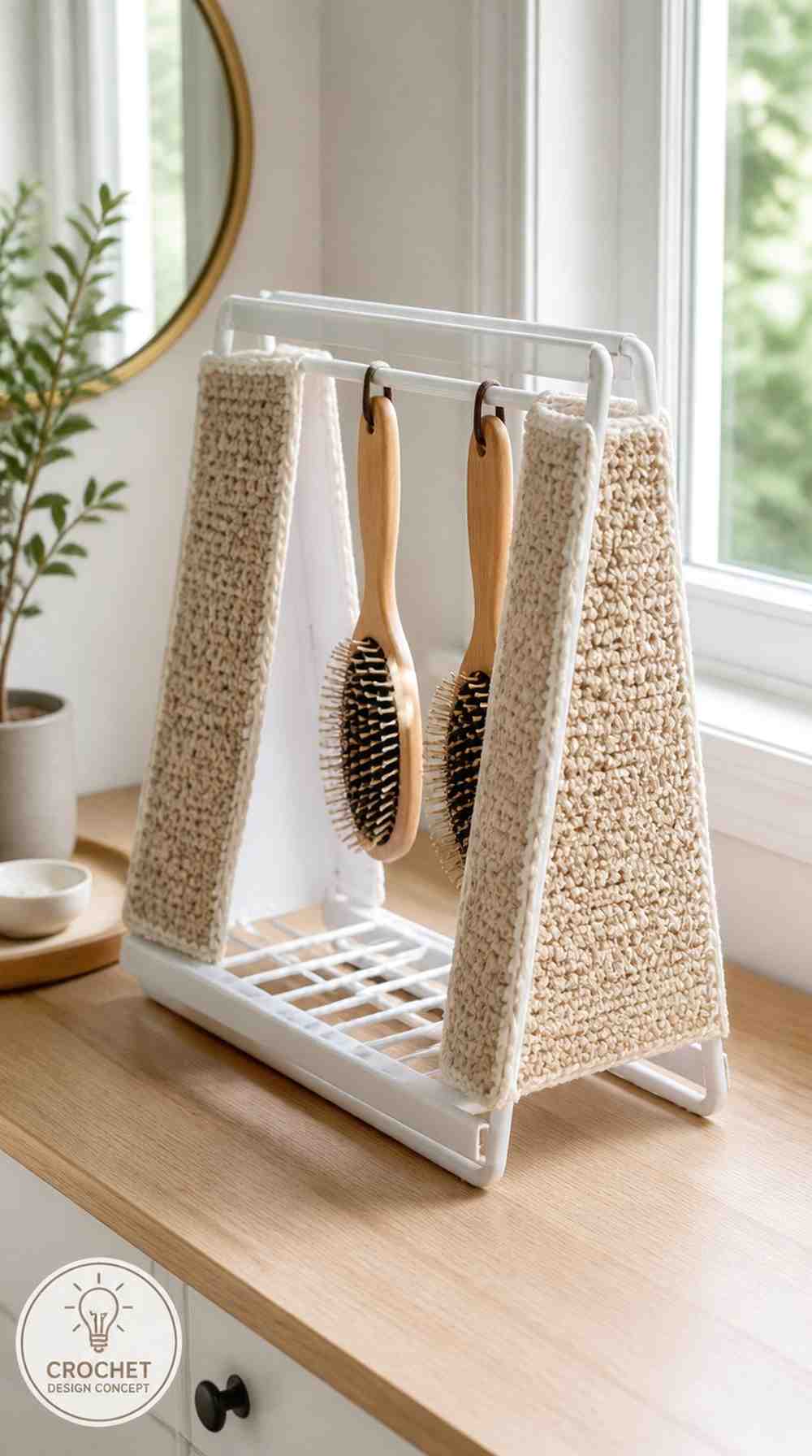
Two oatmeal-colored crochet panels cover the outer rear support legs of a freestanding white-metal drying rack. The fabric has a compact moss-stitch-style texture, cream edging, and small removable fastening loops along the back.
The separated panels leave a wide opening through the middle of the frame. Two paddle brushes hang from the exposed upper rail, while the space beneath them stays clear. The neutral palette works particularly well in bathrooms with pale wood, cream tiles, or simple natural finishes.
- Split Construction: Keep the two rear covers separate so they follow the actual shape of each support instead of stretching across the open center.
- Texture Density: Compact moss-style stitches create a fairly even surface, making this a good concept for understated texture.
- Rear Fastenings: Place removable loops where they can be reached without pulling the stand away from the wall or disturbing its balance.
10. Crochet Lavender Upper-Ring Trim Cover
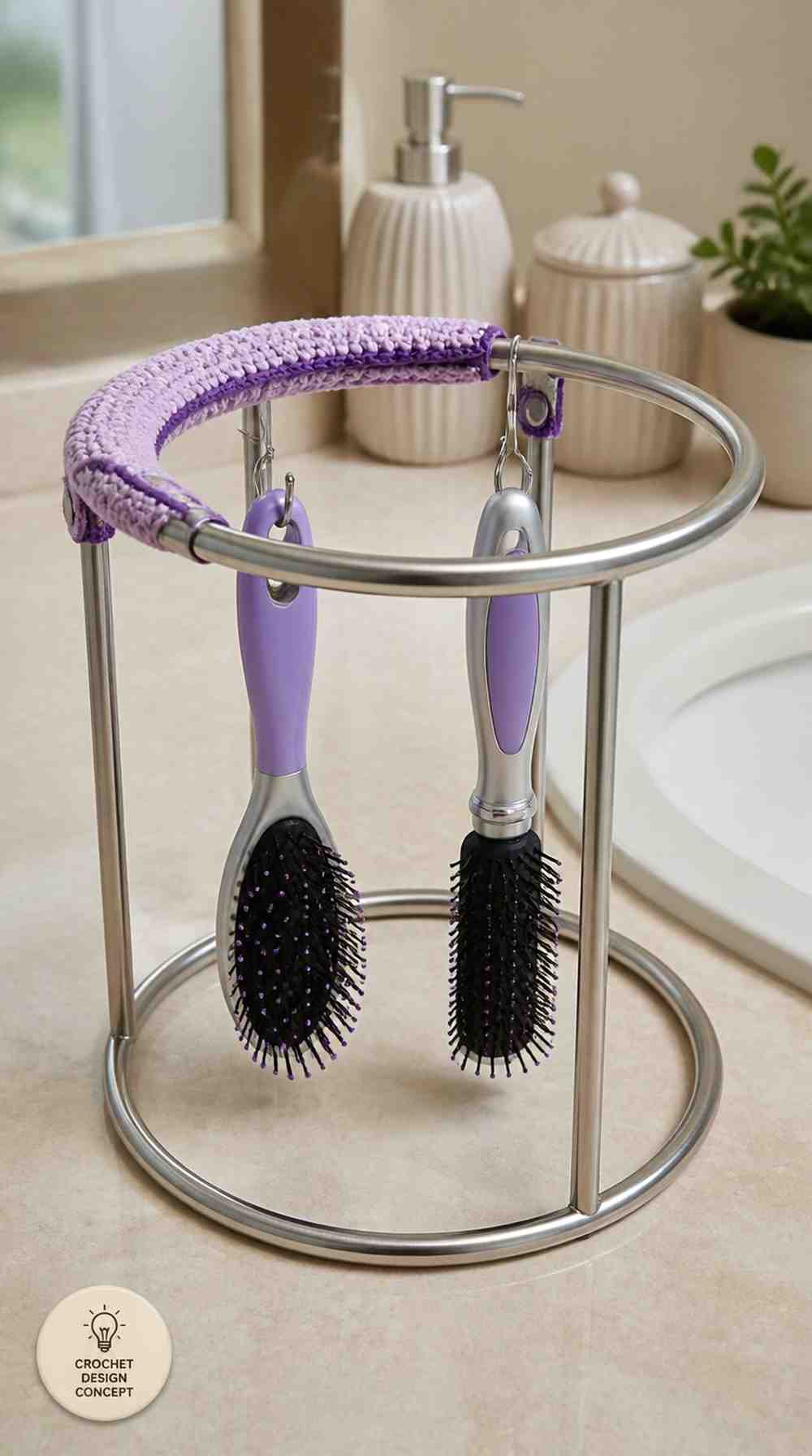
Lavender crochet wraps around an unused outer section of a circular metal drying rack’s upper ring. Deeper-purple edging defines the slim tubular cover, while small removable snap tabs keep it positioned along the curved metal.
The inner ring, hanging hooks, and supports remain exposed. Two compact hairbrushes hang beneath them with bristles facing downward, making the decorated ring a visual accent rather than a functional replacement for any metal support.
- Curved Fit: A flexible tubular cover should follow the ring’s actual curve without bunching around its ends.
- Hook Clearance: Keep all hanging points completely uncovered so the brush handles remain easy to attach and remove.
- Snap Position: Place removable fasteners on the unused outer arc, away from moving parts or frequently touched sections.
11. Crochet Navy Chevron Backplate Cover
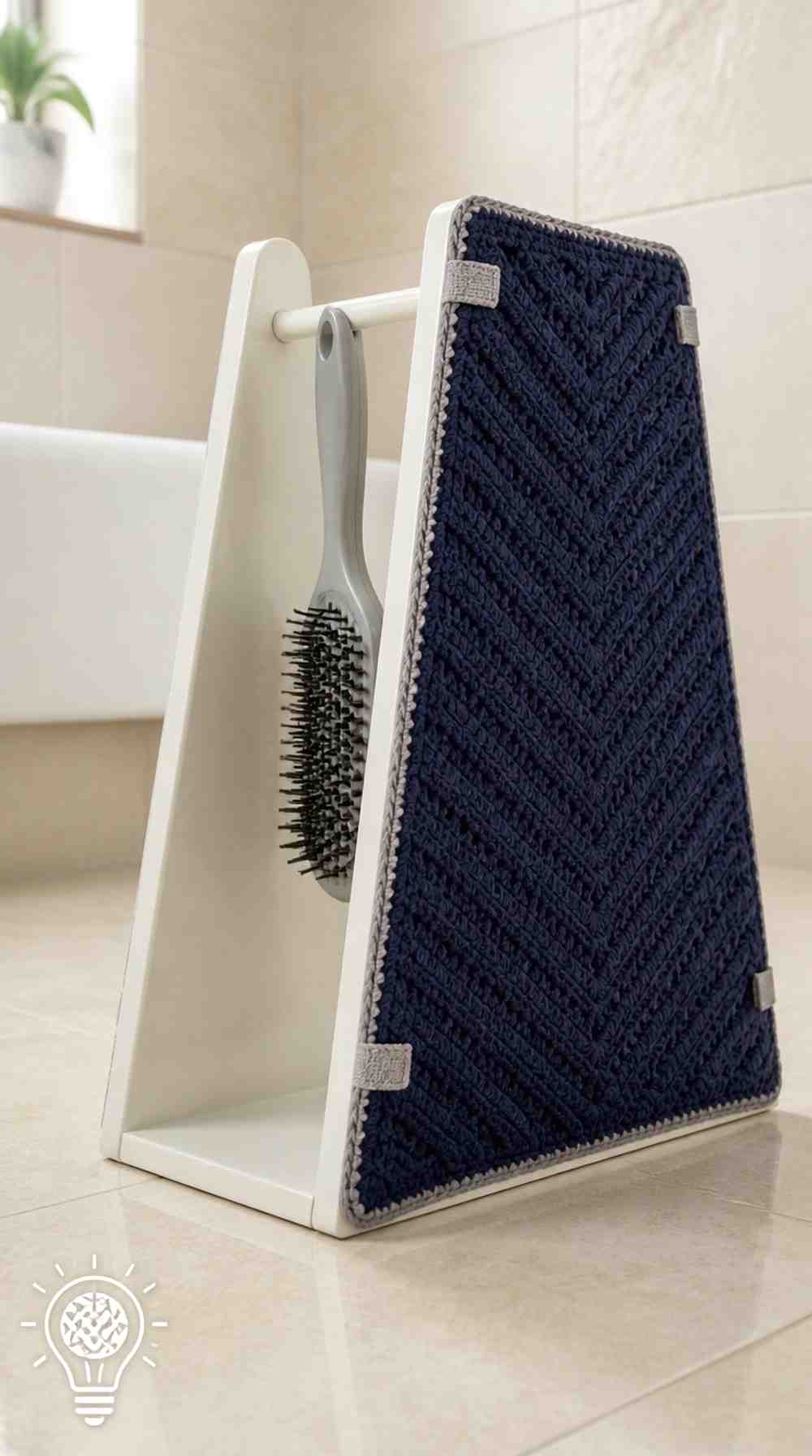
A navy-blue crochet panel follows the triangular rear backing of a white A-frame hairbrush stand. Raised chevron rows create a clear directional pattern, while silver-gray edging outlines the panel. Four small fastening tabs hold it against the rigid backing.
The upper crossbar remains uncovered, supporting one clean vented brush with its bristles pointing downward. The dark crochet panel creates contrast against the white frame without taking space away from the drying area.
- Chevron Alignment: Center the raised pattern on the triangular backing so the rows look balanced as the panel narrows.
- Panel Attachment: Keep the crochet snug against the rigid rear section rather than allowing it to sag into the open front.
- Brush Clearance: Confirm that the cover’s lower edge and fastening tabs remain well behind the hanging brush head.
12. Crochet Coral Removable Foot Cuffs
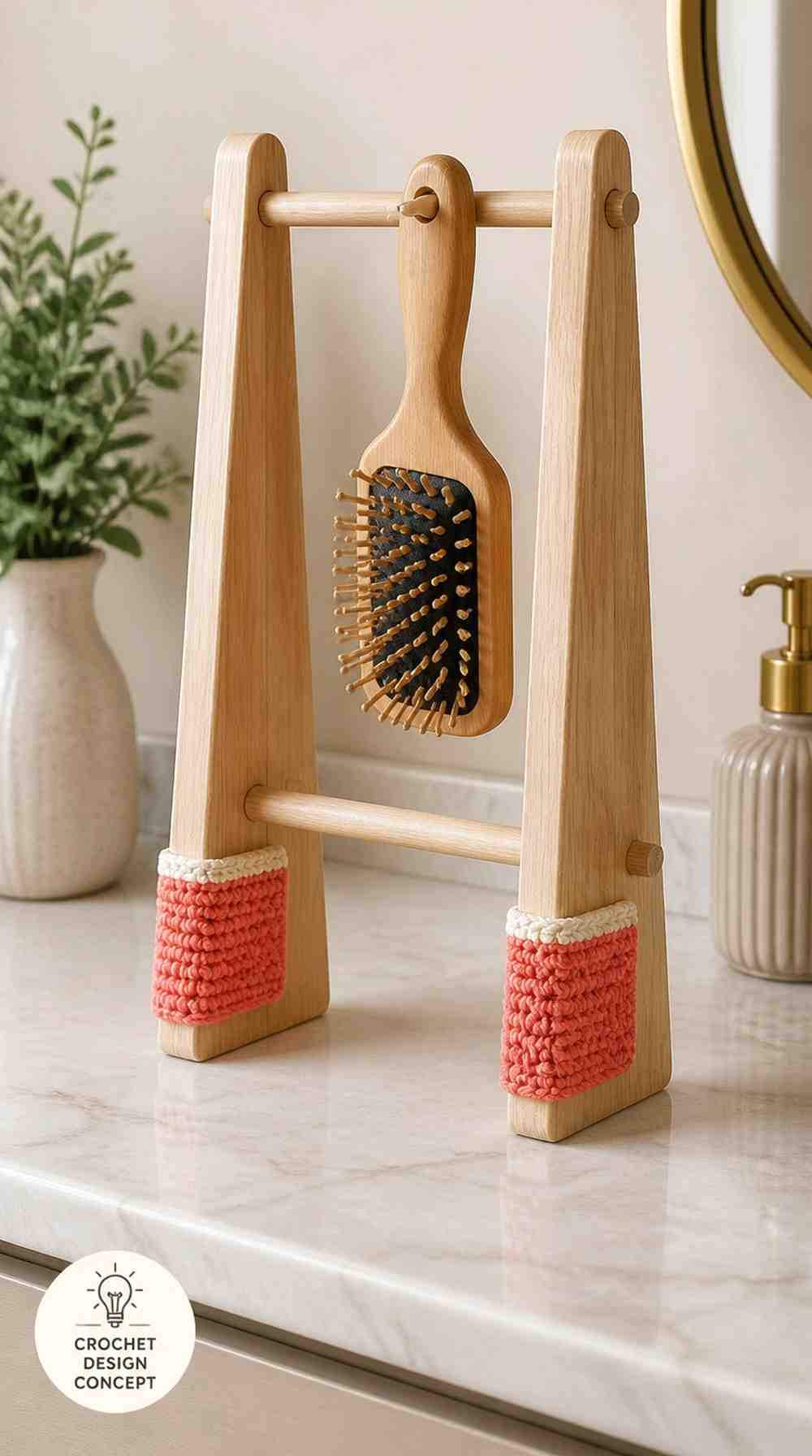
Coral crochet covers the dry exterior sides of two rectangular wooden feet on a compact bamboo hairbrush stand. Each cuff features closely worked rows, a narrow ivory upper border, and a removable rear fastening seam.
The wooden foot bottoms remain exposed against the vanity, preserving the stand’s original contact with the surface. Above the feet, a clean wooden-handled paddle brush hangs from the uncovered rail with its bristles facing down.
- Foot Contact: Avoid wrapping crochet underneath the wooden feet, where fabric could affect grip, stability, or drying after a splash.
- Matching Cuffs: Keep both covers the same height and visual thickness for a coordinated appearance.
- Removable Fit: Rear fastening seams make the small cuffs easier to take off individually for cleaning without disturbing the entire rack.
13. Crochet Teal Peg-Rail Side Trim
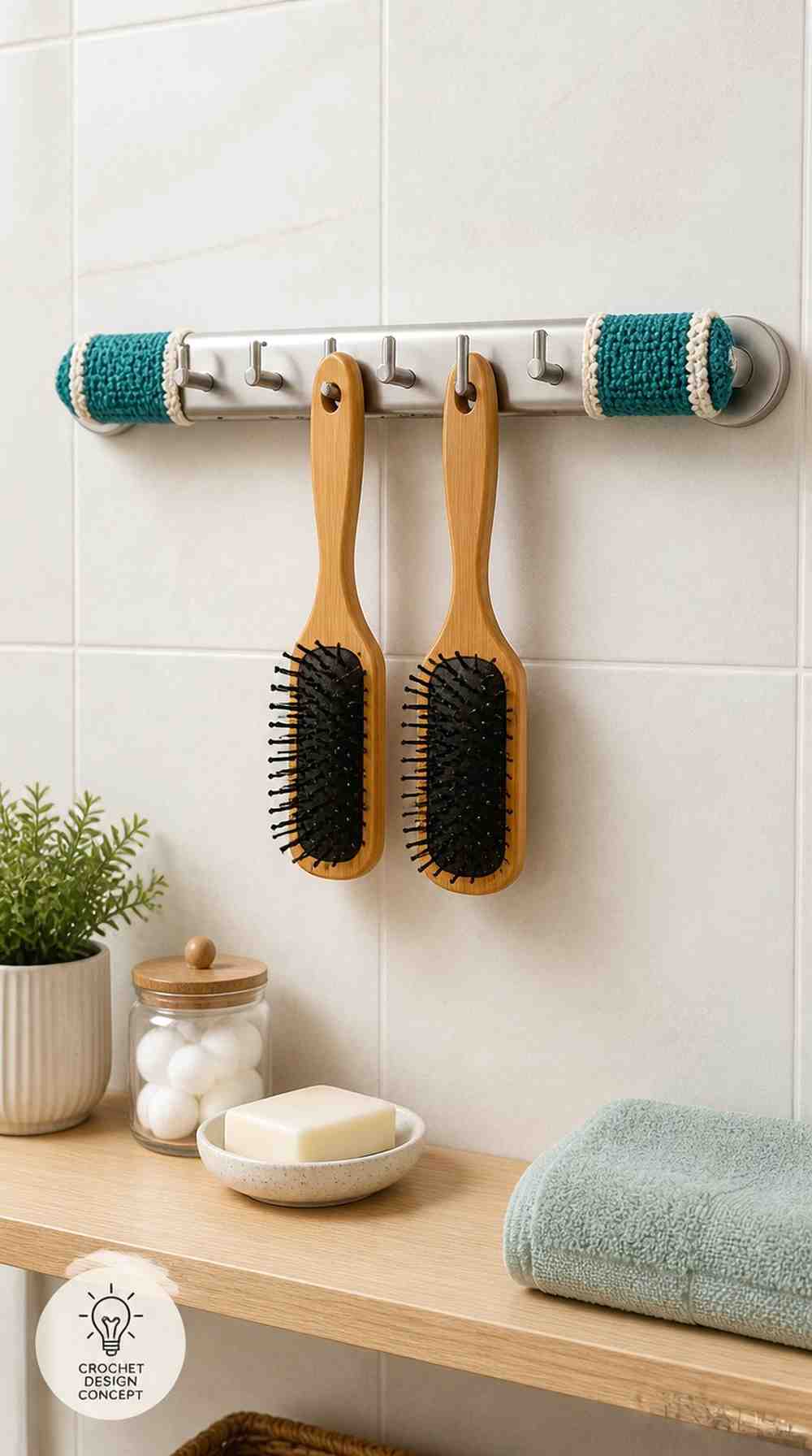
Two short teal crochet sleeves decorate the unused end sections of a wall-mounted steel hairbrush drying rail. Cream edging finishes both sleeves, while the central hanging pegs and wall fixings remain fully visible.
Two paddle hairbrushes hang from the uncovered pegs with their heads downward. The result is a simple wall-storage accent that adds color without covering the parts of the rack that users need to handle regularly.
- End-Section Coverage: Measure only the rail areas outside the hanging pegs, avoiding any attachment holes or moving hardware.
- Wall Clearance: Check that the sleeves fit without pressing against the wall or preventing the rail from being removed for maintenance.
- Matching Trim: Use the same teal stitch texture and cream border on both ends to create a balanced appearance.
14. Crochet Burgundy Braided Twin-Post Jackets
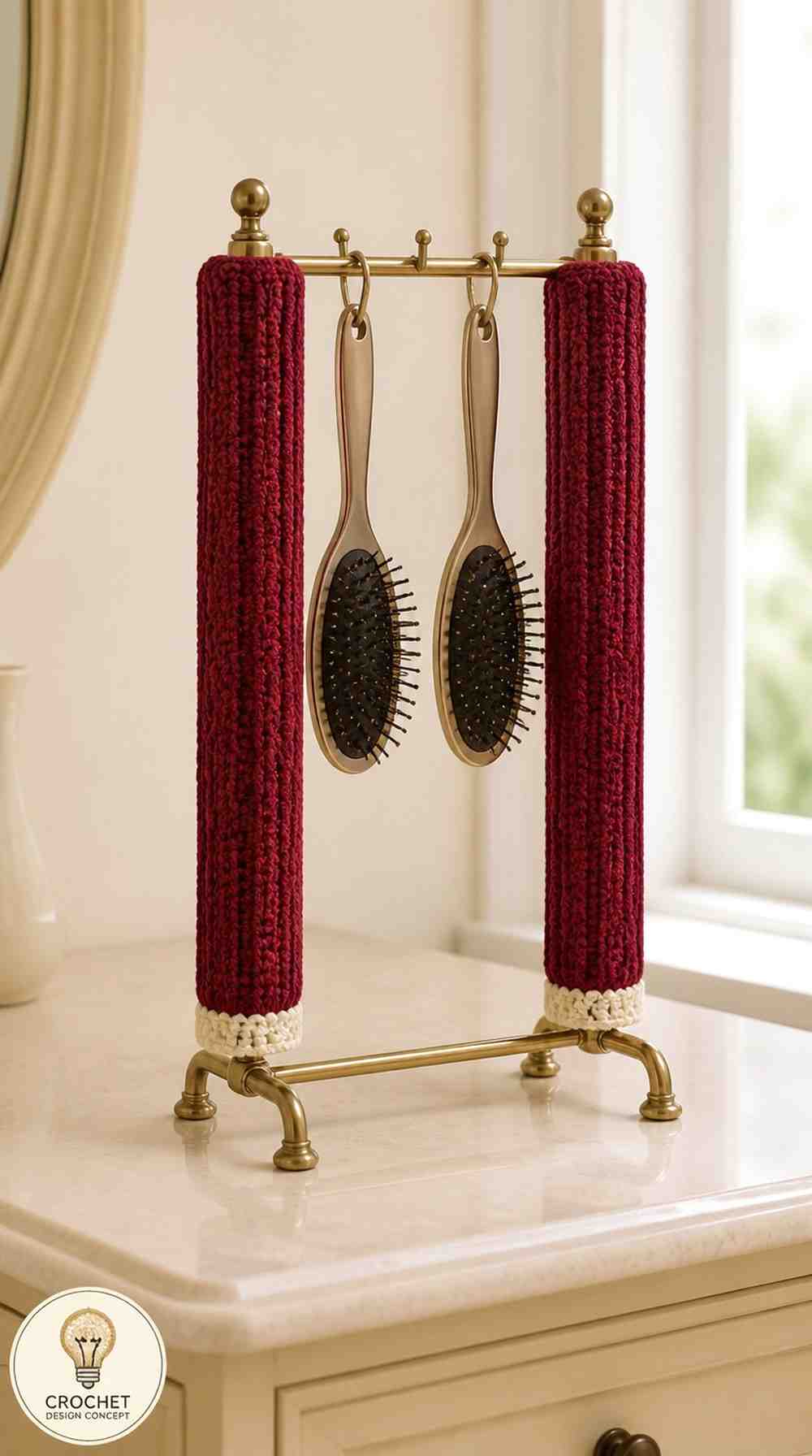
Two tall burgundy crochet jackets cover the exterior vertical posts of a champagne-metal drying rack. Raised braided-style stitch columns give the sleeves texture, while narrow cream edging finishes the lower openings.
Two clean paddle hairbrushes hang between the posts from an uncovered upper bar. The strong burgundy color and repeated vertical texture give the stand a more decorative appearance, especially against a light-colored vanity.
- Raised-Braid Texture: Keep the raised crochet columns evenly spaced and securely connected to the surrounding stitches.
- Post Clearance: Stop the jackets below the upper connecting bar so they do not obstruct the hanging points or structural joints.
- Paired Construction: Plan the two covers together, accounting for any differences in post shape or hardware before assuming identical dimensions.
15. Crochet Ivory Fan-Lace Rear Apron Cover
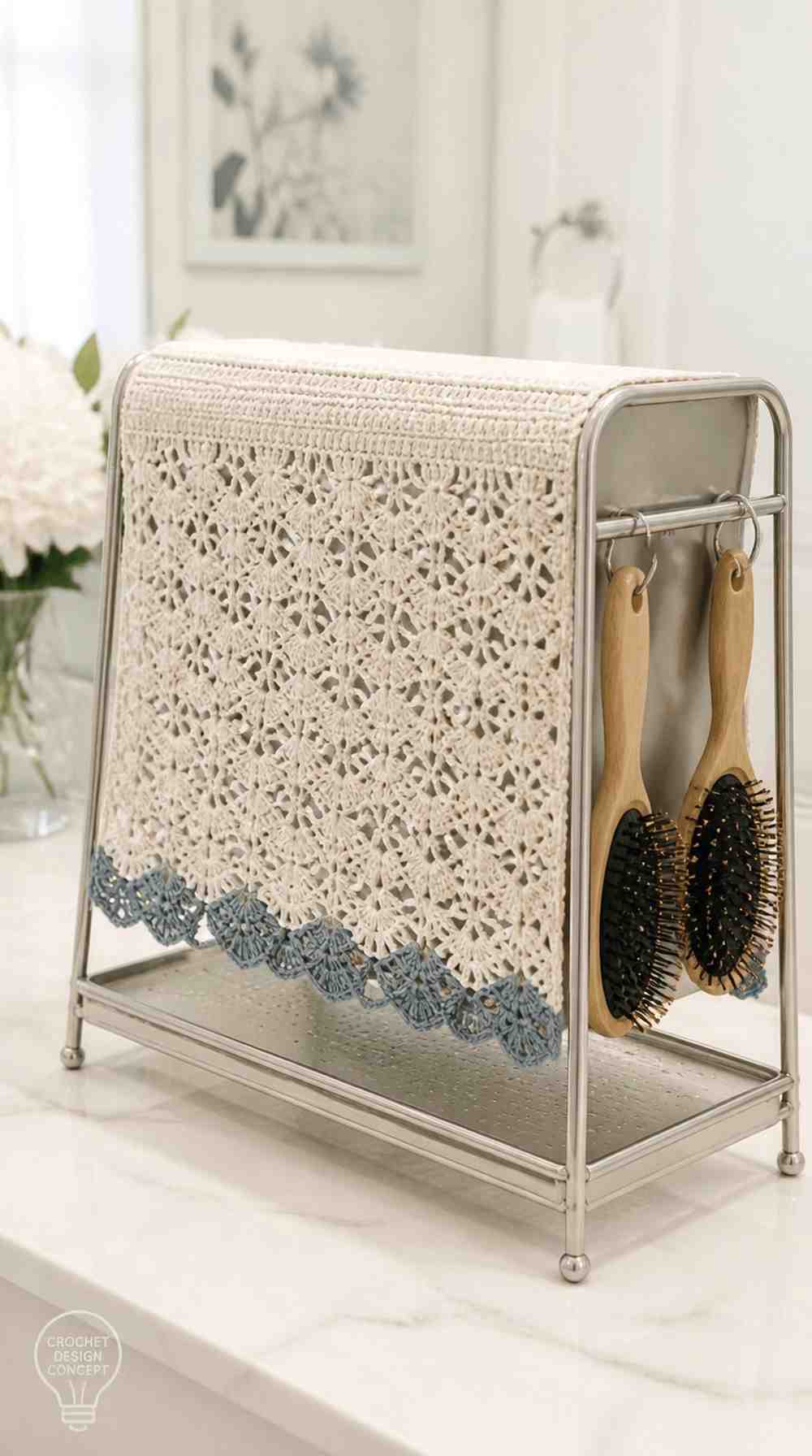
Ivory crochet forms a delicate fan-lace apron across the outward-facing rear lower panel of a metal hairbrush drying stand. A solid upper band supports the lace, while a narrow dusty-blue border finishes the lower edge.
The open fan motifs create a lighter appearance than dense fabric. Two oval brushes hang on the opposite front side of the stand, separated from the crochet by the rigid backing. The apron ends above the countertop rather than trailing into the drying space.
- Lace Connections: Keep the fan motifs linked through consistent crochet loops so the lower apron edge hangs evenly.
- Rear-Only Placement: Attach the panel to the stand’s dry exterior backing rather than beneath the brush heads.
- Length Planning: Allow enough clearance above the counter so the delicate lace cannot drag through moisture or become trapped beneath the stand.
16. Crochet Marigold Snap-On Base Band
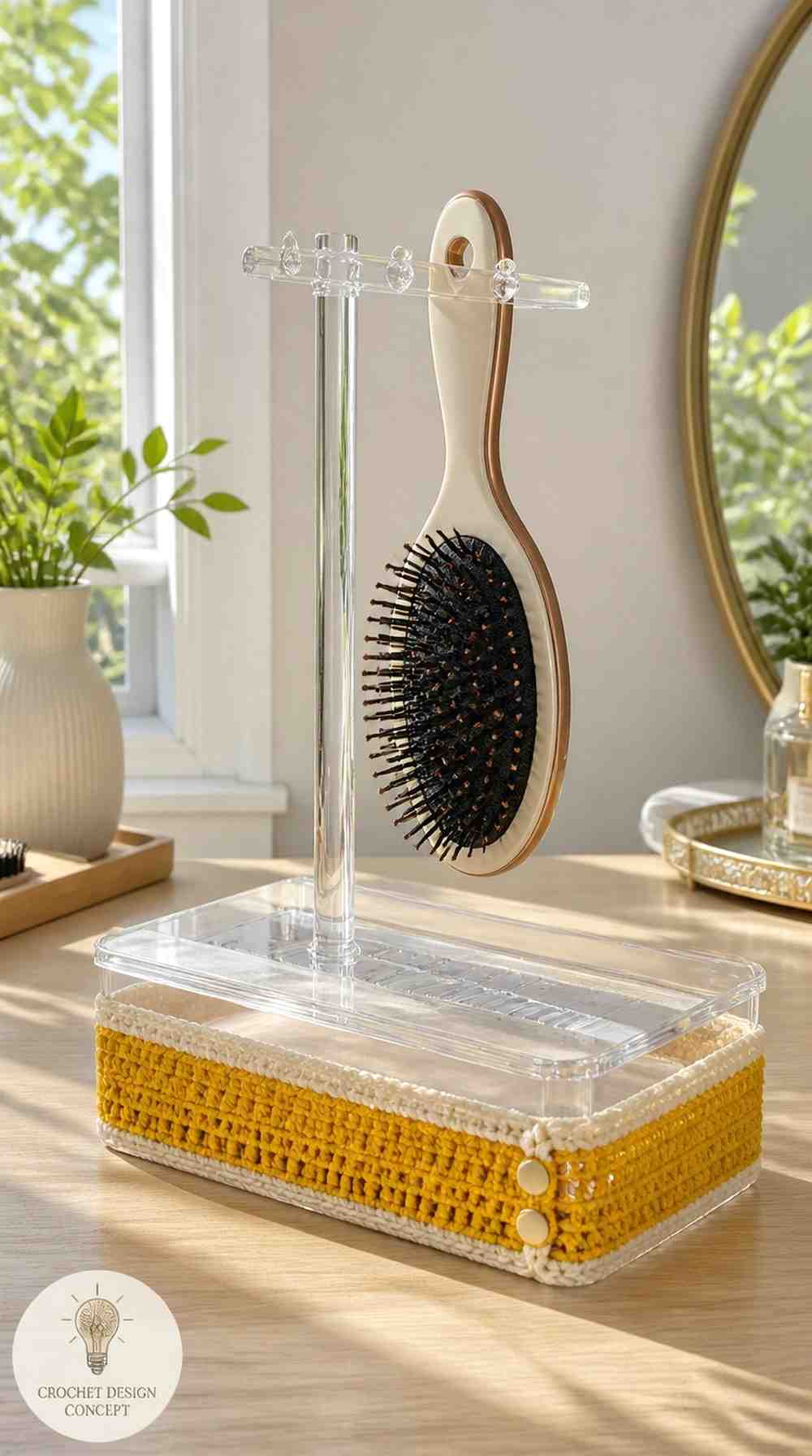
Marigold-yellow crochet wraps around the dry front and side walls of a clear acrylic drying-stand base. Raised horizontal rows add texture, while a warm-white upper border and two rear snap fasteners complete the removable band.
The transparent top surface remains exposed, making it easy to distinguish the decorative fabric from the stand’s functional drainage area. One clean paddle brush hangs above the base, with its bristles directed downward.
- Snap Fasteners: Position the closures on the rear of the band where they are easy to open but unlikely to be brushed accidentally.
- Acrylic Protection: Use appropriate fastener backing to avoid scratching or pressing sharp hardware against the clear stand.
- Raised Base Fit: Measure the base’s outer height so the cover does not overlap its upper drainage channel.
17. Crochet Chocolate Diamond-Trellis Leg Covers
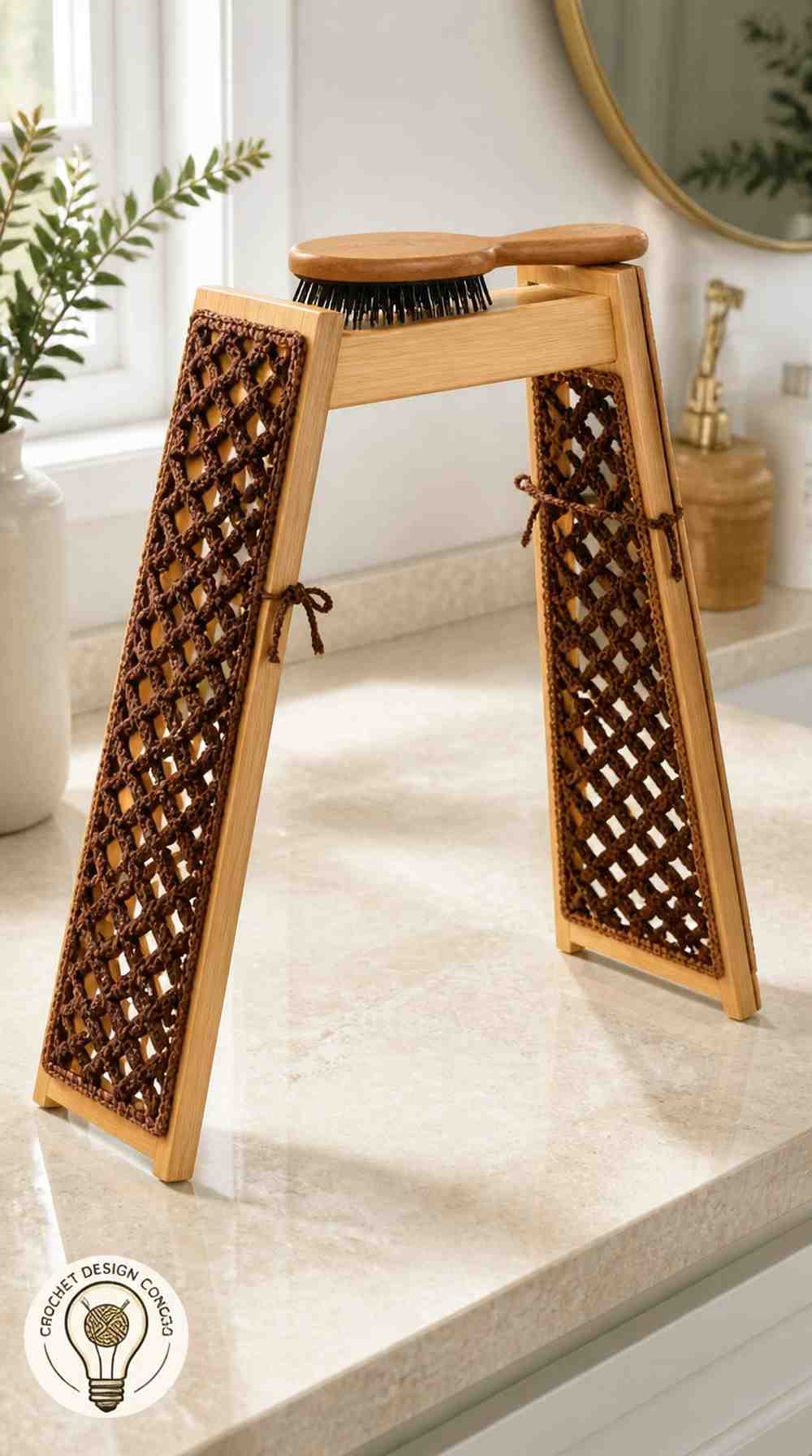
Chocolate-brown crochet panels follow the sloping outer legs of a pale-bamboo A-frame stand. Open diamond-trellis motifs create a decorative pattern, while narrow tan borders and small rear ties keep the panels positioned against the wooden legs.
The uncovered upper rail supports one wooden-handled brush, with its bristles directed downward. The contrast between warm bamboo and dark openwork crochet gives this design a natural, slightly rustic appearance without surrounding the brush itself.
- Trellis Shaping: Keep the diamond openings evenly connected while adjusting the panel width to suit each sloping leg.
- Rear Ties: Position the ties away from the central drying space and avoid pulling tightly enough to stress the bamboo structure.
- Bare Feet: Leave the stand’s lower contact surfaces uncovered so the original feet continue resting directly on the vanity.
18. Crochet Peach Modular Front-Panel Cover
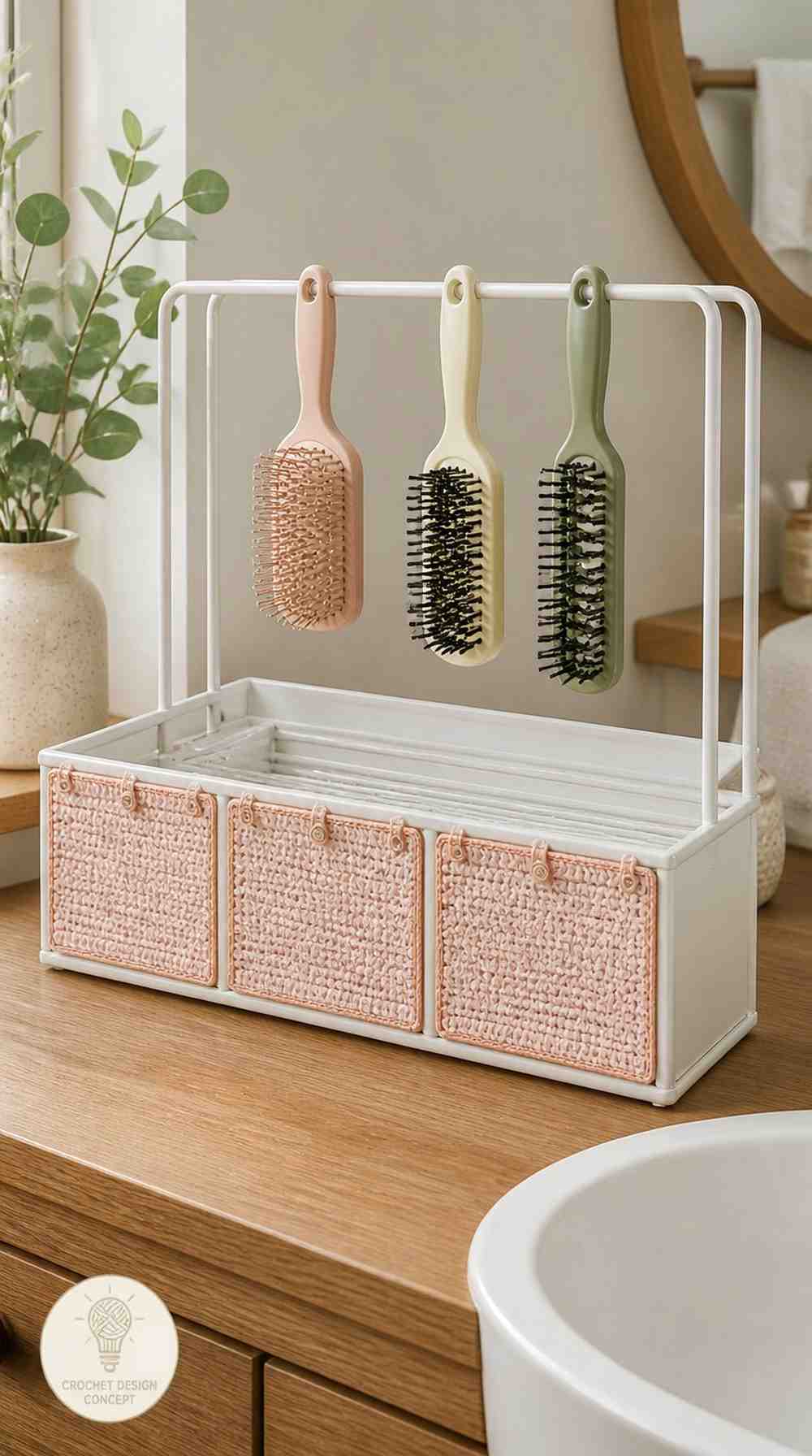
Three pale-peach crochet panels decorate the dry front fascia of a wide white-metal hairbrush drying rack. Each rectangular section has closely worked rows, apricot edging, and two small removable fastening loops.
The three separate panels create a coordinated appearance beneath a rack holding three different brushes. Because each cover is independent, one panel could be removed for cleaning without taking apart the others or interfering with the upper brush-hanging rail.
- Modular Sections: Measure each front-frame area separately so the three panels fit their positions without overlapping the gaps between them.
- Individual Fastenings: Give each panel its own secure removable loops, making routine cleaning easier than with one continuous long cover.
- Three-Brush Clearance: Keep all fabric on the dry outer fascia, leaving the open space beneath the hanging brushes clear.
Practical Guide to Crochet Hairbrush Drying Stand Covers
A crochet drying-stand cover should decorate the stand while leaving the hairbrush’s normal drying process unaffected.
Check the drying method first. Different hairbrushes require different cleaning and drying care. Brush manufacturers and cleaning guides commonly recommend removing excess water and allowing brushes to air-dry, often with bristles facing downward. Wooden and cushioned brushes need additional attention because trapped moisture can damage their materials. Follow the instructions for your specific brush.
conair.com+1
Keep yarn away from wet areas. Avoid placing crochet over drainage trays, ventilation openings, brush heads, or surfaces where rinse water regularly collects. A cover should not be used to absorb moisture.
Measure the actual stand. Round bases, square acrylic supports, A-frame legs, wall rails, and upright posts all need different cover shapes. Check the width, circumference, exposed fastening points, and any moving components before planning a crochet piece.
Consider removable cotton covers. Smooth cotton yarn can offer clear stitch definition and may be practical for washable decorative sleeves. Check its care label, and allow any washed cover to dry completely before replacing it.
Prioritize secure attachments. Buttons, ties, snaps, and fitted sleeves should stay away from the brush-hanging areas. A cover must not loosen the stand’s fittings or change its stability.
Choose a suitable location. A well-ventilated, dry vanity or storage area is preferable to a surface that is constantly splashed. Do not use decorative yarn near hot styling equipment, electrical connections, or heating elements.
For more handmade bathroom-storage inspiration, explore 20 Crochet Hanging Wall Pocket Organizer Ideas on Yarn Nest Studio.
Want to Make Something Similar?
These resources cover related crochet covering and removable-fastening techniques. They are not exact patterns for the 18 illustrated stand covers.
- Crafty Gardener — How to Make Removable Hanger Covers: Explores removable crocheted covers for existing frames, including tied and hook-and-loop fastening approaches that may offer ideas for detachable stand wraps.
- Paintbox Yarns — Brandt Plant Pot Cover: A free crochet pattern for a decorative cylindrical cover worked from flat fabric and joined, useful for understanding how a fitted exterior sleeve can be planned.
Neither resource provides tested instructions for a hairbrush drying stand. Any adaptation should preserve the actual stand’s stability, drainage, and ventilation.
Which Crochet Hairbrush Drying Stand Cover Should You Choose?
| Stand or styling need | Design to consider | Main consideration |
|---|---|---|
| Round pedestal base | Terracotta Ribbed Pedestal | Base circumference |
| Metal A-frame | Cobalt Lattice A-Frame | Leg fit and open center |
| Soft floral decoration | Blush Petal Base Collar | Extra countertop space |
| Wide lower backplate | Mustard Checkerboard | Panel attachment |
| Clear acrylic side supports | Plum Twin-Panel | Avoiding scratches |
| Cottage-style base accent | Butter-Yellow Daisy Skirt | Keeping water away |
| Dry exterior drip-tray fascia | Seafoam Scalloped | Moisture exposure |
| Upright center post | Rust Buttoned Post Wrap | Access to buttons |
| Neutral rear support panels | Oatmeal Split-Back | Rear fitting clearance |
| Circular upper rack | Lavender Upper-Ring Trim | Keeping hooks exposed |
| Triangular rear backing | Navy Chevron Backplate | Flat, secure attachment |
| Wooden stand feet | Coral Removable Foot Cuffs | Preserving bare foot bottoms |
| Wall-mounted drying rail | Teal Peg-Rail Side Trim | Uncovered pegs |
| Two upright outer posts | Burgundy Braided Jackets | Matched sleeve fit |
| Decorative lace backing | Ivory Fan-Lace Rear Apron | Keeping lace dry |
| Rectangular acrylic base | Marigold Snap-On Band | Rear closure and drainage |
| Bamboo A-frame | Chocolate Diamond-Trellis | Sloping leg shape |
| Large three-brush rack | Peach Modular Front Panels | Individual cover removal |
For a simple freestanding stand, the Terracotta Ribbed Pedestal Cover or Marigold Snap-On Base Band provides a compact decorative approach. If your stand has exposed side supports, the Cobalt Lattice, Plum Twin-Panel, or Burgundy Braided covers may offer more visible texture.
The Blush Petal Base Collar and Butter-Yellow Daisy Skirt are better suited to a decorative bathroom arrangement, while the Peach Modular Front-Panel design is particularly interesting for a larger three-brush rack.
Conclusion
A crochet hairbrush drying stand cover is a small way to personalize a bathroom accessory without replacing the stand itself. Whether you prefer a fitted ribbed band, delicate lace, floral details, or a pair of textured leg covers, the most successful concept is one that suits the stand’s existing shape.
Keep the brush-hanging points, drainage areas, and airflow spaces uncovered. Choose removable crochet sections where possible, and make sure the fabric stays clean and dry. Those details help the decorative finish remain practical for everyday use.
Which of these 18 designs would suit your bathroom best? Would you choose the terracotta pedestal cover, the blush petal collar, or the peach modular frame? Share your favorite style in the comments.
Frequently Asked Questions
1. Can crochet be used to cover a hairbrush drying stand?
Yes, crochet can be used as a removable decorative covering for suitable dry exterior parts of an existing stand. However, the fabric should not cover the brush heads, block drainage, interfere with supporting hardware, or change the stand’s stability. These concepts have not been physically tested.
2. Will a crochet cover affect how quickly a hairbrush dries?
It could if the fabric blocks airflow, holds water near the brush, or covers a drainage area. That is why these designs concentrate on exterior bases, posts, side supports, and decorative panels. A properly positioned cover should stay separate from the brush’s wet components, and its actual effect should be checked.
3. Which yarn is worth considering for a decorative drying-stand cover?
Smooth cotton yarn is one possible choice because it provides clearly defined crochet stitches and may suit removable, washable accessories. However, cotton also absorbs moisture. Choose yarn according to its care instructions and keep the finished cover away from routinely wet surfaces.
4. How can I make a crochet stand cover easy to remove?
Consider a wrap with buttons, ties, snaps, or another suitable removable closure rather than permanently fastening the fabric to the stand. The Rust Buttoned Post Wrap, Marigold Snap-On Base Band, and Coral Removable Foot Cuffs illustrate different ways to plan removable sections.
5. Are these crochet hairbrush drying stand cover ideas complete patterns?
No. These are original design visualizations showing different decorative approaches to covering existing hairbrush drying stands. They are not finished patterns, tested products, or construction tutorials. A real cover would need measurements from the particular stand, appropriate crochet shaping, and checks for drying clearance and stability.