A village-style kitchen feels especially inviting in winter when natural wood, soft ceramics, practical storage, and tactile textiles work together instead of competing for attention. Crochet can fit beautifully into that setting because its visible texture adds softness to hard-working surfaces such as tables, shelves, windows, benches, and cabinetry. The key is choosing accents that look intentional rather than filling every corner with the same material.
These 28 crochet village kitchen decor ideas focus on styling inspiration rather than patterns or instructions. They range from quiet details, such as curtain tiebacks and trivets, to stronger focal points like a textured bench cushion or winter wall art. Along the way, the ideas consider room size, existing furniture, color temperature, storage needs, and visual weight so you can decide which concepts make sense in your own kitchen. Some visuals may be digitally created to illustrate styling concepts rather than specific handmade products.
Balancing Crochet Texture in a Winter Village Kitchen
A winter kitchen already tends to include visually rich materials: wood grain, stone, ceramics, woven baskets, greenery, and layered table linens. Because crochet adds another noticeable texture, it usually works best when paired with calmer surfaces. On a heavily grained farmhouse table, for example, one cream runner may be enough; several textured layers could make the surface feel busy.
Color matters too. Warm cream, oatmeal, muted sage, soft rust, and burgundy can sit naturally beside oak, walnut, painted cabinetry, and earthy ceramics. Smaller kitchens generally benefit from lighter crochet accents placed on walls, windows, shelves, or seating rather than several floor-level pieces. In a larger kitchen, one broader textile—such as a bench cushion or substantial table centerpiece—can provide enough visual weight to connect the room without scattering lots of tiny accents.
Quick List
- Crochet Snowflake Café Curtain Above the Kitchen Sink
- Cream Crochet Table Runner on a Rustic Farmhouse Table
- Crochet Chair Pads in Oatmeal and Soft Sage
- Crochet Mug Cozy Display on an Open Oak Shelf
- Chunky Crochet Bread Basket on the Breakfast Table
- Crochet Winter Garland Across a Wooden Kitchen Hutch
- Crochet Jar Covers for a Cozy Pantry Shelf
- Crochet Pot Holders Hung Beside a Vintage Range
- Crochet Placemat Pair for a Window Breakfast Nook
- Crochet Dish Towel Accent on a Brass Oven Handle
- Crochet Basket Trio for Open Kitchen Storage
- Crochet Pendant Shade Above a Small Kitchen Island
- Crochet Herb Pot Covers on a Sunny Windowsill
- Crochet Bench Cushion for a Village-Style Kitchen Nook
- Crochet Curtain Tiebacks with Wooden Bead Accents
- Crochet Wall Pocket for Winter Kitchen Notes and Herbs
- Crochet Trivet Stack Beside a Stoneware Teapot
- Crochet Cabinet Door Panel Accent in Warm Cream
- Crochet Hot Water Bottle Cover on a Kitchen Reading Chair
- Crochet Market Bag Hanging from a Peg Rail
- Crochet Snowflake Wall Art Above a Small Sideboard
- Crochet Fruit Hammock Under an Open Shelf
- Crochet Tea Cozy as a Cottage Kitchen Focal Point
- Crochet Stool Covers Around a Compact Island
- Crochet Utensil Basket Cover Beside the Prep Area
- Crochet Window Sill Mat Under Winter Greenery
- Crochet Fireplace Mantel Accents in an Open-Plan Kitchen
- Crochet Layered Table Centerpiece for a Winter Supper
1. Crochet Snowflake Café Curtain Above the Kitchen Sink
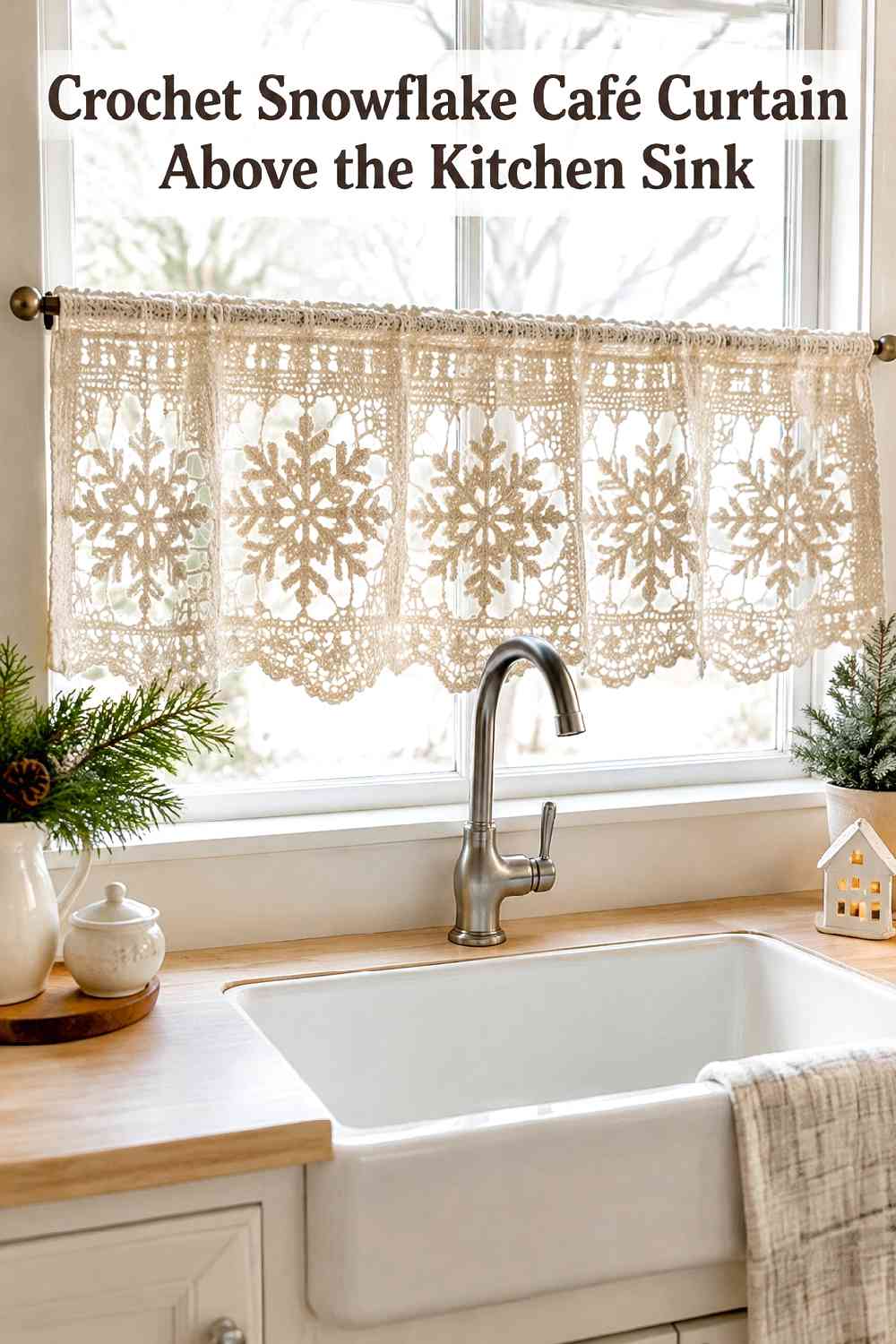
A short crochet café curtain can make the sink area feel softer while preserving much of the daylight that makes a winter kitchen pleasant. This concept suits a kitchen with a fairly simple window frame and limited competing pattern around the sink. Warm cream is especially effective against painted cabinetry, natural wood, or muted stone because it keeps the window treatment light rather than visually heavy.
The strongest placement leaves some open glass above the textile so the window still feels generous. If the counter already holds plants, soap dispensers, drying racks, and decorative objects, simplify those items before adding a highly textured curtain. The crochet should frame the view rather than turn the sink wall into a collection of small focal points.
2. Cream Crochet Table Runner on a Rustic Farmhouse Table
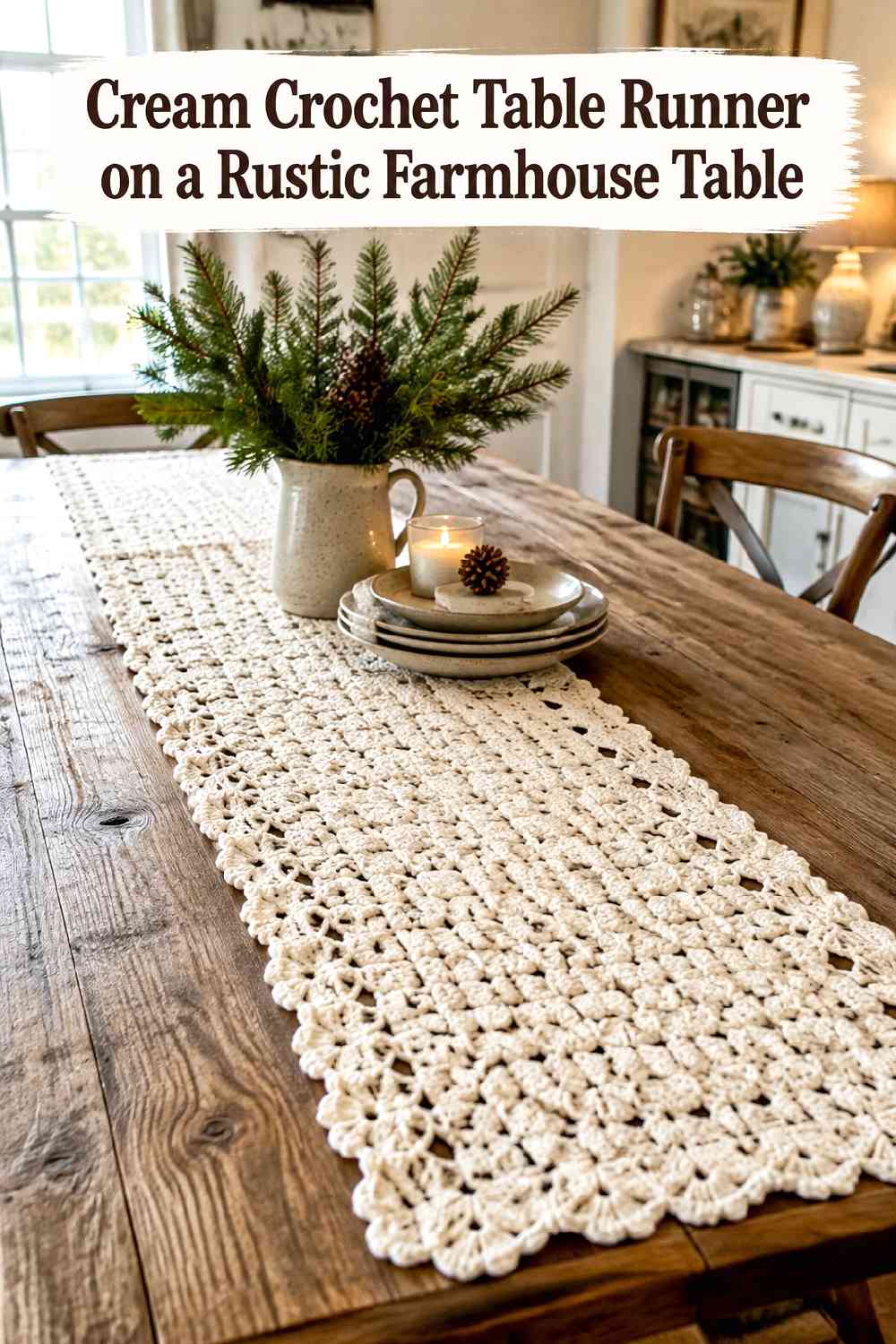
A cream crochet runner creates useful contrast on a dark or weathered farmhouse table because the pale textile lightens the center without hiding the wood. This is a strong option when the table is one of the largest visual surfaces in the kitchen and needs a softer winter layer.
Keep the surrounding centerpiece restrained. A few stoneware pieces, evergreen branches, or simple candles can be enough when the runner itself carries plenty of texture. On a narrow table, leave visible wood along both sides so the textile does not make the surface appear smaller. If the room already contains patterned curtains or busy seat cushions, a relatively quiet neutral runner will usually feel more balanced than another colorful accent.
3. Crochet Chair Pads in Oatmeal and Soft Sage
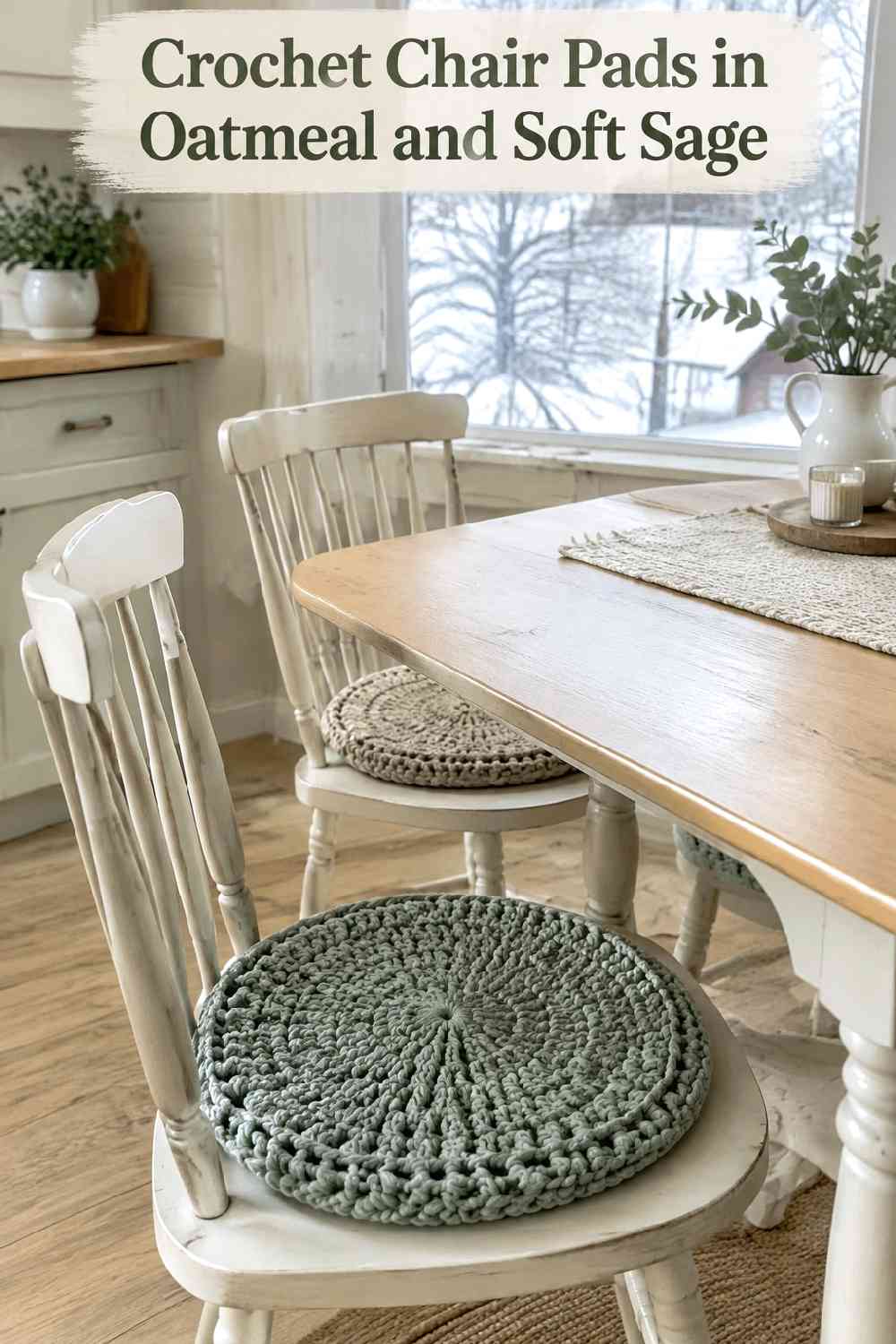
Crochet chair pads can introduce color without changing the kitchen’s larger furniture. Oatmeal keeps the palette grounded, while soft sage adds a muted winter-green connection that works particularly well near natural oak, cream paint, or warm white walls.
This idea is most convincing when the chair pads appear as part of the seating rather than as separate decorative objects. In a compact dining area, limit the palette to one or two related colors so several chairs do not create visual clutter. Soft sage can also help cool down very orange-toned wood. If the room already includes green cabinetry or strong botanical wallpaper, use oatmeal as the dominant shade and let sage appear only as a smaller supporting accent.
3. Crochet Chair Pads in Oatmeal and Soft Sage
4. Crochet Mug Cozy Display on an Open Oak Shelf
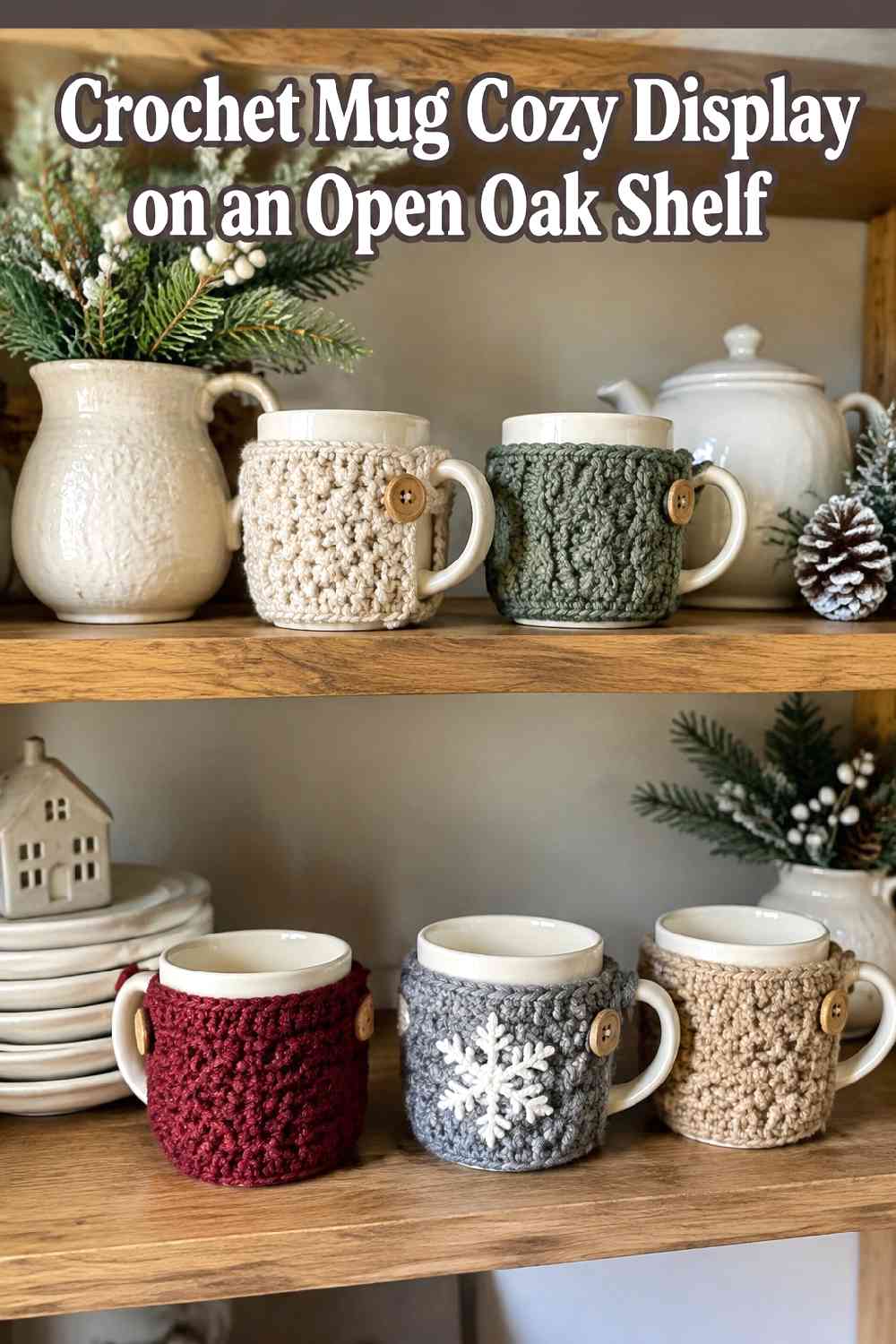
An open shelf can become crowded quickly, so a crochet mug display works best when the surrounding ceramics are simple and the shelf has some empty space. Repeating the same general color family across a few mugs can create rhythm without making the arrangement look like a collection of unrelated accessories.
Oak shelves already bring warmth, making cream, oatmeal, charcoal, or muted green especially natural partners. Keep frequently used mugs easy to reach and avoid placing decorative pieces so tightly that everyday access becomes inconvenient. In a small kitchen, one shelf containing a few coordinated crochet accents is usually more effective than spreading the same detail across every open shelf.
5. Chunky Crochet Bread Basket on the Breakfast Table
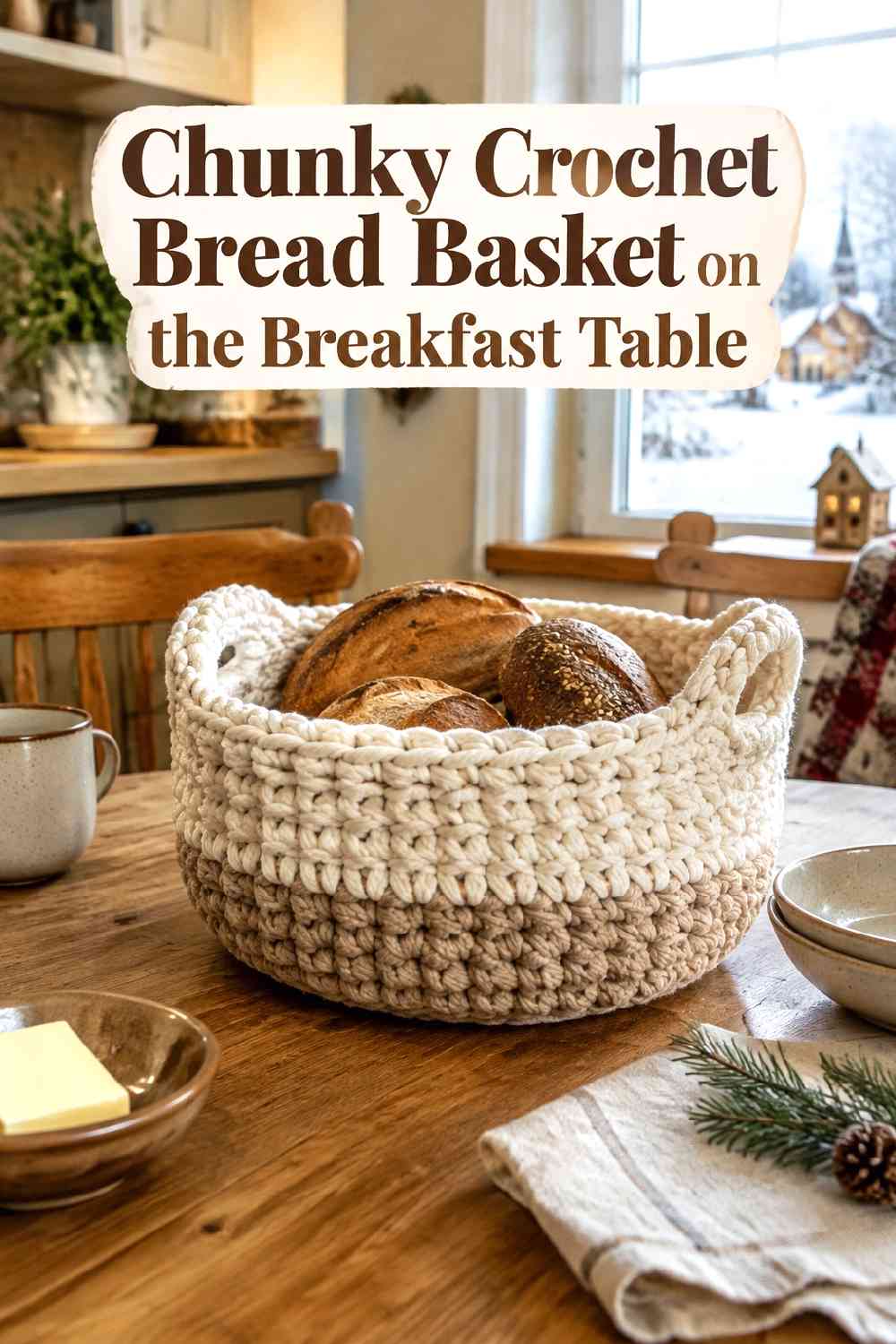
A broad crochet bread basket gives a breakfast table a strong tactile centerpiece while also helping the setting feel purposeful rather than purely decorative. The scale matters: a substantial basket can hold its own on a rustic table, whereas a very small one may disappear beside large chairs or generous tableware.
For visual balance, pair the basket with smoother surfaces such as plain stoneware, simple linen, or an uncluttered wood tabletop. Cream and oatmeal keep the look quiet, while a narrow rust or burgundy accent can deepen the winter mood. Avoid surrounding the basket with several other textured containers; one main crochet piece will usually make the table feel calmer and more intentional.
6. Crochet Winter Garland Across a Wooden Kitchen Hutch
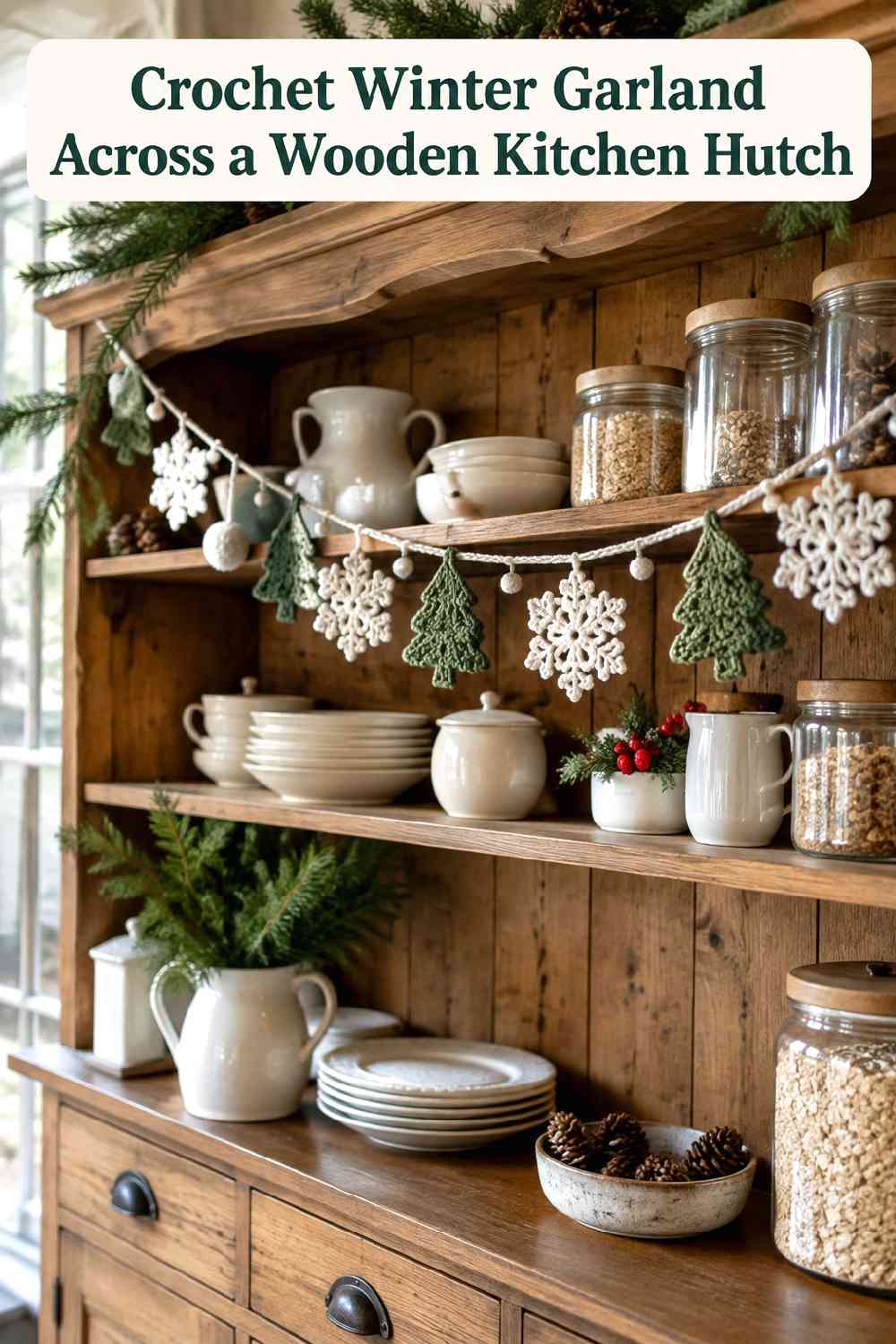
A crochet winter garland can soften a heavy wooden hutch without covering the furniture that gives a village kitchen its character. It works especially well when the hutch already acts as a backdrop for pale ceramics, glass jars, or simple serving pieces.
Keep the garland relatively restrained in length and color so it follows the furniture rather than dominating it. Warm cream against dark wood creates contrast, while muted sage can connect the display to evergreen branches elsewhere in the room. If the shelves are already densely filled, remove a few smaller objects before adding the garland. The eye needs enough negative space to appreciate both the crochet texture and the shape of the hutch.
7. Crochet Jar Covers for a Cozy Pantry Shelf
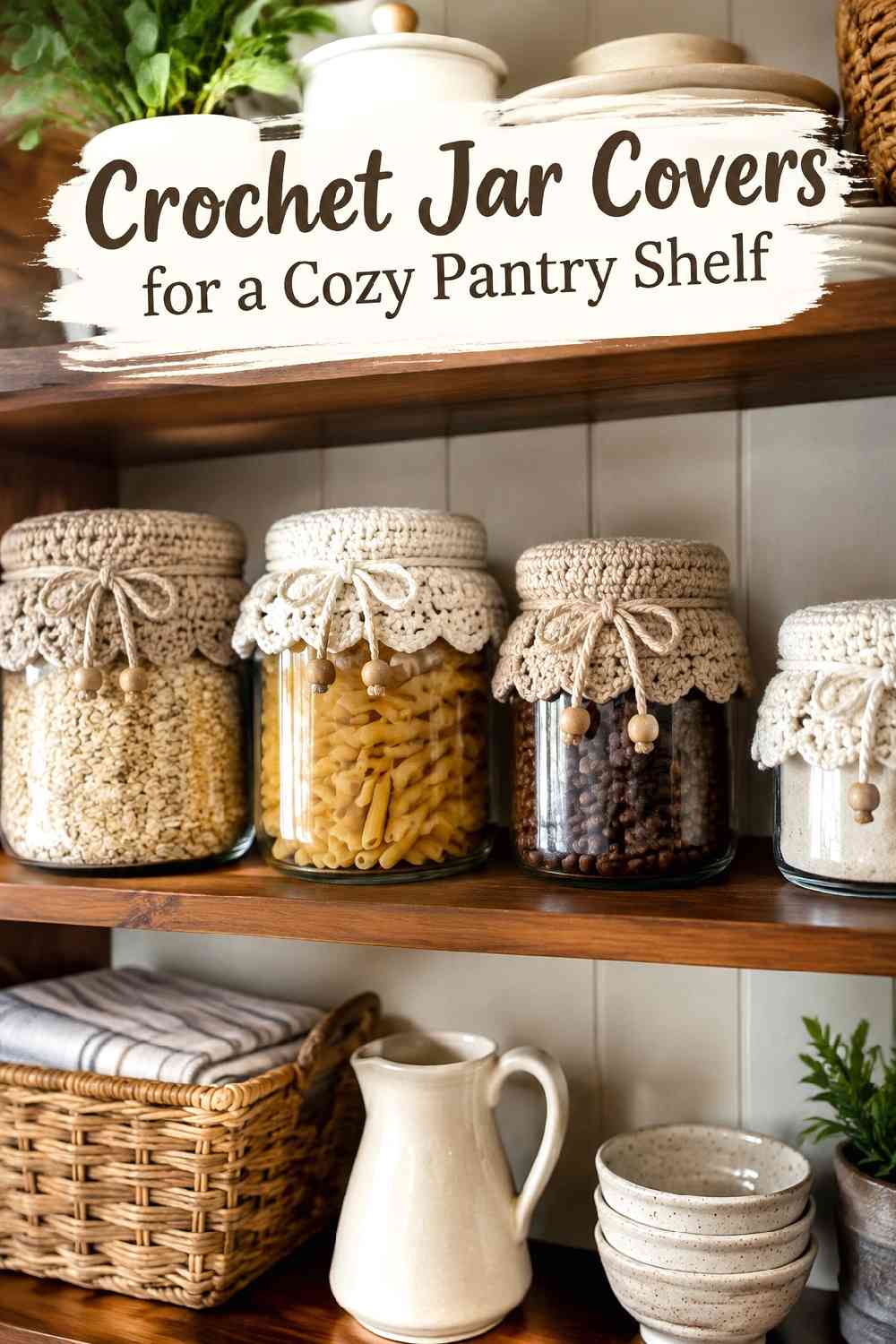
Crochet jar covers can turn a practical pantry shelf into a softer visual feature, but this idea benefits from repetition and restraint. Using several closely related neutrals creates cohesion; a different bright color on every jar would make the shelf look busier than necessary.
The concept works best on deeper shelves where the jars can sit comfortably without blocking the front edge. Pair them with plain labels, simple wooden shelving, and a few exposed glass containers so the crochet does not cover every surface. In a compact pantry, two or three covered jars can be enough to establish the look while leaving the rest of the storage easy to identify and access.
8. Crochet Pot Holders Hung Beside a Vintage Range
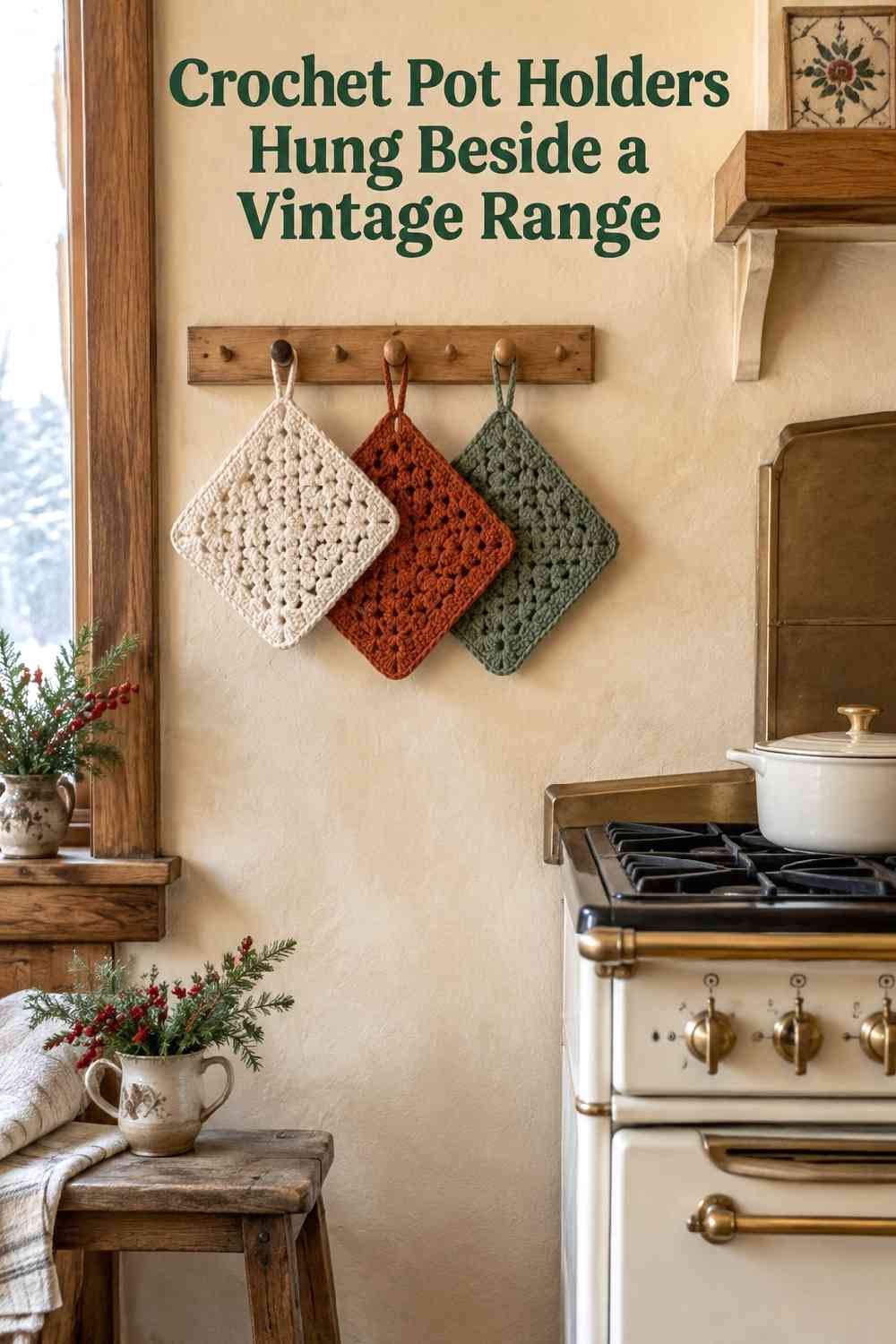
A peg rail beside the range is a natural location for a small group of crochet pot holders because it turns useful kitchen objects into part of the decor. The arrangement feels most polished when the pieces share a coordinated palette rather than competing for attention.
Cream, rust, muted green, or warm brown can echo winter tones while complementing aged metal, wood, or painted plaster. Keep the grouping compact so it does not spread into the main cooking zone or make the wall appear cluttered. If the range itself has strong vintage detailing, use relatively simple colors around it. The appliance should remain the anchor, with crochet acting as a softer supporting texture.
9. Crochet Placemat Pair for a Window Breakfast Nook
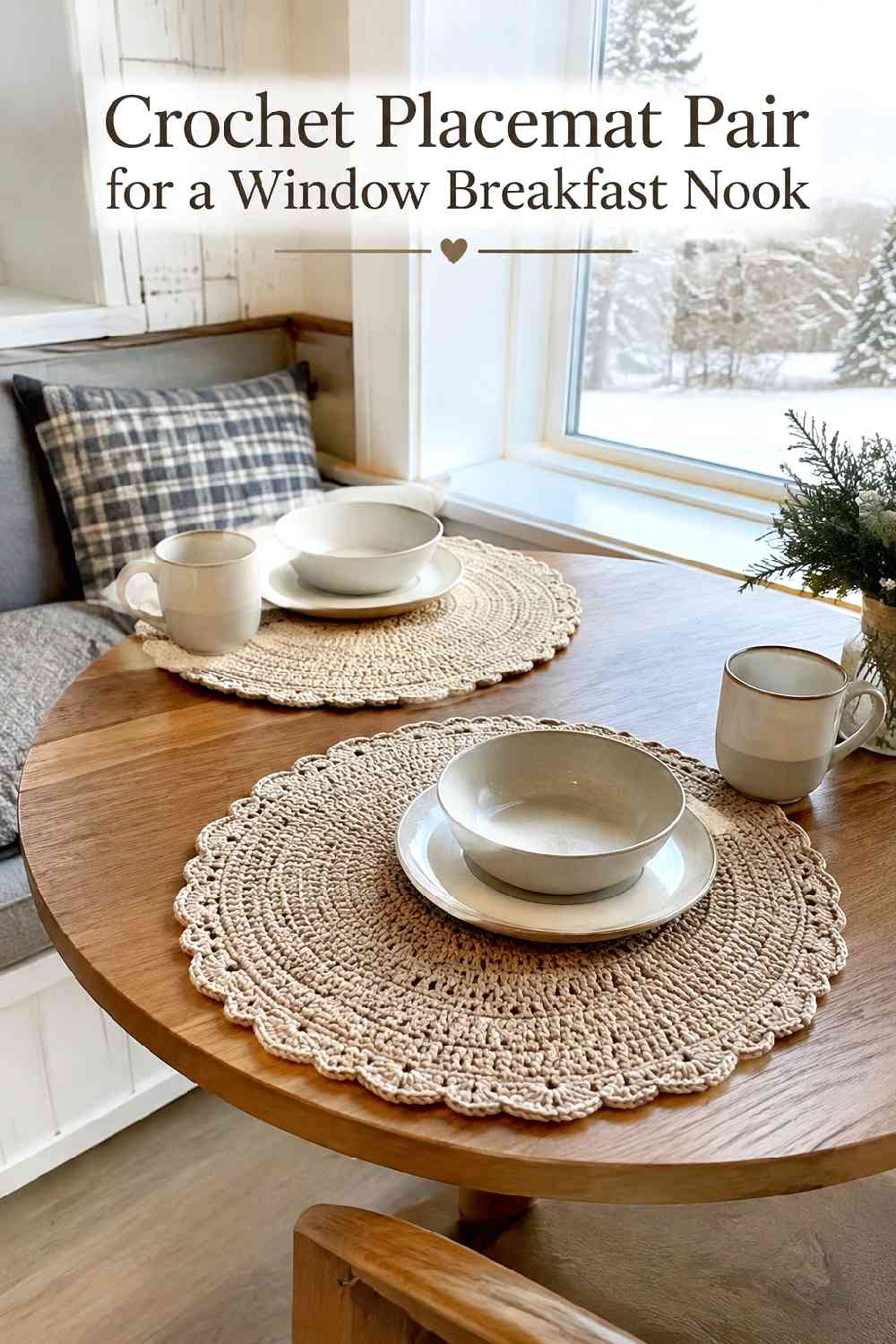
Two crochet placemats can give a tiny breakfast nook a clear sense of purpose without requiring a large centerpiece. This is especially useful beside a winter window, where the visible texture helps the table feel warmer against cold outdoor light.
A small table can become crowded quickly, so leave generous exposed surface around the placemats. Beige, cream, or oatmeal works well with wood and allows mugs or stoneware to provide subtle color. If the nook includes patterned cushions, keep the placemats visually quiet. When the seating is plain, a little more texture in the table layer can help the nook feel finished without adding bulky decor.
10. Crochet Dish Towel Accent on a Brass Oven Handle
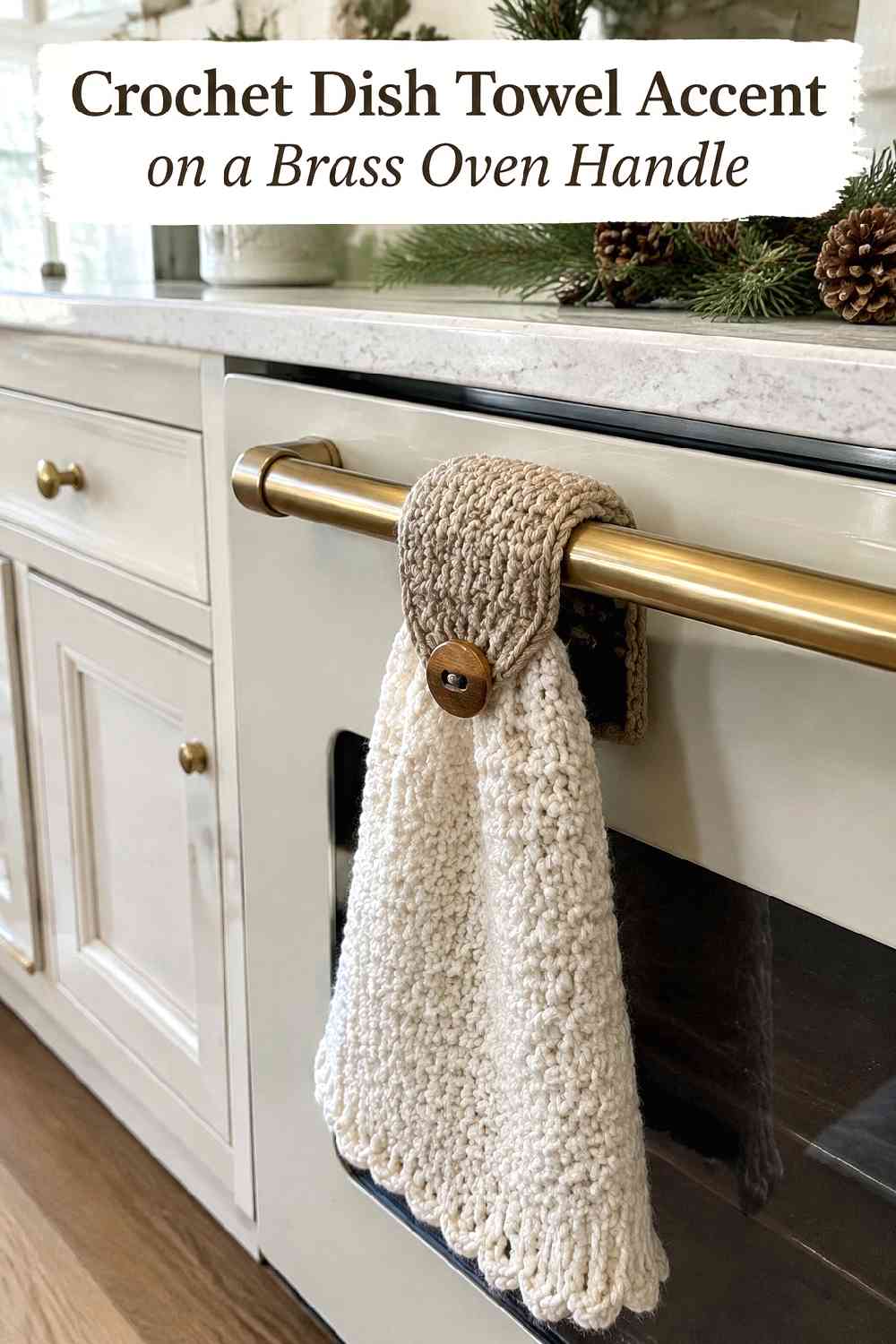
This is one of the easiest ways to introduce crochet character without taking up shelf or counter space. A soft neutral textile against a brass handle creates a warm material contrast and can make plain cabinetry feel more layered.
The visual works best when the oven area is otherwise fairly restrained. If there is already decorative tile, patterned flooring, and several countertop accessories nearby, choose a simple cream or oatmeal accent rather than another strong color. Brass tends to suit warm neutrals particularly well, while black hardware can handle stronger contrast. Keep the treatment limited to one main textile so the appliance does not become visually crowded.
11. Crochet Basket Trio for Open Kitchen Storage
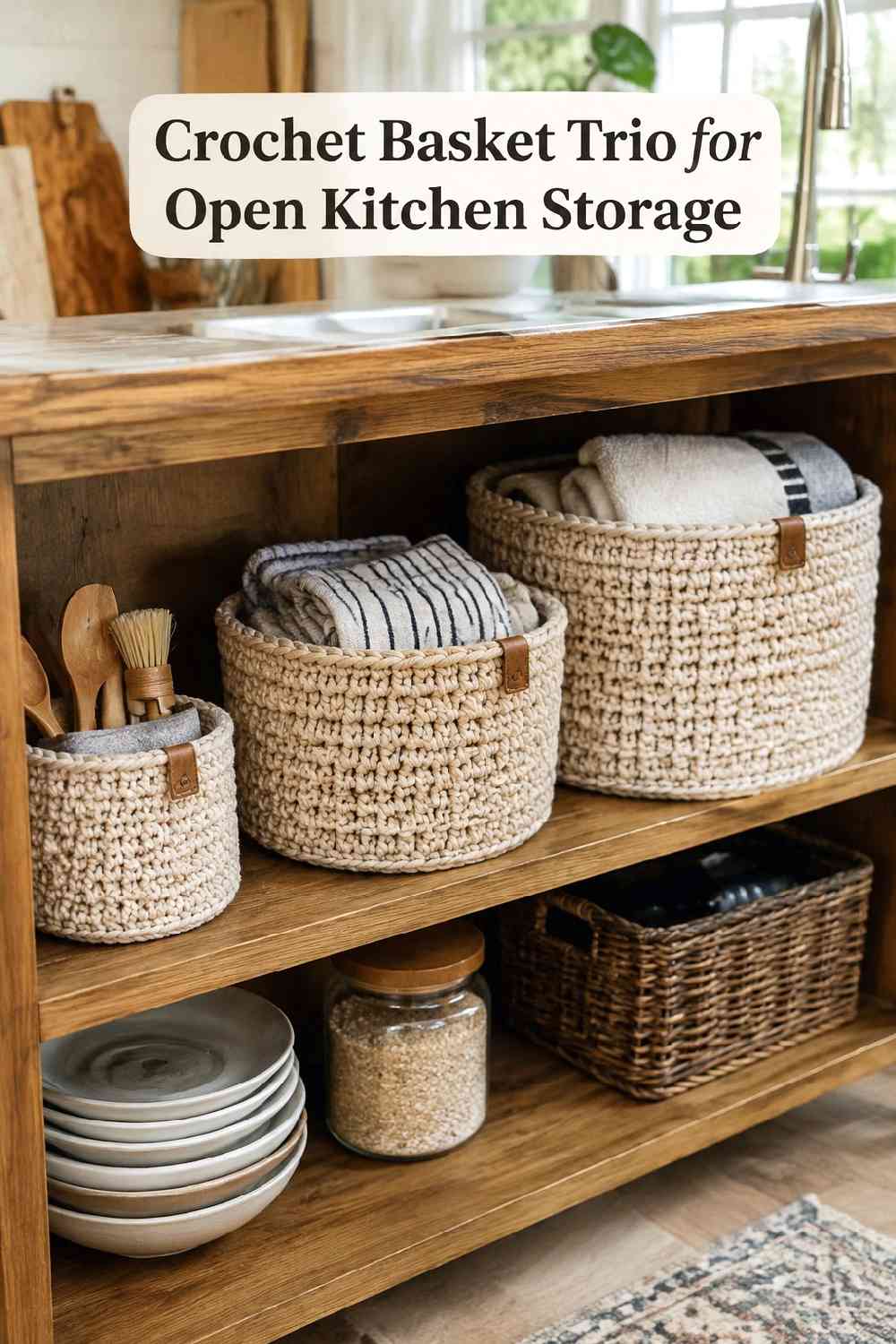
A trio of crochet baskets can make open island shelves feel organized while adding softness beneath hard worktops. Varying the basket size is useful because the group looks more natural and can visually accommodate different categories of lightweight household items.
Scale the baskets to the shelf openings. Containers that are too small can make a large island feel fragmented, while oversized ones can appear squeezed into the cabinetry. Keeping the baskets within one neutral palette also prevents the lower half of the kitchen from feeling too busy. This idea is particularly helpful in open-plan rooms, where tidy storage is visible from the living or dining area and contributes to the overall look of the space.
12. Crochet Pendant Shade Above a Small Kitchen Island
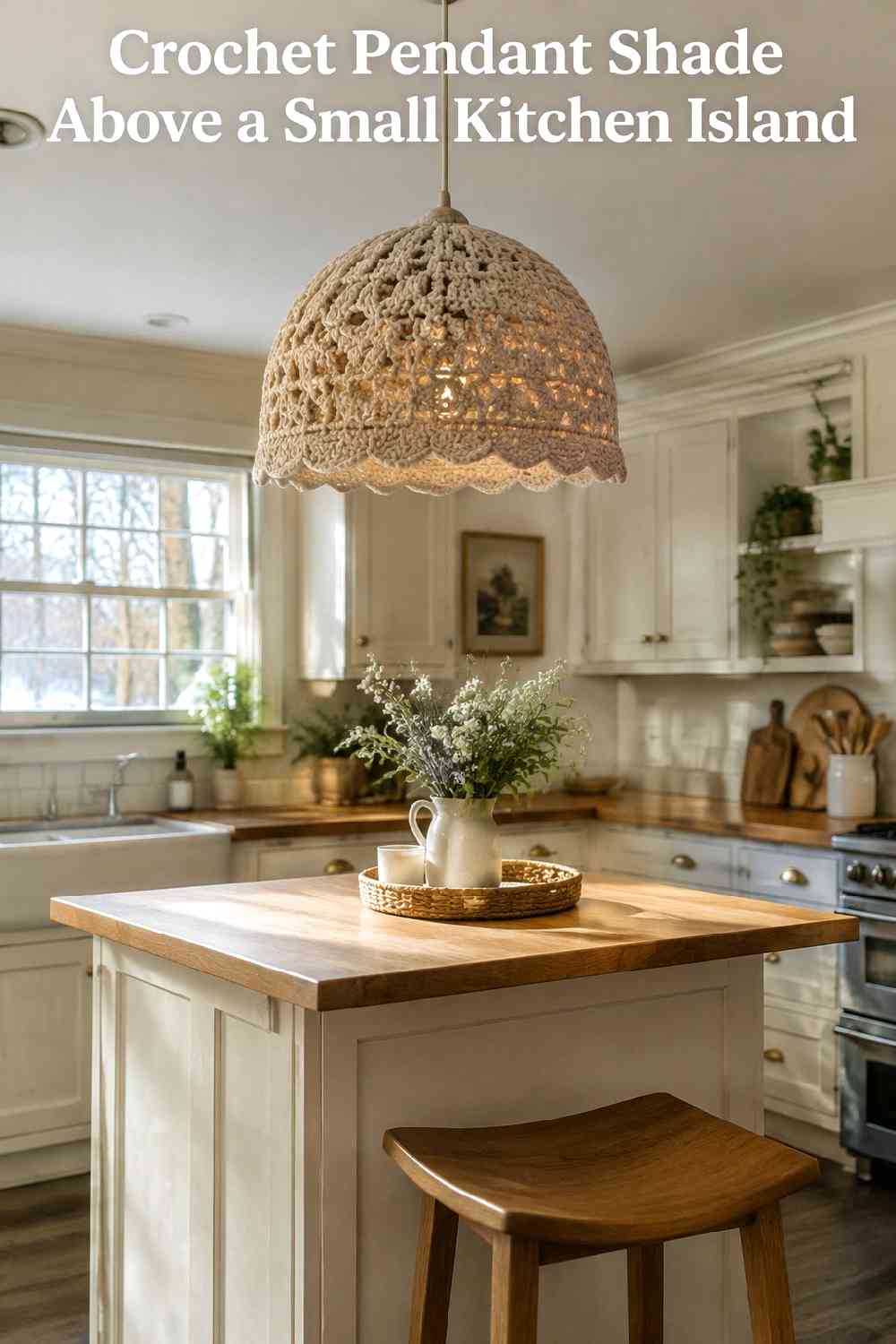
A crochet-textured pendant can become a strong focal point because it places visible texture at eye level rather than adding another object to the counter. In a small kitchen, one decorative overhead feature may create more impact than several smaller accessories.
The shade should feel proportionate to the island. A very broad visual can overpower a compact work surface, while a tiny pendant may look disconnected. Keep nearby cabinetry and backsplash materials relatively quiet so the texture has room to stand out. Cream or warm white works naturally with light oak and village-style interiors, while deeper neutral tones can create contrast in a pale kitchen.
13. Crochet Herb Pot Covers on a Sunny Windowsill
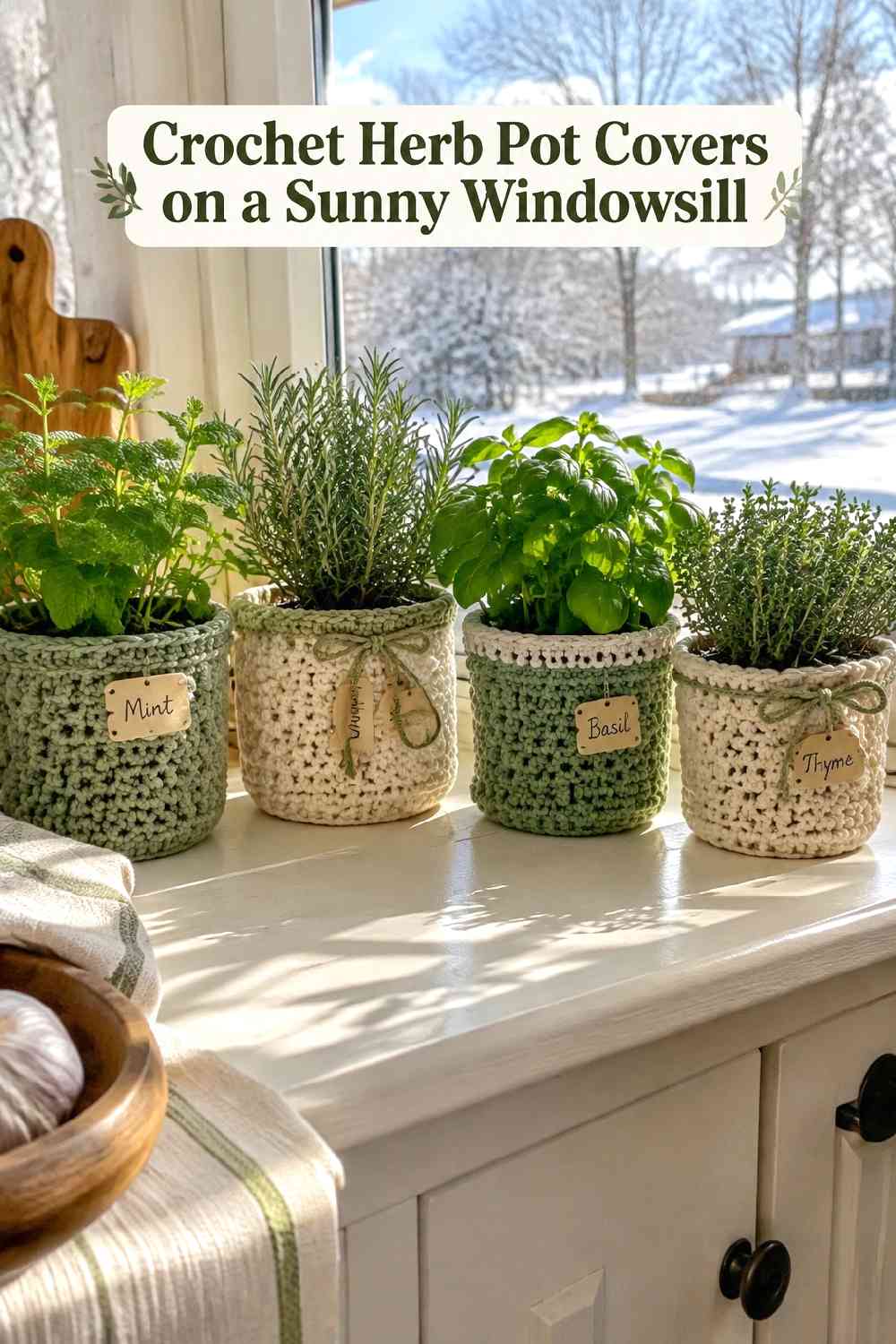
Crochet covers around herb pots bring together two elements that already suit a village kitchen: tactile textiles and fresh greenery. The contrast between soft fiber and leafy plants can make a windowsill feel lively without relying on bright decorative objects.
Keep the colors related to the room. Oatmeal and muted sage are especially effective when the pots sit near wood or warm white paint. On a narrow sill, use only a few pots so the display does not block natural light. If the window has a crochet curtain as well, keep one of the two treatments quieter; placing strong crochet texture both above and below the glass can make a small window feel visually compressed.
14. Crochet Bench Cushion for a Village-Style Kitchen Nook
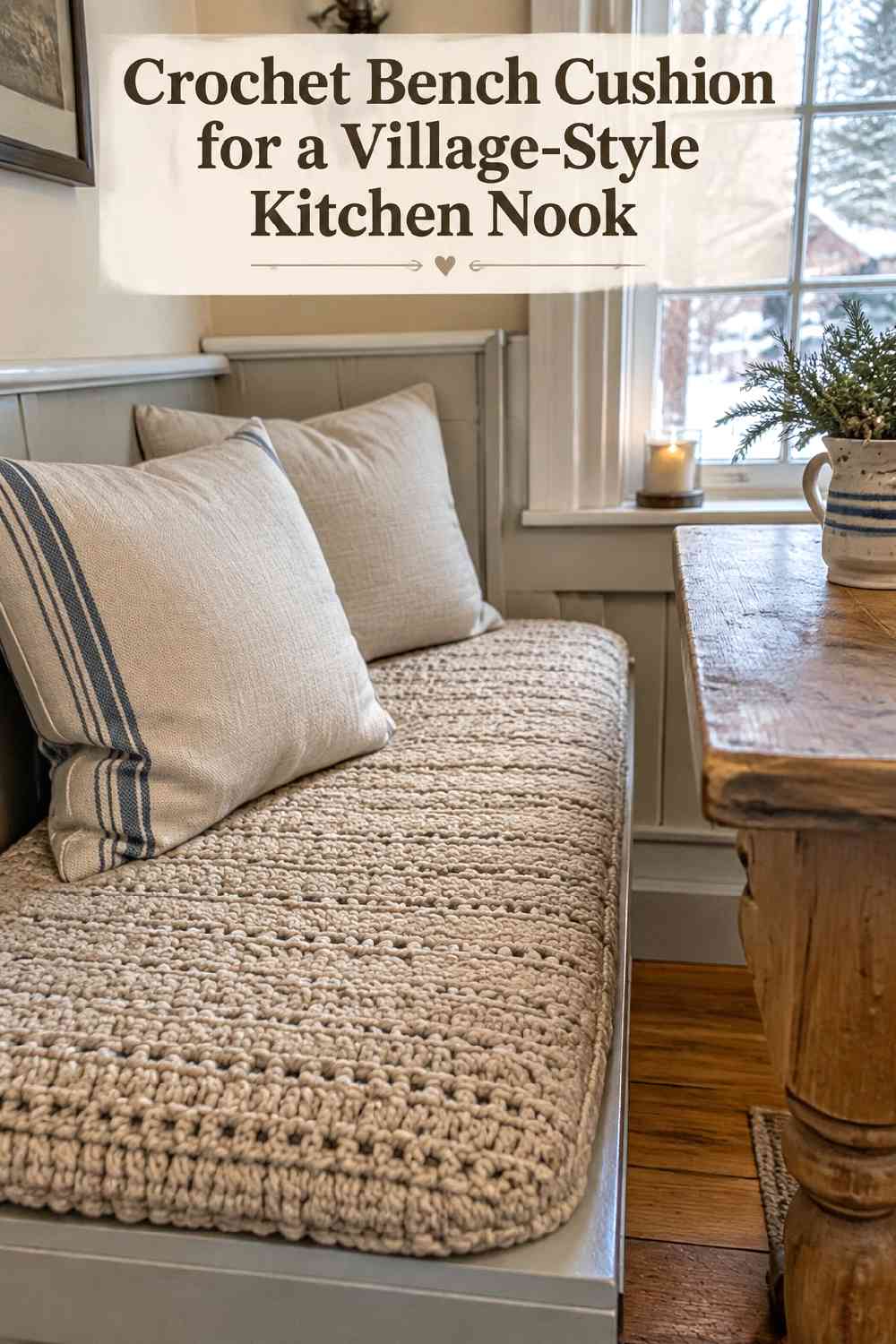
A broad crochet bench cushion carries more visual weight than small accessories, making it suitable for a built-in nook that needs one clear winter focal point. It can also soften the transition between a hard wooden bench and a rustic dining table.
Warm oatmeal works well because it supports wood tones without disappearing completely. If the nook includes several pillows, keep them smoother and less textured so the cushion remains the main tactile feature. In a small breakfast area, avoid combining a heavily textured cushion, patterned curtains, multiple throws, and elaborate wall decor. Giving the bench one strong textile moment usually creates a calmer village-kitchen atmosphere.
15. Crochet Curtain Tiebacks with Wooden Bead Accents
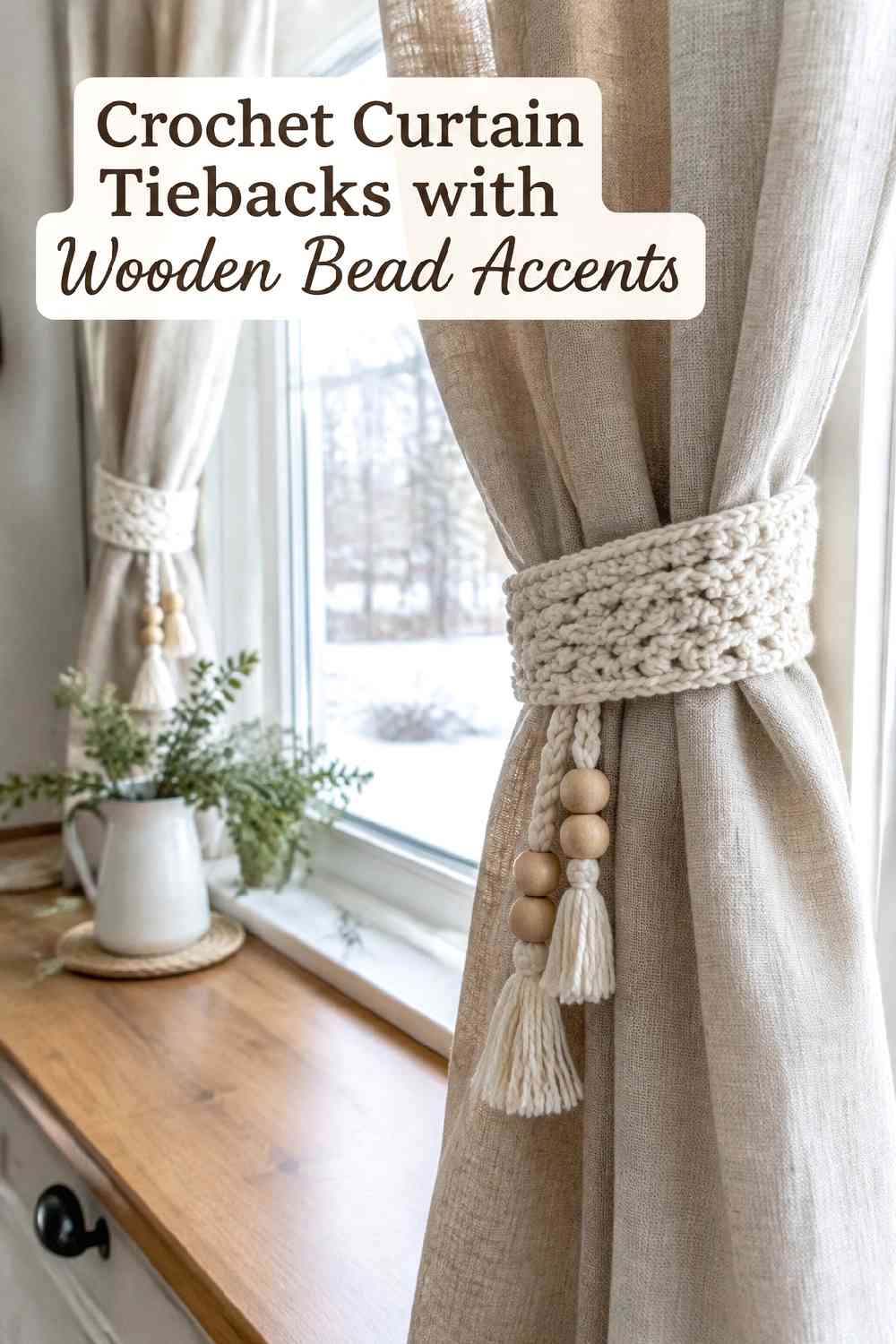
Crochet curtain tiebacks are a good option when you want village character without changing the curtains themselves. Their small scale makes them useful in compact kitchens where larger textile additions could feel heavy.
Wooden beads can connect the tiebacks visually to oak shelves, cutting boards, stools, or other natural details in the room. Keep the bead treatment simple if the curtains already have visible weave or pattern. On plain linen curtains, the extra texture can be more noticeable. This idea works particularly well in daylight because pulling the curtain panels away from the glass keeps the kitchen bright while still giving the window a deliberate winter styling detail.
16. Crochet Wall Pocket for Winter Kitchen Notes and Herbs
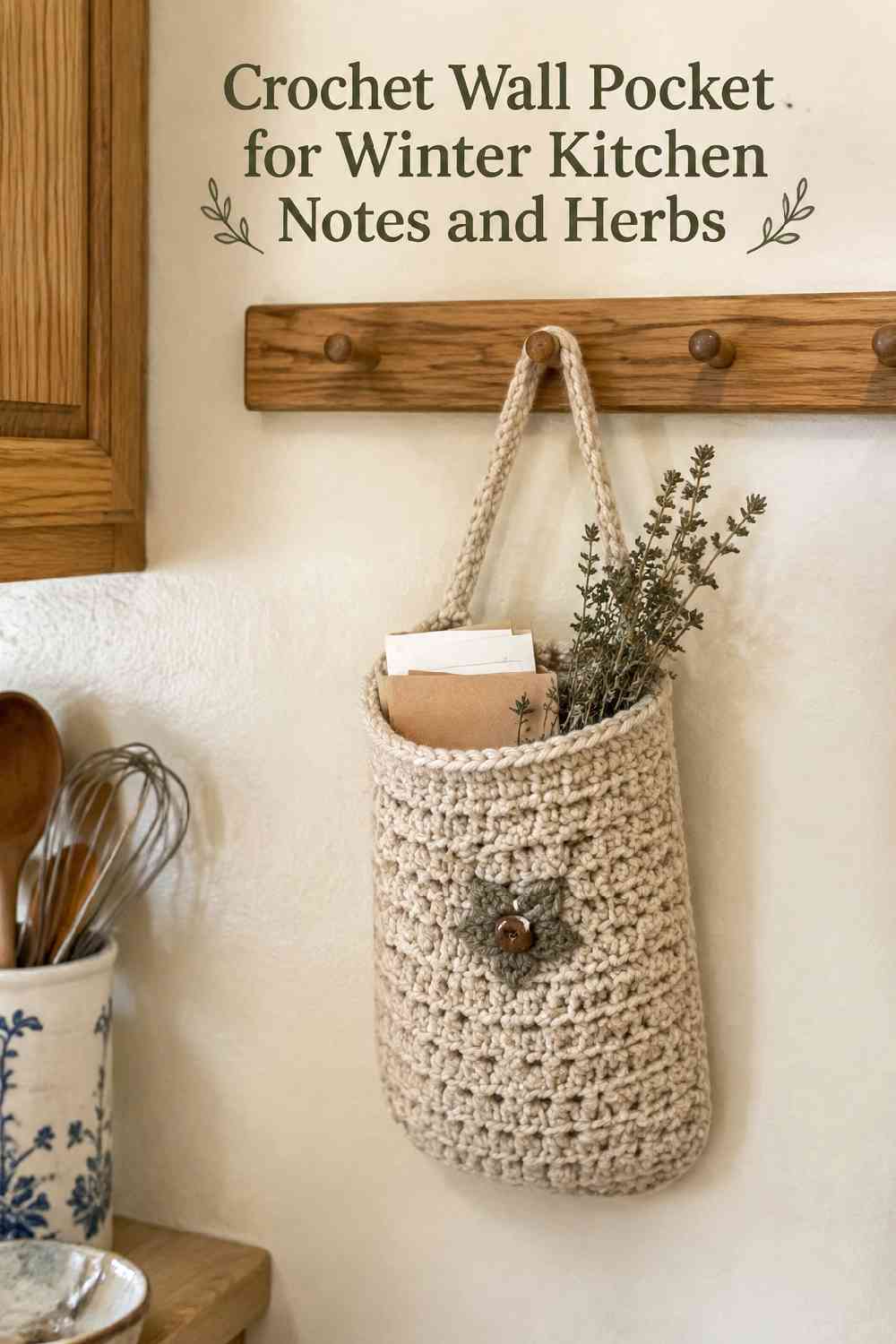
A crochet wall pocket can add texture to a narrow wall that is too small for shelves or larger art. Used sparingly, it can hold a few lightweight notes or dried botanical accents while giving the kitchen a relaxed village feel.
Place it where it does not interfere with food preparation, cabinet doors, or frequent movement. A section of wall near a pantry entrance, sideboard, or peg rail can work more naturally than directly beside the main cooking area. Neutral colors help the pocket blend with everyday decor, while the papers or dried herbs provide subtle variation. Avoid overfilling it; a bulging wall pocket quickly becomes visually heavier than the surrounding space.
17. Crochet Trivet Stack Beside a Stoneware Teapot
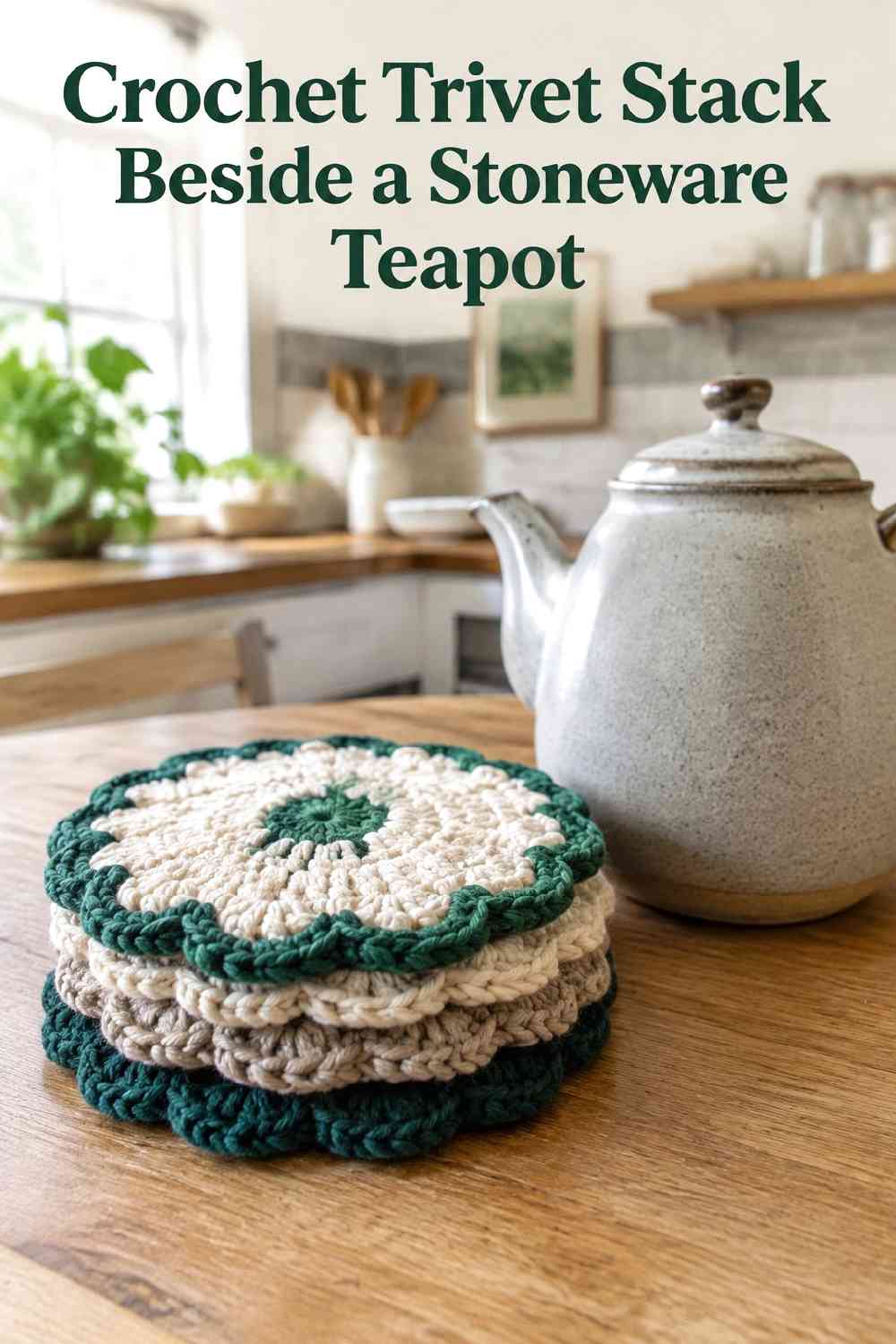
A small stack of crochet trivets can create an attractive texture moment on a tea station or quieter counter section. Because the pieces are relatively low and compact, they are useful in kitchens where vertical space is already occupied by shelves and cabinets.
Coordinate the colors with the teapot and surrounding surfaces. Cream and oatmeal keep the display soft, while one evergreen or burgundy piece can introduce a winter note. Avoid adding several other stacked objects beside them, as repeated piles can make a countertop appear messy. A single stack, one teapot, and perhaps a small tray can create enough structure for the area to feel intentional.
18. Crochet Cabinet Door Panel Accent in Warm Cream
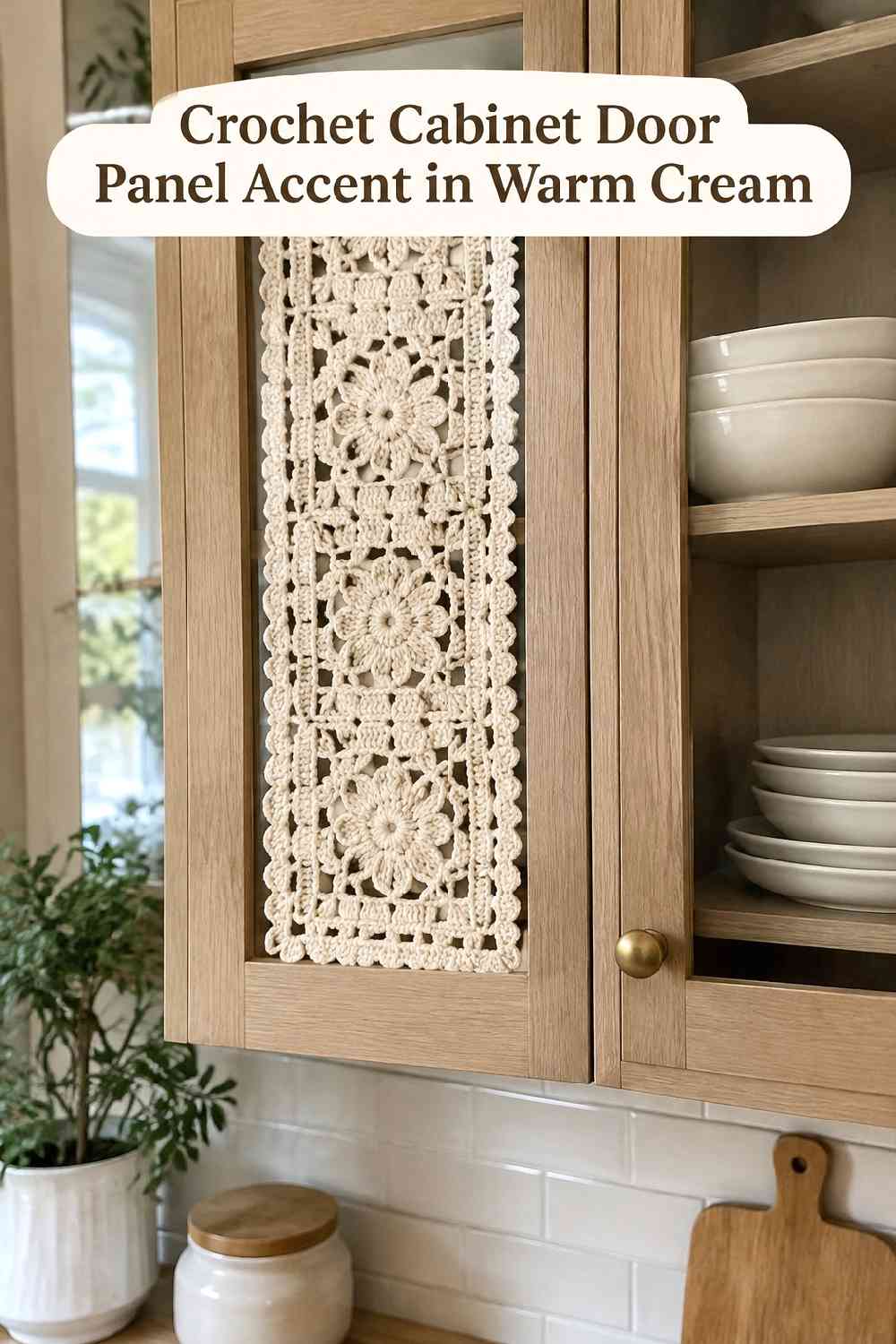
Using crochet as a decorative panel on one glass-front cabinet can introduce texture at eye level without consuming worktop space. The concept is particularly effective when the cabinet contains simple pale ceramics that would otherwise blend into the background.
Limit the treatment to one or a small number of doors so the cabinetry still feels architectural rather than heavily decorated. Warm cream softens dark wood and complements painted cabinets without creating a strong color break. This can also be useful in a compact kitchen because it relies on an existing vertical surface. If the surrounding backsplash is patterned, keep the crochet panel quiet so the two elements do not compete.
19. Crochet Hot Water Bottle Cover on a Kitchen Reading Chair
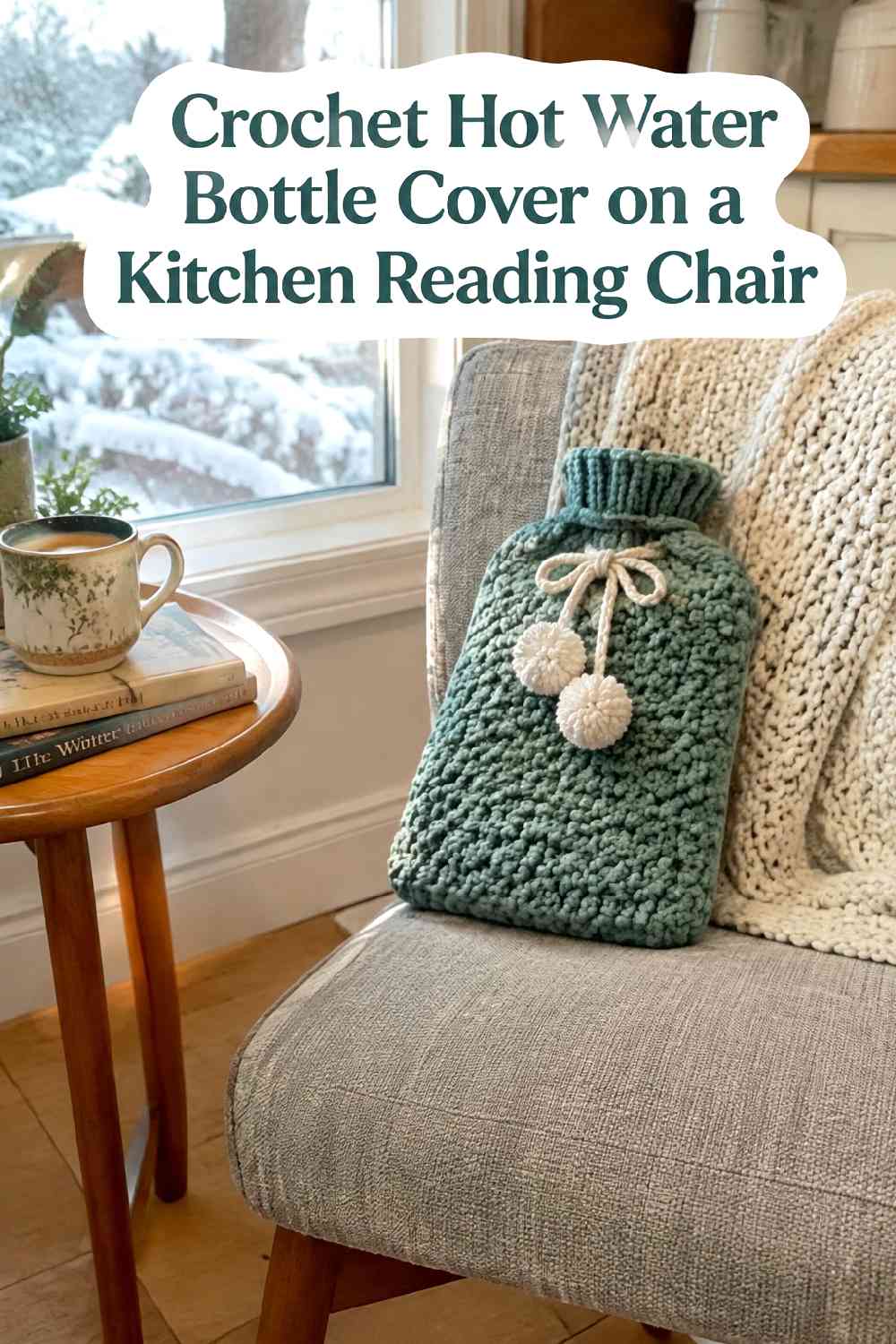
Some village kitchens include a small armchair or reading corner, and a crochet-covered hot water bottle can reinforce the winter mood without making the cooking area itself overly decorative. The idea works best as a cozy accent within the seating zone rather than directly on a food-preparation surface.
Choose a color that relates to the chair upholstery or nearby wood. Cream softens dark fabric, while burgundy or forest green can deepen a pale corner. One tactile accent is usually enough if the chair already has a cushion or throw. Keeping the seating area visually distinct from the working kitchen helps the room feel layered rather than cluttered.
20. Crochet Market Bag Hanging from a Peg Rail
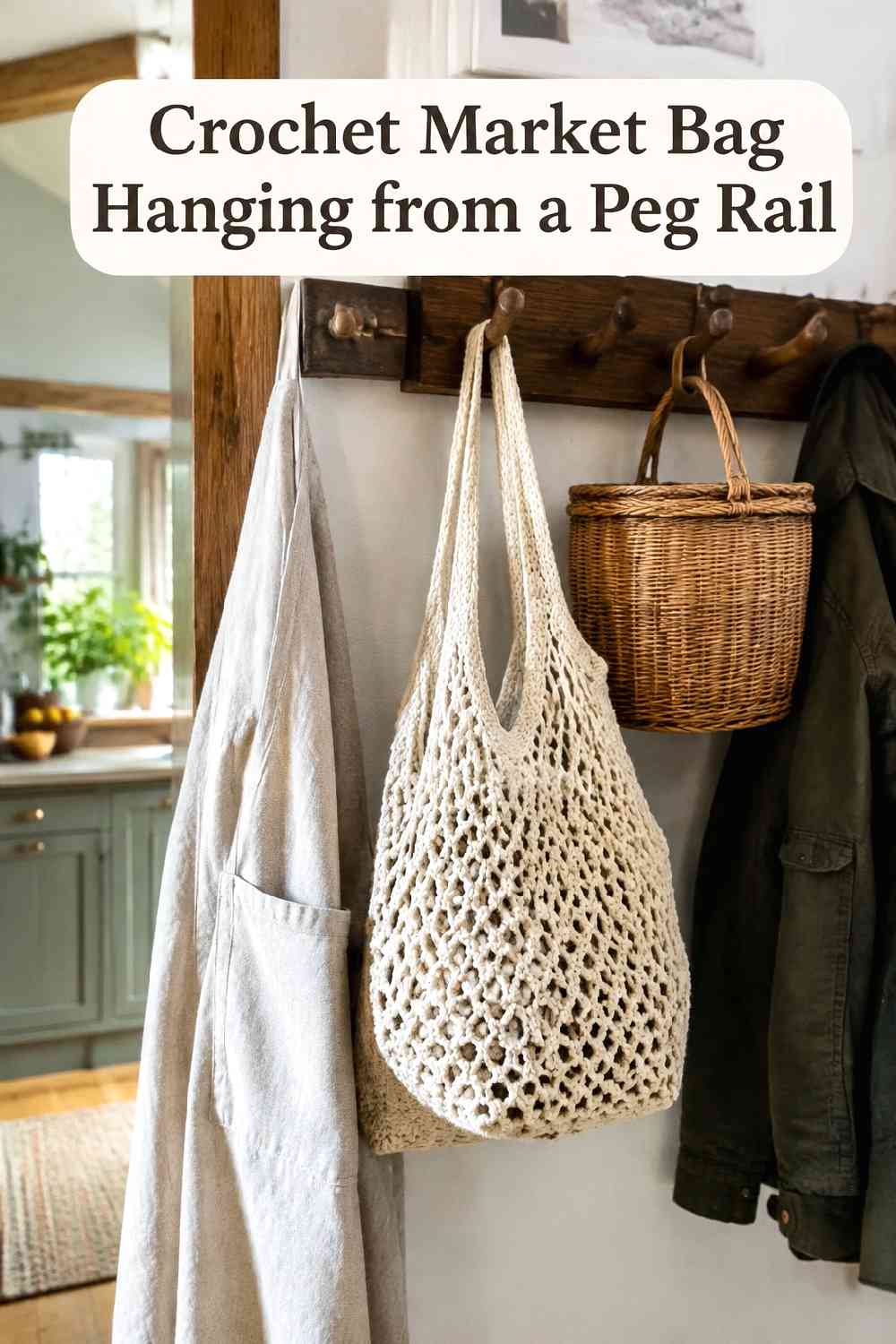
A relaxed crochet market bag brings useful vertical texture to an entry-facing kitchen wall or peg rail. It suits village styling because it feels casual and functional while occupying very little floor or counter space.
Cream and natural tones work particularly well beside wood pegs, linen aprons, woven baskets, and rustic doors. Keep the rail edited rather than filling every hook; a bag, apron, and one or two practical pieces can be enough. In a narrow kitchen, make sure the hanging items do not project into a walkway. This concept is strongest when it supports the room’s everyday character without making the wall look like overloaded storage.
21. Crochet Snowflake Wall Art Above a Small Sideboard
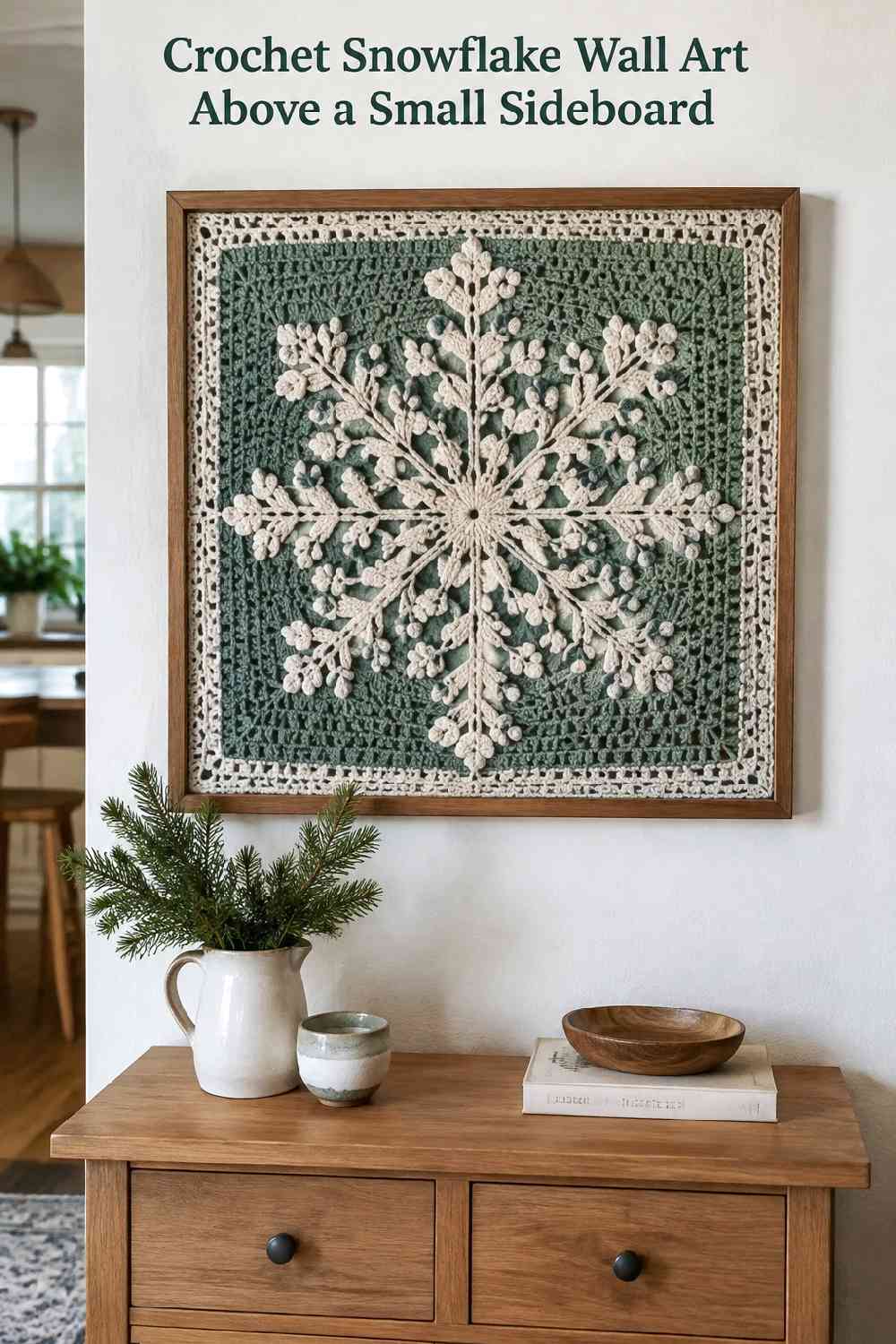
A larger crochet snowflake-inspired wall piece can create a clear seasonal focal point without spreading winter motifs across every surface. A framed or contained presentation tends to look more deliberate above a sideboard than several tiny themed objects.
Scale the piece to the furniture below it. A very small design can disappear above a broad cabinet, while an oversized one may make a narrow wall feel cramped. Warm white or cream keeps the winter theme subtle against muted plaster or wood. Let the sideboard styling remain simple—perhaps a ceramic vessel and a little greenery—so the crochet artwork has enough visual breathing room.
22. Crochet Fruit Hammock Under an Open Shelf
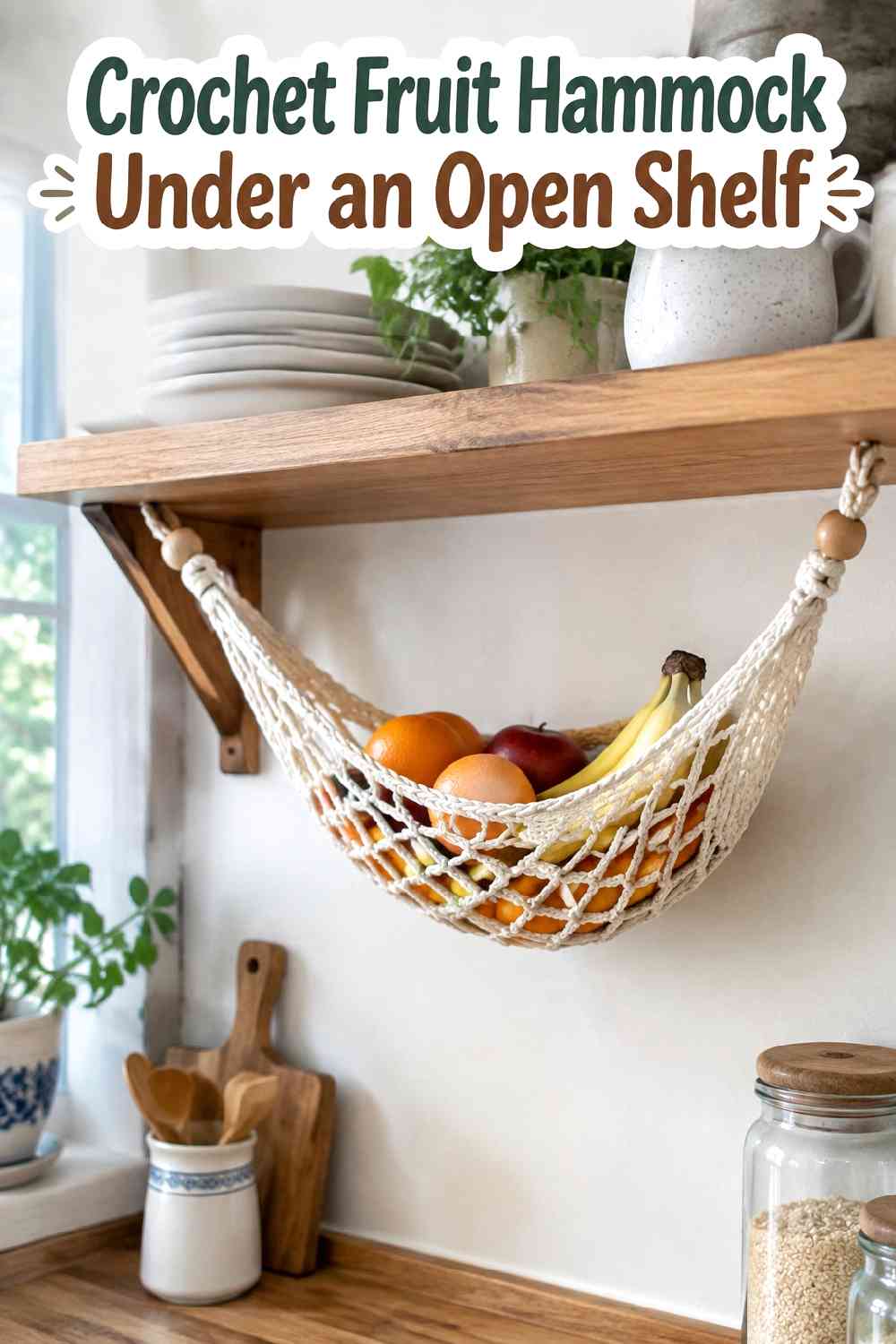
A crochet fruit hammock can help free a small amount of counter space while adding texture beneath an open shelf. It suits compact village kitchens particularly well because it uses otherwise empty vertical space.
The key is keeping the arrangement visually light. A hammock that hangs too low or looks heavily filled can make the counter below feel compressed. Position it where cabinet doors and daily prep work remain unobstructed. Neutral crochet blends easily with wood shelving and colorful fruit provides the natural contrast. If the shelf above is already full of jars, plants, and ceramics, simplify that display so the entire zone does not become too visually dense.
23. Crochet Tea Cozy as a Cottage Kitchen Focal Point
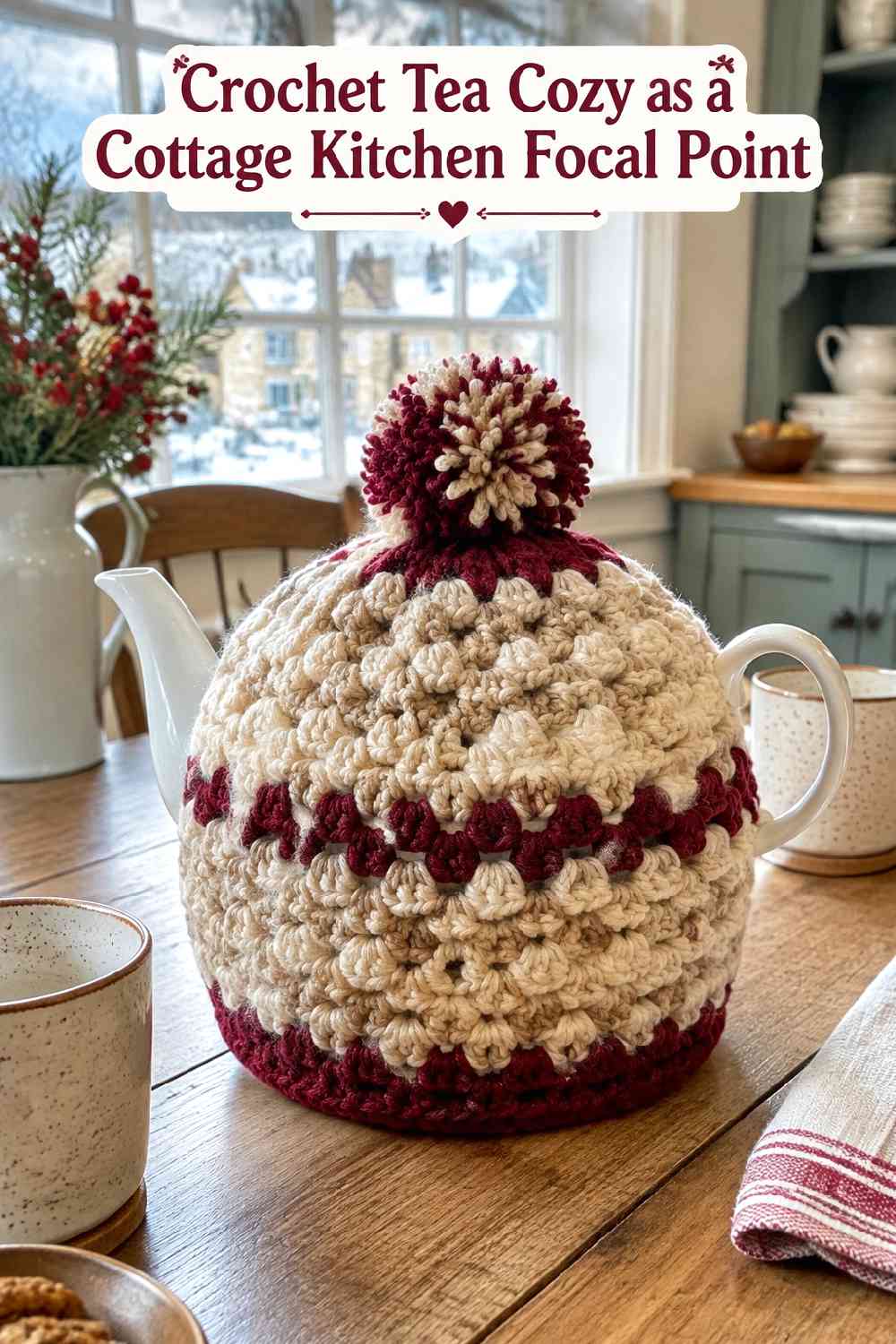
A substantial crochet tea cozy can become a charming focal point on a breakfast table, tea cart, or quiet counter area because it combines a familiar kitchen object with strong textile texture. Winter is a particularly natural season for this kind of styling concept.
Warm cream keeps the look timeless, while muted burgundy or deep green adds seasonal depth. If the tea cozy is visually prominent, pair it with plain cups and simple stoneware rather than heavily decorated tableware. The strongest composition gives the object a little space around it instead of surrounding it with several competing accessories. That helps the crochet texture feel intentional rather than ornamental clutter.
24. Crochet Stool Covers Around a Compact Island
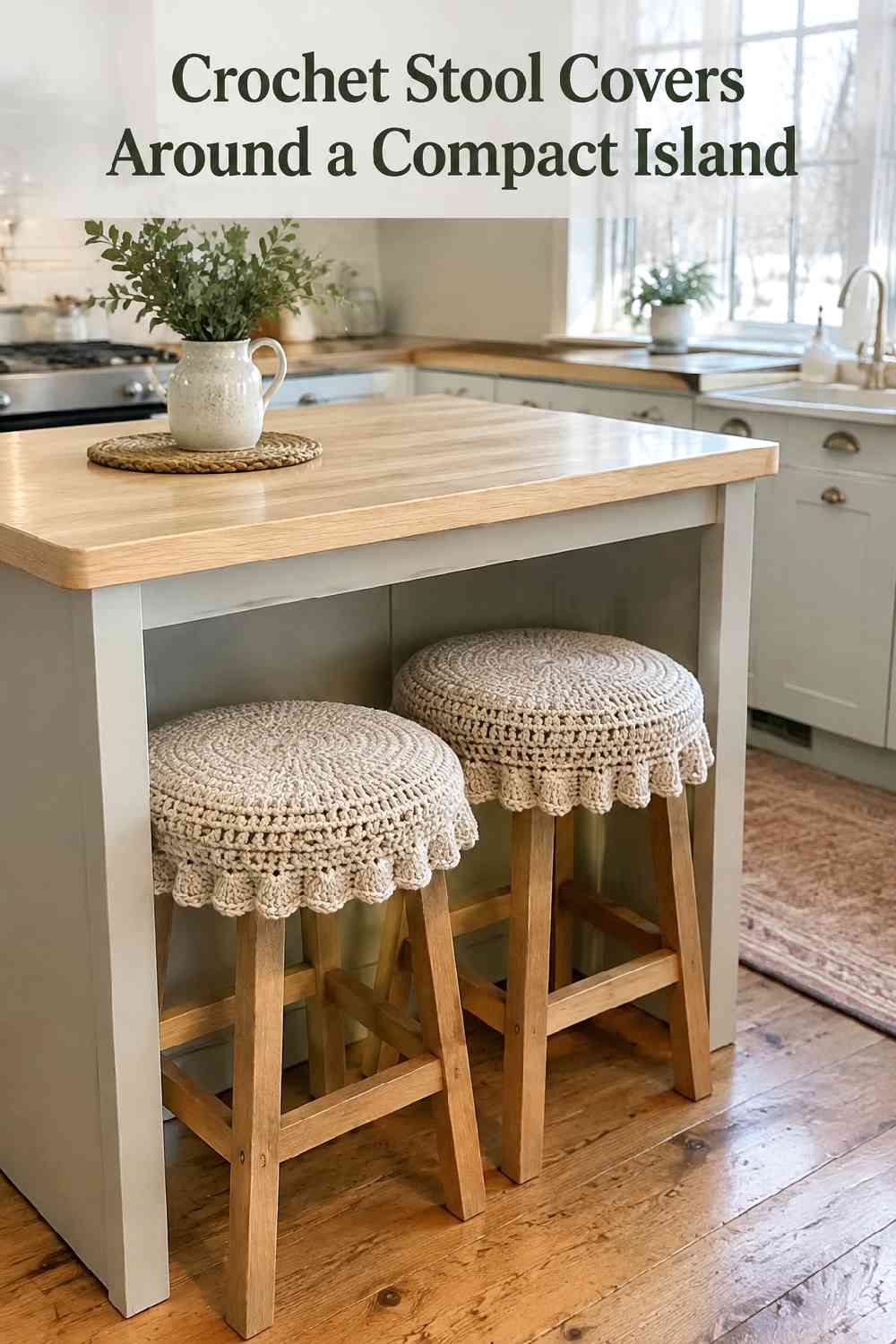
Crochet stool covers can soften the hard edges of a kitchen island and introduce texture without sacrificing counter space. In a compact room, this is useful because the textile element stays connected to furniture already present.
Keep the covers closely related in color so the island reads as one composition. Oatmeal or cream works well with natural wood, while muted sage can connect the stools to green cabinetry or winter foliage. If the island is visually heavy or dark, lighter covers can soften it. Avoid using equally bold crochet treatments on pendant lights, baskets, and stools at the same time; choose one dominant texture and let the others stay quieter.
25. Crochet Utensil Basket Cover Beside the Prep Area
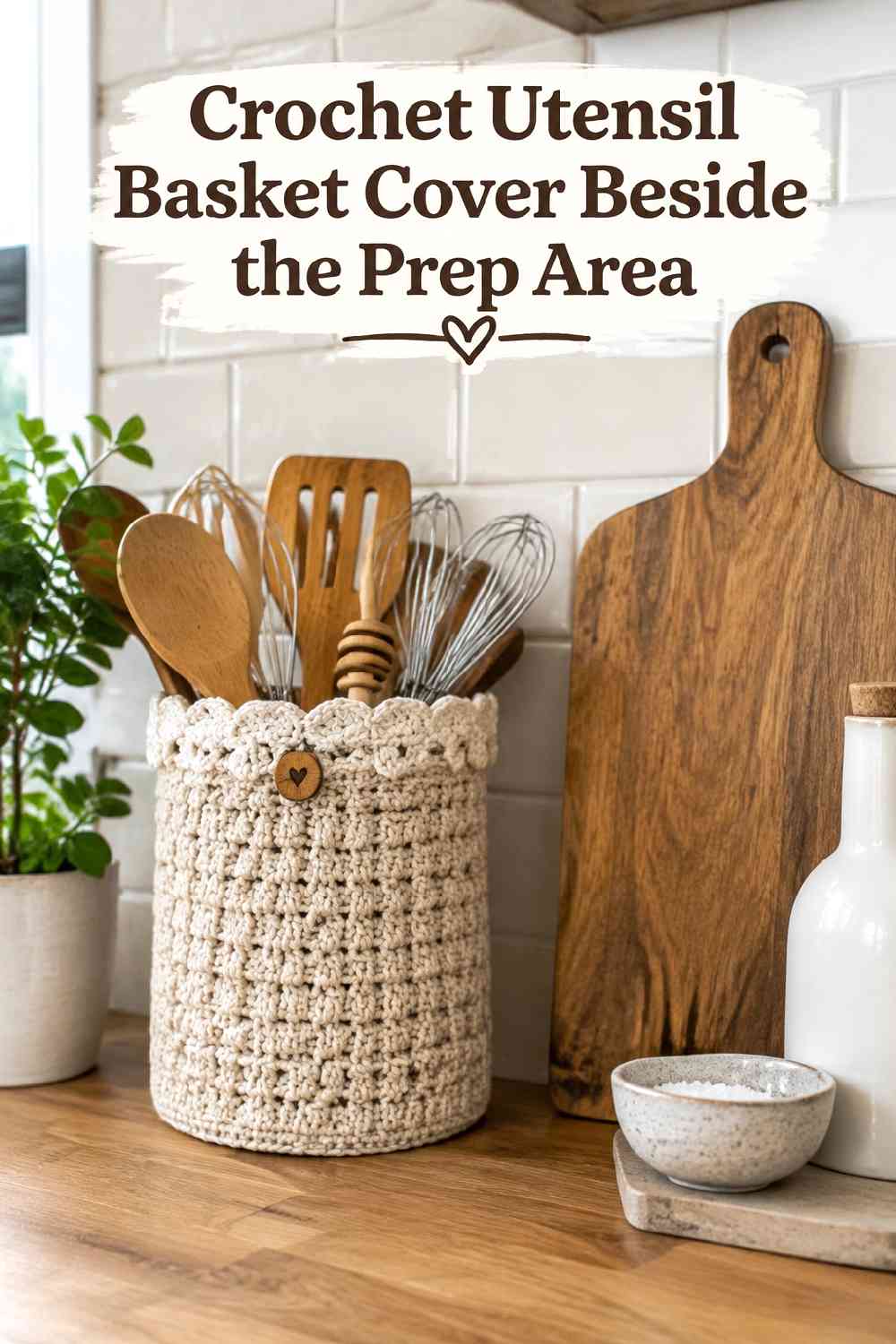
A crochet-covered utensil basket can soften the look of a practical counter zone while keeping commonly used tools visually grouped. It works best when the rest of the prep area is relatively uncluttered.
Choose a container with enough visual weight to sit comfortably beside cutting boards or stoneware without disappearing. A warm neutral keeps the crochet from competing with utensils, backsplash tile, and worktop materials. If the kitchen already has several crochet accents, use a quieter version here because prep areas tend to contain plenty of visual information already. Keeping the textile treatment contained to one basket makes the concept feel useful rather than decorative for its own sake.
26. Crochet Window Sill Mat Under Winter Greenery
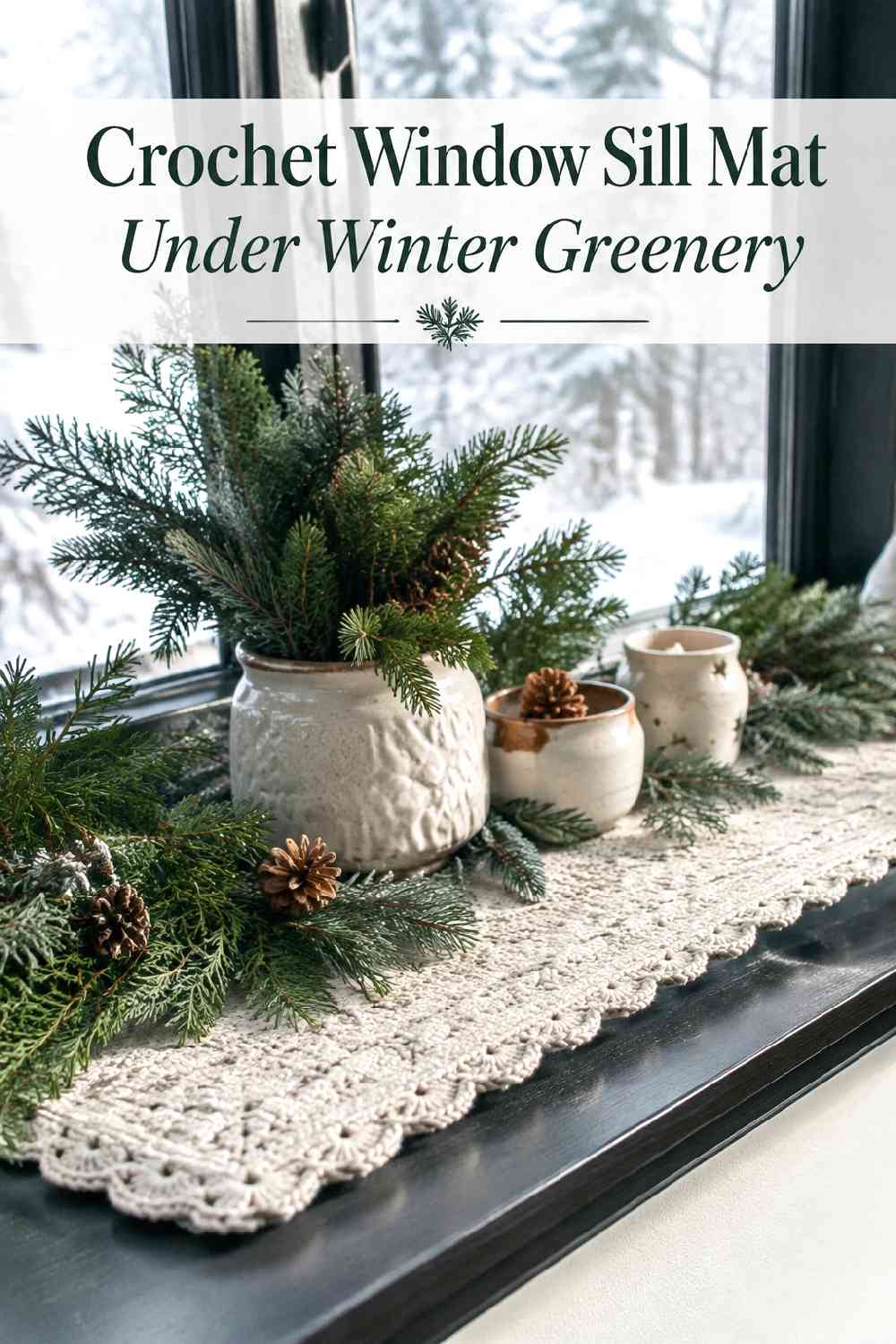
A long crochet sill mat can provide a soft base for a restrained winter greenery display while protecting the composition from feeling like a row of unrelated pots and ornaments. The textile visually connects the individual objects.
Scale the mat to leave some visible sill around the edges. Covering the entire ledge can make the window treatment feel heavy, especially in a small kitchen. Cream works beautifully beneath dark evergreen branches because it creates crisp seasonal contrast without relying on bright holiday colors. Keep the greenery low enough to preserve daylight and avoid combining a heavily decorated sill with an equally elaborate curtain treatment.
27. Crochet Fireplace Mantel Accents in an Open-Plan Kitchen
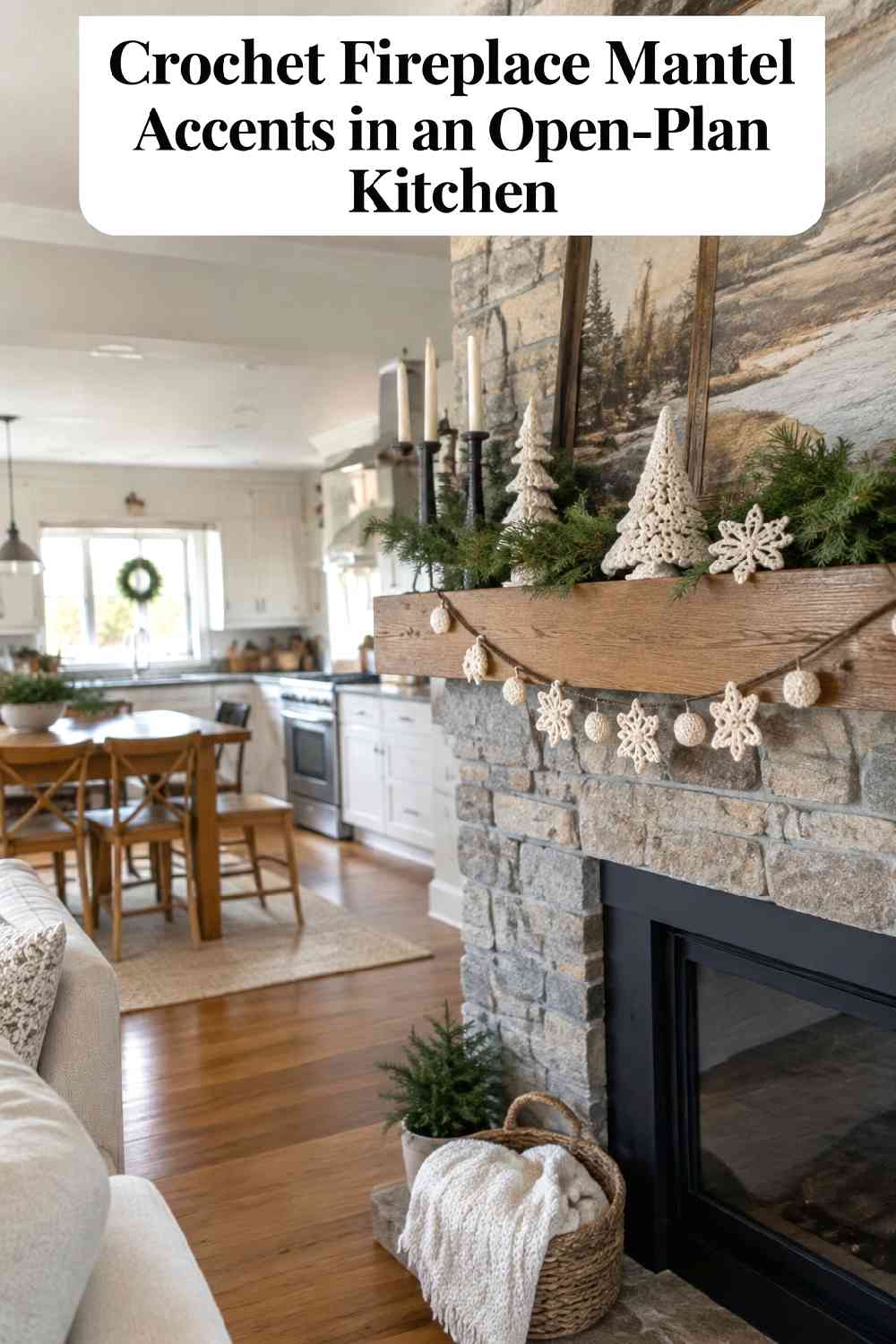
When a fireplace is visible from the kitchen, a few crochet mantel accents can help connect the cooking and living zones during winter. Repeating the kitchen’s cream, oatmeal, or muted green palette across the mantel can create continuity without making both areas identical.
Use crochet selectively because stone, timber, firewood, and greenery already bring plenty of texture to a fireplace. A short garland or a few small accents will often be enough. In a large open-plan space, the repeated textile color can guide the eye from kitchen seating toward the hearth. In a smaller room, keep the fireplace styling especially restrained so the kitchen does not end up competing with another elaborate focal point.
28. Crochet Layered Table Centerpiece for a Winter Supper
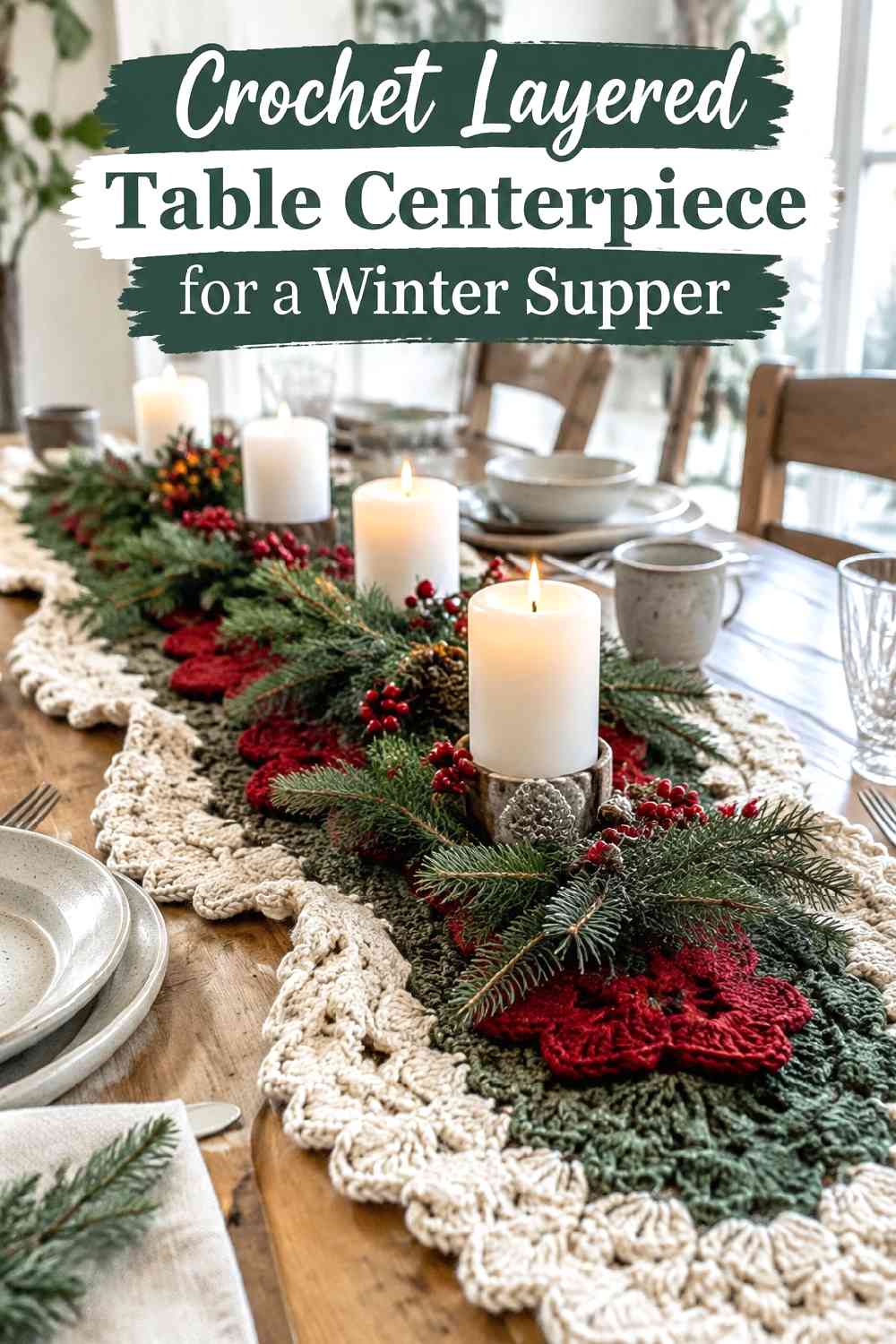
A layered crochet centerpiece can turn a farmhouse table into the main focal point for a winter meal. Rather than covering the entire surface, place the crochet element along the center so diners still see the character of the wood.
Pair the textile with a few low candles, stoneware, and evergreen sprigs to create height variation without blocking conversation across the table. Cream or oatmeal gives darker winter accessories room to stand out. On a narrow table, reduce the number of decorative layers so practical serving space remains available. This concept works particularly well for seasonal gatherings because the stronger styling can be removed later, allowing the room to return easily to a quieter everyday arrangement.
Choosing the Right Look for Your Room
Start by looking at what your kitchen already has in abundance. If you have dark timber, stone, patterned flooring, or open shelving filled with objects, choose lighter and quieter crochet ideas such as a café curtain, chair pads, curtain tiebacks, or a simple table runner. A plainer kitchen can support a stronger focal point such as a bench cushion, pendant shade, wall artwork, or layered winter table centerpiece. Floor and counter space matter too: compact kitchens benefit from window, wall, cabinet, and seating ideas that do not obstruct movement, while larger rooms can carry broader baskets and textiles. Also consider whether you want the crochet to stay after winter. Neutral storage baskets, stool covers, and herb-pot accents can transition easily, while snowflake artwork and mantel decor make more sense as clearly seasonal features.
FAQs
How much crochet decor should I use in a small village kitchen?
A small kitchen usually feels more balanced with a few purposeful accents rather than crochet on every surface. Choose two or three areas that do not compete—for example, a window treatment, seating accent, and one storage piece—and leave nearby surfaces relatively simple.
Which crochet colors work best with warm wood cabinetry?
Cream, oatmeal, muted sage, soft rust, and subdued burgundy can all work well. Cream and oatmeal lighten dark wood, while sage can balance orange undertones. Deeper winter colors are often best used in smaller amounts so the cabinetry remains visually dominant.
Can crochet decor work in a modern kitchen?
Yes. In a modern room, use crochet as a controlled textural contrast rather than a full theme. One neutral runner, basket, stool cover, or window accent can soften smooth cabinets, stone counters, and metal fixtures without changing the overall modern character.
How can I keep winter crochet decor from looking too busy?
Limit the number of strong textures in one sightline. When the crochet piece is highly visible, keep nearby fabrics, ceramics, and patterns simpler. Repeating a tight color palette also helps several materials feel connected instead of cluttered.
Which ideas are best when counter space is limited?
Window treatments, curtain tiebacks, cabinet accents, wall pockets, peg-rail displays, wall art, chair pads, stool covers, and under-shelf storage concepts can add crochet character without occupying much counter space.
Should every crochet accent in the kitchen match?
They do not need to be identical. A more natural look often comes from related colors and similar visual weight rather than exact matching. For example, cream, oatmeal, and sage can coordinate while still giving each zone its own character.
What crochet decor works beyond the winter season?
Neutral baskets, chair pads, table runners, herb-pot covers, market bags, curtain tiebacks, and storage accents can work year-round. Snowflakes, winter garlands, mantel pieces, and strongly seasonal table displays are easier to rotate out when spring arrives.
Where should I start if my kitchen already has plenty of decor?
Choose one area that could benefit from either softness or function. A simple crochet basket on open shelving or a neutral runner on a wooden table can establish the look without requiring you to redesign the entire kitchen.
Conclusion
For an easy starting point, choose one area where your kitchen already needs either softness, storage, or a seasonal focal point. A cream runner, coordinated basket, or subtle window accent can introduce the village-kitchen mood without overwhelming the room, and you can build from there only if the additional texture genuinely improves the space.