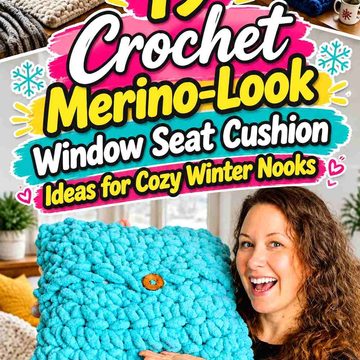
A crochet woodland ornament collection can make a winter tree feel gathered from a storybook forest rather than assembled from one matching box of decorations. Toadstools, pinecones, birds, leaves, woodland animals, and miniature evergreens provide the natural shapes, while stars, snowflakes, wreaths, and old-fashioned bells add the nostalgic winter layer.
The projects in this collection are intentionally different. Some are nearly flat and easy to tuck between larger ornaments, while others are stuffed or dimensional enough to become focal points. A few tutorials are explicitly woodland ornaments; others are traditional winter decorations that can support a vintage forest palette through cream, rust, moss, bark brown, faded red, oatmeal, and muted gold.
For the most convincing vintage look, resist making every ornament identical. A handmade tree often looks richer when delicate lace pieces, small animal characters, natural forms, and a few stronger holiday symbols are mixed at different heights.
Quick List
- Crochet Toadstool Forest Tree Ornament
- Crochet Layered Pinecone Tree Ornament
- Crochet Folk Bird Woodland Ornament
- Crochet Woodland Reindeer Head Ornament
- Crochet Round Owl Forest Ornament
- Crochet Fox Woodland Tree Ornament
- Crochet Mistletoe Sprig Tree Ornament
- Crochet Flat Evergreen Tree Ornament
- Crochet Maple Leaf Woodland Ornament
- Crochet Lace Snowflake Forest Ornament
- Crochet Soft Evergreen Wreath Ornament
- Crochet Nordic Forest Gnome Ornament
- Crochet Robin Bauble Tree Ornament
- Crochet Little Woodland Mouse Ornament
- Crochet Bedazzled Folk Star Ornament
- Crochet Snow-Tipped Mini Tree Ornament
- Crochet Vintage Bell Woodland Ornament
Build the Tree Around Silhouette, Not Just Woodland Colors
Brown and green alone do not create a convincing woodland collection. Shape does more of the work.
Pinecones and acorns suggest the forest floor. Mushrooms introduce rounded forms. Birds and animals create character focal points. Evergreen trees establish height, while snowflakes and stars give the eye lighter open shapes between stuffed ornaments.
Try alternating visual weight as you decorate. A large owl beside a reindeer and fox may create a crowded group of faces, while an owl separated by a flat leaf, snowflake, or tree feels easier to read.
Vintage styling also benefits from imperfect repetition. Three pinecones do not have to match three mushrooms exactly. Repeating a restrained palette or the same hanging ribbon can create enough unity.
Choose Ornament Materials by Structure and Storage
Flat lace ornaments need clear stitch definition and may benefit from fiber-appropriate shaping. Stuffed animals need fabric dense enough that the filling does not become visually distracting. Pinecones rely on raised texture, while wreaths and trees need their overall outlines to remain recognizable.
Yarn substitution therefore changes more than color. A thicker yarn can turn a delicate branch ornament into something too heavy for a fine tree limb. A fuzzy fiber can soften a woodland animal beautifully but hide tiny facial details.
Storage deserves the same planning. Flat stars, leaves, and snowflakes can usually share a shallow box. Dimensional mushrooms, animals, pinecones, and gnomes need enough space that ears, antlers, caps, and textured surfaces are not flattened beneath heavier decorations.
Keep Small Parts and Hanging Loops Practical
A hanging loop should support the crocheted body rather than a fragile decoration. Test the first completed ornament on an actual tree branch before making a matching set. Some pieces need a short loop to face forward; others need extra clearance from dense greenery.
Small beads, safety eyes, glued decorations, wire supports, bells, and other embellishments also affect where an ornament is appropriate. If small children or pets can reach the tree, consider whether detachable details, wires, or small components suit that display location.
Tree lights introduce another practical consideration. Keep yarn decorations clear of heat sources and follow the safety guidance for your lighting system and materials.
1. Crochet Toadstool Forest Tree Ornament
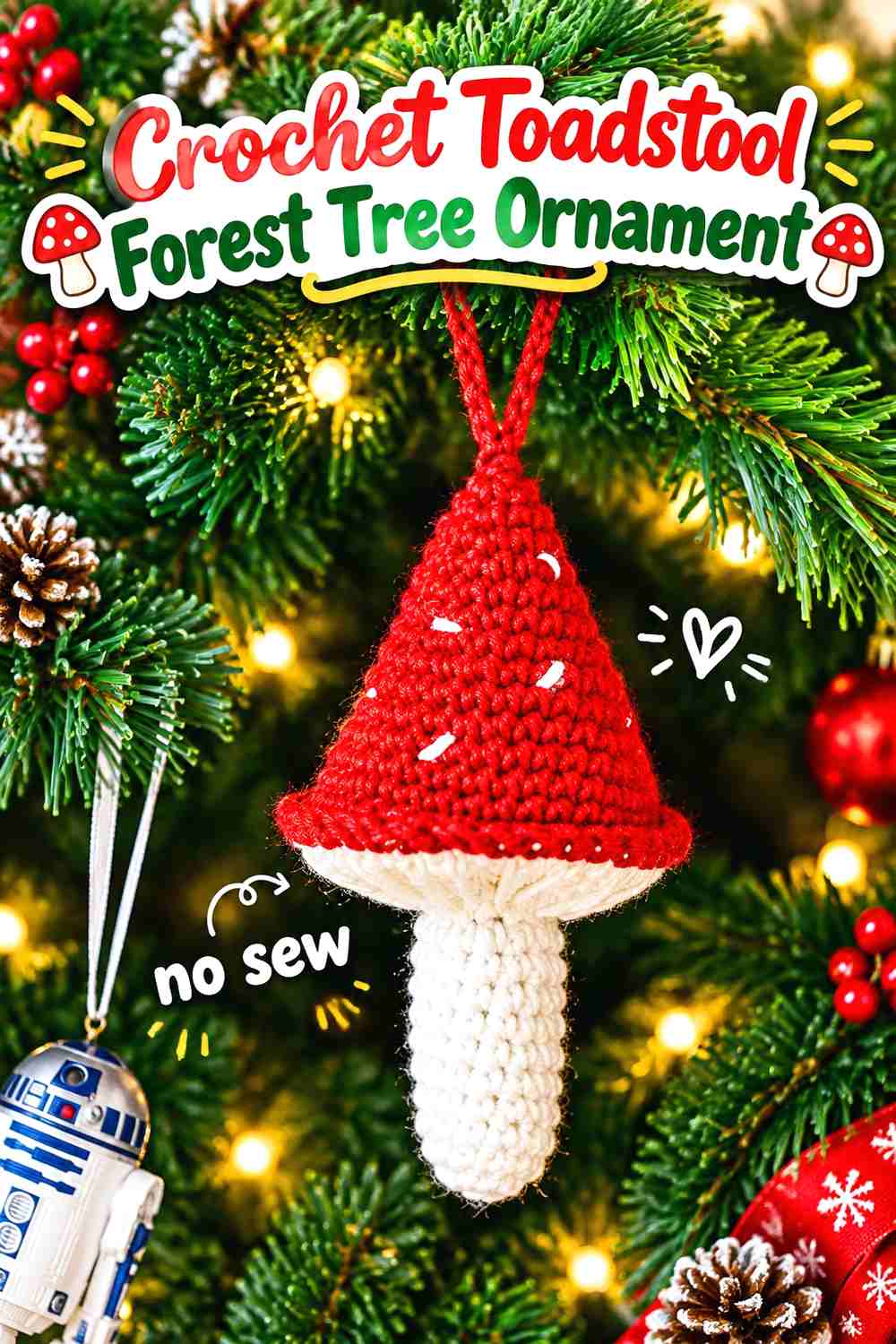
A small stuffed mushroom is one of the clearest ways to establish the woodland theme immediately. TheLagomBox’s source is specifically designed as a hanging mushroom ornament, with a rounded cap, pale stem, stuffing, decorative cap detail, and a hanging loop.
For a more vintage tree, the cap does not have to be bright red. Rust, faded brick, burgundy, ochre, brown, or cream can make the mushroom feel collected rather than cartoon-like.
Let the Cap Set the Woodland Palette
The cap occupies most of the visible upper silhouette, so it is a natural place for the strongest color.
If you are building a coordinated tree, select two or three related cap shades rather than making every mushroom identical. Rust, muted red, and chestnut can create variation while remaining clearly part of one forest palette.
Keep the Hanging Point Centered Over the Stem
A mushroom that leans heavily to one side can hide its stem against the branch.
Before securing the loop, hold the finished piece by the proposed attachment point. Adjust it until the cap and stem are both visible from the front rather than allowing the cap’s weight to rotate the ornament backward.
Creator Credit: TheLagomBox
2. Crochet Layered Pinecone Tree Ornament
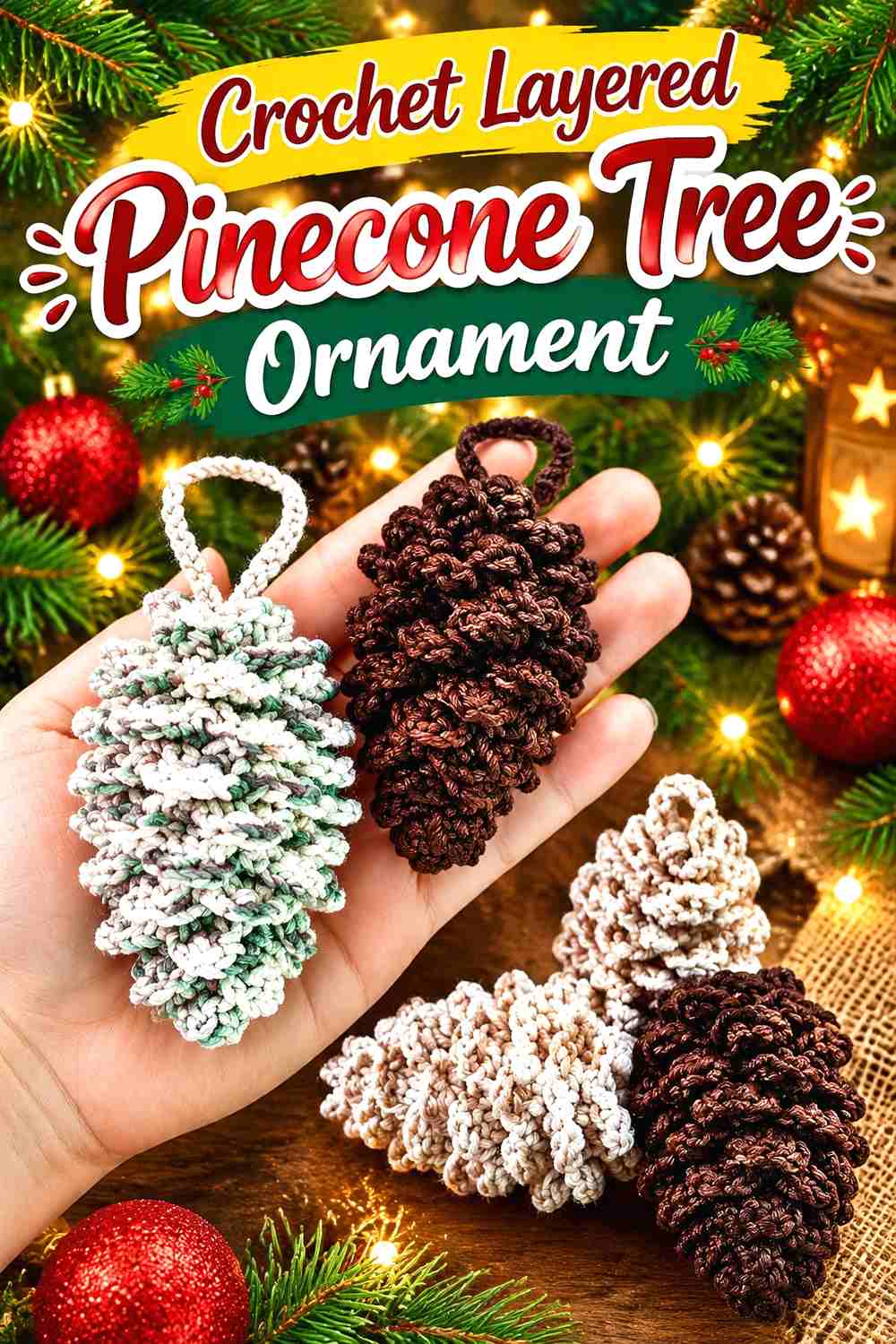
Pinecones add woodland texture without introducing another face or bright holiday symbol. Erfin R. Tangdilintin’s tutorial produces a visibly layered pinecone specifically intended for Christmas-tree decoration, with raised sections creating the recognizable overlapping scale effect.
This is an especially useful ornament for a vintage collection because one solid brown, cream, bronze, or muted green can still produce substantial visual interest.
Texture Matters More Than Extra Decoration
The pinecone surface already contains many shadows and raised points.
A large bow, several beads, and metallic edging can easily compete with those details. For a quieter heirloom-tree effect, consider allowing the dimensional crochet itself to remain the focal point.
Give Raised Scales Room in Storage
The individual sections can become compressed if a pinecone spends most of the year beneath rigid baubles.
Store dimensional ornaments where they are not carrying significant weight. Before rehanging them the following winter, gently restore any areas that were flattened during storage.
Creator Credit: Erfin R. Tangdilintin
3. Crochet Folk Bird Woodland Ornament
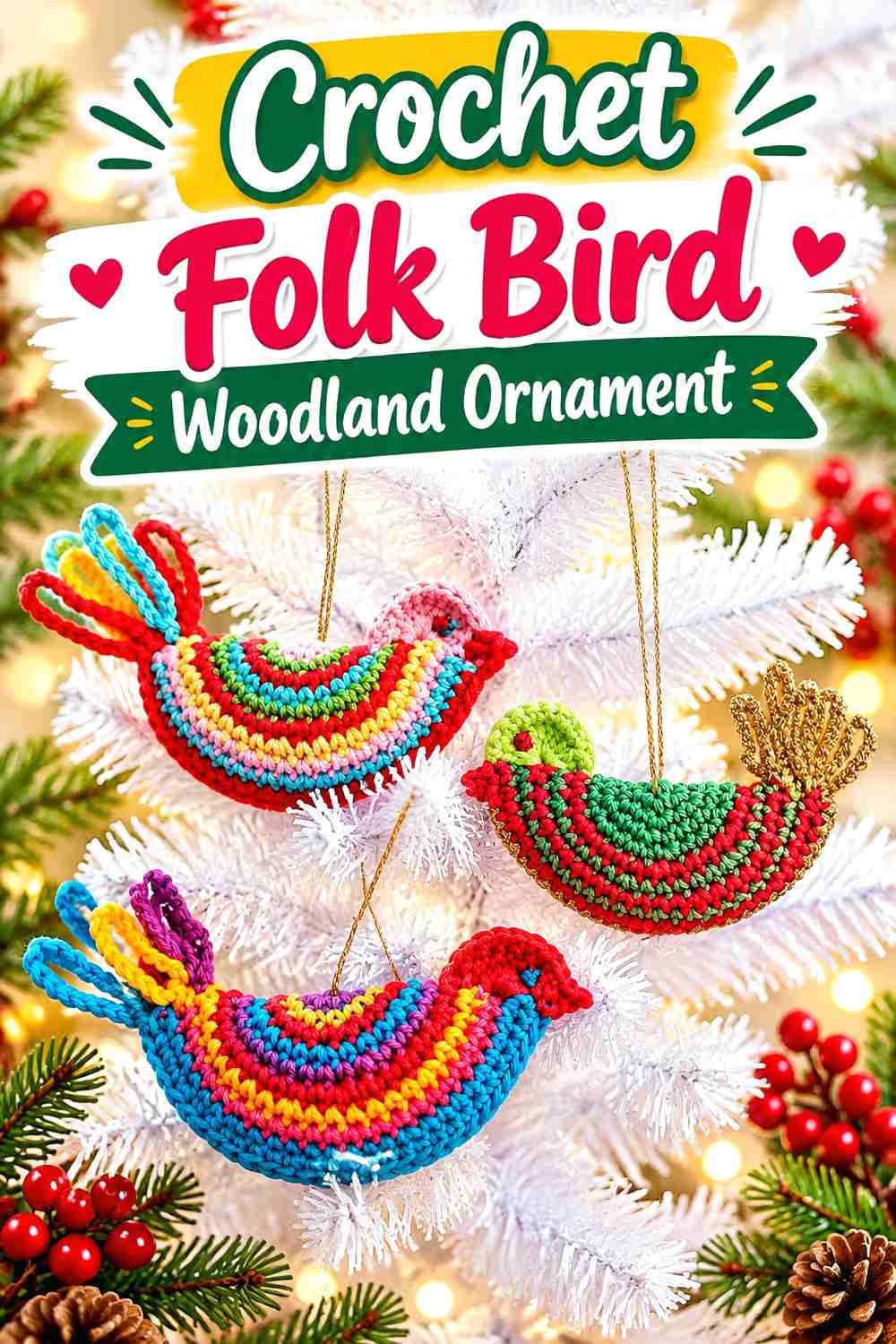
Crochet with Tuula Maaria’s bird tutorial provides a completely different woodland silhouette: a softly stuffed body with head, beak, tail, and hanging loop rather than a round bauble with a face attached. The creator presents the finished birds specifically as hanging ornaments and decorations.
That makes this project particularly useful when you want woodland animals without filling the tree entirely with spherical amigurumi.
Use Muted Color Blocking for a Folk-Art Look
The bird can handle more than one color naturally because the head, body, tail, and small details provide obvious places for changes.
For vintage winter décor, try faded combinations such as rust and cream, olive and oatmeal, muted blue and brown, or burgundy and taupe rather than relying only on bright primary shades.
Tail Position Changes How the Bird Hangs
A bird has more directional shape than a round ornament.
Test the hanging loop with the tail fully finished. If the bird pitches downward or rotates sideways, changing the loop position slightly may improve the display more effectively than adding weight elsewhere.
Creator Credit: Crochet with Tuula Maaria
4. Crochet Woodland Reindeer Head Ornament
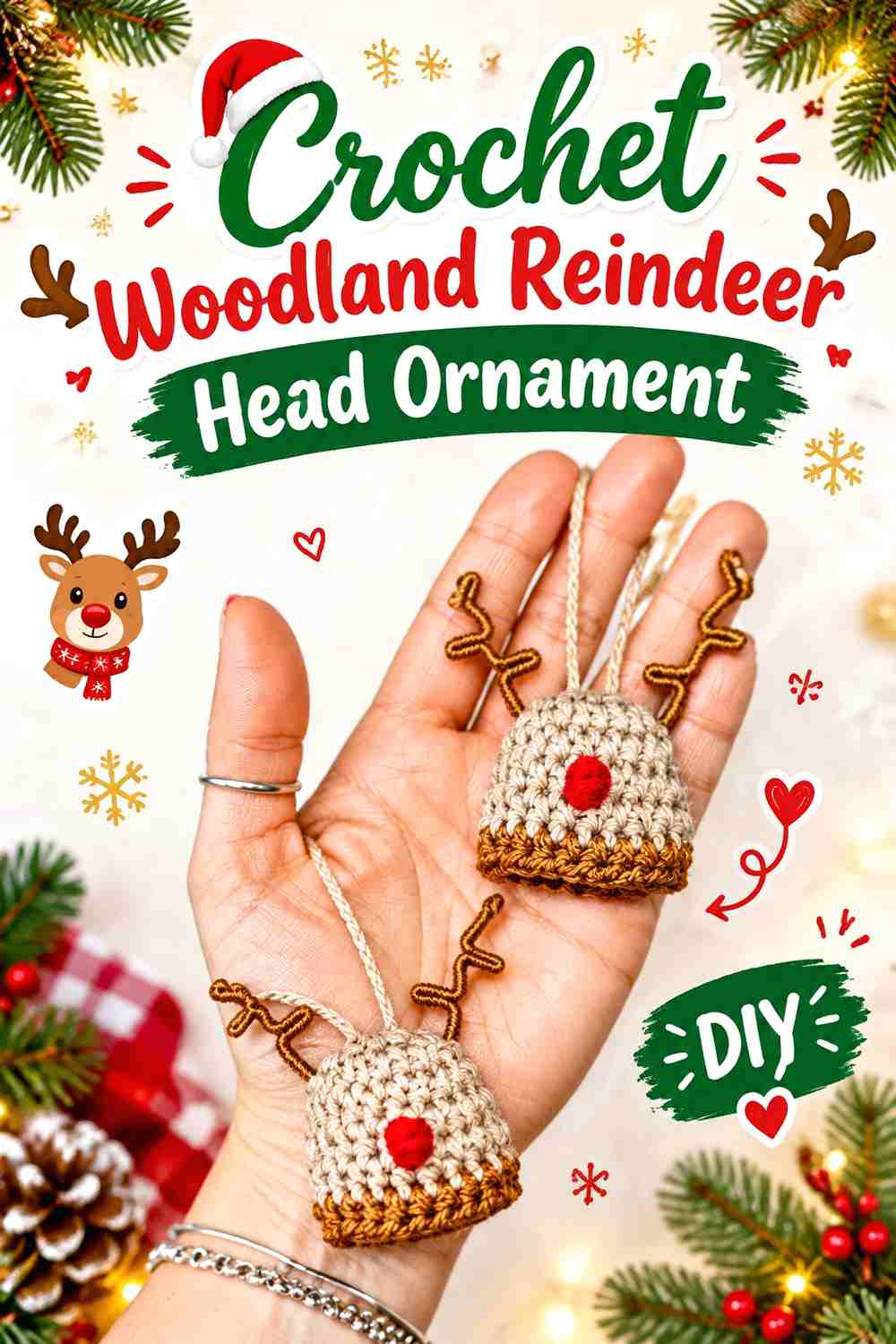
A reindeer introduces one of the widest outlines in the collection because the antlers extend beyond the face. The mum2makes source is a compact reindeer ornament with shaped antlers and a recognizable hanging character form.
Used sparingly, reindeer can become stronger focal points among smaller pinecones, leaves, and lace ornaments.
Antlers Need Empty Space Around Them
The reindeer’s identity depends heavily on the upper outline.
Avoid pushing the ornament deep into dense branches where the antlers disappear. An outer branch with open space on both sides allows the whole silhouette to remain visible.
Inspect Any Internal Antler Support Carefully
The tutorial discusses shaped support for the antlers. If you follow or adapt that approach, make sure wire or similar structural material is fully covered and that no cut ends can work through the crochet.
This matters especially for decorations that will be handled during setup and storage every year.
Creator Credit: mum2makes
5. Crochet Round Owl Forest Ornament
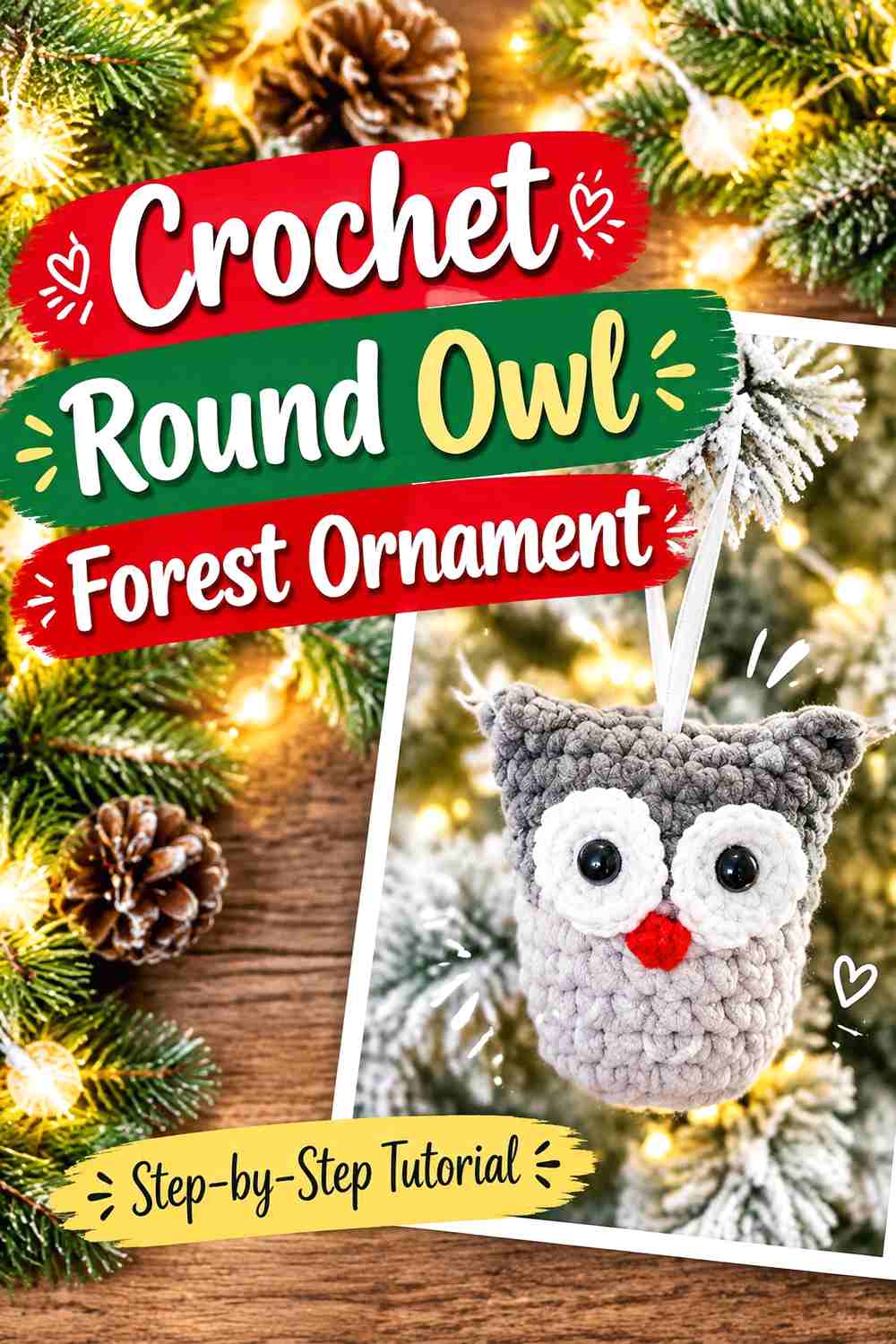
An owl suits a woodland tree naturally, but its shape is very different from the reindeer. Double Dutch Crochet’s tutorial builds a compact owl ornament with a rounded body, large eye area, beak, ear detailing, and hanging treatment.
For a vintage interpretation, consider tawny brown, oatmeal, charcoal, faded gold, cream, or muted rust instead of strongly contrasting novelty colors.
Eye Placement Controls the Entire Expression
The large eyes become the first thing a viewer notices.
Position both before securing them permanently and inspect the owl from normal tree-viewing distance. A small difference in height or spacing becomes more obvious on a simple round face than it would on a highly detailed toy.
Keep Ear and Ribbon Details Clear of the Hanger
Several small elements occupy the top of the ornament.
Check the whole outline after adding the loop. A hanger that crosses the ears or decorative ribbon can make the upper silhouette look crowded and pull the owl off center.
Creator Credit: Double Dutch Crochet
6. Crochet Fox Woodland Tree Ornament
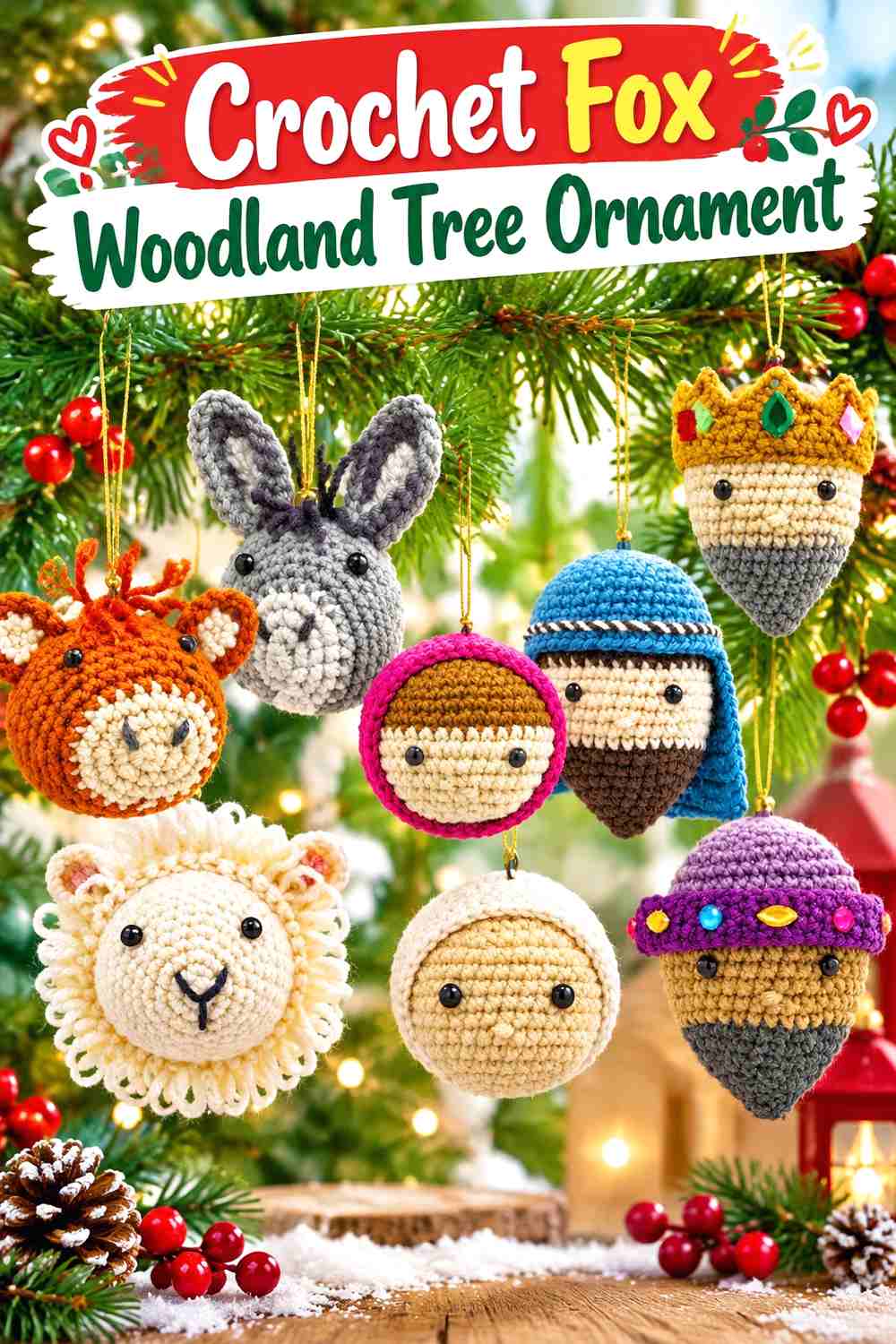
A fox introduces an elongated muzzle, upright ears, and a warm woodland color story. The Linda Wright–Lindaloo Enterprises source is specifically a fox Christmas ornament rather than a generic large amigurumi, making the scale appropriate for a hanging collection.
Rust is the obvious color, but a faded burnt-orange body with cream and dark brown accents can look particularly good beside natural pinecone and leaf ornaments.
Facial Contrast Should Stay Visible at Tree Distance
Tiny details that look perfect in your hand may disappear once the fox is surrounded by foliage.
Check the nose, muzzle, and eye area from several feet away before deciding whether the contrast is strong enough. Muted colors can still work as long as neighboring sections do not blend into one another completely.
Let the Ears Establish the Top of the Shape
Fox ears add height without the width of reindeer antlers.
Place the hanging loop so it does not fold an ear backward or force the head to tilt. The clean triangular ear outline is part of what keeps the animal recognizable among other woodland characters.
Creator Credit: Lindaloo Enterprises
7. Crochet Mistletoe Sprig Tree Ornament
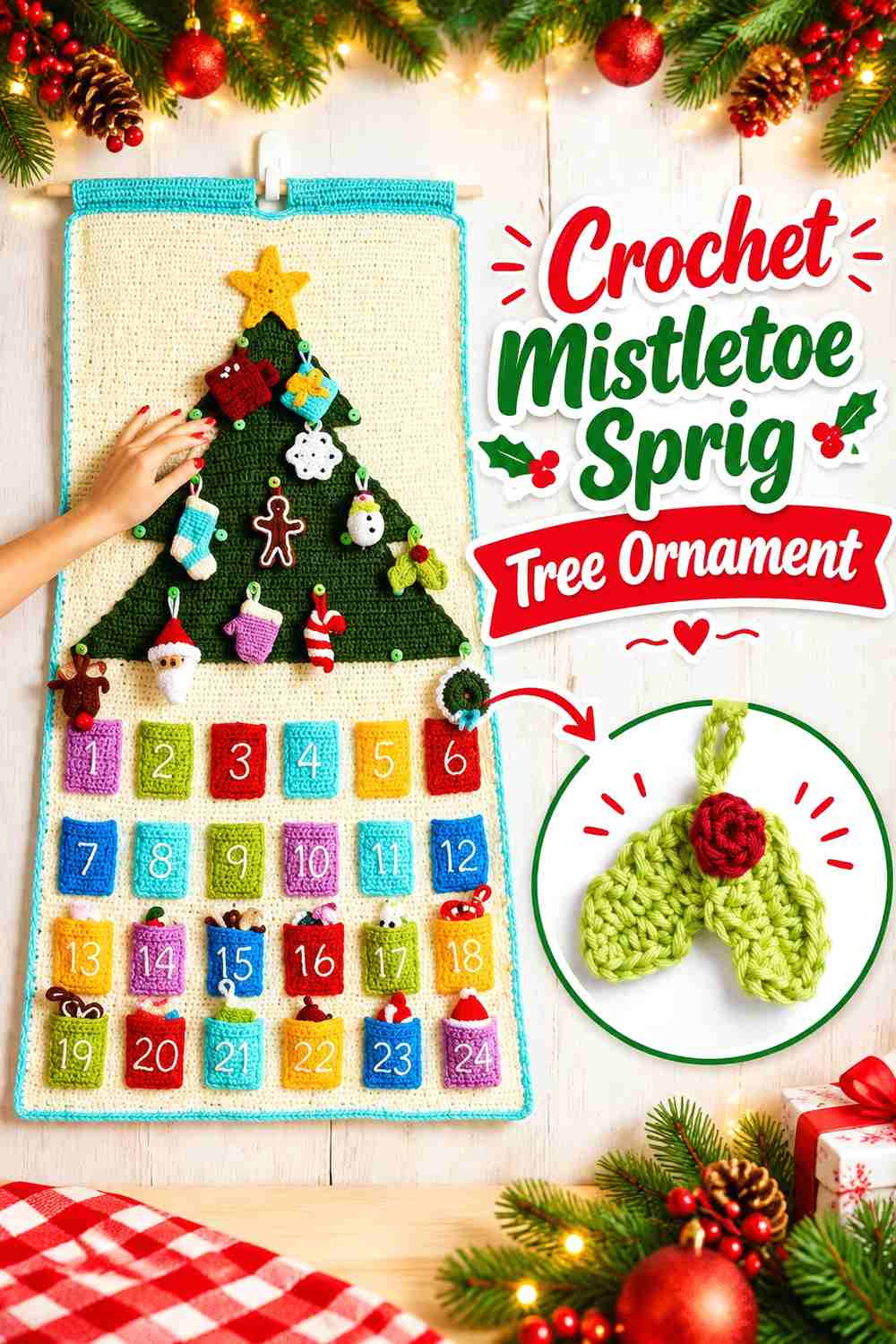
Not every woodland ornament needs to be an animal. The Crochet Crowd’s source demonstrates a small mistletoe or holly-style hanging decoration specifically suitable for a Christmas tree or gift topper.
A leafy sprig introduces negative space and a trailing botanical outline that contrasts nicely with stuffed mushrooms and animal faces.
Leaf Definition Depends on the Yarn Surface
Small leaves need a clear outer edge to remain recognizable.
A strongly fuzzy fiber can make several leaves merge visually into one green mass. If you want a softer woolly look, make one sample first and check whether the individual leaf shapes still read clearly.
Use Botanical Pieces as Spacers Between Characters
A tree filled only with owls, foxes, birds, and reindeer can quickly become visually busy.
Place leafy sprigs between the character ornaments. The green shapes blend naturally with the tree while still adding visible handmade detail.
Creator Credit: The Crochet Crowd
8. Crochet Flat Evergreen Tree Ornament
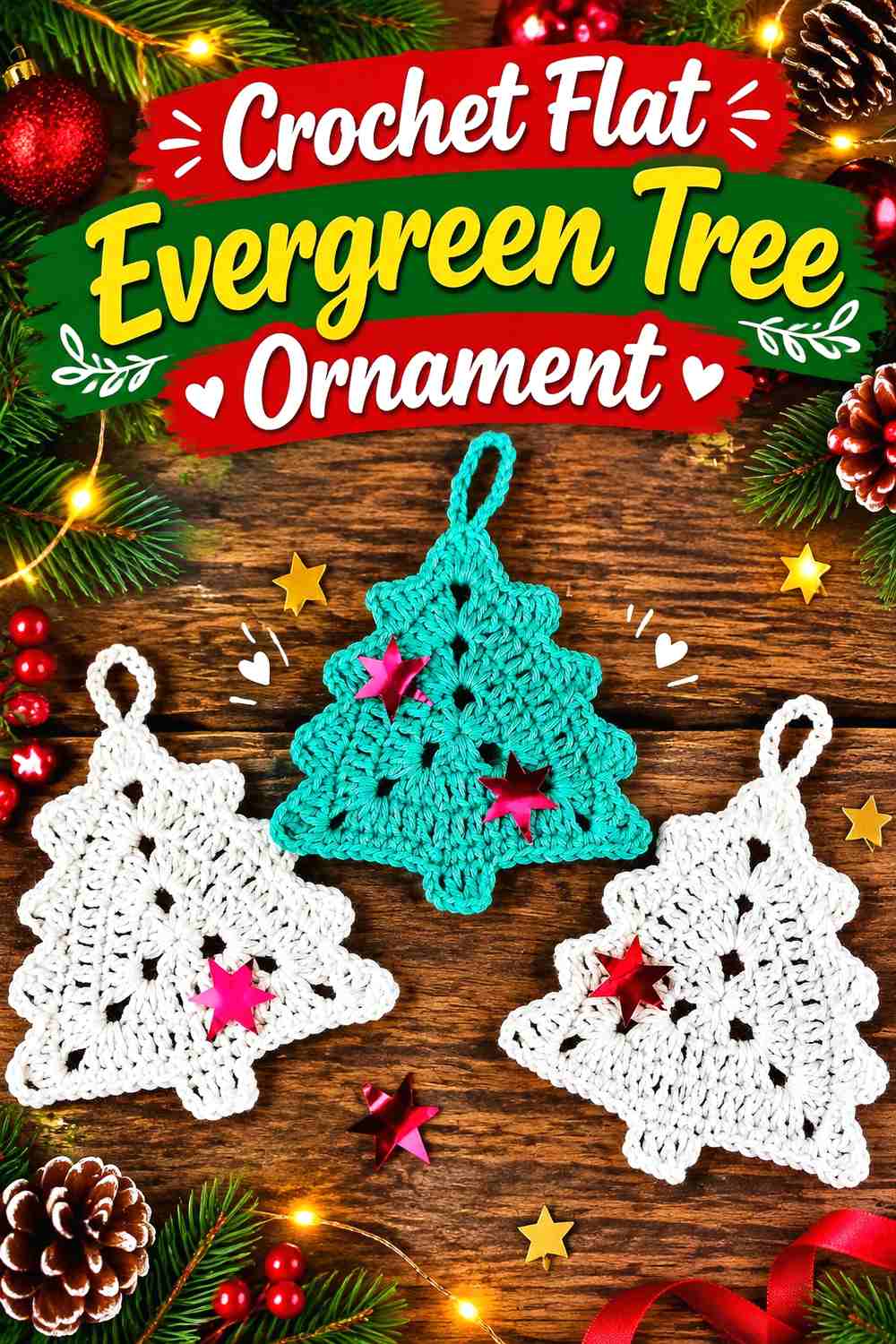
Kristines Crochets’ tutorial creates a flat Christmas-tree ornament with a defined trunk and open decorative structure. The flat construction makes it one of the easiest pieces here to place on smaller outer branches or tuck between bulkier ornaments.
For a vintage woodland tree, deep spruce, faded moss, cream, or brown-green can soften the conventional bright Christmas-tree effect.
Flat Shapes Work Where Stuffed Ornaments Feel Crowded
Dense evergreen branches can swallow small stuffed figures or push them forward awkwardly.
A flat tree lies closer to the foliage and can fill those spaces without adding much depth. It is also useful near the trunk where a large round ornament might not hang freely.
Keep the Trunk Visible
The triangular upper portion can still read as a generic motif if the trunk disappears against a branch.
When positioning the hanger, make sure the lower part hangs clear enough for the tree silhouette to remain obvious.
Creator Credit: Kristines Crochets
9. Crochet Maple Leaf Woodland Ornament
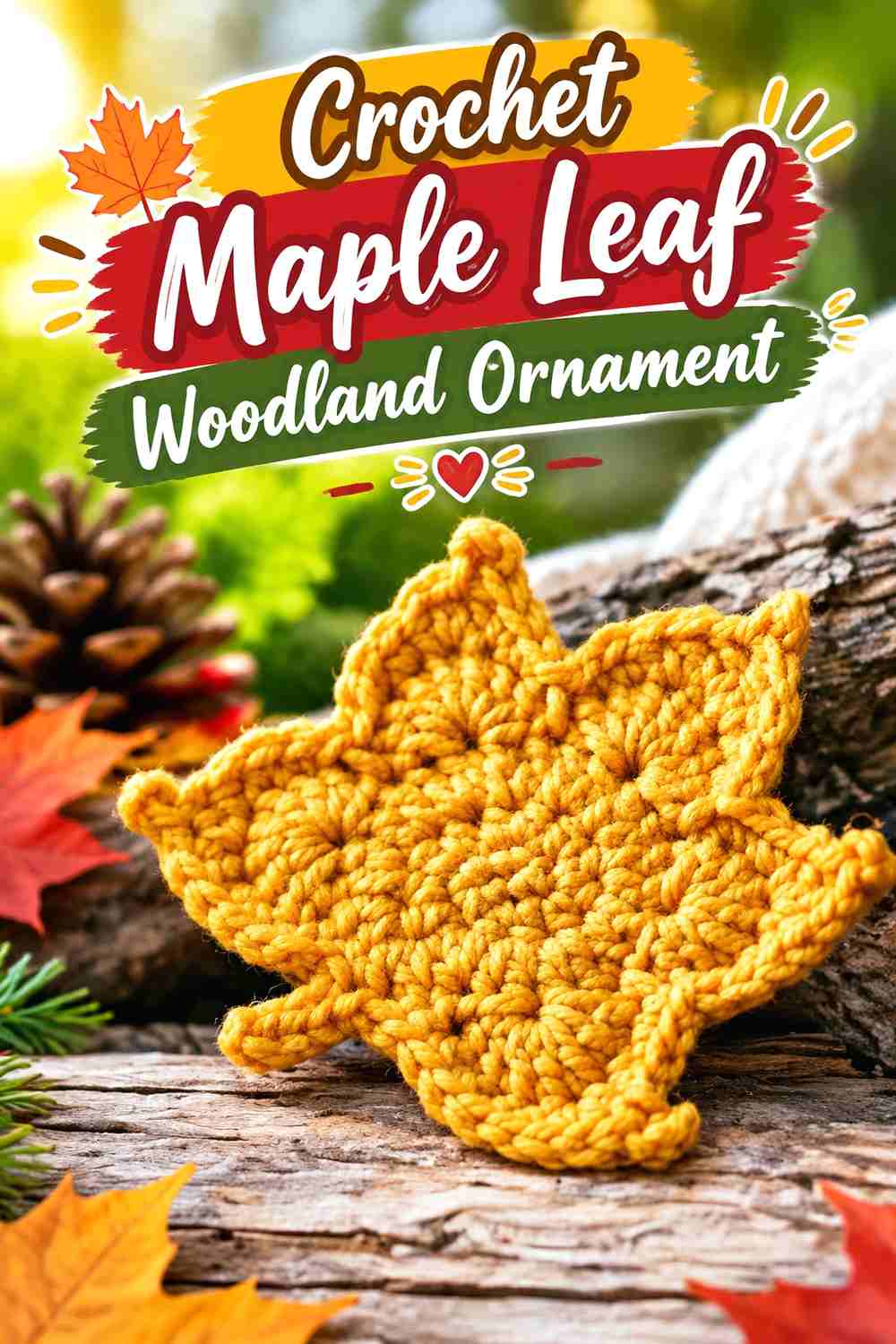
Pretty Darn Adorable Crochet Tutorials demonstrates a clearly shaped maple leaf with a solid center and pronounced points. The source presents it as fall décor or a coaster, so using a smaller or suitably weighted version as a winter tree ornament is an adaptation rather than the tutorial’s sole intended use.
That adaptation works especially well on a woodland tree because leaves prevent the natural theme from becoming exclusively evergreen.
Size the Leaf for the Branch, Not the Table
A coaster-sized leaf can be visually heavy on a small Christmas tree.
If you change yarn or hook to create an ornament scale, remember that the stitch definition and point shape may change too. Make one complete sample before planning a matching set.
Use Faded Autumn Color as a Winter Accent
Not every woodland tree has to be entirely green in December.
Rust, ochre, brown, faded copper, and deep burgundy leaves can echo fallen forest foliage while breaking up a large field of evergreen ornaments.
Creator Credit: Pretty Darn Adorable Crochet Tutorials
10. Crochet Lace Snowflake Forest Ornament
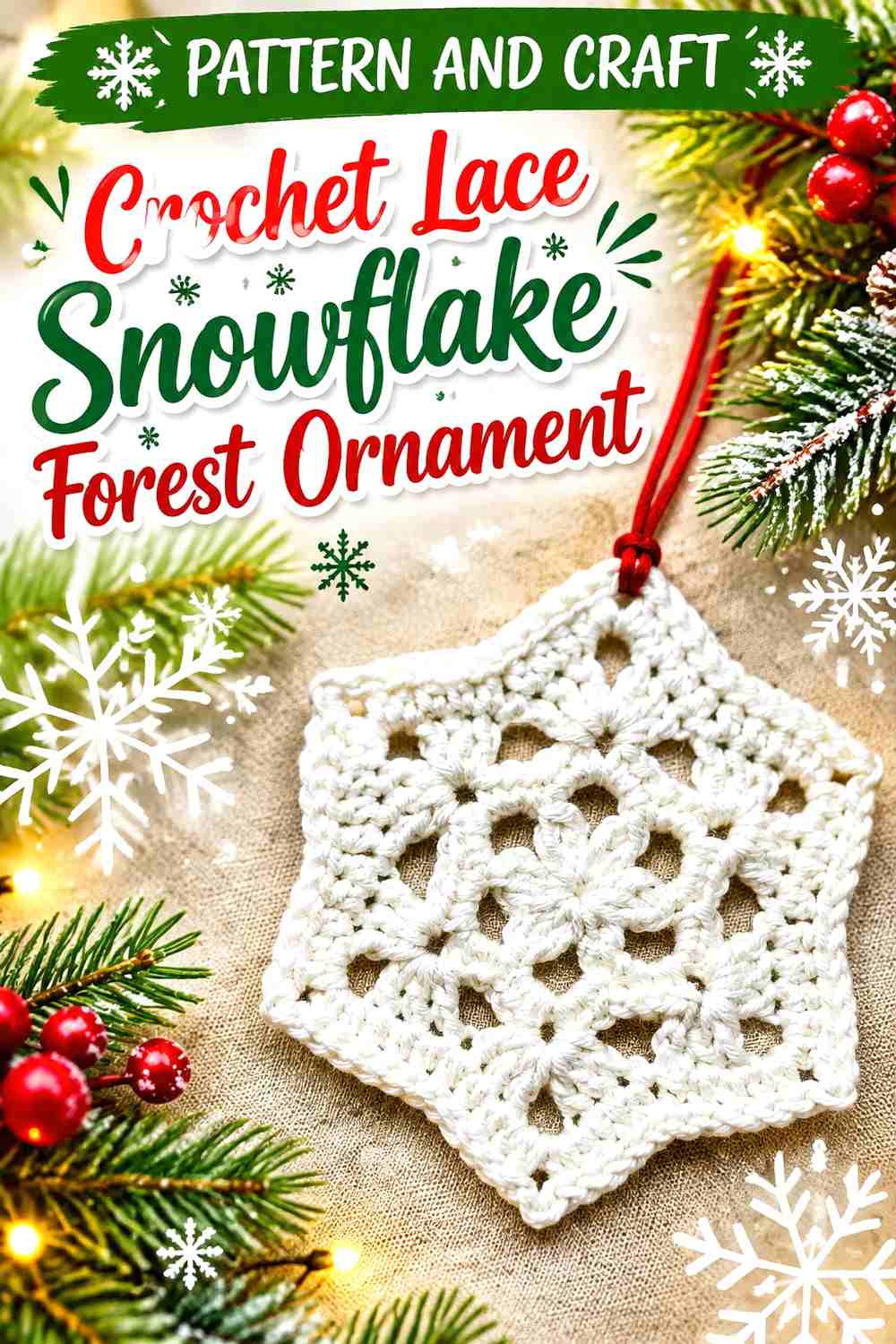
A snowflake introduces the winter atmosphere without adding another solid shape. Pattern and Craft’s source is a complete hanging snowflake ornament with an open structure and dedicated hanging-loop finishing.
On a vintage woodland tree, cream or natural cotton can feel softer than bright optic white, while pale gray or muted metallic yarn can create a frosted effect.
Open Lace Needs Contrast Behind It
A delicate snowflake can disappear when placed deep within similarly light flocked branches.
Use outer branches or areas backed by dark greenery so the points and openings remain visible. This also gives the tree visual pauses between larger stuffed shapes.
Symmetry Matters More Than Extra Sparkle
Snowflakes already have a complex outline.
Before adding beads or glittering accents, make sure the repeated sections sit evenly. Balanced points will usually create more visual impact than extra ornamentation on an irregular shape.
Creator Credit: Pattern and Craft
11. Crochet Soft Evergreen Wreath Ornament
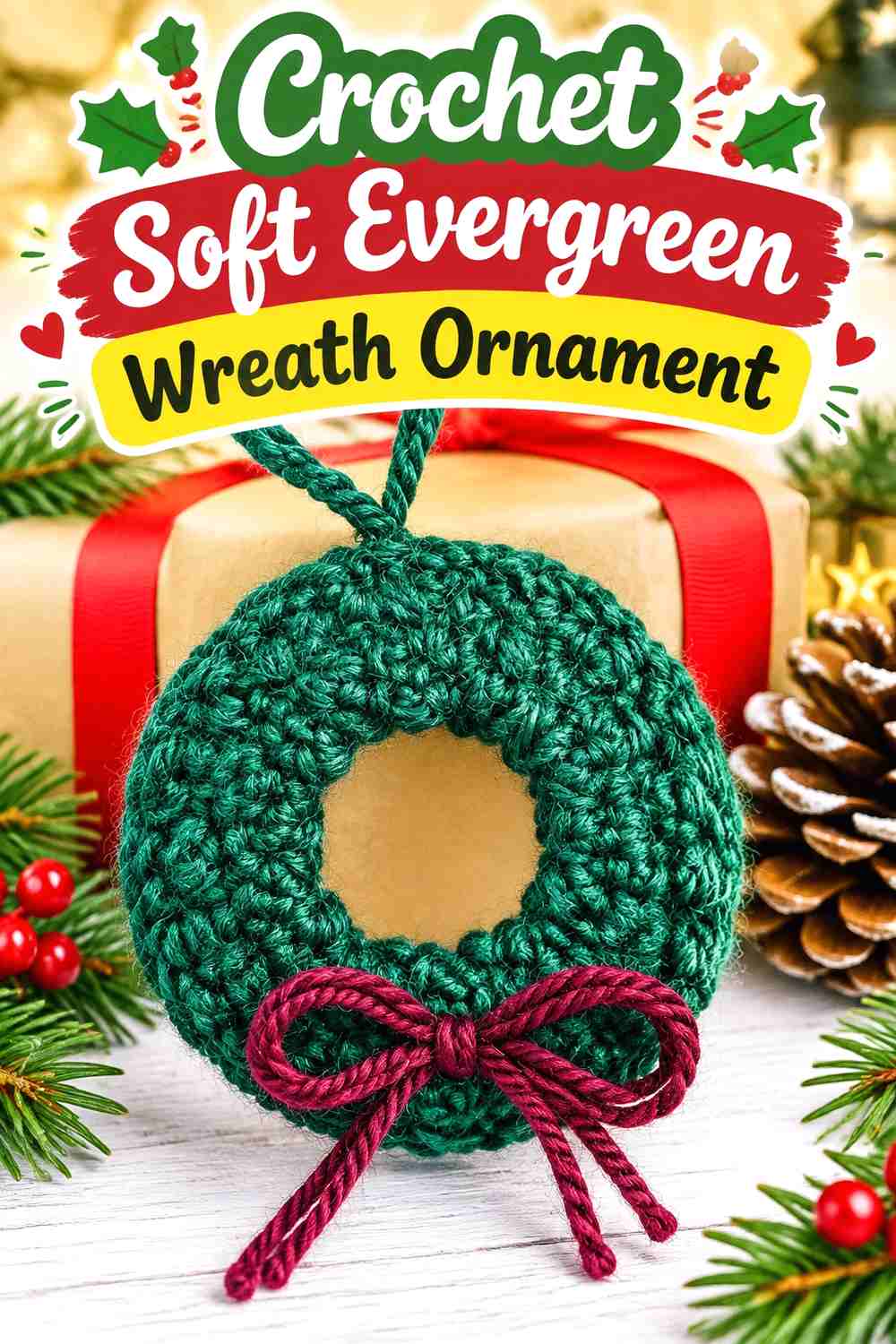
A tiny wreath brings a circular silhouette and open center to the woodland mix. Desert Blossom Crafts’ source is specifically a wreath ornament and uses a soft crochet construction rather than requiring a rigid ring underneath.
That softer structure fits a handmade vintage tree particularly well because it avoids the polished look of a plastic or metal form.
Preserve the Open Center
The central opening is what makes the piece read immediately as a wreath instead of another round ornament.
Avoid attaching so many berries, bows, or leaves that the center becomes visually filled. When hanging it, keep a dense branch from pushing directly through the opening if you want the circle to remain obvious.
Let the Bow Establish the Top
A small bow can orient the otherwise symmetrical wreath.
Attach or position the hanger in relation to the bow rather than treating the two as separate finishing decisions. If they are misaligned, the wreath may rotate until the bow sits awkwardly to one side.
Creator Credit: Desert Blossom Crafts
12. Crochet Nordic Forest Gnome Ornament
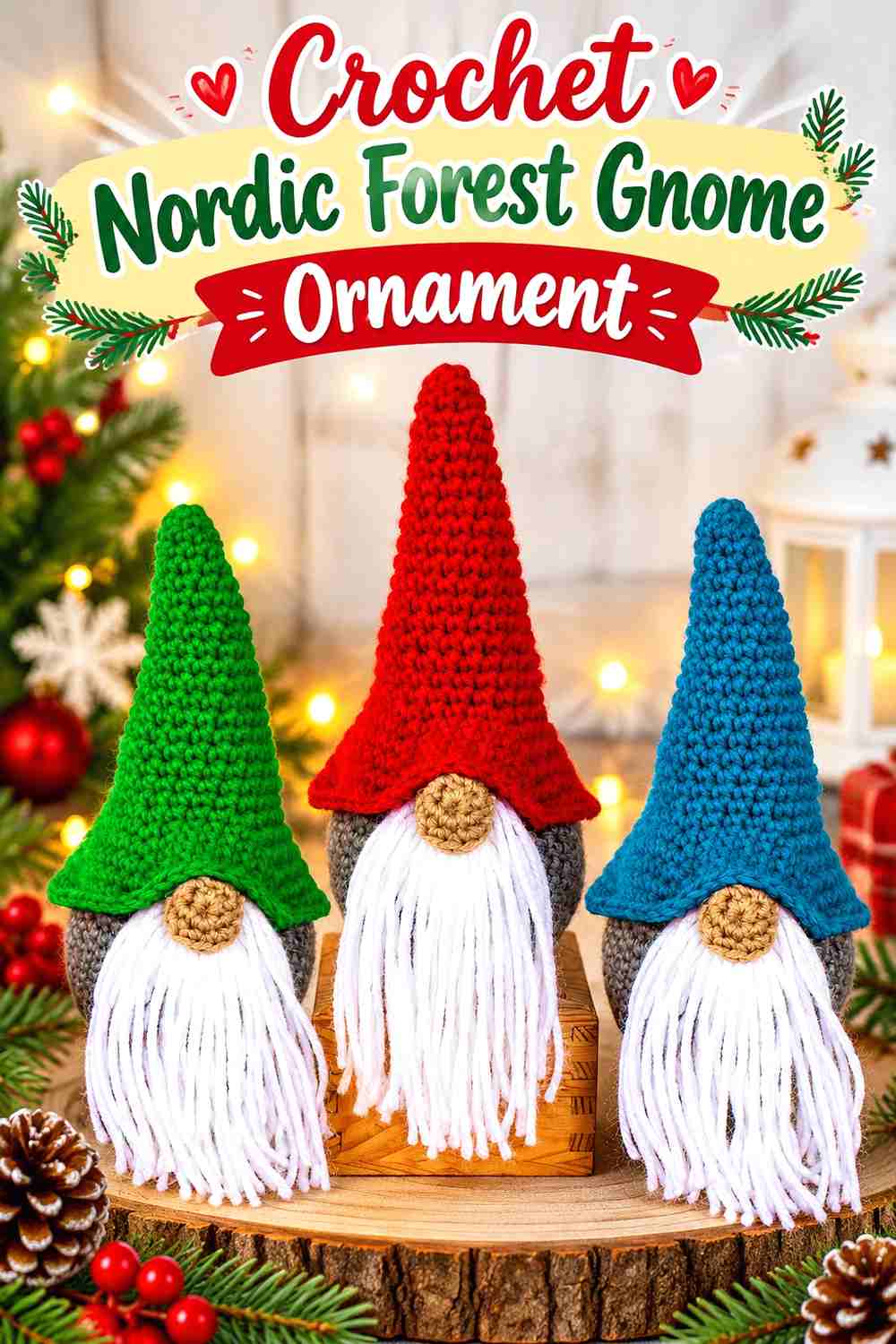
A Nordic gnome is not a literal woodland animal, but it brings the folk-story element that helps a vintage forest tree feel inhabited. Naztazia’s project uses the familiar tall hat, beard, nose, and compact body and is presented as seasonal décor that can also work as a larger tree ornament.
Muted red, peat brown, moss, oatmeal, or faded mustard can make it feel closer to an old Scandinavian storybook than a bright novelty decoration.
Hat Length Creates the Vertical Silhouette
The pointed hat gives the gnome most of its height.
If it will hang rather than stand, test how the body behaves under that tall upper section. The hanger should support the complete ornament without folding the hat or causing the beard to face backward.
Keep the Beard From Swallowing the Body
A full beard provides attractive texture, but too much volume can hide the rest of a small ornament.
Check the front silhouette before adding more embellishment. The nose, hat, beard, and lower body should still read as separate parts from several feet away.
Creator Credit: naztazia
13. Crochet Robin Bauble Tree Ornament
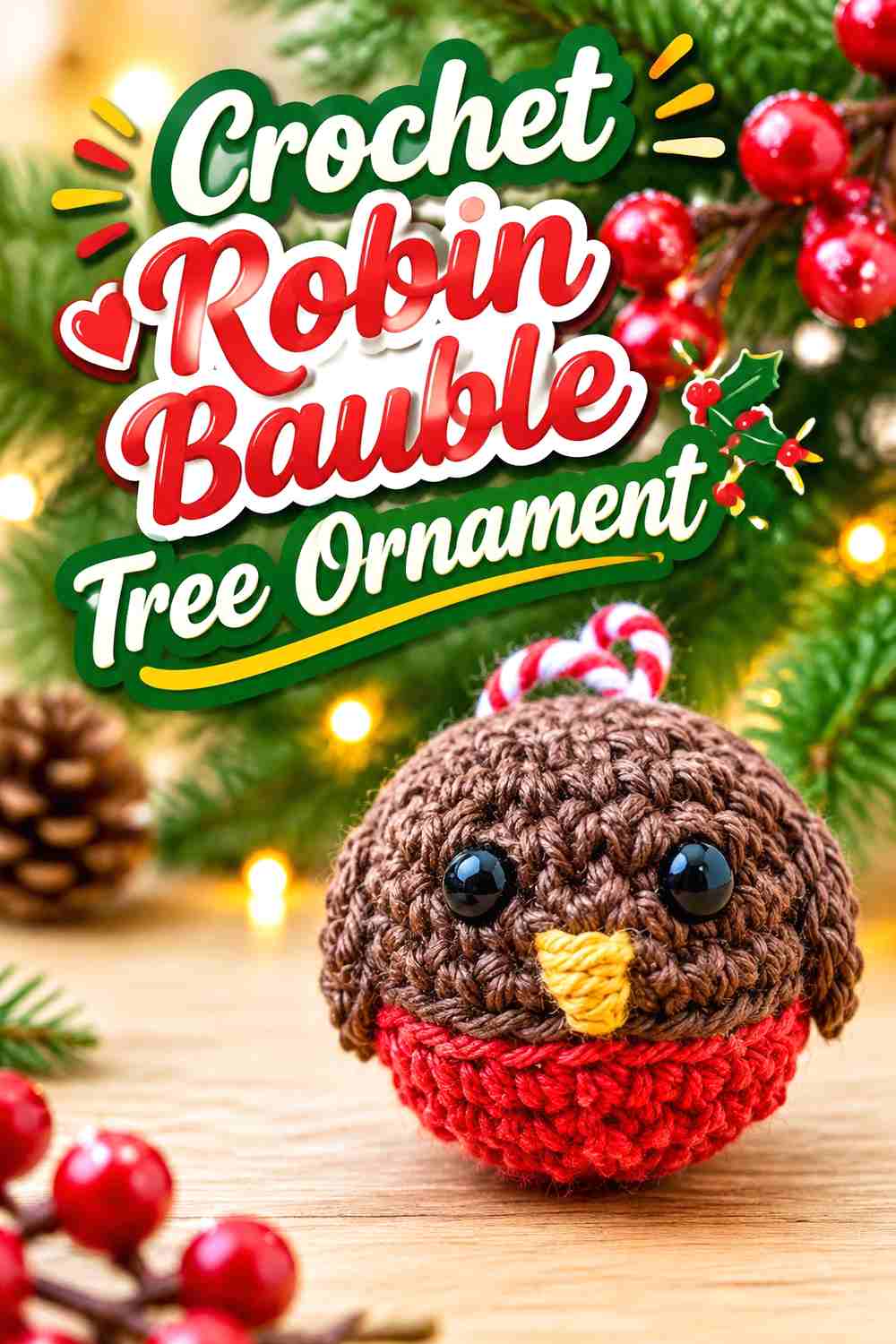
But First We Crochet’s robin is designed specifically as a mini Christmas bauble, combining a stuffed round body with wings, beak, contrasting breast color, eyes, and a hanging string.
The warm breast makes the robin a useful color accent among browns, greens, and creams without abandoning the woodland theme.
Color Placement Defines the Robin Quickly
The breast area does much of the visual work.
If you change the traditional palette, retain enough separation between that section and the surrounding body for the bird to remain readable. Extremely similar values can turn the robin into a generic round bird ornament.
Balance Both Wings Before Final Attachment
Separate wings can make a symmetrical body appear twisted if one sits farther forward.
Temporarily position both sides and view the ornament from the front and back before sewing them permanently. This is more reliable than judging each wing separately.
Creator Credit: But First We Crochet
14. Crochet Little Woodland Mouse Ornament
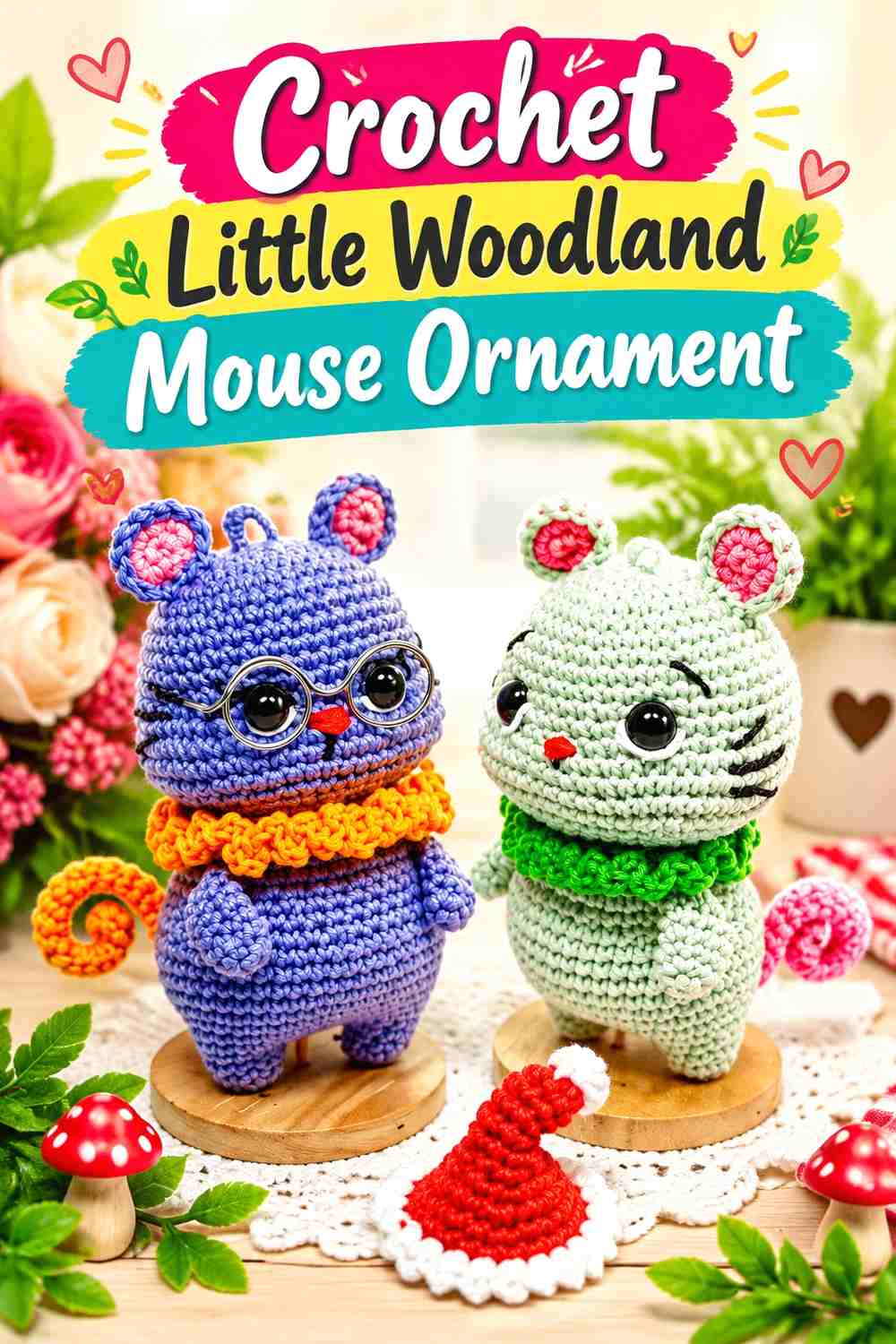
A mouse adds a smaller forest character and creates a different scale from the owl, fox, and reindeer. Cennagurumi’s tutorial is specifically presented as a crochet Christmas mouse ornament, with a small stuffed body and recognizable mouse details.
For a vintage tree, gray, brown, cream, dusty red, or muted mustard can keep the character playful without looking overly bright.
Small Ears and Face Details Need Strong Placement
The smaller the character, the more important each facial element becomes.
Position the ears and face while the ornament is upright. What looks balanced on a worktable may shift once gravity pulls the hanging piece into its final position.
Keep Tiny Embellishments Appropriate to the Display
A small mouse naturally invites tiny eyes, buttons, bows, or other details.
Consider whether those components are suitable for the location of the finished tree, especially around young children or pets. A simpler embroidered finish may be preferable in some displays.
Creator Credit: Cennagurumi
15. Crochet Bedazzled Folk Star Ornament
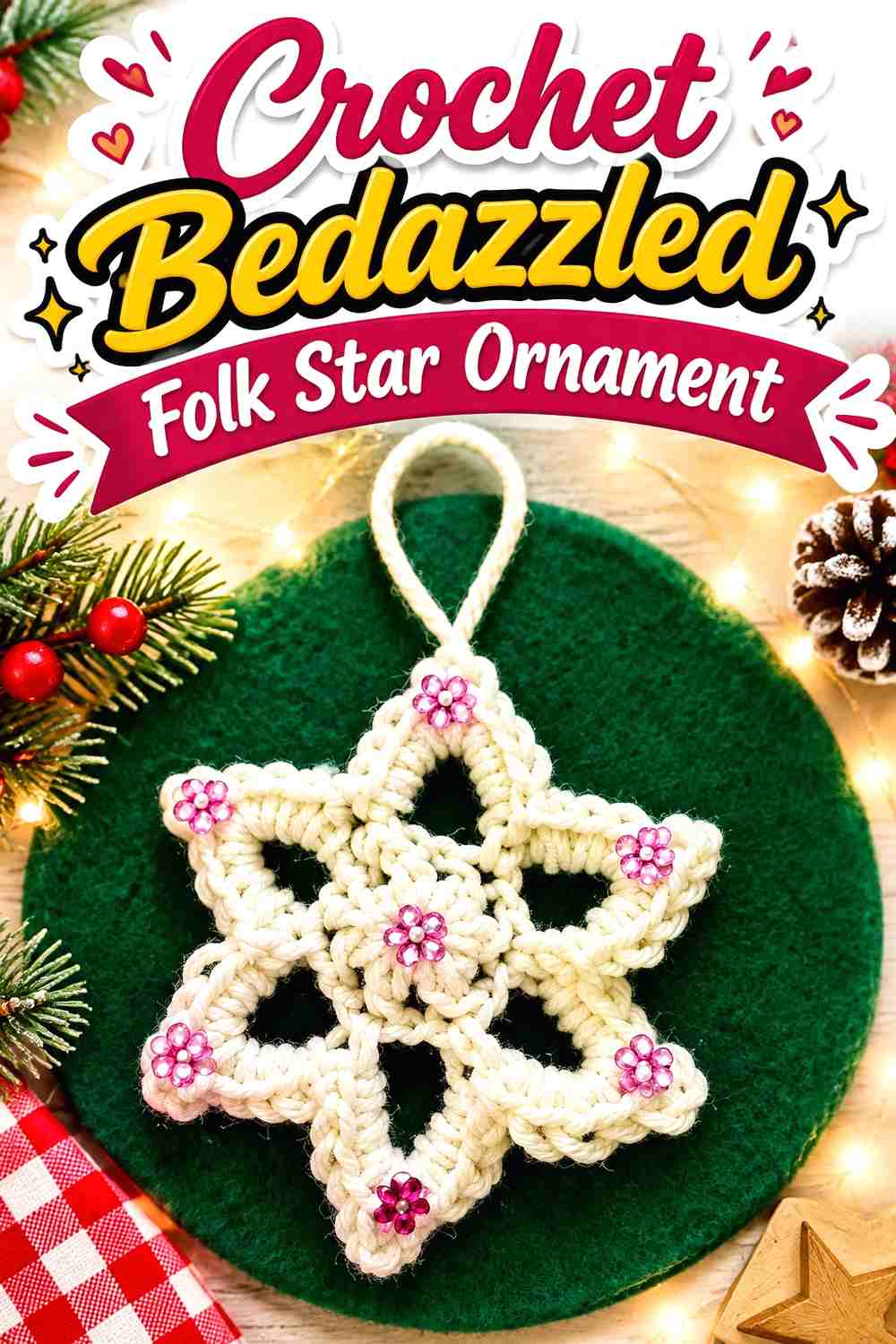
A star gives the tree a classic folk shape without adding another animal or botanical motif. Hectanooga1’s source is a crochet star or snowflake-style ornament that can also be embellished, making it particularly suitable for a vintage tree that needs small areas of light or shimmer.
In natural cream, faded gold, burgundy, or deep green, the star can look less modern and more like a handmade ornament stored and reused across many winters.
Decide Whether the Star Should Be Solid or Sparkling
The basic shape already gives you a strong focal point.
If you add a central decorative element, keep it proportional to the star. Too much reflective detail can overpower the crocheted points and make the ornament feel more commercial than handmade.
Crisp Points Matter on a Busy Tree
A star can disappear among branches when its points collapse inward.
Check the finished outline before attaching the hanging loop, and use only a fiber-appropriate finishing method if the shape needs help settling.
Creator Credit: Hectanooga1
16. Crochet Snow Tipped Mini Tree Ornament
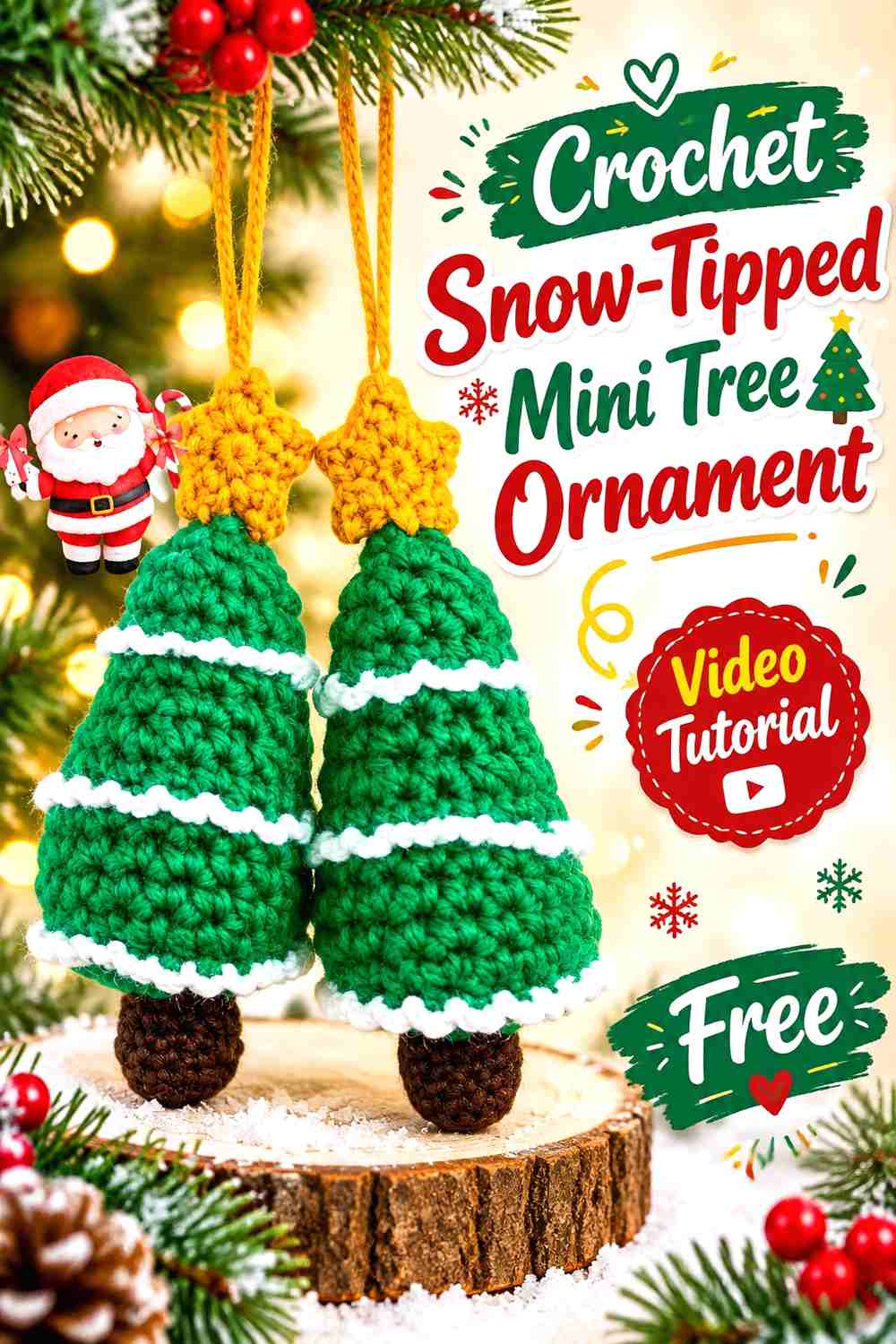
Jess Crafting’s ornament takes the evergreen idea into a completely different construction from the flat tree earlier in the list. This version is dimensional and stuffed, with tiered snow-style details, a trunk, and decorative finishing.
That additional depth makes it useful as a focal ornament rather than a background filler.
Snow Details Need Separation From the Green Layers
The contrast around the branches is what creates the snow-tipped effect.
If you switch to a cream tree, pale snow trim may nearly disappear. Choose colors with enough difference for the layered outline to remain visible when the ornament hangs against real or artificial greenery.
Check the Upper Decoration Before Fixing the Loop
The top of a miniature tree can become crowded quickly when a topper and hanger occupy the same area.
Hold the finished piece by the proposed loop point first. Make sure the tree hangs upright and that the upper decoration faces forward rather than being pulled behind the ornament.
Creator Credit: Jess Crafting
17. Crochet Vintage Bell Woodland Ornament
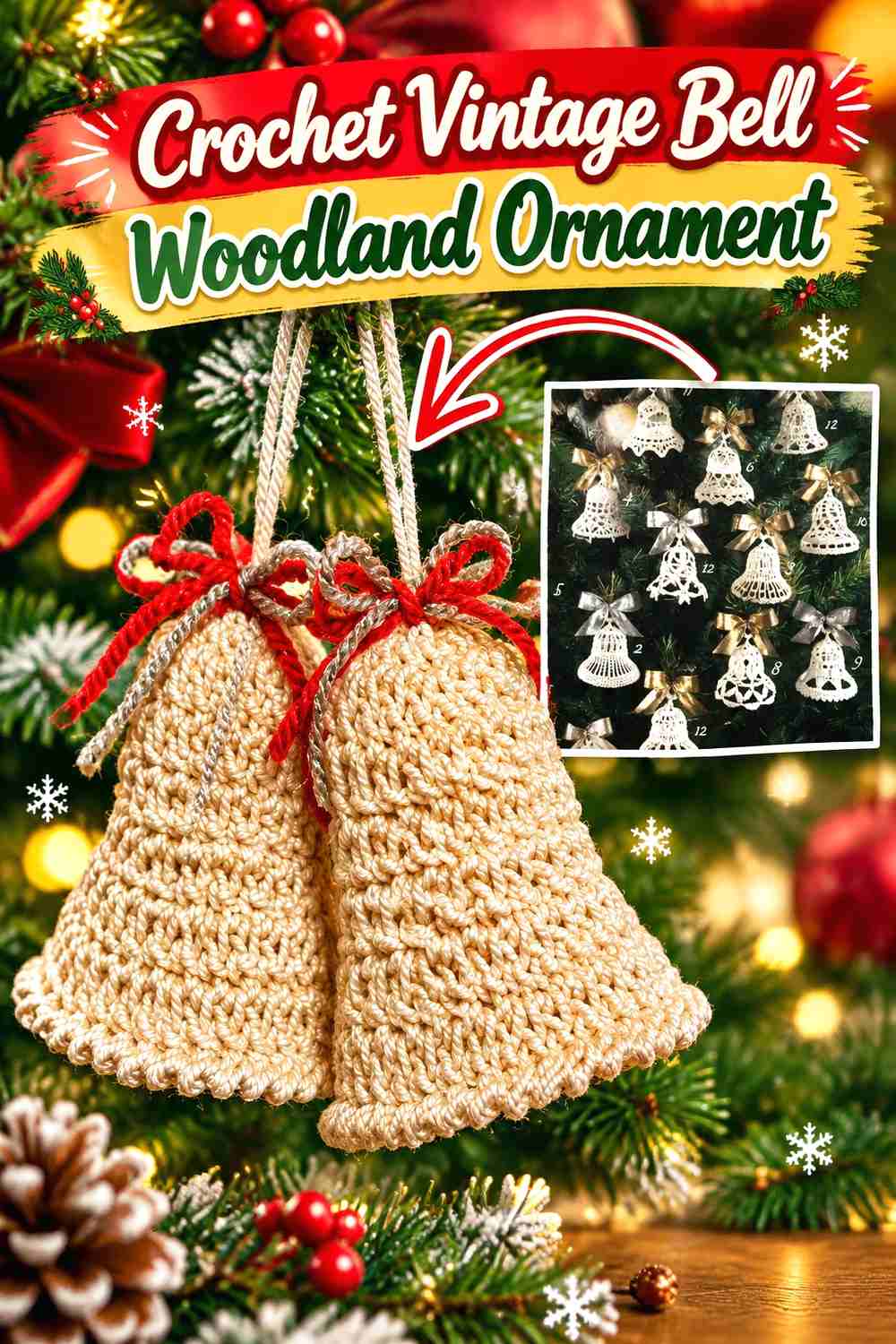
A bell is the least literal woodland motif in this collection, but it supplies the vintage Christmas element that keeps a forest tree from looking like an all-season nature display. The Brunaticality source is a traditional-looking hanging crochet bell with a flared lower shape and decorative finishing.
Placed beside leaves, birds, pinecones, and mushrooms, a cream or muted metallic bell can make the full collection feel more nostalgic and seasonal.
Keep the Lower Flare Visible
The bell shape depends on the bottom edge opening outward.
Hang it from a branch with empty space below rather than pushing the ornament into dense foliage that folds the lower edge inward. A clear silhouette matters more than adding another decorative bow.
Use Metallic Detail Sparingly
A little gold or antique-bronze effect can support vintage woodland styling.
Too much reflective yarn, however, can dominate nearby natural-texture pieces. Consider using shine only as an edge or small accent so the crocheted bell still belongs with the quieter forest ornaments.
Creator Credit: Brunaticality
Which Vintage Woodland Ornaments Should You Make First?
If you want the tree to read as woodland immediately, start with the mushroom, pinecone, bird, owl, fox, robin, mouse, and reindeer. They provide the strongest forest-floor and animal references.
Then add botanical pieces. The maple leaf, mistletoe sprig, flat evergreen, and snow-tipped tree create quieter shapes between the character ornaments and prevent the collection from feeling like a shelf of amigurumi transferred onto branches.
The snowflake, star, wreath, gnome, and bell bring in winter and vintage holiday character. They are especially useful if you want the finished tree to remain clearly seasonal rather than becoming a general woodland display.
For a smaller tree, prioritize flat evergreens, leaves, stars, snowflakes, and botanical sprigs. On a larger tree with sturdy branches, dimensional mushrooms, owls, foxes, reindeer, gnomes, and stuffed trees have more room to show their complete silhouettes.
Conclusion
A strong crochet vintage woodland tree does not need seventeen matching ornaments. Its charm comes from the opposite approach: combining pieces that look as though they were handmade and collected gradually.
Use pinecones, mushrooms, leaves, and evergreens as the natural foundation. Add a few birds and woodland animals as character focal points. Then layer in stars, snowflakes, a small wreath, a folk gnome, or an old-fashioned bell to make the forest setting feel unmistakably wintry.
Color can connect the different tutorials without erasing their individual construction. Moss, rust, oatmeal, bark brown, muted red, charcoal, faded gold, and cream can travel across several ornament types while still allowing every silhouette to remain distinct.
For exact stitch work, shaping, assembly, hanging loops, and creator-specific finishing, follow the original tutorial credited with each project.
Frequently Asked Questions
What colors work best for vintage woodland crochet tree ornaments?
Cream, oatmeal, muted red, rust, moss green, dark evergreen, brown, charcoal, ochre, burgundy, faded blue, and antique-looking metallic accents can all work. You do not need to use every shade. Repeating three or four colors throughout different ornaments usually creates a more collected look than giving every motif a unique palette.
How do I keep a woodland Christmas tree from looking too busy?
Alternate dimensional focal ornaments with flatter pieces. For example, place an owl or fox between a snowflake, leaf, flat evergreen, or star rather than clustering several animal faces together. Empty foliage is also useful; not every branch needs an ornament.
Which crochet woodland ornaments are easiest to store?
Flat leaves, snowflakes, stars, and tree motifs generally require less storage depth than stuffed animals, mushrooms, and dimensional pinecones. Store raised and stuffed pieces without heavy decorations pressing on top of them if you want their shapes to last from year to year.
Can I use thicker yarn to make the ornaments look more rustic?
You can experiment, but thicker yarn changes size, weight, stitch definition, and the amount of space an ornament occupies on the branch. A pinecone or stuffed animal can become much heavier than expected. Make one sample before converting an entire ornament collection to another yarn weight.
How do I make bright crochet ornaments look more vintage?
You can often change the mood through palette rather than construction. Replace bright red with brick, burgundy, or faded berry; vivid green with moss or forest; and pure white with cream or oatmeal. Natural-looking ribbon, simple hanging cord, and restrained metallic accents can also soften the overall appearance.
Are safety eyes suitable for crochet tree ornaments?
They can be used as decorative components when appropriate to the project, but an ornament containing small detachable or rigid parts should be treated according to its materials and display location. Consider accessibility if young children or pets can reach the tree, and do not assume a decorative ornament is suitable as a toy.
How do I choose the right hanging-loop length?
Make one ornament first and test it on the type of tree branch you actually use. A short loop can keep flat ornaments close to the foliage, while a stuffed mushroom, animal, or wreath may need slightly more clearance to hang freely. The finished piece should face outward without the loop crushing ears, antlers, toppers, or other upper details.