Chocolate mocha is especially effective on a fuzzy crochet hood because it gives the soft surface a deep, warm base without requiring a complicated palette. The main decision is what should happen around that brown foundation. A pale neutral can define the face opening, another brown can create a nearly monochromatic result, and a muted accent can give the hood a clearer connection to the rest of a winter outfit.
Fuzzy mohair also changes how color placement reads. A soft halo can make narrow stripes and small color changes appear less precise than they would in a smooth yarn, so larger blocks, clear borders, repeated accents, and deliberate face framing are often more useful than many tiny color changes.
The tutorials credited below support the crochet hood, bonnet, balaclava, scoodie, or hooded-scarf construction concepts. The chocolate mocha palettes are independent adaptations, so do not assume a creator used the exact colors or fuzzy mohair treatment suggested here.
Quick List
- Chocolate Mocha and Warm Ivory Crochet Fuzzy Mohair Bonnet Hood
- Chocolate Mocha and Latte Beige Crochet Fuzzy Mohair Balaclava Hood
- Chocolate Mocha and Espresso Crochet Fuzzy Mohair Hooded Scarf
- Chocolate Mocha and Mushroom Taupe Crochet Fuzzy Mohair Tapered Hood
- Chocolate Mocha and Caramel Crochet Fuzzy Mohair Pocket Hooded Scarf
- Chocolate Mocha and Cinnamon Crochet Fuzzy Mohair Rounded Pocket Hood
- Chocolate Mocha and Dusty Rose Crochet Fuzzy Mohair Cable Scoodie
- Chocolate Mocha and Mauve Crochet Fuzzy Mohair Pocket Scoodie
- Chocolate Mocha and Sage Crochet Fuzzy Mohair Infinity Hooded Scarf
- Chocolate Mocha and Olive Crochet Fuzzy Mohair Two-Rectangle Hood
- Chocolate Mocha and Denim Blue Crochet Fuzzy Mohair Two-Color Hood
- Chocolate Mocha and Plum Crochet Fuzzy Mohair Granny Square Hood
- Chocolate Mocha and Burgundy Crochet Fuzzy Mohair Joined-Granny Hood
- Chocolate Mocha, Oatmeal, and Camel Crochet Fuzzy Mohair Granny Hood
- Chocolate Mocha and Charcoal Crochet Fuzzy Mohair Crab-Edged Hood
- Chocolate Mocha and Black Crochet Fuzzy Mohair Sophie-Style Hood
- Chocolate Mocha, Cream, and Copper Crochet Fuzzy Mohair Infinity Hood
Keep Chocolate Mocha Visible Through a Fuzzy Mohair Surface
Fuzzy yarn can soften the boundaries between adjacent colors, so give chocolate mocha enough uninterrupted surface to remain the obvious main shade. On a hood, that usually means keeping the crown, back, or largest scarf sections brown and placing supporting colors around edges, cuffs, ties, pockets, motif centers, or scarf ends.
Value contrast matters as much as hue. Chocolate mocha beside espresso can create a subtle tonal effect, while chocolate mocha beside warm ivory produces a much clearer separation. If two skeins look different in your hands but seem to merge when viewed from several feet away, increase the size of the accent area or choose a lighter or darker substitute.
Place Chocolate Mocha Accents Where the Crochet Hood Needs Definition
The face opening is one of the most visually important parts of a crochet hood. A contrasting border there can sharpen a fuzzy silhouette, but it also becomes highly noticeable. Use a light edge when you want separation from the brown body, or stay with another dark neutral when you want the hood to read as one continuous mocha shape.
Scarf tails, ties, pockets, and granny-square edges provide secondary places to repeat an accent. Repetition is useful because a single isolated contrast color can look accidental. You do not need equal amounts of every shade; chocolate mocha can dominate while the supporting color appears only where it explains the construction or improves visibility.
1. Chocolate Mocha and Warm Ivory Crochet Fuzzy Mohair Bonnet Hood
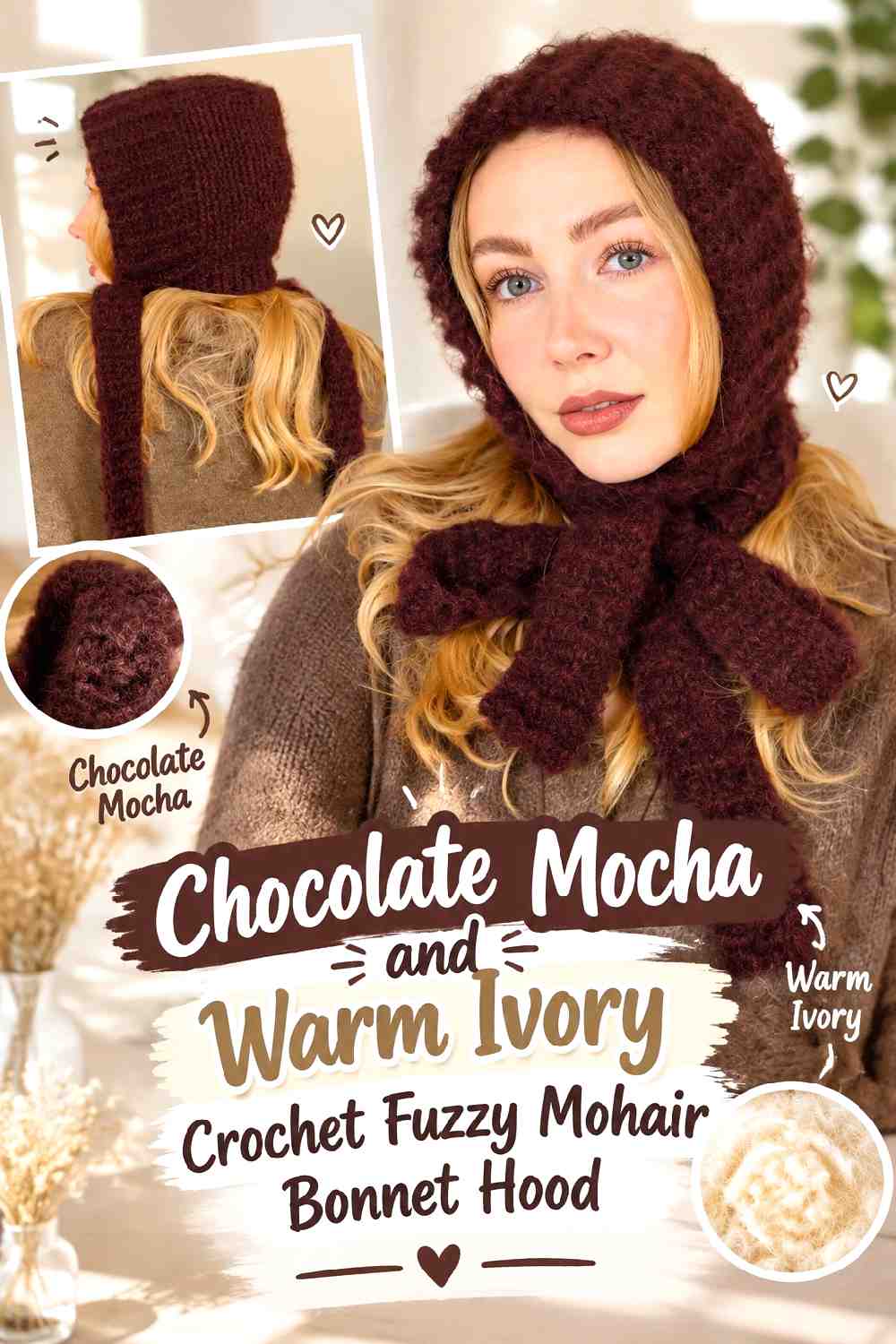
Warm ivory gives this chocolate mocha bonnet hood the clearest light-dark contrast in the collection. Keep chocolate mocha across most of the crown and side panels, then reserve ivory for the face edge and possibly the ends of the ties. The lighter outline makes the hood shape easier to read even when the fuzzy surface softens individual stitches.
Warm Ivory Can Define the Chocolate Mocha Mohair Face Opening
A narrow ivory face border is enough to separate deep chocolate mocha from similarly dark coats, scarves, or hair. Because the contrast is strong, avoid spreading ivory through every section unless you want a visibly two-tone bonnet.
Check the hood from the front before repeating ivory elsewhere. If the face frame already creates enough separation, small ivory details near the ties may be more balanced than another broad stripe.
Chocolate Mocha Should Remain the Largest Mohair Color Area
Keep the crown and main hood body chocolate mocha if you want the piece to read brown first. Large ivory sections can quickly reverse the hierarchy because the lighter color attracts attention against the dark base.
When substituting shades, preserve that relationship rather than searching for an exact ivory. A light warm neutral that remains clearly lighter than the chocolate mocha can serve the same role.
Creator Credit: DIYGuru
2. Chocolate Mocha and Latte Beige Crochet Fuzzy Mohair Balaclava Hood
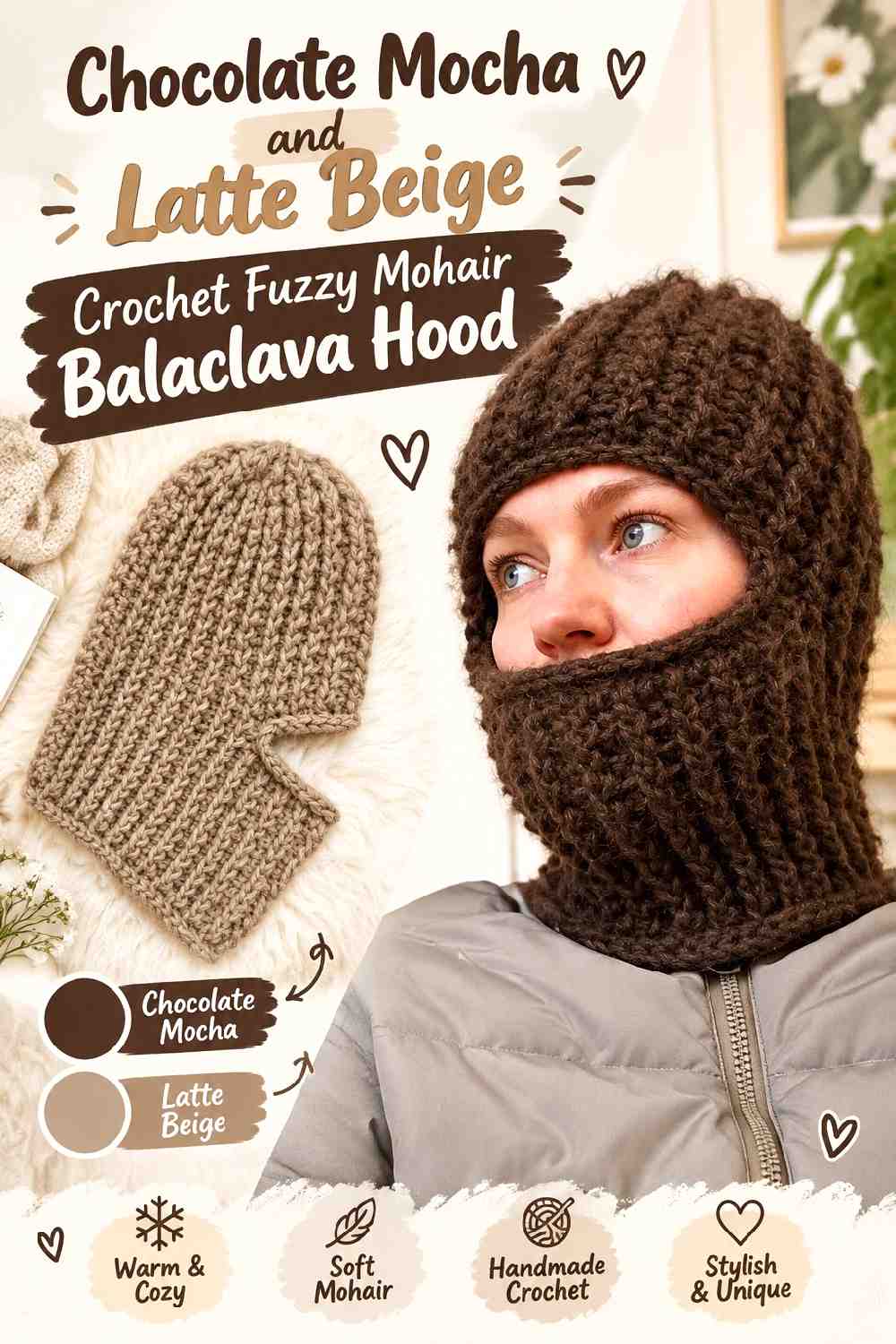
Latte beige creates a much softer change than ivory, making this balaclava direction useful when you want a mostly tonal brown hood. Chocolate mocha can cover the crown and neck while latte beige appears around the face opening or lower edge. The moderate contrast keeps the silhouette calm while still preventing the entire hood from becoming one uninterrupted dark block.
Latte Beige Gives Chocolate Mocha Mohair a Softer Face Border
Use latte beige where you want definition without the brightness of cream. A face edge in this middle-value neutral can transition naturally between chocolate mocha and a camel, beige, or oatmeal winter coat.
Keep the border wide enough to remain visible through a fuzzy yarn surface. Very narrow changes between two related neutrals may disappear from a normal viewing distance.
Chocolate Mocha Can Anchor the Balaclava Crown and Neck
Repeating chocolate mocha across both the upper hood and lower neck gives the piece visual continuity. Latte beige can then function as a true supporting color instead of dividing the hood into unrelated sections.
If the two shades seem too close after crocheting a sample, either lighten the latte color or concentrate it into a broader face-framing area rather than adding more narrow stripes.
Creator Credit: Serafima Crochet & Knitting
3. Chocolate Mocha and Espresso Crochet Fuzzy Mohair Hooded Scarf
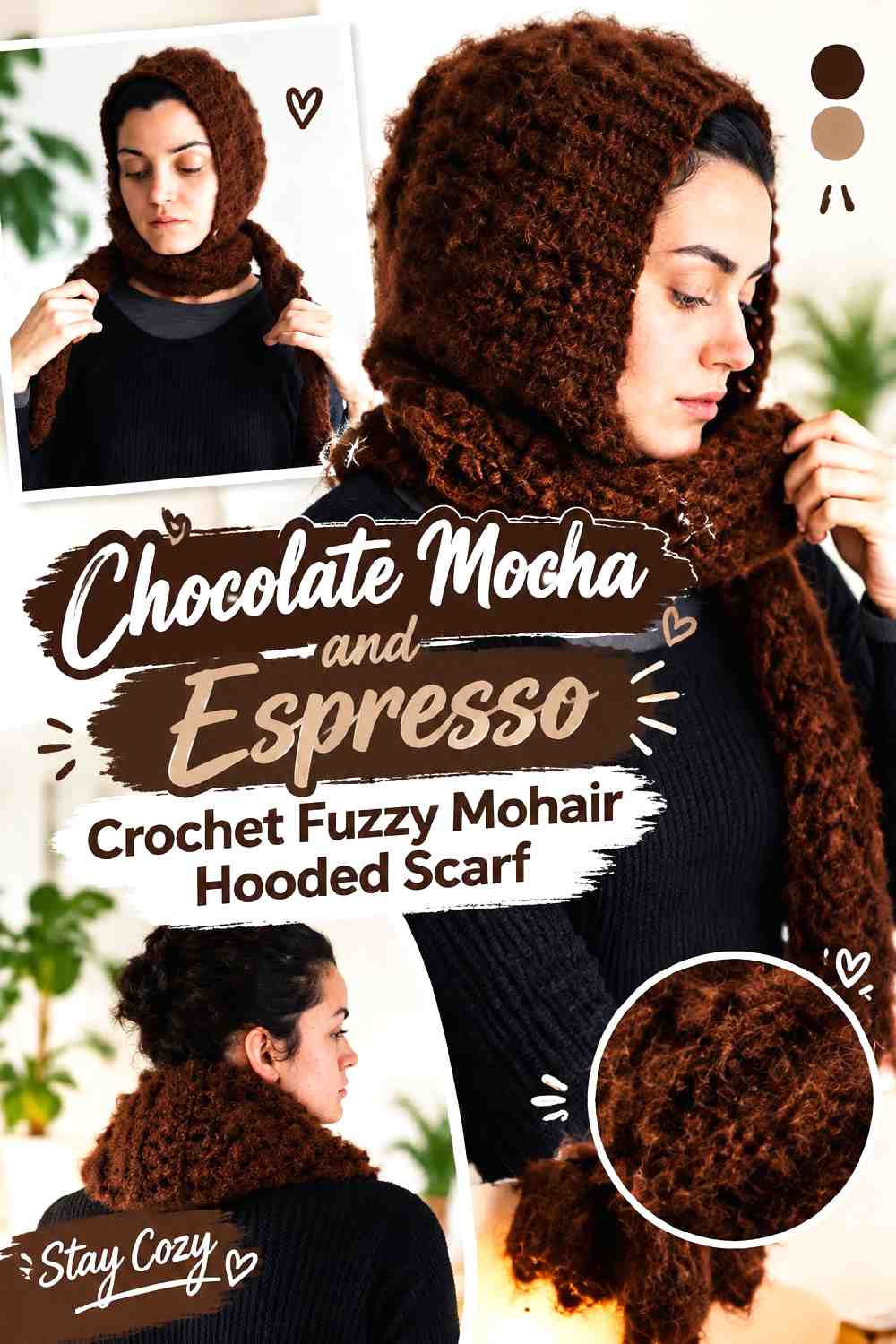
Chocolate mocha with espresso creates a dark tonal hooded scarf rather than a high-contrast one. Use chocolate mocha across the largest visible sections and let espresso deepen selected edges, scarf ends, or the face opening. This palette depends on broad areas and differences in darkness because two closely related browns can easily blend through a fuzzy surface.
Espresso Can Give Chocolate Mocha Mohair a Deeper Outer Edge
Espresso works particularly well as an outline color. Placing it around the hood opening or along the outer scarf edge adds depth without introducing a completely different hue.
Avoid relying on tiny espresso details to carry the palette. When both browns are dark, a small accent can become nearly invisible once the yarn is worked into a fuzzy fabric.
Chocolate Mocha Needs More Surface Than Espresso
Let chocolate mocha remain clearly dominant so the project does not simply read as dark brown overall. Espresso is most useful when it creates a deliberate shadow or frame rather than occupying half the accessory.
A side-by-side swatch can reveal whether the shades are different enough. If they merge, replace espresso with a noticeably deeper brown rather than adding extra decorative changes.
Creator Credit: Doblecroché
4. Chocolate Mocha and Mushroom Taupe Crochet Fuzzy Mohair Tapered Hood
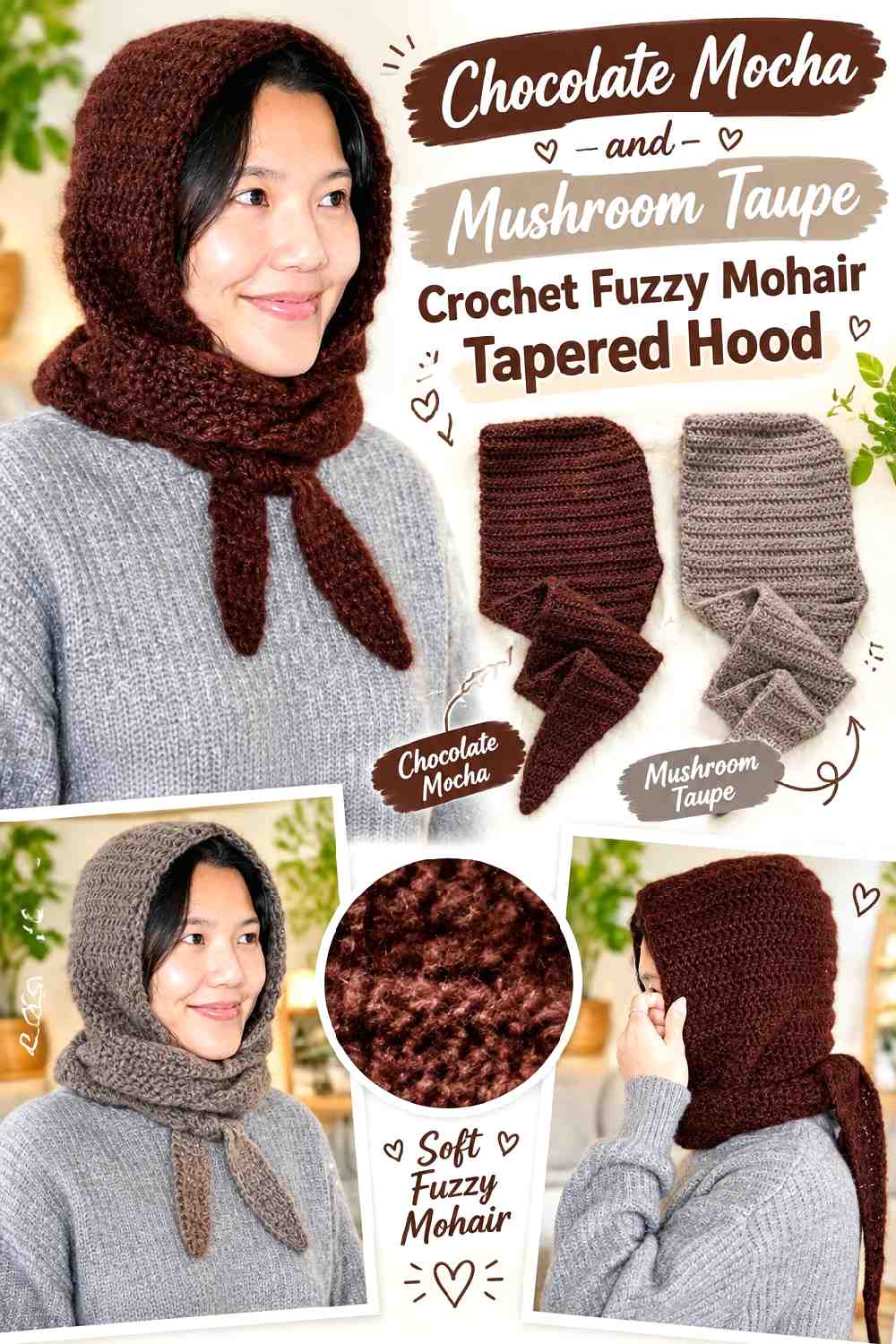
Mushroom taupe cools the warm chocolate mocha slightly without creating a sharp contrast. On a tapered hooded scarf, keep chocolate mocha near the hood and center of the accessory, then allow taupe to appear toward the narrowing ends or around a restrained border. The result stays neutral while avoiding an all-brown appearance.
Mushroom Taupe Can Soften Chocolate Mocha Mohair Scarf Ends
Tapered ends already become visually lighter as they narrow. Using mushroom taupe there can increase that effect without introducing a pale cream stripe.
Keep some chocolate mocha near the tips if you want the ends to remain connected visually to the hood. A complete switch to taupe can make the scarf sections feel more separate from the brown crown.
Chocolate Mocha Should Stay Strongest Around the Tapered Hood
Keeping the hood predominantly chocolate mocha places the darkest warm neutral around the most prominent part of the accessory. Taupe then becomes a transition shade rather than a competing focal color.
This approach is particularly useful with fuzzy yarn because it relies on large color areas instead of crisp, intricate striping.
Creator Credit: VivCrochets
5. Chocolate Mocha and Caramel Crochet Fuzzy Mohair Pocket Hooded Scarf
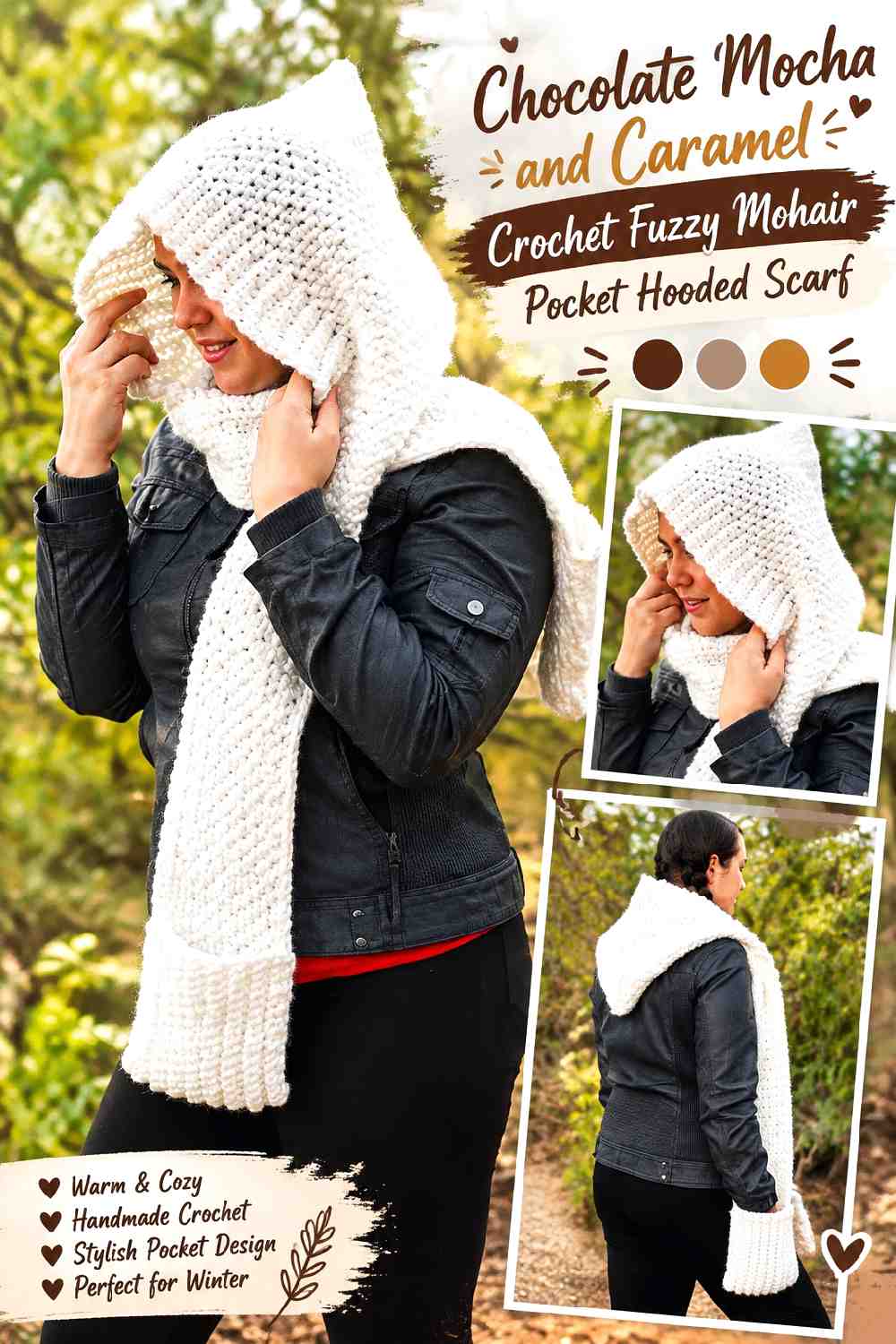
Caramel brings a lighter golden-brown accent into the chocolate mocha family. On a pocket hooded scarf, chocolate mocha can dominate the hood and long scarf body while caramel identifies functional details such as pocket openings, scarf ends, or a face border. Keeping caramel concentrated prevents two warm browns from turning into a busy sequence of similar stripes.
Caramel Can Highlight Chocolate Mocha Mohair Pockets
Pocket edges are a practical place to repeat caramel because the contrast helps show where the scarf changes structure. Use the accent consistently on both pockets rather than introducing it randomly along the scarf.
If the caramel is fairly close in value to the chocolate mocha, give it enough width to remain visible through the fuzzy surface.
Chocolate Mocha Can Connect the Hood and Long Scarf Sections
Carry chocolate mocha continuously through the main hood and scarf body when you want the accessory to look unified from top to bottom. Caramel then becomes a repeated detail rather than a second dominant color.
That distribution also gives you flexibility when wrapping the scarf, since the main color remains visible even when one accented end is tucked underneath the other.
Creator Credit: Winding Road Crochet
6. Chocolate Mocha and Cinnamon Crochet Fuzzy Mohair Rounded Pocket Hood
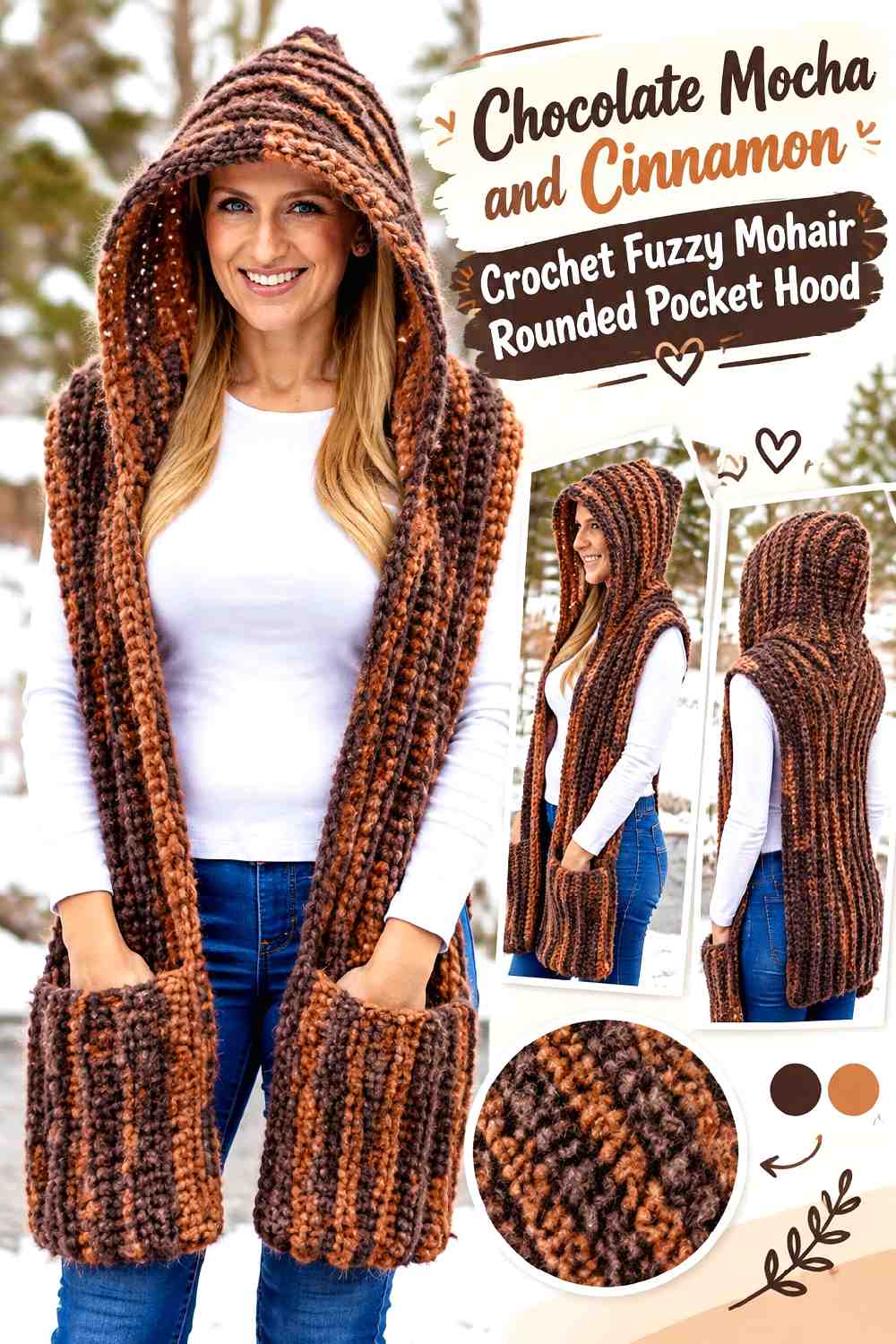
Cinnamon adds a redder, warmer brown to a chocolate mocha pocket hood. Because both colors belong to a similar earthy range, the difference is more about undertone than dramatic value contrast. Use cinnamon on larger details such as pocket sections or a broad hood edge rather than expecting tiny color changes to remain distinct.
Cinnamon Needs Enough Space Beside Chocolate Mocha Mohair
A narrow cinnamon stripe can disappear against chocolate mocha, particularly when both shades are similarly dark. A broader pocket panel or face border gives the warmer reddish tone enough area to register.
Look at the finished fabric under the lighting where you expect to wear it. If the colors collapse into one brown, increase their value difference rather than simply adding more cinnamon.
Chocolate Mocha Can Ground Cinnamon Pocket Details
Keeping the rounded hood chocolate mocha lets cinnamon draw attention lower on the scarf without competing around the face. This can balance a long pocket scarf by distributing color across different parts of the accessory.
Repeat a small cinnamon detail near the hood if the pockets otherwise feel disconnected, but keep that repetition restrained.
Creator Credit: naztazia
7. Chocolate Mocha and Dusty Rose Crochet Fuzzy Mohair Cable Scoodie
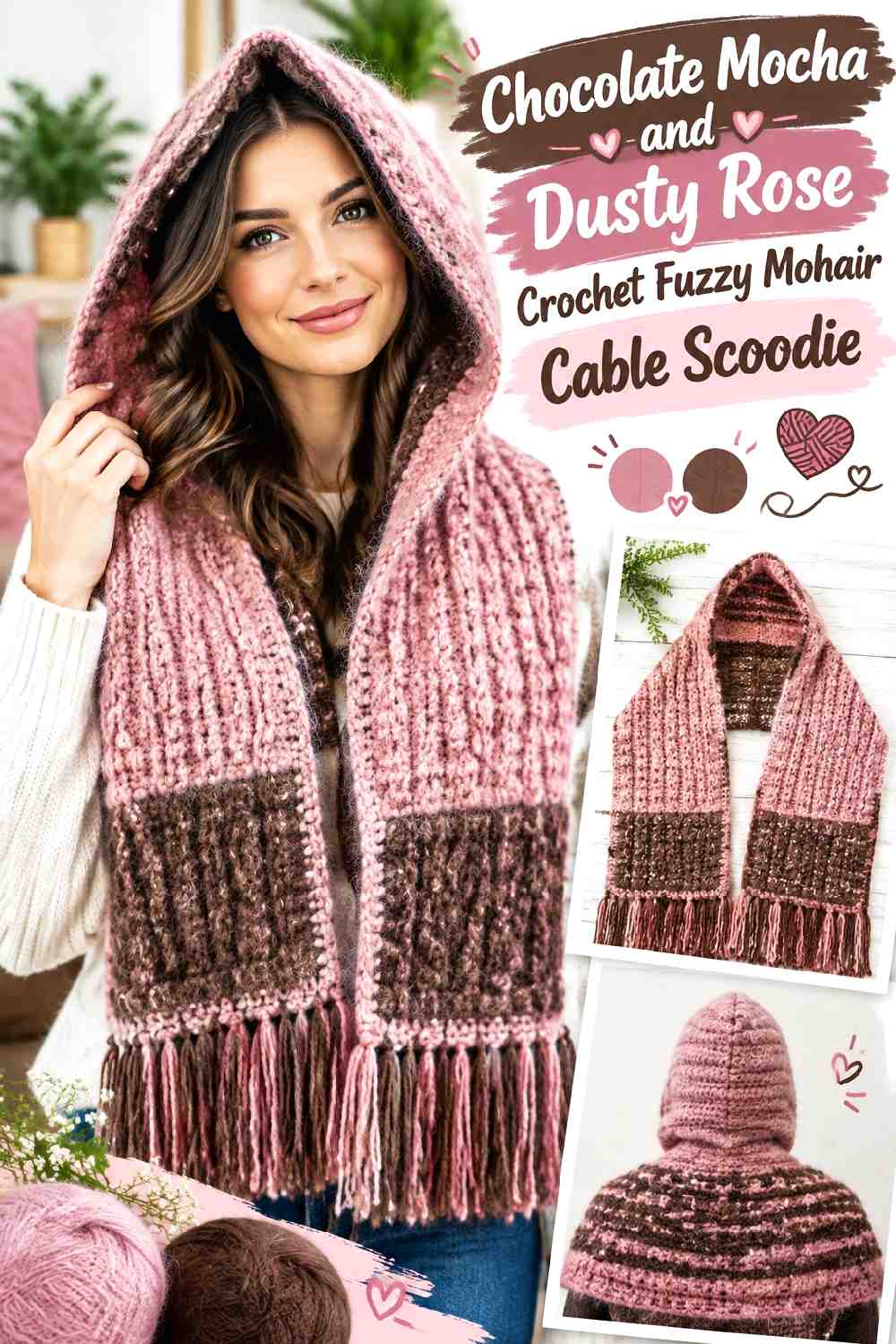
Dusty rose introduces a muted color accent without overpowering chocolate mocha. A cable or raised-texture scoodie already contains visual detail, so use the pink selectively. Chocolate mocha can carry the textured hood and scarf, while dusty rose appears on pockets, edging, or restrained finishing details.
Dusty Rose Should Support Chocolate Mocha Mohair Cable Texture
Large areas of alternating color can compete with raised crochet texture. If the cables or other surface details matter, keep most of that fabric chocolate mocha and place dusty rose where the construction is simpler.
A muted rose usually works better for this role than a highly saturated pink because it creates a color change without making every edge compete for attention.
Chocolate Mocha Can Separate Dusty Rose From Decorative Details
Use chocolate mocha between dusty rose sections when the scoodie includes several visual features. The dark neutral creates resting space between texture, pockets, and fringe or edging.
If you add dusty rose to more than one detail, repeat it deliberately rather than introducing slightly different pinks across the same piece.
Creator Credit: Let’s All Crochet
8. Chocolate Mocha and Mauve Crochet Fuzzy Mohair Pocket Scoodie
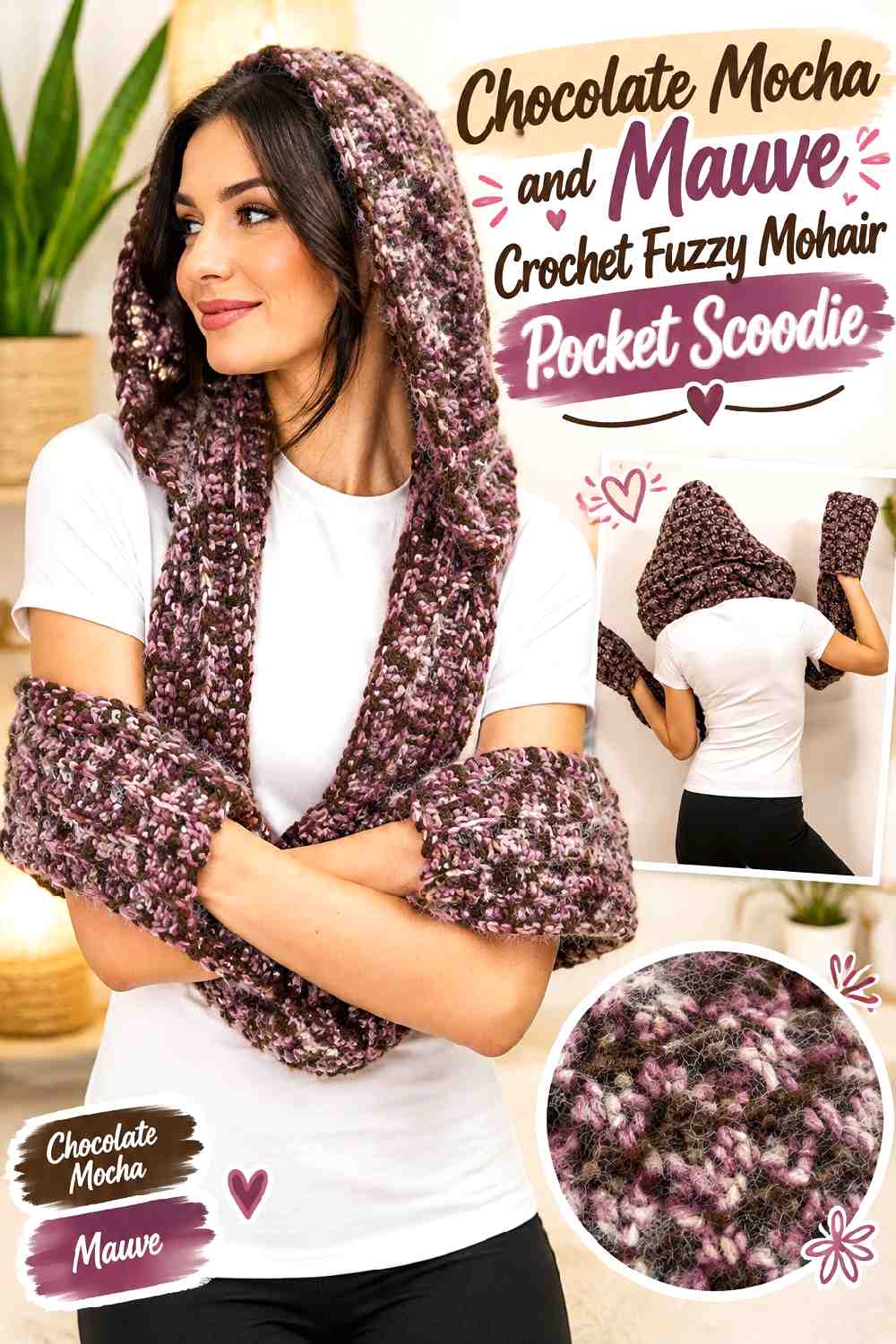
Mauve gives chocolate mocha a cooler muted partner than dusty rose. It works particularly well when you want the hood to stay brown but the pocket sections to introduce a distinct secondary color. Keep the mauve softened so it complements the fuzzy surface instead of looking sharply disconnected from the mocha base.
Mauve Can Cool Chocolate Mocha Mohair Without Becoming Too Bright
Place mauve on the pockets, scarf tips, or a controlled face edge. Those areas provide enough space for the color to register while keeping chocolate mocha dominant across the hood.
If the mauve is very dark, compare it with the brown from several feet away. Similar values may make the two hues less distinct than they appear in the skeins.
Chocolate Mocha Should Repeat Between Mauve Pocket Sections
A continuous chocolate mocha scarf body keeps two mauve pockets from looking like separate additions. The dominant brown becomes the bridge between them and the hood.
When using fuzzy yarn, this simple large-block approach is usually easier to read than alternating many narrow mocha-and-mauve stripes.
Creator Credit: TCDDIY
9. Chocolate Mocha and Sage Crochet Fuzzy Mohair Infinity Hooded Scarf

Sage provides a muted botanical contrast against chocolate mocha while staying softer than a vivid green. On an infinity hooded scarf, brown can dominate the hood and most of the loop, with sage appearing in one controlled section or along the face edge. Remember that the loop wraps over itself, so not every planned color area will remain visible while worn.
Sage Can Break Up a Large Chocolate Mocha Mohair Infinity Loop
A broad sage section can give the wrapped scarf enough contrast to avoid becoming one large brown mass. Place it where the color will still appear after the loop is wrapped rather than designing the palette only while the piece is flat.
Because sage and chocolate mocha differ clearly in hue, you may not need multiple additional accent colors.
Chocolate Mocha Can Keep the Hood Visually Connected to the Loop
Repeat chocolate mocha through the hood and at least part of every major scarf section. That continuity matters on an infinity design because overlapping layers can otherwise make the accessory look fragmented.
If you prefer a quieter result, choose a grayer sage rather than reducing the chocolate mocha coverage.
Creator Credit: Kay Krochets
10. Chocolate Mocha and Olive Crochet Fuzzy Mohair Two-Rectangle Hood
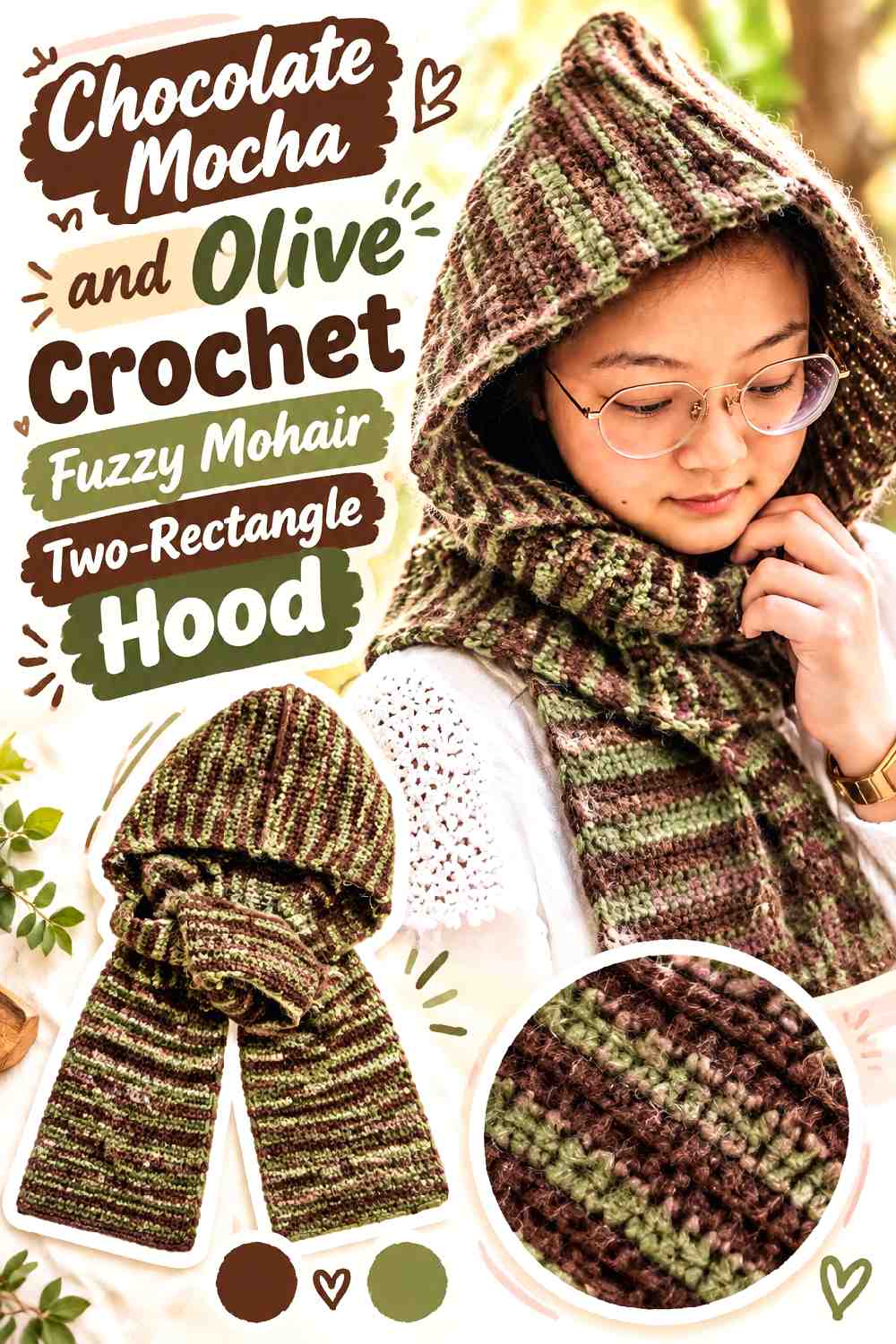
Olive is deeper and earthier than sage, so it produces a lower-contrast botanical palette. A hood assembled from simple panels gives you large surfaces where the two shades can remain readable despite the fuzzy yarn. Let chocolate mocha lead the hood rectangle and use olive more selectively on the scarf or edging.
Olive Works Better in Broad Areas Beside Chocolate Mocha Mohair
Because olive and chocolate mocha can both sit in a medium-to-dark value range, tiny stripes may not show much distinction. A broader olive scarf section or edge makes the color relationship easier to see.
Before committing to equal panels, check which shade you want closest to the face. Keeping chocolate mocha there preserves the article’s main brown direction.
Chocolate Mocha Can Visually Unite Separate Hood Panels
When an accessory is assembled from distinct pieces, repeating one dominant color across both sections helps the finished object read as one design. Chocolate mocha is a useful linking shade for the hood and scarf.
Olive can then identify a secondary panel, border, or scarf end without making the assembly line itself the main visual feature.
Creator Credit: Crochetnotes
11. Chocolate Mocha and Denim Blue Crochet Fuzzy Mohair Two-Color Hood
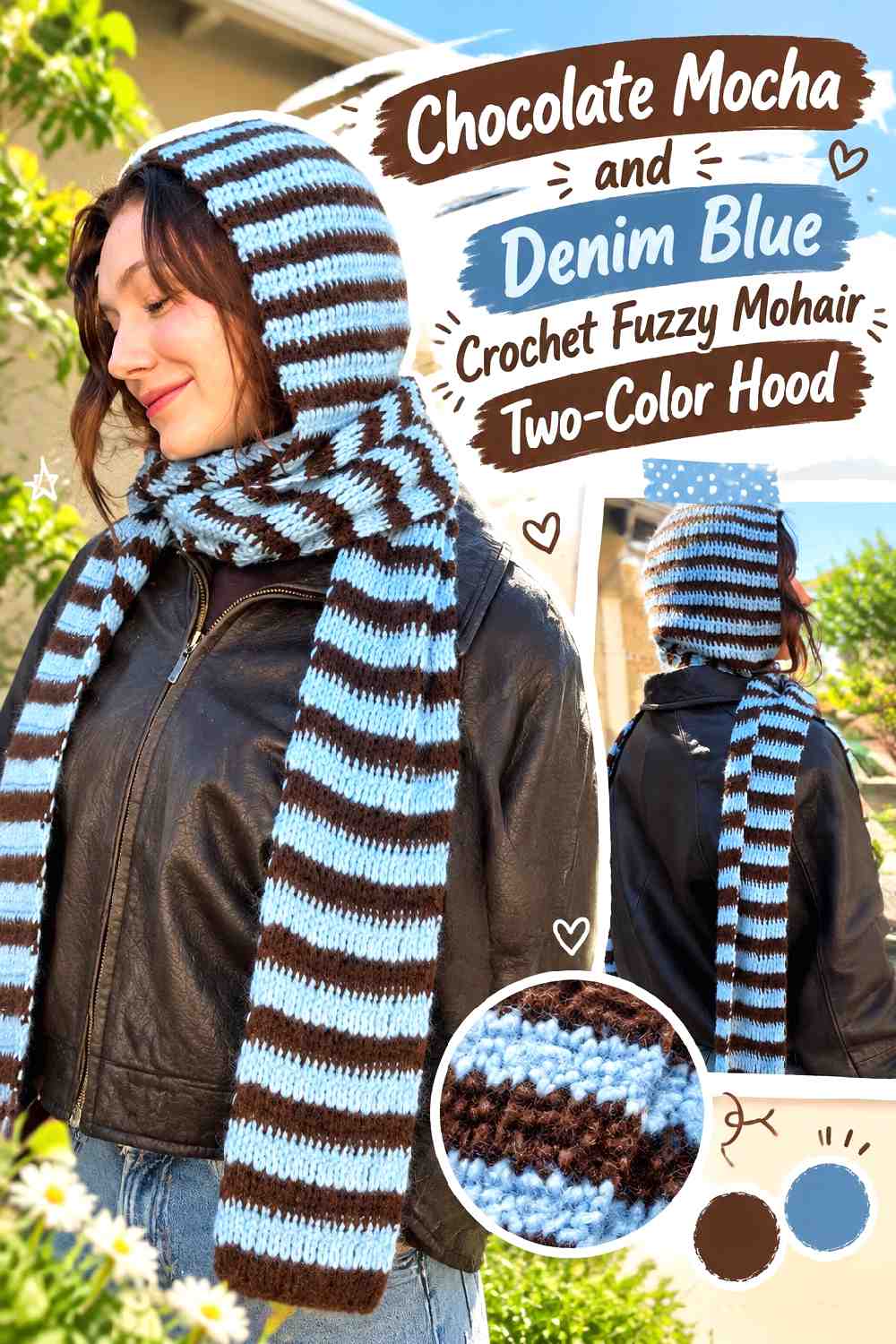
Muted denim blue creates a cooler contrast than the earthy greens and warm neutrals in the earlier ideas. Use chocolate mocha as the main hood color and introduce blue through scarf sections or a broad edge. The contrast is strongest when the denim remains clearly cooler but not extremely bright.
Denim Blue Can Cool a Chocolate Mocha Mohair Winter Palette
Place denim where it can form a deliberate block rather than scattering small blue accents across the fuzzy surface. A longer scarf section gives the cool color room to balance the warm brown.
This palette can become busier if both shades alternate frequently. Larger zones keep the two-color concept clearer.
Chocolate Mocha Should Control the Face-Framing Color
Keeping chocolate mocha around most of the hood opening ensures that the project still reads as a mocha hood even when denim takes up a significant part of the scarf.
If you want blue closer to the face, use it as a narrow supporting edge and repeat the same blue somewhere lower on the accessory.
Creator Credit: Anna Greene
12. Chocolate Mocha and Plum Crochet Fuzzy Mohair Granny Square Hood
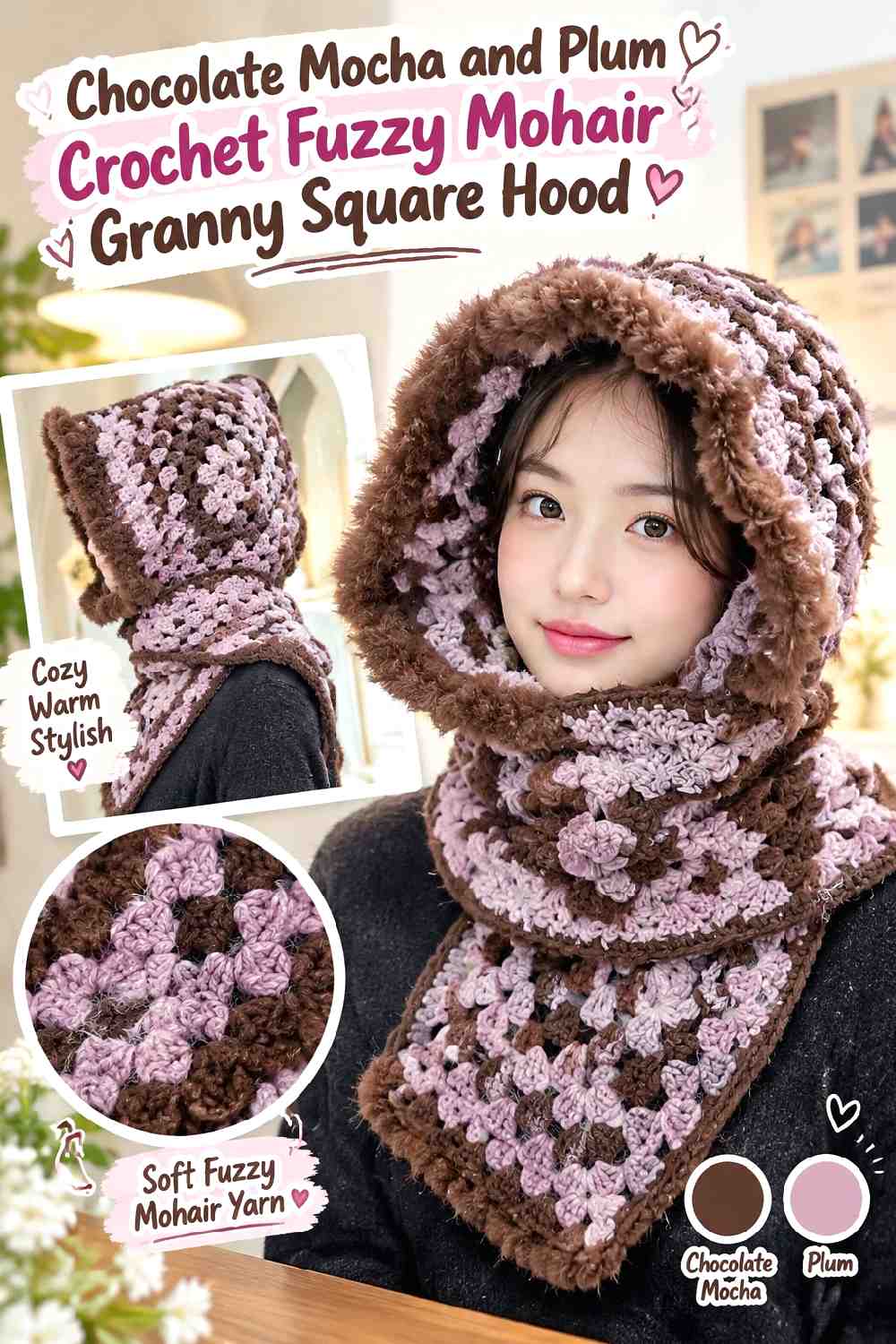
Plum adds a deep purple accent to chocolate mocha without requiring a pale neutral. On granny-square construction, use chocolate mocha as the repeated outer round or joining color so separate motifs remain connected visually. Plum can occupy selected centers or middle sections where the hue has enough area to show.
Plum Centers Can Sit Inside Chocolate Mocha Mohair Motifs
Using plum toward motif centers gives the purple a defined location rather than scattering it unpredictably. Chocolate mocha around the outside can then unify squares even if their interior color placement varies slightly.
Fuzzy yarn can blur small motif details, so avoid introducing too many additional shades when plum and chocolate mocha already provide the main relationship.
Chocolate Mocha Outer Rounds Can Connect the Mohair Hood
Repeated chocolate mocha edges give the joined hood a continuous brown framework. This is especially useful around the face, where several motif colors could otherwise create a visually broken border.
If plum is nearly as dark as the mocha, consider a lighter joining or accent neutral only if additional separation is genuinely needed.
Creator Credit: Crochet Musings
13. Chocolate Mocha and Burgundy Crochet Fuzzy Mohair Joined-Granny Hood
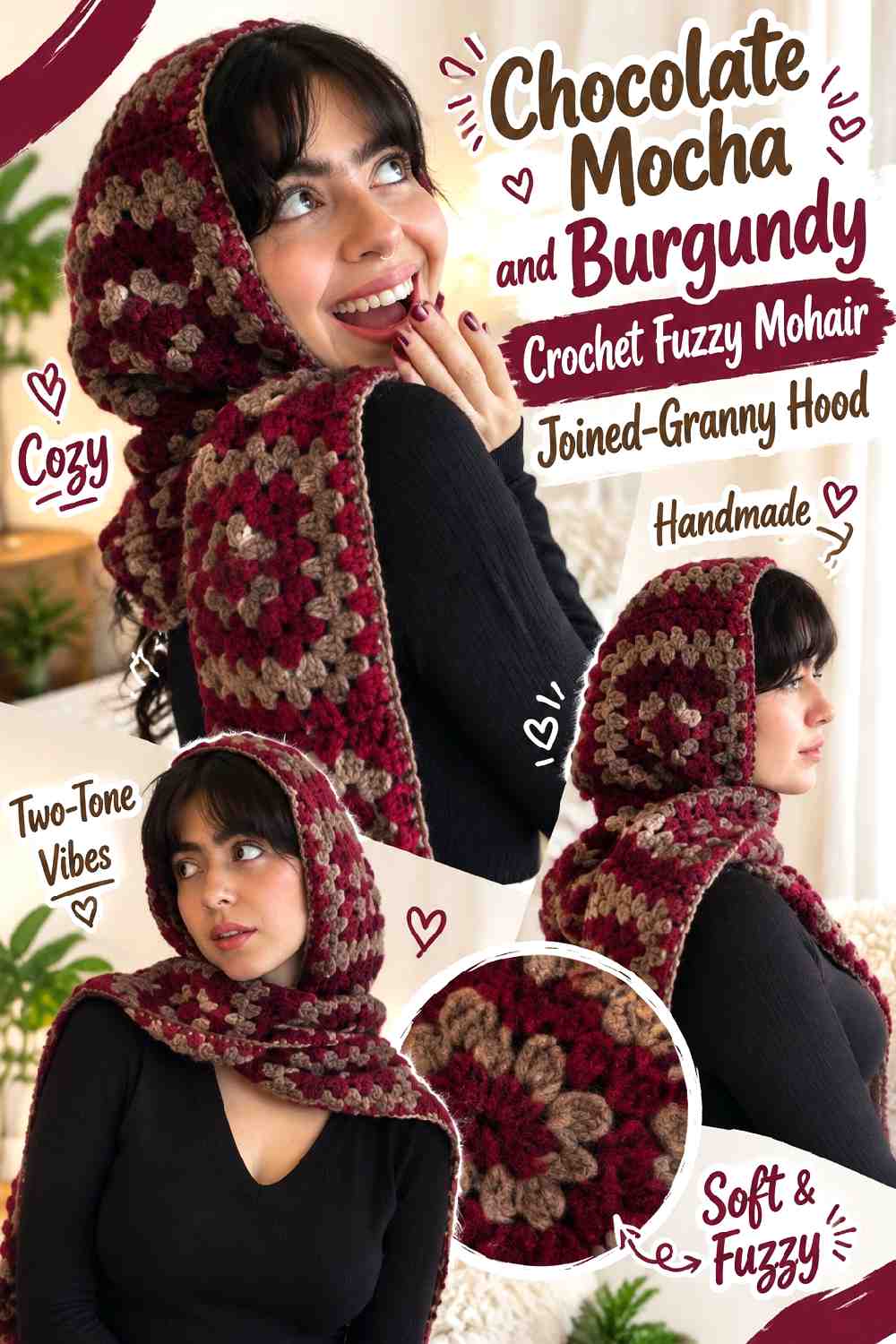
Burgundy creates a rich dark pairing with chocolate mocha. Because both shades carry substantial visual weight, the palette works better through deliberate motif placement than tiny alternating details. Keep chocolate mocha around joins and major hood edges, then use burgundy where you want larger blocks of red-brown color.
Burgundy Needs Clear Placement Beside Chocolate Mocha Mohair
If burgundy and chocolate mocha have similar darkness, organize them by motif position instead of expecting contrast alone to separate them. For example, burgundy can appear consistently in centers while chocolate mocha repeats around the outer parts.
That repeated structure gives the viewer another way to read the color pattern even when the fuzzy surface softens the boundary.
Chocolate Mocha Joins Can Calm a Burgundy Granny Hood
Using chocolate mocha between motifs prevents burgundy from appearing in disconnected patches. The join becomes part of the palette rather than merely a construction detail.
Check the whole hood layout before joining. A concentrated group of burgundy squares on one side can make the finished face frame look unintentionally uneven.
Creator Credit: Käthe
14. Chocolate Mocha, Oatmeal, and Camel Crochet Fuzzy Mohair Granny Hood
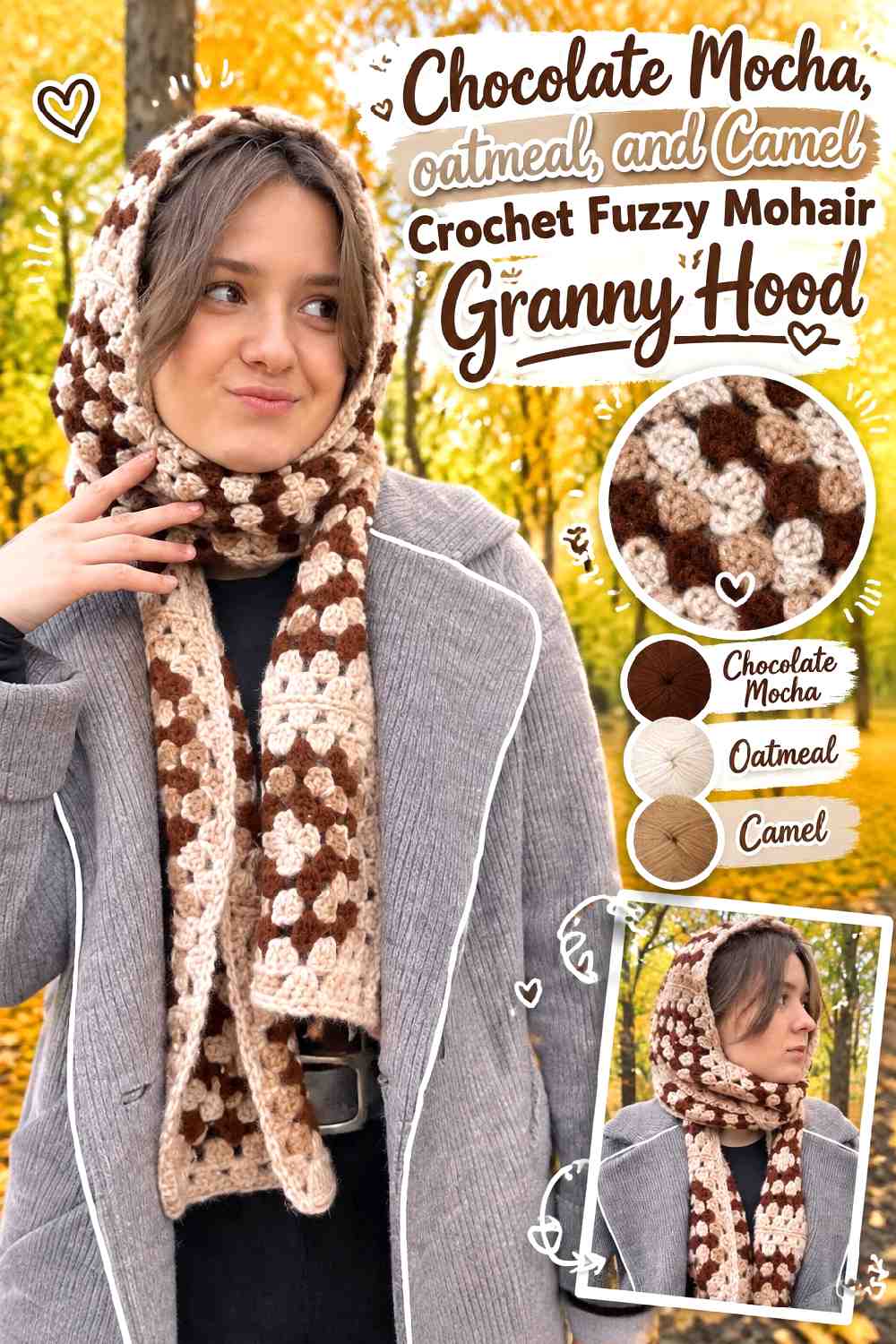
This three-neutral palette uses chocolate mocha as the dark anchor, oatmeal as the lightest separator, and camel as the bridge between them. Granny motifs give each shade a defined job, which is useful when fuzzy yarn could otherwise make three related neutrals blend together.
Oatmeal Can Separate Chocolate Mocha Mohair From Camel
Chocolate mocha and camel may look comfortably related but not always strongly separated. A small oatmeal round between them can create a lighter visual break.
Use oatmeal consistently rather than inserting it randomly into a few motifs. Repetition turns the light neutral into part of the palette structure.
Chocolate Mocha Should Anchor the Three-Color Mohair Hood
Give chocolate mocha either the outer motif rounds, the joins, or another repeated large role. Without a clear dominant shade, three neutrals can divide the hood into equal visual pieces and weaken the mocha focus.
Camel works well as the middle-value supporting color because it can occupy more space than oatmeal without competing as strongly with the dark brown.
Creator Credit: fiorafana
15. Chocolate Mocha and Charcoal Crochet Fuzzy Mohair Crab-Edged Hood

Chocolate mocha and charcoal create a dark neutral combination with a noticeable warm-versus-cool difference. Use chocolate mocha across the main hood and scarf, then let charcoal define the face opening or another outer edge. The palette remains understated, so the placement of the darker border matters more than decorative color changes.
Charcoal Can Sharpen a Chocolate Mocha Mohair Hood Edge
A charcoal face border can give the fuzzy mocha fabric a darker outline without introducing black. This is useful when you want definition but do not want a pale contrasting frame.
Check that the charcoal is actually distinguishable from your chocolate mocha. If both are extremely dark, the edge may read mainly as a textural change rather than a color change.
Chocolate Mocha Needs Enough Area Beside a Charcoal Border
Dark edging can visually shrink the amount of brown that appears around the face. Keep the chocolate mocha body broad enough that the hood still reads warm brown rather than gray-black.
Repeating a small charcoal detail on the scarf ends can connect the border to the rest of the accessory without turning the whole scarf into stripes.
Creator Credit: Patricia Fentie
16. Chocolate Mocha and Black Crochet Fuzzy Mohair Sophie-Style Hood
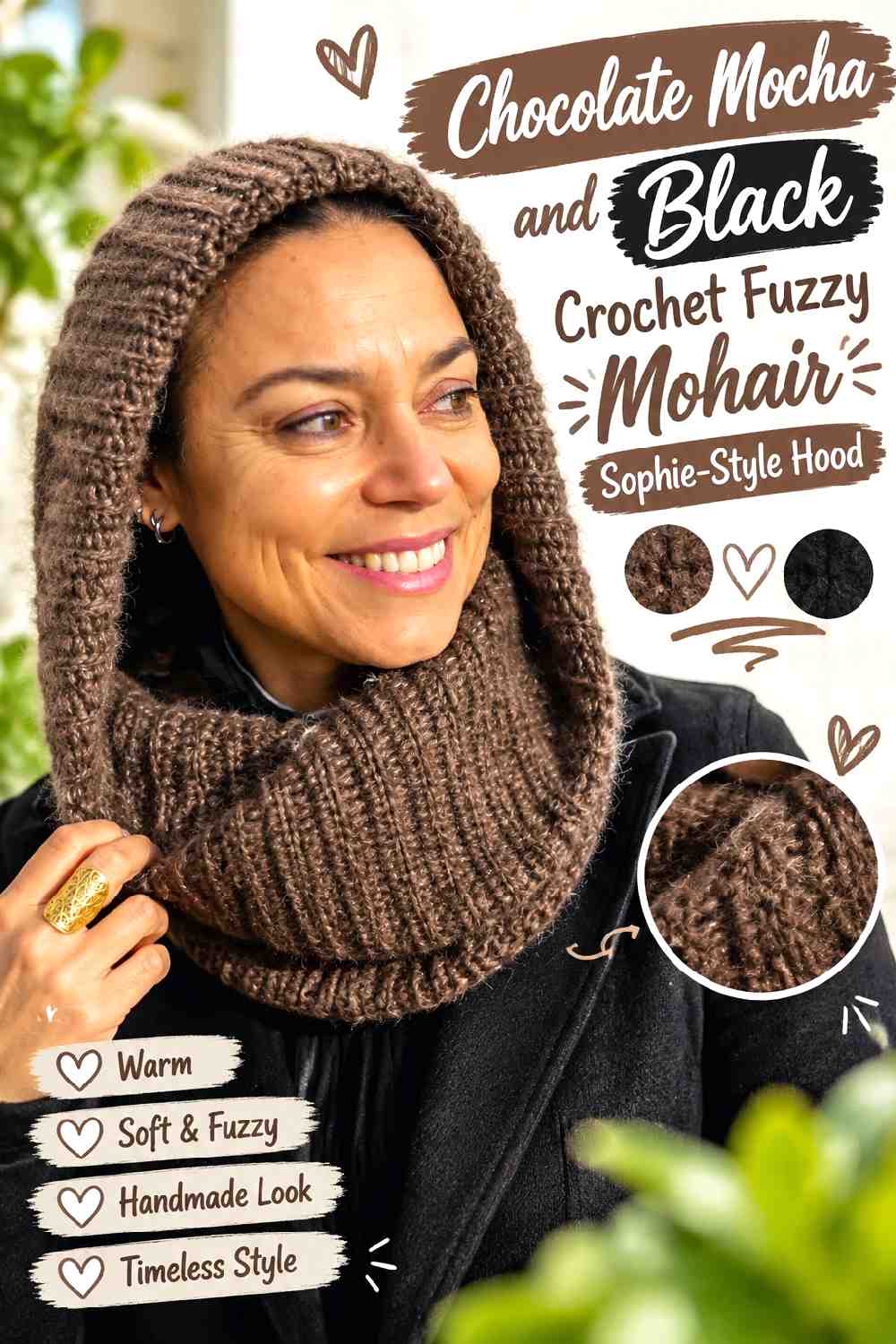
Black creates the strongest dark outline in this collection. On a tapered Sophie-style hooded scarf, keep chocolate mocha across the majority of the hood and scarf while using black only where the silhouette needs definition. The tapered shape already provides visual movement, so the color plan can stay restrained.
Black Should Outline Chocolate Mocha Mohair Rather Than Overtake It
A narrow black face edge or scarf outline can make chocolate mocha appear warmer by comparison. Large black blocks, however, can dominate the palette and change the accessory from brown-led to black-led.
Start with less black than you think you need. Strong dark contrast is easy to add visually through repetition but difficult to reduce once it occupies a major section.
Chocolate Mocha Can Carry the Tapered Mohair Scarf Tips
Keeping the narrowing tips chocolate mocha maintains continuity from the hood to the ends. If black appears at every taper, the darkest color can become disproportionately noticeable because it concentrates at the moving edges.
A small repeated black detail farther up the scarf can connect the outline without taking over the silhouette.
Creator Credit: Francesca Uncinettando Crochet&Love
17. Chocolate Mocha, Cream, and Copper Crochet Fuzzy Mohair Infinity Hood
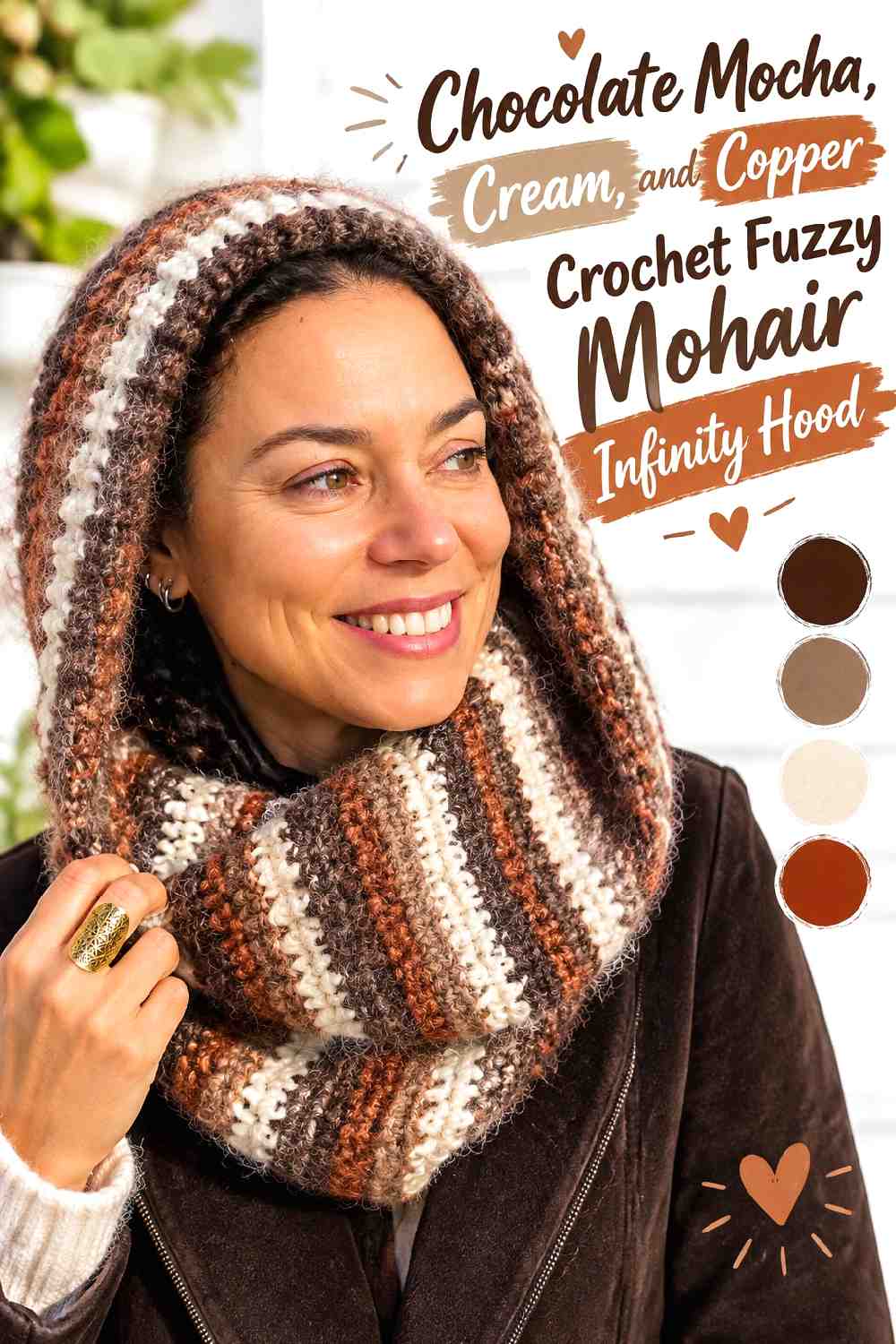
This final palette combines a dark brown base, a light neutral, and a warm metallic-looking color direction without requiring actual metallic yarn. Chocolate mocha should dominate, cream should provide value separation, and copper-colored yarn can act as the smallest accent. On an infinity hood, those roles keep three colors from competing across overlapping layers.
Cream Can Separate Copper From Chocolate Mocha Mohair
Copper and chocolate mocha are both warm, so placing cream between them can prevent the two colors from visually collapsing into one reddish-brown area. Use the light neutral sparingly around a hood edge or selected scarf section.
The goal is separation, not equal thirds. Too much cream can quickly become the dominant color because of its lightness.
Chocolate Mocha Should Control the Three-Color Mohair Infinity Hood
Keep the largest continuous areas chocolate mocha so the wrapped loop and raised hood still feel connected. Copper can appear as a narrow repeated accent, while cream does the work of creating contrast.
Because an infinity scarf overlaps itself, check the palette while wrapped rather than relying only on the flat layout. The visible proportions can change considerably once one section sits over another.
Creator Credit: Wilmade
Which Chocolate Mocha Mohair Hood Palette Should You Choose?
For the clearest contrast, start with warm ivory or cream because those light shades define chocolate mocha edges immediately. Latte beige, mushroom taupe, caramel, and the oatmeal-camel combination are better when you want a quieter neutral progression rather than a sharp two-color split.
Espresso, charcoal, and black move in the opposite direction. They keep the hood dark and use depth rather than brightness for definition. These combinations benefit from larger color areas because subtle distinctions can become even softer in fuzzy crochet.
For a noticeable accent color, dusty rose and mauve give chocolate mocha a muted romantic direction, while sage and olive move toward earthy botanical palettes. Denim blue provides the clearest cool contrast, and plum or burgundy creates a darker winter palette without leaving the rich color range.
Whichever direction you choose, evaluate the colors in the actual fuzzy yarn before committing to the full hood. The skeins may show more separation than the crocheted fabric once the halo begins to soften the boundaries.
Conclusion
A chocolate mocha fuzzy mohair hood does not need many colors to feel intentional. The most useful starting point is deciding whether you want the brown to look lighter, darker, warmer, cooler, or more colorful.
Choose ivory or cream when face framing and stitch visibility matter most. Stay with latte, caramel, taupe, or espresso when you prefer a tonal brown accessory. Use sage, denim, rose, plum, or burgundy when you want the hood to carry a distinct accent while remaining chocolate mocha first.
The fuzzy surface is part of the color plan, not just the yarn choice. Give important colors enough room to remain visible, repeat accents where they help explain the hood’s structure, and use the credited tutorials for the exact construction details of the style you decide to make.
Frequently Asked Questions
What colors work well with a chocolate mocha crochet mohair hood?
Warm ivory, oatmeal, latte beige, caramel, taupe, charcoal, and espresso keep the palette neutral. Sage, olive, dusty rose, mauve, denim blue, plum, and burgundy introduce more noticeable color while still allowing chocolate mocha to remain dominant.
The important factor is not simply the color name. Compare how light or dark the supporting shade is against your actual chocolate mocha yarn.
How can I keep chocolate mocha visible in fuzzy mohair crochet?
Use chocolate mocha across large uninterrupted areas such as the crown, back of the hood, or main scarf body. Small brown details can become less distinct when a fuzzy halo softens their edges.
Give supporting colors specific roles around face openings, borders, ties, pockets, scarf tips, or motifs instead of dividing every shade equally.
Should the face opening of a chocolate mocha mohair hood be lighter?
It can be, especially when you want the opening to stand out clearly. Cream, ivory, oatmeal, or latte beige can create progressively softer levels of contrast.
A lighter border is not required, though. Espresso, charcoal, or black can give the face opening darker definition when you prefer a deeper overall palette.
How do I know whether two brown yarns have enough contrast?
Place the yarns side by side and also look at them from a distance. You can additionally compare a photo in grayscale to see whether one shade is noticeably lighter or darker.
If two browns merge more than you want, increase their value difference or use them in larger blocks rather than adding narrow stripes.
Can I use three colors in a chocolate mocha fuzzy crochet hood?
Yes, but give each shade a clear role. Chocolate mocha can dominate, a lighter neutral can provide separation, and the third color can remain a smaller accent.
This hierarchy is especially useful in fuzzy yarn because several colors used in equal amounts can make the hood look visually fragmented.
Do fuzzy mohair yarns change how crochet colors look?
A fuzzy surface can soften the visual boundaries between stitches and adjacent color areas. That can make tonal palettes look especially blended, but it can also reduce the clarity of very small stripes or motif details.
Swatching the actual colors together is more reliable than judging the palette only from unwound yarn.
What is the easiest way to substitute a color in a chocolate mocha hood palette?
Preserve the role of the original shade. If you are replacing cream, choose another color that remains noticeably lighter than chocolate mocha. If you are replacing espresso, keep the substitute darker than the main brown. For sage, rose, or another accent, preserve its muted or saturated character as well as its general lightness.
That approach keeps the palette’s contrast and hierarchy intact even when the exact named shade is unavailable.