Chocolate brown is especially useful on a crochet bonnet scarf because the color can connect two visually important areas at once: the hood around the face and the scarf extending down the front of a winter outfit. Instead of treating the whole accessory as one solid block of brown, you can use lighter neutrals, muted colors, or deeper winter shades to define the face opening, scarf ends, pockets, borders, motifs, or textured stitches.
The strongest palettes give each shade a clear role rather than dividing every color equally. Chocolate brown can remain the visual anchor while a second shade highlights texture, creates separation, or changes how the scarf coordinates with a coat.
The 14 ideas below use different hooded-scarf and bonnet-scarf constructions as starting points. The credited tutorials support the crochet construction concepts; the chocolate brown color schemes are independent palette ideas that you can adapt to the project.
Quick List
- Chocolate Brown and Cream Tapered Crochet Bonnet Scarf
- Chocolate Brown and Oatmeal Crochet Bonnet Scarf
- Chocolate Brown and Camel Detachable-Hood Crochet Bonnet Scarf
- Chocolate Brown and Dusty Rose Crochet Pocket Bonnet Scarf
- Chocolate Brown and Mustard Cable Crochet Bonnet Scarf
- Chocolate Brown and Sage Crochet Pocket Bonnet Scarf
- Chocolate Brown and Forest Green Crochet Infinity Bonnet Scarf
- Chocolate Brown and Soft Blue Striped Crochet Bonnet Scarf
- Chocolate Brown and Rust Granny Square Crochet Bonnet Scarf
- Chocolate Brown and Olive Granny Square Crochet Bonnet Scarf
- Chocolate Brown and Taupe Edged Crochet Bonnet Scarf
- Chocolate Brown and Burgundy Sophie-Style Crochet Bonnet Scarf
- Chocolate Brown and Charcoal Crochet Infinity Bonnet Scarf
- Chocolate Brown and Plum Turtleneck Crochet Bonnet Scarf
How to Keep a Chocolate Brown Crochet Bonnet Scarf Visually Defined
Chocolate brown can cover most of a bonnet scarf without looking flat, but the surrounding values matter. If the second shade is much lighter—cream, ivory, oatmeal, or pale blue—it can make the face opening, scarf edging, and raised crochet texture easier to distinguish. A darker companion such as burgundy, charcoal, or forest green creates a quieter transition, so placement becomes more important.
Before committing to a low-contrast combination, place the yarns together and look at them from a distance. A quick grayscale photo can also show whether two different hues are actually very similar in lightness. If they merge, reserve the supporting color for larger areas instead of expecting a narrow stripe or tiny motif to remain obvious.
Where to Put Accent Colors on a Chocolate Brown Bonnet Scarf
A bonnet scarf has several natural places for controlled contrast: the face edge, hood crown, scarf ends, pockets, fringe, motif centers, joins, and outer border. You do not need to use a second color everywhere.
For a brown-led winter accessory, consider keeping chocolate brown across the hood and much of the scarf, then repeating the supporting shade in two or three deliberate places. Repetition matters because a lone contrasting edge can look disconnected. Using the same cream, sage, rust, or blue again near the scarf ends gives the palette a clearer visual rhythm.
1. Chocolate Brown and Cream Tapered Crochet Bonnet Scarf
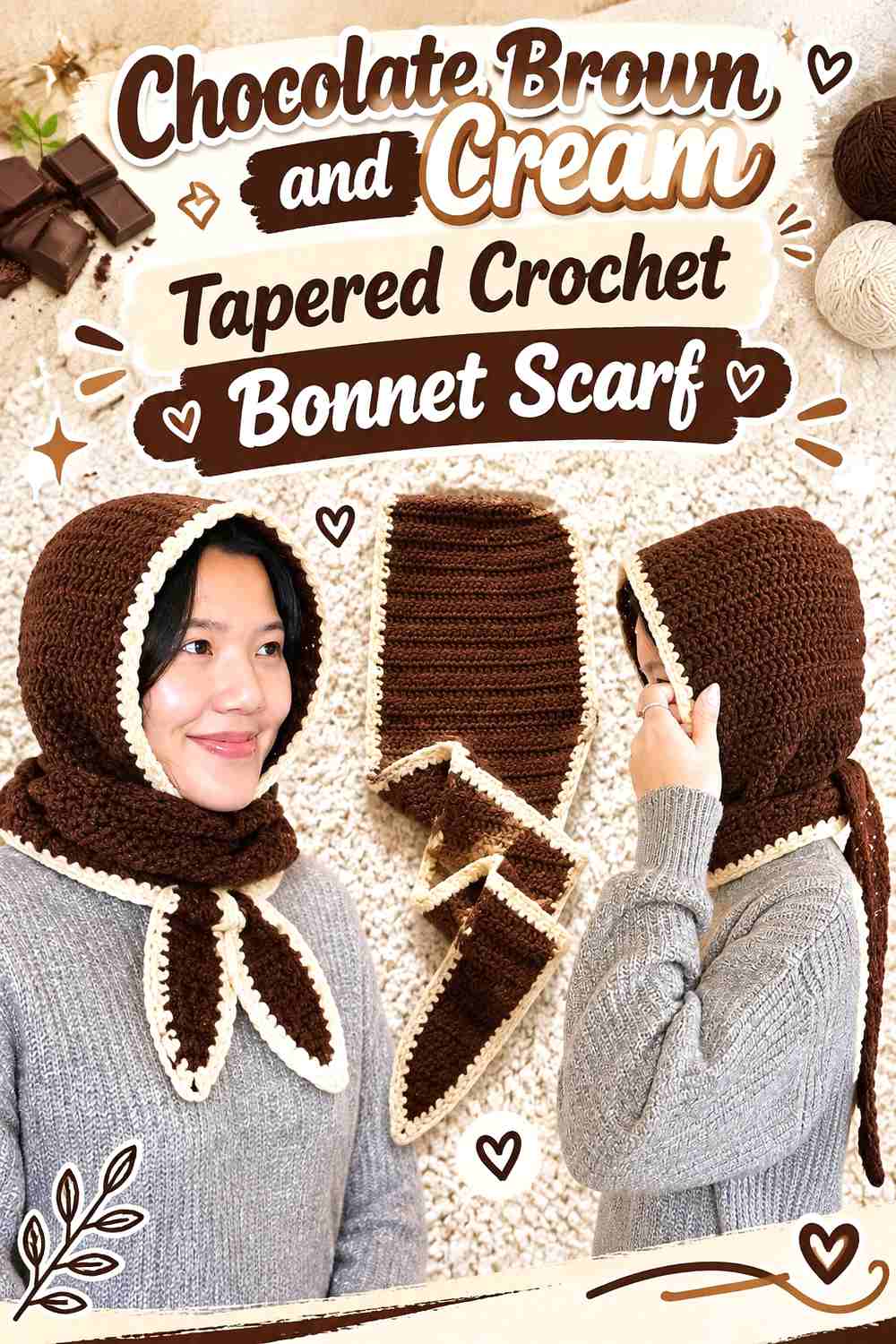
Chocolate brown can dominate this tapered bonnet scarf from hood to scarf ends, while cream provides a clean value break around the face and along the narrowing tips. The taper already reduces visual weight at the ends, so a small amount of cream can emphasize the silhouette without turning the accessory into a heavily striped piece. This palette works particularly well when you want the brown to remain the obvious main color.
Cream Can Frame Chocolate Brown Without Dividing the Whole Scarf
Use cream around the face opening or as a restrained outer edge instead of splitting the hood into equal brown-and-cream sections. That keeps chocolate brown visually continuous while the lighter shade separates the hood from dark hair, a brown coat, or another similarly deep layer.
If cream also appears near the tapered scarf tips, repeat roughly the same visual idea on both sides. The repetition makes the light accent look intentional rather than added at the last moment.
Keep Chocolate Brown Dominant Through the Tapered Scarf Ends
Wide bands of cream near narrow scarf tips can become surprisingly prominent because the light shade attracts attention against deep brown. If you want a brown-led result, reduce the amount of cream as the scarf narrows.
This is also a useful palette to test in the actual stitch texture. Cream and chocolate brown have enough light-dark separation that a narrow border or small detail can remain readable without requiring another accent shade.
Creator Credit: VivCrochets
2. Chocolate Brown and Oatmeal Crochet Bonnet Scarf
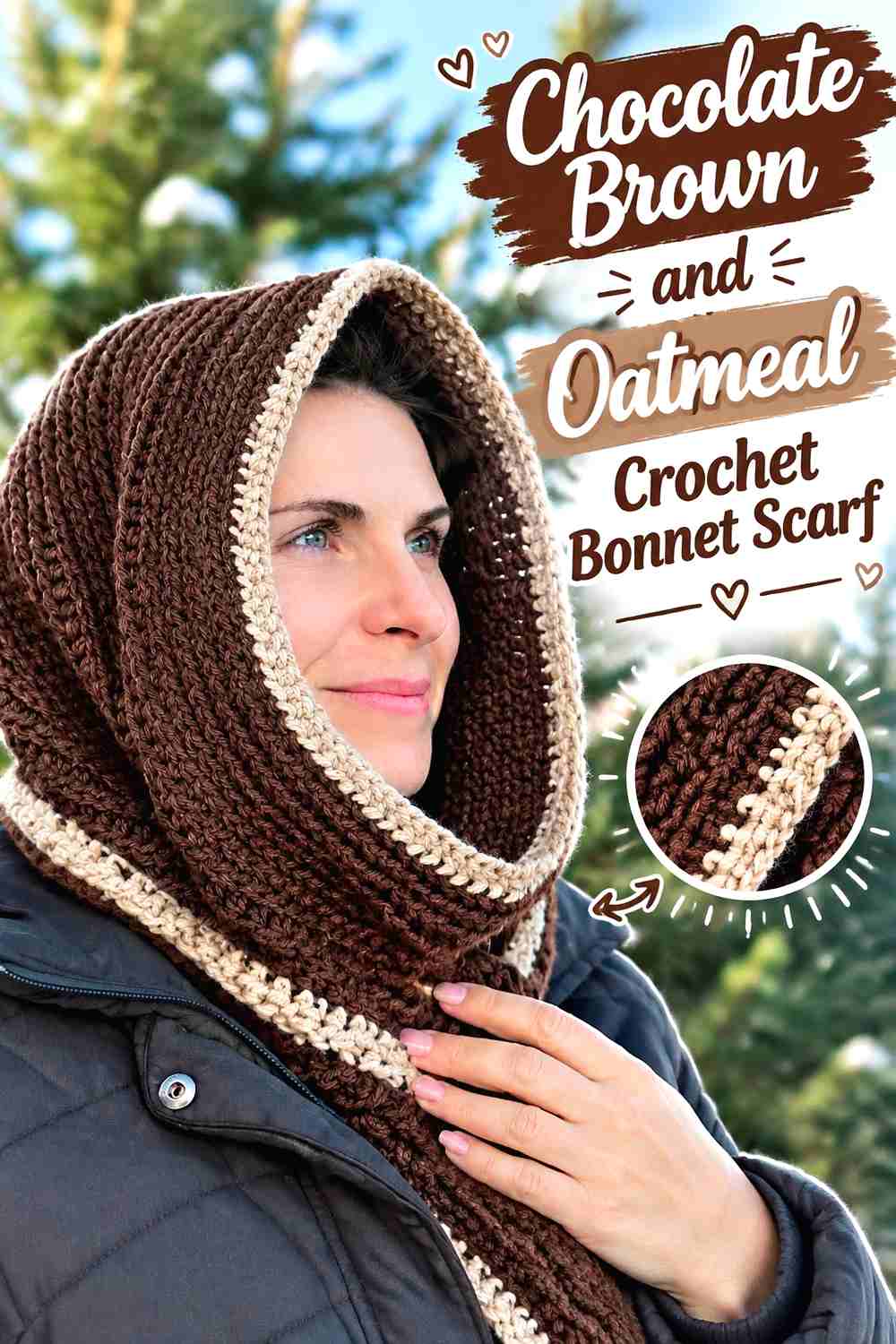
Oatmeal creates less contrast with chocolate brown than bright cream, making this bonnet scarf feel more tonal and blended. Keep chocolate brown across the main hood and neck area, then use oatmeal where you want a gentle change rather than a sharp outline. This direction is useful for winter outfits built around camel, beige, tan, denim, or other softened neutrals.
Oatmeal Softens Chocolate Brown Around the Bonnet Edge
An oatmeal face border gives chocolate brown enough separation to show the hood shape without creating a stark light-dark frame. That softer difference can be useful when the crochet fabric already has visible ridges or texture and does not need another highly dominant feature.
Keep the oatmeal border consistent in width. An uneven light edge is easier to notice against dark chocolate brown than small irregularities within a solid-color section.
Chocolate Brown Should Still Carry the Larger Scarf Area
Because oatmeal and brown are both neutral, using them in equal blocks can make the scarf look more color-blocked than tonal. Give chocolate brown more surface area and use oatmeal as a supporting interruption at the hood edge, scarf tips, or narrow bands.
If your chosen oatmeal is relatively dark, compare it directly with the brown before starting. You may need a slightly lighter oatmeal if you want small crochet details to remain distinct.
Creator Credit: JMCrochet
3. Chocolate Brown and Camel Detachable-Hood Crochet Bonnet Scarf
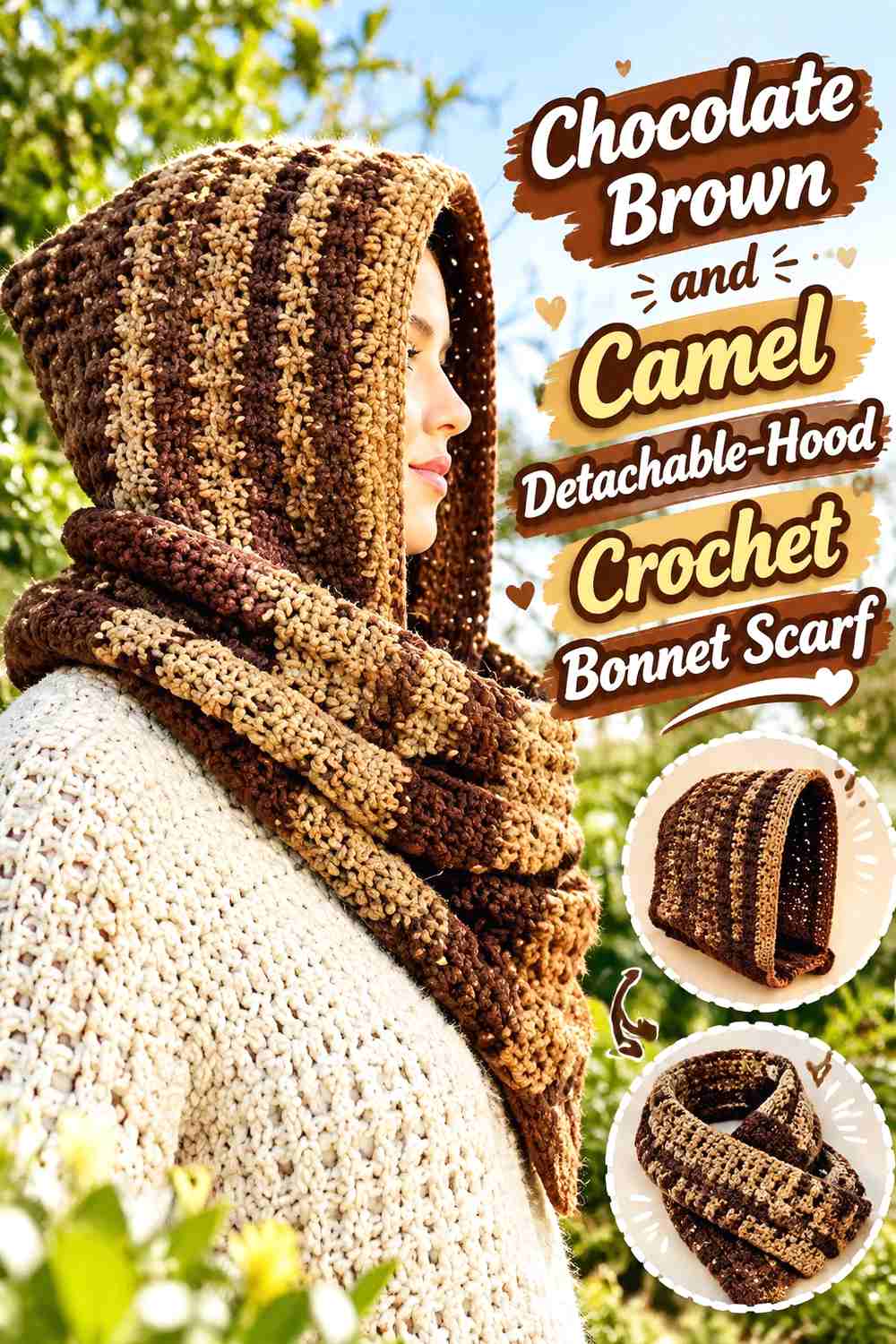
A detachable hood gives this chocolate brown and camel palette an extra consideration: the scarf should still look complete when the hood is removed. Chocolate brown can carry the main scarf, while camel distinguishes the detachable hood or selected edging. The two warm neutrals stay related, but their difference is strong enough to make the removable section feel deliberate.
Camel Can Separate the Hood From a Chocolate Brown Scarf
Using camel across more of the hood and chocolate brown across the scarf makes the detachable construction visually understandable even before the pieces are separated. A chocolate brown face edge can then reconnect the hood to the scarf palette.
Avoid introducing camel only at the attachment area. A tiny strip there may draw attention to the connection instead of making the two components feel coordinated.
Chocolate Brown Should Make Sense When the Hood Is Removed
Because this scarf can function independently, check the palette without the hood attached. Chocolate brown should still look finished rather than as though a camel component is missing.
Repeating a modest amount of camel at the scarf ends is one way to connect the pieces while preserving chocolate brown as the dominant scarf color.
Creator Credit: Bag-O-Day Crochet
4. Chocolate Brown and Dusty Rose Crochet Pocket Bonnet Scarf
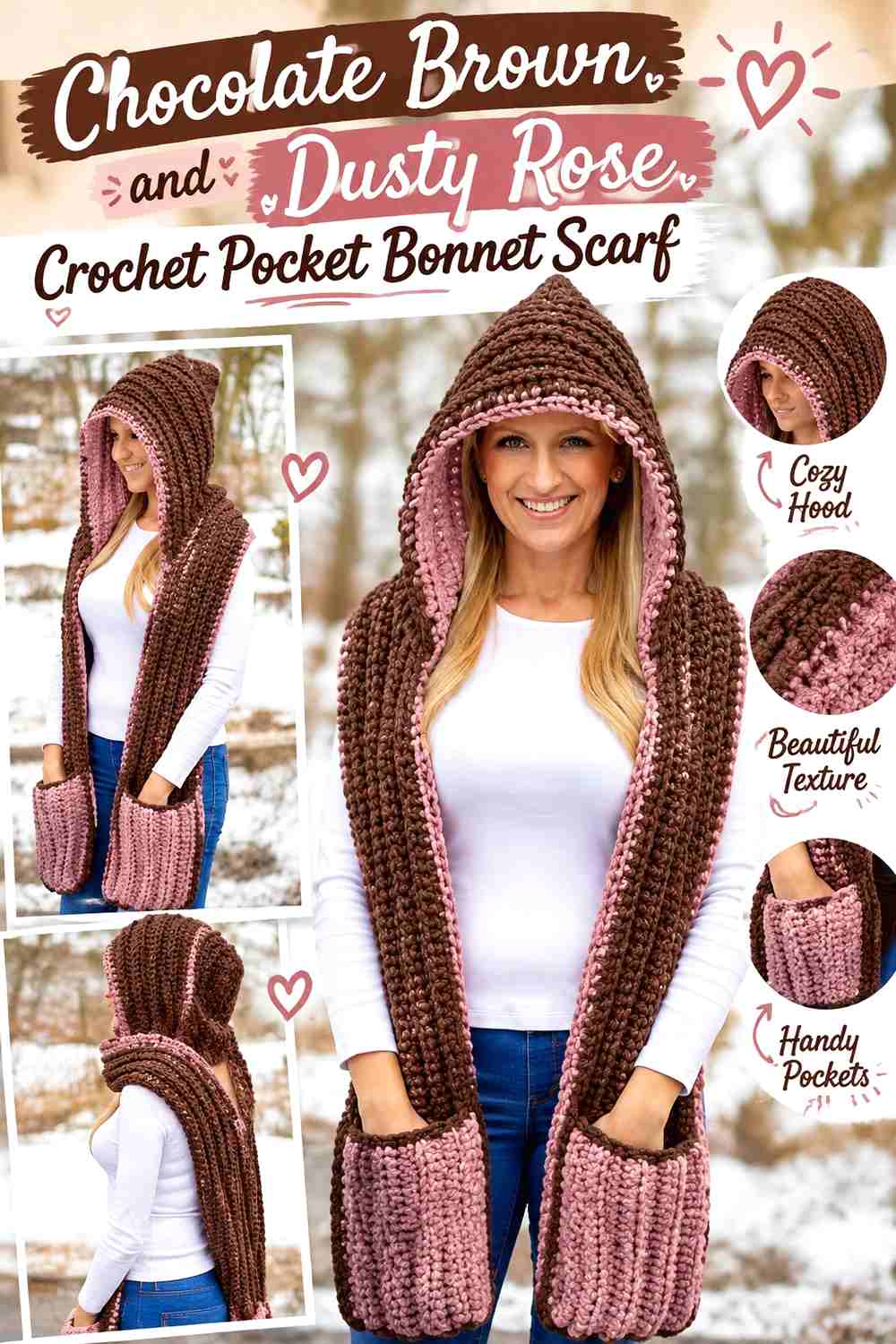
Dusty rose gives a chocolate brown pocket bonnet scarf a softer contrast without moving into a very pale neutral. Keep brown through the hood and long scarf body, then concentrate dusty rose around details that benefit from being easy to locate, such as pocket openings, scarf ends, or a face border.
Dusty Rose Can Highlight Pockets Against Chocolate Brown
Pocket openings can disappear visually when the entire scarf is one dark shade. A restrained dusty rose edge helps define where the pocket begins without requiring the whole pocket to become pink.
If you do make the pockets predominantly dusty rose, repeat that shade near the hood. Otherwise, the color can feel weighted toward the bottom of the scarf.
Chocolate Brown Keeps Dusty Rose From Taking Over the Bonnet Scarf
Dusty rose usually reads lighter than chocolate brown, so even a smaller amount can have a noticeable visual presence. Keep the hood crown and central scarf sections brown if you want the finished accessory to stay clearly chocolate-led.
For winter styling, this balance also makes the scarf easier to use with simple brown, charcoal, cream, or denim outer layers because the rose remains an accent rather than the largest block of color.
Creator Credit: naztazia
5. Chocolate Brown and Mustard Cable Crochet Bonnet Scarf
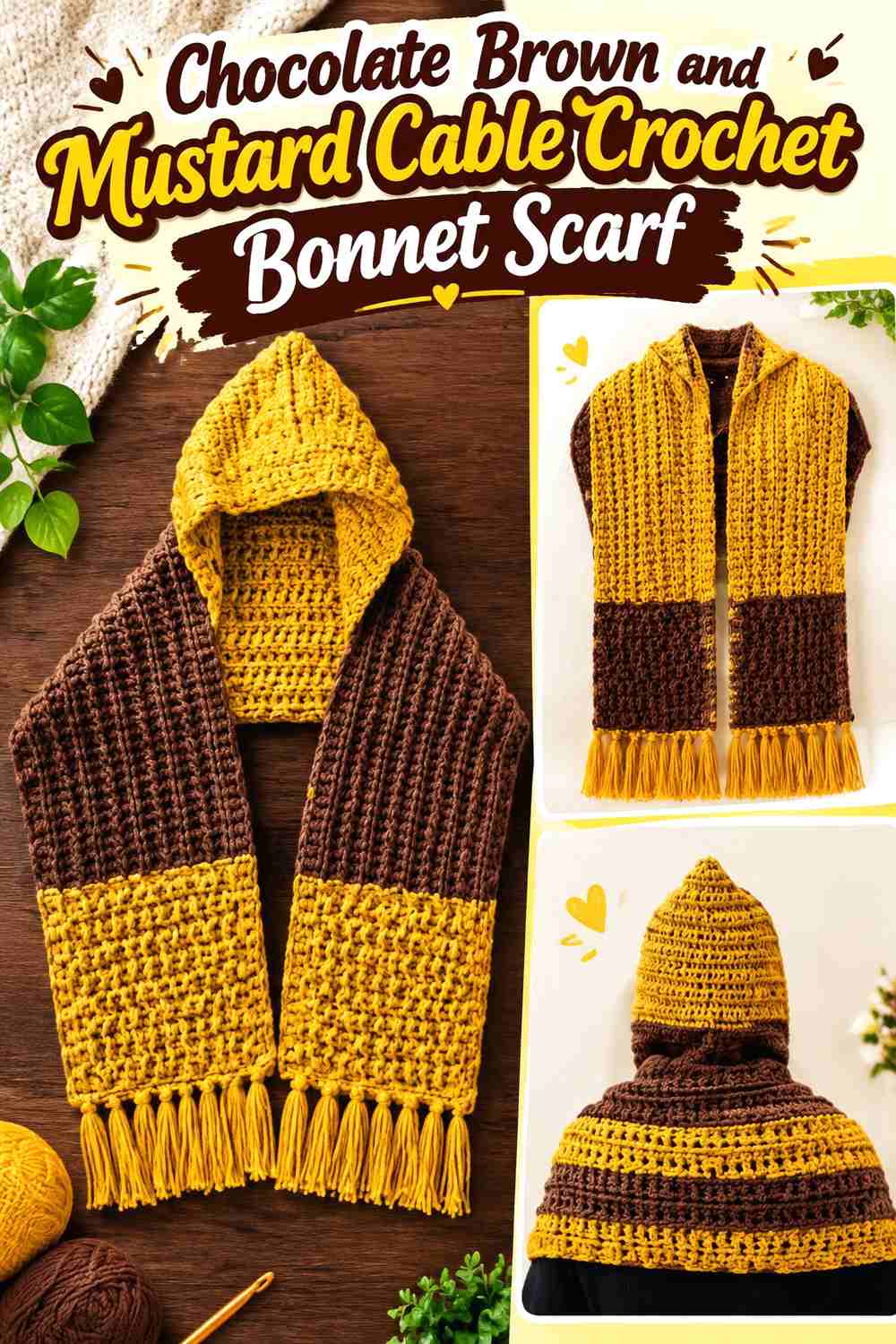
Cable texture already creates shadows and raised lines, so this chocolate brown and mustard bonnet scarf benefits from disciplined color placement. Chocolate brown can carry the main cable fabric, while mustard is more effective in defined areas such as pockets, edging, or limited bands than scattered through every textured section.
Mustard Should Support Chocolate Brown Cables Instead of Competing With Them
If the cable pattern is the main crochet feature, keep most of it in chocolate brown so the texture reads as one continuous surface. Mustard can then mark the pocket edge or scarf end without interrupting every raised line.
Before adding broad mustard sections, view a swatch from several feet away. Strong color changes can become more noticeable than the cable texture itself.
Chocolate Brown Can Reappear Around Mustard Pockets
If the pockets are mustard, a chocolate brown outer edge can connect them back to the scarf body. This is particularly useful when the pockets occupy a large portion of the scarf ends.
The same idea works with fringe: rather than mixing both colors randomly, use one shade as the main fringe color and repeat the second sparingly so the finish does not become busier than the cables.
Creator Credit: Let’s All Crochet
6. Chocolate Brown and Sage Crochet Pocket Bonnet Scarf
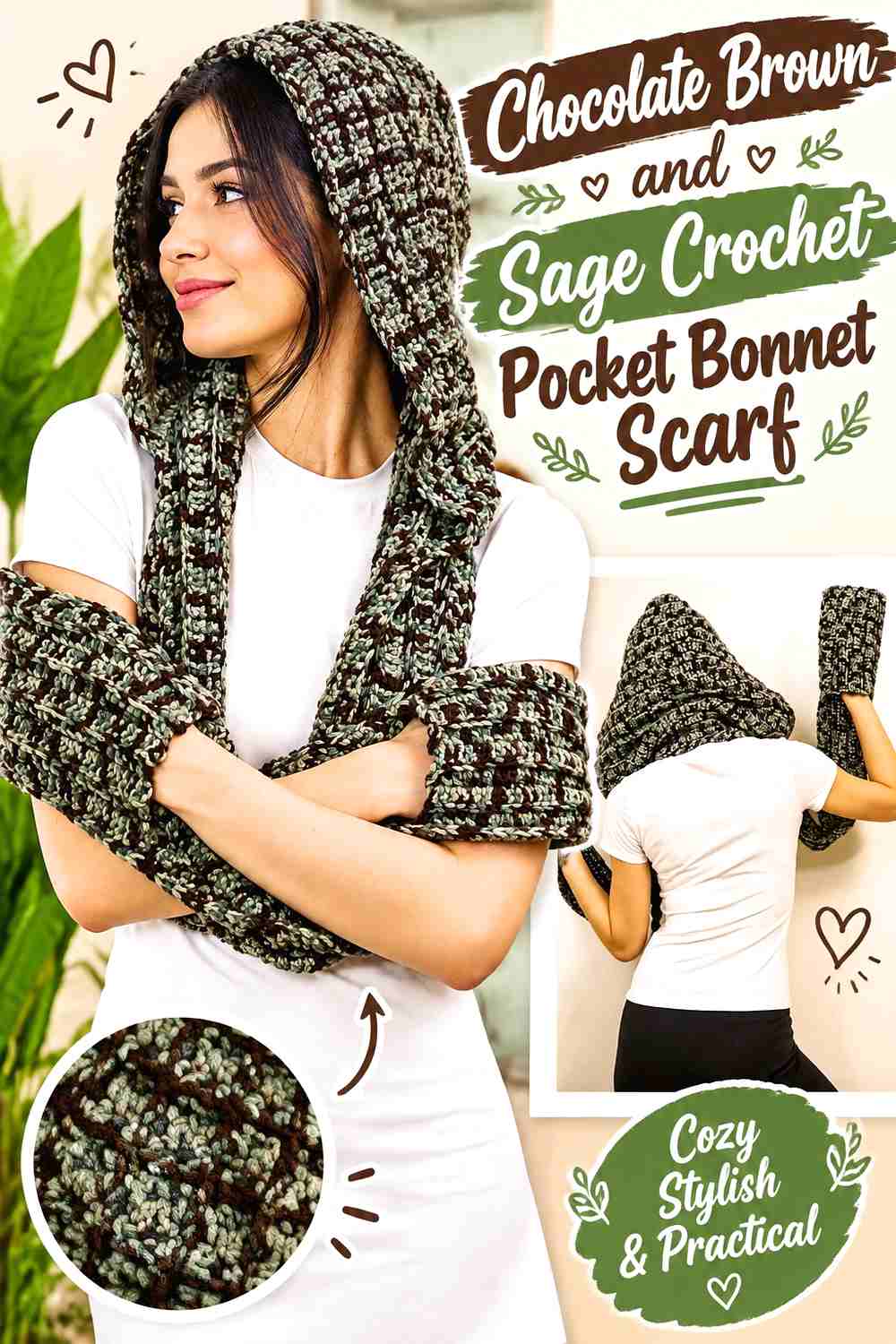
Muted sage gives chocolate brown a cooler supporting color while keeping the overall palette restrained. On a pocket bonnet scarf, chocolate brown can remain uninterrupted across the hood, while sage appears lower on the scarf or around finishing details. That distribution keeps the darker color near the face and prevents both shades from competing equally.
Sage Can Lighten the Lower Half of a Chocolate Brown Scarf
Long chocolate brown scarf ends can look visually heavy when the hood is equally dark. Sage pockets or sage lower sections interrupt that weight without requiring a very pale color.
Check where the color change falls while the scarf is actually worn. A division that looks balanced when laid flat may move considerably after one end is wrapped around the neck.
Chocolate Brown Should Return Near Sage Pocket Edges
A narrow chocolate brown edge around a sage pocket can visually attach the pocket to the main scarf. This is more cohesive than treating the pocket as an isolated green block.
If your sage is quite dark, compare it with the chocolate brown in grayscale. Similar values will create a subtle result, which can be attractive, but small border details may be less visible.
Creator Credit: TCDDIY
7. Chocolate Brown and Forest Green Crochet Infinity Bonnet Scarf

Chocolate brown and forest green create one of the deepest palettes in this list. On an infinity-style bonnet scarf, both colors may appear several times around the neck because the scarf loops over itself, so simple placement is more effective than frequent color changes.
Forest Green Needs Clear Placement Beside Chocolate Brown
Use forest green in one broad section or repeated controlled bands rather than many narrow stripes. Both shades carry substantial visual weight, and closely spaced dark stripes can merge when the infinity scarf is wrapped.
A chocolate brown hood with forest green concentrated in the neck loop gives each color a clear area while maintaining the dark winter palette.
Chocolate Brown Can Define the Forest Green Face Edge
If forest green covers part of the hood, a chocolate brown border around the face can restore the article’s main color where it is most visible. The border does not need to be wide to create a defined outline.
Try the completed color arrangement with the scarf wrapped as intended. Infinity constructions overlap, so some green sections may disappear while others double up.
Creator Credit: Kay Krochets
8. Chocolate Brown and Soft Blue Striped Crochet Bonnet Scarf
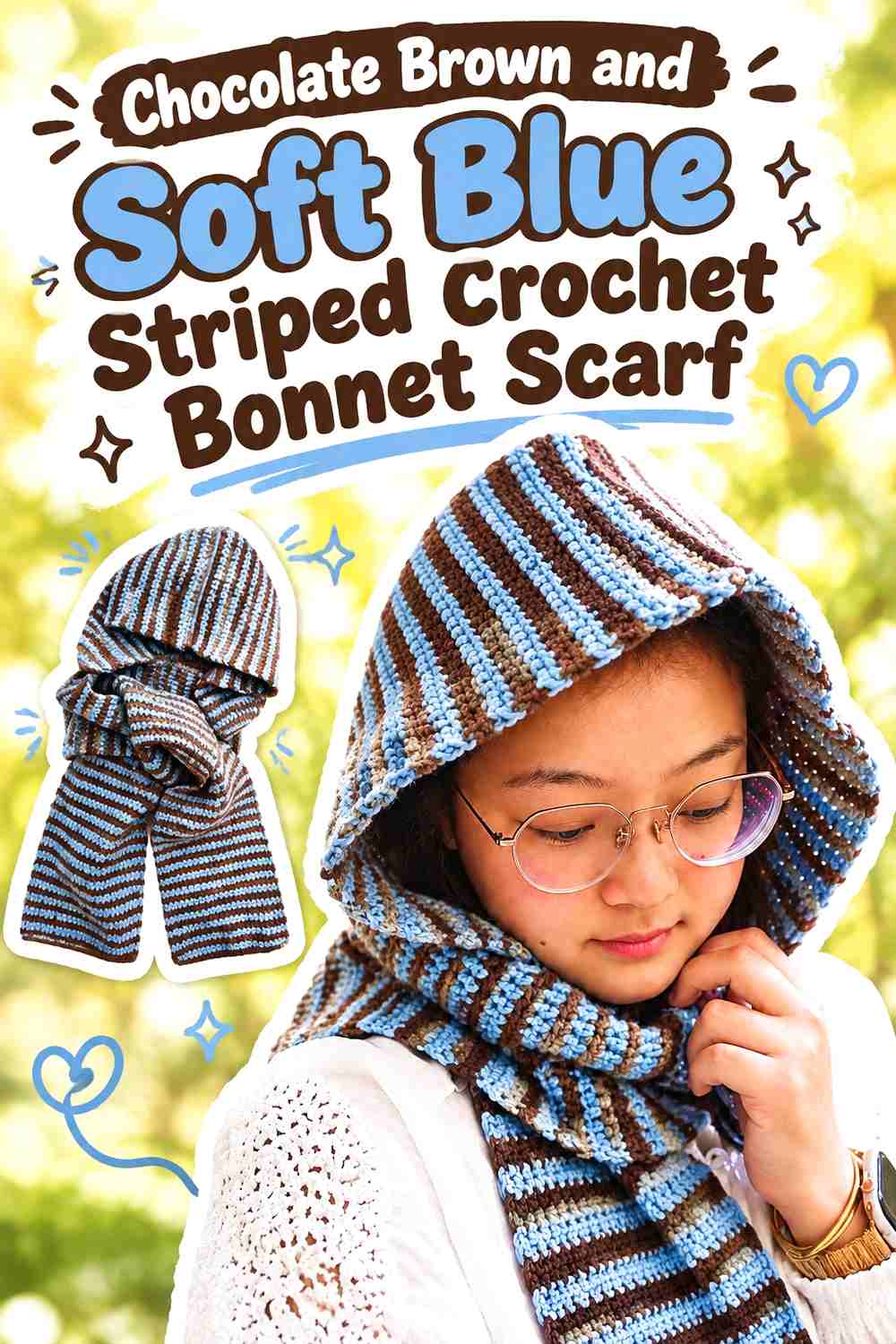
Soft blue creates a noticeably cooler contrast against chocolate brown. A two-rectangle bonnet scarf gives you broad, straightforward surfaces for planning stripes, but equal-width alternating bands are not the only option. Brown can remain dominant through wider sections while narrow blue stripes provide the cooler break.
Soft Blue Stripes Need Enough Space Against Chocolate Brown
Very thin blue lines may disappear within textured crochet, especially if the chosen blue is muted or medium in value. Use a swatch to decide whether the stripes need more width before repeating them over the whole hood and scarf.
Keeping the stripe sequence similar on both rectangles can also help the hood and scarf look connected after assembly.
Chocolate Brown Can Control the Face-Framing Stripes
Where a stripe lands around the face has more visual impact than the same stripe buried within a wrapped scarf. If you want chocolate brown to remain the main impression, arrange the final hood edge so brown occupies more of that visible frame.
Soft blue can then repeat at the scarf ends, creating a balanced color story without surrounding the whole face in the lighter shade.
Creator Credit: Crochetnotes
9. Chocolate Brown and Rust Granny Square Crochet Bonnet Scarf
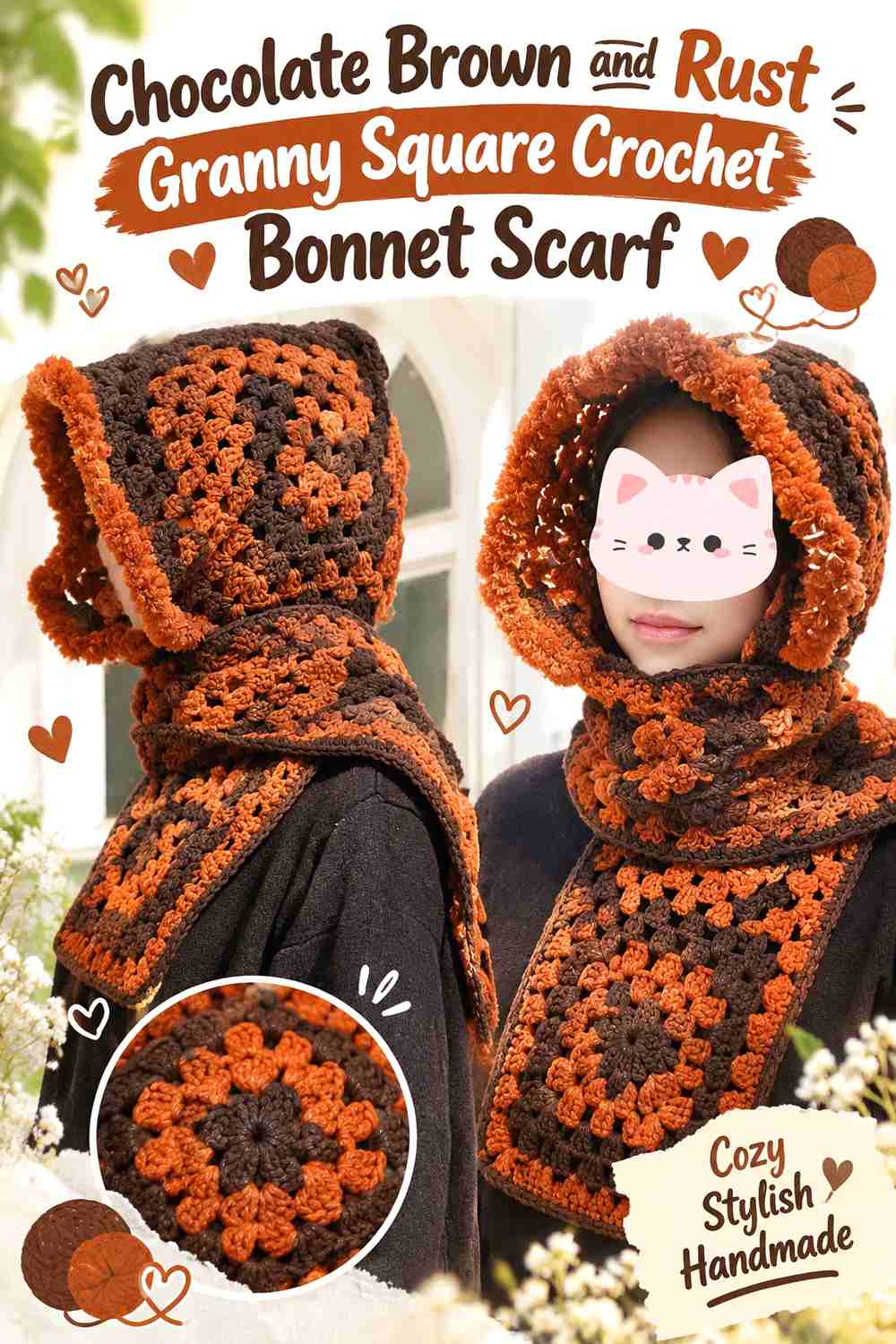
Rust sits close to chocolate brown in warmth but is usually lighter and more orange-red in appearance. Granny squares make that relationship easy to control because you can assign brown and rust specific motif roles rather than blending them randomly.
Rust Centers Can Stand Out Inside Chocolate Brown Granny Squares
Use rust in the centers of motifs and chocolate brown around the outer rounds when you want the joined bonnet scarf to remain predominantly brown. The repeated brown perimeter also creates visual continuity wherever squares meet.
If the rust center is too small to register from a distance, increase its visual share within the motif rather than adding unrelated accent colors.
Chocolate Brown Joins Can Organize Rust Motifs
When rust appears across several squares, chocolate brown joins or outer motif rounds can act like a framework. This prevents the warm rust sections from merging into one continuous orange-brown field.
Lay all motifs out before joining so the rust distribution remains balanced around the hood and down both scarf sides.
Creator Credit: Crochet Musings
10. Chocolate Brown and Olive Granny Square Crochet Bonnet Scarf
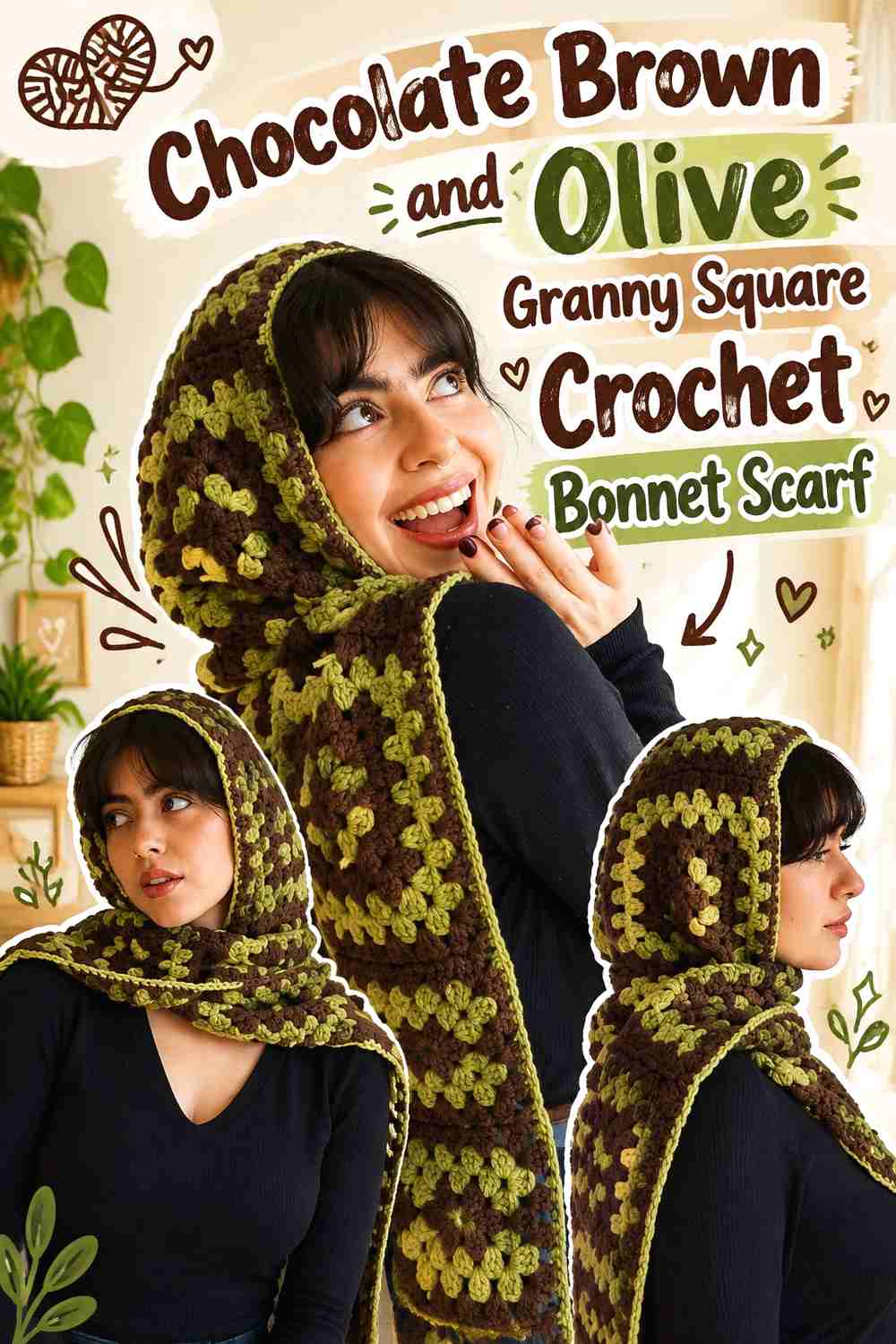
Olive and chocolate brown create a muted woodland palette with lower contrast than cream or blue combinations. Because granny-square construction breaks the accessory into repeated blocks, the main decision is not simply which two colors to use—it is which color should form the repeated framework.
Olive Centers Keep Chocolate Brown Granny Squares Brown-Led
Place olive toward motif centers and chocolate brown in the outer rounds when you want brown to dominate the joined surface. Once several motifs meet, those brown outer rounds create larger connected areas than the centers suggest.
This is useful on the hood because the face-framing squares remain clearly tied together even when their olive centers vary slightly in visibility.
Chocolate Brown Joins Help Olive Squares Stay Cohesive
Using chocolate brown for the joins can reinforce the darker framework and prevent olive from occupying every visual boundary. If the two colors are similar in value, the join will look subtle rather than outlined.
Check a few completed squares together before making the full set. Low-contrast palettes are harder to evaluate from individual yarn skeins than from repeated motifs.
Creator Credit: Käthe
11. Chocolate Brown and Taupe Edged Crochet Bonnet Scarf
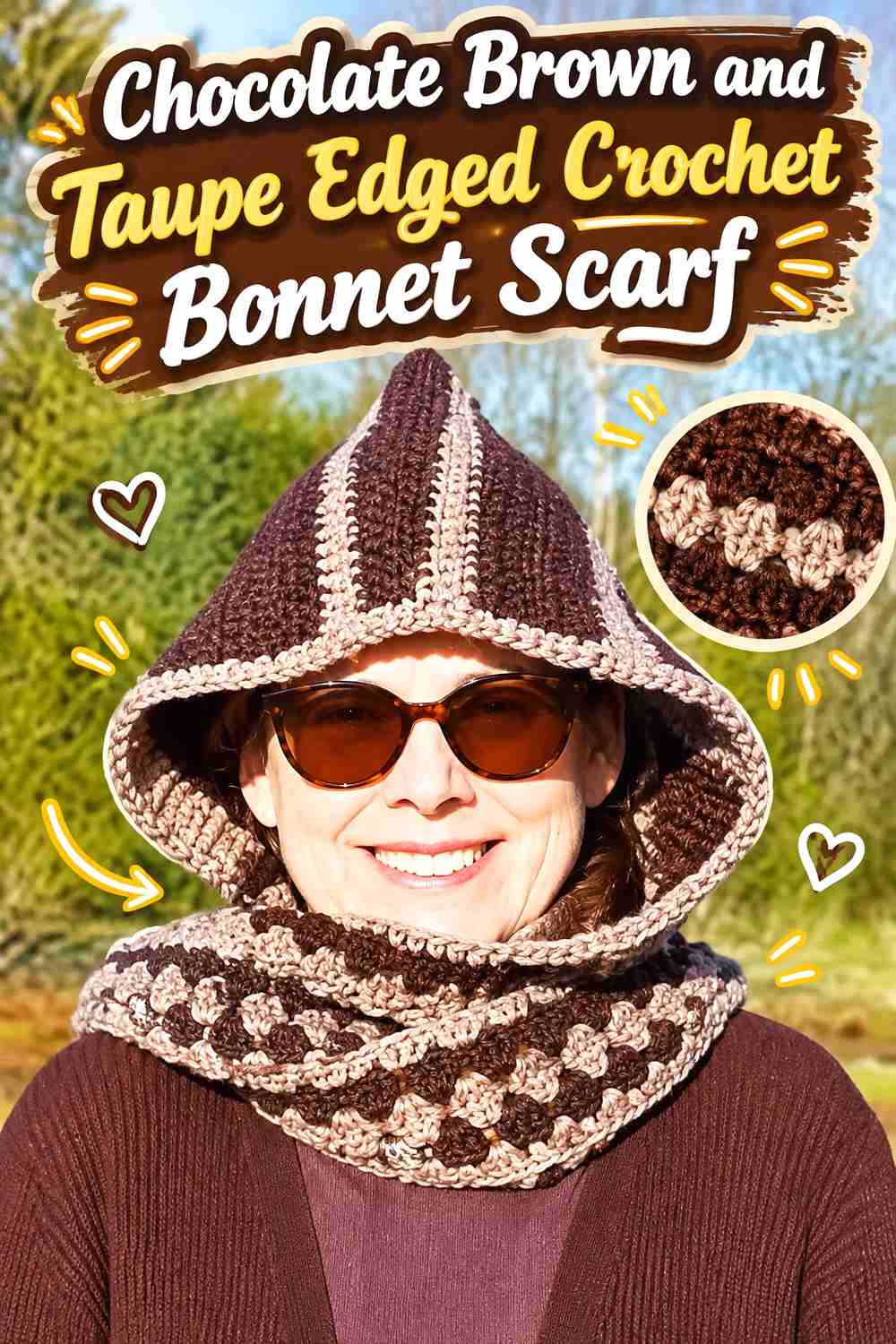
Taupe keeps this bonnet scarf firmly in neutral territory while creating a softer edge around chocolate brown. This palette is particularly suitable when the finishing border is meant to define the hood without becoming the strongest feature.
Taupe Can Give Chocolate Brown a Softer Face Border
Use taupe along the face opening when cream feels too bright for the look you want. It can separate the brown hood from the face while maintaining a low-key, winter-neutral palette.
The border should remain flexible rather than visually or physically constricting the hood opening. Evaluate the edging on the worn hood, not only while the scarf is laid flat.
Chocolate Brown Should Reappear Beyond the Taupe Border
A taupe edge looks more connected when chocolate brown remains visible immediately beside it. Avoid adding several additional neutral stripes around the opening, which can weaken the simple two-color hierarchy.
You can repeat taupe once more near the scarf ends so the hood border does not become the only light-neutral detail in the accessory.
Creator Credit: Patricia Fentie
12. Chocolate Brown and Burgundy Sophie-Style Crochet Bonnet Scarf
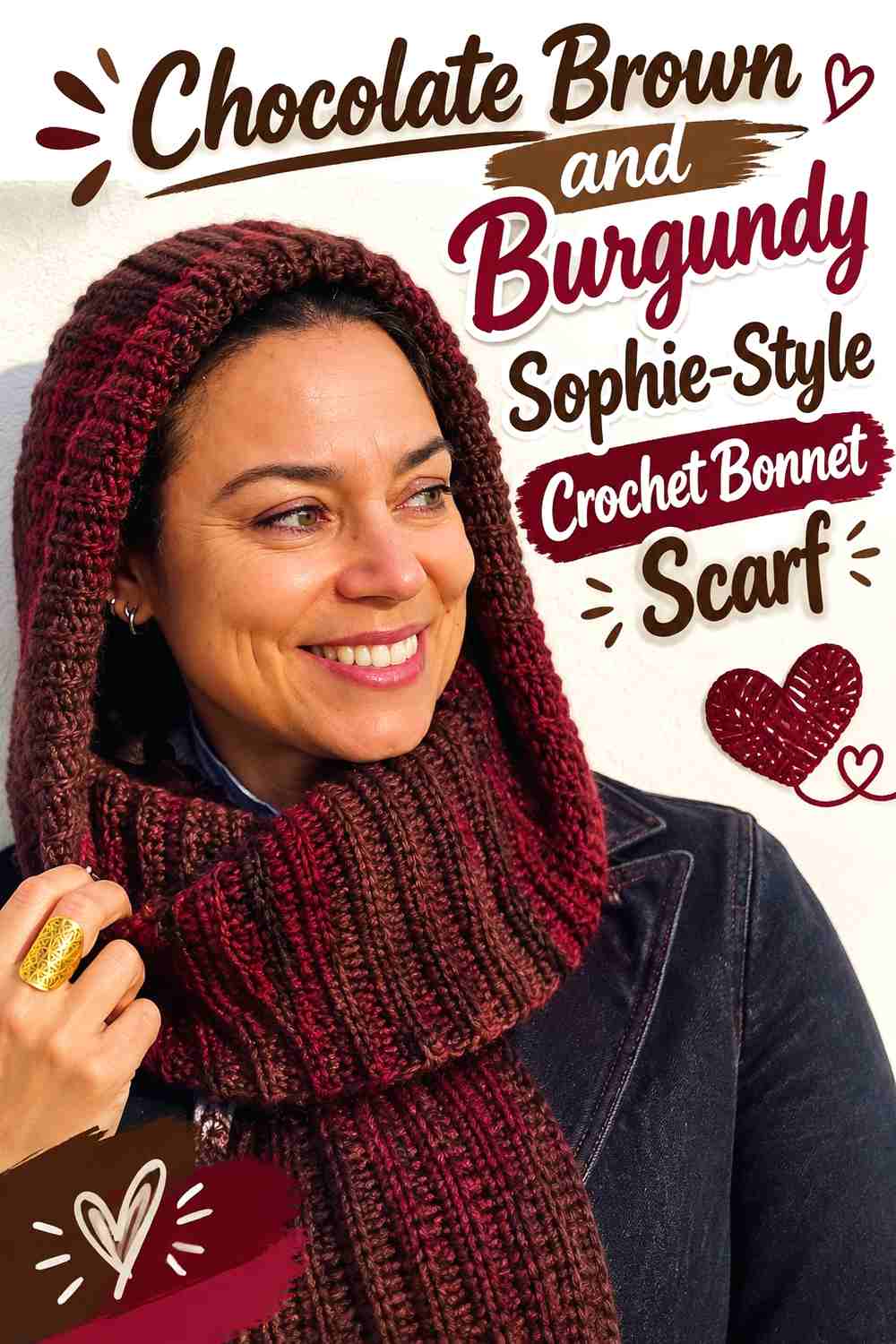
Burgundy gives chocolate brown a rich, closely related winter accent. Because both shades are dark, this palette depends more on area and placement than dramatic light-dark contrast. A tapered Sophie-style silhouette is a good place to keep the distribution simple.
Burgundy Needs Larger Areas to Separate From Chocolate Brown
A single narrow burgundy stripe may disappear against deep chocolate brown, especially indoors or at a distance. If you want burgundy to be clearly present, use it across a broader scarf section, the hood edge, or one deliberate block.
For a subtler result, keep the values close and allow the distinction to appear mainly through hue rather than brightness.
Chocolate Brown Can Anchor the Burgundy Tapered Ends
Keeping chocolate brown toward the scarf tips gives the accessory a consistent dark outline even if burgundy occupies a larger middle section. It also prevents the strongest red tone from concentrating at every moving edge.
Check the wrapped scarf as well as the flat piece; tapered ends can overlap the hood or neckline and change which color appears dominant.
Creator Credit: Francesca Uncinettando Crochet&Love
13. Chocolate Brown and Charcoal Crochet Infinity Bonnet Scarf
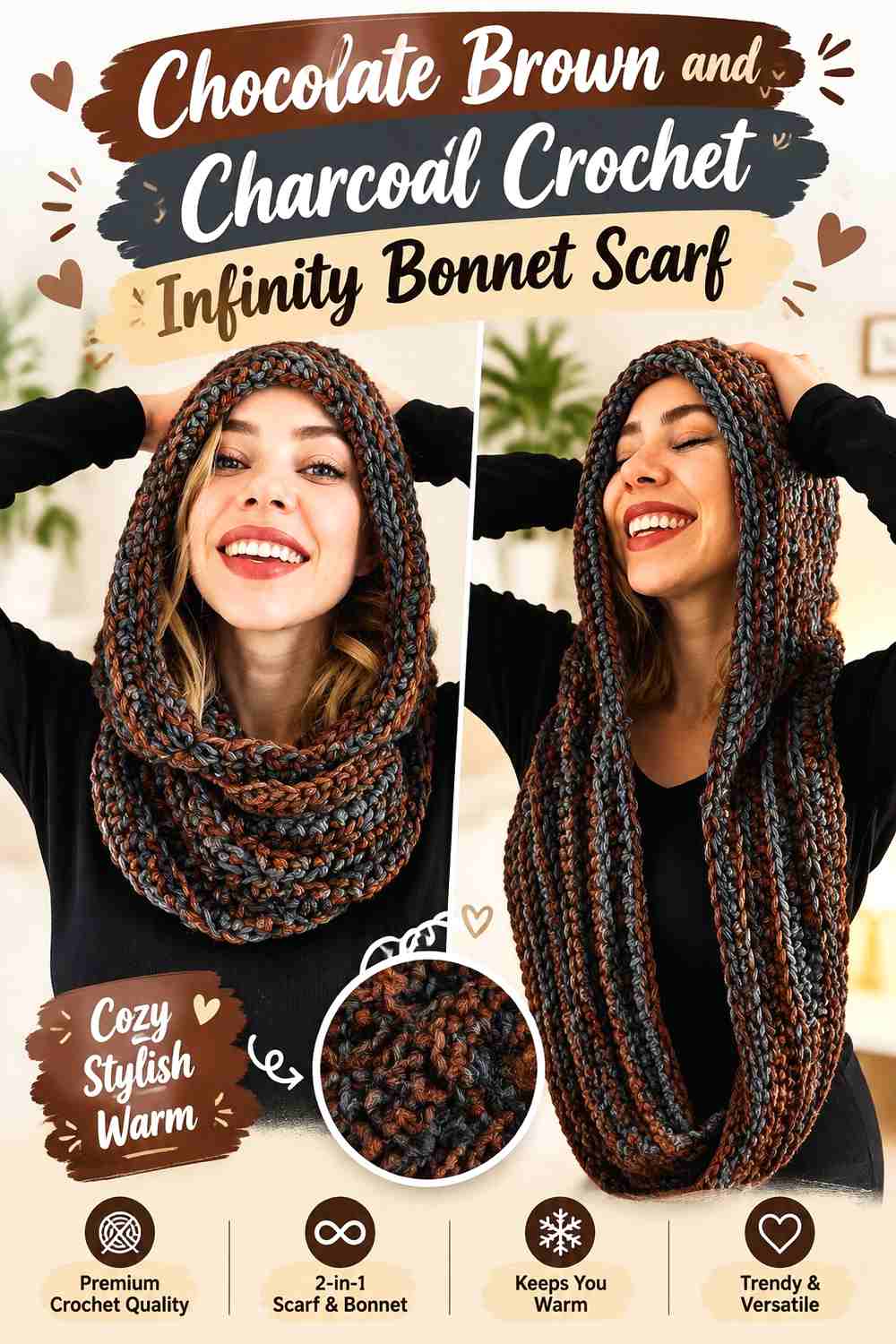
Chocolate brown and charcoal create the most neutral dark pairing in this collection. The difference is primarily warm brown versus cool gray-black rather than strong value contrast, so large color zones work better than tiny decorative changes.
Charcoal Can Cool a Chocolate Brown Infinity Scarf
Keep chocolate brown around the hood and place charcoal through part of the infinity loop when you want the accessory to work with black, gray, and brown outerwear. The charcoal creates a bridge to cooler wardrobe neutrals without replacing the brown main color.
Because the scarf wraps over itself, avoid planning a complicated sequence that depends on every charcoal section staying visible.
Chocolate Brown Needs Enough Surface Beside Charcoal
If your charcoal is almost black, it can visually overpower medium chocolate brown despite being another neutral. Increase the brown surface area when necessary so the finished bonnet scarf still reads brown first.
A chocolate brown face edge is particularly useful here because it keeps the requested main color in the most noticeable part of the hood.
Creator Credit: Wilmade
14. Chocolate Brown and Plum Turtleneck Crochet Bonnet Scarf
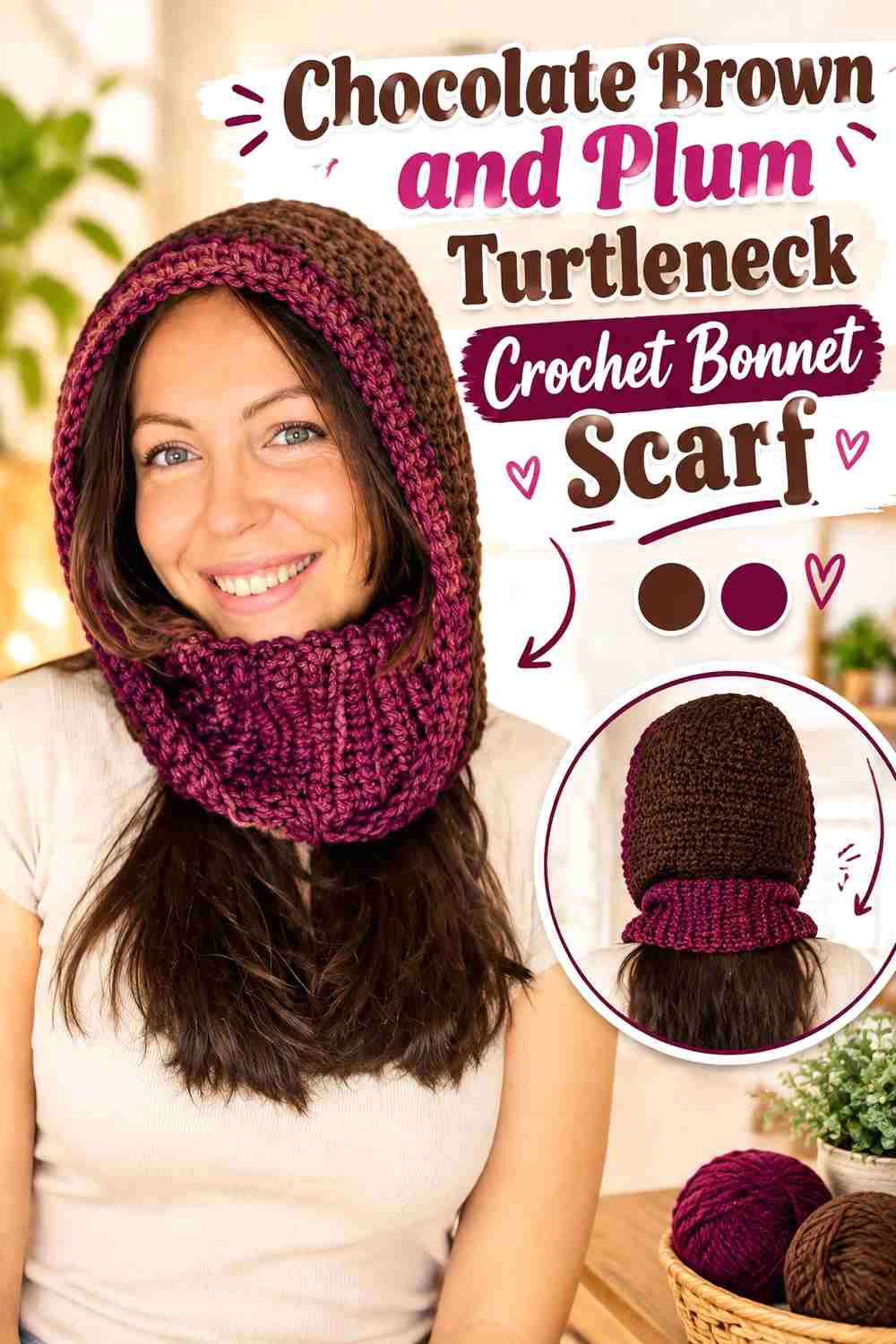
Plum adds a cool red-purple accent to chocolate brown without creating the brightness of pink or blue. A turtleneck-style bonnet scarf concentrates fabric around the neck and face, so limiting the color changes prevents the compact shape from becoming visually crowded.
Plum Can Define the Neck Section Against Chocolate Brown
One option is to keep the hood mostly chocolate brown and use plum through the closer neck section. This creates a clear division between the two functional areas while allowing the brown hood to remain the dominant face-framing feature.
Repeat a little plum near the hood edge if the neck section otherwise looks too separate from the upper portion.
Chocolate Brown Can Keep Deep Plum From Feeling Too Heavy
When both yarns are dark, give one shade a clear majority. Chocolate brown can cover the hood and part of the neck while plum occupies a smaller supporting area.
If the two skeins look almost identical in grayscale, treat the palette as intentionally low contrast. Use larger blocks of plum instead of narrow trim when you want the purple tone to be recognizable.
Creator Credit: Lana Loca – moderne Handarbeiten
How These Chocolate Brown Bonnet Scarf Palettes Compare
For the strongest light-dark definition, start with chocolate brown and cream or chocolate brown and ivory. Those combinations make face borders, edging, and stitch details easier to separate visually.
For a softer neutral result, oatmeal, camel, or taupe keeps the palette warm without creating a bright outline. These choices work especially well when you want the crochet texture or bonnet shape to provide more of the visual interest.
For earthy color, compare sage, olive, rust, mustard, and forest green. Sage gives brown a softer muted contrast, olive creates a lower-contrast woodland effect, rust and mustard push the palette warmer, while forest green creates a deep winter combination.
For darker outfit palettes, burgundy, plum, and charcoal keep the contrast controlled. Because these shades can sit close to chocolate brown in value, use larger blocks rather than relying on tiny stripes to show the color difference.
Conclusion
A chocolate brown crochet bonnet scarf can move in very different directions depending on the supporting color. Cream and ivory emphasize definition; oatmeal, camel, and taupe keep the accessory neutral; sage and soft blue cool the brown; rust, mustard, and olive add an earthy direction; and burgundy, plum, forest green, or charcoal create deeper winter palettes.
The most useful starting decision is not simply which second color you like. Decide what that second shade needs to do. It might frame the face, reveal texture, define pockets, separate granny-square motifs, lighten long scarf ends, or connect the accessory to a particular coat.
Once that role is clear, let chocolate brown remain the visual anchor and use the supporting shade consistently. Follow the credited creator tutorials for their exact construction, sizing, and stitch instructions while adapting the color placement to your preferred winter wardrobe.
Frequently Asked Questions
What colors go well with a chocolate brown crochet bonnet scarf?
Cream, ivory, oatmeal, camel, taupe, dusty rose, sage, olive, rust, mustard, burgundy, plum, forest green, charcoal, and softened blues can all create useful combinations. The better choice depends on whether you want stronger value contrast, a tonal neutral palette, or a darker winter look.
How can I keep a chocolate brown bonnet scarf from looking too dark?
Introduce a lighter supporting shade around visible areas such as the face opening, scarf ends, pockets, or motif centers. You do not need to lighten half of the project. A controlled amount of cream, ivory, oatmeal, dusty rose, sage, or soft blue can break up a large brown surface.
Should chocolate brown be the hood color or the scarf color?
For a chocolate-brown-centered project, using it across the hood is an effective way to keep the main color prominent because the hood remains visually close to the face. You can then repeat brown through the scarf while using the supporting shade in borders, stripes, pockets, or ends.
How do I check whether two dark colors have enough contrast?
Place the yarns side by side and look at them from farther away. You can also photograph them and view the image in grayscale. If the colors become nearly identical, use them in larger blocks rather than depending on narrow stripes or small motifs to create separation.
Can I use three colors in a chocolate brown crochet bonnet scarf?
Yes, but give each color a role. For example, chocolate brown can dominate, cream can provide light contrast, and rust can appear as a smaller accent. Avoid dividing three visually strong colors into equal areas unless an intentionally busy multicolor effect is the goal.
Where should I put the lightest color on a chocolate brown bonnet scarf?
The lightest shade is particularly useful where definition matters: around the face, along a border, at pocket openings, within granny-square centers, or near textured details. Putting the light color everywhere reduces its ability to work as an accent.
How can I substitute a color without changing the whole chocolate brown palette?
Preserve the role and contrast relationship rather than searching for an exact shade name. If replacing sage, choose another muted green that remains visibly different from the chocolate brown. If replacing cream, choose a similarly light neutral so the original light-dark separation remains intact.