A crochet opera coat can bring the drama of evening outerwear into a handmade winter wardrobe, especially when a long silhouette is paired with plush faux-fur edging. The most useful starting point, however, is not the trim. Length, shoulder shape, closure, sleeve volume, fabric density, and the way the coat moves over clothing underneath all affect whether the finished piece feels elegant, relaxed, graphic, or deliberately oversized.
The tutorials in this collection do not all make the exact same faux-fur-trimmed opera coat. Two sources specifically demonstrate fur-trimmed cardigan construction, while the others provide suitable cardigan, duster, motif, raglan, zipper, and coat-style foundations that can inspire a faux-fur adaptation. Always use the original creator’s instructions for the underlying garment, and treat added faux-fur edging as a separate design change that may affect weight, drape, and finishing.
Quick List
- Crochet Houndstooth Faux-Fur Opera Cardigan Coat
- Crochet Mohair Duster with Faux-Fur Edge
- Crochet Cable-Texture Evening Coat Cardigan
- Crochet Oversized Minimalist Faux-Fur Cardigan Coat
- Crochet Wide-Collar Opera Coat Cardigan
- Crochet Pocketed Longline Faux-Fur Cardigan
- Crochet V-Neck Cuffed Evening Cardigan Coat
- Crochet Patchwork Faux-Fur Statement Coat
- Crochet Bell-Sleeve Tie Opera Cardigan
- Crochet One-Piece Faux-Fur Cardigan Coat
- Crochet Maxi Duster Opera Coat
- Crochet Zipper-Front Faux-Fur Jacket Coat
- Crochet Hexagon Faux-Fur Statement Cardigan
- Crochet Granny-Yoke Faux-Fur Cardigan Coat
- Crochet Sunflower Hooded Faux-Fur Coat
Choose the Coat Shape Before Choosing the Faux-Fur Trim
A plush border attracts attention, so it works best when the underlying silhouette already has a clear purpose. A long straight duster emphasizes vertical lines. A wide collar concentrates volume near the face. Bell sleeves move the visual emphasis toward the arms, while a hood adds noticeable fabric to the upper back.
Decide which feature should lead the design before adding trim everywhere. A coat with an elaborate cable surface may need only restrained edging, while a simple paneled cardigan can support a more noticeable faux-fur collar or cuff.
Length also deserves its own decision. Compare the tutorial’s finished shape with a coat or cardigan you already wear rather than judging length from the creator’s body alone. The same project can read as a cardigan on one person and a coat-like layer on another.
Plan Faux-Fur Placement Around Closures and Drape
Faux-fur yarn or plush trim changes an edge more than a conventional border because it can be thicker, visually heavier, and less defined. Before modifying a tutorial, decide whether the trim belongs at the collar, cuffs, hem, front opening, hood, or only one or two of those areas.
Closures need particular attention. Buttons, ties, and zippers depend on front edges lining up correctly, so adding a substantial border can change the way those edges meet. Complete the important fit checks from the original tutorial before committing to a decorative adaptation.
The same caution applies around wrists. A dramatic fur cuff may look appealing with a sleeveless evening dress, but it creates a different practical sleeve than a narrow crochet cuff worn underneath another winter coat.
Build the Outfit Around the Coat’s Strongest Line
A statement crochet coat already contributes texture, so the clothing underneath does not need to compete with every surface detail. A long open duster can frame a relatively uninterrupted column underneath, such as a dress or matching top and trousers. A cropped or strongly shaped cardigan works differently because the waist and lower layers remain visible.
For dressier winter outfits, pay attention to where the coat ends relative to a skirt or dress. For casual looks, compare the coat with wide-leg trousers, straight denim, leggings, or boots according to the amount of volume in the crochet garment itself.
The goal is not to follow one universal proportion rule. It is to decide intentionally which part of the outfit—the coat length, collar, sleeve, motif, or trim—should command the most attention.
1. Crochet Houndstooth Faux-Fur Opera Cardigan Coat
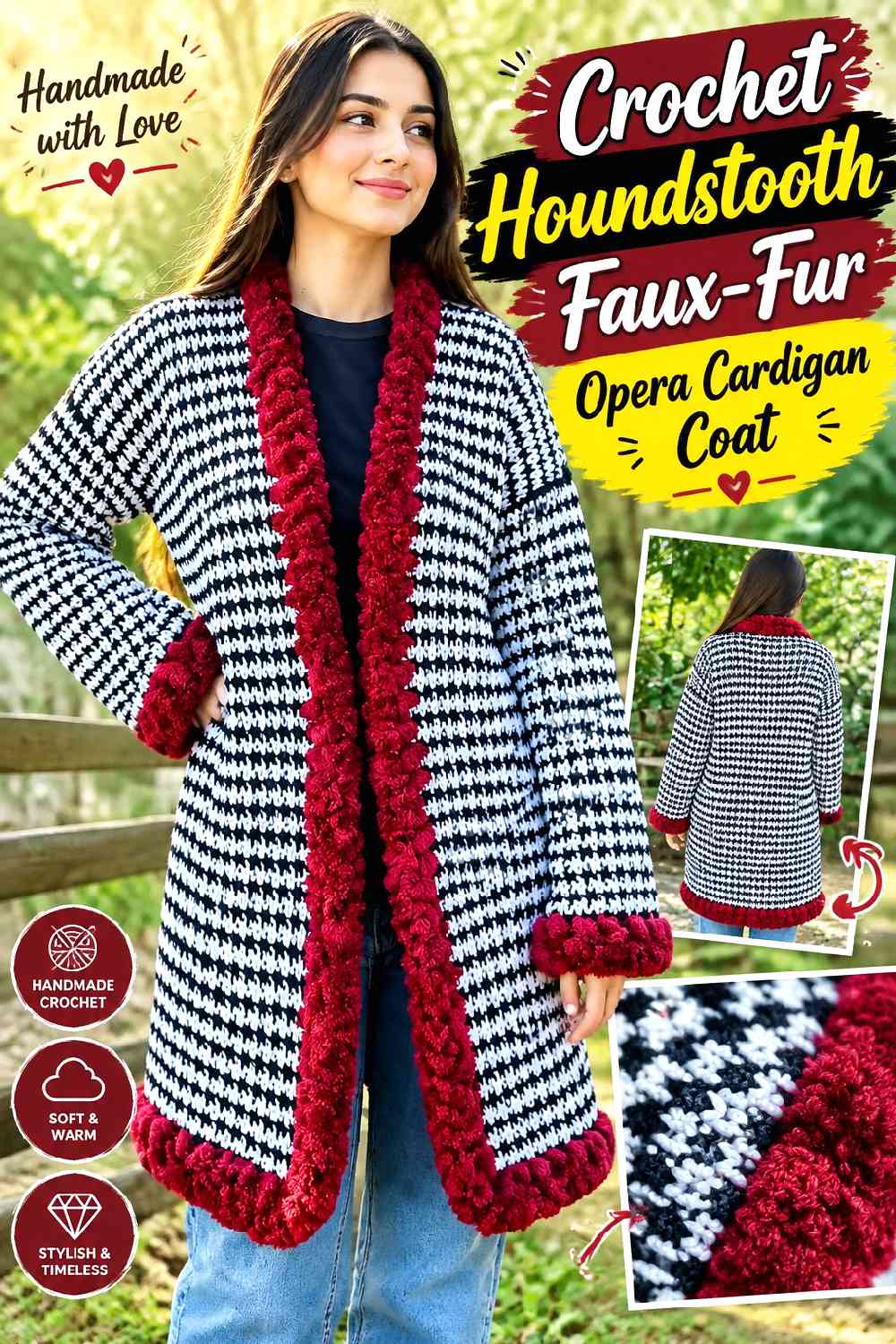
This is the strongest direct match for the theme. Bag-O-Day Crochet demonstrates an oversized houndstooth cardigan with plush fur incorporated into the design, so the contrast between graphic crochet and fuzzy edging is already visible in the finished garment. The tutorial also treats length as adjustable, making the basic concept useful when you want to push a cardigan silhouette toward a more extended coat proportion.
For outfit planning, the high-contrast surface can carry most of the visual work. A simple monochrome base layer lets the houndstooth remain dominant rather than adding another strong print underneath.
Houndstooth Already Supplies Plenty of Movement
The alternating pattern creates a busy surface before faux fur is considered. If you adapt the palette, look at the whole garment rather than evaluating two yarn colors separately.
A restrained trim color can frame the pattern without introducing another competing block. A contrasting trim creates a much more theatrical result and may suit an evening-inspired coat better.
Longer Length Makes the Graphic Pattern More Prominent
Extending a patterned cardigan means increasing the amount of repeated surface visible in the outfit. Before adding length, consider how much houndstooth you want between the shoulder and hem.
For a more formal opera-coat effect, pair the long graphic layer with a comparatively simple dress, jumpsuit, or narrow-color outfit underneath.
Creator Credit: Bag-O-Day Crochet
2. Crochet Mohair Duster with Faux-Fur Edge
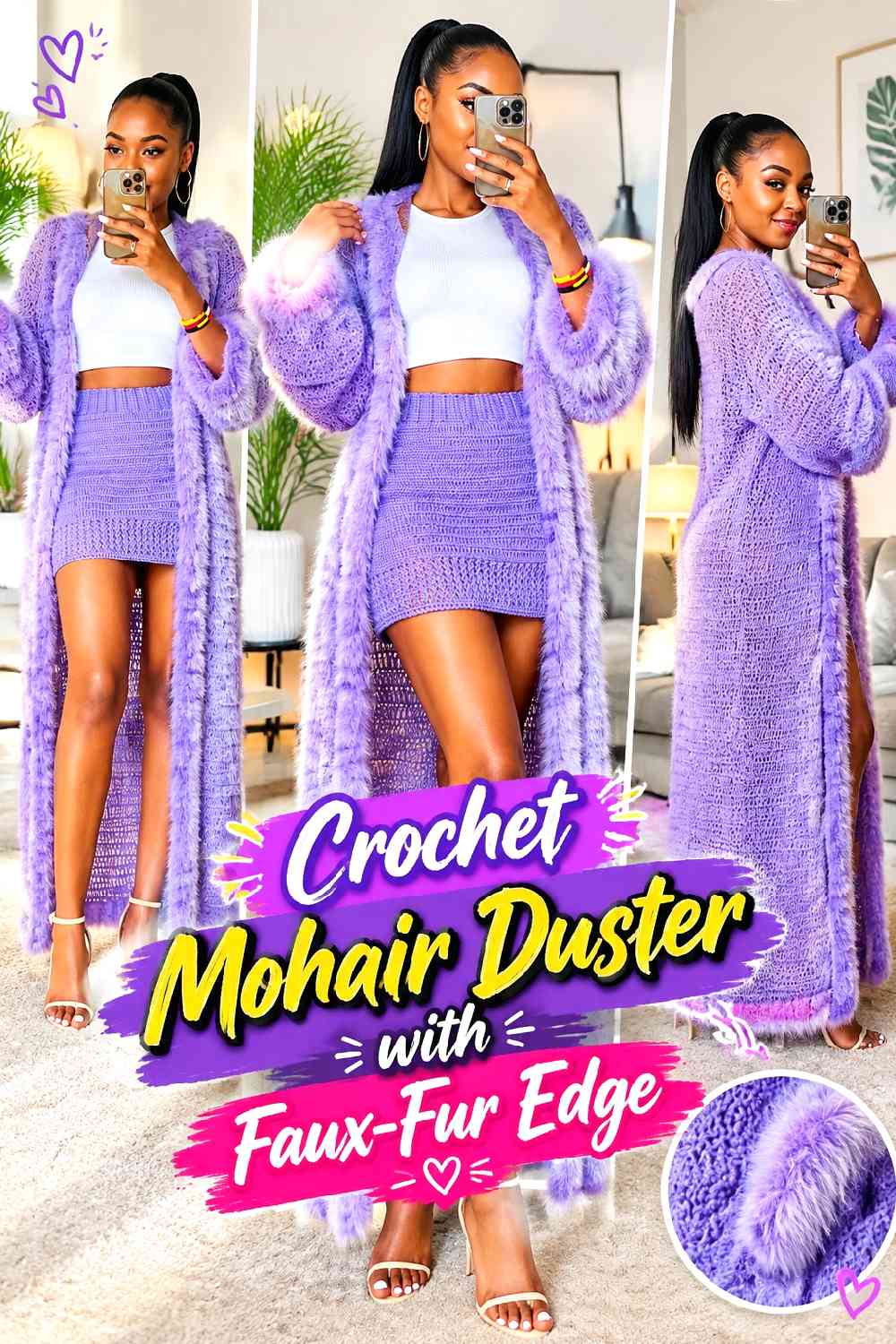
AC Crochets demonstrates a long, made-to-measure duster using a lightweight mohair-blend fabric. Its extended silhouette makes it particularly relevant to opera-coat inspiration, but the fabric behaves very differently from a dense winter cardigan.
A restrained faux-fur collar or cuff would preserve more of that airy character than covering every edge with a bulky trim.
Light Fabric and Plush Trim Need Visual Balance
A fuzzy trim can appear substantially denser than an open or lightweight body. Before committing to a wide border, compare the two materials beside each other.
If the trim overwhelms the crochet fabric, limiting it to the neckline or cuffs can keep the duster’s long floating line visible.
Let the Duster Create the Vertical Line
This construction works naturally with an outfit that remains visually continuous underneath. A long dress, tonal separates, or trousers with a similarly colored top can allow the open cardigan to frame one uninterrupted central area.
Because the garment is long, changing to a substantially heavier yarn can also change its drape. Follow the tutorial’s measurement logic rather than assuming any yarn substitution will hang the same way.
Creator Credit: AC Crochets
3. Crochet Cable-Texture Evening Coat Cardigan
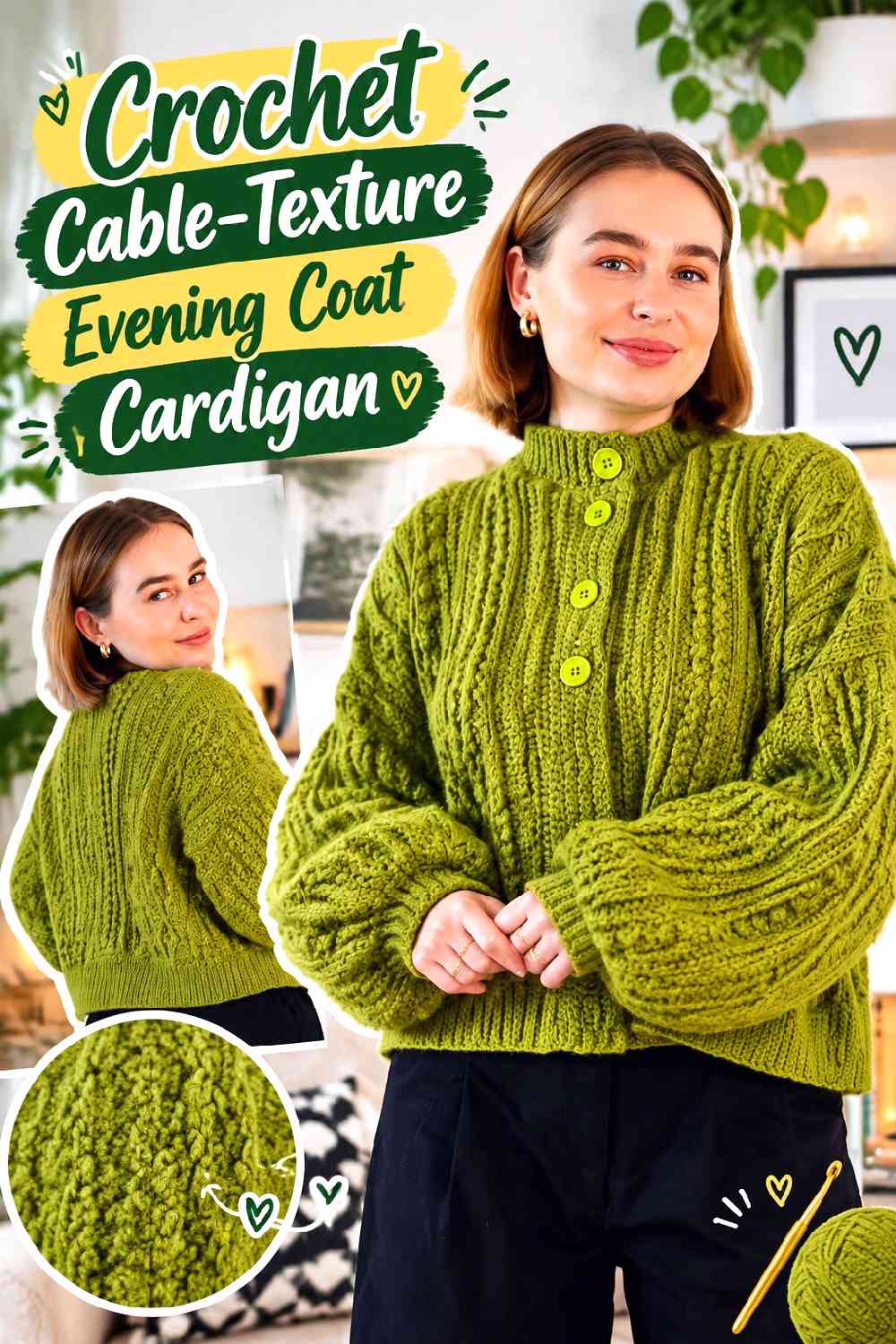
Katie Joslin’s cardigan is built from several textured panels, including prominent cable-style sections. The panel arrangement creates a surface with much more architectural detail than a plain duster, making this a useful base when the crochet itself should look substantial before any faux-fur accent is added.
For an opera-coat interpretation, the trim can work as a frame around texture rather than becoming the main pattern.
Keep the Cables Visible Near the Trim
A deep fuzzy border can hide the ends of detailed panels. Before deciding how wide a collar or front edging should be, look at where the strongest cable sections meet the garment opening.
If the texture is the reason you chose the project, preserve enough clear crochet around it for those lines to remain readable.
Texture Works Well with Simple Evening Layers
A heavily textured coat can provide contrast over smooth fabrics and uncluttered silhouettes. Instead of introducing another bold surface underneath, consider letting the dimensional crochet function as the outfit’s primary texture.
This is also a project where careful panel consistency matters because the garment’s design depends on several sections looking intentional together.
Creator Credit: Katie Joslin
4. Crochet Oversized Minimalist Faux-Fur Cardigan Coat
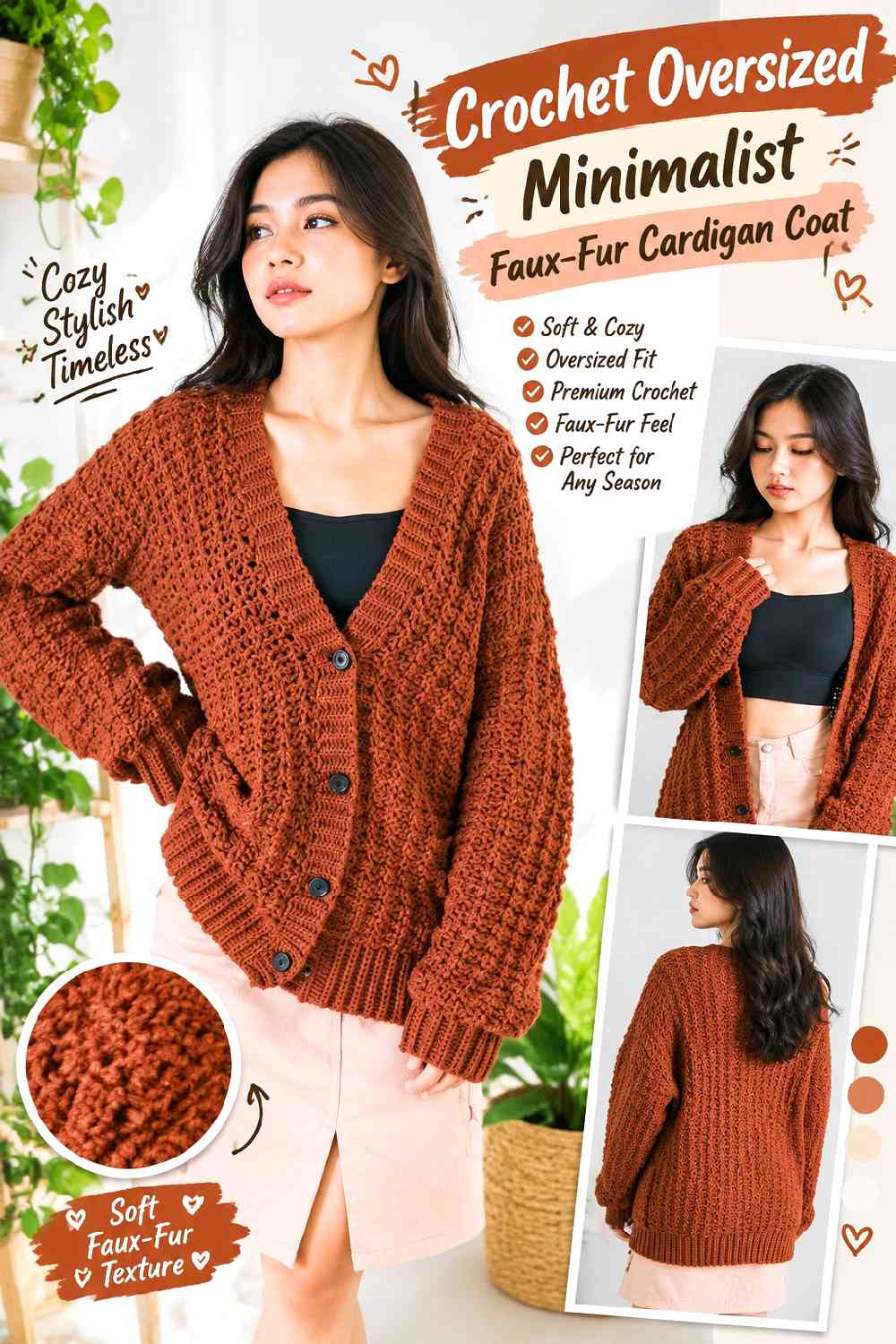
Chenda DIY’s oversized cardigan provides a straightforward relaxed foundation without requiring motifs or elaborate closures. That simplicity is useful for faux-fur adaptation because the trim can become the obvious focal point instead of competing with multiple construction details.
The strongest outfit version would preserve the relaxed shape while controlling the amount of extra volume elsewhere.
Oversized Width and Opera-Coat Length Are Separate Choices
A roomy body does not automatically need to become extremely long. Decide independently how much shoulder drop, sleeve room, body width, and hem length you want.
Compare those dimensions with an oversized garment you already enjoy wearing. That helps prevent an adaptation from growing in every direction simply because the intended look is dramatic.
Use the Trim to Define an Otherwise Simple Outline
A plain open front creates an obvious place for faux fur to change the character of the piece. A collar-only treatment gives the face more emphasis, while cuffs visually widen the ends of the sleeves.
For a quieter evening outfit, one strong trim zone may be more effective than outlining every edge.
Creator Credit: Chenda DIY
5. Crochet Wide-Collar Opera Coat Cardigan
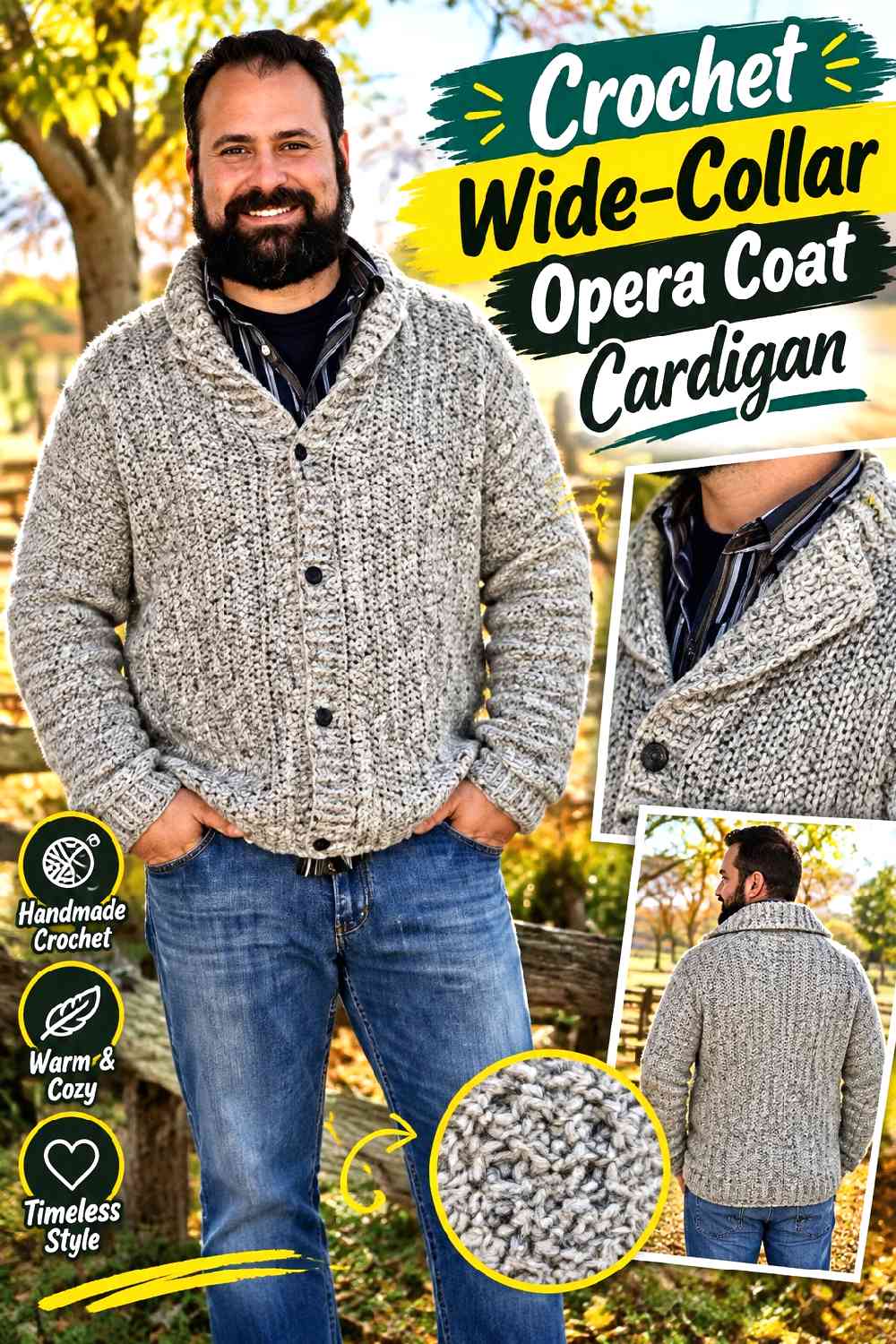
Heart Hook Home’s adult Cozy Coed Cardigan uses a substantial collar that gives the front more structure than a narrow finishing band. The video functions alongside the creator’s written pattern, so readers should use both as intended for construction information.
The collar makes this an especially natural candidate for an evening-coat interpretation because the neckline already has visual presence.
Decide Whether Faux Fur Replaces or Emphasizes the Collar
A wide crochet collar plus a wide plush collar can create a large amount of material around the neck and upper chest.
Before adapting it, decide whether you want the crochet collar itself to remain visible or whether faux fur should become the dominant outer edge. Treat that as a silhouette decision, not merely a decorative addition.
Keep the Lower Outfit Cleaner When the Neckline Is Heavy
A prominent collar pulls attention upward. This can work particularly well over a simple dress or an outfit with minimal neckline detail.
If you also add large jewelry, a scarf, and a contrasting base-layer collar, the upper portion may become crowded. Choose which neckline feature should lead.
Creator Credit: Heart Hook Home
6. Crochet Pocketed Longline Faux-Fur Cardigan
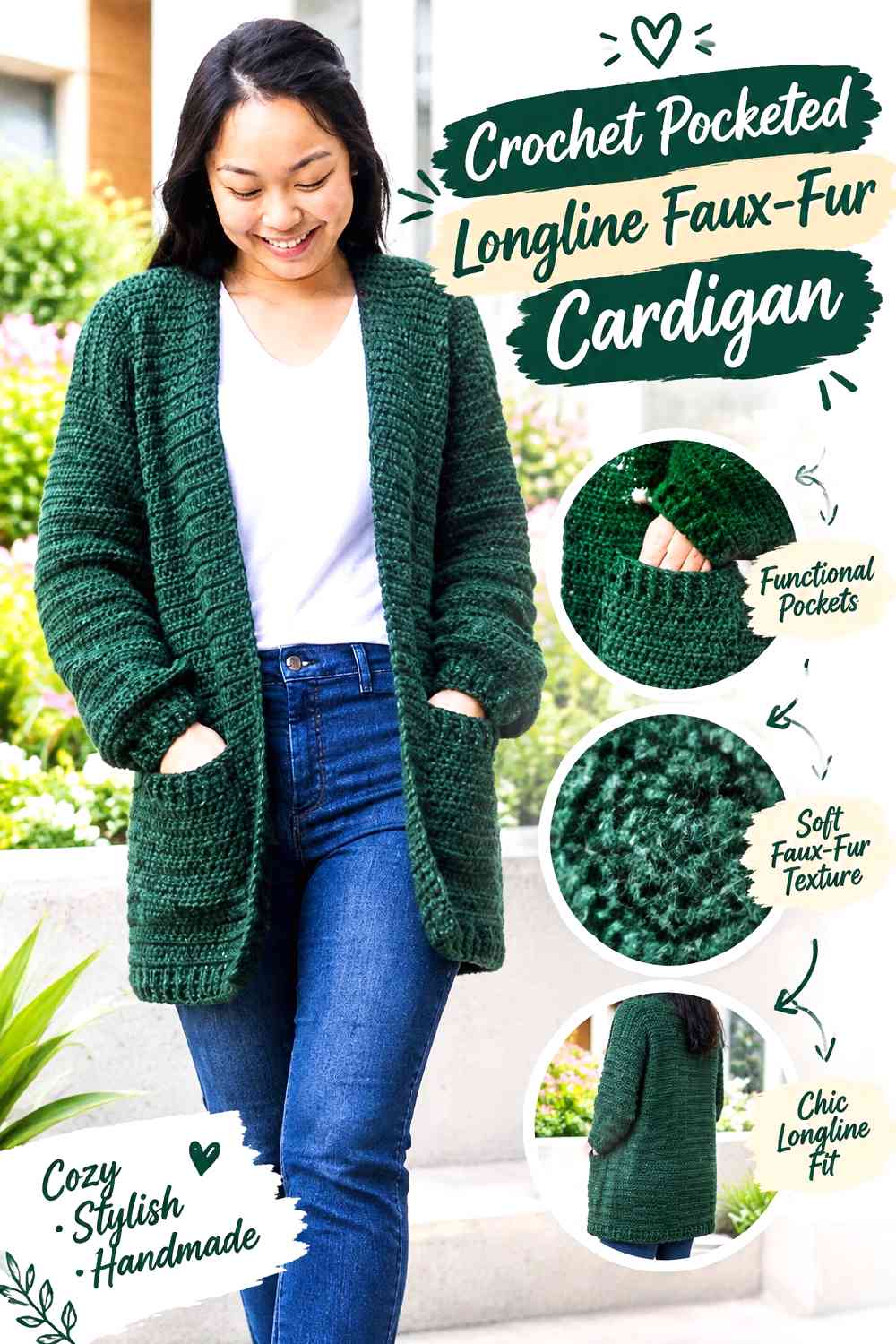
For The Frills’ Briar Pocket Cardigan combines a longer oversized shape with prominent front pockets and ribbed finishing. The pockets make this base more casual and functional-looking than a completely clean evening duster, which creates an interesting contrast when plush trim is added.
This idea suits a winter outfit that sits between everyday outerwear and statement crochet rather than trying to imitate a formal tailored coat.
Pocket Position Can Compete with a Fur-Lined Front
Large front pockets already divide the lower half of the cardigan visually. If you add faux fur down the entire opening, look at how those vertical edges interact with the pocket tops.
A collar-and-cuff treatment can preserve more of the original pocketed front if you want those details to remain obvious.
Longline Layers Work Well with Simple Casual Bases
A fitted turtleneck, uncomplicated trousers, or a column-style knit dress can keep the outfit grounded beneath a roomy coat.
The cardigan already contains width and pocket volume, so an equally bulky base layer may create more overall mass than you want.
Creator Credit: For The Frills
7. Crochet V-Neck Cuffed Evening Cardigan Coat
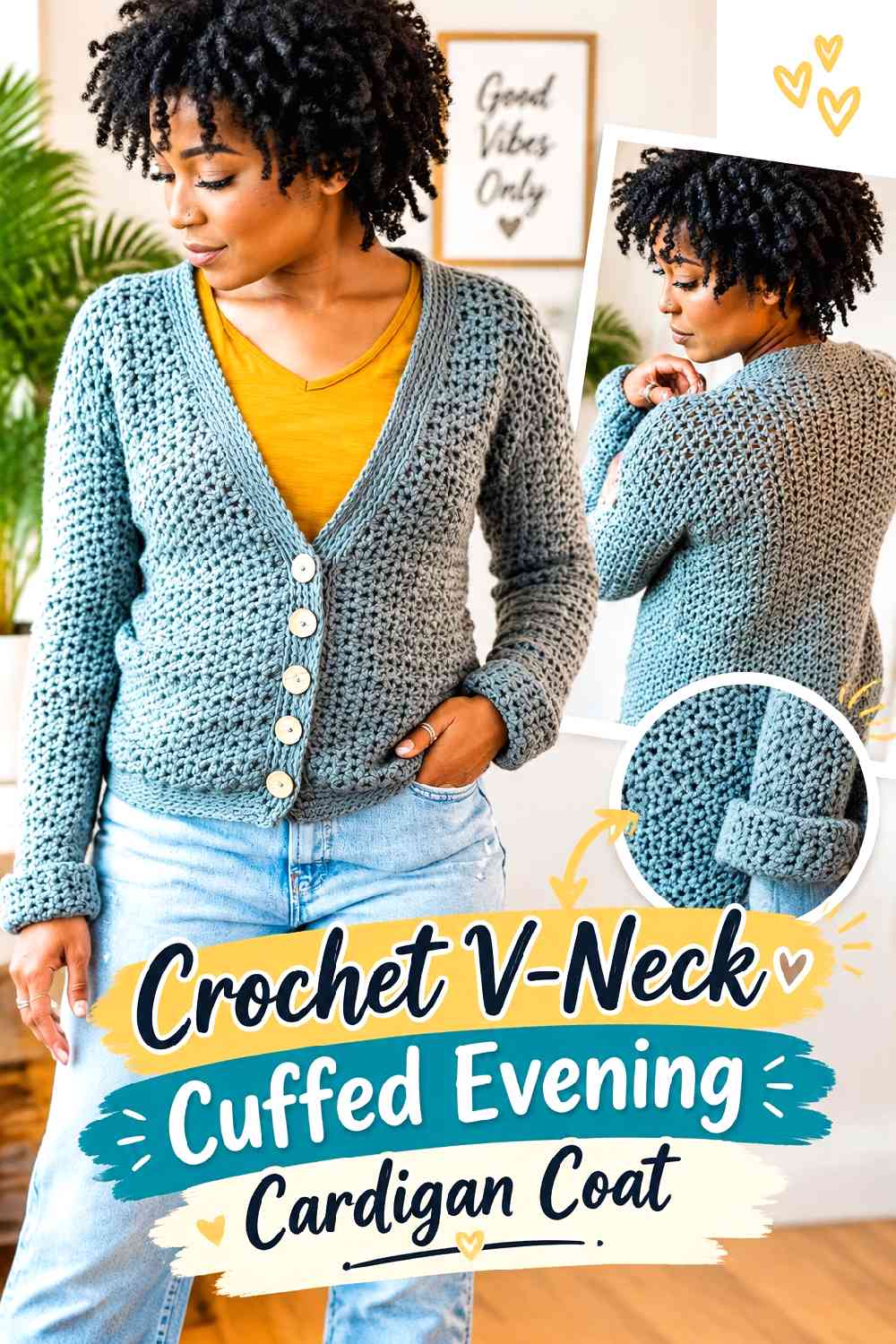
TL Yarn Crafts’ Toni Cuffed Cardi brings together a defined V-neck, button closure, and noticeable cuffs. Those three features give the garment a more deliberate front structure than an edge-to-edge cardigan.
For a faux-fur interpretation, the existing cuffs provide a natural design zone while the V-shaped front can remain relatively clean.
Preserve the V if It Is the Main Styling Feature
Running thick plush trim around a V-neck can make the opening appear narrower and visually heavier. Decide whether you want to highlight that V or soften it.
A cuff-focused faux-fur treatment allows the neckline to keep its original shape while still giving the outfit a winter statement detail.
Buttons Make the Base Layer More Flexible
Because the front has a closure, this coat-inspired cardigan can be styled open over a dress or closed enough to become part of the outfit itself.
Check the original button placement and front alignment before modifying the edge. Added trim should not be assumed to work automatically around an existing closure.
Creator Credit: TL Yarn Crafts
8. Crochet Patchwork Faux-Fur Statement Coat
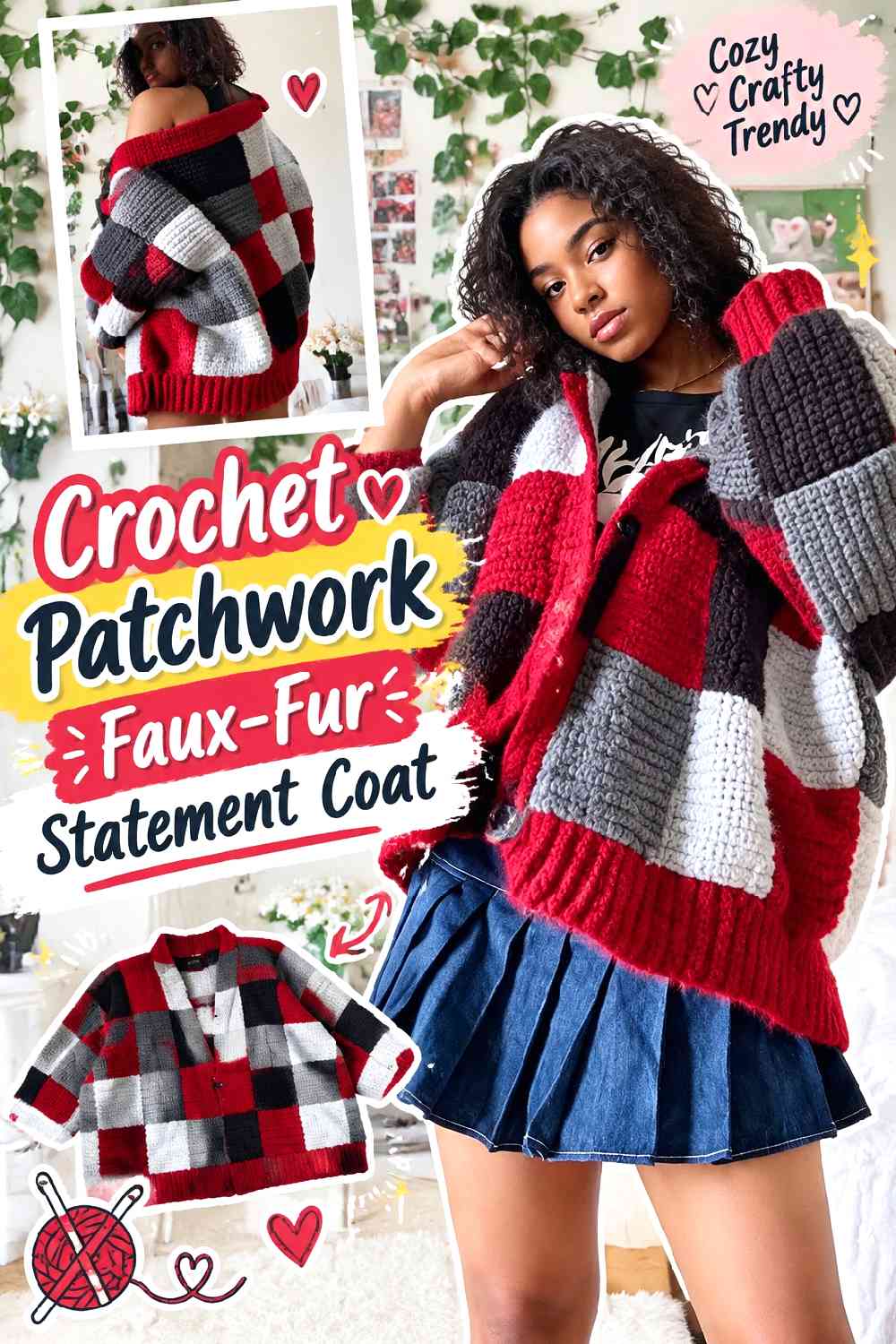
Ikoxun’s patchwork cardigan tutorial approaches the garment as an arrangement of multiple blocks before adding the finishing elements. That modular structure creates one of the most visually expressive bases in the collection.
A faux-fur adaptation can push it toward playful maximalist winter outerwear, but the strongest version starts with a deliberate patch layout.
Plan the Patchwork Before Adding Another Texture
Patchwork already creates variation through color and block placement. Faux fur adds a second type of contrast through surface texture.
Photograph or otherwise record the motif arrangement before joining, then evaluate where the final trim will sit against the strongest color changes. This prevents the border from accidentally obscuring the most intentional parts of the layout.
Keep the Outfit Underneath Relatively Quiet
A multicolor patchwork coat can easily function as the entire outfit statement. A simple dress, dark trousers, or tonal separates give the eye somewhere to rest.
If you prefer a maximalist result, repeat one of the cardigan colors underneath rather than introducing several completely unrelated ones.
Creator Credit: ikoxun
9. Crochet Bell-Sleeve Tie Opera Cardigan
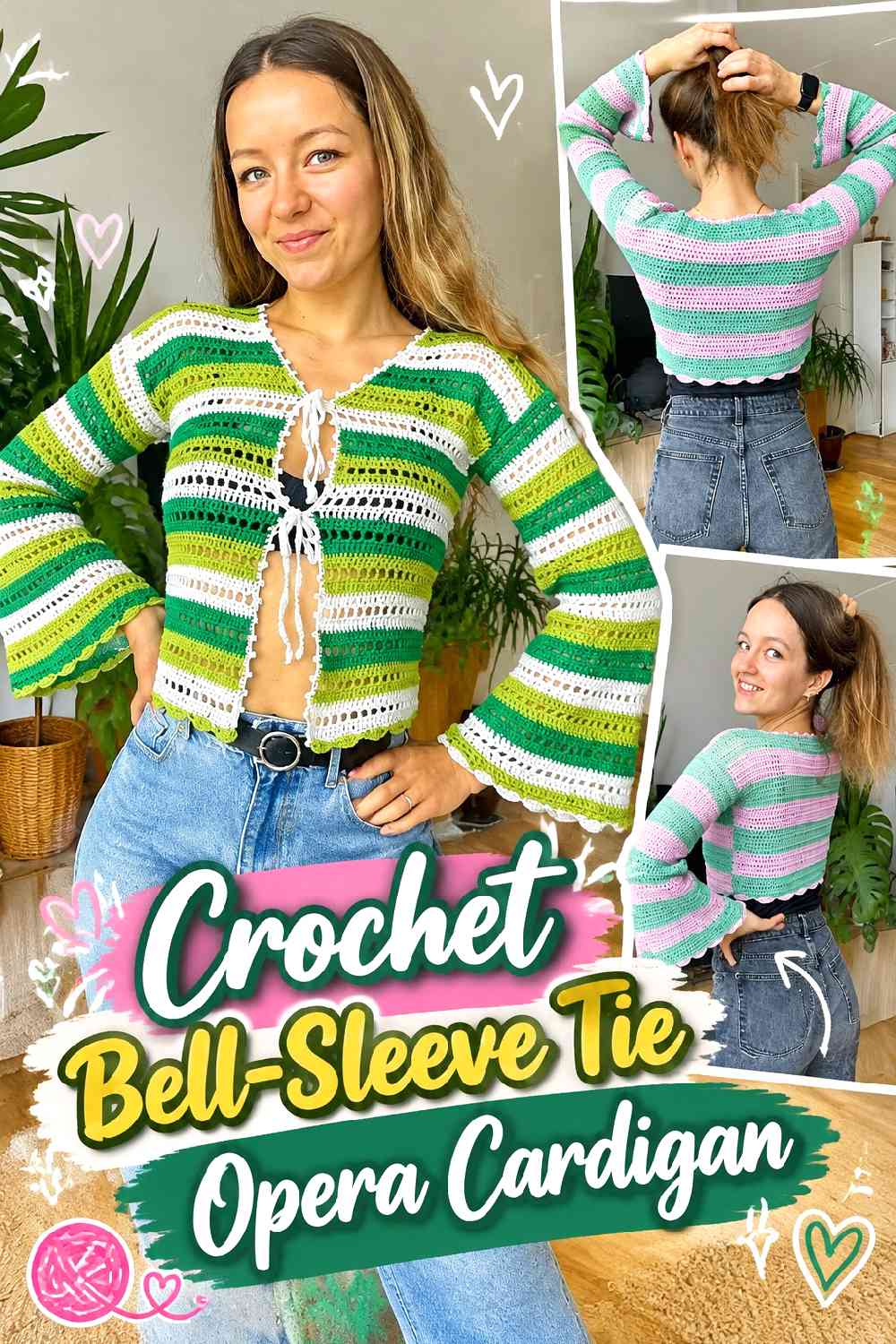
By Kristine’s front-tie cardigan uses wide bell sleeves and a light central tie rather than a continuous row of buttons. That combination gives it a noticeably more fluid outline than a tailored coat.
For winter 2026 outfit inspiration, this is the option to consider when you want an opera-coat mood without making the body itself extremely structured.
Let the Sleeve Shape Supply the Drama
A bell sleeve does not need several additional decorative ideas to look intentional. Faux-fur cuffs can emphasize the flare, but their depth should be judged against the entire sleeve rather than in isolation.
If the cuff becomes the widest-looking part of the garment, keep the front border comparatively restrained.
The Tie Makes the Base Layer Part of the Design
Because a single fastening leaves much of the front open, a slip dress, fitted knit dress, or simple top becomes visible through a large section of the cardigan.
Choose that underlying neckline and waistline deliberately. The open front means they contribute directly to the finished outfit.
Creator Credit: by Kristine
10. Crochet One-Piece Faux-Fur Cardigan Coat
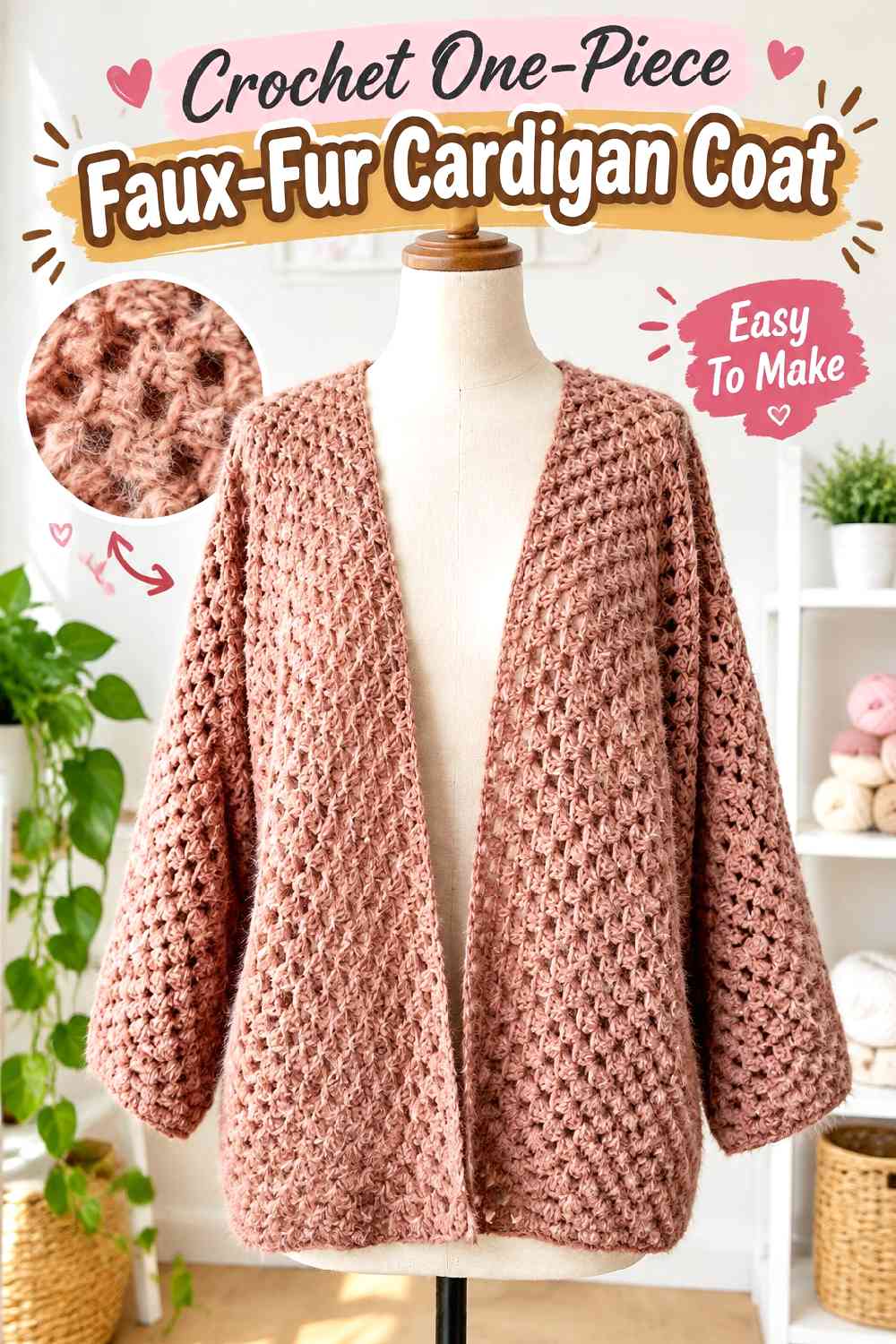
Crochet Capri’s one-piece cardigan provides a different construction route from projects assembled from several major panels. The body develops as one principal piece, so understanding orientation is especially important while the garment is still flat.
For an opera-coat adaptation, the relatively continuous construction makes the finished silhouette the main focus rather than visible patchwork or multiple surface treatments.
Evaluate the Whole Opening Before Adding Trim
With a simple body, even small differences between the two front sides can become obvious once a thick border frames them.
Lay the garment out and compare the front edges before treating faux fur as the final solution. Decorative edging will emphasize alignment rather than hide significant construction differences.
One-Piece Construction Suits a Clean Outfit Concept
This is a strong direction for a coat meant to sit over streamlined clothing. Instead of introducing motifs, cables, and several closures, let length and plush edging define the look.
A single-color coat body with a controlled contrasting trim can create a clearer evening silhouette than a project with several competing details.
Creator Credit: Crochet Capri
11. Crochet Maxi Duster Opera Coat
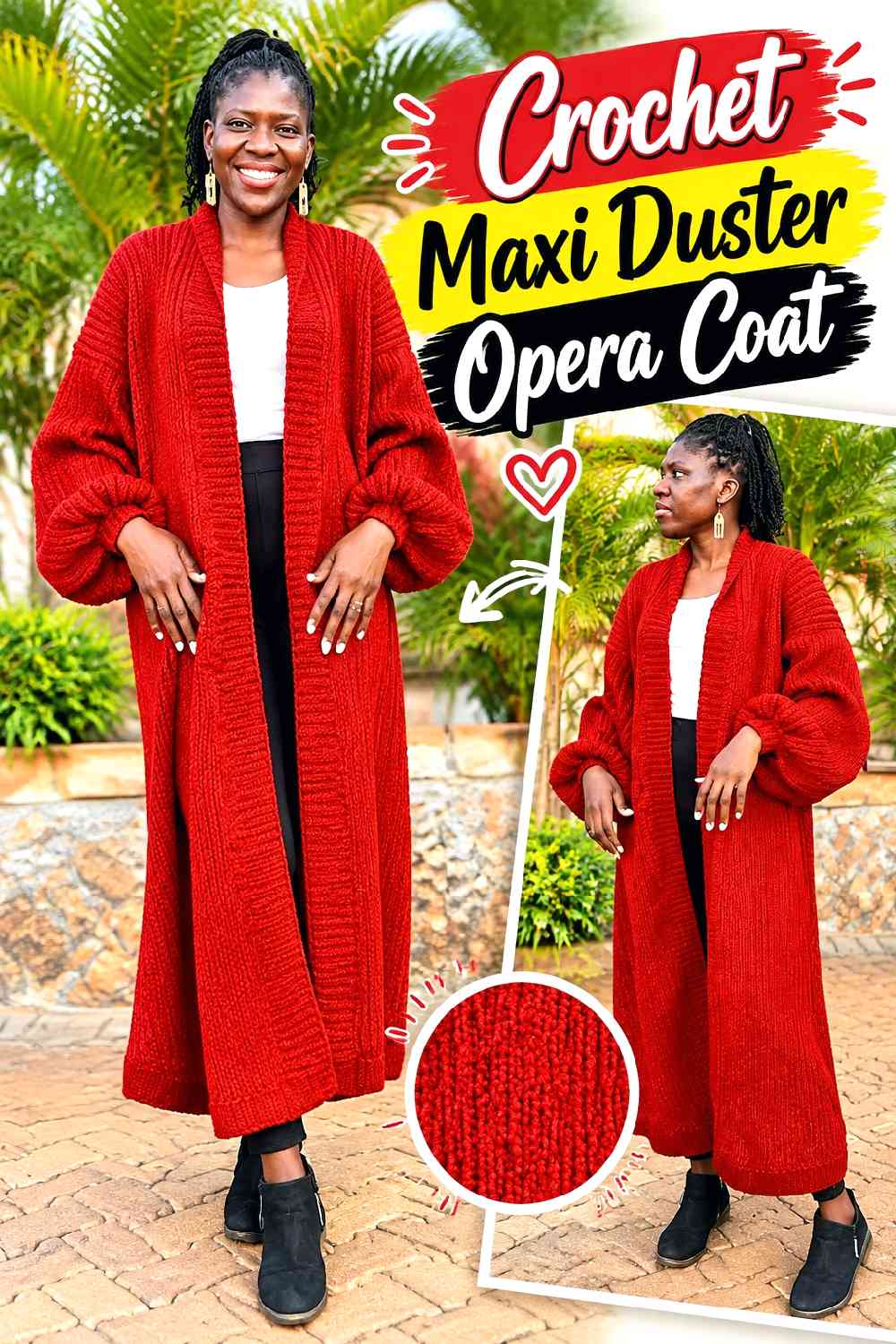
BzzzMagicHands🧶 demonstrates a long duster cardigan where length is already one of the defining design features. That makes it among the most direct foundations for interpreting a crochet cardigan as an opera-style outer layer.
Instead of extending a short cardigan dramatically, you can begin by studying how a purposefully long garment behaves.
Choose the Hem Point on Your Own Body
A floor-skimming look, ankle-length duster, and mid-calf coat create noticeably different effects even when the upper construction is similar.
Measure from the shoulder to the hem point you actually want while wearing footwear and clothing similar to the intended outfit. Do not rely only on where the tutorial sample falls on another person.
Long Crochet Magnifies Yarn and Drape Changes
A small fabric difference becomes more important when it continues through a large amount of garment length.
If you plan to substitute yarn or combine the crochet body with plush trim, compare the materials first. A coat-length project gives weight, stretch, and drape more opportunity to affect the final silhouette.
Creator Credit: BzzzMagicHands🧶
12. Crochet Zipper-Front Faux-Fur Jacket Coat
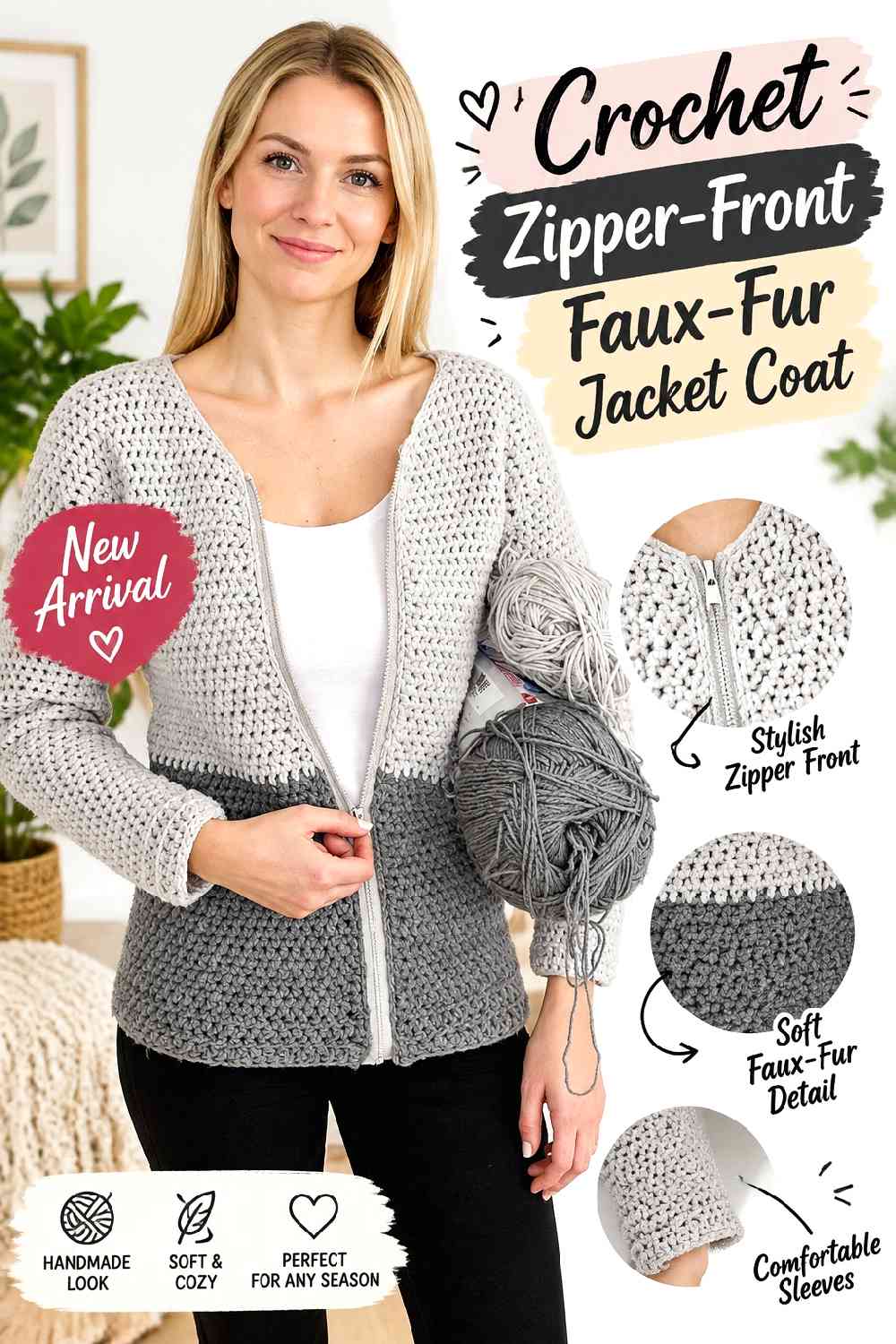
Wilma Westenberg’s cardigan uses a separating zipper, immediately giving the project a more jacket-like center front than an open cardigan or tie style. The design is worked from the lower body upward before the zipper becomes part of the final construction.
This is a strong choice when you want faux fur to feel like an outerwear detail rather than a soft cardigan border.
A Zipper Needs Cleaner Edges Than an Open Front
Two zipper sides need to meet predictably. Before introducing plush yarn around the center front, verify exactly how the creator’s zipper construction works.
A fur collar or cuff is usually a less disruptive design idea than casually thickening the edge where the zipper must operate.
Use the Closure to Create a Strong Center Line
When closed, a zipper visually divides the garment into two clear halves. That can work well with a simple outfit beneath because the cardigan itself already has a strong front structure.
For a dressier version, let the faux fur frame the neck or sleeves rather than competing directly with that center line.
Creator Credit: Wilma Westenberg
13. Crochet Hexagon Faux-Fur Statement Cardigan
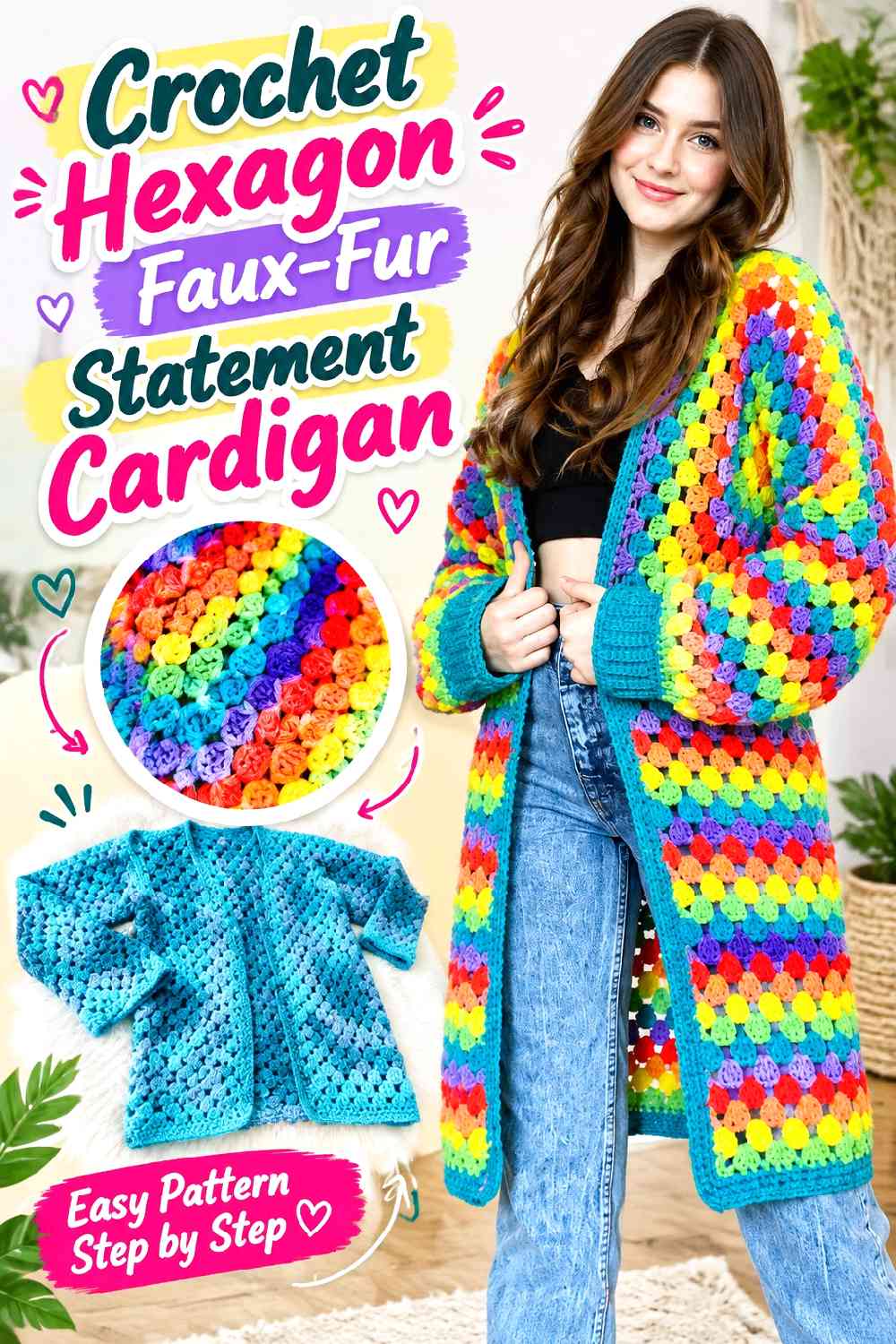
PassioKnit Kelsie’s well-known granny hexagon construction builds the cardigan from geometric crochet rather than conventional front and back panels. The tutorial includes the stages that turn the developing hexagons into the recognizable cardigan silhouette.
For a winter statement version, extending the lower body and introducing faux-fur finishing can create a playful coat-like layer without hiding the underlying granny geometry.
Fold the Developing Shape Before Making Big Adaptations
A flat hexagon does not communicate garment proportion as clearly as the folded cardigan form.
Use the creator’s checkpoints to understand where the sleeve and body are developing before deciding on added length. This is especially important if the goal is to shift the project from cardigan proportions toward a more dramatic coat.
Plush Edging Can Modernize the Granny Surface
The cluster-based fabric and faux fur offer two very different textures. A controlled plush border can make that contrast intentional.
If the body uses several colors, consider keeping the trim within the established palette so the garment does not become visually fragmented.
Creator Credit: PassioKnit Kelsie
14. Crochet Granny-Yoke Faux-Fur Cardigan Coat
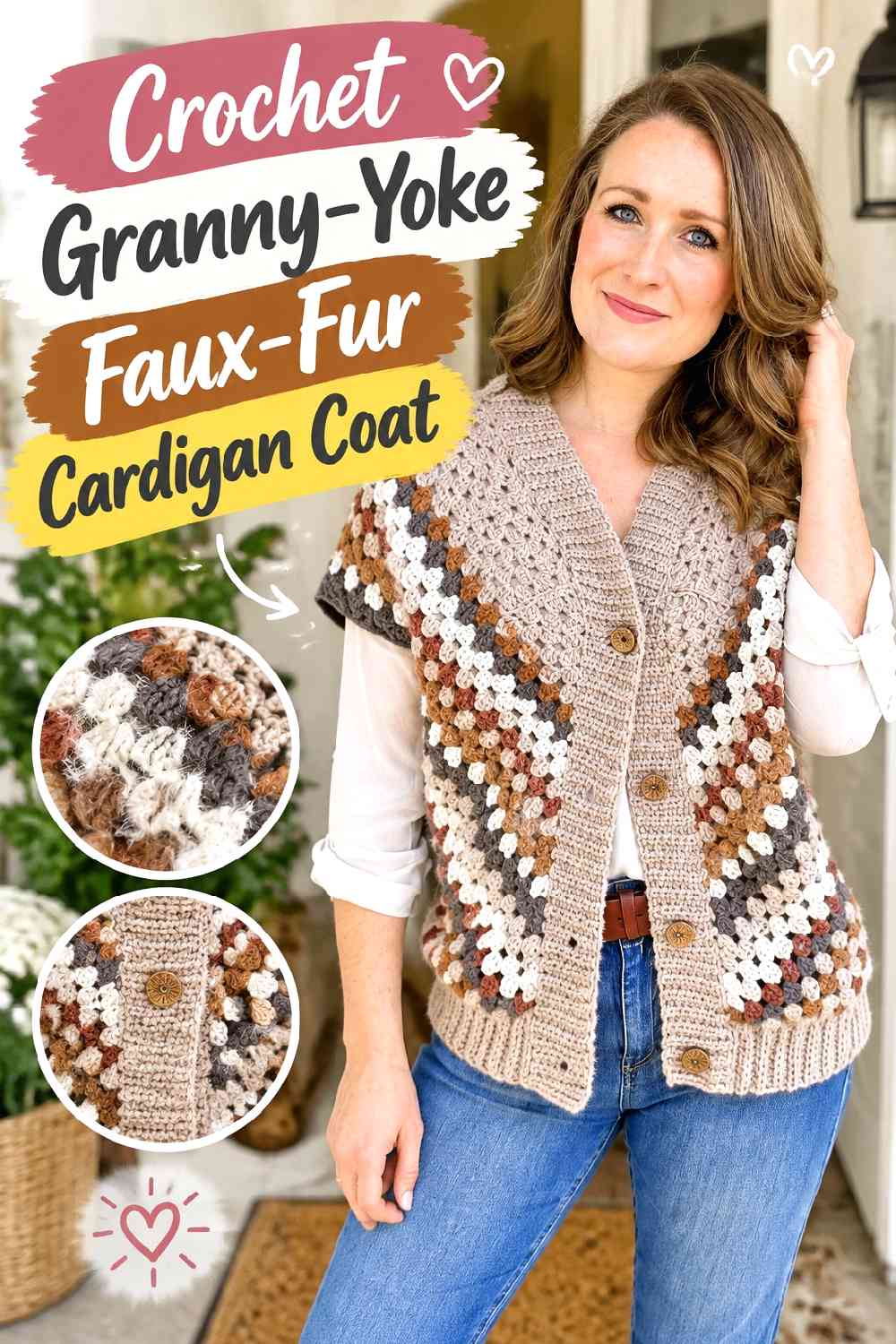
HanJan Crochet’s design concentrates granny squares around the yoke while using continuous crochet for more of the lower garment. This gives you motif interest without covering the entire cardigan in separate squares.
That selective placement is especially useful for faux-fur adaptation because there is already a clear hierarchy between the decorative upper section and the quieter body.
Do Not Hide the Yoke with an Oversized Collar
If the motifs around the shoulders are the main attraction, a very deep faux-fur collar can cover the area that makes this construction different.
Cuffs or a narrower front edge can preserve more of the granny-square yoke while still giving the finished cardigan a winter-coat character.
Use Motif Placement to Frame the Face and Shoulders
Because the decorative section is concentrated high on the garment, the eye naturally moves toward the neckline and upper body.
A relatively simple dress or solid-color top underneath reinforces that effect. Repeating one motif color in the rest of the outfit can also create cohesion without copying the entire palette.
Creator Credit: HanJan Crochet
15. Crochet Sunflower Hooded Faux-Fur Coat
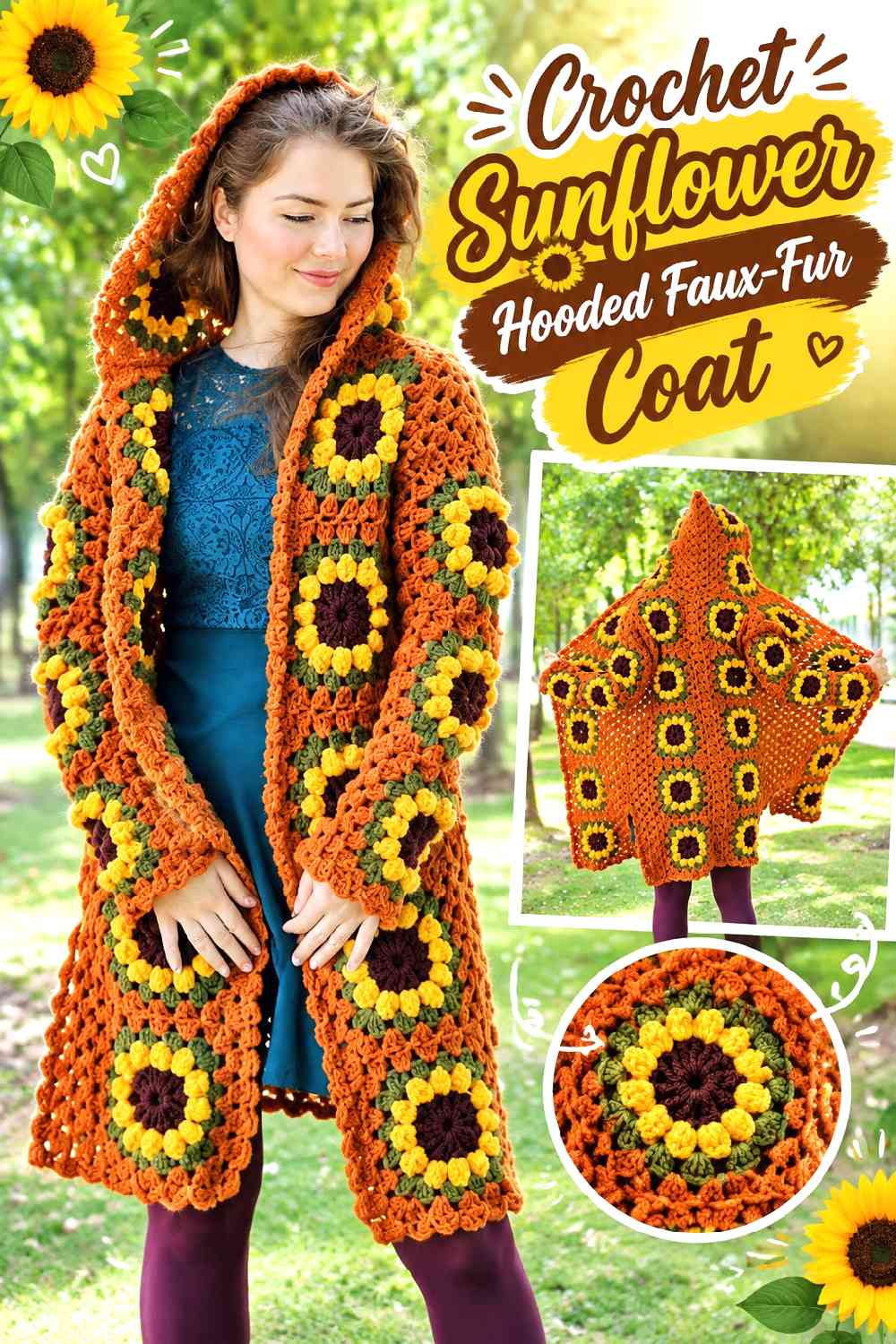
Colour Ceilidh Crochet’s long sunflower cardigan is already conceived as a coat-style project, combining floral granny motifs with an extended body, hood, sleeves, side slits, and decorative edging. It is therefore one of the most dramatic bases in this collection before any faux-fur adaptation is considered.
For winter styling, this is the project to choose when motifs, length, and hood shape are meant to be visible parts of the outfit rather than quiet background details.
A Hood and Faux Fur Concentrate Weight at the Neck
Adding plush trim around a hood can substantially increase its visual presence. Consider how the hood sits both up and down before deciding how deep that border should be.
If the floral motifs are also located near the upper body, keep enough separation for both features to remain recognizable.
Let the Floral Coat Be the Outfit Centerpiece
This design already combines repeated motifs and a long silhouette. A simple base outfit keeps those details legible and prevents the finished look from becoming difficult to read.
If you adapt the sunflower colors, lay out the motifs across the entire garment before assembly. The placement should make sense across the fronts, back, sleeves, and hood rather than only one section at a time.
Creator Credit: Colour Ceilidh Crochet
Conclusion
The most convincing crochet faux-fur opera coat starts with a silhouette that already suits the way you want to dress. For strong winter graphics, the houndstooth and patchwork ideas put surface design first. The mohair and maxi dusters emphasize length and movement, while the cable and wide-collar cardigans create a more substantial, textured impression.
If you want the faux fur itself to be the main feature, begin with one of the simpler oversized or one-piece cardigan bases. For more unusual construction, the raglan, hexagon, granny-yoke, and sunflower hooded coat offer very different routes to statement outerwear.
Before changing a tutorial, establish the fit and construction of the original garment first. Then decide where faux fur genuinely improves the silhouette instead of automatically placing it on every available edge. Use each creator’s original tutorial for exact measurements, sizing, construction, and finishing information.
Frequently Asked Questions
Can I add faux-fur trim to any crochet cardigan tutorial?
Not automatically. The underlying cardigan needs an edge that can accommodate the additional material without interfering with its intended fit, closure, or drape. A simple open cardigan may be easier to adapt than a project where the center front contains a zipper or carefully positioned buttons.
Evaluate the finished edge first and follow the original tutorial for the garment construction before changing it.
Where should faux-fur trim go on a crochet opera coat?
Common visual options include the collar, cuffs, hood, front opening, and hem, but they do not need to be used together. Collar-and-cuff trim creates a more focused accent, while a fully edged coat makes the faux fur a much stronger part of the design.
Choose placement according to the garment’s existing features. Motifs, cables, bell sleeves, and unusual closures may already provide enough visual emphasis.
How long should a crochet opera coat be?
There is no universal length. Decide whether you want the hem near the knee, mid-calf, ankle, or lower, then measure that position on your own body.
Also consider what you plan to wear underneath. The interaction between coat length and a dress or skirt hem can change the finished outfit considerably.
Should the faux-fur trim match the crochet body?
It can, but it does not have to. A similar color creates a more unified surface, while a contrasting border makes the outline much more visible.
For patterned or multicolor crochet, selecting a trim color already present in the garment can create contrast without adding another unrelated color.
Can I turn a regular crochet cardigan into a long opera coat?
Sometimes, but adding length is a structural change rather than a purely decorative one. More fabric can alter garment weight, movement, and proportion, and not every construction can simply be extended indefinitely.
Use tutorials that explicitly allow length adjustment when possible, and follow the creator’s construction logic rather than adding arbitrary repeats.
What should I check before using faux-fur yarn around a crochet hood?
Look at how the hood sits when both worn and lowered. Plush edging increases the visual size of the hood and may add material around the back neckline.
If the coat already contains motifs or a substantial collar near that area, consider whether the additional trim supports the design or hides details you want to see.
What should I wear under a crochet faux-fur opera coat?
Start with the strongest feature of the coat. A heavily patterned or floral coat usually benefits from simpler layers underneath, while a plain long cardigan leaves more room for an interesting dress, neckline, or coordinated separates.
Rather than following one formula, balance the amount of texture, color, and volume between the coat and the rest of the outfit.