A crochet corset-back wrap cardigan combines two adjustable ideas: a front that wraps, ties, or overlaps and a back detail that can be laced for shape and visual interest. That pairing can work especially well for winter layering because the front controls coverage while the back lacing can help define an otherwise relaxed cardigan.
The tutorials featured here do not all contain a corset-style back. Instead, they provide different verified cardigan foundations—crossover wraps, bow-front cardigans, belted layers, mesh designs, granny-square construction, and cropped boleros—that can inspire a separate lace-up-back adaptation. Follow each creator for the actual garment construction, and treat any corset-back alteration as an independent design decision rather than part of the original tutorial.
For a practical wearable, the lacing should not be expected to force an undersized cardigan into place. Think of it as a moderate fit adjustment or decorative feature. The shoulders, armholes, body width, and front overlap should already fit comfortably before the back is tightened.
Quick List
- Crochet Ribbed Waist-Laced Wrap Cardigan
- Crochet Bow-Front Split-Back Cardigan
- Crochet Lacy V-Neck Corset-Back Cardigan
- Crochet Kimono Wrap Cardigan With Low Back Lacing
- Crochet Textured Cropped Corset-Waist Cardigan
- Crochet Bell-Sleeve Upper-Back Lace Cardigan
- Crochet Crossover Wrap Cardigan With Back Waist Lacing
- Crochet Straight-Panel Ladder-Laced Cardigan
- Crochet Contrast-Trim Corset-Back Cardigan
- Crochet Airy Cropped Crisscross-Back Cardigan
- Crochet Overlap Wrap Cardigan With Wide Back Lacing
- Crochet Triple-Tie Adjustable-Back Cardigan
- Crochet Belted Wrap Cardigan With Corset Back
- Crochet Mesh Ladder-Back Tie Cardigan
- Crochet Made-to-Measure Corset-Waist Cardigan
- Crochet Granny-Square Laced-Back Cardigan
- Crochet Bolero Wrap Cardigan With Upper-Back Lacing
Decide What “Corset-Back” Should Do Before Changing the Cardigan
A corset-style back can serve several purposes without becoming a true compression garment. A narrow laced opening at the waist can add shape. A taller ladder-laced panel can become a decorative focal point. A loose crisscross detail over an intact back can create the appearance of corset lacing without changing the underlying fit very much.
That choice should come before cutting away, separating, or narrowing any back section. A cardigan that already depends heavily on its back panel for shoulder stability may not be a good candidate for a large open-back conversion. In that case, a decorative lacing treatment over the existing fabric is the more conservative adaptation.
Plan the Cardigan Around Your Winter Base Layer
Measure and evaluate a cardigan while wearing something similar to what will actually sit underneath it. A wrap that feels comfortable over a camisole may pull differently over a thermal top, turtleneck, or lightweight sweater.
Pay particular attention to the shoulders and upper arms. Back lacing changes the torso but cannot correct sleeves that are too narrow or armholes that restrict movement. Likewise, front overlap should come from adequate panel width rather than from pulling the entire cardigan tighter through the back.
Give the Lace-Up Area Enough Stability
Repeated lacing concentrates tension along two relatively narrow edges. Open mesh, delicate lace, and very stretchy crochet may distort more readily than firm ribbing or a stable border.
Before adding a lace-up section, consider how the blocked fabric responds when gently pulled sideways. Reinforcing the intended lacing edges with an appropriate border or structurally stable treatment can make more sense than threading a cord directly through fragile openings. The goal is an adjustable detail that works with the fabric, not one that gradually stretches the cardigan out of shape.
1. Crochet Ribbed Waist-Laced Wrap Cardigan
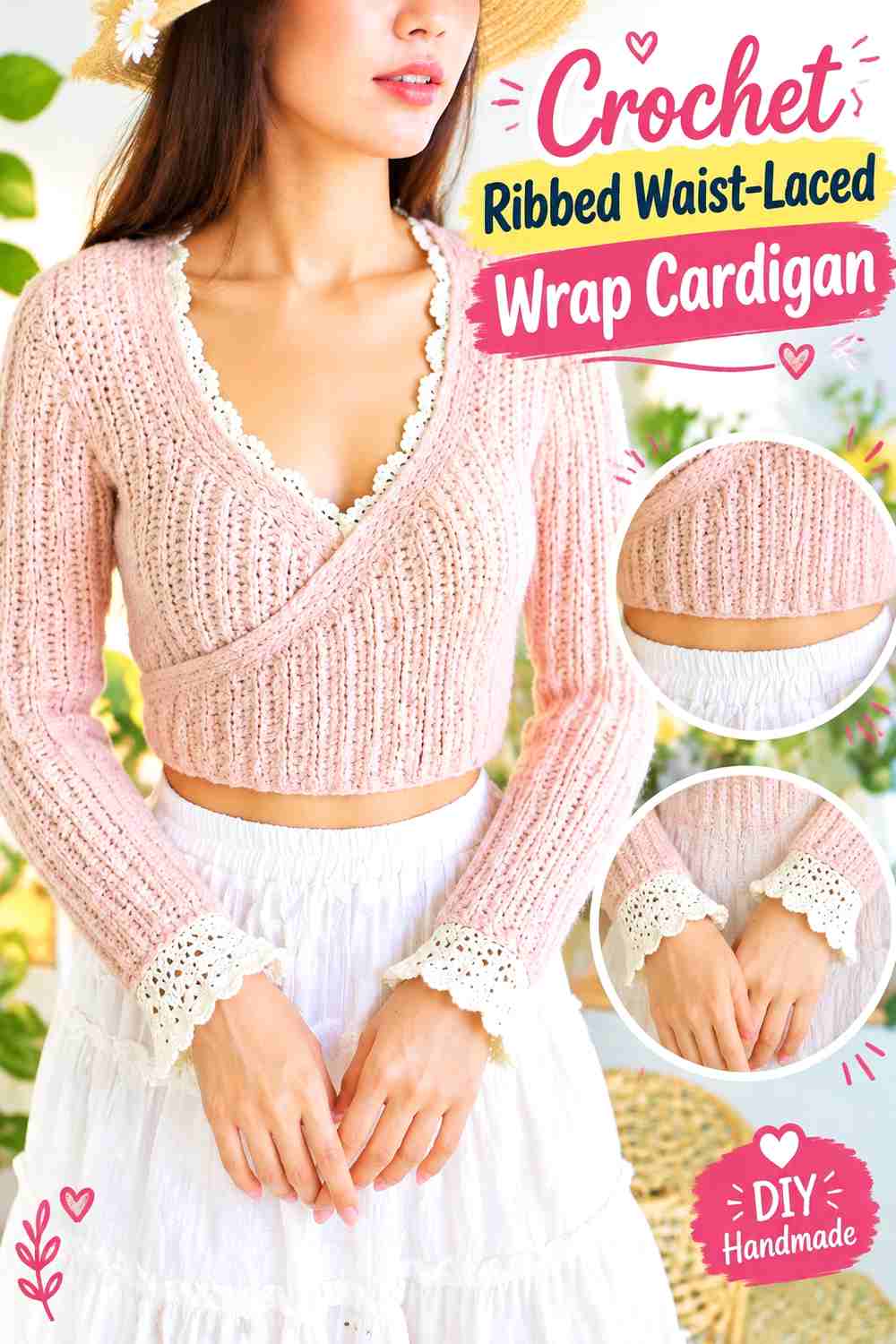
Chenda DIY’s wrap cardigan uses pronounced ribbing and a genuine wrapped silhouette, giving this idea a particularly strong foundation for a winter corset-back interpretation. The visible vertical texture already creates a fitted-looking line, so a controlled lace-up area at the back waist can complement the construction rather than compete with it.
Ribbing Changes When It Is Pulled Sideways
Ribbed crochet may expand considerably across the body. Before deciding how narrow a back lace-up gap should appear, compare the fabric relaxed and gently stretched. Pulling too hard can flatten the ribs and make the back look strained instead of shaped.
A better goal is moderate adjustment. Let the wrap front provide most of the closure while the back lacing fine-tunes the waist.
Keep the Front Wrap and Back Lacing Independent
Two adjustable systems can easily fight each other. If the front panels already overlap comfortably, the back should not need aggressive tightening. Put the cardigan on loosely first, arrange the front naturally, and then judge how much back adjustment would improve the silhouette.
Creator Credit: Chenda DIY
2. Crochet Bow-Front Split-Back Cardigan
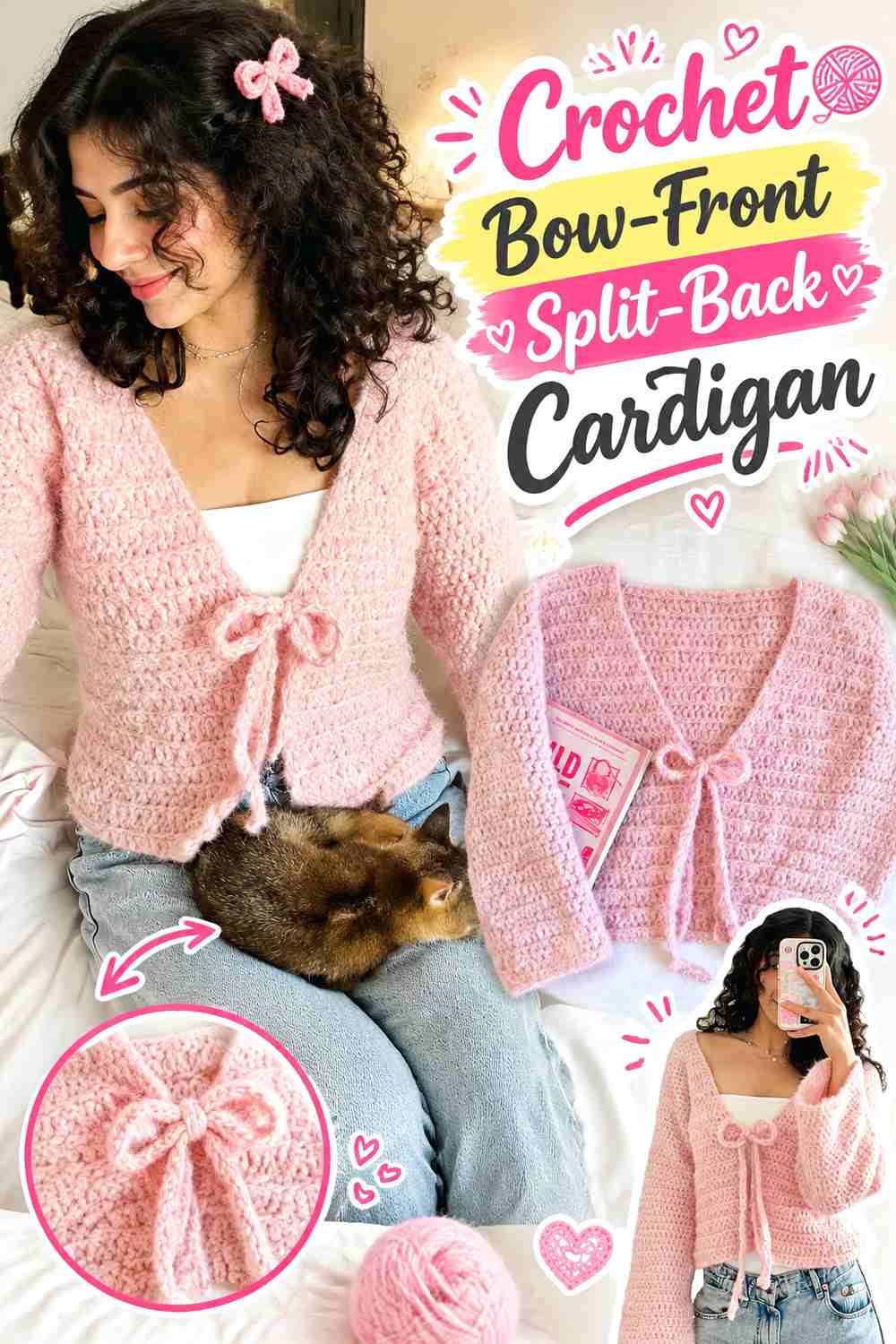
Mahum’s cardigan uses a made-to-measure approach and a prominent front bow, which makes it an interesting starting point for a softer corset-back idea. Rather than adding another oversized bow behind, the back could use a narrower laced section so the two closures have clearly different visual jobs.
Decide on Layering Ease Before Taking Measurements
Made-to-measure construction gives you flexibility, but you still need to decide how the finished cardigan should fit. Measurements taken directly over the body will produce a different result from measurements taken over the shirt or knit layer you expect to wear in winter.
Do not use the back lacing as a substitute for that decision. Build the intended ease into the cardigan first.
Let the Front Bow Remain the Main Focal Point
A large bow and a dramatic corset back can visually compete. A relatively simple crisscross treatment behind the waist keeps the back interesting while allowing the front closure to retain its character.
This is a good option if you prefer romantic details without turning every edge into another decorative feature.
Creator Credit: mahum 🎀
3. Crochet Lacy V-Neck Corset-Back Cardigan
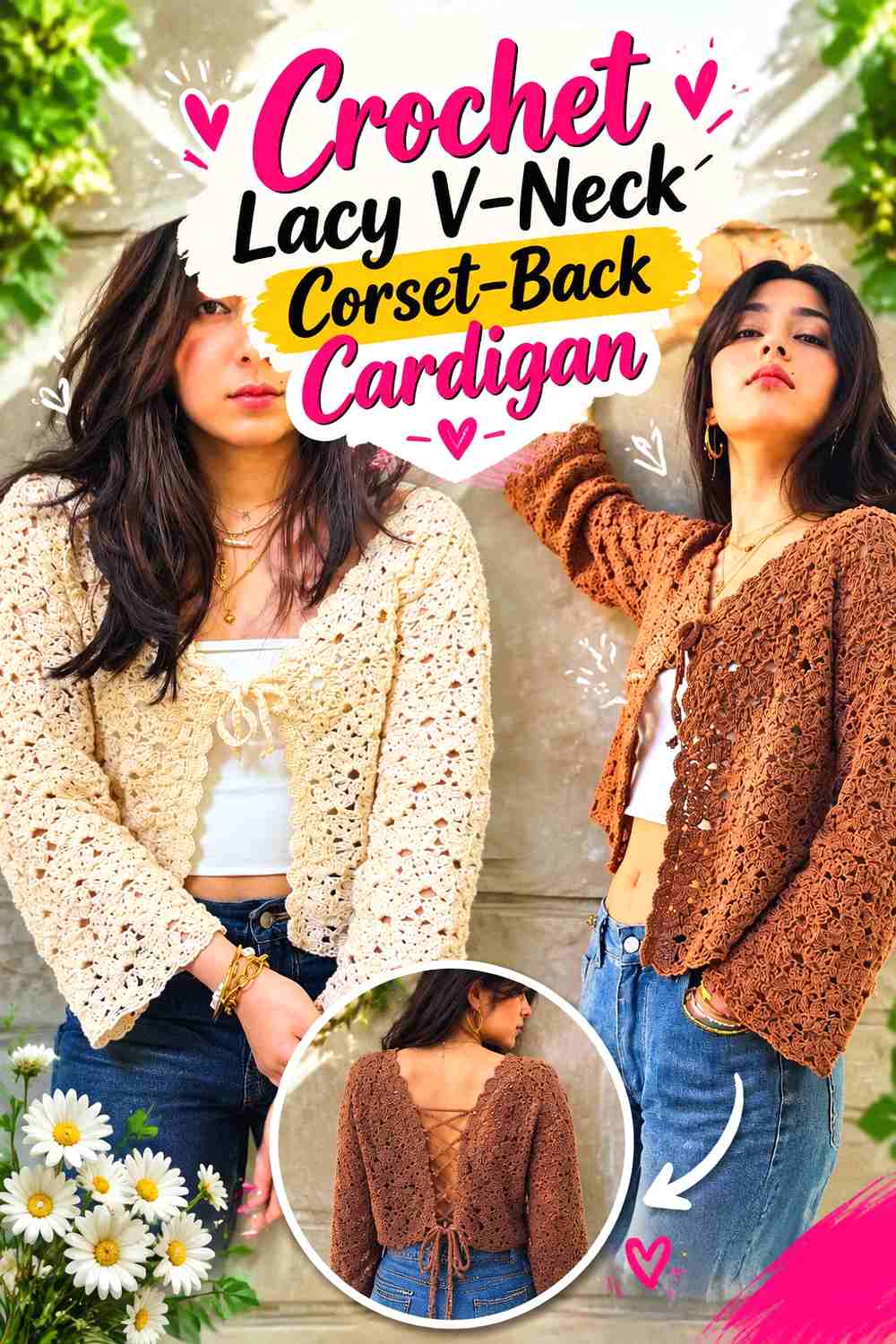
The kiksandjackcrochet source is a lightweight, lacy tie-front cardigan, providing a noticeably softer starting point than the dense ribbed options. Its open surface makes a narrow corset-style back especially attractive visually, but it also makes edge stability more important.
Open Stitchwork Needs a Gentle Lace-Up Treatment
A cord threaded directly through delicate openings can pull individual stitches out of proportion. If you adapt an airy cardigan, judge whether the intended lacing points need a more stable finished edge rather than relying on the lace fabric itself.
The lighter the fabric, the less useful aggressive cinching becomes.
Check the V-Neck After Adjusting the Back
Tightening the back can alter how the front hangs. After any fit adjustment, look at the V-neck again rather than evaluating only the rear view.
If the neckline begins to spread, wrinkle, or shift backward, the lacing is probably changing the garment more than intended.
Creator Credit: kiksandjackcrochet
4. Crochet Kimono Wrap Cardigan With Low Back Lacing
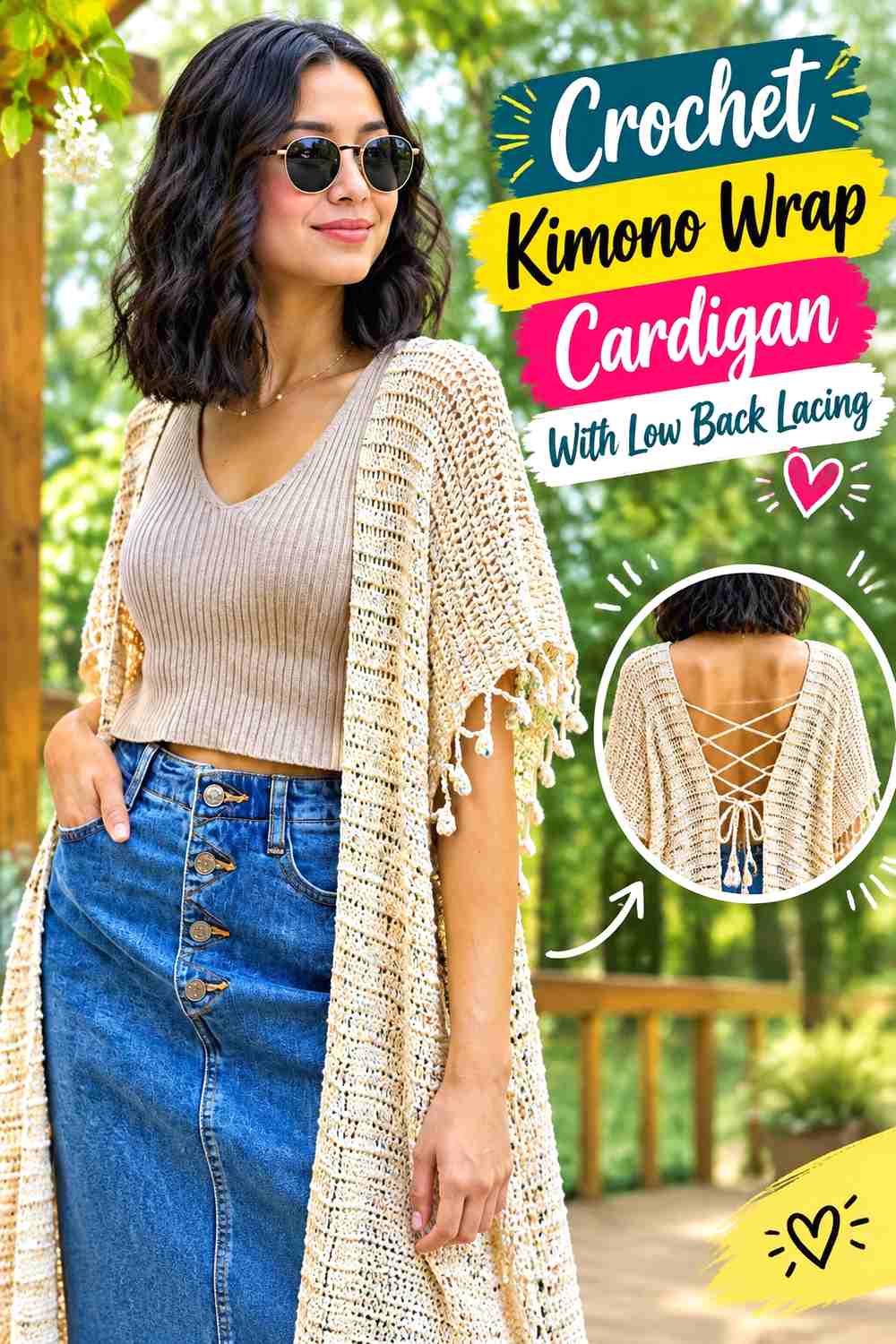
KnitcroAddict’s kimono cardigan has a broader, relaxed silhouette instead of a close crossover fit. That makes it a useful choice for a lower, more decorative corset-back feature rather than a tightly shaped waist. The source tutorial shows a roomy cardigan construction that can also function as a lighter layer.
A Relaxed Cardigan Does Not Need a Tiny Waist
Trying to pull a wide kimono shape sharply inward can distort its intended drape. Preserve the loose upper body and consider concentrating any lacing lower on the back.
That gives some visual definition while keeping the shoulder line and side hang consistent with the original silhouette.
Use Drape as Part of the Design
A flowing cardigan can form attractive folds around a lightly gathered back section. A rigid corset panel would create a very different result.
When choosing substitute yarn, compare the blocked fabric with the source garment and decide whether you want the back to fall softly or hold a more architectural shape.
Creator Credit: KnitcroAddict
5. Crochet Textured Cropped Corset-Waist Cardigan
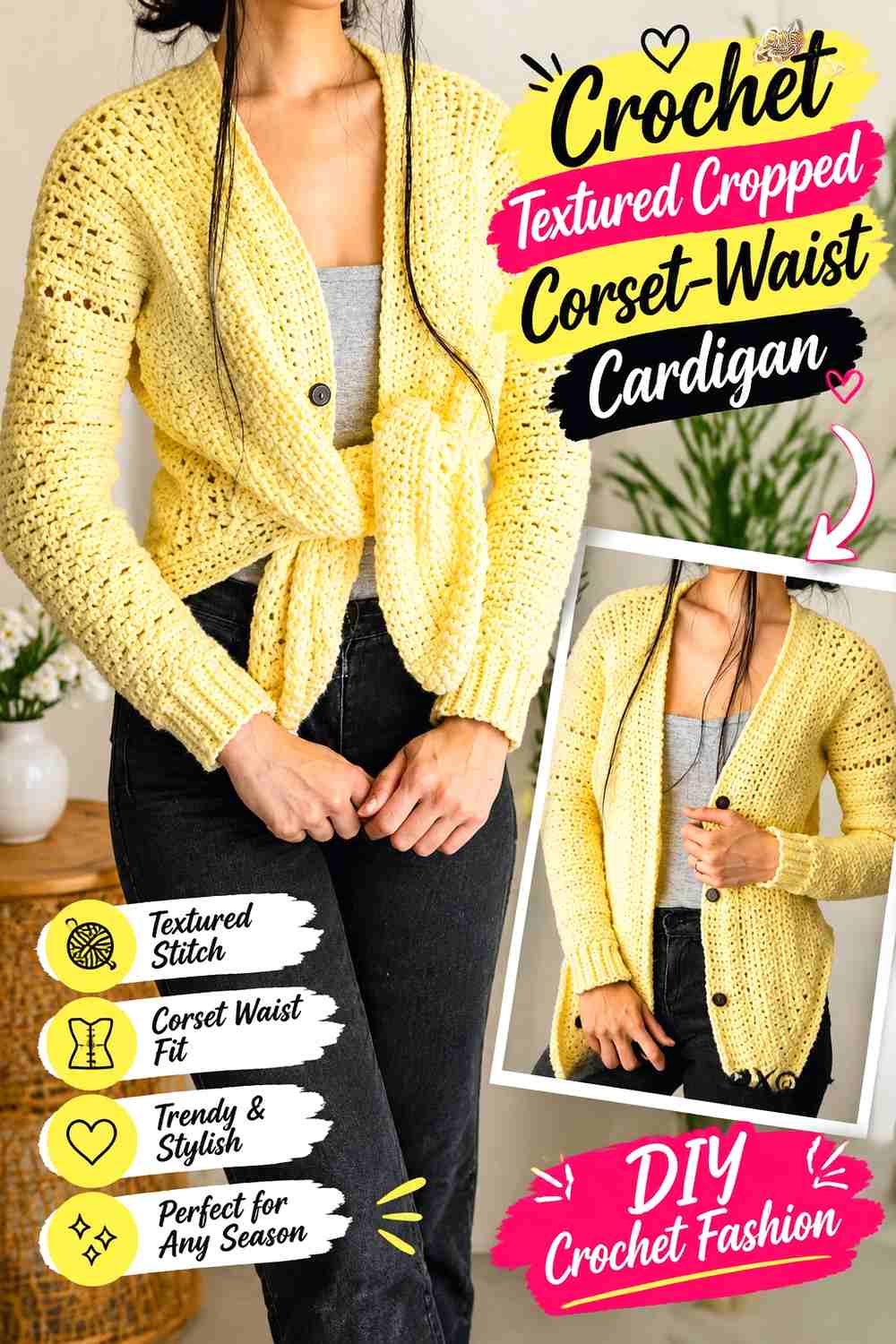
TCDDIY’s front-tie cardigan uses a cropped silhouette with noticeable texture, making it well suited to a more defined waist-level corset treatment. Because the cardigan is already short, the lacing becomes part of the hem-to-waist proportion rather than an isolated detail added halfway down a long garment.
Place the Back Detail Relative to the Hem
On a cropped cardigan, even a small change in vertical placement can make the lacing look unusually high or low. Try the finished body on before deciding where the visual center of the corset treatment belongs.
Compare that position with the waistband of the clothes you plan to wear beneath it.
Texture Can Support a Stronger Outline
A textured fabric usually carries visual weight better than fine openwork. That makes this one of the more convincing ideas for a visibly structured lace-up panel.
Still, avoid assuming texture means the fabric cannot stretch. Test the blocked cardigan and reinforce only as needed.
Creator Credit: TCDDIY
6. Crochet Bell-Sleeve Upper-Back Lace Cardigan
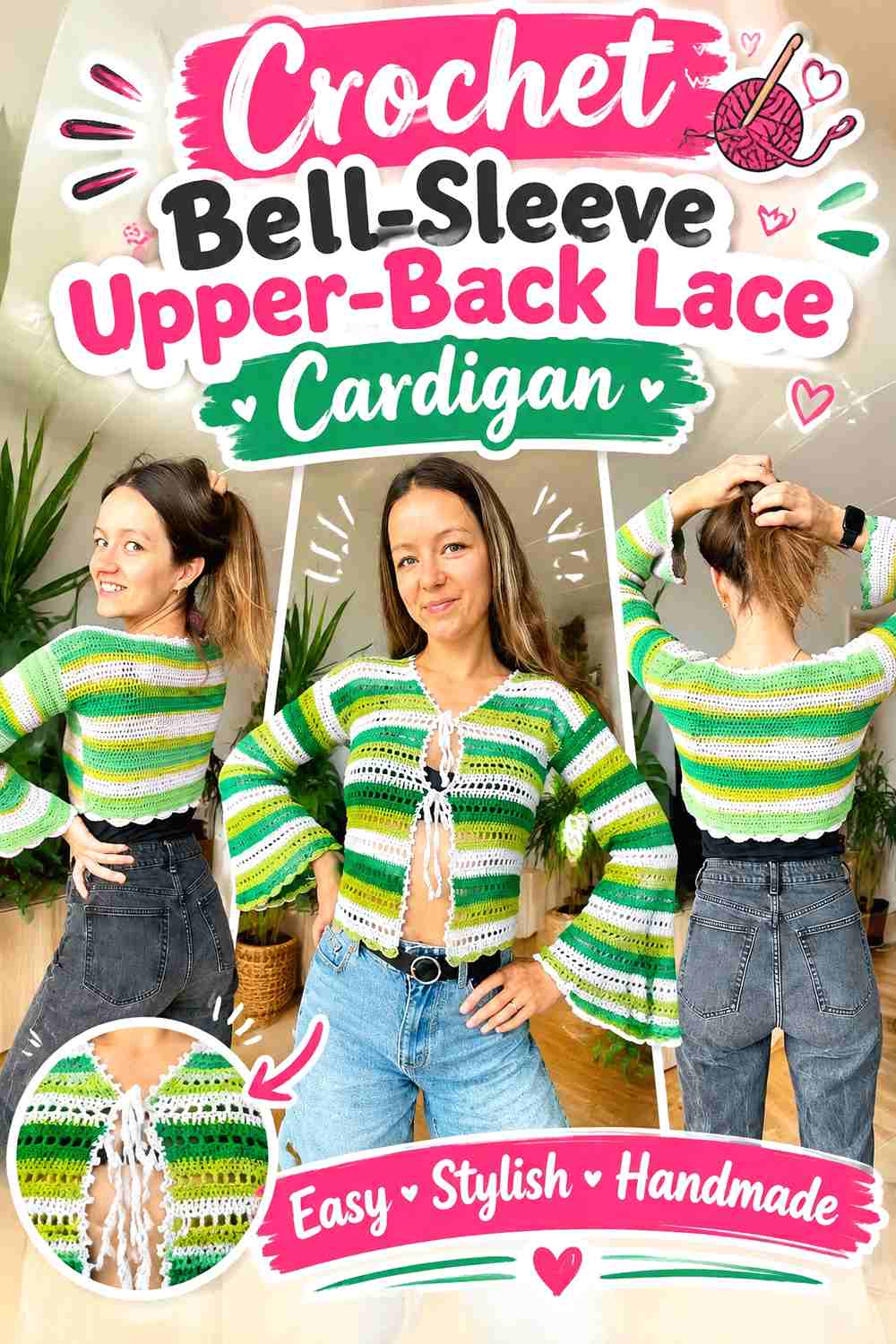
By Kristine’s front-tie cardigan combines its closure with statement bell sleeves. The sleeve volume already gives the garment a strong silhouette, so an upper- or mid-back lace-up detail can create interest without requiring another dramatic change at the waist. The designer’s supporting pattern information confirms the bell-sleeve front-tie format.
Wide Sleeves Affect Winter Layering
Bell sleeves can be awkward beneath narrow coat sleeves. If this cardigan is intended as the main visible outer knit layer indoors or in mild weather, that volume may be exactly what you want.
For a cardigan that will regularly sit beneath a fitted winter coat, compare the sleeve shape with your outerwear before committing.
Keep the Back Lacing Visually Narrow
Large sleeves already extend the silhouette outward. An equally wide corset panel can make the design feel busy.
A narrower vertical lacing feature gives the eye a central line and can balance the sleeve flare more effectively.
Creator Credit: by Kristine
7. Crochet Crossover Wrap Cardigan With Back Waist Lacing

MJ’s Off The Hook Designs provides one of the strongest true-wrap foundations in this group. The cardigan crosses substantially at the front and combines a comparatively solid body with lace sleeves, so it already separates torso structure from lighter decorative fabric.
Let the Crossover Provide the Coverage
A proper wrap needs enough front width to overlap without pulling the side seams forward. Preserve that relationship when planning a corset back.
If tightening the rear panel becomes necessary just to keep the fronts crossed, the modification is compensating for a fit problem rather than enhancing the design.
Mixed Fabrics Need Separate Fit Checks
The body and lace sleeves may respond differently after blocking and wear. Judge the torso fit independently before altering the back.
This design makes particular sense for winter outfits when you want more coverage across the front while keeping the sleeves visually lighter.
Creator Credit: MJ’s Off The Hook Designs
8. Crochet Straight-Panel Ladder-Laced Cardigan
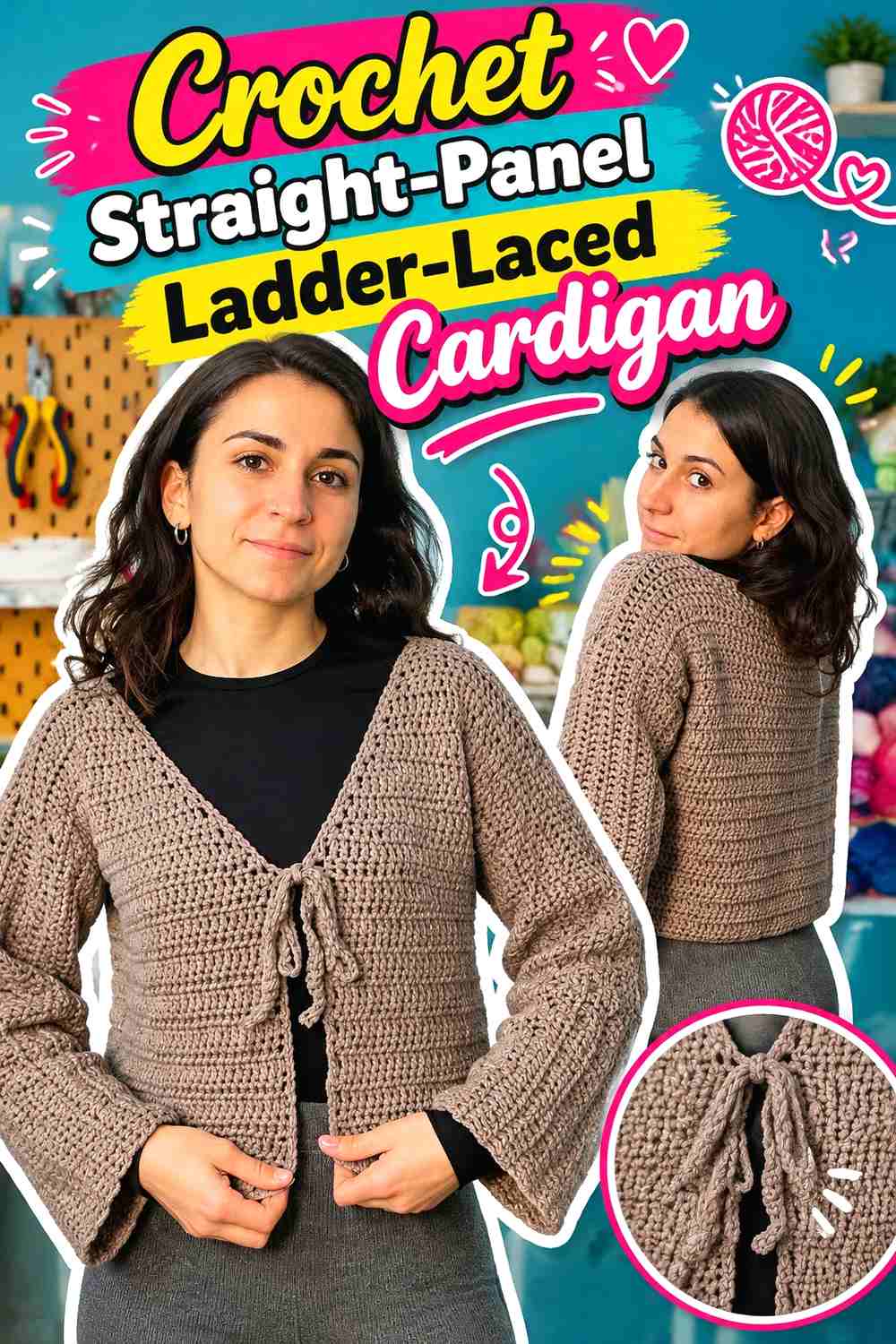
Vivi e cuci’s tutorial uses a straightforward tie-front cardigan built around measured garment sections. That simpler geometry gives a back lace-up feature plenty of room to become the defining detail without competing with motifs or elaborate stitch changes.
Straight Panels Make Asymmetry Easier to Notice
A plain back provides no motifs or stripes to hide uneven shaping. If you introduce two lacing edges, compare them carefully before the finishing stage.
They should relate evenly to the center back so the crisscross line does not drift visibly toward one side.
Try a Ladder Effect Instead of Maximum Cinching
Parallel reinforced edges with relaxed crisscross lacing can create the corset look without substantially shrinking the garment.
This works particularly well when your main goal is styling rather than changing the cardigan’s finished circumference.
Creator Credit: vivi e cuci
9. Crochet Contrast-Trim Corset-Back Cardigan
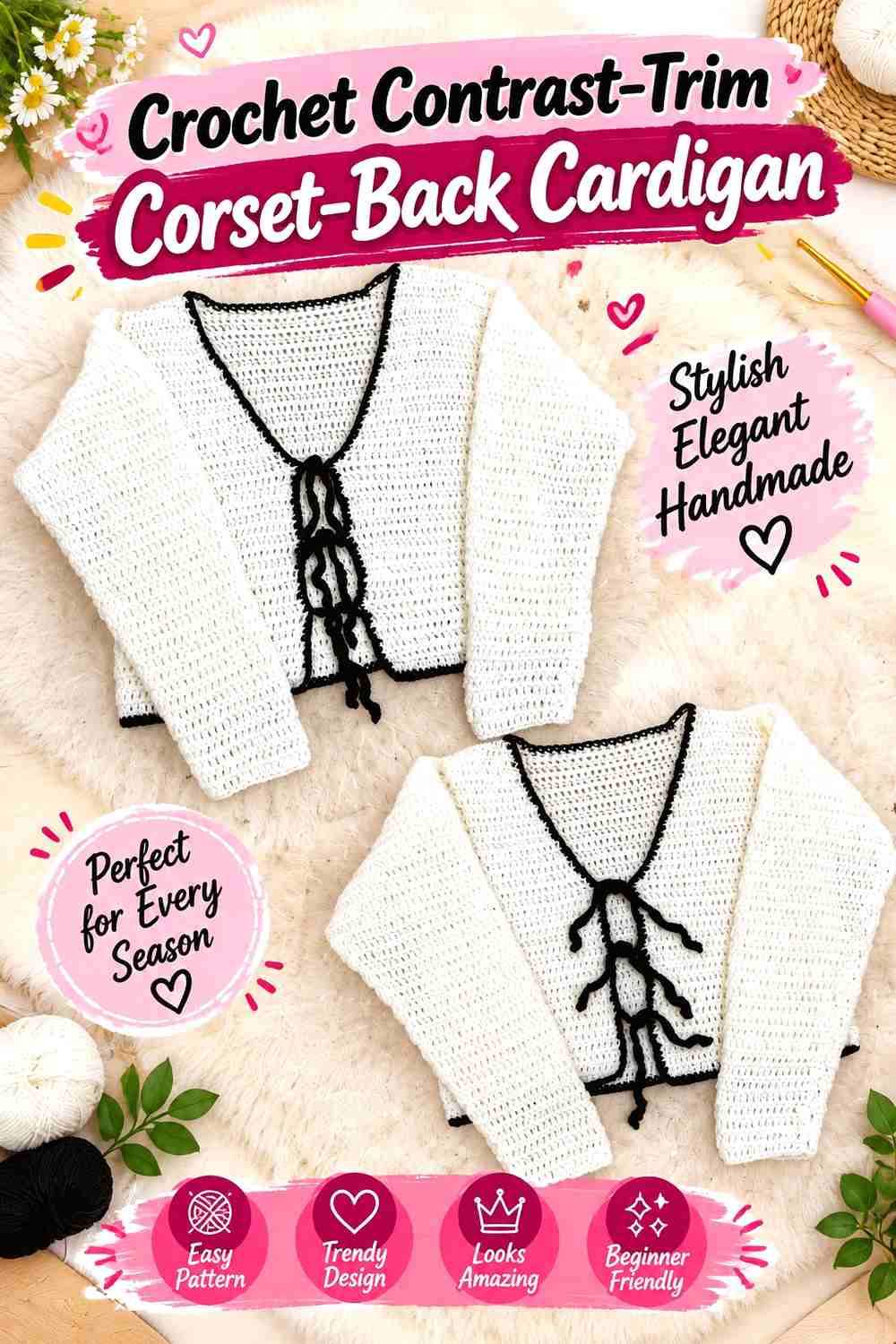
Kenikse Crochet’s front-tie cardigan uses a secondary color as part of the design, creating an obvious opportunity to repeat that accent in the back lacing. The designer’s pattern information identifies a separate main and secondary color, along with a front-tie cardigan shape.
Contrast Can Define the Corset Shape Without a Large Opening
Using the accent color for lacing allows the back detail to remain visible even when the underlying gap is small.
That can be preferable for winter because you keep more fabric across the back while still getting the graphic crisscross effect.
Border Tension Becomes More Visible in Two Colors
A contrasting edge highlights every ripple and uneven pull. Before lacing, make sure the two sides of the intended back section lie evenly.
The cord should connect stable edges, not be used to force wavy borders into alignment.
Creator Credit: Kenikse Crochet
10. Crochet Airy Cropped Crisscross-Back Cardigan
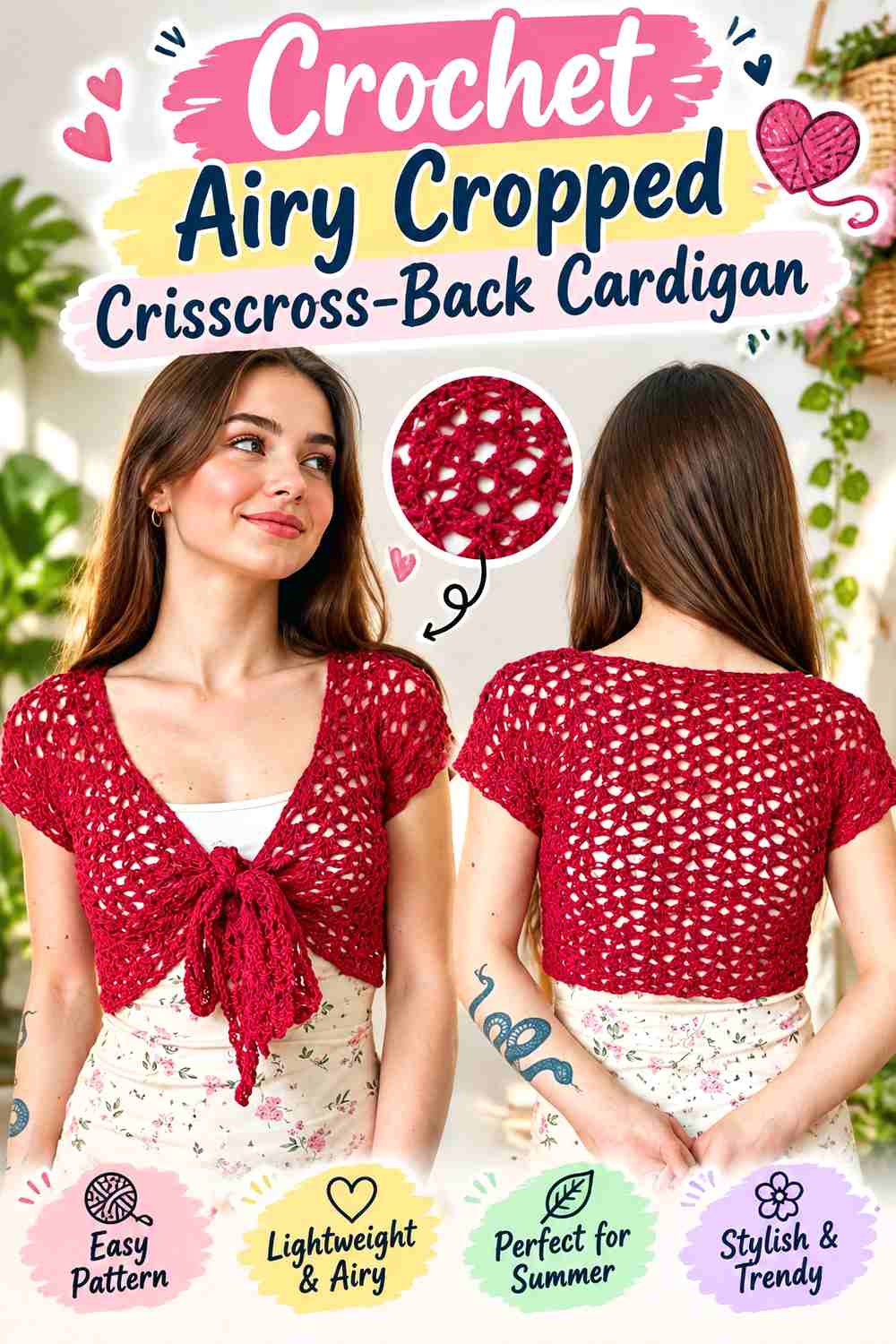
Alona crochets’ tie-front cardigan combines a short body with an airy surface. The source is presented as a cropped layering piece rather than a heavy winter sweater, so this idea works best as an indoor layer or part of a multi-layer outfit rather than the warmest cardigan in the group.
Preserve Enough Back Coverage for the Season
A cropped body, open stitches, and an open corset back all reduce coverage at once. For winter styling, you may prefer a decorative crisscross over intact crochet instead of creating a large exposed section.
That keeps the corset influence while leaving the base layer responsible for most of the visible contrast.
Soft Lacing Suits an Airy Garment
A heavy cord can look disproportionate against fine fabric. Consider the visual scale of the cardigan before choosing how dominant the back ties should appear.
The lacing should look integrated with the garment rather than added as a separate heavy component.
Creator Credit: Alona crochets
11. Crochet Overlap Wrap Cardigan With Wide Back Lacing
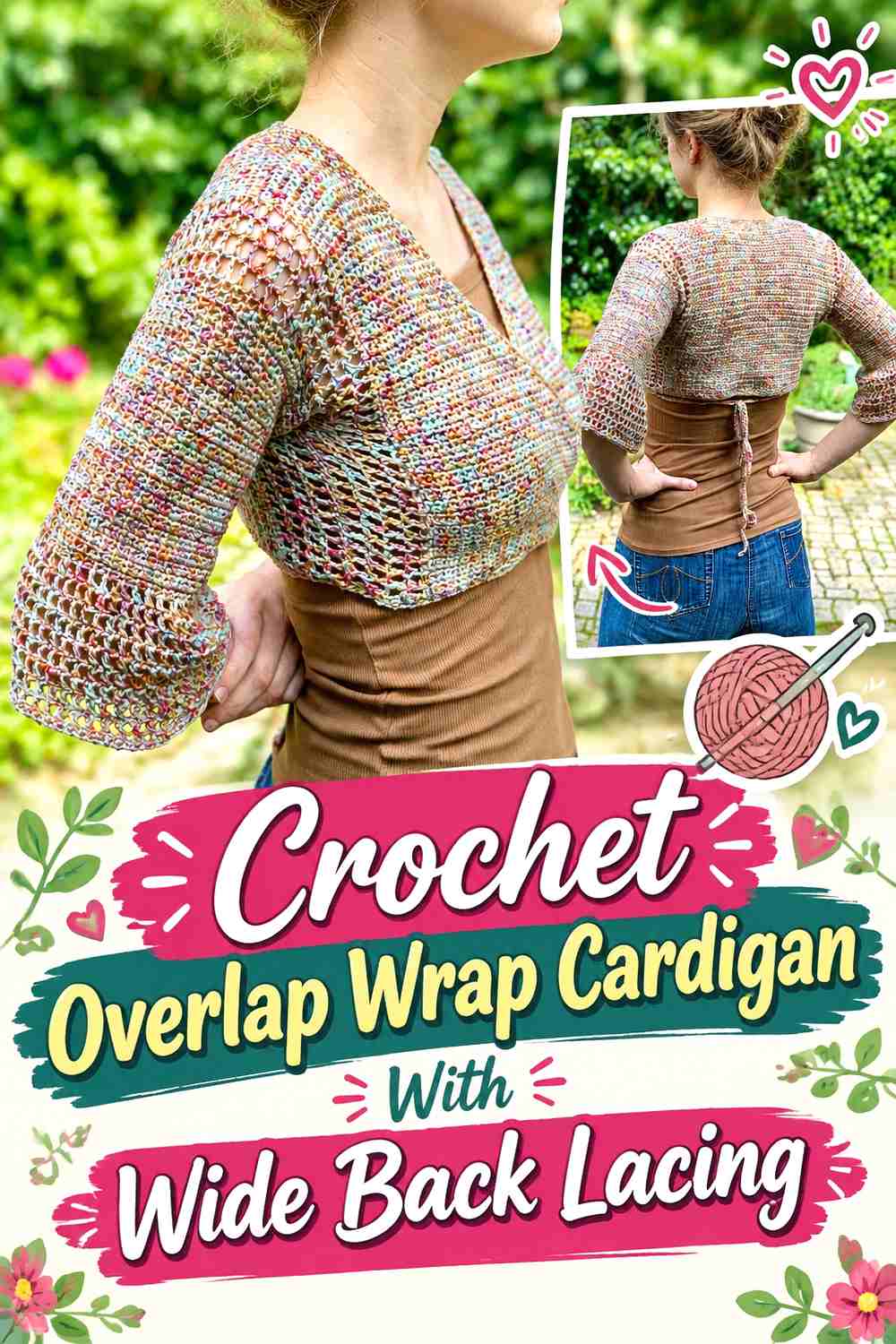
Crochet with Gabi’s wrap-cardigan foundation uses obvious front overlap rather than a small center tie, making it useful for a broader back-lacing interpretation. The generous front treatment can visually balance a slightly wider corset panel behind.
Judge Fabric Thickness Where the Front Doubles
A wrap creates two layers over part of the torso. If you also add reinforced back edges, the cardigan can become considerably more substantial than a single swatch suggests.
For winter that may be welcome, but check whether the fabric still bends comfortably at the waist.
A Wider Corset Panel Needs More Careful Alignment
The greater the distance between the lacing edges, the more obvious any vertical difference becomes.
Mark the intended panel while the cardigan is lying naturally and check its position again when worn. Shoulder placement should remain balanced after the adjustment.
Creator Credit: Crochet with Gabi
12. Crochet Triple-Tie Adjustable-Back Cardigan
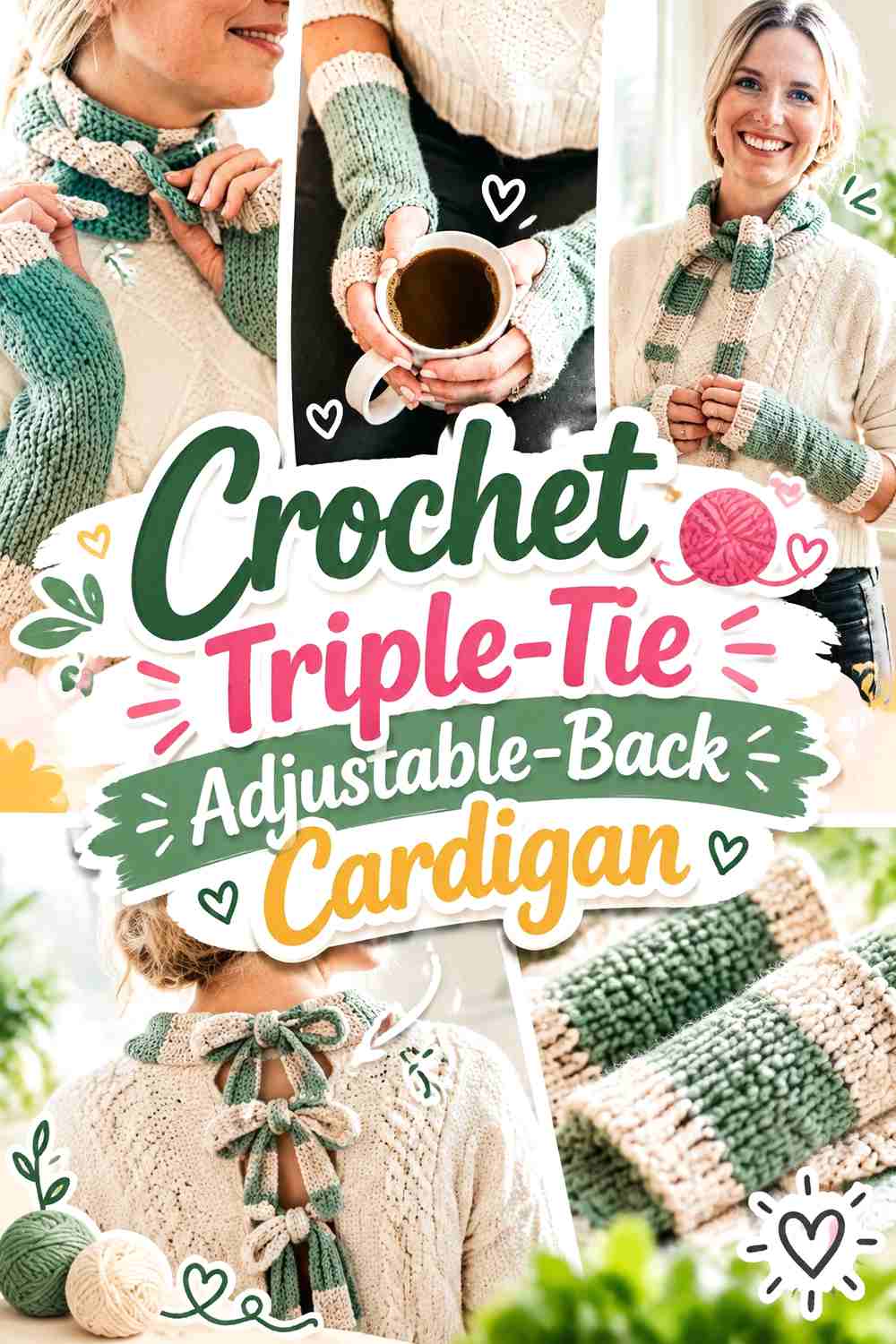
Cozy Nooks Designs’ Triple Tie Cardi introduces several removable front closures rather than relying on one bow. The design can be worn with different combinations of ties, making adjustability part of the original concept and providing a natural starting point for a similarly flexible back.
Do Not Turn Every Tie Into a Separate Adjustment System
The original front already has multiple closure points. Adding many independently tightened back cords could make dressing the cardigan unnecessarily complicated.
A single lace running through several paired points is visually closer to a corset and easier to manage than a row of unrelated bows.
Compare the Front Edges After Lacing the Back
Changing the back width may alter how far the two fronts reach toward each other.
Test several comfortable lacing positions before finalizing the modification so the cardigan still works both open and closed.
Creator Credit: Cozy Nooks Designs
13. Crochet Belted Wrap Cardigan With Corset Back
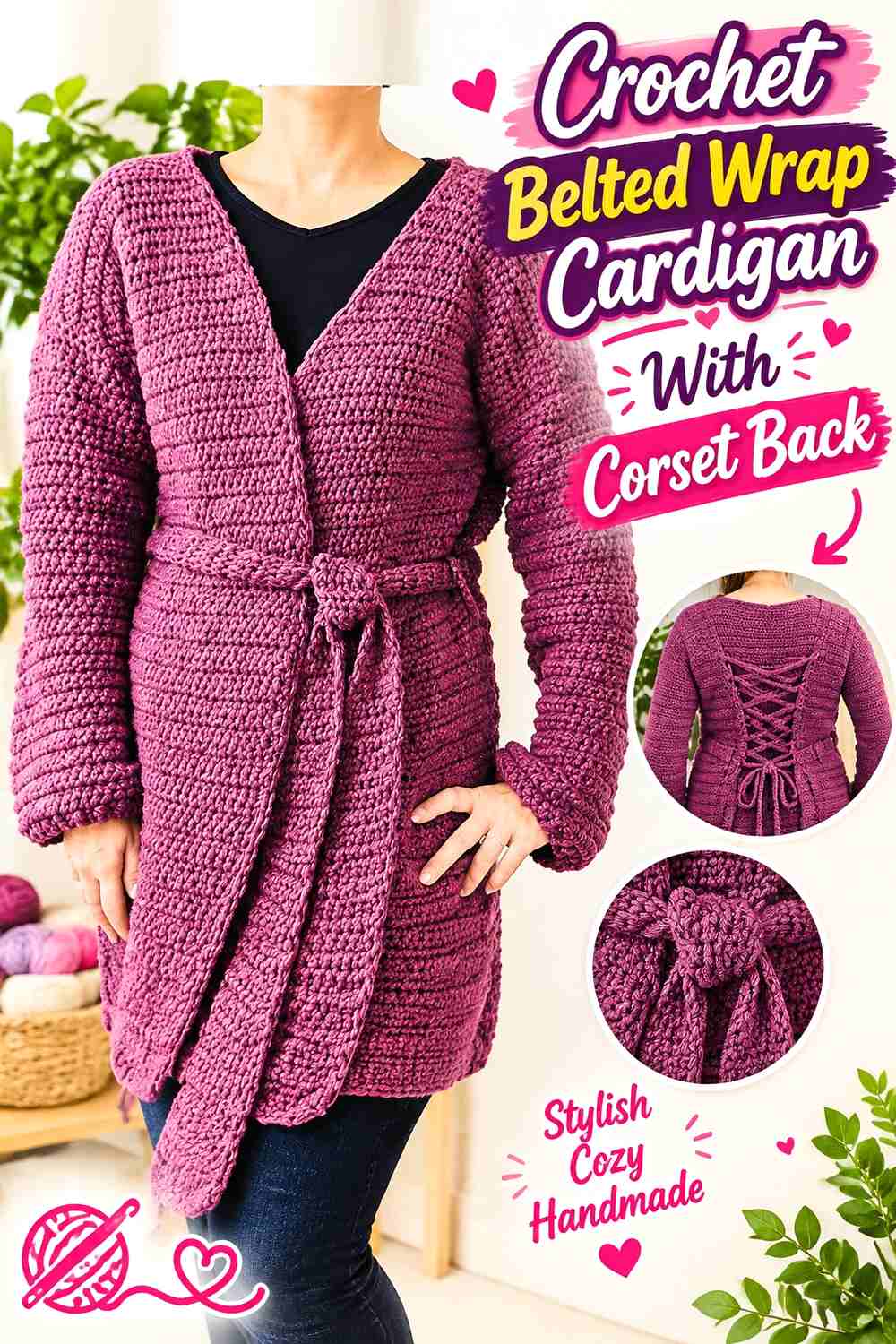
Crazy Cool Crochet’s wrap cardigan uses tapered fronts and a separate belt, giving this idea the most robe-like winter silhouette in the collection. The belt already establishes a waistline, so a corset-back section can reinforce that placement rather than invent a second waist somewhere else.
Align the Lacing With the Belt Zone
A back corset detail centered far above or below the belt can create competing horizontal proportions.
Instead, use the belt position as a reference point when deciding how tall the back treatment should appear. The two features should look related even though they perform different jobs.
Watch the Amount of Bulk at the Waist
A belted overlap already gathers multiple layers of crochet. Additional reinforcement at the back can add even more thickness.
For a softer result, keep the lacing structure neat and focused rather than building an unnecessarily heavy panel.
Creator Credit: Crazy Cool Crochet
14. Crochet Mesh Ladder-Back Tie Cardigan
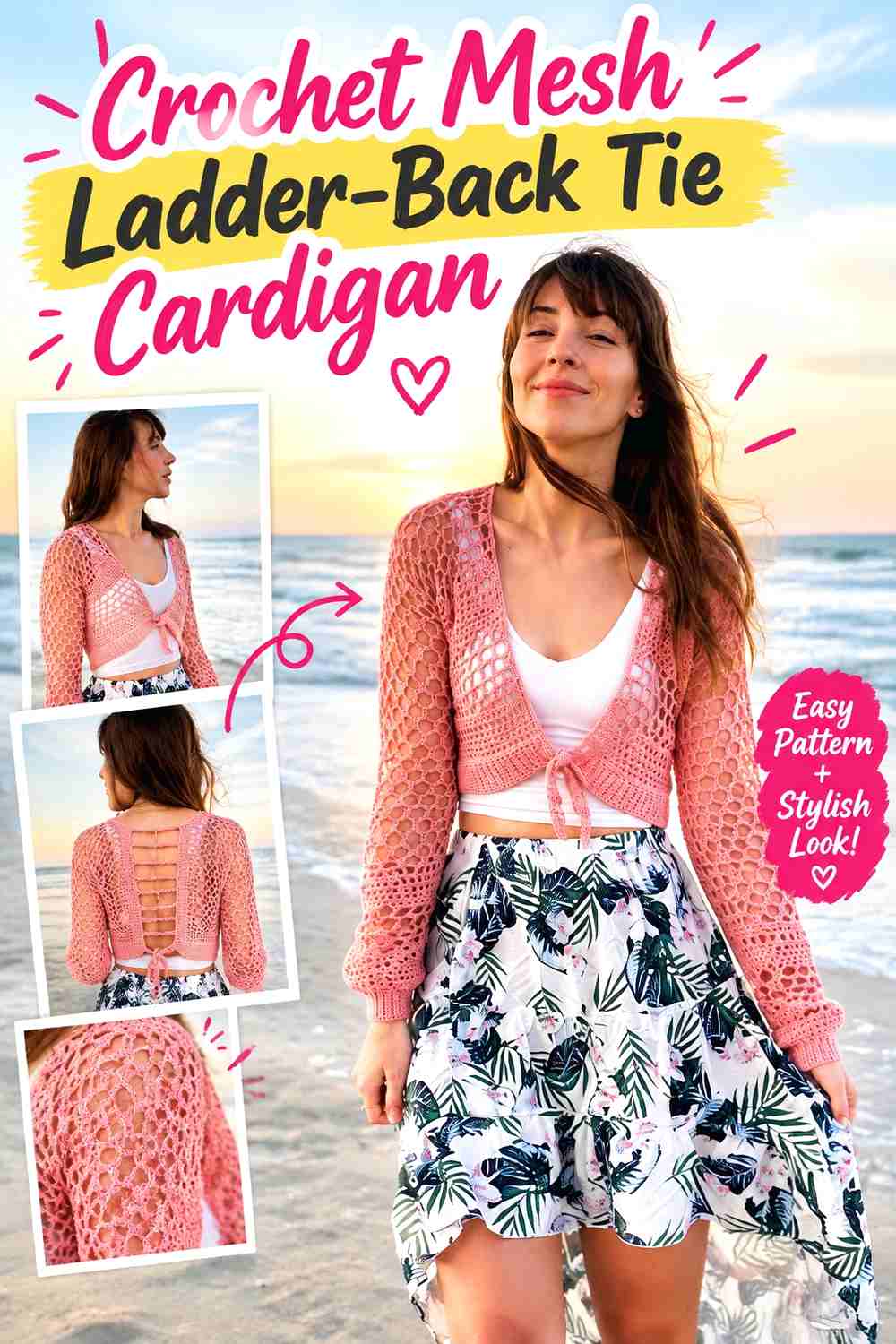
Evelyn And Peter Crochet’s Ocean Tied Cardi is a cropped cardigan built around multiple open mesh textures and a front tie. The designer presents it as an airy layering garment, so a ladder-laced back would work primarily as a decorative continuation of that openness.
Let the Base Layer Show Through Deliberately
Mesh makes whatever you wear underneath part of the color story. A laced back increases that effect.
For winter, try thinking of the cardigan and fitted base layer as a pair rather than expecting the crochet alone to provide full coverage.
Reinforce Before Repeated Lacing
Mesh openings are not automatically suitable as eyelets. Repeated pulling in the same spots can distort the pattern.
Use the original construction for the cardigan itself and evaluate a separate stable edging concept if you want functional lacing rather than a loose decorative cord.
Creator Credit: Evelyn And Peter Crochet
15. Crochet Made-to-Measure Corset-Waist Cardigan
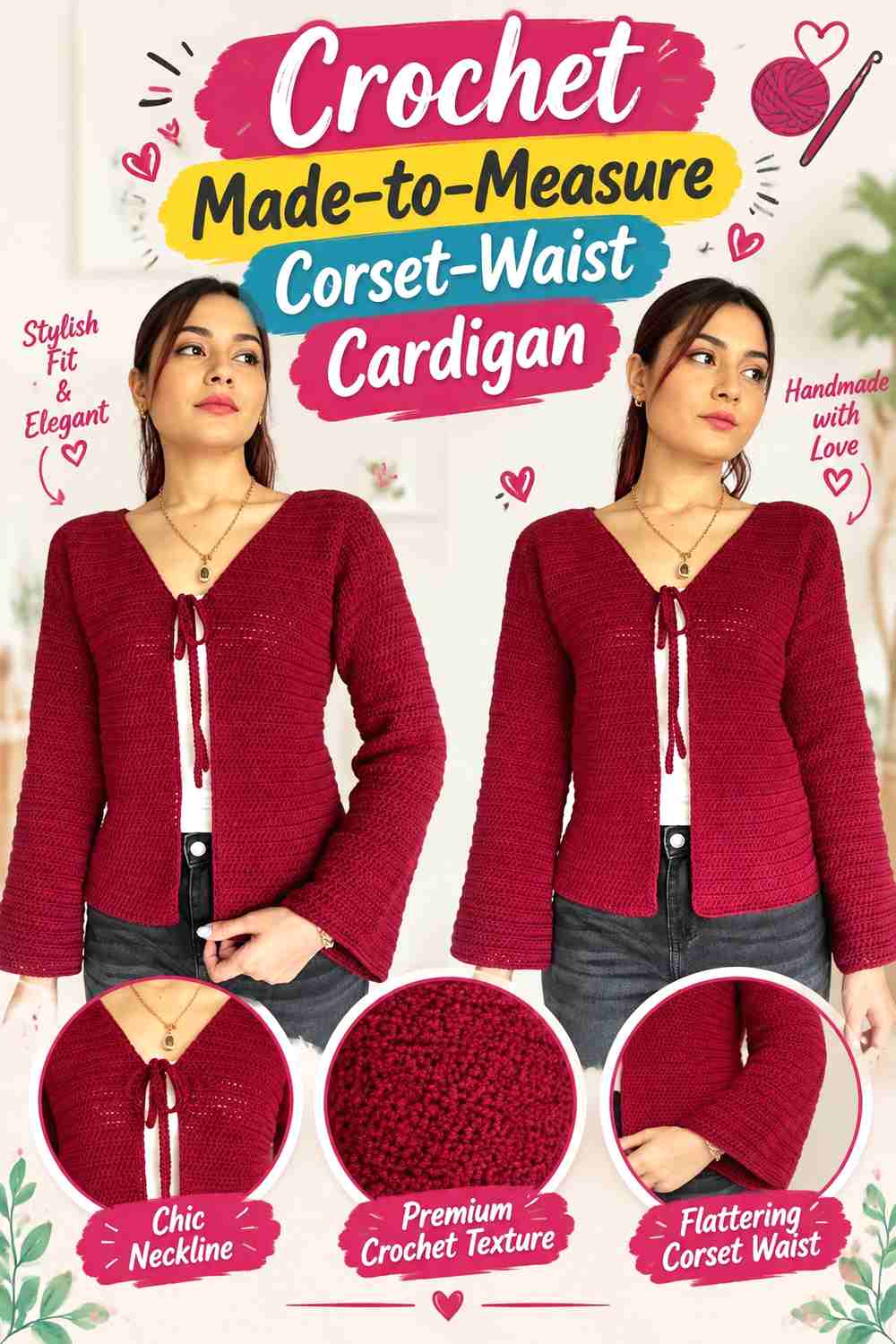
Granny Gaia’s front-tie cardigan tutorial is explicitly made to measure, giving you useful flexibility when planning a version that needs room for both winter layering and a back adjustment. The source uses long sleeves and separate garment sections rather than relying on a motif layout.
Record Garment Measurements Separately From Body Measurements
When planning a made-to-measure piece, label what each measurement represents. Your body circumference, the desired finished cardigan circumference, and the width after lacing are not interchangeable numbers.
Keeping them separate helps prevent accidentally building negative ease into a garment that was intended for layering.
Decide the Maximum and Minimum Back Width
Rather than thinking only about one perfect tied position, consider the comfortable range you want from the lacing.
A winter cardigan may need a wider setting over a thicker shirt and a narrower one over a fitted base layer. The shoulders should remain comfortable at both settings.
Creator Credit: Granny Gaia
16. Crochet Granny-Square Laced-Back Cardigan

Laura Crochets’ tie-front cardigan is built from granny-square construction, making it the most modular idea here. The tutorial addresses measuring, joining motifs, extending the garment, adding ties, and finishing sleeves, giving the finished cardigan a very different structure from continuous-row designs.
Treat the Lace-Up Opening as Part of the Motif Grid
A corset panel that abruptly cuts through a motif layout can look accidental. Plan the back visually before joining all the squares.
One option is to let the opening occupy a deliberate vertical space between motif sections so the surrounding squares frame the lacing.
Block Squares Before Planning the Gap
Individual motifs that appear equal while freshly crocheted can settle differently after blocking.
Compare finished dimensions first. A corset-style opening will make mismatched left and right edges especially noticeable because the lacing visually connects them.
Creator Credit: Laura Crochets
17. Crochet Bolero Wrap Cardigan With Upper-Back Lacing
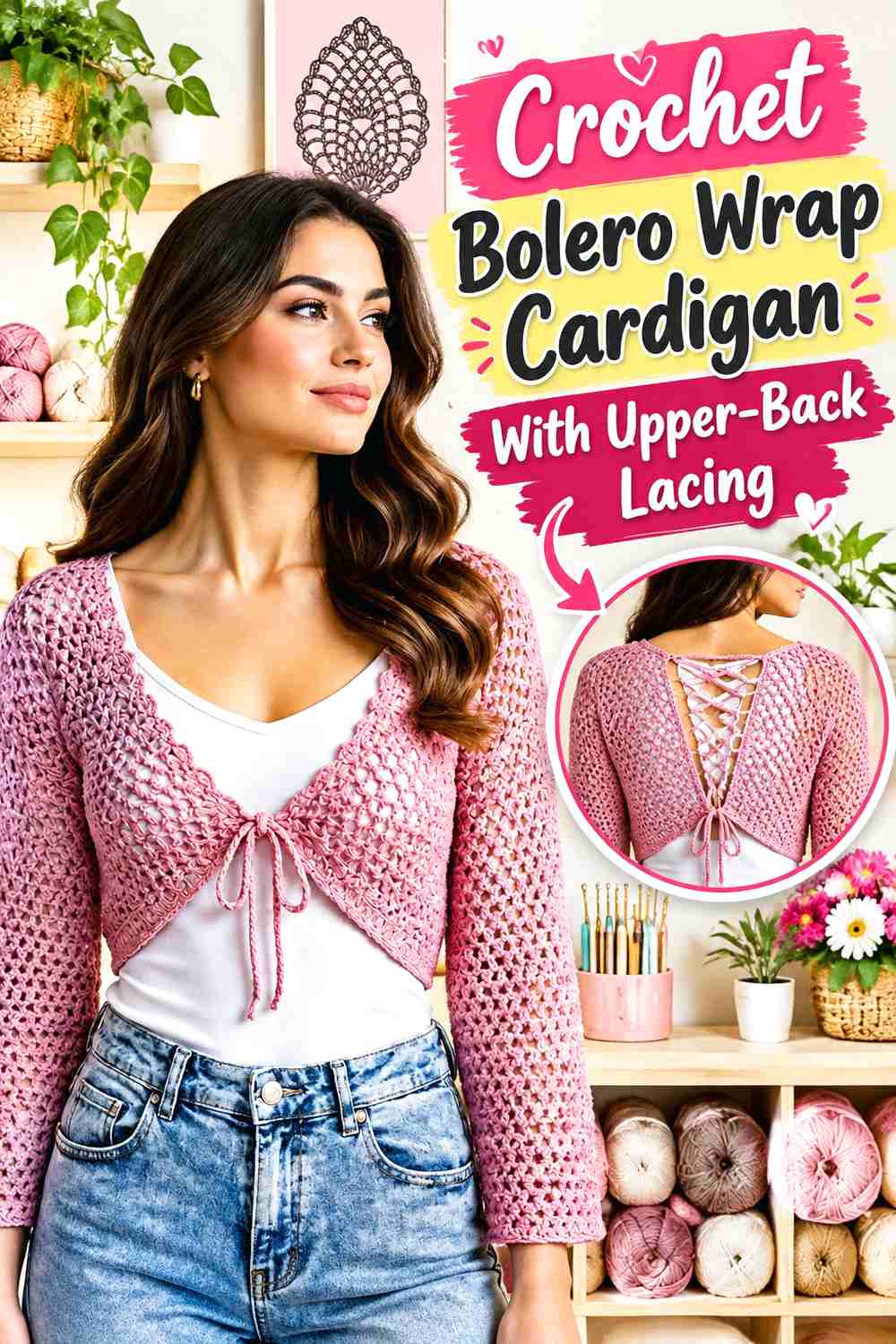
Lady_Anika – Szydełkowe Światło’s source is a short tie-front bolero-style cardigan, so it shifts the corset idea away from the natural waist and toward the upper back. There simply is not as much lower torso fabric available as in a conventional full-length cardigan.
Upper-Back Lacing Changes Shoulder Behavior More Quickly
Adjustments made close to the shoulder blades can affect the neckline and sleeve position more directly than waist-level lacing.
Keep the effect relatively relaxed and check arm movement before treating the detail as finished.
Use the Short Length to Frame a Dress or High Waist
A bolero leaves much more of the underlying outfit visible. That makes it useful over dresses, high-waisted skirts, or trousers where you want the cardigan to stop before covering the main waistline.
A compact back-lace feature can reinforce the cropped proportions without adding unnecessary length.
Creator Credit: Lady_Anika – Szydełkowe Światło
How These Crochet Corset-Back Cardigan Ideas Compare
| Cardigan direction | Main strength | Corset-back approach to consider | Winter consideration |
|---|---|---|---|
| Ribbed or textured wrap | Strong shape and visible structure | Functional waist lacing | Good candidate for substantial layering |
| True crossover wrap | More front coverage | Moderate waist adjustment | Remember the overlap already doubles the fabric |
| Bow or tie-front cardigan | Open, adjustable styling | Narrow decorative back lacing | Leave enough ease for the intended base layer |
| Belted wrap | Flexible waist definition | Lacing aligned with belt zone | Watch accumulated bulk around the waist |
| Mesh or lace cardigan | Light visual texture | Loose ladder or decorative crisscross | Better over a warm fitted base layer |
| Granny-square cardigan | Modular color and placement | Laced opening integrated into motif grid | Block motifs before judging back width |
| Cropped bolero | Minimal torso coverage | Upper-back detail | Works best when the underlying outfit is meant to remain visible |
For the warmest visual result, the ribbed, crossover, and belted options make the most natural starting points because their bodies already have enough substance to balance a defined back treatment. The mesh, airy cropped, and bolero versions are better when the corset detail is mostly decorative and another garment provides the actual winter warmth.
Conclusion
The most successful crochet corset-back wrap cardigan starts with a cardigan that already fits. The lacing should refine the shape or create a deliberate focal point, not pull inadequate front panels, narrow shoulders, or tight sleeves into position.
Choose the Chenda DIY ribbed wrap or Crazy Cool Crochet belted style when you want a more substantial winter silhouette. The MJ’s Off The Hook Designs crossover is useful when front coverage matters, while Mahum and Granny Gaia provide more customizable directions. Laura Crochets offers the strongest motif-based option, and the mesh, airy, and bolero projects suit lighter indoor layering.
Once you choose the underlying silhouette, follow the original creator’s tutorial for its garment construction, sizing approach, materials, and finishing, then plan any back adaptation around the finished fit rather than trying to redesign several structural areas at once.
Frequently Asked Questions
Are all 17 tutorials actual crochet corset-back cardigan patterns?
No. The tutorials provide different wrap, tie-front, crossover, belted, mesh, granny-square, and bolero cardigan foundations. The corset-back treatments discussed here are independent adaptation ideas. If you specifically need a creator-designed corset-back pattern with tested sizing, confirm that feature in the original pattern before starting.
How tight should the back of a crochet corset cardigan be?
It should remain comfortable and should not need extreme tension to make the garment fit. The cardigan body, shoulders, sleeves, and front panels should already fit properly. Use the lacing for moderate adjustment or styling rather than compression.
What type of crochet cardigan works best for functional back lacing?
Stable, reasonably substantial fabric is generally easier to work with than very loose mesh because the lacing points experience repeated sideways tension. Ribbed, textured, and solid-body wrap cardigans are natural candidates, provided any modification is planned carefully around the original construction.
Can I add corset lacing directly through crochet stitches?
Not every fabric is suited to that. Pulling a cord repeatedly through open stitches can stretch or distort them. Examine the fabric first and consider whether a stable finished edge is needed for the intended lacing points.
Should I size down because the corset back is adjustable?
Not automatically. Sizing down can create problems at the shoulders, upper arms, armholes, and front overlap that back lacing cannot fix. Choose the cardigan size or made-to-measure dimensions according to the creator’s guidance and your intended base layers, then use the back adjustment within that comfortable fit.
How can I make an openwork corset-back cardigan warmer for winter?
Use the cardigan as part of a layered outfit rather than relying on open crochet for insulation. A fitted long-sleeve base layer can remain visible through mesh, lace, or the corset opening while providing substantially more coverage.
Should I block a wrap cardigan before deciding where the back lacing goes?
That is often useful when the yarn and original instructions call for blocking because crochet fabric can change dimensions and drape afterward. Establish the finished shape first, particularly with granny squares, mesh, lace, or fabric that grows noticeably, and then judge whether your planned lacing position still makes sense.