A crochet shearling-look coat combines two strong winter details: a substantial outerwear silhouette and soft, fleece-like texture around the collar, cuffs, front bands, hood, or body. Add toggle-inspired closures, and an ordinary cardigan foundation can move much closer to the look of a handmade duffle or teddy coat.
Exact crochet tutorials combining all three details—coat construction, shearling-like texture, and toggle closures—are limited. The projects below therefore use verified cardigan, jacket, bomber, hooded, and long-coat tutorials as construction foundations. The shearling-look trim and toggle ideas are adaptation directions rather than claims about features included in every original tutorial.
That distinction matters. A fuzzy yarn behaves differently from a smooth garment yarn, and a toggle closure places stress on the front edge in a different way from leaving a cardigan open. Use the original creator’s tutorial for the actual garment construction, sizing, and assembly, then treat the ideas here as planning guidance for adapting the finished look.
Quick List
- Crochet Knee-Length Shearling-Trim Duster Coat
- Crochet Cropped Collared Toggle Jacket
- Crochet Hooded Bomber Toggle Coat
- Crochet Minimal Drop-Shoulder Shearling Coat
- Crochet Deep-Pocket Teddy Toggle Coat
- Crochet Ribbed Button-Band Toggle Coat
- Crochet Cropped Boxy Shearling Jacket
- Crochet Short Bomber Toggle Jacket
- Crochet Hexagon Cocoon Toggle Coat
- Crochet Granny-Stitch Hooded Teddy Coat
- Crochet Blanket-Shape Shearling Wrap Coat
- Crochet Clean-Ribbed Contrast-Trim Coat
- Crochet Oversized Shrug Toggle Coat
- Crochet Super-Chunky Shearling-Look Coat
- Crochet Ankle-Length Toggle Duster Coat
- Crochet Long Hooded Shearling-Look Coat
- Crochet Buttoned Long Coat with Toggle Conversion
- Crochet Classic Ribbed Long Toggle Coat
What Creates a Shearling Look in Crochet?
A crochet coat does not need to be made entirely from fuzzy yarn to suggest shearling. In fact, using a smooth or clearly defined yarn for the main garment and reserving boucle, eyelash, faux-fur, or other fluffy yarn for the collar and edges can make the contrast more visible.
That approach also solves a practical problem: highly textured yarn can make stitches difficult to see. A coat is a large project with seams, shaping, sleeves, and front edges that need to stay consistent. Keeping the structural portions easy to read while adding fluffy texture later can make sizing and assembly easier to control.
Think about where real shearling-style garments usually show visual contrast. Collars, front openings, cuffs, pocket edges, hems, and hood borders are natural places for a fleece-look yarn. You do not need to cover every edge. One or two repeated trim locations are often enough to establish the idea.
Toggle Closures Need a Stable Front Edge
A toggle is more than decoration when it is expected to hold a coat closed. The attachment points pull against the front bands, so a loose or very stretchy edge may distort more than an open cardigan edge would.
Before adding any closure, look at the tutorial’s front construction. A wide band, ribbed border, dense edge, or reinforced area generally gives you a more logical place to plan a closure than an airy or loosely draped edge. If the original garment has buttons, study their placement before deciding whether a toggle-style closure is a realistic substitution.
Also check the balance of the garment while it is closed. A single toggle near the upper chest creates a different silhouette from several closures extending toward the waist or hips. Do not add more simply because there is space available.
Plan the Coat Around Winter Layering
A cardigan that fits comfortably over a T-shirt may not have enough room to function as a winter coat over a sweater. Before choosing a tutorial, compare the finished garment dimensions with the layers you actually expect to wear underneath.
Sleeve circumference is particularly important with chunky crochet. A roomy body paired with narrow sleeves can still feel restrictive over a sweatshirt or knit sweater. The shoulder line, armhole depth, front overlap, and collar bulk also affect how coat-like the finished piece feels.
Yarn weight creates another trade-off. Heavy yarn can produce convincing outerwear structure, but a very long coat can become weighty. Longer projects therefore deserve extra attention to yarn behavior, shoulder stretch, and finished length.
1. Crochet Knee-Length Shearling-Trim Duster Coat
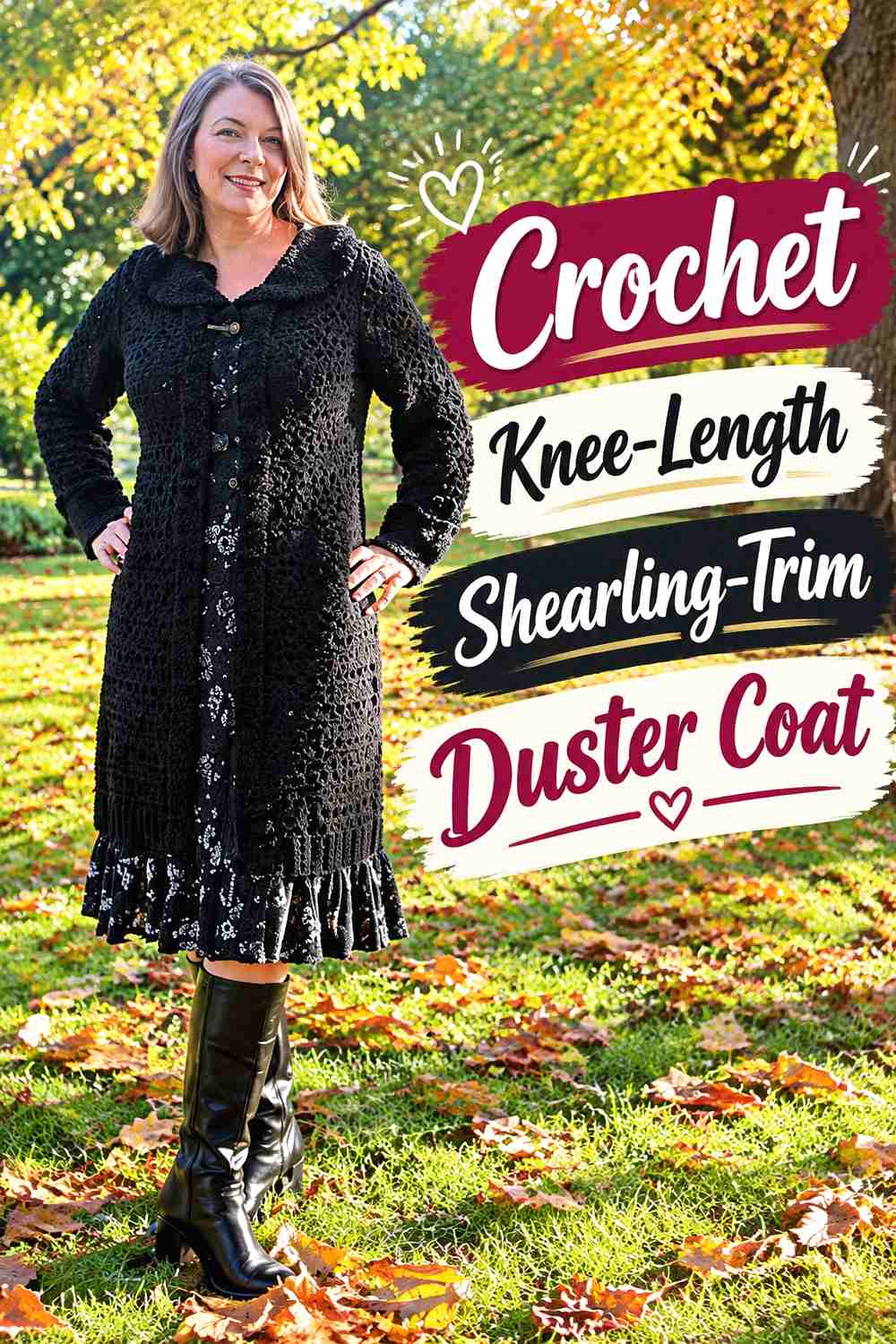
A long chunky duster is a natural starting point for a crochet coat because the length already reads as outerwear. Ophelia Talks Crochet demonstrates a knee-length chunky cardigan with a pronounced collar and substantial winter layering shape.
For a shearling-inspired version, keep the body in a smoother chunky yarn and introduce the fluffy contrast primarily around the collar and front opening. A small number of toggles can then give the long open front more definition without covering the duster in hardware.
Let the Collar Carry Most of the Shearling Effect
The existing collar provides a clear visual frame around the face and neckline. That makes it a stronger candidate for contrasting texture than scattering fluffy yarn randomly across the body.
If you continue the same trim down the front edges, compare the added weight before extending it around the entire hem. A long coat already has plenty of fabric below the waist.
Check the Hem Before Adding Front Closures
A long duster hangs differently when the front is fastened. Pin the proposed closure positions temporarily and look at the lower body before making anything permanent.
If closing the upper front makes the hem pull inward or overlap unevenly, the coat may work better with fewer toggles or with closures concentrated higher on the torso.
Creator Credit: Ophelia Talks Crochet
2. Crochet Cropped Collared Toggle Jacket
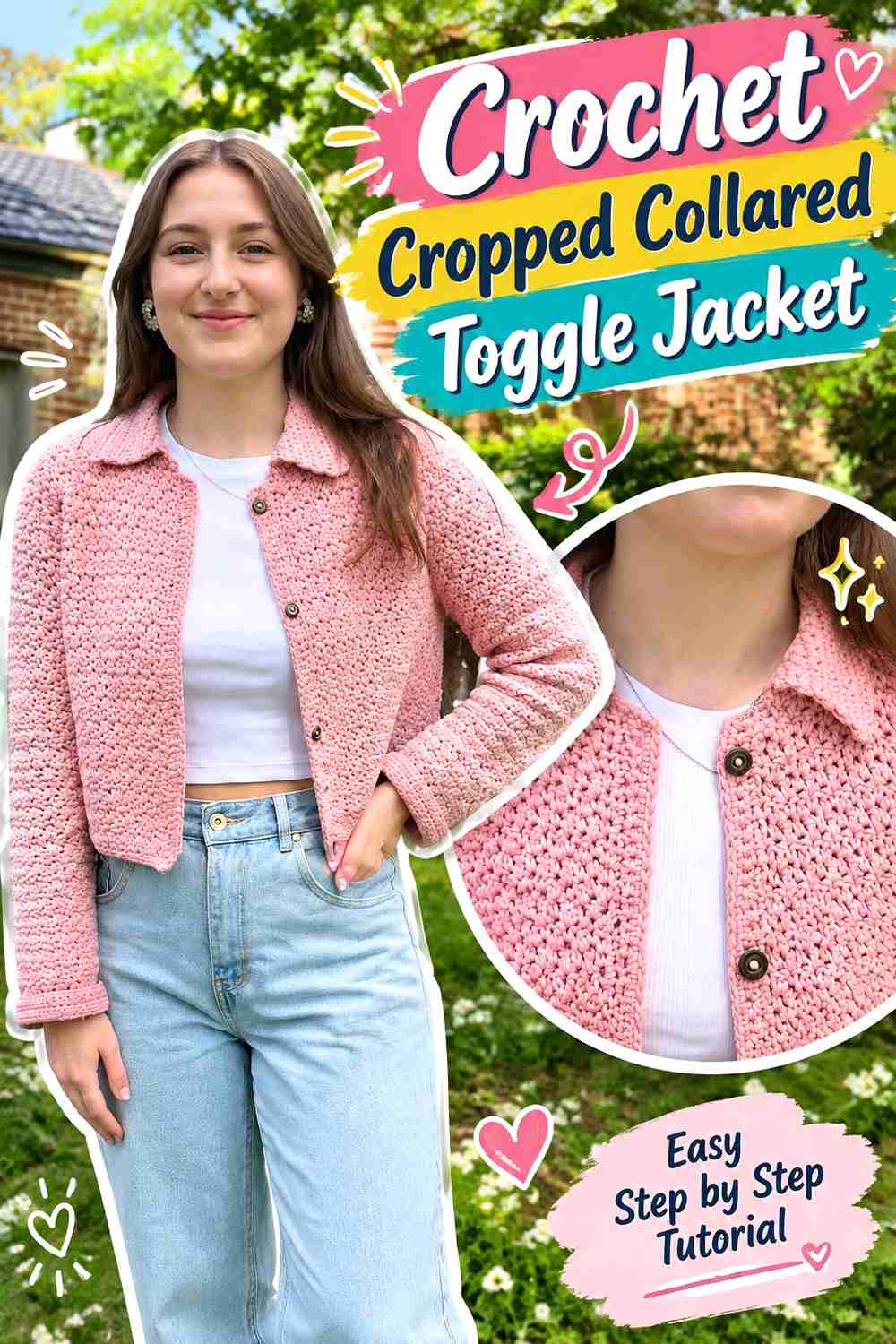
Stephanie Tashi’s cardigan tutorial provides a cropped, collared, button-front foundation with visible texture and a more tailored outline than a long open cardigan.
That combination makes it suitable for a short shearling-style jacket. Instead of trying to make it look like a full duffle coat, emphasize the collar, front band, cuffs, and compact body.
A Short Body Makes the Collar More Prominent
On a cropped jacket, the collar occupies a larger percentage of the garment visually. A fluffy contrast yarn can therefore establish the shearling look without requiring much additional trim elsewhere.
Keep the lower hem comparatively clean if you want the jacket to remain balanced rather than looking surrounded by fuzzy edging on every side.
Toggle Scale Matters More on a Cropped Front
Large toggles can overwhelm a short jacket quickly. Compare the closure size with the front-band width and the distance between collar and hem.
If the original front is designed around buttons, also check whether the existing band looks stable enough for the different pulling direction created by loop-and-toggle hardware.
Creator Credit: Stephanie Tashi
3. Crochet Hooded Bomber Toggle Coat
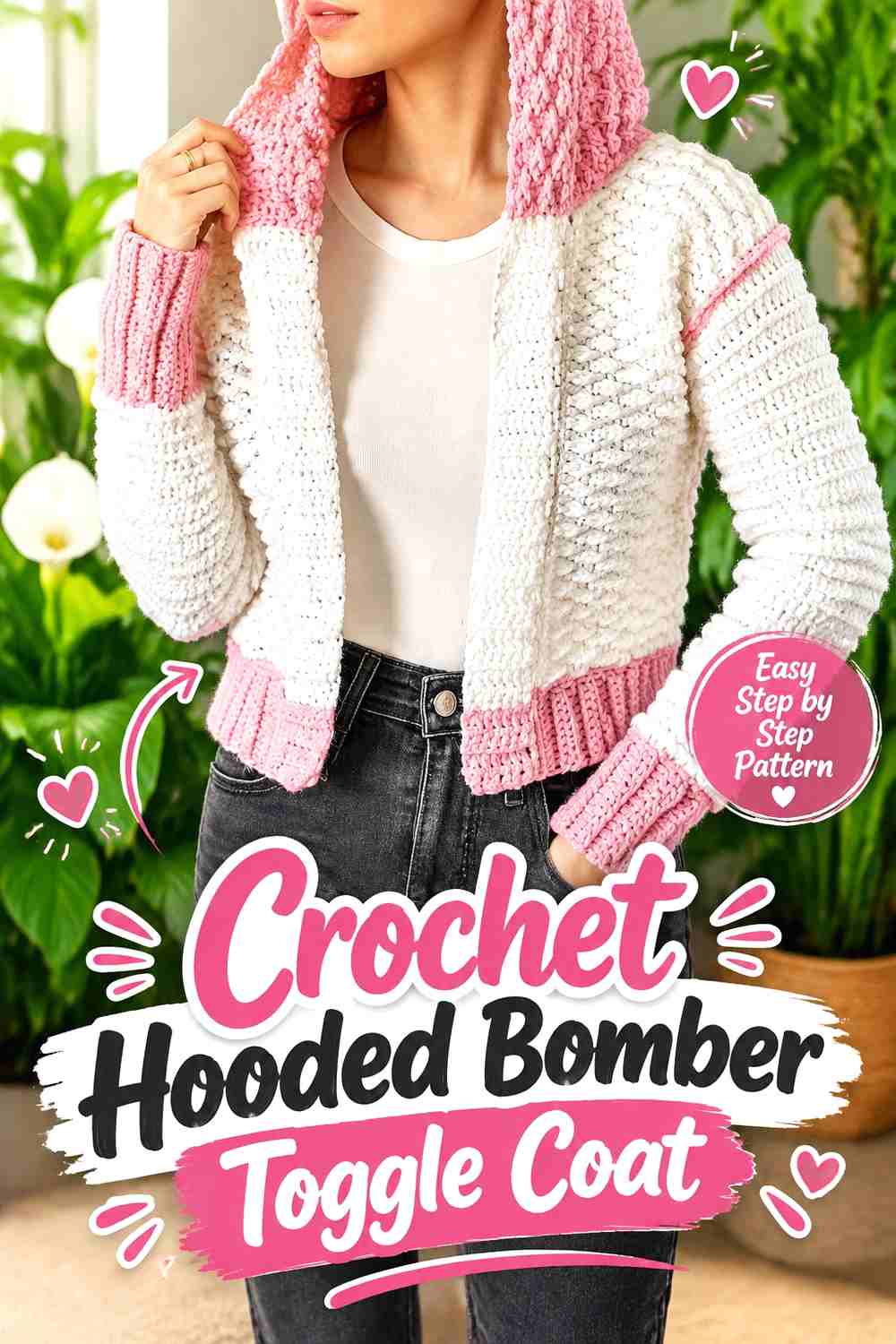
TCDDIY’s bomber-jacket construction includes a defined hem, cuffs, front band, and hood, creating a stronger jacket silhouette than an unstructured cardigan.
That gives you several logical places for a shearling effect. A fluffy hood border and front edge can push the design toward an aviator-inspired winter jacket, while toggle closures soften the sporty bomber look.
Use the Hood as the Main Textural Feature
A fluffy hood border is highly visible whether the hood is worn up or resting against the back. It can provide enough shearling character that the body yarn does not need to be fuzzy.
Before adding a thick trim, consider how much extra bulk will sit behind the neck when the hood is down.
Preserve the Bomber Hem
The lower band is part of what distinguishes a bomber from a straight cardigan. Covering it with oversized fluffy trim can hide that proportion.
A cleaner hem with textural emphasis around the hood, cuffs, and front opening retains the bomber identity while still creating a winter-coat adaptation.
Creator Credit: TCDDIY
4. Crochet Minimal Drop-Shoulder Shearling Coat
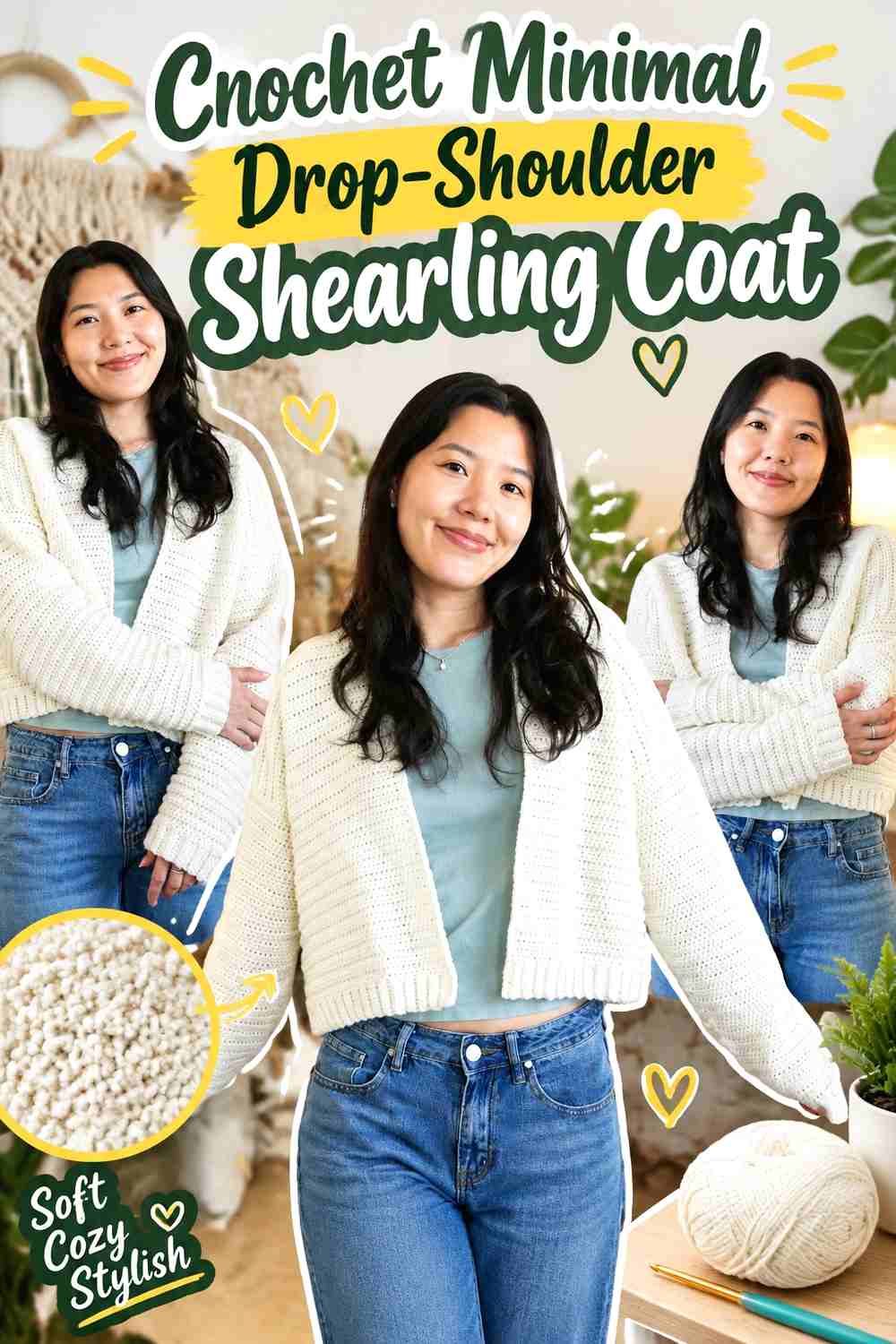
VivCrochets demonstrates a simple drop-shoulder cardigan built from only a few major pieces with ribbed finishing. The uncomplicated construction gives the silhouette a clean base for later styling changes.
For a shearling-look coat, this is the understated option: neutral body, contrast fleece-like edging, and a restrained closure arrangement rather than multiple decorative elements.
Simple Panels Put More Attention on the Yarn
When a garment has little surface decoration, the yarn texture becomes more noticeable. This is a useful design if you want the difference between the smooth body and fluffy trim to do most of the visual work.
Swatch the two yarns together before committing. A trim yarn that is dramatically thicker than the body may cause the edges to flare or become disproportionately heavy.
Decide How Much Front Overlap You Need
An open cardigan does not automatically have enough width for a coat-style closed front. Before adding toggles, hold the cardigan closed over the layers you intend to wear.
If the fronts barely meet, a decorative single toggle may be more realistic than trying to create a fully closed winter coat.
Creator Credit: VivCrochets
5. Crochet Deep-Pocket Teddy Toggle Coat
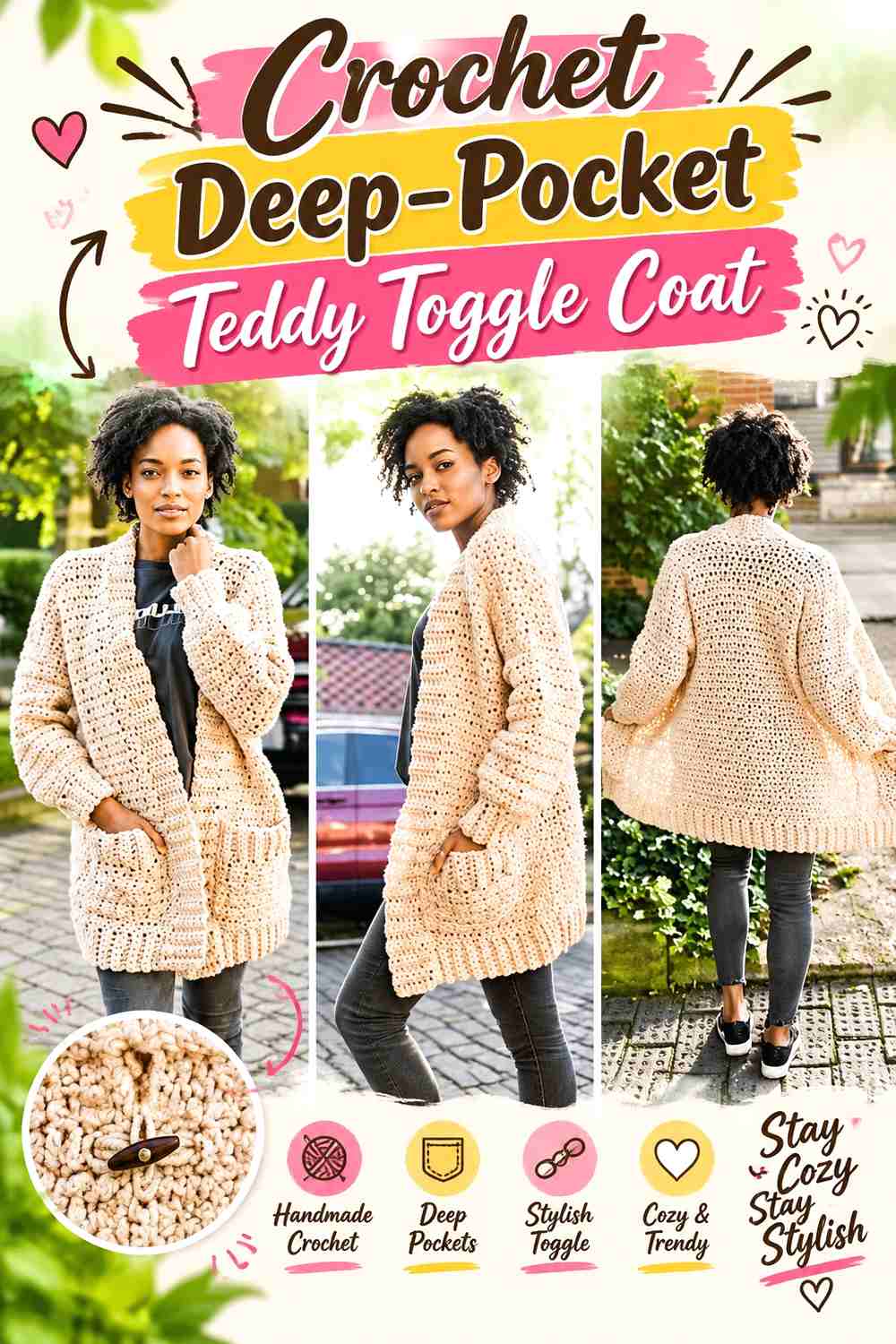
The Kima Cardi from TL Yarn Crafts offers a chunky cardigan foundation with prominent pockets and a relaxed shape, giving this adaptation a practical coat direction rather than a cropped fashion-jacket feel.
Large pockets pair naturally with a teddy or shearling aesthetic. Keep the body substantial, then use fuzzy trim selectively so the pockets remain easy to distinguish.
Pocket Edges Can Echo the Collar
Repeating the collar yarn around the pocket openings can connect the lower and upper portions of the coat without trimming every seam.
Before doing so, consider hand placement. A very fluffy pocket edge may feel bulky if it rolls inward or narrows the usable opening.
Watch the Front Weight
Pockets, thick trim, and toggles all add visual and physical weight to the front panels. If all three are oversized, the coat may hang forward rather than draping evenly from the shoulders.
Balance is more important than maximizing every possible winter detail.
Creator Credit: TL Yarn Crafts
6. Crochet Ribbed Button-Band Toggle Coat
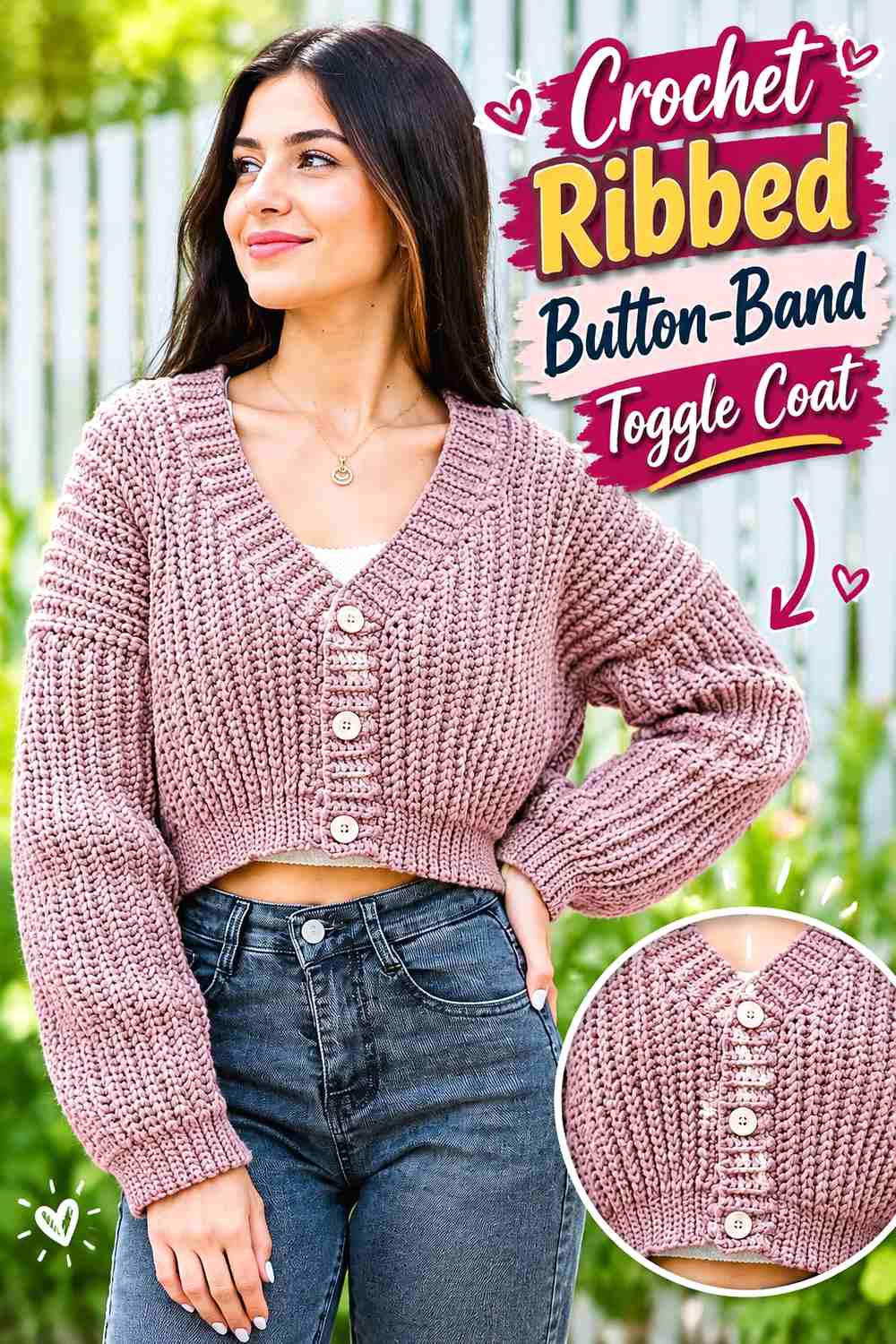
Chenda DIY’s chunky cardigan uses a ribbed texture and buttoned front, providing a useful foundation when the closure itself is one of your main priorities.
Rather than adding toggles to an edge that was never designed to close, this concept starts with a garment that already includes a functioning front fastening system.
Treat the Existing Band as Structural Information
Look closely at the width, firmness, and placement of the original button band. Those details show where the garment expects closure stress.
If adapting to toggles, preserve the logic of that front structure instead of positioning closures randomly according to appearance alone.
Ribbing and Fuzzy Trim Need Clear Boundaries
Ribbing is visually strong, while shearling-like yarn intentionally obscures stitch definition. Let each texture occupy a distinct area.
For example, the ribbed body can remain visible while fluffy yarn is limited to the collar and cuffs. That creates contrast instead of allowing one texture to conceal the other.
Creator Credit: Chenda DIY
7. Crochet Cropped Boxy Shearling Jacket
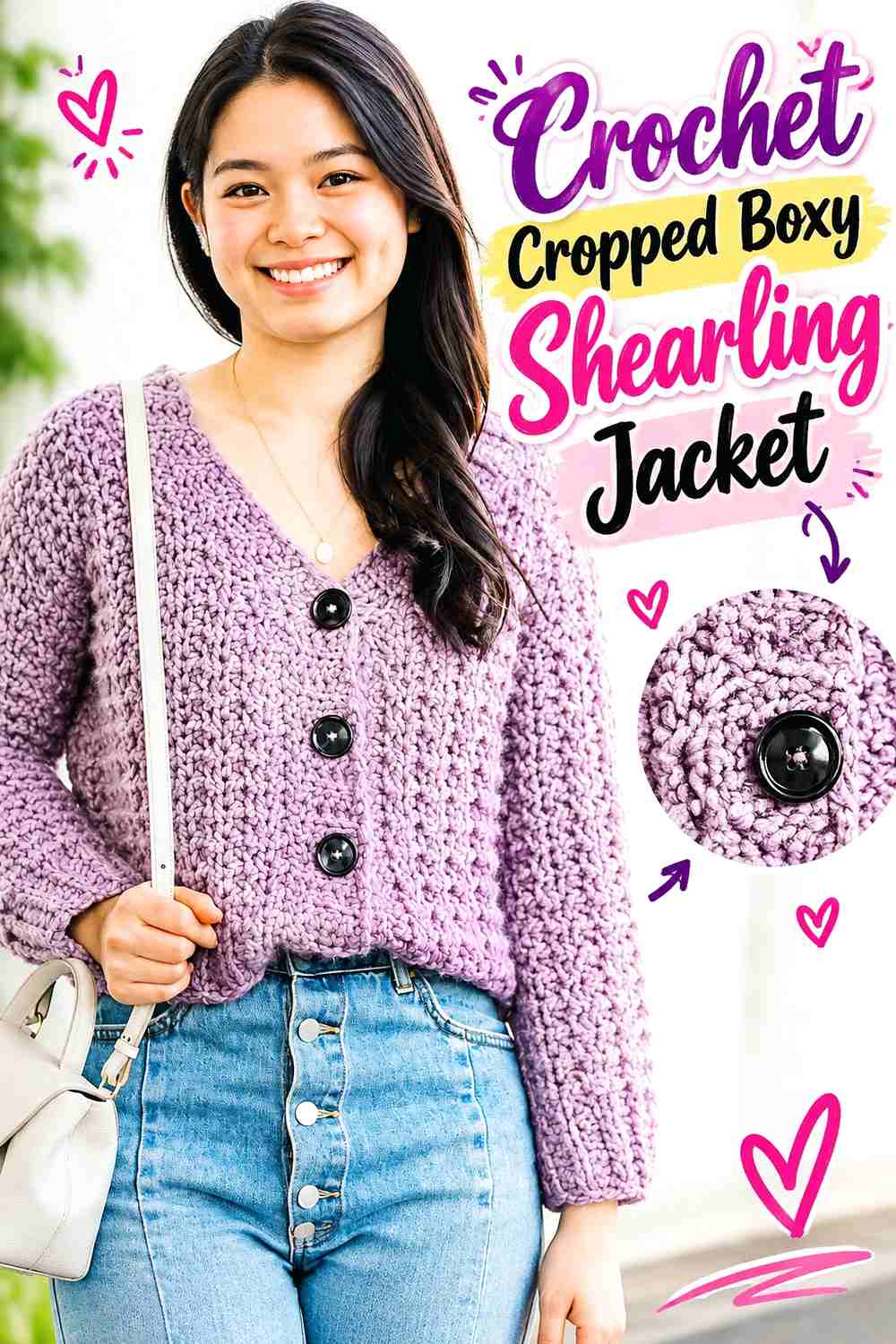
For The Frills provides a chunky cropped-cardigan direction with buttons and a compact body, which can be adapted into a boxier shearling-inspired winter jacket.
This option differs from the longer coats because the goal is not maximum coverage. It is about a substantial short layer that works with high-waisted pants, skirts, or dresses.
Keep the Trim Concentrated Above the Waist
On a short jacket, a fluffy hem can visually shorten the body even further. If you already like the cropped proportion, use the shearling effect mainly around the neckline, front, and wrists.
A cleaner lower edge keeps the jacket from becoming visually compressed.
Boxy Fit Needs Enough Sleeve Room
A roomy torso can make slim sleeves feel especially narrow. If the jacket is intended for winter layering, compare sleeve dimensions with the tops you plan to wear underneath.
Outerwear comfort depends on the arms as much as the chest.
Creator Credit: For The Frills
8. Crochet Short Bomber Toggle Jacket
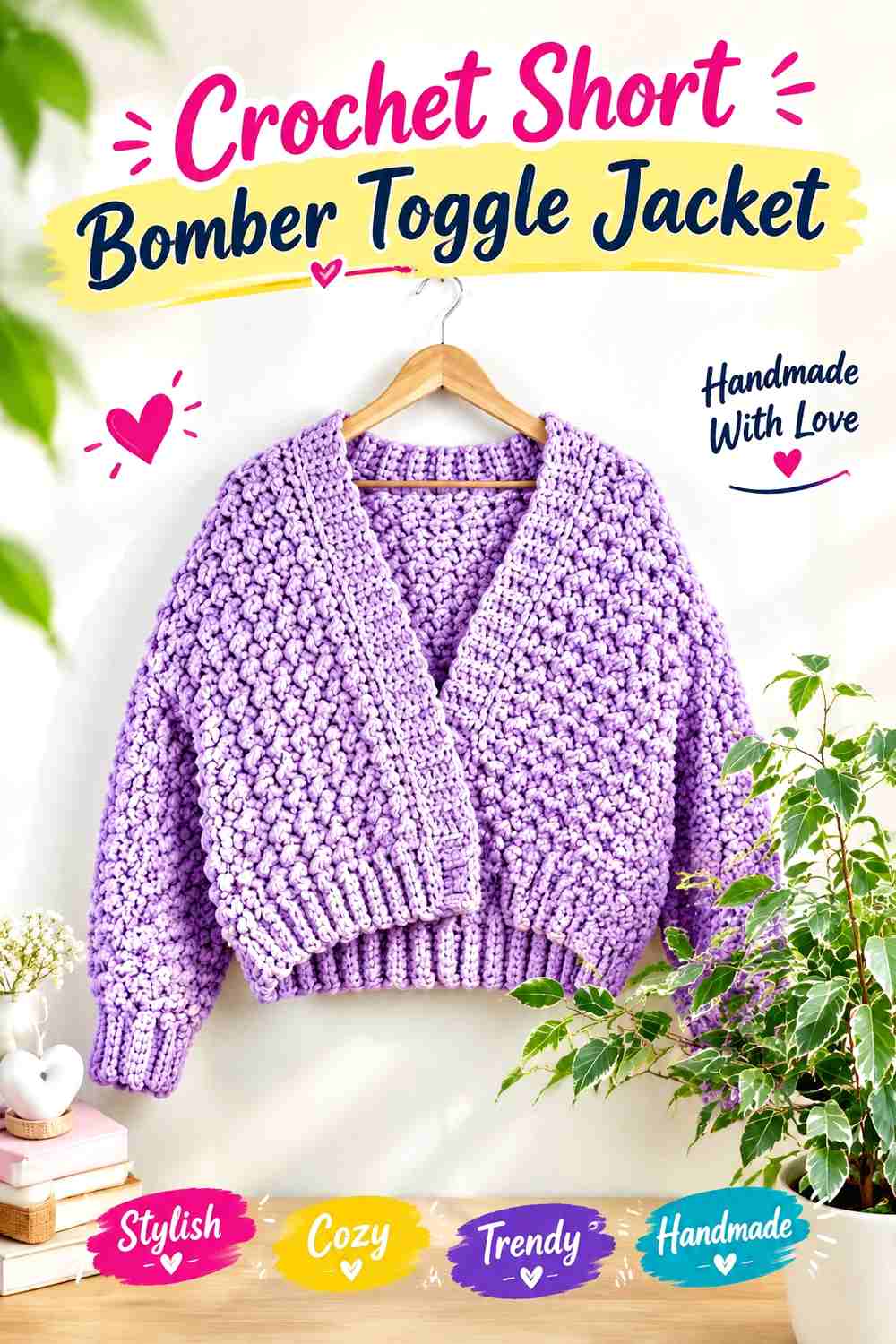
Hey Carrie’s chunky bomber direction is useful when you want a defined waist-length jacket rather than a cardigan that hangs straight from shoulder to hem. The source emphasizes the bomber proportions, including the lower edge and sleeve finish.
Add a soft contrast collar and a small toggle closure to create a compact winter jacket with more structure than the oversized coat options.
Do Not Hide the Waistband
The lower edge is central to a bomber silhouette. If shearling-style yarn completely covers that area, the jacket can lose the shape that distinguishes it from an ordinary cardigan.
Reserve the fuzzy contrast for areas that reinforce rather than erase the construction.
A Single Upper Toggle Can Change the Look
A short bomber does not necessarily need a full vertical row of closures. One prominent fastening near the upper chest can create a coat-like front while allowing the lower portion to retain its relaxed bomber shape.
Test the jacket closed before deciding whether additional toggles improve the design.
Creator Credit: Hey Carrie
9. Crochet Hexagon Cocoon Toggle Coat
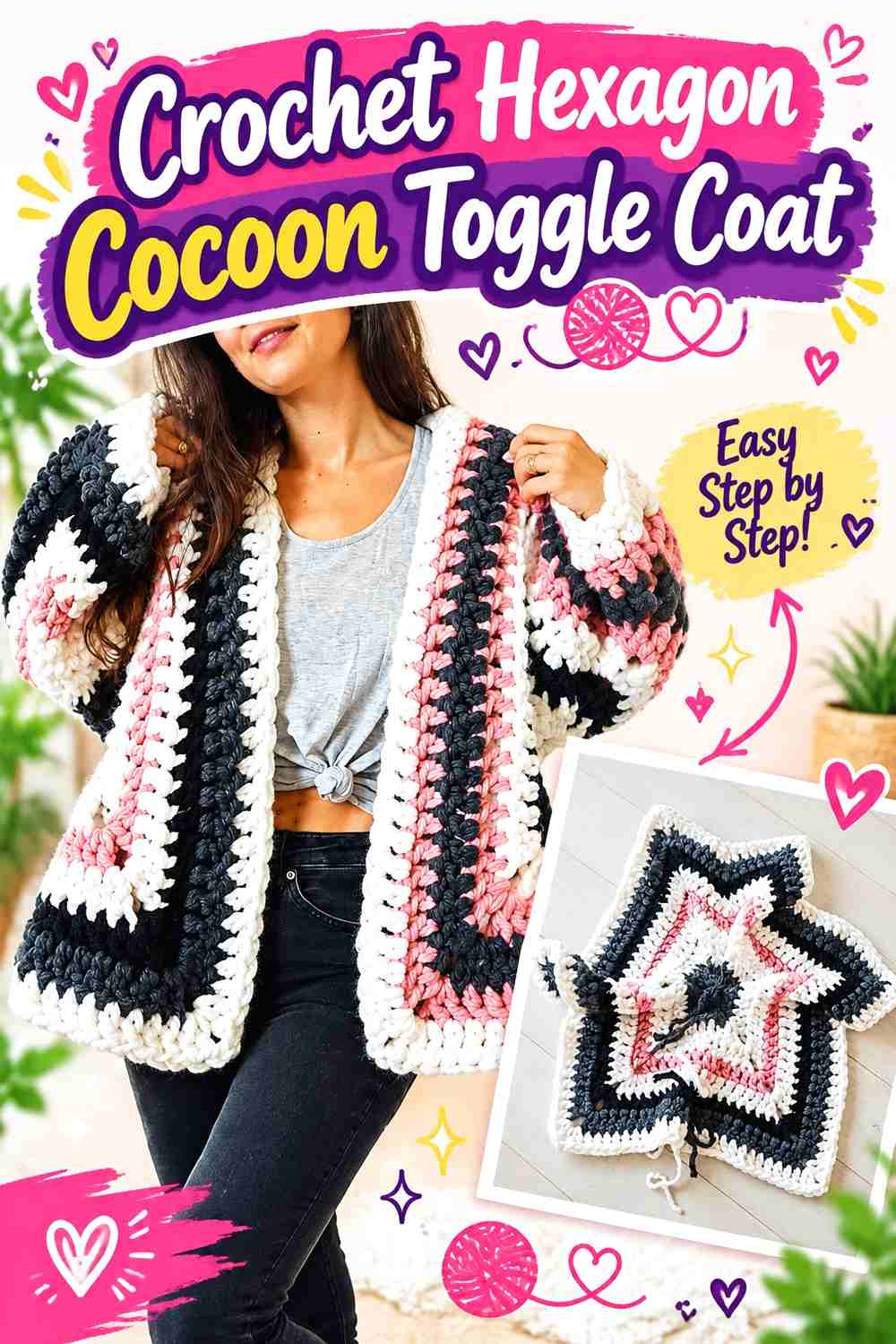
The Snugglery’s super-chunky hexagon cardigan is constructed from hexagon forms rather than traditional rectangular front and back panels. That creates a relaxed shape with a noticeably different shoulder and sleeve structure.
For this adaptation, lean into the cocoon-like outline instead of trying to make it look tailored. A soft collar edge and one or two upper toggles can give it a winter-coat identity while preserving the unusual construction.
Check the Center Front Before Planning a Closure
A hexagon cardigan does not necessarily meet at the front in the same way as a conventional coat. The amount of overlap depends on the finished shape and sizing.
Do not plan the toggles until the major pieces are joined and you can see where the front edges naturally fall on your body.
Keep Shearling Trim Away from Busy Fold Points
Hexagon construction already creates folds and strong geometry around the sleeves and body. Adding fluffy yarn to every edge can make those areas look thicker than intended.
A limited neckline or front trim keeps the unusual construction readable.
Creator Credit: The Snugglery
10. Crochet Granny-Stitch Hooded Teddy Coat
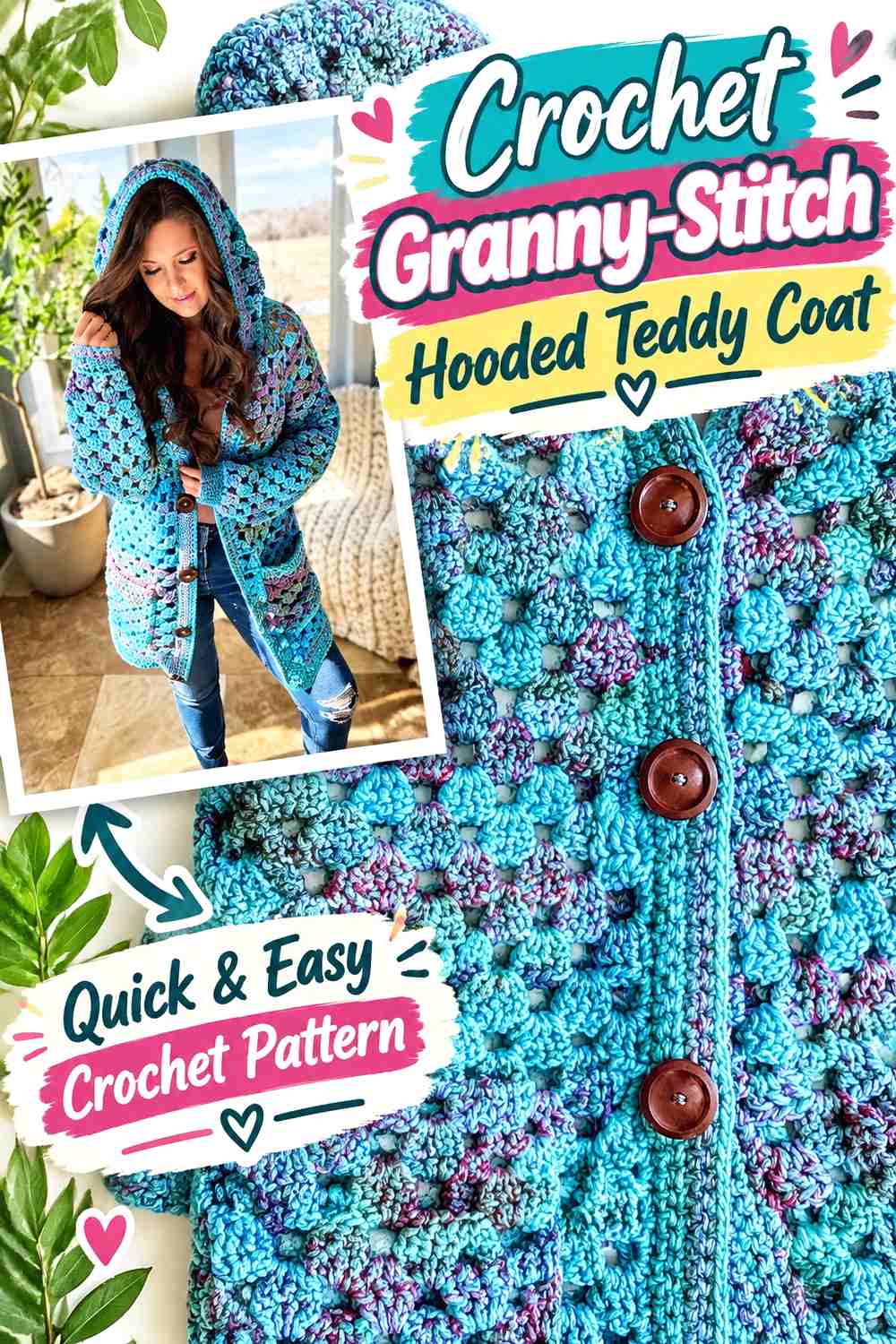
MJ’s Off The Hook Designs offers a chunky granny-stitch cardigan with options that include a longer body, hood, and pockets. Those features give this project one of the clearest coat-style foundations in the collection.
Because granny stitch has visible openings and a strong repeated texture, the shearling effect works best as contrast rather than as another all-over competing surface.
Dense Trim Can Frame an Open Stitch Pattern
A fluffy collar or hood edge looks especially noticeable next to the more open granny fabric. The difference in density becomes part of the design.
That same contrast means you should check whether the final garment provides the level of wind protection you expect from something called a coat. Visual warmth and actual fabric density are not the same thing.
Pockets Help Ground a Longer Hooded Shape
A hood adds visual weight high on the garment. Pockets create another point of interest lower down and can help the coat feel balanced.
If you add fluffy pocket edging, keep it narrower than the hood trim so the two details do not compete equally.
Creator Credit: MJ’s Off The Hook Designs
11. Crochet Blanket-Shape Shearling Wrap Coat
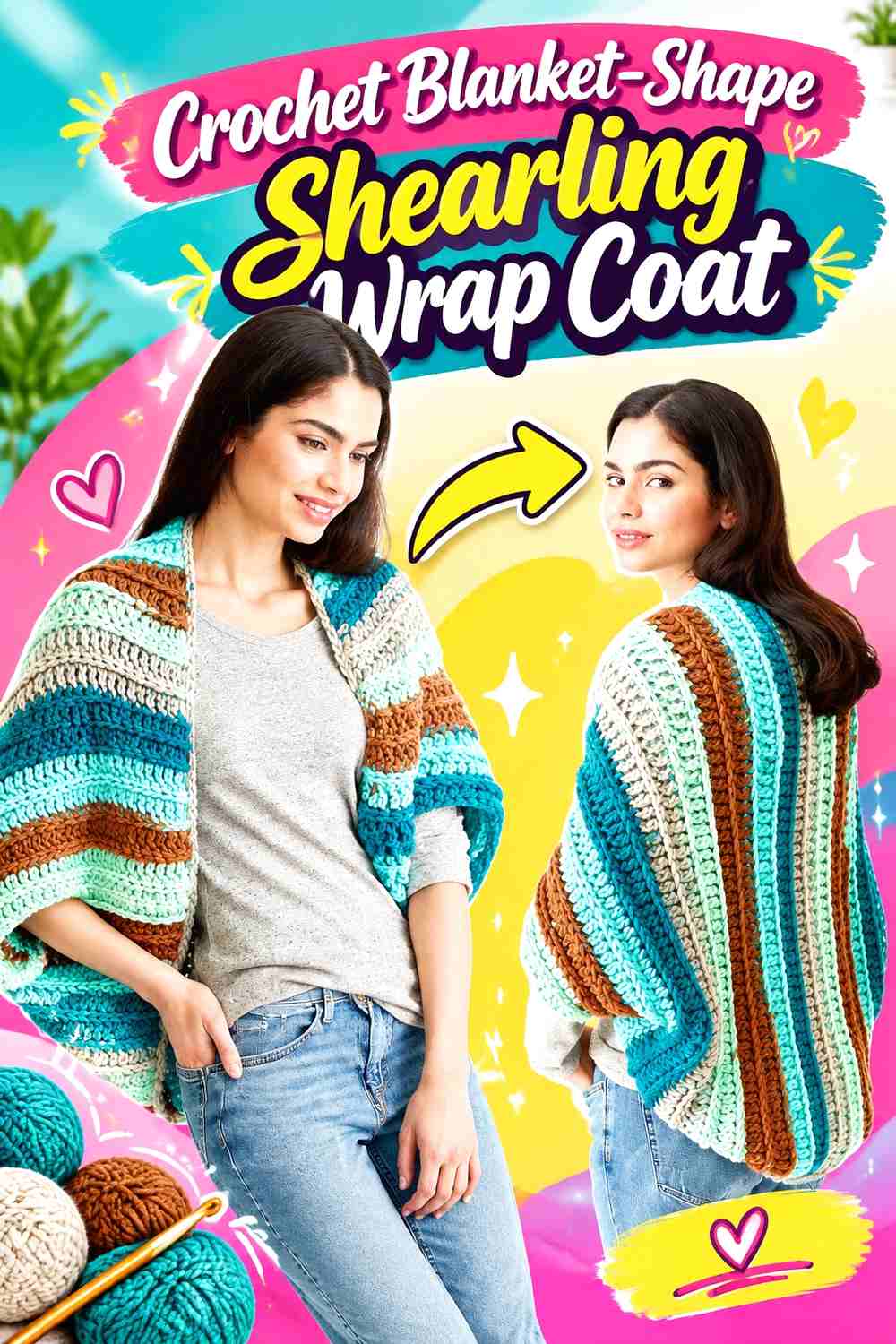
The Crochet Crowd’s chunky blanket cardigan is based on a relaxed rectangle-style concept rather than a closely shaped coat body. It therefore lends itself to a wrap-coat interpretation with generous drape.
This is a good route if you like the appearance of a shearling-lined wrap but do not want a fitted shoulder or tailored waist.
Treat the Closure as Optional Shaping
A toggle on a draped garment changes how the folds sit across the chest. Rather than assuming the coat should close from neckline to hem, experiment with one fastening point first.
The open lower front may be part of what makes the blanket construction hang successfully.
Avoid Overloading the Outer Edge
A blanket-style cardigan already has a lot of perimeter. Trimming the entire outline in heavy fuzzy yarn can add considerable weight.
Concentrate the shearling look around the upper front or collar area if you want to preserve soft movement through the lower body.
Creator Credit: The Crochet Crowd
12. Crochet Clean-Ribbed Contrast-Trim Coat
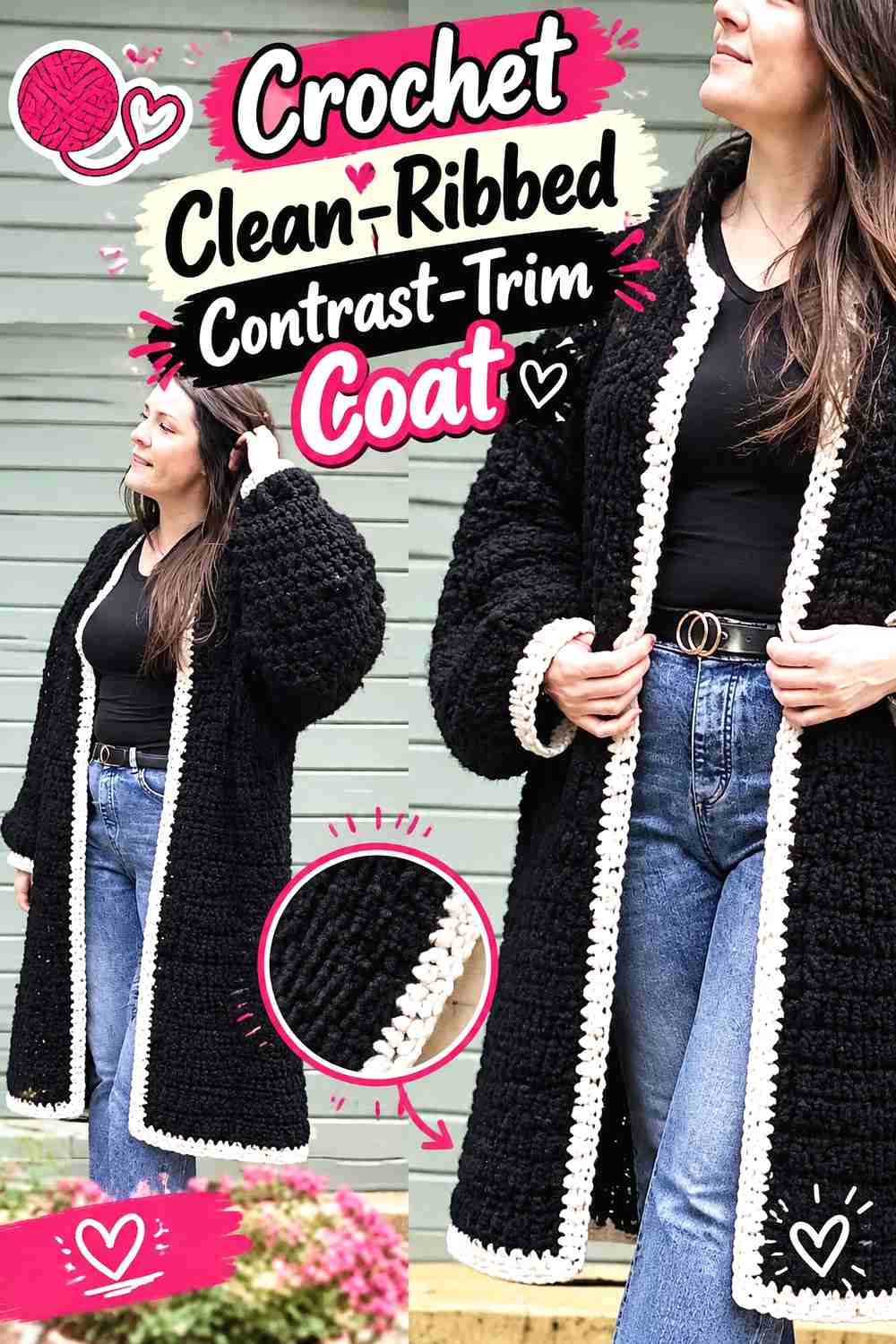
Carroway Crochet’s chunky cardigan provides a straightforward body with ribbed finishing and fewer dramatic design elements. That clean foundation makes it useful for a coat where the contrast trim and toggles are meant to provide the personality.
This version can lean more Scandinavian or minimalist: one main color, one fleece-like contrast, and simple hardware.
Use Repetition to Make Minimal Trim Look Intentional
If the collar is fluffy but nowhere else repeats that texture, it may look added on rather than integrated. Echo it once at the cuffs or pocket edges.
Two well-spaced areas of contrast are often more effective than trimming every possible boundary.
Check Front-Band Stretch
Ribbing can be elastic, which is useful around cuffs but needs thought at a closure edge. If the front band stretches significantly, a toggle may pull it out of line.
Test the band while the coat is worn before deciding exactly where the closure should sit.
Creator Credit: Carroway Crochet
13. Crochet Oversized Shrug Toggle Coat
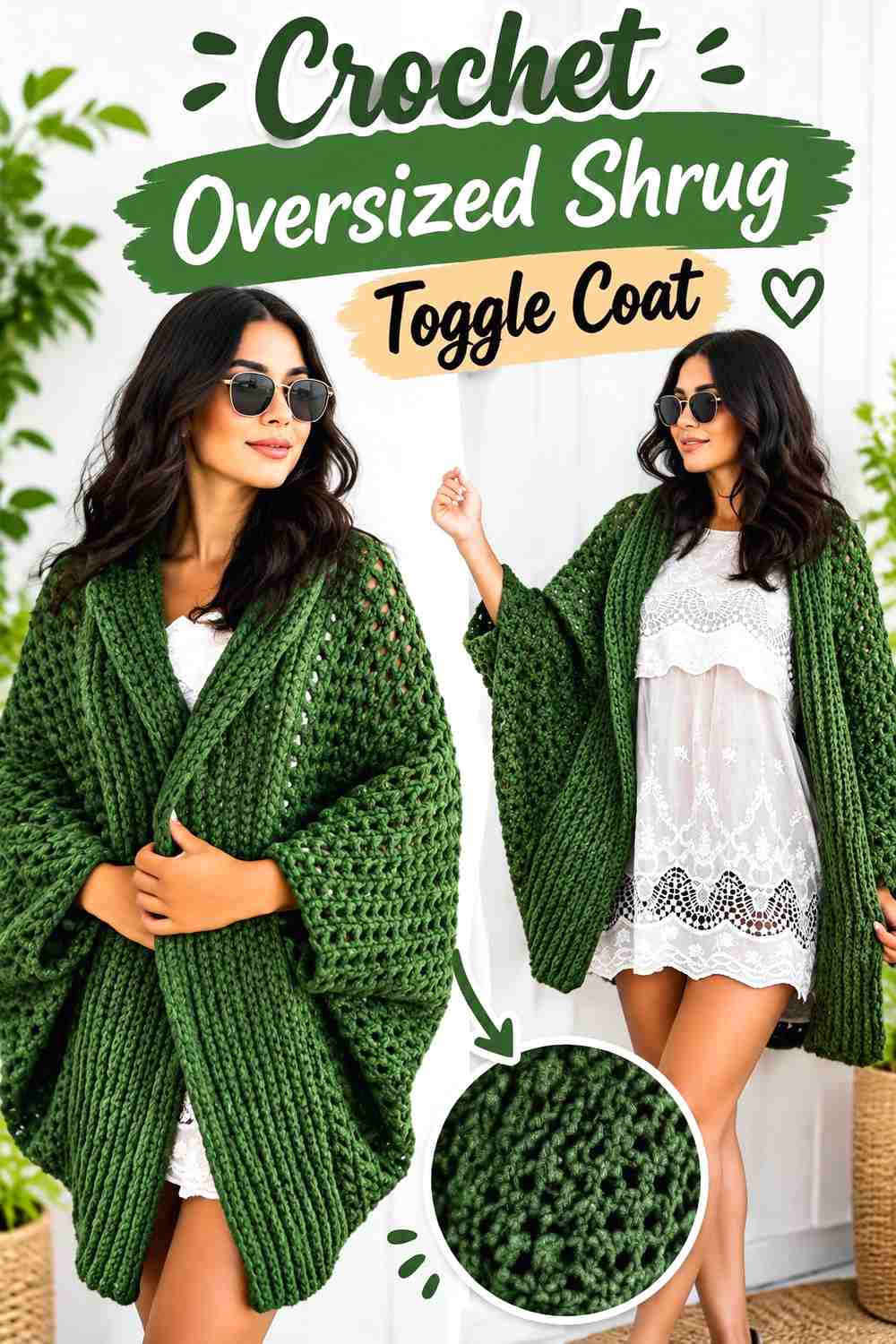
Jennyandteddy crochet’s oversized shrug cardigan has a relaxed shoulder line and loose layering shape rather than a conventional tailored body.
With a deep contrast collar and upper fastening, that relaxed construction can become a soft cocoon-style coat for readers who prefer drape over structure.
Shoulder Drape Is the Main Design Feature
Do not try to force a crisp coat shoulder onto a shrug foundation. The softer line is what makes this idea different from the bomber and collared jackets.
Choose trim that follows that shape instead of stiffening it dramatically.
Keep the Toggle Above the Deepest Draping Area
The lower a closure sits on a loose shrug, the more it can change the way extra fabric gathers around the sides.
An upper fastening can secure the front while allowing the lower body to fall naturally.
Creator Credit: Jennyandteddy crochet
14. Crochet Super-Chunky Shearling-Look Coat
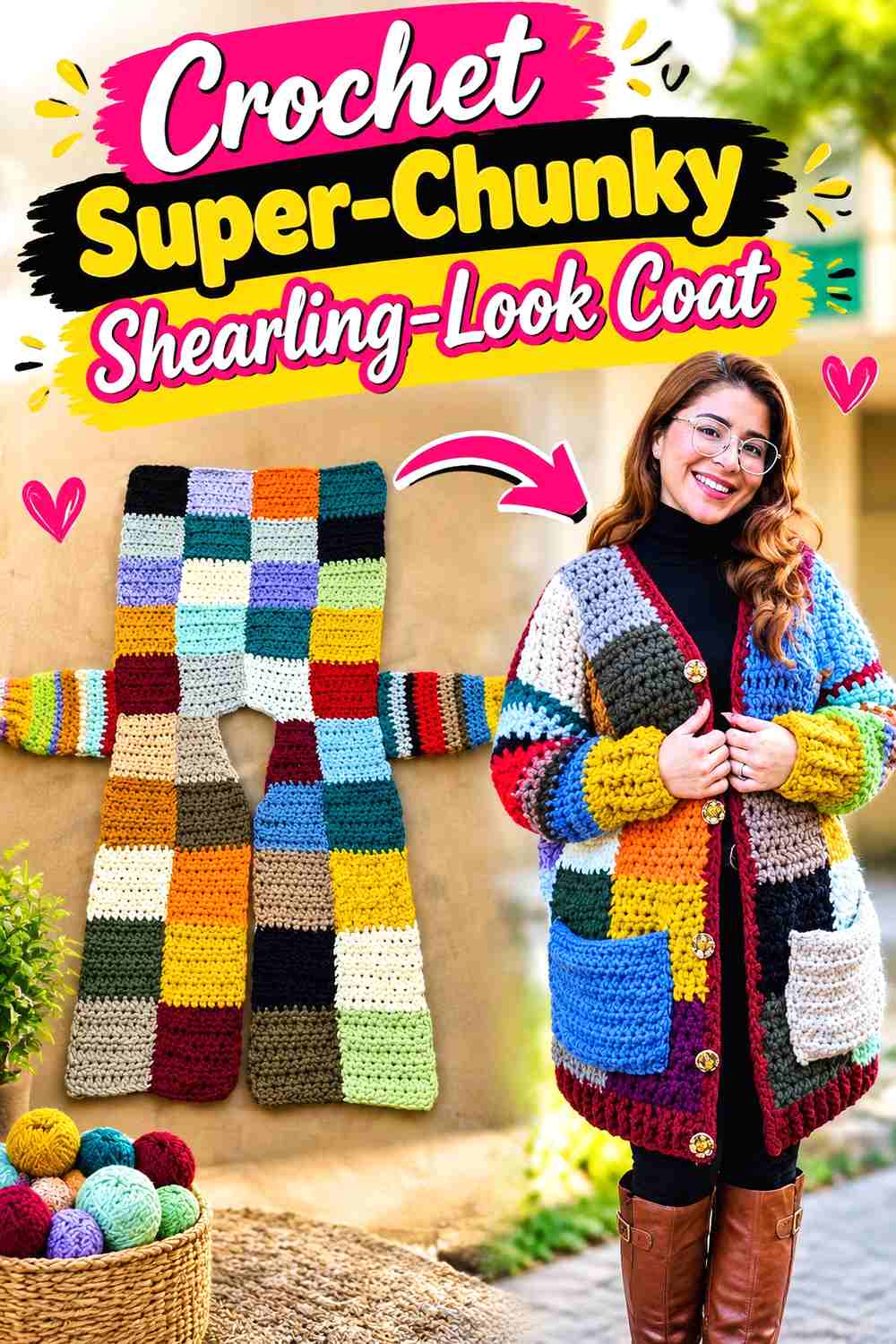
Brunaticality’s super-chunky cardigan tutorial provides a bold large-stitch foundation where the scale of the yarn is already a major visual feature.
This is the strongest option for an intentionally oversized teddy-coat direction. Keep the adaptation simple because the thick fabric already creates plenty of presence.
Oversized Texture Needs Restraint
Super-chunky body yarn plus very thick faux-fur edging can become visually overwhelming. Compare the two yarns side by side before deciding that the trim must be even bulkier than the coat.
A moderate difference in texture may produce a clearer result than maximum thickness everywhere.
Recheck the Shoulders as the Coat Gains Weight
Heavy fabric can stretch differently once both sleeves, bands, and trim are attached. Check body and sleeve length during assembly instead of judging only from individual flat pieces.
Long fluffy edging can add more weight after the main garment already appears finished.
Creator Credit: Brunaticality
15. Crochet Ankle-Length Toggle Duster Coat
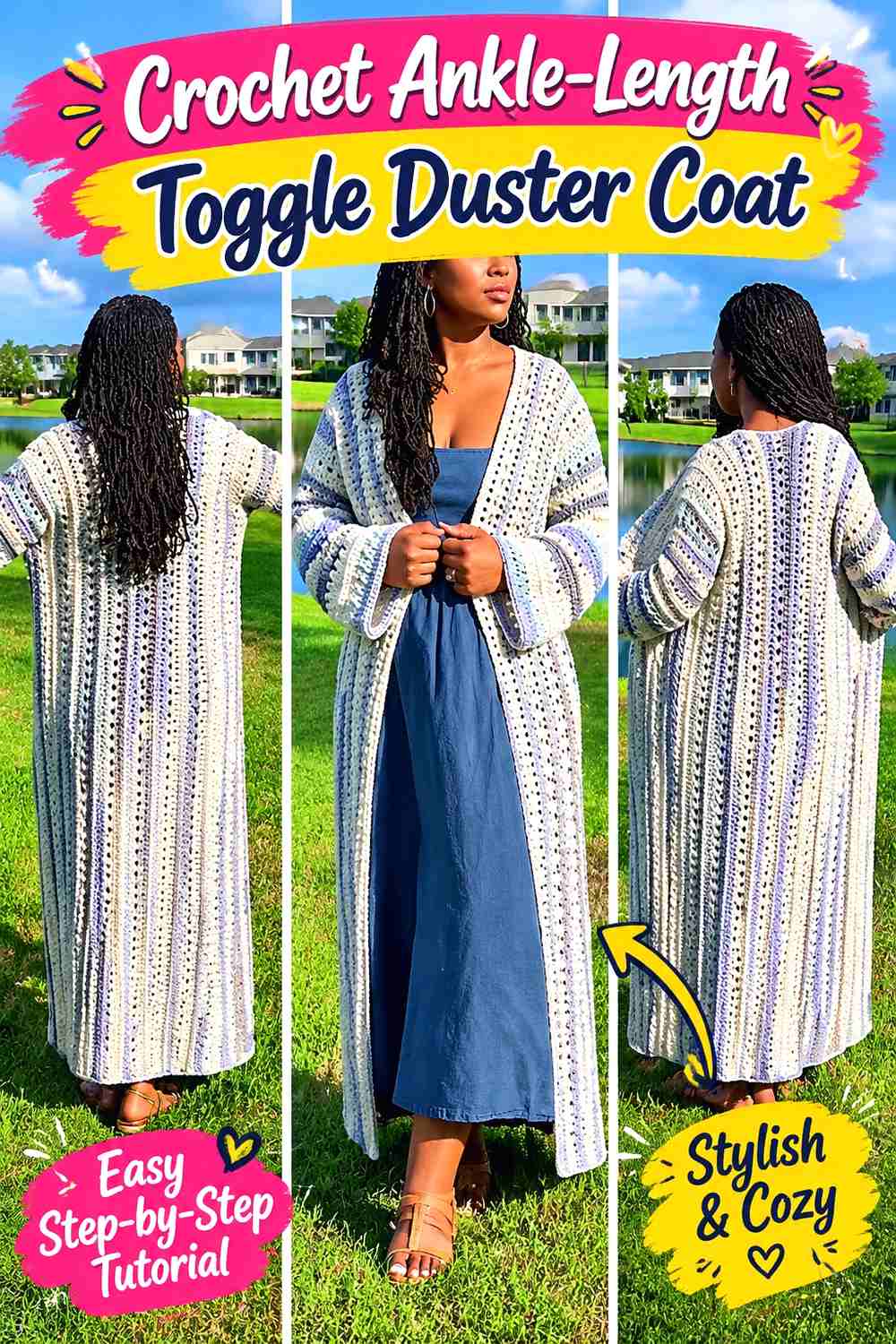
Crochet State of Mind’s long duster has a dramatic near-ankle silhouette, making length the defining feature of this adaptation.
For a shearling-toggle interpretation, keep most of the lower body visually clean and concentrate the winter details above the waist. This prevents the trim from overwhelming the already substantial length.
Very Long Coats Need Movement at the Hem
Fastening a long duster changes how easily the two fronts separate when walking or sitting. Test any proposed closures while moving, not only while standing in front of a mirror.
You may prefer a coat that secures at the chest but remains open farther down.
Keep Heavy Trim Away from the Entire Hemline
An ankle-length hem already contains a large amount of yarn. Adding fluffy edging around the whole lower circumference can noticeably change the weight and drape.
A shearling collar and cuffs may be enough to establish the look.
Creator Credit: Crochet State of Mind
16. Crochet Long Hooded Shearling-Look Coat
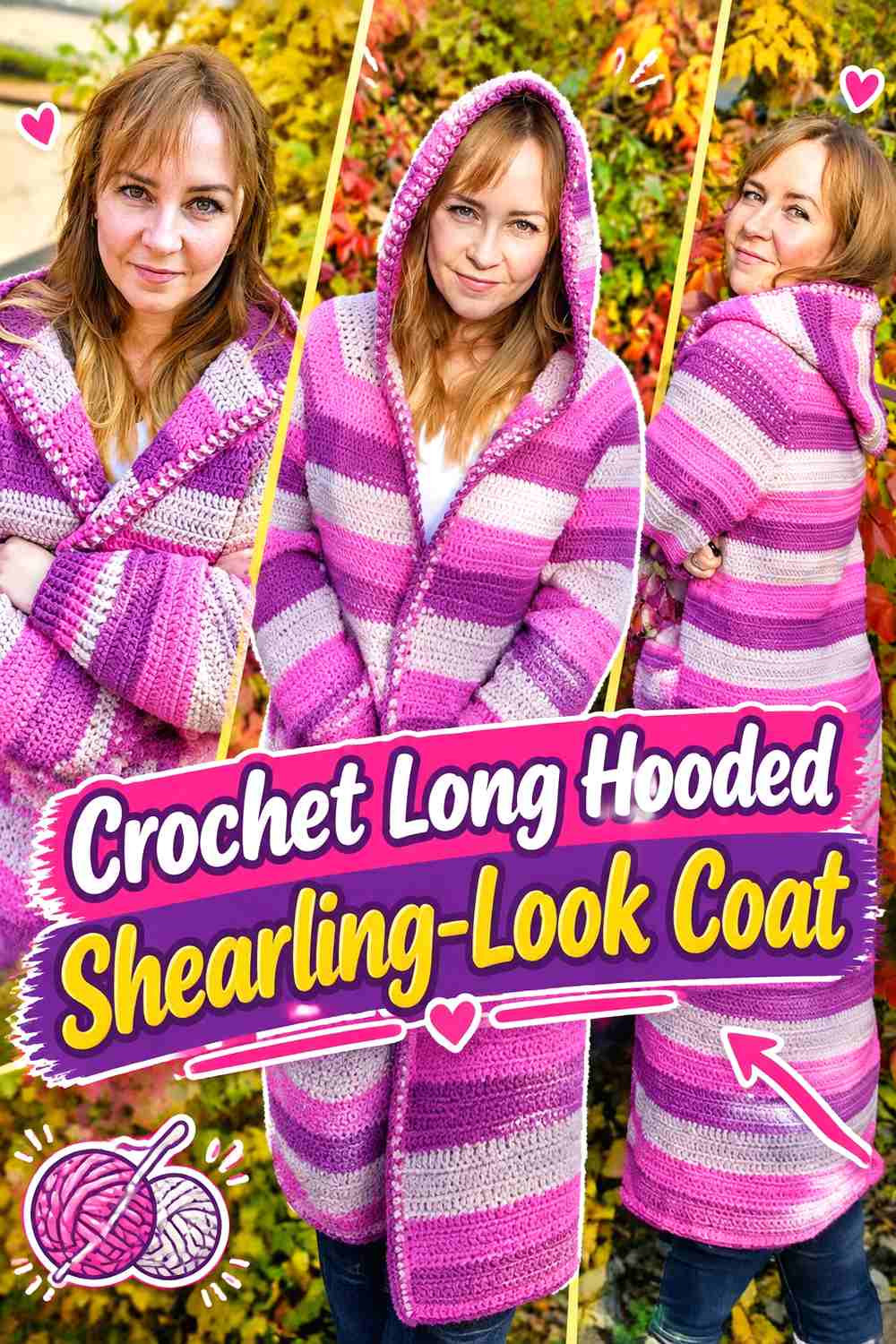
The long hooded cardigan from plotkadesign combines body length with substantial coverage around the head and neckline, giving it a naturally winter-oriented silhouette.
This is the project to choose when the hood should replace a traditional coat collar as the main feature. A fleece-like border around the hood and front can create a strong shearling effect without needing an additional oversized collar.
Let the Hood Replace the Collar
Adding both a thick hood border and a separate dramatic collar can create excessive bulk around the neck.
Decide which feature should dominate. For this construction, the hood already supplies the upper-body volume needed for a winter coat.
Check How the Hood Changes the Shoulder Line
A long coat already pulls downward because of its body length. A substantial hood adds more weight at the upper back.
Evaluate the garment with the hood attached before deciding how much additional trim to add around it.
Creator Credit: plotkadesign
17. Crochet Buttoned Long Coat with Toggle Conversion
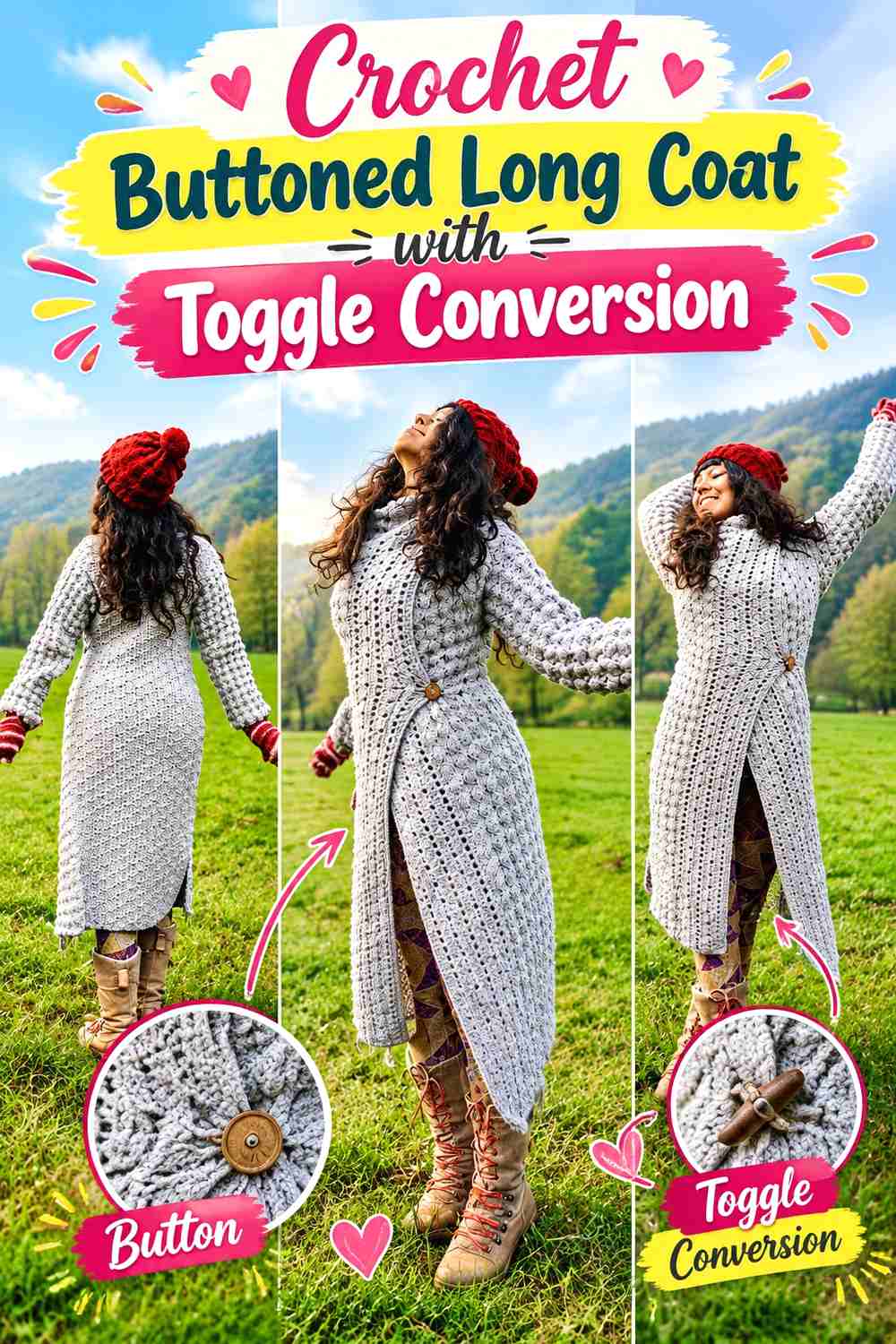
MayaLunaCorazon DIY CROCHET & BUSINESS provides a long coat-style cardigan with a front closure direction, making this one of the most logical foundations for readers who specifically want to rethink buttons as toggles.
Rather than redesigning the entire garment, focus the adaptation on closure appearance and contrast trim.
Use Existing Closure Placement as Your Guide
If the source garment already closes successfully, its button placement gives valuable information about how the front panels align.
A toggle conversion should respect that alignment. Moving closures substantially higher or lower can change both fit and front overlap.
A Long Straight Front Suits Repeated Toggles
Unlike a cropped jacket, a long coat has enough vertical space for several closures without immediately looking crowded.
That does not mean every possible position needs one. Choose spacing that supports the coat’s proportions and still leaves enough visual room for the contrasting trim.
Creator Credit: MayaLunaCorazon DIY CROCHET & BUSINESS
18. Crochet Classic Ribbed Long Toggle Coat
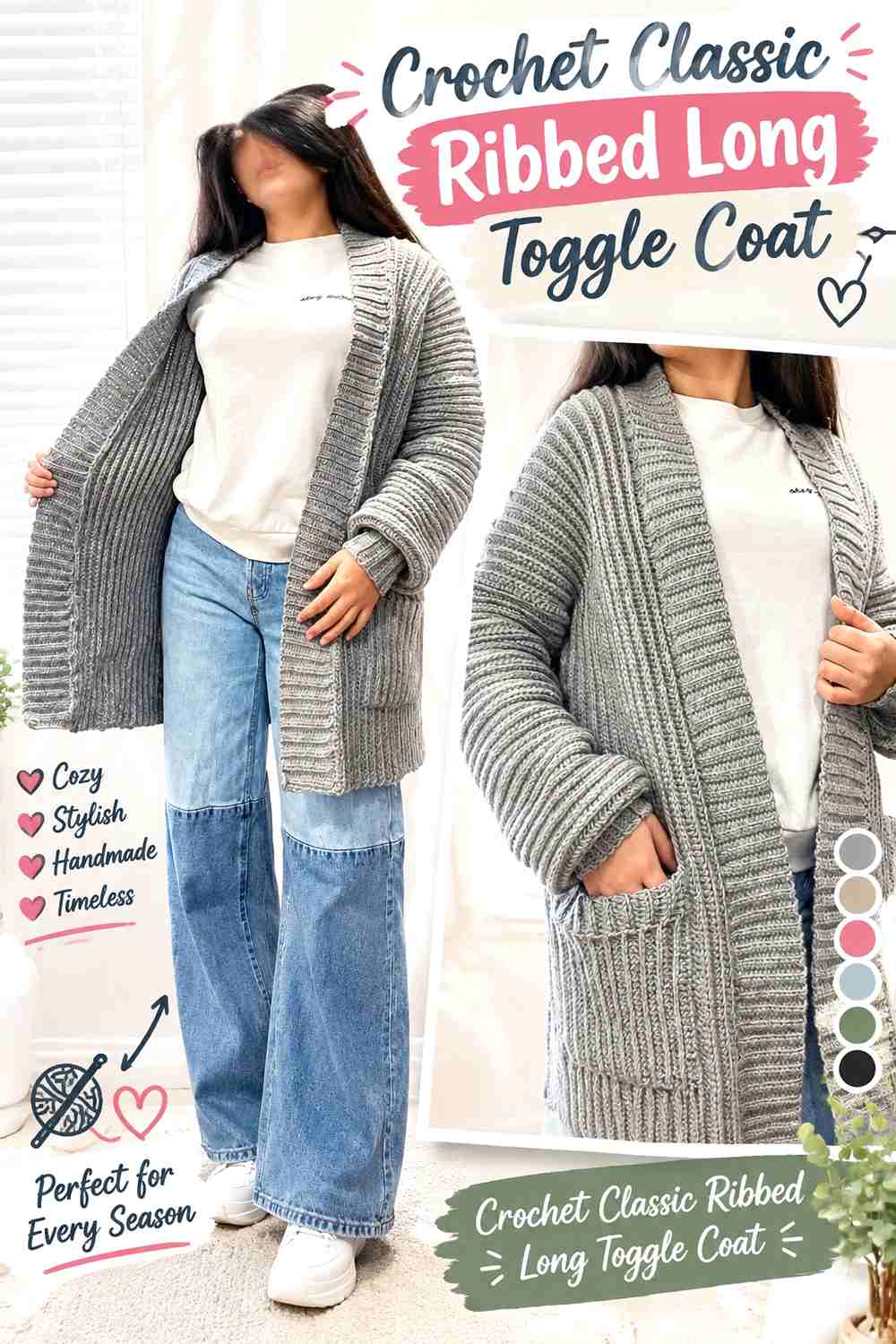
Yarnalina’s long ribbed cardigan provides a clean extended silhouette with pockets and prominent texture. It is less dramatic than a hooded or ankle-length duster, which makes it useful for a more everyday shearling-look coat.
Use a neutral body color, contrast the collar and cuffs, and let a small row of toggles become the central front detail.
Vertical Texture Supports a Long Silhouette
Ribbed texture reinforces the visual length of a long cardigan. Keeping most of that surface visible helps the coat maintain a cleaner line.
Instead of covering the entire front with wide fuzzy trim, consider a narrower contrast edge that frames rather than hides the ribbing.
Pocket Position Should Still Feel Natural After Closing
When a long cardigan becomes a closed-front coat, the fronts may sit differently against the body. Check that the pockets remain comfortable to reach with the proposed toggles fastened.
A closure adaptation should not make an otherwise useful pocket placement awkward.
Creator Credit: Yarnalina
How the 18 Coat Ideas Compare
Choose the knee-length or ankle-length duster directions when overall coverage matters most. The long hooded coat adds even more visual protection around the neckline, while the classic ribbed long coat keeps the same general coverage in a cleaner shape.
For shorter outerwear, the cropped collared jacket, boxy shearling jacket, and bomber variations put more emphasis on proportion and closure placement. These are useful when you want the shearling look without committing to the yarn weight and scale of a full-length coat.
The hexagon, blanket, and shrug constructions are the least tailored. They suit a softer cocoon silhouette but require more caution when adding closures because their front edges may not behave like conventional coat panels.
For the clearest toggle conversion, start with one of the tutorials that already uses buttons or a defined front band. Existing closure structure gives you a stronger starting point than trying to force a fully open cardigan into a tightly fastened coat.
Conclusion
A convincing crochet shearling-look toggle coat depends less on covering the whole garment in fuzzy yarn and more on choosing the right foundation.
Start with the long duster or classic ribbed coat if you want traditional winter coverage. Choose a cropped collared or bomber shape for a shorter jacket. Pick the hooded designs when upper-body coziness matters, or the hexagon, blanket, and shrug options when you prefer relaxed drape over tailored structure.
Then decide where the shearling effect will have the most impact. Collar, hood, cuffs, front bands, and pocket edges are usually more useful places for contrast than adding fluffy texture everywhere. Finally, treat toggle placement as part of garment structure rather than decoration alone.
Use the original tutorials for the exact body construction, measurements, seams, and finishing. Make the shearling-look and toggle decisions only after you can see how the chosen coat foundation actually fits and hangs.
Frequently Asked Questions
What yarn can create a shearling look on a crochet coat?
Boucle, faux-fur, eyelash, fleece-like, and other fuzzy yarns can create a shearling-inspired surface. The exact choice depends on the effect you want and whether you can work comfortably with reduced stitch visibility. A smooth main yarn paired with fuzzy trim is often easier to control than making the entire garment from highly textured yarn.
Should I crochet the whole coat in faux-fur yarn?
Not necessarily. A whole faux-fur garment can make stitches, shaping, seams, and repairs harder to see. Using the textured yarn only at the collar, hood, front bands, cuffs, or pockets can create the same visual idea while leaving the structural crochet easier to follow.
Can I replace cardigan buttons with toggle closures?
Sometimes, but do not assume it is a direct substitution. Check the front-band firmness, button placement, amount of front overlap, and how the garment fits when closed. Toggle attachments can pull on the edge differently from standard buttons.
How much ease should a crochet winter coat have?
There is no universal amount. Decide what will be worn underneath, then compare the tutorial’s finished measurements with a coat or cardigan that already layers comfortably over similar clothing. Bust width alone is not enough; check shoulders, upper arms, armholes, and sleeve circumference too.
How can I keep a long crochet coat from becoming too heavy?
Yarn choice, stitch density, garment length, pockets, hood size, and trim all contribute to weight. Before making a very long version, swatch the intended yarn and consider whether heavy fluffy edging is necessary around the entire garment. Concentrating the shearling effect near the upper body can reduce added weight.
Where should shearling-look trim go on a crochet toggle coat?
The collar or hood is usually the strongest starting point because it is close to the face and highly visible. Cuffs and front bands can repeat the texture, while pocket edges provide a smaller additional accent. You do not need to use fuzzy yarn on every edge.
Do toggle closures make an open crochet cardigan into a real winter coat?
Not automatically. A closure changes the styling and can improve coverage, but actual warmth also depends on yarn fiber, stitch density, fabric openings, body length, sleeve coverage, wind penetration, and the layers worn underneath.
What should I check before adding toggles to a finished crochet coat?
Put the garment on over the intended winter layers and temporarily mark the proposed fastening points. Check front overlap, bust and hip movement, pocket access, hem behavior, and whether the front band stretches under tension. Make permanent closure decisions only after those areas look balanced.