A crochet zip-neck pullover combines the coverage of a winter sweater with a neckline that can change depending on how you wear it. Zip the collar higher for a more enclosed funnel-neck effect, or open it to create a wider folded collar over a base layer.
The first project in this collection is a direct crochet quarter-zip tutorial that includes zipper installation. The remaining tutorials teach high-neck, roll-neck, mock-neck, cable, ribbed, oversized, or textured pullovers that provide useful foundations for a zip-neck adaptation. They should not be treated as ready-made zipper patterns: converting a closed turtleneck into a quarter-zip changes the center-front opening, collar construction, finishing, and reinforcement.
That difference becomes even more important with chunky crochet. Thick fabric creates a strong winter silhouette, but it can also make the zipper area bulky. Before adapting any high-neck sweater, decide how the neckline will open and how the zipper will sit against the crochet rather than finishing the whole sweater and treating the zipper as an afterthought.
Quick List
- Textured Crochet Quarter-Zip Pullover
- Clean-Collar Crochet Zip-Neck Pullover
- Fluffy Roll-Collar Crochet Half-Zip Pullover
- Cable Crochet Quarter-Zip Pullover
- Minimal Roll-Neck Crochet Zip Pullover
- Relaxed Crochet Funnel-Neck Zip Pullover
- Paneled Crochet Zip-Collar Pullover
- Double-Strand Ribbed Crochet Zip Pullover
- Berry-Texture Crochet Quarter-Zip Pullover
- Almondridge-Texture Crochet Zip-Neck Pullover
- Granny-Square Crochet Zip-Collar Pullover
- Full-Rib Crochet Half-Zip Pullover
- Oversized Crochet Chunky Zip-Neck Pullover
- Bobble-Yoke Crochet Quarter-Zip Pullover
- Openwork Mock-Neck Crochet Zip Pullover
- Airy Fluffy Crochet Zip-Neck Pullover
- Bulky Crochet Funnel-Neck Zip Pullover
- Color-Block Crochet Quarter-Zip Pullover
What Makes a Crochet Zip Neck Work?
The zipper needs a stable center-front area. On a sweater originally designed with a closed turtleneck, that area may not exist because the neckline was intended to form one continuous loop.
A zip-neck adaptation therefore needs to be planned before the collar is completed. The center opening, two zipper edges, collar height, and way the opening meets the sweater body all have to work together.
The depth of the zipper changes the silhouette too. A short opening mainly helps the collar expand. A deeper quarter-zip creates a stronger vertical line through the upper chest and allows the collar to spread farther when open.
Before modifying a tutorial, study its front-panel or neckline construction. A sweater assembled from separate flat panels may offer a different adaptation route from a seamless circular-yoke or top-down design.
Chunky Yarn Changes the Zipper Area
Chunky fabric and zipper tape have very different physical properties. Crochet can stretch and compress; zipper tape is comparatively stable.
That mismatch is why a zipper should not be expected to fix an uneven or overly stretchy opening. The crochet edges need to be compatible with the finished zipper length and should sit evenly before the closure is attached.
Very thick ribbing creates another challenge. A doubled chunky collar can become several layers thick beside the zipper, especially when folded. A slightly lower collar may therefore produce a cleaner result than maximizing both yarn bulk and collar height.
When adapting a lighter tutorial toward a chunky Winter 2026 look, do not simply increase yarn weight while keeping every original measurement. Gauge, body width, sleeve scale, collar thickness, and garment weight can all change. Swatch the actual stitch pattern and follow the creator’s fit logic.
Decide How the Collar Should Look Open and Closed
A quarter-zip has two distinct appearances, and both should work.
When fully zipped, the collar may stand closer to the neck like a funnel or mock neck. Open it and the same fabric may fold outward toward the shoulders. That means the inside of the collar and zipper area can become visible.
Keep finishing neat on both sides and consider whether the collar texture still looks intentional when folded. Ribbing usually creates a different open-collar effect from cables, bobbles, granny squares, or fuzzy fabric.
Also check head entry. One benefit of a zipper is that a smaller finished neckline can open temporarily, but that only helps when the zipper opening is actually deep enough for the construction.
1. Textured Crochet Quarter-Zip Pullover
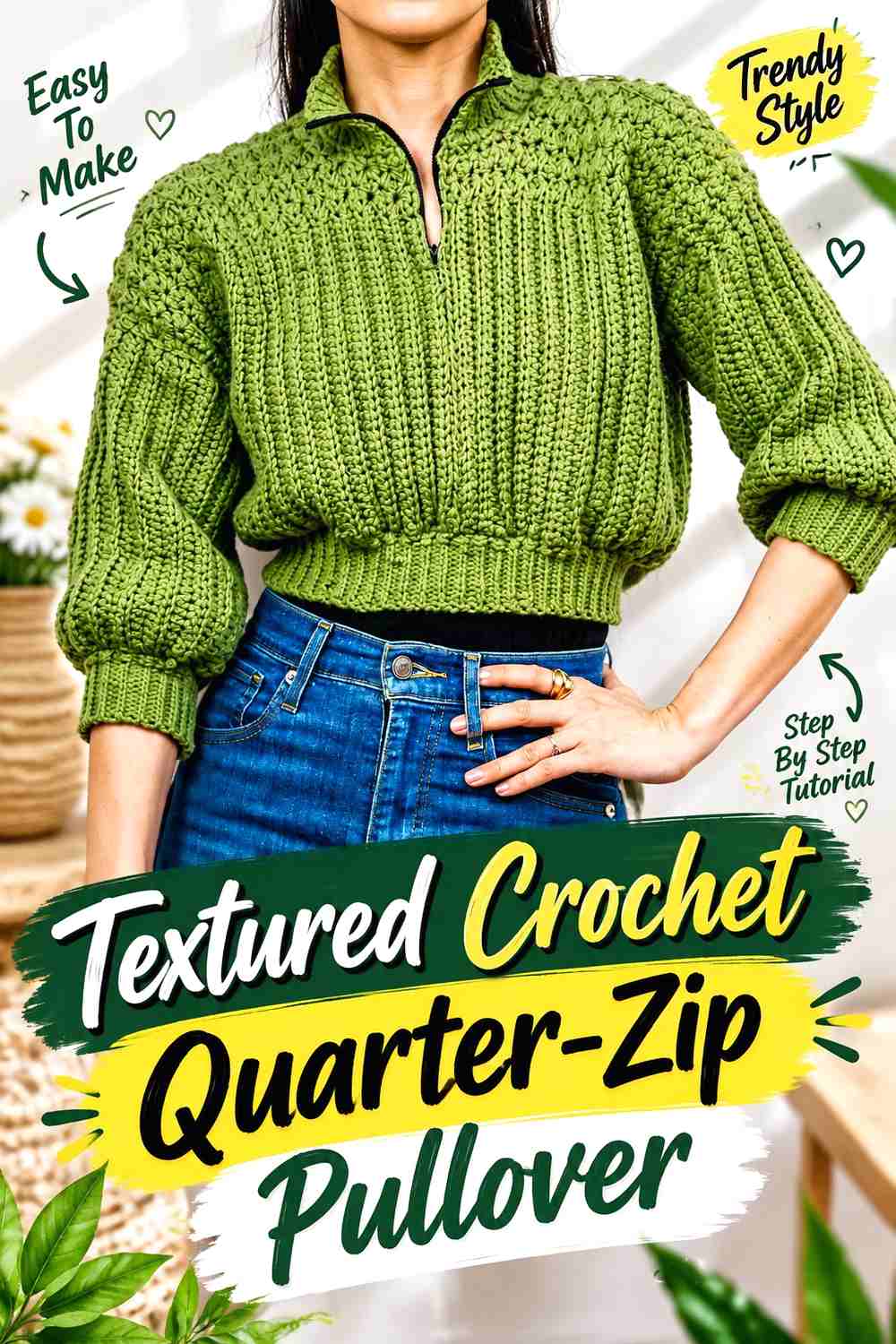
This is the direct quarter-zip source in the collection. The tutorial builds a textured pullover with a collar and includes the zipper as part of the garment construction rather than as an afterthought. That makes it the most useful starting point if learning how a crochet front opening interacts with zipper installation is your priority.
The relatively organized sweater surface also lets the neckline remain the focal point instead of competing with cables or complex colorwork.
A Purpose-Built Opening Is Different From Cutting Into a Sweater
Because the zipper is already expected in the construction, the center front is planned around it.
That is a safer concept to study before attempting one of the later adaptations. Notice the relationship between the upper front, collar, and finished opening rather than assuming the zipper is simply sewn over ordinary sweater fabric.
Keep the Collar and Zipper Visually Connected
The collar frames the upper portion of the zipper, so their proportions need to make sense together.
A taller collar increases the amount of fabric sitting beside the closure. If you adapt the sweater toward an even chunkier look, test that relationship before increasing collar depth.
Texture Gives a Solid Color More Presence
A pronounced crochet surface can create plenty of winter character without color blocking.
That makes this a useful direction for cream, olive, charcoal, brown, navy, or another solid shade where the zipper and stitch texture can provide the visual contrast.
Creator Credit: TCDDIY
2. Clean-Collar Crochet Zip-Neck Pullover
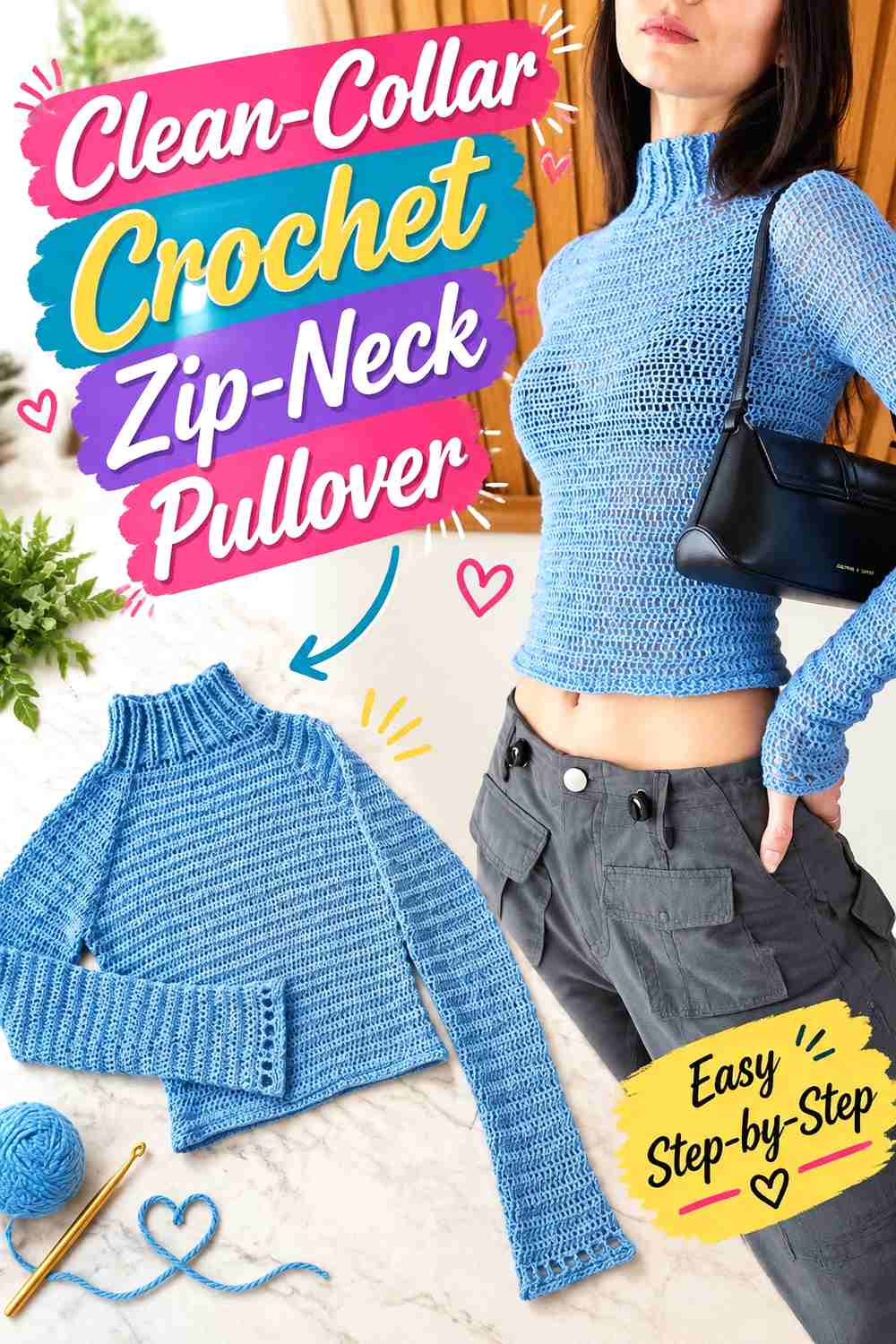
This polo-neck pullover offers a streamlined high-neck foundation with relatively little competing surface decoration. The source provides a complete long-sleeve sweater with a raised neckline, making the collar-to-body relationship especially useful when planning a zipper adaptation.
A clean sweater like this can produce a classic outdoor quarter-zip rather than a highly decorative fashion pullover.
A Simple Front Makes the Zipper the Main Design Line
Without large cables or motifs, the center-front opening immediately attracts attention.
That means zipper alignment matters visually as much as mechanically. If the two crochet edges twist or differ in length, there is little surface decoration to disguise the mismatch.
Preserve Flexibility at the Neck
The source places importance on a workable high-neck opening. A zipper adaptation changes how that opening functions, but comfort still matters when the closure is fully zipped.
Do not make the collar dramatically narrower merely because the zipper can open. It should still feel comfortable in its closed wearing position.
Creator Credit: ABoC Studio
3. Fluffy Roll-Collar Crochet Half-Zip Pullover
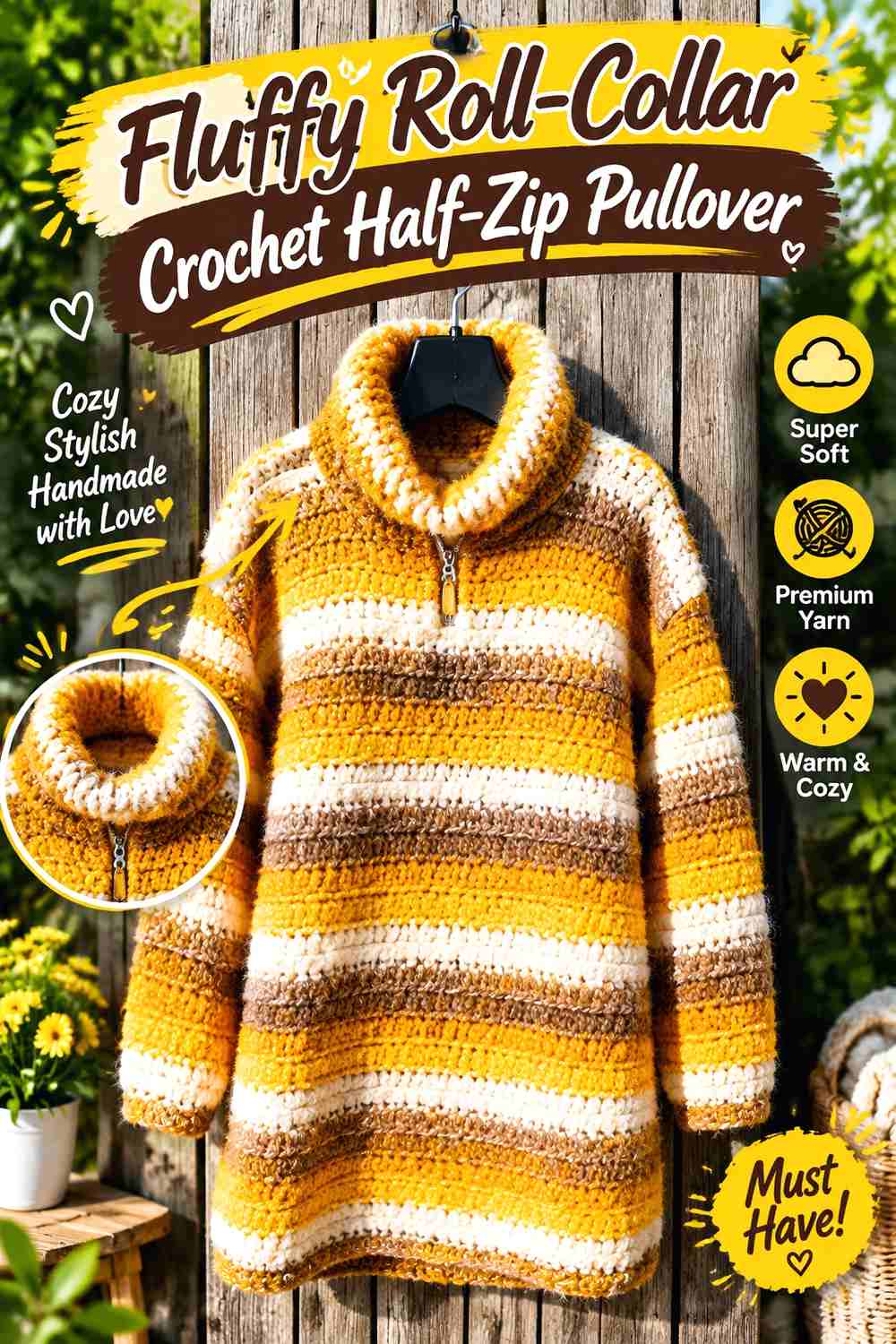
A soft, fuzzy roll-neck sweater creates a very different zip-neck effect from crisp ribbing. The source garment uses a fluffy high collar and relaxed winter silhouette, making it useful for a plush half-zip interpretation.
This direction is less about technical-looking sportswear and more about creating a soft chalet-style pullover.
Fuzzy Yarn Can Hide the Zipper Edges
That visual softness can be attractive, but it also makes individual stitches harder to identify.
If you adapt the neckline, keep track of the center-front edges carefully. Do not depend on being able to count or see every stitch easily once a heavily textured yarn is involved.
A Roll Neck Can Become Very Bulky Beside a Zipper
A roll collar already doubles fabric where it folds.
Place a zipper between those layers and the front can become substantially thicker. Consider whether the collar really needs the full original roll-neck depth or whether a shorter funnel-style version would better suit the closure.
Let the Plush Surface Replace Extra Decoration
The yarn already creates the winter effect.
A simple zipper and restrained color treatment can keep the finished pullover sophisticated instead of adding stripes, bobbles, and multiple contrasting trims on top of the fuzzy fabric.
Creator Credit: Lucky Platypus Crochet
4. Cable Crochet Quarter-Zip Pullover
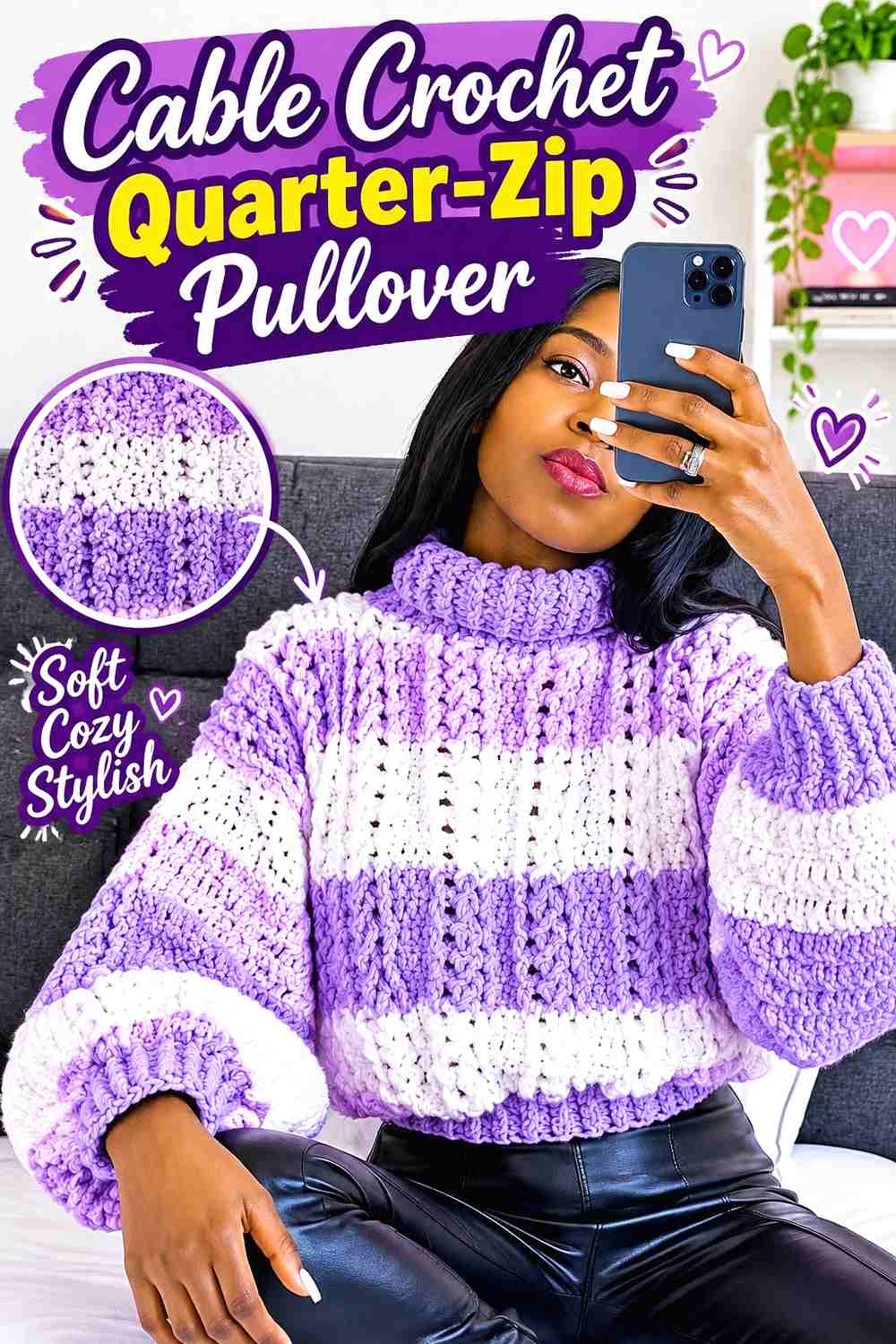
This oversized turtleneck is built around prominent crochet cables, making it the strongest choice if you want a quarter-zip with obvious sweater texture.
The source uses a measurement-led oversized construction, so the zipper idea should be integrated only after the body proportions and central cable arrangement are understood.
Protect the Cable Layout Around the Center Opening
A zipper creates a strong vertical division.
If the cable pattern crosses or occupies that area, changing the front without planning can interrupt the visual rhythm. Decide whether the zipper should sit between cable panels or become the central feature bordered by texture.
Cables Already Add Physical Thickness
Raised crochet cables contain more fabric than a smooth stitch field.
That becomes important when the front edges are folded, reinforced, or placed beside zipper tape. A very bulky yarn plus heavy cables plus a thick collar can create more structure than the shoulders comfortably support.
Oversized Should Still Have Controlled Zip Placement
A loose body can coexist with a neat quarter-zip.
Keeping the neckline and zipper comparatively precise can actually make a roomy pullover look more intentional by giving the upper body a defined focal point.
Creator Credit: AC Crochets
5. Minimal Roll-Neck Crochet Zip Pullover
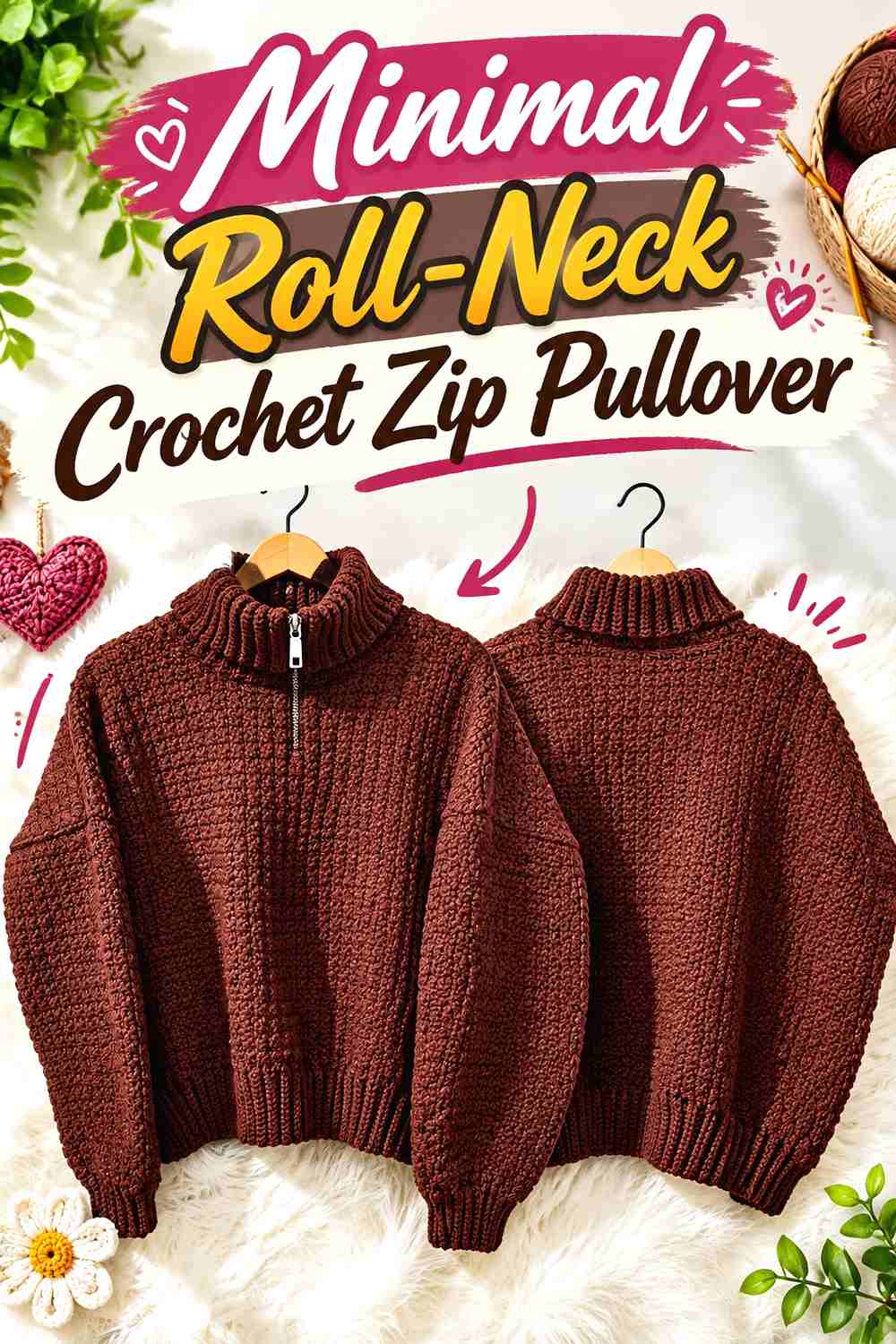
This long-sleeve roll-neck sweater has a straightforward silhouette without a highly decorative surface. That makes it a flexible base for a clean zip-neck concept where proportion is more important than stitch complexity.
The adaptation can lean either sporty or minimalist depending on the zipper and yarn contrast.
A Quiet Surface Exposes Proportion Problems
When there are few motifs or strong textures, collar height, sleeve width, body length, and zipper depth become very noticeable.
Choose the desired pullover proportions before modifying the neckline rather than relying on the zipper to make an ordinary sweater look finished.
A Soft Roll Neck Can Open Into a Wide Collar
If you use only part of the source collar height, a quarter-zip can create a fold-back neckline when opened.
Test that behavior before finishing. A collar that looks attractive zipped up may spread farther than expected when the closure is lowered.
Creator Credit: Fully Crochet
6. Relaxed Crochet Funnel-Neck Zip Pullover
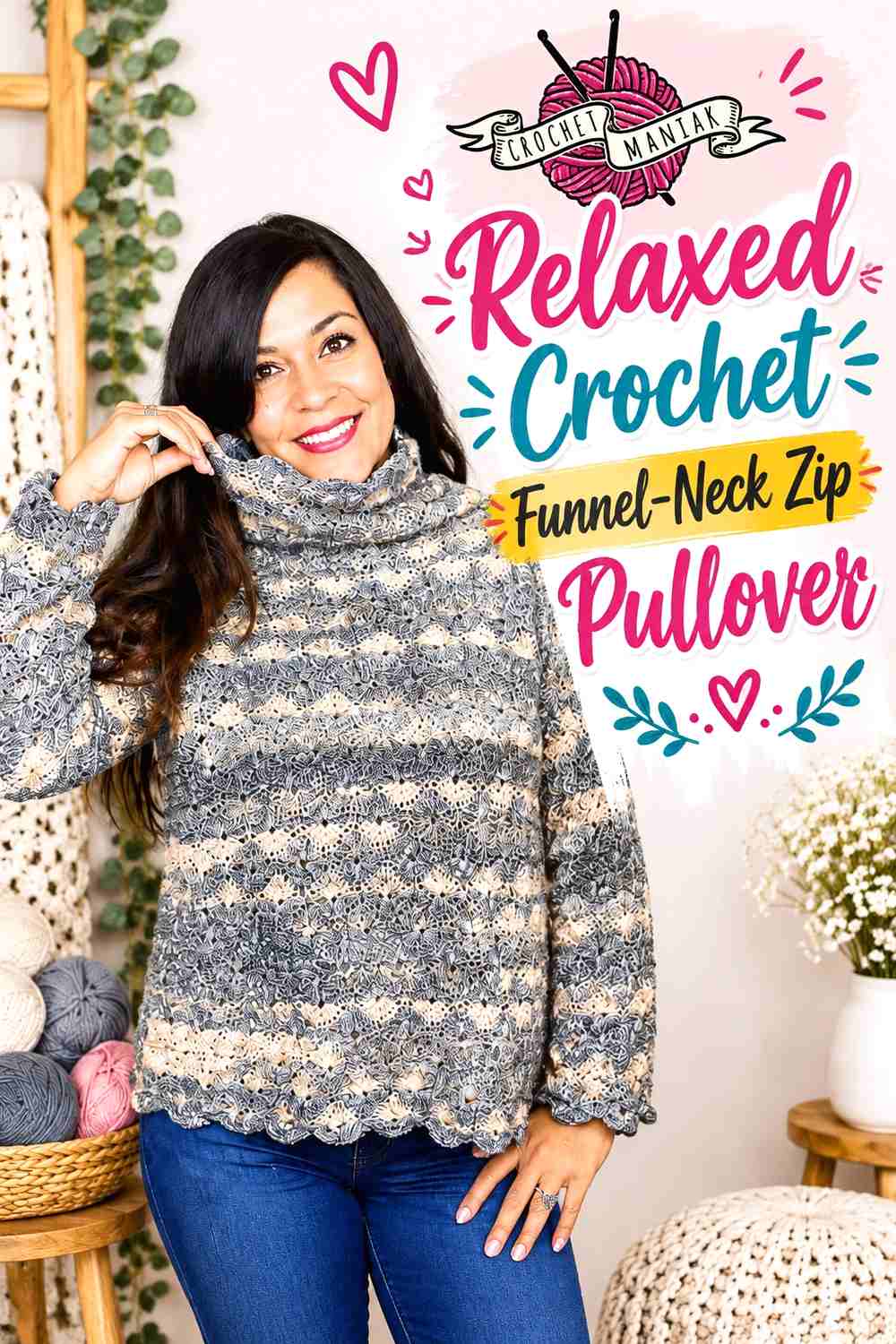
This high-neck sweater provides a relaxed conventional pullover shape with enough collar presence to support a funnel-neck interpretation.
The source tutorial is in French, so preview the complete demonstration and make sure you can confidently identify the relevant sizing and construction information before planning an adaptation.
Use Visual Construction Clues Carefully
Panel orientation, neckline position, seams, and finished try-on views can reveal a lot about a sweater.
However, a zipper conversion depends on details such as opening depth and edge stability that should not be guessed from appearance alone. Keep the adaptation conservative unless you understand how the original front is built.
Funnel Necks Need Less Fabric Than Deep Roll Collars
For a chunky zip-neck, a collar that simply rises above the neckline can be easier to manage than a deeply folded turtleneck.
That can preserve the high-neck winter profile while reducing thickness beside the zipper.
A Solid Pullover Works Well With a Contrast Zipper
Because the sweater surface is relatively uninterrupted, a contrasting closure can become a deliberate graphic accent.
A matching zipper creates the opposite effect and keeps attention on the crochet texture and silhouette.
Creator Credit: Crochet Maniak
7. Paneled Crochet Zip-Collar Pullover
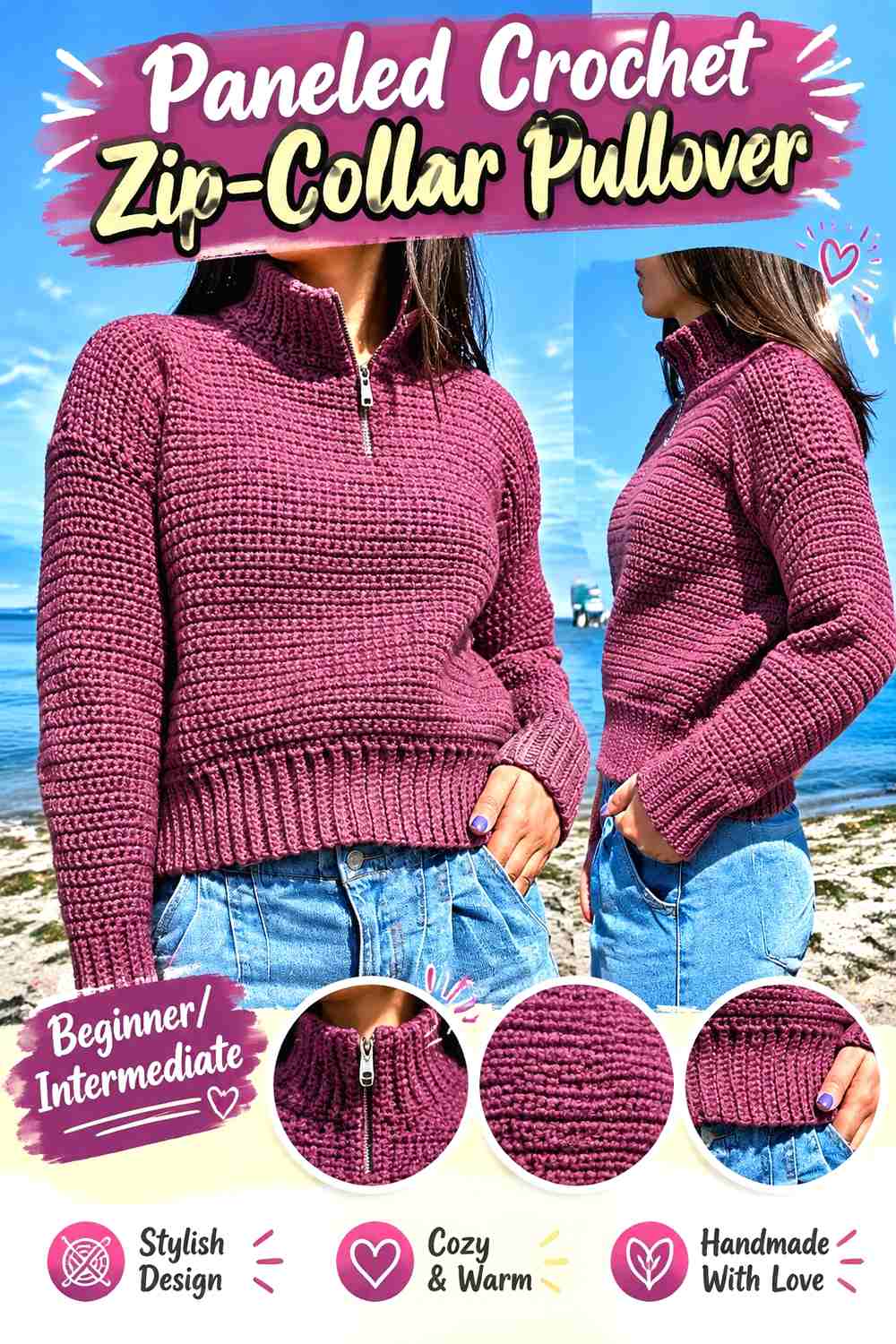
This turtleneck is organized into identifiable sweater components, including body sections, sleeves, cuffs, and neckline finishing. That paneled approach can be especially useful for a zip-neck adaptation because the main pieces can be compared flat before final assembly.
It is a strong direction for crocheters who prefer measurable checkpoints over modifying a seamless sweater in the round.
Flat Panels Make Symmetry Easier to Check
Before the sweater becomes three-dimensional, compare the two sides of the upper front carefully.
A zipper emphasizes differences. If one side of the opening is longer or more stretched than the other, the closure may ripple or pull even if the rest of the sweater fits.
Treat Ribbing and Main Fabric as Separate Materials
Ribbed bands can contract much more strongly than the primary sweater fabric.
If the zipper passes through or beside both, those fabrics need to cooperate rather than pulling in opposite directions. Sample the transition if you substantially change yarn or hook.
Plan the Zip Before Completing a Closed Neckline
The source sweater is designed as a turtleneck.
If you want a zip collar instead, determine where the front opening belongs while the construction is still accessible rather than finishing the closed neck and attempting to improvise afterward.
Creator Credit: Loopy Mountain Crochet
8. Double-Strand Ribbed Crochet Zip Pullover
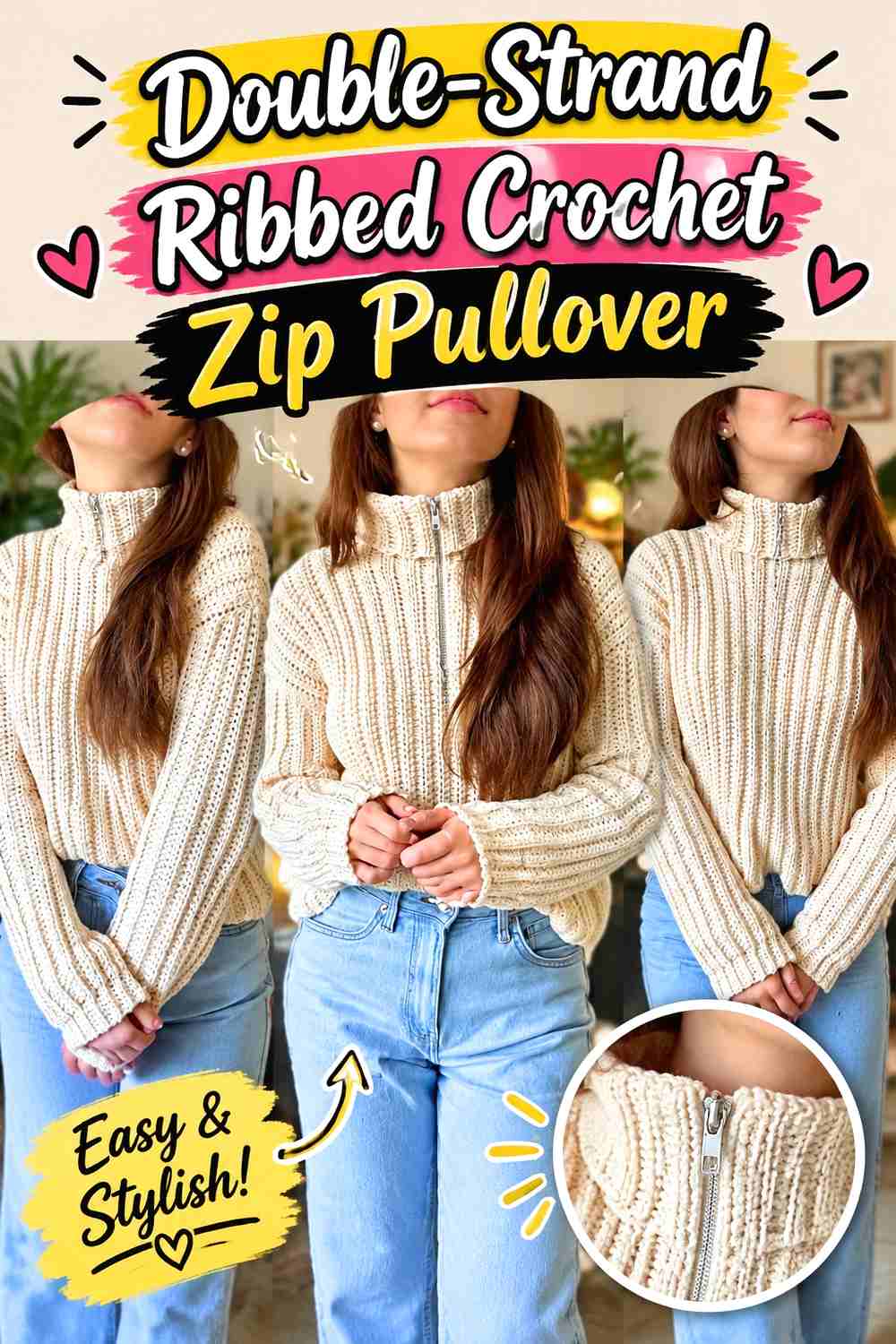
This ribbed turtleneck uses yarn held double in the demonstrated sweater, producing a substantial fabric and strongly linear surface.
That makes it a useful foundation for a chunky-looking zip-neck pullover without needing cables or motifs.
Double-Strand Fabric Changes Zipper Bulk
Two strands held together do more than make larger stitches. They can increase density, weight, and the thickness of every folded edge.
Before adding a zipper concept, handle the fabric doubled over because that gives you a better sense of what the collar edges will feel like beside the closure.
Vertical Ribbing Frames a Quarter-Zip Naturally
Strong rib lines already lead the eye up and down the sweater.
A center-front zipper can continue that direction rather than interrupting the surface, particularly if the opening is kept relatively narrow.
Check Rib Recovery Before Stabilizing the Front
Ribbing stretches, while zipper tape does not stretch in the same way.
Make sure the fabric is sitting at the intended width when the closure area is planned. Attaching a zipper while the ribbing is excessively stretched or contracted can change how the front hangs.
Creator Credit: Alona crochets
9. Berry-Texture Crochet Quarter-Zip Pullover
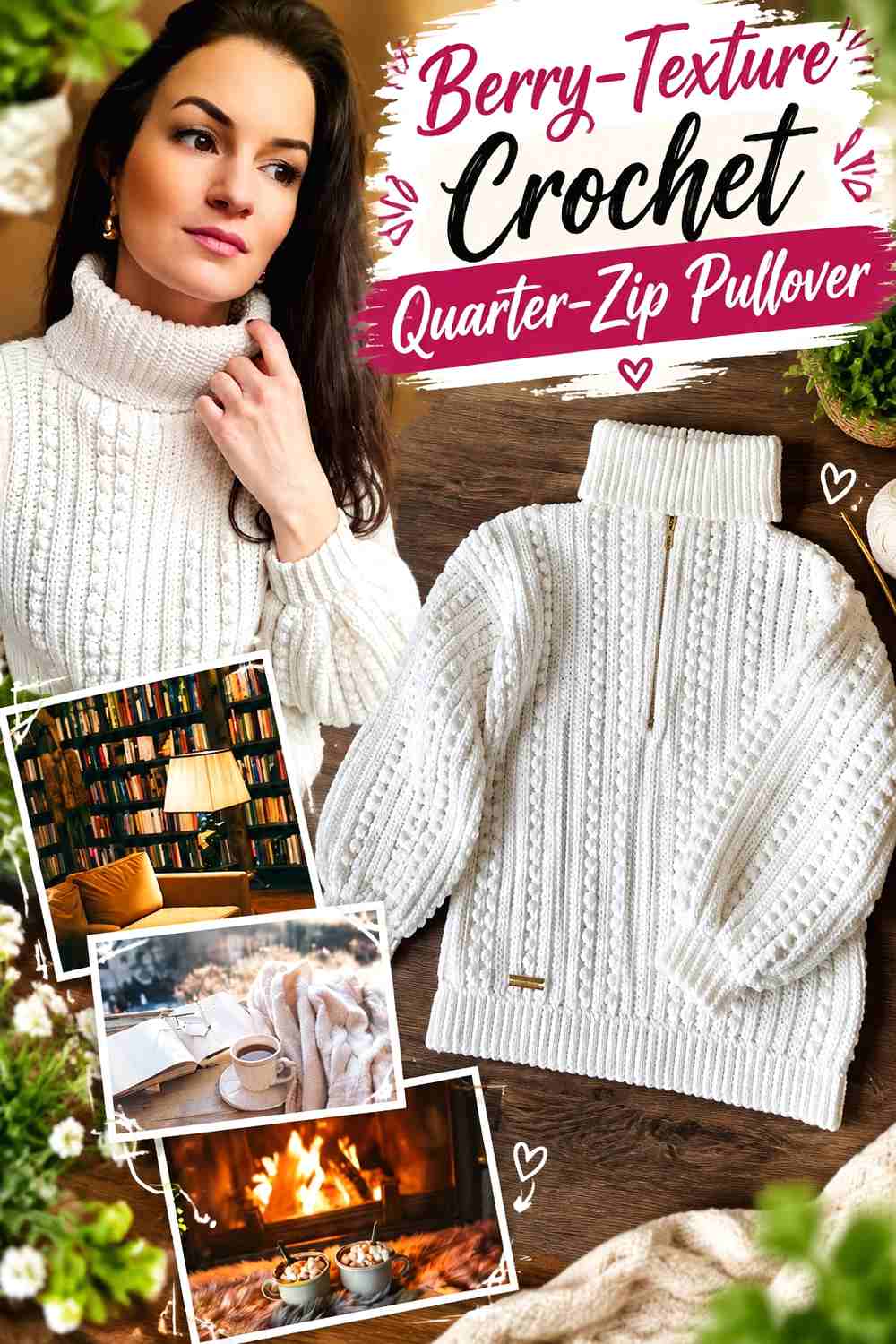
This turtleneck places raised berry-like texture in selected rows rather than filling every inch of the garment with dense relief.
That gives you an interesting quarter-zip foundation where texture can frame the opening without making the entire front equally heavy.
Use the Zip as a Break Between Texture Zones
A vertical opening can provide useful negative space between decorative rows or sections.
If adapting the placement, look at the full front before deciding where additional berry texture belongs. Concentrating every raised detail around the zipper can make the upper chest visually crowded.
Try-On Sizing Matters Before the Opening Is Finalized
The source encourages fit checking while the sweater develops.
Take advantage of that flexibility before committing to a zipper depth. Shoulder placement, body ease, and neckline comfort should already be working before a new center-front structure is introduced.
Crisp Yarn Helps Both Texture and Zip Edges
A yarn with clear stitch definition can make the raised details easier to see and the opening easier to manage.
A very strong halo softens the berries and can also obscure the stitches where the zipper area needs careful finishing.
Creator Credit: Cathérine Crochet
10. Almondridge-Texture Crochet Zip-Neck Pullover
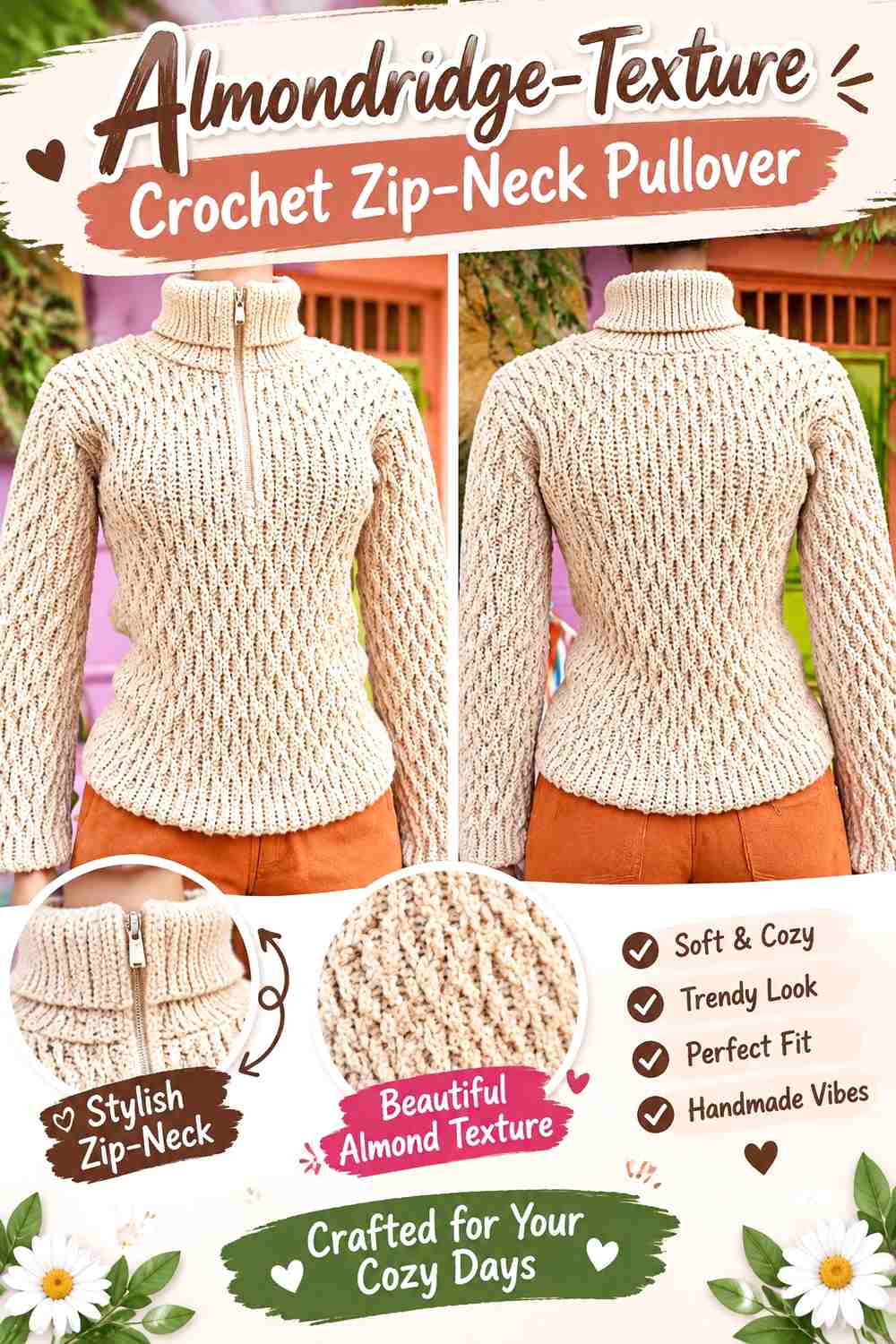
This high-neck sweater focuses on a distinctive textured stitch rather than familiar ribbing or cables. That makes it useful when you want the zip-neck silhouette but do not want the finished pullover to resemble every other ribbed quarter-zip.
The textured field can remain monochromatic and still give the sweater plenty of depth.
Keep the Center Opening From Interrupting the Texture Randomly
Study where the stitch repeat naturally aligns before planning a zipper.
A center-front break looks much more deliberate when the repeated surface appears balanced on both sides.
Swatch the Actual Texture With Your Winter Yarn
A plain gauge sample cannot show whether the Almondridge-style surface remains clear in a chunkier substitute.
Make the representative stitch texture and let it hang. You need to evaluate width, vertical growth, flexibility, and definition together.
Let the Texture Lead the Color Choice
A highly varied yarn can compete with an already active surface.
If you want the stitch relief and zipper line to be immediately readable, a quieter color treatment may be the cleaner Winter 2026 direction.
Creator Credit: Mary K’s Designs
11. Granny-Square Crochet Zip-Collar Pullover
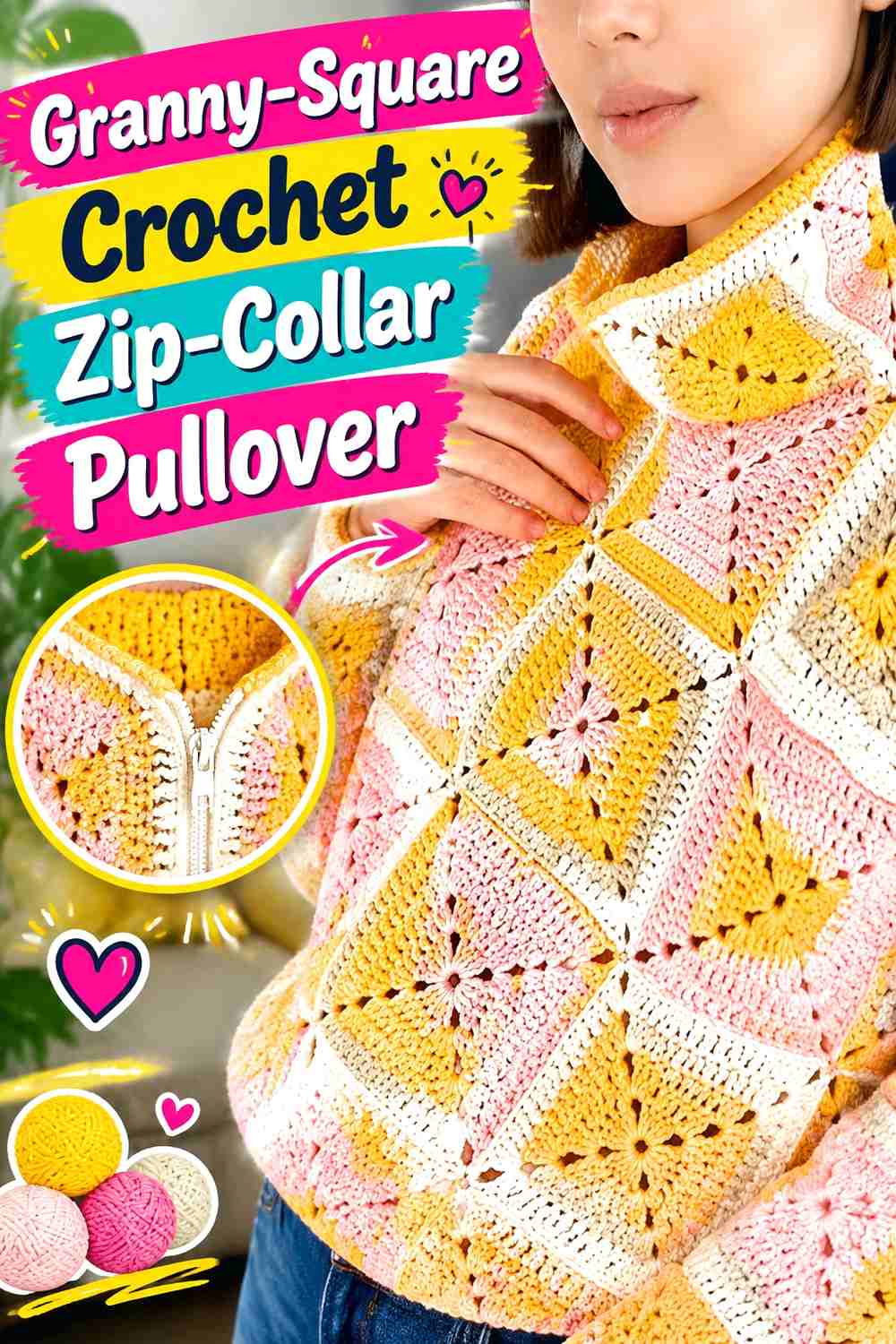
A granny-square turtleneck offers the most modular and graphic route to a zip-neck pullover. Instead of one continuous sweater front, the garment is organized through joined motifs.
That changes the adaptation problem significantly because the zipper needs to relate to both motif placement and joining lines.
Plan the Opening on the Motif Grid First
Do not finish a complete granny-square front and then decide where a zipper should go.
Lay out the intended sweater front before joining and identify a logical center. The two sides should look balanced in both motif dimensions and color distribution.
Block Squares Before Trusting the Zip Length
Small differences between motifs accumulate when several are joined.
Compare blocked dimensions before assembling the upper front. A zipper cannot correct a garment grid that is already noticeably uneven.
Keep the Collar Simpler Than the Body
Granny squares already provide seams, color changes, and repeating shapes.
A comparatively restrained zip collar can frame those graphics without adding another competing motif around the face.
Creator Credit: Beautiful Crochet Stuff
12. Full-Rib Crochet Half-Zip Pullover
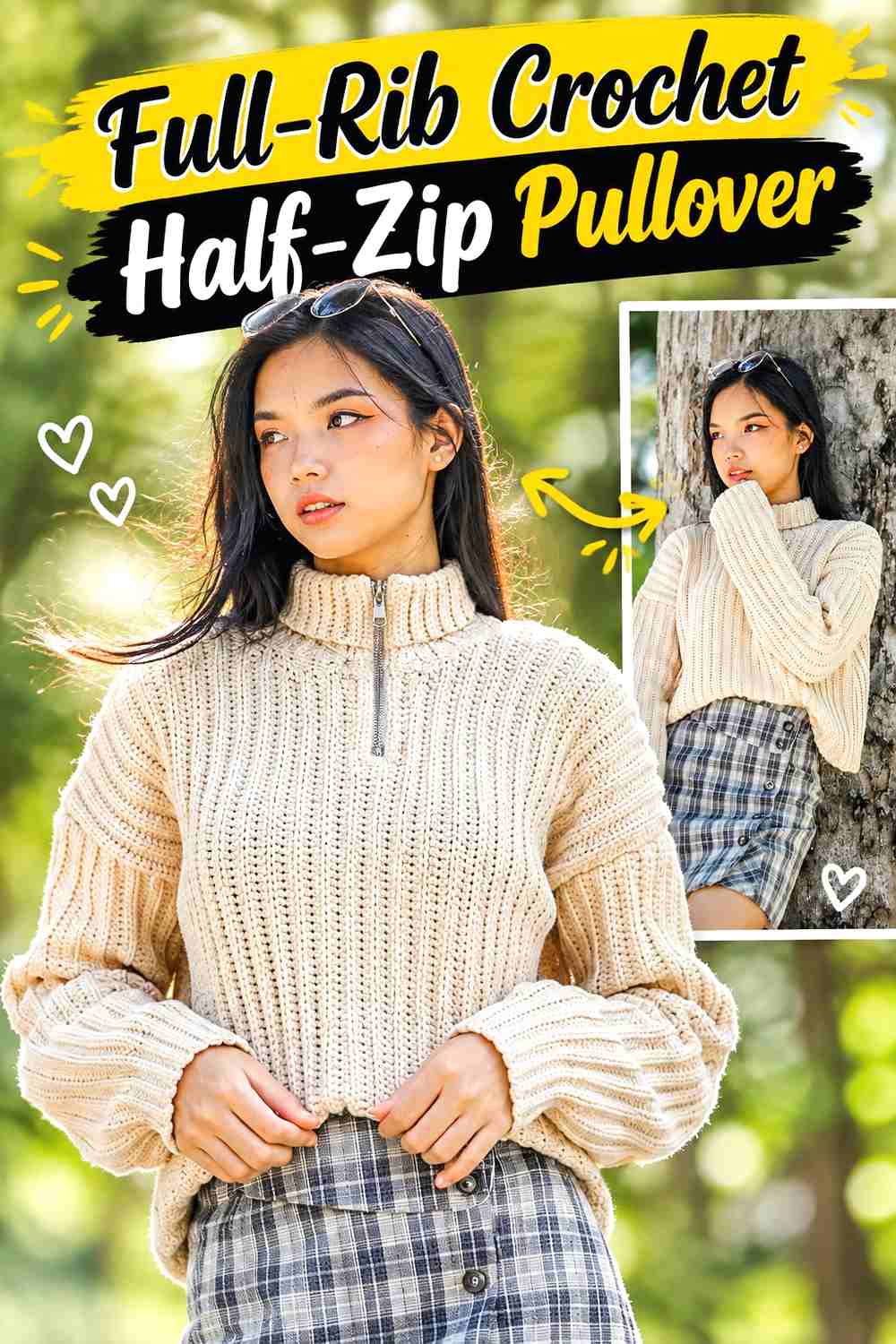
This sweater uses ribbed crochet as the dominant visual language across the body, sleeves, and turtleneck.
It is one of the most natural bases for a sweater-style half-zip because the vertical lines already resemble the structured surfaces often used in winter pullovers.
Vertical Ribs and a Zipper Reinforce Each Other
Both elements guide the eye from the collar down the center front.
Keeping the opening straight and centered is therefore especially important; even a small lean can be emphasized by the surrounding rib lines.
Ribbed Fabric Should Not Be Measured at Random Stretch
Use the same relaxed state each time you compare front dimensions.
If one zipper edge is prepared while stretched and the other while relaxed, the difference may appear only after the closure is installed.
A Half-Zip Can Reduce Neckline Bulk
Instead of keeping the complete closed turtleneck, consider how a shorter standing collar would behave when zipped and unzipped.
That can preserve the strong ribbed sweater effect while avoiding several layers of chunky fabric around the throat.
Creator Credit: Chenda DIY
13. Oversized Crochet Chunky Zip-Neck Pullover
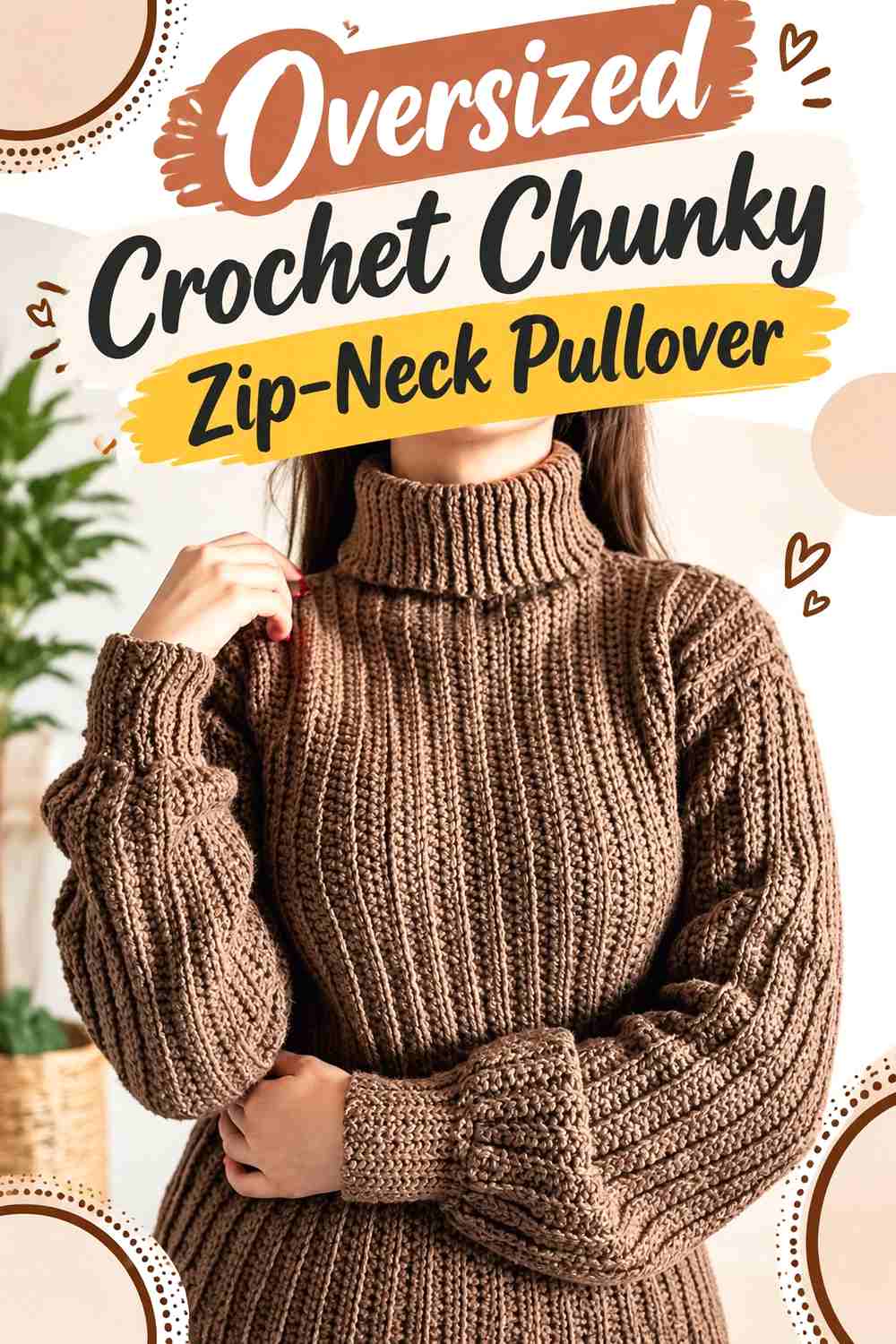
This oversized turtleneck uses a roomy sweater silhouette with clearly defined borders and a substantial collar.
Those proportions make it a useful foundation for a classic oversized winter half-zip where the body remains relaxed but the neck opening looks controlled.
Define Where You Actually Want the Oversizing
More width everywhere does not automatically create better oversized proportions.
Decide whether the extra room belongs mainly in the torso, dropped shoulders, sleeves, or several areas. A structured zipper looks strongest when it sits within a silhouette that was intentionally planned.
Border Details Can Frame the Zip Neck
Defined cuffs, hem, and collar create clear edges around a loose body.
A zipper can become another controlled border rather than an unrelated piece of hardware if its scale and placement agree with those existing finishes.
Watch Total Garment Weight
A roomy body, long sleeves, and a large collar already contain significant fabric.
If you move toward an even heavier chunky yarn, handle a large swatch vertically and consider whether the shoulders will remain comfortable.
Creator Credit: Yarn Cakes, LLC
14. Bobble-Yoke Crochet Quarter-Zip Pullover
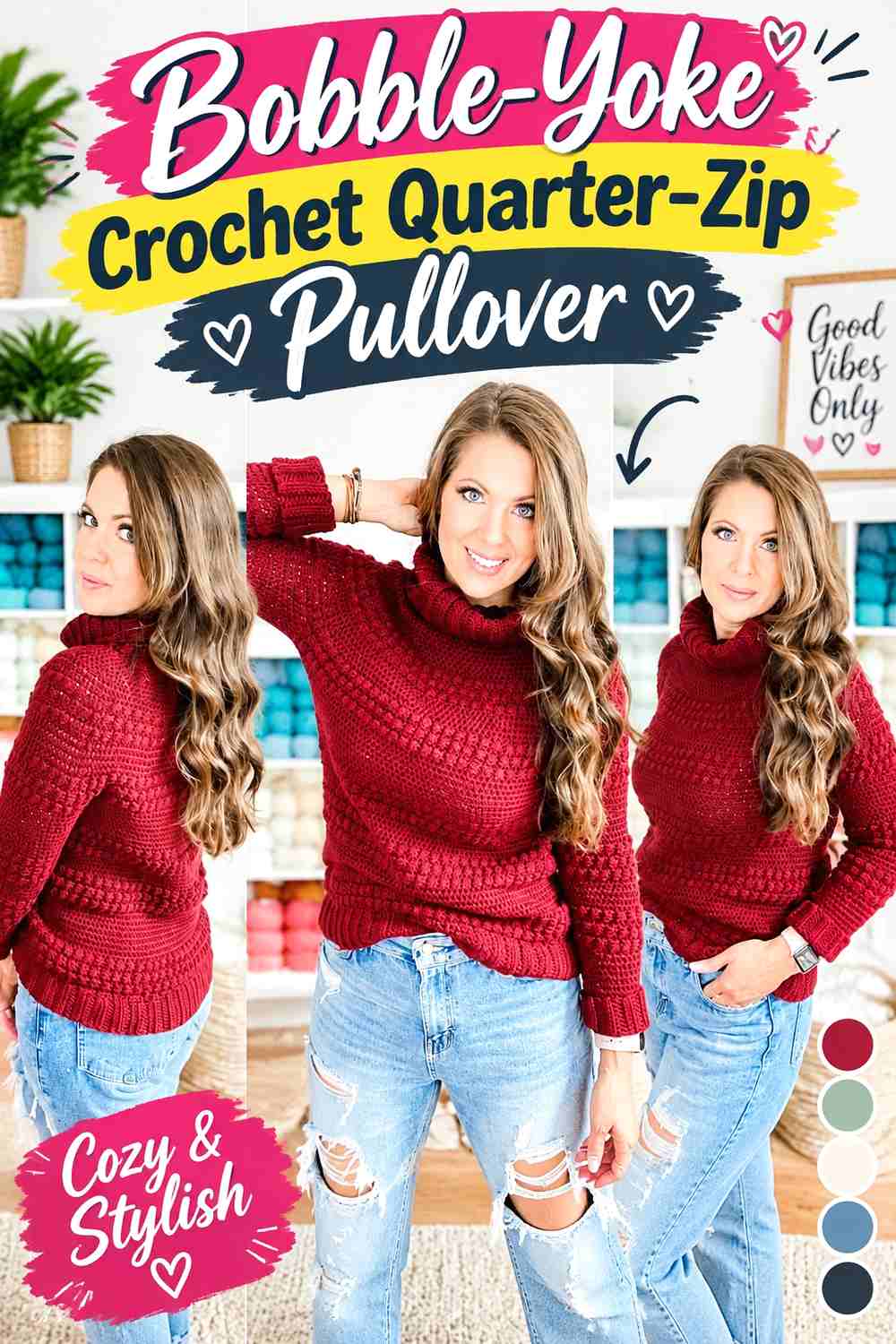
This top-down turtleneck uses a circular yoke with small dimensional bobble details. The texture spreads outward across the shoulders rather than concentrating in a single front cable panel.
That makes the project particularly interesting for a quarter-zip because the opening would interact with a radial yoke instead of a flat rectangular front.
Protect the Yoke’s Visual Balance
A circular yoke distributes pattern around the upper torso.
Introducing a front opening creates a clear center line through that design. Plan it so the bobble placement remains balanced on either side instead of appearing accidentally interrupted.
Top-Down Fit Should Be Settled Early
The neckline and yoke develop before most of the body.
Use the creator’s fit checkpoints before thinking about a final zipper. If the upper body is already rippling or pulling, a center-front closure will not correct the underlying shaping.
Bobbles Add Weight Near the Zipper Area
Repeated raised stitches create extra fabric around the upper body.
Avoid making every part of the collar equally heavy. A smoother zip band can provide a useful visual and physical break from the textured yoke.
Creator Credit: MJ’s Off The Hook Designs
15. Openwork Mock-Neck Crochet Zip Pullover
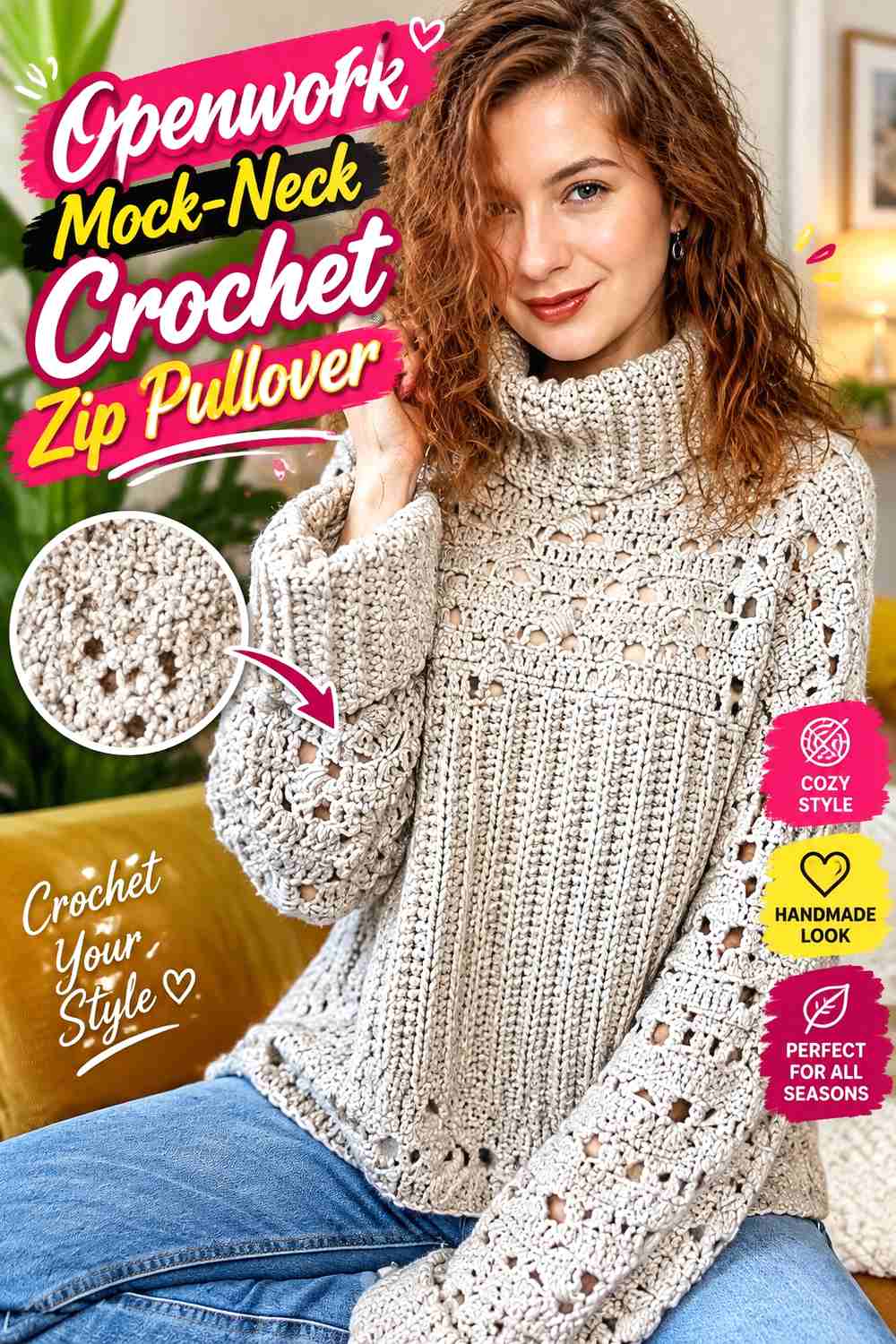
This mock-neck sweater mixes a high neckline with a visible openwork panel, giving it a lighter surface than the dense ribbed and cable projects.
The zip-neck adaptation works best as a fashion pullover rather than an attempt to make the garment uniformly heavy.
Let Dense and Open Areas Do Different Jobs
The collar and zipper area benefit from stability, while decorative openwork can remain softer and lighter.
Trying to force the same open texture directly beside a zipper may make the edge less controlled. Keep structural and decorative zones distinct.
Plan the Underlayer Before Choosing the Zip Depth
An open quarter-zip reveals even more of the garment beneath when unzipped.
A fitted thermal, turtleneck, or contrasting top can become part of the intended winter styling rather than something added later for coverage.
Chunky Does Not Have to Mean Opaque Everywhere
The Winter 2026 look can come from a substantial collar, cuffs, and overall silhouette while selected openwork keeps the sweater from feeling visually heavy.
That contrast makes this option different from a solid ski-style pullover.
Creator Credit: LoopsWithMagic
16. Airy Fluffy Crochet Zip-Neck Pullover
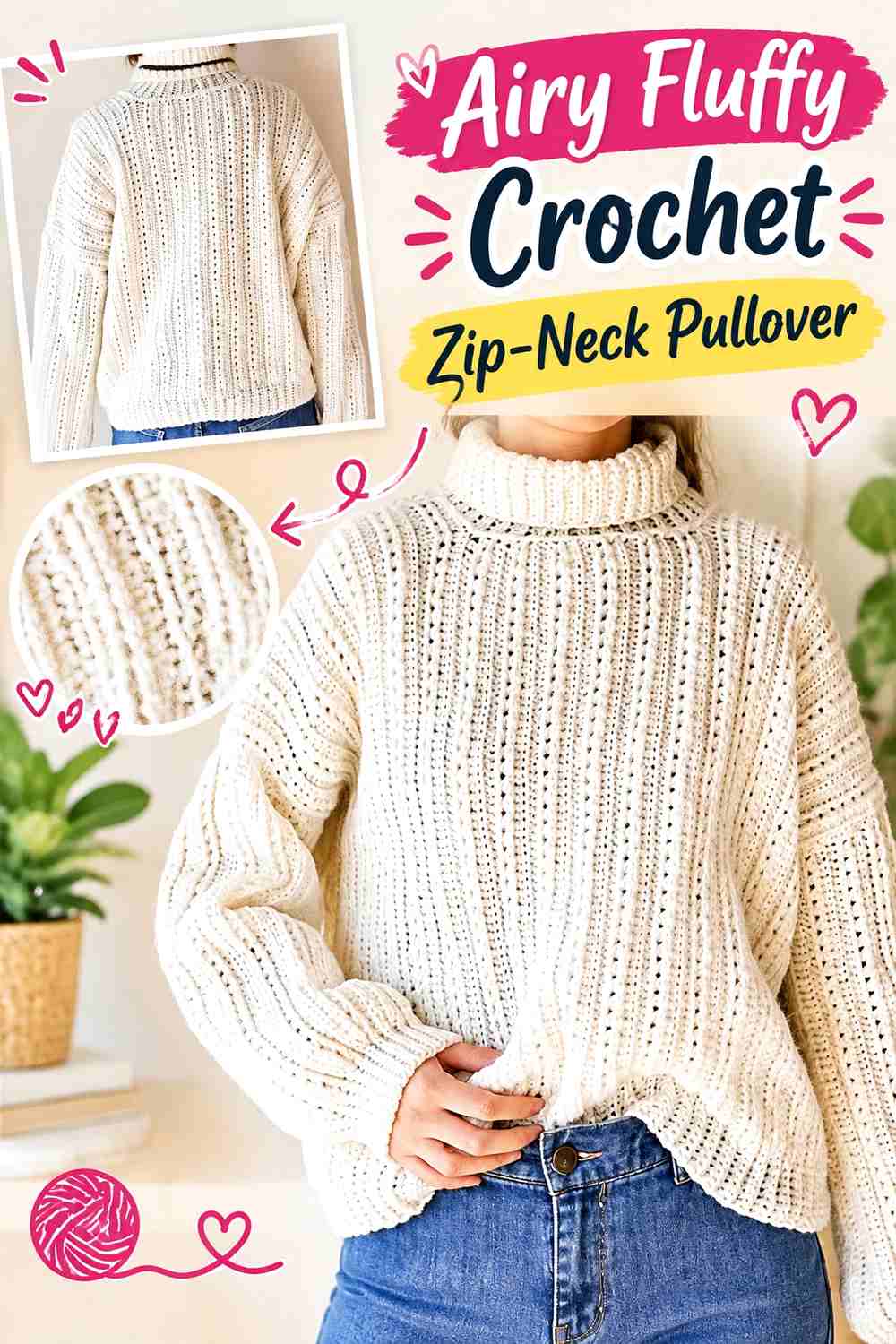
This turtleneck sweater has a deliberately light, fluffy appearance rather than dense chunky structure. That makes it useful for a softer interpretation of the zip-neck trend.
The zipper conversion should remain light enough to preserve that fabric behavior instead of turning the neckline into a rigid block.
Soft Volume Is Different From Heavy Volume
A fluffy yarn can look substantial while remaining relatively airy.
Judge fabric weight by the actual swatch rather than appearance alone. The zipper and any reinforcement should not overwhelm a sweater whose main appeal is lightness.
A Small Zip Can Preserve the Soft Collar
Instead of creating a very deep half-zip, a shorter opening may provide enough room to fold the neckline outward while keeping the pullover’s original softness.
Choose depth based on how you want the collar to behave, not simply on a generic quarter-zip proportion.
Keep the Hardware Visually Quiet
A large heavy zipper can dominate an airy sweater.
A closure that visually blends with the yarn can keep attention on the cloud-like surface and relaxed winter silhouette.
Creator Credit: Orinam crochet
17. Bulky Crochet Funnel-Neck Zip Pullover
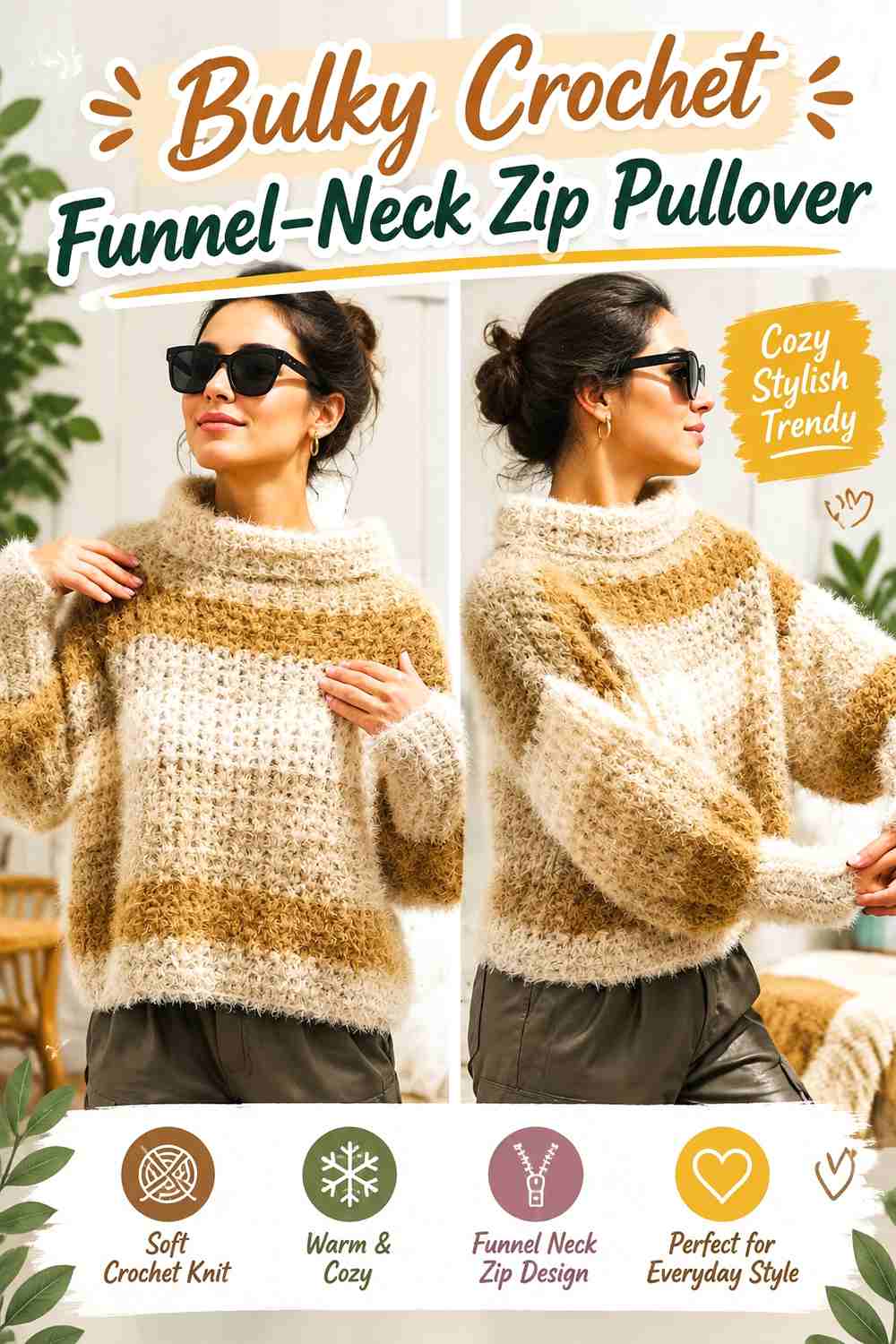
This oversized turtleneck uses weight-5 yarn and a roomy silhouette, giving it one of the most naturally substantial winter profiles in the collection.
For a zip-neck adaptation, the challenge is not making it look chunky—it already does. The challenge is keeping the collar and closure from becoming disproportionately bulky.
Bulky Yarn Magnifies Every Edge
A few rows can create considerable thickness.
Before choosing a deep zipper band or folded collar, stack the relevant fabric layers together and feel how much volume they create near the throat.
Keep the Funnel Neck Shorter if Necessary
A tall closed turtleneck can support itself differently from a split zip collar.
Once the front opens, the two collar halves may spread or fold. A slightly shorter funnel can produce a cleaner open shape in a bulky yarn.
Outerwear Compatibility Matters
An oversized bulky pullover may work best as the visible outer sweater rather than beneath a closely fitted jacket.
Compare the shoulder, sleeve, and collar volume with your winter coat before increasing any of those areas.
Creator Credit: D3 Crochet
18. Color-Block Crochet Quarter-Zip Pullover
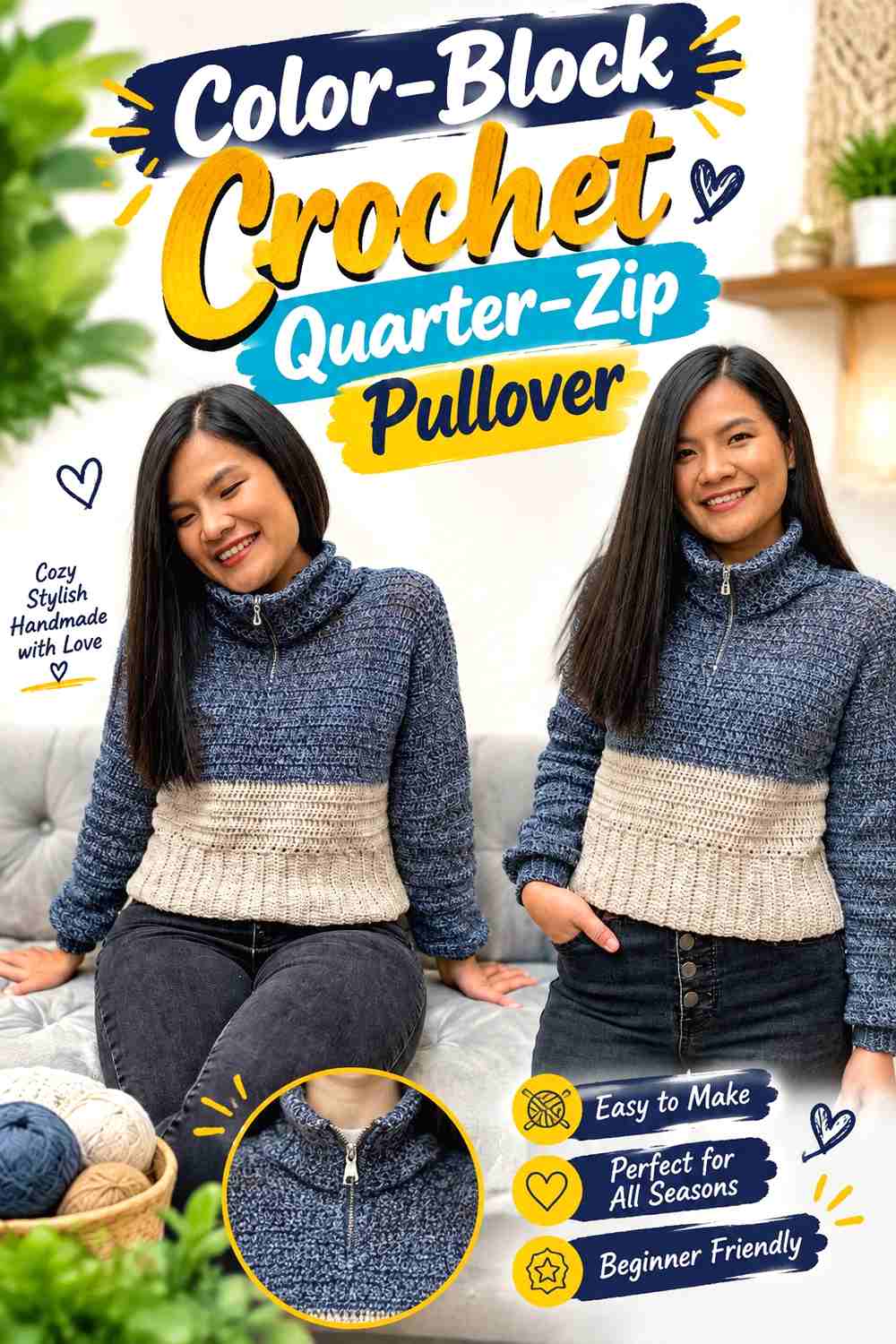
This paneled turtleneck already uses contrasting color areas, making it a useful base for a quarter-zip where the collar, zipper placket, cuffs, or lower bands can be treated as coordinated accents.
The sweater is assembled from separate garment pieces before the collar is added, which gives you a different planning route from the top-down options.
Use the Zip Collar as One Color Zone
A contrasting collar can make the neckline the clear focal point.
Repeat that color once more at the cuffs or hem if you want the accent to feel connected to the rest of the garment rather than isolated around the face.
Panel Construction Helps You Plan the Center Front
Because the sweater is not dependent on one continuous circular body, the front can be considered as its own design area.
That makes it easier to think through color placement on the two sides of a potential zipper before final assembly.
Avoid Too Many Competing Divisions
Color blocking, a zipper, ribbed borders, and a high collar already create several lines.
Keep the palette disciplined. Two deliberate colors can make the quarter-zip look graphic without turning the upper body into a collection of unrelated sections.
Creator Credit: KnitcroAddict
Which Crochet Zip-Neck Pullover Direction Should You Choose?
| If you want… | Consider… | Main point to check |
|---|---|---|
| A direct quarter-zip construction | Project 1 | Zipper and collar integration |
| A clean classic zip neck | Projects 2, 5, or 6 | Opening symmetry and collar proportion |
| Plush winter texture | Projects 3 or 16 | Bulk beside the zipper |
| Strong cables | Project 4 | Keeping the center texture balanced |
| Flat-panel construction | Projects 7 or 18 | Matching the two zipper edges |
| Heavy ribbing | Projects 8 or 12 | Stretch versus stable zipper tape |
| Raised decorative texture | Projects 9, 10, or 14 | Keeping texture away from an overcrowded placket |
| Graphic motifs | Project 11 | Motif-grid alignment |
| Oversized winter proportions | Projects 13 or 17 | Total garment and collar weight |
| A lighter layered sweater | Project 15 | Stable zip area beside openwork |
Conclusion
For the most straightforward crochet zip-neck pullover, Project 1 is the place to begin because the zipper is already part of the original sweater construction. It gives you a direct reference for how a crochet collar and center-front opening can work together.
For a more textured Winter 2026 version, Project 4 turns cables into the focal point, Projects 8 and 12 emphasize ribbing, and Project 14 uses a dimensional bobble yoke. Project 11 is the most graphic option because granny-square placement changes both construction and color layout.
If maximum chunky volume is the goal, Projects 13 and 17 provide the strongest oversized foundations. Projects 3 and 16 move in a softer direction with fluffy surfaces, while Project 15 is useful when you prefer contrast between a substantial neckline and lighter openwork.
Whichever base you choose, plan the zipper before completing the original closed turtleneck. A zip neck changes the front opening and collar behavior, so it should be treated as part of the construction rather than a decorative addition after the sweater is finished. Use the original tutorial for the creator’s exact sweater construction and fit information, then test the zipper adaptation separately.
Frequently Asked Questions
Can I turn any crochet turtleneck sweater into a quarter-zip pullover?
Not automatically. A quarter-zip needs a planned center-front opening and stable edges for the zipper. Seamless circular-yoke, motif, flat-panel, and ribbed sweaters all approach that area differently. Study the original construction before deciding whether a zipper conversion is practical.
Should I crochet the whole sweater before adding the zipper opening?
It is usually better to plan the opening before the closed neckline is completed. The zipper affects the upper front and collar, so treating it as an afterthought can leave you with a sweater that was structurally designed to remain closed.
What kind of crochet fabric works well beside a zipper?
A reasonably stable edge is helpful because zipper tape does not stretch like many crochet fabrics. Ribbing can work, but its stretch needs to be controlled. Cables, bobbles, openwork, and fluffy yarn may need a simpler area immediately beside the closure so the zipper can sit evenly.
How chunky should a crochet zip-neck pullover be?
There is no required yarn weight. Chunky yarn creates the strongest winter volume, but it also increases collar and placket thickness. A medium-weight yarn with dense ribbing or raised texture can still produce a substantial zip-neck sweater without as much bulk.
Should the zipper match the yarn color?
Either approach can work. A matching zipper keeps the neckline understated, while a contrast zipper creates a visible vertical accent. On cable, bobble, granny-square, or color-block sweaters, consider whether another contrast line will improve the design or compete with details already present.
Why does a zipper make ribbed crochet behave differently?
Ribbed crochet can expand and contract, while zipper tape stays comparatively stable. If the ribbing is stretched or compressed when the zipper area is prepared, the finished front can pull or ripple. Evaluate the fabric at its intended wearing width rather than at maximum stretch.
Can a crochet zip-neck pullover replace technical winter or ski clothing?
No. These are handmade fashion and layering sweaters. A chunky crochet pullover does not automatically provide the wind resistance, moisture management, waterproofing, or other performance properties of technical winter sports clothing. Use it for everyday cold-weather wear and appropriate après-ski settings according to the yarn and layers you choose.