A crochet ski sweater dress combines two cold-weather wardrobe ideas: the comfortable coverage of a sweater dress and the graphic, textured look associated with alpine knitwear. High necklines, ribbed surfaces, cables, colorwork yokes, oversized proportions, and substantial cuffs can all push a crochet dress toward an après-ski mood.
These ideas take different routes. Several tutorials already produce sweater dresses or long tunics. Others teach winter sweater constructions that can inspire a dress-length version if their shaping and sizing method allow the body to be extended safely. Those adaptations should be planned from the tutorial’s construction rather than achieved by simply switching to a heavier yarn or adding an arbitrary number of rows.
The result can range from a fitted ribbed mini dress for lodge evenings to a roomy turtleneck layer worn with leggings and boots. These are fashion garments rather than technical ski clothing, so choose them for indoor wear, casual winter outings, and après-ski styling rather than protection on the slopes.
Quick List
- Ribbed Turtleneck Crochet Ski Sweater Dress
- Classic High-Neck Crochet Ski Sweater Dress
- Wide-Collar Crochet Lodge Sweater Dress
- Oversized Pocket Crochet Après-Ski Dress
- Raglan Crochet Winter Sweater Dress
- Cable-Front Crochet Alpine Sweater Dress
- Long Tunic Crochet Après-Ski Sweater Dress
- Hooded Crochet Ski Sweater Dress
- Oversized Turtleneck Crochet Chalet Dress
- Cable-Twist Crochet Ski Sweater Dress
- Mock-Neck Crochet Snow-Lodge Sweater Dress
- Fair-Isle-Inspired Crochet Ski Sweater Dress
- Color-Block Turtleneck Crochet Alpine Dress
What Gives a Crochet Sweater Dress a Ski-Lodge Look?
You do not need snowflake motifs on every project. The strongest ski-sweater references usually come from a combination of neckline, texture, proportion, and color placement.
A high or folded neck immediately creates a cold-weather impression. Cables and deep ribbing add the visual weight associated with classic winter sweaters, while geometric colorwork around the yoke creates a more obvious alpine direction. An oversized body can feel relaxed and chalet-ready; a fitted ribbed dress gives the same theme a more polished après-ski look.
Color can help, but construction should come first. Cream, charcoal, brown, red, forest green, navy, and icy neutrals can reinforce the theme, yet changing the color of an unsuitable summer dress does not automatically turn it into a convincing sweater dress.
Choose Yarn for Fabric, Not Just Warmth
A sweater dress contains much more fabric than a cropped sweater. That extra length means yarn weight affects not only warmth but also garment weight, stretch, drape, and how the shoulders behave after repeated wear.
If you substitute yarn, make a gauge sample using the stitch pattern from the tutorial. A dense fabric can become stiff when extended to dress length, while a heavy but stretchy fabric can gradually pull downward.
For colorwork, stitch definition matters because the motif needs to remain readable. For cables, choose a yarn that lets raised stitches remain visible. For oversized designs, consider whether the finished fabric has enough drape to hang comfortably instead of standing away from the body.
Always follow the care information for the actual yarn you use rather than assuming every winter-looking yarn should be washed the same way.
Decide on Dress Length Before You Change a Sweater Tutorial
Not every sweater can simply continue downward into a dress. First determine how the garment is constructed.
If the body is worked continuously and the designer already discusses adjusting length, extending it may be relatively straightforward. If there is waist shaping, hip shaping, a fixed cable panel, or a repeating colorwork chart, additional planning may be required.
Measure the widest part the dress needs to accommodate, not just the bust. A sweater that fits comfortably at the chest may not have enough room when extended over the hips.
Also consider movement. A narrow sweater can be perfectly comfortable at hip length but restrictive at mid-thigh. Before turning a sweater tutorial into a dress, confirm how the intended body width, stretch, and hem will work at the longer proportion.
1. Ribbed Turtleneck Crochet Ski Sweater Dress
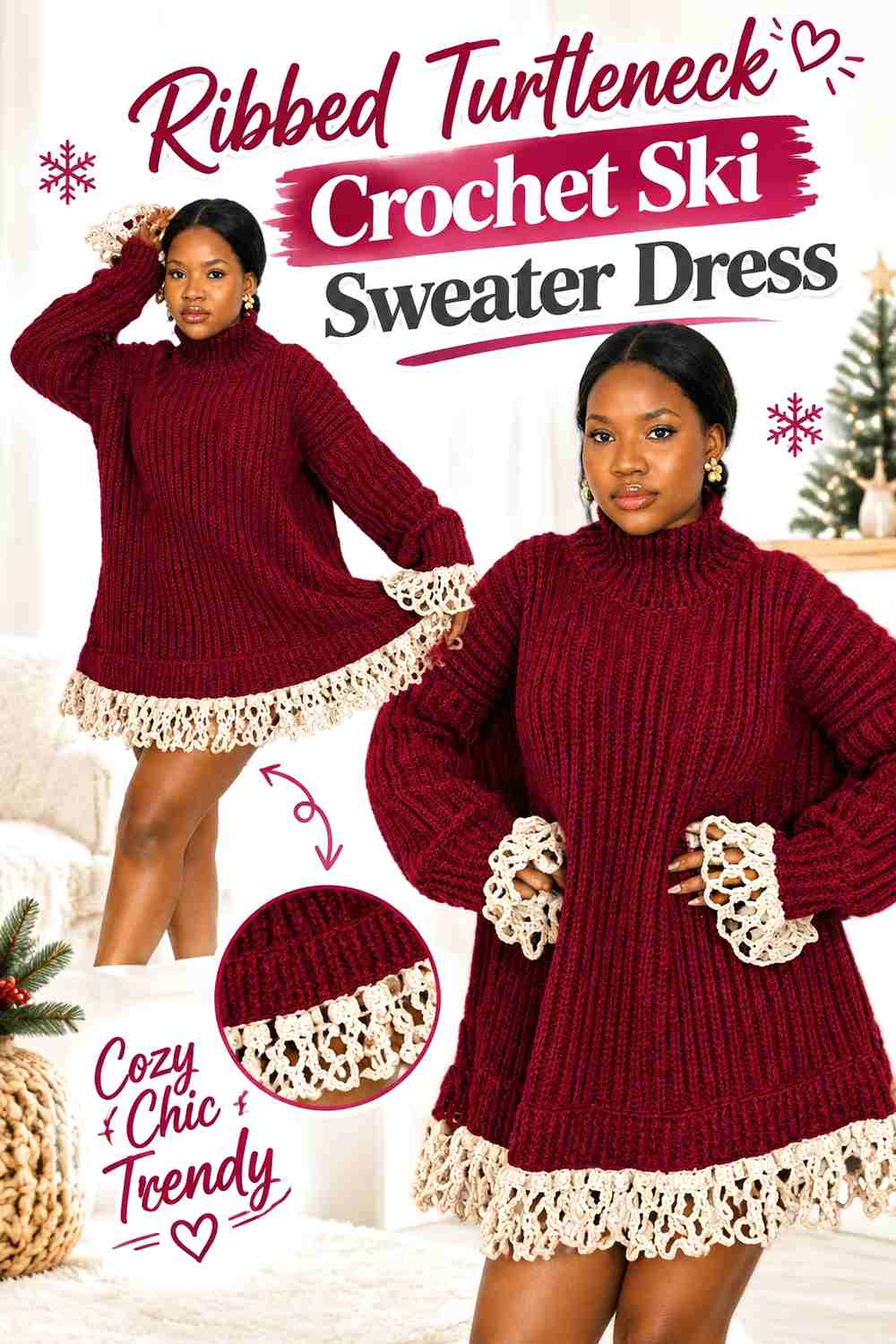
A fitted ribbed dress with a high neckline immediately fits the après-ski theme. This direction emphasizes long vertical texture rather than bold snowflake motifs, creating a cleaner winter look that can work with boots, tights, or a long coat.
The source project also includes dramatic trim details, which makes this option useful for someone who wants an alpine-inspired dress with a more decorative finish instead of a strictly traditional ski sweater.
Vertical Ribbing Creates a Sleeker Winter Silhouette
Ribbing visually lengthens a sweater dress and provides surface interest without introducing multiple colors. It can be especially effective when you prefer tonal winter styling.
Pay attention to stretch before choosing your finished fit. A ribbed crochet fabric may behave differently across the body than a flat stitch pattern, so use the tutorial’s sizing and gauge information rather than judging the dress only by how the unstretched piece looks.
Keep Statement Trim Separate From the Ski Motif
Decorative cuffs or hem treatments already create a strong focal point. If you also want an alpine effect, consider using restrained color blocking or a contrasting neckline rather than adding elaborate motifs everywhere.
This keeps the finished dress intentional: the ribbing establishes the sweater character while one additional feature supplies the après-ski personality.
Creator Credit: 🧶Mihankushea🧶
2. Classic High-Neck Crochet Ski Sweater Dress
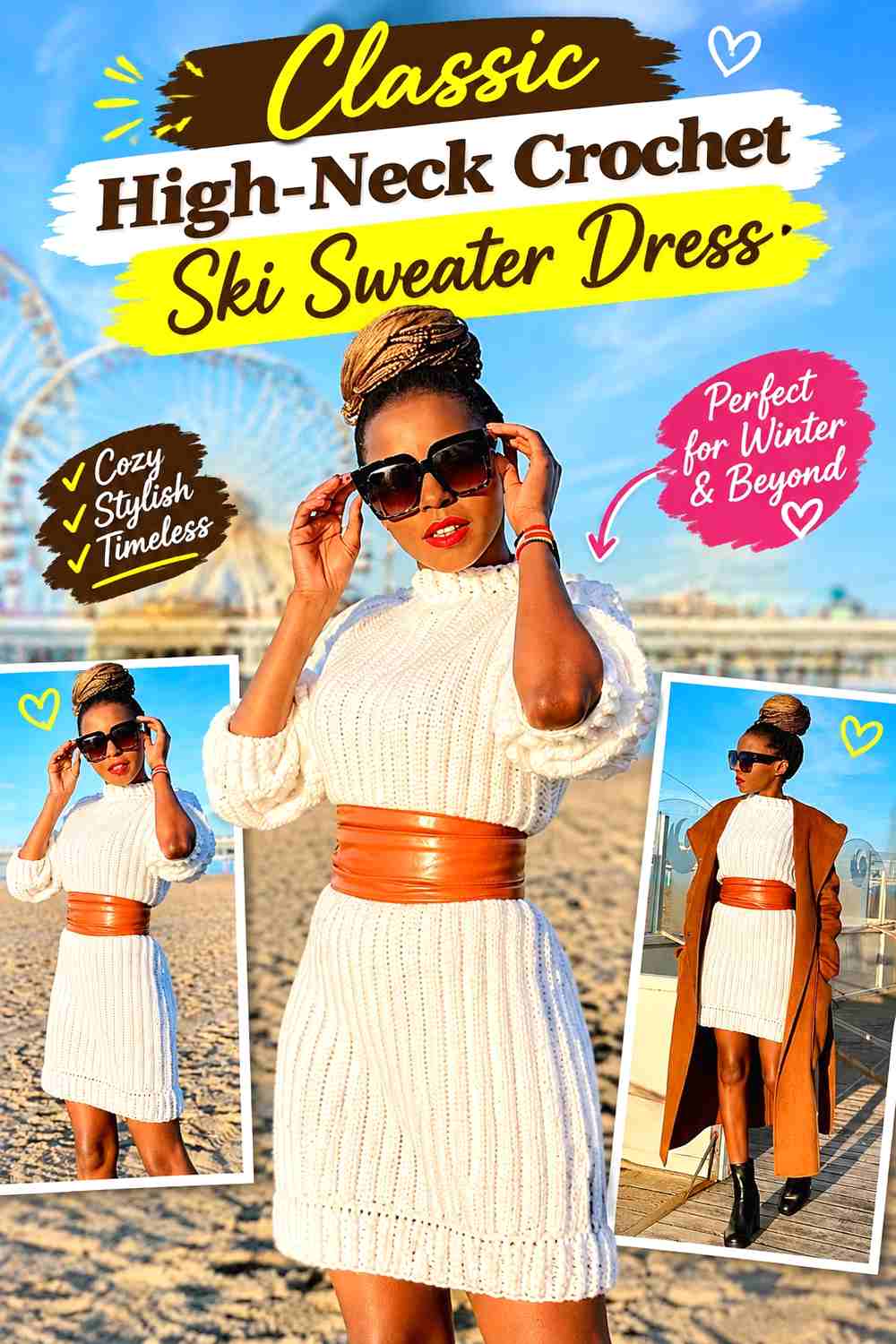
This ribbed sweater-dress construction offers a more understated path to the ski-lodge look. A high neckline, long sleeves, and substantial lower edging already provide the key proportions of a cold-weather dress without needing decorative motifs.
It is a useful choice when you prefer a solid-color garment that can be styled with patterned accessories rather than building all the visual interest into the crochet itself.
A High Neck Can Carry the Entire Alpine Theme
A pronounced neckline makes even a plain sweater dress feel more winter-specific. In a neutral yarn, it creates the kind of simple silhouette that pairs easily with tall boots, scarves, or a structured coat.
Do not enlarge the collar independently without checking the neckline circumference and fabric weight. A very heavy collar can pull differently from the body of the dress.
Compare Hip Fit Before Committing to the Body Length
Straight sweater-dress panels need enough room for the widest part of the body. If your bust and hip measurements fall into different size ranges, study how the tutorial handles width before choosing which size to follow.
The goal is not maximum looseness. It is enough room for the dress to hang as intended without stretching the lower portion far more than the upper body.
Creator Credit: AC Crochets
3. Wide-Collar Crochet Lodge Sweater Dress
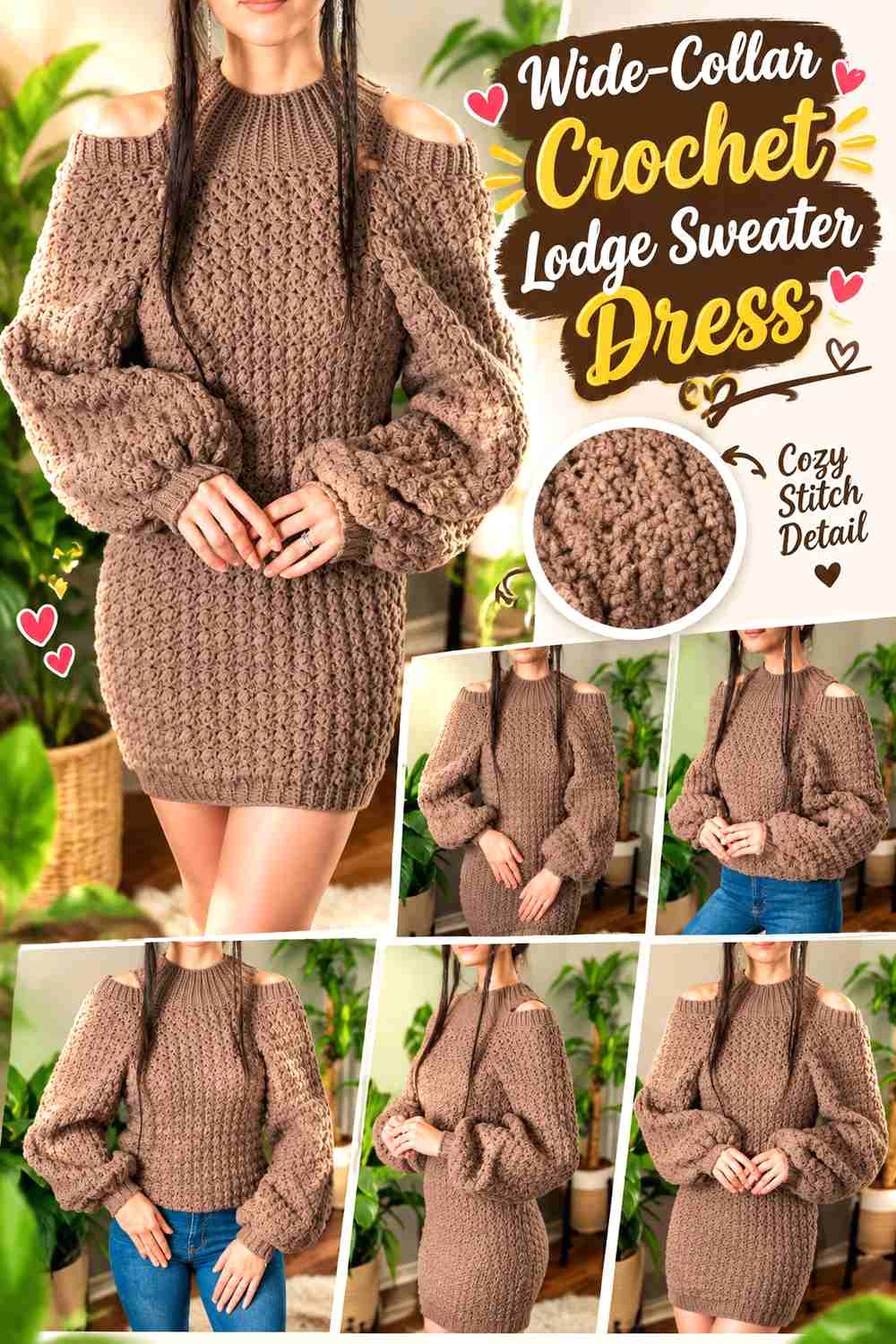
A wide collar gives this sweater dress a softer chalet character. Compared with a close turtleneck, the neckline opens the upper body visually while still keeping the garment unmistakably sweater-like.
This construction is useful if you want après-ski style without a tall neck touching the chin.
The Collar Determines Whether the Dress Feels Relaxed or Structured
A wider neckline creates a different balance from a classic fitted ski sweater. It looks softer and more casual, especially when paired with a textured body and substantial sleeves.
Before changing yarn, check how the collar holds its shape in the original construction. A heavier substitution can cause a collar that should frame the shoulders to collapse or stretch.
Let One Texture Lead the Design
The body already has noticeable stitch texture, so an additional alpine adaptation does not need to be complicated.
A two-tone collar, contrasting cuffs, or a simple stripe placement can be enough. If you introduce complex colorwork as well as a strong texture and unusual shoulder detail, the dress can become visually crowded.
Creator Credit: TCDDIY
4. Oversized Pocket Crochet Après-Ski Dress
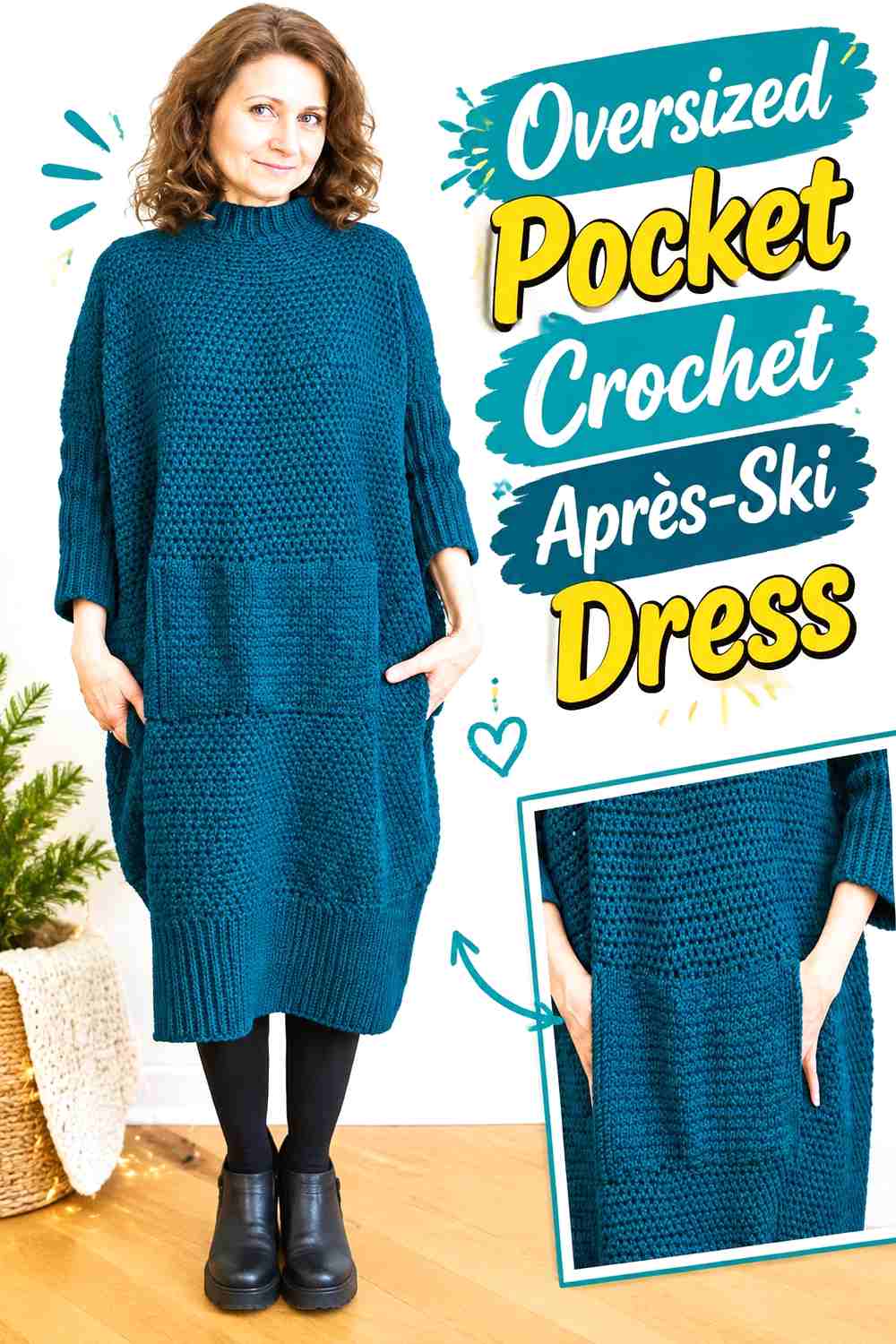
An oversized sweater dress with a large front pocket shifts the theme toward relaxed lodge wear. It is less fitted and more casual than the ribbed options, making it a useful direction for wearing over leggings or another close base layer.
The pocket also distinguishes this silhouette from more conventional pullover dresses.
Oversized Should Still Be Deliberately Proportioned
A roomy body needs enough ease to look intentional without placing unnecessary weight on the shoulders. Extending both width and length at once can result in much more fabric than expected.
Compare the tutorial’s finished proportions with a sweater dress you already like wearing. Pay particular attention to shoulder width, sleeve placement, and where the hem will fall.
A Large Pocket Creates a Natural Alpine Accent Area
The front pocket can become part of the ski-sweater theme without changing the entire body.
For example, a contrasting pocket can echo a yoke or cuff color. If you are considering patterned colorwork on the pocket, first decide whether it will remain visually level after the dress is worn and the fabric stretches.
Creator Credit: Crazy Cool Crochet
5. Raglan Crochet Winter Sweater Dress
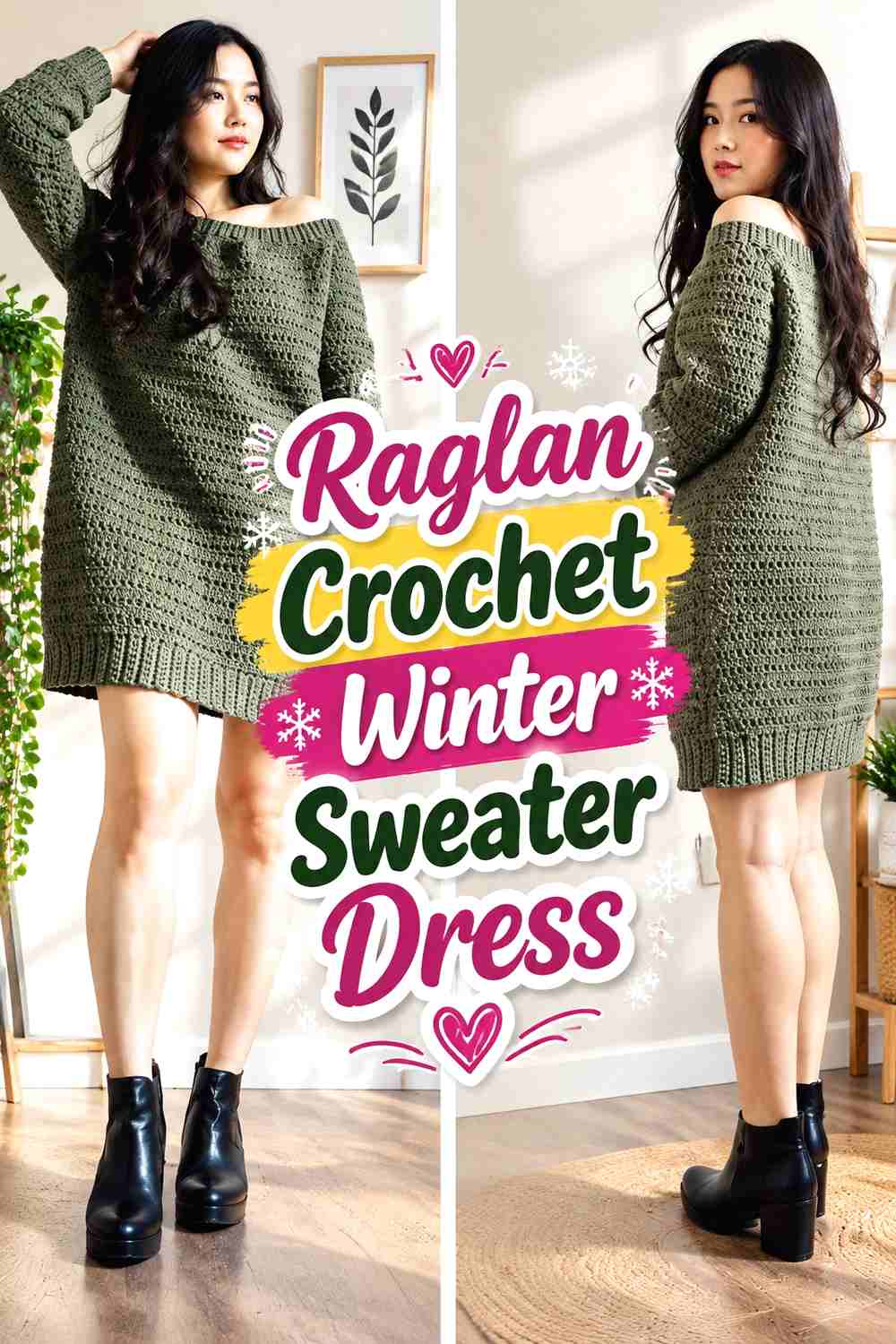
A raglan sweater dress creates a continuous line from neckline through the upper body, giving the garment a softer shape than separate rectangular panels.
This makes it a useful base for a streamlined ski dress where fit and shoulder movement matter more than heavy decorative cables.
Raglan Construction Changes Where Colorwork Can Sit
A raglan upper body does not provide the same uninterrupted circular canvas as a classic round-yoke ski sweater.
If you want contrast, simple stripes or strategically placed bands may integrate more naturally than forcing a large Nordic-style motif into shaping lines that were not designed for it.
Try-On Points Matter in a Longer Garment
When the construction allows fit to be evaluated as the body develops, use those checks before you reach dress length.
A sweater can appear correct at the bust and still need adjustment through the waist or hips. Evaluate the silhouette at several points rather than completing all the extra length and discovering the lower body does not hang comfortably.
Creator Credit: The Happy Unraveler
6. Cable-Front Crochet Alpine Sweater Dress
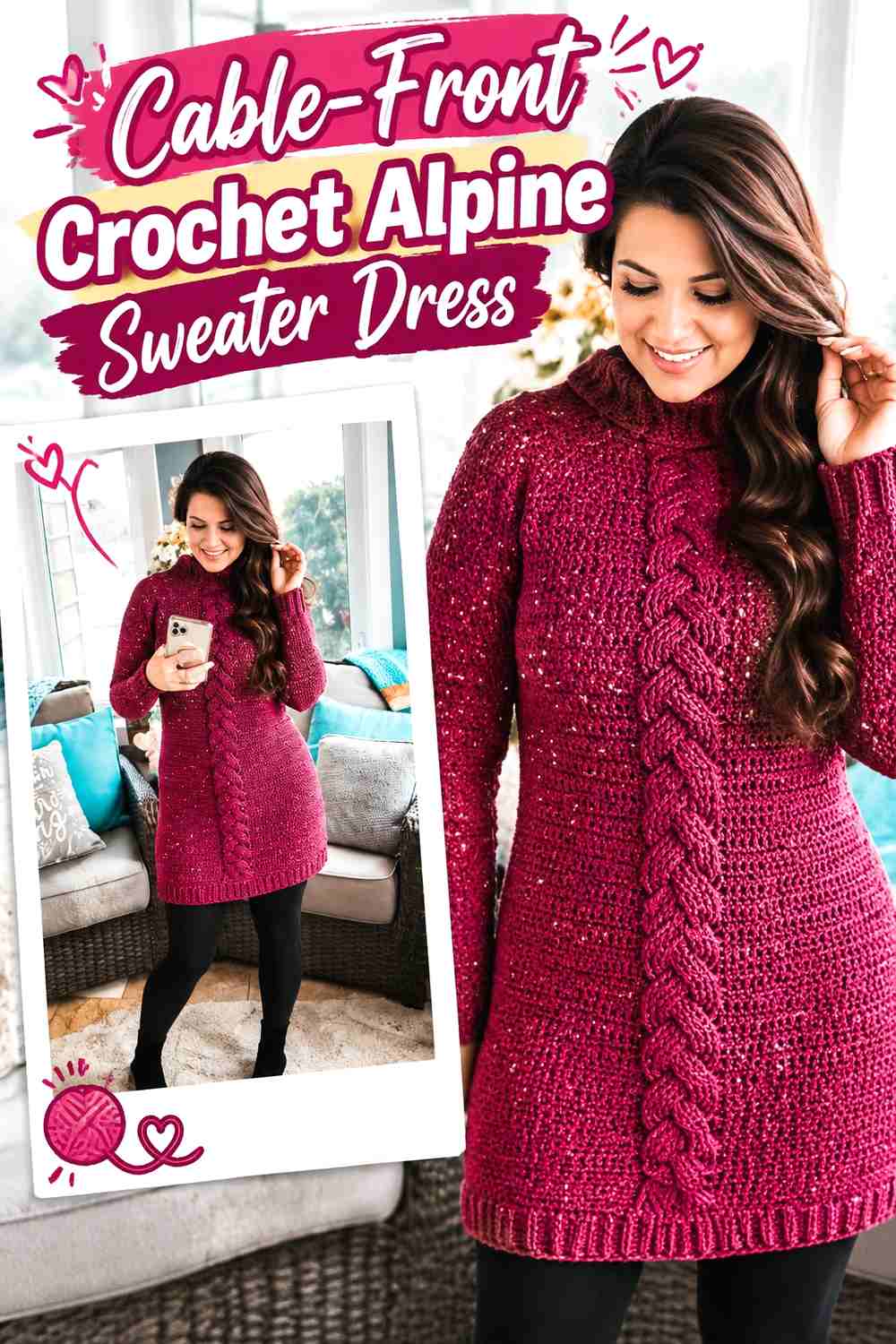
Few details suggest traditional winter knitwear as quickly as a strong central cable. This sweater dress uses cable texture as its main feature, which makes it one of the most natural choices for an alpine or chalet-inspired wardrobe.
A solid neutral or earthy color lets the raised texture do most of the visual work.
Cables Need Enough Stitch Definition to Remain Visible
Highly fuzzy yarn may look warm, but it can soften the edges of raised crochet cables until much of the pattern disappears.
If the cable is the reason you chose this design, make a sample with your intended yarn and view it from several feet away. You should still be able to see the relief clearly.
Decide Between Crew Neck and Turtleneck Before Styling the Dress
This type of cable dress can move in two different directions. A simpler neckline keeps attention on the central texture, while a higher neck increases the classic ski-sweater effect.
Think about what you will wear over the dress as well. A very bulky neckline combined with a close winter coat may feel different from the same dress worn indoors at a lodge.
Creator Credit: MJ’s Off The Hook Designs
7. Long Tunic Crochet Après-Ski Sweater Dress
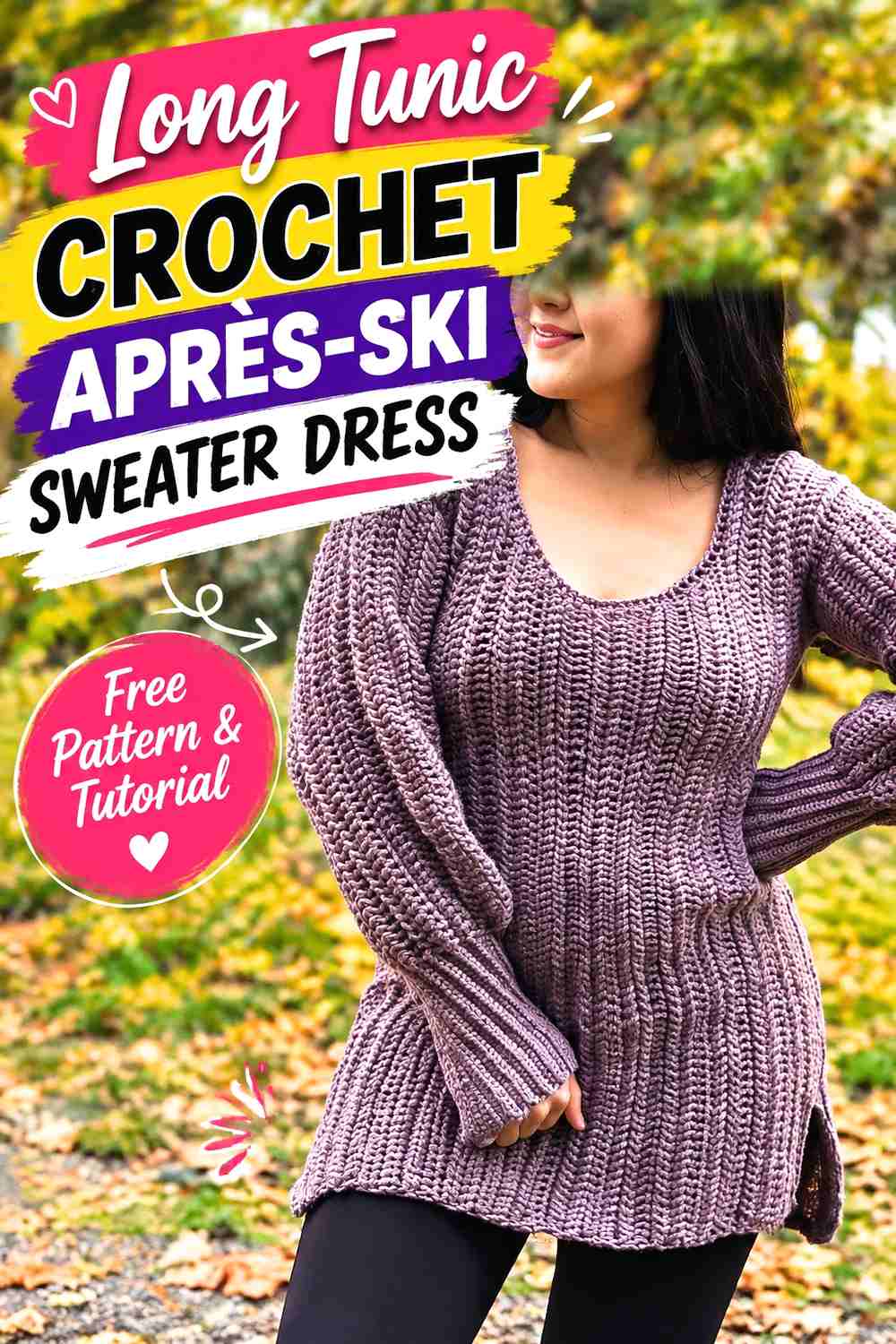
A long tunic sits comfortably between an oversized sweater and a conventional dress. This makes it one of the most flexible silhouettes for casual après-ski styling.
It can be worn as a shorter dress where coverage allows or treated as a substantial tunic over leggings.
Tunic Length Is Useful When You Are Unsure About a Full Dress
If this is your first longer crochet garment, a tunic can be a practical stopping point. It gives you the visual impact of a sweater dress without committing to as much fabric weight.
Evaluate the length while wearing the kind of bottoms or tights you plan to pair with it rather than deciding from a flat measurement alone.
Side Slits Change Both Movement and Styling
A side opening can make a longer, straighter garment easier to move in and can visually lighten the lower portion.
If you extend a tunic farther downward, reassess the slit placement instead of automatically leaving it at the same proportion. A feature positioned for one garment length may look or function differently after significant extension.
Creator Credit: TheKnottyLace
8. Hooded Crochet Ski Sweater Dress
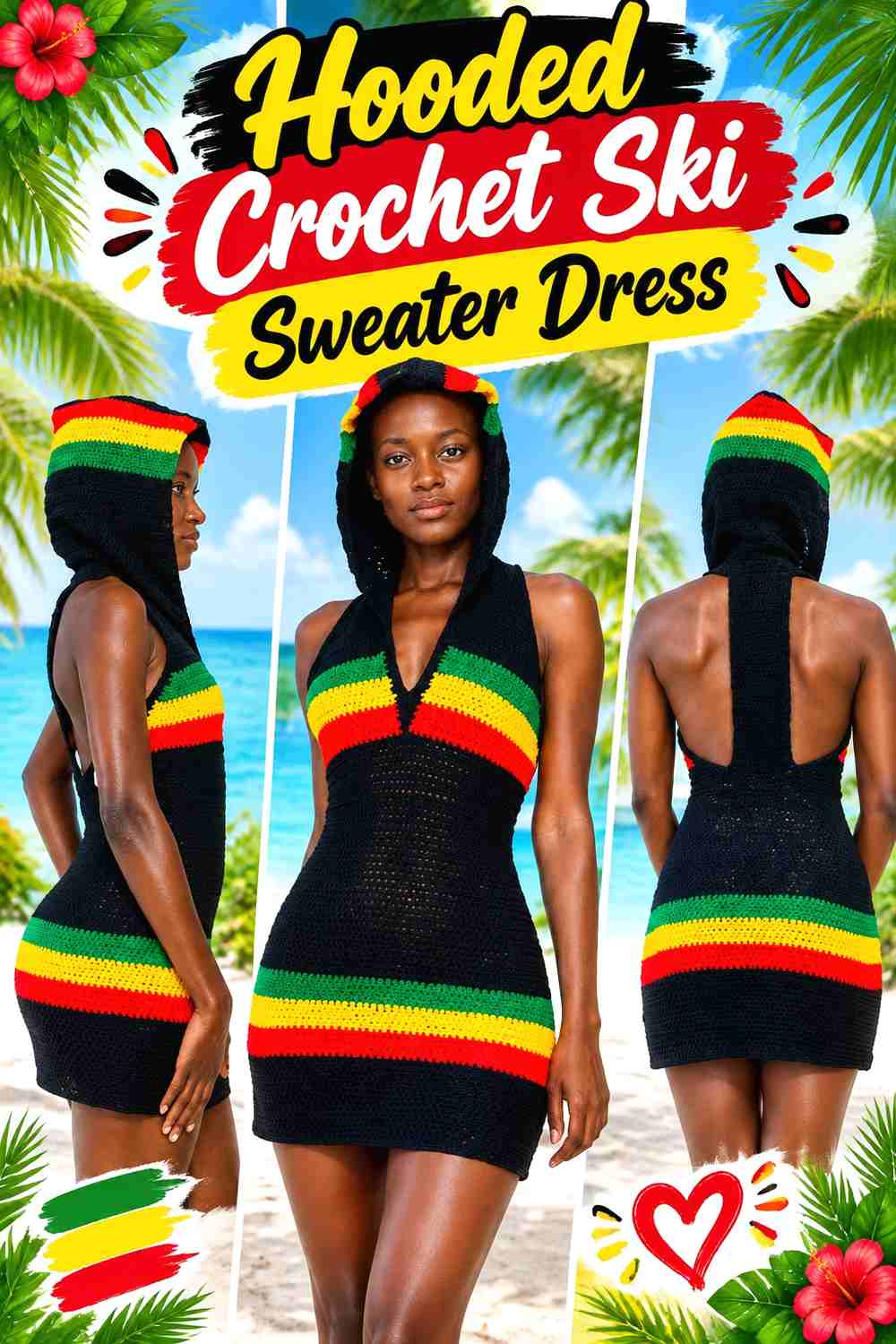
A hood takes the collection in a sportier direction. Instead of relying on a turtleneck or cable panel for winter identity, this dress uses the hood as the dominant cold-weather feature.
For après-ski styling, it works particularly well when you want something closer to a long crochet hoodie than a traditional Nordic sweater dress.
The Hood Adds Weight to the Upper Back
A crochet hood contains a significant amount of fabric. When the body is also extended to dress length, both areas contribute to the total garment weight.
Avoid assuming that heavier yarn will automatically improve the winter feel. It can place more stress on the neckline and shoulders.
Use Color Placement to Shift the Mood Toward Alpine Style
The underlying hooded construction can support many palettes. For a ski-lodge interpretation, consider broad contrast sections, a two-tone body, or restrained geometric accents rather than relying on the original color arrangement.
Plan those changes before starting so joins and transitions occur at visually intentional places.
Creator Credit: Cynthie Croche
9. Oversized Turtleneck Crochet Chalet Dress
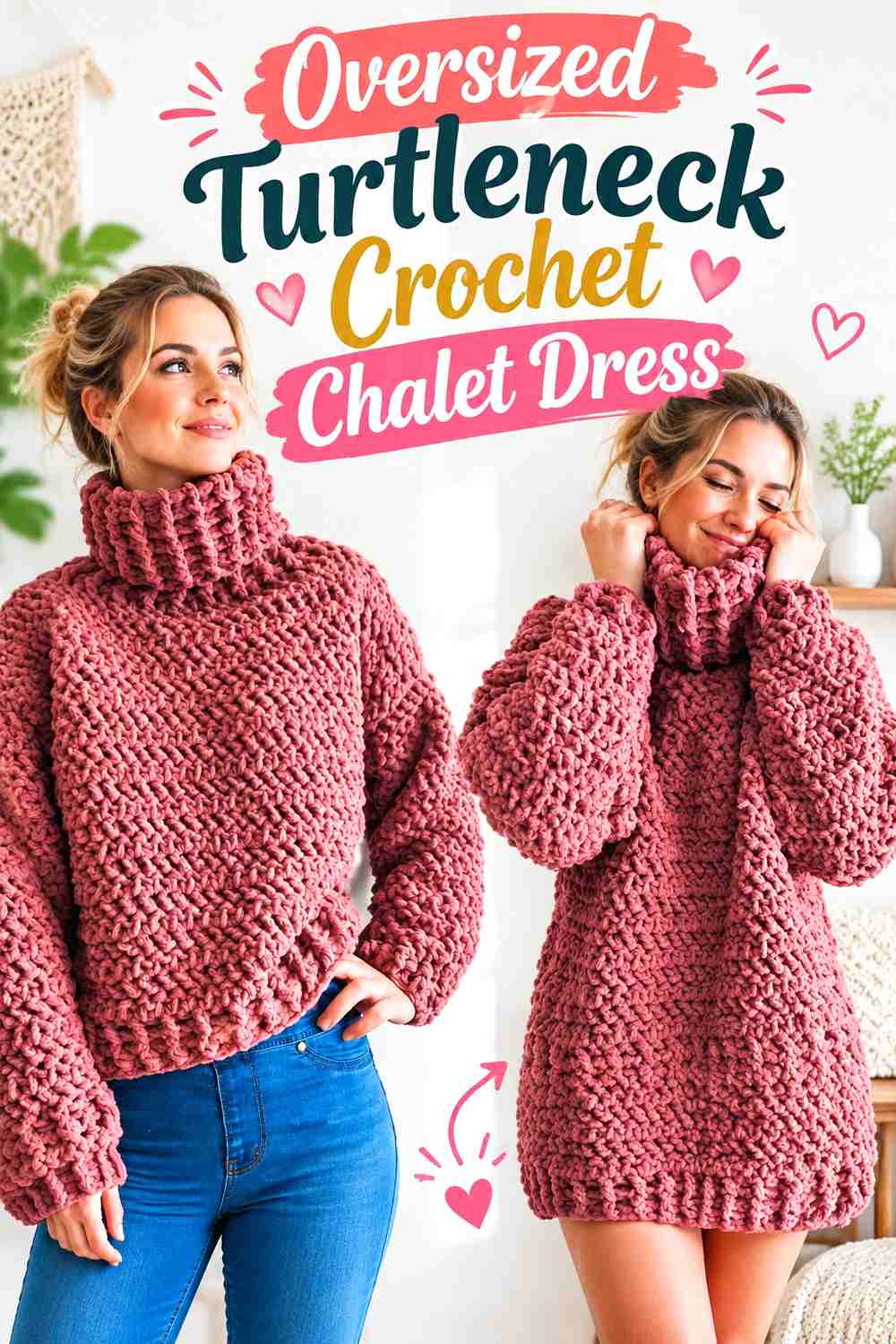
This source is a sweater tutorial rather than an existing dress tutorial, but its oversized turtleneck construction makes it a useful reference for a relaxed chalet-style concept.
Treat the longer version as an adaptation project. Confirm the sweater’s width through the hips and determine how its construction handles extra body length before trying to turn it into a dress.
Keep the Original Sweater Fit Through the Shoulders
Adding length should not require making the shoulders unnecessarily wider.
Start by choosing the upper-body fit you want from the tutorial. Only then evaluate whether the existing body width can continue comfortably over the hips.
A Slouchy Neck Pairs Well With a Simple Lower Body
The prominent turtleneck already supplies much of the cozy ski-sweater character.
Keeping the extended body relatively plain can produce a stronger result than adding unrelated cables, pockets, and motifs everywhere. A simple contrast band near the hem or cuffs can be enough to connect it with classic alpine styling.
Creator Credit: Hey Carrie
10. Cable-Twist Crochet Ski Sweater Dress
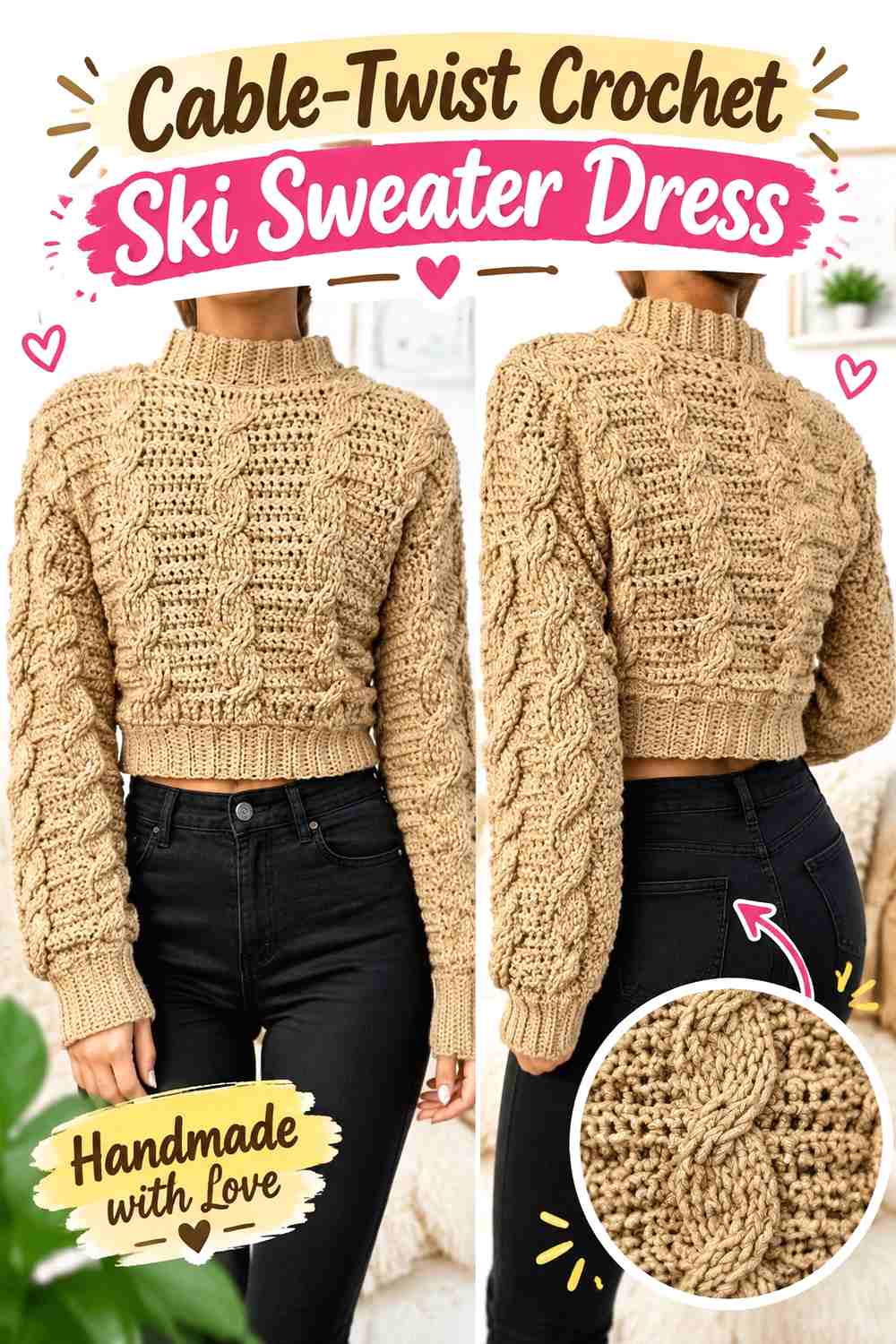
This cable sweater tutorial provides another strong winter texture that can inspire a dress-length variation. Unlike the single focal cable of Project 6, the twisted surface has a more all-over sweater effect.
Because the source is a sweater, lengthening it should be approached as a fit adaptation rather than an assumed built-in option.
Repeated Cables Increase Visual Density
An all-over cable design can look substantial even before extra length is added.
Consider whether you want the cable pattern continuing all the way to the hem or whether a simpler lower section would provide visual relief. Any such change needs to work with the original stitch repeat and construction.
Check Fabric Weight Before Extending the Panels
Cable crochet can consume more yarn and create a denser surface than a simple flat stitch.
Make enough of the original body to understand the fabric before deciding how much additional length you want. The finished dress needs to remain comfortable at the shoulder and maintain the intended texture rather than becoming distorted under its own weight.
Creator Credit: Mainmade Crochet
11. Mock-Neck Crochet Snow-Lodge Sweater Dress
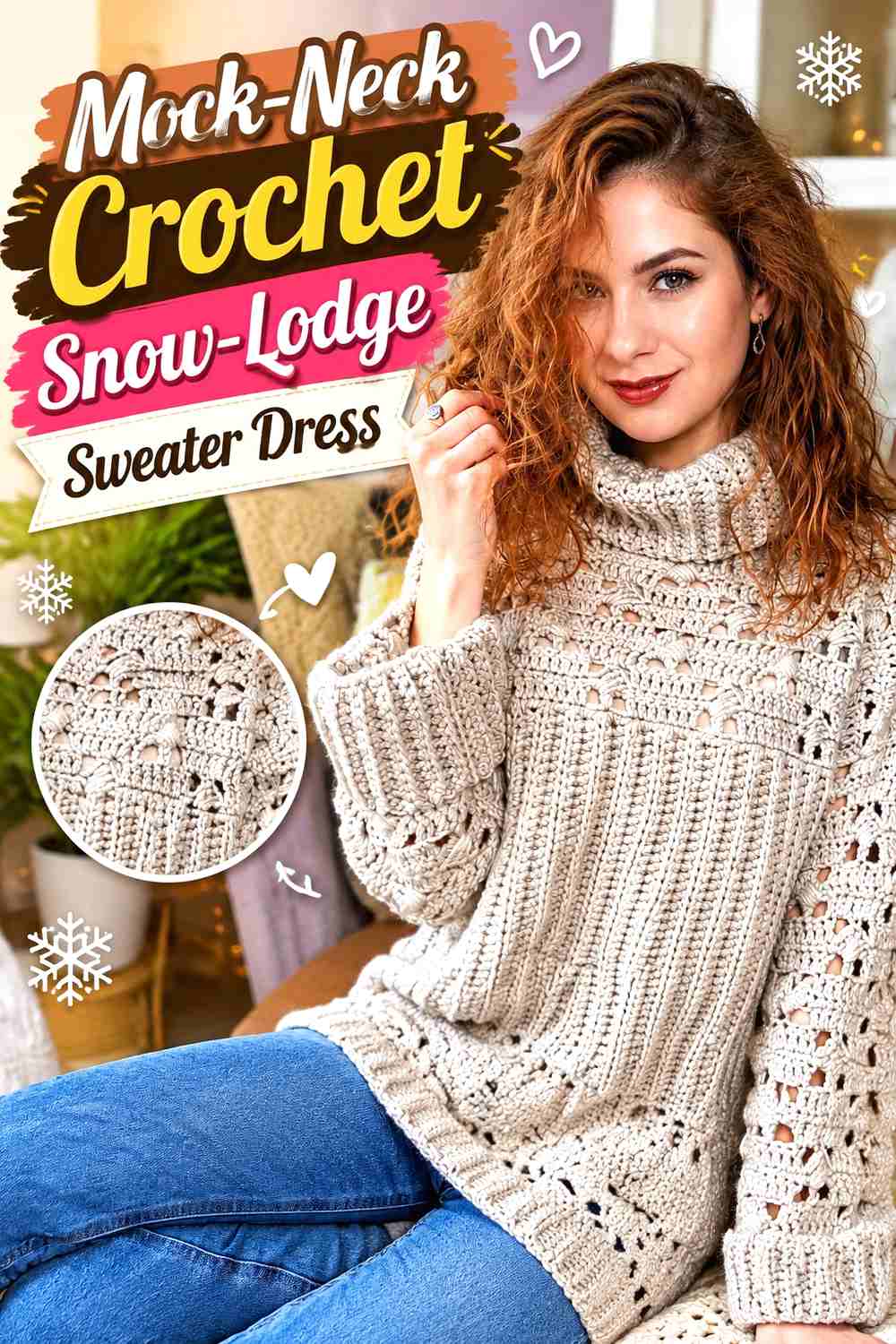
A mock neck creates a middle ground between a crew neck and a full turtleneck. That can be useful if you want a clear winter look without the volume of a folded collar.
This source produces a sweater, so a dress-length version requires careful planning around the lower body.
Openwork Details Can Lighten a Heavier Winter Shape
A long sweater dress can become visually dense, particularly in a single color. An openwork panel introduces controlled contrast without requiring multiple yarn colors.
However, remember that openwork affects coverage. If the detail extends into a dress-length adaptation, decide whether the placement still works with your intended underlayer.
Preserve the Mock Neck’s Proportion
When you make the body longer, the neckline should not automatically grow larger too.
Keeping the mock neck relatively restrained can help the garment retain balance. Let the added length change the silhouette while the upper-body details continue to follow the tutorial.
Creator Credit: LoopsWithMagic
12. Fair-Isle-Inspired Crochet Ski Sweater Dress
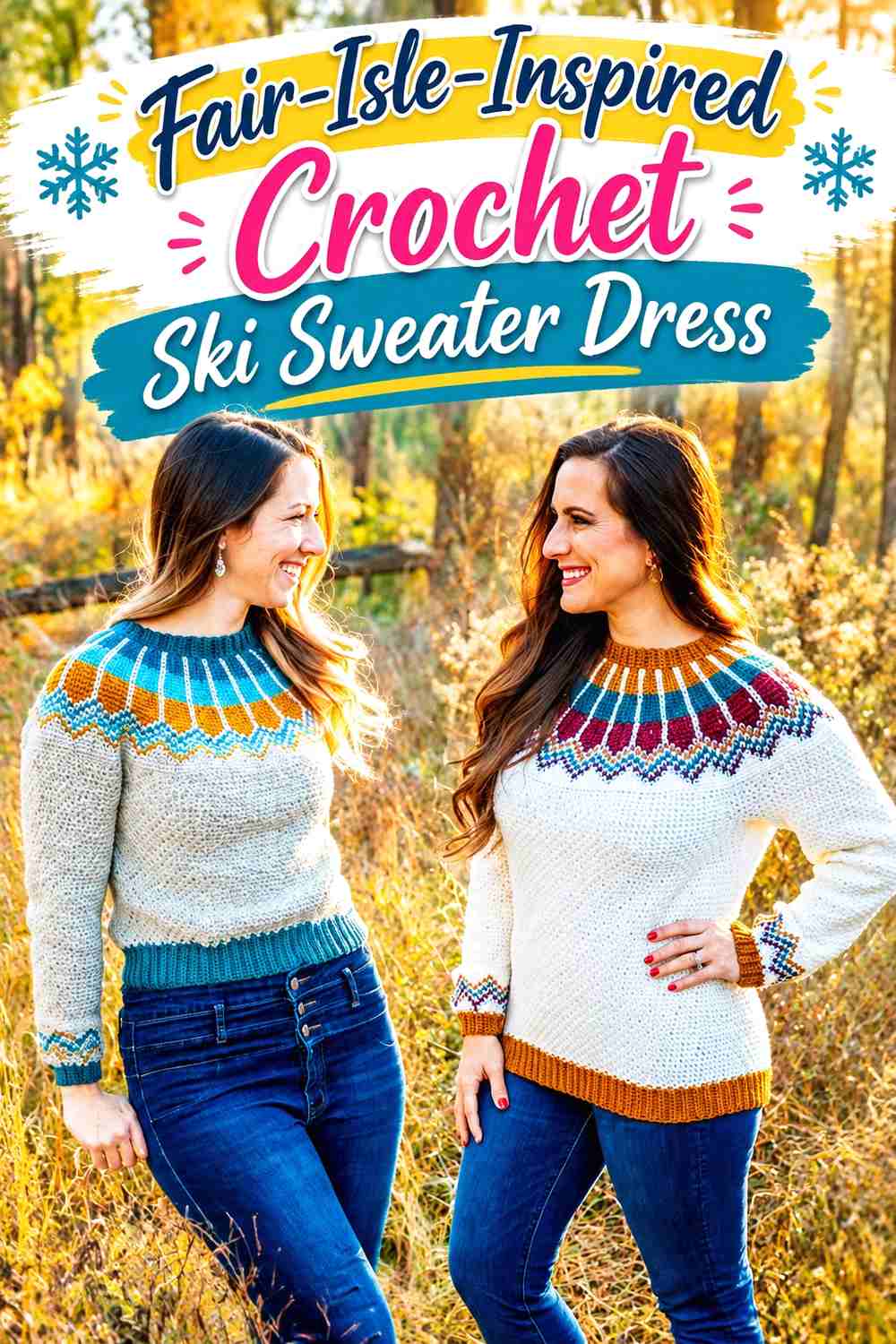
This is the most direct route to the recognizable ski-sweater aesthetic. The source tutorial is a colorwork sweater rather than a dress, but its patterned yoke provides an excellent design reference for an alpine-inspired garment.
A dress adaptation should preserve the yoke construction first and treat additional body length as a separate fit decision.
Keep the Colorwork Concentrated Where It Has the Most Impact
A patterned yoke can establish the entire ski theme. You do not necessarily need to repeat complex motifs down the skirt portion.
A quieter body lets the upper colorwork remain the focal point and also reduces the amount of carried-color work required across the longest portion of the garment.
Do Not Lengthen Until the Yoke and Bust Fit Correctly
Top-down colorwork construction depends on the upper section fitting properly before the body continues.
Complete the fitting checkpoints from the tutorial first. Once the body is established, determine whether its width is appropriate at the hips and whether further shaping is needed for dress length.
This is much safer than deciding the final length before knowing how the yoke fits.
Creator Credit: Briana K
13. Color-Block Turtleneck Crochet Alpine Dress
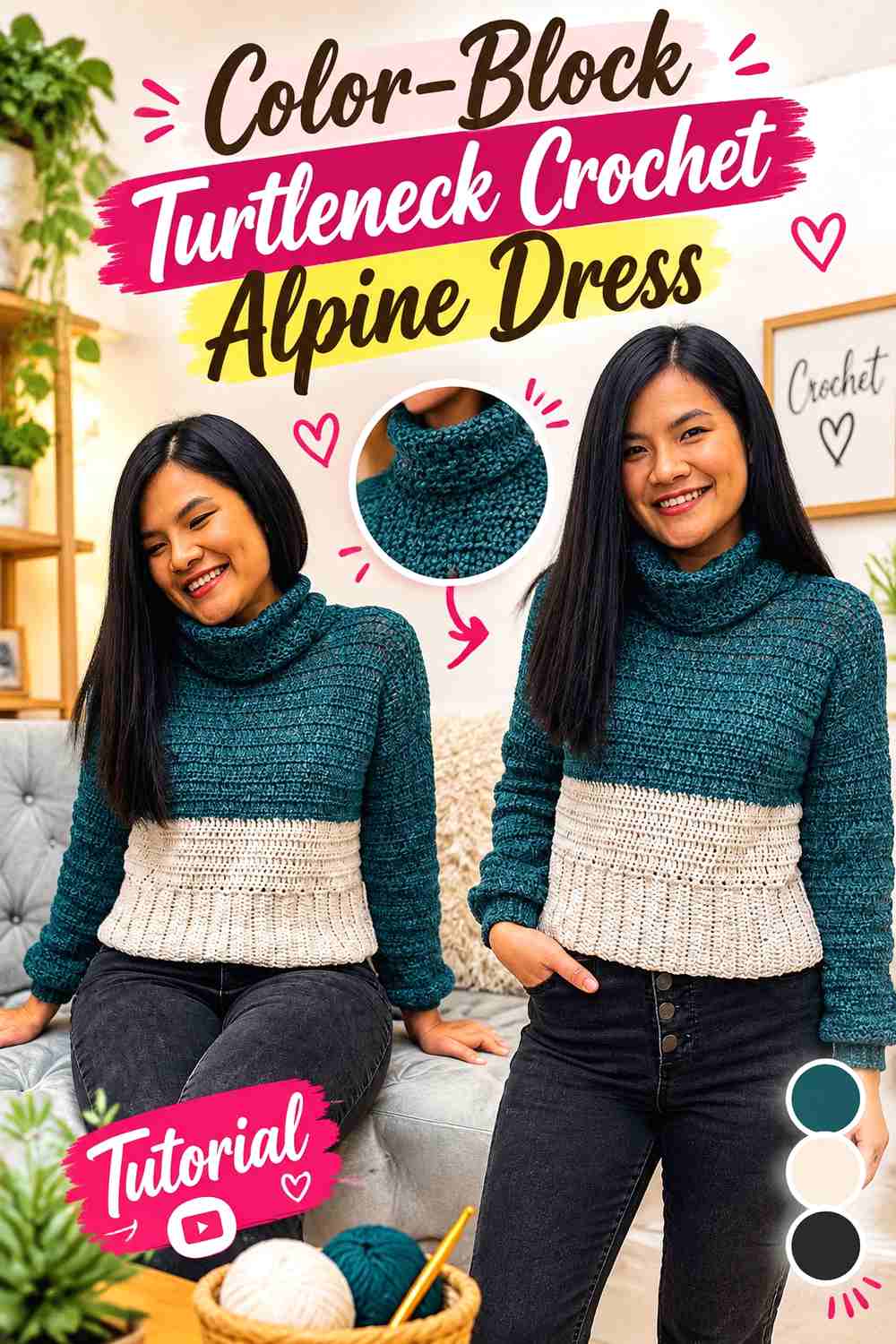
Color blocking offers a simpler alternative to intricate Fair Isle-style motifs. The source tutorial creates a winter turtleneck sweater with clearly separated color areas, making it useful for an alpine dress concept where you want graphic contrast without a detailed chart.
As with the other sweater-based sources, verify the construction before adding length.
Broad Color Bands Read Differently at Dress Scale
A color division that looks balanced on a hip-length sweater may appear too high or too small once the body extends farther downward.
Sketch the full dress silhouette before choosing additional color placement. You may decide to keep the original upper-body contrast and use a single color below it, or repeat one accent nearer the hem.
Protect the Clean Line of the Turtleneck
This design already has two strong features: a tall neckline and color contrast.
That means additional embellishment should be selective. Heavy fringe, multiple unrelated stitch textures, or too many narrow stripes may distract from the clean alpine look.
Creator Credit: KnitcroAddict
Which Crochet Ski Sweater Dress Direction Fits Your Style?
| If you prefer… | Consider… | Main thing to evaluate |
|---|---|---|
| A fitted lodge-evening look | Projects 1 or 2 | Ribbing stretch and hip fit |
| Classic winter cables | Projects 6 or 11 | Stitch definition and garment weight |
| True alpine colorwork character | Project 13 | Yoke fit before extending the body |
| Simpler graphic contrast | Project 13 | Color placement at dress length |
| Relaxed leggings-and-boots styling | Projects 4 or 8 | Overall length and ease |
| A sporty winter silhouette | Project 9 | Hood weight and neckline support |
| A dramatic cozy neckline | Projects 3 or 10 | Collar bulk and layering comfort |
| A lighter layered appearance | Projects 7 or 12 | Coverage through open stitch areas |
| Flexible upper-body shaping | Project 5 | Fit through waist and hips |
Conclusion
The most convincing crochet ski sweater dress is not necessarily the one with the most colorwork. Start with the winter feature you actually want to emphasize.
Projects 1 and 2 are useful for a streamlined ribbed look. Project 6 gives you the traditional weight and depth of crochet cables, while Project 13 is the strongest direction if the recognizable Fair-Isle-style yoke is what makes a garment feel like a ski sweater to you. Projects 4 and 8 work better for relaxed tunic styling, and Project 9 introduces a sportier hooded silhouette.
When adapting a sweater tutorial, treat dress length as a fit change, not merely extra crochet. Check the hips, fabric weight, drape, movement, and any pattern repeats before extending the body. For exact construction, shaping, sizing, and stitch placement, follow the original creator’s tutorial.
Frequently Asked Questions
What makes a crochet sweater dress look like a ski sweater?
High necklines, ribbing, cables, geometric colorwork, contrasting yokes, substantial cuffs, and cold-weather proportions can all create that effect. You do not need every feature in one garment. One strong alpine element combined with a suitable sweater-dress silhouette is usually clearer than several competing details.
Can I turn any crochet sweater pattern into a sweater dress?
No. A sweater may fit at the chest but become too narrow at the hips when extended. Construction method, shaping, stitch repeat, fabric stretch, and garment weight all matter. Use tutorials that offer adjustable length or constructions that can be evaluated as you work, and verify the lower-body fit before committing to the adaptation.
Are Fair-Isle-style crochet and knitted Fair Isle constructed the same way?
No. Crochet colorwork has its own stitch structure and handling requirements. Follow the crochet tutorial’s method for color changes and yarn management rather than applying knitting instructions to a crochet garment.
Should a crochet ski sweater dress be oversized?
Only if that is the silhouette you want. A relaxed sweater dress can work well for casual après-ski styling and layering, while fitted ribbed or cable dresses create a more polished look. Base your choice on the tutorial’s intended ease and your underlayers rather than automatically sizing up.
How can I stop a long crochet sweater dress from feeling too heavy?
Start with the fabric itself. Yarn weight, fiber, stitch density, cables, pockets, hoods, and extra length all contribute to total weight. Make a substantial swatch and consider how the fabric behaves vertically before committing to a long version. A visually cozy fabric does not have to be extremely heavy.
What colors work well for an après-ski crochet dress?
Classic winter combinations include cream with red, cream with navy, charcoal with ivory, brown with oatmeal, forest green with cream, or tonal neutrals. These are styling ideas rather than rules. The motif placement and garment shape usually matter more than using a particular palette.
Can I wear a crochet ski sweater dress for actual skiing?
Treat these projects as fashion and après-ski garments, not technical ski equipment. Crochet clothing does not replace weatherproof, wind-resistant, insulated, or safety-specific snow-sport clothing. Wear the finished dress for lodge time, casual winter outings, or other settings appropriate to the yarn and garment construction.