A crochet ski sweater mini skirt brings familiar cold-weather sweater details below the waist. Instead of treating crochet skirts as purely beach or festival pieces, this look borrows from alpine pullovers through cables, ribbing, tartan colorwork, chevrons, stripes, dense texture, and strong waistbands.
Not every source tutorial below was originally designed as a ski-themed winter skirt. The collection combines true mini skirts, adjustable skirt constructions, and a few longer designs that can be planned at mini length where the creator’s construction permits it. The ski-sweater character comes from the existing texture or from a carefully considered winter adaptation rather than from pretending every source contains Nordic motifs.
These are fashion pieces for après-ski outfits, lodge settings, and ordinary cold-weather styling. A crochet mini skirt does not replace insulated or weather-resistant snow clothing, so pair it with suitable tights, leggings, boots, and outerwear for the actual conditions.
Quick List
- Plaid Tartan Crochet Ski Sweater Mini Skirt
- Cable-Twist Crochet Alpine Mini Skirt
- Chevron-Pleated Crochet Ski Sweater Mini Skirt
- Tennis-Pleat Crochet Après-Ski Mini Skirt
- Merino-Look Crochet Minimal Ski Mini Skirt
- Mixed-Texture Crochet Alpine Ruffle Mini Skirt
- Striped Crochet Resort Sweater Mini Skirt
- Chevron Crochet Mountain-Sweater Mini Skirt
- Side-Tie Crochet Après-Ski Mini Skirt
- A-Line Crochet Chalet Mini Skirt
- Deep-Ribbed Crochet Ski Sweater Mini Skirt
What Makes a Crochet Mini Skirt Look Like a Ski Sweater?
The strongest connection usually comes from textile language rather than one particular motif. Cables resemble substantial winter pullovers. Ribbing creates familiar sweater structure. Plaid, chevrons, and contrasting stripes introduce the graphic quality associated with alpine wardrobes, while granny motifs can create a retro ski-resort effect when the palette is kept intentional.
You do not need to combine all of these details. A heavily cabled skirt may need no colorwork at all. A plaid skirt can remain relatively smooth because the pattern is already dominant. A pleated skirt can gain winter character through a ribbed waistband and restrained two- or three-color palette.
Fit also matters. A ski-sweater mini generally looks more convincing when the fabric has enough body to read as clothing rather than an open beach cover-up.
Choose Yarn by Weight, Stretch, and Recovery
A mini skirt supports its own weight from the waist, so yarn substitution deserves more caution than simply choosing something that feels warmer.
Dense cables and post stitches can create a heavier fabric. Granny motifs introduce seams and joins. Ribbing may stretch considerably across the hips, while some flatter stitch patterns have less give. A substantially thicker substitute can change all of those characteristics at once.
Make a sample in the actual texture used by your chosen tutorial. Stretch it, release it, and let it hang vertically. A skirt needs enough recovery to keep its waistband stable and enough flexibility to allow sitting and walking comfortably.
For an après-ski outfit, warmth can also come from the layers underneath. A lighter skirt over opaque tights may preserve a tutorial’s drape better than forcing the entire garment into an excessively heavy yarn.
Plan Coverage and Movement Before Settling on Mini Length
Crochet fabric behaves differently when stretched over the hips than it does lying flat. Check the finished stitch openness while the garment is being worn, particularly with granny squares, lace-like textures, or stretched ribbing.
A lining, slip, fitted shorts, or opaque tights may be useful depending on the fabric and the outfit. Choose that base layer before finalizing length because it affects how the skirt looks and feels in motion.
Mini length is also personal. Use the creator’s adjustment method where one is provided instead of assuming that removing an arbitrary number of rows from a longer skirt will preserve shaping, border placement, pleats, or motif proportions.
1. Plaid Tartan Crochet Ski Sweater Mini Skirt
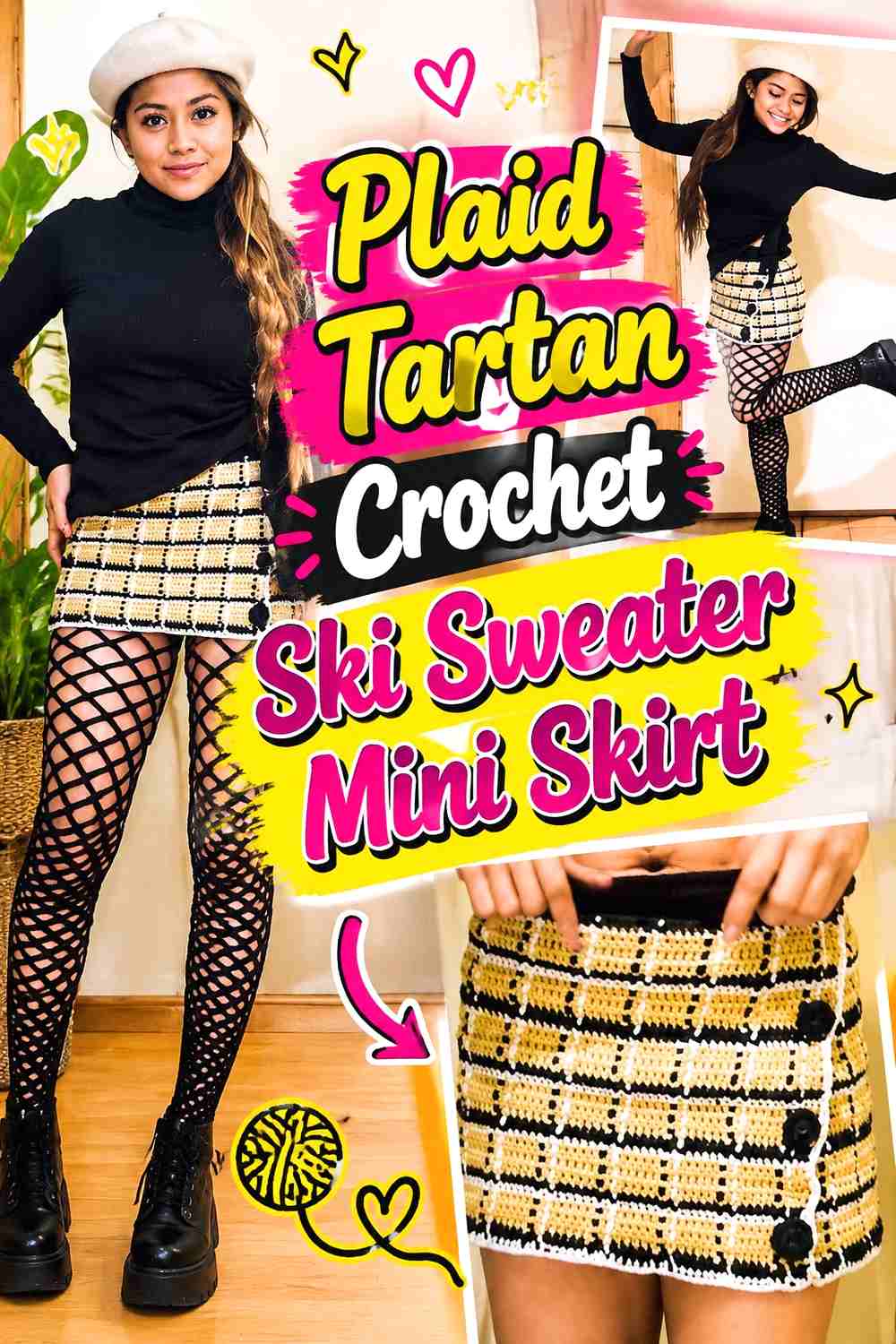
Plaid is one of the clearest routes to a ski-lodge skirt because it already shares the tailored, woolen visual language of winter outerwear. This source is a true crochet tartan mini skirt, so the patterned surface and short silhouette are already present rather than requiring a major conversion.
The result works especially well when you want the skirt to be the patterned centerpiece of the outfit.
Tartan Gives You Alpine Character Without Added Motifs
A plaid surface contains several intersecting visual lines, so additional snowflakes or decorative patches are unnecessary.
For a ski-sweater interpretation, consider a restrained palette such as cream with deep red and charcoal, or camel with dark brown and ivory. The exact colors are flexible; the organized plaid is what creates the tailored winter effect.
Keep the Waistband Visually Quieter Than the Plaid
The body already carries substantial pattern.
A simple waistband gives the eye somewhere to rest and makes it easier to pair the skirt with a cable sweater, fitted turtleneck, or oversized cardigan without creating competing graphics.
Buttons Can Reinforce the Chalet Look
This source incorporates button detailing, which can make the skirt feel closer to a small tailored winter garment than a basic crochet tube.
Keep decorative hardware proportionate to the skirt and check that its placement remains comfortable when sitting.
Creator Credit: Shredded Figure – TRAIN. TRANSFORM. SCULPT
2. Cable-Twist Crochet Alpine Mini Skirt
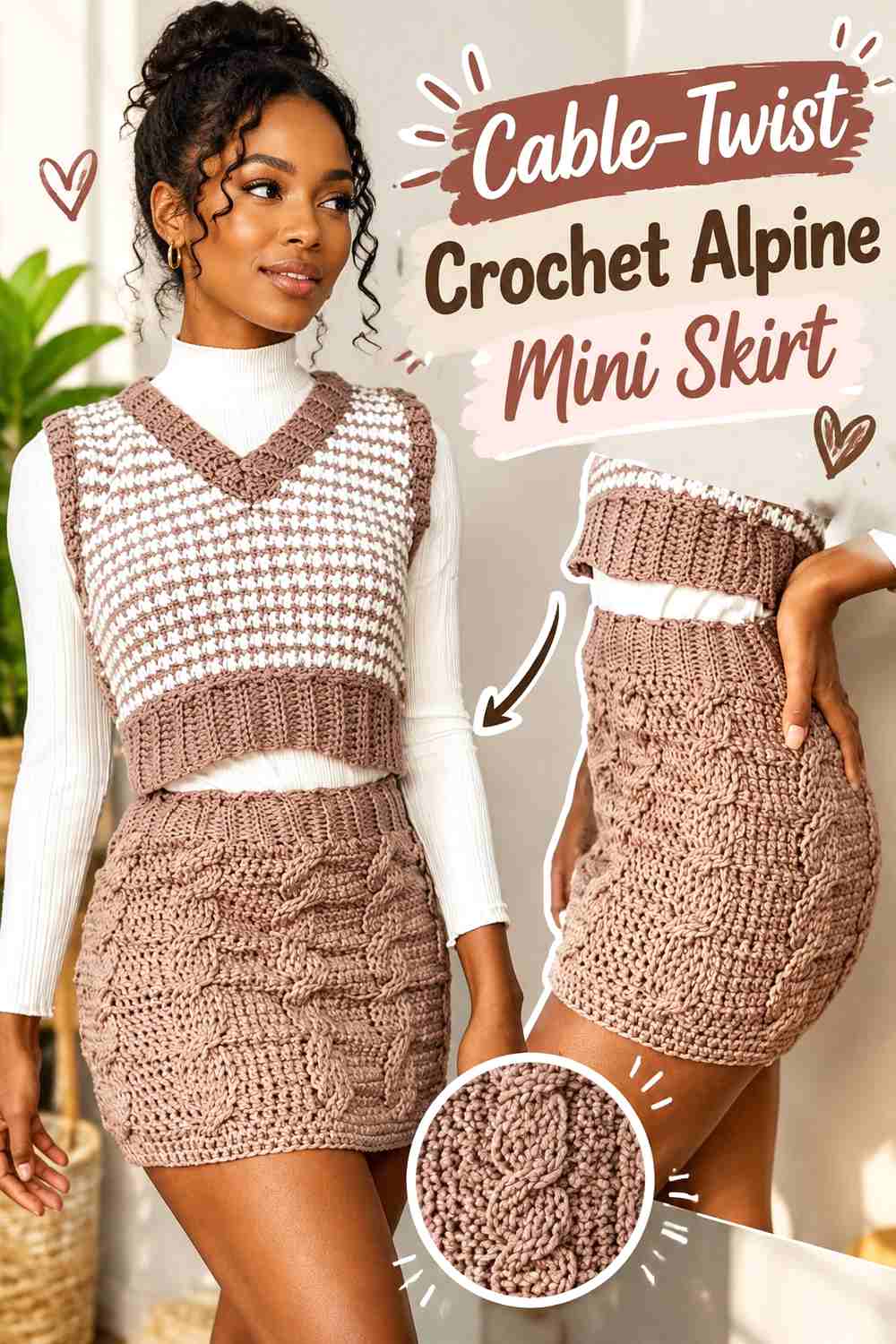
Crochet cables immediately bring sweater texture into a skirt. This source uses a repeated cable-twist construction and explains how the garment can be worked according to body measurements, making it a useful foundation for an alpine-inspired fitted skirt.
Unlike plaid, the design can stay completely monochromatic because the raised fabric supplies the pattern.
Cable Relief Needs Clear Yarn Definition
A heavily haloed yarn may look warm but can blur the raised crossings.
If the cables are the reason you chose this design, sample your intended yarn and view it from normal outfit distance. The texture should still be readable without needing to inspect the stitches closely.
Dense Texture Can Add More Weight Than Expected
Post-stitch cables create extra depth compared with a flat crochet fabric.
That matters at the waistband. Before extending or thickening the skirt, check how the completed fabric hangs and whether the waist structure is still supporting it comfortably.
A Shorter Version Makes the Cables More Concentrated
On a mini skirt, fewer vertical repeats are visible than on a long skirt.
That can make each cable look more prominent. Plan the finished length so the lower edge does not interrupt the textured design at an awkward-looking point.
Creator Credit: Mainmade Crochet
3. Chevron-Pleated Crochet Ski Sweater Mini Skirt
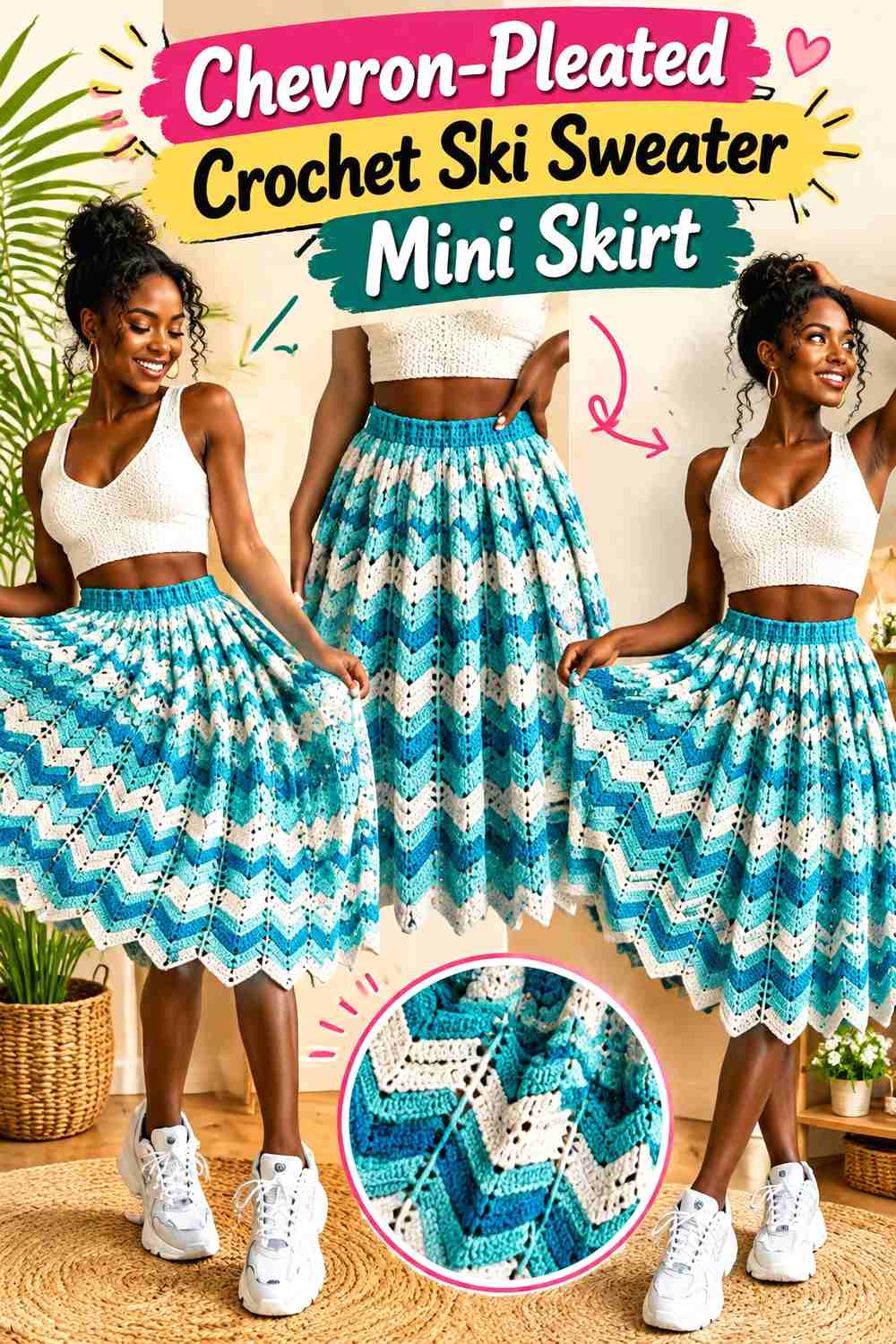
This pleated skirt combines a ripple or chevron surface with a silhouette that can be customized to different lengths, including mini length. The combination is particularly useful for a ski-sweater theme because the zigzag texture already resembles the graphic rhythm of alpine colorwork without requiring a traditional Fair-Isle chart.
The pleats also give it more movement than a body-hugging cable or ribbed skirt.
Let the Chevron Pattern Replace Complicated Colorwork
A zigzag line naturally creates a mountain-like visual rhythm.
Using two or three deliberate winter shades can make that effect clearer, but the pattern does not depend on high contrast. Tonal neutrals can produce a quieter chalet interpretation.
Pleats Need Fabric That Can Fold
A very stiff yarn may make a pleated mini stand away from the legs rather than falling into controlled folds.
When adapting the fabric for winter, preserve enough drape for the pleat structure to remain visible rather than turning the skirt into a rigid bell shape.
Check the Hem at the Intended Mini Length
Because the chevron and pleats establish a repeating visual pattern, stopping the garment changes where that repeat ends.
Use the creator’s length-customization approach and look at the complete lower edge before final finishing.
Creator Credit: Shyler crochets
4. Tennis-Pleat Crochet Après-Ski Mini Skirt
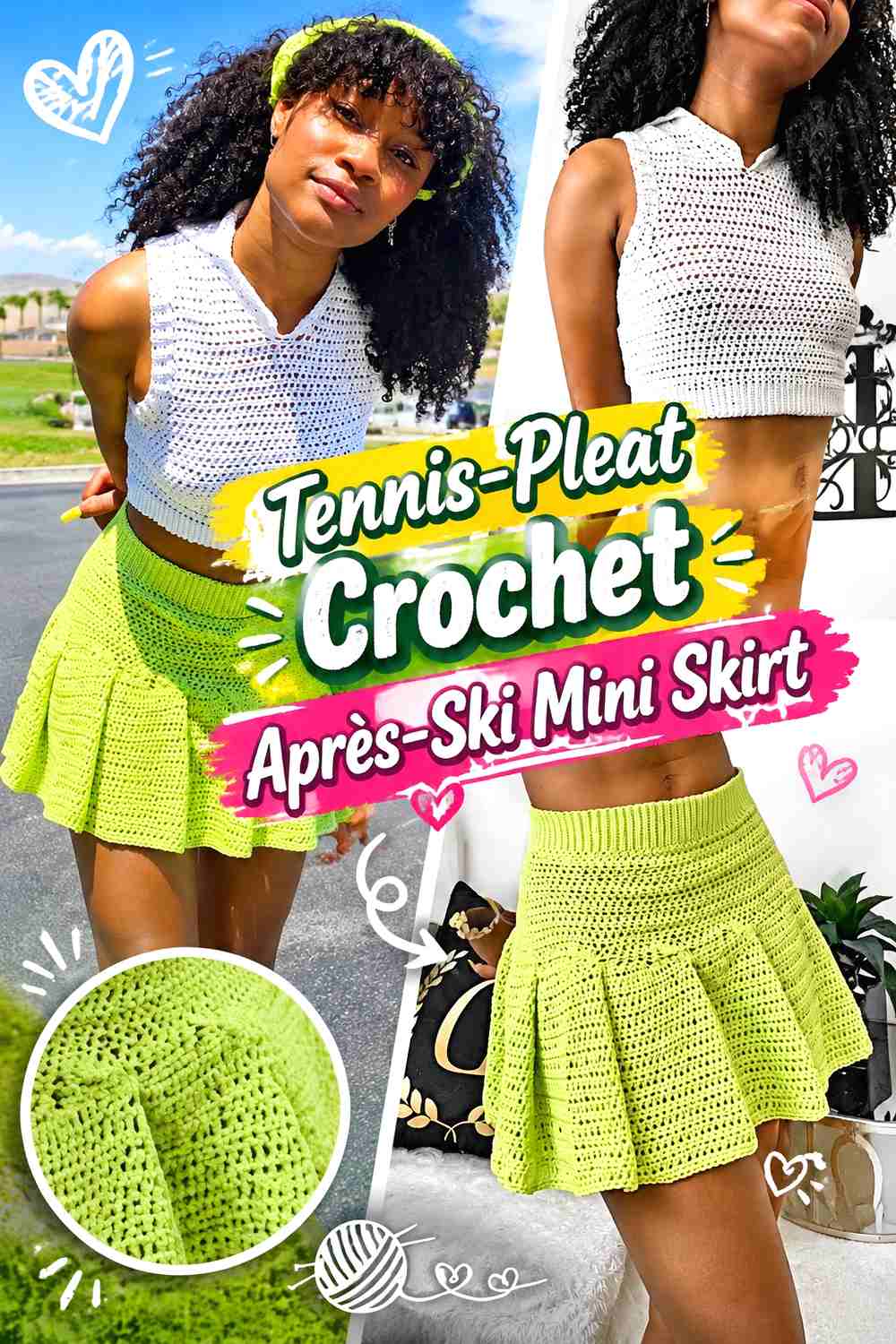
A crochet tennis skirt provides a sportier après-ski direction. This tutorial includes a defined waistband, skirt body, ruffled expansion, and shaped pleat effect, giving the finished mini more structure than a simple flared hem.
Paired with a fitted turtleneck, tall socks, or winter boots, the silhouette can move easily from preppy to ski-resort-inspired.
Defined Pleats Create a Cleaner Sporty Shape
Compared with soft ruffles, visible pleats introduce repeated vertical structure.
That makes this option useful when you want the skirt to coordinate with a striped or color-block ski sweater without adding another complicated surface pattern.
Keep the Waistband Firm but Comfortable
Pleated fabric expands below the waist, so the upper edge provides the visual anchor.
Check how the waistband behaves over the base layers you actually plan to wear. Thick tights or tucked-in knitwear can change the amount of room you need.
Use Winter Color Blocking Sparingly
A contrast waistband or hem accent may be enough to push the sporty skirt toward an alpine palette.
Several narrow stripes across pleats can become visually busy because the folds already interrupt the surface.
Creator Credit: Kali’s Threads
5. Merino-Look Crochet Minimal Ski Mini Skirt
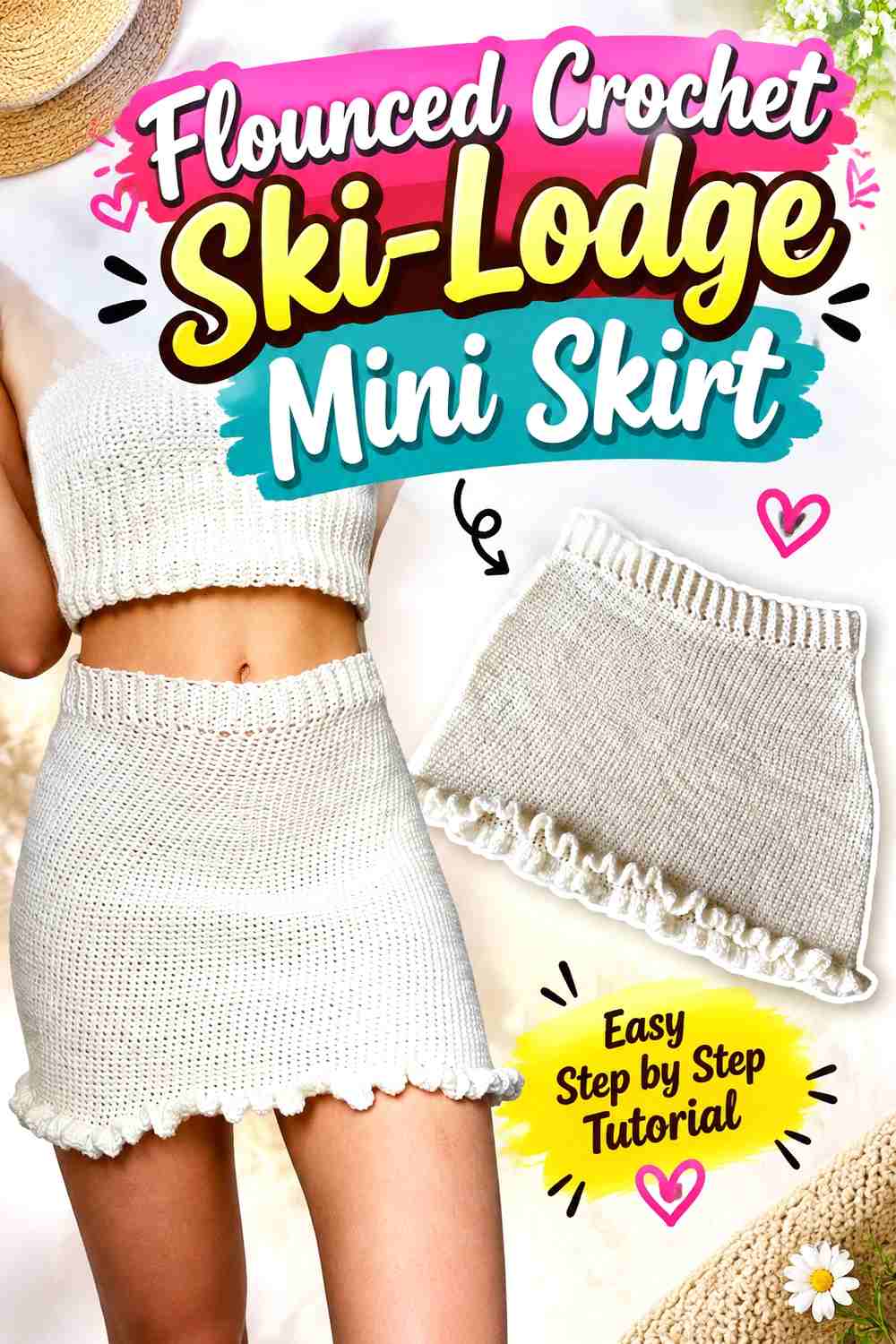
This source is a true mini skirt and was demonstrated in a merino yarn, making it a particularly natural starting point for a clean cold-weather interpretation.
Instead of relying on plaid or cables, this idea gets its ski-sweater character from a simple substantial fabric and restrained silhouette.
Minimal Texture Lets the Yarn Surface Matter More
With fewer decorative elements, stitch consistency and fabric quality become more noticeable.
A smooth winter yarn produces a polished skirt that can sit beneath a heavily patterned Fair-Isle-style sweater without making the outfit too busy.
Simple Skirts Are Useful for Stronger Sweaters
A graphic alpine pullover already brings a large pattern to the outfit.
Choosing a quiet skirt creates contrast between the two pieces and often makes the sweater motif easier to appreciate.
Check Stretch Before Choosing a Close Fit
A fitted mini has to accommodate both the waist and hips while still allowing movement.
Use the source construction and your own measurements rather than assuming the fabric will stretch sufficiently because it is crochet.
Creator Credit: MIGAIA
6. Mixed-Texture Crochet Alpine Ruffle Mini Skirt
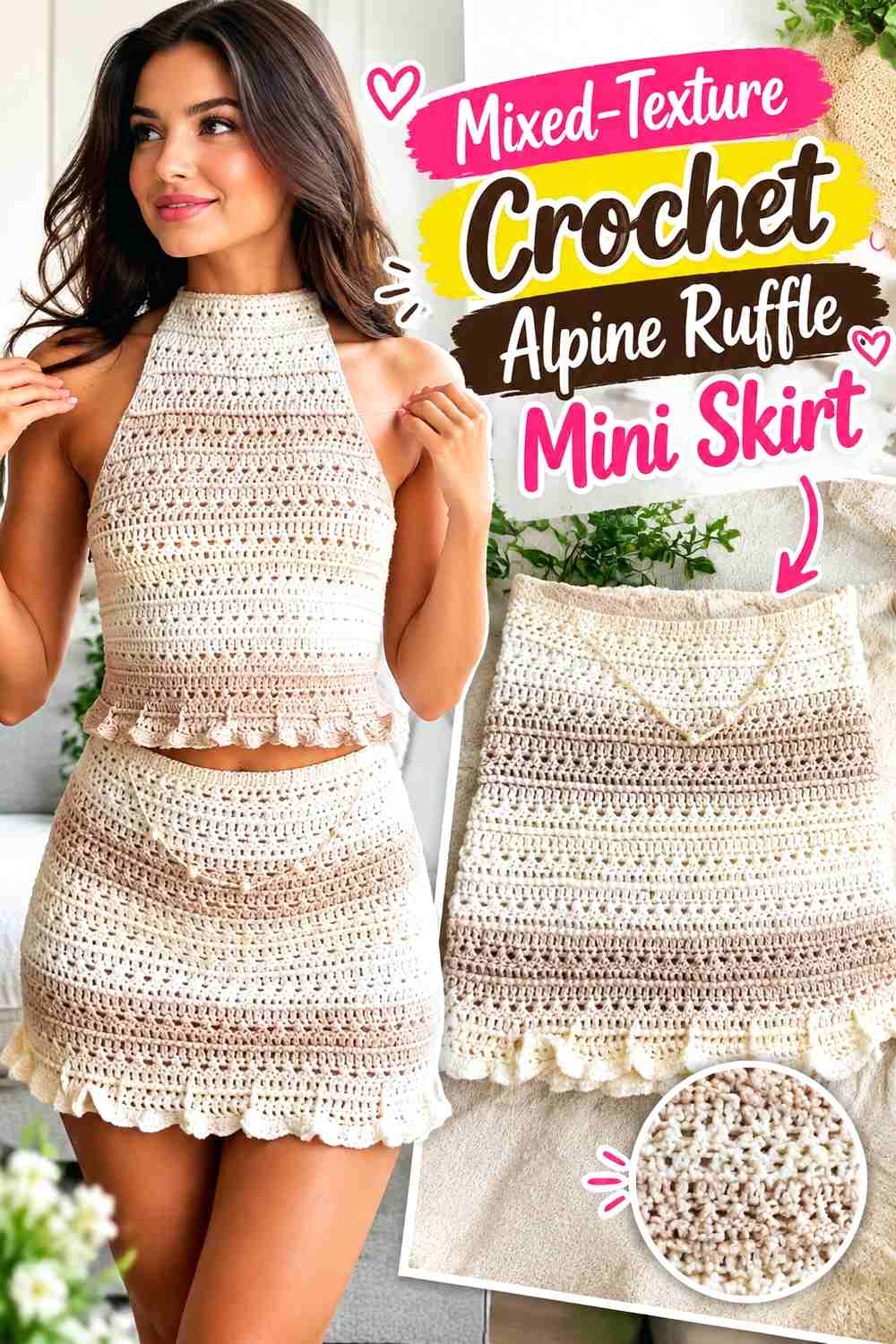
This mini skirt combines several surface treatments rather than relying on one repeated stitch. The tutorial includes ridges and raised textural elements before finishing with a ruffled lower edge, so it offers a stronger handmade-sweater character than a basic summer flounce.
It is a good choice if you want the skirt itself to be the texture statement.
Let the Different Textures Stay Visible
Using a very fuzzy yarn can cause the ridges and raised stitches to blend together.
A winter yarn with clear definition may do a better job of communicating the layered surface while still looking substantial.
The Ruffle Should Finish the Texture, Not Overpower It
The upper body already contains several visual changes.
Keep the hem in proportion so that the eye can still read the textured rows above it instead of seeing only a large flounce.
Tonal Color Can Calm a Detailed Surface
A single color or closely related shades allow the different stitches to create their own light and shadow.
This can make the skirt easier to combine with another textured piece such as a cable cardigan.
Creator Credit: petpetcrochets
7. Striped Crochet Resort Sweater Mini Skirt
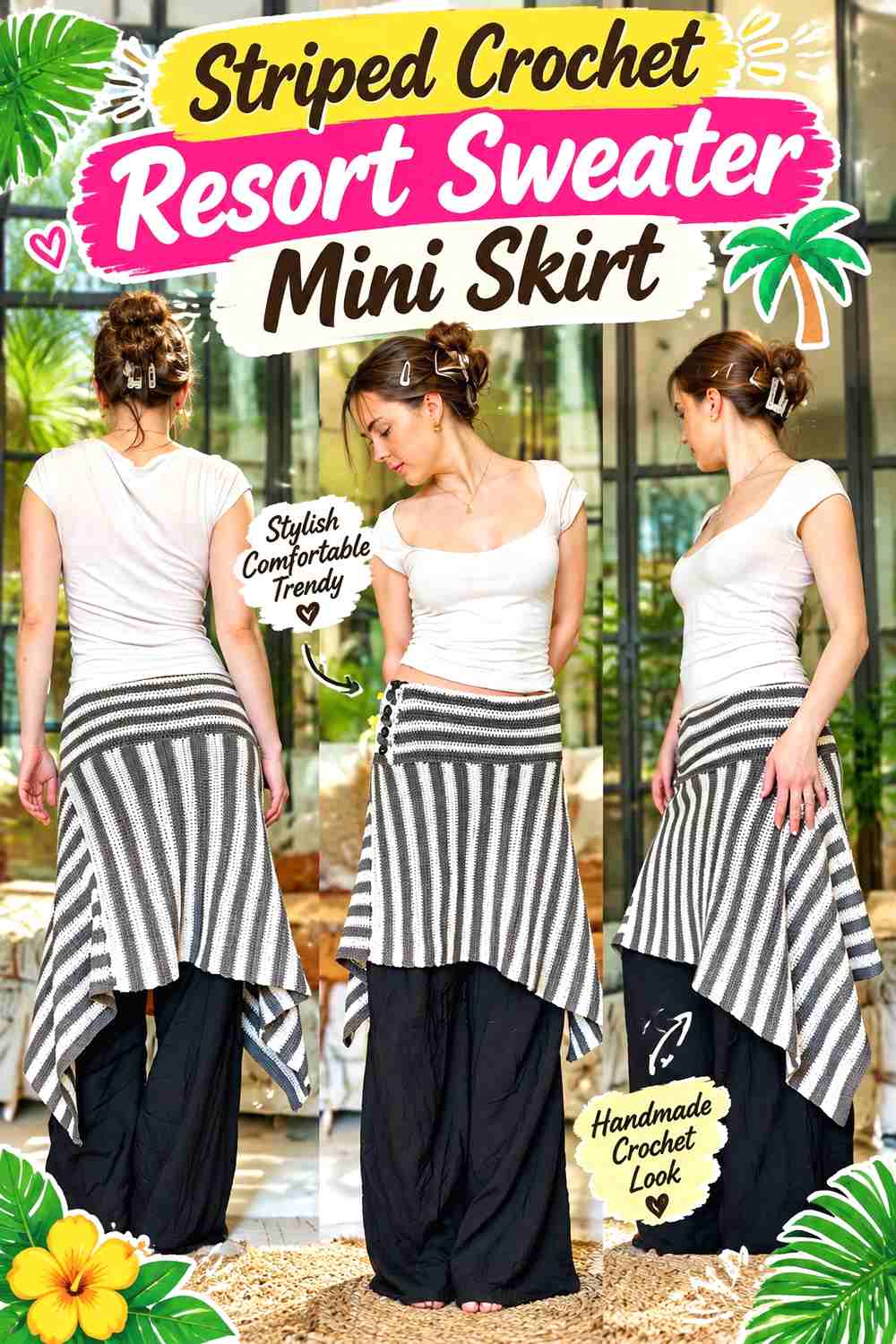
This striped skirt uses separate panel and waistband construction with planned color changes, providing a useful base for a graphic ski-resort skirt.
Unlike plaid, horizontal or directional stripes are comparatively simple to coordinate with solid winter tops and outerwear.
Stripe Scale Changes the Mood
Broad sections feel bolder and more modern. Narrow repeated bands can create a busier retro effect.
For a mini skirt, remember that there is less vertical space than on a midi or maxi. Too many stripes can compress the design visually.
Panel Construction Makes Alignment Important
When striped sections meet at a seam, even a small vertical mismatch can become noticeable.
Check color placement before final assembly so the joins look intentional from both the front and back.
Repeat One Skirt Color in the Sweater
You do not need an exact matching set.
Using one shared shade can visually connect a striped skirt with a solid or patterned ski sweater while still allowing each garment to have its own texture.
Creator Credit: Twilescrochet
8. Chevron Crochet Mountain-Sweater Mini Skirt
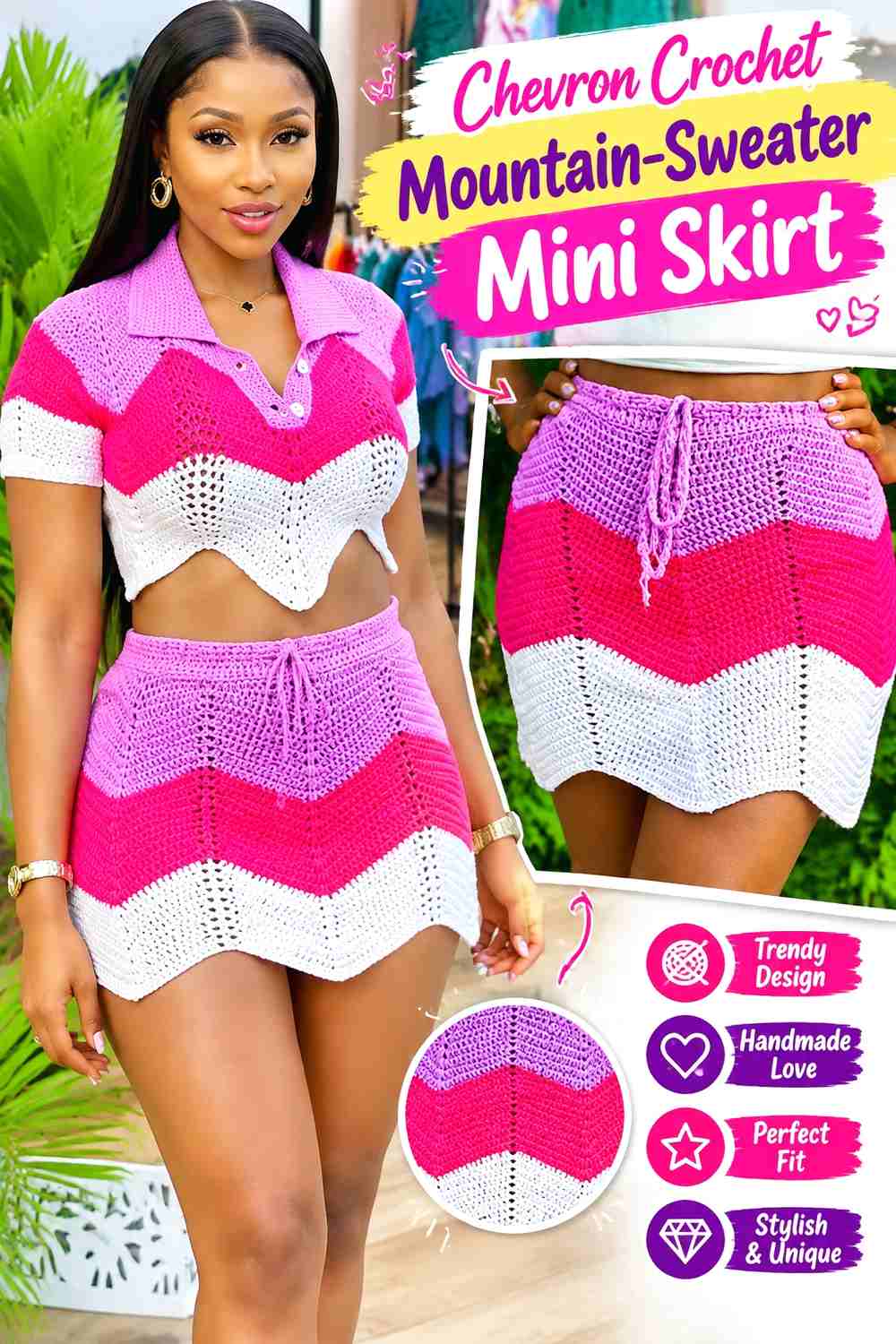
This source focuses on a chevron skirt rather than pleated construction, making the zigzag surface itself the primary feature.
That makes it useful when you want the familiar mountain-line effect of a ski sweater but prefer a smoother silhouette than Project 3.
Zigzags Can Carry the Whole Alpine Theme
A repeated chevron naturally suggests peaks and valleys.
Using contrasting winter colors can make the geometry stronger, while working the same pattern in one tone produces a quieter textural version.
Keep the Mini Length From Cutting the Repeat Awkwardly
Large chevrons need enough vertical space to be recognizable.
Before fixing the final hem position, look at how much of the repeat will remain visible on the body. A slightly different length may create a cleaner visual ending.
Avoid Competing Zigzags Above and Below
If the skirt contains a strong chevron, pair it with a simpler sweater or a motif arranged differently around the yoke.
Two unrelated zigzag scales can make an après-ski outfit feel overly busy.
Creator Credit: Myzayi Yunus
9. Side-Tie Crochet Après-Ski Mini Skirt
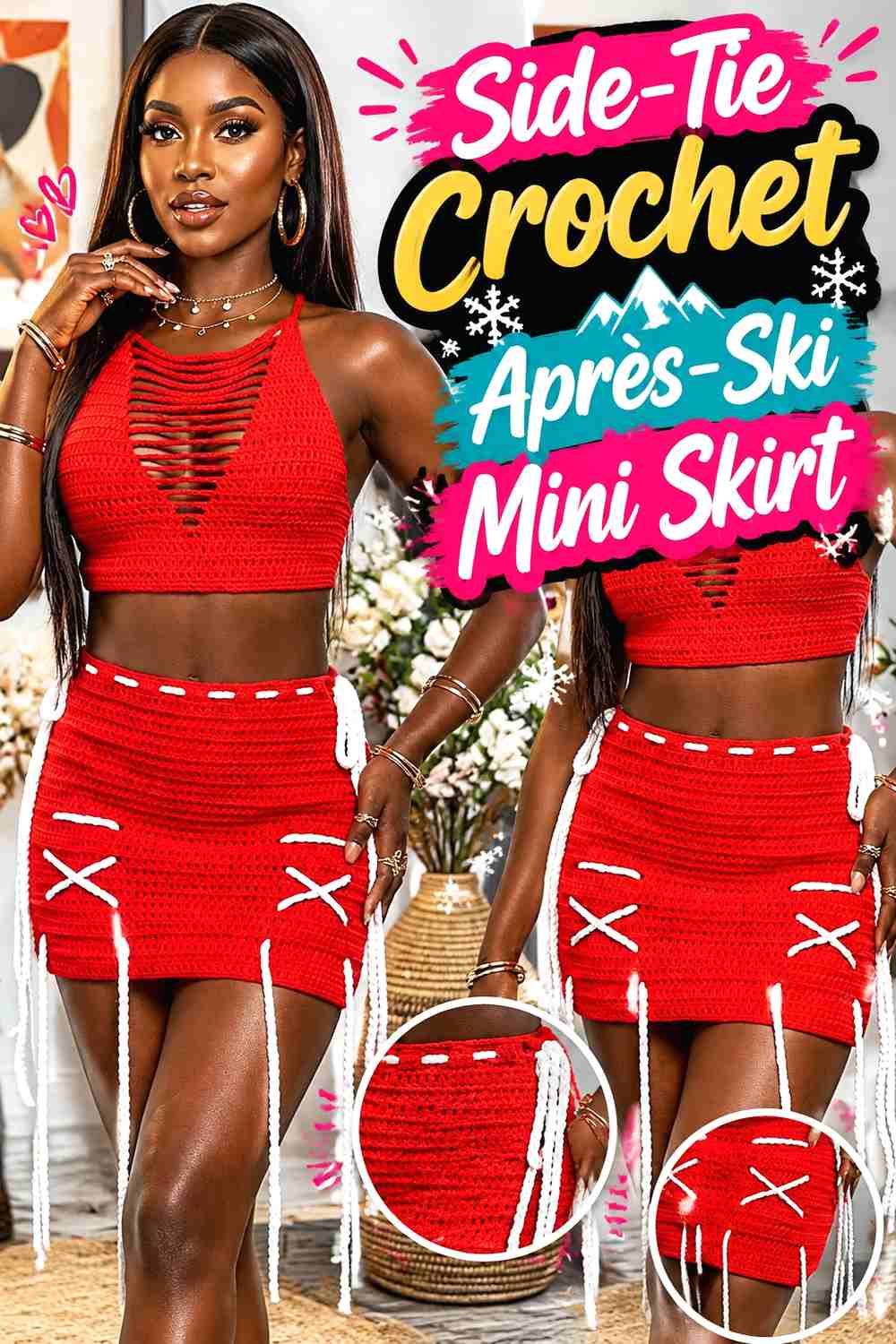
This true mini-skirt tutorial includes body shaping and decorative side cords, giving it a different construction focus from the closed-waist projects above.
For winter, the appeal is the fitted base plus a visible side detail that can coordinate with the colors of a ski sweater.
Side Cords Create a Strong Vertical Accent
Most sweater-inspired skirts emphasize horizontal waistbands, stripes, or repeating surface texture.
A side detail interrupts that pattern and can visually lengthen one section of the skirt. Keep it clear of bulky coat hems or bag straps that might repeatedly catch it.
Make Winter Color Contrast Purposeful
A contrasting cord can echo the accent color in a Nordic-style sweater.
If the skirt body already has several colors, however, another high-contrast detail may be unnecessary.
Fit the Body Before Treating the Cord as Adjustment
A decorative tie should not be expected to correct a skirt that is substantially too large or too small.
Use the creator’s measurement and shaping guidance to establish the base fit first.
Creator Credit: BRcrochet
10. A-Line Crochet Chalet Mini Skirt
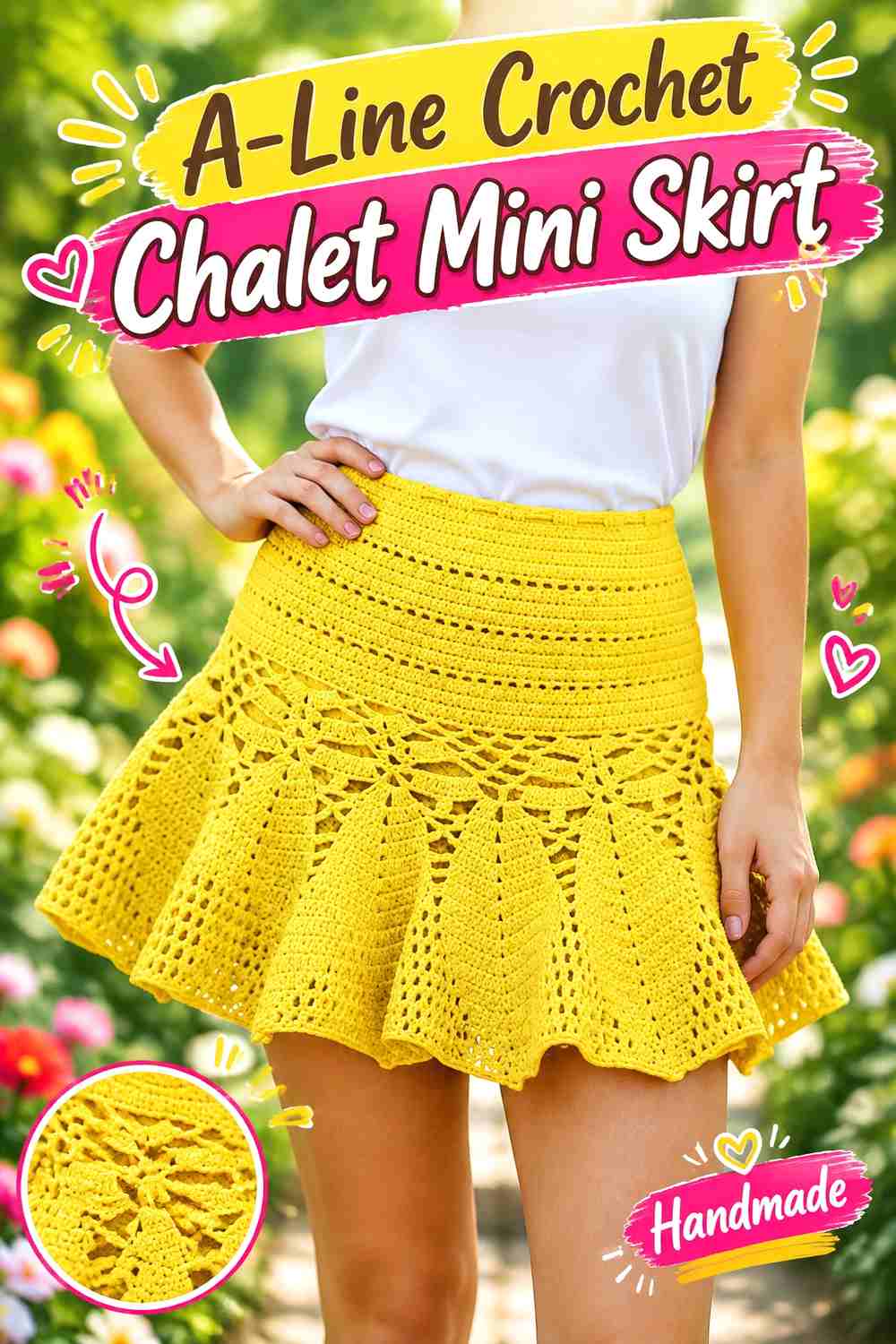
An A-line skirt moves away from close sweater-skirt shaping and gives the hem more room than the waist. This source specifically teaches an A-line crochet skirt with a defined border, creating a useful foundation for a more tailored chalet outfit.
For mini length, preserve the gradual flare rather than simply turning the design into a straight tube.
A-Line Shaping Creates Easier Movement
More room toward the hem can be useful when a dense winter fabric has less stretch.
That makes this silhouette worth considering if you like substantial crochet but do not want the skirt to cling closely through the entire hip and thigh area.
The Border Can Act Like Sweater Ribbing
A defined lower edge visually finishes the garment in the same way that a hem band finishes a sweater.
For an alpine adaptation, the border can remain tonal or use one controlled contrast color rather than becoming an unrelated decorative strip.
Check the Flare at Shorter Length
An A-line skirt developed for more length may show only part of its widening when shortened.
Use the tutorial’s shaping logic and evaluate the silhouette on the body before deciding where the mini hem should end.
Creator Credit: Rosa Artes crochê
11. Deep-Ribbed Crochet Ski Sweater Mini Skirt
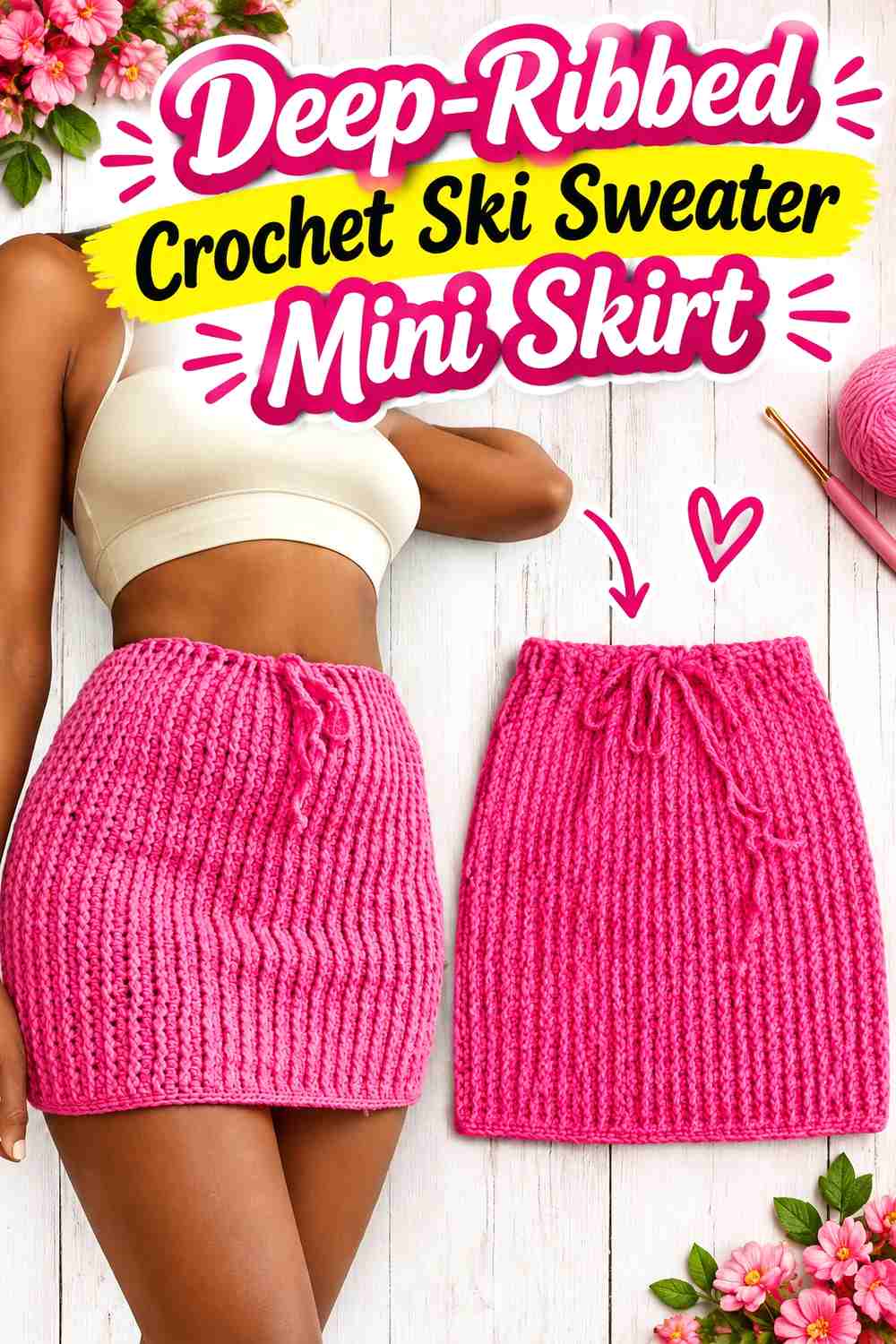
This made-to-measure skirt uses a repeated front-post texture that creates pronounced vertical ribbing. The source describes it as a one-row-repeat ribbed skirt, making it one of the clearest choices for recreating the fabric language of a winter sweater.
It is a strong final option if you want texture rather than colorwork to define the après-ski look.
Vertical Ribbing Creates a Streamlined Shape
Raised columns visually contrast with the horizontal motifs commonly seen on alpine sweaters.
That makes this skirt particularly easy to pair with patterned yokes, color-block pullovers, or oversized Fair-Isle-inspired tops.
Stretch Needs to Be Considered in the Fit
Ribbed fabric can change width significantly between relaxed and worn states.
Use the creator’s made-to-measure approach rather than choosing a circumference based solely on an unstretched sample.
A Solid Color Lets the Ribbing Read Clearly
This is one of the projects where additional colorwork may add less than expected.
A strong solid winter color allows the vertical relief to provide the interest while leaving plenty of room for a more elaborate sweater above it.
Creator Credit: Zx Crochets
Which Crochet Ski Sweater Mini Skirt Style Should You Choose?
| If you want… | Consider… | Main point to check |
|---|---|---|
| Classic lodge plaid | Project 1 | Pattern balance and waistband simplicity |
| True sweater-like cables | Project 2 | Fabric weight and stitch definition |
| Soft pleated movement | Project 3 | Drape in the chosen yarn |
| Sporty ski-resort styling | Project 4 | Waistband fit and defined pleats |
| Adjustable-looking wrap structure | Project 5 | Overlap coverage and doubled thickness |
| Feminine flounce | Project 6 | Ruffle weight |
| A quiet skirt for a bold sweater | Project 7 | Fit and fabric recovery |
| Maximum stitch texture | Project 8 | Keeping multiple textures readable |
| Retro patchwork | Project 9 | Consistent blocked motif dimensions |
| Graphic stripes | Project 10 | Panel and stripe alignment |
| Mountain-like chevrons | Project 11 | Repeat scale at mini length |
| Visible side detail | Project 12 | Fit before cord adjustment |
| More room at the hem | Project 13 | Preserving A-line shaping |
| Rustic cabin texture | Project 14 | Fringe length and outerwear |
| Clean sweater ribbing | Project 15 | Stretch and recovery |
Conclusion
For the strongest traditional ski-sweater references, Projects 1, 2, 11, and 15 are the clearest starting points. Plaid supplies tailored winter pattern, cables and ribbing create familiar sweater texture, and chevrons introduce the graphic mountain-like rhythm associated with alpine style.
Projects 3 and 4 are stronger choices if movement matters. Both use pleated ideas, but the chevron version is softer and more decorative while the tennis-style skirt feels sportier. Project 5 changes the construction completely with a wrap front, and Project 13 offers a roomier A-line silhouette.
For a retro handmade look, Project 9 turns granny squares into ski-resort patchwork. Projects 6 and 8 offer more feminine ruffle treatments, while Project 14 takes the theme toward rustic cabin styling with fringe.
Whichever design you choose, settle fit, coverage, and fabric behavior before adding winter styling changes. A heavier yarn can affect waistband stability, drape, pleats, cables, and overall garment weight. Follow the original creator’s tutorial for exact construction, then use palette, texture, tights, boots, and the sweater above it to build the après-ski outfit.
Frequently Asked Questions
What makes a crochet mini skirt suitable for an après-ski outfit?
The strongest versions use cold-weather visual cues such as cables, ribbing, plaid, chevrons, structured pleats, or intentional winter color combinations. Pairing the skirt with opaque tights, boots, a substantial sweater, and suitable outerwear also helps establish the après-ski look.
Can I use a summer crochet mini-skirt tutorial for winter?
Yes, but treat it as a styling or material adaptation rather than assuming a thicker yarn can be substituted directly. A heavier yarn can change gauge, drape, stretch, waistband stability, and the size of ruffles or pleats. Often the safer option is to preserve the original fabric and add warmth through tights and other layers.
Which crochet texture looks most like a ski sweater?
Cables and deep vertical ribbing create the most direct sweater-like texture. Plaid, stripes, granny patchwork, and chevrons provide a graphic alpine effect instead. Choose one dominant direction rather than trying to combine all of them in one mini skirt.
Should a crochet winter mini skirt be lined?
It depends on the stitch openness, stretch, and how you intend to wear it. Some dense skirts may provide adequate coverage with opaque tights, while motif, openwork, or stretched fabrics may benefit from a lining, slip, or fitted shorts. Check the fabric while it is actually being worn.
Can I make a longer crochet skirt tutorial into a mini?
Sometimes. First check whether the skirt has shaping, pleats, cables, border placement, or motif repeats that depend on the original length. When the creator provides length customization, use that method instead of simply stopping at an arbitrary row.
Will chunky yarn make a crochet ski skirt warmer?
Not automatically, and it can change the garment substantially. Chunkier yarn increases stitch scale and may add weight, stiffness, and bulk at the waistband. Warmth also depends on fiber, stitch density, wind exposure, and the layers worn with the skirt.
Can I wear a crochet mini skirt for actual skiing?
Treat these as fashion and après-ski garments, not technical ski clothing. They do not replace insulated, weather-resistant, or sport-specific snow gear. Use them for lodge wear, casual winter outfits, or other conditions appropriate to the yarn and layers you choose.