A crochet aviator vest does not need real shearling to capture the familiar winter-flight-jacket look. Fluffy faux-fur yarn, looped textures, bouclé-style surfaces, chunky fabric, deep collars, strong front bands, and contrasting edging can all create the visual impression of a shearling-lined vest.
The tutorials in this collection take more than one route to that result. One works directly with a fluffy faux-fur vest concept, while others provide useful vest constructions that can be adapted with a shearling-look collar, contrasting trim, or a softer textured yarn. That distinction matters: not every source is an exact aviator vest tutorial, so treat the adaptation ideas as design planning rather than as replacements for the creator’s construction instructions.
The biggest differences are fit, front opening, collar shape, texture, pockets, side closures, and how much visual weight the vest carries. Those choices determine whether the finished piece feels closer to a classic flight vest, a cozy teddy layer, or a more fashion-focused interpretation.
Quick List
- Full Faux-Fur Crochet Aviator Vest
- Boxy Chunky Crochet Aviator Vest
- Cropped Loop-Yarn Collar Crochet Vest
- Color-Blocked Collared Crochet Aviator Vest
- Ribbed V-Neck Crochet Flight Vest
- Button-Front Crochet Aviator Vest
- Classic Ribbed Crochet Shearling-Look Vest
- Patchwork Crochet Flight Vest
- Minimalist Chunky Crochet Aviator Vest
- Side-Tie Crochet Shearling-Accent Vest
- Classic Buttoned Crochet Waistcoat Vest
- Motif-Panel Crochet Aviator Vest
- Hooded Pocketed Crochet Aviator Vest
- Color-Blocked Pocket Crochet Flight Vest
- Textured Crochet Fleece-Look Vest
- Open Granny-Square Crochet Aviator Vest
- Separate-Collar Crochet Shearling-Look Vest
- Made-to-Measure Wide-Collar Crochet Aviator Vest
- Thick-Wool Open Crochet Winter Vest
What Creates a Shearling Look in Crochet?
The visual effect usually comes from contrast. A smoother body paired with a fluffy collar and edging reads more like a traditional shearling-lined garment than using highly textured yarn everywhere. It also keeps important shaping areas easier to see while you work.
Texture can come from faux-fur yarn, loop yarn, bouclé-style yarn, or a naturally nubby crochet fabric. Before substituting one into a tutorial, compare the resulting fabric with the original. A very fluffy yarn can hide stitches and make seam placement, buttonholes, edging, and shaping harder to identify.
You also do not need to cover every edge. A substantial collar plus front trim may create a stronger aviator reference than adding fuzz to the neckline, hem, armholes, pockets, and every seam at once.
Fit Matters More Than the Fuzzy Trim
Traditional aviator-inspired layers tend to benefit from enough room underneath for another garment. That does not mean every crochet vest needs to be oversized, but it does make intended layering important when choosing the tutorial.
Check the creator’s sizing method instead of assuming that adding thicker yarn will automatically produce a useful larger fit. Changing yarn can affect both width and length, and a bulky border can reduce the apparent opening around the neck or armhole.
Also consider shoulder width. A close shoulder gives a sweater-vest appearance, while a slightly stronger shoulder line can make a vest look more outerwear-inspired. Neither is universally better; the right choice depends on whether you want a fitted indoor layer or something that visually resembles a sleeveless jacket.
Plan the Shearling-Look Trim Before You Crochet
Decide where the contrasting texture belongs while you are choosing a base tutorial. A button-front design offers clear front bands. A collared vest already gives you a natural place for fluffy yarn. An open-front vest can use contrasting edging to frame the whole body, while a pullover needs a different strategy.
If you are adding a yarn the original tutorial does not use, make a small sample first. Compare thickness, flexibility, and how clearly you can identify the edge stitches. Very bulky textured trim attached to a much lighter fabric can pull the opening out of shape.
For a more restrained aviator look, keep the body relatively simple and let one or two features—usually the collar and front edge—carry the texture.
1. Full Faux-Fur Crochet Aviator Vest
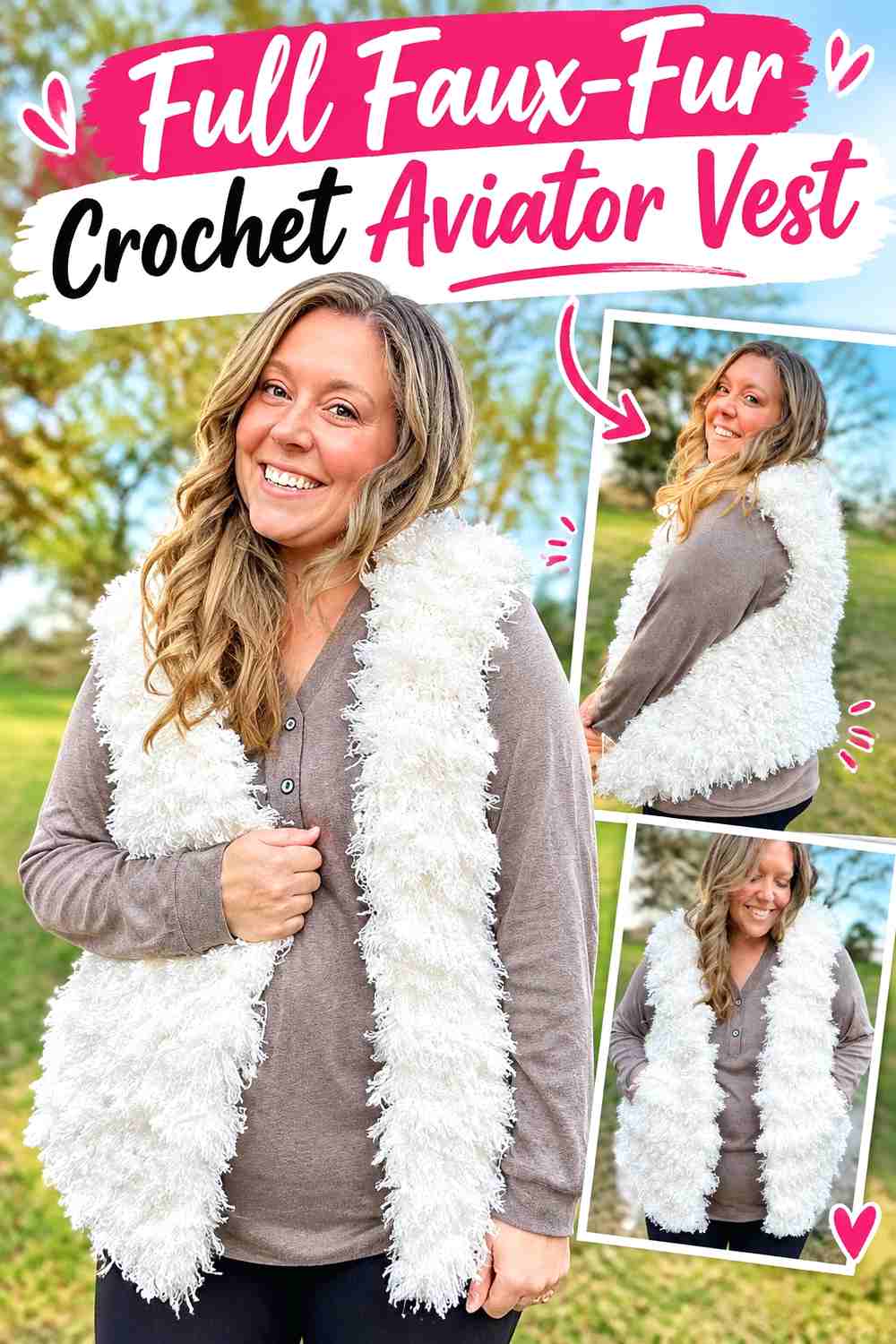
This is the closest match in the collection for anyone who wants the furry winter look to dominate the finished garment. Instead of treating shearling-style texture as a small accent, the fluffy surface becomes the main visual feature.
That makes this direction useful when you want something closer to a teddy or shearling-inspired outer layer rather than a conventional sweater vest with decorative edging.
Full-Pile Fabric Makes the Silhouette the Main Feature
When the entire garment is fluffy, intricate stitch texture will not be the focal point. Shape, length, neckline, and proportion become much more important because the yarn itself provides most of the visual interest.
Before adapting the idea, decide whether you want a relatively clean vest outline or an even bulkier jacket-like profile. Adding more fluffy borders to an already furry body can quickly increase visual weight.
Keep Important Openings Clearly Defined
Faux-fur textures can visually soften the edges around the front, armholes, and neckline. Pay attention to those boundaries when evaluating the finished fit.
If you want a stronger aviator reference, a contrasting collar or deliberately defined front edge can prevent the garment from looking like an undifferentiated fluffy layer.
Creator Credit: Meghan Makes Do
2. Boxy Chunky Crochet Aviator Vest
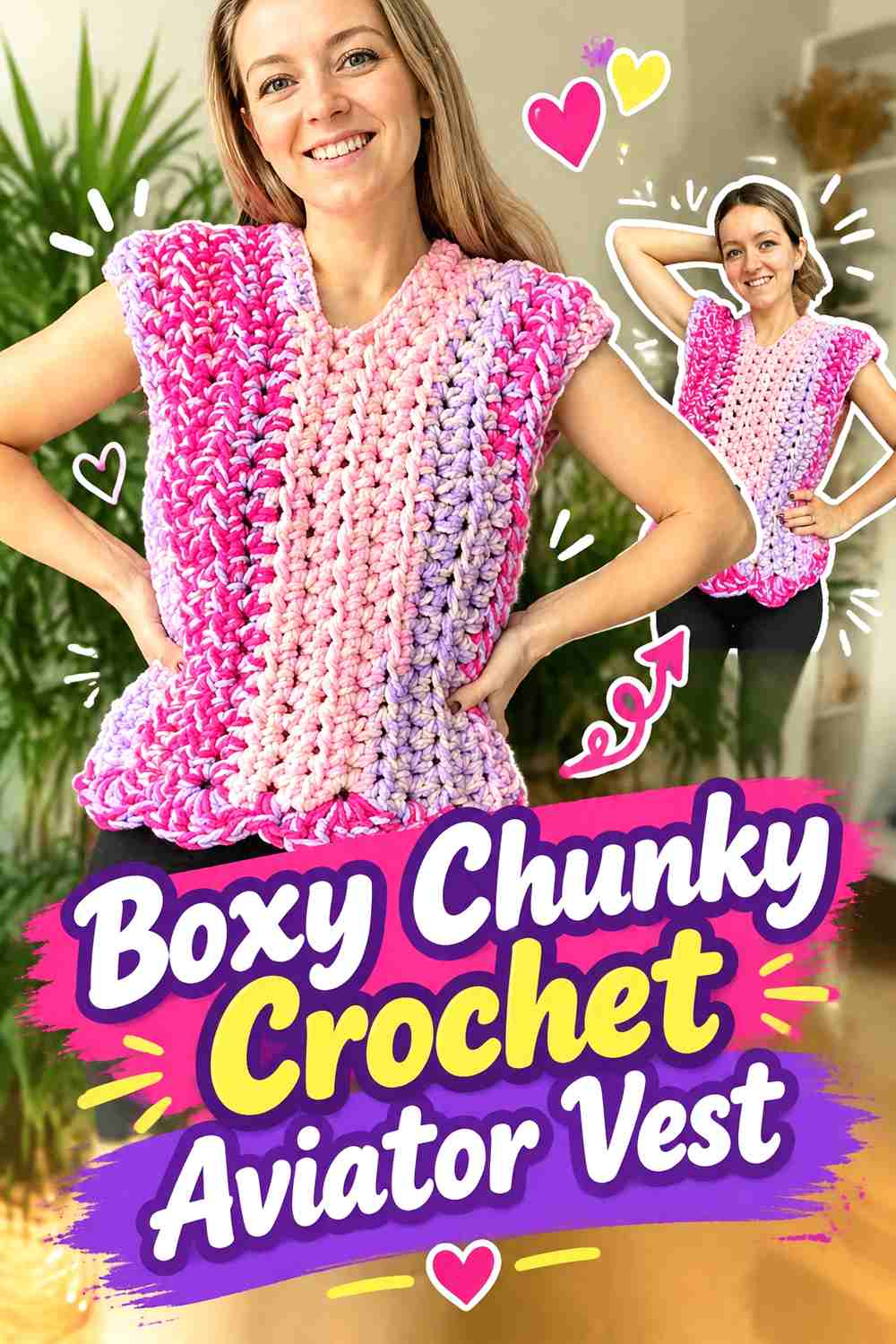
A simple chunky vest can be a useful starting point when you want the aviator influence to come from proportion rather than complicated construction. The substantial fabric naturally gives the garment more presence over winter shirts and sweaters.
This direction is especially useful for a clean, contemporary version where the shearling look is limited to a contrasting neckline or edge.
A Boxier Base Leaves More Room for Layering
A straighter, less fitted body can accommodate garments underneath more comfortably than a very close vest. When choosing your size, compare your intended layering garment with the finished measurements or sizing guidance provided by the creator.
Do not rely on thicker yarn alone to create extra room. A yarn substitution can change the whole proportion rather than simply adding ease.
Use Fuzzy Trim as a Frame, Not an Afterthought
On a minimal garment, the placement of contrasting trim becomes very noticeable. A fluffy neckline and front-facing area can create a clear shearling reference without covering the entire body.
Keep the scale of that edging in proportion to the chunky fabric. Very narrow trim may disappear visually, while extremely bulky trim can distort the opening.
Creator Credit: by Kristine
3. Cropped Loop-Yarn Collar Crochet Vest
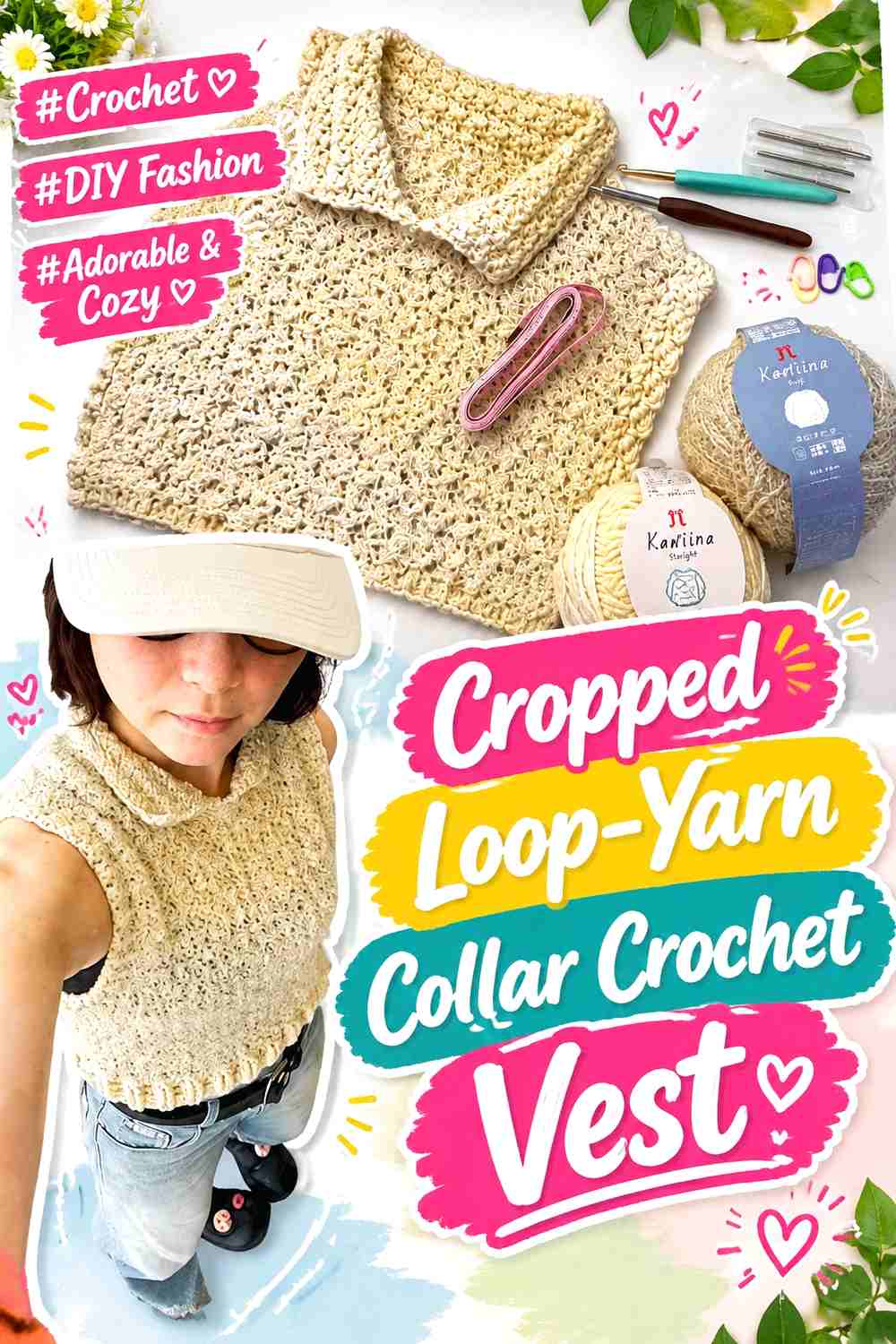
A cropped collared vest offers a more fashion-focused interpretation of the aviator idea. The collar already establishes an outerwear-like focal point, while looped yarn brings texture without requiring a completely furry garment.
The shorter proportion also separates this option from longer, heavier winter vest shapes.
The Collar Is the Natural Place to Emphasize Texture
Because the collar sits close to the face, it strongly influences how the vest reads. Using the looped or fluffy texture strategically here can create a clearer shearling impression than distributing it randomly across the garment.
Check how thick the collar becomes after finishing. Extra bulk at the neckline can change both comfort and how the front edges sit.
A Cropped Body Changes the Layering Balance
Shorter vests can work well over high-waisted clothing or over longer shirts where you intentionally want the underlayer to show. They provide a different styling effect from hip-length aviator-inspired pieces.
Before altering the length, look at how the tutorial handles the armholes and collar. Changing one proportion may affect where other visual features land on the body.
Creator Credit: COGUMA Crochet
4. Color-Blocked Collared Crochet Aviator Vest
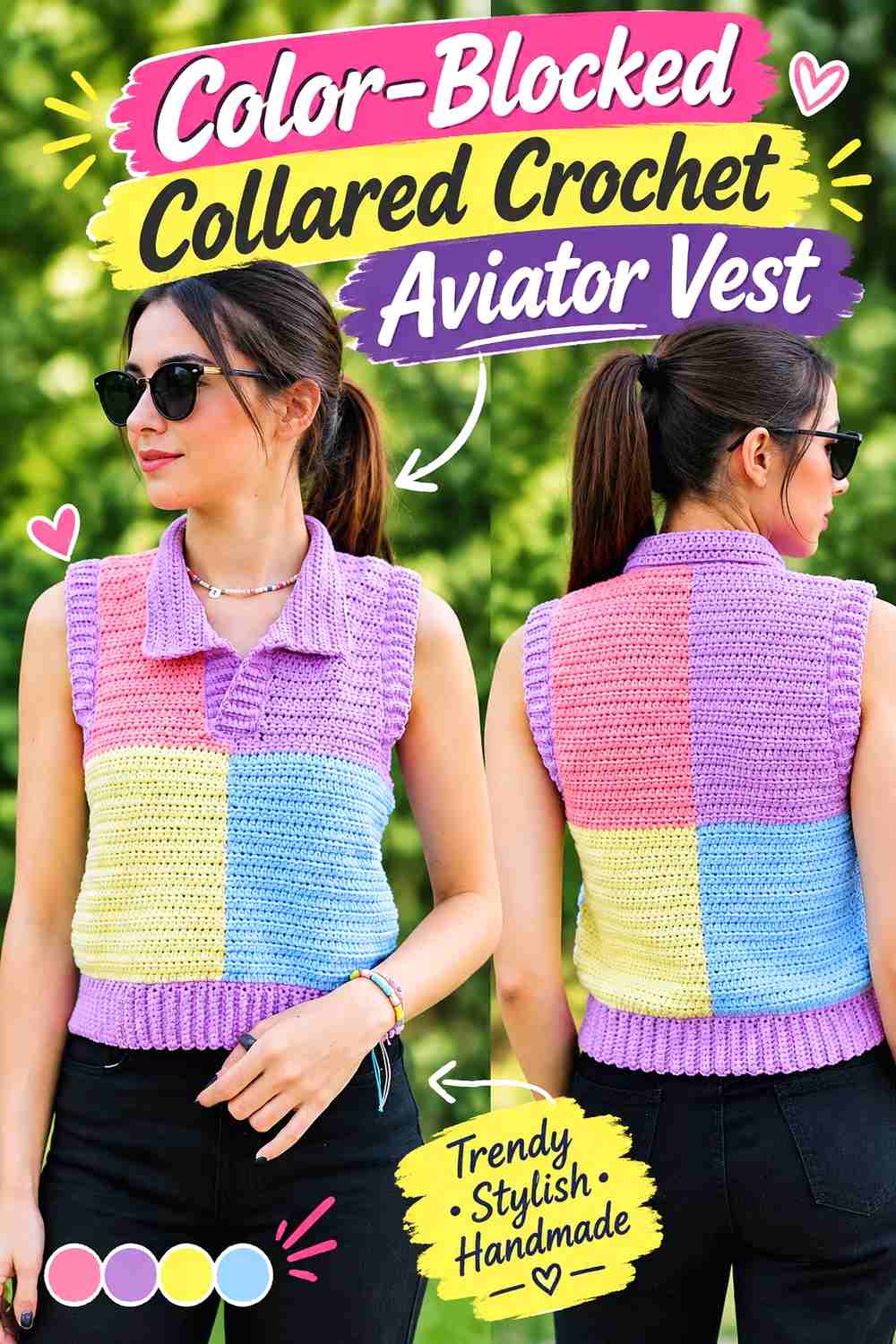
A collared vest made with multiple colors offers an easy way to separate the “outer” fabric from the “shearling” detail visually. Instead of relying only on yarn texture, you can use color placement to reinforce the contrast.
This works particularly well for an aviator-inspired palette where the main body and collar are intentionally distinct.
Contrast Can Do Part of the Work of Texture
A light collar against a darker body can suggest the familiar contrast of shearling-lined outerwear even before you introduce a fluffy yarn.
If you decide to combine both color and texture changes, keep one of them dominant. Too many competing borders, stripes, and textures can make the aviator reference harder to read.
Check the Collar Depth Before Adding Bulk
A collar that looks balanced in a smooth yarn may become much more substantial when worked or edged in a looped or furry yarn.
Rather than assuming the substitution will behave the same way, test the textured yarn against the neckline and decide whether the original collar scale still makes sense.
Creator Credit: Chenda DIY
5. Ribbed V-Neck Crochet Flight Vest
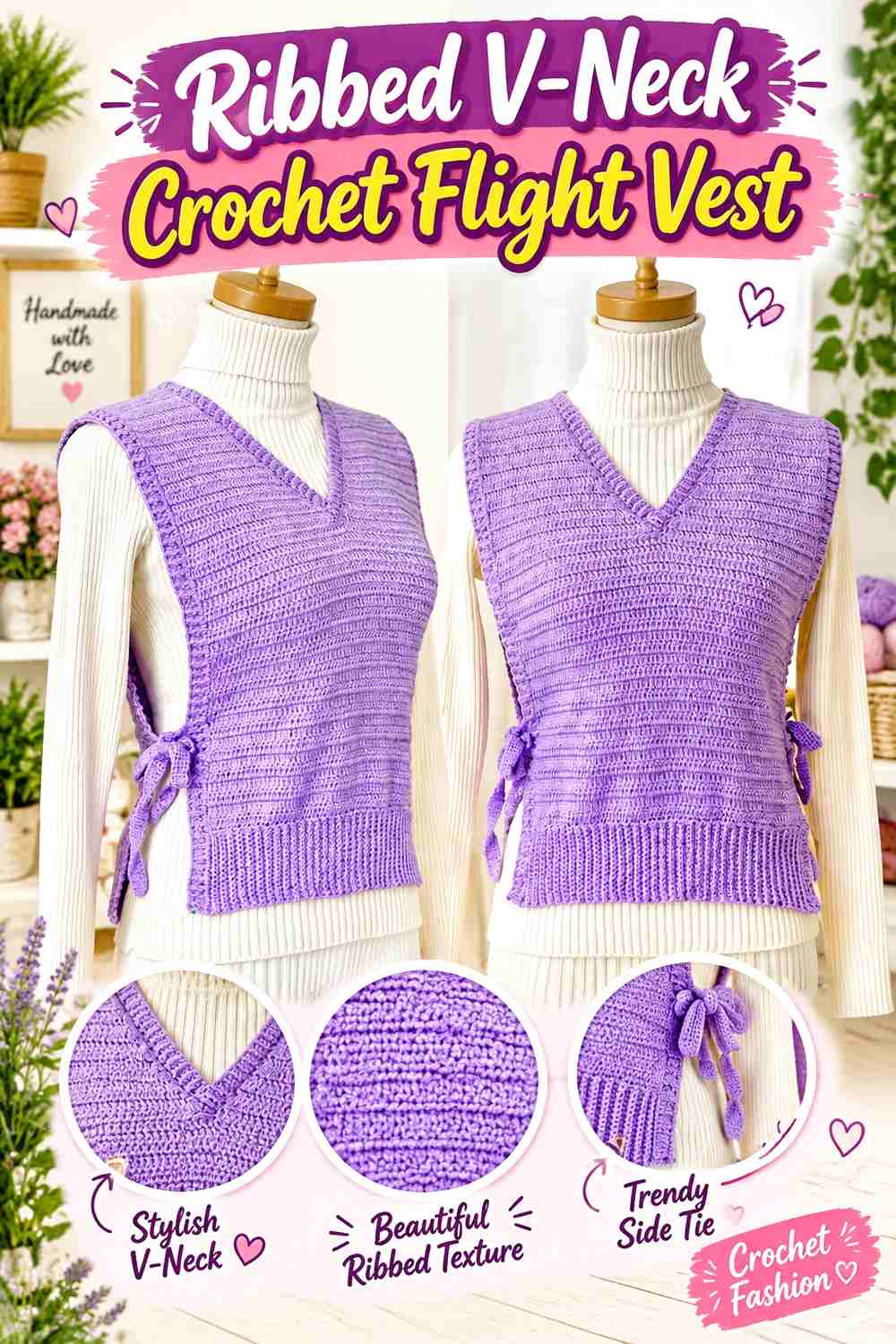
A V-neck produces a cleaner, more sweater-like base, which makes this a good option for someone who likes the aviator palette and texture but does not want a large traditional collar.
The stronger neckline line can also prevent a fluffy border from overwhelming the upper body.
The V-Neck Keeps the Center Front Visually Open
An open neckline leaves more of the garment underneath visible. That can be useful if you plan to wear the vest with a turtleneck, button-down shirt, or other substantial winter layer.
If you introduce fuzzy edging, consider how far it extends into the V. A very wide border can visually narrow the opening.
Ribbing Helps Separate the Vest From the Trim
Defined ribbed edges create a useful contrast with softer shearling-look yarn. Instead of making every finish fluffy, you can preserve some ribbed areas and reserve the textured accent for one deliberate location.
This gives you a cleaner interpretation than a full teddy-style vest while still keeping a winter-flight influence.
Creator Credit: Vivi Crochet 🌷
6. Button-Front Crochet Aviator Vest
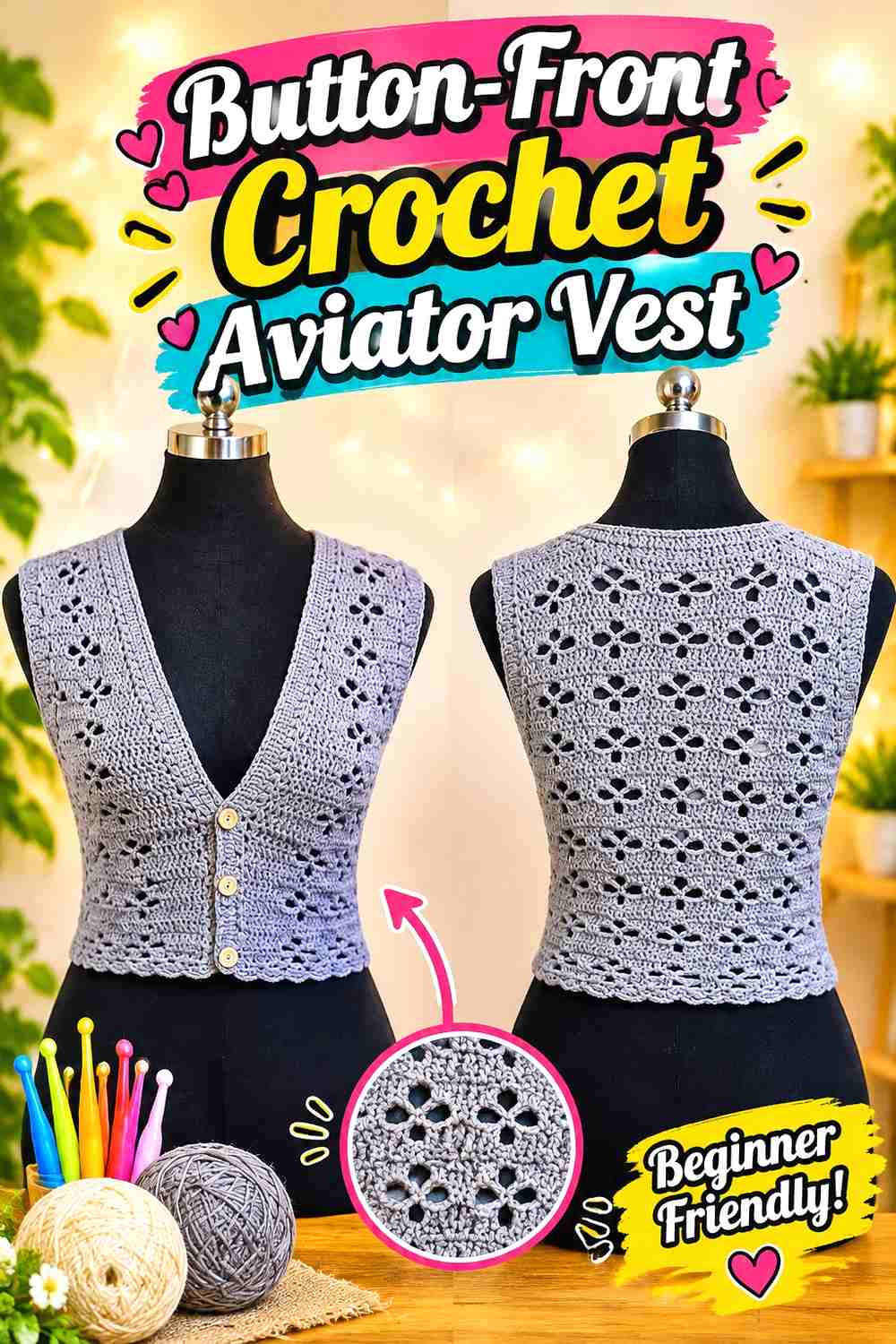
Buttons immediately make a vest feel more structured because they create a clear center-front closure. That makes this construction useful for adapting toward a sleeveless aviator-jacket look.
The tutorial also includes decorative edging, so this idea suits readers who prefer a more detailed version rather than a completely utilitarian flight vest.
A Front Closure Changes How the Vest Functions
A vest that can be worn open or closed offers more control over styling and layering. Before adding thick shearling-look edging, make sure it will not crowd the closure area or make the buttons difficult to reach.
If you change the trim yarn, keep the original button placement and structural requirements in mind rather than treating the border as purely decorative.
Decide Whether Decorative Edging Fits Your Aviator Style
Scalloped or decorative finishes can move the design toward a softer, vintage look. A straighter contrasting edge creates a more rugged impression.
You do not have to remove decorative character, but decide which visual direction matters most before adding several additional aviator-inspired details.
Creator Credit: Ler Crochet
7. Classic Ribbed Crochet Shearling-Look Vest
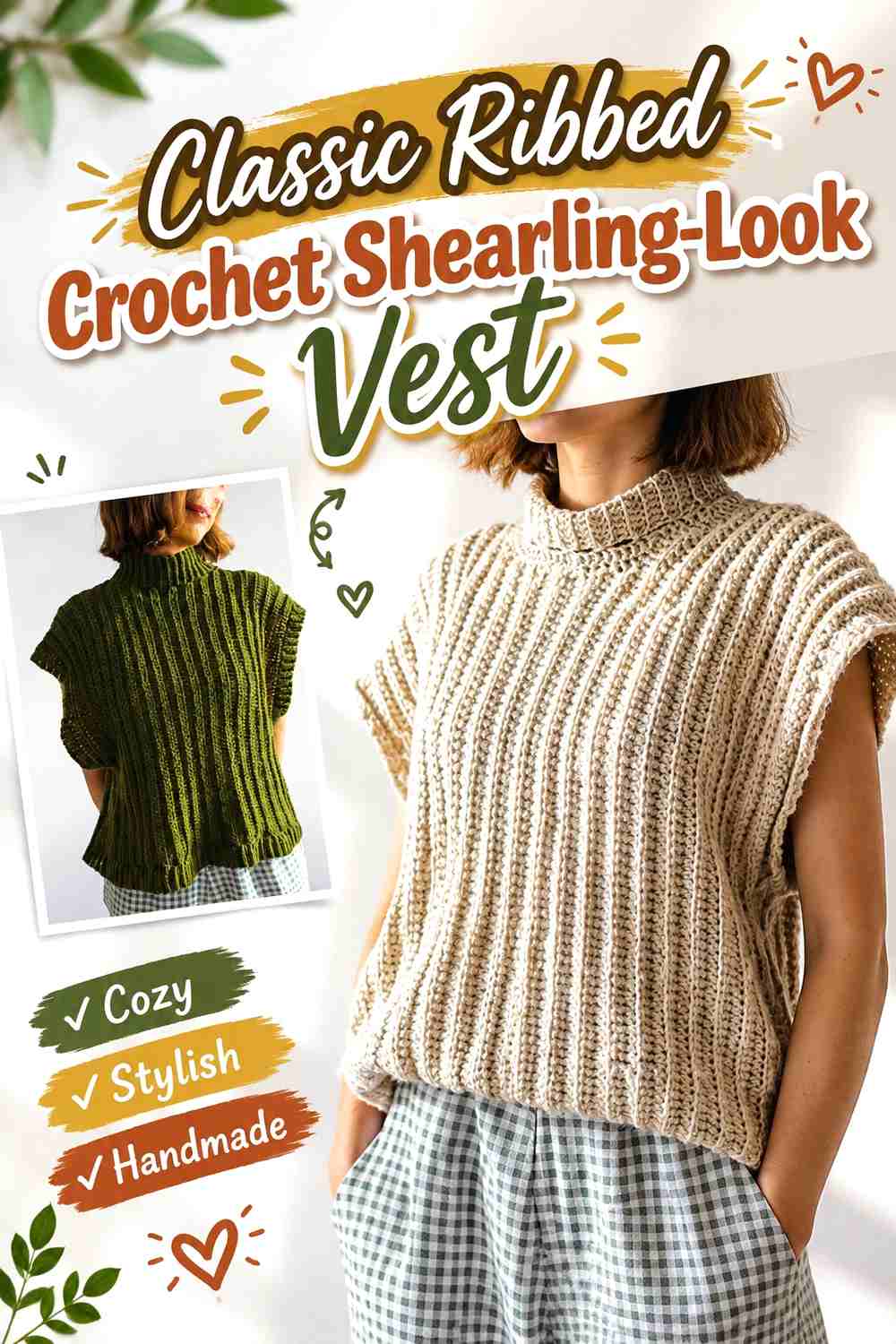
A traditional sweater-vest construction gives you a neutral canvas for introducing winter texture. It is less literal than a buttoned or collared flight vest, but that restraint can be useful when you want something wearable across more outfits.
Here, the aviator reference can come mainly from a warm neutral palette and carefully placed textured edging.
A Simple Body Gives the Trim More Influence
When the garment has a straightforward silhouette, even a small change at the neckline or armholes becomes noticeable.
Choose one primary location for the shearling-look yarn rather than automatically edging every opening. Keeping some ribbing visible preserves the original structure.
Closed-Front Vests Need Enough Layering Room
Unlike an open vest, a pullover must pass over the shoulders and sit comfortably over whatever you plan to wear underneath.
Check the creator’s fit information carefully if your goal is winter layering. Extra-thick underlayers can require different ease than the clothing shown with the original design.
Creator Credit: passtschon
8. Patchwork Crochet Flight Vest
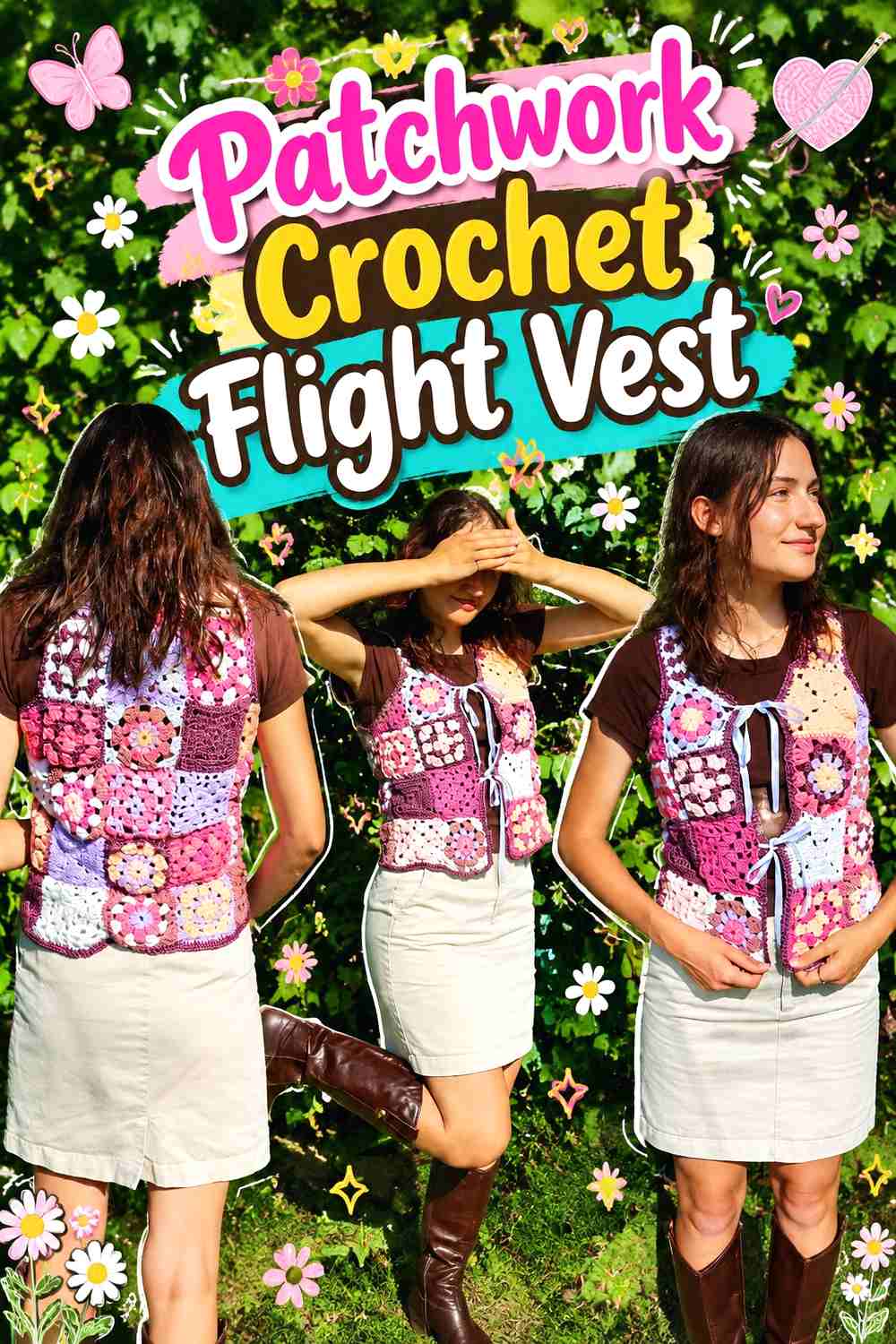
Patchwork makes this one of the most visibly handmade options in the collection. Instead of imitating a classic leather-and-shearling jacket closely, it combines the aviator concept with a deliberately pieced crochet surface.
A fluffy border can help unify the different blocks and give the vest a more winter-specific identity.
Block Size Controls More Than the Color Layout
In a patchwork vest, each section contributes to the final panel dimensions. If you alter yarn, stitch texture, or individual blocks, compare the finished measurements before assembly.
This becomes particularly important if you add thicker edging around the final garment, because the border can further change width and drape.
Let One Outer Border Unite a Busy Surface
When the body already contains several colors or patches, a consistent shearling-look edge can act as a visual frame.
This is usually clearer than introducing multiple types of fluffy yarn inside the patchwork itself, which may compete with the block structure.
Creator Credit: Calluna Crochet
9. Minimalist Chunky Crochet Aviator Vest
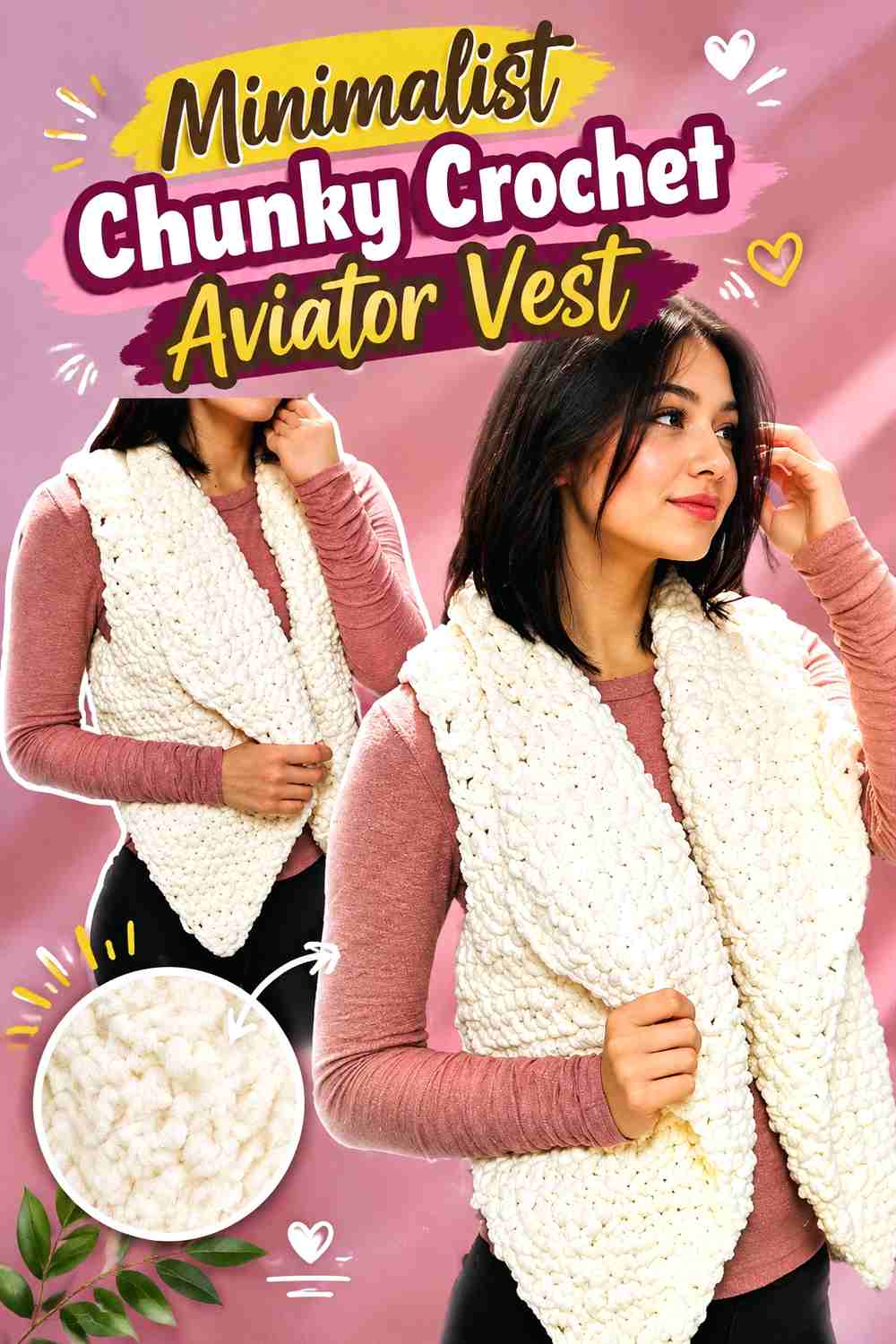
A chunky vest offers the visual weight associated with cold-weather layering without requiring a highly decorated surface. It is a useful option if you prefer the aviator influence to be subtle.
The main design opportunity is the contrast between a substantial body fabric and one softer, fuzzier finishing detail.
Chunky Fabric Already Adds Volume
Before adding a large faux-shearling border, look at how much volume the body has on its own. A heavy vest plus equally heavy edging can make the shoulder and neckline areas appear much larger.
A narrower textured band may be enough to establish the winter look.
Keep Proportions Consistent When Changing Yarn
Chunky garments respond noticeably to yarn substitutions because small gauge differences accumulate across a whole panel.
If you want a different fiber or texture from the one shown, make a sample and compare it with the creator’s intended fabric before committing to the full garment.
Creator Credit: Stevie Marie
10. Side-Tie Crochet Shearling-Accent Vest
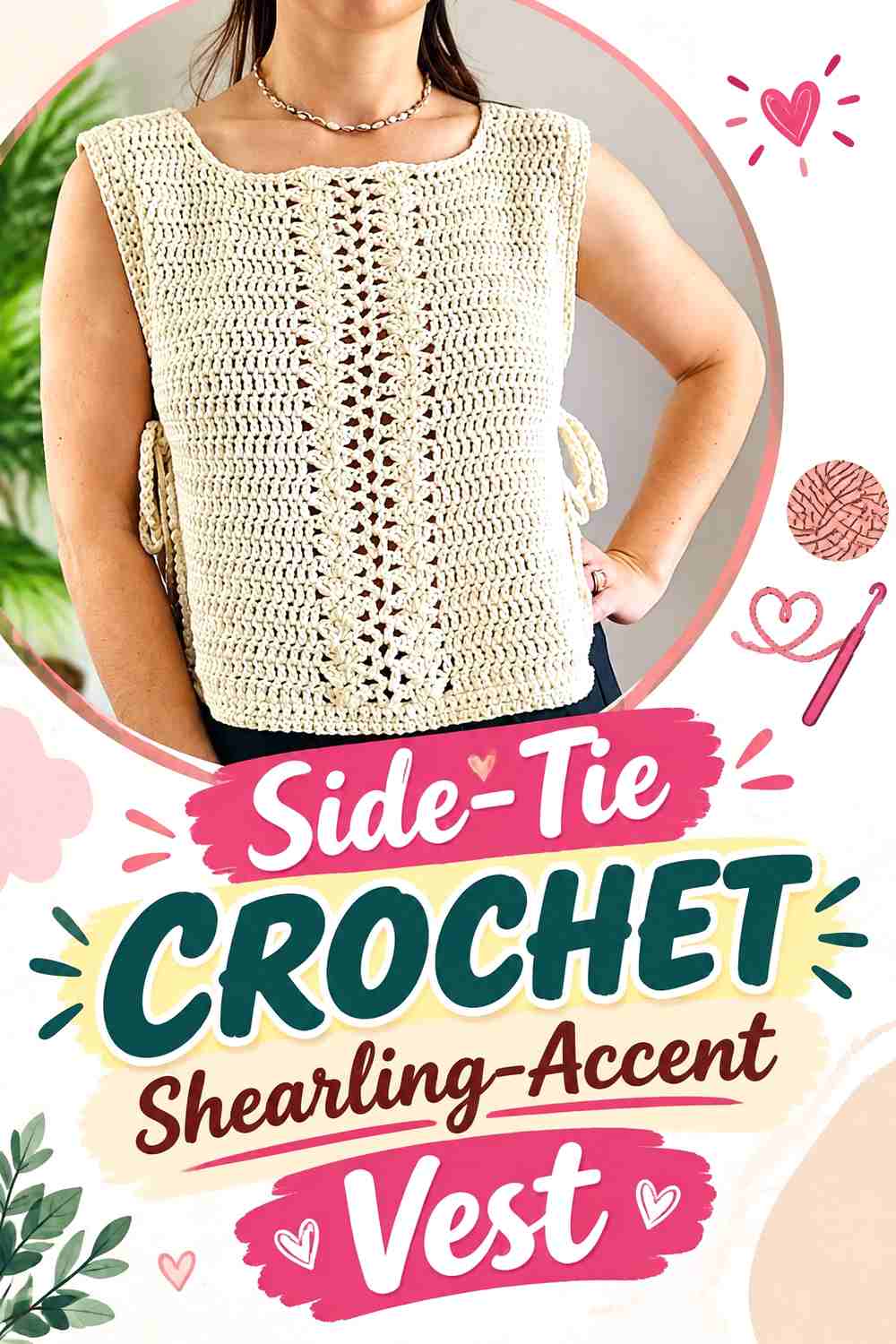
Side ties create a very different silhouette from a conventional closed-side vest. They allow the sides to remain visually open and make the garment feel more like a layering piece than a sleeveless jacket.
That makes this a good choice for a lighter, more adjustable interpretation of the aviator idea.
Side Openings Reduce the Visual Heaviness
If a fully enclosed chunky vest feels too substantial, open sides break up the silhouette. They also allow more of the underlayer to show.
For winter styling, consider what you plan to wear beneath the vest, because the side opening becomes part of the visible outfit rather than disappearing into a seam.
Keep Fuzzy Yarn Away From Functional Ties
A highly textured yarn may look attractive around the neckline or outer edge, but it is not automatically the best choice for parts that need to tie and untie repeatedly.
Use the tutorial’s construction as the functional base and place the shearling-look treatment where it will not interfere with the closure.
Creator Credit: Yelena StyleCrochet
11. Classic Buttoned Crochet Waistcoat Vest
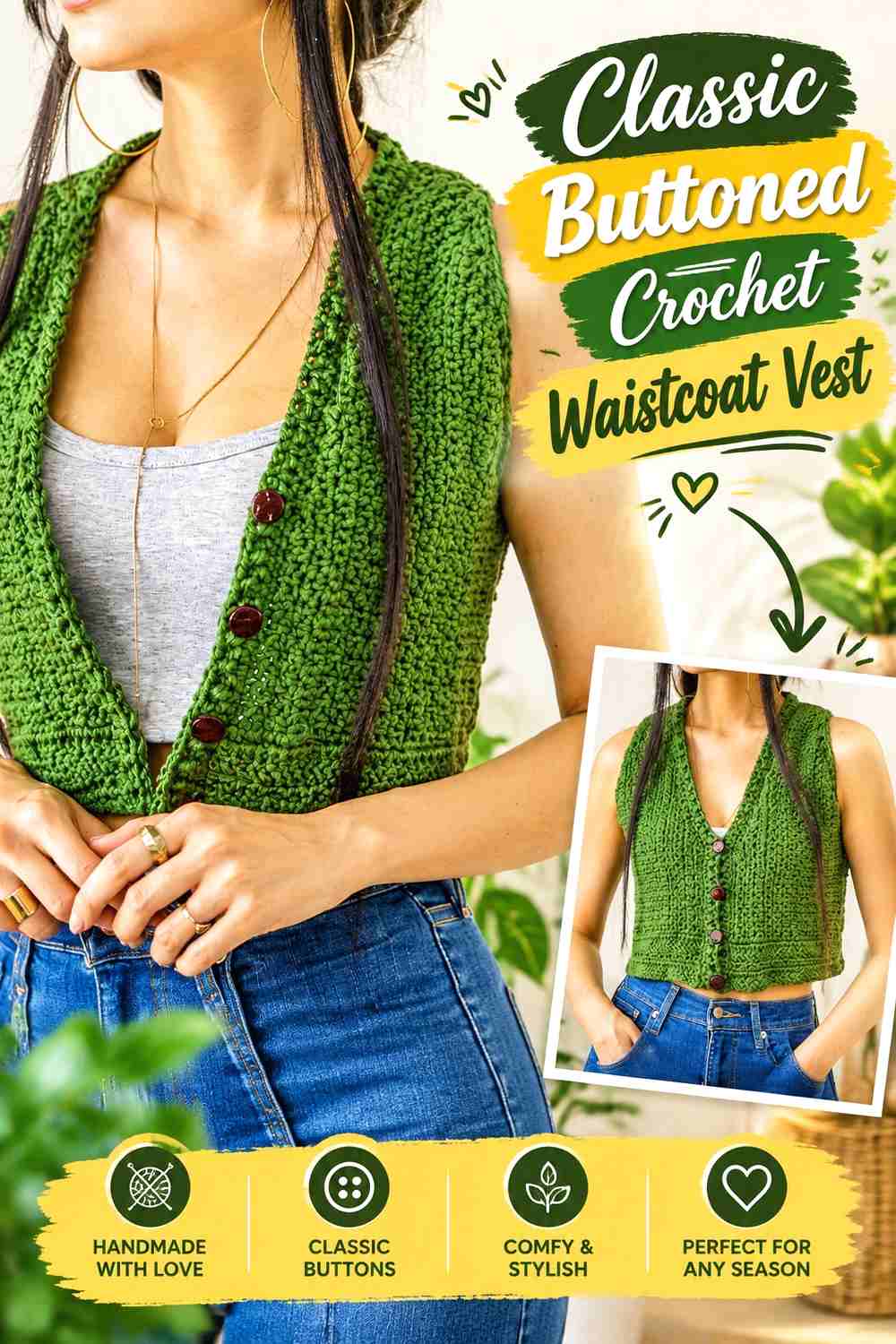
A classic button-front waistcoat provides one of the strongest foundations for an aviator conversion because the center front is already clearly structured.
Add a contrasting collar treatment or textured front band and the garment can move visually from waistcoat to winter flight-inspired layer without requiring an entirely different silhouette.
Front Bands Give the Shearling Detail a Clear Boundary
Defined button bands make it easier to decide exactly where a fuzzy accent begins and ends.
If the textured yarn is significantly thicker than the body yarn, confirm that the finished band still lies flat and does not interfere with the button placement.
Armhole Finishing Determines How Jacket-Like It Feels
A close, tidy armhole reads more like a sweater vest, while stronger visible edging can add an outerwear character.
If you want to emphasize the aviator direction, compare the scale of the armhole finish with the collar and front trim rather than treating each border independently.
Creator Credit: TCDDIY
12. Motif-Panel Crochet Aviator Vest
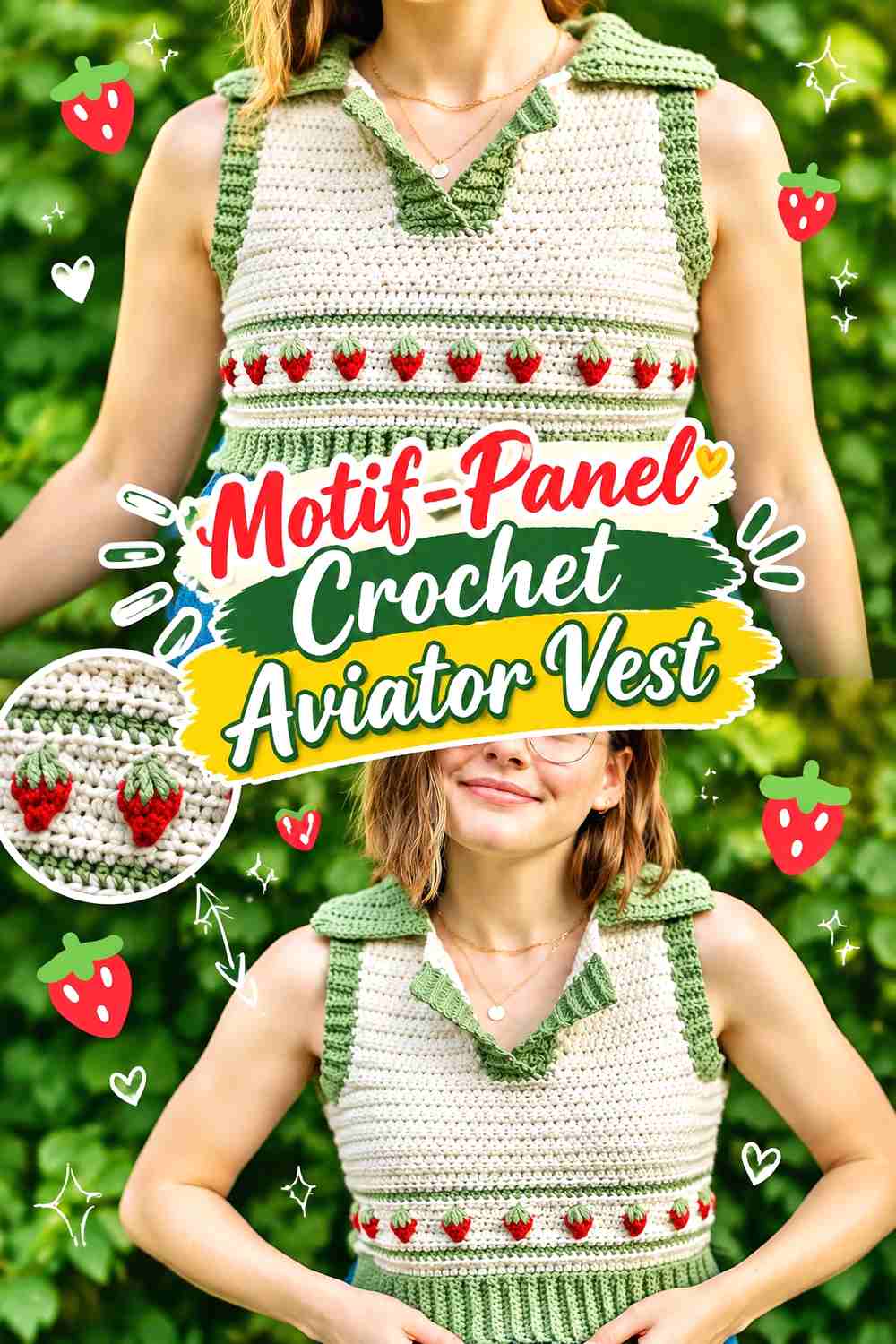
A motif vest introduces a playful surface that is far removed from traditional military-inspired outerwear. That contrast can be exactly what makes the project interesting.
Rather than trying to disguise the motif construction, use the aviator details—neutral edging, a strong neckline, or a fuzzy border—to frame it.
Motifs and Shearling Trim Compete for Attention
If the body contains obvious decorative motifs, adding several additional textured features can make the vest feel crowded.
One consistent fluffy border is often enough to establish the winter theme while leaving the motif work visible.
Do Not Assume Every Motif Is Interchangeable
If you want to substitute another motif for the one used in the tutorial, compare its finished dimensions and fabric density first.
Two designs can look similar on paper yet produce very different panel widths or drape, which affects the fit of a wearable.
Creator Credit: HayHay Crochet
13. Hooded Pocketed Crochet Aviator Vest
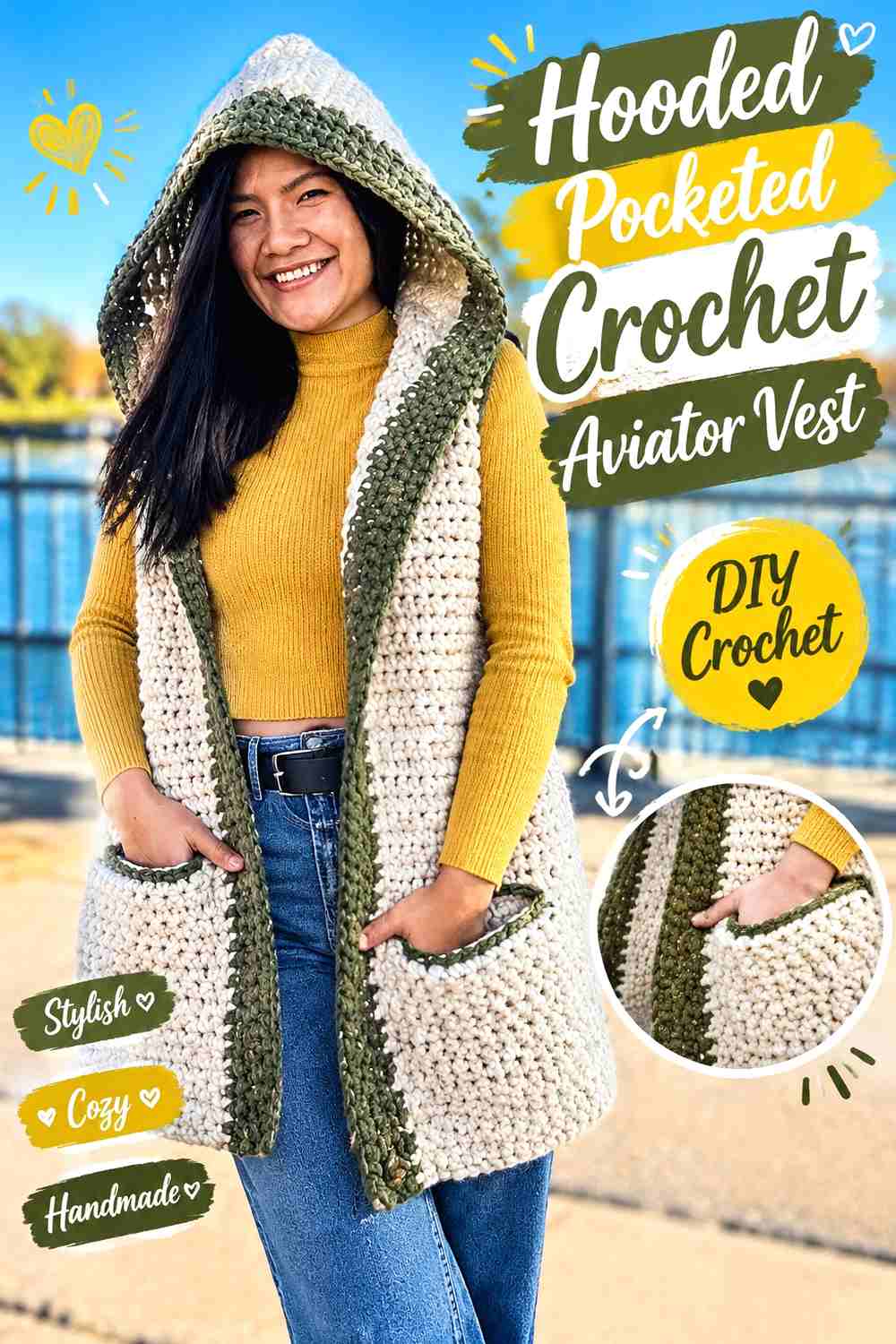
A hood, front opening, buttons, and pockets push this option much closer to sleeveless outerwear than a conventional sweater vest. It is one of the strongest choices if you want the final garment to feel substantial and winter-specific.
Because several functional details are already present, the shearling treatment can remain restrained.
The Hood Can Replace a Traditional Aviator Collar
You do not necessarily need both a very large fluffy collar and a visually heavy hood. If the hood is the dominant upper-body feature, consider limiting the contrasting texture to its edge or the front opening.
That keeps the neckline from becoming disproportionately bulky.
Pockets Add Useful Visual Weight at the Front
Pockets make the garment read more like outerwear and create another possible location for restrained contrast.
If you are considering fuzzy pocket edging, make sure the texture does not obscure the opening or make the pocket difficult to use.
Creator Credit: KnitcroAddict
14. Color-Blocked Pocket Crochet Flight Vest
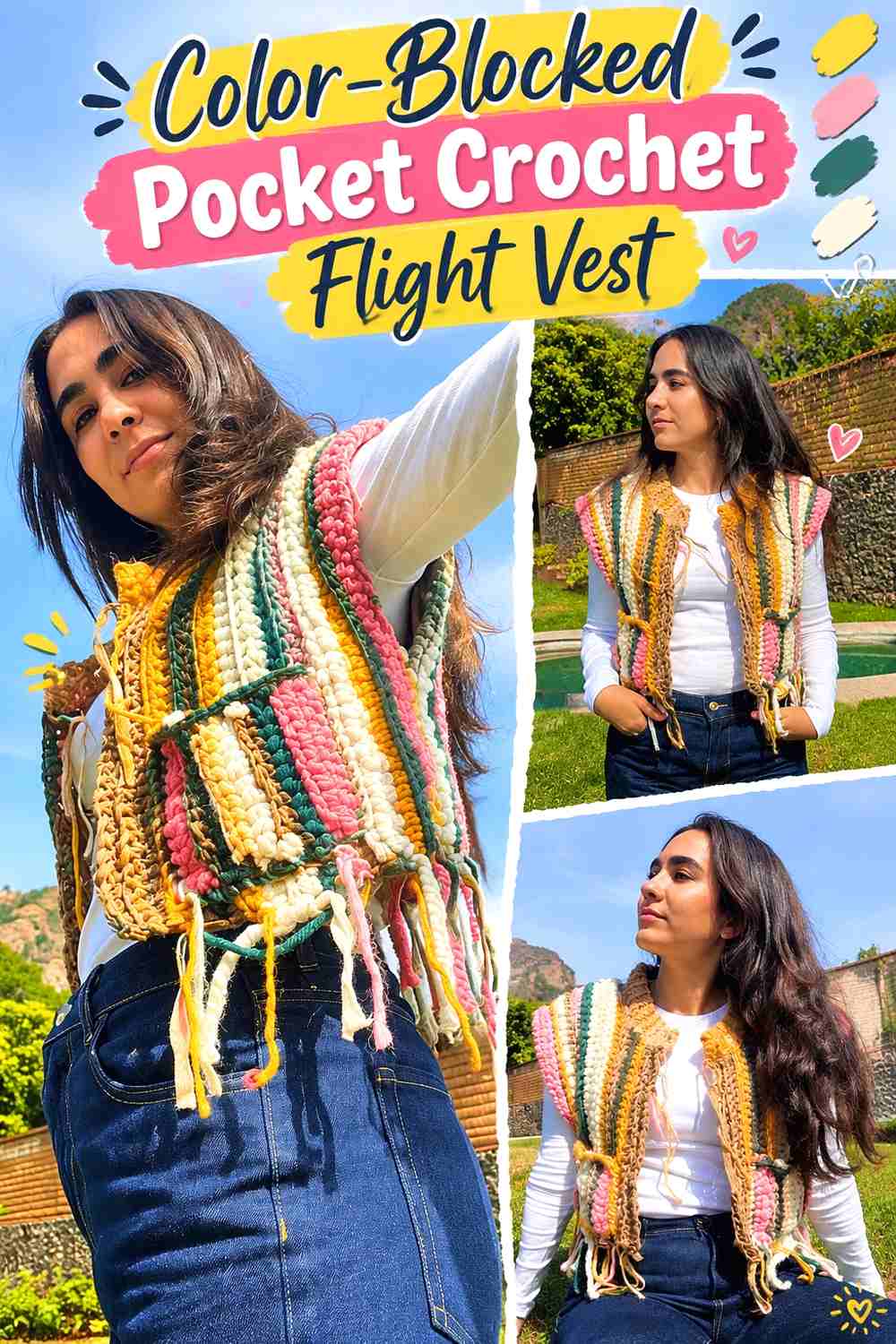
This pocketed vest offers a different approach to winter character: use color and surface variation across the body, then let the pockets reinforce the practical feel.
It can support a rugged aviator palette without requiring a full faux-fur exterior.
Pockets Should Stay Functional After Adaptation
Thick trim looks attractive in small areas, but pocket openings are handled repeatedly.
If you add fluffy edging, test whether you can still locate and use the opening comfortably. A smoother upper edge may be more practical even if the rest of the vest carries heavier texture.
Color Blocking Can Suggest Lining Without Extra Bulk
A contrasting light section near the upper body or edges can visually suggest shearling before you introduce another yarn type.
This can be useful if you want the look but prefer to keep the actual fabric relatively streamlined.
Creator Credit: The knitting diary
15. Textured Crochet Fleece-Look Vest
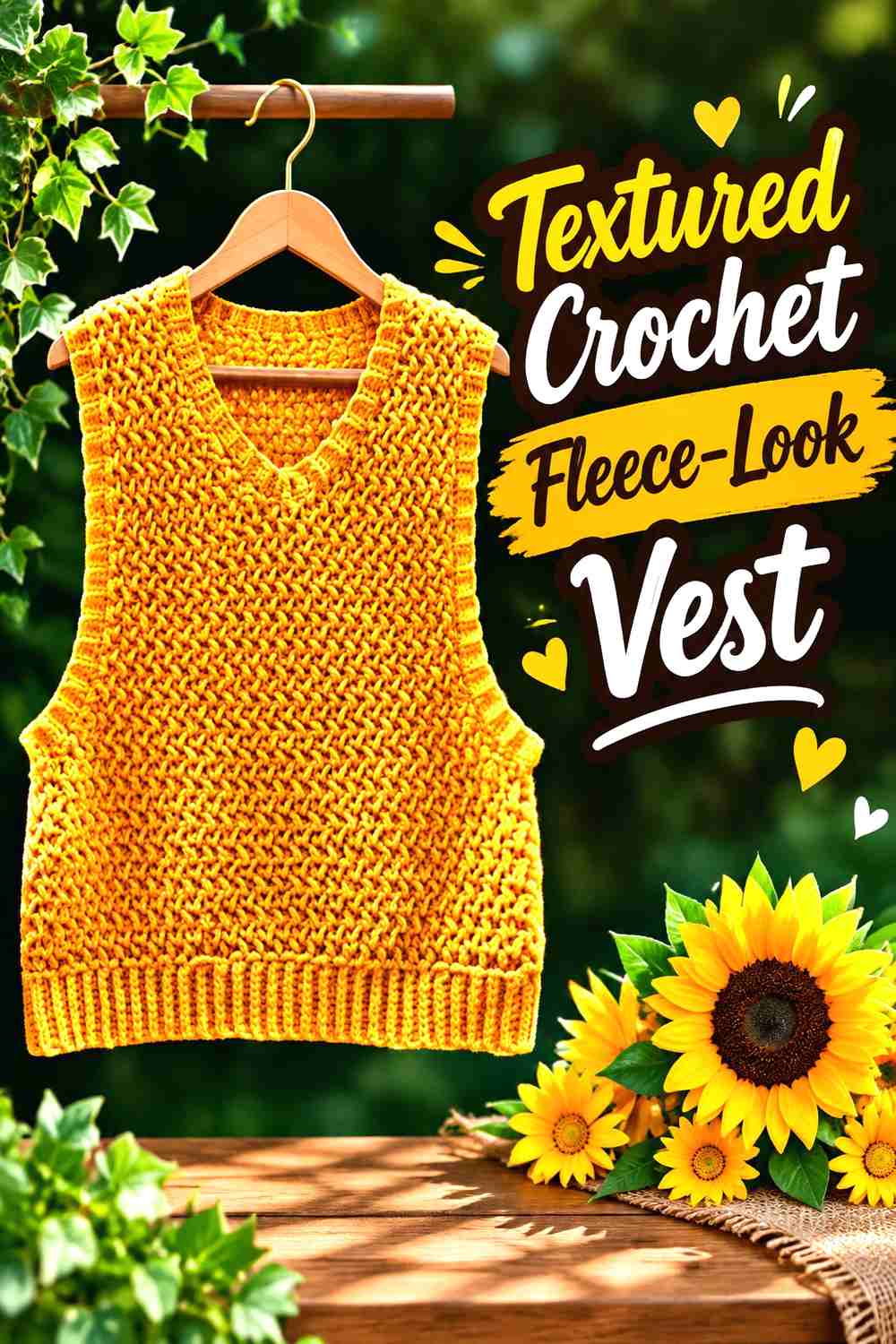
A strongly textured stitch can create a soft, raised surface without using novelty fur yarn. That gives this design a different route to the shearling look.
It suits readers who want visible stitch definition and winter texture at the same time.
Raised Texture Can Carry the Fleece Effect
If the body already has a pronounced surface, you may not need extremely furry edging.
Try comparing the body texture against a simple contrasting border first. The result can feel more cohesive than combining several unrelated fuzzy yarns.
Texture Changes the Perceived Size of the Garment
A deeply textured fabric can appear heavier or more substantial than a flat fabric in the same general silhouette.
Consider that visual effect when deciding how wide to make contrasting trim. The border needs enough presence to be visible without competing with the body.
Creator Credit: Shyler crochets
16. Open Granny-Square Crochet Aviator Vest
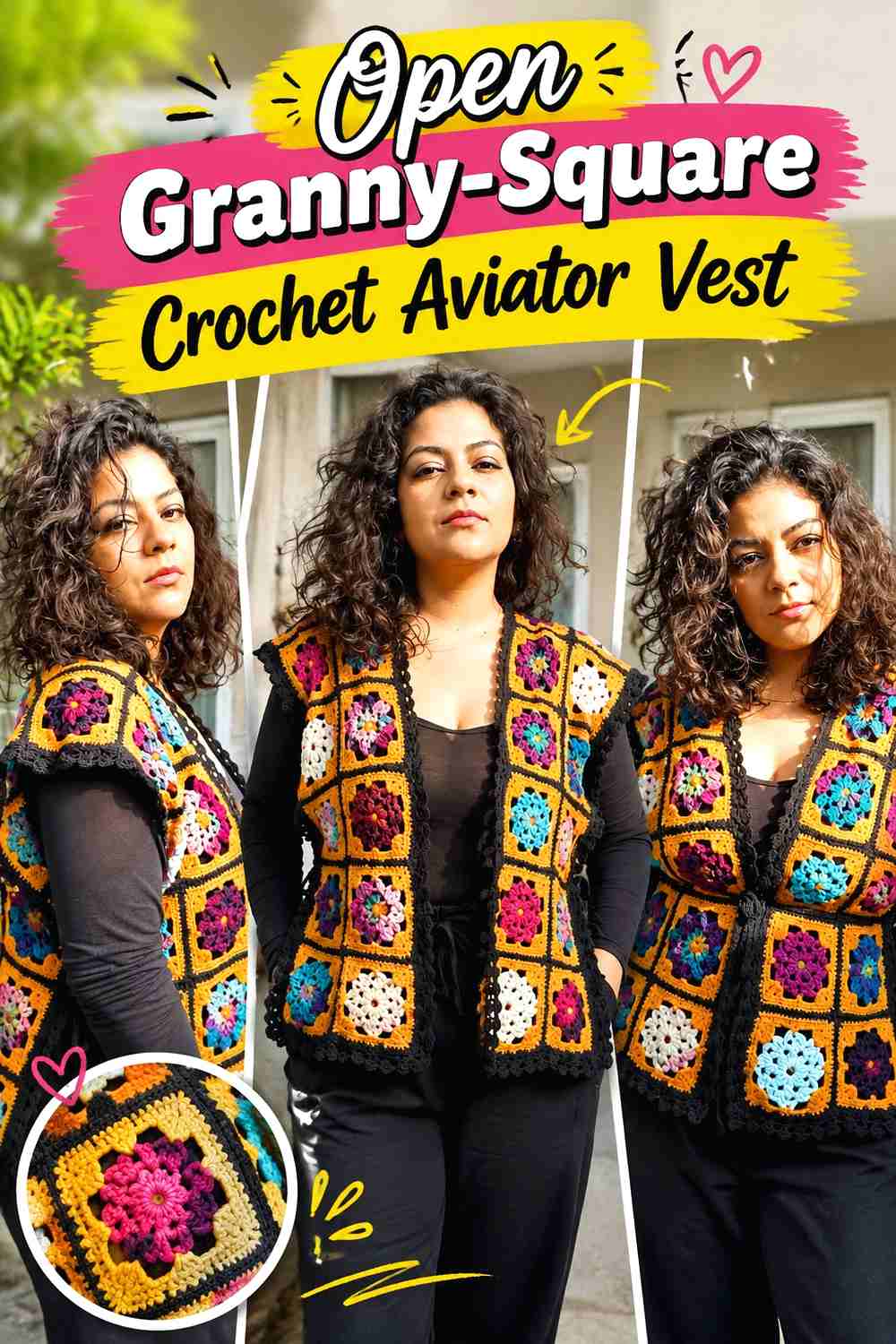
An open-front granny-square vest is a highly decorative alternative to the solid aviator silhouette. The opening creates a natural vertical frame where contrasting shearling-look edging can make a strong impact.
This is a good direction for someone who enjoys motif construction but still wants a recognizable winter-vest finish.
Block the Motifs Before Planning Heavy Edging
Joined squares need consistent finished dimensions before you add a substantial outer border.
If individual motifs differ noticeably, a fluffy edge will not solve the underlying alignment problem. Correct the panel shape first, then treat the trim as finishing.
The Open Front Needs a Balanced Border
Because there is no central closure dominating the design, the two front edges become major visual lines.
Keep their width and texture consistent so the vest looks intentionally framed rather than unevenly embellished.
Creator Credit: Hosama – Crochet Art
17. Separate-Collar Crochet Shearling-Look Vest
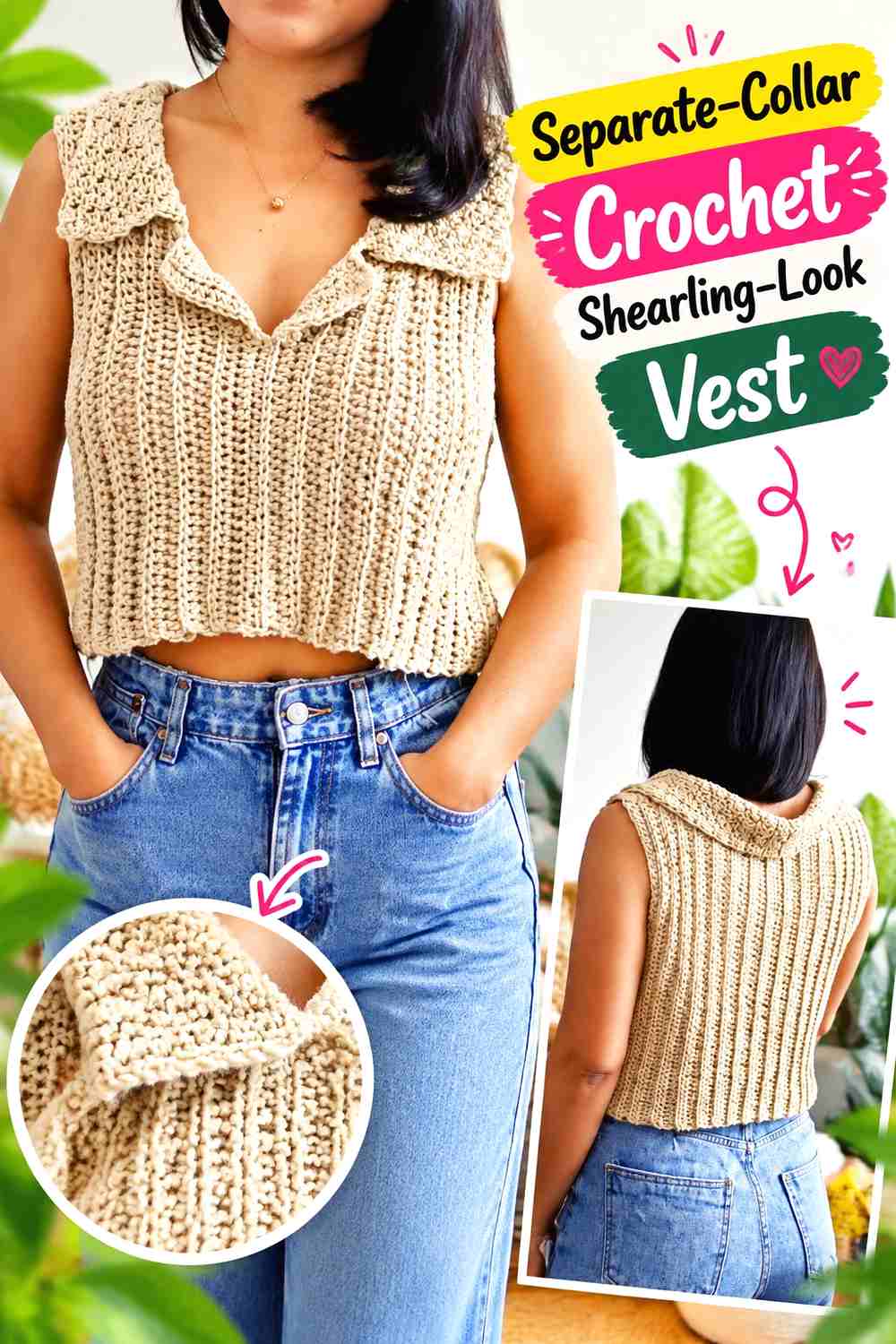
A vest with a separately constructed collar is particularly useful for this theme because the collar can be treated as its own design element.
That gives you more freedom to explore a soft, contrasting collar while keeping the main body relatively straightforward.
A Separate Collar Makes Material Contrast Easier to Plan
When the collar is visually distinct from the body, a yarn change looks intentional rather than accidental.
Before substituting a much bulkier yarn, check how the collar attaches. The extra thickness should not overwhelm the joining area or pull on the neckline.
Use the Collar to Set the Whole Aviator Direction
If the collar is sufficiently prominent, you may not need matching fluffy trim around every other edge.
Repeating the same texture once more at the center front or hem can be enough to connect the design without turning the entire garment furry.
Creator Credit: Jennyandteddy crochet.
18. Made-to-Measure Wide-Collar Crochet Aviator Vest
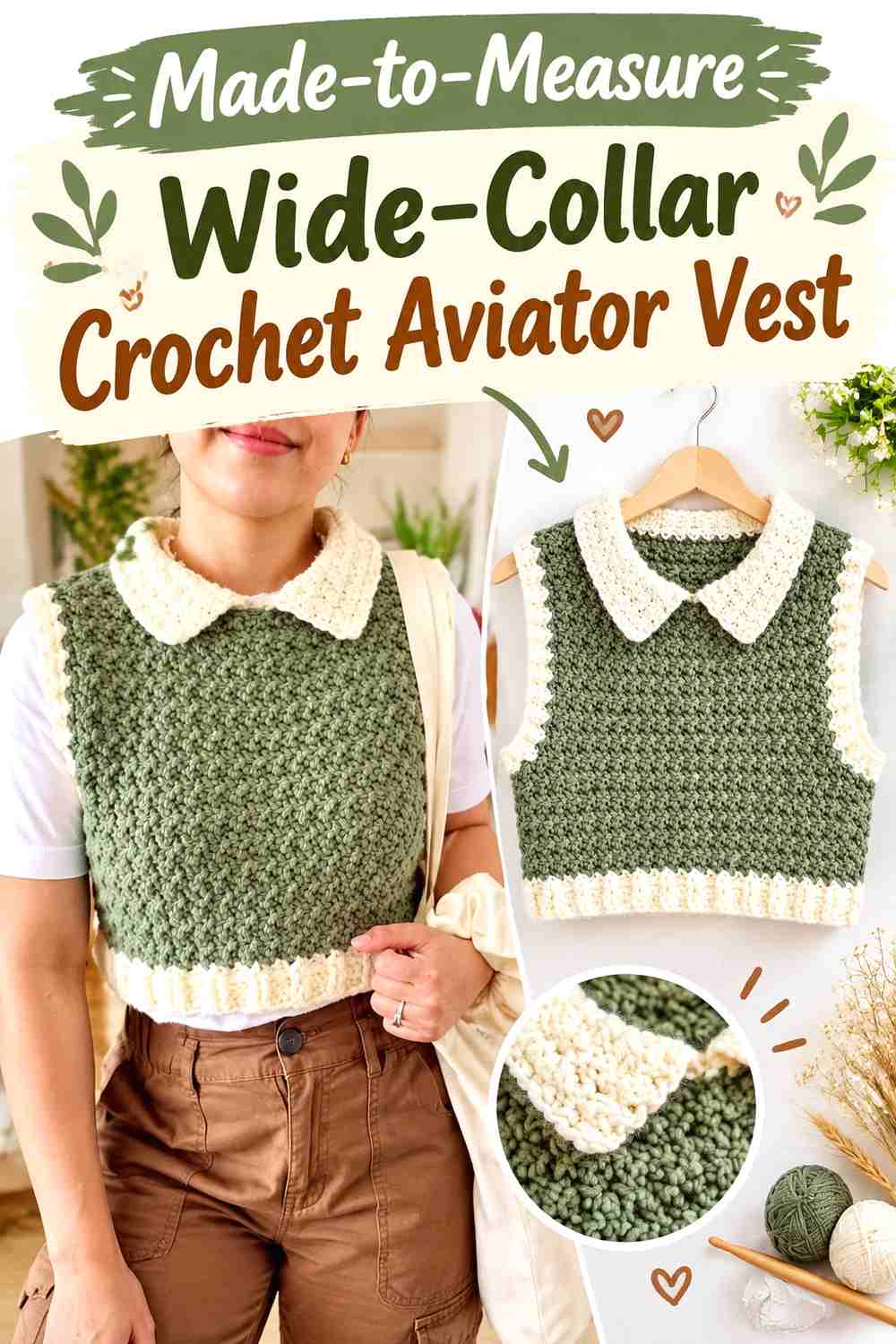
A made-to-measure approach is valuable when the look you want depends on specific proportions rather than a standard sweater-vest fit.
A collared construction also gives this option a natural aviator foundation before any shearling-look yarn is added.
Measure for the Clothes You Intend to Layer Underneath
If this is going to function as a winter vest, measure with realistic layering in mind rather than planning the fit over a thin top and later expecting it to accommodate a bulky sweater.
The creator’s measuring method should remain the basis for construction; the adaptation is about choosing the intended fit before you begin.
Collar Width Should Match the Body Scale
A broader body can visually support a substantial collar. On a closer fit, the same amount of fuzzy trim may dominate.
Compare the collar to the shoulder width and center-front opening instead of deciding its texture in isolation.
Creator Credit: CROCHET BY BEV
19. Thick-Wool Open Crochet Winter Vest
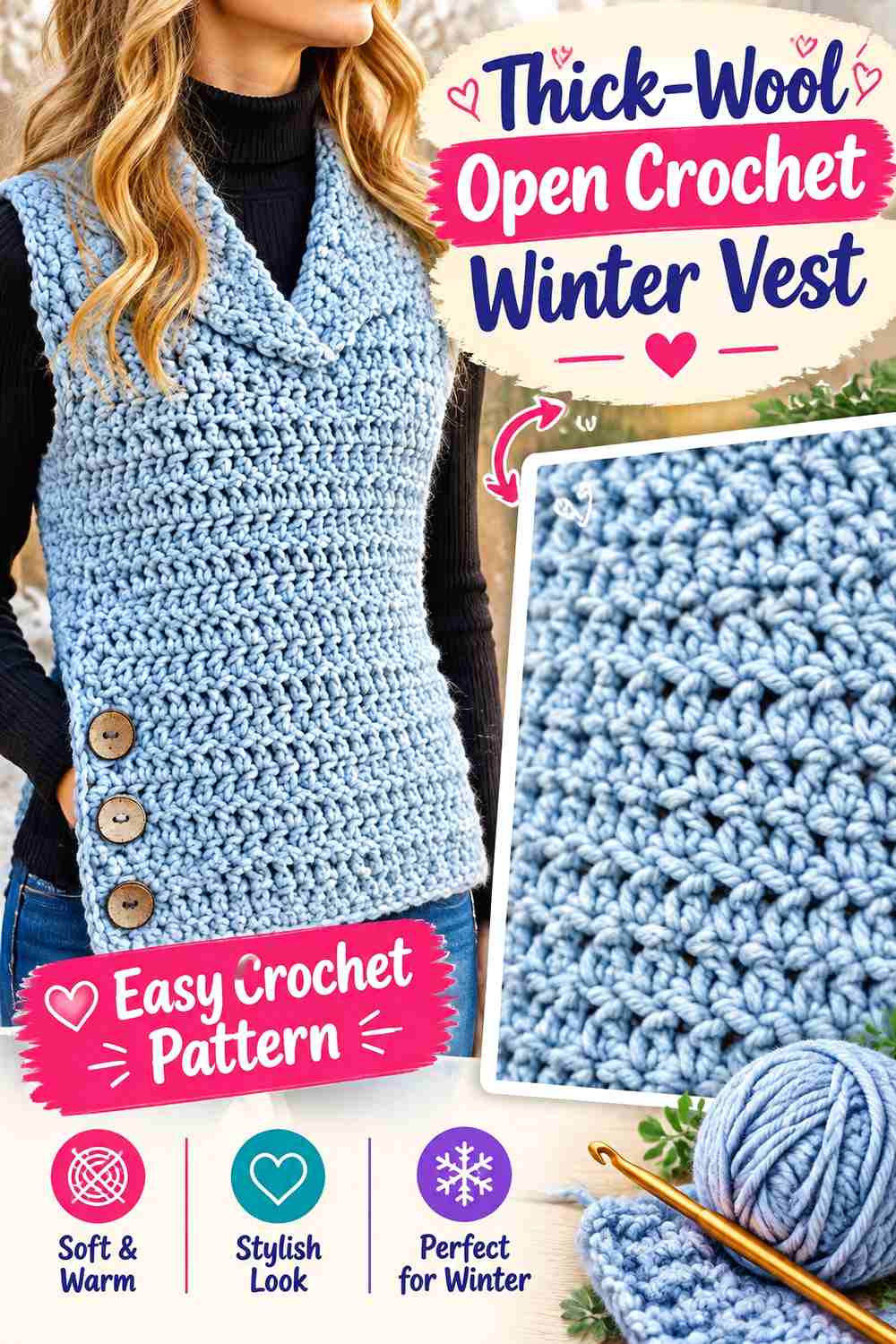
An open winter vest made with substantial yarn offers a practical final direction for this collection. Rather than relying on novelty yarn for the entire shearling effect, the fabric’s thickness already establishes a cold-weather character.
A light contrasting edge can then supply the recognizable aviator cue.
Open Fronts Make Layering Part of the Design
Because the vest does not hide the center of the outfit, whatever you wear underneath contributes strongly to the finished appearance.
That makes it suitable for high-neck sweaters and other winter layers where you want both garments to remain visible.
Thick Yarn and Fluffy Yarn Need a Clear Hierarchy
When the body is already substantial, the shearling-look edging should not automatically be even heavier.
Compare the two fabrics side by side. Sometimes a softer texture in a similar thickness creates enough contrast without producing an oversized border.
Creator Credit: Iracy Santos Crochê
Which Crochet Aviator Vest Style Should You Choose?
| If you want… | Start with… | Main point to check |
|---|---|---|
| The strongest furry effect | Project 1 | Whether you want texture across the whole garment |
| A simple chunky winter layer | Projects 2 or 9 | Finished ease over your intended underlayer |
| A noticeable collar | Projects 3, 4, 17, or 18 | How much extra bulk the collar can support |
| A functional front closure | Projects 6, 11, or 13 | Whether added trim interferes with buttons |
| Pockets and outerwear character | Projects 13 or 14 | Pocket usability after adding texture |
| Decorative motifs | Projects 8, 12, or 16 | Finished motif dimensions before assembly |
| A lighter, more open silhouette | Projects 10, 16, or 19 | How the underlayer shows through the opening |
| Texture without faux-fur yarn everywhere | Project 15 | Whether the body texture already provides enough visual softness |
Conclusion
The strongest crochet shearling-look aviator vest depends on how literal you want the reference to be. Project 1 is the clearest direction if a fluffy surface is the priority, while Projects 3, 17, and 18 make the collar the main feature. Projects 11 and 13 are useful when you want the garment to feel more like sleeveless outerwear because their front details create stronger structure.
For something less traditional, the patchwork and granny-square versions let you combine handmade motif construction with a winter flight-vest frame. The side-tie and open-front options work better when you prefer a lighter silhouette and want the garment underneath to remain visible.
Whichever construction you choose, decide on the shearling-look yarn before finishing the main vest. Its thickness can affect collars, bands, armholes, closures, and the overall balance of the garment. Follow the original tutorial for exact construction details, then treat the aviator elements as a carefully planned adaptation rather than an automatic yarn substitution.
Frequently Asked Questions
Can I make a crochet vest look like shearling without faux-fur yarn?
Yes. Loop yarn, bouclé-style yarn, raised crochet texture, or a strongly contrasting soft border can all suggest a shearling surface. The effect often comes from combining texture with placement, especially around a collar or front edge.
Should the entire crochet aviator vest be made with fluffy yarn?
Not necessarily. A smooth or chunky body with fluffy collar and front trim often creates clearer contrast. Full fluffy fabric works when you specifically want a teddy-style result, but it can make stitch visibility and finishing less obvious.
Where should I put shearling-look trim on a crochet aviator vest?
The collar and center-front edges are the most visually influential areas. Armholes, pocket openings, or the hem can also carry contrast, but using every possible edge can make the garment look bulky. Choose a hierarchy instead of treating every border equally.
How do I know if a vest will fit over a winter sweater?
Use the tutorial’s finished measurements or sizing method and compare them with your body plus the clothing you expect to wear underneath. Do not assume that simply choosing thicker yarn will create useful extra ease because it can alter both width and length.
Can I substitute faux-fur yarn into any crochet vest tutorial?
It is safer to treat it as a design substitution that needs testing. Faux-fur and loop yarn can behave very differently from smooth yarn in gauge, thickness, visibility, and flexibility. A small sample can show whether the proposed trim will lie flat and remain manageable.
Which construction looks most like a traditional aviator vest?
A collared or button-front vest with a clearly framed center opening generally gives the strongest flight-jacket reference. Hooded versions move toward casual winter outerwear, while granny-square, patchwork, and motif designs create a more decorative interpretation.