A crochet cabin reading cape is less about formal outerwear and more about staying comfortably covered while your hands remain free for a book, tablet, journal, or warm drink. The most useful designs usually cover the shoulders and upper torso without sending long scarf ends across your lap or requiring you to keep rearranging a shawl.
“Reading cape” is a functional description rather than one standardized crochet category. The tutorials in this collection include capelets, cowl-neck ponchos, hooded capes, armhole ponchos, wrap ponchos, and cape-style cardigans. Each offers a different balance of shoulder coverage, neck warmth, arm freedom, and fabric volume.
For a quiet winter evening indoors, bigger is not automatically better. A compact capelet can be easier to wear in an armchair, while a wider poncho supplies more torso coverage but may place extra fabric across your lap. Start with how and where you read, then choose the silhouette.
Quick List
- Crochet Regal Turtleneck Cabin Reading Cape
- Crochet Deep-Cowl Cozy Reading Cape
- Crochet Armhole Cabin Reading Cape
- Crochet One-Piece Fireside Reading Cape
- Crochet Sleeved Cabin Reading Cape
- Crochet Hooded Winter Reading Cape
- Crochet Convertible Wrap Reading Cape
- Crochet Weekend Cabin Poncho Reading Cape
- Crochet Box-and-Bow-Tie Reading Capelet
- Crochet High-Neck Cabin Reading Cape
- Crochet Draped Cowl Reading Cape
- Crochet Two-Panel Cowl Reading Cape
- Crochet Lightweight Textured Reading Cape
- Crochet Open-Front Cabin Reading Cape
Choose a Cape That Lets Your Arms Work Naturally
Reading creates a specific fit test that is easy to overlook. Your arms are usually bent in front of the body, sometimes for a long time, rather than hanging straight at your sides.
A wide poncho can provide generous coverage but may shift upward when both forearms are raised. Armholes, sleeves, or a short capelet can reduce that movement because the garment has a clearer relationship to the arms.
Before committing to extra length, imitate your normal reading position. Sit down, hold a book or tablet, turn an imaginary page, and reach toward a side table. A cape that looks graceful while standing may feel very different once the elbows are bent.
Length matters around an armchair too. Very long points and fringe can bunch between the body and chair or spread across the lap where a book is resting. Compact shoulder coverage is often more practical than maximum length for a dedicated reading layer.
Neckline Choice Can Matter More Than Overall Cape Length
For indoor winter use, warmth concentrated around the neck and shoulders can make a relatively short cape feel substantial.
A fitted turtleneck keeps fabric close to the neck. A large cowl gives more room and softer folds, while a hood shifts some of the warmth toward the head and back of the neck.
Think about how you normally sit. If you lean your head against a high-backed chair, a very thick hood or large back-neck collar may create an uncomfortable lump behind you. A shorter standing collar may work better.
If you run warm indoors, an open neckline or convertible wrap can be easier to regulate than a full turtleneck.
Keep Loose Crochet Away From Cabin Heat Sources
A cozy cabin scene may include a fireplace, wood stove, candle, or portable heater, but loose textiles and open flames require ordinary fire-safety precautions.
Keep wide hems, fringe, ties, and fuzzy yarn well away from flames and hot heating surfaces. Do not drape a crochet cape over a heater or place it close to a fireplace to warm it.
Fiber appearance does not tell you how safely it behaves around heat. Follow the yarn manufacturer’s care information, and treat the reading cape as clothing rather than as heat-protective equipment.
1. Crochet Regal Turtleneck Cabin Reading Cape
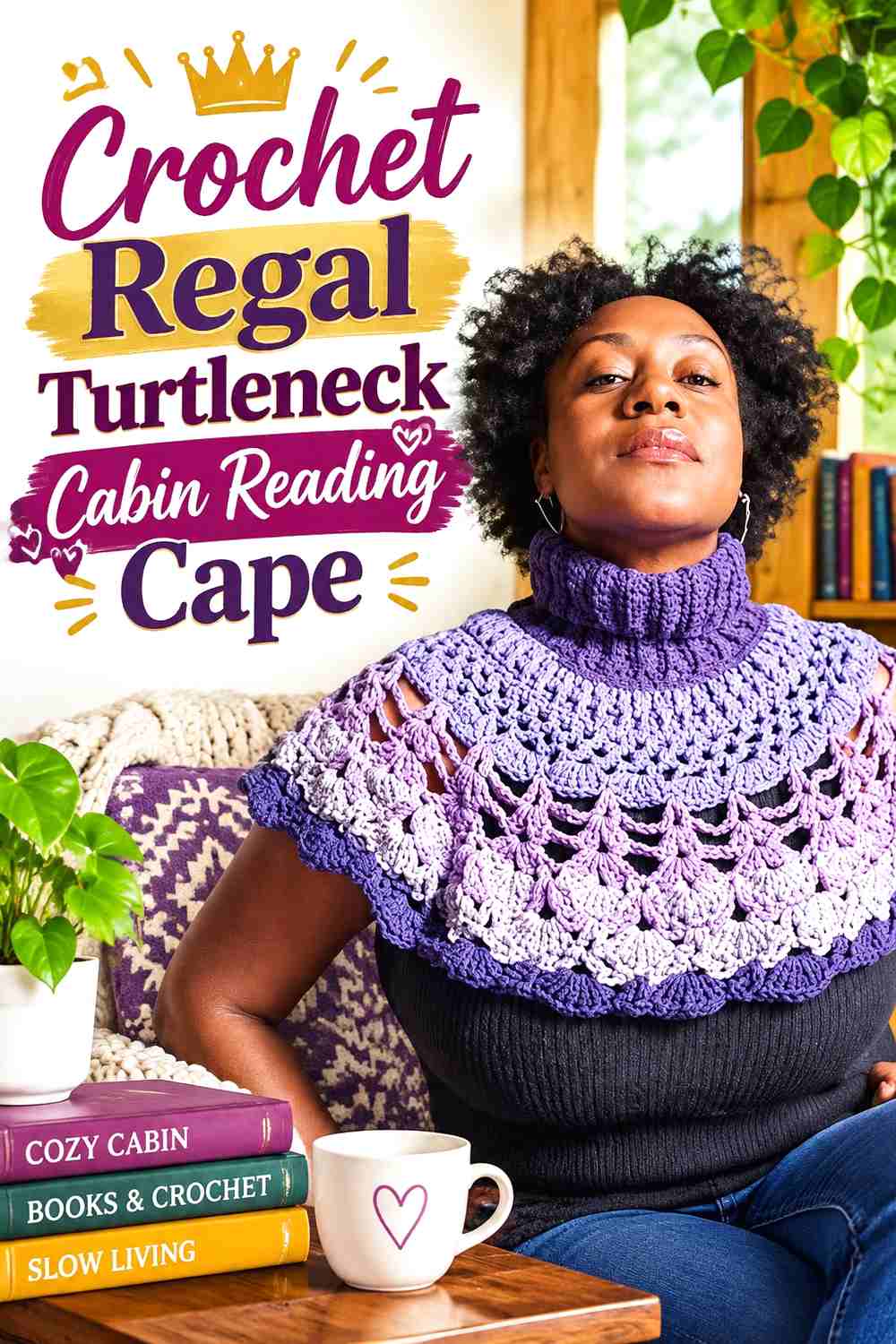
This compact turtleneck capelet keeps most of its fabric around the neck, shoulders, and upper torso rather than extending into a long poncho. That makes it especially relevant for reading because it provides coverage without placing large amounts of fabric across the forearms or lap. The source tutorial specifically presents the finished project as a turtleneck capelet.
A Short Hem Keeps the Book Area Clear
A compact capelet can be easier to manage than a full-length poncho when you read with a book resting partly against the torso.
The lower edge stays above much of the lap, so there is less fabric to trap beneath a hardback cover, notebook, or tablet.
The Turtleneck Concentrates Warmth at the Top
Because the body is short, the raised collar becomes a major part of the finished coverage.
Check how high you prefer fabric around the neck before adding extra collar height. If you often lean back in a chair, comfort around the jaw and back neck matters more than making the collar as tall as possible.
Shoulder Expansion Still Needs Enough Room
A reading cape should not pull upward every time you lift both hands.
Check that the yoke spreads far enough beyond the shoulders to accommodate a typical book-holding position before deciding that the capelet is deep enough.
Creator Credit: Poya Stitches
2. Crochet Deep-Cowl Cozy Reading Cape
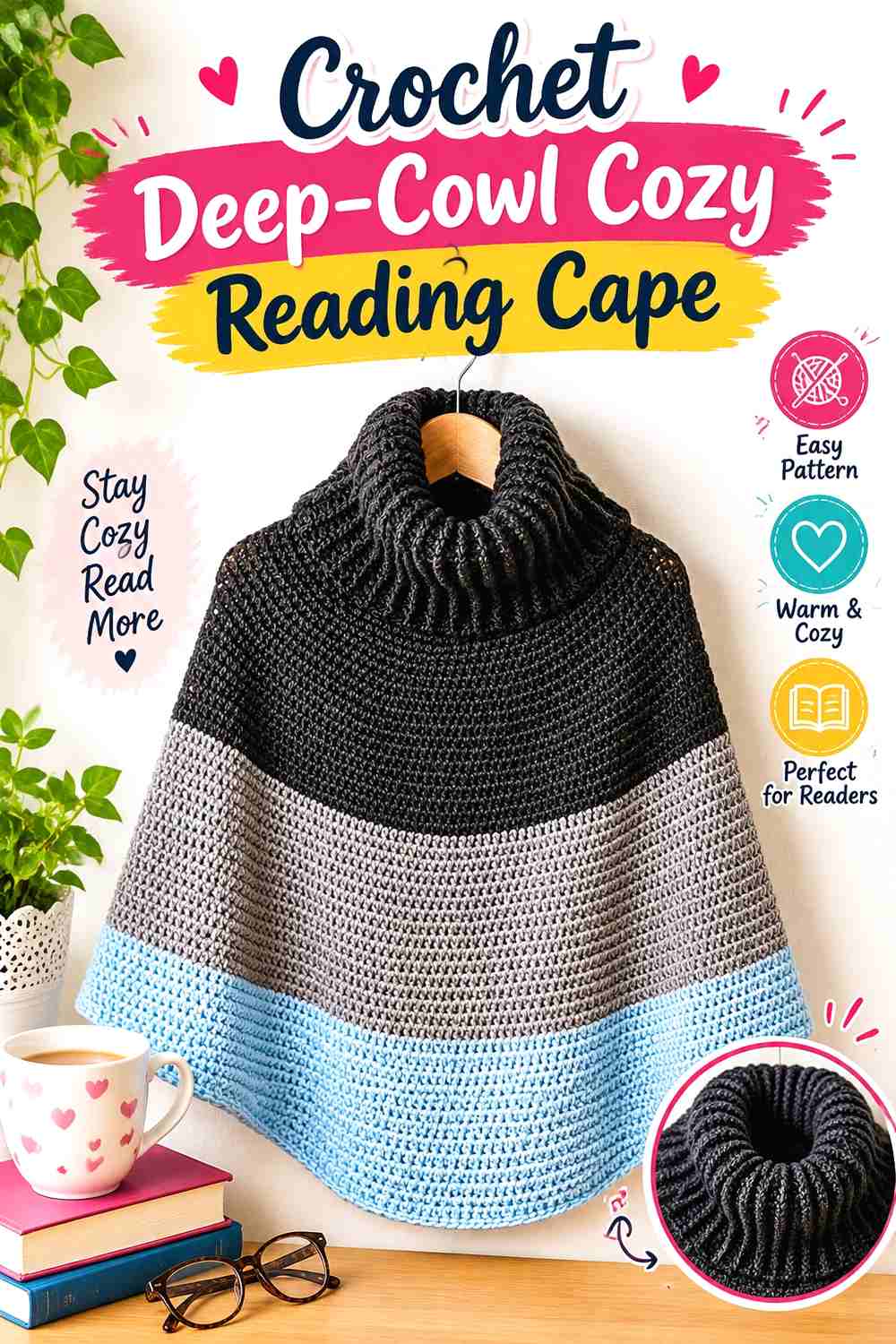
The Crochet Crowd’s cape/poncho uses a substantial ribbed collar and a free-flowing cape body that extends farther down than a compact capelet. The source emphasizes the deep collar and broad drape, giving this option more torso coverage while keeping the arms unrestricted.
A Deep Collar Can Replace Extra Scarf Layers
If your neck and upper chest are the areas that feel cold first, a large collar may be more useful indoors than adding several extra inches to the hem.
It also removes the dangling ends of a separate scarf, which can be convenient when you are handling a book and drink at the same time.
Check How the Cape Falls With Both Elbows Forward
Free-flowing fabric can move toward the front as the arms rise.
Sit in your usual reading position before deciding whether the length feels useful. If the hem repeatedly slides onto the book, a shorter interpretation may suit your reading chair better.
Creator Credit: The Crochet Crowd
3. Crochet Armhole Cabin Reading Cape
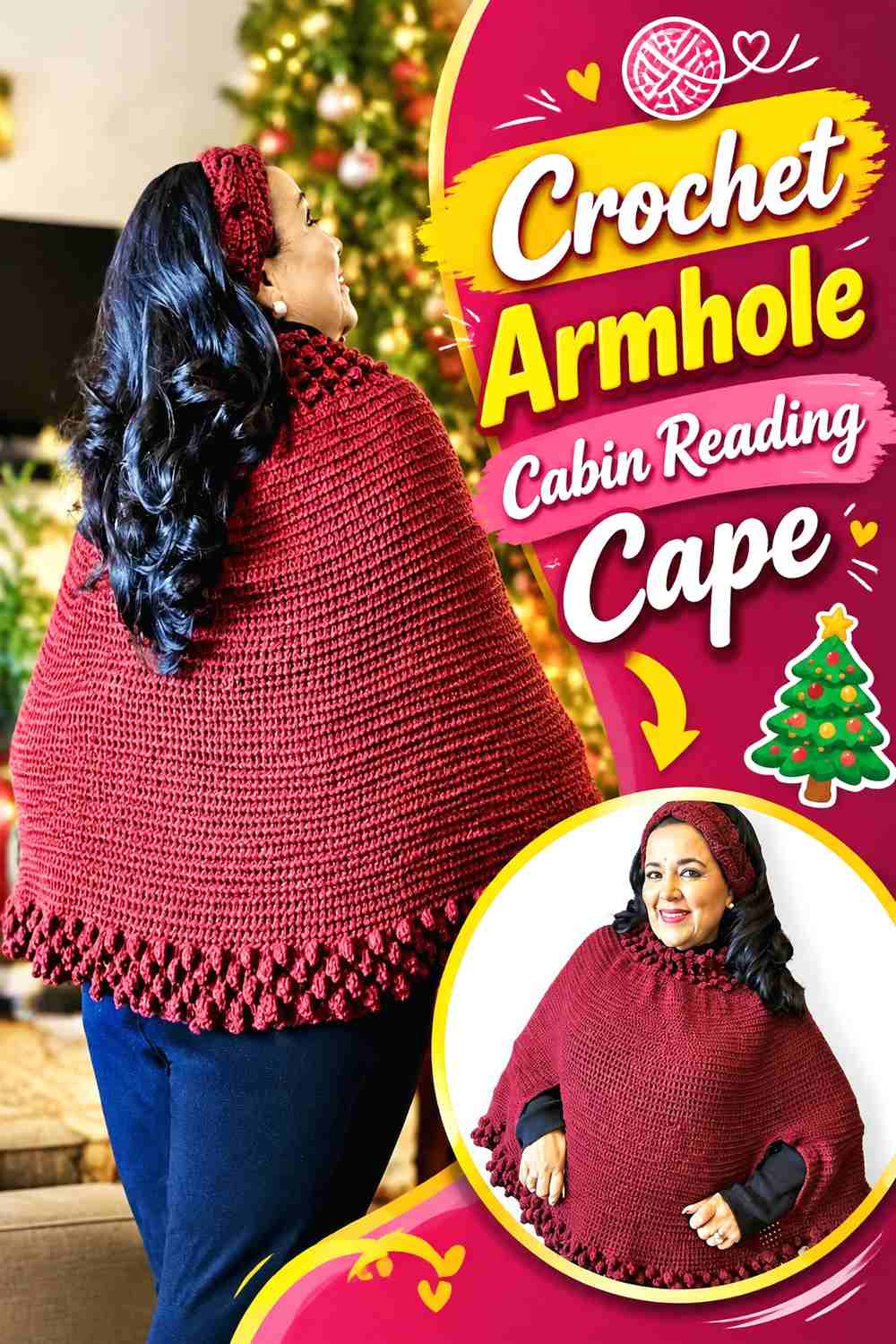
This poncho incorporates defined armholes, which changes how the garment behaves during seated activities. Instead of requiring the whole side of the poncho to lift whenever an arm moves, the hands and forearms can come through dedicated openings. The tutorial is explicitly built around a poncho with armholes.
Armholes Make Page Turning Less Disruptive
When both arms have predictable openings, the body of the cape can stay closer to the torso as you turn pages or reach toward a mug.
That makes this construction worth comparing with traditional ponchos if you dislike constantly repositioning a wrap.
Check the Opening Height While Seated
An armhole that feels fine while standing may sit differently once your elbows are bent.
Use the creator’s construction as intended and assess whether the opening allows your hands to come forward without pulling strongly across the shoulders.
Avoid Overloading the Lap With Extra Length
Armholes solve upper-body movement, but they do not automatically solve excess fabric below.
If this is primarily an indoor reading cape, think carefully before extending the project much farther than the coverage you actually need.
Creator Credit: Laura Cepeda English
4. Crochet One-Piece Fireside Reading Cape
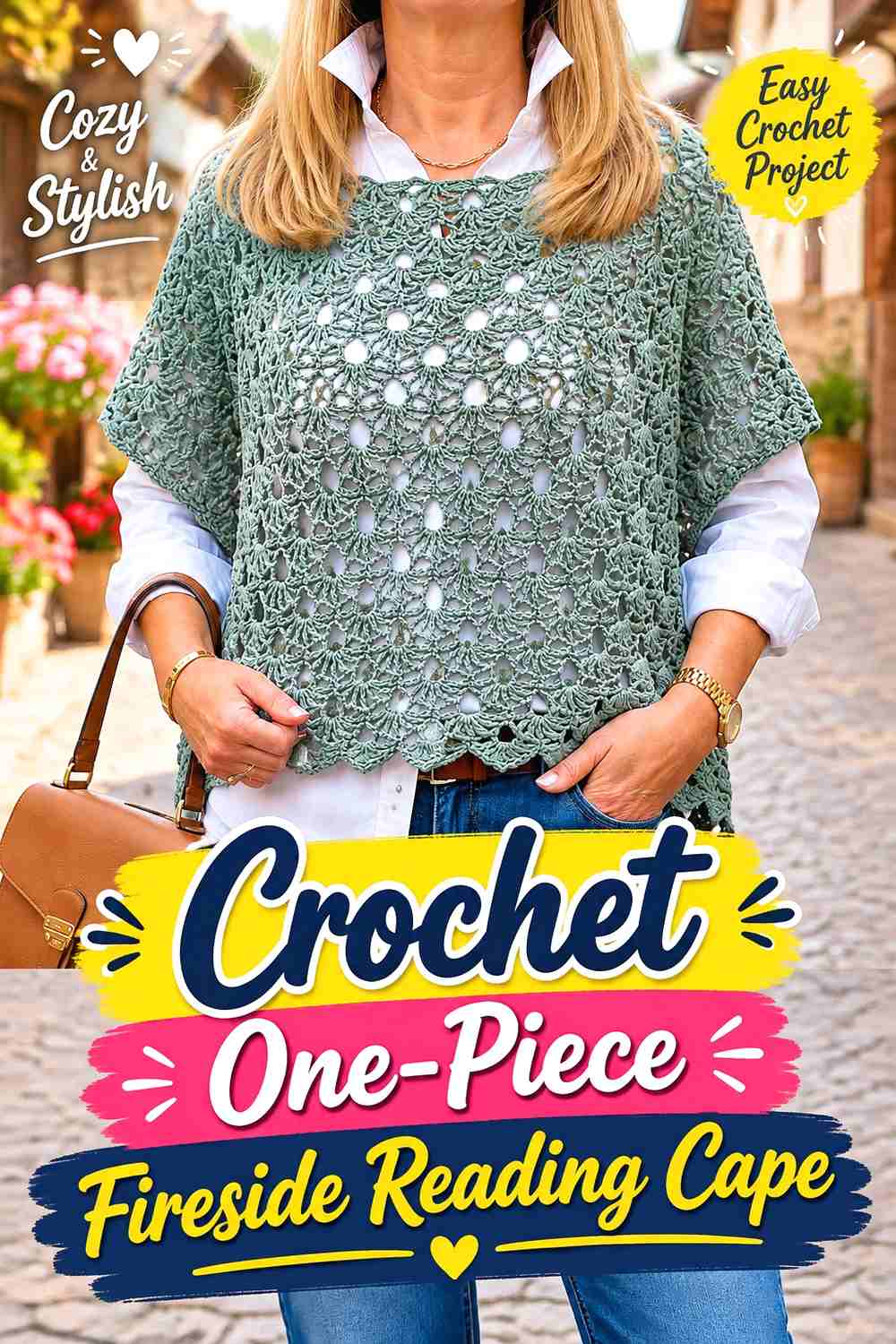
Handwork diy’s one-piece poncho uses an openwork fabric and side finishing with armhole space, creating a lighter alternative to dense winter capes. The 2026 tutorial is worked as a flowing one-piece garment that can be adapted in size.
Openwork Suits a Warm Indoor Cabin
If the room itself is heated but you still want something across the shoulders, an airy cape can be more comfortable than a dense high-neck garment.
The underlayer remains important because open crochet provides different coverage from solid fabric.
One-Piece Construction Keeps the Silhouette Visually Calm
For reading, a garment with relatively few bulky joins can feel less complicated around the chair and shoulders.
The open surface already provides plenty of visual texture, so extra fringe or dangling trim is not necessary to make the cape interesting.
Keep This Style Away From Open Flames
Airy fabric can include loose loops and a flowing hem.
Around a cabin fireplace or stove, keep the garment well clear of the heat source and avoid allowing the side edges to hang toward flames when reaching for anything nearby.
Creator Credit: Handwork diy
5. Crochet Sleeved Cabin Reading Cape
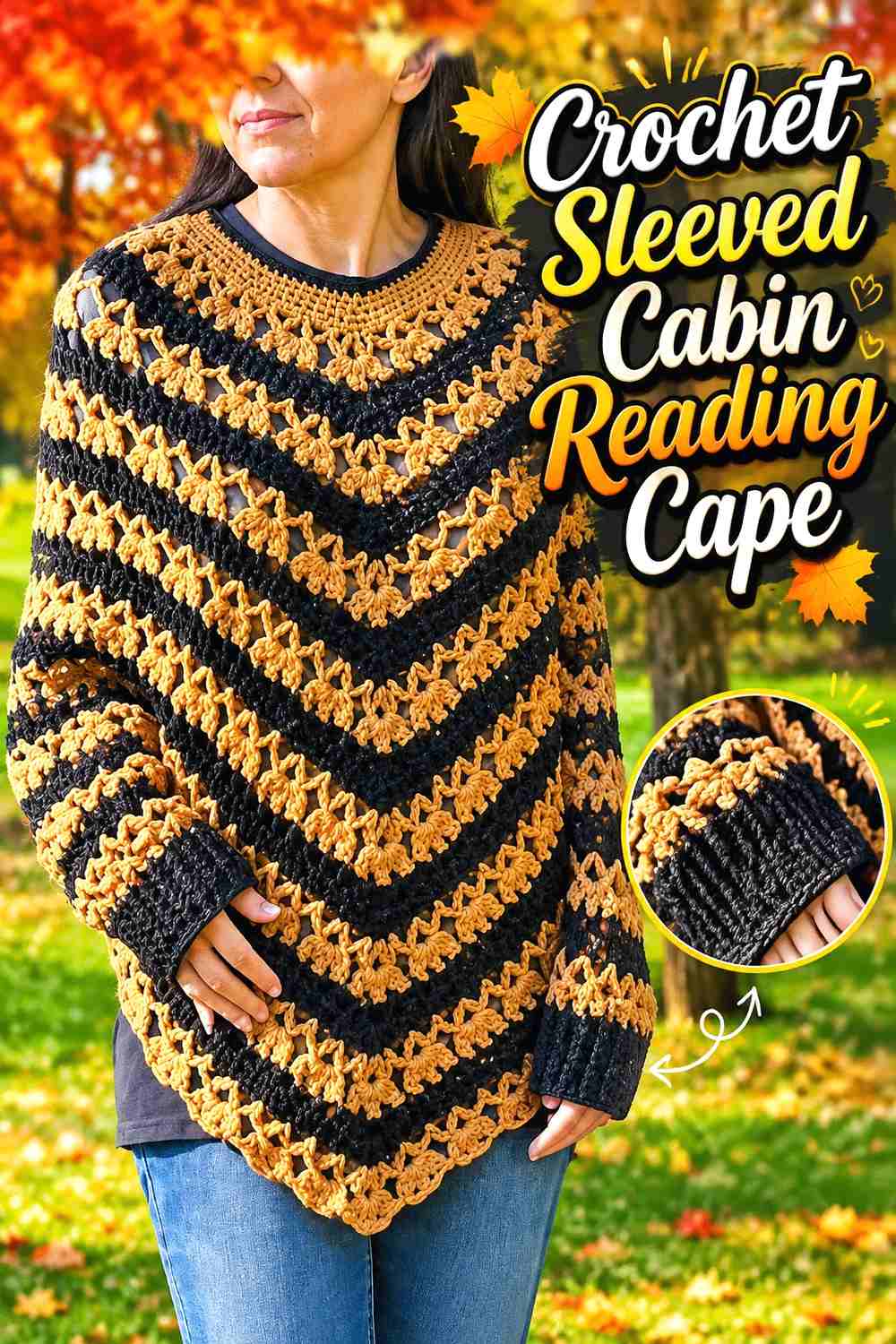
The Josephine-style poncho from Bag-O-Day Crochet adds sleeves to a broad poncho silhouette. That hybrid construction gives the wearer more arm definition than a traditional poncho while preserving the roomy, cape-like body.
Sleeves Help the Cape Stay Put While Reading
A sleeved poncho is less likely to rotate around the shoulders every time one arm moves independently.
That stability can be useful if you read for long stretches and dislike having to pull a shawl or cape back into place.
The Wide Body Still Gives a Blanket-Like Feel
Sleeves do not turn the garment into a close-fitting sweater.
There is still generous fabric through the torso, so this is better for readers who enjoy a cocooned feeling rather than those who want the smallest possible reading layer.
Check Cuff and Sleeve Bulk Around the Hands
Reading requires frequent hand movement.
If you adapt the sleeve length or width, make sure the cuffs do not fall over the palms or brush the book repeatedly when your wrists are bent.
Creator Credit: Bag-O-Day Crochet
6. Crochet Hooded Winter Reading Cape
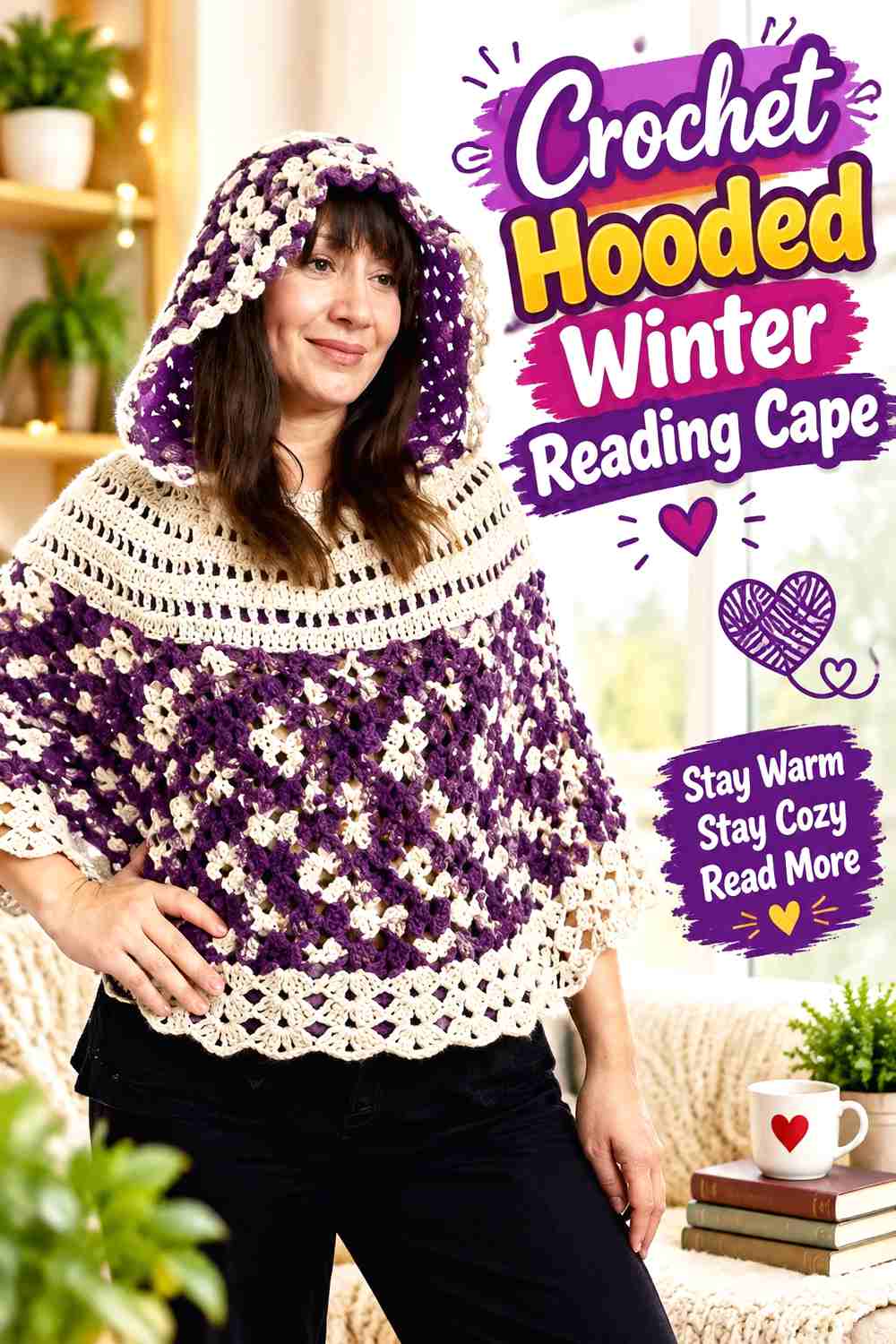
Mariie Crochet’s hooded cape adds head and back-neck coverage to the cape silhouette. The hood makes it distinctly different from high-collar projects and can be appealing in a drafty cabin or reading nook away from direct heat.
A Hood Can Be Useful Away From the Fireplace
If your reading chair is near a cool window or in a drafty room, a hood adds optional coverage without requiring a separate hat.
It is less useful if you always read with your head pressed against a firm chair back, where thick hood fabric may bunch behind the neck.
Test the Hood Both Up and Down
The garment should remain comfortable in both positions.
When the hood is down, check whether its weight pulls the neckline backward. When it is raised, make sure it does not drag the cape upward from the shoulders.
Keep Hair, Hood, and Yarn Clear of Flames
A hood brings additional loose textile close to the head and shoulders.
If a fireplace or candle is part of the room, maintain plenty of distance and never lean a hooded crochet garment toward an open flame.
Creator Credit: Mariie Crochet
7. Crochet Convertible Wrap Reading Cape
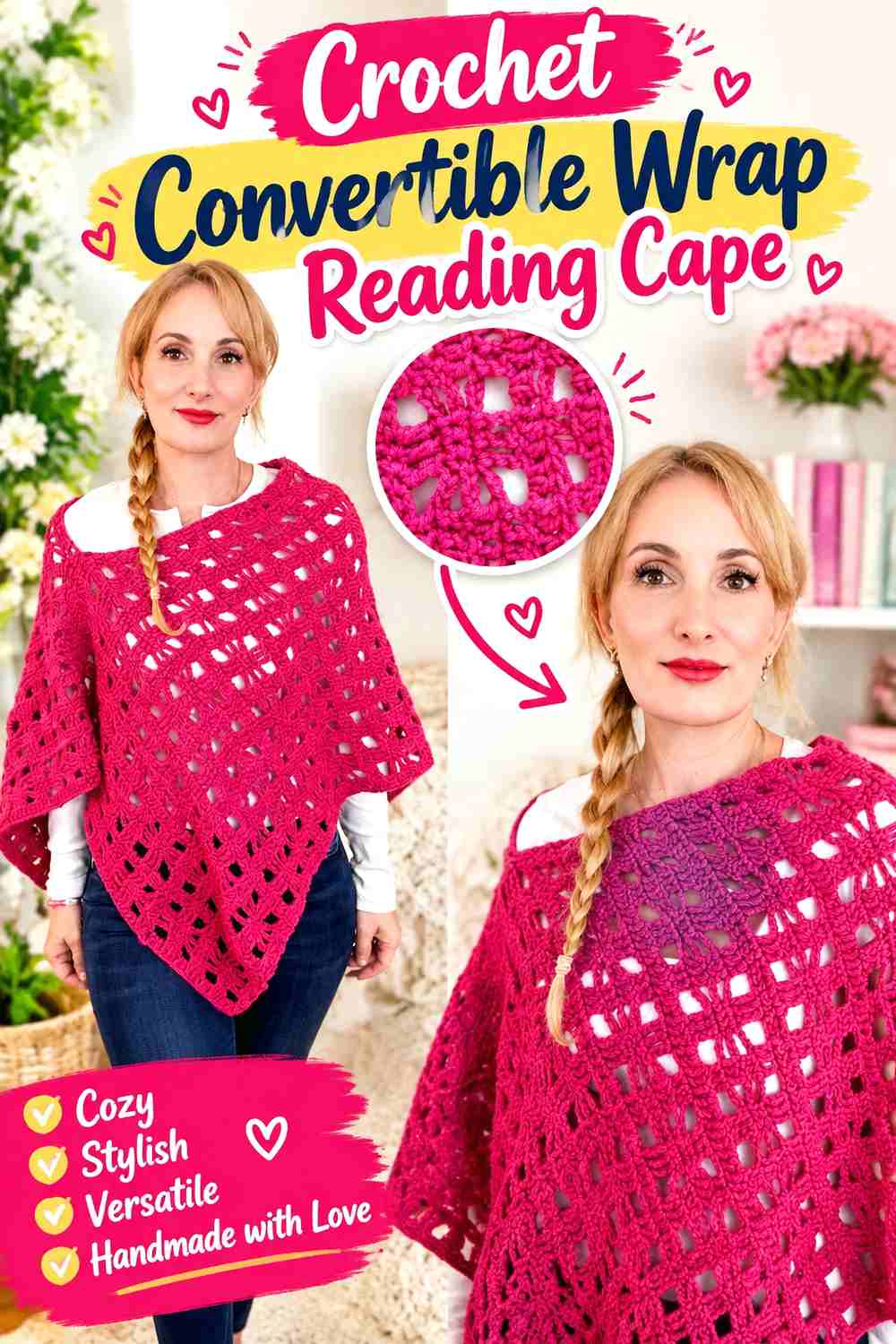
Treasurie’s wrap poncho begins as a rectangle and can be worn in more than one orientation, including a more classic poncho position and a draped wrap arrangement. The tutorial describes it as a versatile, airy garment with adjustable sizing.
Change the Orientation With Your Reading Position
One arrangement may provide more shoulder security, while another may bring more fabric toward the front.
Try both while seated rather than choosing a favorite based only on the standing silhouette.
Lighter Fabric Is Easier to Adjust During the Evening
If the room warms up, an airy wrap can be loosened or repositioned without feeling like you are removing a heavy sweater.
This makes it a useful option for cabins where the temperature changes noticeably as a stove or fireplace heats the room.
Skip Unnecessary Length if It Falls Into the Chair
A convertible wrap only remains convenient while the extra fabric is manageable.
If the corners become trapped behind you or beneath your book, prioritize the dimensions needed for shoulder coverage rather than maximizing drape.
Creator Credit: Treasurie
8. Crochet Weekend Cabin Poncho Reading Cape
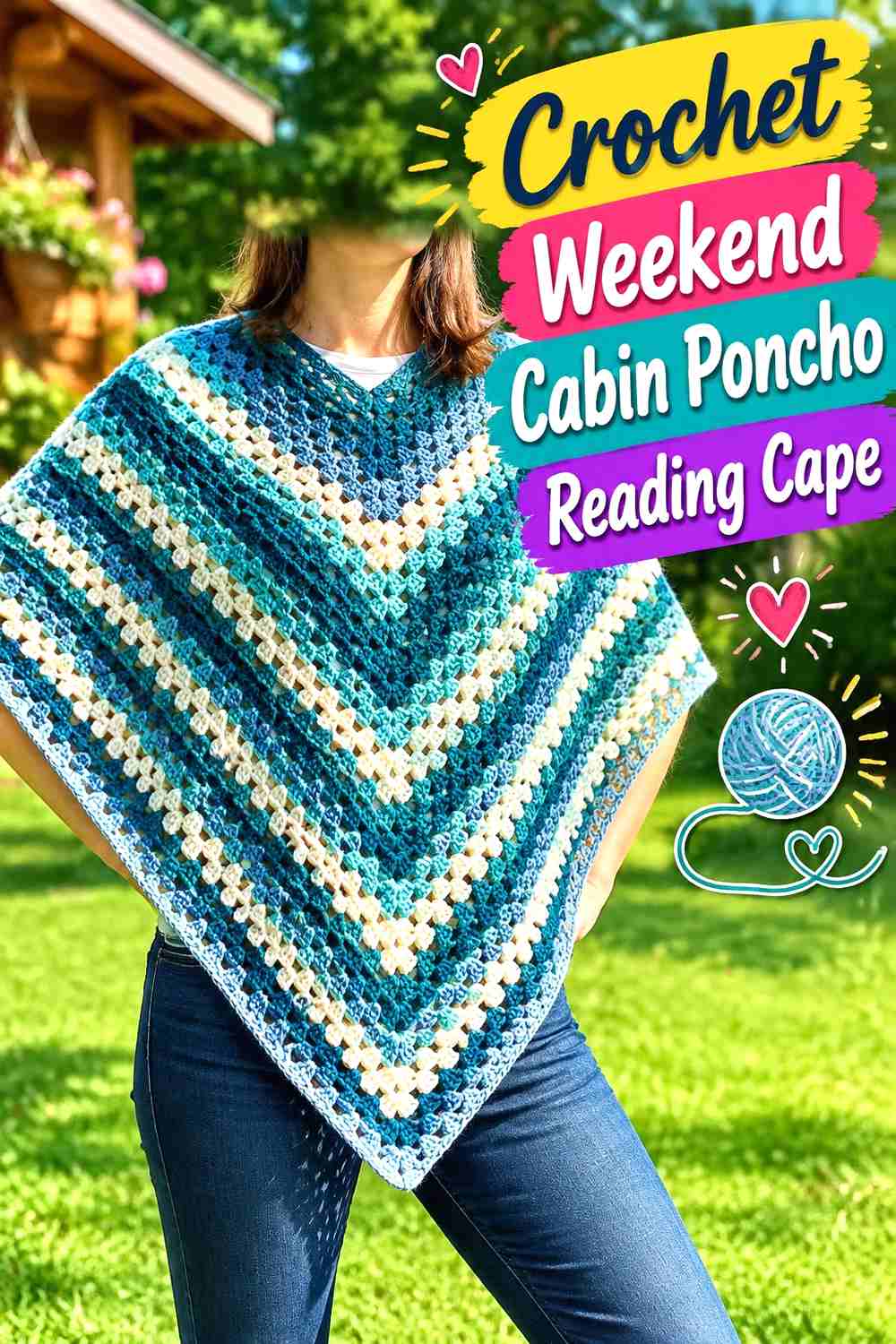
Ophelia Talks Crochet’s poncho provides a straightforward full-poncho silhouette without depending on sleeves, a hood, or a highly structured collar. The design offers a useful middle ground for readers who want more coverage than a capelet but fewer added components than a jacket-like cape.
Simple Shapes Are Easy to Settle Around a Chair
A relatively uncomplicated poncho can be arranged once around the shoulders without buttons, ties, or pockets dictating where the fabric has to sit.
That simplicity is useful if you change reading positions frequently.
Watch the Side Fabric When Reaching
A wider poncho side can rise when you extend one arm toward a lamp, side table, or bookshelf.
Before increasing width, ask whether the extra coverage improves seated comfort enough to justify additional fabric around the arms.
Color Can Do More of the Work
Because the shape itself is straightforward, you can use a calm solid or gradual color change without needing added decorative features.
For a dedicated cabin reading cape, fewer dangling components can make the garment easier to live with.
Creator Credit: Ophelia Talks Crochet
9. Crochet Box-and-Bow-Tie Reading Capelet
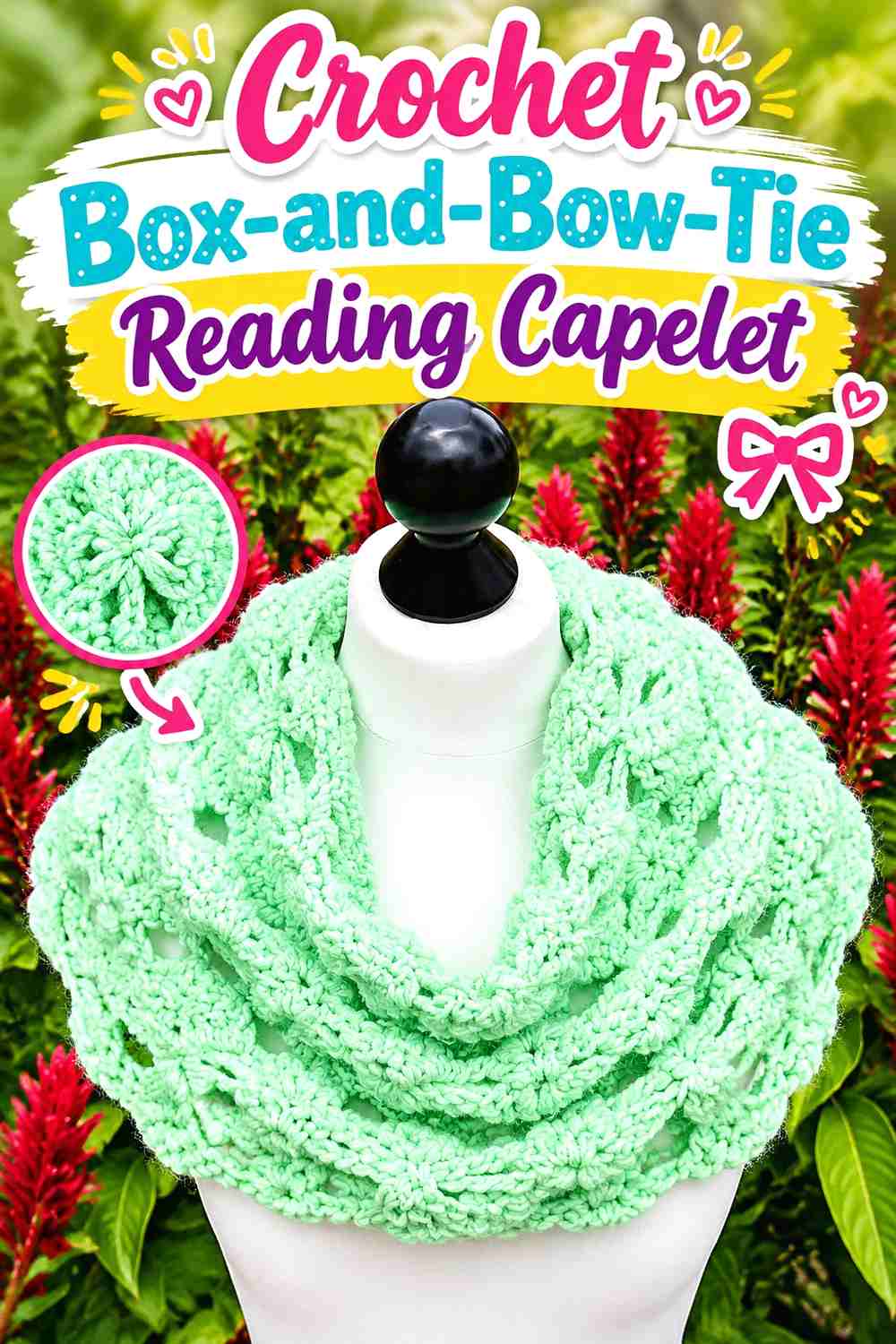
The Secret Yarnery’s Box & Bow Tie design can be made and worn as a capelet, cowl, or neck warmer. Its adjustable format and textured open-and-solid stitch arrangement create a compact shoulder layer that does not need to extend deeply over the lap.
Compact Coverage Works Well With a Desk or Armchair
If you read at a table, journal, or use a laptop between chapters, a short capelet keeps the lower torso comparatively clear.
The project gives you warmth around the upper body without behaving like a blanket.
The Texture Is Already a Focal Point
Alternating open and solid areas provide enough surface interest that heavy fringe or extra decoration may be unnecessary.
For reading use, that is practical because fewer loose elements are available to catch on chair arms or nearby objects.
Choose Capelet Depth Before Cowl Volume
Because the design can move between neck warmer and capelet territory, decide what job you want it to perform.
If shoulder coverage matters most, prioritize enough lower spread. If the neck is your main concern, a more concentrated cowl-like form may be sufficient.
Creator Credit: The Secret Yarnery
10. Crochet High-Neck Cabin Reading Cape
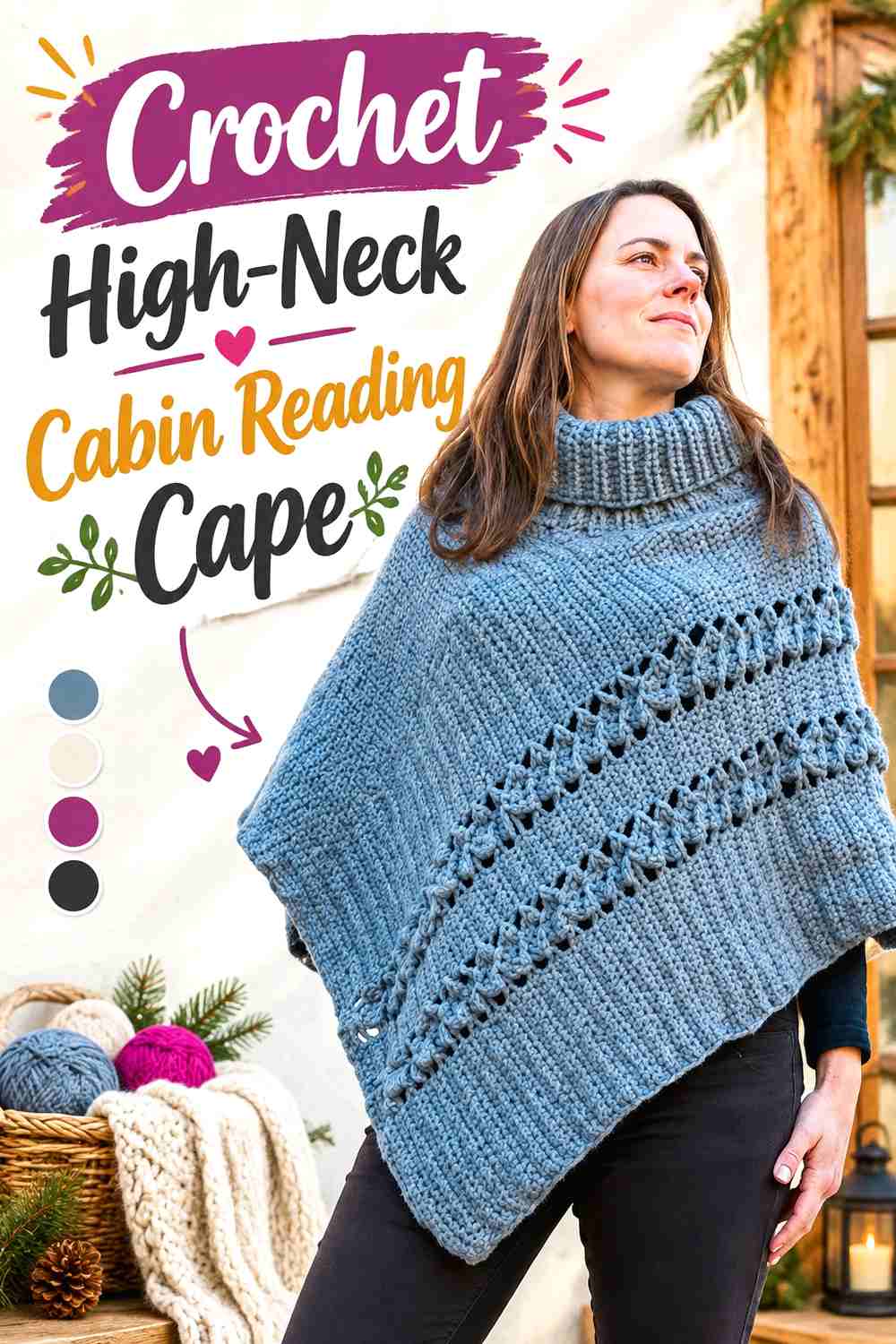
Lanas y ovillos’ turtleneck poncho combines a simple poncho body with a clearly raised neckline. It offers more body coverage than a small capelet while keeping the upper design visually uncomplicated.
The High Neck Can Reduce the Need for a Separate Scarf
A separate scarf introduces ends and overlapping layers that may shift as you sit.
A built-in high neck keeps that coverage connected to the cape and leaves the hands free.
Keep Enough Shoulder Width for a Reading Posture
When both hands are held in front of the chest, the upper back can broaden slightly.
A comfortable poncho should accommodate that posture without making the neckline feel as though it is being pulled backward.
Consider Chair Height Before Adding More Back Length
Extra back coverage may sound appealing, but long fabric can become trapped between the body and a chair back.
For a dedicated reading garment, stop where the coverage feels useful rather than extending length only for drama.
Creator Credit: Lanas y ovillos
11. Crochet Draped Cowl Reading Cape
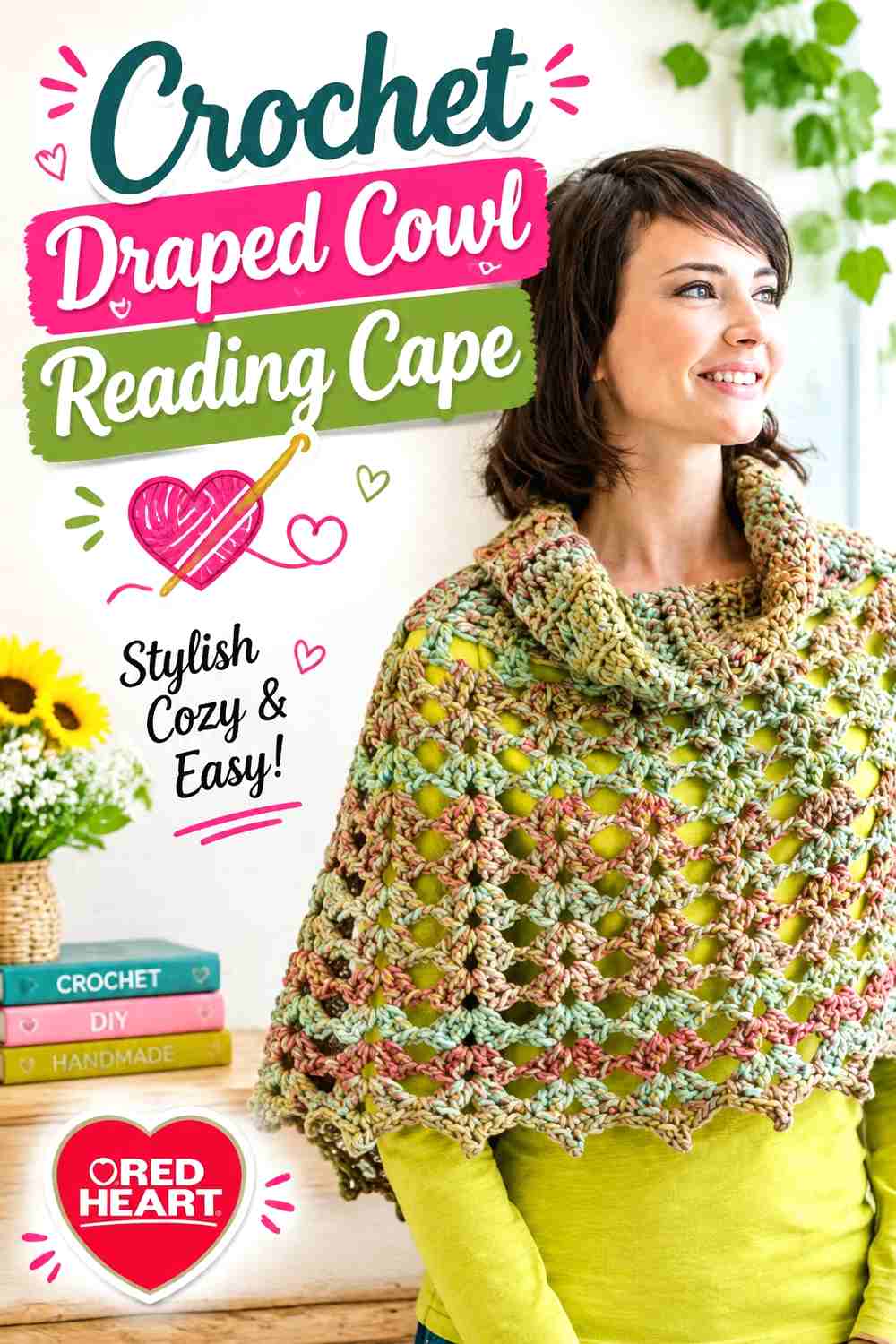
Marly Bird’s cowl-neck poncho uses a softer, more draped neckline than a close turtleneck. The cowl creates visible folds around the neck while the body remains a recognizable poncho shape.
A Soft Cowl Gives You More Neckline Flexibility
You can arrange a draped neckline closer to or farther from the neck depending on how warm the room feels.
That makes it useful for a long reading evening when indoor temperature may change.
Avoid Excess Cowl Fabric Behind the Neck
When seated against a high-backed chair, a very deep cowl can collect behind you.
Arrange most of the soft folds toward the front and sides if that feels more comfortable, rather than assuming the collar must be distributed evenly.
Choose This Over a Turtleneck if You Dislike Close Necklines
The overall garment can still feel substantial without gripping the neck.
That distinction is useful for readers who want shoulder warmth but find fitted collars distracting during long periods of sitting.
Creator Credit: Marly Bird
12. Crochet Two-Panel Cowl Reading Cape
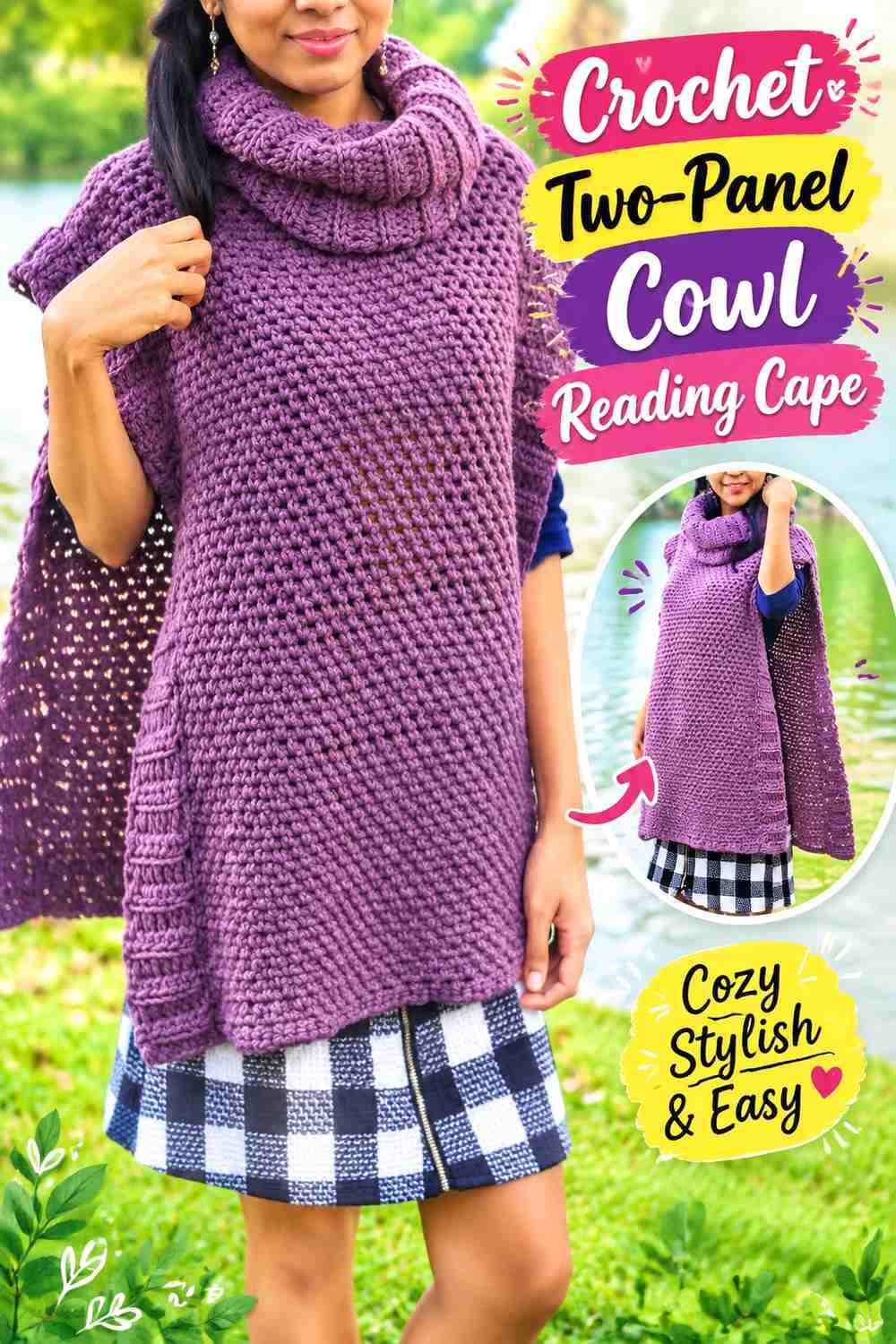
Jennyandteddy crochet.’s cowl-neck poncho uses a simple rectangular construction for the body with a separately developed ribbed cowl. The tutorial covers a broad size range and presents the body and neck as distinct components.
Separate Collar Construction Gives You a Useful Checkpoint
Because the body exists before the finished cowl is attached, you can evaluate how much neckline volume you actually want.
For reading, a restrained cowl may sit more comfortably against a chair than the deepest possible version.
Two-Panel Geometry Makes the Drape Predictable
A simple rectangular body creates broad, understandable coverage rather than complicated shaping.
That can be helpful if you want to anticipate where the lower corners will fall while seated.
Compare Front and Back Length in the Chair
A symmetrical poncho can look even while standing yet settle differently once you sit.
Arrange it in your normal reading position before deciding whether additional border or length would improve the garment.
Creator Credit: Jennyandteddy crochet.
13. Crochet Lightweight Textured Reading Cape
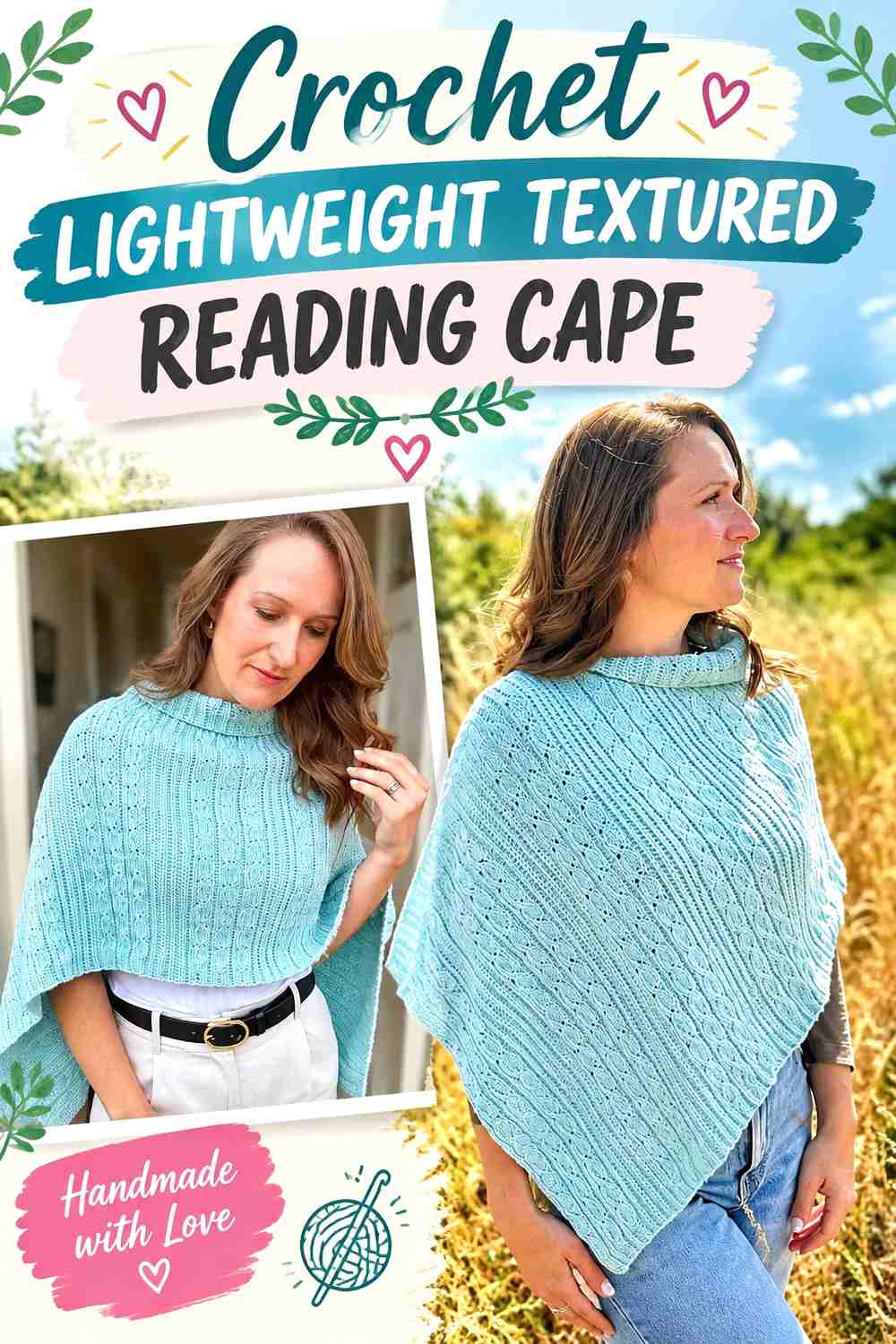
HanJan Crochet’s Deidra poncho uses a one-rectangle construction with flowing texture and a lighter, draped finished character. The tutorial supports an adult size range and is a useful option when you want a cozy shoulder layer without the density of a bulky cape.
Lighter Fabric Can Be Better Beside a Warm Stove
A heavily insulated-looking poncho may become uncomfortable once the room heats up.
This direction provides more drape and less visual density, making it useful for a cabin that starts chilly but warms through the evening.
Flowing Texture Should Still Stay Off the Book
Drape is comfortable until too much of it falls into your hands.
Check the front corners in a seated position and avoid adding unnecessary length where it will simply overlap the reading area.
A Quietly Textured Fabric Suits Long Wear
Strong bobbles or thick cables can create pressure points if they are trapped between you and a chair.
A flatter flowing texture may be more comfortable across the upper back for extended seated use.
Creator Credit: HanJan Crochet
14. Crochet Open-Front Cabin Reading Cape
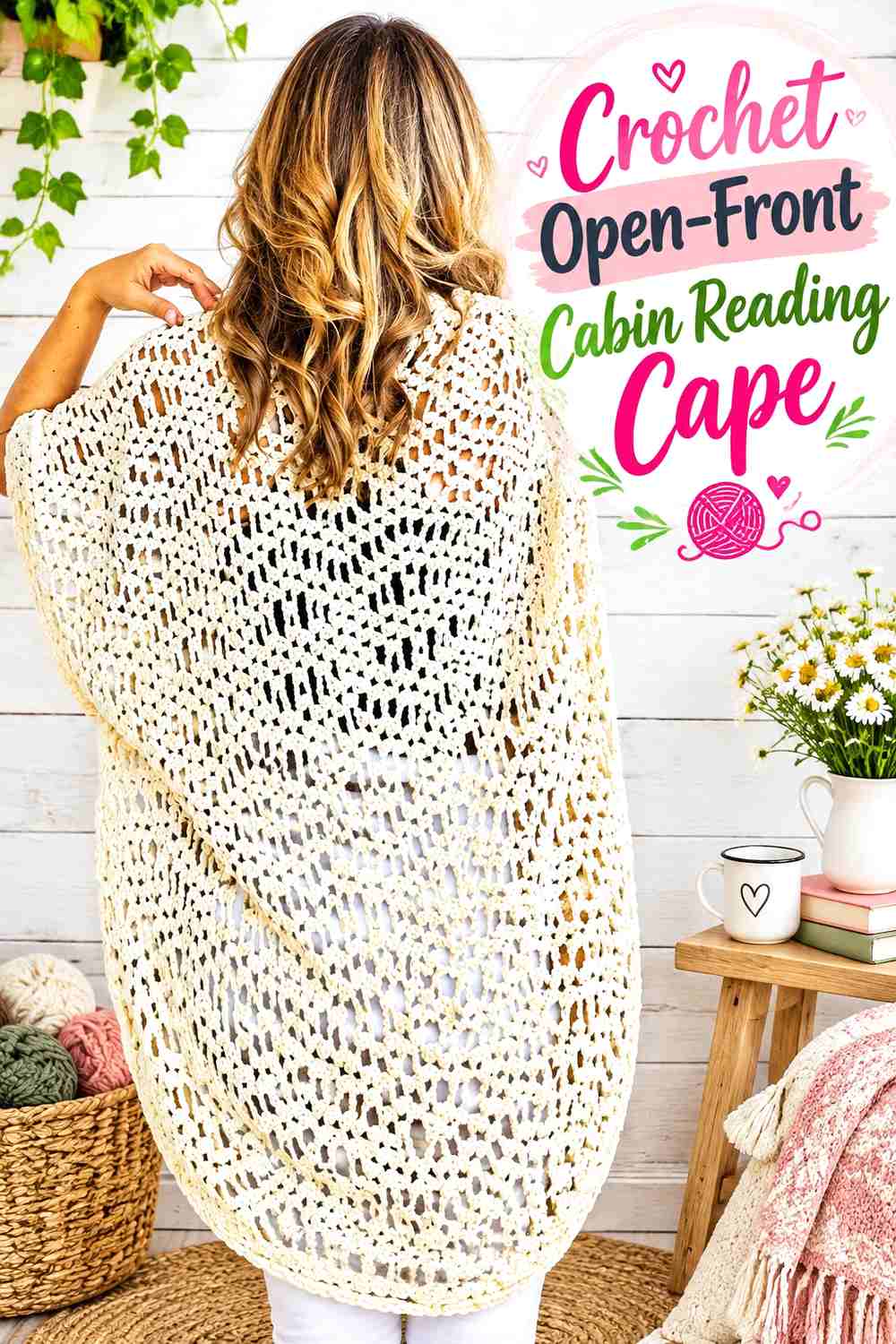
Lakeside Loops’ Esma cape cardigan uses an open-front kimono/cape silhouette inspired by macramé-style texture. Unlike a closed poncho, it leaves the center front open, so the fabric can fall down either side of the book rather than across it. The source is lighter and more open than a dense winter cape, making it most relevant as an indoor layering option.
Open Fronts Keep the Center Reading Area Clear
This is the major advantage of the design for reading.
The two front sections can hang beside the torso while the book remains unobstructed at the center, which may be preferable to a closed poncho for desk reading or journaling.
Use the Base Layer for Actual Winter Coverage
The open stitch pattern exposes the clothing underneath.
For a cabin version, pair the cape concept with a long-sleeve top or sweater instead of expecting the open crochet to provide the same coverage as dense fabric.
Keep the Side Drape Away From Chair Arms
Open-front capes can still have generous side fabric.
Before increasing width, sit in the chair you expect to use and check whether the edges fall freely or become trapped beneath your elbows.
Creator Credit: Lakeside Loops
Which Crochet Reading Cape Works Best for Your Cozy Corner?
If you read mostly in a deep armchair, compact designs such as the Poya Stitches turtleneck capelet or The Secret Yarnery capelet keep fabric away from the lap and chair sides. They concentrate warmth around the upper body instead of surrounding you with a large poncho.
For the best arm mobility, compare the Laura Cepeda armhole poncho and Bag-O-Day Crochet sleeved poncho. Their arm structure gives the hands a more predictable path forward, which can reduce garment shifting when you hold a book for a long time.
If neck warmth matters most, The Crochet Crowd, Lanas y ovillos, Marly Bird, and Jennyandteddy crochet. offer different versions of substantial collars. Choose a fitted high neck for concentrated coverage or a cowl when you want softer, adjustable folds.
The Mariie Crochet hooded cape is useful for a draftier reading spot, but consider the chair back before selecting a hood. Treasurie and Handwork diy offer lighter, more convertible directions for rooms that become warm once the heat has been running.
For a clear center front, the Lakeside Loops cape cardigan keeps the book area less obstructed than a closed poncho. HanJan Crochet offers another lighter option when you prefer flowing fabric instead of maximum density.
Conclusion
A good crochet cabin reading cape should make sitting with a book easier, not give you another layer that needs constant adjustment.
Choose a short turtleneck capelet when you want concentrated shoulder and neck warmth. Armhole and sleeved ponchos are useful when page turning and reaching are the main concerns, while cowl-neck projects provide softer coverage around the neckline. A hood can help in a drafty corner, and an open-front cape keeps the center torso clear for books, journals, and tablets.
Before committing to extra length, sit in your normal reading chair and imitate the movements you make most often. Check the elbows, chair arms, lap, back neck, and the area where your book rests. Those practical points can tell you more about the right cape than a standing photograph.
Use the original creator tutorials for exact construction, sizing, yarn, gauge, and finishing. Around fireplaces, wood stoves, candles, and portable heaters, keep loose crochet fabric, fringe, and fuzzy fibers safely away from flames and hot surfaces.
Frequently Asked Questions
What makes a crochet cape practical for reading?
Arm freedom and controlled fabric placement matter most. A useful reading cape should cover the shoulders without repeatedly sliding over the hands, book, or lap. Armholes, sleeves, a short hem, or an open front can all help.
Is a capelet better than a full poncho for reading?
A capelet is often easier to manage because it places less fabric across the lap and around chair arms. A full poncho provides more torso coverage, which may be preferable in a colder room. The best choice depends on your chair and typical reading posture.
Is a cowl neck or turtleneck better for a reading cape?
A turtleneck keeps coverage close to the neck, while a cowl creates softer folds and more adjustable space. If you lean against a high chair back, consider how much fabric either option puts behind the neck.
Do armholes make a crochet reading cape easier to wear?
They can. Armholes allow the forearms to move without lifting the entire side of the cape. This can be useful for turning pages, writing notes, using a tablet, or reaching toward a side table.
How long should a cabin reading cape be?
There is no universal ideal length. Sit in your reading position and determine where you want the lower edge to fall. Extra length may provide more coverage, but it can also become trapped behind the body, bunch on chair arms, or cover the lap where the book rests.
Can I add pockets to a crochet reading cape?
Possibly, if the underlying construction can support them. Pockets add weight and may pull a soft cape forward. If the original tutorial does not include them, temporarily position a sample or lightweight object before deciding where a pocket would sit in the seated garment.
What yarn is suitable for a cozy indoor reading cape?
Follow the source tutorial’s yarn and gauge guidance first. In general planning, think about softness, total garment weight, drape, and how warm your reading room becomes. A very bulky yarn can feel comfortable in a cold room but may become heavy or overly warm during a long evening.
Is a crochet cape safe to wear beside a fireplace?
Treat it like any other loose textile. Keep the garment, fringe, ties, and fuzzy fibers well away from open flames, sparks, stove surfaces, and portable heaters. Crochet clothing is not heat-protective equipment.