A crochet headscarf can bring vintage character to winter outfits without automatically becoming a full hat. The most useful cold-weather versions cover the upper ears, stay securely positioned, and use a fabric dense enough for the conditions in which you plan to wear them.
That distinction matters. Some tutorials in this collection are specifically designed as winter bandanas, wool kerchiefs, bonnets, or hood scarves. Others provide lighter retro headscarf constructions that can inspire a cold-weather version if the yarn, gauge, size, and ear coverage are adjusted successfully. An open granny bandana should not be expected to perform like a dense wool bonnet simply because both tie beneath or behind the head.
The 16 ideas below move from compact kerchiefs through babushkas and bonnets to full hooded scarves, giving you several levels of ear coverage and winter bulk.
Quick List
- Dense Triangle Crochet Winter Headscarf
- Button-Closure Wool Crochet Kerchief
- Granny-Bonnet Crochet Ear-Covering Headscarf
- Scalloped Crochet Winter Bandana
- Long-Tie Crochet Mohair-Style Bonnet
- Adult Tie Crochet Retro Bonnet
- Chunky Crochet Babushka Headscarf
- Contrast-Edge Crochet Babushka Headscarf
- Soft-Drape Crochet Babushka Kerchief
- Square-Shape Crochet Retro Bandana
- Granny Crochet Triangle Headscarf
- Picot-Edge Crochet Retro Headscarf
- Smooth-Fit Granny Crochet Winter Headscarf
- Turtleneck Crochet Hooded Headscarf
- Long-Tail Crochet Hood Scarf
- One-Piece Crochet Hooded Headscarf
What Actually Makes a Crochet Headscarf Ear-Warming?
Coverage comes first. A tiny triangle that ends well above the ears may be an attractive hair accessory, but it cannot provide the same protection as a kerchief extending below the ears or a bonnet that surrounds them.
Before treating any bandana tutorial as a winter project, check the finished depth on your own head. The upper edge should sit where you want it without requiring the ties to be pulled uncomfortably tight.
Fabric density matters too. Open granny clusters allow more air movement than closely worked crochet. That does not make openwork unsuitable for winter styling, but it changes what the accessory realistically offers. You may prefer openwork on mild days and a denser bonnet or hood when exposure is greater.
Kerchief, Babushka, Bonnet, or Hood?
These silhouettes solve different problems.
A kerchief or bandana is compact and usually triangular. It works well when you want minimal bulk around the neck and mainly need the crown and upper ears covered.
A babushka-style headscarf usually has a more obvious triangle and ties beneath the chin or behind the head. It creates one of the clearest retro references and works especially well with coats, oversized collars, and vintage-inspired outerwear.
A bonnet frames the face and normally offers more reliable ear coverage because the fabric extends around the sides of the head. Long ties can reinforce the nostalgic look.
A hooded scarf offers the greatest overall coverage in this collection. It can cover the ears completely while adding neck protection, but it also introduces considerably more fabric than a simple kerchief.
Choose based on the coverage you actually need instead of treating these shapes as interchangeable.
Yarn, Closures, and Winter Fit
For a close-fitting kerchief, yarn that produces a stable but comfortable fabric can help the scarf remain positioned over the ears. Very slippery or highly draped fabric may move more easily.
Ties offer the greatest adjustment because you control the overlap each time you wear the scarf. Buttons create a cleaner back or side closure, but placement needs to suit the finished circumference. Hood scarves depend less on tight fastening and more on adequate hood depth.
If you substitute a warmer fiber or heavier yarn into a lightweight headscarf tutorial, recheck gauge and finished dimensions. Moving to thicker yarn without recalculating fit can create a scarf that is larger in every direction rather than simply warmer.
1. Dense Triangle Crochet Winter Headscarf
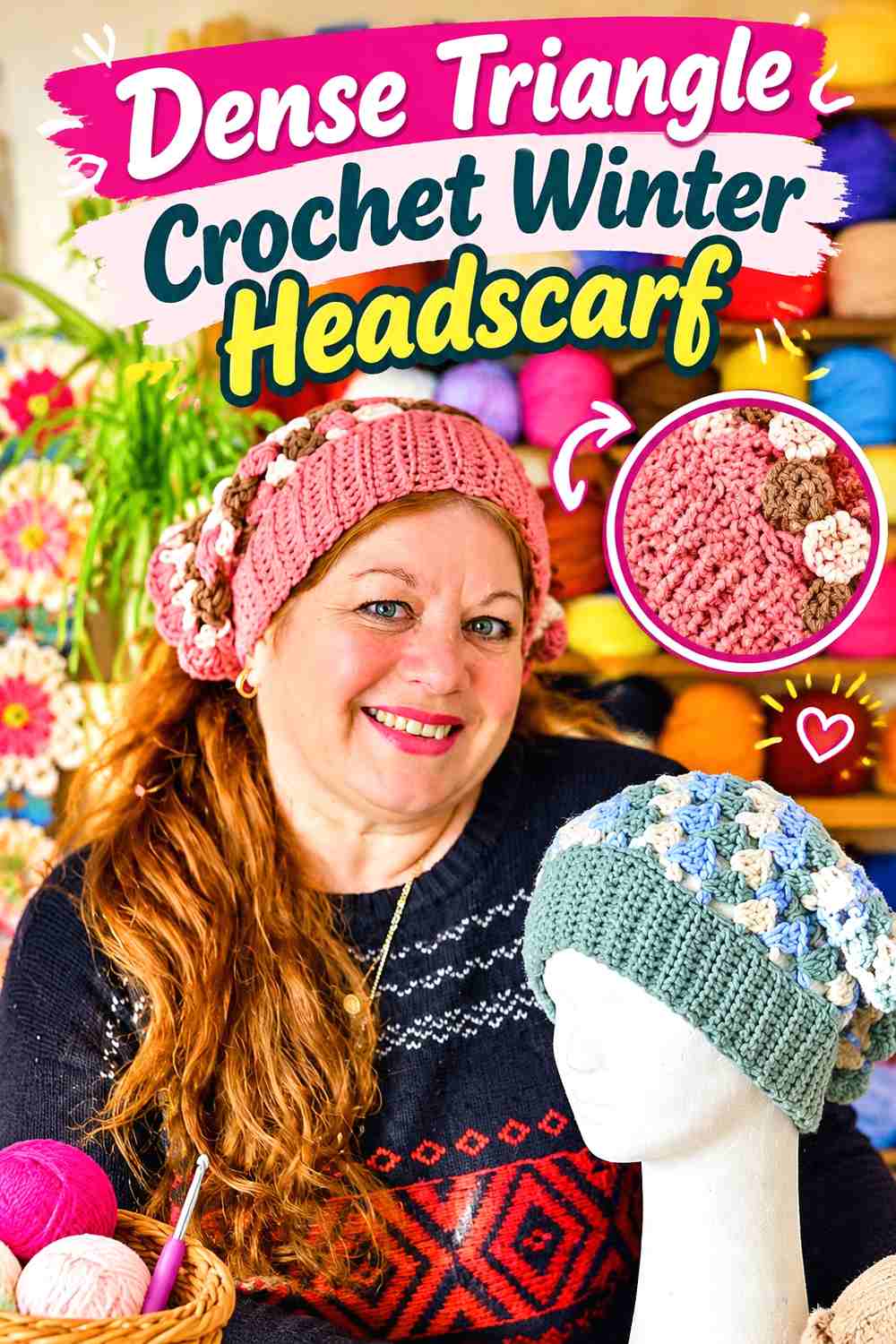
This tutorial is explicitly presented as a winter bandana and provides one of the most direct starting points for the topic. The substantial triangular shape makes it easier to create visible crown coverage while keeping the accessory much smaller than a full hood.
Let the Triangle Reach the Ear Line
The point at the back gets much of the visual attention, but the upper corners are more important for warmth.
Before finishing the ties, place the developing scarf over your head and check where those corners land. If they finish above the ears, simply pulling the ties tighter is not a good substitute for adequate depth.
A Denser Fabric Suits the Retro Winter Look
A substantial triangle has more of the visual weight associated with vintage wool headscarves than a very open summer mesh.
This also makes solid and heathered winter colors especially effective because the silhouette remains readable without elaborate surface decoration.
Keep the Ties Comfortable Under the Chin
The retro look does not require a tight knot.
Leave enough room for comfortable jaw movement and check that the tie area does not force the lower edge upward and away from the ears.
Creator Credit: Hablemos de Magia Crochet
2. Button-Closure Wool Crochet Kerchief
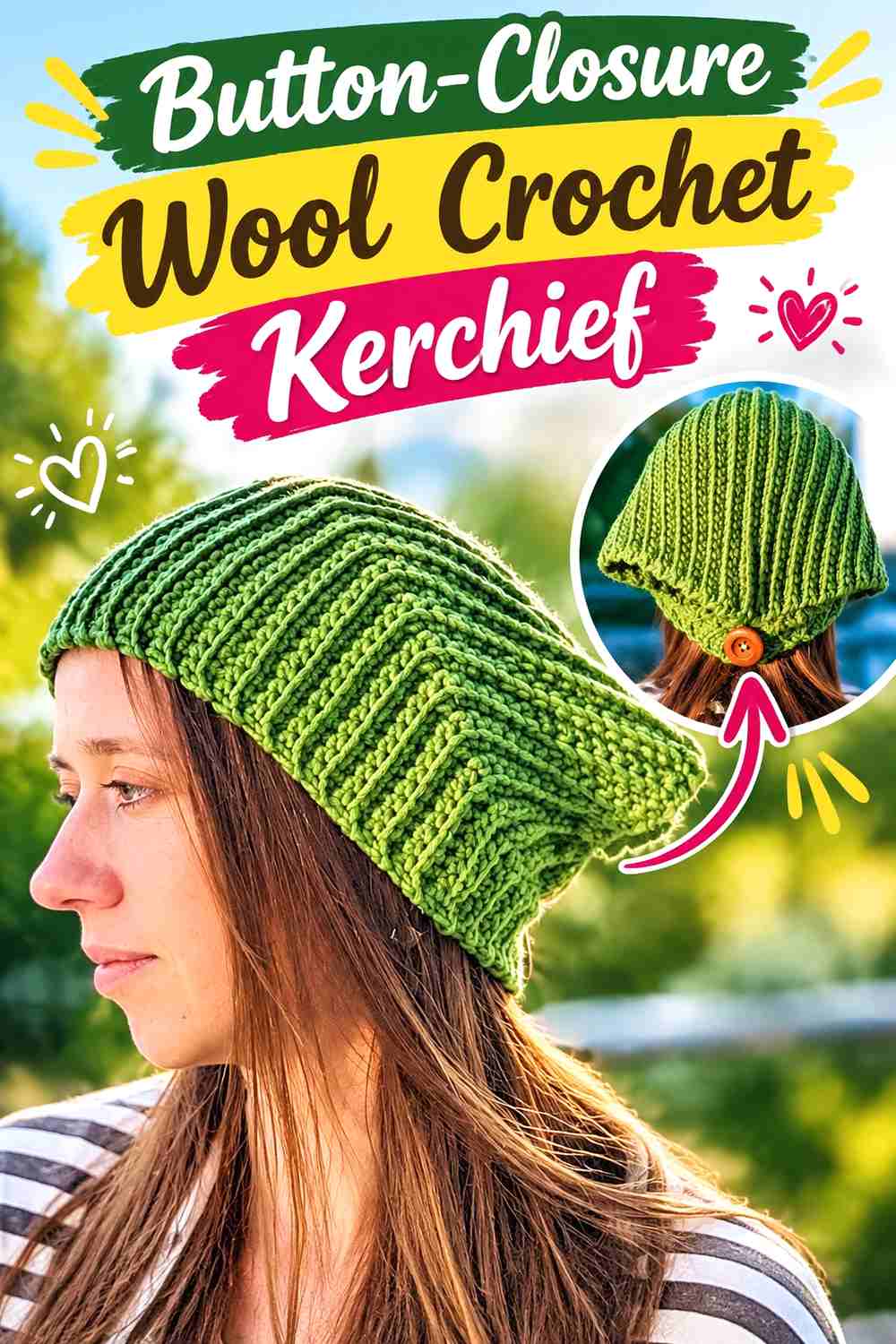
This kerchief is particularly relevant to winter because the original construction uses bulky wool roving and replaces long ties with a button-style closure. Its close textured surface creates a noticeably different result from an airy granny bandana.
A Button Removes the Bulk of a Bow
Long scarf ties can create a knot beneath the hair or behind the neck. A compact closure keeps that area cleaner, which can be useful when the kerchief is worn beneath a coat collar.
The trade-off is reduced adjustability. Test the overlap on the finished scarf before permanently deciding where a closure should sit.
Bulky Wool Changes the Character of the Point
A thicker fabric gives the kerchief more body, so the rear point will not behave like an extremely lightweight cotton triangle.
That can work well for retro winter styling because the finished accessory looks more substantial, but consider how much fabric will overlap near the neck.
Check the Closure Without Pulling the Fabric Out of Shape
A secure kerchief should sit comfortably rather than relying on excessive tension.
If the sides must be stretched strongly to reach the closure, revisit sizing instead of expecting the fabric to remain under constant strain.
Creator Credit: Crochet Bits
3. Granny-Bonnet Crochet Ear-Covering Headscarf
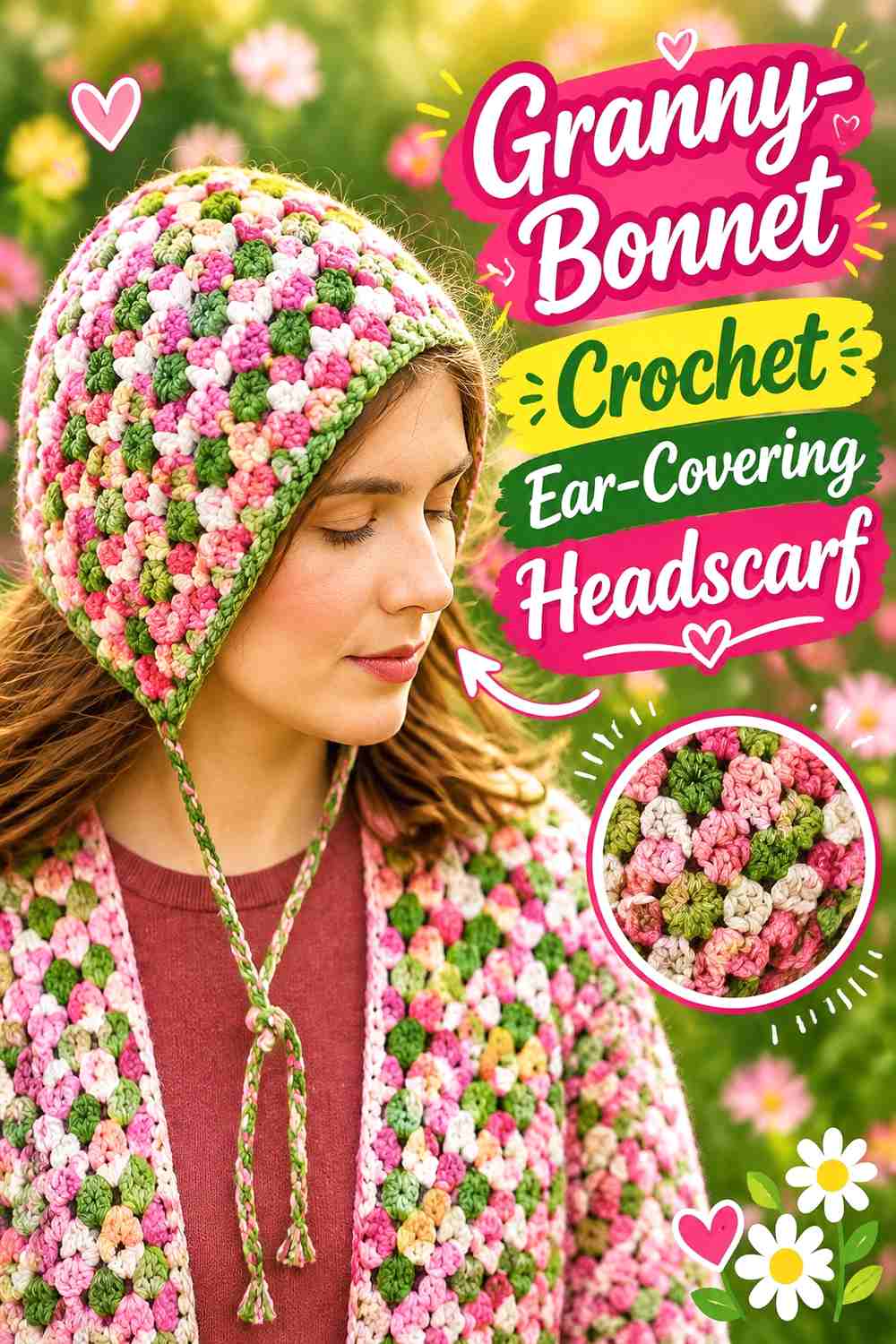
This fall-and-winter design combines granny-style crochet with a bonnet/bandana shape and deliberately shaped corners around the ear area. It also uses chin ties, making it one of the clearest bridges between a triangular headscarf and a vintage bonnet.
Ear Corners Change the Fit More Than a Decorative Border
A typical triangular bandana can taper away from the sides of the head.
Shaping that acknowledges the ear area helps the garment sit more intentionally there, which is far more useful for winter than merely adding another decorative row to the rear point.
Granny Fabric Still Has Open Spaces
The bonnet shape improves coverage, but the granny-style surface remains more open than dense crochet.
Think of shape and fabric density as separate decisions. Good ear coverage does not automatically mean maximum wind resistance.
Chin Ties Strengthen the Vintage Bonnet Effect
Tying beneath the chin creates an unmistakably nostalgic silhouette.
If you prefer a less literal vintage look, the ties can remain visually simple so that the granny texture becomes the main feature.
Creator Credit: Hooked on Yarn
4. Scalloped Crochet Winter Bandana
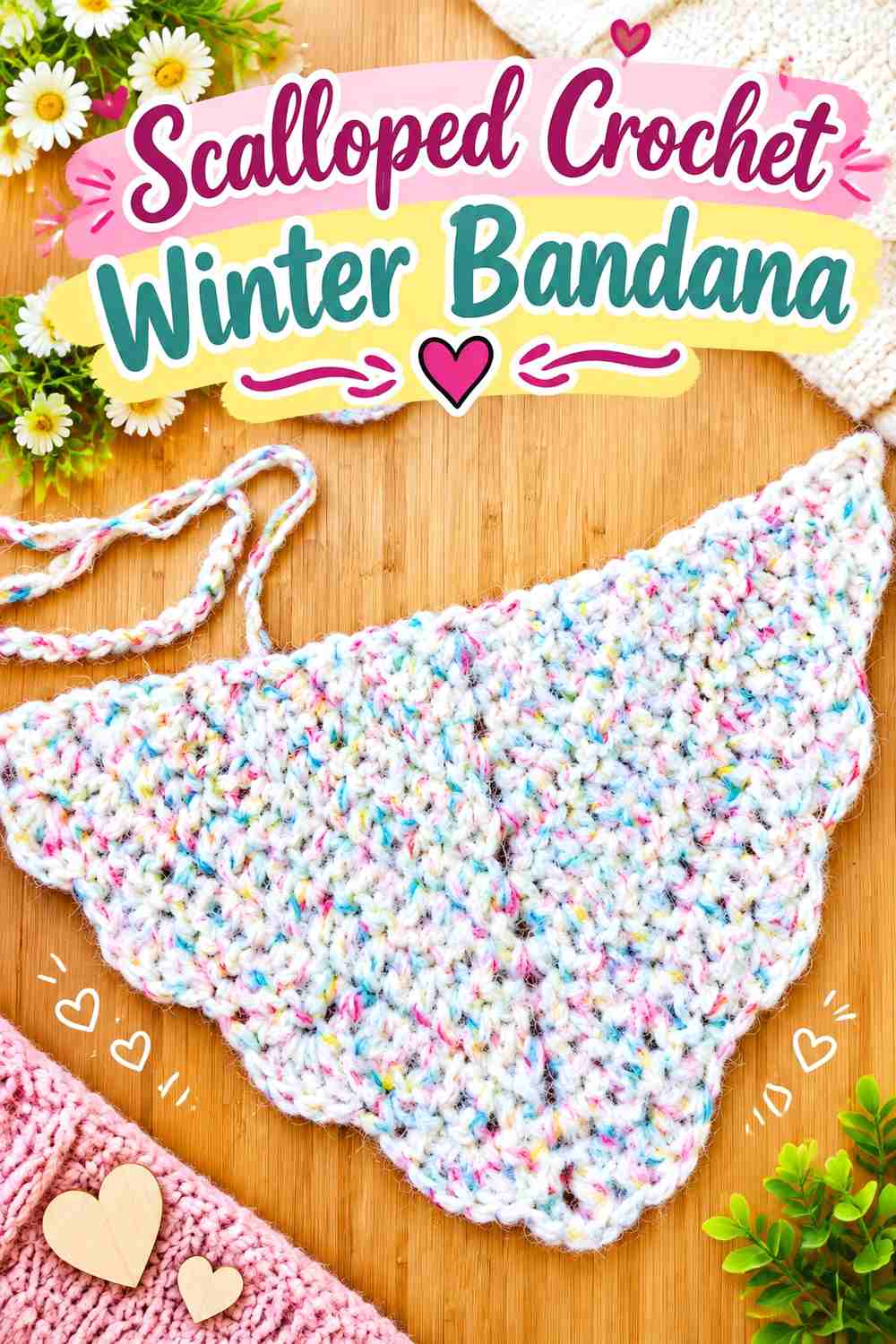
This project is presented specifically as a winter bandana and adds a scalloped lower edge to the triangular form. That makes it useful if you want the accessory to look deliberately decorative rather than purely utilitarian.
Scallops Bring Attention to the Face
Decorative edging is especially noticeable near the temples and cheeks.
If you want the headscarf to coordinate with glasses, a large coat collar, or statement earrings, check that the edge detail does not make the area around the face feel crowded.
Decorative Edging Should Not Reduce Ear Coverage
A pretty border cannot compensate for a triangle that is too shallow.
Establish the required head depth first, then let the scallops finish that shape rather than using them as additional structural coverage.
Use the Point as a Retro Styling Feature
A clearly visible rear point reinforces the headscarf rather than bonnet look.
That makes this option especially suited to vintage-inspired coats where you want a small triangular scarf showing beneath a collar instead of a full hood.
Creator Credit: Kissa Crochet
5. Long-Tie Crochet Mohair-Style Bonnet
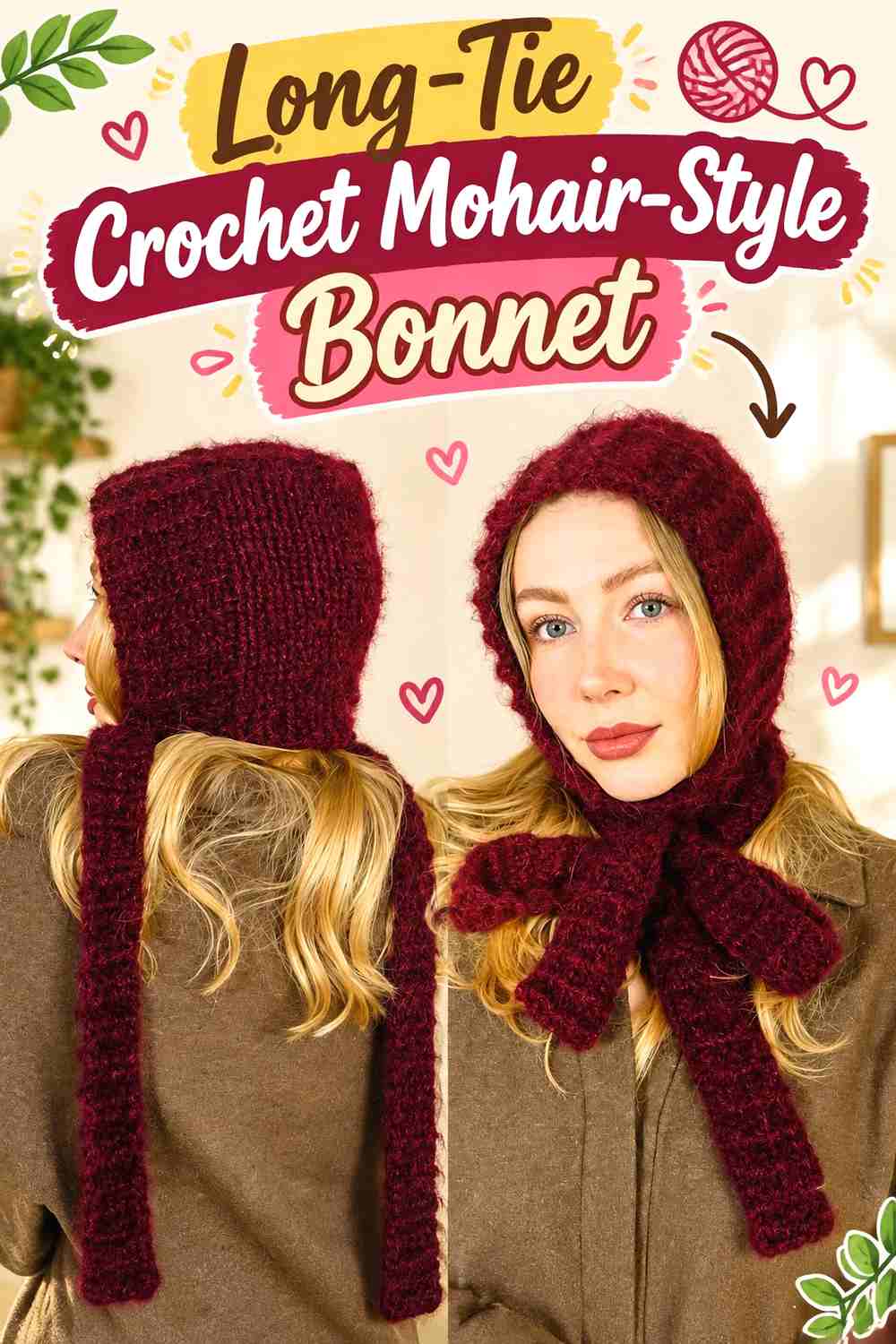
This adult bonnet uses a soft, fuzzy yarn treatment, ribbed finishing, and long ties, creating a stronger winter silhouette than a small hair bandana. The long side coverage makes it particularly useful if keeping the ears inside the accessory is a priority.
Fuzzy Yarn Softens the Bonnet Outline
A haloed surface gives the hat a gentler appearance than crisp, dense cotton crochet.
It also reduces stitch visibility. If you substitute another fuzzy yarn, make sure you can still identify the points where shaping and finishing need to be worked accurately.
Long Ties Can Become Part of the Outfit
The ties are more prominent than the short strings on many kerchiefs.
They can hang loosely, form a visible bow, or disappear beneath outerwear depending on styling. Decide where you expect to tie them before making them substantially longer or heavier.
Check the Front Edge Around the Ears
A bonnet should frame the face without leaving the ears half exposed unintentionally.
Try it on before considering decorative additions. If the front edge sits too far back, embellishment will not correct the basic coverage problem.
Creator Credit: DIYGuru
6. Adult Tie Crochet Retro Bonnet
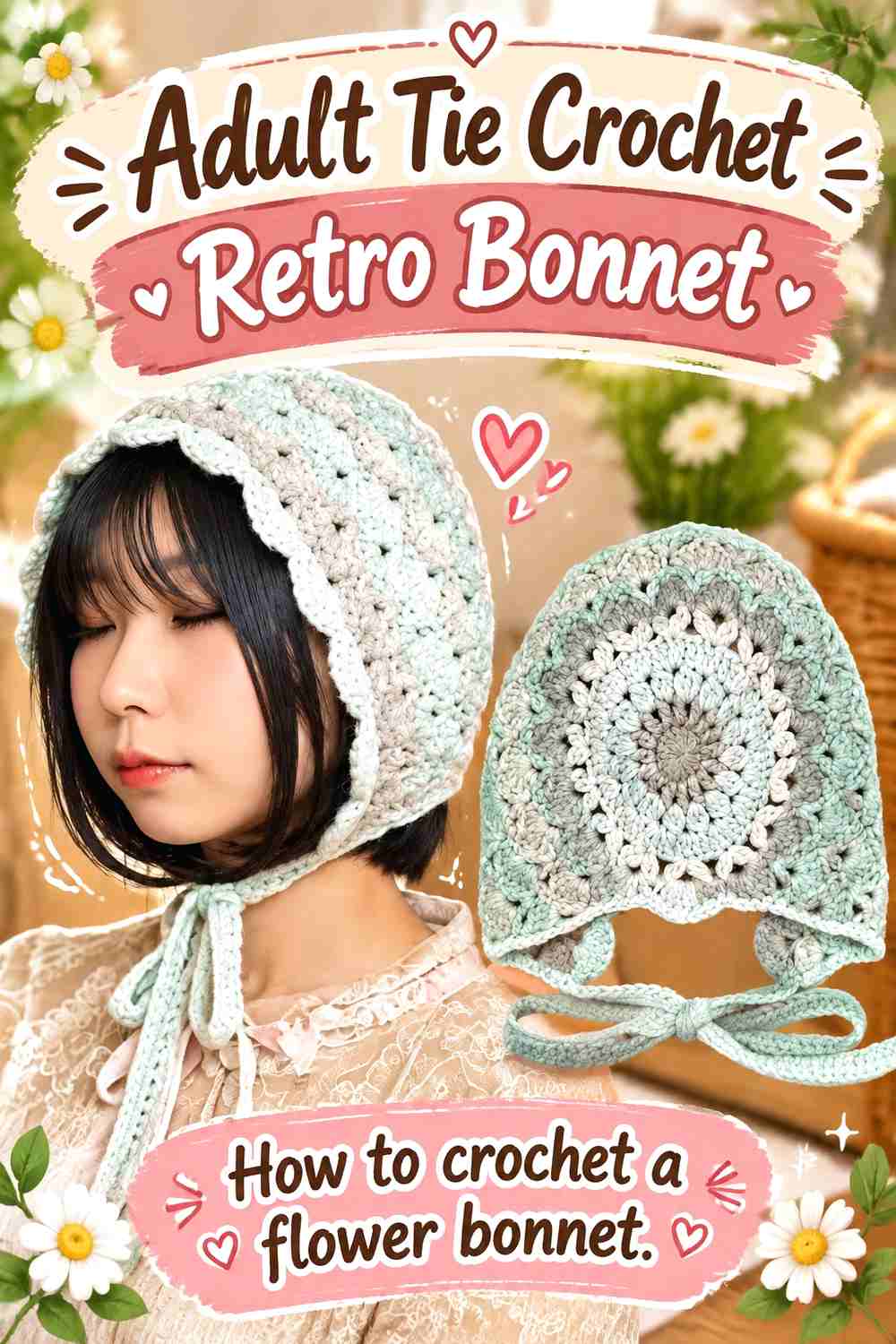
This adult-size bonnet provides a more defined hat-like structure while still retaining the tied-under-the-chin character of a headscarf. It is a good direction for readers who want secure side coverage without the long neck fabric of a hooded scarf.
A Bonnet Gives the Ears a Predictable Place to Sit
Unlike a flat triangle, a shaped bonnet surrounds more of the head.
That makes fit around the ears easier to assess because the front edge follows a specific line from crown to jaw rather than relying entirely on how the scarf is tied.
Keep Decorative Details Secondary to the Face Opening
Bonnet styling invites flowers, bows, and contrast edging, but the face opening remains the most important line.
Make sure both sides frame the face evenly before adding a focal decoration that may emphasize any imbalance.
This Shape Works Well With High Coat Collars
Because the fabric is concentrated around the head instead of extending into a broad scarf triangle, a bonnet can avoid some of the bulk at the back of the neck.
Check the ties with your actual coat, however, since a knot and a high collar may compete for the same space.
Creator Credit: シロクロクロシェ(Shirokuro Crochet)
7. Chunky Crochet Babushka Headscarf
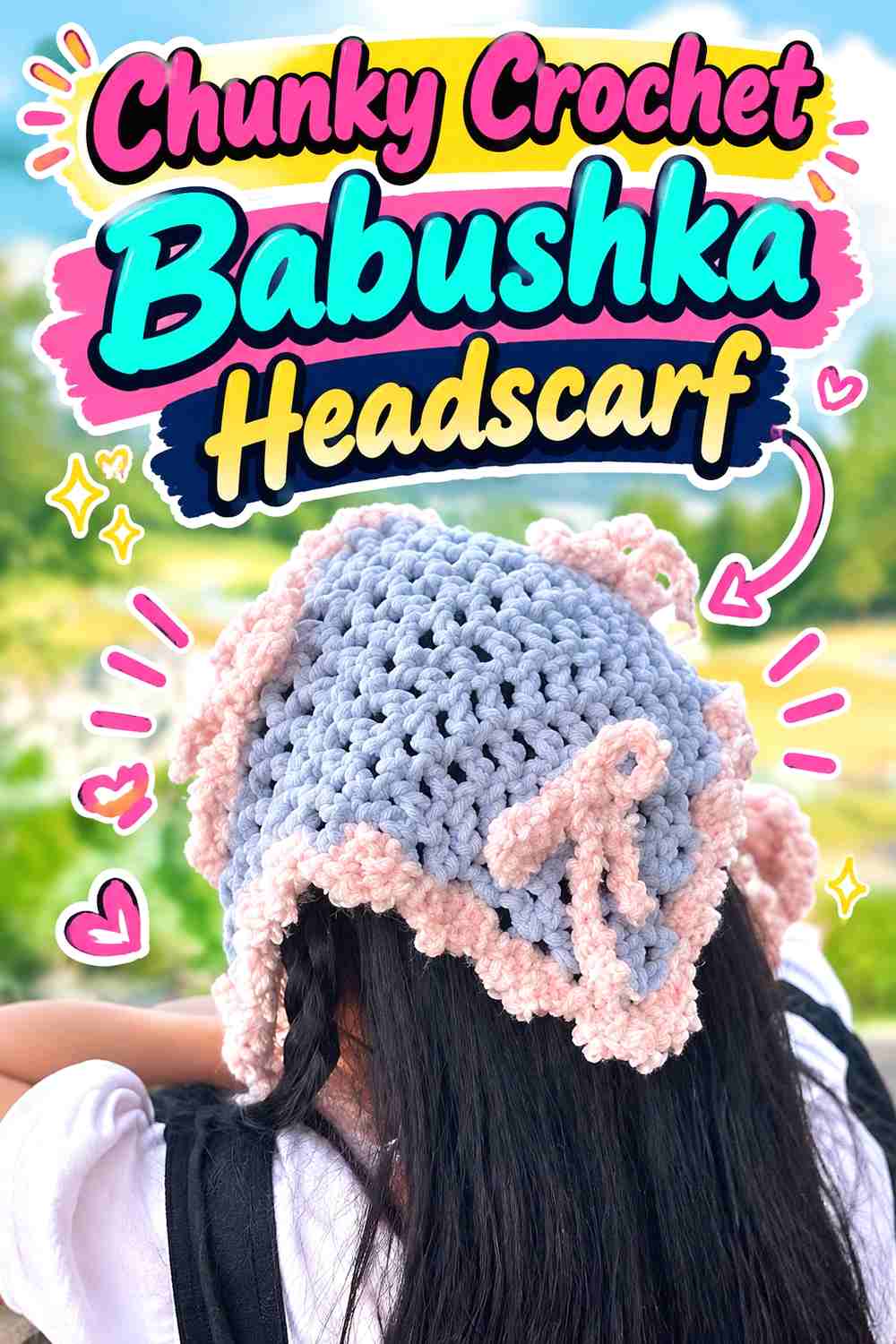
This babushka tutorial specifically uses thicker yarn for a fluffy, substantial result and is presented as suitable for cold-weather styling. It gives you the recognizable tied-triangle silhouette without moving all the way to a bonnet.
Thick Yarn Creates Retro Volume Quickly
Larger stitches make the scarf look more substantial around the crown and ears.
That is useful when you want the babushka silhouette to stand out against an oversized winter coat, but thickness also increases the bulk where the corners overlap beneath the chin.
Watch the Fabric at the Temples
Chunky crochet does not fold as sharply as fine fabric.
If the corners flare away from the head, tightening the tie excessively may make the scarf less comfortable without fixing the underlying drape.
Keep the Border Simple When the Yarn Is Already Bold
Heavy yarn makes every edge treatment larger.
A restrained border can preserve the clean vintage triangle more effectively than adding several rows of bulky decorative stitches.
Creator Credit: Maisu knit
8. Contrast-Edge Crochet Babushka Headscarf
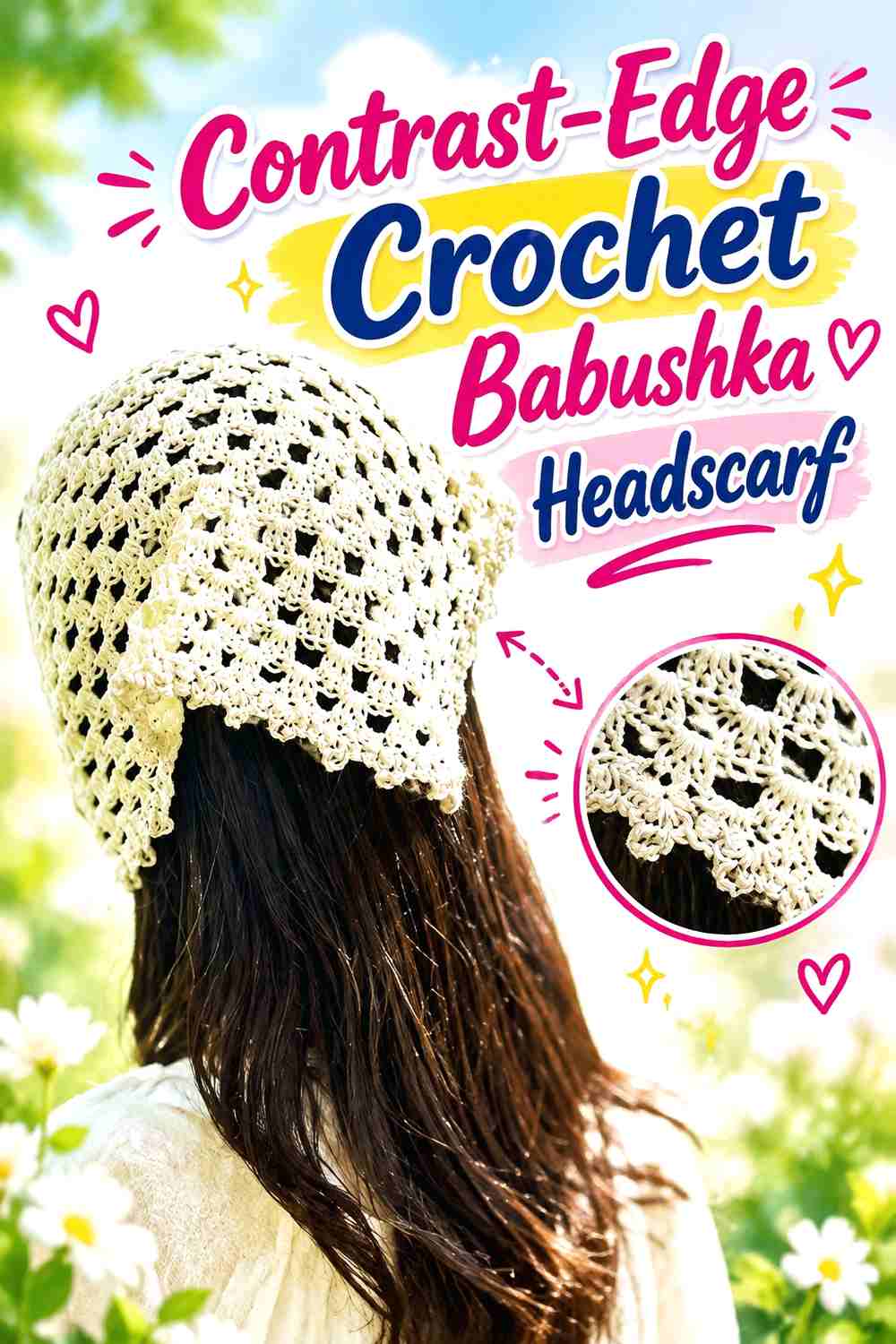
This babushka design shows how the basic triangular head covering can be changed through edging and color contrast rather than complicated shaping. That makes it a useful retro option when you want a handmade accent that remains visually lighter than a bonnet.
A Contrast Border Frames the Entire Silhouette
On a small headscarf, the border occupies a surprisingly large part of what people see.
A darker edge can sharpen a pale body, while a lighter border can soften a deep winter color. Plan the full outline rather than treating edging as a last-minute leftover-yarn decision.
Increase Coverage Before Increasing Decoration
If adapting this toward colder weather, first make sure the scarf reaches the area around the ears that you want covered.
Adding another ornamental border can make the piece larger, but it does not always place fabric where warmth is actually needed.
A Smaller Babushka Works With Statement Outerwear
This scale can be useful with faux-fur collars, broad lapels, or patterned coats because it introduces retro head coverage without adding another large accessory.
For very cold or windy conditions, however, a bonnet or hood from later in the list offers considerably more coverage.
Creator Credit: Ami Amiko
9. Soft-Drape Crochet Babushka Kerchief

This simple babushka focuses on a clean triangular shape, border, and ribbons. The original uses a soft yarn for a flexible scarf, so it provides a useful contrast to the bulky winter versions above.
Softer Drape Gives a More Scarf-Like Look
A fluid triangle follows the head rather than creating a firm bonnet shape.
That can look elegant with vintage coats and structured outerwear, but a highly draped fabric may need careful tying to remain over the ears.
Winter Adaptation Requires More Than Changing Fiber
If you move from the source yarn to a substantially thicker winter yarn, gauge and finished size can change.
Do not assume that following the same construction with a heavier yarn will simply create a warmer equivalent. Check the developing width and depth against your head.
Narrow Ties Keep the Finish Delicate
Slim ribbons maintain the headscarf character instead of making the lower edge feel like a chunky chin strap.
If you enlarge them for winter, consider how the added thickness feels where they knot.
Creator Credit: Orinam crochet
10. Square-Shape Crochet Retro Bandana
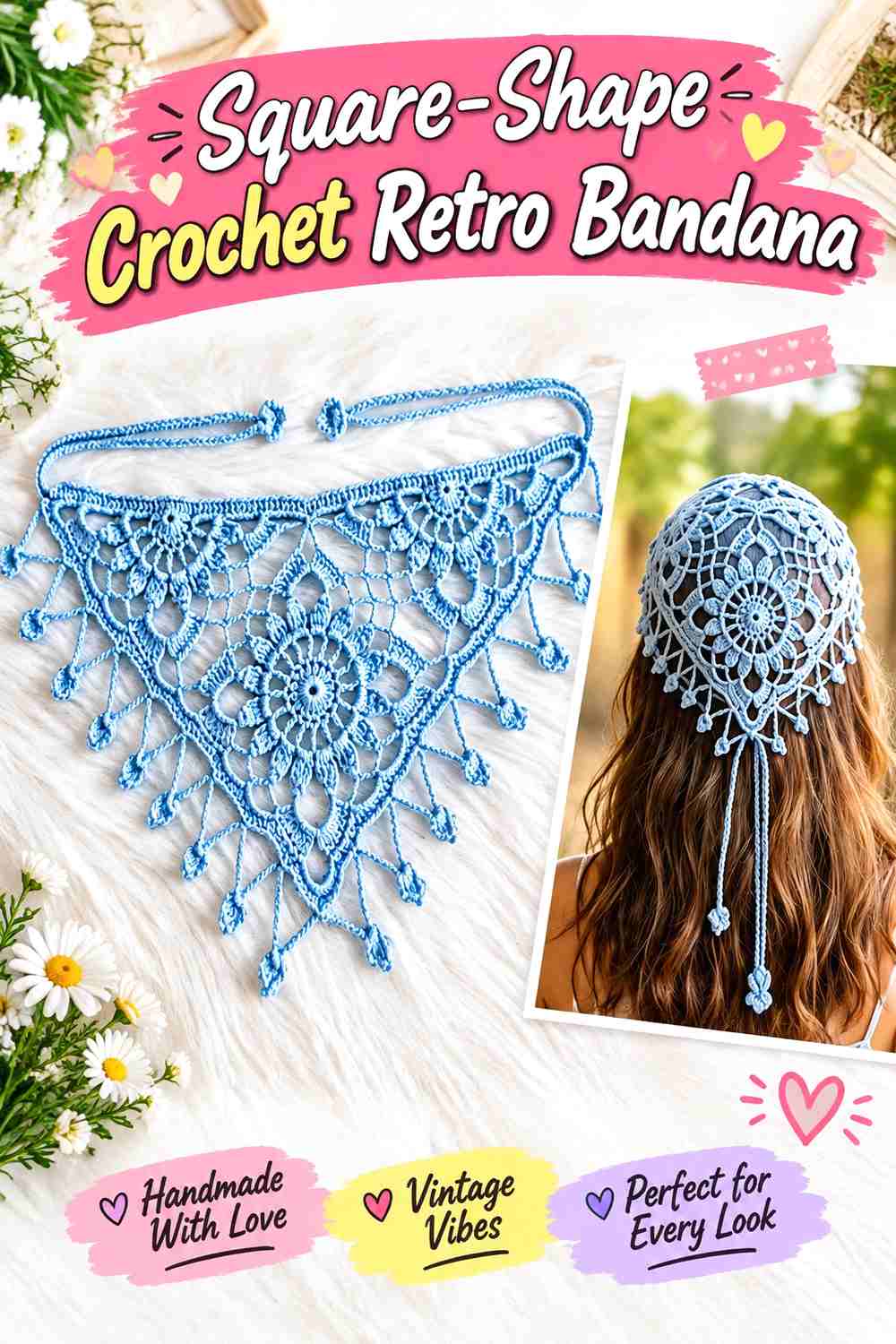
This tutorial creates a square-influenced bandana/kerchief shape rather than relying solely on the familiar granny triangle. That geometric difference gives it a more graphic look and another route to retro styling.
A Squarer Shape Changes Side Coverage
More fabric toward the side corners can alter how the scarf sits around the temples and ears.
Compare that coverage with a narrow triangular bandana if your main problem is the sides of ordinary headscarves creeping upward.
Graphic Geometry Works Well With Two-Color Styling
A simple shape can support checks, blocks, or contrasting borders without requiring complex surface texture.
Keep in mind that changing to stranded or multi-layer colorwork may also change fabric density and stretch.
Do a Wear Test Before Choosing the Tie Position
A geometric scarf may look perfectly balanced when flat but behave differently once wrapped around a rounded head.
Check how the corners overlap and where the point sits before finishing the closure.
Creator Credit: zhaia croche
11. Granny Crochet Triangle Headscarf
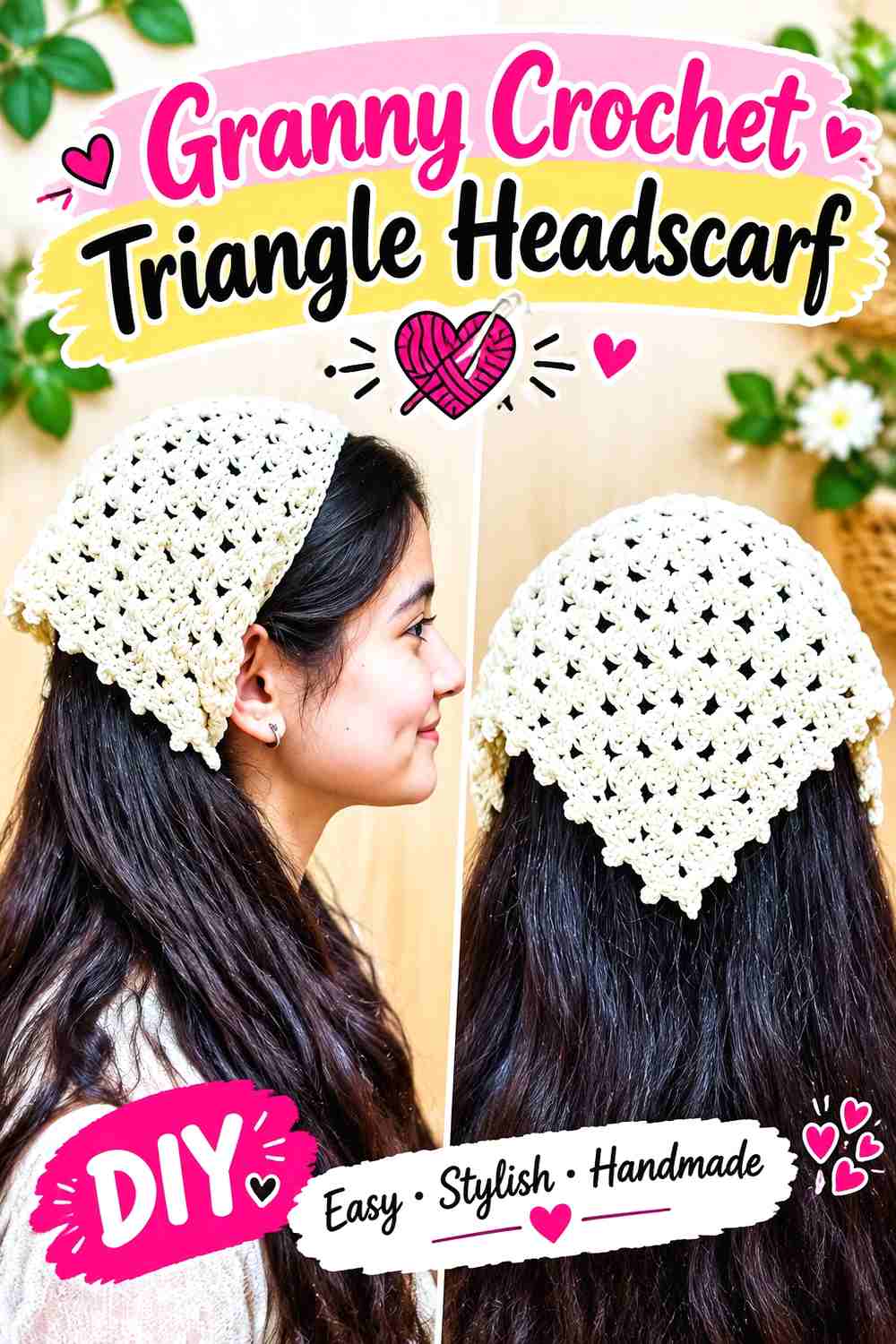
This granny-style bandana uses the familiar expanding triangle and tied corners. It is lighter in concept than the purpose-built winter kerchiefs, so its value here is the classic retro silhouette and its potential for careful cold-weather adaptation.
Granny Clusters Give a Strong Handmade Retro Look
The repeating open clusters immediately distinguish the scarf from a solid fabric head covering.
They pair naturally with 1970s-inspired winter outfits, especially when the palette is kept earthy, muted, or strongly color blocked.
Open Spaces Limit Wind Protection
Changing from cotton to wool does not remove the holes between clusters.
If wind resistance is important, choose one of the denser projects instead of expecting fiber choice alone to transform an open granny fabric.
Use Size to Improve Ear Coverage
A slightly deeper triangle may extend farther down the sides of the head, but follow the tutorial’s sizing logic rather than adding random rows.
Too much extra fabric can bunch behind the neck when tied.
Creator Credit: Crochet con Sole
12. Picot-Edge Crochet Retro Headscarf
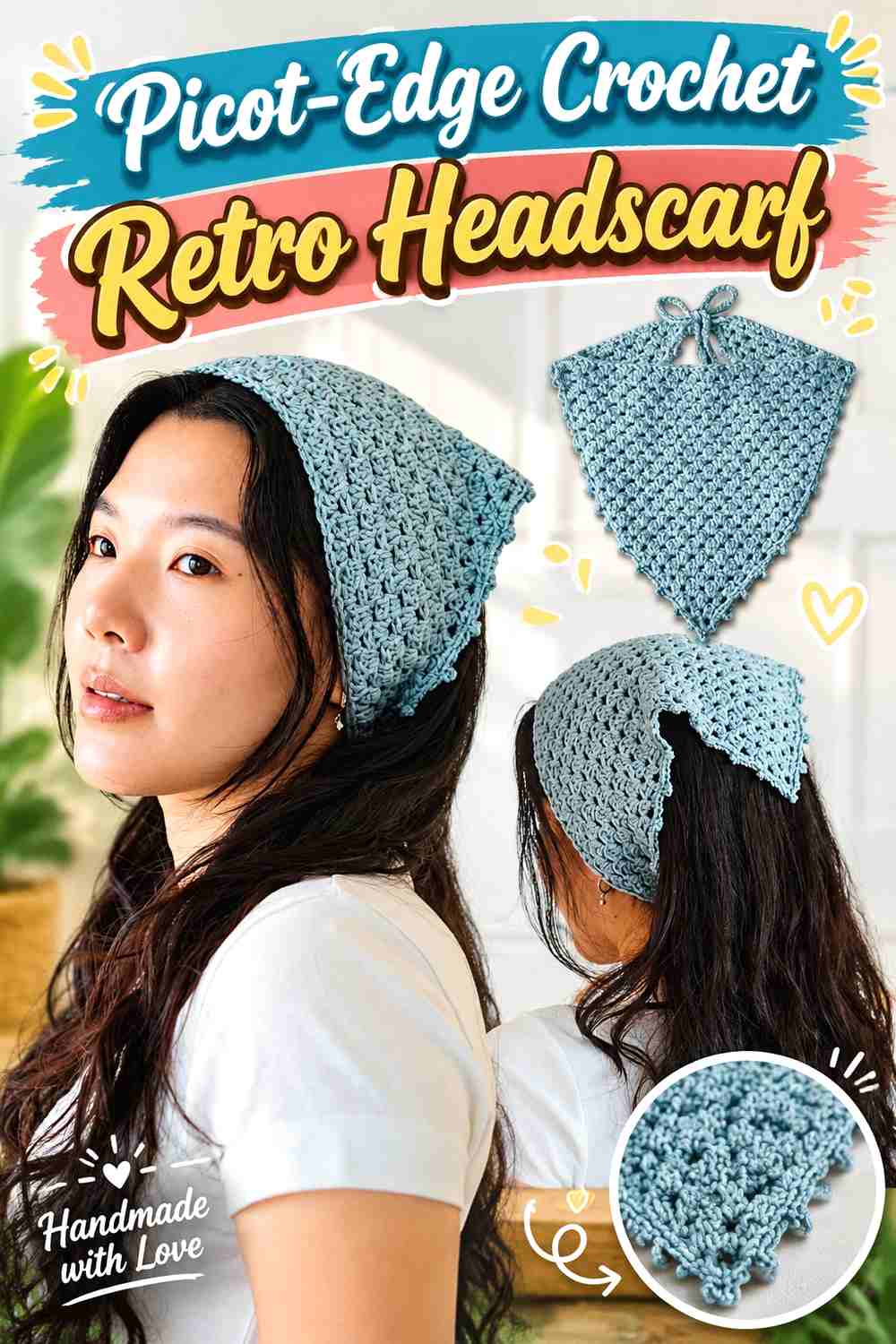
This row-worked bandana differs from the classic granny triangle and includes a small decorative picot option. Its relatively clean body makes it useful if you want a simple 1950s-style tied scarf effect rather than obvious motif crochet.
Row Construction Creates a Cleaner Surface
Compared with large granny gaps, the fabric reads more continuously across the head.
That can make a winter adaptation visually neater beneath a coat or hood, although the actual warmth still depends on the chosen yarn and final fabric.
Picots Should Stay Small Around the Ear Area
A delicate point along the edge adds vintage detail.
If enlarged too much, those points can create extra texture exactly where glasses, coat collars, or hair may already be rubbing against the scarf.
Check the Tie Angle for Ear Coverage
The position of the straps affects whether the scarf is pulled downward over the ears or backward toward the nape.
Experiment with how the headscarf sits before deciding that a lack of coverage is purely a sizing problem.
Creator Credit: VivCrochets
13. Smooth-Fit Granny Crochet Winter Headscarf
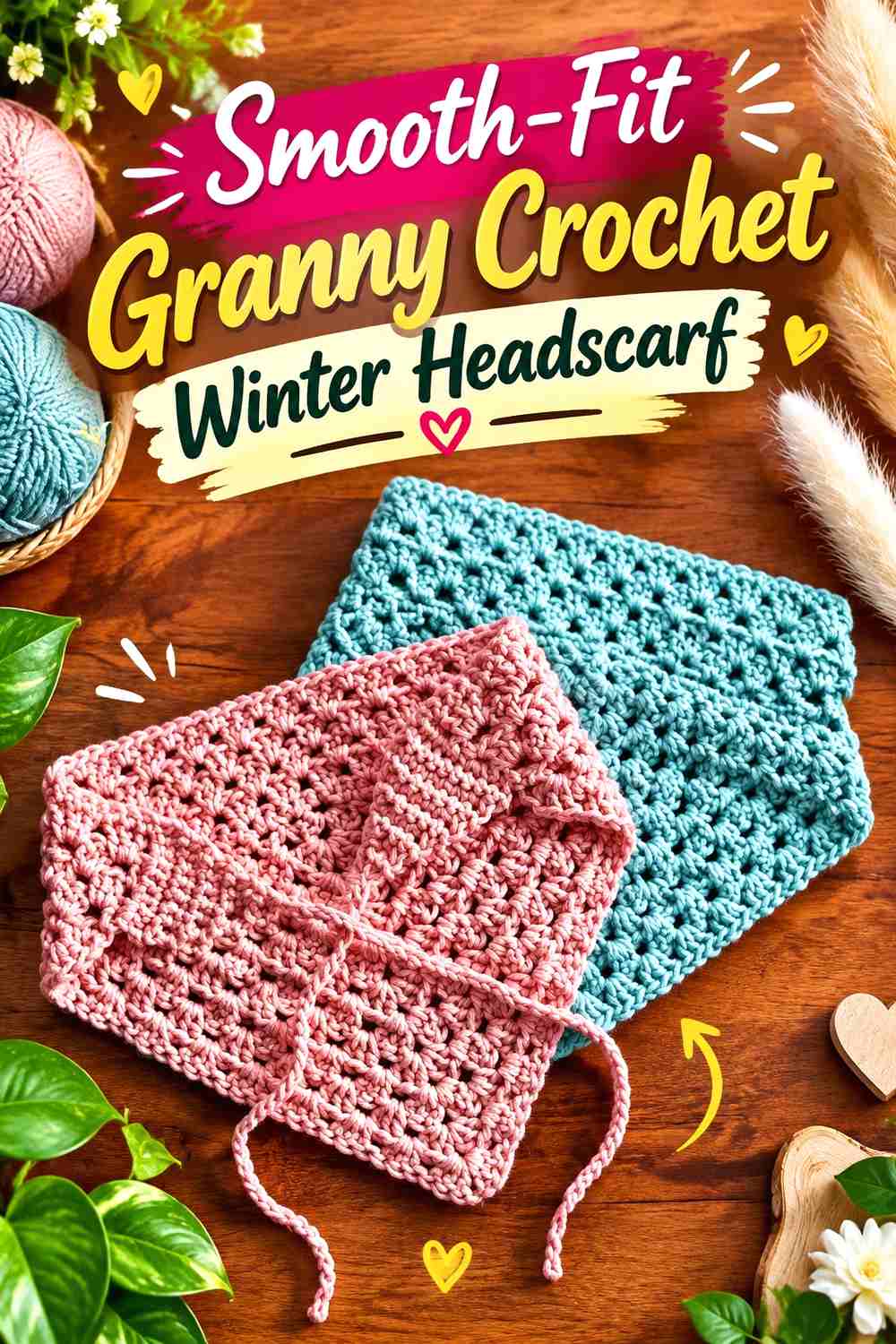
This updated granny-style design was created to lie more smoothly at the sides instead of developing bulky edges. The original is a lightweight warm-weather accessory, but that smoother side fit makes the construction interesting for a retro winter adaptation where you do not want large folds around the temples.
Smooth Sides Matter Under Other Winter Layers
Bulky side corners can become uncomfortable beneath earmuffs, coat hoods, or large collars.
A flatter fit offers a cleaner starting point if the headscarf will sometimes be combined with other cold-weather accessories.
Do Not Turn an Airy Pattern Into “Winter” by Color Alone
Deep burgundy or forest green may look seasonal, but the fabric itself remains the more important decision.
For meaningful warmth, compare stitch openness, yarn behavior, and finished ear coverage rather than relying only on a winter palette.
Avoid Oversizing the Triangle Just to Cover the Ears
A very large granny triangle can create excess material at the nape.
If you need substantially more coverage than the construction provides, one of the bonnet or hood projects may be the more practical choice.
Creator Credit: Yarn Stash with Marching North
14. Turtleneck Crochet Hooded Headscarf
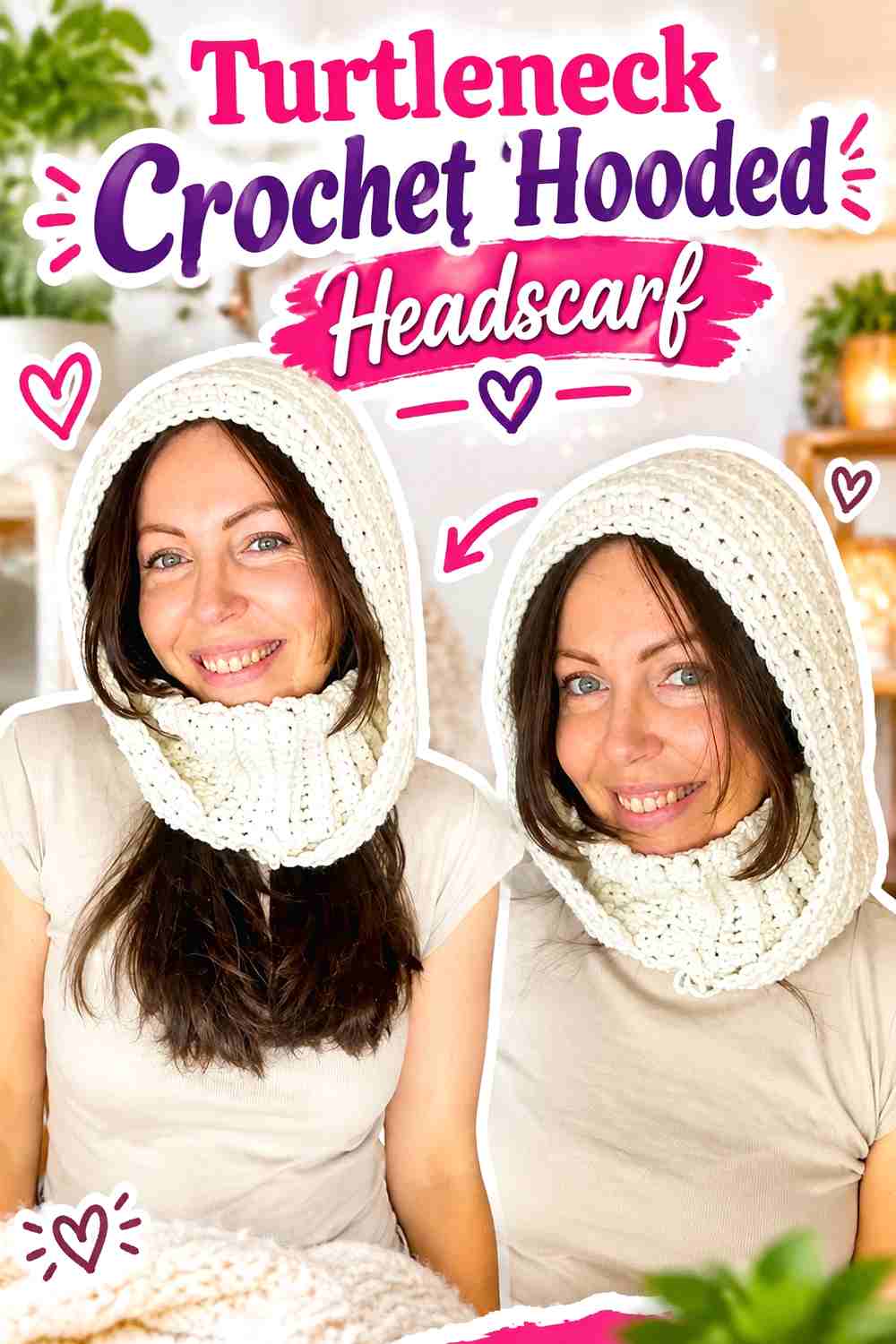
This winter design combines a hood with a close neck section, giving it much greater coverage than a conventional triangle scarf. The source specifically presents it as a balaclava/scoodie-style winter accessory with separate hood and neck components joined together.
Full Ear Coverage Makes This a Different Category
The ears sit inside the hood rather than beneath the edge of a small triangle.
Choose this construction if dependable coverage matters more than maintaining the minimal size of a classic kerchief.
The Neck Section Reduces Gaps Below the Hood
A normal headscarf ends near the jaw or nape. Extending the design down the neck changes both warmth and how it fits under a coat.
Make sure your outerwear neckline has room for that additional crochet layer.
A Neutral Color Keeps the Retro Hood Wearable
A fitted hood with neck coverage can feel highly contemporary or strongly vintage depending on styling.
Cream, brown, charcoal, burgundy, and muted greens can give it an old-fashioned winter feel without requiring added embellishment.
Creator Credit: Lana Loca – moderne Handarbeiten
15. Long-Tail Crochet Hood Scarf
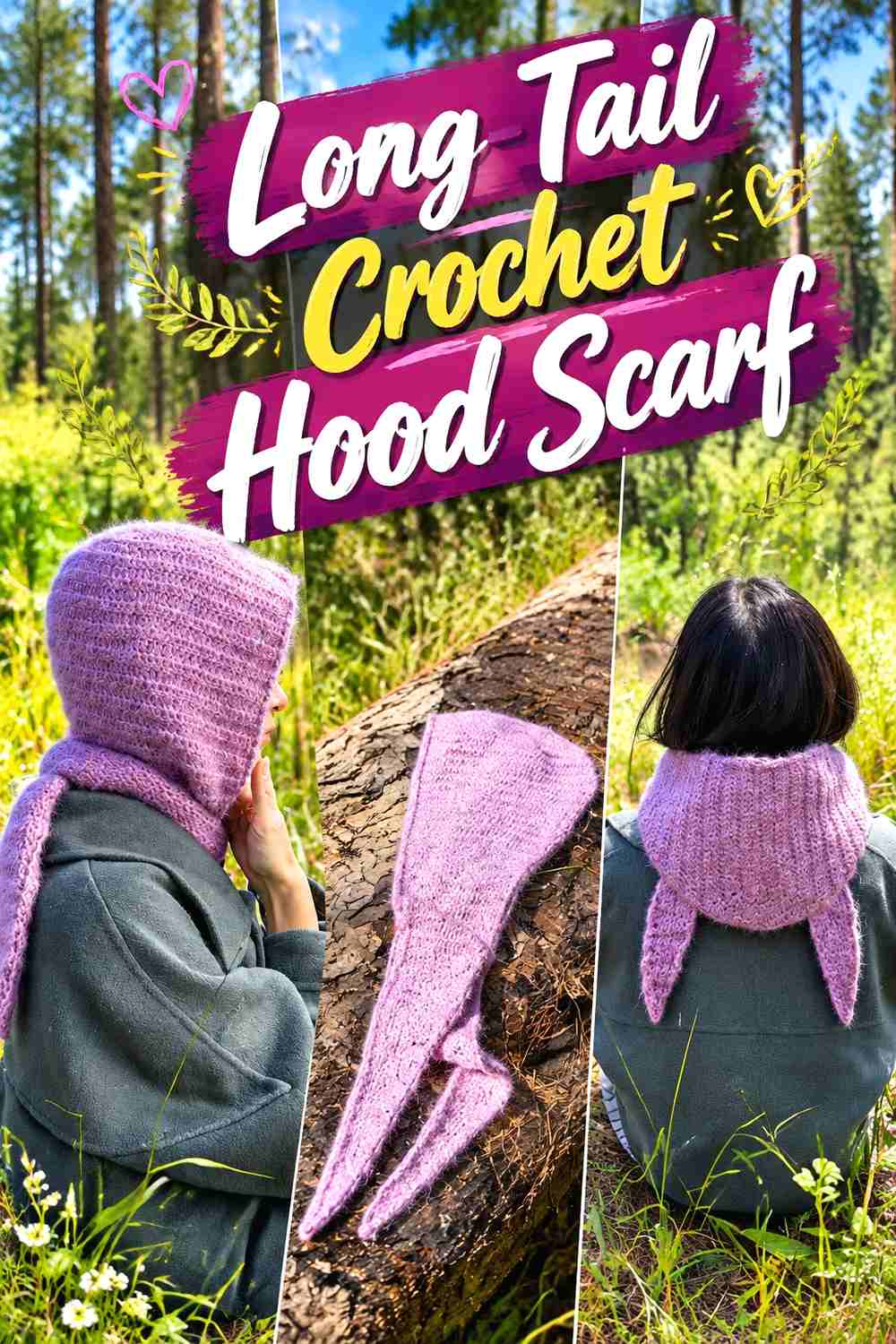
This winter hooded scarf offers full head and ear coverage plus long scarf sections. It is the choice for someone who likes the visual idea of an old-fashioned tied head covering but wants much more protection around the neck.
Scarf Tails Give You More Control Around the Neck
Unlike a small chin-tied kerchief, a hood scarf can be wrapped or left hanging according to your coat and temperature.
That versatility comes with extra bulk. Consider how much fabric your coat can comfortably accommodate before increasing the scarf width.
The Hood Should Frame Rather Than Squeeze the Face
A winter hood does not need to fit like a close beanie.
Check that it stays in position without forcing the front edge tightly against the cheeks, especially if you will wear glasses or tuck hair inside.
This Shape Creates a Strong 1960s–1970s Winter Mood
A soft hood paired with long scarf ends can reference vintage ski and travel styling without copying a particular historical garment.
Keeping the surface simple lets the draped silhouette provide most of that retro character.
Creator Credit: ABoC Studio
16. One-Piece Crochet Hooded Headscarf
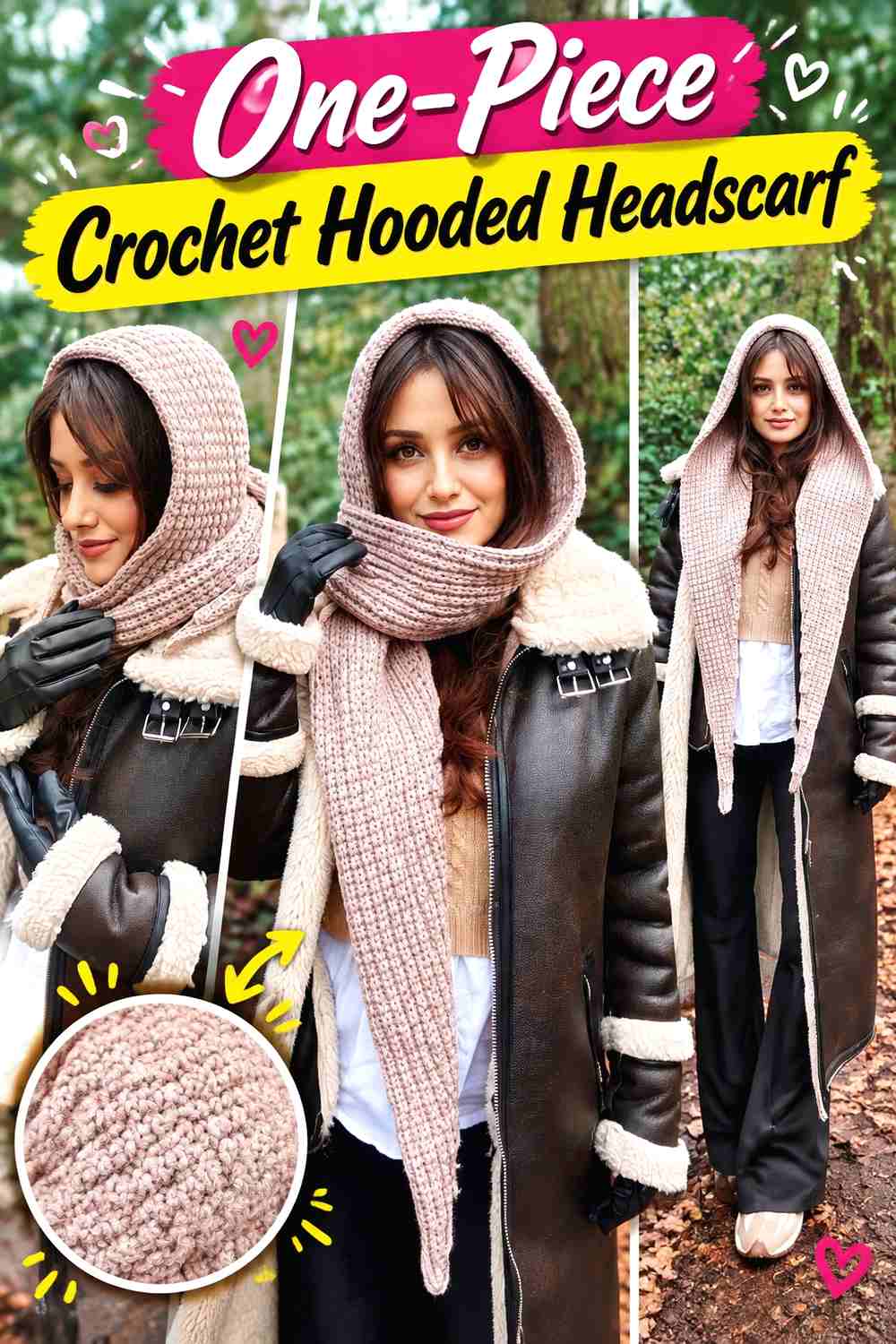
This hood scarf uses a continuous construction rather than treating the hood and scarf as unrelated accessories. The finished design has a close, clean silhouette that works well when you want ear coverage without the look of a conventional winter hat.
One-Piece Construction Keeps the Visual Lines Continuous
The scarf flows directly into the hood, which helps the accessory look deliberate whether the tails are crossed, wrapped, or left loose.
That makes it a useful modern interpretation of the tied winter headscarf.
Hood Depth Is More Important Than Extra Scarf Length
If the hood does not comfortably cover the crown and ears, longer tails will not solve the fit.
Use the creator’s adjustment guidance for the hood itself before changing the decorative or wrapping length.
Subtle Texture Suits a Retro-Inspired Version
This kind of clean construction does not require motifs to feel special.
A slightly heathered yarn, narrow stripe, or restrained contrast edge can create vintage character while preserving the streamlined hood shape.
Creator Credit: Passionate Crafter
Which Crochet Headscarf Style Offers the Coverage You Want?
| If you want… | Consider… | Main thing to check |
|---|---|---|
| A compact winter kerchief | Projects 1 or 2 | Whether the sides fully reach your ears |
| Granny texture with better side coverage | Project 3 | Openwork versus actual weather conditions |
| A decorative vintage triangle | Project 4 | Depth before adding scalloped edging |
| Full bonnet-style ear coverage | Projects 5 or 6 | Face opening and tie comfort |
| A chunky babushka look | Project 7 | Bulk beneath the chin and coat collar |
| A lighter retro babushka | Projects 8 or 9 | Whether the fabric stays positioned over the ears |
| Graphic bandana geometry | Project 10 | Side fit after wrapping |
| Classic granny headscarf style | Projects 11 or 13 | Open stitch structure |
| A cleaner tied scarf | Project 12 | Yarn density and strap angle |
| Maximum head and neck coverage | Projects 14–16 | Hood depth and bulk beneath outerwear |
Conclusion
For a true ear-warming crochet headscarf, start with coverage rather than decoration. Projects 1 and 2 are compact choices designed around more substantial winter fabric, while Project 3 adds granny texture without giving up the bonnet-like ear area.
Projects 5 and 6 are stronger choices if you want the unmistakable retro bonnet silhouette and more dependable side coverage. The babushkas in Projects 7–9 offer a softer tied-scarf look, ranging from chunky and substantial to lighter and more draped.
The granny and bandana projects in the middle of the collection work particularly well for retro styling, but their stitch density varies. Treat the more open designs as mild-weather layers unless your yarn choice and finished fabric provide the level of coverage you need.
For the greatest protection, Projects 14–16 move beyond the small kerchief entirely. Their hooded shapes cover the ears, crown, and neck while retaining the draped, scarf-like quality that makes this winter headwear feel different from an ordinary beanie.
Use each creator’s tutorial for exact sizing, construction, and finishing, and evaluate any winter adaptation on the actual wearer before assuming a yarn substitution will provide the same fit.
Frequently Asked Questions
Does a crochet bandana actually keep your ears warm?
It can if the finished scarf extends far enough down the sides of the head and the fabric is suitably dense. A small or highly open bandana may provide little ear coverage even when made from a warm-looking yarn.
Which crochet headscarf shape covers the ears most reliably?
A shaped bonnet or hood generally gives more predictable coverage than a shallow triangle because the sides are designed to surround the head. A deep kerchief can also work well if its upper corners extend below the ears and stay in position.
Can I use a summer crochet bandana tutorial for winter?
Possibly, but treat it as an adaptation. Changing yarn can alter gauge, size, drape, stretch, and edge behavior. Make a sample and check the developing headscarf against the intended fit rather than assuming a heavier fiber is a direct replacement.
Is a granny-stitch headscarf warm enough for winter?
Granny fabric contains deliberate open spaces, so it allows more airflow than dense crochet. It can suit mild winter weather or retro layering, but a closely worked kerchief, bonnet, or hood is a better option when you need more complete coverage.
How do I stop a crochet headscarf from sliding off my ears?
First check size and shape. The scarf should naturally reach the ear area before the ties are tightened. Ties, a button closure, bonnet shaping, or a deeper hood can help keep the piece positioned, but excessive tension should not be necessary.
Should a retro crochet headscarf tie under the chin or behind the neck?
Either can work. Under-chin ties create a stronger babushka or bonnet reference and can help hold the sides down. Tying behind the neck gives a more casual bandana appearance and keeps the knot away from the face. Use the wearing method intended by the selected tutorial when fit depends on it.
What yarn qualities are useful for a winter crochet headscarf?
Look for a yarn that creates the gauge and fabric required by the tutorial, feels comfortable near the face, and provides the amount of structure or drape the design needs. For ear warmth, finished fabric density and coverage are at least as important as the yarn’s visual fuzziness.