Crochet snowflake ornaments can look remarkably different even when they share the same winter theme. Fine thread creates crisp, intricate lace, while DK and worsted-weight yarns produce larger flakes with more visible texture. Some of the designs below rely on picots and open chains for airy points; others use puff stitches, clusters, tassels, or denser centers that read more clearly against a full evergreen tree.
The main decision is not simply which snowflake looks attractive. Consider how large it will appear among your other ornaments, whether the fabric needs blocking or stiffening, how much branch space the points require, and whether you want a delicate ornament or something sturdier for repeated handling. These 18 tutorials offer meaningfully different approaches, so you can mix several styles on one tree or choose a consistent construction for a coordinated set.
Quick List
- Puff-Stitch Cotton Crochet Snowflake Ornament
- Puffy Star-Look Crochet Snowflake Ornament
- Fine-Thread Lace Crochet Snowflake Ornament
- Tiny Six-Branch Crochet Snowflake Ornament
- Advent-Tree Lace Crochet Snowflake Ornament
- Alternating-Point Crochet Snowflake Ornament
- Frost-Lace Six-Point Crochet Snowflake Ornament
- Mix-and-Match Size Crochet Snowflake Ornament
- Bean-Stitch Crochet Snowflake Ornament
- Five-Point Treble Crochet Snowflake Ornament
- Tassel-Trim Scandi Crochet Snowflake Ornament
- Five-Point Picot Crochet Snowflake Ornament
- Granny-Inspired Crochet Snowflake Ornament
- Layered Eight-Round Crochet Snowflake Ornament
- Ten-Point Crochet Snowflake Ornament
- Sparkle-Edge Crochet Snowflake Ornament
- Glitter-Finish Stash Crochet Snowflake Ornament
- Clustered-Petal Crochet Snowflake Ornament
Choosing Yarn and Scale for Crochet Snowflake Ornaments
Thread and lightweight yarn usually give snowflakes the crispest lace definition because small stitches leave room for narrow points and open spaces. The trade-off is that fine work can take more concentration, and a very soft thread snowflake may need deliberate blocking before its geometry becomes clear. A heavier yarn makes each structural feature easier to see and can produce a more casual, handmade look that suits trees with chunky garlands or fabric ornaments.
Do not assume that substituting yarn only changes color. Increasing yarn thickness can enlarge the entire motif, close some of the negative space, and add enough weight to pull on a soft tree branch. If you substitute, compare the designer’s materials with your intended yarn and make one test flake before committing to a whole set.
Blocking and Stiffening Snowflake Points
Blocking is especially important when a snowflake depends on long chains, picots, or sharply separated arms. Crocheted points can twist or settle at slightly different angles straight off the hook even when the stitch work is consistent. Pinning the motif symmetrically while it dries helps reveal the intended shape.
Stiffening is a separate choice. Some designers specifically recommend it, while other constructions or yarns hold enough shape without a rigid finish. Follow the original tutorial when it gives a finishing method, and consider the fiber before adding any starch or stiffening product. If you make several matching ornaments, block them against the same visual template or measured spacing so the points remain consistent from one snowflake to the next.
Planning Hangers and Tree Placement
A hanging loop can change how a snowflake sits on the tree. Attaching it directly to one delicate picot may pull that point upward, while a designer-built loop or sturdier central attachment can keep the motif more balanced. Check the tutorial’s intended hanging method before improvising.
Scale also matters once the ornament is surrounded by foliage. Very small lace flakes can disappear deep inside dense branches, whereas broad or tassel-trimmed designs need open space around them. Place detailed thread ornaments toward branch tips or near lights where their openwork remains visible. Heavier versions are generally better on stronger branches. If beads, hooks, tassels, or other detachable embellishments are added, keep their security and the presence of children or pets in mind when deciding where the ornament will hang.
1. Puff-Stitch Cotton Crochet Snowflake Ornament
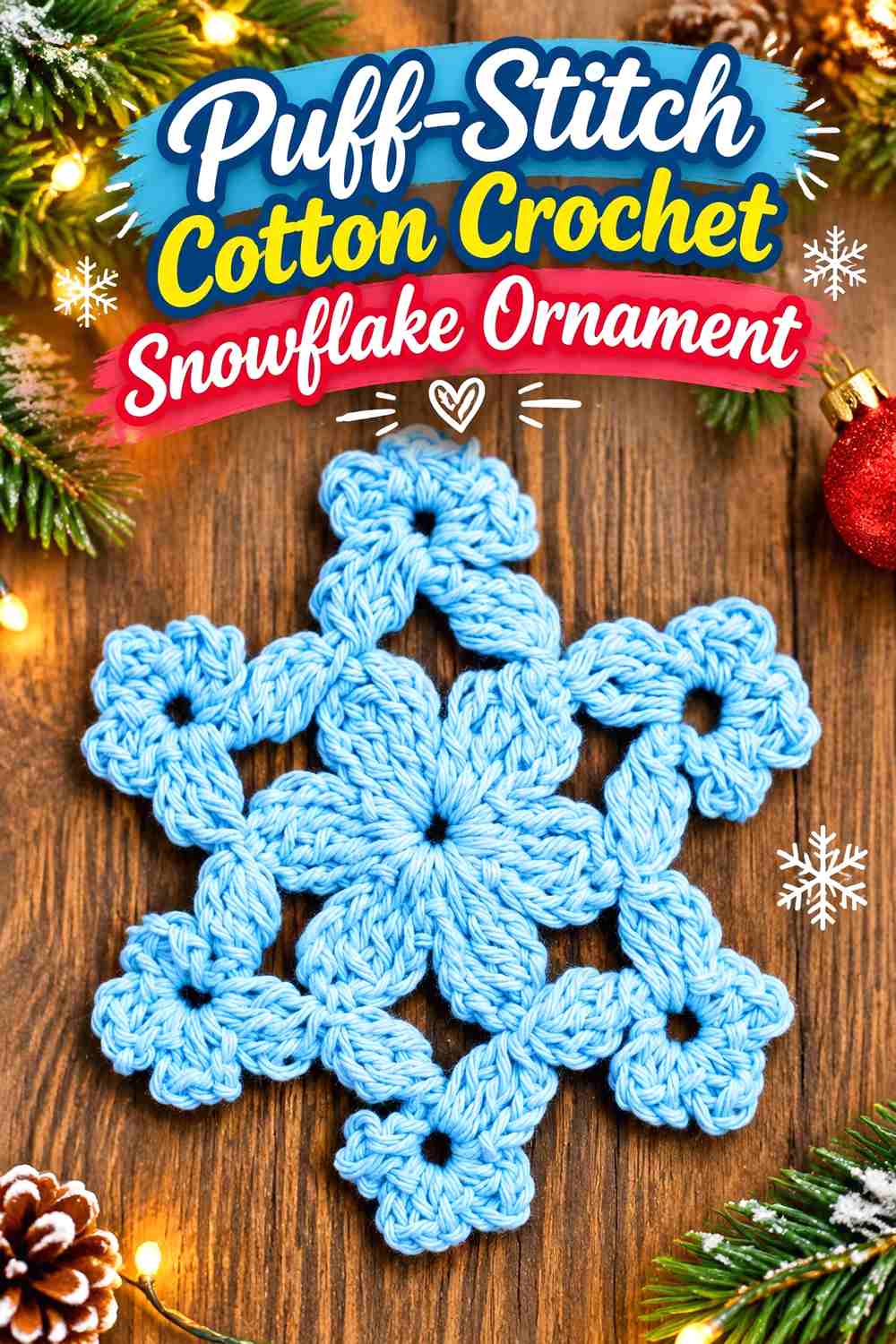
This six-sided snowflake from Naztazia uses medium-weight cotton and includes puff-stitch texture, giving it more visual substance than a fine thread ornament. The designer notes that the cotton construction can retain enough body that additional stiffening may not be necessary, although an optional stiffening method is also discussed. That makes this a useful choice when you like a clearly crocheted texture rather than a doily-like finish.
The fuller yarn also means the snowflake will occupy more visual space among evergreen needles. Choose it when you want individual ornaments to remain recognizable from across the room. Before substituting a softer fiber, consider whether the finished arms will still support themselves or whether you will need to add blocking and stiffening to compensate.
Why the Puff Texture Changes the Look
Puff stitches create small areas of extra thickness, so light and shadow show more clearly across the ornament than they would on a chain-heavy lace motif. That texture can work especially well on trees decorated with knitted pieces, felt ornaments, wooden accents, or other materials with visible surface depth. If your tree is already filled with intricate lace, this snowflake can provide a useful textural break without leaving the winter theme.
Check Structure Before Skipping Stiffener
The source uses worsted-weight cotton specifically, so do not assume every yarn will behave the same way. Acrylic, blends, and loosely spun fibers can have different amounts of softness and rebound. If you change materials, finish one flake first and hang it for a while before making the rest. A point that looks crisp while lying flat may droop differently once the ornament is suspended vertically.
Creator Credit: Naztazia
2. Puffy Star-Look Crochet Snowflake Ornament
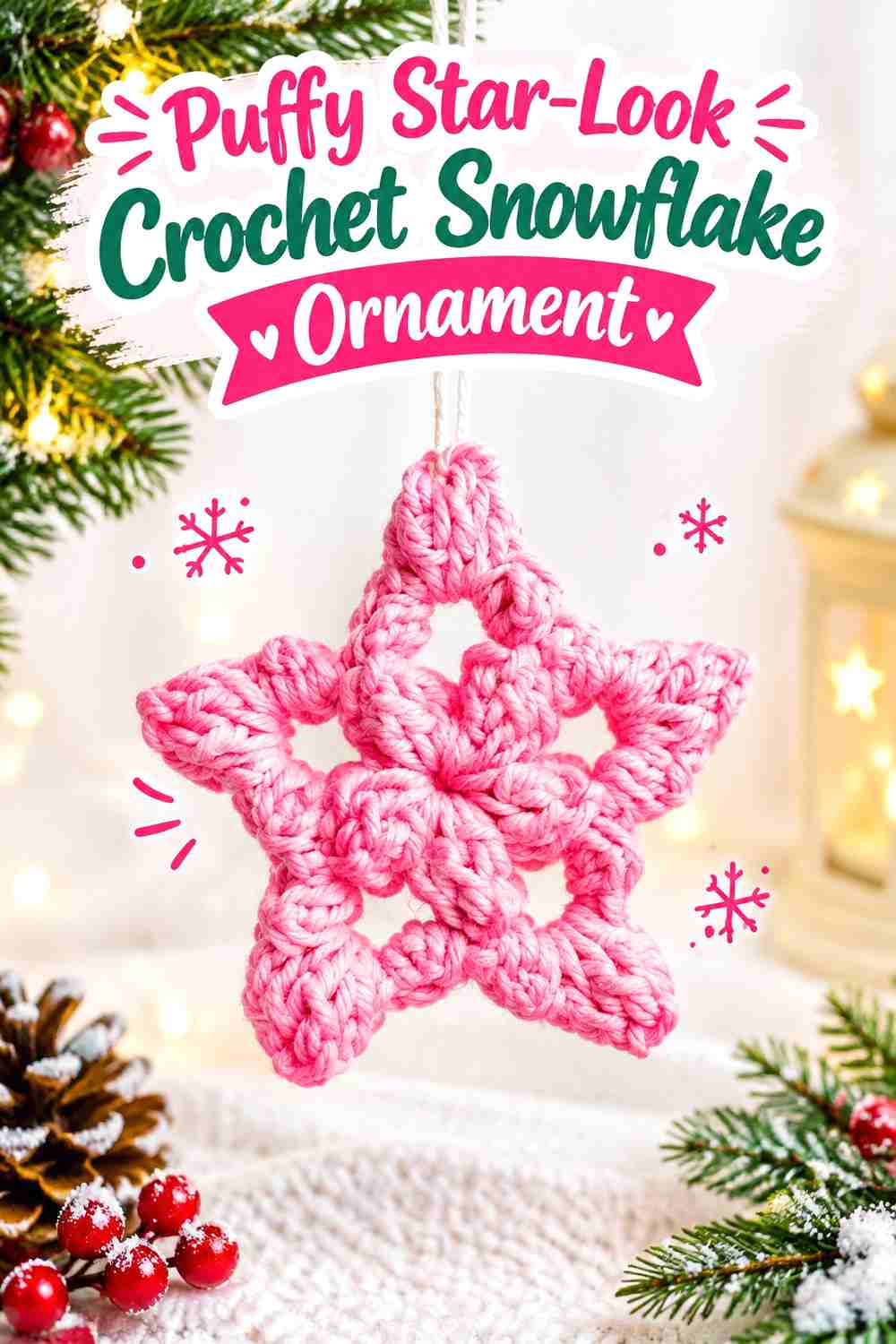
Amelia Makes approaches the snowflake as a compact puffy star-or-snowflake ornament rather than a finely branched lace flake. The published version uses light yarn and produces a motif that is almost four inches across at the stated gauge, making it substantial enough for a tree without requiring the sprawling arms of larger lace designs. The creator also positions it as useful for gift decoration as well as hanging display.
This is worth considering when you want soft geometry instead of needle-sharp points. The rounded, cushioned look pairs naturally with cozy trees decorated with yarn balls, fabric hearts, or other textile ornaments. Because its silhouette can read as either a star or snowflake, it is less literal than some designs in this list.
Use the Silhouette to Balance Busier Ornaments
A compact star-like form gives the eye somewhere to rest between highly branched snowflakes. On a mixed handmade tree, alternate these simpler outlines with more elaborate thread motifs instead of clustering every intricate ornament together. The design can also work well higher on the tree where small openwork details would be harder to see but the overall silhouette remains visible.
Watch How Yarn Changes the Puffiness
A substitution that is significantly thicker, thinner, or less springy may alter more than the finished diameter. It can change whether the ornament appears softly padded or comparatively flat. Check the source material before replacing it, and judge your first finished piece from hanging distance rather than only in your hand. The tree view is what determines whether the shape remains distinct.
Creator Credit: Amelia Makes
3. Fine-Thread Lace Crochet Snowflake Ornament
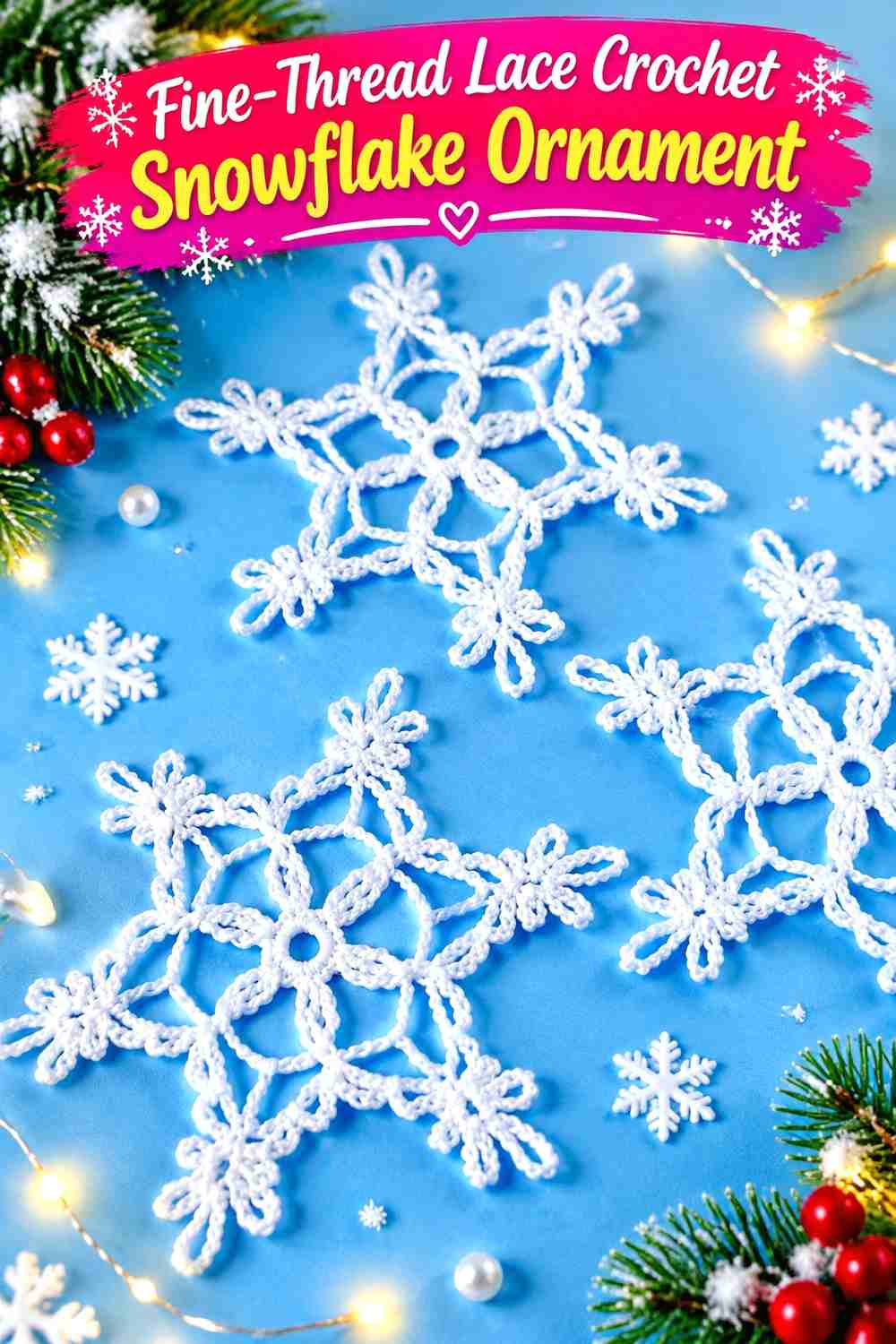
GoldenLucyCrafts offers a traditional lacy snowflake worked in four rounds with size 10 cotton thread. The designer also notes that finer thread can create an even more delicate result. This is the kind of ornament to consider when you want pronounced negative space and a classic thread-crochet appearance rather than visible yarn thickness.
Because the motif is relatively open, tree lights and dark greenery can show through the stitches and make the lace easier to read. That contrast is one of the strengths of fine crochet snowflakes. It also means finishing deserves attention: uneven points that seem minor on a tabletop can become obvious when the ornament is silhouetted against lights or a window.
Let Background Contrast Do Some of the Work
Fine white crochet is easiest to appreciate when it is not visually lost against pale ribbon, flocking, or dense white decorations. Try these flakes against green foliage, darker branches, or a window where light can pass through the openings. If your tree is heavily snow-flocked, a slightly contrasting thread color can preserve the lace effect without changing the construction.
Finer Thread Requires a Different Kind of Patience
Reducing thread size can increase delicacy, but it also makes each irregularity more visible at close range and may make the work harder to handle. Before changing to a finer thread than the tutorial uses, consider whether the smaller stitches suit your comfort level. A well-shaped size-10 ornament will usually look more intentional than a finer version whose points cannot be controlled consistently.
Creator Credit: GoldenLucyCrafts
4. Tiny Six-Branch Crochet Snowflake Ornament
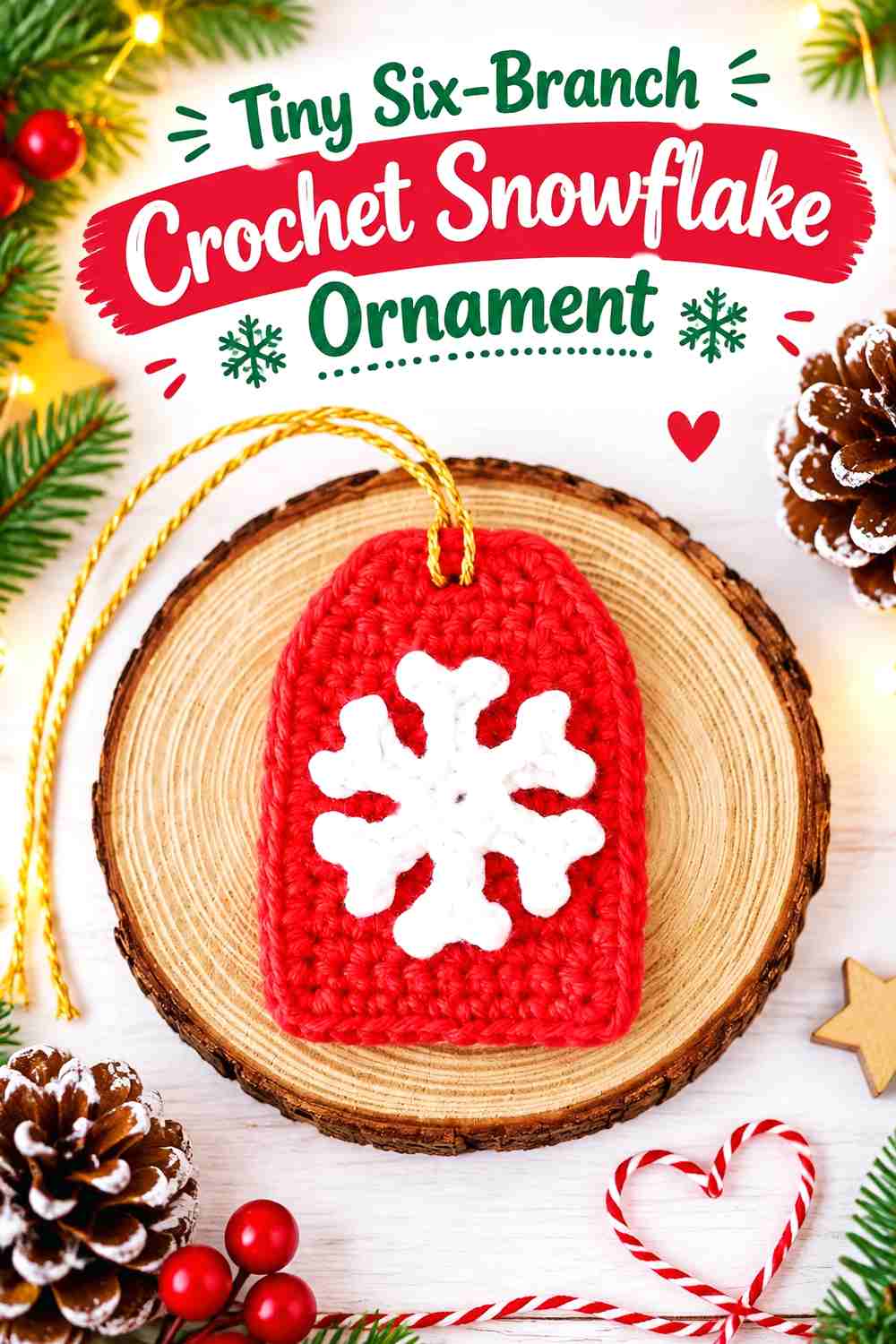
Stitch by Fay’s snowflake begins as a small applique with six branches worked from the center. The source presents it for small-scale embellishment and notes that it can also be used for ornaments, garlands, cards, and gift toppers. At the designer’s stated materials, the motif is much smaller than most full-size tree snowflakes, which gives it a different role in a decorating scheme.
Rather than expecting one tiny flake to command attention, use this style where repetition is the point. Several can fill narrow branch gaps that larger ornaments cannot, or they can be added to miniature trees. If you enlarge the pattern with thicker yarn, remember that the compact branch construction may become much bolder and less delicate.
Small Scale Makes Placement More Important
A tiny ornament can disappear if it is pushed deep into the tree. Place small flakes closer to branch tips, in front of dark foliage, or near a light where their outline is visible. They can also act as secondary ornaments around one larger focal snowflake, helping the tree feel coordinated without repeating exactly the same size everywhere.
Keep the Hanging Method Visually Light
A thick hanging cord can overwhelm a motif this small. Consider the scale of the hanger as part of the finished design, and use the tutorial’s construction as your starting point when deciding where to attach it. Whatever material you choose should be secure without pulling one branch noticeably out of alignment.
Creator Credit: Stitch by Fay
5. Advent-Tree Lace Crochet Snowflake Ornament
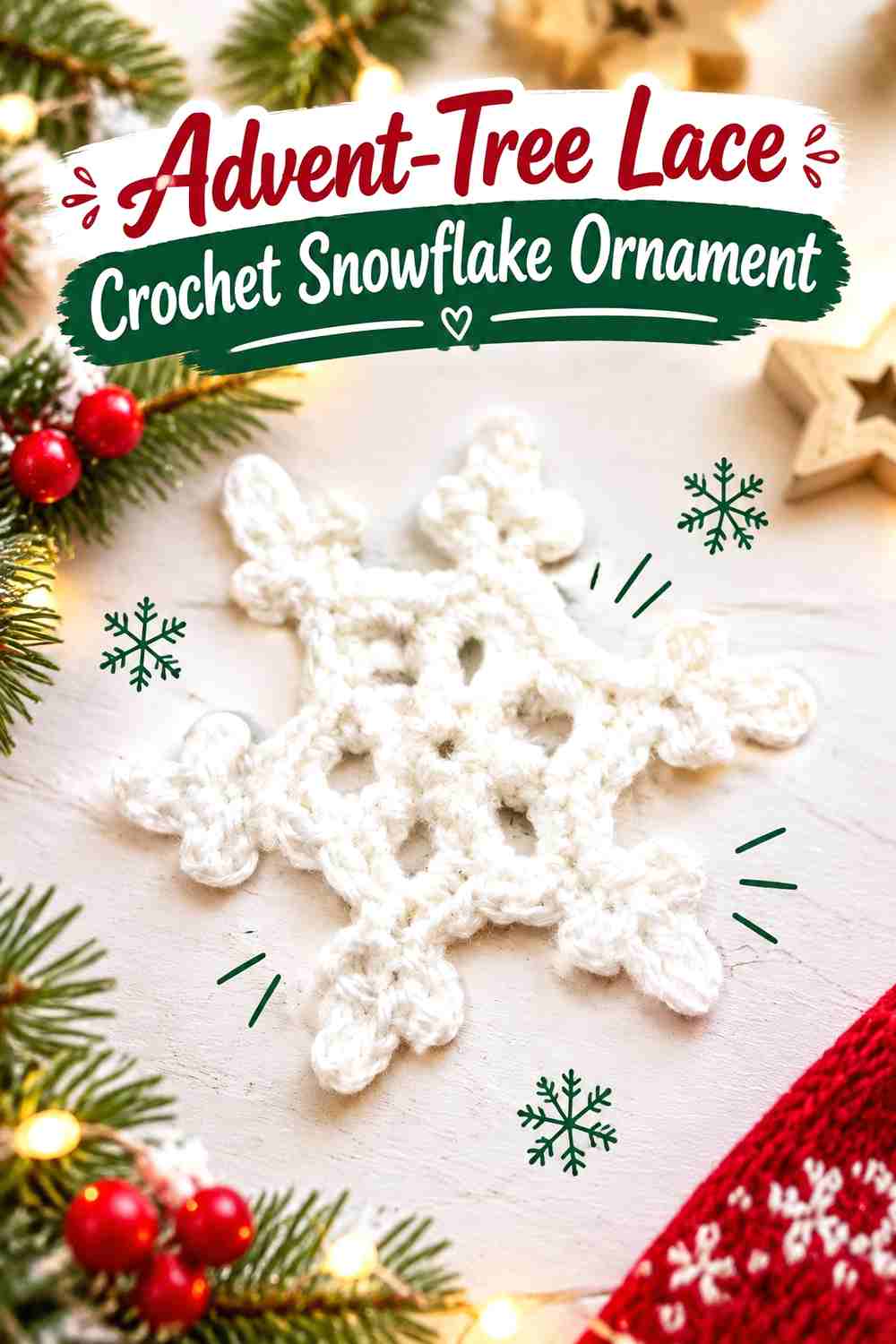
Jess Crafting created this snowflake as part of a Christmas tree advent-calendar project, using lace-weight yarn and a compact three-round construction with six outer sections. The source recommends blocking or optional stiffening so the motif holds its intended shape. Although conceived for an advent display, the finished flake translates naturally into a lightweight tree ornament.
Its value in this list is the combination of small scale and visibly branched lace. It has more snowflake-like articulation than a simple applique while remaining restrained enough for miniature displays, tags, or narrow branches. If you use it independently from the advent project, decide whether you want a subtle thread hanger or a more visible ornament loop.
Blocking Controls the Branch Separation
The narrow arms need enough space between them to read as individual branches. If the motif dries with those sections folding inward, the snowflake can look denser than intended. Pin the branches at consistent angles and compare opposite points before letting the piece dry. This is especially useful when producing several for the same tree.
Think Twice Before Scaling It Up Dramatically
A design developed in lace-weight yarn may behave differently when enlarged with thick yarn. Longer chain sections can become more flexible, and the overall proportion between the center and branches may change visually. If you want a much larger ornament, compare the result after one test piece rather than assuming a direct yarn substitution will preserve the same delicate appearance.
Creator Credit: Jess Crafting
6. Alternating-Point Crochet Snowflake Ornament
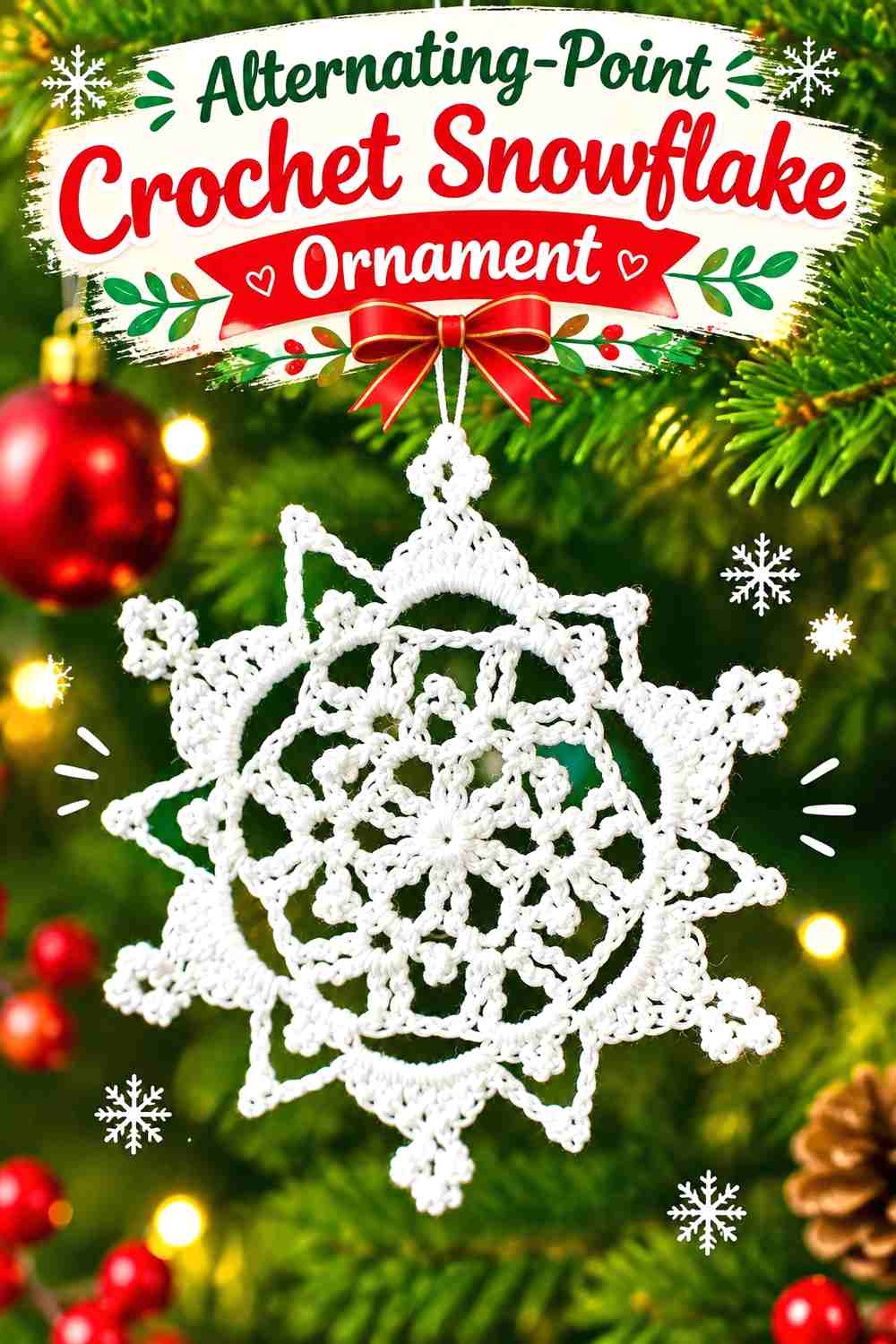
Petals to Picots uses size 10 thread and five joined rounds for a lace snowflake with alternating triangular and picot-style points. The tutorial specifies both standard and triple-picot details and includes blocking and stiffening guidance for the finished ornament. That alternating perimeter is the defining reason to choose this design over a snowflake whose six arms are identical from center to tip.
The varied outer edge creates more visual rhythm, especially when the ornament is seen against a dark tree. It suits a traditional lace-focused decorating scheme but has enough perimeter detail to stand alone rather than needing several motifs grouped together. The trade-off is that precise finishing becomes more important because the alternating points should look intentional and balanced.
Pin Different Point Types Separately
Do not treat every projection around the edge as if it needs the same blocking distance. The design’s character comes from the contrast between its different point forms. Start by centering the snowflake, then establish the major points before adjusting the smaller picot details. This makes it easier to preserve the intended rhythm rather than stretching everything into one uniform circle.
Fine Picots Can Catch on Rough Decorations
Thread ornaments with many small projections may snag more easily on coarse burlap ribbon, natural twigs, or rough artificial branches. Give the snowflake a little clearance when hanging it and remove it carefully at the end of the season. Storage between flat layers of tissue or another smooth material can also help prevent the detailed edge from tangling with neighboring ornaments.
Decide Whether Lace Detail or Durability Matters More
The finer the ornament, the more prominent its delicate edge becomes—but that delicacy can make repeated handling less forgiving. If your decorations are handled frequently, consider whether this should be one of the special ornaments placed higher on the tree rather than part of a child-accessible lower section.
Creator Credit: Petals to Picots
7. Frost-Lace Six-Point Crochet Snowflake Ornament
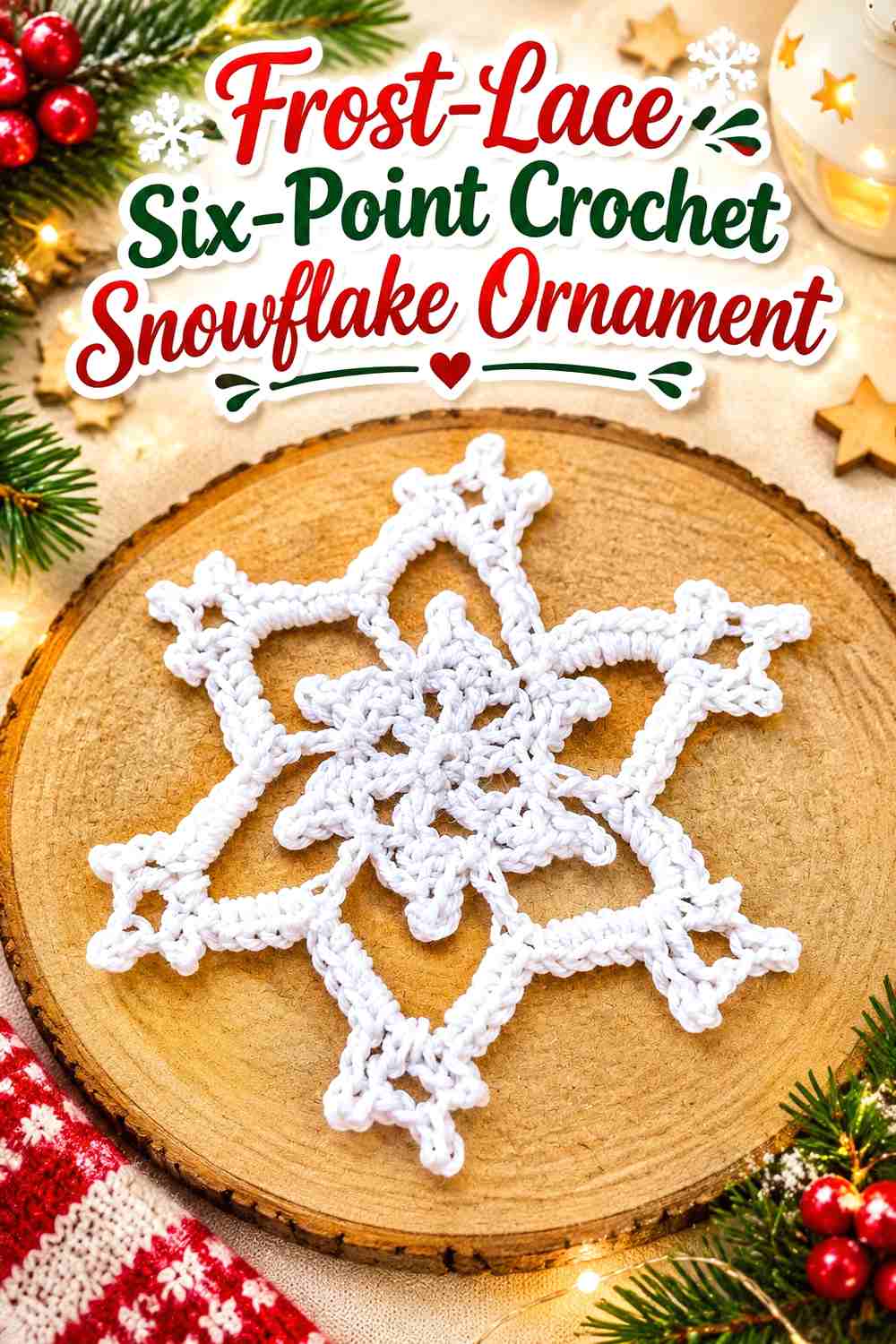
Itchin’ for some Stitchin’ teaches a six-point snowflake built around pronounced openwork and lace-like shaping. The source includes both written instructions and video support, with the motif forming part of a larger snowflake crochet-along. Its generous chain spaces and branching details make the finished design feel closer to frost patterns than to a solid crochet star.
Choose this approach when negative space is an important part of your tree decor. A dark green branch or warm light behind the ornament becomes part of the presentation because the background shows through the motif. The same openness means blocking should be treated as an essential finishing stage rather than an afterthought if you want the six sectors to remain visually balanced.
Open Chains Magnify Uneven Tension
In a dense motif, a slightly different chain length may be absorbed by surrounding stitches. In open lace, it can noticeably change the spacing between points. Pay attention to chain tension throughout the project, and avoid deliberately tightening only the outer rounds to make them feel firmer. Consistency usually matters more than extreme tightness.
Use Light Placement to Show the Lace
This ornament benefits from a clear background. Position it near—but not directly on top of—tree lights so illumination can pass through the openings without hiding the stitches in glare. If your tree is heavily decorated, reserve a few quieter areas for lace snowflakes rather than layering them behind ribbon and multiple baubles.
Preserve the Geometry During Storage
A heavily blocked lace flake can lose visual sharpness if it spends the year folded or compressed. Store finished ornaments flat when practical, especially if the points are long. If a snowflake comes out of storage slightly distorted, reshape it using a finishing method compatible with the original yarn and the creator’s guidance rather than pulling individual points by hand.
Creator Credit: Itchin’ for some Stitchin’
8. Mix-and-Match Size Crochet Snowflake Ornament
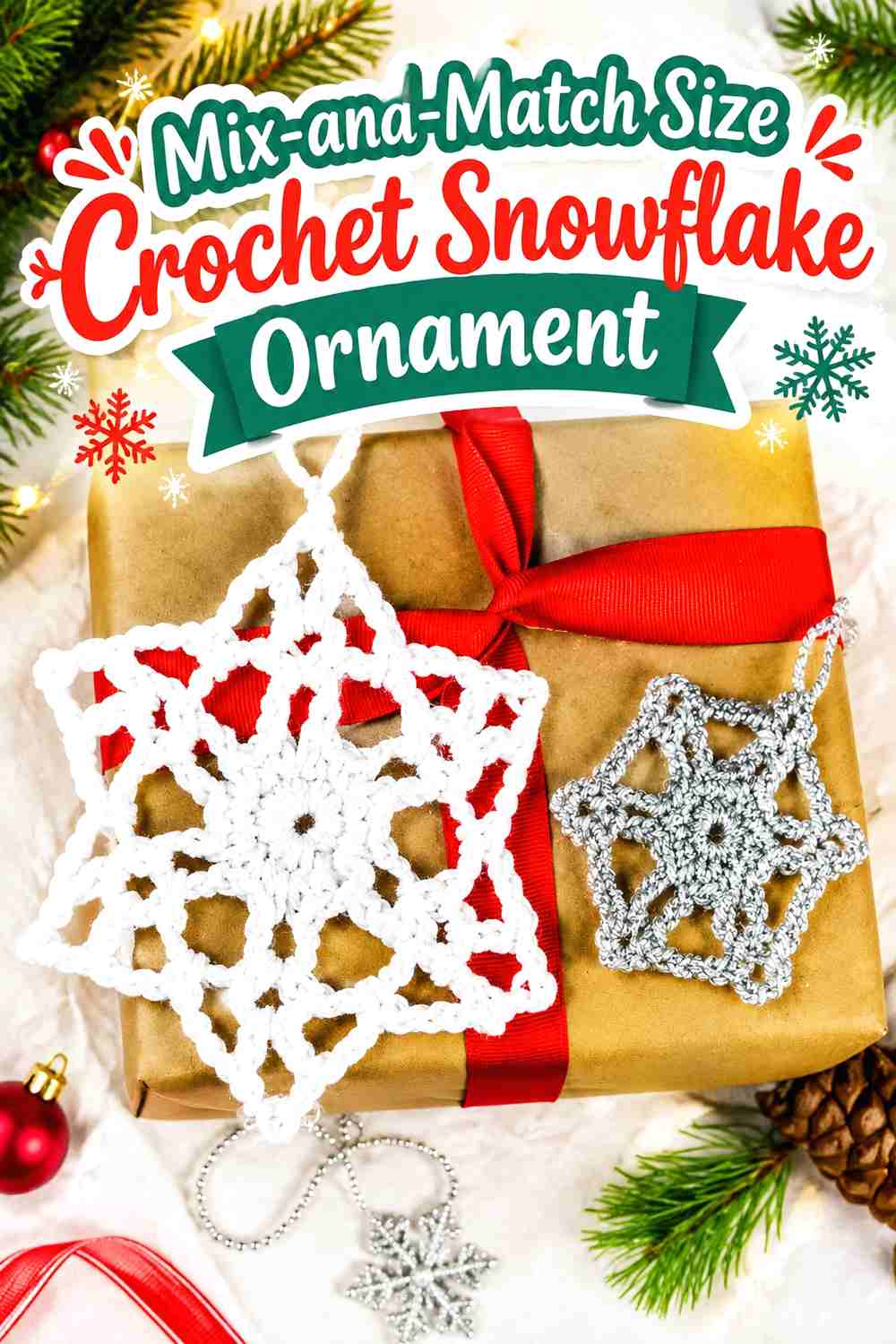
Desert Blossom Crafts builds one lacy snowflake concept into three finished sizes. The source uses different yarn weights and stops the smallest version earlier, producing approximately 2.5-, 3.75-, and 4.75-inch examples with the designer’s stated materials. This makes the tutorial particularly useful if you want coordinated ornaments without making every flake identical in scale.
A multi-size set can solve a practical tree-decorating problem: large flakes fill open areas, while small ones fit near the top and between closely spaced branches. Because the versions are visually related, the tree remains cohesive. If you substitute yarn, remember that both yarn weight and the number of completed rounds contribute to the finished scale.
Build a Size Rhythm Across the Tree
Instead of placing all large flakes on the bottom and all small ones on top, distribute sizes in a loose rhythm so the eye travels around the tree. Reserve the very largest for branches with enough strength and open space. Smaller motifs can repeat the same design language without competing with focal ornaments.
Test One Material Combination First
The source demonstrates how yarn choice affects scale, but a replacement yarn can also alter stiffness and openwork. Make one version in your chosen fiber and block it before deciding which hook-and-yarn combination to use for the rest. This avoids producing a whole set that turns out heavier or denser than expected.
Creator Credit: Desert Blossom Crafts
9. Bean-Stitch Crochet Snowflake Ornament
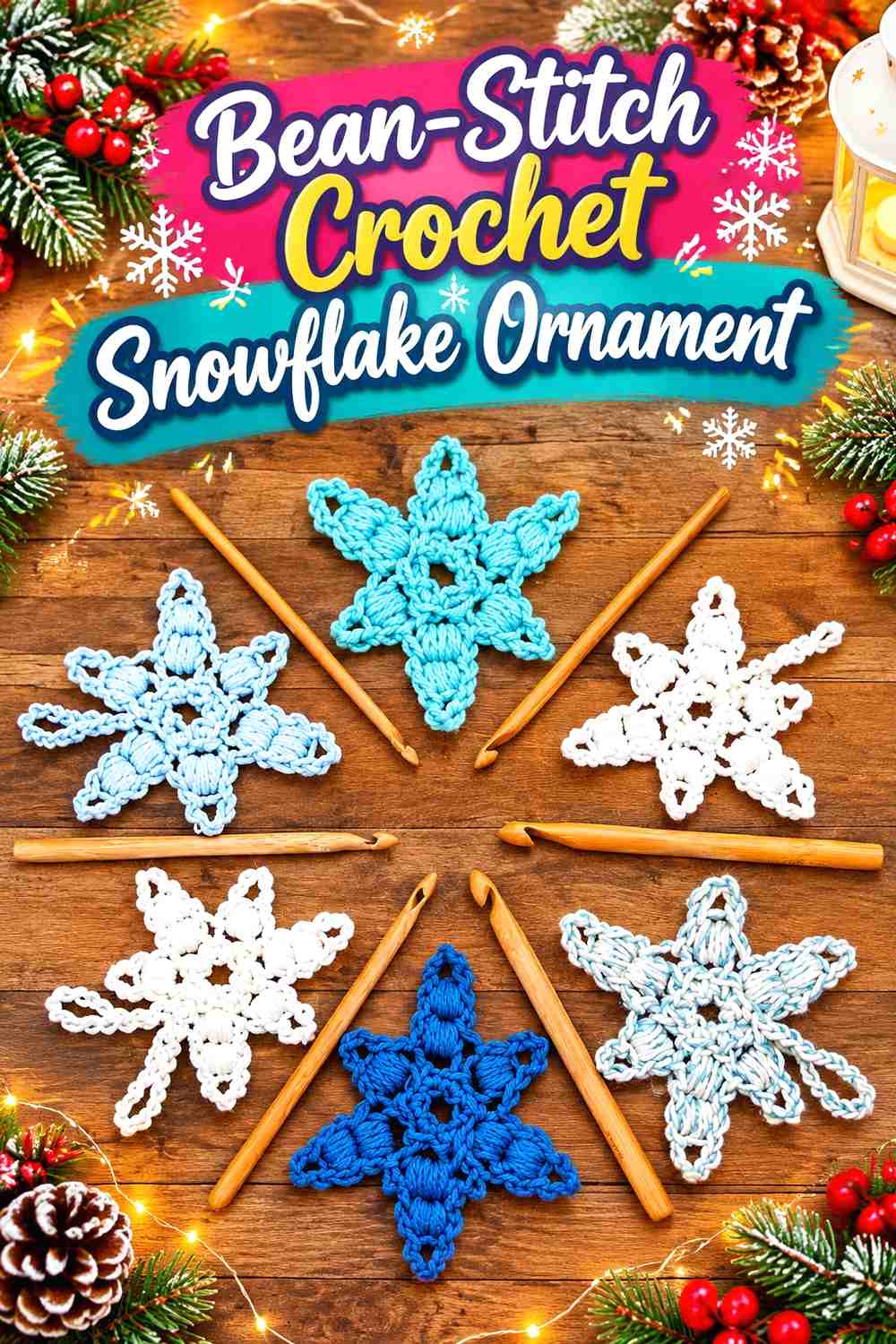
Crochet Life’s snowflake uses an altered bean or puff-style stitch to build textured arms, making it noticeably more dimensional than thread-based lace designs. The pattern is written for multiple yarn weights with corresponding size changes, and it incorporates a hanging loop into the project.
The raised stitches give the arms a rope-like presence that reads well against evergreen needles. Consider this ornament when you prefer texture that can be seen from several feet away rather than tiny decorative picots. Because puffed stitches contain more yarn, the finished motif may feel heavier than an equally wide lace flake, so branch strength and hanging placement deserve more attention.
Texture Can Replace Extra Embellishment
The bean stitches already create depth, so beads, metallic edging, or additional decorations may not be necessary. Leaving the texture unobstructed can make the construction itself the visual feature. If you use a heathered or gently variegated yarn, check that the color changes do not disguise the individual arms.
Watch for Weight at the Outer Arms
Thicker stitches place more fiber farther from the center, which can make a soft ornament sag differently from fine lace. Block the piece fully and test it vertically. If one arm consistently pulls downward, review your tension and the source’s finishing guidance before trying to correct the shape by adding an overly tight hanging loop.
Creator Credit: Crochet Life
10. Five-Point Treble Crochet Snowflake Ornament
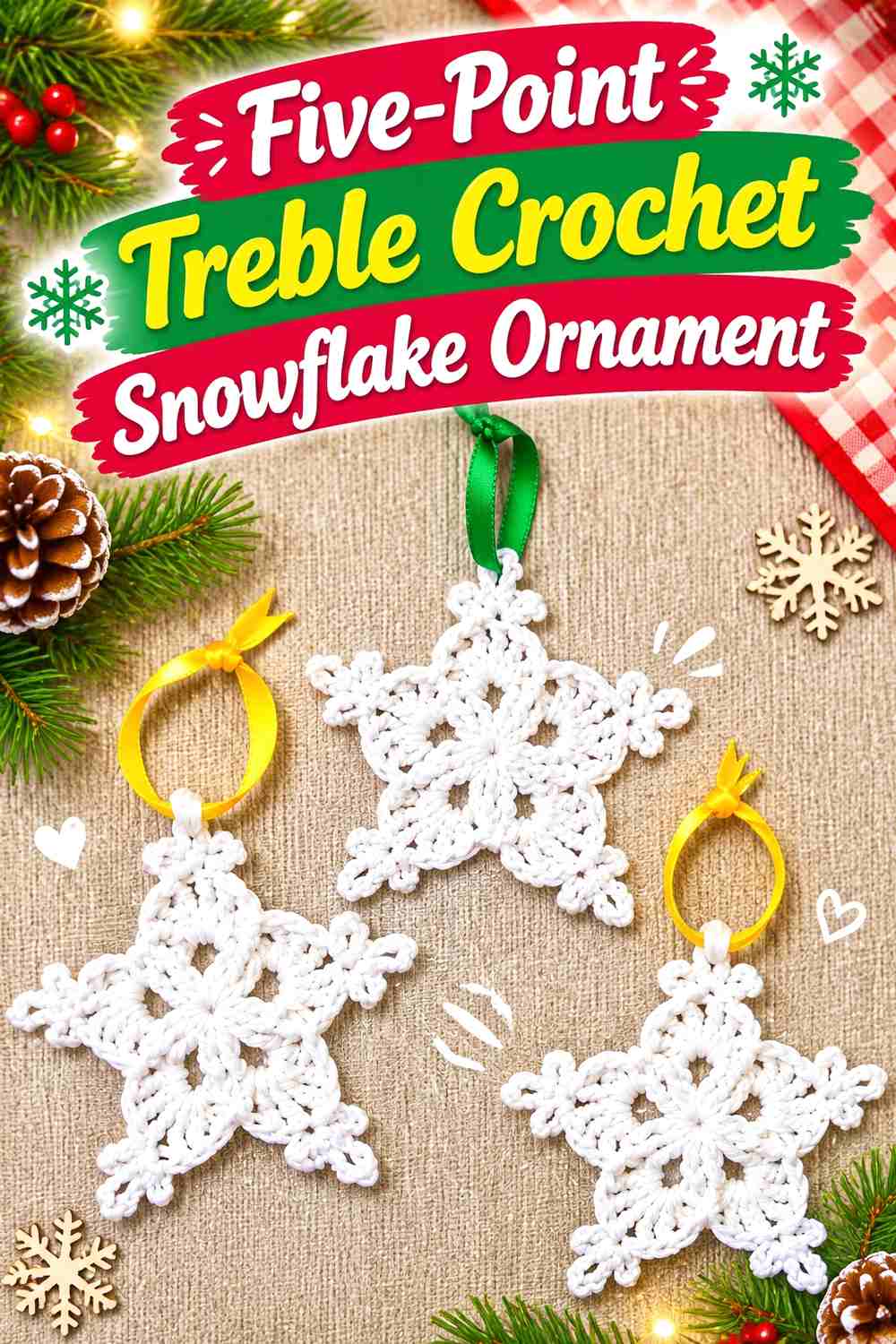
Raji’s Craft Hobby uses a compact two-round construction with five main sections, tall crochet stitches, picot details, and front-post work. The source uses 4-ply cotton with a 4 mm hook and finishes the ornament with ribbon or decorative string. The five-point structure immediately separates it from the six-point flakes that dominate traditional snowflake collections.
This is a useful option when you want the winter feel of a snowflake but also like the visual simplicity of a star. Its tall stitches and prominent outer picots create an open center-to-edge transition without requiring many rounds. Before choosing it, decide whether a five-point silhouette fits the look you want; on a mixed tree it can add variety, while a strictly naturalistic snowflake theme may favor six-point designs.
Tall Stitches Benefit From Consistent Height
Treble-style stitches can expose tension differences more visibly than compact single crochet. Keep your working loops controlled and avoid pulling one group tighter because it sits near the joining point. When the five sections are consistent, blocking becomes a refinement rather than an attempt to correct noticeably different arm lengths.
Ribbon Changes the Ornament’s Personality
A satin or decorative ribbon hanger can become part of the design rather than disappearing into the background. Match its width to the scale of the snowflake. A very broad ribbon can visually overpower the crochet, while a narrow ribbon lets the five-point silhouette remain dominant.
Creator Credit: Raji’s Craft Hobby
11. Tassel-Trim Scandi Crochet Snowflake Ornament
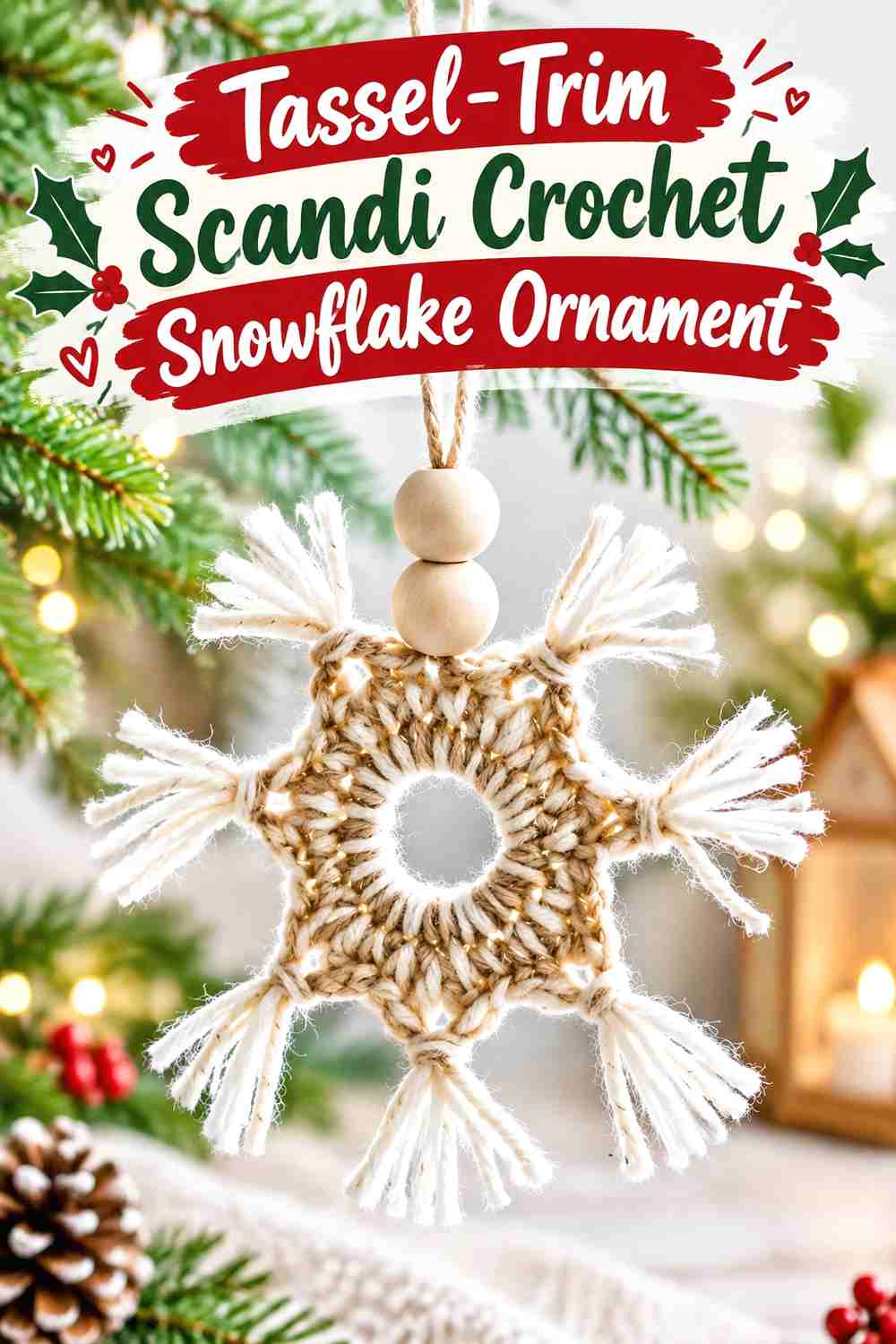
Bella Coco Crochet’s Scandi-inspired snowflake takes a very different route from delicate thread lace. The tutorial uses two yarns held together, forms a seven-section base, and adds brushed tassels plus wooden beads to the hanger. The published finished diameter is about 5.5 inches excluding the hanger, so this is a more substantial decorative piece.
Choose it when you want the snowflake to function as a textile ornament rather than an imitation of fine frozen crystals. The fringe creates movement and softness, while the beads give the hanger its own visual presence. It works especially well on neutral, Scandinavian, rustic, or fiber-heavy trees. Because it includes additional components, care and storage require more thought than for a single-piece flake.
Tassels Need Breathing Room
Fringe can disappear into dense greenery if the ornament is pushed too far back. Give this snowflake a front-facing branch position where the tassels can hang freely. Avoid placing it directly beneath another ornament that will press the fibers flat. Brushing or gently arranging the tassels after seasonal storage can help restore their shape.
Treat the Beaded Hanger as a Separate Component
Wooden beads add structure and visual height, but they also add weight above the crochet. Check that the hanger is securely assembled before placing the ornament on the tree. If your household includes small children or pets, detachable beads are an additional reason to position this style out of reach.
Two-Strand Yarn Changes More Than Thickness
Holding two strands together affects color blending, bulk, and the firmness of the finished fabric. Replacing that combination with a single yarn of approximately similar thickness may not reproduce the same surface effect. If the two-tone look is part of what attracts you to this ornament, preserve that relationship rather than choosing a substitute solely by yarn weight.
Creator Credit: Bella Coco Crochet
12. Five-Point Picot Crochet Snowflake Ornament
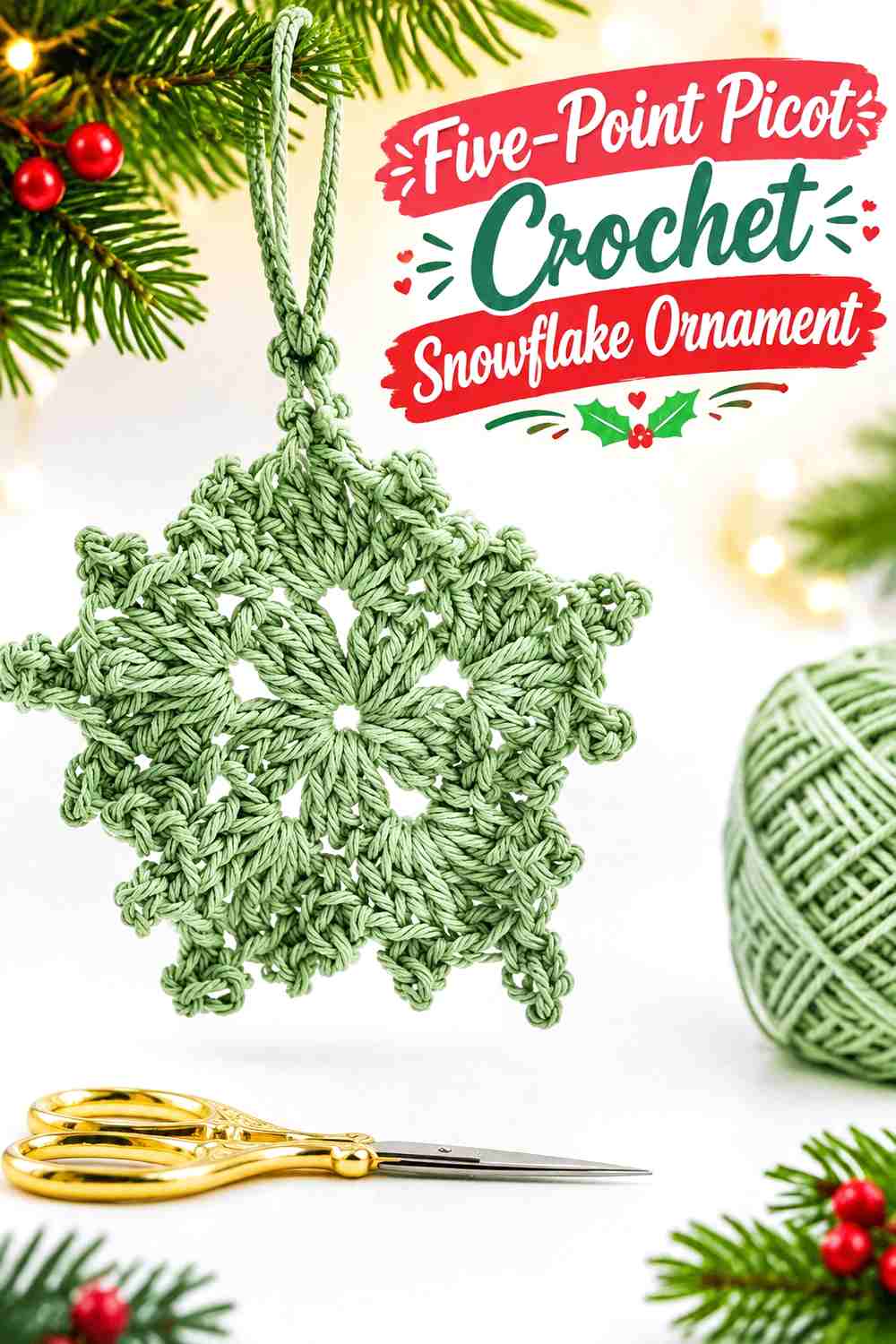
Crochet with Yarnhild’s lightweight snowflake uses a five-point construction with picot details and is designed for light yarn with a relatively small hook. The source presents it as a tree ornament, gift tag, or garland component and recommends optional starch or fabric stiffener when additional structure is wanted.
Compared with the taller treble-based five-point option earlier in this list, this version emphasizes compact picot detailing and lighter materials. It suits trees where you want small handmade accents that do not dominate larger baubles. The five-point outline also makes it an easy bridge between snowflake ornaments and star decorations if both appear in your holiday scheme.
Keep Picots Distinct During Finishing
Tiny decorative points can merge visually if they curl toward neighboring stitches. After crocheting, spread the outer details gently before deciding whether stiffening is necessary. If you do stiffen the piece, concentrate on preserving separation rather than simply making the entire ornament rigid.
Use Repetition for Garland-Like Impact
A lightweight motif becomes more noticeable when several versions are distributed across the tree at similar heights or repeated along a garland. If you make multiples, keep the same yarn and hook for a consistent set unless deliberate scale variation is part of your plan.
Creator Credit: Crochet with Yarnhild
13. Granny-Inspired Crochet Snowflake Ornament
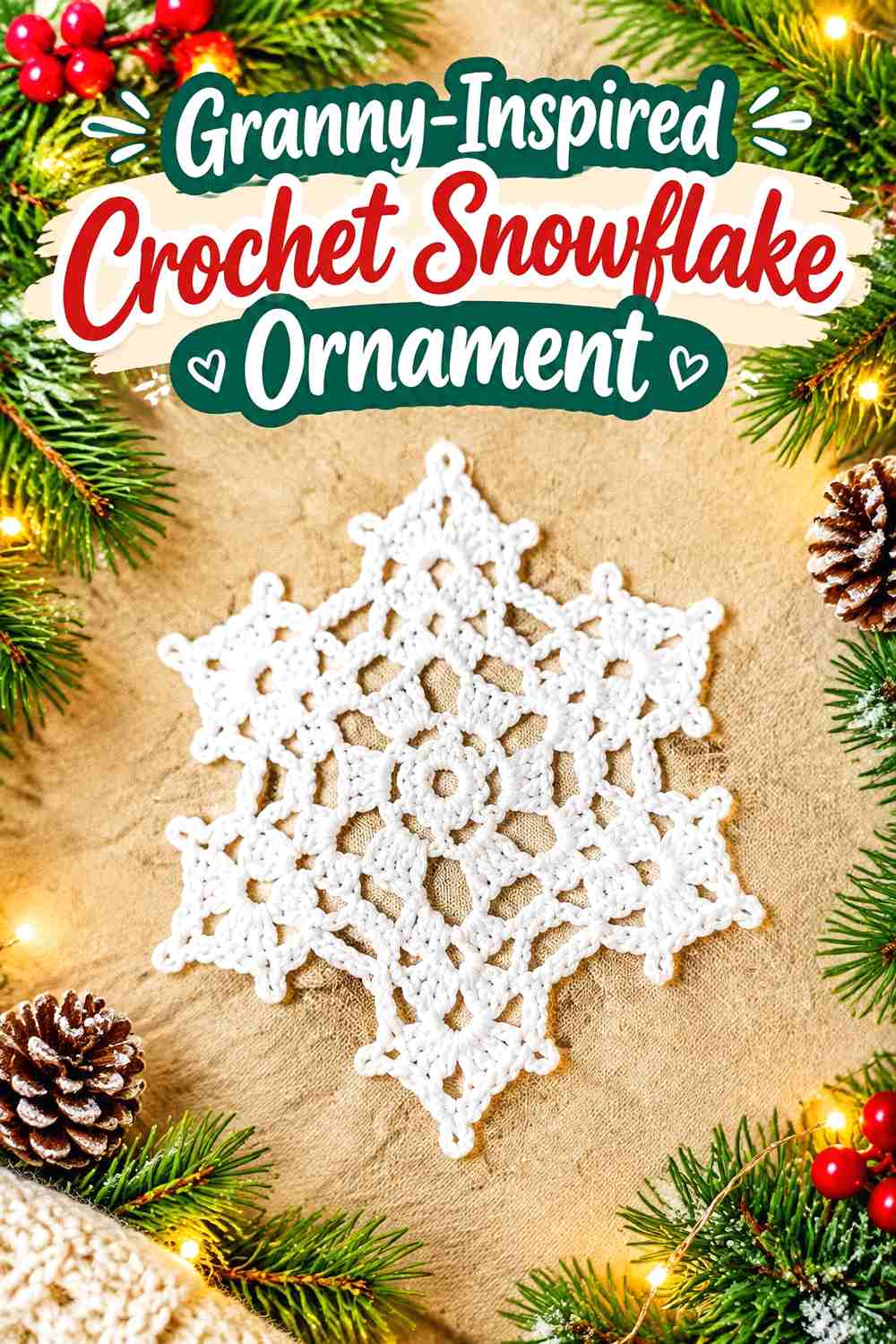
Crochetpedia’s Blanche snowflake draws inspiration from classic granny-stitch construction, giving the motif a boxier quality than most fine, needle-like snowflakes. The tutorial is part of a larger snowflake collection and includes both written instructions and video guidance, plus finishing information about blocking crochet ornaments.
This is a strong choice when your tree already features granny squares, granny stars, or other traditional crochet textures. The familiar grouped-stitch character can tie those pieces together without abandoning the snowflake theme. Its more geometric structure also provides contrast beside very airy lace designs. Before choosing yarn, consider whether you want the granny influence clearly visible or softened into finer lace.
Let the Blockier Geometry Stay Intentional
Trying to stretch every corner into a needle-sharp point can work against the character of the design. When blocking, use the source’s finished appearance as the reference rather than forcing it to resemble a different snowflake style. The slightly boxier profile is what makes this ornament useful in a varied collection.
Coordinate It With Other Granny Crochet
If your holiday decor includes granny-square stockings, blankets, or garlands, repeat one or two of those colors in this snowflake. The shared stitch language can make different handmade items feel related even when the shapes and scales vary. Keep color changes simple enough that the snowflake outline remains readable.
Creator Credit: Crochetpedia
14. Layered Eight-Round Crochet Snowflake Ornament
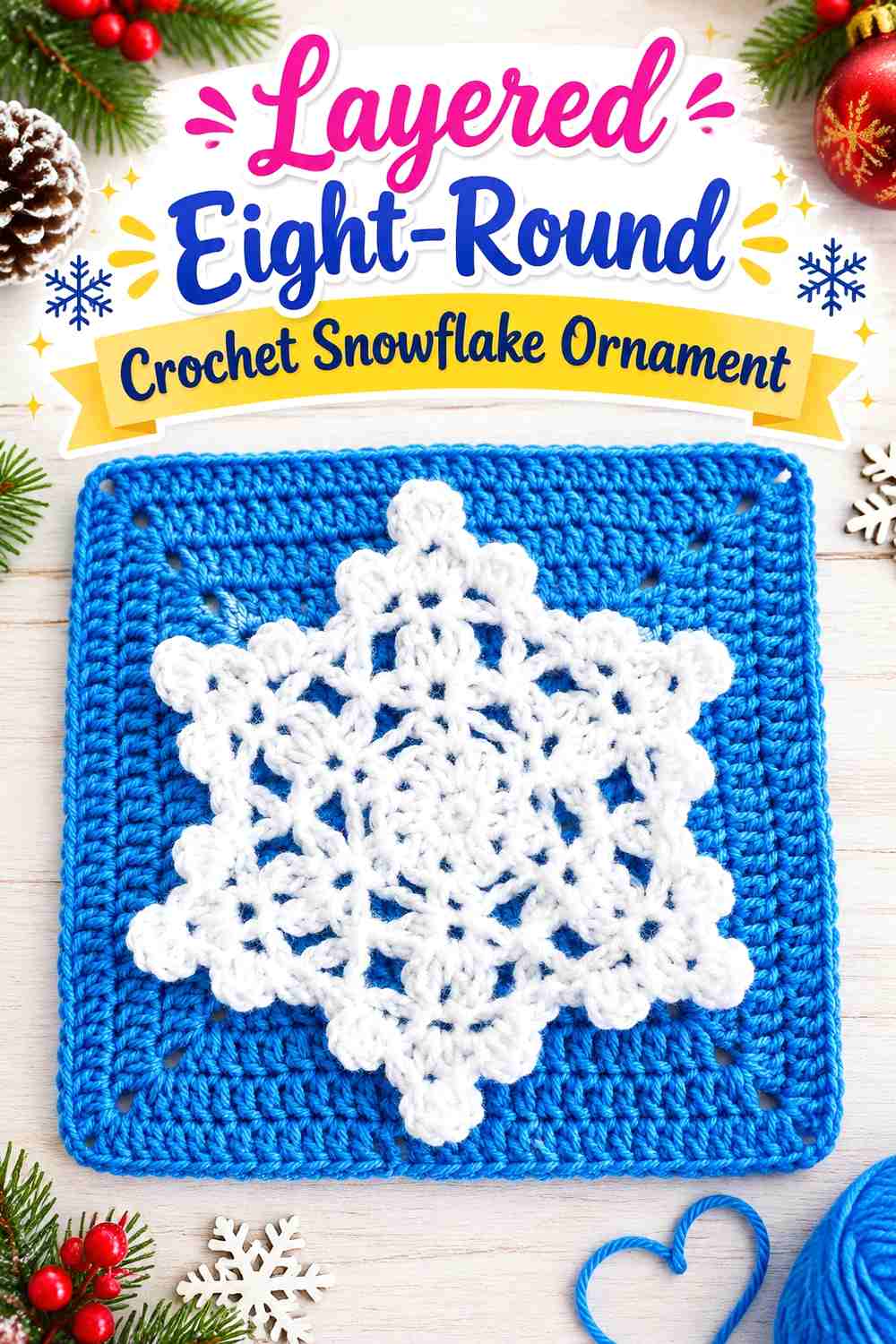
Repeat Crafter Me’s eight-round snowflake was designed as a detailed winter applique for a crochet-along square, but the creator also identifies ornaments and gift toppers as possible uses. The motif builds several successive layers of chain spaces and stitch groups, creating substantially more internal detail than a two- or three-round flake.
Choose this one when the center of the snowflake matters as much as its outer edge. Instead of a quick ring with decorative arms, the entire interior becomes part of the lace pattern. Because the original version uses worsted yarn, the result can have strong visual presence. If converting it specifically to a hanging ornament, consider both the final scale and how much support the branch will need.
Internal Detail Needs a Clear Background
A heavily layered snowflake can lose its visual depth when placed over patterned ribbon or another ornament. Give it relatively plain greenery behind the center so the successive rounds remain visible. Strong contrast between yarn and background is often more useful here than adding extra embellishment.
More Rounds Mean More Opportunities for Distortion
As a motif expands, small tension differences can accumulate. Lay the snowflake flat periodically and check whether opposite sections remain comparable. Correcting a tension issue early is easier than trying to block a noticeably uneven eight-round piece into symmetry after completion.
Decide Whether Ornament Scale Still Works
The source also uses this motif as an applique on a larger crochet square, so it is naturally more substantial than many tiny tree flakes. Before making several, finish one and hold it against your actual tree. A design that looks balanced on a tabletop may feel oversized on a narrow tree or exactly right on a large one.
Creator Credit: Repeat Crafter Me
15. Ten-Point Crochet Snowflake Ornament
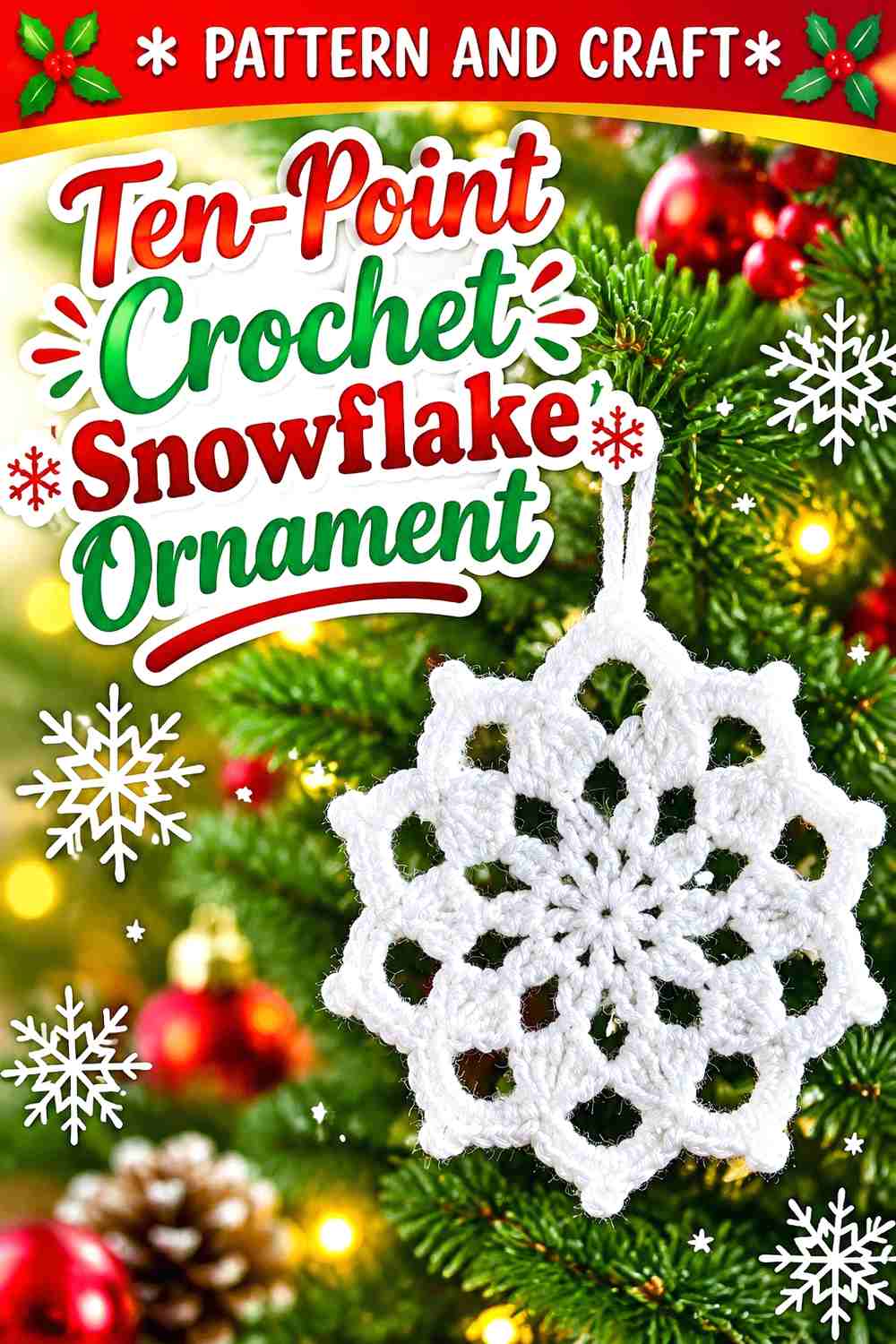
Pattern and Craft’s video tutorial creates a ten-point snowflake ornament and also walks viewers through the accompanying crochet chart. The demonstrated project uses a fine cotton-blend yarn and includes finishing and blocking coverage. Ten points create a noticeably denser perimeter than the classic six-point form, so the finished motif reads almost like a crystalline medallion.
This is an appealing choice when you want one snowflake to carry more visual detail without adding beads or fringe. The extra points fill more of the circular perimeter, which can look striking against dark branches. It also means spacing matters: if those points are not separated consistently, the design can appear crowded rather than intentionally intricate.
Use the Chart to Check Symmetry
Even if you normally prefer written instructions, a chart can be useful as a visual map for a radial ornament. Compare the repeating sectors as you work so you can catch a missing or misplaced section before the final round. That visual checking is especially valuable when a motif has ten repeated points rather than the more familiar six.
Give Ten Points Enough Blocking Space
More outer points mean more pins and more opportunities for neighboring sections to overlap. Establish a centered circle first, then space the major points evenly around it. Avoid stretching only the longest-looking sections; the goal is consistent radial balance, not simply maximum diameter.
Keep the Tree Around It Relatively Quiet
A ten-point snowflake already has a busy edge. Pair it with simpler baubles or solid ornaments rather than placing it directly beside several other highly branched flakes. That contrast helps the unusual perimeter remain readable instead of becoming part of a mass of competing lace.
Creator Credit: Pattern and Craft
16. Sparkle-Edge Crochet Snowflake Ornament
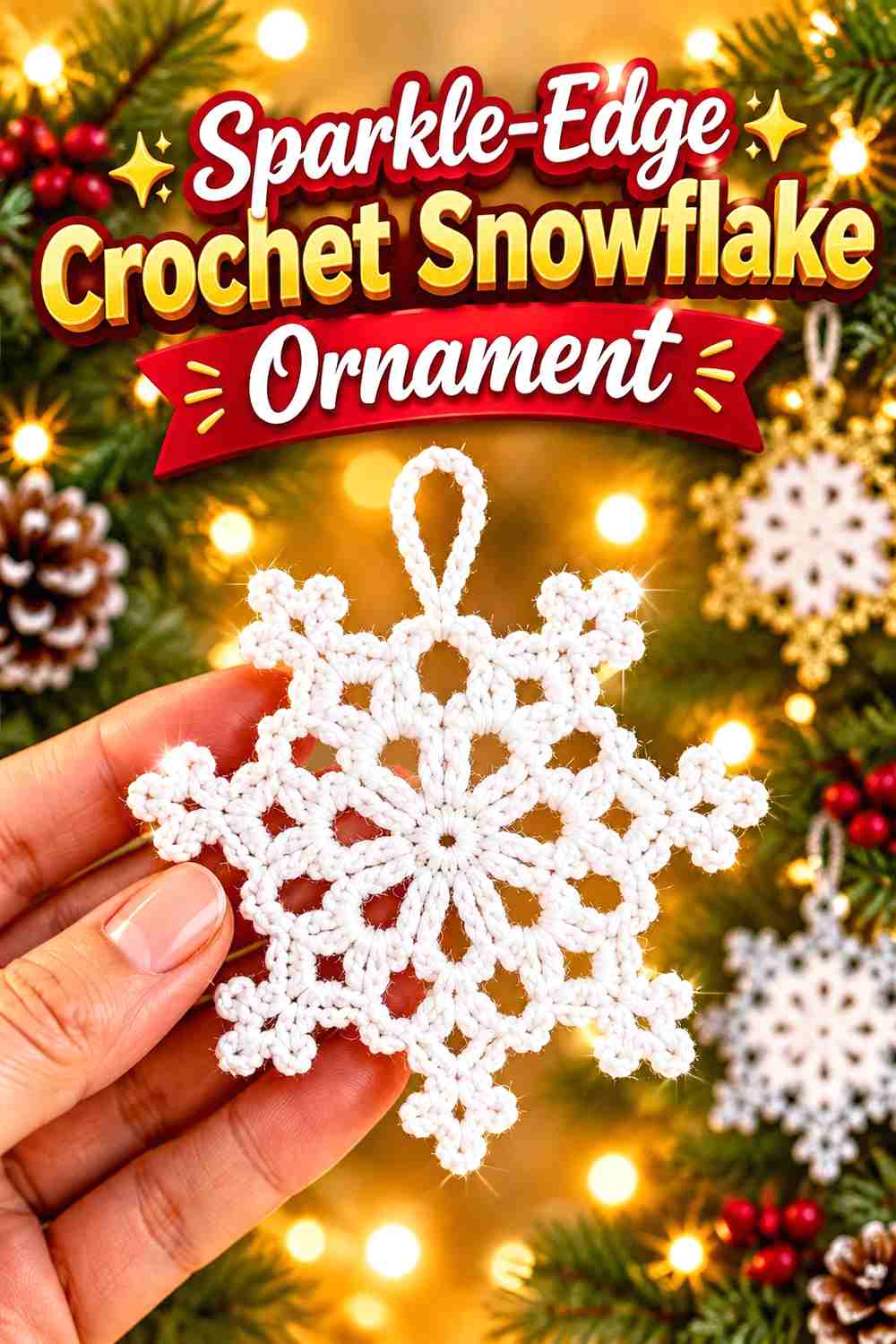
Crochet Craftsman’s video demonstrates a snowflake made with a cotton-acrylic yarn and adds an optional sparkly yarn in the final round. The tutorial also uses loop placement to create surface detail and shows steam blocking for the finished ornament. This approach makes the contrast edging part of the structure rather than relying on loose glitter after the crochet is complete.
Choose this design when you want shimmer but prefer it contained in the yarn itself. A metallic or glitter strand around the edge can catch tree lights while preserving a softer center. The important decision is contrast: a very bold edging color will emphasize the outer shape, whereas a close tonal sparkle will create a subtler icy effect.
Keep the Sparkle Yarn Compatible
Decorative yarns can differ greatly in thickness, stiffness, and stretch. If the edging yarn behaves very differently from the main yarn, it may pull the perimeter tighter or make it flare. Compare the yarns before beginning the final section and follow the tutorial’s relationship between the two rather than choosing sparkle purely by color.
Steam With Fiber Content in Mind
The source demonstrates steam blocking, but heat tolerance depends on the yarn you actually use. If you substitute fibers, check the yarn label and appropriate care guidance before applying heat. Blocking should shape the ornament, not flatten textured stitches or damage synthetic fibers.
Let the Edge Catch Light Without Overdecorating
Because the border already provides shine, additional sequins or beads may compete with the crochet. Try hanging the finished snowflake near warm tree lights first. Often the changing reflection from the edge is enough to give the ornament a festive finish without adding extra weight.
Creator Credit: Crochet Craftsman
17. Glitter-Finish Stash Crochet Snowflake Ornament
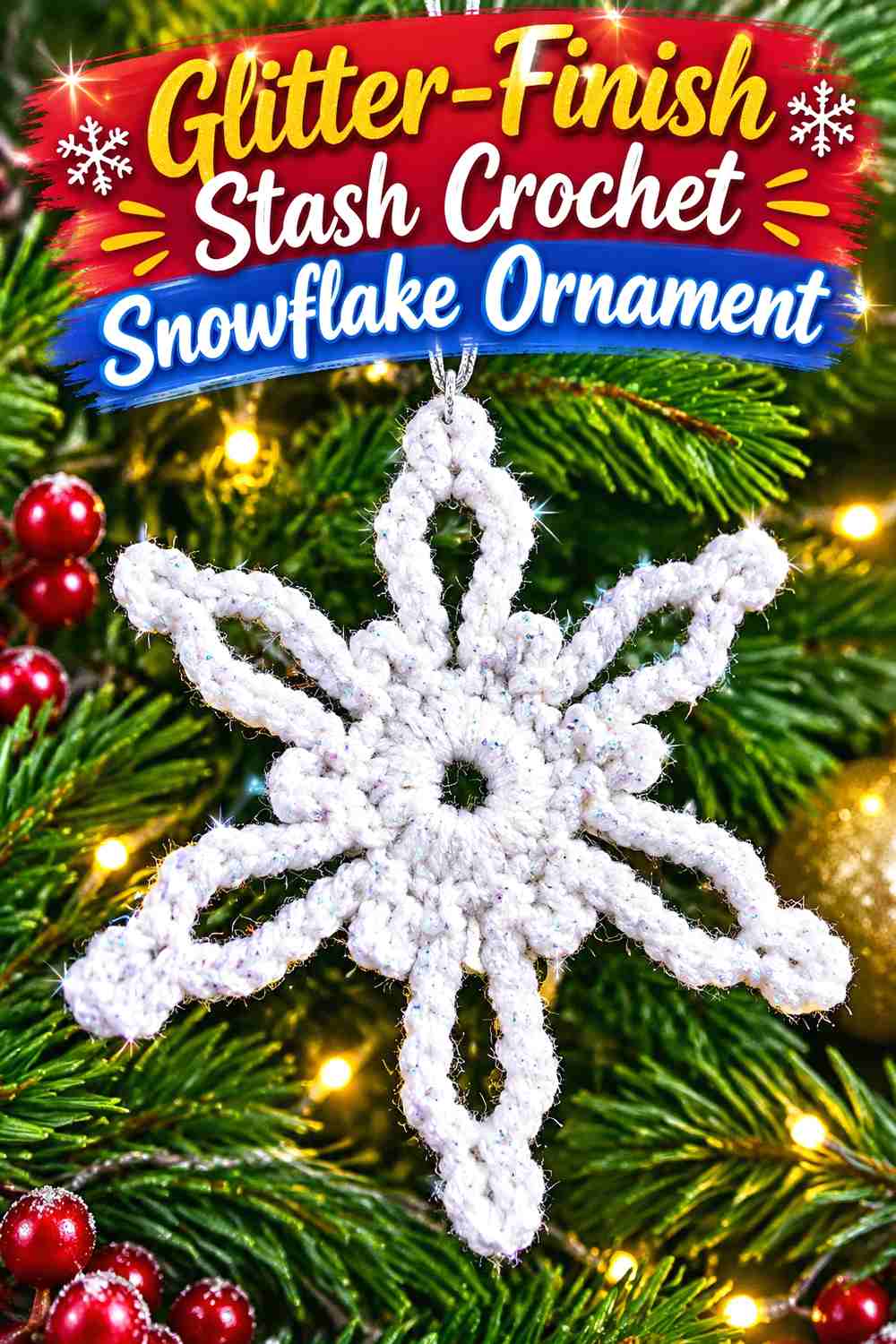
Yarnovations provides a snowflake project designed around medium worsted-weight yarn, with different finished sizes produced by changing the hook. The source also includes several stiffening options, ornament finishing guidance, and a method for adding glitter. That makes it useful for crocheters who want a straightforward yarn-based flake but still want choices in the final surface treatment.
The worsted construction gives this snowflake more body than thread lace, while the optional glitter can shift it from rustic to festive. It is a good candidate for stash yarn because the motif does not depend on a tiny thread scale. Still, make sure your chosen yarn produces an open enough shape for the arms to remain distinct.
Choose Glitter With Storage in Mind
Loose decorative finishes can shed or transfer onto neighboring ornaments during storage. If you add glitter, follow the creator’s finishing guidance and allow the ornament to dry fully before hanging or packing it. Store glittered pieces separately from delicate lace if rubbing could affect either surface.
Hook Changes Affect Both Size and Density
Using a larger hook does not merely enlarge the ornament. It can also increase openness and flexibility, while a smaller hook can create denser fabric. Make a sample if you are trying to hit a particular visual scale, especially if your yarn differs from the source material.
Stash Yarn Still Needs a Consistent Plan
A multicolor set can be charming, but using leftover yarns with very different textures may produce snowflakes that do not hang alike. Group similar fibers and weights together when you want a coordinated batch. Save intentionally different yarns for a mixed, eclectic tree where variation is part of the design.
Creator Credit: Yarnovations
18. Clustered-Petal Crochet Snowflake Ornament
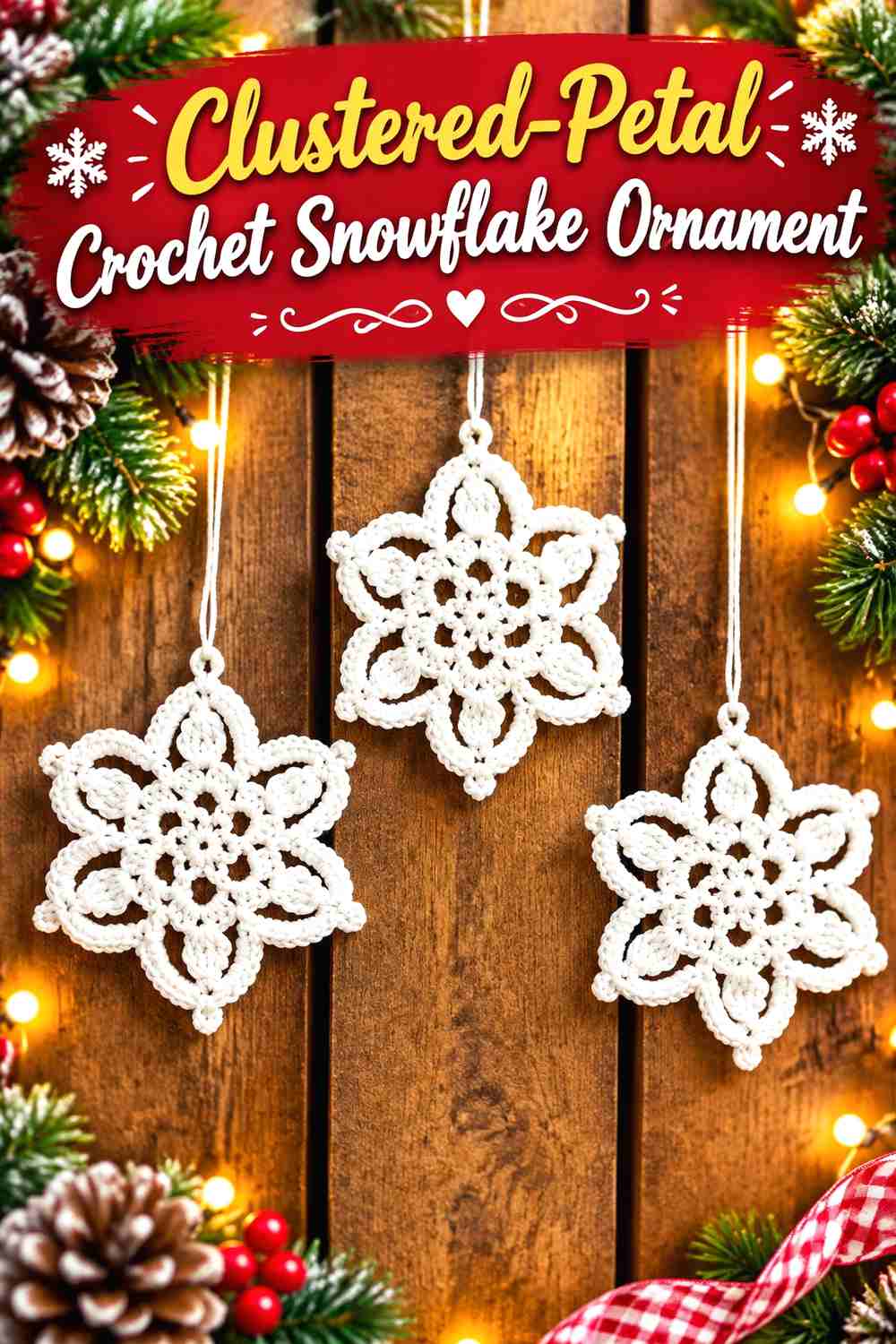
Kristines Crochets’ video tutorial creates a broad snowflake motif in sport-weight mercerized cotton and uses clustered tall stitches among its defining techniques. The published example measures about 12 cm across with the stated materials, giving it enough width to stand out as a full ornament rather than a tiny applique.
The clusters add visual weight at selected points while the open sections keep the ornament from becoming solid. This balance works well if you want a snowflake that feels delicate from a distance but still shows obvious stitch texture up close. Because the arms extend well beyond the center, give the finished piece enough branch clearance for the outer sections to remain flat.
Cluster Tension Controls the Petal Shape
Tall stitches closed together can look compact or elongated depending on how loosely the loops are drawn up. Keep your tension similar from cluster to cluster so the repeated sections remain comparable. If one arm appears much heavier than another before blocking, check the stitch work rather than assuming finishing will correct every difference.
Mercerized Cotton Gives a Distinct Surface
The source uses mercerized cotton, which contributes a smooth, defined appearance. Switching to a fuzzy yarn may soften the edges of the clusters and reduce stitch clarity. That can still produce an attractive ornament, but it will create a different effect. Decide whether visible stitch definition or a softer textile surface matters more for your tree.
Creator Credit: Kristines Crochets
Which Crochet Snowflake Ornament Style Fits Your Tree?
For a traditional tree with glass baubles and warm lights, the fine-thread and picot-heavy snowflakes provide the strongest classic lace effect. Trees built around rustic textiles, wood, or handmade decorations can carry the puff-stitch, bean-stitch, granny-inspired, and worsted-yarn versions more comfortably because their thicker fabric does not disappear among substantial ornaments.
Choose the tassel-trimmed Scandi flake when you want an ornament with movement, or the ten-point design when one detailed motif needs to act as a focal piece. Tiny appliqué-style flakes are more useful for filling gaps and miniature trees. If you want a coordinated set without visual monotony, the three-size design is particularly practical because it varies scale while keeping the underlying motif related.
Conclusion
The most useful crochet snowflake ornament collection mixes structure as thoughtfully as color. A tiny six-branch flake fills a completely different role from a large tassel-trimmed ornament, while puff stitches, granny-style groups, thread lace, picots, and clusters each interact differently with tree lights and greenery.
Choose your first project by considering the yarn you enjoy handling, the amount of blocking you are comfortable doing, and the visual space available on your tree. If you are making a full set, complete and hang one sample before committing to multiples. Yarn substitutions and finishing choices can change scale, stiffness, and drape significantly. For exact construction, materials, and finishing instructions, follow the linked original creator tutorial for each ornament.
Frequently Asked Questions
What yarn is best for crochet snowflake ornaments?
There is no single best yarn because the desired structure matters. Crochet thread creates fine, intricate lace and crisp-looking openwork, while sport or DK yarn makes individual stitches easier to see. Worsted yarn produces a fuller ornament with stronger visual presence. Before substituting yarn in a specific pattern, check the creator’s original materials because changing thickness can affect diameter, open space, weight, and whether the finished snowflake needs extra stiffening.
Do all crochet snowflake ornaments need to be stiffened?
No. Some patterns and yarn combinations hold their shape with ordinary blocking, while delicate thread designs or long open chains may benefit from additional stiffening. Follow the designer’s finishing guidance first. If you substitute yarn, evaluate the finished ornament vertically because fabric that looks flat on a blocking mat can behave differently when hanging. Any stiffening method should also be compatible with the yarn or thread you used.
Can I make a crochet snowflake larger or smaller by changing yarn?
Often, but the result is not always a simple scaled copy. Thicker yarn can enlarge the motif while also making open spaces smaller in proportion and adding weight. Finer thread can increase delicacy but may require more careful blocking. If size variation is important, a tutorial specifically designed for multiple sizes—such as the Desert Blossom Crafts option above—provides a clearer starting point than making a large untested substitution.
How should I attach a hanger without distorting the snowflake?
Use the attachment point recommended by the creator whenever one is provided. Pulling a hanger through a fragile outer picot can stretch one point upward and change the symmetry. A built-in crochet loop, sturdy chain space, ribbon attachment, or ornament hook may work depending on the construction. After attaching the hanger, suspend the ornament and check it from the front before trimming or permanently securing anything.
Are embellished crochet snowflakes suitable for homes with children or pets?
Placement matters when an ornament includes beads, hooks, tassels, glitter, or other detachable components. Keep small or easily removed embellishments out of reach of young children and pets, and check hanging loops before decorating the tree. Even plain crochet ornaments can become tempting play objects when they dangle from low branches. For lower areas of a family tree, simpler one-piece yarn designs may be more practical than heavily embellished versions.