A good craft night project bag has a different job from an everyday handbag. It needs to make yarn, hooks, stitch markers, scissors, and a work in progress easier to transport without creating more tangles when you arrive.
That does not mean every useful option needs the same construction. An open tote gives fast access while you work. A drawstring top offers more containment during travel. A structured basket-style bag can sit beside your chair, while a small zipper pouch makes sense for hooks and notions that would otherwise disappear underneath yarn.
The tutorials in this collection include dedicated crochet project bags as well as general crochet bag designs that can be adapted for craft-night use. Check each creator’s original tutorial for exact materials, dimensions, and construction before changing yarn, handles, closures, or lining.
Quick List
- Convertible Crochet Project Bag and Yarn Basket
- Crochet Compact WIP Carry Project Bag
- Crochet Daisy Zipper Craft Project Bag
- Crochet Pocketed Craft Night Project Bag
- Crochet Three-Square Granny Project Bag
- Crochet Chunky Open Tote Project Bag
- Crochet Structured Granny Craft Project Bag
- Crochet Drawstring Bucket Project Bag
- Crochet Zipper Hook-and-Notions Project Pouch
- Crochet Scrap-Yarn Structured Tote Project Bag
- Crochet Short-Row Zipper Notions Project Pouch
- Crochet Mini Drawstring Notions Project Bag
- Crochet Japanese Knot Wrist Project Bag
- Crochet Structured Basket-Style Project Bag
Choose the Opening Before You Choose the Color
For craft night, the top of the bag can matter more than the decorative stitch.
An open tote lets you reach into the bag repeatedly without stopping to undo anything. That can be useful when the bag stays beside your chair for most of the evening. The trade-off is that loose tools and small yarn balls have less containment when the bag is tipped during transportation.
Drawstrings create a more enclosed opening without requiring a rigid zipper. They are worth considering when the same bag needs to travel and then act as a yarn holder at your destination. Check whether the cord, gathered fabric, or decorative hardware could catch the working yarn.
A zipper is particularly useful for small hooks, needles, stitch markers, and scissors, but a fully zippered compartment may be less convenient for yarn that needs to feed continuously while you crochet. One practical approach is to combine a roomy project bag with a separate zippered notions pouch.
Structure, Stretch, and Handles Change How the Bag Works
Crochet fabric can stretch under weight. That matters when a project bag carries several yarn balls, a growing blanket or garment, tools, a notebook, and other supplies.
Dense fabric and a firmer base generally provide more shape than very open mesh. A lining can also keep hook tips and small tools from pushing through open stitches, although lining should be treated as an adaptation unless the selected tutorial includes it.
Handle style changes how the bag behaves at a social craft night. Long shoulder straps are useful when you need both hands free. Short handles can be convenient for moving the bag from table to chair. Wrist-style handles suit smaller WIPs, while basket-like handles can help the project bag stay open while you work.
Always evaluate the tutorial’s intended materials before substituting yarn. A bag demonstrated with a relatively firm fiber or thick yarn may behave very differently if recreated in a soft, highly elastic substitute.
1. Convertible Crochet Project Bag and Yarn Basket
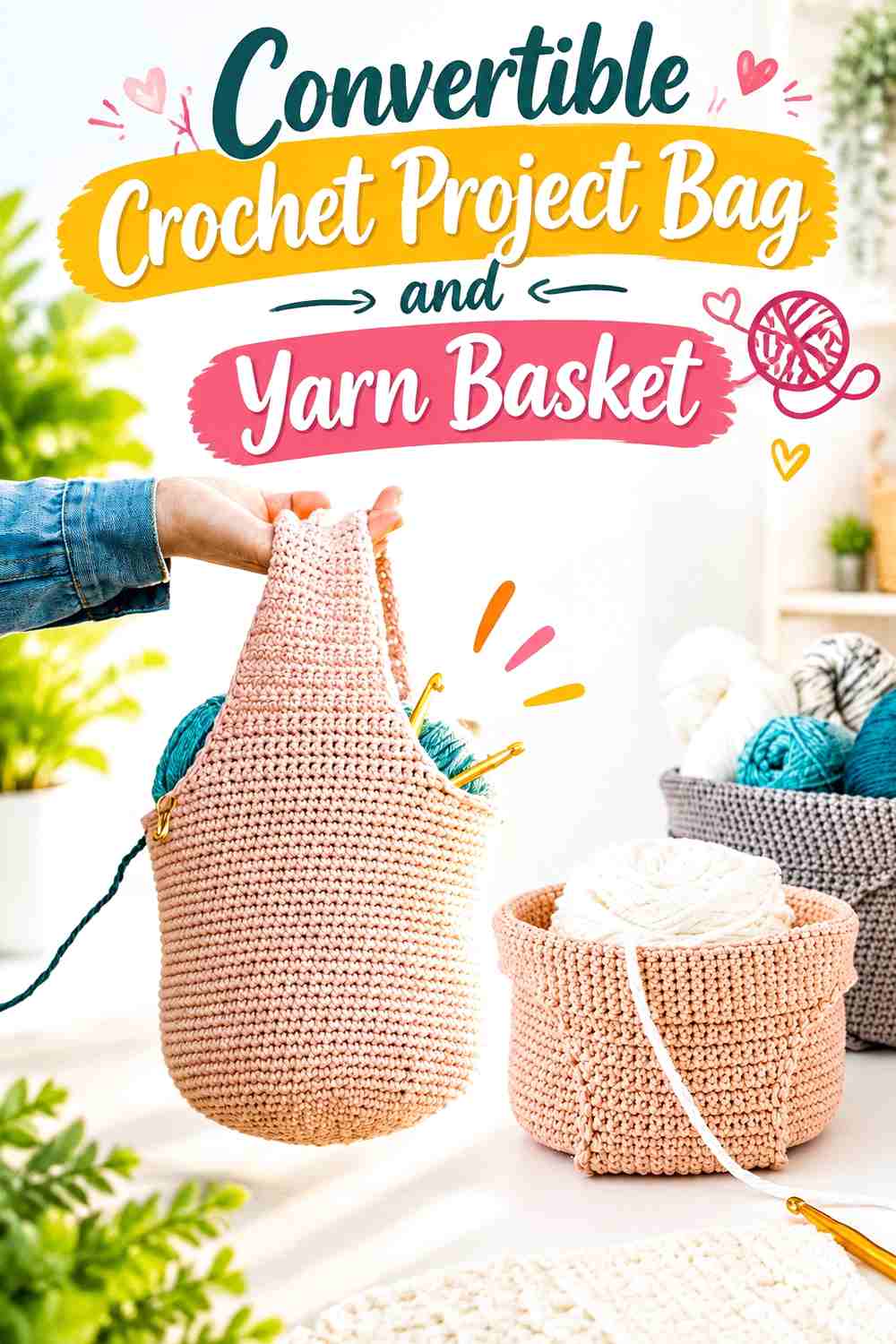
This design is unusually well matched to craft-night use because it was created specifically as a project bag and yarn holder. The handle can be repositioned so the bag functions more like a basket while you work, and the original design is available in multiple sizes.
That convertible idea separates it from a standard tote: you can carry the project to the gathering and then change how the bag sits once you settle into your chair.
Decide Whether You Need Carrying Height or Work-Beside-You Access
A project bag that doubles as a basket solves two related problems. During transportation, you need something easy to pick up. During the actual craft session, you may prefer a lower, more open container that lets you see the yarn.
Think about which mode matters more for the project you plan to carry. A small accessory WIP and a larger garment WIP place very different demands on the same bag.
Keep the Yarn Path Clear of the Handle
If you crochet directly from the bag, notice where the working strand travels when the handle is moved or folded. A visually attractive handle position is less useful if the yarn repeatedly wraps around it.
Test the bag with the yarn arranged as you would use it at the table before deciding whether to add extra charms, tags, or decorative attachments near the opening.
Creator Credit: forthefrills
2. Crochet Compact WIP Carry Project Bag
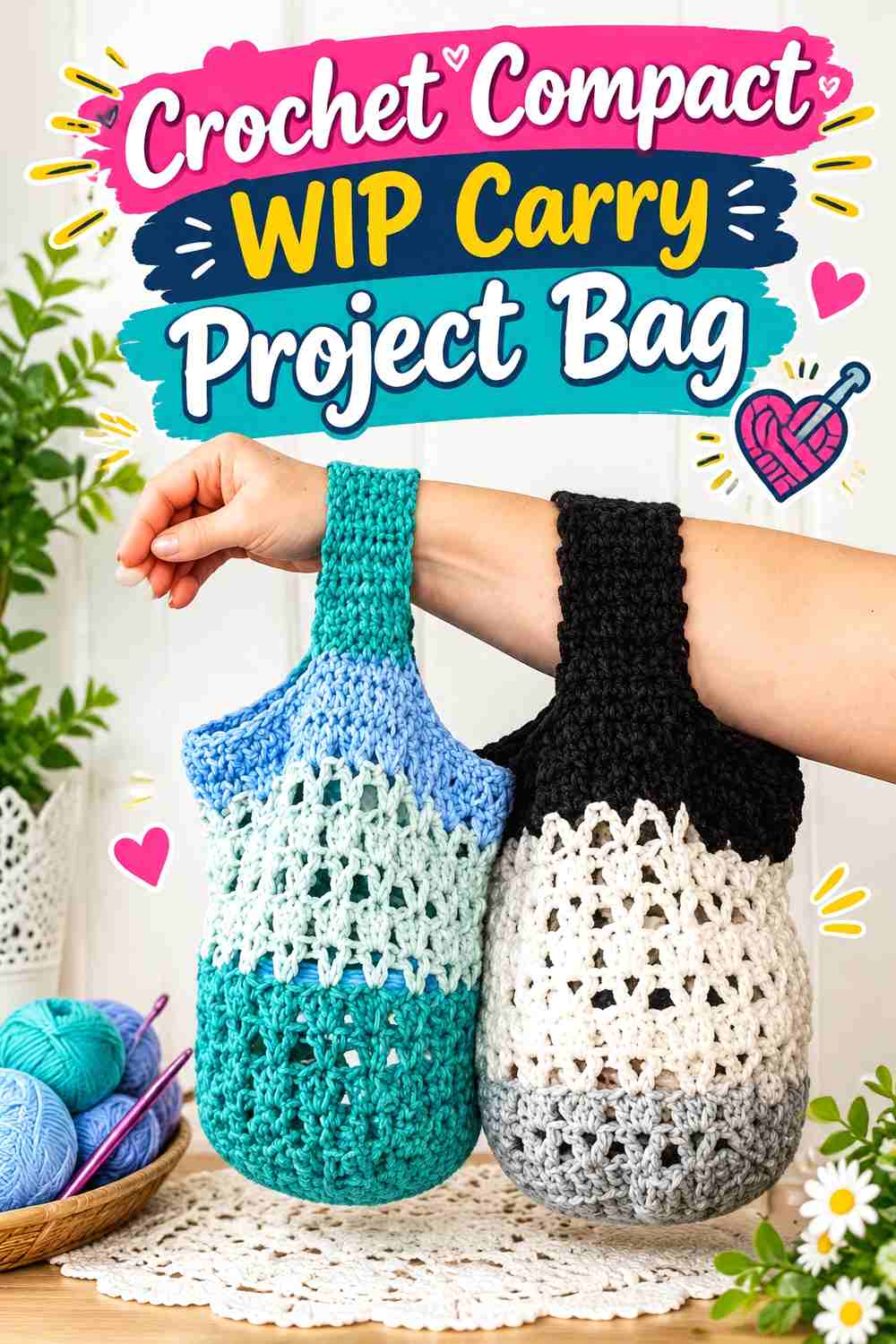
This smaller project-bag design offers a different alternative to the broad tote. The creator presents it specifically for carrying crochet or knitting and also notes its usefulness as a shopping-style bag.
A compact bag makes sense when craft night involves socks, hats, motifs, amigurumi pieces, or another WIP that does not require several large skeins.
Small Projects Benefit From a Smaller Interior
Putting one yarn ball and a few tools in an oversized tote can make organization harder rather than easier. Everything spreads across the bottom, and the hook you need can become surprisingly difficult to find.
A smaller project bag keeps the active WIP closer together. Before choosing it, compare the intended project—not just the unused yarn—with the usable interior space.
Separate Loose Notions Before Travel
An open crochet bag can carry the main WIP comfortably, but stitch markers, tapestry needles, and other tiny items need additional control.
Pairing this style with a small notions case can make it much more practical for craft night without changing the original bag construction.
Creator Credit: Sara Sach Crochet Designs
3. Crochet Daisy Zipper Craft Project Bag
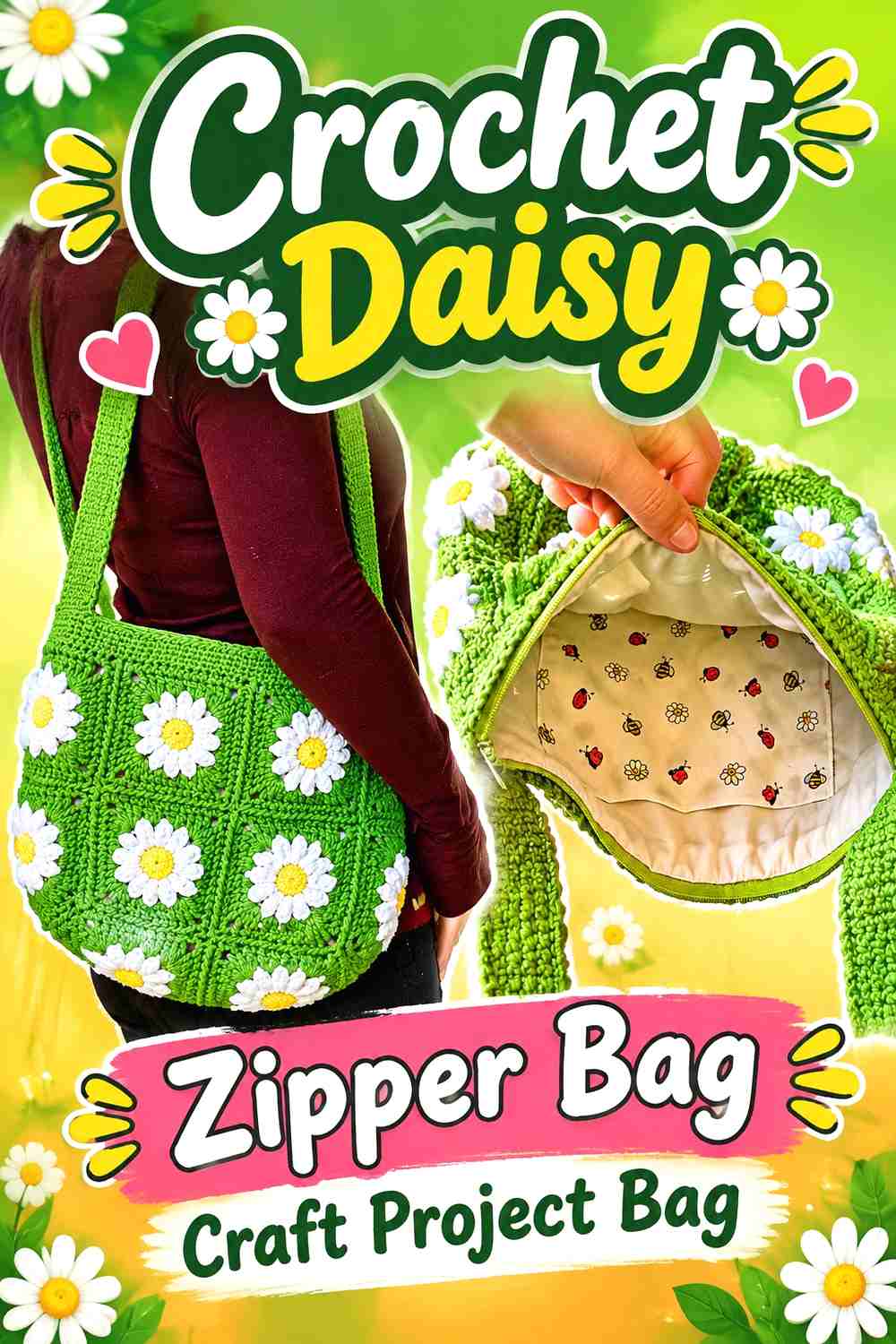
This granny-square zipper bag combines crochet motifs with a fabric lining, zipper, and strap. Those finishing elements distinguish it from simpler unlined motif totes and make it particularly interesting for carrying smaller WIPs or a substantial collection of tools.
The floral squares also give you an obvious Christmas-gift adaptation route: keep the construction but shift the palette toward the recipient’s favorite colors rather than relying on overt holiday imagery.
A Zipper Helps When Small Supplies Travel With the WIP
A secure top is useful if the bag will be placed inside a larger tote or transported in a car with other belongings. Hooks and markers have less opportunity to escape through the opening.
The trade-off appears while crocheting. If yarn is feeding from inside the bag, check whether repeatedly closing the zipper is practical or whether the bag works better as storage between crafting sessions.
Lining Changes What You Can Carry Confidently
Fabric behind the crochet surface reduces the chance that narrow tools push through the gaps between stitches. That can be valuable for a craft-night bag containing hook tips, pens, or needles.
If you alter the granny-square size or yarn, remember that the lining and zipper must still correspond to the finished crochet shell. Plan those components together rather than treating them as unrelated finishing details.
Creator Credit: Alyssia Creates
4. Crochet Pocketed Craft Night Project Bag
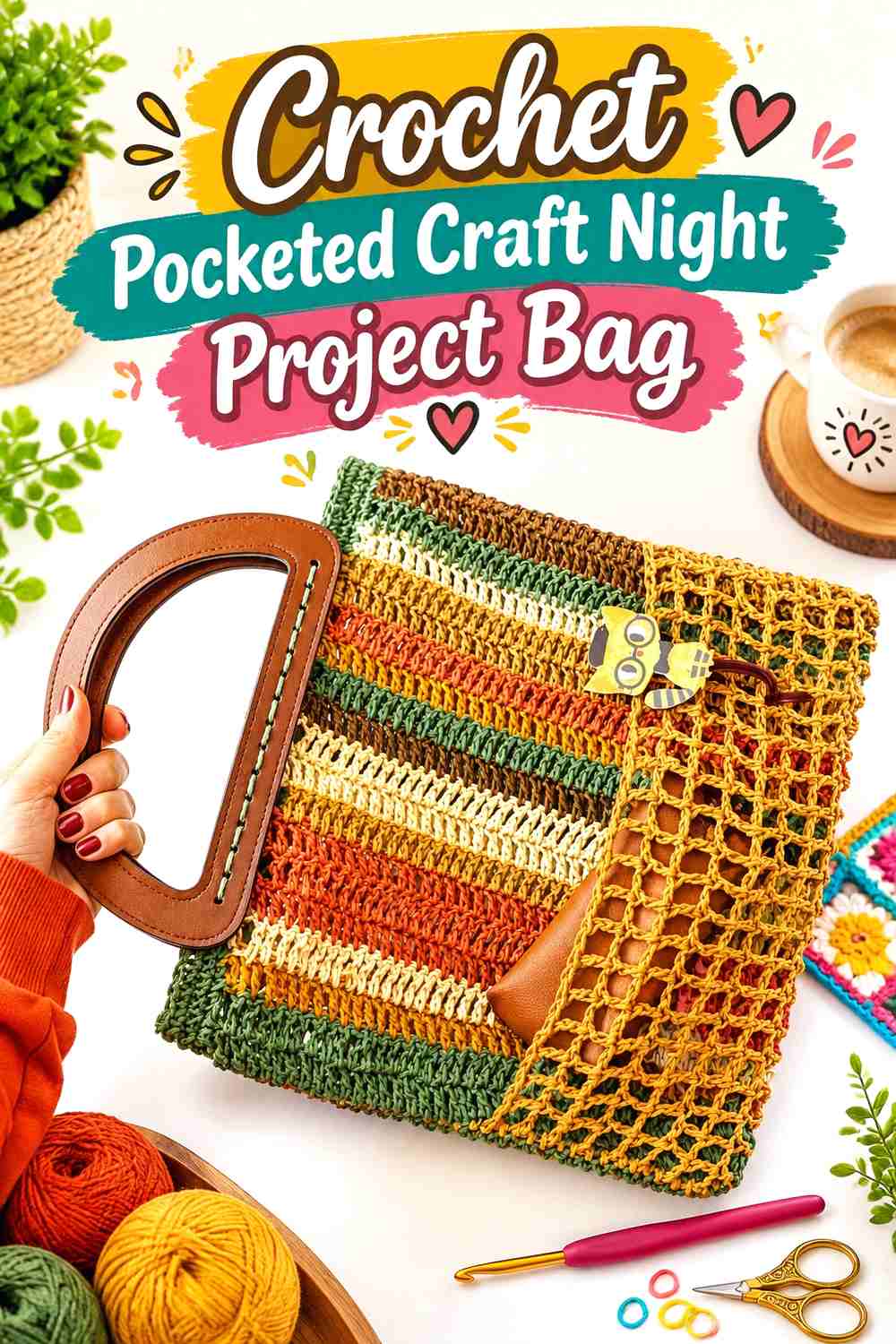
External or integrated pockets change a project bag substantially because tools do not have to share one large compartment with the yarn. This tutorial demonstrates a crochet bag with visible pocket storage, giving it a useful organizational advantage for social crafting.
For a Christmas gift, this is a strong concept for someone who routinely brings several hooks, pens, measuring tools, or other accessories.
Assign Pockets by Tool Type
The biggest benefit of pockets is lost when every compartment becomes a miscellaneous catchall. Before modifying their size, think about the actual tools the recipient takes to craft night.
Longer hooks need different storage from stitch markers, and a phone may require a different opening from scissors. Use the creator’s construction as the starting point, then verify what can realistically fit before making adaptations.
Check Pocket Stretch Before Storing Heavy Tools
Crochet pockets can relax under repeated weight. A tool that sits neatly when the bag is new may eventually pull the pocket outward if the fabric is elastic.
If structure is important, compare the yarn used in the tutorial with any substitute you plan to use. Do not assume a different fiber will hold the same shape.
Creator Credit: Sirin’s Crochet
5. Crochet Three-Square Granny Project Bag
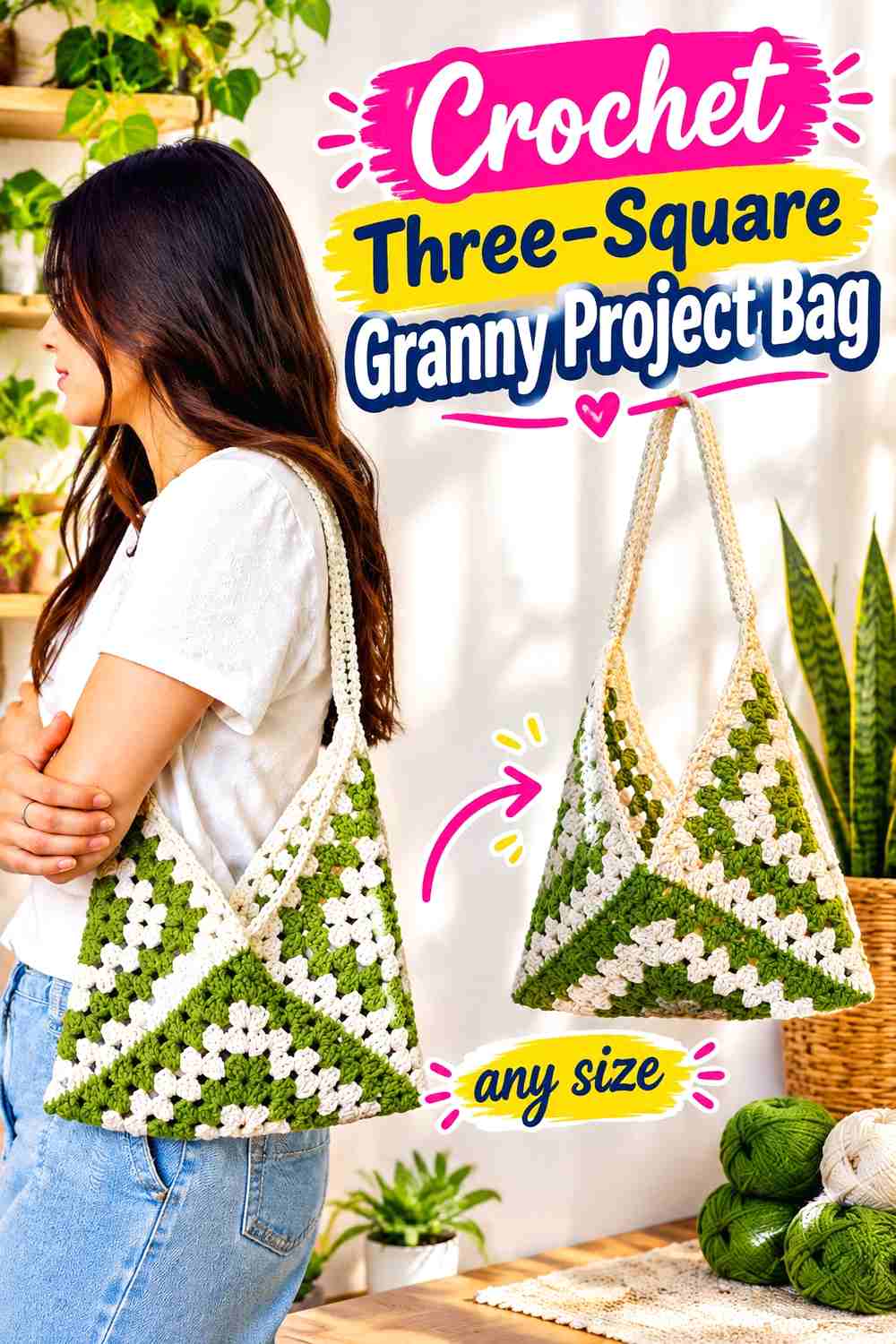
This shoulder bag is constructed from three granny squares and is intentionally customizable in size and color. That makes it a particularly flexible base for a Christmas project-bag gift because you can coordinate the motifs with the recipient’s existing notions case or favorite yarn colors.
Its motif construction also creates a very different visual result from bags worked continuously from a base upward.
Block the Squares Before Judging Bag Capacity
A motif bag depends on the dimensions of its component squares. Small differences between squares can affect the shape after assembly, especially if you change yarn or hook size.
Block and compare the motifs before joining them. If you want a larger project bag, use the creator’s sizing guidance rather than assuming that simply adding arbitrary rounds will preserve every proportion.
Open Motifs Need a Tool-Storage Plan
Granny-style fabric can contain yarn perfectly well while still being inconvenient for narrow objects. Hook tips, needles, and stitch markers can find openings that a yarn ball cannot.
A separate notions pouch or an appropriately planned lining can therefore be more useful than trying to make every compartment from the same open motif fabric.
Creator Credit: VivCrochets
6. Crochet Chunky Open Tote Project Bag
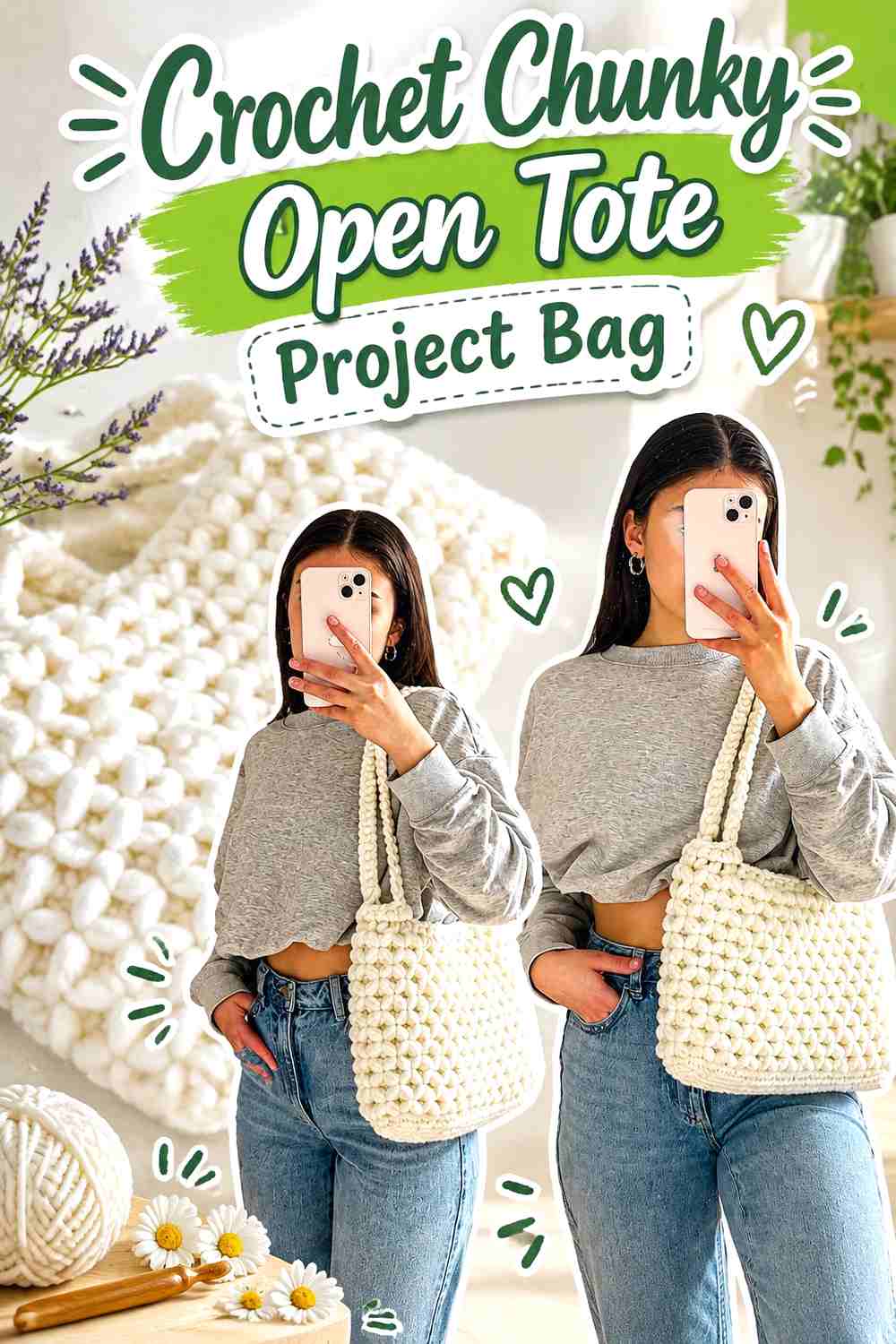
A chunky tote offers a straightforward craft-night format: a broad opening, substantial crochet fabric, and enough visual presence that the bag does not need complicated surface decoration. The supporting tutorial demonstrates a chunky-yarn tote intended to carry a generous collection of everyday items.
For craft night, that open access can be convenient when you repeatedly reach for yarn or tools.
Open Access Is Useful Once You Are Seated
If you dislike stopping to undo a drawstring or zipper, an open tote keeps everything immediately available. It can sit next to your chair and behave almost like portable storage.
The same openness becomes a limitation during transportation. Small objects should be placed in their own pouch, and loose yarn should be arranged so it cannot simply roll out if the tote tips.
Chunky Fabric Can Add Weight Before You Pack Anything
A thicker yarn creates a substantial bag, but the bag itself contributes to the load. That matters if you plan to add several full skeins and a growing project.
Consider the combined weight rather than judging only the empty bag. If you want to substitute yarn, confirm how that change affects the fabric and follow the tutorial’s construction guidance.
Creator Credit: crochet daniela
7. Crochet Structured Granny Craft Project Bag
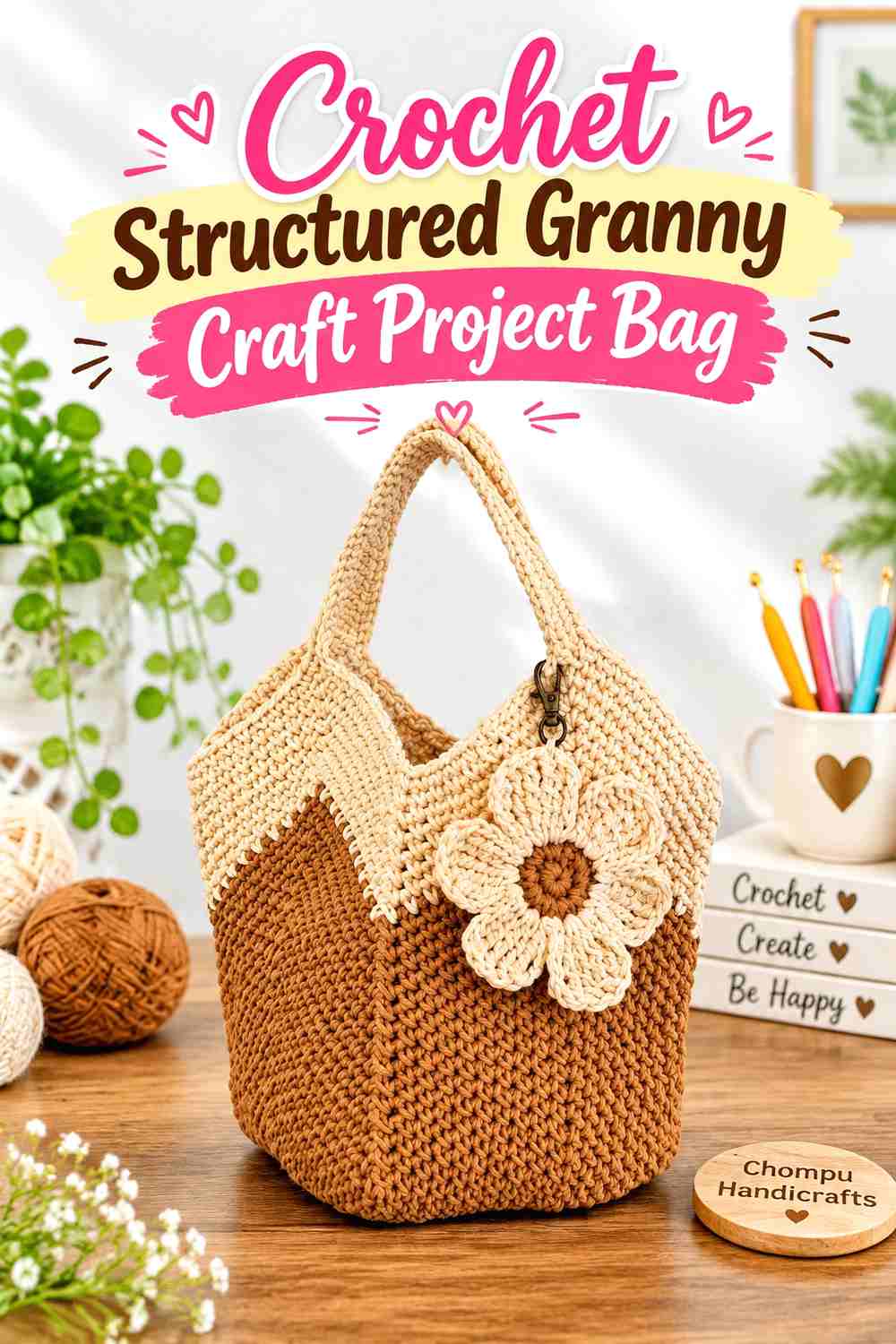
This compact bag uses a defined base and upright body with granny-style detailing rather than relying on large joined motifs. The result is visually different from a classic granny-square tote and can work well for a smaller craft-night WIP.
The more contained form may appeal to someone who wants a project carrier that looks closer to a small handbag than a large yarn tote.
A Defined Base Helps the Bag Occupy Its Own Space
For table-side crafting, a recognizable base can make a bag easier to position than a completely flat pouch. Whether it stays upright in practice will still depend on yarn, contents, and construction.
If you adapt the tutorial, avoid assuming that a softer yarn will preserve the same silhouette. Shape retention is a material decision as well as a stitch decision.
Watch the Relationship Between Height and Opening Width
A tall, narrow craft bag can hold yarn effectively but may make items at the bottom less visible. A shorter, broader opening improves reach but takes up more table or floor space.
Think about the kind of WIP that will live in the bag before changing its proportions.
Creator Credit: Chompu Handicrafts
8. Crochet Drawstring Bucket Project Bag
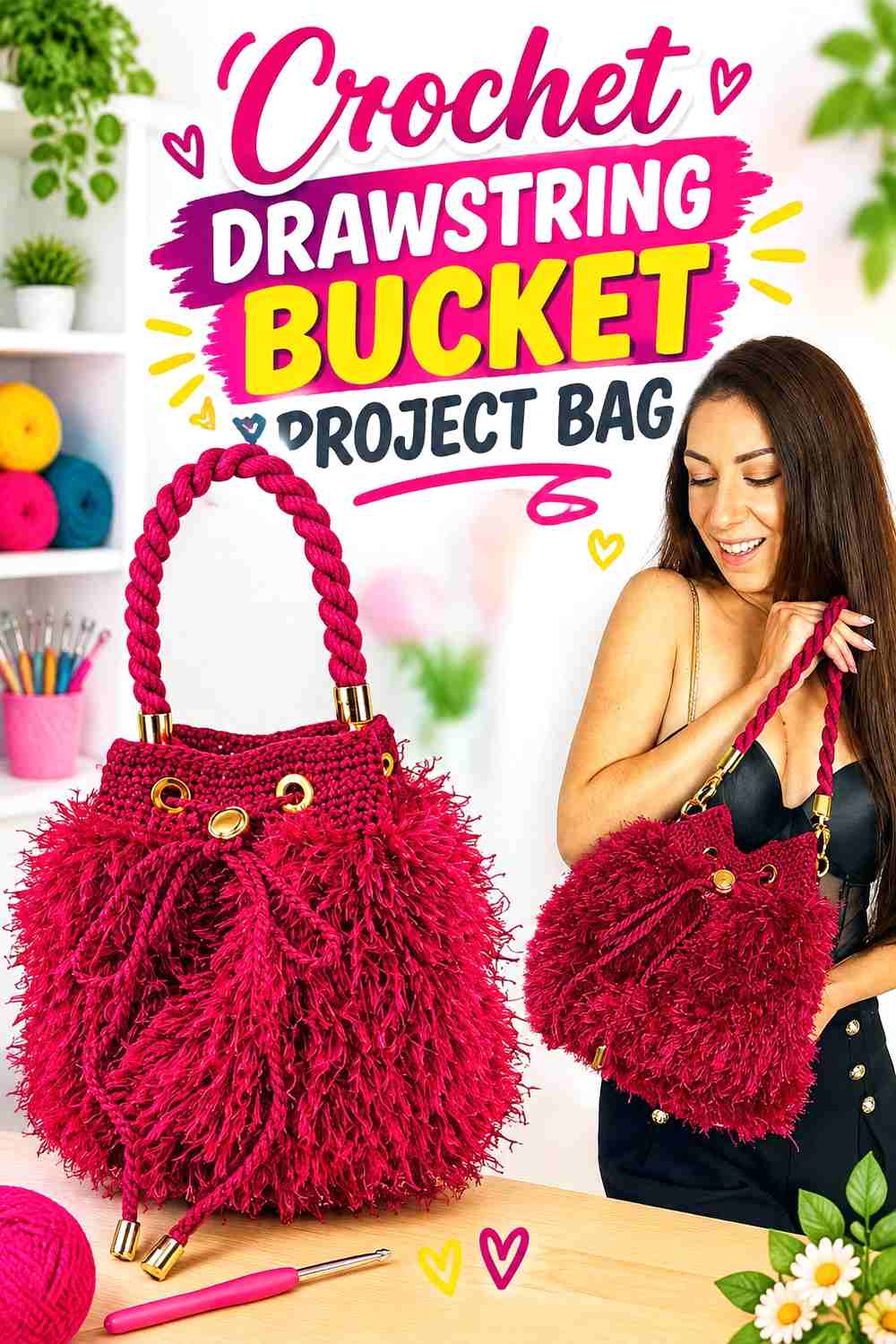
A bucket body with a drawstring provides a strong compromise between an open yarn basket and a fully enclosed zipper bag. This tutorial includes a round base, eyelet area, drawstring closure, and handle, giving the finished bag multiple structural elements that can translate well to craft-night storage.
The gathered top is particularly relevant if the project has to travel before the bag is opened beside your chair.
Drawstrings Control the Opening Without Hiding the Whole Project
A bucket bag can stay relatively open during the crafting session and then be cinched before leaving. That is useful when you want fewer loose ends hanging out during transportation.
Check how the working yarn interacts with the drawstring area. If you plan to crochet directly from the bag, avoid unnecessary charms or hardware where the yarn exits.
The Round Base Changes Packing Compared With a Flat Tote
A round-bottom bag groups yarn closer to the center instead of spreading it across a long rectangular floor. That can suit a project using a few balls or cakes.
For a large folded garment panel, however, a wider rectangular tote may be easier. Match the base shape to the WIP rather than assuming one geometry is universally more practical.
Creator Credit: Katy Handmade
9. Crochet Zipper Hook-and-Notions Project Pouch
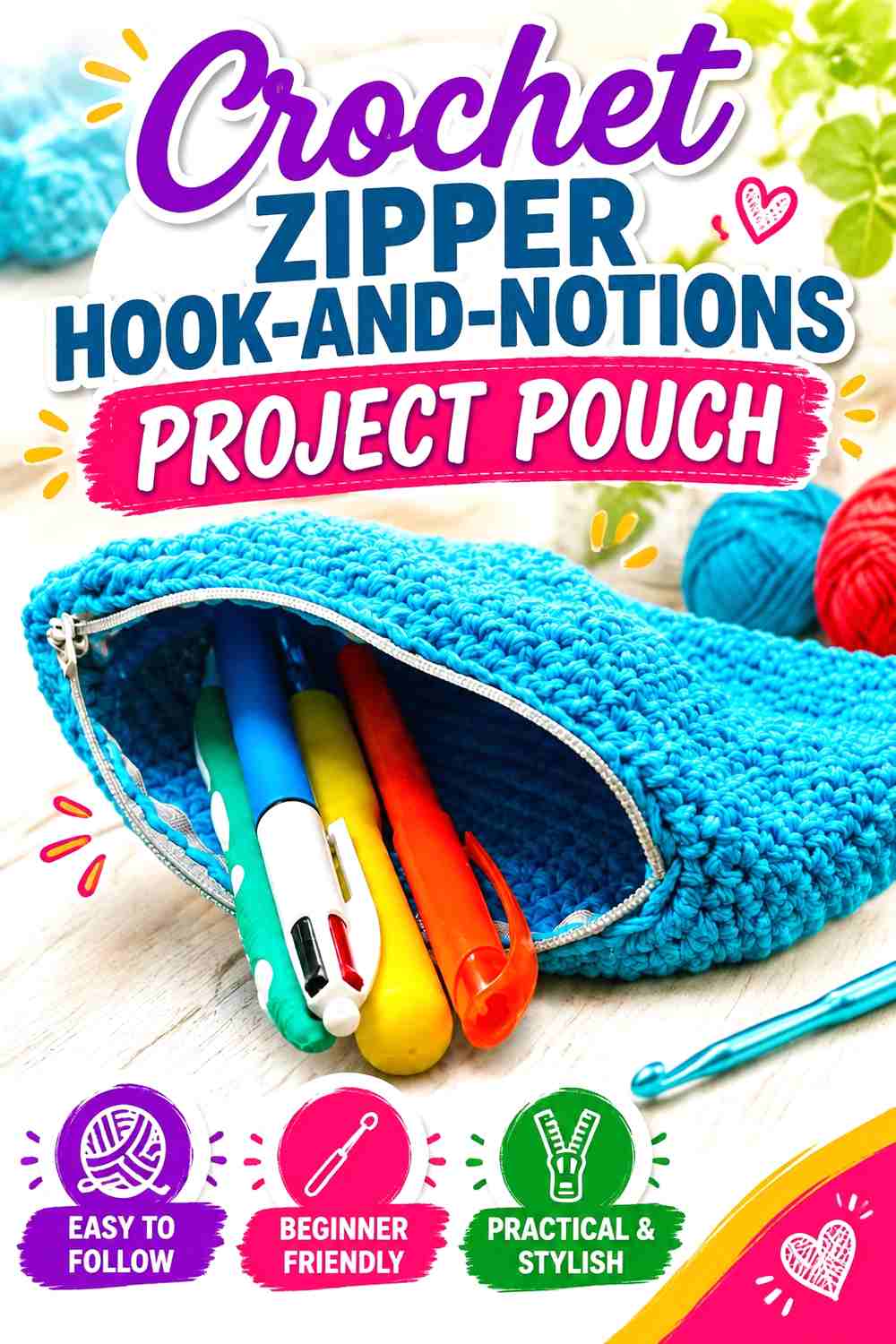
A craft-night setup is often easier when small equipment has its own container. This tutorial focuses on crocheting a pouch around a zipper, producing a compact closed case that can live inside a larger WIP bag.
It is not intended to replace a full-size yarn carrier. Its value is keeping the pieces most likely to disappear—hooks, markers, a tape measure, and similar notions—together.
Treat the Pouch as Part of a Two-Bag System
One large compartment rarely organizes everything well. Pair a roomy yarn bag with a smaller zippered pouch and each container has a clear role.
This approach is particularly useful as a Christmas gift set: make the main project bag in one color and the notions pouch in a coordinating accent.
Check Tool Length Before Choosing the Zipper Format
Not all crochet hooks and accessories occupy the same space. Long hooks, ergonomic handles, or specialty tools may not fit a compact pencil-case-shaped pouch.
Gather the actual tools first and compare them with the creator’s finished format before assuming it will hold a particular kit.
Creator Credit: The Crochet Crowd
10. Crochet Scrap-Yarn Structured Tote Project Bag
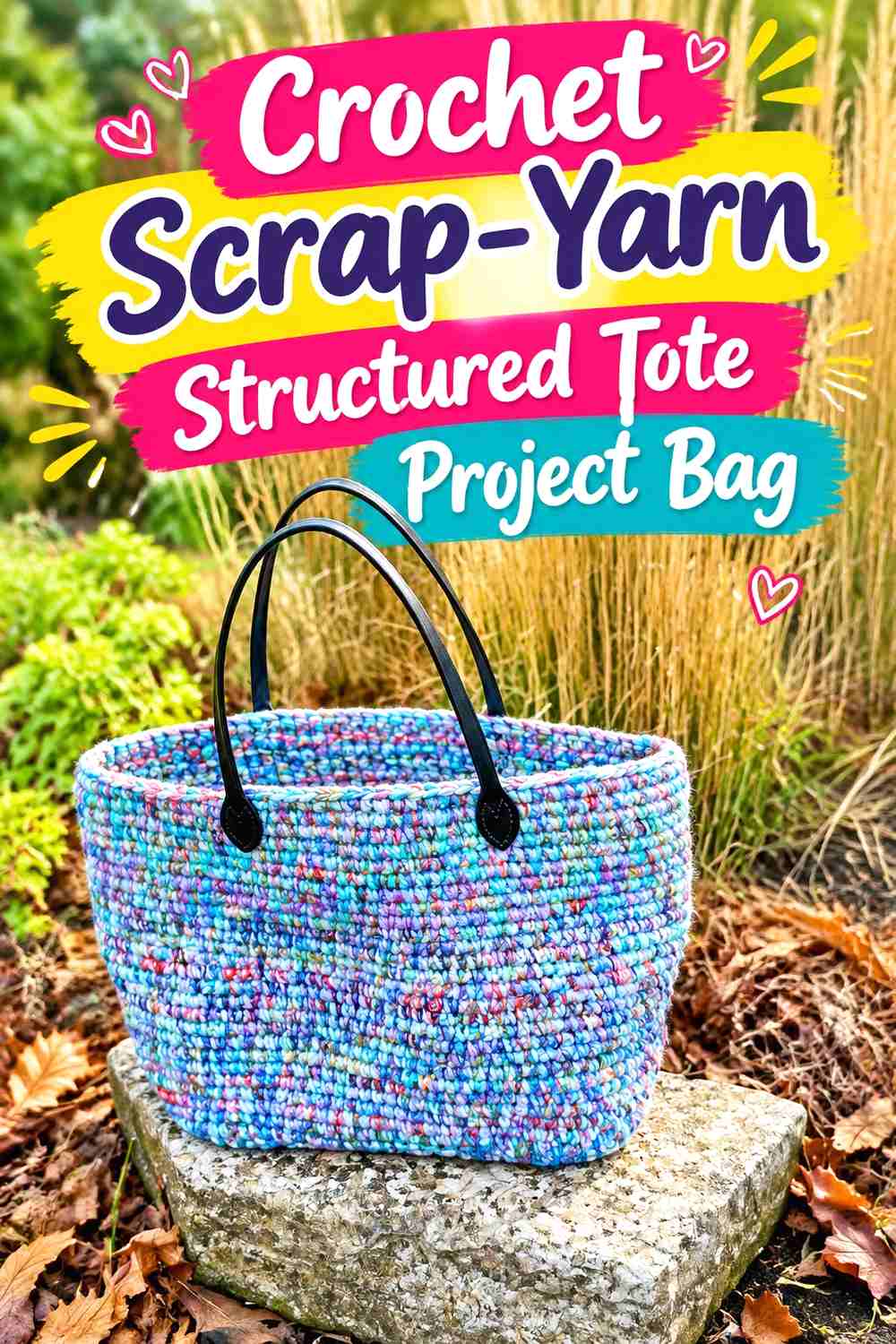
This tote is built with an emphasis on a defined bag shape and uses multiple strands in the demonstrated construction. The creator also presents it as a way to work with leftover yarn, which gives the concept obvious potential for a colorful craft-night carrier.
Compared with a lacy market bag, the substantial surface can provide a more contained environment for a WIP.
Scrap Yarn Works Better With a Color Plan
Using leftovers does not require a random result. Sort the available yarn by thickness and then decide whether you want stripes, gradual color changes, repeated neutrals, or controlled blocks.
Do not combine yarns solely because the colors coordinate. Large differences in thickness and elasticity can change the structure of a bag.
Handle Attachment Deserves Attention on a Loaded Project Bag
A craft bag may become considerably heavier than an everyday empty tote once yarn and tools are added. The handle connection therefore deserves the same attention as the body.
Follow the creator’s finishing method for the original design, and be cautious about lengthening the handles or changing their construction without considering the extra leverage created by a heavier load.
Creator Credit: Ophelia Talks Crochet
11. Crochet Short-Row Zipper Notions Project Pouch
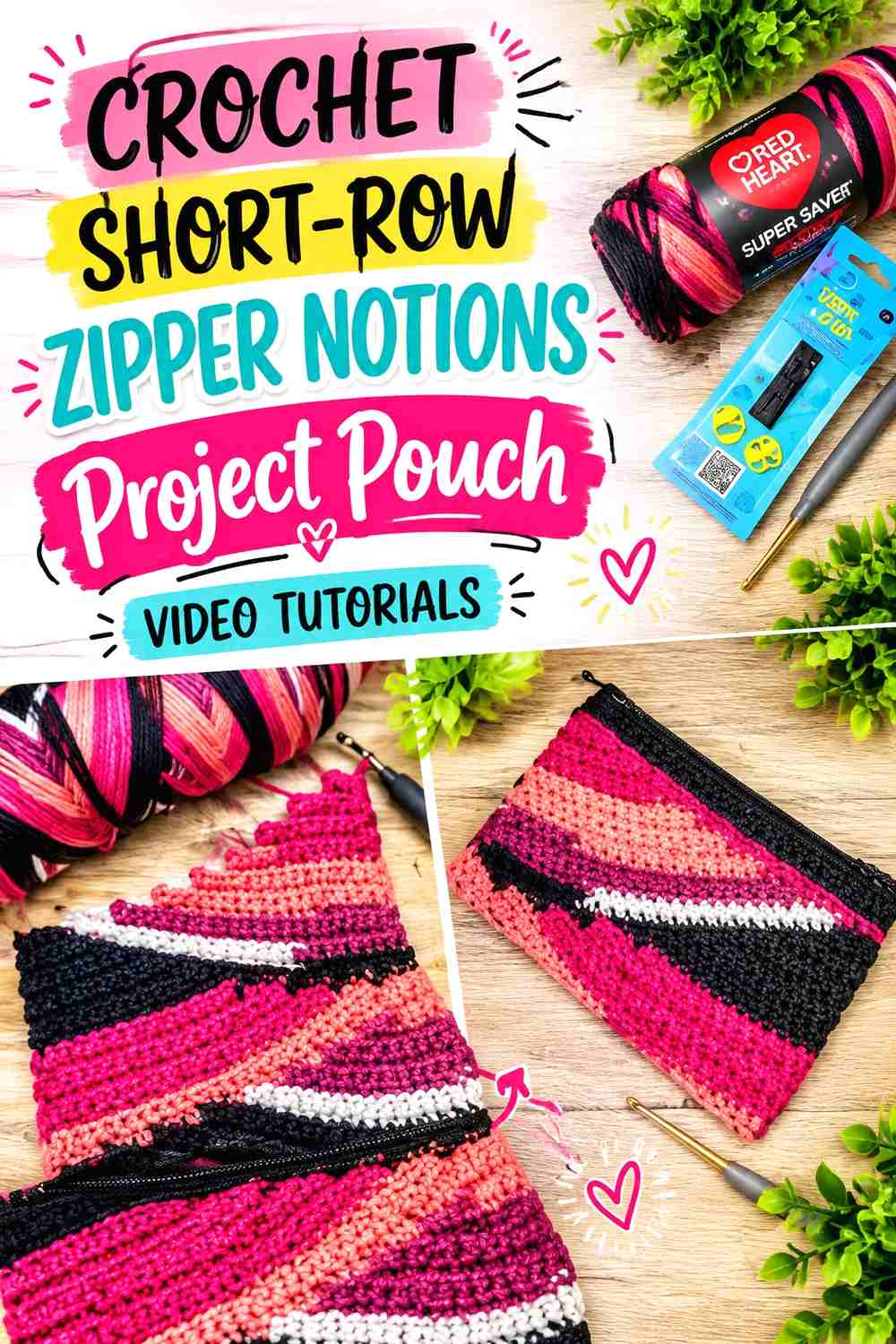
This zippered pouch introduces short-row shaping and a directional color effect, making it an interesting companion piece for a plainer project bag. The creator describes it as a general organization pouch and notes that lining is worth considering when it will hold hooks or pencils.
That makes its role at craft night clear: contained storage for tools rather than the main yarn supply.
A Technique-Focused Pouch Can Make a Better Gift Set
If the recipient already owns a favorite large project tote, another full-size bag may be unnecessary. A distinctive notions pouch gives them something complementary instead.
The angled color effect provides the visual interest, so additional appliqués or bulky embellishments may not be needed.
Lining Matters More When Narrow Tools Are Involved
A crochet surface can be perfectly suitable for a pouch while still allowing a hook tip or needle to find its way between stitches.
If you plan to use the pouch for sharp or narrow tools, review the creator’s lining guidance rather than assuming the crochet shell alone is appropriate for every notion.
Creator Credit: Moogly
12. Crochet Mini Drawstring Notions Project Bag
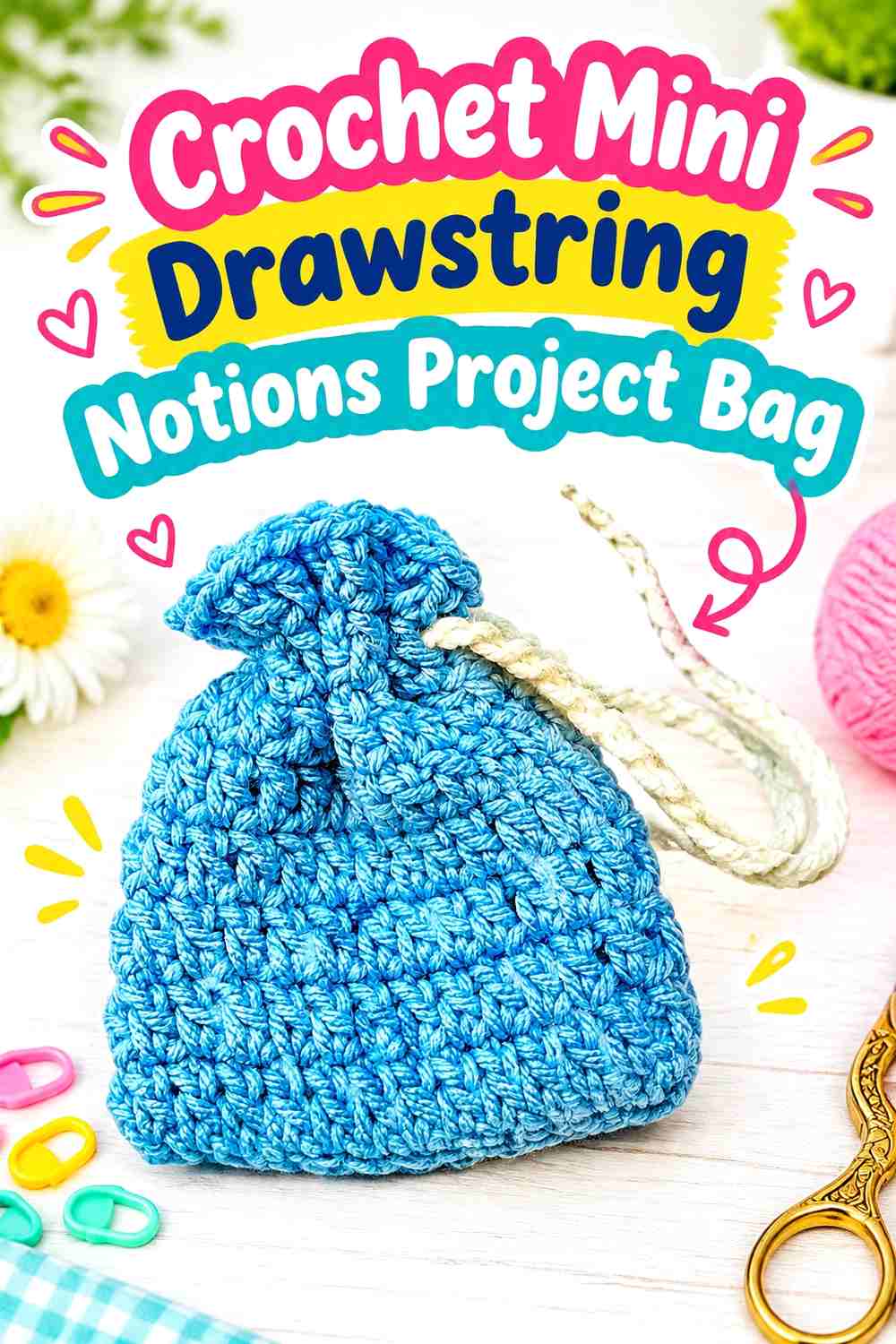
This compact drawstring pouch provides another solution for separating small supplies from the main WIP. The tutorial uses a simple gathered closure and presents the pouch for small-item storage.
For Christmas 2026, it could be paired with a larger handmade tote or given as a small craft-night organizer filled with stitch markers and other suitable notions.
Drawstring Storage Is Faster to Access Than a Zipper
A soft drawstring pouch can be opened widely and closed with one pull. That makes it practical for items you repeatedly reach for during a social crafting session.
The downside is less rigid organization. If several tiny items are placed together, you may still have to search through the pouch to find the right one.
Scale the Idea to the Supplies, Not the Main WIP
A small drawstring pouch is most useful when its purpose stays clear. It does not need to become large enough for several skeins if another bag already carries the project.
Use it for the subset of supplies that benefit from containment, then keep the working yarn in a roomier bag.
Creator Credit: ElyseCrochets 💌
13. Crochet Japanese Knot Wrist Project Bag
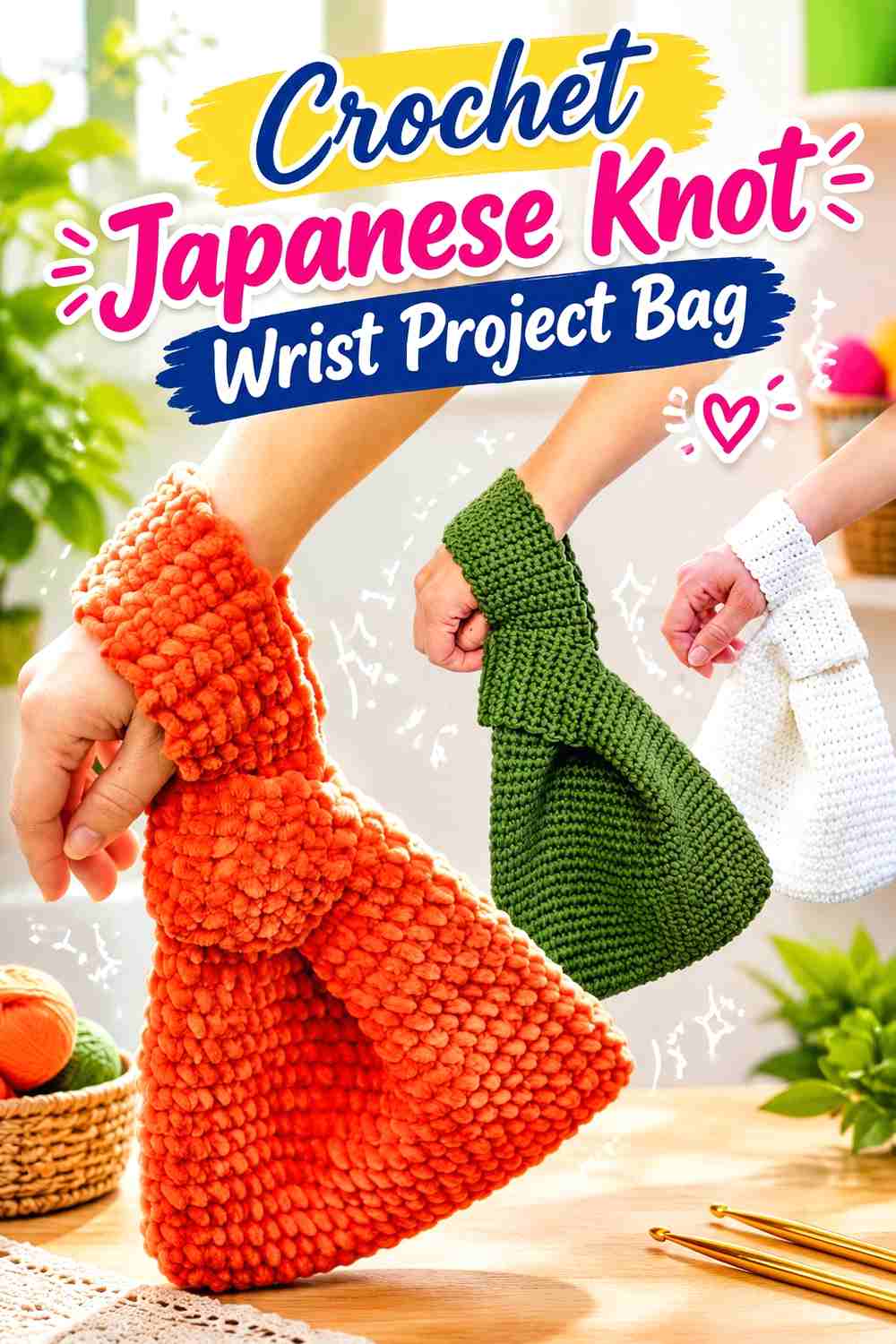
The Japanese knot format uses unequal handles so one passes through the other, creating a self-closing wrist-style carry method. The supporting tutorial demonstrates this distinctive handle construction on a compact crochet bag.
For craft night, it is better suited to a small WIP than to a large blanket or multi-skein garment project, but its handle arrangement creates a useful grab-and-move option.
The Handle Becomes the Closure
This design does not need a separate zipper or drawstring because the two handles interact to control the opening. That reduces hardware and gives the bag a recognizable silhouette.
Before using it as a project bag, check how freely you can reach the yarn when the handles are engaged. You may prefer to leave the bag open beside your chair and secure it only when moving.
Soft Bulky Yarn Changes the Interior Feel
The demonstrated version uses thick, soft yarn, which contributes heavily to the finished character. A different fiber can create a noticeably different bag even if the general dimensions are similar.
If you want more structure for hooks and notions, use a separate pouch rather than assuming the soft bag body will organize small equipment.
Creator Credit: Diving Ducks Crochet
14. Crochet Structured Basket-Style Project Bag
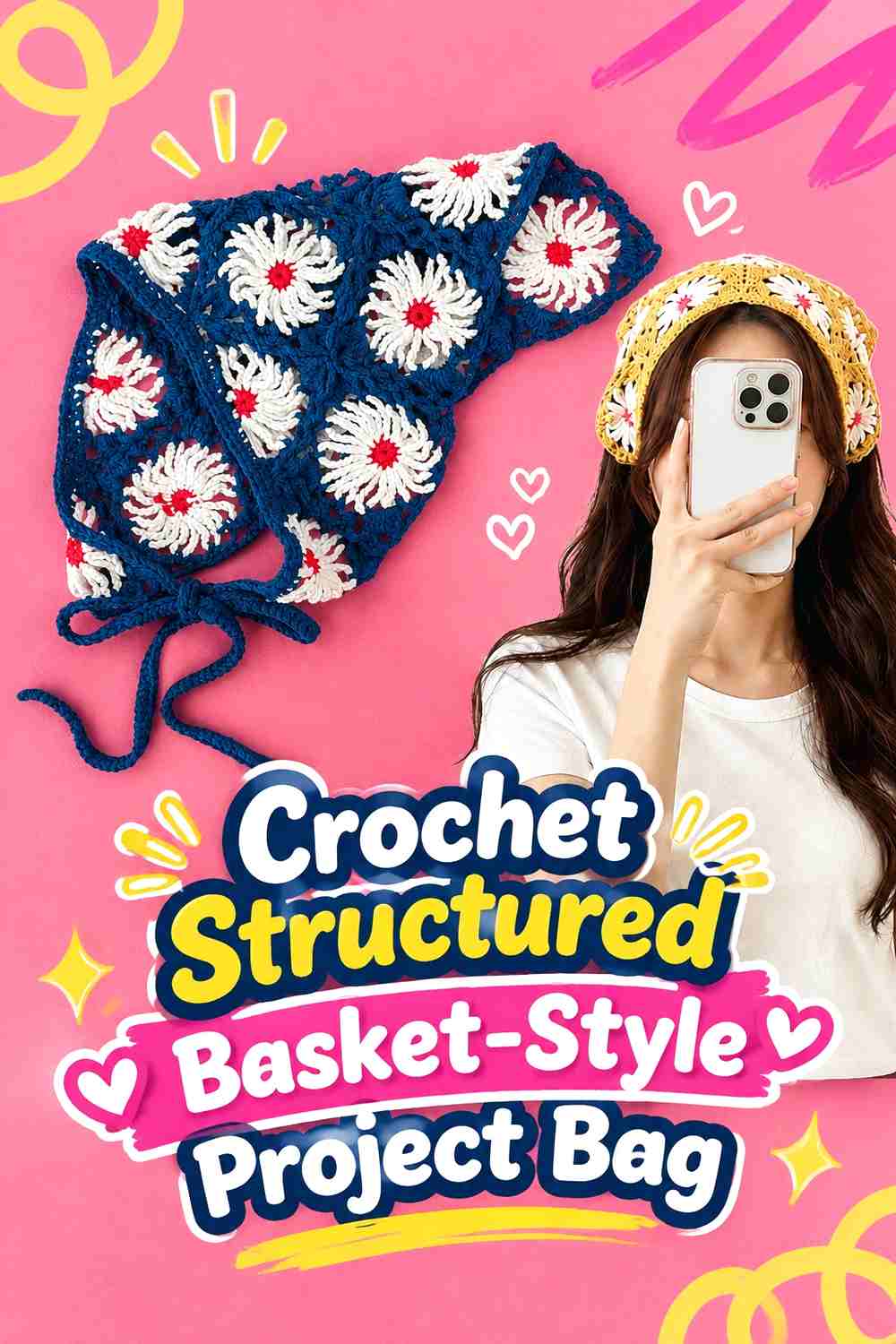
This basket-inspired shoulder bag uses raffia yarn in the demonstrated version and includes a defined base, structured body, handles, and a flap. That gives it one of the firmest visual silhouettes in this collection.
Although the original is presented as a shoulder bag rather than specifically as a yarn project bag, its basket-like form makes it an interesting adaptation candidate for someone who prefers a project carrier that does not collapse around its contents.
Structure Helps When You Work Beside the Bag
A bag that maintains an open body can be easier to use as floor- or table-side storage because the sides do not continually fall over the yarn.
The trade-off is portability and flexibility. A rigid or semi-rigid bag may take up more space at a crowded craft table than a soft drawstring pouch.
Treat Raffia Substitution as a Construction Decision
The defined appearance is connected to the material used in the tutorial. Replacing raffia with a soft yarn could change the body, flap, and handles significantly.
If you want a softer project bag, choose that intentionally. If you want the basket-like silhouette, pay close attention to the creator’s material choice rather than assuming any yarn will produce the same structure.
Creator Credit: 하우스 오브 지원 house of Jiwon
Comparing These Crochet Craft Night Project Bag Ideas
Choose the convertible yarn-basket design if you want the bag to change function once you arrive. The compact WIP bag and Japanese knot style make more sense for smaller projects where portability matters more than maximum capacity.
For quick access at the table, the chunky open tote, structured granny bag, and scrap-yarn tote avoid complicated closures. If travel security matters more, the drawstring bucket gives you a closable opening without committing to a full zipper.
The pocketed bag is the strongest direction when you dislike digging through one large compartment. For even more separation, pair any larger project bag with the daisy zipper bag, zipper hook pouch, short-row notions pouch, or mini drawstring pouch.
If structure is your priority, look closely at the defined-base and basket-style options. If compact storage matters more, a soft bag that can flatten when empty may be easier to bring to a crowded Christmas craft gathering.
Conclusion
The right crochet craft night project bag depends less on decoration and more on what you expect it to carry.
For a small WIP, a compact bag, Japanese knot bag, or smaller drawstring format can prevent supplies from disappearing into unnecessary space. For projects involving several skeins, a roomy open tote or convertible project bag provides easier access. A drawstring bucket is a useful middle ground when you need both table-side access and a way to close the bag before traveling.
Organization can also be divided rather than forced into one bag. A larger WIP carrier paired with a zippered or drawstring notions pouch keeps yarn separate from hooks, markers, and other small tools.
Whichever idea you choose for Christmas 2026, check the original creator tutorial for the exact construction and materials, then evaluate the finished opening, base, handle, and storage layout against the project the bag will actually carry.
Frequently Asked Questions
What makes a crochet bag useful for craft night?
Look at the opening, base, handles, and interior organization rather than appearance alone. The bag should suit the size of the WIP and make frequently used supplies reasonably accessible. A person carrying one ball of yarn has different needs from someone bringing several skeins and a growing garment.
Is a drawstring or open-top crochet project bag better?
An open top offers faster access while you are actively crocheting. A drawstring provides more containment while traveling. If you regularly crochet directly from the bag, also check whether the cord or gathered opening interferes with the working yarn.
Should a crochet project bag have a lining?
It depends on the fabric and contents. Dense crochet may work well without one for yarn, while open stitches can allow hook tips and tiny notions to poke through. If the original tutorial includes a lining, follow its construction guidance. If it does not, treat lining as a separate adaptation rather than assuming it can be added without affecting the bag.
How do I keep crochet hooks organized inside a project bag?
A dedicated notions pouch or pocket system is often more effective than placing hooks loose among yarn. Zipper pouches offer strong containment, while drawstring pouches give faster access. Choose a format long enough for the particular hooks you carry.
Can I use a crochet market bag as a project bag?
Sometimes. Check the opening, stretch, fabric density, base shape, and handle construction first. Very open mesh may be fine for large yarn balls but inconvenient for small tools, while an extremely stretchy tote may sag more than you want once a WIP becomes heavier.
What kind of project bag works for granny squares or small motifs?
A compact bag is often sufficient because individual motifs take up little space. The important issue is keeping completed motifs, working yarn, and loose notions organized. A small project bag plus a separate hook pouch can work better than one oversized tote.
What should I check before giving a crochet project bag as a Christmas gift?
Think about what the recipient usually makes, the yarn quantity they carry, whether they travel to craft groups, and how many tools they bring. Also check the care requirements of the chosen yarn and any added components such as lining fabric, zippers, handles, cords, or hardware.