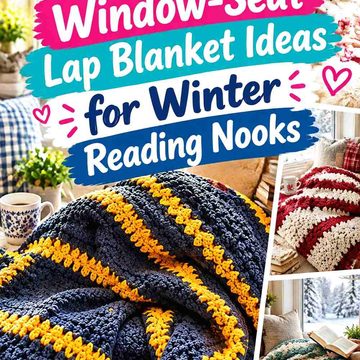
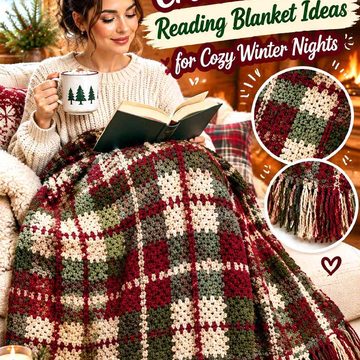
Burrowcore is especially well suited to crochet blankets because the look centers on enclosure, layered softness, earthy colors, handmade character, and the feeling of curling up inside a storybook den. Current descriptions of the aesthetic emphasize intimate reading corners, tactile layers, darker natural tones, and the slightly imperfect charm of objects that feel gathered rather than showroom-styled.
A burrowcore reading blanket does not have to be brown, green, or covered in woodland motifs. Construction matters just as much as palette. Deep waffle texture can suggest a woven cottage blanket, granny squares can create a collected-over-time appearance, gingham can feel like an old cabin textile, and chenille can provide the soft cocooning quality that makes a winter reading nook inviting.
The 16 blankets below use different constructions and surfaces rather than repeating one rustic formula. Some source tutorials already produce full throws; others demonstrate smaller blankets or modular designs that can be adapted after checking the creator’s sizing information.
Quick List
- Crochet Moss-Stitch Burrow Reading Blanket
- Crochet Woodland Bloom Granny Reading Blanket
- Crochet Mossy Gingham Storybook Blanket
- Crochet Star Patchwork Burrow Blanket
- Crochet Winter-Woven Den Blanket
- Crochet Waffle-Texture Nest Blanket
- Crochet Chenille Cocoon Reading Blanket
- Crochet Soft-Chevron Woodland Blanket
- Crochet Shell-Stitch Storybook Blanket
- Crochet Bobble-Stripe Cottage Reading Blanket
- Crochet Chunky Fireside Burrow Blanket
- Crochet Granny-Cluster Keepsake Blanket
- Crochet Herringbone Hearthside Blanket
- Crochet Cozy TV Reading Blanket
- Crochet Airy C2C Burrow Layer
- Crochet Simple Lodge-Style Reading Throw
Build the Burrowcore Mood With Texture Before Decoration
Texture is one of the easiest ways to make a blanket feel at home in a tucked-away reading nook. Waffle, woven, herringbone, bobble, shell, and granny-cluster fabrics all catch light differently, which can make a simple earthy palette feel richer without adding complicated imagery.
For a calmer room, choose one dominant surface treatment and let the blanket provide quiet depth. If your nook already includes patterned cushions, books, baskets, pottery, and artwork, an elaborate multicolor blanket may make the corner feel crowded rather than sheltered.
Burrowcore also benefits from things that appear accumulated naturally over time. A patchwork blanket, mixed granny-square palette, or slightly irregular stripe sequence can support that mood better than a perfectly coordinated room where every textile matches.
Choose Warmth for the Way You Actually Read
A reading blanket works differently from a decorative throw. If you curl up with your knees tucked underneath you, generous width may matter more than extreme length. If you stretch out on a sofa or deep window seat, you may prefer enough length to cover your feet.
Dense waffle and woven textures can produce substantial fabric, while shells, granny clusters, and Solomon’s-knot-style openwork allow more air through the blanket. Openwork can still make a beautiful storybook layer, but it should not be treated as equivalent to dense winter fabric.
Heavy texture also affects weight. A blanket can become uncomfortable across the legs if both the stitch pattern and yarn are extremely substantial. Make a generous swatch and handle it as fabric rather than judging only how it looks.
Use Woodland Color Without Turning Every Blanket Into a Theme Blanket
Moss, fern, mushroom, bark, oatmeal, rust, lichen gray, faded berry, tobacco, and deep plum all fit naturally into a storybook winter palette, but there is no requirement to use them together.
A green gingham blanket already makes a strong woodland statement. A floral granny blanket can carry more varied colors. A heavily textured monochrome throw may need no colorwork at all.
If you are choosing several colors, view the yarn together in the lighting of the reading nook. Very dark colors can merge in dim evening light, while a pale neutral placed between deeper shades can help individual textures or blocks remain visible.
1. Crochet Moss-Stitch Burrow Reading Blanket
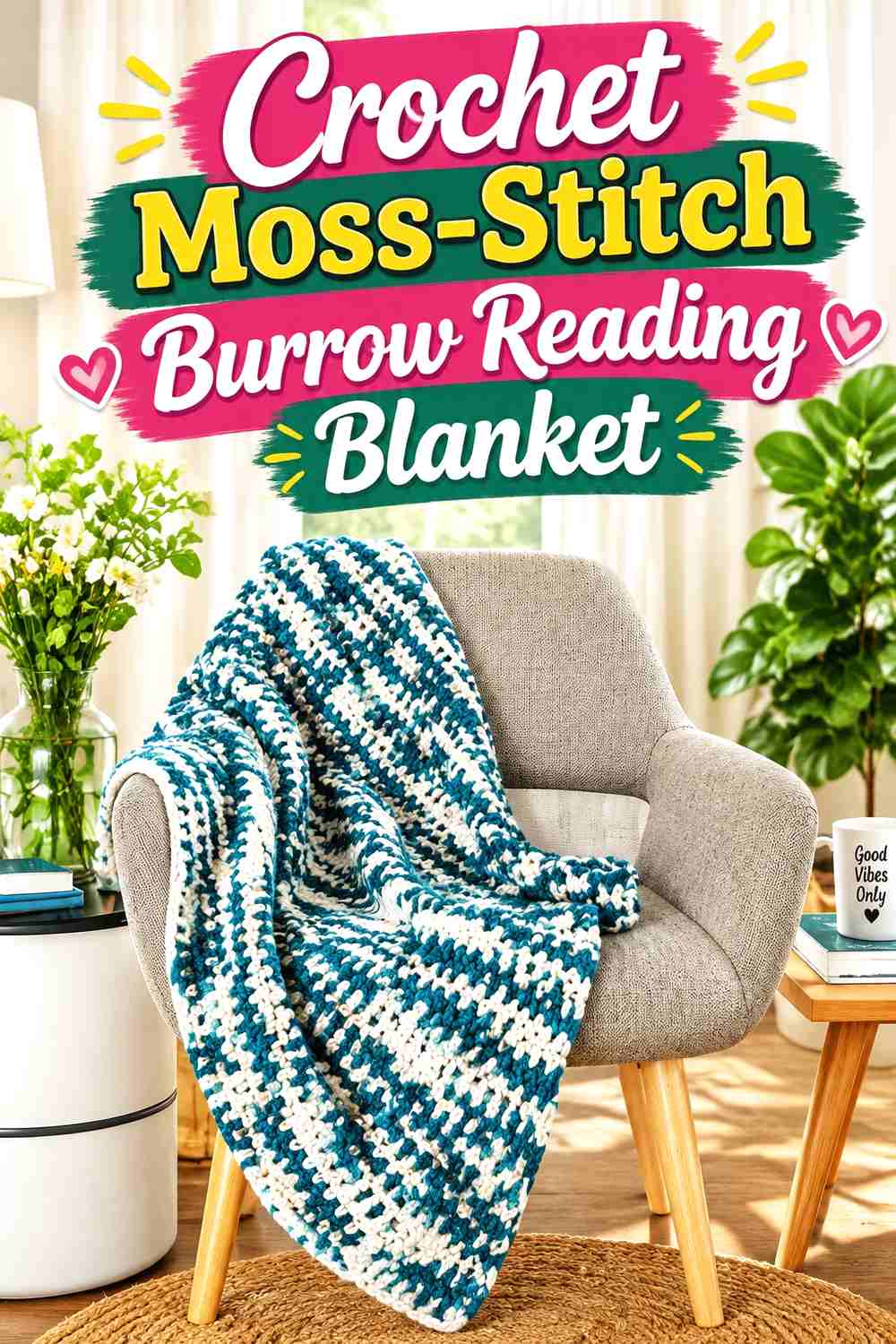
A moss-stitch blanket offers one of the quietest ways to create burrowcore texture. My Yarn Loft by Tansy’s tutorial demonstrates a reversible moss-stitch blanket using variegated yarn and a repeating fabric that remains relatively flat rather than heavily raised.
That makes this a strong option when you want the blanket to look collected and cozy without adding a large amount of surface bulk.
Moss Stitch Suits a Muted Woodland Palette
The small alternating spaces break color into little flecks rather than broad uninterrupted bands.
That can work particularly well with heathered, tonal, or gently variegated yarn. If you want a quiet burrow palette, compare several shades together before committing to highly contrasting stripes.
Flat Texture Folds More Easily Beside a Chair
A flatter blanket usually takes up less visual space than a heavily bobbled or waffle-textured throw.
That matters in a compact reading nook where the blanket may spend part of the day folded over an armrest, basket, or bench rather than spread out.
Creator Credit: My Yarn Loft by Tansy
2. Crochet Woodland Bloom Granny Reading Blanket
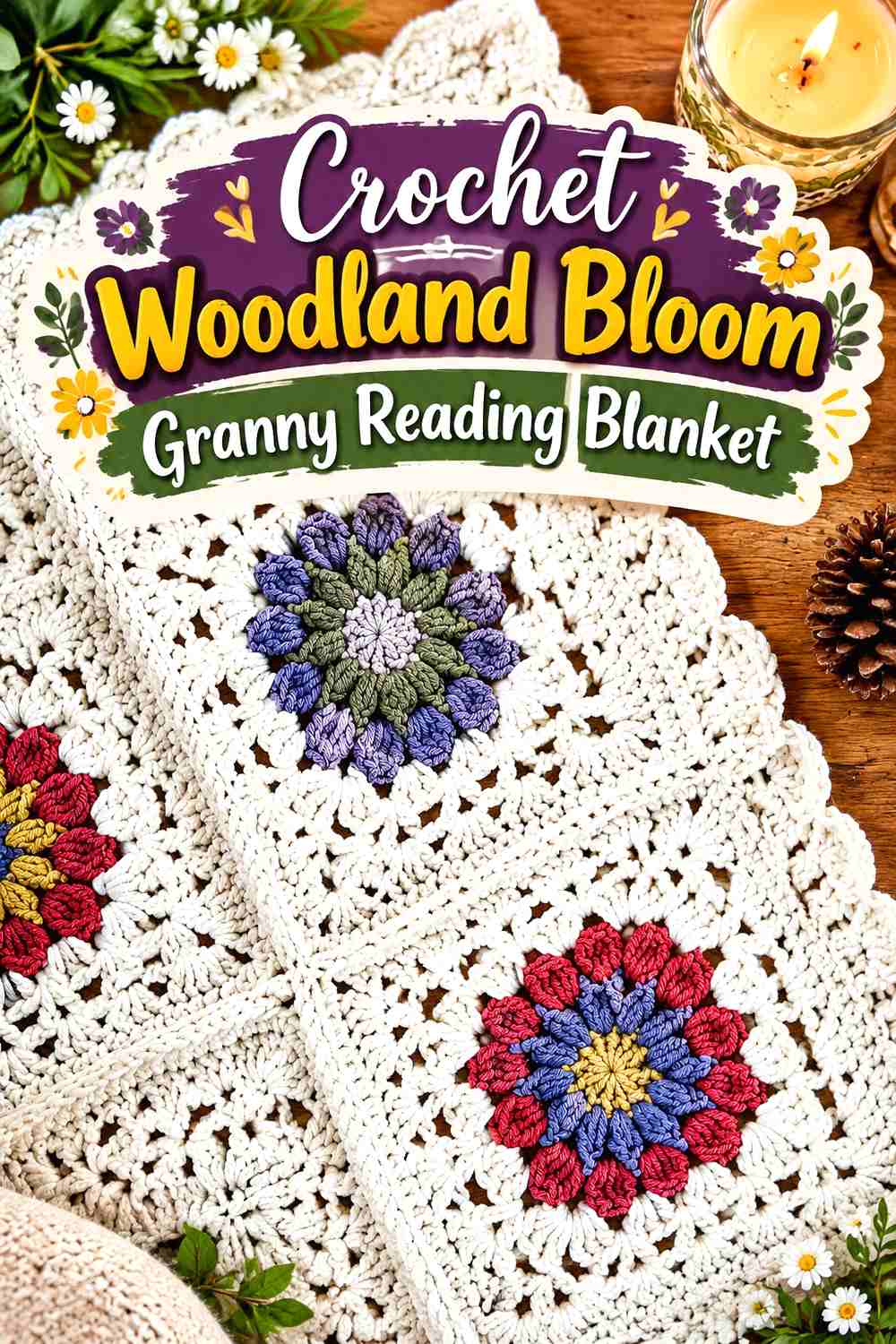
Spotted Horse Design Co.’s Woodland Bloom design is unusually close to the burrowcore mood already. The floral granny squares were developed with woodland and cottage inspiration, and the finished blanket combines individual flower-centered motifs with a joined layout and border.
The modular structure makes this a good choice if you want the reading blanket itself to feel like something assembled gradually over many winter evenings.
Floral Centers Add Nature Without Literal Animal Motifs
Burrowcore can reference the outdoors without covering every surface in mushrooms, foxes, or rabbits.
A flower-centered square provides enough organic imagery to suggest the woods while remaining flexible enough for a grown-up reading nook.
Block the Squares Before Final Layout Decisions
A motif blanket depends on consistent component dimensions.
Compare finished squares before joining and arrange the whole color layout first. A beautiful individual square can still create an awkward cluster if every darkest motif ends up in the same corner.
Creator Credit: Spotted Horse Design Co.
3. Crochet Mossy Gingham Storybook Blanket
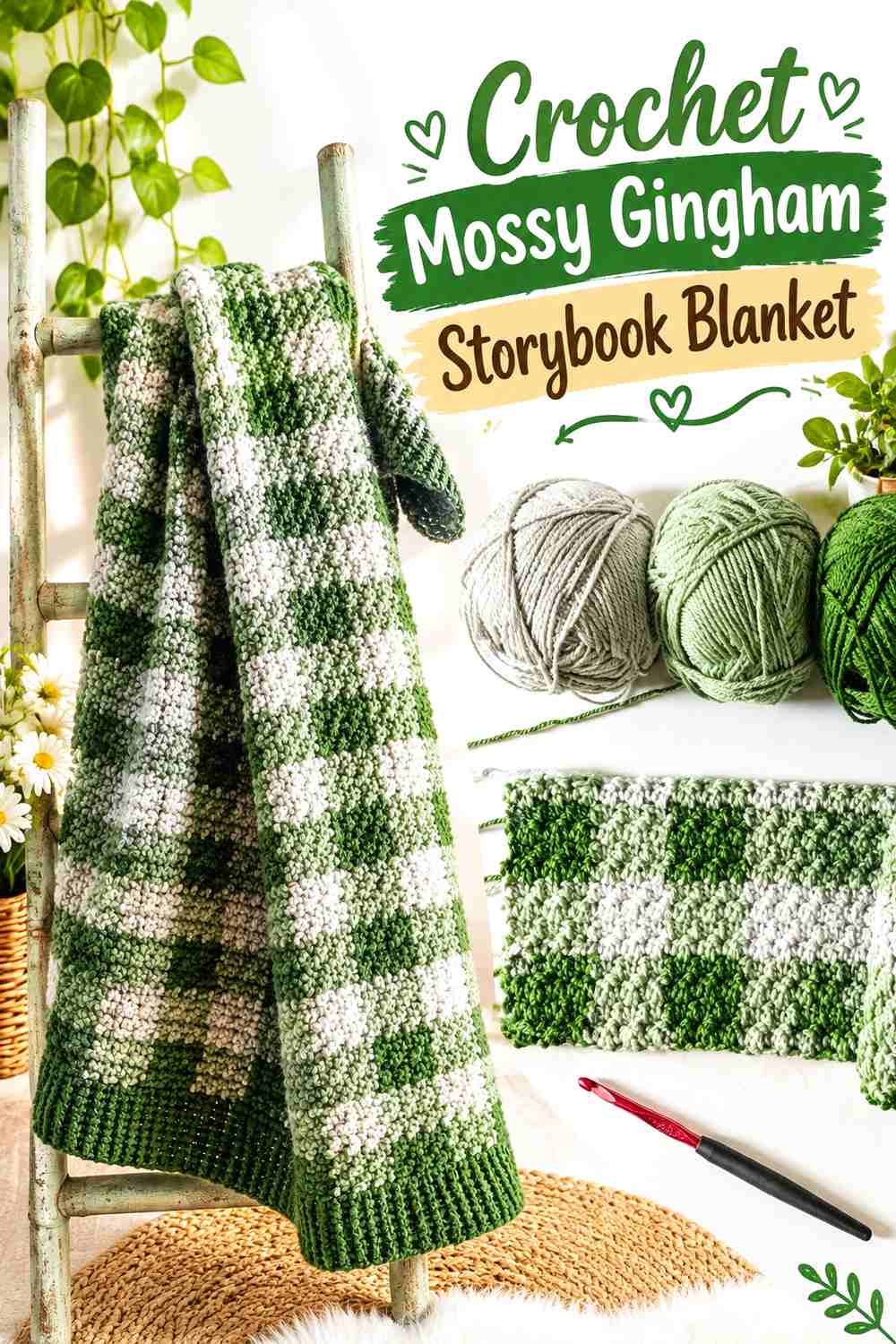
Daisy Farm Crafts’ green gingham blanket combines several green tones with a pale neutral and uses carried color to create a checked surface. The source project is relatively compact, so a reading-throw version should be resized through the creator’s construction guidance rather than by guessing at extra repeats.
Gingham brings a familiar country-house quality to a burrowcore nook without requiring motifs or appliqués.
Tonal Green Checks Feel More Woodland Than High Contrast
Using related greens keeps the grid visible while making the blanket feel softer than a stark black-and-white check.
You can apply the same idea with rust and brown, mushroom and cream, or deep berry and muted rose if green does not suit the room.
Carried Color Makes Edge Consistency Important
A gingham construction asks you to manage color across the row, so the side edges deserve attention from the beginning.
Before adding a border, check that the blanket lies flat and that no carried section has tightened one part of the fabric more than another.
Creator Credit: Daisy Farm Crafts
4. Crochet Star Patchwork Burrow Blanket
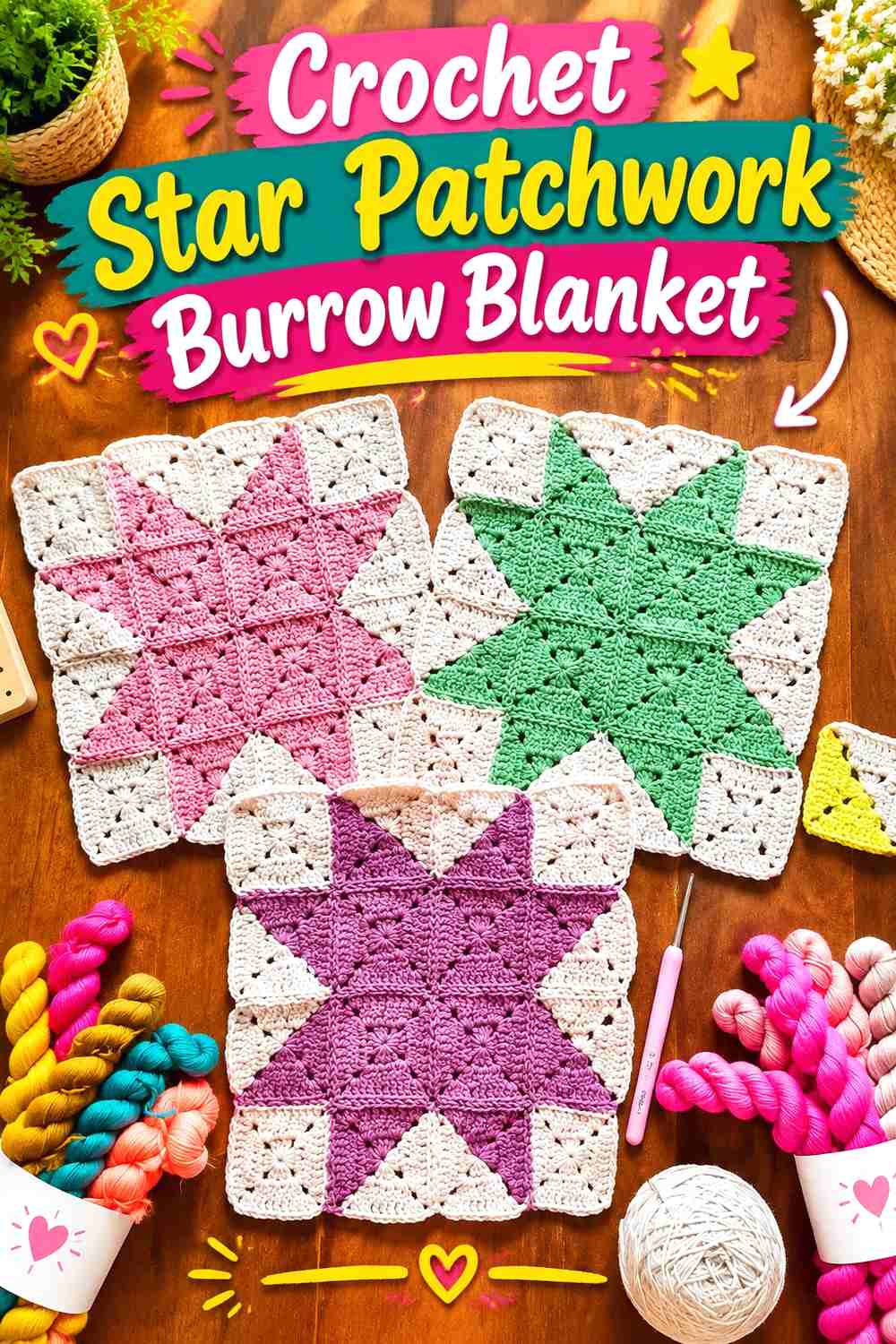
Moara Crochet’s patchwork tutorial builds a large star effect from granny-square components, including contrasting and divided-color motifs. The creator describes the concept as expandable into a larger blanket, making it especially useful for a collected patchwork look.
This direction brings a quilt-like quality to crochet, which fits naturally with the handmade, inherited-feeling side of burrowcore.
The Star Layout Needs to Be Planned Before Joining
The effect depends on individual squares becoming part of a larger shape.
Lay every motif out before permanent assembly and photograph the arrangement if necessary. One rotated divided-color square can interrupt the star more noticeably than a small shade difference.
A Limited Palette Can Make Patchwork Feel Older
Patchwork does not require dozens of bright colors.
Two earthy main shades plus a softer neutral can make the geometry feel closer to an old cabin quilt, while a varied scrap palette creates a more whimsical storybook effect.
Creator Credit: Moara Crochet
5. Crochet Winter-Woven Den Blanket
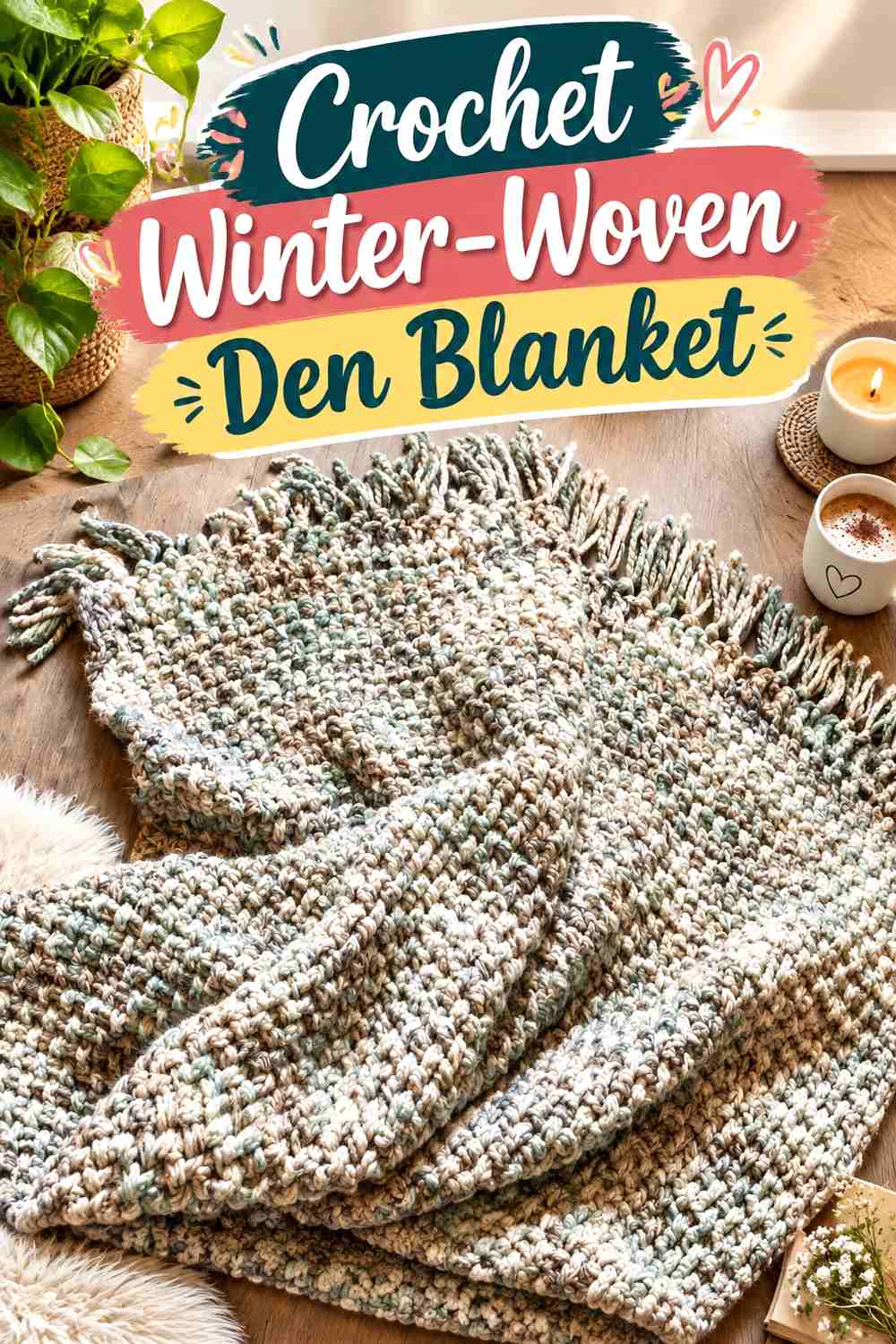
Rich Textures Crochet’s Winter Woven Throw uses super-bulky yarn and a stitch pattern designed to create a woven-looking surface. The demonstrated blanket is a true throw rather than a tiny motif sample, making this one of the more direct winter-nest options in the collection.
Its strongest quality is physical presence: the fabric looks substantial even without complicated colorwork.
Woven Texture Can Replace a Busy Color Scheme
A raised interlocking surface creates plenty of visual detail in a solid or nearly solid yarn.
That makes this a good choice for a reading nook already filled with book spines, patterned pillows, wood grain, and small collected objects.
Super-Bulky Fabric Needs Dedicated Storage Space
A thick throw occupies considerable room even when folded.
Before making it larger, decide whether it will remain on the reading chair, sit in a floor basket, or need to fit onto a shelf. A blanket that overwhelms the storage area can make a small burrow feel cluttered rather than cozy.
Creator Credit: Rich Textures Crochet
6. Crochet Waffle-Texture Nest Blanket
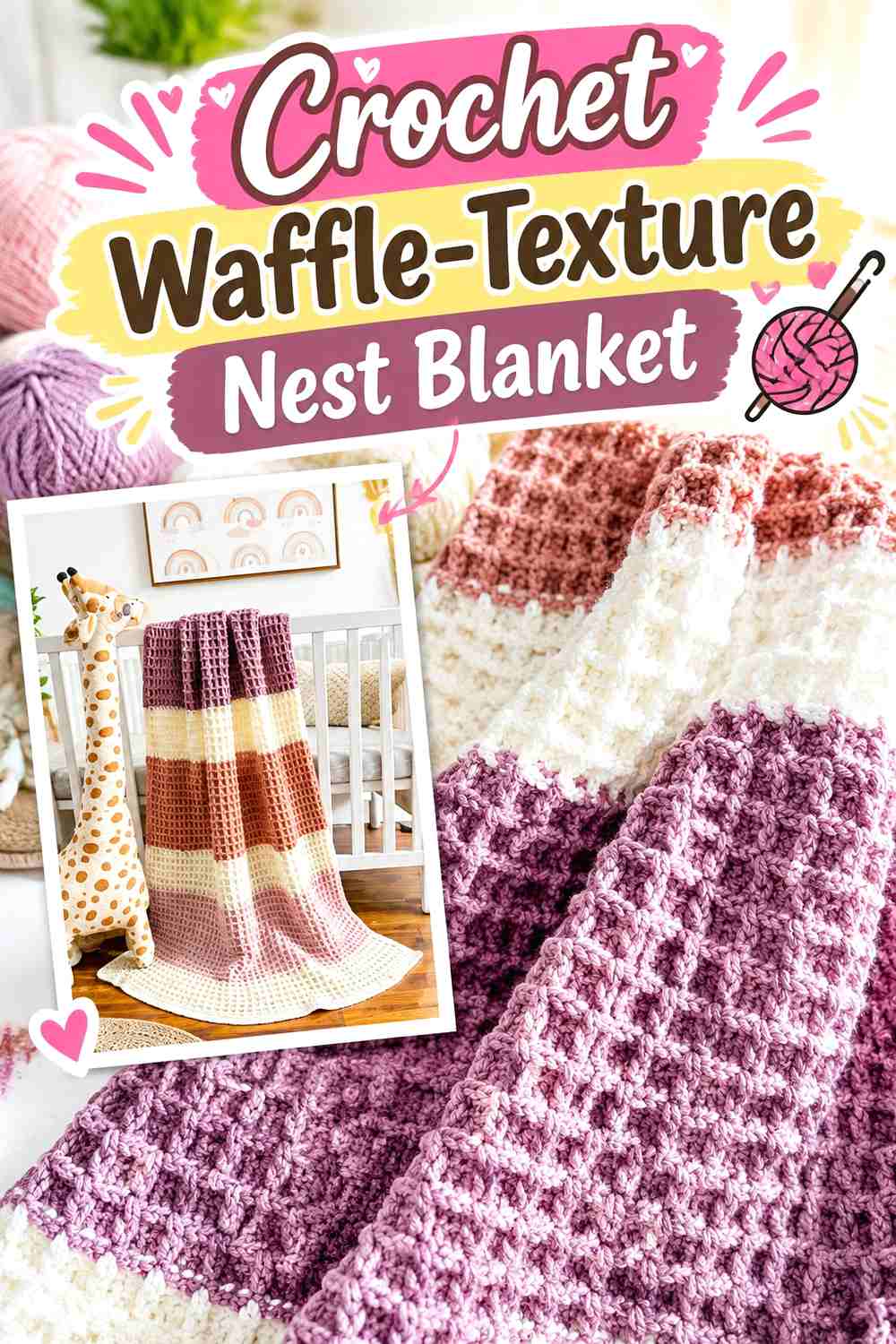
MJ’s Off The Hook Designs’ waffle blanket uses raised post stitches to produce a deep grid and includes both smaller and throw-size planning in the project information.
The square recesses and ridges give this blanket a thick architectural texture that works particularly well in a simple moss, cream, bark, or muted berry palette.
Waffle Fabric Creates Strong Shadow in Low Light
A reading nook usually has softer lighting than a workroom.
Deep texture remains visible because the raised sections catch light while the recesses stay darker. That can make a solid-colored blanket feel much more dimensional in the evening.
Dense Texture Can Add Considerable Finished Weight
A deeply textured blanket uses more fabric structure than many flatter stitches.
Choose the throw dimensions deliberately. If you only need knee-to-foot coverage in a reading chair, a smaller blanket may feel more comfortable than extending a dense design to bed proportions.
Creator Credit: MJ’s Off The Hook Designs
7. Crochet Chenille Cocoon Reading Blanket
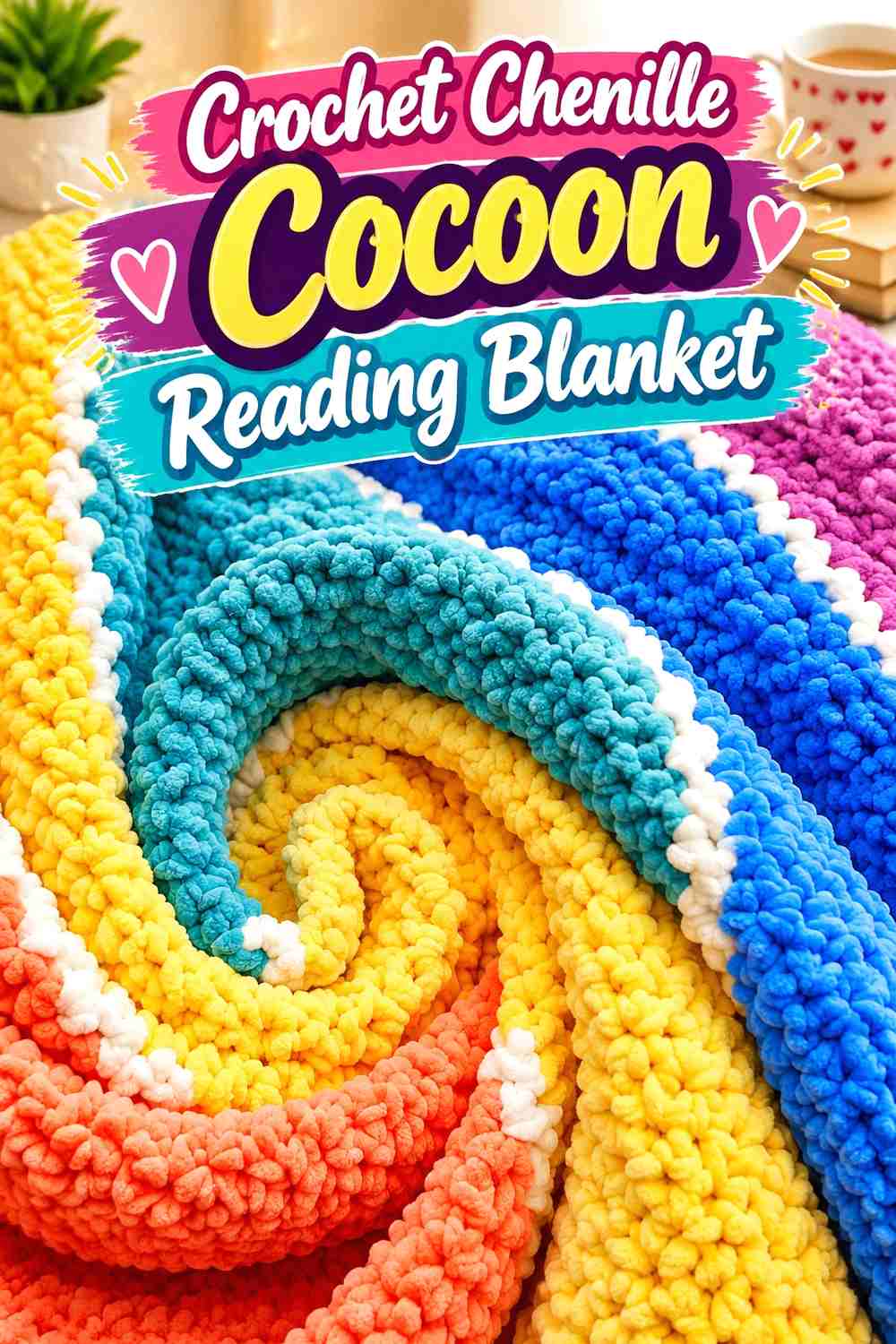
Hooked by Robin demonstrates a color-block chenille blanket worked with a simple repeating structure and a coordinated border. The plush yarn makes this the most overtly cocoon-like option in the collection.
For a burrowcore room, the palette can be shifted away from bright color blocking toward mushroom, moss, cream, faded rose, or other soft natural shades.
Chenille Provides Softness Before You Add Complex Texture
The yarn surface already creates visual and tactile depth.
That means you do not need elaborate raised stitches to make the blanket feel substantial. A simpler fabric can also be easier to read when the fuzzy yarn hides individual stitch definition.
Plush Yarn Changes How Much Space the Blanket Occupies
A chenille throw may appear compact when spread across the lap but become a large bundle when folded.
Keep the nook’s storage capacity in mind before increasing the dimensions. In a small chair corner, a deliberately sized cocoon blanket may be more useful than the largest throw you can make.
Creator Credit: Hooked by Robin
8. Crochet Soft-Chevron Woodland Blanket
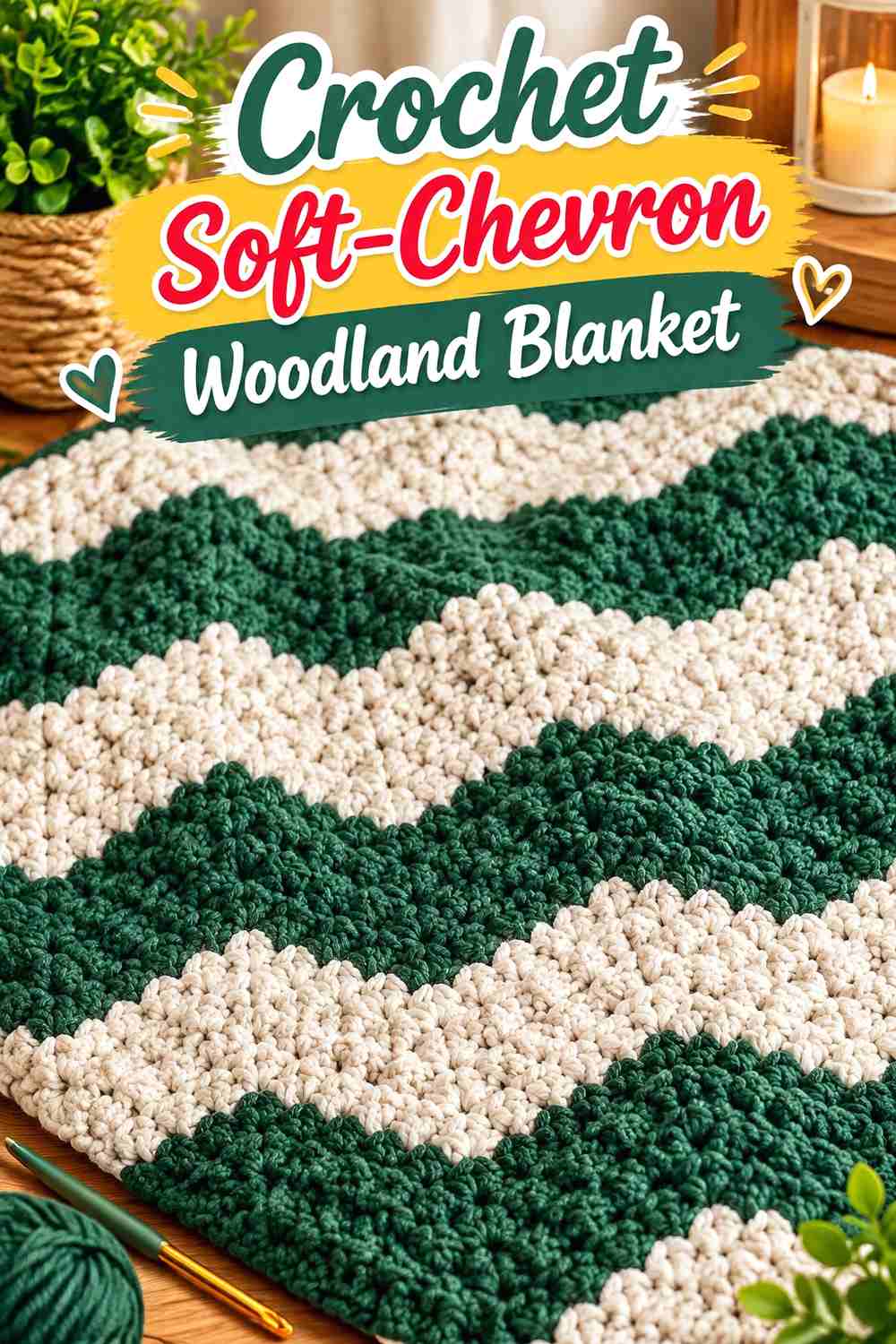
CrochetHooksYou demonstrates a soft-chevron blanket with gentler wave-like points rather than extremely sharp peaks. The project can be adjusted in size, which makes the construction useful for a reading throw after you decide on the coverage you want.
The undulating edge can suggest hills, roots, paths, or layered woodland scenery without depicting any of them literally.
Muted Stripes Keep the Chevron From Feeling Too Graphic
Chevron blankets can become bold quickly when every row changes to a sharply contrasting shade.
For a quieter burrow effect, use wider areas of closely related earth tones or repeat one grounding neutral between more noticeable colors.
Pointed Edges Need a Comfort Check at the Feet
The lower edge does not behave like a perfectly straight blanket hem.
If you tend to tuck the blanket tightly around your feet, try a small section or existing chevron throw first and decide whether you like that shaped edge in use as much as you like it visually.
Creator Credit: CrochetHooksYou
9. Crochet Shell-Stitch Storybook Blanket
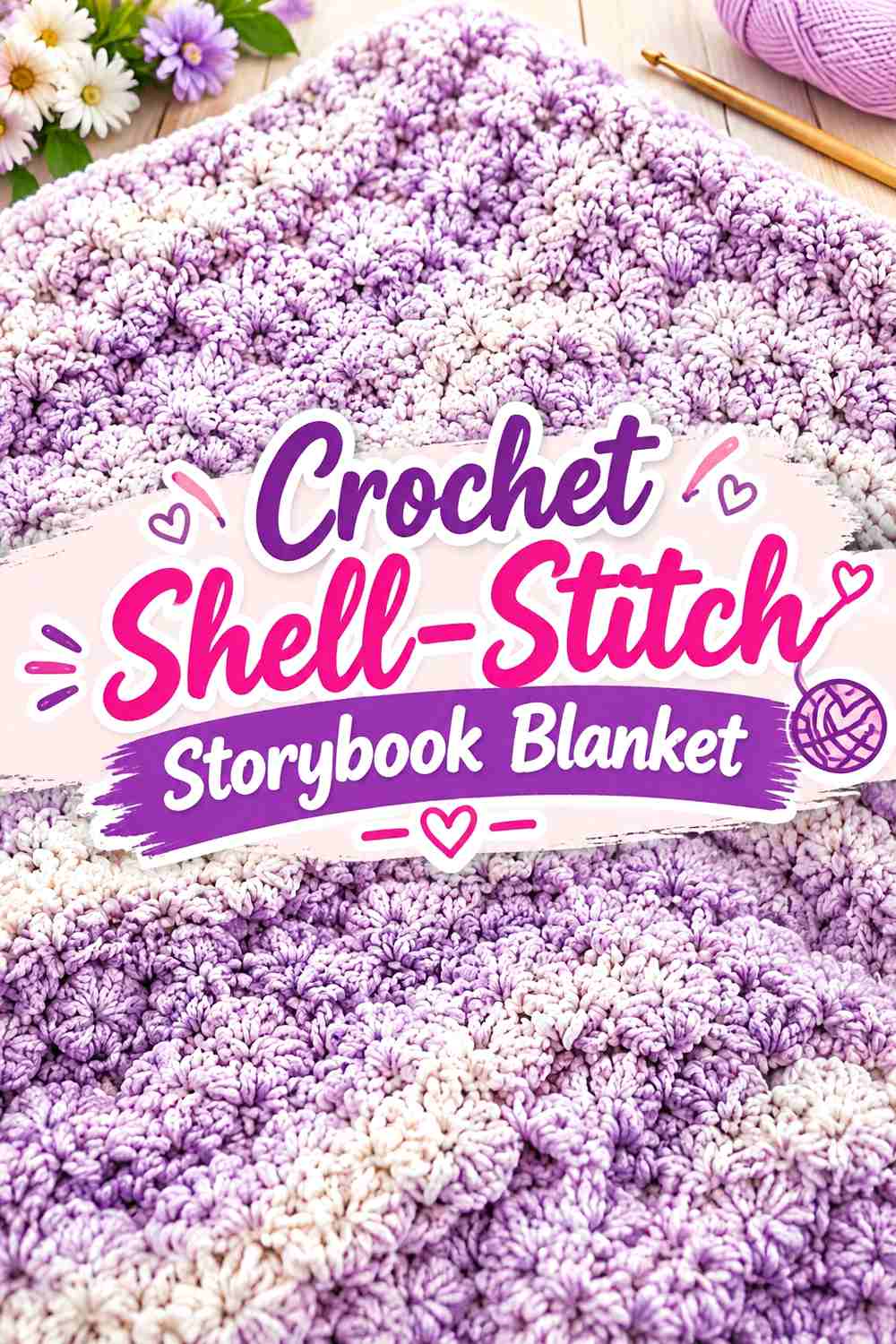
Designs by Phanessa’s blanket uses repeating shell-stitch fabric, creating scalloped visual movement without separate motifs. The source project is smaller than many adult reading throws, so use the creator’s stitch and sizing logic when adapting it rather than treating the demonstrated dimensions as fixed.
Shells bring a softer, slightly old-fashioned character that can suit a cottage-like reading nook especially well.
Shells Create Pattern Without Extra Seams
If you like the visual rhythm of granny motifs but do not want to assemble dozens of components, a continuous shell fabric gives you repeated shapes in one piece.
That can also make the blanket easier to drape smoothly across a chair.
Decide Whether You Want a Scalloped or Straightened Edge
Shell construction naturally creates movement at the boundary.
A shaped edge can add storybook charm when the blanket is draped over a basket, while a straighter finish may be more practical if you regularly fold it into a neat rectangle.
Creator Credit: Designs by Phanessa
10. Crochet Bobble-Stripe Cottage Reading Blanket
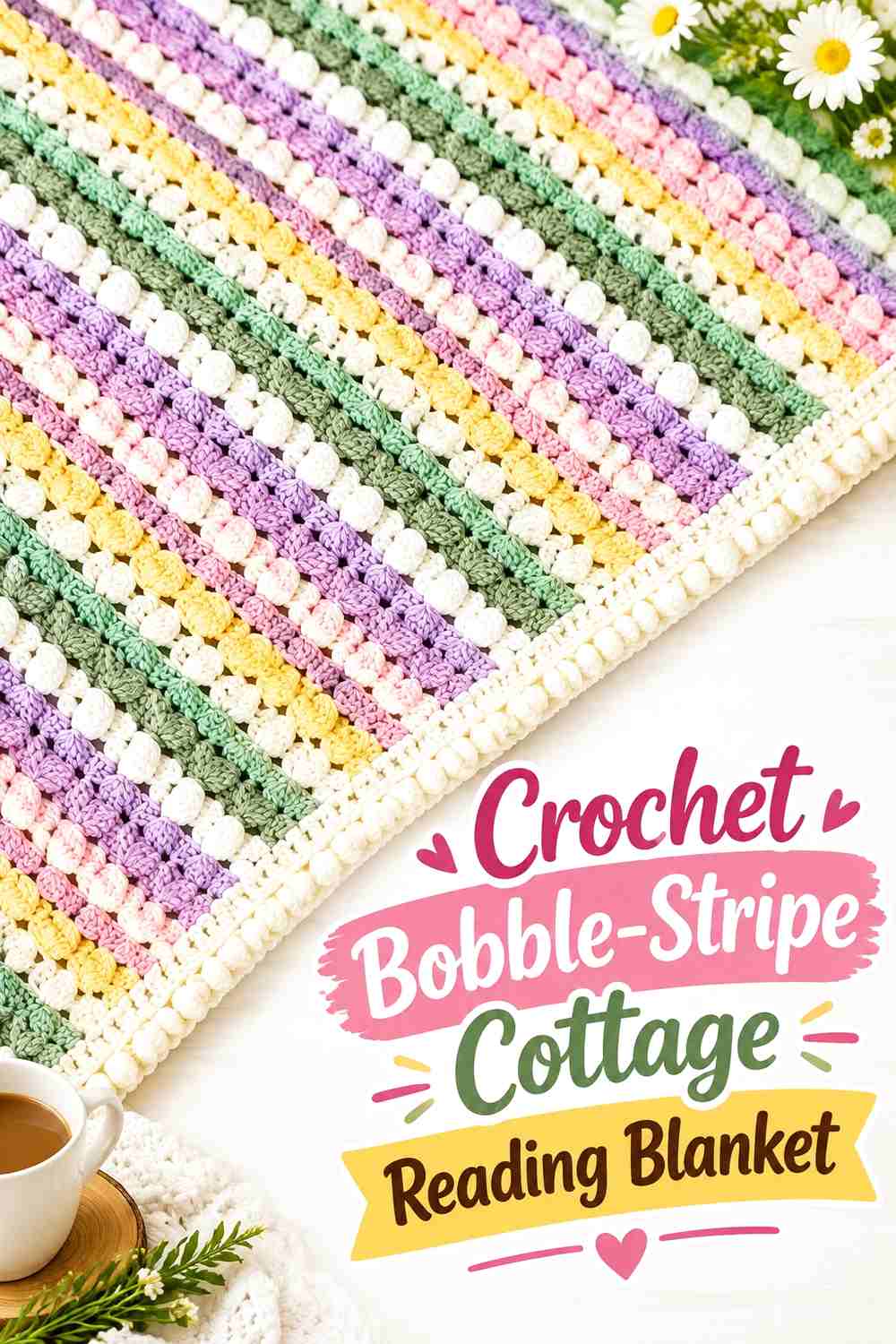
Bella Coco Crochet’s bobble-stripe design mixes bobbles, granny-style sections, stripes, and flatter rows rather than relying on one texture throughout. The original project is a smaller blanket, and the published guidance discusses repeating the sequence for additional size.
That mixture gives the finished fabric the layered, slightly eclectic quality that suits a room designed to feel gathered over time.
Bobbles Should Be an Accent Rather Than Automatic Bulk
Raised dots create a strong tactile feature, but an entire blanket filled densely with them can become much heavier.
Here, alternating texture gives the eye and hand quieter areas between the raised sections.
A Restrained Palette Keeps Mixed Stitches Cohesive
Several stitch patterns already provide plenty of variety.
Using a controlled group of earthy or faded colors can prevent the blanket from looking disconnected. Think of the textures as the collection and the palette as the element holding them together.
Creator Credit: Bella Coco Crochet
11. Crochet Chunky Fireside Burrow Blanket
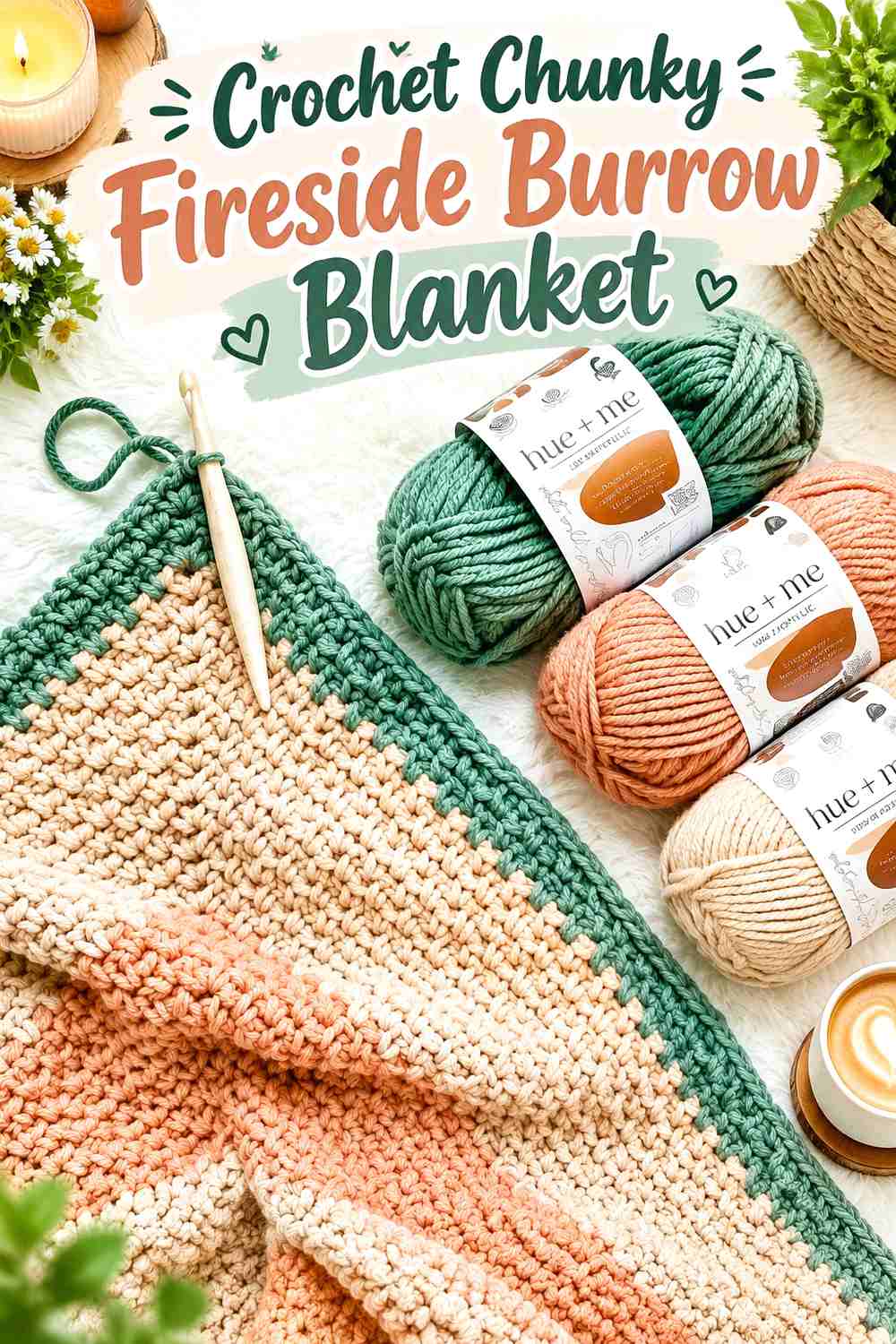
TL Yarn Crafts’ Bradley Afghan is designed as an adjustable chunky blanket, with the tutorial addressing yarn, hook, blanket size, and overall construction planning.
This is a useful option when you want a burrow blanket that feels grounded and substantial without floral motifs, patchwork, or complex surface decoration.
Tweedy or Heathered Yarn Can Add Quiet Storybook Detail
A simple construction gives the yarn itself more visual responsibility.
Speckled, tweedy, marled, or heathered shades can suggest an old wool blanket without forcing you to manage numerous color changes.
Keep Chunky Coverage Proportional to the Chair
A broad chunky afghan works beautifully on a sofa but can overwhelm a narrow window seat or reading chair.
Choose blanket dimensions around your seating position rather than assuming a full sofa throw is automatically the most comfortable reading size.
Creator Credit: TL Yarn Crafts
12. Crochet Granny-Cluster Keepsake Blanket
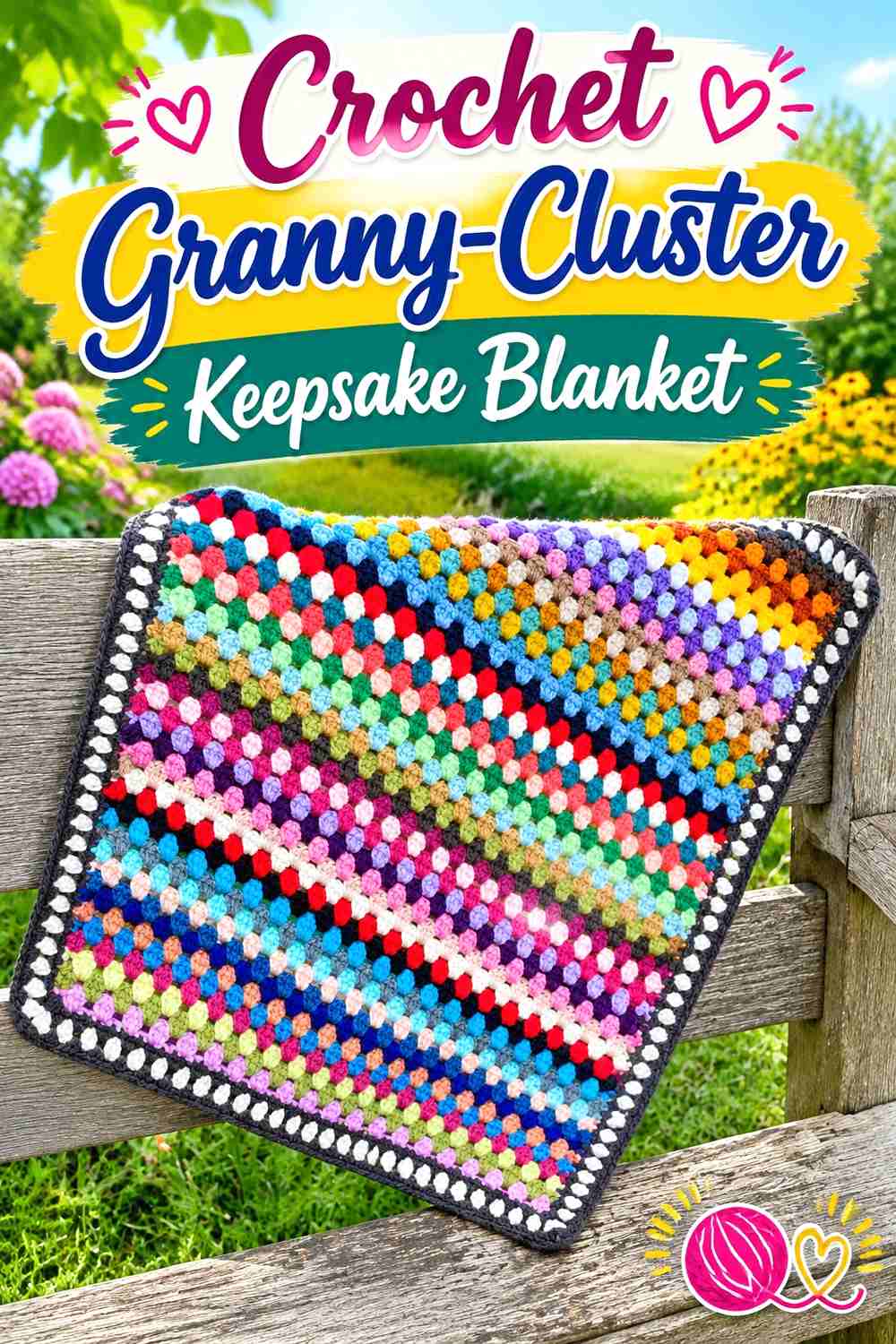
Ophelia Talks Crochet demonstrates a continuous granny-cluster blanket and discusses adapting the width through the underlying repeat.
Unlike a joined granny-square blanket, this option gives you the familiar clustered texture without dozens of separate motifs or seams.
Frequent Color Changes Can Create a Collected-Yarn Look
A granny-cluster fabric lends itself naturally to using many shades.
For burrowcore, the result can look particularly effective when the colors seem accumulated rather than perfectly matched: leftover browns, greens, creams, muted pinks, ochres, and dusty blues can create that slow-made quality.
Continuous Construction Avoids Motif Assembly
You still get the nostalgic granny texture, but the blanket grows as one main piece.
That may suit a reader who likes working with many colors but does not enjoy storing, arranging, and later joining piles of squares.
Creator Credit: Ophelia Talks Crochet
13. Crochet Herringbone Hearthside Blanket
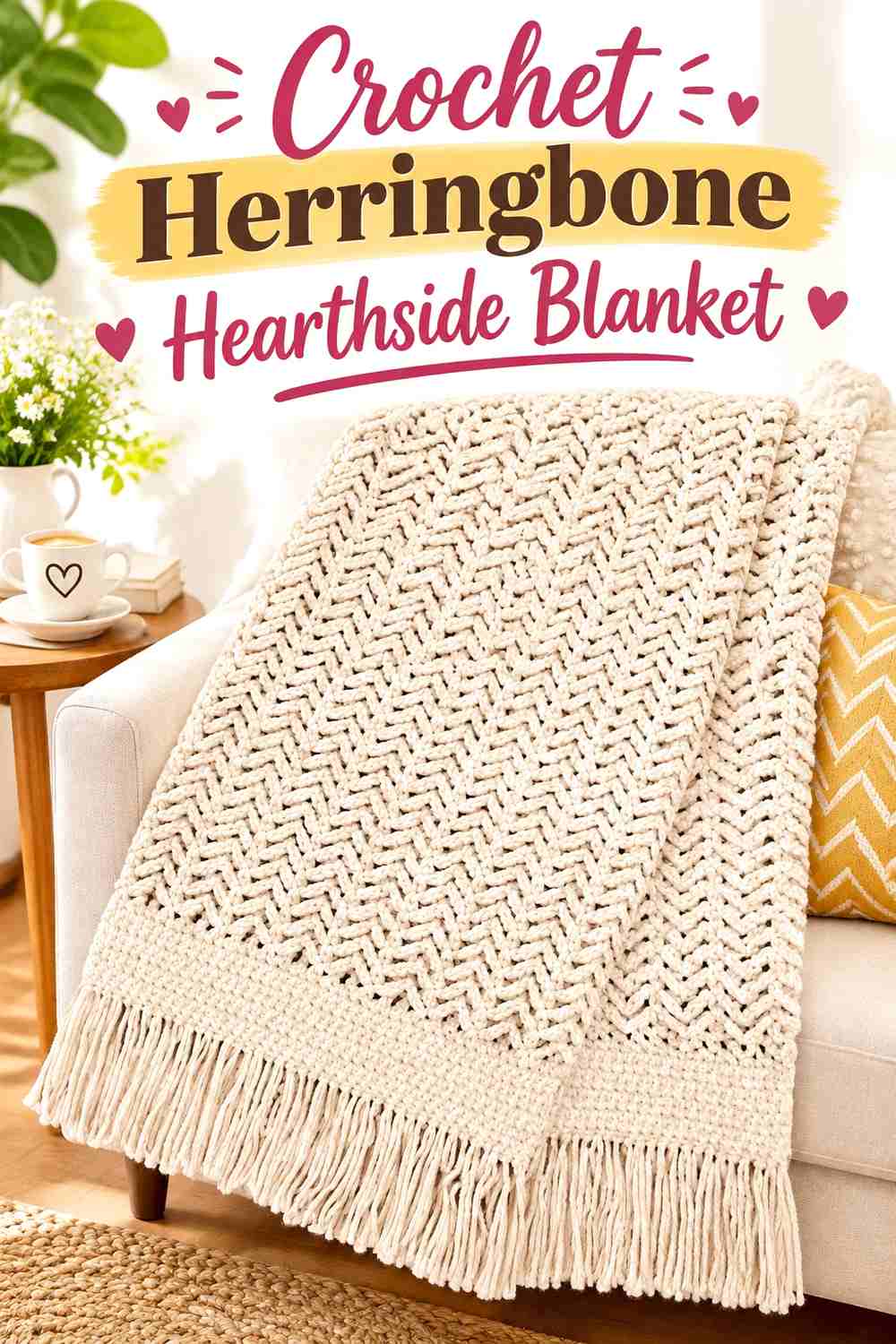
The Crochet Crowd’s herringbone blanket creates directional texture through repeated angled stitches, followed by finishing bands and an optional fringed treatment.
The resulting surface has a woven, almost fabric-like character that works well with the more traditional side of the burrowcore look.
Herringbone Direction Gives a Solid Color Movement
A single dark brown, moss, stone, or oatmeal yarn does not have to look plain when the stitches create visible diagonal movement.
This makes the project a strong option if you prefer subdued color but still want the blanket to show workmanship from across the room.
Fringe Changes How the Blanket Behaves in a Chair
Fringe can reinforce the old-throw appearance, but it can also catch beneath cushions or trail beside a low seat.
The creator treats fringe as optional, so decide based on the actual nook rather than adding it only because it appears in the source design.
Creator Credit: The Crochet Crowd
14. Crochet Cozy TV Reading Blanket
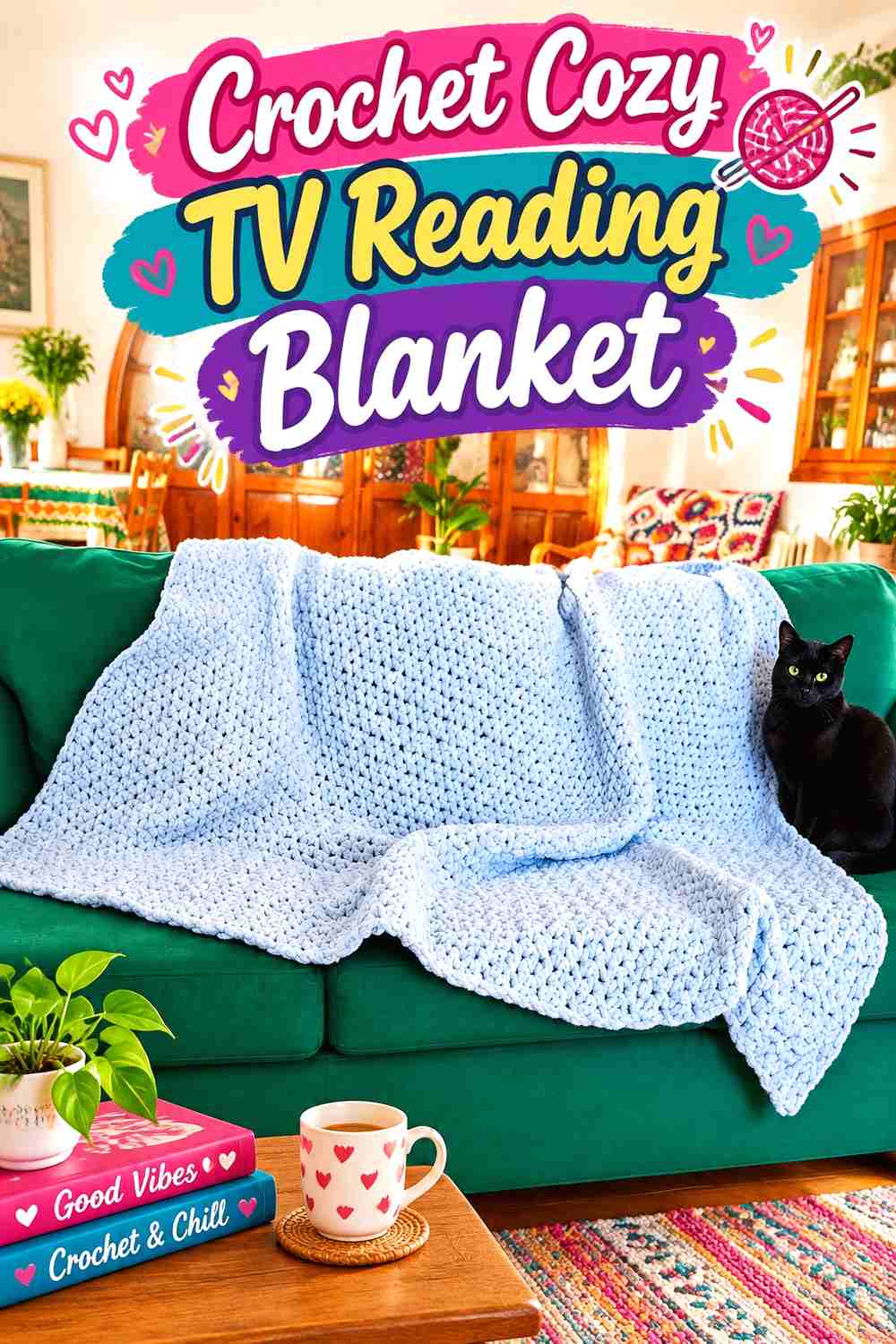
Sirin’s Crochet provides a dedicated cozy TV blanket tutorial, which transfers naturally to a reading nook because the project is already conceived as a practical lounging blanket rather than a decorative motif sample.
This is the understated choice for readers who want the burrow feeling to come from repetitive handmade fabric and soft color rather than an overt woodland design.
A Calm Repeat Can Suit Long Winter Projects
A blanket does not need constant structural changes to remain valuable.
If you want something you can work on during podcasts, audiobooks, or television, a more repetitive construction may be more enjoyable than a project requiring frequent layout decisions.
Simple Fabric Leaves More Room for Surrounding Decor
Bookshelves, lamps, patterned cushions, dried branches, ceramics, and baskets already add visual information to a burrow-style nook.
A straightforward blanket can provide the essential soft layer without competing with everything around it.
Creator Credit: Sirin’s Crochet
15. Crochet Airy C2C Burrow Layer
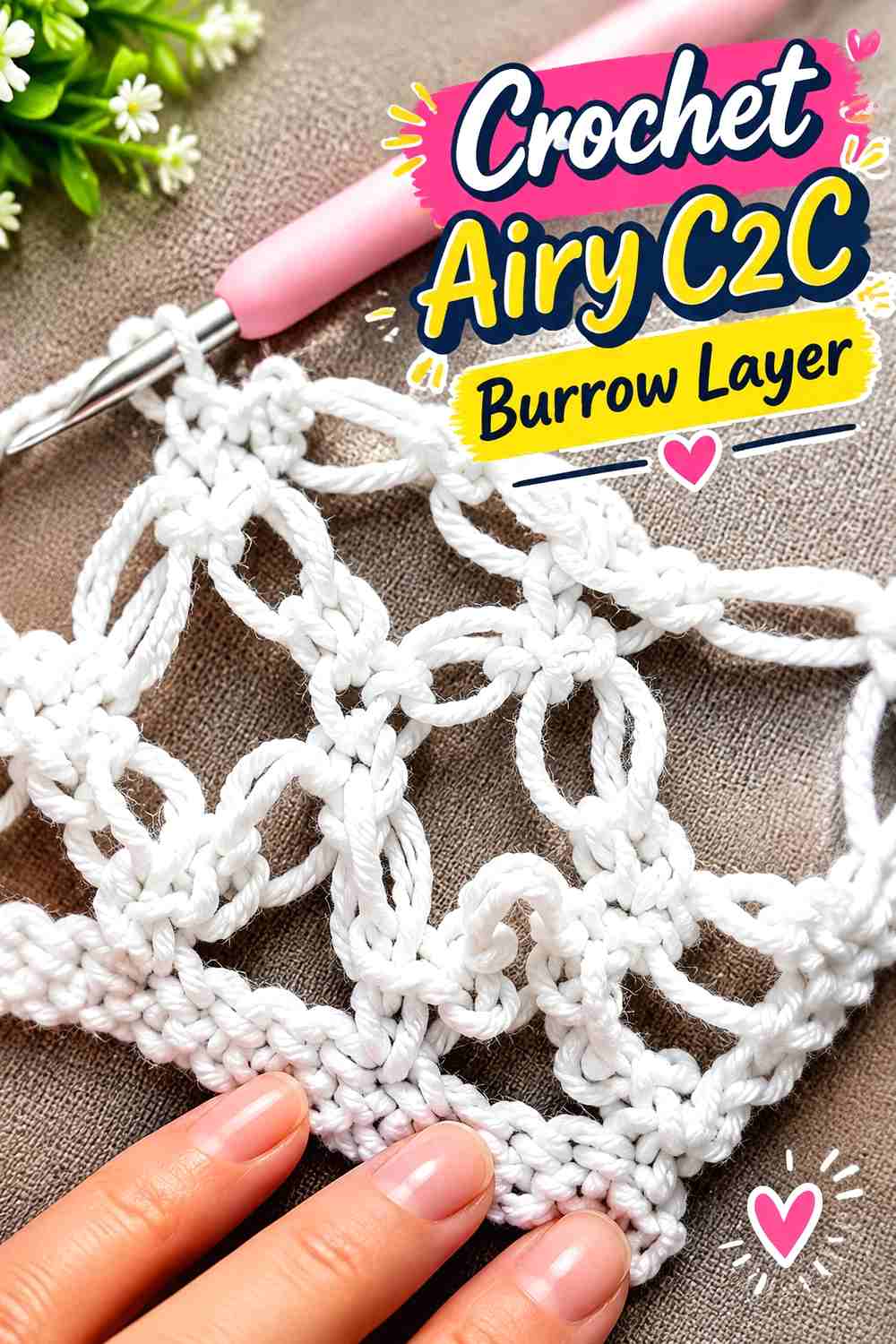
Yarnspirations’ Solomon’s Knot C2C blanket combines corner-to-corner growth with a notably open fabric. The source describes it as a lighter layer, so this should be viewed as a decorative or supplementary burrow blanket rather than a substitute for a dense cold-weather throw.
Its usefulness comes from visual lightness: it can sit over a denser blanket, chair cushion, or warm base layer without making the whole corner look heavy.
Openwork Can Keep a Layered Nook From Feeling Dense
Burrowcore encourages layering, but too many thick textiles can visually shrink a small space.
An open crochet layer gives you another visible textile surface while allowing the color beneath it to show through.
C2C Growth Creates a Different Planning Experience
The blanket develops diagonally instead of beginning with one finished-width edge.
Follow the creator’s sizing and turning guidance carefully if you change the dimensions, because adjusting a C2C project involves more than simply stopping after a shorter sequence of conventional rows.
Creator Credit: Yarnspirations
16. Crochet Simple Lodge-Style Reading Throw
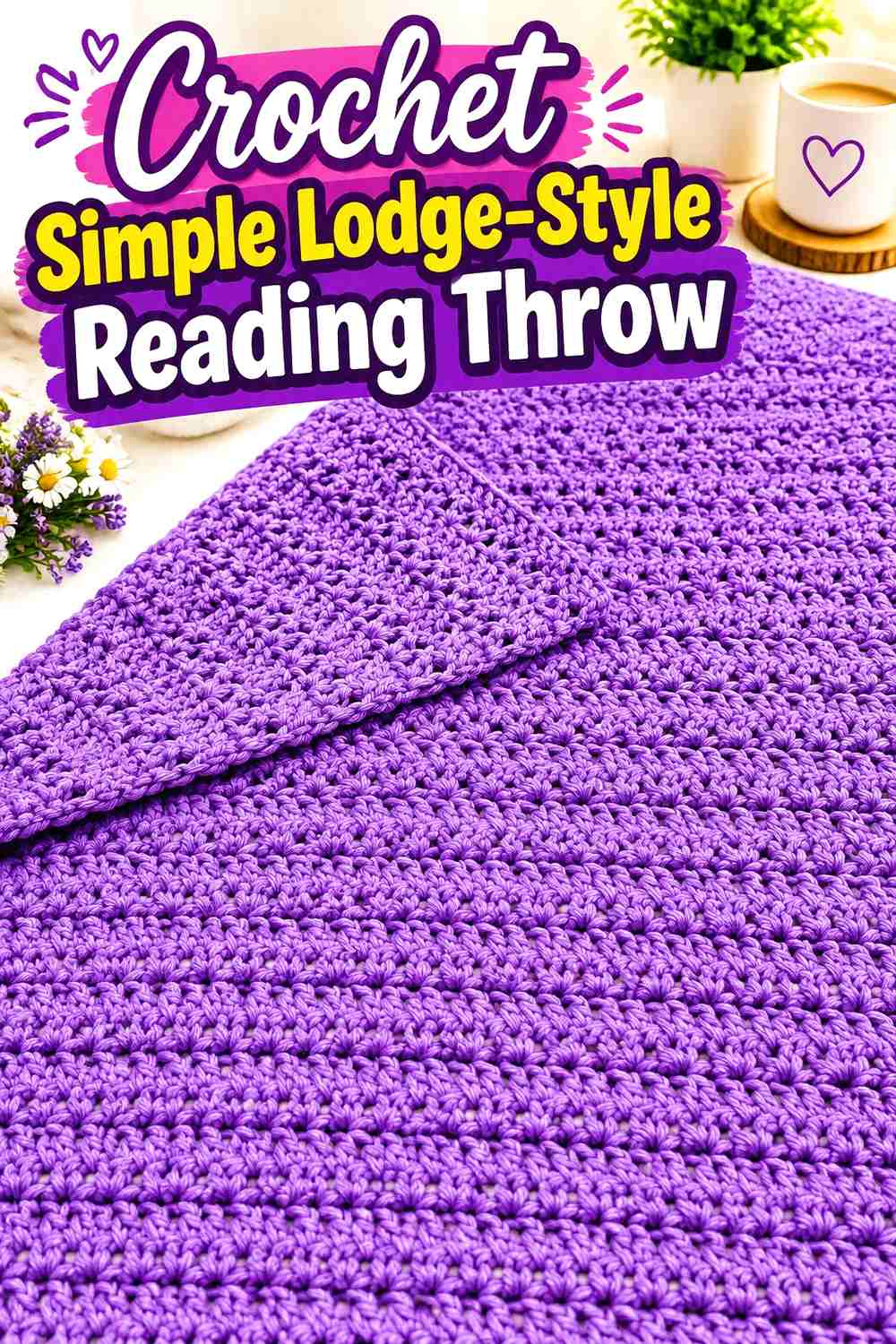
Bag-O-Day Crochet’s throw tutorial provides a straightforward full-blanket route without relying on motifs, dramatic openwork, or complicated color placement.
For burrowcore styling, that simplicity is useful. A plain handmade throw in a deeply natural shade can feel more convincing in a book-filled den than an elaborate blanket chosen only because it contains woodland imagery.
Let Fiber Appearance Carry a Simple Blanket
When the stitch pattern is relatively restrained, yarn color and surface become more noticeable.
A heathered brown, muted moss, oatmeal, or deep berry can add depth without introducing another pattern into an already layered reading corner.
A Straightforward Throw Is Easy to Style Over Time
Burrowcore is built around a space feeling accumulated rather than finished in one shopping trip.
A simple blanket can remain useful as cushions, rugs, artwork, baskets, and other textiles change around it because it does not depend on one highly specific theme.
Creator Credit: Bag-O-Day Crochet
Which Burrowcore Reading Blanket Fits Your Winter Nook?
| If you want… | Consider… |
|---|---|
| Quiet, flexible texture | #1 |
| Explicit woodland-floral character | #2 |
| Cabin-style checks | #3 |
| Quilt-like patchwork | #4 |
| Thick woven texture | #5 |
| Deep structured texture | #6 |
| Maximum plush softness | #7 |
| Gentle striped movement | #8 |
| Soft vintage-style shells | #9 |
| Mixed storybook textures | #10 |
| A substantial chunky throw | #11 |
| A scrap-friendly collected look | #12 |
| Traditional woven-looking lines | #13 |
| A straightforward lounging blanket | #14 |
| A lighter decorative layer | #15 |
| Simple lodge-style versatility | #16 |
If your reading nook is already visually busy, the moss stitch, chunky throw, TV blanket, or simple lodge-style design can add warmth without becoming another dominant pattern.
For a more obvious storybook room, the Woodland Bloom, star patchwork, green gingham, bobble stripe, and multicolor granny-cluster ideas bring stronger visual identity. They work especially well when the surrounding decor is quieter.
Texture-first readers have several distinct choices. Winter-woven fabric feels substantial and rustic, waffle stitch creates a deep geometric grid, chenille emphasizes softness, and herringbone provides more directional movement.
The airy C2C option solves a different problem. It can add a handmade layer to an already warm chair without producing another bulky throw, which is useful when the nook itself is small.
Conclusion
For the clearest burrowcore mood, the Woodland Bloom granny blanket, mossy gingham, star patchwork, and granny-cluster blanket create the strongest sense of a handmade textile that belongs in a storybook hideaway.
If physical coziness matters more than motif, choose the Winter Woven, waffle, chenille, or chunky fireside options. They bring the cocooning quality through fabric depth and weight rather than decorative imagery.
Readers who prefer something calmer may find the moss-stitch, herringbone, TV blanket, or lodge-style throw easier to live with over several winters. They can move between reading chairs, sofas, and bedrooms without relying on one themed palette.
Whichever direction you choose, measure the place where you actually read, consider how much blanket you want across your legs, and judge yarn substitutions by drape, weight, texture, and care as well as appearance. Use the original creator tutorial for exact construction, sizing, yarn requirements, joins, borders, and finishing.
Frequently Asked Questions
What makes a crochet blanket look burrowcore?
Burrowcore is more about enclosure, softness, natural color, layered texture, and handmade character than one specific motif. A mossy gingham blanket, old-looking patchwork throw, thick woven texture, or muted granny blanket can all fit the mood without including literal woodland animals.
Which colors work well for a burrowcore crochet blanket?
Earthy and muted shades are natural choices: moss, olive, bark brown, mushroom, oatmeal, rust, burgundy, faded berry, ochre, charcoal, and lichen-like grays. You can also introduce dusty blues or softened pinks. The most useful palette is one that works with the actual reading nook rather than following a rigid color checklist.
Is a granny-square blanket practical for winter reading?
Yes, but the amount of open space varies between motif designs. A granny blanket with noticeable gaps may feel less insulating than dense waffle or woven fabric. Layering it over clothing or another textile can still make it a useful reading blanket.
What crochet texture feels most substantial for a cold reading nook?
Waffle, dense woven-look stitches, chunky fabric, herringbone, and plush chenille can all produce substantial blankets, but their finished weights and drape differ. Make a swatch before committing to a large blanket, particularly with dense stitches or bulky yarn.
Should a reading blanket be smaller than a normal throw?
It can be. A dedicated chair blanket only needs to cover the area you actually want warm. A smaller size may be easier to tuck around the knees, fold beside the chair, and store in a basket than a large sofa or bed blanket.
Can I combine several burrowcore crochet blanket ideas into one design?
You can take general styling inspiration from several ideas, such as using woodland colors with a herringbone or waffle construction. Avoid combining creator-specific stitch sequences or assembly instructions from separate protected patterns. Choose one construction source and make independent color or scale decisions where the tutorial permits them.
Are openwork crochet blankets useful in winter?
They can be useful as supplementary layers, but open fabric should not be expected to provide the same coverage as a dense blanket. An airy crochet throw works particularly well over warm clothing, another blanket, or a cushioned reading seat when you want texture without excessive bulk.