A good cabin reading blanket needs more than a cozy color palette. Construction affects how the blanket settles across your lap, texture changes its weight and flexibility, and the finishing style can determine whether it feels rustic, modern, or somewhere in between.
These 17 crochet blanket ideas cover noticeably different approaches, including classic plaid, deep waffle texture, cables, log-cabin construction, patchwork stars, granny squares, diagonal C2C work, chunky stripes, chevrons, reversible fabric, scrap yarn, shaped blankets, and herringbone texture.
Rather than treating every blanket as interchangeable, use the differences below to decide what matters most for your winter reading spot: compact lap coverage, substantial texture, portable motif work, bold cabin character, or a cleaner throw that can stay on the sofa year-round.
Quick List
- Crochet Plaid Cabin Reading Blanket
- Crochet Waffle Texture Reading Blanket
- Crochet Cottage Cable Throw Blanket
- Crochet Log Cabin Granny Blanket
- Crochet Star Patchwork Cabin Blanket
- Crochet Chunky Granny Square Hearth Blanket
- Crochet Corner-to-Corner Reading Blanket
- Crochet Super Chunky Striped Cabin Blanket
- Crochet Chevron Fireside Blanket
- Crochet Reversible Double-Sided Reading Blanket
- Crochet Two-Tone Modern Cabin Throw
- Crochet Scrap Yarn Cabin Blanket
- Crochet Star-Shaped Winter Reading Blanket
- Crochet Extra-Thick Fireside Blanket
- Crochet Modern Bradley Reading Afghan
- Crochet Textured Quilt-Style Cabin Blanket
- Crochet Vertical Herringbone Reading Blanket
Choose the Construction Before You Choose the Cabin Colors
Rust, cream, forest green, charcoal, burgundy, and warm brown can make almost any blanket feel cabin-inspired, but color does not determine how the blanket behaves.
A joined-square blanket can be worked in manageable pieces and rearranged before final assembly. A corner-to-corner blanket grows diagonally and creates a completely different visual rhythm. A continuous striped blanket avoids motif joining, while cables and waffle textures put more emphasis on the surface of the fabric.
Think first about where you enjoy crocheting and how much finishing you want at the end. Someone who likes carrying small pieces may prefer patchwork or granny squares. Someone who wants a continuous project on the sofa may prefer chevrons, waffle texture, or a simple chunky throw.
Balance Warmth, Texture, Weight, and Drape
A visually thick blanket is not automatically the right reading blanket for everyone. Dense raised textures can produce substantial fabric, while more open constructions may feel lighter across the lap.
Yarn choice changes that balance again. Before substituting a different yarn for a tutorial, make a swatch and notice more than its dimensions. Fold it. Let it hang. Place it across your lap. Decide whether the resulting fabric feels flexible enough for the way you intend to use the blanket.
Highly textured designs also deserve attention at the finishing stage. Borders that are much tighter or looser than the main fabric can distort an otherwise rectangular throw, so check the edges periodically instead of waiting until everything is complete.
Plan a Reading Blanket Around Where You Will Actually Use It
A blanket intended for an armchair does not need to solve the same problem as a bed covering. Before committing to the final dimensions, sit in the chair or sofa where you normally read and decide what you actually want covered.
Some readers primarily want a blanket across their legs. Others want enough length to pull toward the shoulders. An oversized, heavy throw may sound appealing in winter but can become awkward in a narrow chair.
If you alter a tutorial’s size, use the creator’s construction method and pattern information to determine how sizing changes should be made. Do not assume that every textured or motif-based design can simply be widened by an arbitrary number of stitches.
1. Crochet Plaid Cabin Reading Blanket
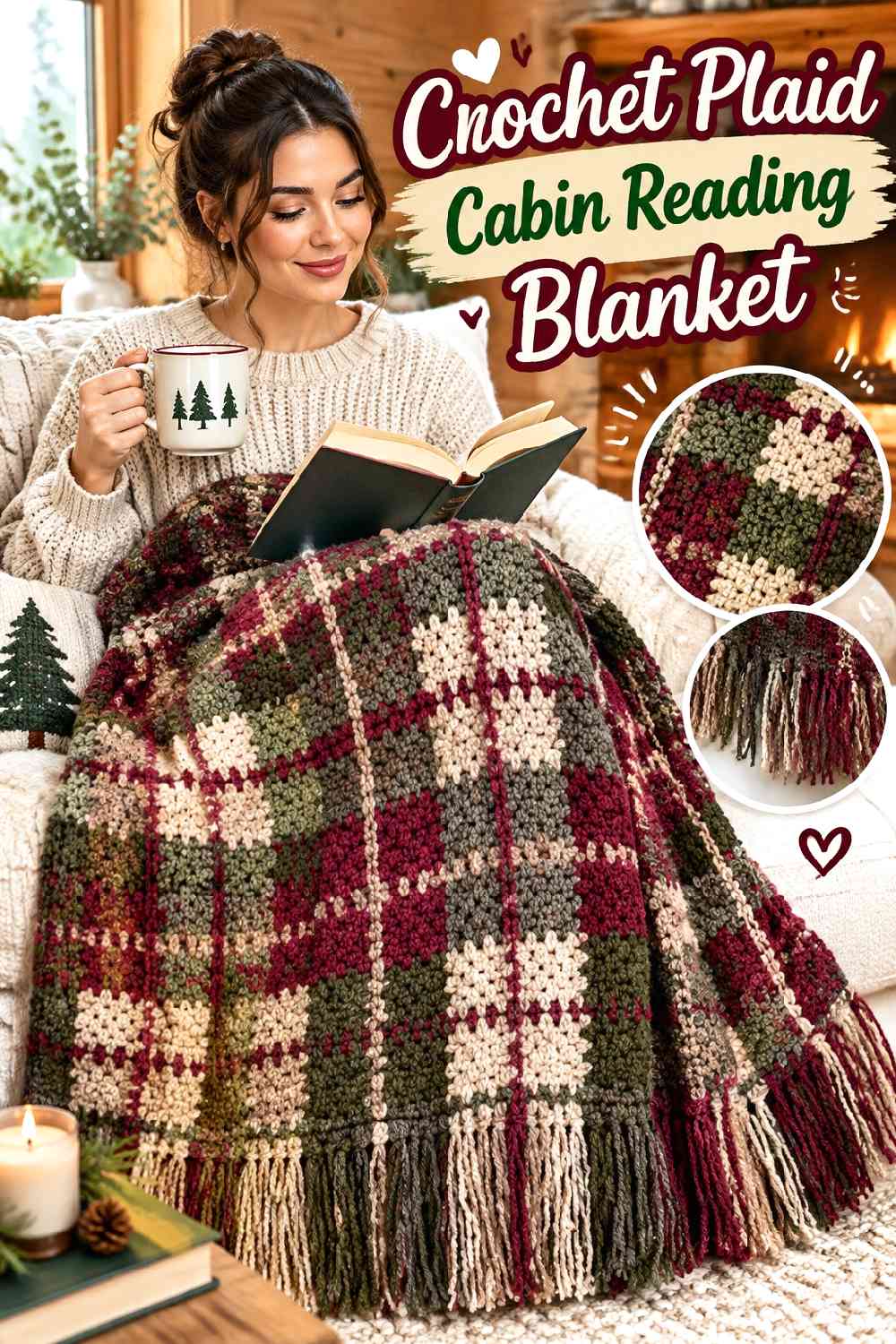
Plaid has one of the strongest visual connections to lodge and cabin interiors, which makes this blanket an obvious option when the handmade throw will also function as part of the room’s decor. The colorwork creates far more structure than ordinary horizontal striping.
This style makes sense when you want the blanket to remain visually interesting even while folded across the back of a chair. It is also a useful alternative to complicated surface texture: much of the character comes from the interaction of the colors rather than from an extremely raised fabric.
Color Placement Is the Main Design Decision
Plan the entire palette before starting rather than choosing each new shade spontaneously. Plaid depends on repeated relationships between colors, so a change that looks minor in one section can affect the balance of the finished blanket.
For a quieter cabin look, consider several related earthy shades plus one lighter contrast. For a bolder lodge effect, stronger contrast will make the plaid structure easier to see from across the room.
Colorwork Adds a Different Kind of Complexity
A plaid blanket asks you to manage color placement as well as crochet technique. Before choosing this option, look at how the tutorial organizes the color changes and decide whether that process suits the way you like to work.
If you normally prefer uninterrupted rows, a single-color textured throw may be more relaxing. If color planning is part of the fun for you, plaid can produce a much stronger cabin statement without relying on novelty yarn or decorative appliqués.
Check the Reverse Side Before Calling It Finished
Any blanket that involves frequent color changes deserves inspection from both sides. A reading blanket gets folded, turned, and draped in different directions, so the reverse is more visible than it would be on a piece that stays against a wall.
Think about whether loose ends, carried yarn, or finishing details will bother you when the blanket is in everyday use.
Creator Credit: The Crochet Crowd
2. Crochet Waffle Texture Reading Blanket
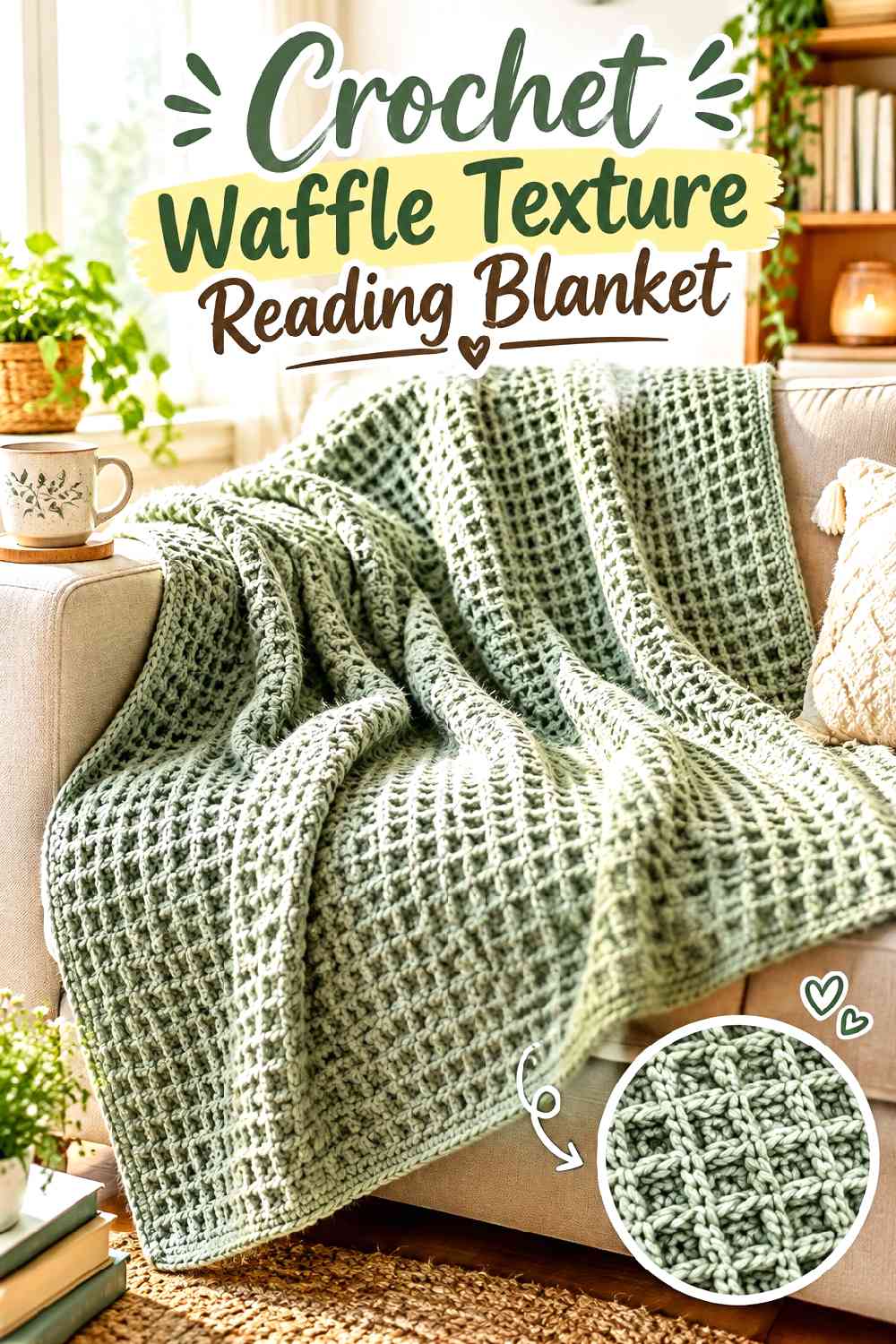
Waffle texture gives a solid-color blanket enough surface detail to stand on its own. The recessed and raised areas produce a grid that works especially well with understated cabin palettes because the fabric does not depend on frequent color changes for interest.
This is a useful direction if you want a blanket that feels traditional and textural without assembling individual motifs.
Deep Texture Can Increase the Blanket’s Presence
Raised crochet fabric can feel more substantial than a flatter fabric made from a similar yarn. That can be appealing for a winter throw, but it also means you should think about total weight before automatically enlarging the project.
Make a meaningful sample and handle it as fabric rather than judging it while it is flat on a table. That small test will tell you more about flexibility and density.
Solid Colors Let the Surface Do the Work
Waffle-like texture is easiest to appreciate when the shadows between raised sections remain visible. A heavily variegated yarn can compete with those lines.
That does not mean the blanket must be neutral. Deep green, muted blue, brick red, ochre, or warm gray can still give the throw cabin character while allowing the texture to remain the dominant feature.
Creator Credit: Littlejohn’s Yarn
3. Crochet Cottage Cable Throw Blanket
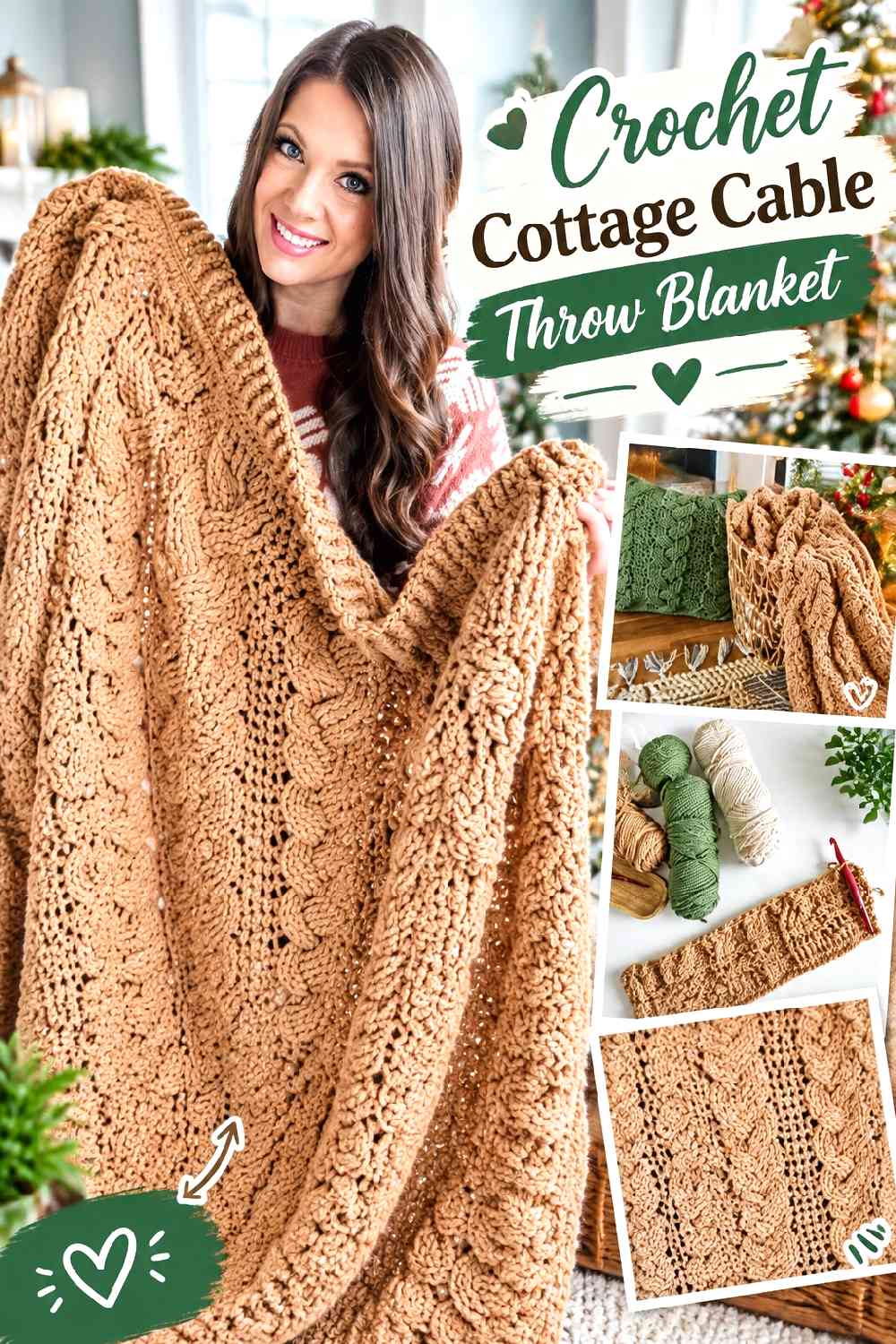
Crochet cables give this reading blanket a more traditional sweater-inspired surface. The dimensional lines are particularly suited to a winter room where knitted cushions, wood furniture, or other heavily textured textiles already play a role.
This is a better choice for someone who wants the blanket’s craftsmanship to remain visible even in a single color.
Cable Definition Depends on the Yarn
Before substituting a fuzzy or highly irregular yarn, consider whether it will hide the cable structure you are spending time creating. A yarn with clearer stitch definition generally makes dimensional lines easier to read.
Make a sample first if you are changing fiber, thickness, or hook size. The goal is not merely matching an appearance; it is deciding whether the resulting fabric has the weight and flexibility you want.
Raised Sections Deserve Occasional Measurement
Dimensional stitches can affect fabric behavior differently from flat rows. Check width and edge alignment as the blanket grows rather than assuming the starting dimensions guarantee a perfectly even finished throw.
Early corrections are generally easier than discovering substantial edge distortion at the finishing stage.
Use Color Restraint When Texture Is Already Strong
Cables already create considerable visual activity. If your cabin has patterned rugs, plaid cushions, or wood grain competing for attention, a restrained blanket color can prevent the room from looking overly busy.
Creator Credit: MJ’s Off The Hook Designs
4. Crochet Log Cabin Granny Blanket
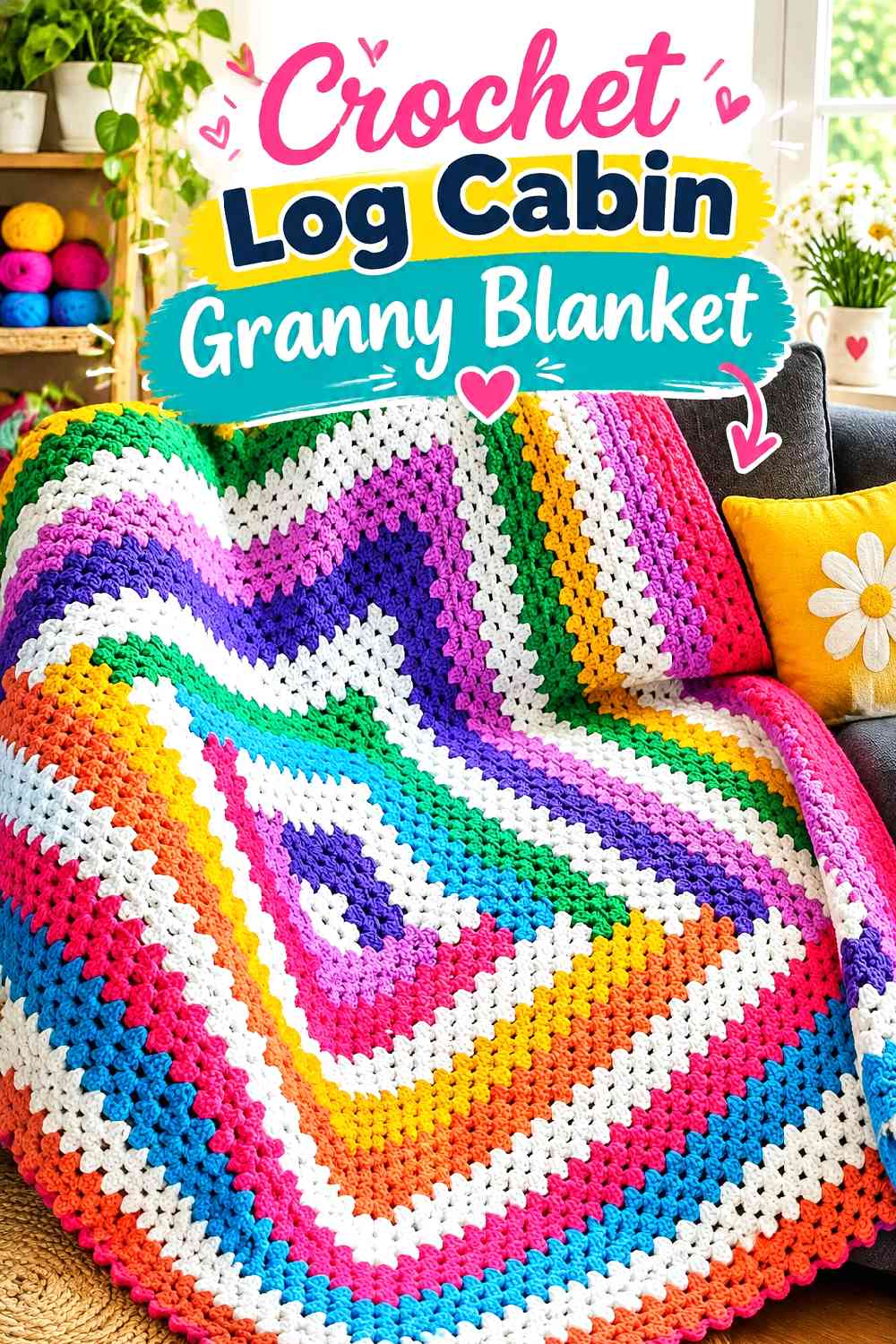
A log-cabin construction feels particularly appropriate for this theme because the structure itself references the familiar log-cabin block arrangement. Instead of building the entire blanket in straight rows, the sections grow around one another to create a graphic, architectural effect.
This is an appealing choice when you enjoy seeing the design change noticeably as each new section is added.
Alternating Light and Dark Sections Strengthens the Layout
You can make the construction easier to see by separating neighboring areas with a clear value difference. Several colors can still be used, but think in terms of light, medium, and dark rather than choosing shades only because they look attractive in the skein.
Photographing the yarn together and viewing the image in grayscale can help reveal whether the values are actually distinct.
Rotation Becomes Part of the Visual Rhythm
The orientation of each new section contributes to the log-cabin appearance. If you change colors, keep a simple record of your planned sequence so the design does not become accidentally unbalanced halfway through.
This is especially helpful when you are using leftover yarn and cannot rely on identical amounts of every color.
Check Squareness as the Blanket Expands
A center-growing or rotating construction makes early tension differences easy to repeat. Lay the work flat occasionally and check whether the corners and sides are behaving consistently.
Do that before adding many more sections; small irregularities become harder to ignore once the overall piece is large.
Creator Credit: Hooked by Robin
5. Crochet Star Patchwork Cabin Blanket
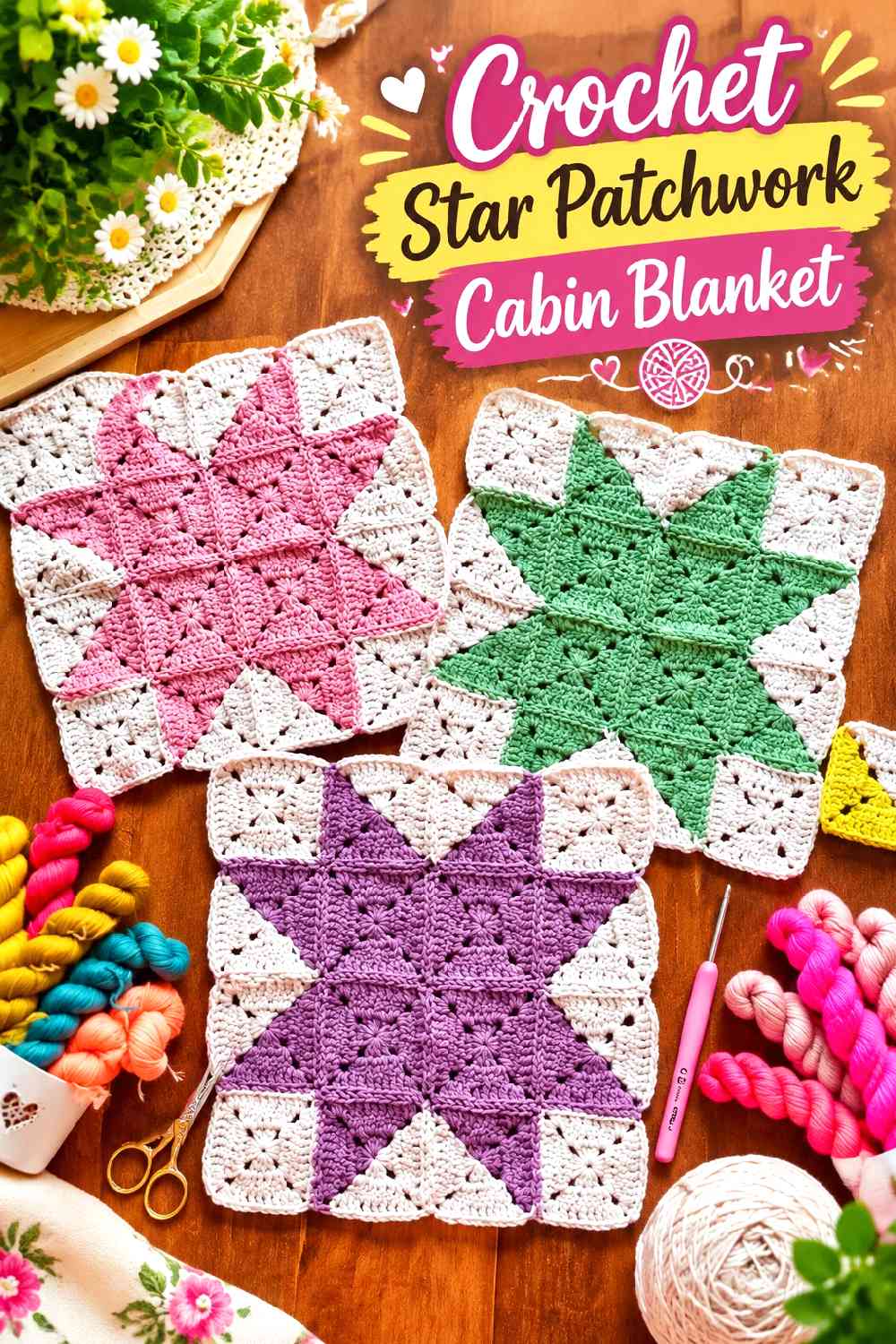
This project takes the cabin idea in a quilt-inspired direction. Separate granny-style components are arranged to produce a large star, giving the finished blanket the visual language of traditional patchwork without simply repeating identical squares in a basic grid.
It is particularly suited to a room where handmade quilts and crochet already share the same space.
Layout Matters Before the Final Joining Stage
Patchwork becomes much easier to evaluate when the components are arranged on the floor or another large flat surface before permanent joining.
Check the star from several directions. A misplaced contrasting section can interrupt the geometry even when every individual crochet piece is technically correct.
Two Main Colors Can Be More Powerful Than Many
A star arrangement needs enough contrast for the larger shape to emerge. If every component introduces another equally strong color, the star can become harder to read.
For a cabin interpretation, combinations such as cream and pine, oatmeal and rust, or charcoal and warm tan can preserve the quilt-like geometry without requiring a large palette.
Modular Work Is Convenient but Adds Finishing
Separate pieces make this style easier to transport and let you crochet smaller sections away from home. The trade-off is assembly.
If joining motifs is the part of crochet you routinely postpone, include that finishing time in your decision before choosing a patchwork blanket over a continuous-row project.
Creator Credit: Moara Crochet
6. Crochet Chunky Granny Square Hearth Blanket
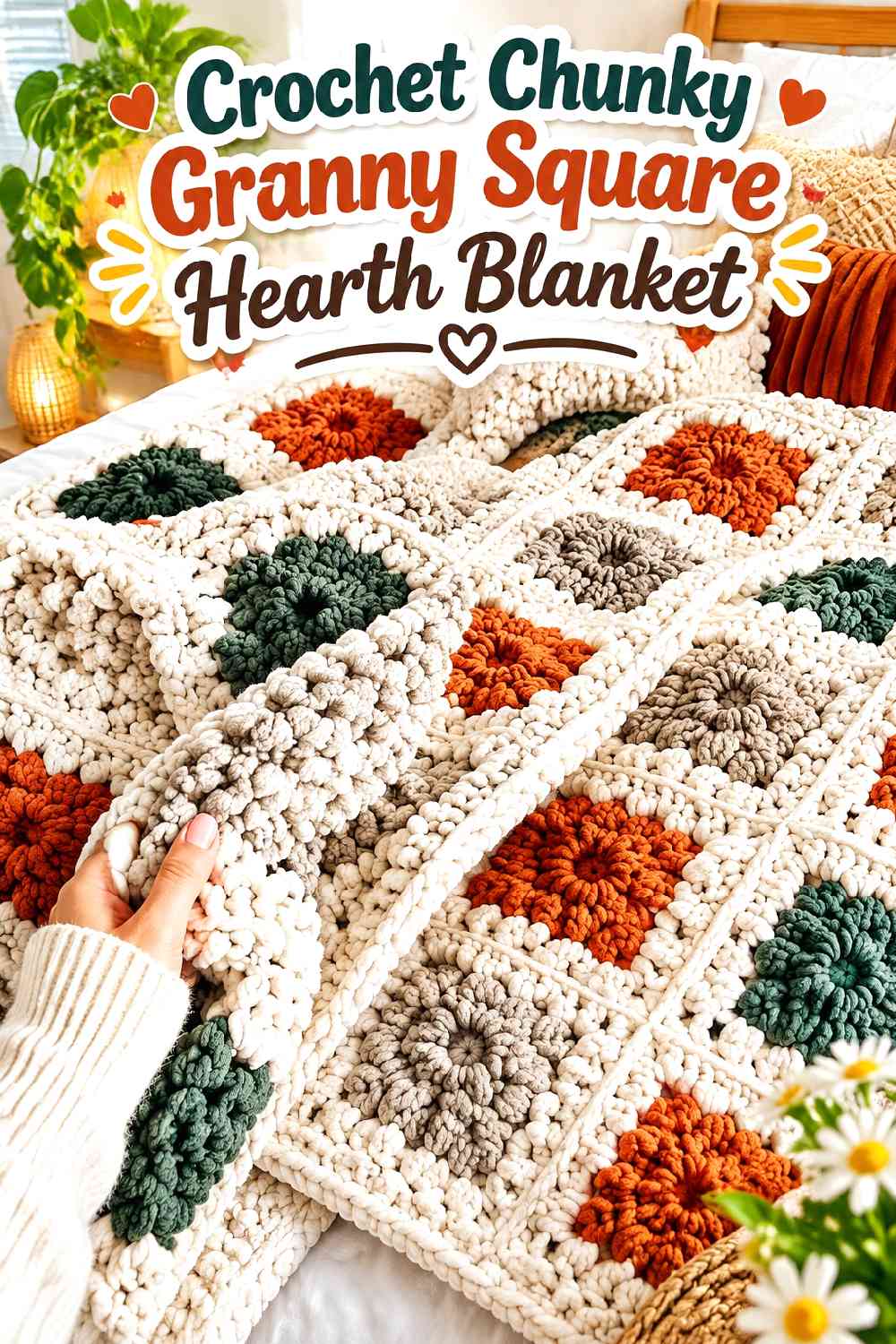
Large granny-style motifs create a different effect from the quilt-like star above. Instead of hiding the individual squares inside one larger composition, this blanket lets each motif remain obvious.
The repeated blocks suit an eclectic cabin room especially well because individual motifs can introduce several colors without requiring the whole blanket to be striped.
Measure Finished Motifs Before Planning the Grid
Do not plan the final blanket solely by counting squares. Measure the motifs after they have reached the condition in which you intend to join them.
Even a small dimensional difference becomes noticeable when many squares are placed side by side.
Joining Is Part of the Finished Design
A contrasting join can outline every block and emphasize the grid. A matching join creates a more continuous surface.
Decide which effect you prefer before making dozens of motifs, because your border and joining color can influence how much yarn you need in the dominant shade.
Chunkier Squares Can Create a Substantial Finished Piece
A thick motif may be quick to see growing, but a grid of thick motifs can also add considerable bulk. Before expanding the blanket, place several completed squares across your lap to judge whether the overall fabric feels appropriate for your reading chair.
Creator Credit: Danii’s Ways
7. Crochet Corner-to-Corner Reading Blanket
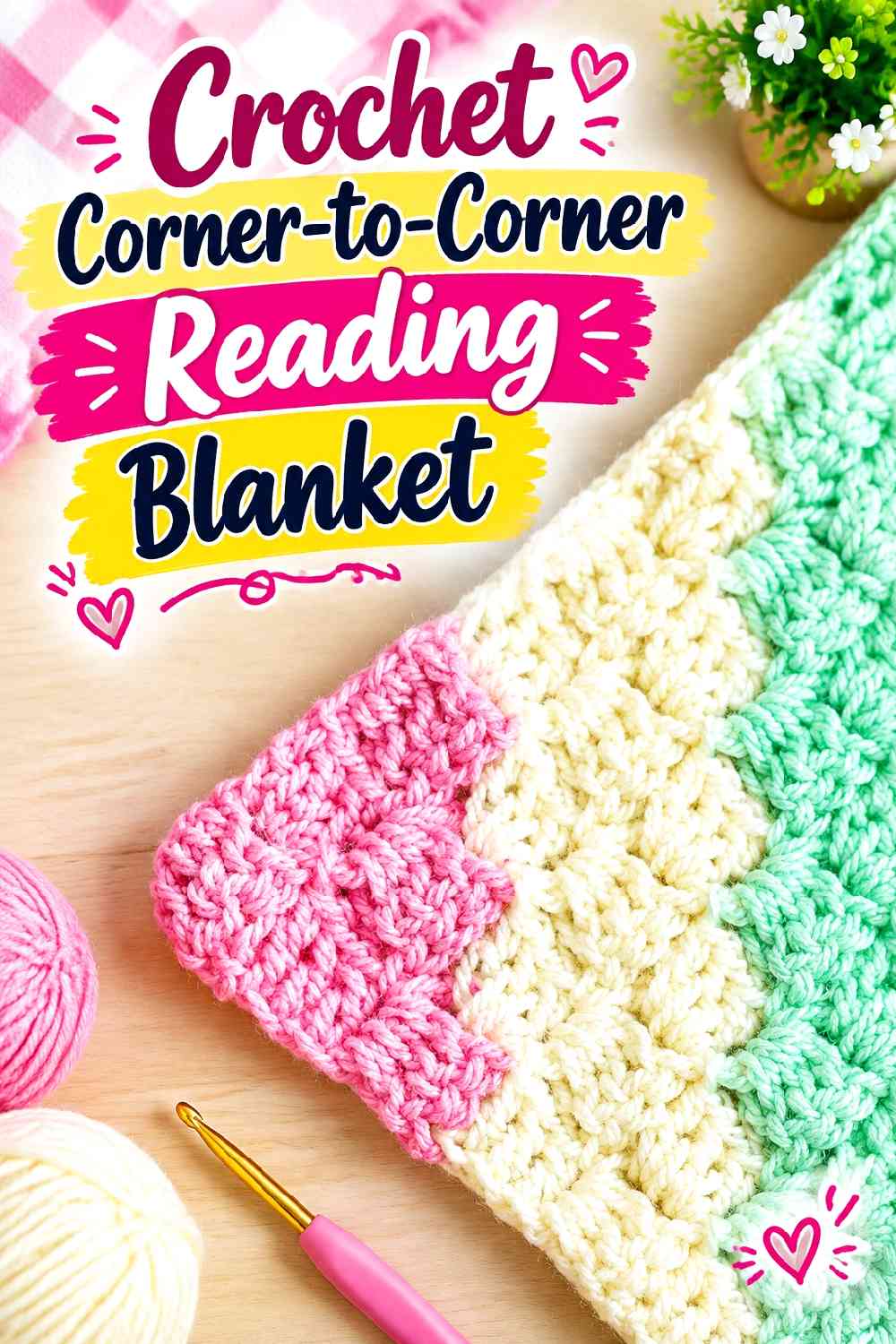
Corner-to-corner construction changes both the working direction and the visual texture. Instead of beginning with the full blanket width, the fabric grows diagonally, creating repeated blocks across the surface.
It works well for readers who want a simple geometric blanket without conventional horizontal stripes.
The Diagonal Direction Changes How Color Reads
A striped yarn or planned color sequence will travel through the blanket differently when the fabric grows diagonally. That makes C2C useful when you want color movement that does not look like standard bands running from edge to edge.
Before committing to a highly controlled palette, decide whether you want precise color placement or are comfortable allowing the diagonal construction to influence the result.
Turning the Corner Is the Key Planning Point
With a growing diagonal blanket, the decision to stop increasing determines an important part of the eventual dimensions. If you are modifying the tutorial, understand the creator’s sizing logic before assuming you can correct the proportions later.
Measure the actual work rather than estimating from the amount of yarn already used.
Block Texture Can Suit Rustic Yarn Choices
The repeated block structure creates visible texture without cables or extremely raised stitches. That makes this a useful middle ground when you want a cabin throw with surface interest but prefer a more geometric look.
Creator Credit: Bella Coco
8. Crochet Super Chunky Striped Cabin Blanket
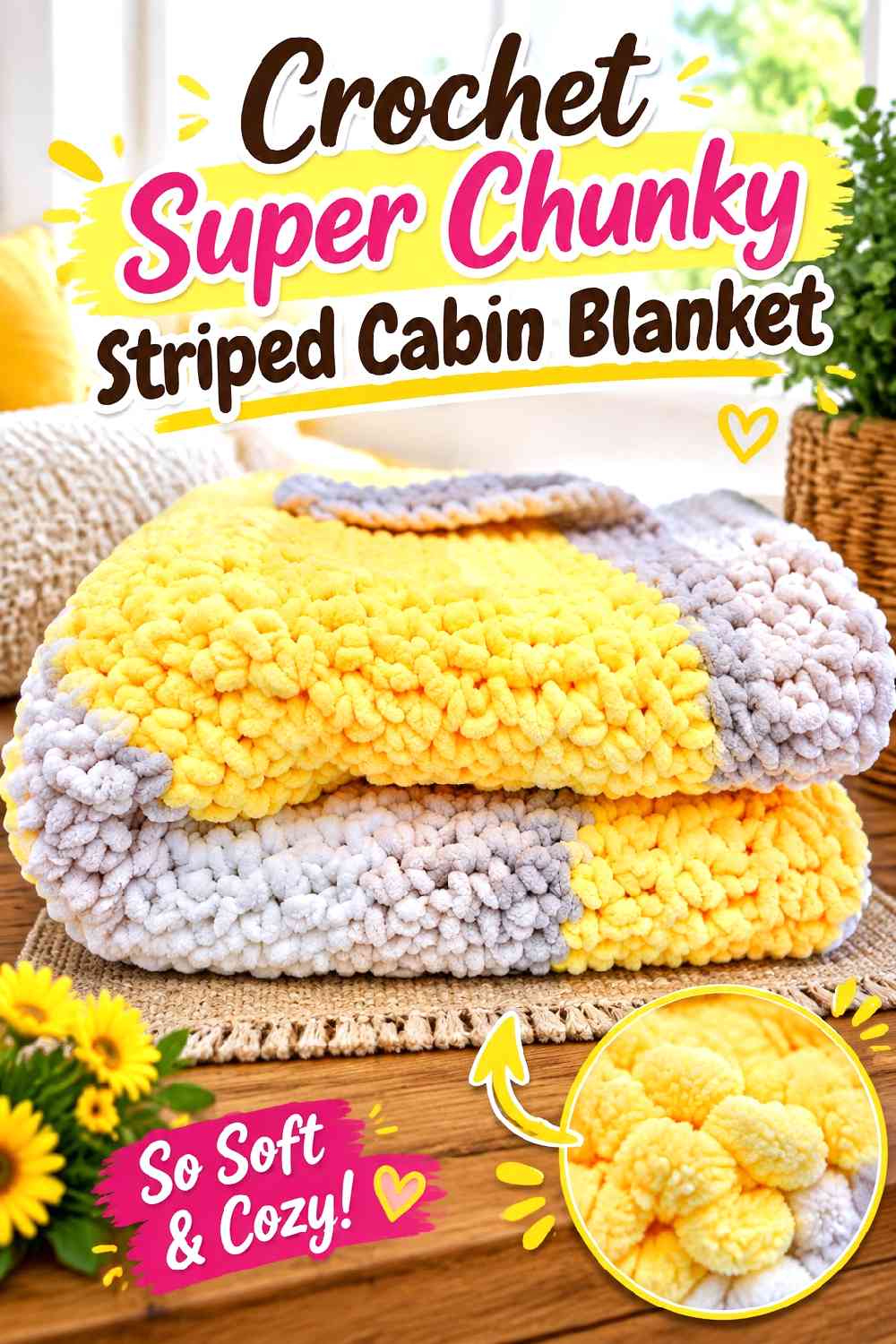
A super-chunky striped throw shifts attention away from intricate stitch work and toward scale. Large stitches and broad bands can create the relaxed look of a blanket that belongs permanently beside a reading chair.
This direction is especially useful if you prefer strong blocks of color instead of small repeated motifs.
Thick Yarn Makes Tension More Visible
When each stitch occupies more space, an inconsistent edge can become visually obvious. Check the sides frequently rather than assuming a border will hide major differences later.
A small test section will also show whether the chosen hook produces fabric that is comfortably flexible rather than overly rigid.
Broad Stripes Need a Color Plan Too
Random striping can work, but it helps to decide whether the blanket will repeat a sequence or intentionally avoid repetition.
For a cabin palette, try thinking in families rather than exact shades: one light neutral, one darker anchor, and several muted natural colors can create variety without making the blanket feel disconnected from the room.
Consider Storage Before Going Oversized
Very thick fabric occupies more physical space when folded. If the blanket needs to fit inside a basket or on a narrow chair, judge the bulk of the actual fabric before adding substantial extra width or length.
Creator Credit: Secret Yarnery
9. Crochet Chevron Fireside Blanket
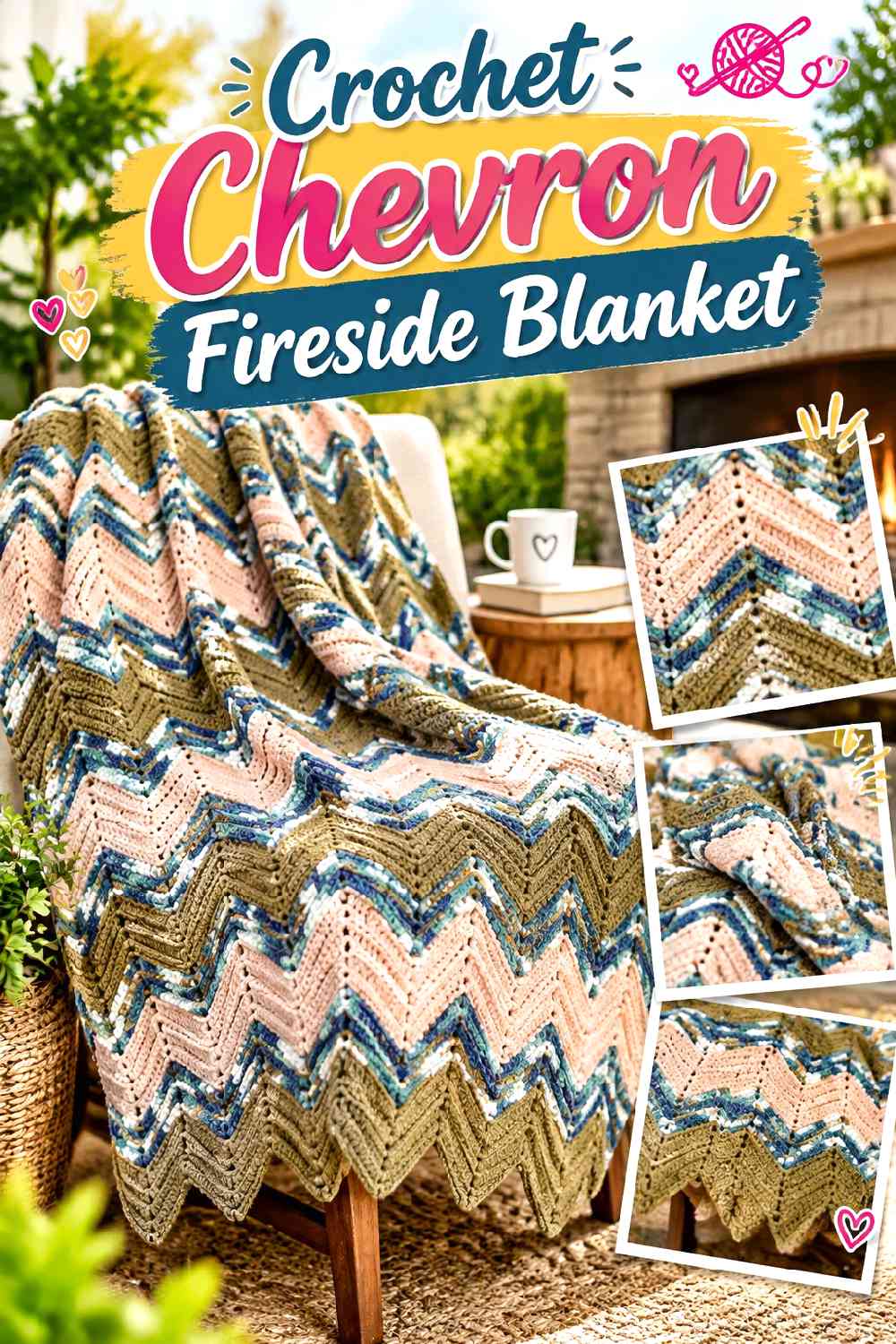
Chevron construction introduces movement through repeated peaks and valleys. It feels more graphic than a plain stripe but less modular than granny squares or patchwork.
This is a good option when you want several cabin colors to travel across the entire blanket in a controlled pattern.
Contrast Determines How Strong the Zigzag Looks
Colors with similar values produce a softer ripple. Strong light-and-dark contrast makes every peak more obvious.
Choose based on the room rather than assuming the boldest version is automatically more attractive. A busy cabin interior may benefit from muted transitions, while a plain armchair can handle a sharper graphic blanket.
Watch Both Edges as the Repeat Develops
Repeating geometric blankets depend on consistent placement. If the pattern begins drifting, the problem will usually become more obvious with every additional stripe.
Pause periodically, spread out the work, and compare both sides rather than evaluating only the active row.
Fringe Is Optional, but It Changes the Character
A clean border gives chevrons a more contemporary finish, while fringe can push the design toward a rustic lodge look.
Think about everyday use as well as appearance. Decorative ends that constantly catch under your legs may not be ideal for the chair where you read most often.
Creator Credit: Crochet.With.Coffee
10. Crochet Reversible Double-Sided Reading Blanket
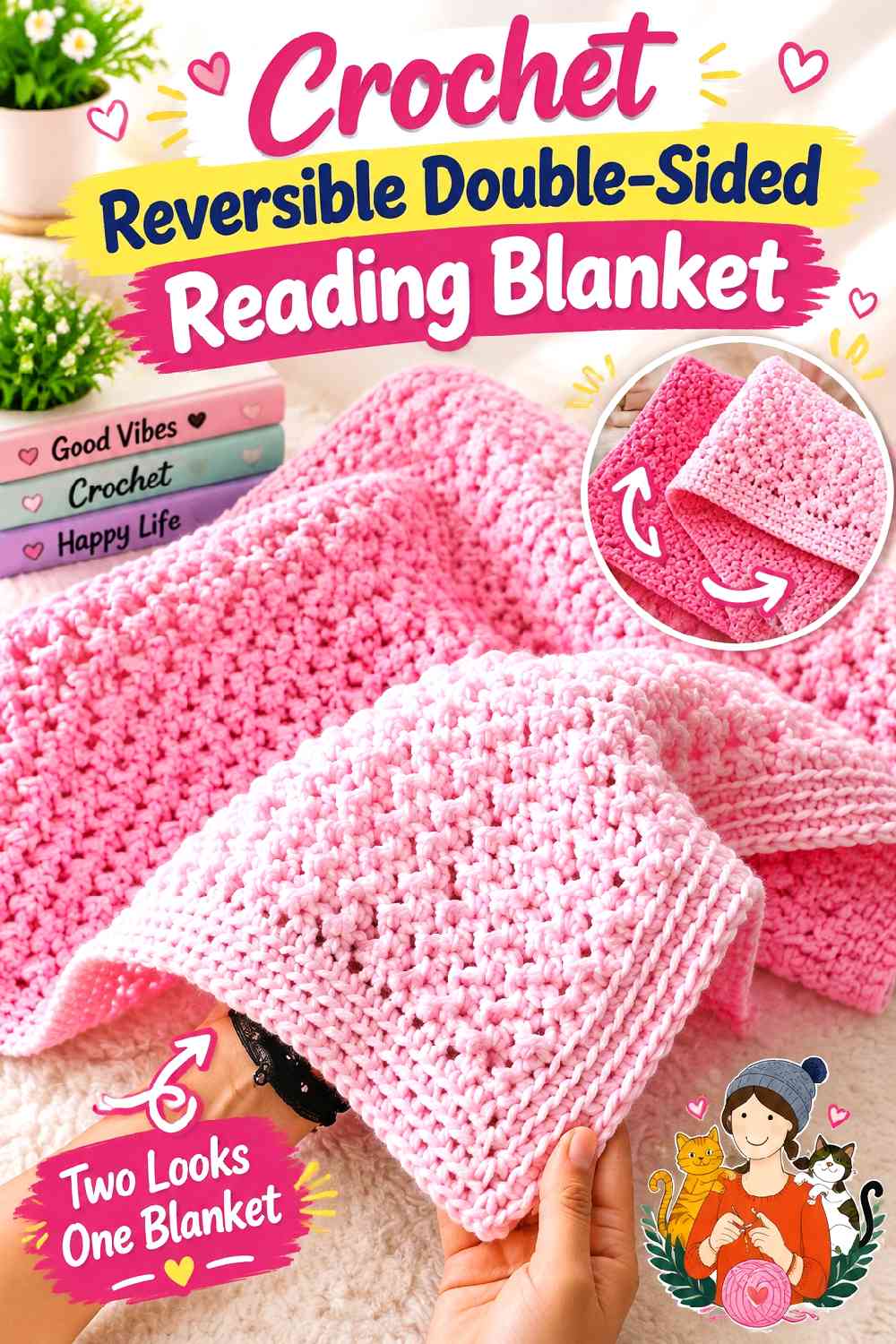
A reversible blanket is especially practical for a reading chair because there is less pressure to arrange it with one designated side facing outward. The fabric can be tossed over an armrest or folded after use without carefully displaying a particular surface.
That makes this concept different from highly directional cables or decorative motif blankets.
Look at Both Surfaces Before Changing Yarn
A yarn that looks clear on the front may behave differently on the reverse. Make a sample large enough to evaluate both faces of the fabric and decide whether you genuinely like each one.
This matters more in a reversible throw than it does when the back is rarely visible.
One Repeating Texture Can Make Color More Important
When the construction stays consistent across a large area, color carries more responsibility for setting the mood.
A single cabin neutral creates a calm reading blanket. Several restrained shades can add variation while keeping the reversible texture visually coherent.
Keep the Border Compatible With Both Sides
An elaborate edging that clearly has a front and back can undermine the reversible quality of the main blanket.
If reversibility is the reason you chose this project, evaluate the finishing treatment from both directions before committing to it.
Creator Credit: Sirin’s Crochet
11. Crochet Two-Tone Modern Cabin Throw
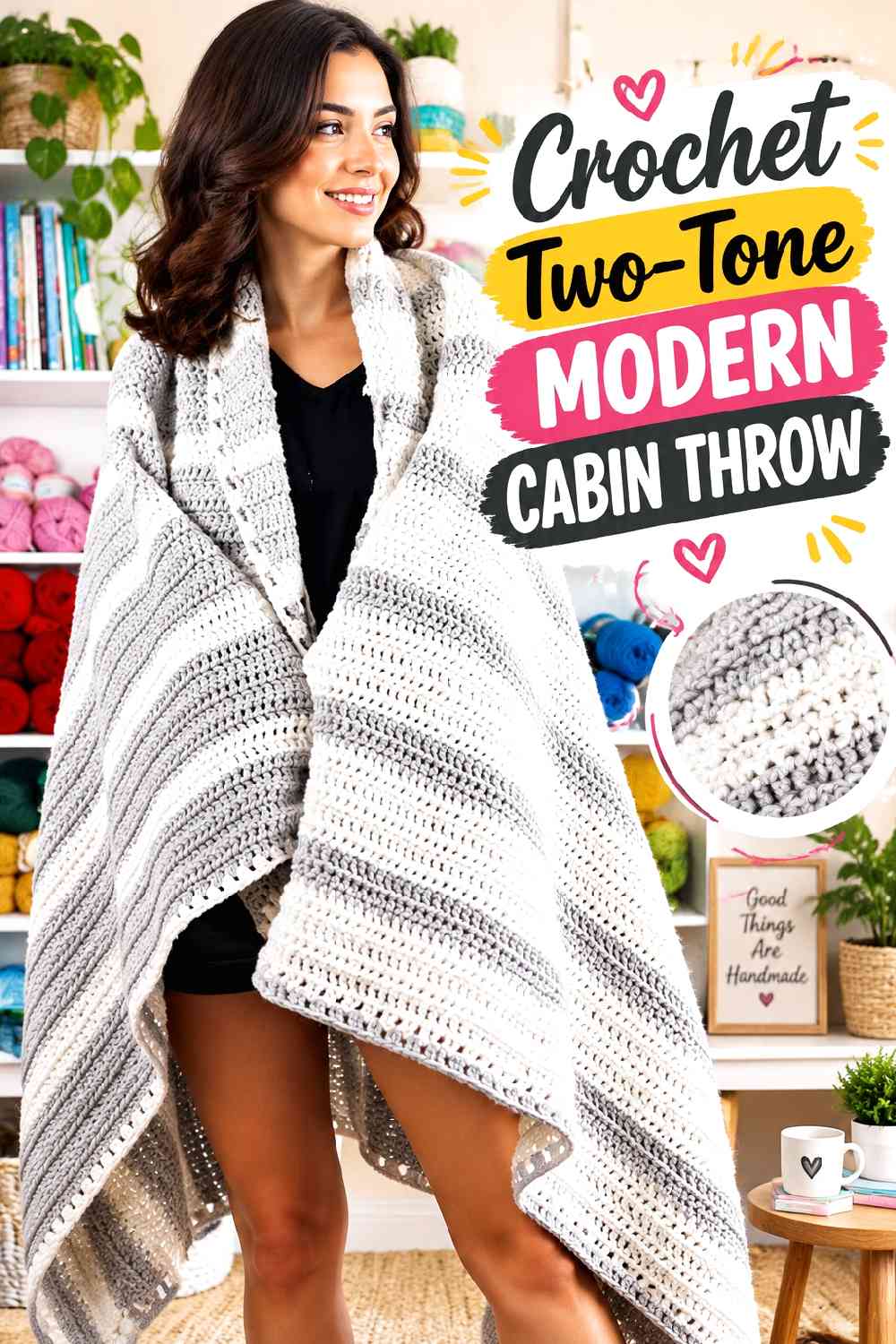
Cabin decor does not have to mean traditional plaid and woodland motifs. A restrained two-color blanket can work in a more modern lodge, especially when the room combines natural wood with clean furniture and simple textiles.
The limited palette also gives you a chance to concentrate on proportion instead of juggling many shades.
Choose the Two Colors by Value as Well as Hue
Two attractive yarns can still merge visually if their values are nearly identical. Decide whether you want a subtle transition or a clearly defined two-color composition.
For strong contrast without a harsh effect, pair a pale neutral with a darker natural shade rather than automatically choosing black and white.
Simpler Colorwork Makes Texture Easier to Coordinate
A two-tone throw is easier to combine with patterned pillows or rugs because it introduces fewer competing colors.
If your reading corner already contains plaid or patterned upholstery, a graphic but restrained blanket can keep the space layered without becoming visually chaotic.
Verify Proportions Before Enlarging the Design
If you adapt a two-color composition into a larger throw, consider how the color sections will look at the new scale. Simply increasing every dimension does not always produce the visual balance you expected.
Use the tutorial’s construction information when planning modifications rather than guessing from the finished photograph.
Creator Credit: Sigoni Macaroni
12. Crochet Scrap Yarn Cabin Blanket
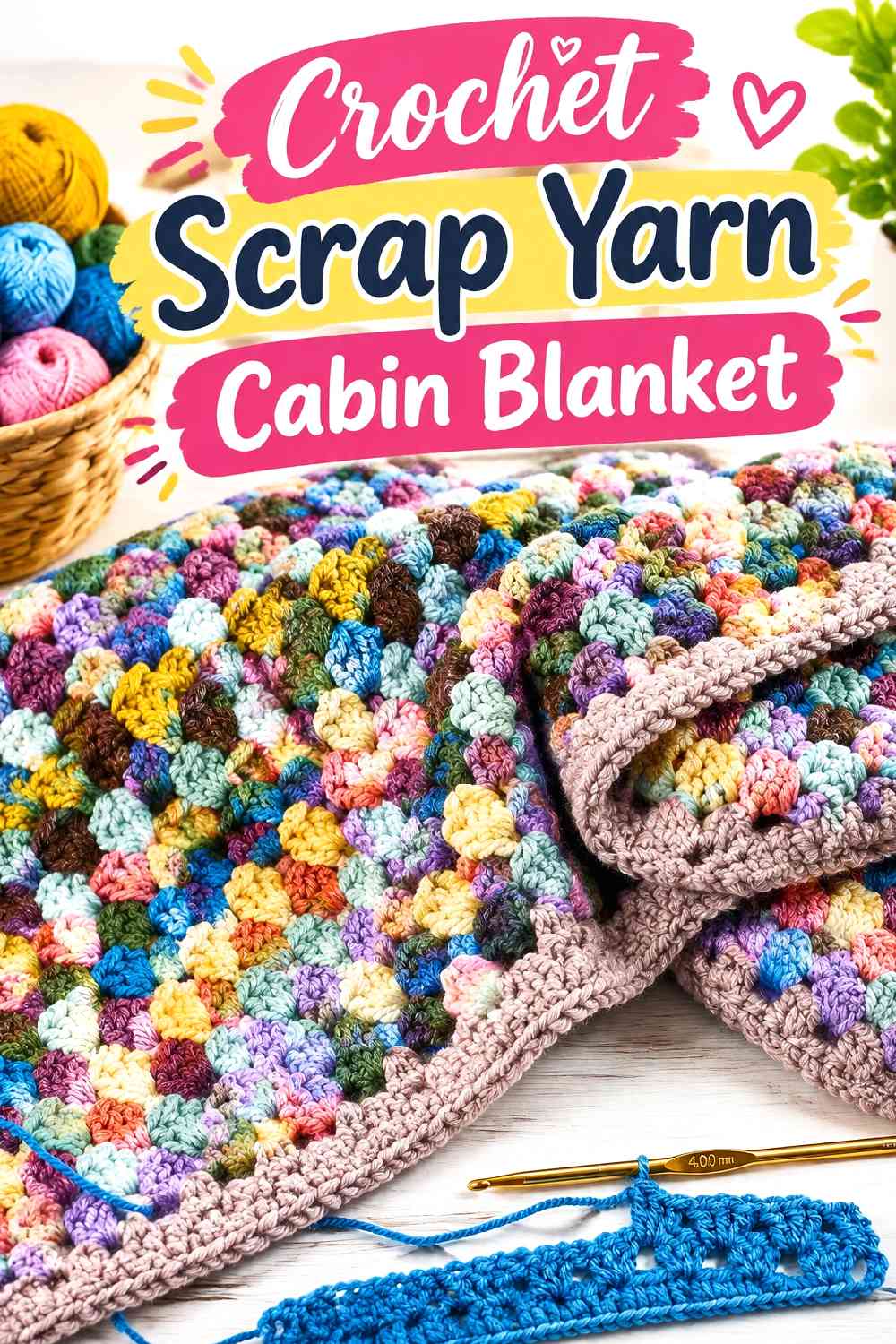
A scrap blanket can give a cabin reading corner the collected, lived-in look that perfectly coordinated yarn sometimes lacks. It is also a natural way to incorporate leftovers from previous projects into something functional.
The challenge is creating intentional variety rather than a blanket that feels visually accidental.
Give Random Colors One Consistent Rule
The yarn itself can vary while another part of the design stays predictable. You might keep the same basic construction throughout, repeat a neutral periodically, or arrange colors by lightness.
One visual rule is often enough to make many unrelated leftovers feel connected.
Similar Yarn Behavior Matters More Than Matching Labels
Scrap yarn does not have to come from identical brands, but combining fibers and thicknesses without testing can produce uneven sections.
Compare how the candidate yarns behave in the intended fabric. If one section is significantly thicker, stiffer, or stretchier, decide whether the difference is a deliberate feature or a problem.
Save Enough Finishing Yarn for a Unified Edge
A border in one repeated color can visually gather a varied scrap blanket into a single finished object.
If you want that effect, set the border yarn aside before using every last bit in the main fabric.
Creator Credit: Ophelia Talks Crochet
13. Crochet Star-Shaped Winter Reading Blanket
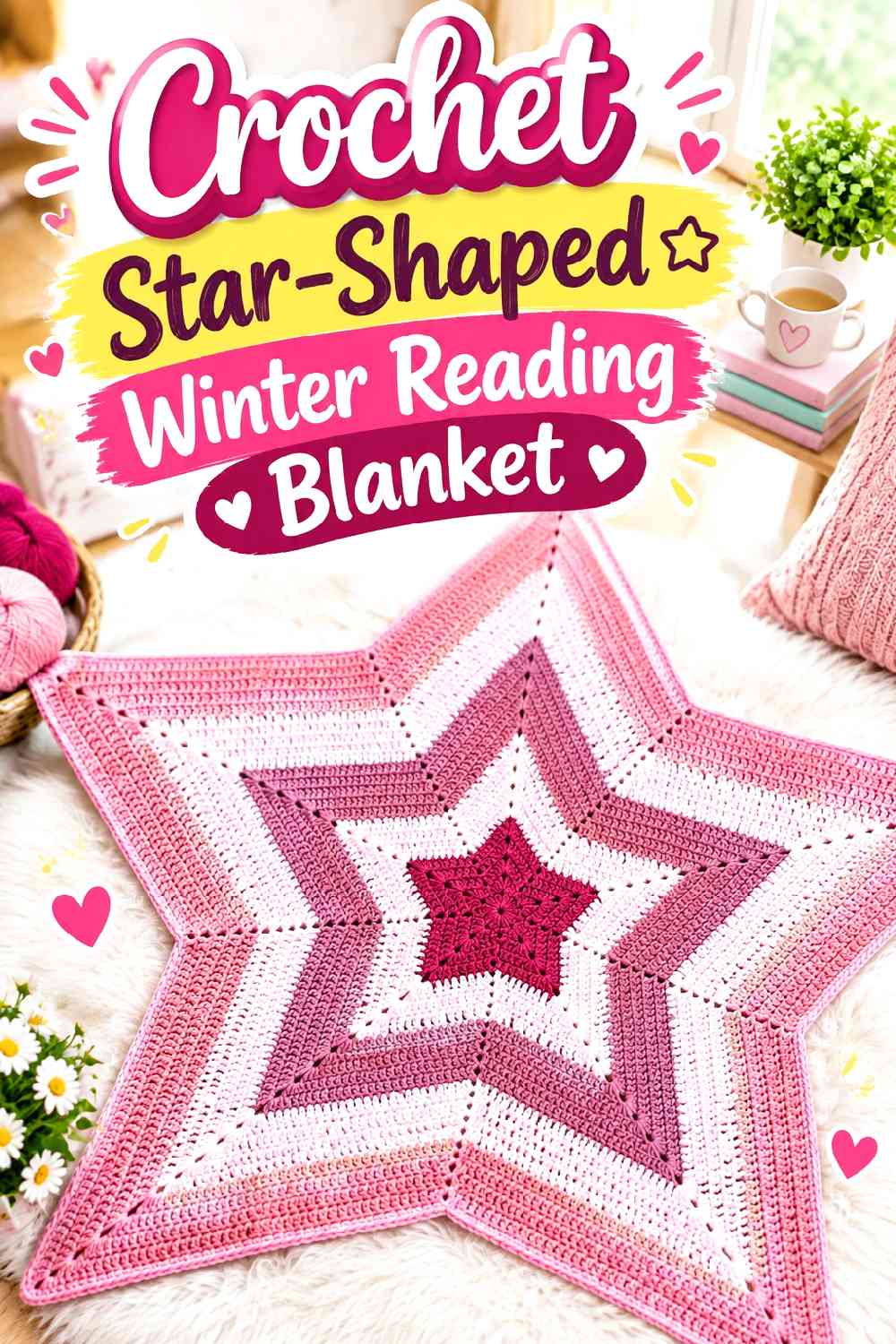
A star-shaped blanket changes the silhouette completely. Instead of another rectangle draped over the same chair, the points create a decorative shape that remains visible when the blanket is spread across a sofa or bed.
For reading, it suits someone who enjoys wrapping up in a flexible piece rather than needing perfectly rectangular coverage.
The Shape Is Decorative but Changes Coverage
Star points do not cover the body in the same way as straight sides. Before making a very large version, think about whether you want this primarily as a functional lap blanket, a decorative throw, or a combination of both.
A standard rectangle may be more efficient when uniform coverage is the priority.
Center-Out Growth Makes Color Changes Highly Visible
Because the rounds radiate outward, each new color becomes part of a larger concentric composition.
This makes the shape suitable for a controlled winter palette. Cream, muted green, rust, brown, or deep red can create a cabin feeling without adding separate appliqués.
Check the Points While the Blanket Is Still Manageable
Lay the work flat periodically and compare the points. Consistent tension around the entire shape helps prevent one section from behaving noticeably differently from the others.
If you alter the tutorial, use its construction logic rather than improvising increases solely from appearance.
Creator Credit: ElyseCrochets 💌
14. Crochet Extra-Thick Fireside Blanket
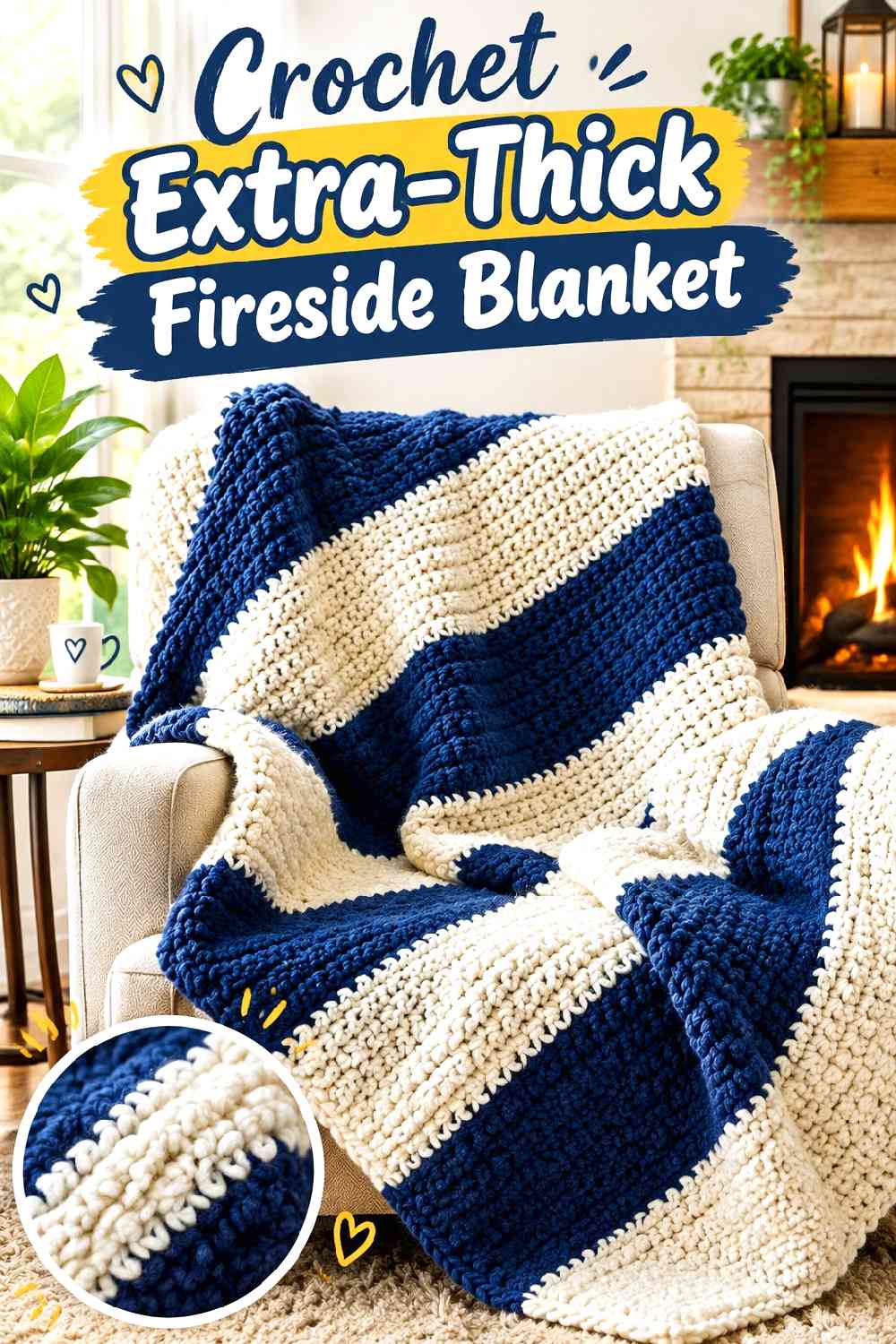
This is the stripped-back option in the collection: substantial yarn, a straightforward overall form, and very little visual distraction. It works for a reading corner where texture and scale matter more than complicated motifs.
It can also serve as a useful contrast when the rest of the room already contains plaid, patterned cushions, or decorative woodwork.
Very Thick Fabric Needs a Drape Test
Do not assume that a larger hook automatically creates the flexibility you want. Yarn structure, hook choice, and personal tension all influence the resulting fabric.
Crochet a meaningful sample and actually bend, fold, and drape it before purchasing enough yarn for a larger blanket.
Simple Construction Highlights Uneven Edges
A plain blanket has fewer decorative elements to distract from inconsistent sides. Count or otherwise track the work using the method taught in the tutorial, and inspect the shape regularly.
Waiting for a border to correct significant narrowing is rarely a good planning strategy.
A Limited Palette Keeps the Blanket Versatile
If this throw will stay in the room through more than one season, a restrained color can make it easier to pair with changing pillows and winter decorations.
The chunky scale already provides plenty of visual weight.
Creator Credit: B.Hooked Crochet
15. Crochet Modern Bradley Reading Afghan
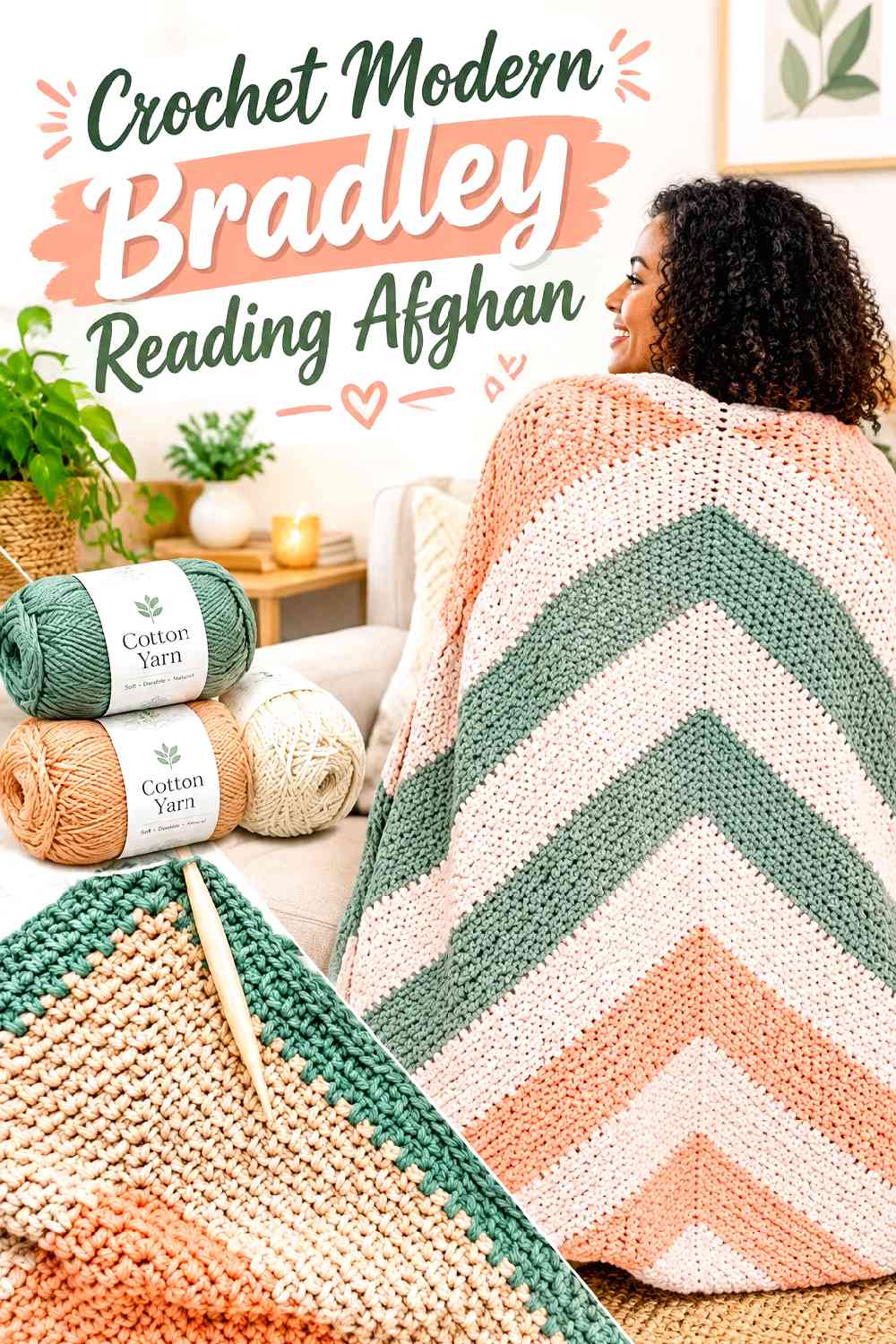
This modern afghan is useful for readers who want a practical blanket without relying on a strong theme such as plaid, stars, or granny squares. Its cleaner overall appearance can bridge rustic furniture and more contemporary decor.
It is also worth considering when sizing flexibility matters more to you than reproducing one exact cabin look.
Start With the Intended Use Rather Than a Named Blanket Size
Think about your chair, sofa, and preferred coverage before deciding how large the finished piece should become.
A custom reading throw can be more useful than automatically making something larger simply because a conventional size sounds familiar.
Let Yarn Choice Shift the Style
The same broadly modern construction can move in different directions depending on yarn. Tweed-like neutrals can push it toward rustic cabin decor, while smoother solid shades give it a cleaner appearance.
Whenever you substitute materials, judge the new fabric on its own rather than expecting it to behave exactly like the tutorial sample.
Keep the Final Edge in Proportion
A border can visually frame a simple blanket, but an oversized or overly decorative edging can compete with an intentionally restrained center.
Lay the nearly finished blanket in the room before deciding how much additional visual weight the edge needs.
Creator Credit: TL Yarn Crafts
16. Crochet Textured Quilt-Style Cabin Blanket
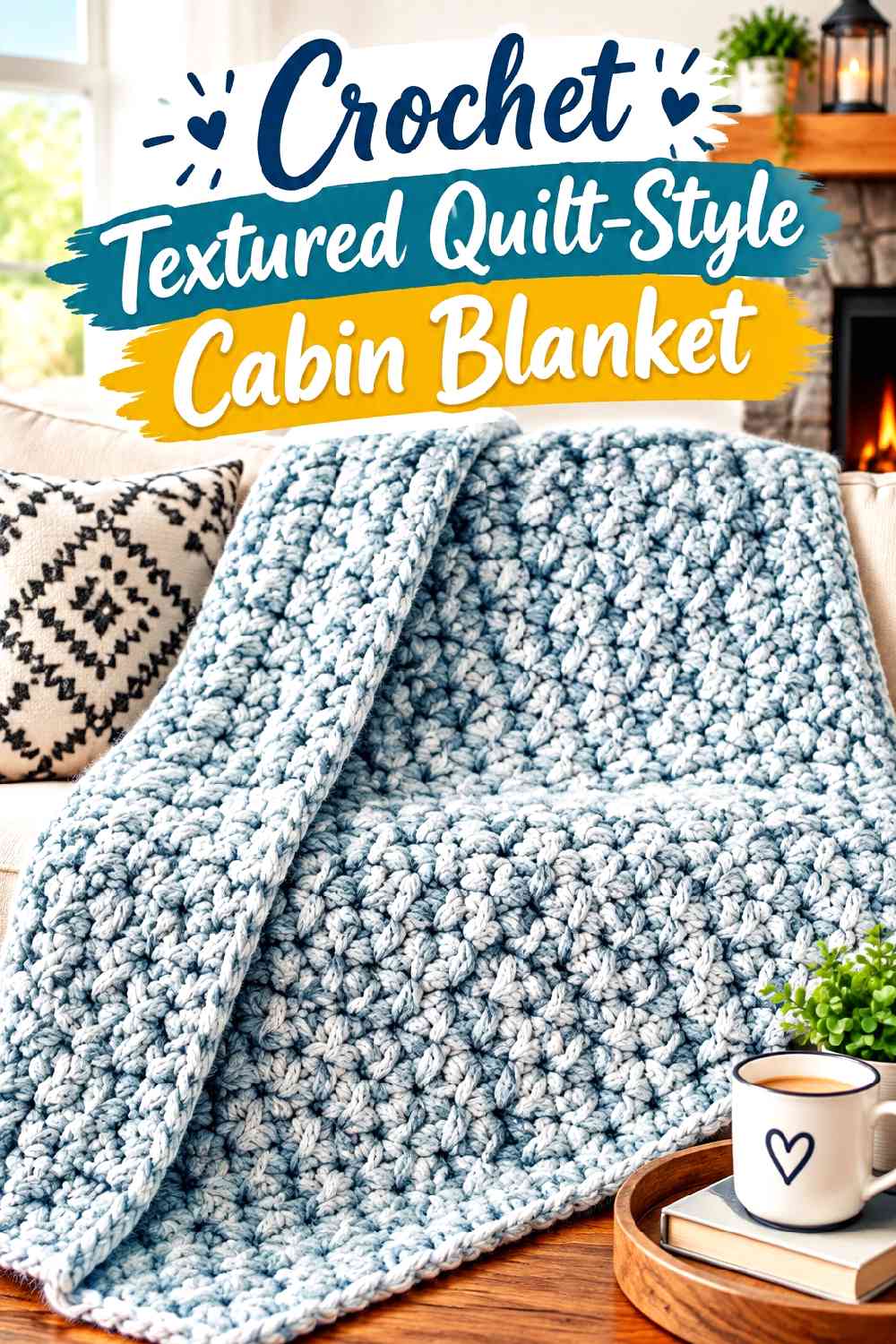
This blanket takes the cozy-cabin idea toward a thick, quilt-like surface rather than obvious motif construction. The texture gives a single large piece more depth, making it suitable for readers who like the visual richness of patchwork but would rather not assemble many separate squares.
It can work especially well in a limited color palette where surface detail needs to provide the interest.
Texture Can Replace Complicated Color Planning
If choosing six or seven coordinating yarns feels more stressful than enjoyable, let the fabric do more of the decorative work.
A single color or closely related shades can reveal the texture through light and shadow while keeping the finished blanket calm enough for a reading nook.
Check Whether the Fabric Stays Flexible
Dense texture can become stiff when the yarn and hook combination is too tight for the intended use.
A blanket should still fold and settle comfortably if that is how you plan to use it. Sample first when changing materials, particularly when moving to a thicker yarn.
Finish the Corners Before Judging the Shape
Textured blankets can look slightly uneven while they are being handled and turned during construction. Spread the piece on a flat surface periodically so you can distinguish temporary rumpling from actual changes in width.
Creator Credit: Kiri Kiri
17. Crochet Vertical Herringbone Reading Blanket
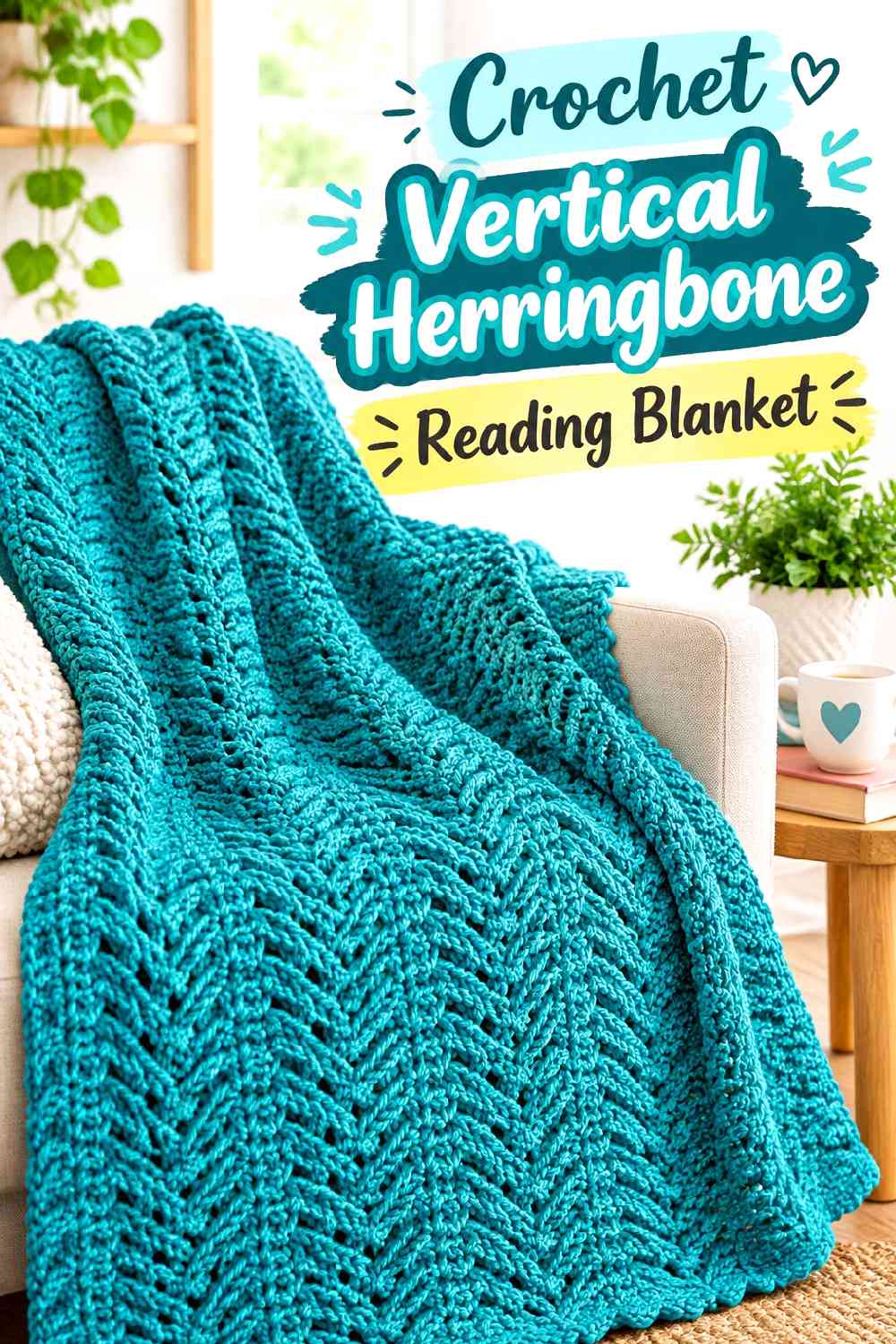
Vertical herringbone offers a final option for readers who prefer directional texture rather than squares, waves, or cables. The lines draw the eye along the length of the blanket, giving it a tailored look that works in both rustic and contemporary cabin interiors.
It is particularly useful when you want a solid-color throw that still looks distinctive from several feet away.
Directional Texture Changes the Visual Proportions
Vertical lines can make the blanket appear longer and more streamlined than a design dominated by horizontal bands.
That makes color placement especially important if you decide to modify the original concept with additional shades. Too many horizontal interruptions may reduce the effect that attracted you to the herringbone structure in the first place.
Fringe Changes a Tailored Throw Into a More Rustic One
A clean edge emphasizes the structured lines, while fringe adds movement and a more relaxed cabin character.
Neither finish is universally better. Consider how the blanket will be stored and used, particularly if it will spend most evenings folded around your legs.
Inspect Long Lines for Tension Changes
Directional designs make gradual variations easier to see. Spread the blanket flat periodically and look along the full length rather than inspecting only the active row.
Small tension differences are easier to address before they have been repeated across a large section.
Creator Credit: Yarnspirations
Comparing the 17 Crochet Cabin Reading Blanket Ideas
| Blanket idea | Main visual feature | Construction emphasis | Consider it when you want |
|---|---|---|---|
| Plaid Cabin | Plaid colorwork | Planned color placement | Strong lodge character |
| Waffle Texture | Deep grid texture | Continuous textured fabric | Texture without motifs |
| Cottage Cable | Raised cable lines | Dimensional stitches | Traditional winter style |
| Log Cabin Granny | Rotating blocks | Expanding geometric layout | A true log-cabin look |
| Star Patchwork | Quilt-like star | Joined motifs | Patchwork character |
| Chunky Granny Square | Repeated blocks | Motifs and joining | Portable sections |
| Corner-to-Corner | Diagonal blocks | Diagonal growth | Geometric movement |
| Super Chunky Striped | Broad stripes | Thick continuous fabric | Large-scale simplicity |
| Chevron Fireside | Peaks and valleys | Repeated zigzag | Graphic color bands |
| Reversible Double-Sided | Two usable surfaces | Repeating fabric | Casual everyday draping |
| Two-Tone Modern | Limited palette | Clean color composition | Modern cabin decor |
| Scrap Yarn Cabin | Collected colors | Flexible color use | Leftover-yarn character |
| Star-Shaped Winter | Radiating points | Center-out shaped growth | Decorative silhouette |
| Extra-Thick Fireside | Oversized texture | Simple chunky fabric | Minimal visual clutter |
| Modern Bradley | Clean overall form | Adaptable blanket planning | Versatile contemporary style |
| Textured Quilt-Style | Dense surface pattern | Continuous texture | Quilt-like depth without motifs |
| Vertical Herringbone | Directional lines | Vertical textured fabric | Tailored rustic texture |
Conclusion
The strongest crochet cabin reading blanket is the one that suits both your room and the way you actually use it.
For unmistakable lodge character, start with the plaid, log-cabin, cable, or patchwork options. If tactile texture matters more than colorwork, compare the waffle, herringbone, quilt-style, or cable blankets. Granny squares, patchwork, and scraps are useful choices when you enjoy breaking a large project into smaller visual sections.
For a cleaner reading nook, the two-tone modern throw, Bradley afghan, or straightforward extra-thick blanket avoids competing with other patterns in the room. The star-shaped blanket offers the biggest change in silhouette, while C2C and chevrons provide strong geometry without motif assembly.
Once you have chosen the overall style, use the original creator tutorial for its exact construction, sizing information, materials, and finishing details. If you substitute yarn or change the intended size, sample and measure first rather than assuming the finished fabric will behave exactly like the original.
Frequently Asked Questions
What type of crochet blanket works well for a cabin reading chair?
That depends on how you use the chair. A rectangular throw is practical when you want predictable lap and leg coverage, while a shaped blanket can be more decorative. If the chair is small, also consider the blanket’s folded bulk instead of focusing only on its spread-out dimensions.
Are textured crochet blankets always warmer than flatter blankets?
Not necessarily. Texture can create thicker fabric, but warmth also depends on fiber, yarn thickness, fabric density, openings, and overall construction. Compare actual swatches rather than judging warmth from appearance alone.
Which cabin blanket construction is easiest to work on in small sessions?
Motif projects such as granny squares and patchwork can be convenient because individual pieces are portable and provide clear stopping points. Their trade-off is that they require joining and finishing later. Continuous blankets avoid that assembly but become physically larger while you work.
Should I use wool yarn for a winter reading blanket?
Wool is one option, not a requirement. Choose according to the warmth, feel, care requirements, budget, and fiber sensitivities that matter in your household. Check the yarn manufacturer’s care information rather than assuming all yarns with similar appearances can be washed or handled in the same way.
How do I make a crochet blanket look more cabin-inspired without copying a themed pattern?
Use construction, texture, and palette together. Plaid, herringbone, cables, log-cabin layouts, patchwork, tweed-like effects, and restrained earthy colors can all suggest cabin decor without adding literal trees, bears, or other novelty motifs.
Should I add a border to every crochet reading blanket?
No. A border can frame color changes, unify scrap yarn, or tidy the visual edge, but some designs already have a strong natural finish. Decide what the edge needs rather than adding a border automatically. When you do add one, watch the tension so it does not pull in or flare outward.