A crochet woodland cottage wreath can feel like a tiny autumn landscape rather than a standard seasonal door decoration. The cottage gives the design a clear focal point, while leaves, mushrooms, acorns, pumpkins, pinecones, flowers, and woodland characters can establish the setting around it.
Not every tutorial in this collection creates a complete cottage wreath from beginning to end. Some teach a full fall wreath construction, while others focus on a cottage or woodland element that can be incorporated into your own wreath composition. That distinction is useful because it lets you choose the structure, depth, and amount of detail instead of being tied to one fixed arrangement.
Before combining motifs from different tutorials, make the important pieces first and compare their actual finished scale. A beautiful cottage can disappear behind oversized pumpkins, while tiny mushrooms may be lost on a thick wreath base. The best arrangement usually has a clear hierarchy: cottage first, supporting woodland details second, and small fillers last.
Quick List
- Crochet Woodland Cottage Centerpiece Wreath
- Crochet Modern Autumn Cottage Hoop Wreath
- Crochet Heart-Cap Mushroom Cottage Wreath
- Crochet Maple-Leaf Cottage Path Wreath
- Crochet Acorn Woodland Cottage Wreath
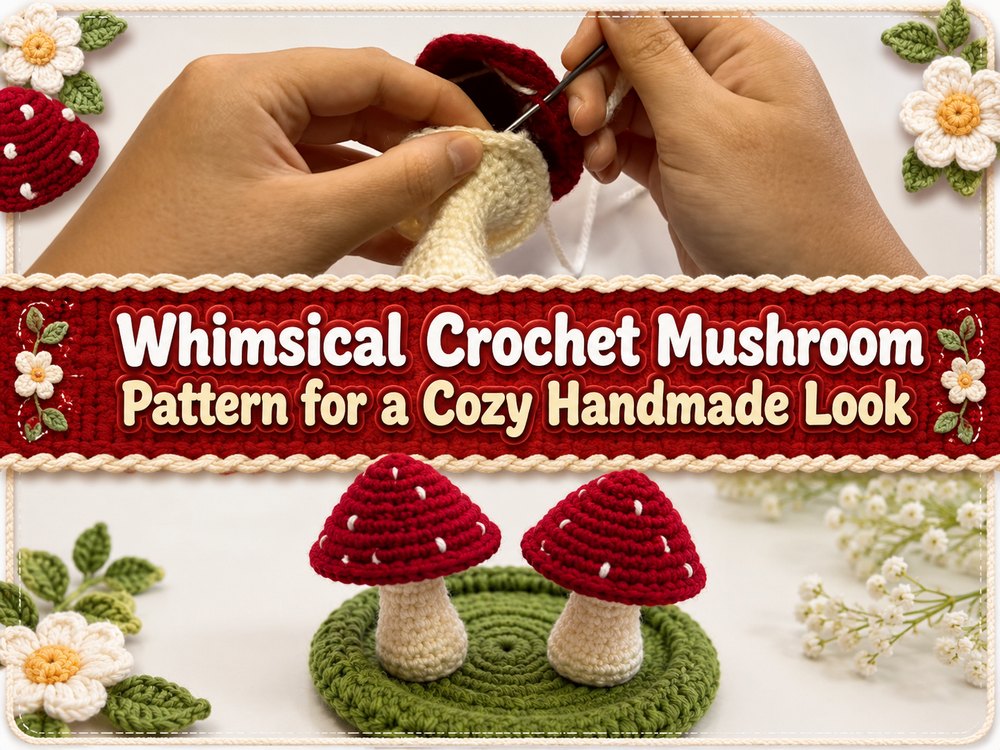
- Crochet 3D Mushroom Forest Cottage Wreath
- Crochet Textured Pinecone Cottage Wreath
- Crochet Squirrel-and-Cottage Woodland Wreath
- Crochet Autumn Gnome Cottage Wreath
- Crochet Pumpkin-Patch Cottage Wreath
- Crochet Stacked-Pumpkin Cottage Wreath
- Crochet Sunflower Woodland Cottage Wreath
- Crochet Harvest Cottage Thanksgiving Wreath
- Crochet Braided Woodland Cottage Wreath
- Crochet Cascading Pinecone Cottage Wreath
Make the Cottage the Visual Anchor
A woodland wreath can collect so many attractive motifs that the cottage stops being noticeable. Decide early whether the house will sit in the center opening, along the lower edge, or slightly off-center. That decision should influence every other element.
A centered cottage gives the wreath a storybook-scene effect. An off-center house creates room for a sweeping trail of leaves or mushrooms. A cottage positioned low on the ring can make the upper part feel like a tree canopy when leaves and pinecones are arranged above it.
If you are combining tutorials, do not assume the motifs will naturally work at the same scale. Compare the finished pieces before permanently attaching anything.
Decide Between Flat and Dimensional Woodland Details
Flat appliques are useful when the wreath needs to store easily or hang close to a wall. They can overlap without adding excessive depth and work especially well for leaves, cottages, animals, and small mushrooms.
Stuffed pumpkins, dimensional mushrooms, pinecones, and amigurumi characters create a much deeper wreath. That can make the scene more striking, but it also adds weight and changes how the wreath hangs.
You do not have to choose only one style. A mostly flat wreath with one or two dimensional accents often creates enough depth without making every section bulky.
Plan the Wreath Before Permanent Assembly
Place the largest components first. Begin with the cottage, followed by major pumpkins, mushrooms, flowers, animals, or pinecones. Add leaves and smaller fillers only after the main composition feels balanced.
Also decide where the wreath will be displayed. A piece intended for an interior wall has different practical demands from one placed on an exterior door. Yarn fiber, backing, attachment methods, moisture exposure, direct sunlight, and repeated movement can all affect the finished decoration, so choose materials according to the actual display location.
1. Crochet Woodland Cottage Centerpiece Wreath
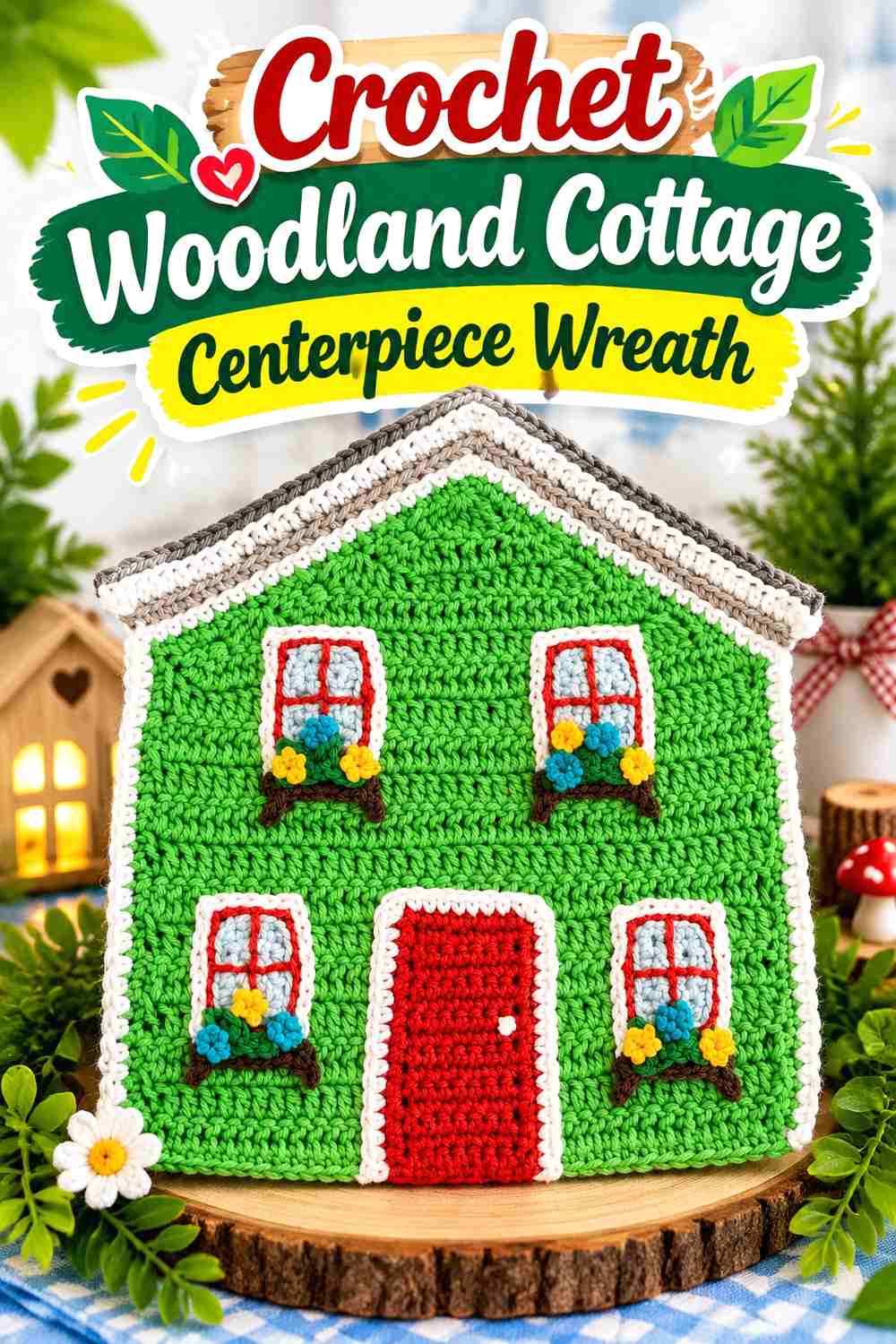
This version makes the cottage the unmistakable center of the wreath. A flat crochet house can sit inside the ring or overlap the lower inside edge, creating the impression that the wreath itself surrounds a small woodland home.
The supporting decoration should remain relatively restrained. A few leaves, mushrooms, or acorns around the lower corners can establish the autumn setting without hiding the architecture.
Leave Space Around the Roofline
The roof is one of the easiest features to lose when the cottage is surrounded by foliage. Avoid placing dense leaf clusters directly behind every edge.
A small amount of open space around the roof lets the cottage silhouette remain visible from across the room.
Cottage Scale Should Control the Ring Choice
Finish or estimate the actual cottage size before committing to a wreath base. A house that almost completely fills the center opening can make the ring look like an accidental border rather than part of the design.
If the cottage is relatively large, placing it partly over the lower edge can provide more breathing room.
Use Small Details to Build the Scene
Doors, windows, roof color, and surrounding foliage already give a cottage considerable visual detail. Supporting motifs do not need to be equally complex.
Simple leaves or a small mushroom cluster can be enough to turn a house applique into an autumn woodland scene.
Creator Credit: Kerri’s Crochet
2. Crochet Modern Autumn Cottage Hoop Wreath
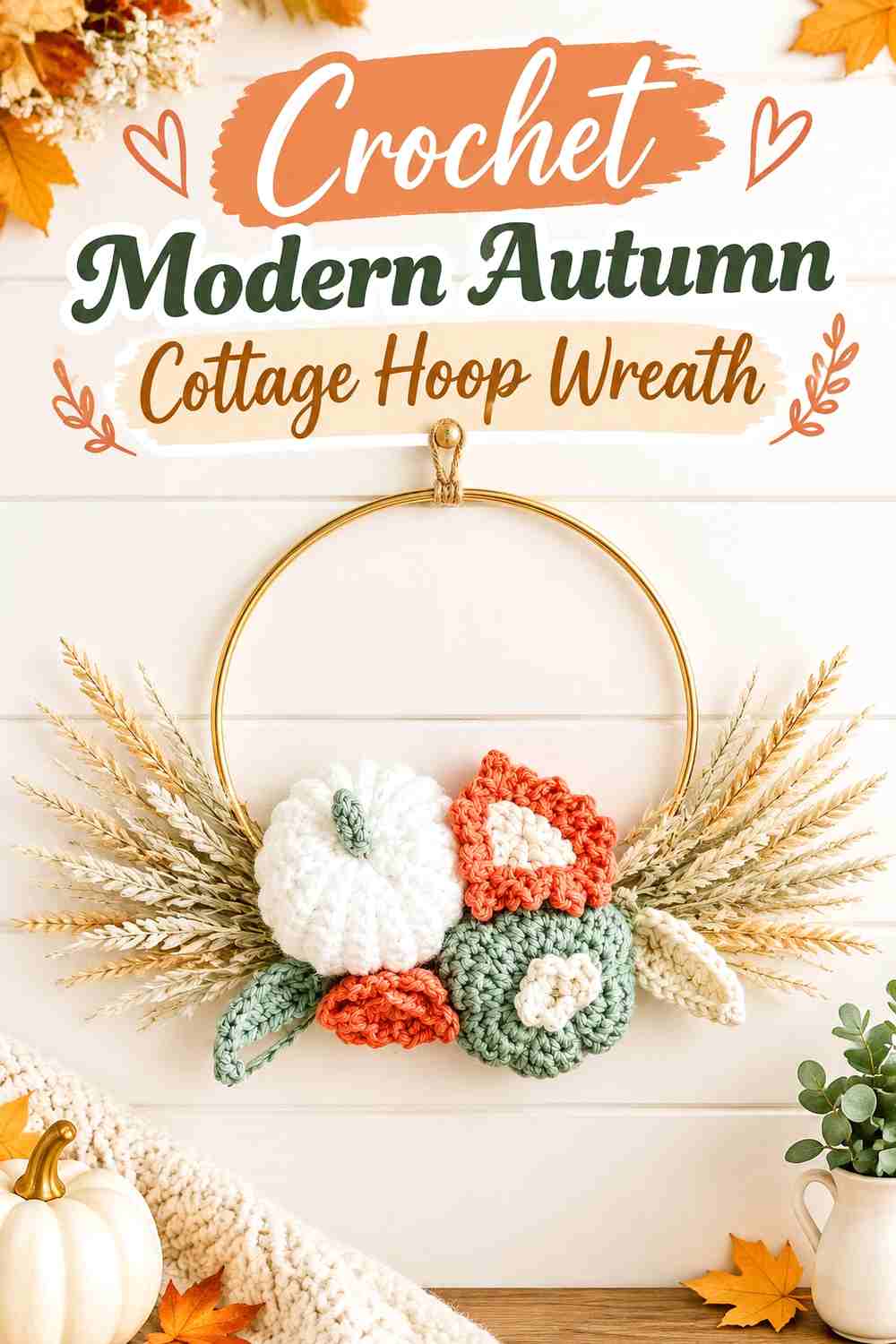
A thinner hoop creates a lighter alternative to a fully covered traditional wreath form. The open center gives the cottage plenty of negative space while allowing pumpkins, flowers, and leaves to gather around one section of the ring.
This construction works particularly well when you prefer an asymmetrical composition rather than decorating the entire circumference evenly.
Keep the Cottage Separate From the Heaviest Cluster
If every pumpkin, flower, leaf, and cottage is concentrated in exactly the same area, the focal point can become difficult to identify.
Position the house slightly beside or above the densest autumn cluster so the pieces read as a scene rather than one large mass.
Open Hoops Make Attachment Points More Visible
A narrow ring provides less surface for hiding yarn ends, backing, or ties than a thick covered wreath.
Check both the front and side views while arranging the motifs. Clean attachment placement matters more when much of the base remains exposed.
Asymmetry Needs Visual Balance
An asymmetrical wreath does not require equal decoration on both sides, but the composition should still feel stable.
A heavy lower cluster can be balanced by a few leaves extending upward, rather than duplicating the same amount of decoration on the opposite side.
Creator Credit: Bella Coco
3. Crochet Heart-Cap Mushroom Cottage Wreath
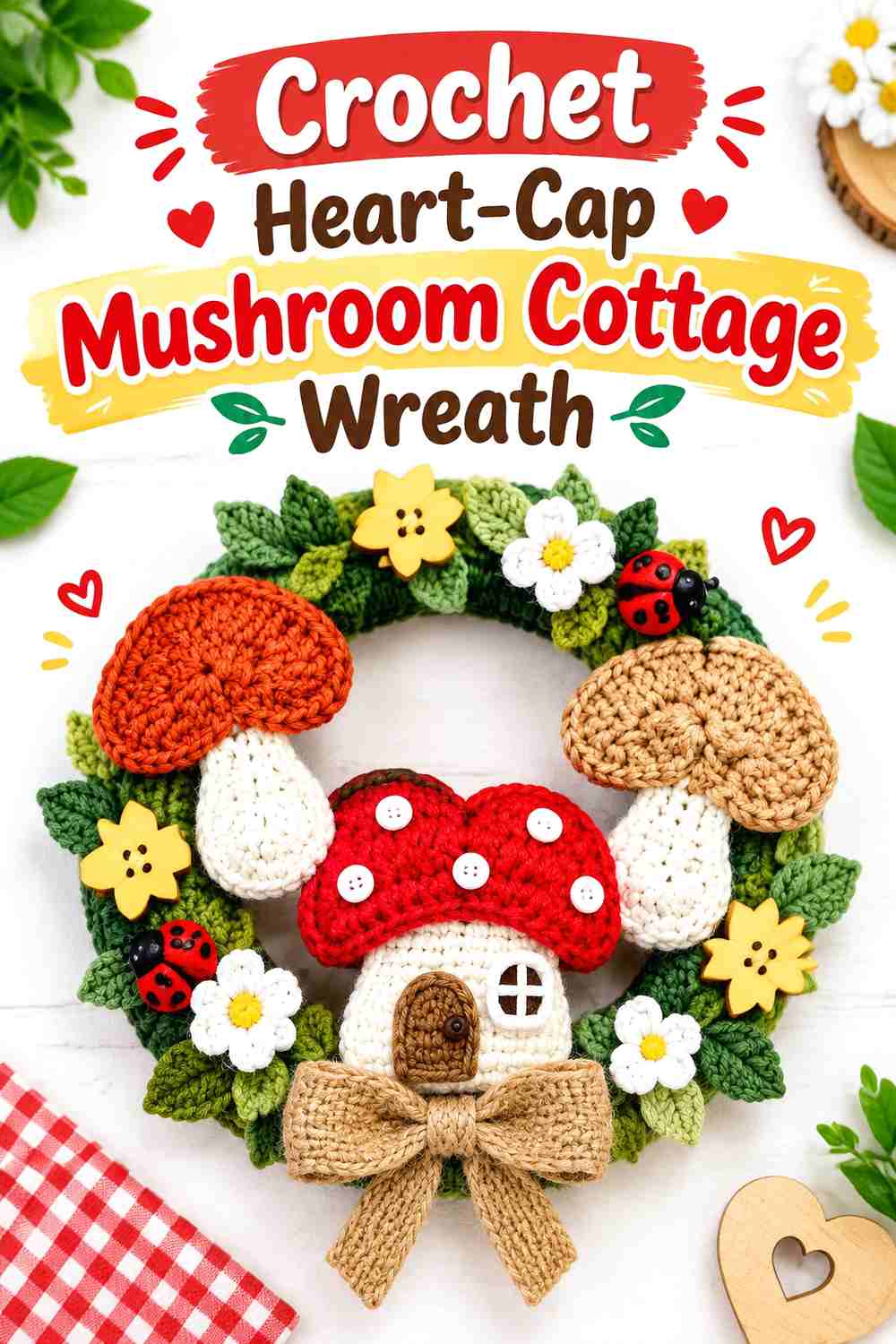
Flat mushroom appliques can create a storybook woodland atmosphere without adding much physical depth. Place several around the cottage as if they are growing along a forest floor.
Using more than one visible scale makes the arrangement feel less like a repeated border and more like a landscape.
Flat Mushrooms Work Well Near the Cottage
A thin applique can overlap the lower wall or surrounding leaves without pushing the cottage dramatically forward.
That makes this style especially useful when the wreath needs to remain relatively flat for storage.
Avoid Perfectly Even Mushroom Spacing
A woodland scene usually looks more natural when mushrooms appear in small groups rather than at identical intervals around the ring.
Try one larger cluster near the cottage and a smaller secondary group elsewhere.
Compare Cap Colors With the House
The mushroom cap should stand out from both the foliage and cottage. If all three use closely related autumn shades, the silhouettes can merge.
Lay your yarn choices together before crocheting an entire set.
Creator Credit: GoldenLucyCrafts
4. Crochet Maple-Leaf Cottage Path Wreath
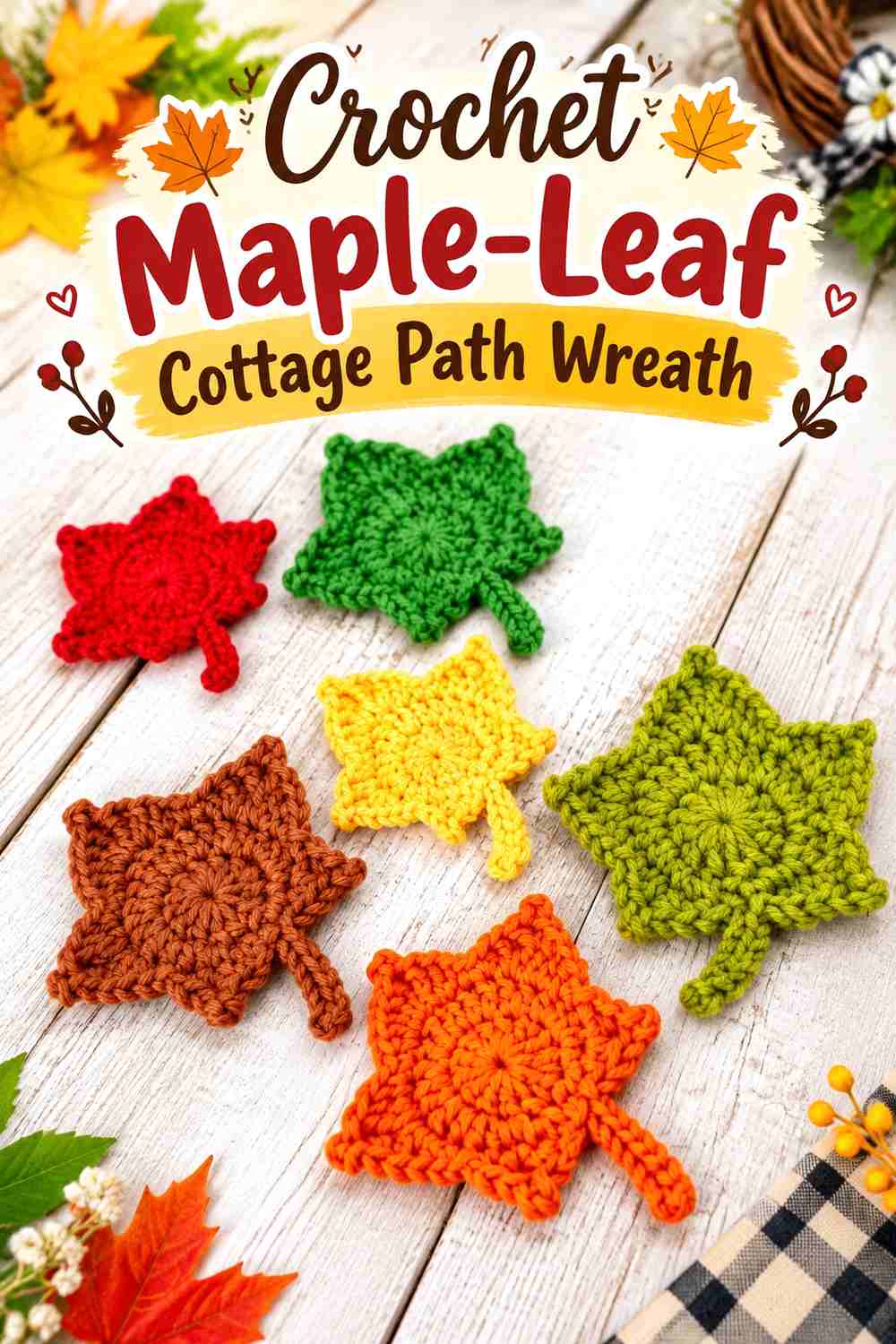
Maple leaves can provide most of the visual movement in this design. Instead of building a dense floral cluster, arrange leaves so they appear to travel around the ring and lead the eye toward the cottage.
Changing direction is as important as changing color. Leaves pointing in identical directions can make the wreath feel overly uniform.
Create a Visual Path Toward the House
Start the main leaf grouping away from the cottage and gradually bring it closer to the focal point.
This creates a natural viewing path instead of making the house and leaves compete independently for attention.
Mix Density Instead of Filling Every Gap
Some sections can hold overlapping leaves while others remain relatively open.
That variation makes the arrangement feel more woodland-inspired than a perfectly continuous decorative border.
Shape the Leaves Before Attaching Them
Individual leaves can look slightly different once positioned on a curved wreath.
Arrange and shape them first, then view the complete composition from normal hanging distance before securing the final placement.
Creator Credit: Hopeful Turns
5. Crochet Acorn Woodland Cottage Wreath
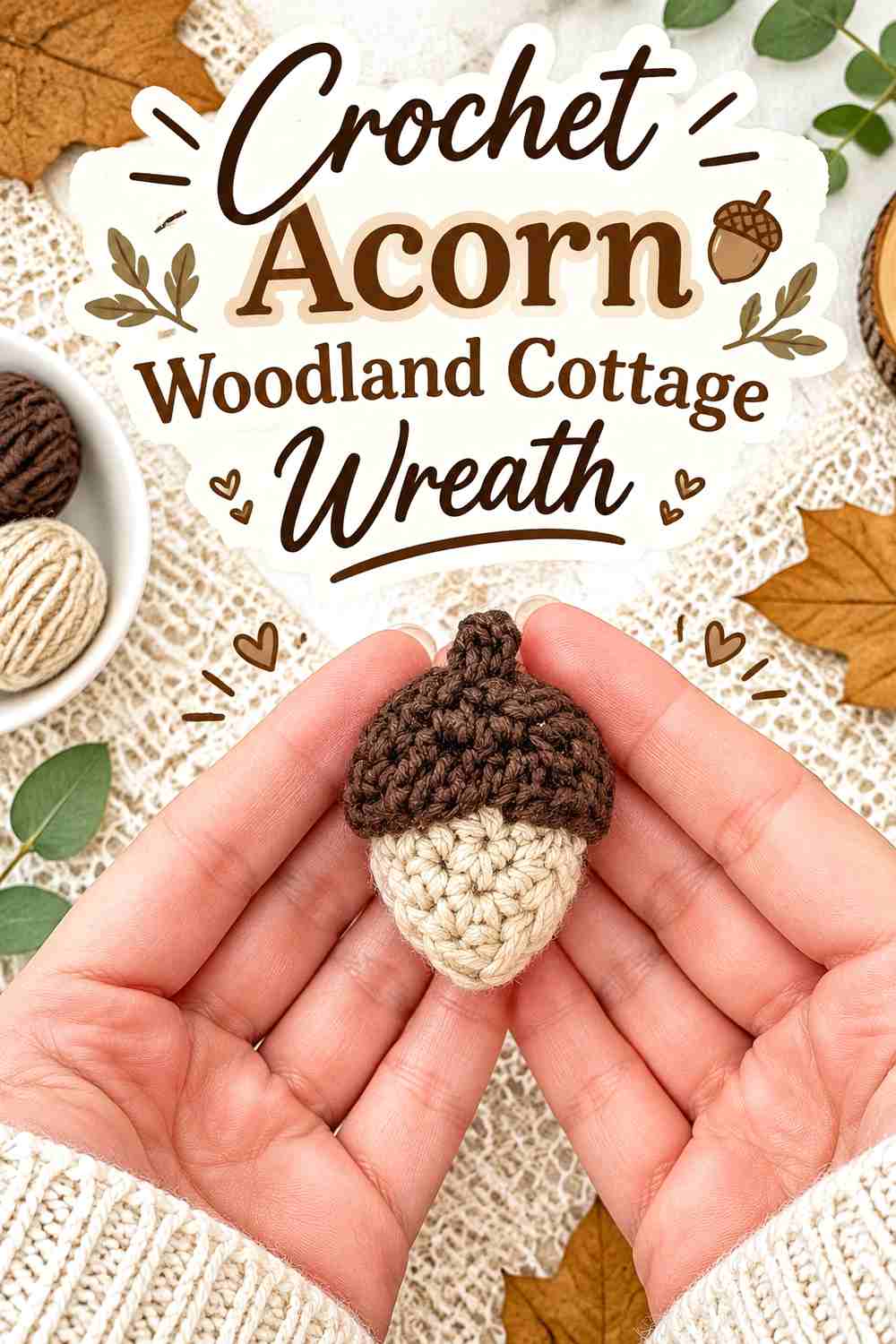
Small acorns add recognizable fall detail without taking over the entire composition. They work particularly well around a cottage doorway, beneath leaves, or in small clusters along the lower edge.
Because acorns are compact motifs, repetition can be effective here, but they still benefit from uneven grouping.
Keep Acorns Secondary to the Cottage
A large number of evenly spaced acorns can turn the wreath into an acorn-themed design with a house added later.
Use them as supporting details around larger foliage instead of giving each one equal prominence.
Pair Acorns With Leaf Coverage
An isolated acorn can look visually disconnected. Nestling them near leaves helps establish the impression that they belong to the surrounding woodland.
This also allows attachment points to be concealed more easily.
Watch the Proportions Near the Door
If the acorns are nearly as large as the cottage windows or doorway, the scene may lose its sense of scale.
You do not need realistic proportions, but obvious size conflicts are worth checking before assembly.
Creator Credit: Itchin’ for some Stitchin’
6. Crochet 3D Mushroom Forest Cottage Wreath
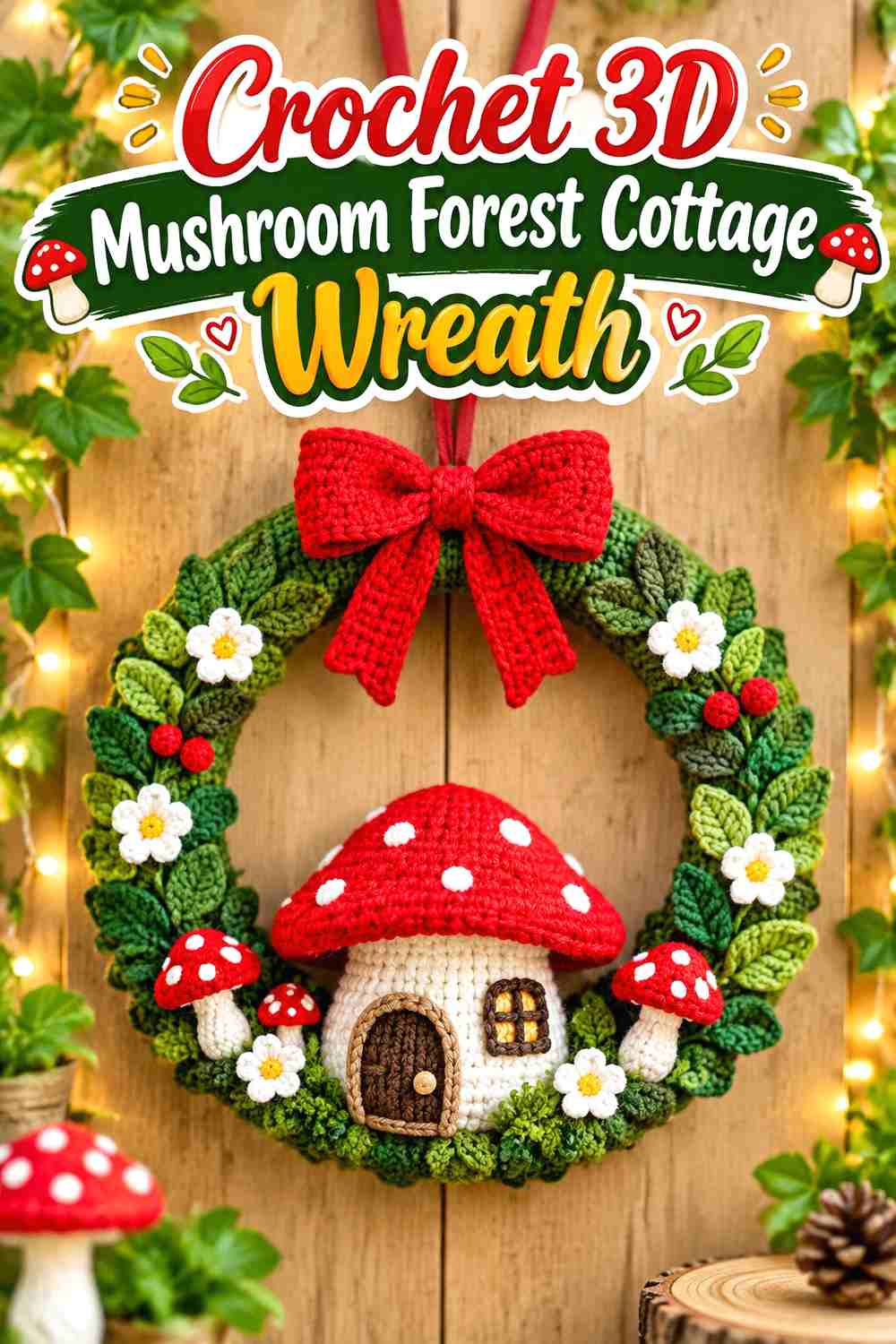
Dimensional mushrooms change the wreath from a mostly graphic arrangement into a more sculptural piece. Place them along the lower section so they appear to grow around the cottage.
Because stuffed or shaped motifs project forward, a few can create more visual impact than a large number of flat appliques.
Put the Deepest Elements Near the Lower Half
Dimensional decorations are generally easier to visually anchor when they sit around the bottom or lower sides of a wreath.
Scattering equally deep pieces around the top can make the design appear bulky rather than grounded.
Leave the Cottage Face Visible
A mushroom that looks modest by itself may hide a surprising amount of the house once attached in front.
Arrange the cottage and mushrooms together before deciding how many dimensional motifs you actually need.
Storage Requires More Room
Raised mushrooms are more likely to become compressed if the wreath is packed tightly between seasons.
If reuse matters, consider how the finished piece will be stored before creating an especially deep arrangement.
Creator Credit: HappyBerry Crochet
7. Crochet Textured Pinecone Cottage Wreath
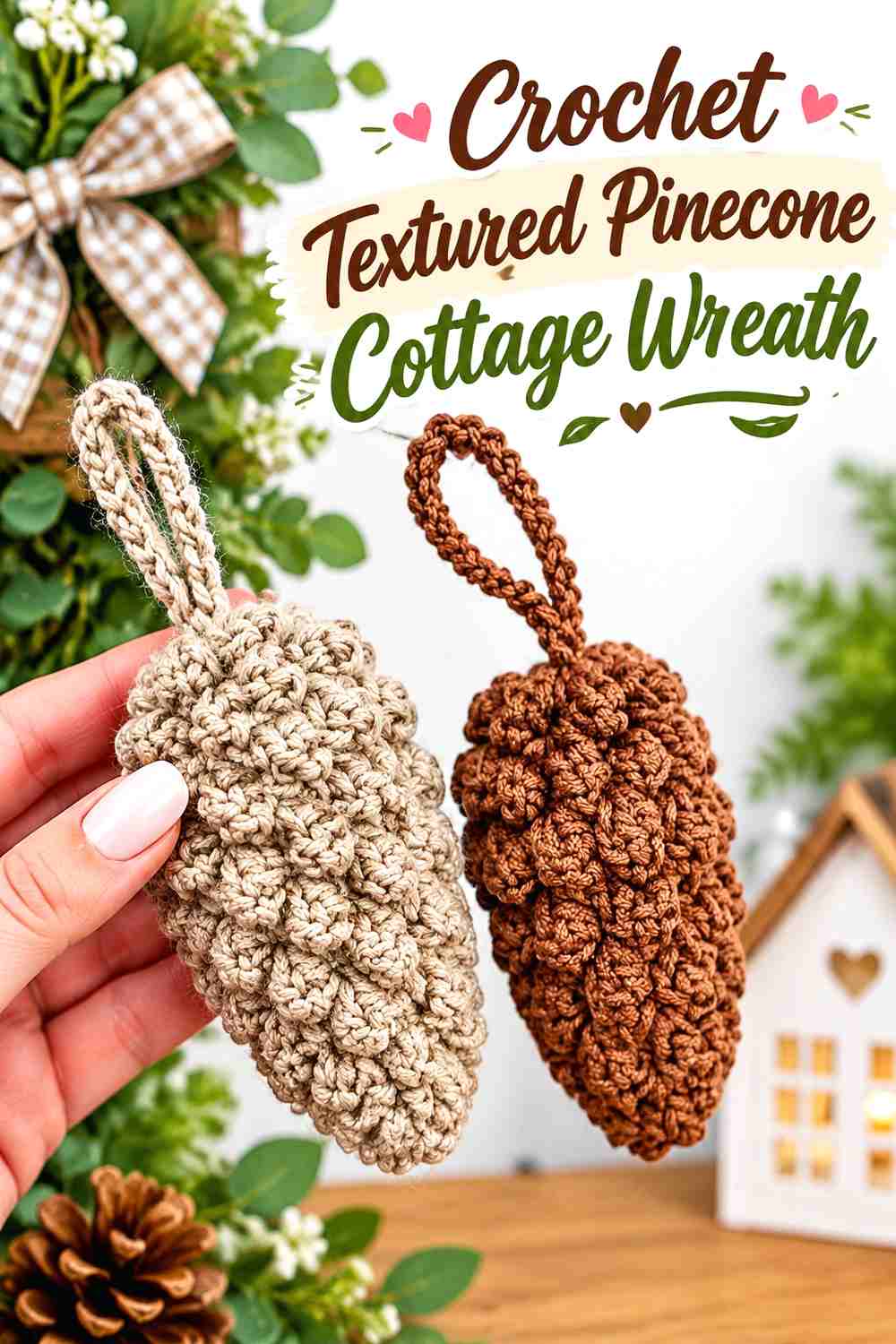
Pinecones add a stronger woodland texture than smooth appliques and can push the wreath toward a forest-cabin look. Concentrate them around one side of the cottage or combine them with leaves along the lower perimeter.
Natural brown tones can also provide a visual break between brighter pumpkins and autumn foliage.
Texture Can Become the Main Feature Quickly
A raised pinecone surface naturally catches light and shadow. Several placed together can attract more attention than the cottage.
Start with fewer pieces than you think you need and add more only after evaluating the complete arrangement.
Combine Pinecones With Simpler Leaves
When the pinecones already provide strong surface detail, highly complex foliage everywhere else can make the wreath visually noisy.
Simpler leaf shapes can create a better backdrop for the textured motifs.
Support Dimensional Pieces Securely
A projecting pinecone places different stress on an attachment point than a flat applique.
Check how the piece rests against the wreath base and make sure its weight is supported rather than relying on one delicate edge.
Creator Credit: Kristines Crochets
8. Crochet Squirrel-and-Cottage Woodland Wreath
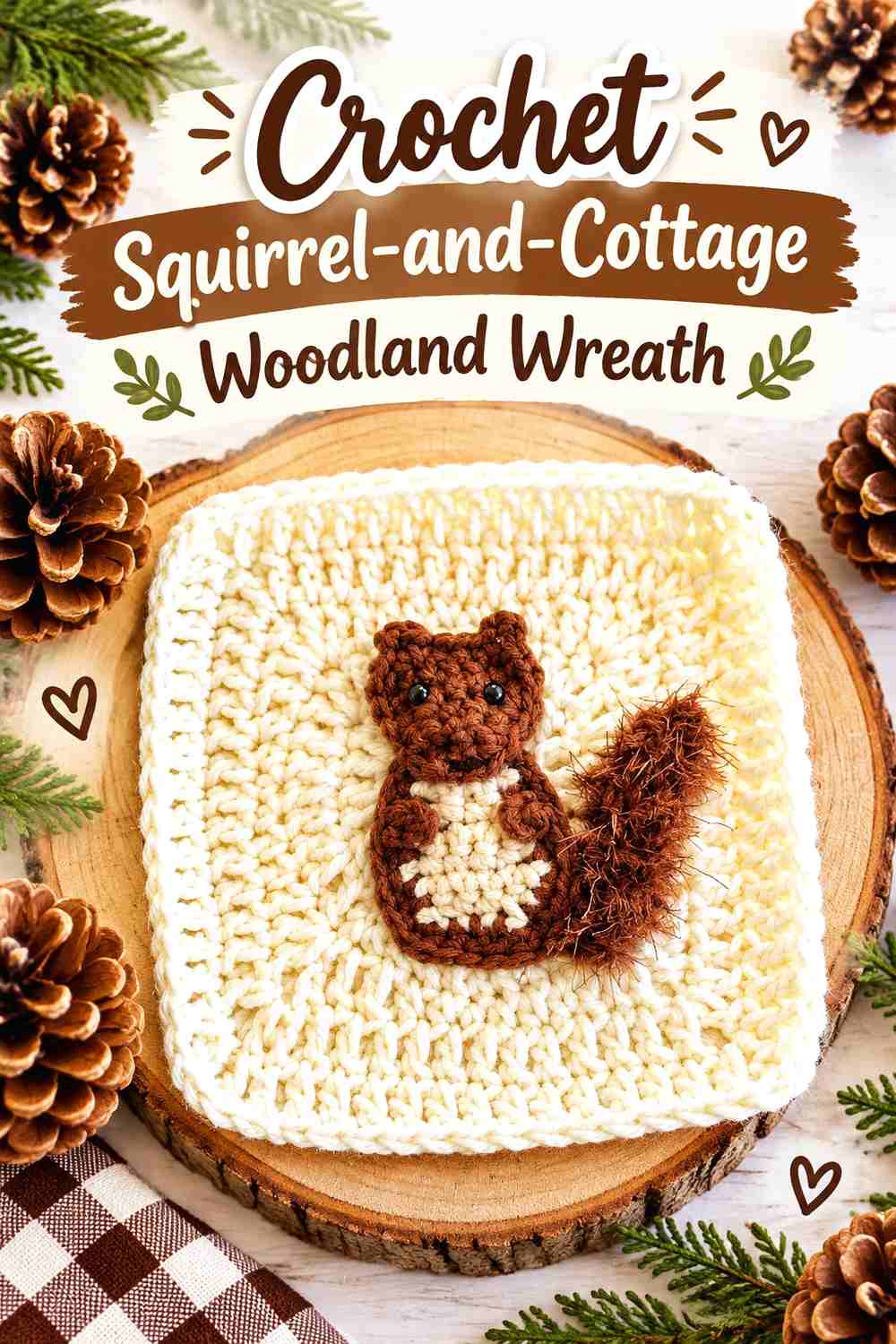
A squirrel introduces a character into the scene, making the wreath feel more like an illustrated woodland story. Position it near the lower edge of the cottage, among acorns, or beside a leaf cluster.
The animal should be large enough to recognize but not so prominent that the cottage becomes background scenery.
Decide Where the Squirrel Is Looking
Orientation can change the entire composition. A squirrel facing toward the cottage connects the two motifs visually, while one facing outward directs attention away from the center.
Test both placements before attaching it.
Give the Tail Enough Clear Space
A squirrel’s tail contributes much of its recognizable silhouette.
Avoid burying it under leaves or placing it against another similarly colored motif where the shape disappears.
One Character Can Be Enough
Adding several woodland animals may sound appealing, but each introduces another focal point.
If the cottage and squirrel already establish the story clearly, smaller leaves and acorns may complete the wreath more effectively than additional characters.
Creator Credit: Maria’s Blue Crayon
9. Crochet Autumn Gnome Cottage Wreath
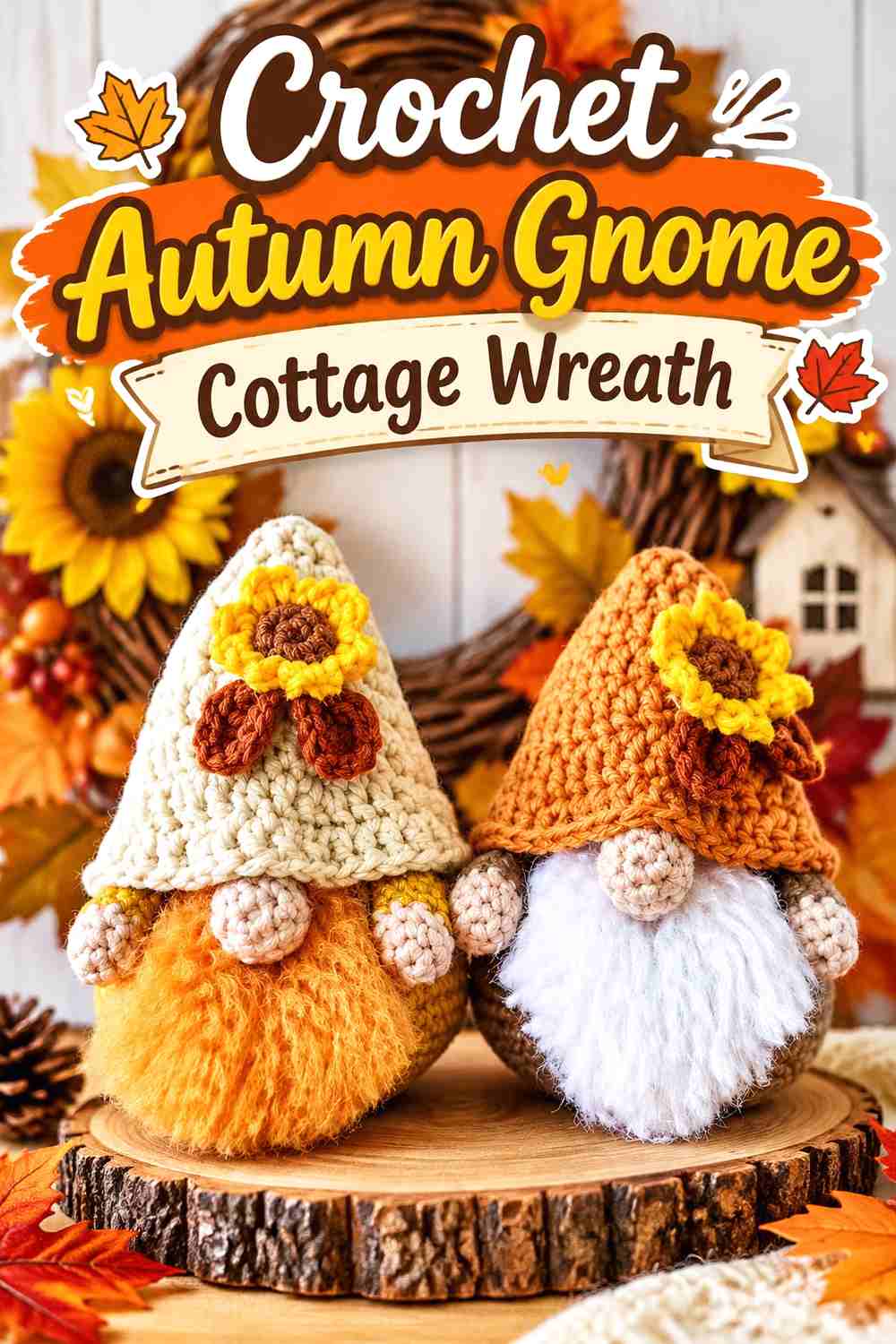
A small autumn gnome can stand beside the cottage as the resident of the woodland scene. This makes the wreath more character-driven than the animal or botanical versions.
Because a gnome generally has more visual detail than a leaf or acorn, keep the immediate background comparatively calm.
Treat the Gnome as a Second Focal Point
The cottage should not completely overpower the character, and the character should not hide the cottage.
Place them near enough to feel connected but give each a clear silhouette.
Watch the Depth Difference
An amigurumi-style figure can project much farther from the wreath than a flat house.
If necessary, build supporting foliage around the transition so the gnome does not look as though it was simply placed on top of an unrelated flat design.
Flowers and Leaves Can Link the Two Pieces
Repeating one foliage color or flower detail near both the cottage and gnome helps make separately crocheted elements feel intentional together.
Use repetition selectively rather than surrounding every motif with the same decoration.
Creator Credit: Ambros Crochet
10. Crochet Pumpkin-Patch Cottage Wreath
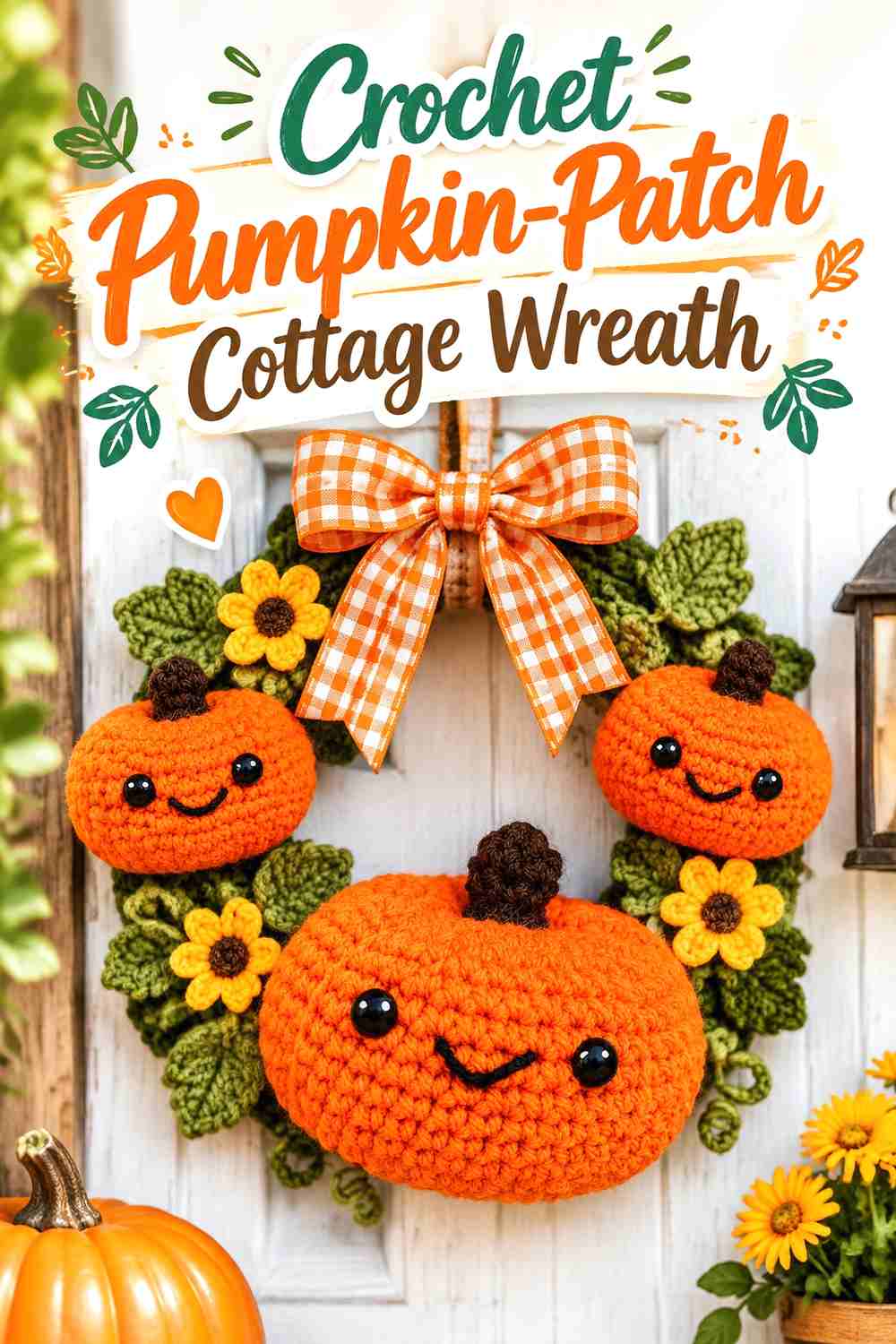
Pumpkins create a clear harvest theme and work naturally along the bottom of a cottage scene. Instead of placing them around the entire ring, build a small patch around the house and allow leaves to carry the design upward.
Dimensional pumpkins also provide an effective contrast against a flatter cottage applique.
Vary Placement More Than Color
You do not need a large palette to create variety. One pumpkin can sit partly behind another, while a smaller one can appear closer to the doorway.
Layering produces more depth than simply changing every pumpkin to a different color.
Keep the Doorway From Becoming Blocked
A row of pumpkins directly across the cottage base can accidentally cover the architectural details that make the house recognizable.
Leave a small visual opening around the entrance or shift the pumpkin patch toward one side.
Check the Combined Weight
Stuffed motifs add weight quickly.
Before final assembly, temporarily position the major pumpkins and hang the wreath to see whether the base tilts or rotates.
Creator Credit: Hooked by Robin
11. Crochet Stacked-Pumpkin Cottage Wreath
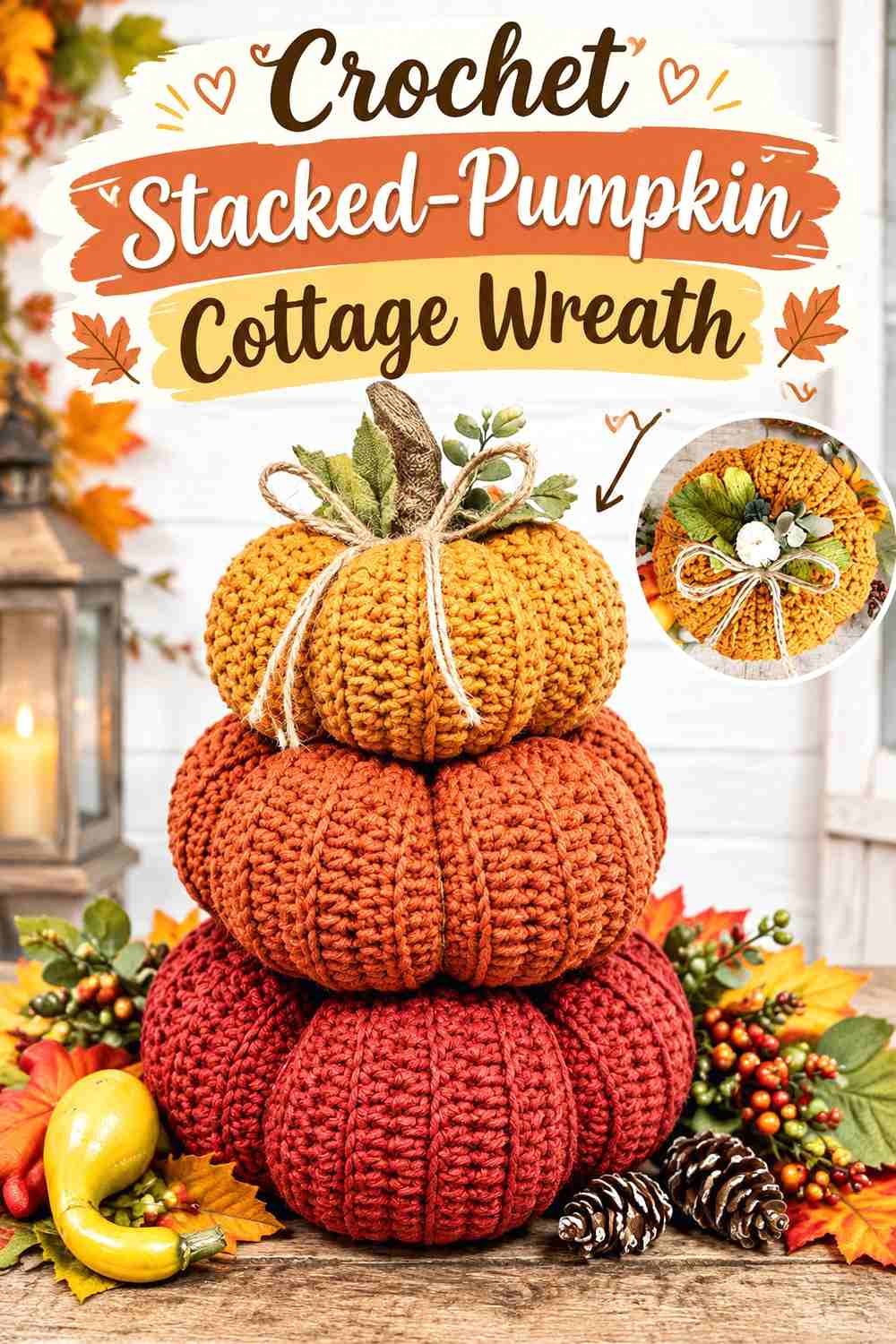
Instead of scattering small pumpkins, build one prominent vertical pumpkin grouping beside the cottage. This creates a stronger harvest statement while leaving other parts of the wreath relatively open.
The vertical form also contrasts nicely with a low cottage roofline.
Keep the Stack to One Side
A stacked feature works best when it has enough empty background to retain its outline.
Placing it directly in front of the house can make both shapes harder to read.
Repeat One Pumpkin Color Elsewhere
A small matching pumpkin or leaf on the opposite side can connect the stack to the rest of the wreath without requiring another large cluster.
This creates balance through repetition rather than symmetry.
Check How Far the Stack Projects
Several dimensional pumpkins together can create significant depth.
View the wreath from the side as well as the front so you understand how the finished decoration will sit against a door or wall.
Creator Credit: Brooklyn & Co. Handcrafted
12. Crochet Sunflower Woodland Cottage Wreath
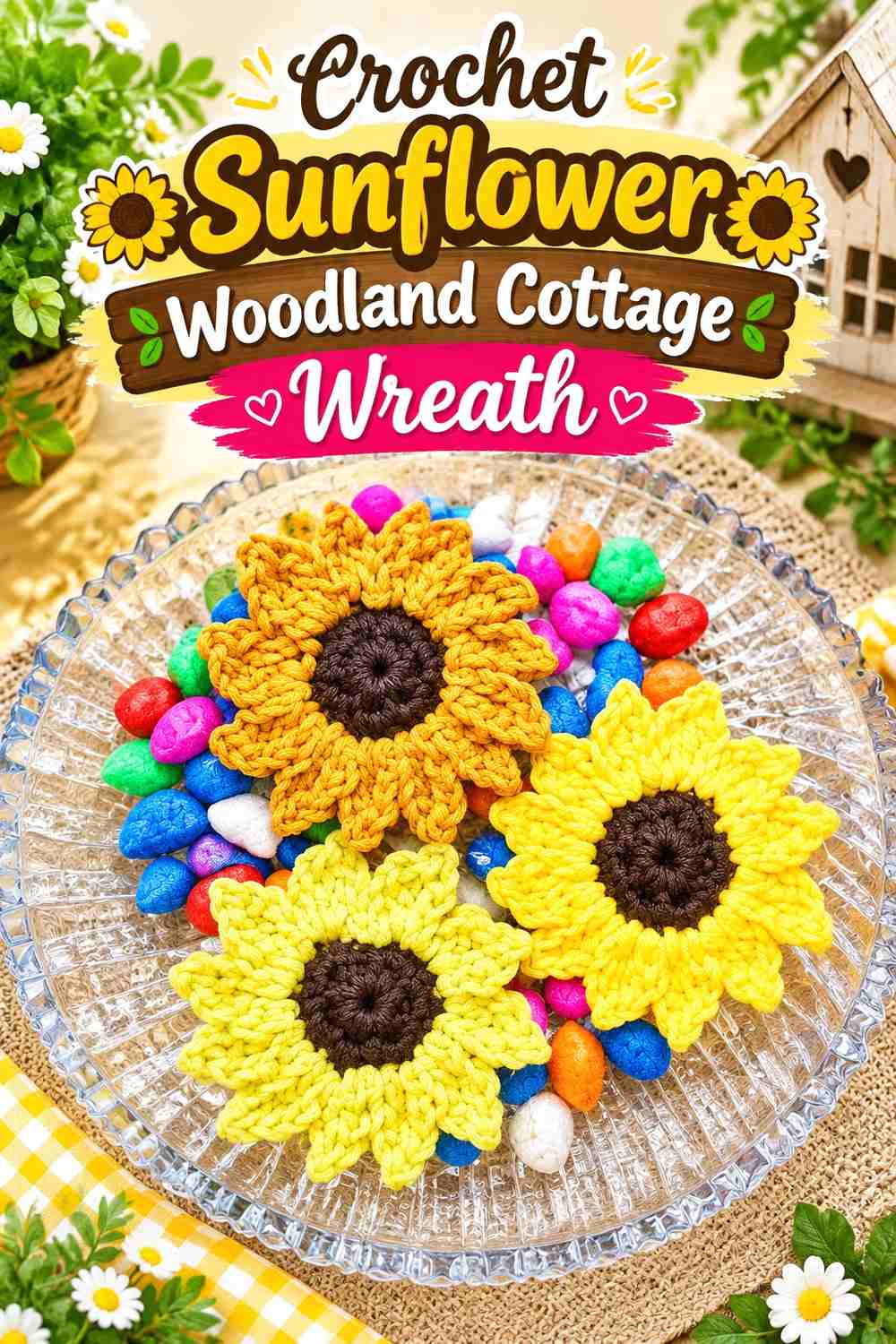
A sunflower can shift the palette from deep woodland browns toward golden early-fall color. Place several flat flowers around one section of the wreath or use one larger floral cluster near the cottage.
This option works especially well if you want a harvest look without making pumpkins the dominant feature.
Let the Dark Center Create Contrast
Sunflowers already contain natural contrast between their centers and petals.
Place them against foliage or cottage colors that allow both parts to remain visible instead of merging into a similarly colored background.
Keep the Flower Scale Consistent With the Scene
A sunflower dramatically larger than the cottage can create a whimsical effect, but it should appear intentional.
If you want a more balanced woodland composition, compare the finished flower with the cottage before making multiples.
Mix Flowers With Leaves Rather Than More Flowers
Too many flower shapes can push the wreath away from the woodland-cottage theme.
Leaves, acorns, or a few mushrooms can keep the overall composition grounded in fall forest imagery.
Creator Credit: Raji’s Craft Hobby
13. Crochet Harvest Cottage Thanksgiving Wreath
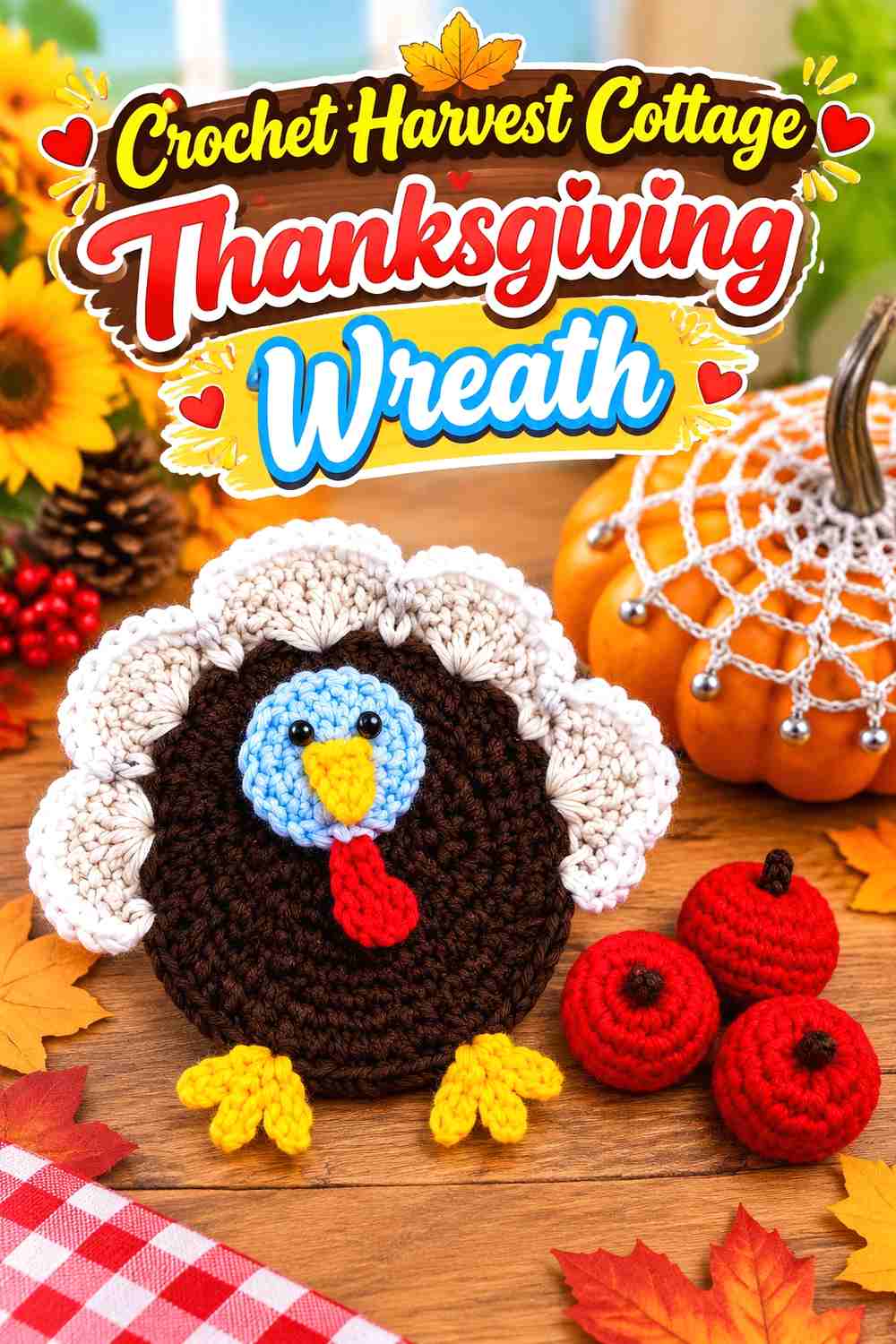
This version pushes the woodland cottage concept later into the season with a fuller harvest arrangement. The cottage remains the setting, while warm foliage and Thanksgiving-inspired motifs make the wreath suitable for November decorating.
A fuller wreath also gives you more room to blend elements from several fall projects.
Choose One Dominant Harvest Motif
Pumpkins, leaves, acorns, flowers, and characters can all fit the theme, but they should not all receive equal visual emphasis.
Choose one main motif family and use the others as supporting details.
A Full Wreath Still Needs Resting Areas
Covering every visible section with crochet can make individual elements hard to appreciate.
Even a richly decorated harvest wreath benefits from small areas where the base or background remains visible.
Test the Wreath While Hanging
A complex arrangement can look balanced on a tabletop yet shift visually once upright.
Hang the unfinished composition temporarily before committing to the final locations of heavier pieces.
Creator Credit: Jayda InStitches
14. Crochet Braided Woodland Cottage Wreath
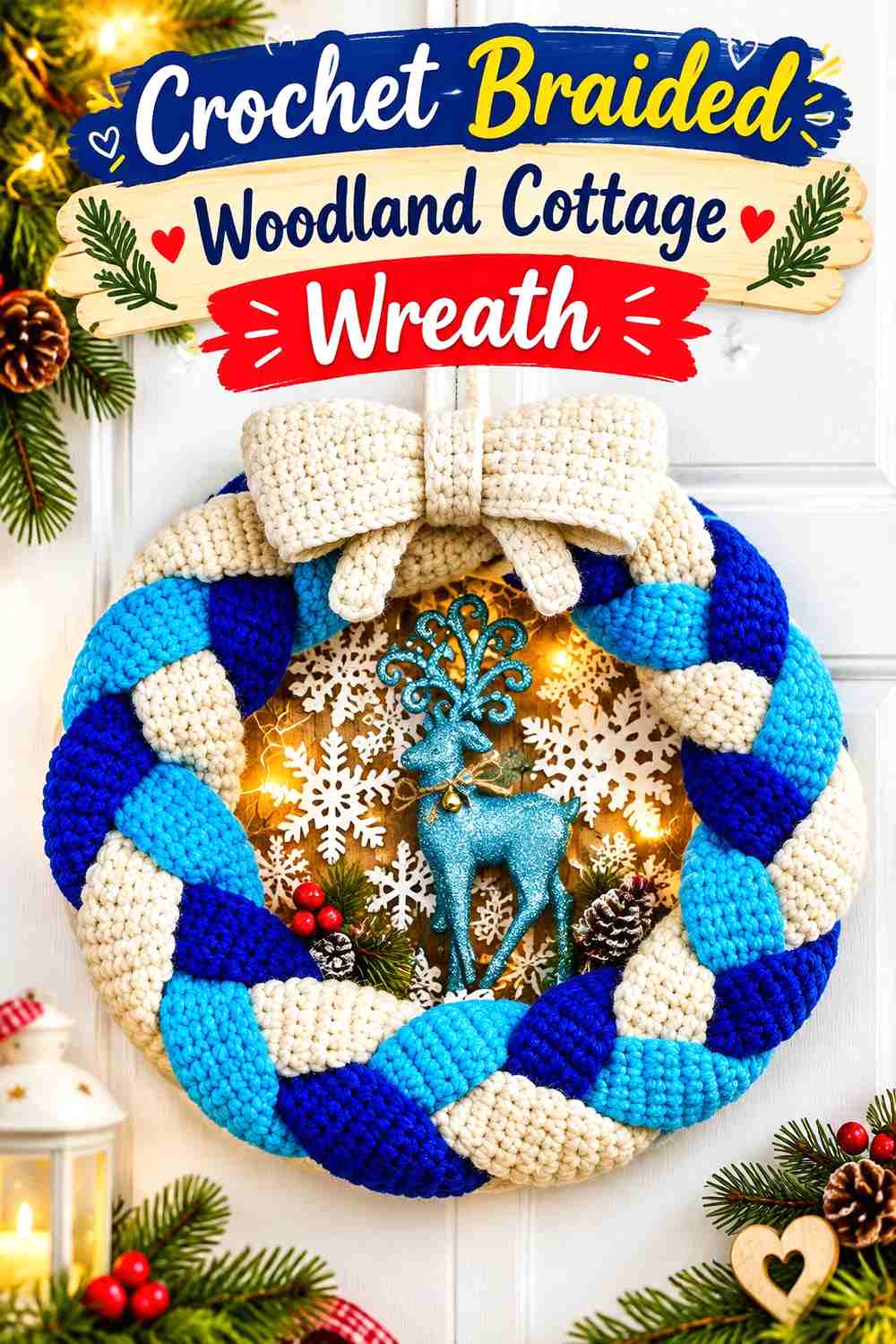
A braided crochet wreath base adds texture before any woodland motifs are attached. That makes this version noticeably different from a thin hoop or wrapped form.
Because the base itself is decorative, the cottage and foliage can be simpler without making the wreath feel unfinished.
Do Not Hide the Entire Braid
If the braided texture is one of the reasons you chose this construction, allow substantial sections to remain exposed.
Concentrate the cottage and woodland cluster around the lower third or one side rather than covering every strand.
Compare Cottage Texture With the Base
A highly textured house against a highly textured braid can become difficult to distinguish.
Contrast can come from yarn color, surface density, or a small backing area behind the cottage.
A Strong Base Needs Fewer Fillers
Braiding already creates visual movement around the circumference.
Instead of filling every gap with leaves, use the open sections to frame the cottage and make the main cluster more noticeable.
Creator Credit: Drink Wine Be Crafty
15. Crochet Cascading Pinecone Cottage Wreath
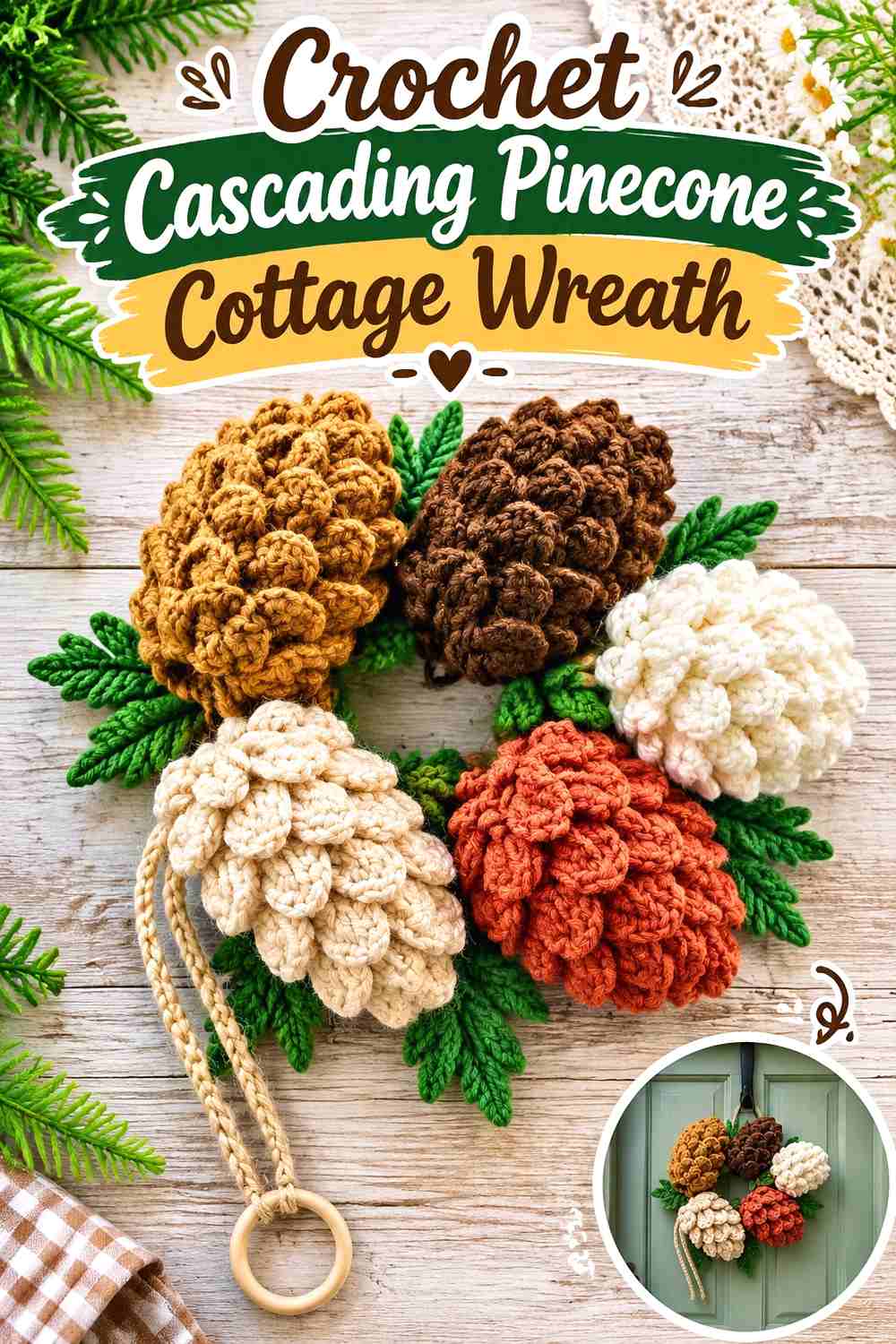
The final idea uses smaller pinecones as a downward-moving cluster rather than a heavy mass around the cottage. They can trail from one lower side of the wreath, creating a natural woodland alternative to ribbons or long floral stems.
This works particularly well when the cottage sits slightly above the lowest point of the ring.
Use the Cascade to Direct the Eye
Start the pinecone grouping near the cottage and allow the smaller elements to extend downward.
The progression should feel connected rather than like several separate ornaments hanging from unrelated points.
Keep Hanging Pieces From Tangling
Any element that extends below the wreath can move when a door opens or the decoration is handled.
Check the spacing and attachment points so individual pinecones do not continually catch on one another.
Balance the Opposite Side Quietly
A dramatic cascade does not require an identical cluster on the other side.
A few leaves or a small mushroom near the opposite edge can provide enough visual balance while preserving the asymmetrical design.
Creator Credit: MUSHYY
Comparing the Woodland Cottage Wreath Styles
For a flatter wreath that stores easily, the cottage centerpiece, maple-leaf path, acorn, squirrel, and sunflower ideas rely heavily on appliques and layered surface decoration.
If you prefer stronger depth, the 3D mushroom, pumpkin-patch, stacked-pumpkin, and textured pinecone versions create a more sculptural display. They require more attention to weight, side profile, and seasonal storage.
The modern hoop and braided-base designs are mainly construction choices. The hoop creates open negative space and suits asymmetrical arrangements, while the braid adds texture before any cottage or woodland decoration is added.
For the strongest storybook effect, the gnome, squirrel, and mushroom scenes make the cottage feel like part of an inhabited woodland. For a more traditional fall look, maple leaves, acorns, sunflowers, pumpkins, and pinecones keep the focus on seasonal nature.
Conclusion
A successful crochet woodland cottage wreath does not need every autumn motif at once. Start with the cottage and decide what kind of woodland surrounds it.
Choose flat mushrooms, leaves, acorns, and animals when you want easy layering and a shallower profile. Choose pumpkins, dimensional mushrooms, pinecones, or an amigurumi gnome when you want more depth. A thin hoop creates an airy modern composition, while a braided or covered base gives the wreath more texture before the decorative scene is added.
Most importantly, make or mock up the largest elements before permanent assembly. Comparing the real cottage, wreath opening, and major motifs will tell you far more about the final balance than planning by color alone. Refer to the credited tutorials for each creator’s exact crochet construction.
Frequently Asked Questions
Do all 15 tutorials make complete woodland cottage wreaths?
No. The collection intentionally combines complete wreath tutorials with tutorials for cottages and woodland elements that can be adapted into a cottage wreath. This gives you more control over the final composition instead of limiting the list to nearly identical finished wreaths.
Should I crochet the cottage or wreath base first?
If the cottage will sit inside the wreath opening, making the cottage first can help you choose a compatible ring size. If you already own a specific wreath form, measure its usable opening and decorative area before choosing the cottage design.
How do I combine crochet motifs from different tutorials when their sizes do not match?
Make a sample of the most important motifs and compare their finished dimensions after any shaping or blocking you plan to do. Changing yarn or hook size can also affect fabric thickness and stiffness, so do not rely on width alone when deciding whether two motifs will work together.
Are flat or stuffed motifs better for a crochet woodland wreath?
Neither is universally better. Flat appliques are useful for layering, shallow wall displays, and compact storage. Stuffed or dimensional motifs produce stronger depth but can increase weight and make storage more demanding. Mixing mostly flat pieces with a few dimensional focal points can provide a useful middle ground.
How do I keep the cottage visible behind leaves and mushrooms?
Attach the cottage provisionally before placing smaller pieces. Keep important features such as the roof, doorway, and main outline clear. Supporting motifs can overlap slightly, but they should frame the house rather than divide its silhouette into disconnected sections.
Can a crochet woodland cottage wreath be used outdoors?
That depends on the yarn, wreath base, attachment materials, and exposure conditions. Do not assume crochet yarn or decorative backing is weatherproof. For an exterior location, confirm whether the chosen fibers and construction can tolerate moisture, sunlight, dirt, and repeated movement; otherwise, use the wreath in a protected or indoor area.
How should I store a dimensional crochet fall wreath?
Avoid compressing dimensional pumpkins, mushrooms, pinecones, or characters beneath other decorations. Support the wreath so heavy motifs are not pulling on their attachment points during storage, and choose a container with enough depth to protect projecting pieces.