A window seat often needs a different kind of cushion from a sofa. There may be plenty of padding underneath you but very little support along the wall, window frame, or corners. A long crochet bolster can fill that gap without taking over the entire seat.
The projects below include true cylindrical bolsters, neck-roll cushions, rectangular lumbar pillows, and a few longer support-pillow constructions that can be adapted thoughtfully for a reading nook. Not every tutorial was created specifically for a window seat, so the useful question is how its shape, closure, filling, and surface texture would behave when placed behind your back, beneath an arm, or along one end of the seat.
For winter use, also think beyond color. A thick rib or raised post stitch can make the nook feel substantial, while a smoother cylinder may be more comfortable for long reading sessions. Removable covers can simplify cleaning, and a carefully chosen insert can make the finished support more predictable than loose filling.
Quick List
- Crochet Ribbon-Yarn Window-Seat Bolster
- Crochet Post-Stitch Neck-Roll Bolster
- Crochet Classic Lumbar Reading Bolster
- Crochet Chunky Oval Neck-Roll Bolster
- Crochet Scrap-Stripe Reading Bolster
- Crochet Clean Cylinder Window-Seat Bolster
- Crochet Granny-Covered Bolster Cushion
- Crochet Striped Stuffed Lumbar Bolster
- Crochet Tunisian Long Reading Bolster
- Crochet Multicolor Roll Bolster
- Crochet Low Round Corner-Support Cushion
- Crochet Raised-Texture Lumbar Bolster
Match the Bolster Shape to the Window Seat
A cylindrical bolster is useful when you want concentrated support along the lower back, beneath an elbow, or at one end of the seat. Because it rolls more easily than a rectangular pillow, it can also be repositioned as your reading position changes.
A rectangular lumbar cushion spreads pressure across a broader area. That can make it more practical when the window seat backs directly onto a hard wall or frame and you want continuous support rather than a narrow roll.
Long body-pillow constructions occupy more width. They can work well across a wide built-in seat, but measure carefully before choosing one. A bolster that fills the entire bench can leave little room for a blanket, books, or another reader.
Decide Between Loose Stuffing and a Removable Form
A permanently stuffed cylinder gives you freedom to choose unusual lengths and diameters, but it also means the exterior and filling function as one unit. If the outer crochet needs cleaning later, that can be less convenient.
A removable bolster form or inner cushion creates a fixed target for the cover. This is especially useful for window seats because covers near windowsills, pets, drinks, and everyday household traffic may need more maintenance than decorative pillows elsewhere in the room.
Closures also affect comfort. Buttons, overlapping panels, drawstrings, and other openings should ideally sit where they will not press into the reader’s back or arm.
Check Texture Before Making the Bolster Your Main Back Support
Raised post stitches, ribs, granny joins, and chunky Tunisian fabric create winter character, but texture is not only visual. Deep ridges can be noticeable when you lean against them for a long period.
For a heavily textured project, consider which face or section will touch the body. You might place the strongest detail along the sides while keeping the main contact surface calmer.
If the window seat is already firm, filling also deserves attention. A decorative bolster that collapses immediately may not give the support you expected, while an extremely firm cylinder can push the reader too far forward. Use the source construction as your starting point and adjust only after considering the intended position.
1. Crochet Ribbon-Yarn Window-Seat Bolster
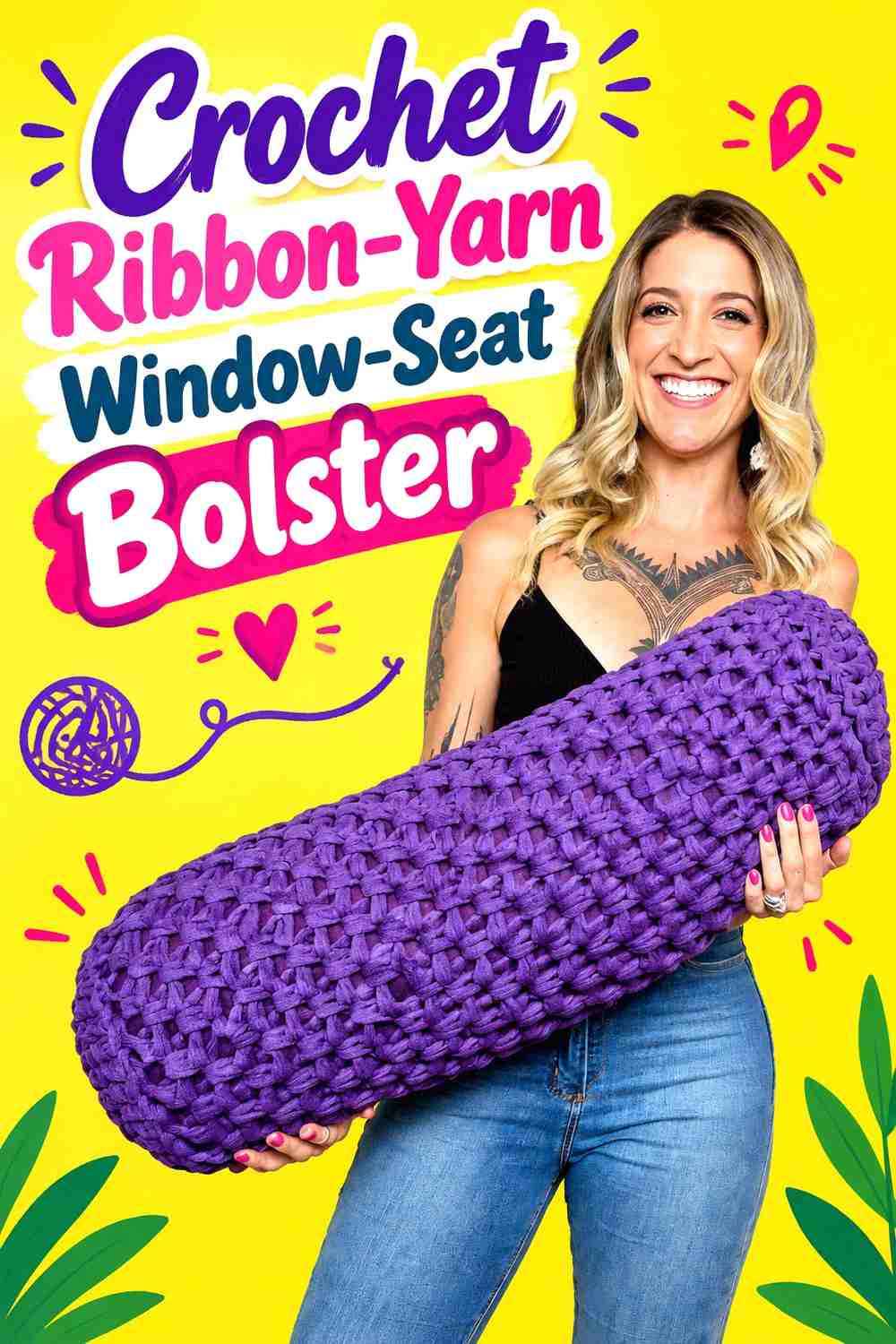
Anne Galante – Escola de Artes Manuais demonstrates a large cylindrical crochet bolster created as a yoga support cushion. Its elongated form translates naturally to a window seat because it can run along the lower back or sit against one end of the nook rather than functioning like an ordinary square throw pillow.
The Long Cylinder Gives You Flexible Placement
A cylinder can move between several jobs during one reading session. Put it horizontally at the lower back, tuck it beneath an arm, or stand it near the end of a deep bench.
Before changing the length, measure the usable width of the window seat. A bolster that nearly spans the whole bench behaves differently from a compact roll intended for one corner.
Ribbon Yarn Creates a Defined Outer Surface
The tutorial uses ribbon yarn, which gives the crochet fabric a different structure from fluffy blanket yarn.
If you substitute another material, expect the drape and stitch definition to change. Make a sample large enough to judge whether the fabric feels supportive enough for the intended filling before committing to the full cushion.
Filling Should Match the Role of the Bolster
A yoga-style cushion and a decorative back pillow do not necessarily need the same feel. Decide whether you want the finished piece to resist compression or simply provide a soft buffer between the reader and the wall.
Avoid choosing filling by appearance alone; the interior determines much of the final support.
Creator Credit: Anne Galante – Escola de Artes Manuais
2. Crochet Post-Stitch Neck-Roll Bolster
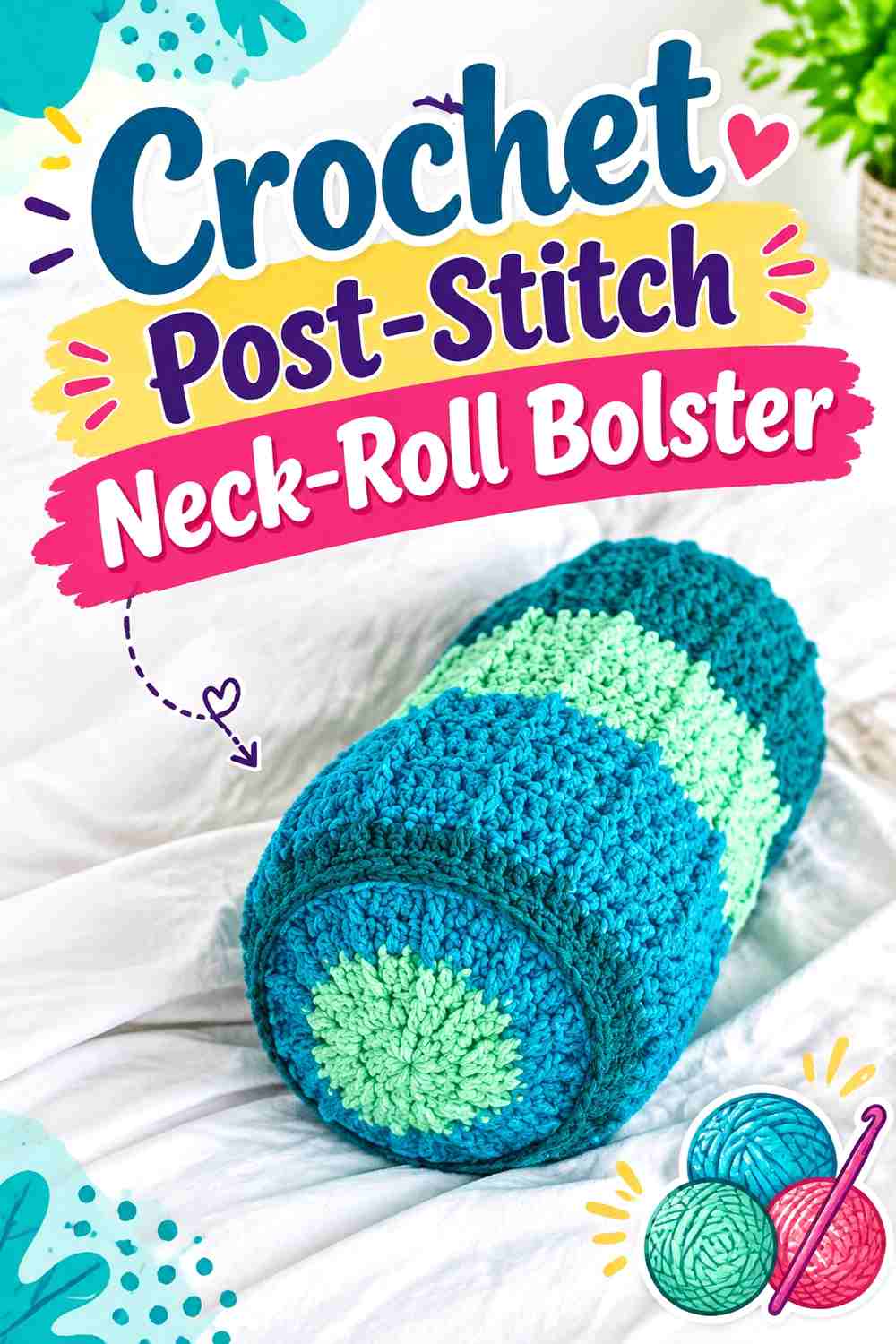
Ninja Bunny Crochet demonstrates a cylindrical neck-roll pillow using front- and back-post double crochet techniques. The post stitches produce clear relief around the surface, making this an especially suitable direction when the winter nook needs texture without complicated colorwork.
Post Stitches Make a Solid Color Look More Detailed
A single shade can still create plenty of visual interest when the stitch structure catches light and shadow.
That works well for a window seat surrounded by patterned curtains, books, or blankets, where another multicolor accessory might make the corner feel crowded.
Consider Where the Raised Ridges Will Touch
The relief is more pronounced than a smooth single-crochet surface.
If you plan to use the roll directly behind your neck or lower back, think about whether you prefer that texture under pressure. Another option is to position the bolster beneath an arm or along the side of the nook.
Cylindrical Symmetry Makes Finishing Easy to Notice
A neck roll looks most balanced when both ends hold a similar shape.
Check the filling distribution as you finish rather than waiting until the final closure to correct one end that appears flatter or more rounded than the other.
Creator Credit: Ninja Bunny Crochet
3. Crochet Classic Lumbar Reading Bolster
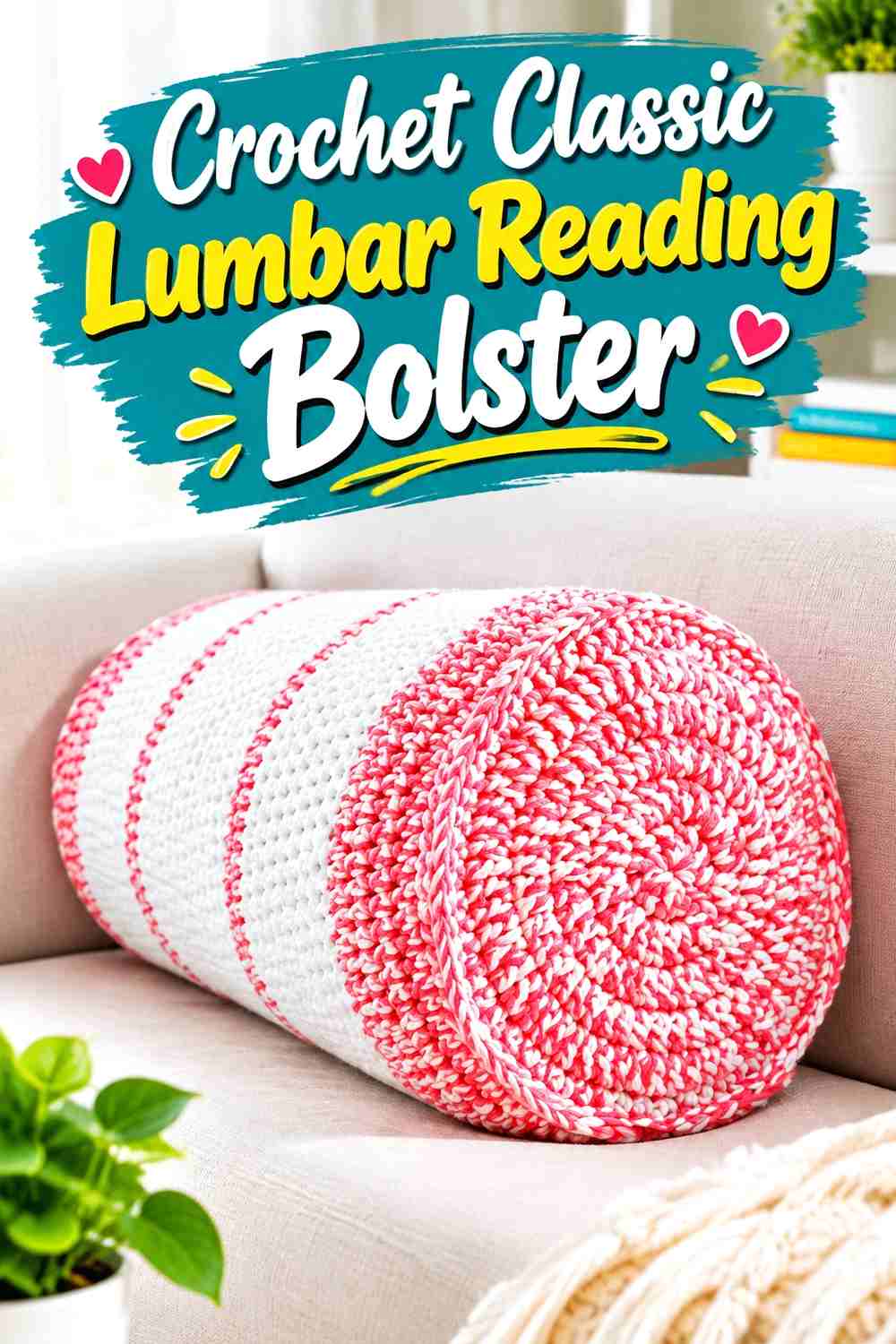
The Stitch Sessions – Crochet & Conversation demonstrates a rectangular crochet lumbar pillow, making this a useful alternative for window seats where a cylinder would roll away or provide too narrow a contact area. The tutorial focuses on pillow construction while also working with circular elements as part of the project.
A Rectangular Lumbar Shape Stays Put More Easily
Flat sides can help the cushion sit securely between the reader and a wall.
That makes this style worth considering for shallow window seats or hard-backed benches where you mainly want a stable lower-back cushion rather than a movable roll.
Wider Support Can Be Better Than More Depth
A lumbar pillow does not have to be extremely thick to change how a reading nook feels.
If the seat is already narrow from front to back, a very deep cushion could push you too far forward. Compare the insert depth with the available sitting area before making the cover.
Keep Decorative Elements Away from the Main Pressure Zone
When a lumbar pillow has visible surface detail, decide which part of the finished cushion will sit directly behind you.
The most decorative side can face outward when the nook is not in use, while a quieter reverse side may feel more comfortable for long reading sessions if the construction allows it.
Creator Credit: The Stitch Sessions – Crochet & Conversation
4. Crochet Chunky Oval Neck-Roll Bolster
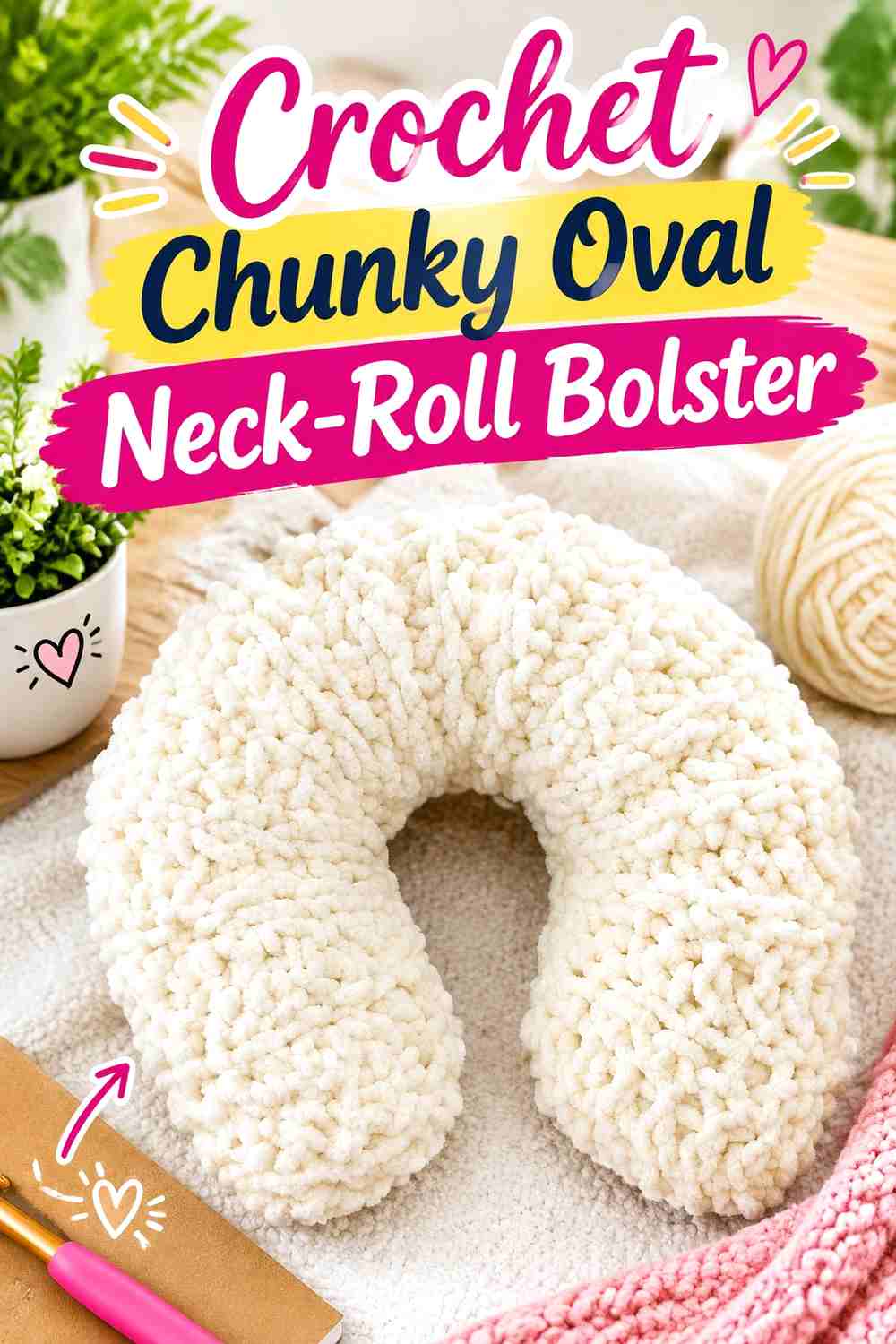
Hectanooga1’s neck-roll design is specifically intended as an elongated pillow and is described as adjustable in size. The source works with chunky or multiple strands of yarn, making it particularly relevant to a winter reading nook where you want visible thickness rather than a delicate cushion fabric.
An Adjustable Length Helps With Narrow Windows
One advantage of a long roll construction is that you can plan around the actual bench rather than forcing the nook to fit a standard square pillow.
Measure the section where the bolster will sit and leave enough room for it to be moved or removed easily.
Chunkier Fabric Can Make a Small Bolster Feel Substantial
A compact cushion does not have to disappear visually.
Using a thicker fabric can give the roll enough presence to anchor one side of the nook even when its overall length is modest.
Check Diameter as Carefully as Length
A common mistake with window-seat bolsters is concentrating entirely on how long the cushion should be.
Diameter controls how far the bolster pushes the reader away from the wall. A very deep roll can consume more usable seat depth than expected, so compare both measurements before enlarging anything.
Creator Credit: Hectanooga1
5. Crochet Scrap-Stripe Reading Bolster
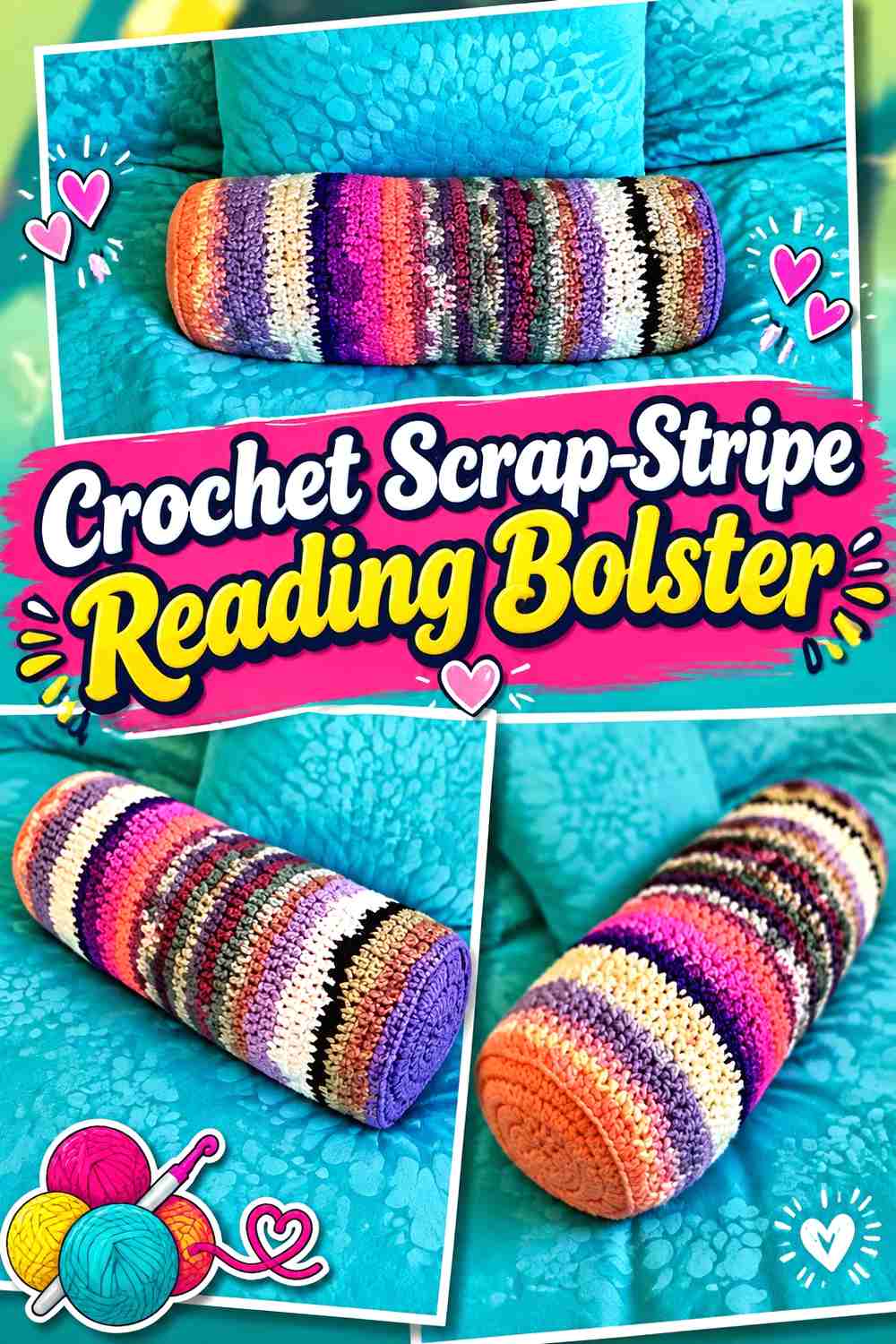
Sara Sach Crochet Designs demonstrates a long tubular bolster specifically designed to make use of assorted yarn, including variegated, striping, and ombré options. The creator also describes using the finished bolster as support for a book or tablet, which makes the shape especially relevant to a reading-focused space.
Scrap Yarn Works Best With a Color Plan
Using remnants does not have to mean a completely random surface.
Choose one repeated neutral or arrange colors from dark to light to give the bolster visual continuity. That can make a mixed-yarn project feel intentional beside winter blankets and upholstery.
A Long Tube Can Double as a Book Support
A bolster placed across the lap can sometimes provide a raised surface behind a book or tablet, reducing the need to hold the reading material at the same angle for an entire session.
That use depends on the finished firmness, so do not assume a loosely filled roll will behave like a structured support.
Make Sure Mixed Yarns Produce Compatible Fabric
Different medium-weight yarns can still vary in thickness, elasticity, and surface texture.
Compare them before combining large sections. Abrupt changes in fabric density can make one part of the cylinder feel firmer or narrower than another.
Creator Credit: Sara Sach Crochet Designs
6. Crochet Clean Cylinder Window-Seat Bolster
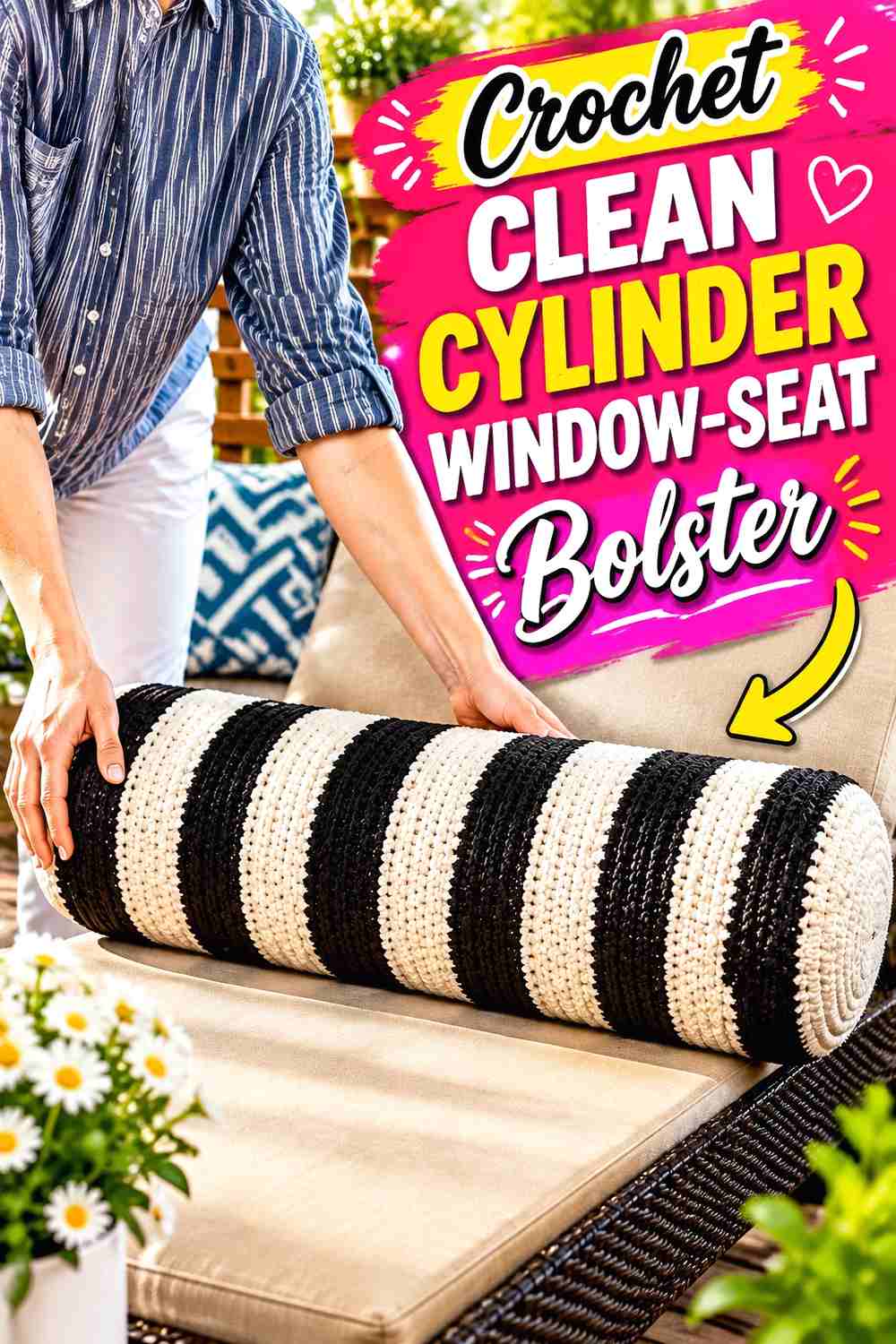
The Crochet Crowd demonstrates a true round bolster originally intended for outdoor seating. Its simple cylindrical form makes it easy to reinterpret for an indoor window seat, especially when you want the shape to be the main feature rather than ornate stitches.
A Simple Cylinder Is Easy to Coordinate
Straightforward surface treatment lets the bolster work with other crochet pieces instead of competing with them.
For winter, a warm neutral or dark saturated shade can change the mood without requiring you to alter the construction itself.
Indoor Use Changes the Material Priorities
The original project was presented for outdoor living, but a winter window-seat version has different needs.
Instead of prioritizing outdoor exposure, think about touch, cleaning, and how the yarn feels against clothing or skin. If you change the source yarn, swatch to confirm the new fabric behaves appropriately.
This Shape Pairs Well With Square Back Cushions
A cylinder and a square pillow provide different kinds of support.
Use the bolster low against the back or beneath an arm, then let a flatter pillow fill the upper corner. That layered setup can be easier to rearrange than one very large cushion.
Creator Credit: The Crochet Crowd
7. Crochet Granny-Covered Bolster Cushion
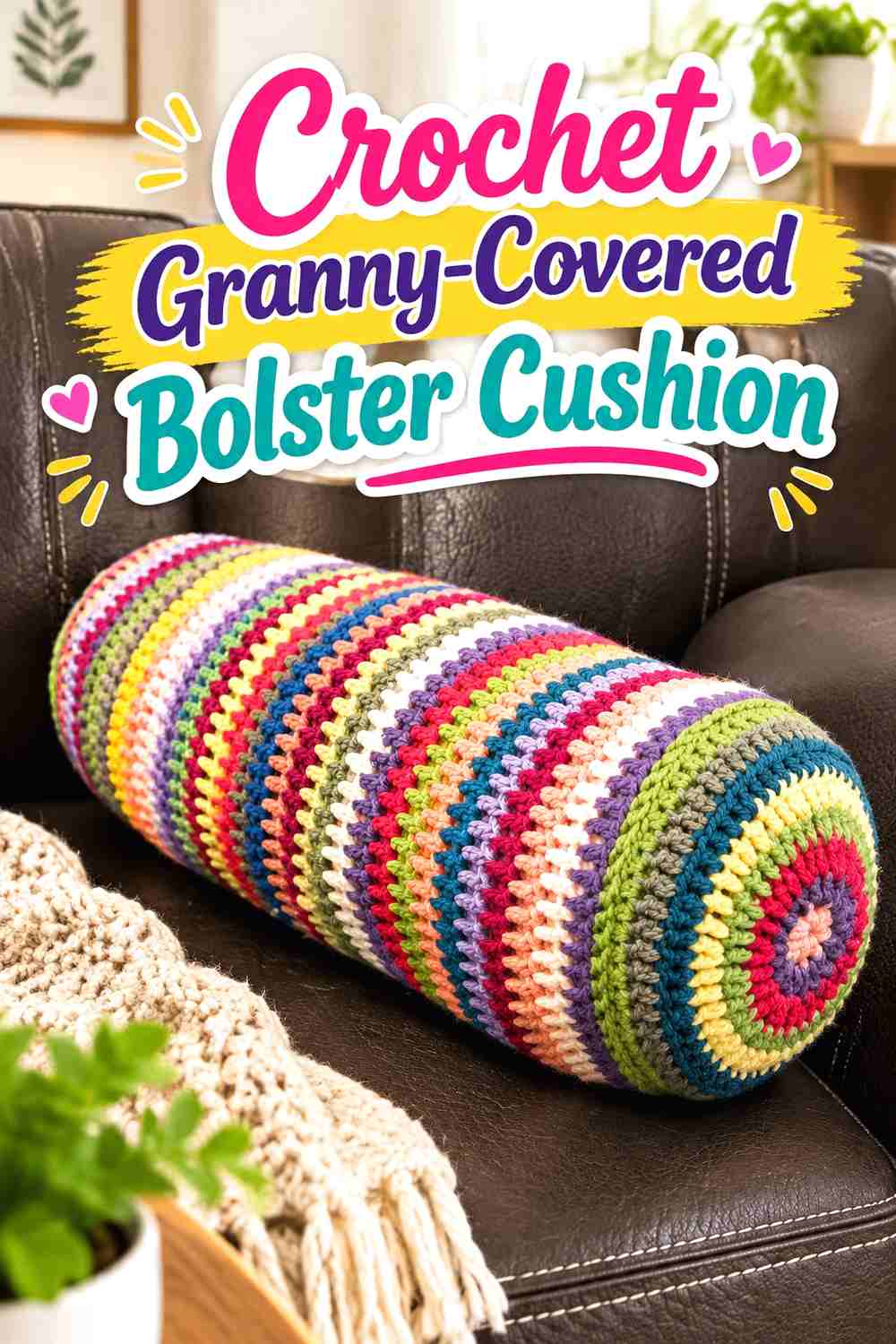
Ophelia Talks Crochet demonstrates a crochet cover made specifically for an existing bolster cushion. This is useful if you already own a suitable insert and want the handmade element to be removable rather than permanently stuffed.
Starting With the Bolster Form Removes Sizing Guesswork
When the inner cushion already exists, its length and circumference become your design limits.
Measure the actual form rather than relying on a label alone, particularly if it has been used and compressed over time.
A Cover Is Practical for Seasonal Window Seats
A removable crochet exterior can be changed when winter ends without replacing the entire cushion.
That also gives you the option to make several covers for the same insert rather than storing multiple bulky pillows.
Granny Construction Adds More Visual Activity
A motif-based or granny-style surface creates stronger pattern than a plain cylinder.
If the nook already includes a colorful quilt or patterned curtain, consider limiting the bolster palette so the different textiles do not compete with one another.
Creator Credit: Ophelia Talks Crochet
8. Crochet Striped Stuffed Lumbar Bolster
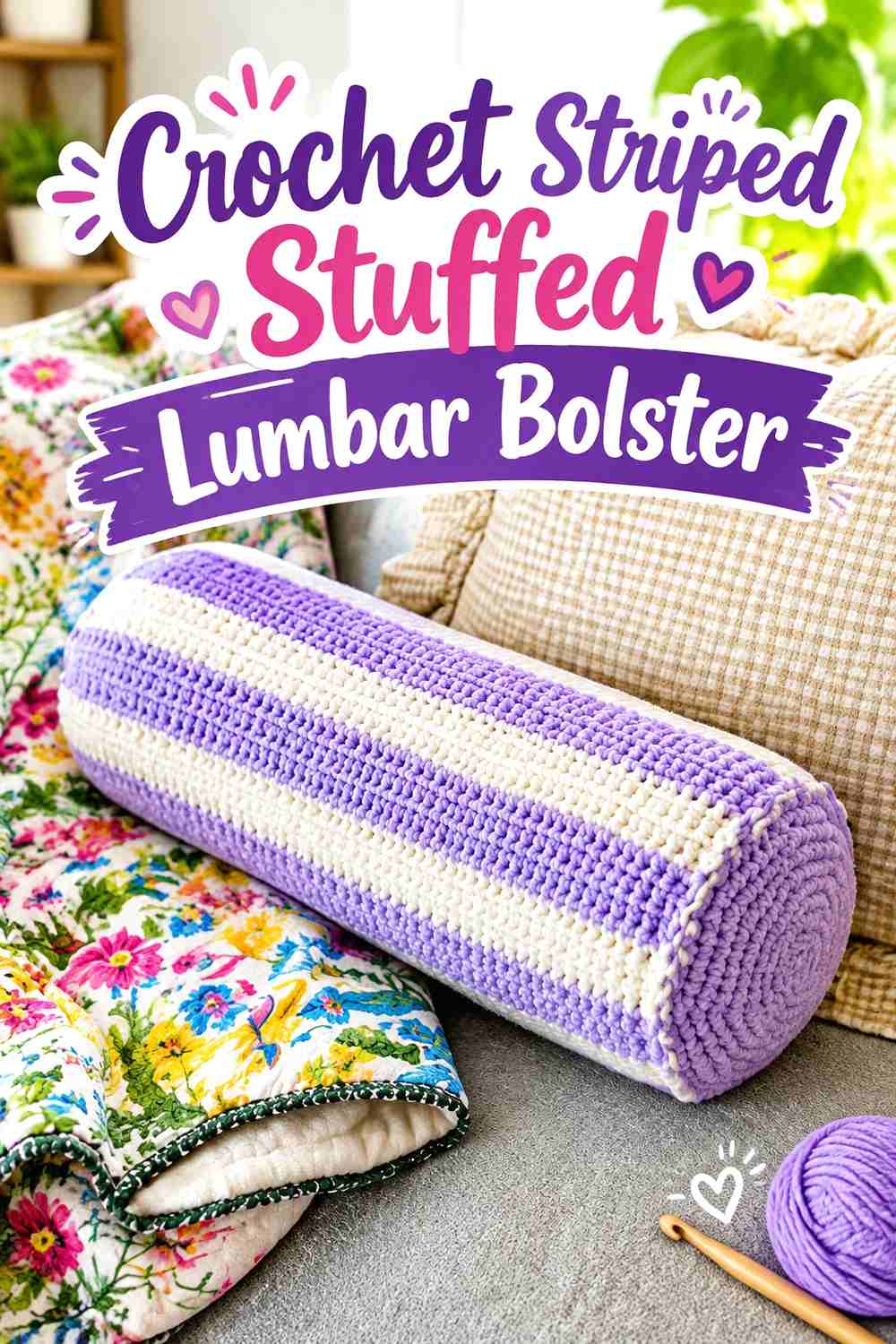
Frayed KnotCo Tutorials demonstrates a striped lumbar pillow worked in single crochet and filled rather than built around an exposed decorative insert. The horizontal color bands give the long rectangular shape clear visual rhythm without adding raised texture.
Horizontal Stripes Can Make a Narrow Nook Feel Wider
A long pillow already emphasizes the width of a window seat, and repeated stripes strengthen that horizontal line.
Use closely related winter shades for a calm look or stronger contrast when the bolster is intended to be the main decorative piece.
Stuffed Construction Gives You Control Over Firmness
Unlike a removable cover over a purchased insert, a stuffed pillow lets you determine how full the finished shell becomes.
Add filling gradually and check the shape from several angles. Too little can leave the corners underfilled, while excessive stuffing may distort the intended proportions.
Single Crochet Keeps the Surface Relatively Calm
A flatter stitch treatment can be useful directly behind the reader because it avoids pronounced cables or bobbles.
If the primary goal is comfort rather than decorative relief, that simplicity can be an advantage.
Creator Credit: Frayed KnotCo Tutorials
9. Crochet Tunisian Long Reading Bolster
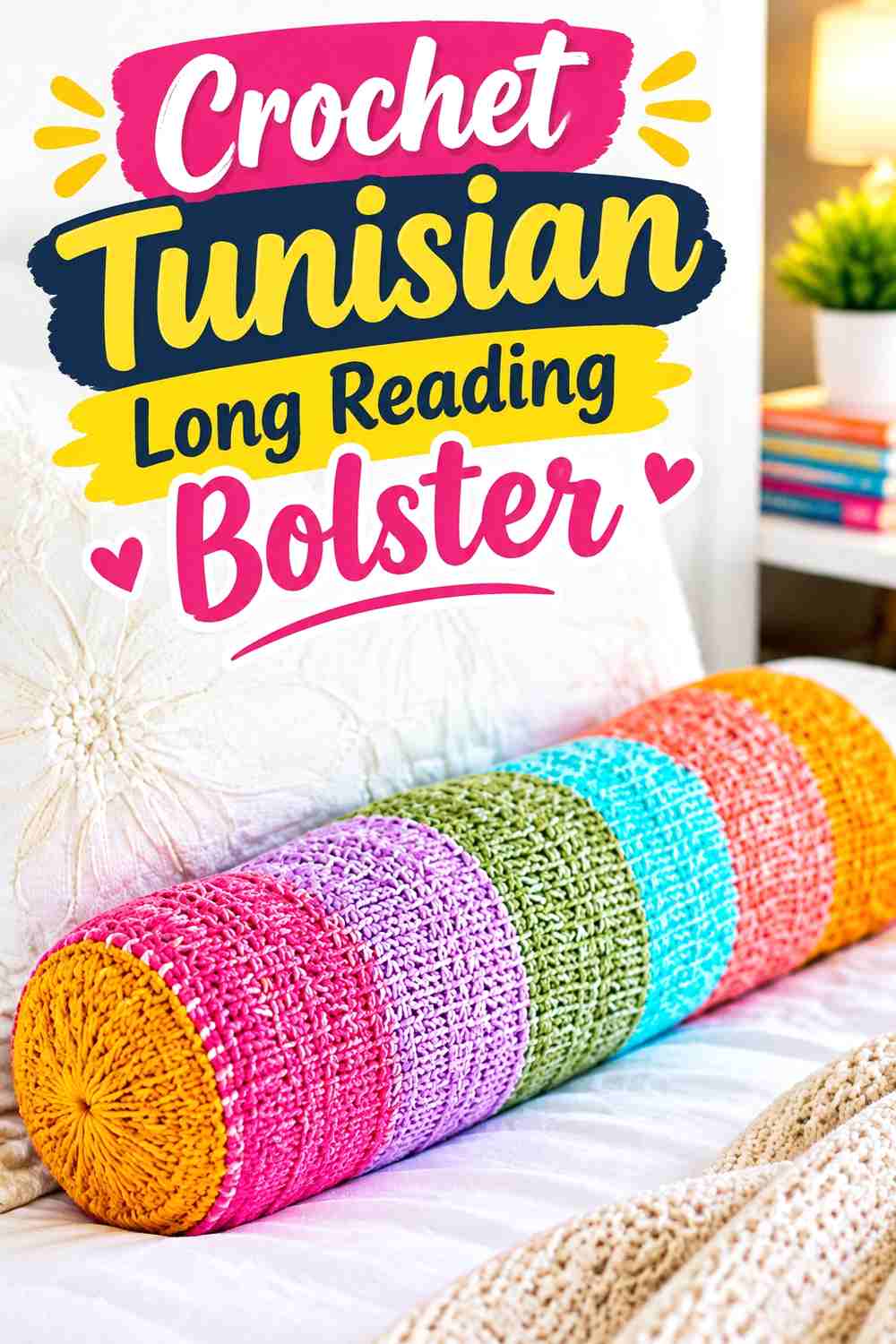
Easy Crochet demonstrates the Tunisian techniques used for a long body-pillow construction. The accompanying project information specifically notes that the long form can also function as a bolster, making it a useful route for an extra-wide window seat.
The Extra-Long Form Works Across Wide Built-Ins
If your window seat runs across several feet of wall, one continuous support pillow can create a cleaner line than three unrelated small cushions.
Measure carefully first. A very long pillow becomes awkward to store elsewhere, so it works best when the nook is its permanent home.
Tunisian Crochet Creates a Different Fabric Character
Tunisian simple and knit-style stitches produce a surface that looks different from ordinary crochet rounds.
That can bring variety to a reading nook already filled with granny squares, ribbing, or standard double crochet.
Long Pillows Need Even Filling From End to End
The greater the length, the easier it is for stuffing to become uneven.
Check the center as carefully as the ends. A visually full end does not guarantee the middle has enough support once the bolster is placed horizontally.
Creator Credit: Easy Crochet
10. Crochet Multicolor Roll Bolster
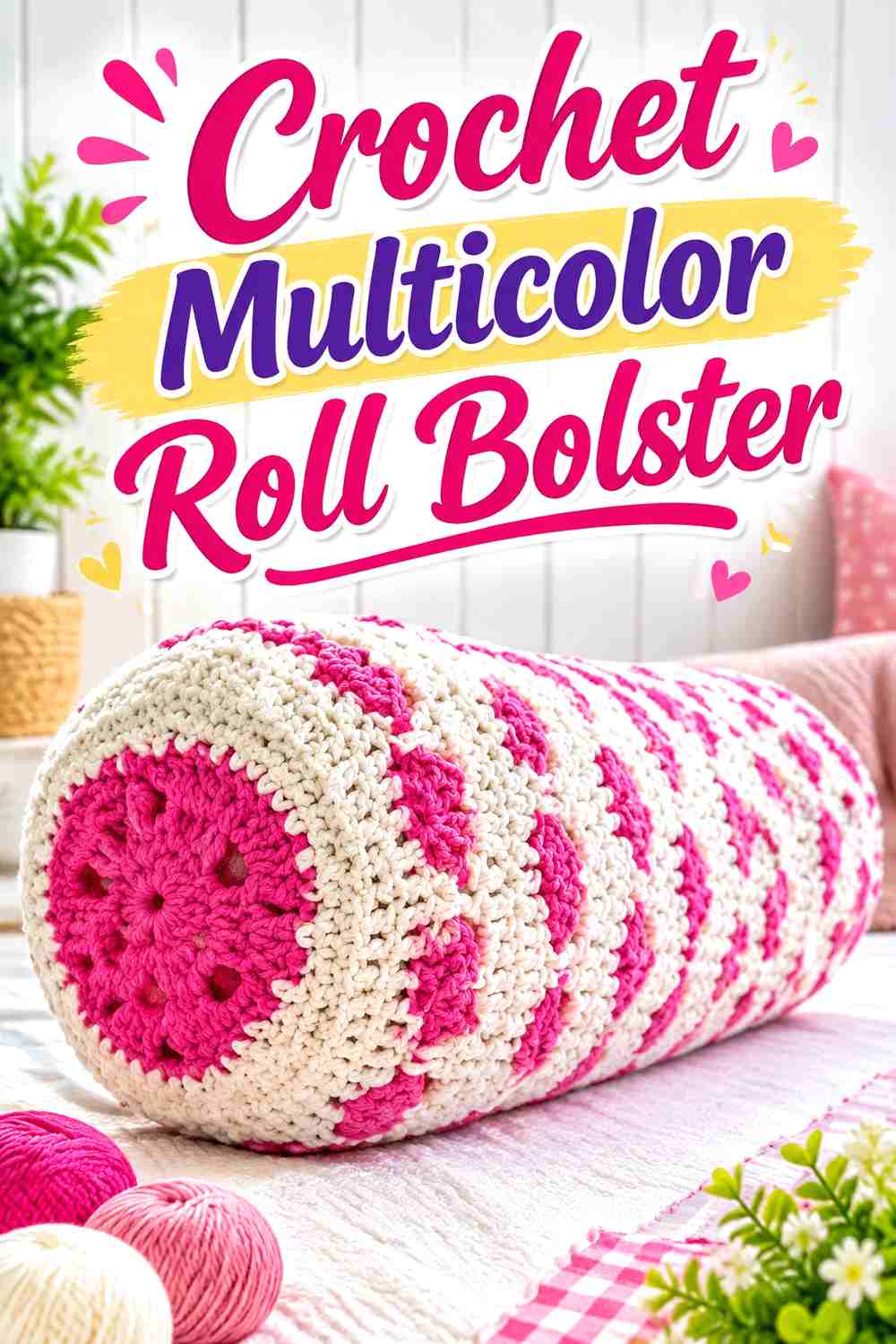
Duka Art’s em Crochê demonstrates a true roll-shaped crochet cushion built with multiple colors and acrylic filling. The straightforward cylinder makes this a useful option when you want the winter nook to feel handmade and colorful rather than minimalist.
Multiple Colors Can Define the Cylinder
Alternating shades emphasize the length and roundness of a roll pillow.
For a winter palette, try repeating a small group of colors rather than introducing a new shade constantly. Repetition can make the finished cushion easier to coordinate with the rest of the seat.
Scrap-Based Color Does Not Require Mixed Fiber
If you want the remnant look but prefer predictable care, use leftover yarns from the same yarn line when possible.
That can reduce unexpected changes in stretch and texture without removing the multicolor effect.
Keep the End Shapes Visually Balanced
Strong color makes irregular shaping easier to notice.
Before closing the second side, compare both ends and adjust the filling so one does not appear more domed or compressed than the other.
Creator Credit: Duka Art’s em Crochê
11. Crochet Low Round Corner-Support Cushion
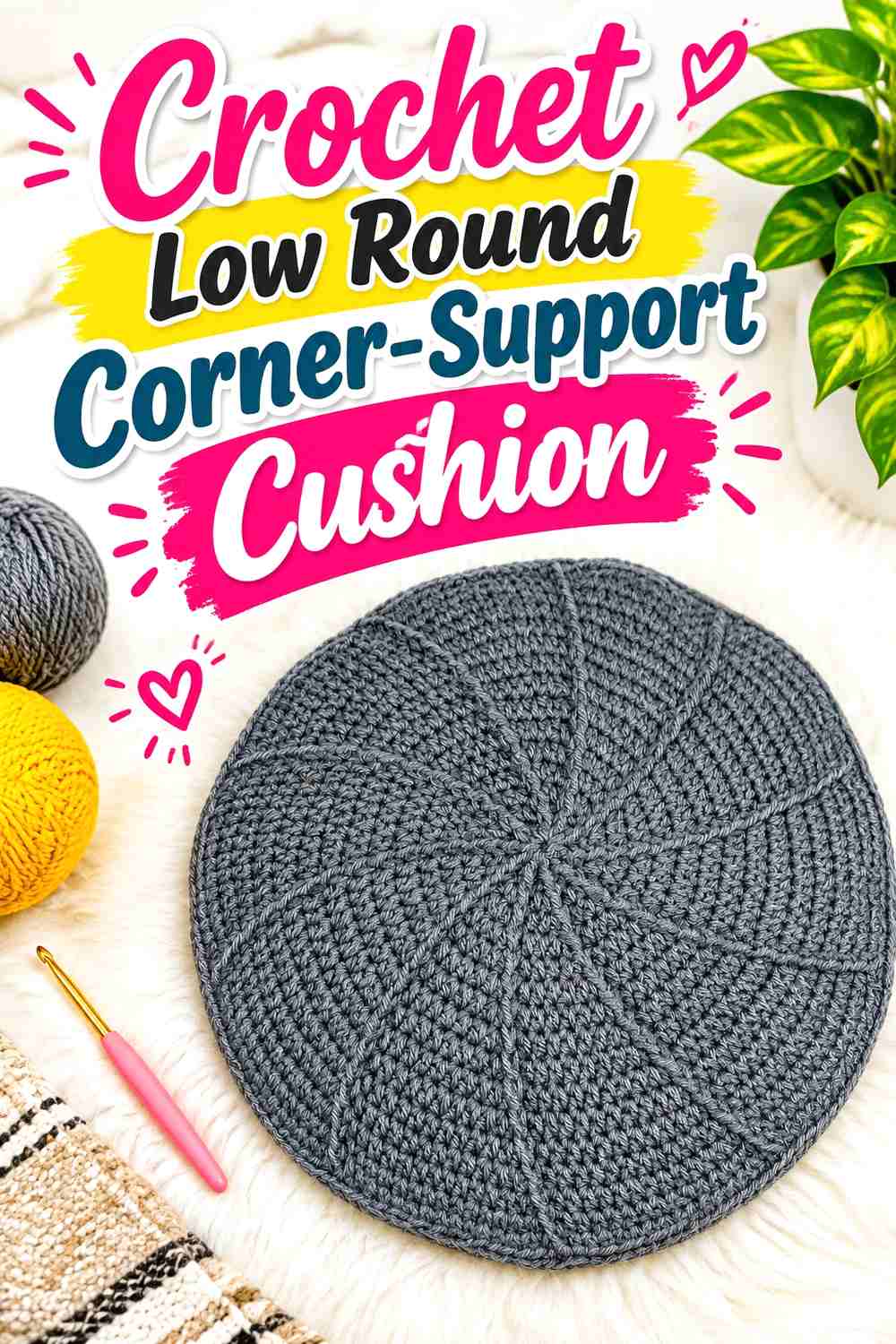
Crochet With Julie demonstrates a customizable round meditation cushion that can be increased in size and used as a floor pillow, yoga prop, ottoman, or footrest. It is not a traditional long bolster, so treat this one as an adaptation for the end or corner of a deep window seat rather than an exact cylindrical back pillow.
A Low Round Shape Fills Awkward Corners
Some window seats have deep triangular or boxy corners where a long cylinder does not sit naturally.
A compact round cushion can occupy that space and provide a place to rest an elbow or shift your weight without covering the whole back of the nook.
Customizable Size Is Useful, but Depth Still Matters
Increasing diameter also changes how much visual and physical space the cushion occupies.
Check the window-seat depth before enlarging it. A broad round pillow can quickly consume the area intended for sitting.
Treat This as Supplemental Support
Because the form differs from a classic lumbar bolster, it works best as one component of a layered setup.
Pair it with a flatter back cushion or narrow roll rather than expecting a low round piece to solve every support need on its own.
Creator Credit: Crochet With Julie
12. Crochet Raised-Texture Lumbar Bolster
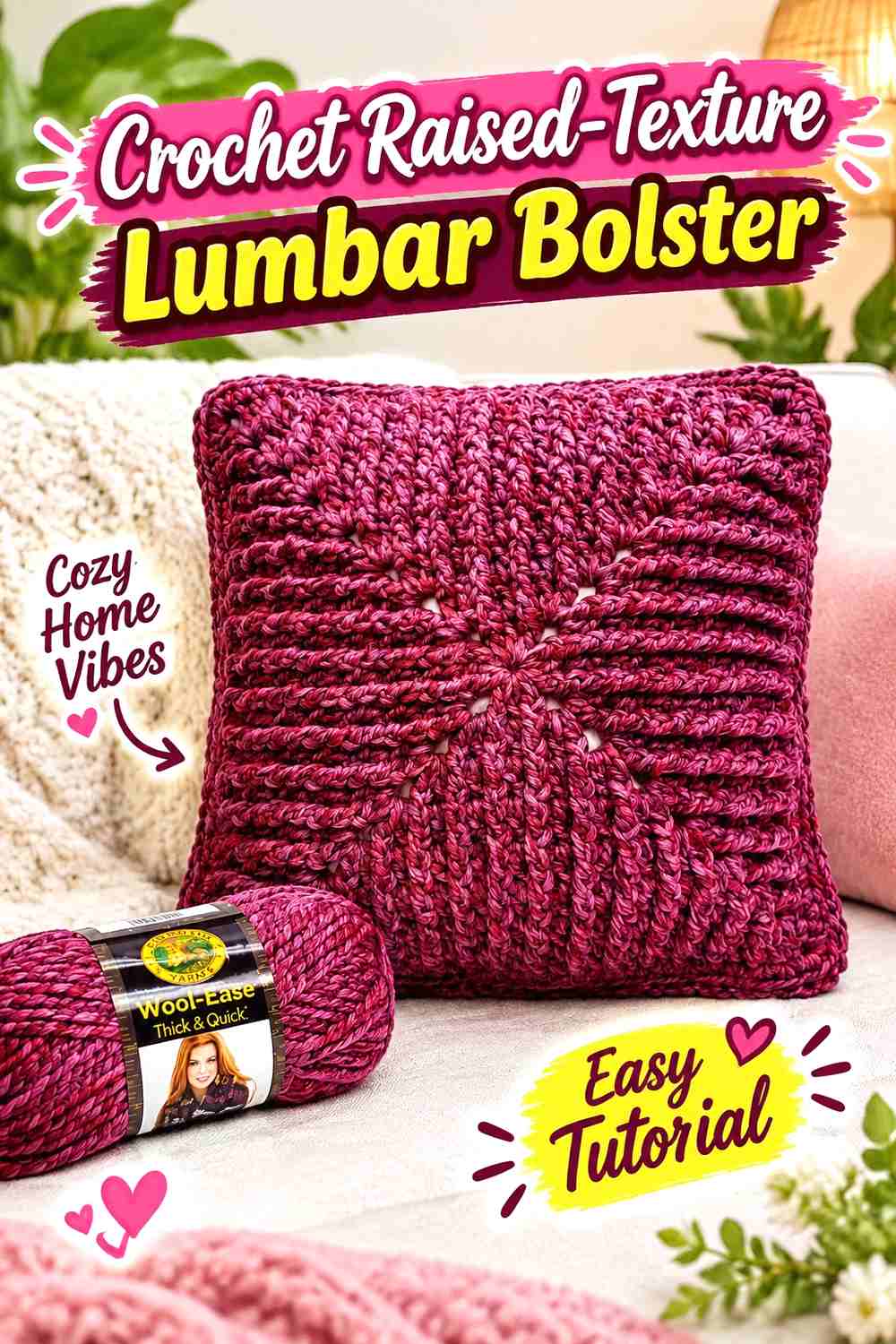
Bag-O-Day Crochet demonstrates a throw pillow using crochet post stitches and double crochet to build a raised patterned surface. The original project is not a window-seat bolster, so this final idea is an adaptation route: use the tutorial as a texture and panel-construction reference for a rectangular lumbar form rather than assuming its original counts will produce a long cushion.
Post-Stitch Texture Can Create a Strong Winter Centerpiece
A window seat often contains several soft surfaces already, so one heavily textured lumbar cushion can provide enough visual detail without adding multiple patterned pillows.
Solid cream, charcoal, brown, forest green, or another deep winter shade lets the relief remain the main feature.
Resize the Panel Only After Checking the Repeat
Decorative stitch patterns do not always extend cleanly to arbitrary widths.
Before converting a conventional throw pillow into a longer lumbar shape, determine how the stitch repeat affects the dimensions. Do not simply add stitches without confirming that the texture remains balanced.
Use Raised Texture Where It Will Be Comfortable
Post stitches stand farther from the surface than flat crochet.
For a window seat used for long reading sessions, decide whether the textured face should support the back directly or serve primarily as the outward-facing display side.
Creator Credit: Bag-O-Day Crochet
Which Crochet Bolster Works Best for a Window Seat?
For a classic cylindrical bolster, the Ribbon-Yarn, Post-Stitch Neck Roll, Scrap-Stripe, Clean Cylinder, Granny-Covered, Chunky Oval, and Multicolor Roll projects are the closest matches. They create the recognizable long round form that can sit behind the lower back or along one side of the nook.
If you prefer broader support that stays in place, look at the Classic Lumbar or Striped Stuffed Lumbar approaches. Their flatter faces make them especially practical against a hard wall or window frame.
The Tunisian Long Reading Bolster is better for a wide built-in seat where you want one continuous support piece. The Low Round Corner Cushion and Plush Neck-Support idea are more useful as secondary cushions that move around the nook as needed.
For the strongest winter texture, the Post-Stitch Neck Roll and Raised-Texture Lumbar directions stand out. If easier cleaning matters more, a cover built around an existing bolster form may be the more practical choice.
Conclusion
A window-seat bolster should solve a specific comfort problem before it solves a decorating problem. If you need concentrated lower-back support, a cylindrical neck roll is a natural starting point. For a hard flat wall, a rectangular lumbar cushion spreads support more evenly, while a long body-style bolster can make sense across an extra-wide built-in bench.
The removable-cover approach is particularly useful for a heavily used nook, while permanently stuffed designs offer more freedom with unusual sizes. Smooth surfaces are generally easier to lean against for long periods, while post stitches, ribs, and other raised textures can turn one cushion into the decorative focal point.
Before changing any tutorial, measure the usable width and depth of the actual window seat and decide where the finished bolster will sit. Then use the original creator’s tutorial for exact construction, stitch counts, materials, stuffing, and finishing rather than assuming one bolster can simply be enlarged or reshaped without affecting the fabric.
Frequently Asked Questions
What shape of crochet bolster works best on a window seat?
A cylinder works well for targeted lower-back, neck, or arm support and is easy to reposition. A rectangular lumbar cushion offers a broader contact area and tends to stay in place more easily against a flat wall. The better choice depends on the depth of the seat and how you normally sit while reading.
How long should a crochet window-seat bolster be?
There is no universal length. Measure the actual section of the seat where the bolster will sit and decide whether you want it to support one person or span most of the bench. Leave enough room for other cushions, blankets, books, and movement.
Should I use loose stuffing or a bolster insert?
Both can work. A purchased form provides fixed dimensions and pairs well with a removable cover. Loose filling gives more freedom over custom length and diameter but makes firmness dependent on how the pillow is stuffed and closed. Follow the construction used by the selected tutorial.
How do I keep a cylindrical crochet bolster from becoming lumpy?
Distribute filling gradually rather than forcing large amounts into one end. Check the entire length as you work and compare the shape from several angles before closing the final opening. The source tutorial’s stuffing method should remain your primary guide.
Is a textured crochet bolster comfortable for long reading sessions?
It depends on the stitch texture and where the cushion touches the body. Strong post stitches and deep relief can be more noticeable under pressure than flat crochet. If comfort is your priority, keep heavily raised details toward the sides or choose a smoother surface for the main contact area.
Can I turn a square crochet pillow tutorial into a lumbar bolster?
Sometimes, but not by simply adding arbitrary stitches. Decorative patterns may have repeats that control the width, and changing proportions can affect the assembly and closure. Check the stitch repeat, make a sample, and measure against the intended insert before resizing.
Are removable crochet bolster covers useful for window seats?
They can be especially practical in a frequently used nook because the outer cover can be managed separately from the insert. If removability is important, choose a tutorial designed around an existing cushion form or plan the closure before starting rather than adding one after the project is complete.