A maximalist Christmas tree does not need one garland repeated from top to bottom. Crochet gives you far more interesting options: chunky baubles can sit beside delicate snowflakes, miniature sweaters can interrupt a strand of stars, and bright Christmas lights can add graphic color between plush decorations.
The key is variety with enough repetition to make the tree feel intentional. Changing only yarn color will not create much visual depth. Changing motif shape, scale, texture, construction, and spacing will.
These 15 crochet garland ideas include both complete garland tutorials and individual ornament or motif tutorials that can be repeated and strung into a garland. When adapting an ornament, make one sample first and test its weight and hanging orientation before producing an entire strand.
Quick List
- Multicolor Crochet Snowflake Garland
- Retro Crochet Popcorn and Berry Garland
- Chunky Crochet Bauble Garland
- Mixed-Color Crochet Star Garland
- Bright Crochet Christmas Lights Garland
- Button-Decorated Crochet Christmas Tree Bunting
- Mosaic Crochet Mini Stocking Garland
- Crochet Holly Leaf and Berry Garland
- Striped Crochet Candy Cane Garland
- Mini Crochet Santa Hat Garland
- Crochet Christmas Sweater Clothesline Garland
- Crochet Gift Box Garland
- Plush Crochet Christmas Pudding Garland
- Crochet Gingerbread People Garland
- Mini Crochet Wreath Garland
How to Make a Crochet Christmas Garland Feel Maximalist, Not Messy
Maximalist decorating works better when some features repeat. If every motif, color, yarn texture, embellishment, and spacing choice changes at the same time, the strand can lose its visual rhythm.
Choose one element to repeat strongly. It might be the same connecting cord, a recurring cream accent, matching pom-poms, or a limited family of bright colors. The individual motifs can then become much more expressive.
Contrast also matters. Combine solid shapes with openwork motifs, round pieces with angular ones, and plush decorations with flatter crochet. A tree covered entirely in bulky three-dimensional garlands can become visually heavy, while an all-flat display may lack depth.
Plan Weight, Scale, and Spacing Before Stringing
Lay several completed motifs on a table before permanently joining them. This lets you compare their widths and decide how much space each needs.
Large Christmas puddings or stuffed gift boxes may require stronger branches and more distance between motifs than flat stars or holly leaves. Long shapes such as stockings and candy canes also need enough vertical clearance to avoid tangling with lower branches.
If you are wrapping the garland around a Christmas tree rather than hanging it straight across a mantel, test a short section first. The inside of a curved strand can compress while the outside spreads apart, changing how the spacing looks once the garland is installed.
1. Multicolor Crochet Snowflake Garland
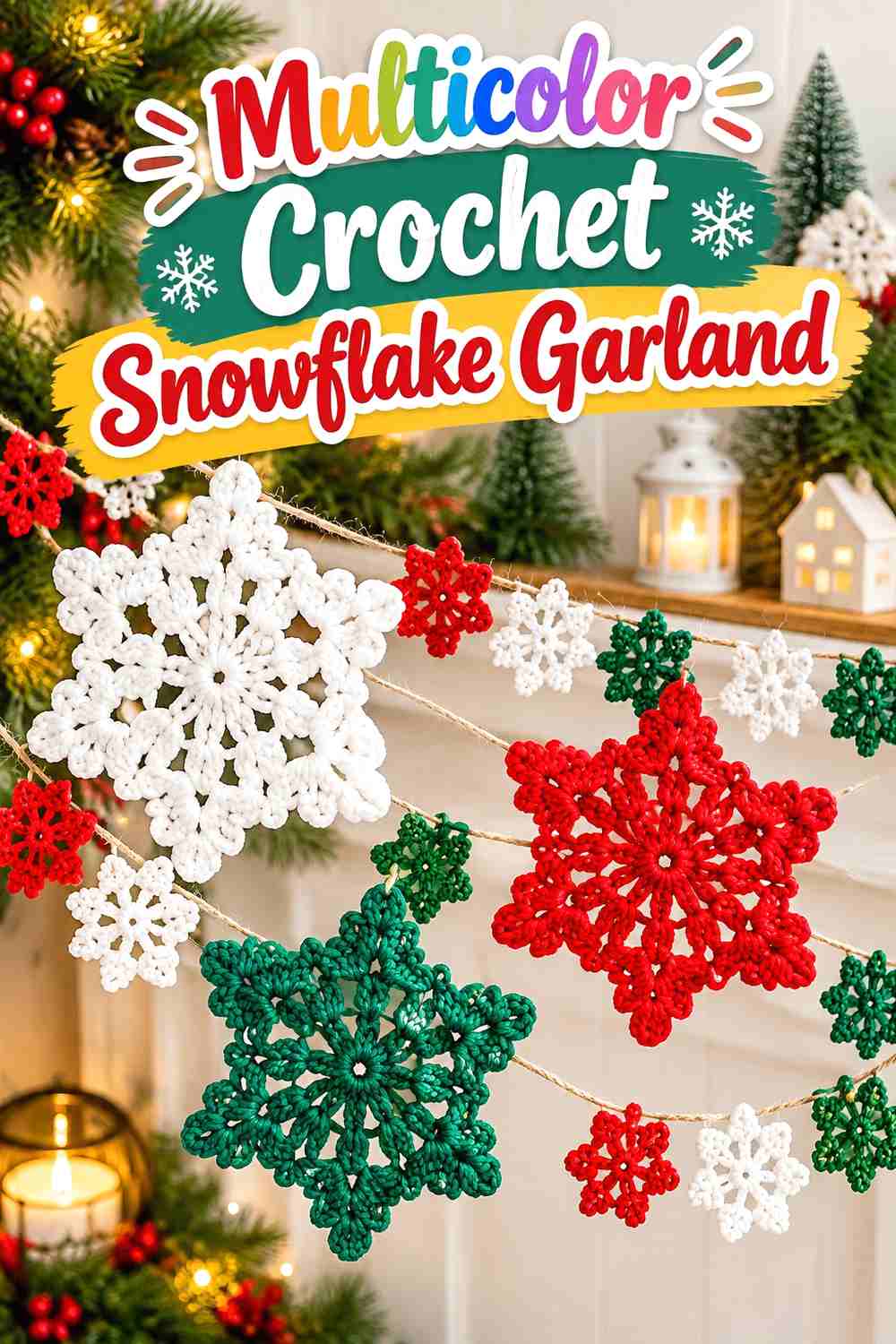
A snowflake garland gives a maximalist tree detail without adding much physical bulk. The open spaces inside the motifs allow lights, greenery, and nearby ornaments to remain visible, making snowflakes especially useful between heavier decorations.
Wool Reef’s tutorial demonstrates a complete snowflake garland and includes two different snowflake designs. That variation is useful when you want repetition without every motif looking identical.
Use Several Colors Without Losing the Snowflake Shape
White is not required for a snowflake garland. Pink, turquoise, lime, red, lavender, orange, or metallic-accented yarn can move the design firmly into maximalist territory.
Keep enough contrast between the yarn and tree so the points remain visible. A dark green snowflake may disappear against dense green branches even if it looks attractive on a worktable.
Shape the Motifs Before Deciding the Final Spacing
Snowflakes can change noticeably after finishing and shaping. Arrange them only after their final dimensions are clear.
If neighboring points nearly touch, the strand will read almost like continuous lace. Wider gaps make each snowflake feel more like an individual ornament. Either approach can work, but the decision should be deliberate.
Creator Credit: Wool Reef
2. Retro Crochet Popcorn and Berry Garland
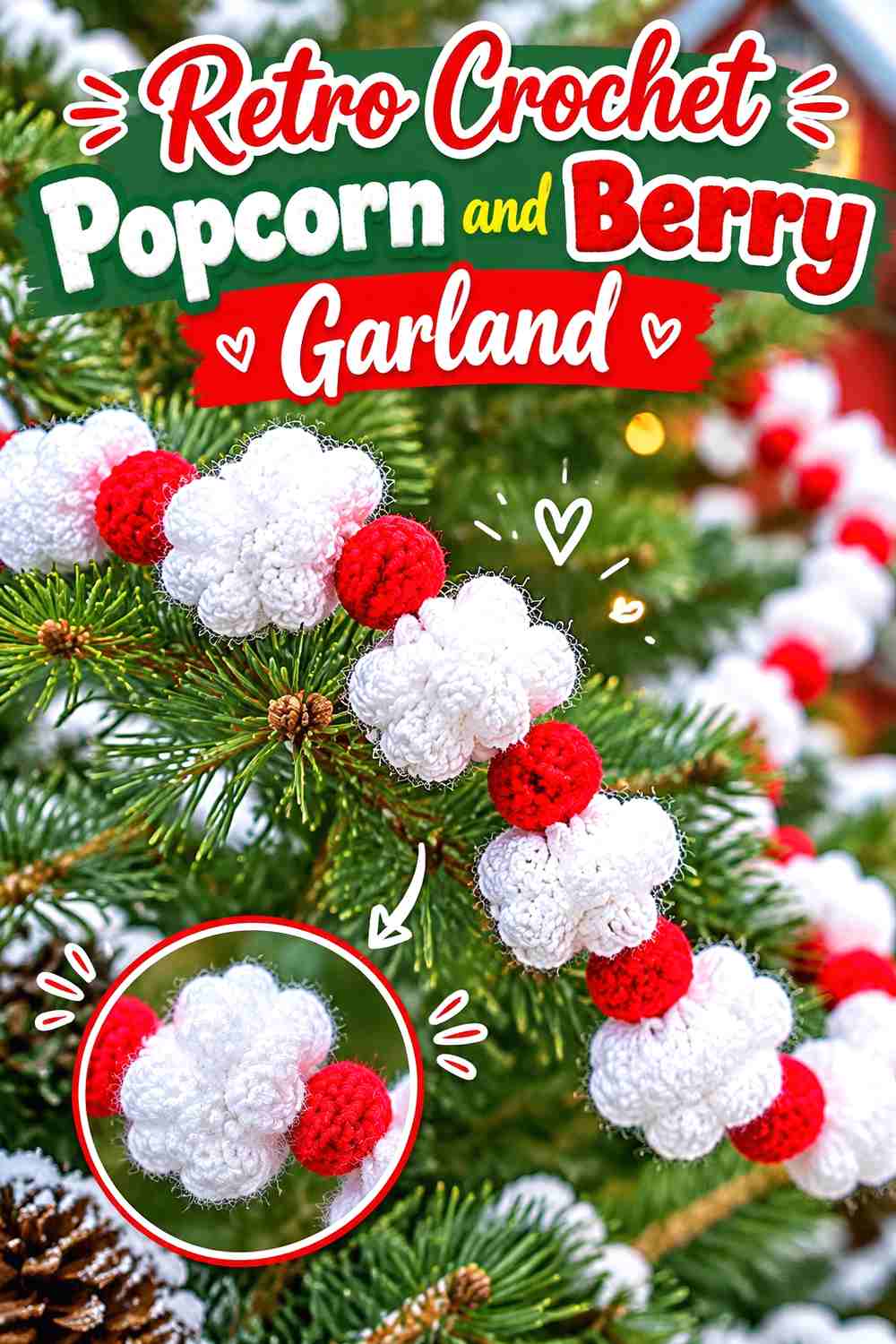
A popcorn garland introduces small three-dimensional texture without the weight of full stuffed ornaments. Crafting Happiness Crochet’s version combines crochet popcorn with contrasting berries, creating the familiar visual rhythm of old-fashioned popcorn-and-cranberry Christmas strands.
For a maximalist tree, that nostalgic structure can become a useful background layer underneath larger ornaments and more graphic garlands.
Texture Can Add Detail Without Another Large Motif
Not every maximalist element needs to be oversized. Numerous small textured forms can create richness while leaving room for stars, baubles, figures, and lights.
The popcorn shapes also break up smoother crochet surfaces, so the strand can contribute texture even when you keep the palette relatively simple.
Change the Rhythm Before Adding More Colors
Instead of automatically alternating every component in exactly the same sequence, first decide whether you want a regular or irregular rhythm.
A predictable sequence feels more traditional. Small variations in the grouping can make the strand look more collected and playful while still preserving the recognizable popcorn-garland idea.
Creator Credit: Crafting Happiness Crochet
3. Chunky Crochet Bauble Garland
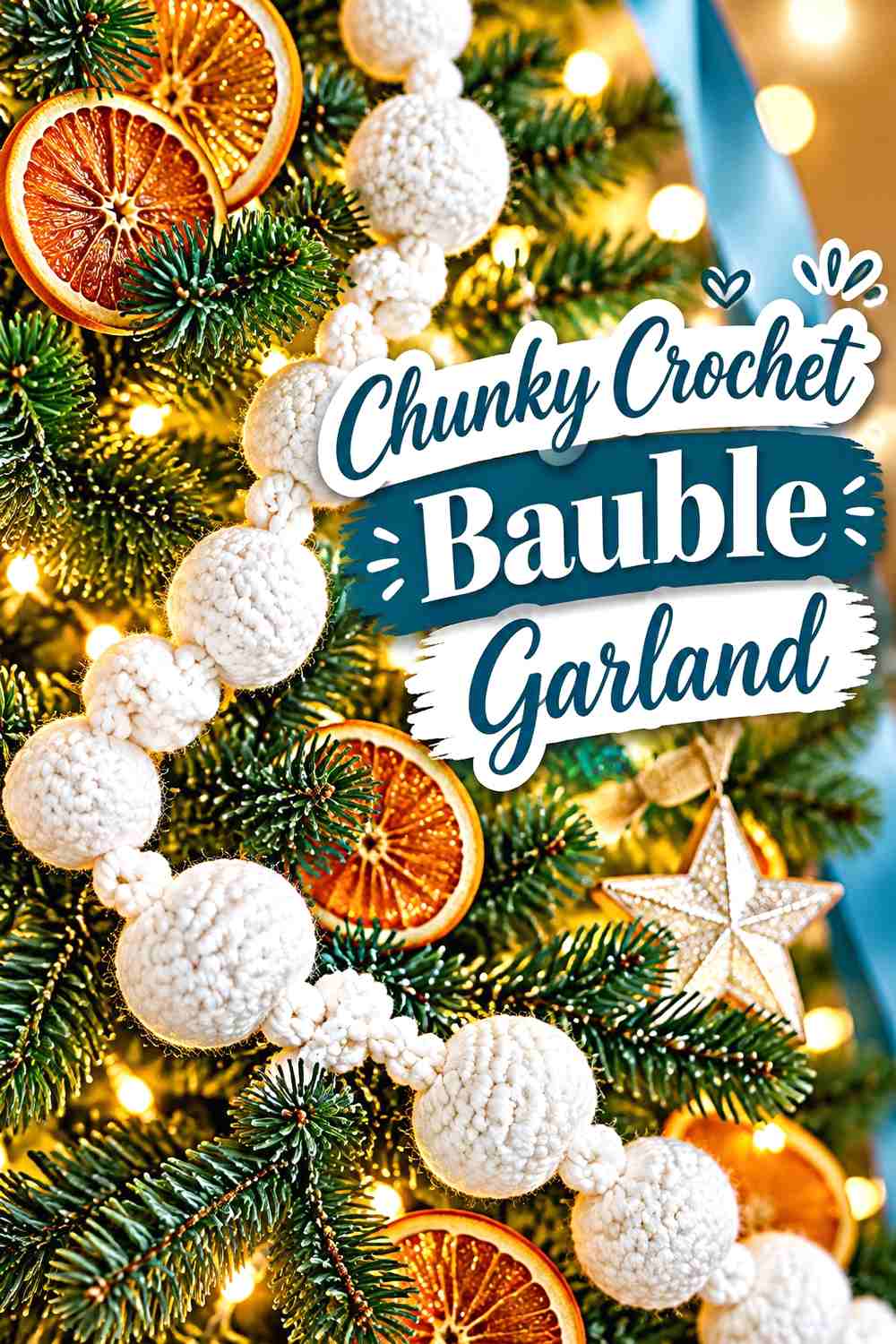
A bauble garland creates a string of rounded forms rather than separate hanging spheres. Miss Mustard Seed demonstrates two versions with different yarn thicknesses, making this concept especially useful when scale and texture are more important than intricate motifs.
The chunky option can make a noticeable statement even when viewed from across a room.
Thick Yarn Creates Strong Visual Weight
A bulky garland can become one of the dominant elements on the tree. Treat it more like a major decorating layer than a small filler strand.
If the tree already carries many large plush ornaments, consider distributing the chunky garland farther inside the branches rather than placing every rounded element at the tips.
Let Color Changes Replace Extra Embellishment
The bauble construction already supplies texture and volume. You do not necessarily need beads, bows, and charms on every section.
A sequence of saturated colors can provide enough maximalist energy on its own, particularly if other garlands contain detailed characters or surface decoration.
Creator Credit: Miss Mustard Seed
4. Mixed-Color Crochet Star Garland
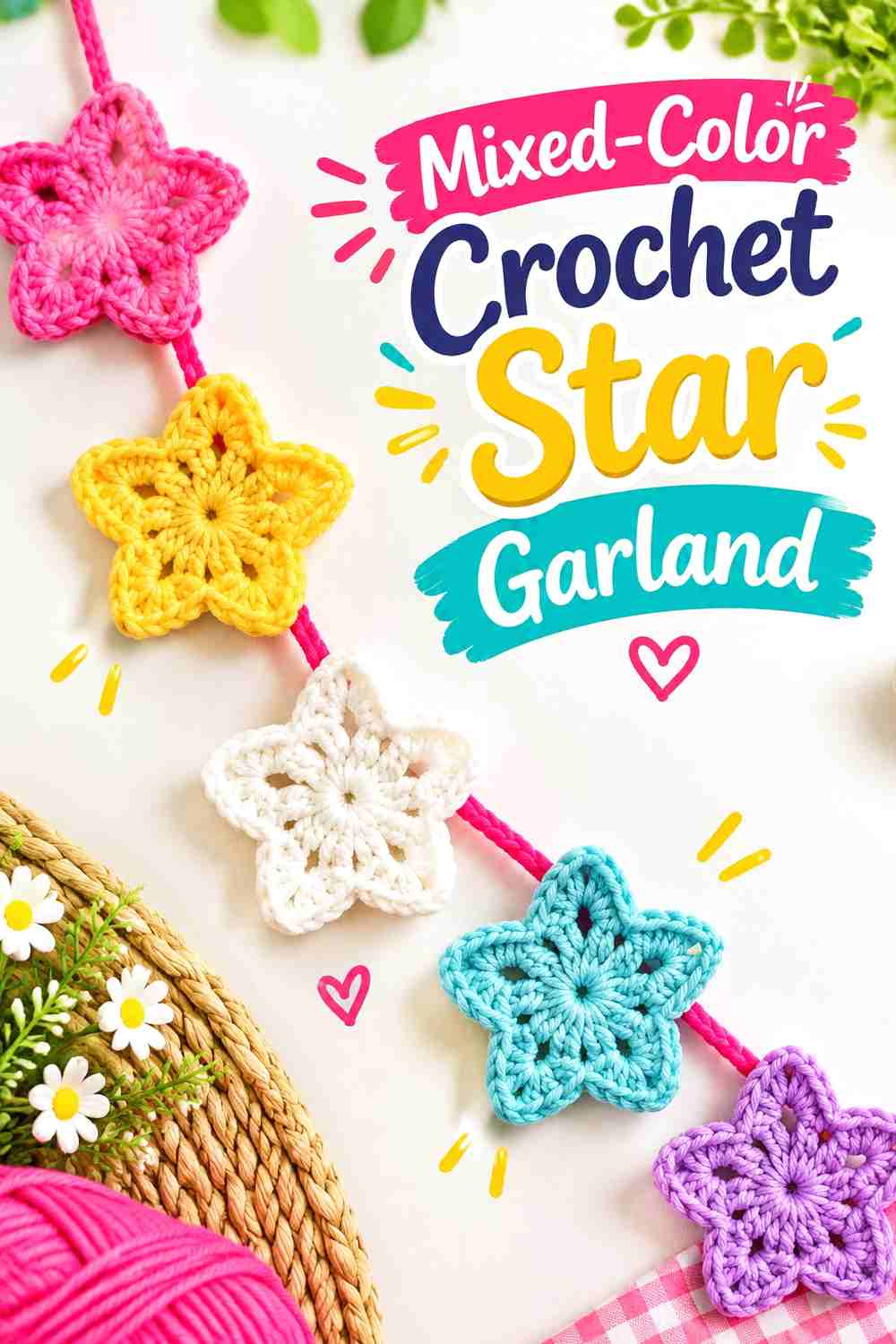
Stars add sharp points and a flat geometric silhouette to a tree dominated by round ornaments. Bella Coco’s tutorial specifically demonstrates joining crochet stars into a garland, providing a straightforward route from repeated motifs to a complete strand.
The design can be visually calm in one color or considerably louder when every star changes shade.
Color Rotation Can Make Repeated Stars Feel Collected
A repeated motif does not have to produce a uniform-looking garland. Try arranging finished stars on the floor before joining them and move the colors around until no part of the sequence feels unintentionally concentrated.
This is particularly helpful when using yarn scraps because equal quantities of every shade are unnecessary.
Flat Stars Fit Around Bulky Decorations
Stars occupy relatively little depth. Use them around sections containing stuffed ornaments, ribbons, bows, or thick bauble strands where another dimensional garland would create too much bulk.
Their points also help break up areas containing several circles and rounded figures.
Creator Credit: Bella Coco
5. Bright Crochet Christmas Lights Garland
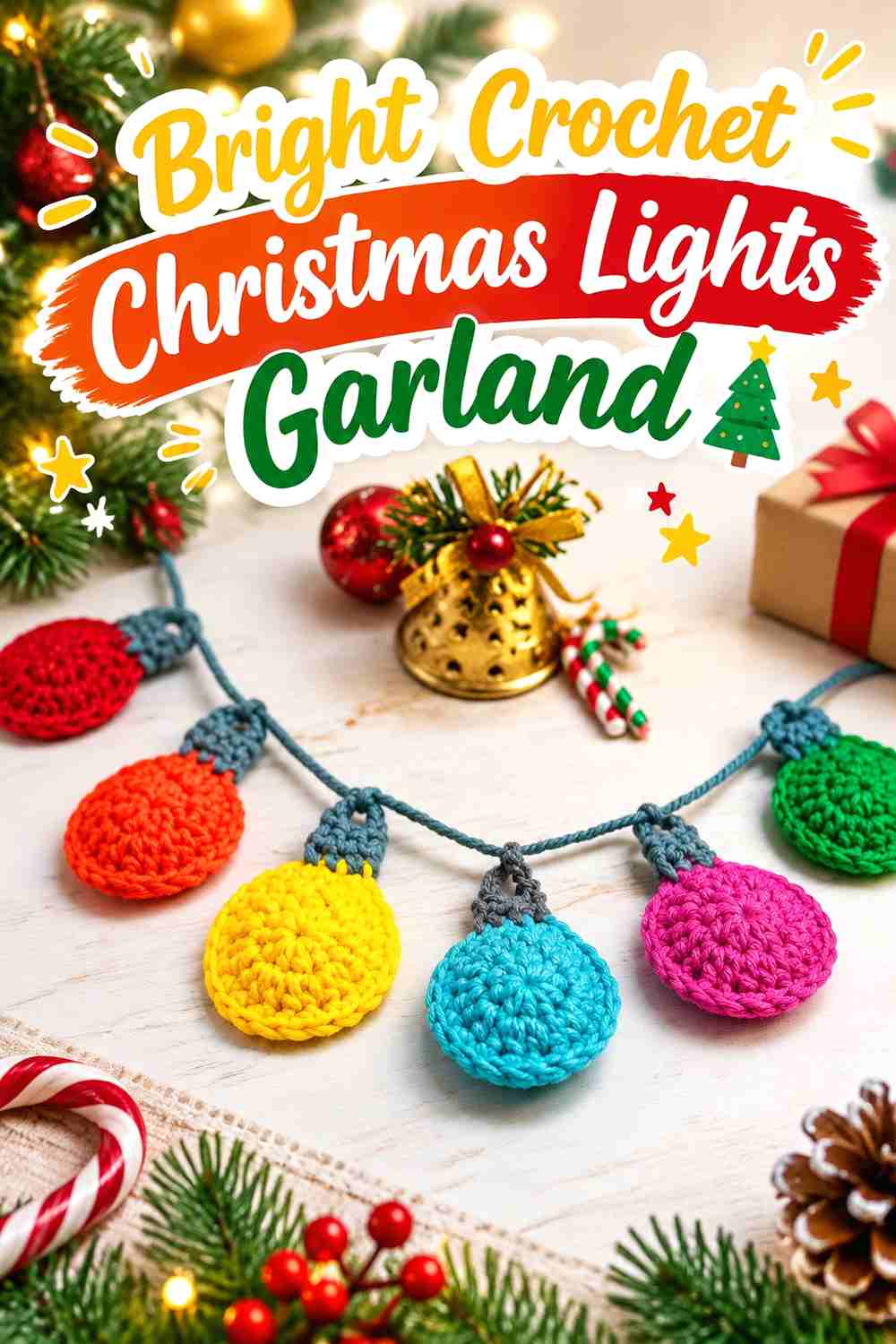
A strand of crochet Christmas bulbs is a natural fit for maximalist decorating because it can carry many strong colors within one coherent theme. Hopeful Turns demonstrates Christmas-light-style crochet ornaments that can be assembled into a festive garland.
Unlike real lights, the crochet bulbs contribute color and shape even when the tree is switched off.
Treat the Bulbs Like a Planned Color Sequence
Before joining the strand, arrange every finished bulb in order. This makes it easier to spot accidental clusters of similar colors.
You can use a repeating rainbow, alternating warm and cool shades, or an intentionally irregular assortment. The important point is deciding before everything is attached.
The Bulb Shape Should Remain Recognizable
Heavy embellishment can obscure a small motif. If the bulb already contains several strong colors, additional bows or appliqués may compete with its outline.
Use nearby garlands for extra texture rather than forcing every maximalist detail onto the light strand itself.
Creator Credit: Hopeful Turns
6. Button-Decorated Crochet Christmas Tree Bunting
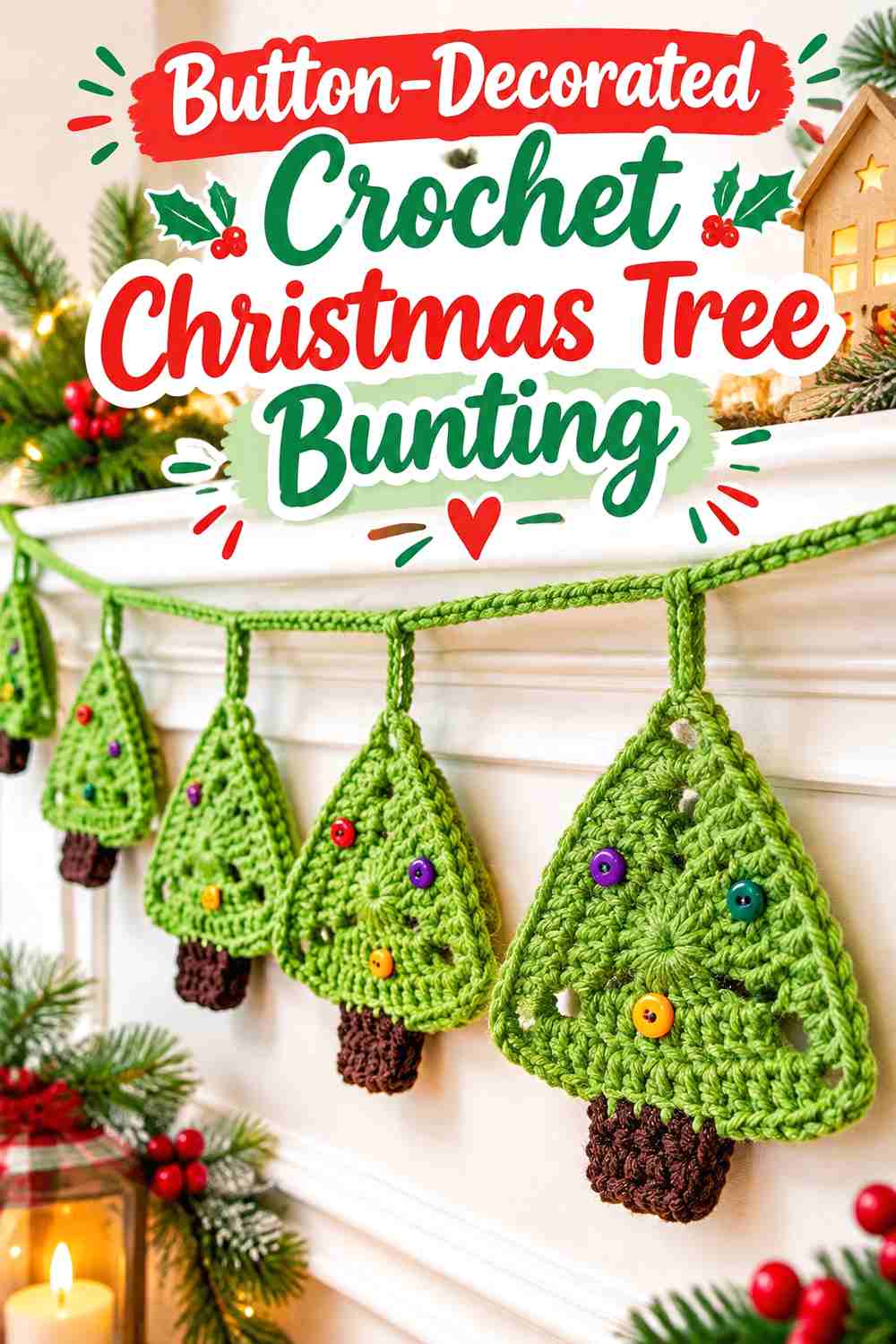
Miniature Christmas trees create a repeating triangular silhouette that looks very different from stars, circles, and snowflakes. HappyBerry Crochet demonstrates a Christmas tree bunting design with small decorative buttons.
This type of strand can become particularly expressive because every little tree can be decorated differently while retaining the same basic outline.
Vary the Decorations More Than the Construction
Instead of rebuilding every tree in a different shape, keep the motif consistent and change selected surface details.
One tree might have colorful button-style decorations, another contrasting trim, and another a simpler treatment. The repeated silhouette keeps the garland connected even when the details vary.
Give the Tree Points Enough Clearance
A triangular motif needs visible space around its outer edges. Packing the trees too closely can make the bottoms overlap and turn several clear silhouettes into one crowded strip.
Temporarily hang the strand before deciding whether the spacing works on actual branches.
Creator Credit: HappyBerry Crochet
7. Mosaic Crochet Mini Stocking Garland
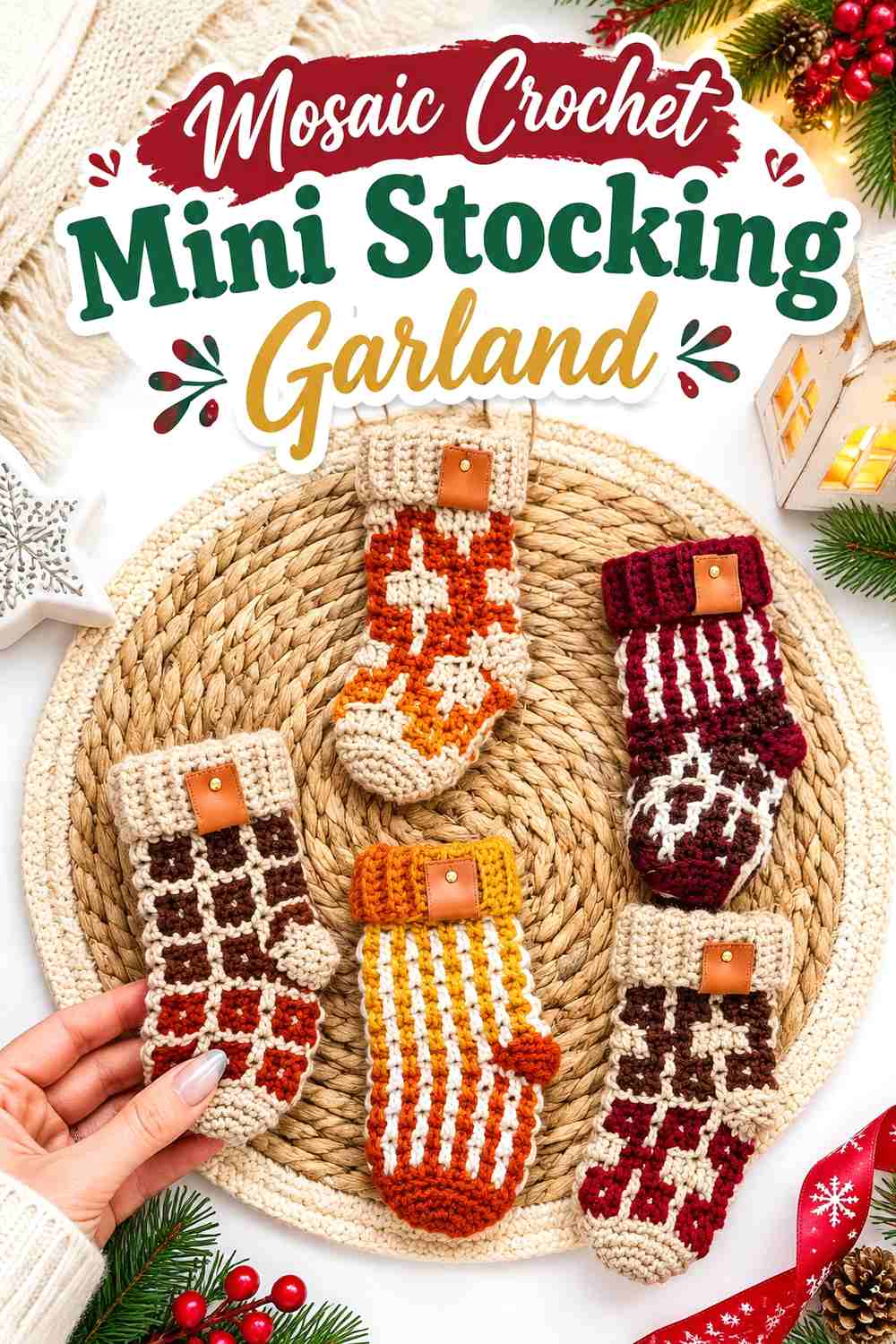
Mini stockings add both shape and surface pattern. HanJan Crochet’s tutorial demonstrates small stockings with multiple mosaic design options, making this one of the more pattern-rich directions in the collection.
The individual stockings can be used separately, but repeated across a cord they create a substantial garland with far more visual information than a simple motif chain.
Different Surface Patterns Suit a Maximalist Strand
You do not need every stocking to match. Alternating different mosaic treatments can make the garland feel like a collection of miniature handmade stockings gathered over time.
Keep one feature consistent—perhaps the cuff color or connecting cord—if the combination starts feeling disconnected.
An Open Stocking Has More Depth Than a Flat Appliqué
A stocking is not simply a flat decorative shape. Its opening and dimensional construction can project farther from the tree.
Account for that extra depth when placing the strand near large baubles or stuffed characters so the stockings are not crushed between decorations.
Creator Credit: HanJan Crochet
8. Crochet Holly Leaf and Berry Garland
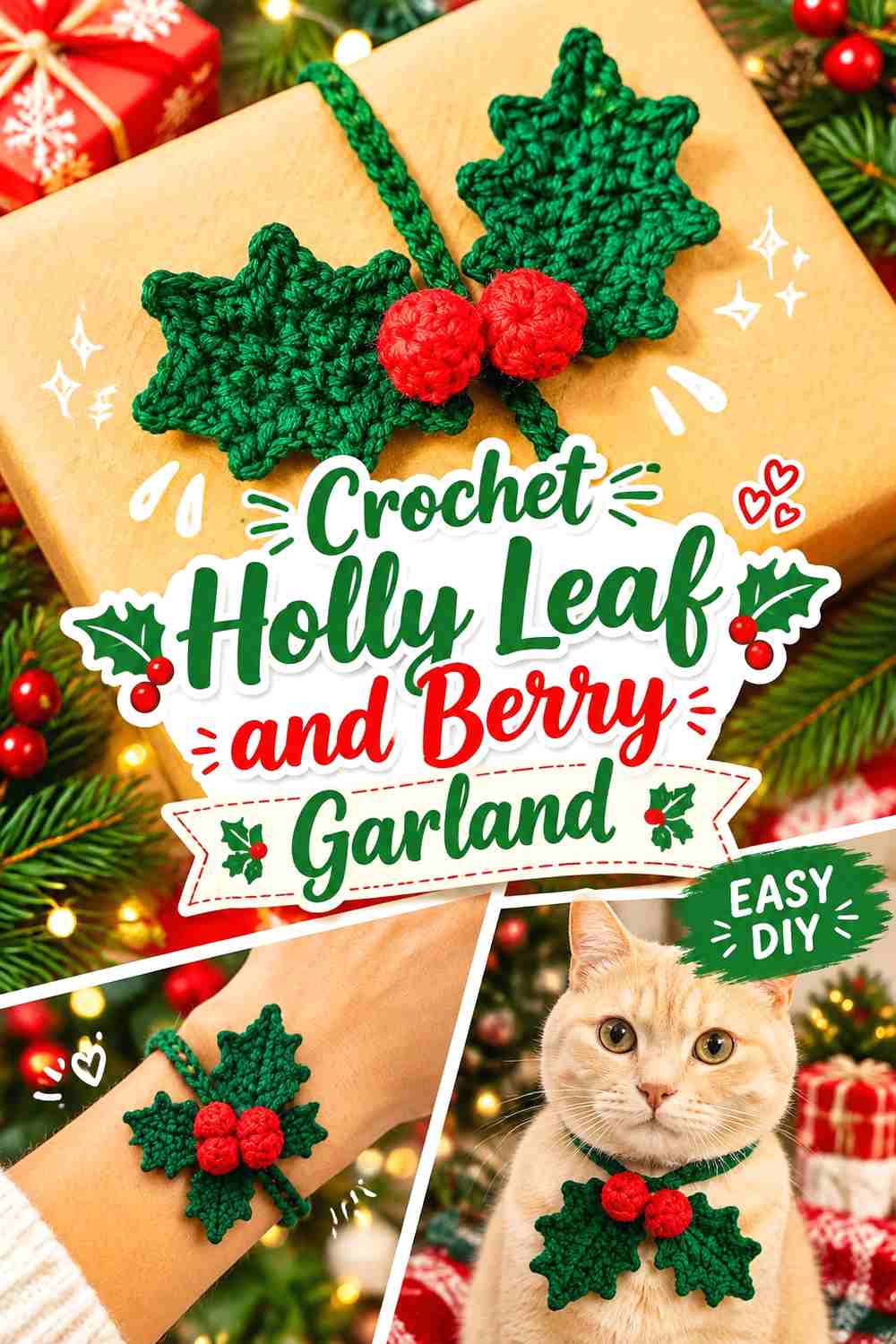
Holly brings an organic leafy silhouette into a collection that might otherwise contain mostly geometric Christmas motifs. CreamCreamCat’s holly design is presented as a versatile decorative piece that can be used for garlands as well as other holiday applications.
For a tree garland, repeat the leaf-and-berry units along a cord or integrate them between larger ornaments.
Leaves Work Well as Connectors Between Statement Motifs
A holly strand does not need every inch covered in identical clusters. Small leaf sections can visually connect larger pieces such as bells, bows, stars, or baubles.
That makes holly especially useful when building a mixed-motif maximalist garland rather than a single-theme strand.
Keep Berry Details Secure and Proportional
Small berries provide essential contrast, but oversized additions can hide the leaf shape.
Check the attachments before putting the garland on the tree, particularly if you use separate beads, pom-poms, or other non-crocheted embellishments.
Creator Credit: CreamCreamCat
9. Striped Crochet Candy Cane Garland
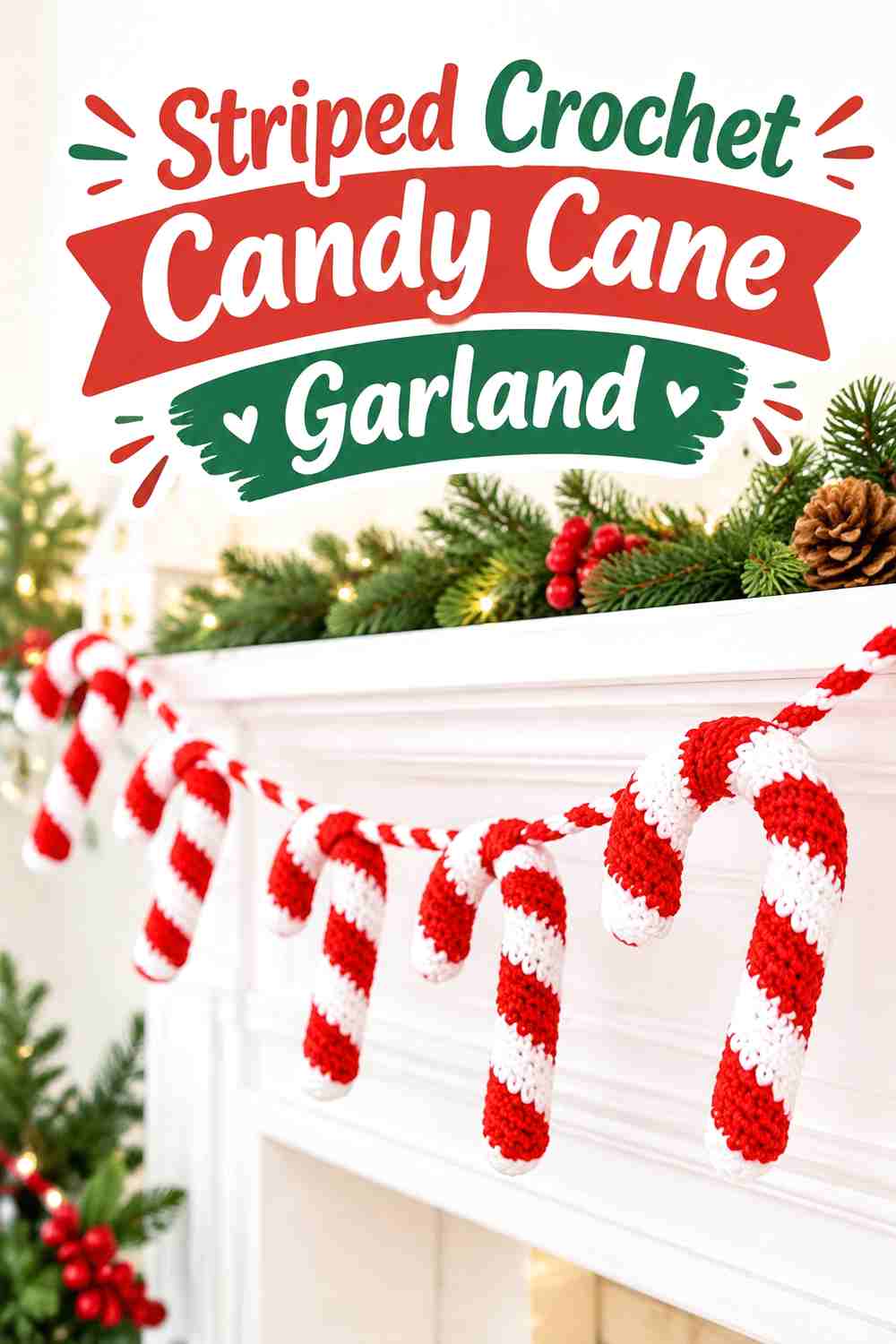
Candy canes introduce curves and vertical movement. Theresa’s Crochet Shop demonstrates a structured crochet candy cane, and repeating that finished form along a cord creates a garland with a very different silhouette from flat bunting.
This is an adaptation rather than a complete garland tutorial, so decide on spacing and attachment after making the first finished cane.
Alternate the Direction of the Curves
If every candy cane faces exactly the same direction, the garland can look strongly directional.
Alternating some hooks left and others right can create a more balanced rhythm, particularly when the strand curves around a Christmas tree.
Structure Matters Before the Motifs Are Strung
A candy cane needs to maintain its recognizable hook shape. Finish and shape every cane before determining how closely they can sit together.
If the structures are flexible, avoid packing the finished garland tightly into storage where the curves may become distorted.
Creator Credit: Theresa’s Crochet Shop
10. Mini Crochet Santa Hat Garland
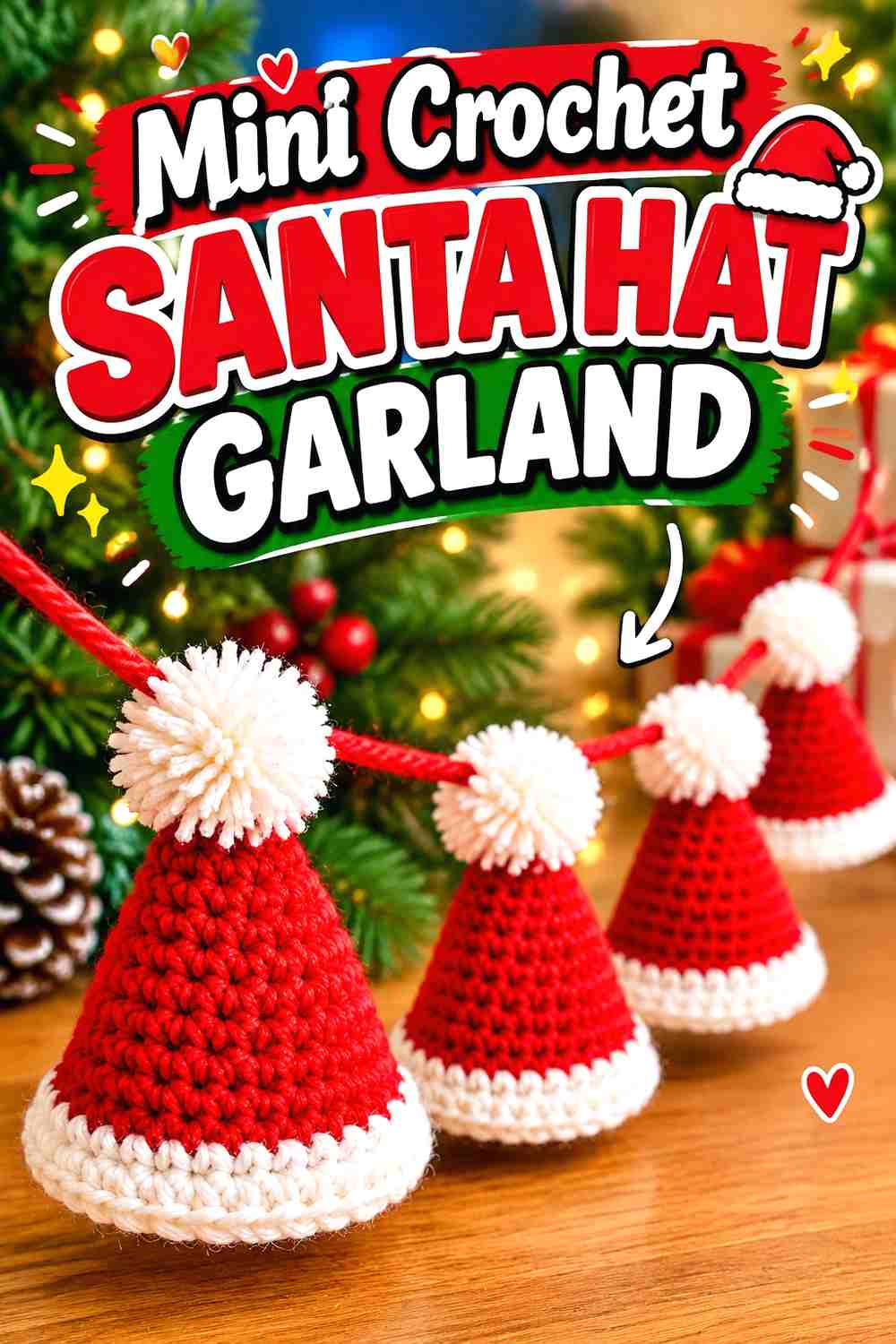
Tiny Santa hats introduce a tapered three-dimensional silhouette plus contrasting trim and pom-pom texture. MummaJ Crochet’s ornament tutorial also suggests making multiple hats for a garland, so the concept transitions naturally from individual decoration to repeated strand.
For a maximalist tree, the familiar red-and-white idea can also be expanded into unconventional hat colors.
Pom-Poms Add a Second Texture to the Strand
The fluffy topper changes how the garland catches light and gives the hats more dimension than a flat triangle.
If other decorations already contain many fuzzy elements, consider keeping the hat trim simpler so one section of the tree does not become excessively bulky.
A Shared Trim Color Can Unite Wildly Different Hats
Try several saturated or pastel hat colors while repeating the same cuff and pom-pom shade.
That creates cohesion without making every motif identical—a useful strategy when the larger tree already uses a broad maximalist palette.
Creator Credit: MummaJ Crochet
11. Crochet Christmas Sweater Clothesline Garland
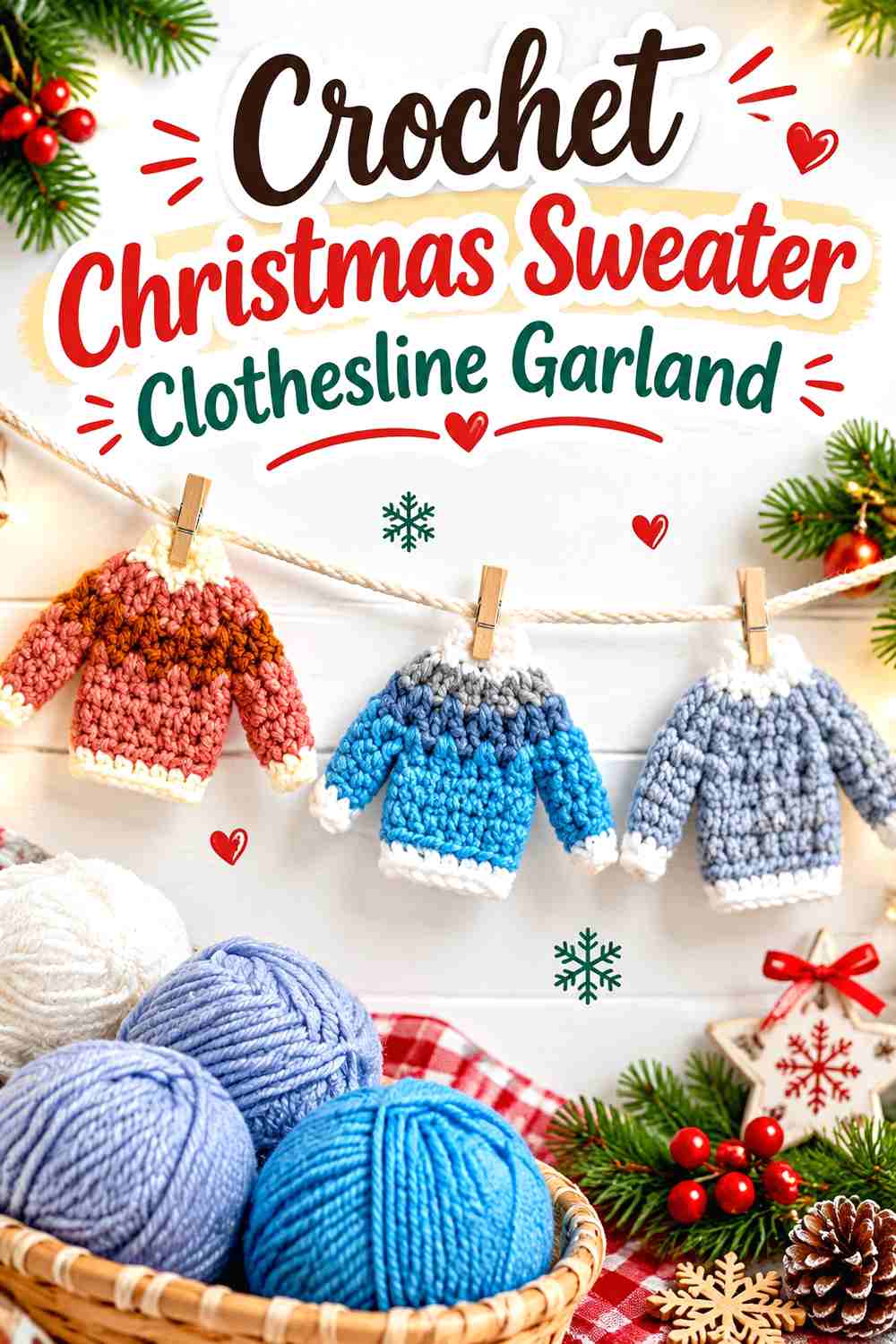
Miniature sweaters turn the garland into a row of recognizable objects rather than abstract motifs. Sweet Softies demonstrates a small Christmas sweater ornament and specifically notes its suitability for garland decor.
A line of different sweaters can resemble a tiny festive clothesline running through the branches.
Treat Every Sweater Like a Small Colorwork Opportunity
This concept becomes more interesting when the sweaters are related but not duplicates. Change the central motif, color arrangement, neckline contrast, or edging while retaining the same general sweater construction.
Lay the finished pieces together periodically. Too many individually appealing color combinations can become muddy when viewed as one group.
Clothesline Spacing Is Part of the Look
Sweaters need enough room for their sleeves to remain visible. If the motifs overlap heavily, the recognizable garment silhouette disappears.
For a playful clothesline effect, consider how the attachment point affects each sweater’s orientation before permanently securing the strand.
Creator Credit: Sweet Softies
12. Crochet Gift Box Garland
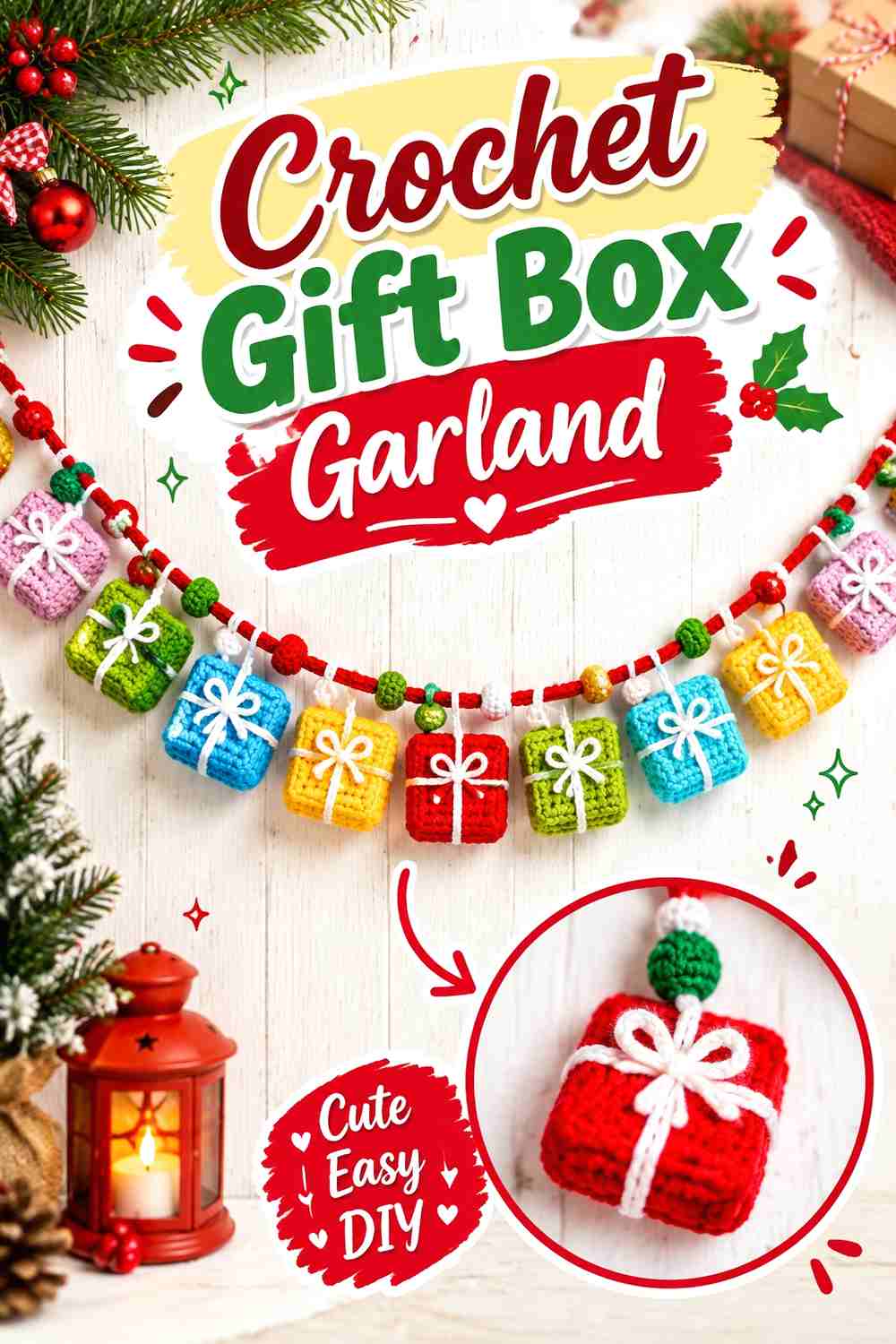
Gift boxes bring compact square geometry to the tree. The Crochet Crowd’s miniature gift tutorial provides a small present form that can be repeated and adapted into a garland.
A group of colorful packages is particularly useful when the tree already contains many circular ornaments and you want a strong change of silhouette.
Make the Ribbon the Repeating Element
The box colors can vary dramatically if the ribbon treatment provides continuity.
For example, different jewel-tone packages can all share cream ribbon, or a neutral box palette can use bright contrasting bows. This gives the strand enough structure to support a more adventurous color mix.
Dimensional Gifts Need More Branch Support
A small gift box projects outward more than a flat star or holly leaf. Check the completed weight before making a long strand.
If the boxes become too heavy together, use a shorter garland section rather than forcing one long strand around the entire tree.
Creator Credit: The Crochet Crowd
13. Plush Crochet Christmas Pudding Garland
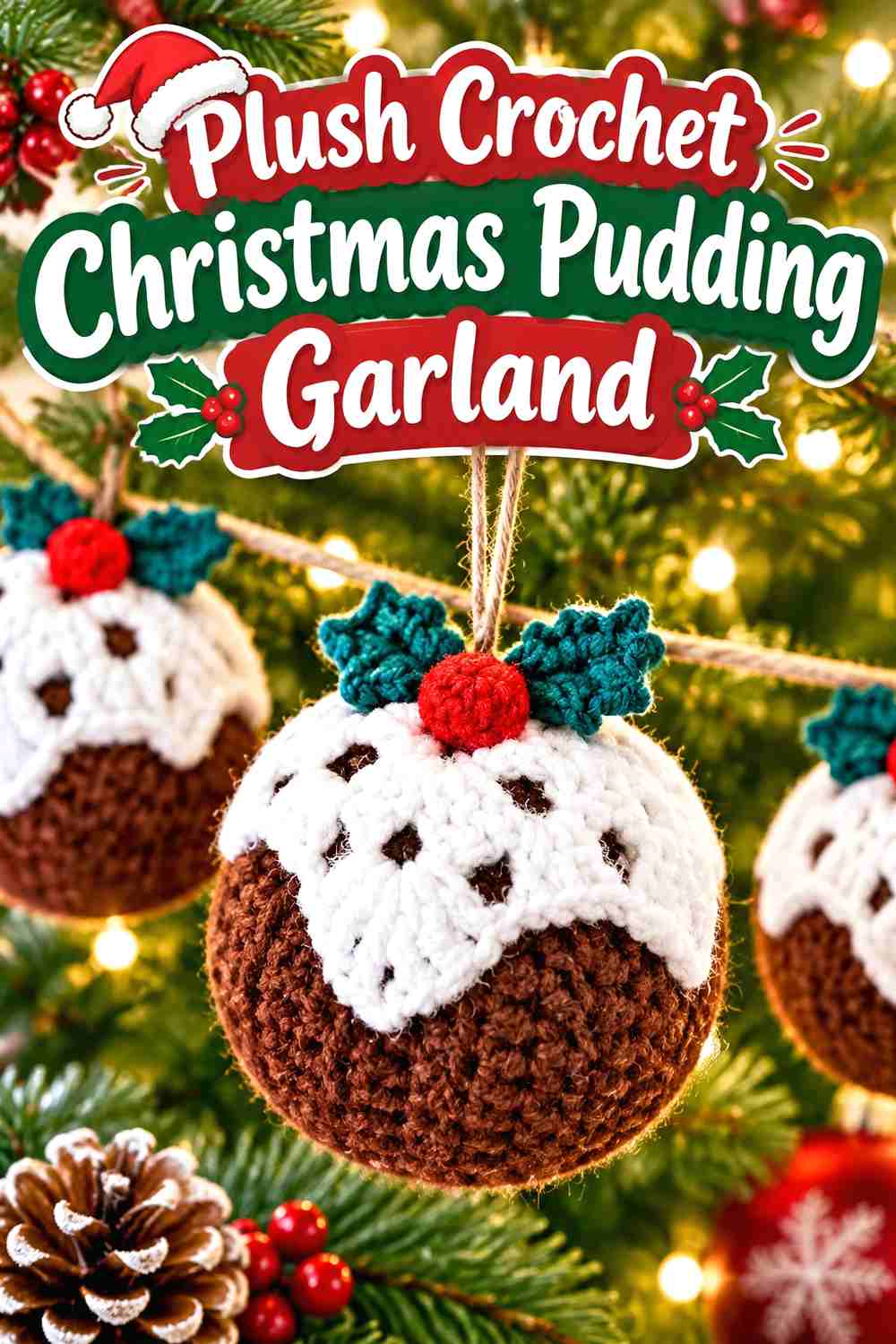
Christmas puddings introduce soft rounded volume plus multiple decorative layers. Kara Ella Uy’s ornament tutorial combines the dark pudding body with contrasting icing and holly details.
Repeating the ornament on a garland creates a much more substantial strand than an openwork motif, so this idea works particularly well as a localized statement rather than background filler.
Concentrate the Decoration at the Top
The icing and holly already create a strong focal area. Keeping the lower body visually calmer prevents every pudding from becoming overworked.
You can still vary the berry, leaf, or icing colors if the wider tree uses a less traditional palette.
Leave More Space Between Stuffed Motifs
Plush puddings need room to retain their round silhouette. Crowding them together can flatten the sides and hide the individual shapes.
Try placing smaller beads, chains, or simple crochet elements between puddings if you want a long strand without filling every section with another stuffed piece.
Creator Credit: Kara Ella Uy
14. Crochet Gingerbread People Garland
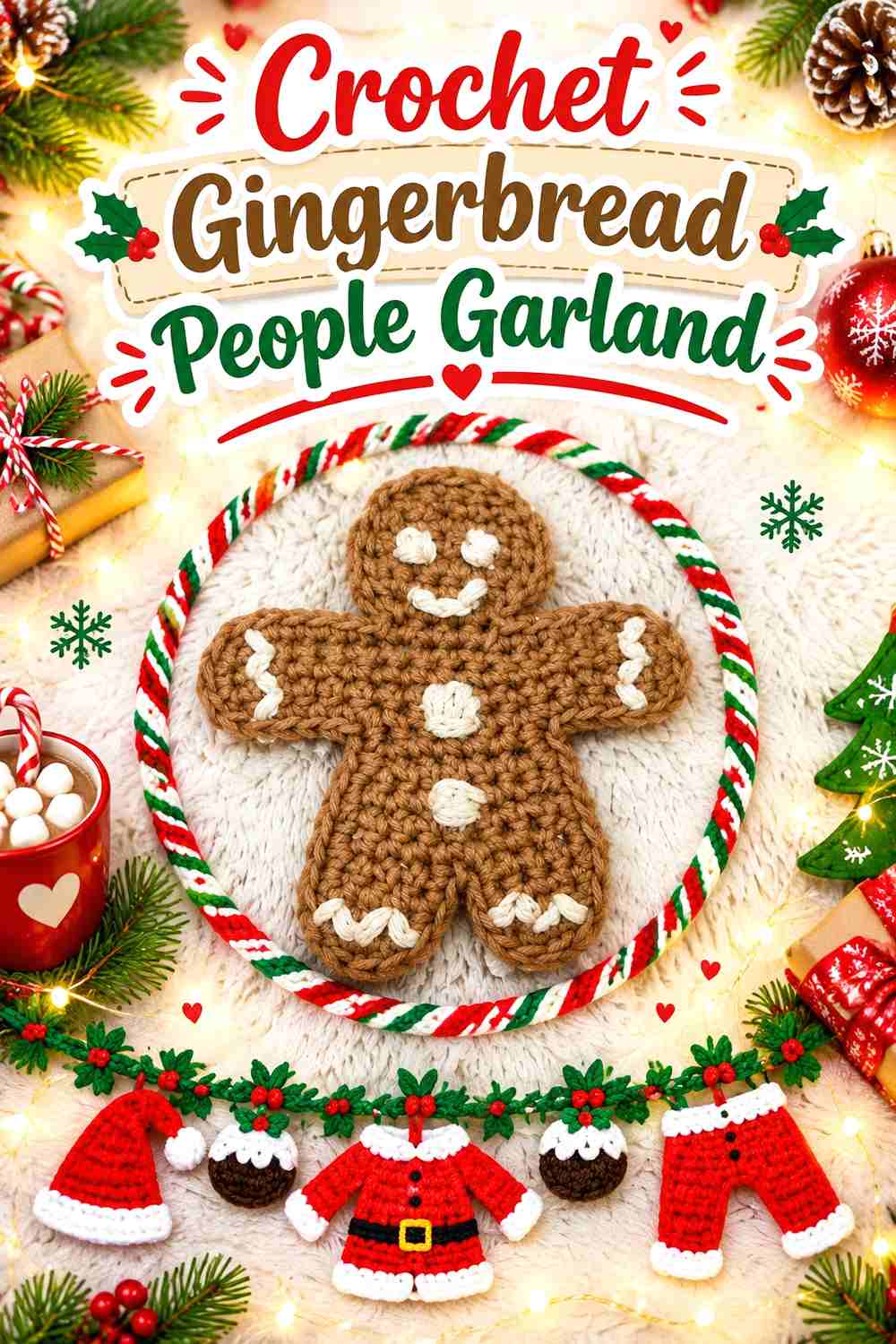
A gingerbread-person garland adds character without requiring every motif to be a different animal or figure. Candid Crochet demonstrates a miniature gingerbread ornament that the creator specifically notes can also be used in a Christmas garland.
The flat human-shaped silhouette provides plenty of opportunity for buttons, icing-inspired embroidery, bows, or individual expressions.
Give Each Gingerbread Figure One Distinguishing Detail
Maximalism does not require rebuilding every figure from scratch. Change one feature at a time: bow color, button arrangement, trim, expression, or embroidered accent.
The repeated brown body shape keeps the strand recognizable while the small variations make it more playful.
Arms and Legs Need Clear Space
Character silhouettes lose impact when their limbs overlap neighboring decorations.
Check the distance between completed gingerbread figures while the garland is hanging rather than flat on a table. Gravity can change how the arms and legs sit.
Creator Credit: Candid Crochet
15. Mini Crochet Wreath Garland
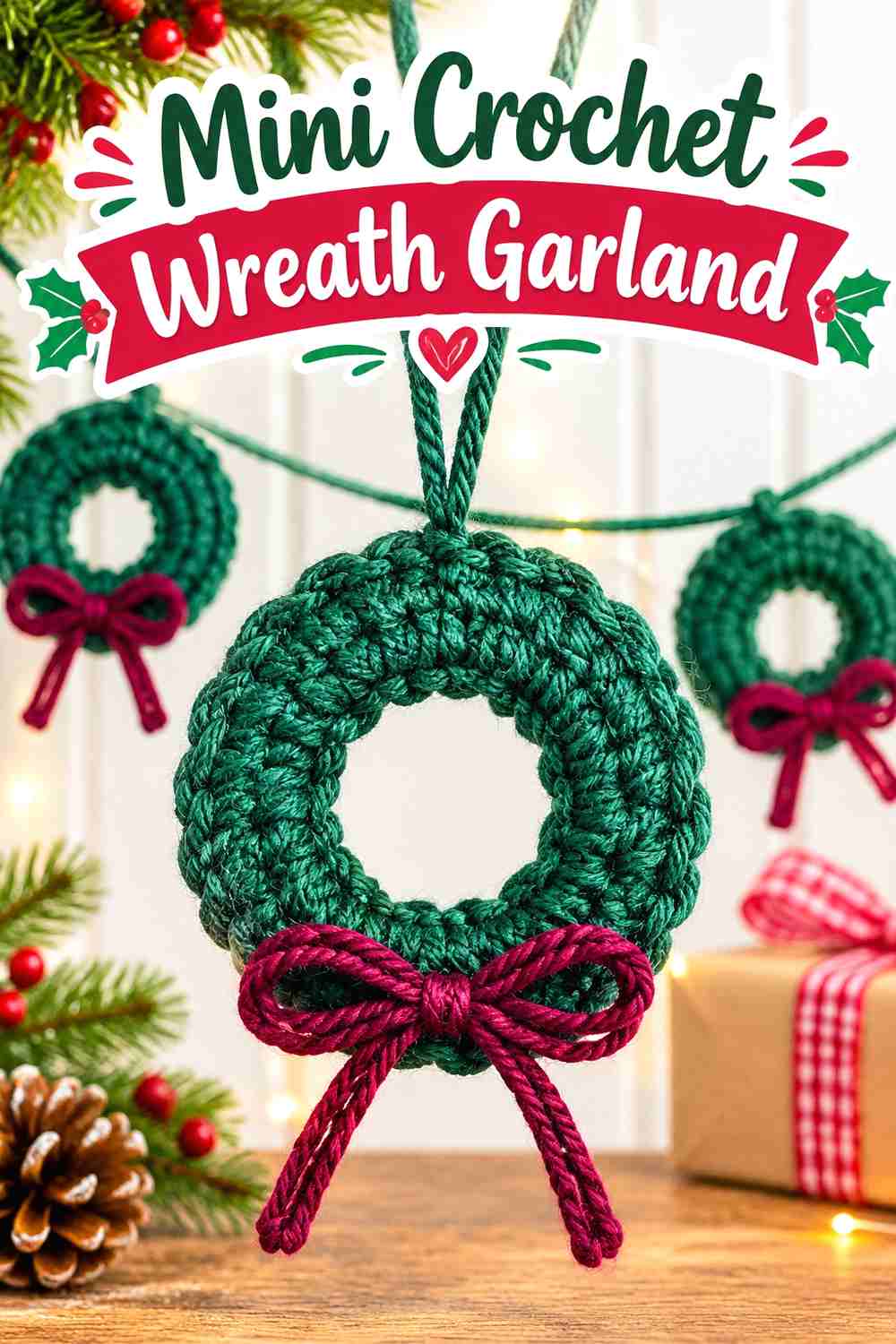
Small wreaths introduce circles with open centers, providing a useful counterpoint to solid baubles and stuffed characters. Desert Blossom Crafts demonstrates a crochet wreath ornament made around a circular foundation with a contrasting bow.
Repeat the ornaments across a cord to adapt the individual wreath into a complete garland.
Open Centers Prevent a Maximalist Tree From Feeling Solid
One challenge with heavily decorated trees is that too many solid objects can cover nearly all the greenery.
The open middle of a wreath preserves some negative space while still giving you color, texture, and a recognizable Christmas shape.
Bows Can Carry the Strongest Color
Instead of changing every part of the wreath, use the bow as the controlled maximalist accent.
Several green wreaths with completely different bright bows can create a coordinated strand, or you can reverse the idea and vary the wreath colors while repeating one ribbon shade.
Creator Credit: Desert Blossom Crafts
Which Crochet Garland Creates the Strongest Maximalist Effect?
| If You Want… | Try These Garland Ideas |
|---|---|
| Lots of color without much bulk | Stars, snowflakes, Christmas lights |
| Strong three-dimensional texture | Baubles, puddings, gift boxes |
| A playful character look | Gingerbread people, Santa hats |
| Nostalgic Christmas style | Popcorn and berries, stockings, candy canes |
| Organic shapes among geometric ornaments | Holly leaves, wreaths |
| A collected handmade look | Mini sweaters, stockings, decorated trees |
| A strong background layer | Popcorn, stars, snowflakes |
| A statement strand | Puddings, baubles, gift boxes |
You can also layer two very different garlands rather than expecting one strand to provide every effect. A flat snowflake garland behind a chunkier bauble strand creates more depth than two similarly shaped bulky garlands competing in the same space.
Conclusion
A maximalist crochet Christmas tree becomes more interesting when the garlands change shape as your eye moves around the branches.
For strong color, the Christmas-light, star, sweater, and stocking ideas offer plenty of room for varied palettes. For texture, the popcorn, bauble, pudding, Santa-hat, and gift-box designs create more dimensional surfaces. Snowflakes, holly, wreaths, gingerbread figures, candy canes, and miniature trees contribute distinctly different silhouettes.
You do not need all 15 ideas on one tree. Combining three or four contrasting constructions can produce more visual depth than making many strands that are nearly identical.
For each project, use the original creator tutorial for exact crochet construction. When turning an individual ornament into a garland, finish one sample first, test how it hangs, and plan the spacing before committing to the full strand.
Frequently Asked Questions
How many different crochet garlands should I put on a maximalist Christmas tree?
There is no universal number because tree size, ornament density, and garland scale all change the result. Instead of counting strands, look for contrast.
A chunky bauble garland plus a flat star strand and a finer popcorn garland will usually create more variety than several garlands made from similarly sized stuffed motifs.
Can I combine several crochet motif types in one garland?
Yes. Mixed-motif strands can work particularly well for maximalist decorating.
Choose at least one repeating feature to connect the designs, such as a shared color, identical hanging cord, consistent spacing, or recurring star or bauble between larger motifs.
How do I stop a crochet garland from disappearing into a green Christmas tree?
Contrast is more important than adding extra decoration. Very dark green motifs can visually merge with branches.
Use lighter or brighter yarn, contrasting edging, openwork shapes, or a connector cord that separates the motif from the greenery.
Should crochet garland motifs all be the same size?
No. Deliberate size variation can make a maximalist display feel more layered.
However, check the sequence before joining everything. One much larger motif may pull the eye away from the rest of the strand unless its scale is repeated somewhere else.
How can I turn crochet Christmas ornaments into a garland?
Finish several ornaments first and arrange them at the approximate spacing you want. Then test the intended joining cord or chain and temporarily hang a short section.
Pay attention to weight and orientation. An ornament that hangs correctly from its own loop may tilt differently when attached sideways to a garland.
Which crochet garlands are easier to store without losing their shape?
Flatter motifs such as stars, snowflakes, holly, and some sweater or gingerbread designs generally require less storage depth than bulky stuffed pieces.
Structured candy canes, wreaths, and dimensional motifs should be packed without heavy decorations pressing against them. Check embellishments and attachments when unpacking the garlands the following season.
How do I keep a maximalist crochet tree from looking chaotic?
Repeat selected elements. One recurring color, a consistent connecting cord, evenly distributed motif shapes, or repeated texture can give the eye something familiar to follow.
Then introduce contrast deliberately. Place a flat strand beside a dimensional one, or use small repetitive motifs between larger statement decorations. Maximalism benefits from abundance, but the repetition is what makes that abundance look intentional.