Sugared fruit ornaments bring a different mood to a Christmas tree than traditional snowflakes, bells, and baubles. Their orchard colors, leafy tops, dimensional shapes, and frosted-looking surfaces can lean Victorian, cottage-style, maximalist, or whimsical depending on the palette and finishing details you choose.
The crochet tutorials in this collection provide fruit constructions rather than seventeen tutorials specifically designed as sugared Christmas ornaments. That distinction gives you more creative freedom, but it also means you should check the finished size, weight, balance, yarn, and construction in each original tutorial before converting a fruit into hanging decor.
For the sugared effect, think visually rather than literally. Pale embroidery, metallic thread, sparkly yarn, iridescent beads, sequins, or restrained surface accents can suggest crystallized sugar without coating crochet in real sugar. If you introduce beads, glitter, adhesive, or other decorative materials, make a small test first and consider how the ornament will be handled and stored.
Quick List
- Crochet Sugared Strawberry Ornament
- Crochet Frosted Pear Ornament
- Crochet Crystal Lemon Ornament
- Crochet Sparkling Orange Ornament
- Crochet Twin Cherry Ornament
- Crochet Sugared Grape Cluster Ornament
- Crochet Ruby Apple Ornament
- Crochet Gilded Pineapple Ornament
- Crochet Frosted Watermelon Slice Ornament
- Crochet Iced Blueberry Ornament
- Crochet Pink Grapefruit Ornament
- Crochet Golden Mango Ornament
- Crochet Blush Peach Ornament
- Crochet Sugar-Plum Ornament
- Crochet Christmas Tangerine Ornament
- Crochet Frosted Avocado Ornament
- Crochet Curved Banana Ornament
How to Create a Sugared Look Without Hiding the Crochet
The strongest sugared-fruit ornaments still look crocheted. If every stitch is buried under embellishment, much of the handmade character disappears.
One approach is to keep the fruit body matte and concentrate sparkle around the edges, leaf tips, seed details, or one side of the fruit. Another is to pair a regular yarn with a subtle metallic strand where the tutorial’s construction permits it. Small beads or pale embroidery can also create scattered highlights that resemble sugar crystals from normal tree-viewing distance.
Make a sample before decorating an entire batch. A surface treatment that looks delicate on a single strawberry can become visually heavy when repeated across twenty ornaments.
Match Fruit Shape to the Branch, Not Just the Color Scheme
Different fruit constructions behave very differently once they are suspended. A round orange has a compact center of gravity, a pear is bottom-heavy, a grape bunch contains several projecting forms, and a banana occupies much more horizontal or diagonal space.
Complete the crochet portion first whenever possible, then test a temporary hanging thread. This shows whether the fruit faces forward, rotates, tilts, or pulls a lightweight branch downward.
A mixed fruit tree usually looks more balanced when round, long, clustered, and flat shapes are distributed throughout the branches instead of placing all the large dimensional pieces in one area.
Choose a Christmas 2026 Palette Before Making Multiples
You do not have to reproduce natural fruit colors exactly. A coordinated Christmas palette can make seventeen unrelated fruit forms look like one intentional ornament collection.
For a traditional look, consider cranberry red, evergreen, golden yellow, cream, and warm orange. A softer collection could use blush, ivory, sage, dusty plum, pale gold, and muted citrus. For a more dramatic 2026 tree, jewel-toned plum, ruby, emerald, deep orange, and metallic-style highlights can make fruit ornaments read almost like crocheted versions of glass decorations.
Repeat a few accent colors in the leaves, hanging loops, or sparkle details so the entire tree has a visual thread running through it.
1. Crochet Sugared Strawberry Ornament
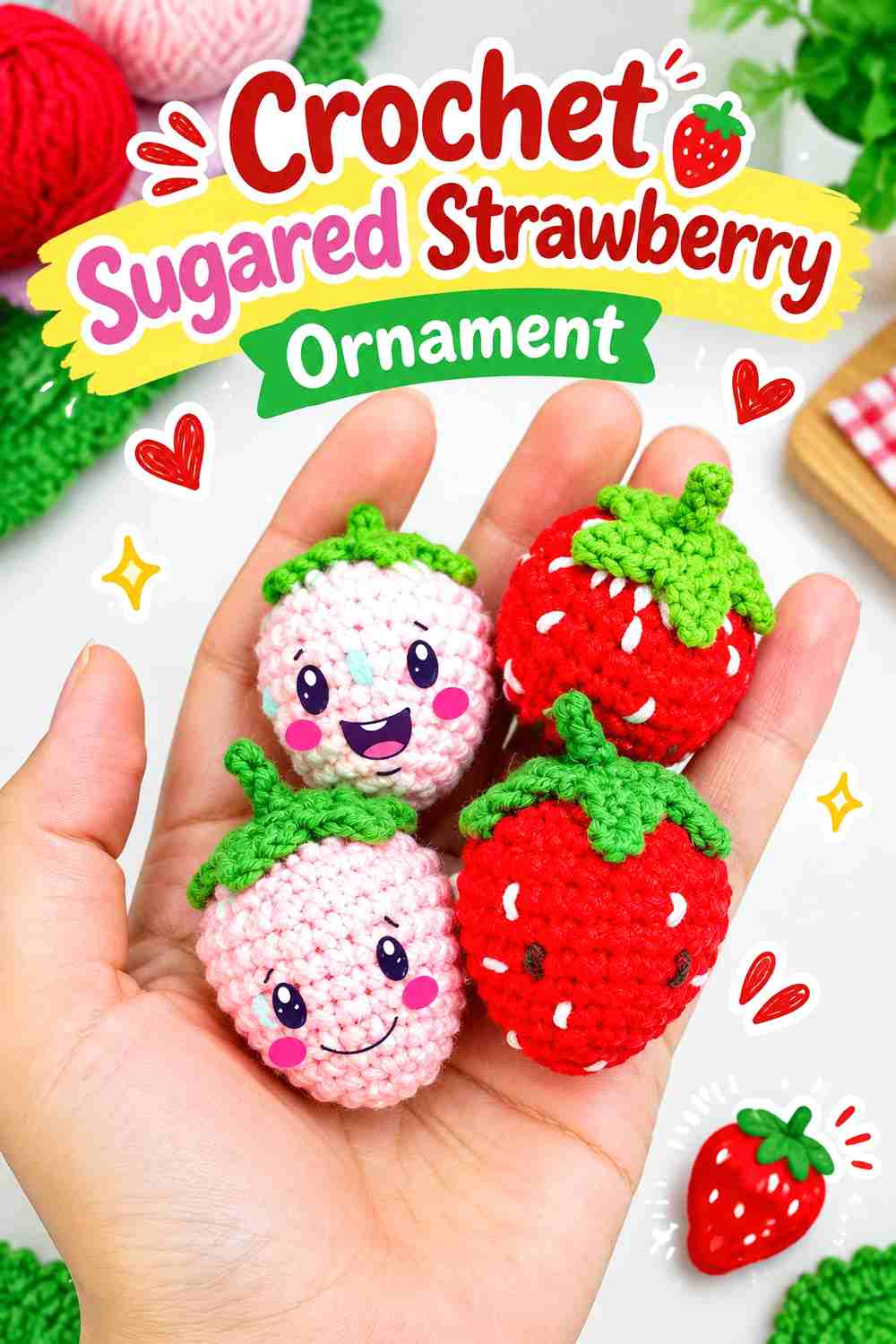
A strawberry is a natural starting point for a sugared-fruit Christmas tree because its tapered berry shape, leafy cap, and seed details already offer several places for contrasting decoration. AnDesign_Craft’s tutorial shows a dimensional strawberry with separate leaf and stem details, making it a useful construction reference for a small hanging fruit.
For Christmas styling, deep red, faded cranberry, pale pink, or even cream can all work. The important feature is keeping enough contrast between the berry and its leafy top for the silhouette to remain recognizable.
Turn the Seeds Into the Sparkle Pattern
The seed placement gives you a built-in map for distributing the sugared effect. Rather than covering the entire berry evenly, consider letting individual seed areas provide small points of pale or reflective contrast.
This makes the surface more interesting while preserving visible crochet stitches between the accents.
Keep the Leaf Cap Visible From Below
A hanging strawberry will often be viewed from below rather than straight ahead. Before fixing a loop permanently, check whether the leaves disappear behind the berry when it hangs.
A hanger positioned through or near the top structure should support the fruit without pulling the leafy cap into a tight bunch.
Creator Credit: AnDesign_Craft
2. Crochet Frosted Pear Ornament
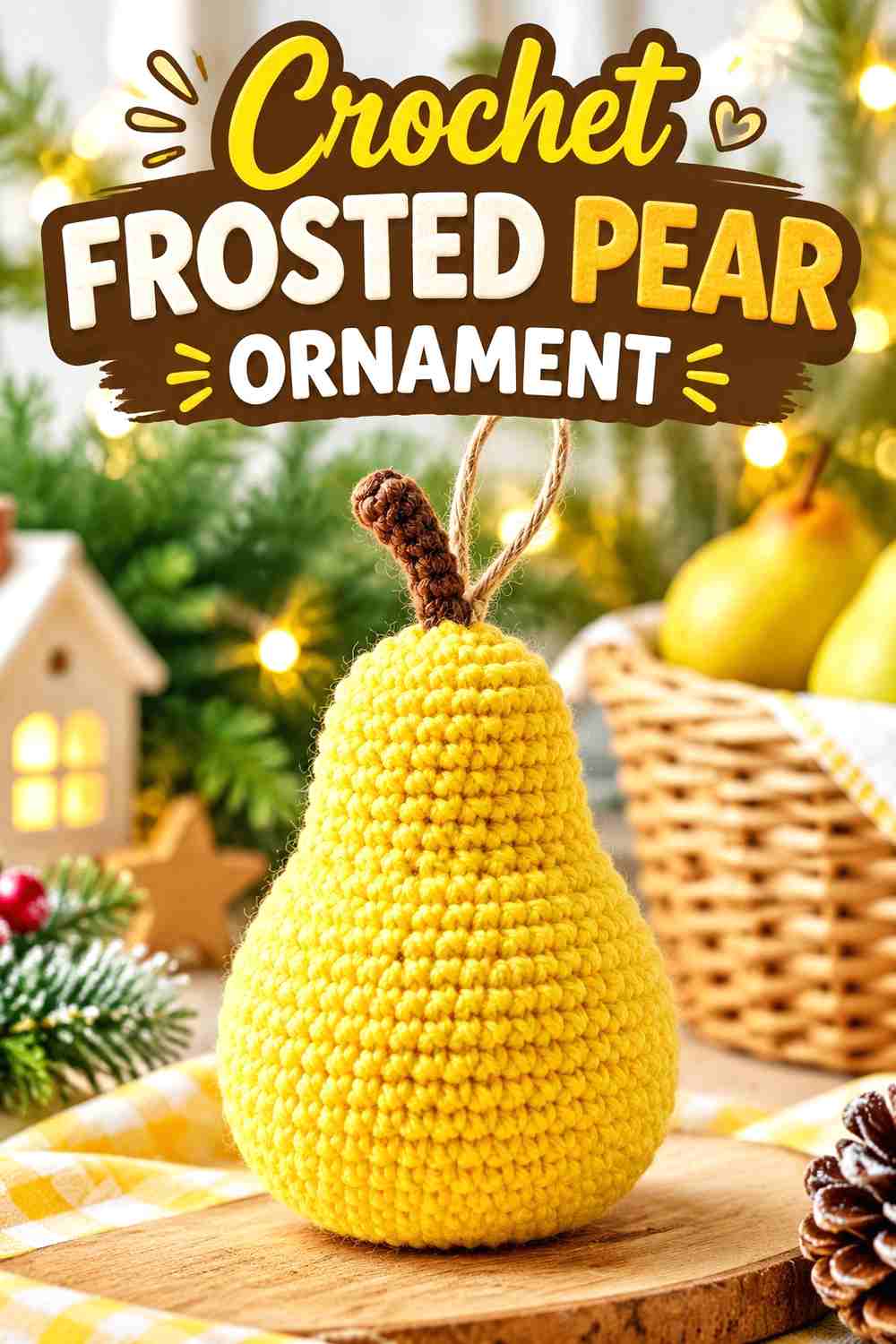
A pear introduces a graceful vertical silhouette that immediately separates it from the round citrus and apples in the collection. Alextitia Tuto Crochet’s tutorial creates the characteristic narrow top and fuller lower body, with a stem finishing the fruit.
That bottom-heavy shape can look particularly elegant on a tree when the ornament hangs straight instead of rotating to one side.
Test the Pear’s Balance Before Securing the Loop
The widest portion sits low, so the attachment point matters. Suspend the finished pear temporarily from the stem area and see whether the body settles vertically.
If it tilts, adjust the hanging position rather than adding unnecessary weight or stuffing to compensate.
Let Frosting Emphasize the Curves
A pear does not need an all-over sparkle finish. Pale highlights concentrated around the upper shoulder or one side can emphasize the change from the narrow neck to the rounded base.
This is particularly useful when working with muted green, gold, burgundy, or cream yarn where the shape is more important than realistic color.
Creator Credit: Alextitia Tuto Crochet
3. Crochet Crystal Lemon Ornament
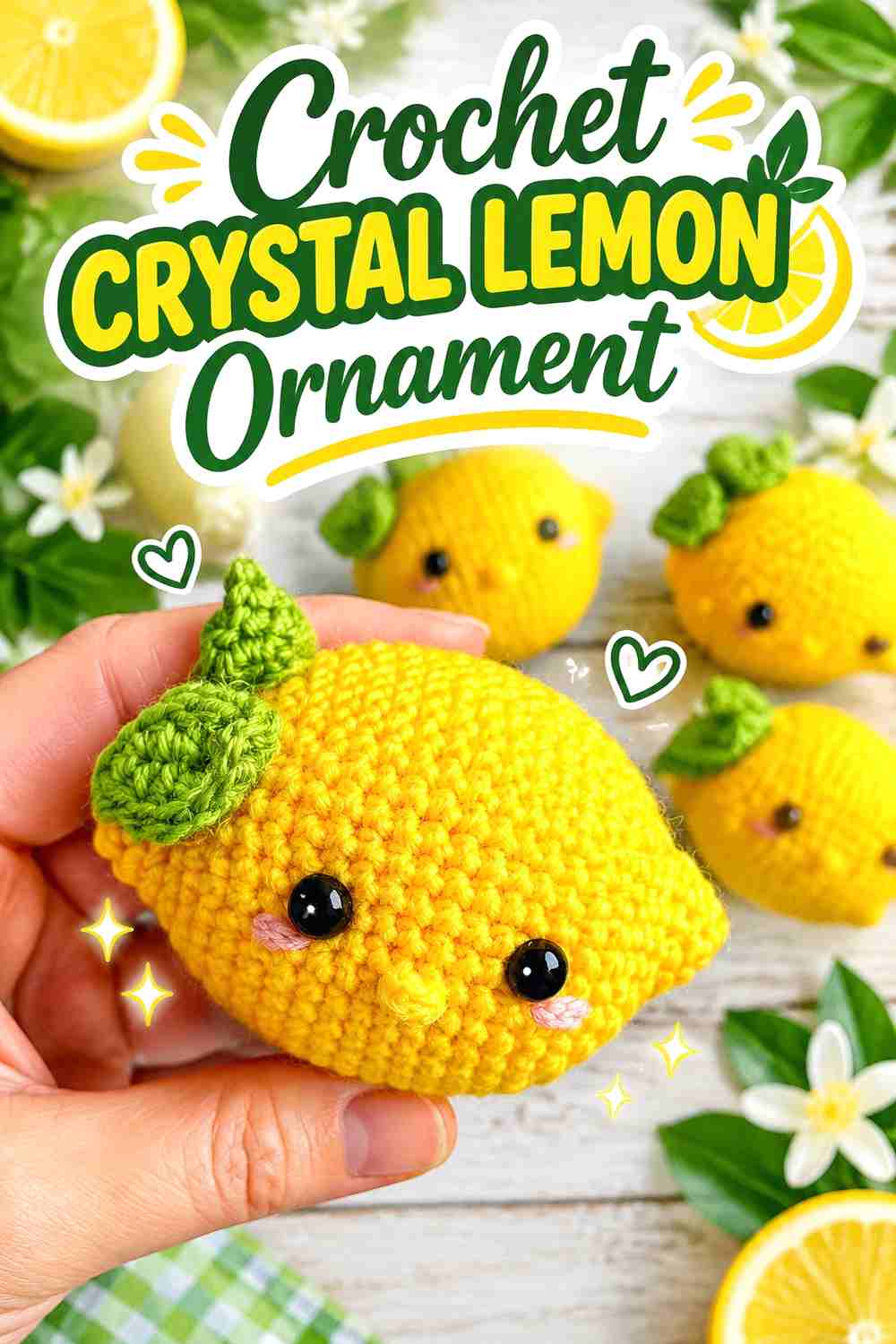
MJ Carlos’s lemon tutorial produces the familiar elongated citrus form with a leafy finishing detail. The pointed ends make a lemon noticeably different from both oranges and rounded berries, which is helpful when building a tree with varied silhouettes.
For Christmas, lemon yellow can stay bright, shift toward warm gold, or move into pale champagne tones.
Make the Pointed Ends Part of the Design
The ends help the ornament read as a lemon even from across the room. Avoid hiding both points behind dense branches or oversized decorative additions.
A subtle lighter accent around one tip can reinforce the crystalline effect without changing the fruit’s basic construction.
Gold and Cream Can Make Lemon Feel More Seasonal
Bright yellow is not the only option. A warmer yellow beside cream leaves or muted gold hanging cord can make the fruit sit more naturally among traditional Christmas decorations.
If you change yarn types, compare the finished density with the tutorial before adding extra embellishment; a sparkly yarn may already supply enough surface interest.
Creator Credit: MJ Carlos
4. Crochet Sparkling Orange Ornament
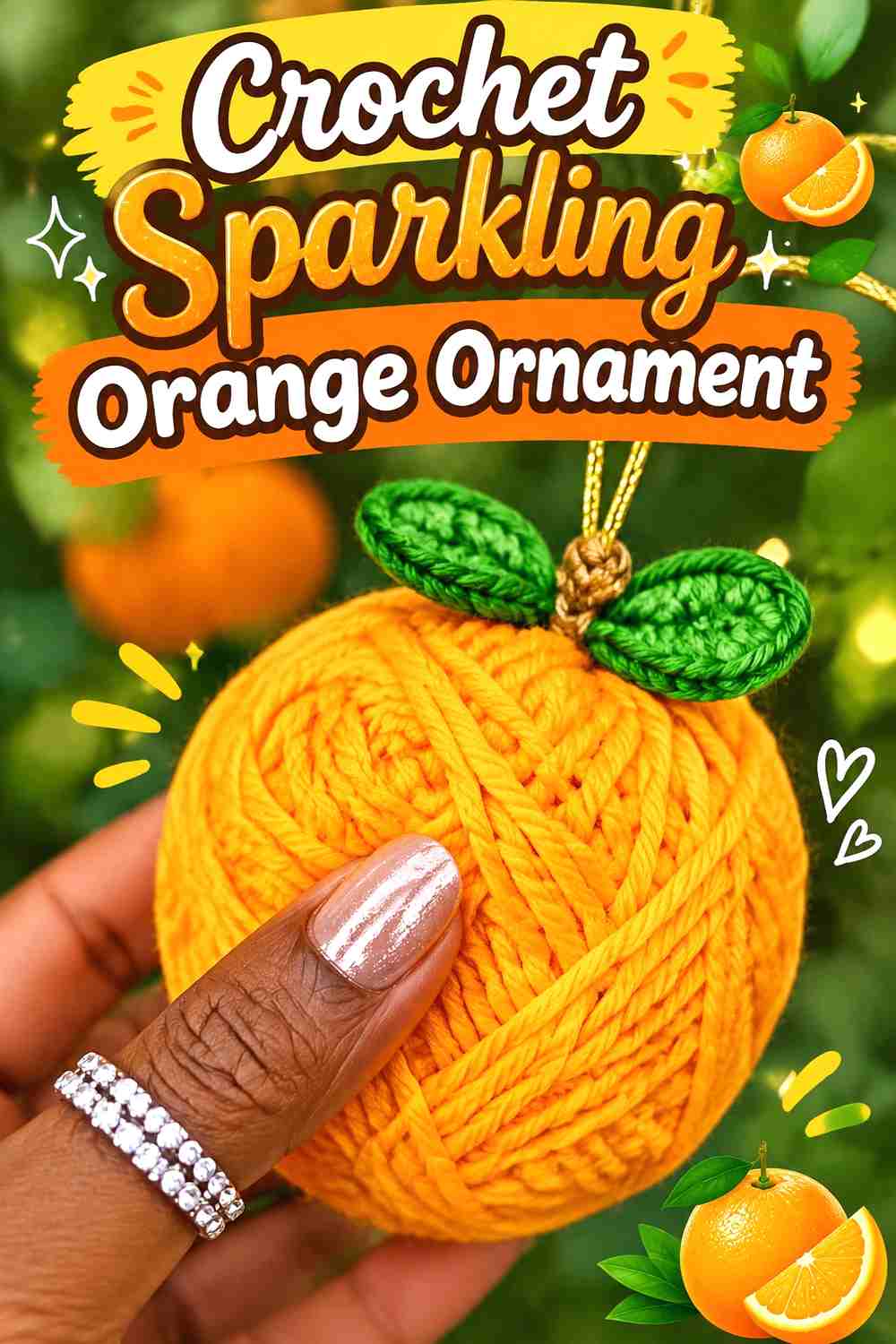
A whole orange gives you the familiar round Christmas-fruit form that works almost like a crocheted bauble. Crochet Like Me’s tutorial provides a compact amigurumi orange construction suitable for adaptation into seasonal decor.
This is one of the easiest shapes to repeat across a tree because it can act as a bright visual anchor between more complex fruits.
Use Round Oranges Like Handmade Baubles
Because the form is compact, oranges can occupy branch positions where a traditional ball ornament might normally sit.
Repeating several oranges at different heights can help unify a tree containing one-off pears, grapes, bananas, and watermelon slices.
Keep the Sparkle Pattern Uneven
Perfectly uniform decoration can make a handmade orange look overly mechanical. A scattered arrangement of pale stitches, beads, or metallic-style highlights often suggests crystallized sugar more convincingly.
Look at the ornament from several feet away before adding more. Tiny differences that seem obvious in your hand may disappear completely on the tree.
Creator Credit: Crochet Like Me
5. Crochet Twin Cherry Ornament
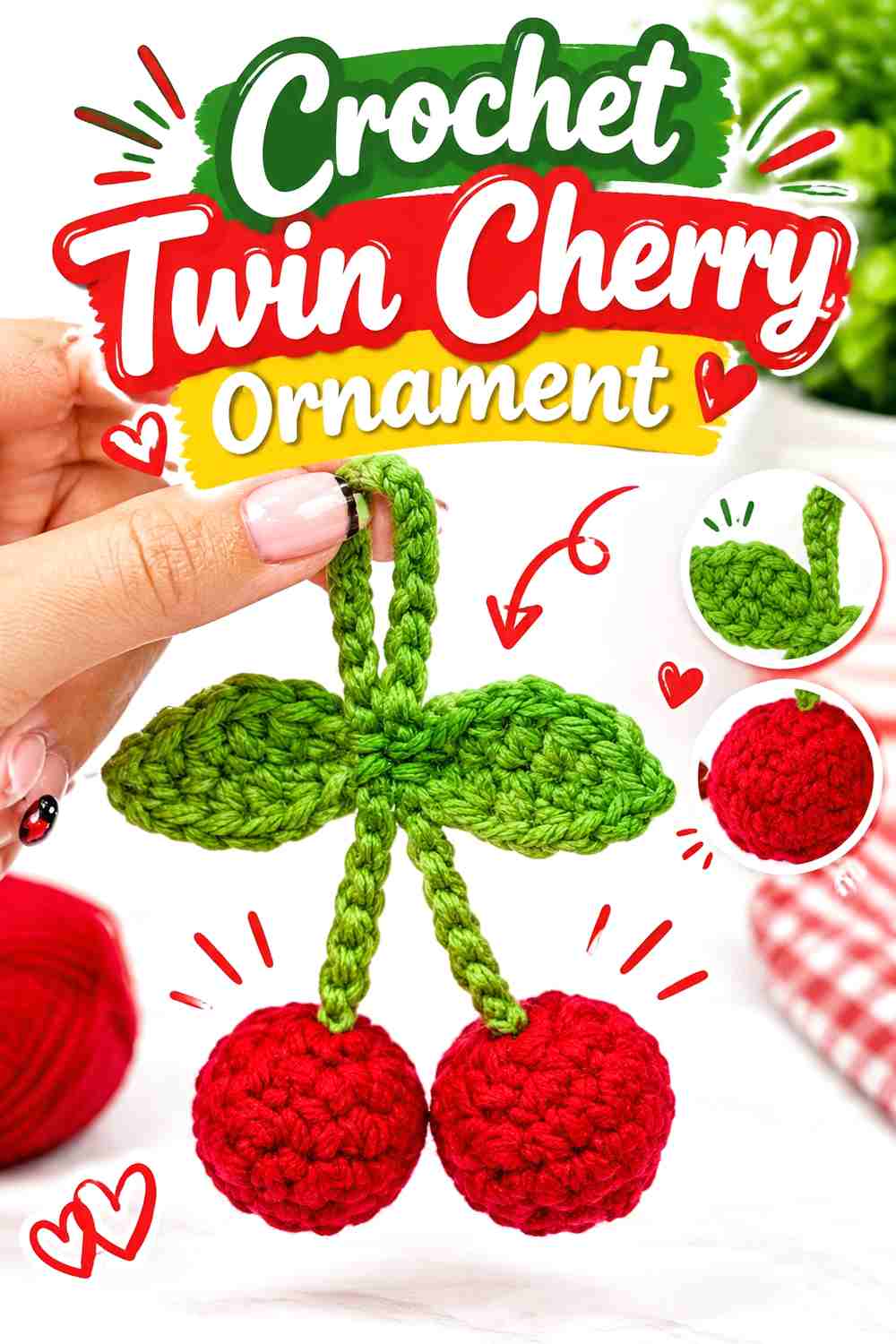
ElyseCrochets’ tutorial produces a paired cherry keychain with connected fruit, stems, and a leaf, which makes it especially adaptable to hanging ornament use. The two-body construction creates movement and negative space that a single round fruit cannot provide.
A deep ruby pair also adds an unmistakably Christmas-friendly red accent without resembling another standard bauble.
Let the Pair Hang at Slightly Different Levels
The appeal of cherries comes partly from seeing two separate fruit forms connected by their stems. If both bodies are forced into exactly the same position, some of that character is lost.
Check how the pair falls naturally before adding any separate ornament hanger.
Concentrate the Sugar Effect Around the Outer Curves
A few pale or sparkling accents on the rounded sides can make the cherries look glossy and frosted without overwhelming their small scale.
The stems and leaf already add fine detail, so keep additional ornamentation restrained enough that those features remain visible.
Creator Credit: ElyseCrochets 💌
6. Crochet Sugared Grape Cluster Ornament
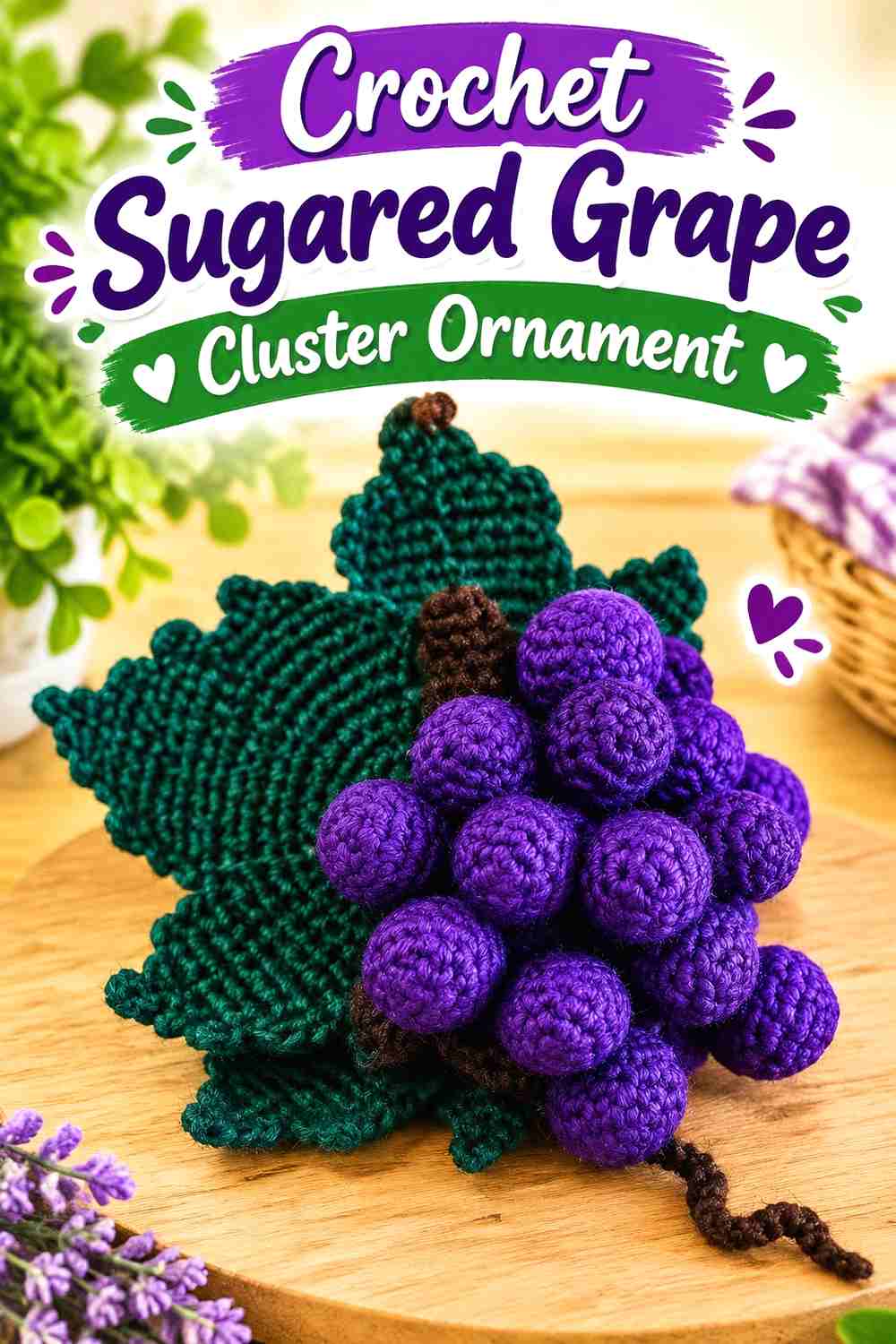
L’angolo di Criss’s tutorial demonstrates a full crochet bunch of grapes rather than a single spherical fruit. That clustered construction makes this one of the most dimensional ornaments in the group.
Plum, wine, burgundy, dusty purple, pale green, or even champagne-colored grapes can all work within a holiday palette.
A Grape Cluster Needs More Branch Clearance
Several individual grape forms create more depth than one stuffed fruit. Hang the bunch where neighboring branches will not compress the cluster into a flat mass.
A location slightly closer to the outer edge of the tree can make the individual grapes easier to distinguish.
Avoid Decorating Every Grape Identically
If you add a frosted accent to the cluster, variation helps. Some grapes can stay nearly plain while others catch more sparkle.
That difference creates depth and prevents a detailed cluster from looking like one solid glittered shape.
Creator Credit: L’angolo di Criss
7. Crochet Ruby Apple Ornament
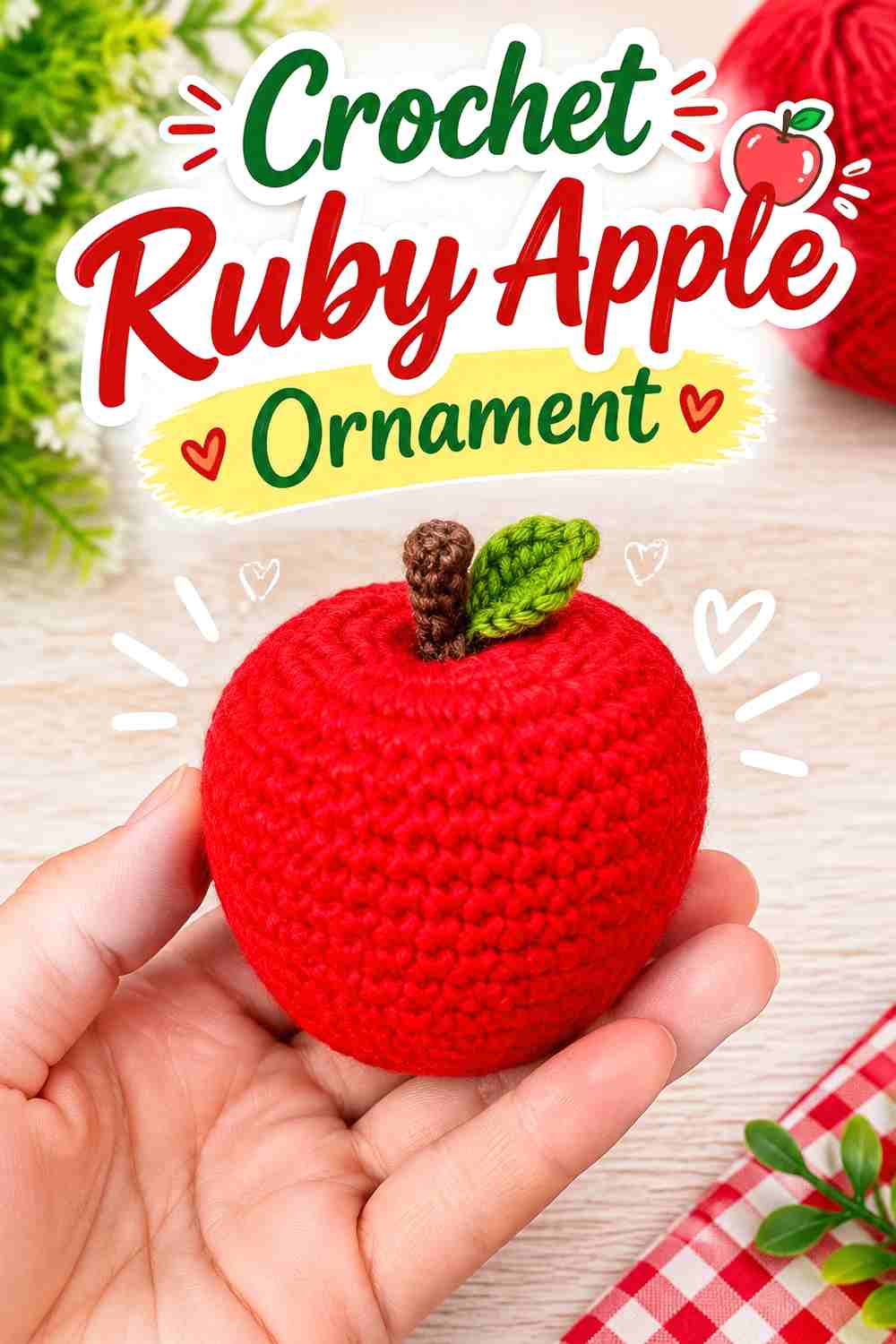
The apple tutorial from Crocheting channel forms a rounded fruit with a distinct stem detail. An apple provides one of the most traditional orchard shapes for a Christmas fruit tree and works well in red, green, cream, or antique gold palettes.
Compared with the orange, the apple’s stem and sculpted form should remain visible enough to keep the two round fruits from looking interchangeable.
Preserve the Apple Shape During Stuffing
The recognizable apple profile matters more than making the fruit extremely firm. Follow the tutorial’s construction and compare the body shape before closing.
If the finished ornament becomes overly spherical, it may lose the visual distinction that makes it useful in the collection.
Use Ruby Red as a Repeating Tree Color
An apple can carry the same red used on cherries and strawberries while still appearing different because of its shape and top detail.
Repeating one red yarn across several fruit types is an effective way to make a large handmade ornament collection feel intentional.
Creator Credit: Crocheting channel
8. Crochet Gilded Pineapple Ornament
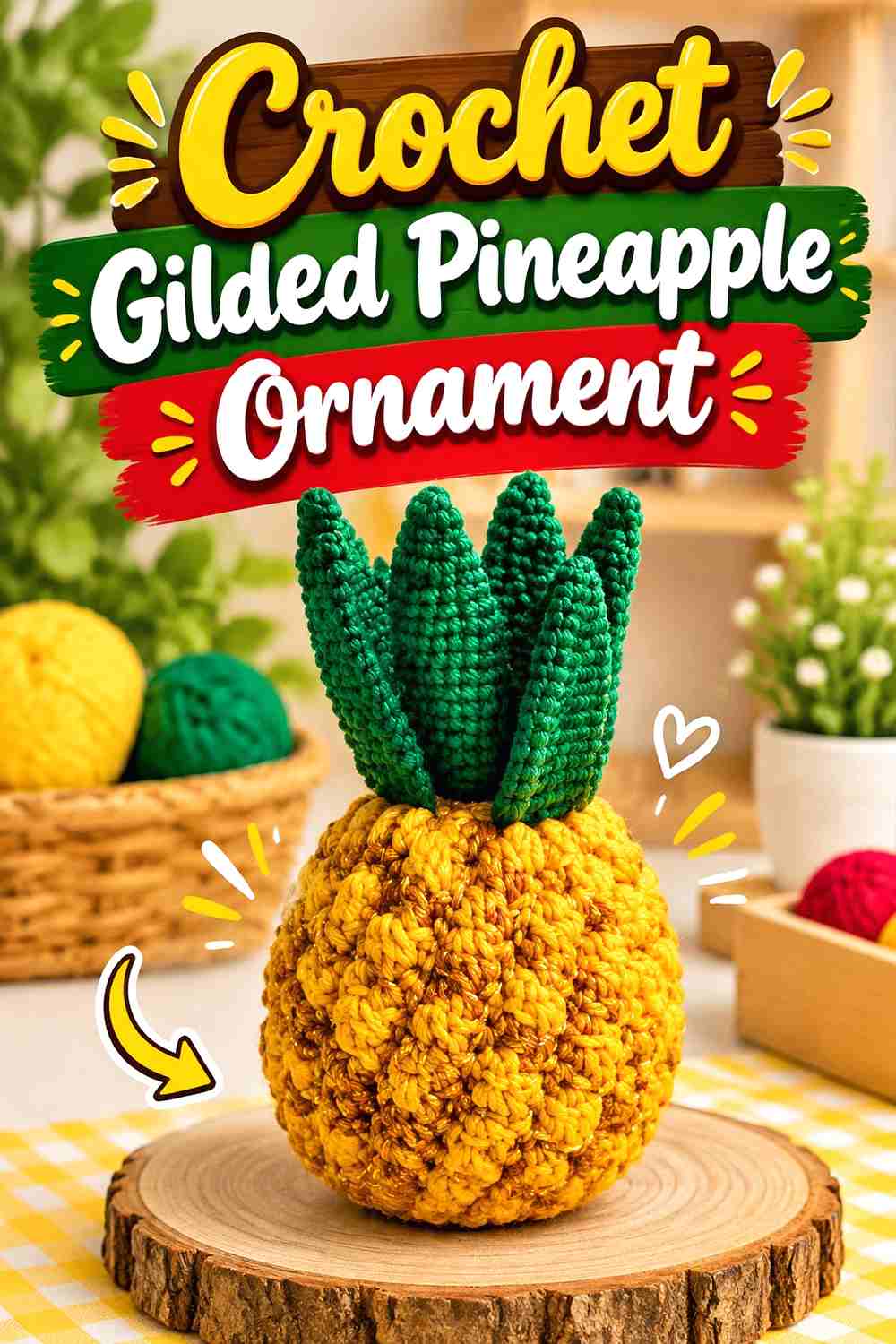
Linha Moderna’s pineapple tutorial includes a textured body and prominent leafy crown, giving this fruit much more surface character than a smooth citrus form.
A pineapple can act as a statement ornament, especially in antique gold, mustard, cream, or warm yellow with dark evergreen leaves.
Let the Body Texture Replace Excess Embellishment
Raised crochet texture already catches light and shadow. If you add too much surface decoration, the pineapple pattern may disappear beneath it.
Try limiting the sugared effect to selected raised areas or leaf edges rather than treating every stitch equally.
Give the Leaf Crown Vertical Space
The upper leaves are central to recognition. Avoid hanging the pineapple directly beneath a dense branch where the crown will be crushed or hidden.
The ornament can work particularly well toward the outer third of the tree where its tall outline has room to show.
Creator Credit: Linha Moderna
9. Crochet Frosted Watermelon Slice Ornament
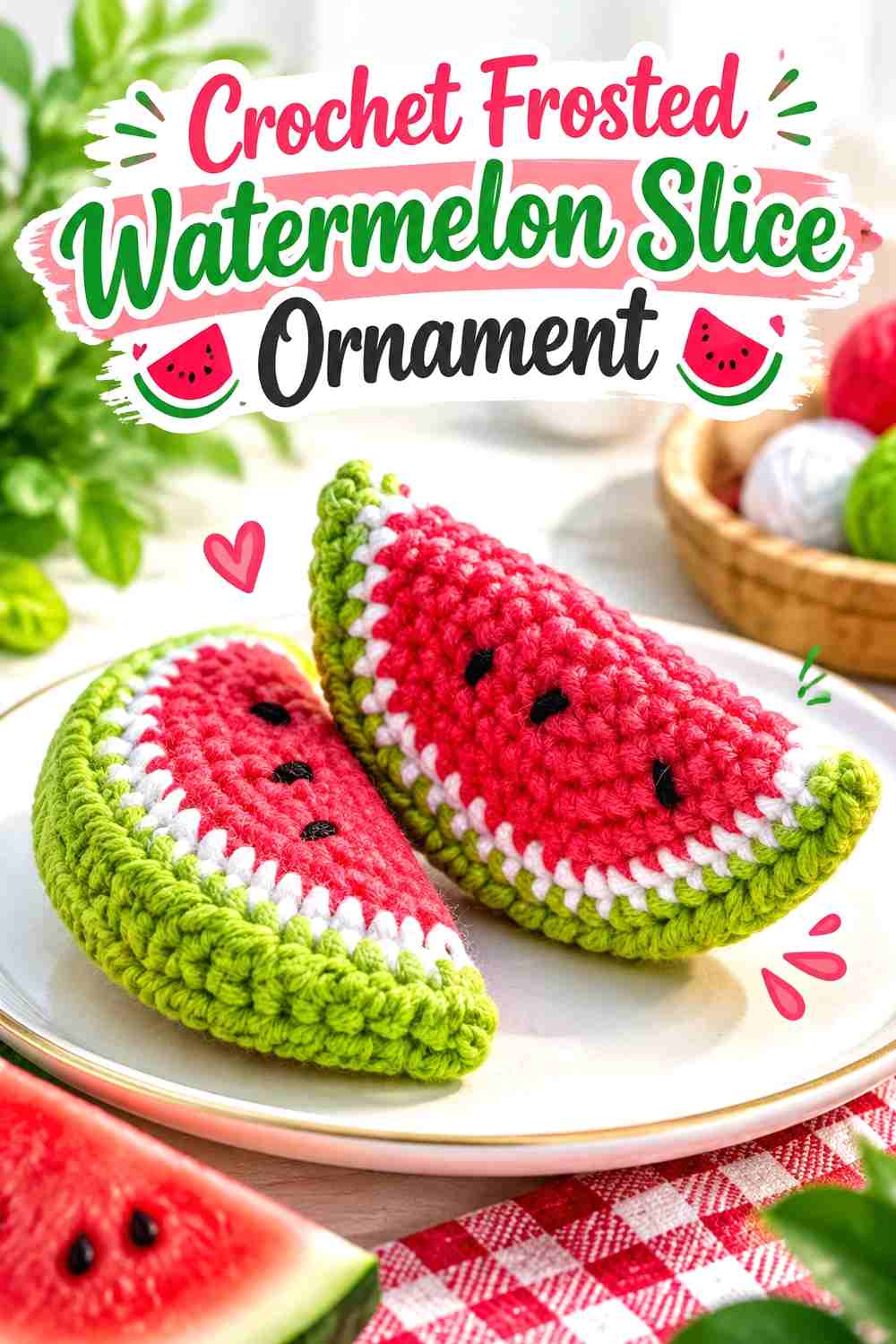
GratiaProject’s watermelon tutorial creates a slice with clearly separated rind and fruit colors, making it one of the few pieces in this collection where the interior fruit is visible.
That cut-fruit presentation provides useful contrast against the many whole fruits.
Preserve the Layered Edge
The sequence of rind, pale transition, and fruit color is what makes a watermelon slice immediately recognizable. Any frosted treatment should support those layers rather than blur them together.
A narrow sparkle accent along the outer rind or curved top may be enough.
Use the Flatter Shape Near Branch Tips
Compared with bulky grape clusters or round citrus, a slice can occupy shallower areas of the tree.
Test the hanging point so the colorful cut face stays visible instead of rotating sideways into the branches.
Creator Credit: GratiaProject
10. Crochet Iced Blueberry Ornament
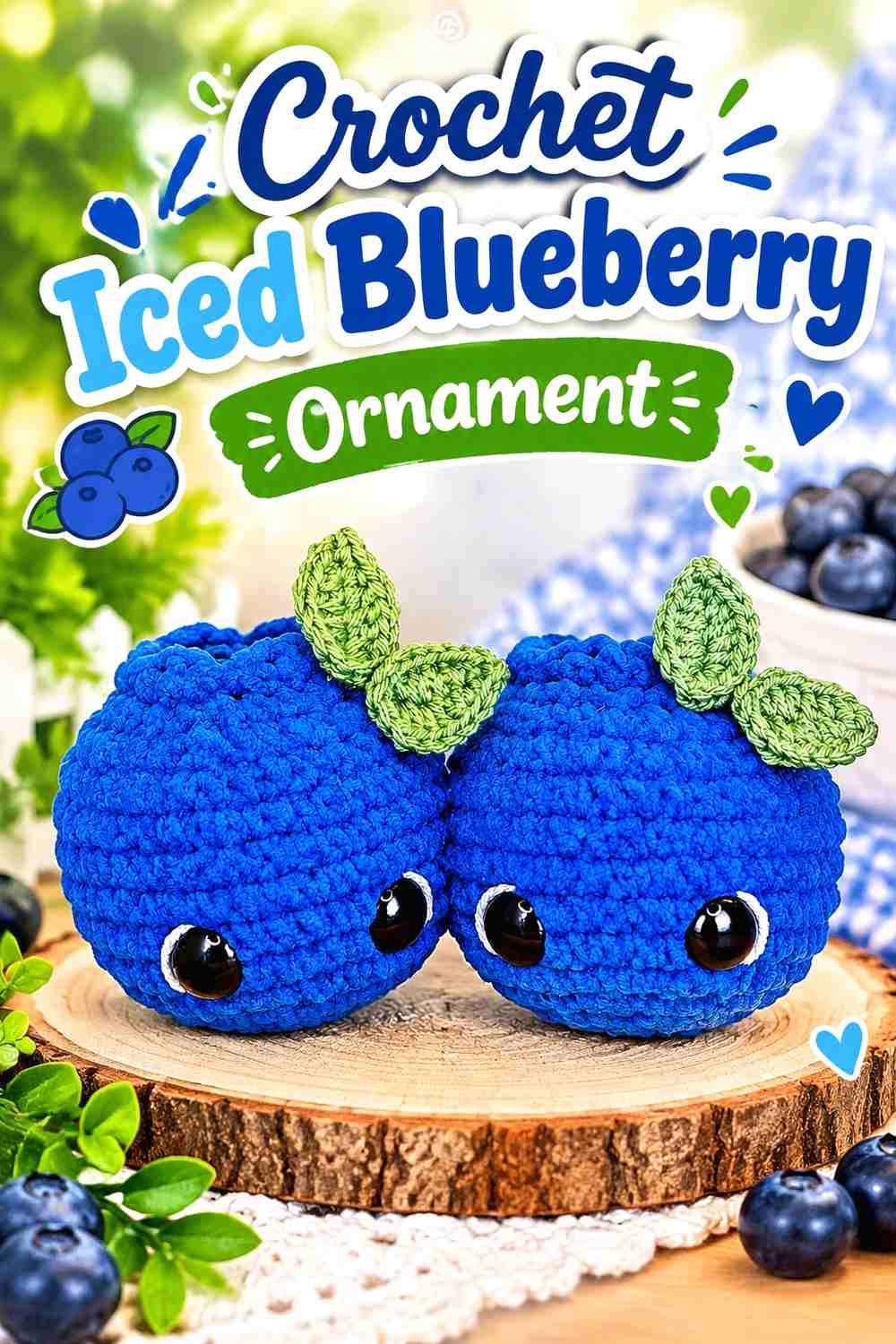
Storybook Crochet’s blueberry tutorial produces a plump fruit with the characteristic small leafy crown at the top. This brings a cool blue note into a collection otherwise dominated by reds, yellows, greens, and oranges.
A single blueberry can work as a small ornament, while several distributed around the tree can function almost like blue baubles.
Make the Top Crown Easy to See
Without the small top detail, a blue berry can read simply as a round ornament. Keep the crown visible when selecting the hanging location.
A loop positioned carefully around the top should support the fruit without folding the crown flat.
Frosted Blue Can Bridge Silver and Traditional Colors
Blueberries work especially well if the tree already uses silver, icy white, or cool metallic-style decorations.
For a warmer scheme, a dusty navy or muted blue paired with cream highlights can connect more naturally with cranberry, plum, and antique gold fruits.
Creator Credit: Storybook Crochet
11. Crochet Pink Grapefruit Ornament
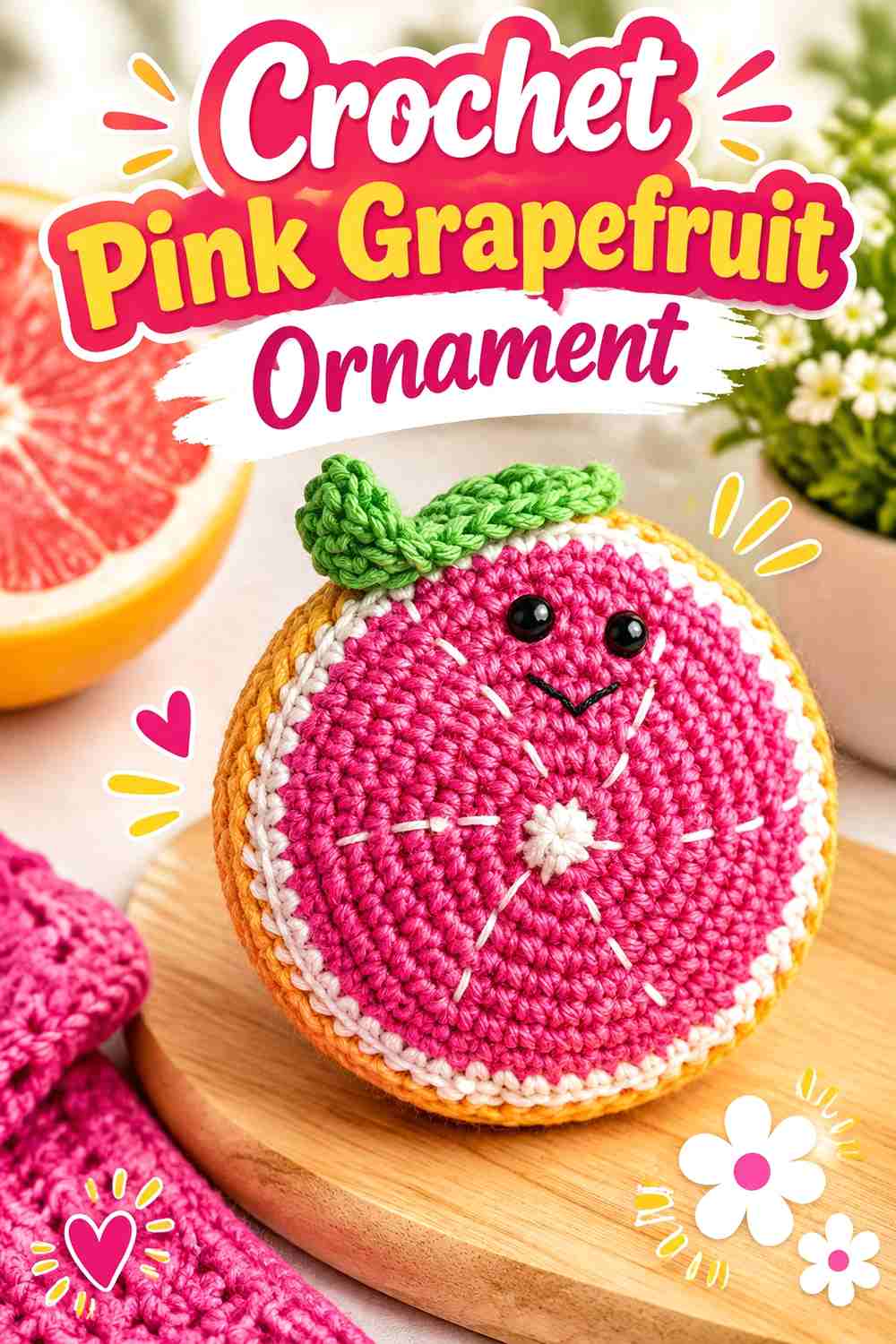
Ieva’s Crochet Designs demonstrates a grapefruit amigurumi form that offers another citrus option while giving the collection a softer pink direction.
Use this project when orange and lemon alone make the citrus section feel too predictable.
Use Pink to Break Up Large Areas of Red
On a fruit-themed Christmas tree, apples, cherries, and strawberries can create a large concentration of dark red. Grapefruit introduces a lighter warm hue without leaving the fruit theme.
Blush, salmon, coral, or dusty rose can all work depending on the rest of the palette.
Decide Whether the Surface or Shape Should Lead
If you choose a richly textured or sparkle-heavy yarn, keep the added sugar accents minimal. If the base yarn is matte, a few brighter details can provide the festive finish.
Combining every decorative treatment on one small citrus fruit can make the form harder to read.
Creator Credit: Ieva’s Crochet Designs
12. Crochet Golden Mango Ornament
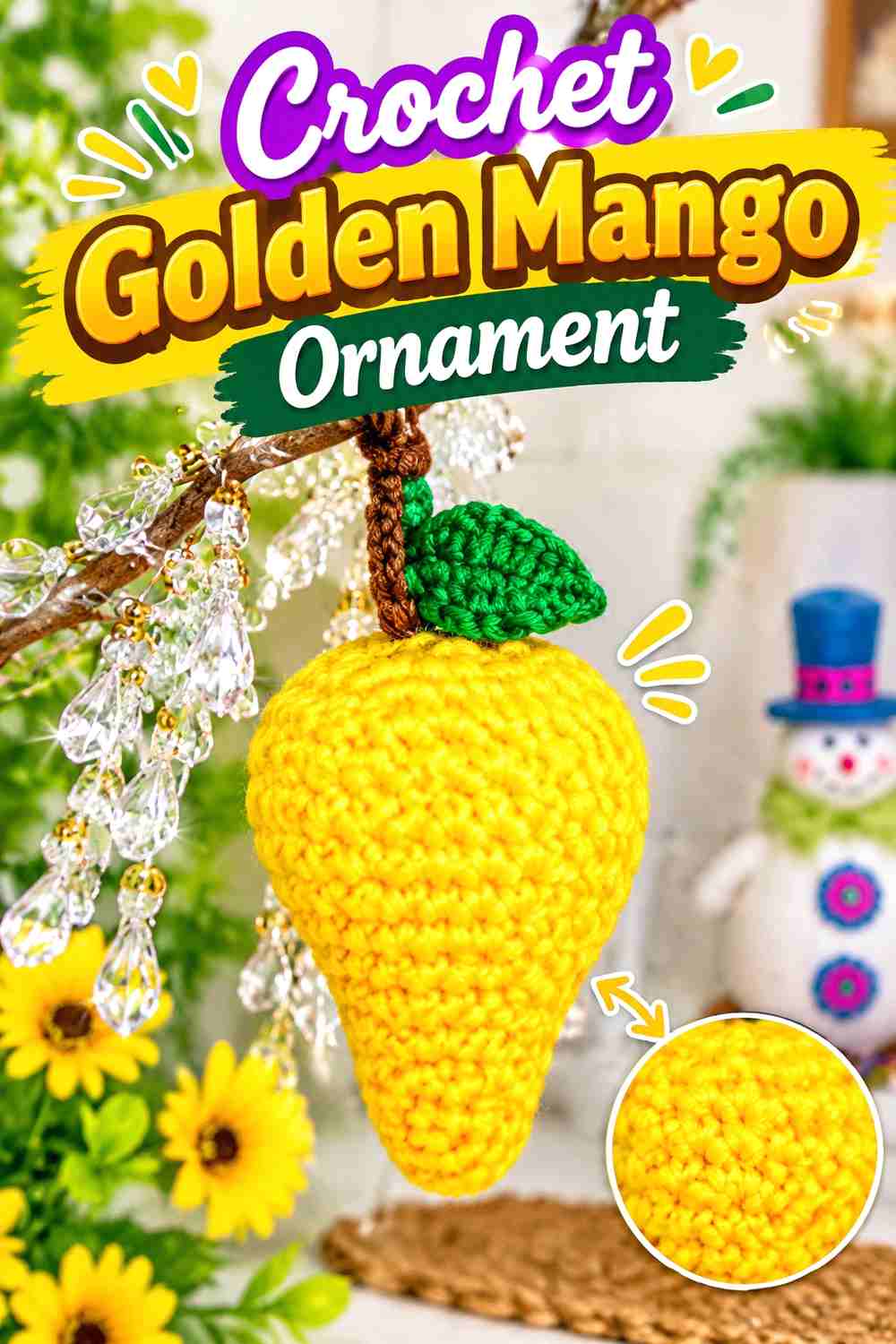
TEJIENDO CROCHET-SILVY’s tutorial provides a mango construction with the fruit’s distinctive rounded, slightly asymmetrical form.
A mango gives a sugared-fruit tree a less expected silhouette while still fitting naturally with warm gold, peach, green, and red color families.
Embrace the Asymmetry
A mango should not necessarily hang like a perfectly balanced sphere. Its uneven curve is part of what separates it from an orange or apple.
Test the hanger while the fruit is fully assembled and choose the angle that displays that curve most clearly.
Blend Warm Colors Without Losing the Outline
A gold-to-coral palette can suggest a ripening mango, but very subtle color changes may disappear in tree lighting.
If you use more than one body color, check the ornament from normal viewing distance before deciding whether another shade is needed.
Creator Credit: TEJIENDO CROCHET-SILVY
13. Crochet Blush Peach Ornament
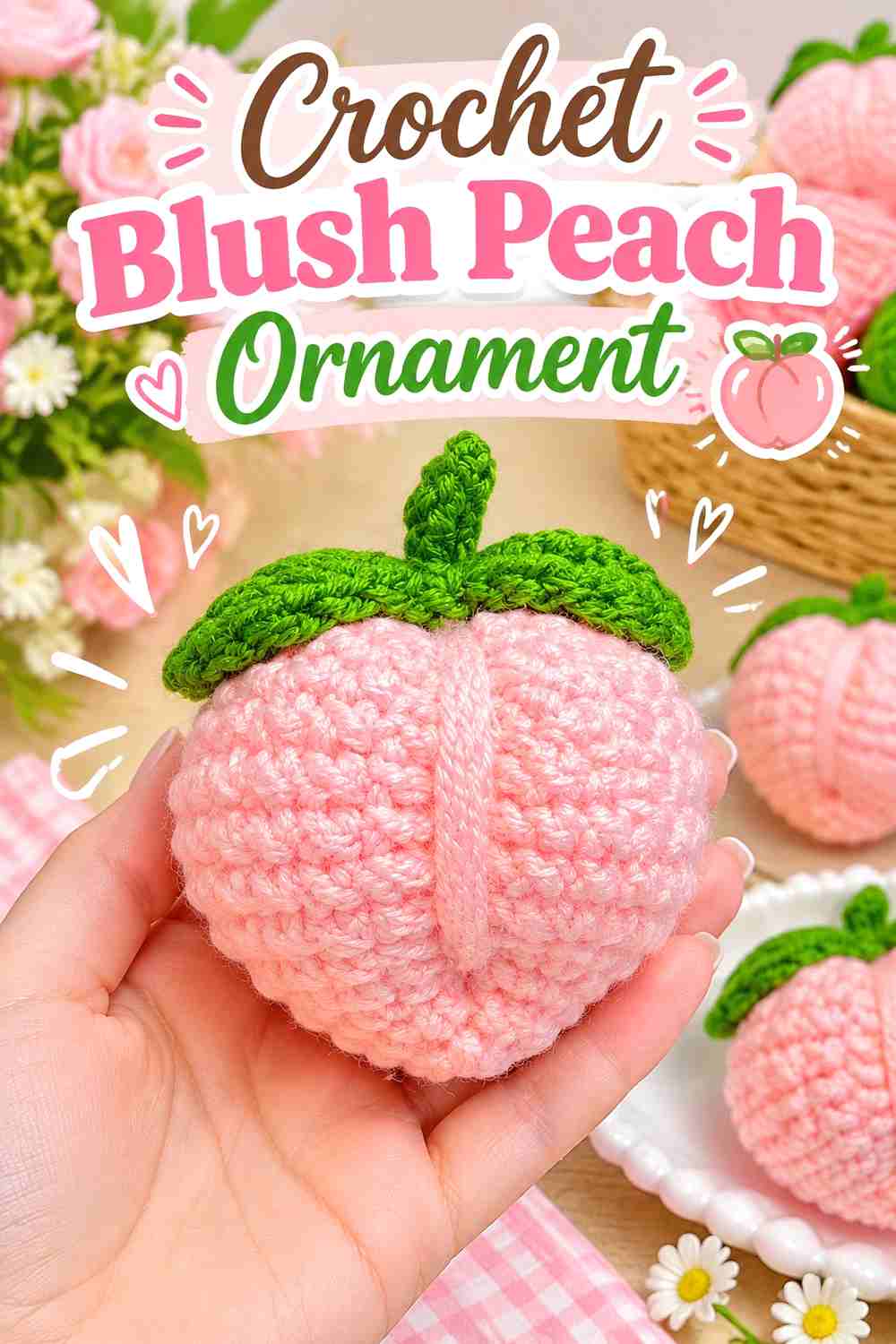
vvw.studio’s peach tutorial creates the round fruit along with a stem and leaf, giving the finished object several recognizable details beyond color alone.
A peach introduces one of the softest colors in the collection and can prevent a jewel-toned tree from becoming too dark.
Make the Center Contour Visible
The peach’s shaping distinguishes it from another simple ball. When stuffing and finishing, watch the profile carefully so that defining contour remains visible.
If you add surface sparkle, avoid filling that shaping line with bulky decoration.
Blush Works Well With Cream and Champagne Accents
Instead of bright pink, try a muted peach yarn with pale cream or warm metallic-style highlights.
This creates a softer transition between darker plum, red, and green ornaments elsewhere on the tree.
Creator Credit: vvw.studio
14. Crochet Sugar-Plum Ornament
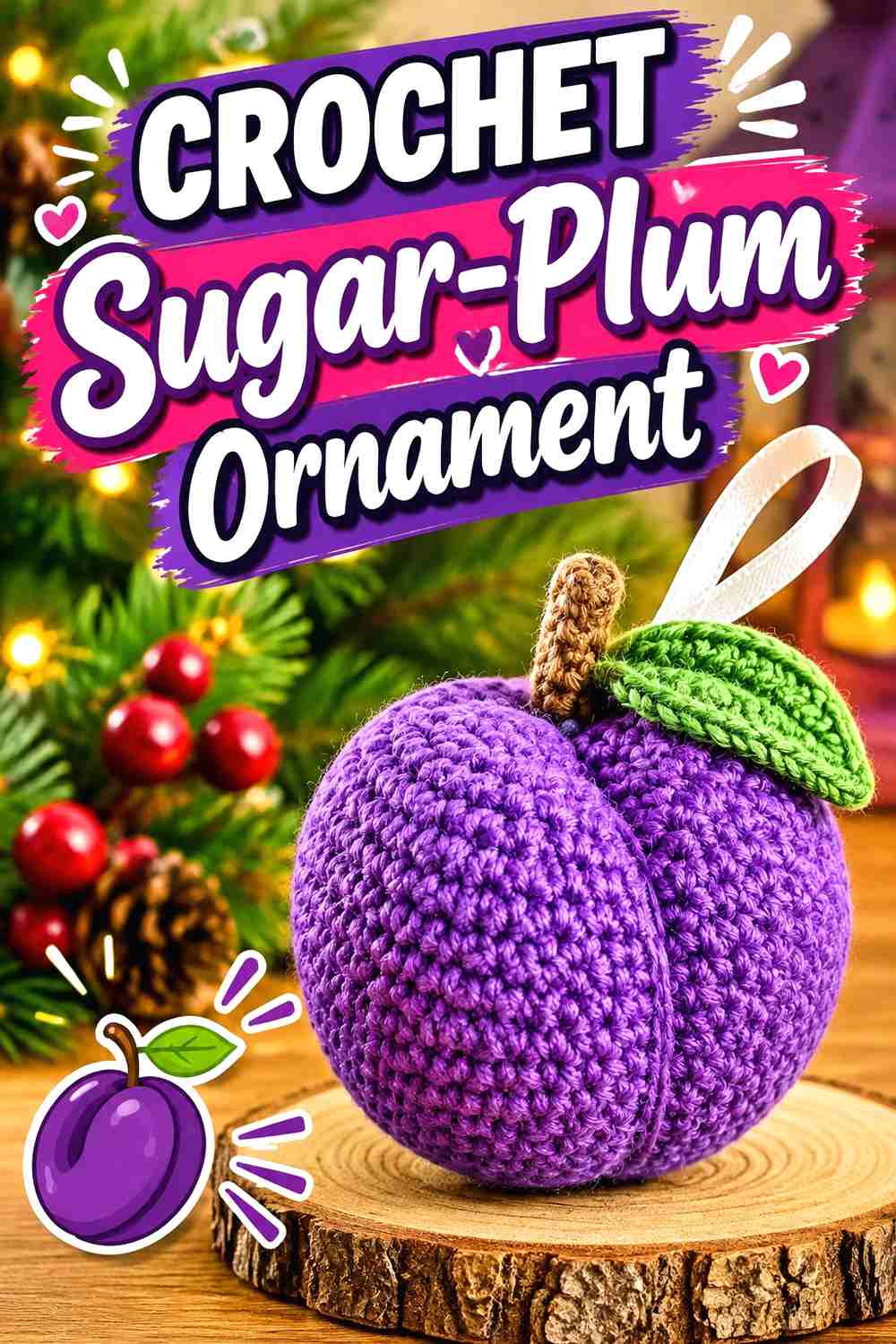
MummaJ Crochet’s tutorial demonstrates a crochet plum with a simple fruit form suited to seasonal display. Of all the projects here, this one has the most direct connection to the phrase “sugar plum,” making it an especially fitting choice for Christmas 2026.
Deep purple, burgundy, dusty mauve, or almost-black plum yarn can all produce very different moods.
Let Dark Plum Provide Visual Depth
Trees filled only with bright fruit colors can look flat. A few very dark plums create pockets of contrast that make gold, cream, citrus, and pale pink ornaments stand out more strongly.
Place them beside lighter decorations rather than grouping every dark fruit together.
Pale Crystals Show Most Clearly on a Dark Body
The plum is a good candidate for restrained white, silver-like, or iridescent highlights because the contrast is naturally strong.
Test any embellishment in tree lighting; what looks subtle on a worktable can become much brighter beside Christmas lights.
Creator Credit: MummaJ Crochet
15. Crochet Christmas Tangerine Ornament
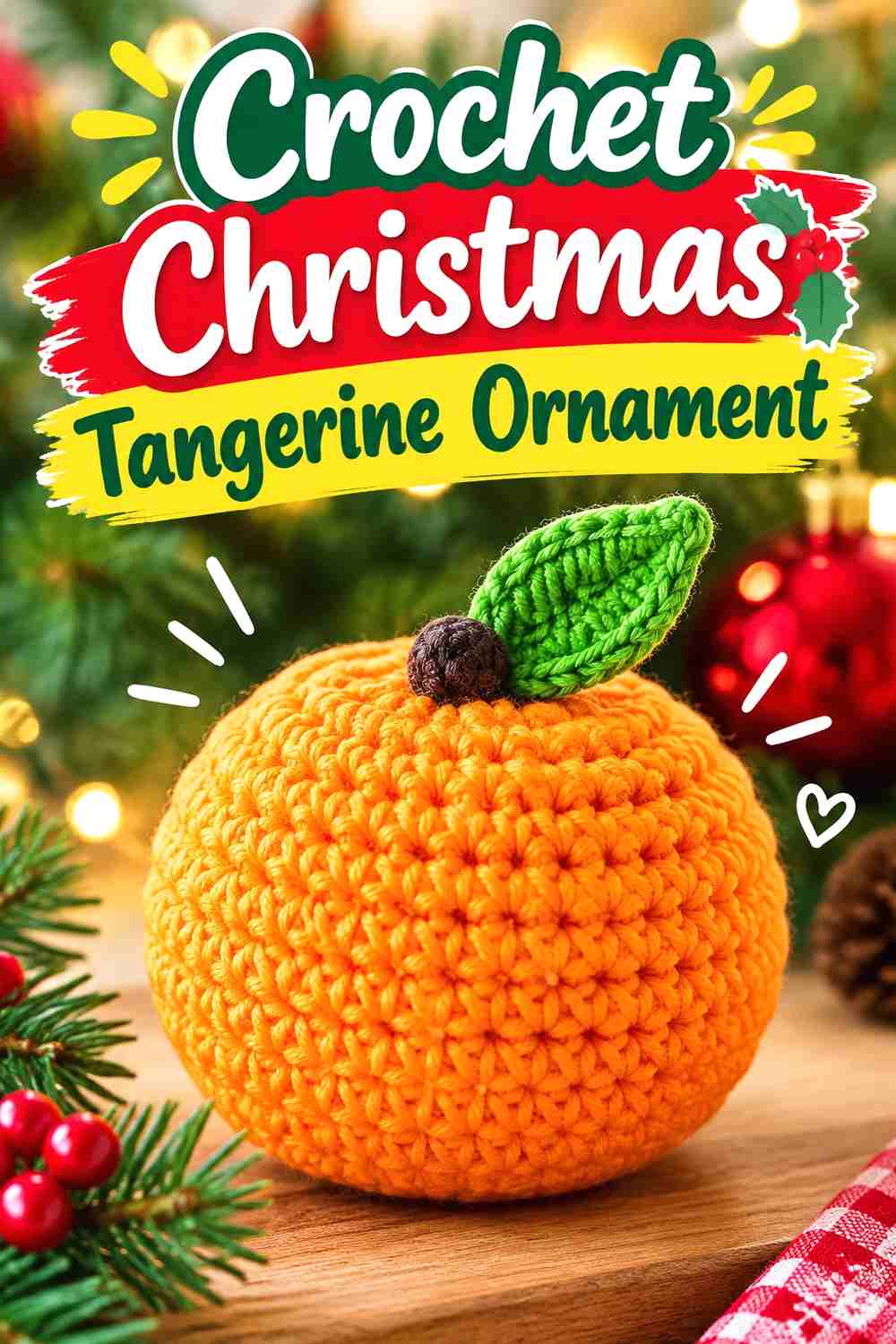
Amigu World’s tangerine tutorial creates a compact citrus fruit with the familiar warm orange coloring and top details. Tangerines have an especially natural place in Christmas decor because they echo the fruit traditionally associated with holiday stockings.
To keep this project distinct from the larger orange ornament, treat it as a smaller accent fruit within the collection.
Use Tangerines as Repeating Filler Ornaments
A large tree often needs small pieces between statement ornaments. Compact tangerines can fill these visual gaps without competing with grapes, pineapples, or elongated fruits.
Repeating them also makes the broader fruit concept easier to recognize.
Differentiate Tangerine and Orange Through Styling
If both appear on the same tree, vary more than the name. Use a deeper orange, a different leaf treatment, a smaller scale where the source construction permits it, or a different frost placement.
The two fruits should still be distinguishable when viewed together.
Creator Credit: Amigu World
16. Crochet Frosted Avocado Ornament
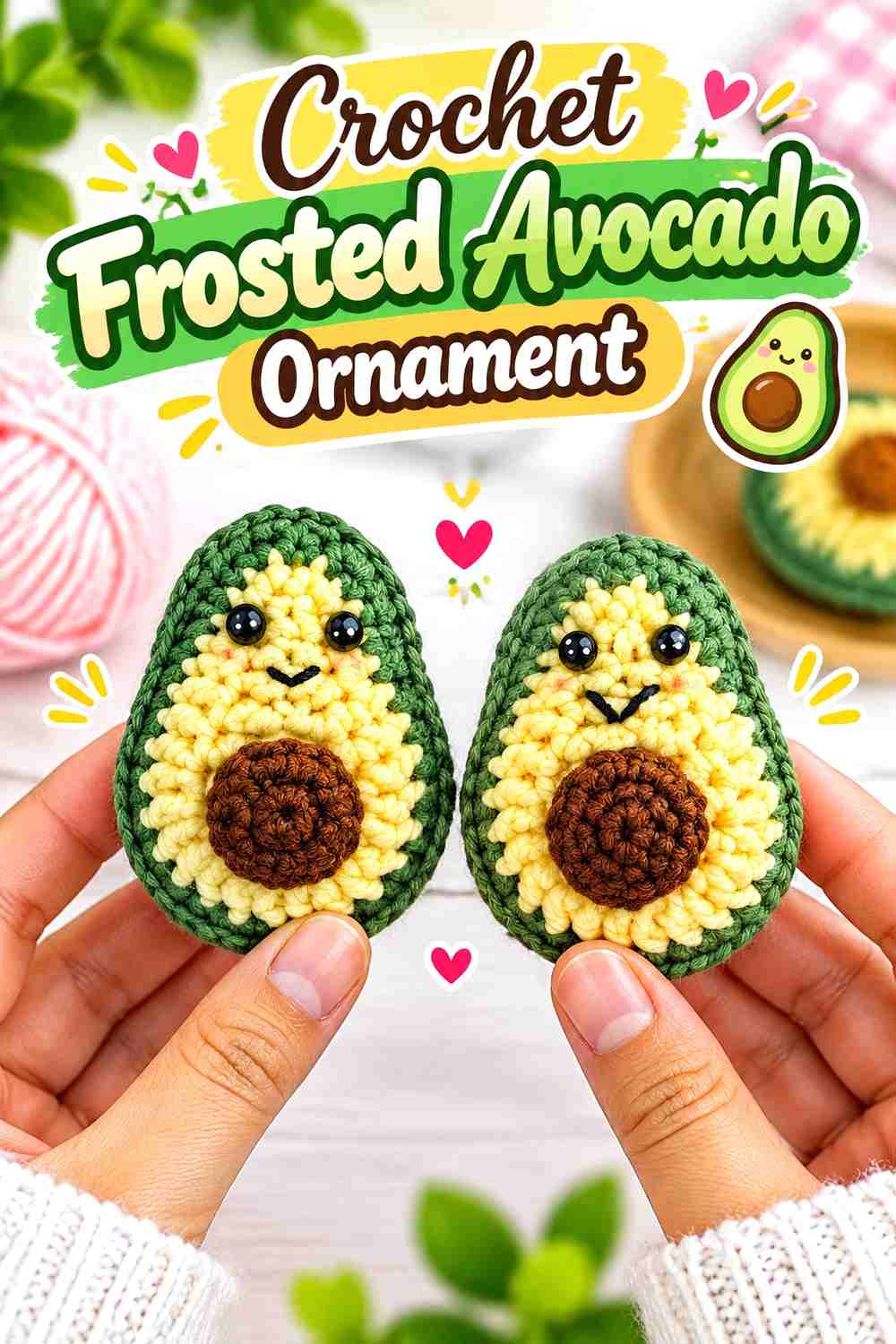
Betty’s.Crochi demonstrates an avocado with distinct outer green, lighter flesh, and central pit areas. It is a playful departure from traditional Christmas fruit, but that graphic layered construction makes it useful on a contemporary 2026 tree.
The pear-like outer silhouette also gives you another vertical shape without simply repeating the pear ornament.
Turn the Layered Colors Into the Decoration
An avocado already contains several strong color zones. Adding heavy glitter or embroidery to every layer can make the design unnecessarily busy.
Consider restricting festive accents to the outer edge, pit, or hanging loop.
Use Avocado Green as a Bridge Color
Dark and pale greens can connect fruit ornaments visually with evergreen branches, wreaths, and traditional Christmas foliage.
Against a green tree, however, the outer edge may disappear. Place the ornament beside a lighter decoration or choose greens with enough contrast from the branches.
Creator Credit: Betty’s.Crochi
17. Crochet Curved Banana Ornament
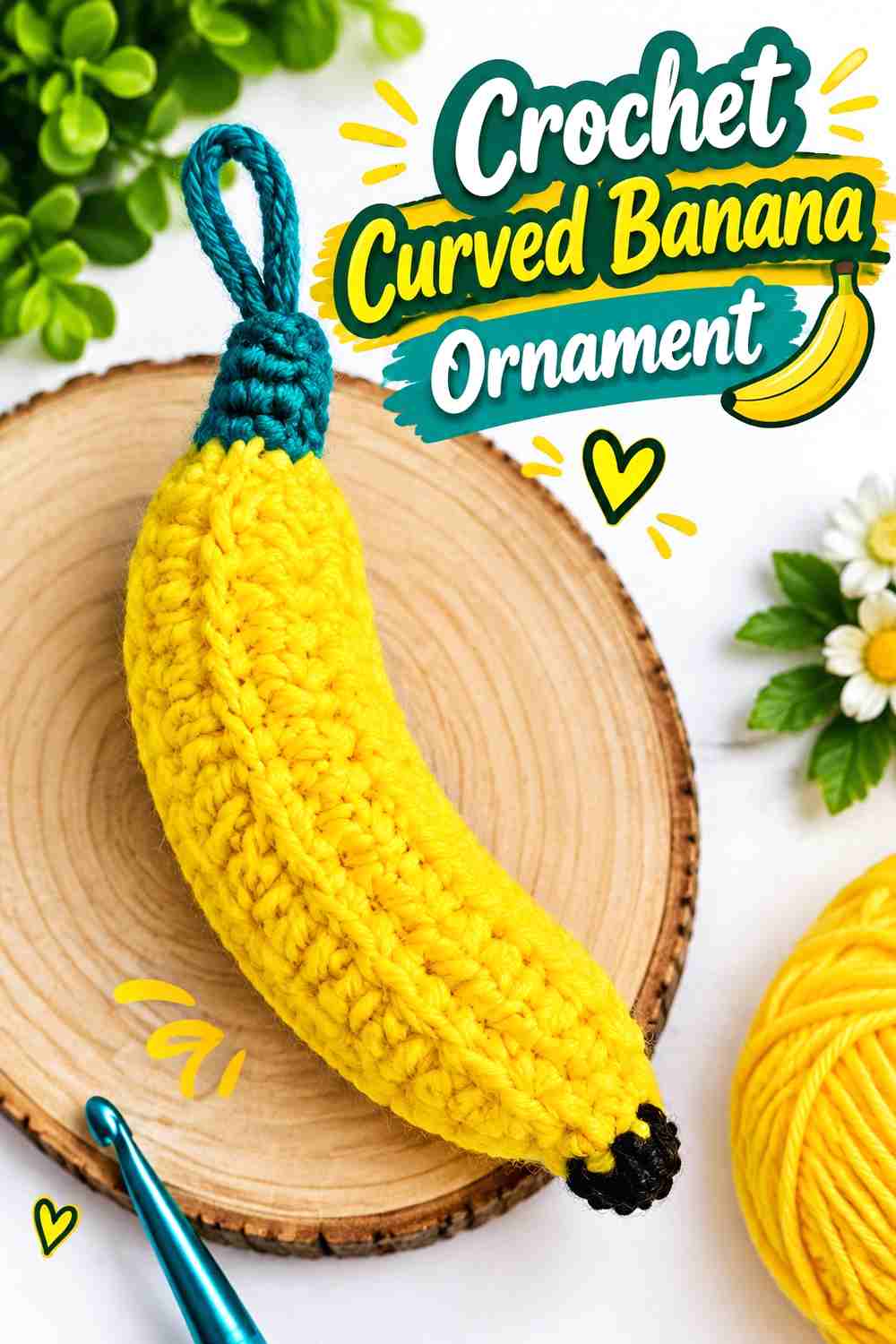
Crochetwithme’s tutorial provides a stuffed banana amigurumi with the unmistakable elongated curve that no other project in this collection shares.
It is the whimsical option in the group, particularly suitable for colorful maximalist trees or fruit-themed kitchen Christmas trees.
Use the Curve to Break Up Rows of Round Fruit
When apples, citrus, berries, and plums dominate a collection, the tree can begin to feel like a series of balls. A curved banana introduces a strong diagonal line.
Give it enough open branch space that the complete curve remains visible.
Decide Which End Should Carry the Hanging Loop
A banana can hang vertically, diagonally, or in a more horizontal position depending on the attachment point.
Test several temporary placements before committing. The most stable position is not always the one that shows the curve most attractively, so balance appearance against branch support.
Creator Credit: Crochetwithme
Comparing the 17 Sugared Fruit Ornament Styles
If you want the collection to feel closest to traditional Christmas fruit decor, begin with the apple, pear, tangerine, orange, lemon, grapes, cherries, plum, strawberry, and pineapple. They combine familiar orchard and festive-market imagery with silhouettes that are easy to recognize.
For a softer romantic palette, the peach, grapefruit, strawberry, pear, and plum give you enough pink, mauve, cream, and burgundy territory to avoid relying heavily on bright primary colors.
For a more playful Christmas 2026 tree, add the watermelon slice, blueberry, mango, avocado, and banana. These bring unusual shapes and colors into the arrangement and make the collection feel intentionally contemporary rather than historically themed.
Construction matters as much as palette. Grapes occupy more three-dimensional space, pineapple needs room above its crown, watermelon works well in shallower branch areas, and the banana needs horizontal or diagonal clearance. Apples, citrus, blueberries, plums, and peaches function more like traditional baubles and can help fill the spaces between those statement shapes.
Conclusion
A crochet sugared-fruit tree works best when the ornaments do not all behave alike. Combine round apples and citrus with tapered strawberries and pears, clustered grapes, a broad watermelon slice, a tall pineapple, paired cherries, and the unexpected curve of a banana.
For a cohesive Christmas 2026 collection, choose a limited base palette first and then repeat one or two finishing details—perhaps cream frost accents, metallic-style hanging loops, or tiny reflective embellishments—through several different fruits.
Use the original creator tutorials for the exact crochet construction. Once each fruit is complete, test its weight and hanging balance on your actual tree before adding permanent ornament hardware or extensive decoration. That extra check is especially worthwhile for clustered, long, or bottom-heavy shapes.
Frequently Asked Questions
How can I make crochet fruit look sugared without using real sugar?
Use visual texture instead. Pale embroidery, sparkly yarn, metallic thread, small beads, sequins, or restrained reflective accents can imitate crystallized sugar. Real sugar is unsuitable for stored textile ornaments because it can attract moisture and pests.
Do all of these YouTube tutorials make Christmas ornaments directly?
No. The tutorials provide crochet fruit constructions, and several are amigurumi, keychain, or decorative fruit projects. Treat them as construction references and confirm the finished size, weight, and attachment points before converting them into tree ornaments.
Which crochet fruit shapes are easiest to arrange on a Christmas tree?
Compact apples, oranges, tangerines, blueberries, plums, and peaches generally require less surrounding space than grapes, pineapple, banana, or other projecting shapes. The exact result depends on the finished dimensions and yarn used in the chosen tutorial.
How do I stop a pear or other bottom-heavy fruit from tilting?
Finish the fruit first and test it with a temporary strand attached at several nearby points. The correct suspension point depends on the finished object’s center of gravity rather than a universal location.
Should every fruit ornament have the same amount of sparkle?
Not necessarily. Varying the density can make the collection look more natural and dimensional. A dark plum may benefit from obvious pale highlights, while a textured pineapple or multicolored avocado may need very little additional decoration.
Can I change the yarn to make a fruit tutorial smaller for an ornament?
Changing yarn weight and hook size can change the finished scale, but it can also affect stitch density, firmness, and the proportion of small details. Check the tutorial’s original materials and make one test fruit before committing to an entire set.
Are beads and sequins suitable for crochet fruit ornaments around children or pets?
Treat detachable decorative pieces as potential small-part hazards. If ornaments will be accessible to young children or pets, simpler embroidered or yarn-based details may be the more practical choice, and the decorations should still be kept out of unsupervised reach.