Oversized crochet brooches can do more than add a small decorative accent. A broad leaf can reshape the line of a coat lapel, a layered flower can introduce sculptural depth to a plain cardigan, and a textured woodland motif can bring autumn color to a scarf or bag without covering the entire piece in seasonal imagery.
For Fall 2026, a restrained palette works particularly well with pronounced crochet texture. Oxblood, rust, tobacco brown, moss, olive, mustard, aubergine, charcoal, oatmeal, navy, and deep teal all allow raised stitches and layered forms to remain part of the design instead of relying only on bright color.
The tutorials below include a mix of finished brooches and crochet flowers or appliqués that can serve as bases for statement pins. Not every source was created at oversized coat-brooch scale. When adapting a smaller project, changing yarn or hook size can also change stiffness, depth, weight, and detail definition, so make a sample and plan the backing around the actual finished piece.
Quick List
- Crochet Sculpted Sunflower Coat Brooch
- Crochet Fan-Shaped Ginkgo Statement Brooch
- Crochet Ruffled Carnation Corsage Brooch
- Crochet Woodland Mushroom Statement Brooch
- Crochet Winged Butterfly Texture Brooch
- Crochet Fur-Texture Sheep Brooch
- Crochet Graphic Owl Coat Brooch
- Crochet Rolled Rose Statement Brooch
- Crochet Botanical Poppy Lapel Brooch
- Crochet Layered Peony Corsage Brooch
- Crochet Dense Chrysanthemum Texture Brooch
- Crochet Multi-Layer Dahlia Brooch
- Crochet Bulky Maple Leaf Brooch
- Crochet Dimensional Acorn Brooch
- Crochet Autumn Pumpkin Appliqué Brooch
- Crochet Fox Face Statement Brooch
- Crochet Puff-Texture Hedgehog Brooch
Oversized Brooches Need Support Before They Need More Decoration
Increasing the size of a crochet motif changes more than its visual impact. Wider flowers can sag at the outer petals, stuffed motifs can pull away from the garment, and a heavy brooch may cause a soft sweater or loosely knitted scarf to stretch.
Before permanently attaching a pin back, place the finished crochet piece against the garment type you expect to wear it on. Test where the center of gravity sits and whether the brooch leans forward. A backing patch, firmer central area, or differently positioned pin can sometimes improve stability, but there is no single attachment setup that suits every design.
Garment choice also matters. A structured coat, denim jacket, felted bag, or firm woven scarf may support a substantial brooch differently from a lightweight knit. Avoid assuming that because a pin works on one fabric it will be appropriate for another.
Build Texture Through Shape, Layers, and Shadow
“Textured” does not have to mean fuzzy yarn. Crochet texture can come from overlapping petals, curled edges, puffed areas, dimensional fruit or woodland forms, layered wings, raised centers, or a strong contrast between smooth and heavily worked sections.
For oversized brooches, structural texture is often more readable than adding numerous surface decorations. A carnation already has ruffles. A chrysanthemum already creates shadow through dense petals. A hedgehog can rely on raised stitch texture. A maple leaf gets much of its impact from pointed lobes and strong edges.
This also helps prevent the collection from becoming bulky. Let each design have one dominant type of texture instead of adding beads, fringe, embroidery, and fuzzy yarn to every project.
Use Fall 2026 Colors to Keep the Texture Visible
Very dark yarn can make detailed crochet disappear, particularly on a dark coat. If you want an aubergine, charcoal, navy, or deep brown brooch, consider where a lighter center, edge, leaf, facial detail, or secondary color can clarify the structure.
Mid-tone autumn shades such as rust, moss, ochre, faded cranberry, and tobacco are especially useful for heavily textured designs because stitch shadows remain visible. Oatmeal and cream can then provide contrast without making the collection feel summery.
You do not need all seventeen brooches in different colors. Repeating four or five core shades across flowers, leaves, and woodland motifs can make a varied set feel intentionally coordinated.
1. Crochet Sculpted Sunflower Coat Brooch
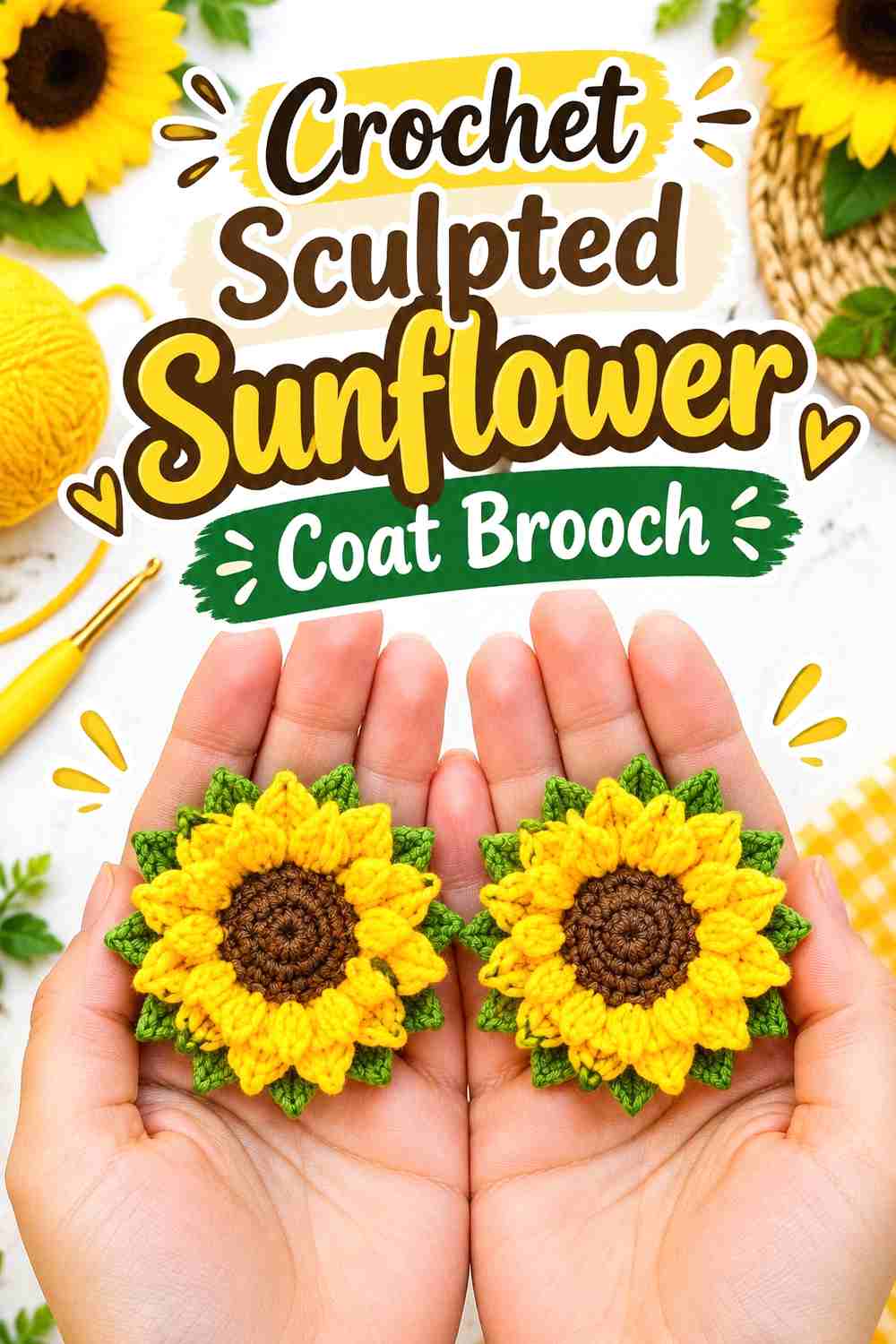
A sunflower makes a strong oversized brooch because its circular center and radiating petals naturally occupy a broad area without requiring a long dangling shape. Olga Lukoshkina’s tutorial is already designed as a crochet sunflower brooch, providing a direct wearable starting point rather than an appliqué that must first be reinterpreted as jewelry.
For fall styling, mustard, ochre, tobacco brown, muted gold, and deep olive can move the sunflower away from a bright summer palette while preserving its recognizable structure.
A Wide Petal Ring Needs a Stable Center
As a flower becomes larger, the outer petals gain more leverage against the center. If you adapt the project with thicker yarn, check whether the petals stay positioned when the brooch is vertical rather than judging the flower only while it lies flat.
The pin backing should support the flower’s center without forcing the petals to carry the weight.
Dark Centers Make the Petal Texture Easier to Read
A deep brown, espresso, aubergine, or charcoal center creates useful contrast against mustard petals. That difference also helps the flower remain legible from farther away on a coat.
If the entire brooch uses similarly dark shades, try it against the intended garment before deciding the texture is sufficiently visible.
Creator Credit: Olga Lukoshkina
2. Crochet Fan-Shaped Ginkgo Statement Brooch
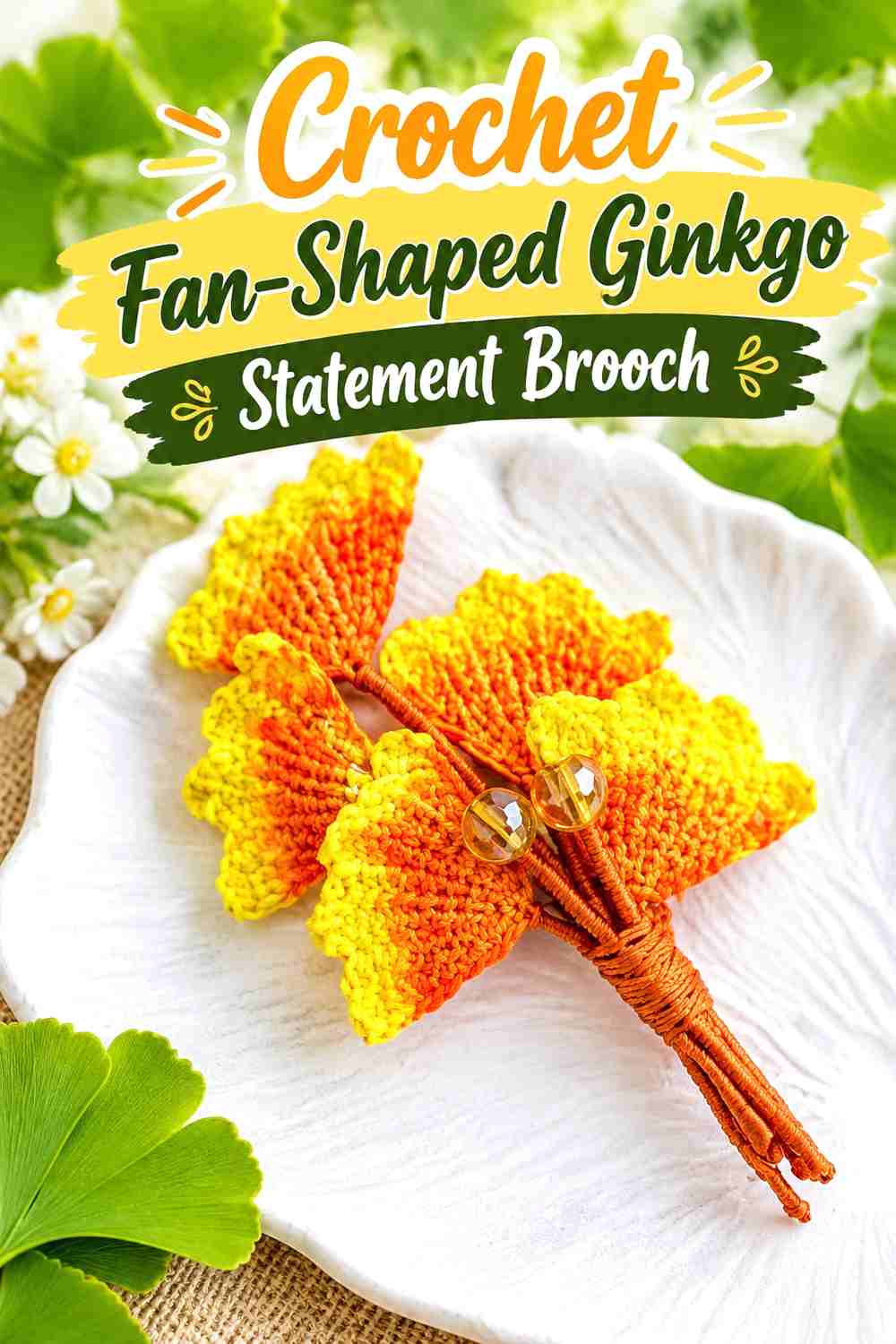
The ginkgo leaf offers a completely different silhouette from a round flower. Adishka Crafts’ tutorial specifically creates a ginkgo leaf brooch, with the characteristic fan-shaped leaf becoming the main visual feature.
At statement scale, this design can look particularly effective in mustard, olive, moss, rust, muted chartreuse, or antique-gold-inspired yarn.
Scaling Up Changes the Fan Edge More Than the Stem
A broad ginkgo leaf gains much of its character from the spread of the upper edge. If you enlarge the source construction through yarn substitution, check that this fan remains defined rather than becoming floppy.
The narrow stem area should not be expected to stabilize a much heavier leaf by itself.
An Angled Placement Can Follow a Coat Lapel
Unlike a symmetrical flower, the ginkgo does not need to sit perfectly upright. A slight diagonal can work naturally along a lapel or the corner of a scarf.
Test the pin position before final attachment so the leaf settles at the intended angle rather than rotating after it is worn.
Creator Credit: Adishka Crafts
3. Crochet Ruffled Carnation Corsage Brooch
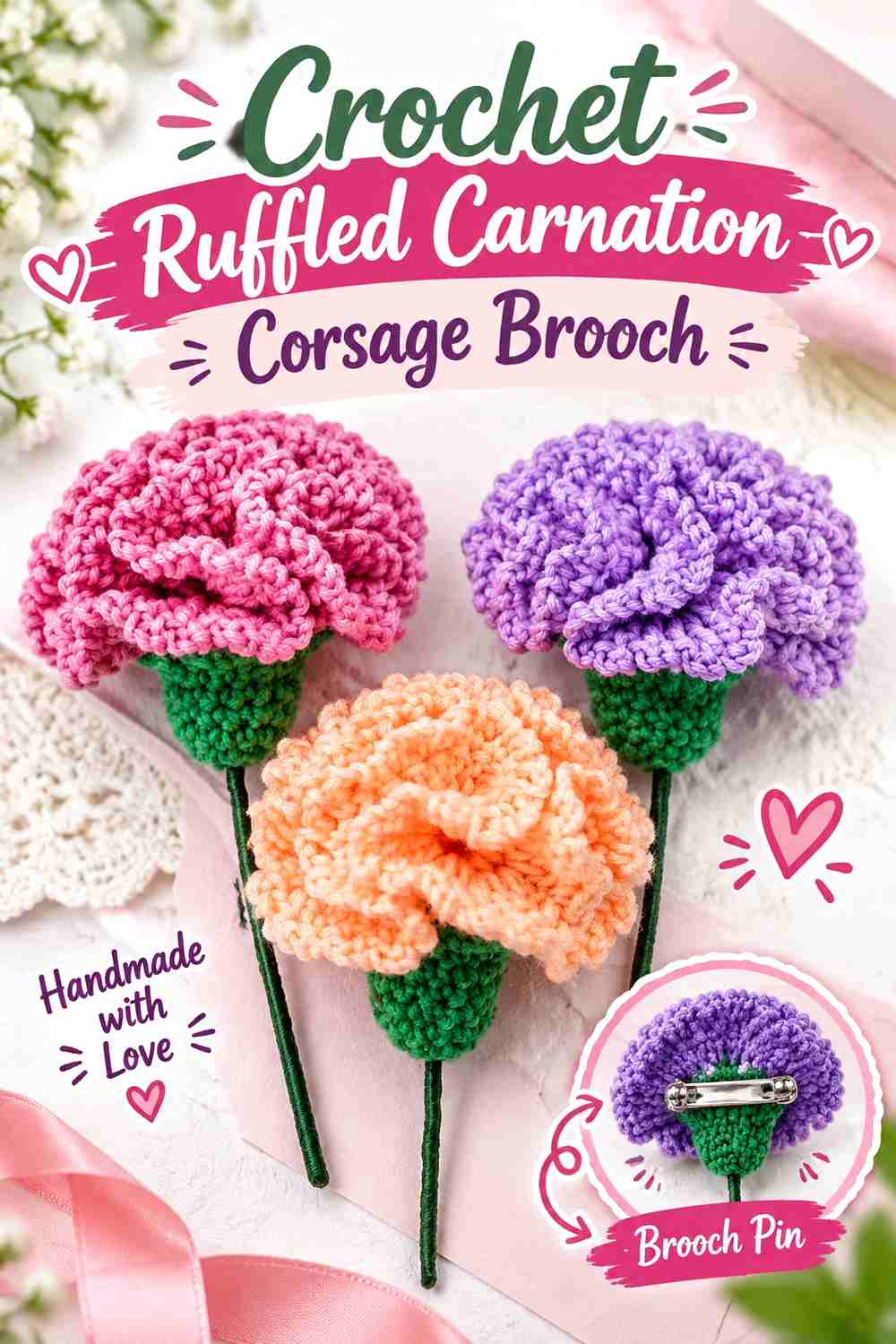
A carnation creates volume through concentrated ruffles rather than large flat petals. The tutorial from naztazia teaches the flower itself rather than a finished brooch, so use the bloom as the adaptation base and plan the wearable backing separately.
That distinction is important for an oversized version because increasing the scale can produce a surprisingly deep flower even before the overall diameter becomes large.
The Ruffles Create Volume Before You Add More Size
If you want a statement effect, first evaluate the flower’s existing depth. A moderately enlarged carnation may already project enough from a coat without needing an extremely wide diameter.
Rust, wine, dusty plum, cream, or muted coral can make the folded edges especially visible.
Leave Bouquet Structure Out of the Brooch Unless It Is Needed
A flower tutorial intended for bouquets may include stem-related finishing that has no practical role in a wearable pin. Do not automatically transfer wire, long stems, or other bouquet components into the brooch.
Finish the flower head, assess its back, and create a wearable support system appropriate to its actual weight and shape.
Creator Credit: naztazia
4. Crochet Woodland Mushroom Statement Brooch
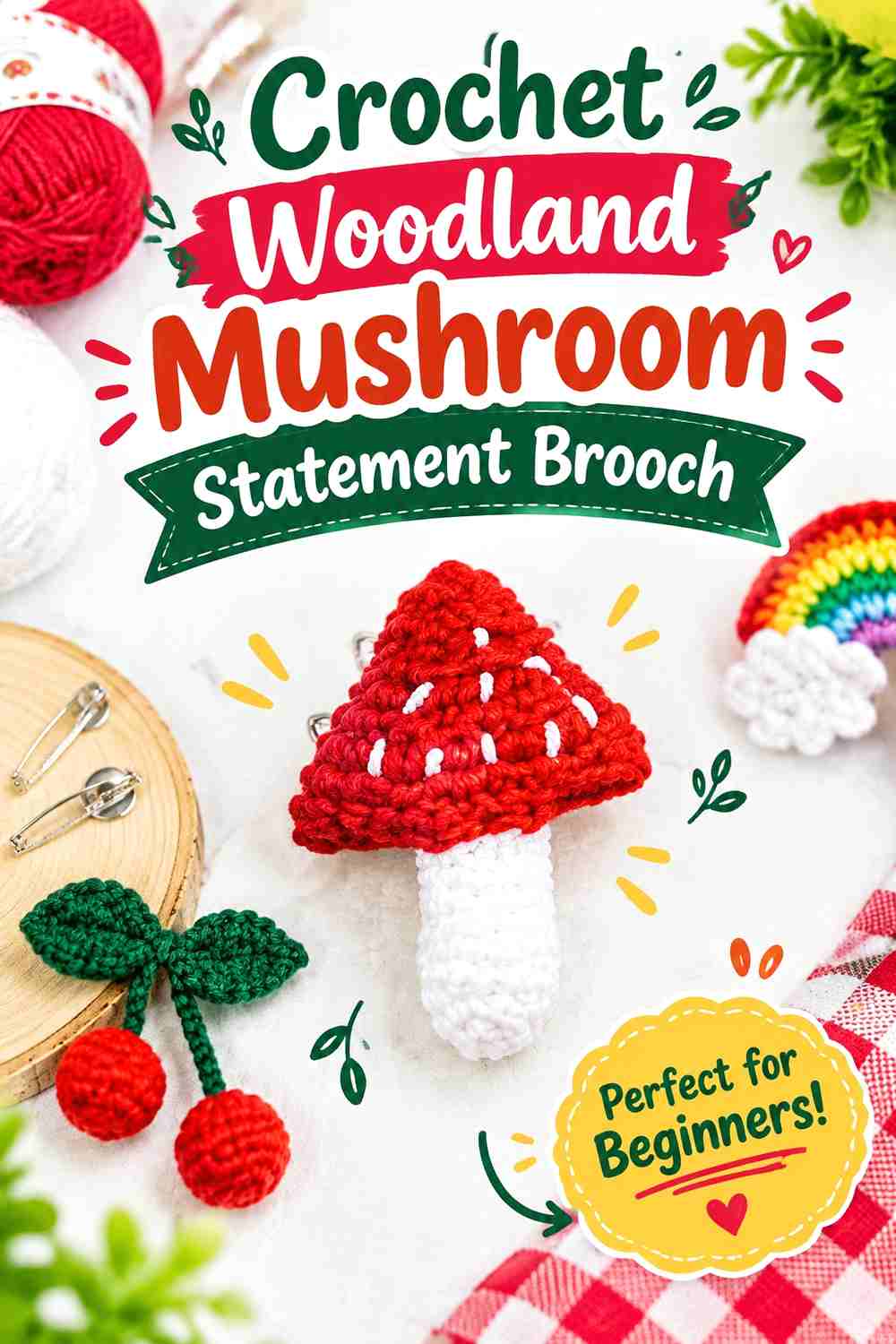
MYBAGZING Crochet Studio’s mushroom tutorial is designed specifically as a brooch, making it a useful direct choice for a fall accessory collection. The cap-and-stem silhouette brings seasonal woodland imagery without relying on another flower or leaf.
An oversized mushroom can work in terracotta and cream, burgundy and oatmeal, tobacco and ecru, or even aubergine with a pale stem.
The Broad Cap Can Make the Brooch Top-Heavy
The mushroom’s visual mass sits above the narrower stem. When enlarging the project, check whether the brooch tips forward or rotates once pinned vertically.
A backing position that works on the original scale may need reconsideration if heavier yarn substantially changes the proportions.
Keep Cap Texture Separate From Stem Texture
Strong contrast does not have to come only from color. A visually busy cap works best when the stem remains comparatively quiet.
This prevents an oversized mushroom from becoming a single dense block of embellishment and keeps the characteristic silhouette readable.
Creator Credit: MYBAGZING Crochet Studio
5. Crochet Winged Butterfly Texture Brooch
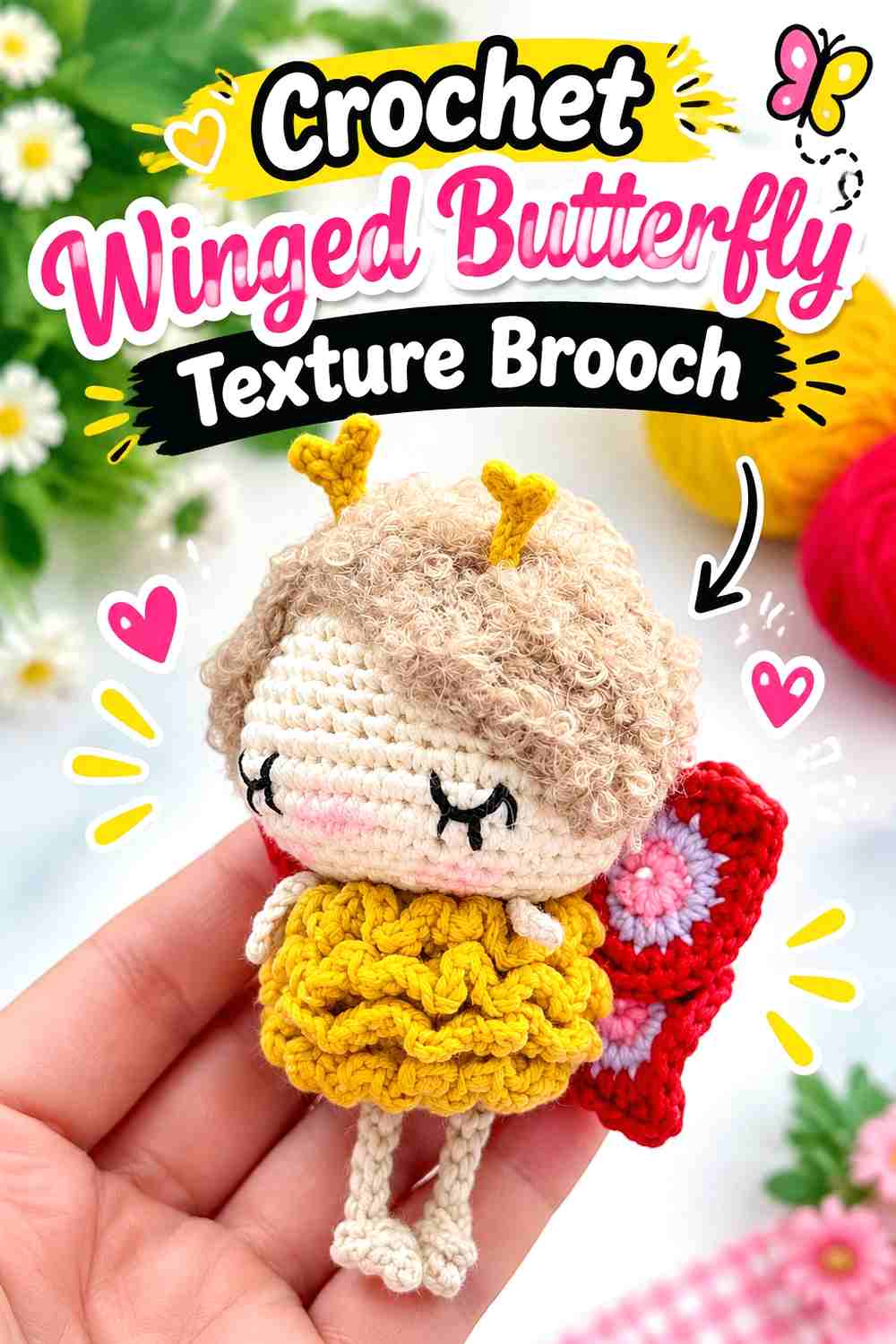
CrochetConfetti’s butterfly tutorial produces a finished brooch with dimensional decorative details rather than a simple flat butterfly appliqué. That gives it a lighter, more open silhouette than the dense floral pieces in this collection.
For fall, try burgundy and rust, deep teal and mustard, plum and oatmeal, or moss with tobacco brown instead of relying on spring pastels.
Wing Width Matters More Than Body Height
An oversized butterfly needs lateral space. Before increasing scale, consider where the finished wings will sit on a lapel or shoulder and whether they will bend around the edge of the garment.
A slightly smaller but well-supported wing spread can make a stronger statement than a very wide butterfly whose edges curl inward.
Fine Details Need Protection From Snagging
Antennae, fluffy details, or projecting wing elements can catch on loosely knitted scarves and sweaters.
Choose placement with that interaction in mind. A firm coat or bag can be more forgiving when the butterfly includes several delicate projecting parts.
Creator Credit: CrochetConfetti
6. Crochet Fur-Texture Sheep Brooch
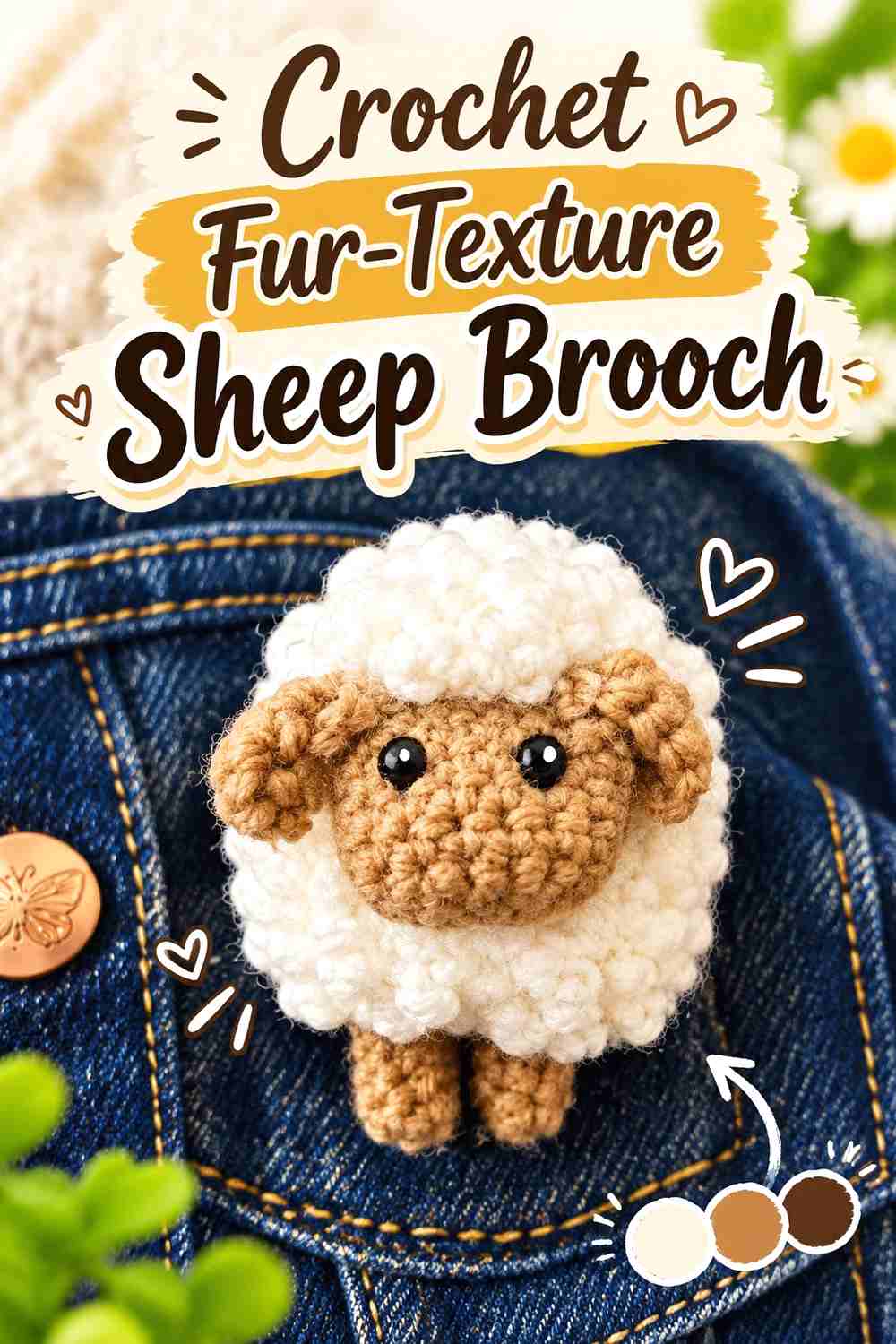
The sheep brooch from hello stitches stands out because its texture is part of the animal itself. The fleece effect creates a tactile surface that contrasts with the flatter facial area and makes this project substantially different from a smooth animal appliqué.
Cream fleece with a charcoal, brown, or oatmeal face fits naturally into a fall wardrobe, but a darker sheep can also work if enough facial contrast remains.
Fleece Texture Should Not Hide the Head
When enlarging the design, it can be tempting to exaggerate the textured area. Check that the face remains clearly separated from the surrounding fleece.
A statement brooch still needs an identifiable focal point, particularly when worn against another textured garment.
Keep the Pin Mechanism Clear of Raised Loops
Highly textured stitches can interfere with hardware if they extend across the back.
Plan a comparatively flat backing zone so the brooch pin can open, close, and sit against fabric without pulling loose strands into the mechanism.
Creator Credit: hello stitches
7. Crochet Graphic Owl Coat Brooch
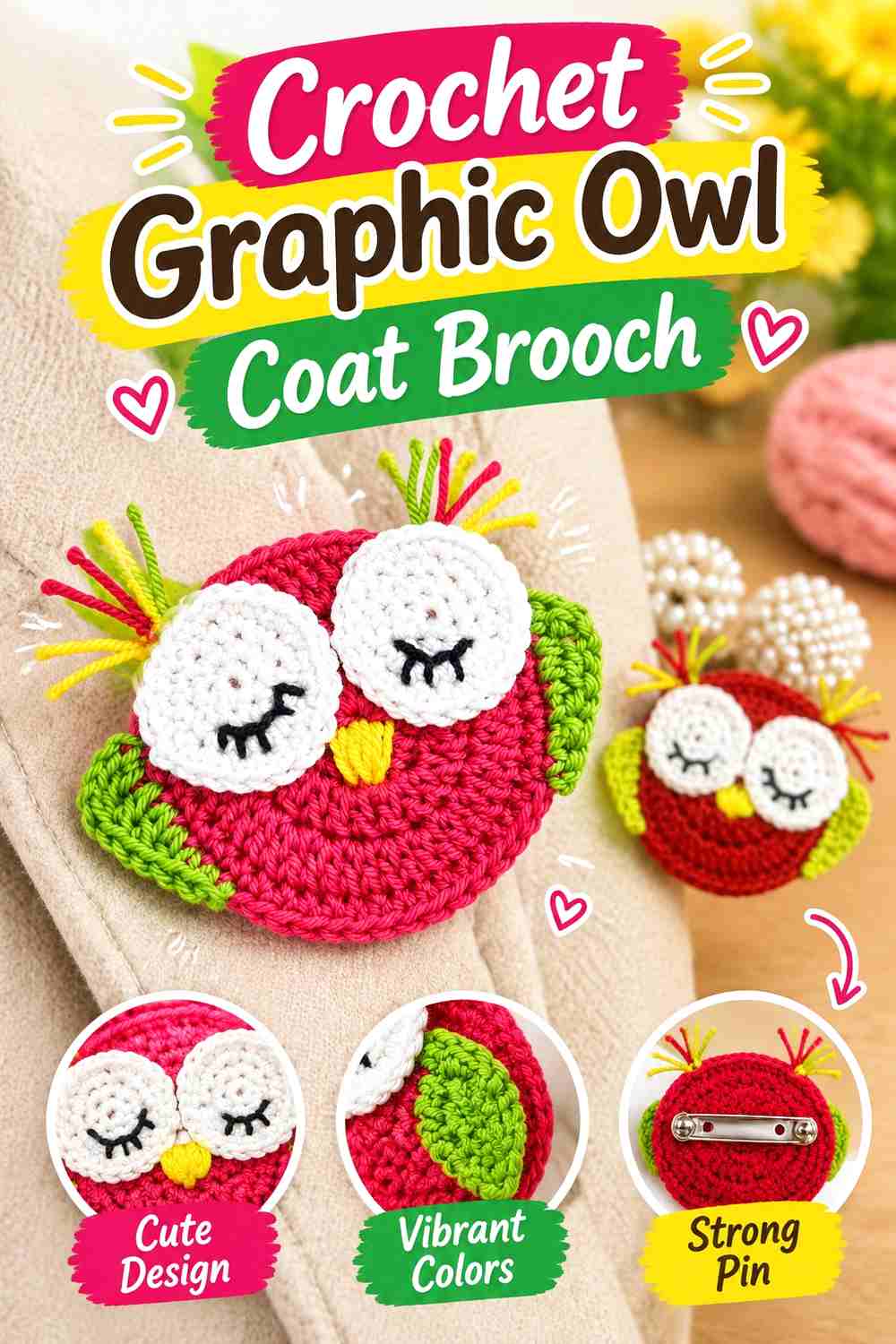
An owl adds a compact woodland character without the projecting width of the butterfly. The tutorial from do with reyhane is specifically for a crochet owl brooch, giving you a direct accessory construction to study before considering a larger interpretation.
Fall colors can range from chestnut and cream to olive, rust, charcoal, mustard, or deep brown.
Oversizing Makes Facial Placement More Noticeable
On a small motif, minor differences in eye placement may be less prominent. Once an owl becomes a statement piece, facial symmetry and spacing command much more attention.
If you change yarn scale, evaluate the complete face before permanently attaching any separate decorative elements.
A Flat Face Still Benefits From Firm Backing
A brooch can be broad without being thick. If the owl is enlarged substantially, the edges may curl or sag even though the motif itself remains relatively flat.
Test the finished piece vertically and determine whether the backing needs to support more than just the central pin area.
Creator Credit: do with reyhane
8. Crochet Rolled Rose Statement Brooch
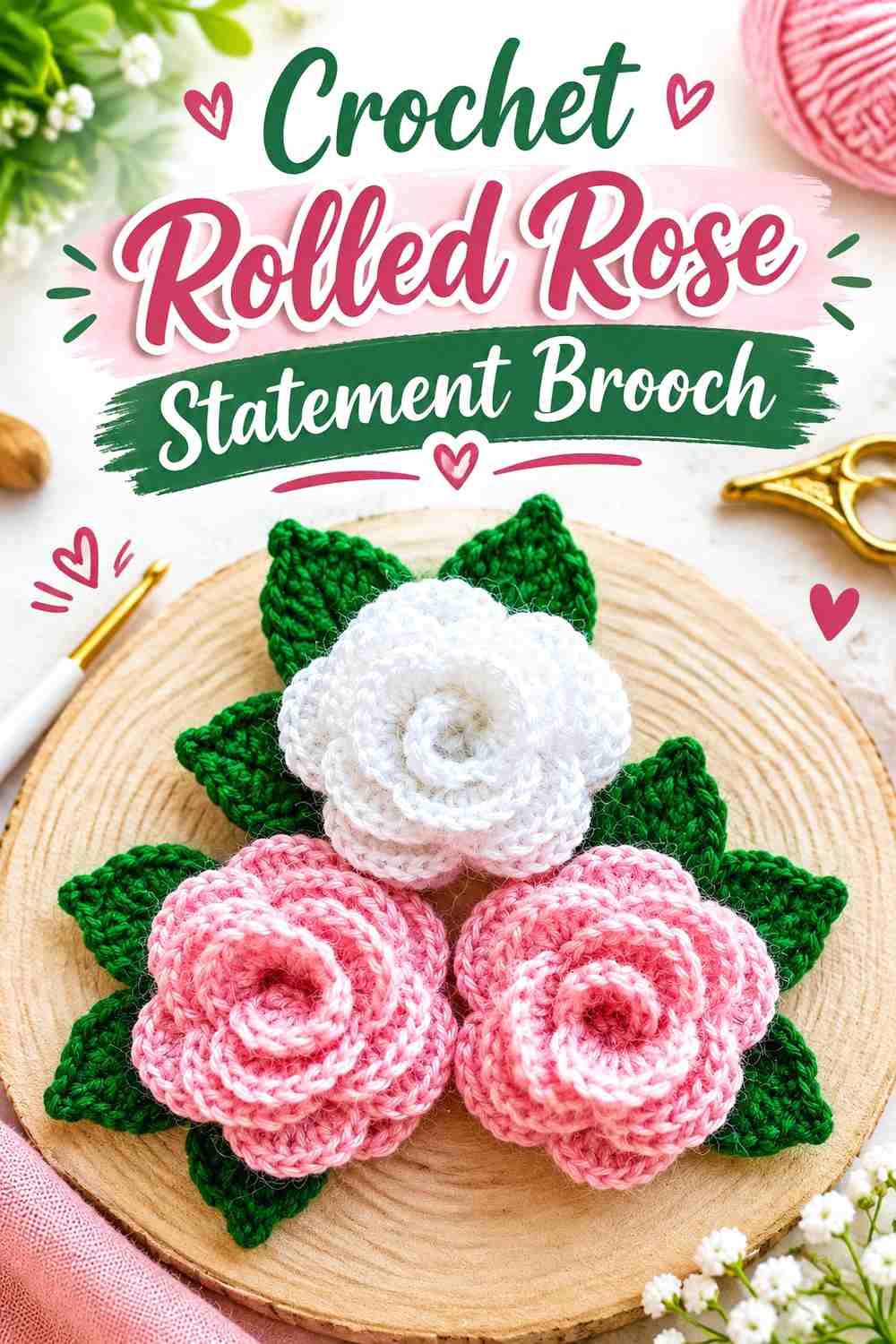
MagichookCrochet Natalia Kulik’s tutorial creates a small crochet rose brooch, making it a direct brooch source but one that requires thoughtful adaptation if you want a substantially oversized Fall 2026 version.
A rolled rose brings a different flower architecture from the sunflower: instead of a flat radial spread, much of its texture develops inward and upward through overlapping petal layers.
A Rolled Bloom Gets Deeper as It Gets Larger
Simply switching to much thicker yarn can enlarge the flower in all directions, including outward from the garment.
Before aiming for maximum width, decide how much three-dimensional projection will still be comfortable on the intended coat or scarf.
Leaves Can Stabilize the Composition Visually
One or two leaves can extend the rose horizontally or diagonally without forcing the flower itself to become enormous.
Olive or moss foliage beside an oxblood, dusty rose, rust, or plum bloom can also connect the brooch to a broader fall palette.
Creator Credit: MagichookCrochet Natalia Kulik
9. Crochet Botanical Poppy Lapel Brooch
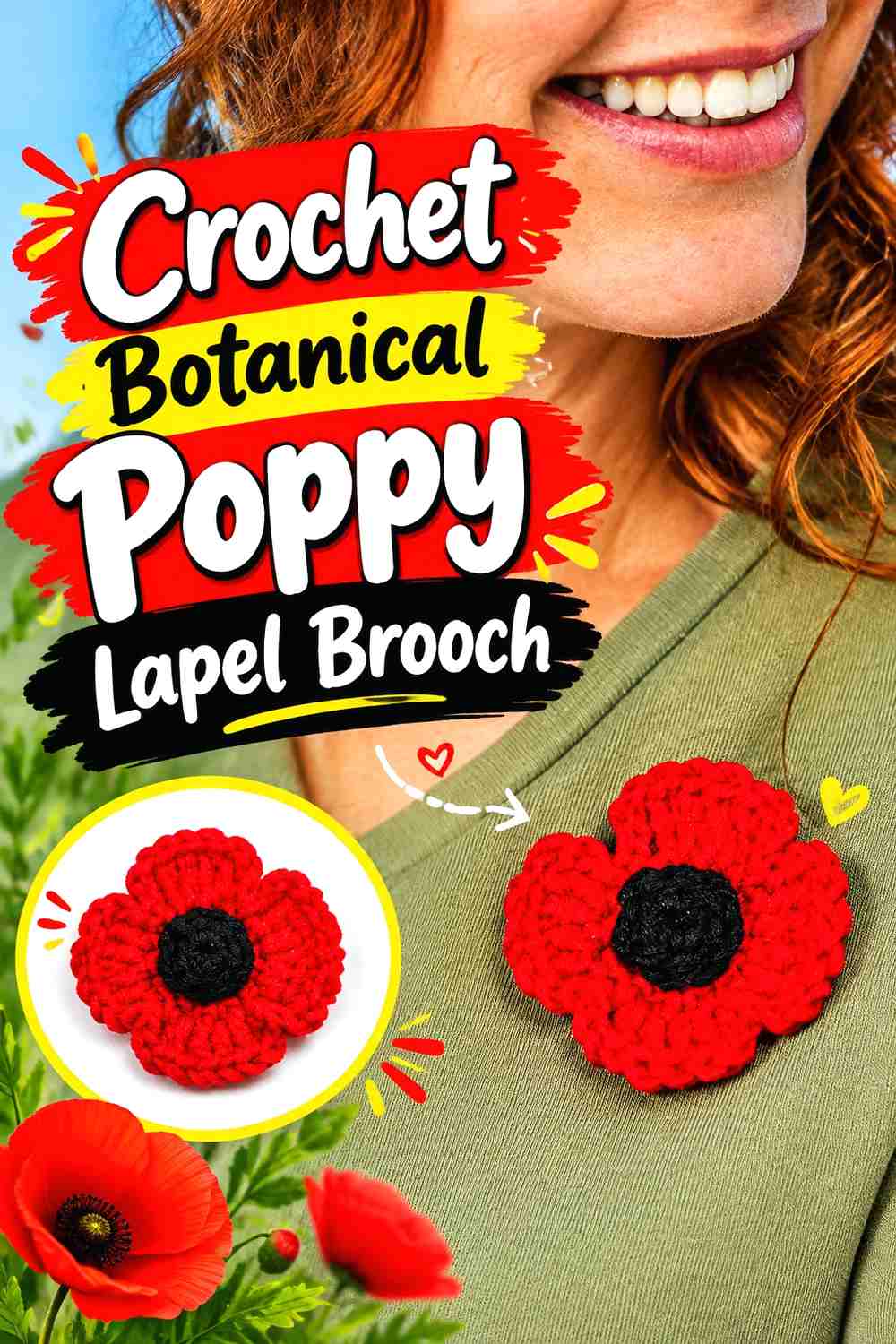
Baker Ross provides a tutorial specifically for a crochet poppy brooch, giving this project a finished wearable reference rather than only a flower component.
The open petal arrangement makes a poppy useful when you want width and strong color without the density of a chrysanthemum or carnation.
Petal Spread Creates Width Without Heavy Visual Bulk
Poppies depend on broad, open petals rather than many tightly packed layers. At oversized scale, that can produce a noticeable lapel piece that still looks lighter than a densely ruffled flower.
Check whether the outer petals remain supported when the brooch is vertical.
Keep the Center Distinct in Dark Red Palettes
Oxblood and burgundy are strong fall choices, but a very dark bloom can lose definition if its center is equally dark.
Use enough tonal separation for the middle to remain readable, especially when the brooch will be worn on a charcoal, brown, or navy garment.
Creator Credit: Baker Ross
10. Crochet Layered Peony Corsage Brooch
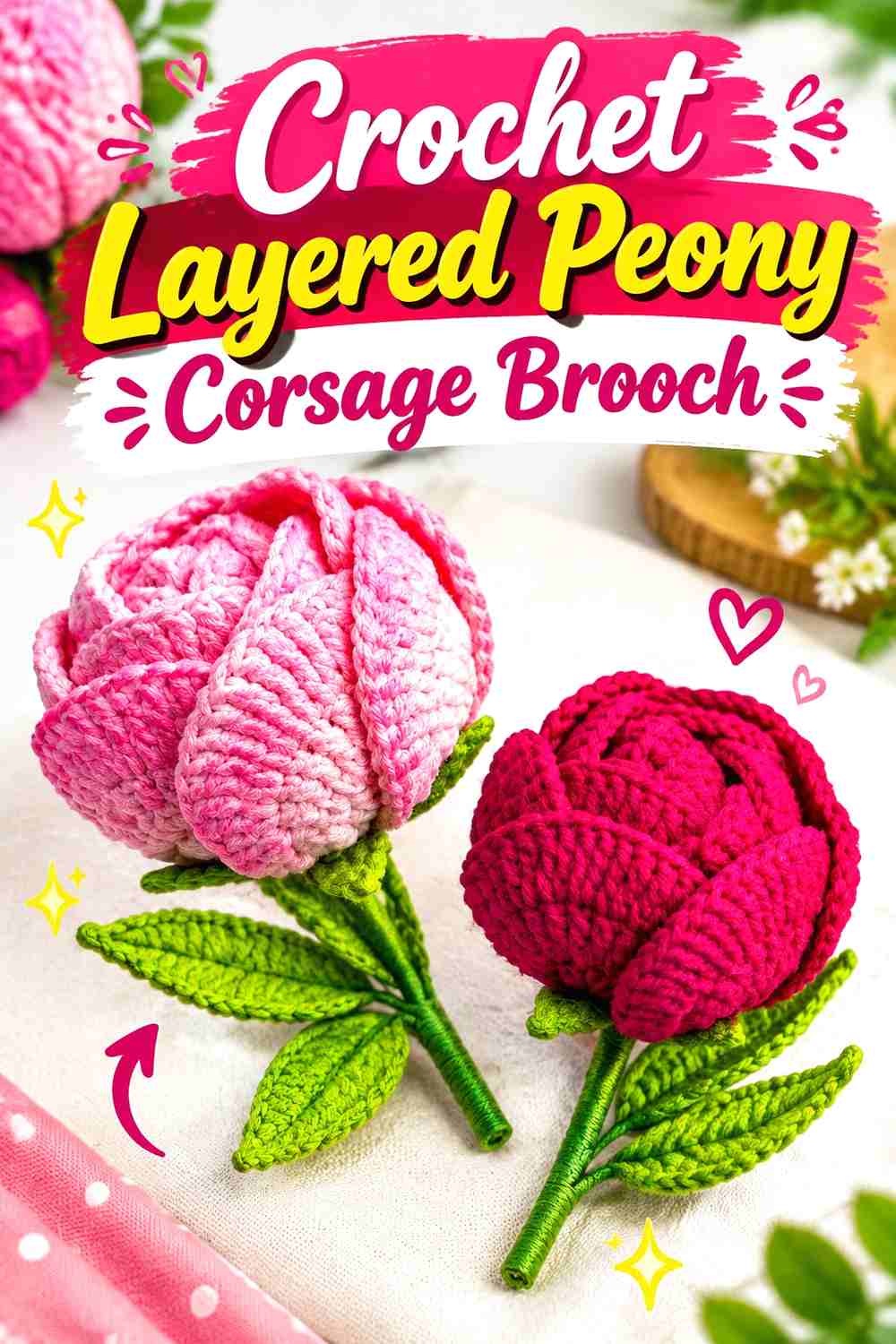
KAQNIN KASIKAY’s tutorial teaches a dimensional crochet peony rather than a finished pin. For this article, the flower head is the useful reference; the brooch backing and wearable support should be planned independently after the bloom is complete.
A peony suits an oversized corsage approach because its fullness comes from broad overlapping petals rather than one flat silhouette.
Layered Petals Create Corsage Depth Quickly
Before scaling the project upward, evaluate how much volume the original petal structure already produces. A thicker yarn can make the finished flower deeper as well as wider.
Plum, burgundy, faded coral, rust, or oatmeal can emphasize the shadow between the petal layers.
Support the Bloom Without Carrying Over the Full Stem
A flower tutorial may include sepals, leaves, or stem construction intended for display in a bouquet. A wearable brooch has different structural needs.
Use the parts that make sense for the visible flower composition and build the back around the demands of the finished corsage rather than automatically preserving a long stem.
Creator Credit: KAQNIN KASIKAY
11. Crochet Dense Chrysanthemum Texture Brooch
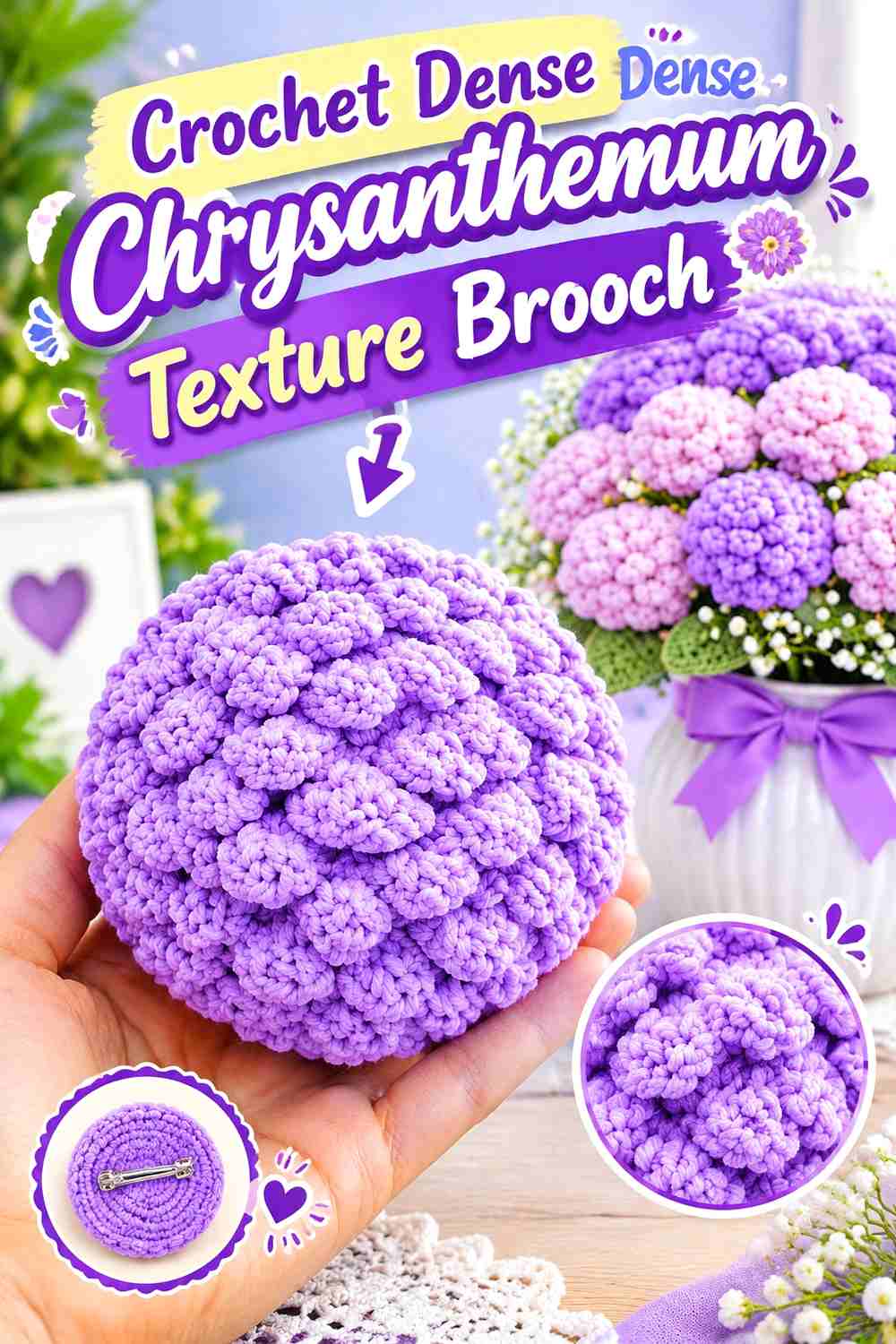
Crochet Craftsman’s chrysanthemum tutorial offers a flower with numerous narrow dimensional petals. Although the source project is not presented primarily as a brooch, the flower head provides a strong base for a heavily textured statement accessory.
This design is particularly effective when you want texture to come from shadow and repetition rather than multiple contrasting materials.
Dense Petals Can Make the Brooch Deep Before It Becomes Wide
A chrysanthemum accumulates visual weight toward the center. If enlarged, it can become substantial even without a very broad outer diameter.
Complete a test flower before deciding that “oversized” must mean using the heaviest possible yarn.
Tonal Plum Lets Shadow Supply the Contrast
Using several closely related purple, burgundy, or aubergine tones can keep the flower sophisticated while the petal layers create their own light-and-shadow pattern.
If the color is extremely dark, test the brooch under normal indoor lighting to confirm the individual petals remain visible.
Creator Credit: Crochet Craftsman
12. Crochet Multi-Layer Dahlia Brooch
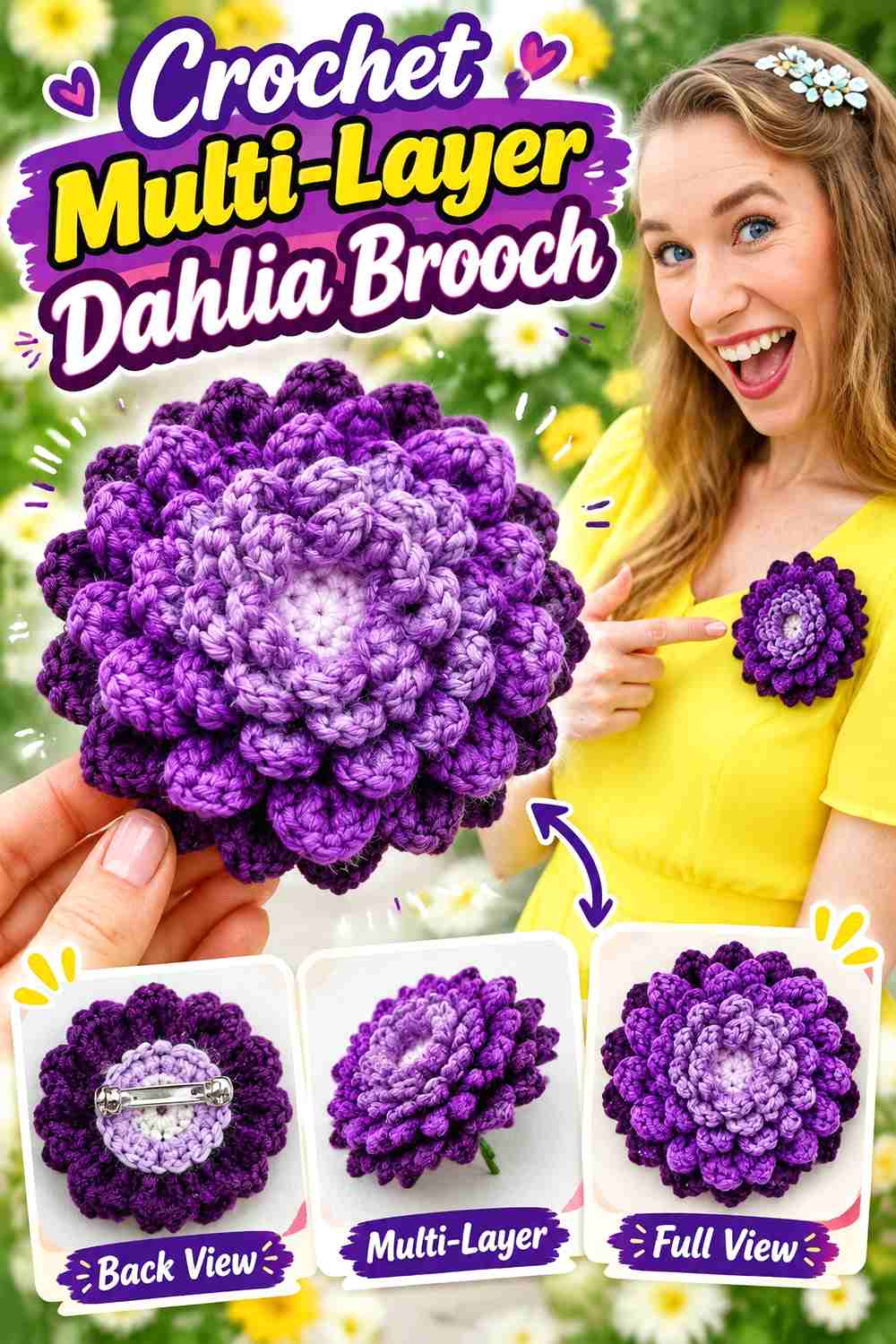
Nicki’s Homemade Crafts demonstrates a dimensional dahlia within a flower-focused crochet project. The layered flower head is the relevant feature for this oversized brooch adaptation; bouquet-oriented stems and support pieces should not automatically become part of wearable construction.
The dahlia gives the collection a more geometric flower texture, with repeated petal layers building outward from the center.
Concentric Layers Make Backing Position Critical
A dahlia can appear symmetrical from the front while still carrying uneven weight at the back because of joins, foliage, or finishing.
Hold the completed flower vertically before fixing a pin so you can find the point that allows the bloom to face outward rather than lean downward.
Keep Bouquet Wire Separate From Wearable Hardware
If the original flower construction uses floral support for bouquet display, treat that as a different function from a brooch pin.
Any wearable adaptation should avoid exposed sharp ends and should use backing suited to repeated contact with clothing.
Creator Credit: Nicki’s Homemade Crafts
13. Crochet Bulky Maple Leaf Brooch
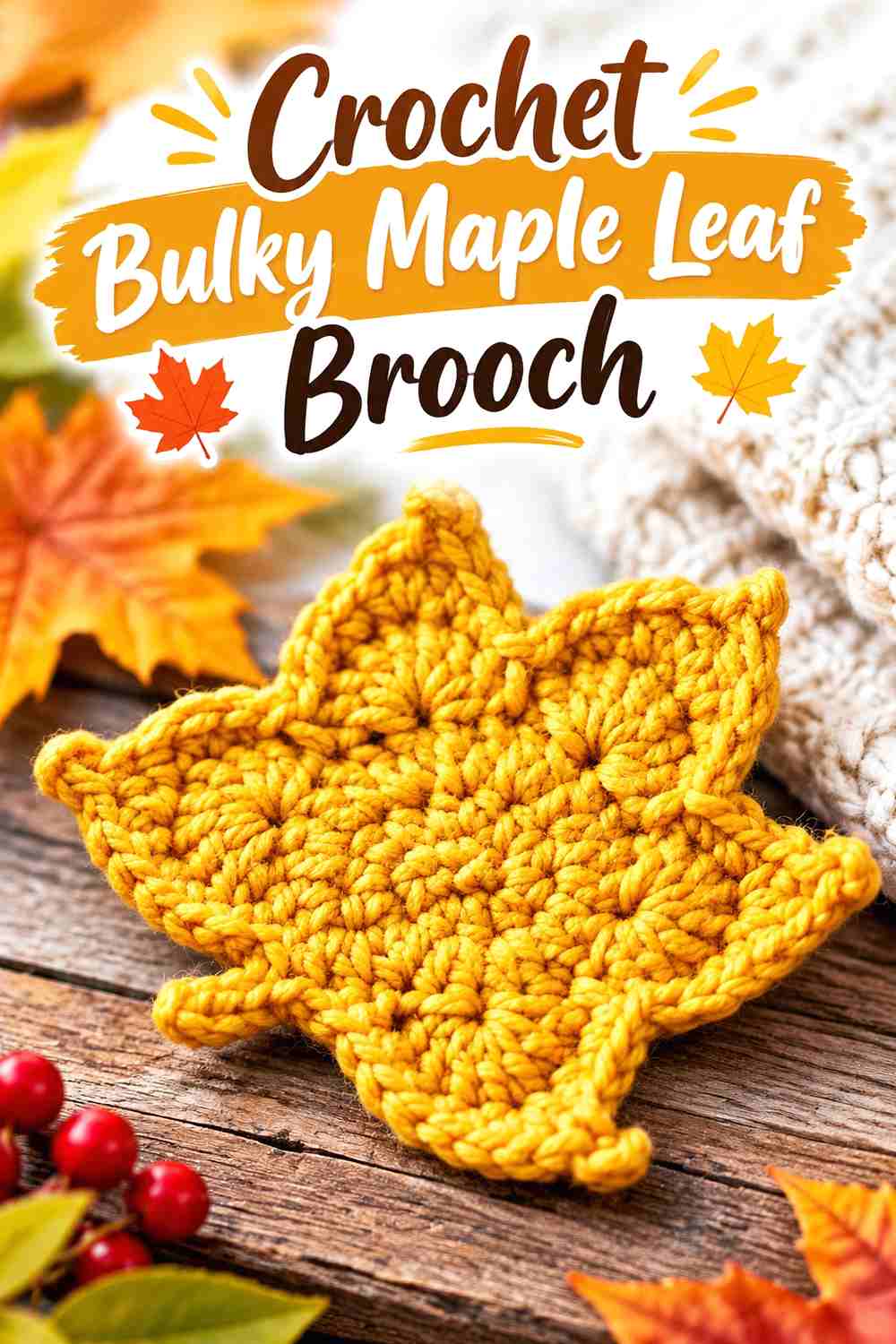
Pretty Darn Adorable Crochet Tutorials teaches a maple leaf using a substantial yarn, making it a particularly useful starting point for the oversized theme even though the source project is not presented as a finished brooch.
The pointed lobes provide strong fall identity without the depth of a flower, so this is a good option for someone who wants visual scale but a comparatively flat profile.
Pointed Lobes Need a Clean Outer Edge
The silhouette does most of the work. If a yarn substitution becomes too fuzzy or floppy, the distinct leaf points can lose definition.
Rust, burnt orange, mustard, tobacco, burgundy, olive, or variegated autumn shades can work, but shape should remain the first priority.
A Broad Leaf Looks Natural on a Diagonal
A maple leaf does not have to be centered like a medallion. Turning it slightly can follow a coat lapel, shoulder line, or bag flap more naturally.
Test the brooch in its intended orientation before deciding where the pin bar belongs on the reverse.
Creator Credit: Pretty Darn Adorable Crochet Tutorials
14. Crochet Dimensional Acorn Brooch
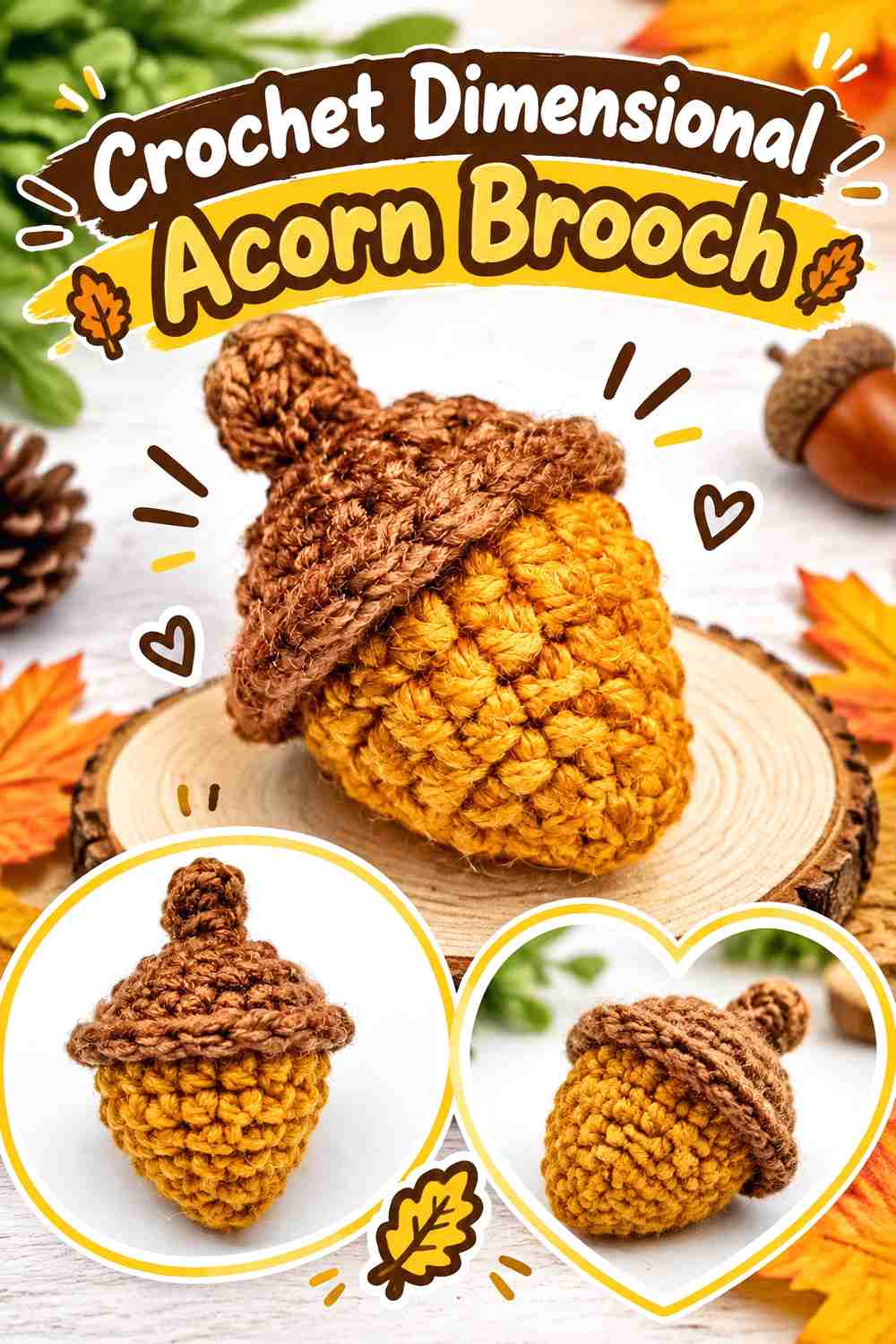
CrochetByEmpanada’s tutorial creates a stuffed crochet acorn with a separate-looking cap and body, giving this project a more sculptural profile than the maple leaf or pumpkin appliqué.
The source is not an oversized brooch, so consider the acorn a dimensional adaptation base rather than a ready-made coat pin.
A Filled Acorn Behaves Differently From a Flat Motif
Stuffing moves the center of gravity away from the garment. Increasing scale can therefore make the acorn tilt even if its overall footprint remains fairly small.
Test one finished acorn against the intended fabric before planning a larger version or a multi-acorn arrangement.
Let the Cap Supply the Main Texture Contrast
The acorn becomes more readable when the cap and lower body do not visually merge.
A tobacco or espresso cap over a rust, olive, mustard, or oatmeal body creates useful autumn contrast without requiring beads or extra embellishment.
Creator Credit: CrochetByEmpanada
15. Crochet Autumn Pumpkin Appliqué Brooch
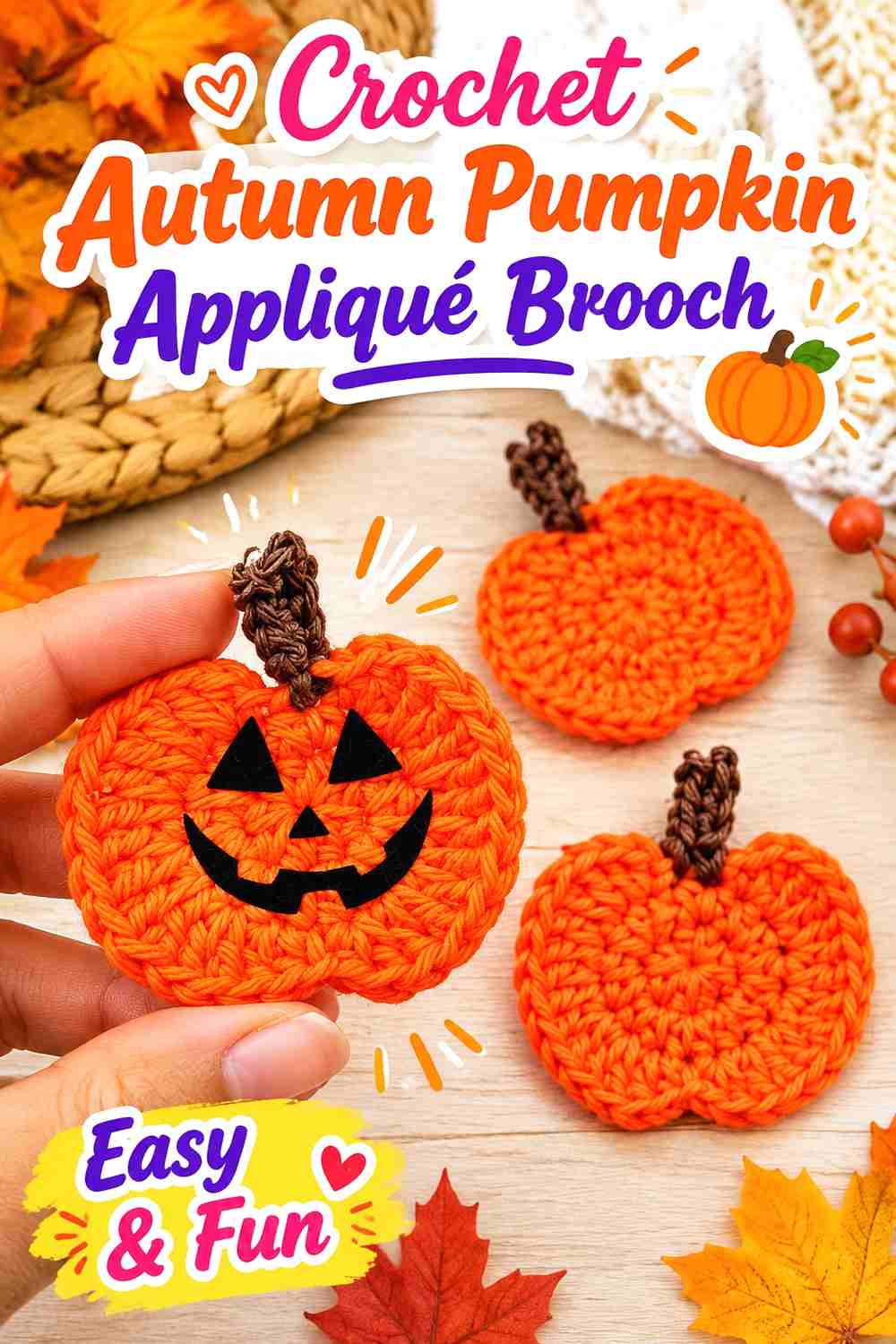
Little Things by Sowjanya’s tutorial teaches a flat crochet pumpkin appliqué. That makes it one of the more practical adaptation bases when you want an oversized brooch with broad surface area but limited projection from the garment.
The pumpkin can move beyond bright Halloween orange through rust, cinnamon, ochre, faded cranberry, moss, cream, or tobacco yarn.
A Flat Pumpkin Gives You Scale Without Much Depth
This is a useful counterpoint to the peony, chrysanthemum, and acorn. The brooch can become visually large while remaining relatively close to the garment.
That can be preferable on scarves, bags, or coats where a deep flower would catch more easily.
Keep the Stem and Body Shaping Visible
When using dark rust or brown yarn, make sure the stem does not disappear into the pumpkin body.
A moss, olive, charcoal, or deeper brown stem can provide just enough separation while keeping the palette subdued.
Creator Credit: Little Things by Sowjanya
16. Crochet Fox Face Statement Brooch
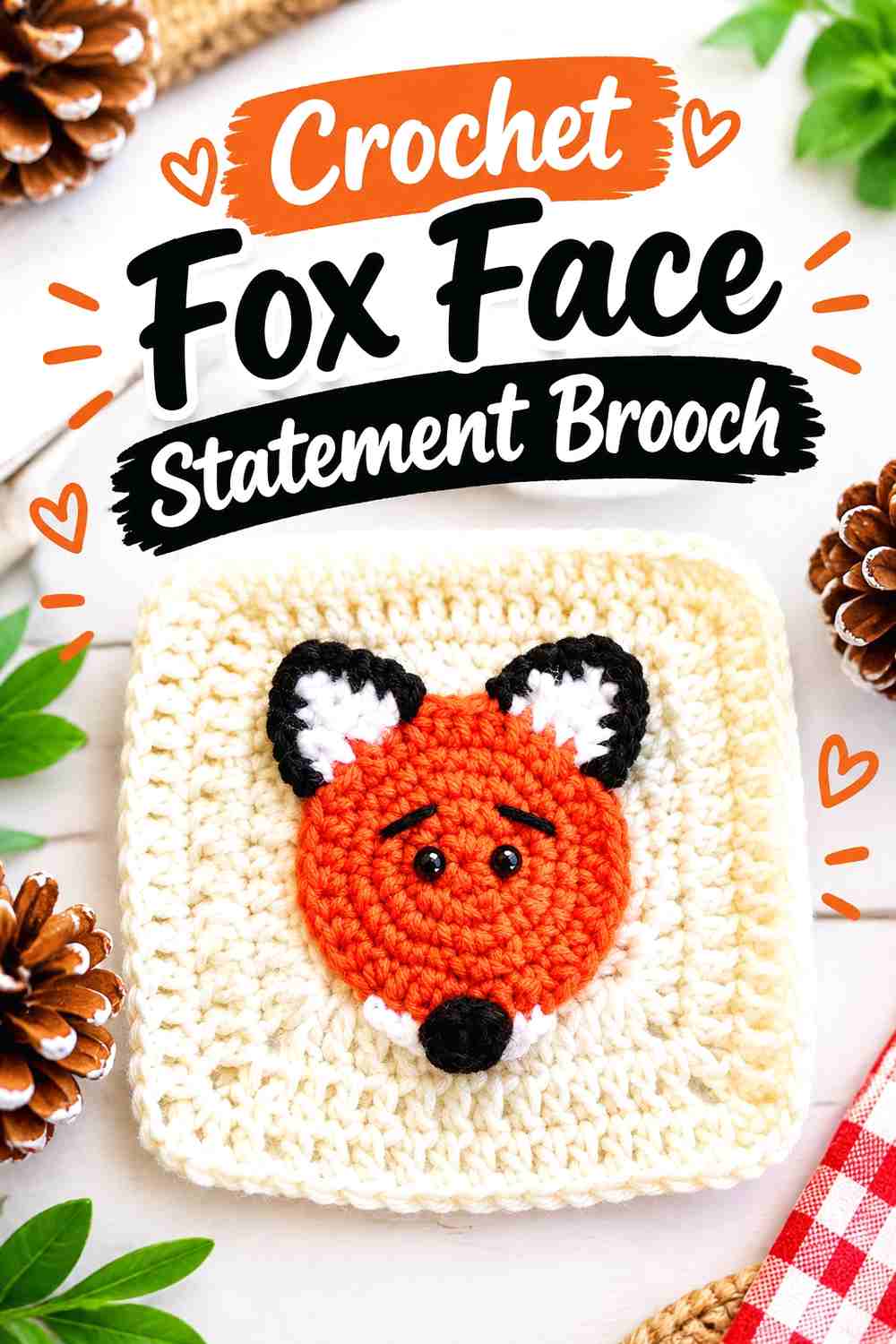
Maria’s Blue Crayon provides a fox appliqué tutorial with a clear woodland-animal face and pointed ears. The source motif was not designed specifically as an oversized brooch, but its relatively flat form makes it a practical candidate for a larger wearable adaptation.
Rust is an obvious choice, though tobacco, burnt orange, burgundy-brown, or muted ochre can also suit a fall wardrobe.
Pointed Ears Define the Oversized Silhouette
The ears provide much of the fox identity from a distance. If you increase the scale, check that they stay crisp rather than folding backward against the garment.
A backing that supports the central face but ignores very soft outer ears may leave the motif looking less defined when worn.
Use Light Details Only Where They Clarify the Face
Cream or oatmeal around selected facial areas can keep a rust fox readable on a brown or olive coat.
Avoid adding so many contrasting areas that the motif becomes visually fragmented. The face shape should remain stronger than the decoration.
Creator Credit: Maria’s Blue Crayon
17. Crochet Puff-Texture Hedgehog Brooch
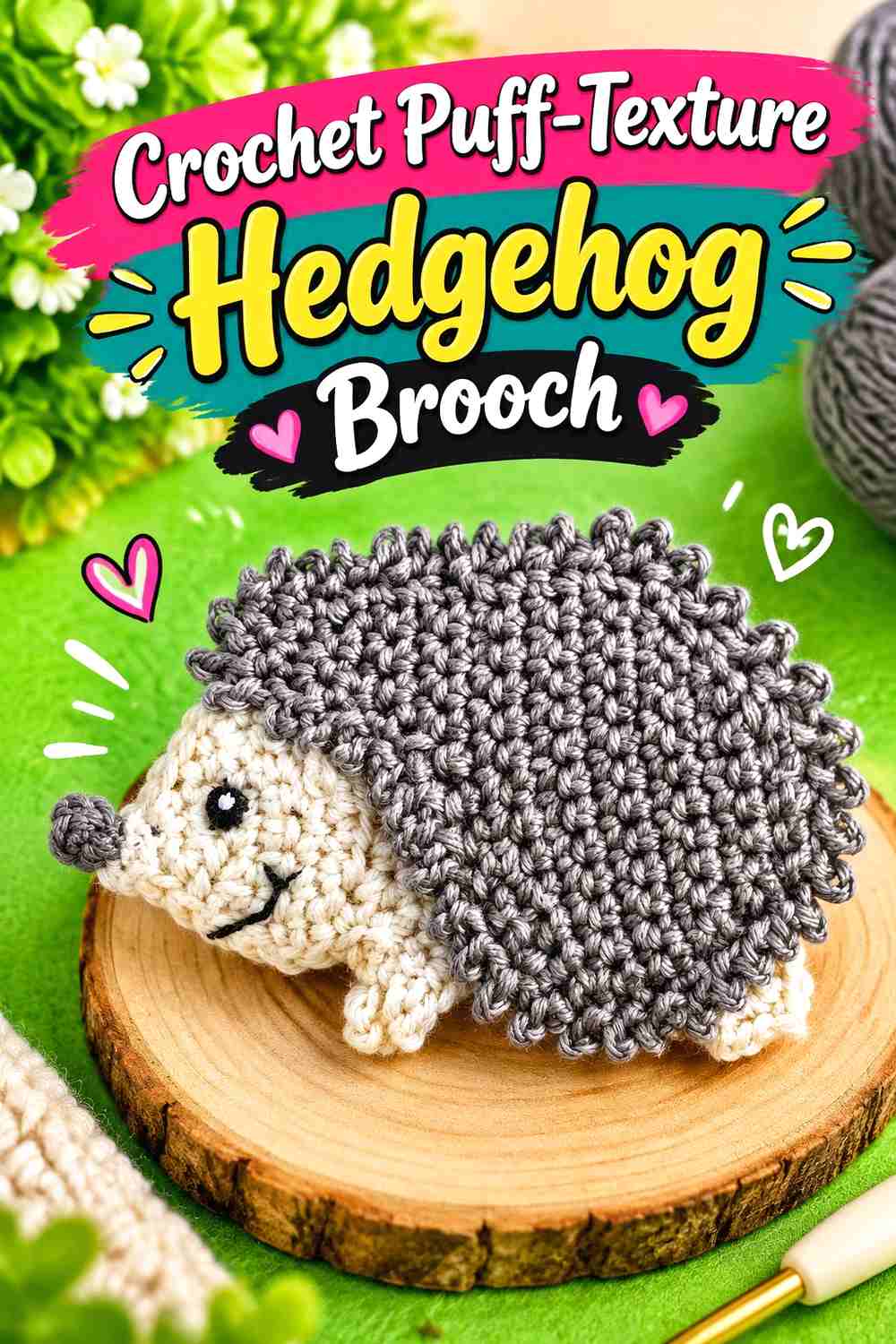
Kerri’s Crochet teaches a hedgehog appliqué with pronounced textured stitch work in the spiny body area. The tutorial is not specifically an oversized brooch pattern, but the contrast between the raised body and flatter face makes it an especially useful base for a tactile autumn pin.
Brown, oatmeal, charcoal, rust, and muted cream can keep the hedgehog recognizable while fitting easily into a Fall 2026 coat or bag palette.
Puff-Texture Spines Supply Enough Surface Interest
This project already contains a strong tactile feature, so additional fringe, beads, or fuzzy yarn are not necessary for it to qualify as a textured statement piece.
Keeping the face comparatively smooth allows the raised body texture to remain the focal point.
Keep the Back Flat Enough for the Brooch Bar
A heavily textured front should not automatically produce a bulky reverse.
Before attaching the hardware, check that the chosen backing area sits reasonably flat against the garment and that no raised stitches interfere with opening or closing the pin.
Creator Credit: Kerri’s Crochet
Comparing the 17 Oversized Brooch Styles
For maximum sculptural depth, the carnation, rose, peony, chrysanthemum, and dahlia are the strongest directions. Their layered or ruffled flower structures naturally project away from the garment, so they need particular attention to weight and backing.
The ginkgo, maple leaf, pumpkin, fox, and owl give you more surface area with less bulk. These are useful when you want a large visual statement on a scarf, coat, or bag without wearing a deep corsage.
The sunflower and poppy sit between those groups, combining broad petal spreads with defined centers. The mushroom, butterfly, sheep, acorn, and hedgehog bring more playful dimensional or tactile details and prevent the collection from feeling like an all-floral accessory roundup.
For one coordinated Fall 2026 set, consider repeating a compact palette—perhaps oxblood, moss, oatmeal, tobacco, and mustard—across several different silhouettes. The changing construction will create enough variety even when the colors repeat.
Conclusion
An oversized crochet brooch works best when scale serves the motif rather than simply making every component larger. A maple leaf benefits from width and defined points, a carnation gains impact from ruffled depth, a butterfly needs wing space, and an acorn must remain balanced despite its dimensional body.
If you prefer flatter statement accessories, begin with the ginkgo, maple leaf, pumpkin, fox, owl, or poppy. For stronger sculptural impact, look at the rose, carnation, peony, chrysanthemum, dahlia, sunflower, or mushroom. The sheep and hedgehog are particularly useful when tactile stitch texture matters more than flower layering.
Use the original tutorials for exact crochet construction, then evaluate the completed piece as wearable jewelry. Enlarging a motif changes weight, stiffness, edge behavior, and balance, so test the backing against the garment you actually intend to wear before making the attachment permanent.
Frequently Asked Questions
How large can a crochet brooch get before it pulls down a coat lapel?
There is no universal maximum size because yarn weight, stuffing, embellishments, backing, and garment structure all affect the result. A broad flat leaf may be easier for a lapel to support than a smaller but heavily stuffed flower. Test the finished brooch on the intended garment before settling on the hardware position.
Can I make a small crochet brooch oversized just by using thicker yarn?
Sometimes thicker yarn can enlarge a motif, but it also changes stitch definition, stiffness, thickness, and the proportion of small details. Make one sample rather than assuming a yarn substitution will simply create an identical larger version.
What type of backing works for a heavy layered crochet flower brooch?
The appropriate backing depends on the flower’s weight and structure. The important point is to distribute support across a stable area rather than attaching hardware to a weak outer petal. Test the closed pin against the intended garment and check that the flower faces outward without drooping.
Which crochet textures show up well in dark fall colors?
Strong structural textures are generally easier to read than tiny surface details. Ruffled carnation edges, layered dahlia petals, a raised sheep fleece, hedgehog texture, or the clear outline of a maple leaf can remain noticeable even in deeper colors, especially when a lighter accent creates some contrast.
Can I wear an oversized crochet brooch on a sweater or knitted scarf?
Possibly, but large pins and heavier brooches can stretch or distort delicate knitted fabrics. A structured coat, woven scarf, or sturdy bag may support the same accessory differently. Always test the brooch on an inconspicuous area before wearing it for an extended period.
How should dimensional crochet brooches be stored?
Avoid flattening sculptural petals, butterfly wings, mushroom caps, or raised animal textures under heavier accessories. Store dimensional pieces with enough space to retain their shape, and keep pin hardware closed so it does not snag neighboring crochet.
Should I keep floral wire when turning a crochet bouquet flower into a brooch?
Not automatically. Bouquet construction and wearable jewelry have different requirements. When a tutorial includes stem wire, use the crochet flower head as your construction reference and decide separately whether any support material is appropriate for the brooch. Avoid exposed or poorly secured sharp ends in wearable pieces.