A crochet fawn shoulder bag fits naturally into fall because the theme already works with warm browns, cream markings, woodland details, and soft organic shapes. The design does not have to become a literal stuffed deer purse, either. A few carefully placed spots, a deer-head motif, small ears, or one appliqué can give an everyday shoulder bag a fawn-inspired character without overwhelming the shape.
There is one important distinction in this collection. A small number of the tutorials below demonstrate deer or fawn projects directly, while others teach useful shoulder-bag constructions that can be adapted with a fawn color palette or compatible crochet motif. Those adaptations are identified as design ideas rather than presented as features of the original tutorials.
That approach creates far more variety than fifteen nearly identical animal-face purses. You can compare compact baguette bags, rounded bags, a half-moon silhouette, a drawstring pouch, a bucket bag, a messenger shape, motif-based designs, and more structured crossbody options before deciding how prominent you want the fawn theme to be.
Quick List
- Crochet Spotted Fawn Shoulder Bag
- Crochet Plush Fawn-Face Shoulder Bag
- Crochet Full-Body Fawn Appliqué Shoulder Bag
- Crochet Deer-Motif Granny Square Shoulder Bag
- Crochet Minimal Deer-Head Fawn Bag
- Crochet Fawn-Ear Flap Shoulder Bag
- Crochet Fawn-Spot Baguette Bag
- Crochet Half-Moon Fawn Shoulder Bag
- Crochet Drawstring Woodland Fawn Bag
- Crochet Autumn Fawn Messenger Bag
- Crochet Mini Fawn Phone Shoulder Bag
- Crochet Structured Fawn Crossbody Bag
- Crochet Round Fawn-Face Shoulder Bag
- Crochet Sleek Spotted Fawn Sling Bag
- Crochet Fawn-Ear Bucket Shoulder Bag
Decide How Literal You Want the Fawn Theme to Be
A fawn bag can fall anywhere between a normal fall accessory with subtle markings and a fully recognizable animal-face purse.
For a bag you expect to use frequently with different outfits, consider keeping the silhouette conventional and putting the theme into the surface. A chestnut bag with scattered cream spots may read as fawn-inspired without looking costume-like. A small deer-head appliqué creates a stronger woodland reference while leaving most of the bag plain.
Ears, facial features, contrasting muzzles, and three-dimensional details move the design toward a character bag. That can be exactly the effect you want, but those additions also affect how easily the bag fits under an arm, slides beneath a coat, or stores flat.
Decide where you want to sit on that spectrum before choosing a tutorial. It is easier to adapt one deliberate feature than to add every possible deer detail and then try to simplify the finished bag.
Bag Structure Matters More Than the Fawn Decoration
A beautiful deer motif does not compensate for a strap that stretches or a bag body that loses its shape.
For a shoulder bag, look at how the strap connects to the body and whether those attachment areas will carry the load you expect. Long unsupported crochet straps can stretch, particularly when the fabric or fiber itself is elastic.
Opening style matters as well. An open baguette bag behaves differently from a flap bag, drawstring pouch, or bucket bag. If you regularly carry small loose belongings, consider whether the tutorial’s original closure suits that use or whether you need to investigate an appropriate lining or closure adaptation.
Dense fabric usually provides greater visual definition for small spots and appliqués. More open fabric can produce attractive drape, but tiny decorative elements may not sit as cleanly against it.
Build a Fall Palette Around the Fawn Markings
Brown and cream are the obvious starting point, but they do not need to be the only colors in a fawn bag.
Cocoa, chestnut, caramel, oatmeal, taupe, rust, muted rose, moss, and deep burgundy can all work within an autumn palette. The important decision is contrast. Cream spots need enough separation from the main fabric to remain visible, while a dark deer-head motif requires a background that does not swallow its outline.
Think about where the visual weight sits, too. A heavily spotted bag body can feel busy when paired with a contrasting strap, decorative edging, and several appliqués. If the body carries the main pattern, a quieter strap often gives the design more balance.
1. Crochet Spotted Fawn Shoulder Bag

This is the clearest interpretation of the topic because the bag itself becomes the fawn coat. A warm brown body, integrated shoulder strap, and scattered light markings create the theme without requiring a large animal face on the front.
The source tutorial from thisfairymade is directly focused on a baby-deer-style shoulder bag, making it a strong starting point if you want the fawn identity built into the bag rather than added afterward.
Let the Spots Follow the Bag Instead of Forming a Perfect Grid
Fawn markings look more organic when they do not resemble evenly spaced polka dots. From a design standpoint, vary the visual spacing while still keeping the overall composition balanced.
Before securing every decorative spot, lay the bag flat and check the arrangement from farther away. Too many markings near one edge can make the bag look unintentionally lopsided.
An Integrated Strap Keeps the Theme Uninterrupted
A strap in the same main color allows the spotted body to remain the focal point. It can also make the bag feel more cohesive than adding an unrelated purchased strap.
Because crochet straps may change under load, check the finished length while the bag is hanging rather than judging it only while flat.
Keep the Fall Styling Simple
This bag already has a strong surface pattern. Pairing chestnut and cream with a restrained strap and minimal extra embellishment can preserve the recognizable fawn-coat effect.
If you want another fall color, consider introducing it through a small removable charm rather than competing with the spots.
Creator Credit: thisfairymade
2. Crochet Plush Fawn-Face Shoulder Bag

For a more literal animal bag, use the entire front as a fawn face. Rounded ears, a contrasting muzzle area, and carefully placed facial details create a very different result from the spotted first design.
The OneKooka source demonstrates a reindeer bag rather than a fall fawn. For an autumn adaptation, the bag construction can inspire the animal-face format while antlers and strongly Christmas-specific facial details are omitted or reconsidered.
Removing Antlers Changes the Silhouette Significantly
A reindeer immediately reads as seasonal because of its antlers. Removing that upper structure produces a softer outline that is easier to interpret as a young deer.
Do not automatically fill the empty space with more embellishment. Small ears may provide enough definition on their own.
Plush Fabric Makes Facial Placement More Important
When the surface is very soft or textured, tiny details can visually disappear.
Place temporary markers where you expect the eyes, nose, and muzzle boundaries to sit before committing to permanent attachments. A small positioning difference can noticeably change the expression.
Consider How the Ears Behave Under Your Arm
Decorative ears can look charming when the bag hangs freely but fold or catch when worn tightly against the body.
If this will be an everyday shoulder bag rather than an occasional novelty accessory, keep projection and placement in mind when adapting the animal features.
Creator Credit: OneKooka
3. Crochet Full-Body Fawn Appliqué Shoulder Bag

Instead of turning the entire bag into a deer, keep the bag relatively plain and make one fawn appliqué the focal feature.
Kerri’s Crochet provides a deer-and-fawn appliqué tutorial that can support this motif-focused direction. The source is for the appliqué itself rather than a complete shoulder bag, so you will need a separate compatible bag construction if you do not already have one.
A Full Animal Motif Needs More Empty Background
A complete fawn silhouette contains more visual information than a few spots or a head motif.
Give the appliqué enough plain fabric around its outline that the legs, body, head, and surrounding negative space remain readable. Crowding it with leaves, flowers, and several other woodland animals can weaken the main image.
Check the Motif Against the Finished Bag Before Sewing
Do not plan placement from an unassembled panel alone if the bag will later curve or fold.
Temporarily position the finished appliqué on the assembled bag and view it while the bag is hanging. The visual center of a worn shoulder bag may differ from the center of a flat rectangle.
This Style Makes Seasonal Swapping Easier
If you like the woodland theme but do not want a character-shaped bag, a conventional shoulder-bag body gives you more flexibility.
You can keep the remaining elements neutral and let the fawn provide the autumn identity.
Creator Credit: Kerri’s Crochet
4. Crochet Deer-Motif Granny Square Shoulder Bag

A motif bag creates fawn interest through individual panels rather than one continuous graphic. A deer square can become the central feature while quieter granny squares surround it.
Lienna Jo demonstrates a deer granny-square motif. Because that source is the motif rather than a finished shoulder bag, compare its blocked size with the other squares you plan to use before designing the final bag layout.
One Deer Square Can Be Stronger Than Repeating It Everywhere
Repeating an elaborate animal motif on every panel can make a small bag visually dense.
Consider using the deer square only on the front and surrounding it with solid, striped, or lightly spotted squares that repeat its colors. This creates a focal point and reduces motif repetition.
Blocked Square Size Controls the Bag Layout
Motifs that appear similar while freshly crocheted can finish at noticeably different dimensions.
Block and measure the deer square before committing to companion motifs. If their sizes differ, resolve that difference before joining rather than hoping the seams will disguise it.
The Join Becomes Part of the Fall Design
A contrasting join can create a patchwork effect, while a matching join allows the deer motif to remain more dominant.
For a woodland palette, decide whether you want visible seams to resemble decorative framing or disappear into the surrounding squares.
Creator Credit: Lienna Jo
5. Crochet Minimal Deer-Head Fawn Bag

A deer-head appliqué provides the animal reference without taking over the entire bag. This direction works well if you prefer a simple everyday shoulder bag with one unmistakable woodland detail.
Crochet Jewel demonstrates a deer-head appliqué that can serve as the focal motif. For a fawn interpretation, the surrounding color palette and the absence of heavily mature-deer styling can help keep the overall design softer.
Centered Is Not the Only Useful Placement
Putting the motif precisely in the middle creates a traditional graphic-bag look.
An off-center placement can feel more contemporary, particularly on a compact shoulder bag. Try the motif near a lower corner or slightly toward the opening before making your final choice.
Give Fine Facial Details Enough Contrast
Small facial elements compete with crochet texture.
If the main bag and motif are both medium brown, the outline may disappear. A lighter background, darker head, or restrained contrasting edge can help the deer shape remain legible.
Creator Credit: Crochet Jewel
6. Crochet Fawn-Ear Flap Shoulder Bag

A flap gives you a natural place to concentrate the animal design. Rather than decorating the whole bag, turn the flap into the fawn’s forehead and attach the ears near its upper edges.
Crochet daniela’s tutorial supplies the flap-style shoulder-bag construction reference. The fawn face and ears are adaptations, not features of the original bag tutorial.
The Flap Creates a Natural Face Boundary
A face works particularly well when the decorative area already has a defined edge.
Keep the main bag body quieter and concentrate the eyes, spots, or muzzle treatment on the flap. When the flap closes, the fawn face becomes the dominant feature.
Ear Placement Must Not Interfere With Opening the Bag
Three-dimensional ears should not block your hand, closure, or strap attachment.
Test them with pins or temporary ties before permanently attaching them. Open and close the bag several times and check how they move.
A Closure Can Become Part of the Design
If the construction uses a visible closure, think about whether it sits where a nose or muzzle detail would naturally go.
You do not need to disguise every functional feature. Sometimes integrating hardware visually produces a cleaner result than surrounding it with additional crochet decoration.
Creator Credit: crochet daniela
7. Crochet Fawn-Spot Baguette Bag

A baguette silhouette gives the fawn theme a more fashion-focused direction. Keep the form compact and horizontal, then use cream spots or subtle color blocking instead of a large animal face.
Maison Saint Bonnet’s tutorial provides the baguette-bag construction reference, including a structured opening approach. The fawn markings are an editorial adaptation for this fall theme.
Horizontal Bags Benefit From Horizontal Spot Flow
A tall vertical scatter can fight the proportions of a long, shallow bag.
Arrange the markings so the eye travels across the body. A few larger spots separated by smaller ones can create movement without turning the surface into a rigid repeat.
Hardware Changes the Mood of the Fawn Theme
A structured clasp or chain can make brown-and-cream crochet look more polished and less like a novelty animal accessory.
If you add hardware that differs from the tutorial, verify that the crochet fabric and attachment points can accommodate it before purchasing components.
Keep the Strap From Competing With the Pattern
When the body has both spots and visible hardware, another strongly patterned strap may be unnecessary.
A quiet strap can make the fawn-inspired surface look more intentional.
Creator Credit: Maison Saint Bonnet
8. Crochet Half-Moon Fawn Shoulder Bag

The curved half-moon shape gives the collection a softer silhouette and offers a different way to interpret a young deer’s coloring.
Suélia Alves demonstrates a half-moon crochet bag construction. For the fawn adaptation, use color blocking or sparse spots that follow the curved body rather than adding ears or a full face.
Curves Can Make the Spots Feel More Organic
A rounded bag already avoids the rigid geometry of a rectangular panel.
Use that to your advantage. Let markings follow the visual arc of the bag instead of forcing them into straight horizontal rows.
Watch Where the Pattern Disappears Into a Fold
Half-moon constructions can create areas where the fabric turns, overlaps, or changes orientation.
Before adding a prominent spot or motif, check how that location appears when the bag is fully assembled and hanging naturally.
This Shape Works Well for a Subtle Fawn Interpretation
Because the silhouette does not look like an animal by itself, the bag can stay wearable beyond the fall season.
Use tonal caramel and cream rather than literal facial features if you want the woodland idea to remain understated.
Creator Credit: Suélia Alves | Crochê e Artes Manuais
9. Crochet Drawstring Woodland Fawn Bag

A gathered pouch introduces a softer, more casual structure. The opening itself becomes part of the visual design, making this option noticeably different from flap, baguette, and open-top bags.
The vivi e cuci tutorial demonstrates a pouch-style crochet bag with a gathered opening and shoulder strap. For this collection, the body can be adapted with fawn spots or a small deer motif.
Do Not Put Important Motifs Into the Gathering Zone
Fabric near a drawstring opening changes shape every time the bag closes.
Keep detailed fawn features lower on the body where they remain visible. Small abstract spots can tolerate distortion better than eyes, a nose, or a carefully shaped appliqué.
A Drawstring Makes the Bag Feel More Woodland-Casual
The gathered top pairs naturally with earthy yarn colors and softer styling.
That means you may need less decoration than on a structured shoulder bag. A chestnut body, cream drawstring, and limited spotting may already communicate the theme.
Check the Opening With the Items You Actually Carry
A beautifully gathered top is less useful if it makes the opening too restrictive for your intended belongings.
Before adding extensive decoration, make sure the underlying pouch construction suits how you plan to use the bag.
Creator Credit: vivi e cuci
10. Crochet Autumn Fawn Messenger Bag

A messenger bag provides a larger surface for a more developed woodland composition. Instead of isolated spots, the flap could carry a fawn silhouette, small forest motifs, or a quiet scene using several fall colors.
CrochetCrys demonstrates a fall-themed messenger-bag construction, making it particularly compatible with this seasonal adaptation.
Use the Large Flap as a Design Panel
A messenger flap gives you more uninterrupted space than most small shoulder bags.
Decide whether the fawn should be the dominant image or one part of a larger woodland arrangement. If the deer is the focal point, avoid surrounding it with equally bold mushrooms, flowers, leaves, and text.
Larger Bags Make Strap Stretch More Important
A roomy bag can invite heavier contents.
Pay attention to the tutorial’s strap and structural approach, and consider whether lining or reinforcement matters for your planned use. Do not assume a decorative crochet strap will behave the same way under every load.
Fall Colors Can Extend Beyond Brown and Cream
A messenger shape can carry a more complex palette without becoming visually cramped.
Muted rust, olive, burgundy, or golden-brown accents can distinguish leaves and background details while keeping the fawn itself relatively simple.
Creator Credit: CrochetCrys
11. Crochet Mini Fawn Phone Shoulder Bag
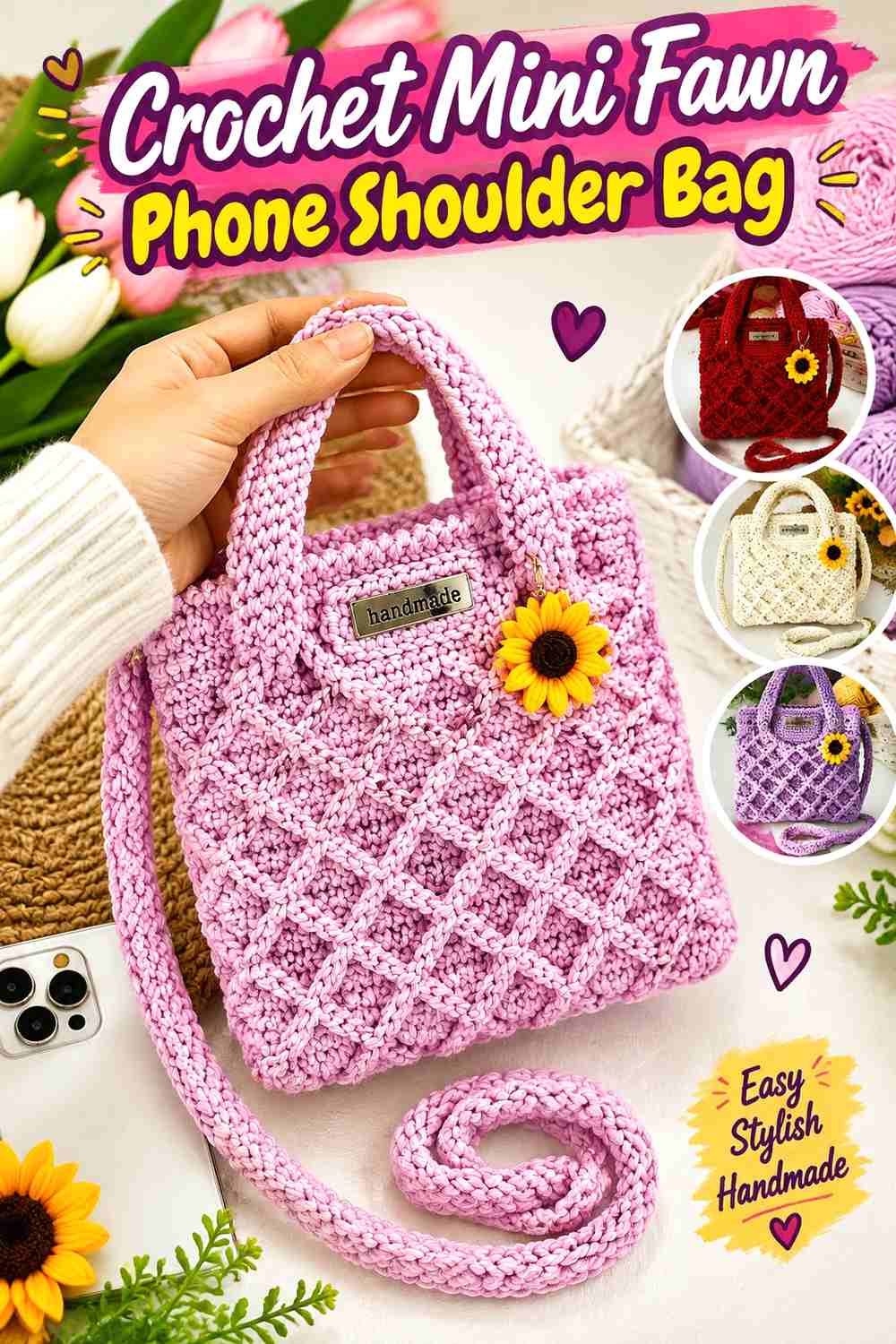
A narrow phone bag is useful when you want the fawn theme in a smaller accessory rather than a full everyday purse.
Handicraft by Rungtip provides the compact crossbody/phone-bag construction reference. For the fawn adaptation, a vertical spot arrangement or very small deer-head motif can suit the limited front area.
Reduce the Motif Before You Reduce Readability
A detailed full-body deer may become difficult to recognize on a narrow bag.
Instead of shrinking a complicated motif excessively, simplify the concept: a pair of ears, a tiny head, or several cream fawn spots may read more clearly.
Narrow Bags Need Careful Strap Placement
Because there is less width at the top, attachment areas are visually prominent.
Avoid crowding ears or appliqués against the strap connection. Leave enough uncluttered fabric for the structure to look intentional.
Keep the Front Surface Relatively Flat
A phone-sized bag is often worn close to the body.
Bulky three-dimensional features can make that less comfortable, so this is a strong candidate for flat spots, embroidery-style details, or appliqué rather than a heavily sculpted muzzle.
Creator Credit: Handicraft by Rungtip
12. Crochet Structured Fawn Crossbody Bag
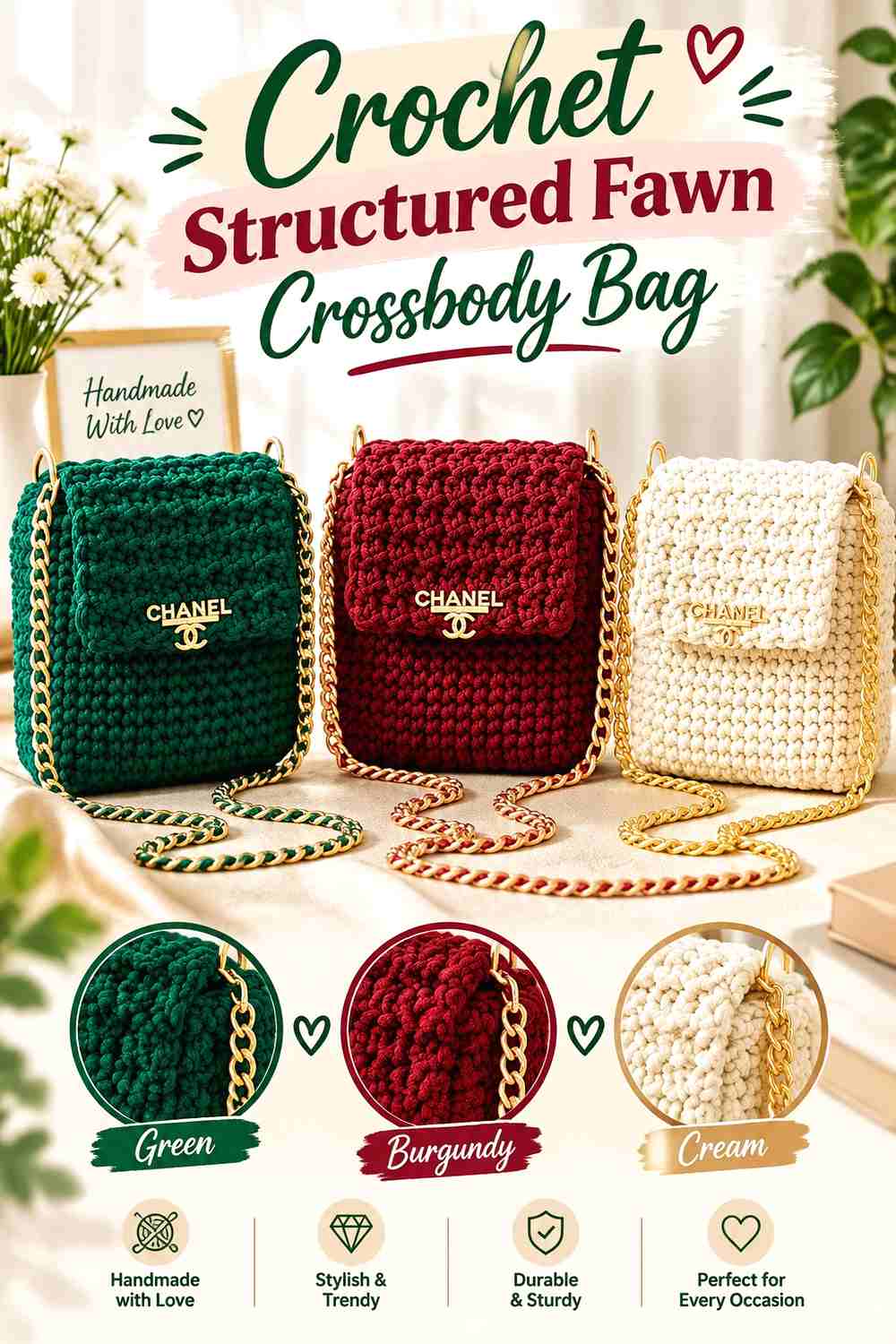
This version treats the fawn theme as surface design on a more defined everyday bag. A clean brown body with a cream front panel, restrained spots, or a small deer emblem can feel more polished than a full character purse.
Princess Made Crochet provides the crossbody-bag construction reference used for this adaptation.
Structure Lets Small Details Look More Deliberate
A firmer surface gives appliqués and spots a predictable background.
That can be helpful when you want the fawn theme to appear graphic rather than soft and toy-like. Keep the placement balanced with the bag’s seams, opening, and hardware.
A Closure Should Remain Easy to Reach
Do not position a large deer motif directly over functional hardware unless the two elements were deliberately planned together.
A decorative feature that must be pushed aside every time you open the bag will become inconvenient quickly.
Choose Between Shoulder and Crossbody Length Early
A compact bag can look quite different when carried high under the arm versus lower across the torso.
Before finalizing the strap, consider where the fawn motif will sit on the body and whether that is the way you want it displayed.
Creator Credit: Princess Made Crochet
13. Crochet Round Fawn-Face Shoulder Bag

A circular bag is a natural base for a fawn face because the front already resembles a head shape. Small ears can extend above the circle while the central panel carries the facial features.
Chompu Handicrafts provides the round-bag construction reference. The animal-face treatment is the adaptation for this collection.
Let the Circle Do Most of the Shaping Work
You do not need to add a large projecting muzzle and several layers if the bag’s basic outline already suggests a face.
A restrained eye and nose treatment with ears near the upper edge can preserve the clean circular form.
Check Facial Placement While the Bag Is Hanging
A round bag may shift slightly when suspended from its strap.
Place temporary markers for the facial details, hang the bag, and check that the expression still appears level before attaching anything permanently.
Keep Side Depth Separate From the Face
If the bag has noticeable depth, concentrate the recognizable features on the main front panel.
Extending spots around the sides can work, but wrapping eyes or other facial features beyond the front can make the design difficult to read.
Creator Credit: Chompu Handicrafts
14. Crochet Sleek Spotted Fawn Sling Bag

A narrow sling shape offers a modern alternative to the rounder woodland bags in this collection. Use a mostly solid body with a controlled trail of spots instead of covering every surface.
SANG DEWI CRAFT provides the sling-bag construction reference. The deer markings and autumn palette are adaptations.
A Vertical Spot Trail Emphasizes the Bag Shape
Instead of scattering spots uniformly, place the visual concentration so it follows the longest dimension of the bag.
This reinforces the slim silhouette and separates it clearly from the fuller spotted shoulder-bag idea earlier in the collection.
Texture and Motif Need to Share the Surface
If the base fabric already has strong stitch texture, small decorative spots may compete with it.
Test one or two markings first. A highly textured bag may look stronger with fewer, larger accents than many tiny ones.
Keep the Woodland Theme Refined
This shape can accommodate the fawn idea without becoming overtly animal-shaped.
Chestnut, cream, and one darker accent may be enough. Save ears and facial features for bags whose silhouettes naturally support them.
Creator Credit: SANG DEWI CRAFT
15. Crochet Fawn-Ear Bucket Shoulder Bag

A bucket silhouette gives the collection a final construction option with a tall body and more pronounced opening. Small ears near the upper edge and a few scattered spots can make the shape read as fawn-inspired while preserving its usefulness as a bag.
ViVi Berry Crochet provides the bucket shoulder-bag construction reference used for this adaptation.
Keep the Ears Away From the Main Opening
A bucket bag needs a usable top edge.
Position decorative ears so they do not collapse into the opening or interfere with any closure. Test their placement while reaching into the bag rather than judging them only from the front.
The Tall Body Gives You Room to Fade the Spot Pattern
Instead of covering the entire surface evenly, concentrate the spots near one area and gradually reduce them.
This creates a different visual rhythm from the all-over fawn-coat bag and prevents fifteen ideas from becoming variations of the same print.
Consider Lining Before Adding Interior-Side Details
If you intend to line the bag, plan that step before adding embellishments whose attachment stitches would otherwise be hidden or obstructed.
A lining can also help prevent small belongings from catching on the reverse side of decorative stitching, depending on the construction you choose.
Creator Credit: ViVi Berry Crochet
Which Crochet Fawn Shoulder Bag Style Should You Choose?
For the most recognizable fawn look, choose the Spotted Fawn Shoulder Bag, Plush Fawn-Face Bag, or Round Fawn-Face Bag. The animal theme is visible immediately and does not depend on subtle styling.
For something easier to combine with everyday fall outfits, the Fawn-Spot Baguette, Half-Moon Fawn Bag, Structured Fawn Crossbody, and Sleek Spotted Sling keep conventional handbag silhouettes and use the deer theme mainly through color or surface decoration.
Choose the Full-Body Fawn Appliqué, Deer-Motif Granny Square Bag, or Minimal Deer-Head Bag when crochet motif work is the part you most want to showcase. These options also allow the underlying bag to remain relatively simple.
The Drawstring Woodland Bag feels softer and more casual, while the Autumn Fawn Messenger Bag gives you much more decorating space. For carrying only a few essentials, the Mini Fawn Phone Bag keeps the concept compact.
If three-dimensional animal details appeal to you, the Fawn-Ear Flap Bag and Fawn-Ear Bucket Bag provide useful surfaces for ears without requiring the whole accessory to become an amigurumi-style animal.
Conclusion
A successful crochet fawn shoulder bag starts with choosing the right balance between bag function and woodland decoration.
If you want the fawn theme to dominate, build it into the entire surface with spots, facial details, or ears. If you want an accessory that feels less literal, use a conventional baguette, crescent, sling, or structured crossbody silhouette and let a restrained brown-and-cream palette do more of the work.
Motif-based bags offer another route. One fawn appliqué or deer square can create a clear focal point while leaving the surrounding fabric calm. That approach is especially useful when you want to combine an animal motif tutorial with a favorite shoulder-bag construction.
Before making permanent adaptations, check the original tutorial for its exact construction details, assemble or mock up the bag shape, and test decorative placement while the bag is hanging. The same fawn feature can look very different on a flat panel, a curved half-moon, a gathered pouch, and a round shoulder bag.
Frequently Asked Questions
Can I turn a reindeer crochet bag into a fall fawn bag?
Often the overall animal-bag concept can be adapted, but do not assume every reindeer feature belongs on a fawn. Antlers, a red nose, and Christmas-specific embellishments can be omitted or redesigned while retaining a compatible bag construction. Follow the original tutorial for the parts you are actually using and treat the changes as your own adaptation.
What is the easiest way to make a normal crochet shoulder bag look fawn-inspired?
Color and markings can create the theme without changing the bag construction. A warm brown body with irregular cream spots is one of the simplest visual approaches. A small deer-head appliqué is another option if you want a more recognizable animal reference.
Should a crochet fawn bag be lined?
It depends on the bag’s fabric and intended use. Lining can help contain small items and keep them from interacting with the reverse side of decorative stitching, but it is not automatically necessary for every construction. Check the source tutorial and evaluate how open or stretchy your finished fabric is.
How can I stop a crochet shoulder strap from stretching?
Strap behavior depends on stitch structure, fiber, length, and the weight carried in the bag. If stretch is a concern, choose a construction designed with a relatively stable strap or investigate an appropriate reinforcement method. Test the strap with realistic contents before deciding its final comfortable length.
Should fawn spots be crocheted into the bag or attached afterward?
Either approach can work, but they produce different planning requirements. Integrated colorwork makes the markings part of the fabric, while separate appliqués allow you to experiment with placement after the bag is assembled. Choose according to the tutorial, the yarn, and how precise you want the final spot arrangement to be.
Can I use a deer appliqué tutorial even if it was not designed for a bag?
Yes, provided you treat it as an appliqué tutorial rather than a complete bag pattern. Finish or plan the bag separately, compare the motif’s actual dimensions with the available panel space, and confirm that attaching it will not interfere with the opening, closure, or strap.
What colors work well for a Fall 2026 crochet fawn shoulder bag?
Chestnut, cocoa, caramel, tan, taupe, oatmeal, and cream create an obvious fawn-inspired base. Rust, moss, muted burgundy, or dusty rose can add autumn contrast. Rather than using every fall shade in one project, choose a small coordinated palette so the deer markings remain easy to recognize.