An heirloom Christmas stocking usually becomes meaningful through a combination of construction and personal detail. The crochet creates the stocking itself, while hand-finished elements—a stitched name, embroidered date, appliqué, decorative seam, tassel, motif, or carefully chosen colorwork—can turn it into something a family wants to unpack year after year.
The projects below take different routes to that keepsake look. Some source tutorials already incorporate personalization, colorwork, cables, mosaic patterns, decorative cuffs, or assembled motifs. Others provide a strong stocking base that can be adapted with hand stitching after the crochet is complete.
The goal is not to cover every surface with decoration. For an heirloom effect, one carefully planned detail often carries more meaning than several competing embellishments. Follow each credited creator for the exact stocking construction, then add independent personalization only where it works with the finished fabric and shape.
Quick List
- Crochet Felted-Name Cable Heirloom Stocking
- Crochet Nordic Fair Isle Heirloom Stocking
- Crochet Mosaic Sampler Heirloom Stocking
- Crochet Beaded Mosaic Keepsake Stocking
- Crochet Lined Granny Square Heirloom Stocking
- Crochet Hexagon Patchwork Heirloom Stocking
- Crochet Cable-and-Fur Heirloom Stocking
- Crochet Moss-Stitch Embroidered Heirloom Stocking
- Crochet Hand-Stitched Name Heirloom Stocking
- Crochet Felted Wool Heritage Stocking
- Crochet Granny-Stitch Family Heirloom Stocking
- Crochet Chunky Pom-Pom Heirloom Stocking
- Crochet Appliqué Storybook Heirloom Stocking
- Crochet Puff-Texture Heirloom Stocking
- Crochet Surface-Embroidered Classic Heirloom Stocking
What Makes a Crochet Stocking Feel Like an Heirloom?
“Heirloom” is less about making a stocking complicated and more about giving it a clear identity. Repeated family colors, an embroidered name, a date, meaningful motifs, carefully finished seams, or a distinctive cuff can provide that identity.
Think about what deserves to remain recognizable years from now. A child’s initial may matter more than a trendy embellishment. A traditional snowflake motif may age more comfortably than a highly specific seasonal slogan. A grandmother’s preferred colors might carry more meaning than following a current Christmas palette.
Construction matters as well. Motif stockings emphasize hand assembly. Cables and raised texture create depth without separate embellishments. Mosaic and Fair Isle techniques build decoration directly into the fabric. A plain stocking offers a quieter background for later embroidery and appliqué.
Plan the Hand-Stitched Details After the Stocking Takes Shape
Surface embroidery, names, dates, appliqués, and decorative stitching need enough room to sit cleanly on the crochet fabric. Placement that seems centered while the piece is flat may look different after the heel is shaped or the cuff is folded.
Whenever possible, complete the relevant area before deciding on final embellishment placement. Temporarily position an appliqué or mark the intended lettering area before sewing it permanently.
Dense crochet usually provides a more controlled surface for embroidery than very open motifs. On granny squares, lace, or loose textured fabric, a separate patch, cuff label, or appliqué may be easier to read than letters stitched directly across large openings.
Think About Hanging, Filling, and Long-Term Storage
An heirloom stocking may spend far more years in storage than on display, so finishing decisions matter. Large beads, stiff ornaments, dimensional pom-poms, and delicate surface embroidery can require more careful packing than flat colorwork.
Also consider what happens when the stocking is filled. Crochet can stretch, and heavy contents may change the shape dramatically. A lining can be useful in some constructions, particularly where motif openings or stretch are concerns, but do not assume every tutorial includes one.
Finally, check the hanger separately from the decorative body. The loop carries the stocking’s weight when it is displayed. If the stocking will actually hold gifts rather than serve mainly as decoration, avoid assuming a delicate decorative loop can support unlimited weight.
1. Crochet Felted-Name Cable Heirloom Stocking
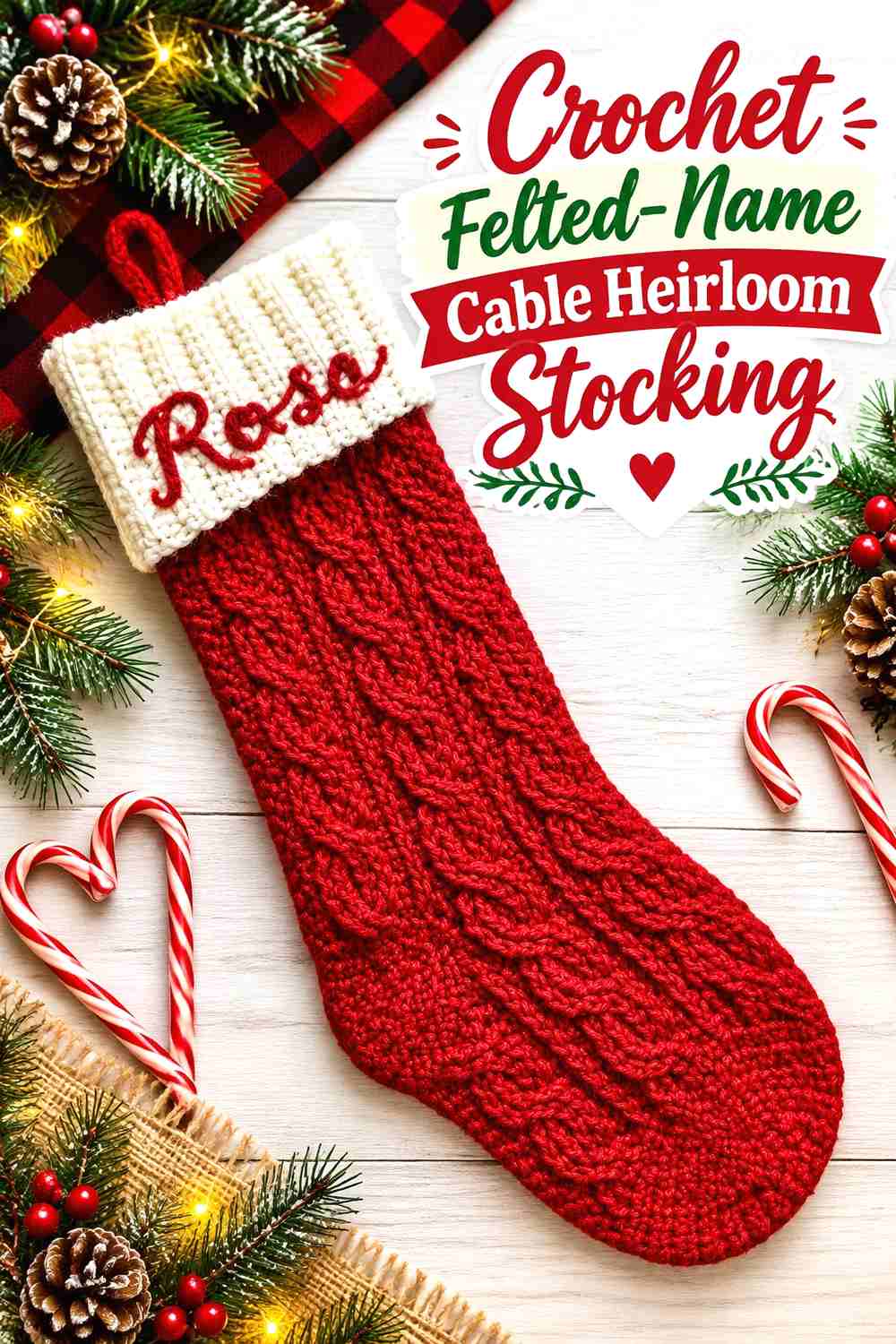
A cabled stocking already has the visual weight associated with traditional winter textiles. This concept becomes especially heirloom-friendly because the source design pairs cable texture with a ribbed cuff that can be personalized with a felted name.
That creates a useful division: the stocking body carries the decorative texture, while the cuff handles the personal information.
Give the Name a Quiet Background
Raised cables and lettering can compete when they occupy the same surface.
Keeping the personalization on a simpler cuff gives the name enough contrast to remain readable while allowing the cable work to stay uninterrupted below it.
Think Beyond First Names
A family stocking can carry more than a person’s name. A surname, initial, birth year, wedding year, or short family identifier may suit an heirloom meant to pass between generations.
Choose something with enough long-term meaning to justify making it permanent.
Keep the Cables as the Main Body Detail
Once the front already contains substantial cable texture, additional appliqués may make the surface feel crowded.
For this style, the strongest hand finishing can be concentrated at the cuff and hanger rather than scattered across the entire stocking.
Creator Credit: Creative Crochet Corner
2. Crochet Nordic Fair Isle Heirloom Stocking
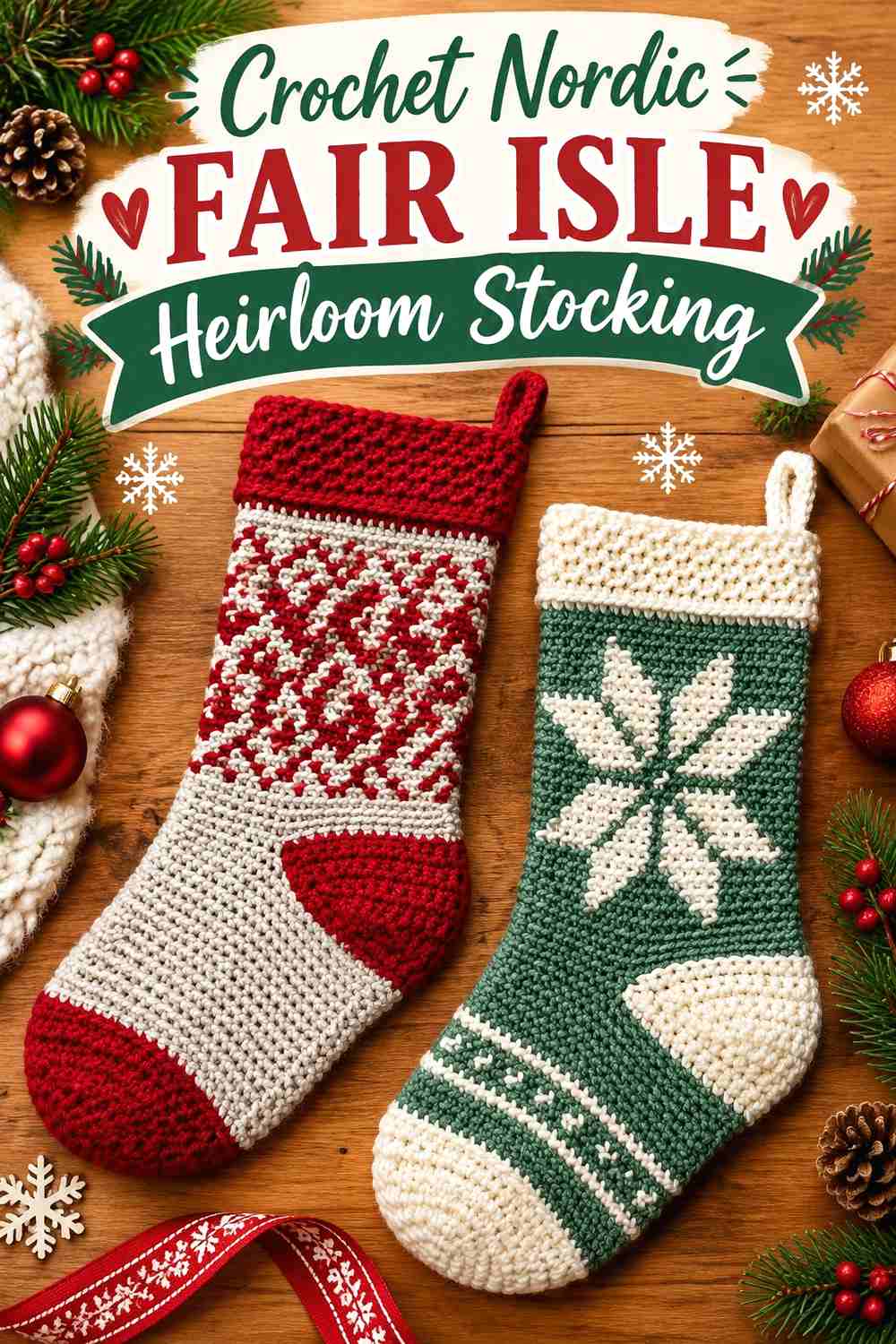
Fair Isle-inspired crochet provides a completely different heirloom route because the patterning is built into the stocking rather than sewn onto it afterward. The source tutorial includes Fair Isle colorwork and Nordic-inspired options, giving the stocking a traditional winter character.
This is a good choice when color pattern is more important to you than dimensional decoration.
Use a Limited Palette for a Collected Look
Strong geometric colorwork does not need many shades to feel detailed.
Two carefully selected colors can make the motifs easy to read and can also help multiple family stockings look connected even when each person receives a different color combination.
Put Personalization Outside the Main Colorwork
A name stitched directly through intricate patterning can become difficult to read.
Consider reserving the cuff, reverse side, or a separate small label for names and dates so the Nordic design remains visually intact.
Record the Color Choices for Future Stockings
If this becomes a family tradition, note the yarn colors and general palette somewhere with your Christmas storage.
That gives you a better chance of creating later stockings that visually belong to the same collection without needing them to be exact replicas.
Creator Credit: The Unraveled Mitten
3. Crochet Mosaic Sampler Heirloom Stocking
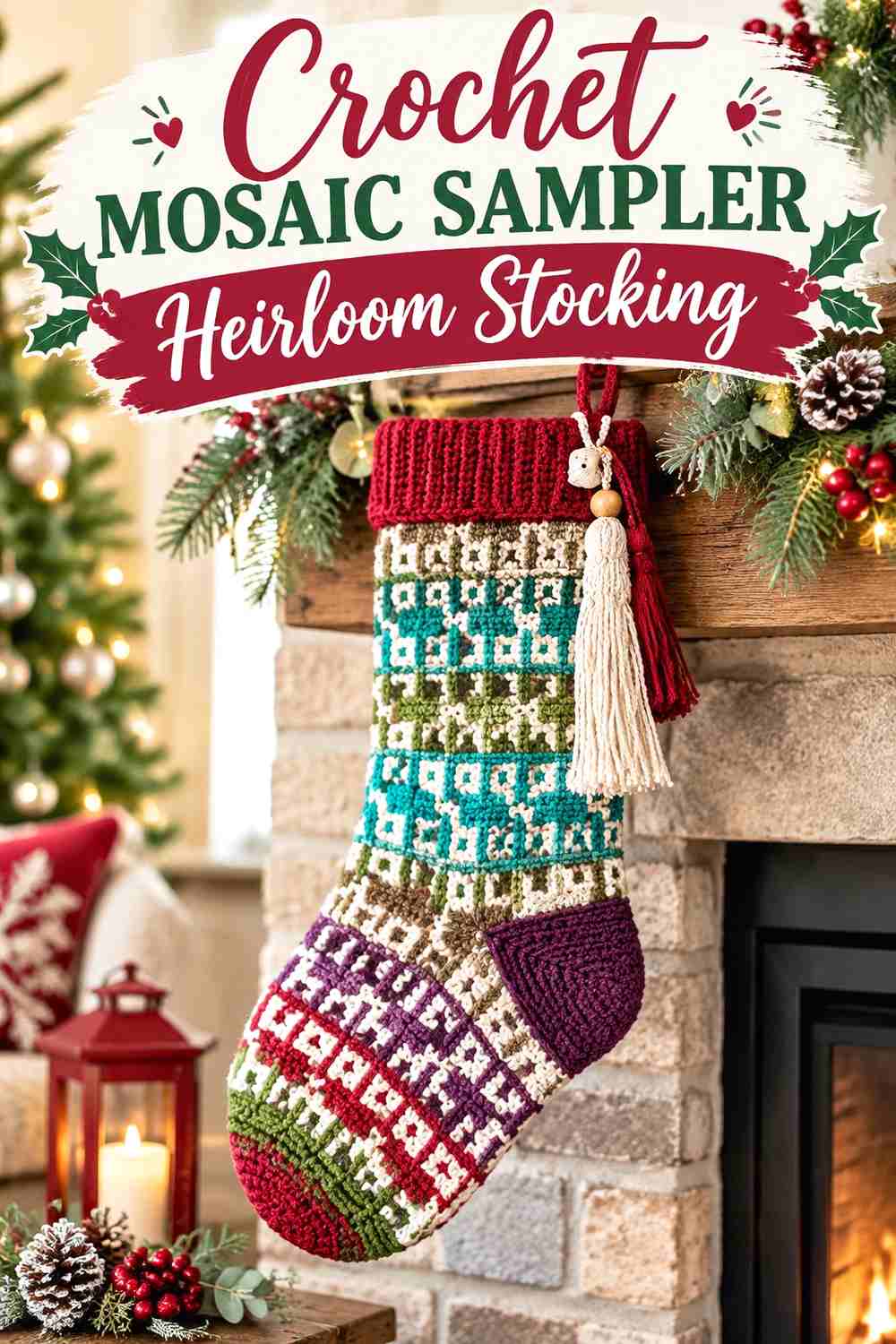
Overlay mosaic crochet creates strong geometric decoration from the crochet fabric itself. The source tutorial offers multiple mosaic stocking designs, which makes this concept especially useful for a family collection: related stockings can use the same construction while displaying different surface patterns.
That variation is more meaningful than simply assigning everyone a different solid color.
Let Each Family Member Have a Different Motif
A coordinated heirloom set does not need identical fronts.
Choose related mosaic designs while repeating the same cuff treatment, background shade, or hanging loop. Each stocking remains individual while still reading as part of one family collection.
Avoid Covering the Mosaic With Large Lettering
Strong geometric patterns need visual room.
If personalization matters, move the name to a cuff, tag, lining label, or another quieter area instead of placing large letters over the central pattern.
Check Color Contrast Before Committing
Mosaic designs depend heavily on the relationship between colors.
Two shades that look clearly different in separate yarn balls can appear much closer once interlocked in a small geometric pattern. A small test section can reveal whether the motif remains easy to see.
Creator Credit: HanJan Crochet
4. Crochet Beaded Mosaic Keepsake Stocking
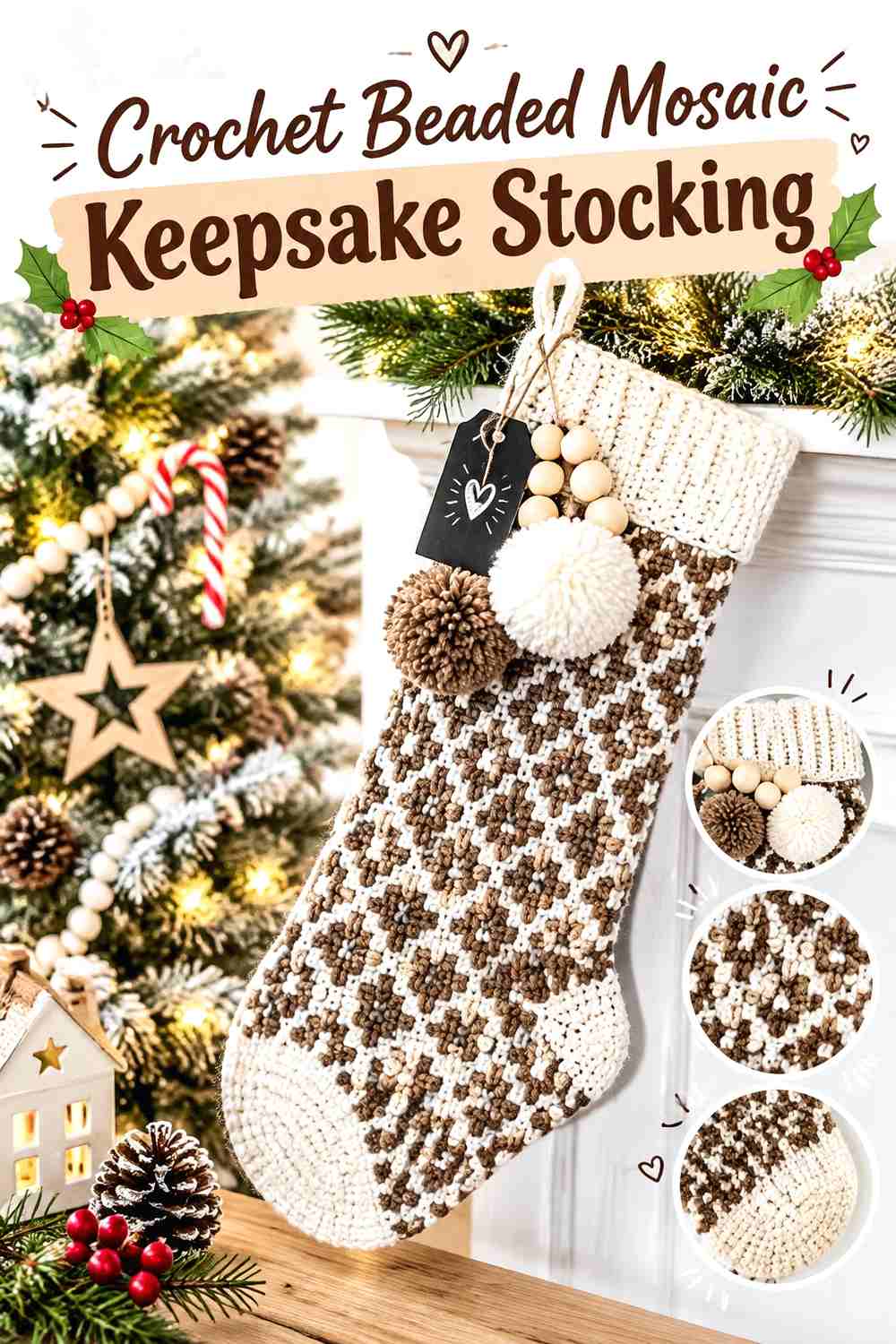
This mosaic stocking takes the idea in a more embellished direction. The credited design combines mosaic colorwork with a folded cuff and decorative beaded pom-pom elements, providing a useful model for an heirloom stocking where finishing details matter as much as the central pattern.
A name tag can become the final personal layer rather than trying to integrate lettering into the mosaic itself.
Treat the Cuff and Tassels as One Composition
The mosaic body is already detailed, so the upper finishing area should feel connected rather than random.
Repeat a body color in the pom-pom or tag treatment so the embellishments look like part of the original color plan.
Removable Name Tags Offer Flexibility
A stitched name becomes permanent, which may be exactly what you want. A tied or attached name tag provides another option if the stocking might eventually be reassigned or handed down.
Decide whether the heirloom belongs to one person forever or to the family more generally before choosing the personalization method.
Beads Change Storage Requirements
Dimensional beads and pom-poms need more protection than flat mosaic crochet.
When the stocking goes back into holiday storage, avoid placing heavy decorations directly over the embellished cuff where they could crush or distort the finishing.
Creator Credit: MJ’s Off The Hook Designs
5. Crochet Lined Granny Square Heirloom Stocking
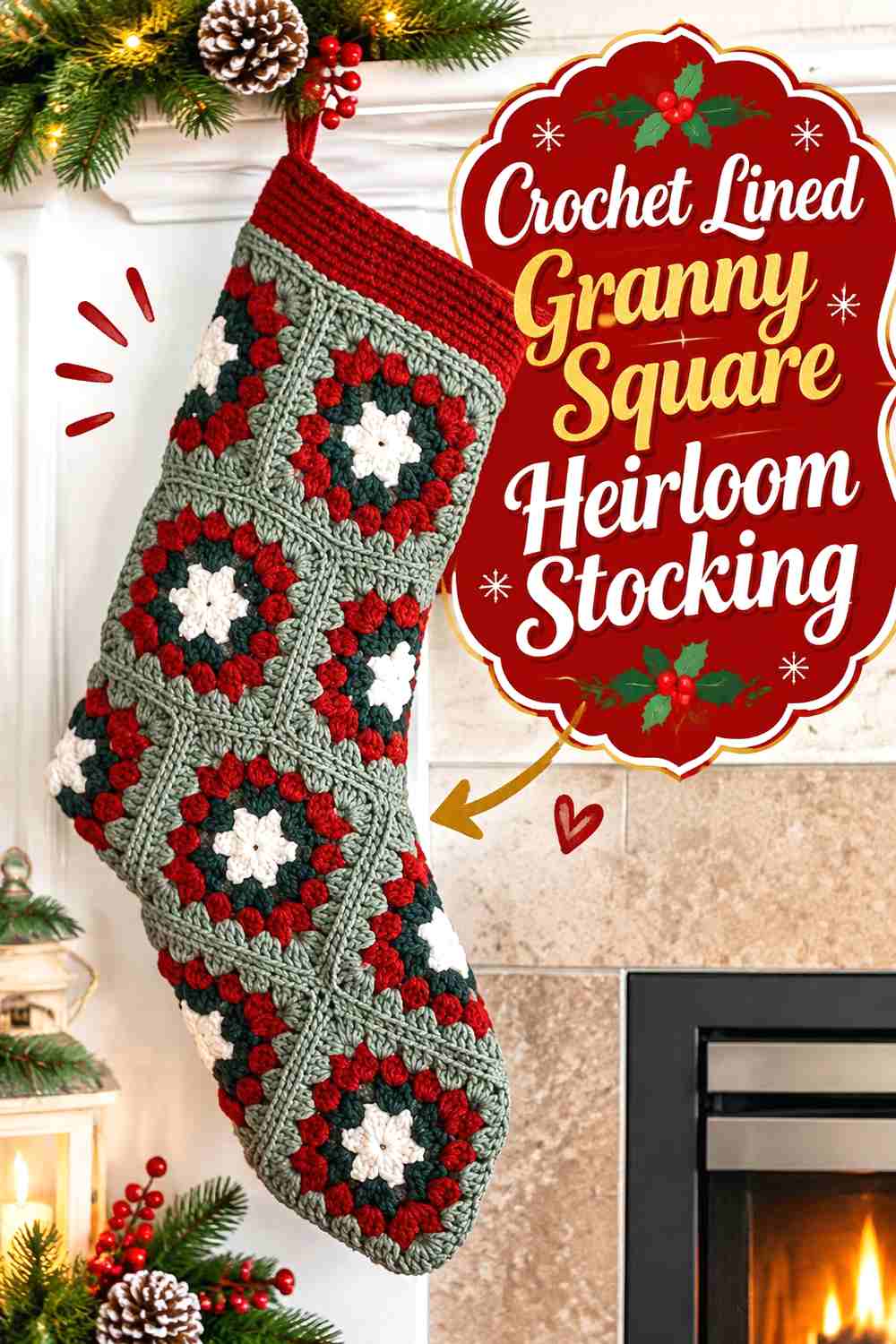
Granny squares immediately create the feeling of assembled handwork because each motif is made individually and then becomes part of a larger form. The source stocking goes a step further by including a lining, which is particularly relevant for an open motif construction.
This style can also absorb leftover yarn from meaningful family projects, provided the yarns are compatible with the construction.
Plan Motif Placement Before Joining
A collection of attractive individual squares does not automatically create a balanced stocking.
Lay the motifs in their intended arrangement first and look at where dominant colors fall around the toe, heel, front, and cuff.
A Lining Changes the Practical Side of Granny Crochet
Open granny fabric can expose small contents through its gaps and may stretch under weight.
A suitable lining separates the gifts from the open crochet surface and can also provide another hidden location for a hand-stitched date, message, or fabric label.
Consider Using One Meaningful Vintage Color
You do not need every square to come from inherited yarn to give the stocking a family connection.
Even one compatible shade associated with an older blanket, sweater, or previous Christmas project can become the visual link between generations.
Creator Credit: Crochet with Patricia
6. Crochet Hexagon Patchwork Heirloom Stocking
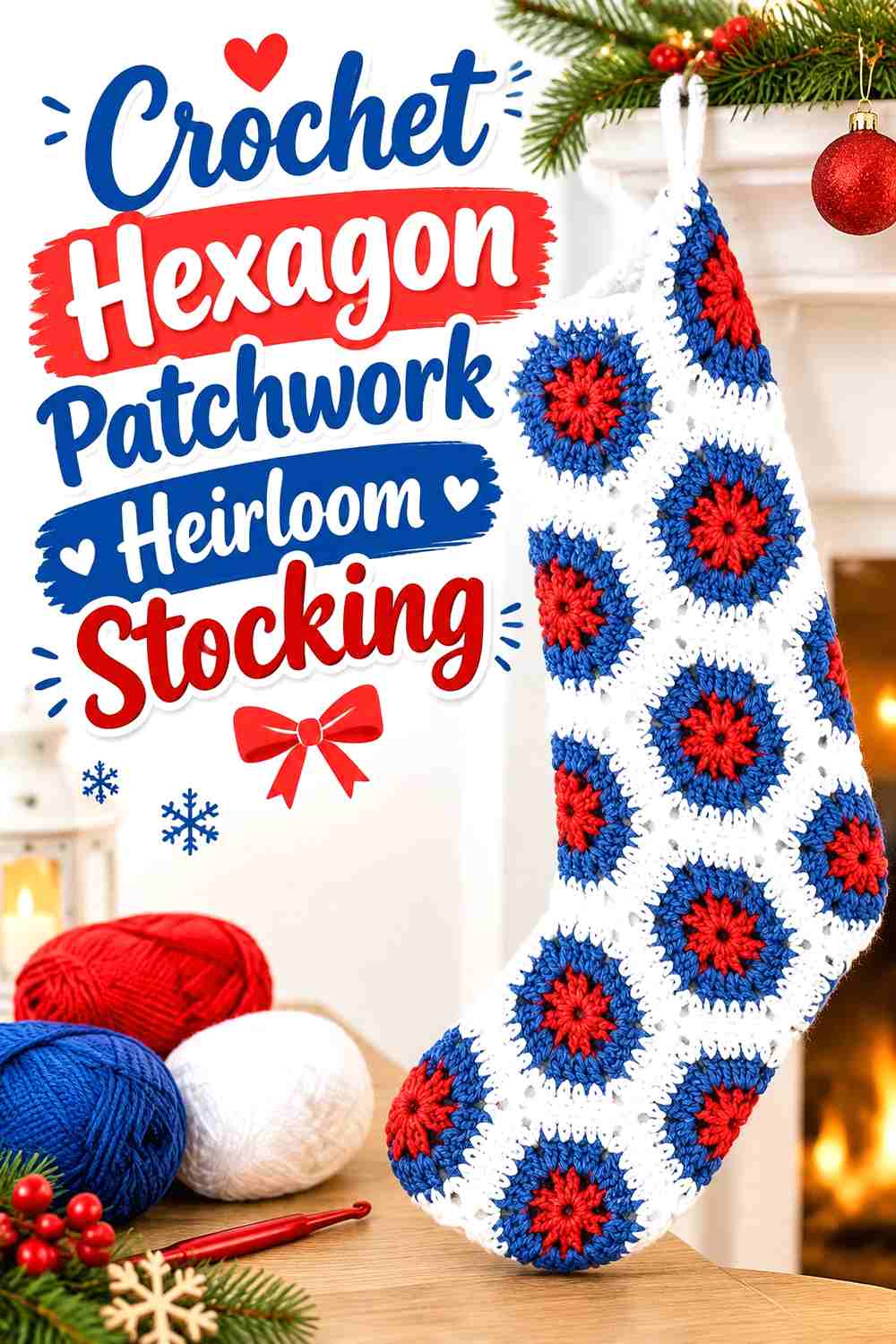
A hexagon stocking looks noticeably different from one assembled from conventional granny squares. Multiple motifs create the complete stocking silhouette, so the seams and joins become part of the finished design rather than something to hide.
This works particularly well for a patchwork heirloom aesthetic.
Treat the Seams as Decorative Structure
In a motif stocking, joining lines help explain how the stocking was made.
Choose joining yarn intentionally. A contrasting join emphasizes the patchwork construction, while a matching join allows the individual motif colors to flow together more quietly.
Build a Family Palette Instead of a Random Scrap Mix
Scrap-style does not have to mean unplanned.
Select a small group of recurring colors and distribute them through the hexagons. The finished stocking can still look collected and handmade without becoming visually chaotic.
Add the Name Where the Geometry Calms Down
Busy hexagon intersections can make hand lettering difficult to read.
Use the cuff, hanging tab, or a separate stitched label for personalization rather than forcing a name across several motif seams.
Creator Credit: Bella Coco
7. Crochet Cable-and-Fur Heirloom Stocking
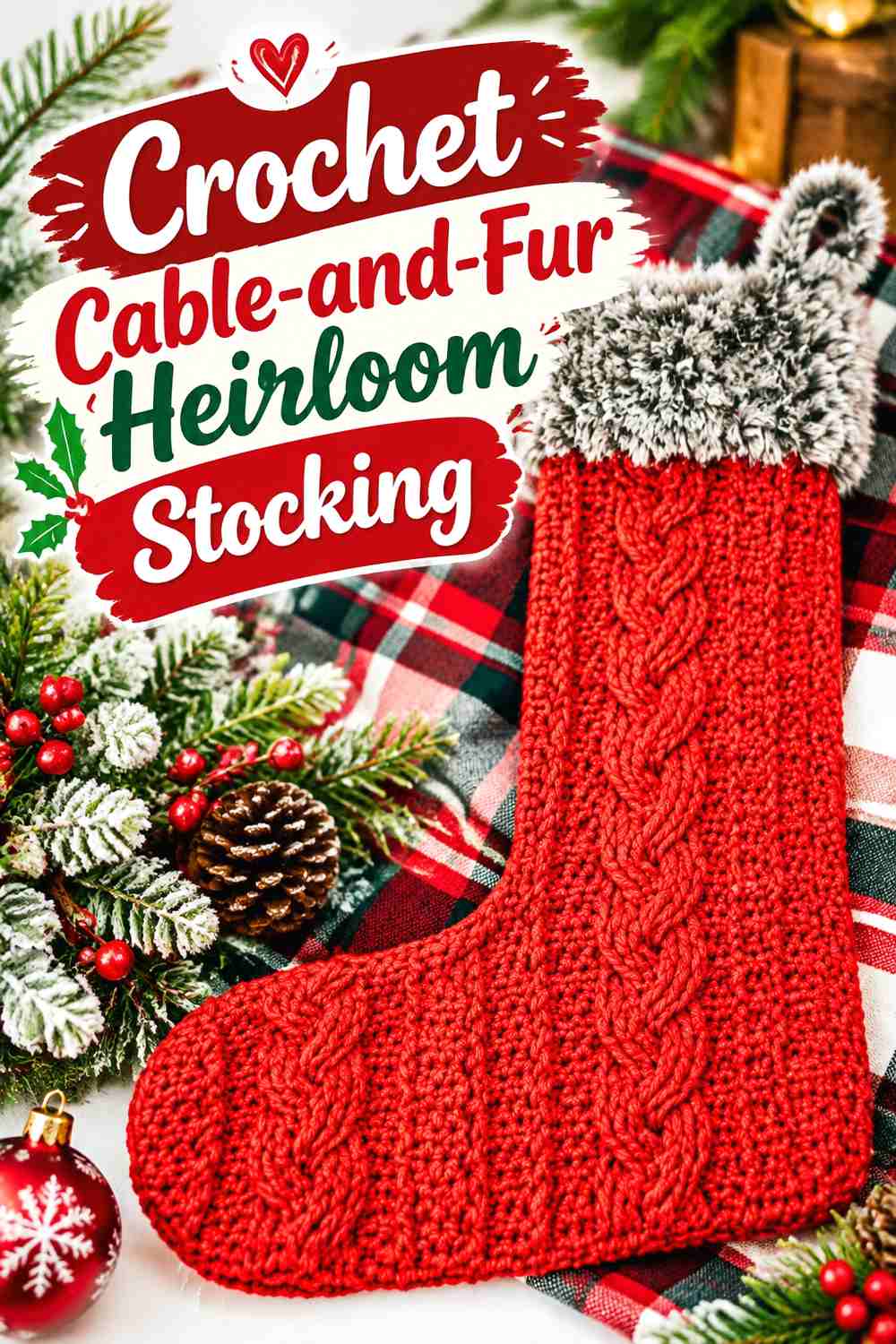
This design combines a structured cabled body with a contrasting faux-fur-style cuff. It gives you two distinctly different textures, making it a stronger statement piece than a plain traditional stocking.
For an heirloom adaptation, let the cables and cuff provide most of the visual interest and keep hand stitching restrained.
Place Initials Below or Away From the Fur
A fluffy cuff is visually strong but does not provide the clearest surface for conventional embroidery.
If you want an initial, year, or small stitched symbol, place it on a calmer area of the crocheted body or attach a separate label near the cuff.
Cables Need Clear Stitch Definition
An heirloom cable stocking depends on being able to see the raised structure.
Highly variegated yarn can sometimes compete with shadows and crossing lines. If cable definition is your priority, compare the yarn against a textured swatch before making the entire stocking.
Protect the Cuff in Storage
Faux-fur textures can become compressed when packed beneath heavier decorations.
Store the stocking where the cuff has room rather than folding or tightly stacking it under rigid ornaments.
Creator Credit: Sierra Fontaine
8. Crochet Moss-Stitch Embroidered Heirloom Stocking
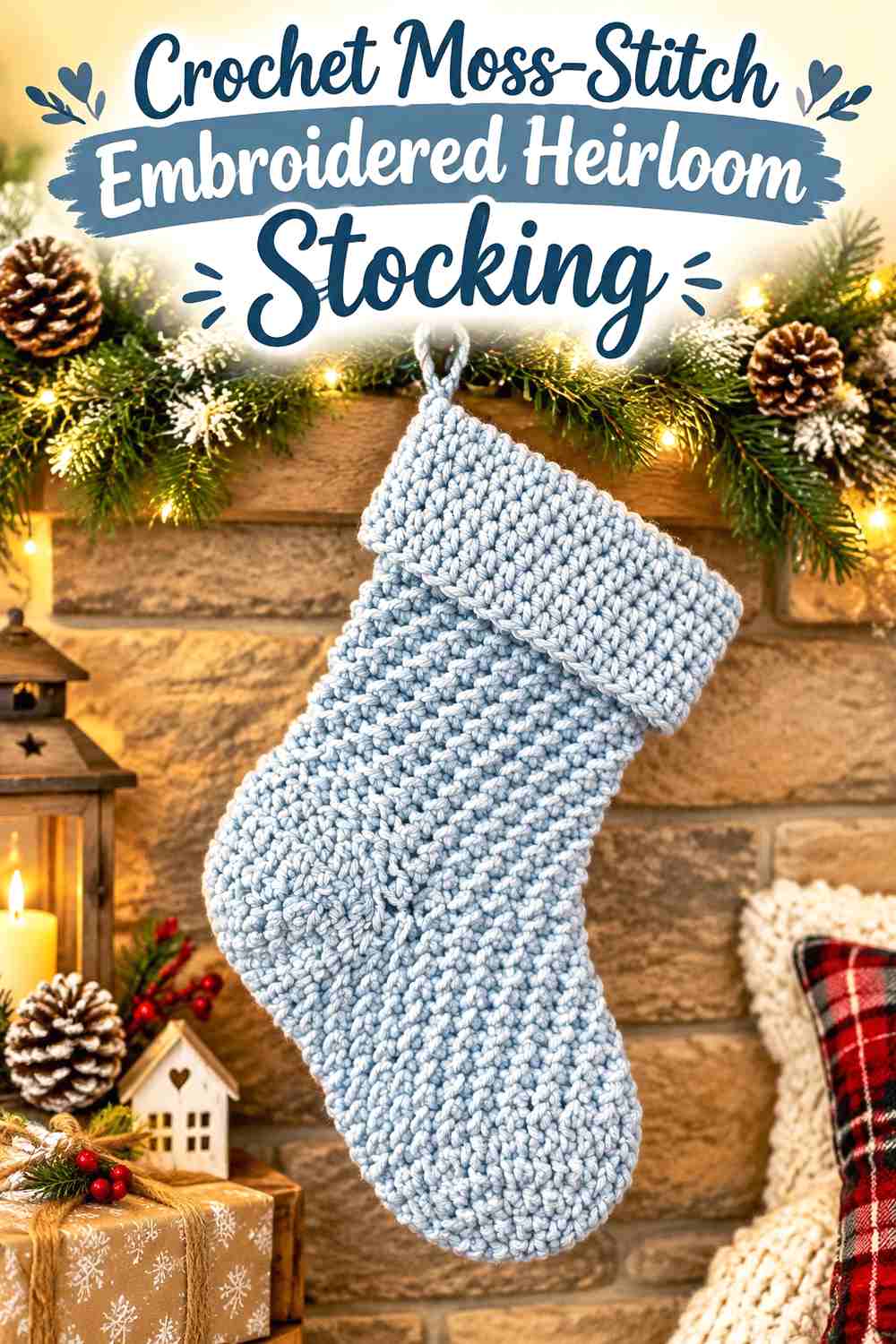
Moss stitch offers a comparatively calm, repeated texture. That makes this construction particularly useful as a foundation for independent hand embroidery because the stocking itself does not already contain large motifs or heavy dimensional decoration.
The source tutorial provides both mini and full-size stocking options, but use the creator’s stated measurements and instructions rather than assuming one scale fits your planned personalization.
A Quiet Surface Gives Embroidery More Attention
If your main goal is a hand-stitched name, date, branch, star, or other simple decorative motif, a restrained stocking body gives that embroidery space to be noticed.
Avoid filling every open area simply because it is available.
Test Surface Stitching on a Swatch
Crochet fabric behaves differently from woven embroidery cloth. Stitches can disappear into the texture, distort openings, or pull too tightly if the embroidery yarn is not handled carefully.
Practicing the intended effect on a small crochet sample is safer than experimenting directly on the finished keepsake.
Use the Cuff as a Visual Boundary
A contrasting cuff can frame the personalization below it.
If the body carries embroidery, keeping the cuff comparatively simple helps prevent the top and center from competing for attention.
Creator Credit: DIY FROM HOME CROCHET
9. Crochet Hand-Stitched Name Heirloom Stocking
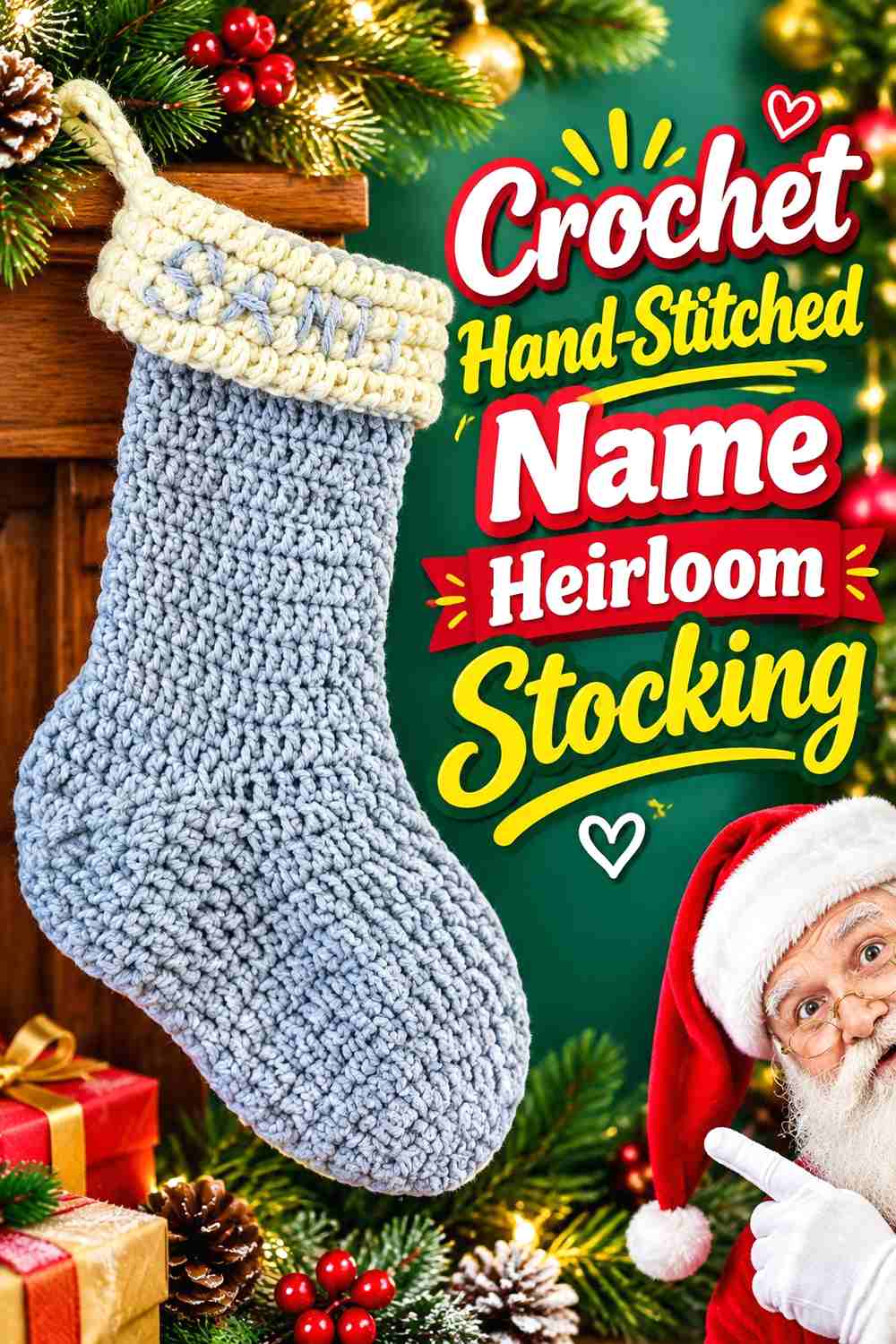
For a stocking where the recipient’s name is the central keepsake feature, start with a construction that leaves enough uninterrupted space for lettering. The credited tutorial includes name addition as part of the demonstrated finishing, making it an especially relevant source for this personalized direction.
This is one of the clearest choices for a stocking intended to belong permanently to one person.
Center the Name on the Finished Fabric
Do not decide final placement solely from the stocking while it is still being constructed.
The cuff, heel, and hanging orientation affect where the visual center appears. Position the lettering after you can see how the stocking hangs.
Leave Room for a Future Date
If the stocking marks a birth, marriage, new home, or another family milestone, consider adding a small year separately from the name.
Keeping the date understated allows the name to remain dominant while still preserving when the stocking entered the family’s Christmas tradition.
Match Letter Weight to Stocking Scale
Very thick lettering can overwhelm a moderate-size stocking, while extremely fine stitching may disappear from normal viewing distance.
Temporarily position yarn or a removable guide first so you can judge the proportion before permanently stitching the name.
Creator Credit: Andrea Quinteros
10. Crochet Felted Wool Heritage Stocking
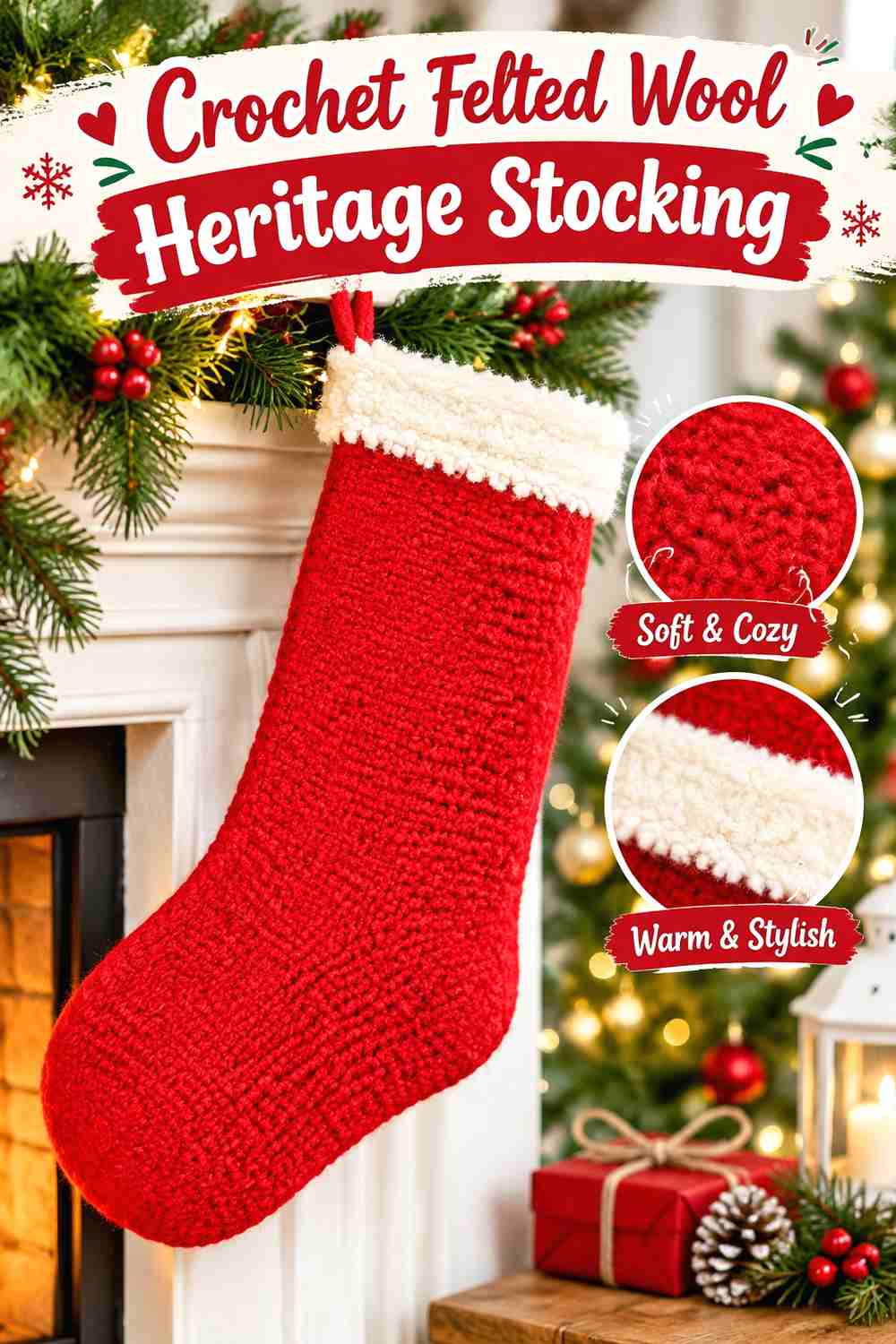
A wool stocking offers an interesting heirloom route because felting can change the character of crochet fabric, creating a denser, more textile-like appearance. The credited tutorial discusses a full-size stocking that can be felted, while also allowing the crochet stocking to remain unfelted.
That makes this concept quite different from stockings where surface stitch definition is the main decorative feature.
Decide on Felting Before Adding Fine Embroidery
Felting changes fabric dimensions and surface structure.
If you plan to combine it with hand-stitched decoration, establish the final fabric first rather than carefully positioning embroidery on a surface that will later change.
Felting Softens Individual Crochet Stitches
Choose this direction if you like the idea of a cohesive wool textile more than sharply visible crochet stitch anatomy.
If your heirloom goal is to showcase intricate stitch definition, a non-felted cable, puff, or mosaic stocking may be a better match.
Add the Family Detail After the Fabric Stabilizes
A simple stitched initial, small patch, or label added afterward can create contrast against the softened felted surface.
Keep the addition proportional so the dense fabric remains the defining feature.
Creator Credit: The Crochet Crowd
11. Crochet Granny-Stitch Family Heirloom Stocking
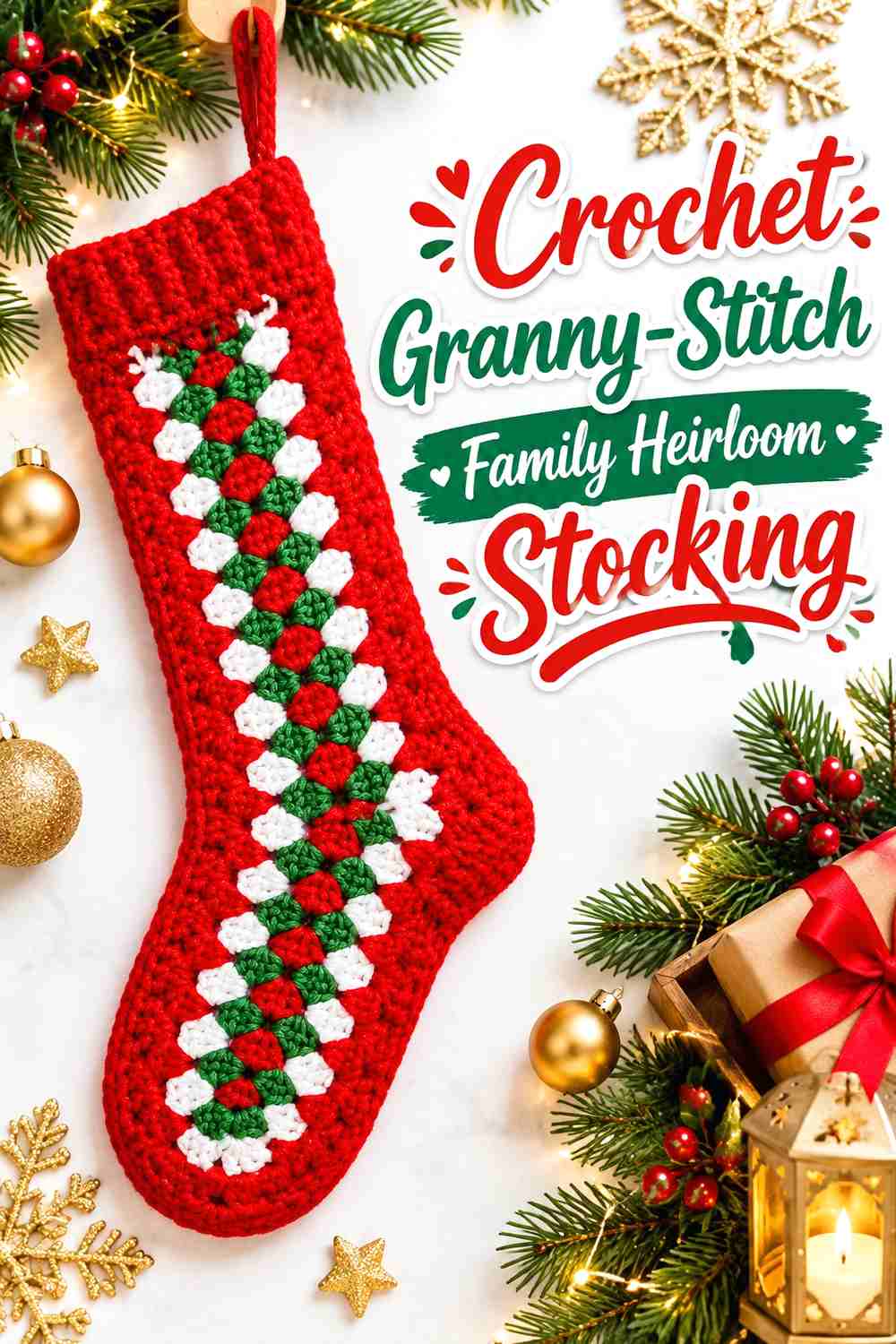
Granny stitch creates a familiar crochet texture without requiring the entire stocking to be assembled from separate squares. That makes it a useful middle ground between a motif stocking and a continuous traditional construction.
For family stockings, alternating colors can give each recipient a different version while maintaining the same recognizable stitch language across the collection.
Repeat One Color Across the Whole Family Set
Choose one shared shade for every stocking—perhaps cream, forest green, burgundy, or another family Christmas color—and change the companion colors for each person.
The shared shade creates continuity even when the individual stockings are not identical.
Personalization Can Sit Above the Granny Texture
Open clustered fabric may not be the most controlled background for detailed embroidery.
A cuff, stitched label, or separate appliqué gives lettering a more stable visual area while allowing the granny stitch to remain the main body texture.
Plan Future Additions to the Set
If new family members may receive matching stockings later, keep a record of the construction source and color logic.
An heirloom collection often becomes more meaningful when it can grow rather than remaining frozen at the year the first stockings were made.
Creator Credit: My Yarn Loft by Tansy
12. Crochet Chunky Pom-Pom Heirloom Stocking
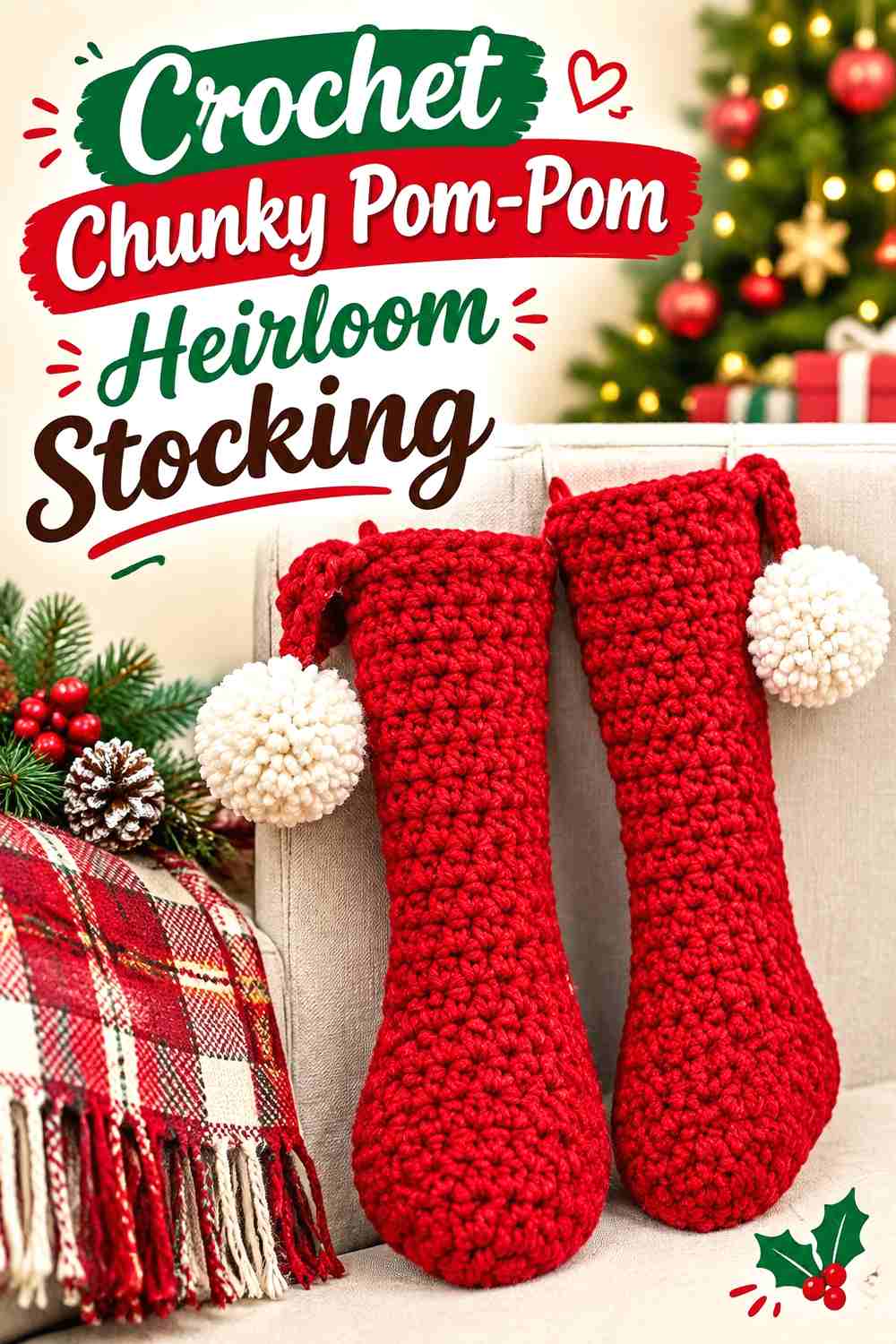
A super-bulky stocking creates a soft, oversized visual presence, and a pom-pom adds an unmistakably handmade finish. This is less delicate than mosaic or Fair Isle work and can suit a family that prefers cozy, substantial Christmas decor.
The credited construction has a slipper-like stocking shape, which also distinguishes it from flatter panel stockings.
Let Scale Be the Statement
Chunky yarn already makes individual stitches visually prominent.
Instead of adding several appliqués, allow the body, cuff, and pom-pom to provide most of the decoration. A small name tag may be all the personalization it needs.
Choose Pom-Pom Placement With Storage in Mind
Large pom-poms look playful on display but take up space when the stocking is packed away.
Position and store them so they are not repeatedly crushed under rigid Christmas decorations.
Keep Added Stitching Bold Enough to Read
Very fine embroidery can visually disappear against chunky crochet.
If you add initials or another stitched mark, compare its thickness with the scale of the surrounding stitches before committing.
Creator Credit: KnitcroAddict
13. Crochet Appliqué Storybook Heirloom Stocking
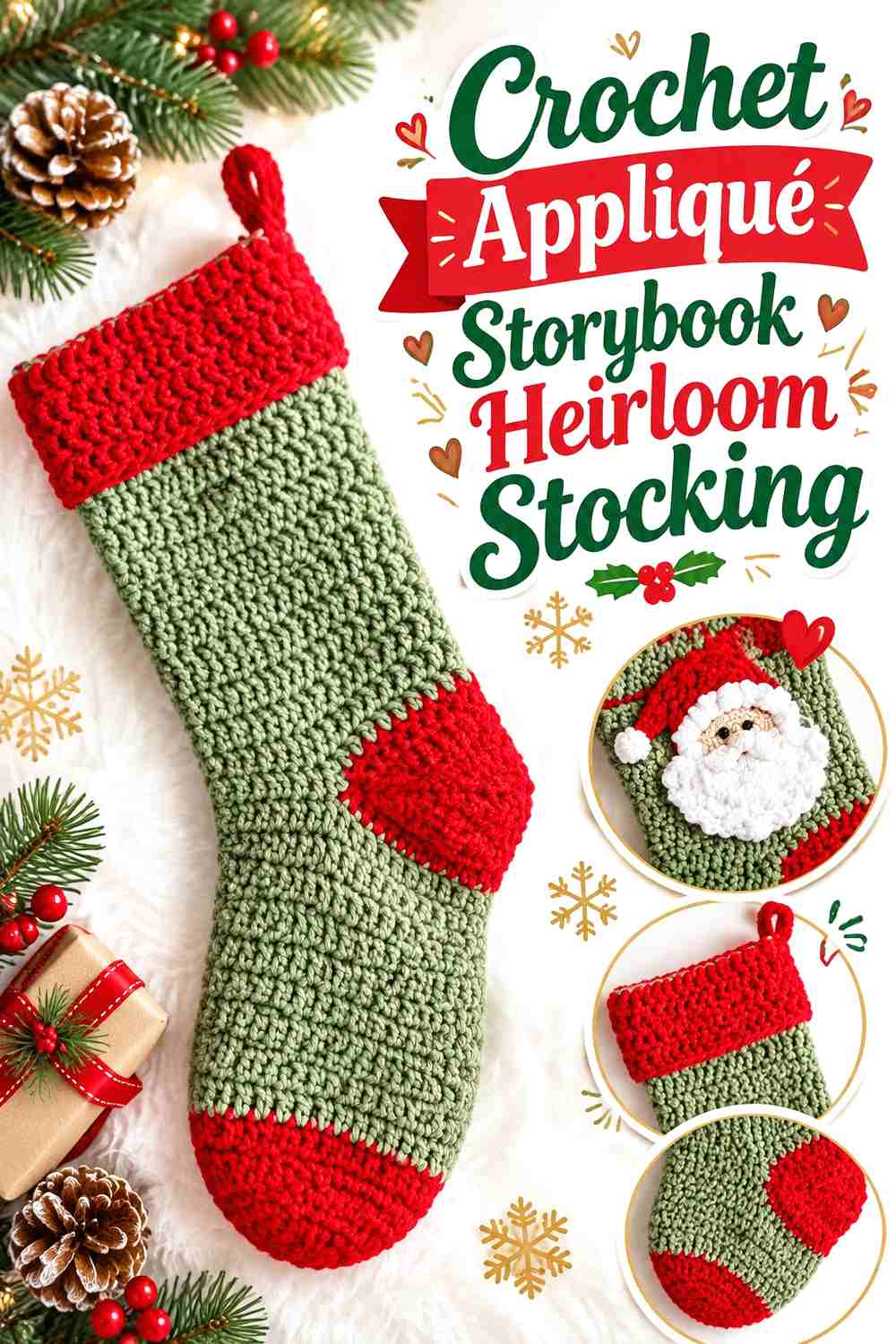
A relatively simple stocking body can act as a backdrop for a separately crocheted and hand-attached appliqué. The credited stocking is intentionally suitable for personalization and the creator references festive appliqué options, making it a strong base for this storybook-style heirloom approach.
The advantage is flexibility: the stocking construction can remain consistent while the front motif changes from person to person.
Choose a Motif With Personal Meaning
A reindeer, tree, star, animal, flower, or another symbol can say more about the recipient than a generic decoration.
For an heirloom, consider whether the image will still feel appropriate years later. A simple symbolic motif often ages more gracefully than a highly temporary theme.
Position the Appliqué on the Filled Stocking
A flat stocking and a filled stocking do not present the front surface in exactly the same way.
Before sewing the motif permanently, place something inside the stocking and check whether the appliqué remains centered and readable.
Leave the Cuff Available for a Name
Separating image and identity creates a cleaner hierarchy.
Let the body carry the storybook motif and reserve the cuff for the recipient’s name or initial rather than combining all personalization in one area.
Creator Credit: Nana’s Crafty Home | Tonya Bush
14. Crochet Puff-Texture Heirloom Stocking
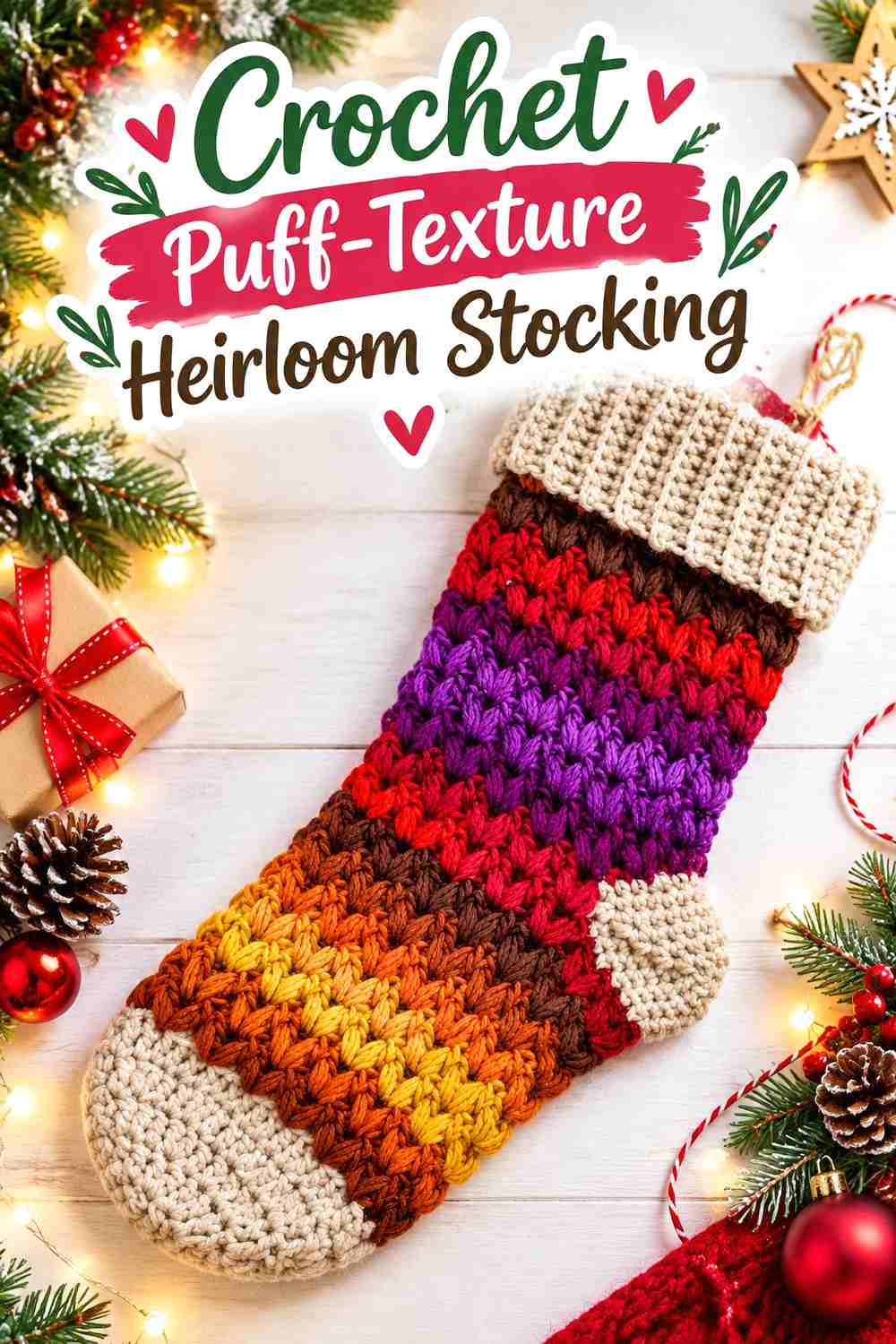
Puff-inspired braided texture gives this stocking dimension without requiring separate motifs or post-crochet appliqués. The raised surface creates shadows and movement that can make a single-color stocking look detailed.
That makes it a useful option for an heirloom with a quieter palette.
Let Texture Replace Busy Colorwork
A strongly raised stitch pattern does not need several contrasting colors to remain interesting.
Working the body in one main shade can make the texture easier to appreciate and provides a calmer background for a contrasting cuff or small hand-sewn label.
Avoid Stitching Through the Most Dimensional Areas
Surface embroidery placed across raised puffs can become uneven or disappear between high and low sections.
Choose a flatter part of the stocking for initials, dates, or labels so both the crochet texture and the added stitching remain clear.
Use Repeated Texture to Unite Multiple Stockings
If you are making a family collection, repeat the puff construction and vary the cuff or accent shade.
The shared texture can become the identifying family feature even when every stocking uses a different color.
Creator Credit: Passionate Crafter
15. Crochet Surface-Embroidered Classic Heirloom Stocking
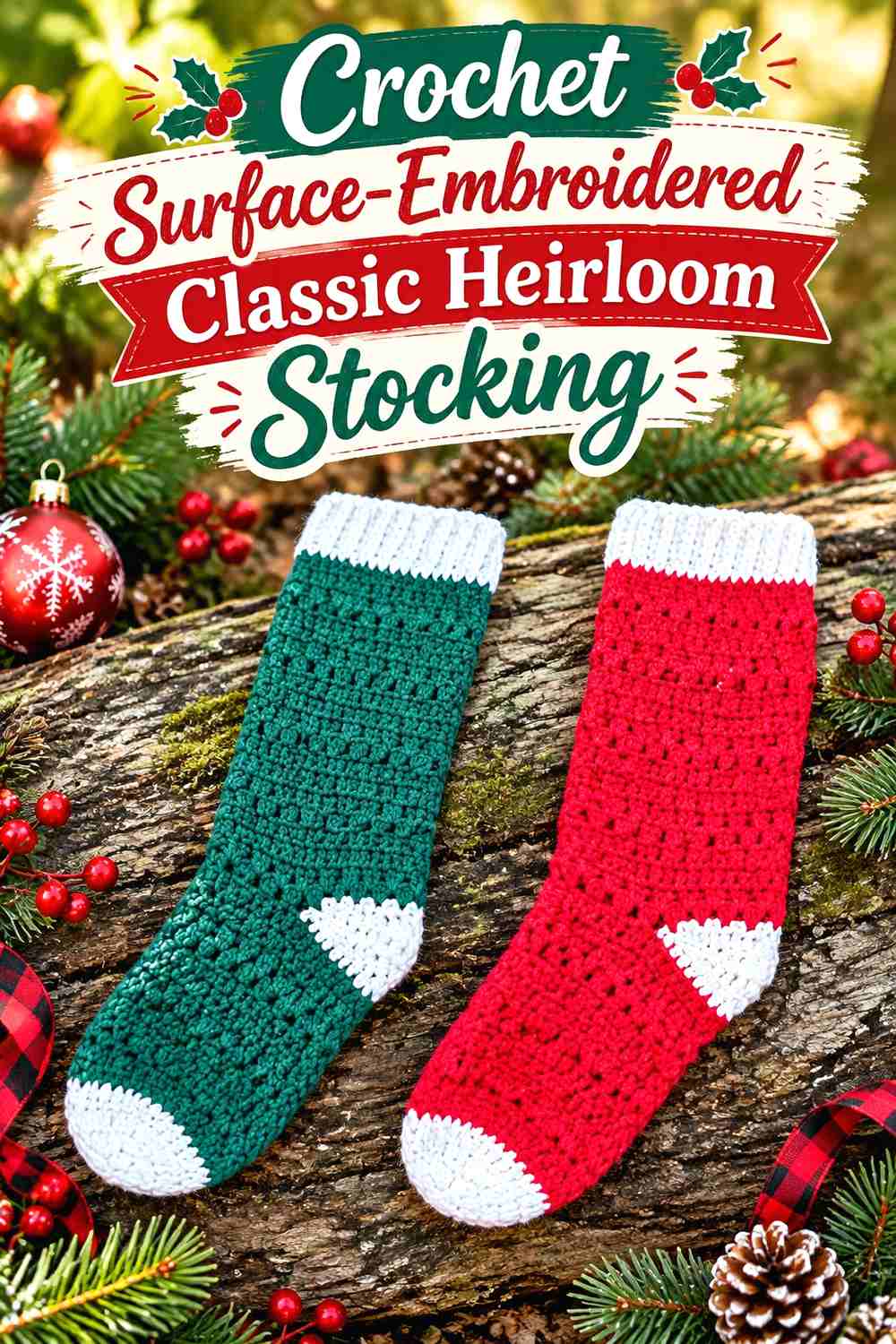
Sometimes the most adaptable heirloom starts with a simple stocking. A relatively clean traditional construction leaves you free to decide what the keepsake element should be after the crochet is complete.
The credited tutorial provides a classic stocking structure with defined toe, heel, leg, cuff, and hanging section. For this idea, the heirloom value comes from the independent hand stitching you add afterward rather than from copying a decorative surface treatment from the source.
Sketch the Embroidery Layout Before Stitching
You might add a small branch, stars, initials, a year, a simple border, or another personal symbol, but avoid improvising the complete composition directly on the stocking.
A paper sketch or removable placement guide can help you determine where the design should sit relative to the heel and cuff.
One Motif Can Be More Timeless Than Many
A single stitched snowflake, family initial, evergreen sprig, or meaningful symbol can make the stocking distinctive without turning it into an embroidery sampler.
This restrained approach also leaves room for a later generation to add a date, name, or repair without competing with excessive decoration.
Document the Story With the Stocking
For a true keepsake, consider storing a small written note separately with the Christmas decorations explaining who made the stocking, whom it was made for, and when.
The information does not need to be stitched onto the fabric to remain part of the heirloom.
Creator Credit: Ophelia Talks Crochet
Which Heirloom Stocking Style Should You Choose?
For personalized names, the Felted-Name Cable and Hand-Stitched Name stockings give lettering a clear role in the design.
If you want the crochet itself to provide most of the decoration, choose the Nordic Fair Isle, Mosaic Sampler, Beaded Mosaic, Cable-and-Fur, or Puff-Texture approaches. Their surface designs are already visually substantial, so only restrained personalization is needed.
For a more obviously handcrafted, assembled look, the Lined Granny Square and Hexagon Patchwork stockings emphasize motifs and joining. They can be especially meaningful when the color palette connects to other family crochet pieces.
Choose the Moss-Stitch or Surface-Embroidered Classic stocking when hand embroidery is the feature you most want to explore. Their quieter bases provide more freedom to add names, dates, branches, stars, or another simple stitched symbol without competing with heavy colorwork.
The Appliqué Storybook approach works well when each family member should have a different pictorial identity, while the Chunky Pom-Pom style suits a softer, more substantial mantel display.
Conclusion
A crochet heirloom stocking becomes memorable when its details have a reason to be there.
If family identity matters most, begin with a name, initial, date, or repeated family color. If craftsmanship is the focus, choose cables, Fair Isle, mosaic work, puff texture, granny motifs, or hexagon patchwork and allow the crochet itself to become the decoration. For a stocking intended to grow more meaningful over time, a simpler base leaves room for later embroidery, labels, or carefully made repairs.
Think about the stocking as something that may be unpacked decades from now. Clear personalization, thoughtful finishing, appropriate storage, and a design that reflects the recipient will usually contribute more to that feeling than simply adding more decoration.
Use the original credited tutorials for exact construction details, then make the hand-stitched heirloom elements your own.
Frequently Asked Questions
What makes a crochet Christmas stocking an heirloom?
There is no single required stitch or material. An heirloom stocking usually gains significance through durable handmade construction, personal details, family traditions, or the memories attached to its annual use. Names, dates, inherited color schemes, meaningful motifs, and documented family stories can all strengthen that connection.
Should I embroider a name before or after crocheting the stocking?
For most surface personalization, it is easier to judge placement after the relevant section of the stocking has reached its finished shape. Cuffs, heels, seams, and filling can change where the visual center appears. Follow the creator’s construction first and plan independent embroidery around the finished fabric.
Which crochet stocking surface is easiest to personalize with hand stitching?
A comparatively dense, calm fabric generally provides more predictable support than highly open granny or lace-style crochet. Moss stitch or a simple solid stocking can therefore be useful when embroidery is the main feature. Open motif stockings may work better with a separate name patch, cuff, or label.
Can I embroider over crochet cables or puff stitches?
It is possible to add decoration to textured crochet, but highly raised areas can make lettering or fine embroidery uneven and harder to read. A flatter cuff, side area, tag, or separate appliqué often gives the personalization clearer definition.
Is lining worth adding to an heirloom crochet stocking?
It can be useful when the crochet is open, particularly with granny motifs, or when you want to separate small gifts from the crochet fabric. A lining can also offer a hidden place for a dated fabric label or short message. Follow an appropriate lining method rather than assuming every stocking construction requires the same treatment.
How can I make matching heirloom stockings without making identical ones?
Repeat one defining feature across the collection. That might be the cuff color, motif style, hanging loop, stitch texture, border, or name treatment. Each person can then have a different main color, motif, or decorative detail while the repeated element visually connects the set.
How should handmade heirloom stockings be stored?
Follow the care requirements of the actual fibers and embellishments used. In general, avoid crushing dimensional cuffs, pom-poms, beads, or appliqués beneath heavier decorations, make sure the stockings are clean and dry before storage, and keep any notes about yarn, construction, or family history with the Christmas collection.