A Happy Carnival Christmas tree trades quiet neutrals for color that feels energetic from across the room. Think raspberry pink, turquoise, lemon yellow, tangerine, cobalt, lime, lavender, and cherry red mixed with white or cream so the brighter shades still have room to stand out.
The theme does not require every ornament to depict a literal circus. Candy shapes, drums, striped spirals, stars, gift boxes, round baubles, bells, and whimsical characters can all contribute to a carnival-like tree because they bring movement, repetition, bold contrast, and playful silhouettes.
The tutorials below were selected for noticeably different ornament constructions. Some sources already suit a colorful theme naturally, while others are classic Christmas ornaments being reimagined through brighter palettes and finishing choices. The carnival color concepts are adaptations, so use each credited creator’s tutorial for the exact construction.
Quick List
- Crochet Candy Shop Carnival Ornament
- Crochet Spiral Candy Cane Carnival Ornament
- Crochet Rainbow Star Carnival Ornament
- Crochet Jingle Bell Carnival Ornament
- Crochet Confetti Snowflake Ornament
- Crochet Ribbon-Ring Carnival Wreath Ornament
- Crochet Embroidered Carnival Bauble Ornament
- Crochet Striped Carnival Bauble Cover
- Crochet Gift Booth Present Ornament
- Crochet Twisty Carnival Tree Ornament
- Crochet Party Snowman Ornament
- Crochet Bright Carnival Gnome Ornament
- Crochet Rainbow Angel Ornament
- Crochet Tiered Carnival Tree Ornament
- Crochet Toy Drum Carnival Ornament
- Crochet Mini Carnival Mitten Ornament Pair
- Crochet Sunburst Carnival Ball Ornament
Build a Bright Palette Without Making the Tree Chaotic
A carnival tree can contain many colors, but repetition keeps it from looking accidental. Choose three or four dominant shades and let smaller accents rotate around them.
For example, raspberry, turquoise, yellow, and white can form the main palette. Orange, lime, or purple can appear occasionally without needing to show up in every ornament.
You can also assign colors by ornament type. Candy pieces might use pink and turquoise, drums could use cobalt and yellow, while stars and snowflakes repeat white as a visual reset.
Contrast matters more than the number of colors. Yellow details can disappear against cream, and medium pink may merge with orange from a distance. Place very similar colors next to a neutral or a substantially darker shade when the ornament depends on a clear outline.
Balance Flat and Dimensional Ornaments
A tree covered only in round stuffed ornaments can feel visually heavy. A collection made entirely from flat stars and snowflakes may have the opposite problem and look thin from the side.
Mix silhouettes deliberately. Flat stars, bells, and mittens can fill smaller spaces close to branches. Stuffed baubles and snowmen create depth. Spiral ornaments add vertical movement, while drums and presents introduce stronger geometric shapes.
Branch strength matters as well. A lightweight flat motif can hang farther toward a branch tip than a filled ornament or one built around a glass or plastic ball.
If you are decorating a tabletop tree, miniature and flat projects will generally be easier to space than a collection dominated by large three-dimensional pieces.
Use Embellishments Where They Will Actually Be Seen
Carnival styling invites pompoms, beads, bows, embroidery, metallic yarn, bells, tassels, and contrasting edging, but an ornament can become visually crowded very quickly.
Choose one feature to lead. If the yarn already contains several bright stripes, keep the embellishment simple. If the ornament body is one solid color, you have more room for dots, stars, surface embroidery, or a multicolor hanger.
Small detachable components also deserve practical consideration. Beads, bells, and rigid pieces may not suit trees accessible to very young children or pets. In those settings, yarn embroidery and securely crocheted details can preserve the colorful look with fewer loose components.
1. Crochet Candy Shop Carnival Ornament
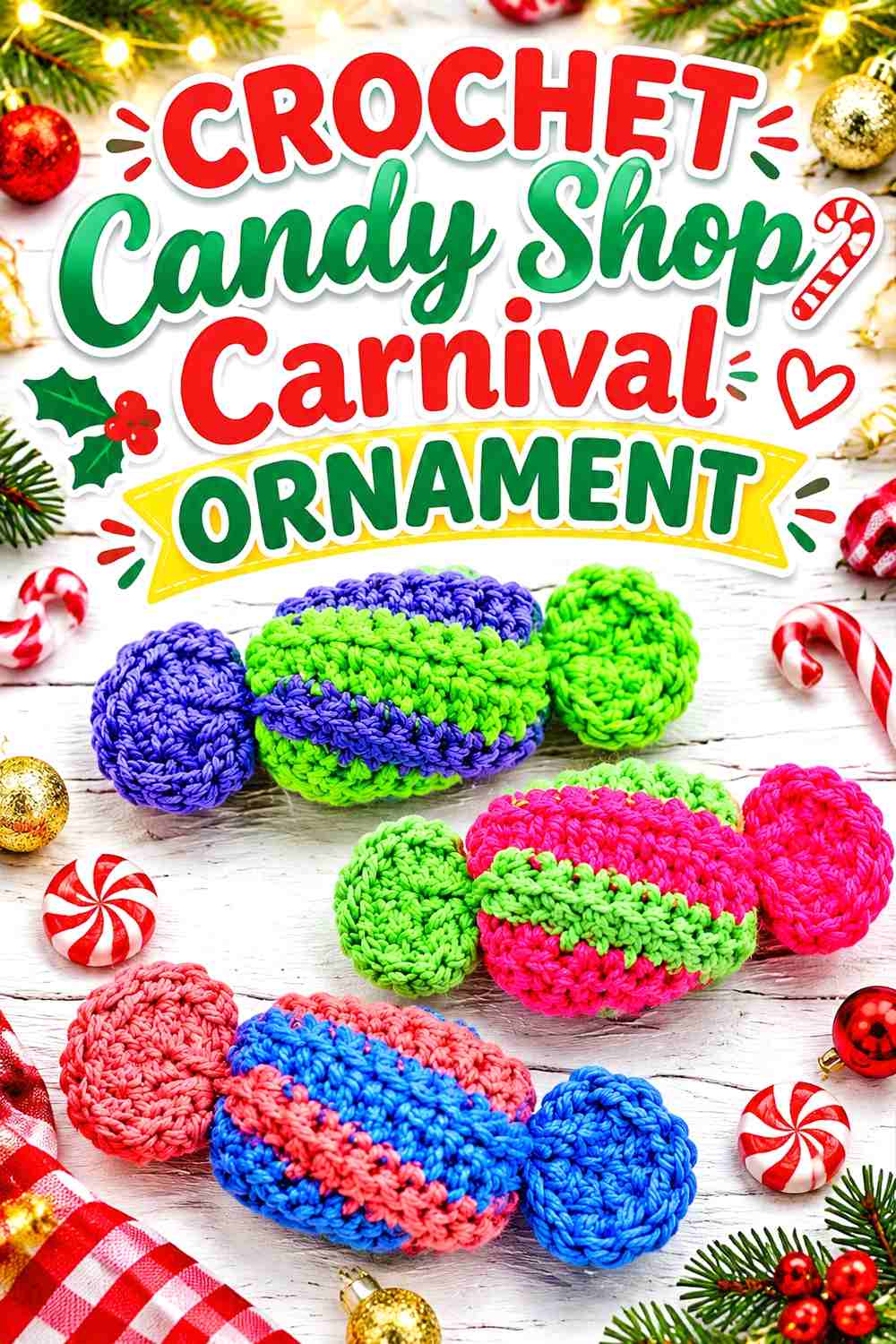
Crochet Jewel’s tutorial provides a candy-themed Christmas ornament source, which makes it a natural starting point for the sweetest part of a carnival tree.
Instead of relying only on traditional red and white, work toward a candy-counter palette such as hot pink, turquoise, lemon, lavender, and orange. These ornaments can help connect other bright projects because almost any color combination makes sense in a candy theme.
Separate Similar Colors With a Light Stripe
Pink beside orange or blue beside purple may blend when the ornament is viewed from several feet away.
A narrow white or cream separator can make each color area easier to distinguish. This is especially useful if several candy ornaments will hang together on one section of the tree.
Repeat the Candy Colors Elsewhere
A candy ornament becomes more integrated when its shades appear again in the stars, baubles, or drums nearby.
You do not need identical combinations. Repeating the same raspberry pink in three different ornament shapes is enough to make the larger tree palette feel connected.
Creator Credit: Crochet Jewel
2. Crochet Spiral Candy Cane Carnival Ornament
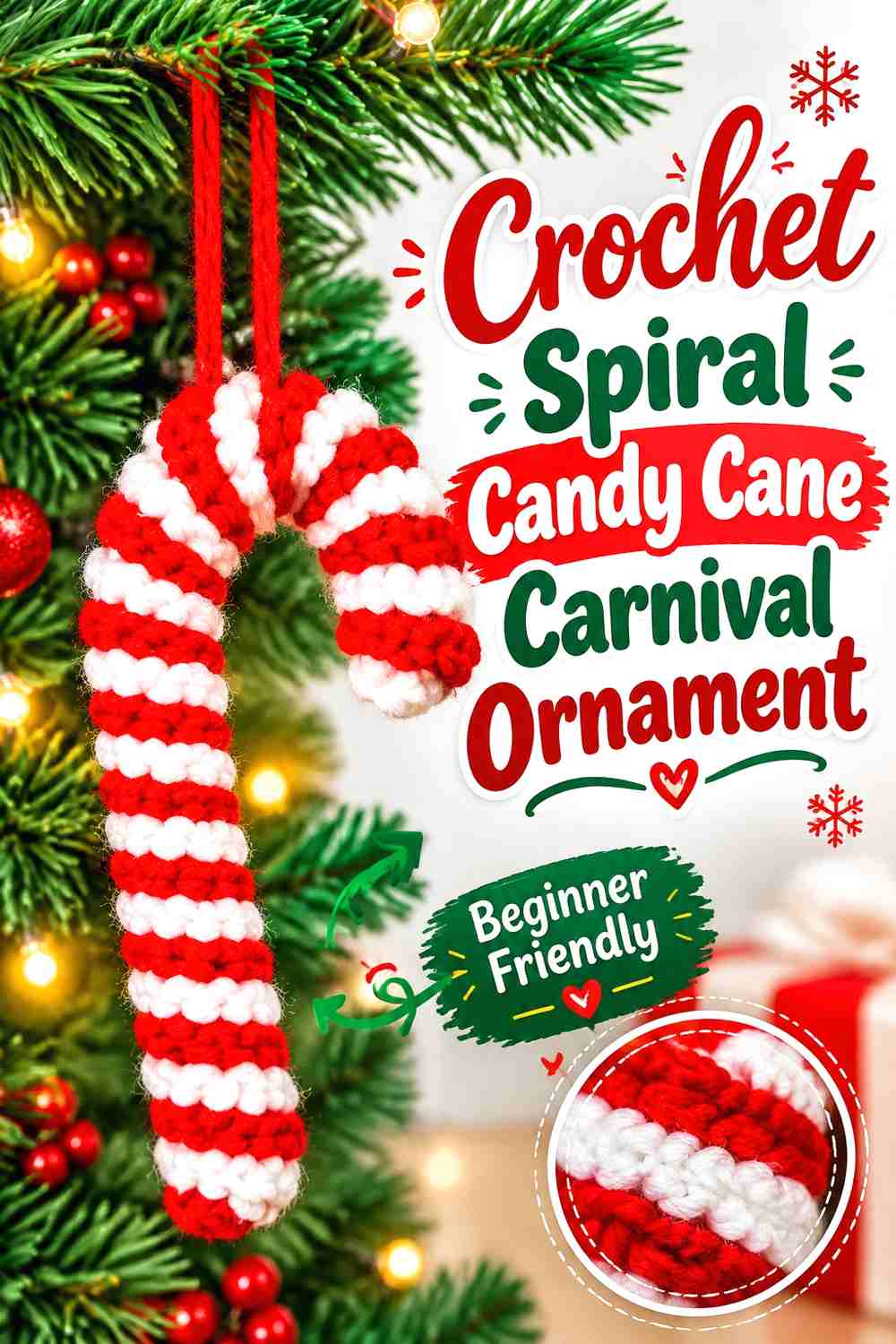
Made by Phia demonstrates a crochet candy cane ornament formed around the familiar curved shape.
For a carnival interpretation, move beyond red and white. Pink with turquoise, orange with yellow, cobalt with lime, or lavender with raspberry can turn the spiral into something closer to a striped fairground sweet.
Two Strong Colors Usually Beat Four Tiny Stripes
The candy cane already contains plenty of visual movement because the colors twist around the curved form.
Using too many narrow shades can make the spiral difficult to read. Two main colors with one small accent at the hanger or bow often produce a clearer result.
Check the Curve Before Hanging
A candy cane depends on its hook shape. If the curve twists sideways, the ornament can resemble a striped cord when viewed from the front.
Inspect the finished piece in its hanging position and adjust the orientation before deciding where to place it on the tree.
Creator Credit: Made by Phia
3. Crochet Rainbow Star Carnival Ornament
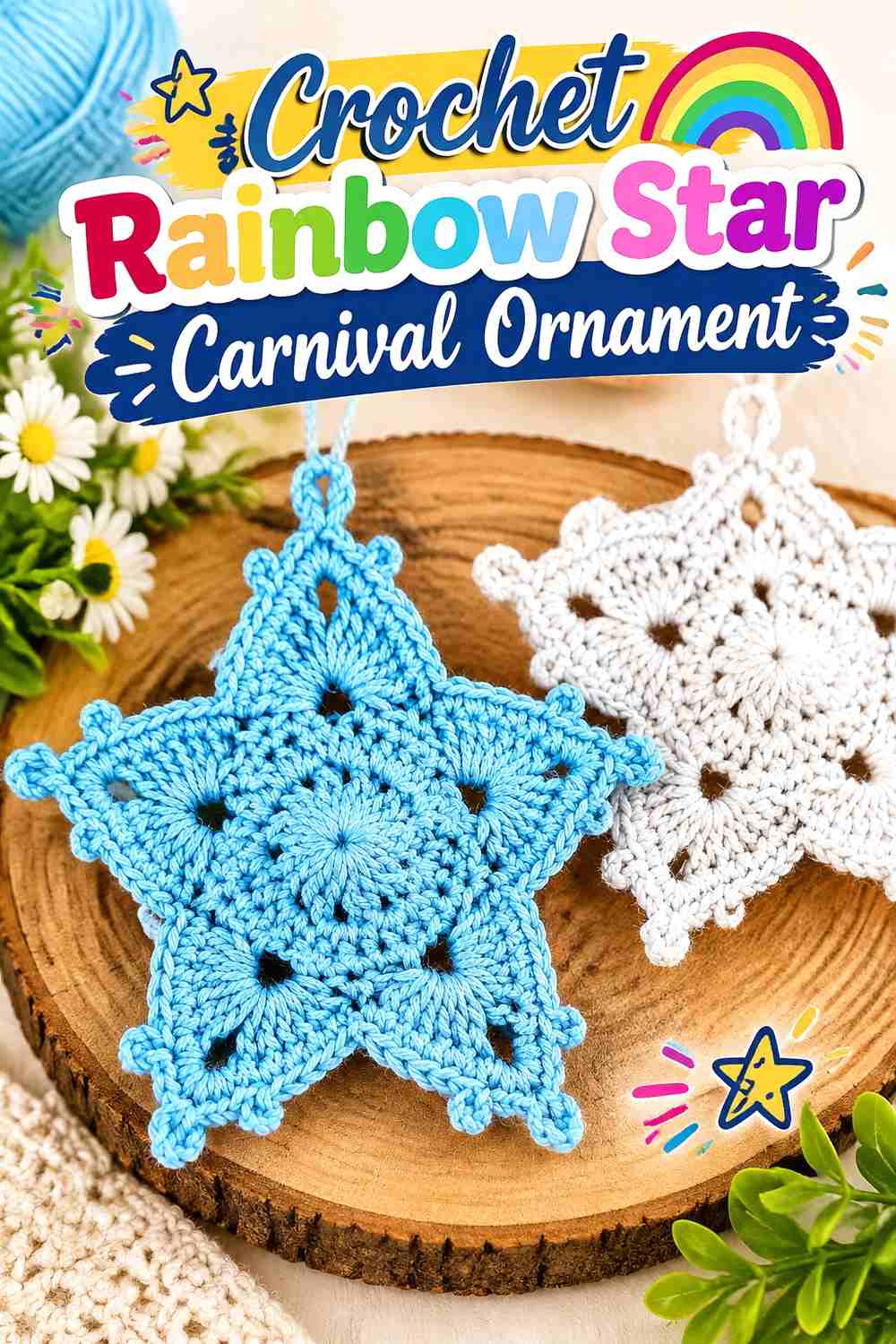
Kristines Crochets teaches a defined crochet star intended as a Christmas decoration.
The open, pointed silhouette makes this a useful visual break between round ornaments. For a Happy Carnival tree, try saturated yellow, raspberry, turquoise, or purple rather than reserving stars for metallic neutrals.
Use Stars to Distribute Accent Colors
If lime green appears only once on the tree, it can look disconnected. A few small stars are an easy way to repeat that shade without adding another large ornament.
This makes stars particularly useful for balancing a palette after the larger baubles and character pieces are already finished.
Shaping Matters on an Open Star
A pointed motif depends on symmetry more than a stuffed ornament does.
If the star is intended to hang flat, shape it carefully using a method appropriate to the yarn fiber. An uneven point becomes more noticeable when the ornament is outlined against tree lights.
Creator Credit: Kristines Crochets
4. Crochet Jingle Bell Carnival Ornament
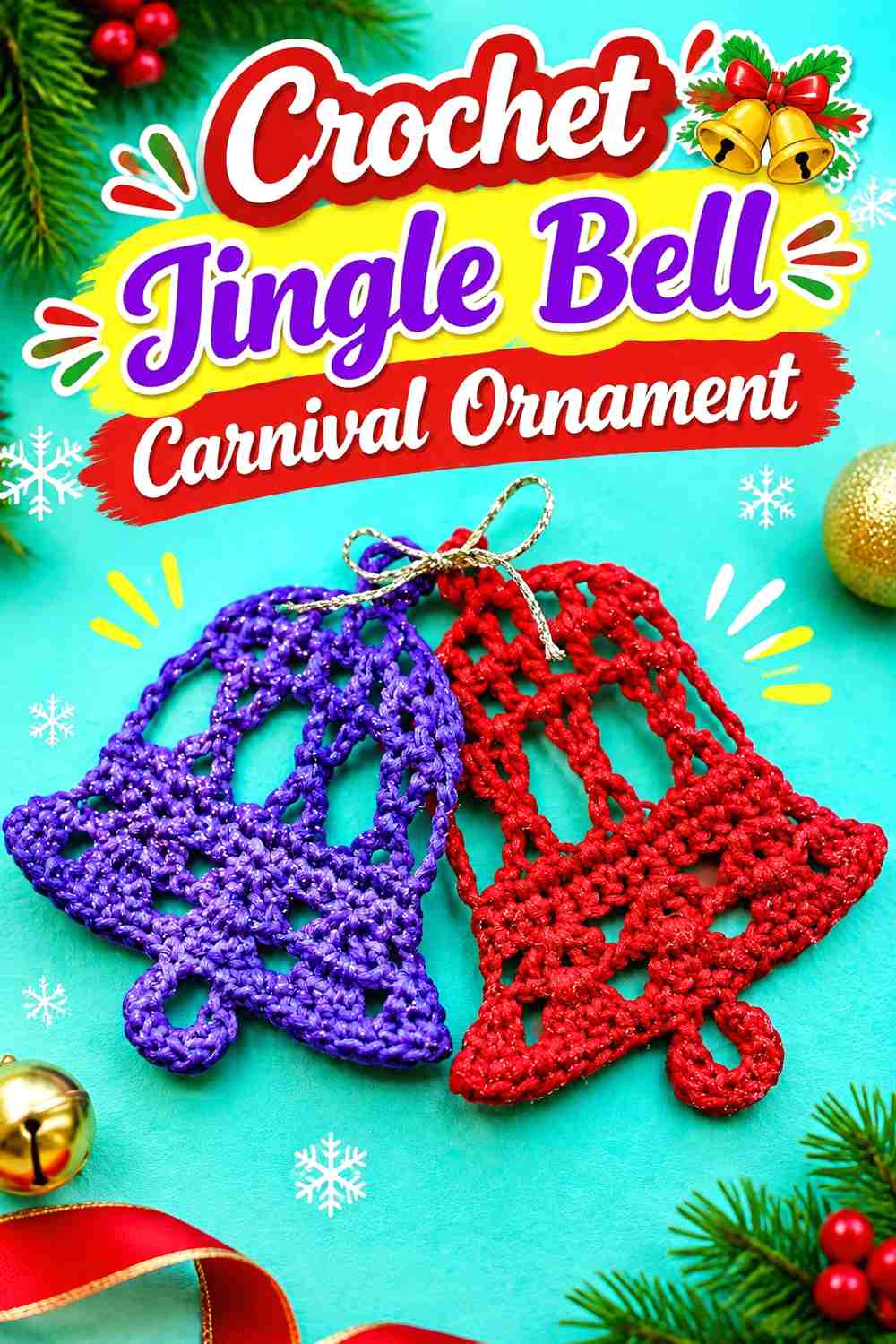
Crochet with Tuula Maaria demonstrates a flat crochet bell ornament that can be worked in different yarns or threads, making it a flexible base for color experimentation.
Instead of gold, try cobalt with a yellow edge, pink with orange, or turquoise with a raspberry hanging loop. A group of bells in alternating colors can suggest the bright metalwork and signage of an old-fashioned fairground.
A Flat Bell Works Well Near the Branch Tips
This ornament does not need the same depth as a stuffed bauble.
Use that difference strategically. Bells can occupy thinner outer branches while round ornaments sit farther back where stronger branches can support them.
Keep the Bell Outline Easy to Read
Bright colors are most effective when the silhouette remains recognizable.
If the yarn has a very busy self-striping effect, the widening bell shape may become harder to see. A solid body with contrasting edging generally preserves the outline more clearly.
Creator Credit: Crochet with Tuula Maaria
5. Crochet Confetti Snowflake Ornament
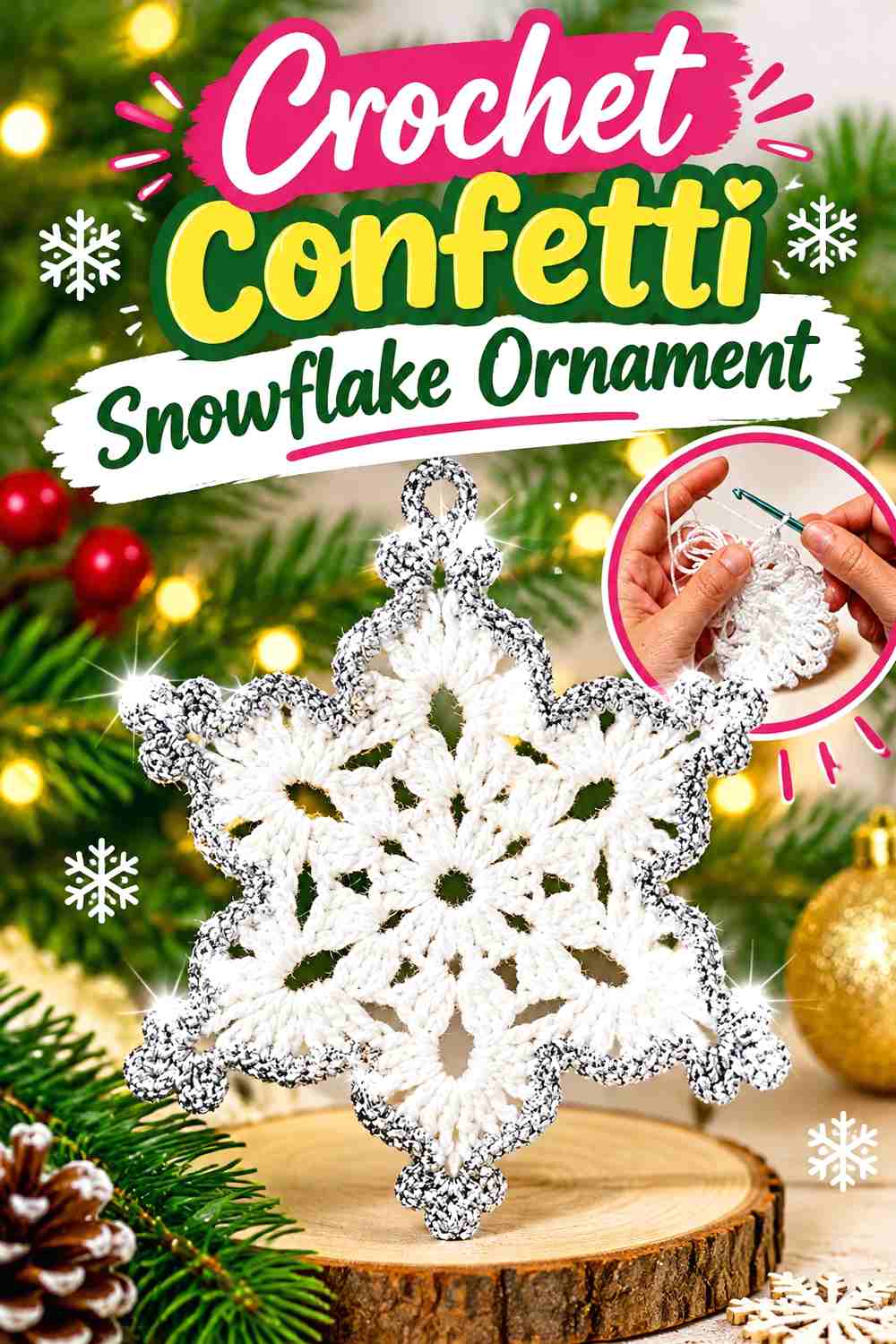
Crochet Craftsman’s snowflake tutorial produces a balanced decorative snowflake with an additional sparkly detail in the demonstrated version.
For a carnival tree, a snowflake does not have to stay white. Turquoise, bright pink, lemon, or purple can turn a traditional winter motif into a colorful confetti-like accent.
Let One Color Define the Main Shape
A snowflake has several arms and internal spaces, so too many rapid color changes can obscure its geometry.
Choose one dominant shade and use the carnival accent in edging, sparkle, or the hanger rather than trying to place every palette color inside one small motif.
Place Colorful Snowflakes Against Darker Greenery
A pale yellow or bright aqua snowflake may disappear against lights or nearby white ornaments.
Give openwork motifs enough visual space around them. Darker foliage behind the snowflake helps its points and openings remain clear.
Creator Credit: Crochet Craftsman
6. Crochet Ribbon-Ring Carnival Wreath Ornament
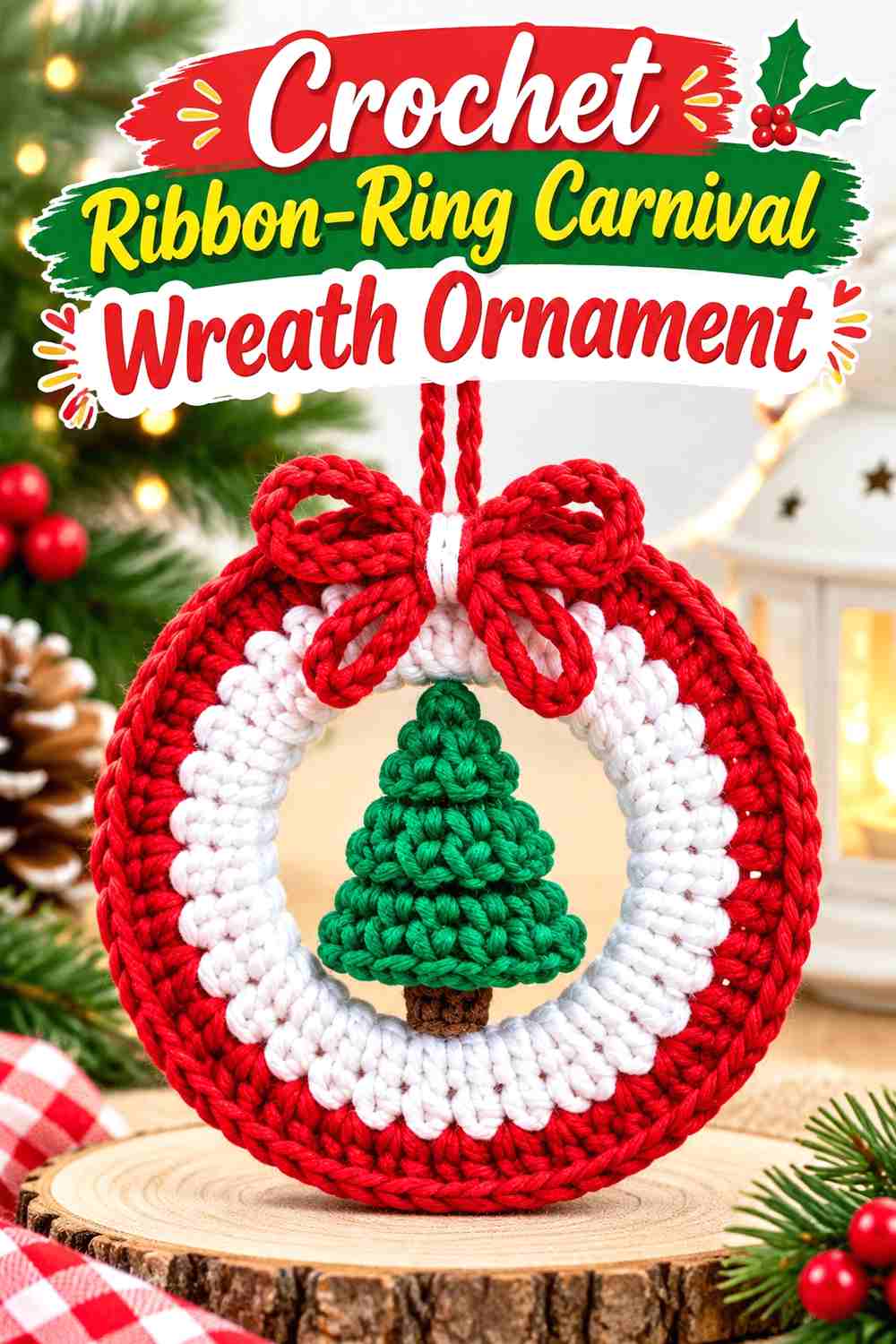
Tuba Crochet provides a small wreath ornament construction that brings a circular frame shape into the collection.
For a carnival adaptation, replace the expected forest-green focus with combinations such as turquoise and pink, orange and yellow, or lavender and lime. Keep the bow in a contrasting shade so it still reads as a separate finishing feature.
Use the Open Center as Negative Space
A wreath is useful because it introduces color without filling the entire circular area.
When the rest of the tree contains many dense baubles, the open middle gives the eye a break. Avoid filling that opening with too many extra dangling details.
The Bow Can Carry the Brightest Color
If the wreath body uses two related colors, make the bow the surprise.
A raspberry bow on a turquoise wreath or a yellow bow on a lavender ring creates a clear focal point without changing the underlying construction.
Creator Credit: Tuba Crochet
7. Crochet Embroidered Carnival Bauble Ornament
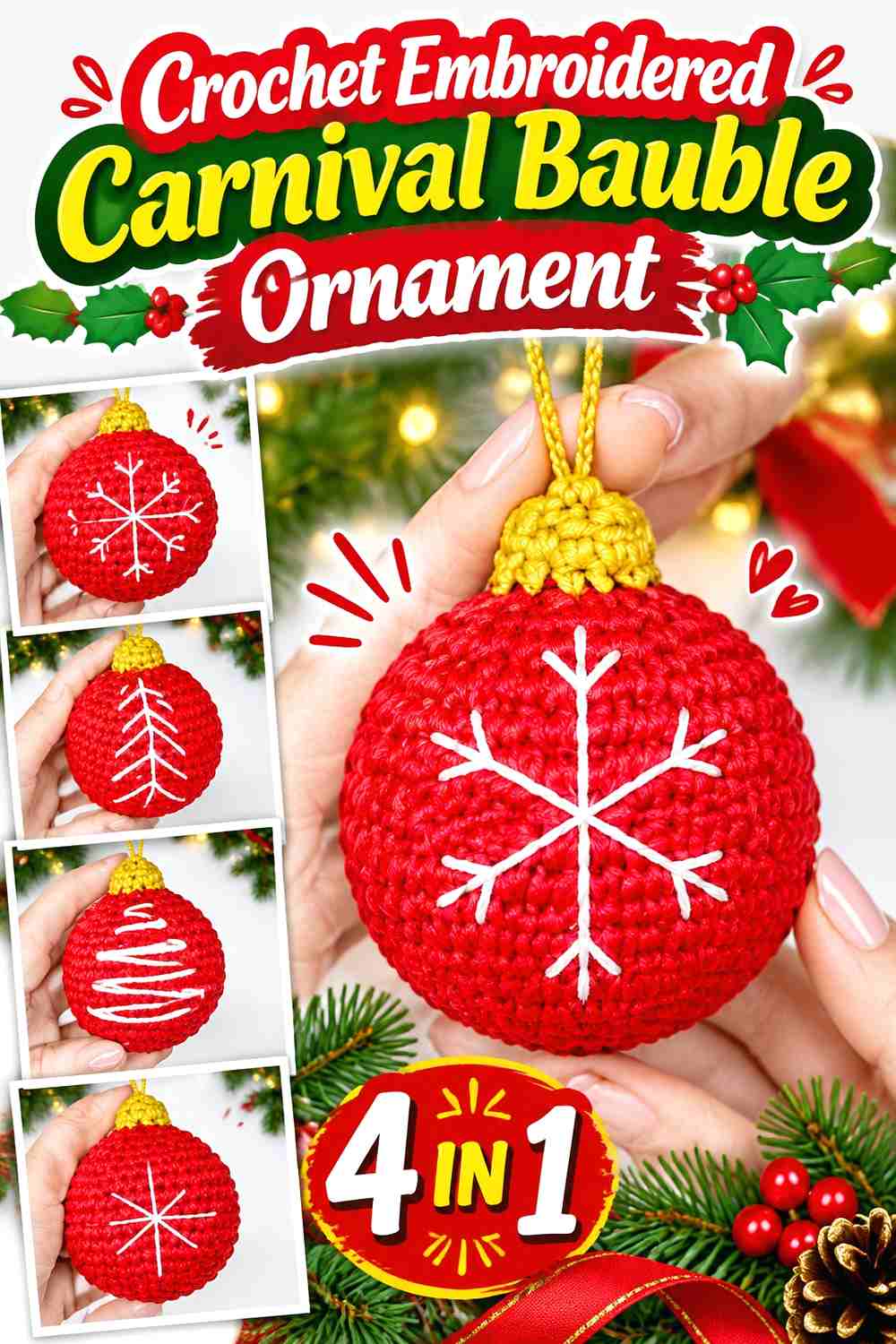
Amigurumi_Joys teaches a stuffed crochet bauble and includes several embroidery approaches for decorating the finished surface.
That combination suits a carnival theme because the round body can remain one strong color while surface embroidery supplies stars, dots, zigzags, or other festive accents.
Plan the Embroidery Around the Hanging Direction
A ball has no obvious front until you decide where the hanger will sit.
Before adding a major star or central motif, identify the side you want facing outward. Decorative details placed too close to the top can partially disappear beneath the hanging loop.
Keep Stuffed Baubles Consistent in Firmness
A set looks more polished when the spheres have similar fullness.
Underfilling can make one ornament look collapsed next to the others, while excessive stuffing may stretch the crochet fabric and enlarge gaps. Compare each new bauble with the first finished one as you fill it.
Creator Credit: Amigurumi_Joys
8. Crochet Striped Carnival Bauble Cover
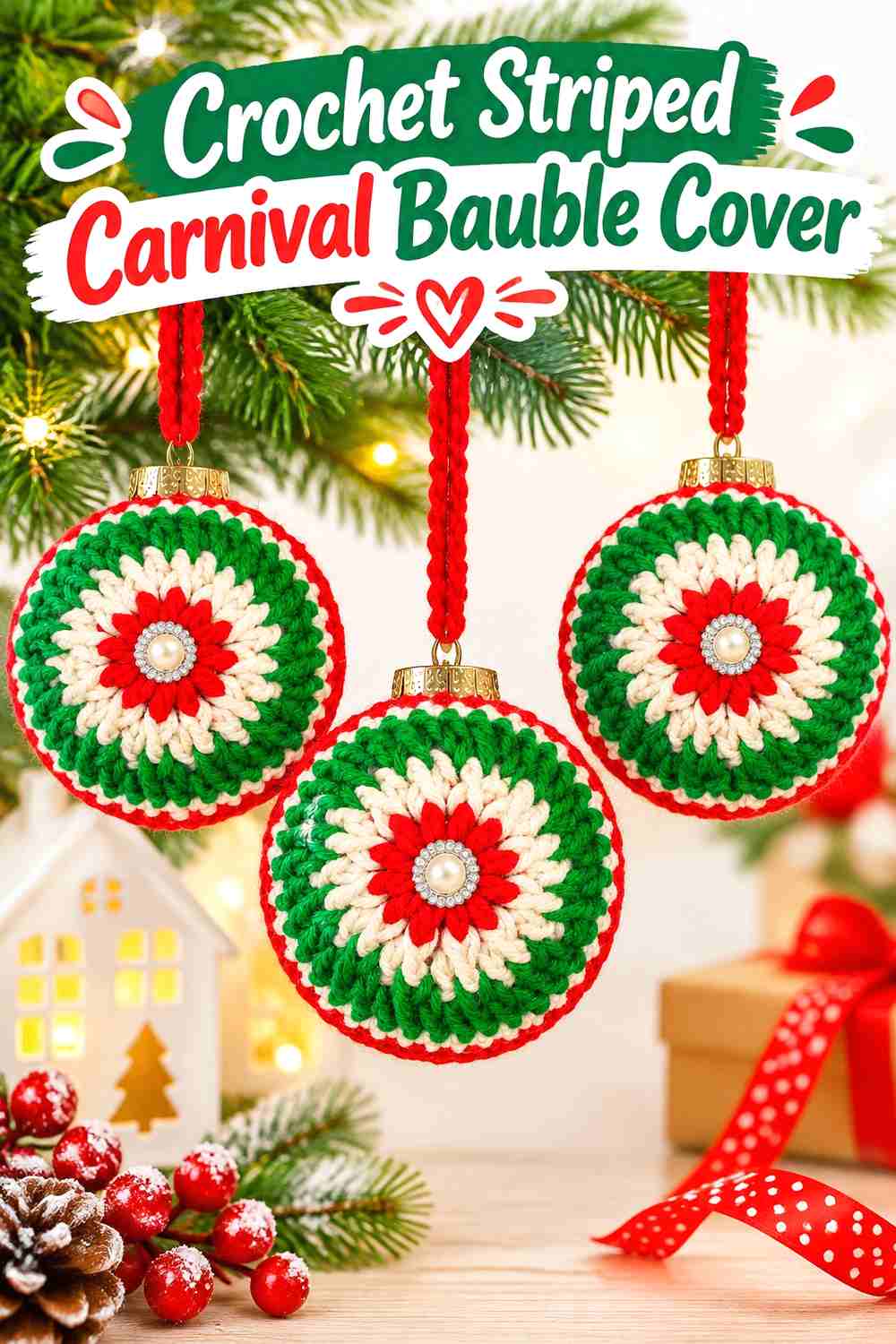
naztazia demonstrates crochet worked around an existing plastic ornament, creating a different construction from a completely stuffed crochet ball.
This is a useful route when you already own plain ornaments that need a carnival update. Alternating pink, turquoise, yellow, or orange around the base can transform a simple ball without replacing its existing structure.
Measure Against the Actual Ornament
A cover must correspond to the object underneath it.
Do not assume two plastic baubles labeled with a similar size will behave identically if their shapes differ. Check the developing crochet against the specific ornament you intend to cover.
Use Bright Covers to Unify Mixed Ornament Bases
If you already have clear, white, silver, or mismatched plastic ornaments, a repeated crochet treatment can make them look like one collection.
Using the same three-color sequence across different balls is one way to create cohesion without purchasing a full new ornament set.
Creator Credit: naztazia
9. Crochet Gift Booth Present Ornament
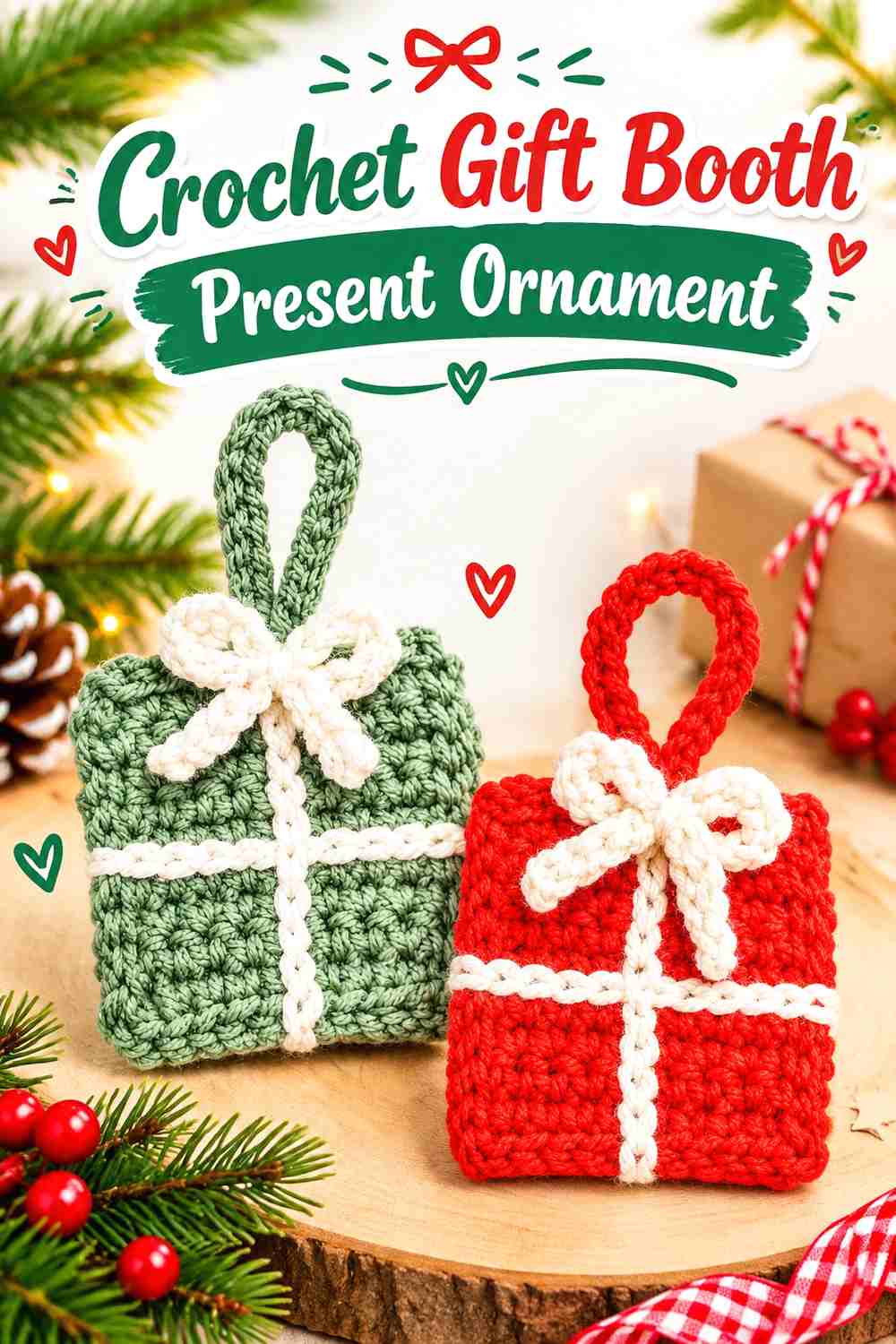
Heather Corinne Crochets’ present ornament uses a flat gift-box format with contrasting ribbon details and a hanging loop.
The box shape is particularly effective on a carnival tree because strong blocks of color can imitate bright ticket booths, prize boxes, or wrapped fairground treats.
Reverse Traditional Gift Colors
Instead of red with a gold ribbon, try cobalt with lemon, raspberry with turquoise, orange with lavender, or lime with hot pink.
Keep the ribbon significantly different from the box color so the crossed gift detail remains recognizable.
Flat Presents Can Double as Gift Toppers
This construction is useful beyond the tree because the broad surface sits neatly against packages.
If you make several, consider coordinating the tree ornaments with the wrapping colors. The repeated palette can connect gifts beneath the tree with the carnival decorations above them.
Creator Credit: Heather Corinne Crochets
10. Crochet Twisty Carnival Tree Ornament
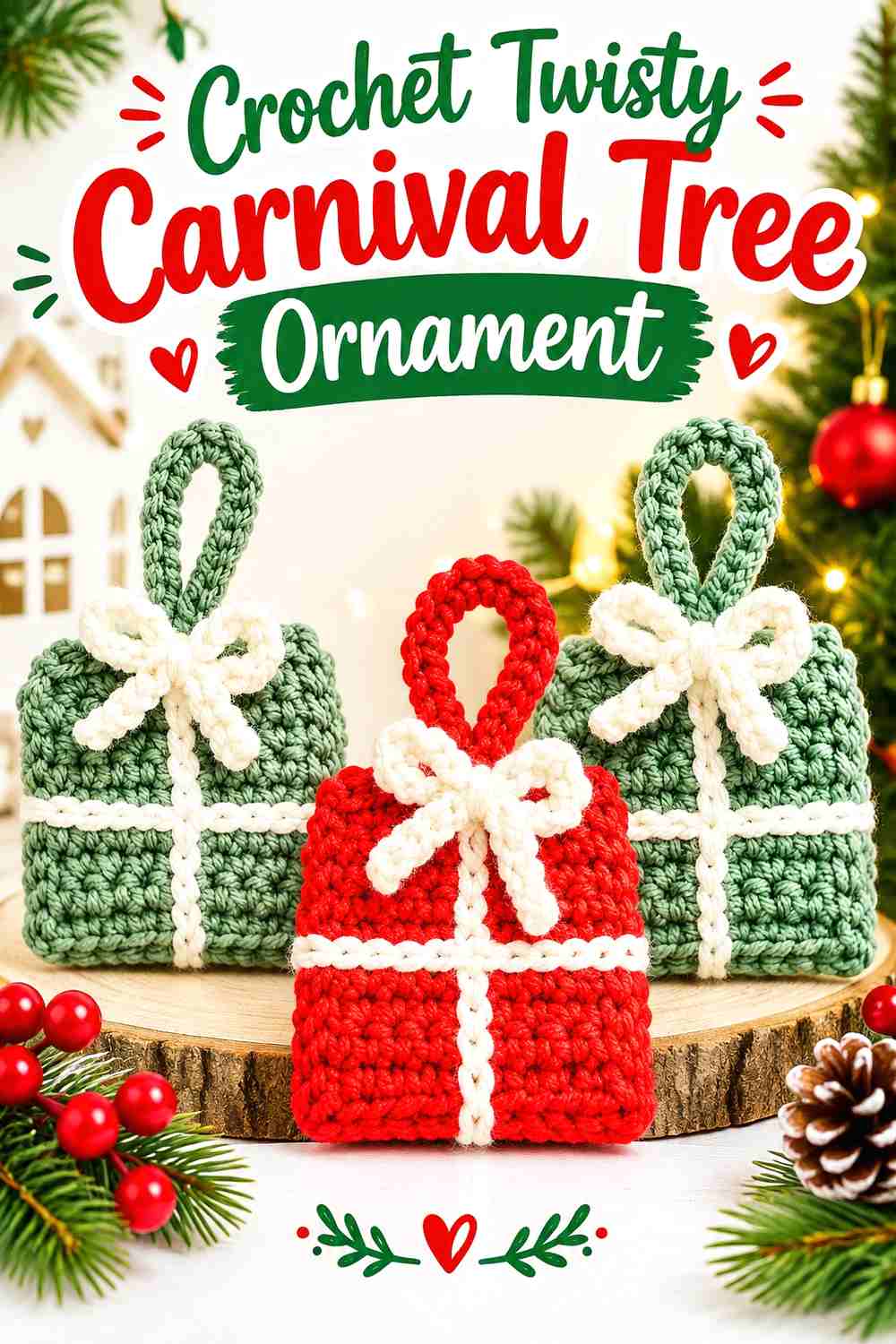
Juniper & Oakes teaches a spiral Christmas tree ornament with multiple color opportunities and optional bead embellishment.
The twisting construction already feels lively, which makes it especially suitable for a Happy Carnival theme. Bright horizontal color changes become curved bands once the ornament takes its final form.
Plan the Colors Before the Spiral Forms
The piece changes appearance dramatically when the crochet curls.
A sequence that looks like separate straight stripes while you work may become closely packed after twisting. Choose colors with enough contrast to remain distinct once the layers sit nearer to one another.
Beads Should Support the Spiral, Not Compete With It
The twisted form supplies movement on its own.
If you add beads, use them as a small finishing detail rather than covering every section. For trees accessible to young children or pets, omit small detachable embellishments and keep the decoration yarn-based.
Creator Credit: Juniper & Oakes
11. Crochet Party Snowman Ornament
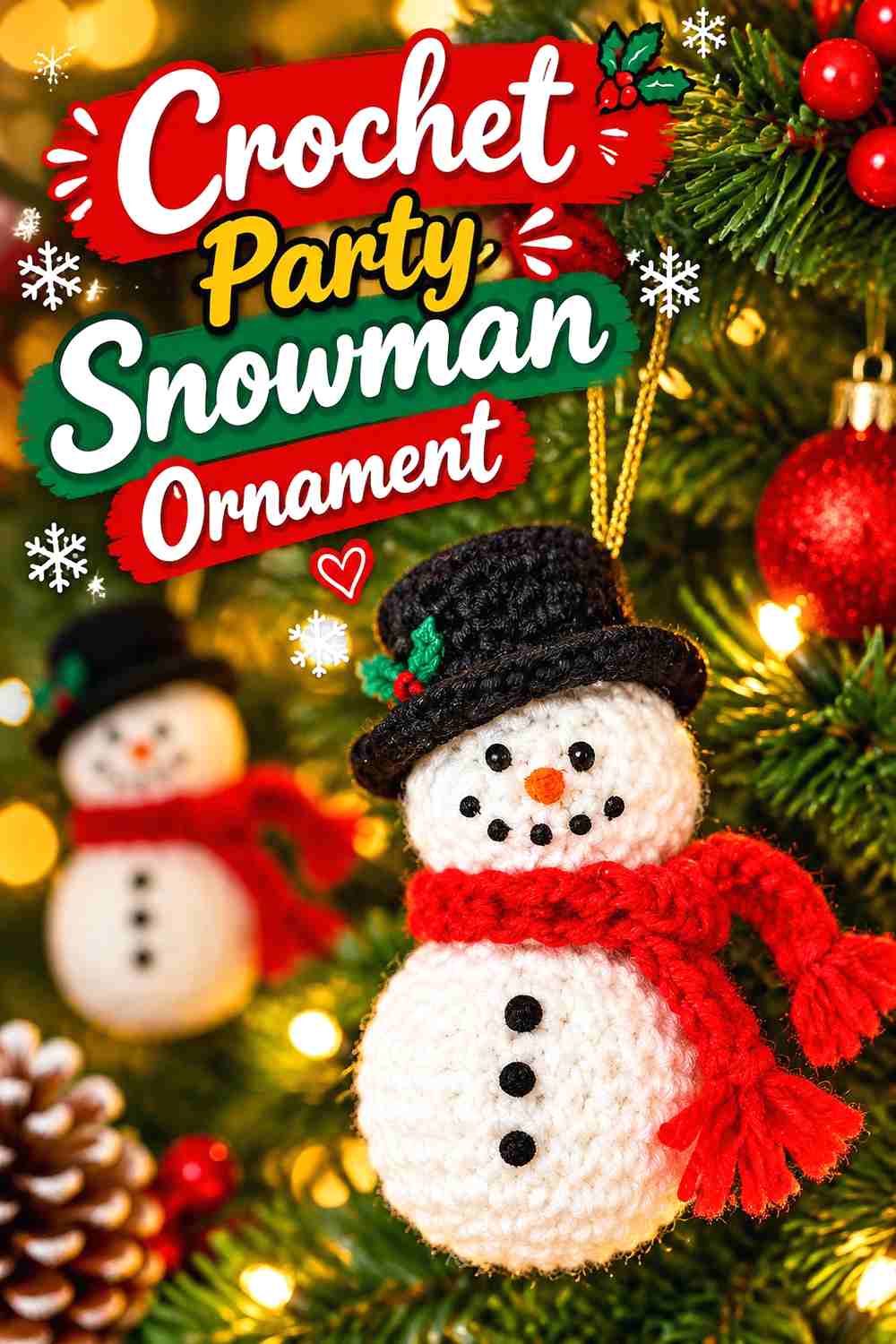
Crouton Crafts’ snowman ornament is a stuffed character with a hat, scarf, facial details, and a hanging attachment.
A carnival version can leave the snowman body neutral while shifting the accessories dramatically: turquoise hat, orange scarf, raspberry accents, or a mix of bright stripes.
Keep the Snowman White if the Accessories Are Very Bright
One neutral area helps an intense palette breathe.
A white or cream body also preserves the snowman identity while the hat and scarf connect the character to the rest of the colorful ornament collection.
Check Hat and Hanger Placement Together
The top of a character ornament has several competing details.
Make sure the hanging cord does not force the hat sideways or hide its shape. View the finished snowman suspended before deciding that the final alignment is complete.
Creator Credit: Crouton Crafts
12. Crochet Bright Carnival Gnome Ornament
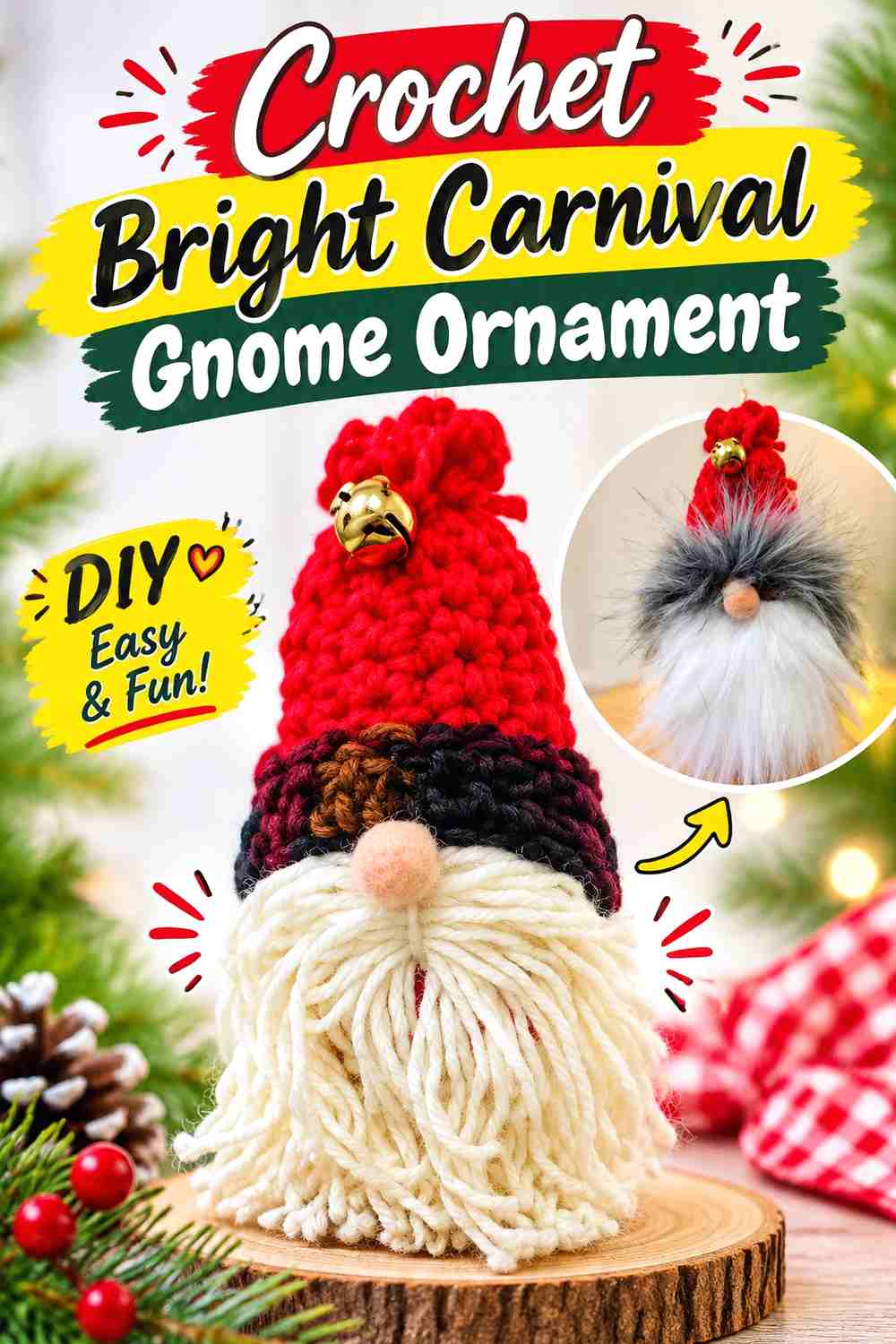
Hectanooga1 demonstrates two gnome ornament styles with the characteristic pointed-hat silhouette.
The long hat creates an ideal place for carnival stripes. Try alternating raspberry and yellow, cobalt and turquoise, or purple and lime while keeping the beard or lower area relatively quiet.
Put the Pattern on the Hat
A gnome already has several separate visual components.
Concentrating the boldest colors in the pointed hat gives the eye one clear focal area. If the beard, body, hat, and hanger all use different intense colors, the character can become harder to read.
Repeat Gnomes at Different Points Around the Tree
Character ornaments are memorable, so even two or three can establish a theme.
Use the same basic palette but reverse the stripe order on each hat. This creates a small carnival troupe without making the ornaments identical.
Creator Credit: Hectanooga1
13. Crochet Rainbow Angel Ornament
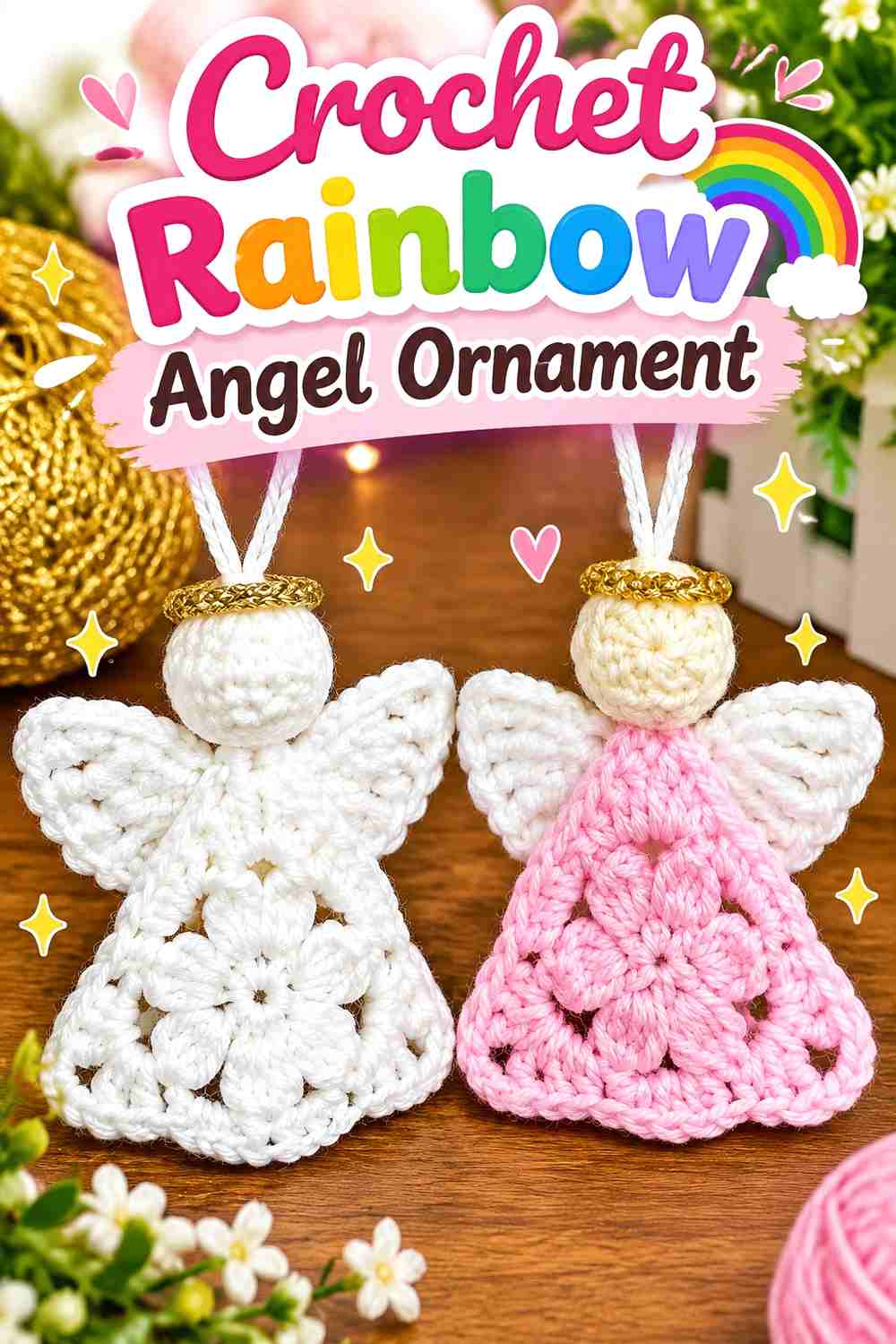
Butterfly Craft’s source teaches a crochet angel ornament with distinct head, wings, body, and halo features.
A carnival adaptation can move away from an all-white angel while preserving the recognizable shape. A turquoise body with pink wings, a yellow body with lavender wings, or a cream center surrounded by rainbow accents can fit a bright tree naturally.
Keep the Halo Visually Separate
The halo sits close to the head and can disappear if both are made in similar colors.
A contrasting metallic-looking yarn, yellow, cream, or another clear accent can help define that small shape against the rest of the ornament.
Bright Wings Create More Impact Than Tiny Details
At tree-viewing distance, larger color areas are easier to read than miniature decorations.
If the angel already has colorful wings, extra beads or numerous embroidered accents may not add much. Let the silhouette and two or three color blocks do most of the work.
Creator Credit: Butterfly Craft
14. Crochet Tiered Carnival Tree Ornament
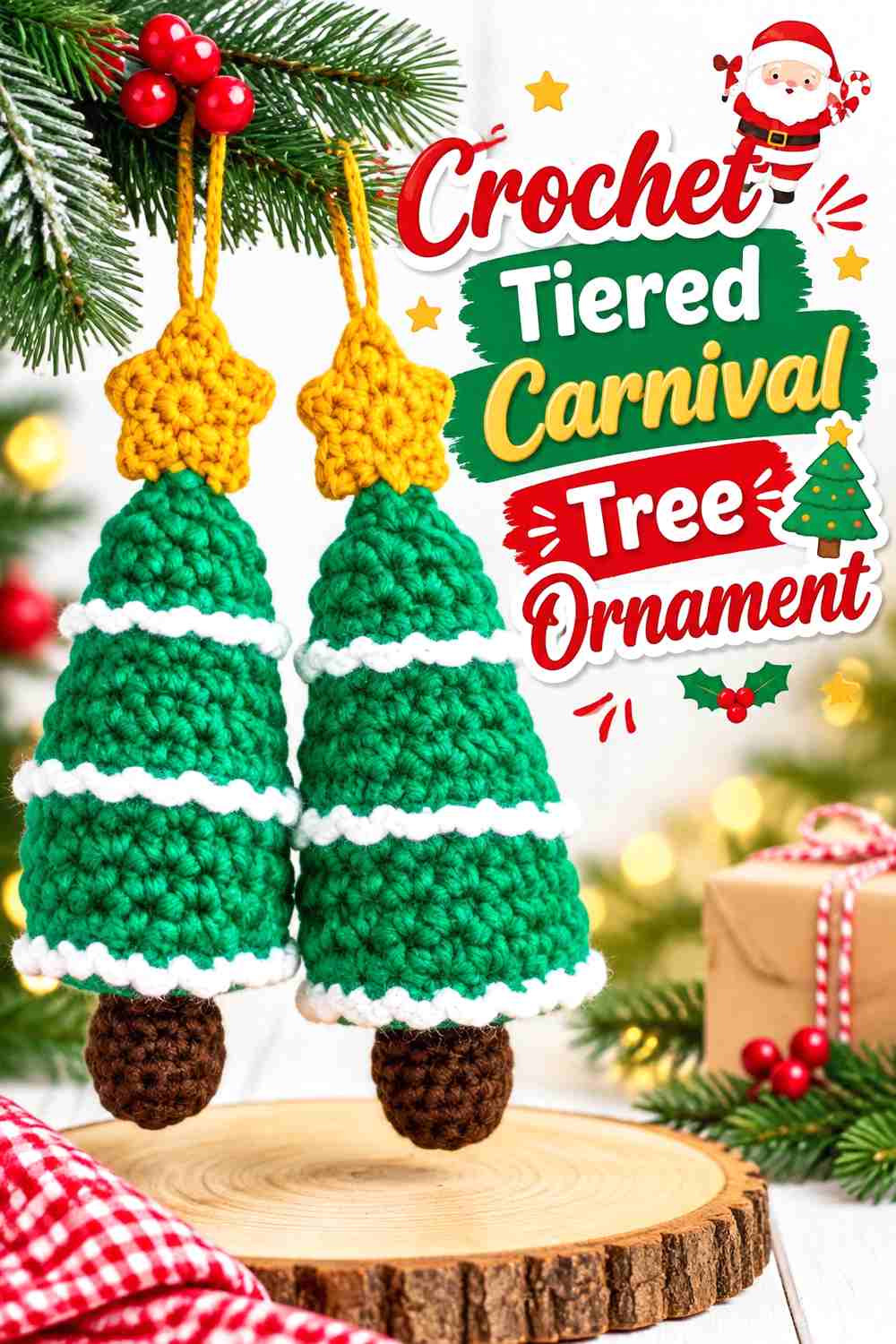
Jess Crafting’s Christmas tree ornament is dimensional, with stacked shaping, a separate trunk, top star, and decorative surface details.
Rather than making the entire tree green, use each tier as a color opportunity. Turquoise, raspberry, and lime sections with a bright yellow star can turn the tree into a miniature carnival centerpiece.
Tiered Shapes Need a Controlled Palette
Because the tree already changes width from top to bottom, every tier does not need a completely unrelated color.
Repeat one shade or neutral between brighter sections. This keeps the final ornament recognizable as a tree rather than a stack of disconnected bands.
Keep Surface Decorations Large Enough to Notice
Small decorative knots or bauble-like accents can disappear against multiple bright background colors.
Use fewer, clearer accents or omit them from the busiest sections. Color blocking alone may already provide enough detail.
Creator Credit: Jess Crafting
15. Crochet Toy Drum Carnival Ornament
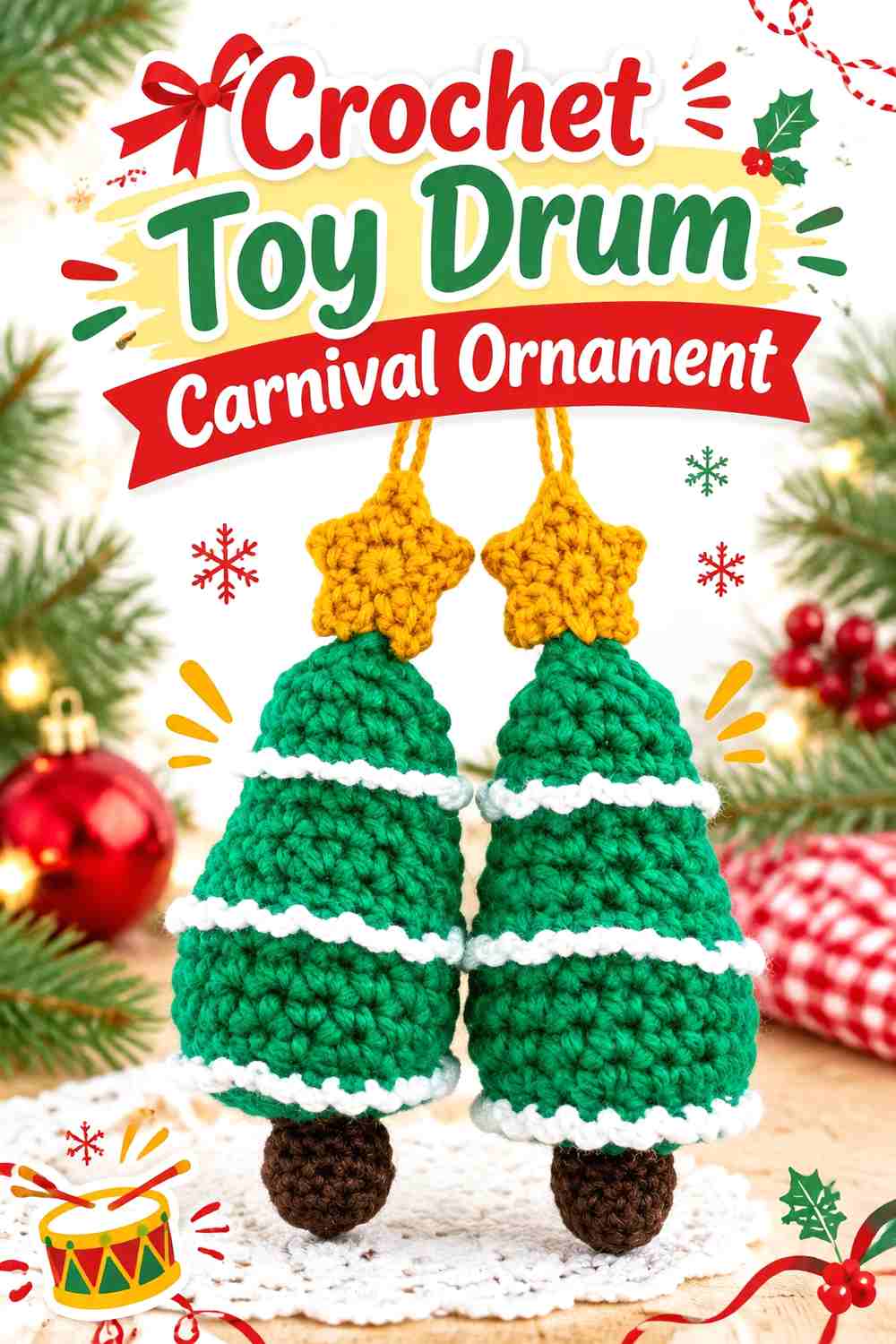
Club Crafteria demonstrates a crochet drum Christmas tree ornament, bringing a cylindrical silhouette and musical reference into the collection.
A drum feels especially at home in a carnival theme. Cobalt, yellow, hot pink, orange, turquoise, and white can create the look of a bright marching-band or parade drum.
Use the Rim to Frame the Main Color
A strong contrasting rim helps define the cylindrical shape.
If the body is raspberry, a yellow or white top and bottom can make the drum easier to recognize. When every surface uses a similar value, the cylinder can look flatter on the tree.
Hang the Drum So the Side Decoration Faces Forward
A dimensional drum may rotate after it is suspended.
Before fixing the final hanging position, identify which side contains the strongest visual detail and test how the ornament naturally balances.
Creator Credit: Club Crafteria
16. Crochet Mini Carnival Mitten Ornament Pair
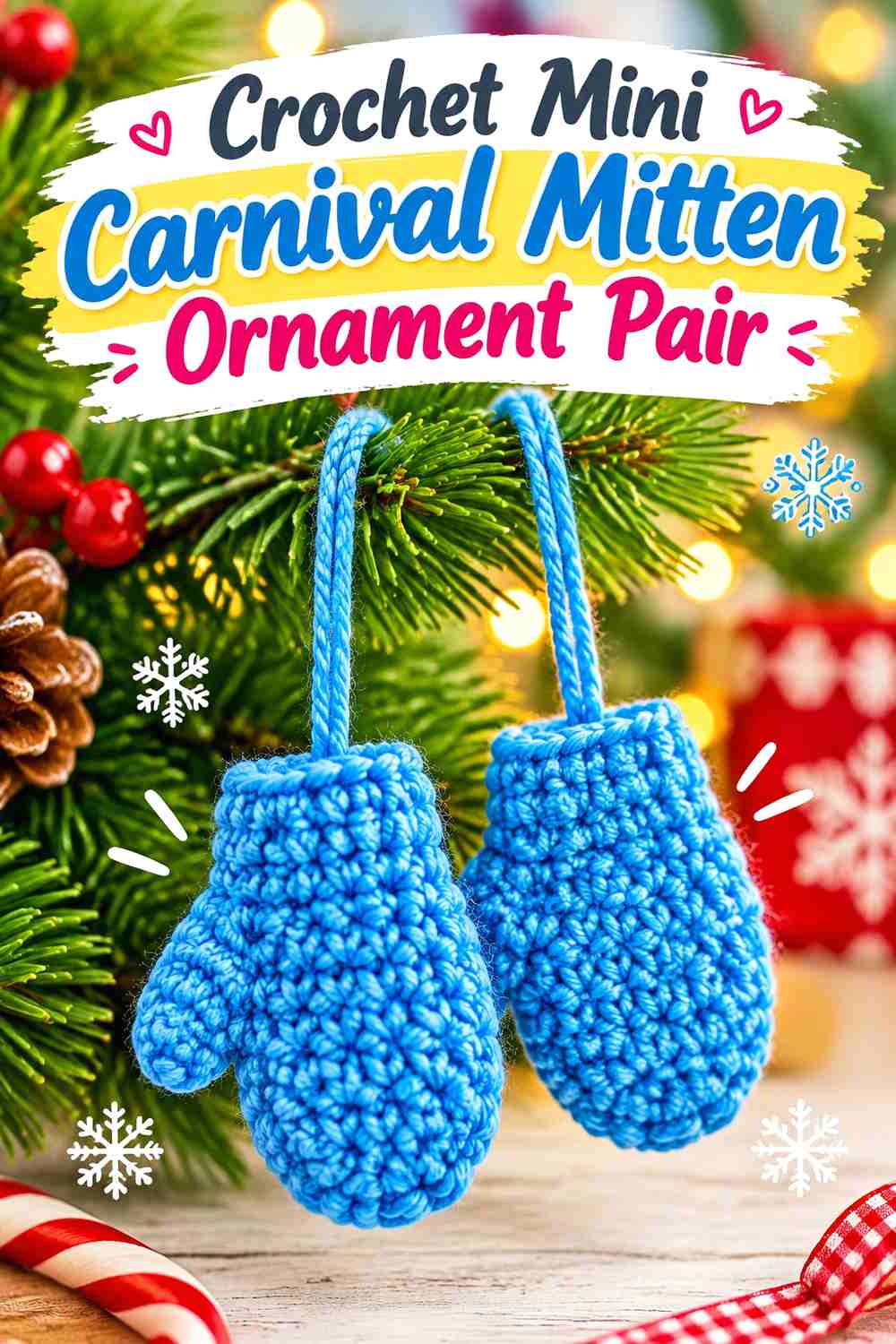
Desert Blossom Crafts teaches miniature crochet mittens connected together as one Christmas ornament.
A paired ornament adds a different silhouette from the single hanging motifs elsewhere in the collection. Make one mitten turquoise and the other pink, or give both multicolor cuffs to repeat the carnival palette.
Pair Colors Instead of Matching Them Exactly
Two connected mittens are an opportunity to use complementary shades.
A yellow mitten beside purple or orange beside turquoise creates more energy than making both pieces identical, while a repeated cuff color keeps them coordinated.
Check How the Pair Hangs as a Unit
The joining strand affects the final display.
If one mitten hangs much lower than the other unintentionally, the pair can look unbalanced. Test the ornament on a branch before finalizing the connecting length.
Creator Credit: Desert Blossom Crafts
17. Crochet Sunburst Carnival Ball Ornament
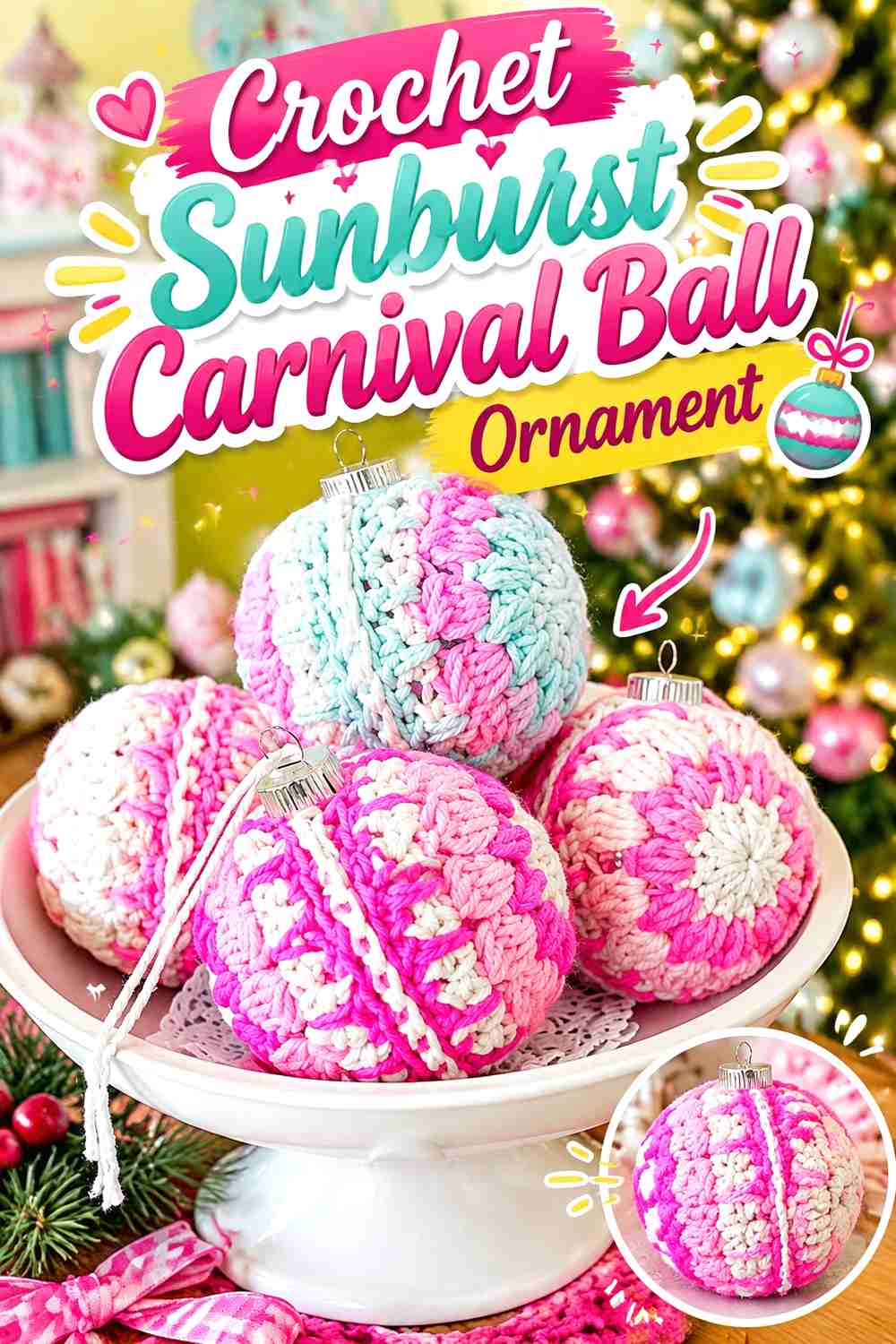
Erica Arndt’s sunburst ornament uses several yarn colors around a round ornament base, creating one of the strongest ready-made constructions for a bright carnival palette.
The radiating sections naturally resemble fairground lights, pinwheels, or bursts of confetti. Pink, orange, yellow, turquoise, purple, and white can turn each ball into a small focal ornament.
Use the Sunburst to Carry Your Full Palette
Most ornaments in this collection benefit from two or three main colors. The sunburst is one place where using more of the full palette can make sense.
Treat it as a summary ornament that connects shades appearing separately throughout the rest of the tree.
Match the Crochet to the Ball Before Finishing Multiples
This construction fits around a physical ornament, so the relationship between crochet and the underlying ball matters.
Test the first completed section against the exact type of ornament you plan to use. Once the fit is working, keep the same base style for the rest of the set rather than assuming every round ornament will behave identically.
Creator Credit: Erica Arndt
Which Carnival Christmas Ornament Style Should You Choose?
For the clearest fairground feeling, start with the Toy Drum, Spiral Candy Cane, Candy Shop Ornament, and Twisty Carnival Tree. Their shapes already suggest movement, sweets, music, or playful decoration before color is added.
If you want a tree that is bright but still recognizably traditional, focus on Rainbow Stars, Confetti Snowflakes, Jingle Bells, Wreaths, and Angels. Their Christmas silhouettes remain familiar even when the colors shift toward turquoise, pink, yellow, orange, and purple.
Round ornaments provide the largest uninterrupted areas of color. The Embroidered Bauble works well when you want a soft stuffed ornament, the Striped Bauble Cover can update an existing plastic ball, and the Sunburst Ball is particularly useful when you want several shades on one piece.
Character ornaments such as the Snowman and Gnome add personality, but they have more individual details than simple stars or balls. Use them as occasional focal pieces rather than surrounding every branch with similarly complex characters.
Conclusion
A colorful carnival Christmas tree is easier to coordinate when the variety comes from both shape and construction. Candy spirals create movement, drums add strong geometry, stars and snowflakes keep the arrangement light, while stuffed and covered baubles introduce depth.
Start with a limited palette and repeat it throughout the collection rather than inventing a completely new combination for each project. Raspberry, turquoise, lemon, orange, and white can feel exuberant while still looking planned; cobalt, lime, purple, and pink can create an even bolder alternative.
For exact crochet construction, finishing, yarn guidance, and project-specific steps, follow the original tutorial credited with each ornament. Use the carnival palettes and decorative suggestions here as styling ideas rather than replacements for the creators’ instructions.
Frequently Asked Questions
What colors work for a Happy Carnival Christmas tree?
Bright pink, turquoise, yellow, orange, cobalt blue, lime, and purple are strong starting points. White or cream can help separate intense colors and keep individual ornament shapes readable.
You do not need every shade on every ornament. Repetition across the whole tree is more important than maximum color within each individual piece.
How many bright colors should I use in one crochet ornament?
Two or three main shades are often enough for small stars, bells, mittens, candy canes, and character accessories.
Round sunburst ornaments or striped spirals can handle more color because their construction naturally separates the shades.
How do I keep colorful crochet ornaments from looking mismatched?
Repeat several anchor colors throughout the collection.
For example, the same turquoise can appear in a candy cane, drum, angel wings, and bauble. Repeating white edging or yellow hanging loops can provide another connection between otherwise different ornament shapes.
Which crochet ornaments are better for thinner Christmas tree branches?
Flat stars, snowflakes, bells, mittens, and lightweight wreaths generally put less visual and physical weight toward the branch tips than stuffed characters or ornaments built around solid balls.
Actual weight still depends on the yarn and finishing materials, so test each ornament on the tree rather than relying on shape alone.
Can I use glass baubles inside crochet ornament covers?
Some tutorials can be worked around glass or plastic ornament bases, but consider where the finished decoration will be used.
Plastic bases are less fragile in homes where ornaments may be knocked from the tree. Follow the source tutorial’s construction guidance and choose a base appropriate for your household.
Are beads and bells necessary for a carnival Christmas look?
No. Strong color contrast, stripes, spirals, pompoms, embroidery, and bold edging can create plenty of visual energy without hard embellishments.
That can also be useful when decorating around young children or pets, where small detachable components may not be appropriate.
How can I make a carnival-themed tree still feel like Christmas?
Keep several unmistakable Christmas silhouettes in the collection: stars, snowflakes, wreaths, trees, bells, angels, snowmen, and gift boxes.
The unusual color palette supplies the carnival mood while the shapes keep the overall display grounded in Christmas.