Scandinavian Christmas decorating often gets its character from restraint rather than elaborate ornamentation. Repeated stars, limited colors, natural-looking textures, generous spacing, and simple geometric shapes can create a festive display without making a mantel, window, or tree feel crowded.
That makes crochet stars particularly useful for Christmas garlands. A single star construction repeated in cream can create a quiet Nordic-inspired strand, while red and white can give the same motif a more traditional Scandinavian Christmas look. Muted green, oatmeal, charcoal, dusty blue, and small touches of gold can also fit naturally into the palette.
Not every tutorial below was originally designed or described as Scandinavian decor. Some are direct star-garland tutorials, while others teach ornaments, appliqués, granny stars, coasters, or framed star motifs that can reasonably be adapted for hanging. The Scandinavian direction comes from the color plan, repetition, spacing, material choices, and way the finished stars are arranged.
Use each creator’s tutorial for the actual crochet construction, then make your garland decisions around the completed motifs.
Quick List
- Crochet Red-and-White Scandinavian Star Bunting
- Crochet Cream Nordic Star Garland
- Crochet Six-Point Scandinavian Snow Star Garland
- Crochet Crisp Five-Point Nordic Star Garland
- Crochet Lacy White Christmas Star Garland
- Crochet Tiny Scandinavian Star Chain
- Crochet Color-Bordered Nordic Star Garland
- Crochet Mixed-Scale Scandinavian Star Garland
- Crochet Compact Folk Star Garland
- Crochet Classic Red Nordic Star Garland
- Crochet Granny-Style Scandinavian Star Garland
- Crochet Rustic Christmas Star Garland
- Crochet Traditional Holiday Star Garland
- Crochet Natural-Cord Scandinavian Star Garland
- Crochet Family Photo Star Garland
- Crochet Radiating Nordic Star Medallion Garland
- Crochet Solid Star Charger-Style Garland
- Crochet Framed Nordic Star Panel Garland
- Crochet Petite Solid Star Garland
Keep the Scandinavian Palette Controlled
The easiest way to lose the Nordic character is to give every star a different bright color. Scandinavian-inspired Christmas palettes usually benefit from repetition.
Red and warm white are an obvious pairing, but they are not the only option. Cream and oatmeal produce a quieter garland, while forest green with natural white feels more woodland-inspired. Dusty blue and white can shift the display toward winter rather than traditional Christmas, and charcoal can provide a modern contrast when used sparingly.
Before crocheting nineteen individual color combinations, make a few small yarn wraps and arrange them in sequence. If the palette already looks busy in loose strands, it will probably feel even busier once every color becomes a defined star.
Star Size, Weight, and Spacing Matter More Than They Seem
A single ornament may hang beautifully while a dozen copies make the garland sag. This is especially relevant when comparing tiny appliqués with substantial granny stars, cord motifs, double-layer stars, and coaster-sized designs.
Make one complete motif in the yarn you actually intend to use. Attach it temporarily to the planned cord and see how it hangs. Then place three or four samples—or paper templates representing them—at different intervals.
Small stars can tolerate closer spacing. Larger stars generally need more empty cord around them so that the individual points remain visible. Alternating sizes can work well, but only when the difference looks deliberate.
Decide Whether the Garland Should Feel Rustic, Graphic, or Delicate
A Scandinavian star garland can take several directions while staying within the same broad aesthetic.
For rustic decor, look for solid stars, granny construction, cotton cord, oatmeal yarn, or visible handmade texture. For a cleaner graphic look, choose sharply defined five- or six-point stars in two colors. For a lighter window or branch display, lace and openwork motifs let more background show through.
The intended location should influence that choice. Delicate thread stars can disappear against visually busy evergreen branches, while thick cord motifs may feel oversized across a small window.
1. Crochet Red-and-White Scandinavian Star Bunting
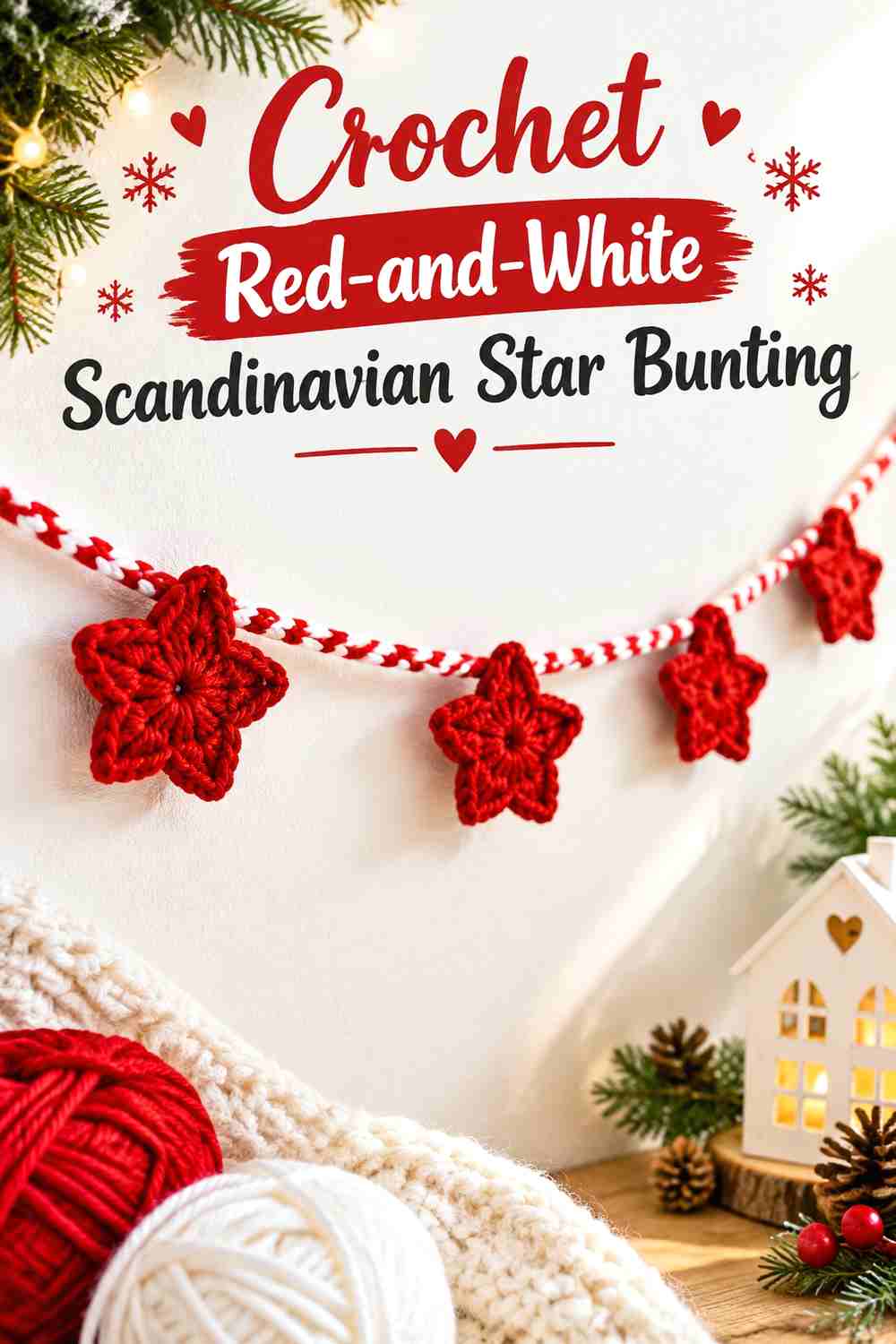
Thread Maker Studio’s tutorial is one of the most direct matches for this topic because it teaches an actual crochet star bunting intended for Christmas decoration. The finished format already solves the basic question of turning individual stars into one hanging display.
For a Scandinavian interpretation, keep the palette narrow. Alternating red and creamy white stars would create the clearest traditional look, while an all-white strand on red cord can feel more restrained.
Repetition Makes a Two-Color Scheme Stronger
A red-white-red-white sequence can be more effective than introducing additional Christmas shades. The repetition becomes part of the decoration and reinforces the simple geometric character of the stars.
Lay out the complete color order before attaching anything permanently. This is especially useful if the garland has a central point above a fireplace or window.
Check the End Stars Before Finalizing the Cord
The first and last motifs can look visually stranded if they sit too close to the hanging loops. Leave enough plain cord at both ends for tying or draping while keeping the first visible star clearly separated from the attachment point.
Creator Credit: Thread Maker Studio
2. Crochet Cream Nordic Star Garland
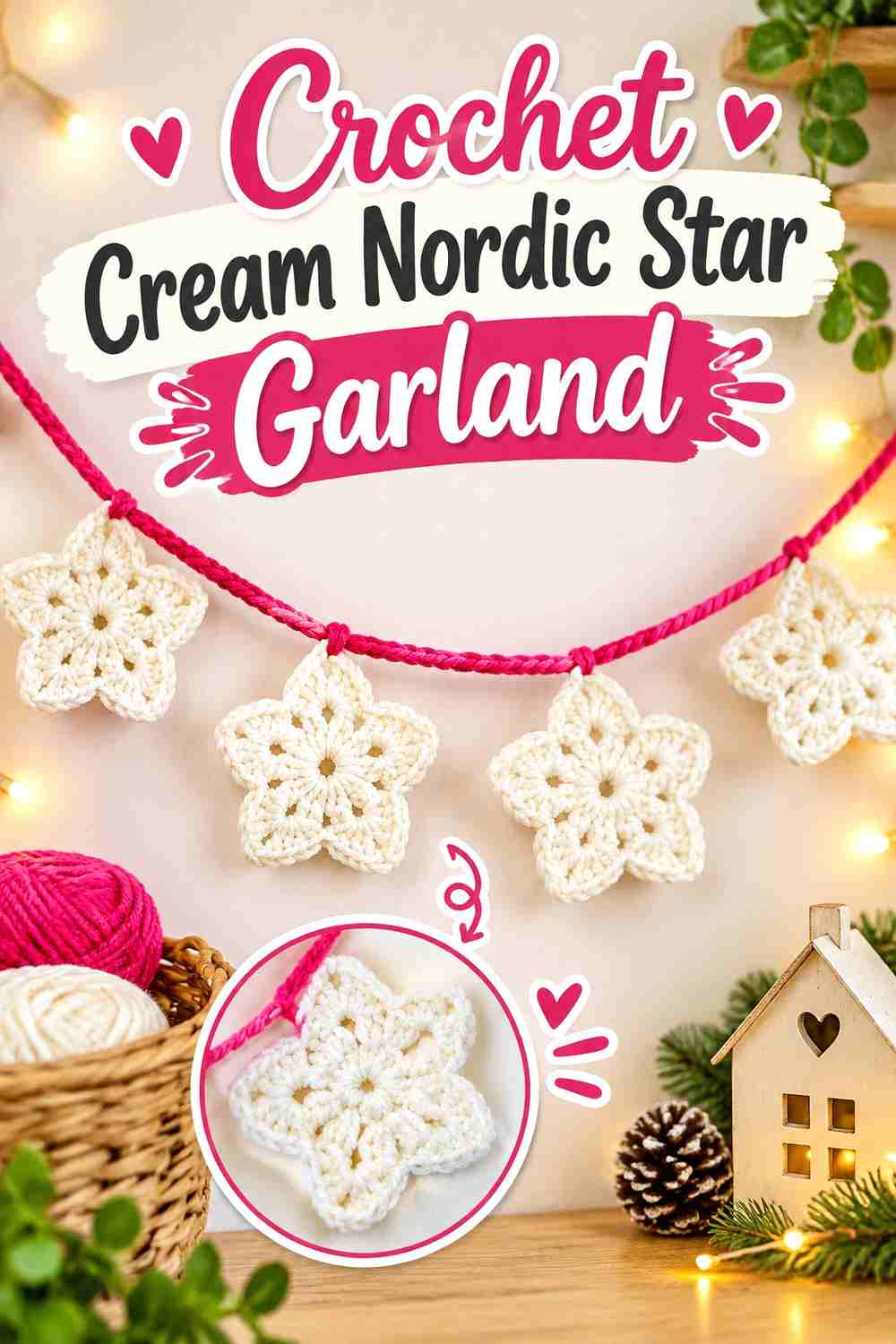
Bella Coco’s tutorial specifically demonstrates joining crochet stars into a Christmas garland, making it another strong direct source rather than an ornament adaptation.
A monochrome cream version is especially suited to Scandinavian-inspired interiors because the repeated silhouette becomes more important than color changes. It can work across dark wood, evergreen branches, painted walls, or a simple mantel.
Monochrome Stars Put More Attention on Shape
When every motif uses the same yarn, irregular points or inconsistent sizing become easier to notice. Compare several completed stars before joining them and correct obvious differences at that stage.
A monochrome strand rewards consistency more than a multicolor garland, where changing shades naturally distract the eye.
Warm White Often Feels Softer Than Brilliant White
If your room contains natural wood, linen, kraft paper, or warm lighting, cream or oatmeal may integrate more naturally than a cool optical white.
Hold the yarn against the actual display background before committing to the full set. The best neutral is the one that remains visible without looking disconnected from the surrounding materials.
Creator Credit: Bella Coco
3. Crochet Six-Point Scandinavian Snow Star Garland
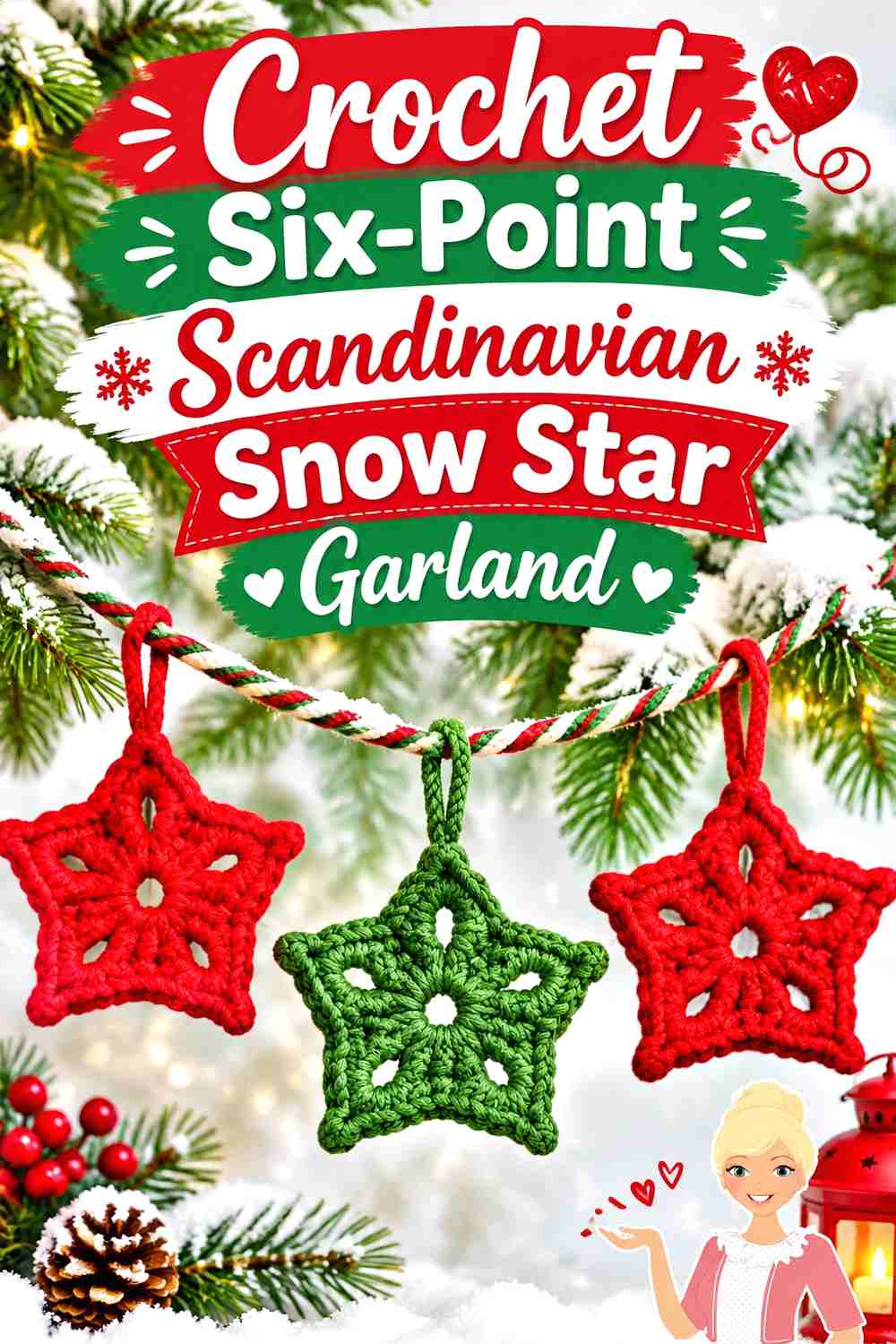
Secret Yarnery demonstrates a six-point crochet star ornament, giving this garland a noticeably different geometry from the more common five-point versions.
Six points can push the motif slightly closer to a snow-star appearance, particularly in white, icy blue, or cream. That makes this option useful when you want winter imagery without switching entirely to traditional crochet snowflakes.
Six Points Create a More Radial Look
A five-point star has a familiar upright orientation. A six-point motif feels more evenly distributed around its center, so rotation becomes less visually important when the garland moves.
That makes it a practical choice for a strand suspended across an open space where both small drafts and handling may turn the ornaments slightly.
Use Empty Cord to Preserve the Snow-Star Silhouette
Six projecting points need room. If neighboring stars sit too close together, the outlines can overlap and the design begins to look like a continuous textured strip.
Space several finished motifs temporarily before committing to the final chain length.
Creator Credit: Secret Yarnery
4. Crochet Crisp Five-Point Nordic Star Garland
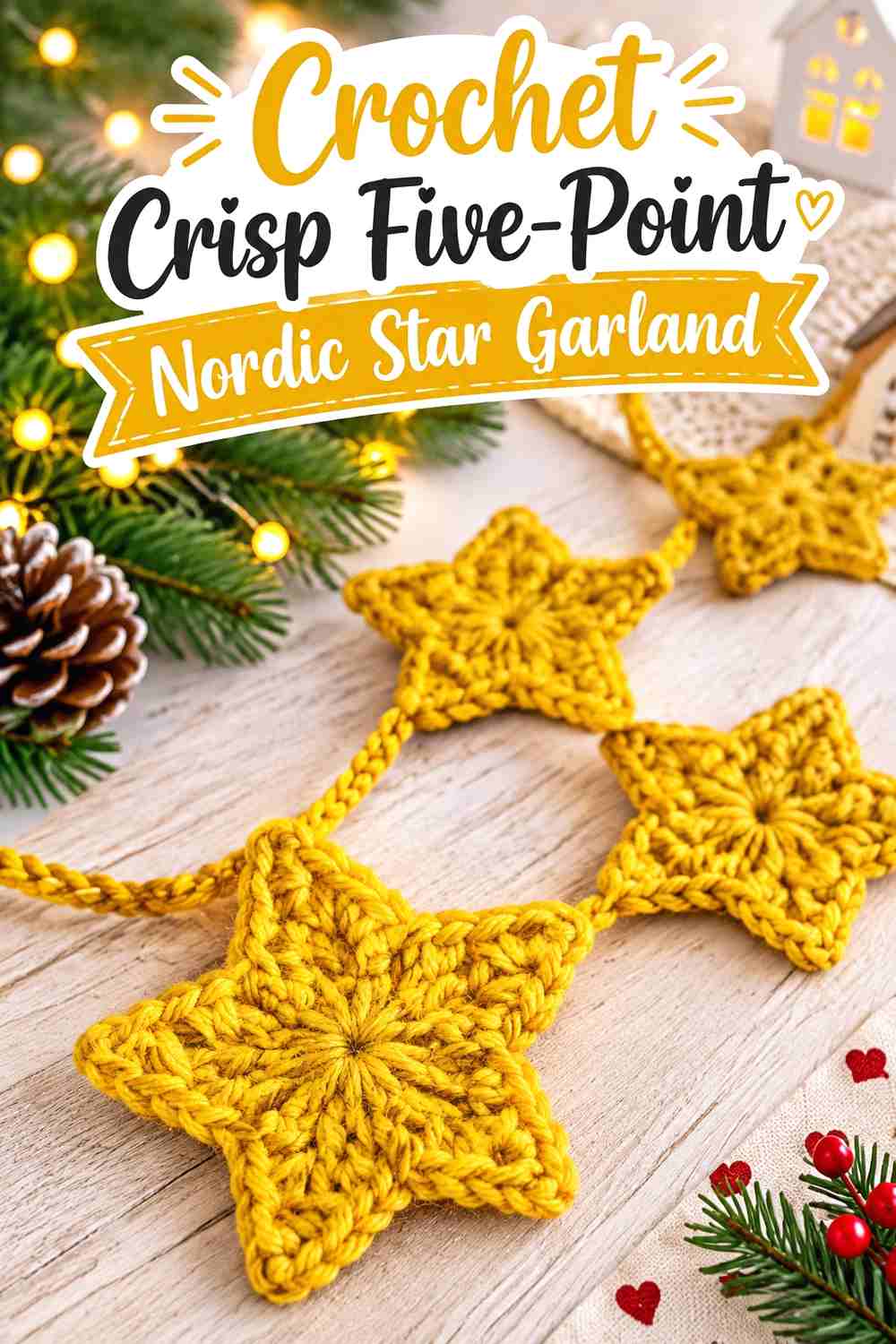
Crochet Bits teaches a defined five-point crochet star, a useful base when you want the most recognizable traditional star silhouette.
For Scandinavian Christmas styling, this shape lends itself particularly well to strong solid colors: deep red, warm cream, muted green, or charcoal rather than multiple decorative color changes within every motif.
Sharp Points Suit Graphic Color Blocking
When the outside shape is simple, a bold red star against a pale wall can make a stronger statement than a more elaborate multicolor motif.
Consider repeating one strong color for most of the garland and inserting a contrasting neutral star only at regular intervals.
Compare Point Shape Before Joining the Batch
The star’s identity depends on its five points reading evenly from a distance. Arrange your completed stars side by side before assembly and check that none look dramatically rounder or narrower than the others.
Small differences are normal in handmade work; the goal is simply to prevent one motif from interrupting the otherwise regular rhythm.
Creator Credit: Crochet Bits
5. Crochet Lacy White Christmas Star Garland
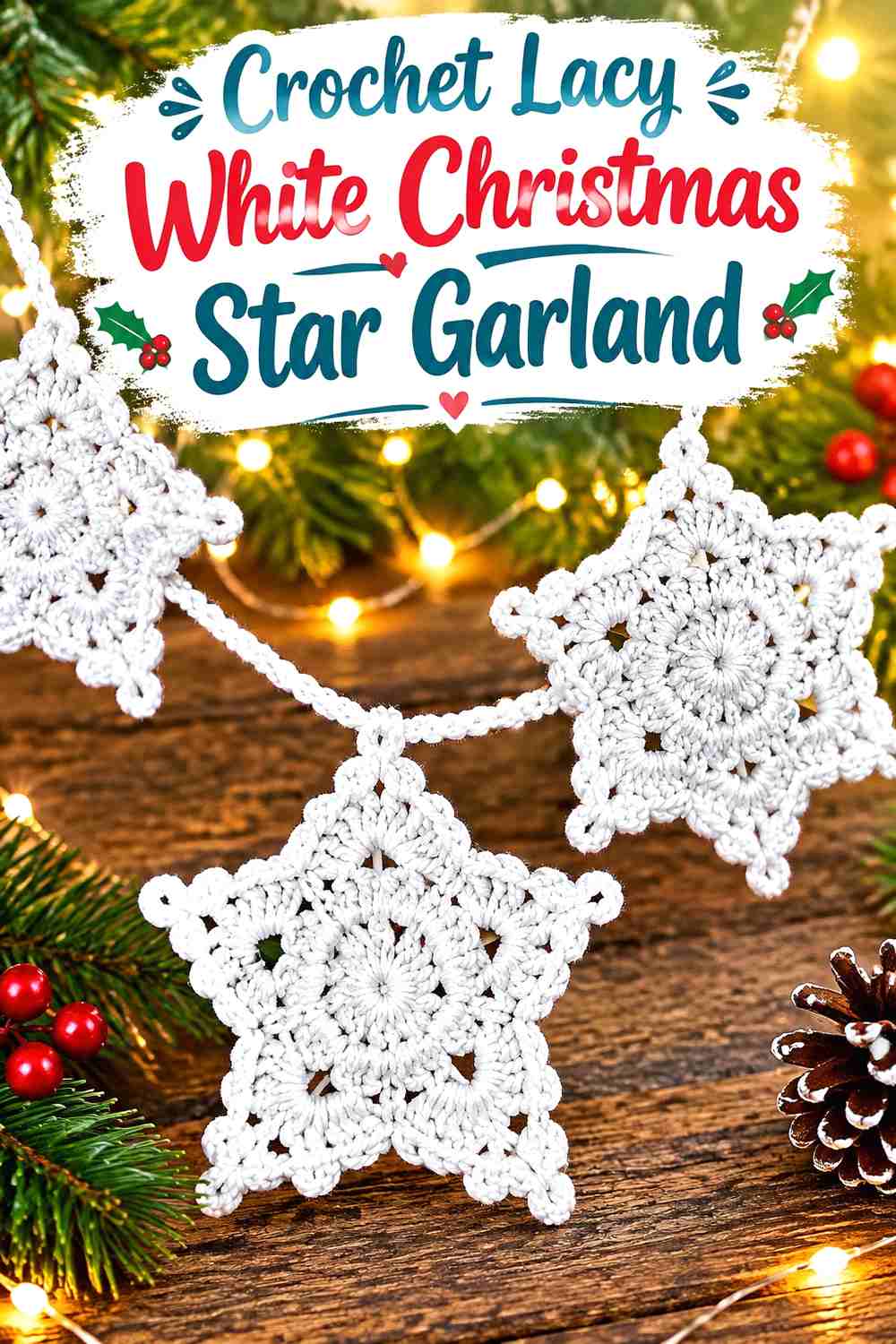
Kristines Crochets’ ornament tutorial produces a more decorative star with open sections and picot details, giving it a lighter visual character than the solid stars in this collection.
This format works especially well for a white-on-white Scandinavian scheme where texture provides the contrast. Against a window, dark wall, or evergreen background, the openings become part of the motif.
Openwork Needs a Contrasting Background
A delicate white star may virtually disappear against pale curtains or a white wall. Test one completed piece where the finished garland will hang before making the rest.
If the structure is difficult to see, a darker hanging location may solve the problem without requiring a new yarn color.
Blocking Has More Visual Impact on Lace Stars
Open points and picots depend on clear spacing. If one star dries compressed while another is opened fully, the two motifs may appear to be different sizes even when the crochet is essentially the same.
Prepare each finished motif consistently before joining the strand.
Creator Credit: Kristines Crochets
6. Crochet Tiny Scandinavian Star Chain
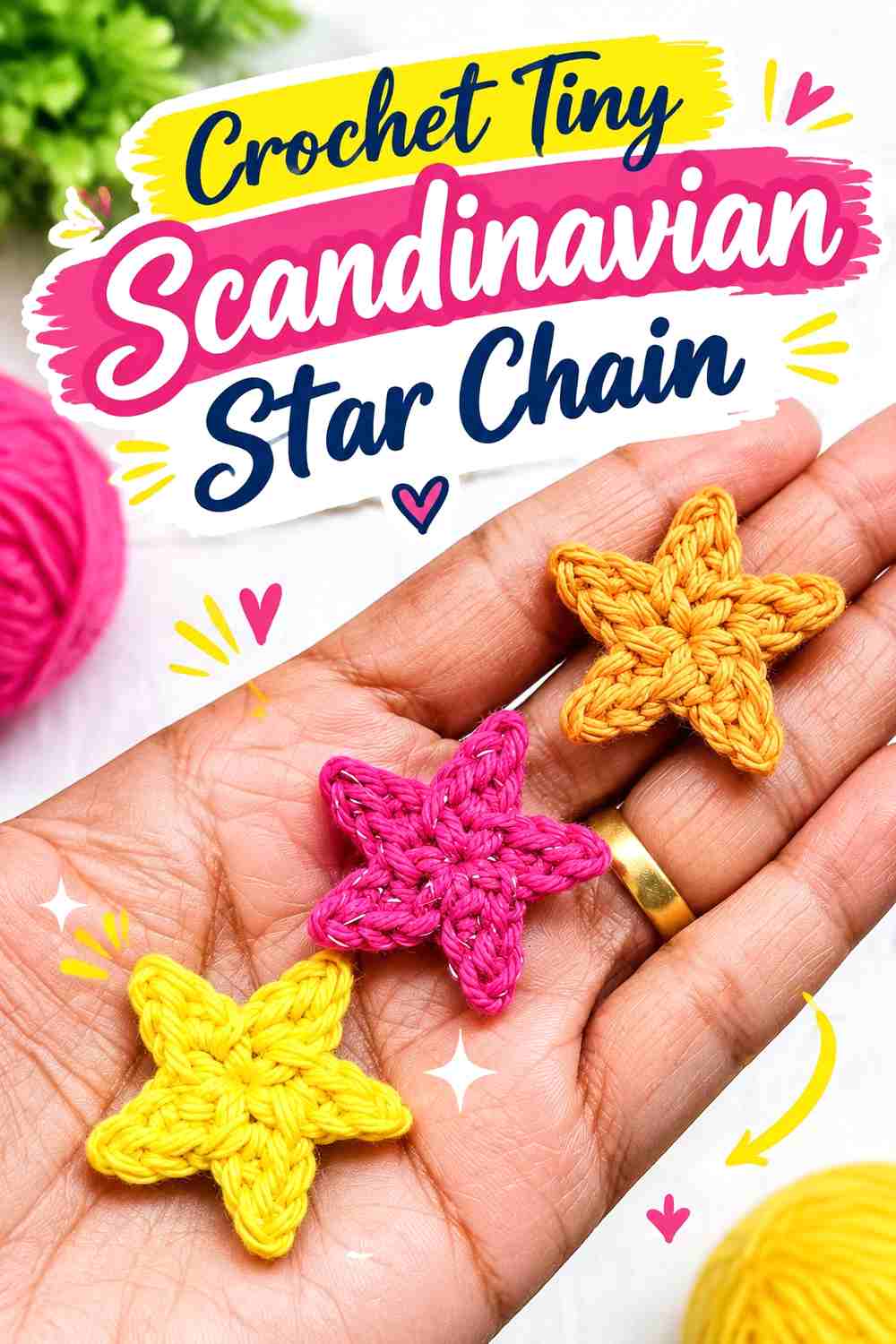
Hopeful Turns demonstrates a very small crochet star appliqué intended for decorative uses including Christmas ornaments.
Tiny motifs create a very different garland from large ornaments. They can be spaced closely along a thin cord for a subtle shelf or window treatment, or used as small fillers between larger statement stars.
Tiny Stars Allow Tighter Repetition
A small motif does not require the generous gaps needed by coaster-sized or dimensional stars. That lets you create a more continuous dotted rhythm across a long span.
Still test the strand from normal viewing distance. If the stars become visually lost, wider color contrast may matter more than adding more motifs.
This Scale Works Well for Alternating Red and White
Strong traditional colors can feel overwhelming on oversized stars. At tiny scale, repeated red and white motifs can create a festive pattern without dominating the room.
Keep the connecting cord restrained so it does not visually outweigh the small stars.
Creator Credit: Hopeful Turns
7. Crochet Color-Bordered Nordic Star Garland
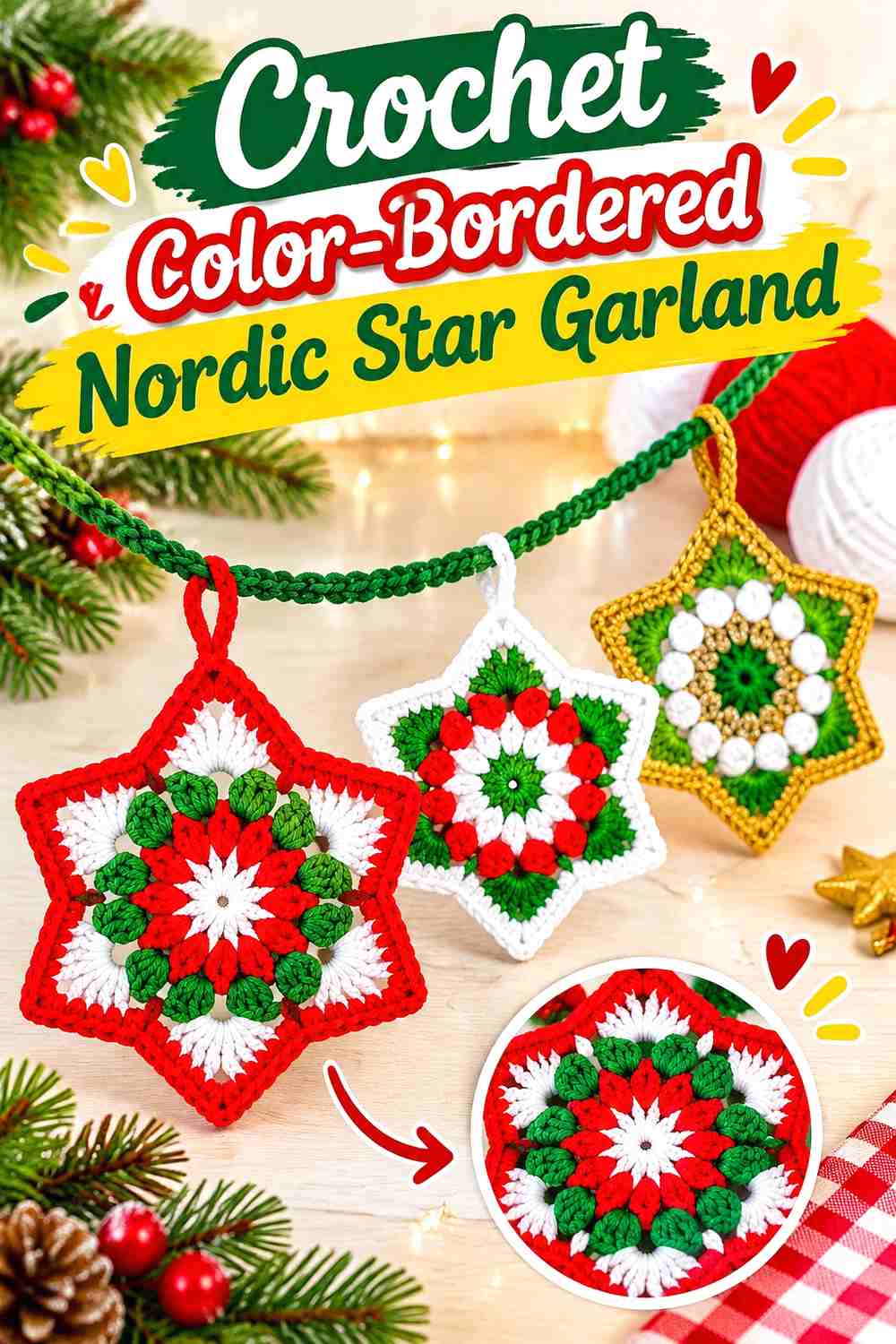
Crochet Craftsman’s ornament uses multiple colors and a defined final border, providing a useful source when you want Scandinavian color blocking rather than single-color stars.
Instead of using many unrelated colors, adapt the concept around a repeated red, white, and muted-green palette, or cream with a narrow red border.
Put the Strongest Color on the Outside
An outer contrasting edge emphasizes the star silhouette from farther away. If the background is pale, a red border around a cream star can prevent the points from disappearing.
Reverse that combination for dark walls or evergreen branches if the lighter edge gives better definition.
Repeat the Same Color Placement Across the Strand
A limited palette becomes more Scandinavian-looking when the color arrangement is disciplined. Changing the center, middle section, and border order on every star may produce a patchwork effect instead.
Choose one or two arrangements and repeat them deliberately.
Creator Credit: Crochet Craftsman
8. Crochet Mixed-Scale Scandinavian Star Garland
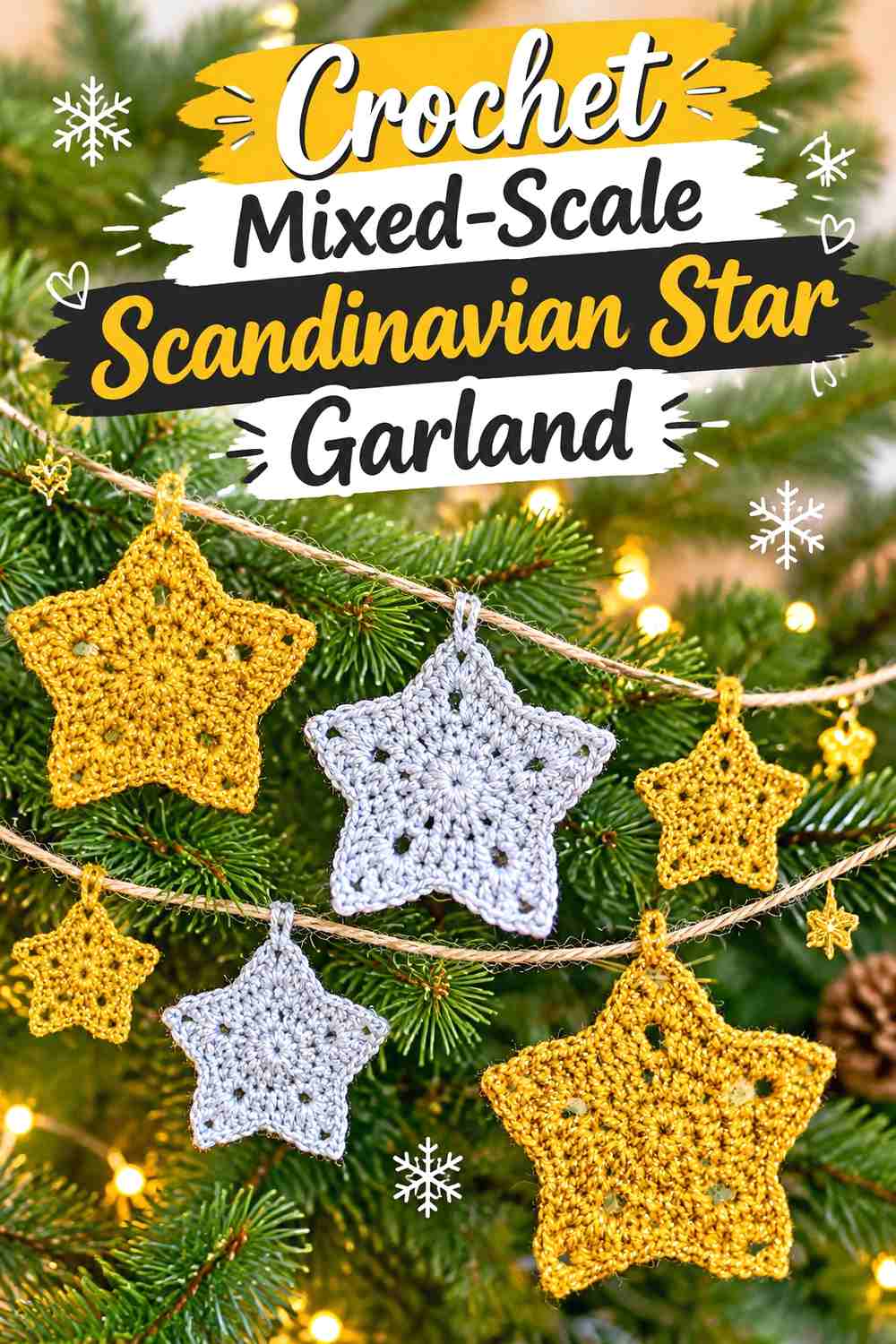
Desert Blossom Crafts demonstrates star ornaments in more than one size and explicitly notes that the finished motifs can also be used for a star garland.
That makes this source particularly useful if you want a Scandinavian strand with controlled size variation rather than nineteen identical repeats.
Alternate Scale Instead of Adding More Colors
Large-small-large-small can create enough visual rhythm that you may not need a complicated palette. An all-cream mixed-scale garland can still feel dynamic because the silhouette expands and contracts along the cord.
Another option is to reserve red for the smaller stars and use cream for the larger ones.
Do Not Guess the Spacing From One Size
A gap that looks generous beside a small star may feel cramped beside the larger version. Lay out the actual size sequence before constructing the final connecting cord.
Adjust spacing according to the widest motifs rather than simply using the same fixed gap automatically.
Creator Credit: Desert Blossom Crafts
9. Crochet Compact Folk Star Garland
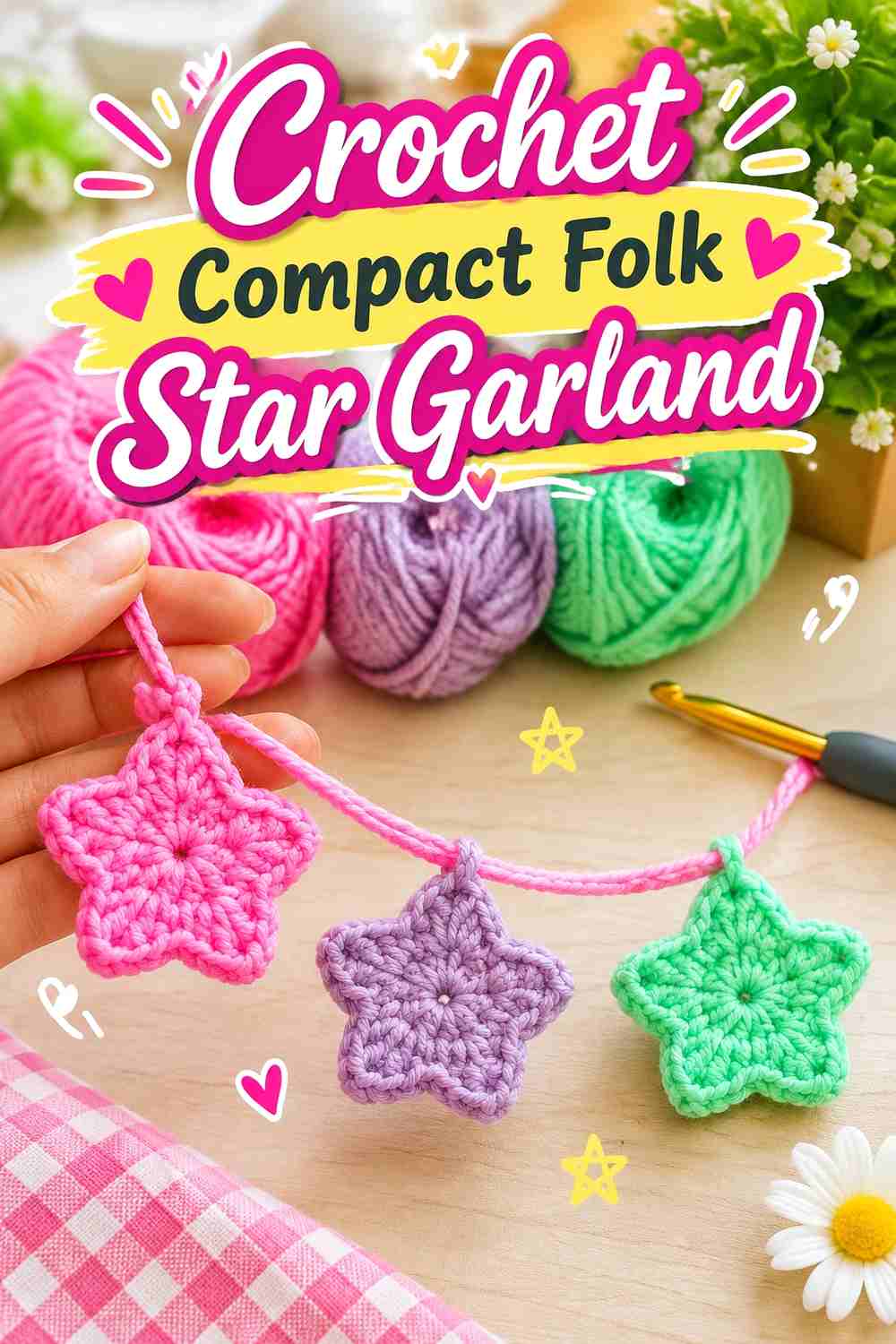
Thao Homemade Crochet’s tutorial focuses on a compact five-point star that works as a small ornament or appliqué.
Its modest scale suits folk-inspired Christmas styling, where many small red stars can be repeated along twine or a simple crocheted chain.
Small Solid Motifs Pair Naturally With Rustic Cord
A decorative cord does not need to match the stars exactly. A restrained natural-looking connector can create useful contrast with red or cream motifs.
Before using a rougher cord, make sure it will not distort the star points where each motif is attached.
Folk Styling Benefits From Slight Restraint
It can be tempting to add bells, beads, tassels, bows, and several yarn colors to every small star. For a Scandinavian-inspired result, allow the star itself to remain the main feature.
One repeated accent is usually enough to establish the handmade folk character.
Creator Credit: Thao Homemade Crochet
10. Crochet Classic Red Nordic Star Garland
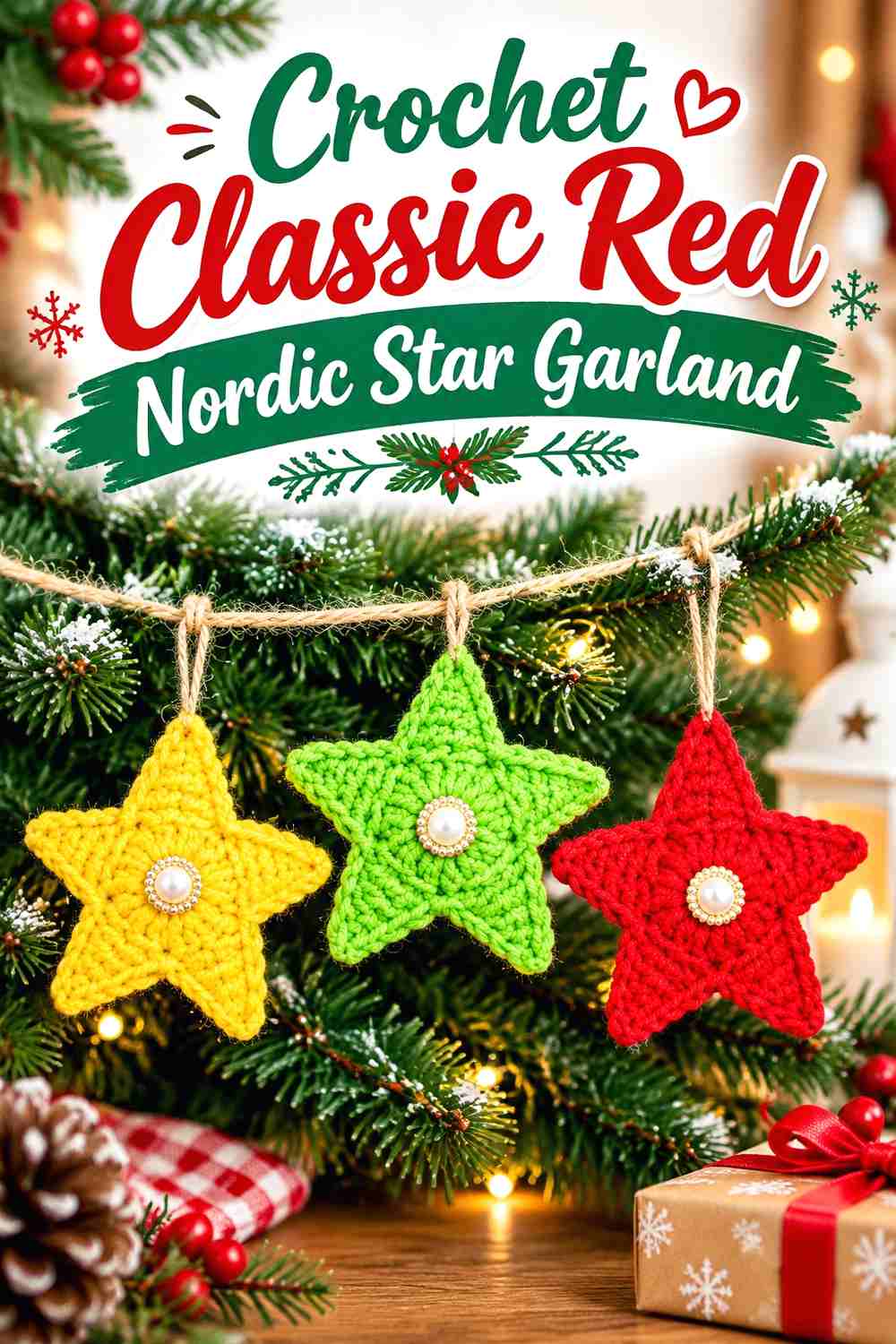
Naztazia’s star ornament is a five-point design that the creator specifically suggests using not only on a Christmas tree but also in bunting or garland arrangements.
A set worked entirely in deep Christmas red would create one of the clearest Scandinavian-inspired interpretations in this collection.
One Strong Red Can Carry the Entire Garland
When the motif is immediately recognizable, extra colors are optional. Repeating the same red creates continuity and allows natural wood, greenery, or a pale wall behind the strand to supply the contrast.
If choosing red yarn online, remember that screen color may not match the physical yarn. Compare the actual skein with other decorations you plan to use.
Keep Decorative Centers Consistent
The creator notes that additional center decoration can be added. If you introduce a small embellishment, decide whether every star will receive it or whether it will mark only selected focal stars.
A consistent rule keeps the final strand from appearing randomly decorated.
Creator Credit: naztazia
11. Crochet Granny-Style Scandinavian Star Garland
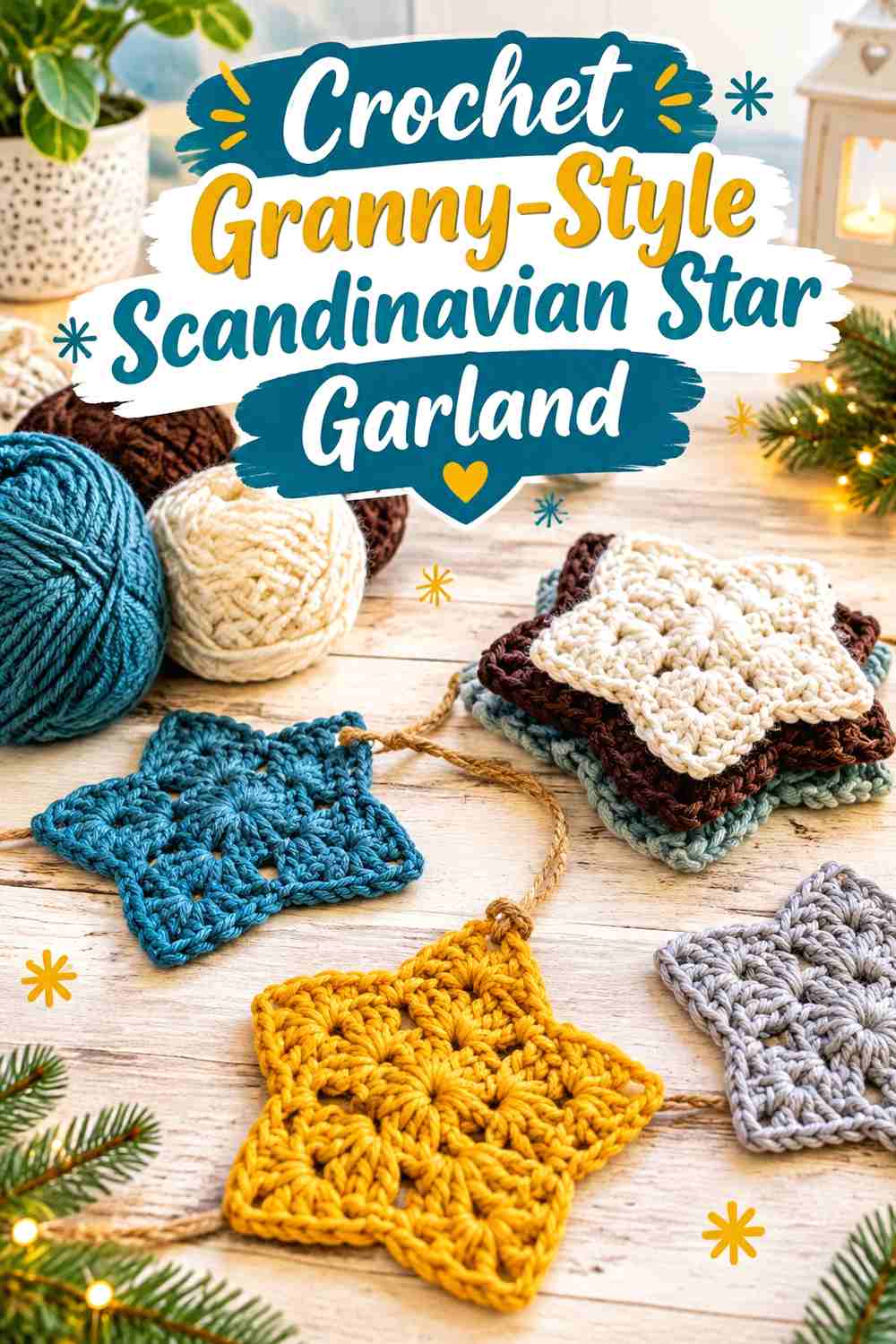
Mary Matthews Handmade’s granny stars use recognizable granny-style crochet while producing a five-point star rather than a square. The creator specifically identifies garlands as one possible use.
This is a useful choice when you want more visible handmade texture and small openings than a solid star provides.
Granny Texture Adds Rustic Character Without Extra Decoration
The cluster-based look already gives the surface enough activity. In cream, oatmeal, or muted red, the motif can feel handcrafted without beads, embroidery, or complex edging.
That makes it particularly suitable for simple wooden or cottage-style Christmas interiors.
Use Color Changes Sparingly
Granny construction naturally invites frequent color changes, but a Scandinavian garland benefits from a more limited plan. Try solid stars, a contrasting center only, or alternating two fixed color combinations.
The goal is to use the granny structure without turning the strand into a multicolor sampler.
Creator Credit: Mary Matthews Handmade
12. Crochet Rustic Christmas Star Garland
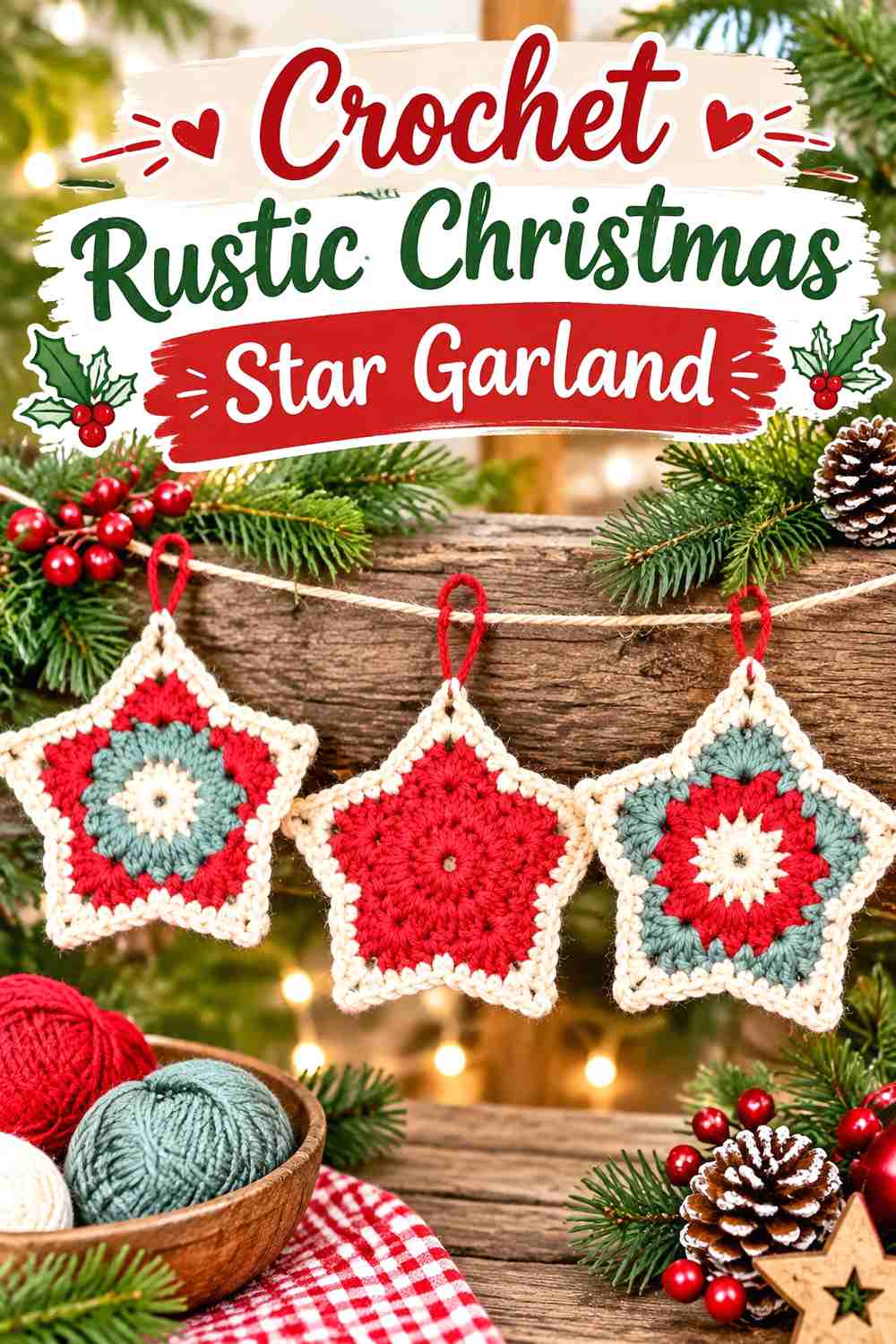
Jayda InStitches’ Christmas star decoration can function as an ornament or coaster and is presented in a format that supports one-color or multicolor interpretations.
For garland use, this broader star works better as a more widely spaced statement motif than as a tightly packed tiny bunting.
Larger Stars Can Replace Quantity With Presence
You may only need several substantial stars across a mantel where a miniature design would require many more repeats.
Mark the intended positions along the mantel first. This helps you determine whether the larger scale looks balanced before you commit to an entire batch.
A Cream-and-Red Combination Can Highlight the Shape
If the construction includes visible color sections, keeping those changes to cream and muted red can preserve the Scandinavian direction while making the star outline more noticeable.
Avoid introducing additional colors simply because the construction allows them.
Creator Credit: Jayda InStitches
13. Crochet Traditional Holiday Star Garland
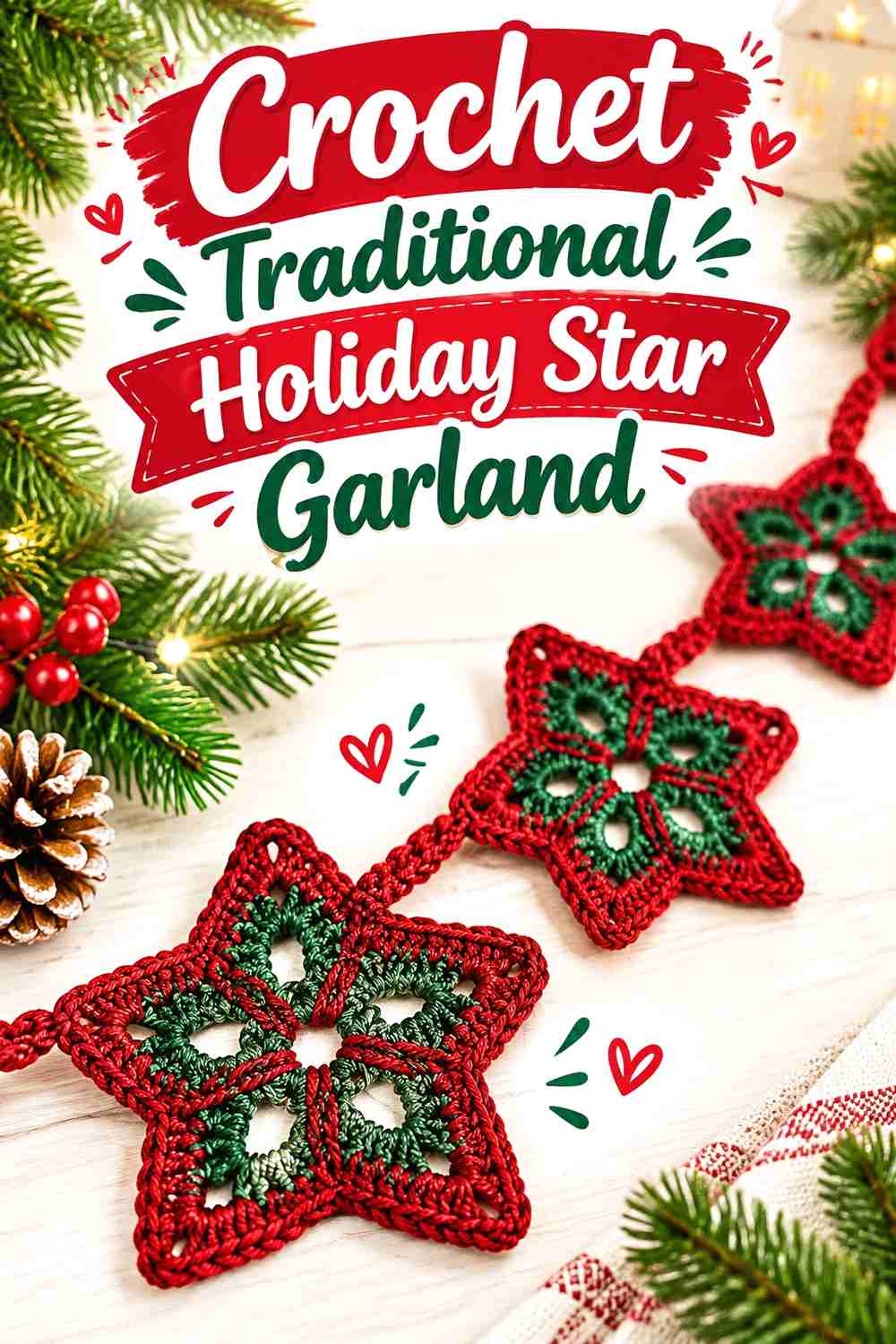
Yarnspirations’ tutorial teaches a dedicated Christmas star ornament and explicitly identifies garlands as one of the possible finished uses.
This makes it a flexible traditional base for readers who want the garland to look unmistakably festive but still keep the Nordic styling simple.
Build the Scandinavian Effect Through the Full Strand
A single star does not need to carry every design cue. The Scandinavian impression can come from repeating the same motif, limiting the palette, and using measured empty space.
That means a conventional Christmas star can work well when the overall composition is restrained.
Consider the Display Background Before Choosing White or Red
White stars are particularly visible against evergreen branches or dark wood, while red stars may provide stronger contrast on pale walls.
If the garland moves between locations each Christmas, a mixed red-and-cream set offers more flexibility than a shade that depends on one specific background.
Creator Credit: Yarnspirations
14. Crochet Natural-Cord Scandinavian Star Garland
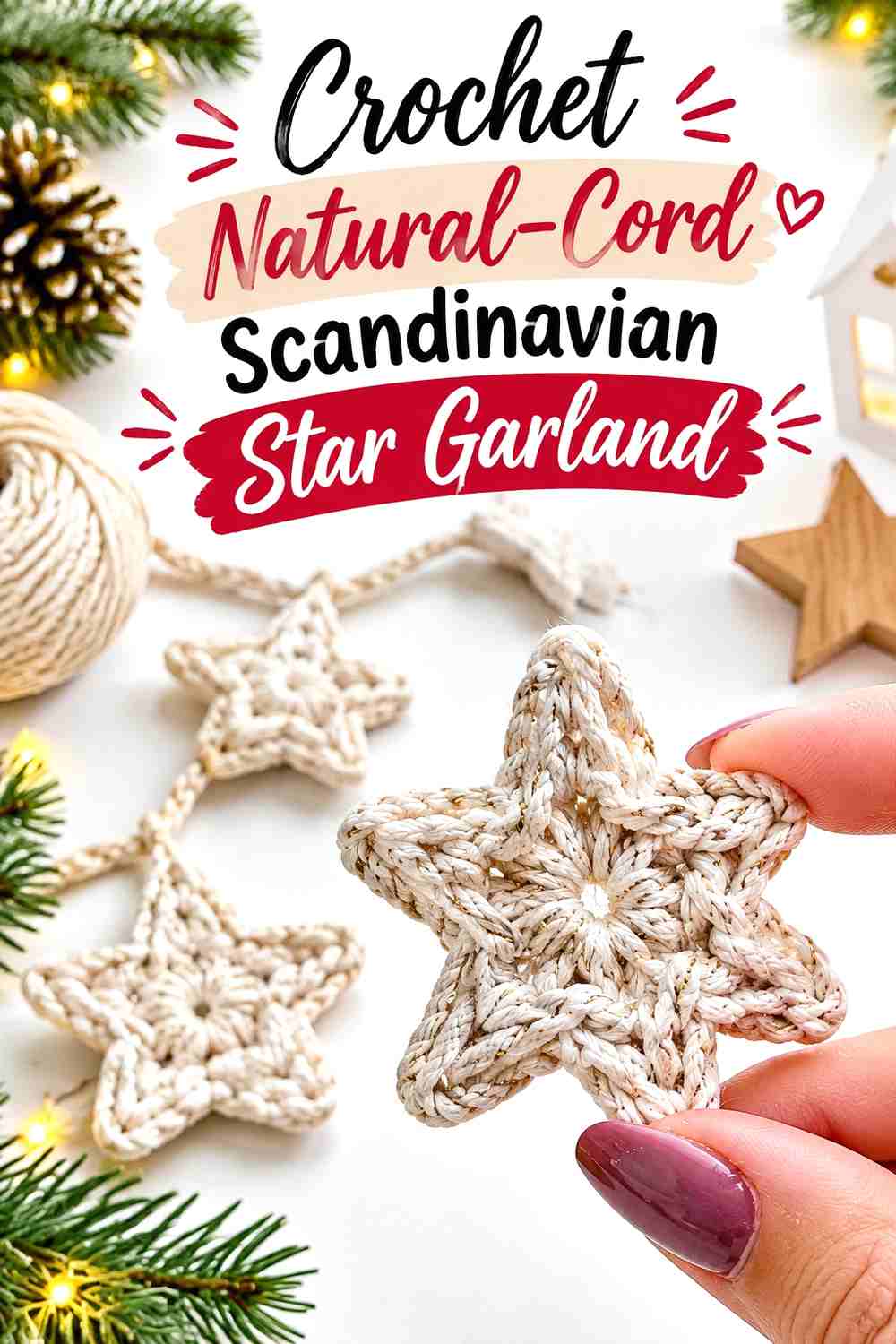
crochetwellbeing demonstrates a little Christmas star using cotton braided cord, which gives the finished motif a firmer and more structural appearance than many soft-yarn stars.
That material character makes this one of the most naturally Nordic-looking options in the collection, especially in cream, flax, muted gray, or brick red.
Cord Creates a Stronger Outline
A substantial cord can help points retain a clearly defined silhouette. The trade-off is additional weight compared with a fine yarn star.
Hang one completed sample from the intended support before deciding how many the garland should contain.
Let the Material Texture Stay Visible
Natural-looking cord already contributes considerable character. Pairing it with a simple connector and restrained color gives that texture room to show.
Heavy decorative tassels or large beads may compete with the clean geometry rather than improve it.
Creator Credit: crochetwellbeing
15. Crochet Family Photo Star Garland
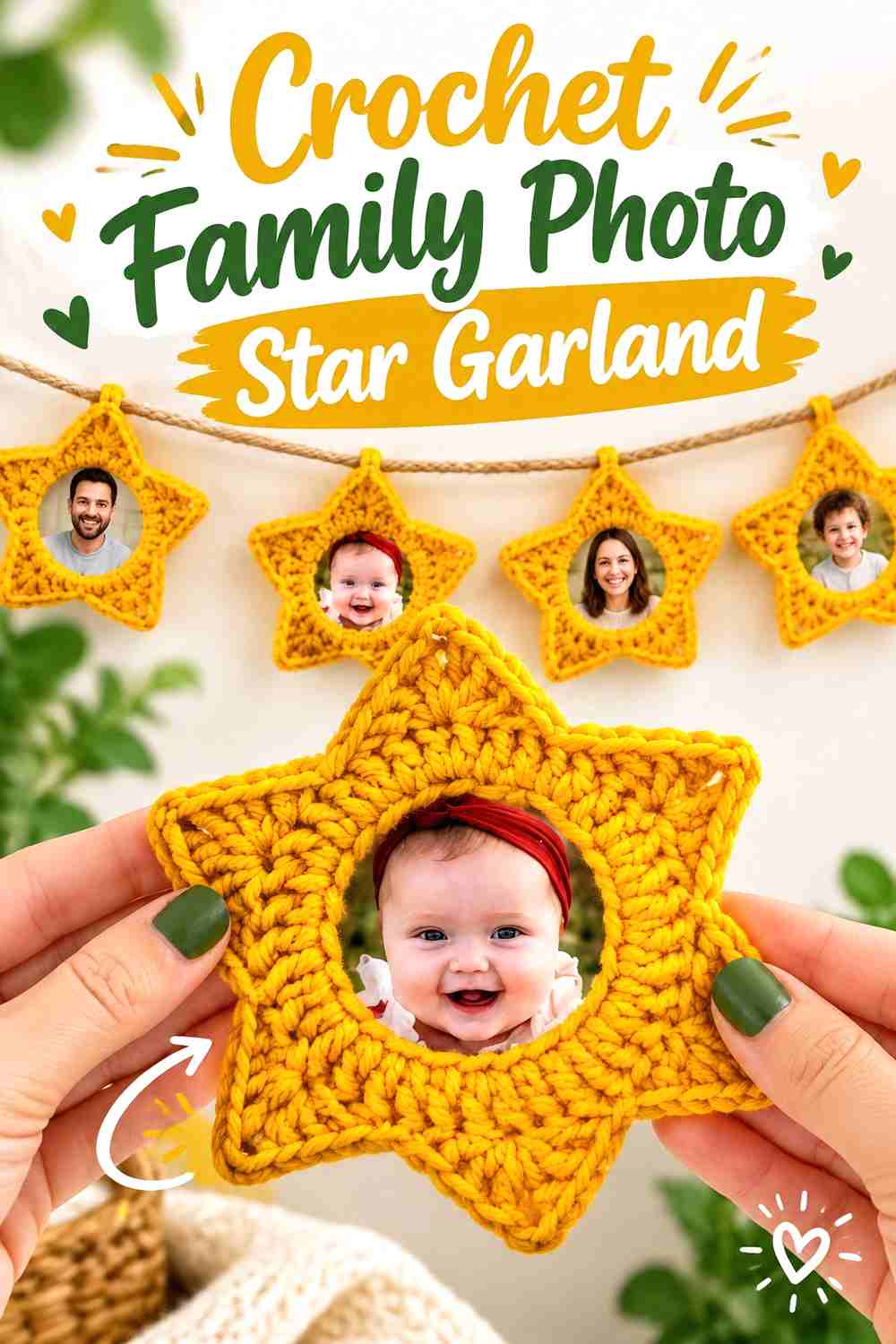
Winding Road Crochet’s star ornament is designed around a photo center, creating an entirely different use from a conventional repeated crochet motif.
For Christmas 2026, this could become a family-focused Scandinavian garland with simple cream stars framing small photographs while the surrounding styling remains minimal.
Keep the Crochet Frame Consistent When the Photos Change
Photographs already introduce many colors and visual details. Using one repeated star color prevents the garland from becoming overly busy.
Cream, oatmeal, or muted red can provide a consistent frame around varied images.
Treat Photo Stars as Focal Points
A strand made entirely from framed photographs may feel visually dense. Another approach is to place photo stars at wider intervals or alternate them with simpler compatible stars.
Check the relative scale before mixing tutorials so the plain motifs do not appear accidentally undersized.
Creator Credit: Winding Road Crochet
16. Crochet Radiating Nordic Star Medallion Garland
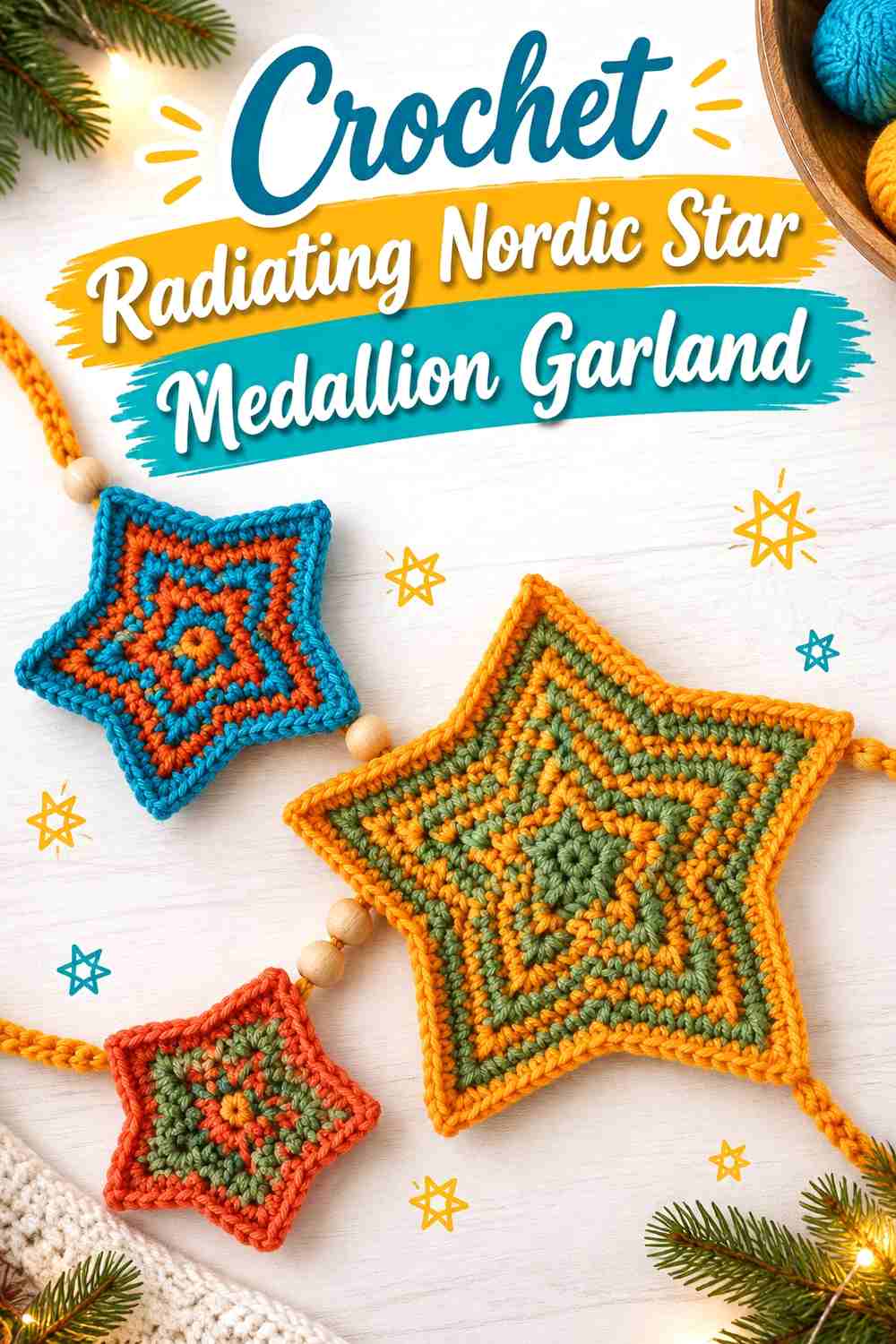
VivCrochets’ star coaster is a larger radiating motif rather than a tiny ornament. The creator describes it as both a coaster and a decorative appliqué and notes that it can be worked in solid, two-tone, or multicolor treatments.
For garland adaptation, think of these as star medallions. They suit a short mantel swag or broad wall display better than a closely spaced tree garland.
Radiating Construction Needs Viewing Distance
A larger star contains more internal patterning, so it benefits from being viewed from farther away. If you crowd several together, the individual radial structures can become difficult to distinguish.
Allow noticeably more cord between these motifs than you would between tiny appliqué stars.
Two Colors Are Enough for Strong Geometry
A cream center with red outer sections—or the reverse—can emphasize the radiating structure without creating a rainbow effect.
Repeat the same arrangement across every motif if you want the cleanest Nordic appearance.
Creator Credit: VivCrochets
17. Crochet Solid Star Charger-Style Garland
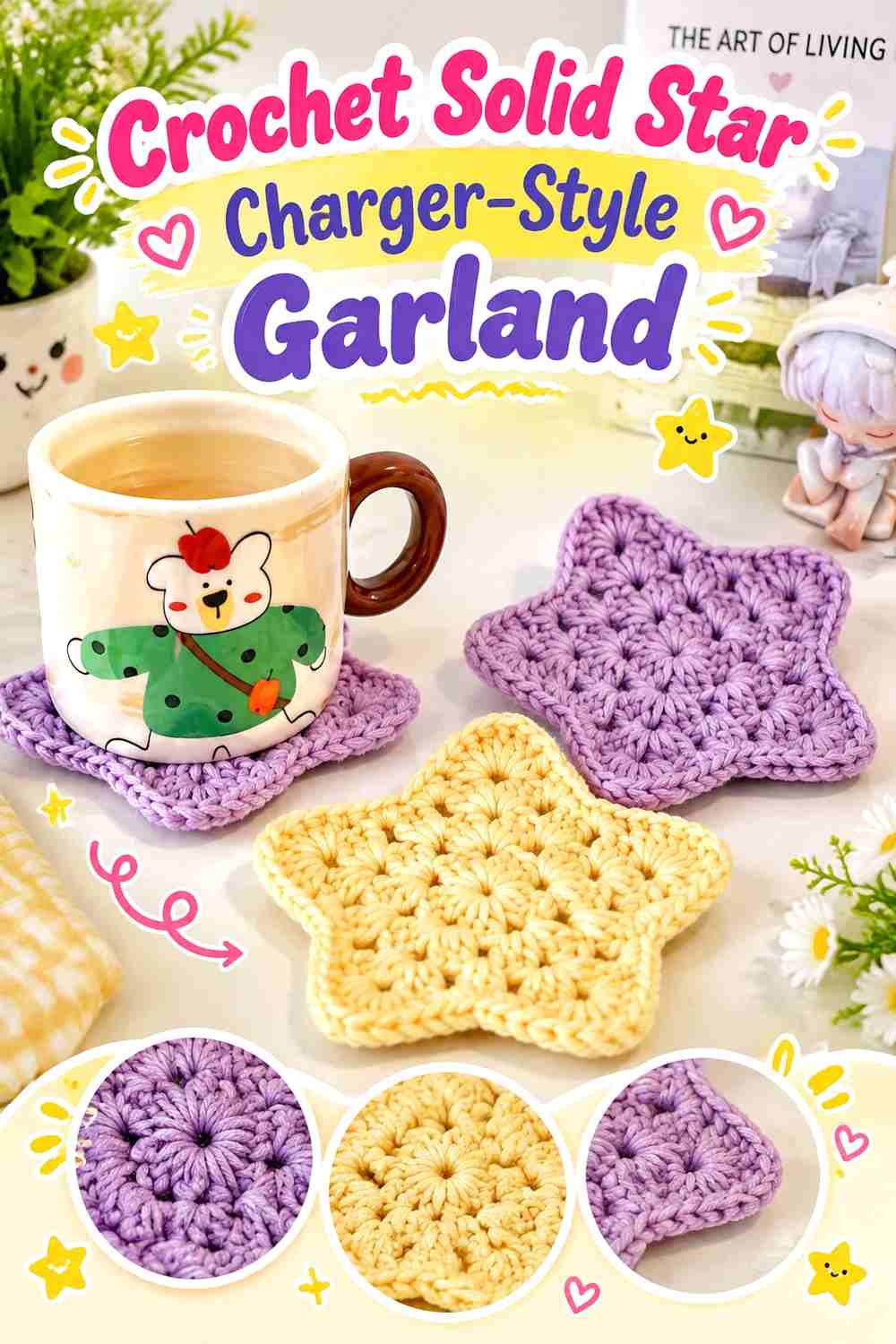
vvw.studio’s star coaster creates another broad star format, but its solid visual presence lends itself to a different garland treatment from delicate ornaments.
Use these larger motifs as occasional hanging panels rather than packing them tightly along a thin string. A short row of substantial cream or dusty-red stars can work particularly well below a shelf or along a broad mantel.
Large Motifs Need a Supportive Connecting Line
The visual weight of a broad star can make a very fine thread connector look disproportionate even when it is physically strong enough.
Compare the motif beside several possible cords before assembly and choose one that looks intentional without becoming the main feature.
Fewer Repeats Can Feel More Scandinavian
Minimal decorating does not mean filling every available inch. Four or five large stars with generous gaps may suit the aesthetic better than twelve crowded motifs.
Measure the display area first and work backward from the spacing you want.
Creator Credit: vvw.studio
18. Crochet Framed Nordic Star Panel Garland
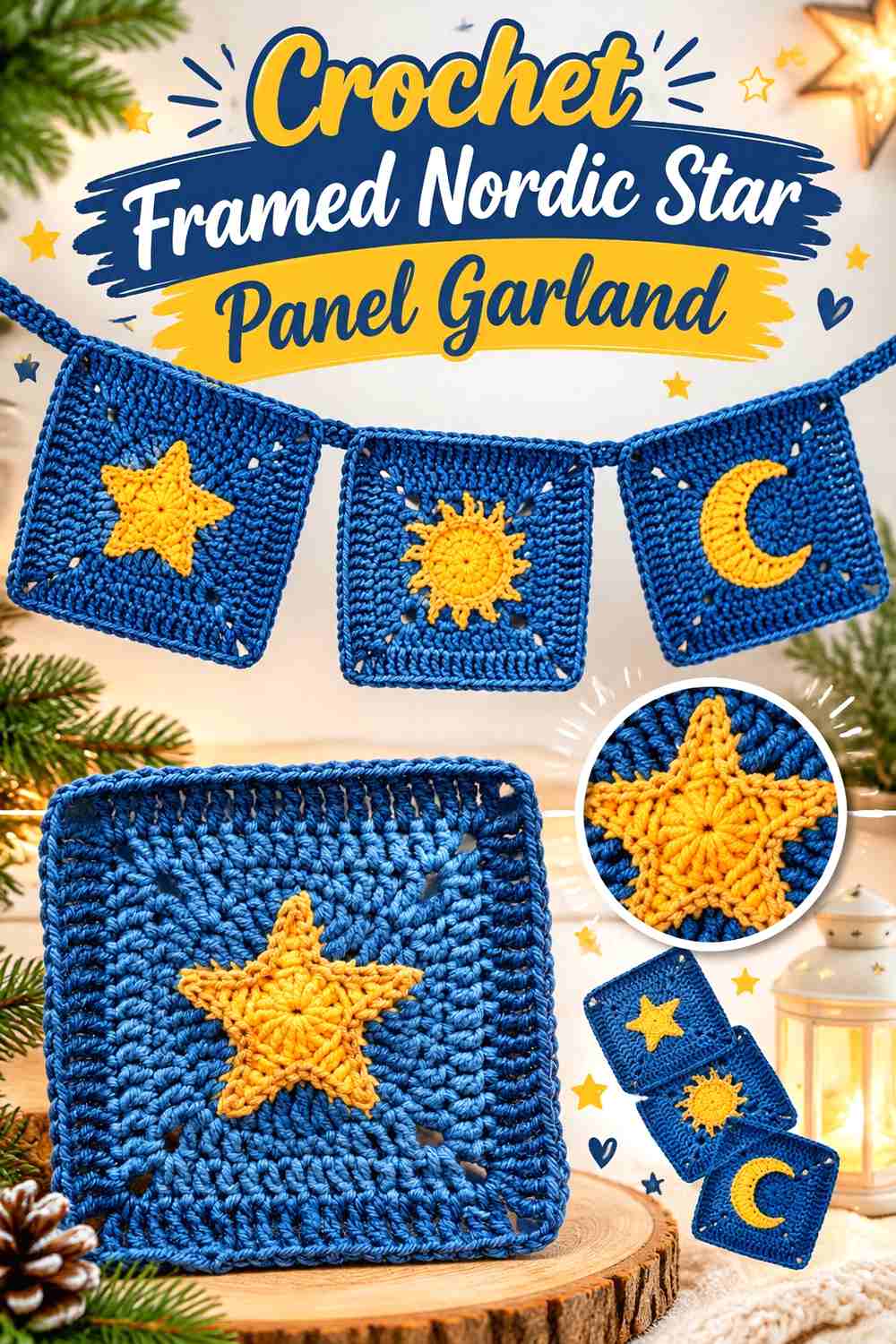
Örgü İşleri’s tutorial builds a prominent star motif and then develops a surrounding frame, producing a panel-like result rather than a freestanding ornament.
This opens up a different interpretation of star garland: instead of stars suspended individually, framed motifs can hang like small textile pennants.
A Frame Makes the Star Feel More Like Folk Textile Art
Scandinavian decorative textiles frequently rely on repeated geometry inside clearly defined boundaries. A star enclosed by a surrounding shape can capture that visual logic particularly well.
For a Christmas interpretation, limit the color sequence to a restrained combination such as red, cream, and muted blue.
Panel Garlands Need More Horizontal Space
A framed motif occupies more width than a simple star with the same central design. Measure the finished sample before deciding how many panels belong on the strand.
If several panels nearly touch, the individual frames may lose their purpose.
Creator Credit: Örgü İşleri
19. Crochet Petite Solid Star Garland
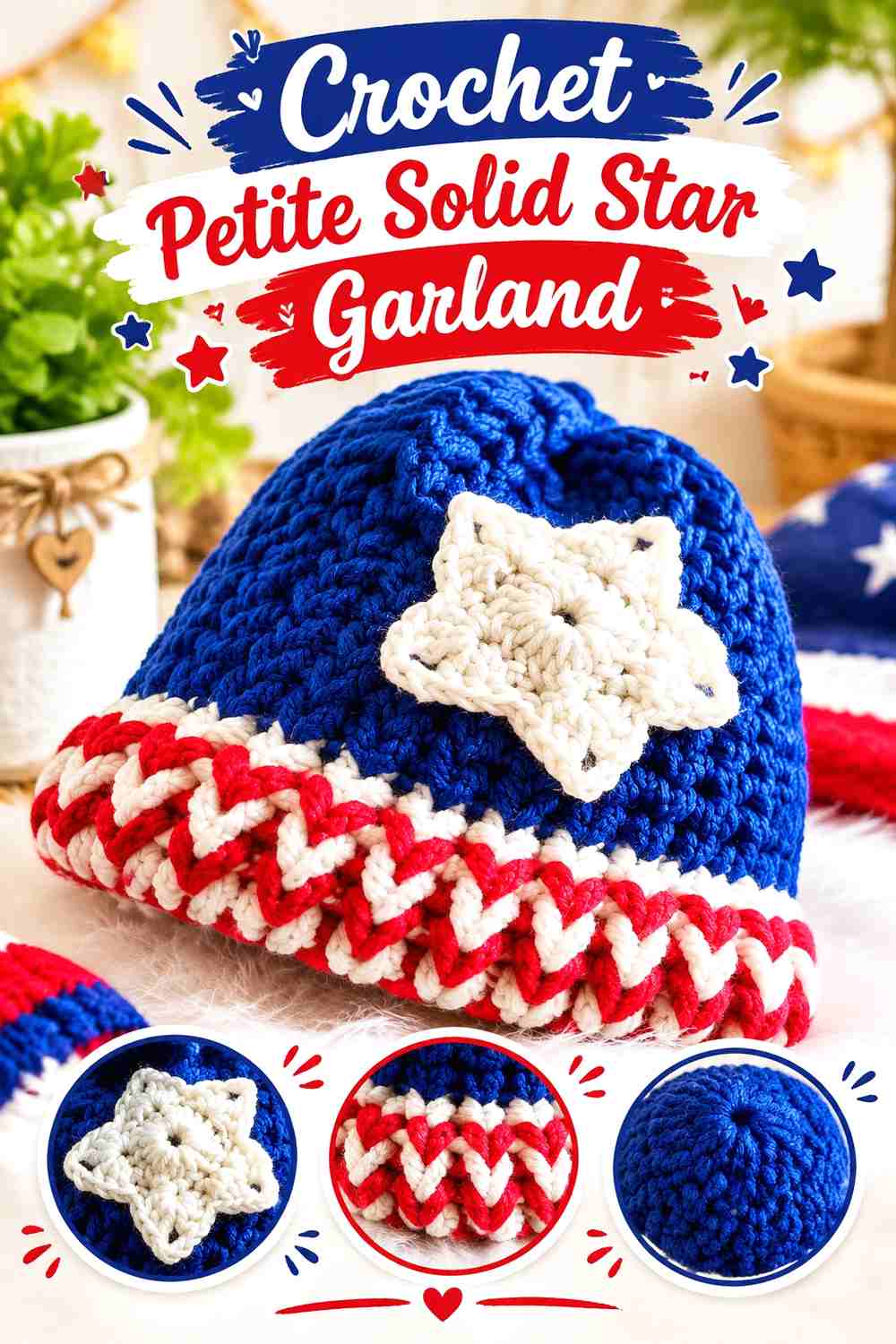
The Crochet Crowd demonstrates a compact crochet star motif and discusses scaling the star through yarn and hook choices.
This makes the construction useful for a petite garland where you want solid little stars rather than lace or broad granny motifs.
Smaller Scale Works Well Across Evergreen Branches
Tiny solid stars can sit among tree branches without covering large sections of greenery. Cream or red motifs can punctuate the tree while allowing lights and other ornaments to remain visible.
If the stars will hang directly on a Christmas tree, test the combined garland on a few branches before making it especially long.
Keep the Connecting Strand Flexible
A very stiff cord can force small stars into awkward angles rather than letting them settle naturally along the branch or mantel.
Choose the connector after seeing the finished motif’s weight and thickness instead of selecting it only by color.
Creator Credit: The Crochet Crowd
Which Scandinavian Star Garland Style Should You Choose?
For the most direct project route, start with the Thread Maker Studio or Bella Coco options because the source tutorials are already centered on star bunting or garland construction.
For a particularly traditional Scandinavian Christmas look, the compact five-point stars from Crochet Bits, Hopeful Turns, Thao Homemade Crochet, or Naztazia suit repeated red-and-white arrangements without requiring complicated colorwork.
Choose the Secret Yarnery six-point motif or Kristines Crochets’ openwork star if you want the display to lean more toward snowy winter decor. Mary Matthews Handmade’s granny stars and the crochetwellbeing cord stars are stronger choices for rustic settings where visible yarn texture matters.
The larger coaster and framed-motif ideas are better for short statement swags than long tree garlands. Their increased scale means you can use fewer pieces and more negative space while still giving the crochet a strong visual presence.
Conclusion
A Scandinavian-inspired crochet star garland works best when the entire strand feels deliberate. The individual star matters, but so do the gaps between motifs, the amount of color, the connecting cord, the display background, and the way the stars repeat.
Choose tiny five-point motifs for a delicate tree or shelf garland, six-point and openwork designs for a snowy winter look, granny or cord stars for rustic Nordic decor, and larger medallions or framed motifs when you want fewer statement pieces.
Make one star first and view it in the location where the finished garland will hang. Once you know the scale, weight, contrast, and silhouette are right, plan the full sequence before producing the remaining motifs. Follow each original creator tutorial for exact construction details and verify its recommended materials whenever you change yarn weight or finished scale.
Frequently Asked Questions
What colors work best for a Scandinavian crochet star garland?
Red and warm white create one of the most recognizable Scandinavian Christmas combinations. Cream, oatmeal, forest green, dusty blue, muted gray, and small amounts of charcoal or gold can also work. Limiting the strand to two or three recurring colors usually creates a calmer result than using a different shade for every star.
Do all the crochet stars need to be the same size?
No. Alternating two intentionally different sizes can create useful rhythm. The important part is making the scale change look planned. If one star is only slightly larger because tension changed, it may look inconsistent rather than deliberately varied.
Can I mix stars from different crochet tutorials in one garland?
You can, but compare the finished samples before making multiples. Two tutorials may use very different yarn weights, densities, or finished proportions. A small granny star and a heavy cord star may not balance naturally on the same strand without additional planning.
Should Scandinavian star garlands use wood beads?
Wood beads can complement natural yarn and Nordic-inspired styling, but they are optional. A plain crocheted chain or simple twine can be enough. If adding beads, consider the extra weight and make sure the hanging method suits the finished garland.
How far apart should crochet stars be on a Christmas garland?
There is no universal spacing because motif size varies significantly. Tiny appliqués can sit fairly close, while coaster-size stars need considerably more room. Arrange completed motifs along the intended display area before permanently joining them and judge the spacing from normal viewing distance.
Is cotton better than acrylic for a crochet star garland?
Neither fiber is universally better. What matters is how the finished star behaves. Some designs benefit from crisp stitch definition and firm points, while others suit a softer fabric. Follow the tutorial’s material guidance first, and test any substitute on one complete star before committing to the full garland.
How can I make a crochet star garland look more Scandinavian without changing the pattern?
Use a limited palette, repeat colors in a predictable sequence, leave visible negative space between motifs, and avoid adding many unrelated embellishments. Cream, red, natural textures, simple cords, and consistent star shapes can shift an ordinary crochet star toward a Scandinavian-inspired Christmas display without altering the creator’s construction.