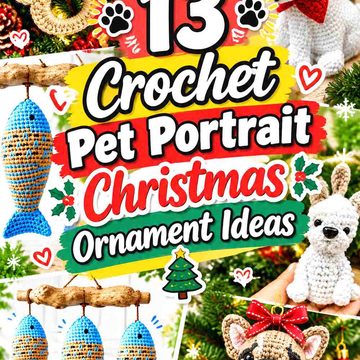
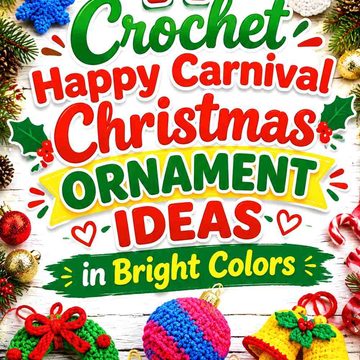
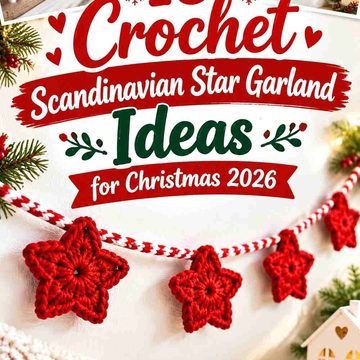
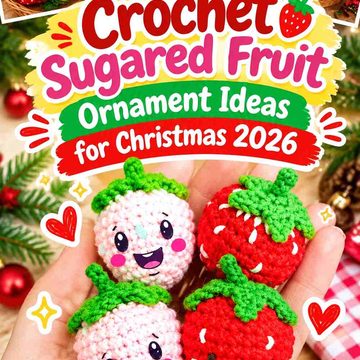
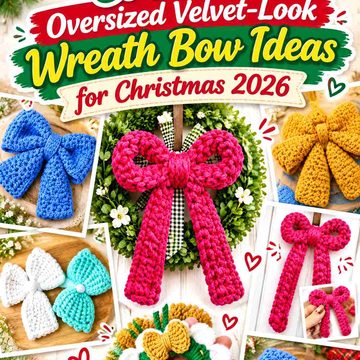
Merrymaxxing is giving Christmas decorating permission to be louder, brighter, more playful, and much less coordinated in the traditional sense. Etsy’s Fall/Winter 2026 trend coverage describes the look through bold color, sparkle, whimsical details, and ornaments with noticeable personality rather than quiet, minimal styling.
Crochet fits that approach especially well because you can create contrast without relying on color alone. A lacy snowflake brings open space, a stuffed pudding adds round volume, a pinecone contributes raised texture, and a tiny stocking introduces a recognizable object with an entirely different outline.
The 16 crochet Christmas ornament ideas below deliberately mix flat, dimensional, structured, soft, traditional, and playful forms. Instead of making every branch carry another version of the same bauble, you can use the projects to build a tree that feels collected, abundant, and full of handmade character.
Quick List
- Lacy Crochet Snowflake Ornament
- Mini Crochet Stocking Ornament
- Ring-Shaped Crochet Wreath Ornament
- Twisted Crochet Candy Cane Ornament
- Pointed Crochet Star Ornament
- Stiffened Crochet Bell Ornament
- Beaded Crochet Angel Ornament
- Graphic Crochet Christmas Tree Ornament
- Whimsical Crochet Gnome Ornament
- Plush Crochet Christmas Pudding Ornament
- Gift-Box Crochet Present Ornament
- Character Crochet Reindeer Ornament
- Cozy Crochet Mitten Ornament
- Cookie-Style Crochet Gingerbread Man Ornament
- Stuffed Crochet Snowman Ornament
- Textured Crochet Pinecone Ornament
What Merrymaxxing Means for a Crochet Christmas Tree in 2026
A Merrymaxxing tree does not need every ornament to match. The stronger approach is repetition with deliberate interruption. You might repeat several round ornaments for rhythm, then break that rhythm with stars, stockings, candy canes, figures, and openwork snowflakes.
Color can be equally flexible. Traditional red, green, cream, and gold can sit beside pink, turquoise, orange, lilac, metallic yarn, or multicolor scraps if there is another element tying the tree together. That common element might be the hanger material, a recurring accent color, similar yarn texture, or simply the handmade crochet surface.
Embellishment also works better when it varies. Instead of adding beads, bows, embroidery, pom-poms, and sparkle to every ornament, let some pieces stay graphically simple. A highly decorated bauble stands out more when a clean snowflake or pinecone sits nearby.
Build Variety Through Shape, Texture, and Scale
Before making a large batch, look at silhouette first. Round baubles, puddings, and snowmen create visual weight. Stars and snowflakes spread outward. Stockings, mittens, candy canes, and trees introduce vertical or asymmetrical outlines. Wreaths create open centers that keep dense sections of the tree from feeling visually crowded.
Texture matters just as much. Raised stitches, embroidery, fluffy beard yarn, smooth amigurumi fabric, open lace, and stiffened crochet each react differently to tree lights. Mixing those surfaces gives a maximalist display more depth without requiring every ornament to be covered in added decoration.
Scale should also vary intentionally. If you change yarn or hook size from a tutorial, make one test ornament before committing to a set. A design that looks balanced at one scale may become too heavy, too floppy, or visually dominant when enlarged.
Plan Hanging, Weight, and Storage Before Making a Large Batch
An ornament is not finished simply because the crochet is finished. Check where its hanging loop sits and whether the piece faces forward when suspended. Wider designs such as stars, reindeer, and angels may rotate differently from compact baubles.
Stuffed pieces usually need more branch support than flat motifs. Long decorations can also collide with the branches below them, so it helps to mix compact and elongated shapes rather than placing all the vertical designs together.
Think about January storage as well. Snowflakes and stiffened bells need protection from crushing, while embellished figures may have parts that can catch on neighboring ornaments. Storing the most structured pieces loosely rather than compressing everything into one bag can help preserve their shape.
1. Lacy Crochet Snowflake Ornament
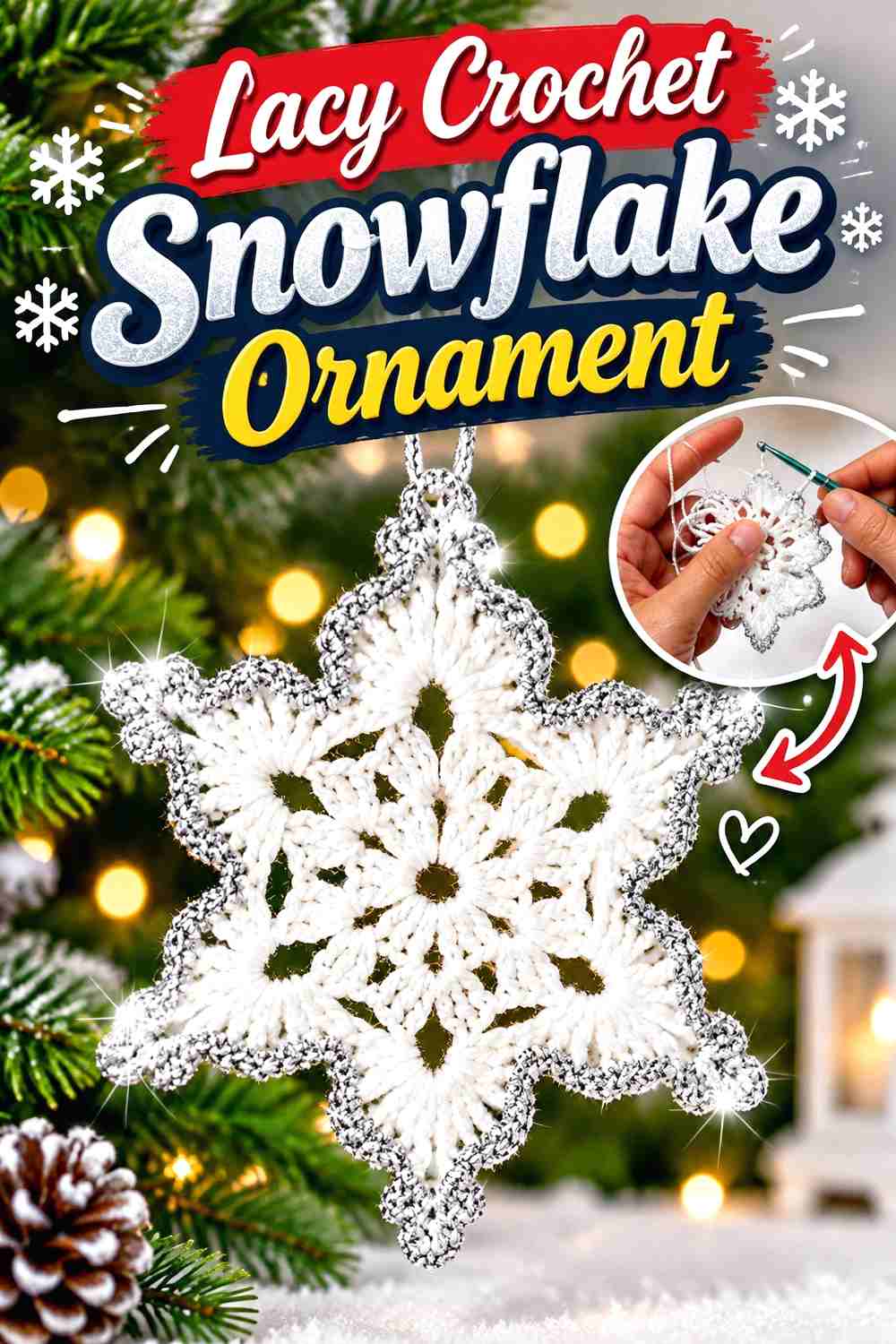
A crochet snowflake adds something many stuffed ornaments cannot: negative space. The open areas between the points allow tree lights and greenery to remain visible, making snowflakes useful separators between more colorful, dimensional decorations.
They can look especially effective on a maximalist tree because the shape is detailed without necessarily being bulky.
Crisp Points Matter More Than Extra Decoration
The attraction of a snowflake comes largely from symmetry and definition. If the finished motif curls or the points pull in different directions, additional beads or sparkle will not solve the underlying shape problem.
Check the creator’s finishing guidance and consider whether your chosen yarn will hold the open structure clearly. Blocking or another appropriate shaping method may matter more here than it would on a stuffed ornament.
Openwork Can Calm a Busy Ornament Cluster
When several nearby decorations have faces, bows, embroidery, or dimensional details, place an open snowflake between them. The empty spaces give the eye somewhere to rest while still contributing a festive silhouette.
That makes snowflakes useful transition pieces between different color zones on a heavily decorated tree.
Creator Credit: Crochet Craftsman
2. Mini Crochet Stocking Ornament
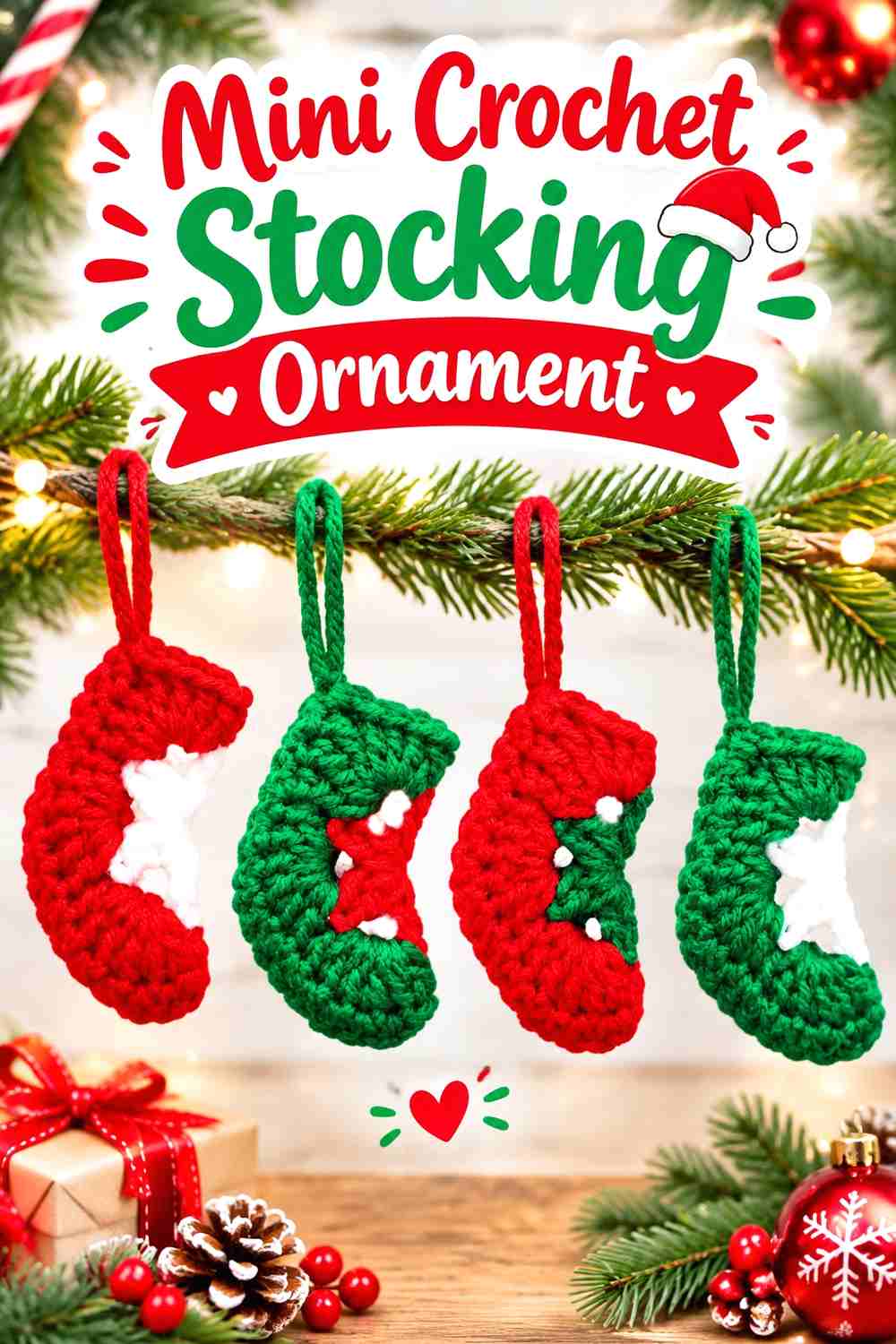
A miniature stocking immediately introduces a different outline from round or radial ornaments. The cuff, leg, heel, toe, and open top give it the appearance of a tiny functional object rather than a decorative motif.
That opening also creates opportunities for personalization. A stocking can remain empty or become part of a gift presentation without changing the basic crochet concept.
The Open Top Makes the Ornament More Interactive
Unlike a flat star or sealed stuffed figure, a stocking has an interior. If you want to use it for a tiny note, lightweight surprise, or decorative insert, confirm that the tutorial’s finished opening suits that purpose before changing the scale.
Do not assume a miniature stocking is designed to carry substantial weight. Treat the opening primarily as a decorative feature unless you have specifically planned for another use.
Preserve the Heel and Toe When Changing Scale
The stocking silhouette depends on its bends. If you substitute a much thicker yarn, a tiny heel or toe can become visually compressed even when the overall project gets larger.
Make a single sample before producing a whole coordinated stocking set. The test piece will tell you whether the shape still reads clearly at your chosen gauge.
Creator Credit: Secret Yarnery
3. Ring-Shaped Crochet Wreath Ornament
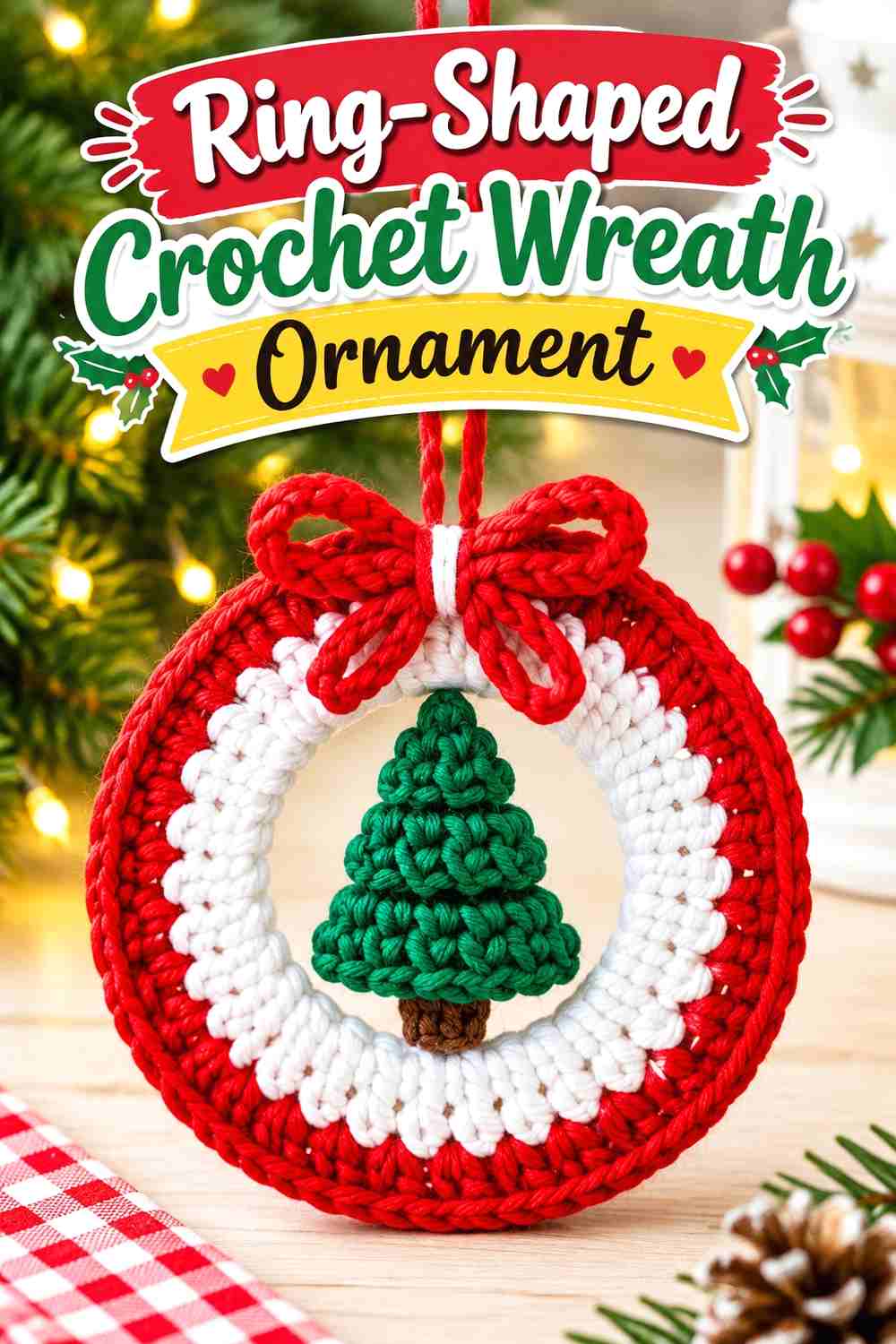
A miniature crochet wreath is useful on a densely decorated tree because the open center creates contrast against stuffed pieces. Its circular outline still relates visually to traditional baubles, but the missing center makes it feel lighter.
The wreath is also a natural place to concentrate one strong embellishment such as a bow or cluster rather than distributing decorations across the entire surface.
The Center Opening Adds Valuable Breathing Room
Merrymaxxing can become visually muddy when every ornament is solid, bright, and heavily detailed. An open wreath still looks decorative while allowing greenery or lights to show through the middle.
Try placing these around sections with several plush or stuffed ornaments. The repeated circle keeps continuity without adding another solid mass.
Keep Decorations From Pulling the Ring Sideways
Adding a bow, charm, or dimensional accent to one side can change how a small wreath hangs. Check the balance before permanently attaching the hanger.
If the wreath naturally tilts, decide whether the asymmetry looks intentional. Sometimes moving the hanging point slightly is enough to restore the orientation you want.
Creator Credit: Tuba Crochet
4. Twisted Crochet Candy Cane Ornament
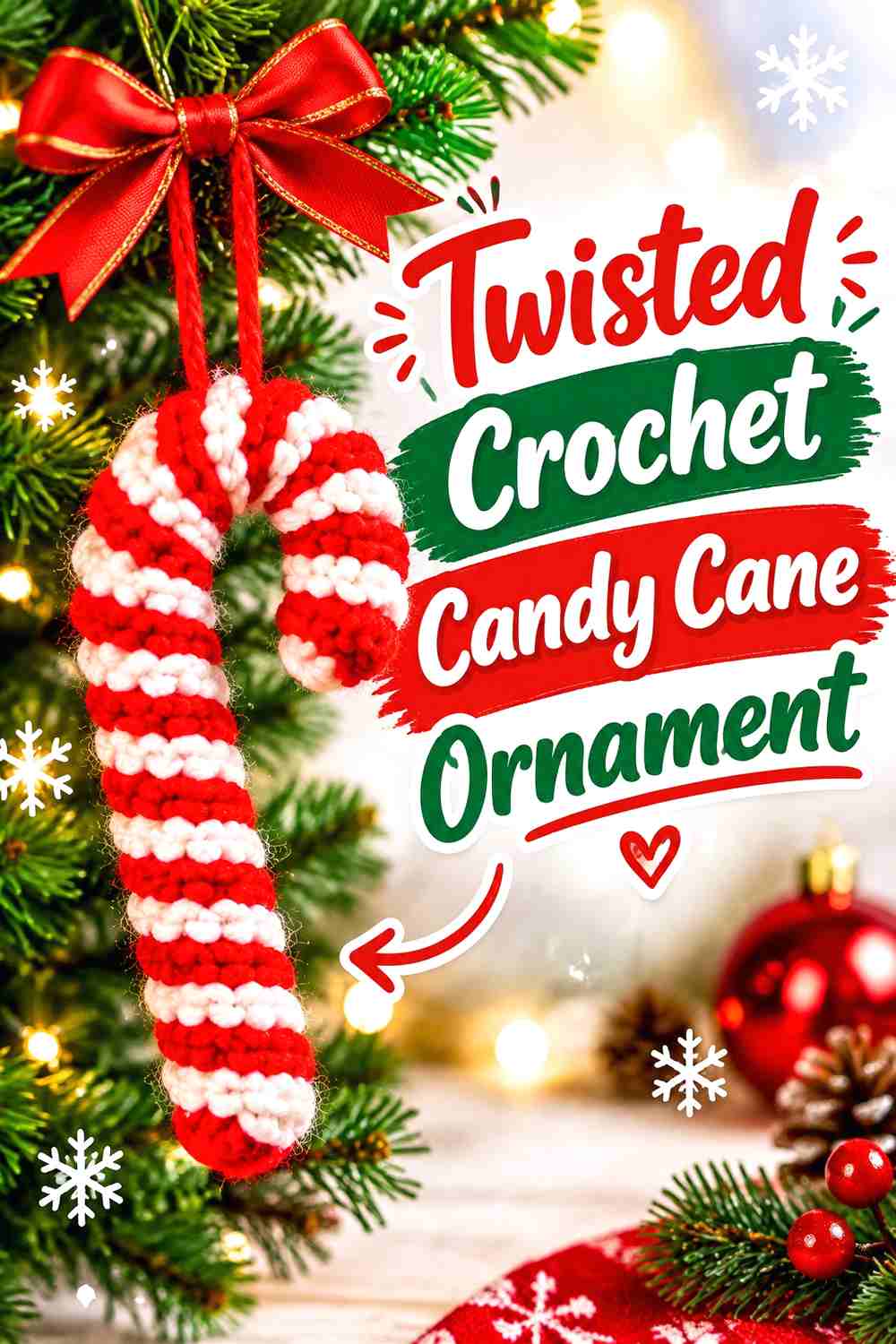
A crochet candy cane brings a long curved line to a tree dominated by circles and stars. That directional shape is valuable because it leads the eye through the branches instead of creating another isolated decorative spot.
Red and white are the obvious palette, but the silhouette remains readable in less traditional Merrymaxxing combinations as long as there is enough contrast to show the twist.
The Curve Creates Movement Between Round Ornaments
Candy canes work well beside baubles because their shapes oppose each other. Use the curved pieces to connect separate clusters of larger ornaments visually.
They can also hang slightly lower than compact motifs, filling vertical gaps that would otherwise require another oversized decoration.
Structure Determines Whether the Hook Shape Stays Clear
A soft crochet strip may not maintain a candy-cane curve by itself. When a version uses internal support, the firmness of that support becomes part of the ornament’s performance rather than merely a finishing detail.
Shape the curve before deciding where the final hanging loop belongs. The ornament should still read clearly as a candy cane when viewed from the front of the tree.
Creator Credit: Made by Phia
5. Pointed Crochet Star Ornament
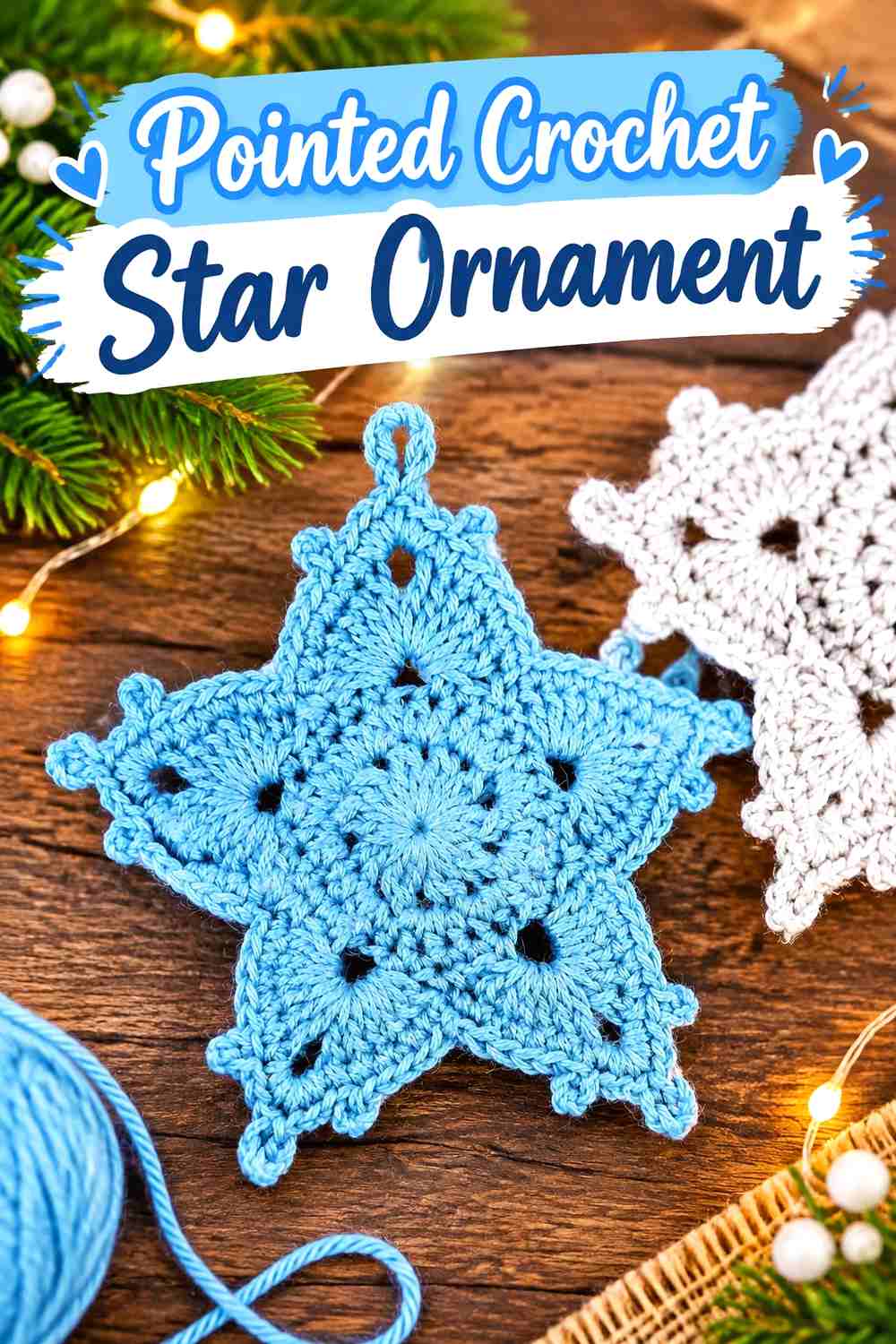
A crochet star provides a strong geometric focal point. Compared with a snowflake, the broader points create a more solid silhouette, so the ornament can carry strong color without disappearing against dark greenery.
Stars also bridge traditional Christmas decorating and the exaggerated personality of Merrymaxxing particularly well. The familiar outline gives you freedom to experiment elsewhere.
Sharp Points Are the Main Design Feature
Before adding embellishments, look at the five-point outline. Uneven tension around the corners can make one point look shorter or rounder than the others.
Shaping the finished motif carefully is often enough decoration on its own. If you add sparkle or contrast edging, use it to emphasize the outline rather than hide it.
Flat Stars Fit Places Bulky Ornaments Cannot
A flatter star can sit near the tips of branches or against a wall-facing section where a deep stuffed ornament would project too far. That makes stars useful for filling shallow spaces.
They also work naturally as gift toppers or garland pieces if you want your tree decorations to coordinate with wrapping elsewhere in the room.
Creator Credit: Kristines Crochets
6. Stiffened Crochet Bell Ornament
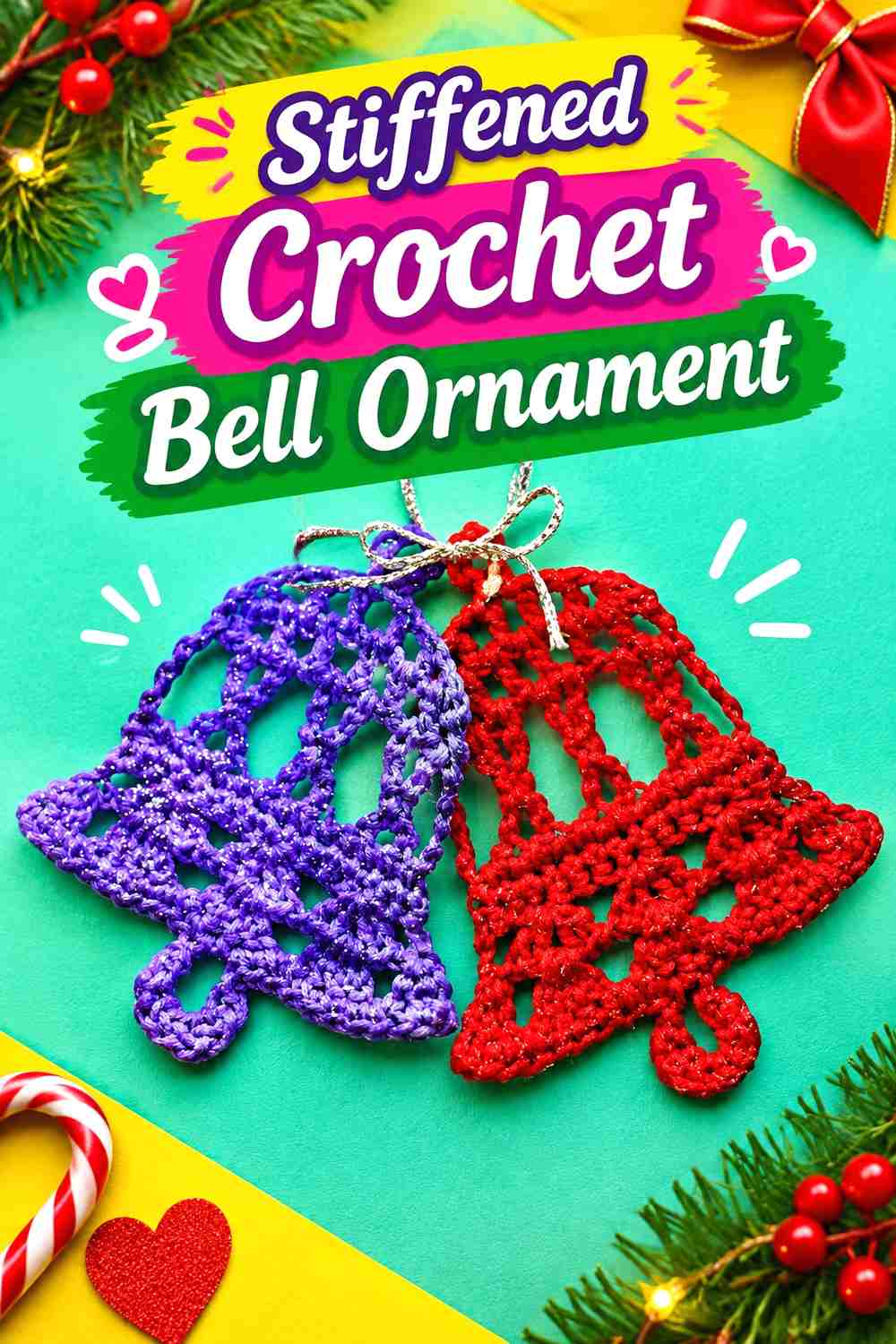
The bell adds a hanging silhouette with a distinct flared lower edge, immediately separating it from spheres and flat motifs. A shaped bell can also create interesting shadow and texture when placed near tree lights.
Its success depends heavily on finishing because crochet fabric that hangs softly behaves differently from fabric shaped to hold a recognizable bell form.
Structure Changes the Entire Finished Look
If you want a defined bell rather than a soft bell-shaped appliqué, pay attention to the tutorial’s finishing and shaping approach. The yarn alone may not create the final structure.
Allow any shaping treatment to dry completely before judging the silhouette or adding the hanger. Handling it too early can distort the edge you just established.
The Bottom Edge Should Look Intentional From Several Angles
Because a bell hangs vertically, viewers may see both its side and lower edge. Check the ornament from below as well as straight ahead.
Decorative edging can become a major visual feature here, so inconsistent tension around the opening will be more noticeable than it might be on a flat motif.
Creator Credit: Crochet with Tuula Maaria
7. Beaded Crochet Angel Ornament
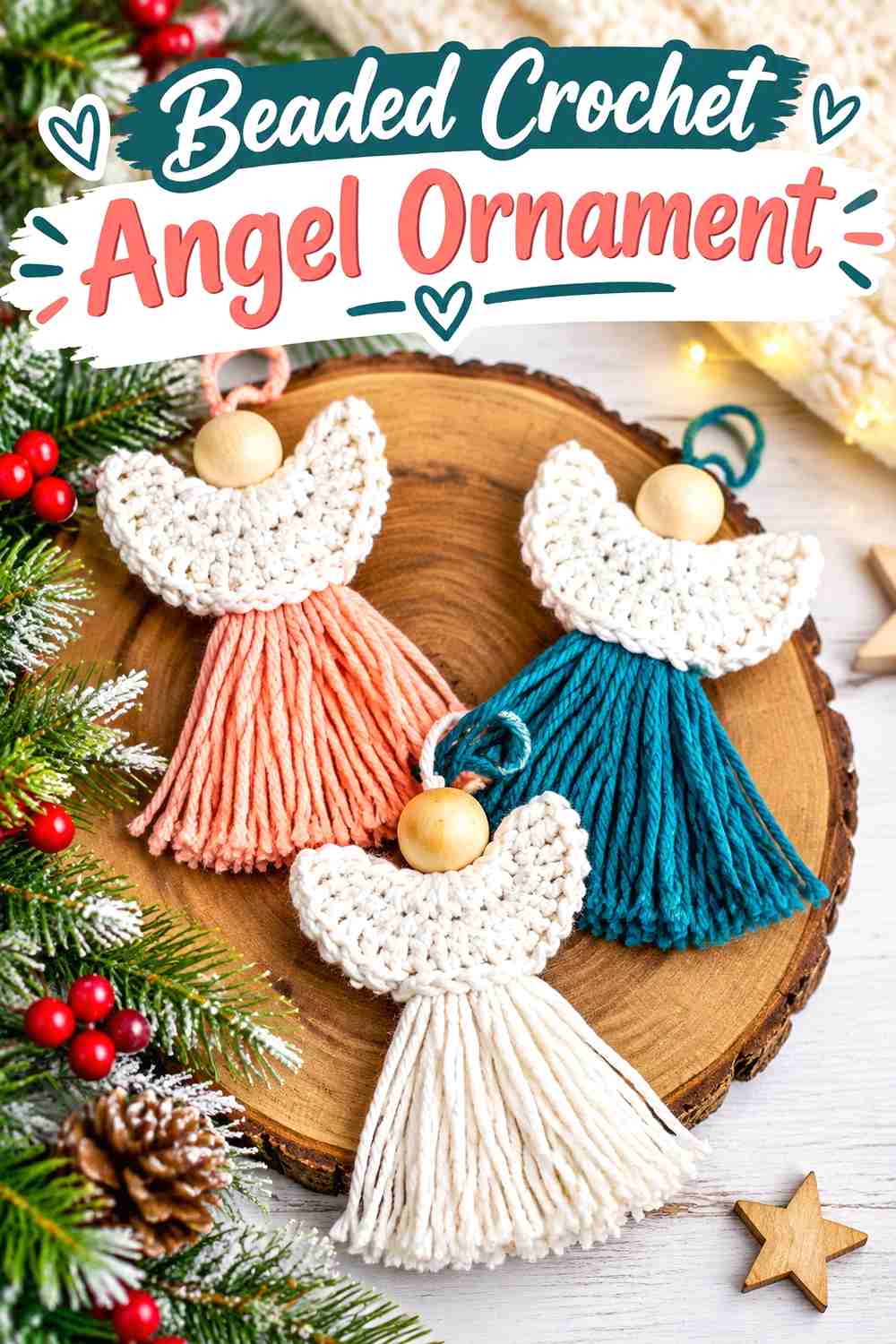
An angel contributes width through the wings while retaining a relatively narrow body. This makes it a useful alternative to another stuffed character when you want recognizable figurative decor without adding much visual mass.
The combination of crochet and a separate head element can also introduce material contrast, which works well within a deliberately eclectic Merrymaxxing collection.
Wide Wings Need Space Around Them
Do not tuck an angel tightly between two large neighboring ornaments. The wings are part of the silhouette and need visible space to read properly.
A branch with open greenery behind the figure usually shows the shape more clearly than an already crowded section filled with similarly pale ornaments.
Treat Separate Parts as Functional Attachments
If you use beads or other non-crocheted components, attachment quality matters. Check every joined piece before hanging the ornament and again before bringing it out in later seasons.
Small detachable parts also deserve extra caution if young children or pets can reach the tree. In those situations, an all-crochet adaptation or safer placement higher on the tree may be more appropriate.
Creator Credit: Winding Road Crochet
8. Graphic Crochet Christmas Tree Ornament
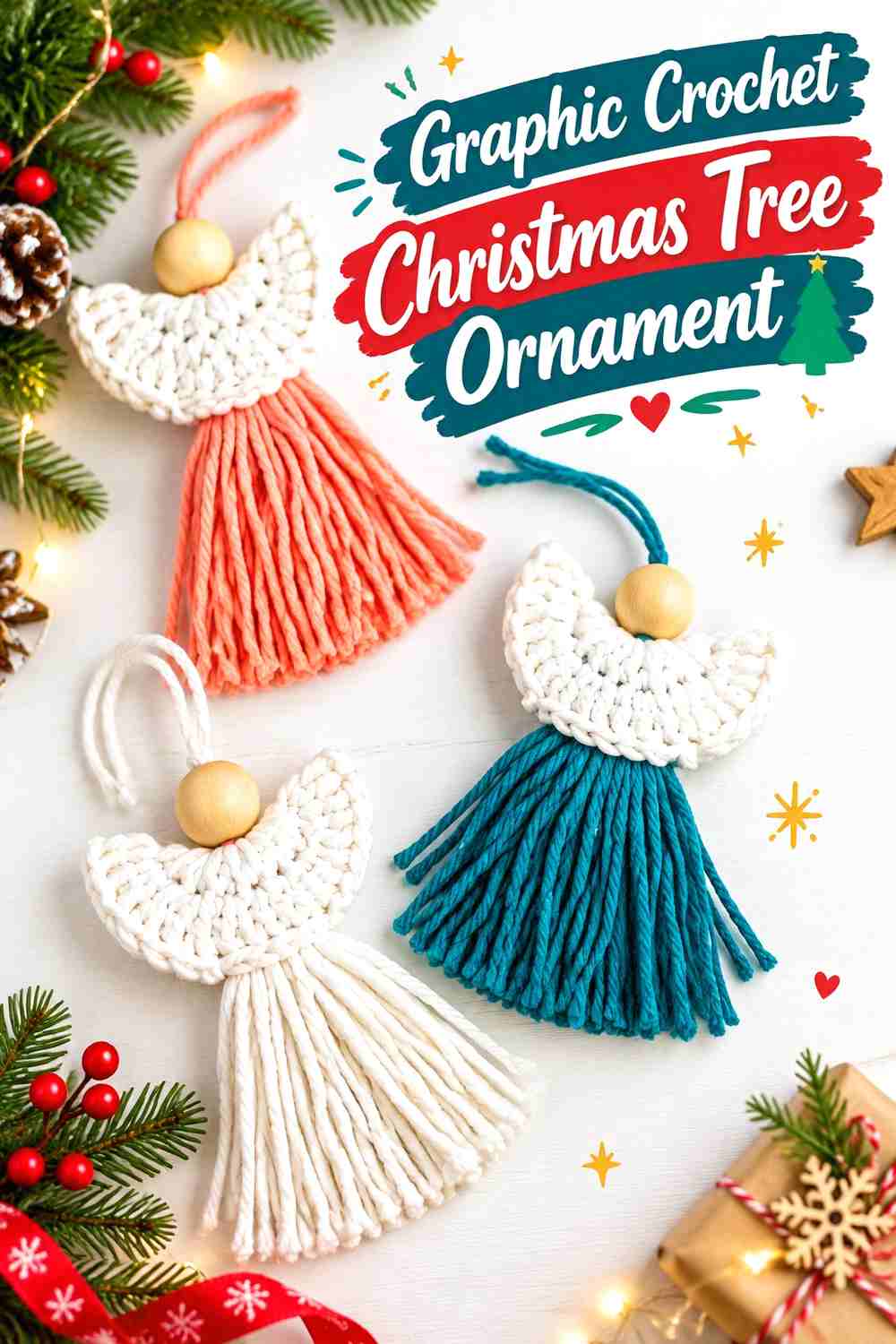
A Christmas-tree-shaped ornament creates an appealing tree-within-a-tree effect. Its triangular silhouette is simple enough to remain recognizable even when you use a less conventional color palette.
This is a useful project for Merrymaxxing because the basic outline acts almost like a canvas. Decorative stitches, contrasting edges, small accents, or bold colors can make each miniature tree noticeably different.
Make the Tree Shape Read Before Adding Decorations
A clear taper from the wider bottom toward the top matters more than how many embellishments are added afterward. Stand back from your first finished piece and check whether the silhouette reads immediately.
If the outline gets lost against your main Christmas tree, increase contrast through color or edging rather than simply adding more small details.
Repeating Trees Can Create Rhythm Across the Display
Instead of clustering all the miniature trees together, spread a few across different areas of the main tree. Repetition gives the overall arrangement a visual thread.
You can then let the surrounding ornaments change dramatically in color and form while those repeated triangular shapes quietly tie the composition together.
Creator Credit: Hopeful Turns
9. Whimsical Crochet Gnome Ornament
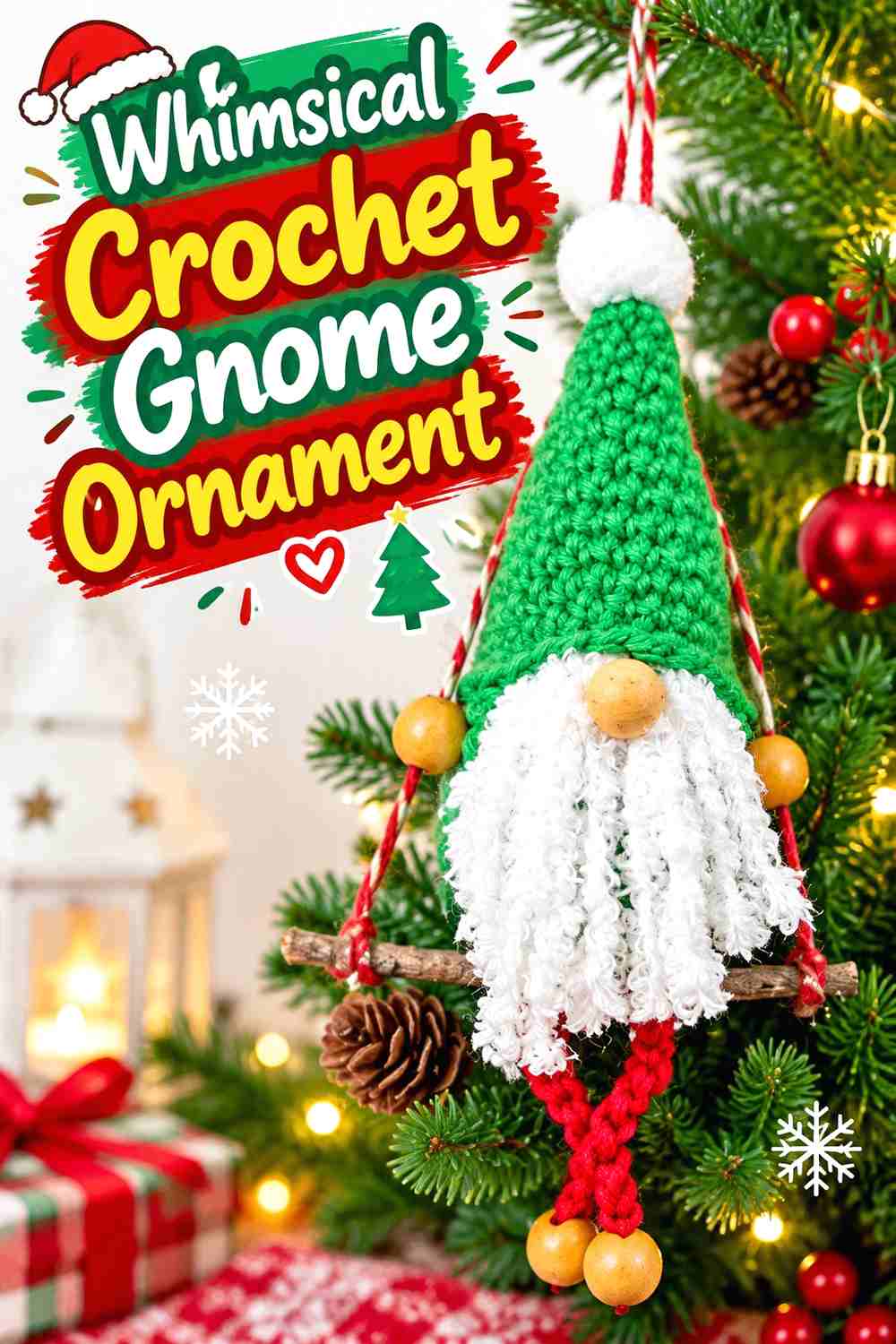
A crochet gnome is less about a classic geometric Christmas shape and more about character. The tall hat, prominent beard, and small body create layers of texture that stand apart from flat stars and snowflakes.
That makes the gnome particularly suited to the personality-driven side of Merrymaxxing.
Beard and Hat Texture Do Most of the Visual Work
The face does not need many tiny details when the hat and beard already establish the character. This is useful if you prefer a bold ornament that reads well from several feet away.
Consider how the beard material sits beside neighboring yarn textures. A fuzzy or plush surface becomes more noticeable when placed next to smoother crochet.
Mixed-Material Details Affect Long-Term Storage
Some gnome constructions combine crochet with beads, sticks, glue, stuffing, or other decorative components. Before packing one away, check which parts could bend, snag, or detach under pressure.
Store dimensional gnomes where the hat and beard will not be flattened by heavier decorations.
Creator Credit: Katia Creates
10. Plush Crochet Christmas Pudding Ornament
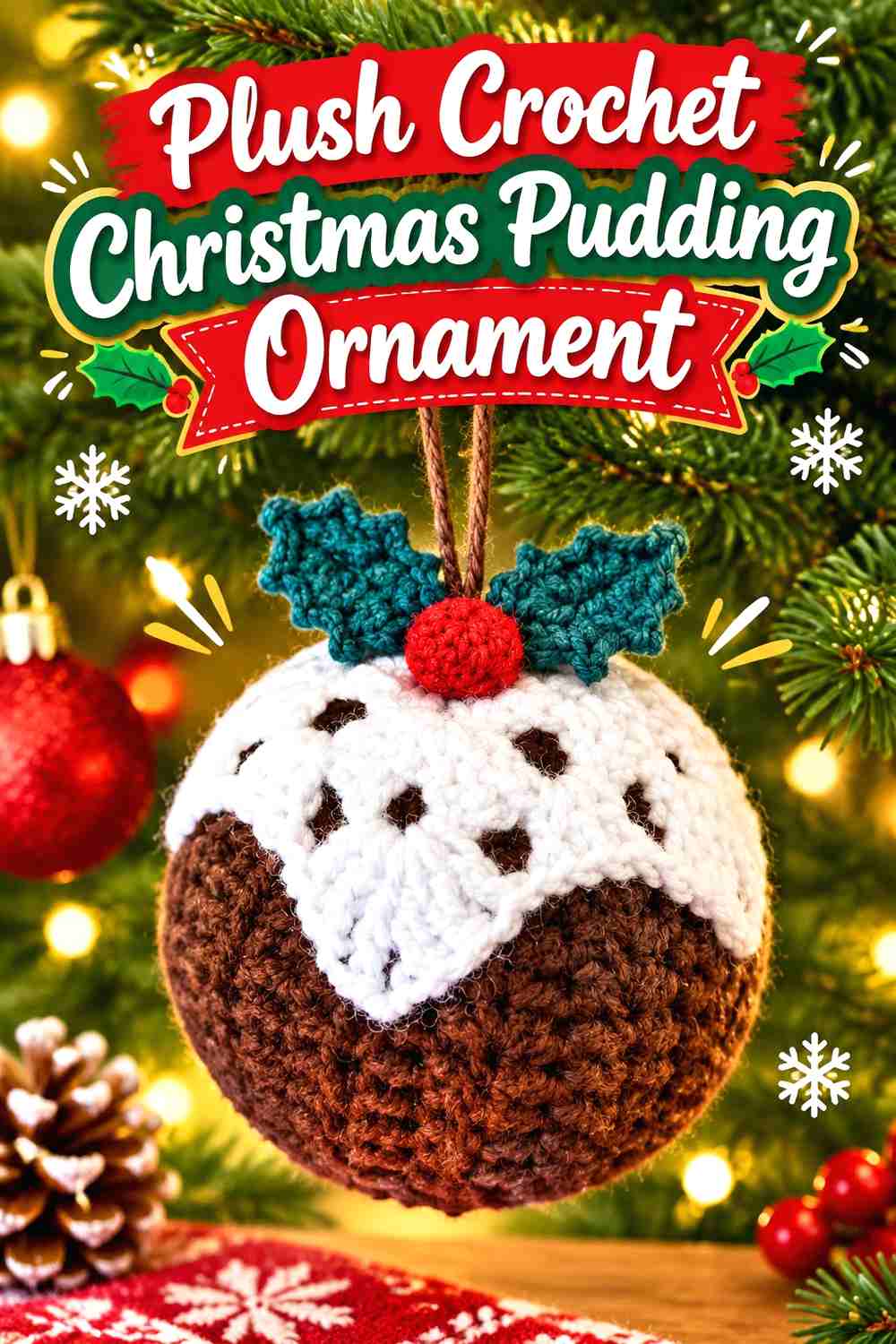
A stuffed Christmas pudding adds a rounded, almost dessert-like form that feels different from a standard bauble even though both occupy similar visual space. Contrasting icing and holly details give the pudding recognizable layers rather than one continuous surface.
It is a strong choice when the tree needs something humorous or nostalgic without becoming a full character ornament.
Layered Toppings Create a Natural Focal Point
The eye is drawn toward the icing and upper decoration, so you do not need to embellish every part of the pudding equally. Let the lower section remain relatively calm.
On a maximalist tree, that concentrated detail helps the ornament remain readable among other busy objects rather than competing everywhere at once.
Dimensional Holly Can Catch on Nearby Decorations
Leaves and berries add important color contrast, but projecting details may snag if the ornament is pushed deep into dense artificial branches.
Give the pudding a little clearance around its top and check the decorations before storage. Flattened or twisted leaves can change the silhouette considerably.
Creator Credit: Kara Ella Uy
11. Gift-Box Crochet Present Ornament
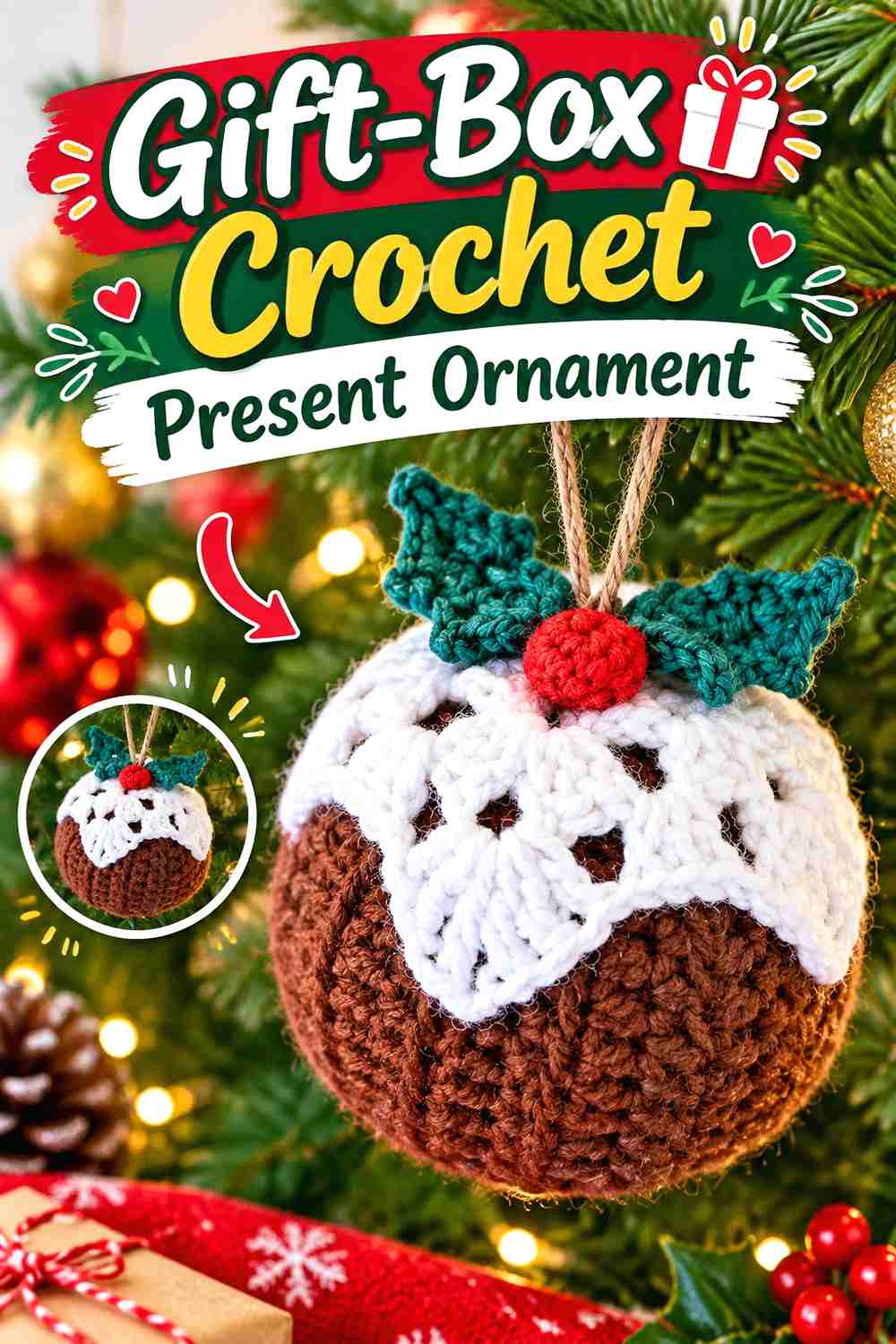
A crochet present ornament introduces a compact square or rectangular shape, which is surprisingly useful among the many circles, stars, and organic Christmas motifs. The ribbon treatment breaks up the flat surface and makes the gift immediately recognizable.
It also connects naturally with wrapping paper and packages beneath the tree, helping the decorations and gifts feel part of the same visual story.
A Simple Base Makes Bold Color Pairings Easier
Because the gift silhouette is straightforward, strong combinations are unlikely to overwhelm the form. Try treating the package color and ribbon color as two separate design decisions.
For a Merrymaxxing arrangement, several presents can use completely different palettes while repeating the same contrasting ribbon idea.
Decide Whether It Is an Ornament or Gift Tag First
A crochet present can potentially move from the tree to a wrapped gift, but the ideal hanger placement may differ depending on how you intend to use it.
If it needs to lie relatively flat against a package, avoid adding unnecessary bulky embellishments. If it will remain on the tree, you have more freedom to build up the bow or surface detail.
Creator Credit: Heather Corinne
12. Character Crochet Reindeer Ornament
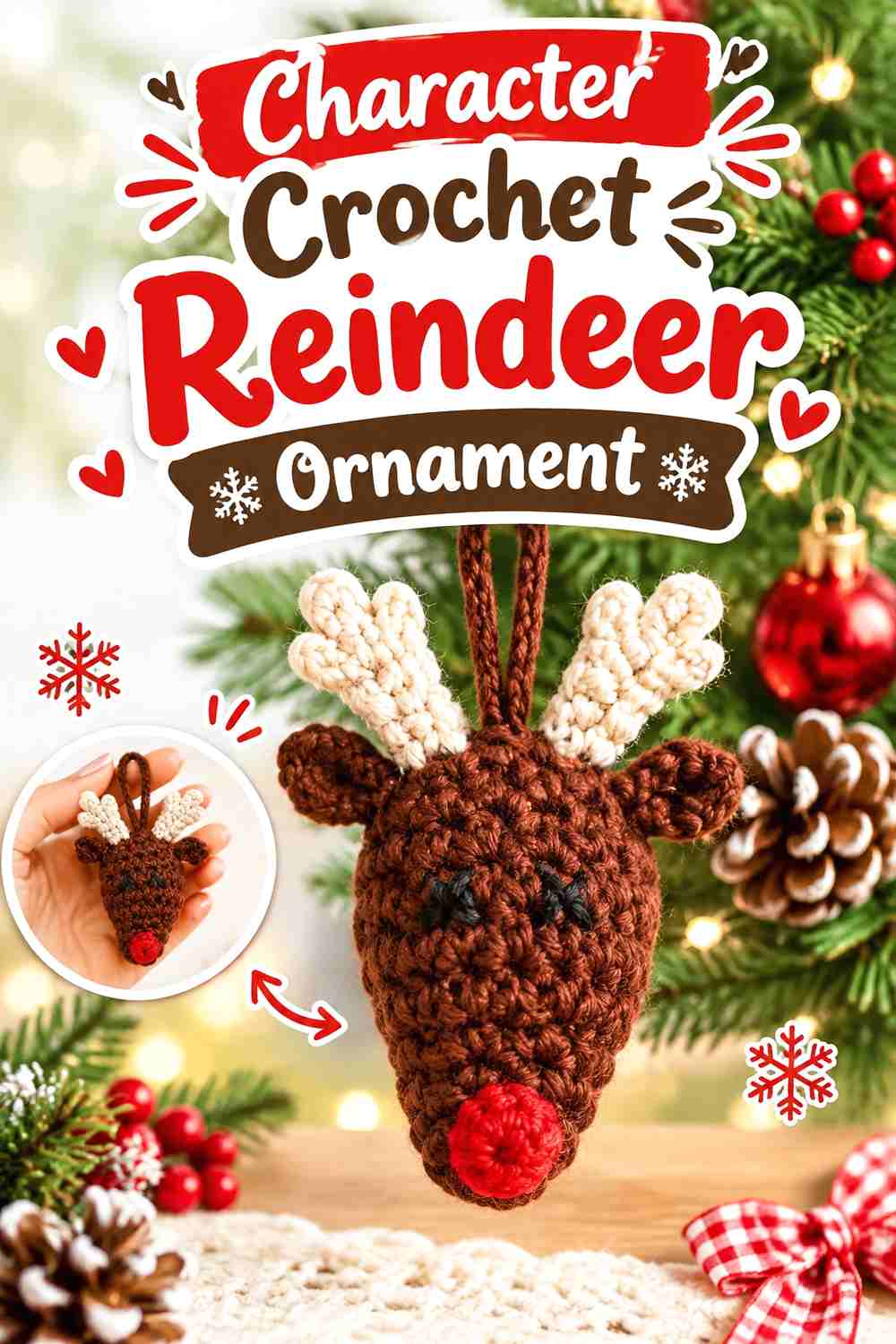
A reindeer introduces one of the widest character silhouettes in this collection because ears and antlers extend beyond the central head. That width makes it a natural statement piece even without elaborate color changes.
The face also gives a playful counterpoint to more abstract decorations such as stars, bells, and snowflakes.
Antlers Need Clear Background Space
Intricate outer shapes disappear quickly when they overlap several branches. Hang the reindeer where the antlers can be seen against a relatively uncluttered patch of greenery or lights.
This is also a good reason not to make every neighboring ornament another character. Simpler forms around the reindeer help its outline stand out.
Facial Details Determine the Ornament’s Personality
Small shifts in eyes, nose, and other features can noticeably change the expression of a character ornament. Position details before securing them permanently whenever the construction allows.
For ornaments accessible to young children or pets, securely attached embroidered features can be worth considering instead of loose decorative components.
Creator Credit: The Crochet Crowd
13. Cozy Crochet Mitten Ornament
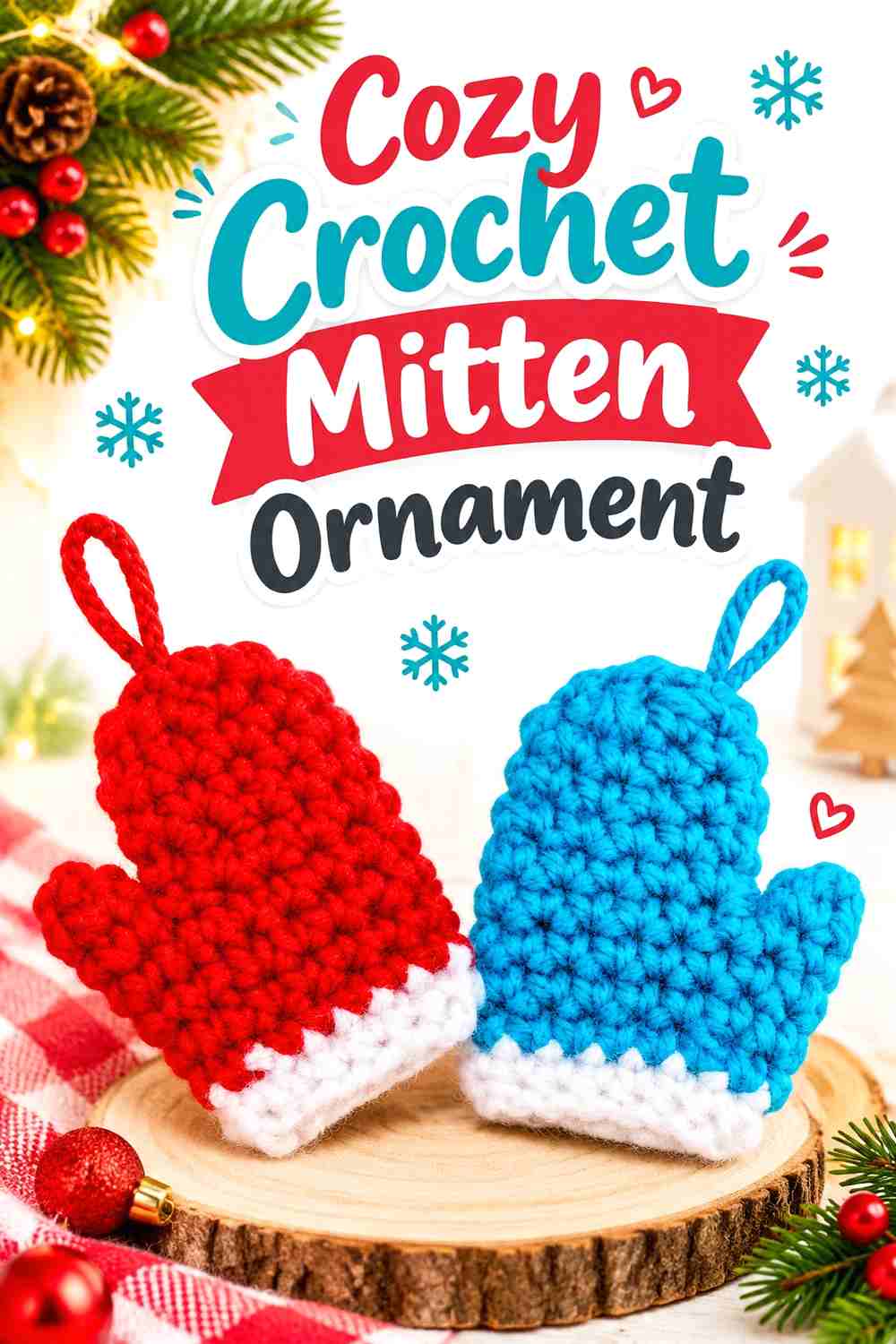
The mitten brings a cozy winter reference without relying on another Christmas-specific symbol. Its off-center thumb produces an asymmetrical outline, which is valuable on a tree filled with symmetrical stars, snowflakes, circles, and wreaths.
The cuff also offers an obvious place to add contrast without changing the main body.
The Thumb Is What Makes the Silhouette Read
When changing yarn weight or hook size, pay attention to whether the thumb remains visually distinct. If it becomes too small relative to the hand section, the ornament can start to resemble a simple pouch.
View the finished mitten from normal decorating distance rather than only from close up. Clear shape recognition matters more than microscopic stitch detail.
Single Mittens and Pairs Create Different Effects
A single mitten reads as an individual ornament, while two coordinated mittens can suggest a set. You do not need to make every pair identical.
For a more collected look, repeat one feature—perhaps the cuff treatment—while changing the main colors across several mittens.
Creator Credit: Jess Crafting
14. Cookie-Style Crochet Gingerbread Man Ornament
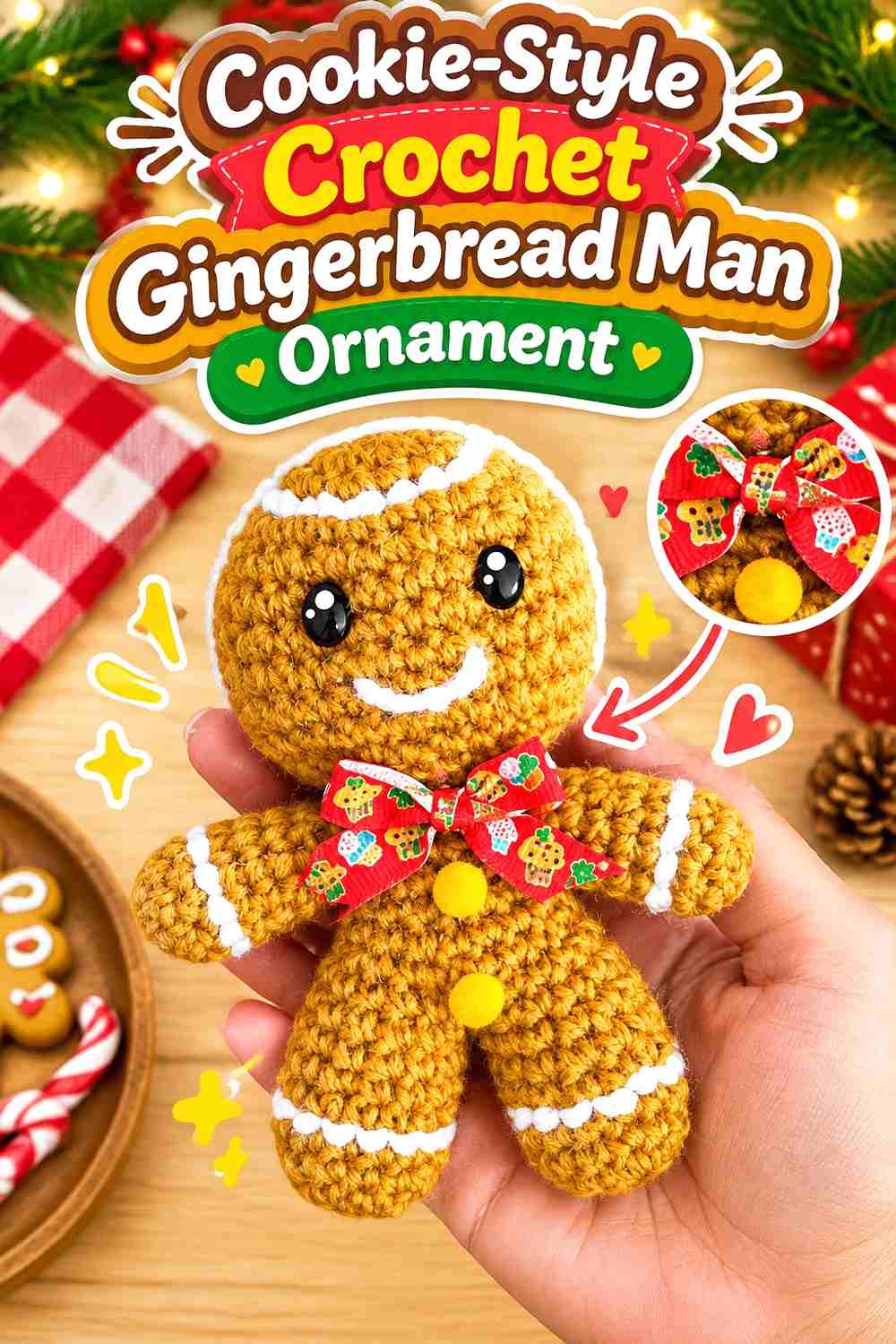
A gingerbread man adds an instantly recognizable human-shaped outline while keeping the mood playful rather than realistic. The brown base also introduces a warm neutral that can visually ground brighter Merrymaxxing colors around it.
Icing-inspired accents, buttons, bows, or small embroidered details can then supply the higher-energy holiday color.
The Cookie Outline Should Remain Visible Under the Decoration
It is tempting to keep adding details to a gingerbread ornament, but the arms, legs, and head are what make the piece recognizable. Leave enough uninterrupted brown surface for the cookie shape to read.
If you are experimenting with brighter icing colors, distribute them so they emphasize rather than obscure the body outline.
Light Stuffing Helps Preserve a Defined Figure
If you choose a dimensional gingerbread version, stuffing influences the finished shape. An overly rounded figure can lose some of the flatter cookie-like quality that makes the motif distinctive.
Follow the tutorial’s construction closely and assess the shape as you work rather than assuming that more stuffing automatically produces a better ornament.
Creator Credit: La casita de puchis
15. Stuffed Crochet Snowman Ornament
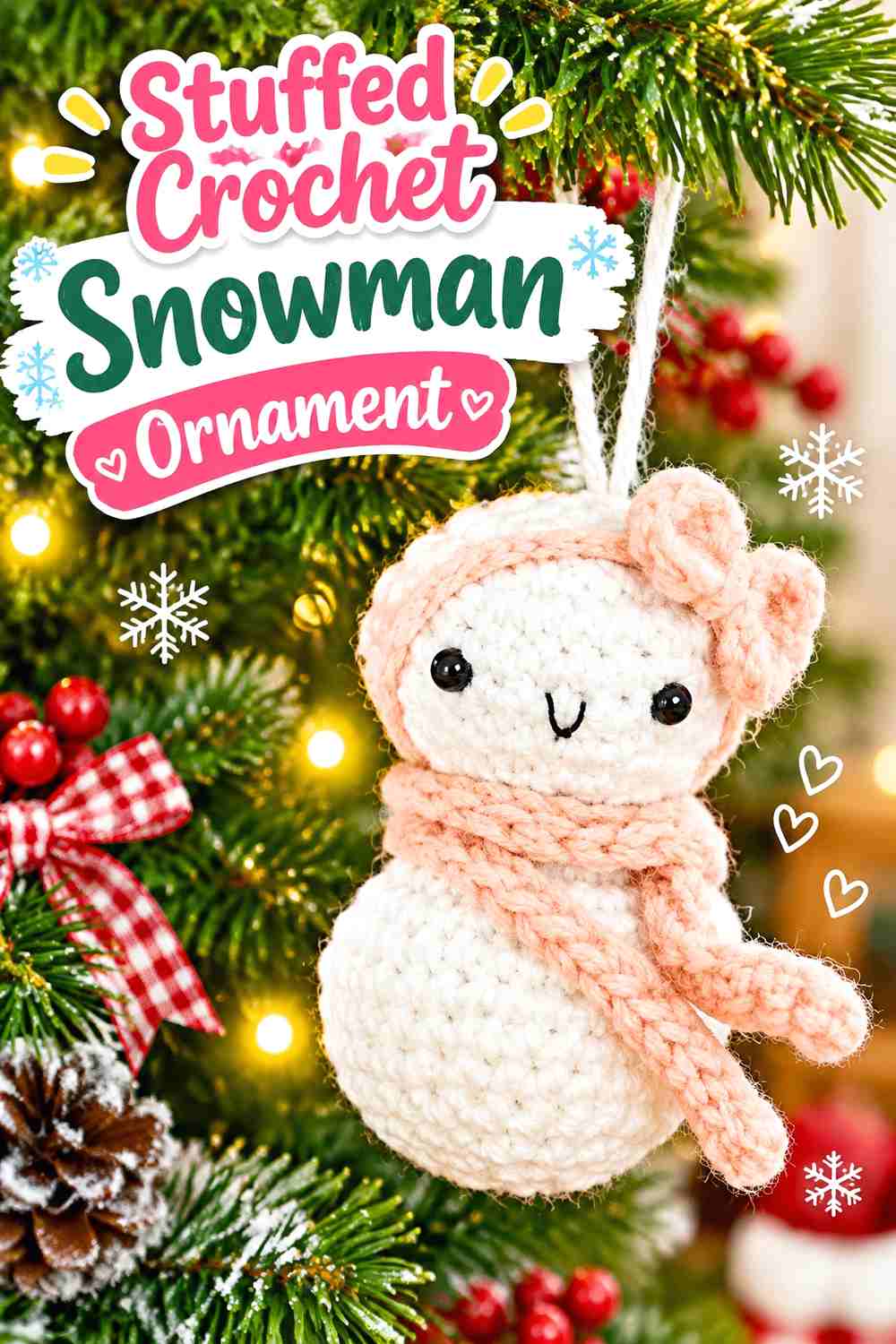
A snowman provides vertical volume through rounded forms stacked into a recognizable winter character. Hats, scarves, and facial details also make it one of the easiest project types to vary visually while keeping the core concept consistent.
That adaptability suits Merrymaxxing particularly well because a group of snowmen can look related without appearing cloned.
Accessories Can Change the Mood Without Changing the Base
Once the white body is established, the hat and scarf can carry most of the color. This gives you a practical way to introduce small amounts of unusual shades from elsewhere in the room.
One snowman might echo a pink ribbon, another a blue garland, and another traditional red and green, while the white bodies keep the group cohesive.
Give a Stuffed Snowman Enough Branch Support
A dimensional snowman occupies more depth than a flat motif. Before committing to a long hanging loop, test the ornament on the type of branch where it will actually be displayed.
Placing heavier stuffed pieces slightly deeper on sturdy branches can create a layered arrangement while leaving lighter stars and snowflakes closer to the outer tips.
Creator Credit: Yarn Society
16. Textured Crochet Pinecone Ornament
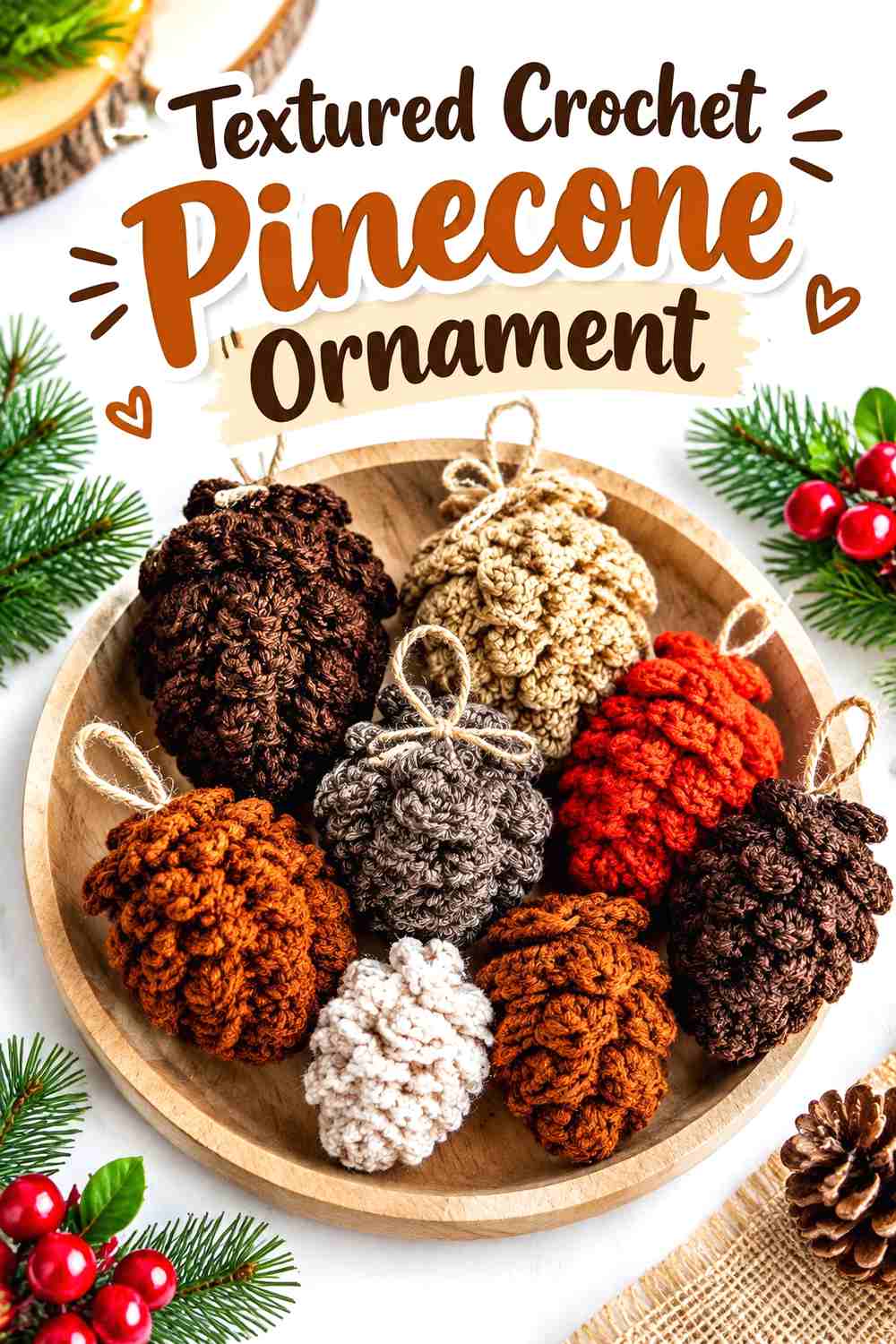
A crochet pinecone closes the collection with a nature-inspired shape that relies more on texture than bright embellishment. Raised layers give the ornament visual depth and allow light and shadow to do much of the decorative work.
It is particularly helpful on a Merrymaxxing tree because maximalism does not require every piece to be brightly colored. Rich texture can provide just as much visual interest.
Dimensional Texture Catches Light Differently
Place a textured pinecone near tree lights and the raised surface can create small highlights and shadows that flatter motifs do not produce.
That makes pinecones useful in darker interior sections of the tree where a smooth ornament might visually disappear.
Woodland Details Keep Sweet Motifs From Taking Over
Candy canes, puddings, presents, gingerbread figures, and stockings can push the display toward a confectionery theme. Pinecones introduce a natural counterpoint without abandoning the handmade holiday feeling.
Repeating a few woodland elements among the brighter ornaments can make an abundant tree feel layered rather than randomly crowded.
Creator Credit: Passionate Crafter
How to Mix These Crochet Ornaments on One Merrymaxxing Tree
| Ornament Type | Examples | Visual Role | Placement Idea |
|---|---|---|---|
| Open or flat | Snowflake, star, wreath | Adds shape without much bulk | Outer branches and spaces between stuffed pieces |
| Rounded and stuffed | Bauble, pudding, snowman | Creates depth and visual weight | Slightly deeper on sturdy branches |
| Long or directional | Candy cane, stocking, mitten, tree | Breaks up rows of circular ornaments | Vertical gaps and branch ends |
| Character pieces | Angel, gnome, reindeer, gingerbread man | Adds personality and focal points | Give each enough surrounding space to read |
| Graphic objects | Bell, present | Adds recognizable non-round shapes | Mix between characters and abstract motifs |
| Textural nature piece | Pinecone | Adds shadow, texture, and an earthy counterpoint | Near lights or among brighter ornaments |
The goal is not to distribute every category perfectly. Instead, scan the tree for repetition. If one area contains three rounded stuffed ornaments, the next addition might be a flat star or long candy cane. If another section has several detailed characters, an open snowflake or wreath can reduce the visual density.
Conclusion
For a 2026 Merrymaxxing Christmas tree, variety is more valuable than perfect matching. The embroidered bauble, pudding, snowman, and gnome bring dimensional volume; the snowflake, star, wreath, and present give you flatter shapes; the candy cane, stocking, mitten, and tree introduce directional silhouettes; and the reindeer, angel, gingerbread man, bell, and pinecone add their own recognizable character or texture.
If you want maximum impact with fewer projects, choose one ornament from several different shape groups rather than making five similar designs. If you want a fully handmade tree, repeat your favorites but vary color, embellishment, or placement while preserving the construction that made you choose the project in the first place.
Use the original creator tutorials for the exact crochet construction and finishing details, especially when shaping, stuffing, stiffening, or attaching separate components.
Frequently Asked Questions
What is Merrymaxxing Christmas decor?
Merrymaxxing is a 2026 holiday trend centered on expressive, abundant decorating rather than restraint. Etsy describes the direction through bold color, sparkle, whimsical decorations, and ornaments with strong personality.
For crochet, that does not mean every ornament needs rhinestones or glitter. Shape, texture, unusual color combinations, embroidery, dimensional elements, and character designs can all create the same more-is-more effect.
Do all crochet Christmas ornaments need to use the same yarn?
No. Using different yarn textures can actually strengthen a maximalist tree by creating contrast. Smooth yarn may suit detailed motifs, while fluffier or more dimensional yarn can emphasize character features or texture.
The important issue is how the substitution affects the specific project. A different yarn weight can alter scale, stiffness, definition, and how heavily the ornament hangs, so make a test piece before changing materials across a large batch.
How can I make colorful crochet ornaments look coordinated?
Repeat one or two features rather than forcing every project into the same palette. The same hanging ribbon, a recurring metallic accent, repeated cream edging, or one color that appears occasionally across the tree can create enough continuity.
You can then use much broader colors and still make the collection look intentional.
Which crochet ornament shapes are useful for a crowded Christmas tree?
Flat stars and snowflakes are useful because they take up little depth, while wreaths provide visual interest without filling their centers. Long shapes such as candy canes and stockings can occupy narrow vertical gaps.
Save deeper stuffed ornaments for stronger branches and locations where they will not push neighboring decorations out of position.
Should crochet snowflakes and bells be blocked or stiffened?
That depends on the design and the finish you want. Openwork snowflakes generally benefit from careful shaping when clear points are important, while some bell designs use a stiffening process to hold a three-dimensional silhouette.
Follow the specific creator’s tutorial rather than applying one finishing treatment to every ornament.
How should crochet ornaments with beads or small decorations be used around children or pets?
Check all attachments carefully and consider where the ornament will hang. Beads, safety eyes, bells, buttons, pom-poms, glued pieces, and other small components can become hazards if they detach.
For ornaments likely to be handled by young children or pets, securely embroidered or crocheted details may be a more appropriate alternative.
How do I keep a Merrymaxxing tree from looking randomly cluttered?
Repeat shapes strategically. For example, spread several stars, miniature trees, or baubles across different parts of the tree rather than putting all similar ornaments together.
Then use contrasting silhouettes between those repeated pieces. The repetition gives the eye a pattern to follow, while the different textures and characters create the joyful abundance that defines the look.