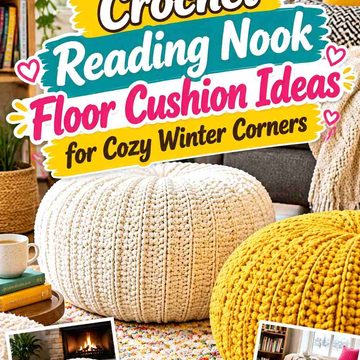
A miniature crochet reading room can turn one small shelf, bookcase cubby, or shadow-box corner into a complete winter scene. The most convincing displays usually do not contain dozens of tiny objects. They use one strong focal piece—a chair, fireplace, book stack, or rug—and a few smaller details that make the setting feel inhabited.
The tutorials below teach individual miniature objects rather than 16 complete reading rooms. That gives you more freedom to use each one as the anchor for a different shelf vignette. A tiny chair can suggest a private reading nook, a stack of books can create a miniature library, and a crocheted mug beside a lamp can imply a quiet evening without requiring a full dollhouse.
Scale needs particular attention. “Miniature” does not describe one universal size, and tutorials made for dollhouses, amigurumi displays, keychains, or decorative shelves may produce very different proportions. Check the finished dimensions or compare the developing piece with your chosen shelf before combining objects from unrelated tutorials.
Quick List
- Crochet Fireside Reading Chair Mini Shelf Scene
- Crochet Stacked-Books Library Mini Shelf Scene
- Crochet Checkerboard Reading Rug Mini Shelf Scene
- Crochet Hearthside Fireplace Mini Shelf Scene
- Crochet Evergreen Plant Reading Nook Mini Shelf Scene
- Crochet Cocoa Mug Reading Break Mini Shelf Scene
- Crochet Bookshop Cat Mini Winter Shelf Scene
- Crochet Rolled-Throw Basket Mini Shelf Scene
- Crochet Winter Wreath Reading Room Mini Shelf Scene
- Crochet Tiny Vase Side-Table Mini Shelf Scene
- Crochet Snowman Visitor Reading Room Mini Shelf Scene
- Crochet Reading Lamp Night-Nook Mini Shelf Scene
- Crochet Woodland Mushroom Storybook Mini Shelf Scene
- Crochet Festive Bunting Library Mini Shelf Scene
- Crochet Owl Storytime Mini Shelf Scene
- Crochet Mini Book Tote Reading Room Shelf Scene
Choose One Anchor Before Adding Tiny Details
A miniature room needs visual hierarchy just like a full-size room. Pick the object that should attract attention first, then make everything else support it.
A chair or fireplace can occupy more visual space. A lamp, mug, basket, plant, or cat works better as a secondary element. If every object is equally colorful, textured, and large, the scene can look like a collection of unrelated miniatures rather than one tiny room.
Leave some empty shelf surface visible as well. Negative space helps the viewer recognize individual objects and makes a small display feel more like a room than a storage bin.
Build a Simple Scale System Before Mixing Tutorials
Choose one reference object before combining tutorials. The chair, for example, can establish the apparent size of everything around it. A book should look plausible beside its seat, a mug should not appear nearly as large as the chair back, and a basket should not accidentally overwhelm the entire vignette.
Paper templates are useful before you crochet. Cut rough rectangles representing the footprint of the chair, rug, fireplace, or basket and arrange them on the actual shelf. This lets you find crowding problems without committing yarn to objects that will not fit together.
Changing yarn weight or hook size can change the finished scale, but it can also alter fabric thickness and structure. Do not assume that simply using thinner yarn will convert every tutorial neatly into the same miniature scale.
Make the Scene Feel Wintry Without Filling It With Holiday Motifs
Winter atmosphere can come from color and placement instead of overt Christmas decoration. Oatmeal, pine, charcoal, burgundy, walnut brown, dusty blue, cream, and muted gold work well for a quiet reading-room palette.
One seasonal motif may be enough. A snowman beside an otherwise neutral reading chair feels wintry. A small wreath over a fireplace can establish the season without requiring trees, ornaments, stockings, and snowflakes everywhere else.
For crochet fireplaces and lamps, treat the finished pieces as decorative miniatures. Keep yarn away from open flames, hot bulbs, or other heat sources. If you want an illuminated display, use components specifically intended for miniature decorative lighting and follow their safety instructions rather than improvising a heat-producing light inside crochet.
1. Crochet Fireside Reading Chair Mini Shelf Scene
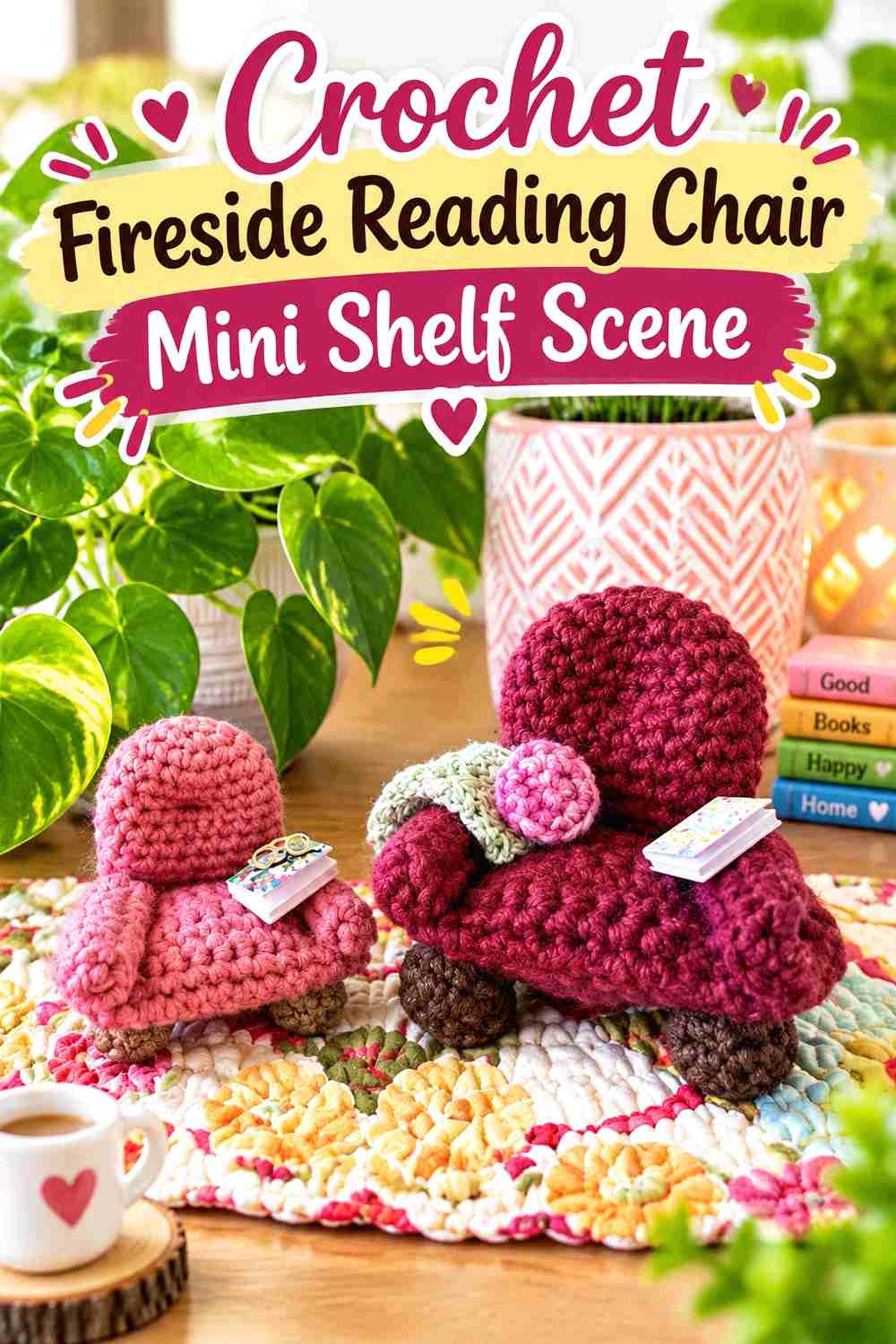
A miniature armchair gives the viewer an immediate clue about the purpose of the room. Instead of trying to crochet every possible reading accessory, place one chair at the center and allow a book, tiny rug, or basket to suggest the rest of the story.
This source is particularly useful because the chair is conceived as miniature furniture rather than as a full-size household object. Even so, compare its finished scale with any props from other tutorials before combining them.
Let the Chair Establish the Room’s Proportions
Once the chair is complete, use its seat and back as visual measuring references. A tiny book should look holdable by an imagined reader, while a floor basket should sit comfortably beside the chair rather than reaching nearly to the top of it.
This approach is more reliable than assuming that two tutorials labeled “mini” automatically belong together.
Upholstery Color Can Carry Most of the Winter Mood
A deep forest, cranberry, tweed-like brown, charcoal, or oatmeal chair can establish the whole palette.
If the chair is strongly colored, keep nearby props quieter. A neutral rug and cream book stack allow the furniture to remain the focal point instead of competing with it.
Keep the Scene Asymmetrical but Balanced
Placing the chair slightly off-center usually leaves room for one meaningful secondary object, such as a basket or lamp.
Avoid lining every prop evenly across the front edge of the shelf. A little depth and overlap make the display feel more like a room.
Creator Credit: Wind Rose Fiber Studio
2. Crochet Stacked-Books Library Mini Shelf Scene
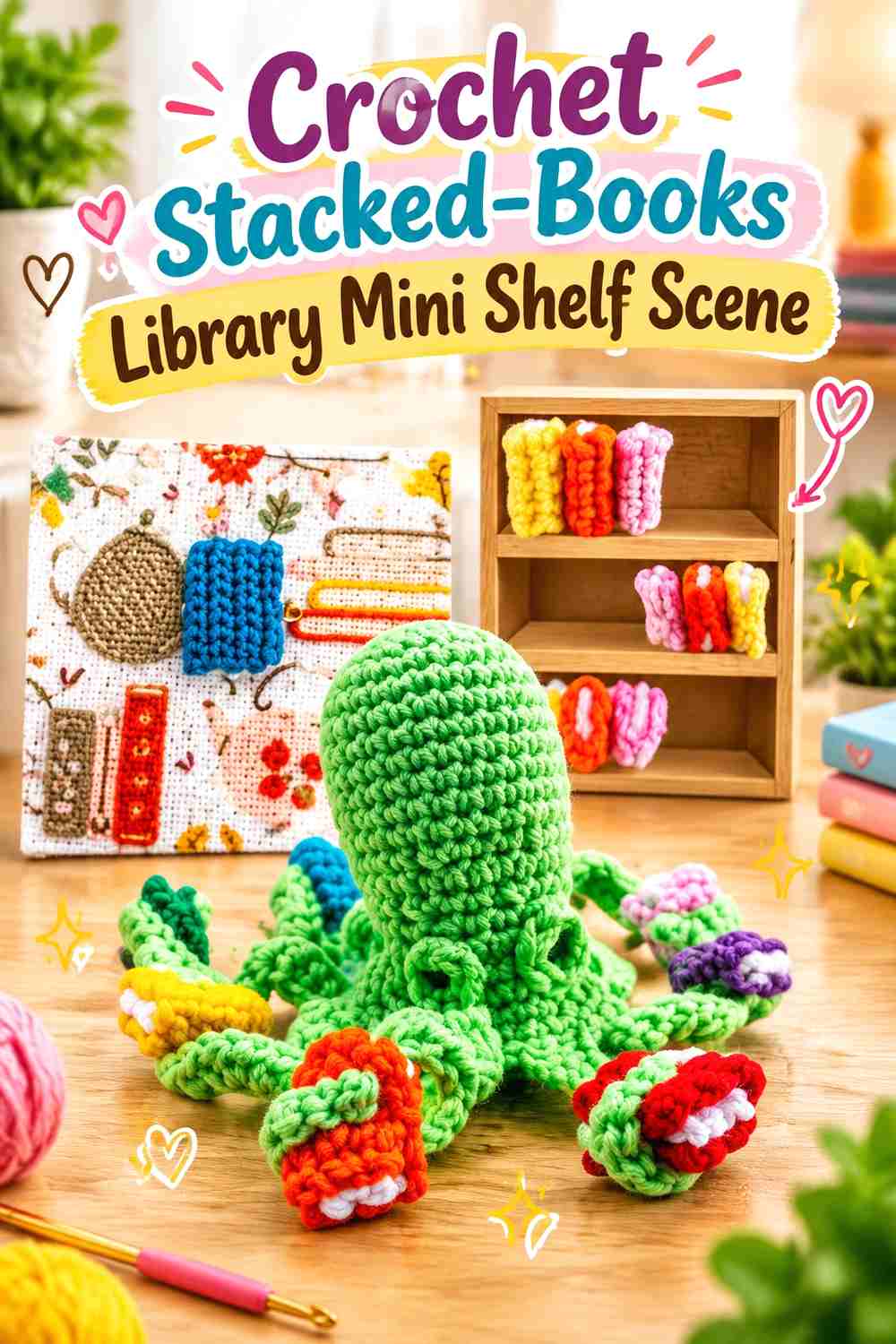
Tiny crocheted books can carry the reading-room theme even when the display space is extremely small. A stack placed on a miniature table, beside a chair, or directly against the back of the shelf can suggest a library without requiring large furniture.
This idea is especially useful for a narrow bookcase cubby where a full chair-and-fireplace arrangement would feel crowded.
Change Book Orientation to Create a Natural Stack
A perfectly aligned stack can look more like a decorative block than a group of books. Turn one volume slightly or place one horizontally beside an upright group to create a more lived-in arrangement.
Keep the effect restrained. Too many scattered books can make the shelf look untidy rather than cozy.
Repeat Cover Colors Instead of Using Every Scrap
A controlled palette makes miniature books easier to read visually. Try several shades of brown and cream with one burgundy or green volume, or use dusty blue with gray and oatmeal.
Repeating one cover color elsewhere in the shelf scene helps the tiny books feel connected to the room.
Leave the Spines Visible
If the books are tucked completely behind a chair or basket, much of their visual purpose disappears.
Arrange them where the rectangular silhouettes remain recognizable from the normal viewing angle of the shelf.
Creator Credit: Jesscrafting
3. Crochet Checkerboard Reading Rug Mini Shelf Scene
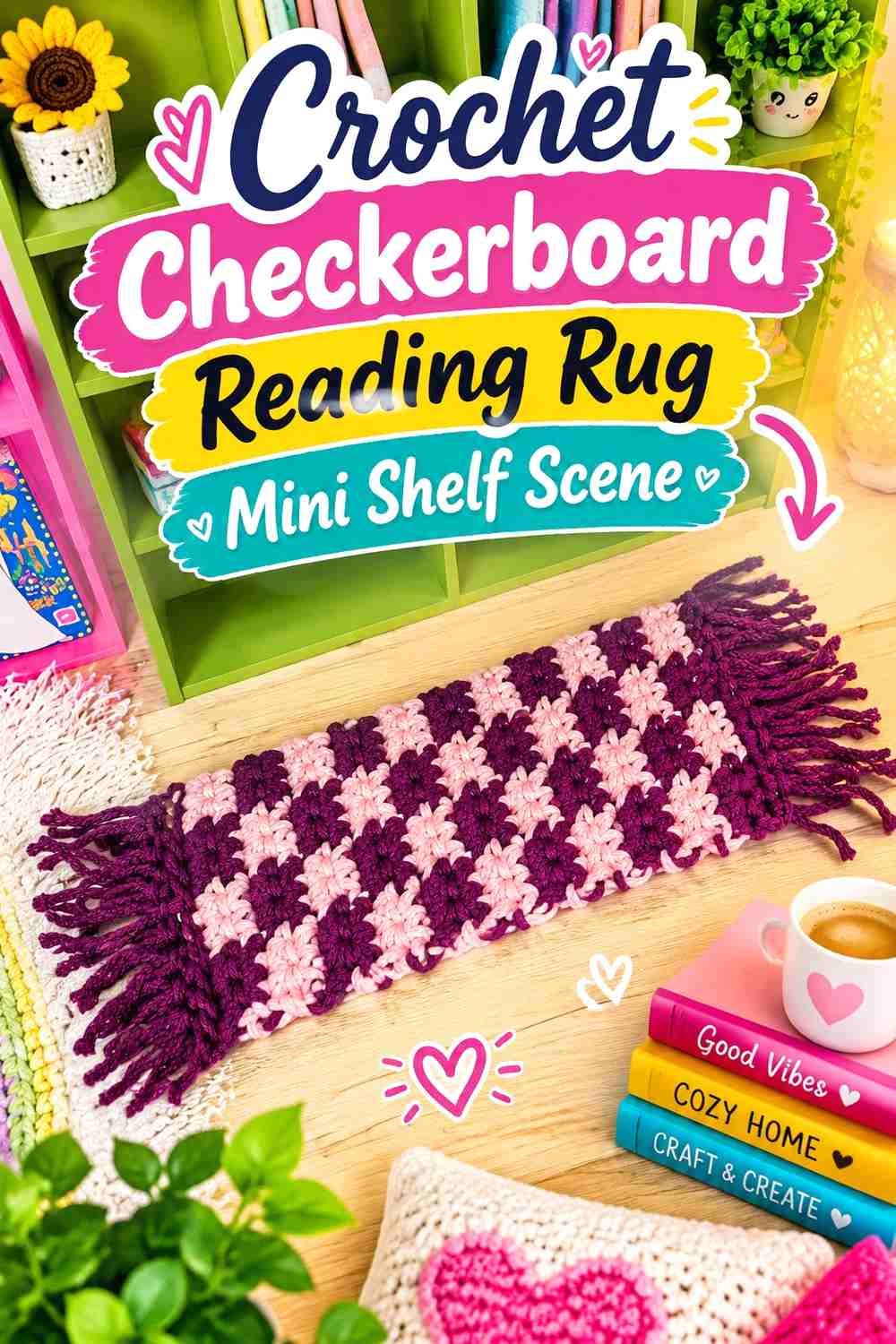
A miniature rug can define the “floor” of a shelf scene without adding another tall object. The source tutorial uses a checkerboard-style miniature rug, which can bring pattern into an otherwise simple reading nook.
This works particularly well beneath a neutral chair or next to plain wooden shelf surfaces where a flat textile will remain visible.
Size the Rug Around the Furniture Footprint
A rug that disappears completely beneath the chair adds little to the scene. One that fills the entire shelf can make the vignette look more like a fabric sample than a room.
Use a paper rectangle beneath your chosen furniture first and decide how much border you want visible before adapting the rug’s scale.
Keep the Checks Large Enough to Read
Miniature pattern can become visually noisy when the blocks are extremely small or very high contrast.
For a calmer winter effect, pair cream with muted brown, charcoal, forest, or dusty blue rather than using several equally strong colors.
Flatness Matters More Than Thickness
A rug should help furniture sit evenly. If its edges curl or the fabric becomes very bulky, a tiny chair or basket may tilt.
Evaluate the finished piece on the actual shelf before placing lightweight miniatures on top.
Creator Credit: Daring Daisy
4. Crochet Hearthside Fireplace Mini Shelf Scene
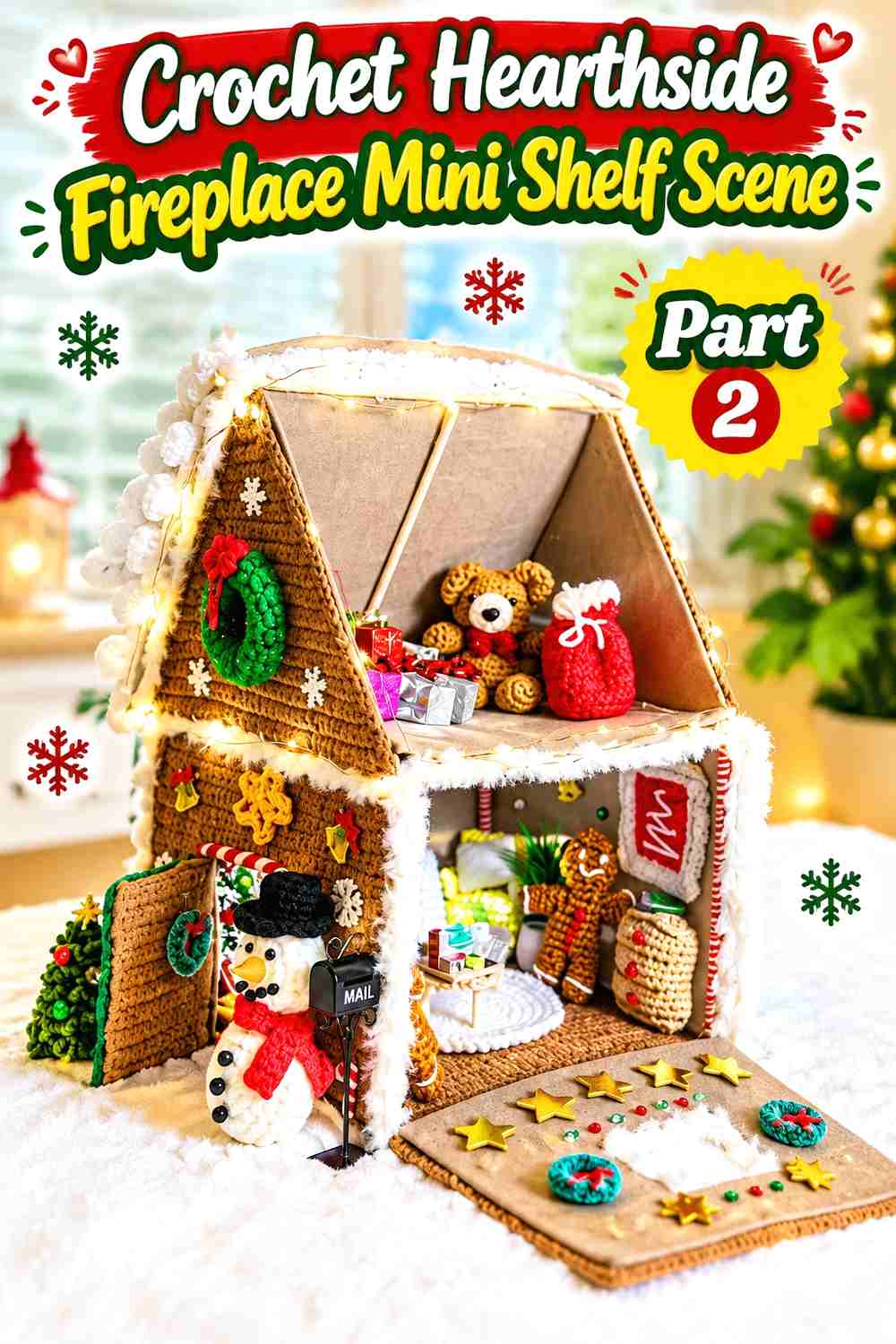
A fireplace instantly establishes a winter interior, making it one of the strongest focal points in this collection. The source tutorial includes a crocheted fireplace within a larger miniature house project, so the individual element can inspire a reading-room hearth vignette.
Place it against the back of the shelf with an armchair angled nearby, or make it the sole large object and keep the rest of the scene intentionally sparse.
A Fireplace Needs Visual Breathing Room
Because a hearth is already architecturally strong, avoid filling both sides with equally large accessories.
One stack of books or a tiny basket on one side can look more convincing than symmetrical piles of decorations.
Treat the Fire as Decoration Only
A crocheted fireplace is not a heat-resistant fire feature. Do not place candles, flame, hot bulbs, or other heat-producing elements in or against it.
For an illuminated effect, use only miniature display lighting designed for that purpose and keep it separated from yarn according to the product’s instructions.
Make the Mantel a Secondary Detail
A wreath, one miniature book, or a tiny vase can suggest a decorated mantel without obscuring the fireplace shape.
If every small prop has a strong color, the hearth can lose its role as the room’s anchor.
Creator Credit: Nicki’s Homemade Crafts
5. Crochet Evergreen Plant Reading Nook Mini Shelf Scene
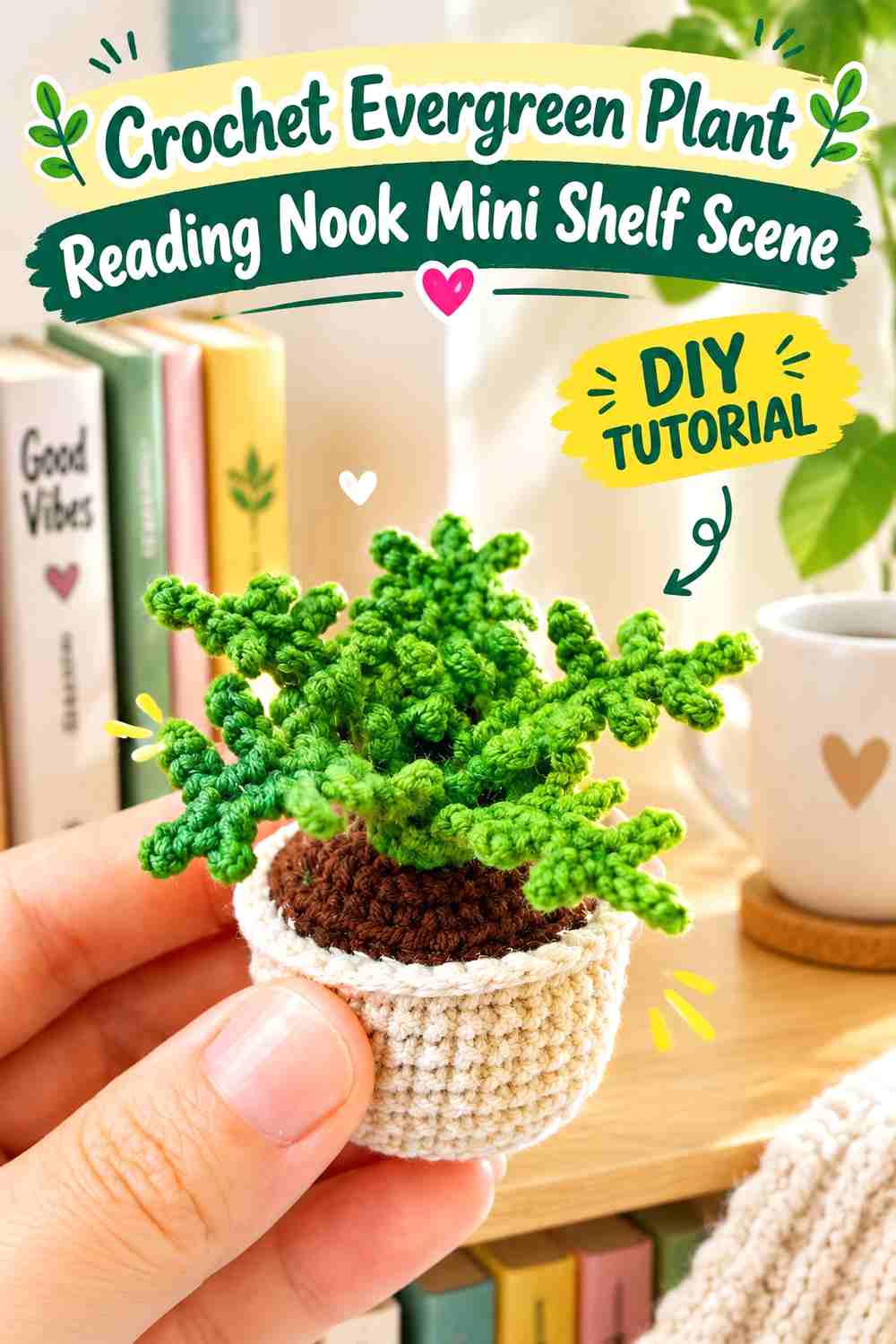
A tiny potted plant adds height and organic shape to a miniature room dominated by rectangles. It can sit beside a chair, occupy a miniature windowsill, or soften the corner next to a book stack.
For winter, the plant does not need to imitate a seasonal tree. Deep green against a brown, cream, or charcoal room already gives the display enough cold-weather richness.
Place Green Where the Scene Needs Contrast
A dark reading corner can benefit from one brighter plant, while a pale shelf may suit deeper forest-colored foliage.
Use the plant as an accent rather than automatically adding several botanical objects to the same vignette.
Keep the Pot Visually Heavy Enough
A very tall leafy section over a tiny base can make the miniature appear top-heavy even if it physically stands.
Judge the proportions from the front of the shelf. The pot should look substantial enough to support the apparent plant.
Repeat the Pot Color Elsewhere
A terracotta, cream, charcoal, or mustard pot can quietly connect with another object in the room.
Repeating that shade in a book cover or rug border is enough to make the plant feel intentional.
Creator Credit: Crochet Everyday
6. Crochet Cocoa Mug Reading Break Mini Shelf Scene
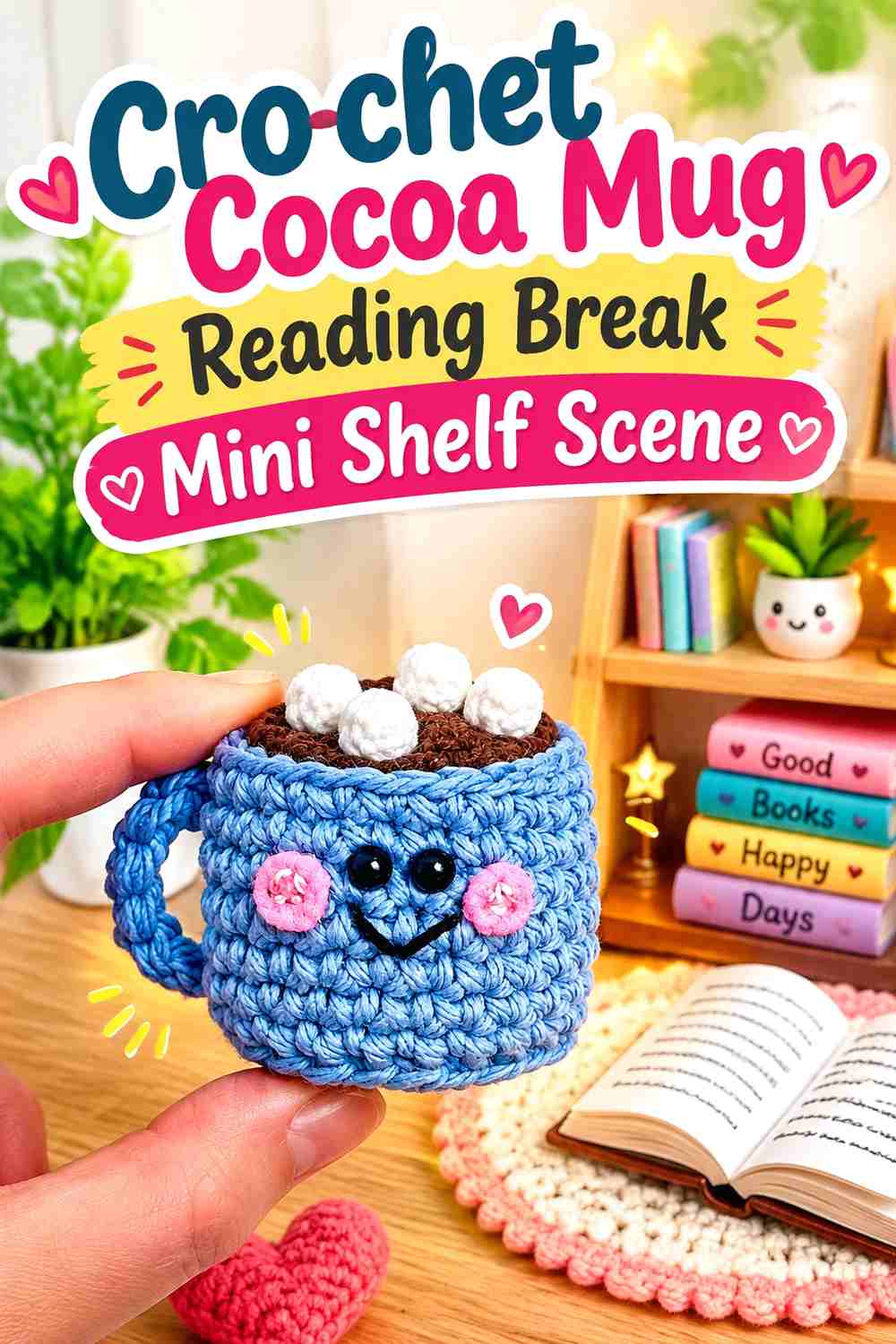
A tiny mug is a small prop with a clear story. Set beside a book stack or chair, it suggests that someone has just stepped away from the reading nook.
Because it occupies little shelf space, this idea is useful when the display already contains one large object and only needs a final detail.
Keep the Handle Visible
The handle is what makes the object immediately recognizable as a mug from a distance.
Angle it slightly toward the front rather than hiding it behind books or pressing it flat against another prop.
Use the Mug as the Bright Accent
A tiny object can carry a stronger color than the larger furniture without overwhelming the scene.
Burgundy, mustard, pine, or dusty red can make the mug visible against a neutral chair and rug.
Avoid Overfilling the “Table”
If the mug sits beside miniature books, you may not need flowers, candles, and several other accessories on the same surface.
One drink and one book usually tell the reading-break story clearly enough.
Creator Credit: The Pudgy Rabbit
7. Crochet Bookshop Cat Mini Winter Shelf Scene
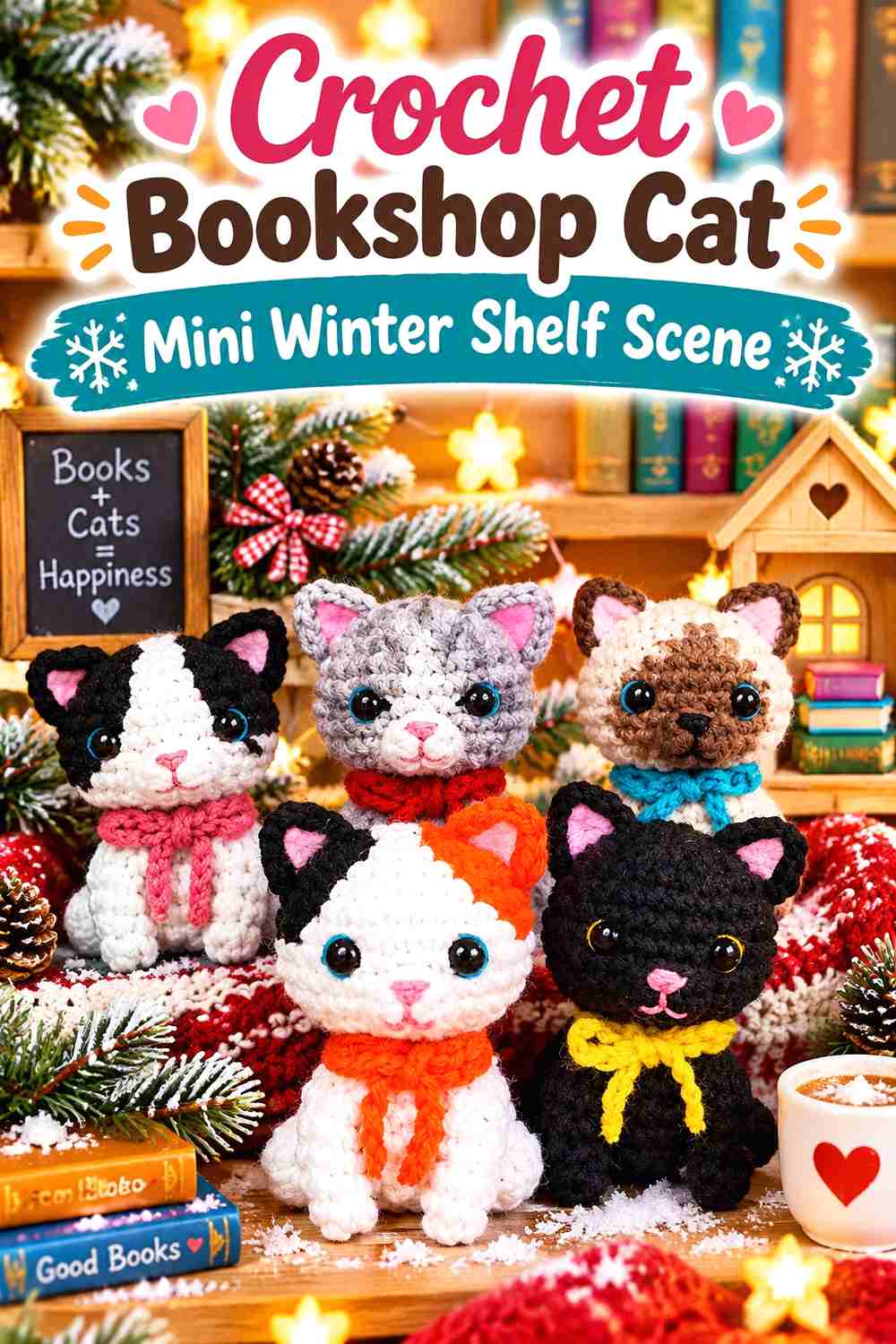
A small crocheted cat can make the reading room feel inhabited without adding another piece of furniture. Position it on the rug, beside the chair, or near a book stack to create the impression of a quiet companion.
The cat also gives you an opportunity to introduce a softer silhouette among square shelves, rectangular books, and straight furniture edges.
Give the Cat Its Own Clear Silhouette
Do not tuck the miniature so tightly between books and furniture that only part of it remains visible.
A small gap around the body helps the viewer immediately recognize the animal from the normal shelf-viewing distance.
Match the Cat’s Scale to the Chair
If the cat appears almost as large as the chair, the room’s implied proportions can feel inconsistent.
Place the finished cat beside the anchor furniture before permanently arranging the scene. If the sizes conflict, use it in a separate shelf vignette rather than forcing the combination.
Keep Small Parts Away From Pets and Young Children
Miniature amigurumi may contain small attached details. If the shelf can be reached by children or animals, treat the scene as decorative and place it securely out of reach.
Creator Credit: Luaji Crochet
8. Crochet Rolled-Throw Basket Mini Shelf Scene
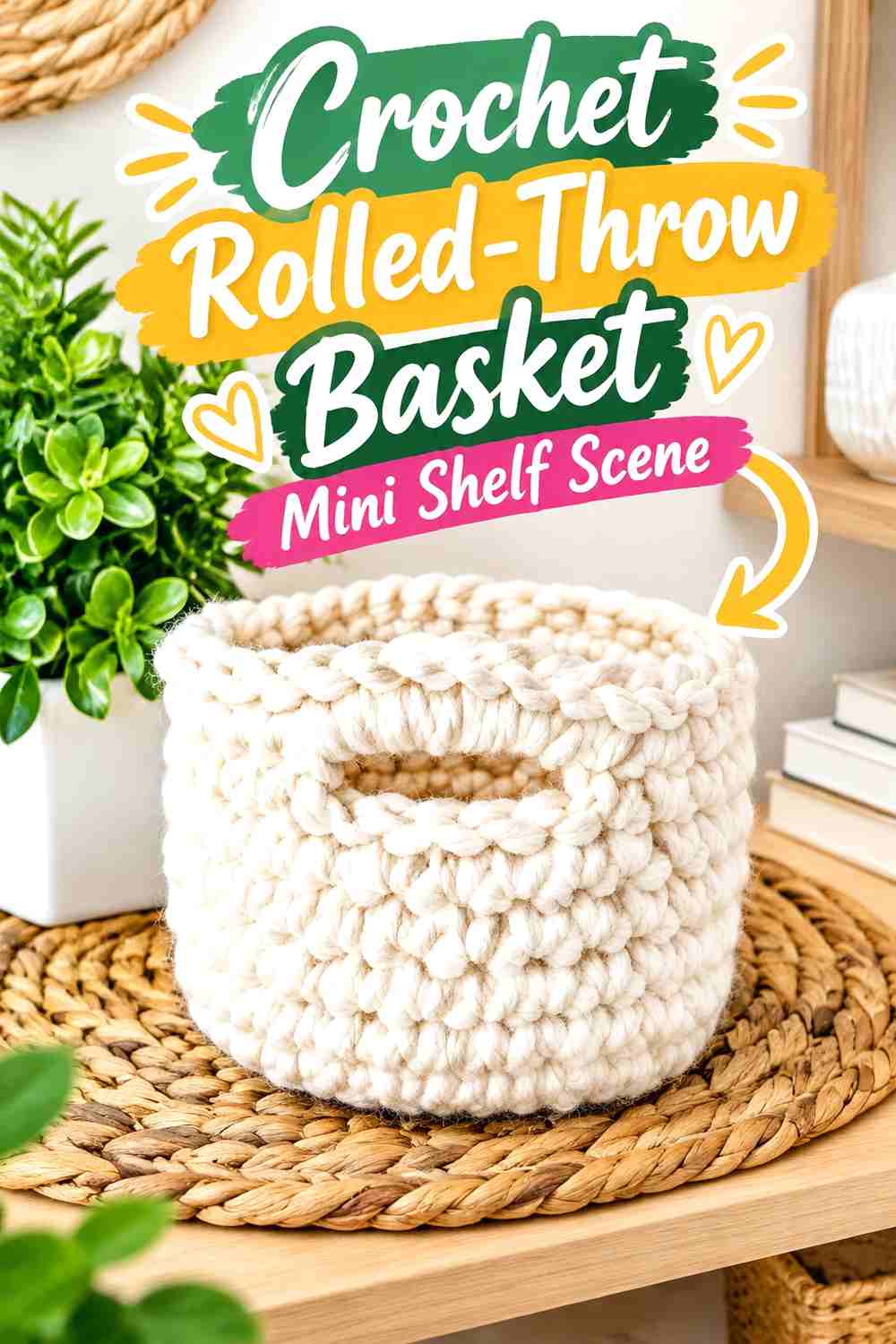
A tiny basket suggests storage and softness without requiring you to crochet a complete cabinet. Place it beside a reading chair and fill it with one or two small yarn rolls, a miniature folded textile, or another proportionate decorative element.
The basket shape also adds useful visual structure to the floor area of the scene.
Do Not Overfill the Basket
If everything spills far above the rim, the basket itself stops being visible.
Keep enough of the side wall exposed that the viewer can understand the shape and distinguish it from a random pile of yarn.
Use the Contents to Repeat Room Colors
A neutral basket with a burgundy and cream rolled textile can connect a brown chair to a patterned rug.
Repeating existing colors is usually more effective than introducing several new ones in such a small space.
Check the Basket Beside the Chair Before Filling It
An empty miniature basket may look perfectly proportioned until tall contents double its visual height.
Arrange the completed basket first, then decide how much interior detail the scene can support.
Creator Credit: Stitchberry
9. Crochet Winter Wreath Reading Room Mini Shelf Scene
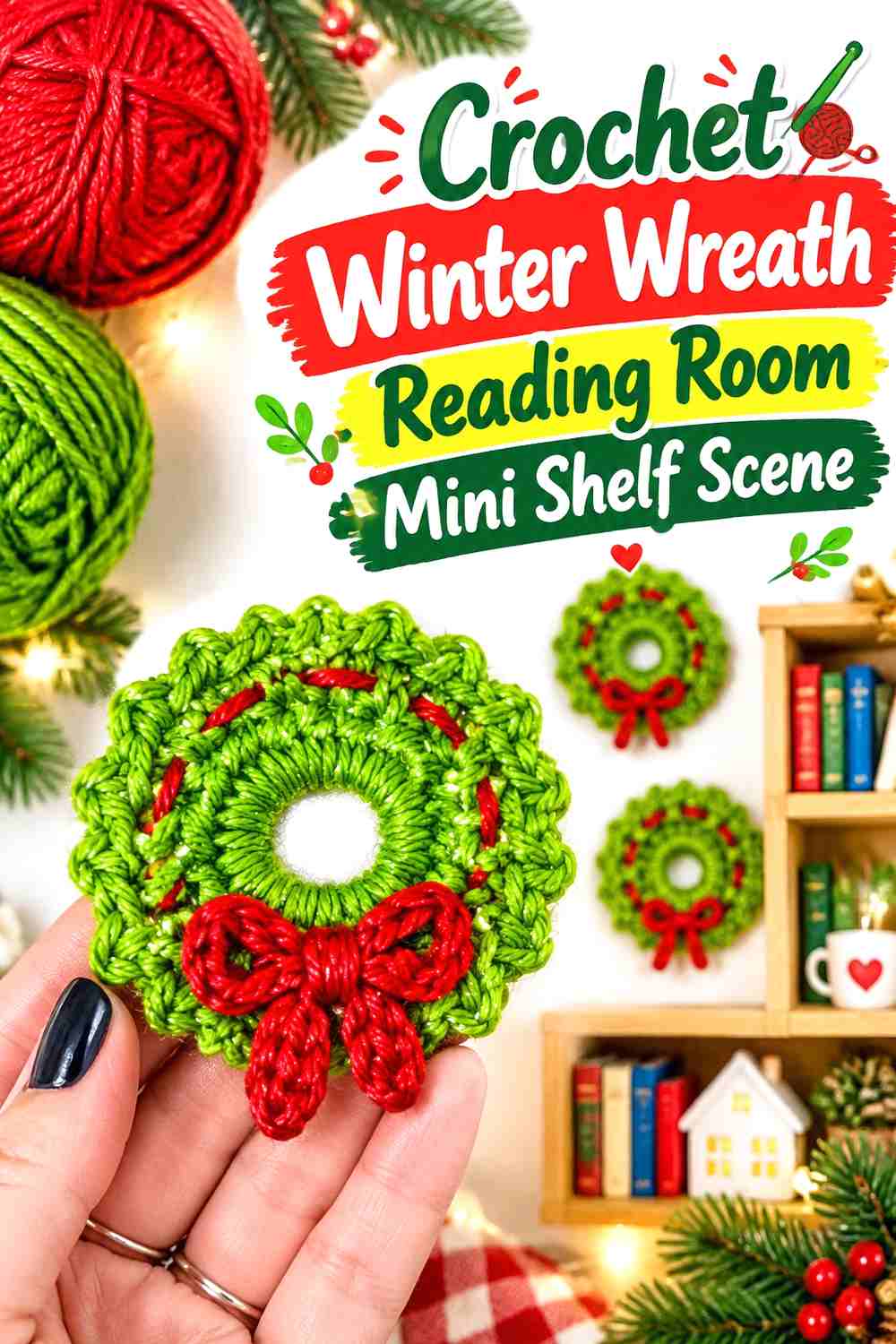
A miniature wreath uses the vertical back of the shelf instead of occupying valuable floor space. Hang it above a chair, fireplace, or book stack to make a neutral miniature room feel seasonal.
This is useful in a very shallow cubby because the decoration contributes winter character without requiring another freestanding object.
Match Wreath Scale to the Wall Area
A wreath that nearly fills the entire back panel can overpower the furniture below it.
Cut a paper circle first and tape it temporarily in place. This makes it easy to judge the diameter against the chair or fireplace before crocheting.
Limit the Number of Wreath Colors
Green with cream, green with burgundy, or even an all-neutral wreath can feel more cohesive than a miniature decoration containing every holiday shade.
Small-scale displays often benefit from stronger color editing than full-size rooms.
Keep the Hanging Method Discreet
The wreath should appear to belong on the miniature wall rather than look suspended from an oversized loop.
Plan how it will attach to the shelf backdrop before finishing the display.
Creator Credit: The Knotty Boss
10. Crochet Tiny Vase Side-Table Mini Shelf Scene
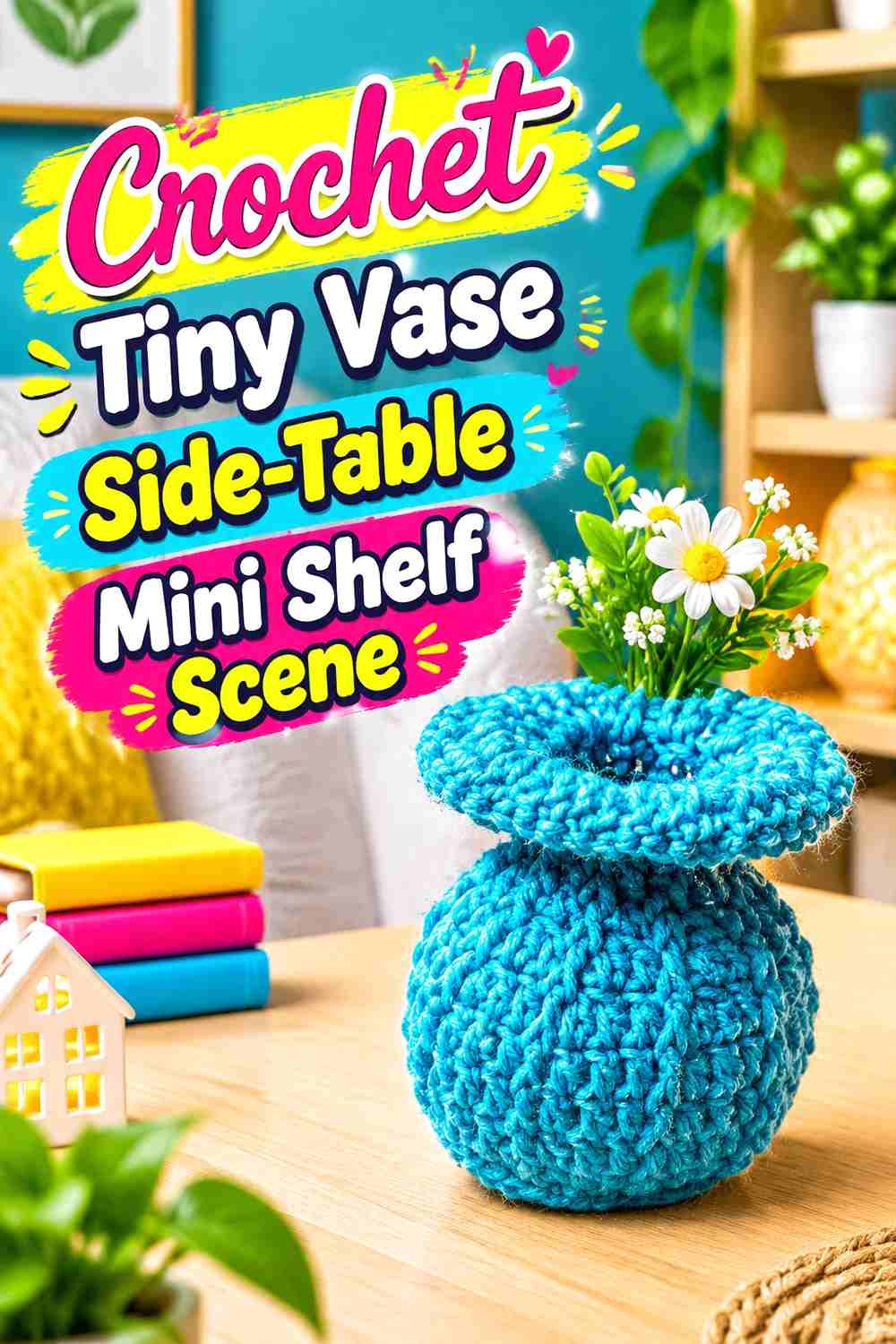
A miniature flower vase can provide one vertical accent beside a stack of low books or a squat reading chair. It gives the scene a little elegance without turning the whole display into a floral arrangement.
For a winter version, muted flowers, dried-looking tones, cream blooms, or dark foliage can feel more seasonal than bright spring colors.
Keep the Vase Narrower Than the Furniture Beside It
A tiny side-table accessory should support the focal furniture rather than rival it.
If the vase appears visually huge next to the chair, give it a separate vignette or adjust the surrounding objects rather than assuming the mismatch will disappear when everything is assembled.
Use Flowers to Introduce One New Accent
If the room is mostly brown, cream, and green, a small burgundy bloom can become the one unexpected color.
Repeating that burgundy once in a book spine or cushion is enough to connect it to the rest of the scene.
Check Stability Before Using a Tall Arrangement
A tall top on a narrow base can tip easily on a shelf that is bumped.
Test the completed vase on the actual display surface and keep delicate miniature scenes away from unstable edges.
Creator Credit: Tukitaki
11. Crochet Snowman Visitor Reading Room Mini Shelf Scene
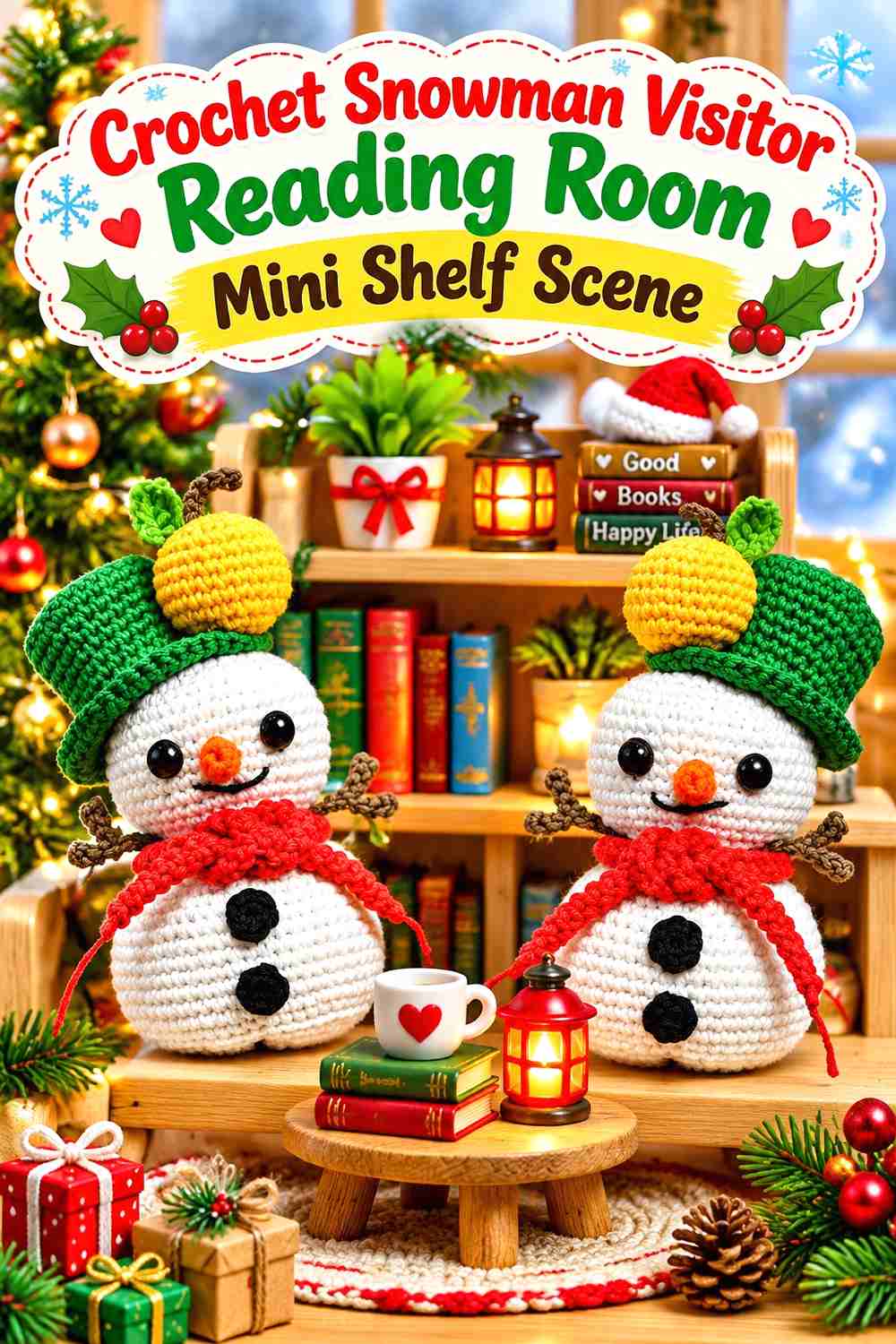
A tiny snowman gives the reading room an unmistakable winter moment. Instead of building the entire display around Christmas, use the figure as a seasonal visitor beside an otherwise ordinary chair, rug, and book stack.
That makes it easier to remove one object later and keep the miniature reading room on display after winter.
Give the Snowman a Supporting Role
A snowman can attract attention quickly because the pale body contrasts strongly with darker winter colors.
Place it to one side rather than directly in the center if the chair, fireplace, or library wall is supposed to remain the primary focus.
Keep Hat and Scarf Colors Connected to the Room
Using the same burgundy, forest, navy, or mustard already found elsewhere prevents the figure from looking like it wandered in from a different display.
One repeated accent is usually enough.
Small Seasonal Figures Need Secure Placement
A lightweight amigurumi figure can move when the shelf is bumped or dusted.
Place it on a stable surface away from the shelf edge, particularly if small attached parts are present.
Creator Credit: Cennagurumi
12. Crochet Reading Lamp Night-Nook Mini Shelf Scene
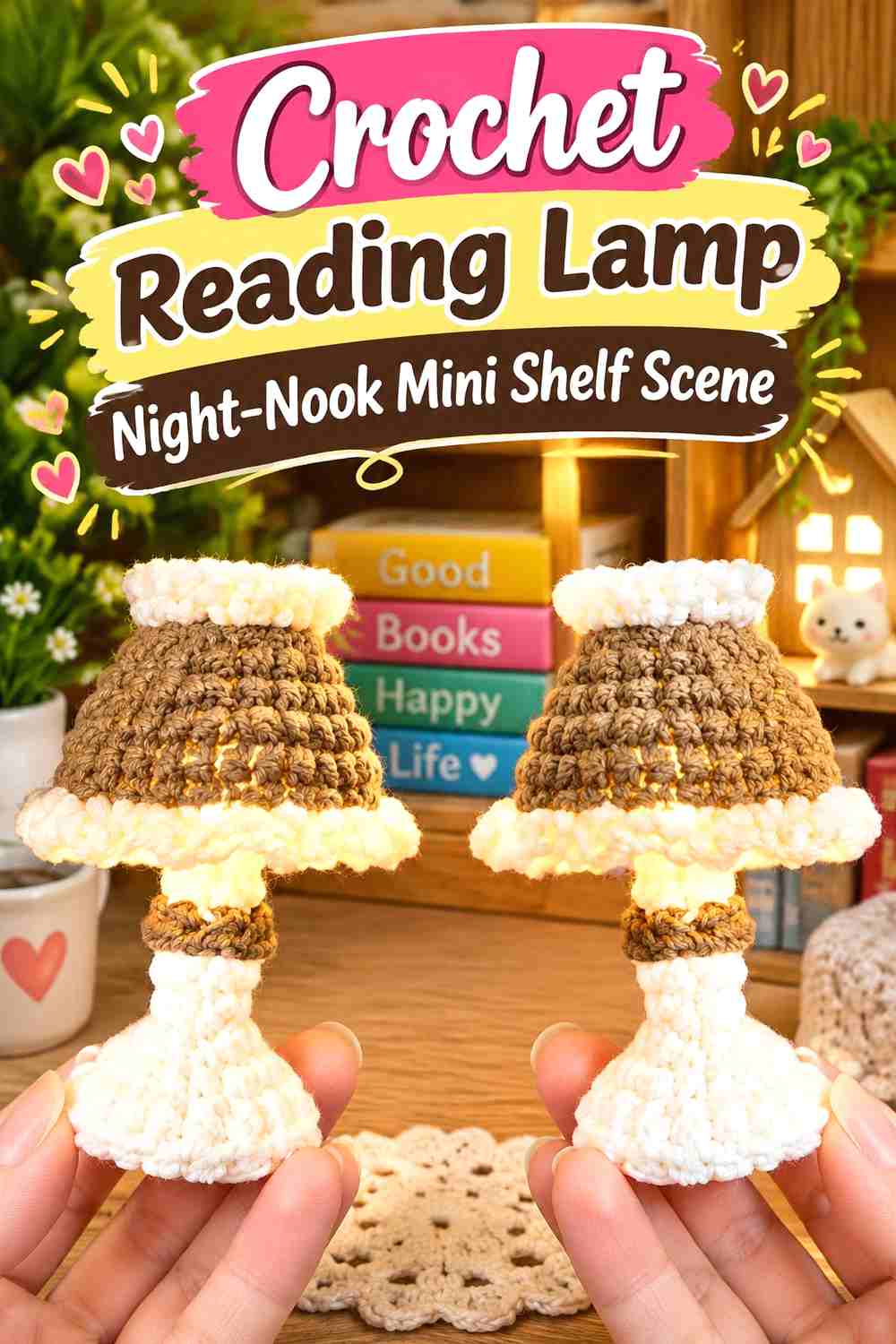
A miniature lamp creates the visual language of evening reading even when it does not actually produce light. Set it beside a chair or book stack and the scene immediately feels more like a nighttime nook.
The lamp also contributes vertical height without needing the footprint of another piece of furniture.
Keep the Shade Proportional to the Base
A very broad shade can dominate a small room even if the overall lamp technically fits on the shelf.
Compare the silhouette against the chair and books before committing to additional nearby accessories.
Treat the Crochet Lamp as Decorative
Do not insert a conventional bulb, flame, or improvised heat source into a yarn lamp.
If you want actual illumination in the shelf scene, use a miniature lighting product specifically designed for decorative displays and follow its installation and clearance guidance separately from the crochet tutorial.
Position the Lamp Where It Explains the Scene
Beside the reading chair makes intuitive sense because it suggests task lighting.
Placed far away in a corner, the same miniature can look like an isolated ornament rather than part of the reading setup.
Creator Credit: Forever Art Noor
13. Crochet Woodland Mushroom Storybook Mini Shelf Scene
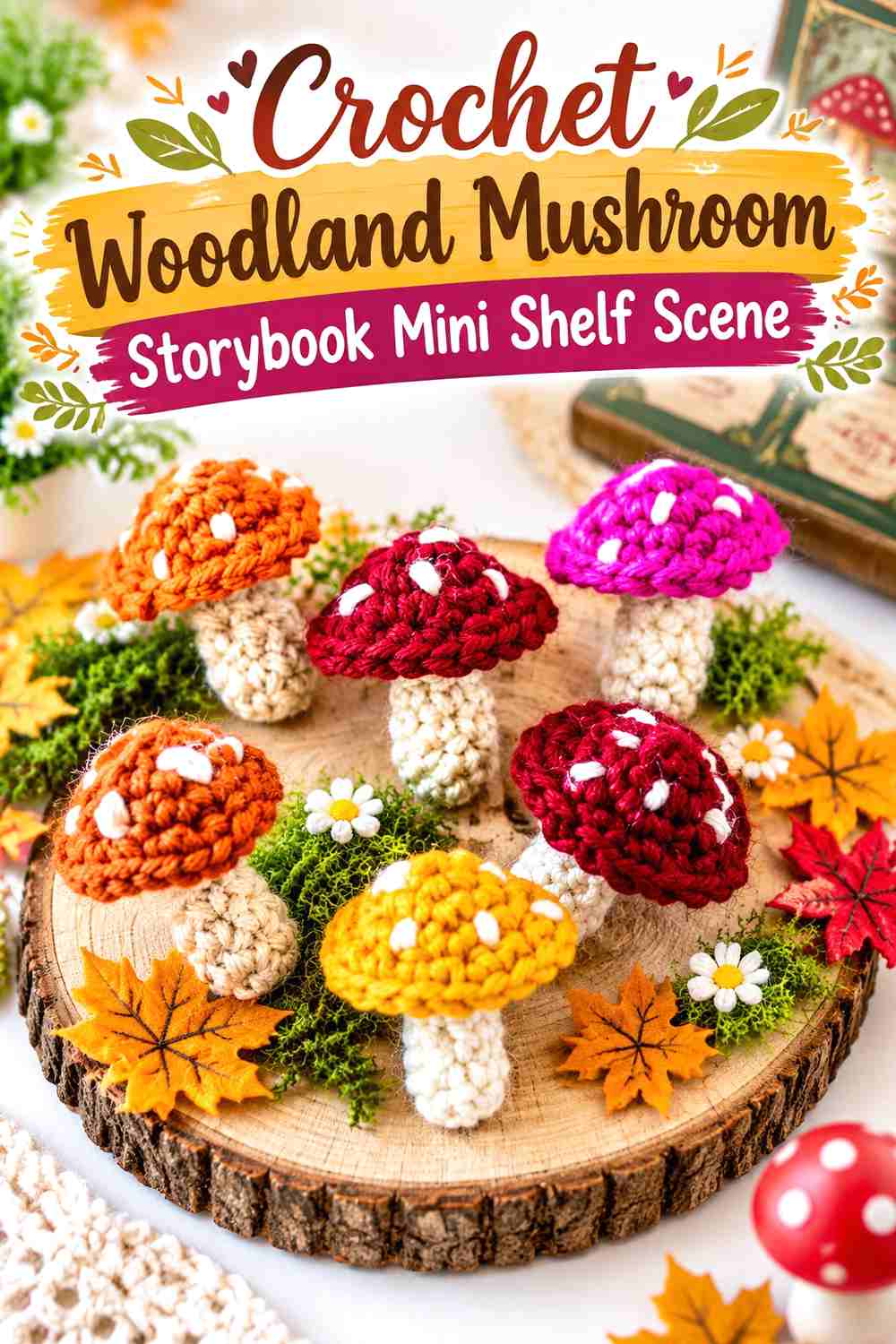
A tiny mushroom brings a storybook quality to a reading corner without using a literal book-themed object. It works particularly well in a woodland-inspired shelf with brown furniture, mossy green accents, and a tiny cat or owl.
This is more whimsical than the classic chair-and-fireplace ideas, so keep the surrounding pieces comparatively simple.
Let One Mushroom Be Enough
A single clearly shaped mushroom can communicate the woodland theme.
A large cluster may shift the display from “reading room” to “forest scene,” which may not be what you want for this particular corner.
Use the Cap as the Main Accent Color
Rust, cranberry, deep red, muted mustard, or warm brown can make the mushroom visible against a neutral floor.
Keep the stem quieter so the miniature remains easy to read as one shape.
Pair It With Books Rather Than More Woodland Props
A nearby stack of miniature books keeps the storybook connection clear.
Without that reading cue, a mushroom beside plants and animals can start to look like a completely different type of diorama.
Creator Credit: Winding Road Crochet
14. Crochet Festive Bunting Library Mini Shelf Scene
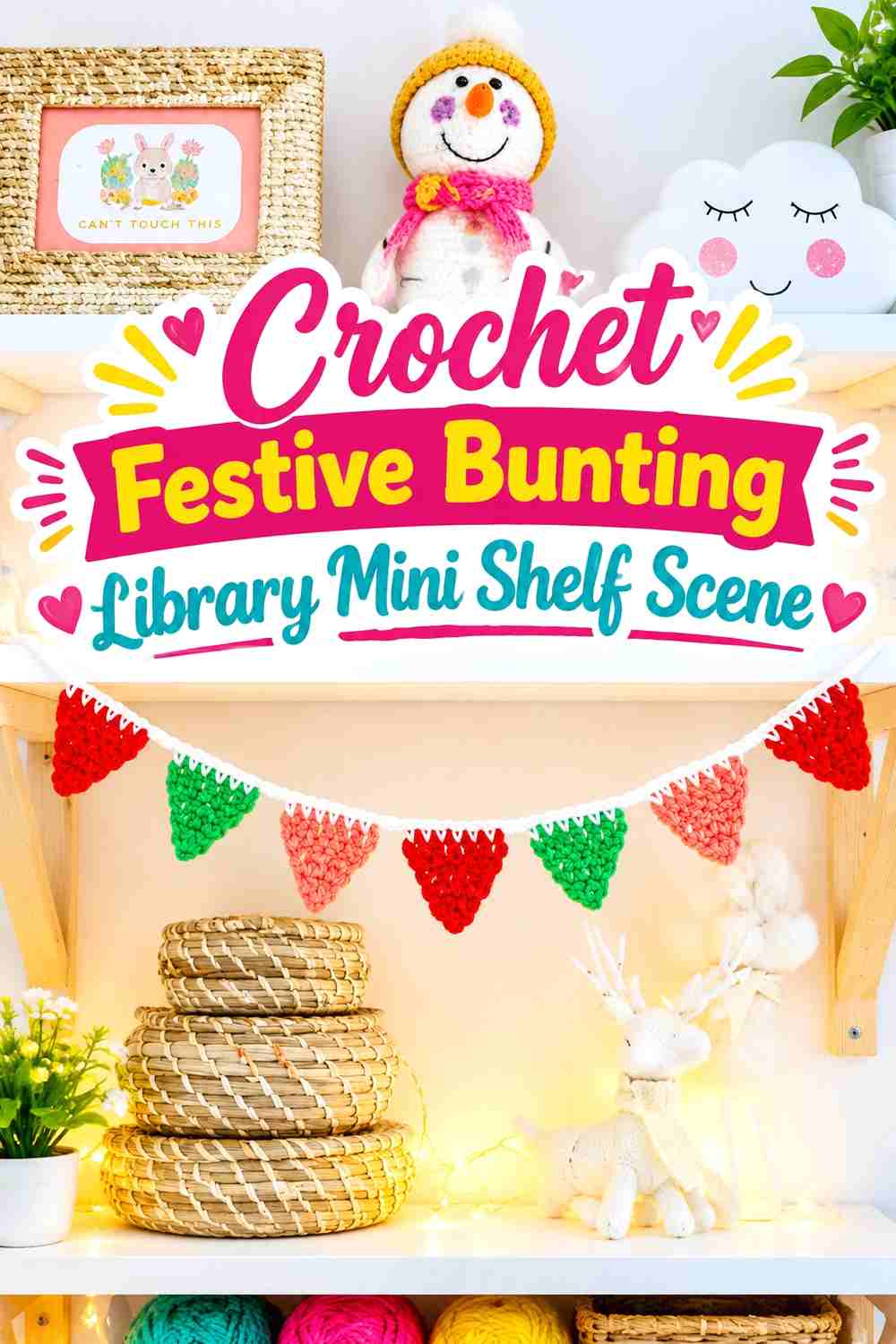
Mini bunting is another way to decorate the back wall instead of filling the shelf floor. Hung above a miniature library or chair, it creates a cozy gathering-room mood while leaving the furniture unobstructed.
The same idea can be made less holiday-specific through color. Oatmeal, burgundy, forest, dusty blue, and muted gold can feel festive throughout winter.
Keep the Flags Small Relative to the Books
Large bunting can make the miniature wall feel like a full-size banner squeezed into a tiny space.
Compare one flag with a book or chair before making the entire strand so the scale remains believable.
Let the Garland Follow the Architecture
A gentle line across the upper back of the shelf gives the display a clear boundary.
Avoid dropping it so low that it visually cuts through the chair, lamp, or bookcase underneath.
Use Fewer Colors Than You Would on Full-Size Bunting
Three repeating shades can provide enough rhythm in a miniature display.
More colors may work, but they can also compete with books, rugs, and furniture already carrying their own patterns.
Creator Credit: Bella Coco Crochet
15. Crochet Owl Storytime Mini Shelf Scene
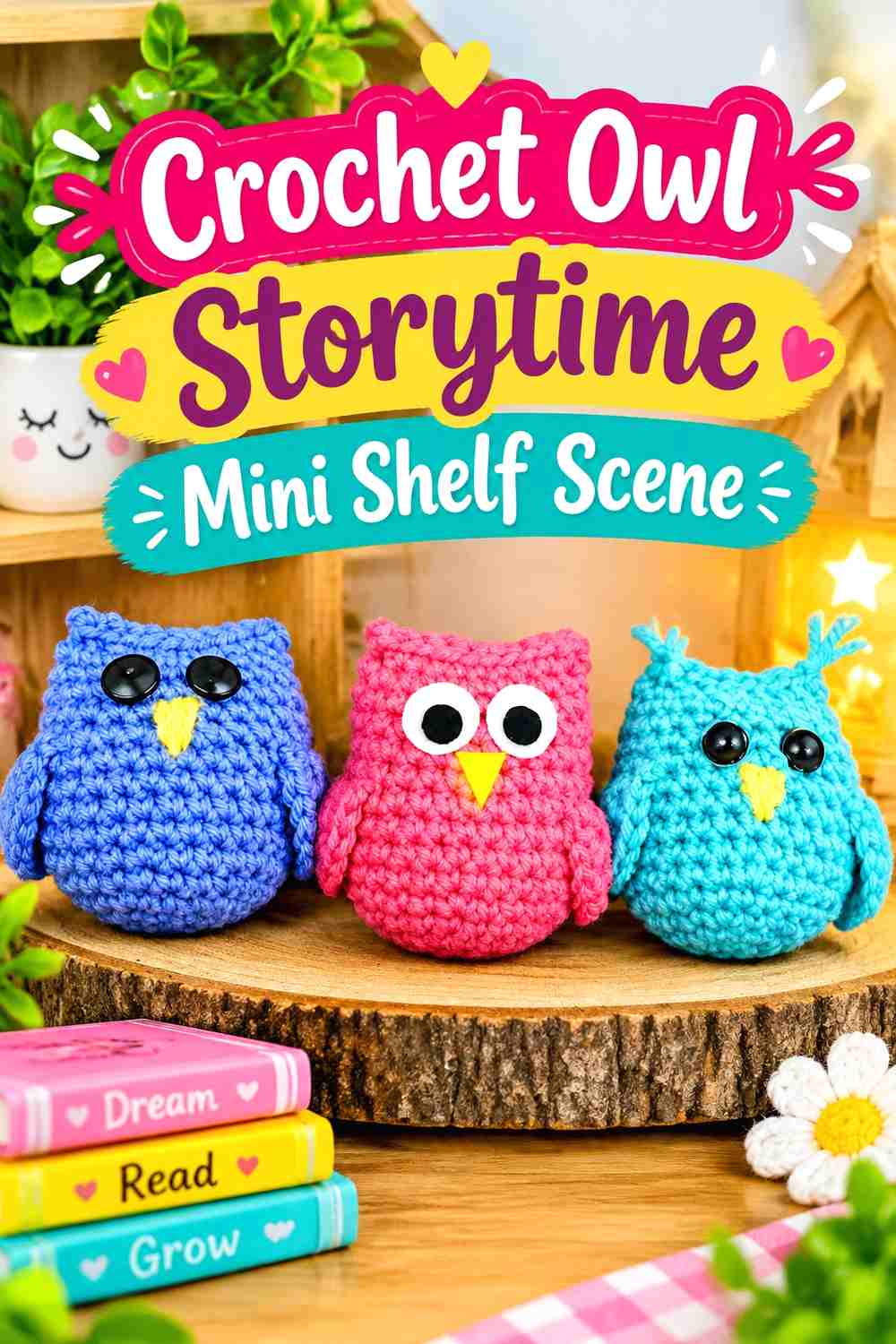
A tiny owl perched near books is an easy visual shorthand for a storytime or library scene. Position it on top of a low stack, beside a miniature chair, or on a raised ledge to keep the bird visible.
Compared with the cat vignette, the owl feels more decorative and storybook-like, giving you a different personality for the reading room.
Perching Height Makes the Owl Easier to See
A small owl placed directly on a patterned rug may disappear into the lower half of the scene.
Raising it on a book stack or low platform can make the silhouette clearer without enlarging the figure itself.
Keep Facial Contrast Strong but Controlled
The face is what helps a tiny owl remain recognizable from across the room.
Choose enough contrast for the features to read, but avoid adding so many different colors that the bird becomes the busiest object on the shelf.
Treat It as Display Decor Around Small Children and Pets
Small crocheted figures can include tiny attached features or components. Keep miniature shelf scenes securely out of reach when those parts could be pulled loose or swallowed.
Creator Credit: 5 Little Monsters
16. Crochet Mini Book Tote Reading Room Shelf Scene
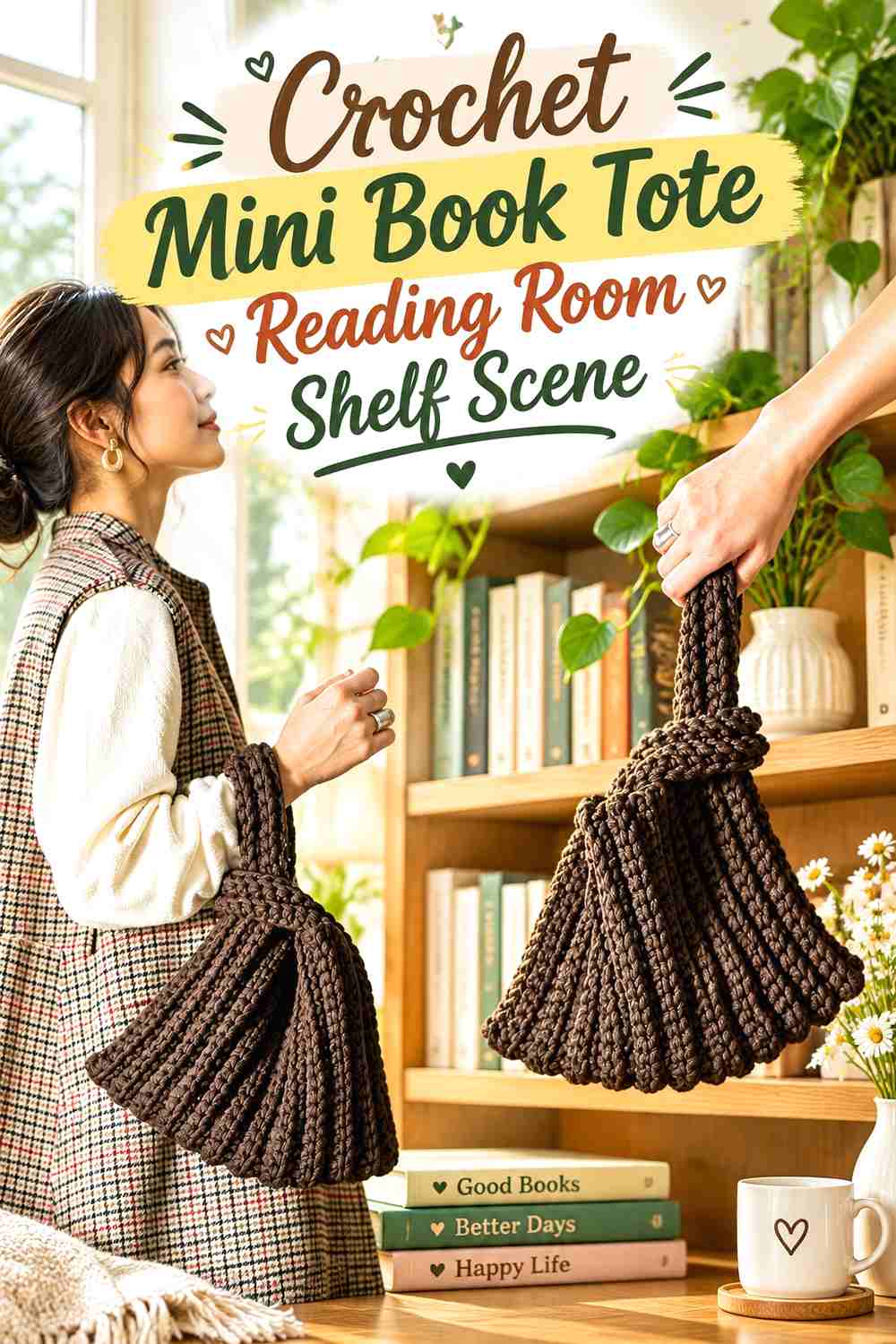
A miniature tote placed beside the reading chair suggests a reader who has just returned from a bookstore or library. Unlike a basket, which reads as permanent room storage, a small bag introduces the idea of movement and gives the vignette a subtle narrative.
The source tutorial is a mini tote rather than a book bag specifically, so treat “book tote” as the way you style the finished piece rather than as the tutorial’s original purpose.
Keep the Bag Low Beside the Chair
A tote generally looks most convincing on the floor or leaning against furniture.
Hanging it high on the backdrop can make its scale harder to interpret unless the scene also includes an appropriately sized hook or shelf.
Do Not Overstuff the Opening
One visible miniature book is usually enough to explain the bag’s role.
Stuffing several bulky objects into a small crochet tote can distort its shape and make the prop dominate the room.
Let the Strap Create a Natural Line
A relaxed strap can add movement to an otherwise rigid arrangement of furniture and books.
Arrange it so the line remains visible without crossing the front of another important miniature.
Creator Credit: 슈퍼스토리 코바늘 superstory crochet
Which Mini Winter Reading Room Shelf Scene Should You Build First?
For a classic cozy-room effect, begin with the Fireside Reading Chair or Hearthside Fireplace scene. These larger anchors immediately explain the setting and can support several smaller props later.
If your display space is very narrow, the Stacked-Books Library, Winter Wreath, Festive Bunting, Cocoa Mug, or Tiny Vase scenes make better use of limited depth. They suggest a reading room without requiring bulky furniture.
For a more playful shelf, choose the Bookshop Cat, Snowman Visitor, Woodland Mushroom, or Owl Storytime ideas. Each adds a character or narrative while still leaving enough room for books to keep the reading theme clear.
The Checkerboard Rug, Evergreen Plant, Rolled-Throw Basket, Reading Lamp, and Mini Book Tote are especially useful as supporting pieces. They may not define a reading room alone, but they can turn a simple chair-and-books arrangement into a more convincing miniature interior.
Conclusion
A successful crochet mini reading room is less about fitting every possible object onto one shelf and more about creating a believable relationship between a few carefully chosen pieces. Start with one anchor, establish its scale, and add only the props that strengthen the story.
Choose a chair or fireplace for a classic nook, books and a lamp for a tiny library, or a cat, owl, mushroom, or snowman when you want more whimsy. Flat elements such as rugs and bunting are useful when the shelf is shallow because they add detail without consuming much usable space.
Most importantly, do not assume that miniatures from unrelated tutorials will automatically match. Compare proportions as you work, test the layout on the actual shelf, and return to each creator’s tutorial for the exact construction of that individual object.
Frequently Asked Questions
How do I make crochet miniatures from different tutorials look like they belong in the same room?
Choose one completed object as your scale reference and compare every new piece against it. A chair is especially useful because books, mugs, baskets, animals, and lamps all have recognizable relationships to furniture. Matching color and yarn texture can help, but believable proportions matter more.
Do all miniature crochet tutorials use the same dollhouse scale?
No. “Mini,” “miniature,” and “dollhouse” can describe different finished sizes. Some tutorials specify a scale while others do not. Check the creator’s stated dimensions when available and compare the actual finished objects before combining them.
What yarn colors make a miniature reading room feel wintry?
Cream, oatmeal, charcoal, forest green, walnut brown, burgundy, dusty blue, rust, and muted gold can create a winter atmosphere without making the scene explicitly Christmas-themed. A limited palette generally works better than giving every miniature a different bright color.
How many crochet objects should I put in one shelf scene?
There is no fixed number. Use the available space and visual hierarchy as your guide. One anchor object, two or three supporting pieces, and visible empty space often create a clearer vignette than filling every inch of the shelf.
Can I add real lighting to a crocheted miniature lamp or fireplace?
Treat crochet lamps and fireplaces as decorative unless you are using a lighting component specifically designed for miniature displays. Do not place open flames, hot bulbs, or improvised heat sources against yarn. Follow the lighting manufacturer’s clearance and installation guidance separately.
How can I test a miniature reading-room layout before crocheting everything?
Cut simple paper or cardboard shapes representing the approximate footprint and height of the planned chair, fireplace, rug, basket, or other large objects. Arrange them on the actual shelf first. This can reveal crowding and proportion problems before you spend time making every piece.
Are miniature crochet shelf scenes suitable for homes with pets or young children?
They are best treated as display pieces. Small figures and accessories may include detachable or swallowable components, and lightweight miniatures can be knocked from shelves. Place the finished scene securely out of reach when small parts could present a hazard.