Rattan, cane, wicker, and woven seagrass bring natural texture to a fall table, but you do not need to reproduce those materials literally to create a similar visual effect in crochet. Warm straw colors, dense circular stitches, braided-looking edges, structured cord, open latticework, and earthy neutrals can all suggest the relaxed woven character that works so well with Thanksgiving dinnerware.
Some tutorials in this collection already use jute or substantial cord. Others use cotton or conventional yarn and are included because their shapes or textures offer a useful base for a rattan-inspired adaptation. Changing the fiber can significantly affect size, stiffness, drape, washability, and stitch definition, so follow the original tutorial for construction and treat material substitutions as a separate design decision.
For Thanksgiving, the most practical placemats also leave enough level surface for dinner plates and flatware. Decorative fringe, scallops, pumpkin stems, and openwork can add seasonal character, but they should be positioned where they will not make a crowded table harder to use.
Quick List
- Crochet Dense Jute Rattan-Look Round Placemat
- Crochet Rustic Wicker-Look Round Placemat
- Crochet Sand-Tone Oval Cord Placemat
- Crochet Braided Rattan-Look Wave Placemat
- Crochet Classic Oval Woven-Look Placemat
- Crochet Harvest Rattan-Look Thanksgiving Placemat
- Crochet Rattan-Look Pumpkin Silhouette Placemat
- Crochet Openwork Pumpkin Rattan-Look Placemat
- Crochet Rectangular Cane-Weave Look Placemat
- Crochet Modular Woven Granny Placemat
- Crochet Mosaic Basket-Weave Look Placemat
- Crochet Scalloped Rattan-Look Charger Placemat
- Crochet Feather-Texture Harvest Placemat
- Crochet Botanical Scallop Rattan-Look Placemat
- Crochet Fringed Woven-Look Round Placemat
Create the Rattan Look Through Texture, Not Just Beige Yarn
A tan color alone does not make crochet resemble rattan. The stronger illusion comes from combining an earthy palette with a construction that has visible lines, ridges, spirals, braids, or repeating openings.
Dense round stitches can resemble a coiled woven charger. Long oval rows can suggest traditional wicker placemats. Raised texture creates the visual shadow found in basketry, while carefully spaced openwork can echo cane panels.
Natural-looking color families also help. Straw, oat, flax, mushroom, pecan, tobacco, warm cream, muted olive, rust, and cinnamon can create a Thanksgiving palette without requiring every placemat to be brown.
If you substitute jute, raffia-style yarn, macramé cord, or another firm material for the yarn demonstrated by a creator, make a sample first. A cord that looks perfect in a product photo may produce a substantially larger, harder, or less flexible mat than the original.
Plan for Dinner Plates Before Decorative Edges
A placemat can look generous when photographed by itself and surprisingly small once a Thanksgiving dinner plate, fork, knife, napkin, and glass are added.
Test one completed mat with your actual place setting before making six or eight. Round designs need enough diameter for part of the decorative edge to remain visible. Oval and rectangular mats need sufficient width for the plate without pushing flatware onto neighboring settings.
Fringe and projecting motifs require extra space even though they do not increase the useful plate area. On a narrow table, a clean oval may be easier to arrange than a heavily fringed circle.
Also distinguish a placemat from a trivet. Do not assume jute, raffia, acrylic yarn, cord, or any other crochet material is appropriate beneath a very hot casserole or cookware unless the specific material and intended use have been verified.
1. Crochet Dense Jute Rattan-Look Round Placemat
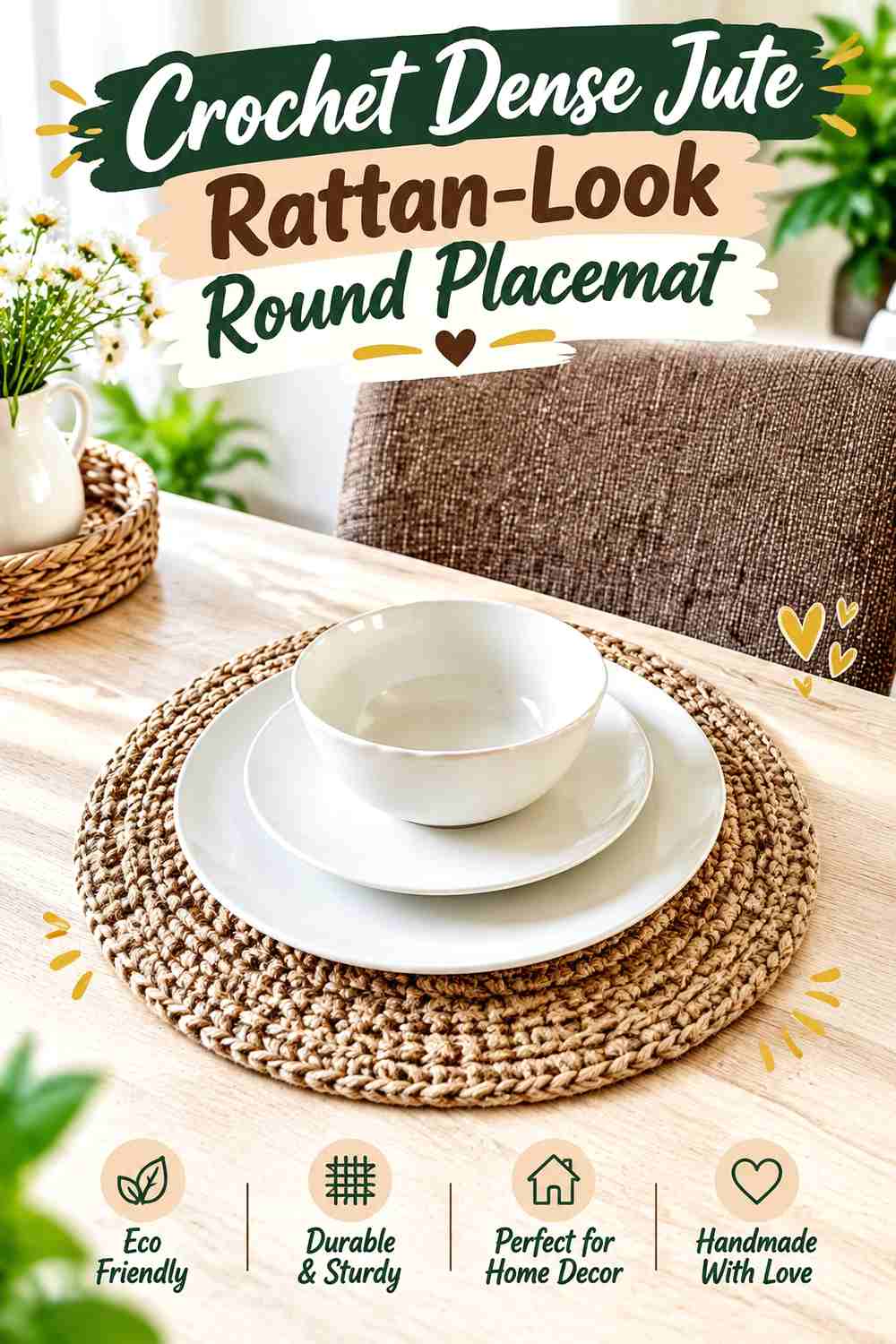
A dense jute circle is one of the most direct routes to a crochet rattan look. The supporting 2LOOPZ crochet tutorial uses jute twine for a round placemat and produces a substantial surface with strong concentric texture.
That construction makes an effective Thanksgiving charger-style layer because the natural material and circular form can sit comfortably beside linen napkins, simple ceramics, dried leaves, and wood accents without requiring an obvious turkey or pumpkin motif.
Concentric Texture Creates the Woven Illusion
A round mat naturally produces lines that radiate around the plate, similar to the coiled construction seen in many woven placemats.
Keep the palette restrained if the texture is the main feature. A single flax, honey, or medium-brown tone lets the stitch shadows provide more of the visual variation.
Jute Changes the Handling as Well as the Appearance
Jute is not simply a color choice. It can feel rougher and behave more rigidly than many conventional crochet yarns.
If you replace it with cotton cord or another fiber, expect the finished character to change. Make one complete placemat before buying material for a large Thanksgiving set.
Creator Credit: 2LOOPZ crochet
2. Crochet Rustic Wicker-Look Round Placemat
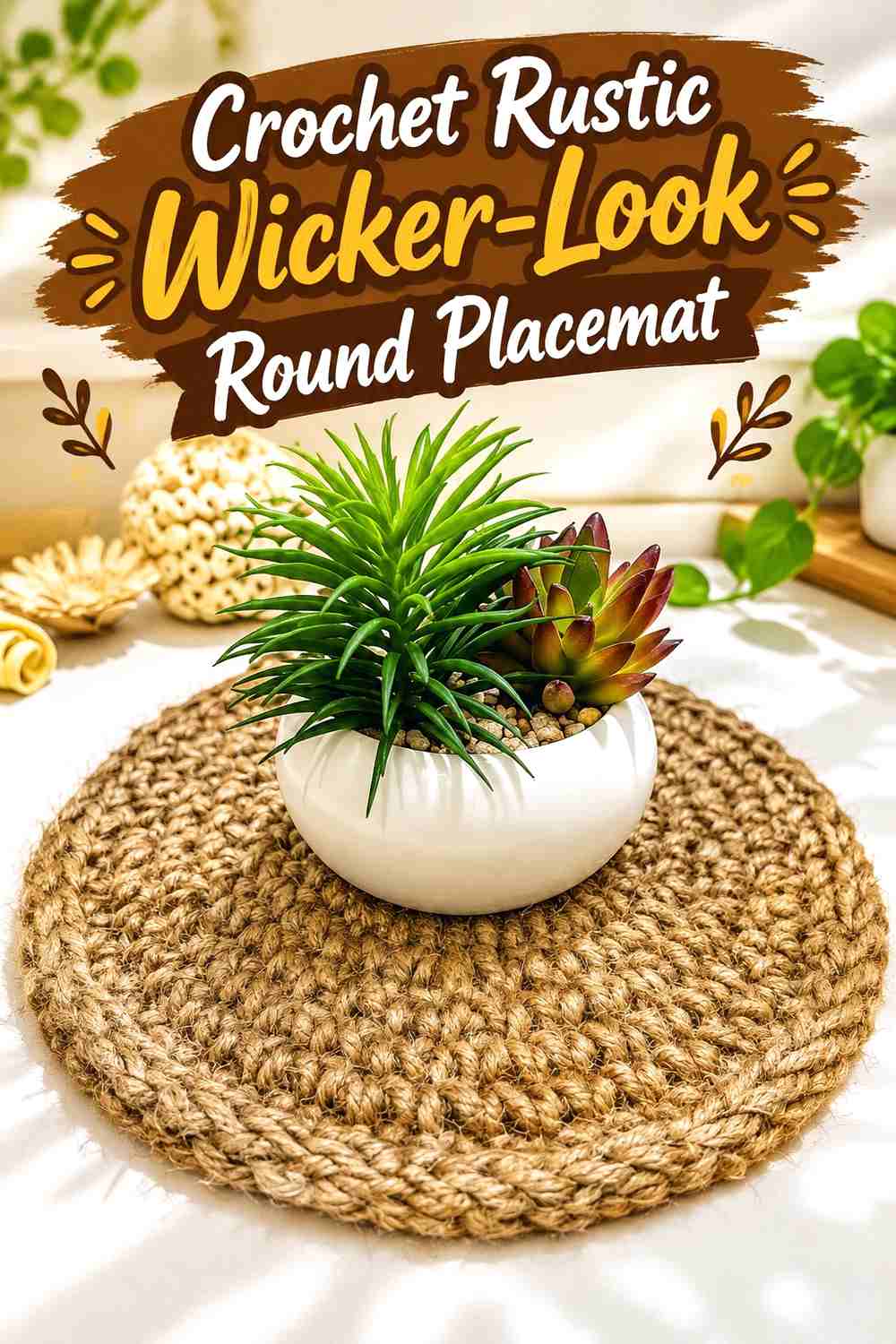
This second jute-based option keeps the basic circle but gives you another construction route. POM POM TOY demonstrates a round placemat made with jute cord, creating a simple rustic surface that can be styled toward wicker or rattan.
It works especially well when your Thanksgiving table already contains patterned dishes or a strong centerpiece and the placemat needs to add texture without introducing another complicated motif.
A Plain Circle Gives Busy Dinnerware More Space
Patterned Thanksgiving plates, plaid napkins, floral centerpieces, and colored glassware can quickly compete with a highly decorative mat.
A straightforward woven-looking circle provides a quieter foundation. The texture is visible around the plate, but the center does not fight with the dishes.
Test the Edge Before Making the Full Set
Firm cord can emphasize even small differences in tension. If the outer edge begins to wave or cup, do not assume finishing will automatically correct a major shape problem.
Complete one sample with the material you intend to use and make sure it lies acceptably under a real place setting before repeating it.
Creator Credit: POM POM TOY
3. Crochet Sand-Tone Oval Cord Placemat
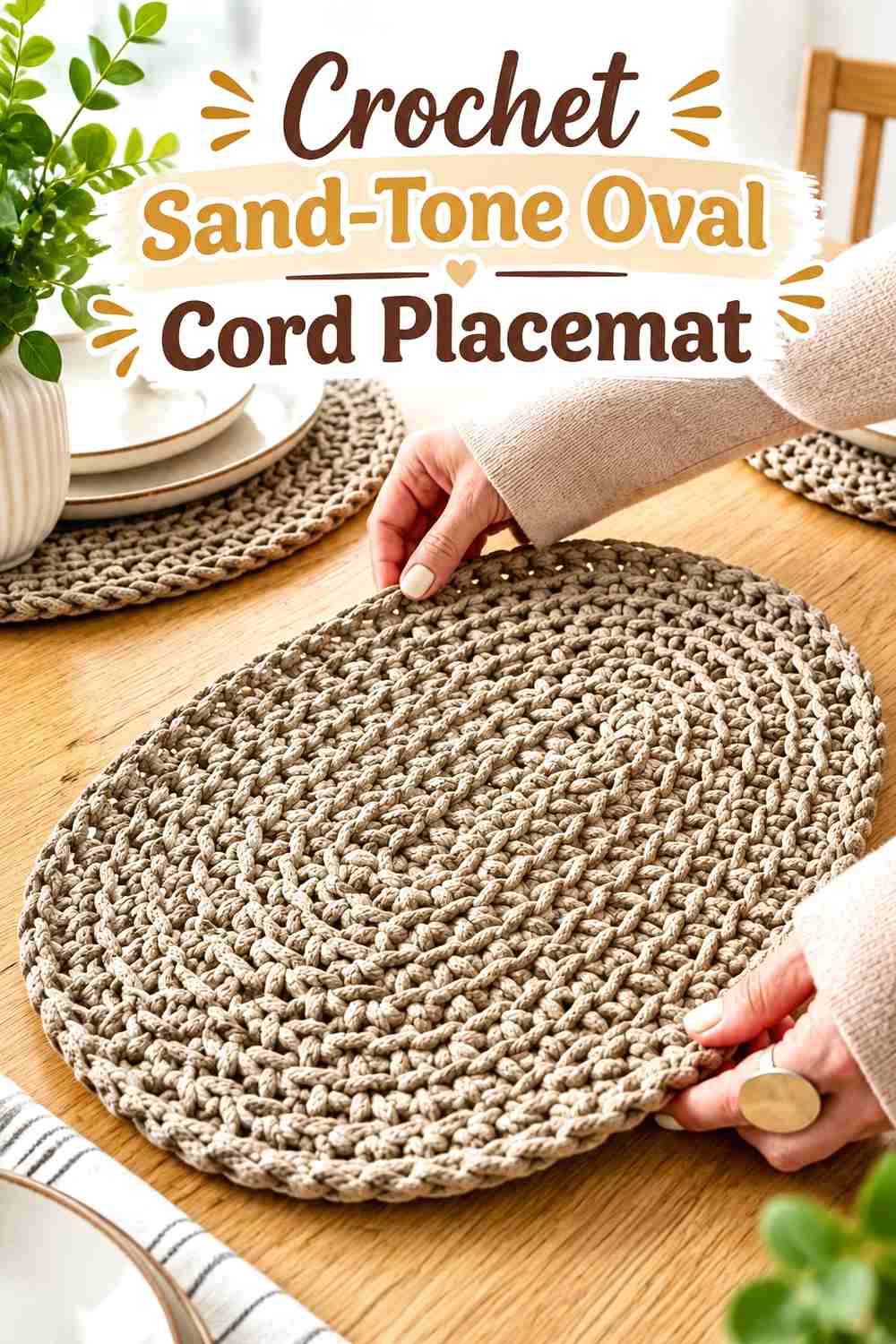
An oval changes the table footprint immediately. Studio Cozy Goose demonstrates an oval placemat in braided cotton cord, a material and shape combination that already has much of the clean, substantial character needed for a modern rattan-inspired table.
The elongated form is useful when you want a plate centered in the middle while leaving visible crochet on both sides for flatware.
An Oval Uses Table Width Differently From a Circle
Round placemats extend equally in every direction. An oval gives you more horizontal presence without requiring the same depth at the corners.
That can make it easier to arrange multiple settings on a rectangular Thanksgiving table, particularly when serving dishes occupy the center.
Sand and Flax Tones Keep the Cord Looking Natural
A warm neutral cord can do most of the styling work without additional embellishment.
If you want more fall color, introduce rust, olive, or pumpkin through napkins and table accessories rather than automatically adding several yarn colors to the mat itself.
Creator Credit: Studio Cozy Goose
4. Crochet Braided Rattan-Look Wave Placemat
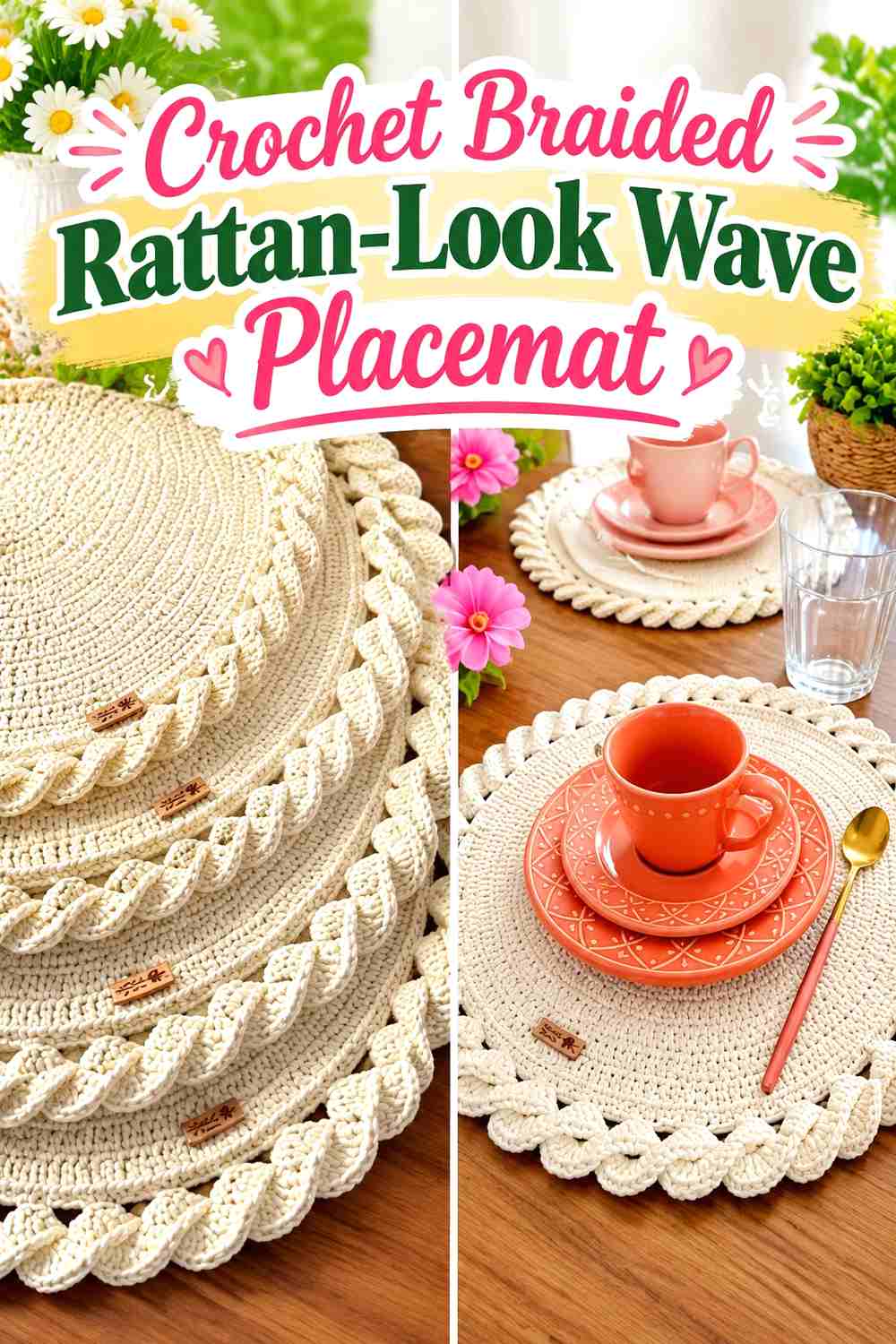
Vanessa Marcondes demonstrates a placemat with a distinctive braided or wave-like appearance. That surface gives this idea one of the strongest basketry references in the collection because the crochet itself creates interlaced-looking movement.
Worked in warm cane, pecan, or chestnut shades, the design could become a statement placemat even on a table with very simple white dishes.
The Braided Surface Should Stay Visible
A strong woven effect loses impact if the plate covers nearly the entire mat.
Complete one sample and place your dinnerware over it. If only a tiny strip remains visible, decide whether the finished scale suits your table before making the complete set.
One Natural Shade Can Show More Texture Than Several Colors
Color changes can interrupt the continuous movement of a braided-looking design.
If the rattan illusion is your priority, consider letting texture carry the pattern. A tonal palette or one warm neutral can emphasize shadows and raised lines more effectively than high-contrast stripes.
Creator Credit: Vanessa Marcondes
5. Crochet Classic Oval Woven-Look Placemat
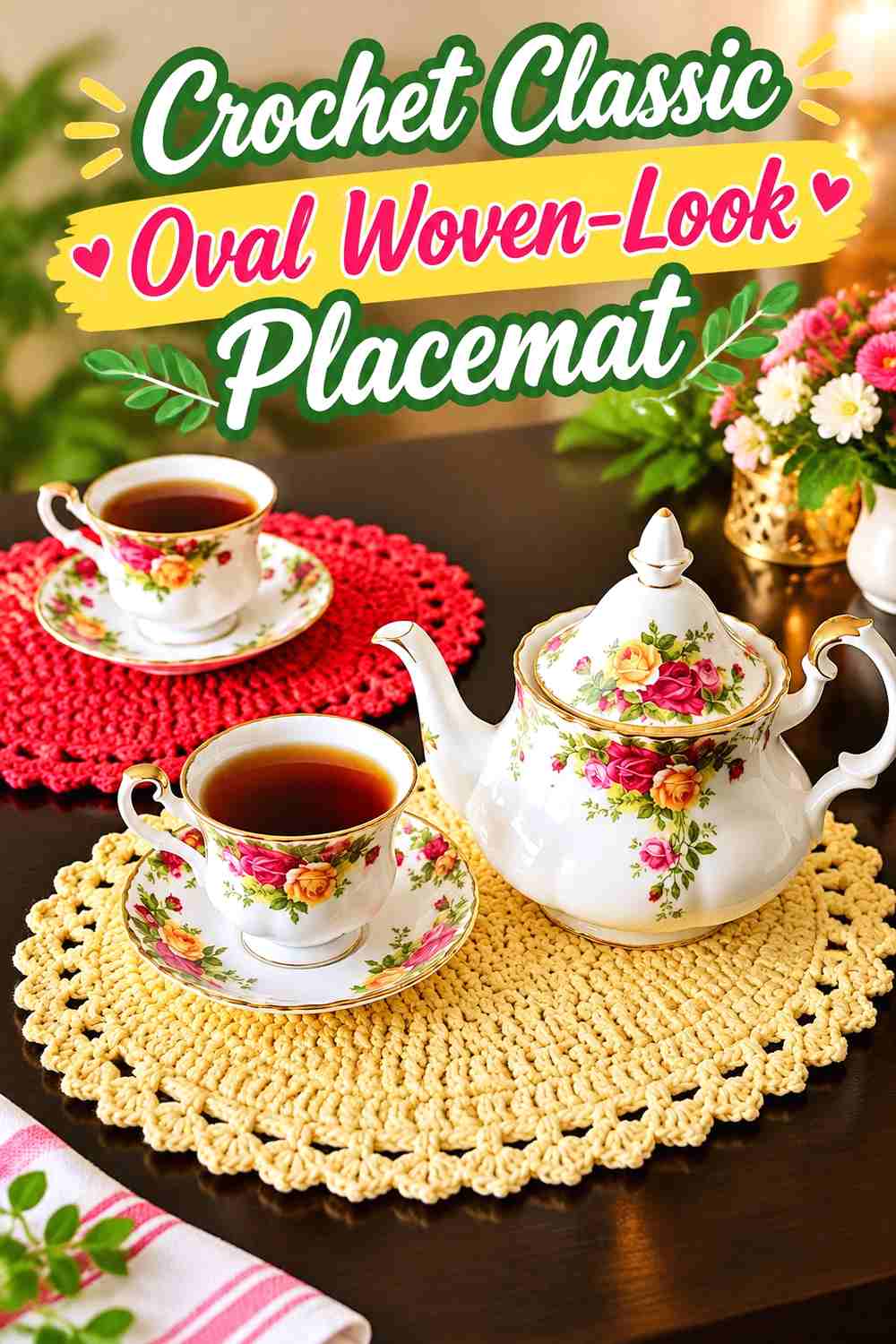
Jayda InStitches’ oval placemat gives you a more traditional crochet form that can be shifted toward a woven fall aesthetic through restrained color and finishing choices.
Compared with a thick cord mat, this option can look lighter and more familiar as a table textile while still delivering the soft-ended oval outline associated with many woven placemats.
A Smaller Oval Needs a Plate Test
The source placemat has defined finished dimensions, so compare those with your own dinnerware instead of assuming every oval is sized like a commercial placemat.
If you use large Thanksgiving plates, make the tutorial version first and assess how much border remains visible.
Use the Border as the Rattan-Look Detail
Rather than changing the entire construction, you can let the outer edge create the strongest basketry reference.
A slightly darker natural border around an oat or linen center can suggest the framed edges of a woven mat while keeping the eating area visually calm.
Creator Credit: Jayda InStitches
6. Crochet Harvest Rattan-Look Thanksgiving Placemat
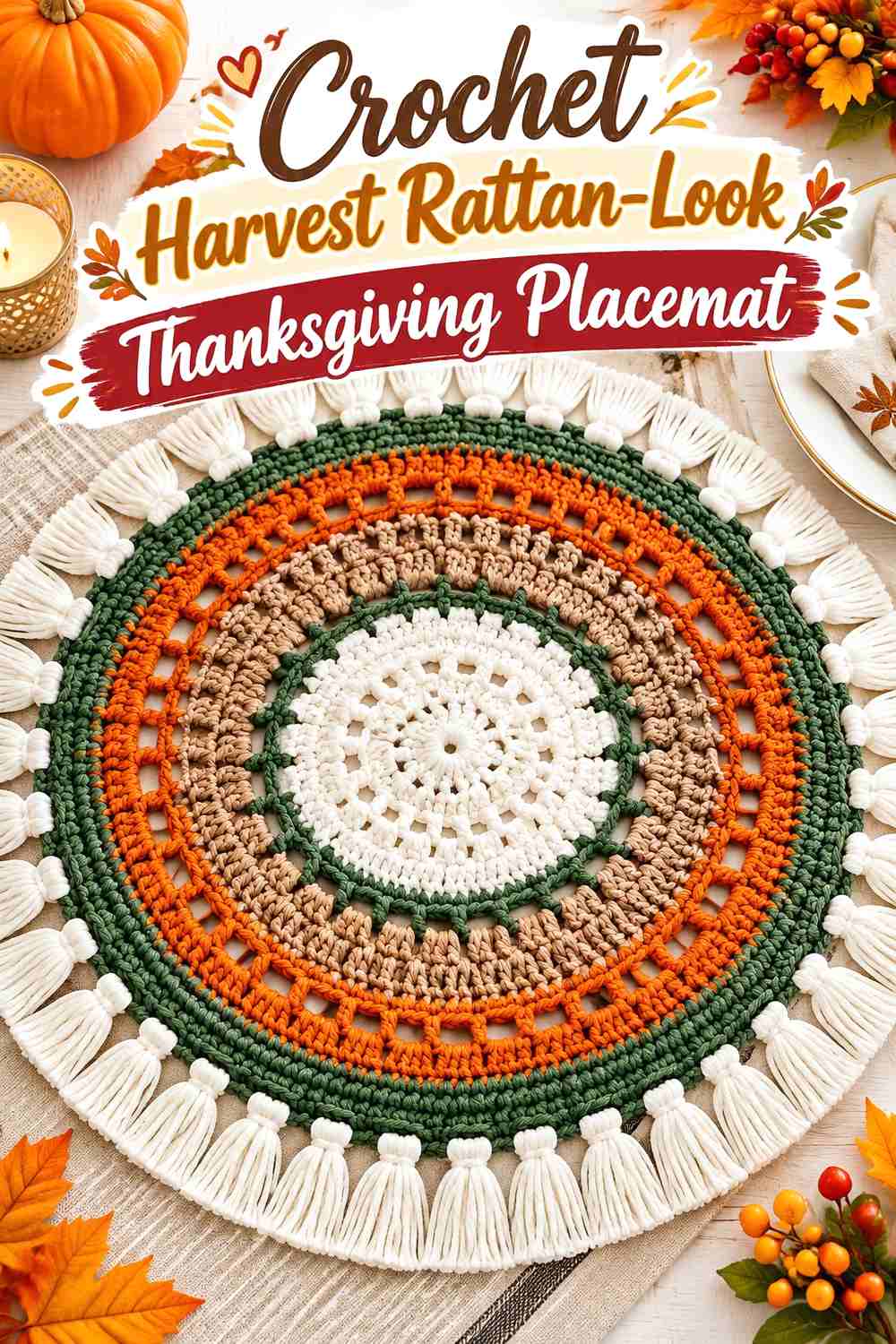
Tuba Crochet’s project is specifically presented for fall and Thanksgiving table décor, so this option begins with a stronger seasonal connection than the neutral everyday placemats.
For a rattan-inspired interpretation, use the tutorial’s finished structure while shifting the palette toward wicker, cinnamon, wheat, muted pumpkin, and dried-leaf tones.
Let Fall Color Sit Inside a Natural Framework
Instead of making the entire mat bright orange, use a natural base with smaller amounts of seasonal color.
This approach helps the placemat coordinate with wood, linen, ceramic, and woven table accessories while still reading as Thanksgiving décor.
Repeat the Same Color Order Across the Table
If the design uses multiple colors, decide whether every placemat will match exactly or whether the same colors will rotate.
Exact repetition creates a formal table. Rotating related shades can feel more relaxed, but keep enough consistency that the set still looks deliberate.
Creator Credit: Tuba Crochet
7. Crochet Rattan-Look Pumpkin Silhouette Placemat
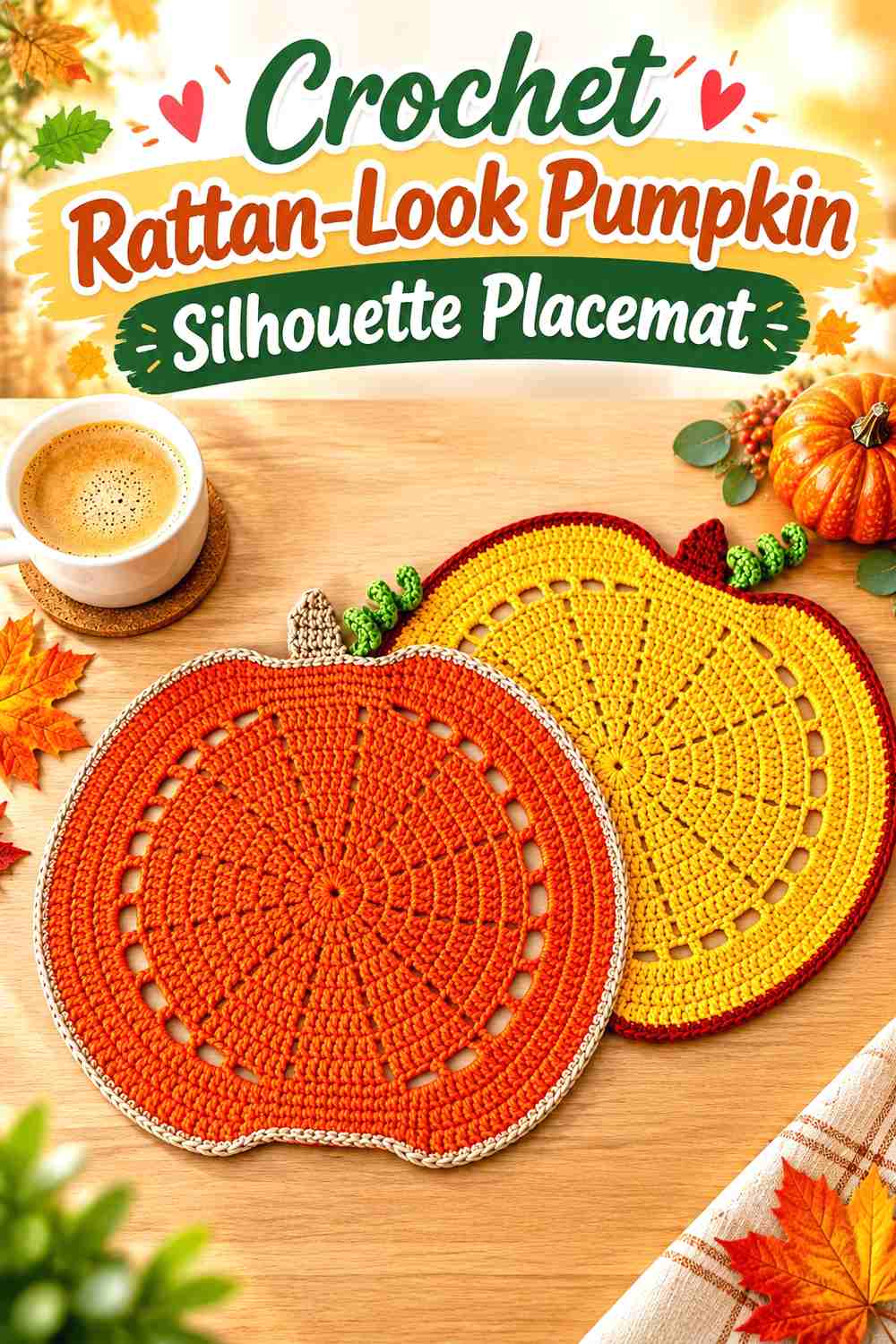
A pumpkin outline creates unmistakable fall character while still allowing a natural woven-inspired palette. Crochet Craftsman’s tutorial demonstrates a full pumpkin-shaped placemat with edging, stem, and leaf details.
Rather than using saturated orange, try visualizing the pumpkin body in straw, caramel, or warm tan, with the stem and leaf providing the darker Thanksgiving accents.
The Silhouette Does More Work Than the Color
A pumpkin remains recognizable even when it is not orange. That makes this a useful project for a neutral Thanksgiving table.
A natural fiber color can push the design toward woven harvest décor instead of novelty seasonal décor.
Check Where the Stem Lands in a Full Place Setting
The projecting stem and leaf take up space beyond the main plate area.
Place two finished settings next to each other before deciding how the pumpkins should face. Rotating the stem slightly may prevent it from crowding a glass, flatware, or the neighboring placemat.
Creator Credit: Crochet Craftsman
8. Crochet Openwork Pumpkin Rattan-Look Placemat
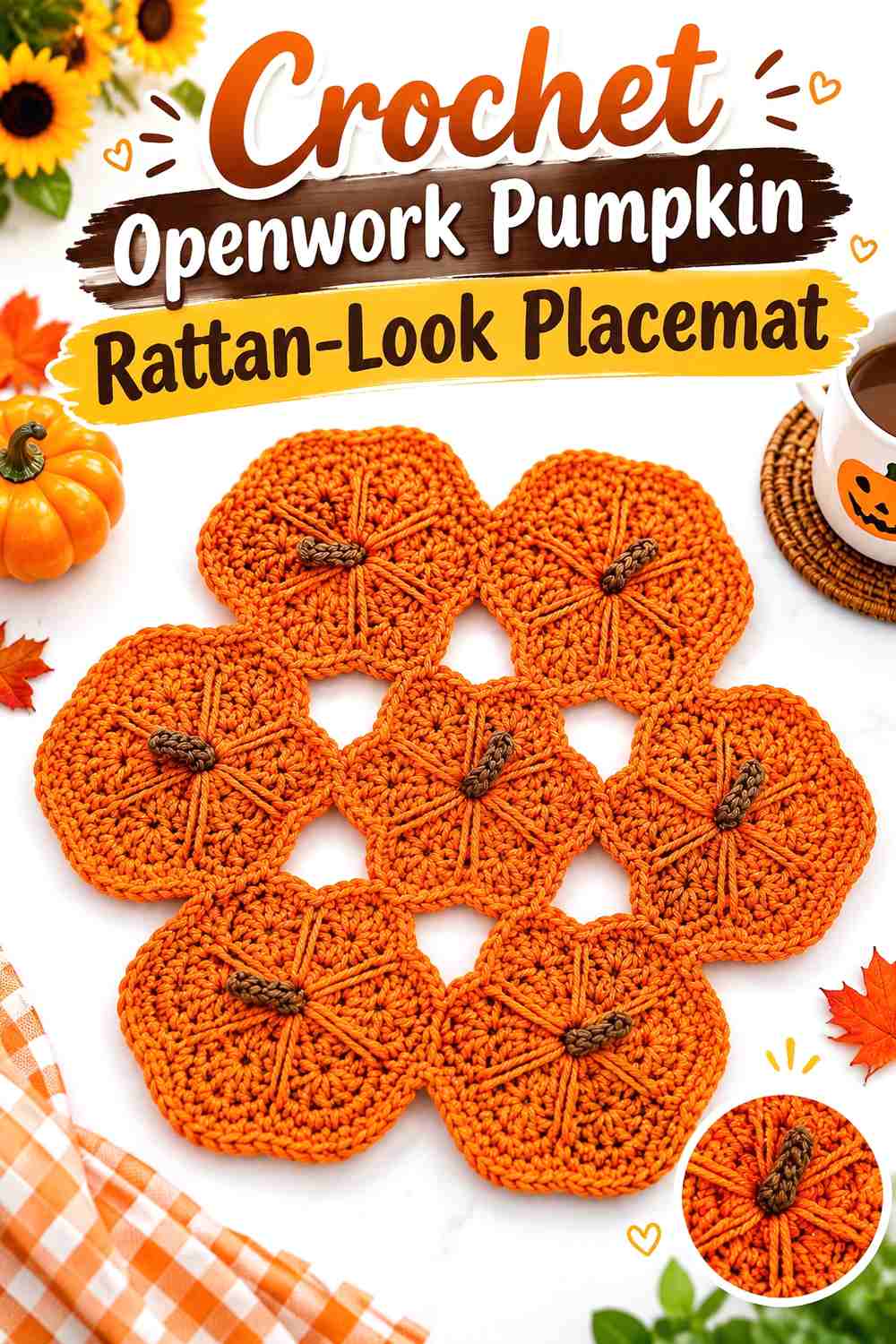
Sirin’s Crochet offers a pumpkin placemat/doily with a more open, decorative character. That makes it distinctly different from the fuller pumpkin silhouette above.
In a flax or cane-inspired shade, the open spaces can suggest decorative woven cane, while the pumpkin outline keeps the Thanksgiving connection visible.
Openwork Is Better for Decoration Than Heavy-Duty Protection
Gaps are part of the design, which means this style does not provide the same continuous surface as a dense placemat.
Use it where the decorative pattern matters, and do not treat the open crochet as a substitute for a trivet or guaranteed heat barrier.
A Simple Plate Lets the Pumpkin Edge Show
Highly patterned dinnerware may compete with the open crochet underneath it.
A plain cream, stoneware, brown, or muted green plate can allow the pumpkin outline and surrounding openings to remain part of the table design.
Creator Credit: Sirin’s Crochet
9. Crochet Rectangular Cane-Weave Look Placemat
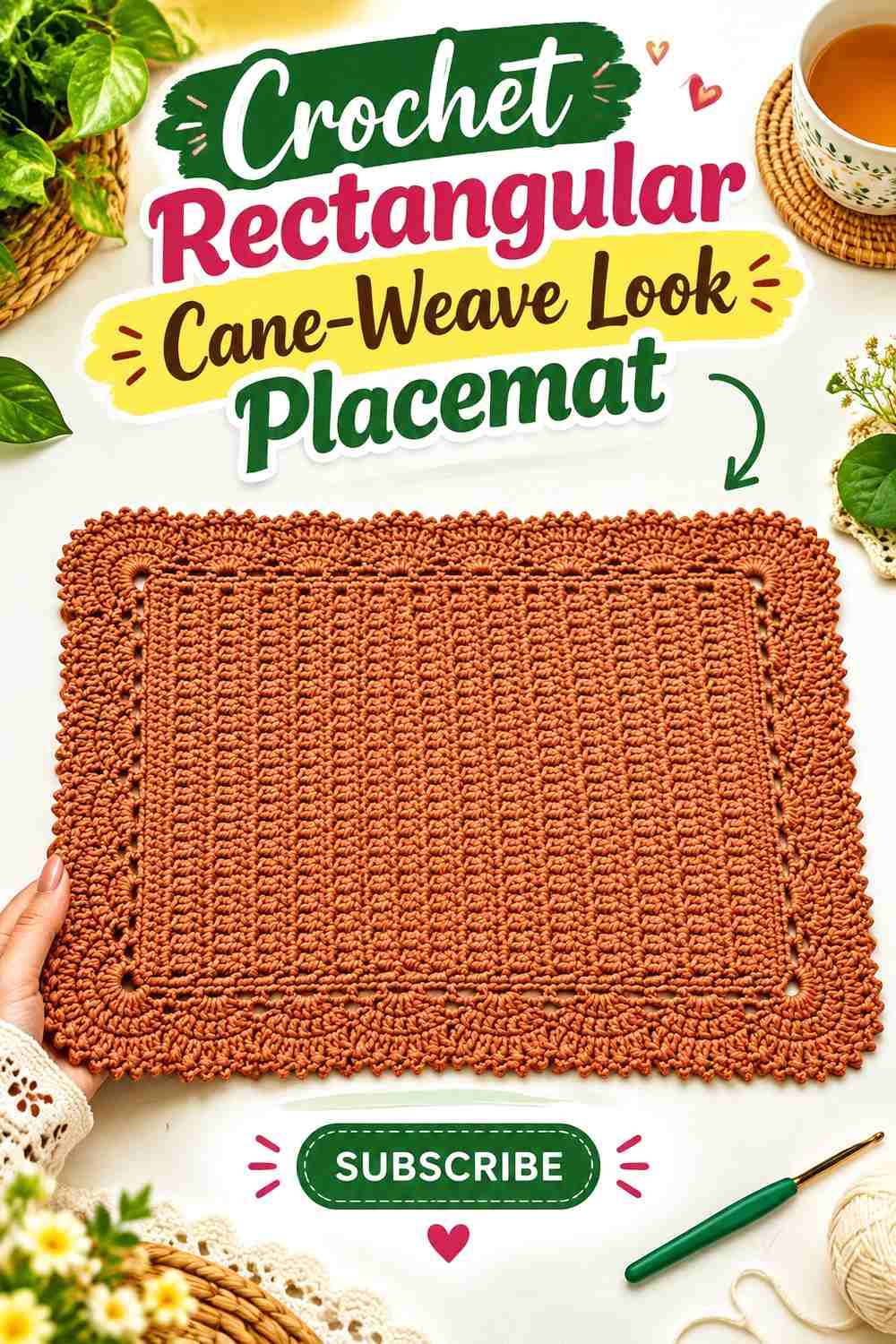
Crochetnaari’s rectangular placemat provides a useful alternative for readers who want a conventional place-setting footprint rather than a round charger. The design combines solid crochet with more open sections, which can be styled to suggest cane panels.
A warm straw color is an obvious direction, but a tobacco border or muted olive accent can make the Thanksgiving version feel more layered.
Rectangles Make Flatware Placement Predictable
A straight-sided mat establishes a clear zone for the plate, fork, knife, and napkin.
This can be helpful on a busy Thanksgiving table where every seat needs to fit between shared dishes and centerpiece elements.
Open Sections Need to Stay Flat
Cane-inspired gaps look attractive only when the surrounding fabric holds them in a consistent shape.
If you substitute a firmer cord for the yarn used by the creator, watch the mat as it develops. A material change can affect both the opening size and the ability of the rectangle to lie flat.
Creator Credit: Crochetnaari
10. Crochet Modular Woven Granny Placemat
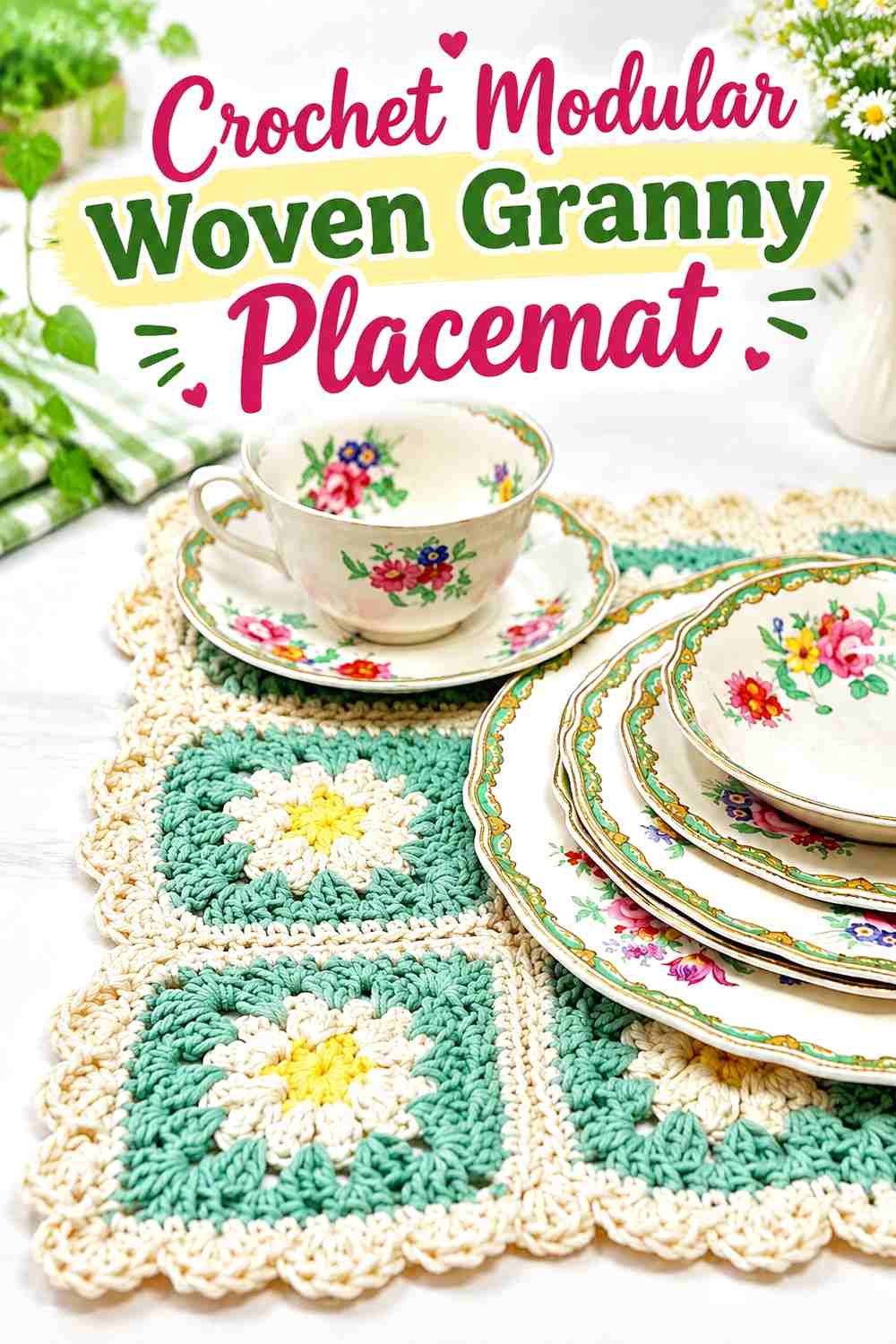
Pretty Darn Adorable Crochet Tutorials demonstrates a placemat assembled from granny-square motifs. Modular construction offers a completely different way to achieve the rattan look because individual blocks can imitate small woven panels.
Instead of bright floral colors, consider oatmeal, wheat, camel, and dark brown arranged in a subtle checker or tonal sequence.
Block the Motifs Before Planning the Final Rectangle
A motif-based placemat depends on consistent square dimensions.
Arrange the finished, appropriately shaped motifs on the table before joining them. Small size differences become much more noticeable once several squares form the straight outer edge.
Tonal Squares Can Mimic Woven Panels
The motifs do not need strong color contrast to remain visible.
Changing only one or two shades between blocks can create the subtle variation found in handwoven rattan without making the mat look like a multicolor granny-square project.
Creator Credit: Pretty Darn Adorable Crochet Tutorials
11. Crochet Mosaic Basket-Weave Look Placemat
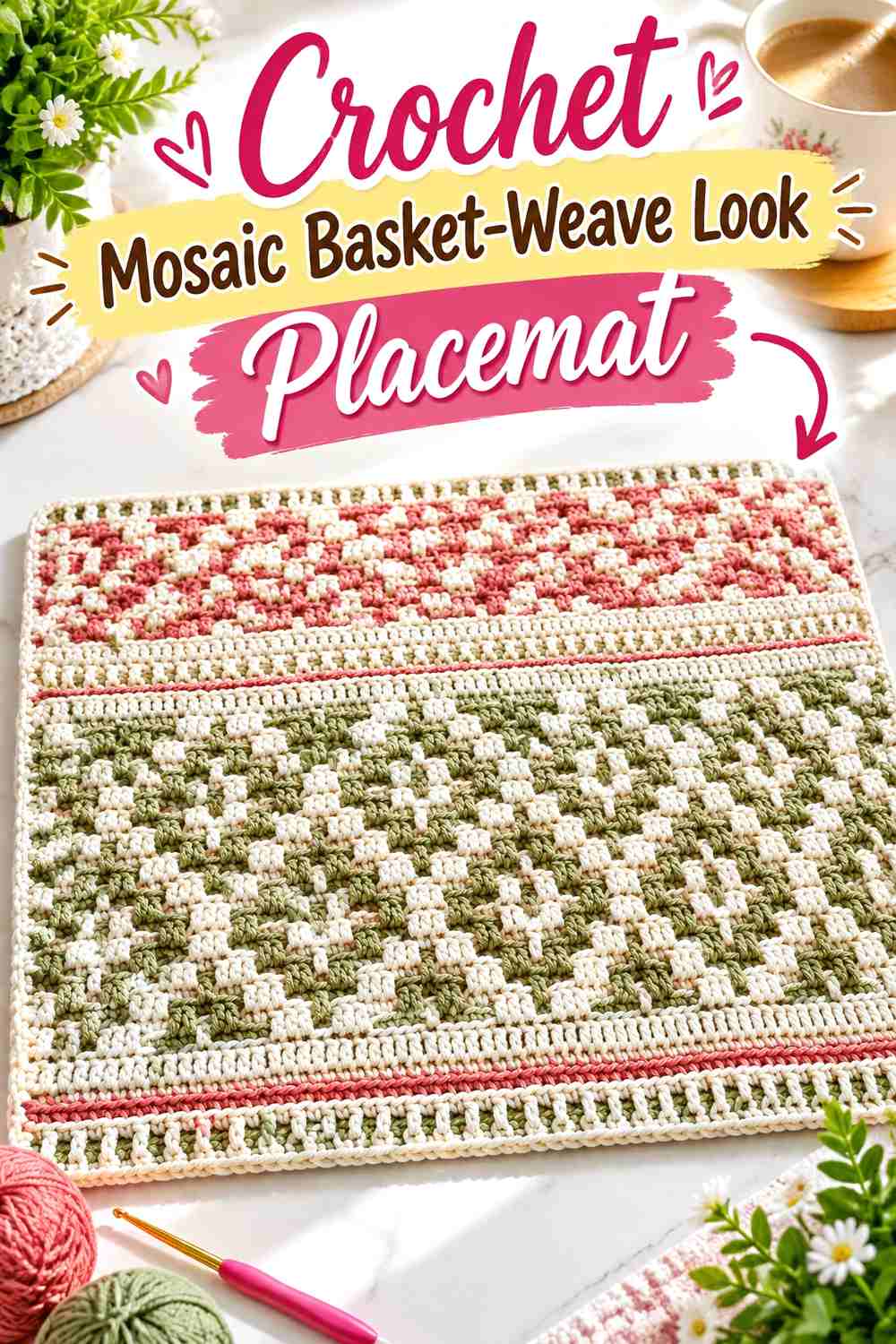
Made by Gootie’s mosaic placemat gives you a graphic alternative to literal woven texture. Mosaic crochet can create interlocking lines and geometric sections that reference basketry through pattern rather than through bulky material.
For Thanksgiving, a low-contrast combination such as cream and camel or oat and pecan can make the geometry feel more like woven furniture than bold colorwork.
Low Contrast Makes Mosaic Feel More Like Basketry
High-contrast black and white would emphasize the graphic crochet pattern. Closely related earthy shades create a quieter effect.
Make a small color sample first because two skeins that appear different in the ball may look almost identical once worked together.
Keep the Pattern Clear of Overly Busy Plates
Mosaic crochet already contributes substantial visual detail.
If your Thanksgiving dinnerware has floral transfers, painted turkeys, or a strong patterned rim, place it over a sample before committing to the full set. A solid plate may let the mat contribute more effectively to the tablescape.
Creator Credit: Made by Gootie
12. Crochet Scalloped Rattan-Look Charger Placemat
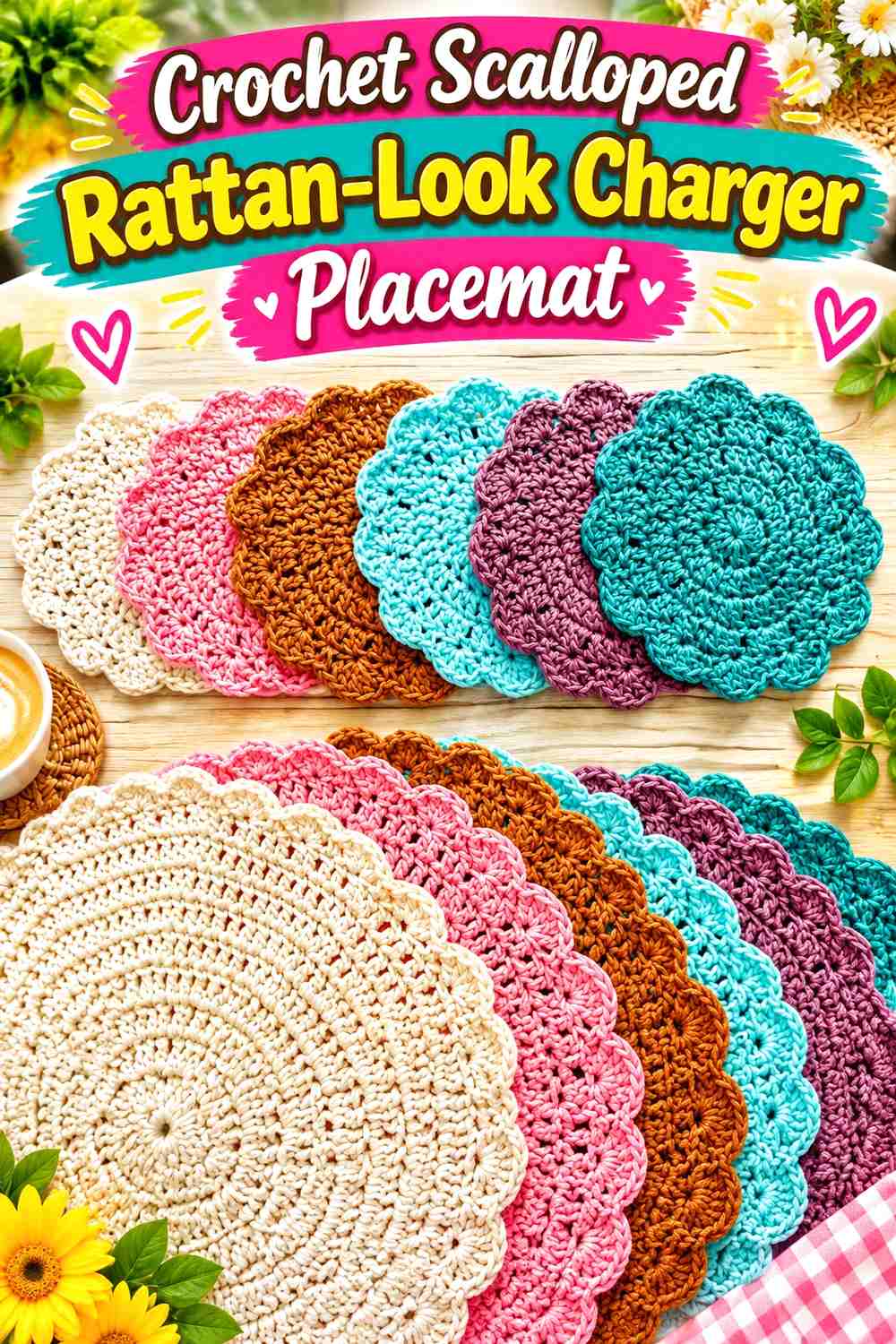
TL Yarn Crafts’ round placemat uses a simple circular body finished with a scalloped shell border. The contrast between the calm center and shaped outer edge gives this idea a softer alternative to dense jute circles.
Worked in one natural shade, the scallops can resemble a decorative woven rim without overwhelming the Thanksgiving place setting.
The Scallops Need to Extend Beyond the Plate
If a dinner plate hides every shell, the decorative finish loses its purpose.
Compare the tutorial’s finished dimensions with your own dinnerware, then decide whether the size provides the amount of visible edge you want.
A Single Color Keeps the Edge Sophisticated
A natural oat, straw, or caramel tone can turn a playful scalloped design into a more restrained fall table piece.
If you want color variation, consider changing napkins or centerpiece accents instead of outlining every scallop in a contrasting yarn.
Creator Credit: TL Yarn Crafts
13. Crochet Feather-Texture Harvest Placemat
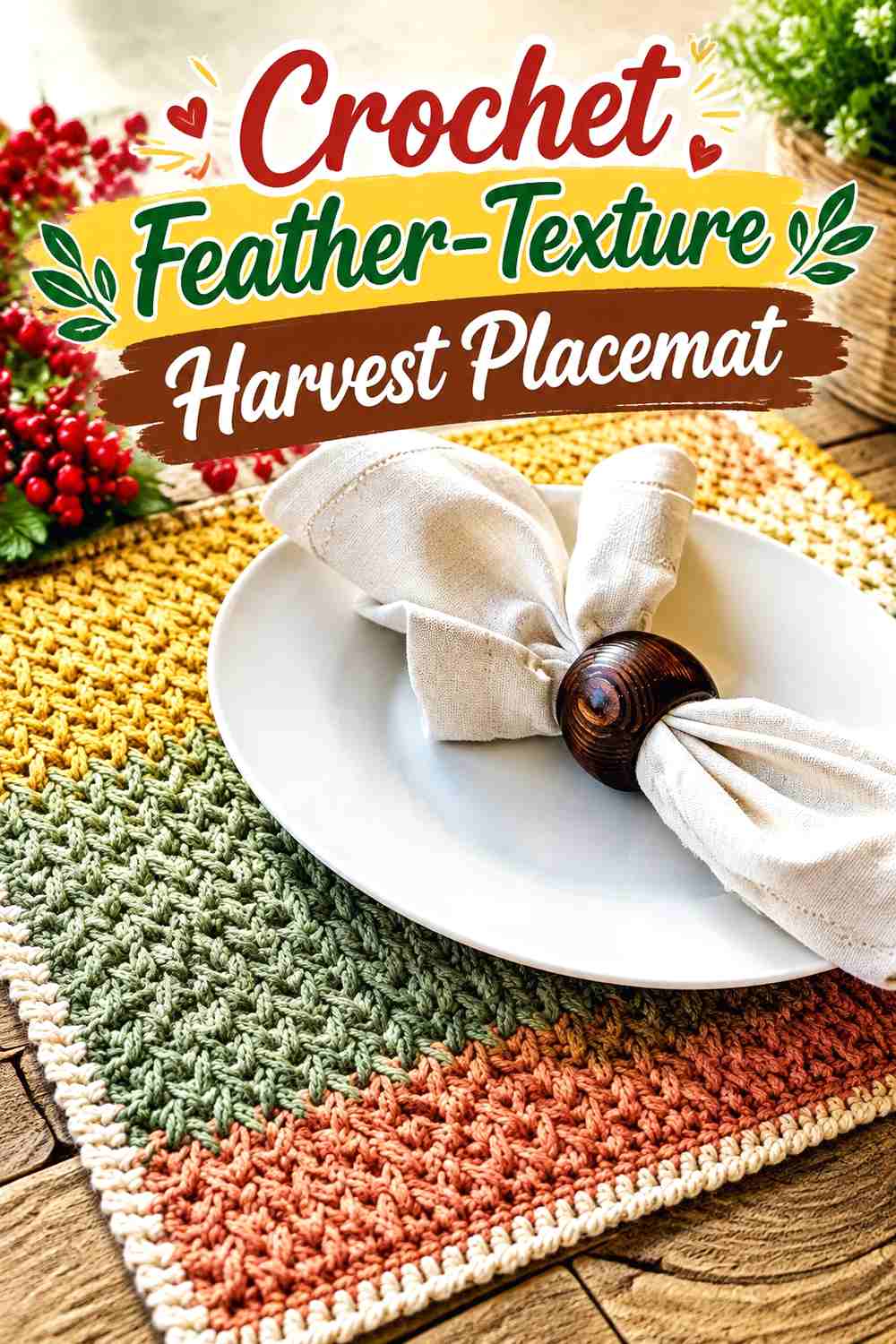
Heart Hook Home’s fall placemat uses a feathered texture and was designed specifically around autumn table décor. Its rectangular format and pronounced stitch pattern make it an appealing rattan-look candidate even without using actual jute.
The surface has enough movement to suggest woven texture, while the conventional rectangle gives plates and flatware a predictable footprint.
Texture Can Supply the Fall Interest Without a Pumpkin Motif
A Thanksgiving placemat does not have to contain a turkey, leaf, or pumpkin.
Warm nutmeg, oatmeal, tobacco, and cream tones combined with a strong repeated stitch can communicate autumn through material and texture alone.
Dense Texture Should Not Become a Catch Point
Raised crochet looks attractive, but the eating surface should remain practical.
After completing one mat, slide your normal dinner plate and flatware into place. If loops or ridges catch excessively, reconsider the yarn or how the setting is arranged before making the rest.
Creator Credit: Heart Hook Home
14. Crochet Botanical Scallop Rattan-Look Placemat
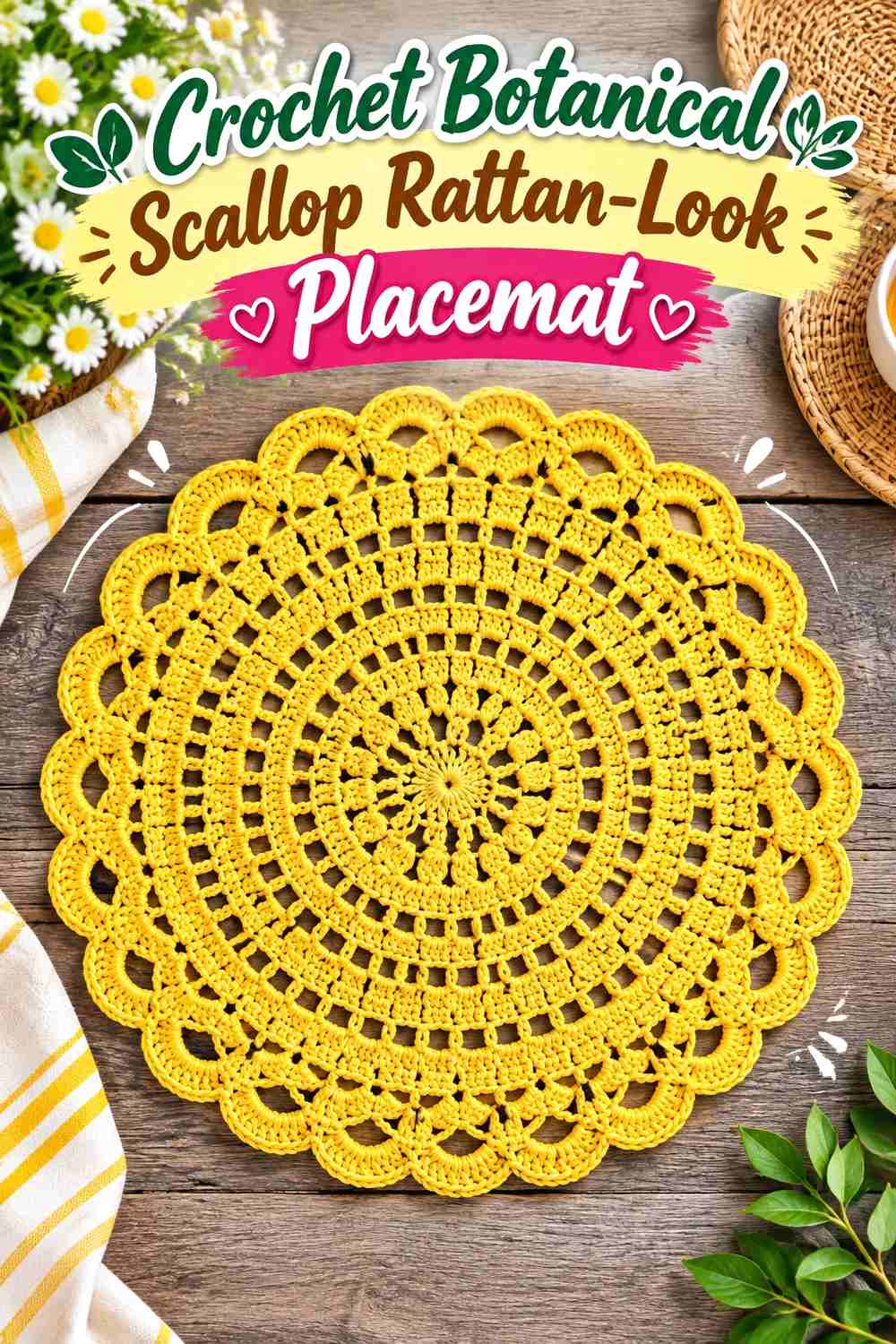
Kristines Crochets demonstrates a round placemat with floral, petal-like scalloped details. The construction is more delicate than a jute charger, making it useful when you want the rattan influence to feel airy rather than rustic.
A linen, bamboo-cotton, or similar natural-looking shade can emphasize the botanical geometry while keeping the Thanksgiving palette understated.
Botanical Edges Suit a Softer Fall Table
If your table uses dried grasses, neutral pumpkins, linen napkins, and muted ceramics, a floral-edged mat can fit more naturally than a literal turkey motif.
The shape carries enough decorative interest that a single solid shade may be all you need.
Open Decorative Areas Need Careful Dinnerware Placement
Part of the beauty comes from the edge and open stitchwork, so check how much remains visible when the plate is centered.
This design may be especially effective beneath smaller luncheon plates or as a decorative charger layer where the border remains exposed.
Creator Credit: Kristines Crochets
15. Crochet Fringed Woven-Look Round Placemat
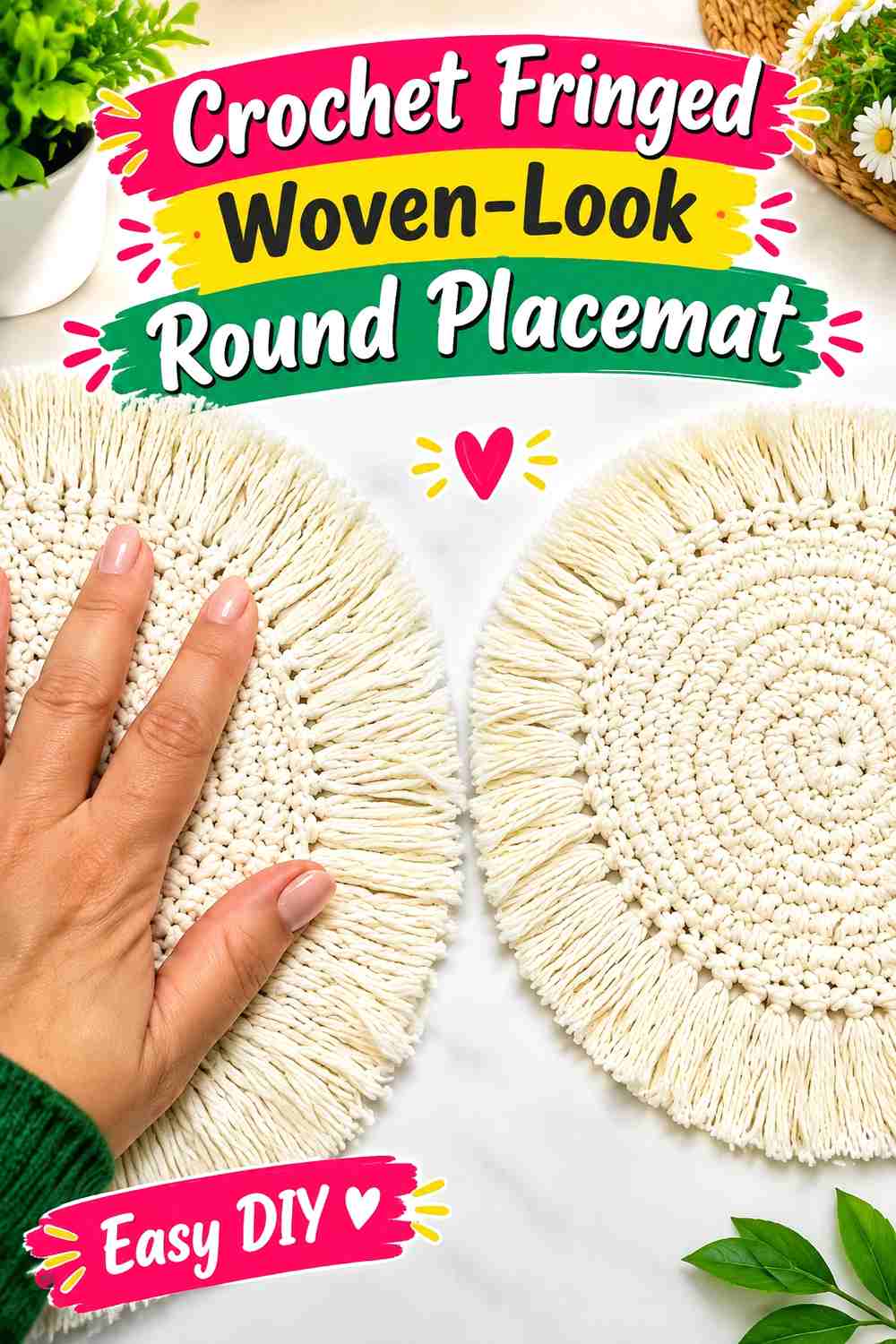
Pontos e Peças Marly Thibes demonstrates a round crochet placemat finished with fringe. That combination can create a convincing woven-table-accessory look because the central disc resembles a coiled mat while the fringe introduces the loose natural-fiber detail often seen in boho rattan décor.
For Thanksgiving, use the fringe selectively so the table still has enough space for neighboring settings.
Fringe Changes the Footprint More Than the Plate Area
The strands extend the visual diameter but do not create additional stable space for dishes.
Measure the complete mat including fringe when planning how many settings will fit across the table.
Trim Consistency Determines Whether It Looks Rustic or Untidy
A deliberately textured fringe can feel relaxed, but large accidental differences in length may distract from the circular shape.
Finish one placemat completely before cutting fringe for the rest so you can decide what length looks proportional beside your plates.
Creator Credit: Pontos e Peças Marly Thibes
Which Rattan-Look Placemat Style Works Best for Thanksgiving?
For the closest connection to actual woven tabletop accessories, start with the jute and substantial-cord designs in Ideas 1 through 4. Their material or raised construction creates texture without requiring an additional seasonal motif.
If table space is limited, the oval and rectangular options—Ideas 3, 5, 9, 10, 11, and 13—make it easier to establish a defined place setting without the full diameter of a fringed charger.
For a stronger Thanksgiving theme, Ideas 6, 7, and 8 introduce harvest color or pumpkin shaping. The pumpkin silhouettes are the most overtly seasonal, while the general fall placemat can transition more easily into everyday autumn use.
Ideas 12, 14, and 15 emphasize the outer edge. Choose them when you know enough of the placemat will remain visible beyond the dinner plate for scallops, botanical shaping, or fringe to matter.
Conclusion
A convincing crochet rattan-look Thanksgiving placemat is less about finding one exact “rattan yarn” and more about combining the right shape, texture, and fall palette.
Choose dense jute or cord if you want the most rustic woven effect. Use an oval or rectangle when practical table spacing matters more than a dramatic charger shape. Mosaic, feathered, braided, and modular textures can create a basket-inspired look using conventional crochet materials, while pumpkin silhouettes bring stronger Thanksgiving identity.
Before committing to a full dining set, make one placemat and arrange the complete place setting over it. Check plate coverage, flatware space, decorative edge visibility, and how flat the material remains after finishing.
For the exact construction, materials, and finishing sequence, follow the original creator tutorial linked with each project. Treat changes in fiber, size, and rattan-inspired styling as adaptations that may require additional testing.
Frequently Asked Questions
What yarn gives crochet placemats the closest rattan look?
Jute, raffia-style yarn, cotton cord, linen blends, and firm natural-looking cotton can all create different woven effects, but they are not interchangeable. Jute tends to look rustic and firm, while cotton can be softer and easier to care for. Follow the tutorial’s original material guidance first and make a sample before substituting a substantially different fiber.
Can I use raffia instead of cotton in any crochet placemat pattern?
Not automatically. Raffia-style materials can have different stiffness, width, stretch, and handling characteristics. Those differences can change gauge and finished dimensions and may make detailed stitches behave differently. Test the material with the chosen construction before making a full set.
Which colors make crochet look more like Thanksgiving rattan décor?
Straw, flax, oat, warm cream, camel, pecan, cinnamon, tobacco, rust, and muted olive work naturally with the theme. You do not need to use all of them. One woven-looking neutral placemat paired with rust napkins or amber glassware can create a stronger table than a mat containing many competing colors.
Are crochet rattan-look placemats safe for hot Thanksgiving serving dishes?
Do not assume they are. A dining placemat and a heat-resistant trivet serve different purposes. Heat behavior depends on the exact fiber, construction, temperature, and intended use. Keep very hot cookware on a surface specifically verified for that purpose.
Should a rattan-look Thanksgiving placemat be round, oval, or rectangular?
Choose according to table space and dinnerware. Round mats resemble woven chargers and create a strong decorative frame. Ovals provide horizontal coverage with softer ends. Rectangles offer predictable areas for plates and flatware and can be easier to arrange at closely spaced seats.
How do I stop a crochet placemat from looking too summery or bohemian for Thanksgiving?
Reduce the number of decorative elements and shift the palette toward harvest neutrals. A natural round placemat with linen napkins, warm ceramic dishes, and restrained fall accents can feel distinctly autumnal without pumpkins or fringe. If fringe is part of the design, keeping it short and tidy can also make the setting feel more tailored.
Should I make every Thanksgiving placemat exactly the same?
Matching construction usually creates the most cohesive table, but the colors do not have to be identical. You could alternate two related natural shades or change a small border accent while repeating the same shape. Before mixing versions, lay the planned set together to make sure the variation looks intentional rather than accidental.