A crochet armrest caddy can turn a favorite reading chair into a much more useful winter corner. Instead of balancing glasses on a cushion, leaving the remote under a blanket, or getting up every time you need a bookmark, you can keep frequently used items beside the chair.
The important difference between caddies is not simply color. Pocket depth, pocket division, fabric density, armrest coverage, anchoring method, and the weight of the items inside all change how well an organizer works.
The tutorials below include armchair organizers, sofa caddies, remote holders, and bedside organizers that can reasonably be adapted to reading-chair use. Where a source was created for another location, the reading-specific pocket arrangement is an editorial adaptation rather than a claim about the creator’s original design.
Quick List
- Crochet Deep Book-Pocket Reading Chair Armrest Caddy
- Crochet Custom-Divided Striped Reading Chair Armrest Caddy
- Crochet Slim Remote-and-Bookmark Reading Chair Armrest Caddy
- Crochet Minimal Single-Pocket Reading Chair Armrest Caddy
- Crochet Plush Hide-Away Reading Chair Armrest Caddy
- Crochet Bobble Dual-Pocket Reading Chair Armrest Caddy
- Crochet Dense Three-Pocket Reading Chair Armrest Caddy
- Crochet Two-Sided Reading Chair Armrest Caddy
- Crochet Folded Phone-and-Glasses Reading Chair Armrest Caddy
- Crochet Wide Book-and-Glasses Reading Chair Armrest Caddy
- Crochet Remote-and-Phone Reading Chair Armrest Caddy
- Crochet Slim E-Reader Reading Chair Armrest Caddy
- Crochet Long Couch-to-Chair Reading Armrest Caddy
- Crochet Motif-Pocket Reading Chair Armrest Caddy
- Crochet Dog-Shaped Reading Chair Armrest Caddy With Cup Space
- Crochet Decorative Reading Chair Armrest Caddy
- Crochet Bedside-to-Reading-Chair Pocket Caddy
Measure the Chair Before Planning the Pockets
A reading-chair caddy has to fit the furniture before it can organize anything well. Armrests vary considerably in width, curve, height, upholstery texture, and distance from the seat cushion.
Drape a flexible measuring tape or scrap fabric over the arm where you want the organizer to sit. Notice how much material needs to cross the top and how far the storage section can hang without reaching the floor or disappearing below the seat cushion.
Do the same with the objects you expect to store. A paperback needs a different compartment from a remote, and glasses should not share a tight pocket with something that can press against the frames.
If you adapt a tutorial’s measurements, preserve its general construction logic rather than assuming that changing one dimension leaves every other proportion unchanged.
Build the Pocket Layout Around Your Winter Reading Routine
Think about what you actually reach for once you sit down.
A simple setup might need a paperback pocket and one narrow compartment for glasses. Someone who reads on an e-reader may need less width but more concern about a secure opening. Another reader may want separate spaces for a phone, remote, bookmark, notebook, pencil, and hand cream.
Frequently used items should generally occupy the easiest pockets to reach from your normal seated position. A beautiful pocket on the outside face of the chair is not especially useful if you have to twist your shoulder to reach it.
Do not make every compartment equally deep just for symmetry. A narrow remote pocket, shallow bookmark section, and wider book pocket can make more sense than three identical openings.
Balance Storage Against Slipping and Stretch
An empty crochet organizer can sit neatly across a chair arm and behave very differently once a book and electronics are added.
A dense fabric generally provides more support than very open crochet, but yarn choice also affects stretch. Check the creator’s material recommendations before substituting a much softer or more elastic fiber.
The position of the weight matters too. A heavy paperback hanging entirely on one side can pull a lightweight organizer toward the floor. A two-sided design or a longer section tucked beside a cushion may provide a different type of balance.
For a winter reading setup, keep drinks separate from books and electronics whenever possible. A crocheted cup area should not be assumed to be spill-proof, heat-proof, or suitable for every mug simply because it holds the cup upright.
1. Crochet Deep Book-Pocket Reading Chair Armrest Caddy
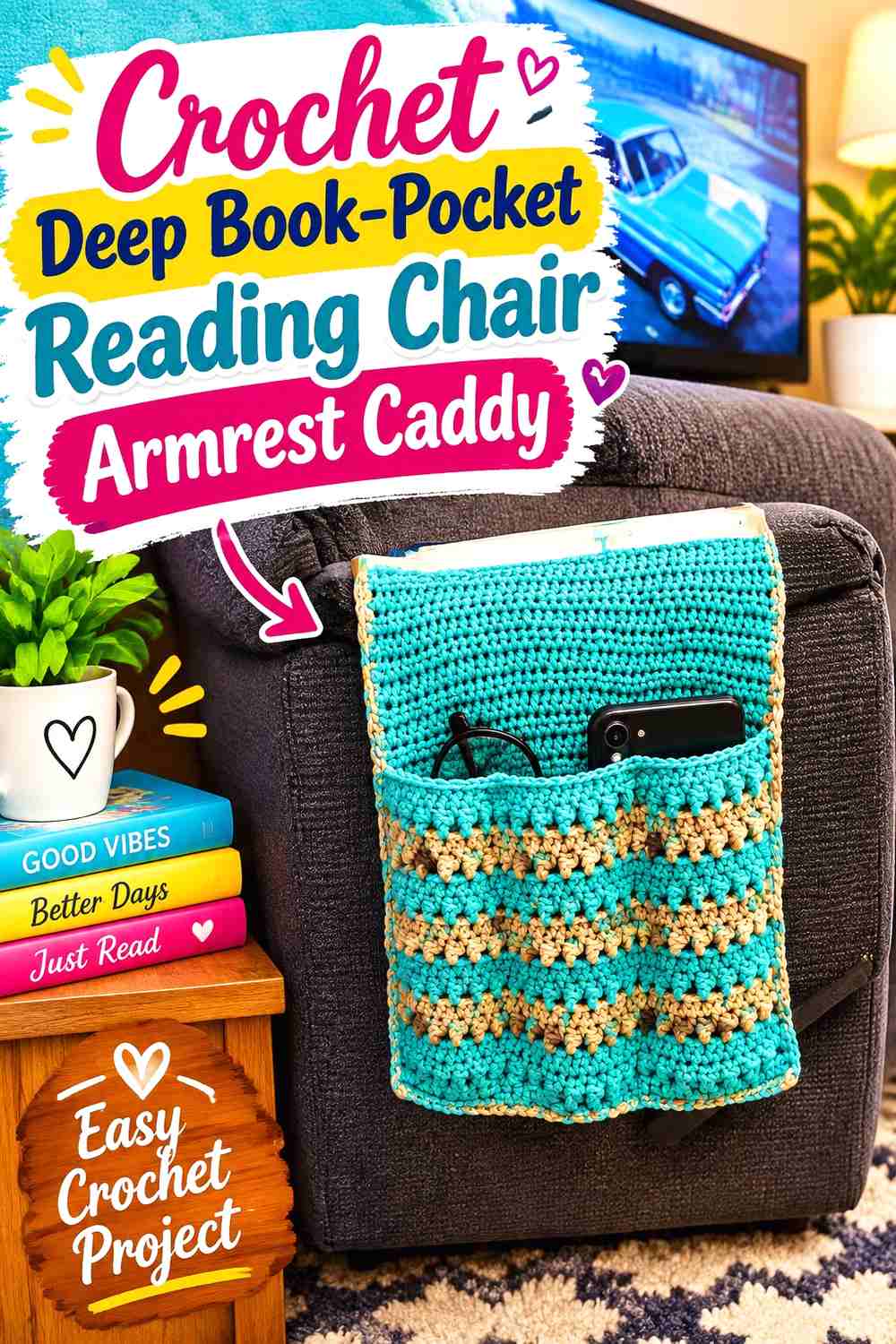
This armchair-organizer construction is a useful starting point when your reading setup needs a substantial storage area rather than one tiny remote sleeve. The underlying Ninja Bunny Crochet design uses separate organizer components and customizable pockets, which gives you room to plan around the actual items that live beside your chair.
For a reading version, make the largest visible compartment the destination for a paperback or reading journal and reserve smaller areas for lighter accessories.
Test the Book Before Final Pocket Attachment
A book pocket needs enough usable width for the cover to enter without excessive stretching. It also needs enough depth to keep the book from leaning outward.
Before permanently finishing the pocket arrangement, insert the type of book you normally read. A slim paperback and a thick hardcover should not be treated as interchangeable loads.
Keep Small Reading Tools Out of the Book Compartment
Bookmarks, reading glasses, and pens can disappear underneath a book in one large pocket. If the construction allows pocket customization, create a clearly separate narrow section for the item you reach for most often.
That separation can also prevent glasses from being pressed beneath a heavier book.
Creator Credit: Ninja Bunny Crochet
2. Crochet Custom-Divided Striped Reading Chair Armrest Caddy
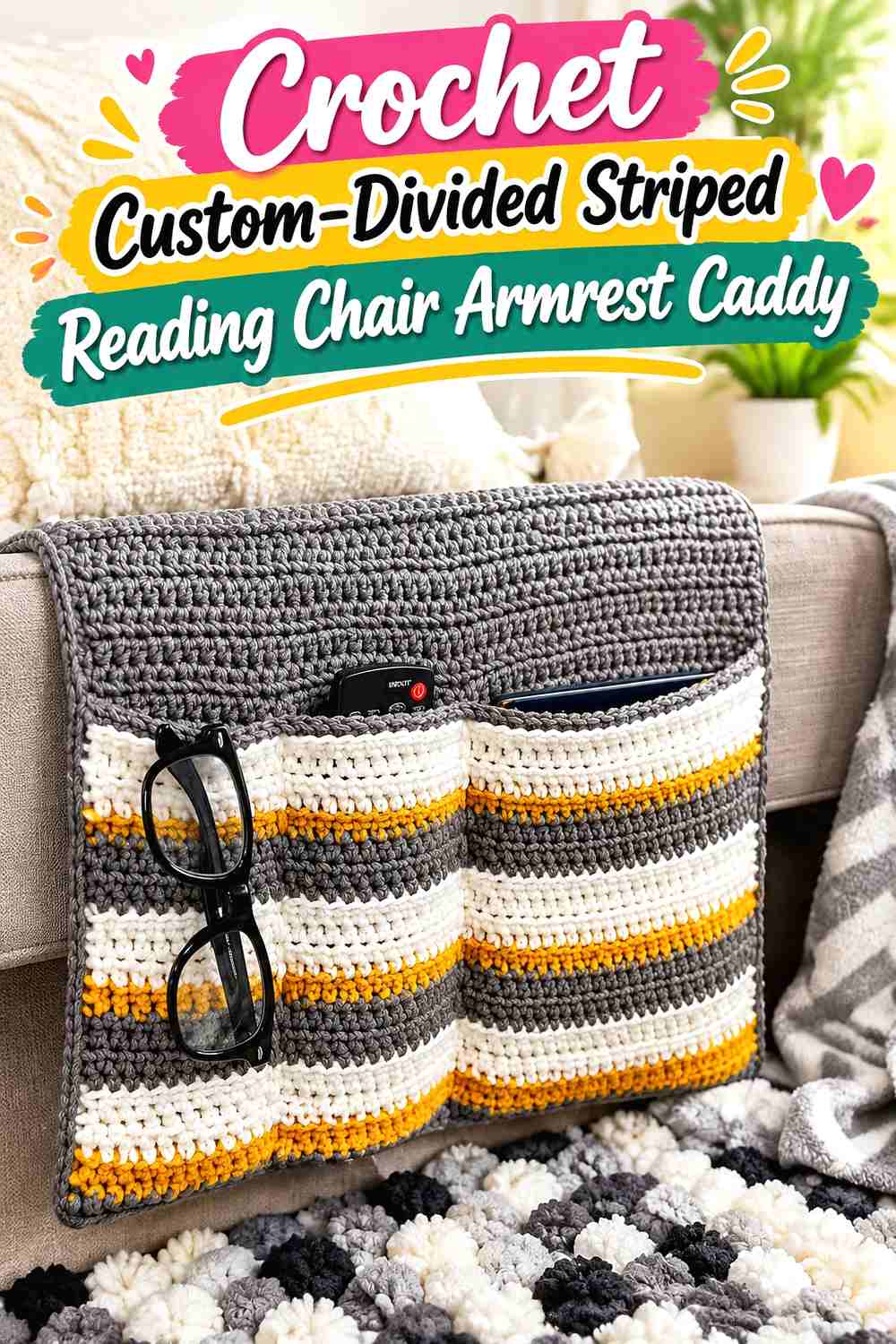
Tamara Kelly’s couch-and-bedside organizer is especially useful for adaptation because the pocket divisions can be planned around the contents rather than forcing every item into a predetermined compartment. The original design is intended for couch, chair, or bedside use and creates its final divisions after the main pocket area is formed.
That makes it a strong base when your winter reading chair needs several distinct storage jobs.
Divide the Front by Object Width, Not Visual Symmetry
Lay the intended book, glasses case, remote, and phone across the pocket area before deciding where the divisions belong.
A large book compartment beside two narrow accessory sections may look asymmetrical while flat but work much better from the chair than three equal pockets.
Use Stripes to Make Pocket Boundaries Easier to See
Color changes can do more than decorate the organizer. A contrasting band or surface-crochet divider can help you locate the correct compartment in softer evening lighting.
Keep the strongest contrast around openings and divisions rather than scattering numerous small color changes across the whole panel.
Creator Credit: Tamara Kelly – Moogly
3. Crochet Slim Remote-and-Bookmark Reading Chair Armrest Caddy
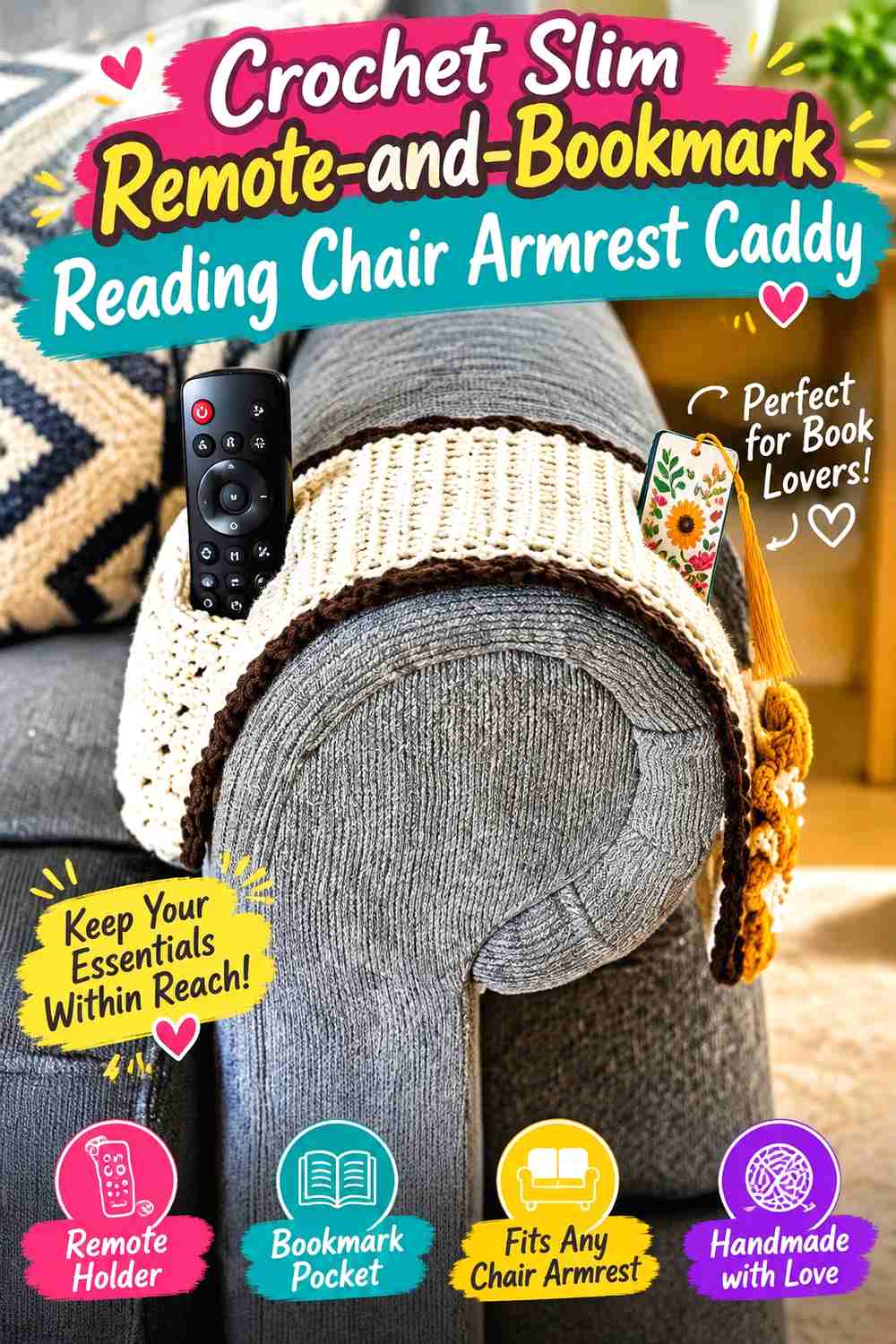
A slim organizer makes sense when your books already live on a side table or shelf and the recurring problem is smaller items getting lost in blankets and cushions. CrochetItForward’s organizer provides a narrower construction reference that can be adapted toward focused armrest storage.
For reading use, think of this as a dedicated accessory station rather than a general catchall.
Give the Remote Enough Opening Width
Remote controls vary considerably in thickness, especially when protective covers are added. Test the actual remote before committing to a narrow finished opening.
A pocket that grips too tightly may pull the whole caddy whenever the remote is removed.
Add a Shallow Role for Bookmarks
A bookmark does not need the depth required by a phone or remote. If you create a narrow subdivision for one, make the upper edge easy to see and reach.
This prevents a small bookmark from dropping to the bottom of a deep compartment where it becomes almost as difficult to find as it was before you made the organizer.
Creator Credit: CrochetItForward
4. Crochet Minimal Single-Pocket Reading Chair Armrest Caddy
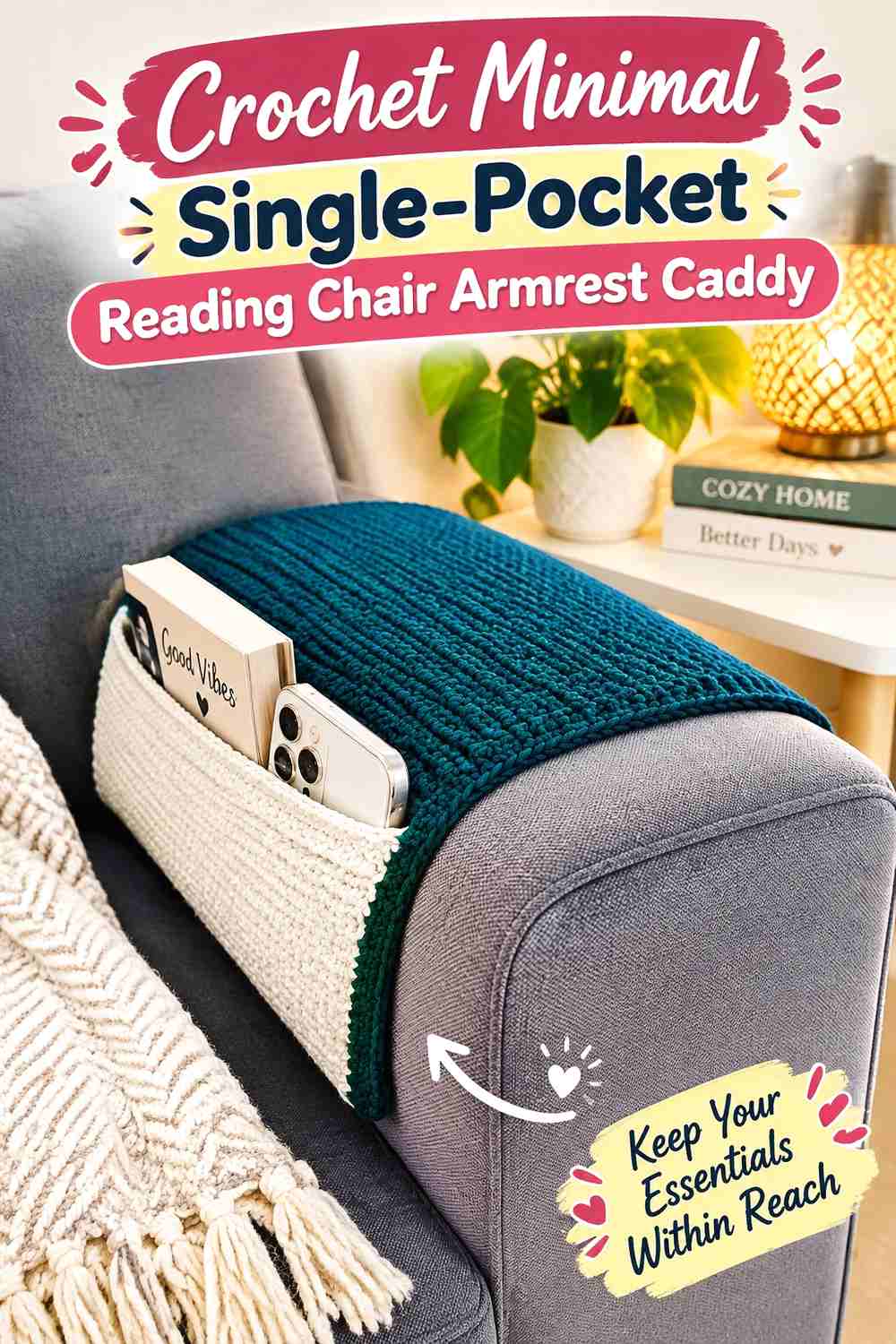
CrochicaNBF’s remote-control organizer uses a straightforward, compact storage concept rather than a large multi-compartment caddy. That simplicity can be useful beside a reading chair where you only need one or two everyday essentials close at hand.
Instead of filling the organizer with several decorative pockets, dedicate the main storage area to one clear purpose.
Choose One Priority Item
Decide whether this caddy is primarily for a remote, phone, glasses case, or small notebook. Designing around one priority object reduces the risk of creating a pocket that is technically capable of holding several items but convenient for none of them.
If two items must share the space, check that one will not press against or hide the other.
Minimal Fabric Makes Edge Quality More Noticeable
With few decorative details, the outline becomes a major part of the finished appearance. Pay attention to whether the sides remain even and whether the pocket mouth stays easy to identify.
A restrained winter palette can work especially well here because the simplicity lets the crochet texture remain visible.
Creator Credit: CrochicaNBF
5. Crochet Plush Hide-Away Reading Chair Armrest Caddy
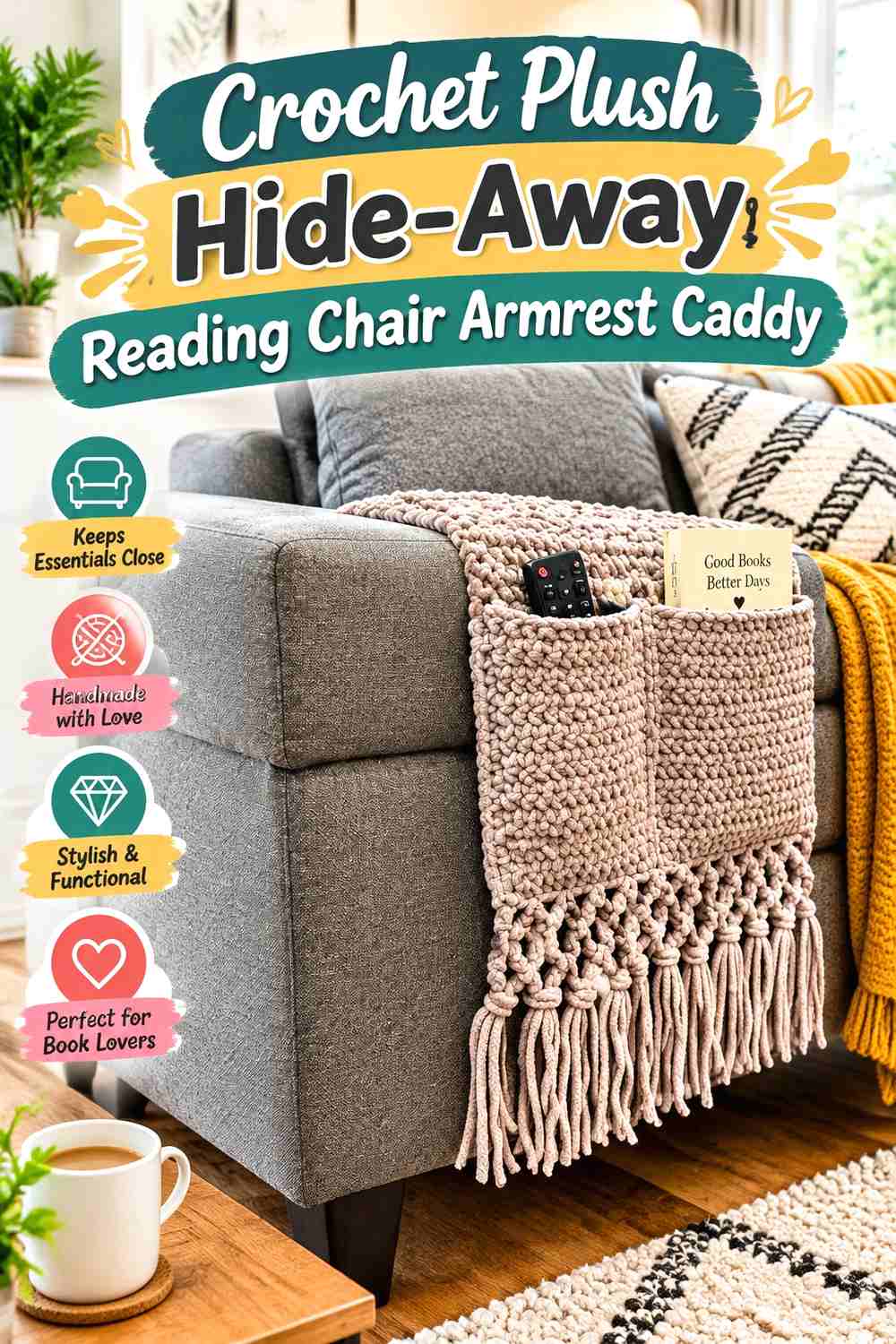
A softer, bulkier organizer creates a different winter mood from a flat dense panel. Retro Foundry’s sofa-organizer reference provides a plush direction that can be adapted for a reading chair where you want the caddy to visually blend with throws and cushions rather than resemble rigid storage.
The softness is appealing, but it also makes pocket planning more important.
Plush Yarn Can Reduce Usable Pocket Space
Thicker fabric occupies some of the interior volume. A pocket that appears generous from its outside dimensions may feel smaller once a substantial edge and soft walls are included.
Check your book or glasses case inside the partly finished pocket rather than relying only on flat measurements.
Keep the Opening Visually Obvious
A fluffy pocket can blend into the background panel, especially in one color. Consider a contrasting upper edge or another simple visual marker around the opening.
Avoid filling the pocket mouth with decorative loops or attachments that could snag a bookmark tassel, charging cable, or yarn if you also craft in the chair.
Creator Credit: Retro Foundry
6. Crochet Bobble Dual-Pocket Reading Chair Armrest Caddy
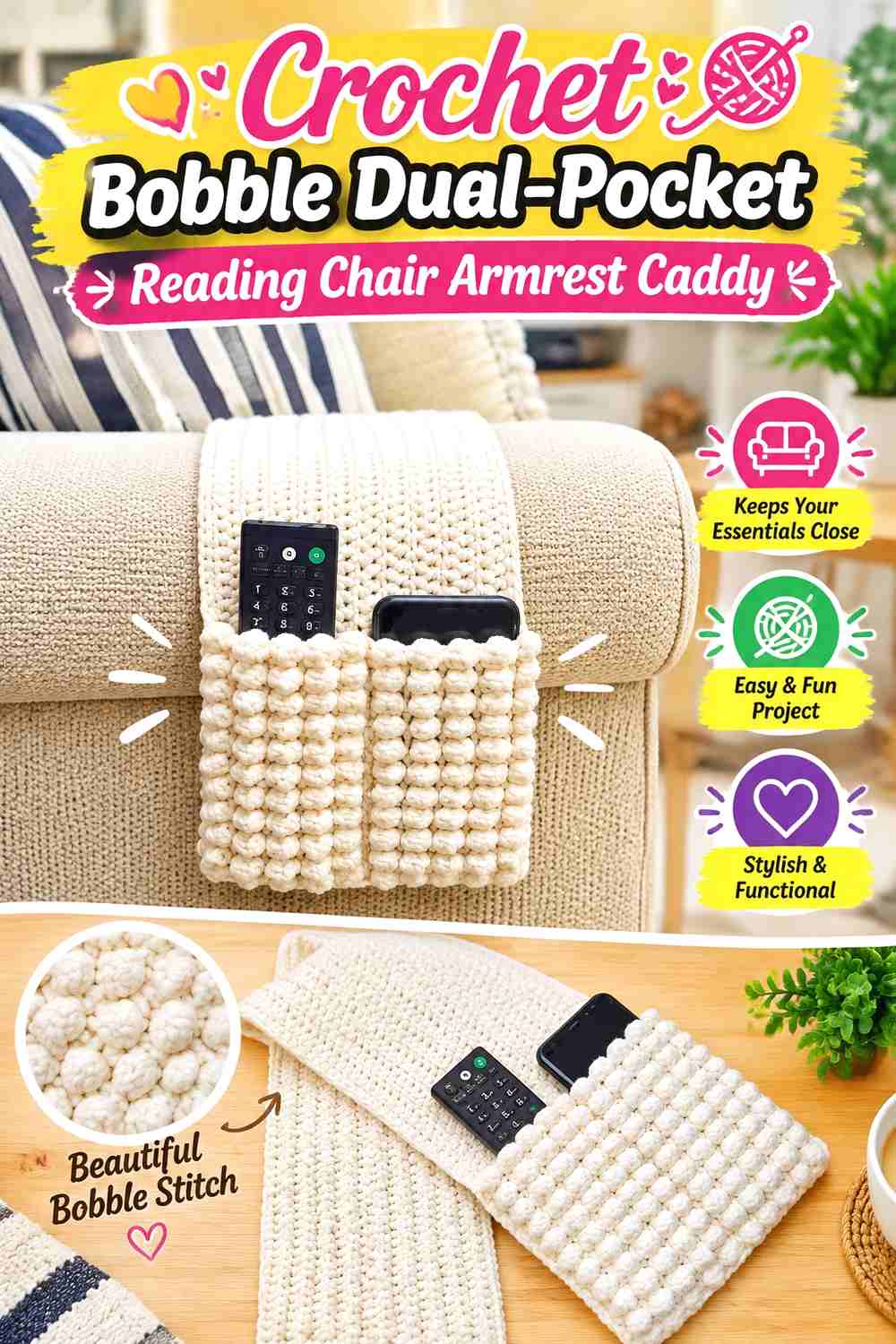
Hook n Cook by Despina Trina provides a remote-control caddy tutorial with textured crochet and divided storage. That combination translates naturally to a reading chair when you want one compartment for a device and another for reading accessories.
The raised surface also gives this project a more decorative presence than a plain rectangular organizer.
Keep Bobble Texture Below the Pocket Opening
Raised stitches can add welcome winter texture, but a heavily textured top edge can make it harder to slide a paperback, phone, or glasses case into place.
Let the texture decorate the pocket face while keeping the actual entry area relatively straightforward.
Decide Which Two Items Deserve Separation
Two pockets are most useful when they prevent a real conflict. A phone and glasses may benefit from separation, as might a remote and small notebook.
Do not create a division at the visual midpoint automatically. Position it according to the actual widths of the objects you intend to store.
Creator Credit: Hook n Cook by Despina Trina
7. Crochet Dense Three-Pocket Reading Chair Armrest Caddy
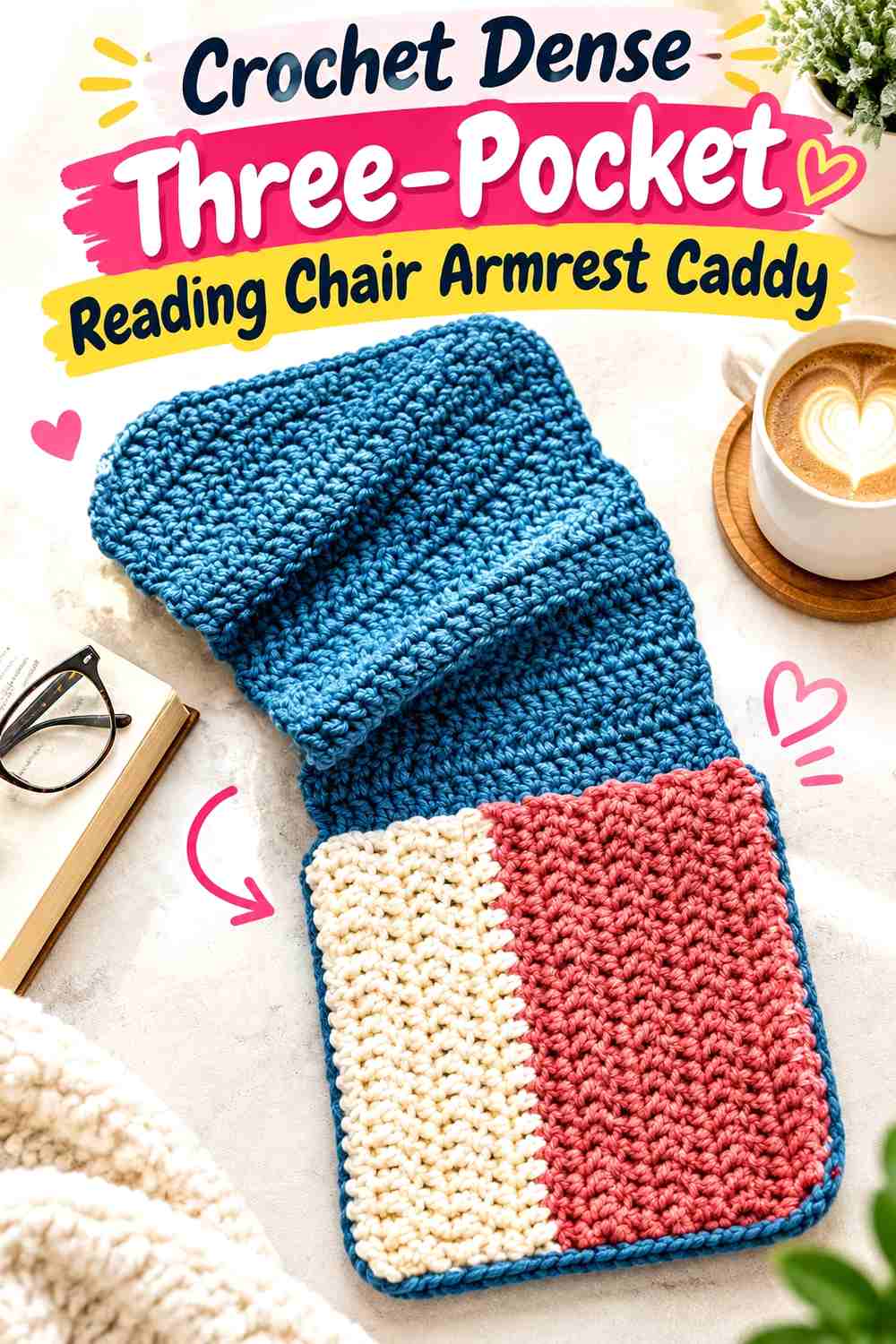
The AllFreeCrochet arm-chair organizer uses simple rectangular construction and can be divided into practical storage sections. Its dense home-organizer format makes it useful as a base for a three-pocket reading adaptation.
One possible layout is a broad book section plus narrower compartments for glasses and a remote, although the exact pocket widths should be based on your own belongings.
Dense Fabric Helps Narrow Objects Stay Contained
Reading accessories can expose the weaknesses of open crochet. Pen clips, glasses arms, and remote corners may work through large gaps.
A denser fabric reduces those openings, although the final behavior still depends on yarn and tension.
Three Pockets Need Three Distinct Jobs
Give each compartment a reason to exist. A wide pocket might hold the current book, a medium one a remote or phone, and a narrow section glasses or a pen.
If one compartment repeatedly stays empty while another is overloaded, the divider positions probably need reconsideration.
Creator Credit: AllFreeCrochet
8. Crochet Two-Sided Reading Chair Armrest Caddy
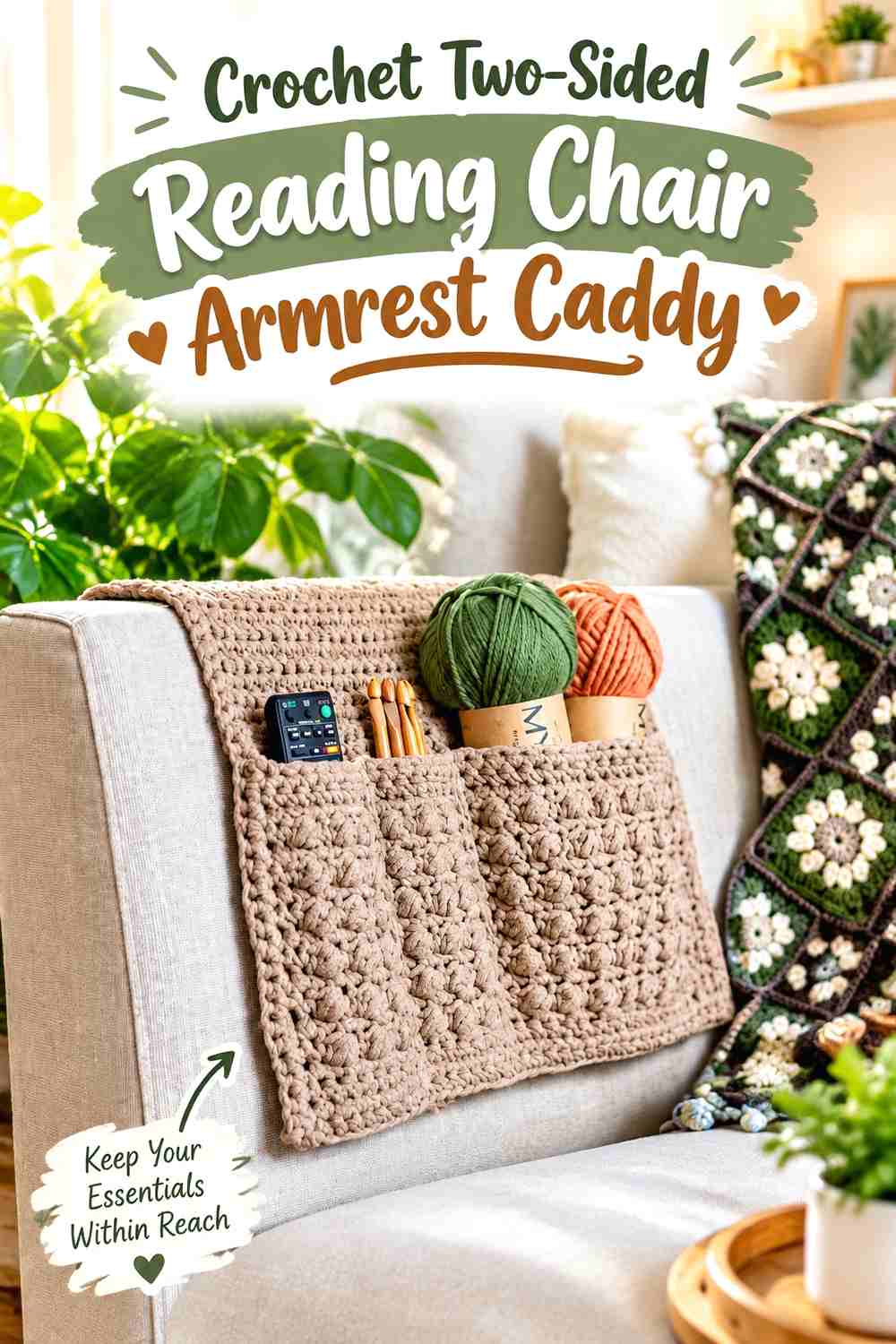
MYO Make Your Own’s sofa organizer is particularly interesting because its one-piece construction can create storage on both sides of the section crossing the armrest. The original design is customizable to the furniture and desired pocket arrangement.
For a reading chair, two-sided storage lets you separate objects by how frequently you use them.
Put Everyday Items on the Seated Side
Glasses, a remote, or a phone should generally go on the side you can reach without leaning around the chair arm.
The opposite pocket can hold something you use less frequently, such as a spare notebook, tissues, or another light accessory.
Balance Both Sides Before Loading Them
Two-sided storage does not automatically mean perfect balance. A heavy hardcover on one side and a nearly empty accessory pocket on the other can still pull the organizer off center.
Test the caddy with realistic contents before deciding that the final over-arm length is correct.
Creator Credit: MYO Make Your Own
9. Crochet Folded Phone-and-Glasses Reading Chair Armrest Caddy
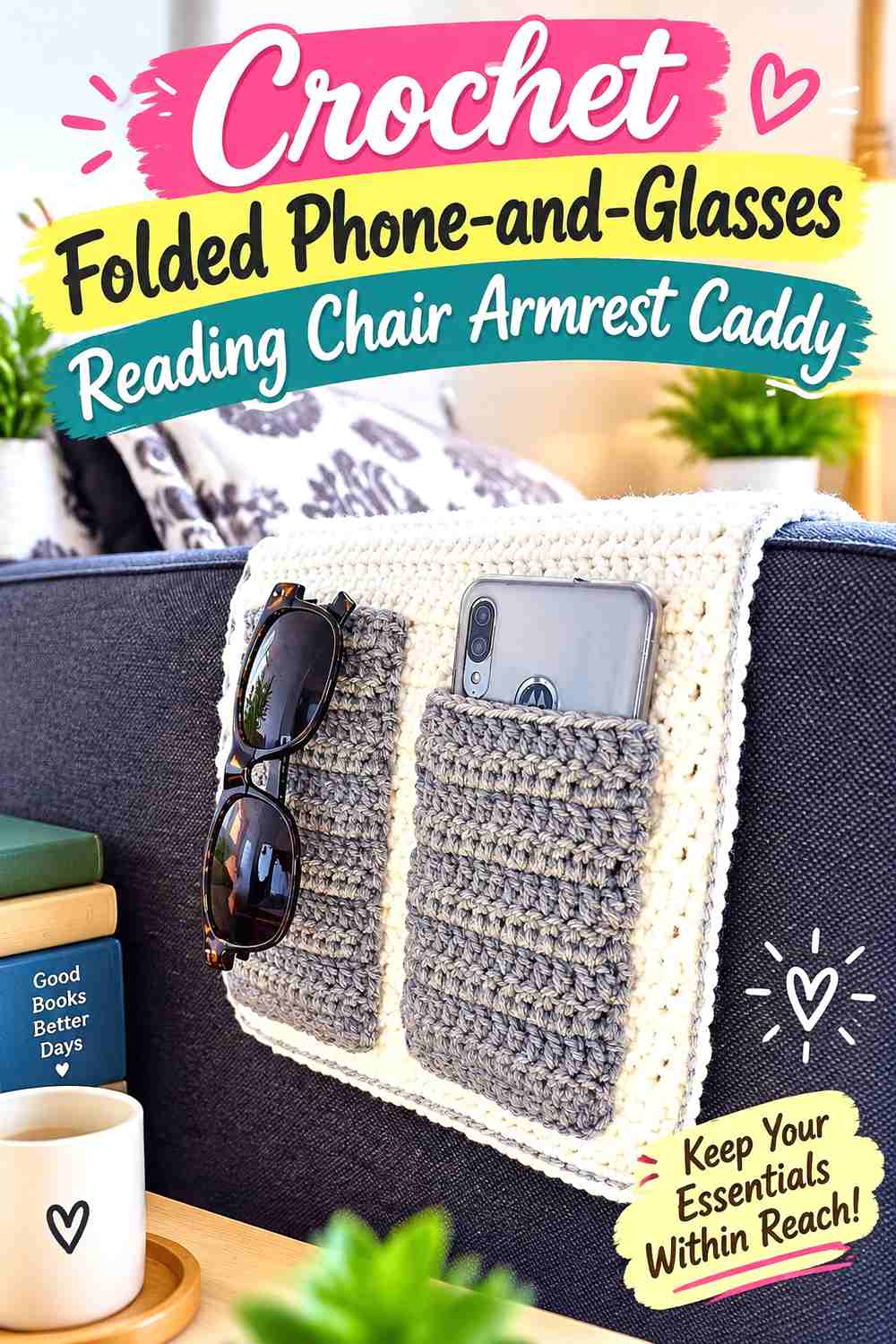
Shirleyrosey’s armchair caddy is intended for items such as a remote, phone, and glasses, and its folded organizer form makes it a useful option for a compact reading setup. The creator also supplements the video with written instructions, so both resources are worth reviewing before starting.
For reading use, assign the compartments before you finish the pocket divisions.
Protect Glasses From the Heavier Device
A phone and glasses may occupy similarly narrow spaces, but they should not necessarily share one compartment.
Put the glasses in a section where the phone cannot slide against the lenses or frames when the organizer moves.
Inspect the Border Before Calling the Fit Finished
An armrest caddy is viewed largely by its outline once installed. A neat outer border can help the organizer lie more deliberately against the furniture.
Fit the piece on the chair before finishing decorative edging so you can see whether added thickness changes the way the panel folds.
Creator Credit: Shirleyrosey
10. Crochet Wide Book-and-Glasses Reading Chair Armrest Caddy
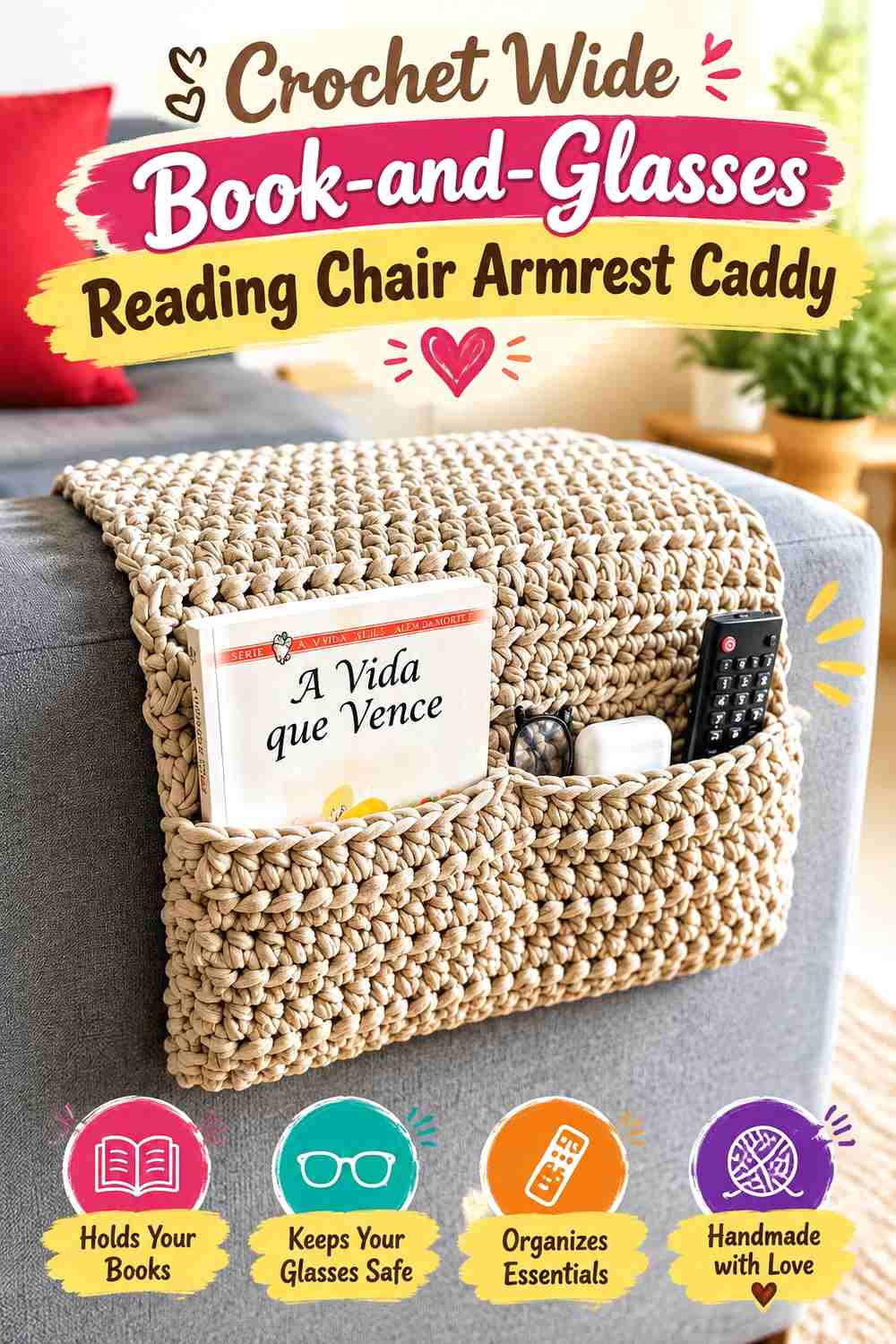
This adaptation uses a wider organizer concept to make the reading material itself the priority. The La Kroche source provides an armrest-storage reference that can be planned with one larger compartment beside a narrower accessory space.
That arrangement is useful if you want the current book off the floor without burying glasses underneath it.
Keep the Book Pocket Broad and Uncluttered
A book compartment works better when its opening remains obvious. Avoid dividing it into several decorative sections simply to create symmetry.
Check that the upper edge does not fold inward once the book’s weight pulls on the pocket.
Give Glasses Their Own Narrow Compartment
A dedicated glasses pocket should be easy to reach without forcing the frames past a heavy object.
Consider the actual glasses case as well. If you normally store the glasses in a hard case, plan around that larger shape rather than measuring only the frames.
Creator Credit: La Kroche
11. Crochet Remote-and-Phone Reading Chair Armrest Caddy

Posh Pooch Designs’ caddy was created specifically around keeping a phone and remote accessible and includes divided storage. The original project can also be used near a favorite chair or bedside area, making the construction directly relevant to a reading corner.
This option suits a reader whose books sit elsewhere but who repeatedly misplaces electronic accessories.
Measure the Phone With Its Case
A protective case can add noticeable width and thickness. Do not size the compartment from a bare phone measurement if that is not how the device is normally used.
Also check whether the pocket depth still leaves enough of the phone exposed for easy retrieval.
Keep the Remote Separate From the Screen
A divider prevents the remote from repeatedly rubbing against the phone and keeps each device upright in a predictable place.
Position the most frequently used device closest to your normal hand position rather than choosing left and right placement purely for appearance.
Creator Credit: Posh Pooch Designs
12. Crochet Slim E-Reader Reading Chair Armrest Caddy

Crochiquely’s bedside organizer is designed to hang beside a bed and hold items such as a phone, remote, and glasses. Its slim hanging format can also inspire a reading-chair adaptation where an e-reader or small tablet is the main stored item.
Because the original location is bedside rather than specifically an armrest, compare the anchoring arrangement carefully with your chair before adapting it.
Check the E-Reader With Its Cover Attached
Folio covers and protective shells can significantly change the device’s dimensions. Measure the version you actually read with.
The pocket also needs enough depth that the device does not lean outward excessively while still leaving it accessible.
Avoid Hard Decorative Parts Against the Screen
If you add buttons, charms, or labels for decoration, place them where they cannot press against the device display.
A clean fabric pocket is usually more useful for electronics than one covered in raised interior embellishments.
Creator Credit: Crochiquely
13. Crochet Long Couch-to-Chair Reading Armrest Caddy
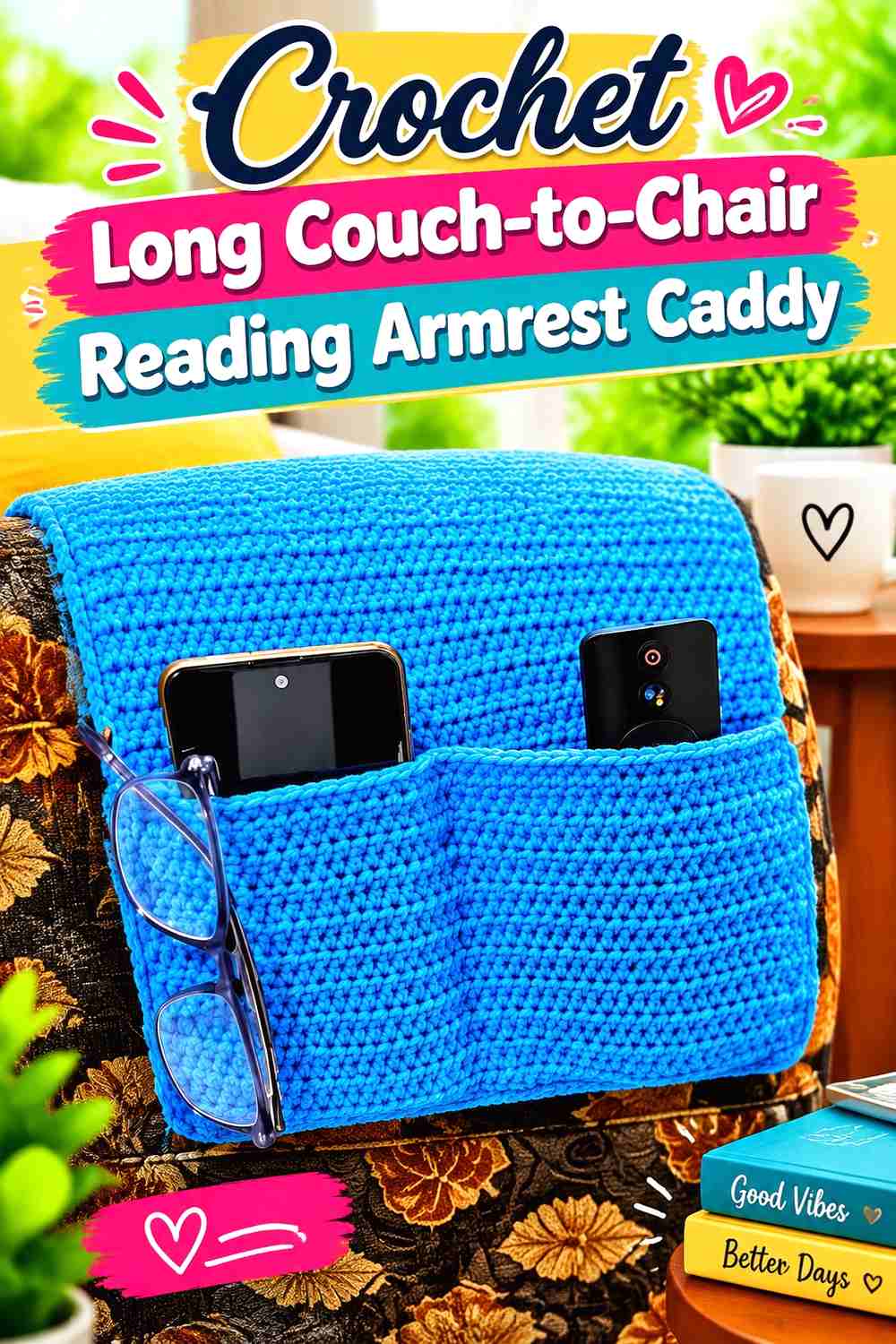
The JCrochet Gal’s couch-and-bedside caddy provides a longer organizer format that can be adapted when you want more draped coverage than a small remote sleeve. The tutorial is explicitly positioned for couch and bedside organization, making it relevant to a larger reading-chair setup.
This type of length can be useful on a substantial chair arm, but it should be fitted before you assume more coverage is automatically better.
Long Panels Need the Chair to Support Them
A caddy hanging too far below the arm can become awkward to reach, particularly on a deep chair.
Drape the unfinished length over the chair and sit normally. Mark where your hand naturally reaches before finalizing the pocket position.
Reserve the Lowest Area for Light Objects
The farther weight hangs below the top of the armrest, the more it can pull on the organizer.
Keep heavier reading materials closer to the supported part of the chair and use lower areas for lighter accessories where the construction permits.
Creator Credit: The JCrochet Gal
14. Crochet Motif-Pocket Reading Chair Armrest Caddy
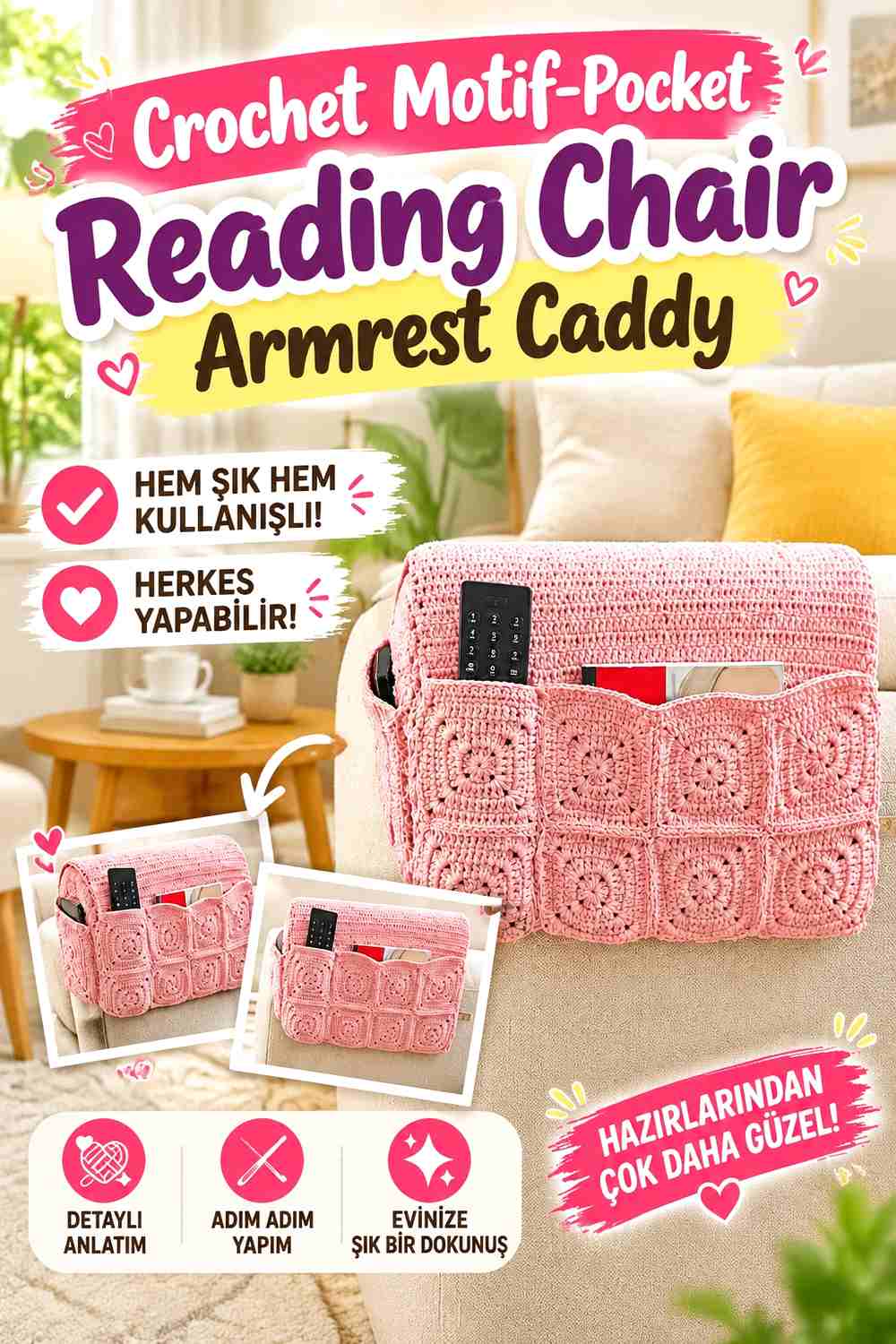
Betül’s Elegant Loops demonstrates a sofa-edge organizer with firm decorative pocket motifs and storage intended for items including remotes, phones, books, or glasses. The tutorial also emphasizes shaping the organizer around the sofa edge rather than treating it as a simple loose rectangle.
That makes this a good direction when you want the pocket area itself to carry decorative detail.
Keep Decorative Motifs Away From the Book Opening
Raised motifs look strongest when they remain visible on the pocket face. Putting too much texture directly along the opening can make inserting a book or notebook less smooth.
Let the decoration identify the pocket rather than obstruct it.
Chair Grip Matters Once the Pockets Are Loaded
A fitted-looking organizer can still shift if the stored items change the weight distribution.
Test the piece with the intended contents and remove those items several times. If the organizer moves noticeably every time you reach for a book, rethink the balance before adding final decoration.
Creator Credit: Betül’s Elegant Loops
15. Crochet Dog-Shaped Reading Chair Armrest Caddy With Cup Space

A shaped animal organizer brings a playful direction to a reading corner. The PETS REALISTAS DA JU sofa-organizer reference uses a dog-themed construction, giving this idea a much more sculptural appearance than the flat rectangular caddies elsewhere in the list.
This type of design can work particularly well in a cozy family room, but decorative shaping should not take priority over reachable storage.
Treat the Cup Area Conservatively
If the organizer includes space that appears suited to a cup, check the original creator’s intended use before placing a hot drink there.
Crochet alone should not be treated as a spill barrier or heat-protective surface. For a reading chair surrounded by books and electronics, a stable side table remains the safer place for beverages if there is any uncertainty.
Keep the Character Details Out of Storage Openings
Animal features should remain visible without reducing the usable pocket mouth.
If you adapt the organizer for books or an e-reader, make sure ears, limbs, or other decorative parts do not catch corners as objects are inserted and removed.
Creator Credit: PETS REALISTAS DA JU
16. Crochet Decorative Reading Chair Armrest Caddy
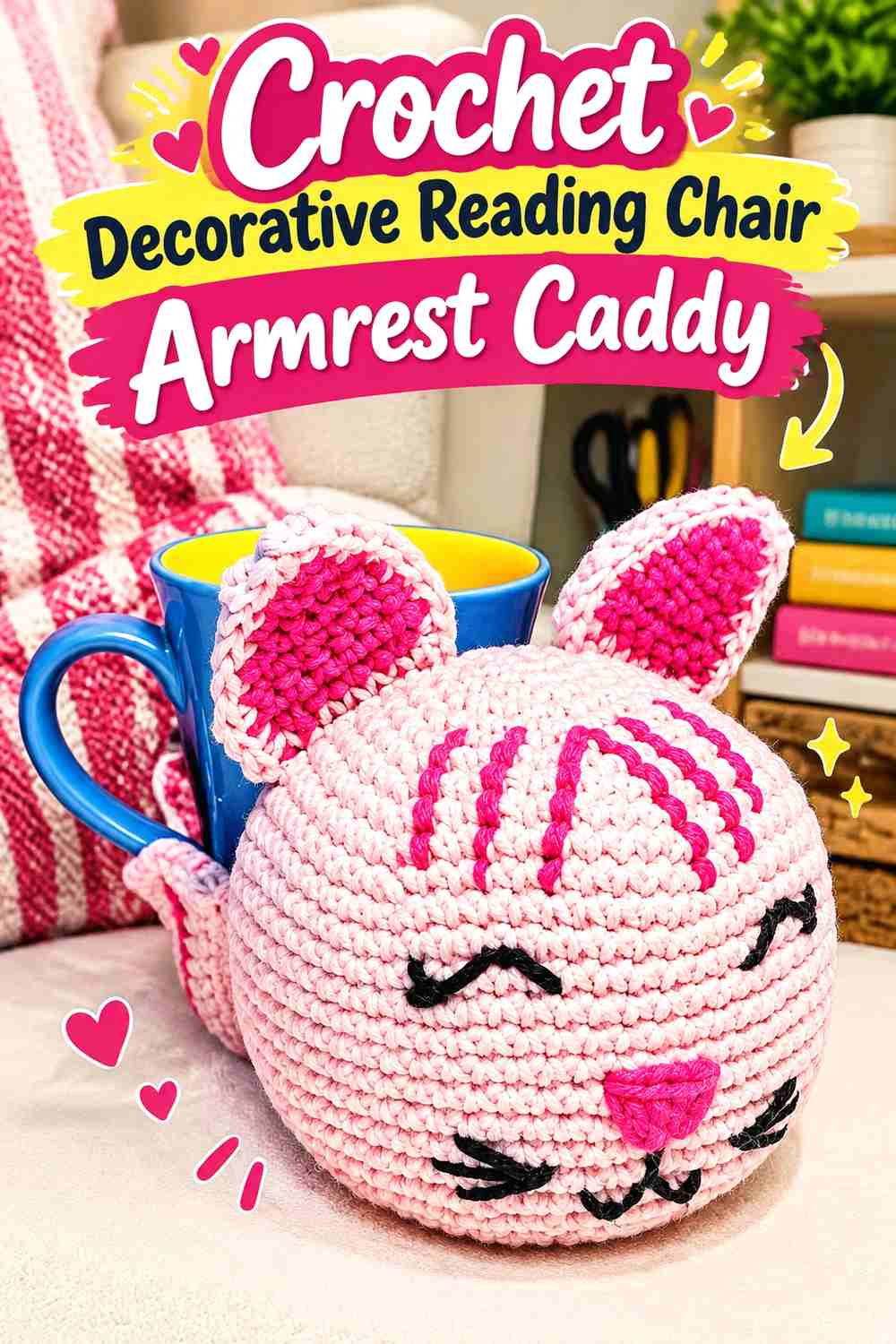
Lari & Bin Crochê offers another decorative sofa-organizer direction that can be adapted when you want the caddy to act as visible room décor as well as storage. It provides a useful contrast to the simpler remote-focused rectangles in this collection.
For a winter reading chair, use the decorative section to complement cushions or throws while keeping the actual storage base easy to use.
Give Decoration and Storage Different Jobs
Keep elaborate texture or shaping on areas that remain visible when the organizer is empty. Leave pocket openings comparatively clear.
That separation helps the caddy look intentional without forcing a book or glasses case through decorative details every time you use it.
Match the Visible Side to the Chair
Before settling on colors, drape a swatch or yarn strands directly against the upholstery. A combination that looks balanced on a worktable may disappear against the chair or become much stronger under warm evening lighting.
The caddy is part of the furniture arrangement, so evaluate it where it will actually be seen.
Creator Credit: Lari & Bin Crochê
17. Crochet Bedside-to-Reading-Chair Pocket Caddy
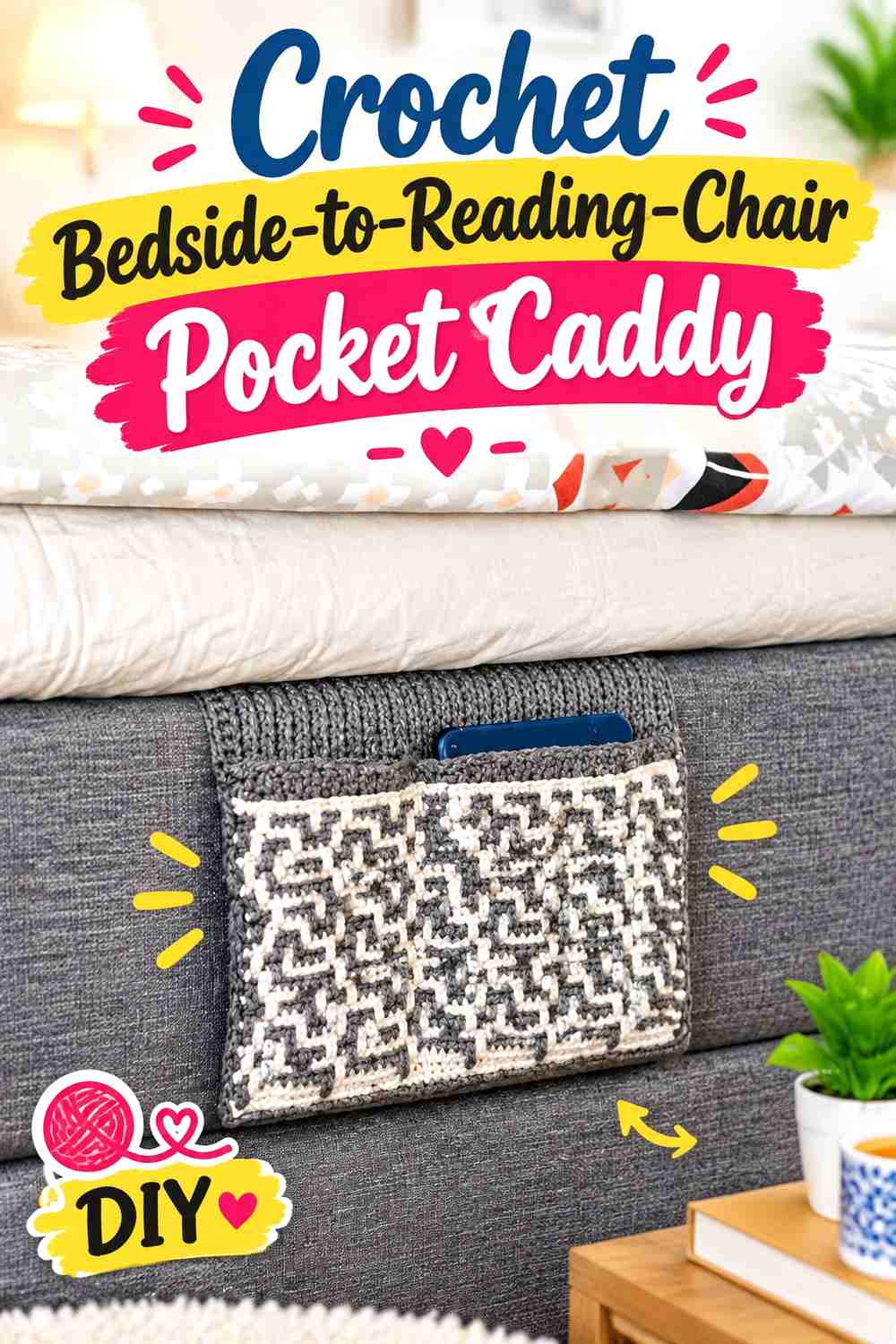
The 2LOOPZ crochet organizer was designed for bed or sofa use and is described as suitable for items such as a remote and e-reader. Its panel-and-pocket concept can therefore be adapted for a reading chair when you need broad hanging storage rather than a tiny armrest sleeve.
This is a useful final option for readers whose priority is a device or book-sized pocket with a relatively straightforward hanging format.
Adapt the Anchor to the Furniture, Not Just the Pocket
A bedside organizer can rely on a mattress or cushion relationship that may not exist on a reading chair.
Before changing pocket sizes, determine how the support section will remain in place on your particular armrest. A well-sized pocket is not useful if the entire organizer slides when the device is removed.
Keep the Heaviest Item Closest to the Supported Area
If you adapt the design for an e-reader or paperback, position that weight where the chair supports the caddy most effectively.
Use lower or more distant sections for lighter items such as bookmarks, tissues, or reading glasses when the layout permits.
Creator Credit: 2LOOPZ crochet
Which Reading Chair Armrest Caddy Layout Makes the Most Sense?
If books are the priority, start with Ideas 1, 10, or 17. Their wider storage direction is easier to adapt around a paperback, journal, or e-reader than a caddy designed primarily around one remote.
For several small essentials, Ideas 2, 7, 8, and 11 offer stronger organization potential because separate compartments can prevent phones, glasses, remotes, and bookmarks from collecting in one deep pocket.
Ideas 5, 6, 14, 15, and 16 put more emphasis on texture or decoration. These work well when the organizer will remain highly visible in the room, but make sure decorative surfaces do not reduce pocket access.
For a small chair where a large hanging panel would feel excessive, Ideas 3, 4, 9, or 12 keep the storage concept more focused.
Whatever layout you choose, judge it on the actual chair with realistic contents. Pocket capacity, armrest balance, and reach from the seated position matter more than how symmetrical the organizer looks while lying flat.
Conclusion
A useful crochet reading chair armrest caddy should solve the particular annoyances of your reading corner.
Choose a wide pocket if the current book needs a home. Use divided storage when phones, remotes, glasses, and bookmarks keep getting mixed together. Consider a two-sided construction when you want frequently used items on one side and occasional accessories on the other. If the caddy is part of the room décor, textured or decorative pockets can add character without sacrificing function.
Before finishing any adaptation, sit in the chair and test the organizer at full scale. Insert the objects it is supposed to hold, reach for them naturally, and watch whether the weight causes the panel to shift.
Use the original tutorials for their exact construction details, then adapt pocket roles and placement around your own chair and winter reading habits.
Frequently Asked Questions
How deep should a crochet armrest caddy pocket be for books?
There is no universal depth because books vary considerably. Test the actual paperback, notebook, or e-reader you plan to store and make sure enough of the item remains exposed for comfortable removal. Also consider how much the crochet fabric may stretch under its weight.
Should I make the book pocket and glasses pocket the same size?
Usually there is no functional reason to do so. A book needs width and support, while glasses benefit from a narrower compartment where they cannot be buried underneath heavier objects. Size each section around its job rather than making every pocket symmetrical.
How can I stop a crochet chair caddy from sliding off the armrest?
First check the tutorial’s original anchoring method and compare it with your chair. Upholstery texture, armrest width, panel length, and uneven pocket weight can all influence movement. Test the organizer with realistic contents before modifying the construction.
Can I store an e-reader in a crochet armrest caddy?
Potentially, provided the pocket suits the device’s dimensions and the organizer supports its weight appropriately. Measure the e-reader with its normal case attached and keep hard buttons, charms, or rough embellishments away from the screen.
What yarn qualities are useful for a reading chair organizer?
Look at the material used in the tutorial first. For this type of home organizer, excessive stretch can affect pocket shape once items are added, while a very open fabric may be inconvenient around narrow tools or glasses arms. Do not assume a substitute fiber will behave like the original yarn simply because its labeled weight is similar.
Where should the glasses pocket go on an armrest caddy?
Place it where you can reach it naturally without twisting and where heavier items cannot press against the frames. A narrow dedicated compartment beside—but separate from—a book or device pocket is often more practical than dropping glasses into a large general-storage section.
Is a crochet cup holder safe beside books or an e-reader?
Do not assume crochet is spill-proof, heat-proof, or capable of stabilizing every cup. If a tutorial includes cup storage, follow the creator’s intended construction and evaluate it cautiously. When hot drinks will sit close to books or electronics, a stable separate surface is the lower-risk option.