A storybook Christmas tree feels less like a collection of matching decorations and more like a tiny holiday world. A gingerbread cottage can sit near a snowy tree, a gnome can peek between the branches, and a miniature mug of cocoa can hang beside mittens, stockings, bells, and woodland characters.
The 17 crochet ornament ideas below are deliberately varied. Some are flat enough to fill small gaps between larger decorations, while others are stuffed or shaped for more depth. There are traditional Christmas symbols, cozy household objects, winter characters, and playful details that can make the tree feel collected rather than overly coordinated.
Before making multiples, finish one ornament with its actual hanging loop and test it on your tree. The way a piece hangs, turns, or disappears into the foliage can matter as much as its color.
Quick List
- Crochet Gingerbread Cottage Ornament
- Crochet Lacy Snowflake Ornament
- Crochet Storybook Gnome Ornament
- Crochet Christmas Pudding Ornament
- Crochet Tiny Winter Mitten Ornament
- Crochet Twisted Candy Cane Ornament
- Crochet Woodland Reindeer Ornament
- Crochet Snowman Character Ornament
- Crochet Christmas Angel Ornament
- Crochet Little Bell Ornament
- Crochet Embroidered Bauble Ornament
- Crochet Mini Stocking Ornament
- Crochet Five-Point Christmas Star Ornament
- Crochet Woodland Owl Ornament
- Crochet Mini Christmas Tree Ornament
- Crochet Soft Wreath Ornament
- Crochet Hot Chocolate Mug Ornament
How to Make a Crochet Christmas Tree Feel Like a Storybook Scene
The storybook effect comes from combining recognizable objects rather than making every ornament the same shape. Think of the tree as scenery. Houses and Christmas trees establish the setting, snowflakes create winter atmosphere, characters such as gnomes and snowmen add personality, and small objects such as mittens, bells, stockings, and cocoa mugs make the display feel lived-in.
Shape variety also helps. Place a broad snowflake beside a narrow candy cane, or a rounded pudding beside a flat star. If several neighboring ornaments have the same overall silhouette, even very different colors can begin to look repetitive.
Color can still provide cohesion. Instead of using identical yarn for every project, repeat a few accents—perhaps cream, deep red, forest green, or muted gold—across unrelated shapes. That gives the tree a common visual language without turning it into a matching set.
Plan for Hanging Direction and Branch Space
Small ornaments can behave unexpectedly once they leave the worktable. A flat snowflake may disappear against dense foliage, while a stuffed snowman may push too far forward on a short branch. A candy cane needs enough vertical clearance for its hooked shape, and a reindeer needs room around its antlers.
Hanging-loop position matters too. Test the finished ornament before permanently settling on loop placement whenever the design has an obvious front. A mug whose handle turns backward or an angel that rotates sideways loses much of its character.
For ornaments you hope to make in multiples, test the first sample on the actual tree. That gives you a better idea of whether the yarn thickness, scale, loop length, and amount of decoration work in the intended setting.
Think About Finishing, Small Parts, and Storage
Storybook ornaments often get their personality from small details: eyes, beads, bells, bows, embroidered faces, berries, wire supports, or wooden components. Those additions can look charming, but they also affect how the ornament should be displayed and stored.
If young children or pets can reach the tree, consider whether detachable decorations, beads, wire, bells, or similar small components are appropriate. Embroidered or crocheted details can sometimes give a similar visual effect with fewer separate pieces.
Storage deserves planning as well. Flat stars and snowflakes can usually be protected between layers of tissue or fabric, while stuffed characters and shaped objects need enough room that projecting features are not crushed.
1. Crochet Gingerbread Cottage Ornament
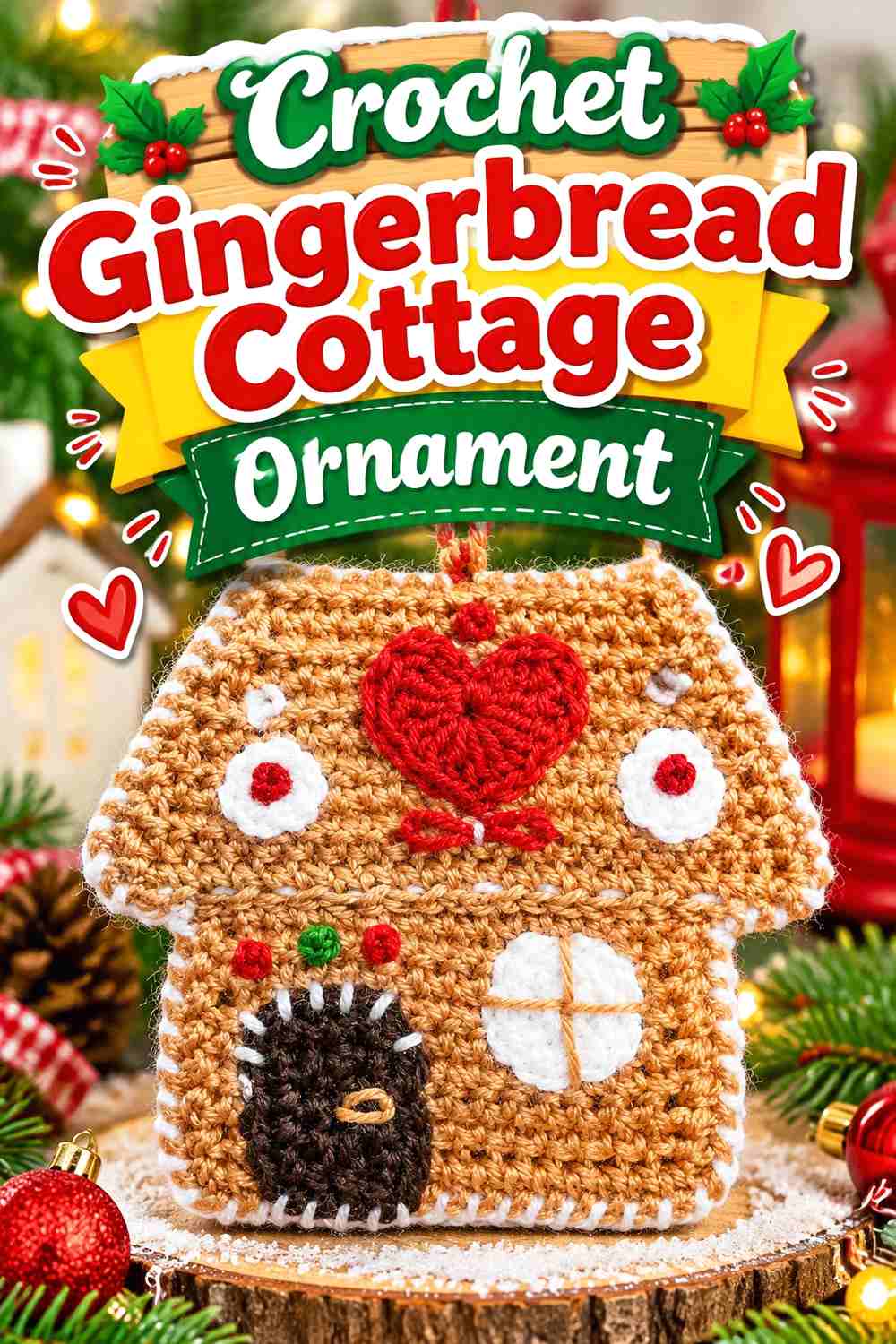
A tiny crochet gingerbread house immediately gives a Christmas tree a sense of place. Instead of representing a single holiday symbol, it looks like part of a miniature winter village. The featured construction uses recognizable house and roof shapes and leaves plenty of room for decorative details on the finished surface.
This is especially useful as a visual anchor among smaller stars, snowflakes, and candy canes. One cottage can act as a focal ornament, while several can suggest a scattered village without needing to be identical.
Straight Roof Lines Help the House Read Clearly
Small architectural shapes are less forgiving of uneven edges than round ornaments. Compare the roofline and side edges before adding a lot of surface decoration.
If the house begins to lean or twist, decorative windows and icing-style details will not completely disguise the underlying silhouette. Establish the recognizable cottage shape first.
Decoration Should Support the Cottage, Not Hide It
A gingerbread house naturally invites embroidery, tiny circles, hearts, beads, or candy-inspired colors. Keep enough open background visible that the house still reads as a building rather than a cluster of embellishments.
When making several, vary doors or window treatments while keeping the basic roof-and-wall proportions related. That creates a village effect without requiring exact duplicates.
Check the Roof Before Positioning the Hanger
The roof peak is the natural hanging area, but a loop that pulls from one side can make the house tilt.
Temporarily suspend the finished ornament before fastening the hanger permanently. Correcting a small imbalance at this stage is easier than repositioning decorations later.
Creator Credit: TheCrochetCircle
2. Crochet Lacy Snowflake Ornament
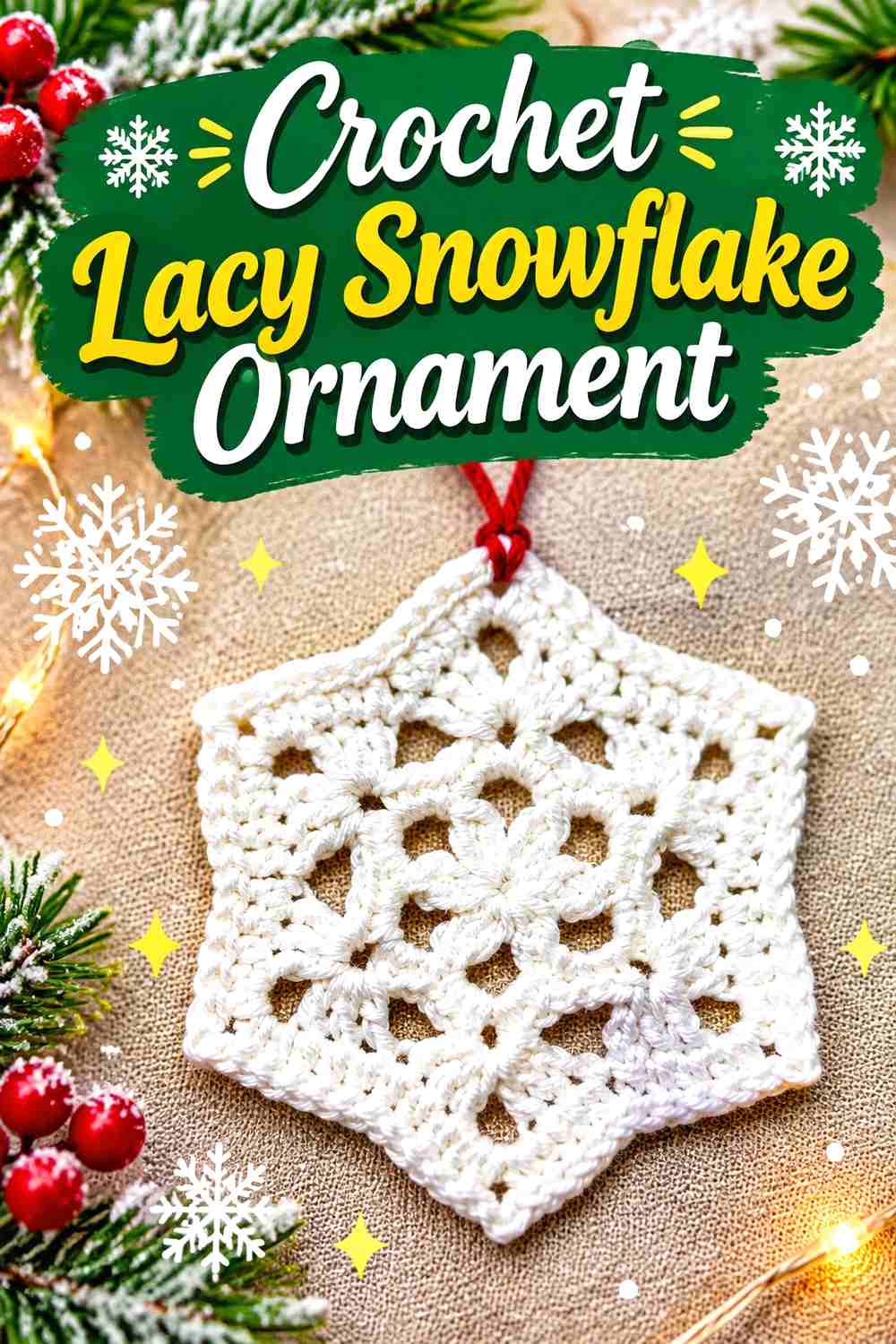
A crochet snowflake adds winter atmosphere without taking up much physical depth. Pattern and Craft’s ornament uses a broad open shape with repeated points, making it useful between thicker stuffed decorations where you still want the greenery to remain visible.
Snowflakes are also good quiet pieces on a storybook tree. They help separate several strong character ornaments so every branch does not compete for attention.
Symmetry Becomes the Main Decoration
With an open snowflake, there is nowhere for uneven shaping to hide. Compare the repeated sections before deciding the ornament is finished.
If you are making a group, shape them side by side when possible. The individual pieces do not need to be mechanically identical, but noticeably different arm lengths become easier to see when several hang together.
Let Openwork Contrast With the Branches
A delicate snowflake can disappear if it is buried deep inside dark foliage. Try it near an outer branch, a light, or an area where a contrasting ornament sits behind it.
This is particularly useful on a densely decorated tree. Open space becomes part of the snowflake’s design, so the background should help rather than obscure it.
Yarn Changes How Crisp the Points Look
Changing yarn can alter both scale and definition. A very fuzzy fiber may soften the openings and points, while a clearer yarn can emphasize the geometry.
Make one sample before committing to a dozen. Judge it on the tree rather than only on a flat surface.
Creator Credit: Pattern and Craft
3. Crochet Storybook Gnome Ornament
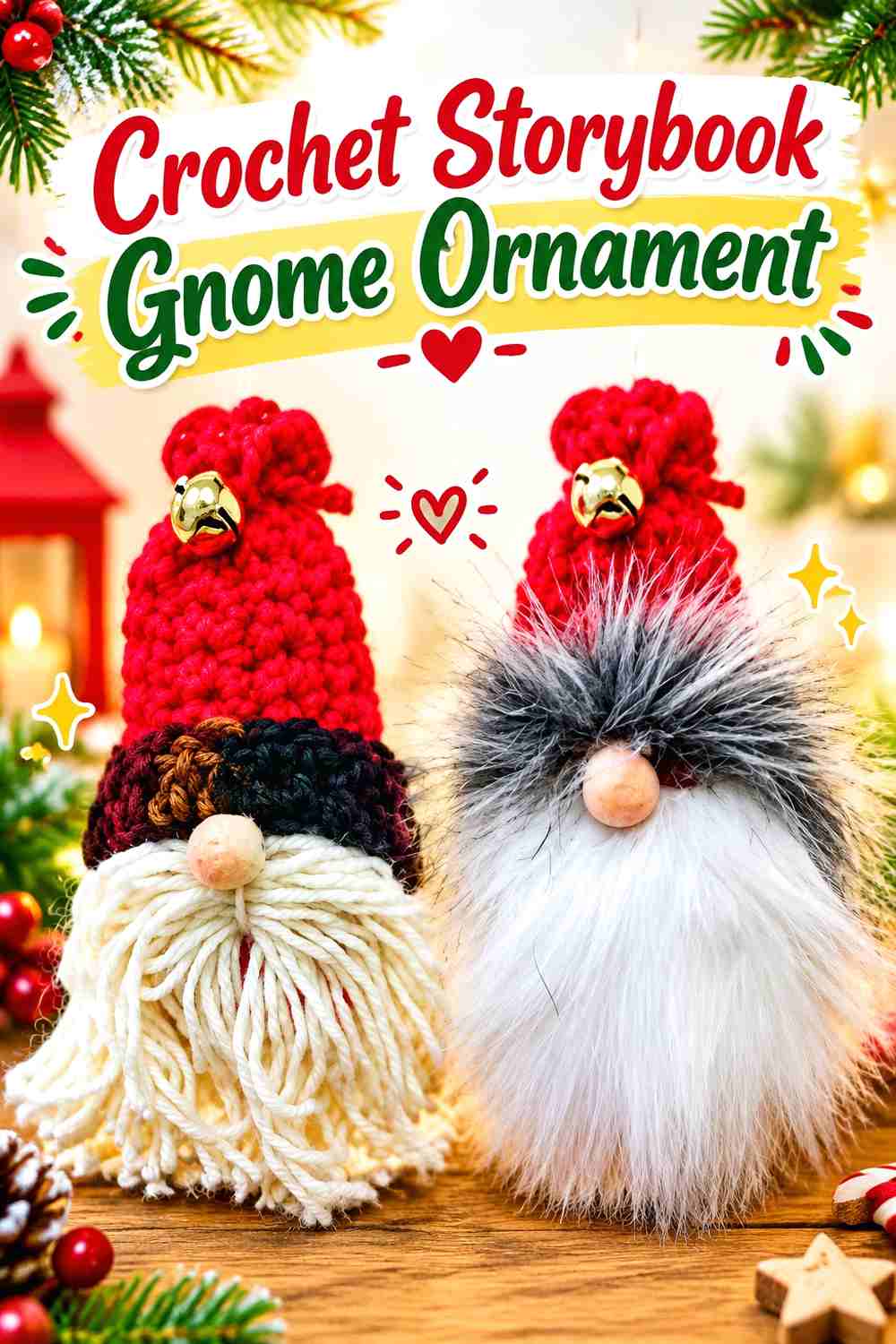
A crochet gnome brings instant character without relying on a detailed facial expression. The recognizable combination of hat, nose, beard, and small body makes it especially well suited to a woodland or old-fashioned storybook tree. The Hectanooga1 tutorial is specifically designed as a hanging gnome ornament.
Unlike a broad snowflake or wreath, the gnome creates a narrow vertical shape. That makes it useful for filling gaps beneath branches where a wider ornament would feel crowded.
The Hat-to-Beard Balance Creates the Character
The gnome’s personality comes largely from proportions. A very dominant beard can hide the body, while an oversized hat can make the ornament visually top-heavy.
Before securing all the finishing details, hold the pieces together and check the silhouette from normal viewing distance. The gnome should remain recognizable before you notice any tiny decoration.
Texture Can Do More Than Extra Embellishment
A beard already contributes strong texture. If the hat and body also use highly textured or fuzzy yarns, the small ornament can become visually busy.
Consider letting one element provide most of the tactile interest. A simple hat can frame a fuller beard, while a smooth beard can make a patterned or textured hat stand out.
Keep the Hanging Point Centered Over the Figure
A tall ornament makes sideways leaning noticeable. Test the gnome by suspending it from the proposed loop position before the final fastening.
If it twists toward the heavier side, a small adjustment to the loop can improve the way the entire figure presents itself.
Creator Credit: Hectanooga1
4. Crochet Christmas Pudding Ornament
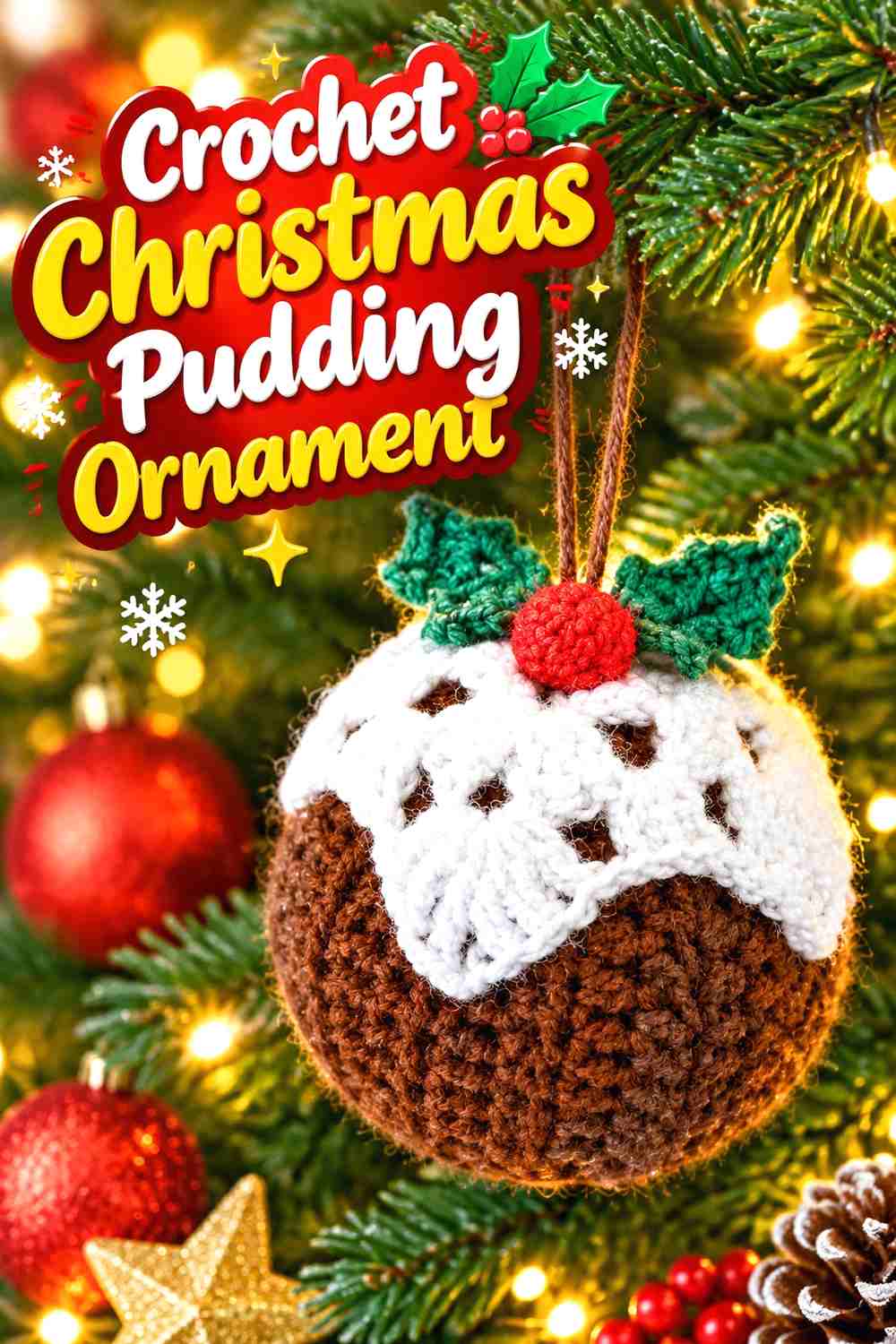
This rounded crochet pudding adds a playful food reference to the tree without losing a traditional Christmas feel. Kara Ella Uy’s tutorial builds a stuffed pudding with contrasting icing and holly-style finishing, giving the ornament several clearly separated visual areas.
Its round form makes a useful counterpoint to narrow stockings, bells, and candy canes. It also fits naturally with gingerbread houses and cocoa mugs if you want a stronger holiday-kitchen thread running through the tree.
Keep the Icing Edge Visible
The contrast between pudding and icing is one of the details that makes the object recognizable. Check the ornament from the angle in which it will hang.
If the upper decoration collapses toward the center or disappears behind the body, the piece can start to resemble a plain stuffed ball.
Holly Details Should Stay Secondary
Leaves and berries add the Christmas cue, but the pudding is already a compact ornament. Oversized decorations can overwhelm the rounded shape.
Position the top details before permanently attaching them and check that they do not interfere with the hanger.
Stuff for Shape Rather Than Maximum Firmness
A rounded ornament needs enough filling to establish the form, but overfilling can make crochet gaps more noticeable.
Rotate the piece while filling so the silhouette stays even rather than becoming firm on one side and soft on another.
Creator Credit: Kara Ella Uy
5. Crochet Tiny Winter Mitten Ornament
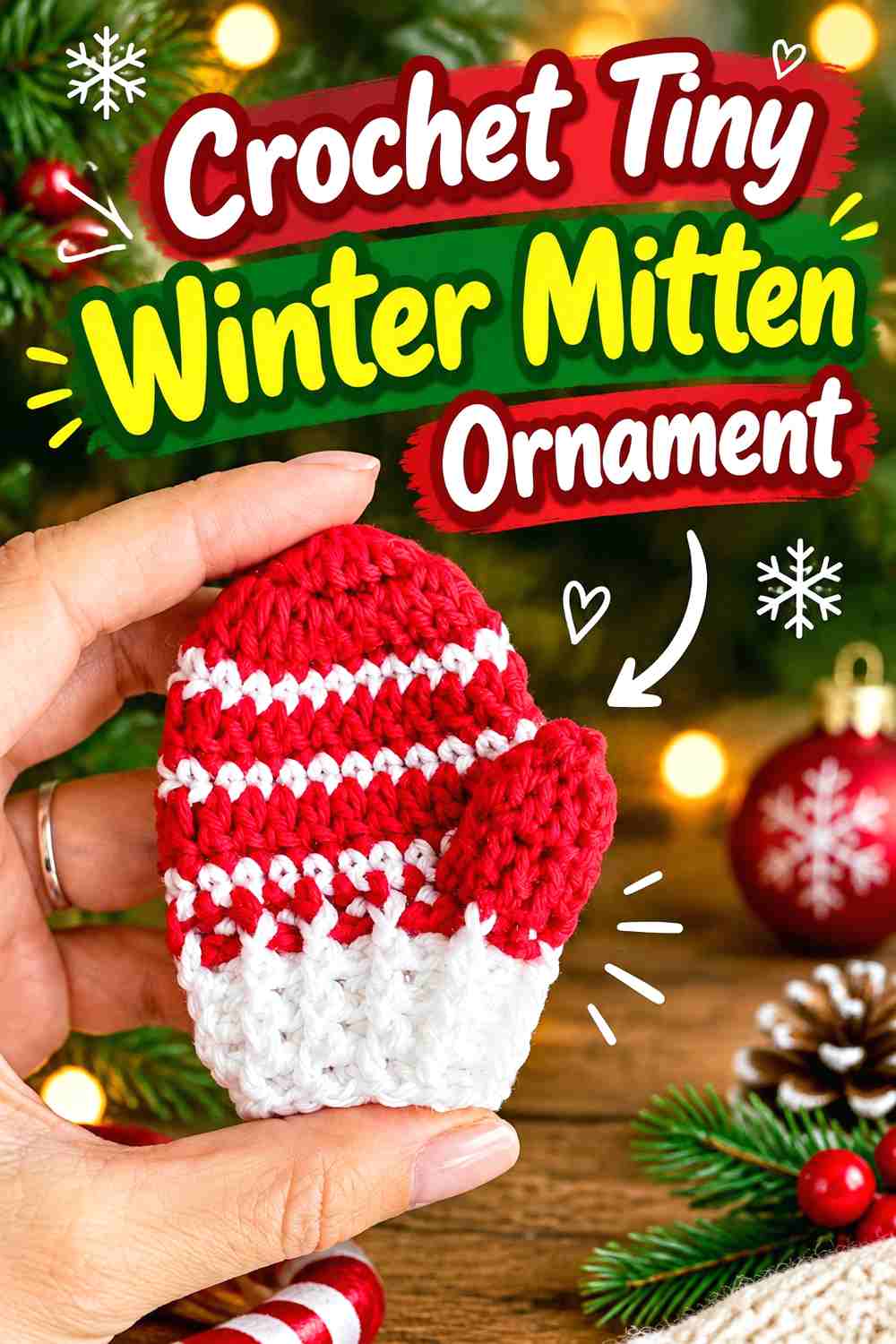
A tiny crochet mitten looks like an object borrowed from a miniature winter wardrobe. Crochetclubstore presents the mittens specifically for uses including tree ornaments, garlands, Advent displays, and gift decoration.
The projecting thumb keeps the shape from becoming another simple rectangle, while the cuff gives you a natural area for color or texture changes.
Decide Which Side Should Face Forward
The thumb is what makes the tiny shape immediately read as a mitten. Before adding the hanging loop, choose the display side and make sure the thumb will not disappear behind the hand section.
This matters more on a tree than on a tabletop, where the ornament can be viewed from multiple angles.
Pairs Can Create Repetition Without Exact Matching
Two mittens placed on separate nearby branches can suggest a pair without being tied together. Repeat the same main yarn and change the cuff, or reverse two coordinating colors.
That kind of controlled variation fits a storybook tree particularly well because it feels collected rather than factory-matched.
Keep the Cuff in Proportion
A thick or heavily decorated cuff can become the visual center of a very small mitten.
Look at the whole silhouette before adding extra trim. The hand and thumb should still remain obvious from several feet away.
Creator Credit: Crochetclubstore
6. Crochet Twisted Candy Cane Ornament
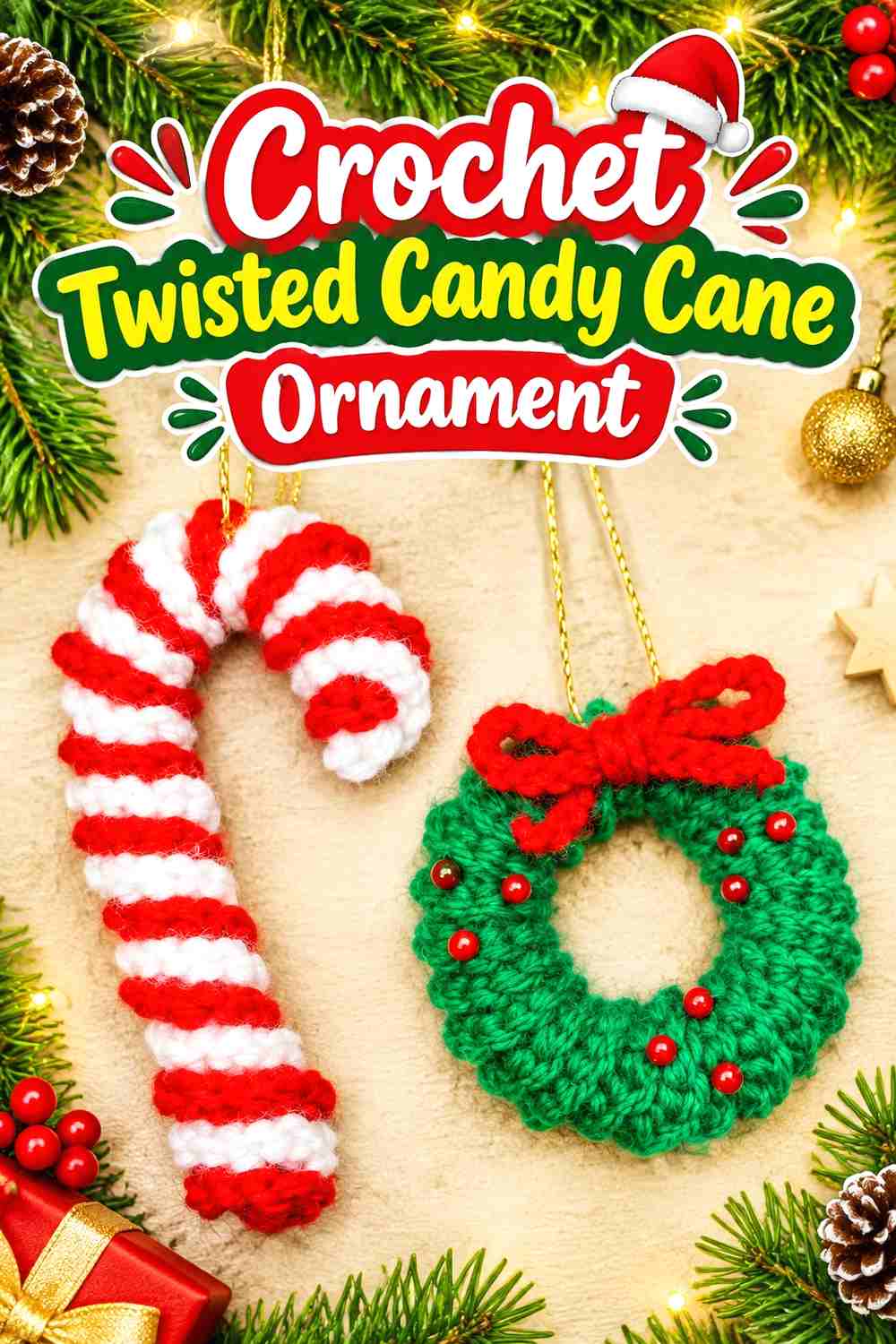
Made by Phia’s candy cane uses contrasting crochet coils and an internal support to establish the familiar striped curve. That construction gives the ornament more texture and depth than a flat candy-cane appliqué.
Its long, narrow profile is particularly helpful on a tree already filled with round puddings, baubles, character heads, and stuffed figures.
The Curve Is More Important Than Extra Decoration
A candy cane is recognized first by its hooked top. Shape the curve and inspect it from the front before deciding whether it needs bows, beads, or other additions.
An ornament with a strong clean hook can remain convincing with very little extra decoration.
Strong Contrast Keeps the Spiral Readable
Red and white are traditional, but the important visual feature is the separation between the two coils.
If you adapt the palette to muted storybook colors, make sure the shades remain different enough that the spiral is still apparent beneath Christmas-tree lighting.
Check Any Internal Support Before Display
When an ornament uses a pipe cleaner or similar structure, confirm that the crochet completely covers it and no end can work through the fabric.
Also consider who can reach the finished decoration. A supported ornament may need different handling than an entirely soft piece.
Creator Credit: Made by Phia
7. Crochet Woodland Reindeer Ornament
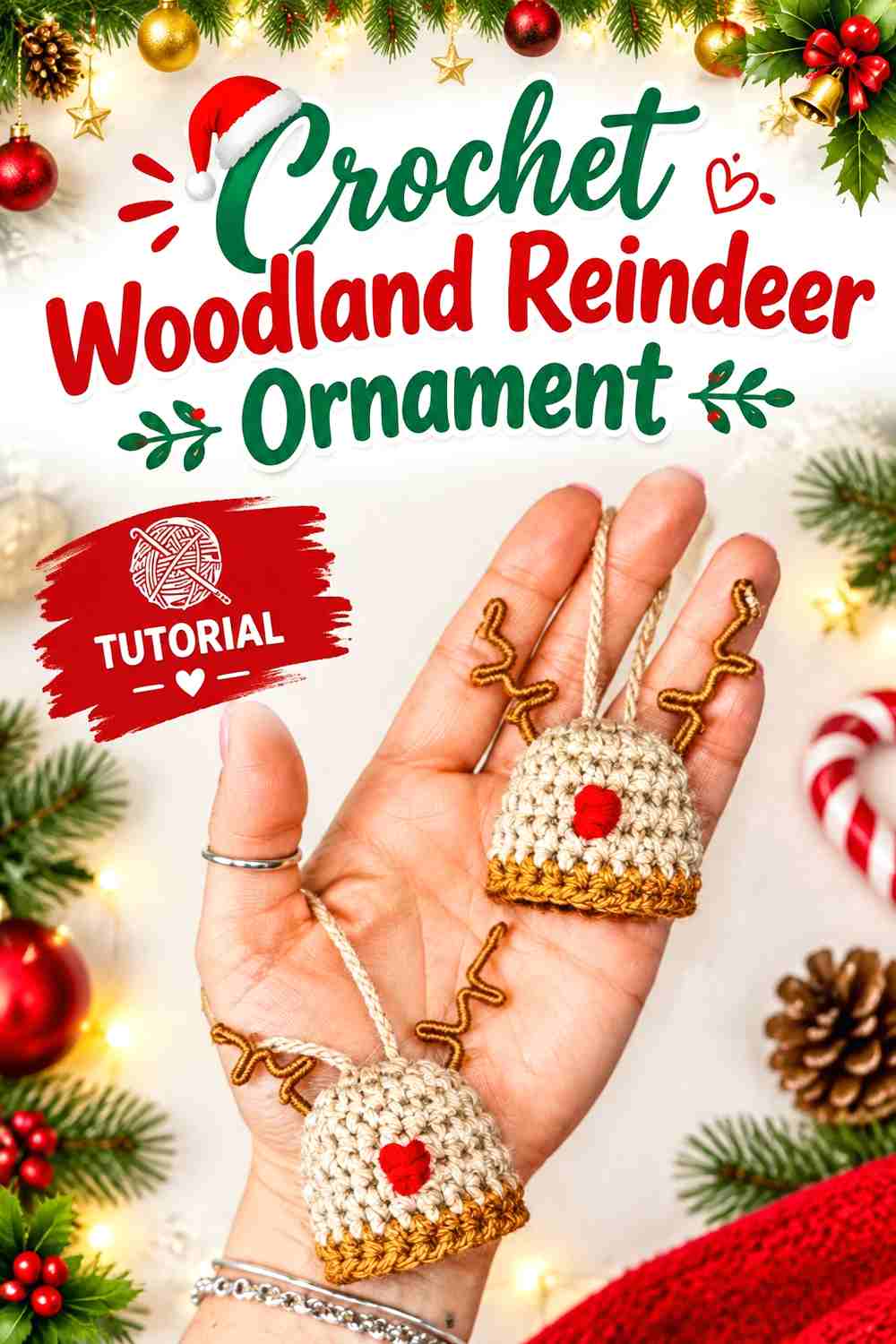
A reindeer introduces a woodland character with a very different outline from a gnome or snowman. The mum2makes tutorial creates a small reindeer ornament with a contrasting nose and supported antlers, giving the upper part of the piece most of its width.
That makes it a useful ornament for breaking up several narrow vertical shapes. It also works naturally near the owl, snowy tree, or gingerbread cottage in a storybook arrangement.
Antlers Need Space Around Them
The reindeer’s outline depends heavily on the antlers. Avoid pushing the ornament deep between branches where only the central face remains visible.
A more exposed branch lets both sides of the silhouette show and reduces the chance of the antlers catching repeatedly on neighboring ornaments.
Structural Antlers Need Careful Finishing
The source discusses wire and a pipe-cleaner alternative for shaping the antlers. Any internal support deserves a final inspection after assembly.
Make sure trimmed ends remain covered and consider whether a supported ornament is suitable for the area where you plan to display it.
Let the Nose Be the Focal Accent
A small area of strong color can do more than decorating every part of the face.
If the surrounding tree already contains many red elements, keeping the head quieter and allowing the nose to provide the color cue can prevent the ornament from becoming visually crowded.
Creator Credit: mum2makes
8. Crochet Snowman Character Ornament
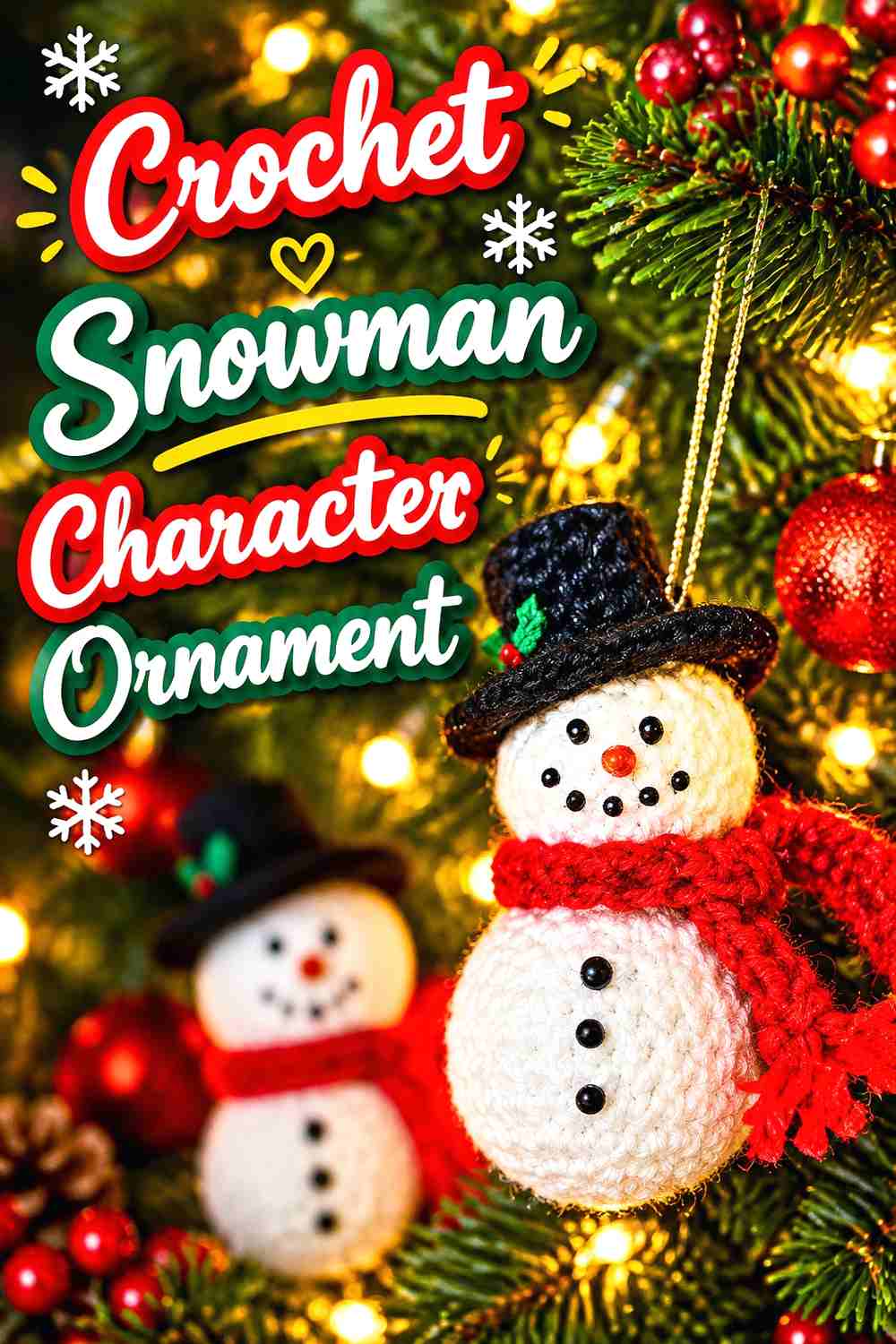
Crouton Crafts’ snowman is a stuffed hanging figure with a distinct body, head, scarf, hat, and facial decoration. That gives it more character-building opportunities than a simple flat snowman motif.
Because it has a rounded profile, use it where the tree has enough branch depth for the body and accessories to remain visible.
Stuffing Should Establish Two Clear Sections
The snowman needs recognizable head and body proportions rather than one uniformly packed shape.
Distribute filling gradually and inspect the piece from different angles before closing. If the center becomes overfilled, the distinction between the two sections can become less obvious.
Keep the Face Clear of the Hat and Scarf
Accessories bring much of the winter personality, but they can also crowd the small face.
Check the position of the hat and scarf before completing facial details. Eyes and nose should remain visible from the front after all the clothing elements are in place.
A Snowman Works Well as a Character Anchor
If you are using several playful ornaments, the snowman can occupy a more open central area while flatter stars and snowflakes fill smaller surrounding gaps.
That hierarchy helps the tree read as a scene rather than a collection in which every ornament demands equal attention.
Creator Credit: Crouton Crafts
9. Crochet Christmas Angel Ornament
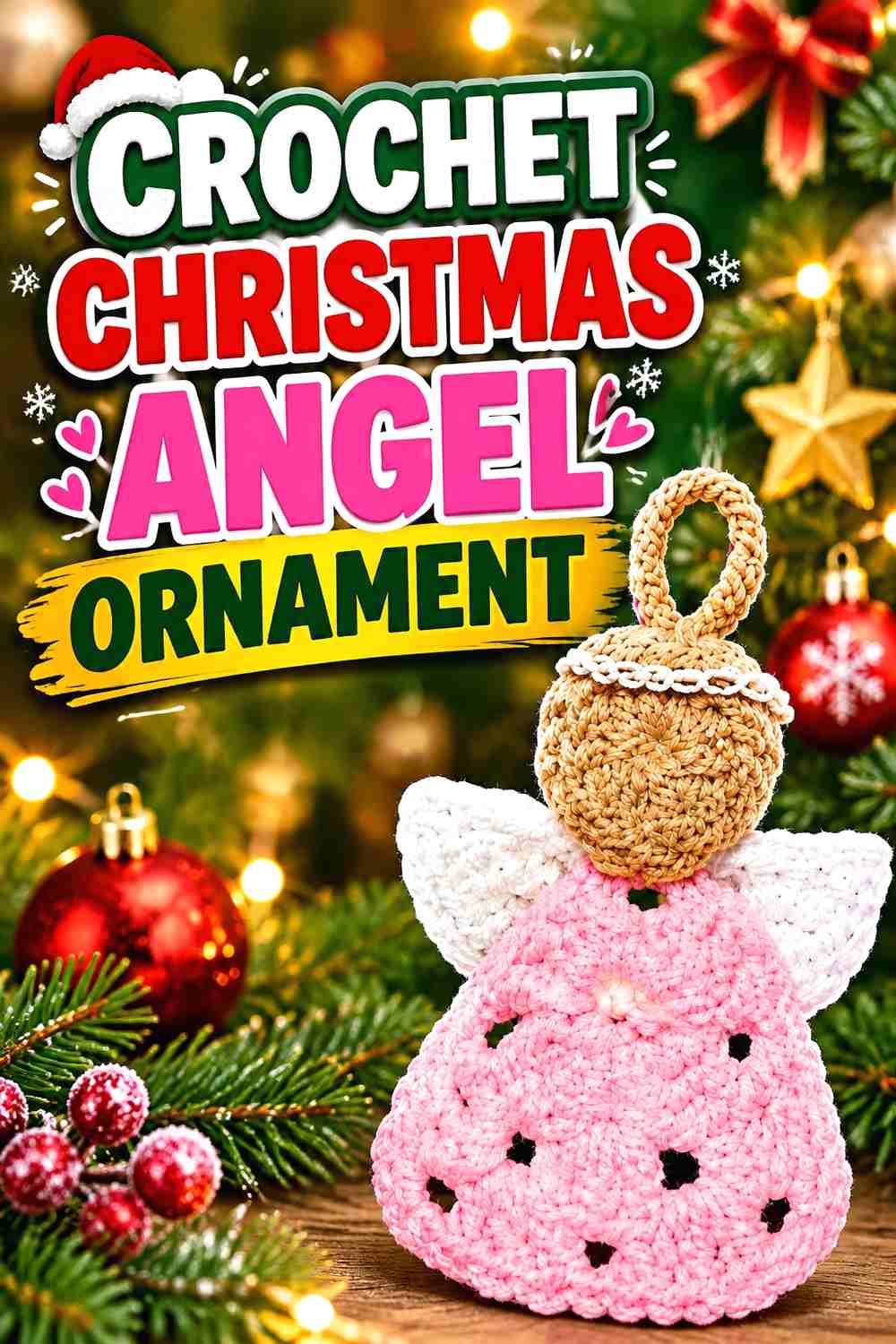
A crochet angel adds a more traditional and graceful figure to a tree filled with playful gnomes, animals, and food ornaments. Crochet Jewel’s tutorial creates an ornament intended specifically for Christmas-tree display.
The winged outline provides width through the upper half while the body creates a longer downward line, so it occupies branch space differently from a round bauble.
Wing Balance Controls the Silhouette
The two wings attract attention because they extend beyond the body. Compare their position before completing the hanger.
They do not need to be rigid, but a noticeably higher or narrower wing can make the whole figure appear tilted even if the body itself is straight.
Give the Angel Some Open Vertical Space
Longer ornaments can become lost if another decoration hangs immediately beneath them.
Use a branch where the body has enough clearance to hang naturally. The shape will read more clearly when it is not resting against a large bauble or dense branch cluster.
Keep Added Sparkle Selective
An angel can suit metallic or shimmering accents, but crochet detail is easier to see when every element is not equally reflective.
A small halo, edge, or hanging thread can provide a luminous effect while leaving the body and wings visually quieter.
Creator Credit: Crochet Jewel
10. Crochet Little Bell Ornament
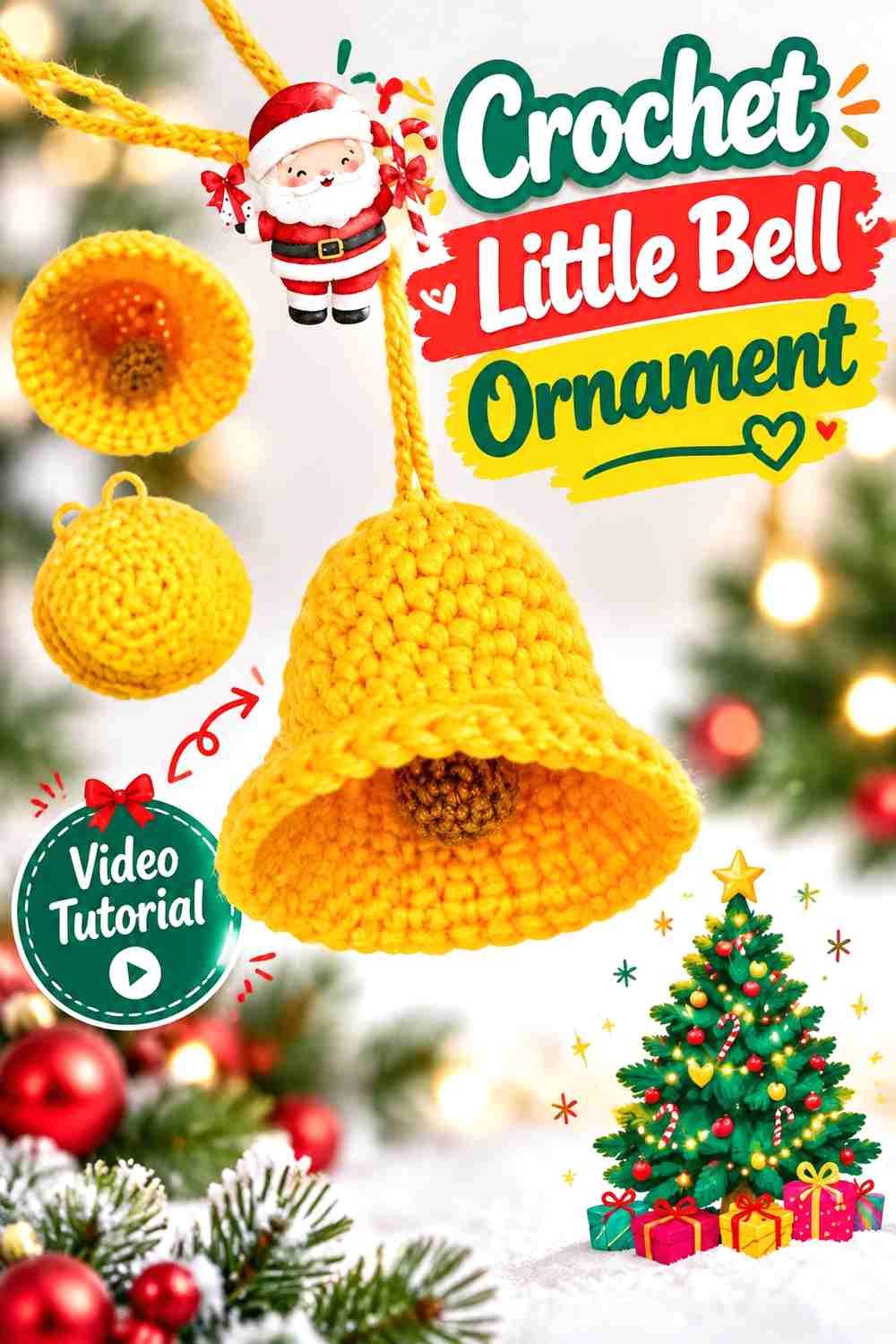
Jess Crafting’s bell is a dimensional crochet ornament with a shaped bell body and a separate clapper detail. That gives the project more recognizable structure than a flat bell silhouette.
A bell is useful on a storybook tree because it feels traditional without repeating the geometry of stars, stockings, or round baubles.
The Lower Flare Defines the Bell
The opening at the bottom needs enough shape to separate the ornament visually from a small pouch.
Once finished, let the bell hang freely and check the lower edge. A branch pressing against one side can distort the flare even if the crochet itself is even.
Keep the Clapper Centered Under the Body
A visible clapper adds movement and makes the bell more convincing.
Before finalizing the hanging loop, check the ornament from the front to see whether the clapper naturally falls close to the visual center rather than pulling to one side.
Bell Ornaments Need Careful Storage
A shaped lower edge can be flattened if the ornament is stored beneath heavier decorations.
Give it enough room in the holiday box that the bell does not spend most of the year compressed out of shape.
Creator Credit: Jess Crafting
11. Crochet Embroidered Bauble Ornament
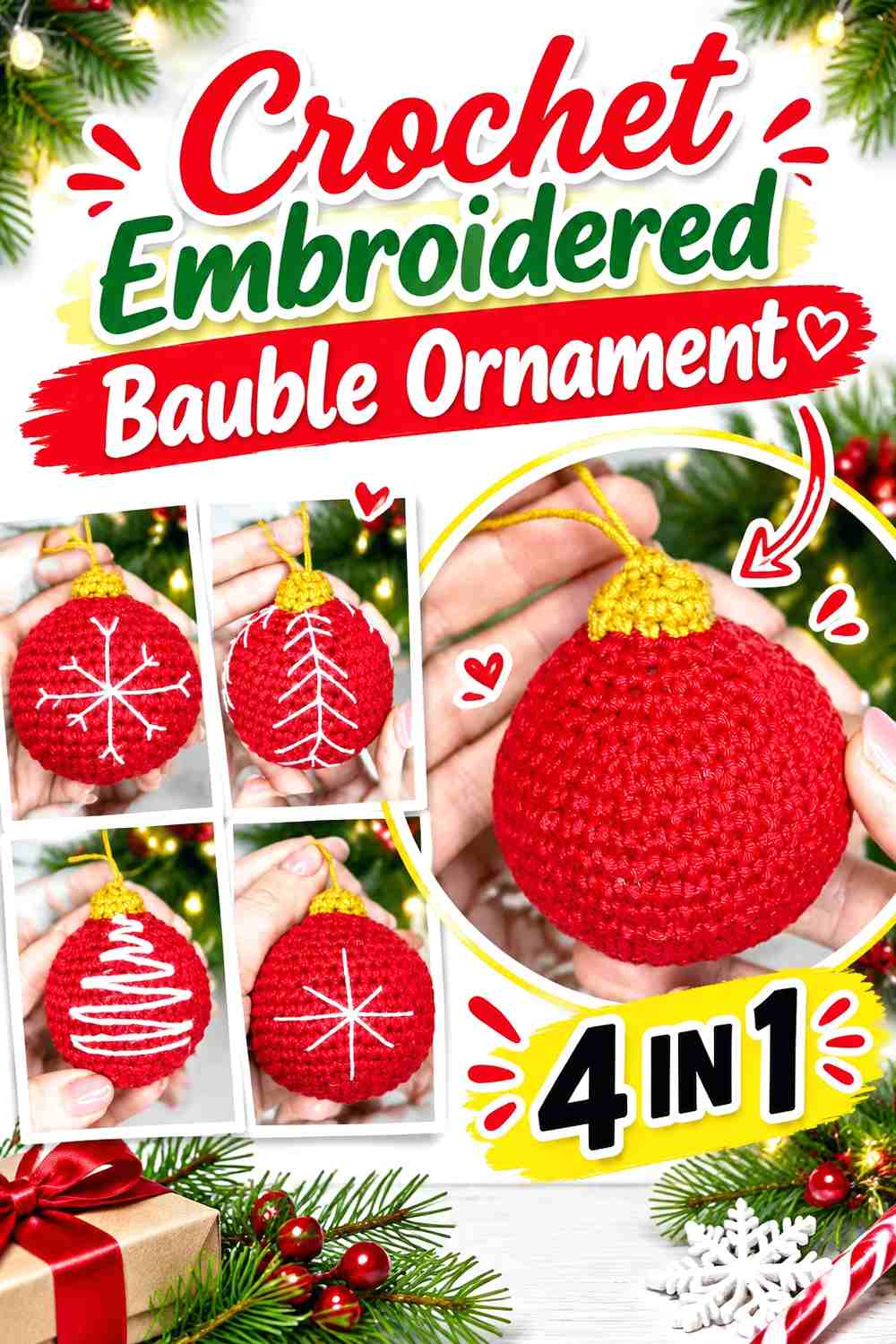
A rounded bauble gives the collection a familiar Christmas shape while the crochet surface keeps it visually connected to the handmade pieces. Amigurumi_Joys demonstrates a basic crocheted bauble together with several different embroidered decoration treatments.
That makes this a practical option if you want a coordinated set without making every ornament completely identical.
Embroidery Can Create a Family of Related Baubles
Keep the underlying ball construction consistent and vary the surface decoration. Stars, snowflake-like motifs, or simpler lines can produce distinct ornaments that still belong together.
Try to keep the overall amount of decoration reasonably balanced across a group if you want them to read as a set.
Rotate the Bauble While Shaping It
A round ornament will be seen from several angles, even if you intend one decorated side to face forward.
Check the sphere as you fill and finish it rather than judging only the front. Flat areas become more noticeable when lights strike the ornament from the side.
Decorate Before Finalizing the Hanging Direction
Embroidery can establish an obvious front. Once that happens, the hanger needs to support that orientation.
Test the bauble on a branch after the main surface work is complete so the decorative side does not continually rotate toward the trunk.
Creator Credit: Amigurumi_Joys
12. Crochet Mini Stocking Ornament
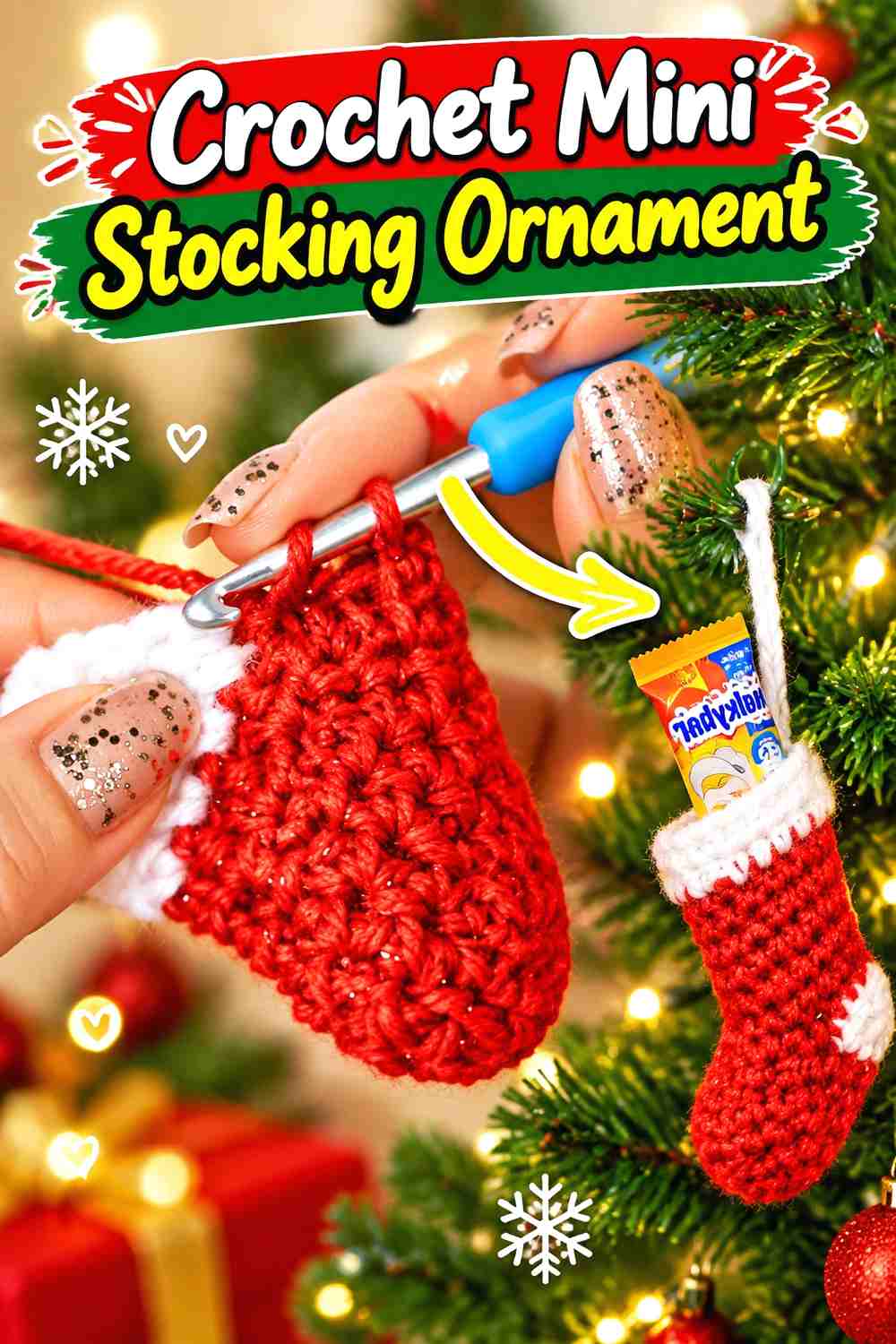
A miniature stocking feels like a tiny household object rather than a simple decorative motif. Brunaticality’s version has the familiar foot, heel, cuff, opening, and hanging loop, creating a form that looks recognizable even before extra decoration is added.
Its opening also adds depth without requiring the entire ornament to be stuffed.
The Foot Needs a Clear Change of Direction
The strongest visual clue is the relationship between the leg and foot.
After finishing, view the stocking from the side as well as the front. If the foot folds against the leg, gently arrange it before deciding where the hanging loop should sit.
Treat the Opening as Decorative Unless You Test It
A tiny stocking may look as though it can hold sweets or small gifts, but adding contents changes its weight and stretch.
If you want to use it as a functional holder, test the actual finished ornament with the intended item rather than assuming it can support a particular amount.
Use the Cuff as a Controlled Color Accent
The cuff provides a natural place for cream, white, gold, or a second storybook shade.
Keeping the rest of the stocking quieter can make that contrast more effective than using multiple color changes throughout such a small piece.
Creator Credit: Brunaticality
13. Crochet Five-Point Christmas Star Ornament
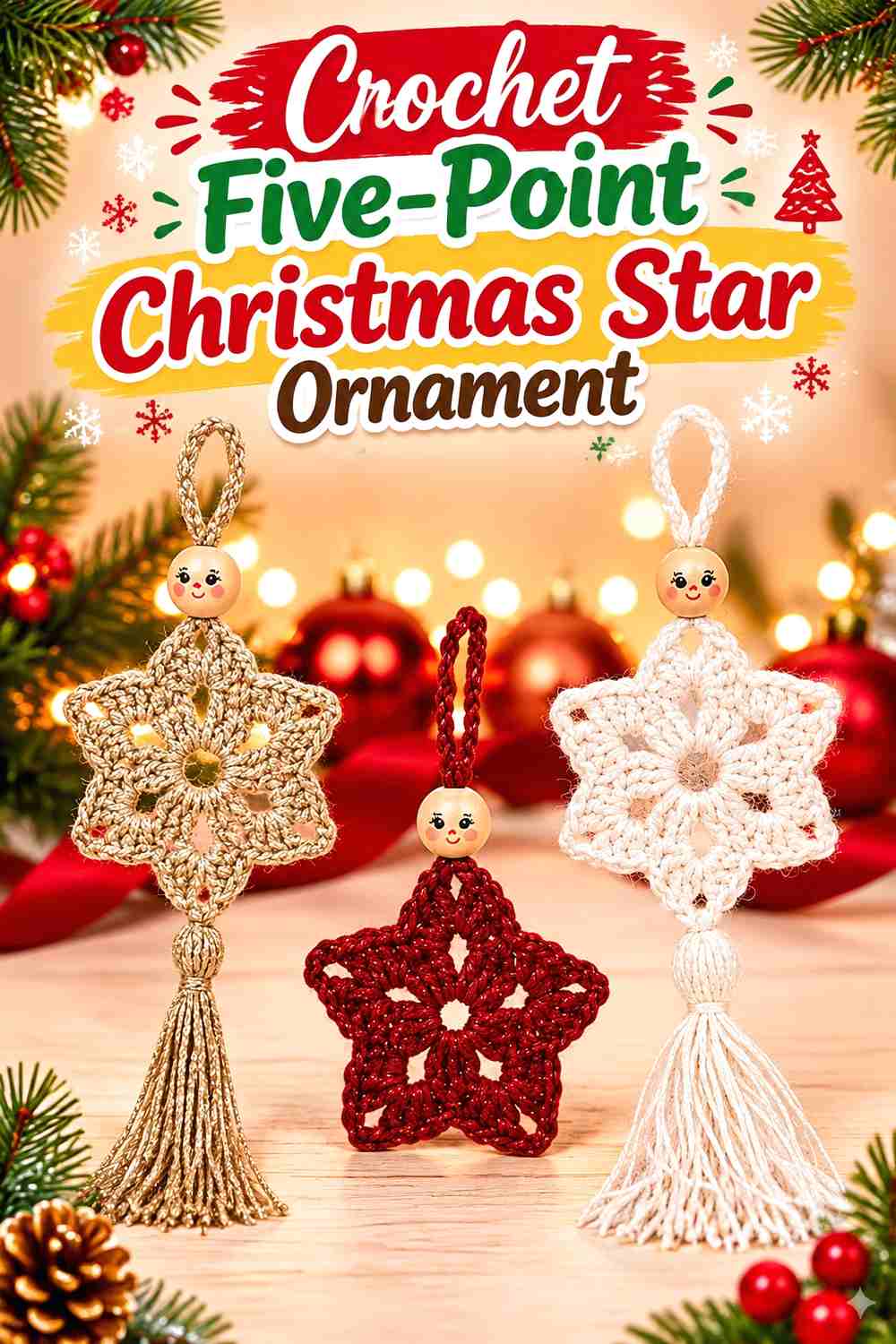
A flat five-point star provides strong geometry among softer characters and miniature household objects. Crochet your life’s tutorial creates a classic five-cornered ornament and also discusses finishing the shape so it remains defined.
Stars are especially useful near round ornaments because their pointed outline breaks up repeated curves without taking up much depth.
Mark the Intended Top Point
A star has several possible hanging orientations, but one point facing upward usually produces the most familiar Christmas-star appearance.
Choose that point before attaching the loop. Small differences in placement become obvious once the ornament hangs among straight branch lines.
Crisp Points Matter More Than Extra Surface Detail
The silhouette already supplies most of the decoration. Before adding beads or embroidery, ask whether those details improve the piece or simply compete with the geometry.
On a busy storybook tree, a simpler star can provide a useful visual pause.
Consider How Firm You Want the Finished Star
Some makers prefer a softer textile appearance, while others want flat ornaments to hold a more rigid decorative outline.
If you use a shaping or stiffening method, test it on the chosen fiber first and remember that it may affect how the ornament should be packed away after Christmas.
Creator Credit: Crochet your life
14. Crochet Woodland Owl Ornament
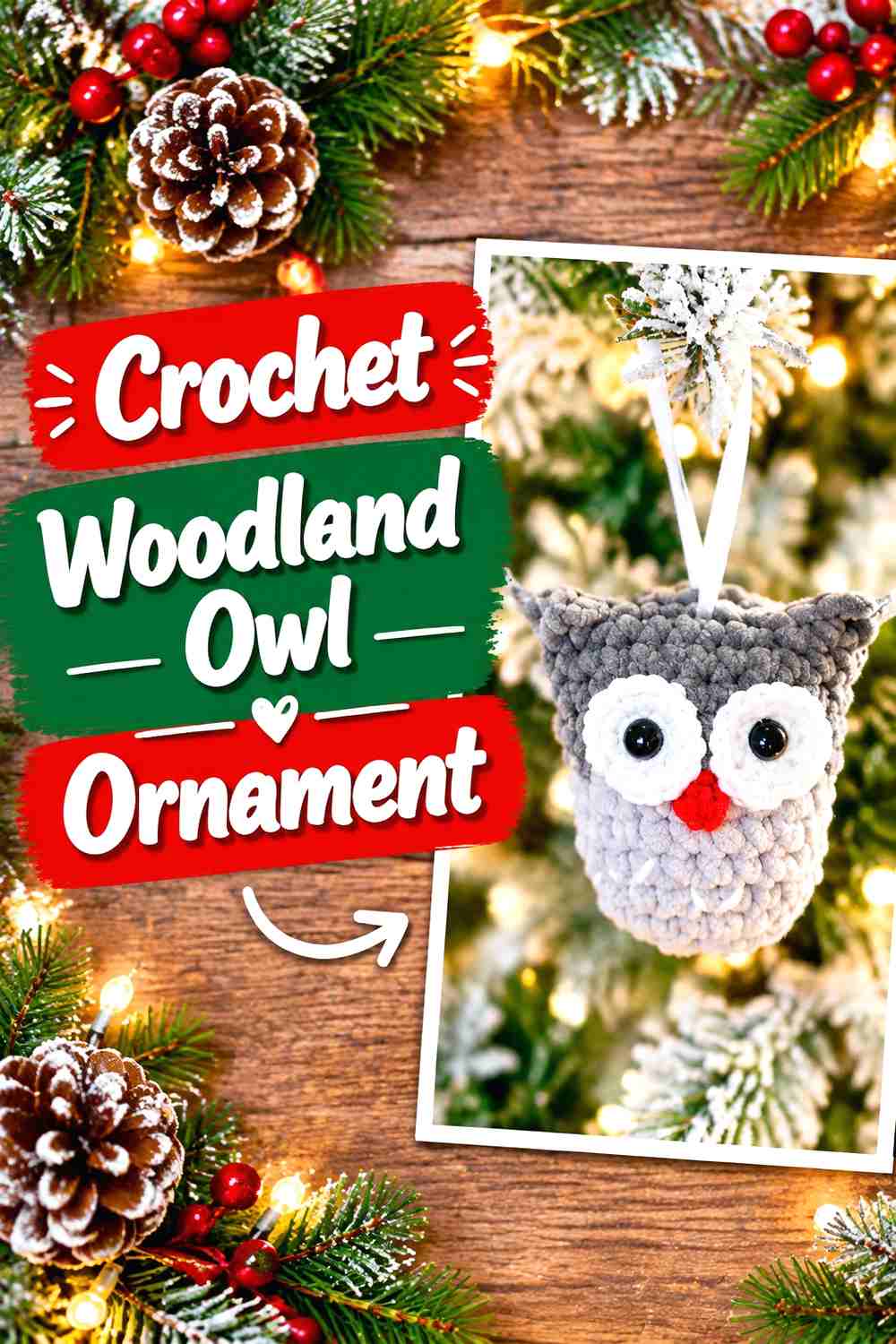
An owl adds a nontraditional Christmas character while still fitting naturally into a winter woodland scene. Double Dutch Crochet’s ornament is an amigurumi-style owl with a compact body and strongly defined facial area.
It works particularly well beside trees, snowflakes, reindeer, and cottages when you want the ornaments to suggest an illustrated forest.
Eye Placement Carries Most of the Expression
Large eye areas draw attention before almost any other detail on an owl.
Compare their height and spacing before securing them permanently. A small asymmetry can look much more obvious on a simple face than it would on a heavily decorated ornament.
Protect the Outer Face Details From the Hanger
Ear-like details, ribbon, and the hanging loop all compete for space around the top.
Check the ornament while suspended and make sure the loop does not pull facial or head details backward where they become difficult to see.
Give the Owl a Quieter Background Branch
A compact animal ornament can disappear among several similarly sized characters.
Placing it beside a flat snowflake, star, or open wreath gives the rounded owl enough contrast to become recognizable rather than blending into another stuffed shape.
Creator Credit: Double Dutch Crochet
15. Crochet Mini Christmas Tree Ornament
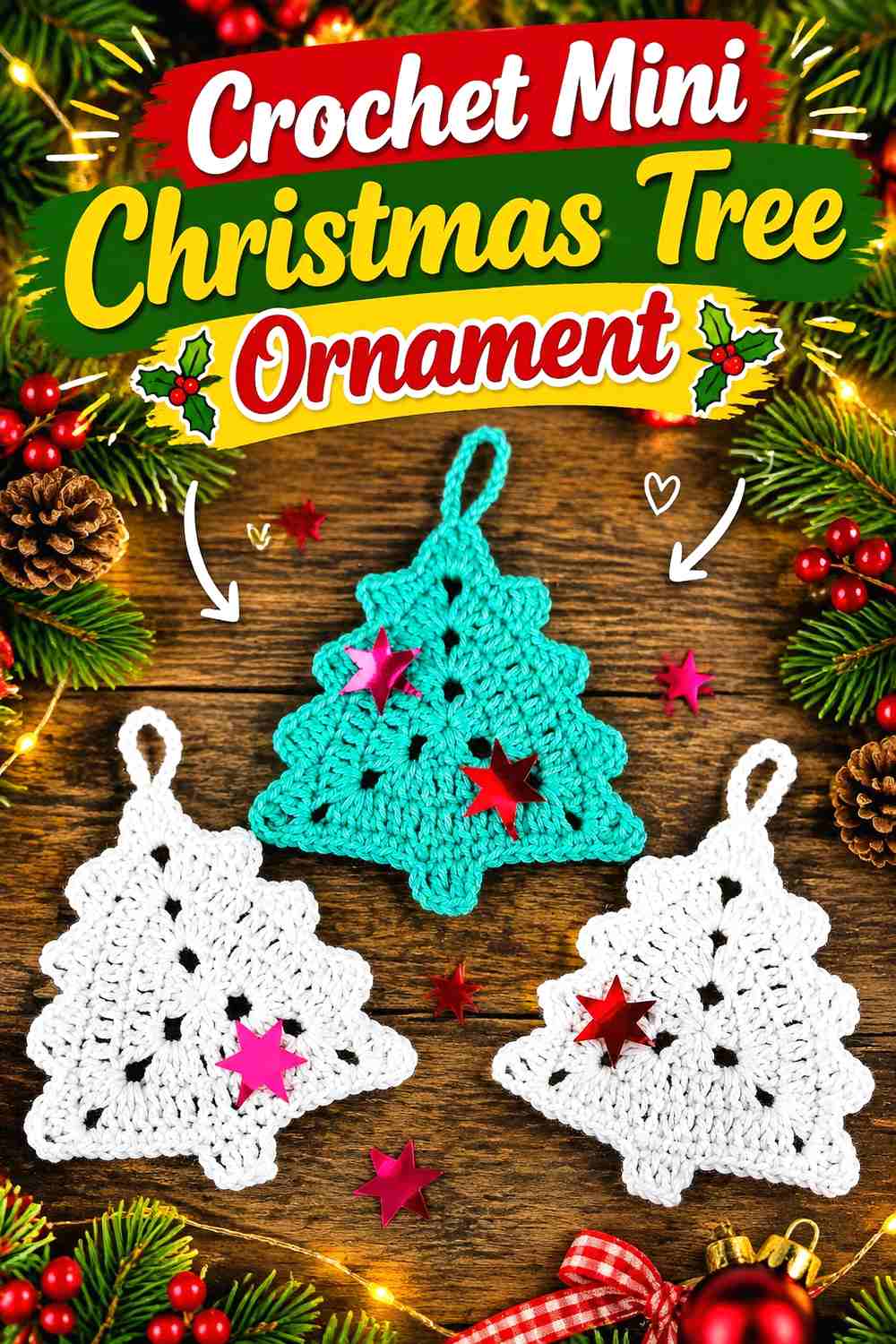
A crochet tree hanging on a larger Christmas tree creates a playful bit of repetition. Kristines Crochets’ tutorial makes a dedicated tree ornament with a clear triangular profile and trunk, so the shape remains recognizable without needing character details.
It is a good transition piece between the storybook characters and the simpler stars or snowflakes.
Keep the Trunk on the Same Visual Centerline
A tree shape exaggerates crooked hanging because the top point and trunk naturally create a vertical axis.
Before finalizing the loop, suspend the piece and check whether the trunk sits directly below the center of the upper point.
A Small Tree Does Not Need Many Tiny Ornaments
Beads, buttons, knots, or embroidered dots can create a decorated-tree effect, but a small crochet surface becomes crowded quickly.
Try the plain or minimally decorated ornament on the larger tree first. The crochet texture itself may already provide enough detail.
Use Several Trees to Build Depth
If you want a miniature forest effect, make related trees rather than exact clones.
Keeping the same overall silhouette while adjusting a few colors or finishing details can produce variety without breaking the visual connection between them.
Creator Credit: Kristines Crochets
16. Crochet Soft Wreath Ornament
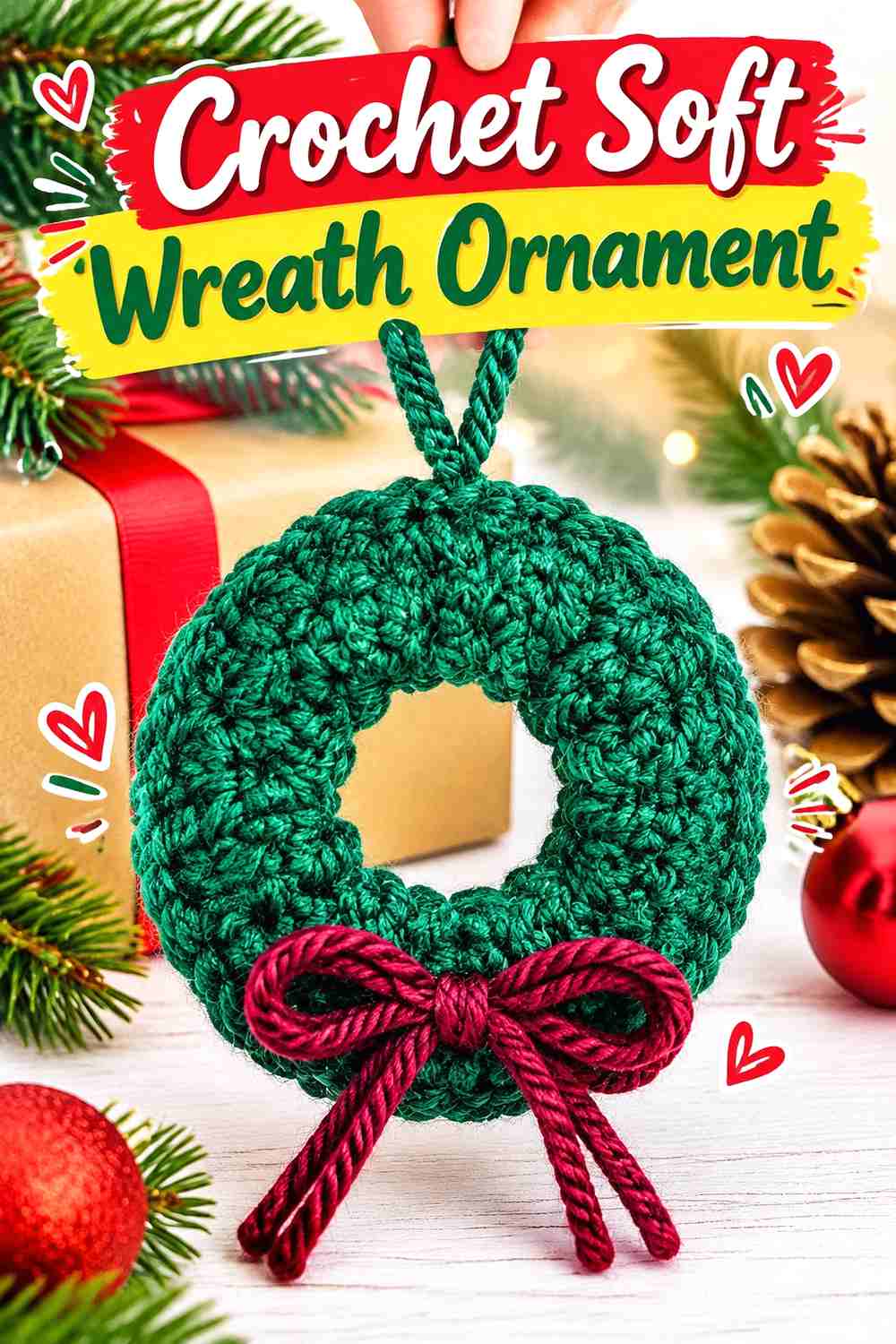
A small wreath introduces an open circular shape between all the solid characters and baubles. Desert Blossom Crafts’ design is formed from a crocheted section that is assembled around a support, creating a textured ring rather than a solid disk.
That open center makes the ornament especially useful when a tree starts to feel crowded with stuffed pieces.
Preserve the Empty Center
The central opening is as important as the crocheted ring itself.
Before hanging, arrange the wreath so the opening remains even enough to read clearly. Dense foliage pressed through the middle can make it look more like a round textured ornament than a wreath.
Let the Bow Establish the Orientation
Without decoration, a wreath can rotate freely without looking wrong. A bow creates a clear top or bottom and changes that.
Attach or position the main accent first, then test where the hanging loop needs to sit so gravity does not turn the bow sideways.
Store the Ring Without Crushing Its Texture
A soft wreath can flatten when packed tightly beneath heavier Christmas decorations.
Give it enough room to retain both the outer circle and center opening, particularly if the surface includes pronounced texture.
Creator Credit: Desert Blossom Crafts
17. Crochet Hot Chocolate Mug Ornament
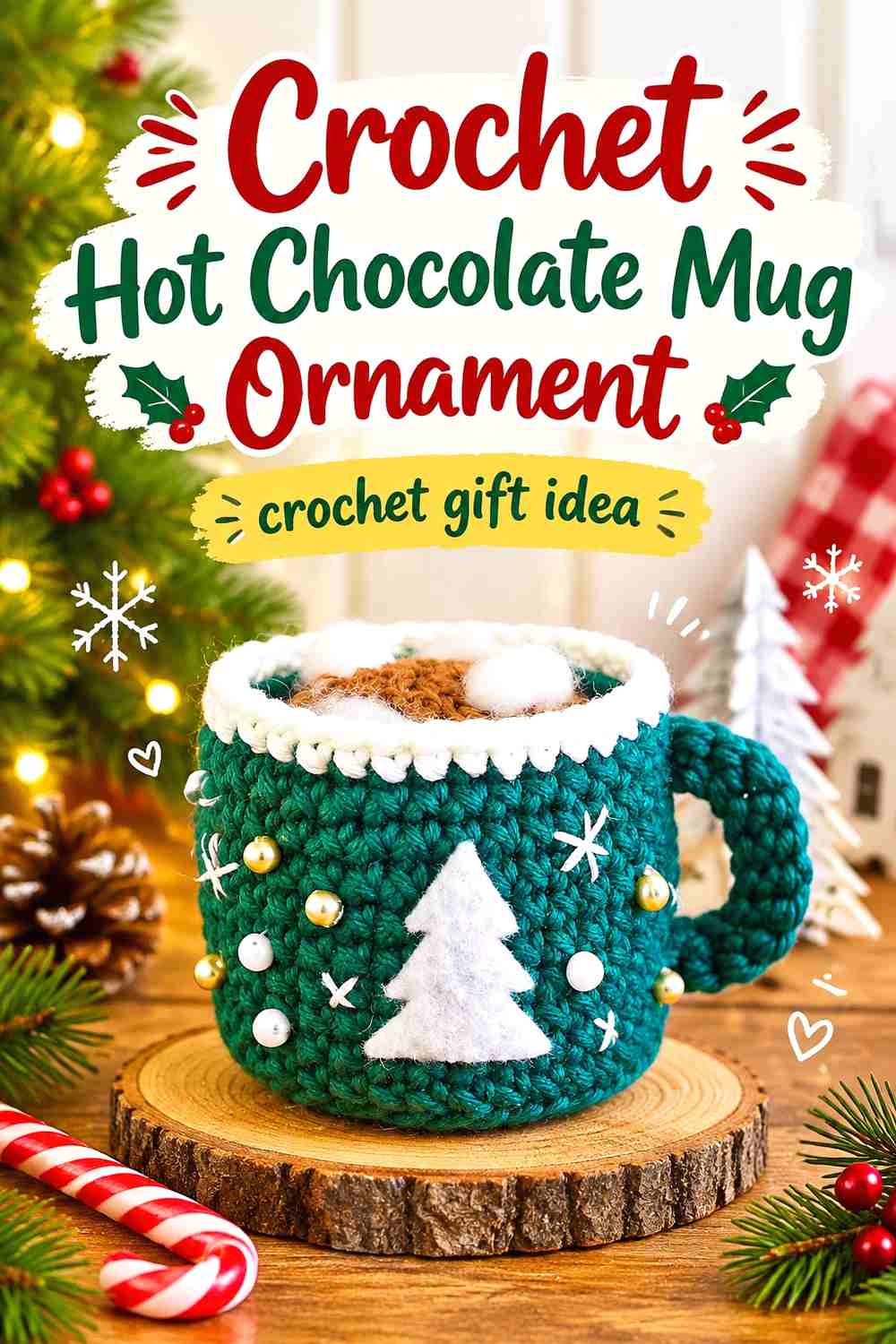
Few ornaments capture the cozy side of the storybook theme as directly as a miniature mug of hot chocolate. The olliehollycrochet design includes the cup form and contrasting cocoa or topping details, turning an everyday winter comfort into a tiny hanging object.
It makes a strong finishing idea for this collection because its shape is completely different from the stars, characters, and traditional symbols above.
The Handle Needs to Stay Visible
A mug without a visible handle can look like a small cylinder when viewed from the front.
Check handle placement from the intended display angle before finishing. Also test the hanger so the ornament does not naturally rotate until the handle disappears behind the body.
Let the Cocoa Surface Peek Upward
Part of the charm is seeing what the little mug supposedly contains.
If the ornament hangs perfectly upright against a high branch, the top may disappear from view. Test it around eye level and adjust placement so both the side of the cup and at least some of the top remain visible.
Protect Projecting Details During Storage
The handle and topping are more vulnerable than the central body.
Instead of pressing the mug into a box of flat ornaments, give it a small compartment or an area where heavier decorations will not sit on it for months.
Creator Credit: olliehollycrochet
How to Mix Flat, Soft, and Dimensional Ornaments on One Tree
A cozy storybook tree benefits from contrast in depth as much as contrast in subject. Snowflakes and stars can fill the smaller spaces between branches without projecting far forward. Mittens, stockings, and wreaths add recognizable shapes while staying relatively compact. Snowmen, owls, puddings, gnomes, baubles, and cocoa mugs create stronger three-dimensional focal points.
Spread the bulky pieces rather than clustering them on one side. Then use narrow candy canes and longer angels to fill vertical spaces, with flatter motifs acting as visual breathing room.
You also do not need all 17 designs in equal numbers. A few focal characters surrounded by repeated snowflakes, stars, mittens, or trees can look more intentional than producing the same quantity of every ornament.
Conclusion
The strongest crochet storybook Christmas tree is not necessarily the one with the most complicated ornaments. It is the one where every shape adds something different to the scene.
Start with a few narrative pieces such as the gingerbread cottage, gnome, snowman, reindeer, owl, or cocoa mug. Add traditional Christmas shapes such as the stocking, bell, angel, star, and pudding, then use snowflakes, wreaths, mittens, candy canes, baubles, and miniature trees to connect the larger focal pieces.
Make one sample before repeating a design, check how it hangs on an actual branch, and adapt color or decoration only after you know the underlying shape works for your tree. Use the credited creator tutorials for the exact construction details of each ornament.
Frequently Asked Questions
What makes a crochet Christmas ornament look “storybook”?
A storybook ornament usually has a recognizable object, character, or sense of setting rather than relying only on abstract color. Tiny houses, mittens, woodland animals, gnomes, puddings, cocoa mugs, stars, and snowy trees work well together because they suggest scenes and familiar holiday objects.
You do not need every ornament to be a character. Snowflakes, stars, bells, and wreaths help create the background around the more narrative pieces.
How can I keep 17 different crochet ornaments from making the tree look chaotic?
Repeat a limited group of colors or finishing details across different projects. For example, cream can appear as snow on a cottage, a mitten cuff, angel detail, pudding icing, and snowflake.
That repeated color connects unrelated silhouettes. You can also repeat the same hanging ribbon or yarn-loop style so the collection feels intentional.
Which crochet storybook ornaments are easiest to store without taking much room?
Flatter ornaments such as stars, snowflakes, mittens, and some wreath or tree designs generally require less storage depth than stuffed characters and dimensional objects.
Protect pointed pieces from sharp folds and avoid placing heavy decorations on top of blocked or shaped crochet. Dimensional mugs, bells, baubles, puddings, and character ornaments need more space to retain their silhouettes.
Should every crochet ornament use the same yarn weight?
No. Different projects can use different yarns and still belong on the same tree.
However, changing the yarn specified by a tutorial can change scale, stiffness, stitch visibility, and finished weight. If you substitute, complete one sample before making several and compare it with the other ornaments you plan to display.
How do I keep character ornaments facing forward on the tree?
Test the hanging point only after the main assembly and decoration are finished. Facial details, hats, antlers, wings, handles, and stuffing can all shift the balance.
Temporarily suspend the completed piece from different positions until you find one that naturally presents the front toward the viewer.
Are bells, beads, wire, buttons, and other small decorations suitable for every tree?
Not automatically. Their suitability depends on the display location and who can reach the ornaments.
Small detachable parts and exposed structural materials deserve particular care around young children and pets. Secure embellishments appropriately and consider embroidered or crocheted alternatives where loose small components would be undesirable.