November scarves have to do more than add color. They often sit between a sweater and a coat, wrap closely around the neck, and move between chilly outdoor weather and warmer indoor spaces. That makes fabric thickness, scarf width, drape, and the way colorwork is managed just as important as the palette itself.
These 16 crochet colorwork scarf ideas take different approaches to multicolor design. Some use deliberate two-color changes, while others build checks, mosaic geometry, tartan lines, granny motifs, or planned-pooling diamonds. There are also simpler striped and color-block options for anyone who wants strong color without managing several active yarn strands at once.
The projects are not interchangeable. A houndstooth scarf creates a dense repeated pattern, a granny-square scarf introduces seams and motif planning, and a self-striping C2C scarf lets the yarn handle much of the color progression. Comparing those construction differences before starting can save both yarn and frustration.
Quick List
- Crochet Houndstooth Colorwork Scarf
- Crochet Tartan Colorwork Scarf
- Crochet Gingham Plaid Scarf
- Crochet Checkerboard Skinny Scarf
- Crochet Battenberg Color-Block Scarf
- Crochet Argyle Planned-Pooling Scarf
- Crochet Mosaic Colorwork Scarf
- Crochet Granny-Stripe Colorwork Scarf
- Crochet Granny-Square Patchwork Scarf
- Crochet Tapered Striped Neck Scarf
- Crochet Three-Block Colorwork Scarf
- Crochet Alternating-Stripe Winter Scarf
- Crochet Diamond Color-Gradient Scarf
- Crochet Self-Striping C2C Triangle Scarf
- Crochet Rainbow Statement Scarf
- Crochet Two-Color Minimalist Scarf
Choose the Colorwork Method Before Choosing the Palette
A good color combination cannot fix a technique that does not suit the way you want to crochet. Before collecting yarn, decide whether you want to change colors within rows, alternate complete rows, join separate motifs, weave additional colors through finished fabric, or let a multicolor yarn create the effect for you.
Tapestry-style crochet and small motifs can require more attention to yarn management. Row-by-row stripes are more repetitive, while planned pooling depends heavily on maintaining the relationship between stitch tension and the yarn’s color sequence. Mosaic crochet creates another type of graphic fabric, with pattern placement rather than simple striping doing most of the visual work.
This distinction also affects finishing. A scarf with frequent cut color changes can produce many ends, whereas carried colors, motif joins, fringe, or planned pooling can handle those transitions differently.
Think About Both Sides of a November Scarf
Scarves fold, twist, and wrap around the neck, so the reverse side is more visible than the inside of many other crochet projects. That does not mean every scarf needs to be perfectly reversible, but it does mean the back deserves consideration before you choose a colorwork method.
Long floats or poorly controlled carried yarn can become noticeable when the scarf turns over. Motif seams can create a different texture on one side. Tartan weaving and some mosaic methods intentionally produce a front that looks different from the back.
If you regularly wear a scarf loose over a coat, the front-facing pattern may matter most. For a scarf wrapped several times around the neck, a cleaner reverse or a design that looks interesting from both sides can be more practical.
Plan Colorwork Around Your November Layers
A scarf can look completely different against a coat than it does by itself. High-contrast black-and-cream checks may become the main feature of a neutral outfit, while muted rust, olive, brown, burgundy, or blue combinations can blend more quietly into fall layers.
Also consider physical bulk. A wide mosaic or tapestry scarf can create more fabric around the neck than a narrow checkerboard scarf. A triangular scarf concentrates fabric at the front of the chest, while a traditional rectangle can be looped, knotted, or left hanging.
Choose the scarf shape and fabric density first, then use color to reinforce the role you want it to play in your November wardrobe.
1. Crochet Houndstooth Colorwork Scarf
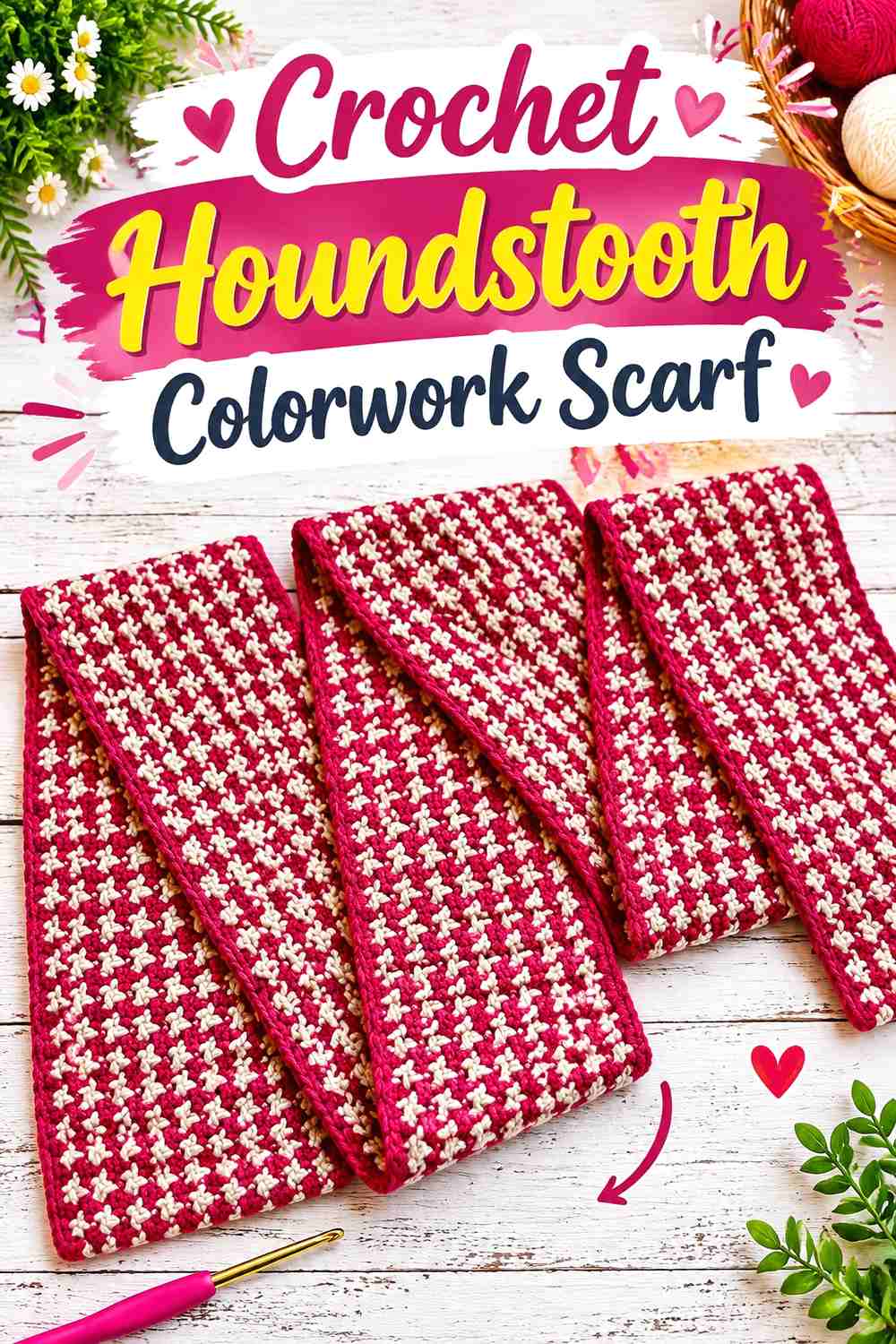
Houndstooth gives a crochet scarf a recognizable allover pattern without relying on large motifs. Olga Poltava demonstrates the scarf in two contrasting colors, with the color relationship creating the characteristic dogtooth appearance across the fabric.
This is a strong option when you want colorwork to read clearly from a distance but do not want a patchwork scarf with separate pieces.
High Contrast Makes the Motif Easier to Read
Houndstooth depends on the relationship between its two shades. Colors that are very similar in value can soften the pattern considerably, while stronger light-dark contrast makes each repeated shape easier to distinguish.
Before committing to a long scarf, crochet a small sample and photograph it in grayscale. If both shades appear almost identical, the final houndstooth may look subtler than you expect.
Decide Whether Fringe Should Continue the Color Story
The source tutorial allows fringe as a finishing direction. If you use it, fringe can repeat both scarf colors, emphasize only the dominant shade, or introduce a more restrained finish.
For November layering under a structured coat, a simple edge may feel cleaner. With a longer casual scarf, mixed-color fringe can reinforce the graphic pattern.
Creator Credit: Olga Poltava
2. Crochet Tartan Colorwork Scarf
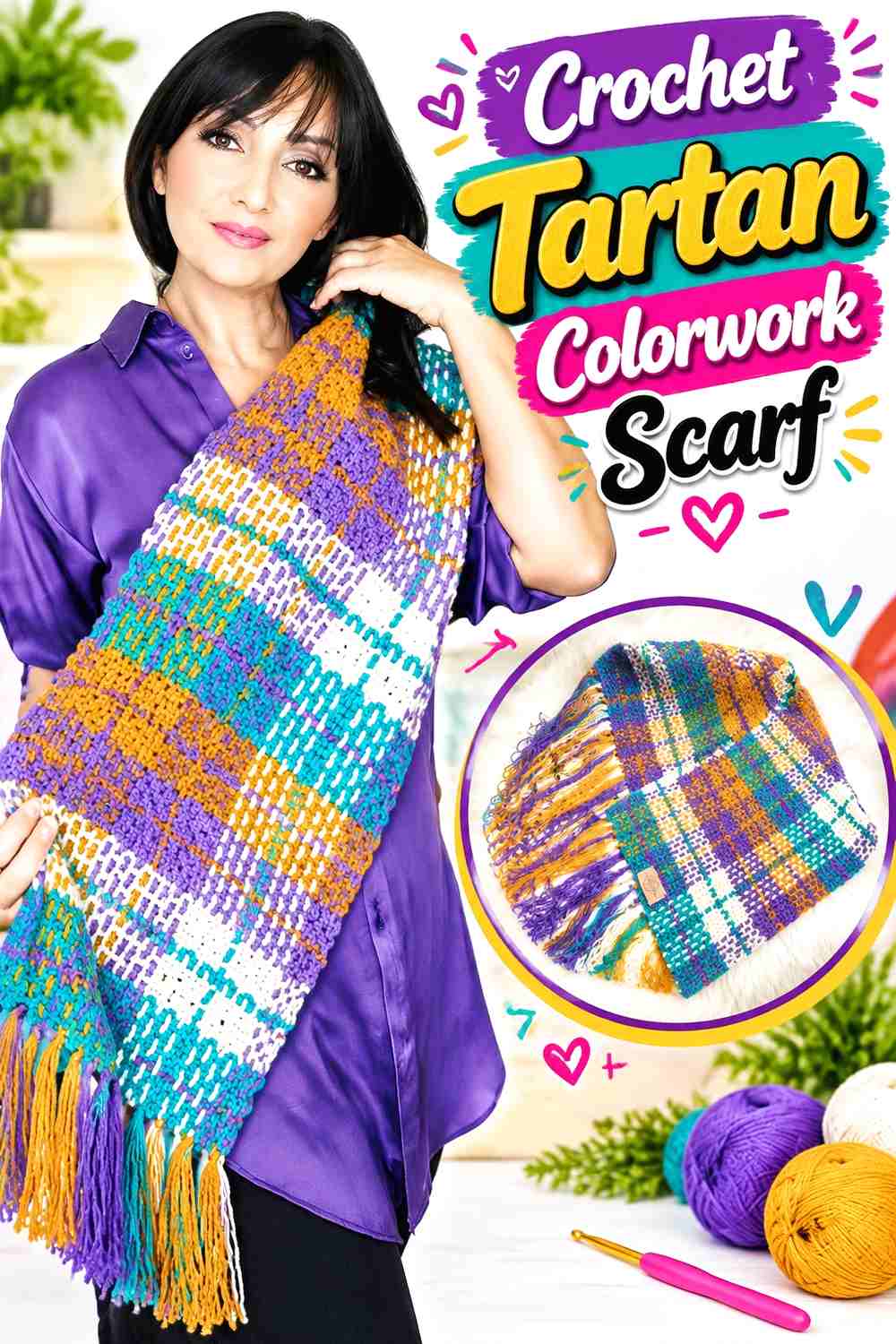
La fata tuttofare’s tartan scarf takes a different route from ordinary stripes. The project establishes a crochet base and then uses additional color placement to create the intersecting lines associated with tartan, making both horizontal and vertical color relationships important.
That makes this scarf especially useful when you want several colors to interact without turning the whole piece into small repeating checks.
Choose a Dominant Color Before Adding Accent Lines
Tartan can become visually crowded when every shade has equal strength. Start by deciding which color should occupy most of the visual field and which shades should function as narrower accents.
For a fall wardrobe, this also makes coordinating the scarf easier. A dominant shade related to your usual coat or sweater can anchor brighter secondary lines.
Added Vertical Lines Change the Fabric Differently Than Stripes
This construction is not simply a sequence of color changes from row to row. The crossing lines are part of what creates the tartan impression.
If you substitute yarn, check that the strands used for the added color treatment do not become disproportionately bulky compared with the crochet base.
Creator Credit: la fata tuttofare
3. Crochet Gingham Plaid Scarf
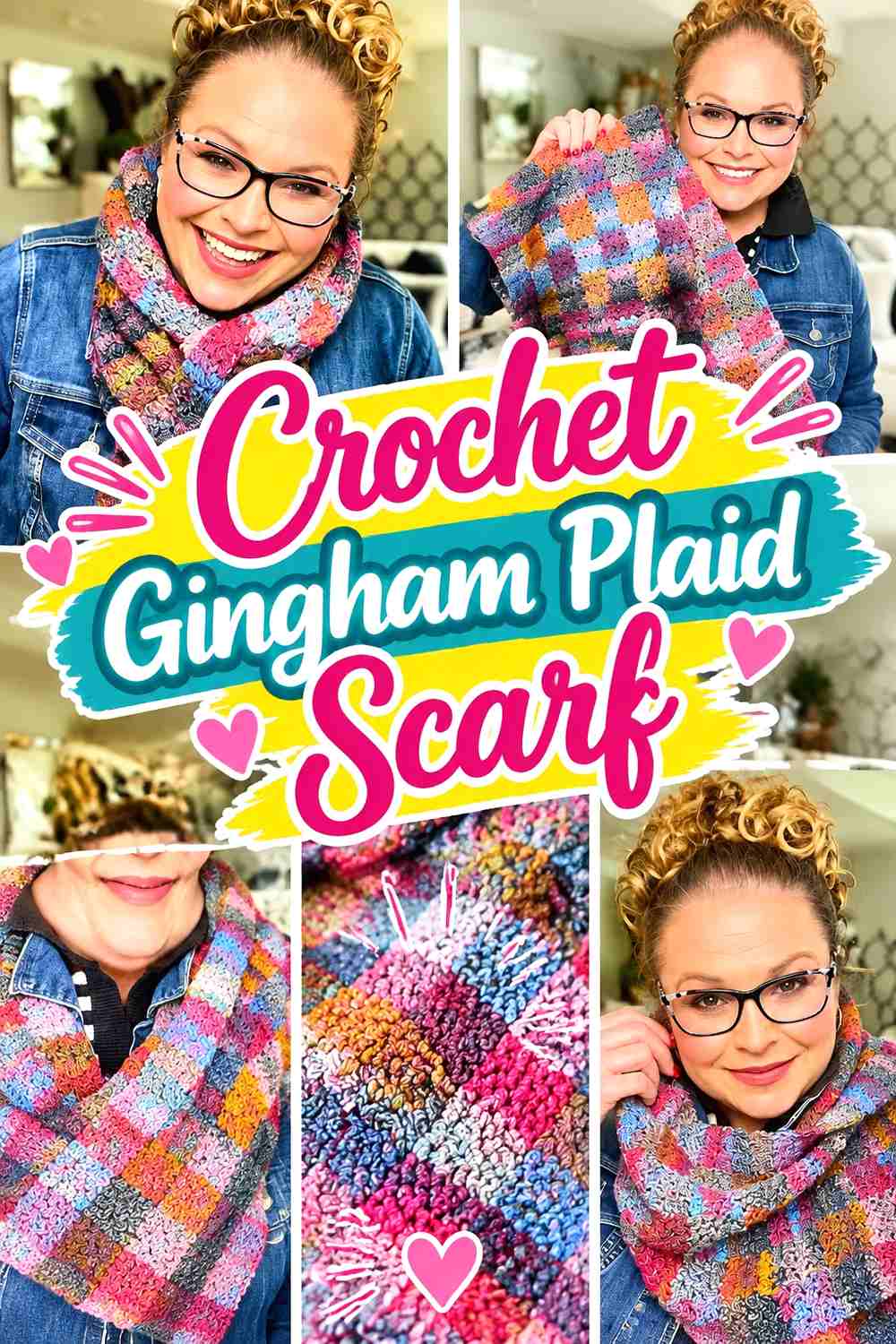
Marly Bird’s plaid scarf uses tapestry colorwork to build repeating blocks, producing a gingham-like checked surface rather than relying on post-crochet weaving. The source project uses multiple colors and carries the unused yarn while the contrasting blocks are worked.
This is a useful choice when you prefer checks to remain part of the crocheted fabric itself.
Carried Yarn Can Change the Feel of the Fabric
Tapestry crochet places inactive yarn inside the working stitches. That keeps colors available for the next section, but it can also create a more substantial fabric than an otherwise similar single-color stitch pattern.
For November, that extra body may be welcome. Just avoid assuming that a substitute yarn will produce the same drape if it is significantly thicker or less flexible.
Check Block Proportions Before Changing Yarn Weight
Gingham relies on recognizable repeated sections. If your gauge changes substantially, the blocks may appear taller or wider than the source version.
Make a sample large enough to include more than one color transition so you can evaluate the actual check shape rather than judging only a few stitches.
Creator Credit: Marly Bird
4. Crochet Checkerboard Skinny Scarf
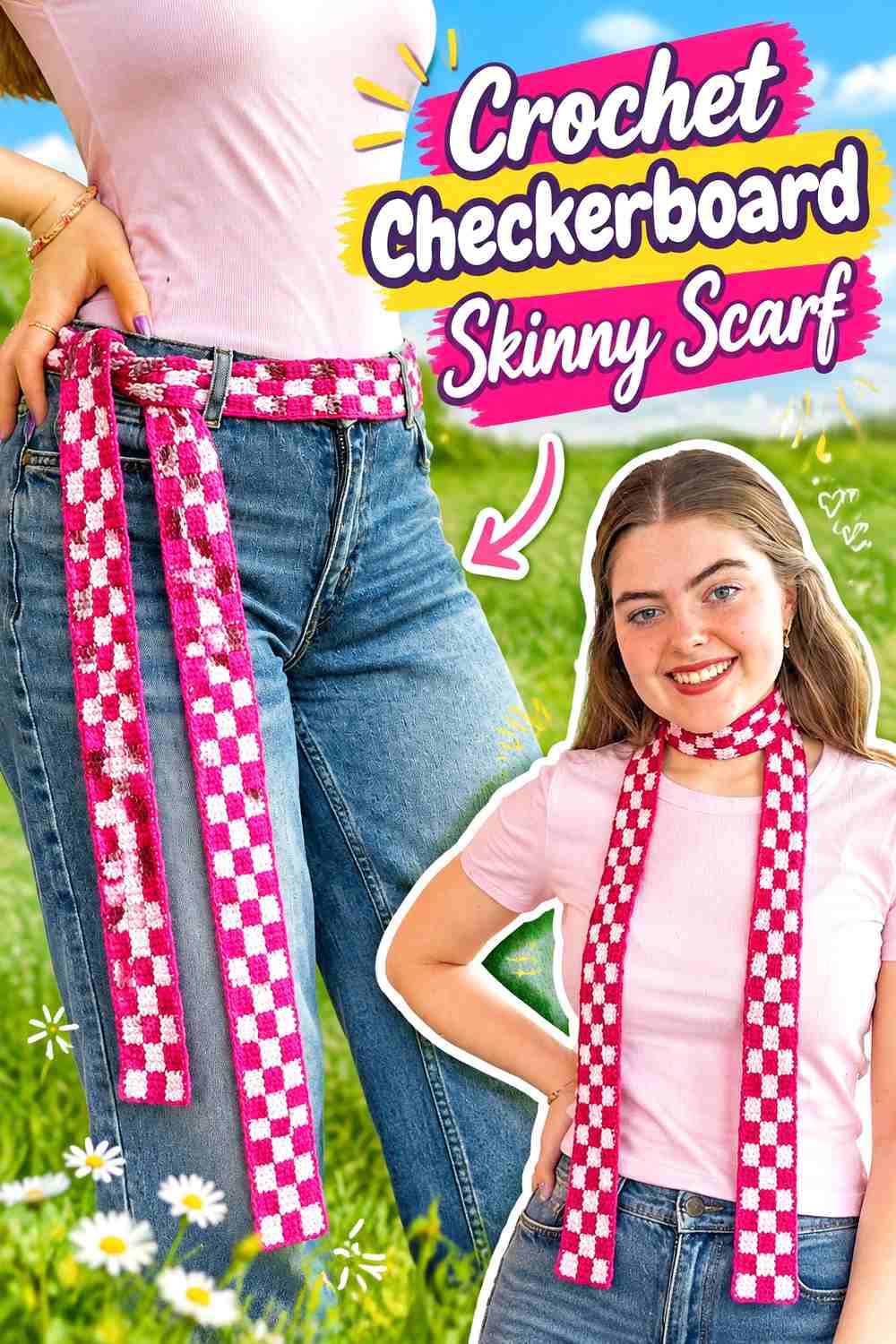
Crochet with Linni demonstrates a two-color checked scarf with an intentionally slim profile. The project can also function as a belt, which immediately separates its scale from the broader winter scarves in this list.
For November layering, that narrower width is useful when you want visible colorwork without adding a large bundle of fabric beneath a jacket collar.
Small Checks Give You More Visual Repetition
A narrow scarf does not have room for oversized motifs. Smaller blocks let the checkerboard continue clearly along the length without requiring a wide accessory.
If you adapt the width, consider whether larger dimensions should also mean larger checks or simply more repeats across the scarf.
A Skinny Scarf Adds Color More Than Coverage
This construction should be chosen for styling as much as warmth. A narrow scarf leaves more of the neckline exposed than a broad wrap.
It works particularly well with sweaters, cardigans, and coats where you want the colorwork visible but do not need the scarf to fill the entire collar area.
Creator Credit: Crochet with Linni
5. Crochet Battenberg Color-Block Scarf
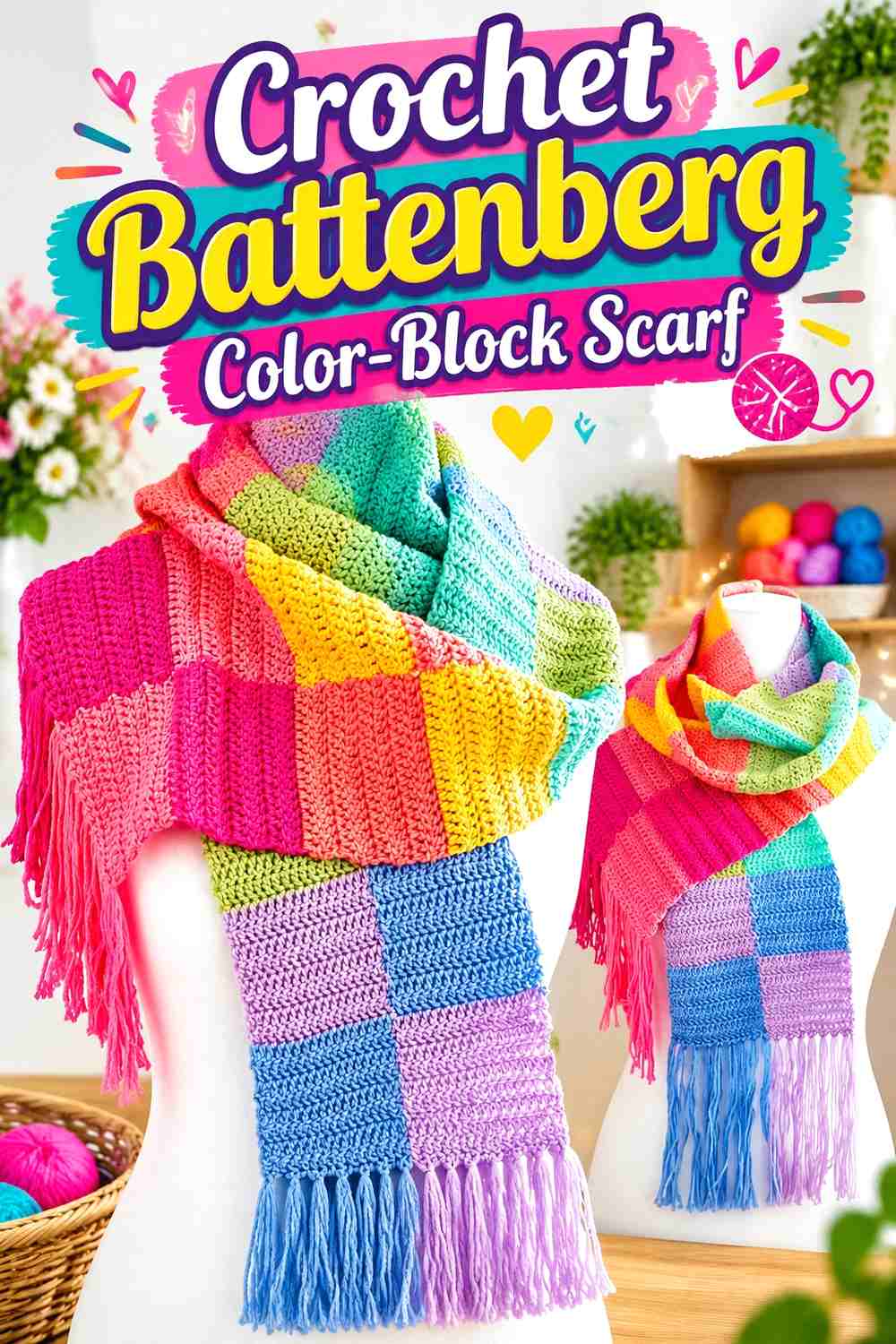
Hooked by Robin’s scarf uses long sections of contrasting color to create a blocky checked effect. Rather than tiny checks repeated across every row, the larger color sections make the scarf feel almost like a sequence of connected rectangular panels.
This can be especially effective when your yarn collection contains several coordinating shades rather than large quantities of only two colors.
Larger Blocks Let Similar Colors Stay Distinct
Very small motifs can cause neighboring medium-value shades to blur together. Bigger sections give each color enough room to register independently.
For a November palette, you could build a sequence around warm browns, mossy greens, rusts, plum, mustard, or muted blue without every shade competing in the same few stitches.
Plan the Color Order Before You Reach the Middle
A long block scarf exposes repetition quickly. Laying the yarn out in order helps you decide whether you want a repeating sequence, a mirrored arrangement, or an intentionally irregular progression.
This planning is particularly useful if some colors are available only in small amounts.
Creator Credit: Hooked by Robin
6. Crochet Argyle Planned-Pooling Scarf
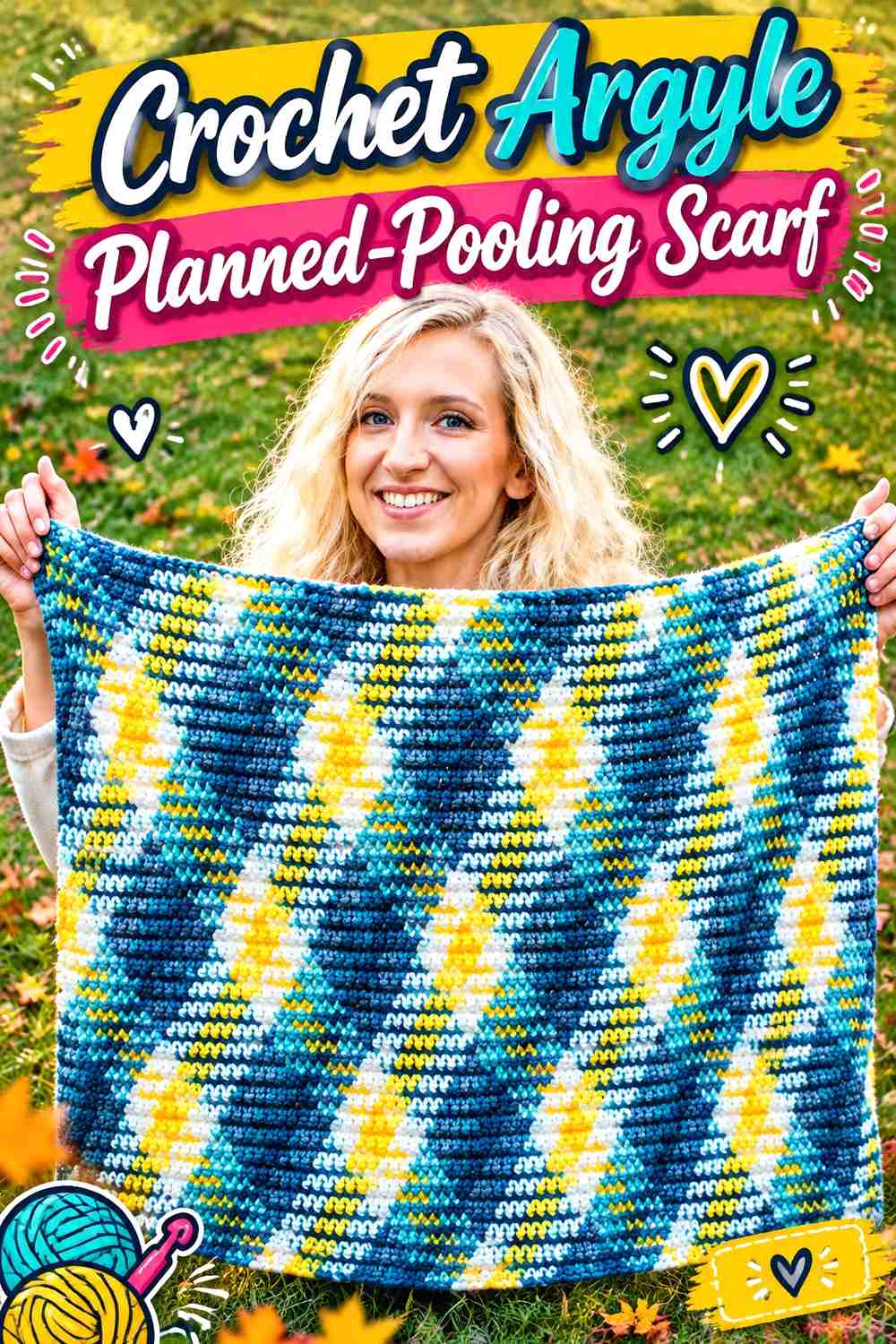
Naztazia’s tutorial uses planned pooling to turn the repeating colors in variegated yarn into diamond and argyle-like formations. Instead of introducing separate yarns for each colored section, the placement depends on controlling how the existing color sequence falls across the crochet fabric.
That makes this one of the most technique-dependent scarf ideas in the collection.
The Yarn Has to Suit Planned Pooling
Not every multicolor skein will form an argyle. The order and length of the color sections matter, so inspect the yarn repeat before choosing it solely because you like the colors.
A beautiful hand-dyed skein with highly irregular changes may create attractive crochet but still be unsuitable for a controlled pooling pattern.
Tension Becomes Part of the Color Pattern
In ordinary stripes, a slightly tighter row may change the scarf dimensions without moving a color into an entirely different place. Planned pooling is less forgiving because stitch size affects where each yarn color lands.
If the diamonds begin drifting, investigate tension and color placement early instead of continuing and hoping the pattern will correct itself later.
Creator Credit: naztazia
7. Crochet Mosaic Colorwork Scarf
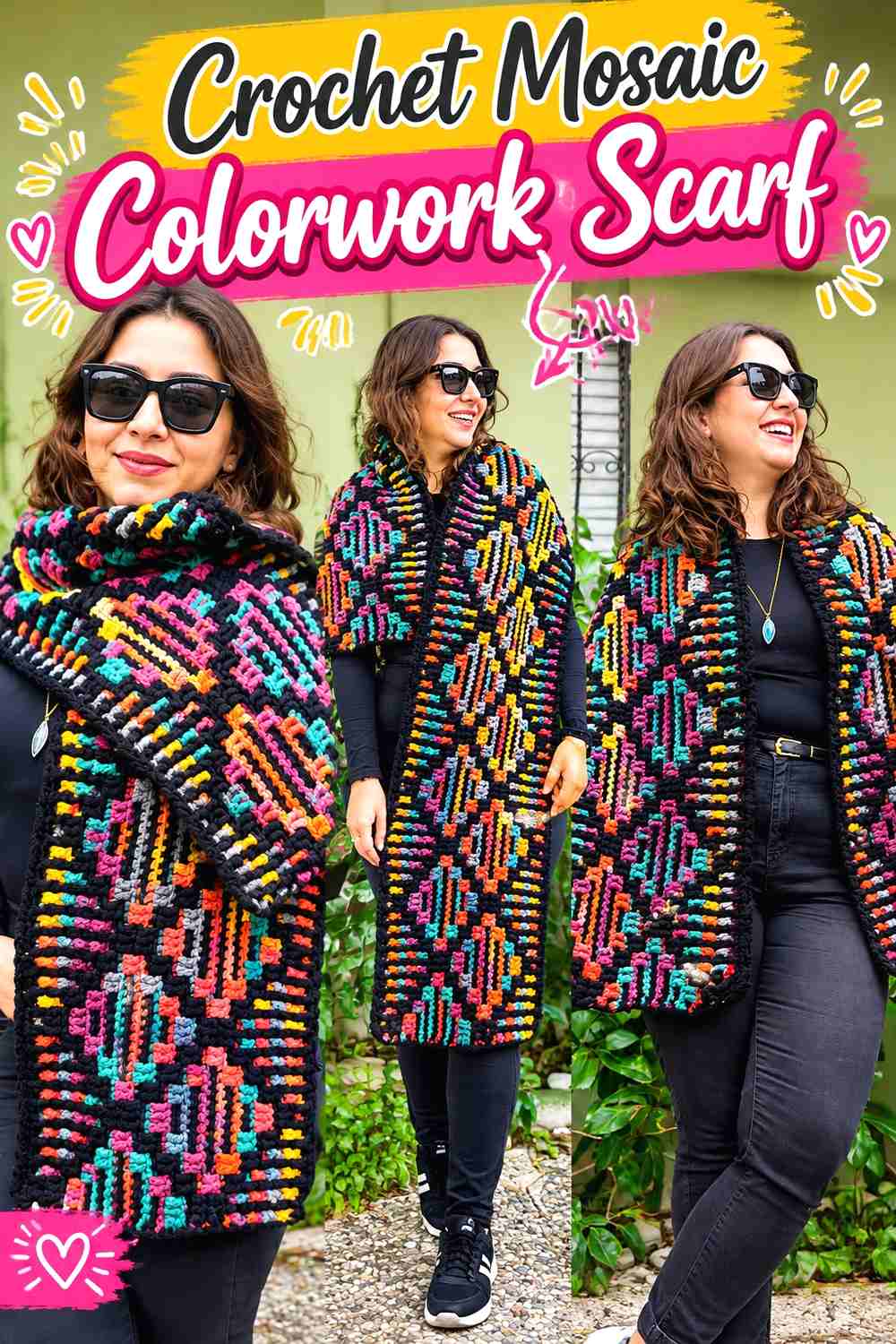
ÖRGÜ MÜ DEDİNİZ demonstrates a colorful mosaic scarf or shawl where the stitch placement creates a clearly patterned surface. The tutorial presents the project as a mosaic design and notes a construction that avoids constantly cutting the yarn.
Mosaic is a useful direction when you want geometry to dominate the scarf more strongly than ordinary horizontal stripes.
Pattern Visibility Depends on Color Separation
Mosaic designs often benefit from colors that remain distinguishable when they cross visually. If both yarns are highly variegated, the stitch geometry can become harder to see.
A solid paired with a multicolor yarn can be easier to read than two equally busy yarns.
Consider Thickness Before Making the Scarf Extra Wide
Some mosaic fabrics feel more substantial than open granny stripes or lacy C2C crochet. If the scarf will sit under a November coat, extra width may create more bulk than expected.
Compare the tutorial’s finished fabric with the neckline of your usual outerwear before enlarging the project.
Creator Credit: ÖRGÜ MÜ DEDİNİZ
8. Crochet Granny-Stripe Colorwork Scarf
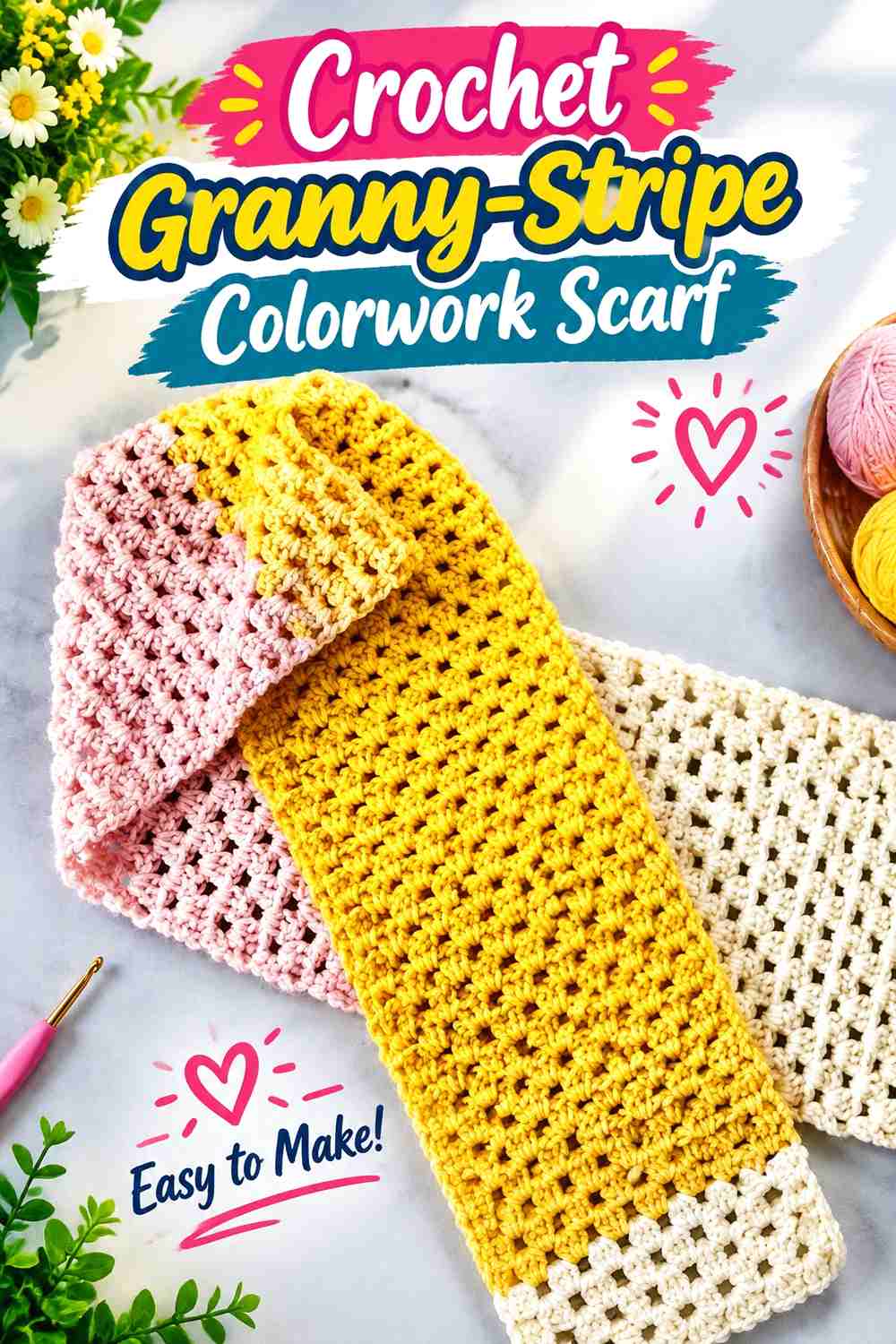
Hook That Thread’s scarf uses the granny-stripe approach, giving color changes a softer, more traditional crochet rhythm than checks or mosaic geometry. Repeated clusters create visible spaces, so each new shade becomes part of both the color sequence and the stitch pattern.
This is an appealing stash-based direction because the structure naturally accommodates repeated changes in color.
Decide Whether Your Stripes Follow a Rule
Random-looking granny stripes are often more successful when they still follow one small restriction. You might avoid placing similar colors next to one another, repeat one neutral at intervals, or alternate dark and light shades.
A simple rule keeps a scrap-yarn scarf lively without making the sequence feel unplanned.
Cluster Fabric Behaves Differently From Dense Colorwork
The spaces between granny groups give the scarf more visual openness than houndstooth or tapestry checks.
For cold November weather, decide whether you prefer that lighter fabric for indoor-outdoor layering or want a denser scarf that blocks more air around the neck.
Creator Credit: Hook That Thread
9. Crochet Granny-Square Patchwork Scarf
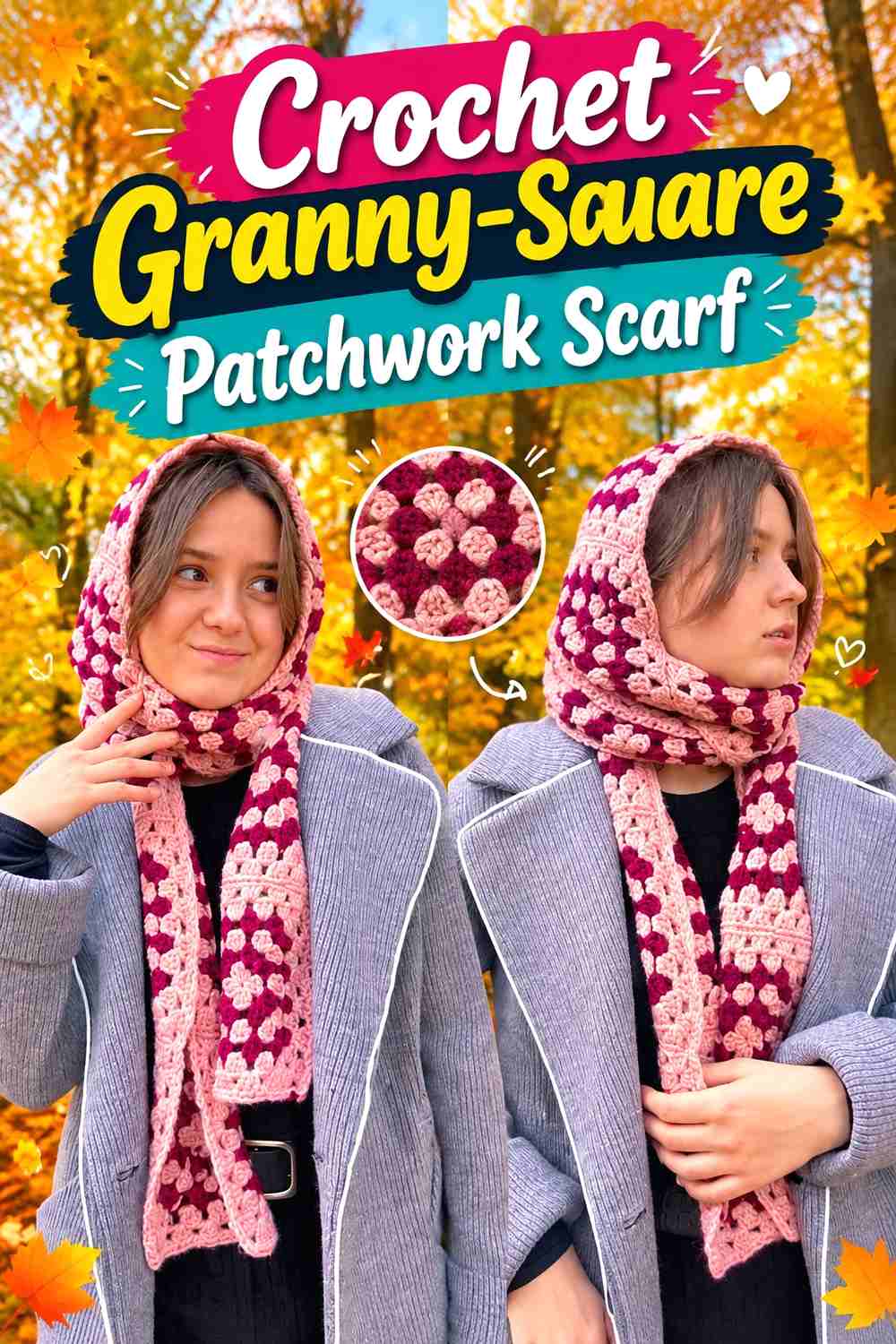
Fiorafana’s scarf is assembled from granny squares and demonstrates multiple color-change possibilities within the motifs. This modular construction makes it fundamentally different from scarves worked as one continuous rectangle.
Each square can carry its own palette, allowing the finished scarf to look coordinated, deliberately mismatched, or gradually changing from one end to the other.
Block Motifs Before Judging the Final Width
Even small differences between granny squares become more noticeable after many motifs are joined in a line.
Compare the finished dimensions of the squares before assembling the entire scarf. This matters particularly if you are mixing leftover yarns with slightly different behavior.
Joining Color Can Unify a Busy Palette
If every square contains several shades, the joining yarn can provide visual structure. A repeated neutral makes separate motifs feel more connected, while a contrasting join deliberately emphasizes the patchwork construction.
Think of the seam color as part of the design rather than a purely technical choice.
Creator Credit: fiorafana
10. Crochet Tapered Striped Neck Scarf
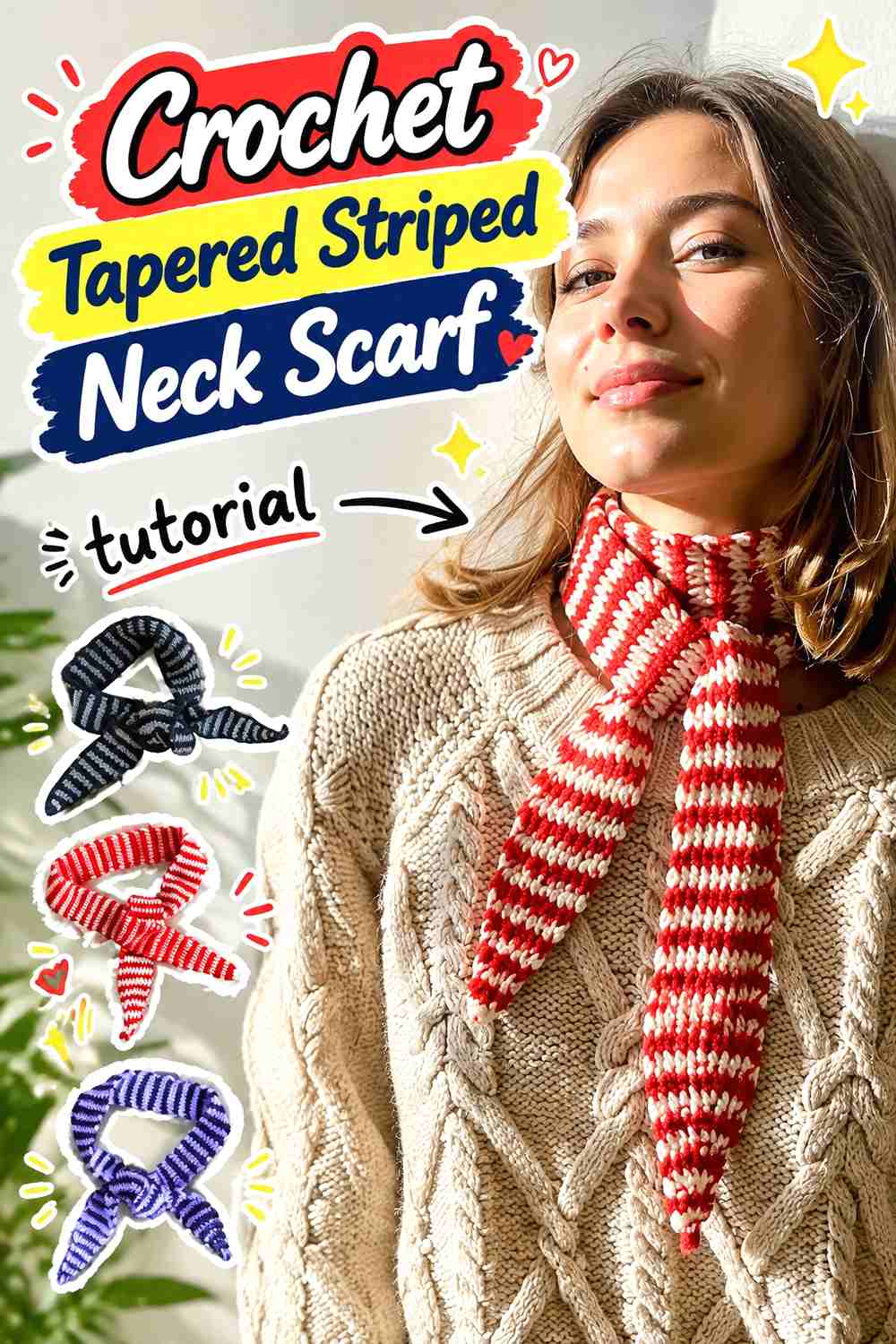
Passtschon’s striped scarf uses shaping rather than remaining the same width from one end to the other. The tutorial includes increases, a longer center section, decreases, repeated color changes, and a border, giving the finished scarf a slimmer fashion-scarf profile.
That silhouette works well when you want November color near the face without the volume of a large rectangular winter scarf.
Carrying a Second Color Can Reduce Finishing
The tutorial demonstrates managing the inactive shade rather than cutting yarn at every change. This can significantly simplify striped projects, but the carried yarn still needs to remain relaxed.
If it is pulled too tightly, the scarf can shorten or curve along the carried edge.
Tapered Ends Change How the Scarf Ties
Narrow tips pass through knots and loops more easily than broad rectangular ends. That makes the scarf useful with collared coats or cardigans where a large knot would feel bulky.
When adjusting length, preserve enough center section for the way you actually intend to tie it.
Creator Credit: passtschon
11. Crochet Three-Block Colorwork Scarf
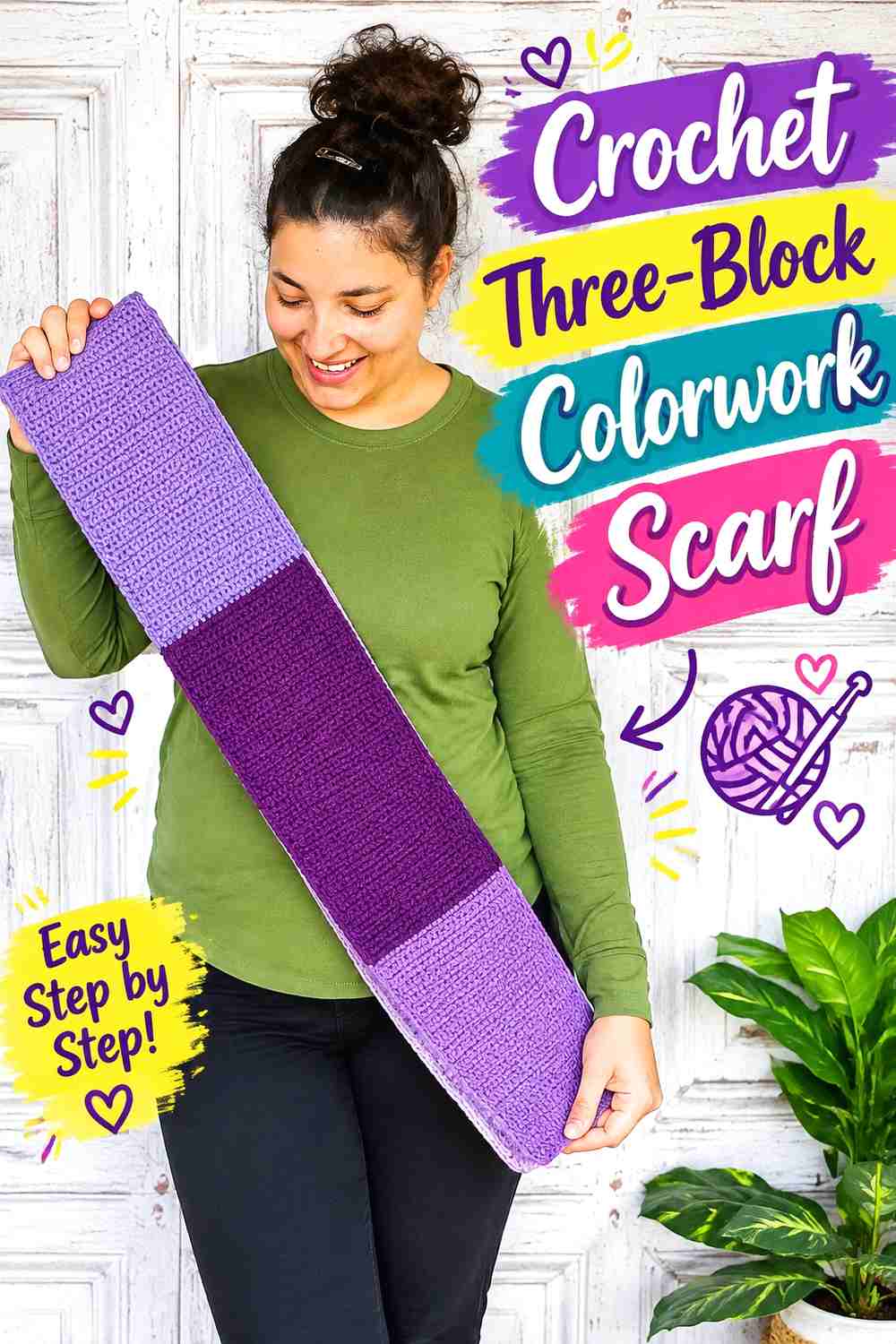
Yarn Crafts | EyeLoveKnots | Cre8tion Crochet demonstrates a straightforward scarf worked in broad color blocks. Rather than changing colors repeatedly across every row, the design lets each shade occupy a substantial section of the scarf.
This is one of the calmer choices in the collection and works well when the yarn palette itself is the main attraction.
Broad Blocks Work Well With Tonal Palettes
Three related shades can create an ombré-like movement without requiring a gradient yarn. Three contrasting shades produce a more graphic result.
Lay the skeins in their intended order first; the middle color is especially important because it visually connects the two ends.
A Simple Stitch Makes Edge Quality More Visible
When color placement is uncomplicated, uneven sides are easier to notice. Check the first and last stitch regularly so the scarf does not slowly widen or narrow.
A border can refine an edge, but it should not be expected to hide a major difference in width.
Creator Credit: Yarn Crafts | EyeLoveKnots | Cre8tion Crochet
12. Crochet Alternating-Stripe Winter Scarf
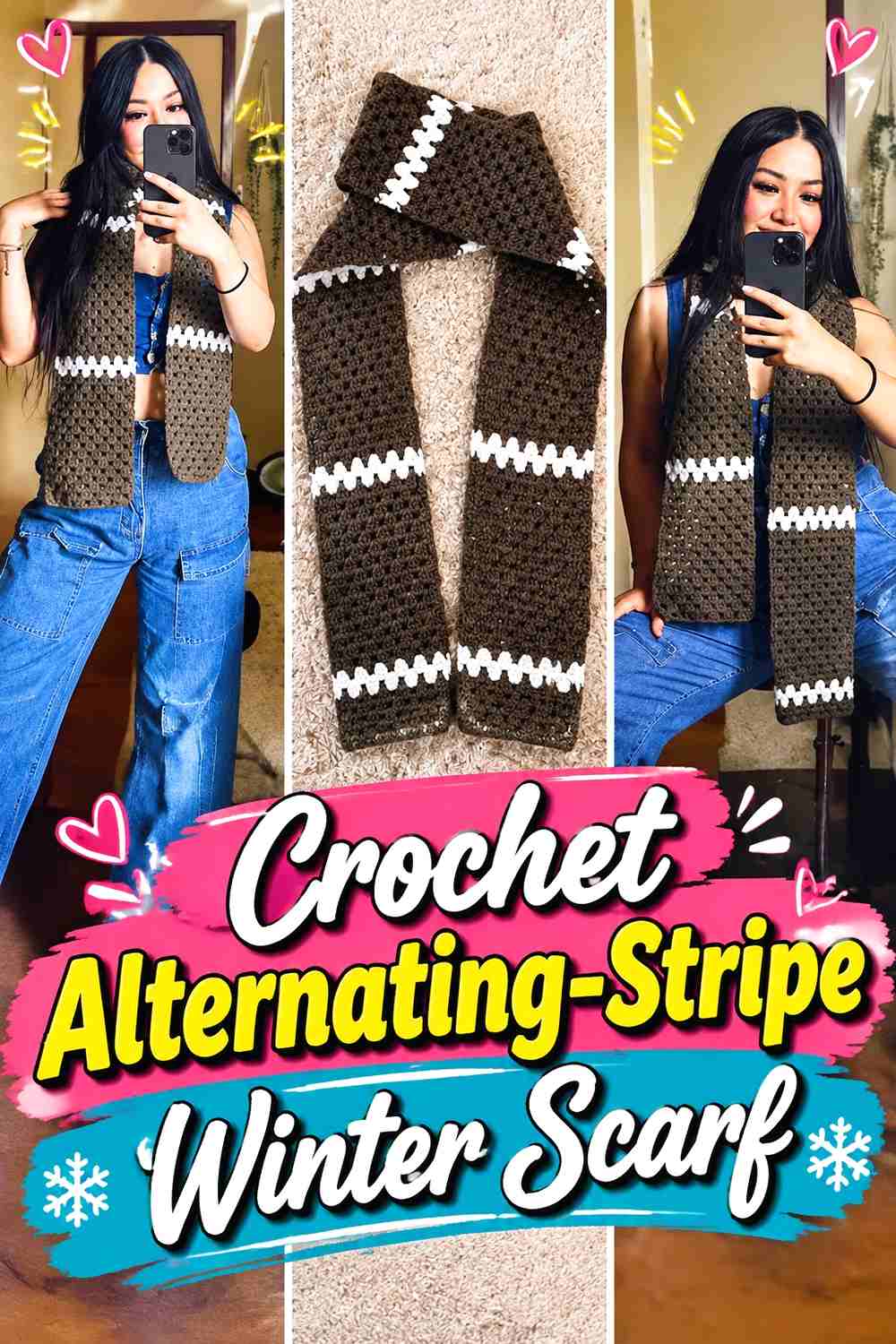
Cherilyn Q’s scarf uses a repeat-based rectangular construction and includes a demonstrated color change. The basic long shape makes this a useful foundation when you want a conventional November scarf with deliberate stripes rather than checks or motifs.
Because the structure is comparatively restrained, stripe spacing can become the main design decision.
Unequal Stripes Can Feel More Intentional Than Constant Repetition
Not every stripe needs the same depth. A broad background band followed by a narrow accent can create a very different effect from equal alternating rows.
Sketching the sequence on paper can help you see whether one color dominates too strongly before you crochet the full length.
Keep the Fabric Flexible Enough to Wrap
A rectangular winter scarf may be folded or wrapped more than once. Dense crochet that feels comfortable as a flat swatch can become stiff when doubled around the neck.
If substituting yarn, check the fabric after several rows rather than choosing the hook only from the yarn label.
Creator Credit: Cherilyn Q
13. Crochet Diamond Color-Gradient Scarf
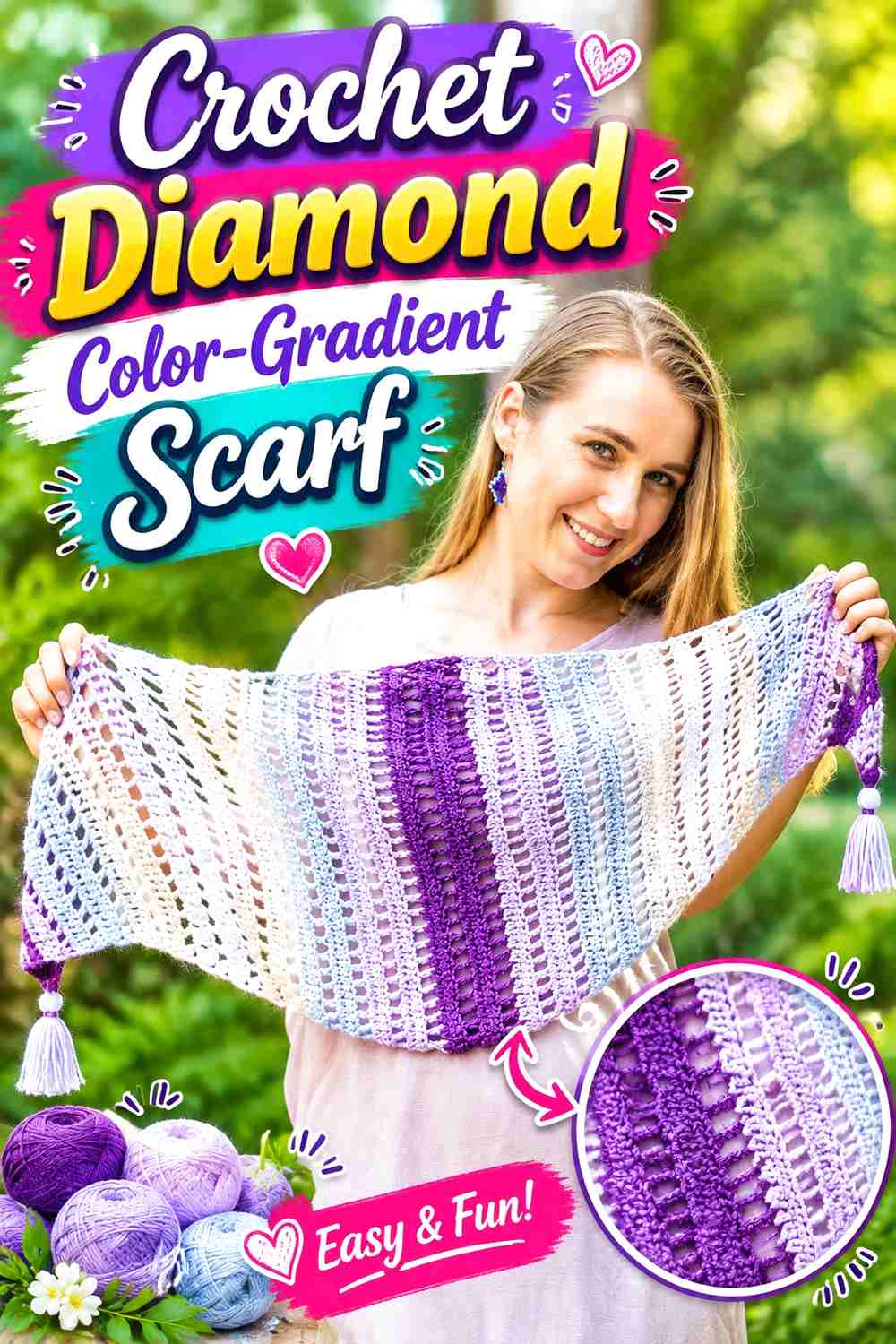
Nicki’s Homemade Crafts uses an elongated diamond construction with planned color progression and tassel finishing. The scarf grows and then narrows again, so the color sequence interacts with a changing fabric width rather than a plain rectangle.
This is useful when you want color blocking and shaping to work together.
Mirror the Palette for a Balanced Finish
A diamond scarf lends itself naturally to color sequences that travel toward the widest point and then return.
You do not have to use a perfect mirror, but planning both halves at the start helps prevent the second end from feeling unrelated to the first.
The Widest Section Determines Much of the Bulk
Although the tips are narrow, the center carries considerably more fabric. Try the scarf on when it approaches its widest point so you can assess how much material will actually sit around the neck or shoulders.
This matters if you are planning to wear it beneath a fitted coat.
Creator Credit: Nicki’s Homemade Crafts
14. Crochet Self-Striping C2C Triangle Scarf
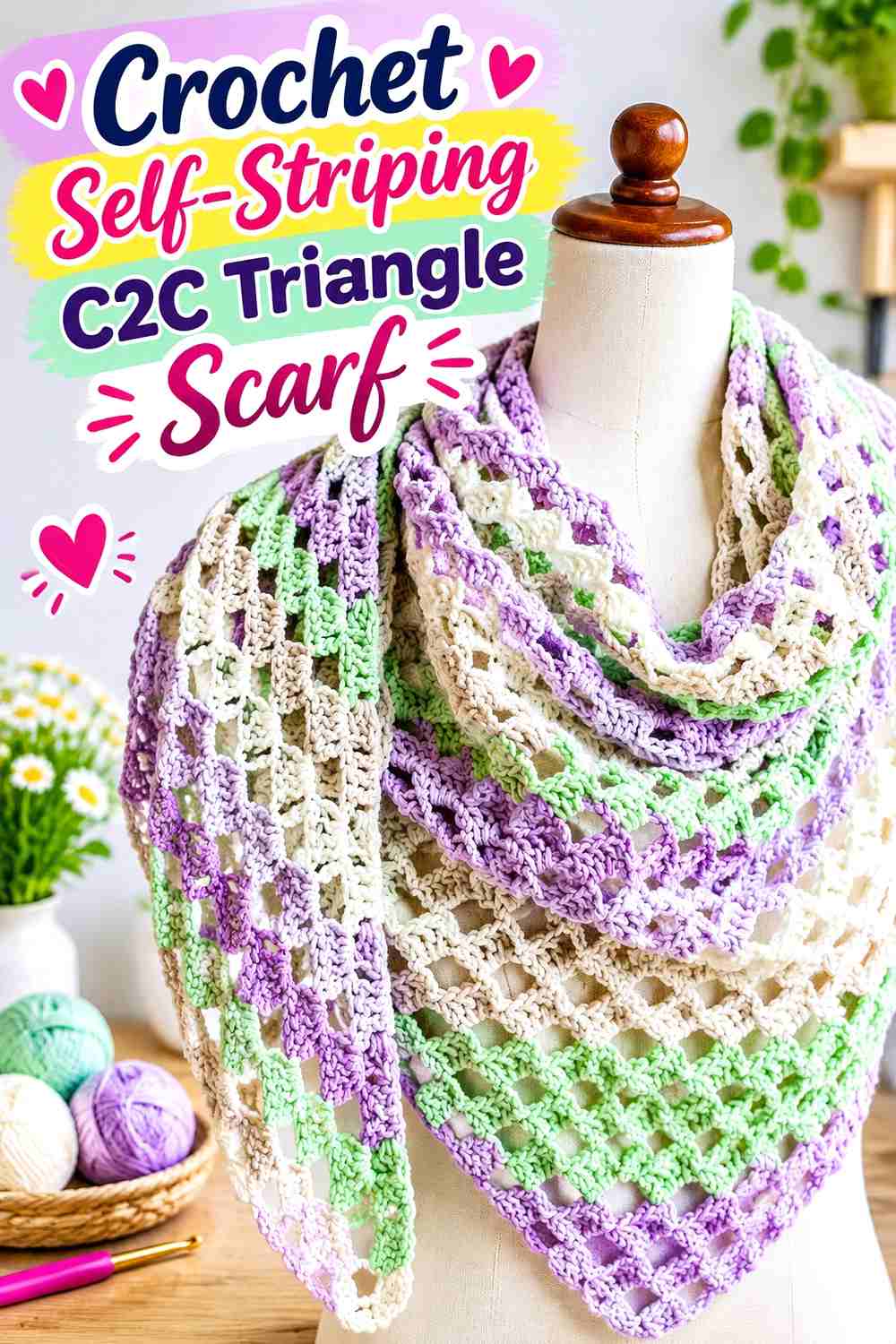
Nana’s Crafty Home | Tonya Bush demonstrates a triangular C2C scarf using self-striping yarn, allowing the yarn’s changing shades to travel across diagonal crochet blocks. The construction also incorporates open sections, making the fabric visually lighter than dense rectangular colorwork.
This option is useful when you want multiple colors but would rather manage one working yarn than several separate skeins.
Long Color Changes Show the Diagonal Construction Clearly
Self-striping yarn behaves differently in C2C than in horizontal rows because the crochet itself grows diagonally.
A yarn with longer color sections can create broad areas that emphasize that direction, while rapid changes produce a more blended surface.
Open C2C Is Better for Layering Than Wind Blocking
The deliberate spaces give the scarf drape and make the color transitions easy to see, but they also allow more air through the fabric.
For mild November days or indoor layering, that can be an advantage. For colder conditions, pair it with a higher neckline rather than expecting the scarf alone to provide dense coverage.
Creator Credit: Nana’s Crafty Home | Tonya Bush
15. Crochet Rainbow Statement Scarf
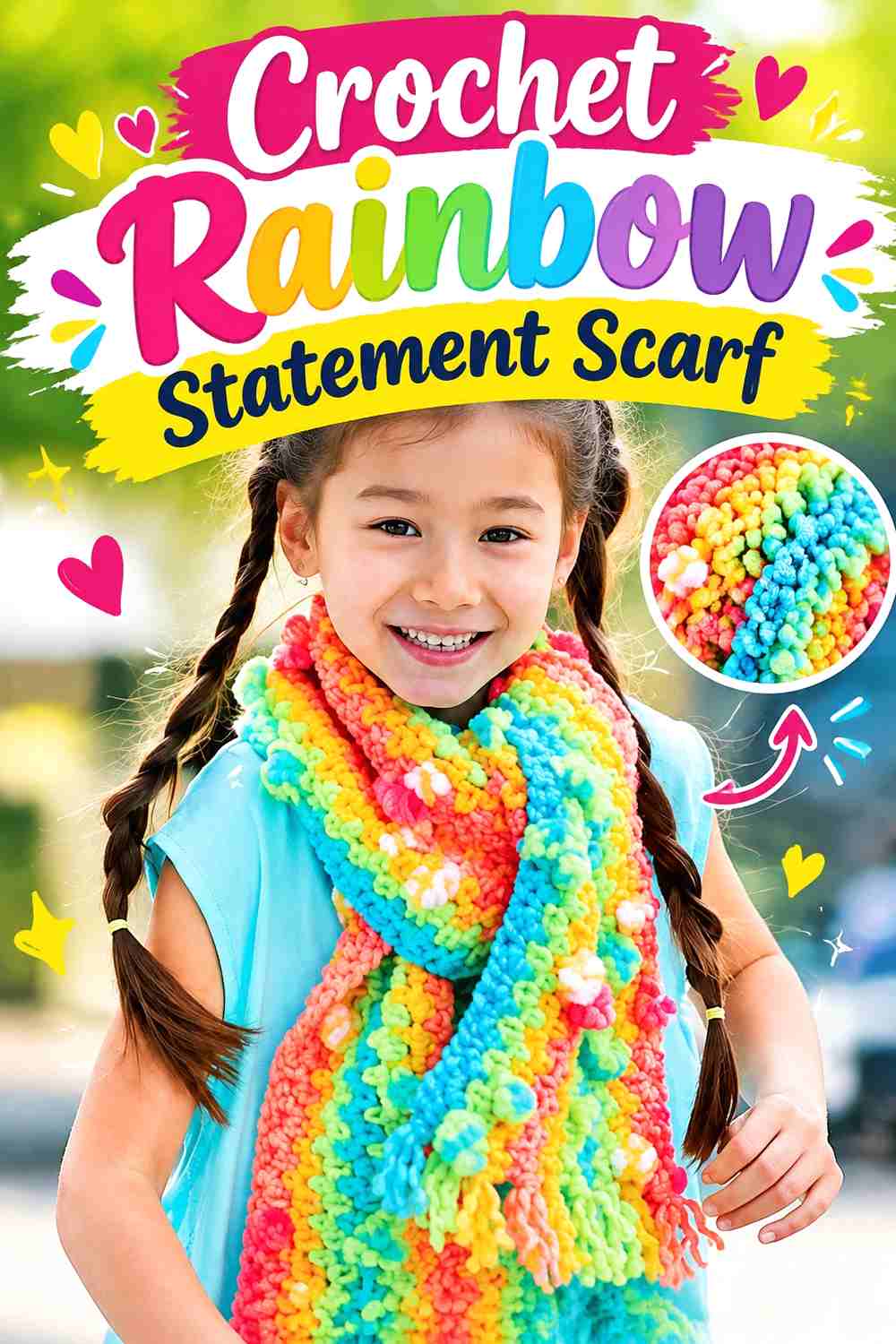
Yarnspirations’ rainbow scarf tutorial focuses on a highly colorful finished accessory and uses a yarn that contributes much of the multicolor effect. The result is less about carefully charting separate motifs and more about letting the changing yarn become the visual feature.
This is the strongest choice here when the purpose of the scarf is simply to inject obvious color into neutral November layers.
Let a Busy Yarn Work Against a Simple Outfit
Highly colorful scarves already contain several competing hues. They tend to read most clearly against coats and sweaters with relatively quiet surfaces.
If your outerwear already includes checks, florals, or strong color blocking, compare the two together before deciding whether the combination feels deliberate or crowded.
Novelty Yarn Is Not Interchangeable With Every Substitute
A yarn with unusual texture can influence both stitch visibility and finished bulk. If the original product is unavailable or unsuitable, focus on the overall scarf concept rather than assuming another yarn will reproduce the same appearance.
Choose a substitute based on the fabric you want, not only on finding a similar rainbow palette.
Creator Credit: Yarnspirations
16. Crochet Two-Color Minimalist Scarf
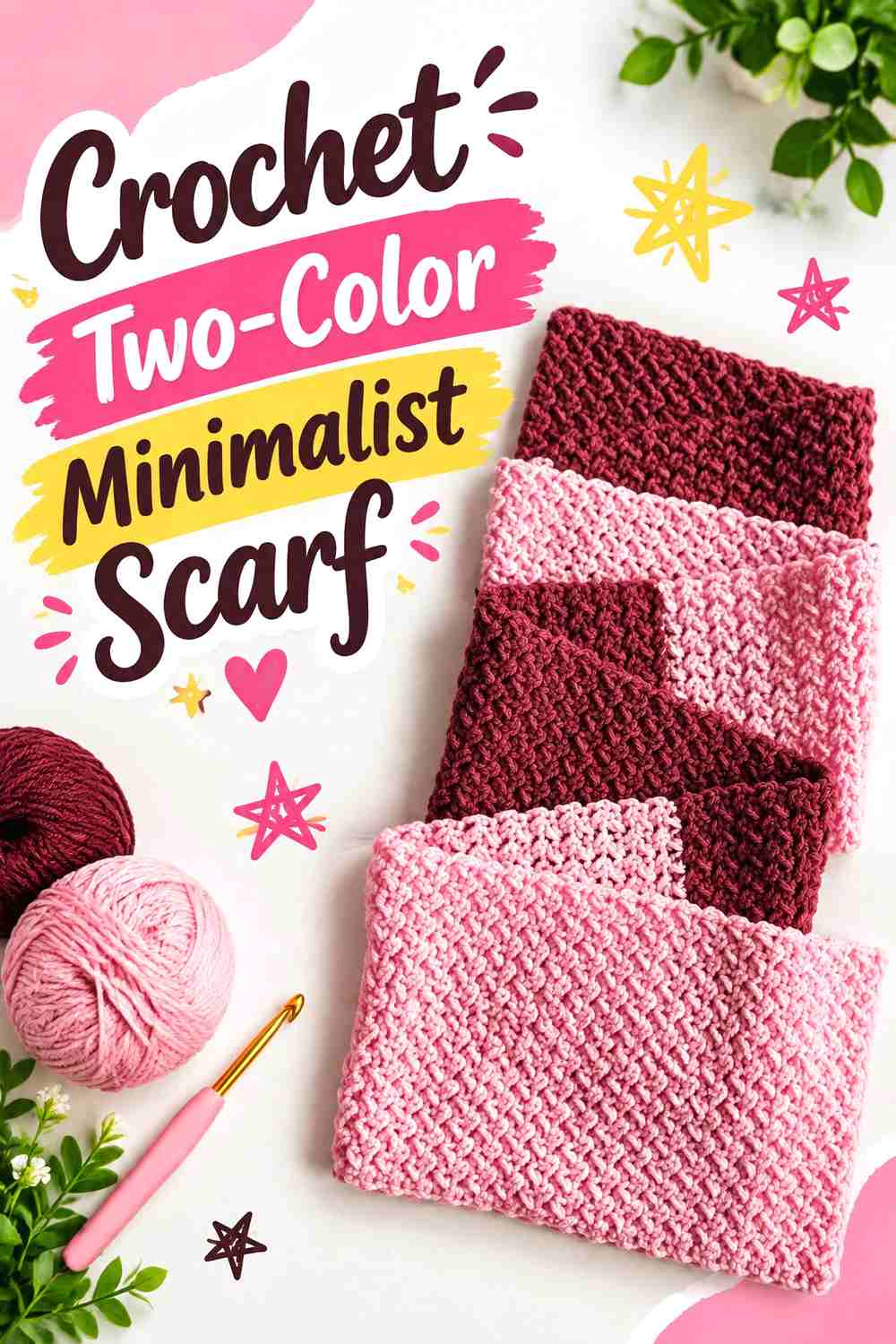
Wiolinkowe Robótki demonstrates a long two-color scarf with an intentionally restrained palette. Compared with houndstooth, tartan, mosaic, and gingham, this project shows how effective colorwork can be without turning color changes into a complicated allover motif.
This is a practical November option when you want the scarf to coordinate easily with several coats rather than dominate every outfit.
Two Colors Put More Pressure on the Combination
With only two shades, there is nowhere for an awkward pairing to hide. Compare the colors in daylight and against the clothing you wear most often.
A neutral plus one accent is easy to coordinate, while two strong colors create a much more deliberate statement.
Simpler Colorwork Gives Texture More Space
When there are no small checks or motifs competing for attention, the crochet fabric itself becomes easier to notice.
That makes yarn texture, stitch consistency, edge quality, and finishing especially important. It is a good direction if you enjoy color but prefer a quieter overall scarf.
Creator Credit: Wiolinkowe Robótki
Comparing These Crochet Colorwork Scarf Styles
| Colorwork Direction | Main Visual Effect | Yarn Management | November Layering Character |
|---|---|---|---|
| Houndstooth | Small repeated two-color motif | Frequent regular changes | Graphic and polished |
| Tartan | Intersecting colored lines | Crochet plus added color treatment | Classic fall pattern |
| Gingham | Repeated checks | Carried tapestry colors | Structured and substantial |
| Skinny checkerboard | Small checks | Two active colors | Low-bulk accent |
| Battenberg blocks | Large color sections | Periodic color changes | Strong palette showcase |
| Planned pooling | Argyle diamonds | One variegated yarn | Technique-focused statement |
| Mosaic | Geometric motifs | Alternating pattern colors | Dense graphic layer |
| Granny stripe | Clustered multicolor stripes | Row-based changes | Relaxed and traditional |
| Granny squares | Modular patchwork | Multiple motifs and joins | Stash-friendly statement |
| Tapered stripes | Narrow changing bands | Carried colors | Light neck layering |
| Broad color blocks | Large simple sections | Few changes | Minimal and versatile |
| Repeated stripes | Horizontal color rhythm | Regular changes | Classic everyday scarf |
| Diamond gradient | Shaped color progression | Section changes | Dressier wrap effect |
| Self-striping C2C | Diagonal color flow | Single multicolor yarn | Light triangular layer |
| Rainbow scarf | High-impact multicolor | Yarn-driven color | Bright statement accessory |
| Two-color minimalist | Restrained contrast | Limited changes | Easy coat coordination |
If you want the strongest graphic pattern, start with houndstooth, tartan, gingham, mosaic, or checkerboard. For a more relaxed handmade look, granny stripes and granny squares make color changes part of a familiar crochet texture.
Planned pooling provides the most unusual relationship between yarn and stitch placement, while the self-striping C2C and rainbow options let the yarn perform much of the color work. Broad blocks and simple two-color scarves are the easiest styles to integrate into an existing November wardrobe because their color organization is less visually complex.
Conclusion
The right crochet colorwork scarf depends on whether you want color to come from technique, construction, or simply a well-planned palette.
Choose houndstooth, gingham, tartan, or mosaic when the repeated pattern itself should be the centerpiece. Granny stripes and granny squares are better suited to flexible color mixing and leftover-yarn planning. Planned pooling offers a very different technical challenge, while Battenberg blocks and broad color sections give individual shades more room to stand out.
For lower-bulk November layering, the skinny checkerboard and tapered striped scarves can sit neatly around a coat collar. If you prefer more coverage across the chest, the C2C triangle or diamond-shaped scarf changes the distribution of fabric entirely.
Whichever style you choose, use the original creator tutorial for the exact construction and color-change method. Before making major yarn substitutions, test enough of the pattern to see both colors together and check how the fabric folds, stretches, and looks from the reverse side.
Frequently Asked Questions
What is the easiest type of crochet colorwork scarf to manage?
Broad color blocks and stripes generally involve fewer simultaneous yarn decisions than tapestry checks, mosaic motifs, or planned pooling. They can be useful when you want to practice clean color changes before moving into more complex designs.
How do I stop carried yarn from showing through a crochet scarf?
Contrast and yarn thickness both affect how visible carried strands become. Keep carried yarn relaxed and positioned consistently, and crochet a sample first. Very dark yarn carried through a much lighter fabric may remain somewhat visible even with careful technique.
Is mosaic crochet too thick for a November scarf?
It depends on the yarn, stitch construction, scarf width, and how you wear it. Because some mosaic fabrics are substantial, a narrower version may layer more comfortably beneath a fitted coat than an oversized wrap.
How should I choose colors for houndstooth, checks, or mosaic crochet?
Start with contrast. If identifying the motif clearly matters, choose shades that remain distinguishable from one another. You can test value contrast by photographing the yarns together in grayscale before crocheting a full sample.
Can I use leftover yarn for a colorwork scarf?
Yes, especially for granny stripes, granny squares, Battenberg-style blocks, and some striped projects. Try to keep yarn behavior reasonably compatible so one section does not become much stiffer, looser, or heavier than the others.
Why is my planned-pooling pattern drifting out of alignment?
Planned pooling is sensitive to the relationship between tension, stitch count, and the length of each color section in the yarn. If the pattern begins moving away from the intended arrangement, check those factors early rather than continuing through many more rows.
Which crochet colorwork scarf is best for wearing under a coat?
A narrower checkerboard, tapered striped scarf, simple two-color rectangle, or moderately sized houndstooth scarf can create less bulk than a broad triangular wrap or thick mosaic piece. The best option still depends on the neckline and fit of the coat you plan to wear with it.