A crochet lace-trim midi skirt can work for winter without giving up the open, decorative details that make lace interesting. The key is deciding where the lace belongs. A dense skirt with lace only at the hem behaves very differently from a skirt built almost entirely from mesh, shells, or other openwork.
The tutorials below cover several useful starting points: fitted skirts, flared shapes, tiered constructions, wrap skirts, granny motifs, mesh, ruffles, and mixed-stitch designs. Some already include lace or shell-style edging, while others provide a solid skirt foundation that could be finished with an independently planned crochet lace border.
Not every source makes the exact winter midi version described here. Where a tutorial is longer, shorter, or designed as a warm-weather piece, the project notes explain what needs to be reconsidered before adapting it. Use each creator’s tutorial for the original construction and verify sizing, yarn, gauge, and finishing details there.
Quick List
- Fitted Crochet Lace-Hem Midi Skirt
- Draped Crochet Midi Skirt With Delicate Lace Border
- Flared Crochet Midi Skirt With Scalloped Lace Trim
- Tiered Crochet Shell-Lace Midi Skirt
- Structured Crochet Midi Skirt With Narrow Lace Accent
- Wrap-Front Crochet Seashell Lace Midi Skirt
- Ruffle-Tier Crochet Lace-Trim Midi Skirt
- Wavy Crochet Midi Skirt With Decorative Lace Edge
- Solomon Mesh Crochet Midi Skirt
- Full-Lace Crochet Midi Skirt
- Flared Shell-Lace Crochet Midi Skirt
- Straight Crochet Midi Skirt With Contrast Lace Hem
- Granny-Square Crochet Midi Skirt With Lace Border
- Mixed-Stitch Crochet Midi Skirt With Lace Bands
What Makes Lace Trim Work on a Winter Crochet Midi Skirt
For winter, lace usually works most practically as a controlled detail rather than as the only fabric in the garment. A solid upper skirt with an open hem keeps more coverage around the waist and hips while allowing the lower section to look lighter.
The amount of lace also changes the skirt’s visual weight. A narrow scalloped border creates a subtle finish. A deep shell section becomes an important part of the silhouette, while an entire mesh skirt depends heavily on whatever is worn underneath.
Before adding a separate border, compare its stretch with the main skirt. A lace edge that is much tighter can pull the hem inward. An overly loose one can ripple even when the skirt body lies correctly.
Fit, Weight, and Lining Matter More at Midi Length
A crochet skirt becomes heavier as more length is added. That weight can affect the waistband, hip fit, and finished length, especially in fabrics with significant stretch.
Check the skirt vertically rather than relying only on flat measurements. If the finished fabric grows when worn, a midi hem may sit lower than expected. Blocking can also change lace and mesh more noticeably than dense fabric, so follow the finishing guidance for the yarn and tutorial you use before making final decisions about length.
Openwork also raises the question of coverage. Instead of trying to make delicate lace behave like dense winter fabric, consider the skirt and its underlayer as a coordinated outfit. A slip, leggings, tights, or another suitable base layer can change both warmth and how clearly the lace pattern shows.
Choose Between Hem Lace, Lace Panels, and Full Openwork
Hem lace is the simplest approach when you want the skirt body to remain visually quiet. It also makes the decorative section easier to replace or redesign without changing the entire garment.
Lace panels create more contrast. A section of openwork between denser areas can divide a longer skirt into visible bands, but the transition needs to remain flexible enough to move with the surrounding fabric.
Full-lace and mesh skirts are a separate category. They make the stitch pattern the main design feature, so yarn choice, blocking, underlayers, and waistband support all become more noticeable.
1. Fitted Crochet Lace-Hem Midi Skirt
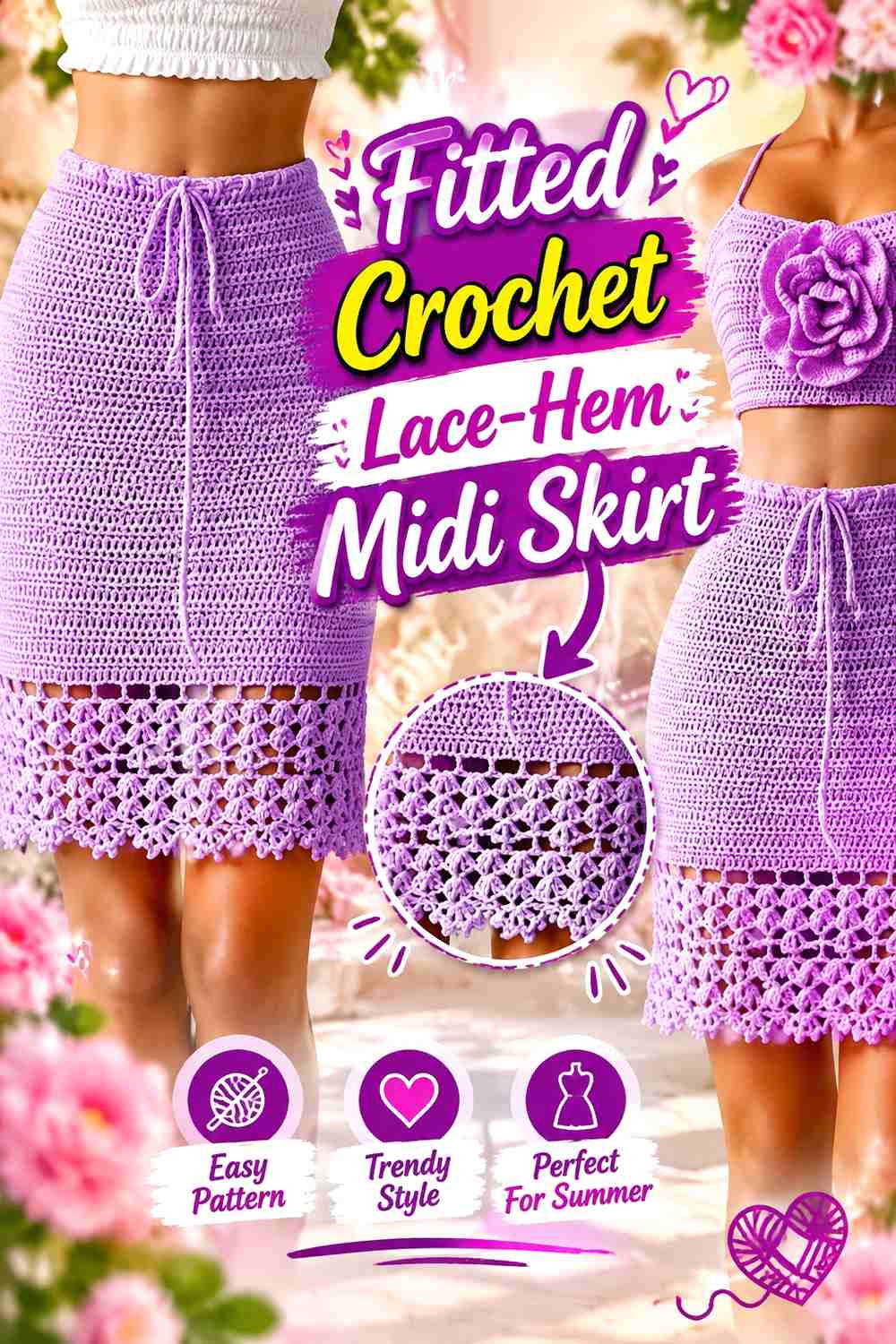
This is the closest match in the collection to the title itself. Shyler crochets demonstrates a fitted skirt with a denser upper section and a visibly decorative crochet lace design toward the bottom. The tutorial also includes a waistband and drawstring, so the lace is not responsible for providing structure at the waist.
The Lace Hem Changes the Skirt Without Opening the Hip Area
Keeping the decorative stitches near the lower portion gives you the visual effect of lace while preserving more coverage higher on the body. That arrangement is particularly useful for a winter adaptation because you can coordinate the underlayer mainly around the lower openwork.
If you change the depth of the decorative area, check the finished length rather than simply adding lace below an already completed midi skirt.
Watch the Transition Between Dense and Open Fabric
A sudden change in stitch density can alter how the hem hangs. Before treating the decorative section as interchangeable, compare its width with the body of the skirt and make sure the change does not pull inward or flare more than intended.
Creator Credit: Shyler crochets
2. Draped Crochet Midi Skirt With Delicate Lace Border

Handwork diy’s midi-skirt tutorial provides a clean, flowing foundation rather than making heavy lace the dominant feature. That makes it a useful option when you want the main skirt to stay simple and add only a narrow decorative finish at the bottom.
A Narrow Border Preserves the Original Drape
When the base skirt already hangs smoothly, a large heavy edging can change its character. A shallower lace trim keeps the focus on the long vertical line while adding detail near the hem.
Swatch the planned border against the finished skirt fabric instead of choosing it in isolation. Two attractive stitch patterns can still behave poorly when combined.
Decide on the Midi Length Before Adding Extra Depth
Treat the lace as part of the intended finished length. If you first crochet the entire skirt to the exact point where you want it to end and then attach a deep border, the result will no longer be the same midi proportion.
Plan the plain section and decorative section together.
Creator Credit: Handwork diy
3. Flared Crochet Midi Skirt With Scalloped Lace Trim
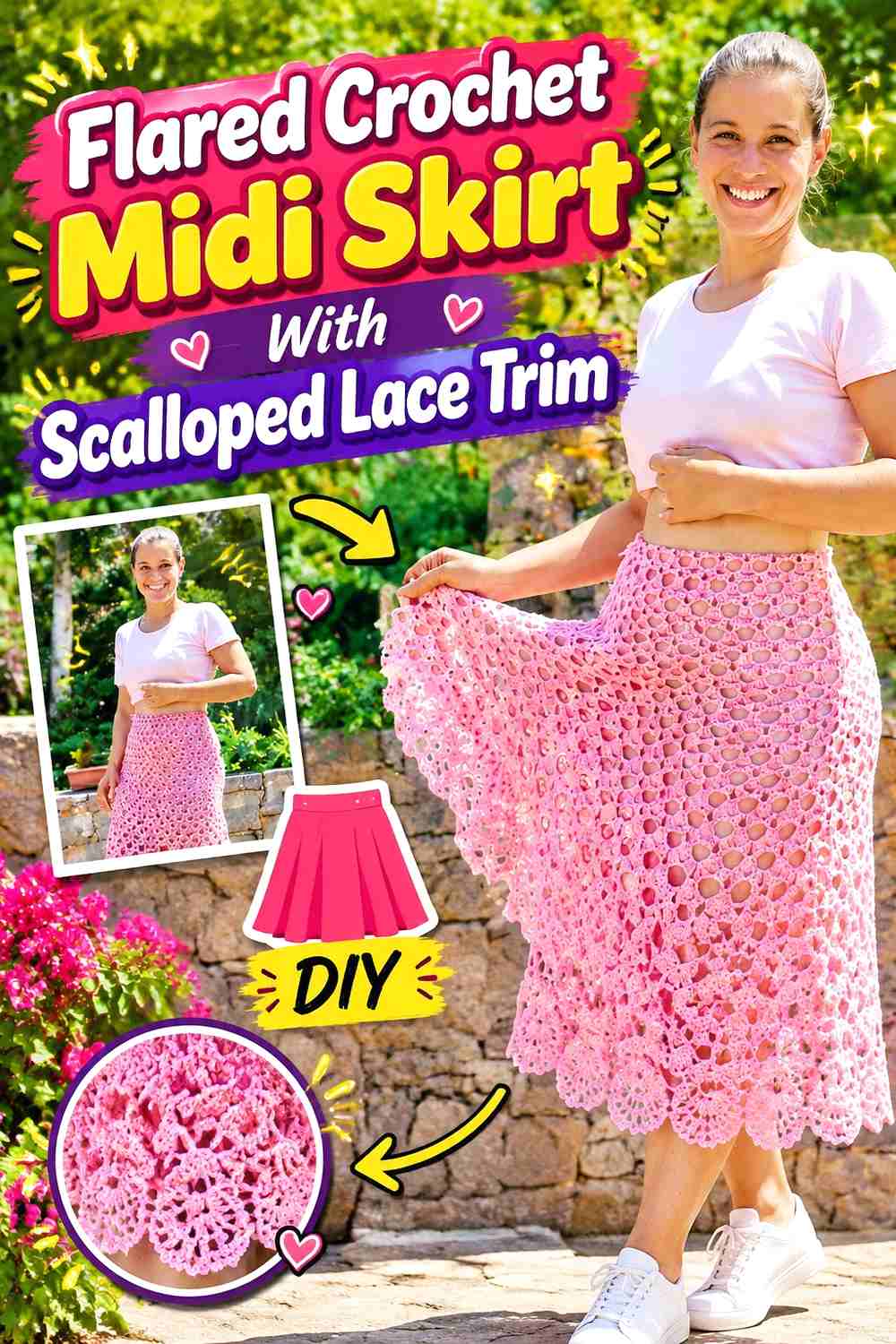
Trecos & Tarecos Crochet demonstrates a flared skirt whose silhouette can also be kept straighter by changing how the shaping is handled. That makes the tutorial useful for comparing how much movement you want before adding a decorative lower edge.
Place the Lace Where the Flare Is Already Established
A scalloped border naturally attracts attention to the circumference of the hem. On a flared skirt, that can reinforce the movement already created by the body rather than introducing a completely different shape.
Check the circumference before starting a separate trim. More flare means more border to crochet and more opportunity for a mismatch in tension.
A Winter Version May Need More Than an Open Hem
The original construction can be styled differently from a cold-weather skirt. If your added lace leaves significant openings, plan what will sit underneath it rather than assuming the decorative stitches alone provide coverage.
This is also where contrast can be useful: an underlayer in a different tone makes the scalloped design easier to see.
Creator Credit: Trecos & Tarecos Crochet
4. Tiered Crochet Shell-Lace Midi Skirt
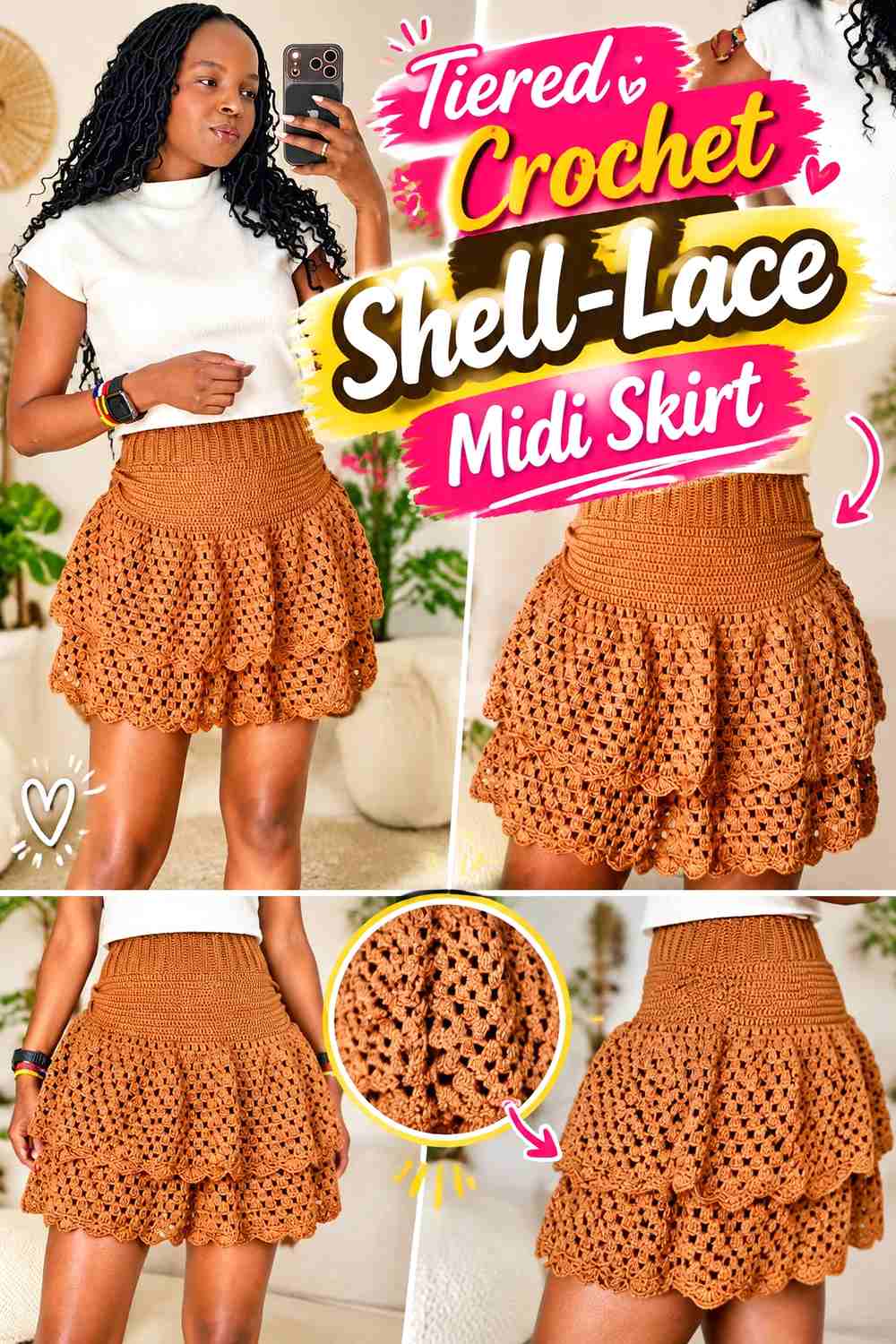
AC Crochets’ tiered skirt combines a ribbed waistband, multiple expanding tiers, and shell edging. The tier structure gives this option much more volume and movement than a straight fitted midi.
Each Tier Adds Both Fullness and Weight
A tiered skirt is not simply a straight skirt with decorative horizontal lines. Every expanded section changes the amount of fabric below the waist.
If you adapt the design to a winter midi, evaluate the waistband while the full skirt is attached rather than judging its stability from the first tier alone.
Shell Edging Already Supplies a Lace-Like Finish
Because the original design includes a delicate shell edge, you may not need to add a second elaborate border. Repeating or enlarging decorative treatments can make the bottom visually busy.
A cleaner adaptation may be to emphasize the existing shell character through color or contrast rather than stacking multiple unrelated trims.
Creator Credit: AC Crochets
5. Structured Crochet Midi Skirt With Narrow Lace Accent
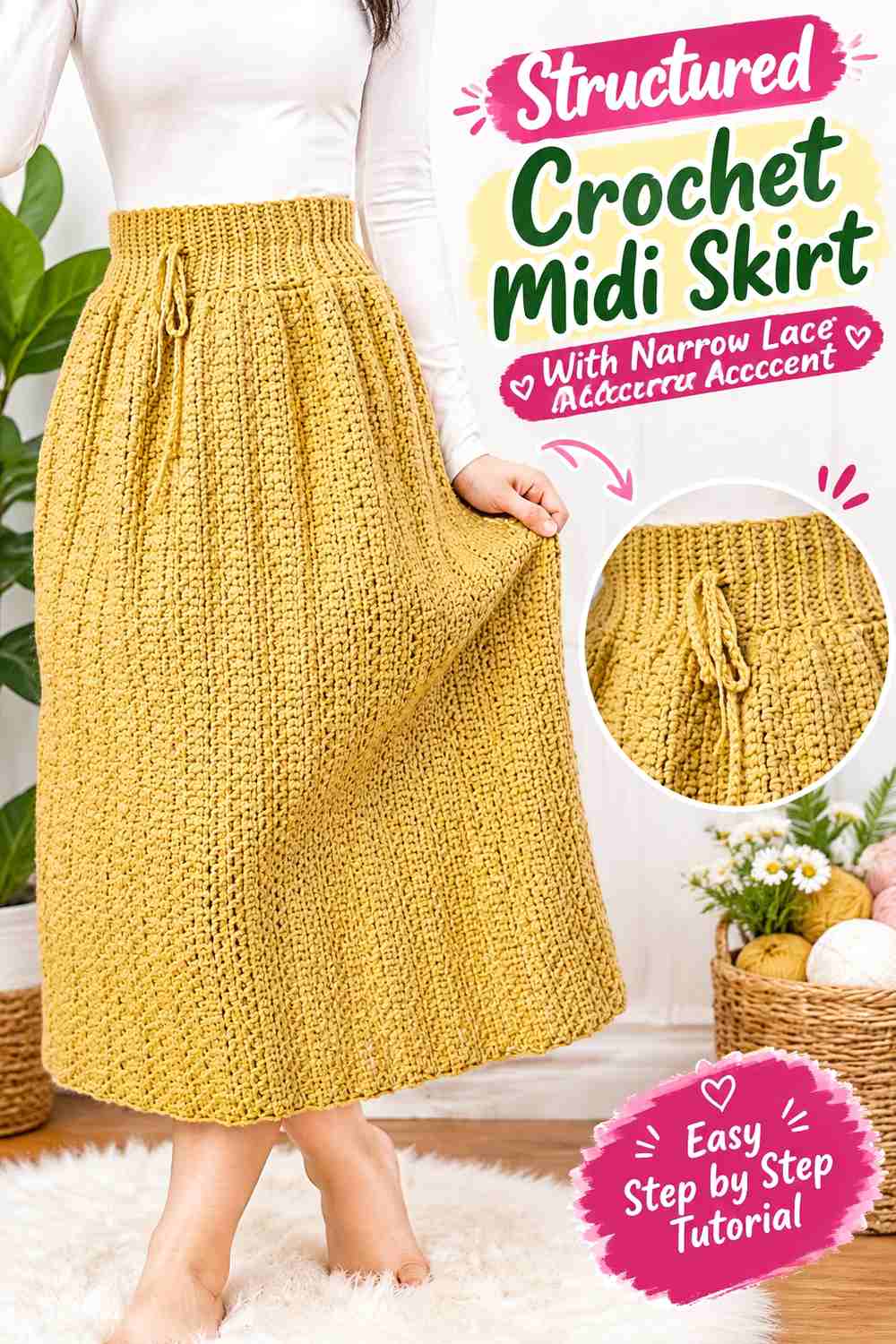
TCDDIY’s midi-skirt construction provides a more substantial, straightforward base with a defined waistband and drawstring. It works well for a winter interpretation where the lace is intended as a finishing accent instead of the main fabric.
Use Lace to Break Up a Solid Surface
A dense skirt can carry a narrow openwork band without losing the visual strength of the main body. Consider placing the decorative treatment at the hem rather than interrupting the widest part of the hip.
That creates contrast between structure and delicacy without asking the lace to support significant garment tension.
Keep the Drawstring and Hem From Competing
A visible waist tie already creates detail near the top of the garment. If the bottom border is also highly elaborate, the skirt can acquire two equally strong focal points.
A restrained lace edge is often enough to balance the waist treatment.
Creator Credit: TCDDIY
6. Wrap-Front Crochet Seashell Lace Midi Skirt
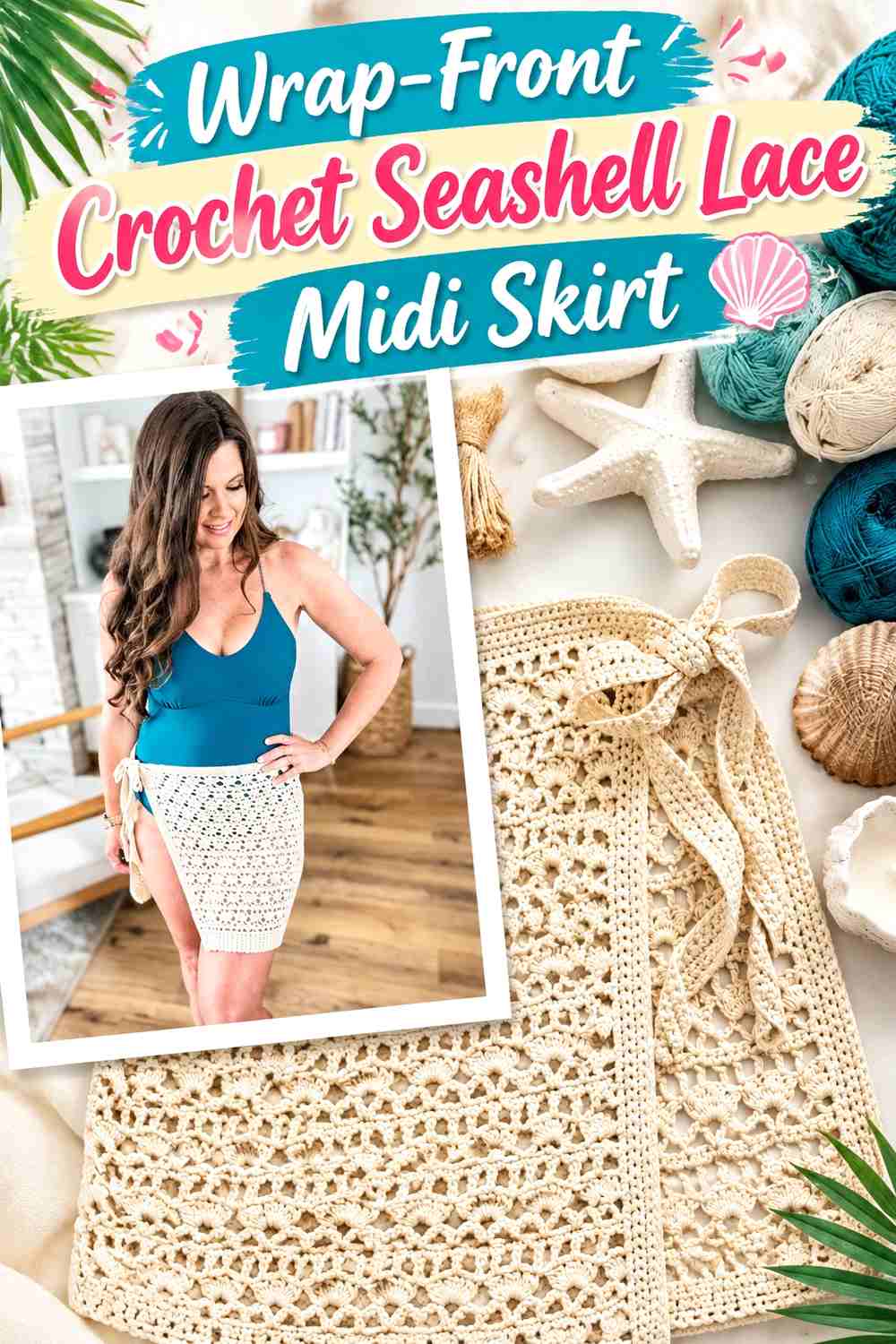
MJ’s Off The Hook Designs demonstrates a wrap skirt built with a ribbed waistband, lace-like shell fabric, and waist ties. Unlike a skirt worked as a closed tube, the overlapping front edge becomes part of both the fit and the decoration.
The Wrap Edge Can Become Part of the Lace Trim
A wrap gives you another place for decorative edging besides the bottom. A coordinated border along the opening and hem can frame the skirt, but it also increases the amount of trim that must lie flat.
Pay special attention where the vertical edge meets the lower border so the corner does not become bulky.
Coverage Changes as the Skirt Moves
A wrap may reveal more or less of the underlayer depending on posture and movement. That matters more in winter because the base layer is likely to be visible by design.
Choose that layer before finalizing yarn color and lace openness so the finished combination looks intentional.
Creator Credit: MJ’s Off The Hook Designs
7. Ruffle-Tier Crochet Lace-Trim Midi Skirt
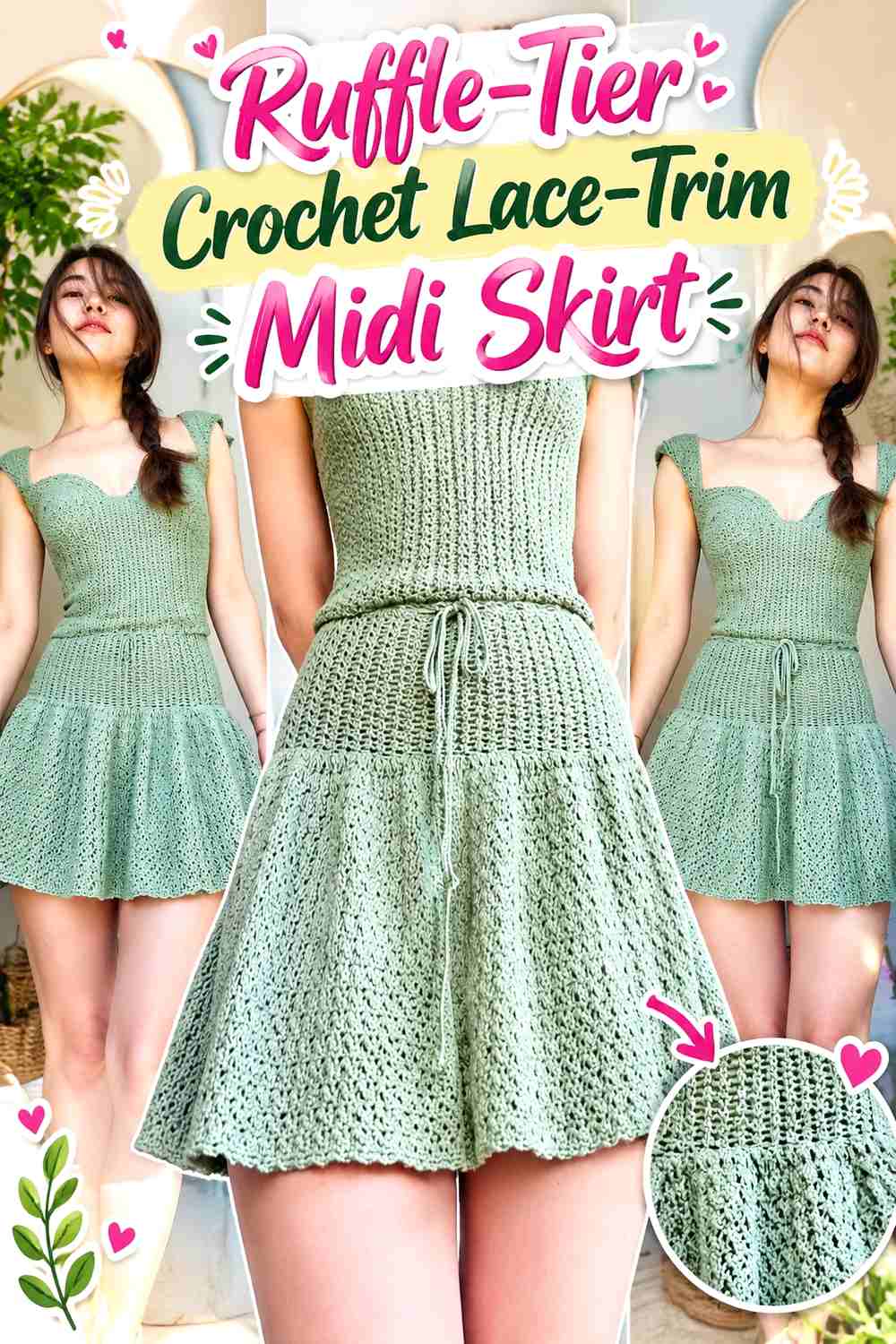
Yaejiyea’s skirt uses a waistband, shaped section through the waist and hip area, and a distinct ruffle tier. That creates a clear location where a lace treatment could be integrated without covering the entire skirt in openwork.
Put the Decorative Detail Where the Ruffle Begins
The transition into a fuller tier is already a visual break. Using that point to introduce a lace-like stitch or decorative edge can look more deliberate than placing an unrelated openwork band halfway through a smooth panel.
Keep the transition flexible so the ruffle can still fall naturally.
More Ruffle Is Not Always More Movement
Extra circumference increases both fullness and yarn weight. If you extend this kind of design to midi length, do not assume the proportions of a shorter skirt will remain unchanged.
Compare how much volume you want below the knee with how much weight the waistband can comfortably carry.
Creator Credit: yaejiyea
8. Wavy Crochet Midi Skirt With Decorative Lace Edge

Baecrochett by Lizzy & Becky uses an intentionally wavy skirt design inspired by seaside forms. The shaped lower edge gives this option a different character from a conventional straight or uniformly scalloped hem.
Follow the Wave Instead of Hiding It
If you add a decorative border to a shaped edge, the trim needs to follow that contour. A border designed for a perfectly straight hem may fight the curves instead of emphasizing them.
The wavy outline is already a major design feature, so the lace can remain relatively simple.
Test the Lowest Points at Midi Length
An uneven hem means some portions sit lower than others. Decide which part of the wave determines the intended midi length.
This is especially important with boots, because a dramatic low point can visually shorten the gap between skirt and footwear.
Creator Credit: Baecrochett by Lizzy & Becky
9. Solomon Mesh Crochet Midi Skirt
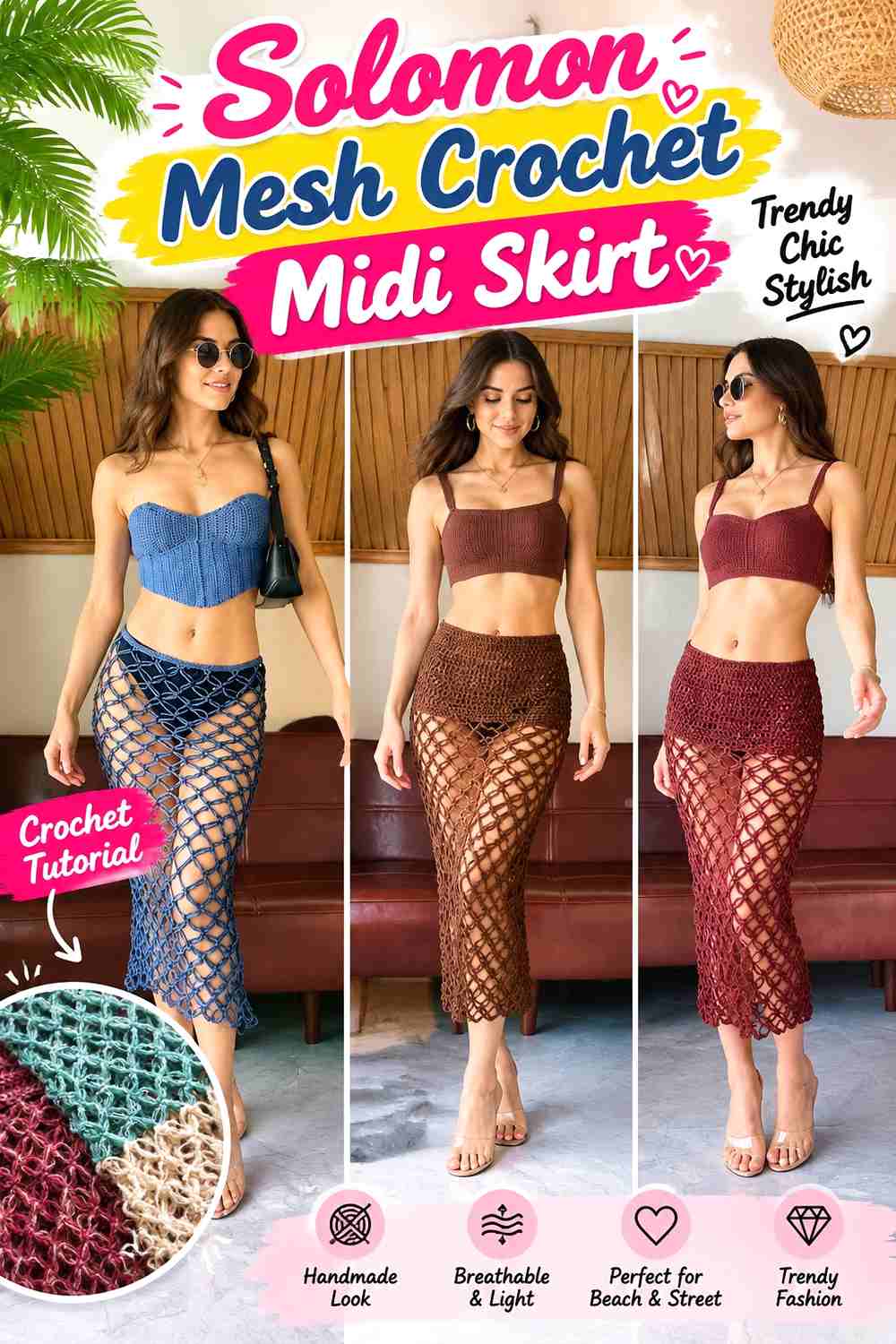
ABoC Studio’s made-to-measure skirt uses Solomon mesh, making open space the central construction feature rather than an edging added at the end. It offers the strongest contrast to the dense fitted skirts in this collection.
Treat the Underlayer as Part of the Finished Skirt
With extensive mesh, what you wear underneath is visually important. A close color makes the openings quieter; stronger contrast makes the stitch structure more obvious.
For winter, the underlayer also determines much of the practical coverage, so plan it before choosing the final skirt color.
Do Not Add a Heavy Border Without Testing the Mesh
A substantial edging can pull downward on a lightweight open fabric. That may elongate the lowest rows or change the intended drape.
Compare a small section of the proposed trim with the mesh before committing to the entire circumference.
Creator Credit: ABoC Studio
10. Full-Lace Crochet Midi Skirt

Mihankushea’s tutorial creates a lace maxi skirt, making it useful when you want the entire garment to read as openwork rather than merely adding a lace border. For a midi interpretation, the change in length should be treated as an adaptation rather than presented as the exact original project.
Shortening Changes Where the Lace Pattern Ends
With all-over lace, the stopping point matters visually. A motif or stitch repeat that looks balanced at maxi length may finish differently when shortened.
Before choosing the final midi point, look at the pattern repeat as well as the tape measure so the hem does not appear abruptly interrupted.
Let the Lace Supply the Detail
A full-lace skirt usually does not need an unrelated elaborate edging. The existing fabric already provides texture and openings across the whole garment.
If you want a stronger hem, consider a border that visually relates to the main lace instead of introducing a completely different motif.
Creator Credit: 🧶Mihankushea🧶
11. Flared Shell-Lace Crochet Midi Skirt
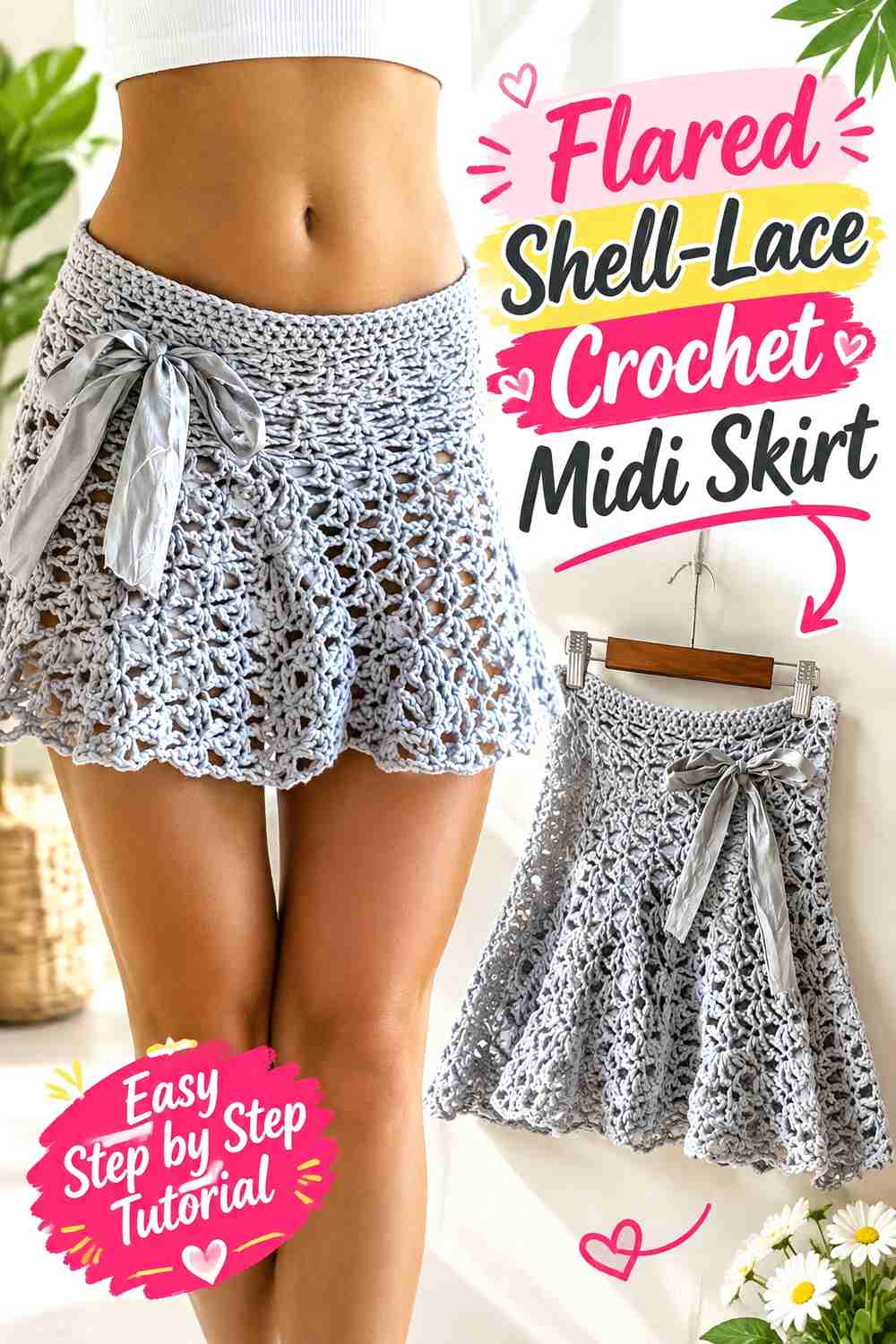
Kait Biez’s lacey shell skirt uses an open shell-style fabric and discusses making the skirt longer, shorter, more flared, or more fitted. That flexibility makes it particularly relevant to a midi version because both length and silhouette can be considered together.
Decide on Flare Before You Reach the Hem
The amount of shaping influences the final circumference, so it also determines how much lace edge you will need if you add a separate finish.
A straighter version keeps the silhouette narrow. Additional flare makes the lace pattern more visibly mobile and changes how it falls around boots or longer coats.
Try-On Checks Matter More Than a Flat Measurement
Open shell fabric can behave differently when hanging from the waist than when resting on a table. Check length while wearing the skirt over the kind of base layer you expect to use.
That gives you a more realistic sense of both drape and transparency.
Creator Credit: Kait Biez
12. Straight Crochet Midi Skirt With Contrast Lace Hem
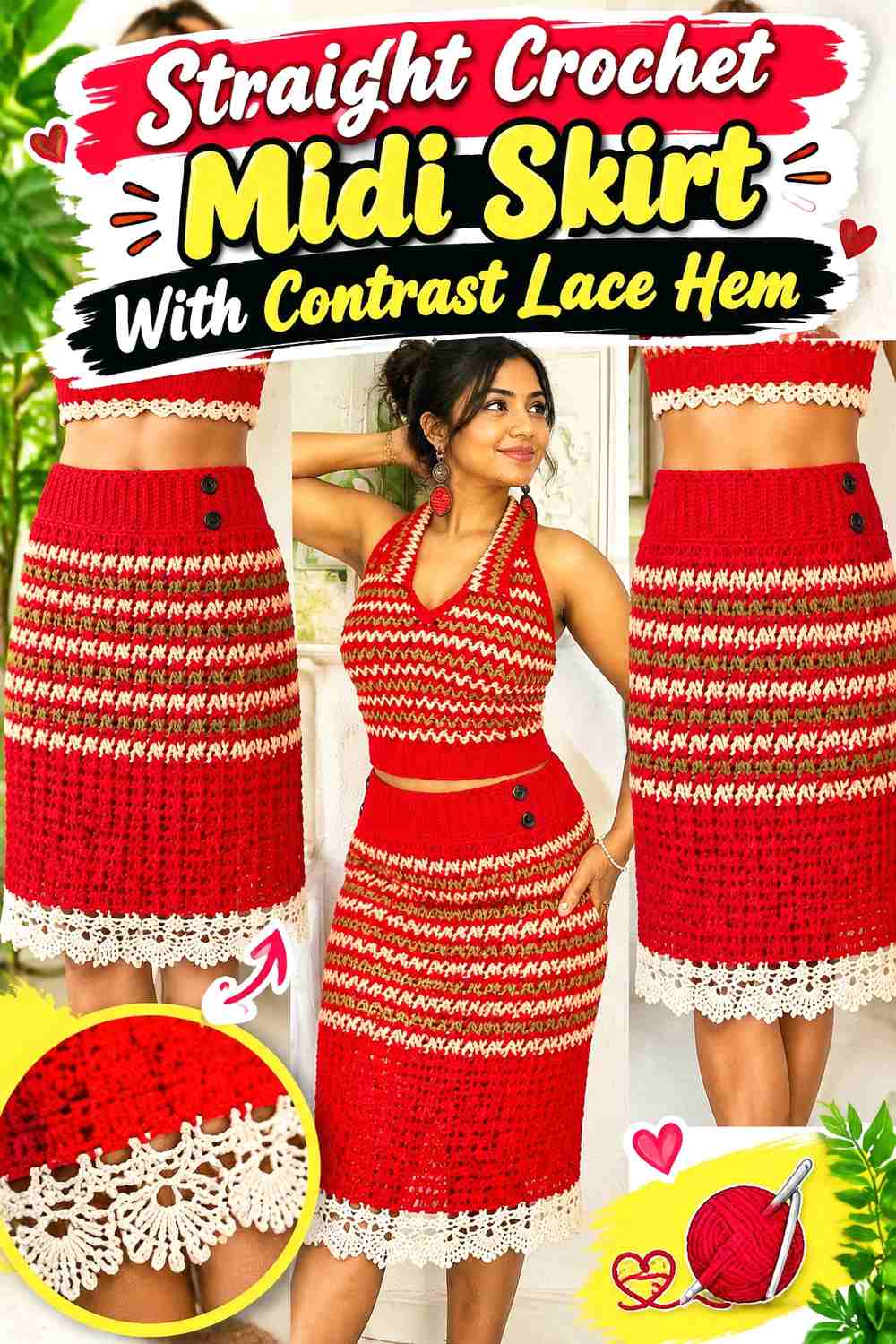
FTK Crochet’s measurement-based skirt provides a relatively straightforward foundation based on waist, hip, and desired length rather than an already elaborate surface design. That makes it useful when your goal is a simple body with a separately planned lace border.
Build the Fit First and the Decoration Second
A decorative border cannot correct a skirt that is too tight through the hips or unstable at the waist. Establish the fit of the main garment before deciding exactly how deep the lace should be.
This also makes it easier to frog or revise the decorative section without disturbing the primary construction.
Contrast Color Makes Small Irregularities Easier to See
A different color at the hem can make even a narrow lace border noticeable, but contrast also emphasizes uneven joining and inconsistent tension.
Lay the unfinished skirt flat and compare the circumference before attaching a strongly contrasting edge.
Creator Credit: FTK Crochet
13. Granny-Square Crochet Midi Skirt With Lace Border
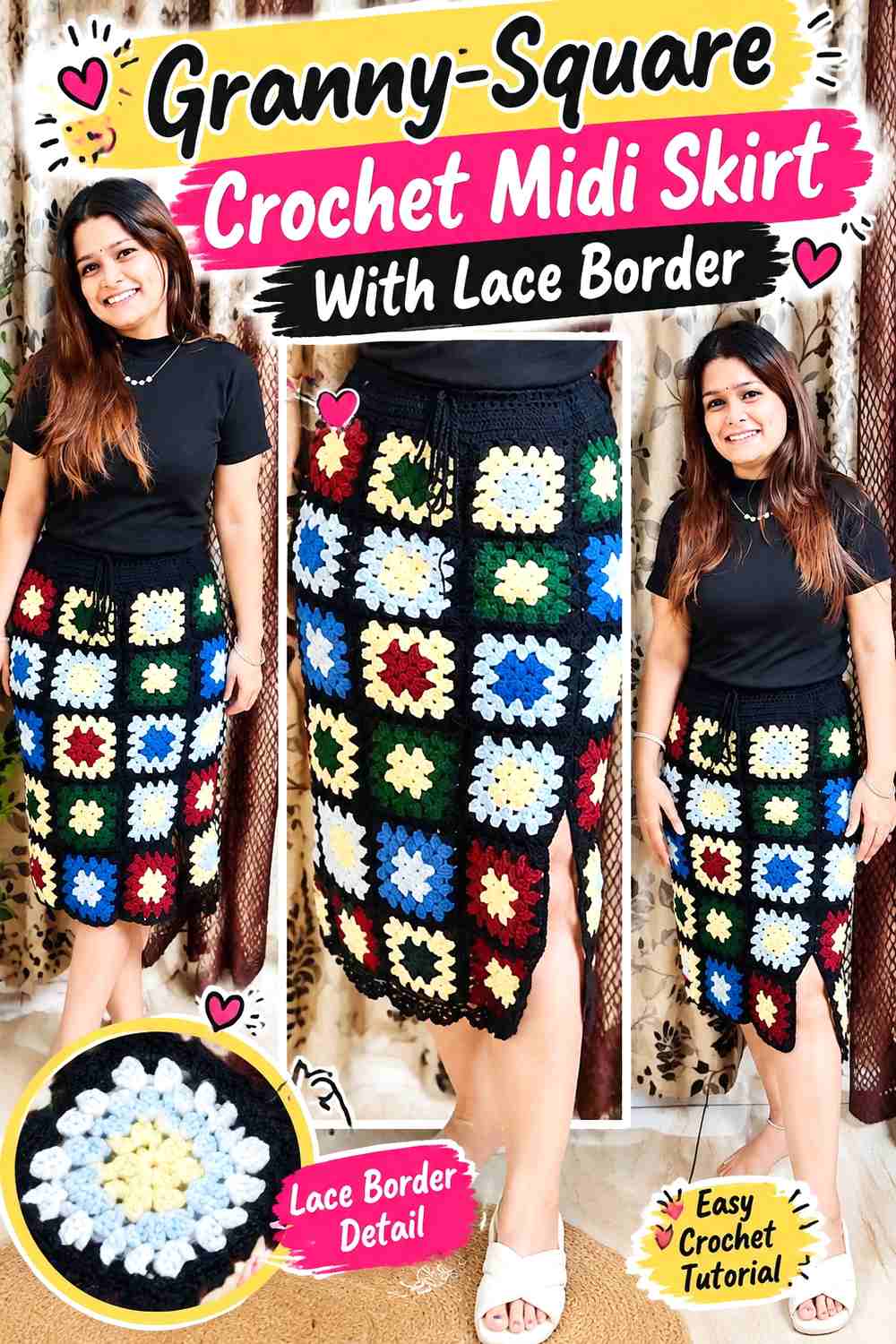
HookandMuse | Crochet demonstrates a skirt built from granny-square motifs rather than one continuous fabric. That gives this project a modular construction that is visibly different from the fitted, wrap, and tiered options above.
Establish Motif Size Before Planning the Midi Length
The skirt length is controlled in larger increments when whole motifs are involved. Measure blocked squares before deciding how many rows of motifs make sense for your intended proportion.
The lace border can then provide a smaller final adjustment while also softening the geometric lower edge.
Keep the Border Compatible With the Motif Openings
A very dense trim below airy granny squares can look unusually heavy. An equally open border may create a smoother visual transition.
Compare the negative space in the square with the proposed lace rather than choosing the edging solely because it looks attractive on its own.
Creator Credit: HookandMuse | Crochet
14. Mixed-Stitch Crochet Midi Skirt With Lace Bands
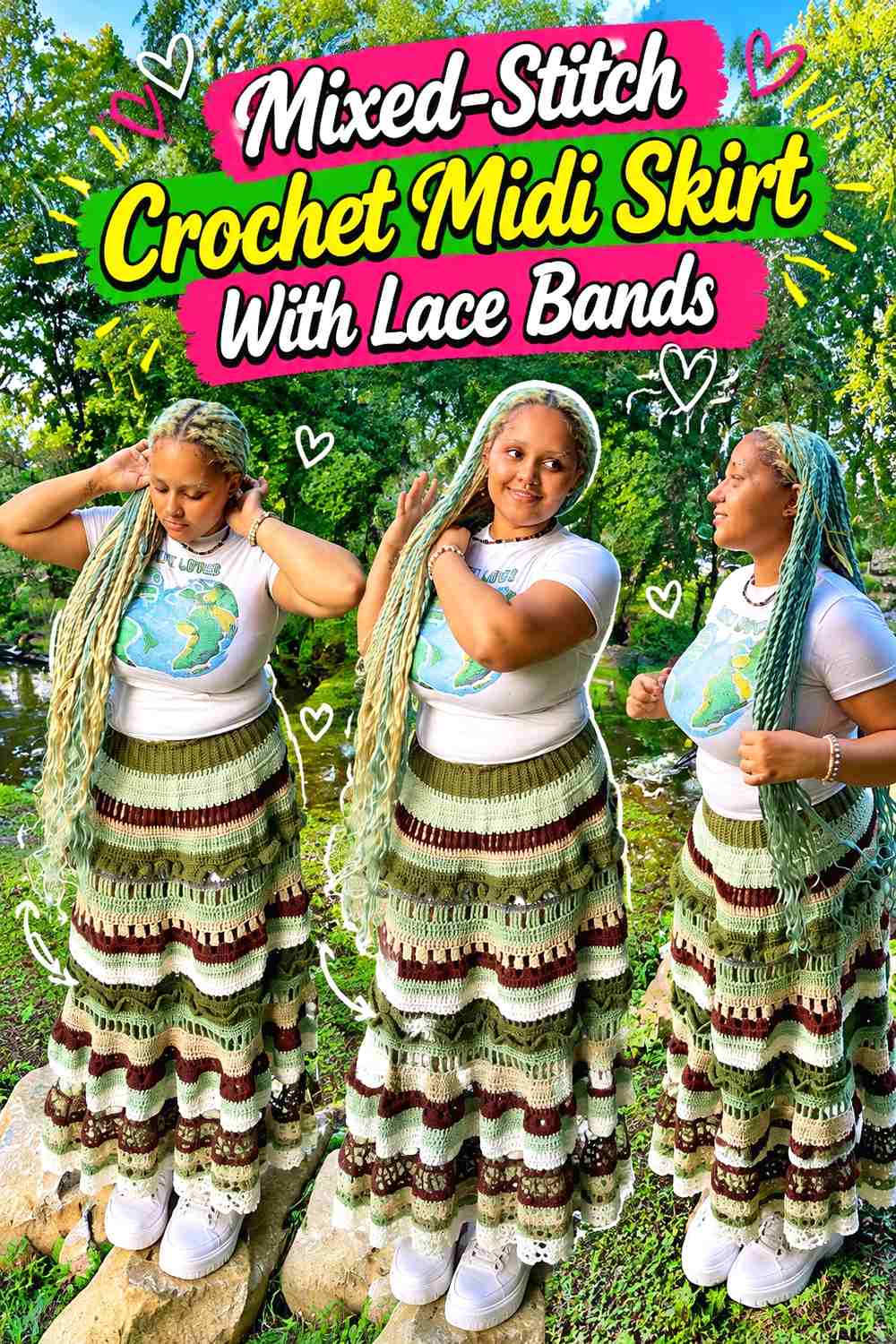
Skyeee’s maxi-skirt tutorial combines several surface treatments, including shell, mesh, granny-style sections, and a lower ruffle. Instead of one continuous lace pattern, the finished garment builds interest through changing bands of texture. A midi version would be an adaptation of that longer construction.
Choose Which Bands Matter Before Shortening the Design
Simply stopping a multi-pattern skirt early can remove the section that made the original composition feel balanced. Decide which textures you want represented in the midi version before setting the final length.
You may prefer one solid section, one open lace band, and a decorative hem rather than trying to preserve every texture.
Repeated Texture Changes Need Consistent Width
Each transition can affect circumference differently. If one band pulls in while another spreads outward, the skirt may develop unintended horizontal ridges.
Compare width as you move between stitch families instead of waiting until the whole garment is finished.
Creator Credit: Skyeee
Comparing the 14 Crochet Lace-Trim Midi Skirt Directions
| Skirt Direction | Main Visual Feature | Lace Role | Winter Planning Priority |
|---|---|---|---|
| Fitted lace hem | Close silhouette | Deep lower trim | Check stretch and underlayer |
| Draped midi | Clean vertical line | Narrow border | Preserve drape |
| Flared midi | Wider lower skirt | Scalloped finish | Match trim to circumference |
| Tiered skirt | Layered volume | Shell edging | Watch total weight |
| Structured midi | Solid body | Small accent | Keep waistband stable |
| Wrap skirt | Overlapping front | Shell fabric and edge | Plan visible base layer |
| Ruffle tier | Full lower section | Transition detail | Control bulk |
| Wavy skirt | Shaped hem | Contour-following border | Measure lowest hem points |
| Solomon mesh | Open all-over fabric | Main construction | Coordinate underlayer |
| Full lace | Continuous openwork | Main construction | Finish at a balanced repeat |
| Shell lace | Flare plus open texture | Main fabric | Check hanging length |
| Straight skirt | Simple fitted base | Contrast hem | Perfect fit before edging |
| Granny square | Modular geometry | Lower border | Block motifs before layout |
| Mixed stitch | Textural bands | Multiple open sections | Keep transitions even |
For a winter skirt with the most coverage, the fitted lace-hem, structured midi, straight skirt, or granny-square approach keeps openwork concentrated in smaller areas. The wrap, mesh, full-lace, shell, and mixed-stitch designs make the underlayer much more important because open spaces are a larger part of the finished garment.
Conclusion
The most useful way to choose a crochet lace-trim midi skirt is to decide how much of the garment you actually want to be lace.
For subtle detail, start with a solid fitted or draped midi and reserve the openwork for the hem. For more movement, the flared, wavy, ruffled, and tiered options make the lower portion of the skirt more prominent. Granny squares give you a modular look, while a wrap changes both the silhouette and how the underlayer is revealed.
If lace itself is the main attraction, the Solomon mesh, full-lace, shell, and mixed-stitch options give you much more open fabric to work with. Those designs benefit from planning the winter base layer at the same time as the skirt rather than treating it as an afterthought.
Use the original tutorials for their exact garment construction and finishing details, and confirm how your chosen yarn and stitch pattern behave before changing length, adding trim, or combining dense and open sections.
Frequently Asked Questions
Can I add crochet lace trim to any midi skirt tutorial?
Often, but not automatically. The skirt’s hem circumference and stretch need to work with the border. A trim that is too narrow can pull the skirt inward, while one with too much circumference can ripple. Test the proposed lace against the finished skirt fabric first.
How deep should the lace section be on a winter crochet midi skirt?
There is no universal depth. A narrow border keeps more of the garment dense, while a deep lace section makes the underlayer a more visible part of the outfit. Plan the plain and lace sections together so their combined length gives you the midi proportion you want.
Is a full mesh crochet skirt practical for winter?
It can be used as a layered garment, but open mesh itself provides much less coverage than dense crochet. Plan an appropriate underlayer and evaluate the finished combination rather than relying on the skirt alone.
Should I line a crochet lace midi skirt?
That depends on the stitch openness, intended styling, and the coverage you want. Some people may prefer a separate slip or other removable base layer because it lets the lace remain visible while making the outfit easier to adapt.
Why does a crochet skirt sometimes become longer after I wear it?
Garment weight can stretch some crochet fabrics vertically. Fiber choice, stitch structure, gauge, and the total weight of the skirt all affect how much movement occurs. Check the project while hanging or wearing it and follow the relevant finishing guidance before finalizing the hem.
Should I block the skirt before adding the final lace trim?
If blocking is appropriate for the yarn and original construction, establishing the main skirt’s finished dimensions first can help you judge the border more accurately. This is especially useful with granny motifs, mesh, and other open stitches that can change noticeably after finishing.
Can I turn a crochet maxi-skirt tutorial into a midi skirt?
Sometimes, but shortening is not always as simple as stopping early. Check shaping, motif repeats, tier placement, and decorative bands first. In a multi-pattern skirt, the point where you stop can change the visual balance of the entire design.