Crocheted herb jar cozies fit naturally into a kitchen-witch aesthetic because they combine practical pantry storage with the texture of handmade household objects. A plain glass jar can take on a completely different character when it is wrapped in mossy crochet, covered with granny motifs, topped with a tiny crocheted cap, or given an open section that keeps the herb label visible.
The useful question is not simply which cozy looks most magical. Herb jars still need to be easy to identify, open, clean, and return to the shelf. A dense full-height sleeve may work beautifully for larger jars that stay in one place, while a narrow band or lid topper makes more sense when you frequently reach for the contents.
The tutorials below primarily teach mason-jar, jam-jar, candle-jar, and general jar covers. The kitchen-witch herb-storage styling is an adaptation: think sage green, dried-flower shades, earthy brown, black, cream, plum, mushroom red, and antique-gold-inspired color combinations rather than assuming the original creators designed specifically for herb jars.
Quick List
- Slanted-Ridge Crochet Apothecary Herb Jar Cozy
- Lacy Label-Window Crochet Herb Jar Cozy
- Moonlit Lace Crochet Herb Jar Cozy Set
- Drawstring Crochet Potion-Pantry Jar Cover
- Granny Square Crochet Herb Jar Wrap
- Ribbed Crochet Spice Jar Cozy
- Chunky Crochet Cauldron Jar Cozy
- Scrap-Yarn Crochet Pantry Herb Jar Cozy
- Fine-Cotton Crochet Herb Jar Bonnet
- Peekaboo-Label Crochet Herb Jar Cozy
- Character-Style Crochet Kitchen Witch Jar Cover
- Crochet Botanical Herb Jar Lid Cover
- Farmhouse Crochet Apothecary Jar Cozy
- Bulky Crochet Winter Herb Jar Sleeve
- Post-Stitch Crochet Forest Herb Jar Cozy
Measure the Actual Jar Before Choosing the Crochet Style
Herb jars vary widely. A small spice container, recycled jam jar, pint mason jar, and tall preserving jar may all look suitable for the same pantry shelf while having very different circumferences and shoulder shapes.
Start with the container you actually plan to use. Pay attention to the widest part of the glass, where the shoulder begins, and whether the crochet needs to slide over the bottom or stretch over a wider section before settling into place.
A removable sleeve should fit securely enough not to slump around the jar but should not make opening the lid frustrating. If the source tutorial was written for a different container size, follow its adjustment method rather than assuming that changing hook size alone will solve every proportion difference.
For a matching herb collection, consistency matters more than making every jar identical. You can repeat the same palette or edging while adjusting individual cozy dimensions to fit jars of rosemary, sage, thyme, dried mint, tea blends, or other pantry ingredients.
Keep Labels and Lids Functional
A beautiful full-coverage cozy can become inconvenient if you have to remove it every time you forget which herb is inside.
There are several ways to handle this. Use a short sleeve that leaves the upper label exposed, position an openwork section over the written name, attach the label above the crochet, or choose a lid-only treatment. Transparent jars can also be useful when the ingredient itself is visually distinctive, but appearance should not replace clear identification where confusion matters.
Avoid letting the crochet interfere with a lid, closure, seal, or threaded rim. The cozy is decorative storage clothing for the outside of the jar, not a replacement for the container’s proper closure.
If the jars hold food ingredients, keep the crochet removable so it can be cleaned separately when necessary.
Use Kitchen-Witch Details Without Sacrificing Practicality
A kitchen-witch look can come from texture and color rather than adding charms to every jar.
Mossy greens can suggest dried herbs. Brown and cream work well for an old apothecary feel. Black with plum or muted gold-colored yarn can create a darker pantry look, while granny-square scraps can make the shelf feel like an inherited collection assembled over many years.
Small embellishments can work, but consider where the jar is stored. Long dangling cords, beads, bells, or bulky flowers can snag when several containers sit close together.
Keep yarn-covered jars away from burners, open flame, toaster ovens, and other strong heat sources. Some jar-cover tutorials are demonstrated with candles; for a kitchen-herb adaptation, treating the jar as dry storage or decoration avoids relying on any unverified heat-resistance assumption.
1. Slanted-Ridge Crochet Apothecary Herb Jar Cozy
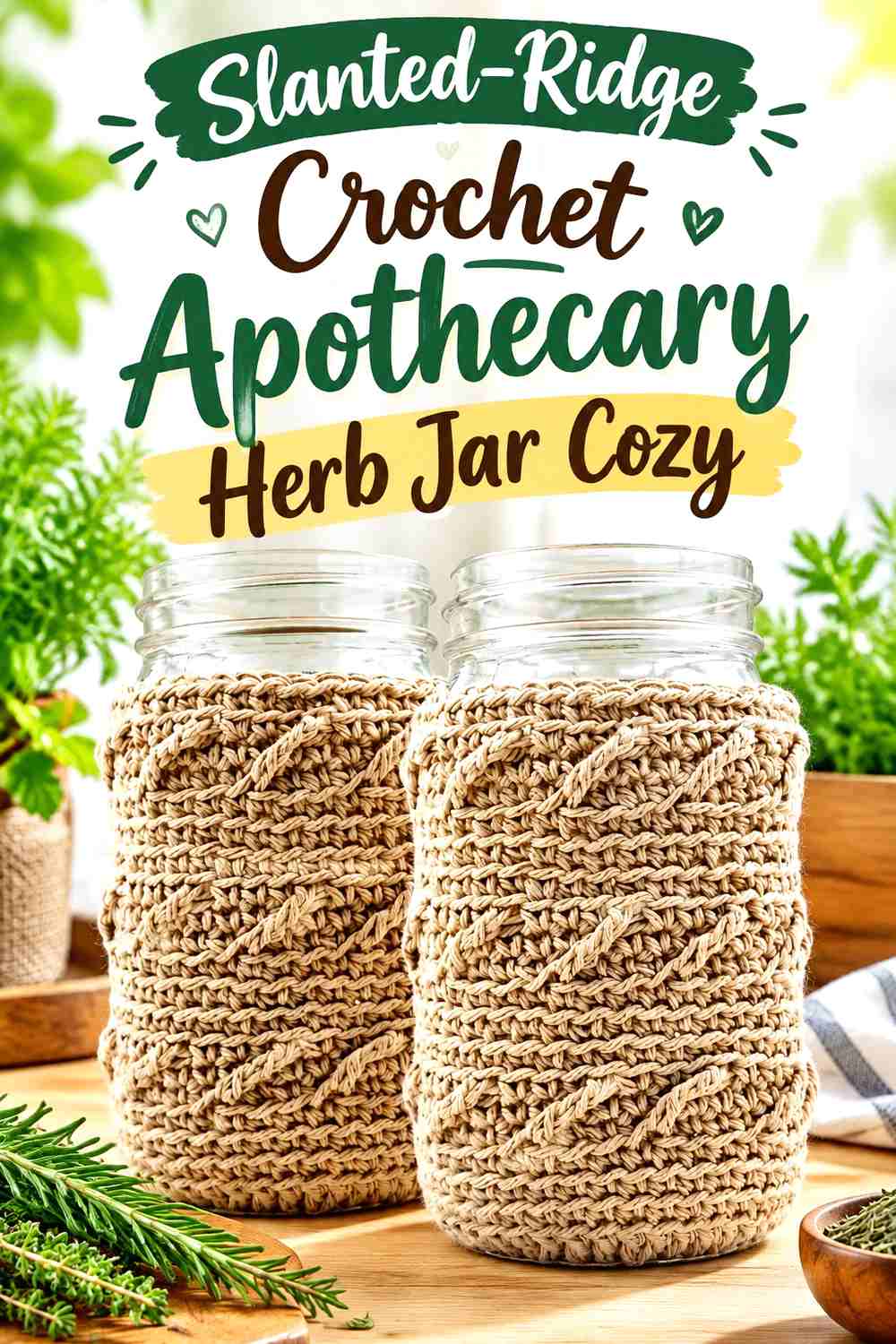
This tall jar-cozy construction from Crochet With Julie uses alternating surface textures rather than plain uninterrupted crochet. That makes it a useful starting point for an apothecary-style herb jar where the stitches themselves provide the decoration.
For the kitchen-witch version, work with an earthy solid or subtle tonal palette and let the raised diagonal texture suggest vines, bundled stems, or old woven storage baskets without adding a separate appliqué.
The Taller Sleeve Gives You a Stronger Color Block
Full-height crochet changes the appearance of the entire jar rather than acting as a small accent.
That works well when you want a row of mismatched glass containers to look coordinated. Repeating one yarn color across jars of different shapes can visually unify the shelf even when the glass itself does not match.
The trade-off is that the contents become less visible. Decide how the herb name will remain readable before covering most of the glass.
Position the Label Before Committing to Full Coverage
If you want a paper or hanging label, test its placement with the finished sleeve on the jar.
A tag tied around the neck leaves the textured body uninterrupted. A label sewn or attached to the cozy creates a more deliberate apothecary appearance but should still be removable if the sleeve needs washing.
Creator Credit: Crochet With Julie
2. Lacy Label-Window Crochet Herb Jar Cozy
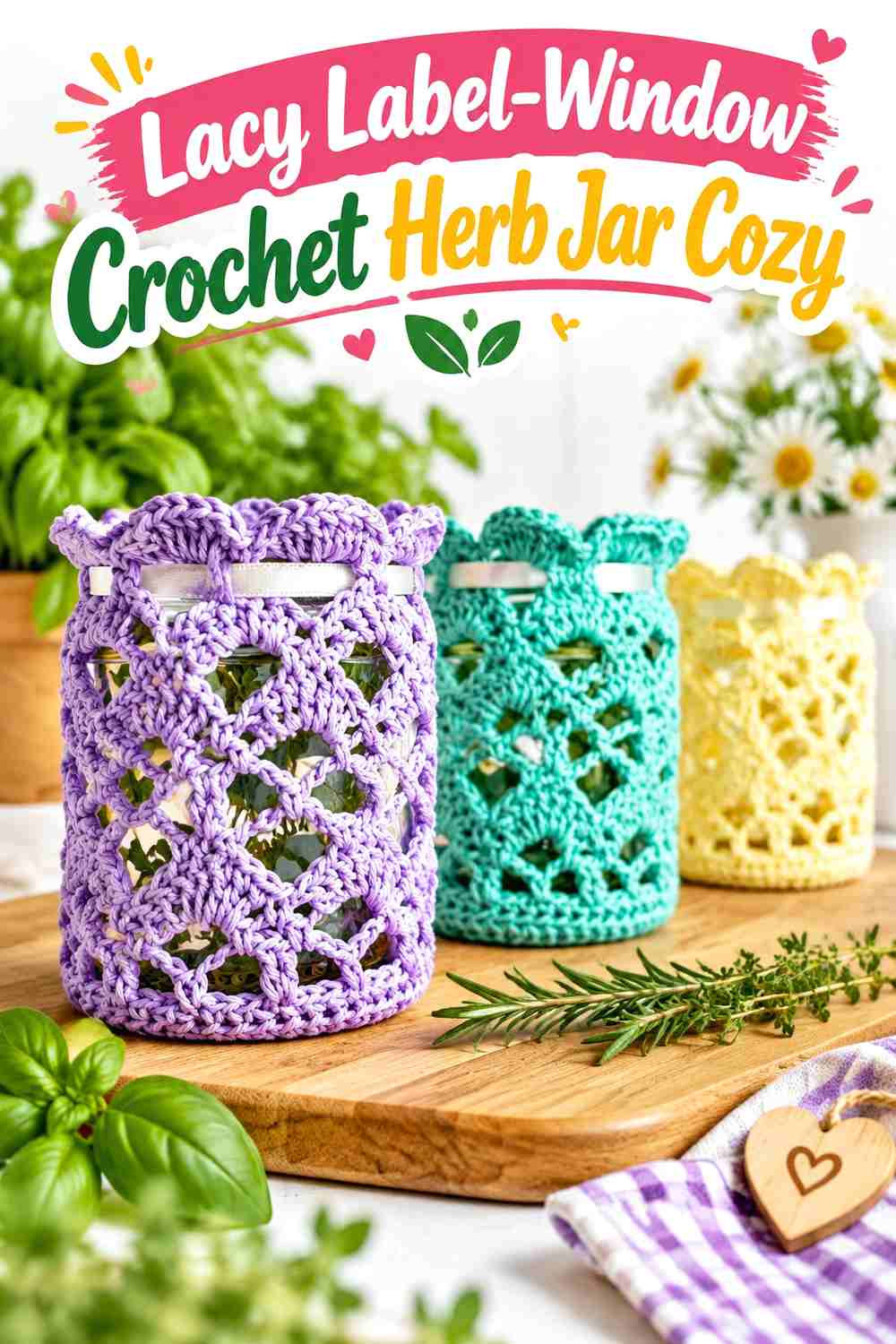
Little Hive Crafts demonstrates a jar cover that can be adjusted around the size of the container and uses a visibly open decorative fabric. That openness makes it particularly useful for herb storage because the glass does not completely disappear behind yarn.
For a winter pantry, muted charcoal, olive, plum, cream, or deep brown can shift the lace from delicate décor toward a more rustic apothecary look.
Open Crochet Keeps the Ingredient Partly Visible
Dense fabric emphasizes the yarn. Lace lets the jar remain part of the design.
That can be helpful for dried herbs because the color and texture of the ingredient still contribute to the shelf display. It also prevents a collection of covered jars from becoming one solid wall of crochet.
If identifying similar herbs by sight would be difficult, retain written labels regardless of how much glass remains visible.
Center the Most Open Section Over the Name
When adapting a lace pattern, think about motif placement rather than only circumference.
If one part of the repeat creates a larger opening, rotating the finished cozy can position that opening where a handwritten or printed label sits underneath. Test the alignment before deciding where the back join or other less prominent section should land.
Creator Credit: Little Hive Crafts
3. Moonlit Lace Crochet Herb Jar Cozy Set
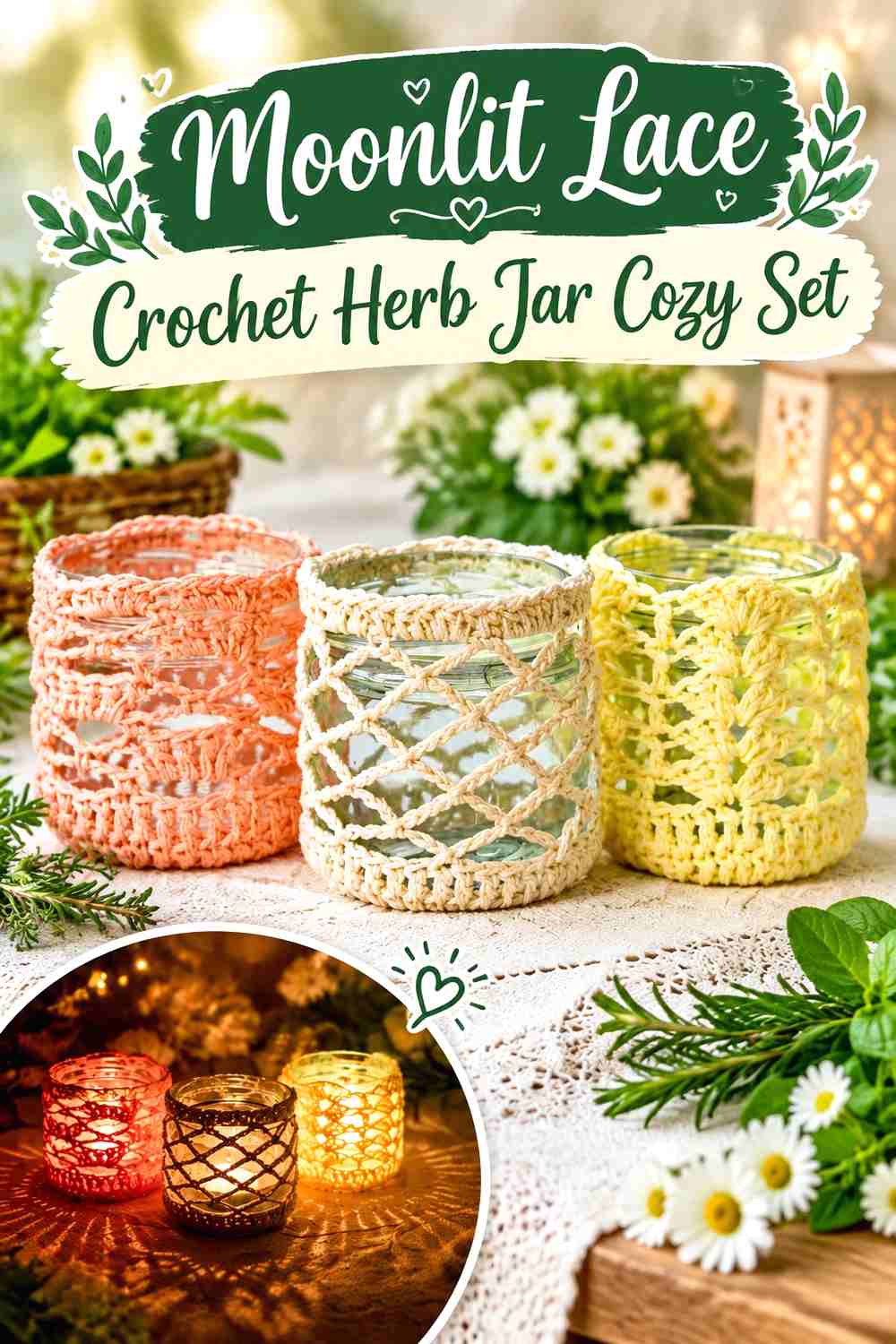
Handmade by Appy’s mason-jar tutorial demonstrates three different crochet cover designs in one source. For a kitchen-witch shelf, that variety can become a coordinated set rather than making every herb container identical.
Use the same narrow palette across the different stitch patterns—perhaps black, cream, moss, and muted plum—so the jars belong together while retaining their individual textures.
Repeated Color Can Unite Different Stitch Patterns
Matching does not require cloning.
Using the same main color across several lace constructions creates continuity while the stitch differences help distinguish jars from one another. You could also assign a color family to different ingredient groups without making unsupported claims about the herbs themselves.
This works particularly well when the jars are displayed together on one open shelf.
Openwork Needs a Clean Background to Read Clearly
Fine lace becomes visually stronger when there is contrast behind it.
If the jar contains a dark dried ingredient, cream crochet will read differently from black crochet over a pale ingredient. Hold the proposed yarn directly against the filled jar before deciding which combination gives you the look you want.
Creator Credit: Handmade by Appy
4. Drawstring Crochet Potion-Pantry Jar Cover
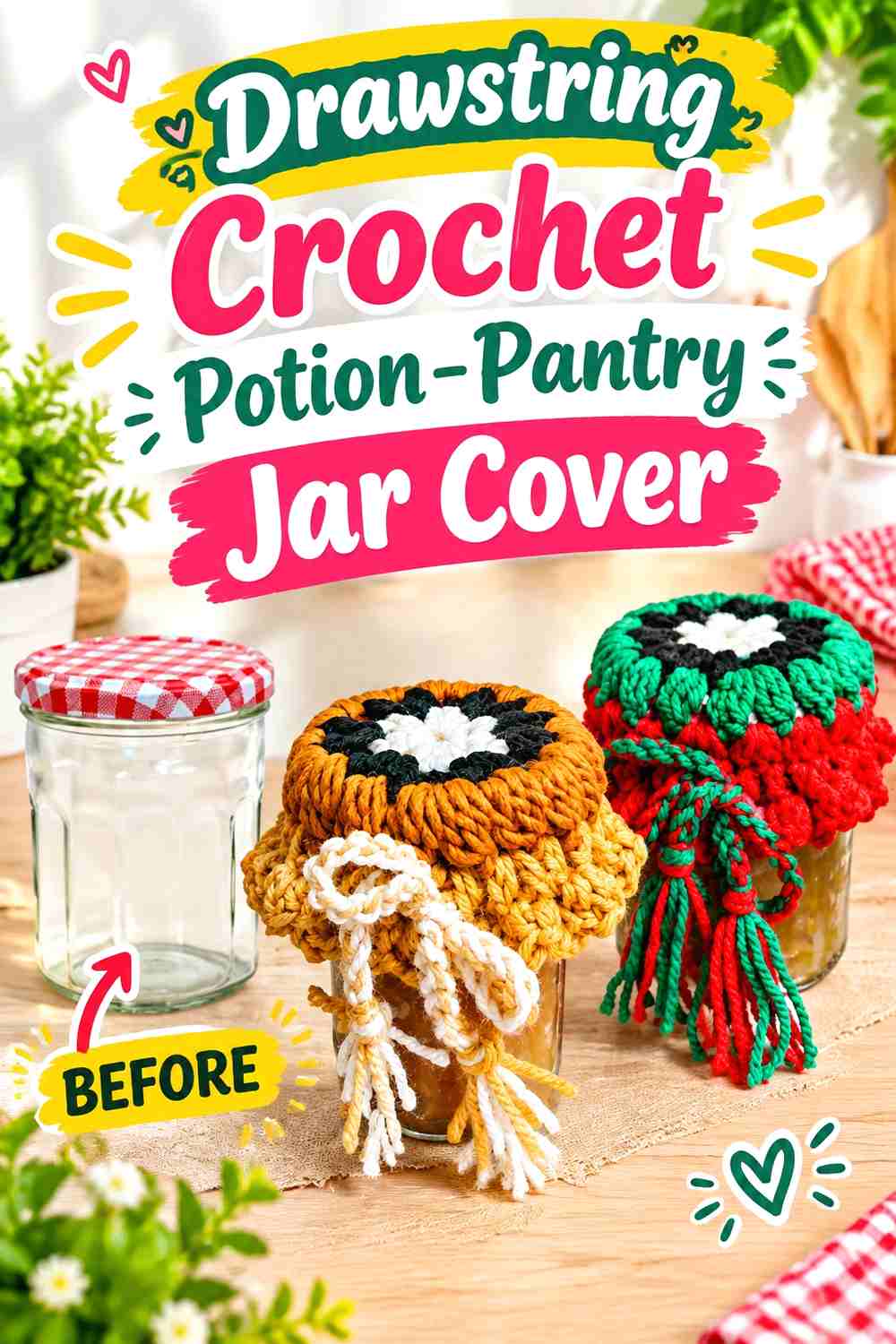
Brunaticality’s jam-jar project takes a different approach from a fitted body sleeve: the decorative crochet sits around the upper portion of the jar and is gathered with a tie.
That makes it easy to translate into a “potion pantry” aesthetic without hiding the whole container. The glass and label remain visible while the crocheted top adds a softer handmade finish.
A Top Cover Leaves More Room for Identification
This construction is useful when practical pantry use matters more than complete visual transformation.
You can keep the main label on the side of the jar, see the contents, and still add crochet texture around the top. It is also a good option for a mixed set of jars where their body diameters are not identical.
Check that any decorative topper sits outside the functional closure rather than interfering with how the jar itself seals.
Drawstrings Add Character but Need Restraint
Long ties can create a charming old-pantry look, but they can also tangle with neighboring jars.
For a tightly packed herb shelf, shorter ends may be more practical. If the jar is purely decorative, longer bows or tassel-like ends can play a larger visual role.
Creator Credit: Brunaticality
5. Granny Square Crochet Herb Jar Wrap
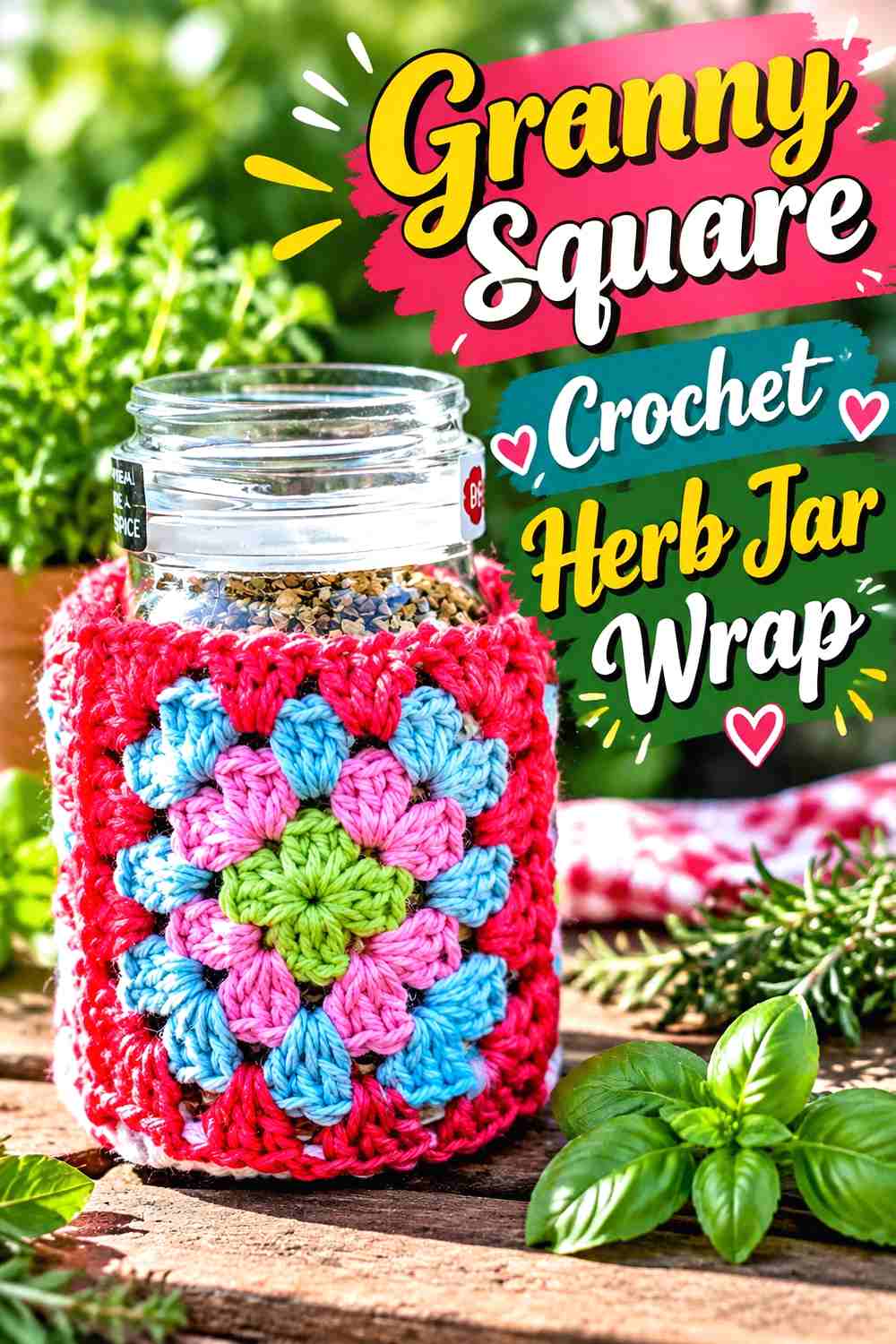
Ophelia Talks Crochet uses granny squares to construct a wrap around a jar, making this the most overtly patchwork option in the collection.
The granny construction works especially well for a kitchen-witch theme that leans toward inherited cottage textiles rather than sleek gothic décor. Tiny combinations of olive, brown, rust, plum, mustard, and cream can make each jar feel collected rather than factory-matched.
Check the Square Against the Jar Before Making Multiples
Granny motifs change the sizing logic.
Instead of simply continuing rounds until the cozy reaches the desired height, you need the blocked motif dimensions to make sense against the container. One oversized square can dominate a small jar, while several tiny squares may create unnecessary seams.
Complete and finish one motif, then hold it against the actual container before committing to the full arrangement.
Let Patchwork Identify the Herb Collection
Different color combinations can make jars easier to tell apart without changing the basic cozy construction.
For example, one jar might emphasize green, another rust, and another cream while all share one common border shade. The result feels coordinated without requiring identical covers.
Keep a written herb label as the definitive identifier rather than relying solely on color.
Creator Credit: Ophelia Talks Crochet
6. Ribbed Crochet Spice Jar Cozy
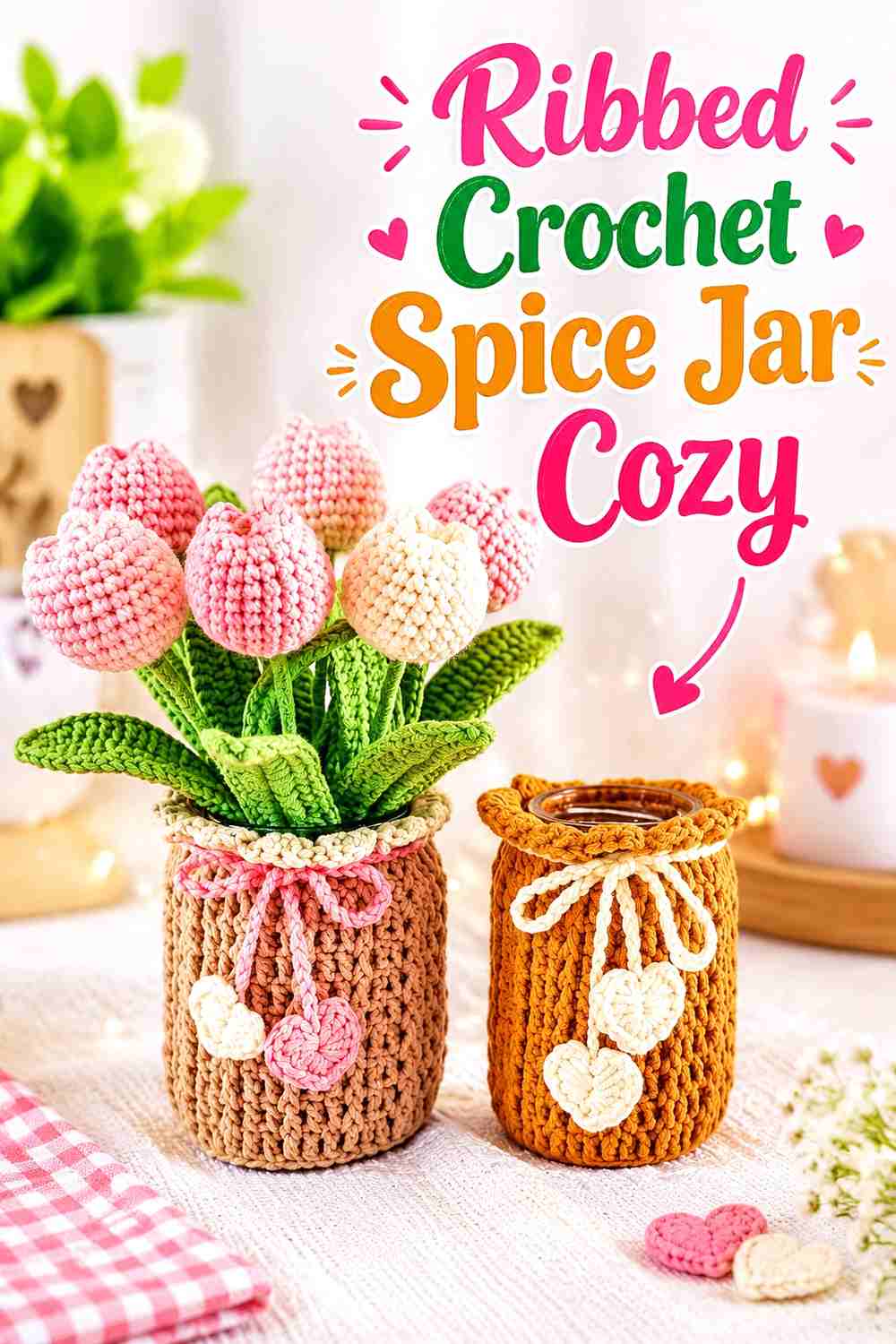
Bo’s Handmade Shop demonstrates a jar cover using a combination that includes front-post texture, giving the finished fabric more vertical definition than a simple flat sleeve.
That structure suits a shelf of taller spice or herb jars where you want texture but do not want separate motifs sewn onto every container.
Vertical Texture Can Make Short Jars Look Taller
Strong upright lines lead the eye from base to lid.
On squat jars, that can create a more elongated visual impression. On very tall jars, the same texture may emphasize height even more, so compare the stitch scale with the container before making a full matching set.
Fine Texture Works Well With Small Labels
A busy multicolor fabric can compete with tiny pantry text. A single-color ribbed surface gives you visual interest while leaving a contrasting label easier to read.
If labels will sit directly on or over the crochet, test them before finishing multiple cozies. Thick ridges may make some attachment methods sit unevenly.
Creator Credit: Bo’s Handmade Shop
7. Chunky Crochet Cauldron Jar Cozy
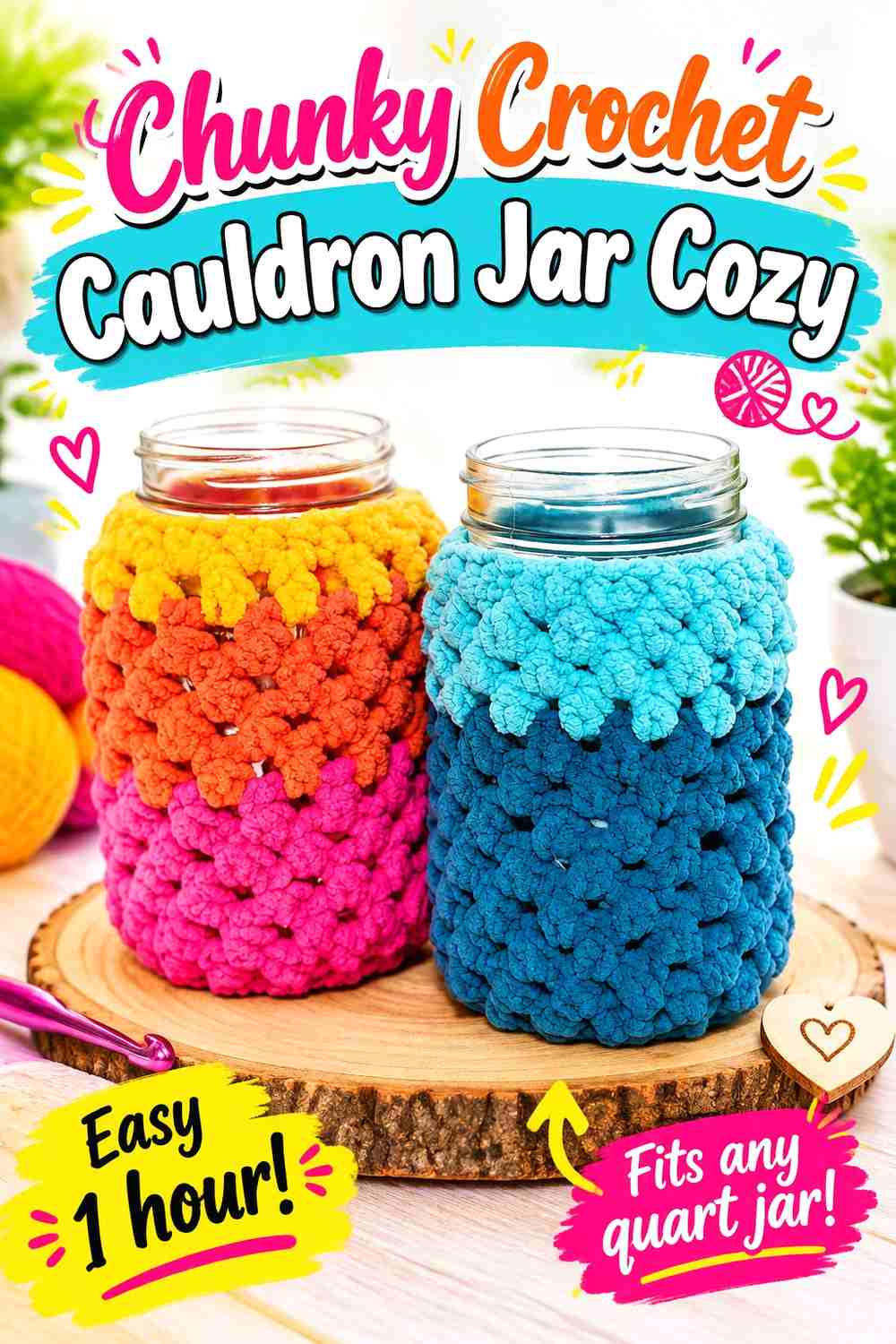
Crafting at the Poole’s jar-cover tutorial uses a much thicker fabric than the delicate lace options. That bulk makes it a useful source for a “little cauldron” interpretation where the jar looks wrapped in a substantial winter sleeve.
A dark charcoal, deep green, brown, or black version can create the mood without requiring a literal cauldron shape or novelty decorations.
Chunky Fabric Changes the Jar’s Footprint
Thick yarn extends beyond the glass.
That matters on a crowded spice shelf. Several chunky cozies may require noticeably more side-to-side space than the uncovered containers, particularly if the jars already sit close together.
Make one first and return it to its actual storage position before committing to a complete set.
Use Bulk Where You Want a Focal Jar
You may not need this much texture on every herb container.
A chunky cover can instead mark one larger storage jar—perhaps the container holding tea sachets, dried cinnamon sticks, or another frequently used pantry item—while smaller jars use thinner sleeves.
Varying the scale can make the shelf feel more intentional than repeating the same heavy cover everywhere.
Creator Credit: Crafting at the Poole
8. Scrap-Yarn Crochet Pantry Herb Jar Cozy
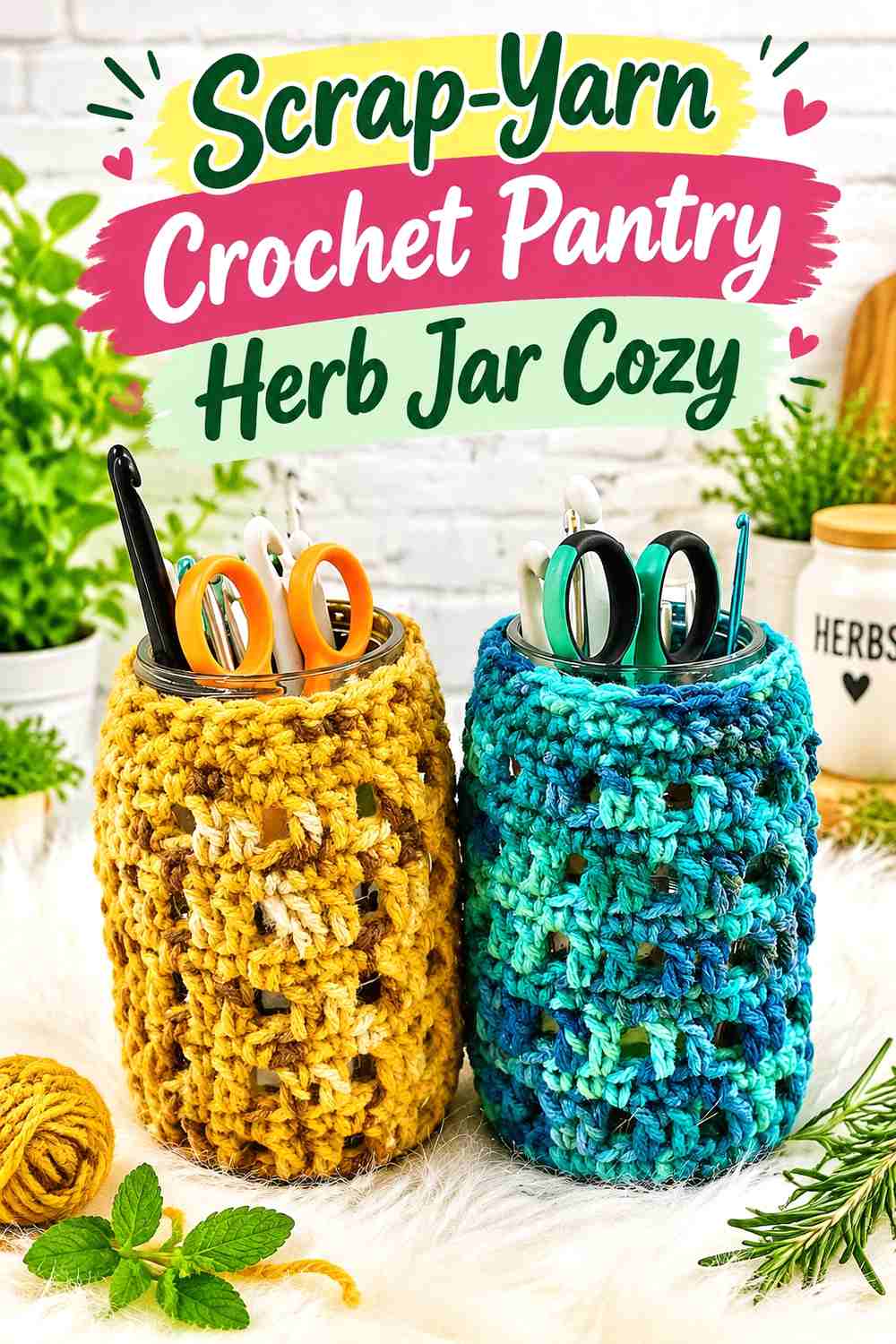
Ninja Bunny Crochet’s mason-jar cozy is a compact joined-round construction suited to using relatively small amounts of yarn.
For kitchen-witch styling, that makes it useful for a deliberately mismatched pantry collection. Leftover earth tones can become separate cozies while a shared edging or label style keeps the group visually connected.
Scrap Color Works Better With a Simple System
Random does not have to mean chaotic.
Choose one rule before starting: every cozy gets a dark border, every jar contains one green shade, or all labels use the same neutral background. That single repeated element can make very different leftover yarns feel like part of one set.
Test Stretch Before Using a Precious Scrap
A small leftover ball may look perfect for a jar but behave differently from the yarn used in the tutorial.
Before relying on it, crochet enough fabric to see whether it stretches excessively or creates a very stiff sleeve. Jar cozies depend on fit, so visual color compatibility is only part of the decision.
Creator Credit: Ninja Bunny Crochet
9. Fine-Cotton Crochet Herb Jar Bonnet
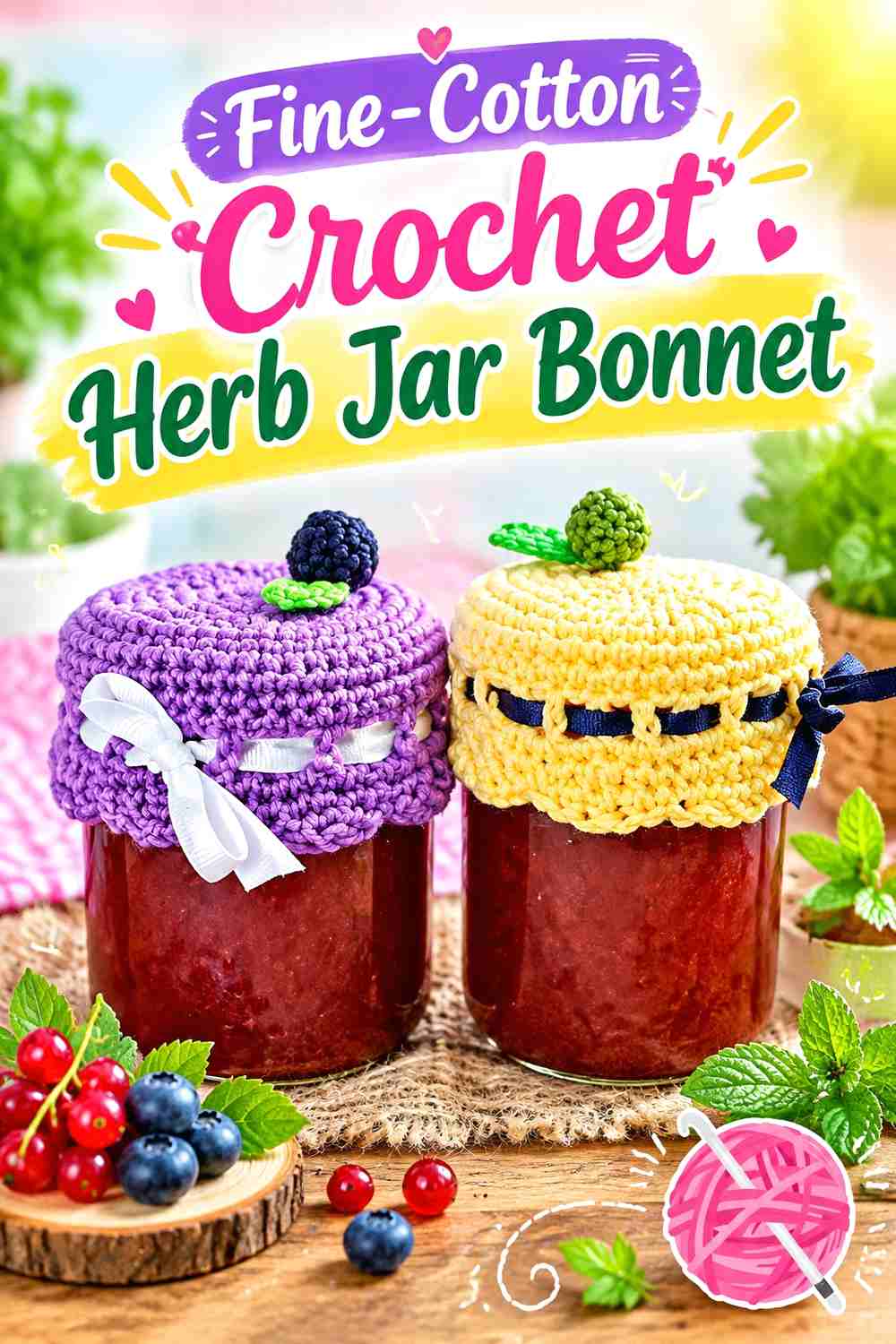
Hobby Makes Happy’s jam-jar cover uses fine cotton and is presented as decorative kitchen gift packaging. Its bonnet-like position around the top of the jar makes it especially suitable for a herb jar where you want the glass body to remain visible.
This style can lean toward either cottage kitchen or darker apothecary décor depending on color. Cream and faded floral shades feel traditional, while black, wine, or forest tones produce a moodier effect.
A Small Topper Works Well on Narrow Shelves
Because the crochet is concentrated near the top, the jar retains nearly its original footprint.
That is useful for shelves where containers already fit tightly side by side. It also lets you add handmade detail without turning an entire pantry organization system into a large crochet project.
Coordinate the Bonnet With the Label Below
Treat the uncovered glass as part of the design.
A handwritten botanical-style label beneath the crochet can become the primary feature, while the topper frames it. Before choosing a highly decorative yarn, check whether the finished combination still leaves the herb name easy to read.
Creator Credit: Hobby Makes Happy
10. Peekaboo-Label Crochet Herb Jar Cozy
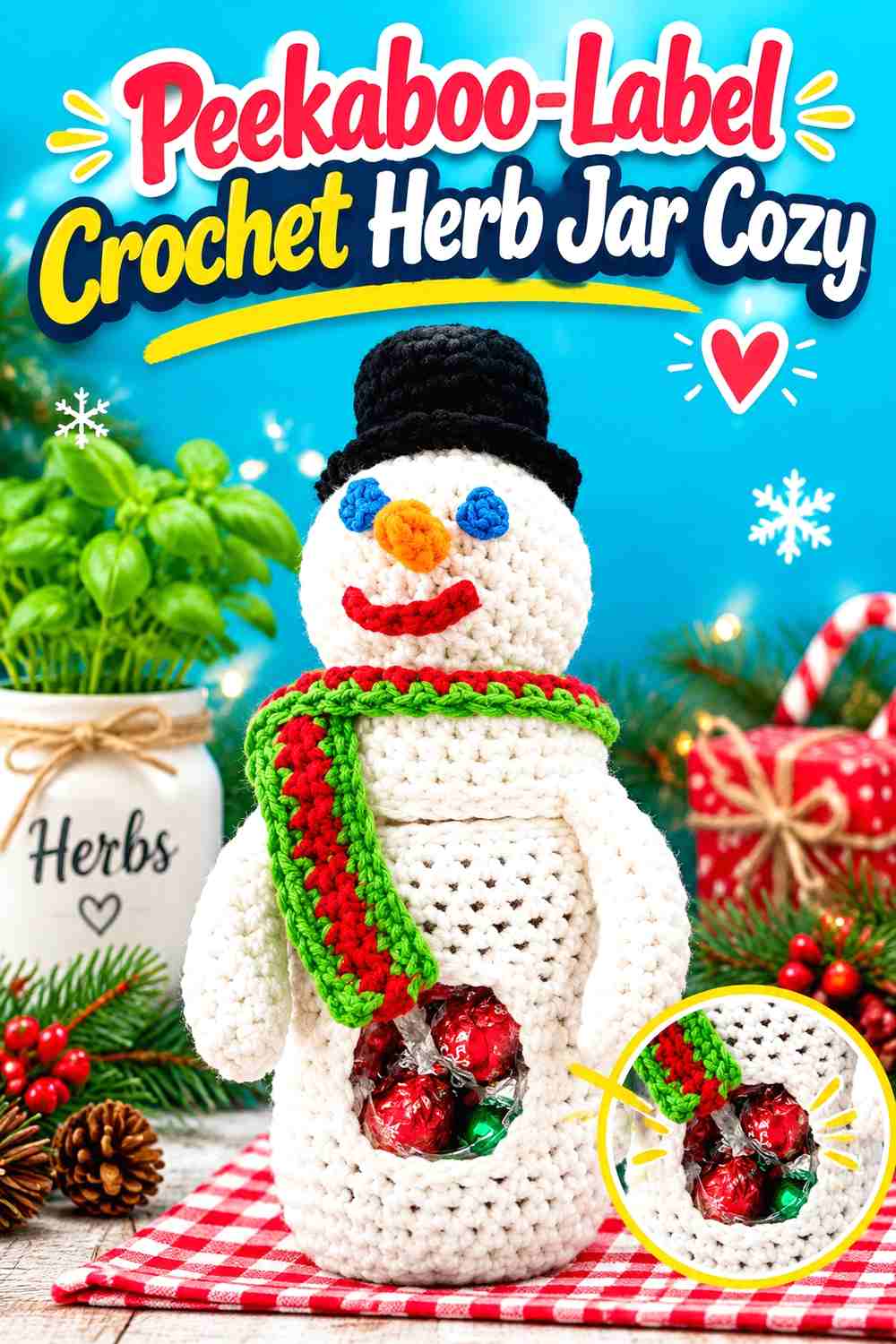
Tangle with Yarn’s source project includes a mason-jar cozy with a peekaboo window, originally paired with a seasonal topper. For a kitchen-witch adaptation, the useful feature is the window itself: it creates a deliberate exposed area in an otherwise covered container.
Skip the seasonal character topper when you want a year-round pantry look and use the opening to reveal the herb label or a portion of the dried contents.
Design the Window Around What Needs to Stay Visible
The opening should solve a practical problem.
If the label is wide, a very narrow opening will not help much. If the jar contains an ingredient you want to see, position the exposed section where the contents remain visible from the normal shelf angle.
Use the creator’s actual construction rather than inventing a new stitch sequence to resize the window.
One Exposed Section Can Break Up a Dense Sleeve
A mostly covered jar can look visually heavy when several sit together.
The open section introduces glass and contrast, which can make the shelf feel less crowded even if the rest of the cozy uses a dark winter color.
Creator Credit: Tangle with Yarn
11. Character-Style Crochet Kitchen Witch Jar Cover
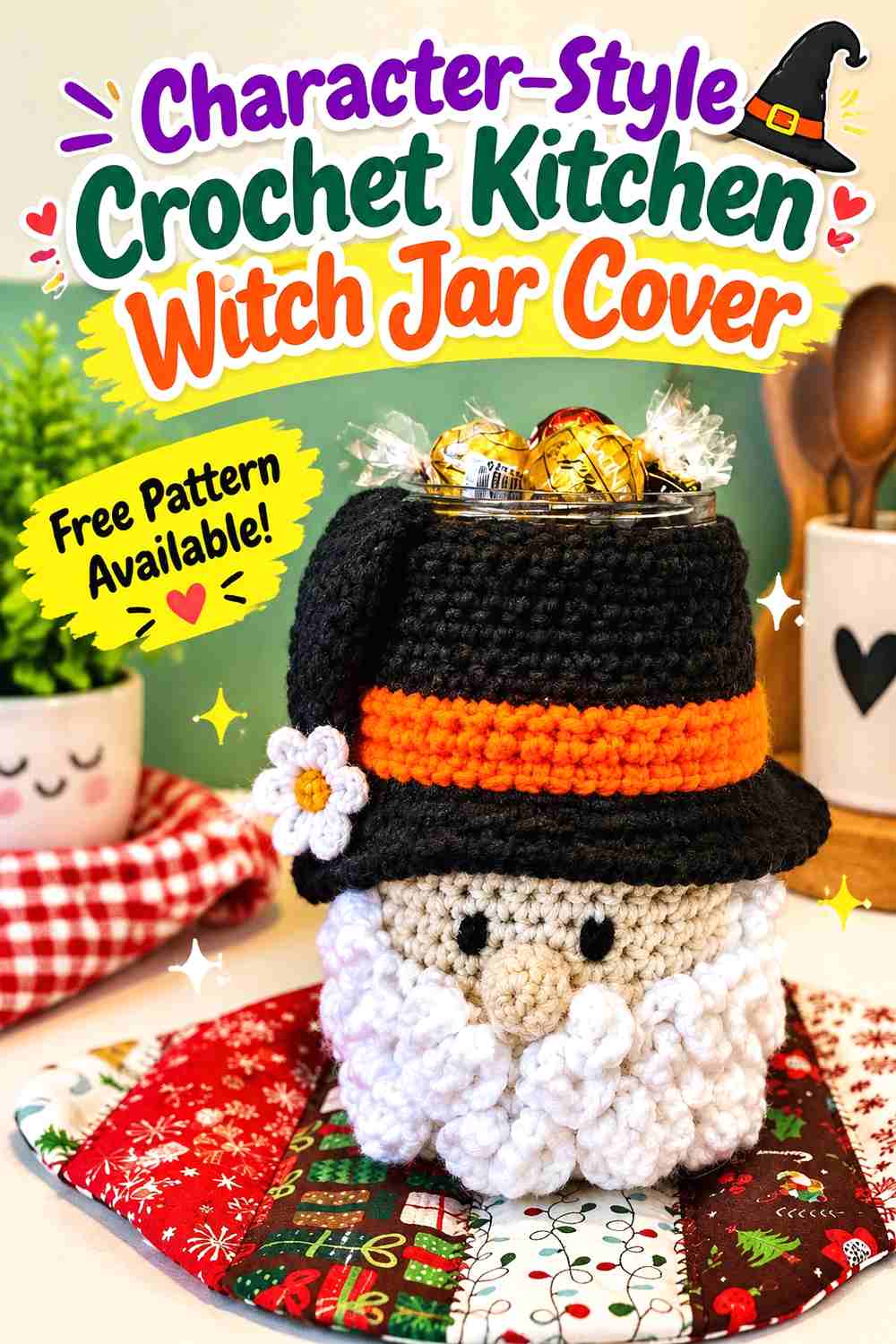
Needlepointers presents a full character-style mason-jar cover in a holiday design. The useful inspiration for this roundup is the way a plain cylindrical jar can become a complete character rather than simply receiving a decorative sleeve.
For a kitchen-witch shelf, treat this as an adaptation concept rather than an exact witch-pattern tutorial. The source teaches a Santa-themed result; a witch, familiar, or apothecary character would require your own separate design choices rather than copying or relabeling the creator’s details.
Character Covers Work Better as Accent Pieces
A row of 15 face-covered jars can become visually overwhelming.
Instead, consider one character jar among simpler herb sleeves. It could function as the playful focal point of the shelf while neighboring containers use mossy ribbing, lace, or granny motifs.
This also reduces the need for many small attached embellishments.
Keep Three-Dimensional Details Away From the Lid
Character features can add bulk.
Whatever decorative direction you choose, preserve clear access to the actual jar closure. The cover should not make you tug on attached crochet pieces each time you need to open the container.
Creator Credit: Needlepointers
12. Crochet Botanical Herb Jar Lid Cover
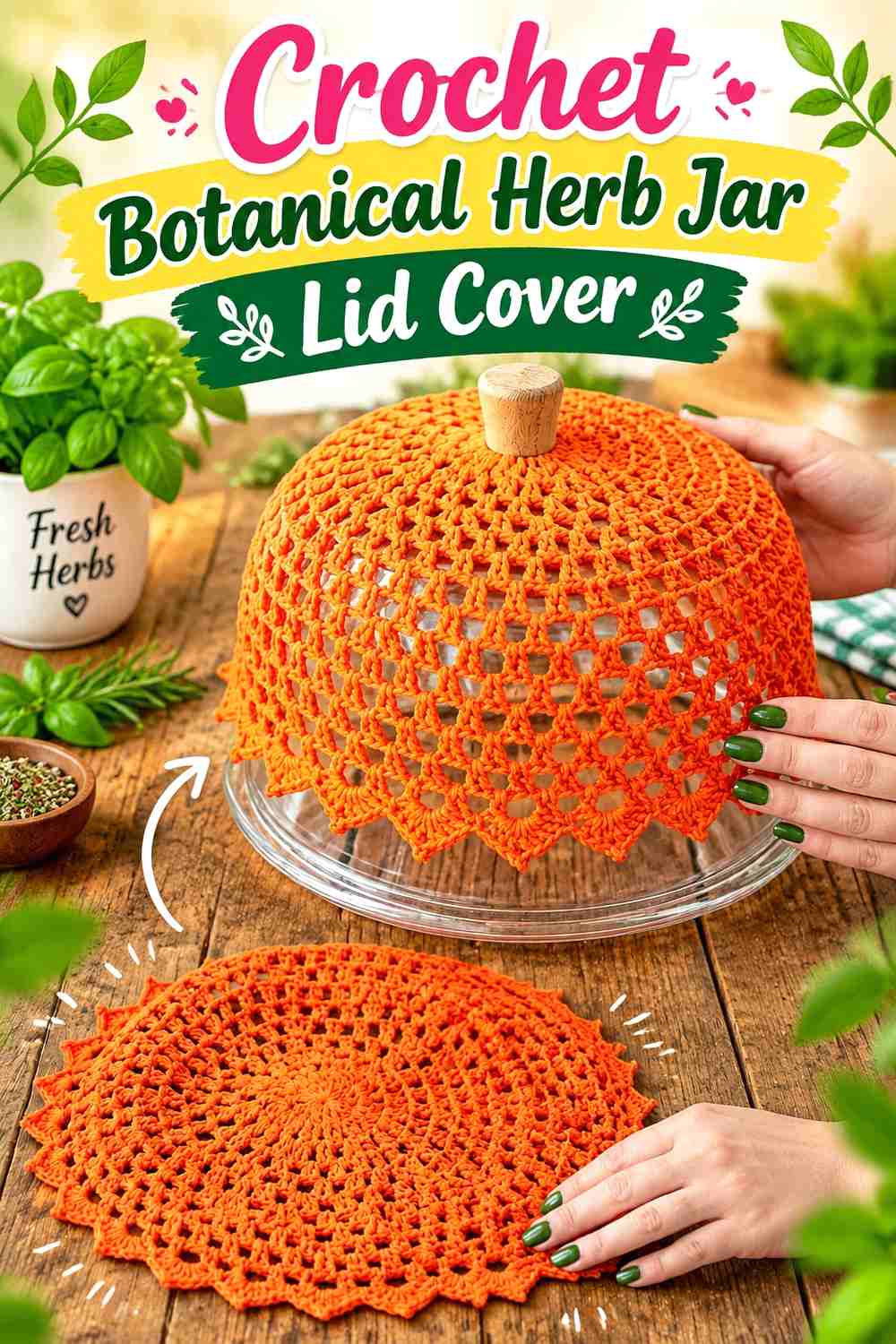
atolye_masal demonstrates a decorative crochet cover intended for a jar lid rather than a complete sleeve. This creates one of the most practical options for a working herb pantry because the glass remains completely unobstructed.
A lid cover can carry the kitchen-witch palette while the side of the container holds a clearly readable label.
Lid-Only Crochet Keeps the Shelf Visually Light
When every jar is wrapped from top to bottom, a large pantry display can become texture-heavy.
Small coordinated lid covers provide repetition without hiding the herbs. They are particularly useful when the dried leaves, flowers, seeds, or spice colors are already part of the visual appeal.
Make Sure Decoration Does Not Compromise the Closure
A decorative cover belongs outside the functional lid system.
Do not place crochet where it prevents a lid from closing as designed. If the jar needs a tight seal for storage, close it properly first and treat the crochet as a removable exterior decoration.
Creator Credit: atolye_masal
13. Farmhouse Crochet Apothecary Jar Cozy
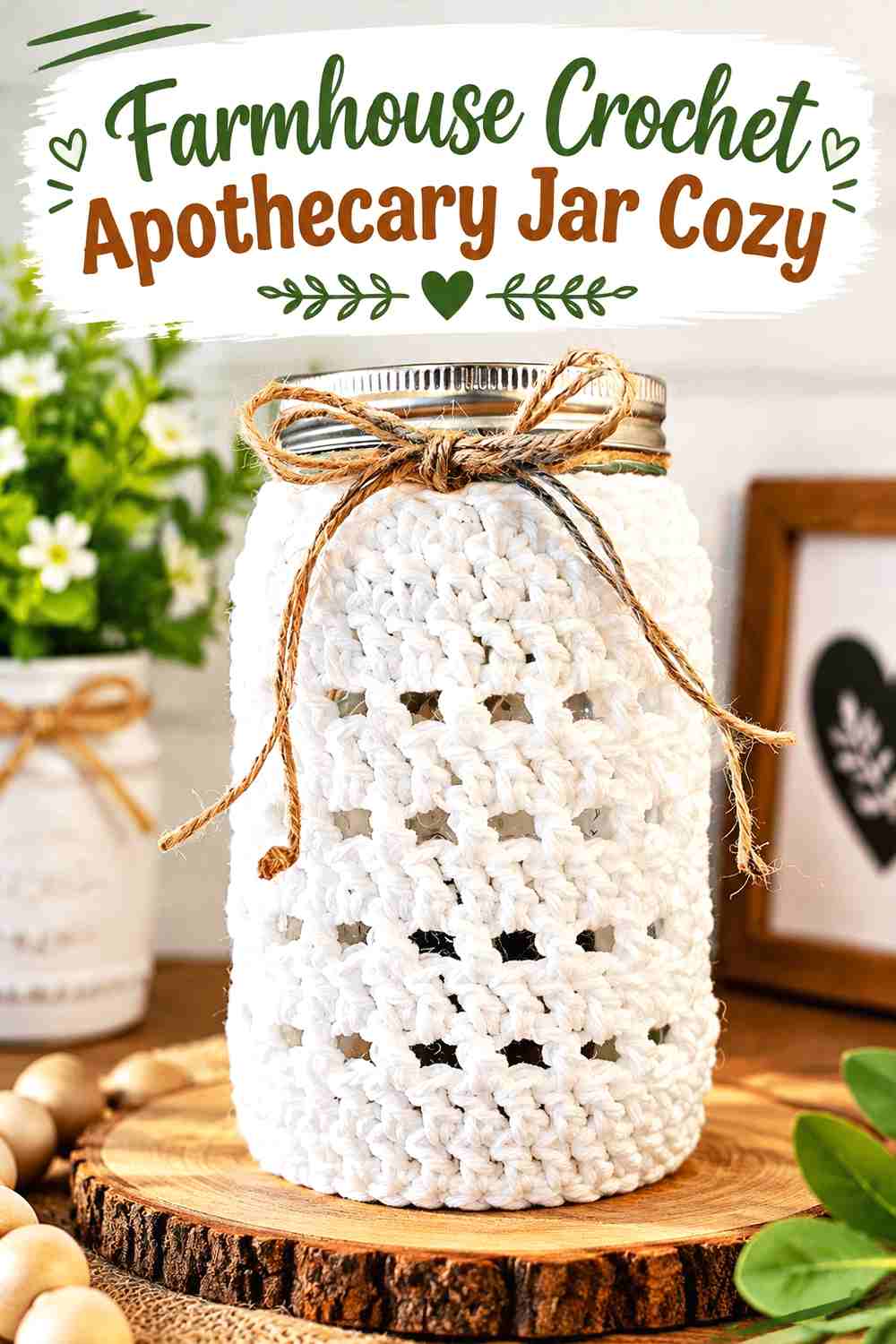
B.Hooked Crochet uses an open, farmhouse-style mason-jar cover with small gaps in the fabric rather than a completely opaque cylinder.
That structure translates easily to a rustic kitchen-witch shelf. Instead of conventional farmhouse colors, use old-paper cream, moss, dark brown, black, or muted berry to shift the same construction toward an apothecary mood.
The Small Openings Keep the Glass in the Design
A peek of glass between crochet stitches can prevent a dark cozy from feeling too heavy.
This is useful if you want several black or deep-green jars but still want reflected kitchen light to break up the shelf. The result is less enclosed than a dense single-crochet sleeve.
One Construction Can Coordinate Different Jar Sizes
The current pattern source supports more than one mason-jar size, making the general construction helpful for a shelf that uses both smaller and larger jars.
Keep in mind that your own recycled containers may still differ from the specified jars. Compare the base and circumference rather than assuming capacity alone guarantees the same dimensions.
Creator Credit: B.Hooked Crochet
14. Bulky Crochet Winter Herb Jar Sleeve
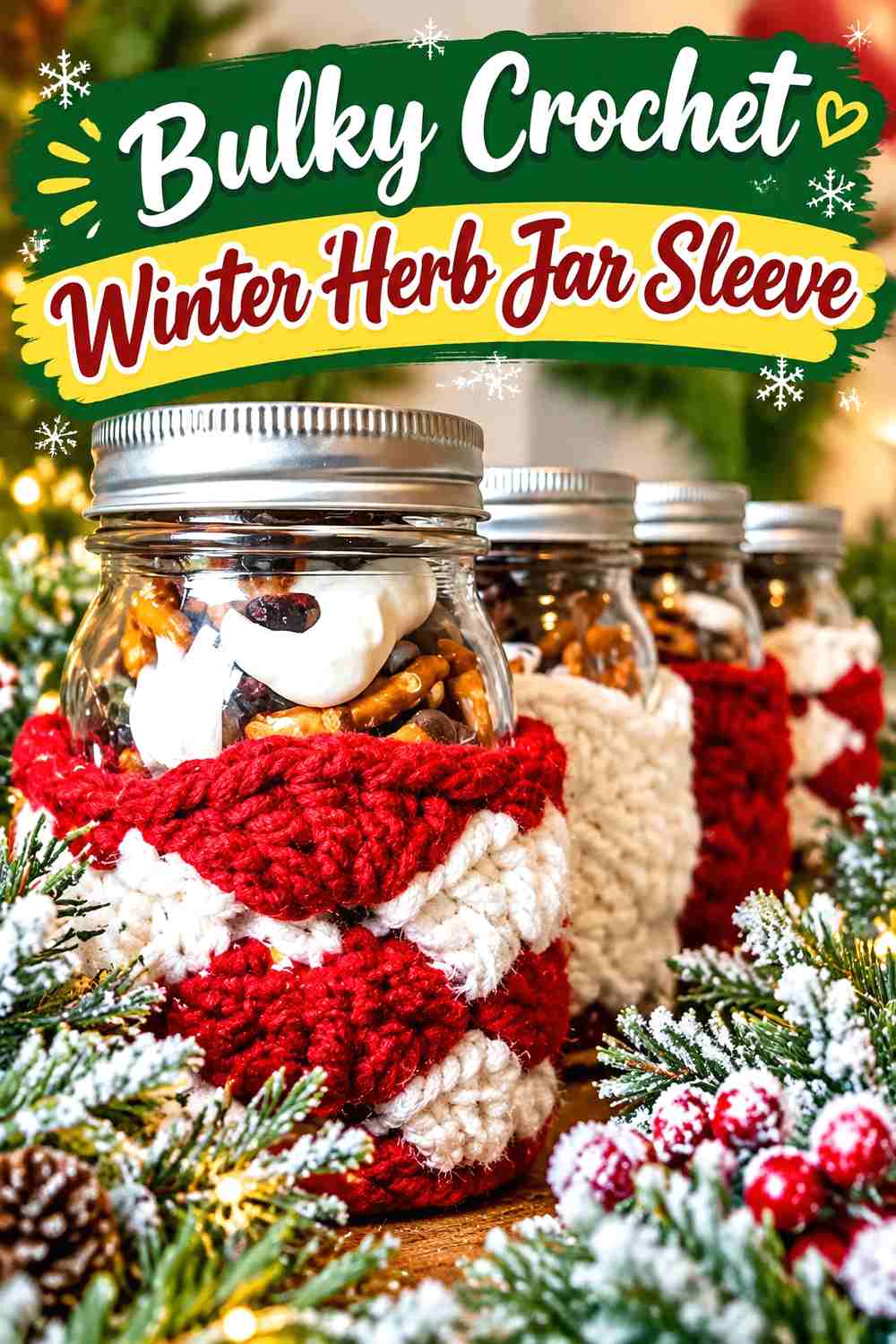
Kay Krochets demonstrates a mason-jar cozy using bulky yarn, creating a compact project with a noticeably thicker surface.
For a winter kitchen, that extra texture can work especially well on gift jars or a few larger shelf containers. Think of it as a sweater for the jar rather than trying to cover every tiny spice bottle in the same heavy fabric.
Bulky Yarn Makes Small Color Changes More Prominent
When stitches are large, each band of color occupies more visual space.
A narrow rust stripe or moss border may be enough to change the entire personality of the cozy. Plan color changes on the actual jar instead of deciding solely from a yarn pile.
Reserve Thick Sleeves for Jars With Enough Clearance
Check both shelf spacing and hand clearance.
A bulky sleeve can make the jar easier to notice and grip, but it also changes how closely neighboring containers can sit. Open cabinet doors, shelf rails, and tight corners should all be considered before making several.
Creator Credit: Kay Krochets
15. Post-Stitch Crochet Forest Herb Jar Cozy
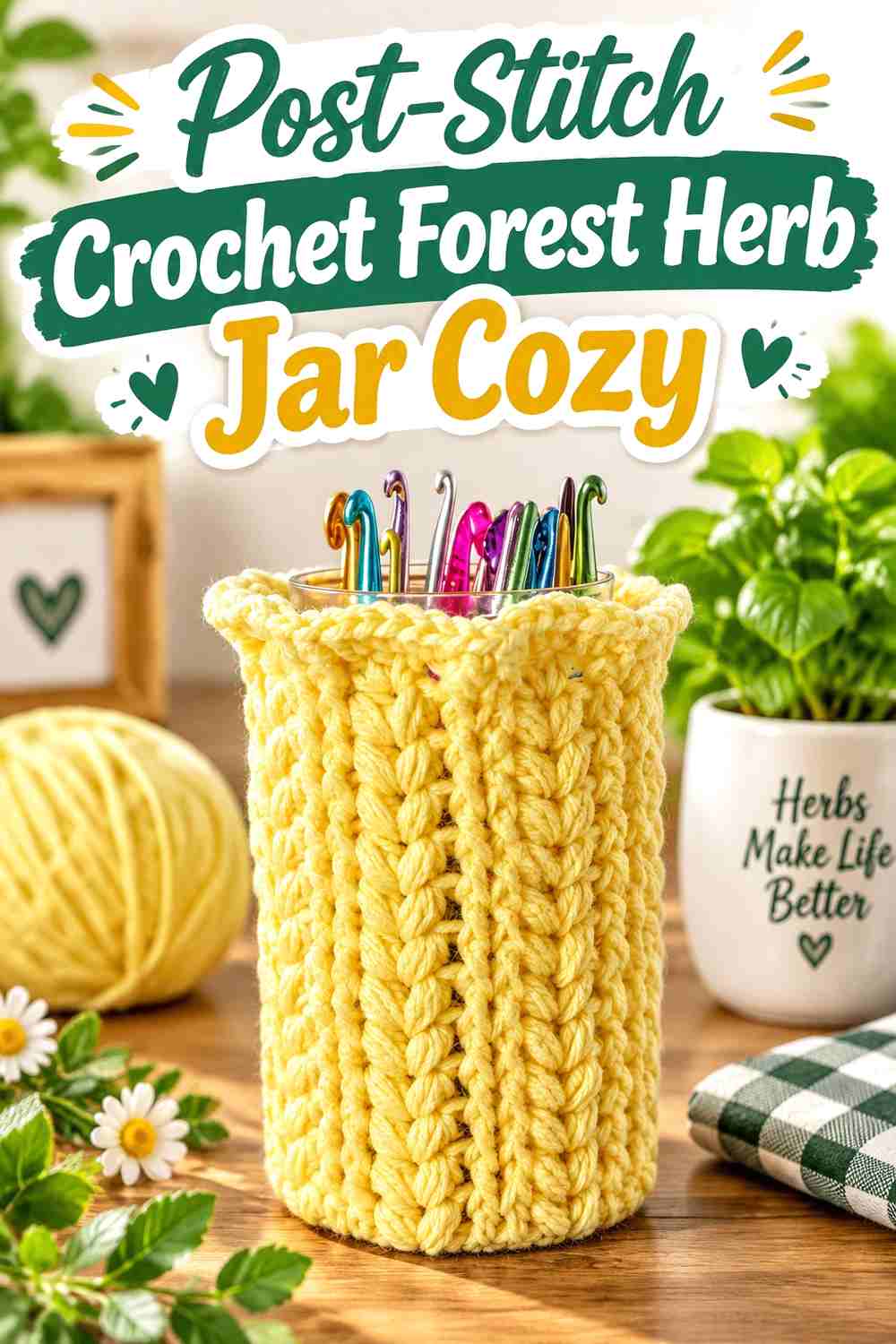
Erini’s Corner uses post-stitch texture in a jar cozy that can also be adapted conceptually toward container-like crochet. The pronounced surface makes it a strong final option for a forest-inspired herb jar where stitch relief replaces separate decorations.
Use a single woodland shade when you want the raised texture to remain obvious, or introduce a subtle contrasting border to separate the cozy from the jar lid.
Raised Stitches Add Structure Without Sewn-On Motifs
Mushrooms, leaves, moons, and stars are not the only way to create a themed object.
Strong crochet relief can suggest bark, woven baskets, or old household textiles while leaving the jar free of dangling pieces. That can be particularly useful in a working kitchen where the container is handled frequently.
Compare the Cozy With the Jar’s Shoulder Shape
A textured cylindrical fabric may fit the straight body beautifully but behave differently as the glass narrows near the neck.
Decide whether the cozy should stop below the shoulder or follow the source’s upper shaping. Trying to force thick textured fabric into a narrower area can change the way the stitches sit.
Creator Credit: Erini’s Corner
Which Crochet Kitchen Witch Herb Jar Cozy Style Should You Choose?
For jars you use constantly, the lid cover, jam-jar bonnet, and drawstring topper keep most of the container accessible and visible. They are especially practical when clear labels matter.
For a stronger decorative transformation, choose the slanted-ridge, chunky cauldron, bulky winter, or post-stitch forest cozies. These make the yarn itself a major part of the shelf display.
The granny-square wrap is the clearest choice for a colorful cottage-witch pantry, while the lacy jar covers work better when you want a darker apothecary palette without completely hiding the glass.
If organization is the priority, the peekaboo-window constructions offer a useful compromise: most of the jar receives crochet texture while one section remains available for identification.
A mixed collection can work particularly well. Instead of forcing one construction onto every container, repeat a limited palette across granny wraps, narrow toppers, lace sleeves, and textured full-height cozies. The shelf stays coordinated while each jar can use a cover suited to its actual shape and frequency of use.
Conclusion
A kitchen-witch herb shelf becomes more convincing when the crochet supports the way the jars are actually used.
Choose full-height textured cozies for larger focal containers, granny wraps when patchwork color is part of the look, lace when you want the glass to remain visible, and lid or drawstring covers when quick identification matters most. Peekaboo windows are especially useful when you want both a strong handmade surface and a readable label.
Before making a matching collection, complete one cozy and return the jar to its real shelf. Check how easily you can read the label, open the lid, remove the cover for cleaning, and reach neighboring containers.
Use the original tutorials for their exact crochet construction, then build the kitchen-witch mood through your own palette, labeling system, and restrained botanical or apothecary styling.
Frequently Asked Questions
Can I use any crochet mason-jar cozy for small herb jars?
Not without checking the dimensions. Many mason-jar tutorials are designed for pint, quart, or other standardized containers that may be considerably larger than spice jars. Use the tutorial’s adjustment guidance where available and compare the crochet directly with your actual container.
How do I keep herb labels visible under a crochet jar cozy?
Use a shorter sleeve, openwork construction, peekaboo window, or lid-only cover. Another option is placing the label above the crochet near the jar neck. Whatever method you choose, make the written name easy to read without repeatedly removing the cozy.
What colors work for a kitchen-witch herb jar collection?
Moss green, olive, cream, brown, charcoal, black, rust, muted mustard, burgundy, and plum can all support the look. You can also use traditional granny-square scraps for a more cottage-oriented interpretation. The construction and labeling usually matter more than choosing one supposedly “witchy” color.
Can crochet cover the lid of a working pantry jar?
A removable decorative lid cover can sit over a properly closed jar, but it should not interfere with the closure or substitute for a functional lid. Close and store the container according to its intended use first, then add the crochet decoration outside it.
Should herb jar cozies be removable?
Removable covers are generally more practical for a working kitchen because the glass and crochet can be cleaned separately and labels can be changed when the contents change. They also make it easier to reuse the same cozy on another compatible jar.
Can I use a candle-jar crochet tutorial for herb storage?
The crochet construction may be adaptable if the jar dimensions work, but use the finished project as a dry-storage cover rather than assuming anything about heat resistance. Yarn and open flames should be kept apart, particularly in a kitchen.
How can I make 15 different herb jars look coordinated without making identical cozies?
Repeat two or three design elements instead of one entire pattern. You might use the same dark border, the same label shape, or the same four-color palette across lace, granny, ribbed, and lid-cover designs. This creates a collected apothecary look while allowing each jar to use a construction that fits it properly.