A crochet snowflake garland can decorate a winter window without blocking the daylight that makes the display interesting in the first place. Open lace lets the sky show through, thicker cotton creates stronger silhouettes, and beads or tassels can add just enough weight and movement to make individual flakes noticeable from across the room.
The main decision is whether you want the snowflakes to disappear lightly into the window or behave more like distinct hanging ornaments. Fine thread and small motifs create a drifting-snow effect. Larger flakes, puff stitches, chunky yarn, sparkling edges, and decorative hangers produce a stronger graphic line.
Not every source below was originally designed as a complete window garland. Some tutorials teach individual snowflakes that are especially suitable for repeating and attaching to a separate cord. That gives you more control over spacing, color, and overall garland length without changing the creator’s snowflake construction.
Quick List
- Crochet Petite Falling-Snow Window Garland
- Crochet Openwork Picot Snowflake Garland
- Crochet Crisp Crystal Snowflake Window Garland
- Crochet Sparkle-Edged Snowflake Garland
- Crochet Scandi Tassel Snowflake Window Garland
- Crochet Mini Cotton Snowflake Garland
- Crochet Fine-Thread Frost Snowflake Garland
- Crochet Mixed-Silhouette Snowstorm Garland
- Crochet Sweet-and-Simple Snowflake Garland
- Crochet Chunky Bedazzled Snowflake Garland
- Crochet Puff-Stitch Cotton Snowflake Garland
- Crochet Thread-Lace Winter Window Garland
- Crochet Petite Ilse Snowflake Garland
- Crochet Beaded Lace Snowflake Garland
Plan the Garland Around the Window, Not Just the Snowflake
A motif that looks small in your hand may appear very different once several are arranged across glass.
Measure the usable window area before deciding how many flakes to make. You do not need to fill the entire width. A short garland centered over one sash can look more deliberate than a long strand stretched tightly from edge to edge.
Spacing also affects the mood. Closely arranged flakes create a decorative border, while wider gaps make the strand resemble scattered snowfall. If several motif sizes are involved, arrange the completed pieces on a floor or table first and judge the visual rhythm rather than relying on identical measurements between every flake.
Remember to account for the ends of the garland. Leave enough cord or chain beyond the outer motifs for whatever hanging method you intend to use.
Daylight Changes Which Snowflakes Read Clearly
Windows create strong backlighting. That can make fine crochet look beautiful, but it can also cause low-contrast yarn colors to disappear.
White and cream usually form a clear winter silhouette against a darker outdoor view. Pale blue, gray, or metallic yarn can work too, but test the color against the actual window during daylight rather than judging it only against a tabletop.
Thicker motifs generally remain visible at a greater distance. Lace snowflakes depend more on the relationship between stitches and open spaces, so careful blocking becomes particularly important.
If your window has busy curtains or blinds behind the garland, a stronger silhouette may be easier to see than an extremely delicate thread motif.
Keep Window Hanging Light and Removable
A winter garland does not need heavy hardware.
Lightweight removable hooks, an existing curtain rod, or another suitable non-damaging support can work depending on the window and surrounding surface. Avoid hanging crochet where it will interfere with opening, closing, locks, cords, or other window hardware.
Beads, tassels, and thicker motifs also add weight to the strand. Test the completed garland before leaving it in place.
For households with young children or pets, keep long hanging cords and small detachable beads safely out of reach. A simple yarn strand with securely attached motifs is the lower-fuss option.
1. Crochet Petite Falling-Snow Window Garland
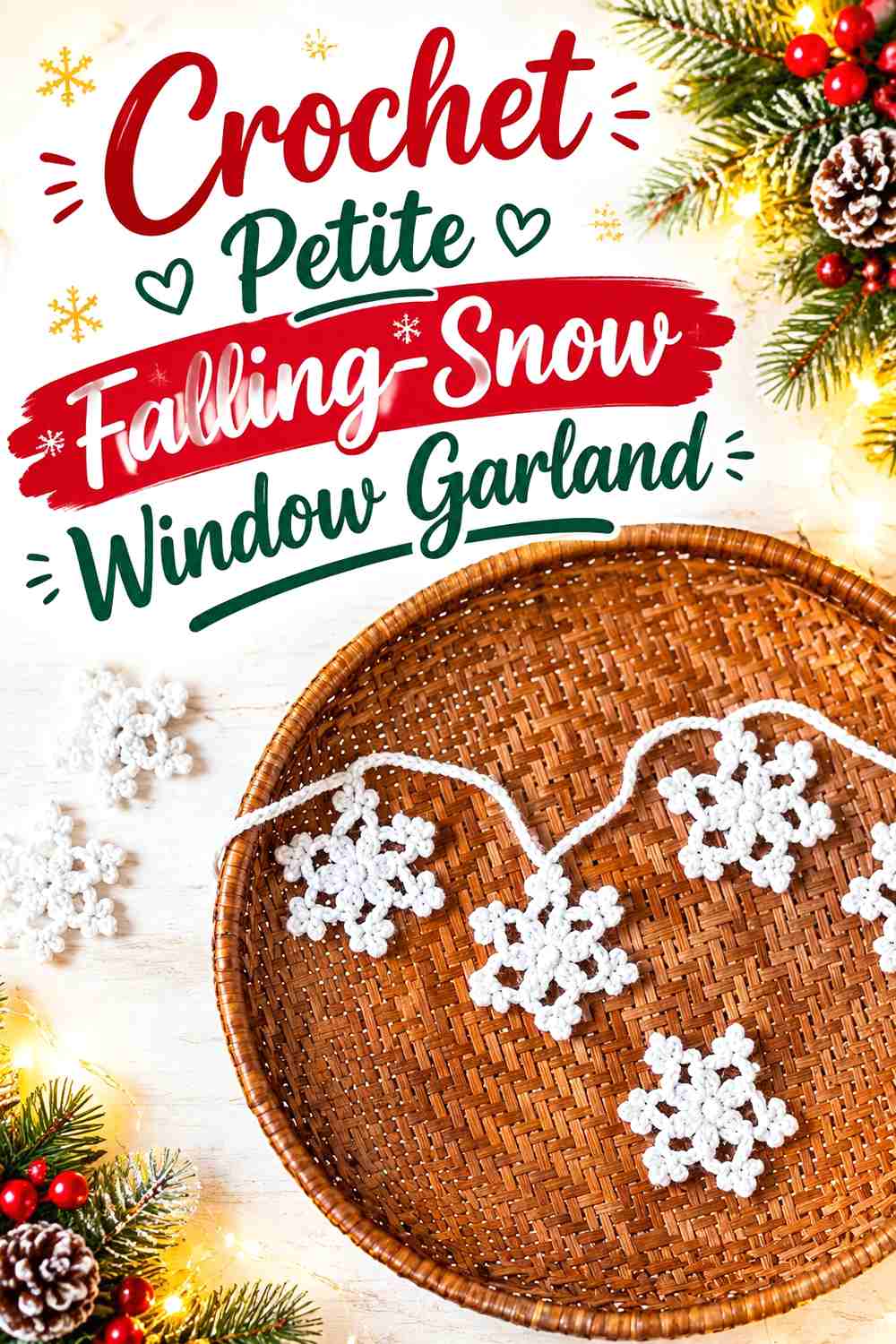
Moara Crochet’s tutorial is particularly well matched to this topic because it demonstrates a small snowflake motif and also shows how the flakes can be turned into a garland. The source uses fine cotton for the sample and presents the motif as a compact winter decoration rather than a large statement ornament.
This scale works especially well on smaller windows or anywhere you want the crochet to decorate the glass without covering much of the view.
Small Flakes Create a More Continuous Snowfall Effect
A large motif needs generous breathing room. Smaller flakes can be repeated more frequently without the garland becoming visually heavy.
For a long window, this allows the eye to travel through a series of small points rather than jumping between a few oversized decorations.
Decide the Spacing After the Motifs Are Finished
Even when every snowflake comes from the same tutorial, handmade tension can create slight differences.
Lay the completed flakes along your intended connecting strand before attaching them. Adjust the gaps by eye until the overall rhythm looks balanced across the window.
Creator Credit: Moara Crochet
2. Crochet Openwork Picot Snowflake Garland
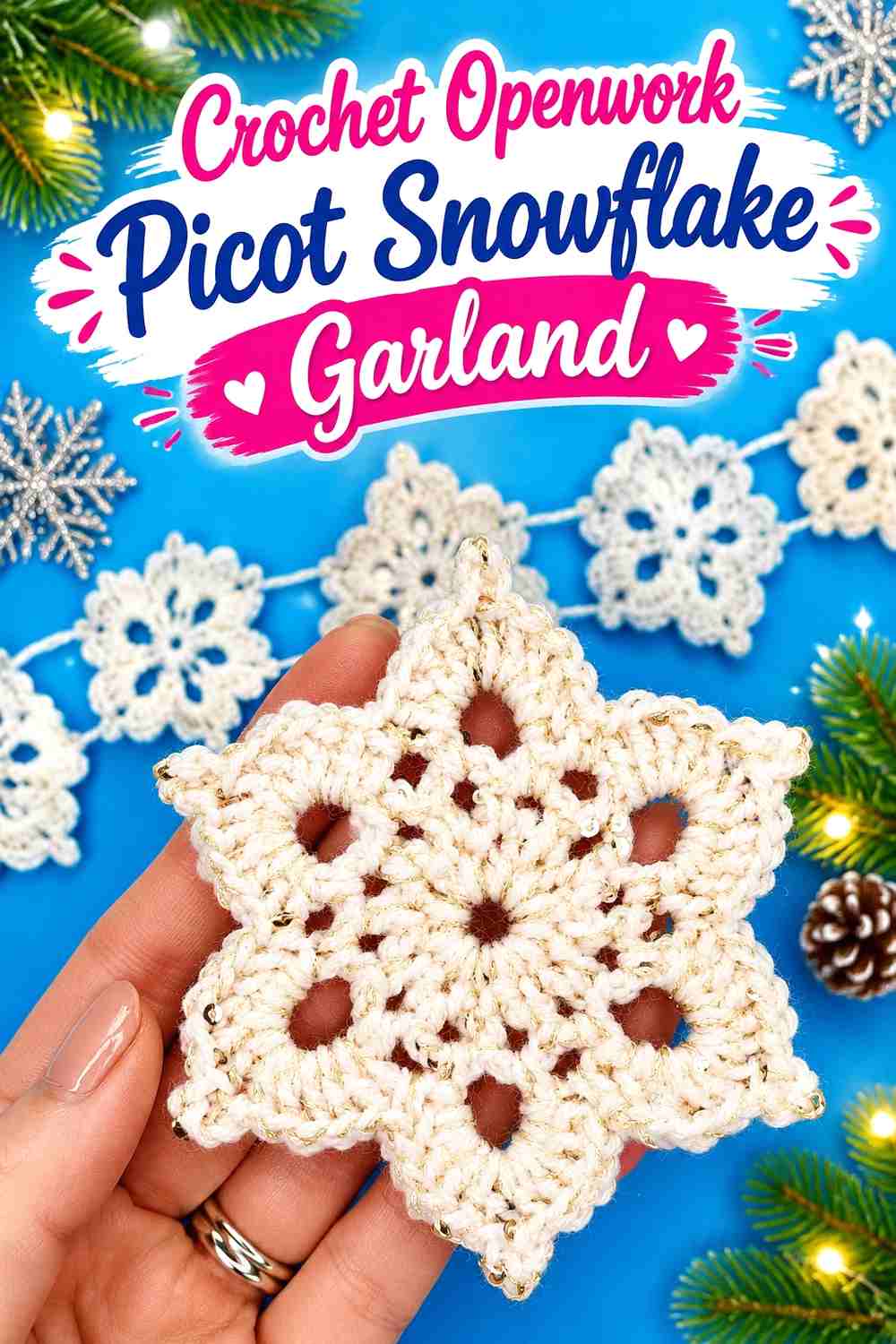
Hooked by Robin’s snowflake uses an open radial construction with pronounced outer points, and the creator specifically presents the motif as suitable for garlands as well as ornaments and appliqués.
Its larger open spaces make this a good choice for a window where you want plenty of natural light to remain visible between the crochet stitches.
Picot Points Need Space to Stay Readable
The outer tips provide much of this snowflake’s character.
If individual flakes are placed too close together, those points can visually overlap and turn a clean motif into a busier band. Give each flake enough surrounding space that its outline remains distinct from the next one.
Openwork Benefits From a Simple Connecting Cord
A highly decorative garland chain could compete with the lace structure.
A plain chain, narrow yarn cord, or other light connection keeps attention on the repeating snowflakes and allows the window behind them to remain part of the display.
Creator Credit: Hooked by Robin
3. Crochet Crisp Crystal Snowflake Window Garland
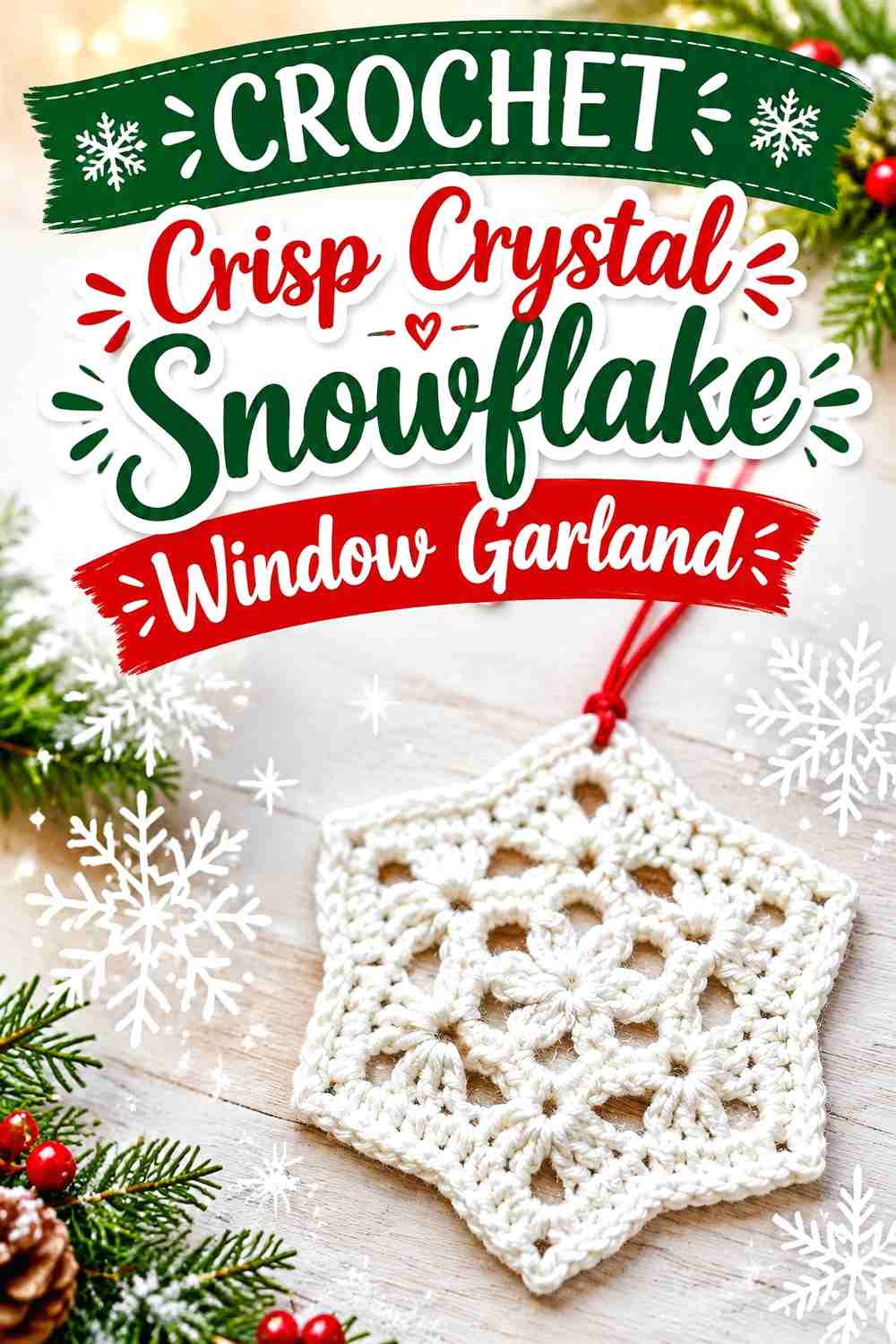
Pattern and Craft’s tutorial creates a finely detailed snowflake with a finishing treatment intended to help the motif retain its shape without requiring starch. The creator also explicitly suggests using multiple flakes together as a garland.
That combination is useful for a window installation because a clean silhouette matters more when the motif is viewed against strong daylight.
Firmer Edges Reduce Mid-Garland Curling
A soft motif can rotate or fold slightly when suspended from one point.
A snowflake with a more stable outer structure may remain easier to read when several are hanging in a row. Still, test one finished motif vertically rather than judging its behavior only while it lies flat.
Let the Detailed Shape Be the Main Decoration
This snowflake already carries considerable edge detail.
For a calm winter window, consider repeating one yarn color instead of adding several competing shades. Cream, white, pale gray, or an icy neutral can emphasize the crystalline outline.
Creator Credit: Pattern and Craft
4. Crochet Sparkle-Edged Snowflake Garland
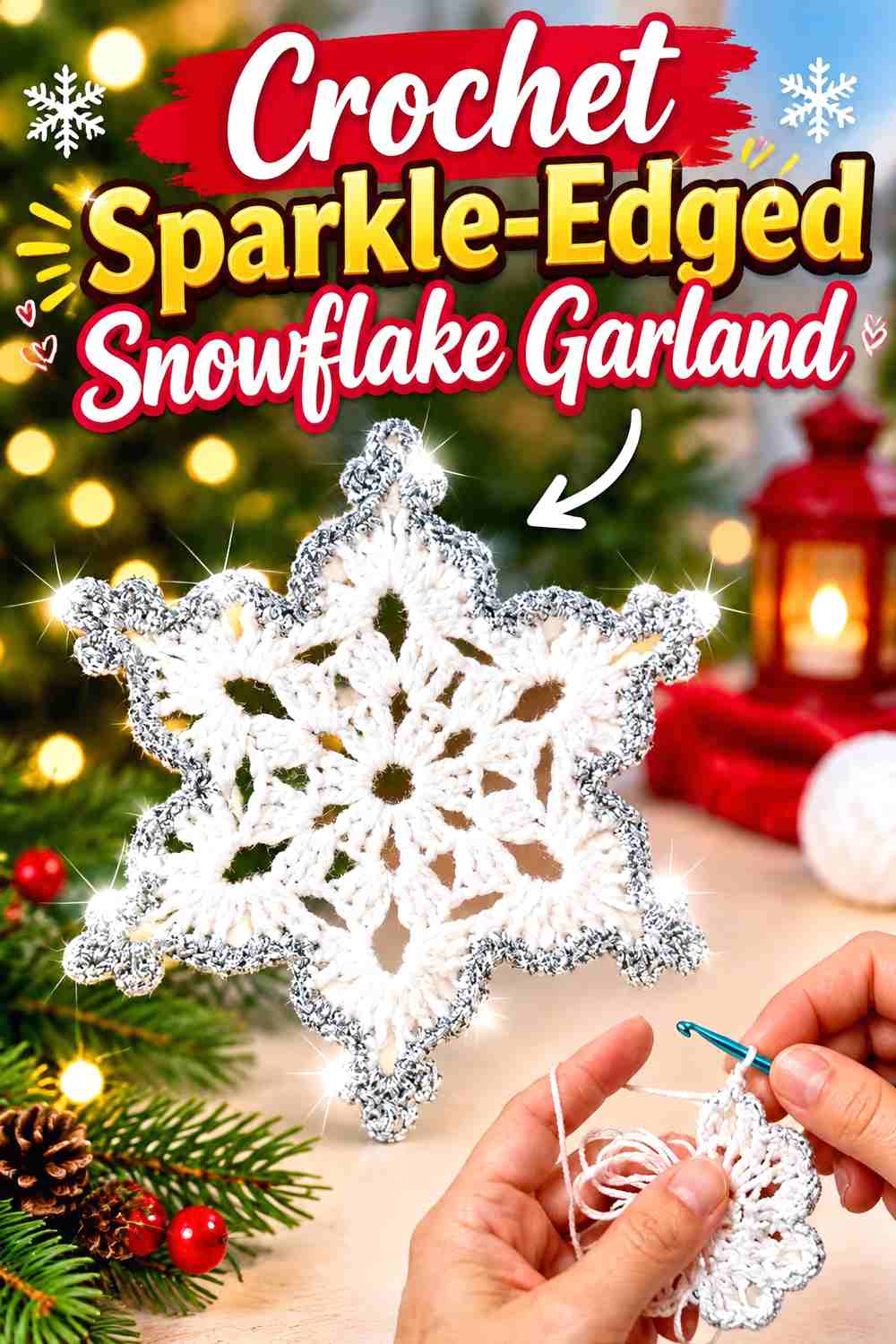
Crochet Craftsman’s snowflake adds a sparkling decorative layer around a balanced central motif. The source specifically identifies garlands among the possible uses for the finished snowflake.
This makes it a useful option when the window display needs to catch warm indoor lighting after sunset as well as look attractive in daylight.
Use Sparkle as an Accent Rather Than the Whole Structure
Metallic or glitter yarn can appear much stronger in a group than it does on one test motif.
If fourteen sparkling snowflakes feel too bright for the room, alternate enhanced flakes with quieter ones or limit the reflective yarn to the outer details.
Check the Garland in Daylight and at Night
Window decorations have two very different backgrounds.
During the day, the snowflake may be viewed against sky, trees, or buildings. At night, the dark glass can reflect indoor lights and make metallic details much more prominent.
Evaluating both views before making many copies helps you choose an appropriate amount of sparkle.
Creator Credit: Crochet Craftsman
5. Crochet Scandi Tassel Snowflake Window Garland
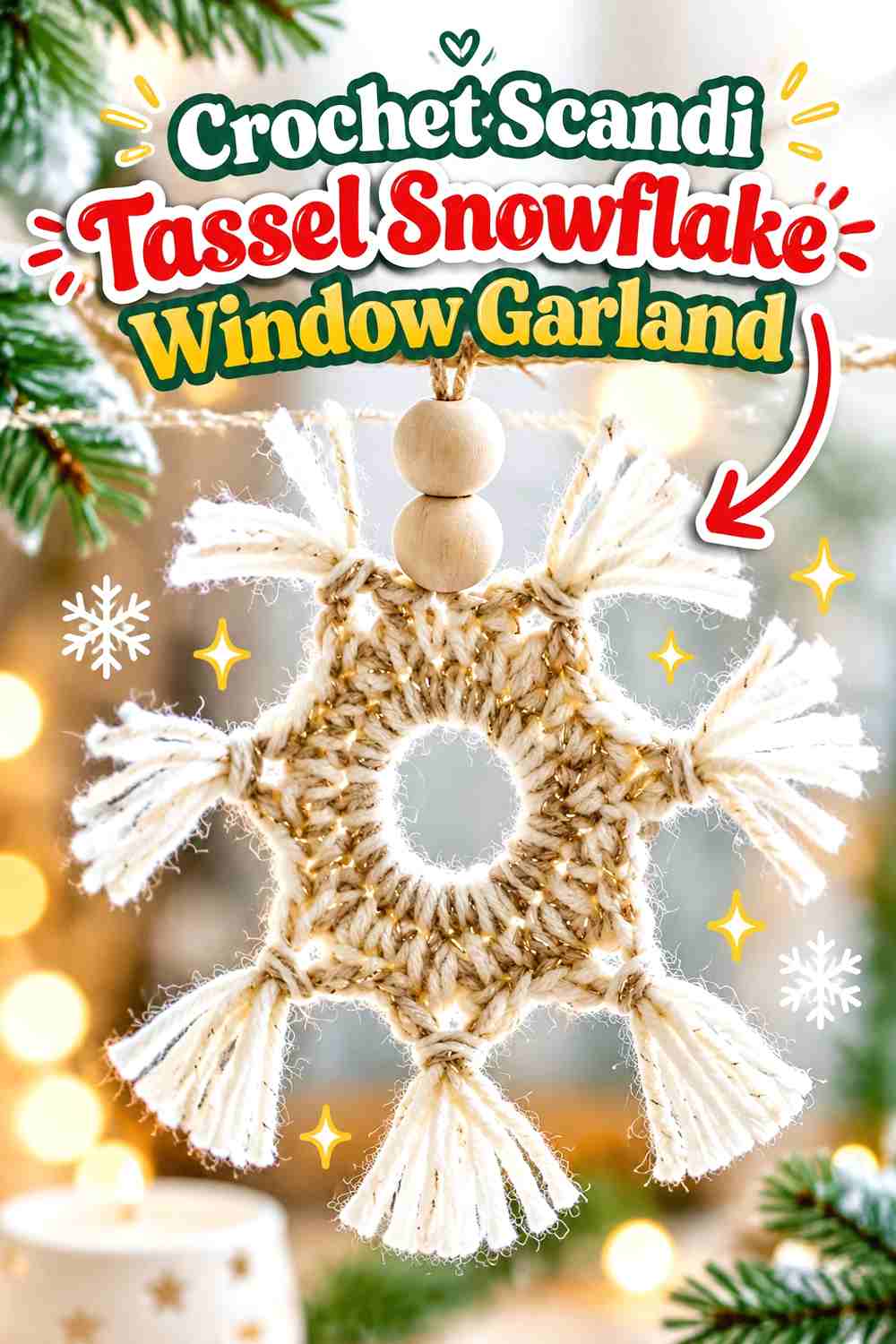
Bella Coco’s Scandi-inspired tutorial combines a crochet snowflake with tassels and wooden beads, creating a vertically elongated decoration rather than a flat motif alone.
Repeating that idea across a window produces a warmer, more decorative strand than a line of conventional white snowflakes.
Tassels Need More Vertical Clearance
A snowflake with hanging details occupies more space below the connecting line.
Measure the distance between the proposed garland position and the window sill, furniture, or another row of decorations before committing to long tassels.
Repeat the Wood Detail to Create a Cohesive Strand
Natural beads can visually connect separate motifs even when the yarn contains subtle color variation.
For a cozy Scandinavian look, consider keeping the bead material consistent while alternating cream, oatmeal, muted gold, or another restrained winter palette.
If beads could be reached by children or pets, omit them and use a yarn-only version.
Creator Credit: Bella Coco
6. Crochet Mini Cotton Snowflake Garland
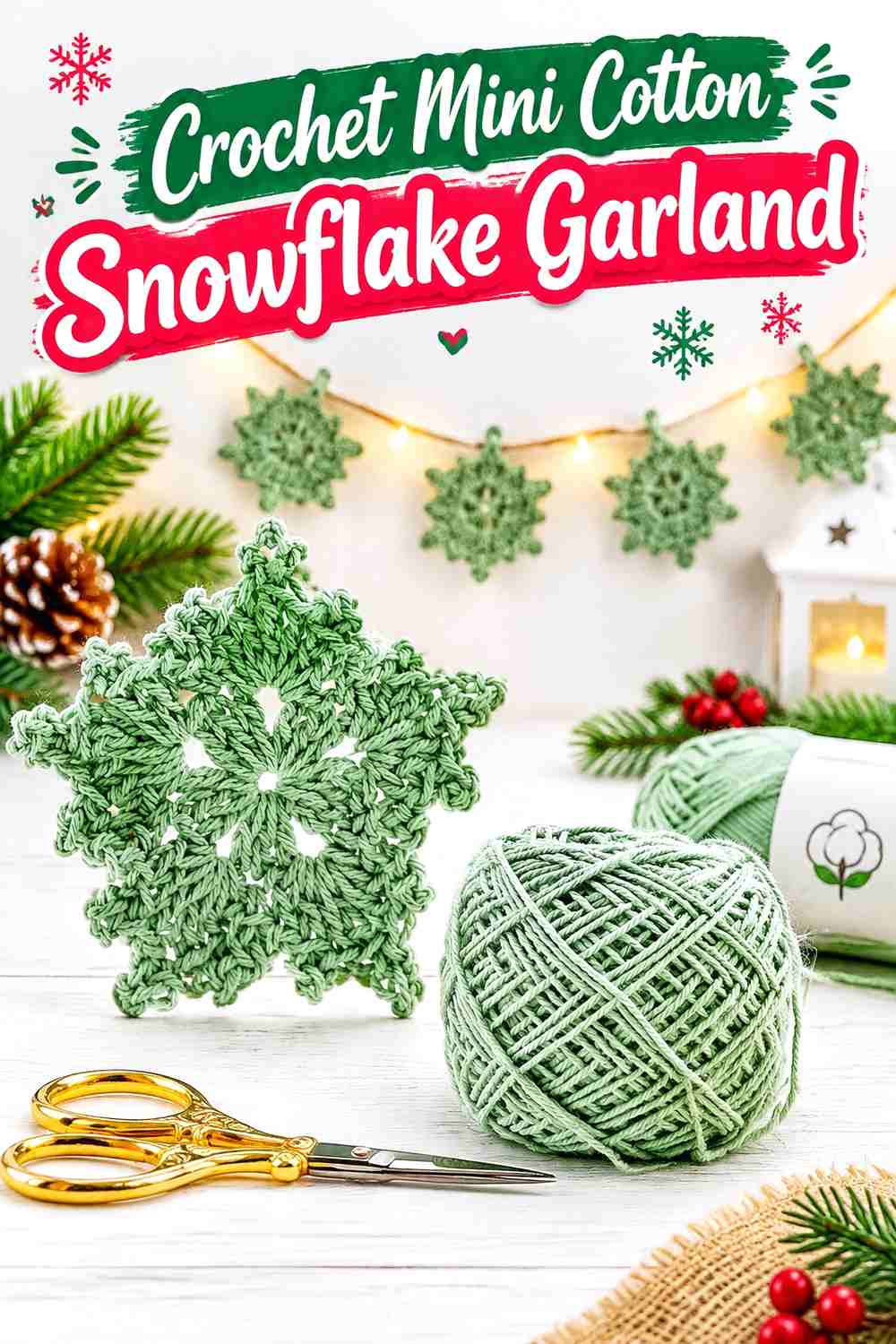
Crochet with Yarnhild’s tutorial creates a compact snowflake from light yarn and specifically lists garlands among the possible uses for the finished motif.
The small scale makes this idea practical for narrower windows, kitchen windows, or layered displays where the snowflake strand should remain secondary to curtains, plants, or other winter decorations.
Mini Motifs Can Handle Closer Repetition
Large snowflakes require enough distance for their branches to remain separate. Petite flakes let you create more frequent visual beats along the same length of cord.
That can make a short strand feel complete without requiring the garland to span an entire room.
Use Color Sparingly to Preserve the Snow Effect
Small motifs can become visually busy quickly.
If you want more than one color, consider a limited sequence such as white, pale blue, white, and gray rather than making every flake a different shade. Repetition keeps the small scale from looking scattered.
Creator Credit: Crochet with Yarnhild
7. Crochet Fine-Thread Frost Snowflake Garland
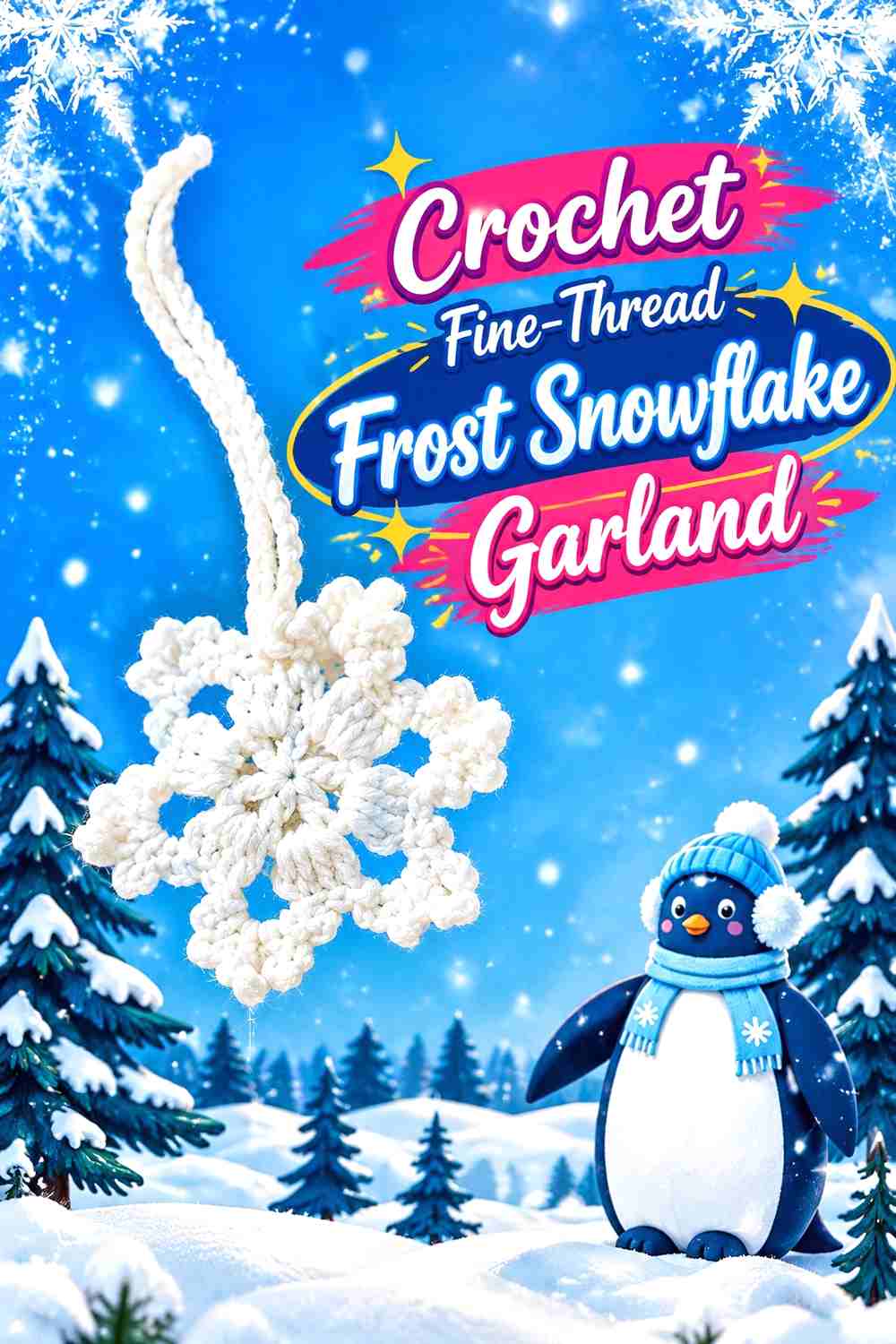
Hookok’s snowflake uses fine yarn and a small hook to create a detailed one-piece hanging motif. The published project includes a step-by-step video tutorial and a delicate finished snowflake suited to lightweight seasonal decoration.
This direction is useful for tall windows where several light flakes can be suspended without creating a thick horizontal band.
Fine Thread Emphasizes the Negative Space
With delicate crochet, the gaps inside the motif become part of the drawing.
Hold one snowflake against the actual window before producing a full batch. If the motif disappears against bright daylight, a slightly stronger color or larger scale may work better for that location.
Block the Collection to a Consistent Silhouette
A garland makes differences between neighboring motifs more obvious.
Shape each snowflake before joining the strand so the major points radiate at similar angles. The goal is not machine-perfect duplication, but obvious differences in orientation can make the line look uneven.
Creator Credit: Hookok
8. Crochet Mixed-Silhouette Snowstorm Garland
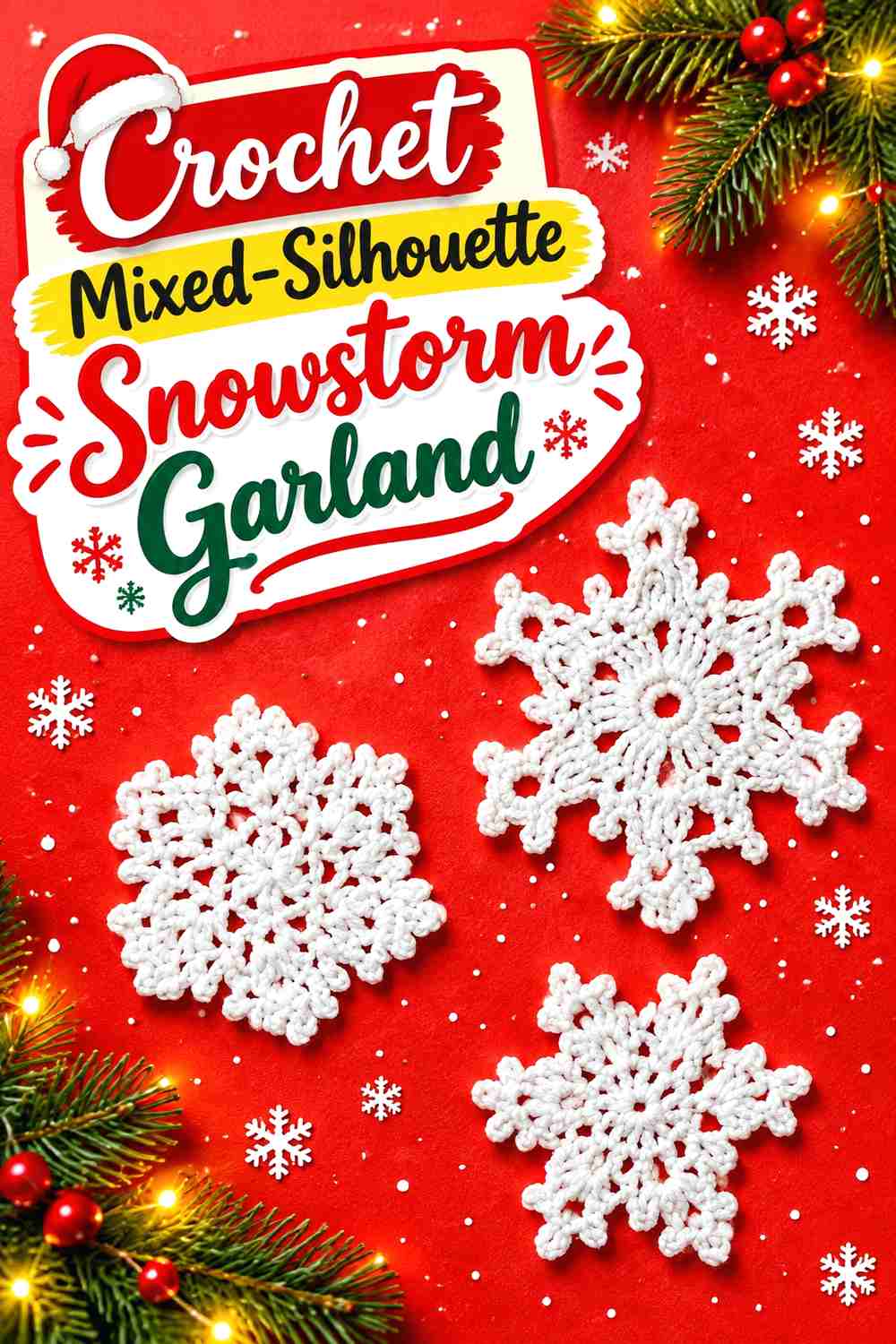
Sirin’s Crochet teaches three different snowflake designs within one tutorial. That gives this garland genuine variation in shape without requiring three unrelated sources or color changes to create interest.
For a wide picture window, alternating several silhouettes can create a more organic snowfall effect than repeating one identical flake from end to end.
Balance Visual Weight Instead of Following a Strict Sequence
Different snowflake shapes can appear heavier or wider even when their overall dimensions are similar.
Arrange one sample of each design along the proposed strand and compare them from several feet away. A visually strong motif may need more space around it than a delicate one.
Irregular Repetition Can Look More Natural
You do not have to use a rigid A-B-C-A-B-C sequence.
Repeating some shapes more frequently than others can mimic the varied appearance of falling snow while still keeping the palette consistent enough for the garland to feel unified.
Creator Credit: Sirin’s Crochet
9. Crochet Sweet-and-Simple Snowflake Garland
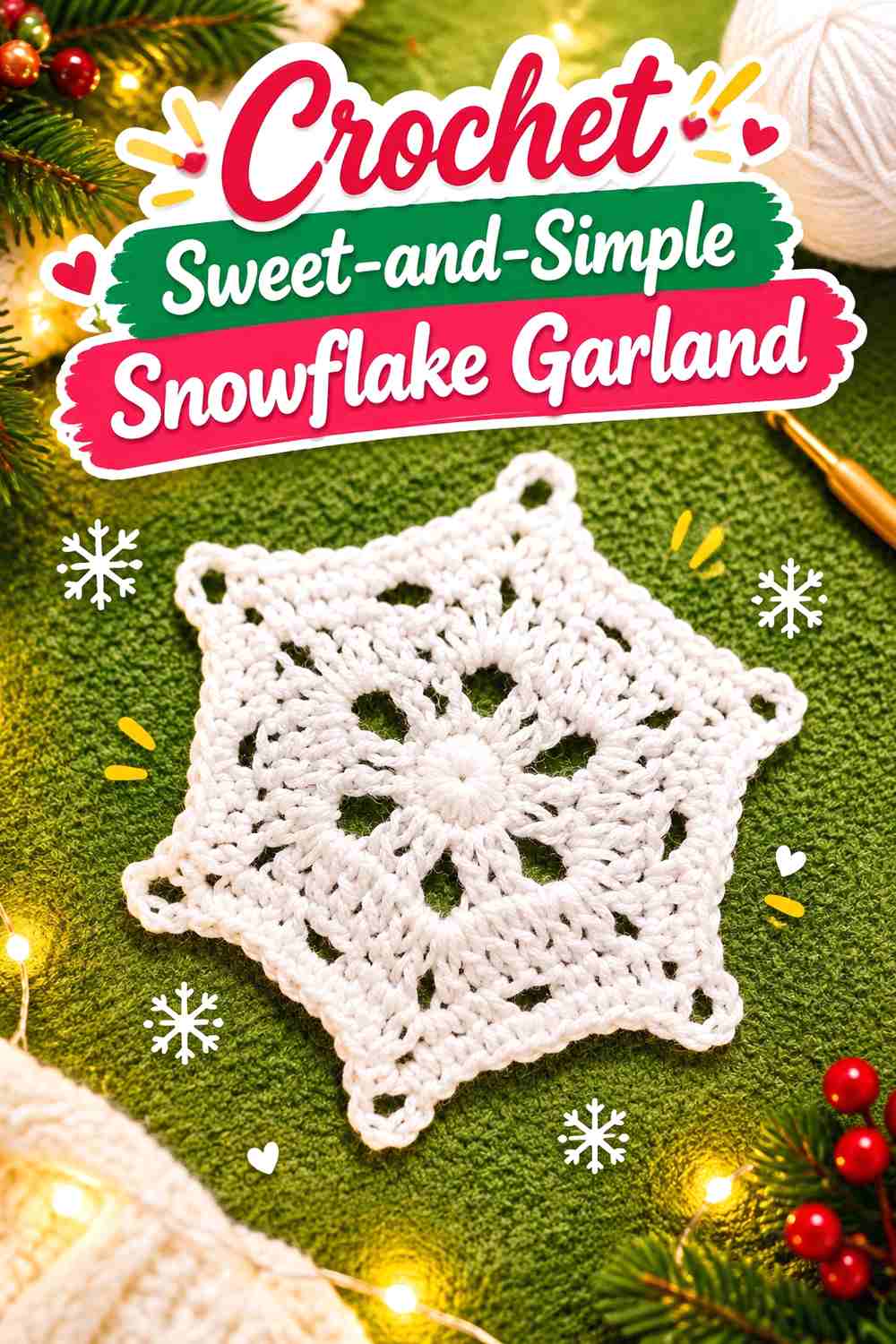
Fiber Spider’s snowflake tutorial builds a multi-round motif with a clear radial shape and belongs to the creator’s larger collection of crocheted snowflakes.
This is a useful middle ground between very fine lace and chunky cotton: detailed enough to provide interest across a window, but visually simpler than snowflakes with beads, tassels, or contrasting sparkle.
A Repeated Medium-Scale Motif Creates a Strong Border
Medium snowflakes work well when you want the garland itself to be noticeable from across the room.
Rather than filling every available inch, give the motifs regular gaps so the strand reads as a series of snowflakes rather than one continuous strip of crochet.
Try a Tonal Winter Palette Instead of Pure White
White is not the only way to keep a garland cohesive.
Soft cream, fog gray, faded blue, or a combination of closely related cool neutrals can make each repeat visible while retaining a quiet winter-window effect.
Creator Credit: Fiber Spider
10. Crochet Chunky Bedazzled Snowflake Garland

Hectanooga1’s snowflake moves in the opposite direction from thread lace. The published project uses much heavier yarn and is presented as a bedazzled star or snowflake ornament.
Repeated as a garland, this creates a much bolder window treatment suitable for large panes, deep window recesses, or rooms where tiny flakes would disappear from viewing distance.
Large Snowflakes Need Wider Gaps
Chunky motifs occupy more visual area even if their actual measurements are not dramatically greater.
Give each flake breathing room. Crowding heavy snowflakes can create a solid-looking band that blocks more light and loses the individual shapes.
Decorative Additions Increase Garland Weight
Sparkle and embellishment may seem insignificant on one ornament, but repeating them across a long strand adds up.
Support the completed garland appropriately and avoid relying on a hanging method that was only tested with an empty cord.
Creator Credit: Hectanooga1
11. Crochet Puff-Stitch Cotton Snowflake Garland
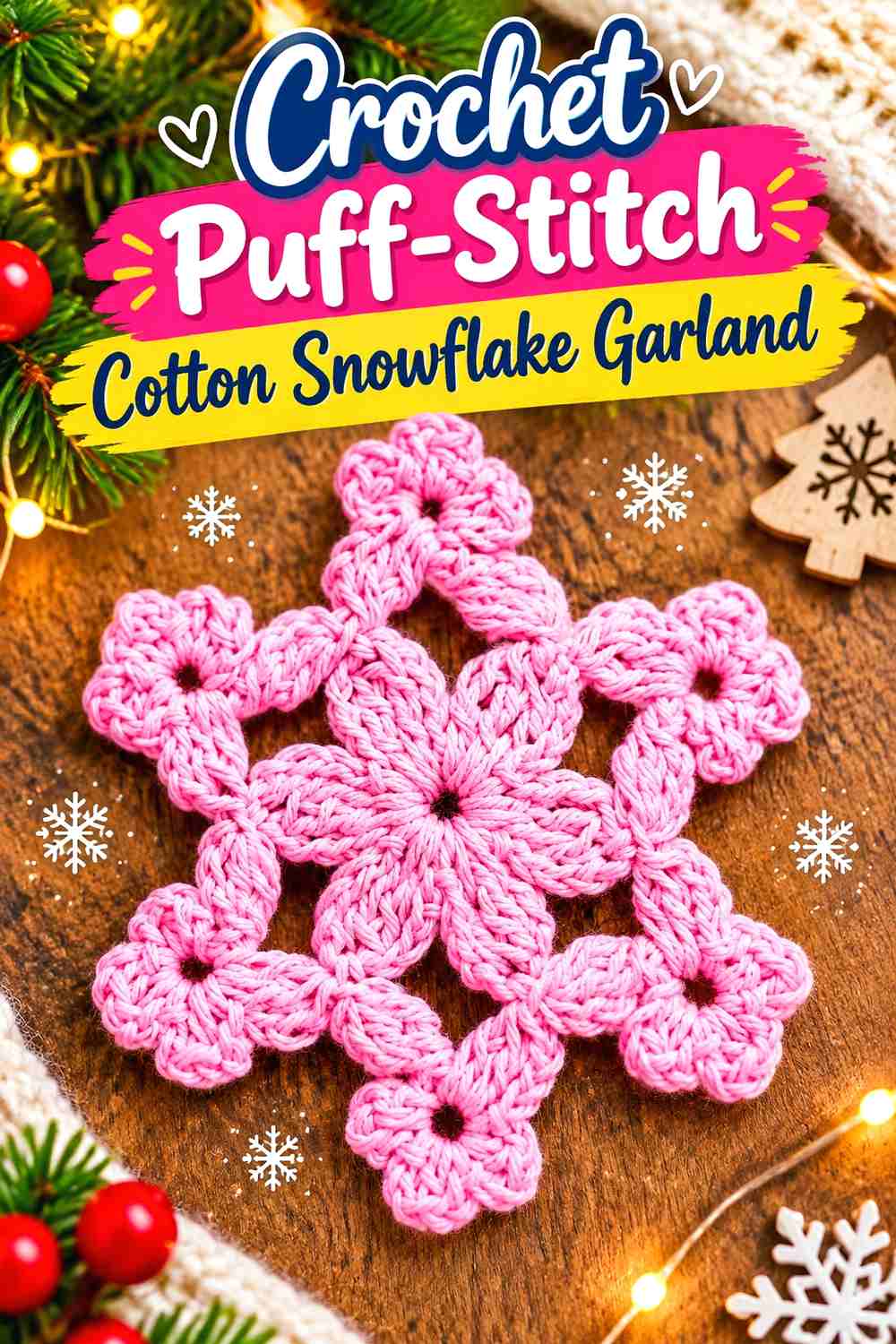
Naztazia’s six-sided snowflake uses worsted-weight cotton and puff-stitch texture, producing a sturdier motif than many thread-based snowflakes. The creator also notes that the finished snowflake can be hung in a window as a seasonal decoration.
That makes this a strong candidate for windows where a delicate white flake would disappear against bright outdoor light.
Puff Texture Creates Stronger Shadows
Raised stitches add dimension even when the entire garland uses one color.
On a sunny window, those small shadows can help the motif remain visible without requiring metallic yarn, beads, or contrasting edges.
Cotton Can Provide a More Graphic Silhouette
The source uses medium-weight cotton specifically for a snowflake with enough inherent structure that additional stiffening may not be necessary.
If you substitute a much softer yarn, test how the finished flake hangs before making the remaining motifs. The same construction can behave differently when the fiber changes.
Creator Credit: naztazia
12. Crochet Thread-Lace Winter Window Garland
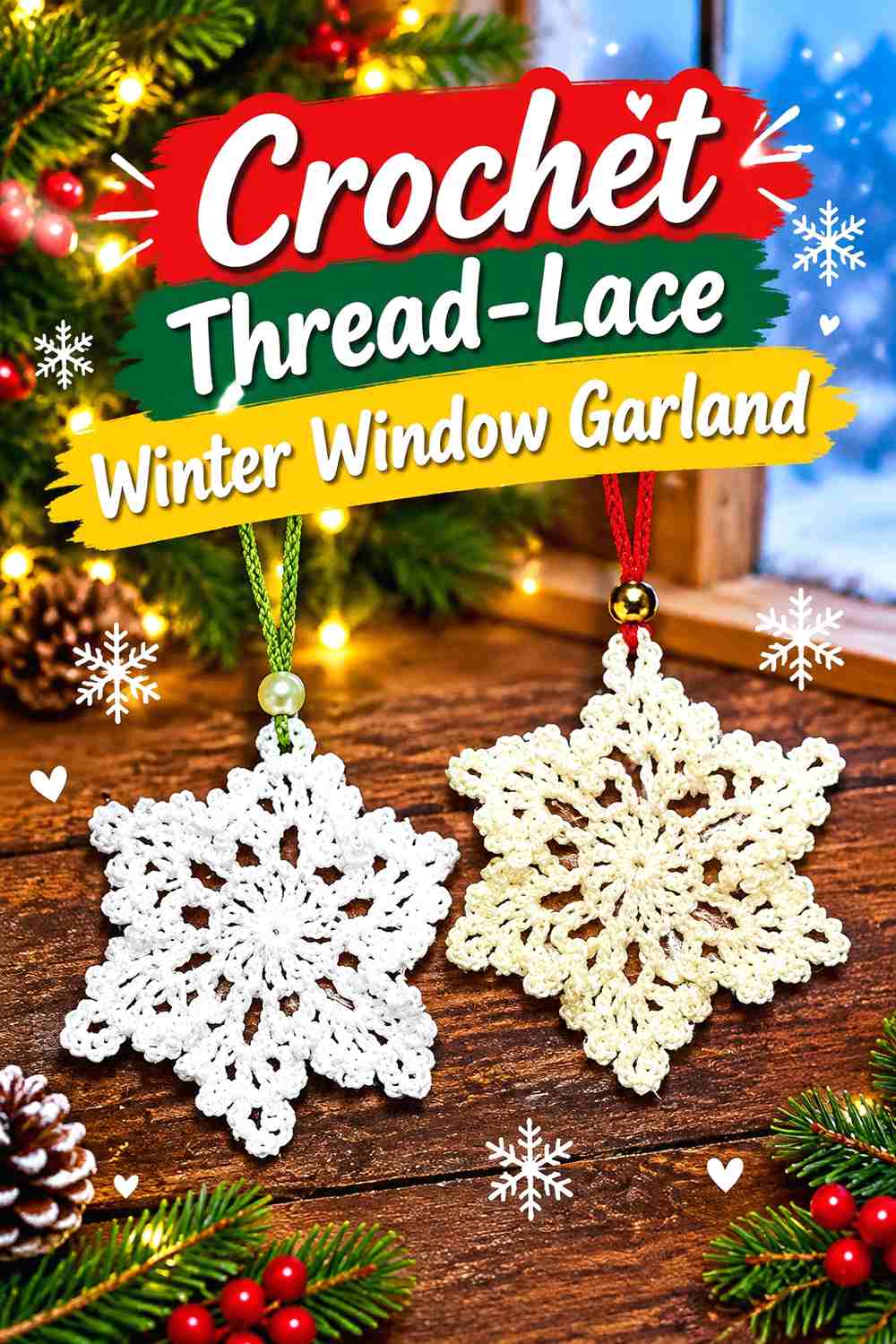
Raji’s Craft Hobby’s snowflake uses cotton thread for a delicate hanging ornament, and the published pattern specifically suggests stringing multiple pieces into a garland.
This is one of the better directions for a traditional lace-window look, particularly when the garland will be seen close up in a kitchen, bedroom, or small sitting area.
Thread Lace Keeps the Connecting Strand Visually Light
Fine motifs pair naturally with an understated cord.
A thick foundation chain can overpower delicate snowflakes, so consider the relationship between the weight of the motif and whatever connects them. The garland should still look like snowflakes floating across the window rather than decorations hanging from a heavy rope.
Consistent Blocking Matters Across a Lace Garland
Small differences in point length can become conspicuous when several motifs sit on the same horizontal line.
Finish and shape the complete batch before joining them. This also allows you to arrange slightly larger or smaller flakes where those differences look intentional.
Creator Credit: Raji’s Craft Hobby
13. Crochet Petite Ilse Snowflake Garland
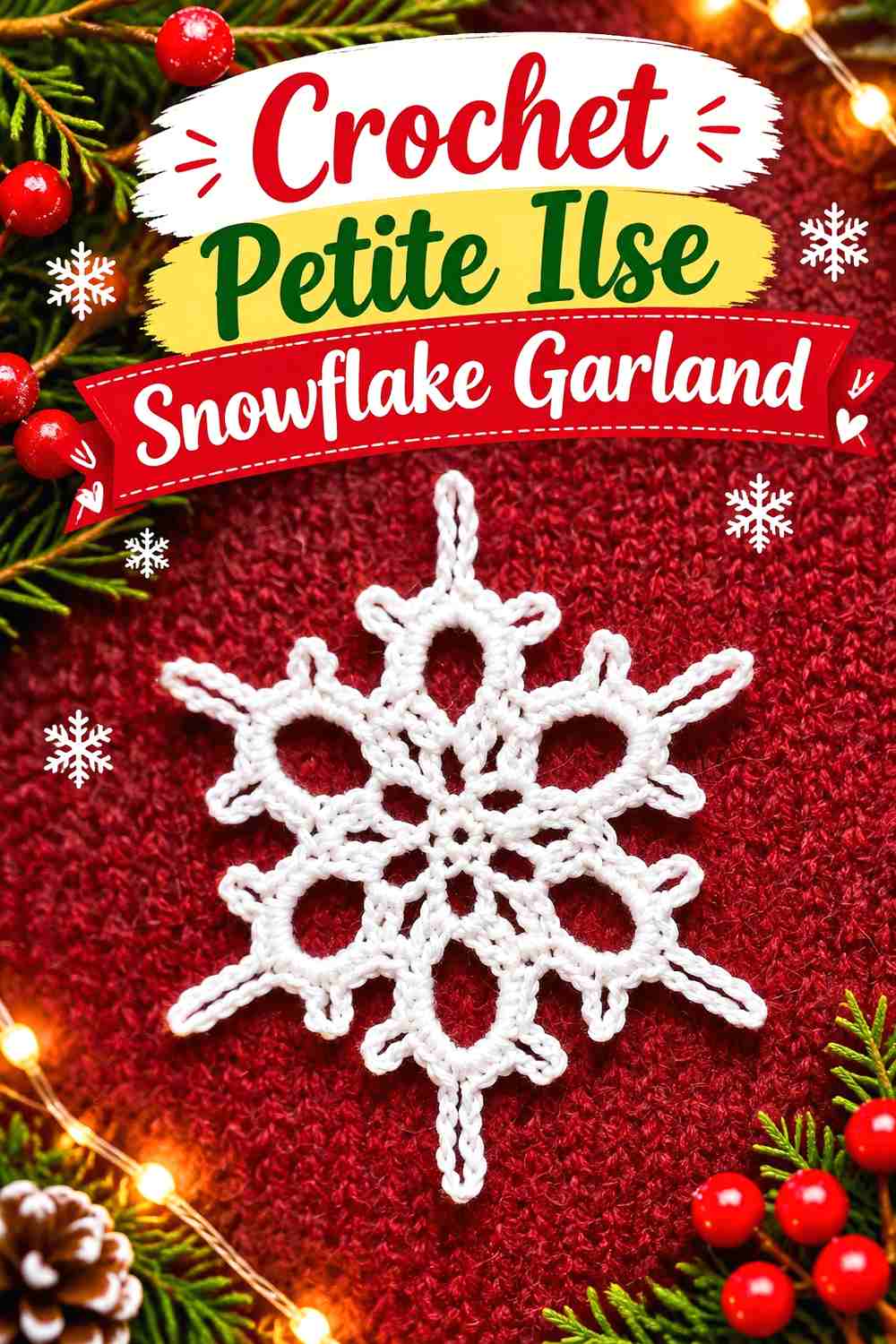
Crochetpedia’s Ilse Snowflake is part of the creator’s 2026 snowflake collection and is designed as a small thread-weight motif with a dedicated video tutorial.
Its compact star-like profile is useful when you want numerous flakes across a window but prefer something more sharply defined than a soft floral snowflake.
Petite Motifs Suit Layered Window Displays
A small snowflake can coexist with a winter wreath, paper stars, plants, or curtains without dominating the whole window.
This is particularly useful on windows where the garland is intended to add detail rather than function as the room’s main seasonal decoration.
Sharp Points Benefit From Careful Shaping
Star-like flakes depend heavily on the relationship between their outer points.
Complete the finishing stage before deciding how close the motifs should sit. Once the points are properly opened, the flake may occupy more visual space than it did immediately off the hook.
Creator Credit: Crochetpedia
14. Crochet Beaded Lace Snowflake Garland
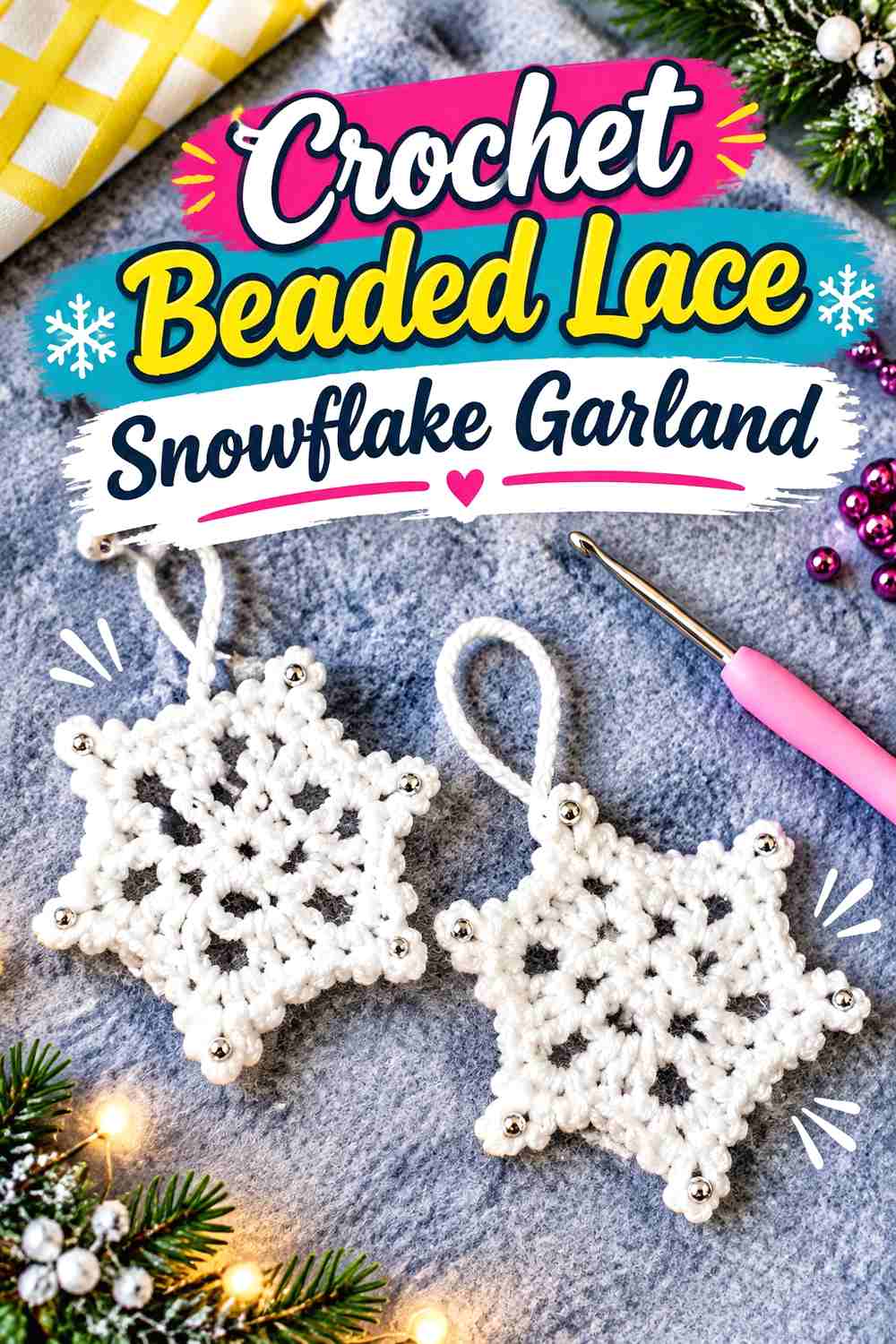
The snowflake tutorial associated with by.gkdesign adds bead potential to a lace-style motif and specifically identifies garlands among the suitable finished uses. The source also recommends gentle blocking for a flat, crisp snowflake.
This gives the final idea a slightly dressier window treatment while keeping the actual crochet light.
Beads Can Turn the Garland Into a Light-Catching Accent
A few small beads can catch changing daylight without requiring metallic yarn across the entire motif.
Use them selectively. If every point and every connection is heavily embellished, the beads may become more visible than the snowflake itself.
Decide Whether the Beads Belong on the Motif or the Cord
The location of added weight changes how a snowflake hangs.
A bead close to the connecting point may pull the motif differently from one placed more centrally. Make one complete sample, suspend it vertically, and observe its balance before repeating the arrangement across the full garland.
For windows accessible to small children or pets, skip small detachable embellishments and use a plain yarn version.
Creator Credit: by.gkdesign
Which Crochet Snowflake Garland Style Works Best for Your Window?
| If you want… | Consider |
|---|---|
| Tiny repeated snowfall | 1 or 6 |
| Very open lace | 2 or 12 |
| Crisp, defined flakes | 3 or 13 |
| Sparkle that catches evening light | 4 |
| Warm Scandi styling | 5 |
| Fine thread detail | 7 or 12 |
| Several different snowflake shapes | 8 |
| A balanced medium-scale strand | 9 |
| Bold flakes for a large window | 10 |
| Strong cotton texture | 11 |
| Delicate bead accents | 14 |
For a window that receives plenty of daylight, start by deciding how strong the silhouette needs to be. The chunky, puff-stitch, and more structured motifs will generally make a clearer decorative statement, while fine lace creates a lighter effect that works best when the surrounding window treatment is relatively calm.
For a small window, petite flakes from projects 1, 6, or 13 can provide repetition without overwhelming the glass. Large windows give you more freedom to mix sizes or use the three-shape approach from project 8.
Decorative extras deserve restraint. Tassels, wood beads, sparkle, and small bead details can make a garland feel special, but combining every treatment in one strand can distract from the snowflake theme. Repeat one or two materials instead.
Conclusion
The best crochet snowflake garland for a cozy winter window depends on how much of the view you want to preserve.
For the lightest effect, use small or thread-weight flakes with generous open spaces. The Moara Crochet, Hooked by Robin, Raji’s Craft Hobby, and Crochetpedia options are particularly useful starting points for that direction.
For more presence, choose the cotton puff-stitch or chunky snowflake ideas. If you want the window to feel more decorative after dark, the sparkle-edged, Scandi tassel, or beaded versions introduce details that interact with indoor lighting as well as daylight.
Mixed silhouettes can make a wide garland feel less repetitive, while one repeated motif creates a calmer architectural border. Whichever direction you choose, finish and block the snowflakes before settling on final spacing, then use the original creator’s tutorial for the exact crochet construction and finishing guidance.
Frequently Asked Questions
How far apart should crochet snowflakes be on a window garland?
There is no single spacing that works for every motif. Large, branched snowflakes generally need more visual room than petite flakes. Arrange the completed motifs along the proposed cord before attaching them and judge the spacing against the actual window.
Should I block crochet snowflakes before making the garland?
Usually, blocking or appropriate shaping is useful because it reveals the true width and point placement of the finished motif. Joining first can make consistent shaping more awkward. Follow the individual creator’s finishing guidance for the snowflake you choose.
What color crochet snowflakes show up best against a window?
The answer depends on the view behind the glass. White and cream often provide a traditional snow effect, while pale blue or gray can be attractive against darker backgrounds. Test the yarn against the actual window during daylight because a color that looks strong on a table may disappear when backlit.
Can I mix different crochet snowflake patterns in one garland?
Yes. Mixed silhouettes can create a natural snowstorm effect. Keep at least one element consistent—such as yarn color, fiber, general scale, or connecting cord—so the collection still feels intentional. Arrange the finished motifs before joining because different shapes may need different amounts of surrounding space.
What yarn works well for a crochet snowflake window garland?
Fine cotton or thread creates light lace, while heavier cotton produces a stronger silhouette. Acrylic and other fibers can also work when supported by the chosen tutorial. Rather than choosing purely by fiber name, consider how clearly the fabric holds its points and how much weight you want across the window.
How do I stop crochet snowflakes from curling in a garland?
First check whether the tutorial recommends blocking, stiffening, or another finishing method. Also make sure the connecting cord is not pulling sideways on the points. A motif that lies flat on a table can distort if it is attached under tension.
Can I hang a crochet snowflake garland directly against the window glass?
You can place a lightweight garland near the glass if the hanging setup is suitable, but make sure it does not interfere with locks, handles, blinds, opening sections, or condensation-prone areas. Keep attachment methods removable where appropriate and avoid long accessible cords or small loose embellishments around young children and pets.