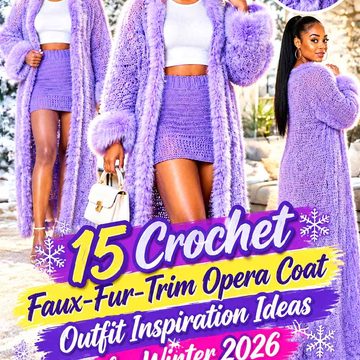
A crochet peplum coatlet sits somewhere between a cropped cardigan, fitted jacket, bolero, and short cape. The romantic look usually comes from a relatively defined upper body followed by extra fullness below the waist, but ruffled hems, bell sleeves, tie fronts, shaped collars, and vintage capelet proportions can create the same soft silhouette in different ways.
Not every tutorial below is an exact peplum coatlet pattern. The first projects include true peplum or flared constructions, while several later tutorials teach cropped cardigans, boleros, shrugs, and capelets that can provide a practical base for a peplum-inspired winter layer. Those adaptations need to respect the original fit and construction instead of simply attaching a large ruffle to any cropped garment.
For winter, fabric choice matters as much as the silhouette. A delicate lace bolero may work beautifully over a turtleneck or dress indoors, while a cable capelet or chunky buttoned wrap provides more substantial coverage. Decide whether you need warmth, dressy layering, or primarily the romantic shape before choosing a tutorial.
Quick List
- Off-Shoulder Crochet Peplum Coatlet
- Ruffled Lace-Up Crochet Peplum Cardigan
- Short-Sleeve Crochet Ruffle Peplum Coatlet
- Floral Babydoll Crochet Peplum Cardigan
- Shell-Edge Crochet Lace Peplum Coatlet
- Bell-Sleeve Crochet Tie-Front Peplum Coatlet
- Long-Sleeve Crochet Bolero Peplum Coatlet
- Granny-Raglan Crochet Fairy Peplum Coatlet
- Mesh Crochet Ballet Peplum Coatlet
- Buttoned Crochet Romantic Capelet Coat
- Cable Crochet Winter Peplum Capelet
- Edwardian Crochet Peplum Capelet
- Chunky Crochet Cocoon Peplum Coatlet
- Lace Crochet Vintage Bolero Coatlet
- Crossover Crochet Wrap Peplum Coatlet
- Oversized-Button Crochet Winter Capelet Coat
- V-Stitch Crochet Draped Peplum Shrug
What Makes a Crochet Coatlet Look Like a Peplum?
A peplum needs a clear visual transition between the fitted or controlled upper section and the fuller lower edge. That transition might sit at the natural waist, slightly above it, or at the bottom of a very cropped cardigan.
The flare does not have to be dramatic. A small amount of added circumference can create a tailored romantic line, while several highly increased rows produce a softer babydoll or ruffled effect.
The important point is placement. If fullness starts too high, the garment may read more like a cape. If it begins too low, it can look like an ordinary cardigan with a decorative hem.
Bolero and capelet tutorials are most useful as peplum references when they already provide a clear upper-body structure. Additions should follow that structure instead of fighting it.
Plan the Waist Before Planning the Ruffle
A peplum draws attention to the point where it begins. That means the waist or lower bodice needs to sit where you actually want the silhouette to change.
Try on the developing garment with the kind of winter clothing you expect to wear underneath it. A fitted coatlet over a thin dress and the same coatlet over a substantial sweater can sit very differently.
If the tutorial is made to measure, establish the upper body first. If it uses fixed sizing, compare the creator’s sizing information with your intended ease before deciding whether a deeper or fuller peplum would improve the design.
Do not use a peplum to disguise an upper section that does not fit. Incorrect shoulders, armholes, or bust width will remain incorrect after a ruffle is added.
Choose Winter Yarn Without Losing the Romantic Shape
Peplums need enough drape to fall downward rather than standing out like a rigid shelf. This becomes especially important when adapting a lightweight cardigan to winter yarn.
A thicker substitution can change gauge, increase garment weight, stiffen lace, enlarge seams, and make ruffles much fuller than expected. Work a swatch in the actual stitch pattern whenever possible.
Texture also changes the visual effect. Smooth yarn keeps shells, lace, and cables readable. Fluffy yarn softens stitch definition and can create a dreamy winter surface, but it may hide the details that made you choose the tutorial.
For a coatlet worn over dresses, consider the complete layered fabric. A cardigan that feels moderately thick on its own may become substantially warmer and bulkier over a sweater.
1. Off-Shoulder Crochet Peplum Coatlet
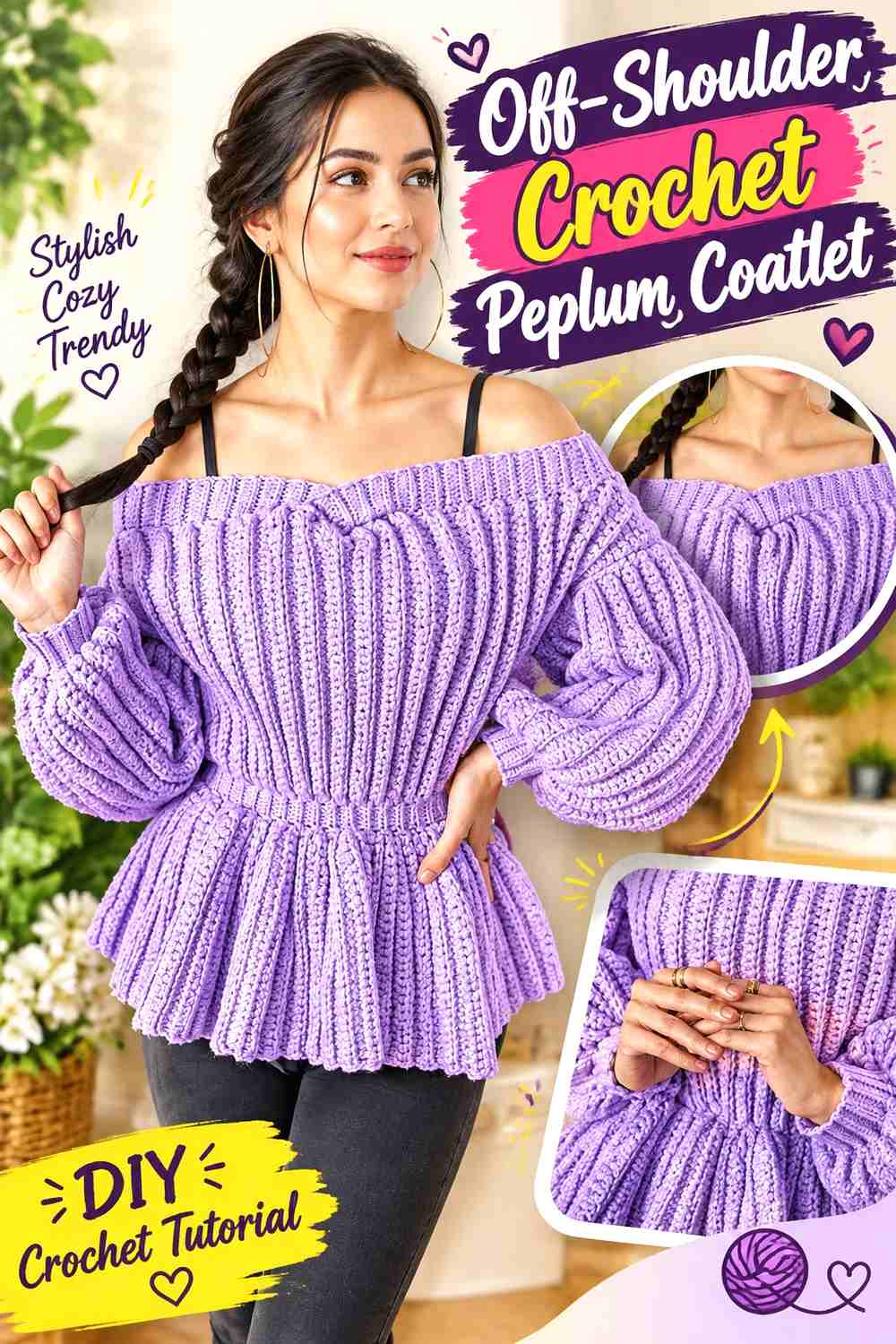
This true peplum sweater provides one of the most useful starting points in the collection because the fitted upper body transitions into a clearly flared lower section. Its neckline can create a softer, more romantic impression than a conventional crew-neck jacket.
For a coatlet interpretation, the peplum is already structurally present. The main decision is whether to preserve the pullover front or use the tutorial primarily to understand the proportion between bodice, waist, and flare.
The Waist Transition Controls the Silhouette
The strongest design feature is not simply the extra fabric at the bottom. It is the point where the straighter upper section changes into the peplum.
When evaluating the tutorial, pay attention to where that transition lands on the wearer. Moving it without understanding the construction can change the proportions of the whole garment.
A Heavier Winter Yarn Can Make the Flare Much Firmer
A peplum made in a flexible medium-weight fabric can hang softly. A more rigid substitution may project outward instead.
Swatch before changing yarn categories. If the fabric does not fold and hang comfortably, increasing the peplum further will usually emphasize the stiffness.
Keep the Neckline and Peplum From Competing
An off-shoulder or wide neckline and a flared waist are both strong visual features.
If you also add elaborate cuffs, contrasting trim, bows, and surface motifs, the finished coatlet can lose its focal point. Decide whether the neckline or the peplum should lead the romantic styling.
Creator Credit: TCDDIY
2. Ruffled Lace-Up Crochet Peplum Cardigan
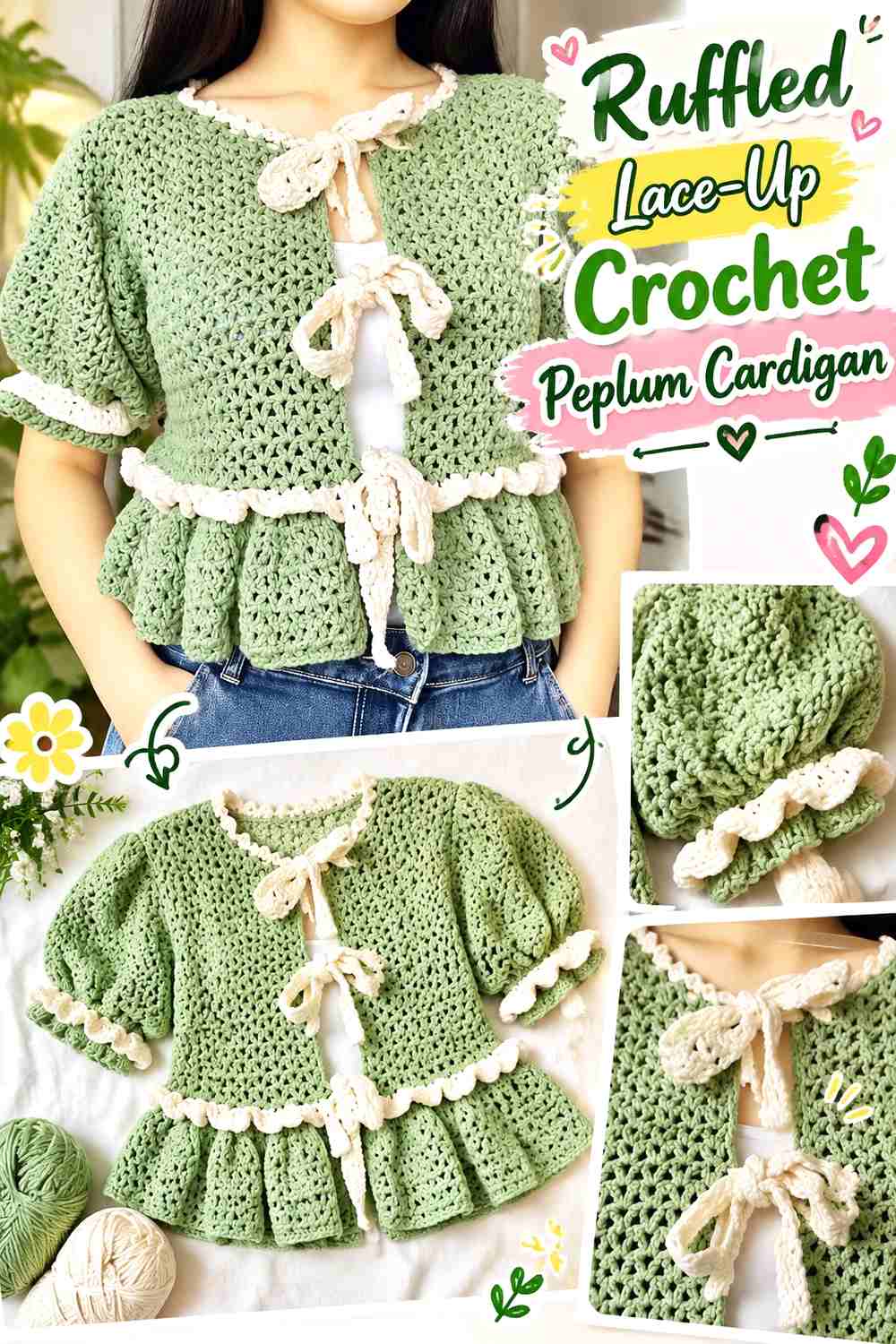
This cardigan combines several features that naturally suit the topic: a defined upper body, lower flare, ruffled finishing, cuffs, collar treatment, and front lacing.
It is particularly useful if your idea of a romantic coatlet leans toward corset-inspired or storybook styling rather than a minimal modern peplum.
The Bottom Flare Already Establishes the Peplum
Because fullness is built into the lower section, you do not need to add a separate oversized skirt-like border just to make the silhouette readable.
Instead, concentrate on whether the flare begins at the most flattering place for the intended wearer and base layer.
Front Lacing Changes How Closely the Bodice Can Fit
A laced front creates a softer closure than a full button band and keeps the garment visually open.
That can be attractive over dresses or turtlenecks, but it also means the coatlet does not behave like a fully closed winter jacket. Choose it for layered styling rather than assuming the lacing provides the same coverage as a solid front.
Repeat Ruffles Selectively
With ruffles already appearing in several areas, adding still more fullness at every edge can make the garment visually heavy.
For a winter version, consider using texture or richer yarn color for seasonal character while preserving the hierarchy of the existing ruffled details.
Creator Credit: tamagi
3. Short-Sleeve Crochet Ruffle Peplum Coatlet
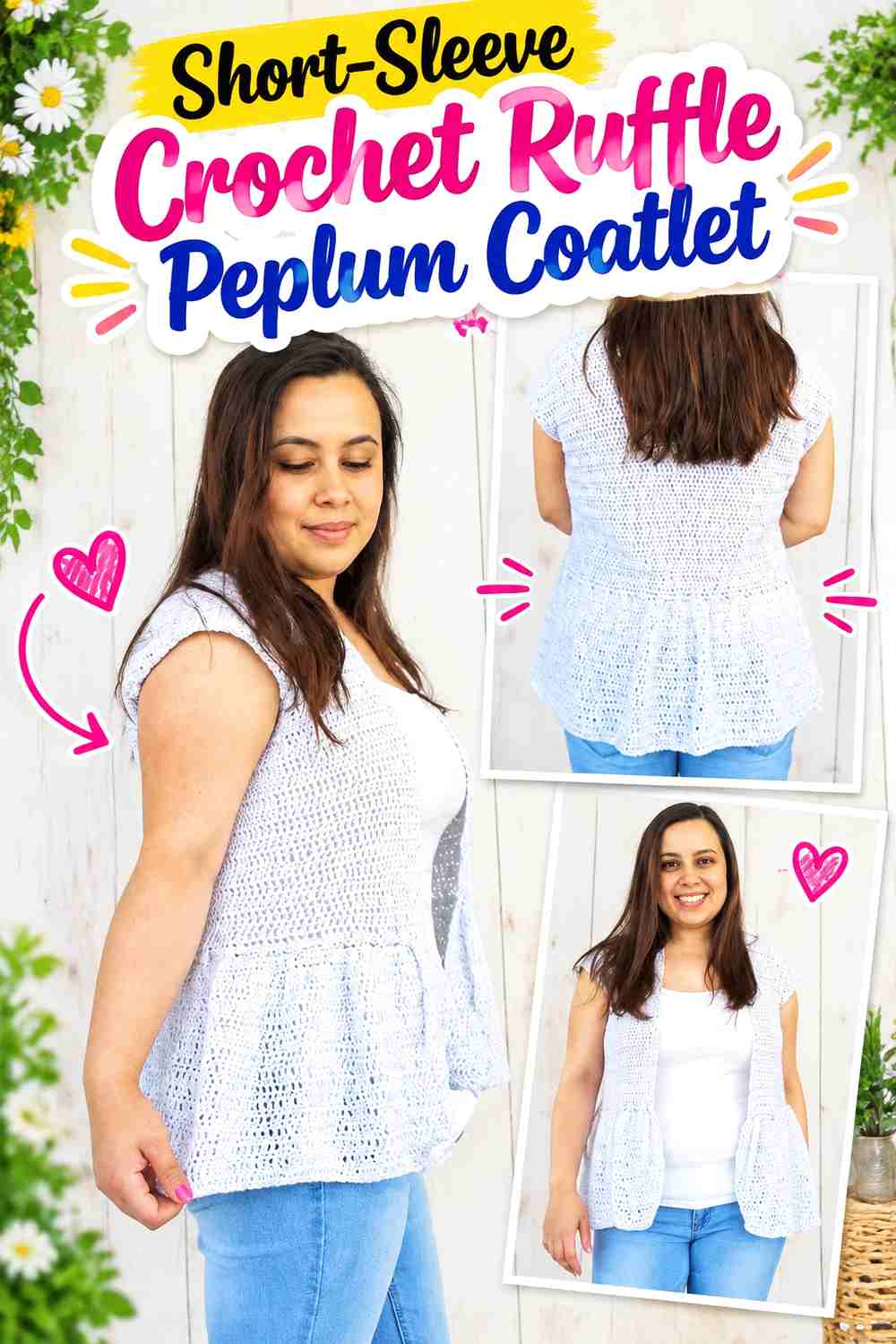
This lightweight cardigan uses a cropped body and ruffled lower edge, making it a useful example of how little extra length is required to establish a peplum impression.
The original is not a winter coat, so a cold-weather version works better as a layering adaptation over fitted sleeves than as direct outdoor outerwear.
A Small Ruffle Can Be More Wearable Than a Deep Peplum
A modest hem flare adds movement without creating large amounts of fabric around the hips.
That can suit a coatlet intended to sit beneath another coat or work indoors, where an extremely full peplum might feel cumbersome.
Short Sleeves Make the Underlayer Part of the Design
Because the arms remain visible, a fitted long-sleeve top or dress can supply the actual winter coverage.
Choose the color of the underlayer intentionally. The coatlet and garment underneath will be seen together rather than functioning as independent pieces.
Winter Adaptation Should Preserve the Light Hem
If you use a much heavier yarn, the small ruffle can become disproportionally thick.
Test the hem treatment in the substitute yarn before making the entire cardigan. Sometimes using the original yarn category over a warmer base layer preserves the silhouette better than forcing the cardigan itself to become heavy.
Creator Credit: Maria’s Blue Crayon
4. Floral Babydoll Crochet Peplum Cardigan
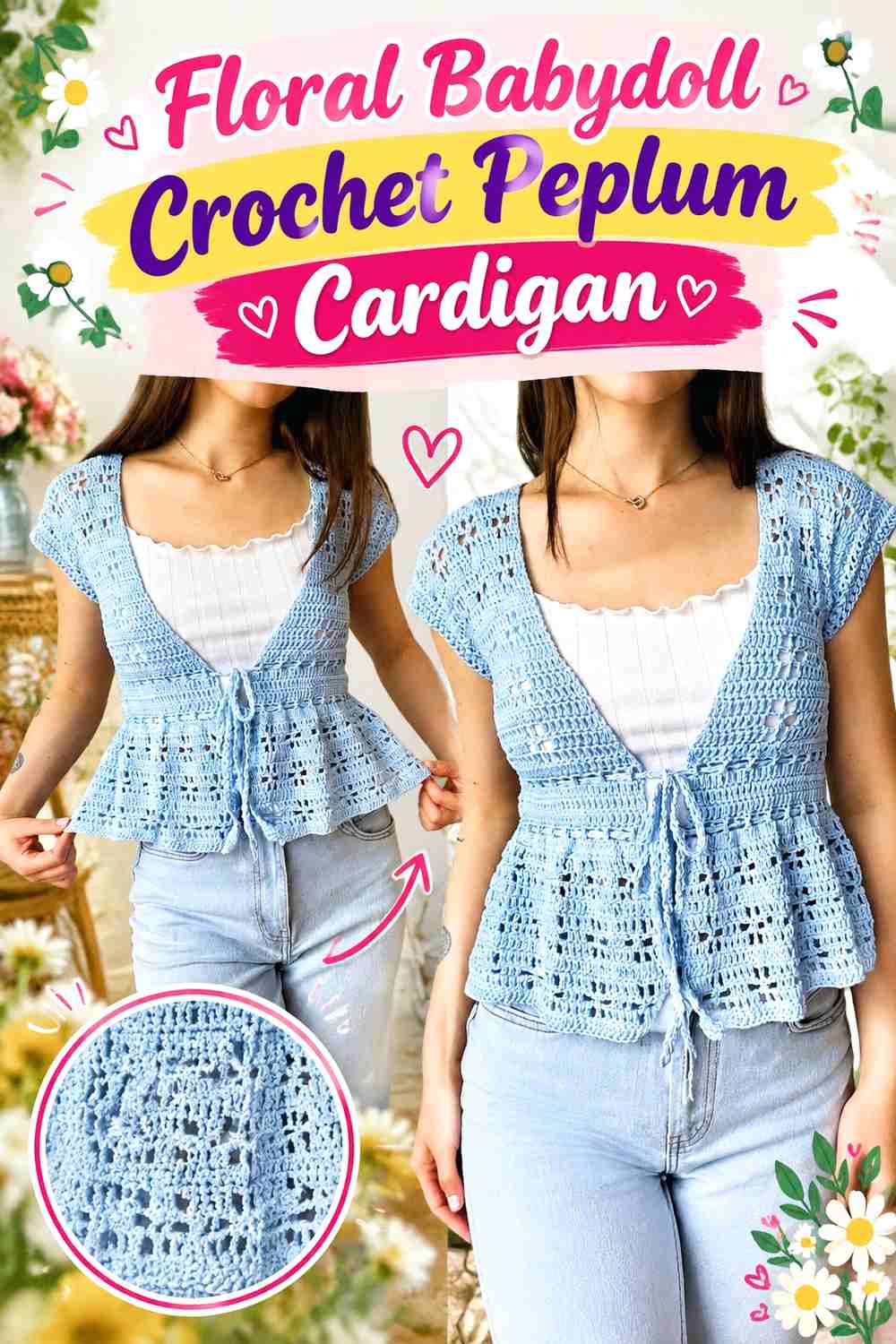
A babydoll cardigan offers a natural alternative to the classic waist-level peplum. The upper portion remains relatively controlled before expanding into a fuller lower body, while floral motifs introduce an additional romantic element.
This version is especially useful if you want a softer empire-line coatlet rather than a sharply defined waist.
Higher Flare Placement Creates a Different Proportion
When fullness begins higher on the torso, the garment feels more like a babydoll layer than a tailored peplum jacket.
That can work beautifully over slim dresses and fitted winter separates, but it is a distinct silhouette. Choose it deliberately rather than expecting the same effect as a waist-level flare.
Floral Motifs Already Supply Romantic Detail
Flowers, an expanded lower section, and drawstring-style shaping give the garment plenty of visual identity.
For winter, a restrained tonal palette can make those construction features clearer than adding several unrelated embellishments.
Watch the Weight Below the Shaped Section
The more fabric added beneath a high waist, the more downward pull the upper body may experience.
If you substitute a substantially heavier yarn, check how the developing garment hangs before extending the babydoll section further.
Creator Credit: Alona crochets
5. Shell-Edge Crochet Lace Peplum Coatlet
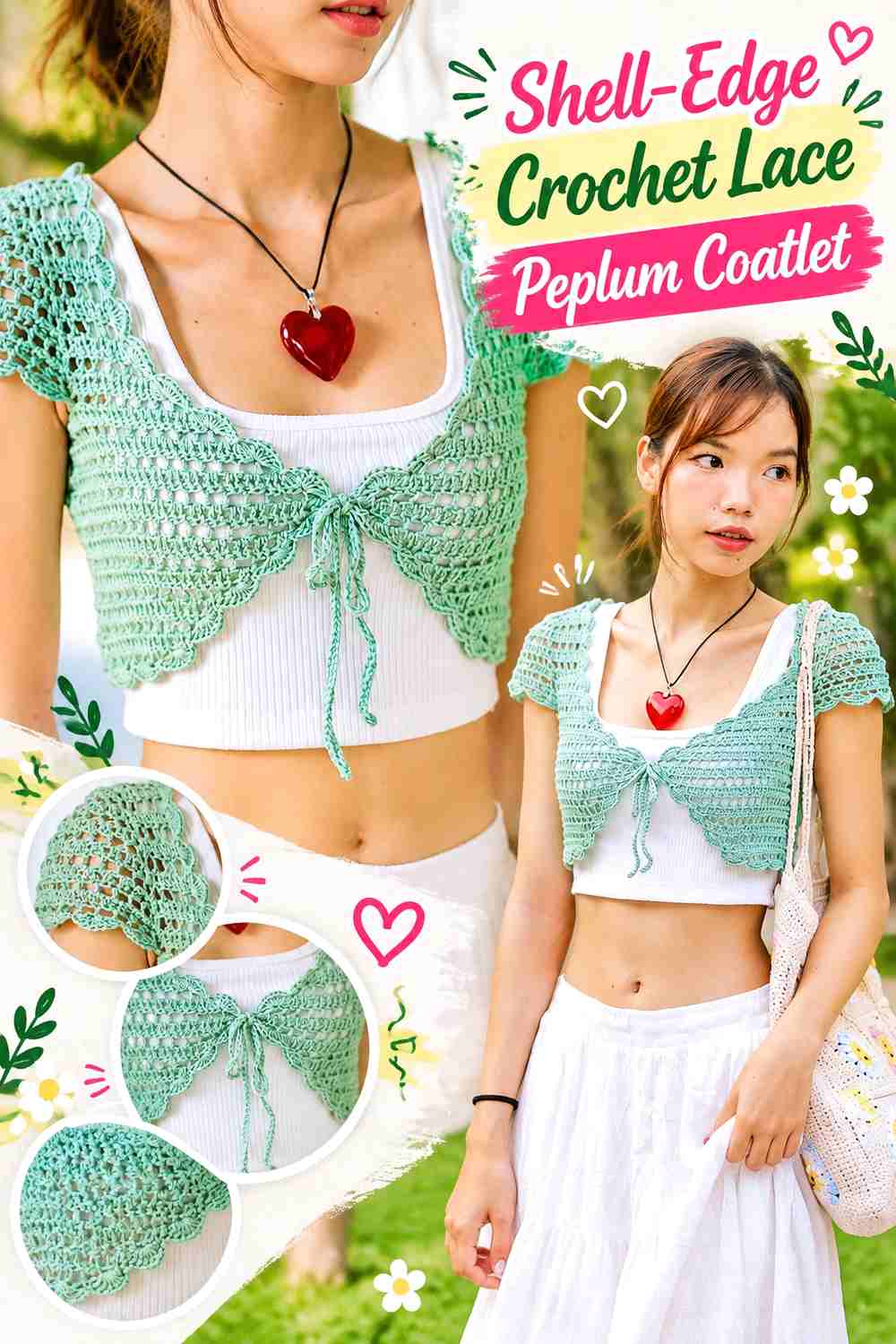
This cropped lace cardigan uses shell edging and a tie front, providing a delicate coatlet foundation for dressy layering.
It does not contain a traditional full peplum, so the adaptation opportunity lies in treating the lower shell edge as the beginning of a controlled flare rather than turning the project into a different garment entirely.
Shell Edging Can Suggest a Peplum Without a Separate Skirt
Repeated shells naturally create a softer, more decorative perimeter than a straight ribbed band.
For a subtle peplum effect, that may be enough. A deeper extension should only be considered after you understand how the shell repeat grows and how much extra circumference it creates.
Lace Works Best When the Underlayer Is Planned
An open coatlet will reveal the garment underneath.
For romantic winter styling, a high-neck dress, fine turtleneck, or long-sleeve fitted top can provide warmth while allowing the lace to remain visually light.
Do Not Automatically Use Thick Yarn to Make Lace Winter-Ready
Large yarn can close up lace openings and change the scale of the shells.
A better winter strategy may be to keep a yarn that preserves the stitch pattern and rely on layering for warmth.
Creator Credit: Chenda DIY
6. Bell-Sleeve Crochet Tie-Front Peplum Coatlet
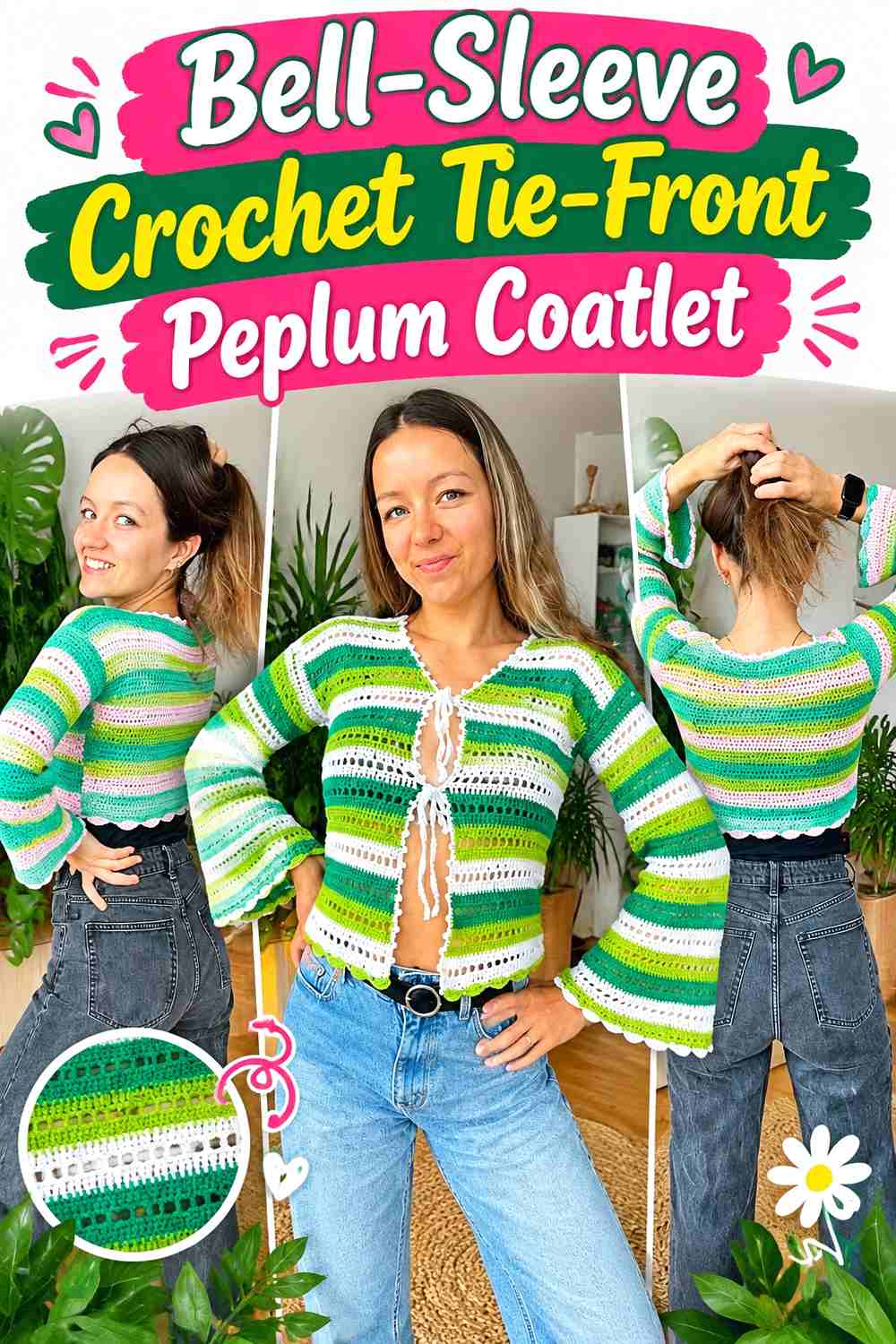
Wide bell sleeves and narrow front ties create a strongly romantic cropped layer even before a peplum is added.
This construction is useful when you want movement at both the sleeves and waist, but it needs restraint because too many flared features can compete.
Let the Sleeves and Hem Use Different Amounts of Volume
If the sleeves are already broad, the peplum does not need to be equally dramatic.
A smaller waist flare can balance the silhouette and prevent the garment from looking equally wide at every point.
The Tie Front Keeps the Coatlet Visually Light
Narrow ties create less visual bulk than a wide button band.
That works well over dresses with decorative bodices because more of the base garment remains visible. It also means this is a styling layer rather than a substitute for a closed winter jacket.
Check Sleeve Width Under Outerwear
Bell sleeves can be difficult to fit beneath a narrow coat sleeve.
If you intend to wear another coat on top, test the cuff and lower sleeve inside it before deciding on maximum flare.
Creator Credit: by Kristine
7. Long-Sleeve Crochet Bolero Peplum Coatlet
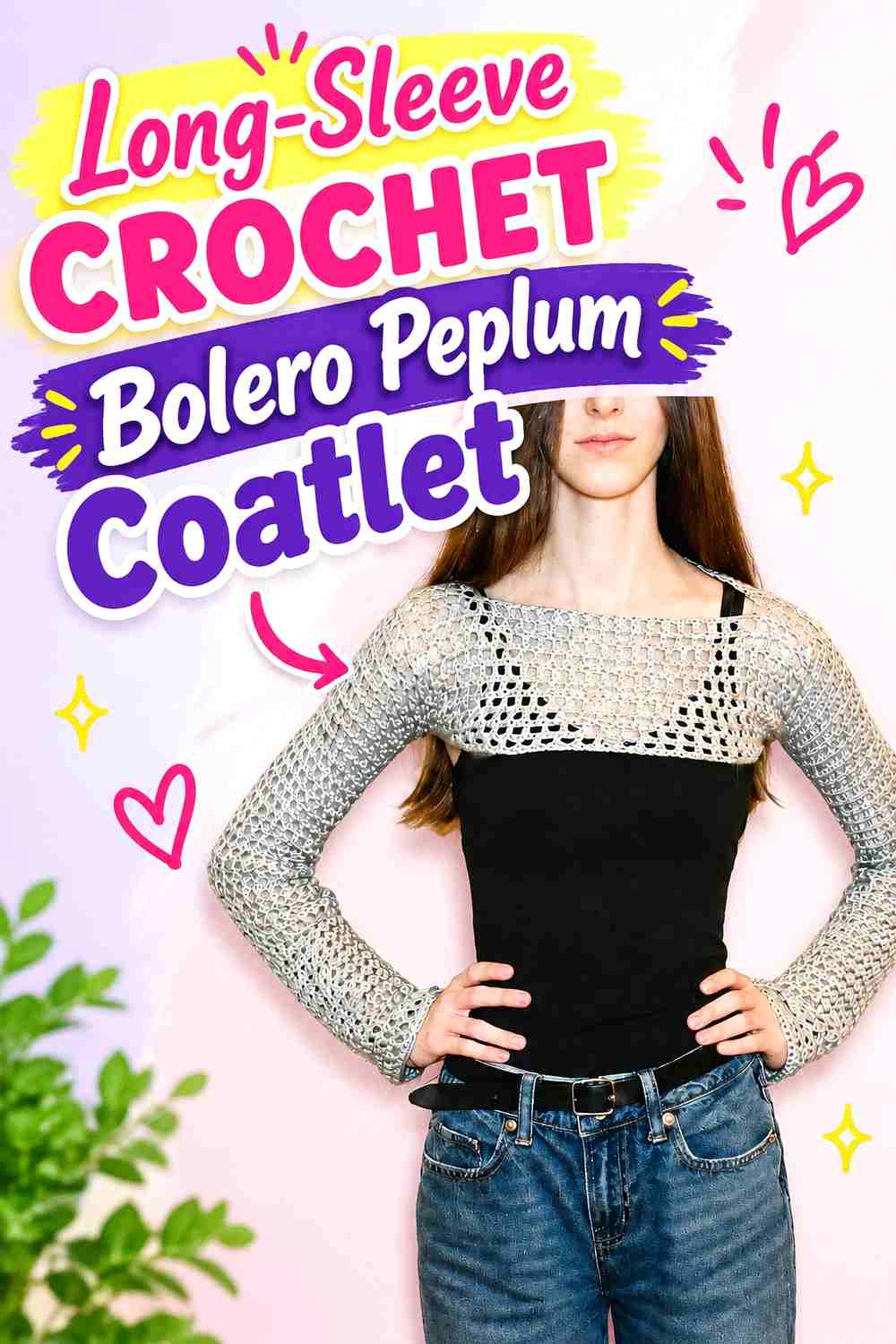
A fitted bolero with long sleeves gives you a clean upper structure for a peplum adaptation. Unlike a loose shrug, it already establishes shoulders, arms, and a cropped body before any lower flare is considered.
This makes it useful when you want the finished result to feel closer to a short jacket.
Establish the Bolero Length Before Adding Fullness
The peplum should begin from a logical lower edge.
Try on the completed or developing bolero and determine whether that line sits at the waist, above it, or too high for the silhouette you want. Extending the fitted portion slightly may be more effective than attaching a flare immediately.
Long Sleeves Make This Easier to Adapt for Winter
Because the arms are already covered, you can concentrate your winter decisions on yarn, neckline, and hem rather than redesigning the entire garment.
Still, do not assume any thicker yarn will work. Preserve the tutorial’s gauge logic if you want the bolero to retain its intended fit.
Creator Credit: Crochet Jewel
8. Granny-Raglan Crochet Fairy Peplum Coatlet
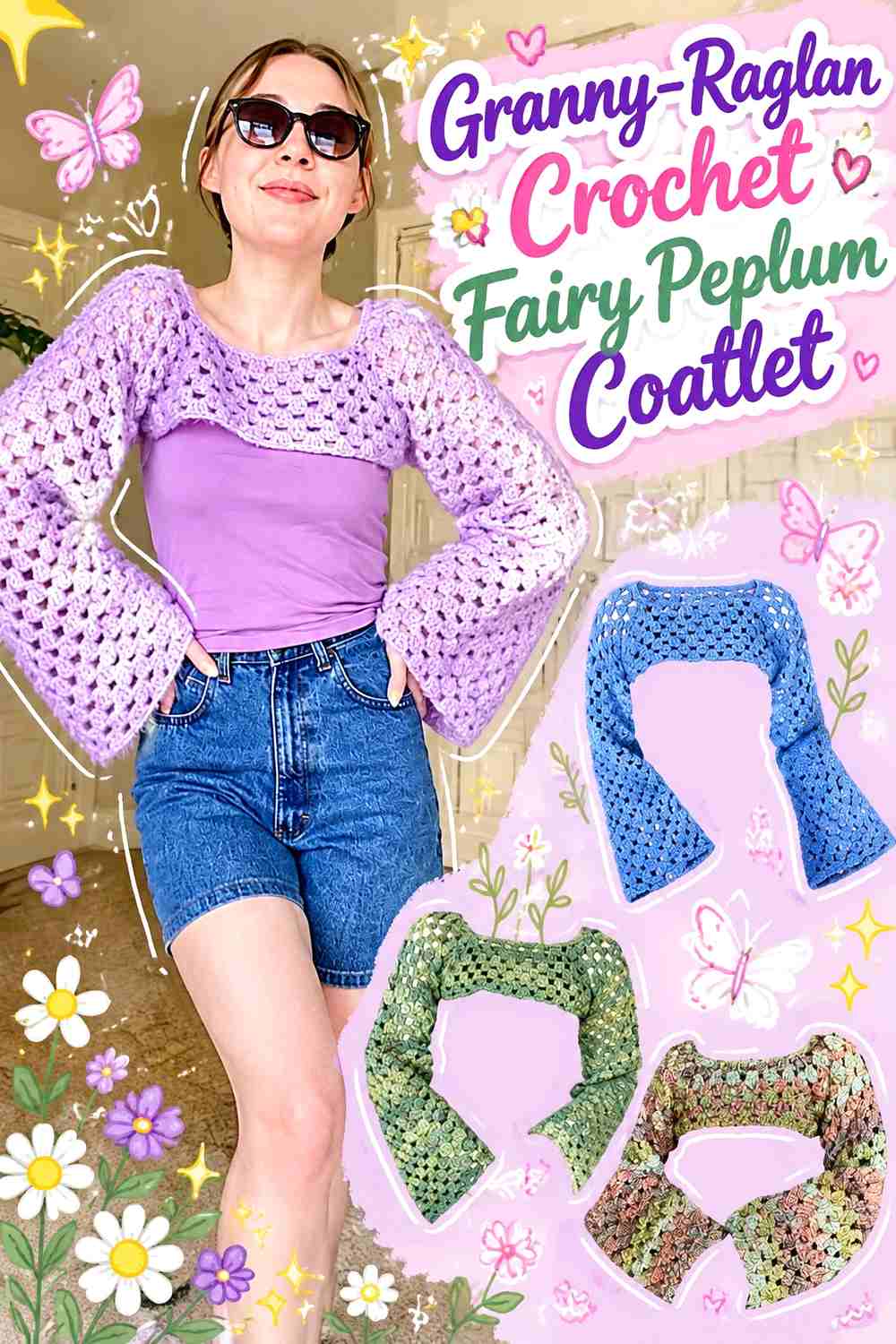
This top-down granny shrug has a whimsical, cropped silhouette and continuous clustered texture. Its upper construction differs significantly from paneled boleros, giving you a useful option if you prefer a raglan-style garment.
A peplum-inspired lower extension can continue the fairy-like mood without requiring a conventional tailored jacket.
Raglan Fit Should Be Correct Before the Hem Changes
The shoulders and underarm connection determine how the upper coatlet sits.
Do not start planning a dramatic peplum until the yoke reaches the intended fit. A perfect hem cannot compensate for an uncomfortable armhole or poorly sized upper body.
Granny Clusters Create Their Own Visual Rhythm
The open clustered fabric is already decorative.
A lower flare can use the same visual language or transition to a simpler texture, but combining too many unrelated motifs may make the garment look fragmented.
Fuzzy Winter Yarn Can Change the Granny Definition
Some textured yarns soften the spaces between clusters.
That can create a lovely winter surface, but make a sample if clearly separated granny groups are important to your design.
Creator Credit: HayHay Crochet
9. Mesh Crochet Ballet Peplum Coatlet
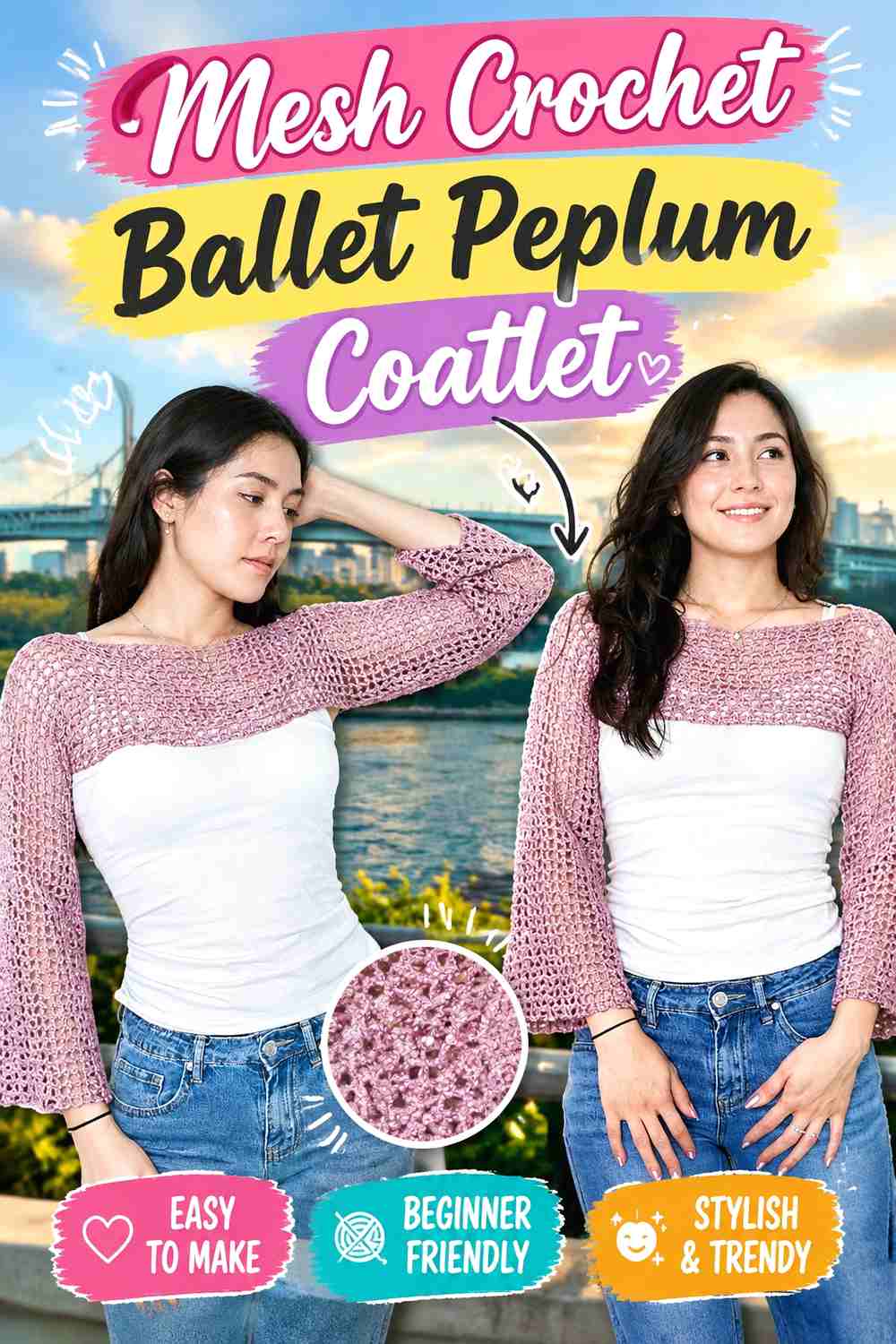
A one-piece mesh shrug offers a very light foundation for a ballet-inspired peplum coatlet. Its narrow body and sleeve arrangement keep the upper garment visually delicate.
This is better suited to indoor winter layering or a decorative layer over a warm base than to outdoor cold-weather protection.
Mesh Keeps a Peplum From Looking Heavy
A flared hem adds circumference, but open fabric reduces its visual mass.
That combination can work well if you want a skirted coatlet shape without creating a dense, bulky border around the waist.
A Close Base Layer Becomes Essential
The mesh itself will not provide the coverage of solid crochet.
Pair the finished piece with a fitted sweater, turtleneck, or long-sleeve dress if winter styling is the goal.
One-Piece Construction Limits Where You Should Improvise
A simple-looking shrug can depend on very specific proportions to form the sleeves and center section correctly.
Follow the creator’s size-adjustment method for the original piece before adding any new lower treatment.
Creator Credit: VivCrochets
10. Buttoned Crochet Romantic Capelet Coat
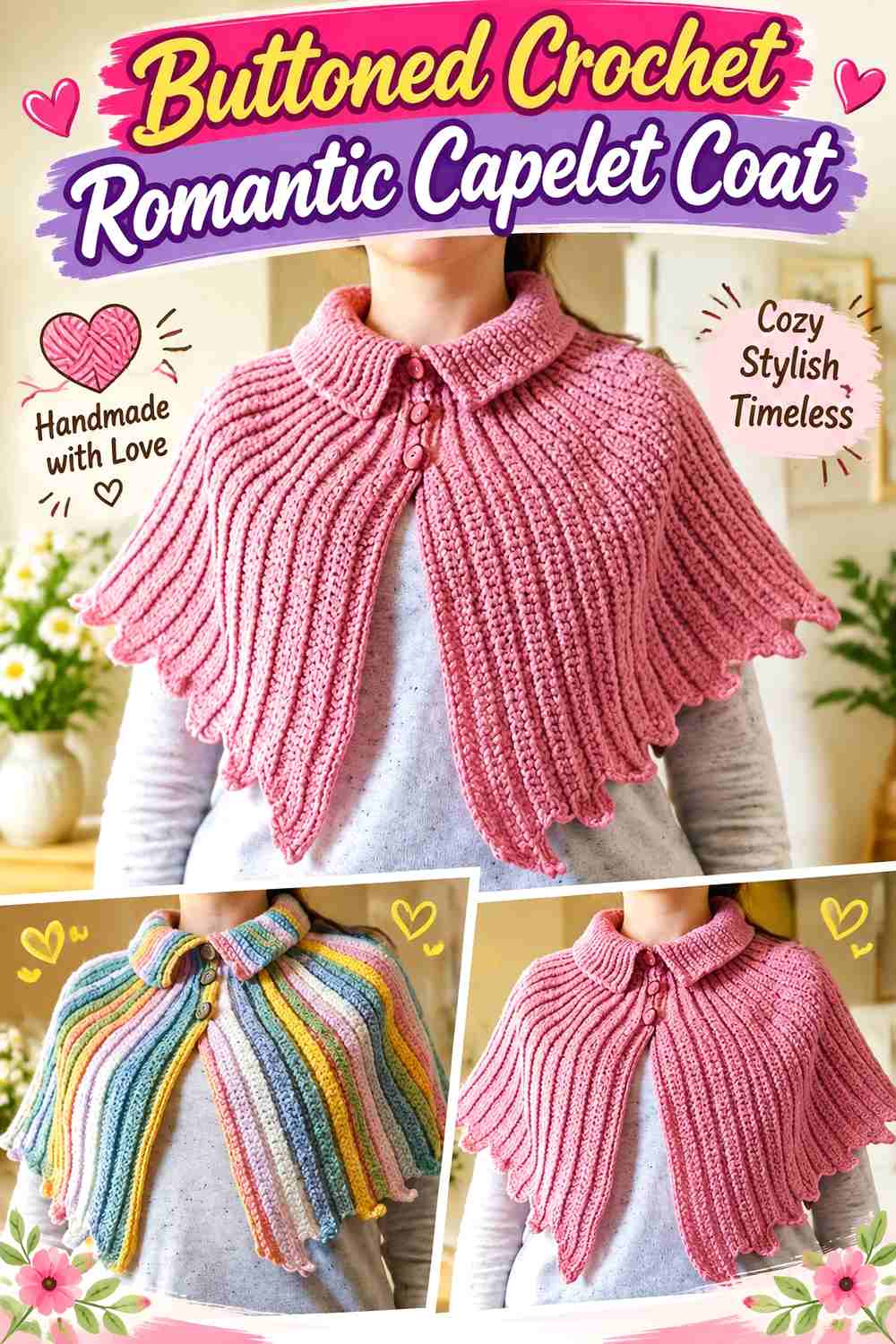
A short buttoned capelet is not a conventional peplum jacket, but its shaped shoulder coverage and romantic front closure make it a useful coatlet alternative.
Instead of defining the waist, this idea creates fullness from the upper torso and lets the lower edge fall freely.
Choose This When Shoulder Drama Matters More Than Waist Definition
A capelet naturally creates an A-line impression from a higher point than a peplum.
It works particularly well over fitted dresses because the contrast between the narrow underlayer and wider capelet creates the romantic shape without altering the waist.
Buttons Make the Piece Feel More Like Outerwear
A front closure gives a capelet more structure than an open shawl.
Before changing button size or adding heavier decorative hardware, make sure the crochet fabric can support the additional weight without sagging.
Keep the Lower Edge From Becoming Too Wide
Adding a peplum-like ruffle to an already flared capelet can result in excessive circumference.
If the original lower edge already provides movement, a decorative border may be enough.
Creator Credit: Sabrina Melodieuse
11. Cable Crochet Winter Peplum Capelet
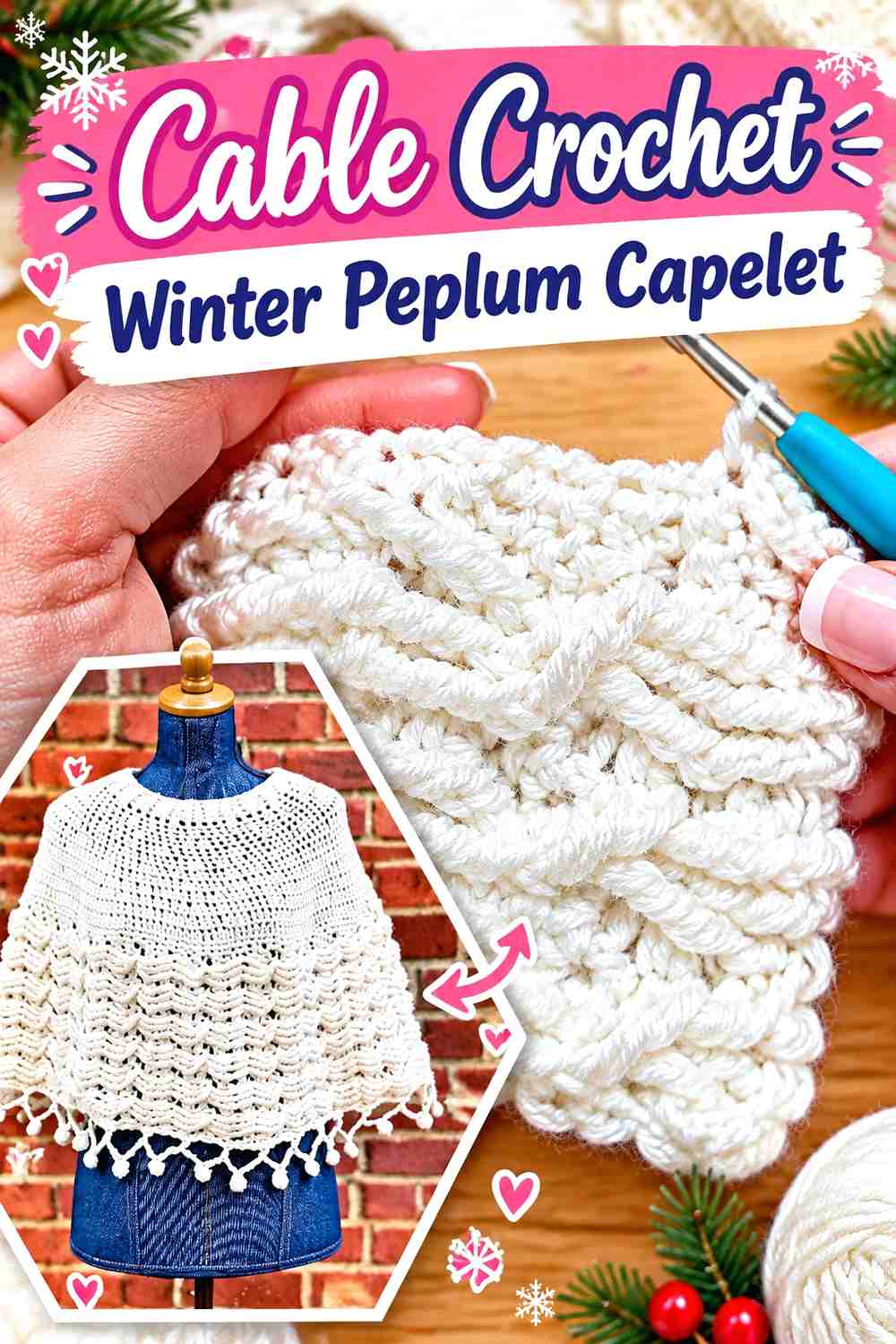
This is one of the strongest true winter options in the collection. The capelet uses prominent cable texture, a shaped yoke, collar, and substantial body, creating a garment that already has the visual weight of cold-weather layering.
For a romantic peplum interpretation, the lower edge can remain controlled while the textured body supplies most of the drama.
Cables Replace the Need for Excessive Ruffles
Raised cable texture makes the fabric visually rich.
That means you can keep the lower silhouette relatively simple and still achieve a luxurious coatlet effect. A restrained flare may look more balanced than a very deep ruffle.
A Circular Yoke Changes the Fit Logic
This construction does not behave like a fitted waistcoat or paneled cardigan.
Fit develops around the shoulders first, so any lower adaptation should respect how the yoke distributes fabric around the body.
Keep Winter Texture Visible
Very fluffy yarn can blur cable definition.
If the cables are the reason you chose this project, use a yarn that allows the raised structure to remain readable.
Creator Credit: Stitches n Scraps
12. Edwardian Crochet Peplum Capelet
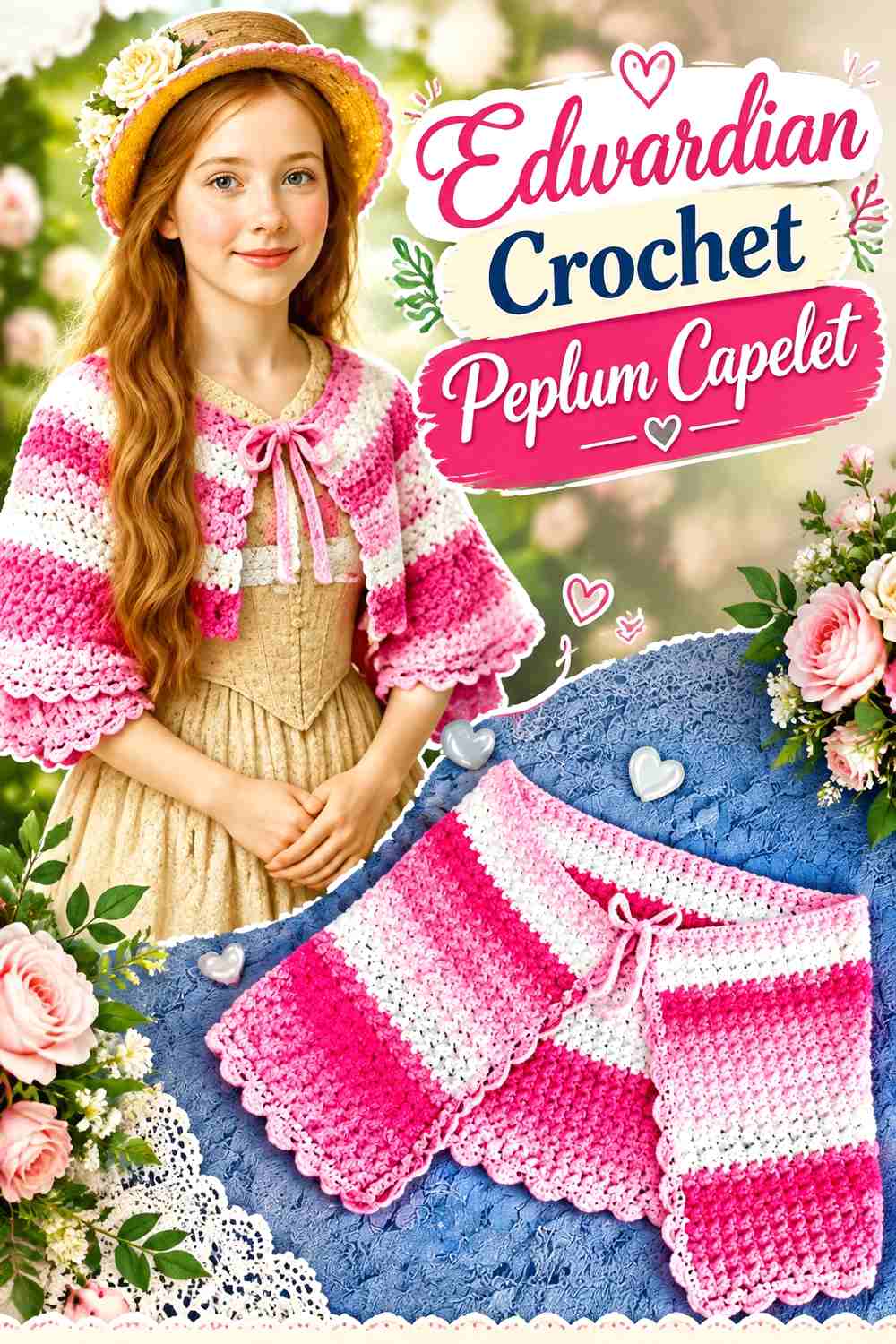
An Edwardian-inspired capelet is a natural choice for romantic layering. The short proportion, front ties, textured body, and decorative shell edging already create a historically influenced silhouette without requiring a conventional cardigan body.
This is more of a capelet-coatlet than a waist peplum, but it suits dresses and high-neck blouses particularly well.
Shell Edging Supplies the Romantic Flare
The decorative lower border creates movement around the perimeter.
Because the main garment is short, the edging occupies a large percentage of the finished visual area. Avoid making it so stiff that it projects horizontally from the shoulders.
Front Ties Keep the Closure Delicate
Ties suit the period-inspired character better than a heavy modern zipper or wide button placket.
They also allow the garment underneath to remain visible through the center front.
Keep Winter Adaptations Light Enough to Drape
A significantly heavier yarn could turn a delicate capelet into a rigid shoulder structure.
If you want more warmth, layering it over wool or another warm base garment may preserve the original character better than greatly increasing yarn thickness.
Creator Credit: Selina Veronique Crochet
13. Chunky Crochet Cocoon Peplum Coatlet
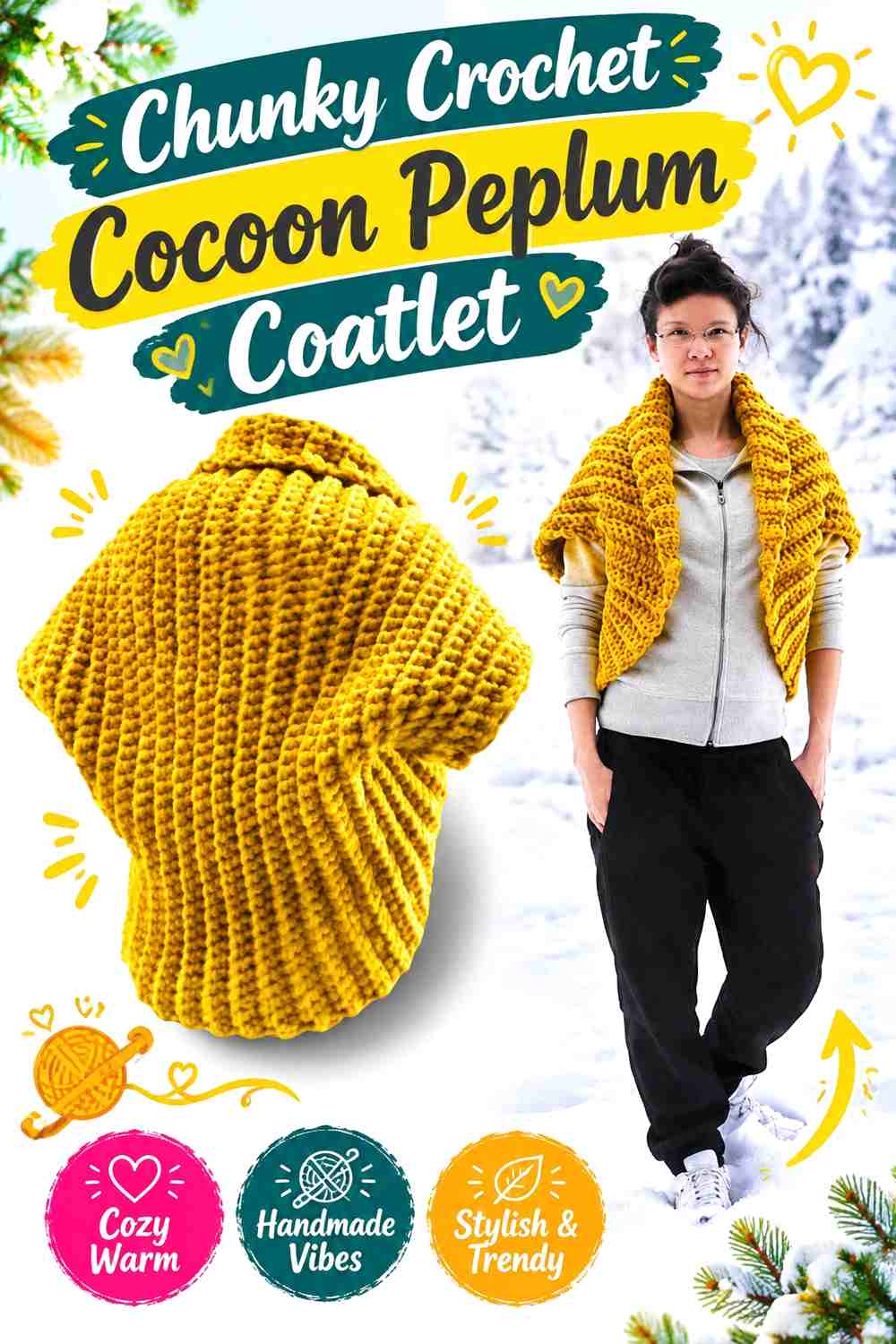
A chunky shrug creates a different kind of romantic winter layer. Instead of a tailored waist, it provides rounded back and arm coverage with a short body that can support a modest lower flare.
This is a useful direction when comfort and visible yarn texture matter more than a sharply fitted bodice.
Chunky Fabric Needs a Smaller Peplum
Large stitches create volume quickly.
A flare that would look modest in fine yarn may become dramatic in a super-bulky fabric. Start with the existing shrug proportion and treat any peplum extension conservatively.
A Cocoon Shape Already Adds Back Volume
The rear silhouette is not flat or tailored.
Keep that in mind before increasing the lower edge. Too much additional circumference can make the garment round from shoulder to hem rather than creating a recognizable upper-and-lower contrast.
Test the Coatlet While Wearing Your Winter Base Layer
A chunky shrug over a sweater creates two substantial layers around the arms and back.
Check mobility before deciding that more fabric automatically improves the winter version.
Creator Credit: Woolpedia+
14. Lace Crochet Vintage Bolero Coatlet
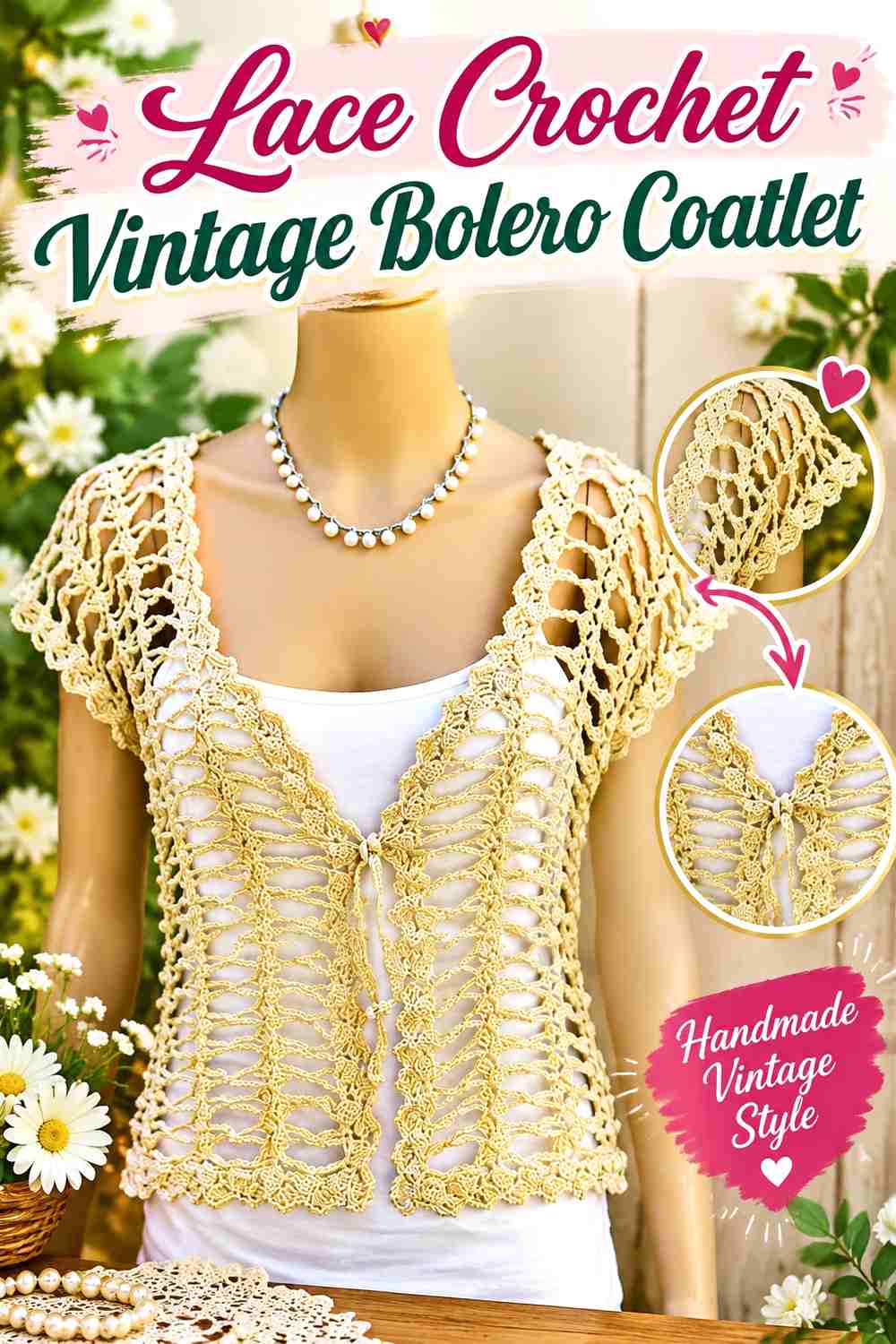
This lace bolero jacket provides a dressier, more fitted base than the open shrugs earlier in the list. Its detailed fabric and short jacket form make it particularly suited to romantic evening layers.
A small peplum can be considered at the lower edge, but the existing lace should remain the central design feature.
Keep the Waist Extension Compatible With the Lace Repeat
Decorative stitch patterns have their own repeat structure.
Do not assume you can increase at arbitrary points without changing the motif. Use the creator’s construction as the foundation and plan adaptations only after understanding how the lower rows are organized.
Lace and Winter Styling Can Work Together
A lace coatlet does not need to become dense to belong in a winter wardrobe.
Wearing it over velvet, a fitted knit dress, or another warm solid layer can make the open pattern more visible while the base garment supplies warmth.
Avoid Overloading Fine Lace With Heavy Trim
A thick ribbed band or bulky faux-fur edge can pull on a fine lace body.
If you want extra winter detail, choose something proportionate to the fabric rather than assuming every coatlet needs heavy edging.
Creator Credit: InterUnet
15. Crossover Crochet Wrap Peplum Coatlet
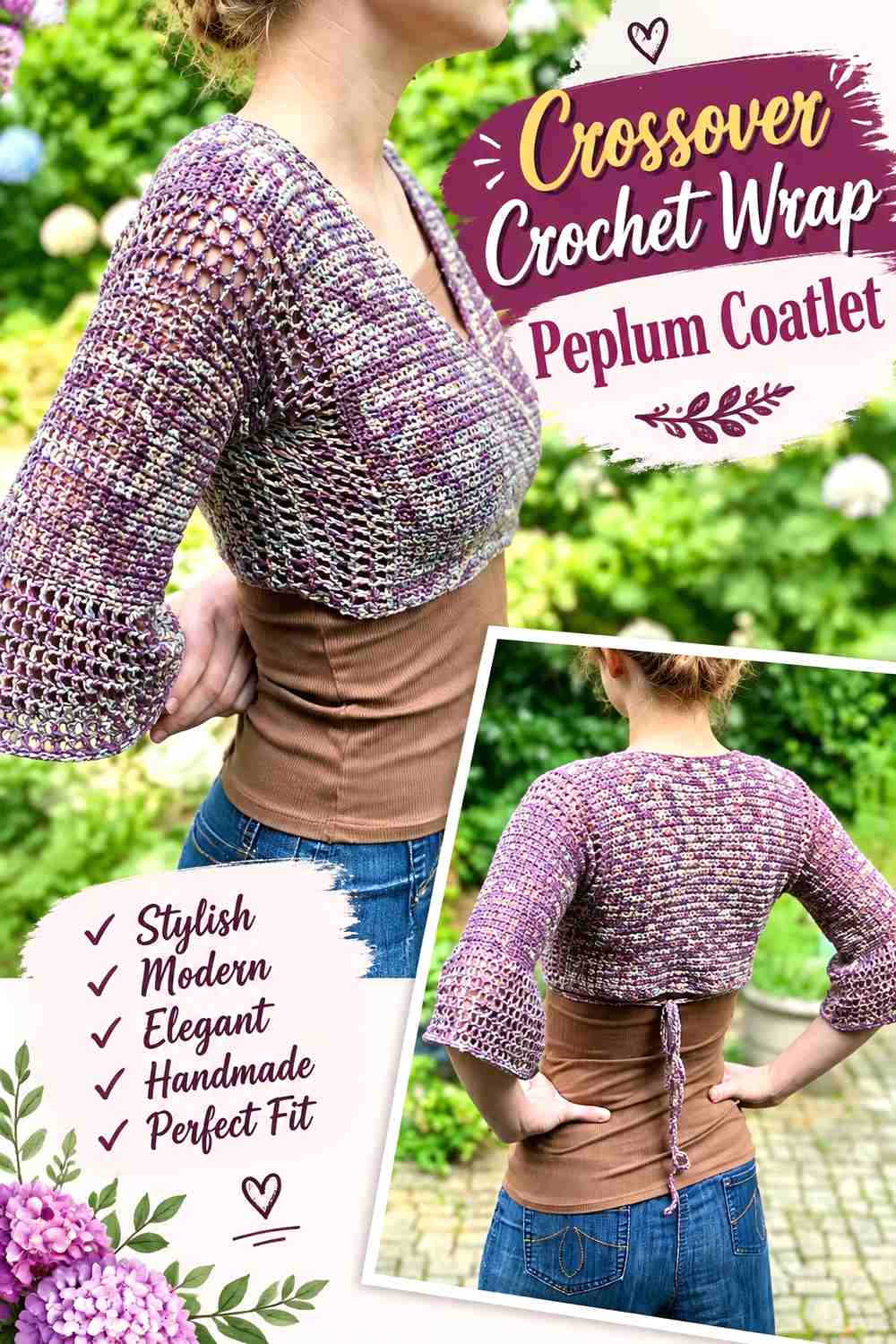
A wrap cardigan creates waist definition through overlap rather than a fixed front closure. That makes it especially useful for peplum styling because the wrapped torso can remain controlled while the lower edge opens into more volume.
This direction feels closer to a ballet or dressing-gown silhouette than a buttoned jacket.
Overlap Creates Two Layers at the Front
Where the cardigan crosses, fabric thickness effectively doubles.
Take that into account before choosing a very heavy winter yarn. The same material that feels comfortable in one layer can become bulky at the wrapped waist.
A Peplum Should Begin Below the Secure Wrap Point
The waist needs to remain stable enough for the crossover to sit correctly.
If extra fullness begins too high, it may interfere with how the fronts overlap or tie. Establish the closure position first.
Check the Neckline While Moving
Wrap garments can sit differently when the arms are raised or the waist ties shift.
Try the completed base cardigan in motion before adding decorative weight to the lower edge.
Creator Credit: Crochet with Gabi
16. Oversized-Button Crochet Winter Capelet Coat
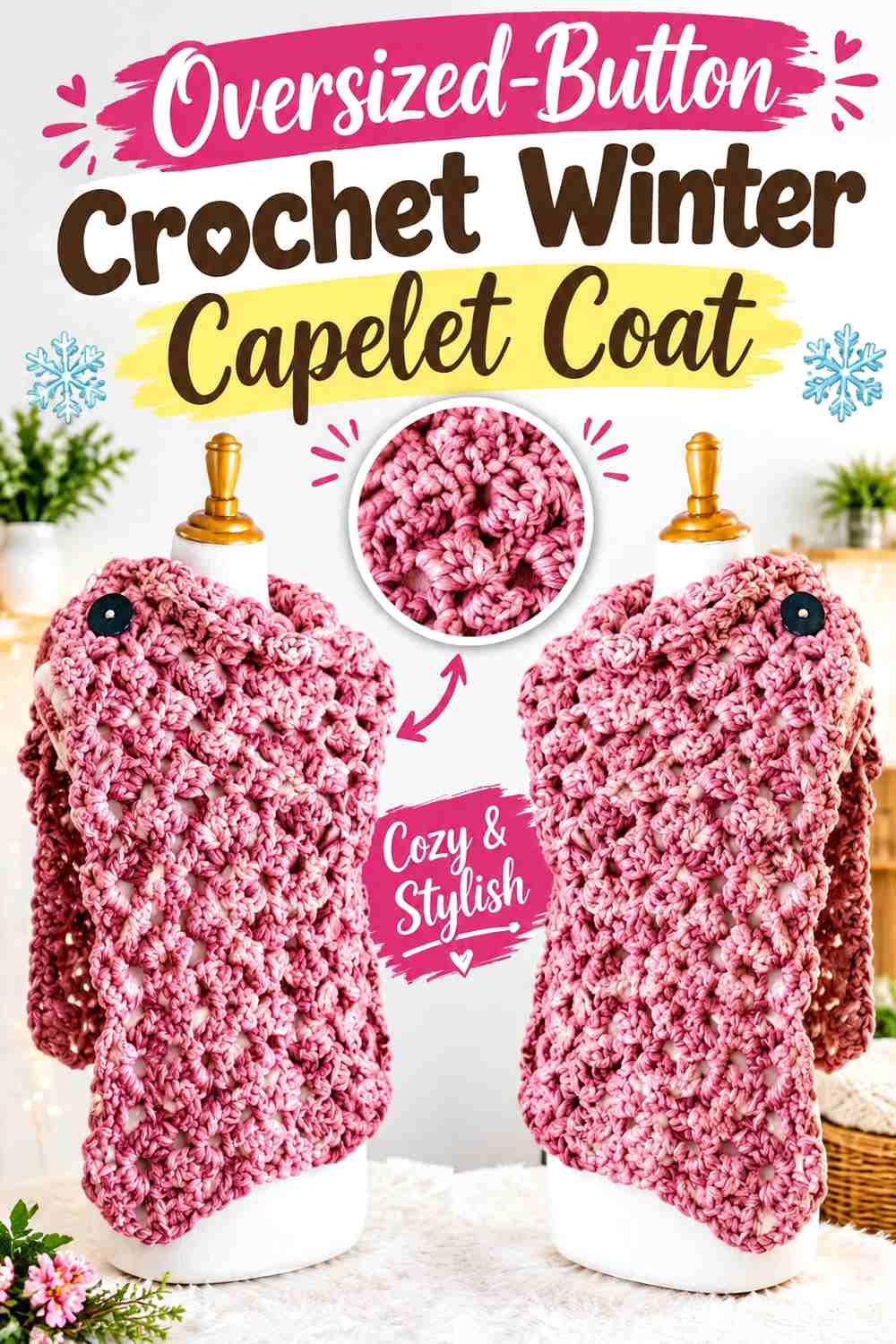
This chunky capelet-cowl uses thick fabric and a large button to create a compact winter wrap. It is not a waist-fitted peplum, but its substantial collar and flared shoulder coverage make it an appealing coatlet alternative.
Choose it when warmth around the neck and upper body matters more than a narrow waist.
The Button Creates a Strong Focal Point
Large hardware immediately draws attention to the closure.
That means the rest of the garment can remain relatively simple. Adding several bows, ruffles, and decorative fastenings would compete with the button.
Thick Yarn Gives the Lower Edge Natural Body
The capelet already holds its shape more strongly than a fine lace wrap.
A separate peplum treatment may not be necessary. A carefully shaped border can create enough lower emphasis while preserving the compact silhouette.
Check Coat Compatibility
A thick capelet can be attractive over a dress but awkward beneath another fitted coat.
Decide whether this is meant to be the visible outer layer or an under-coat accessory before changing its overall depth.
Creator Credit: Fiber Flux
17. V-Stitch Crochet Draped Peplum Shrug
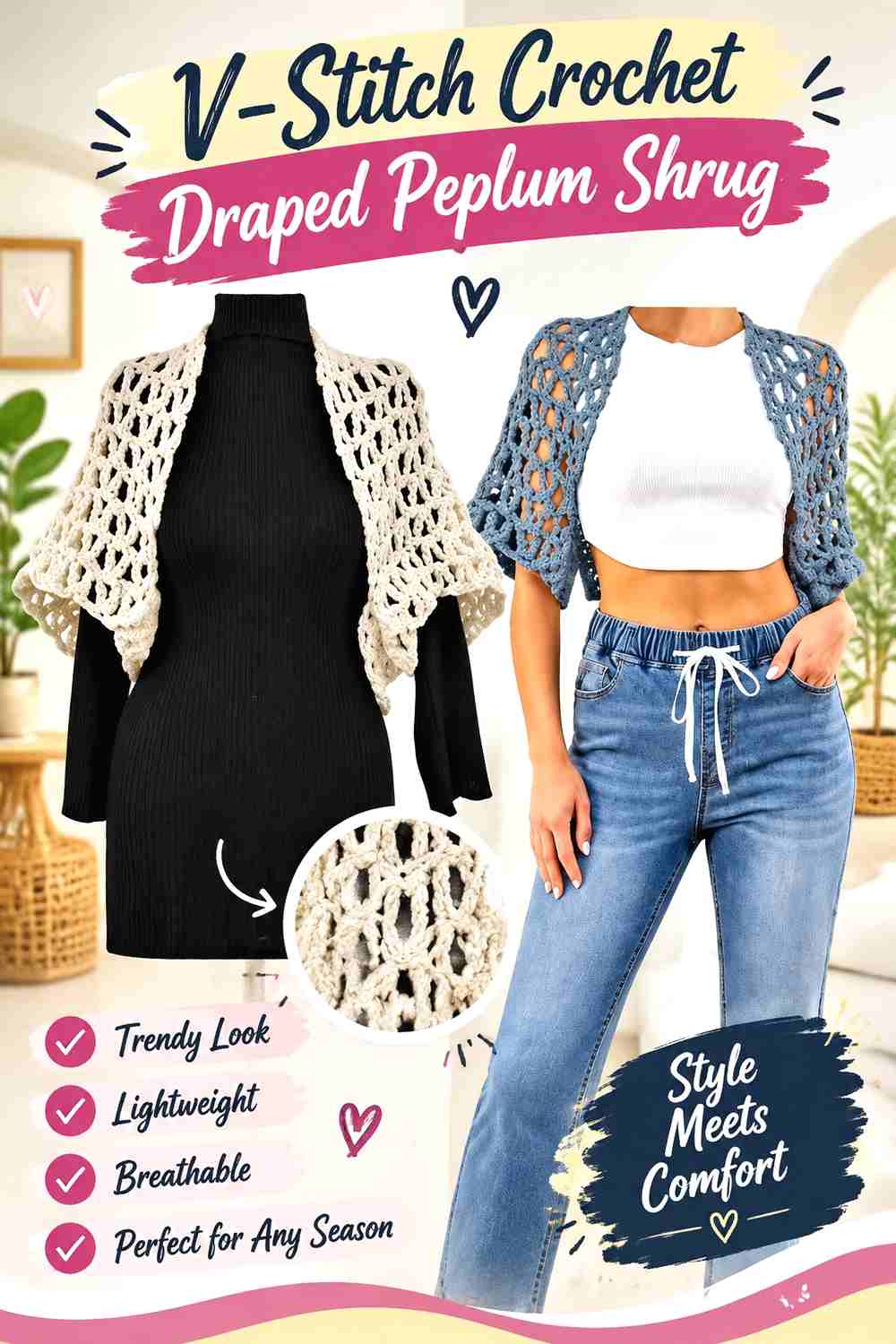
This sideways V-stitch shrug begins as a long rectangle and is minimally seamed into a wearable layer. That makes it the least tailored construction in the collection, but it provides a useful base for a soft draped coatlet where the peplum effect comes from the lower perimeter rather than a fitted waist seam.
The open stitch and adjustable length also distinguish it from the more structured winter pieces.
Rectangle Construction Creates a Softer Fit
Because the garment does not begin with shaped front and back panels, it naturally follows the body more loosely.
A peplum adaptation should respect that relaxed character instead of trying to force the shrug into a sharply tailored jacket.
Extend the Lower Edge, Not the Whole Rectangle
If you want additional romantic flare, first complete the shrug shape and identify the lower body opening.
Increasing the entire original rectangle may alter sleeve reach and overall fit, whereas a carefully planned finishing section can affect the lower silhouette more selectively.
Use Winter Layers Behind the Open V-Stitch
The fabric contains deliberate spaces.
For winter, use it over a close long-sleeve layer and choose the shrug primarily for decorative texture and silhouette rather than expecting it to perform like dense outerwear.
Creator Credit: Hectanooga1
Which Crochet Peplum Coatlet Style Should You Choose?
| If you want… | Consider… | Main point to check |
|---|---|---|
| A true waist peplum | Projects 1 or 2 | Where the flare begins |
| A soft babydoll silhouette | Project 4 | Higher waist placement and lower-body weight |
| Romantic ruffles | Projects 2 or 3 | Whether extra fullness stays balanced |
| Lace over winter dresses | Projects 5 or 14 | Openwork, yarn scale, and underlayers |
| Dramatic sleeves | Project 6 | Sleeve volume beneath coats |
| A fitted bolero base | Project 7 | Cropped length before adding a hem |
| Granny or fairy styling | Project 8 | Raglan fit and cluster definition |
| A light ballet-inspired layer | Project 9 | Mesh coverage and base garment |
| Capelet romance | Projects 10 or 12 | Shoulder flare versus waist definition |
| The warmest textured option | Project 11 | Cable definition and yoke fit |
| Chunky winter volume | Projects 13 or 16 | Total bulk around outerwear |
| A crossover waist | Project 15 | Double-layer thickness at the front |
| A loose draped interpretation | Project 17 | Whether rectangle construction suits the desired fit |
Conclusion
For the clearest traditional peplum silhouette, Projects 1 and 2 are the strongest starting points because their lower flare is already part of the garment construction. Project 4 shifts the idea toward a softer babydoll line, while Project 7 provides a clean bolero foundation if you want to plan your own restrained lower extension.
For a more historical or dressy approach, Projects 12 and 14 offer two very different romantic directions: an Edwardian shoulder cape and a fitted lace bolero. Project 11 is the strongest choice when winter texture and substantial coverage matter more than delicacy.
The shrug and wrap projects give you more flexibility but require more adaptation. Their value is in their upper-body construction, drape, sleeves, or closure rather than an existing peplum.
Whatever route you choose, settle the shoulders, armholes, bust, and waist before increasing the lower edge. A successful peplum looks intentional because the fuller section grows from a garment that already fits correctly. Follow each creator’s tutorial for the exact construction, then treat any coatlet or peplum changes as separate design decisions.
Frequently Asked Questions
What is a crochet peplum coatlet?
A crochet peplum coatlet is a short layering garment with cardigan, bolero, jacket, or capelet characteristics and added fullness toward its lower edge. Some designs have a true fitted waist with a flared peplum, while others create a similar romantic effect through ruffles, shells, cape shaping, or babydoll construction.
Can I add a peplum to any crochet cardigan?
Not automatically. The lower edge needs to support the additional circumference without distorting the fronts, side seams, closure, or waist. A cropped cardigan with a stable lower body is often easier to adapt than a highly shaped or asymmetrical garment. Understand the original construction before changing it.
Where should the peplum start?
That depends on the intended silhouette and the wearer’s proportions. A natural-waist placement looks more traditionally peplum-like, while a higher transition creates a babydoll effect. Try on the fitted section before deciding where the flare should begin.
How do I keep a crochet peplum from sticking straight out?
Fabric behavior matters. A stiff yarn, tight gauge, or very rapid increase in circumference can produce a more projected lower edge. Use the tutorial’s fabric as your reference and swatch any yarn substitution before assuming it will create the same drape.
Can a lace peplum coatlet work for winter?
Yes as a layering piece. Open lace does not provide the same coverage as dense crochet, so pair it with a warm dress, fitted sweater, or turtleneck. This can preserve delicate romantic stitchwork without forcing the lace itself to become unusually thick.
Is a capelet the same as a peplum coatlet?
No. A capelet usually flares from the neckline or shoulders, while a peplum typically begins its flare much lower around the waist or lower torso. Capelets are included here because their short romantic proportions can serve a similar layering role, but the fit and construction are different.
What details make a crochet coatlet look more romantic?
Ruffled hems, shell edging, tie fronts, narrow waist shaping, bell sleeves, floral motifs, lace, cables, vintage capelet proportions, and softly flared lower sections can all contribute. You do not need all of them in one garment. One or two clear features usually create a more coherent result than combining every decorative idea at once.