A crochet hooded poncho already has the ingredients of a storybook winter layer: a sweeping shape, an oversized hood, plenty of texture, and enough room for color, fringe, tassels, or woodland-inspired details. The important part is choosing a construction that gives you the look you actually want.
Some hooded ponchos fall into a sharp V at the front and back. Others sit closer to the shoulders like capelets. Granny-stripe versions create a colorful folk feel, while longer crochet cloaks lean toward fairy-tale, woodland, or fantasy styling. Lightweight open versions can also give you the silhouette without the bulk of a dense winter garment.
The tutorials below cover those different directions rather than repeating one basic poncho 13 times. Check each creator’s sizing and materials before substituting yarn, and use the original tutorial for exact stitch sequences and construction.
Quick List
- Crochet Textured V-Point Hooded Poncho
- Crochet Faux-Fur Trim Storybook Poncho
- Crochet Moss-Stitch Forest Capelet
- Crochet Granny-Stripe Hooded Poncho
- Crochet Long Woodland Hooded Cloak
- Crochet Star-Edged Winter Cloak
- Crochet Lightweight Pocket Hooded Poncho
- Crochet Round-Yoke Hooded Cape
- Crochet Little-Rider Hooded Cape
- Crochet Self-Striping Double-Crochet Hooded Poncho
- Crochet Pixie-Point Shell Poncho
- Crochet All-Ages Draped Hooded Poncho
Choose Between a Capelet, Poncho, and Cloak Before Choosing the Color
These silhouettes may all include a hood, but they do not wear the same way.
A short capelet concentrates fabric around the shoulders and upper torso. It can be a good choice when the hood and neckline are the main visual features or when you want to keep your arms relatively unrestricted.
A classic poncho provides more coverage and usually creates a recognizable triangular, pointed, or draped body. This gives you more room for stripes and textured stitch patterns without requiring the length of a full cloak.
Longer hooded cape or cloak constructions make the strongest storybook statement. That extra length also means extra fabric weight, so yarn choice and shoulder comfort matter more. Crochet with illJay’s cloak design, for example, is specifically adaptable in length, while the designer notes that greater length also adds weight.
Choose the silhouette first. A forest-green color cannot make a short capelet behave like a long cloak, and adding fringe will not change how a heavily textured poncho distributes weight across the shoulders.
Check the Hood and Neckline Before Adding More Length
The hood is not merely a decorative attachment. Its depth, weight, neckline connection, and face opening affect how the entire garment sits.
A very deep hood creates more of the dramatic storybook silhouette, but it can also pull differently at the neckline when it is down. A compact hood usually feels less visually dominant. Some sources also add ribbing, trim, drawstrings, or ties, all of which change the appearance around the face.
Before extending a poncho or cloak, make sure you are happy with the neckline and the way the hood behaves. Rebekah Haas’s design, for example, uses a separate hood with ribbing, a working drawstring, and tassels, while Susan’s Family’s cloak separates the main body, hood/edging, and tie finishing into distinct parts of the project.
For children’s garments, use the creator’s intended sizing and construction rather than estimating from an adult version. Also consider whether cords, tassels, pom-poms, or other added details are appropriate for the intended wearer and use.
Let Yarn Weight Support the Storybook Silhouette
A storybook-inspired poncho can be soft and flowing, thick and mossy, or somewhere between the two. Those effects depend heavily on the material and stitch structure.
Lizfaerie Crafts uses a super-bulky yarn with extended moss stitch for a compact hooded capelet, creating a substantial textured surface. Crazy Cool Crochet takes almost the opposite approach with a lightweight yarn and open, flowing construction.
Neither approach is automatically better for winter styling. The useful question is whether you want visual thickness or fluid drape.
If you substitute yarn, make a reasonably sized swatch and compare both gauge and hanging behavior. A yarn can technically reach the correct measurement yet still create a much heavier or stiffer garment than the original.
1. Crochet Textured V-Point Hooded Poncho
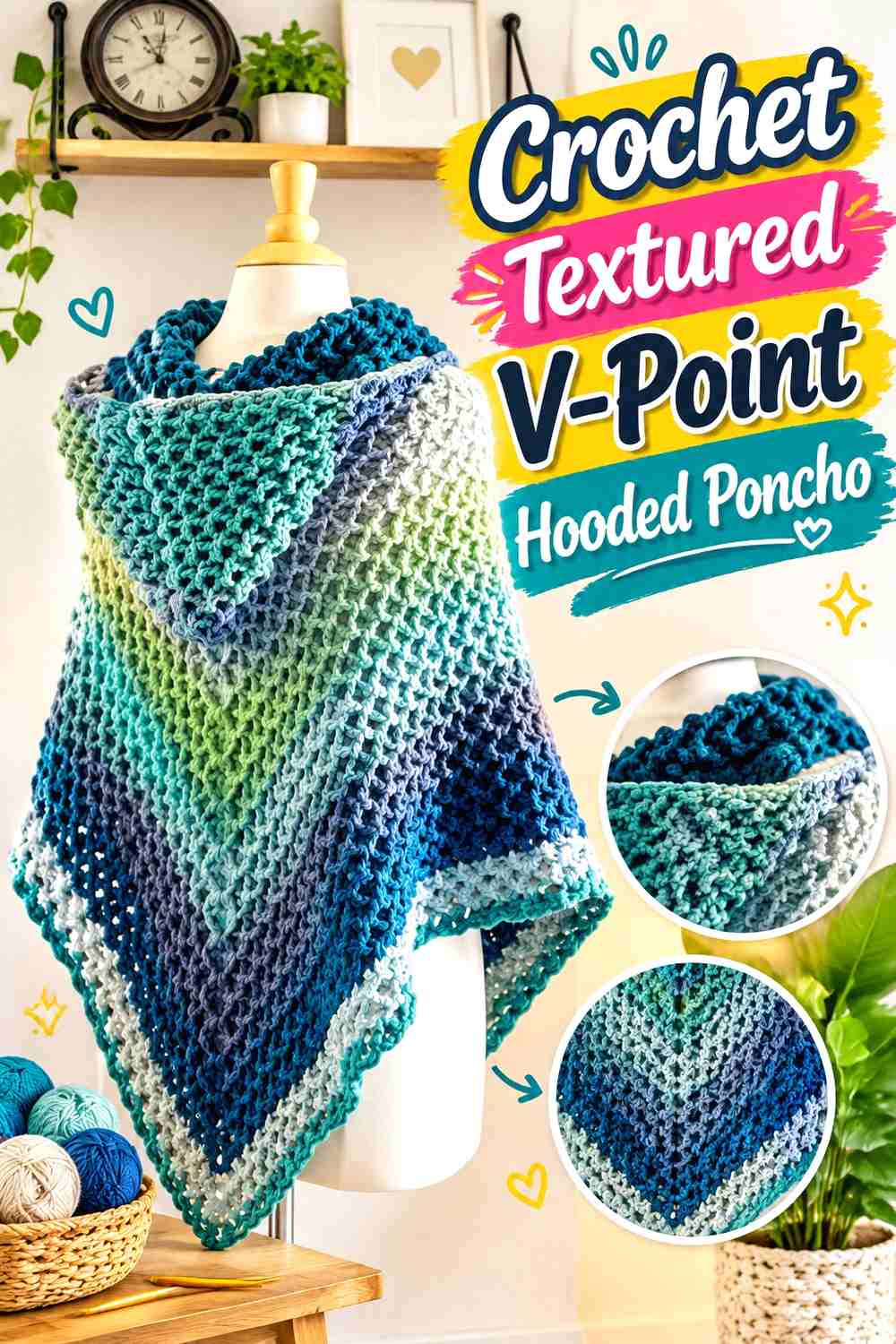
This option uses a classic pointed poncho silhouette with a substantial textured surface. The source garment is worked in the round and develops two points, one at the front and one at the back, giving it a distinctly different outline from rectangular-panel or short capelet constructions.
That central point works especially well for storybook winter styling because it creates a strong vertical line without requiring cloak length. In a woodland neutral, deep berry, charcoal, or muted green, the shape can feel dramatic while still functioning as a recognizable everyday poncho.
The Front Point Changes How You Judge Length
Do not compare a pointed poncho with a straight-hem sweater by looking only at the longest center section.
The side coverage will finish higher than the front and back points. Before deciding that a poncho is too short or needs additional rounds, check where the side edge falls on the arms and torso as well as where the point ends.
This is especially important if you plan to lengthen the source design. Increasing the center drop also changes the overall amount of fabric rather than simply adding a narrow band around the bottom.
Texture Can Become the Main Decorative Feature
A strongly textured poncho does not need many additional trims to look storybook-inspired.
Consider whether tassels, multiple colors, or an elaborate border would compete with the stitch surface. A solid or gently tonal yarn can make the texture easier to read, while a highly variegated yarn may place more emphasis on color than stitch definition.
Creator Credit: crochetdreamz
2. Crochet Faux-Fur Trim Storybook Poncho
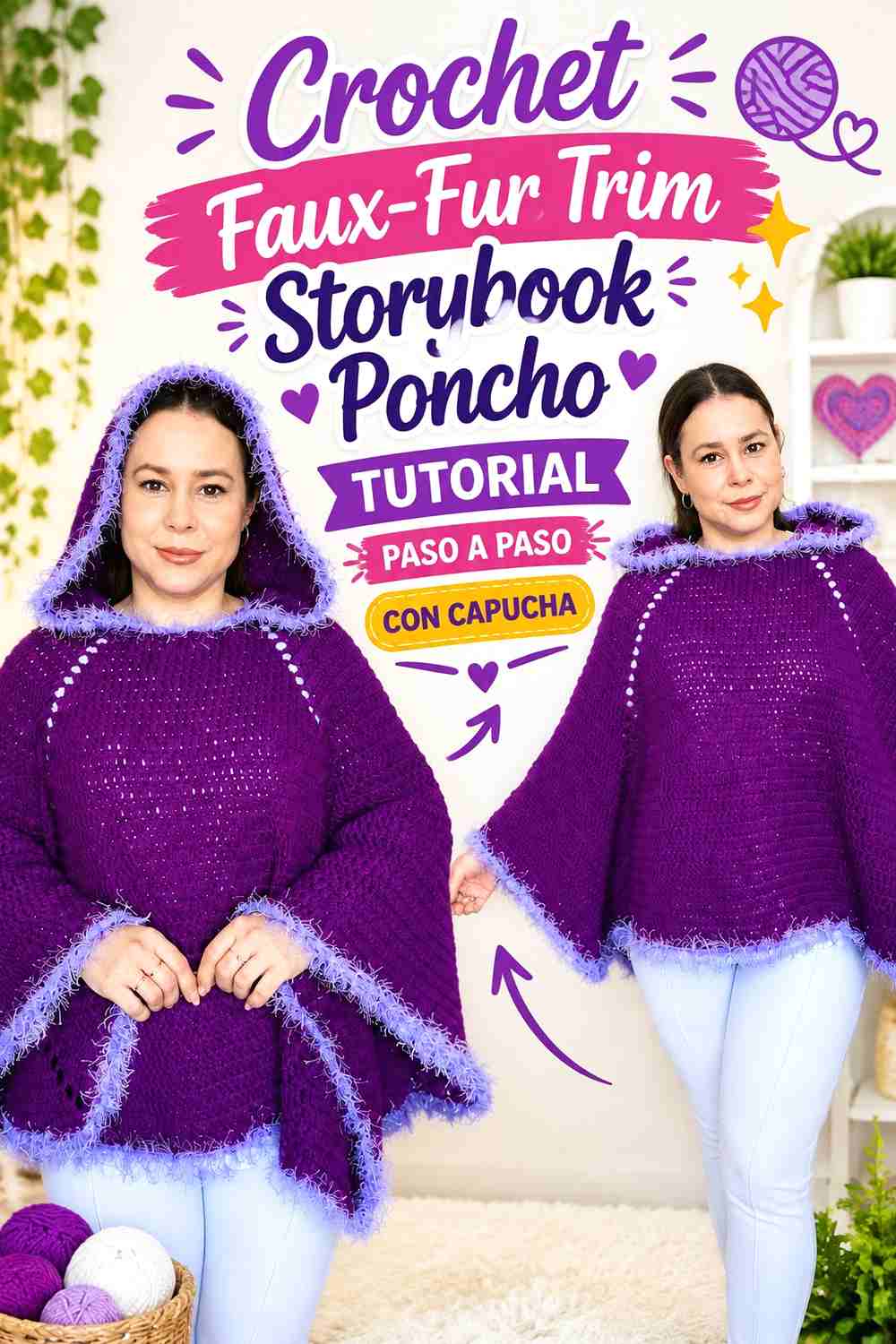
MageTeje’s hooded poncho combines a straightforward crocheted body with contrasting fluffy embellishment around the finished garment, creating a softer winter-fantasy effect than a traditional fringed poncho. The tutorial also builds the hood and body as coordinated parts of the same project.
This is a useful direction when you want the storybook element to come from finishing rather than an elaborate body stitch. A restrained main color can let the fluffy trim frame the hood and edges without making the entire garment visually busy.
Decorative Trim Changes the Edge Weight
Novelty or fluffy yarn behaves differently from the main garment yarn.
Before adding it around every possible edge, decide where it contributes most to the silhouette. Hood framing may emphasize the face, while lower-edge trim puts more visual and physical weight at the hem.
If substituting the embellishment yarn, test a small section first. Two fuzzy yarns that look similar in a skein can differ substantially in thickness and how much of the underlying crochet they conceal.
Keep the Hood Shape Visible Under the Fluff
A fluffy border can make an ordinary hood feel much more dramatic, but too much volume can obscure the actual edge.
Check the hood both raised and lowered before repeating the trim elsewhere. If the edging already provides a strong frame, the body may benefit from simpler finishing so the hood remains the focal point.
Creator Credit: MageTeje
3. Crochet Moss-Stitch Forest Capelet
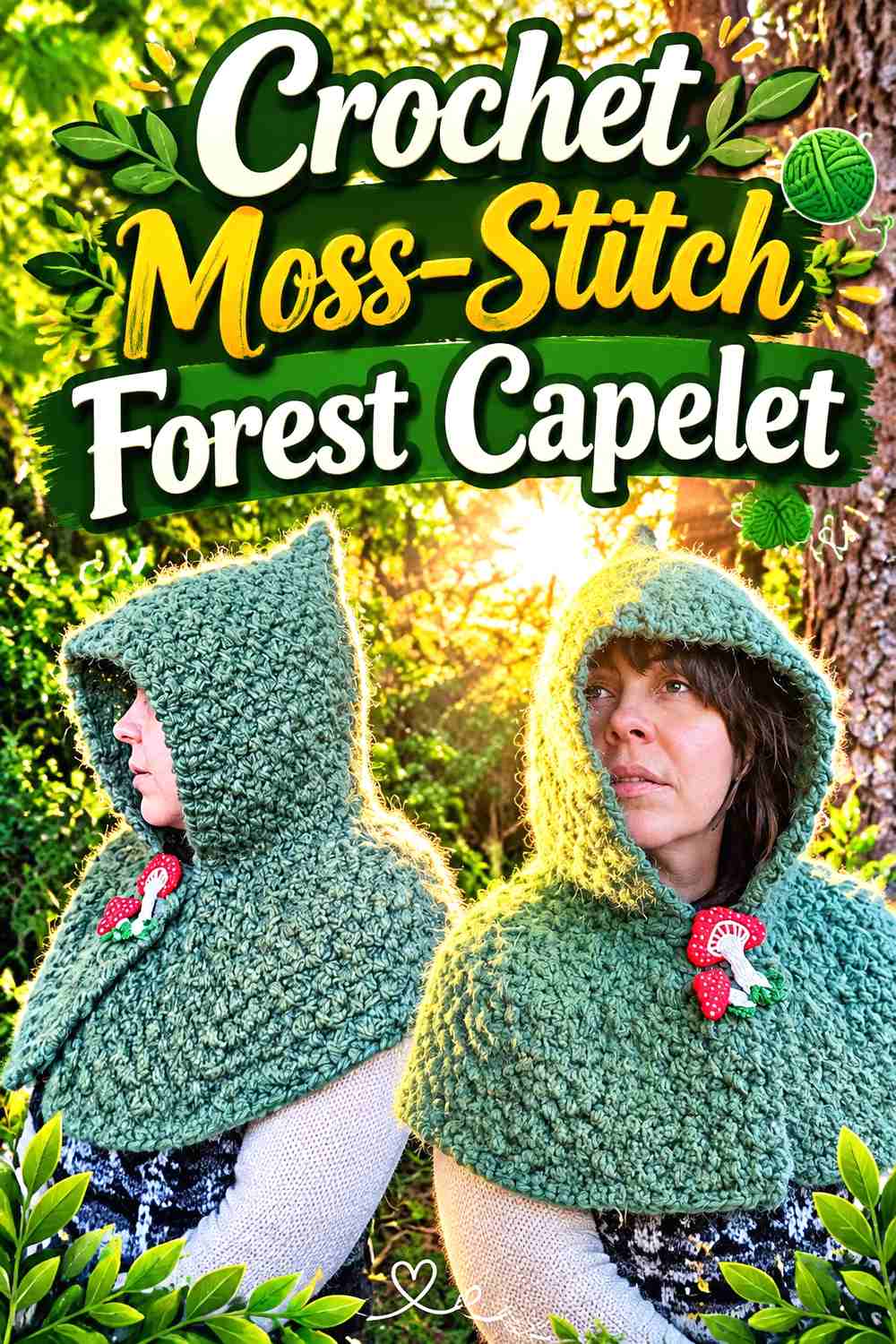
The Mossy Hooded Capelet uses extended moss stitch and a short capelet silhouette rather than a full-length poncho. The source design uses super-bulky yarn, and its green sample deliberately emphasizes a moss-like woodland character.
That combination makes this one of the clearest options for a forest-story aesthetic. Because the body is short, the hood and shoulder texture have more visual importance than they would on a long sweeping garment.
A Capelet Keeps the Weight Close to the Shoulders
Shortening the body does more than change the appearance. It changes how much crocheted fabric hangs below the neckline.
If a full poncho feels like more garment than you want, a capelet can provide the hooded silhouette with substantially less visual coverage. It also makes a decorative brooch or front fastening more prominent because it sits close to the main focal area.
Bulky Texture Needs Room Around the Neck
Super-bulky yarn can create a very different neckline from lighter yarn even when the stitch pattern is similar.
Make sure your gauge and hood opening follow the source closely before adapting the capelet. If you want extra room for a sweater underneath, verify the finished circumference rather than assuming bulky crochet will automatically stretch enough.
Creator Credit: Lizfaerie Crafts
4. Crochet Granny-Stripe Hooded Poncho
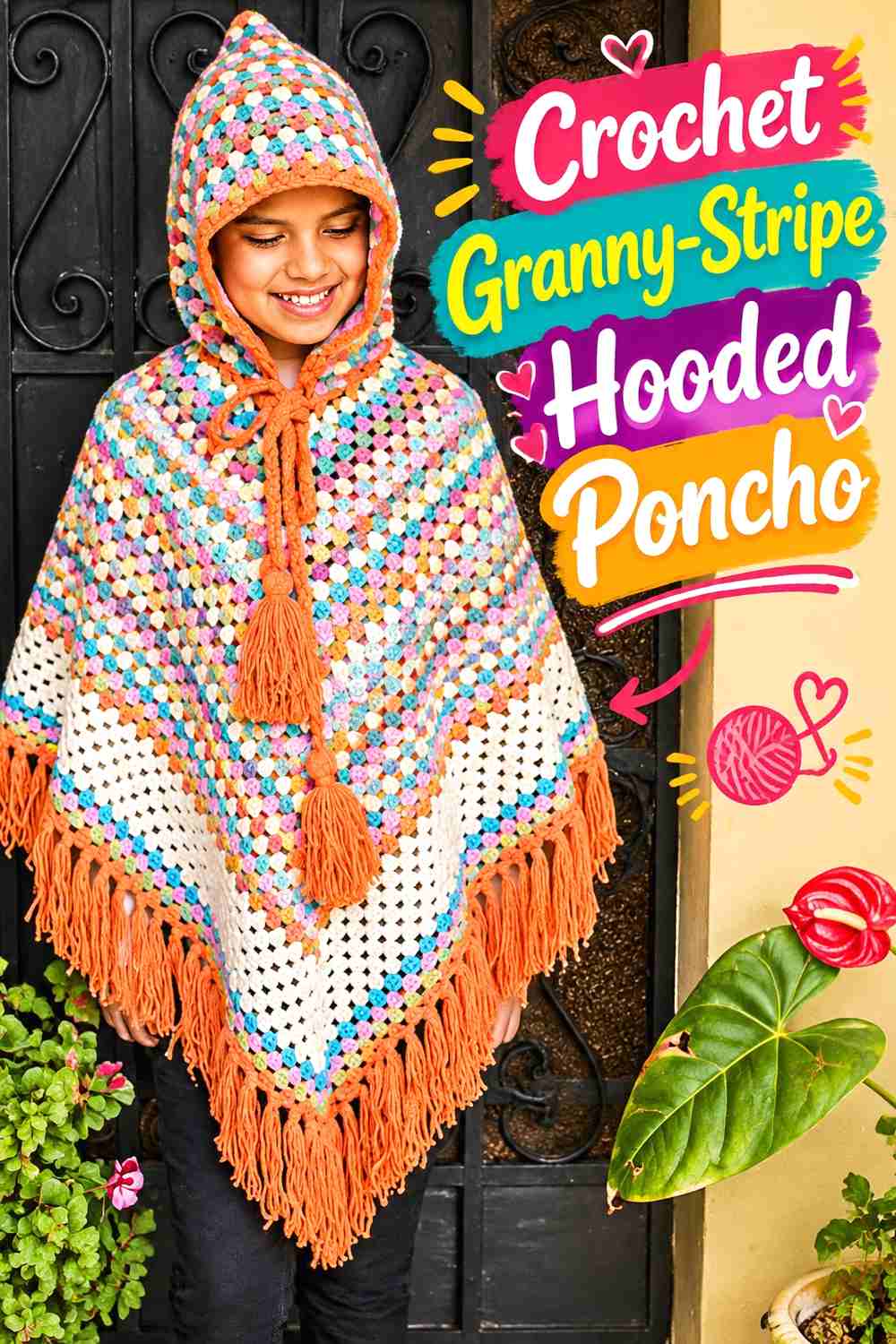
Granny stripes introduce color and repetition without the seams of a joined granny-square garment. Tejiendo Perú’s source poncho is built as a hooded granny-stripe design, with the project developed as one continuous garment and sizing information extending from smaller wearers to adults.
This option suits storybook styling with a folk or vintage direction. Instead of bright rainbow stripes, you could work within a limited winter palette such as rust, ochre, pine, cream, burgundy, and brown while keeping the underlying construction intact.
Plan the Stripe Sequence Before the Poncho Gets Wide
A color sequence that looks balanced near the hood can feel very different once each later round covers a much larger area.
If you are choosing your own palette, arrange the yarn before starting and decide whether colors will repeat predictably or appear more irregularly. Also consider which color you want nearest the face, since the hood can make that shade especially prominent.
Fringe and Ties Can Push the Look Toward Folk Style
The source includes additional finishing details such as buttons, cord elements, and fringe. Those features contribute substantially to the final character of the garment rather than acting as invisible finishing.
Decide which details support your intended style instead of adding every possible embellishment. A colorful stripe sequence may already be visually active enough, while a more subdued palette can leave room for pronounced fringe and tassels.
Creator Credit: Esperanza y Ana Celia Rosas (Tejiendo Perú)
5. Crochet Long Woodland Hooded Cloak
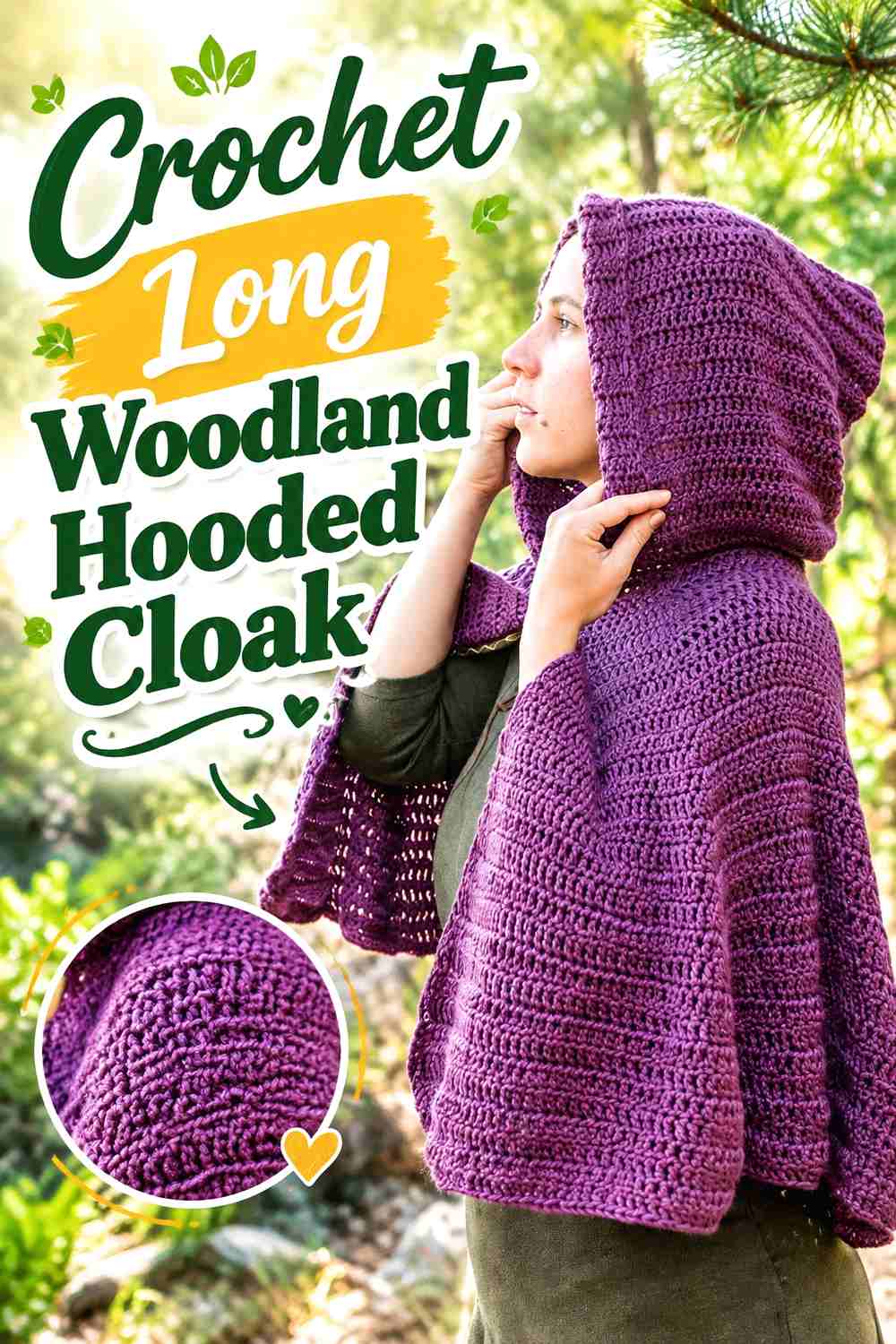
For a more dramatic storybook silhouette, this design moves beyond the standard hip-length poncho toward a true hooded cloak. Crochet with illJay’s project allows the body to continue to the desired length, so the same basic concept can produce a shorter cape or a much more sweeping garment.
That flexibility makes it particularly useful if your inspiration is closer to woodland traveler, fairy tale, or fantasy costume than an everyday triangular poncho.
More Length Also Means More Weight
A long crochet cloak can become considerably heavier than a short cape.
The designer specifically notes that adding length increases the weight of the project. Before committing to a floor-sweeping interpretation, make enough of the body to understand how your chosen yarn behaves vertically.
A lighter-looking fabric may be preferable if you want extensive length, while a dense heavy fabric may make more sense at a shorter cape length.
The Hood Should Balance the Scale of the Body
A dramatic cloak can make a shallow, close-fitting hood look visually small.
Check the creator’s hood construction before changing its dimensions independently. If you modify the body substantially, consider the overall proportion from the back as well as the front; the hood remains a major part of the garment even when it is not being worn over the head.
Creator Credit: Crochet with illJay
6. Crochet Star-Edged Winter Cloak
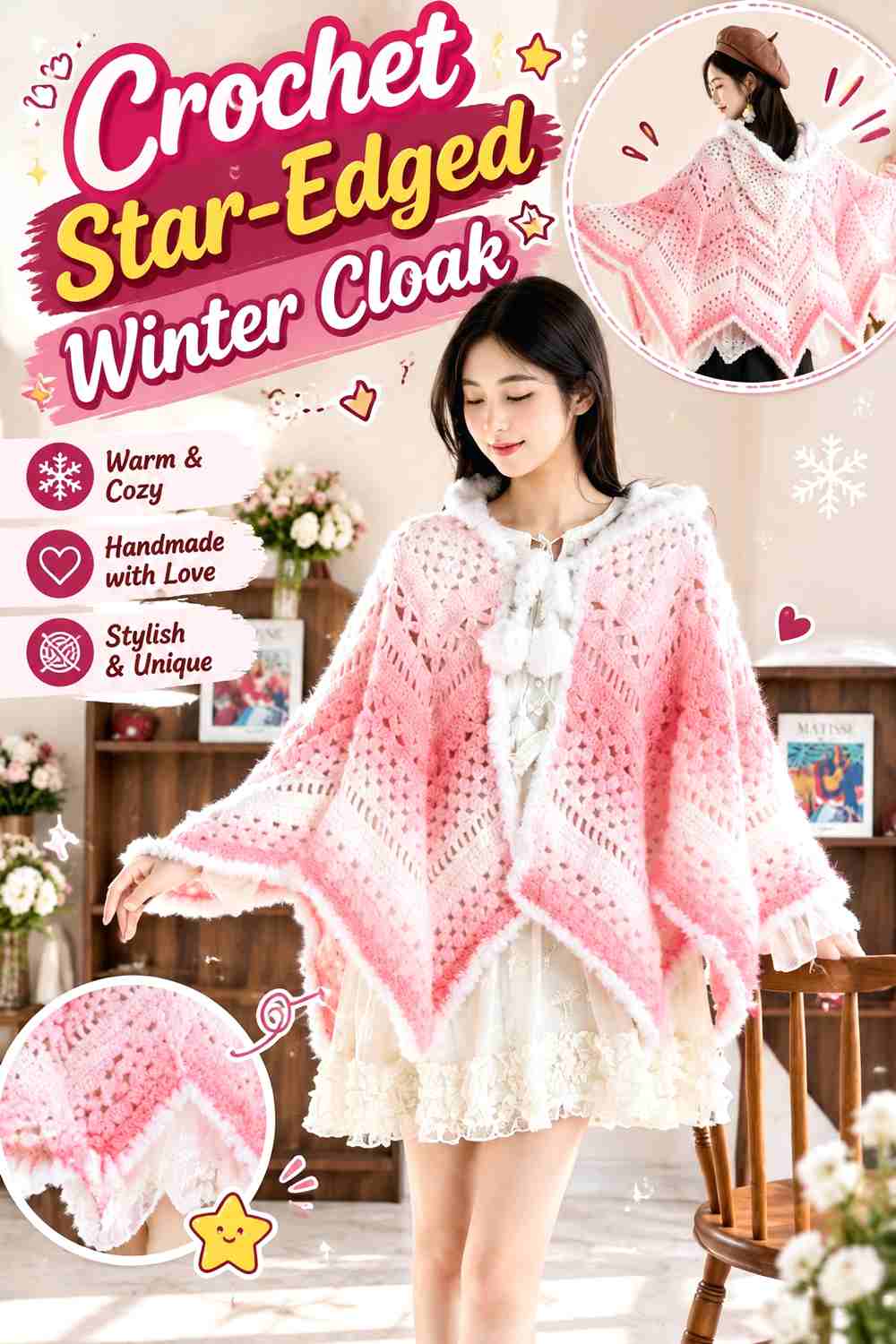
Susan’s Family’s cloak takes the fantasy direction further with a hooded cape structure and fluffy edging. The project is published in adult and child versions and separates the main cloak, hood and edging, and tie finishing into identifiable stages.
The finished look is more whimsical than rustic, making it a useful choice when “storybook” means moonlit, magical, or fairy-tale-inspired rather than traditional cottage style.
Fluffy Edging Creates a Strong Frame
A contrasting soft border visually defines the hood and outer edge of the garment.
If you adapt the palette, think of the trim as a frame rather than simply another yarn color. High contrast will emphasize the silhouette, while a closely related shade can make the edge softer and less graphic.
Because the source combines different yarn types, check the creator’s material information before substituting a single yarn throughout.
Choose the Size Version Before Buying Materials
The project is offered in separate adult and child versions rather than as one universal file. Susan’s Family also publishes different yarn guidance according to the selected version.
Confirm which version you intend to make before using any material list. This is particularly important for a cloak, where body length creates a much larger difference in yarn requirements than a small accessory would.
Creator Credit: Susan’s Family 蘇蘇姐家
7. Crochet Lightweight Pocket Hooded Poncho
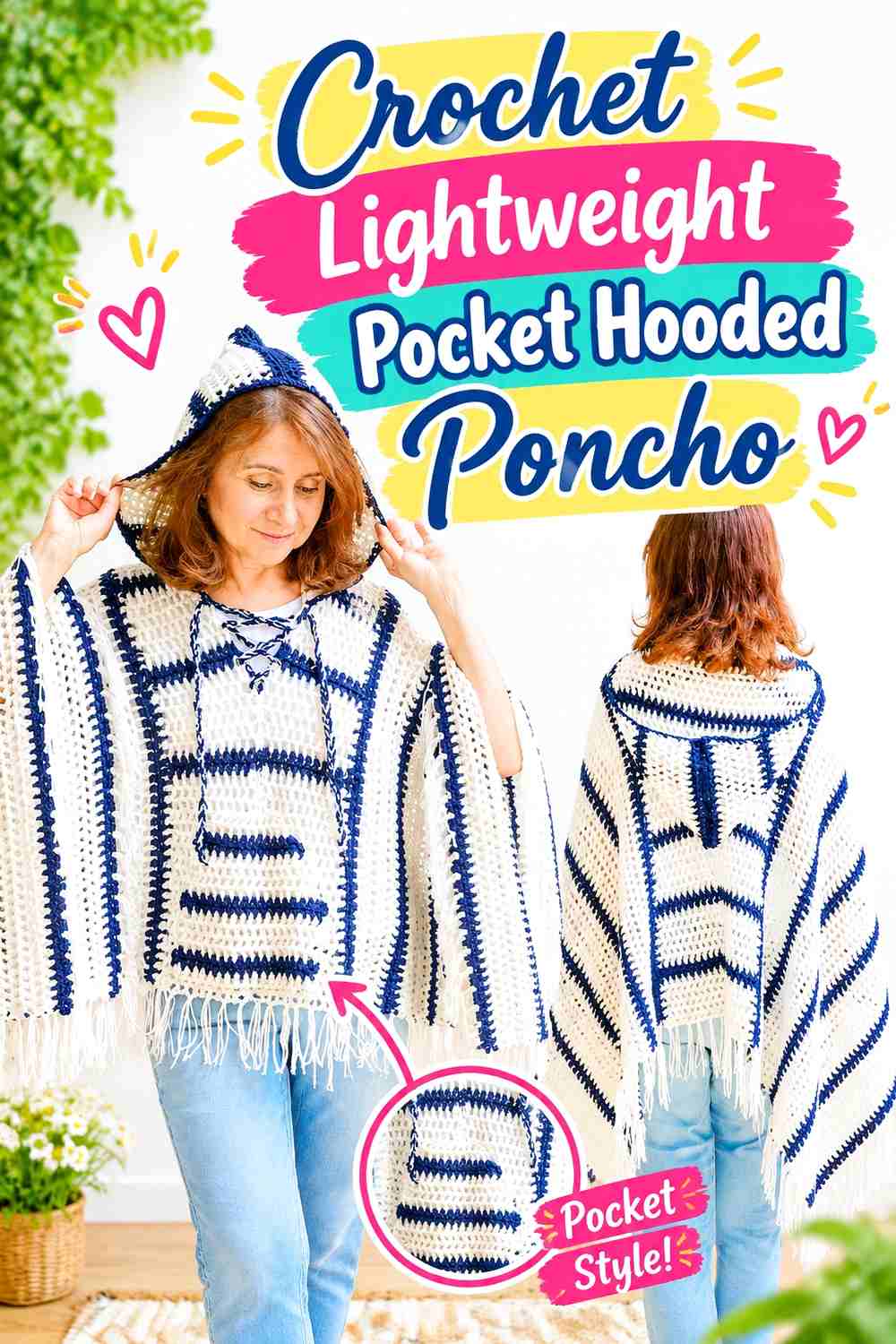
Not every winter-looking poncho has to be bulky. Crazy Cool Crochet’s design uses lightweight yarn and a flowy construction with open sides, while adding a hood, front pocket, ties, and fringe to create a complete casual poncho silhouette.
This gives you a storybook-inspired option with more movement and less visual mass than dense capelets or long cloaks.
Open Sides Change How the Poncho Layers
An open-sided garment does not behave like a closed sweater.
Think about what you expect to wear underneath it. A fitted long-sleeve layer will create a different overall silhouette from a thick sweatshirt or bulky sweater beneath the poncho.
If winter warmth is the priority, judge the complete layered outfit rather than assuming the presence of a hood makes an open-sided garment equivalent to a coat.
The Pocket Gives the Front More Structure
A large front pocket can visually interrupt an otherwise uninterrupted field of crochet.
That can be useful on a simple lightweight body because it provides a clear functional focal point. If you alter the length or stripe placement, check where the pocket lands on the finished wearer rather than positioning it solely by eye on the flat garment.
Creator Credit: Crazy Cool Crochet
8. Crochet Round-Yoke Hooded Cape
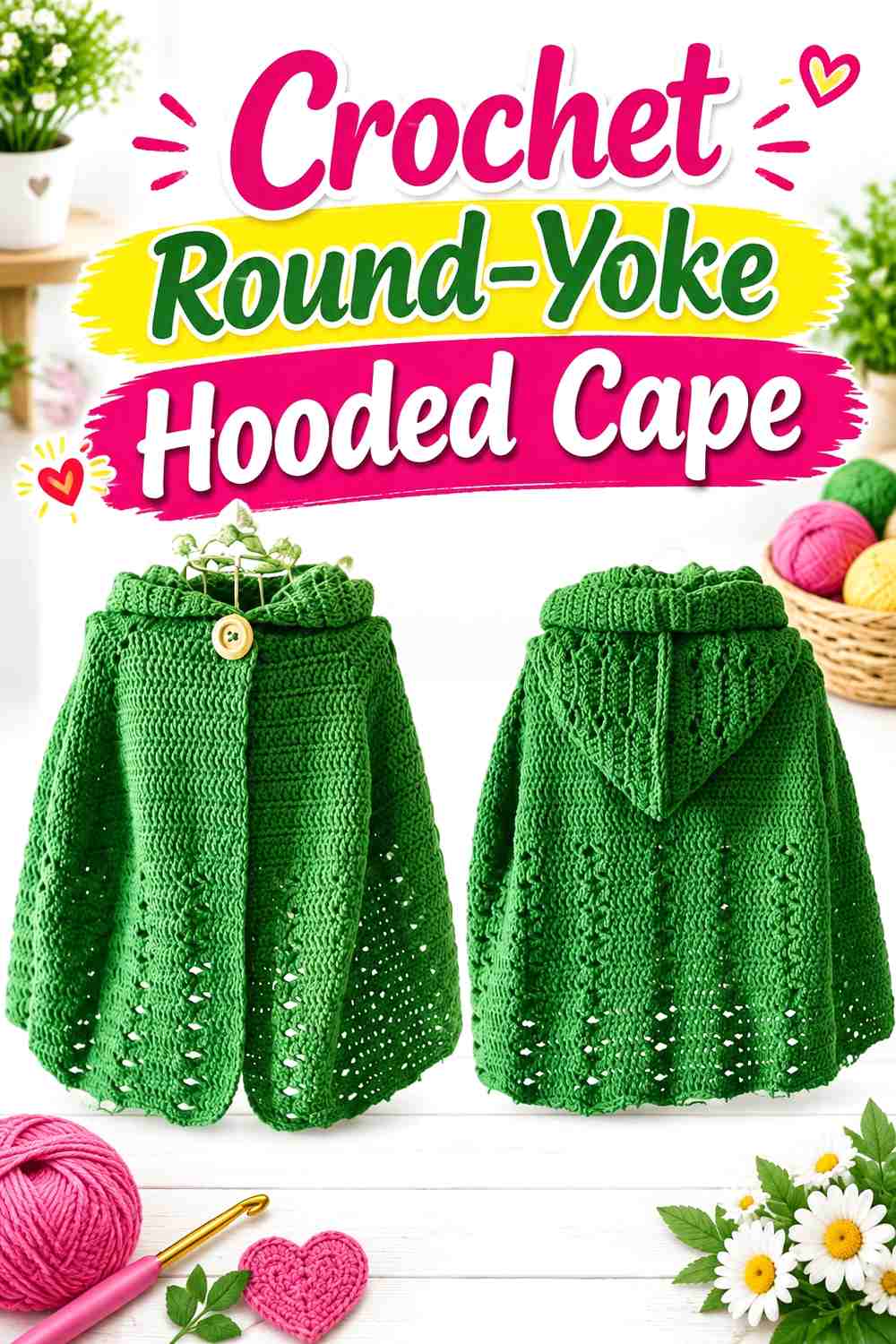
Alina Crochet & Knitting’s source project is a hooded winter cape built around a shaped yoke, producing a rounder shoulder line than a sharp V-point poncho. The finished garment is presented as a warm hooded cape rather than a rectangular wrap with a hood added afterward.
This shape works well when you want a cleaner, more fitted upper section and less of the exaggerated triangular silhouette associated with many ponchos.
A Shaped Yoke Makes Shoulder Fit More Noticeable
With a very loose poncho, exact shoulder placement can be less visually obvious. A structured yoke makes that area more important.
Before adjusting length lower down, make sure the upper cape sits where you want it around the shoulders and neck. Changes to yarn weight or gauge can affect that area more noticeably than they might in a simple rectangular construction.
Use Color to Emphasize Shape Rather Than Stripes
A round-yoke cape does not need multiple colors to create visual interest.
A single deep shade—forest green, charcoal, burgundy, brown, or muted blue—can make the shaping easier to see and give the garment a quieter storybook quality. If you do introduce contrasting color, consider concentrating it at an edge rather than breaking the yoke into many horizontal bands.
Creator Credit: Alina Crochet & Knitting
9. Crochet Little-Rider Hooded Cape
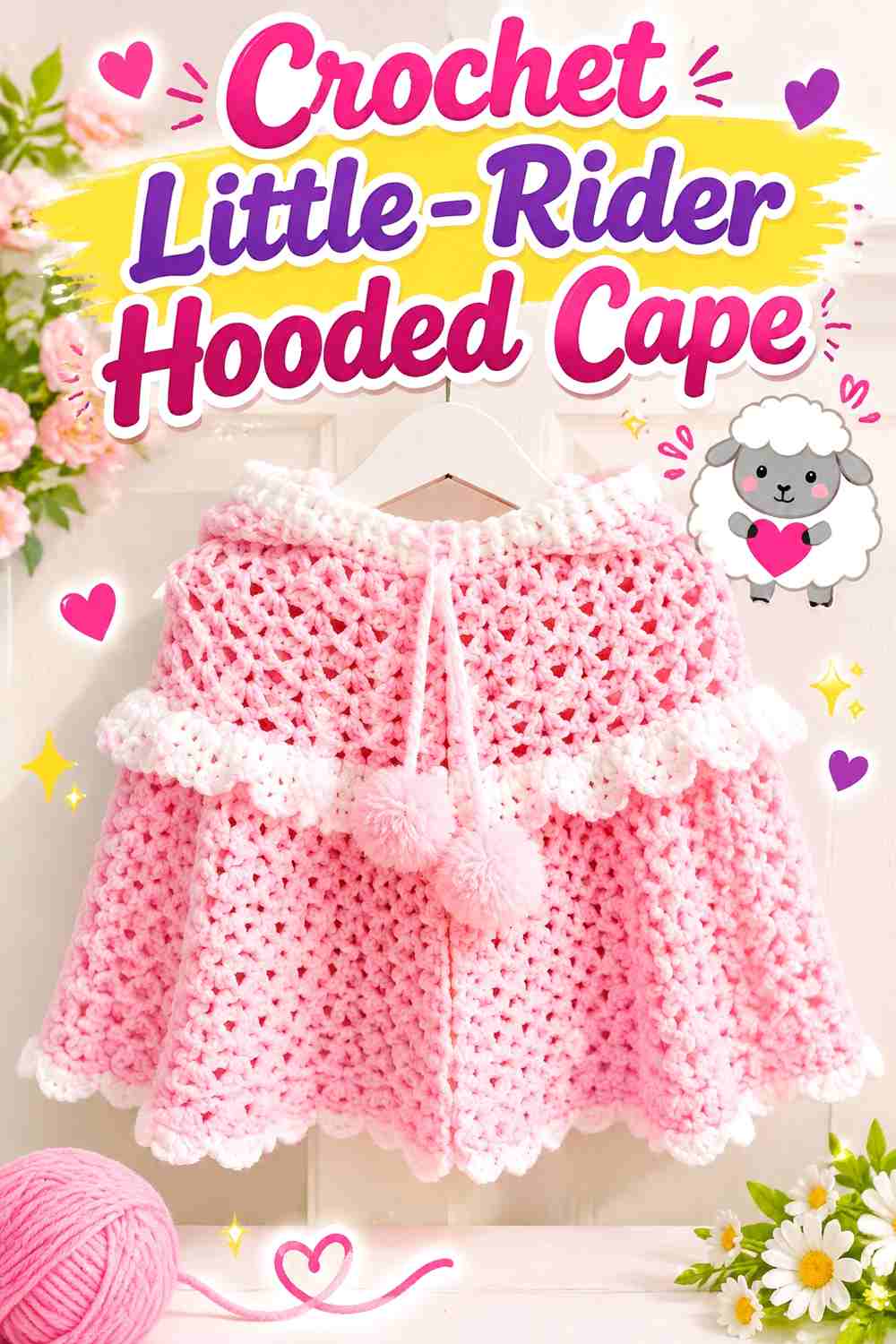
Crochet for Baby’s child-sized hooded cape offers a compact version of the classic fairy-tale silhouette. The source tutorial is specifically designed around younger wearers and includes guidance for adapting the project across several child sizes.
Worked in red, the general shape naturally suggests a traditional storybook cape, but red is not required. Deep plum, navy, evergreen, oatmeal, dusty pink, or brown can shift the same basic idea toward a quieter winter wardrobe.
Keep the Hood Proportional to the Child
A dramatically oversized hood can look charming in photographs but may not behave like the hood in the source tutorial.
Follow the creator’s size guidance first, particularly around the face and neckline. If you want a more exaggerated storybook look, evaluate any change with the hood both up and down before permanently finishing the garment.
Let the Color Tell the Story
A small cape does not provide as much surface area as an adult poncho, so one strong color can have a large effect.
Choose the mood before choosing embellishments. Red creates an immediate fairy-tale association, while heathered brown or green can feel more woodland-inspired. A pale neutral can make texture and edging the dominant details instead.
Creator Credit: Crochet for Baby
10. Crochet Self-Striping Double-Crochet Hooded Poncho
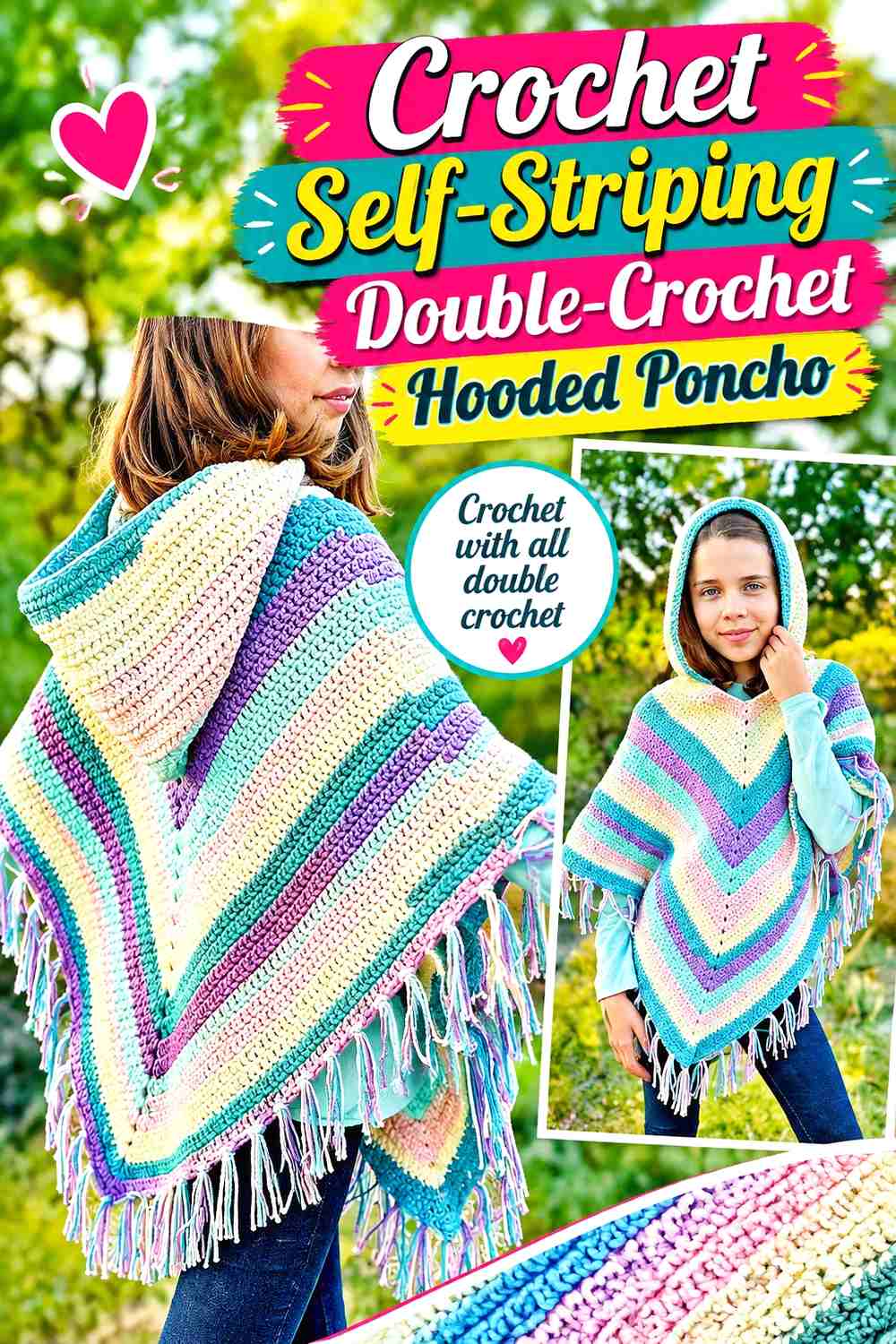
Hooked on Homemade Happiness offers a hooded poncho built primarily around double crochet, with both children’s and adult sizing supported in the current tutorial and related written patterns. The sample uses self-striping yarn, allowing color changes to become a major part of the finished appearance without switching yarn for every stripe.
This is a useful option when you want a colorful winter poncho but prefer the yarn to establish the changing palette.
Self-Striping Yarn Makes Placement Less Predictable
A color-changing cake does not guarantee that every stripe will land where you imagine it.
Consider whether you enjoy an organic color progression or want strict control over the hood, body, and fringe colors. If precise symmetry matters, a manually planned palette may suit you better than allowing the skein to dictate every transition.
Fringe Extends the Visual Length
The source includes fringe along the lower edge, which means the garment will appear longer than the crocheted body alone.
When deciding whether to add extra body rounds, picture the garment with its finishing already attached. Otherwise, you may lengthen the crochet and then discover that the fringe pushes the final silhouette farther down than intended.
Creator Credit: Hooked on Homemade Happiness
11. Crochet Pixie-Point Shell Poncho
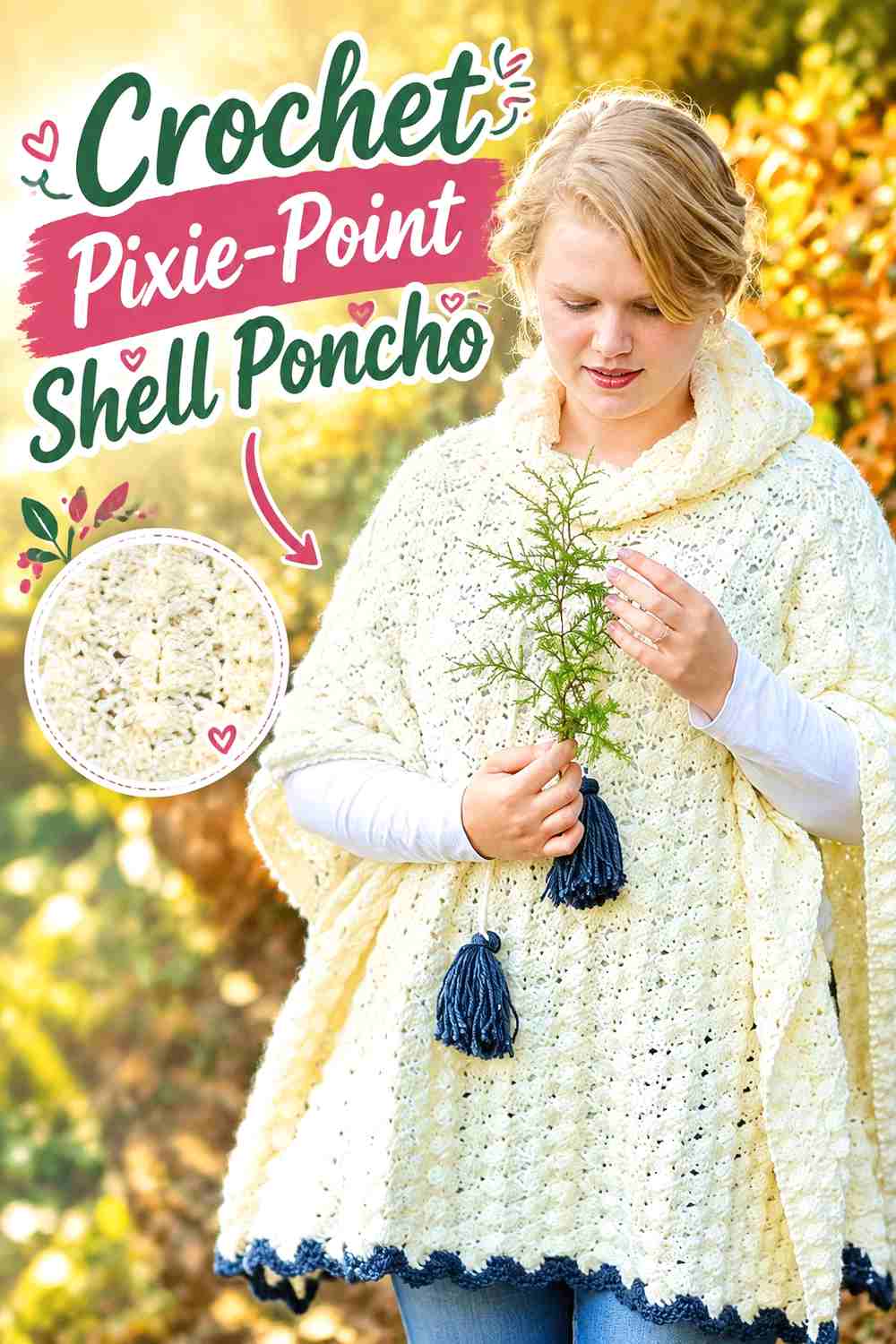
Rebekah Haas’s poncho has an especially strong storybook character because its design combines shell and Catherine’s Wheel textures with a pointed hood, ribbing, drawstring, and tassels. The designer specifically describes the hood as having a pixie point.
Unlike simpler in-the-round ponchos, this project uses separately constructed sections that are assembled, making it a useful choice when you want a more designed garment with clearly defined features.
The Pointed Hood Is the Main Storybook Detail
If the pixie-like hood is what attracts you to this project, preserve its proportions before making unrelated adaptations to the body.
A pointed hood needs enough depth to show its shape without becoming so oversized that the point collapses into excess fabric. Follow the source construction before deciding whether you want to modify it.
A muted solid color can also make that hood shape more obvious than a highly variegated yarn.
Detailed Texture Rewards a Controlled Palette
The body combines distinct textured stitch sections inspired by architectural ornament.
That means color does not need to do all the decorative work. Before introducing many contrasting shades, consider whether the shell and wheel textures already create enough visual movement.
This is a particularly good candidate for a storybook neutral, dark forest color, antique cream, or muted jewel tone where stitch definition remains visible.
Creator Credit: Rebekah Haas Crochet
12. Crochet All-Ages Draped Hooded Poncho
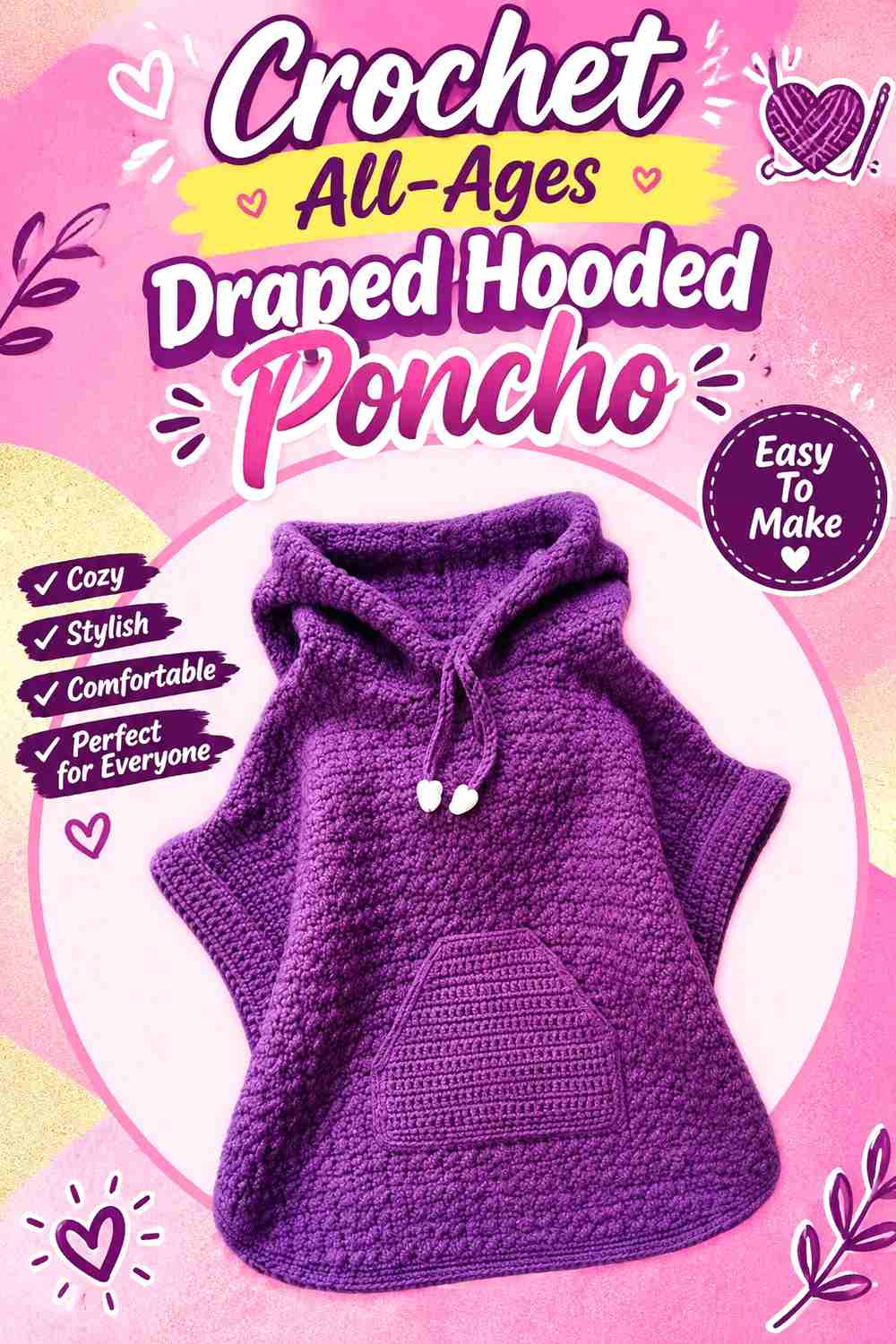
Calor de Hogar Tejidos demonstrates a hooded crochet poncho presented as an adaptable garment for different ages. The finished form gives another route to a classic draped poncho rather than a fitted capelet or extended fantasy cloak.
This makes it useful when you like the storybook hooded silhouette but want the body to remain relatively straightforward and versatile.
Adapt Proportions, Not Just Overall Length
A poncho intended for different ages cannot be resized successfully by changing only the bottom edge.
Check the tutorial’s approach to the neckline, upper body, and hood as well. The hood in particular needs to remain in proportion with the wearer rather than simply becoming longer or shorter alongside the body.
If you are adapting the project, take measurements from the intended wearer and compare them with the tutorial’s guidance before committing to the full garment.
A Simple Body Leaves More Room for Personal Styling
When the main poncho fabric is comparatively restrained, accessories can change the finished mood considerably.
A wooden or vintage-style closure, restrained tassels, a contrasting border, or a carefully chosen winter color can push the same silhouette toward woodland, folk, romantic, or fairy-tale styling without changing the underlying construction.
Keep those adaptations separate from the actual pattern instructions and follow the creator’s tutorial for the garment structure.
Creator Credit: Calor de Hogar Tejidos
How These Crochet Hooded Poncho Styles Compare
For the strongest forest or cottage-storybook look, the moss-stitch capelet, granny-stripe poncho, and pixie-point shell poncho stand out. Their texture and shaping provide much of the character before color is considered.
Choose the V-point poncho or self-striping double-crochet version if you want a recognizable everyday poncho silhouette with a hood rather than something that reads primarily as a costume-inspired cloak.
For more dramatic styling, the long woodland cloak and star-edged winter cloak create substantially more vertical coverage. They also require more attention to total garment weight and the way the hood balances against the larger body.
The lightweight pocket poncho offers the loosest, most flowing option in this group, while the round-yoke cape keeps the shoulder area more shaped and controlled.
For children, use one of the child-specific sources rather than simply reducing an adult pattern. The raised-texture kids’ poncho and Little-Rider cape provide two distinctly different directions: one emphasizes stitch texture, while the other emphasizes the compact hooded-cape silhouette.
Conclusion
The most convincing storybook crochet poncho is not necessarily the longest or most decorated one. The silhouette should do most of the work.
Choose the moss-stitch capelet for a compact forest layer, granny stripes for folk-inspired color, or the pixie-point design when the hood itself should be the focal point. A V-point or self-striping poncho is easier to integrate into an everyday wardrobe, while the longer cloak options create the strongest fantasy silhouette.
If drape matters more than thickness, start with the lightweight pocket poncho. If you want substantial texture, look toward the V-point, moss-stitch, or shell-based constructions.
Before changing yarn, length, or hood depth, make sure you understand the original garment’s fit and construction. Use each creator’s tutorial for the exact crochet process, then make styling adaptations without losing the proportions that make the design work.
Frequently Asked Questions
What is the difference between a crochet hooded poncho and a hooded cape?
The terms sometimes overlap, but a poncho generally has a loose body that falls over the torso with limited or no conventional sleeves. A cape often follows the shoulders more closely and may have a more defined front opening. A capelet is usually shorter. Always judge the actual finished construction rather than relying only on the project name.
Which crochet hood shape creates the strongest storybook look?
A deep or pointed hood creates a more dramatic silhouette than a compact rounded hood. The pixie-point and longer cloak designs in this collection emphasize the hood particularly strongly. However, hood size should still work with the neckline and wearer rather than being enlarged only for appearance.
Can I make a hooded poncho longer without changing anything else?
Sometimes the source design allows length adjustments, but extra crochet also adds weight. This matters especially with dense stitches and heavier yarns. Check how the garment is constructed and how the added fabric will hang from the neckline and shoulders before extending it substantially.
What colors work for a storybook winter crochet poncho?
Forest green, burgundy, rust, brown, charcoal, oatmeal, cream, plum, muted blue, and mustard can all suit the theme. Color alone does not create the look, though. Hood shape, garment length, fringe, texture, closures, and drape usually have a larger effect on the silhouette.
Should a crochet hooded poncho fit tightly around the neck?
It should follow the fit intended by the pattern rather than being made arbitrarily tight. The neckline has to support the hood while remaining comfortable for the wearer. Check the creator’s measurements or sizing guidance before changing the opening, especially when using a heavier yarn.
Can I substitute bulky yarn to make any hooded poncho warmer?
Not without recalculating the effect on gauge and fabric. A thicker yarn can make the entire garment larger, stiffer, and heavier, including the hood. If warmth is your goal, choose a source designed for the yarn weight you want or make a substantial gauge and drape sample before adapting another design.
How can I make a hooded poncho look storybook-inspired without making it costume-like?
Start with one defining feature rather than combining every fantasy detail. A pointed hood, mossy texture, muted granny stripes, a vintage-style closure, or restrained fringe can be enough. Pairing one strong feature with a quieter color palette usually produces a wearable storybook influence rather than a full costume effect.