A crochet matcha whisk storage cradle can bring handmade character to a small tea station while giving the tools a more organized place on the countertop. These 18 inspiration ideas explore everything from simple terracotta rings and delicate ivory lace saucers to structured square cradles, floral nests, divided organizers, and double-whisk displays. Each design combines distinctive crochet textures with colors that suit different kitchens and matcha corners.
The important detail is how the crochet works alongside the whisk. A traditional bamboo matcha whisk has delicate tines that need careful drying and storage, so these concepts use separate ceramic whisk holders rather than relying on soft yarn to shape or support the bamboo. Compare the designs by their size, structure, ventilation, cleaning needs, and the amount of counter space they occupy.
These are AI-generated crochet design visualizations for inspiration, not photographs of tested handmade pieces or step-by-step patterns.
Quick Design Selection Guide
- For a compact daily setup: Crochet Terracotta Low-Collar Whisk Cradle and Crochet Seafoam Lattice Stand Cuff keep the decorative crochet close to the ceramic holder.
- For a softer decorative look: Crochet Blush Petal Whisk Nest and Crochet Butter-Yellow Daisy Ring Cradle introduce floral details without covering the whisk.
- For organizing more than one tea tool: Crochet Oatmeal Split-Slot Tea Cradle offers a separate compartment for a dry matcha scoop.
- For structured countertop storage: Crochet Powder-Blue Square Frame Cradle and Crochet Olive Wooden-Block Cradle use separate firm supporting surfaces.
- For delicate vintage styling: Crochet Ivory Fan-Lace Whisk Saucer pairs an openwork border with a solid central seating area.
- For two matcha whisks: Crochet Burgundy Twin-Whisk Cradle creates two distinct spaces for separate ceramic stands.
1. Crochet Terracotta Low-Collar Whisk Cradle
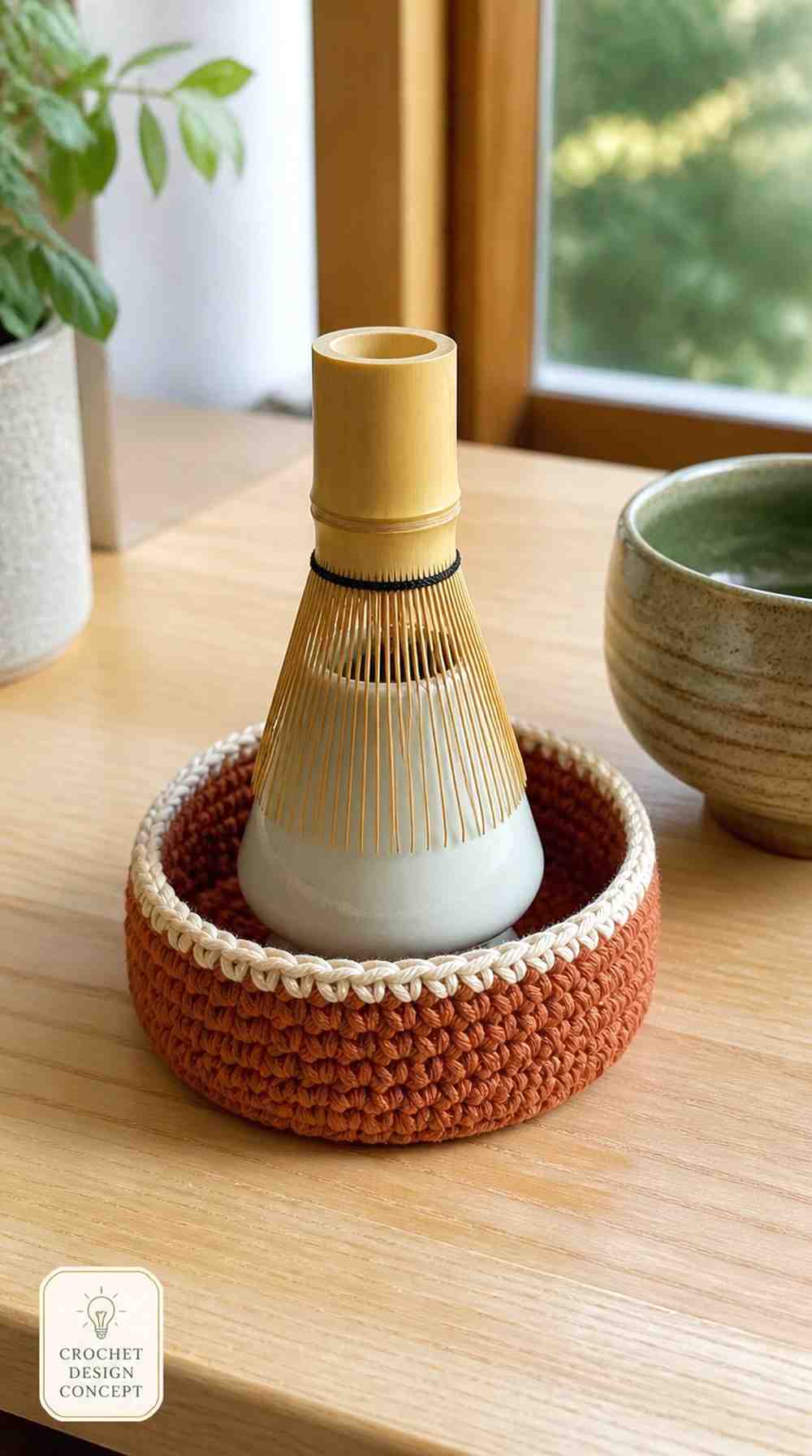
Warm terracotta crochet forms a compact circular cradle with closely worked rows, a low upright collar, and narrow cream edging. The collar surrounds the lower portion of an ivory ceramic whisk stand, leaving the bamboo chasen fully visible above it. The contrasting cream trim gives the simple shape a neat finish.
Its low profile makes it an appealing choice for smaller tea stations. The central opening matters more than the outer decoration: it needs to accommodate the actual ceramic base without squeezing or lifting the stand unevenly.
- Collar Fit: Compare the finished inner opening against the widest part of the ceramic base. A close decorative fit should not make removal difficult.
- Stable Seating: Keep the support surface flat so the ceramic stand remains level rather than resting on raised crochet seams or edging.
- Color Pairing: Terracotta works particularly well with warm wood and ivory ceramics. A darker cream edging could be an optional variation for frequent handling.
2. Crochet Indigo Oval Shell Cradle
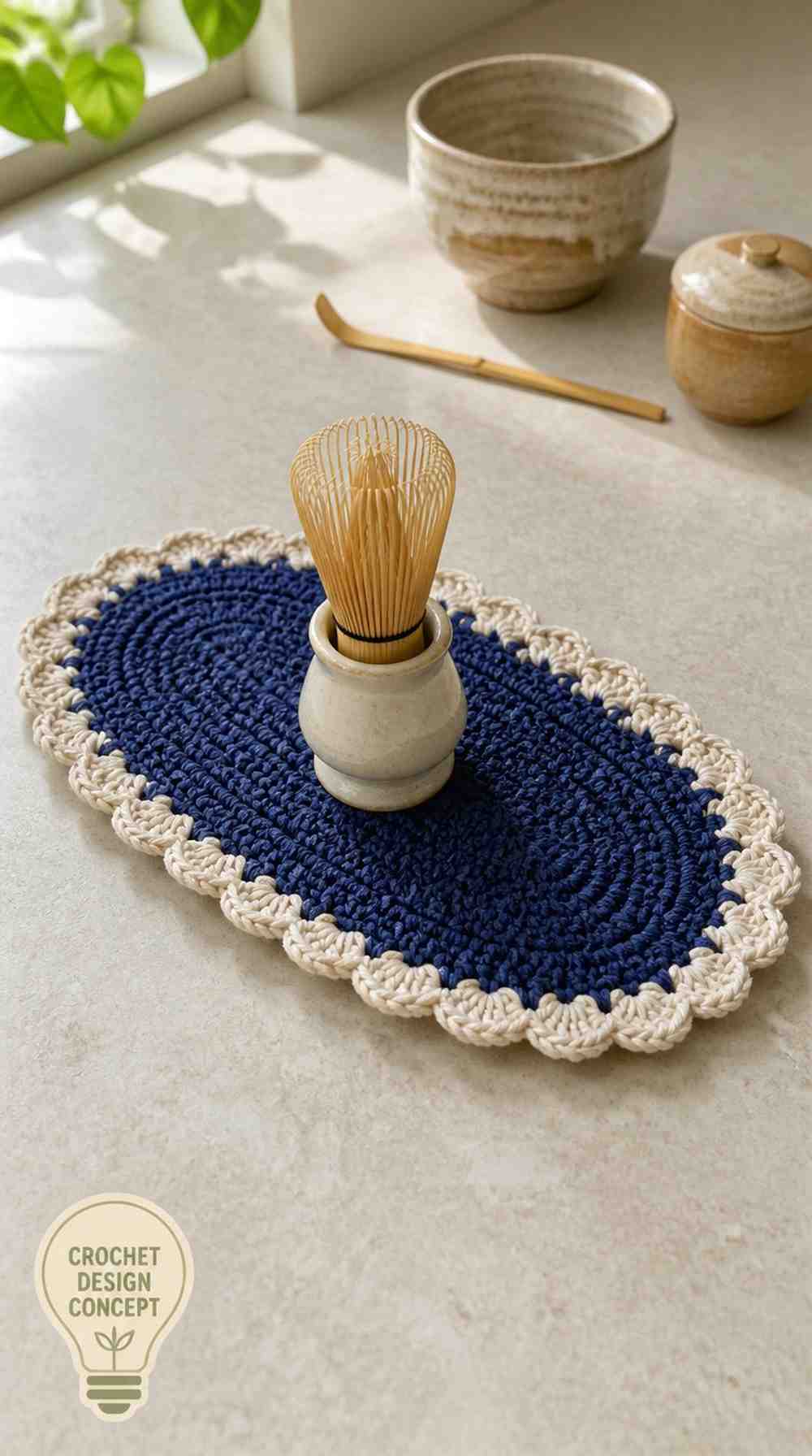
Deep indigo crochet gives this shallow oval cradle a strong visual outline, while an ecru shell-stitch border softens its edges. A densely worked central surface provides space for the cream ceramic whisk stand, with the surrounding shell details remaining visible.
The elongated shape makes this design different from a basic round coaster. It creates a wider decorative frame without needing tall sides, although its extra length is worth considering on a narrow counter or shelf.
- Oval Proportions: Leave enough room around the ceramic stand to show the shell border without creating an unnecessarily large footprint.
- Shell-Stitch Finish: Keep the decorative shells around the perimeter, where they will not interrupt the flat center supporting the ceramic holder.
- Cleaning Consideration: Open decorative edging can catch powder or dust. Choose an accessible border that can be cleaned without disturbing delicate loops.
3. Crochet Blush Petal Whisk Nest
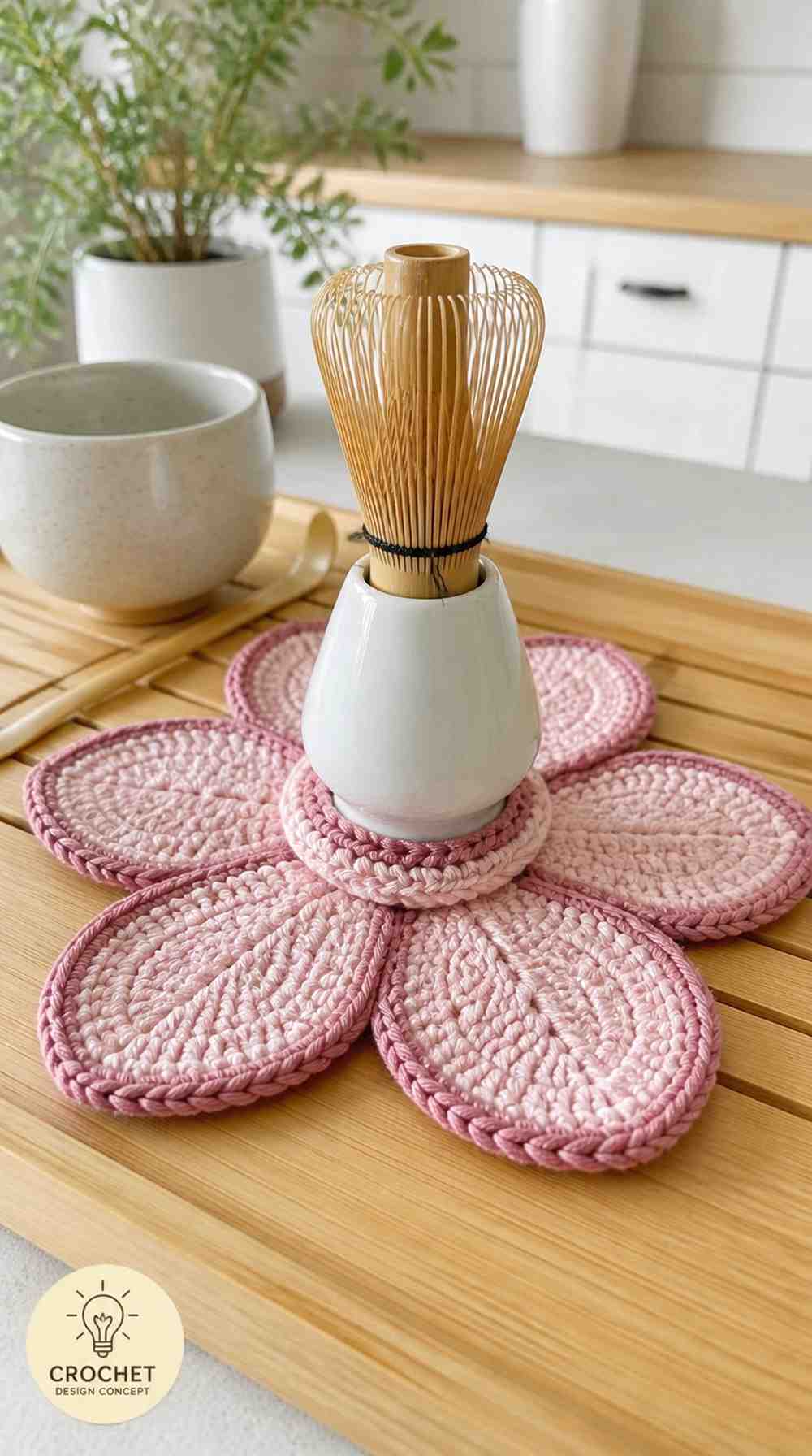
Six broad blush-pink crochet petals surround a compact circular seat, with dusty-rose borders defining each individual petal. The arrangement resembles a softly opened flower, while the white ceramic stand remains clearly visible at the center.
This concept is designed to sit flat rather than form a deep basket. The petals provide decorative coverage around the ceramic base, but they should not curl upward into the bamboo whisk’s working area.
- Petal Layout: Arrange the six petals evenly so the design lies balanced around its central seat rather than pulling to one side.
- Stitch Connections: Each petal needs a credible attachment to the center. Separate decorative pieces should not be relied upon to support the ceramic.
- Display Choice: This broad floral shape suits an uncluttered tea tray where its full outline can be seen from above.
4. Crochet Mustard Hexagon Whisk Base
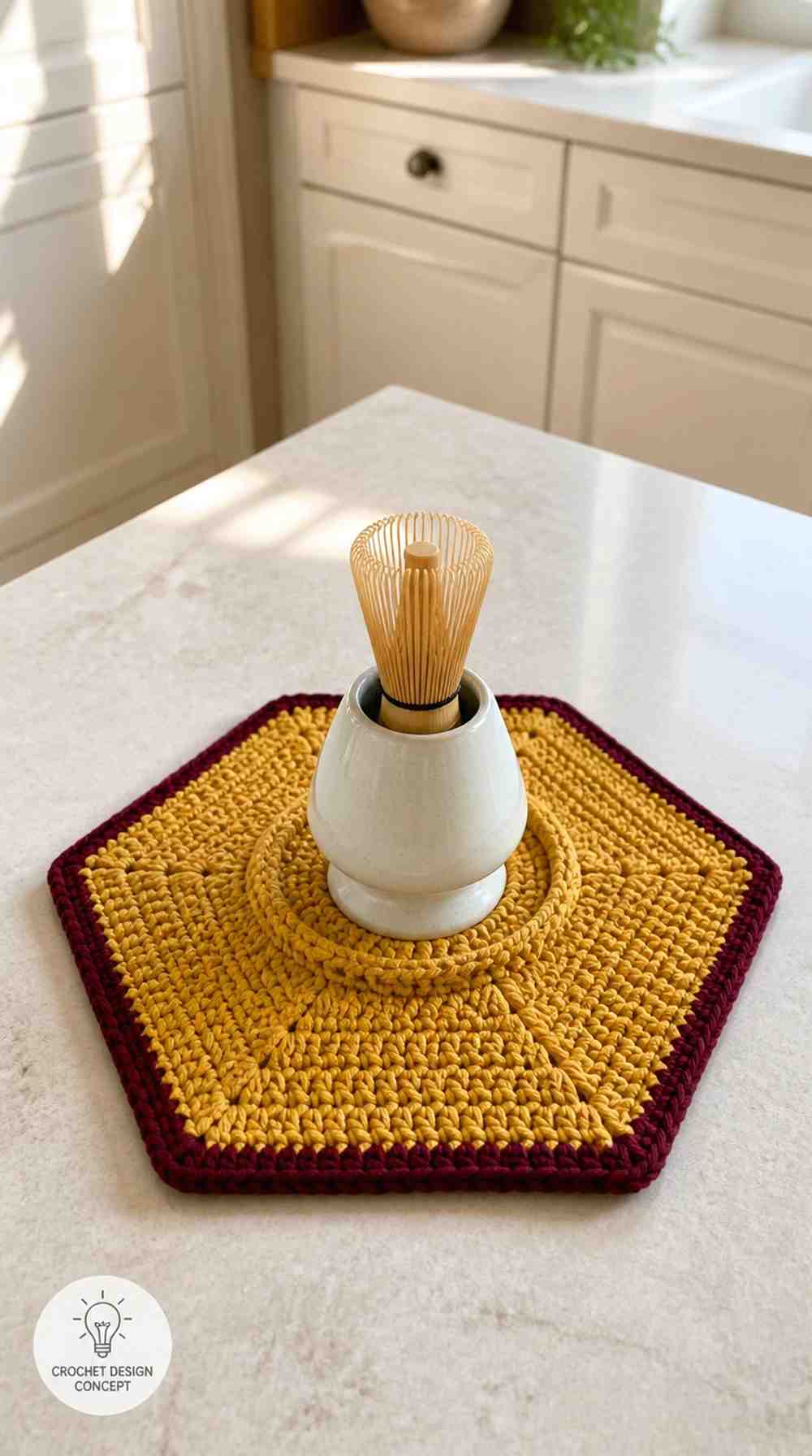
Mustard-yellow crochet gives this whisk cradle a geometric hexagonal shape, finished with a slim burgundy border. Neatly joined rounds form the six sides, while a slightly raised circular ring in the middle identifies the space for the ceramic stand.
The combination of angular edges and a round central seat creates a clean contrast. It would suit someone who prefers a structured crochet design over lace or flowers, provided the center remains level.
- Corner Definition: The six corners should be formed consistently so the finished base retains its intended outline without excessive curling.
- Center Ring: Keep the raised ring low enough that the ceramic holder sits securely on its support surface rather than balancing on the yarn.
- Palette Options: Mustard and burgundy create a warm combination. For a lighter kitchen, an optional cream border could soften the contrast.
5. Crochet Seafoam Lattice Stand Cuff
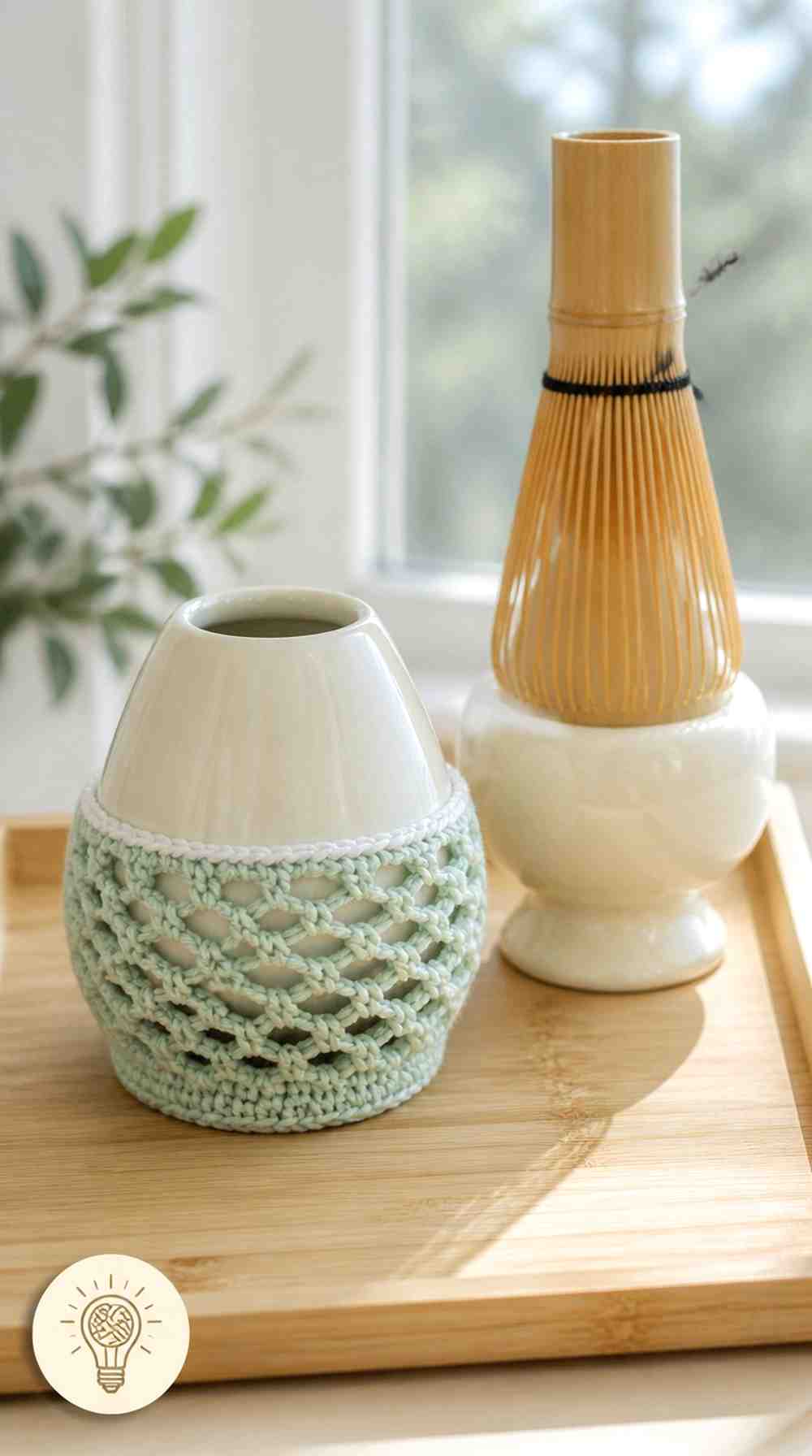
An airy seafoam-green crochet cuff wraps the lower body of a cream ceramic whisk stand, creating a lighter alternative to a fully enclosed cradle. Diamond-shaped stitch openings sit between a denser lower band and a slim white upper border.
Unlike a saucer or basket, this concept follows the ceramic stand’s outside shape. The cuff should remain below the area where the bamboo tines rest, leaving the ceramic whisk-supporting surface unobstructed.
- Ventilation: The open lattice reduces fabric coverage around the ceramic, but it does not guarantee adequate drying of the bamboo whisk.
- Cuff Height: Measure the lower ceramic body before planning the crochet. A cuff that climbs too high could interfere with correct whisk placement.
- Removable Design: Consider a cuff that can slide off without stretching excessively, making it easier to wash and dry separately.
6. Crochet Oatmeal Split-Slot Tea Cradle
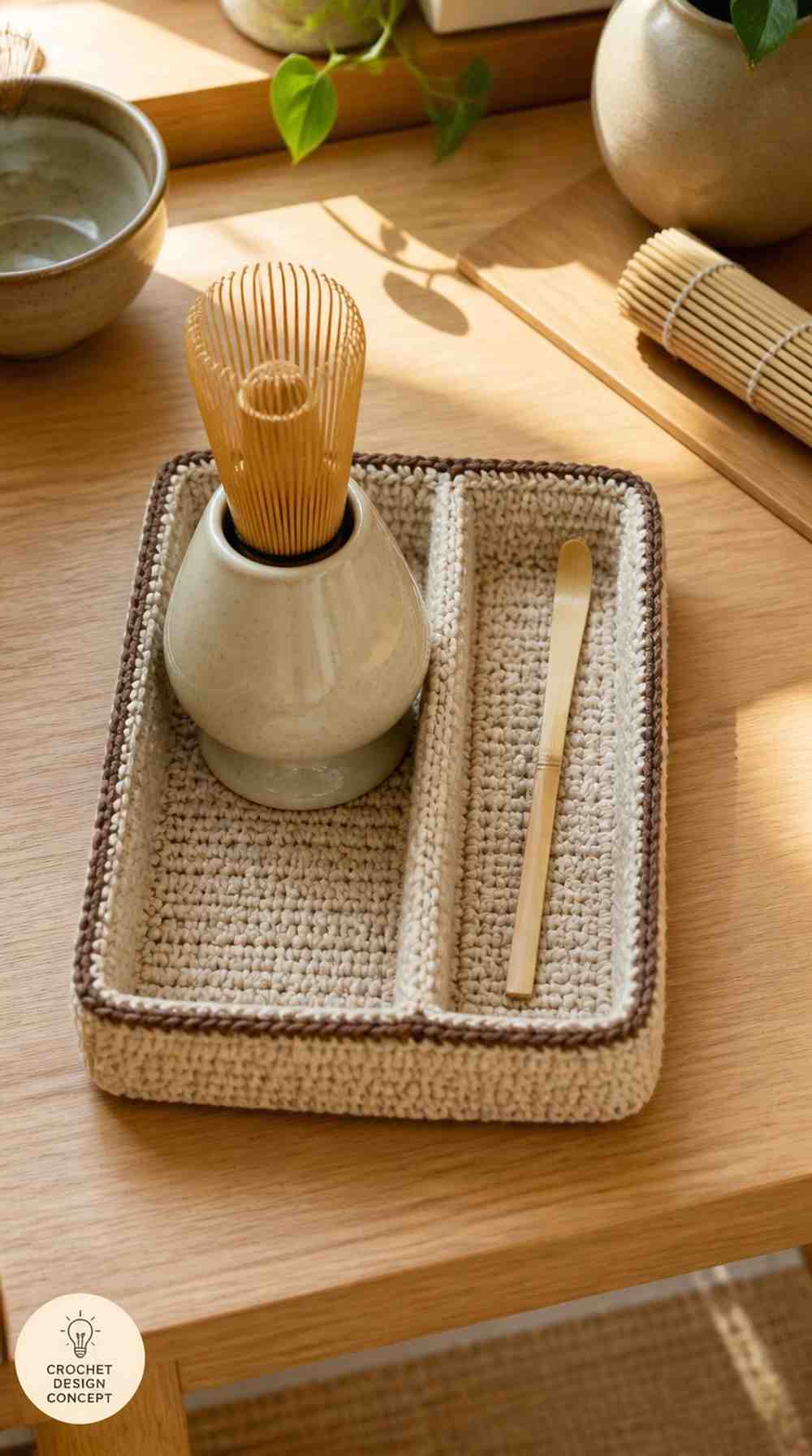
Oatmeal crochet creates a rectangular tea organizer with two distinct storage areas. One circular section accommodates a glazed ceramic whisk stand, while a narrower compartment holds a dry bamboo matcha scoop. Beige ribbing defines the divider, and cocoa edging finishes the outside.
This design brings two frequently used matcha tools into one compact arrangement. The separate compartments also help distinguish the whisk’s display position from the scoop’s storage space.
- Compartment Sizing: Plan the larger section around the ceramic stand first, then allow a separate, suitably shaped resting space for the bamboo scoop.
- Divider Structure: The central ribbed divider should remain low and stable, without pushing against the whisk or lifting the organizer.
- Moisture Separation: Put only a dry scoop in its compartment. Keep the crochet clean and dry instead of using it to absorb water from freshly rinsed utensils.
- Related Inspiration: For other approaches to organizing kitchen tools, explore 17 Crochet Dish Rack Side Organizer Inspiration Ideas.
7. Crochet Plum Ribbed Bowl Cradle
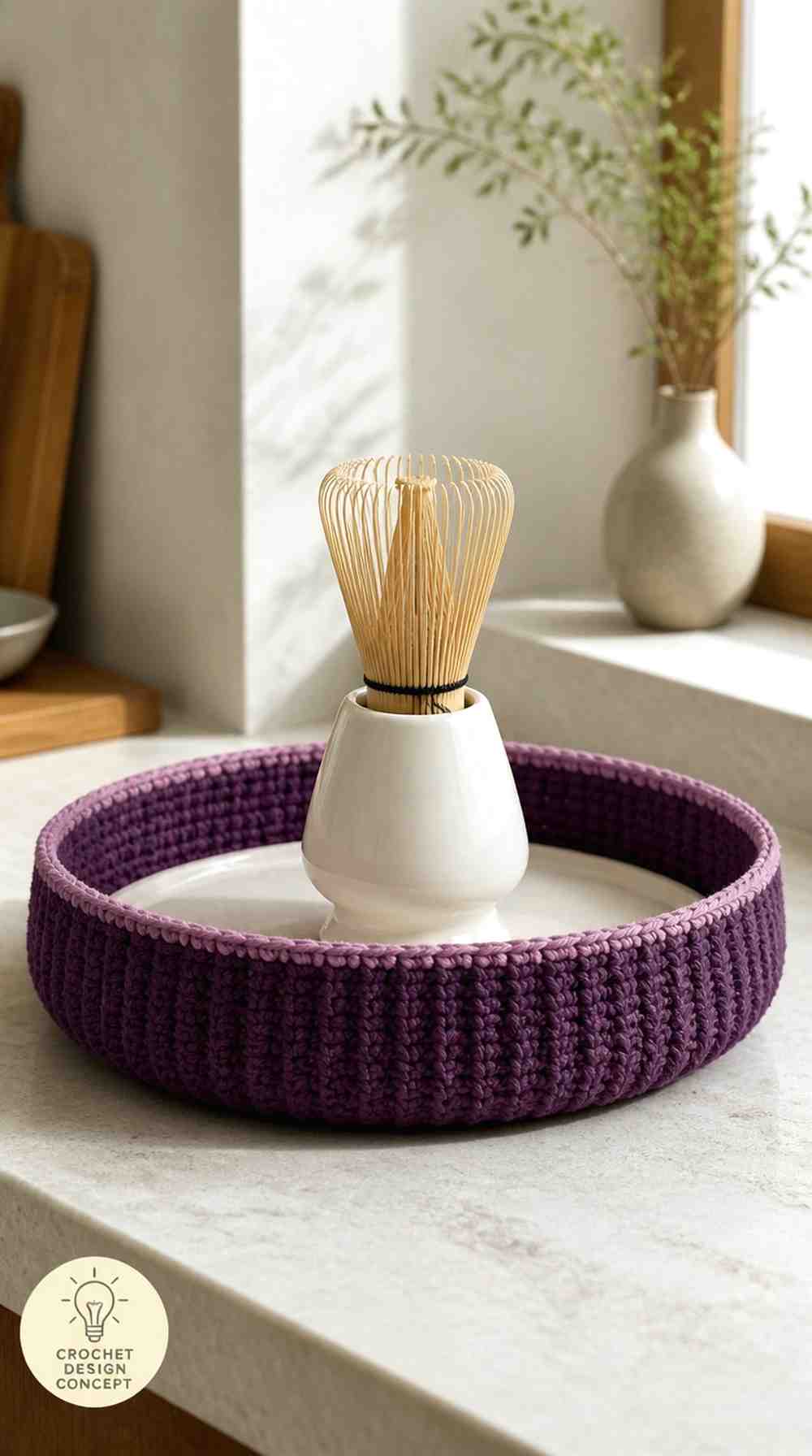
Rich plum crochet forms a shallow rounded bowl with vertical ribbing and a narrow mauve upper edge. Inside, a separate smooth rigid dish provides a level surface for the ivory ceramic whisk stand. The broad open top keeps the bamboo whisk visible.
The ribbed walls add depth without turning the cradle into a tall container. This would be a strong decorative choice for a display shelf, provided the bowl remains shallow enough to allow easy access.
- Interior Support: A removable rigid inner dish is worth considering because soft crochet alone may not provide a dependable level base.
- Ribbing Direction: Keep the vertical ribbing evenly spaced so the outer wall holds a consistent shape rather than developing uneven bulges.
- Cleaning Access: Both the insert and crochet shell should be removable independently, especially if the display is near an active tea-preparation area.
8. Crochet Butter-Yellow Daisy Ring Cradle
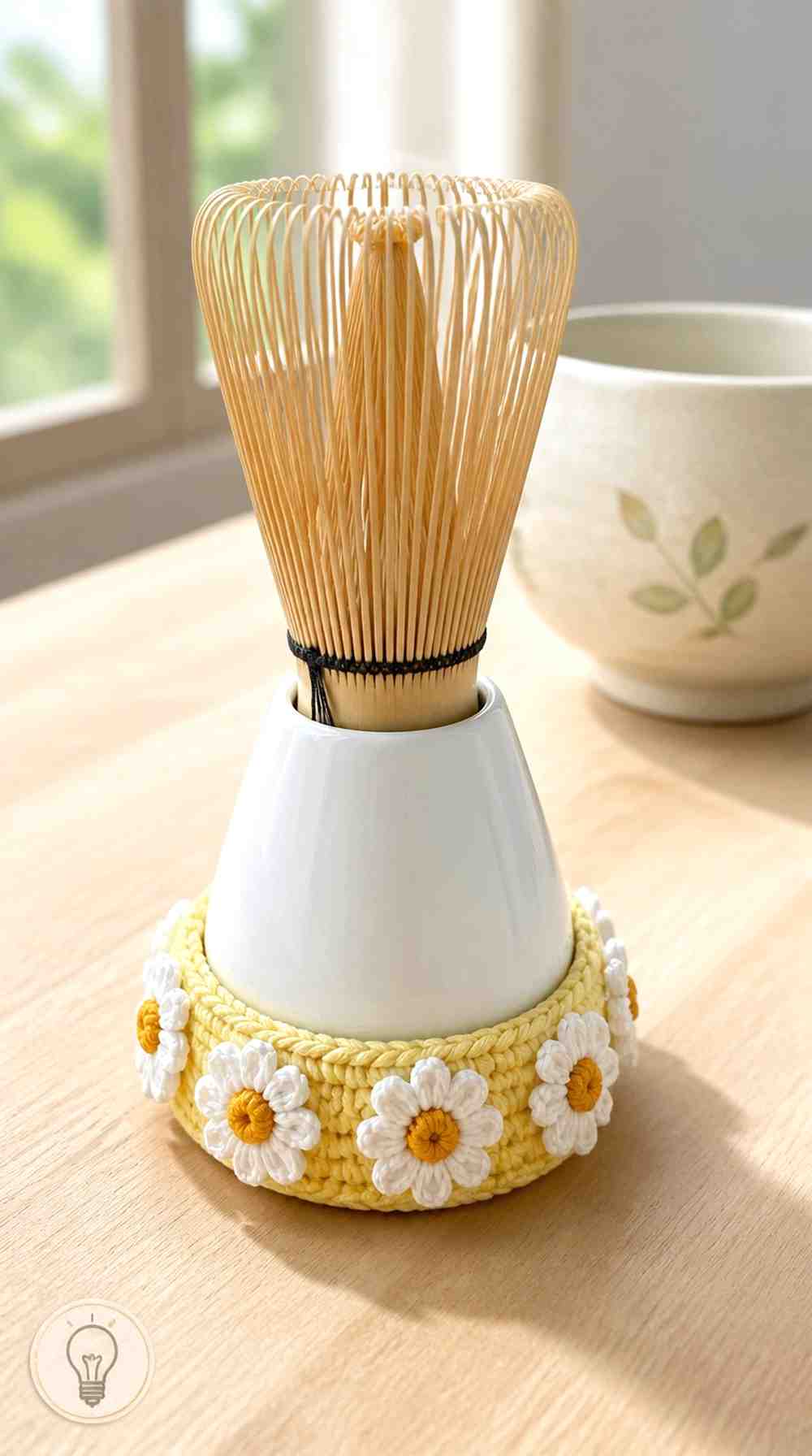
Butter-yellow crochet creates a cheerful low ring, decorated with six small white daisies and golden centers. The flowers sit around the outside, below a smooth white ceramic whisk stand holding the bamboo chasen.
The floral motifs are deliberately flat and restrained, allowing the basic circular cradle to remain functional as a decorative surround. Yellow and white make this concept particularly suitable for light-colored breakfast counters and cottage-inspired kitchens.
- Flower Placement: Keep the daisies on the outer side of the ring so they cannot catch the whisk tines during lifting.
- Attachment Quality: Secure each motif with tidy yarn joins and avoid loose decorative ends near the ceramic holder.
- Everyday Styling: The bright palette can become a small focal point without requiring a matching floral set across the entire kitchen.
9. Crochet Rust Crescent Counter Cradle
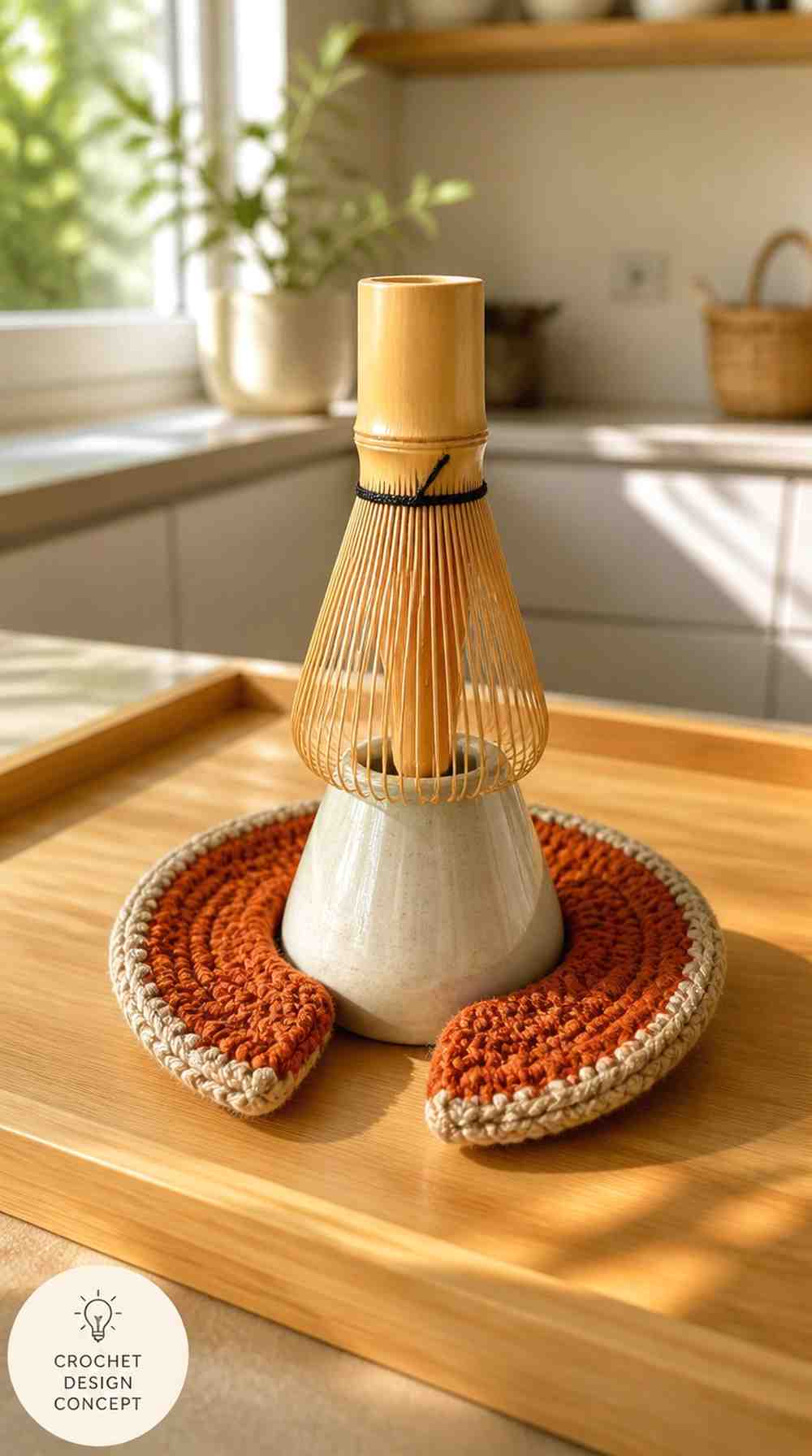
Instead of surrounding the ceramic stand completely, this rust-orange crochet cradle follows a curved crescent shape. The raised outer edging and sand-colored border frame three sides of the holder, leaving its front open.
That open-front arrangement gives the idea a distinctive purpose: the ceramic stand can be approached without reaching over a crochet rim. The design remains decorative, however, and should not be treated as a secure retaining mechanism.
- Open-Side Access: Orient the crescent so the accessible front faces the user rather than a wall or backsplash.
- Curved Shaping: The inner curve should follow the approximate ceramic footprint without needing a tight friction fit.
- Surface Stability: Use a reliable flat tray or counter beneath both pieces. The crescent itself should not be expected to prevent sliding or tipping.
10. Crochet Powder-Blue Square Frame Cradle
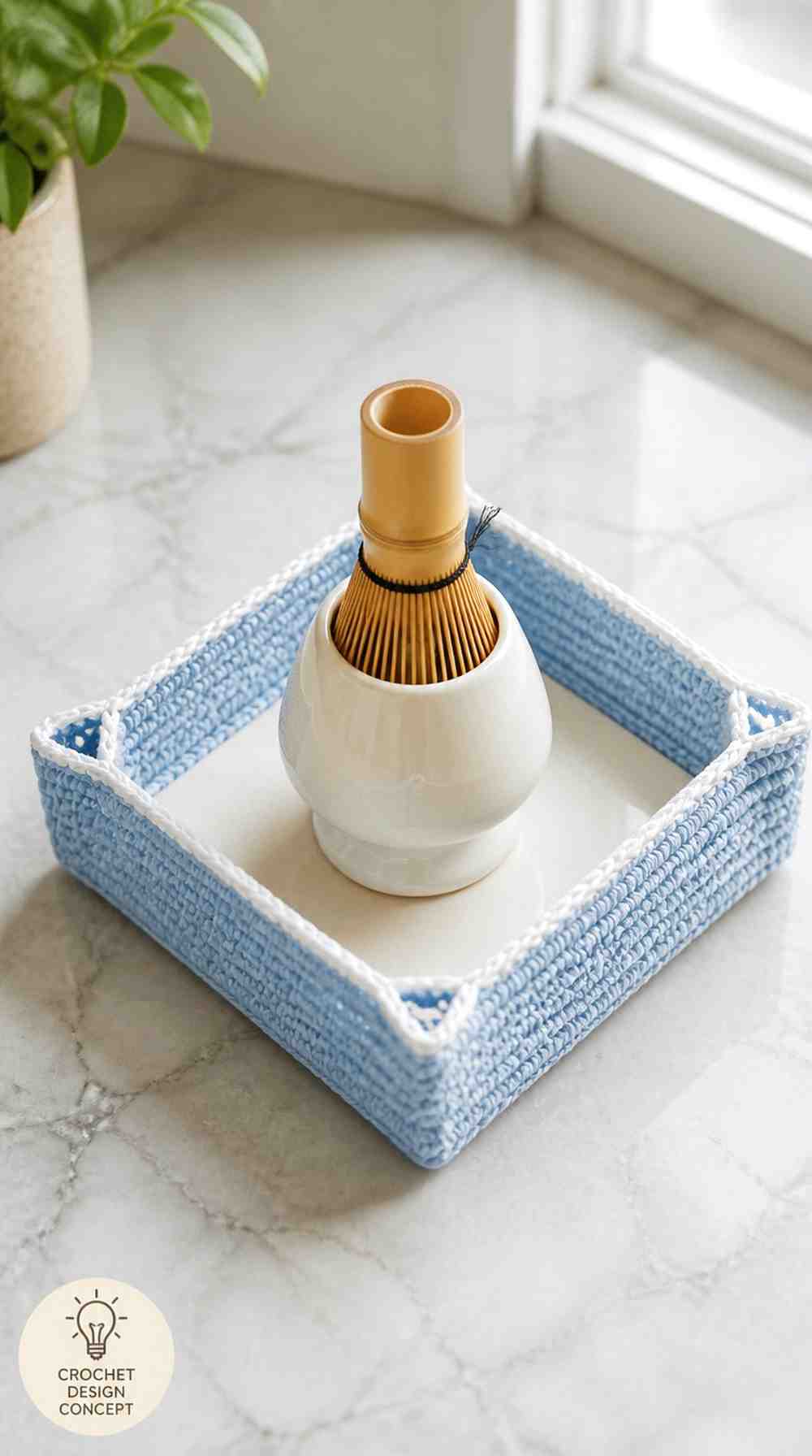
A powder-blue square crochet frame brings a clean, organized appearance to the tea station. Its four low sides feature dense horizontal rows, small open corner details, and fine white upper edging. A separate flat insert supports the ivory ceramic stand in the center.
The square form creates a clear boundary around the display without requiring a deep basket. Its defined corners also make it easy to compare visually against other rectangular tea accessories.
- Corner Construction: Well-formed corners matter because uneven tension can pull the square frame out of shape.
- Base Insert: Choose a level, moisture-tolerant removable support if developing this concept into a real organizer.
- Counter Placement: A square footprint can align neatly with straight shelf edges, but allow room to lift the ceramic holder without catching the frame.
11. Crochet Chocolate Woven-Ridge Whisk Platform
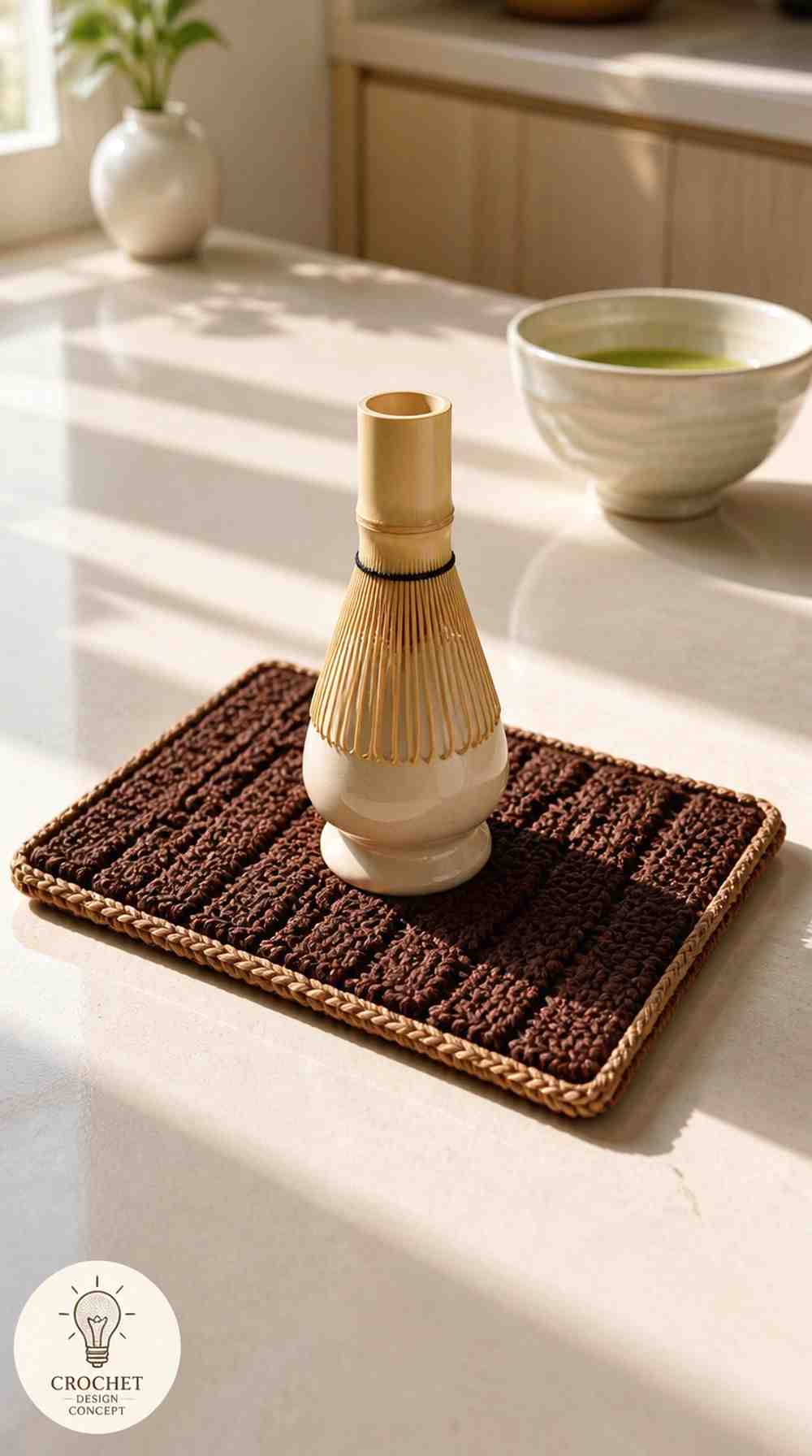
Chocolate-brown crochet wraps a slim rectangular board, with raised rows creating a basketweave-like surface. A tan border outlines the platform, while the middle remains smooth enough for the matte-cream ceramic whisk stand.
The design uses the texture of crochet as its main decorative feature. It has a more substantial, furniture-inspired appearance than the thin lace saucers and open rings elsewhere in the collection.
- Flat Center: Keep raised stitch details away from the central seating space, where they could make the ceramic stand unstable.
- Board Protection: A separate flat board provides structure, but the chosen material and its finish must suit the moisture conditions of the tea station.
- Texture Balance: The surrounding raised rows should remain low enough to show fine crochet craftsmanship without creating unnecessary bulk.
12. Crochet Lavender Double-Ring Display Cradle
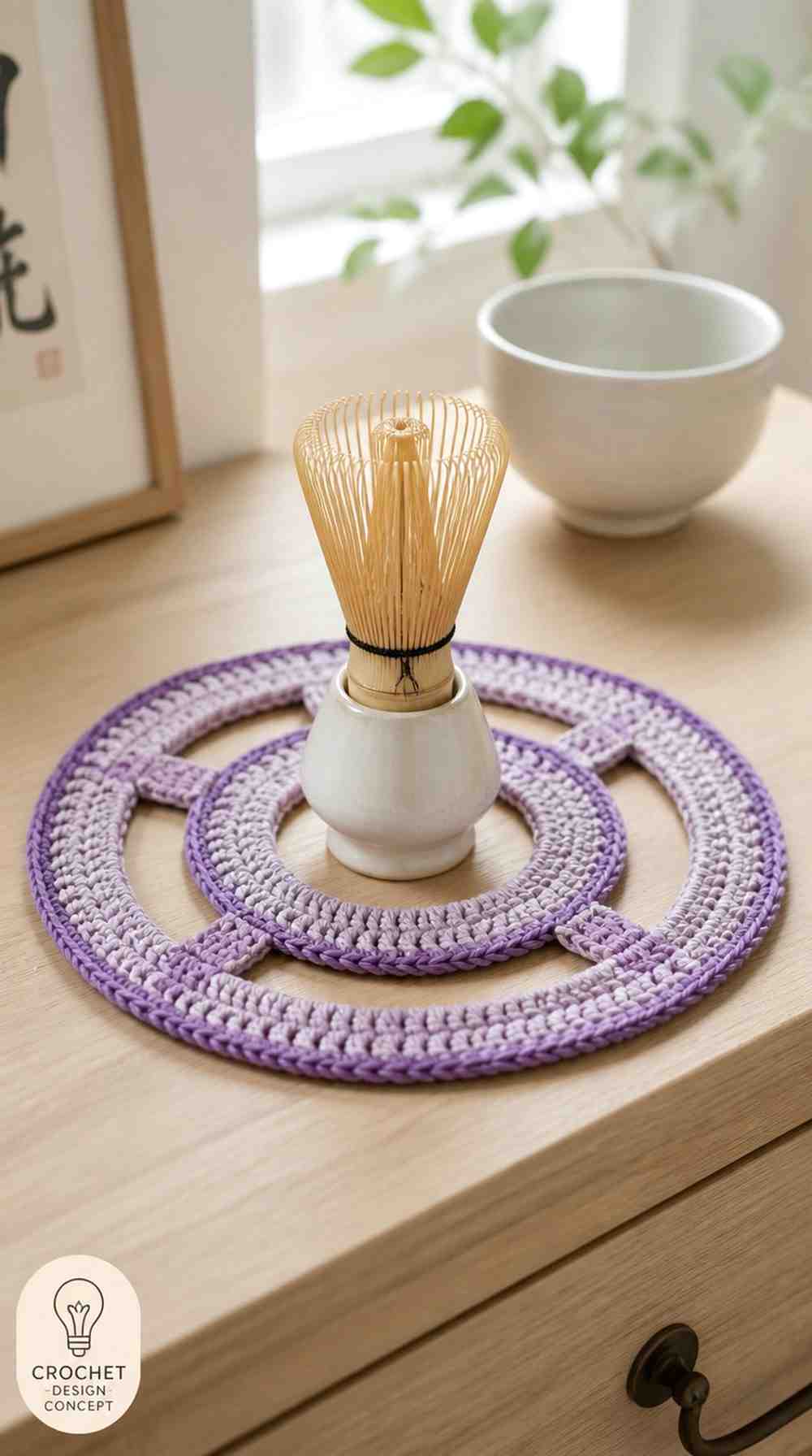
Two concentric lavender crochet rings create an open display platform, connected by four short radial bridges. A deeper-purple edging defines the outer circle, while the smaller inner ring surrounds the cream ceramic stand.
The open spaces between the rings create a light appearance that differs from solid mats. This concept works best as a decorative surround on a stable surface, rather than as a self-supporting platform.
- Bridge Connections: All four joining sections should be securely incorporated into the rings, with consistent spacing and believable stitch tension.
- Open Center: The ceramic holder needs direct stable support beneath it; the open crochet rings should not be responsible for carrying its weight.
- Shape Retention: An actual crocheted sample may require careful shaping and drying to keep the concentric circles lying evenly.
13. Crochet Coral Braided-Rim Cradle
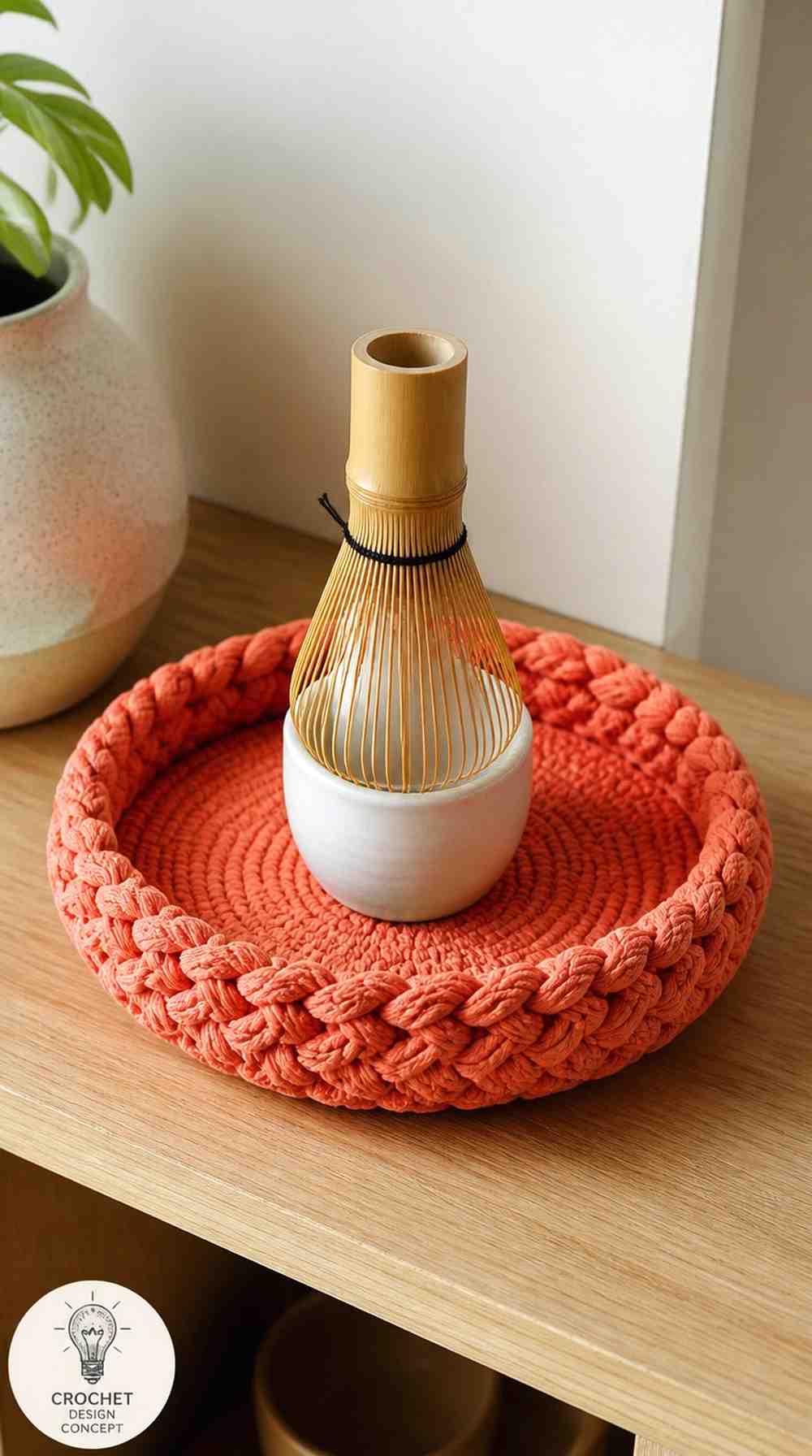
Bright coral crochet gives this compact circular cradle a cheerful appearance. A closely worked base and low wall support the design’s shape, while a braided-cord-style crochet border follows the outer rim. The matte-white ceramic holder sits in the open middle.
The attached braid is the main visual feature. Unlike loose decorative cords, it follows the cradle’s existing circumference, creating a more finished appearance without adding unnecessary height.
- Braided Edging: Attach the braided-style border consistently so it does not pull the circular base into an uneven or puckered shape.
- Rim Clearance: The border should sit below the ceramic holder’s whisk-supporting area and remain clear of the bamboo tines.
- Color Contrast: Coral creates a noticeable accent against white ceramics. A muted apricot version could be an optional choice for a quieter kitchen.
14. Crochet Olive Wooden-Block Cradle
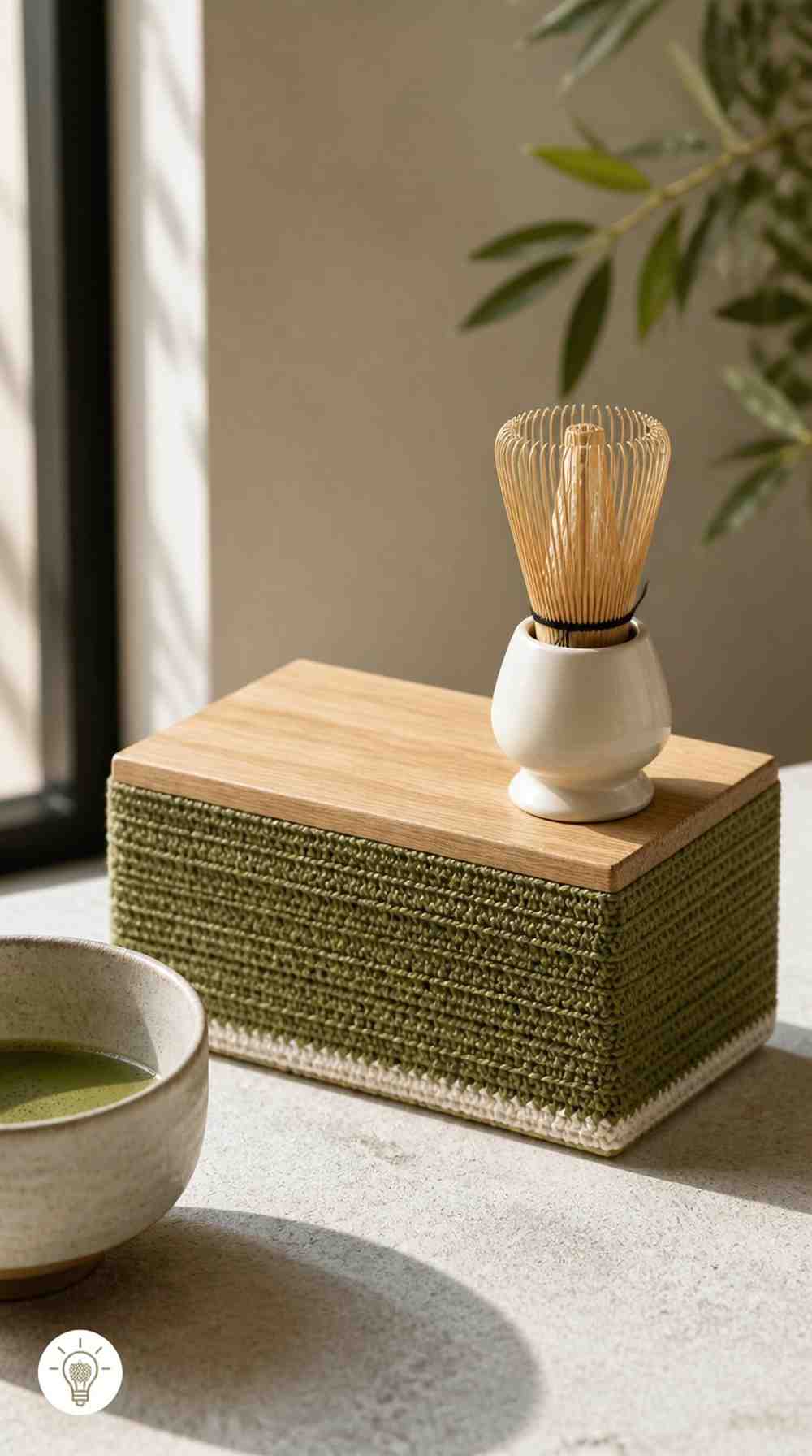
A low pale-oak display block becomes the foundation for this olive-green crochet concept. Closely worked horizontal stitches wrap its four vertical sides, with tidy corner seams and a thin cream lower edge. The upper wooden surface remains exposed for the ceramic stand.
This design gives the tea station a small raised display platform without expecting crochet fabric to carry the full load. It also allows the olive crochet to remain visible around the block’s sides.
- Wrapped Fit: The crochet band should follow the block’s actual height and perimeter without bunching around the corners.
- Exposed Support: Keep the upper wooden surface level and unobstructed so the ceramic stand rests directly on the intended platform.
- Material Care: Protect the wood appropriately for the setting and keep the wrap removable if practical, particularly where condensation or spills may occur.
15. Crochet Ivory Fan-Lace Whisk Saucer
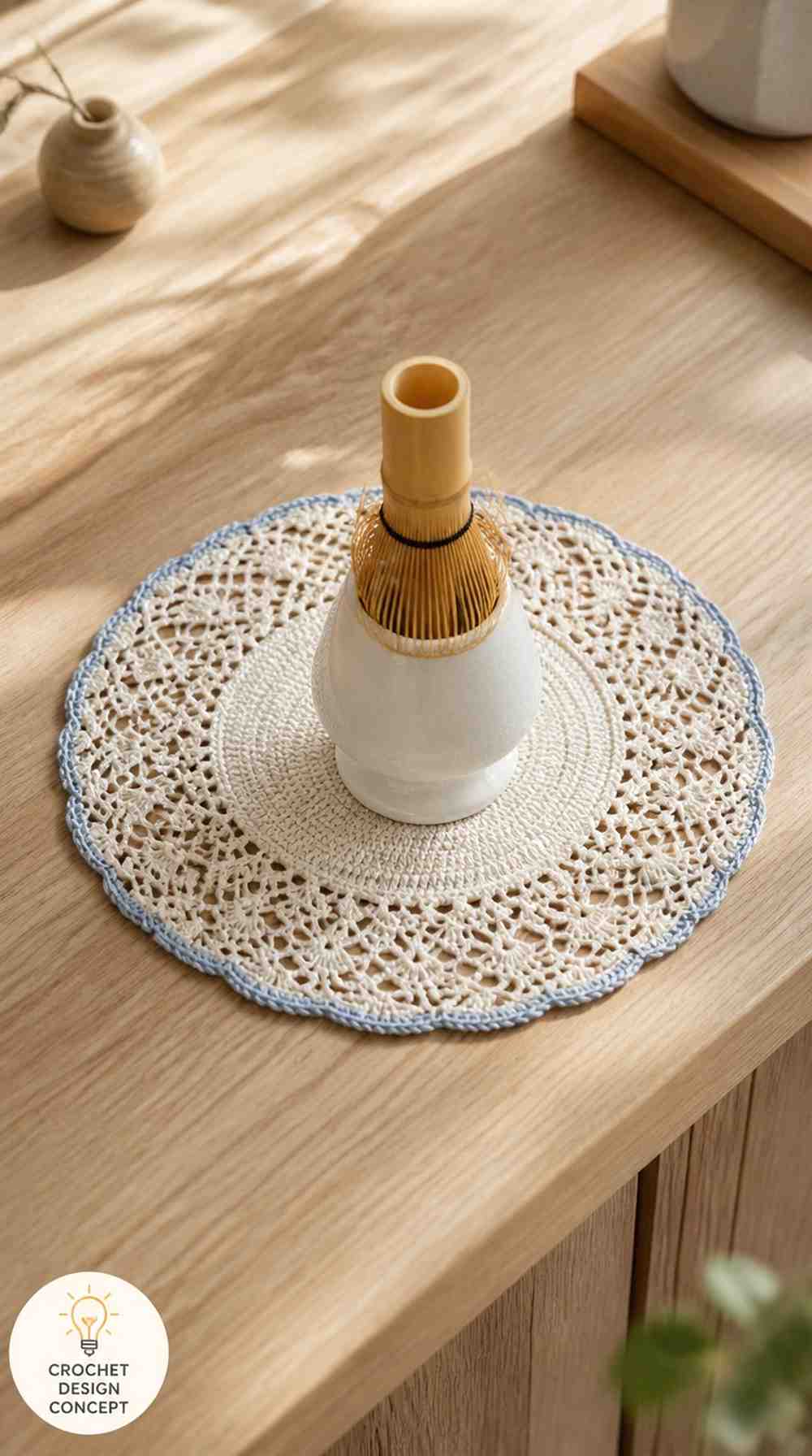
Fine ivory crochet gives this shallow saucer a delicate finish. A solid central circle supports the ceramic stand visually, while connected fan-lace motifs form a broad decorative outer border. The narrow dusty-blue finishing round adds a quiet hint of color.
The open lace is the main attraction, giving the piece the appearance of a miniature vintage table accent. Because the outside edge is decorative, careful handling and a flat supporting surface are important.
- Solid Middle: A dense center is more suitable for placing a ceramic base than an open lace center with large unsupported gaps.
- Fan-Lace Definition: Keep the fan repeats evenly connected and the openings consistent so the finished edge resembles recognizable crochet lace.
- Display Setting: This design is better suited to a clean, dry shelf or tea tray than a frequently splashed preparation surface.
16. Crochet Teal Three-Arch Whisk Dock
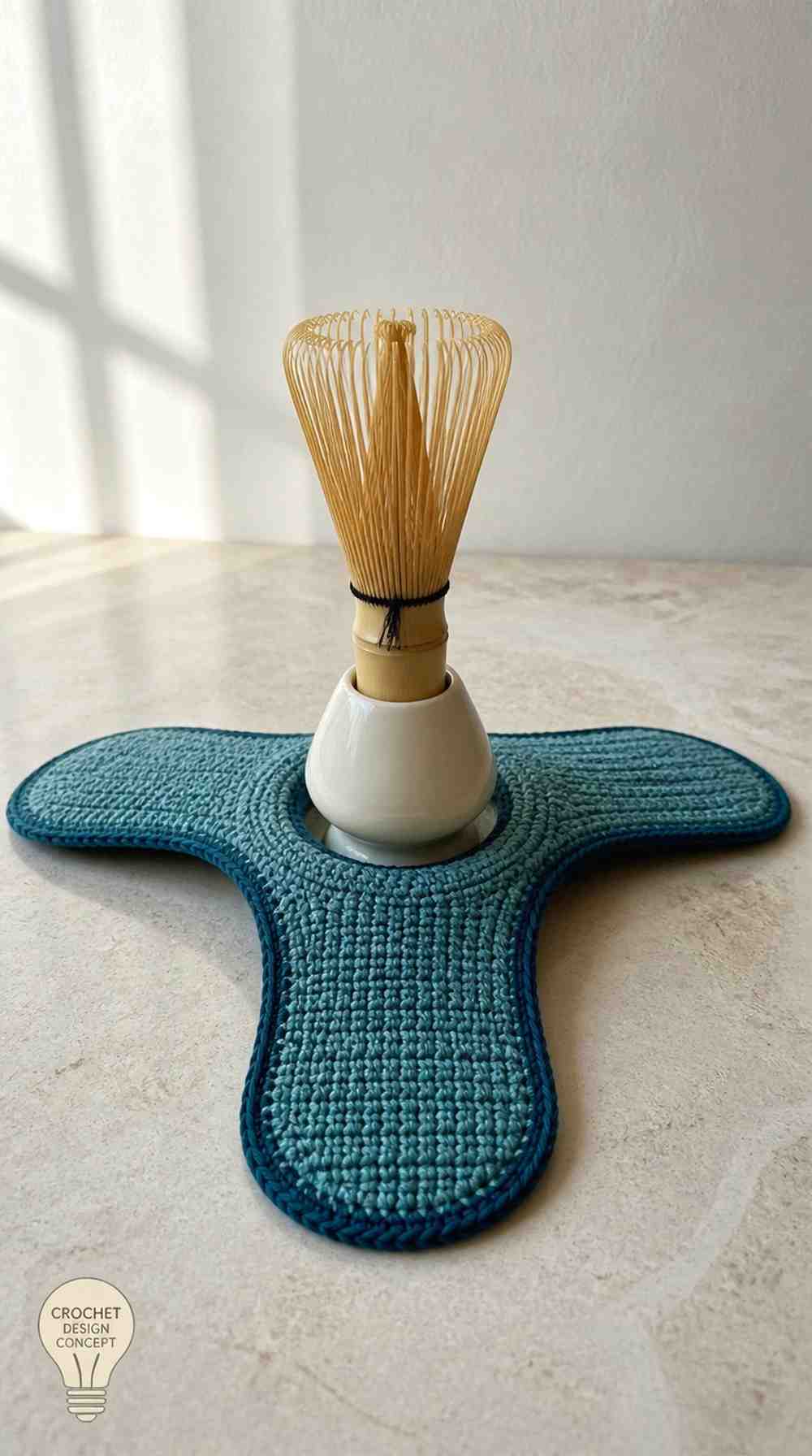
Three broad teal crochet arches extend outward from a small circular center, giving this design a rounded triangular silhouette. A darker teal edging follows each arch, while a cream ceramic whisk stand occupies the center.
The result is more sculptural than a traditional round mat. Its three-arm layout offers a distinctive handmade look, but the outer arches should remain flat rather than curling into the whisk’s space.
- Arch Balance: Keep all three extensions similar in shape and stitch tension to prevent the visual center from shifting.
- Central Support: The ceramic holder still needs a firm underlying surface; the curved crochet extensions should be treated as surrounding decoration.
- Space Planning: Although the center is compact, the outward arches enlarge the overall footprint. Check the available counter space before choosing this layout.
17. Crochet Peach Fold-Up Whisk Cradle
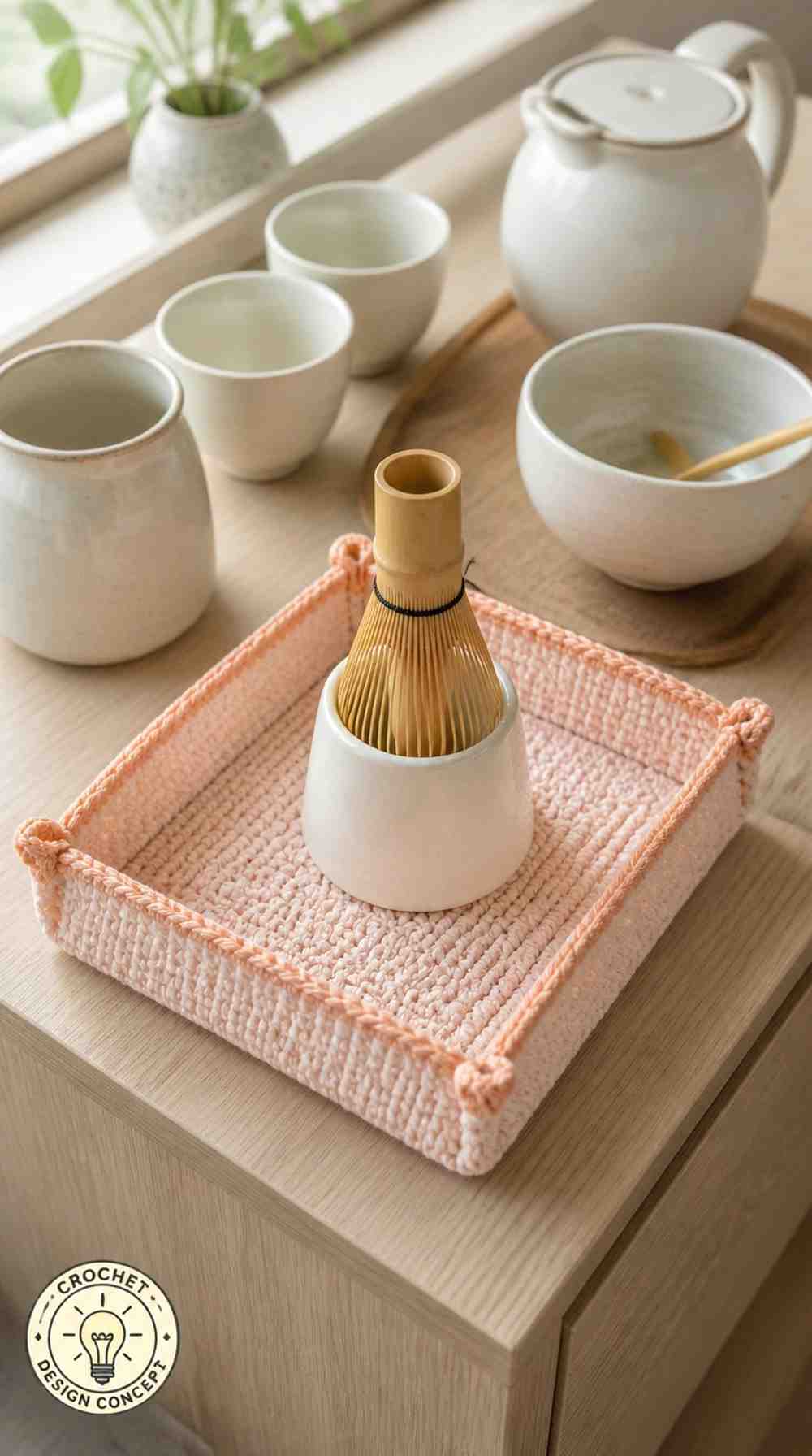
Pale-peach crochet forms a shallow rectangular cradle with two short folded-up side panels, small corner loops, and a narrow apricot border. A separate rigid insert sits beneath the flat base, supporting a white ceramic whisk stand.
The folded construction gives this design a softer, fabric-organizer appearance while retaining an open top. Its sides are intentionally short, keeping the bamboo whisk unobstructed and making the ceramic stand easy to remove.
- Folded Corners: Ensure the corner loops genuinely connect the low side panels without pulling the base upward or distorting its rectangular shape.
- Insert Choice: A thin removable rigid insert helps define the platform, but it should be smooth, level, and suitable for occasional cleaning.
- Handling: Treat the folded sides as decorative containment rather than handles. Lift the ceramic stand separately instead of carrying the full arrangement by its crochet walls.
18. Crochet Burgundy Twin-Whisk Cradle
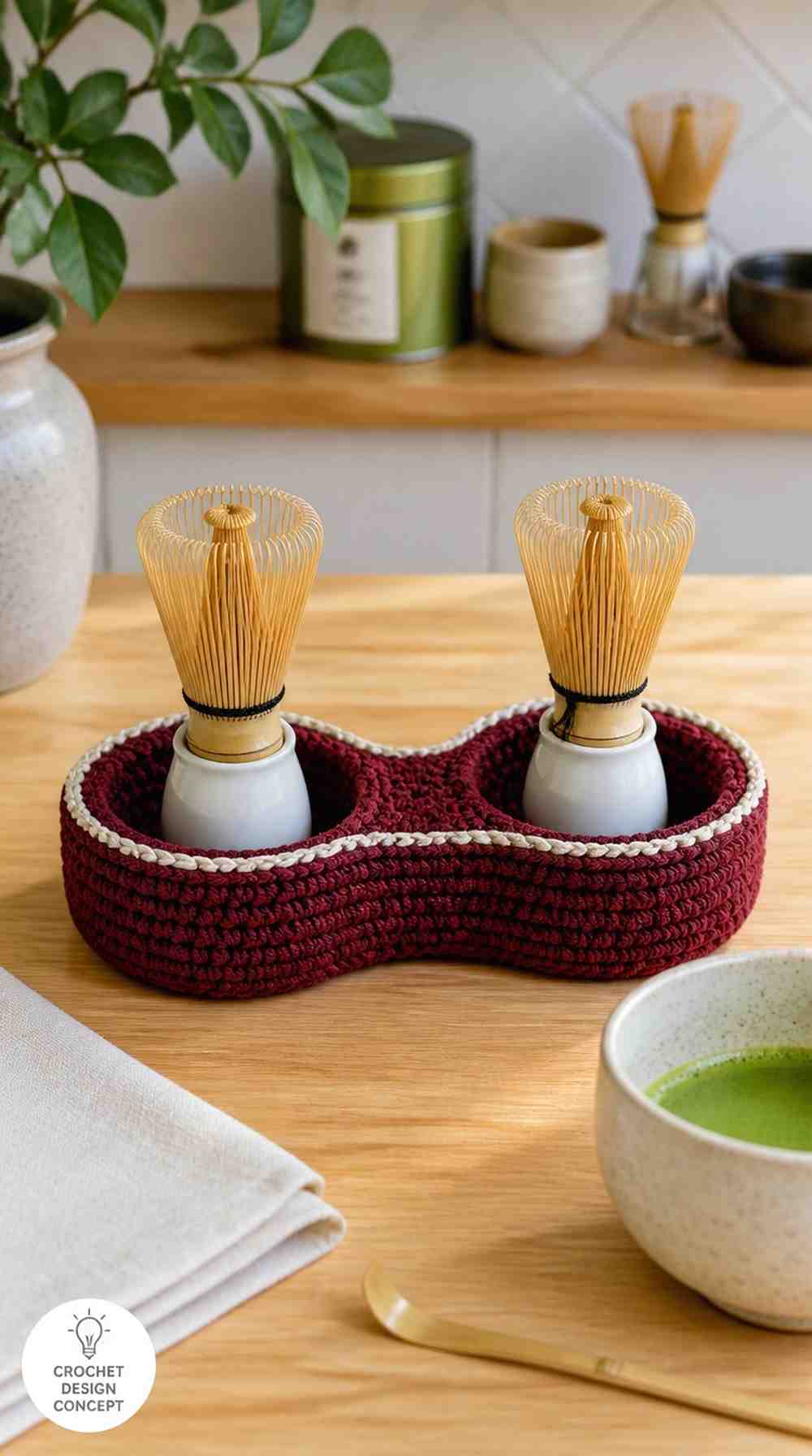
An elongated burgundy crochet base holds two equal circular seating areas, each finished with thin cream edging. Two separate glossy white ceramic stands sit side by side, displaying individual upright bamboo matcha whisks.
The twin layout is useful for visualizing a tea station shared by two people or a collection containing different whisk styles. Its main requirement is sufficient spacing so neither whisk touches the other during placement or removal.
- Individual Spaces: Measure each ceramic base separately rather than assuming two stands have identical dimensions.
- Whisk Clearance: Leave enough space between the upright whisks for the bamboo tines to remain undisturbed when one stand is moved.
- Longer Footprint: The double arrangement requires more counter space than a single cradle, so consider a dedicated dry display shelf.
- Coordinated Finish: Repeating the burgundy body and cream borders gives both stations a unified appearance without requiring matching ceramic holders.
Practical Guide to Crochet Matcha Whisk Storage Cradles
A traditional bamboo matcha whisk, called a chasen, is delicate. A ceramic whisk stand, commonly called a kusenaoshi, is designed to help maintain the tines’ shape. A crochet cradle should serve as a decorative surrounding organizer or platform, not replace that specialized support.
rocky’s matcha+1
Fit and stability: Measure the ceramic holder’s base before choosing the cradle shape. Make sure the stand remains level and that soft crochet edges do not push against it.
Airflow and drying: Rinse and dry the bamboo whisk according to its maker’s instructions. Advice about leaving a whisk on its ceramic shaper while drying varies between tea specialists, so avoid assuming the holder alone guarantees sufficient airflow.
rocky’s matcha+1
Yarn choice: Smooth, closely worked cotton yarn may be worth considering for removable decorative sections. Check the yarn’s care label and keep the crochet away from routinely wet surfaces.
Structure: A rigid insert, wooden block, or ceramic base can provide support where a soft crochet form would otherwise sag. Decorative rings and lace mats should not be expected to stabilize a whisk on their own.
Placement: Choose a dry, ventilated counter or shelf away from the sink, direct splashes, open flames, and hot equipment. Remove the crochet for cleaning whenever needed.
Want to Make Something Similar?
These resources offer useful starting points for the underlying crochet skills and proper whisk care. They are not exact patterns for the 18 concepts shown above.
- The Crochet Crowd — Mini Social Bowl Baskets Pattern and Tutorial explains a small crochet basket structure that could help with planning a shallow bowl-shaped cradle.
- Yarnspirations — Beginner Crochet Coasters introduces flat circular crochet work, useful as a starting technique for saucer and low-ring concepts.
- Rocky’s Matcha — How to Use and Store a Matcha Whisk covers basic care for a bamboo chasen and its ceramic stand.
Which Crochet Matcha Whisk Cradle Should You Choose?
| What matters most | Design to consider | Main trade-off |
|---|---|---|
| Small countertop footprint | Terracotta Low-Collar | Limited decorative surface |
| Lightweight, open appearance | Seafoam Lattice Cuff | Must fit the ceramic holder closely |
| Floral decoration | Blush Petal Nest | Wider overall outline |
| Separate scoop storage | Oatmeal Split-Slot | Needs more space and two compartments |
| Stable, structured presentation | Olive Wooden-Block | Requires an additional rigid component |
| Delicate vintage styling | Ivory Fan-Lace Saucer | Open lace needs careful handling |
| Two separate whisk holders | Burgundy Twin-Whisk | Larger footprint |
For everyday simplicity, a low collar or flat saucer is a reasonable starting point. If you prefer a stronger decorative shape, the hexagon, petal, or three-arch designs offer more character. For organization beyond one whisk, the divided oatmeal cradle and burgundy twin-whisk arrangement provide the most distinct storage layouts.
Conclusion
A crochet matcha whisk storage cradle is a small detail that can make a tea station feel more thoughtfully arranged. Whether you prefer a plain terracotta ring, a soft floral nest, or a structured wooden platform with crochet sides, the best design is one that works with the ceramic holder you already have.
Focus on a stable base, easy access, sensible yarn placement, and keeping moisture away from the crochet. Those practical choices matter just as much as color or decorative stitches.
Which design would suit your matcha corner best? Share whether you prefer the floral blush cradle, the compact terracotta ring, or the more structured double-whisk display.
Frequently Asked Questions
1. Can a crochet cradle replace a traditional ceramic matcha whisk holder?
Not reliably. A traditional ceramic whisk stand is shaped to support the bamboo whisk’s delicate tines. A crochet surround can organize or decorate the area around that holder, but soft yarn is not an equivalent substitute for the shaped ceramic support.
2. Can a damp matcha whisk be placed directly against crochet fabric?
It is better to avoid direct contact. Damp yarn can retain moisture and may take time to dry, especially in dense crochet. Keep the bamboo whisk separate from the yarn and follow the whisk manufacturer’s cleaning and drying recommendations.
3. Which crochet design is easiest to adapt for a small tea station?
The Terracotta Low-Collar and Ivory Fan-Lace Saucer concepts have relatively simple low-profile silhouettes. The first focuses on a circular collar around a ceramic base, while the second uses a flat central area with decorative edging. Actual difficulty depends on the chosen crochet construction and the maker’s skills.
4. What type of yarn should I consider for a decorative matcha whisk cradle?
A smooth cotton yarn can be a practical option for a removable decorative cradle because it provides visible stitch definition and may be easier to clean than some highly textured fibers. Check the specific yarn label for washing instructions, and remember that the ceramic holder—not the yarn—should provide the whisk’s primary support.
5. Are these 18 designs available as finished crochet patterns?
No. These are original visual design concepts intended to help readers compare shapes, colors, textures, and storage arrangements. The referenced crochet tutorials teach related techniques but do not reproduce these exact designs. A real project would require its own measurements, construction planning, and physical checks before use.