Cotton rounds are small everyday skincare essentials, but loose stacks and half-open refill packets can quickly make a vanity drawer look untidy. Crochet cotton round refill drawer trays offer a creative way to explore soft handmade organization with shallow compartments, shaped openings, textured borders, and compact storage sections. These 15 ideas range from terracotta single-stack trays and oatmeal double compartments to decorative checkerboards, circular cradles, and removable drawer inserts.
Some designs focus on keeping one small stack together, while others separate several refills or provide space for additional dry vanity items. Whether you prefer simple neutral colors or more decorative crochet details, this collection helps you compare tray shapes, compartment arrangements, access openings, and practical fit. Cleanliness, easy removal, and keeping unused cotton rounds protected from moisture and dust are especially important.
These are AI-generated crochet design visualizations for inspiration, not photographs of tested handmade pieces or step-by-step patterns.
Quick Design Selection Guide
| What you want | Design to explore |
|---|---|
| One simple cotton-round stack | Crochet Terracotta Single-Stack Drawer Tray |
| Two separate refill stacks | Crochet Oatmeal Twin-Stack Refill Tray |
| Easier access at the front | Crochet Indigo Crescent Access Tray |
| Different refill quantities | Crochet Mustard Two-Level Refill Tray |
| A round cradle | Crochet Cream Circular Nesting Tray |
| Multiple small refill sections | Crochet Coral Triple-Refill Drawer Tray |
| A tray with a removal tab | Crochet Dusty Blue Pull-Tab Tray |
| Decorative two-sided texture | Crochet Mocha Reversible Texture Tray |
1. Crochet Terracotta Single-Stack Drawer Tray
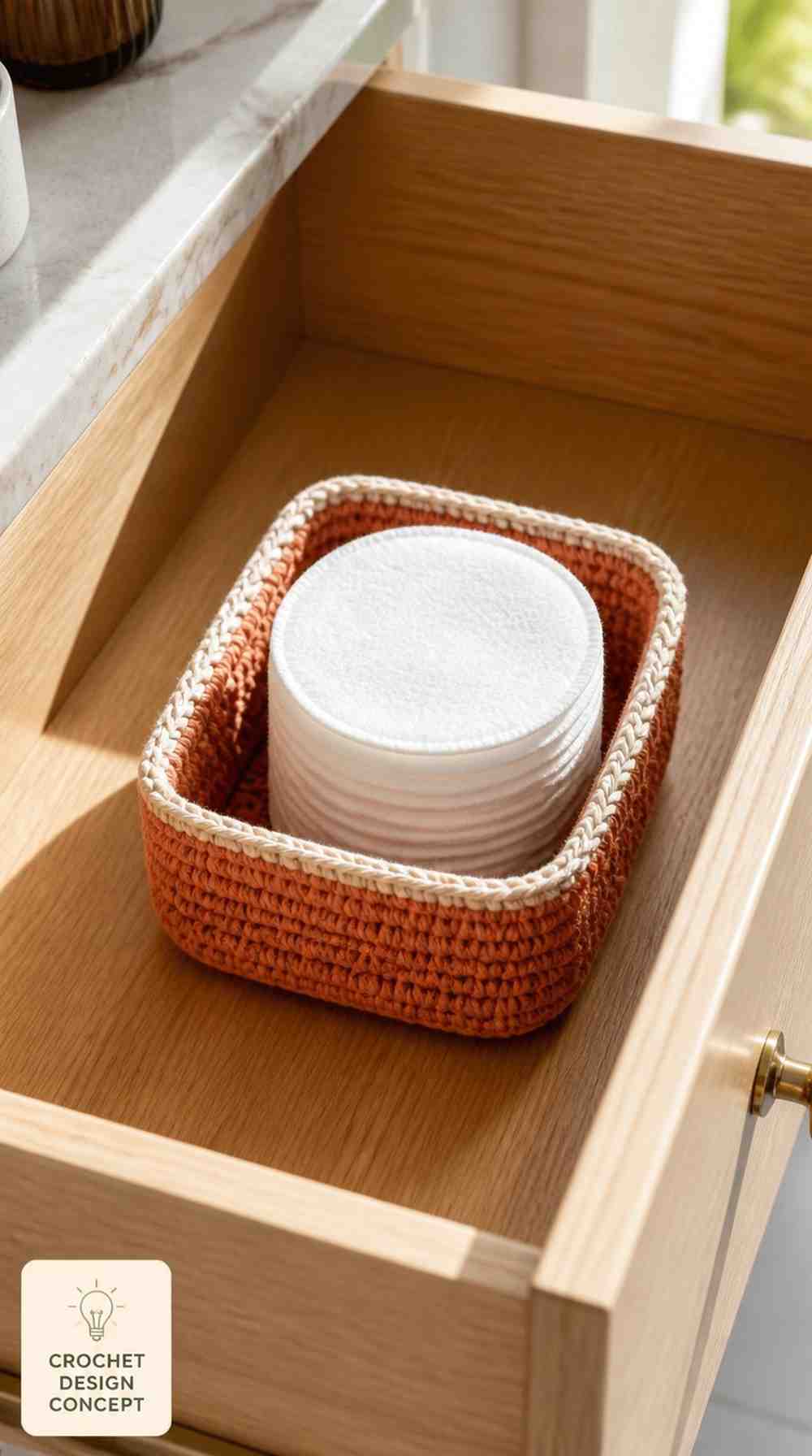
Warm terracotta crochet gives this compact drawer tray a welcoming handmade appearance. Its rounded rectangular base, closely worked horizontal stitches, and low upright walls create a simple cradle for one neat stack of white cotton rounds. A thin cream border finishes the upper edge.
The design keeps its focus on a single everyday skincare essential rather than creating several unnecessary compartments. Its shallow proportions make the cotton rounds easy to see, while the surrounding wooden drawer supports the tray. This is a useful starting point for comparing straightforward crochet storage with more decorative designs.
- Single-Stack Capacity: The tray is designed around one small stack. Compare the actual round diameter and stack thickness before deciding how large to make the base.
- Rounded Corners: Softly shaped corners give the rectangular tray a gentle outline, but even crochet tension matters to avoid curling or distorted edges.
- Low Cream Border: A narrow contrasting rim defines the opening without making the tray walls unnecessarily tall or difficult to clean.
2. Crochet Oatmeal Twin-Stack Refill Tray
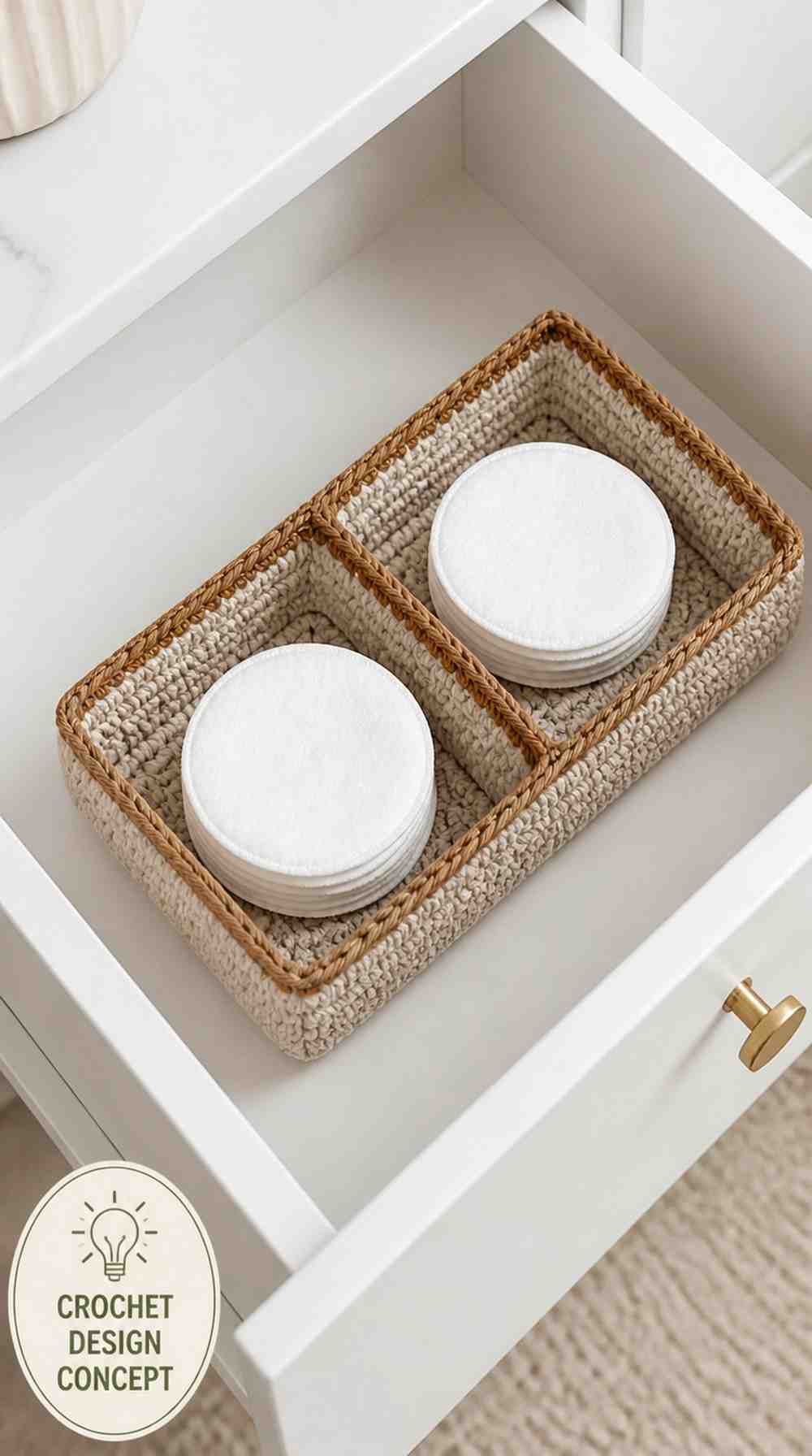
Two small stacks of cotton rounds sit beside each other in this oatmeal-colored crochet organizer. A low caramel divider separates the compartments, while matching caramel edging outlines the top of the rectangular tray.
The fine linen-stitch base gives the design a smooth, woven-looking texture without relying on bulky embellishments. Compared with the single-stack version, this arrangement offers space for two small groups of rounds within one drawer insert. The central partition is the main functional-looking feature, although it would need enough support to retain its shape in a real crochet version.
- Two Equal Compartments: Measure each stack separately rather than assuming all cotton rounds have identical diameters. Leave room to lift out the rounds without crushing them.
- Caramel Divider: Keep the central ridge low and securely attached. A thick partition may take up valuable space in a narrow drawer.
- Linen-Stitch Base: The closely connected stitches produce a tidy visual surface, but actual stiffness depends on yarn weight, gauge, and finishing.
3. Crochet Indigo Crescent Access Tray
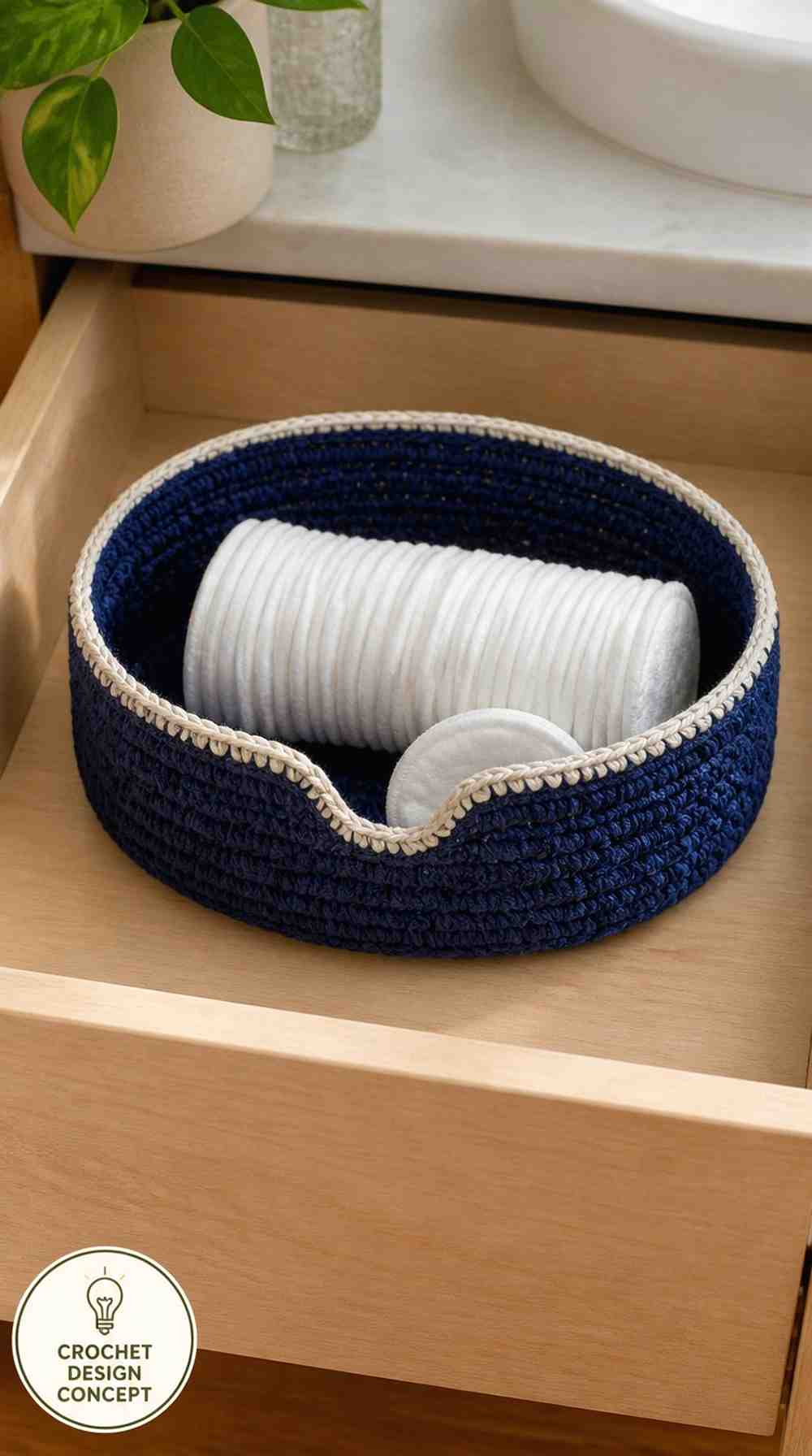
Deep-indigo crochet creates a distinctive oval tray with a shallow crescent-shaped notch along the front edge. A slim ivory border follows the opening, contrasting with the darker crochet body and highlighting the curved shape.
A small stack of white cotton rounds rests inside, with the nearest round visible through the lowered front section. The notched opening gives this concept a different appearance from a continuous-walled basket. It also suggests easier finger access, although the actual usefulness of the cutout would depend on its height and the size of the cotton rounds.
- Crescent Opening: Position the notch where fingers can reach the stack comfortably without disturbing the side walls of the tray.
- Oval Base: An oval footprint may suit certain drawer spaces better than a square basket, but its dimensions should be checked against the available width.
- Curved Ivory Edging: Use even tension around the notch so the opening remains smooth instead of pulling inward or curling.
4. Crochet Mustard Two-Level Refill Tray
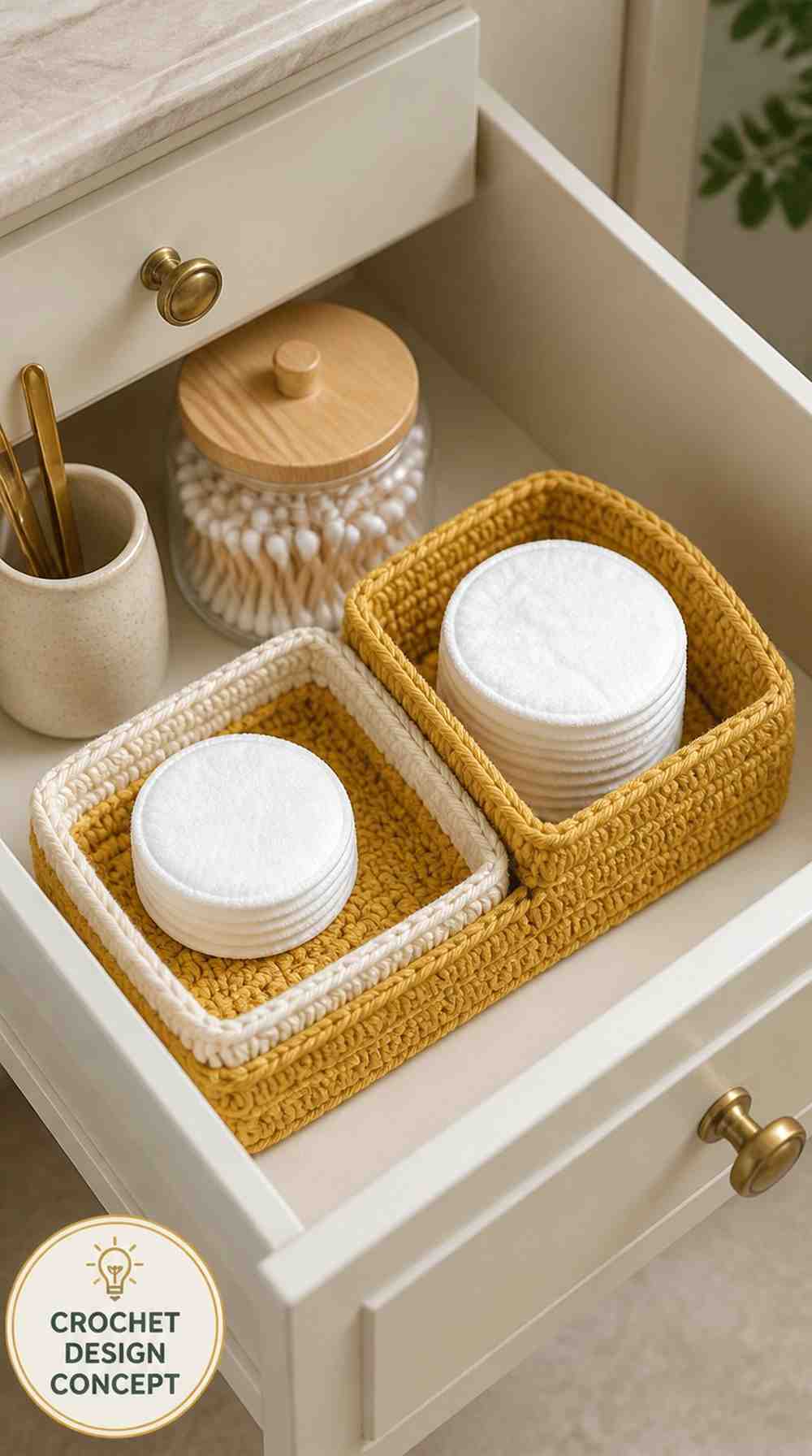
Muted-mustard crochet gives this organizer a warm appearance, while two adjacent compartments of different wall heights create its distinctive shape. The shallow left section holds a small stack of cotton rounds, and the slightly taller right section accommodates a larger refill stack.
Both compartments share a rectangular crochet base, with an ivory edge along the shorter section and a neat central seam connecting the two areas. The different heights make the design interesting for comparing small everyday supplies with a slightly larger reserve without building a tall, bulky organizer.
- Different Wall Heights: Plan the taller compartment around the intended refill quantity. Excessively high crochet walls may fold inward or make the lower rounds harder to reach.
- Shared Base: One continuous rectangular foundation can keep the two compartments visually connected while allowing a different wall height on each side.
- Central Joining Line: The dividing seam needs consistent tension so the shorter and taller sections do not pull the base out of shape.
5. Crochet Cream Circular Nesting Tray
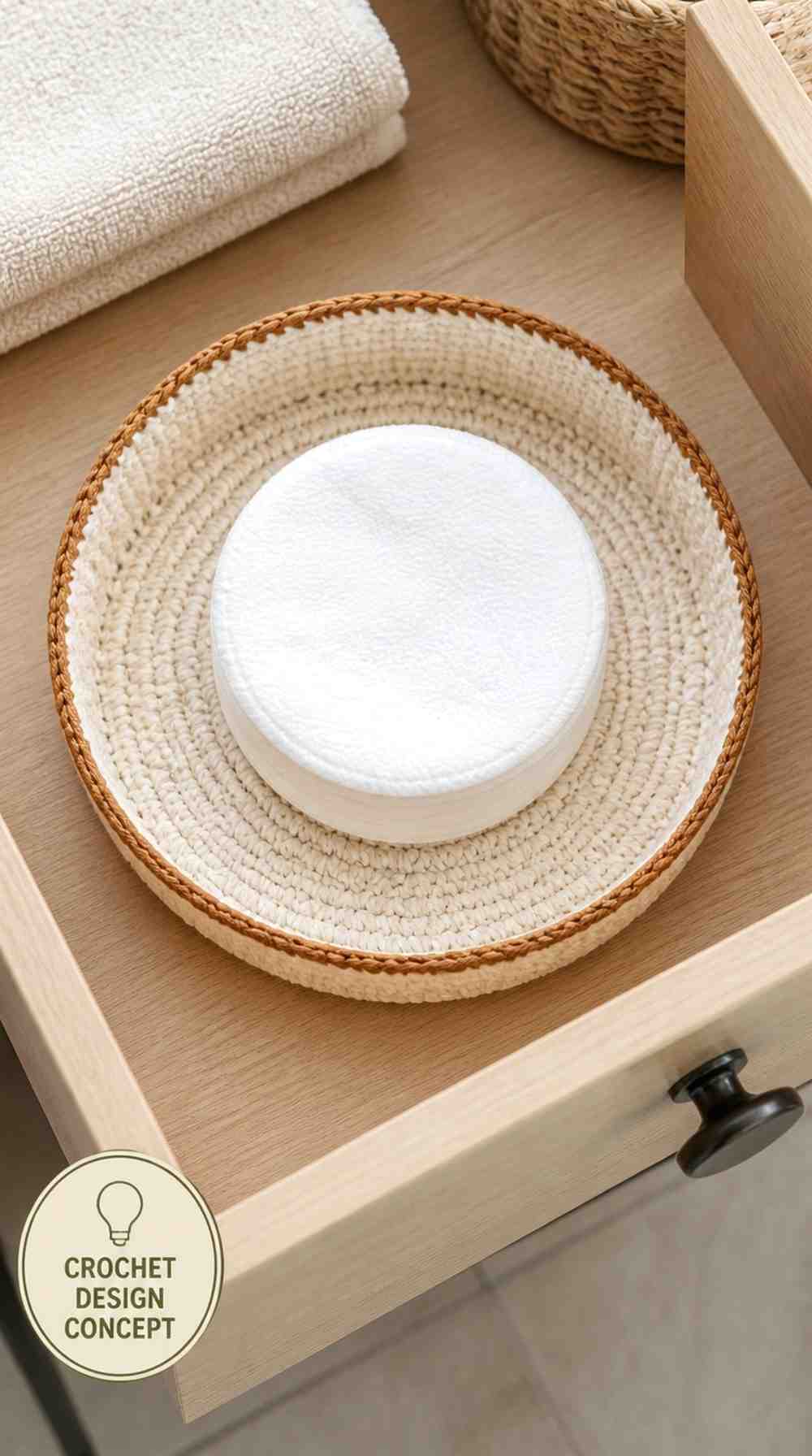
Concentric crochet rounds form the base of this warm-cream circular tray. A narrow toasted-cinnamon rim adds contrast, while low upright walls surround a centered stack of unused white cotton rounds.
The circular shape closely follows the outline of the contents, giving this design a simpler appearance than rectangular multi-compartment organizers. Each crochet round remains visible around the stack, drawing attention to the stitch construction itself. The restrained colors and small footprint make it an appealing concept for a drawer where only one group of cotton rounds needs a dedicated space.
- Circular Base Size: Allow enough room around the cotton-round stack for fingers to reach the edges without squeezing or bending the rounds.
- Concentric Crochet Structure: Even increases and consistent stitch tension are important when adapting a flat circular base into a shallow tray.
- Cinnamon Outer Rim: The thin darker border gives the cream crochet a defined finish without adding another layer across the base.
6. Crochet Plum Half-Moon Cotton Tray
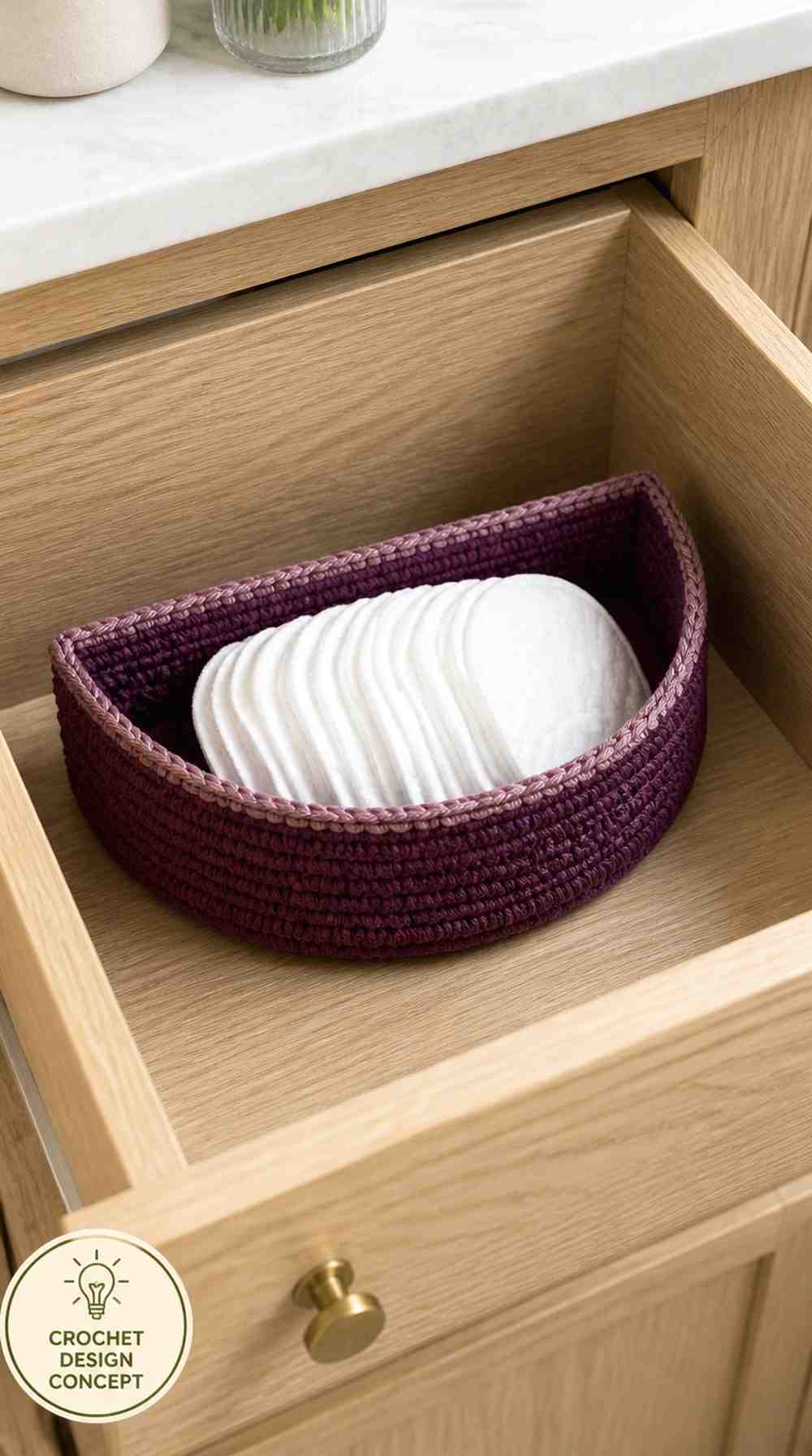
A half-moon silhouette makes this plum-colored crochet organizer stand apart from conventional square or round trays. Its straight back wall contrasts with a gently curved front, finished with fine dusty-rose edging.
The cotton-round stack rests toward the back of the tray, remaining visible above the lower curved edge. Closely worked horizontal rows create a neat surface, while the semicircular shape gives the piece a decorative vanity appearance. This concept is especially interesting for exploring how a shaped front can change access without introducing extra compartments or pockets.
- Straight Back Placement: The flat rear edge can sit neatly against the back of a drawer section, provided the overall tray footprint leaves enough clearance.
- Curved Front Wall: The lower crescent-like shape provides a clear view of the stack, but the wall should remain high enough to retain the intended outline.
- Dusty-Rose Trim: A narrow contrasting edge follows the curve and adds softness without competing with the deep-plum stitches.
7. Crochet Coral Triple-Refill Drawer Tray
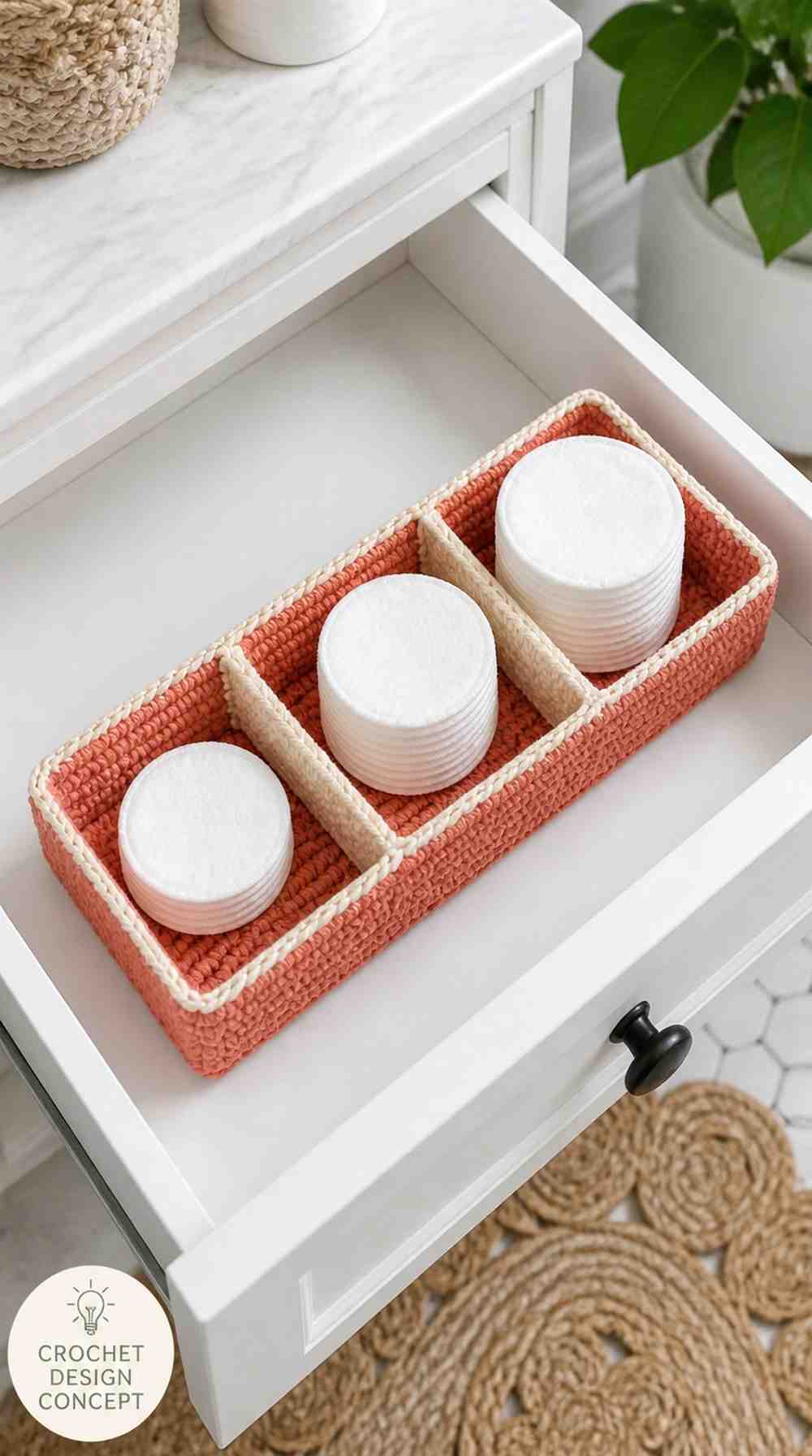
Three adjacent compartments create the main feature of this dusty-coral crochet drawer organizer. Low cream dividers separate small, medium, and taller stacks of unused white cotton rounds, while a thin cream border finishes the outside walls.
The rectangular tray offers a visually organized way to display different refill quantities. Its compartments are arranged in one straight row rather than a grid, making the design suitable for exploring longer drawer spaces. The close single-crochet surface keeps the structure relatively plain, allowing the divided layout to remain the focus.
- Three Refill Sections: A row of compartments can help visually separate different quantities, but the overall tray length must fit the available drawer space.
- Cream Divider Walls: Keep internal walls low enough for easy access. Tall or thick partitions may waste room between small stacks.
- Different Stack Heights: The pictured arrangement shows varying quantities, not different types of cotton rounds. Avoid overfilling the sections until the walls spread outward.
8. Crochet Cocoa Checkerboard Refill Tray
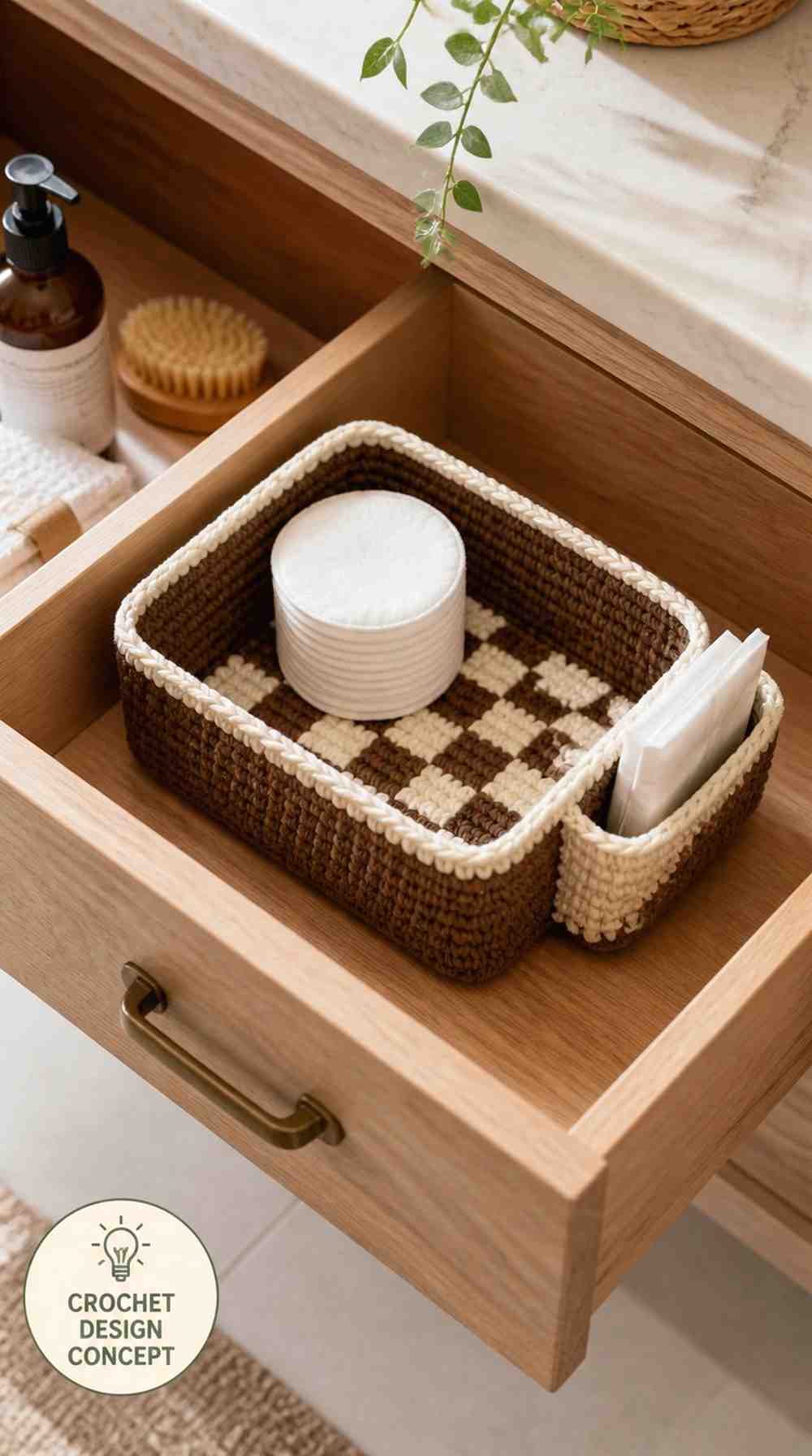
Espresso-brown and vanilla-cream checkerboard stitches give this low rectangular crochet tray a graphic appearance. Solid mocha walls frame the patterned base, while a small cream-lined auxiliary pocket sits along the outside of the right wall.
The main compartment contains a stack of unused cotton rounds, and the additional pocket holds a folded clean paper refill wrapper. The miniature colorwork adds visual interest without raised motifs across the storage surface. This concept explores how a small secondary pocket can accompany a simple main tray while remaining clearly separate.
- Checkerboard Base: Closely worked tapestry crochet can create the miniature squares without joining many separate pieces that would introduce additional seams.
- Auxiliary Side Pocket: The small compartment suits lightweight paper items rather than wet products, used pads, or heavy containers.
- Extra Width: An exterior pocket increases the footprint. Check that the complete organizer fits the drawer without compressing the side section.
9. Crochet Dusty Blue Pull-Tab Tray
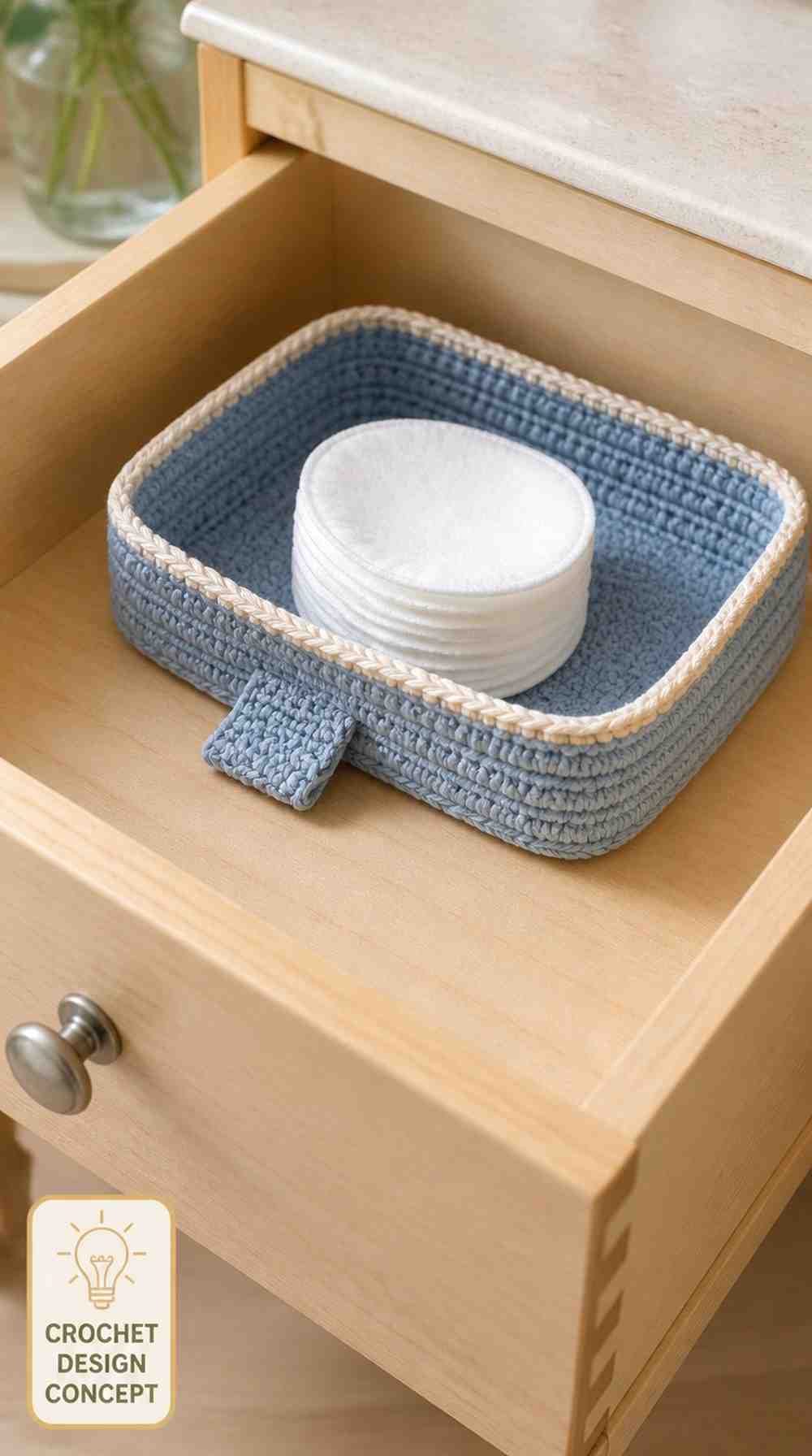
Dusty-blue crochet forms a shallow rectangular tray with fine horizontal ribbing, low side walls, and a thin cream upper edge. A small flat pull tab extends from the front, giving the design one noticeable practical-looking detail.
A short stack of cotton rounds sits inside the tray, while the tab rests against the drawer base rather than projecting upward. Compared with the decorative checkerboard and scalloped designs, this concept focuses on a simpler surface and an easy-to-identify removal point. The tab would still need secure construction and should not be treated as a carrying handle.
- Front Pull Tab: The small extension offers a place to grasp an empty organizer, but it should not be relied on to lift a loaded tray.
- Horizontal Ribbing: Fine raised rows give the blue crochet texture without requiring separate appliqués or additional layers.
- Low Drawer Profile: Check the combined wall height and stack thickness so neither the contents nor the fabric interferes with the drawer above.
10. Crochet Sage Scalloped Double Tray
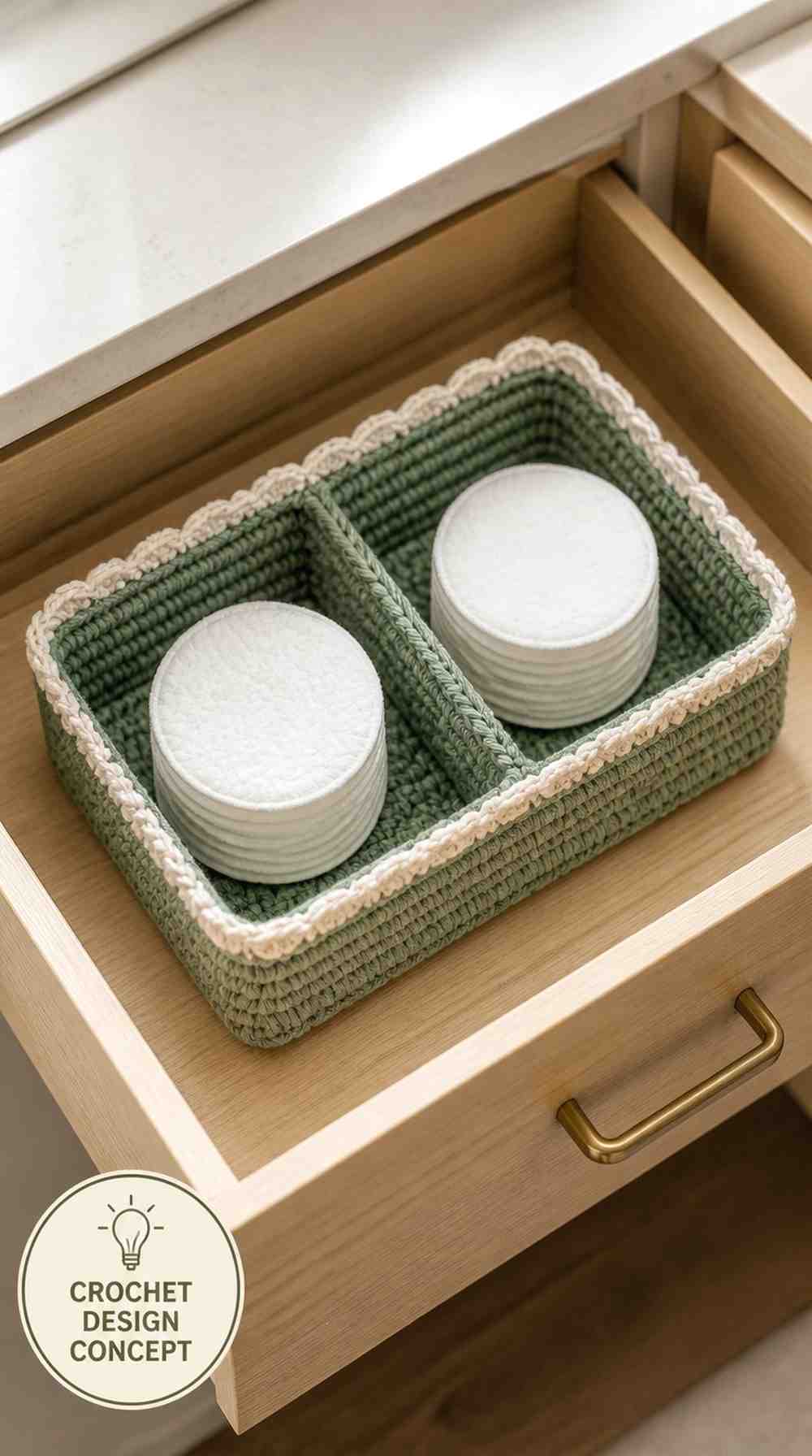
Muted-sage crochet provides a calm background for delicate ivory scallops along the upper outer rim. Inside, a plain central divider separates two small stacks of white cotton rounds. The base uses closely connected single-crochet rows.
The tiny shell-like border introduces a decorative cottage detail while leaving the internal compartments straightforward. Unlike the cream circular tray, this design uses a rectangular footprint and two storage sections. Its main visual appeal comes from the contrast between smooth sage stitches and the small repeated ivory curves.
- Scalloped Outer Rim: Keep each shell flat and closely connected. Large decorative loops may catch on drawer hardware or nearby supplies.
- Plain Central Divider: Leaving the partition undecorated helps preserve useful compartment width and avoids extra thickness between the stacks.
- Double-Stack Layout: Both sections need enough space for fingers to lift individual rounds without snagging them on the scalloped border.
11. Crochet Charcoal Diagonal Divider Tray
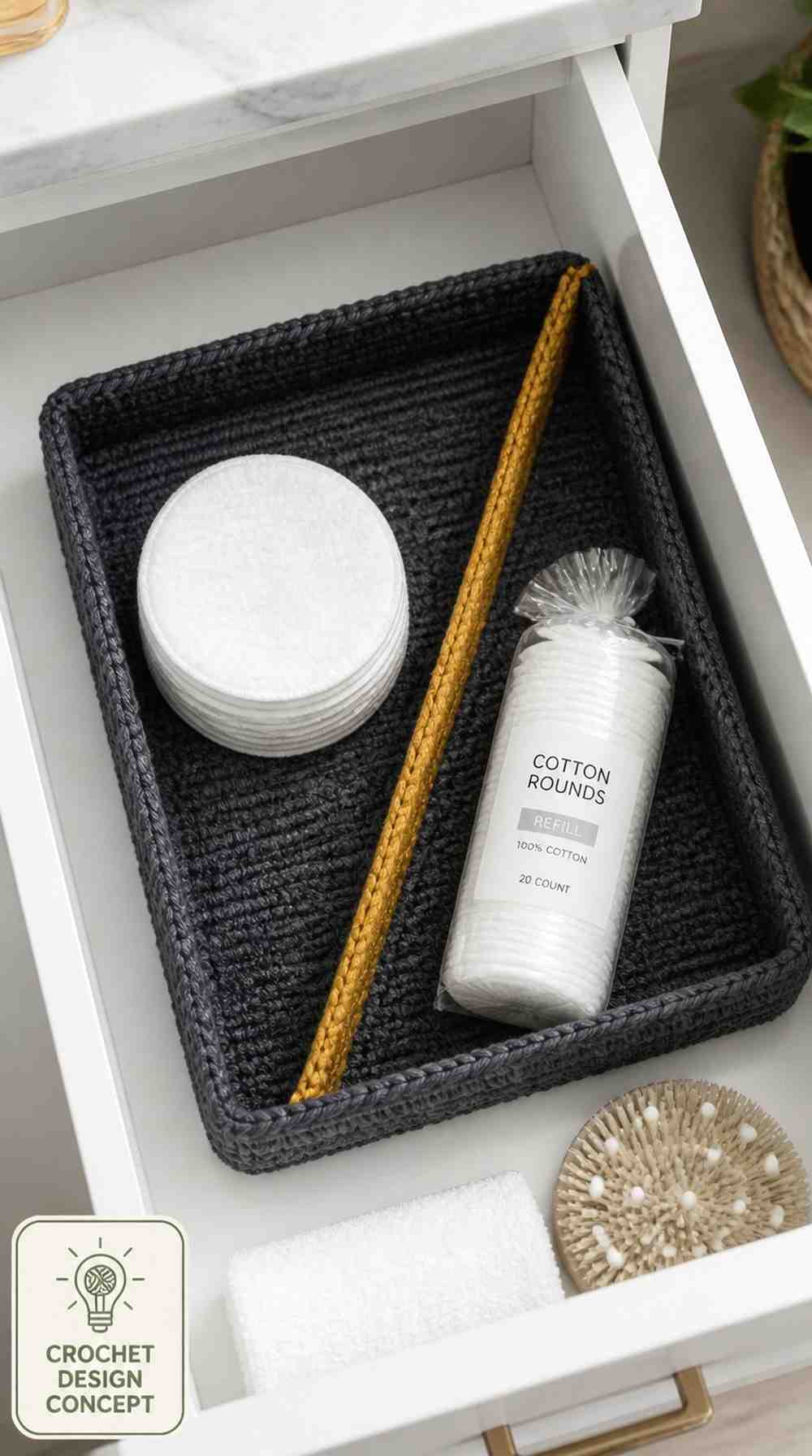
A narrow mustard-yellow ridge crosses this charcoal-grey crochet drawer tray diagonally, creating two unequal triangular sections. The larger area contains a small stack of cotton rounds, while the smaller section holds a sealed miniature refill packet.
The dark base and bright diagonal divider produce a modern geometric appearance. Unlike parallel compartment designs, this concept uses an angled partition to divide the rectangular space. It offers an interesting visual alternative, although triangular sections can be less efficient for storing circular stacks than ordinary rectangular or round compartments.
- Diagonal Divider Position: Plan the angle around the actual size of the cotton-round stack rather than allowing the ridge to restrict the larger compartment.
- Sealed Refill Section: The smaller triangular area is shown holding a compact sealed packet, which keeps those spare rounds separate from the exposed stack.
- Low Partition: The mustard ridge should remain securely joined to the base without creating a high, unsupported wall that folds over.
12. Crochet Marigold Round-and-Refill Tray
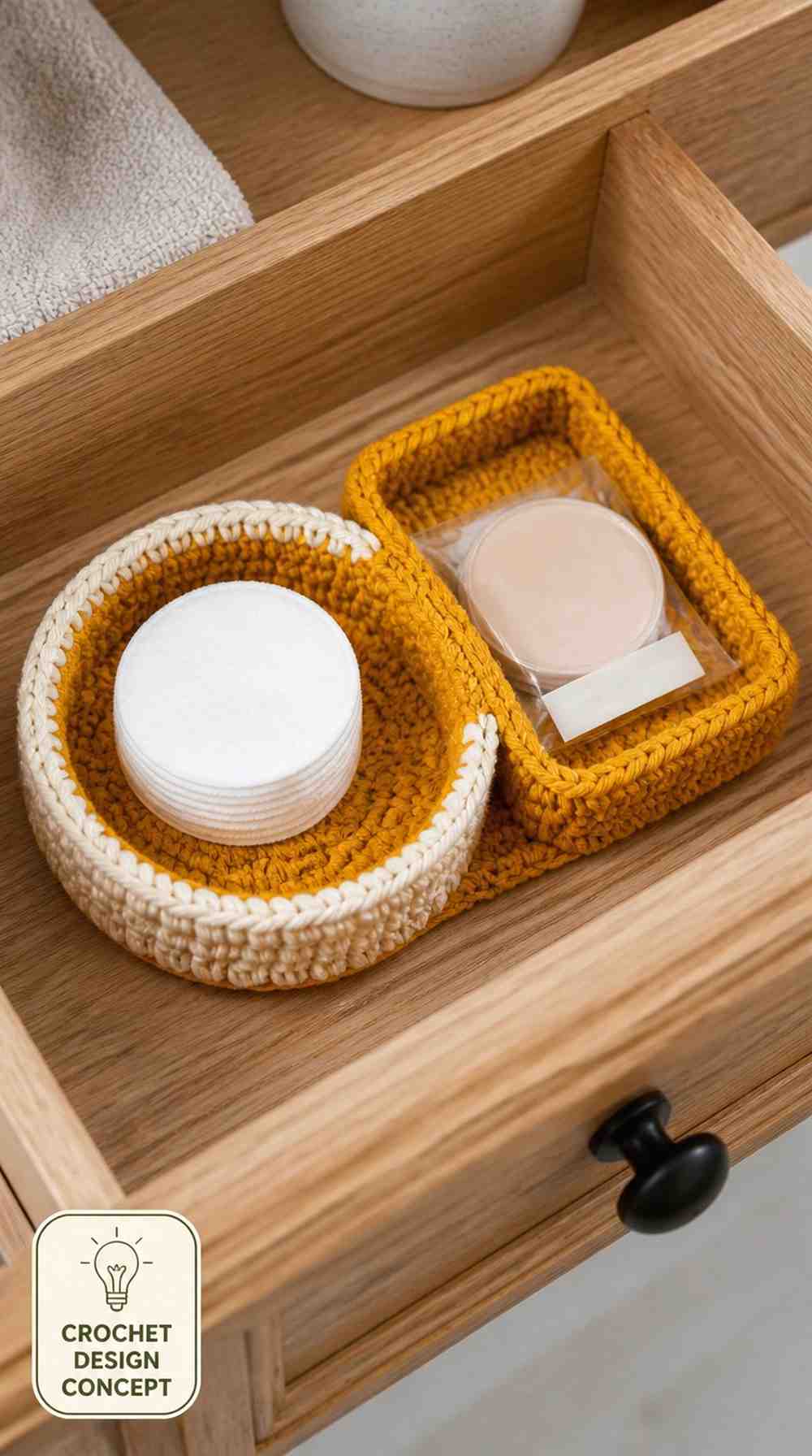
A round cradle and a rectangular refill compartment sit together on this marigold-colored crochet organizer. The left section contains a small stack of cotton rounds surrounded by an ivory-edged circular wall, while the narrower right section holds a sealed refill packet.
Both compartments share one flat golden base, creating an interesting contrast between curved and straight shapes. The design is especially suited to exploring a combination of accessible daily supplies and a separate unopened reserve. Its shape is more distinctive than a simple two-pocket rectangle.
- Circular Daily-Use Section: Match the round cradle to the diameter of the intended cotton rounds so the stack remains visible and easy to reach.
- Rectangular Refill Bay: The narrow compartment is shown holding a sealed spare packet, keeping its contents separate from the exposed rounds.
- Joined Base Geometry: The curved and rectangular sections need to connect neatly without pulling the shared base into an uneven shape.
13. Crochet Lavender Folded-Wall Refill Tray
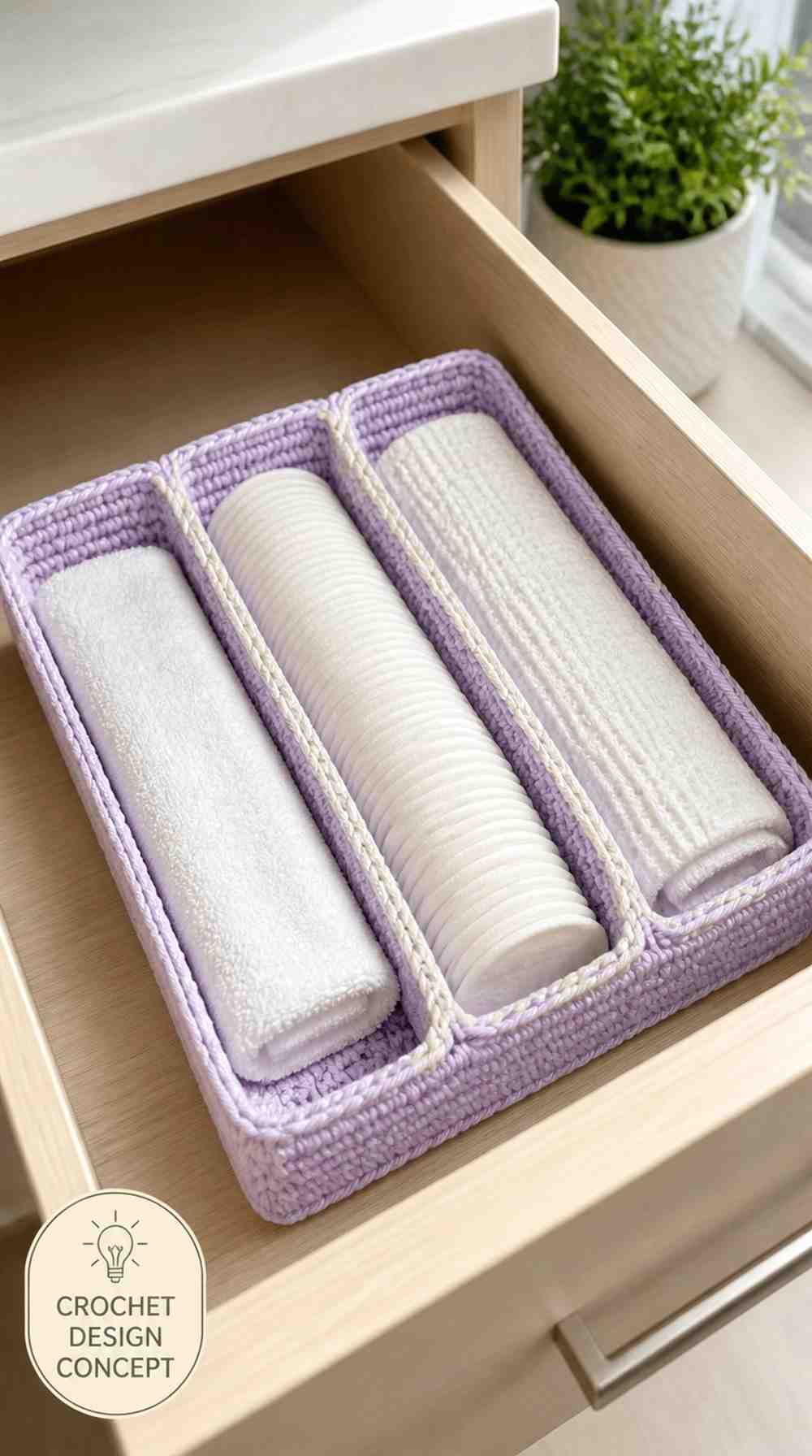
Pale-lavender crochet creates a gentle background for three shallow channels formed by two accordion-style interior folds. Thin cream edging follows the top of each fold, while the outer tray remains plain lavender.
The middle channel holds a small horizontal stack of unused cotton rounds, and the two side sections contain neatly folded clean cotton washcloths. This design combines separate dry vanity essentials within one organizer, rather than filling every compartment with refill stacks. The folded structure introduces a softer, more flexible appearance than fixed raised dividers.
- Accordion Fold Spacing: Each fold needs enough room to retain its shape without pressing tightly against the neighboring storage channel.
- Middle Cotton-Round Channel: The central section should remain wide enough for the round stack to lie flat without bending at the edges.
- Separate Washcloth Compartments: Keep only clean, completely dry cloths beside the cotton rounds. Damp fabric should never be returned to the drawer organizer.
14. Crochet Rust U-Notch Refill Tray
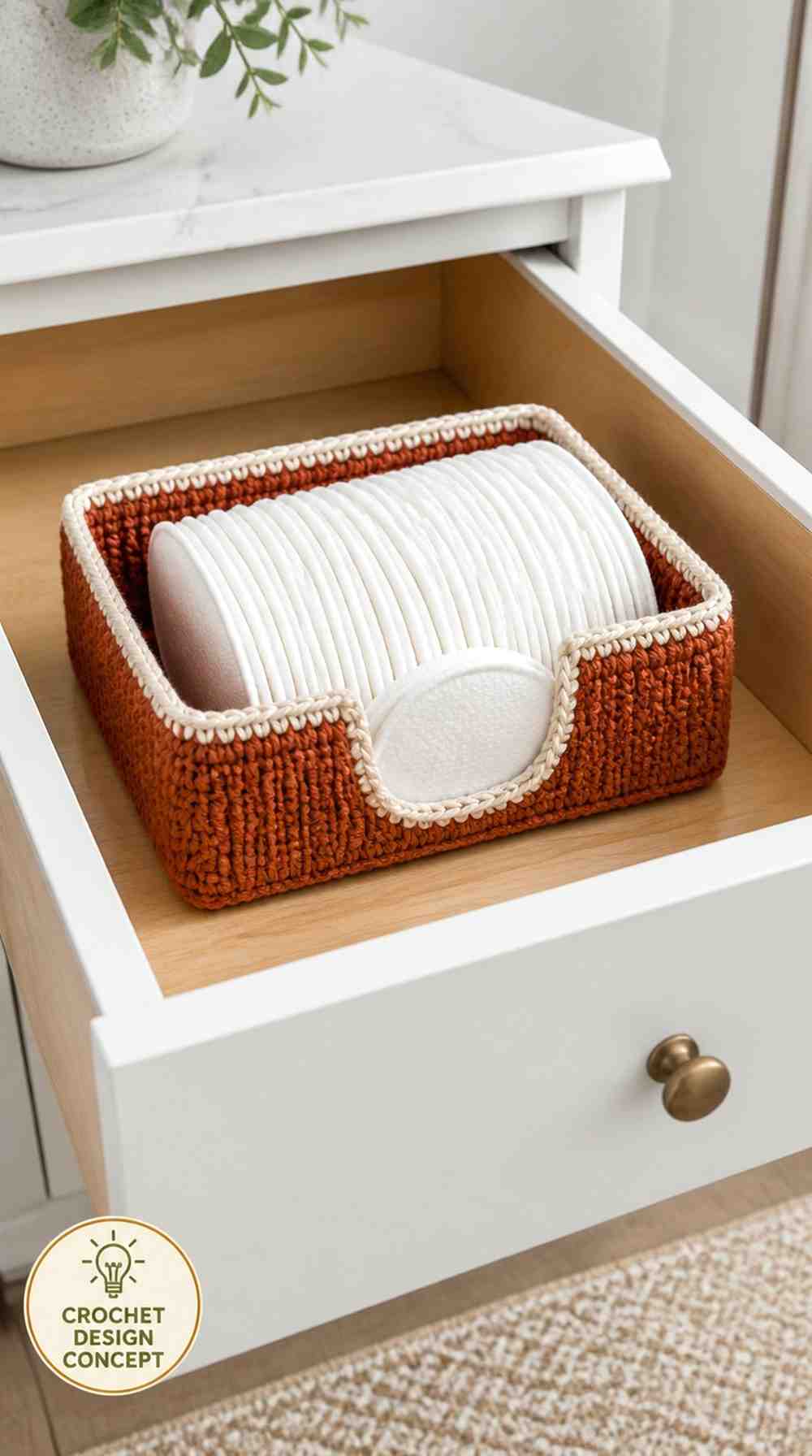
Burnt-rust crochet forms a low rectangular tray with fine vertical ribbing along its side walls. A broad U-shaped notch interrupts the front edge, and a smooth cream border follows the curved opening.
The tray holds a horizontal stack of white cotton rounds, with the nearest round visible through the lowered section. The cutout gives the design an accessible appearance while retaining the simplicity of a single-compartment organizer. Compared with the indigo crescent tray, this version uses a rectangular base and a more defined U-shaped front opening.
- U-Shaped Access Opening: Match the notch width to the cotton-round stack so fingers can reach the nearest round without stretching the surrounding wall.
- Vertical Ribbed Sides: The ribbing emphasizes the upright walls. Keep the stitch tension consistent to prevent the front opening from pulling inward.
- Cream Curved Border: A narrow finished edge can define the notch without adding excessive thickness along the area used for access.
15. Crochet Mocha Reversible Texture Tray
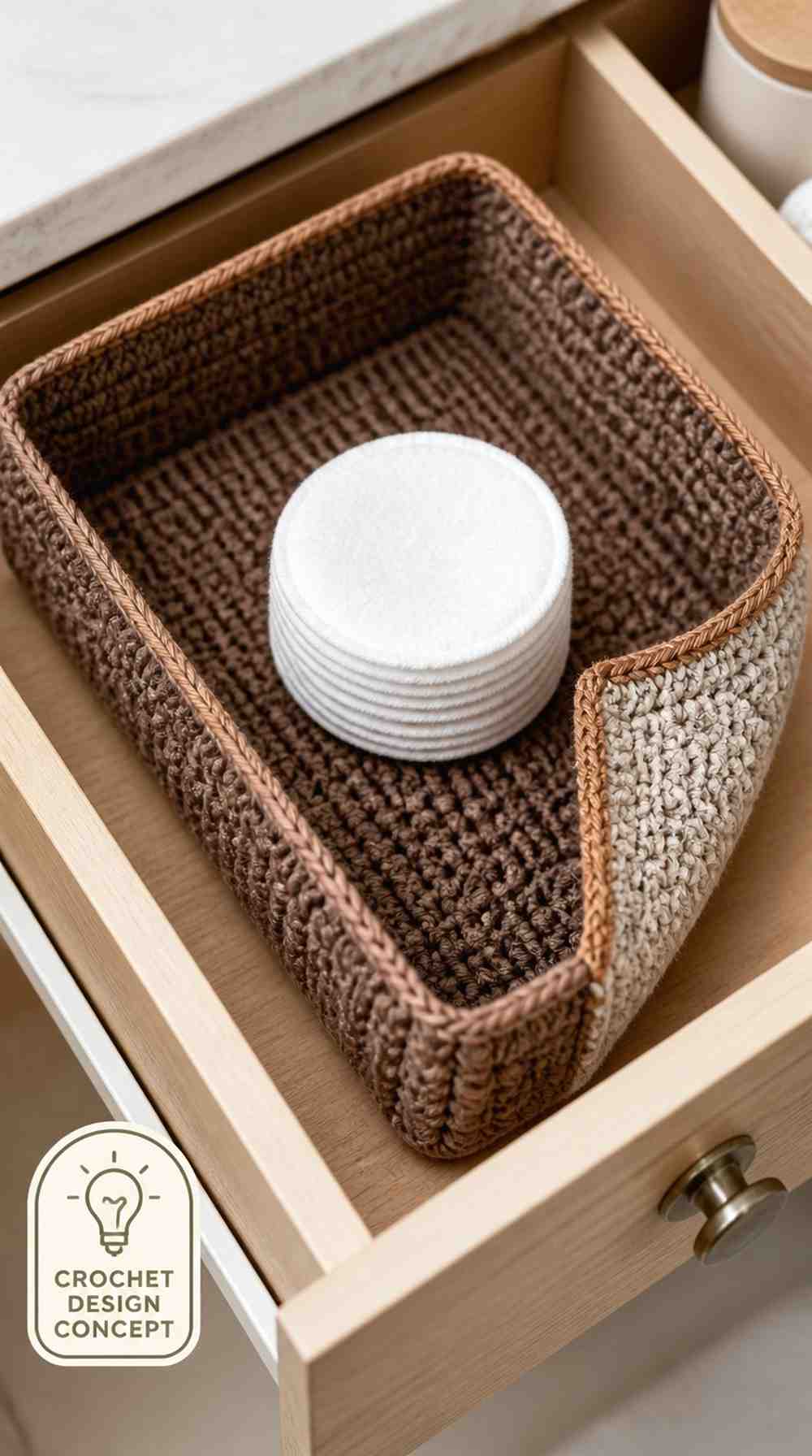
Warm mocha-brown crochet gives this shallow rectangular tray a refined appearance. Basketweave-like texture covers the outer walls, while a caramel border finishes the upper rim. One small folded corner reveals an oatmeal-colored reverse surface with fine ribbing.
The contrasting corner is the design’s central feature, showing how two crochet textures can appear within one compact organizer. A short stack of cotton rounds rests in the middle of the tray. The folded detail creates a layered look, but it would need to remain secure and easy to clean in a real version.
- Basketweave Outer Texture: Raised post stitches create visual depth, but their extra thickness may reduce usable space inside a narrow drawer.
- Contrasting Reverse: The oatmeal ribbing adds interest when the corner turns outward. Both fabric surfaces should be finished neatly and remain accessible for cleaning.
- Small Folded Corner: Keep the fold shallow so the main tray wall does not collapse or obstruct the cotton-round stack.
Practical Guide to Crochet Cotton Round Refill Drawer Trays
Measure the drawer and cotton rounds first. Check the usable drawer width, depth, and height, then compare these measurements with the diameter and thickness of the cotton rounds you normally buy. Leave enough clearance for the drawer to open and for the crochet tray to lift out without catching.
Keep unused rounds clean and dry. Cotton cosmetic pads absorb moisture and can collect dust or other contaminants when stored in unsuitable places. Livingstone’s cotton-pad storage guidance recommends clean, dry storage and keeping packaging closed between uses.
Livingstone International Blog
Consider an inner container or liner. Crochet yarn can shed fibers and has small stitch spaces that are harder to clean than smooth surfaces. For everyday storage, keeping unused cotton rounds in their original clean packaging or a suitable washable covered container is the more hygienic choice. A crochet tray can surround that container as a decorative outer organizer.
Choose materials that are easy to maintain. Smooth cotton or a suitable washable cotton blend may be worth considering, but verify the yarn’s care instructions. Dense stitches help define the tray shape, while raised basketweave, scallops, and folded panels can require extra attention during cleaning.
Keep clean and used supplies separate. Never return a used cotton round to a refill tray. Reusable pads should be washed according to their product instructions and dried completely before storing them with clean supplies.
For another handmade cotton-storage idea, explore 17 Crochet Refillable Cotton Ball Storage Bag Inspiration Ideas on Yarn Nest Studio. That collection focuses on cotton balls in storage bags rather than shallow drawer trays.
Want to Make Something Similar?
These 15 concepts are visual inspiration rather than tested crochet patterns. However, the following tutorials demonstrate related techniques for creating shallow trays.
- The Open-Shelf Tray — CyCrochet explains constructing a rectangular crochet base with low surrounding walls and adapting the finished tray to an available storage space. It is a general tray pattern, not an exact cotton-round organizer.
- Everyday Everything Tray — SASS Crochet provides a free crochet catch-all tray pattern with a textured rectangular base and shallow structured sides, along with photo and video instruction. SASS Crochet
These resources can help with tray construction, stitch structure, and shaping, but any cotton-round organizer would need its own size planning, finishing, and hygiene considerations.
Comparison: Which Crochet Cotton Round Refill Drawer Tray Should You Choose?
| Design | Main feature | Important consideration |
|---|---|---|
| Terracotta Single-Stack | Simple rounded rectangle | Holds one small stack |
| Oatmeal Twin-Stack | Two equal compartments | Divider takes extra width |
| Indigo Crescent Access | Curved front opening | Requires careful notch shaping |
| Mustard Two-Level | Different compartment heights | Taller walls may fold |
| Cream Circular Nesting | Round cradle | Needs enough finger clearance |
| Plum Half-Moon | Low curved front | Less uniform wall height |
| Coral Triple-Refill | Three compartments in one row | Requires a longer drawer |
| Cocoa Checkerboard | Graphic base and side pocket | More stitching and cleaning |
| Dusty Blue Pull-Tab | Simple removable-style tray | Tab is not load-bearing |
| Sage Scalloped Double | Decorative two-stack tray | Shell edges may catch |
| Charcoal Diagonal | Two angled storage areas | Triangular space is less efficient |
| Marigold Round-and-Refill | Round cradle plus refill bay | Needs carefully joined shapes |
| Lavender Folded-Wall | Three flexible channels | Folds need thorough cleaning |
| Rust U-Notch | Front access opening | Curved edge needs even tension |
| Mocha Reversible Texture | Contrasting folded corner | Layered edge adds thickness |
For the simplest drawer arrangement, the Crochet Terracotta Single-Stack Drawer Tray and Crochet Cream Circular Nesting Tray offer compact shapes without extra compartments.
If you regularly keep several small refill stacks, compare the Crochet Oatmeal Twin-Stack Refill Tray, Crochet Mustard Two-Level Refill Tray, and Crochet Coral Triple-Refill Drawer Tray. Their divided sections offer different ways to organize multiple quantities.
For easier visual access, the Crochet Indigo Crescent Access Tray and Crochet Rust U-Notch Refill Tray are interesting because their lowered front openings reveal the cotton-round stack.
The Crochet Marigold Round-and-Refill Tray stands out for combining a circular daily-use section with a separate sealed-refill bay. If appearance is the priority, the Crochet Cocoa Checkerboard Refill Tray, Crochet Sage Scalloped Double Tray, and Crochet Mocha Reversible Texture Tray offer stronger decorative details.
Conclusion
Crochet cotton round refill drawer trays can turn a small vanity-storage problem into a collection of interesting handmade design ideas. From simple circular cradles and twin compartments to shaped access openings, divided refill sections, and textured borders, these 15 concepts show how much variety can come from a shallow organizer.
The best design depends on your drawer dimensions, how many cotton rounds you keep, and how easily the tray can be removed and cleaned. For practical everyday use, keep unused rounds protected in suitable clean packaging or a covered container, and treat the crochet as a removable decorative storage accessory.
Which design would you choose for your vanity drawer? Do you prefer the terracotta single-stack tray, oatmeal double compartments, marigold round-and-refill organizer, or the mocha reversible design? Share your favorite style and whether you usually keep one stack or several refill packs.
Frequently Asked Questions
1. Can unused cotton rounds be stored directly in a crochet tray?
A clean crochet tray can be used as a decorative organizer, but direct storage of loose cotton rounds is less protective than keeping them in their original packaging or a suitable covered container. Crochet stitches can collect dust, moisture, and loose fibers. For everyday skincare supplies, clean, dry, protected storage is the better option.
2. What yarn is suitable for a crochet cotton round drawer tray?
Smooth washable cotton yarn or an appropriate cotton blend may be worth considering because it can produce clearly defined stitches and a tidy surface. However, washing and drying requirements depend on the actual yarn. Avoid materials that shed heavily, cannot be cleaned adequately, or retain moisture in a damp drawer.
3. How deep should a crochet cotton round refill tray be?
The required depth depends on the cotton-round stack and available drawer height. A shallow wall may provide enough visual organization without hiding the rounds, while a taller wall may surround a larger stack. Measure the drawer and contents first rather than relying on a fixed universal depth.
4. Are divided crochet trays better than single-compartment trays?
Divided trays can be helpful when organizing several refill stacks or keeping sealed refill packets separate from daily-use supplies. However, partitions add fabric and may create more areas that need cleaning. For one small stack, a simple circular or rectangular tray may be easier to maintain.
5. Are these 15 crochet cotton round refill drawer tray designs available as patterns?
No. These are original crochet inspiration concepts, not tested handmade products or complete patterns. The linked tutorials explain related shallow-tray construction methods, but they do not reproduce the pictured designs exactly. Anyone making a similar organizer would need to plan its dimensions, stitch structure, cleaning requirements, and suitability for the intended storage space.