Keeping a spoon, fork, and other small utensils organized inside a lunchbox can make everyday meal packing feel a little tidier. These 15 crochet lunchbox cutlery divider insert ideas explore removable mats, separated pockets, narrow compartments, folded panels, and colorful stitched details. From warm terracotta channels and oatmeal pocket inserts to patterned checkerboards and sage accordion folds, each concept offers a different approach to compact organization.
The collection focuses on the dedicated dry-cutlery areas of lunchboxes rather than compartments holding food. Some ideas are designed around individual utensils, while others use low dividers or small fabric folds to separate several pieces. As you compare them, consider the available compartment size, fabric thickness, ease of removal, washing requirements, and whether a conventional washable cutlery case would be a safer everyday choice.
These are AI-generated crochet design visualizations for inspiration, not photographs of tested handmade pieces or step-by-step patterns.
Quick Design Selection Guide
| Your preference | Design to explore |
|---|---|
| Three separate utensil spaces | Crochet Terracotta Triple Channel Insert |
| Two simple spoon-and-fork pockets | Crochet Oatmeal Twin Pocket Insert |
| Cutlery beside a folded napkin | Crochet Indigo Sidecar Divider Insert |
| Unusual angled compartments | Crochet Mustard Fan Pocket Insert |
| Minimal raised divider | Crochet Olive Center Spine Divider |
| Decorative colorwork | Crochet Cocoa Checkerboard Divider Insert |
| Different utensil lengths | Crochet Charcoal Staggered Pocket Insert |
| Folded multi-slot storage | Crochet Sage Accordion Slot Insert |
1. Crochet Terracotta Triple Channel Insert
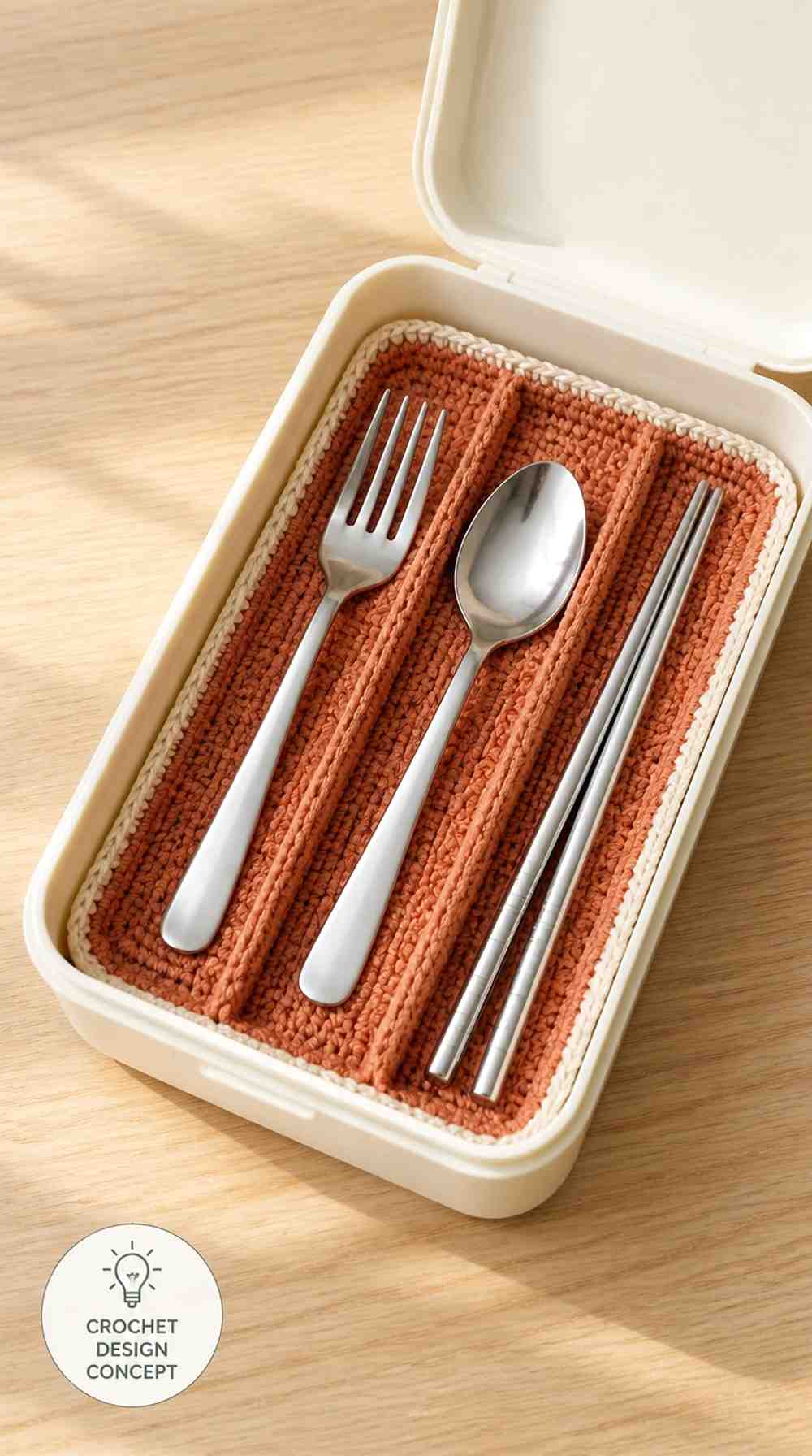
Warm terracotta crochet forms a neat rectangular mat with two raised vertical ribs dividing the surface into three narrow channels. A thin ivory border frames the edges, while the closely worked stitches keep the overall appearance simple and structured.
The three lanes visually separate a fork, spoon, and pair of reusable chopsticks inside a shallow lunchbox compartment. Unlike a pouch, this concept leaves the utensils visible and accessible. Its practical appeal depends on having enough space for each item without making the divider ribs too thick.
- Three Parallel Channels: Check the widths of the fork, spoon, and chopsticks before dividing the available space. Equal lanes may not suit every utensil set.
- Low Divider Height: The raised ribs should stay below the lunchbox rim. Excessive height could prevent the lid from closing properly.
- Ivory Outer Border: A thin edge gives the removable mat a finished appearance without significantly increasing the width needed inside the compartment.
2. Crochet Oatmeal Twin Pocket Insert
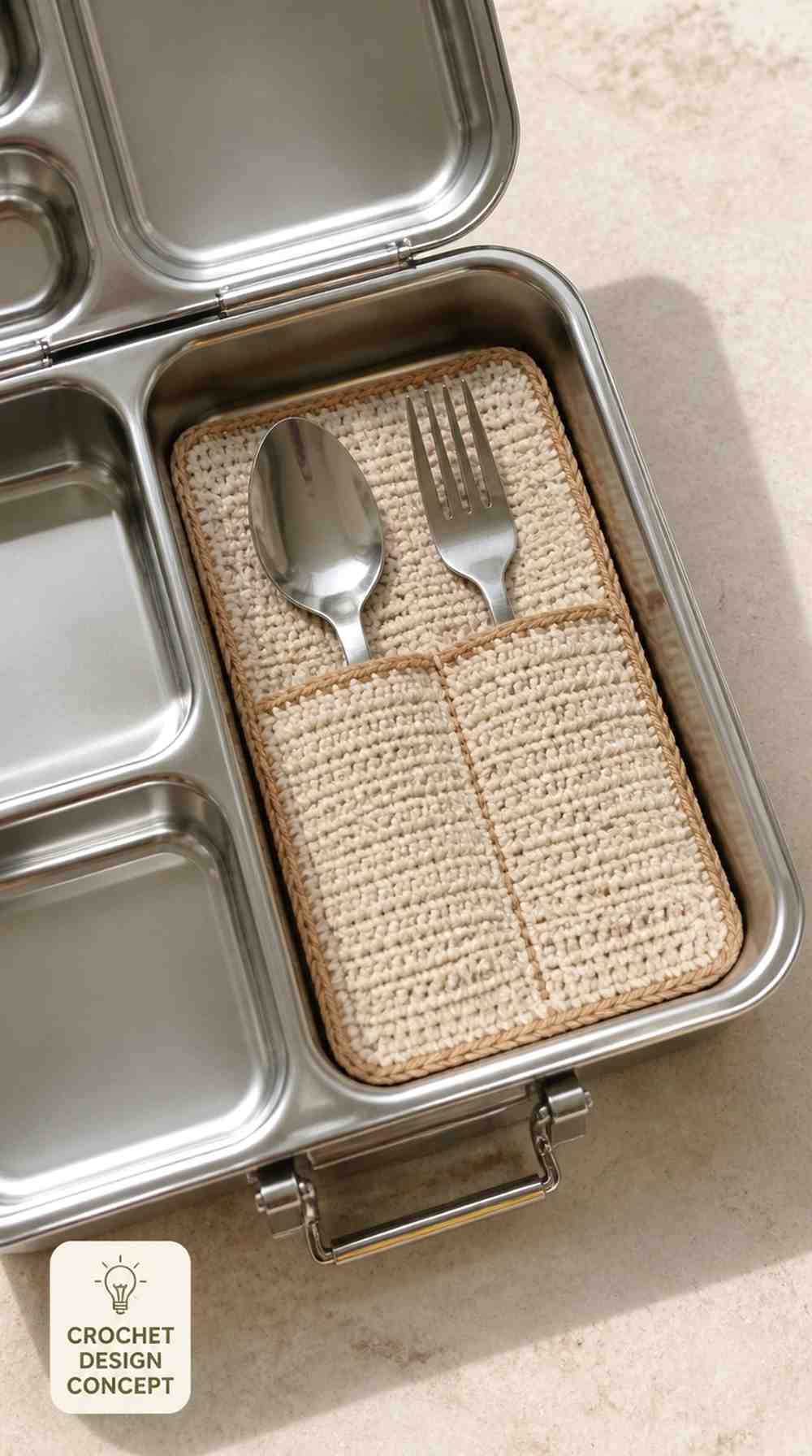
Two narrow pockets sit side by side on this oatmeal-colored crochet insert. Fine horizontal rows form the backing and pocket surfaces, while caramel-colored edging outlines both openings. A tidy central seam keeps the two pockets visually separate.
The arrangement is intended for a spoon and fork, with their handles tucked into the lower pockets and their upper ends exposed. Compared with the open-channel designs, this concept offers more fabric coverage around the handle sections. That additional material makes careful cleaning and drying especially important.
- Individual Pocket Widths: Plan each pocket around the actual utensil handle. A wide spoon handle may need more room than a narrow fork handle.
- Central Seam Placement: The joining seam should remain reasonably flat so neither pocket becomes twisted or excessively tight.
- Partial Handle Coverage: The pockets are shallow rather than fully enclosed. Consider using a separate washable cutlery case for hygienic everyday transport.
3. Crochet Indigo Sidecar Divider Insert
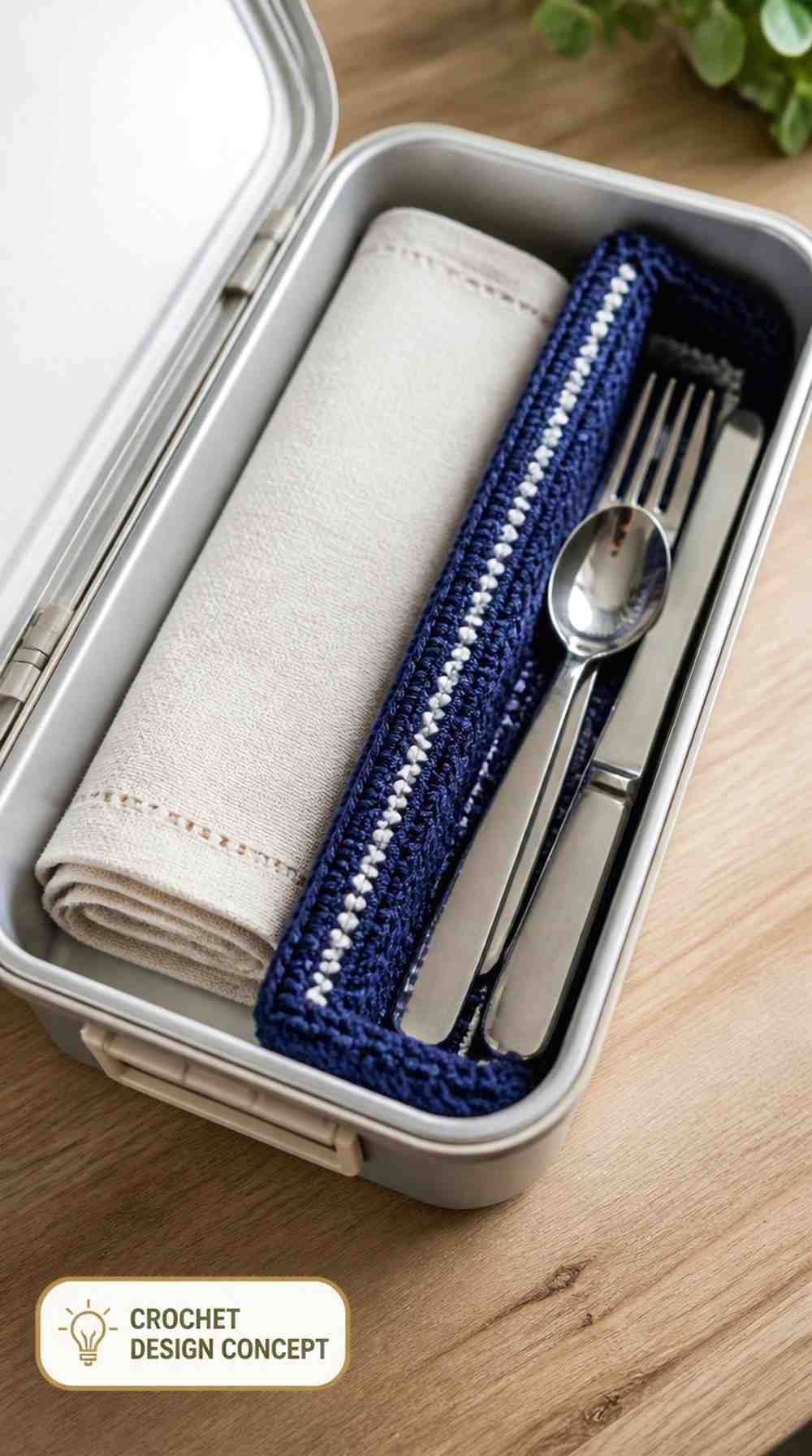
Deep indigo crochet creates a narrow sidecar-style organizer with one long raised divider running along its center. Two slim white accent rows add contrast, while the flat base keeps the insert visually uncomplicated.
The divider separates a row of dry reusable cutlery from a folded cloth napkin inside a rigid lunchbox tray. Rather than creating small individual pockets, this design organizes two different groups of lunchtime essentials. Its slim shape makes it an interesting choice for longer compartments where a traditional multi-pocket insert would take up unnecessary space.
- Lengthwise Divider: The raised ridge divides the compartment into two zones without requiring several separate pocket walls.
- Napkin Clearance: Leave enough room for the folded napkin without pressing it tightly against the cutlery or the compartment wall.
- Removable Base Strip: The entire crochet piece should lift out easily for cleaning rather than being permanently attached to the lunchbox.
4. Crochet Mustard Fan Pocket Insert
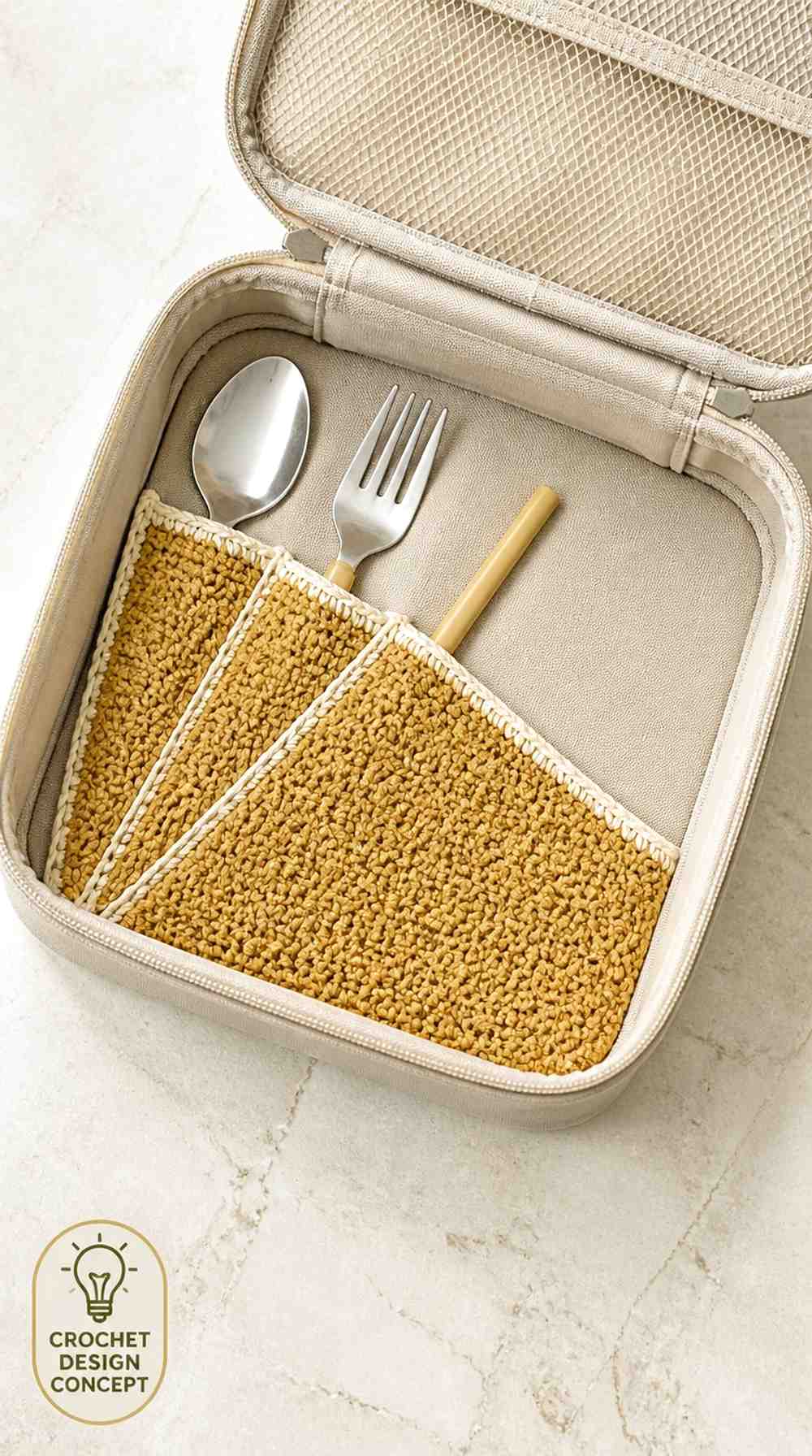
Muted mustard crochet forms three narrow compartments that spread outward from one corner, creating an unusual fan-shaped arrangement. Thin cream borders define the upper pocket openings, while diagonal joining lines divide the solid triangular base.
A spoon, fork, and small stirrer sit within the individual fan channels. The angled layout makes this design noticeably different from straight parallel dividers. It offers an interesting option for wide, shallow lunchbox compartments, although its shape may waste space in a long, narrow utensil tray.
- Fan-Shaped Layout: Compare the available compartment width with the combined diagonal positions of the utensils before considering this arrangement.
- Diagonal Pocket Seams: Keep joining lines straight and secure. Irregular angles could make one pocket much narrower than intended.
- Shallow Profile: A low triangular insert may fit better beneath a lunchbox lid than a heavily padded design, but clearance still needs checking.
5. Crochet Olive Center Spine Divider
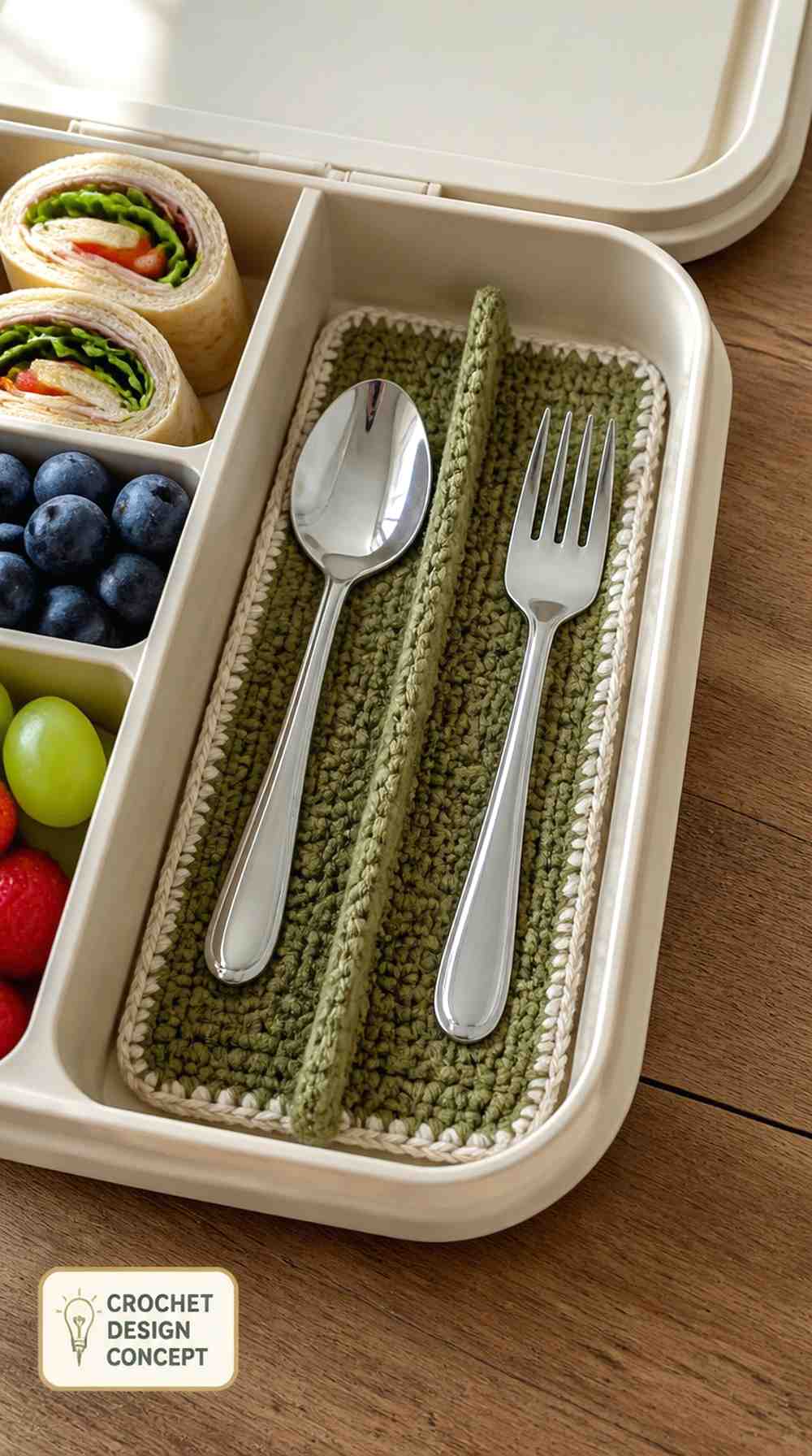
Olive-green crochet gives this removable insert a calm, natural appearance. A single raised spine runs lengthwise through the middle, dividing the rectangular base into two long sections. Narrow oatmeal borders frame the outer edges.
The simplicity of the design allows the crochet stitch structure to remain the main visual feature. A spoon rests on one side of the spine, while a fork occupies the other. With only one raised divider, this concept explores how a small amount of textured crochet can change the arrangement of a standard lunchbox utensil compartment.
- Single Divider Ridge: One central spine creates separation without building several thick pocket walls, making the design comparatively simple in appearance.
- Raised Post Stitches: Crochet post stitches can form a defined ridge, but their thickness and flexibility depend on the chosen yarn and tension.
- Two-Lane Capacity: This layout suits a basic spoon-and-fork arrangement better than a larger set containing chopsticks, straws, or additional utensils.
6. Crochet Blush Foldover Cutlery Insert
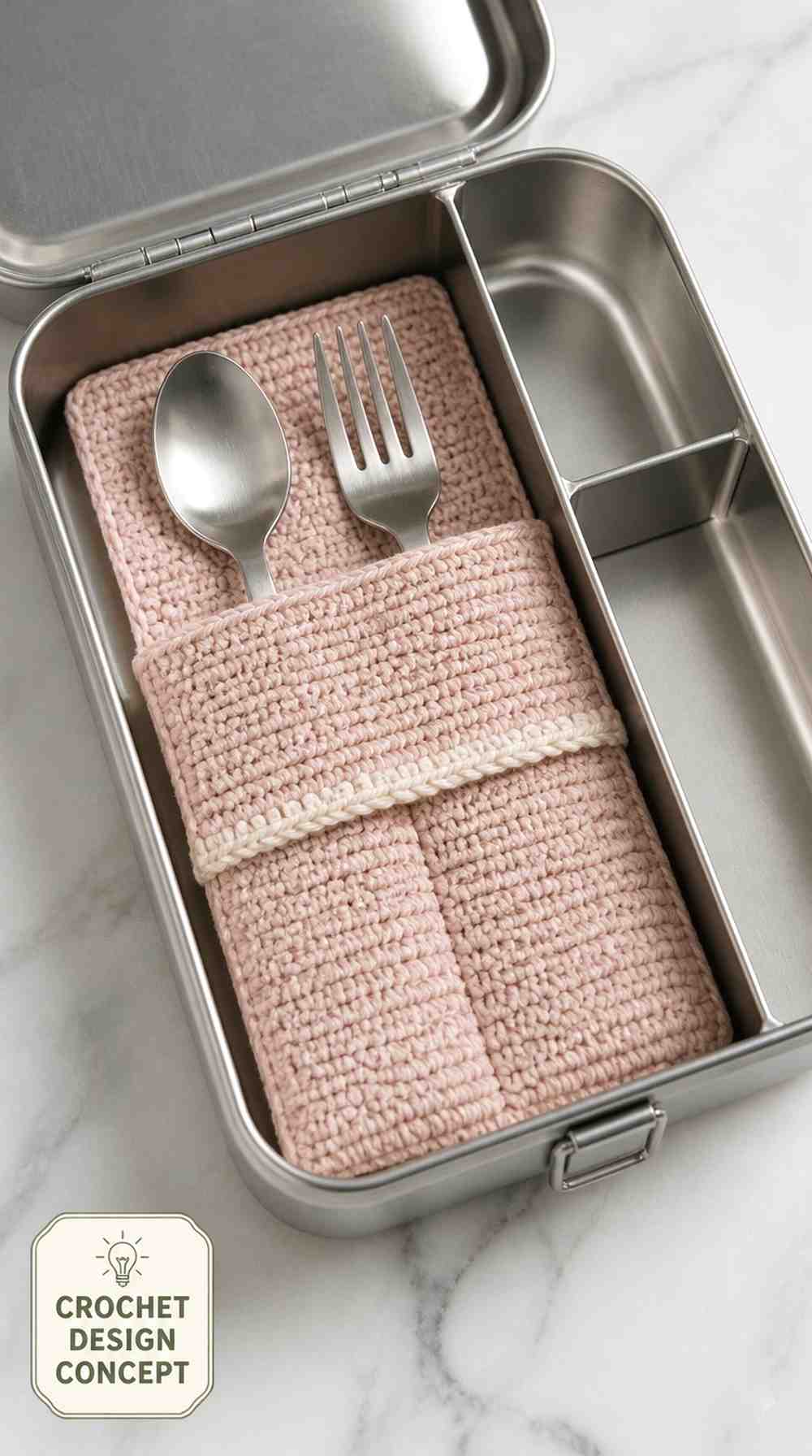
Dusty-blush crochet forms a soft rectangular insert with a long foldover flap across the lower portion. A central vertical seam divides the covered area into two shallow channels, while a thin cream border finishes the flap.
The handles of a spoon and fork disappear beneath the fold, with their upper sections remaining visible. This design is more enclosed than the open divider mats and introduces a neat layered appearance. The smooth folded fabric is attractive, but the extra coverage means the insert should be easy to open, wash, and dry thoroughly.
- Foldover Length: Keep the flap short enough that utensils remain easy to remove without pulling or stretching the fabric excessively.
- Two Hidden Channels: A central seam separates the covered handle sections, but both compartments need enough width to avoid gripping the handles too tightly.
- Flat Fold Construction: Avoid bulky rolled edges. A thick fold may interfere with the lid or make the fabric harder to clean.
7. Crochet Cocoa Checkerboard Divider Insert
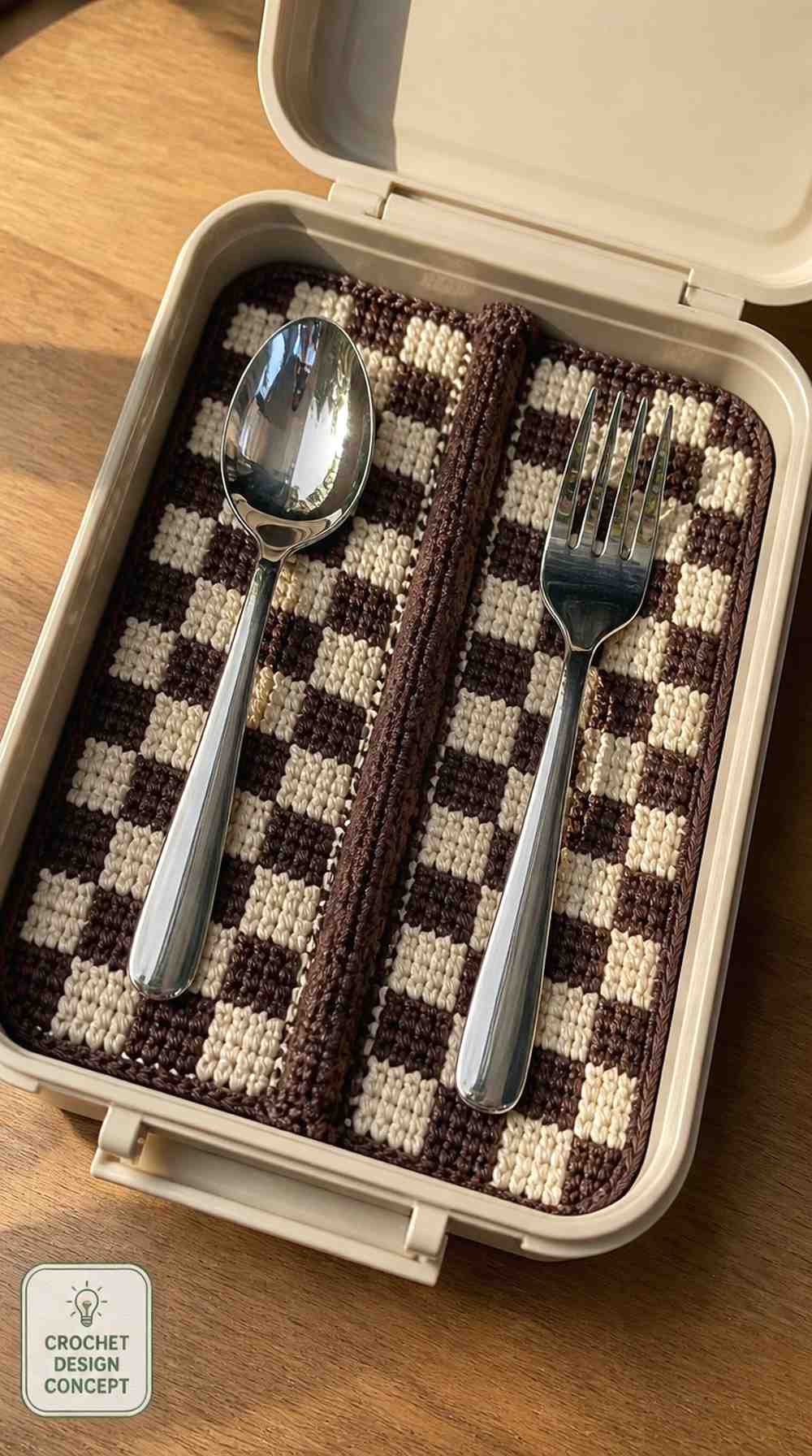
Miniature espresso-brown and vanilla-cream squares create the base of this decorative crochet organizer. A solid cocoa-colored ridge runs through the center, dividing the patterned surface into two equal utensil lanes. Dark-mocha edging finishes the rectangle.
The checkerboard offers a stronger visual statement than plain crochet rows, while the divider itself remains straightforward. A spoon and fork rest on opposite sides of the central ridge. This concept would appeal to someone who likes graphic colorwork, although small lunchbox dimensions require the individual checker squares to remain appropriately scaled.
- Miniature Checker Pattern: Dense tapestry crochet can create the color blocks without joining many tiny squares, which could introduce unnecessary seams.
- Central Cocoa Ridge: Keep the divider visually distinct from the alternating base colors so the two storage lanes remain easy to recognize.
- Cream Yarn Care: Light stitches may show stains more readily. A removable insert must tolerate cleaning appropriate to its actual yarn and construction.
8. Crochet Coral Mesh Loop Insert
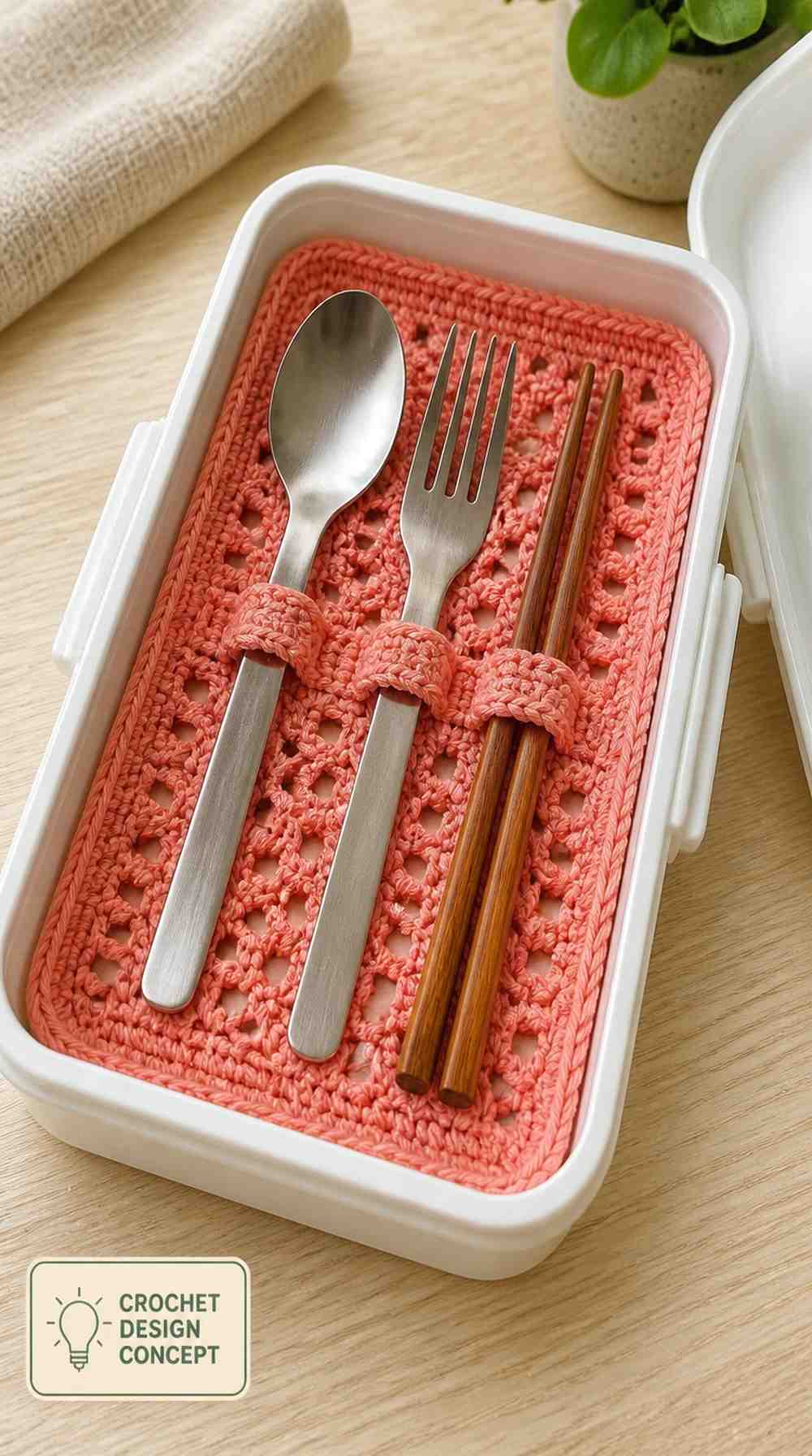
A coral crochet mat combines an orderly diamond-mesh base with three short retaining loops stitched across its center. Denser stitches reinforce the perimeter, creating a clear contrast between the open fabric and the attached handle loops.
A spoon, fork, and compact pair of travel chopsticks lie parallel, with their handles passing beneath the small loops. This concept focuses on alignment rather than fully enclosed pockets. The mesh gives it a lighter appearance, but the openwork does not guarantee hygienic storage or prevent movement during transport.
- Handle Retaining Loops: Size each loop around the intended utensil handle. Very loose loops provide little organization, while tight ones can make removal awkward.
- Diamond-Mesh Base: Openwork creates visual lightness but introduces more small spaces that may catch crumbs or require careful cleaning.
- Parallel Arrangement: Keep the utensils aligned so their upper ends do not overlap or press against the lunchbox lid.
9. Crochet Charcoal Staggered Pocket Insert
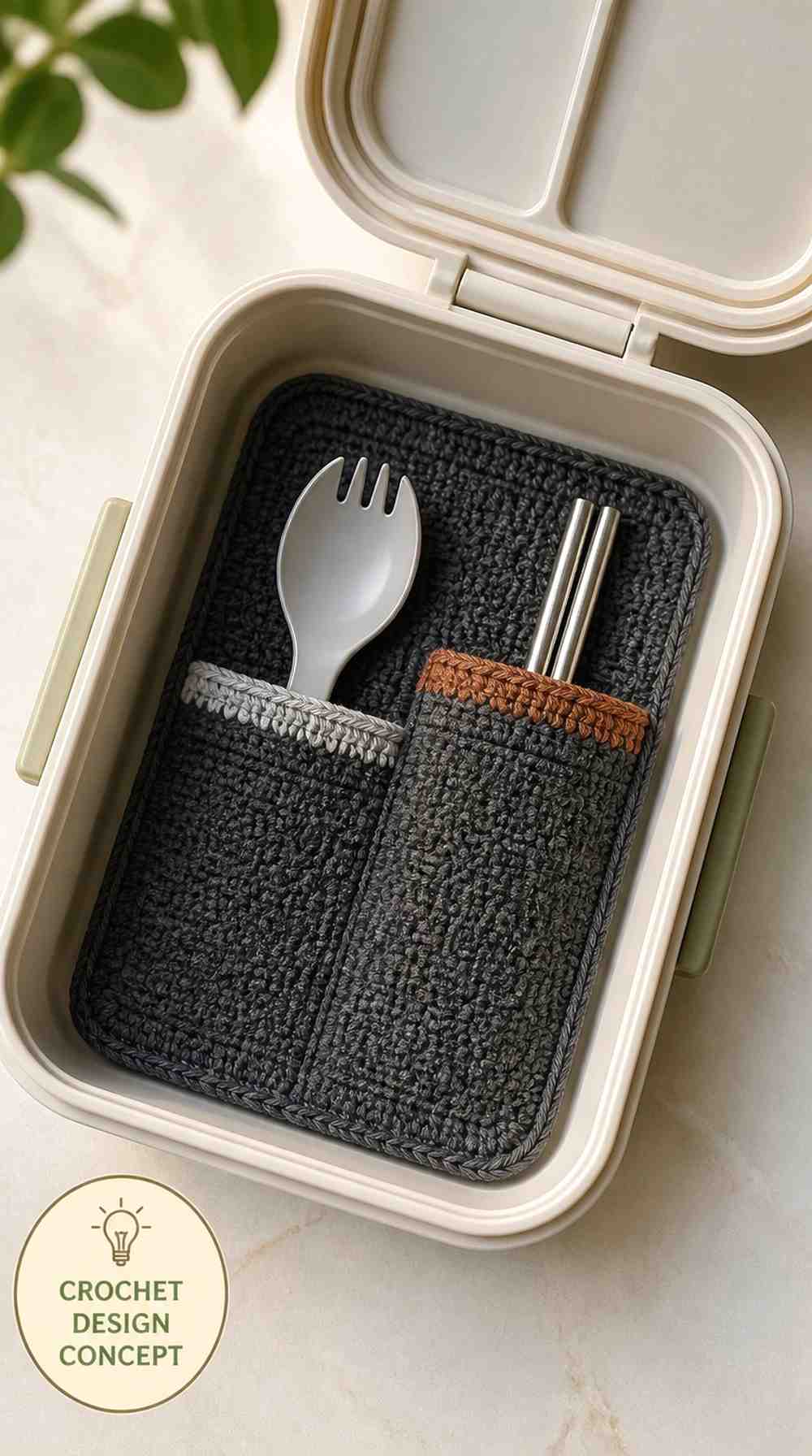
Charcoal-grey crochet provides a neutral base for two pockets of different lengths. The shorter pocket has pale-grey edging, while the longer pocket is finished with muted rust. Both sit on one rectangular backing panel.
The different heights allow a compact spork and a pair of reusable chopsticks to occupy separate spaces without requiring matching pocket dimensions. This design takes a more tailored approach to utensil organization, recognizing that a lunchbox may contain items of very different lengths.
- Different Pocket Depths: A short spork does not need the same coverage as longer chopsticks. Plan the pocket openings around the actual items.
- Contrasting Pocket Rims: The grey and rust borders make the two compartments visually distinct without needing labels or additional decorations.
- Compact Backing Panel: The base should fit inside the intended compartment without folding at the corners or pressing against the lid.
10. Crochet Lavender Scalloped Lane Insert
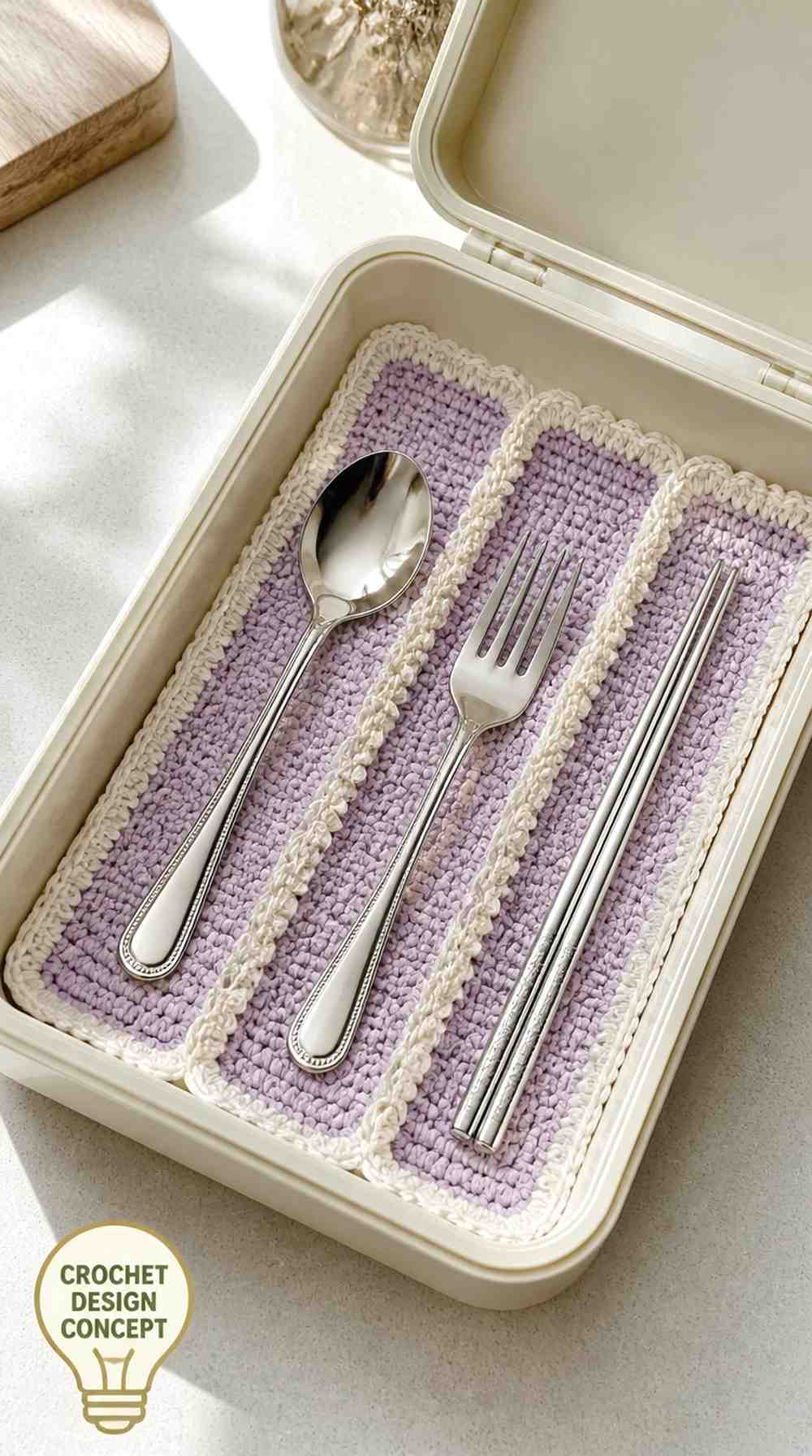
Pale-lavender crochet forms a smooth rectangular mat with two low ivory scalloped rails running lengthwise. The tiny connected shell stitches divide the surface into three shallow lanes, while a matching ivory border outlines the base.
The scallops add a decorative cottage-style detail to an otherwise straightforward organizer. A teaspoon, dessert fork, and short chopsticks occupy the three sections. Unlike bulky dividers, these low rails focus on gentle visual separation, although their actual ability to keep utensils apart during movement has not been tested.
- Miniature Scallop Scale: Keep each shell low and closely connected. Large decorative loops could catch utensil edges or interfere with removal.
- Three Shallow Lanes: This arrangement suits small utensils better than full-size dining cutlery, depending on the actual lunchbox dimensions.
- Ivory Shell Borders: Consistent tension is important because uneven scallops may curl or create unwanted high spots beneath the lid.
11. Crochet Cream Diagonal V Lane Insert
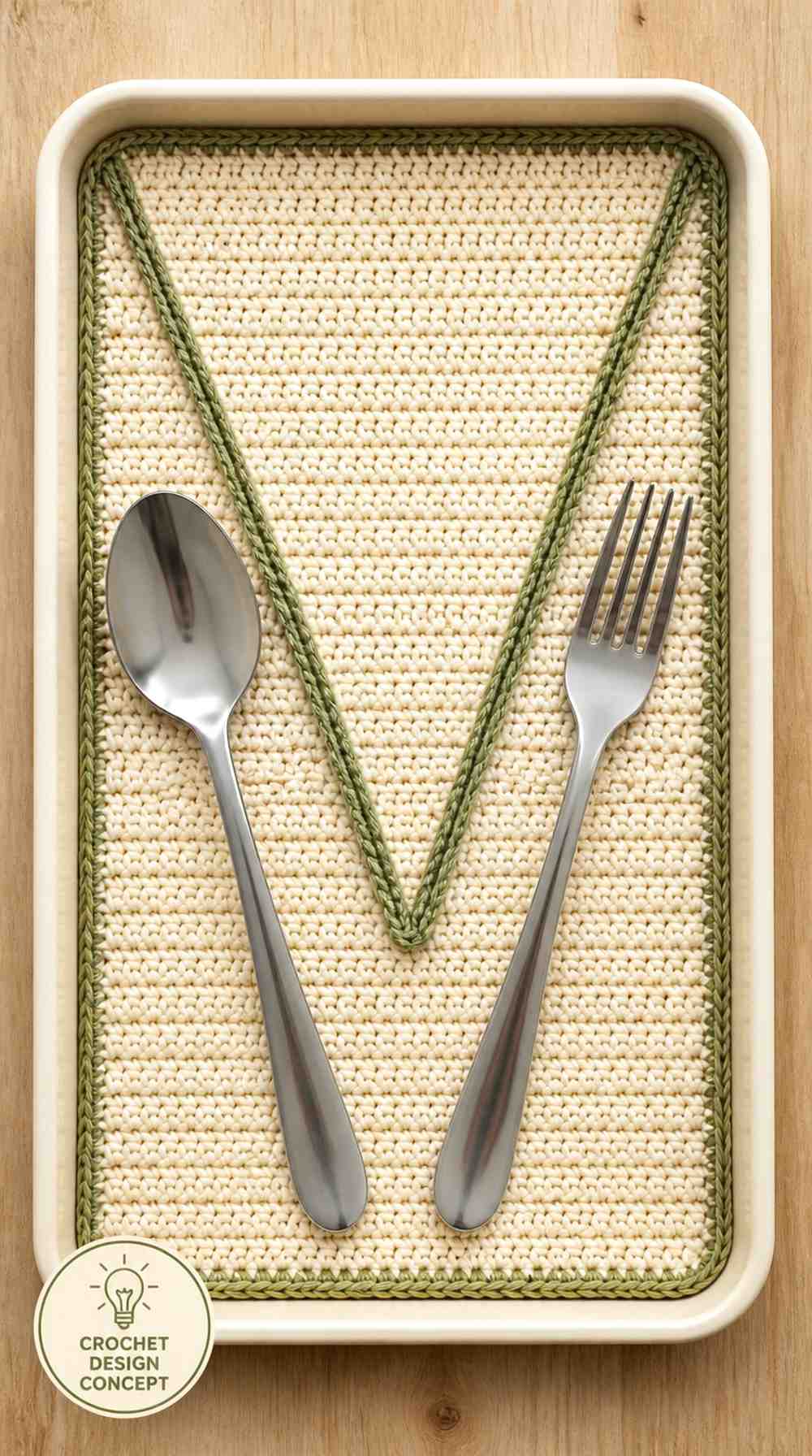
Warm-cream crochet creates a clean background for two slim moss-green divider ridges arranged in a V shape. The angled lines move inward toward the lower center, giving the insert a geometric appearance.
A spoon and fork rest diagonally on opposite sides, with their handles pointing toward the narrower end of the design. This layout differs from conventional lengthwise compartments because it uses the width of a shallow lunchbox tray. It may be worth exploring when straight utensils do not fit comfortably in a narrow horizontal row.
- V-Shaped Geometry: The position of each ridge should follow the actual utensil lengths and available width, rather than assuming one angle works universally.
- Handle Clearance: Leave enough separation near the narrow lower section so the utensil handles do not cross or become difficult to grasp.
- Low Crochet Ridges: The diagonal lines should remain connected to the base and should not rise high enough to obstruct the lunchbox closure.
12. Crochet Cobalt Lift Tab Divider
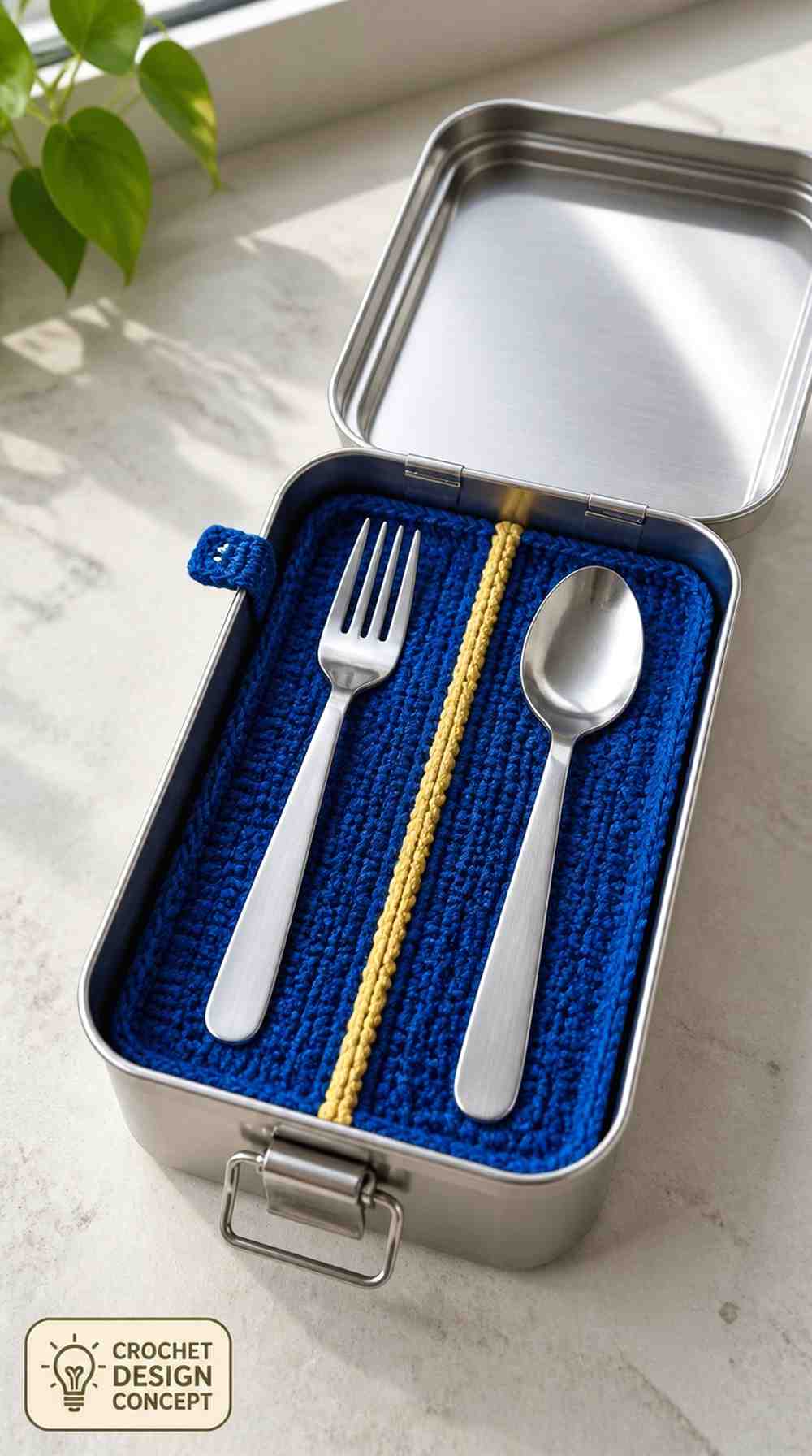
Bright cobalt-blue crochet gives this insert a modern appearance, with fine vertical ribs forming the base. A narrow golden-yellow ridge runs down the center, creating two long lanes for a fork and spoon.
The distinctive feature is a small flat pull tab attached to one upper corner. The tab suggests a convenient place to grasp the empty insert when removing it for cleaning. Its placement makes the design more than a simple two-lane mat, although the tab should not be treated as a handle for carrying utensils or lifting the lunchbox.
- Small Removal Tab: Keep the tab flat and securely joined. It is intended as a visual handling detail, not a load-bearing strap.
- Central Yellow Ridge: The contrasting divider helps distinguish the two utensil zones against the bright blue crochet base.
- Vertical Ribbed Texture: Close ribs can add surface detail, but excessive thickness may prevent the insert from fitting a shallow compartment.
13. Crochet Sage Accordion Slot Insert
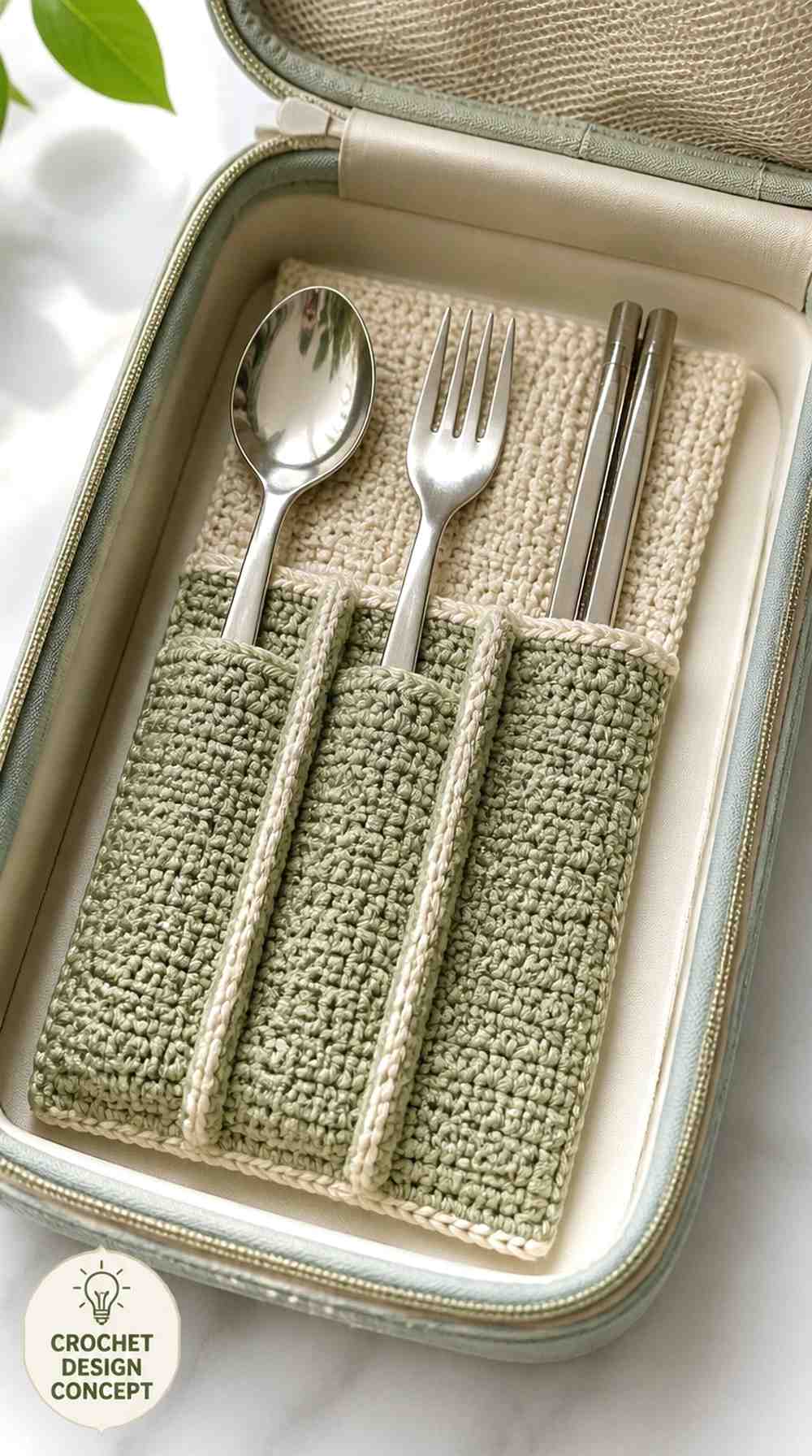
Muted-sage crochet folds into three narrow open-top compartments across a flat cream backing panel. The accordion-style sections have slim cream borders and neatly joined lower seams, creating a repeated pocket structure.
A spoon, fork, and pair of compact travel chopsticks sit in separate slots, with their upper ends visible. The folded arrangement gives this insert more depth than a simple flat mat while keeping the compartments aligned. It offers an interesting way to explore flexible storage, but fabric folds can also trap moisture or crumbs.
- Accordion Pocket Spacing: Each folded channel needs enough room for its utensil without compressing the neighboring pockets.
- Flat Backing Panel: The cream backing helps keep the folds organized, although a real fabric insert may still shift without an appropriate supporting tray.
- Cleaning Between Folds: Open the compartments fully during washing and drying. Closely packed folds should not be left damp inside a lunchbox.
14. Crochet Plum End Stop Divider Insert
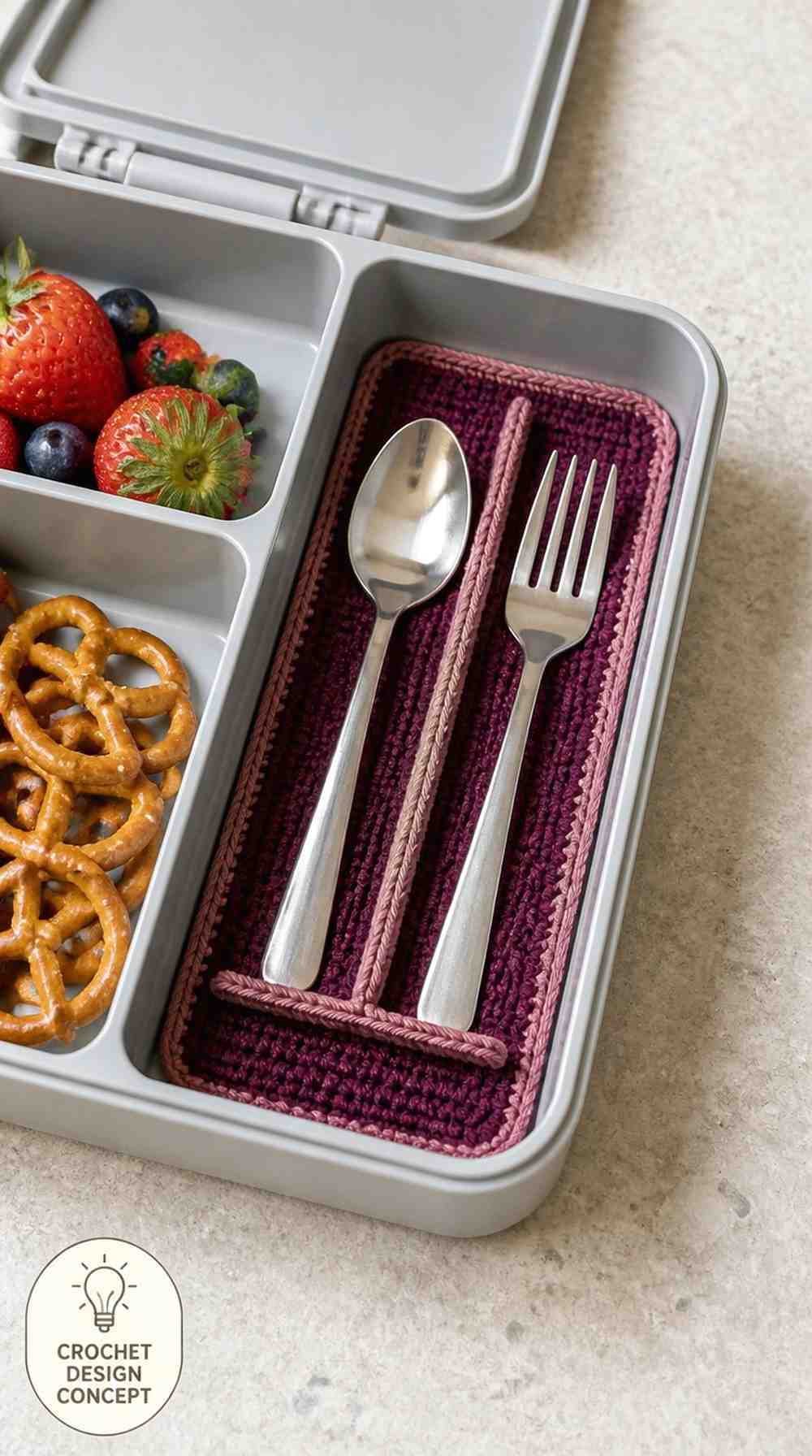
Deep-plum crochet creates a compact rectangular base with a low raised ridge near one short end and a second divider running lengthwise. Together, the two features form a simple T-shaped partition arrangement.
A dusty-rose outer border softens the darker color, while densely connected horizontal rows give the base a uniform appearance. The end-stop ridge sits near the handles of a spoon and fork, visually marking the lower part of their storage lanes. This design explores how both lengthwise and crosswise dividers can organize a small rectangular space.
- T-Shaped Partition: The combination of two divider directions creates a more defined layout than a single central ridge.
- End-Stop Position: Keep the short ridge away from awkward pressure points on the utensil handles and allow enough room for easy removal.
- Low Raised Construction: Both dividers need modest height so the insert can fit into its dedicated compartment without obstructing closure.
15. Crochet Sand Reversible Divider Insert
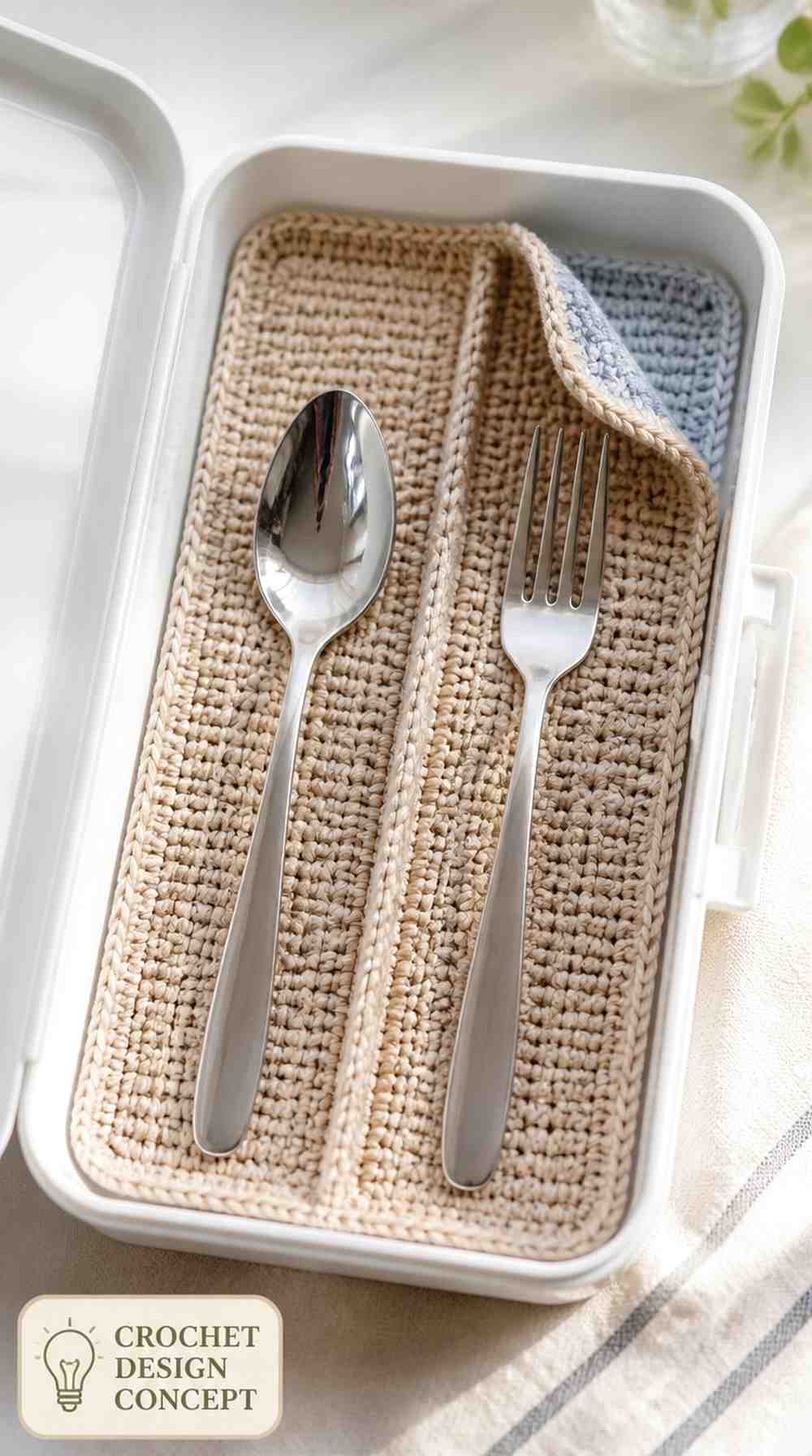
Warm sand-beige crochet forms the visible side of this slim rectangular insert, while an icy-blue reverse appears beneath one gently folded corner. Fine ribbing on the blue side contrasts with the closely stitched sand-colored surface.
A single low central divider separates two long utensil lanes. The reversible-looking construction adds a decorative detail without requiring buttons, pockets, or elaborate motifs. The turned corner makes the two-sided fabric easy to recognize, although an actual insert would need a flat, secure finish when placed inside a lunchbox.
- Two-Sided Appearance: Contrasting crochet textures allow either face to become a design feature, but a real divider must remain properly positioned when turned over.
- Folded Corner Detail: The raised corner reveals the reverse color. In everyday use, the insert should lie flat rather than leaving a loose edge that catches utensils.
- Single Divider Layout: The simple center ridge keeps the structure recognizable even with two differently textured fabric surfaces.
Practical Guide to Crochet Lunchbox Cutlery Divider Inserts
Check the lunchbox compartment first. Measure the length, width, and usable depth of the area intended for utensils. Consider the lid, seals, hinges, and any removable rigid tray. Crochet inserts can add thickness, so an attractive design may still be unsuitable if it prevents the lunchbox from closing correctly.
Keep food and crochet separate. Ordinary crochet yarn is not automatically suitable for direct food contact. These concepts are best treated as decorative organization ideas for a separate dry compartment. For daily use, a purpose-made, washable, food-contact-safe utensil case or rigid insert is the more practical choice, especially for the eating ends of spoons and forks.
Make washing straightforward. The University of Maine Cooperative Extension recommends cleaning lunchboxes and utensils regularly and washing and sanitizing items used for packed meals. Fabric folds, pockets, and textured stitches may be harder to clean than smooth, nonporous surfaces.
University of Maine Cooperative Extension
Consider material and stitch density. A smooth washable cotton or cotton-blend yarn may be worth exploring for decorative inserts, but check the specific yarn’s care instructions. Closely worked stitches can create a tidy surface, while open mesh and folds may collect crumbs. Neither stitch type guarantees hygiene.
Do not compromise safe food storage. Keep the insert away from wet foods, sauces, spills, and raw food. Remove it immediately if contaminated, and wash and dry it thoroughly before reuse. Any lunchbox used for perishable foods must still follow appropriate temperature-control guidance.
For more crochet kitchen organization inspiration, explore 17 Crochet Dish Rack Side Organizer Inspiration Ideas on Yarn Nest Studio. That collection includes separate utensil-storage concepts, although its organizers are intended for a kitchen dish rack rather than a lunchbox.
Want to Make Something Similar?
These 15 designs are inspiration concepts, not exact tested patterns. The following resources explain related crochet pocket and divider construction.
- Quick Crochet Cutlery Holder Pouch Pattern — Fosbas Designs demonstrates a folded crochet cutlery pouch with joined edges. It can help readers understand simple pocket construction, although it is not a lunchbox insert pattern.
- The Easiest Way to Crochet Organisers — YouTube explores crochet pouches, storage organizers, and rectangular divider construction. The demonstrated projects have different dimensions and uses from the concepts shown here.
These references are useful for learning general construction ideas, not for confirming that any of the pictured crochet dividers are food-safe or suitable for use in a particular lunchbox.
Comparison: Which Crochet Lunchbox Cutlery Divider Insert Should You Choose?
| Design | Main feature | Important trade-off |
|---|---|---|
| Terracotta Triple Channel | Three straight lanes | Fixed lane widths |
| Oatmeal Twin Pocket | Two covered handle pockets | More fabric to clean |
| Indigo Sidecar | Separates cutlery and napkin | Requires a longer compartment |
| Mustard Fan Pocket | Three angled channels | Needs extra width |
| Olive Center Spine | Minimal single divider | Limited separation |
| Blush Foldover | Covered handle sections | Fold can retain moisture |
| Cocoa Checkerboard | Decorative two-bay colorwork | Light stitches show marks |
| Coral Mesh Loop | Open mesh and retaining loops | Loops may snag |
| Charcoal Staggered Pocket | Different pocket lengths | Fixed utensil sizes |
| Lavender Scalloped Lane | Decorative low rails | Shells may curl |
| Cream Diagonal V Lane | Angled utensil layout | Needs careful spacing |
| Cobalt Lift Tab | Removable two-lane mat | Tab must lie flat |
| Sage Accordion Slot | Three folded compartments | Harder to wash |
| Plum End Stop | T-shaped divider arrangement | End ridge takes space |
| Sand Reversible | Two-sided crochet appearance | Extra fabric thickness |
For a simple visual arrangement, the Crochet Olive Center Spine Divider and Crochet Terracotta Triple Channel Insert offer clear separation without complicated folds.
If you prefer pockets that hold handle sections, compare the Crochet Oatmeal Twin Pocket Insert, Crochet Blush Foldover Cutlery Insert, and Crochet Charcoal Staggered Pocket Insert. Their deeper fabric sections make cleaning more important.
For decorative color and texture, the Crochet Cocoa Checkerboard Divider Insert, Crochet Lavender Scalloped Lane Insert, and Crochet Sand Reversible Divider Insert provide stronger visual details. The Crochet Mustard Fan Pocket Insert and Crochet Cream Diagonal V Lane Insert are worth exploring for wider compartments where angled utensil layouts may be possible.
Conclusion
Crochet lunchbox cutlery divider inserts offer a creative way to think about small-space organization. These 15 concepts explore everything from simple raised ribs and two-pocket panels to open mesh, accordion folds, diagonal compartments, and reversible textures.
The most useful design begins with the lunchbox itself. A shallow insert should fit neatly, remain easy to remove, and avoid interfering with food storage or closure. For everyday transport, washable purpose-made cutlery holders remain the safer practical option, while crochet can provide inspiration for decorative organization.
Which design would you choose? Would you prefer the terracotta triple-channel mat, oatmeal twin pockets, cocoa checkerboard, or sage accordion insert? Share your favorite style and whether you normally pack a spoon, fork, chopsticks, or a complete travel cutlery set.
Frequently Asked Questions
1. Can crochet be used directly inside a lunchbox?
Crochet can be explored as a decorative insert in a separate dry compartment, but ordinary yarn is not automatically food-contact-safe or easy to sanitize. Avoid direct contact between crochet and food or the eating ends of utensils. A washable rigid divider or dedicated utensil case is generally a better everyday choice.
2. What yarn is suitable for a crochet cutlery divider insert?
A smooth washable cotton yarn or suitable cotton blend may be worth considering for a decorative piece. However, yarn care, moisture retention, and cleaning requirements vary. Choose materials based on their actual specifications and do not assume ordinary yarn is safe for food-contact use.
3. How can I make a cutlery divider fit my lunchbox?
Measure the available compartment length, width, and depth, then compare those dimensions with the utensils you normally carry. Remember to allow room for stitch thickness, seams, and raised dividers. A fitted insert should not press against the lid, seals, or hinges, and should be removable without pulling.
4. Are pocket-style inserts better than flat divider mats?
Pocket designs may keep utensil handles more visibly separated, while flat divider mats generally use fewer layers. Neither format is guaranteed to prevent movement or improve hygiene. Pockets introduce seams and folds that need careful cleaning, so the better option depends on the available compartment and intended decorative use.
5. Are these 15 crochet lunchbox cutlery divider inserts available as patterns?
No. These are original crochet inspiration concepts shown through image-generation prompts. They are not tested crochet patterns or proven lunchbox accessories. The linked tutorials teach related crochet construction methods, but anyone adapting an idea would need to check sizing, materials, washing requirements, and practical suitability independently.