Acorns fit naturally into harvest kitchen decor because their shape works in several crochet formats. You can make a recognizable acorn-shaped pad, place an acorn graphic inside a square, use textured stitches to suggest the cap, or keep the functional surface plain and add the seasonal detail around an edge or hanging loop.
The distinction between decoration and heat use matters here. Some tutorials in this collection are specifically presented as hot pads or potholders. Others teach an acorn coaster, granny square, stitch pattern, appliqué, or decorative motif that can inspire a hot-pad adaptation. Those decorative projects should not automatically be treated as protection for hot cookware. When adapting them, the functional hot-pad base, fiber choice, thickness, flatness, and intended temperature exposure need to be planned separately.
That approach also creates more variety. Instead of thirteen nearly identical brown acorns, these ideas range from shaped kitchen pieces and pocket-style potholders to mosaic colorwork, C2C graphics, raised motifs, abstract acorn texture, and harvest-themed hanging accents.
Quick List
- Crochet Puff-Cap Acorn Hot Pad
- Crochet Pocket-Cap Acorn Potholder
- Crochet Harvest Acorn Washcloth Hot Pad
- Crochet Flat Two-Tone Acorn Hot Pad
- Crochet Mosaic Acorn Square Hot Pad
- Crochet C2C Pixel Acorn Hot Pad
- Crochet Acorn Granny Square Hot Pad
- Crochet Raised-Acorn Decorative Kitchen Pad
- Crochet All-Over Acorn-Stitch Hot Pad
- Crochet Acorn-Texture Banded Hot Pad
- Crochet Acorn-Appliqué Corner Hot Pad
- Crochet Hanging-Acorn Accent Hot Pad
- Crochet Oak Leaf and Acorn Harvest Hot Pad
A Hot Pad Needs More Than an Acorn Shape
A crochet piece can look thick and substantial without necessarily being intended for contact with hot cookware. That is why an acorn coaster, granny square, appliqué, or decorative motif should not be relabeled as a hot pad simply because its dimensions are increased.
For a piece that will actually sit under a hot casserole dish, pan, or serving vessel, follow material and construction guidance from a source intended for that purpose. Several purpose-designed projects in this collection specify cotton and substantial construction, but that should not be converted into a universal temperature guarantee for every cotton yarn or every handmade pad. Check both the project instructions and the yarn manufacturer’s care and use information.
Adapted ideas can still be useful in a harvest kitchen. They may work as decorative counter mats, cool-dish trivets, serving accents, or the decorative face of a separately planned hot pad. The important point is to decide on the function before choosing the construction.
Flatness Matters Under Pots and Serving Dishes
Acorn designs often invite raised caps, bobbles, puffed motifs, stems, leaves, and three-dimensional details. Those features can look excellent hanging on a kitchen wall but create an uneven platform beneath cookware.
Place a cool, flat-bottomed object on the finished piece before considering direct kitchen use. If it rocks, tilts, or rests mainly on one raised section, keep that surface decorative rather than putting hot cookware on it.
Dimensional embellishments can instead be moved toward a corner, upper border, or hanging loop. That preserves the harvest character while leaving the main support area flatter.
Adapting Coasters, Squares, and Motifs for Kitchen Use
Upscaling a coaster is not simply a matter of choosing thicker yarn. A change in yarn or hook can alter density, flexibility, stitch openings, and the way the finished fabric lies on a counter.
For a granny square or graphic motif, another option is to treat the tutorial as the decorative face and plan a separate backing. That gives you more control over the functional portion without altering the creator’s motif construction.
With appliqués and three-dimensional acorns, keep the embellishment away from the primary cookware-contact area. An acorn attached beside a hanging loop can communicate the harvest theme just as clearly as one positioned directly in the middle of the pad.
1. Crochet Puff-Cap Acorn Hot Pad
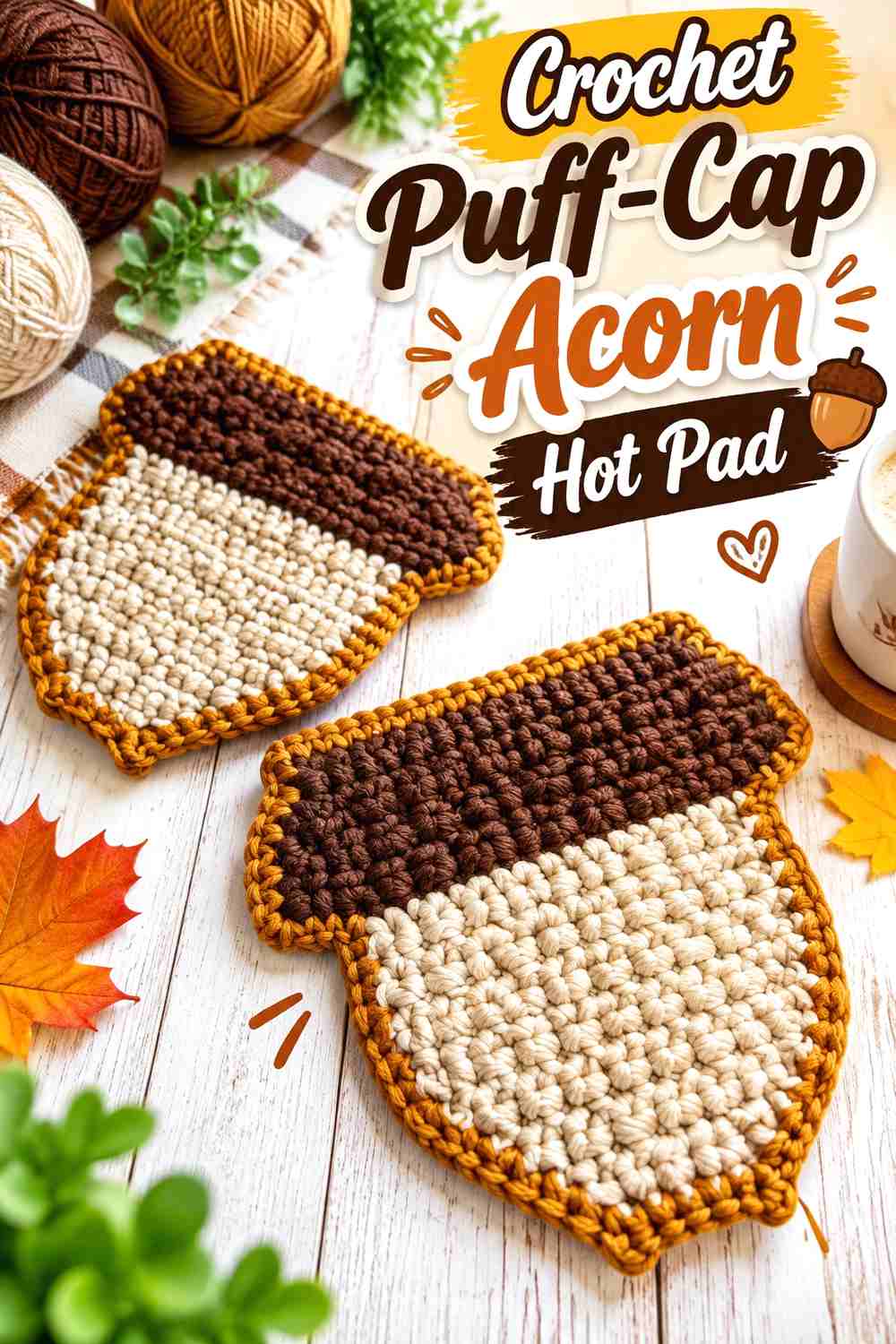
This shaped acorn is one of the most direct matches for the topic. Rachels Lovely Stitches presents the project as an acorn coaster and/or hot pad, with a recognizable nut shape, contrasting cap, and flat overall format. The tutorial also uses cotton in its example, making it a useful place to start when you want a project already framed for kitchen use rather than a decorative motif that requires major adaptation.
Its irregular outline is the main reason to choose it over a standard square potholder. The cap and tapered lower section remain visible around smaller dishes, so the acorn identity does not disappear as soon as something is placed on top.
The Usable Center Is Smaller Than the Full Silhouette
A stem, cap corners, and tapered tip all contribute to the overall acorn shape, but they do not provide the same support area as the broader center.
Before assigning this pad to a particular serving dish, compare the base of the dish with the flatter central area. A piece can have a generous overall footprint while still offering less continuous support than a similarly sized square.
Keep the Cap Texture From Becoming a High Spot
Texture gives the upper section its acorn character, but a functional pad should still support a vessel predictably.
Once the piece is finished, lay it flat and look across the surface from the side. If the cap sits noticeably higher than the body, reserve that version for smaller or cooler table items rather than assuming every pot will sit evenly across it.
Creator Credit: Rachels Lovely Stitches
2. Crochet Pocket-Cap Acorn Potholder
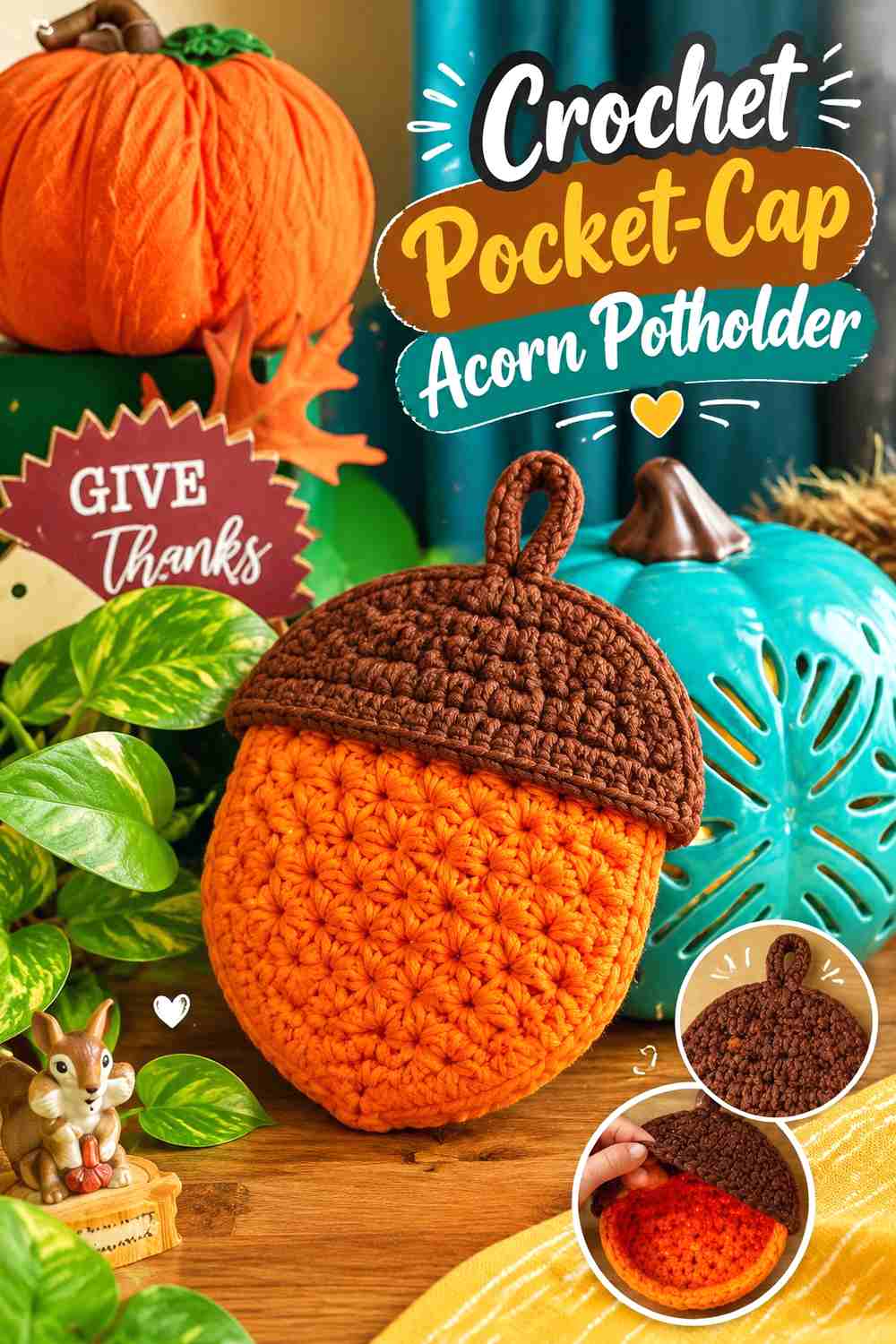
Celtic Knot Crochet takes the acorn concept further by making the cap part of the function. The project is designed as an acorn-shaped hot pad with an opening beneath the cap that can also be used when handling cookware. The source specifies a substantial base construction and cotton for hot or warm use.
That makes this option different from a purely flat trivet. It is useful for readers who want one autumn kitchen piece that can hang as decor, rest beneath a dish, and follow the creator’s potholder concept.
The Cap Pocket Changes How You Hold the Piece
A pocket adds hand access, which means fit and flexibility matter in addition to surface coverage. If you substantially alter yarn, scale, or construction, the opening may no longer behave like the original.
Follow the source for the intended pocket arrangement instead of resizing only the acorn body and assuming the hand opening will remain proportional.
Dimensional Texture Belongs Where the Pattern Places It
The textured cap is part of the distinctive finished appearance. Moving that texture farther into the central base during an adaptation could make the cookware-support area less even.
If you want additional decoration, it is safer from a stability standpoint to preserve a flatter central region and let the cap remain the visual focal point.
Creator Credit: Celtic Knot Crochet
3. Crochet Harvest Acorn Washcloth Hot Pad
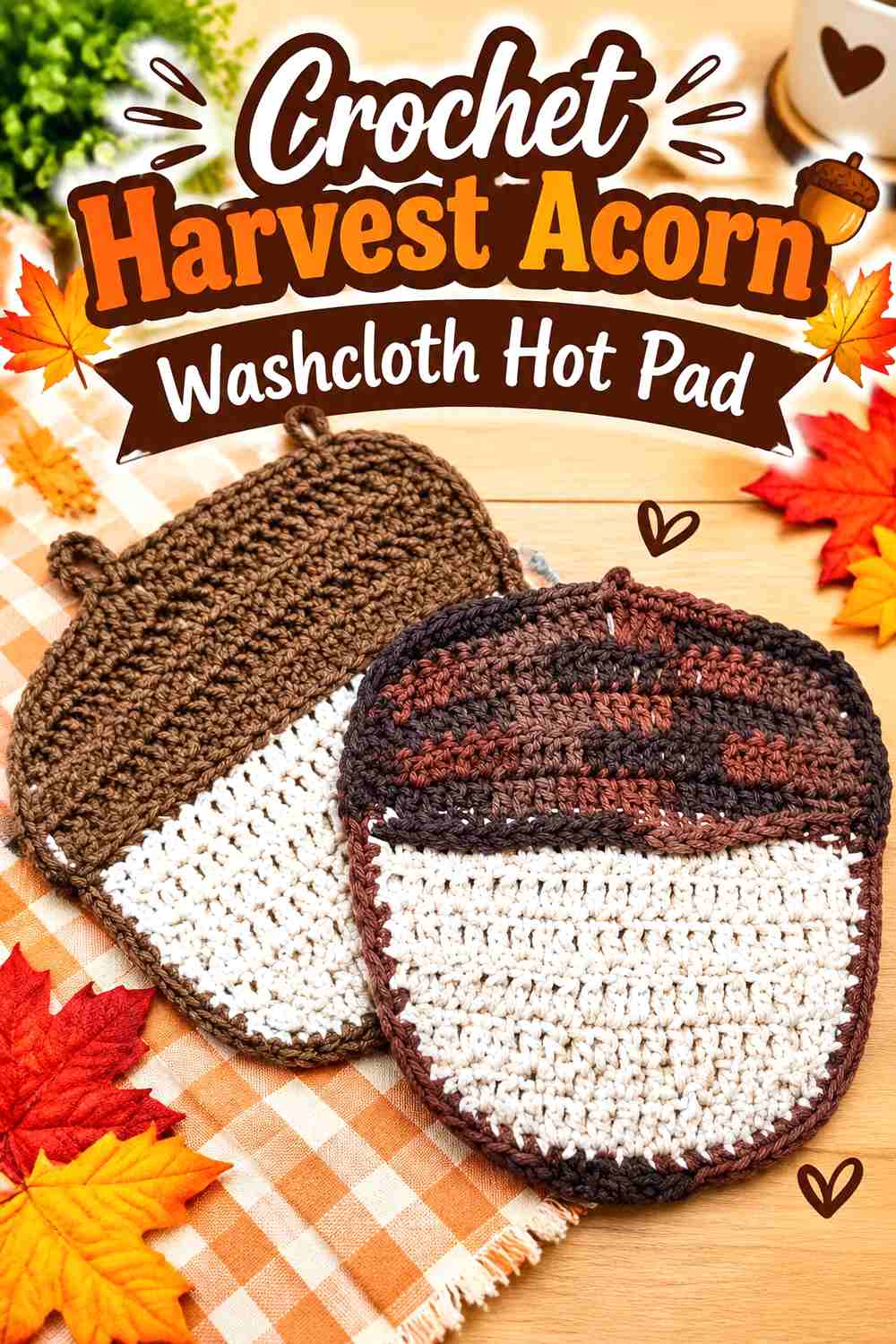
Sara Sach Crochet Designs presents a flat acorn project for multiple household uses, including a washcloth and hot pad. That flexible format makes it especially useful for a harvest kitchen where you may want matching seasonal textiles rather than one highly sculptural potholder.
Because the silhouette is created within a relatively simple flat construction, this direction puts more attention on the contrast between the nut and cap than on raised embellishment.
Decide on Its Job Before Choosing Materials
A washcloth and a hot pad have different performance requirements even when they share the same basic shape. A soft cloth intended for washing should not automatically be assigned hot-cookware duty simply because another version of the pattern has that use.
Choose the intended function first and then follow the creator’s relevant material guidance. If you make decorative versions from other fibers, keep their use separate from any heat-handling versions.
A Hanging Loop Can Make Seasonal Storage Easier
Harvest kitchen pieces often spend part of the year in storage. A loop allows an acorn pad to hang from a hook during fall and keeps the pointed silhouette visible.
Check the loop attachment before relying on it for repeated hanging. Decorative storage places less demand on the loop than using it to pull or manipulate the pad while cookware is present.
Creator Credit: Sara Sach Crochet Designs
4. Crochet Flat Two-Tone Acorn Hot Pad
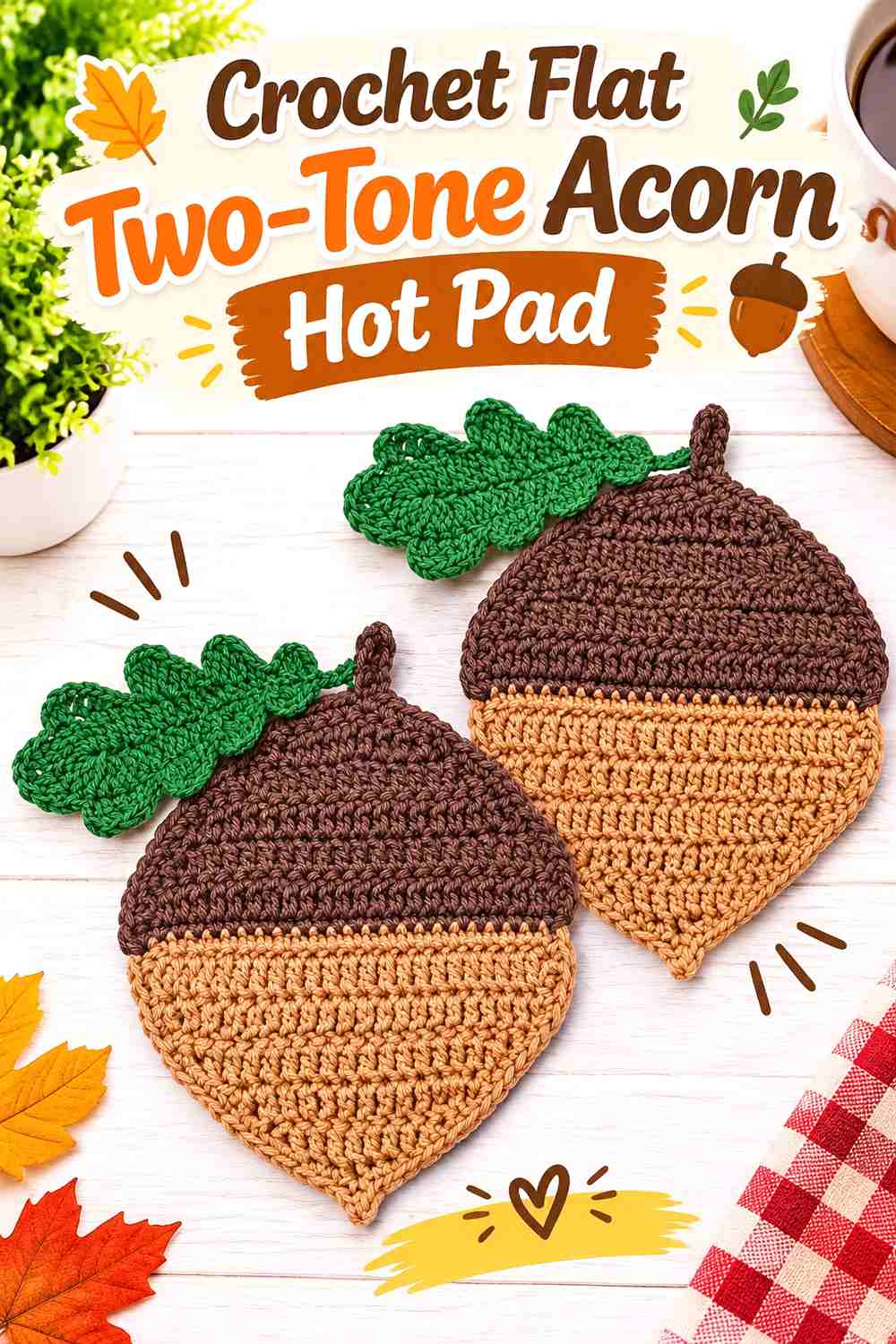
Crochetwithsumi’s tutorial creates a flat acorn coaster using a straightforward two-tone silhouette. The original project is a coaster rather than a purpose-designed hot pad, so this idea is an adaptation: the tutorial supplies the shape, while any actual hot-pad construction needs to be planned separately.
This is a useful direction when you prefer a clean acorn outline without a bulky cap, pocket, or raised surface.
Scaling Up Can Change More Than the Size
Changing yarn or hook size to enlarge a coaster can affect the amount of space between stitches, the firmness of the fabric, and how sharply the outline holds its shape.
Instead of assuming a larger version will automatically function as a hot pad, crochet a sample and assess its density and flatness. If the original silhouette is what you like, another option is to preserve the motif scale and mount it on a separately planned kitchen pad.
A Simple Outline Gives You More Placement Flexibility
Because the surface is comparatively quiet, this acorn can work as a centered motif or as one element in a larger rectangular pad.
For cookware use, prioritize a broad, stable support area. The acorn can provide the seasonal identity without requiring the entire functional pad to follow its narrow stem and tapered tip.
Creator Credit: Crochetwithsumi
5. Crochet Mosaic Acorn Square Hot Pad
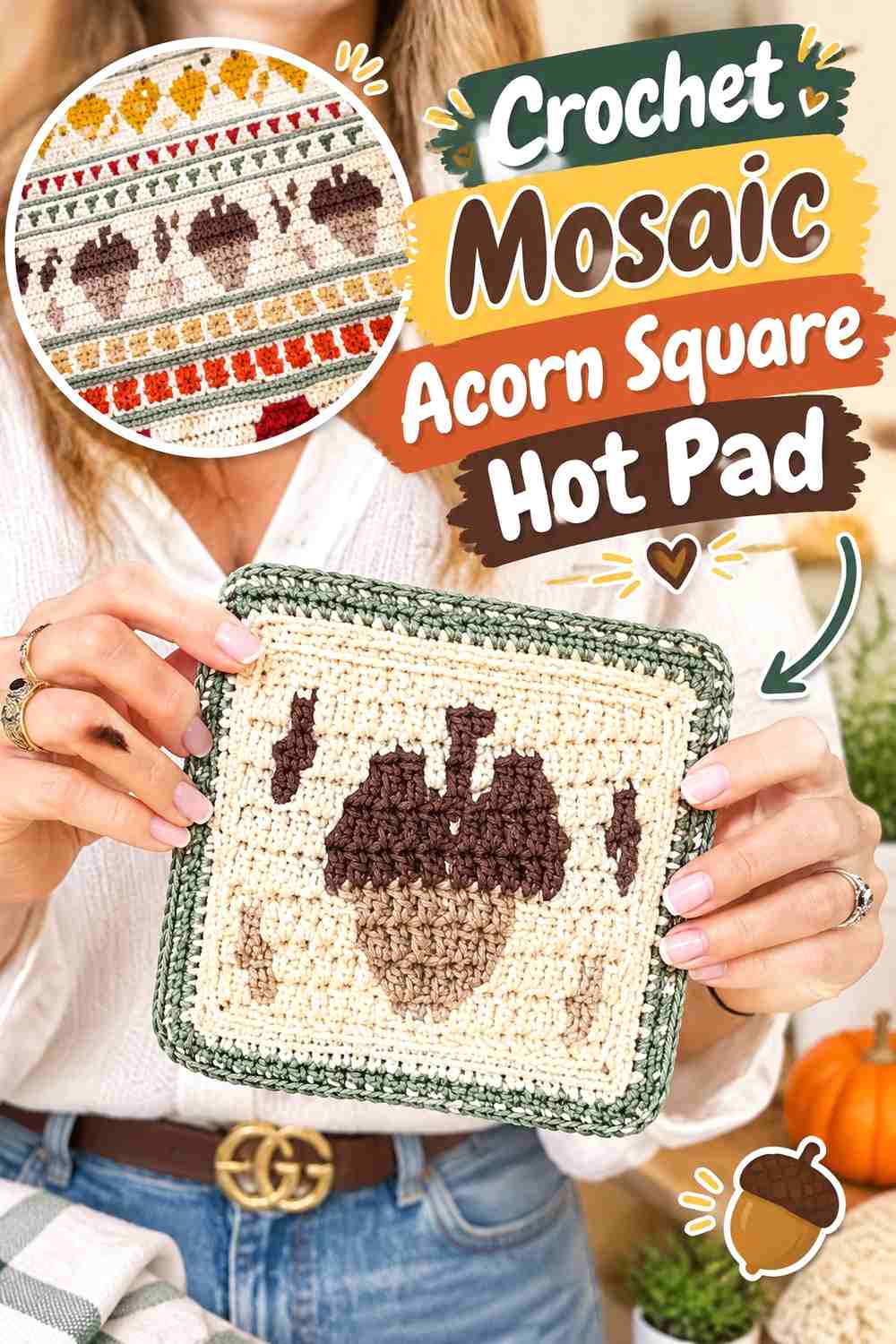
HanJan Crochet uses overlay mosaic crochet to form an acorn graphic inside a compact project that is presented as a coaster and adaptable motif. The graphic approach makes this fundamentally different from the shaped acorns: the outer edge can remain regular while the seasonal design sits inside it.
For a harvest-kitchen hot pad, that square format can be more convenient beneath cookware, but the source coaster itself should not be assumed to have hot-pad performance. Treat the mosaic design as the visual starting point and plan heat-use construction independently.
A Square Footprint Uses More of Its Area
A shaped acorn loses some potential support area around its stem and tapered sides. A square keeps its corners, giving a pot or serving dish a more continuous platform.
That makes this direction worth considering when function matters more than reproducing the literal acorn outline.
Watch the Fabric Where Mosaic Details Build Up
Colorwork can create differences in fabric character across a piece. Before adding a backing or border, lay the completed decorative panel down and check whether it remains flat.
Correcting waviness before layers are joined is easier than trying to flatten a finished kitchen pad whose edges and center are already pulling against one another.
Creator Credit: HanJan Crochet
6. Crochet C2C Pixel Acorn Hot Pad
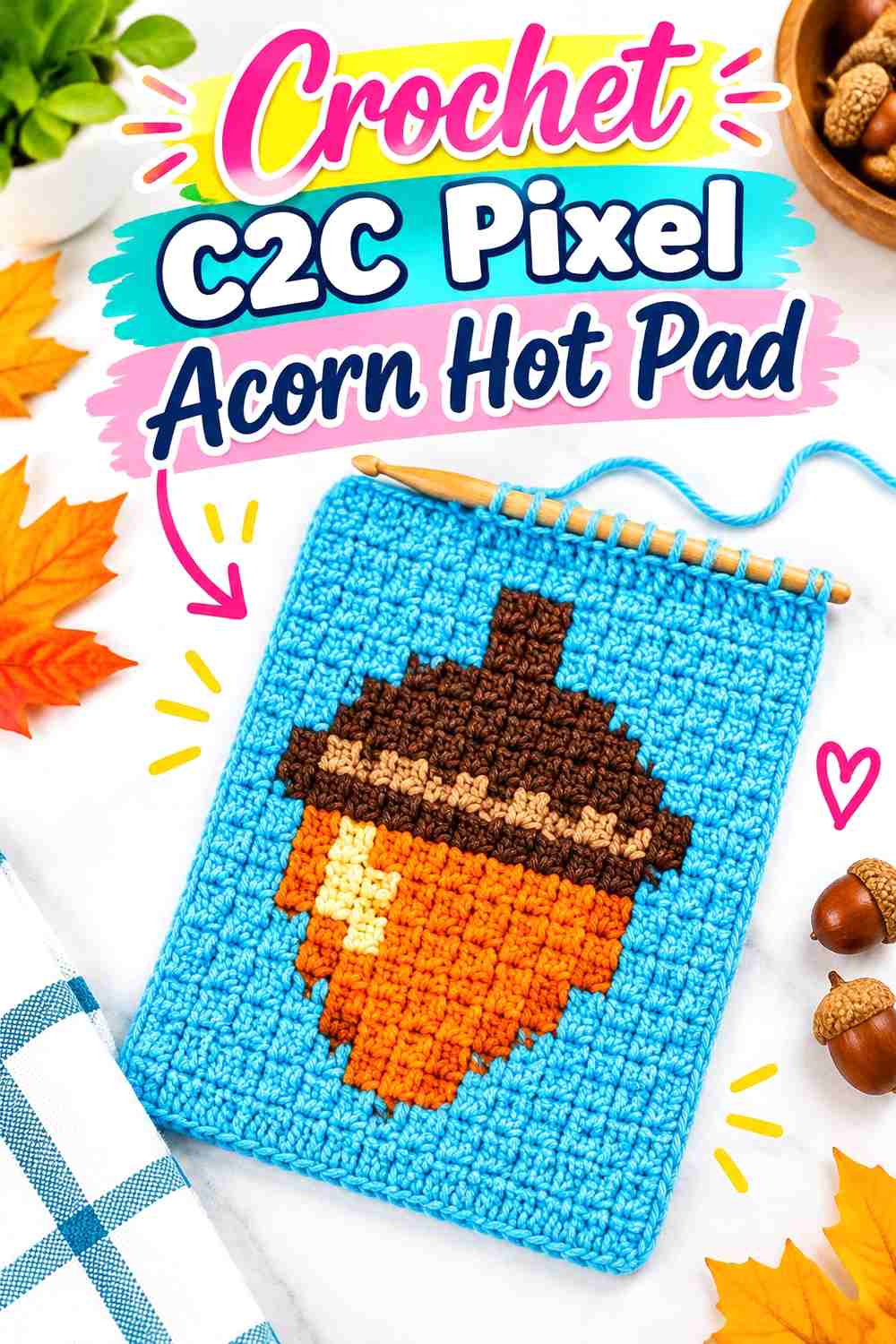
Winding Road Crochet offers an acorn C2C graph and specifically discusses using the design as a washcloth or converting it into a potholder with an additional backing. The creator’s YouTube tutorial teaches the corresponding corner-to-corner graph method rather than presenting the finished acorn as a standalone video tutorial.
This is a strong choice when you prefer a recognizable picture rather than an acorn-shaped edge. The pixel-style image stays readable while the outside of the pad remains square.
A Backing Can Serve a Structural Purpose
With a graphic front, the second layer is not only a place to hide the reverse of the colorwork. It can also change the substance and feel of the finished potholder.
If you adapt the project, make the backing decision as part of the initial plan. Adding an unplanned layer at the end can affect edge tension and the way the pad lies.
Keep the Graphic Centered After Finishing
Borders and joining can change the visual balance of a pixel design. A narrow edge on one side and wider treatment on another can make the acorn look off center even when the graph itself was worked correctly.
Lay out both layers before final joining and check the graphic from normal viewing distance, not only while working close to the stitches.
Creator Credit: Winding Road Crochet
7. Crochet Acorn Granny Square Hot Pad
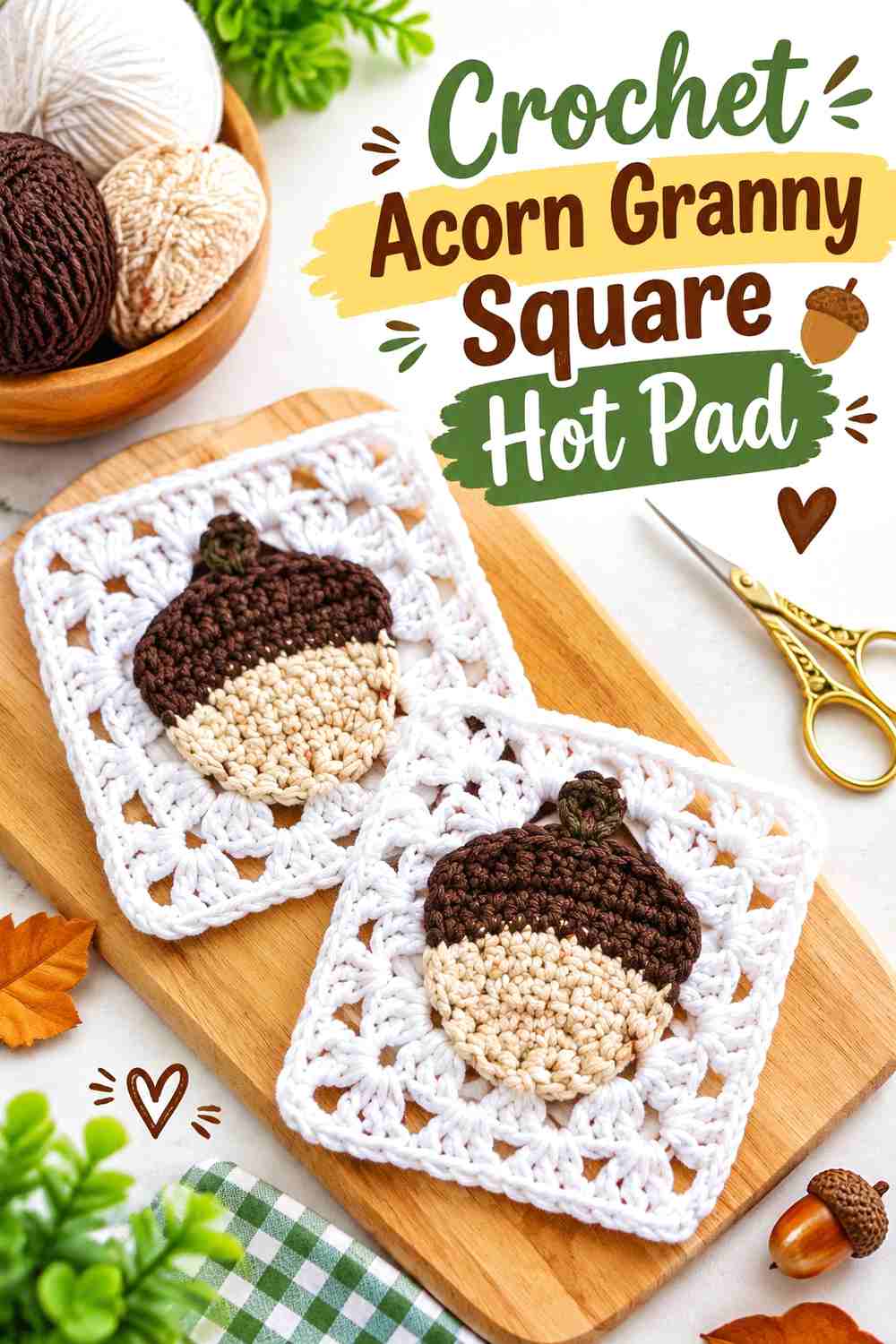
Crochetcakes demonstrates an acorn granny square that places the seasonal motif inside a familiar square framework. The original tutorial is for the granny square itself, not a heat-rated kitchen pad, so any hot-pad version needs an independently appropriate backing, fiber, and finished construction.
The advantage is modularity. A square can become the decorative face of a potholder without forcing the outer edge to mimic the acorn.
The Granny Surround Changes the Visual Weight
A shaped acorn makes the object itself the motif. A granny surround frames the acorn and lets background color become part of the harvest palette.
That works well when your kitchen already uses square potholders and you want the seasonal versions to stack or hang alongside them more easily.
Check the Center Before Adding a Functional Back
Any raised or uneven central motif deserves attention before another layer is attached. Place the square on a hard surface and run your hand gently over it to identify pronounced ridges.
If the center is strongly dimensional, use the square as decorative inspiration or wall-hanging kitchen decor rather than assuming a backing will make the cookware-contact surface stable.
Creator Credit: crochetcakes
8. Crochet Raised-Acorn Decorative Kitchen Pad
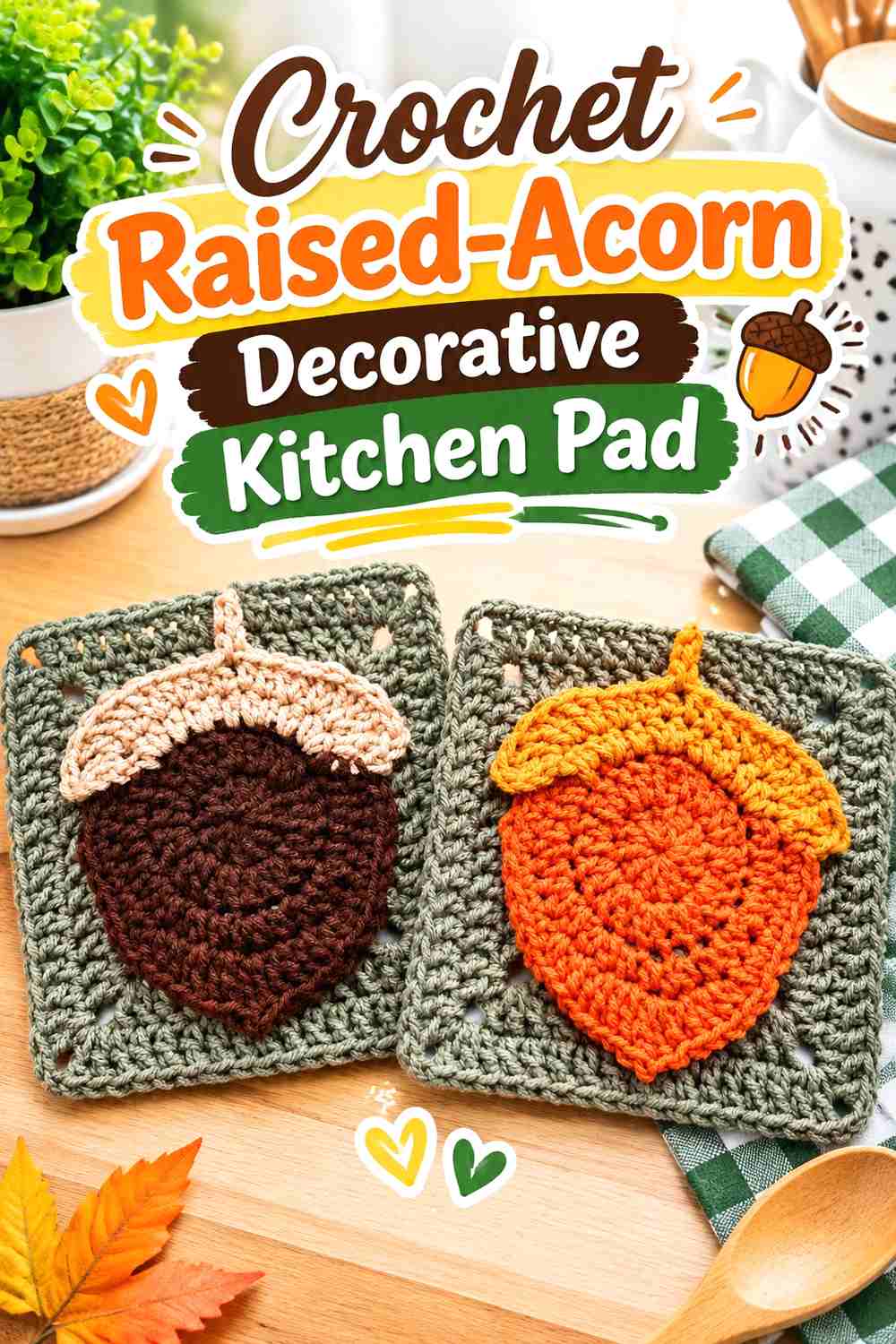
Jayda InStitches demonstrates a boho-style granny square with a dimensional acorn motif. That raised construction gives the square a strong handmade harvest look, but it also makes this one of the options that needs the clearest distinction between decorative use and direct cookware support.
Rather than positioning the dimensional acorn beneath a hot pot, use the tutorial as inspiration for a decorative serving mat, cool-dish mat, or harvest display piece unless your independently planned functional surface stays flat and appropriate for its intended use.
Raised Motifs Can Destabilize Cookware
A sculptural acorn creates high points. A flat pan placed over those points can rock instead of resting evenly on the surrounding crochet.
Test the finished surface with a cool, flat-bottomed object first. If there is noticeable movement, treat the project as decorative rather than trying to justify direct hot-dish use because the crochet feels thick.
Put the Decoration Where It Can Be Seen
A dimensional motif loses much of its visual value when hidden beneath cookware anyway. Placing a raised-acorn square beside a serving area, under a cool bread basket, or as part of a harvest kitchen display allows the texture to remain visible.
For a functional hot pad inspired by the same look, consider moving the raised motif toward a non-load-bearing corner of a separately constructed flat base.
Creator Credit: Jayda InStitches
9. Crochet All-Over Acorn-Stitch Hot Pad
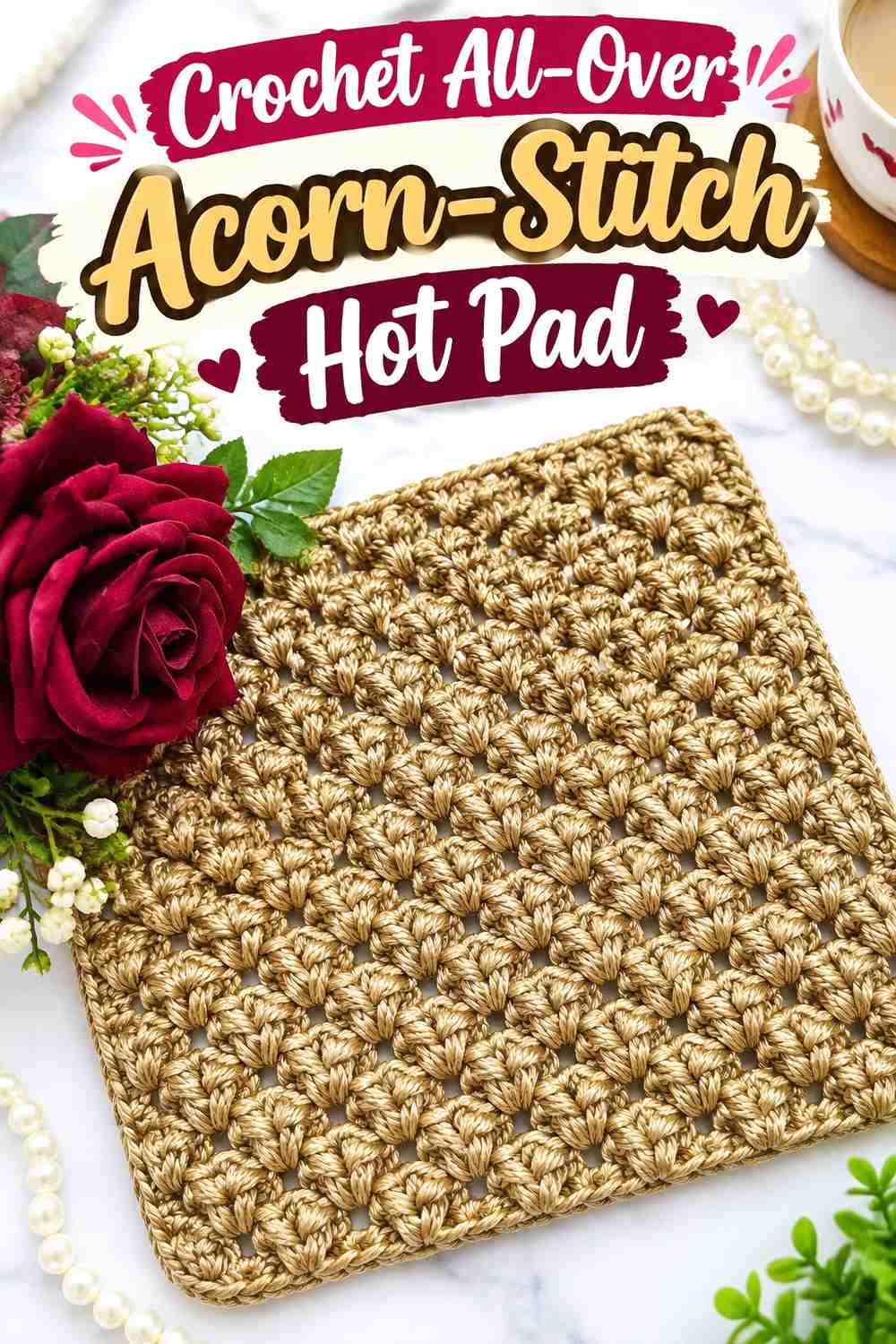
Bag-O-Day Crochet teaches an “Acorn Stitch” that creates repeating textured clusters rather than a literal acorn picture. That gives this idea a subtler harvest direction: the finished pad can read as autumn texture from across the kitchen while revealing the acorn-inspired detail up close.
The source is a stitch tutorial rather than a hot-pad pattern. Use it to understand the surface texture, then make independent decisions about the pad’s size, material, density, backing, and actual kitchen function.
Repeated Texture Gives the Whole Surface a Role
Unlike a central appliqué, an all-over stitch pattern affects nearly every part of the pad. That means the texture itself determines whether the surface feels stable enough for your intended use.
Work enough fabric to judge the repeat before committing to a full kitchen piece. A stitch that looks attractive in a small sample can behave differently across a larger square or rectangle.
Consider a Smooth Reverse Side
If the acorn texture creates a noticeably raised decorative face, a separately planned flatter back can give the piece two distinct sides: one for display and one that provides a more even contact surface.
Do not assume the reverse automatically solves heat-use requirements, though. Materials and construction still need to suit the intended kitchen task.
Creator Credit: Bag-O-Day Crochet
10. Crochet Acorn-Texture Banded Hot Pad
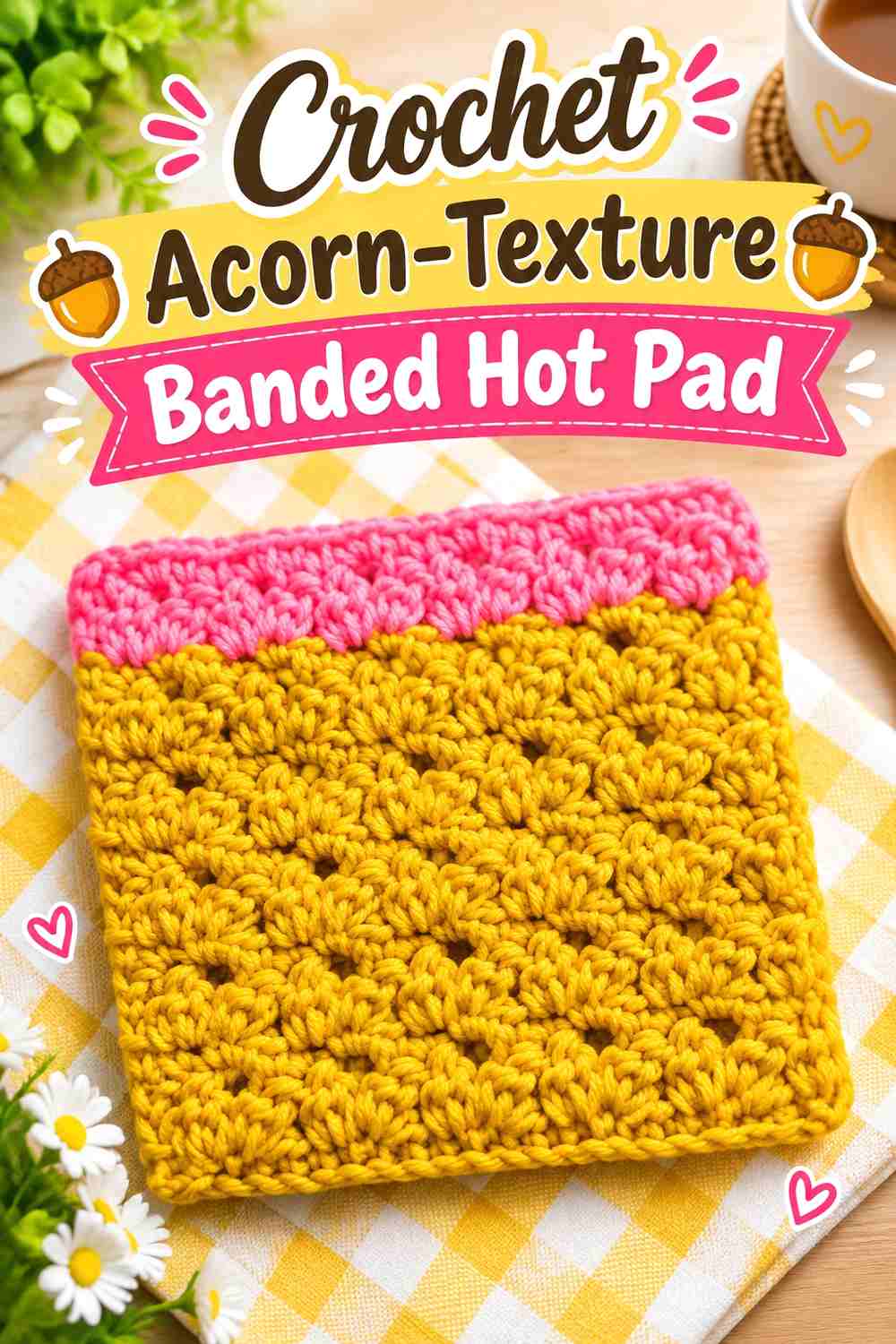
Crochet Me Lovely also demonstrates an acorn-inspired stitch texture, but this idea uses it selectively instead of covering the entire pad. A textured upper band can suggest a row of acorn caps while leaving a larger plain section available for a flatter functional surface.
Because the source teaches the stitch rather than a complete hot pad, this is a design adaptation. The band placement, base construction, heat-use materials, and finished dimensions are choices that need to be made independently.
Limit Texture to the Display Zone
A rectangular hot pad often has an upper area that remains visible even when a serving dish covers the center. That makes the border a logical place for more decorative stitch work.
Keeping pronounced texture away from the main load-bearing area can also make the pad easier to evaluate for flatness.
Check the Transition Between Two Fabrics
Combining a textured band with a simpler body can produce different tension in the two areas. If one section pulls in more than the other, the finished rectangle may curve.
Pause after the transition and lay the work flat. Correcting a tension mismatch early preserves both the rectangular outline and the usefulness of the central surface.
Creator Credit: Crochet Me Lovely
11. Crochet Acorn-Appliqué Corner Hot Pad
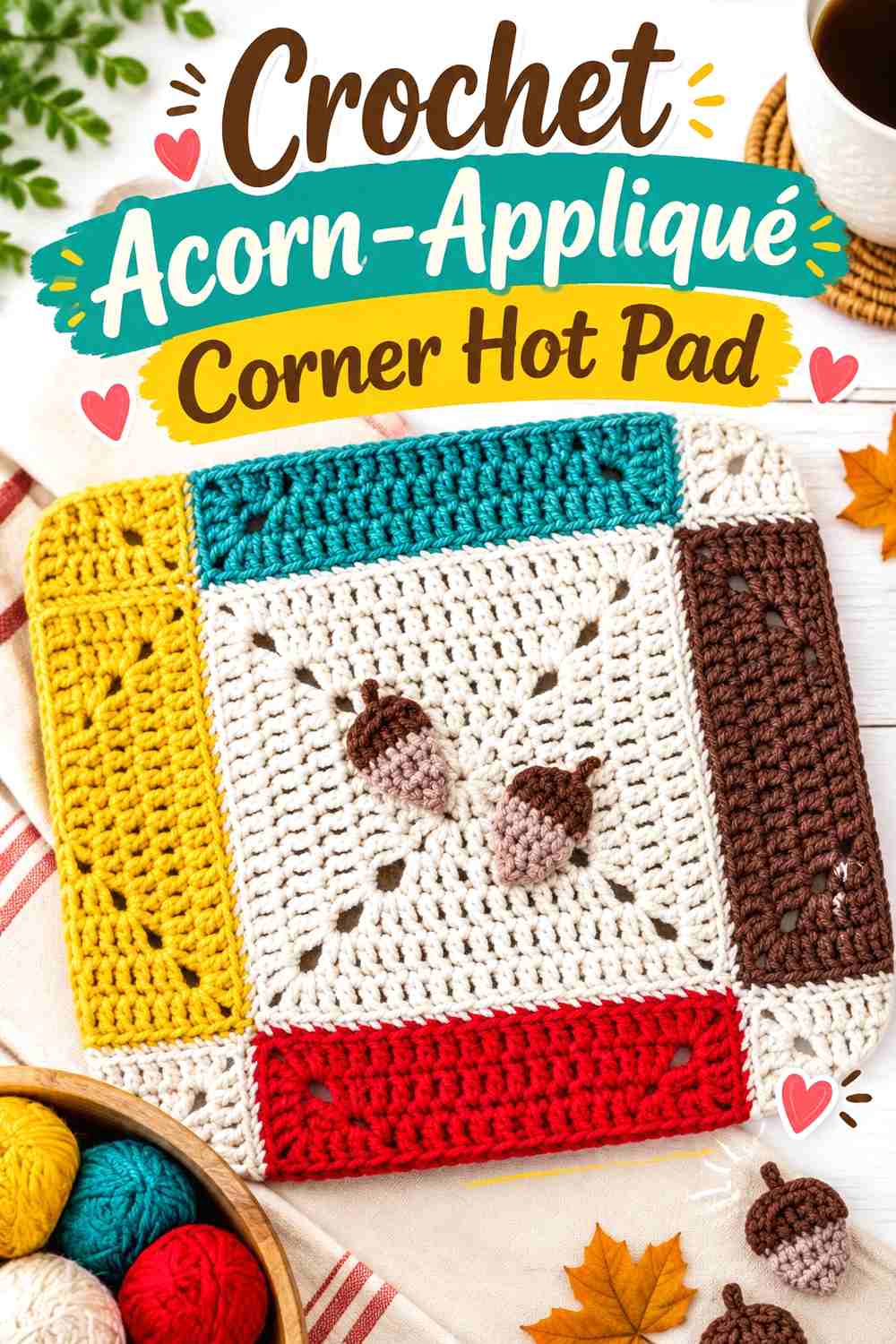
Maria’s Blue Crayon demonstrates a flat crochet acorn appliqué as part of a larger fall project. For a hot-pad adaptation, the most practical use is not to place the appliqué under a pot. Instead, attach it near a corner, hanging area, or outer border of a separately constructed functional pad.
This direction is useful when you already have a plain potholder construction you trust and only want to change its seasonal appearance.
Corner Placement Protects the Working Center
An appliqué adds extra layers wherever it is sewn. Keeping that bulk away from the middle allows the main pad to stay flatter beneath cookware.
Before attaching the acorn permanently, place your usual serving dish over the pad and mark the area it occupies. Position the decoration outside that footprint.
Attachment Quality Matters in a Washable Kitchen Item
An appliqué on a decorative wall hanging experiences little stress. On a kitchen textile, repeated handling and laundering can pull at exposed edges.
Secure the motif according to the needs of your chosen base while avoiding dangling sections that can catch. Also check the care instructions for both the appliqué yarn and the underlying pad before combining them.
Creator Credit: Maria’s Blue Crayon
12. Crochet Hanging-Acorn Accent Hot Pad
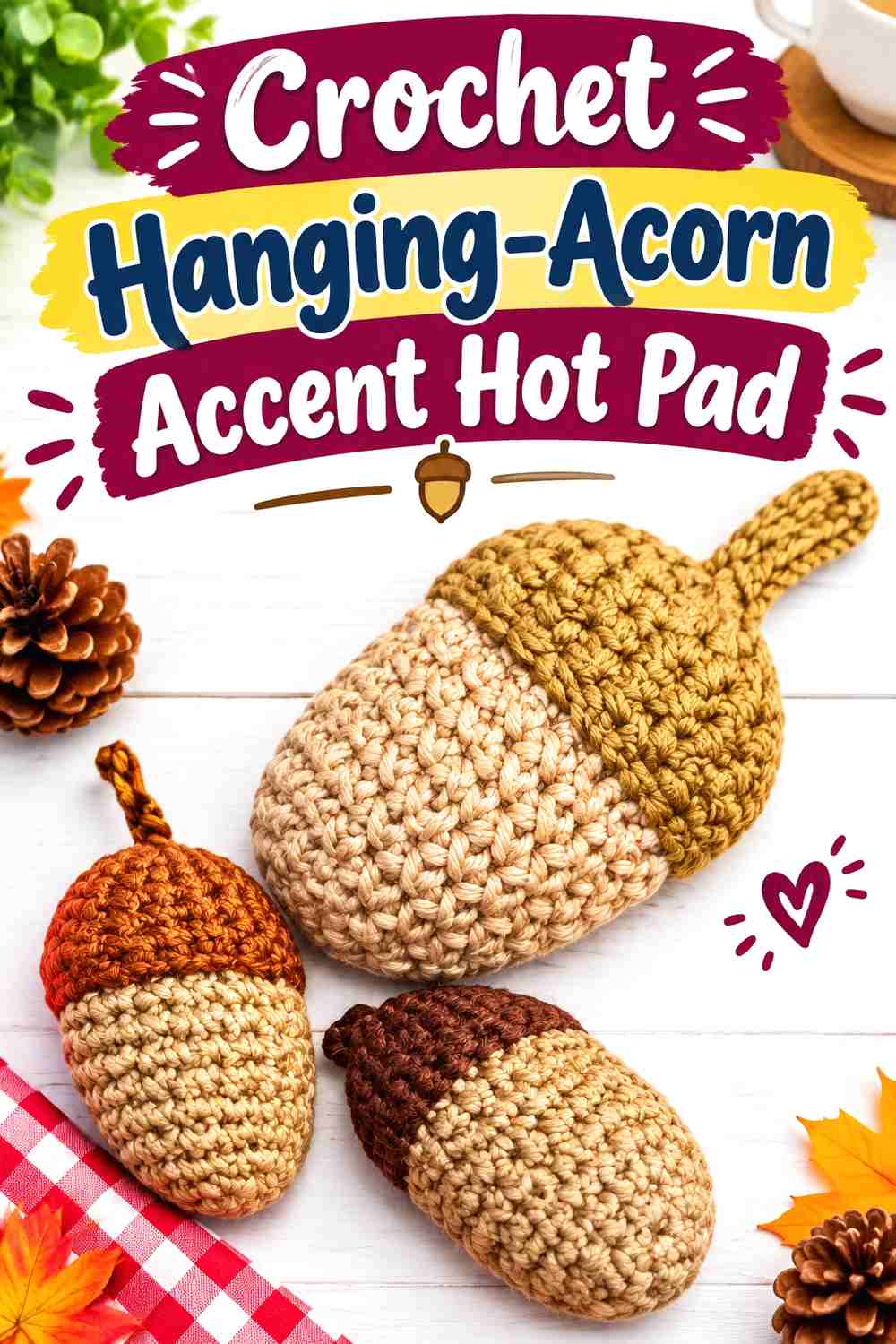
The Crochet Circle teaches a three-dimensional acorn decoration. That sculptural acorn is not appropriate as the surface directly beneath cookware, but it can become an attractive harvest accent when attached near the storage loop of a separate flat hot pad. The creator presents the acorn as a decorative object for autumn uses rather than as a kitchen heat-protection project.
This idea keeps the functional and decorative jobs clearly separated: the pad remains flat, while the acorn hangs where it can actually be seen.
Keep the Acorn Beyond the Pot Footprint
Attach a three-dimensional accent where it naturally falls beyond the edge of cookware. A loop at an upper corner can provide enough separation when the pad is lying flat.
Test that placement with a cool dish before using the kitchen piece. The accent should not slide underneath the vessel when the pad is moved.
Removable Decor Can Simplify Care
A permanent stuffed or dimensional embellishment may dry differently from a flat pad and can complicate washing.
If your design allows it, consider the decorative acorn as a detachable seasonal accessory rather than part of the load-bearing construction. The flat pad can then be cared for according to its own material instructions.
Creator Credit: The Crochet Circle
13. Crochet Oak Leaf and Acorn Harvest Hot Pad
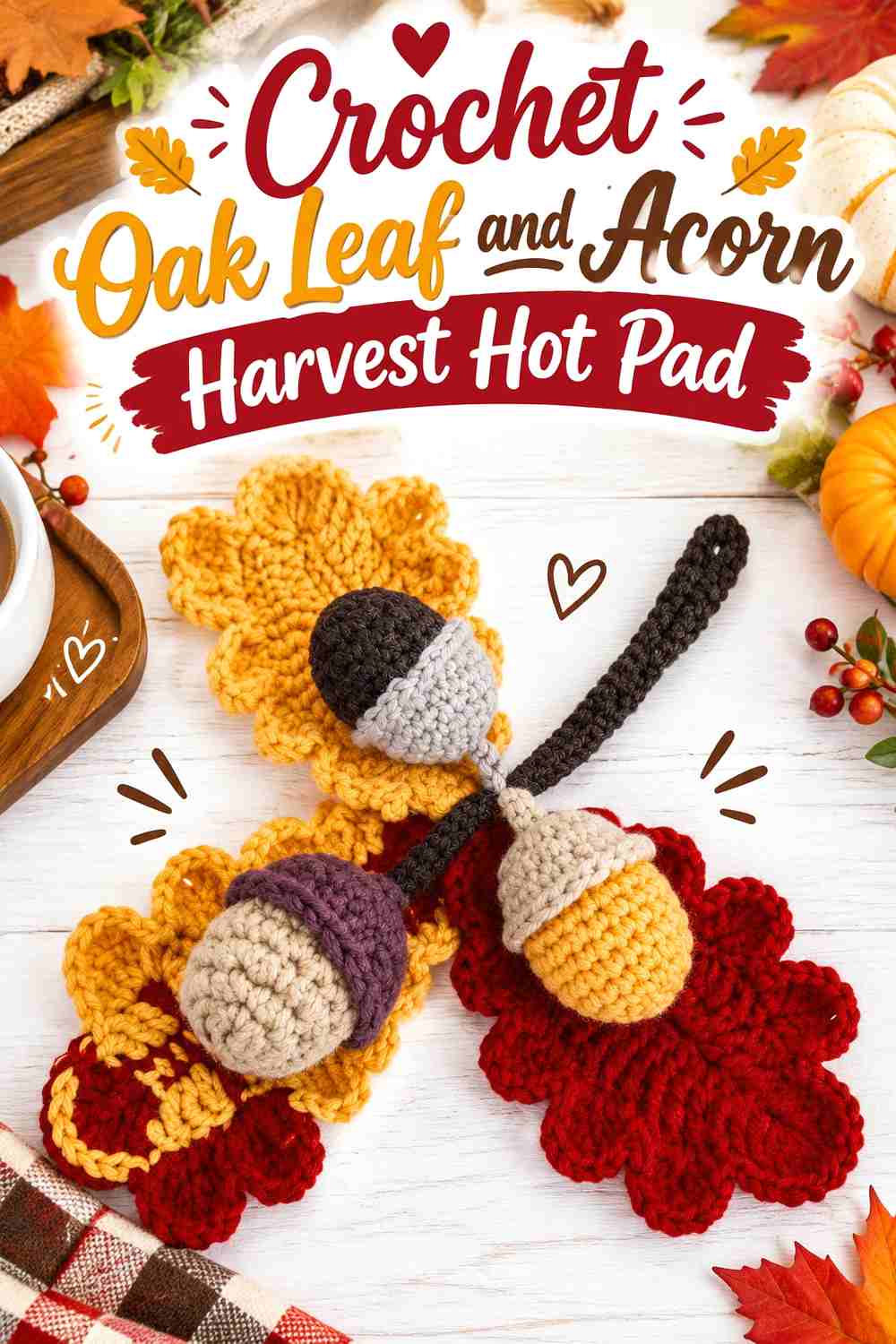
Crochet Motif Tutorial demonstrates both an acorn and an oak leaf, giving this final idea a broader woodland look than an acorn alone. The original tutorial is for decorative botanical motifs, not a hot pad, so the strongest adaptation is to use the leaf-and-acorn grouping along an outer edge or hanging area of a separately planned kitchen pad.
The additional leaf also changes the composition. Instead of centering one acorn, you can create an asymmetrical harvest corner that still leaves most of the pad visually quiet.
An Asymmetrical Corner Leaves More Working Space
Decorative elements do not have to sit in the middle. A small oak-and-acorn arrangement in one corner can remain visible beside a dish while keeping the central support area unobstructed.
Lay the motifs on the completed base before attaching them. Turn the pad in several orientations to see which corner keeps the decoration visible without interfering with the intended cookware position.
Stems and Leaves Need Controlled Edges
Botanical motifs can include narrow stems and pointed leaves that extend beyond the main fabric. Those details are attractive on display but may curl, catch, or shift during kitchen use.
Keep projecting elements short enough for your intended setting, or reserve an elaborate branch arrangement for a decorative hanging version while using a simpler motif on a working hot pad.
Creator Credit: Crochet Motif Tutorial
Choosing Between Shaped, Graphic, and Textured Acorn Hot Pads
For the least adaptation, begin with the projects from Rachels Lovely Stitches, Celtic Knot Crochet, or Sara Sach Crochet Designs. Their original sources already frame the acorn as a hot pad, potholder, or multipurpose kitchen textile, so you are not starting by converting an unrelated decoration.
Choose the mosaic, C2C, or granny-square approaches when you want a regular outer shape. Square pads generally make it easier to create a broad support area while the acorn appears as a picture rather than determining the entire outline.
The acorn-stitch projects make sense for a more subtle harvest kitchen. Instead of one obvious motif, texture carries the theme. The appliqué, hanging-acorn, and oak-leaf ideas are better when you already have a functional hot-pad construction and want to add seasonal character without redesigning the central surface.
Raised granny motifs and three-dimensional acorns are the most decorative options. Keep them away from the main cookware-contact zone unless the completed piece remains genuinely flat and stable.
Conclusion
The most practical crochet acorn hot pad for your kitchen depends on whether you value a literal silhouette, a stable square footprint, or seasonal surface detail.
For a recognizable acorn with minimal adaptation, the purpose-designed shaped hot pads are the clearest starting points. For cookware that benefits from a more regular base, C2C and mosaic graphics let the acorn stay visible inside a square. If you already have a plain hot-pad construction you like, an edge appliqué, botanical corner, or hanging acorn can add the harvest theme without disturbing the center.
Whichever direction you choose, keep decoration and heat protection as separate decisions. Use the original tutorials for their exact crochet construction, and verify materials and intended kitchen use before placing a handmade piece beneath or against hot cookware.
Frequently Asked Questions
Can I use a crochet acorn coaster as a hot pad?
Not automatically. A coaster tutorial establishes the shape and construction for drinkware, not necessarily the thickness, materials, or heat performance required for cookware. If the creator also identifies the project as a hot pad, follow that guidance. Otherwise, treat the coaster as a design reference and plan the functional hot-pad construction separately.
What yarn should I use for a crochet acorn hot pad?
Follow the yarn guidance in the hot-pad pattern you choose and check the yarn manufacturer’s care information. Several purpose-designed hot-pad sources in this collection use or recommend cotton, but fiber content alone does not guarantee that every yarn or finished crochet construction is appropriate for every temperature or kitchen task.
Does an acorn hot pad need two layers?
Not every design uses the same construction. Some purpose-designed hot pads build thickness through the original crochet fabric, while graphic projects may use a separate backing. Do not add or remove layers casually when you expect the finished piece to perform like the creator’s hot pad. Follow the source construction or independently plan an adaptation for the intended use.
Can a raised acorn cap sit directly under a hot pot?
First consider stability. Pronounced caps, bobbles, puff stitches, or dimensional motifs can create high spots that make cookware wobble. Test the finished surface with a cool, flat-bottomed object. If it does not sit evenly, use the piece decoratively or position raised details away from the cookware-contact area.
How can I keep a shaped crochet acorn hot pad flat?
Pay attention to tension changes between the wider nut section, cap, border, and any joined pieces. Check the work on a flat surface during construction rather than waiting until finishing. If you substitute yarn or alter scale, reassess the fabric because those changes can affect both the outline and how evenly the piece lies.
Can I add an acorn appliqué to a plain crochet potholder?
Yes as a decorative concept, but placement matters. An appliqué adds another layer and may create an uneven spot. Positioning it near a corner, border, or hanging loop keeps the central working area flatter. The underlying potholder still needs to be suitable for its intended kitchen use independently of the appliqué.