Tartan wrist warmers are a practical way to bring Christmas plaid into a wearable without committing to a full scarf, sweater, or blanket. The small scale also makes color placement unusually important: a plaid repeat that looks balanced across a wide blanket may feel crowded when compressed around a wrist.
The projects below approach the idea from several directions. Some tutorials already produce checkered, plaid, buffalo-check, or colorwork fingerless gloves. Others teach a useful tartan stitch, plaid technique, or wrist-warmer construction that can serve as the starting point for a Christmas tartan adaptation. Those adaptations are identified clearly rather than presented as exact tartan wrist-warmer patterns.
The result is a collection that ranges from bold block checks to finer tartan effects, simple rectangular mitts, ribbed cuffs, longer hand warmers, interlocking colorwork, and textured designs where plaid is used selectively instead of covering the whole glove.
Quick List
- Crochet Checkerboard Tartan Wrist Warmers
- Crochet Buffalo Plaid Texting Wrist Warmers
- Crochet Compact Plaid-Block Wrist Warmers
- Crochet Classic Tartan Stitch Wrist Warmers
- Crochet Half-Double Buffalo Plaid Wrist Warmers
- Crochet Three-Tone Highland Plaid Wrist Warmers
- Crochet Tartan-Square Christmas Wrist Warmers
- Crochet Interlocking Plaid Wrist Warmers
- Crochet Ribbed-Cuff Tartan Wrist Warmers
- Crochet Slim Ribbed Plaid Wrist Warmers
- Crochet Cable-and-Tartan Wrist Warmers
- Crochet Shell-Edge Tartan Wrist Warmers
- Crochet Modern Checkered Christmas Wrist Warmers
- Crochet Interlocking Colorwork Tartan Wrist Warmers
- Crochet Cable-Cuff Tartan Wrist Warmers
Choose the Plaid Scale Before Choosing Christmas Colors
Large buffalo-check blocks and traditional tartan-style lines create very different effects on a wrist warmer.
Buffalo plaid uses strong blocks of color, so the design remains easy to read even on a compact glove. It works particularly well with combinations such as red, burgundy, and black or cream, forest green, and a darker green.
A finer tartan effect uses more visual divisions. On a narrow wrist warmer, that can become busy quickly. Before committing to a detailed color sequence, make a swatch close to the width of the finished glove. A plaid that looks attractive across a broad sample may show only one incomplete repeat after the glove is assembled.
Christmas color does not require red and green together. Black and red gives a cabin-style look, cream and green feels quieter, while navy, forest green, burgundy, and ivory can suggest traditional winter tartan without looking like novelty holiday wear.
Fit Can Change When Plaid Adds Extra Yarn
Colorwork affects more than appearance. Carrying unused yarn, changing colors frequently, or creating interlocking layers can make the fabric firmer than a single-color sample made with the same hook.
That matters around the hand, where a wrist warmer needs enough ease to pass over the widest part of the hand without becoming loose at the wrist.
Measure or try on the actual plaid fabric rather than relying only on a plain gauge swatch. If you are adapting a single-color glove tutorial, establish the tartan fabric first and then judge whether the original circumference still makes sense.
Thumb placement deserves the same attention. A beautiful plaid repeat is not useful if adapting its width moves the thumb opening into an uncomfortable position.
1. Crochet Checkerboard Tartan Wrist Warmers
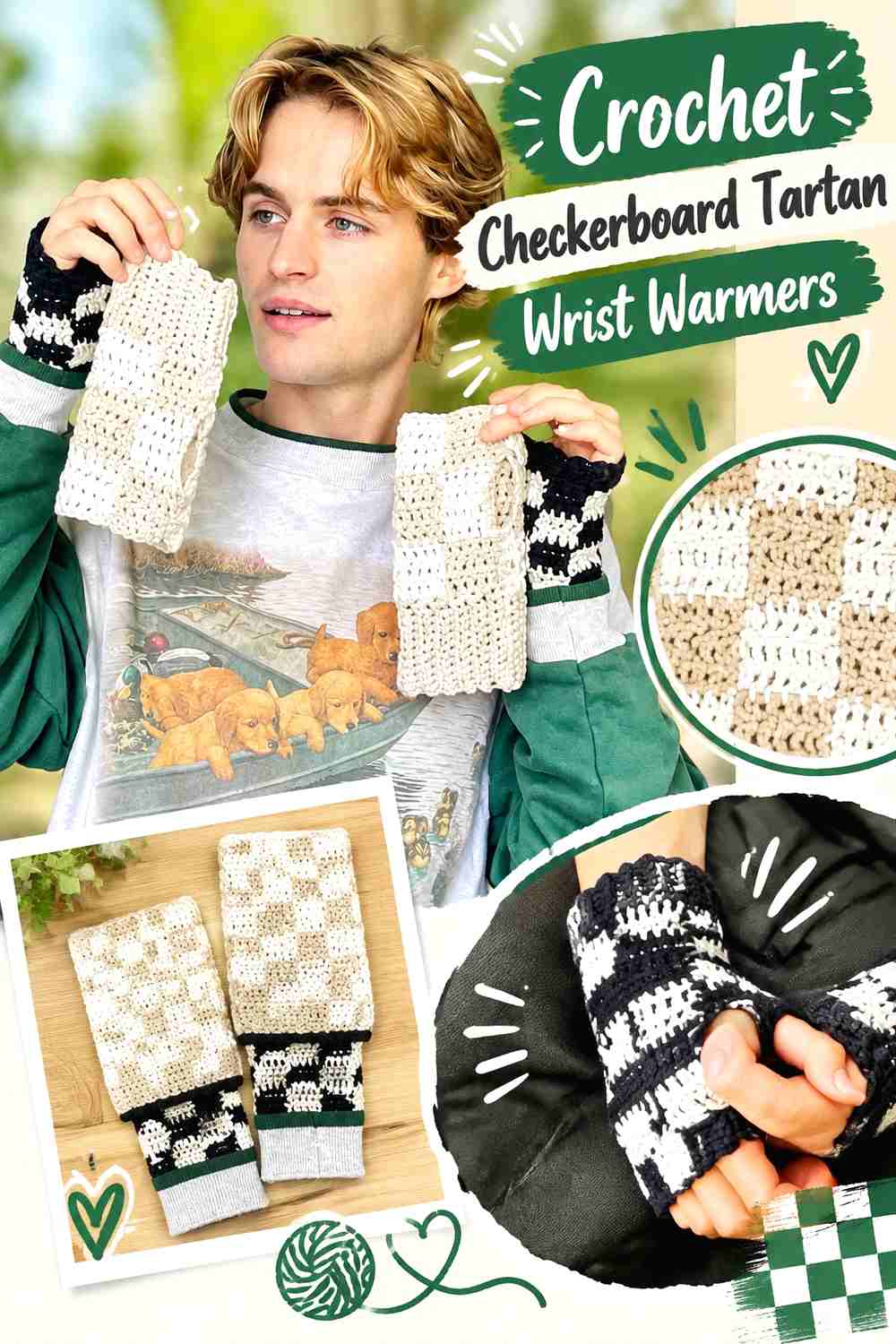
This design starts with a tutorial that already produces checkered fingerless gloves, making it one of the closest matches in the collection. The strong squares give the hand warmers a graphic look that can move toward tartan through a carefully chosen Christmas palette.
Because the checks are large and clear, this approach suits anyone who wants the plaid effect to remain obvious from a distance rather than resolving into narrow lines.
Large Checks Keep the Pattern Readable
Small wearables do not provide much room for complicated repeats. A larger checkerboard solves that problem by making every block contribute to the finished design.
For a tartan-inspired Christmas version, use colors with enough contrast that adjacent blocks remain distinct. If all three shades are very close in value, the checker effect may become difficult to see once the gloves are worn.
Match the Check Placement Across the Pair
Two gloves made from the same colors can still look mismatched if their check sequence begins at different points.
Before starting the second wrist warmer, note which color appears at the lower cuff, thumb area, and upper edge of the first. Deliberate repetition gives the pair a cleaner, more coordinated appearance.
Creator Credit: Henri Purnell
2. Crochet Buffalo Plaid Texting Wrist Warmers
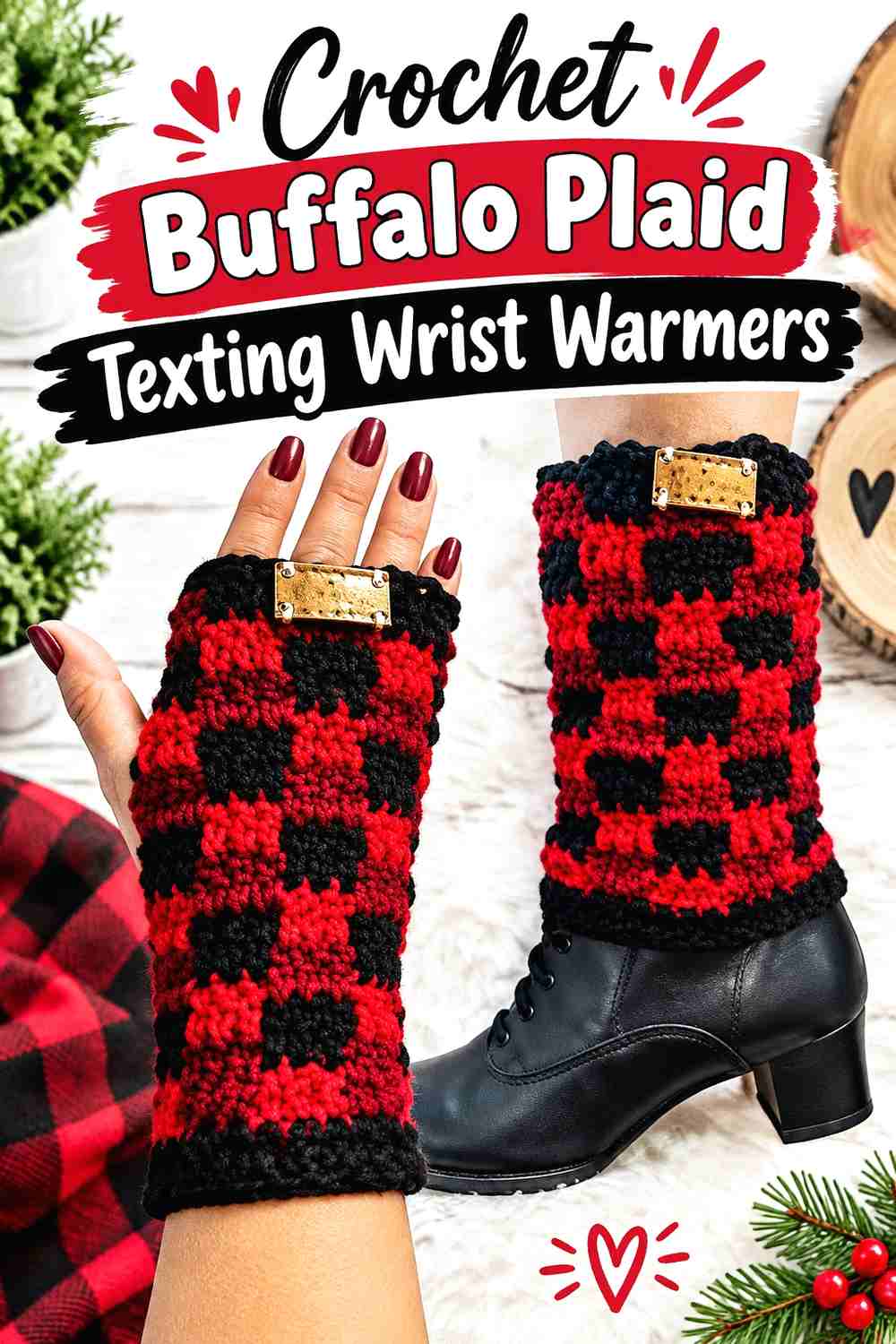
Buffalo plaid is one of the most natural choices for cozy Christmas wrist warmers because its broad blocks remain visible on a small accessory. Hectanooga1’s source includes buffalo-plaid fingerless/texting gloves, so the basic project type already matches the handwear idea.
The bold color structure also makes this option easier to coordinate with a matching hat, cowl, or leg warmers without requiring an intricate tartan repeat.
Three Related Shades Create the Plaid Illusion
Buffalo plaid becomes more convincing when the colors have a clear relationship: a light or bright shade, a deeper version of that shade, and a dark contrast.
For classic Christmas styling, that might mean red with a deeper red and black. A green variation can use a bright forest tone, deeper green, and charcoal.
Keep the Wrist Edge Snug Enough to Stay Put
Fingerless gloves can have enough room through the hand while still needing a more controlled wrist.
When changing yarn or adjusting the plaid repeat, check the cuff separately from the palm. Enlarging the whole piece because the hand feels tight can leave the wrist noticeably loose.
Creator Credit: Hectanooga1
3. Crochet Compact Plaid-Block Wrist Warmers
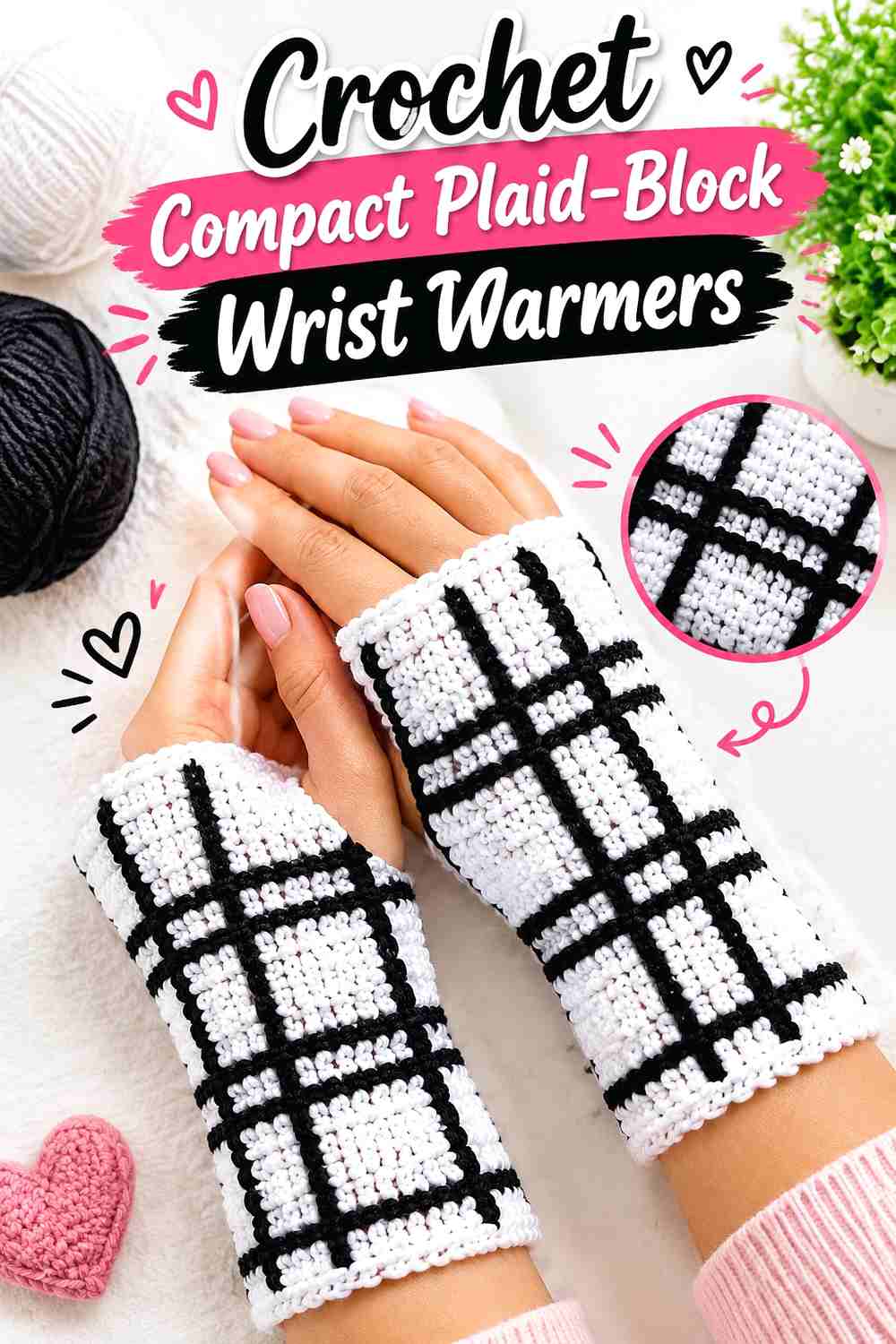
AC Crochets demonstrates a clearly defined crochet plaid stitch rather than a complete wrist-warmer pattern. That makes this idea an adaptation: use the tutorial to understand the plaid fabric, then apply the effect to a simple wrist-warmer shape whose fit you have planned independently.
This direction works well when you want the plaid itself to be the main feature and do not need elaborate cables, lace, or decorative edging.
Swatch at Wrist-Warmer Width
A stitch tutorial may be demonstrated on a sample wider than your intended glove. Reducing the width can interrupt the visual repeat.
Instead of making a large practice square, make a narrow sample close to your planned glove circumference or panel width. This shows whether the checks remain balanced at wearable scale.
A Plain Border Can Calm a Busy Plaid
Plaid already contains frequent color changes. Adding another multicolor edging can make a compact accessory feel visually crowded.
A solid cuff or upper border in the darkest tartan color can frame the checks and provide a useful place to make small fit adjustments without disrupting the main pattern.
Creator Credit: AC Crochets
4. Crochet Classic Tartan Stitch Wrist Warmers
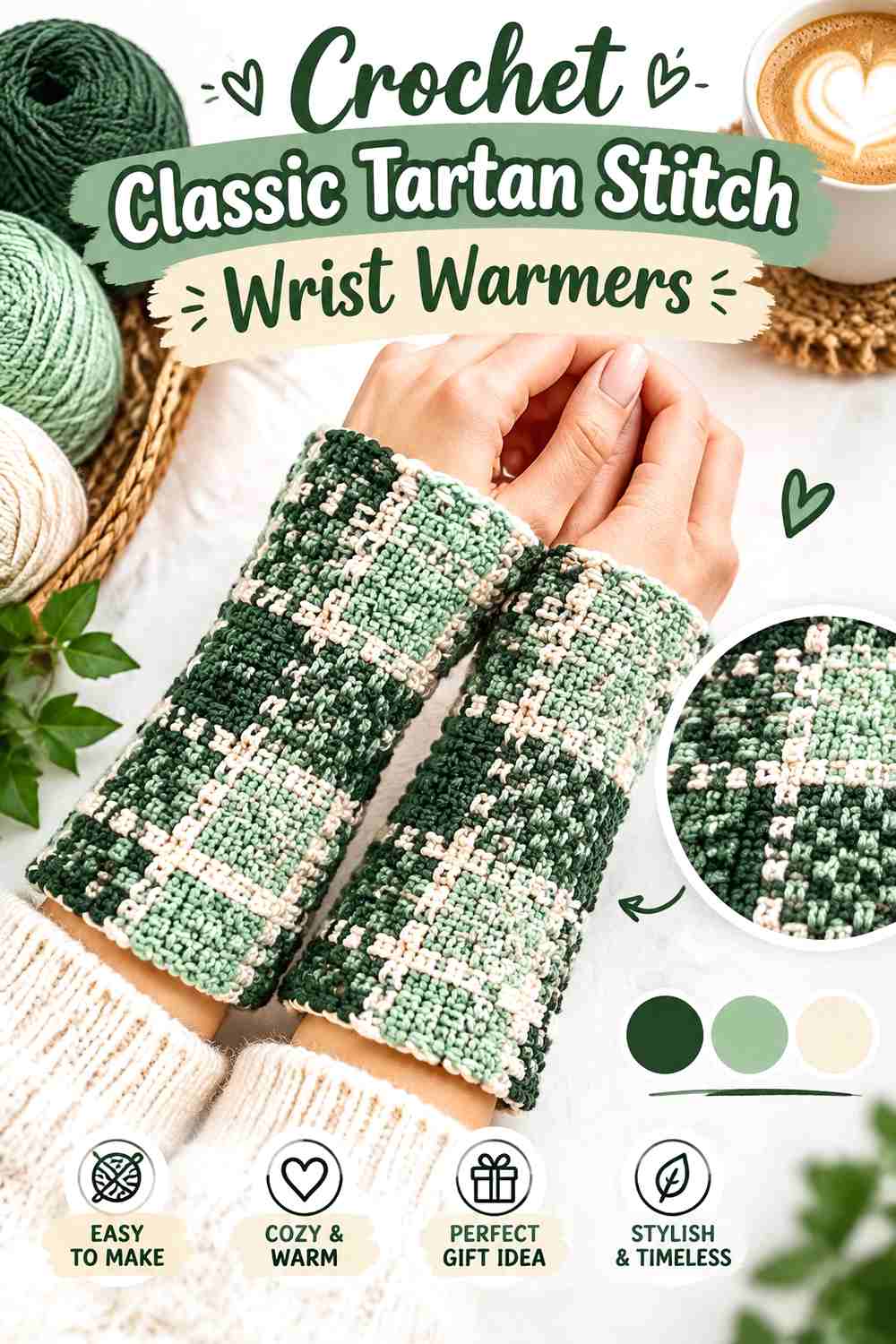
Bag-O-Day Crochet’s source focuses specifically on a tartan crochet stitch. The tutorial is a technique reference rather than an exact wrist-warmer project, so the glove shape, sizing, thumb opening, and finishing need to come from your own compatible construction plan.
This option is particularly useful if you want the finished fabric to look closer to traditional tartan than a simple two-color checkerboard.
Fine Tartan Detail Needs Enough Surface Area
More lines and color interactions require room to become visible. A very short wrist warmer may cut off the repeat before the tartan character develops.
Before reducing the length for a compact Christmas accessory, make enough fabric to see one complete visual section. Then decide where the wrist and upper-hand edges should fall.
Yarn Thickness Changes the Apparent Scale
A tartan repeat made in thicker yarn becomes physically larger even when the underlying stitch sequence stays the same.
If you substitute yarn, evaluate how much of the pattern fits across your hand rather than assuming the original visual proportions will remain unchanged.
Creator Credit: Bag-O-Day Crochet
5. Crochet Half-Double Buffalo Plaid Wrist Warmers
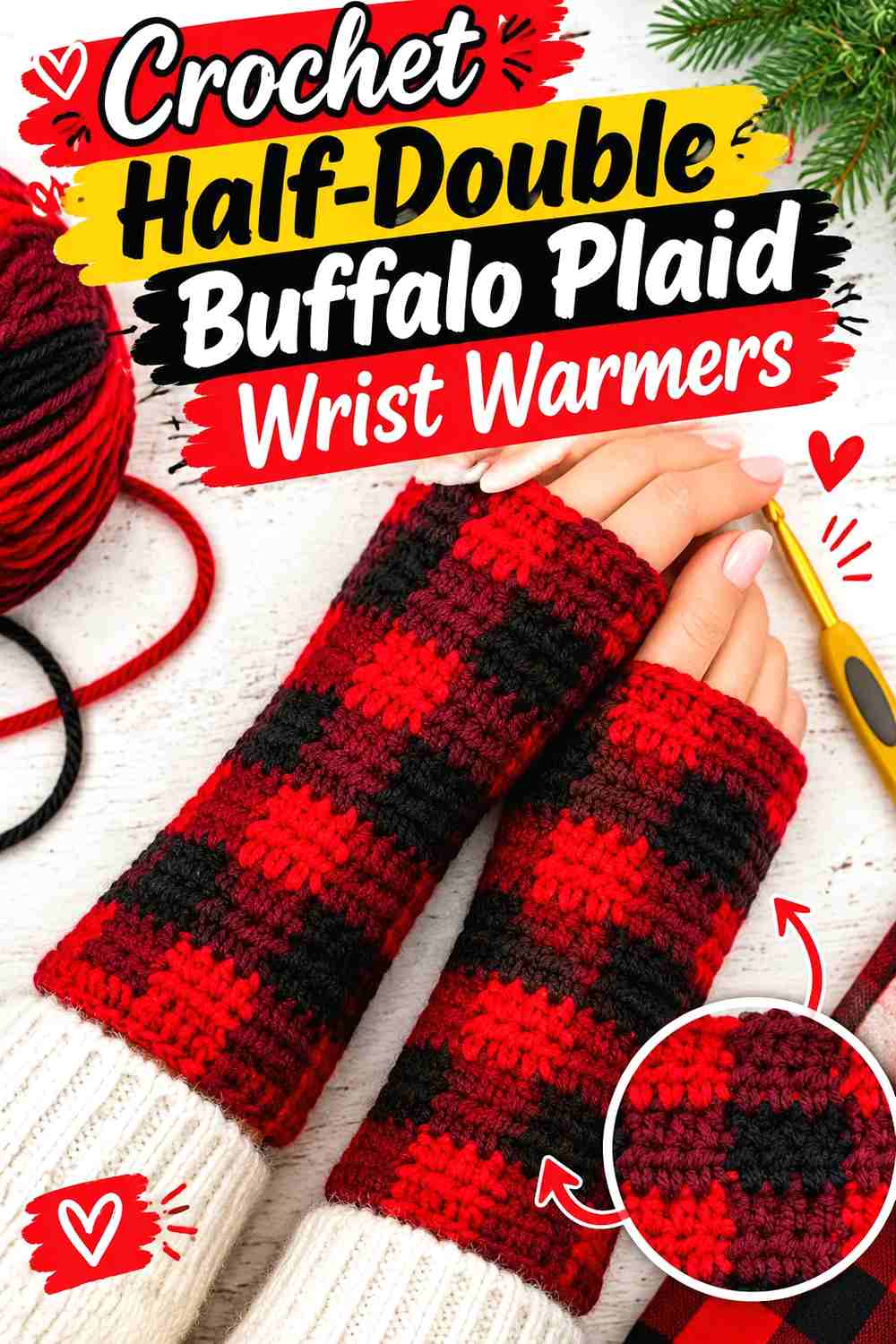
Hope Corner Farm Crochet demonstrates buffalo plaid using half-double crochet. This is another technique-based adaptation rather than a dedicated glove tutorial, but the fabric offers a different starting point from taller plaid stitches.
The result can suit a Christmas wrist warmer when you want bold checks without making the accessory excessively long.
Stitch Height Influences the Shape of the Checks
Plaid blocks can look more square or more rectangular depending on stitch height and personal tension.
Make a sample before choosing the final number of plaid sections. If the blocks are noticeably taller or wider than expected, adjust the overall wrist-warmer proportions rather than trying to force a predetermined length.
Carried Yarn Can Make the Fabric Firmer
A colorwork sample may feel less stretchy than the same stitch worked in one shade. That is particularly important when the glove must slide over the hand.
Check stretch across the plaid section before closing a seam or completing the second glove. A wrist warmer that measures correctly while lying flat can still feel restrictive if the carried yarn limits expansion.
Creator Credit: Hope Corner Farm Crochet
6. Crochet Three-Tone Highland Plaid Wrist Warmers
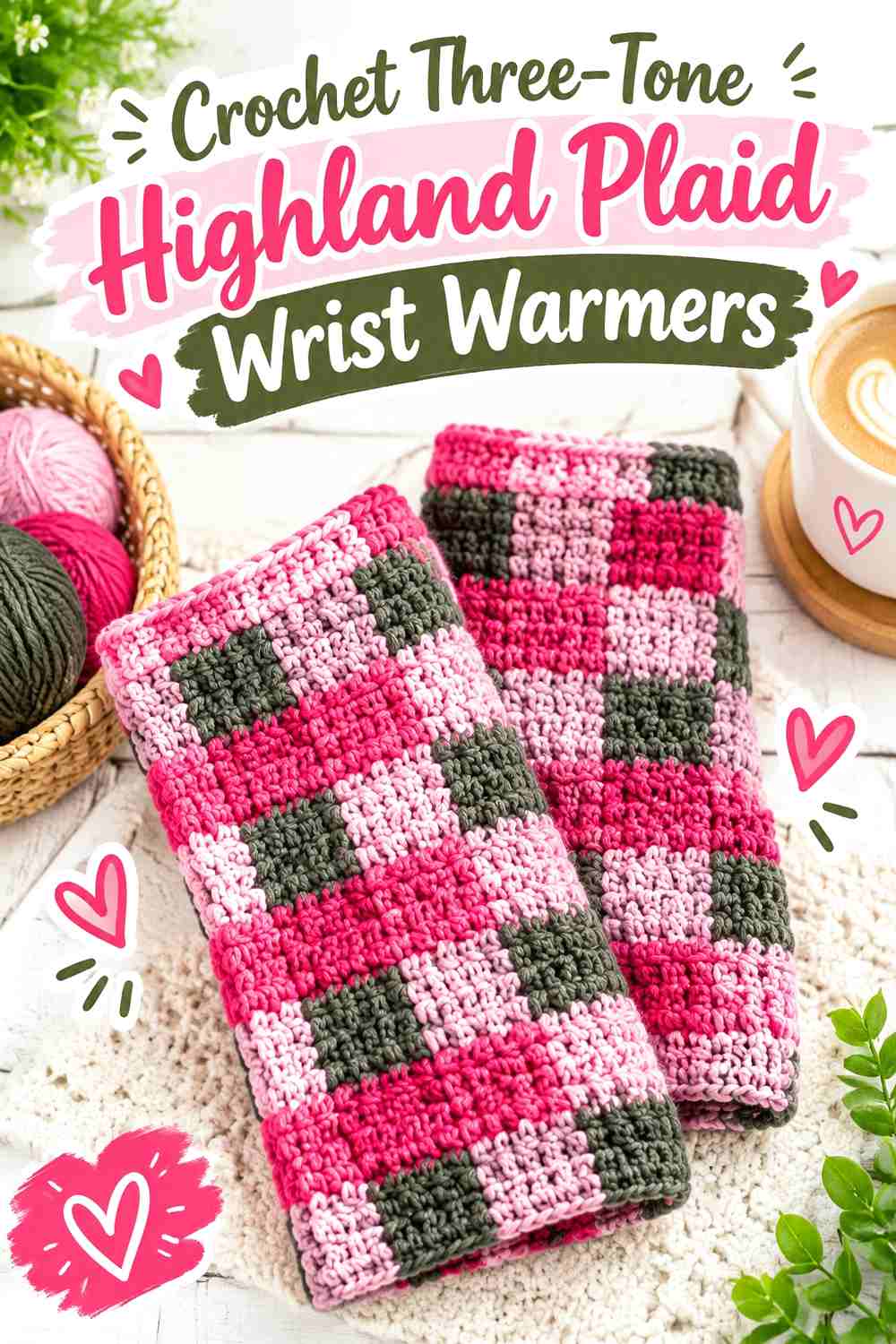
Babs Rudlin’s buffalo-plaid tutorial discusses plaid and tartan color relationships while demonstrating a three-color crochet fabric. For wrist warmers, that provides a useful route to a softer Highland-inspired interpretation rather than relying only on bright red and black Christmas checks.
Think muted green, stone, burgundy, navy, or oatmeal when you want a pair that works with holiday outfits but remains wearable after December.
Tonal Colors Produce a Softer Plaid
High contrast makes every check obvious. Closer tonal shades create a quieter fabric where the pattern becomes visible gradually.
For a gift, consider the recipient’s wardrobe. A subtle three-tone tartan is often easier to pair with coats and sweaters than a highly saturated novelty palette.
Test the Darkest Shade Around the Thumb
The thumb opening interrupts the plaid field. If your darkest blocks land awkwardly around that opening, the interruption may look more noticeable than it does in the middle of the hand.
Plan where the pattern begins before seaming or shaping so both gloves show a similar relationship between plaid and thumb placement.
Creator Credit: Babs Rudlin (yarnpeople)
7. Crochet Tartan-Square Christmas Wrist Warmers
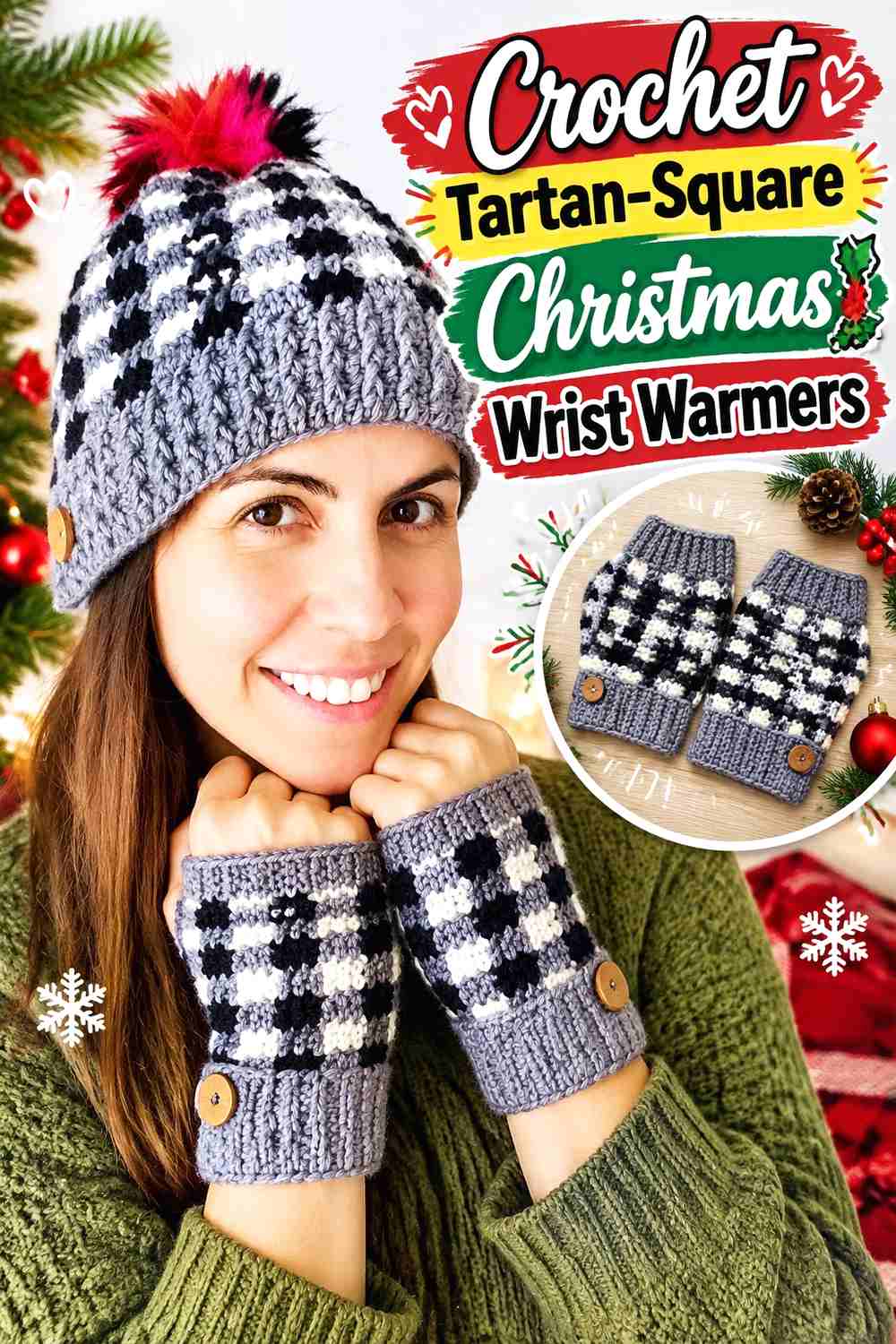
Ahuyama Crochet demonstrates tartan or plaid-style squares in a hat tutorial. The source is not a wrist-warmer pattern, so this project is a clear adaptation: the value comes from studying the color-block effect and translating an appropriately scaled version to a simple fingerless-glove base.
The squared pattern is useful when you prefer cleaner geometric tartan rather than thin overlaid lines.
Do Not Shrink the Hat Repeat Blindly
A repeat designed to travel around a head has far more circumference available than one wrapping around a wrist.
Map the color blocks on a small swatch first. You may need fewer or smaller visual units for the design to look intentional on handwear.
Use the Cuff as a Visual Anchor
A solid ribbed cuff can separate the tartan section from a coat sleeve and stop the pattern from looking unfinished at the wrist.
Choose one of the tartan colors for that cuff rather than introducing a new shade. This keeps the palette connected even though the texture changes.
Creator Credit: Ahuyama Crochet
8. Crochet Interlocking Plaid Wrist Warmers
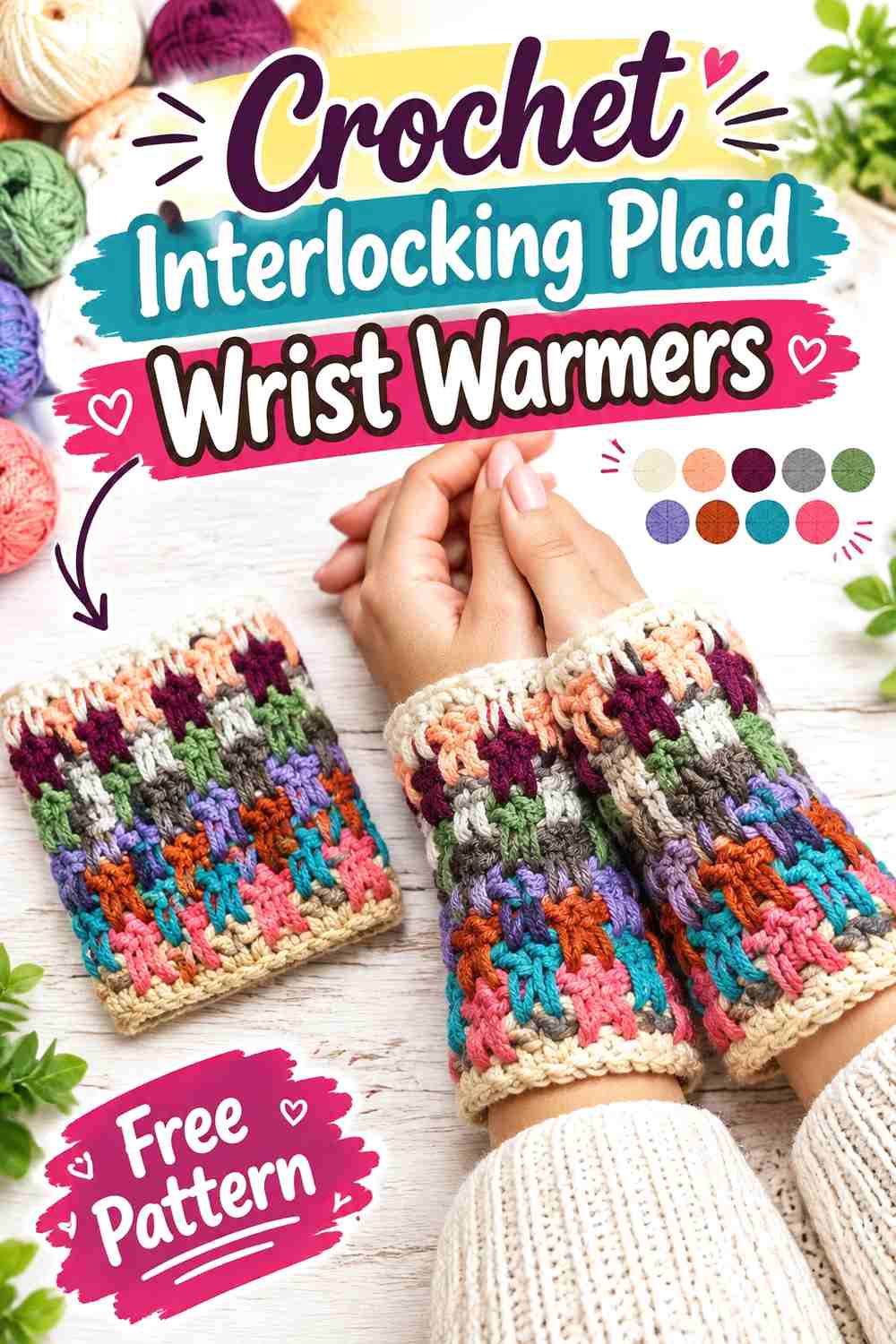
The interlocking block stitch creates a woven-looking plaid effect without relying on large solid squares. Crochet Me Lovely’s tutorial demonstrates this stitch construction, which can be adapted into a rectangular wrist-warmer panel when you have independently determined the required fit and thumb opening.
This is a useful alternative when classic buffalo check feels too bold.
Interlocking Fabric Has a Different Visual Rhythm
The colors appear to move through one another rather than sitting in isolated blocks. That can give the finished wrist warmer a more textile-like quality reminiscent of woven winter accessories.
Use three Christmas-compatible colors with distinct enough values that the interlocking sections do not visually merge.
Finish the Side Edge Before Judging the Fit
Color changes traveling along an edge can make an unfinished panel look bulkier or less tidy than it will after final finishing.
Still, do not hide significant tension problems under a seam. Lay the panel flat and confirm that the plaid section remains even before assembling it into a wrist warmer.
Creator Credit: Crochet Me Lovely
9. Crochet Ribbed-Cuff Tartan Wrist Warmers
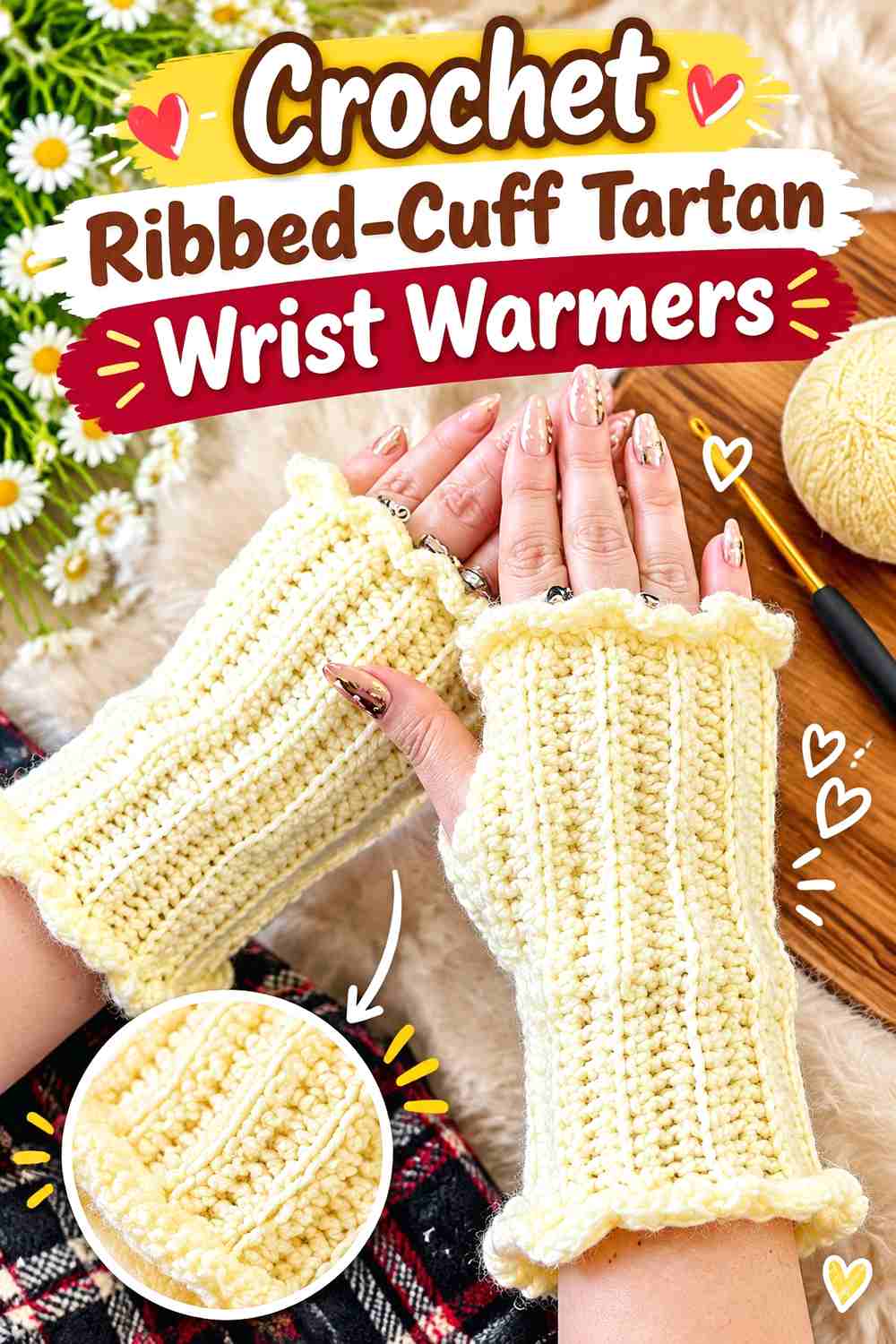
LalaBeCrocheting’s tutorial provides a ribbed wrist-warmer construction rather than a tartan design. That makes it useful as a fit and shaping reference for a plaid adaptation in which the tartan element is introduced selectively.
One practical option is to preserve a solid ribbed cuff and reserve the Christmas plaid for the hand section. This reduces the amount of multicolor crochet while keeping the pattern prominent.
Keep Stretch Where the Hand Needs It
A ribbed fabric can expand readily, while a dense plaid section may have less give. Combining the two means the narrowest-looking section is not necessarily the least stretchy one.
Try the wrist warmer on as the transition develops. The plaid hand section still needs to move comfortably over the knuckles.
A Solid Cuff Makes Color Changes Easier to Manage
Starting the tartan above the wrist reduces the number of color changes in the section where fit needs to remain particularly elastic.
It also gives you a quiet border between a patterned coat sleeve and the plaid hand warmer, which can make the accessory easier to style.
Creator Credit: LalaBeCrocheting
10. Crochet Slim Ribbed Plaid Wrist Warmers
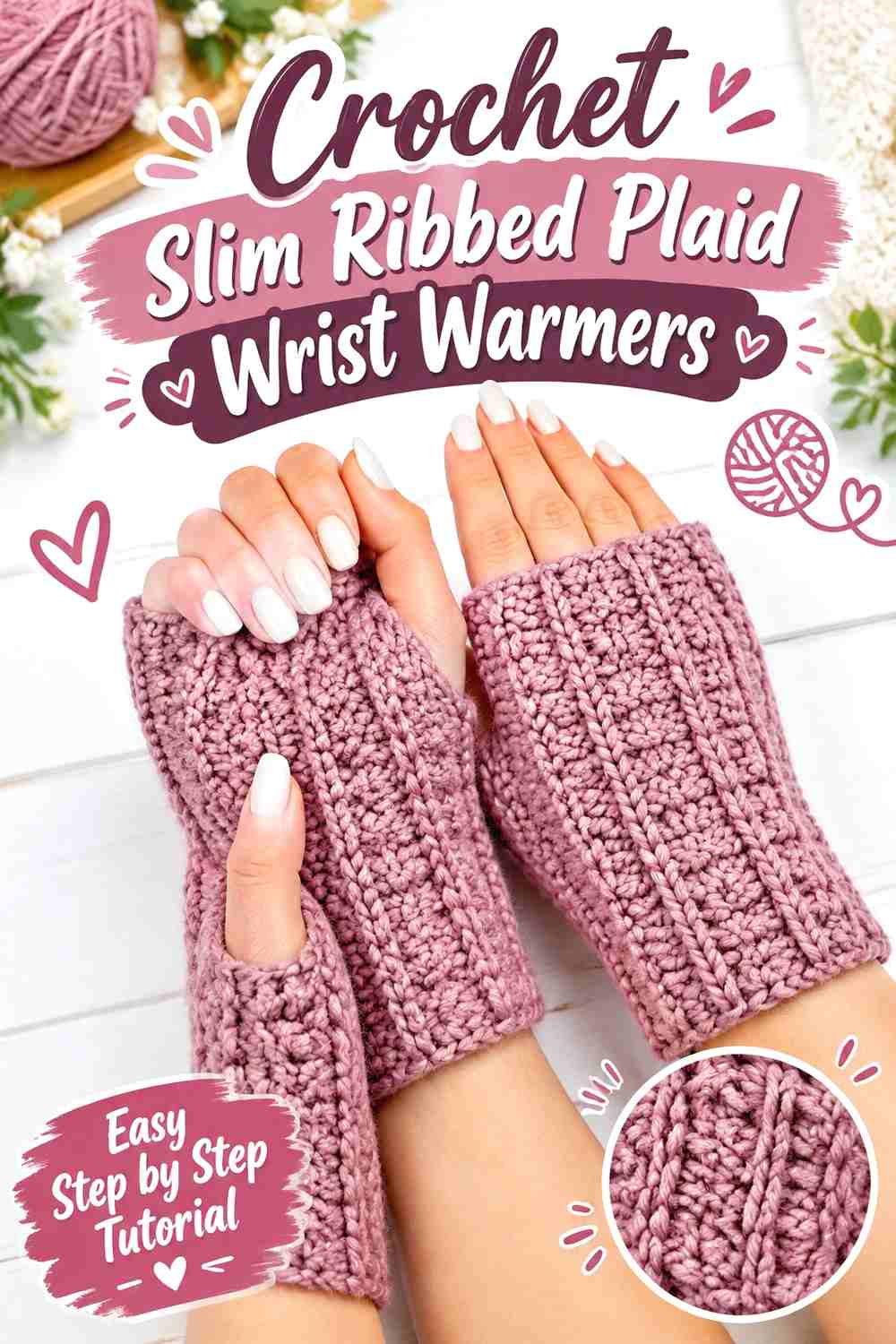
Teia Crochet demonstrates a straightforward ribbed wrist-warmer construction that can act as a base for a restrained tartan interpretation. Rather than covering every inch with checks, this idea uses plaid as an accent panel or narrow band.
That makes it useful for Christmas gifts when you want seasonal color without producing a strongly costume-like accessory.
A Narrow Plaid Band Needs Clear Contrast
When the patterned area is small, low-contrast colors may simply look striped or mottled.
Test the chosen Christmas palette in the exact width of the planned band. If the checks cannot be recognized, either enlarge the plaid area or simplify the color scheme.
Keep the Pair Symmetrical at the Seam
A narrow wrist warmer often leaves the seam relatively visible when the hand turns.
Position your plaid accent so the seam does not unexpectedly cut through the strongest part of the motif. Matching the seam placement on both gloves will also make the pair feel more deliberate.
Creator Credit: Teia Crochet
11. Crochet Cable-and-Tartan Wrist Warmers
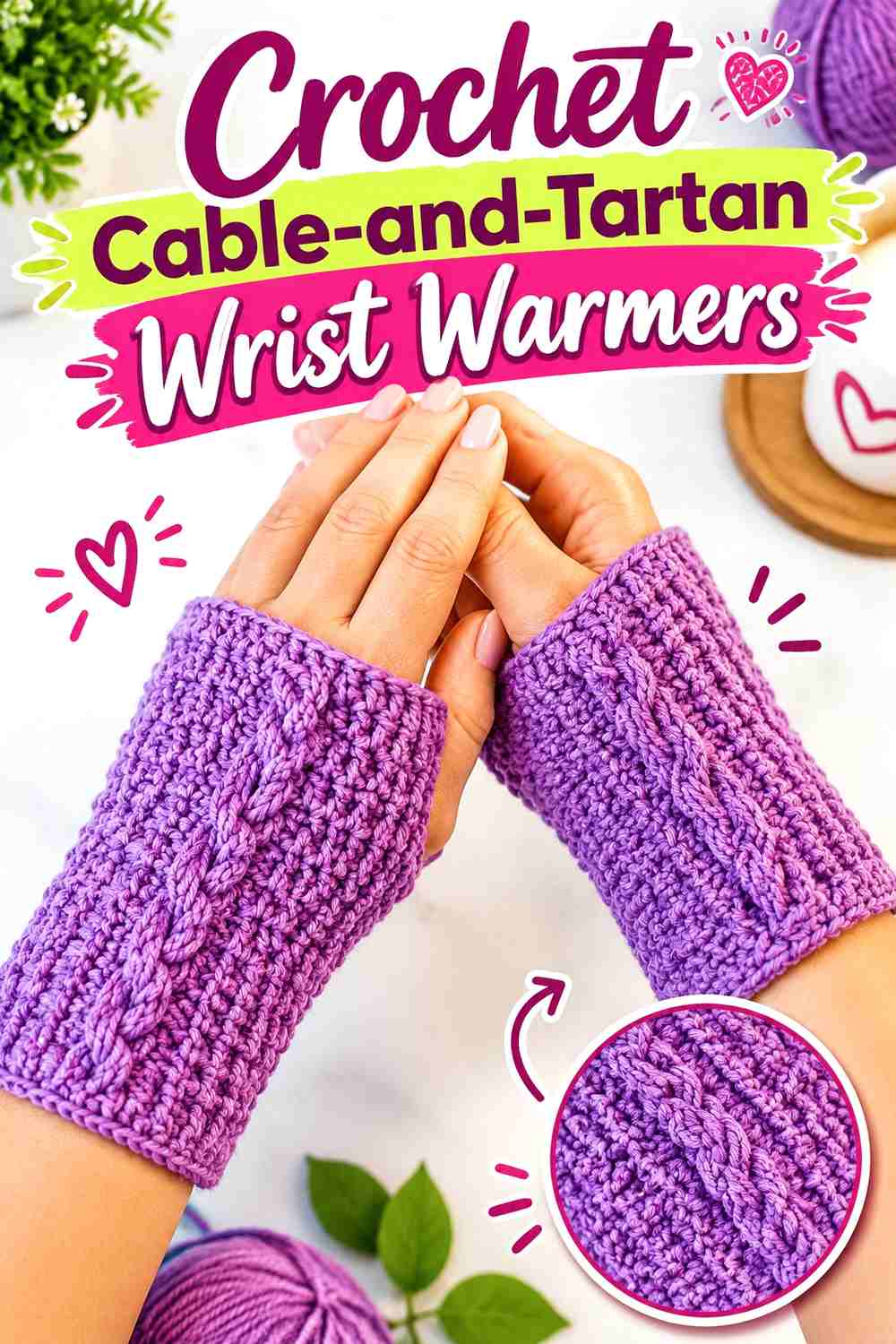
Crochet with Tuula Maaria’s source uses a cable detail on fingerless gloves rather than tartan. This adaptation combines two classic winter references: a solid cable panel and a restrained plaid section around the rest of the hand or cuff.
The advantage is contrast. Instead of asking tartan to provide all the visual interest, the raised cable can become the center feature while Christmas plaid frames it.
Do Not Hide the Cable in a Busy Color Sequence
Raised crochet cables depend on shadow and stitch definition. Frequent color changes through the cable itself can make that structure harder to read.
Keeping the cable in one shade while placing tartan beside it usually creates clearer separation between texture and colorwork.
Two Fabrics Must Agree on Fit
Cable sections and plaid sections can have different stretch. Combining them around one hand means one fabric may restrict the other.
Swatch both treatments at the same time if possible. A cable-and-plaid glove should be sized according to the combined fabric, not according to whichever section stretches more easily.
Creator Credit: Crochet with Tuula Maaria
12. Crochet Shell-Edge Tartan Wrist Warmers
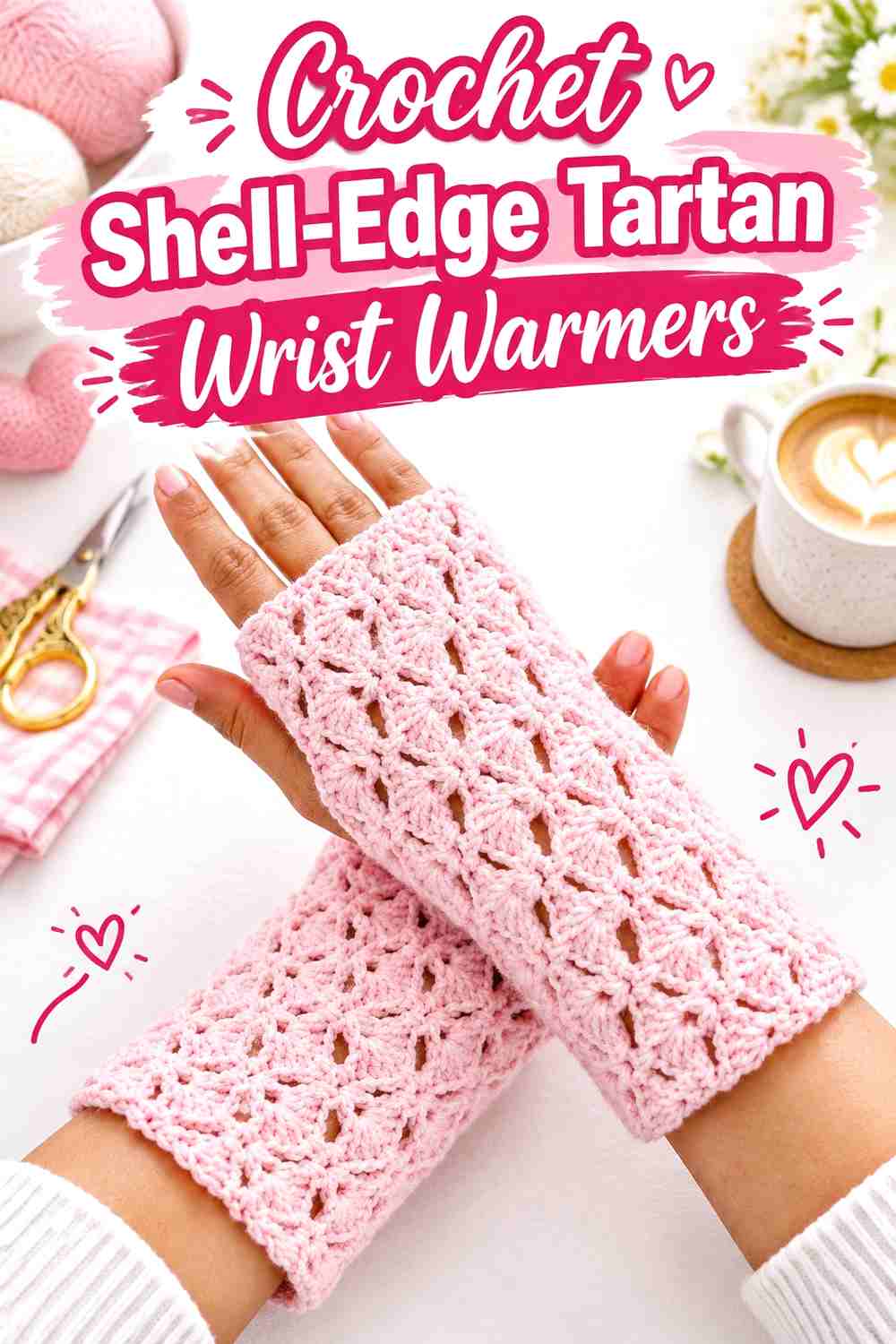
Stitches nook demonstrates shell-stitch fingerless gloves. For this Christmas adaptation, the useful contrast is between a more delicate upper edge and a stronger plaid cuff or lower-hand panel.
This is not an exact tartan tutorial, so the plaid section needs separate planning. The idea suits someone who likes Christmas color but finds a full buffalo-check glove too heavy visually.
Let the Shell Texture Replace Extra Colorwork
A decorative edge already adds detail. Extending complicated tartan through that same section may make both features harder to appreciate.
Use plaid where the fabric is comparatively simple, then allow the shell edge to stand on its own.
Check Whether the Upper Edge Still Stretches
Decorative shells can create a different amount of give than the body beneath them.
Before completing the second glove, check that the upper edge sits comfortably across the hand and does not flare excessively or feel restrictive after any tartan-related yarn substitution.
Creator Credit: Stitches nook
13. Crochet Modern Checkered Christmas Wrist Warmers
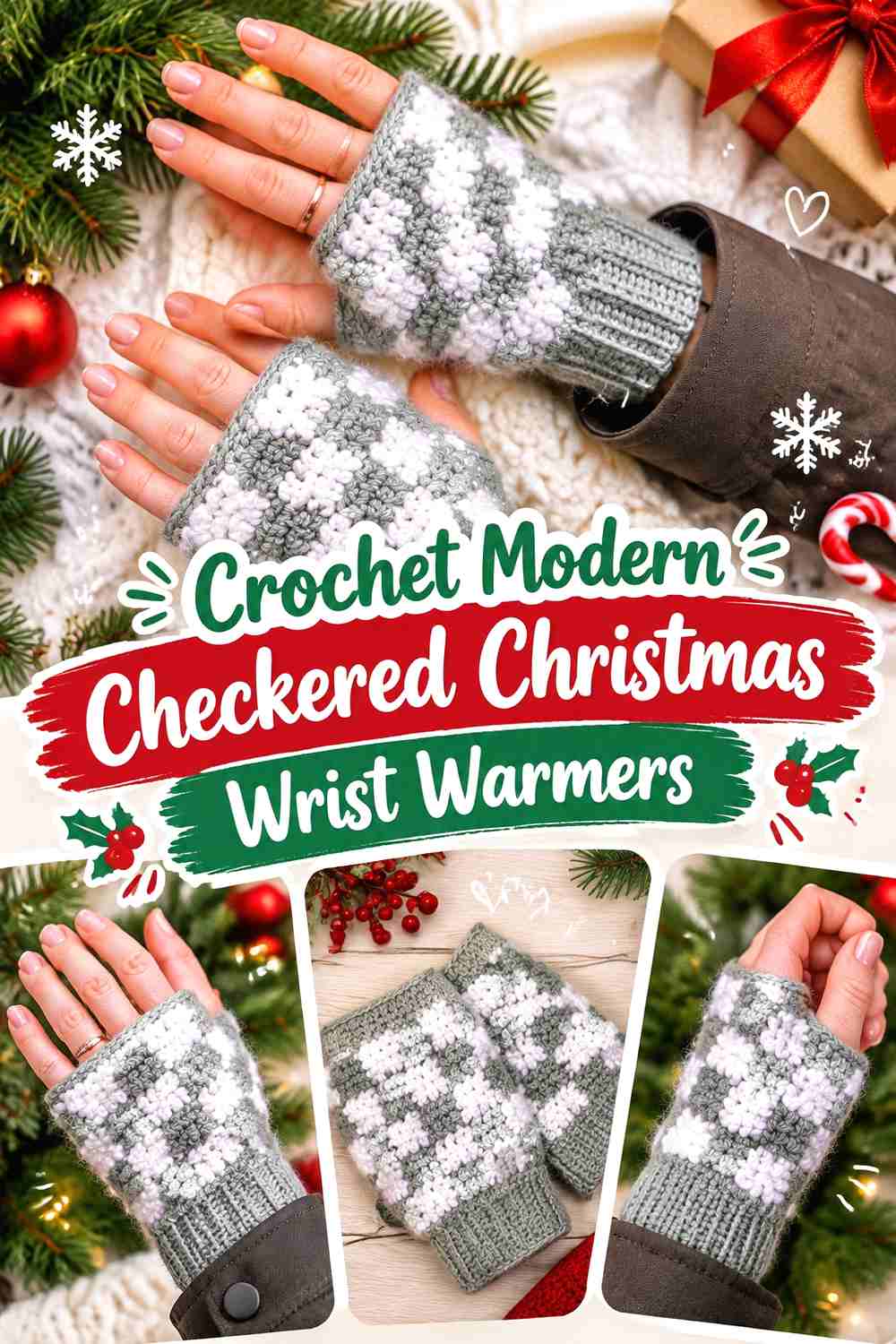
Woolyhearts provides another direct checkered fingerless-glove tutorial, but its cleaner modern appearance gives this idea a different direction from traditional buffalo plaid.
Use crisp black-and-cream, green-and-cream, burgundy-and-pink, or red-and-ivory checks when you want Christmas color with a more graphic contemporary feel.
Two-Color Checks Feel Cleaner Than Traditional Tartan
Traditional tartan can involve several crossing colors. A simpler checkerboard reduces that visual information and lets silhouette and fit become more noticeable.
That makes this project particularly useful with minimalist winter outfits where a complex multicolor tartan might compete with the rest of the look.
Color Changes Need Consistent Tension
Repeated switching between shades can tighten the working edge if the new yarn is pulled too firmly.
Compare the width of the glove every few check sections. If it gradually narrows, correct the tension before reaching the thumb rather than hoping blocking or finishing will compensate.
Creator Credit: woolyhearts
14. Crochet Interlocking Colorwork Tartan Wrist Warmers
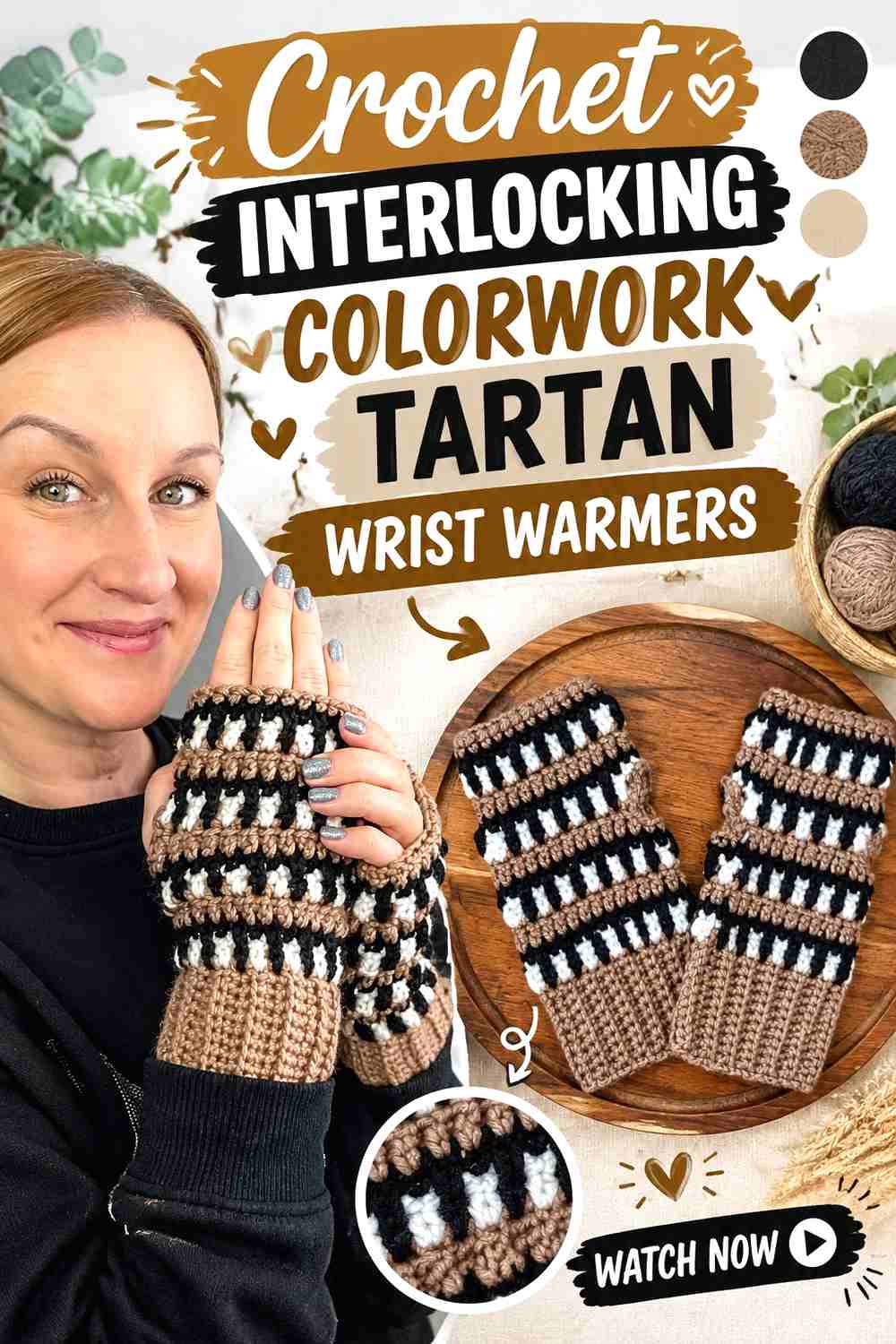
Blue Star Crochet’s source already teaches interlocking crochet fingerless gloves. The finished project is geometric colorwork rather than traditional tartan, but it provides a strong glove construction for experimenting with a Christmas palette that suggests plaid through repeated crossing color relationships.
This direction is useful for crocheters who want something less literal than buffalo check while keeping a clearly patterned winter accessory.
Interlocking Colorwork Adds Visual Depth
Because one color visually interacts with another, the surface can appear more complex than a simple striped wrist warmer.
For Christmas styling, resist using too many shades. Two strong colors plus a neutral can create a richer effect without making the small glove look fragmented.
Fit the Cuff Before Building the Pattern Above It
A patterned body is harder to adjust cleanly once the colorwork rhythm is established.
Use the cuff stage to settle the circumference, then check again once several patterned rounds have been worked. The two sections may not stretch identically.
Creator Credit: Blue Star Crochet | Veronika Cromwell
15. Crochet Cable-Cuff Tartan Wrist Warmers
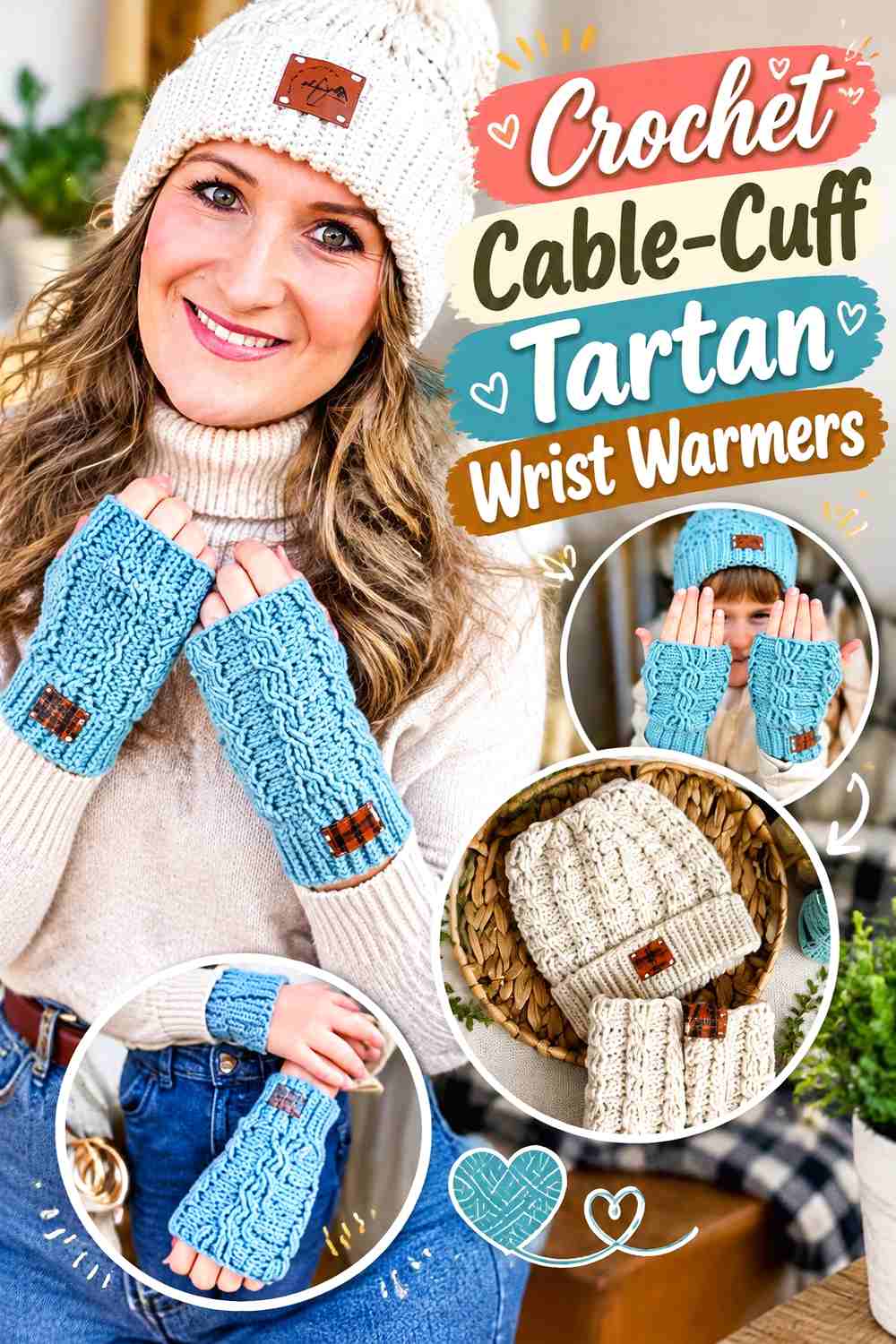
HanJan Crochet’s wrist-warmer tutorial uses a modern cable construction and defined cuff, making it another useful structural reference for a mixed-texture tartan adaptation rather than an exact plaid pattern.
For this version, keep the strongest cable work around the cuff or a limited hand panel and introduce tartan in the quieter surrounding fabric. The result can feel more polished than covering every surface with checks.
Decide Which Feature Should Lead
Cables and tartan are both visually assertive. Giving them equal coverage can produce a very busy small accessory.
If the tartan is the priority, keep the cable narrow. If the cable should dominate, use plaid only as a cuff band or limited colorwork section.
Check the Thumb Area Before Extending the Plaid
Color placement that looks balanced below the thumb can become awkward when the opening interrupts the pattern.
Reach the thumb area on the first wrist warmer before committing to the exact repeat for the second. That gives you a real reference for keeping both gloves visually coordinated.
Creator Credit: HanJan Crochet
Which Tartan Wrist Warmer Style Works Best for Christmas?
For the clearest Christmas-plaid effect, the buffalo-plaid and direct checkered glove tutorials require the least conceptual adaptation. The large blocks stay recognizable on a small wearable and work naturally in red, black, green, cream, burgundy, and other winter shades.
Choose a tartan-stitch or interlocking-plaid approach when you want more visual detail. These techniques can look closer to woven winter textiles, but they deserve careful swatching because a narrow hand warmer provides far less room for the repeat than a scarf or blanket.
If comfort and fit are the priority, start with one of the dedicated wrist-warmer constructions and add tartan selectively. A ribbed cuff with a plaid hand panel is easier to control than redesigning every section around multicolor crochet.
Cable-and-tartan or shell-and-tartan versions offer the most contrast. They work best when one feature remains dominant instead of asking texture and plaid to compete over the entire glove.
Conclusion
The strongest crochet tartan wrist warmer is not necessarily the one with the most colors. Large buffalo checks create a bold Christmas look, finer tartan stitches offer a more traditional textile effect, and small plaid accents can make a ribbed or textured glove feel seasonal without overwhelming the design.
For the most direct route, begin with the checkered or buffalo-plaid fingerless-glove tutorials. For a more customized pair, choose a wrist-warmer construction that fits well and introduce tartan only after testing how the colorwork changes stretch and thickness.
Whichever style you choose, make the first glove your fitting sample before duplicating the second. Use the original creator tutorial for its exact construction or stitch technique, and verify your own gauge, hand fit, thumb position, and color placement whenever you combine elements from different design ideas.
Frequently Asked Questions
What is the difference between crochet tartan and buffalo plaid wrist warmers?
Buffalo plaid generally uses larger blocks and a simpler color relationship, while tartan can include finer lines, smaller divisions, or more complex interactions between colors. On a narrow wrist warmer, buffalo plaid usually reads more clearly from a distance, while tartan can create a more detailed woven-textile appearance.
How many colors work well in a crochet tartan wrist warmer?
There is no universal number because different tartan techniques create the effect differently. For a compact accessory, limiting the palette can make the repeat easier to read. Start with the colors required by your chosen tutorial or stitch method rather than adding extra shades only for decoration.
Why does my plaid wrist warmer feel tighter than my plain crochet sample?
Multicolor crochet can behave differently because carried yarn, interlocking stitches, or frequent color changes may reduce stretch. Measure and try on the actual plaid fabric before completing the glove. A plain swatch made from the same yarn does not always predict the fit of the colorwork version.
Should I make tartan wrist warmers in the round or as flat panels?
Both constructions can work. Flat panels can simplify some color changes and allow a straightforward seam with a thumb opening, while working in rounds removes a long side seam. Follow the construction that suits the plaid method and tutorial you choose rather than assuming one approach is universally better.
How do I make both plaid wrist warmers match?
Record where the first glove begins within the color sequence and note the relationship between the plaid repeat, cuff, thumb opening, and upper edge. Start the second glove from the corresponding point. This is especially important with large checks because a shift of one color block can be obvious.
Can I use traditional Christmas red and green in the same tartan?
Yes, but adding a neutral or deeper bridging shade can make the colors easier to separate visually. Cream, black, charcoal, burgundy, or deep forest green can prevent bright red and green from competing equally across every section.
Should I block crochet tartan wrist warmers?
Follow the care and finishing guidance appropriate to the yarn and project. If you block them, avoid stretching the gloves beyond the intended hand measurements simply to make the plaid look straighter. Fit remains more important than forcing every color block into a perfectly geometric shape.