A crochet rosette brooch is a small accessory, but its shape can change the whole character of a fall outfit. A tightly rolled rose sits neatly on a cardigan or scarf, while a deeply layered bloom creates more of a textile-corsage effect on a coat, beret, or structured bag. Add leaves, contrasting petal edges, multiple miniature roses, or a two-tone center and the same basic floral idea can move in a completely different direction.
Fall 2026 styling does not have to mean making every rose bright orange. Oxblood, burgundy, tobacco, plum, fig, muted coral, rust, olive, moss, camel, cream, and antique pink can all create an autumn mood. What matters just as much is the flower’s profile: flat appliqué roses behave differently from tightly rolled rosettes, and substantial layered flowers need more support than tiny pins.
Some tutorials below specifically create brooches or flowers suitable for flat attachment. Others teach complete crochet roses intended as embellishments or stemmed flowers. In those cases, converting the flower into a brooch is a separate adaptation: evaluate the finished back, remove or omit unnecessary stem structure where the tutorial allows, and choose suitable pin hardware for the final weight and shape.
Quick List
- Crochet Picotee-Edge Rosette Brooch
- Crochet Leaf-Backed Autumn Rose Brooch
- Crochet Two-Scale Rose and Leaf Brooch
- Crochet Deep Layered Rosette Brooch
- Crochet Tonal Layered Rose Brooch
- Crochet Mini Rosette Cluster Brooch
- Crochet Compact Rolled Rose Lapel Brooch
- Crochet Classic Spiral Rosette Brooch
- Crochet Soft Ribbon-Look Rose Brooch
- Crochet Flat-Back Rose Appliqué Brooch
- Crochet Three-Tier Rosette Brooch
- Crochet Sculptural Rose Corsage Brooch
- Crochet Petite Round Rosette Pin
- Crochet Simple Fall Rose Brooch
- Crochet Two-Color Statement Rose Brooch
- Crochet No-Sew Full Rose Brooch
- Crochet One-Piece Layered Rose Brooch
- Crochet Realistic Petal Rosette Brooch
- Crochet Open Rose and Bud Brooch
- Crochet Picot-Petal Rose Appliqué Brooch
Choose Rosette Depth for the Garment You Want to Wear
A relatively flat rose is usually easier to position on a cardigan, blouse, beret, or lighter scarf because most of the flower remains close to the fabric. Deep rolled roses and multi-layer blooms project farther outward. That extra dimension can look striking on a coat or structured bag, but it also creates more leverage around the fastening point.
Before permanently adding brooch hardware, hold the finished flower against the intended garment vertically. A flower that looks balanced on a worktable can tilt noticeably once gravity pulls the petals forward.
Also inspect the fabric itself. A pin may leave visible holes or cause distortion in delicate, loosely constructed, or easily snagged materials. A substantial rosette is generally easier to support on a firmer surface than on a very fine knit.
Build a Fall Palette Around Petal Definition
Rosettes rely on overlapping edges to create their flower shape. If every layer uses nearly identical dark colors, the individual petals may disappear when viewed from a normal distance.
For monochromatic brooches, texture and shadow can provide enough separation. For two-color flowers, decide whether the contrast should emphasize the center, petal edges, leaves, or alternating layers rather than changing colors randomly.
Fall combinations can go well beyond orange and brown. Consider burgundy with dusty rose, tobacco with cream, plum with mauve, rust with muted coral, olive with antique pink, charcoal with wine, or camel with deep red. Place small yarn samples together before committing; colors that look distinct in separate skeins can blend once worked into a compact flower.
Treat the Brooch Back as Part of the Design
The decorative front gets most of the attention, but the back determines how the rosette sits when worn. A stable, relatively flat area gives brooch hardware a better foundation than an uneven cluster of joins and loose yarn ends.
Do not assume one pin size or position works for all 20 designs. A wide flat appliqué and a deep realistic rose place weight differently. Long leaves can also make an otherwise circular flower directional, so decide which edge should face upward before fixing the hardware.
If a source tutorial uses wire, floral rods, or other support materials for a stemmed rose, evaluate those components separately when making jewelry. Do not leave sharp or rigid ends where they can contact the wearer or garment.
1. Crochet Picotee-Edge Rosette Brooch
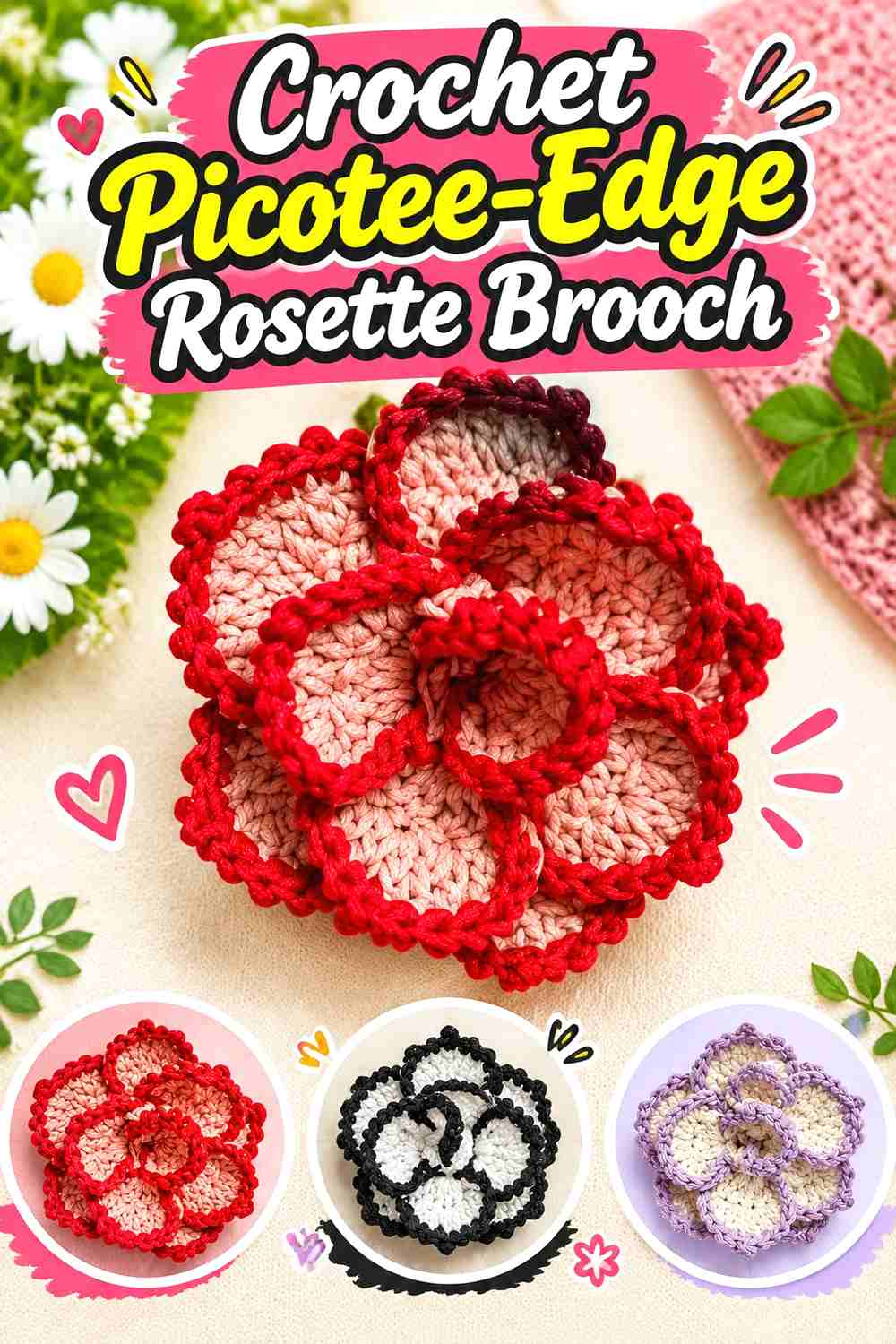
This design is one of the most direct matches for the topic because the source is specifically a rose brooch. Its contrasting petal edging creates a picotee-style effect, giving the flower definition without requiring several completely different petal colors.
For fall, the edging can become the main styling feature. Think burgundy petals bordered with dusty rose, tobacco edged with cream, or dark plum with muted mauve rather than relying on a bright multicolor palette.
The Petal Border Deserves Clear Contrast
The defining detail is around the edge, so two colors that are too similar may hide the feature that separates this brooch from an ordinary solid rose.
Compare the yarns side by side before beginning. The contrast does not have to be dramatic, but it should remain noticeable after the narrow border is surrounded by neighboring petals.
Let the Flower Stay More Important Than the Hardware
A detailed edge already gives this rosette visual complexity. Keep any visible backing, extra ribbons, or additional embellishments restrained so the petal outline remains the focal point.
Test the completed flower on the intended coat or scarf before deciding its final orientation.
Creator Credit: あむあむチャンネル
2. Crochet Leaf-Backed Autumn Rose Brooch
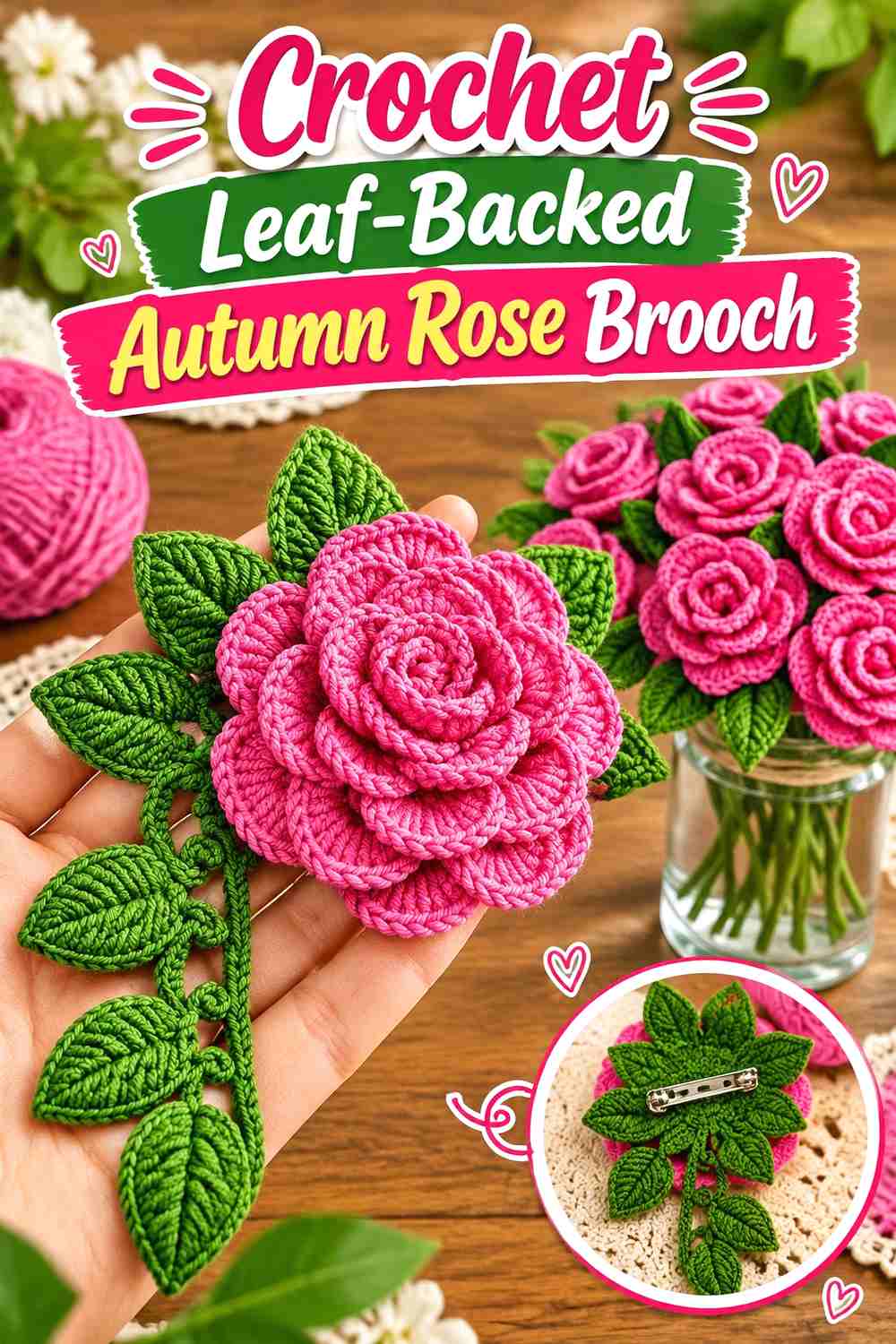
This rose tutorial includes leaves with the finished flower and specifically lists brooches among possible uses, making it a practical starting point for a directional fall pin rather than a purely round rosette.
The leaf arrangement is useful for jackets because it extends the accessory along a lapel instead of concentrating every detail inside one circular bloom.
Leaves Decide Which Way the Brooch Faces
Once foliage extends from one side, the rosette has a clear top and bottom. Position the completed flower against your garment before attaching the pin and rotate it until the leaves follow the line you want.
A horizontal arrangement can suit a bag flap, while a slight diagonal often relates more naturally to a lapel.
Keep Autumn Greenery From Becoming Too Dark
Deep olive or moss can work beautifully with rust, wine, or antique pink petals, but very dark leaves may disappear against a black or brown coat.
Judge the combination against the clothing you actually plan to wear, not just against a light-colored craft table.
Creator Credit: Crochet My Hobby
3. Crochet Two-Scale Rose and Leaf Brooch
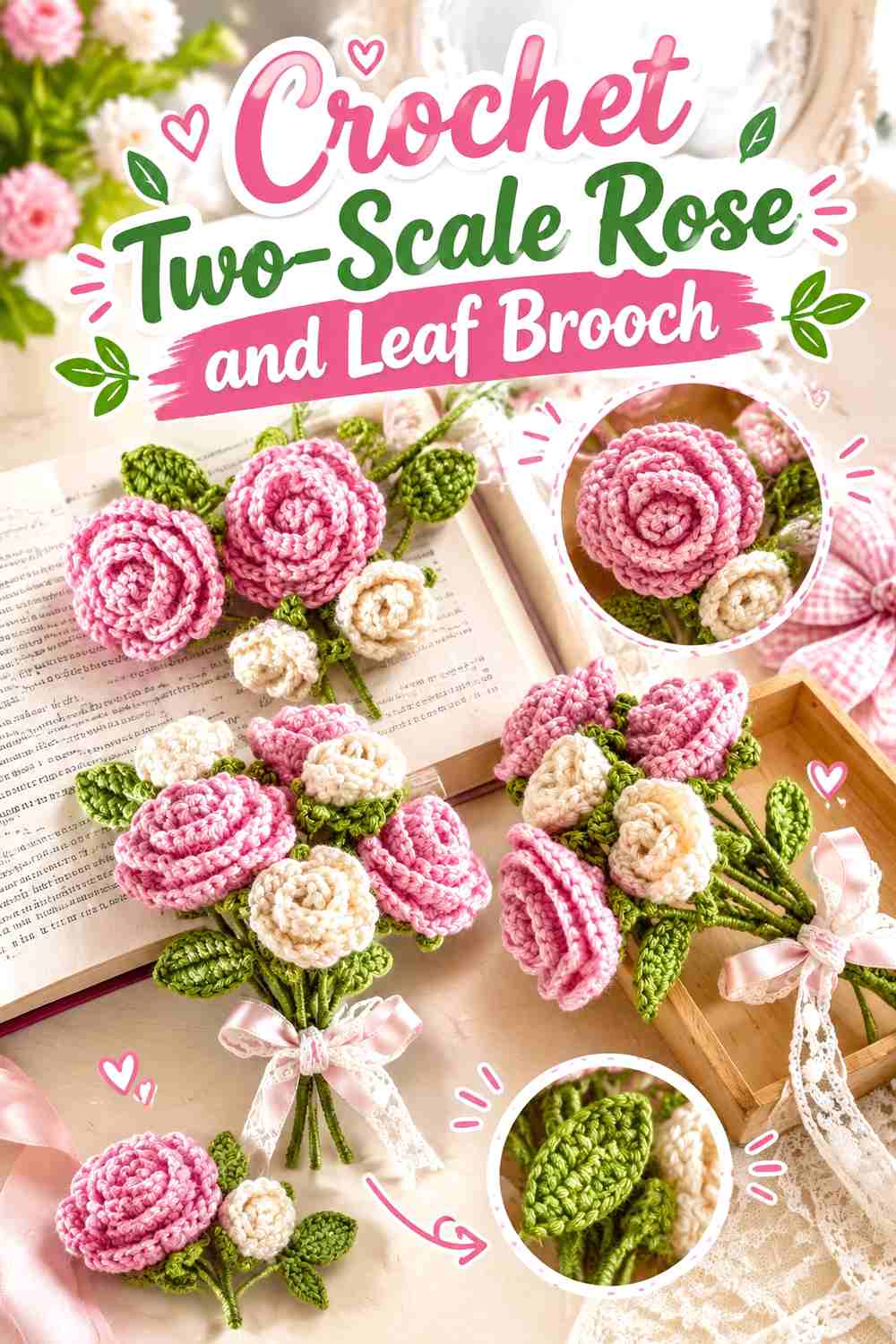
This source demonstrates roses in two sizes along with leaf details, which makes it useful for a brooch built around controlled asymmetry. Instead of wearing one centered bloom, you can evaluate whether a larger rosette paired with a smaller companion creates a more interesting fall arrangement.
The tutorial’s original flower construction is not presented solely as a brooch, so the pin backing remains your separate finishing decision.
Use Size Difference to Create Hierarchy
Two roses of nearly equal visual weight can compete with one another. A clearly dominant bloom plus a smaller accent creates an easier composition to read.
Arrange the finished flowers and leaves on a scrap of similar fabric before joining anything into a wearable cluster.
Watch the Total Footprint
A second rose and several leaves can turn a modest accessory into a large corsage quickly.
Compare the proposed arrangement with the width of your coat lapel, cardigan front, or bag panel. Removing one leaf may improve the brooch more than squeezing every component into the design.
Creator Credit: mahum 🎀
4. Crochet Deep Layered Rosette Brooch
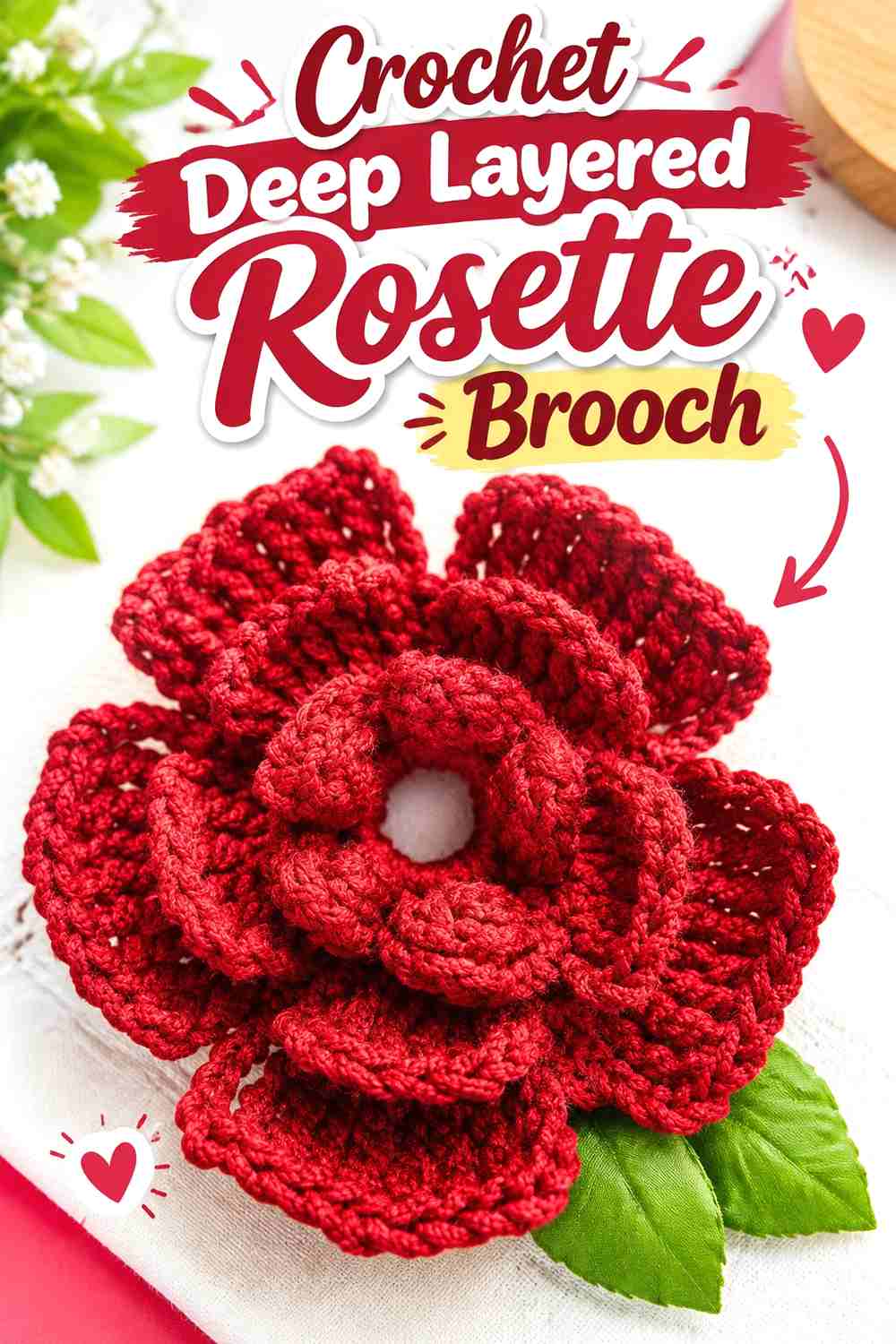
This layered rose builds its effect through stacked petal levels rather than a simple flat flower face. That makes it a good source for a substantial brooch where depth is part of the design.
A deep burgundy, aubergine, burnt coral, or dark rose version could become the main accessory on a plain fall coat without needing several additional motifs around it.
Inspect the Side Profile Before Adding the Pin
Layered flowers can look compact from the front while projecting significantly outward.
Hold the completed rose vertically and look at it from the side. If the upper petals pull forward strongly, backing position becomes especially important.
Tonal Layers Can Replace Multiple Bright Colors
A highly dimensional flower already creates natural light and shadow. You can take advantage of that with neighboring shades rather than high contrast.
Dark wine, burgundy, and dusty rose can create visible depth while keeping the accessory cohesive.
Creator Credit: Nidhi’s CrochetART
5. Crochet Tonal Layered Rose Brooch
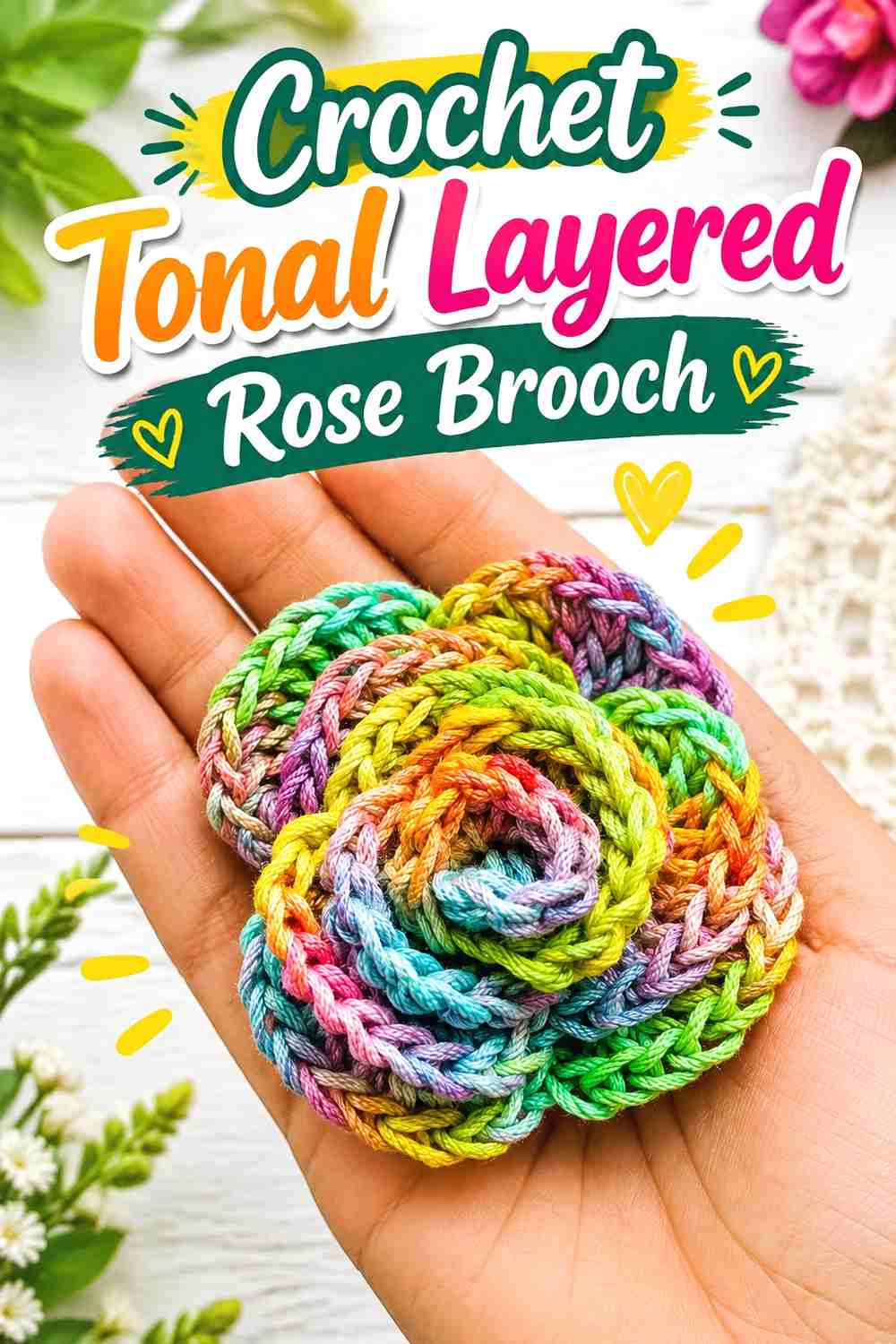
This layered flower offers another approach to visible petal separation and can be adapted into a brooch when you want the rosette to read as a clearly constructed textile flower rather than a realistic stemmed rose.
It is particularly suited to fall color experiments because individual sections can carry closely related shades without losing the rounded rose identity.
Use Color Changes to Explain the Layers
Instead of alternating unrelated colors, consider progressing from a darker center toward a softer outer shade or reversing that relationship.
The goal is to help the eye understand the flower’s depth, not simply to fit more colors into a small space.
Keep the Backing Inside the Flower Outline
Layered petals may create gaps around the outer edge. Before sewing on hardware, view the brooch from the front and check whether any part of the pin shows between petals.
Hardware that stays visually hidden makes the finished accessory look cleaner from different angles.
Creator Credit: Little Hive Crafts
6. Crochet Mini Rosette Cluster Brooch
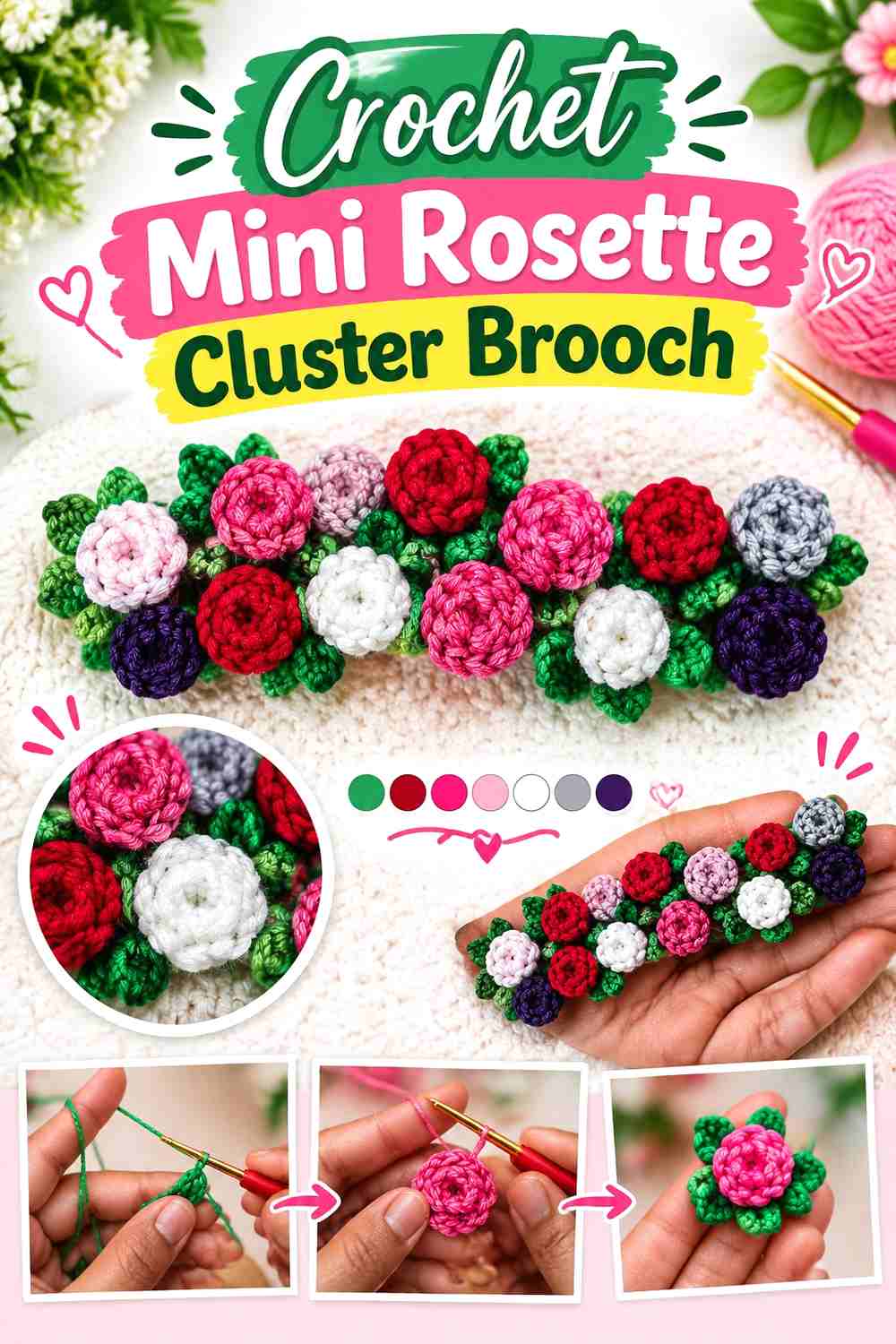
A miniature rose works differently from the larger statement flowers in this list. The source specifically suggests brooches among the possible uses for the finished mini rose, making it suitable for a petite single pin or a small cluster.
Several small blooms can create a bouquet-like brooch while keeping each individual flower compact.
Cluster With Restraint
Three tiny roses can look intentional; a large number can become a dense mound with no clear outline.
Arrange the completed rosettes before joining them and leave enough separation for viewers to recognize individual flower shapes.
Small Scale Makes Color Contrast More Important
Subtle shade changes occupy very little visual space on miniature flowers.
If you want several colors in the same cluster, test them together from normal wearing distance. One muted rust, one cream, and one wine rose may remain clearer than three almost identical dark reds.
Creator Credit: Crochet with Meera
7. Crochet Compact Rolled Rose Lapel Brooch
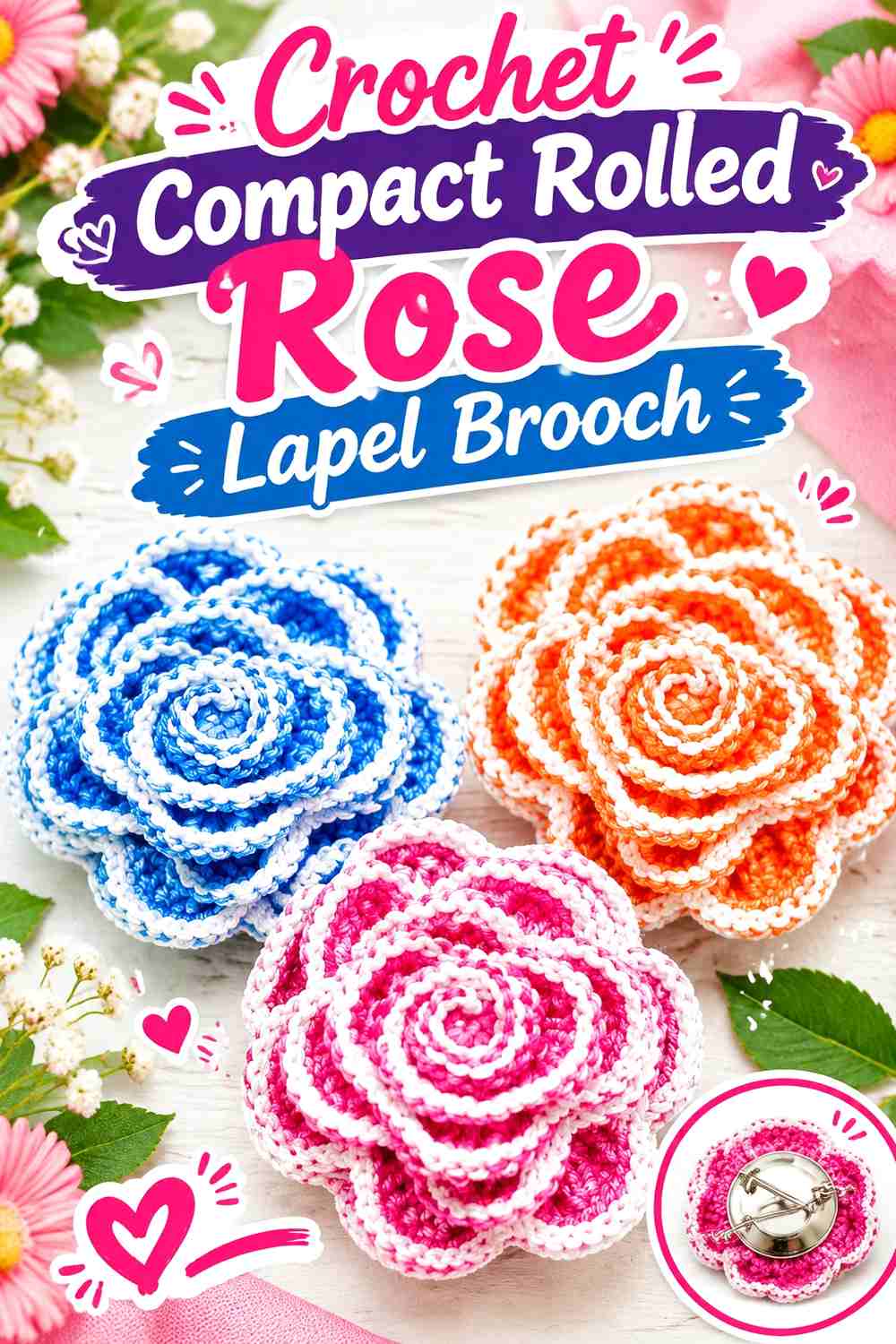
A classic rose embellishment gives you a compact rosette that can be adapted without introducing realistic stems or a large floral arrangement. Crochet Jewel’s source is designed as an accessible rose motif for adding to other projects, which makes the flower a logical candidate for separate brooch backing.
This style suits a lapel when you want visible petal depth but not the spread of a full corsage.
Rolling Tension Affects the Final Shape
A tightly assembled center reads differently from an open, relaxed bloom. When following the creator’s construction, pay attention to the final shape before deciding whether it has the right depth for your garment.
Do not compensate for an unsatisfactory center by simply adding unrelated decoration around the outside.
One Leaf Can Change the Entire Silhouette
A compact circular rose feels classic. Add one leaf and it becomes directional; add several and it starts moving toward a floral spray.
Decide which effect you actually want before building the backing around the finished outline.
Creator Credit: Crochet Jewel
8. Crochet Classic Spiral Rosette Brooch
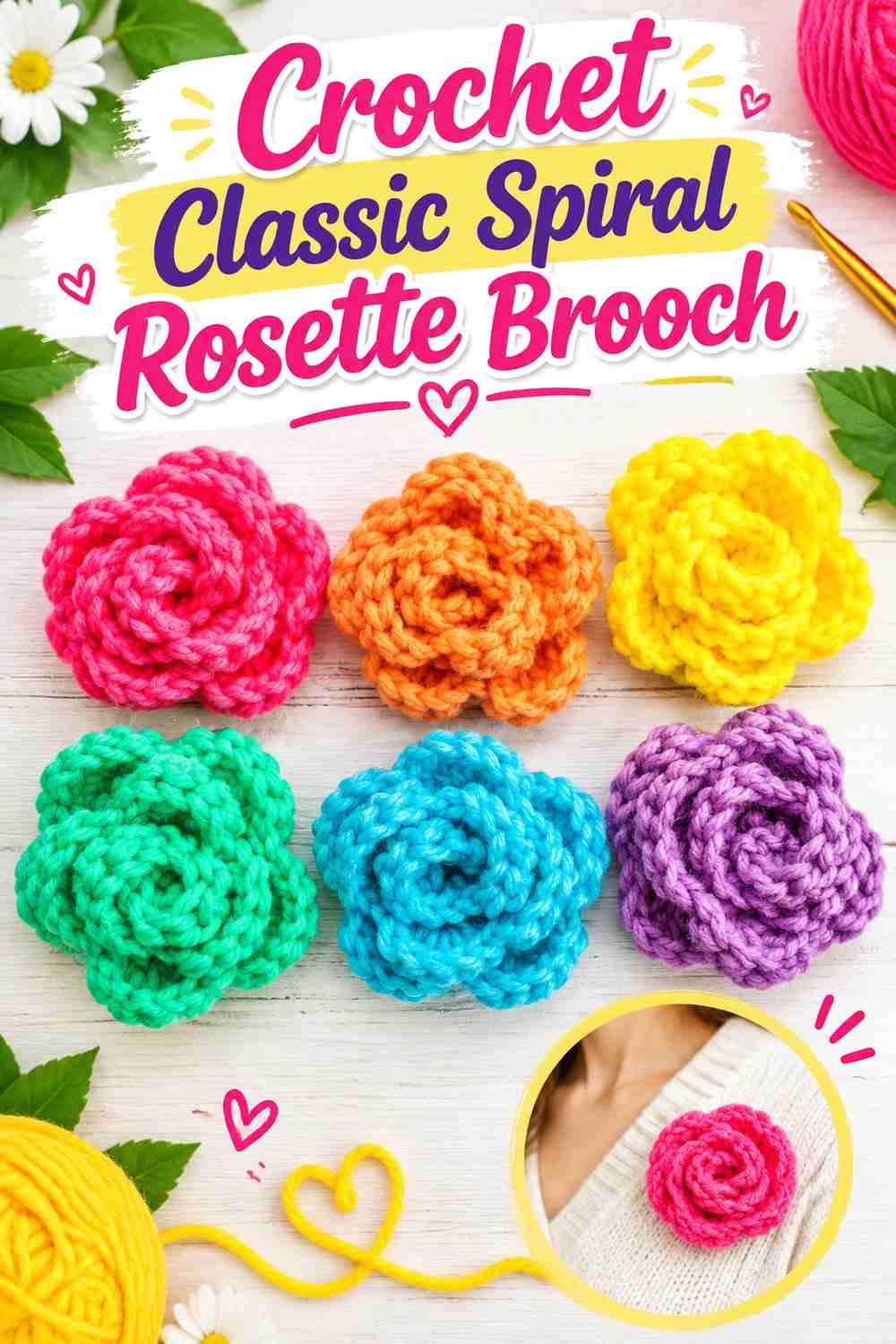
Naztazia’s rose is presented as an embellishment for items such as hats, scarves, shawls, bags, and blankets, making it especially relevant when you want a straightforward flower that can be adapted to removable brooch hardware.
The clear spiral look works well for solid fall shades because the overlapping construction supplies much of the visual interest.
Let the Spiral Remain Visible
The appeal of this rosette comes from the eye moving around the curled petal arrangement.
A decorative center that is too large can flatten that visual movement. Before adding any button or bead independently, check whether the rose is already complete enough without it.
Scale the Brooch to Its Destination
A rosette intended for a hat does not necessarily need the same scale as one worn on a cardigan.
If you alter yarn or hook choices, remember that the finished diameter, thickness, and weight may all change together. Evaluate the completed flower rather than assuming a larger version will behave like the original.
Creator Credit: naztazia
9. Crochet Soft Ribbon-Look Rose Brooch
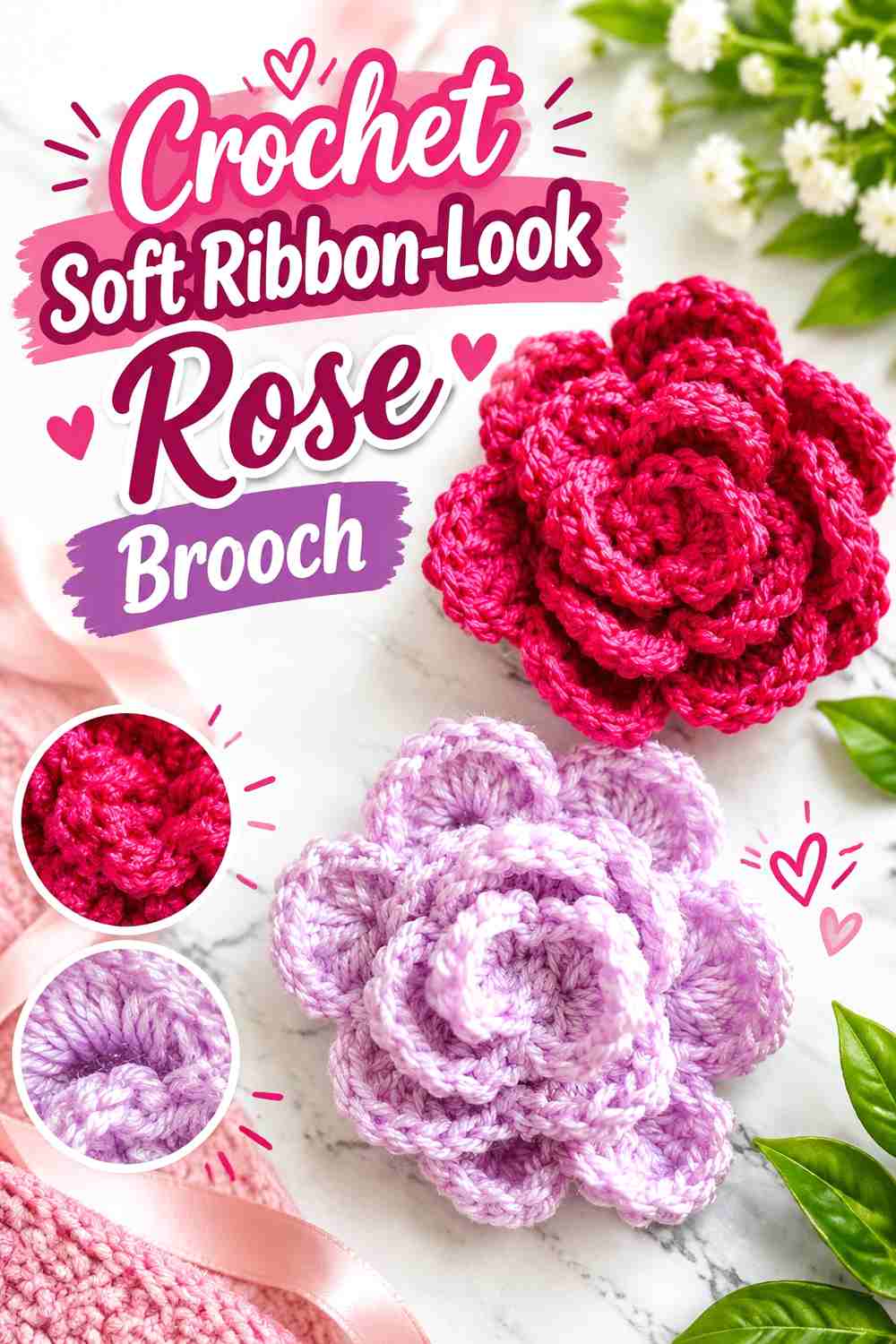
Bella Coco’s rose uses a recognizable rolled flower construction that produces a soft, compact embellishment suitable for adapting into a wearable pin.
Its flowing petal arrangement makes it particularly useful for romantic fall palettes such as dusty rose with camel, cream with tobacco brown, or muted plum against charcoal clothing.
Match Soft Petals With a Stable Back
The front may look intentionally relaxed, but the reverse still needs enough stability for brooch hardware.
Check that the base does not fold around the pin when the flower is held upright. A secure back allows the petals to stay soft without making the whole accessory floppy.
Avoid Overworking a Simple Silhouette
This type of rose gets much of its appeal from the rolled shape itself.
If the flower is going onto a patterned scarf or textured cardigan, additional leaves, beads, and ribbons may create more competition than value. Let the garment help determine how much decoration the brooch needs.
Creator Credit: Bella Coco
10. Crochet Flat-Back Rose Appliqué Brooch
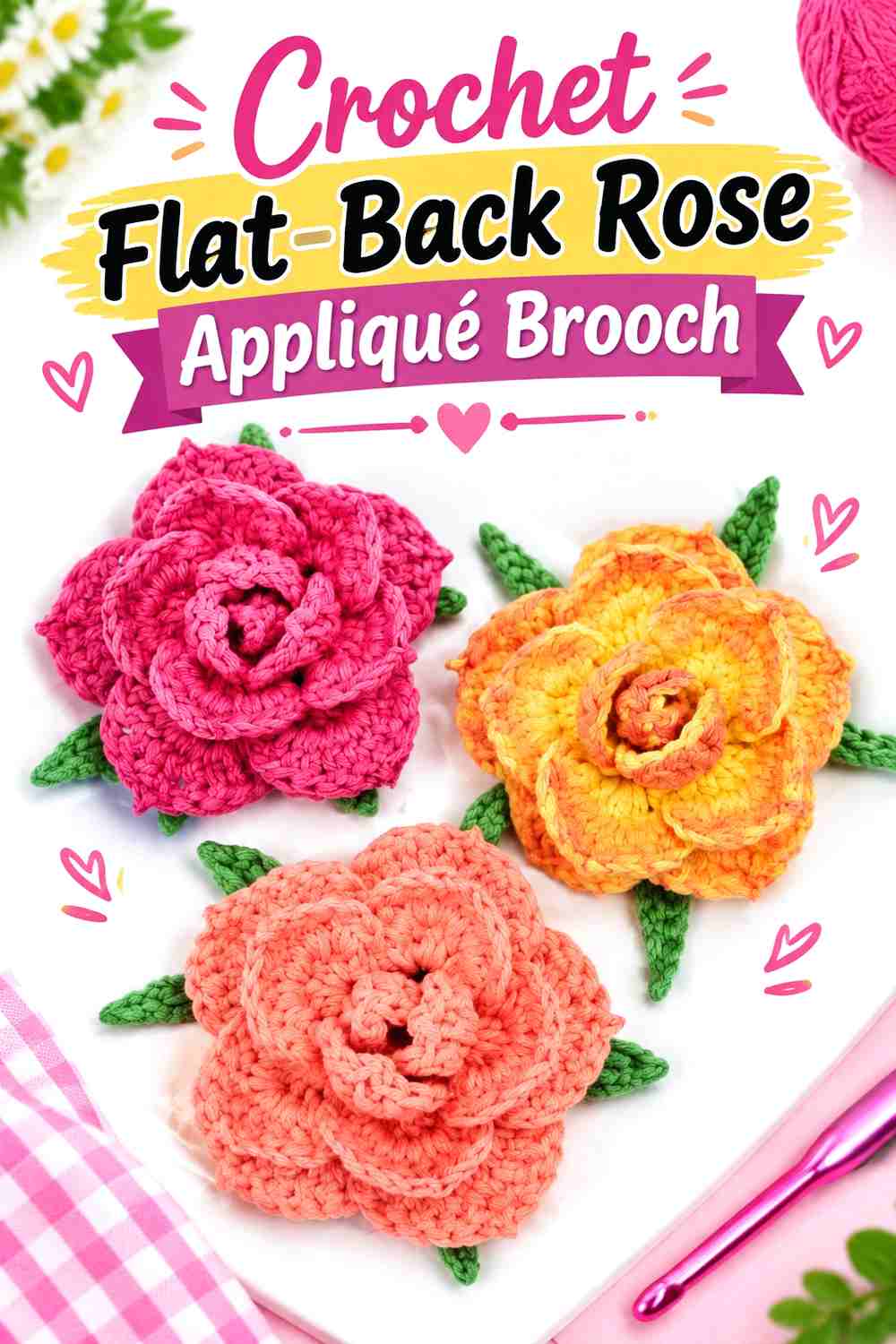
Happy Patty Crochet’s rose was specifically designed with a flat underside so it can be attached to flat surfaces or findings, making it one of the strongest adaptation candidates for a brooch in this collection.
That flatter base is useful when you like the dimensional appearance of a rose but do not want the rear of the accessory to be as sculptural as the front.
A Flat Base Gives You More Placement Control
Before adding the hardware, rotate the finished flower against the garment and mark the orientation that gives the strongest petal arrangement.
The flattest possible back does not help if the pin is attached at an angle that makes the rose appear tilted.
Sepal Details Can Frame the Flower
Green details around the base can add botanical definition, but they also enlarge the outline.
For a narrow lapel, compare the bloom with and without extra greenery before deciding which version works better as jewelry.
Creator Credit: Happy Patty Crochet
11. Crochet Three-Tier Rosette Brooch
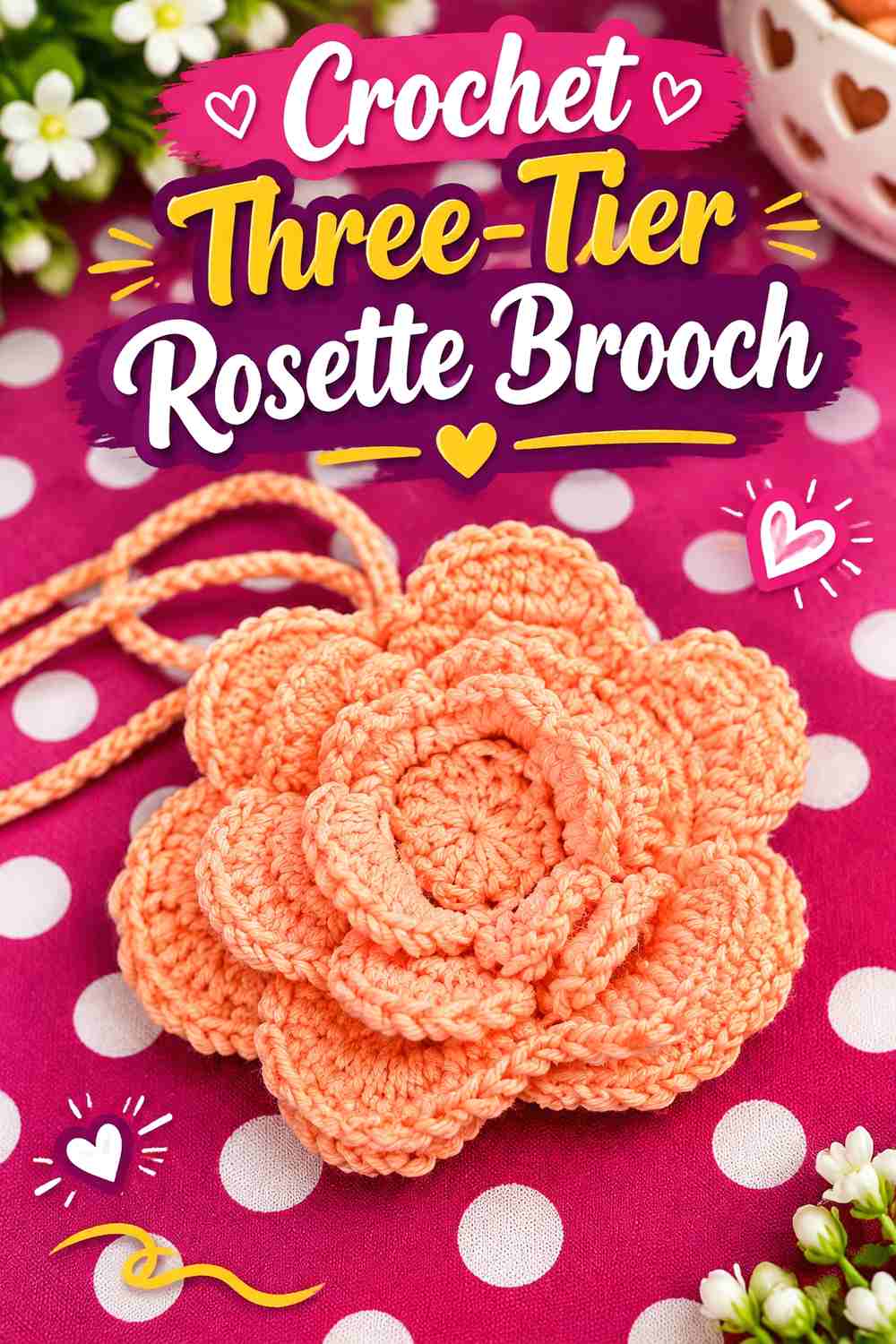
Rogue Hobbies’ layered rose construction creates several visible petal levels, giving the finished flower a structured, almost concentric appearance.
That geometry makes it useful for a brooch where you want the layers themselves—not leaves or a stem—to provide the visual complexity.
Keep the Center Visually Anchored
On a multi-tier rosette, an off-center appearance becomes obvious because the surrounding layers effectively frame the middle.
Inspect the completed flower straight on before installing hardware. Any shaping adjustment is easier before the brooch has an established top edge.
Use the Tiers for Controlled Color Blocking
Three visible levels give you an opportunity to use color deliberately.
A dark center, mid-tone middle layer, and lighter outer petals can emphasize depth, while reversing the order produces a darker framed effect. Either is more coherent than changing color unpredictably within the same structure.
Creator Credit: Rogue Hobbies
12. Crochet Sculptural Rose Corsage Brooch
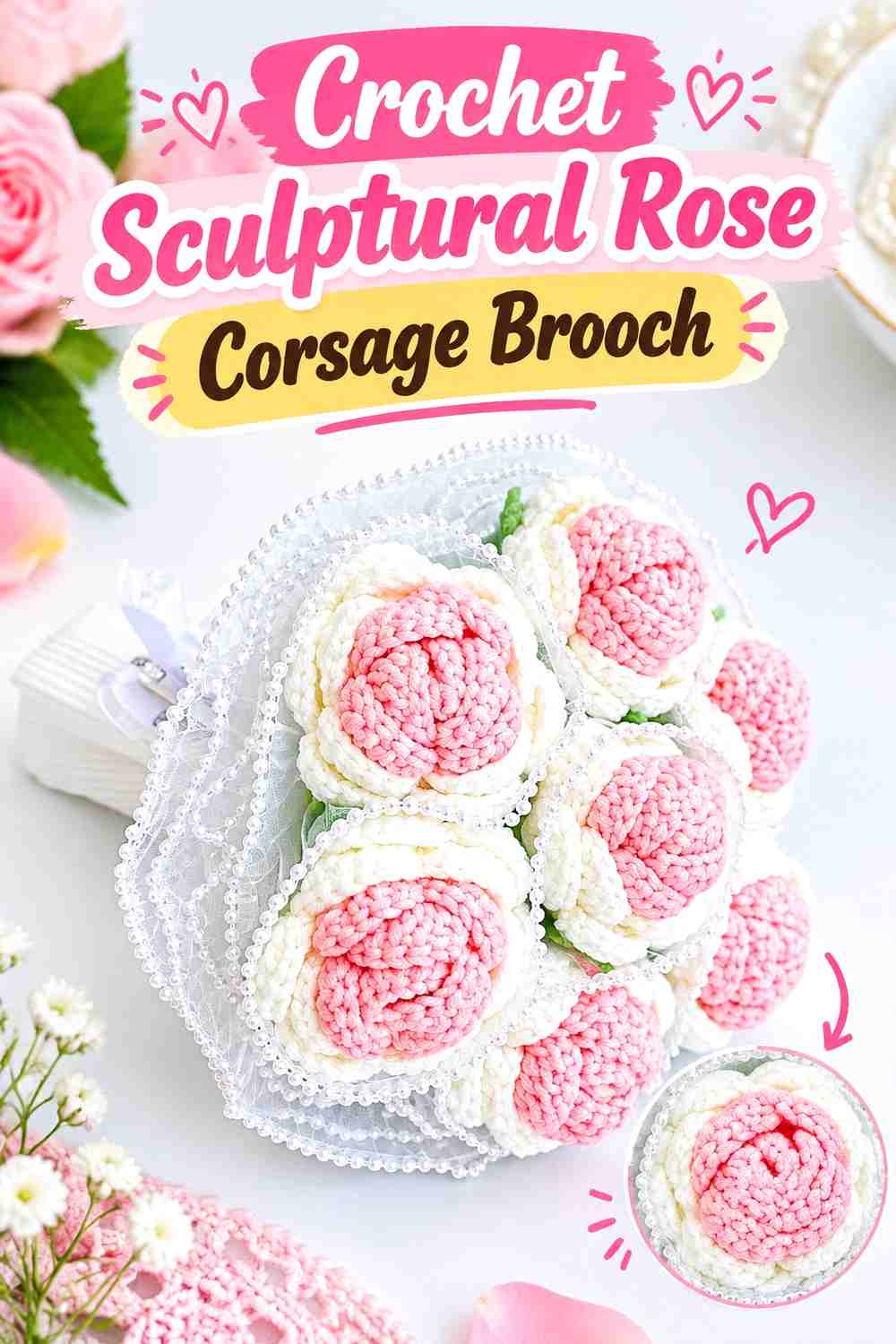
Lingzhi Handmade’s rose is a more realistic, sculptural flower designed with bouquet construction in mind. For a brooch, the useful starting point is the substantial flower head and leaf treatment; converting it into wearable jewelry requires a separate backing plan rather than reproducing the entire stem.
This is the option for a coat or bag when you want the accessory to feel closer to a textile corsage than a small appliqué.
Bouquet Structure Does Not Automatically Belong in a Brooch
Stem wire and other support materials serve a different job in a bouquet.
When adapting the flower head, evaluate which structural components are genuinely needed for the wearable version. Any rigid material retained in jewelry should be securely enclosed so it cannot contact the wearer.
Give a Realistic Rose More Breathing Room
Detailed petals become difficult to appreciate when the flower is surrounded by several other large accessories.
Let this design stand alone on a plain coat lapel, bag, or scarf rather than treating it as one element in an overcrowded cluster.
Creator Credit: Lingzhi Handmade
13. Crochet Petite Round Rosette Pin
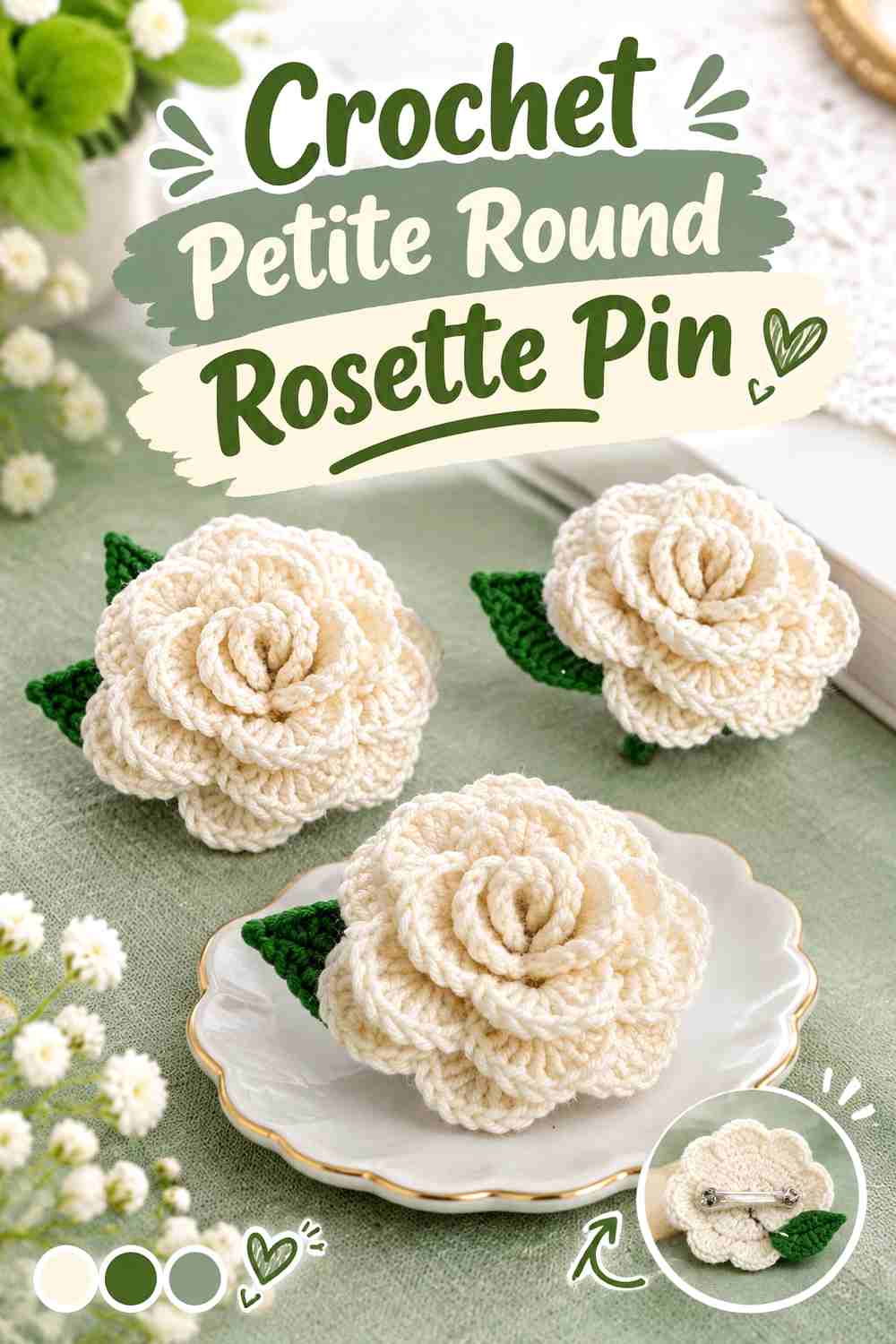
Sahar Elkady’s rose flower provides a compact ornamental form that can be used as the basis for a smaller brooch rather than a large corsage.
A petite rosette is useful when you want several fall accessories that can be rotated between hats, scarves, cardigans, and bags without dominating each item.
Small Brooches Reward Neat Finishing
With less overall surface area, stray yarn ends, exposed hardware, or an uneven base become proportionally more noticeable.
Finish the flower completely before selecting the final backing position and check it from the front, side, and back.
Try Fall Color Without Making a Statement Piece
A compact rosette is a low-commitment way to introduce unusual shades such as mustard, olive, tobacco, or aubergine.
If a color feels too strong for a whole cardigan, it may work perfectly as a small pin against a neutral layer.
Creator Credit: Sahar Elkady
14. Crochet Simple Fall Rose Brooch
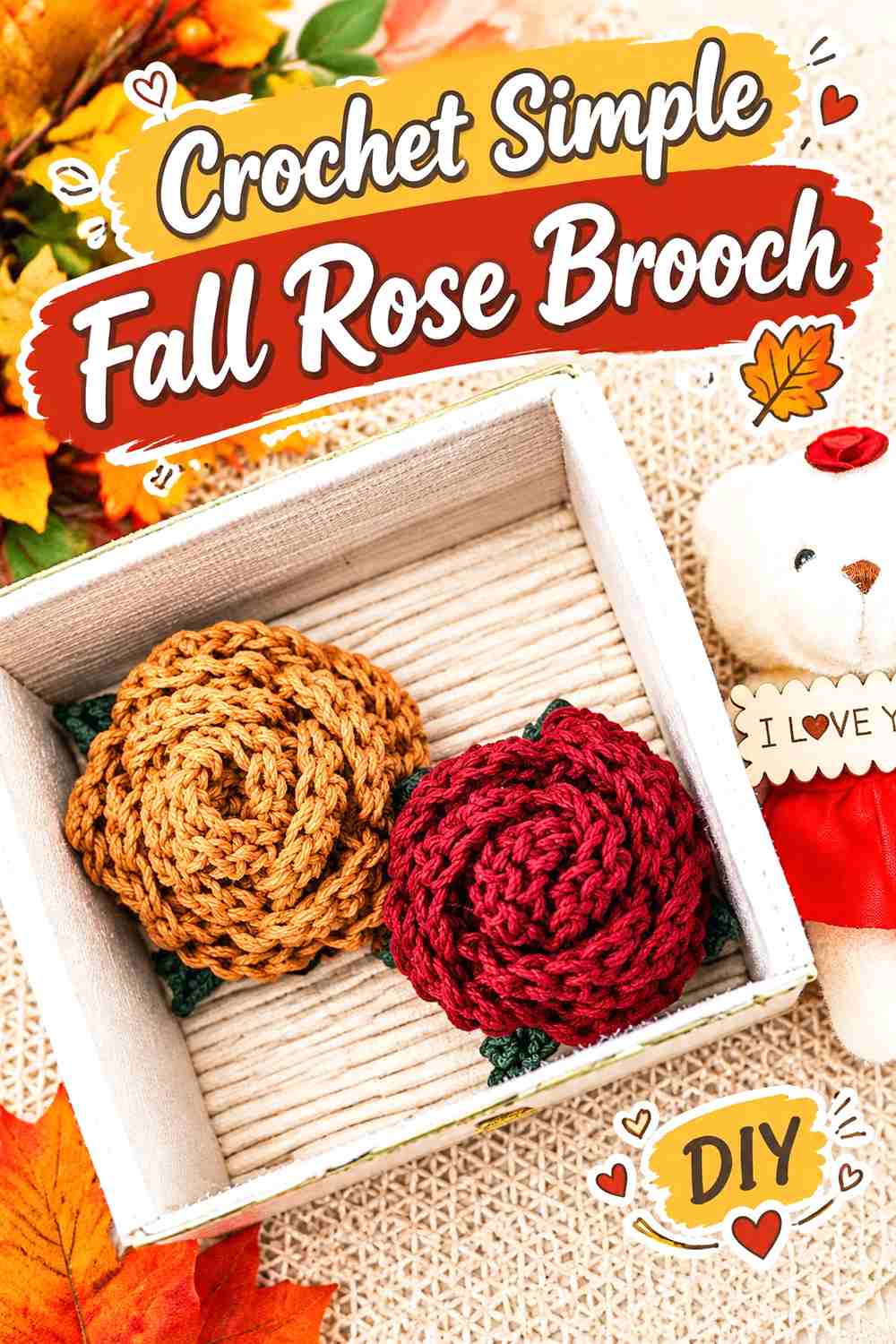
Raji’s Craft Hobby provides an ornamental rose designed for use as an embellishment on multiple types of crochet projects. That flexibility makes it suitable for adaptation into a straightforward removable brooch.
This is a useful direction when the goal is a recognizable rose without the visual weight of a realistic stemmed construction.
Simplicity Makes Yarn Choice More Visible
On a relatively uncomplicated rose, the yarn surface becomes part of the design.
A crisp yarn can emphasize petal boundaries, while a fuzzier fiber will soften them. Consider which effect suits the garment rather than selecting yarn based only on color.
A Single Rose Can Be More Wearable Than a Cluster
It is easy to assume that adding leaves or extra blooms automatically makes a brooch more finished.
On a cardigan or narrow scarf, one controlled rosette may look more deliberate and place less stress on the fabric than a wide arrangement.
Creator Credit: Raji’s Craft Hobby
15. Crochet Two-Color Statement Rose Brooch
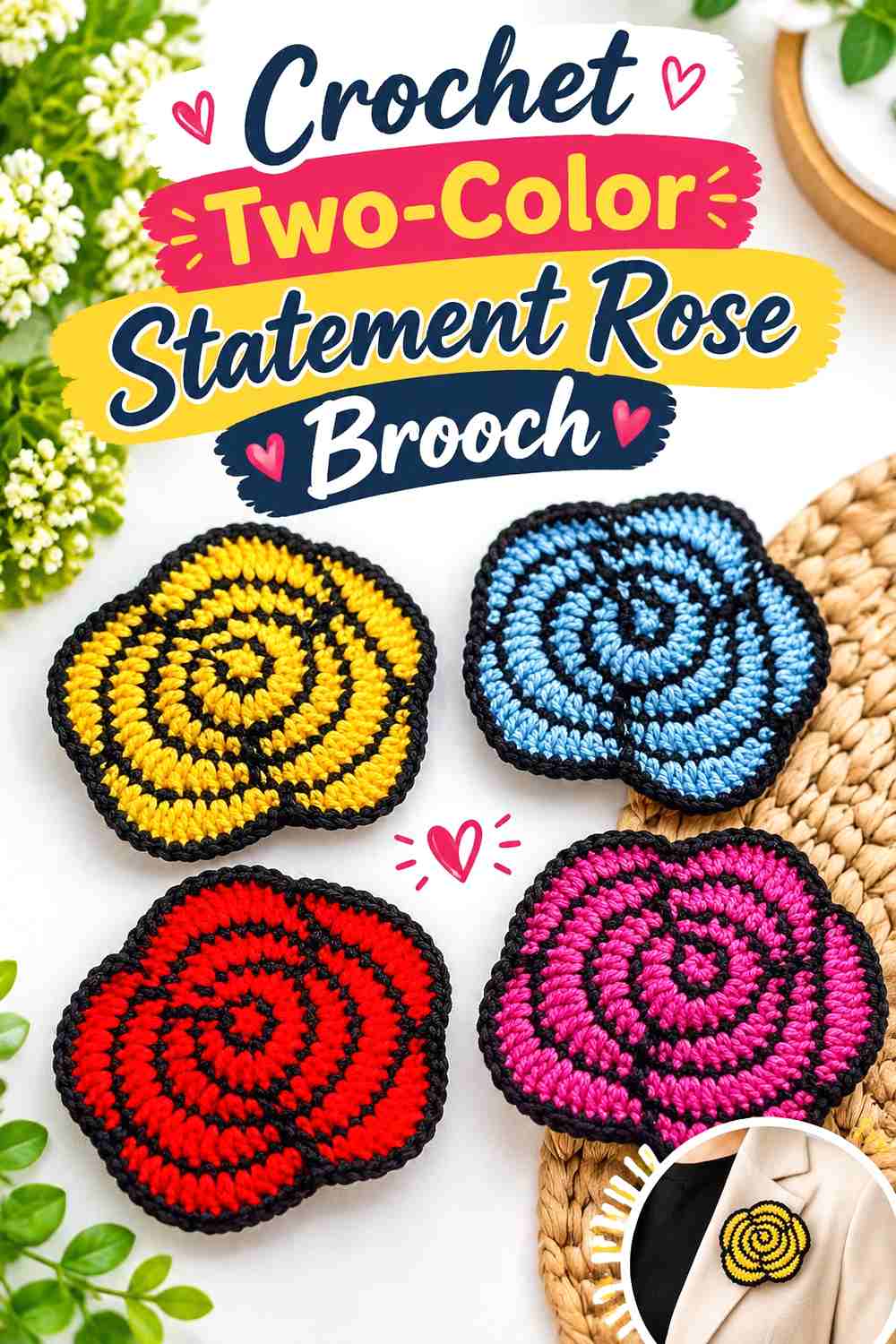
Crochet Bits’ design is specifically built around a two-color rose, making color contrast part of the construction rather than a later styling decision.
For fall, this opens up combinations such as fig and dusty rose, rust and camel, burgundy and cream, or charcoal and muted red.
Decide Which Color Should Dominate
An equal amount of two bold colors can produce a highly graphic flower. That may be exactly what you want on a plain coat, but it can compete with patterned garments.
Choose one dominant shade and one supporting shade when you want a more restrained result.
Give a Large Rose Firm Enough Fabric
A broad statement flower has more surface area and potentially more weight than a petite rosette.
Test the finished piece on the intended garment before fixing your brooch hardware permanently. If the material buckles around it, a sturdier coat, bag, or scarf may be a better home.
Creator Credit: Crochet Bits
16. Crochet No-Sew Full Rose Brooch
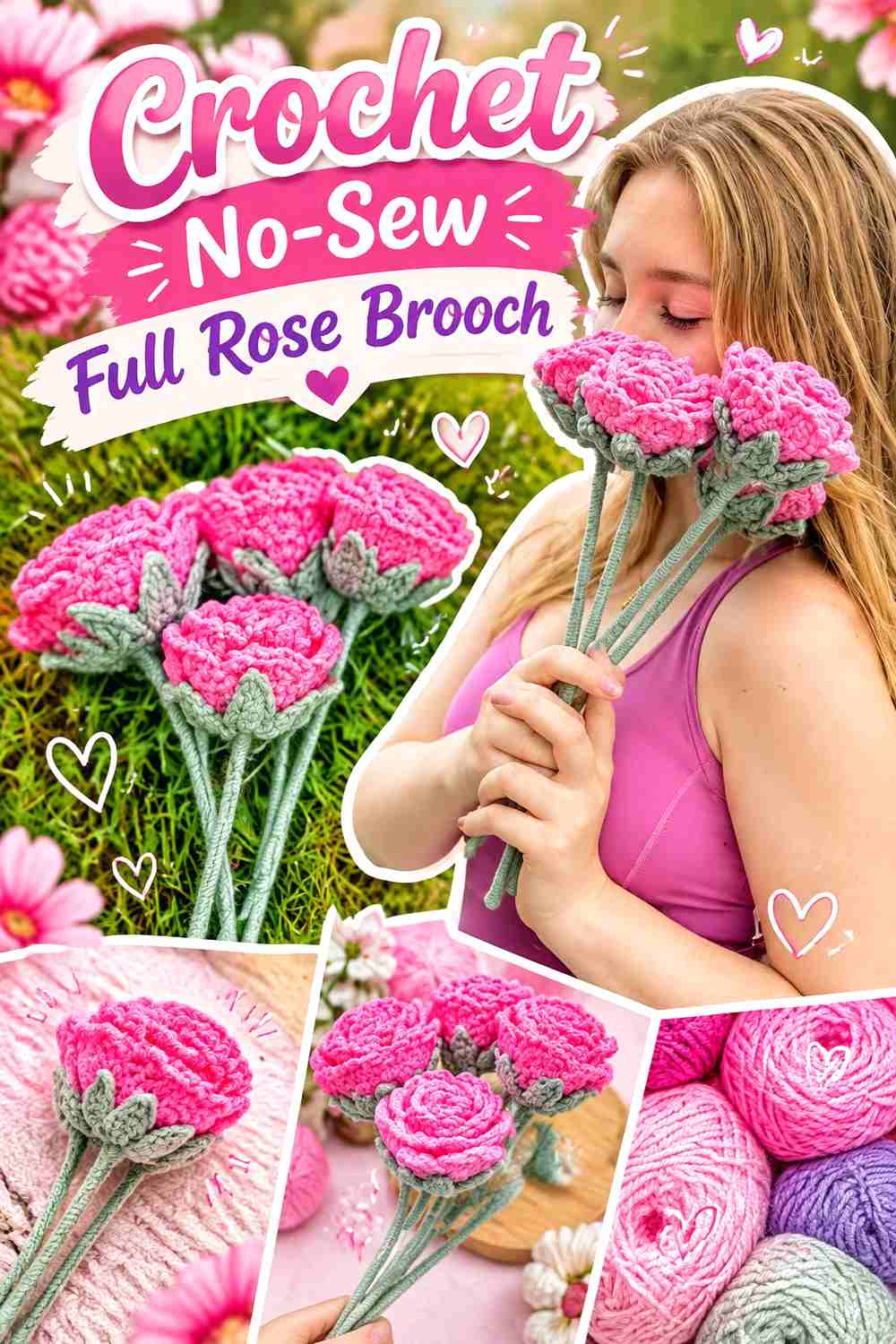
Ally Newbry’s rose construction is presented as a no-sew approach to creating a full rose, offering a different route from designs built by individually stitching many petals together.
For brooch adaptation, that fullness can create a strong focal point on heavier fall clothing, especially in oxblood, dark coral, burnt orange, or dusty mauve.
No-Sew Flower Construction Does Not Mean No Brooch Finishing
The flower method and the jewelry backing are separate decisions.
Even when the rose itself avoids sewing during construction, the finished brooch still needs a secure attachment solution appropriate to its weight and rear surface.
Fullness Should Stop Before the Flower Tips Forward
More petal volume is not always more wearable.
Hold the completed rose vertically before mounting it. If most of the visual mass sits well in front of the fabric, pay particular attention to where the hardware supports the flower.
Creator Credit: Ally Newbry
17. Crochet One-Piece Layered Rose Brooch
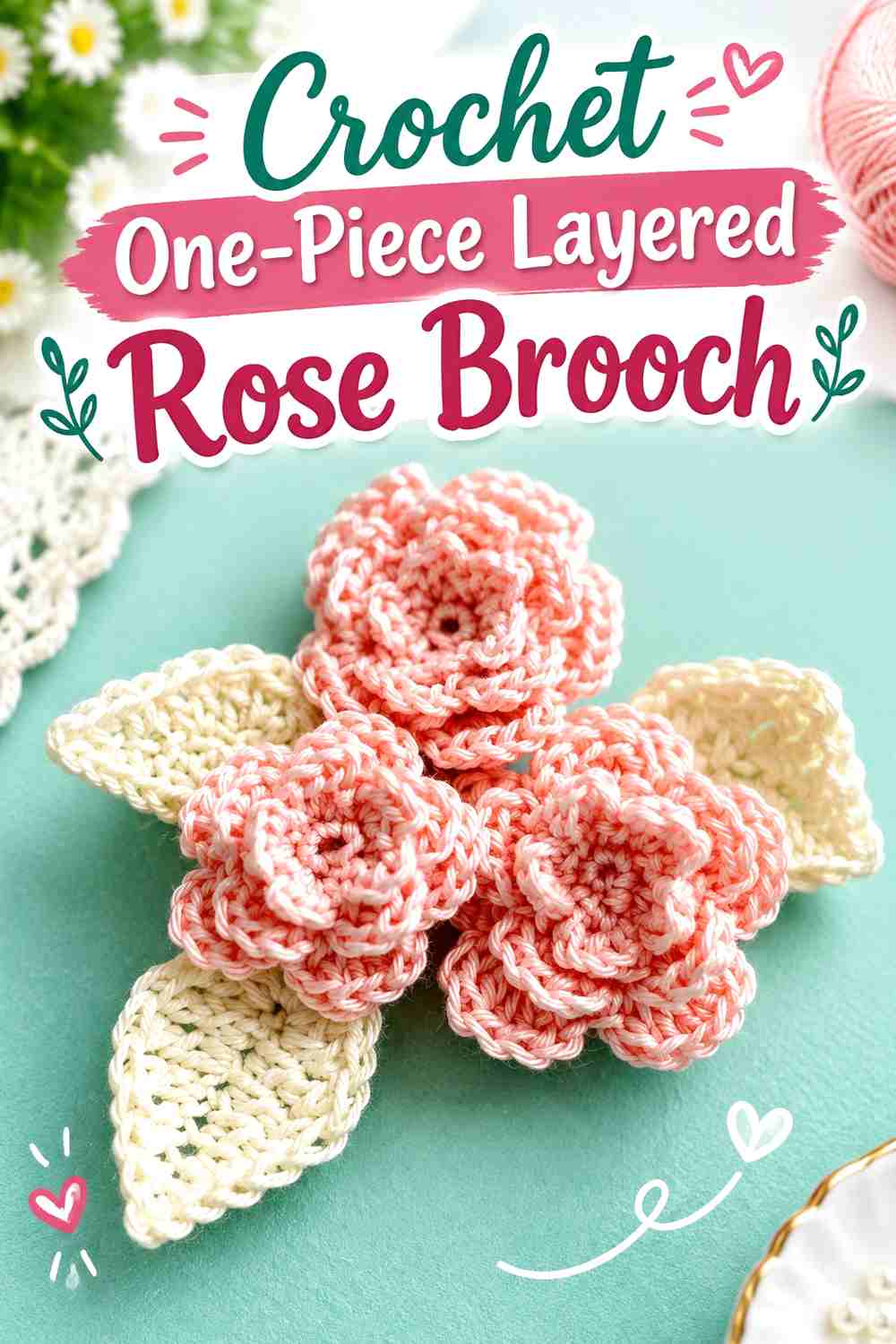
Sweet Softies’ layered rose is designed as an appliqué-style flower and is worked as a cohesive piece rather than relying on a bouquet stem, making it a particularly logical source for a brooch adaptation.
The layered but relatively self-contained form works well when you want a flower with visible depth while keeping the final outline tidy.
One-Piece Construction Can Simplify the Back
Fewer independently attached petal components can make it easier to identify a stable backing area.
Still inspect the completed reverse carefully. The best pin location is determined by the actual finished flower, not simply by the theoretical center.
Use Leaves Only When They Improve the Composition
A separate leaf can create a polished directional brooch, but the flower does not automatically need one.
Compare the rose alone against the intended garment first. If the silhouette already feels complete, keeping it circular can make the piece more versatile.
Creator Credit: Sweet Softies
18. Crochet Realistic Petal Rosette Brooch
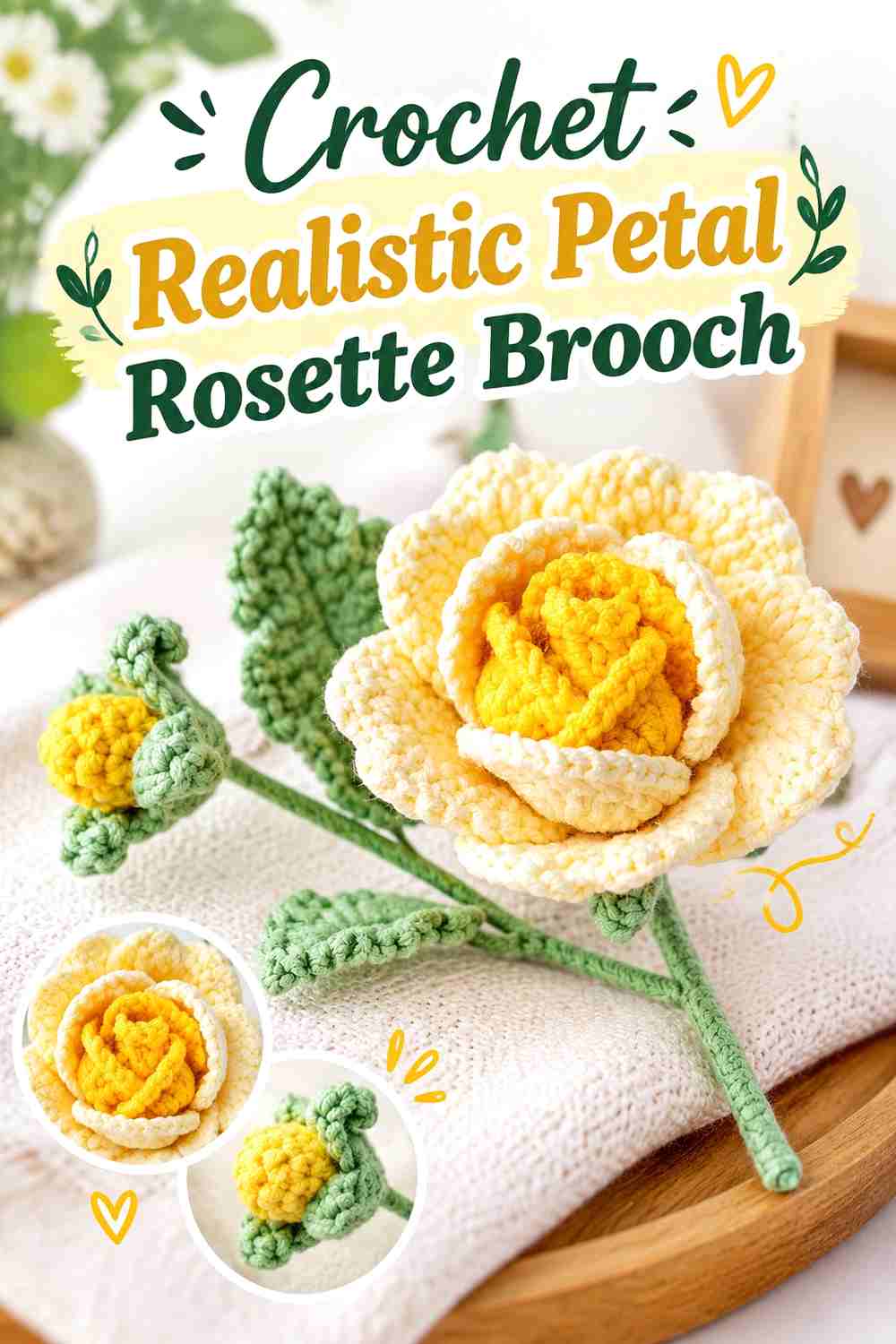
Hookok’s rose uses a more realistic multi-petal approach, making it a strong choice when you want a brooch with individually readable petals instead of a simple rolled spiral.
The original design is more closely associated with a stemmed flower, so a wearable conversion requires careful separation between the flower-head construction and any bouquet-specific support.
More Petals Mean More Shaping Decisions
A realistic rose gets its character from how individual petals relate to one another.
Before attaching a brooch backing, view the flower from directly ahead and decide which side presents the strongest arrangement. Once the hardware is fixed, that orientation becomes much harder to change.
Remove Unnecessary Length From the Wearable Version
A long stem that makes sense in a vase can make a brooch awkward.
If the flower is being adapted for jewelry, focus on the bloom and only the amount of greenery that supports the intended silhouette, following the creator’s construction where applicable rather than forcing the entire bouquet format onto clothing.
Creator Credit: Hookok
19. Crochet Open Rose and Bud Brooch
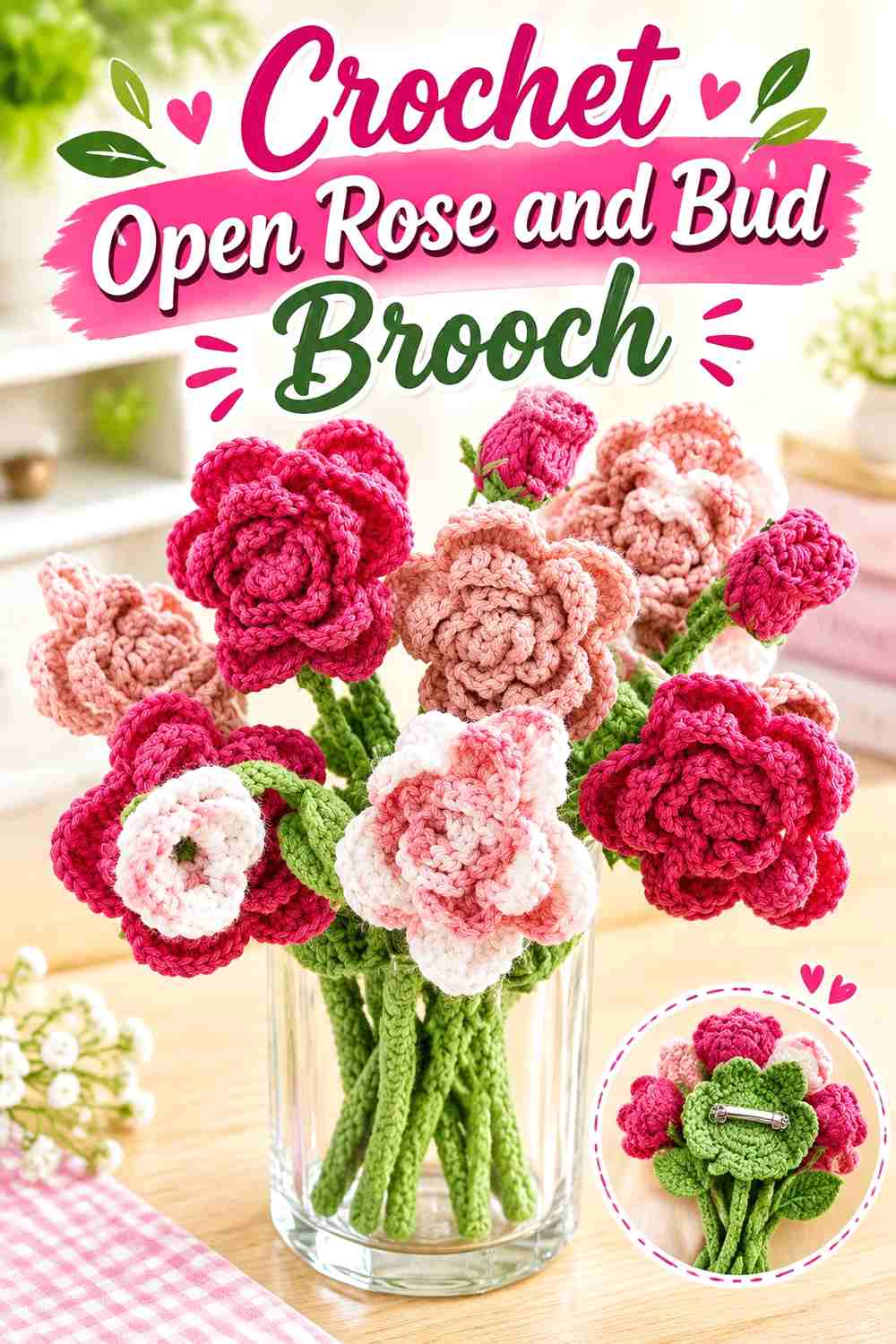
The Crochet Crowd’s rose tutorial includes both an open bloom and a rosebud concept, giving you a natural way to create a two-stage floral composition instead of pairing identical rosettes.
For a brooch, an open rose can provide the focal point while a smaller bud creates direction without needing several full flowers.
Pairing Different Flower Stages Prevents Repetition
A full rose beside another full rose can quickly become broad and heavy.
Using one open bloom with a smaller bud creates variation in scale and shape while keeping the floral theme coherent.
Keep Stem Support Separate From Pin Support
The original flower arrangement includes stem-related construction for bouquet use. A brooch has different mechanical needs.
Plan the wearable backing around the final flower-and-bud silhouette rather than assuming bouquet support materials will also provide an appropriate jewelry base.
Creator Credit: The Crochet Crowd
20. Crochet Picot-Petal Rose Appliqué Brooch
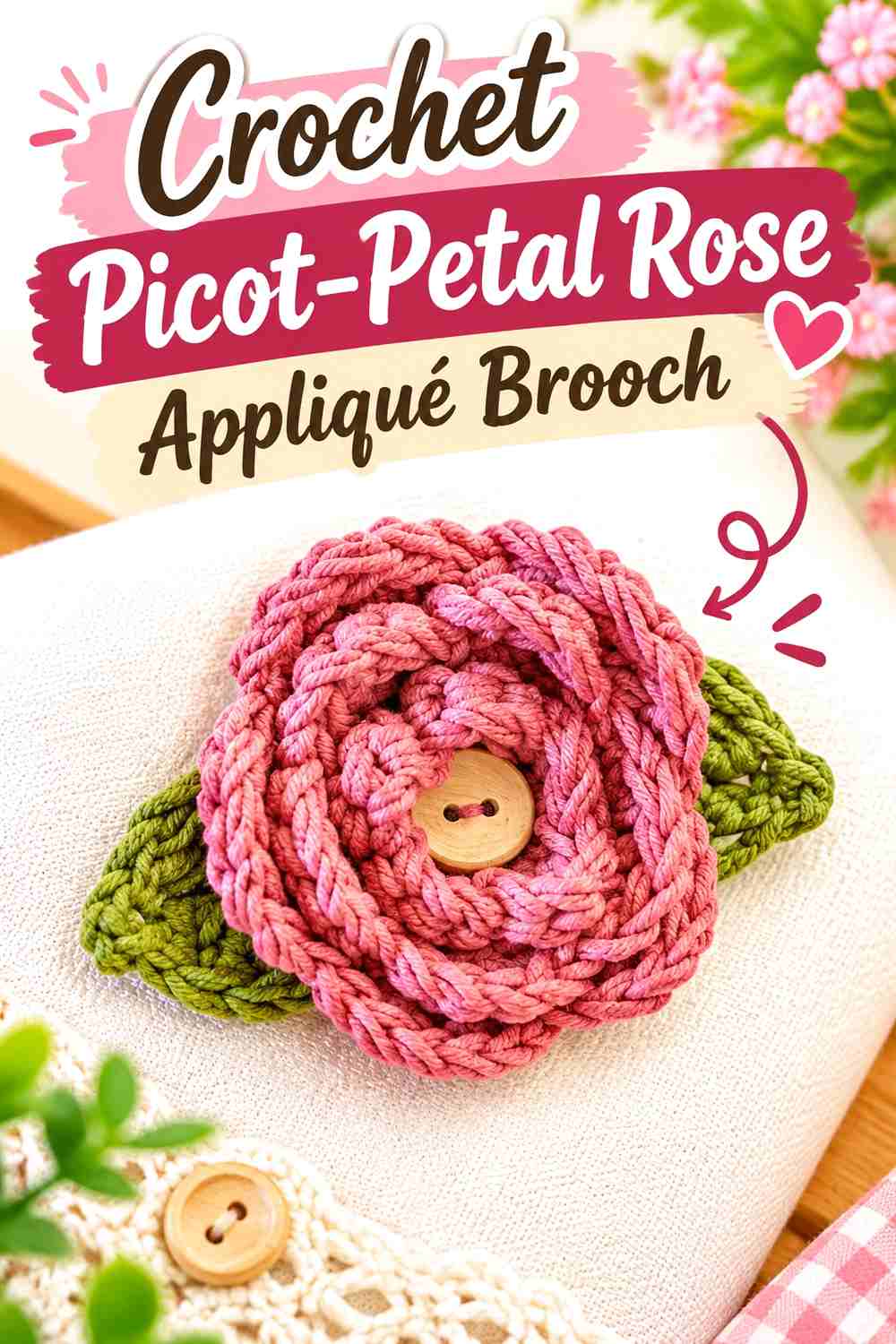
Simply Made by Erin’s layered rose appliqué creates distinct petal levels and leaf details while maintaining an attachment-friendly format. The source also explains that the rose can be used on several types of accessories and projects, which makes a removable pin adaptation a natural extension.
This is a strong final option when you want a brooch that reads clearly as a rose but sits more like an appliqué than a large bouquet flower.
Picot Detail Benefits From Crisp Stitch Definition
Small decorative points can disappear when worked in very fuzzy yarn or in a shade that visually merges with surrounding layers.
If the petal edge is important to your version, choose a yarn surface that lets the outline remain visible.
A Brooch Version Needs Its Own Backing Plan
An appliqué designed to attach to another object is not automatically finished as a removable pin.
Once the rose and leaves are complete, inspect the rear and choose a backing arrangement that keeps the hardware hidden, the flower balanced, and the intended top edge consistent when worn.
Creator Credit: Simply Made by Erin
Which Crochet Rosette Brooch Works Best With Fall Layers?
For lighter cardigans and scarves, start with the Petite Round Rosette, Classic Spiral Rosette, Soft Ribbon-Look Rose, or Flat-Back Rose Appliqué. Their more contained shapes are easier to work into an outfit when you do not want a large corsage effect.
For structured jackets and coats, the Deep Layered Rosette, Three-Tier Rosette, No-Sew Full Rose, Realistic Petal Rosette, and Sculptural Rose Corsage can use their extra depth as part of the look. Always check how the garment supports the finished flower before permanently positioning the backing.
For bags and berets, the Two-Color Statement Rose and Picotee-Edge Rosette provide strong graphic detail that remains visible even when the accessory is not directly beside the face.
If you want something asymmetrical, choose a Leaf-Backed Rose, Two-Scale Rose arrangement, or Open Rose and Bud. These designs extend beyond a simple circular outline and can follow the angle of a lapel or bag flap.
For small coordinated sets, miniature rosettes are the most flexible. Make several in related fall shades, but keep each brooch removable so they can be worn individually rather than turning every garment into a permanent floral project.
Conclusion
The most useful crochet rosette brooch for Fall 2026 depends less on finding one fashionable rose and more on matching the flower’s structure to where you plan to wear it.
Choose a compact rolled or appliqué rose when you want something subtle on a cardigan or scarf. Move toward deeper layered rosettes for substantial outerwear, and use leaves, buds, or multiple flower sizes when you want an asymmetrical statement rather than a traditional round pin.
Color can shift almost any rose toward autumn, but structure should come first. A burgundy flower that is too heavy for its backing will still droop, while a carefully balanced cream, plum, or tobacco rosette can look intentional even without an obviously seasonal palette.
Where a source teaches a flower rather than a finished brooch, use the original tutorial for the flower’s exact construction and treat the removable pin backing as a separate adaptation based on the final weight, scale, and rear surface.
Frequently Asked Questions
What makes a crochet rose suitable for turning into a brooch?
Look for a flower with a stable central base and a finished shape that behaves well when held vertically. A relatively flat rear surface can make hardware placement easier, although deeper roses can also work when the backing adequately supports their weight.
Is a flat crochet rosette better than a dimensional rose for a cardigan?
A flatter flower generally places less forward leverage on the fastening point, which can make it easier to wear on softer garments. A dimensional rose may be better suited to a sturdier cardigan, coat, structured scarf, or bag. Test the actual flower against the fabric before deciding.
Where should I position the brooch pin on a crochet rosette?
There is no universal position. First decide which edge of the flower should face upward, then hold the rosette vertically and observe its balance. The hardware should support the flower’s real center of weight rather than being attached automatically to the geometric center.
What fall colors work for crochet rosette brooches besides orange?
Burgundy, oxblood, plum, aubergine, dusty rose, tobacco, camel, mustard, olive, moss, muted coral, cream, and charcoal can all work in an autumn palette. Contrast is especially helpful when the flower relies on distinct petal layers or edging.
Can I convert a stemmed crochet rose tutorial into a brooch?
Potentially, but the flower construction and brooch construction should be treated separately. Bouquet tutorials may use long stems, wire, floral rods, or other support materials that are unnecessary or unsuitable for jewelry. Evaluate what the flower head actually needs and ensure no rigid or sharp component can reach the wearer.
Why does my crochet flower tilt forward after I attach the pin?
The flower may have more depth or weight in front of the backing than you anticipated, or the hardware may sit too low relative to the center of mass. Test pin placement while holding the flower vertically before making the attachment permanent.
Should I add leaves to every crochet rosette brooch?
No. Leaves make a flower more directional and increase its footprint. They can balance a large rose or help a brooch follow a lapel, but a compact circular rosette may be more versatile without them. Compare both arrangements on the intended garment before deciding.