Beads and fringe fit naturally into the more expressive accessory direction showing up for Fall 2026. Vogue’s seasonal accessory coverage highlights western-inspired belts, bohemian charm jewelry, fringe scarves, and pearl accents, with an emphasis on pieces that make an outfit feel more individual. Its styling advice for embellished belts also points toward keeping the surrounding outfit streamlined so the accessory remains intentional rather than overloaded.
Beaded jewelry is part of the wider modern-boho conversation as well. Vogue’s 2026 coverage connects beaded necklaces with the renewed interest in bohemian dressing, giving crochet an especially useful place in the trend because fiber can bring softness and texture to beads, tassels, chains, and fringe.
The 15 ideas below deliberately move beyond a collection of nearly identical fringe bags. You’ll find jewelry, belts, a phone crossbody, a bag charm, hair accessories, scarves, a shawl, and a mini purse.
Several of the tutorials already combine crochet with both beads and fringe or tassels. Others teach a strong beaded or fringed base, with the second detail presented here as a separate adaptation. Use each credited creator’s tutorial for the exact construction it demonstrates, then test any added embellishment separately before repeating it across the finished accessory.
Quick List
- Crochet Beaded Fringe Phone Crossbody
- Crochet Shimmering Beaded Tassel Lariat
- Crochet Beaded Chain Belt With Fringe Drops
- Crochet Beaded Dragonfly Tassel Bag Charm
- Crochet Beaded Fan Hoop Earrings With Fine Fringe
- Crochet Beaded Tassel Drop Earrings
- Crochet Beaded Flower Fringe Earrings
- Crochet Beaded Anklet With Mini Tassel Fringe
- Crochet Beaded Wrap Bracelet With Tassel Closure
- Crochet Beaded Headband With Micro Fringe Edge
- Crochet Pocket Scarf With Beaded Fringe Ends
- Crochet Triangle Shawl With Beaded Twisted Fringe
- Crochet Beaded Mini Purse With Detachable Fringe
- Crochet Beaded Fringe Multipurpose Skinny Scarf
Balance Bead Weight Against Fringe Movement
Beads do more than decorate crochet fringe. Every bead adds localized weight, and that can change how yarn strands hang, swing, stretch, and separate.
A small amount of weight can help fringe fall more cleanly. Too much can pull individual strands farther down than their neighbors or distort the crochet edge supporting them. This matters even more on lightweight jewelry and open lace.
Before decorating an entire piece, make one representative fringe or tassel section and let it hang vertically. Compare it with an undecorated section. If the beaded version stretches dramatically or pulls the supporting crochet out of shape, reducing the amount of embellishment can give a more polished result.
Also inspect bead holes and edges. Rough surfaces can abrade yarn or thread over time, particularly on jewelry that moves constantly against clothing or skin.
Decide Which Part of the Accessory Carries the Stress
Decorative fringe should not become the structural part of a bag, belt, necklace, or charm by accident.
On a crossbody, the strap and its connection points carry the accessory. On a keychain, the connection to the ring takes repeated stress. Belts rely on their ties, chain, clasp, or main band. Jewelry depends on secure findings and closures.
Keep beads and tassels where they can move without becoming the only thing holding the project together. This distinction is especially important if you adapt a source tutorial by adding heavier beads that were not part of the creator’s original construction.
Small beads, jump rings, clasps, and decorative hardware can also loosen. These projects are best treated as adult fashion accessories unless an age-appropriate design has been specifically planned without unsafe detachable components.
Keep the Modern Boho Look Deliberate
Modern boho does not require covering every available surface with beads, fringe, charms, flowers, and several colors at once.
Fall 2026 accessory styling provides a useful cue: expressive belts, charm jewelry, and fringe can be the focal point when the rest of the look is comparatively clean. Vogue specifically notes streamlined styling as a way to modernize embellished western belts, while its fall coverage describes fringe scarves as pieces that can move between the shoulders, waist, and outerwear.
Apply the same logic to crochet. Let a beaded belt stand out over a simple knit dress. Give a textured purse one detachable tassel rather than adding fringe to every edge. On jewelry, decide whether the beads or the tassel should dominate before adding both in equal amounts.
1. Crochet Beaded Fringe Phone Crossbody
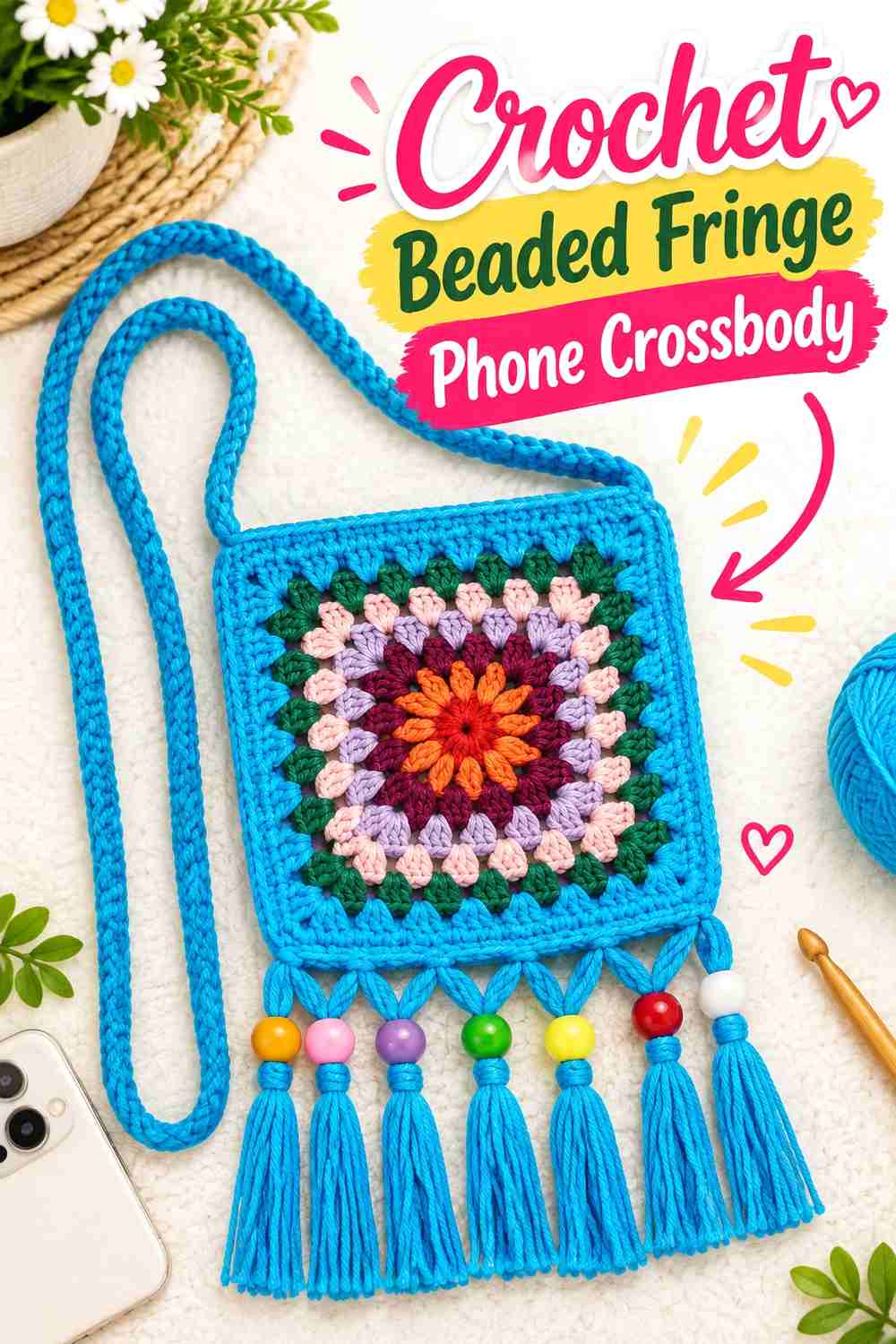
Ravella Design provides one of the closest direct matches to this entire theme: a small crochet bag decorated with both beads and fringe. Its compact crossbody format makes the ornament especially noticeable because there is not a large bag body competing with the lower edge.
This is a useful choice if you want the boho details concentrated in one small accessory rather than spread across a full-size tote. The visible fringe gives movement, while the beads create harder points of contrast against the yarn.
Keep the Beads From Overloading the Lower Edge
A compact bag has less crochet fabric available to distribute embellishment weight. That makes the relationship between bead weight and fringe particularly important.
Hold the finished or developing bag vertically before multiplying the decoration. If the lower edge begins pulling into points around individual bead clusters, use fewer or lighter accents rather than assuming additional fringe will hide the distortion.
A Phone Bag Needs a Stable Strap Before Extra Ornament
The decorative lower edge should not distract from the strap and its attachment points.
Check those connections before adding substantial fringe. If you adapt the appearance with additional beads or charms, keep them away from structural areas unless the construction has been planned to support that extra weight.
Creator Credit: Ravella Design
2. Crochet Shimmering Beaded Tassel Lariat
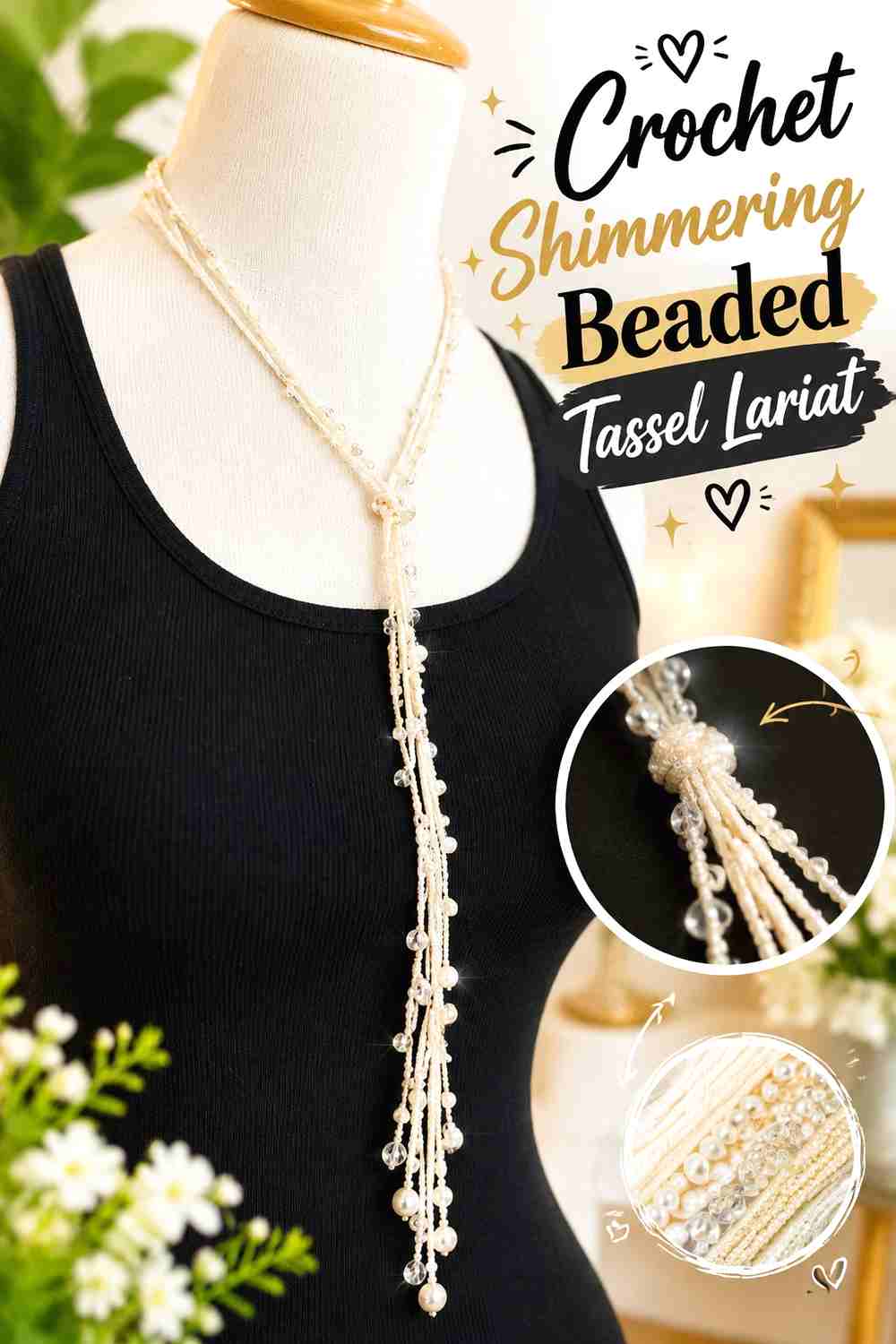
Fiber Flux’s lariat construction already combines crochet thread, beads, and bead-heavy ends that create a tassel-like finish. It offers a quieter interpretation of fringe than a yarn tassel because the hanging movement comes from narrow beaded strands rather than a dense bundle of fiber.
That makes this option especially useful if you like boho jewelry but prefer something visually lighter than a large pendant or thick necklace.
Bead Spacing Determines Whether It Reads as Jewelry or Fringe
Beads distributed along a long crochet strand create rhythm, while several concentrated near the ends draw the eye downward and strengthen the tassel effect.
When adapting the overall look, decide which effect matters more. Even spacing feels more continuous; heavier emphasis toward the ends creates stronger movement and makes the lariat’s hanging tails more prominent.
Long Ends Need Enough Weight to Hang Without Twisting
The two hanging portions of a lariat are highly visible, so unequal tension or noticeably different bead distribution can make one side behave differently from the other.
Compare them while the necklace is hanging rather than laid flat. Gravity shows whether the tails actually balance in use.
Creator Credit: Fiber Flux
3. Crochet Beaded Chain Belt With Fringe Drops
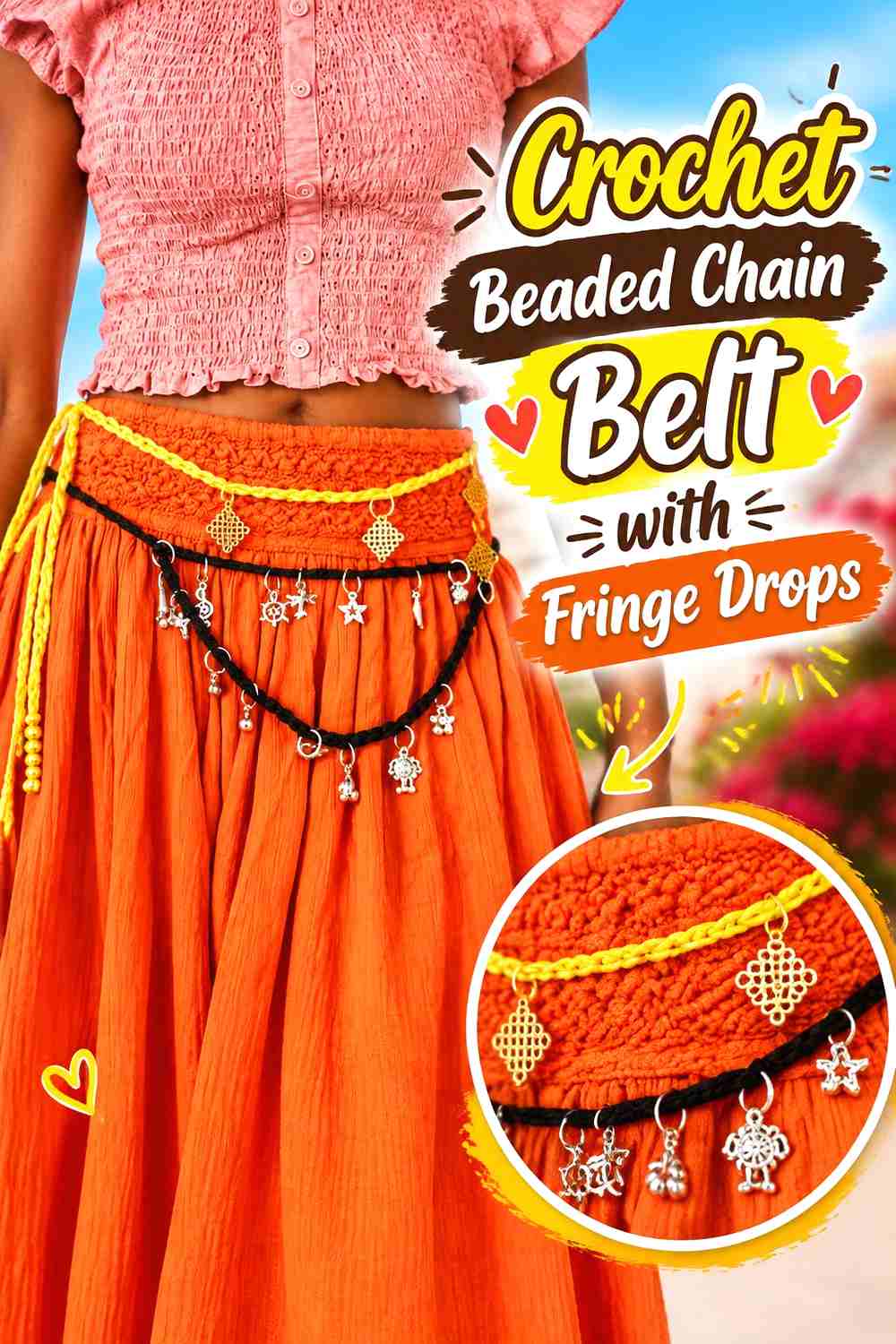
The Dream Crochet Channel teaches a crochet chain belt embellished with beads, charms, pendants, and jewelry-style hardware. The tutorial itself supplies the beaded chain-belt foundation; short fringe drops are an optional adaptation for this roundup rather than part of the original demonstrated design.
This belt works well for the modern-boho theme because it sits somewhere between crochet and body jewelry. There is plenty of negative space, so every added charm, bead, or tassel remains visible.
Hardware Weight Can Distort a Soft Crochet Chain
Metal findings and beads introduce concentrated weight along an otherwise flexible fiber structure.
Temporarily position the embellishments before securing a full arrangement. If one section pulls much lower than the rest, redistribute the heavier pieces instead of trying to correct the shape with additional crochet decoration.
Put Fringe Where It Can Move Without Hiding the Charms
If you add fringe drops, they do not need to surround the entire waist.
A small cluster near the side, closure, or selected charm section can provide movement without hiding the jewelry-like construction underneath. This also keeps the belt from becoming visually dense when worn over fall knits or tailored clothing.
Creator Credit: The Dream Crochet Channel
4. Crochet Beaded Dragonfly Tassel Bag Charm
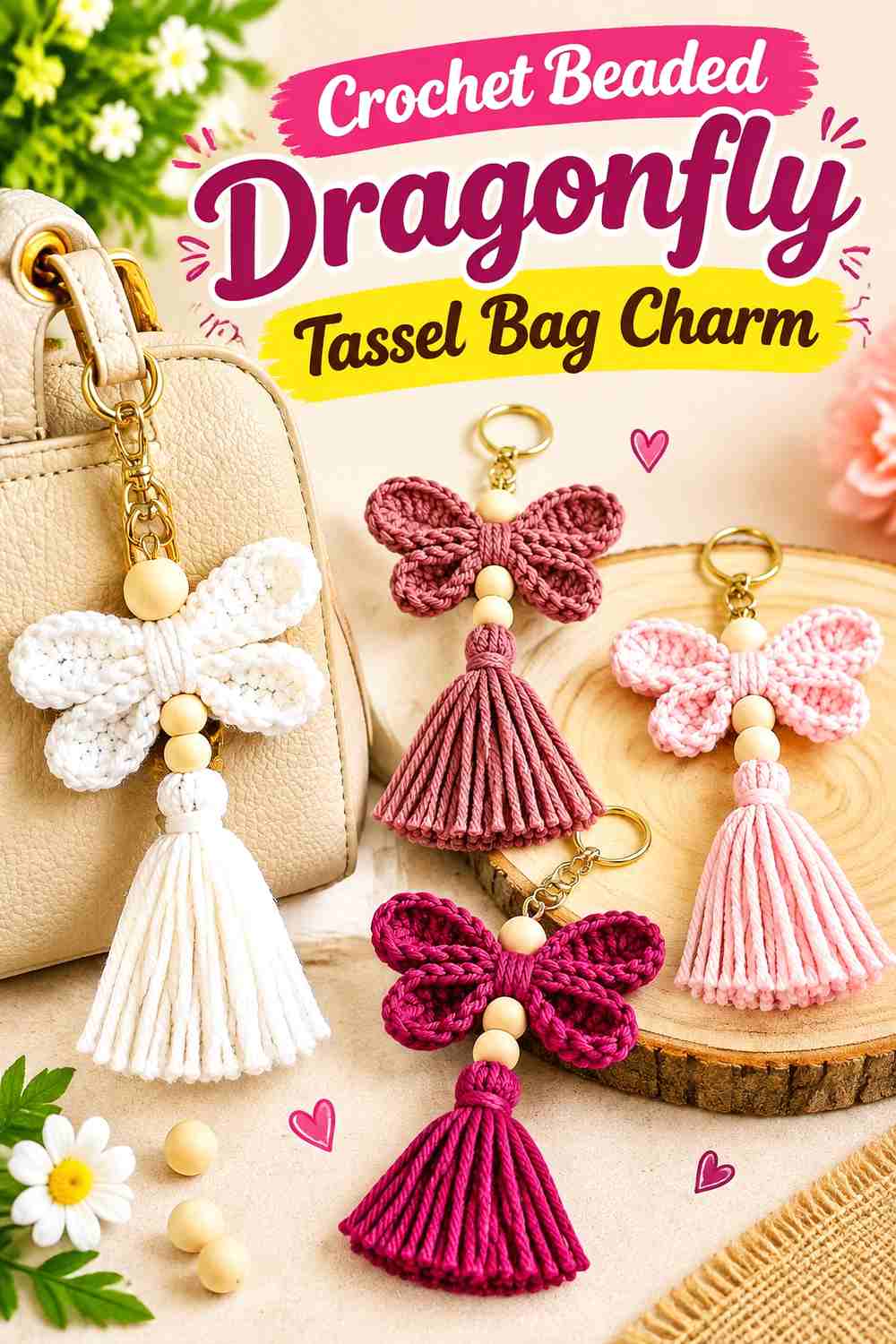
Poplar Crochet’s dragonfly keychain is another direct combination of crochet, beads, and a flowing tassel. The finished accessory uses the crochet motif as the upper decorative form, beads through the center, and fringe-like movement below.
Because it is small, it can work as a keychain or as a removable charm on a larger fall handbag. That makes it a good option if you want the beaded-fringe look without committing to an entirely embellished bag.
The Hardware Connection Carries More Stress Than the Wings
The decorative crochet may be the part you notice first, but the attachment between the charm and its key ring or bag hardware handles repeated movement.
Inspect that point regularly. Adding more beads or an unusually heavy tassel can increase the pull on the connection without making the crochet motif itself any stronger.
Bead Size Changes the Balance of the Dragonfly
The center beads help establish proportion between the upper motif and lower tassel.
If you substitute beads, check how they look next to the wing scale before final assembly. Very large beads can visually overpower the crochet, while tiny beads may disappear between the textured yarn and tassel.
Creator Credit: Poplar Crochet
5. Crochet Beaded Fan Hoop Earrings With Fine Fringe
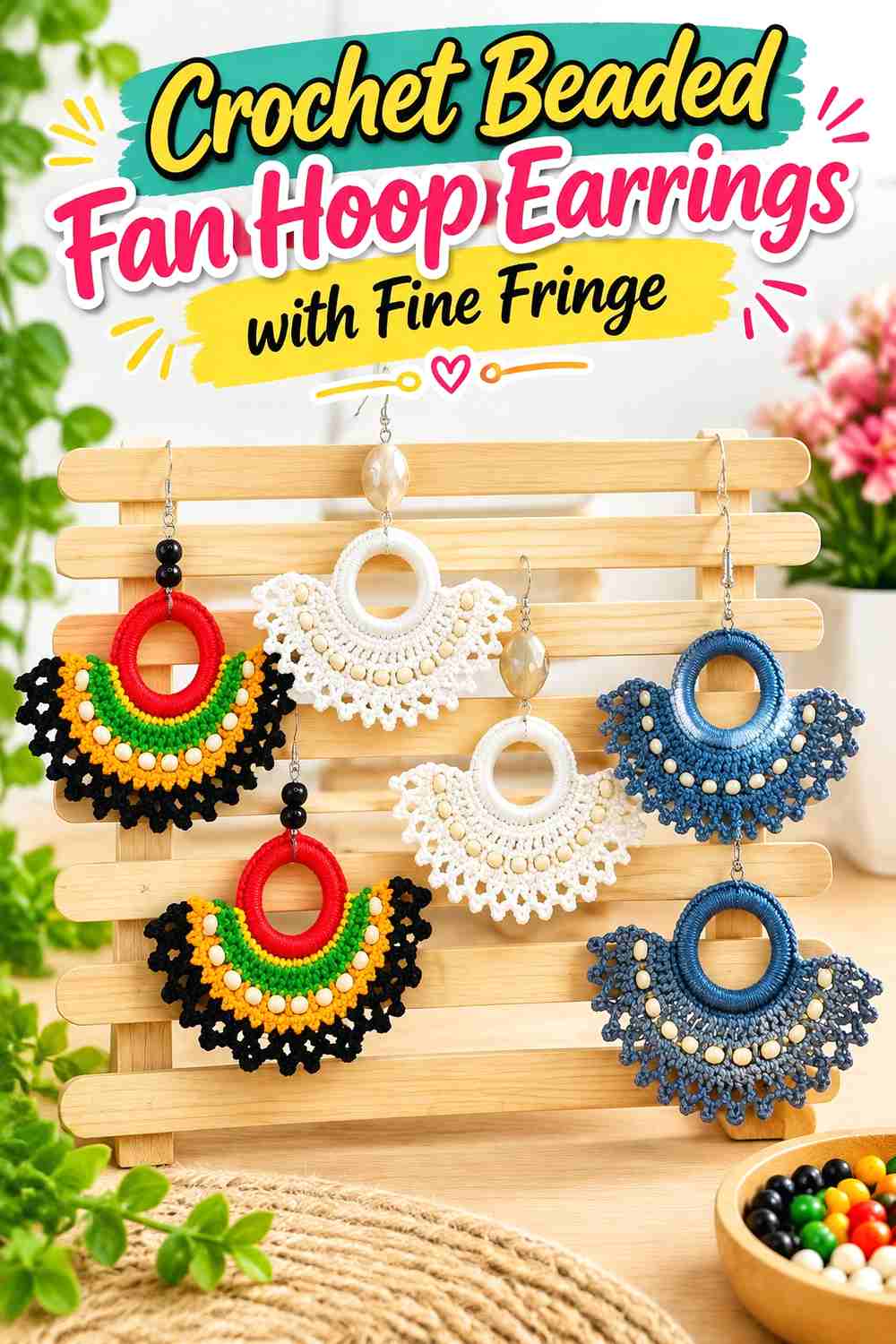
MavicsCraftsandAccessories demonstrates crochet-covered fan-style hoop earrings with beads incorporated into the design. Fine fringe below the fan is the optional adaptation here.
The circular structure makes these particularly different from straight tassel earrings. Crochet and beads frame the hoop first, so any added fringe should support that geometry rather than hide it.
Keep Added Fringe Light Enough for the Hoop
A small earring does not need a thick yarn tassel to create movement.
Fine strands or a very narrow fringe treatment can preserve the open hoop shape while adding the boho swing. Before repeating the addition on the second earring, wear or hang the first and check whether the extra weight changes its orientation.
Symmetry Matters More When Beads Frame a Circular Shape
A round outline gives the eye an immediate reference for imbalance.
Compare bead distribution, fringe depth, and the location of the crochet detail on both earrings. Small differences that might disappear on a free-form tassel can become obvious against matching hoops.
Creator Credit: MavicsCraftsandAccessories
6. Crochet Beaded Tassel Drop Earrings
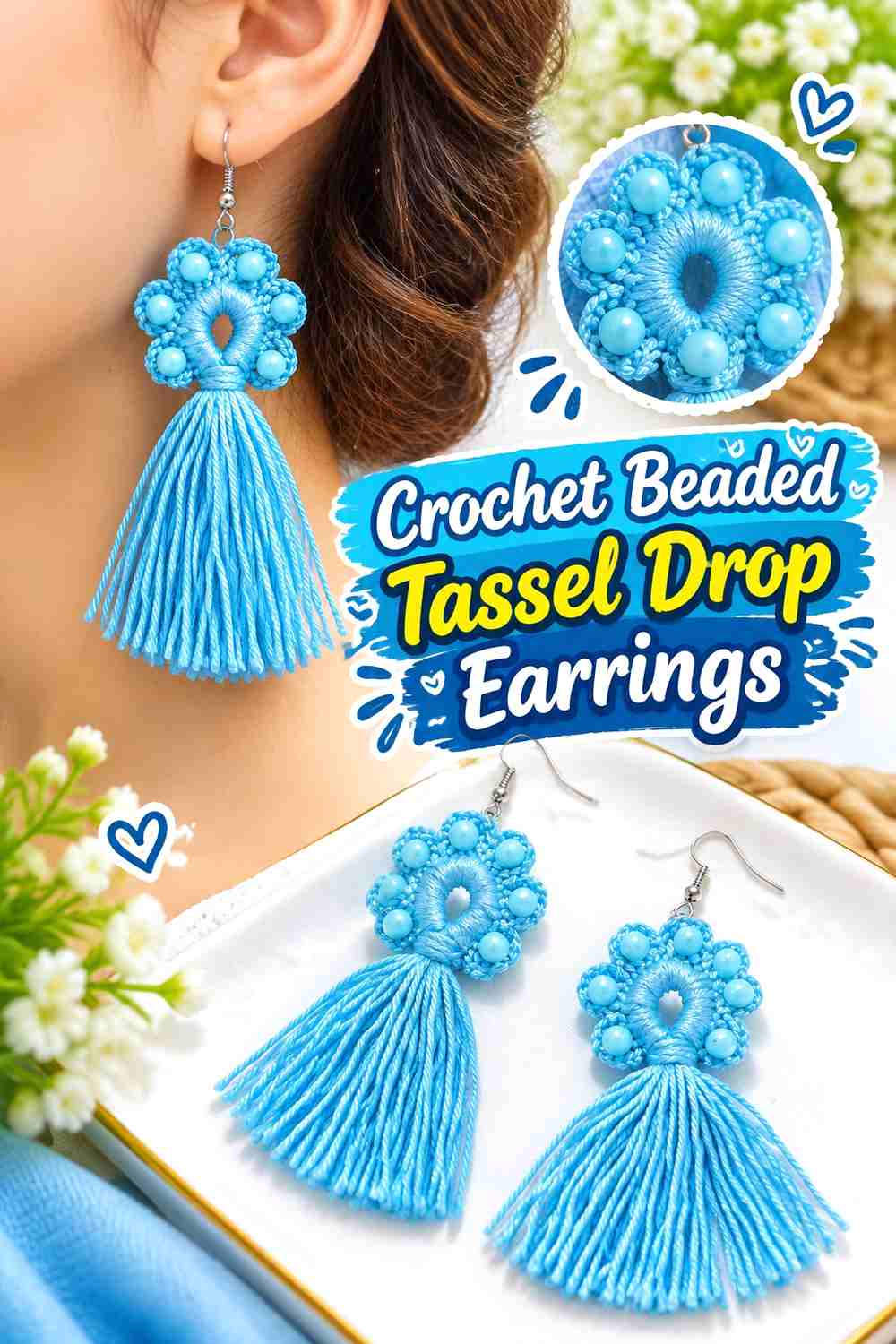
Banoris Crafts demonstrates tassel-style crochet earrings. For this version, beads become the separate adaptation, placed sparingly around the connection area or incorporated as selected accents rather than added to every fringe strand.
This is a better route when you want the fiber movement to remain dominant. Instead of turning the earring into a heavily beaded piece, a few hard, reflective details can contrast with the softness of the tassel.
Place Beads Near the Connector Instead of Through Every Strand
Decorating every strand can increase both weight and visual density.
Concentrating beads higher on the earring preserves the tassel’s loose movement while still introducing the beaded element. It also keeps the lower edge softer and less likely to strike the neck with every movement.
Match the Two Tassels Before Adding Hardware
Compare the fiber portions before the final jewelry findings and beads are attached.
If one tassel is denser or longer, adding identical beads will not correct that difference. Establishing a visually matched pair first makes the final embellishment easier to balance.
Creator Credit: Banoris Crafts
7. Crochet Beaded Flower Fringe Earrings
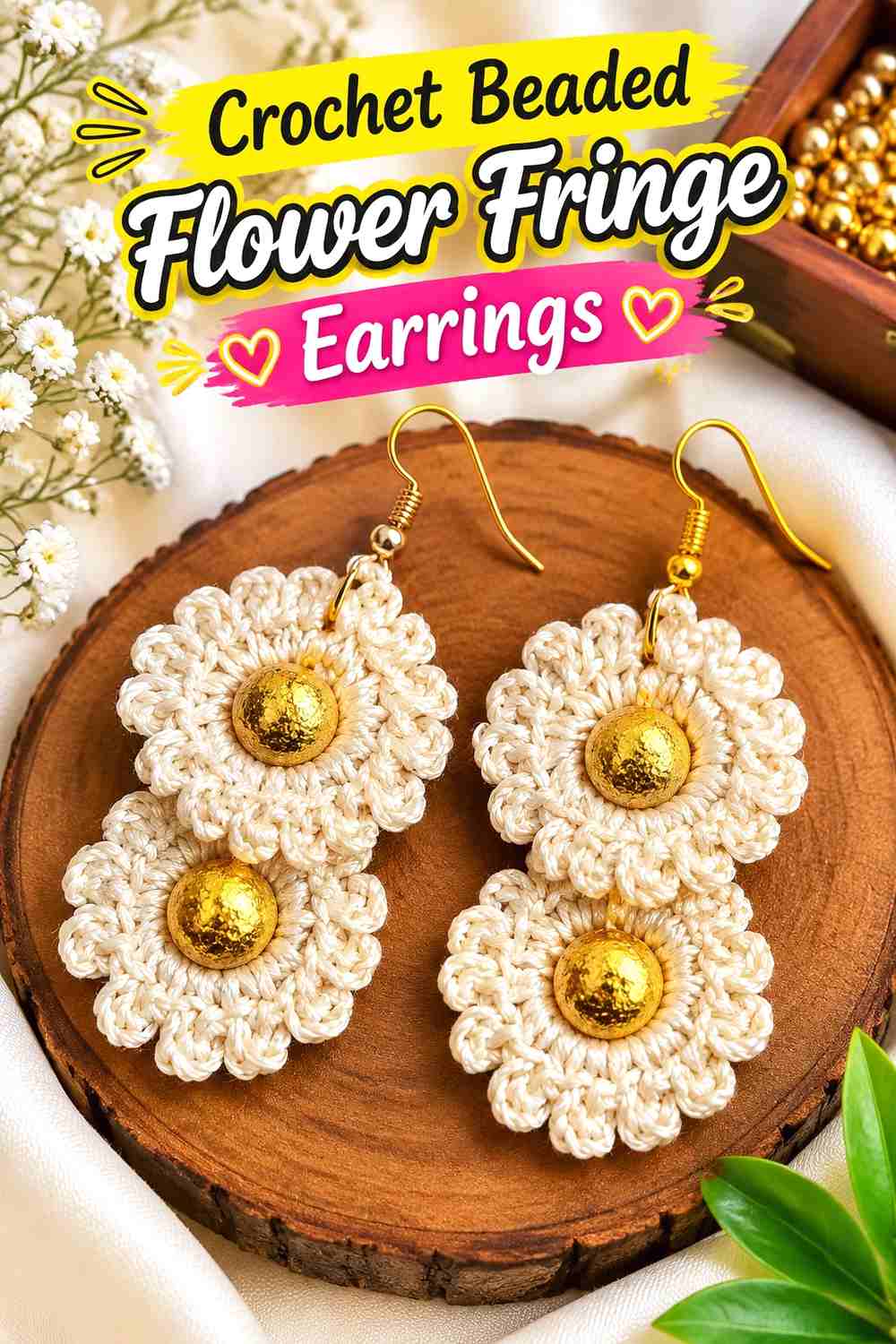
Nidhi Surana’s tutorial provides a flower-based crochet earring accented with beads. A short thread fringe beneath the floral section is the adaptation for this idea.
This version works differently from the fan hoops and full tassel drops because the flower remains the focal motif. Fringe should add a little vertical movement without converting the entire earring into a tassel.
Keep the Flower Row as the Focal Point
If the crochet flower shapes are the reason you chose the project, avoid covering their lower outline with dense fringe.
A sparse fringe or a few selected hanging strands can continue the design downward while leaving the flowers clearly visible from the front.
A Short Fringe Can Preserve the Floral Outline
Longer is not automatically more bohemian.
On a small floral earring, very long fringe may visually separate from the upper motif and make the piece feel like two unrelated designs. Test several apparent lengths by temporarily holding thread below the finished flower section before committing.
Creator Credit: Nidhi Surana
8. Crochet Beaded Anklet With Mini Tassel Fringe
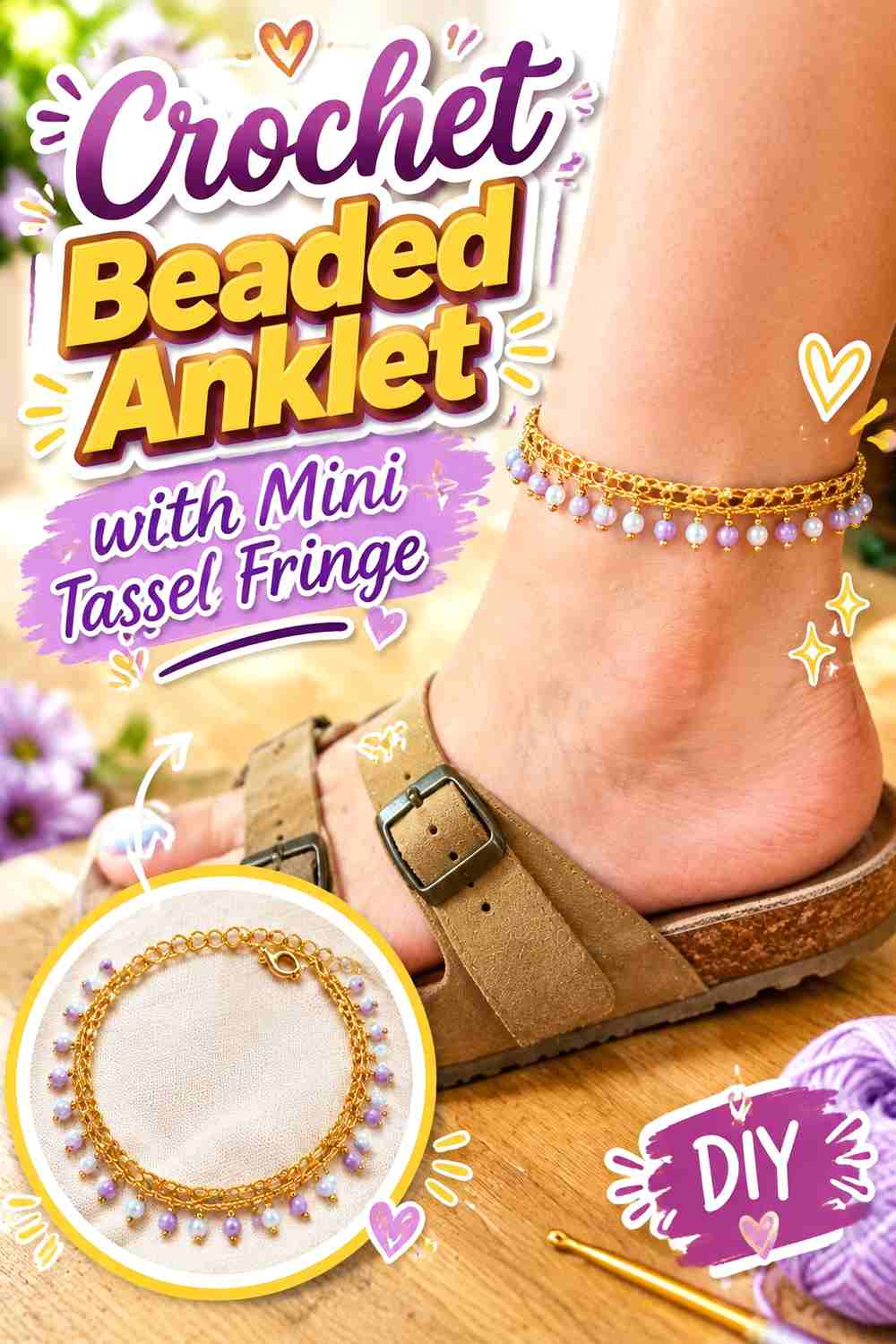
Diy Ter demonstrates a crochet beaded anklet, giving this project a strong beaded foundation. Tiny tassels are the separate fringe adaptation.
An anklet provides a much smaller decorating area than a necklace or belt, so restraint becomes part of the design. One or two tiny moving accents can be enough to produce a boho effect without surrounding the ankle in fringe.
Fringe Around the Ankle Needs to Stay Clear of Footwear
The placement should be considered with the shoes you actually plan to wear.
Long tassels can become uncomfortable under boots, rub against straps, or disappear inside footwear. For fall use, keep any fringe addition positioned where it can move freely rather than being repeatedly trapped against the shoe.
Use Tassels Sparingly So the Bead Line Stays Visible
The source design already gains its character from beads.
A mini tassel at the closure or another deliberate point can complement that beaded line. Repeating tassels all the way around may obscure the more refined structure that made the anklet attractive in the first place.
Creator Credit: Diy Ter
9. Crochet Beaded Wrap Bracelet With Tassel Closure
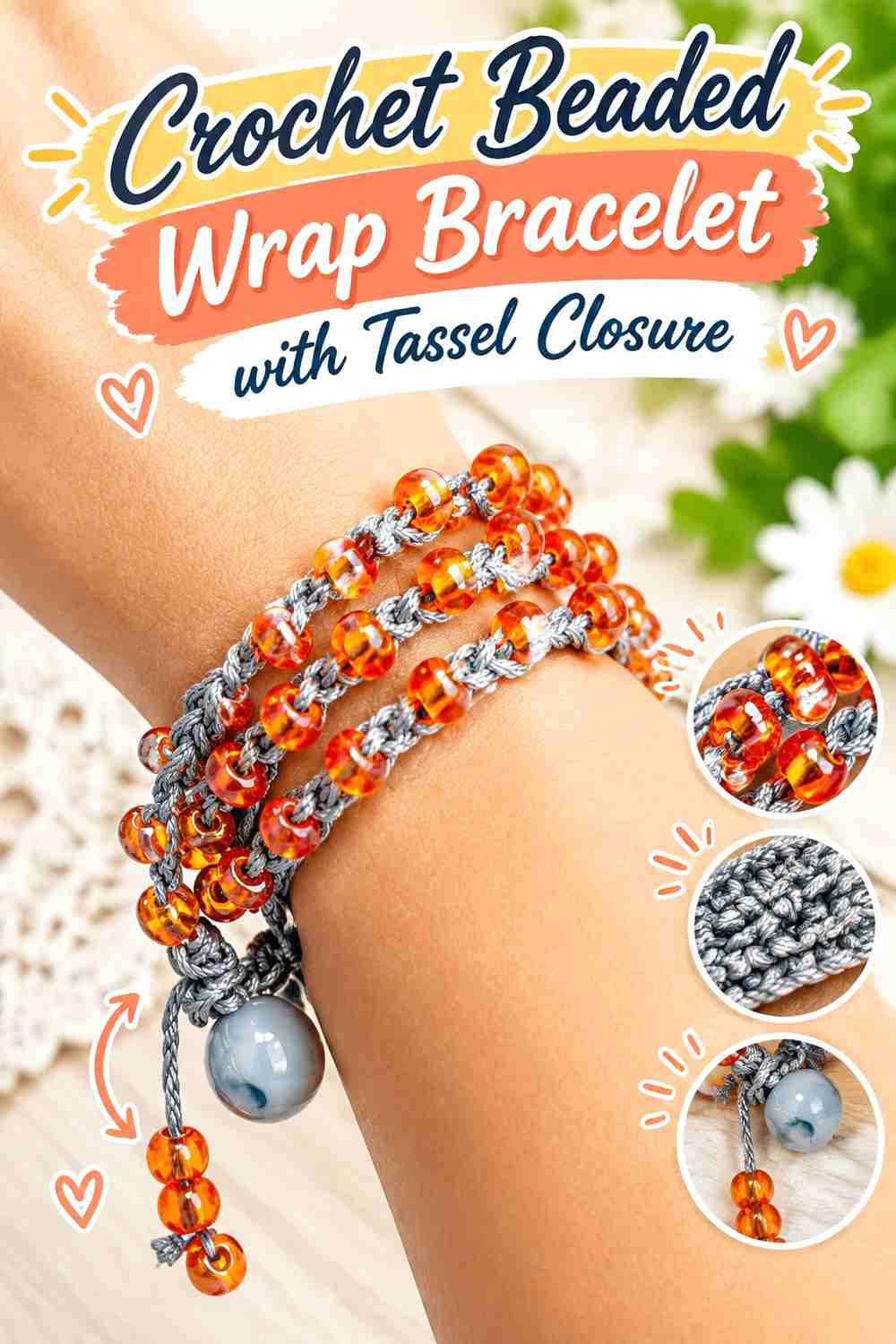
Hooked by Robin teaches a beaded crochet wrap bracelet. The bracelet itself supplies the repeating bead detail; a small tassel attached near the closure is the adaptation proposed here.
Because a wrap bracelet already circles the wrist several times, it has plenty of visual activity before fringe is added. The most polished approach is usually to let one small tassel mark an endpoint instead of distributing fringe around every wrap.
Keep the Tassel Away From the Working Closure
A decorative tassel should not make fastening and unfastening the bracelet awkward.
Position any added fringe so it hangs beside the closure rather than becoming caught inside it. Test the bracelet with one hand, since that is how wrist jewelry often has to be handled in actual use.
Wrap Length Changes How Much Decoration You Need
A multi-wrap design naturally creates repeated lines of beads across the wrist.
Look at the bracelet fully wrapped before deciding whether it needs additional ornament. The more bead rows that remain visible at once, the less fringe may be necessary to establish the boho effect.
Creator Credit: Hooked by Robin
10. Crochet Beaded Headband With Micro Fringe Edge
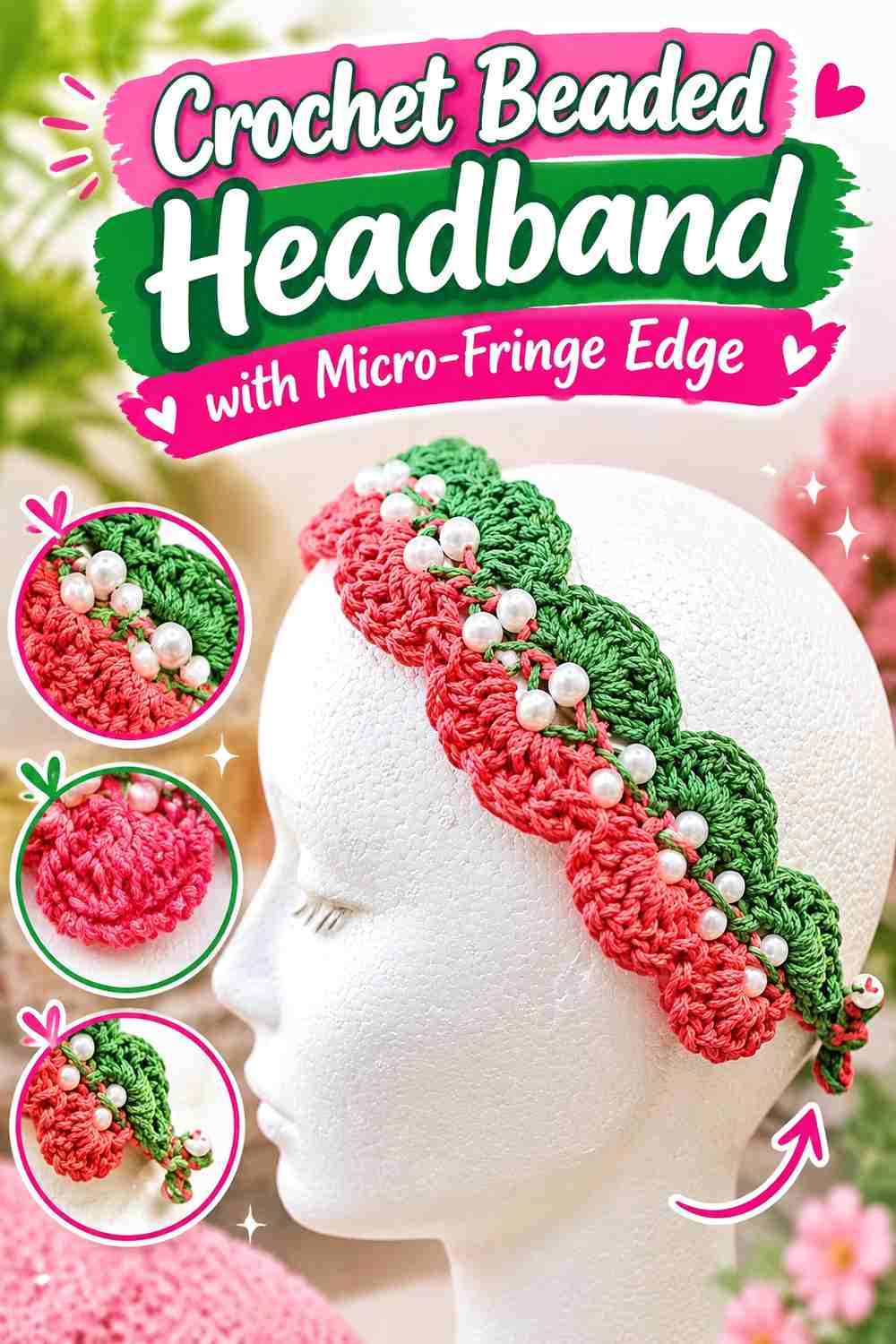
CrochetSmash demonstrates a modern boho headband in which beads are added during the crochet. For this interpretation, micro-fringe is an optional finishing detail rather than part of the original tutorial.
This is one of the quieter projects in the collection. Instead of long swinging tassels, the goal is a restrained edge treatment that preserves the wearability of a hair accessory.
Fringe Near Hair Needs Extra Restraint
Long loose fibers can mix with hair, catch on clips, or become difficult to arrange neatly.
If you add fringe, keep it short, sparse, and concentrated in an area where it will not continually tangle. If that does not work with your hairstyle, the beaded tutorial already supplies enough decoration without the adaptation.
Let the Beads Carry Most of the Detail
A headband sits close to the face, so small embellishments become noticeable quickly.
Use fringe as a supporting texture rather than competing with the beadwork. This is a useful example of how the beaded-fringe idea can remain subtle instead of becoming a festival-style statement.
Creator Credit: CrochetSmash
11. Crochet Pocket Scarf With Beaded Fringe Ends
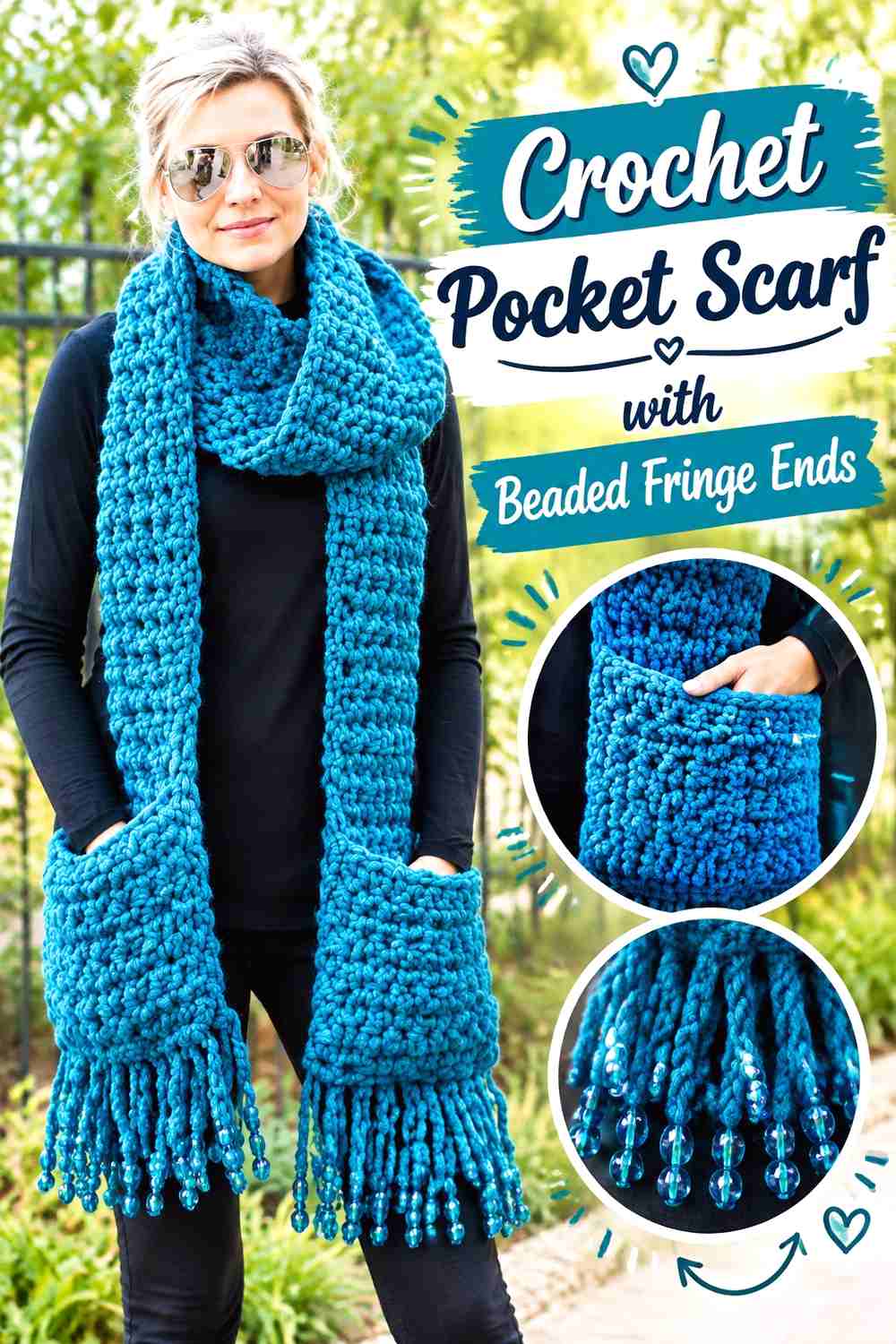
Melanie Ham’s crochet pocket scarf already uses fringe as part of its customizable finishing. Adding selected beads to the fringe tips or small groups creates the adaptation for this roundup.
Compared with jewelry, this project provides a much larger area of fiber and a more substantial fall layer. The beads should therefore be treated as accents rather than spread across every available strand.
Beads Add Even More Weight to an Already Substantial Fringe
Scarf fringe hangs from a relatively long textile, so heavily weighting every strand can pull on the end of the scarf.
Test a few decorated strands first. If the edge begins stretching or the beads make the fringe swing too aggressively, alternate decorated and undecorated groups instead of repeating the same treatment across the full width.
Keep Decorative Ends Clear of the Pocket Opening
The pockets provide function, while the fringe provides movement.
Make sure bead clusters and strands do not continually fall into the pocket area or interfere with your hands. A little distance between the functional opening and the most elaborate embellishment can keep both features easier to use.
Creator Credit: Melanie Ham
12. Crochet Triangle Shawl With Beaded Twisted Fringe
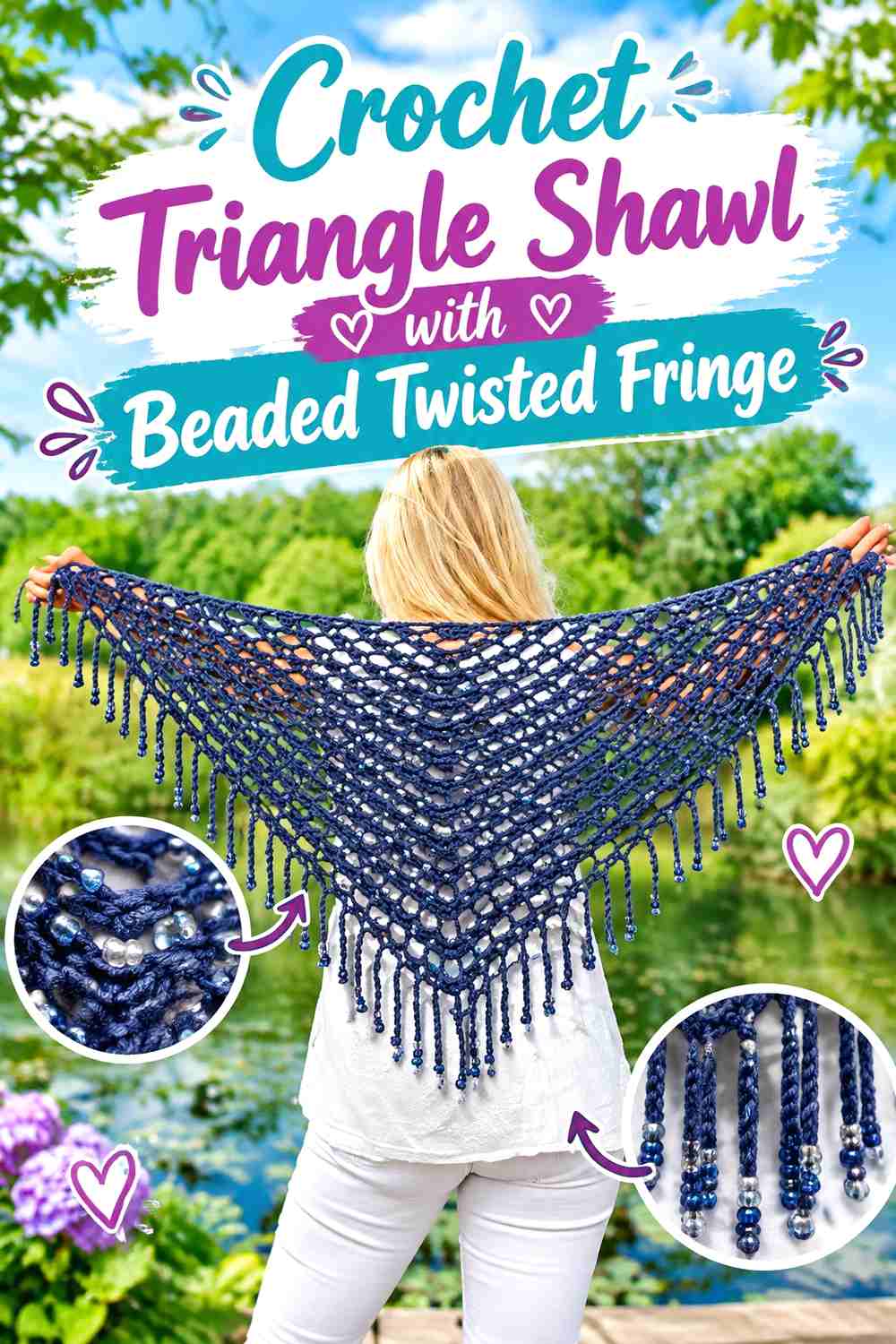
Kristin Omdahl demonstrates a top-down triangle shawl finished with distinctive boho fringe. Adding beads selectively to those twisted fringe elements creates the adaptation here.
This is the largest accessory in the collection, which means embellishment decisions have more visual impact. The shawl already provides movement and texture around its perimeter, so beads can be used as occasional highlights rather than a continuous border.
Twisted Fringe Already Has Structure
Twisted strands behave differently from loose yarn fringe. They create defined cords rather than a soft curtain.
Any added bead should work with that existing structure. Check whether its opening is compatible with the finished strand and whether the additional weight makes the twist hang better or begins pulling it out of proportion.
Scatter Beads Instead of Weighting Every Fringe
A shawl offers many potential attachment points, but using every one can add significant cumulative weight.
Decorating selected fringe sections can create enough sparkle and movement while preserving the drape of the main shawl. Step back from the piece while deciding spacing; close-up bead placement can look much busier once the full triangle is worn.
Creator Credit: Kristin Omdahl
13. Crochet Beaded Mini Purse With Detachable Fringe
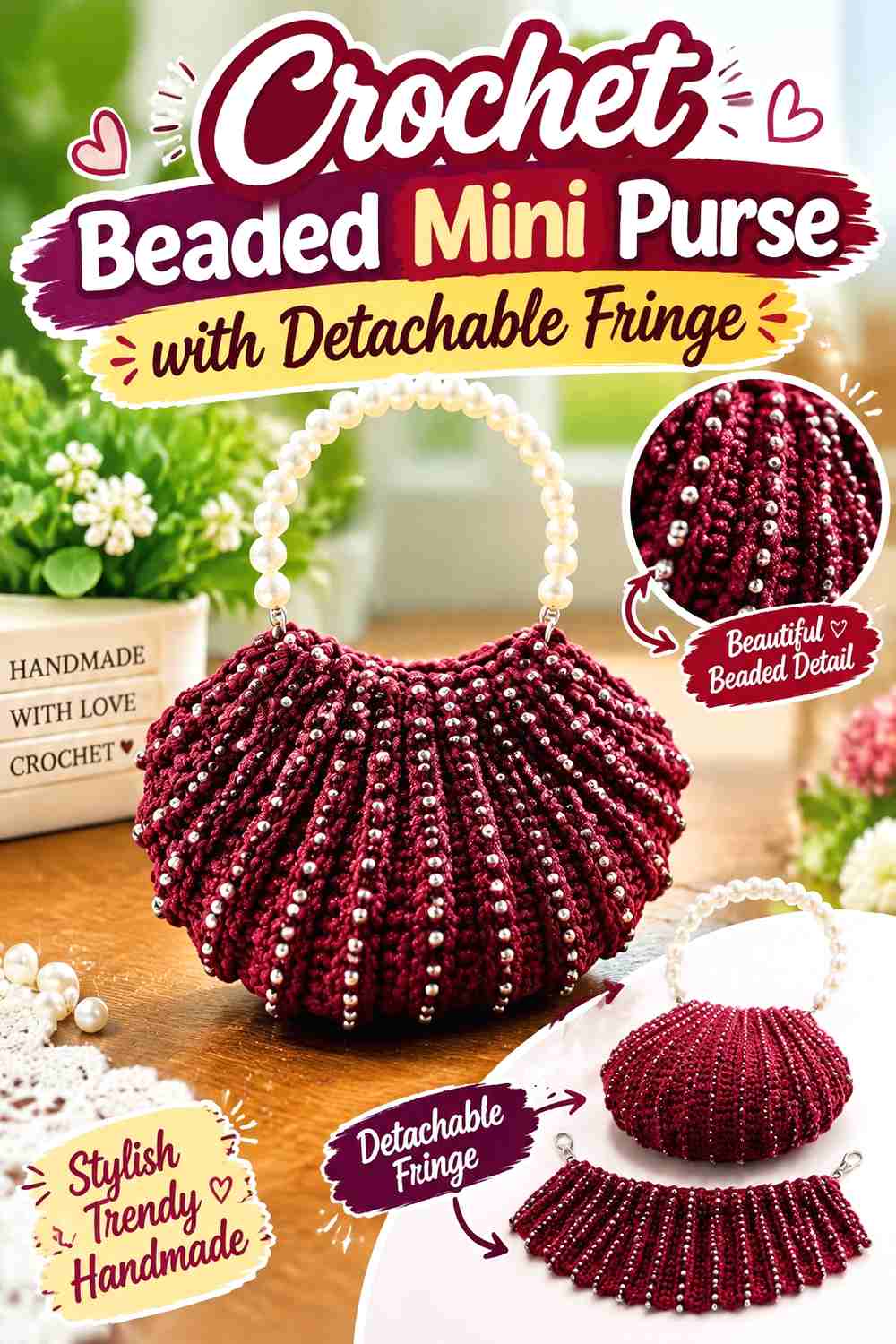
Gumnaam Vlogss 🌹 demonstrates a textured crochet mini purse with prominent bead embellishment and a decorative beaded handle. A removable fringe or tassel charm is the adaptation proposed here.
Making the fringe detachable is particularly useful on an already embellished purse. It allows the bag to shift between a cleaner beaded look and a more overtly bohemian version without permanently crowding the surface.
Detachable Fringe Keeps the Beaded Handle From Competing
The decorative handle already creates a strong upper focal point.
Instead of adding permanent fringe around every edge, attach one removable tassel or fringe cluster at a side point where it can move independently. This keeps the design from splitting attention equally between several ornate areas.
Check the Base Before Adding a Weighted Lower Edge
If you prefer lower-edge fringe instead, evaluate how the bag stands and hangs before adding beads to those strands.
Concentrated weight at the bottom can change the purse’s silhouette. A side charm creates movement with less influence on the entire base.
Creator Credit: Gumnaam Vlogss 🌹
14. Crochet Beaded Fringe Multipurpose Skinny Scarf
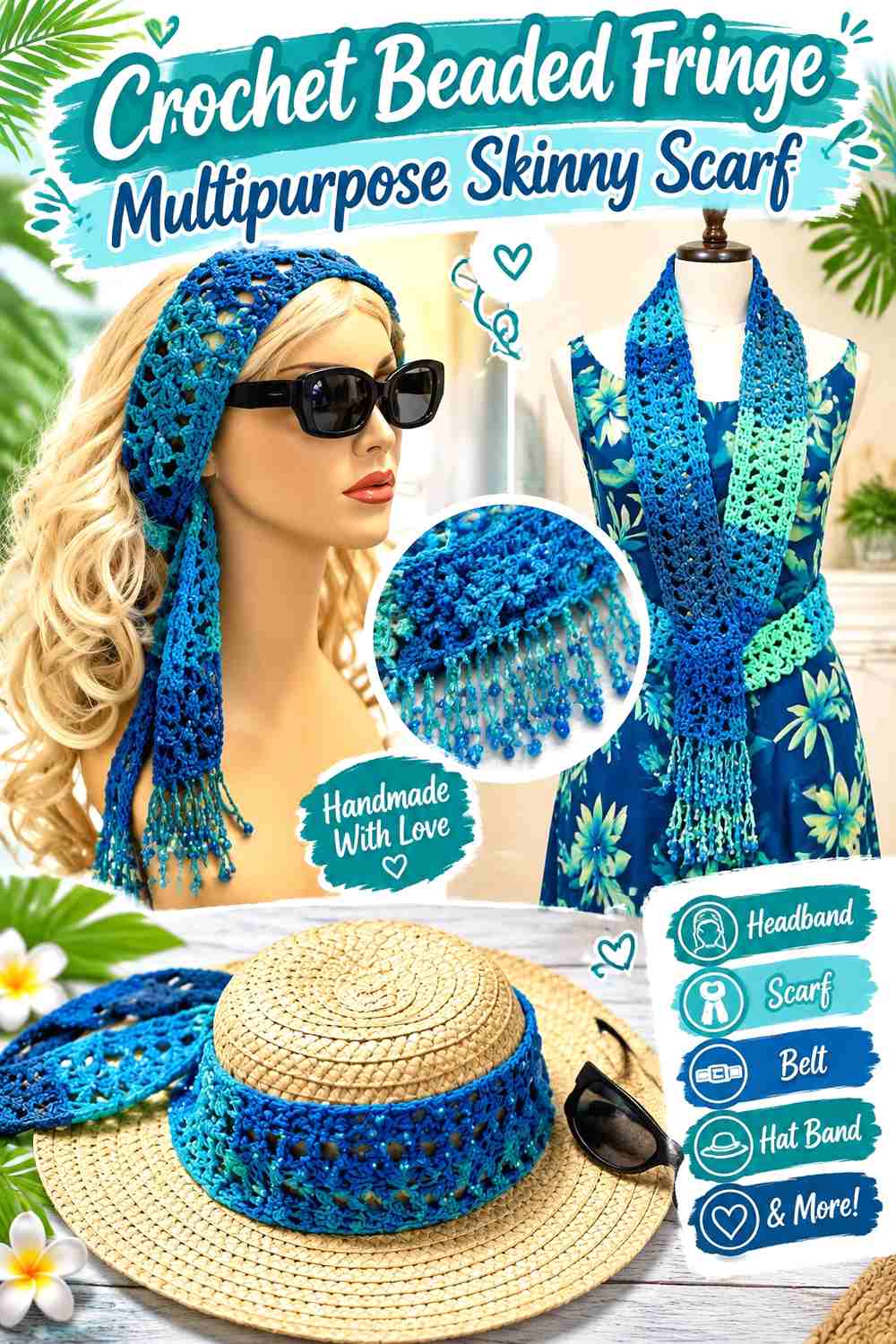
Sara Sach Crochet Designs demonstrates an open, pointed-end accessory that can be styled in several ways, including as a scarf, head accessory, or belt. Fringe is already part of the design, and the creator specifically notes that beads can be added to it, making this one of the strongest adaptation matches in the roundup.
Its versatility also fits the Fall 2026 interest in scarves moving beyond a single styling role. Vogue’s fall accessory report specifically points to fringe scarves worn around the shoulders, at the waist, or trailing over outerwear.
Multiuse Styling Changes the Safest Fringe Length
Fringe that works beautifully at the end of a neck scarf may be inconvenient when the same piece is tied around the waist or worn near the hair.
Decide which use matters most before making the fringe especially long. If versatility is the priority, a controlled length and moderate bead weight will usually be easier to reposition.
Beads Make the Ends More Directional
Unweighted scarf ends can shift and flutter freely. Beads encourage them to hang downward more decisively.
That can be useful when the pointed ends are meant to remain visible, but it also means the accessory may behave differently as a headscarf or belt. Decorate a small section first and test all intended styling positions before finishing both ends.
Creator Credit: Sara Sach Crochet Designs
Which Beaded Fringe Crochet Accessory Should You Choose?
| If you want | Consider | Main thing to check |
|---|---|---|
| A tutorial already combining beads and fringe or tassel details | 1, 2, 5, or 15 | Balance and attachment security |
| Statement earrings | 6, 7, or 8 | Weight, symmetry, and fringe length |
| Small everyday jewelry | 9 or 10 | Closure access and snagging |
| Waist-focused boho styling | 3 or 4 | Embellishment weight and tie placement |
| A removable bag accent | 5 or 14 | Hardware connection and movement |
| A fall layering accessory | 12 or 13 | Cumulative bead weight and drape |
| A quieter beaded look | 10 or 11 | Keep the added fringe minimal |
| A multifunctional accessory | 15 | Test bead and fringe placement in every intended use |
If you want the least adaptation, start with the phone crossbody, lariat, dragonfly charm, or multipurpose scarf. Those sources already bring the two design languages particularly close together.
The jewelry tutorials are better when you want a small project where just a few beads or tassel strands can change the finished mood. The scarf and shawl ideas offer far more room for embellishment, but that also makes weight and repetition more important.
Conclusion
The most convincing beaded fringe crochet accessories for Fall 2026 use embellishment selectively. A few well-placed beads can give a tassel more definition, while a small section of fringe can make a beaded accessory feel more fluid without hiding its original structure.
Choose the Ravella Design phone crossbody, Fiber Flux lariat, Poplar Crochet dragonfly charm, or Sara Sach Crochet Designs scarf when you want a source already closely aligned with both beads and hanging detail. The chain and lace belts work well for waist-focused styling, while the three earring ideas let you explore the same mood on a much smaller scale. For fall layering, the pocket scarf and triangle shawl offer the greatest surface area but also require the most attention to cumulative embellishment weight.
When a tutorial supplies only the beaded or fringed portion of an idea, establish that original project first and test the added detail on a small area before repeating it. Refer to the credited original tutorials for their exact construction, and treat the bead-and-fringe adaptations as separate design choices rather than assumed parts of the creator’s pattern.
Frequently Asked Questions
Do all 15 tutorials already include both beads and fringe?
No. Some sources already combine beads with fringe, tassels, or hanging beaded ends. Other tutorials teach either a beaded accessory or a fringed accessory, and this article suggests a separate way to introduce the missing detail.
That distinction matters because adding beads can change weight and stretch, while adding fringe can change the outline and movement of the original project.
How can I stop beads from making crochet fringe sag?
Test a small decorated section while it hangs vertically before embellishing the full project. If the crochet edge stretches noticeably, reduce the number or weight of beads, increase the spacing between decorated strands, or reconsider whether that edge is firm enough for the embellishment.
The goal is not necessarily to eliminate all movement. Fringe should move; the concern is permanent distortion of the supporting crochet.
Should beads be added while crocheting or after the fringe is attached?
That depends on the design. Some tutorials intentionally integrate beads into the crocheted structure, so follow the creator’s demonstrated method for that project.
A separate fringe adaptation may instead place beads on individual decorative strands. Whichever approach you use, make sure the bead opening suits the fiber and that rough edges do not cut or abrade the yarn.
What should I look for when choosing beads for crochet accessories?
Check the bead hole as carefully as the outside appearance. The yarn or thread needs to pass without excessive abrasion, and rough interior edges can damage fiber.
Also consider weight. A bead that feels insignificant in your hand can become substantial when repeated dozens of times across fringe, a shawl edge, or a long necklace.
Can beaded fringe crochet accessories be washed normally?
Do not assume that the care instructions for the yarn automatically apply to beads, metal findings, charms, or other hardware.
Check the care guidance for every significant material in the finished accessory. If the combination is uncertain, a more conservative cleaning approach may be appropriate rather than exposing the whole piece to a washing method that could damage one component.
How do I keep crochet fringe from tangling around beads?
Avoid packing too many weighted strands into a small area. Shorter fringe, fewer bead clusters, and enough space between decorative groups can reduce tangling.
For storage, arrange long fringe rather than stuffing the accessory tightly into a container. Jewelry with tassels is particularly worth storing separately from chains, hooks, and other pieces that can catch the fibers.
Are beaded fringe crochet accessories suitable for children?
Small beads, charms, findings, and detachable embellishments can create choking or entanglement concerns, so the projects in this roundup are primarily presented as fashion accessories.
For an item intended for a child, choose construction and embellishments specifically for the child’s age and intended use rather than assuming an adult beaded-fringe design can be transferred unchanged.