A crochet cummerbund belt can change the proportions of an autumn outfit without adding another full clothing layer. Worn over a dress, cardigan, long shirt, or lightweight sweater, a broad belt creates a defined waistline while adding the texture of crochet.
The most convincing versions are not simply ordinary narrow belts made in yarn. Cummerbund-inspired styling depends on visible width, a clear center section, and enough structure to look intentional over clothing. Corset belts and wide waist sashes naturally fit that description. Narrower buckle, floral, granny, and boho belt tutorials can also provide useful construction ideas, but they need thoughtful adaptation if you want a genuinely broad cummerbund silhouette.
That distinction is important throughout this collection. Some tutorials already produce substantial waist pieces, while others are included as bases for experimenting with motifs, Tunisian fabric, buckles, ties, flowers, or tassels. Always check the source construction before increasing width because changing a belt’s proportions can affect its closure, flexibility, stitch repeat, and ability to remain flat around the waist.
Quick List
- Crochet Shaped Lace Up Cummerbund Belt
- Crochet Chunky Corset Cummerbund Belt
- Crochet Reversible Waist Cincher Cummerbund
- Crochet Wide Buckle Dress Cummerbund Belt
- Crochet Tie On Waist Sash Cummerbund
- Crochet Tunisian Buckle Cummerbund Belt
- Crochet Recycled Buckle Tunisian Cummerbund
- Crochet Boho Tassel Cummerbund Sash
- Crochet Joined Flower Cummerbund Belt
- Crochet Floral Accent Cummerbund Sash
- Crochet Flower Motif Tie Cummerbund
- Crochet Minimal Tie Waist Cummerbund Belt
- Crochet Textured Tie Cummerbund Belt
- Crochet Classic Buckled Cummerbund Belt
Get the Width Right Before Focusing on Decoration
A cummerbund-inspired belt needs enough visual depth to read as a waist panel rather than a cord or conventional trouser belt. That does not mean every design should be extremely wide. The correct proportion depends on your torso, the garment underneath, and where you intend to position the belt.
Try a temporary paper or fabric strip over the outfit first. A broad panel may look balanced over a loose dress but cover too much of a short-waisted sweater. A narrower center panel with tapered or corded ends can preserve the cummerbund effect while leaving more room for movement.
Width also affects crochet behavior. Adding rows to a basic belt may create a wider rectangle, but motif belts, shaped corset panels, and Tunisian constructions may require more substantial planning. Follow the tutorial’s construction logic rather than assuming every design can simply be doubled in depth.
Structure, Stretch, and Closures Change the Fit
A crochet waist belt does not behave like a woven fabric cummerbund. Crochet can stretch, especially when the belt is pulled firmly around the waist or made with a soft, elastic fabric.
Dense stitches and structured yarns generally produce a firmer-looking belt, while openwork and motifs give more flexibility. Neither is automatically better. A softer sash can suit a relaxed cardigan, while a firm belt creates a stronger line over a dress or oversized shirt.
Closure choice matters too. Ties provide a broad adjustment range and work well with boho or corset-inspired designs. A buckle creates a cleaner fixed front but requires the belt width and hardware to cooperate. Lace-up closures can distribute adjustment across a wider section, although the spacing and edge stability become especially noticeable.
Think About What Happens When You Sit Down
A broad waist belt can look excellent while standing and still feel awkward once the torso bends. Before final finishing, test the developing belt while sitting, reaching, and turning.
If the upper or lower edge folds sharply, the belt may be too tall for its placement or too rigid for the intended outfit. If the center collapses inward, a different fabric density may be more useful than simply tightening the closure.
Also test the belt over the actual clothing you expect to wear. A fit that works over a thin dress may change noticeably over an autumn sweater.
1. Crochet Shaped Lace Up Cummerbund Belt
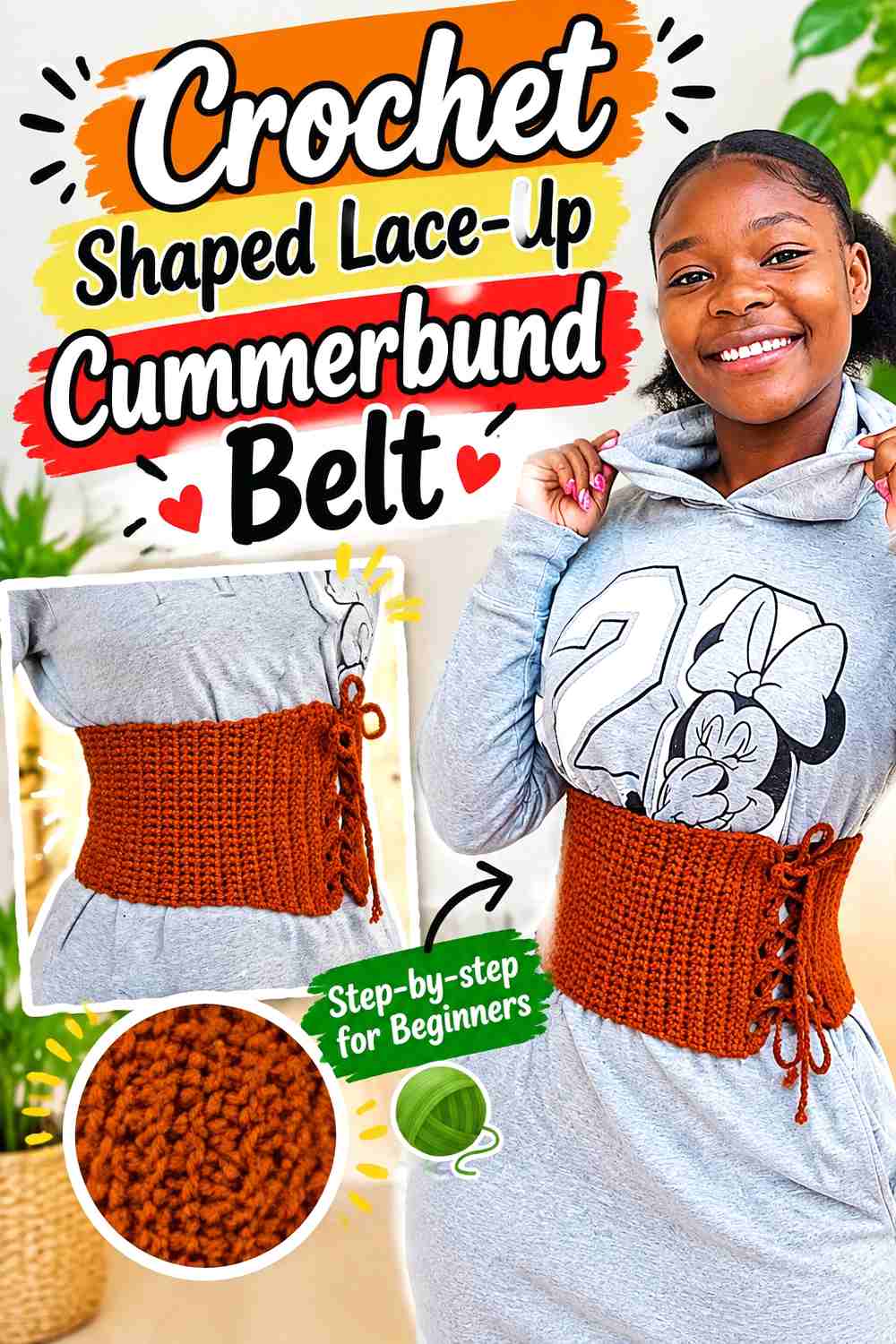
A shaped corset belt is one of the closest crochet interpretations of a cummerbund because the center section is intentionally broad and the ends transition toward a lace-up closure. Kemunto crochets demonstrates a waist-measurement-based corset belt with shaped sections, loops, and ties rather than a simple uniform strip.
This direction works particularly well over loose dresses, long shirts, or streamlined knitwear because the belt itself supplies the waist definition.
Shaping Creates a Cleaner Waist Line
A completely rectangular panel can wrinkle when wrapped around a curved torso. A shaped design gives you another option: change the depth across different parts of the belt rather than expecting one straight strip to conform everywhere.
When adapting the look, pay attention to where the widest portion lands on your body. Moving that depth higher or lower can change the proportions of the entire outfit.
Lace-Up Ends Add Adjustable Fit
Lacing allows the belt to be tightened or loosened without needing one exact fixed circumference. That can be useful for a piece worn over garments of different thicknesses.
The lacing area still needs stable edges. If those edges distort noticeably when pulled, reconsider the fabric density or reinforcement before treating tighter lacing as the solution.
Keep the Front Panel Visually Simple
Because the back or side lacing already contributes plenty of detail, the wide main panel does not necessarily need extra flowers, tassels, and surface decoration. A restrained center can make the overall shape more sophisticated.
Creator Credit: Kemunto crochets
2. Crochet Chunky Corset Cummerbund Belt
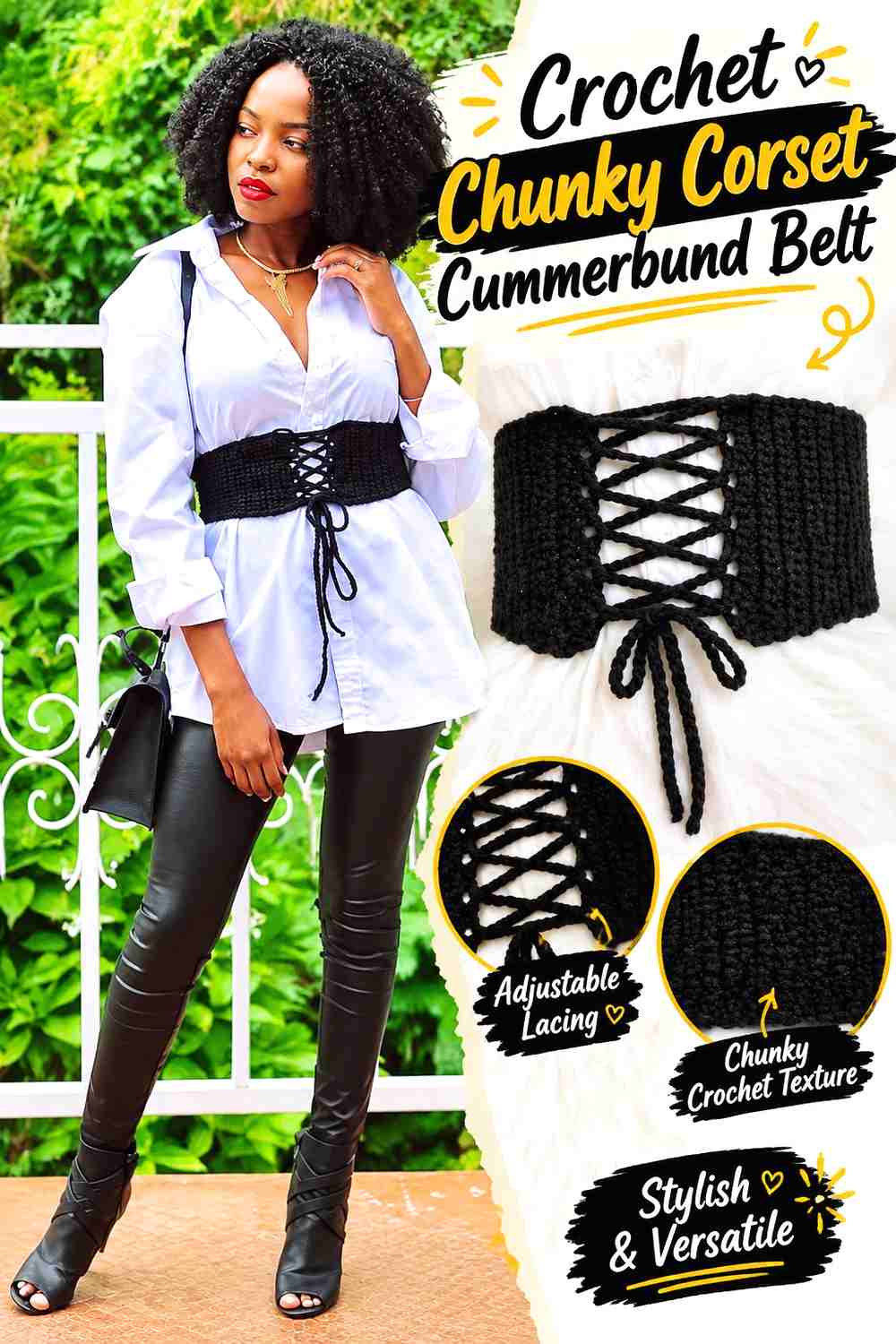
AC Crochets demonstrates a broad crochet corset waist belt made as a quick accessory, giving this idea another direct route to a true wide-belt silhouette.
Compared with a delicate sash, the thicker visual scale makes this style read more like a separate garment accessory. It can be especially effective over relatively plain fall layers where a strong waist detail will not compete with other textures.
Chunky Fabric Makes Width Look Even Wider
Thicker yarn increases the visual weight of the belt as well as its physical thickness. A panel does not have to cover a large portion of the torso to make a strong statement when the stitches themselves are substantial.
Before extending the depth, test the original-scale fabric around your waist. Extra rows may produce more bulk than the flat swatch suggests.
Test It Under Your Coat
A chunky corset belt is likely to work best as an outer styling piece rather than something hidden beneath fitted outerwear. If you plan to wear a coat on top, check how comfortably it closes over the belt.
Strong Texture Benefits from a Quiet Outfit
The belt can provide the main handmade element when worn over a simple dress, tunic, or monochrome knit. Combining a chunky waist panel with multiple other raised textures can make the middle of the outfit visually crowded.
Creator Credit: AC Crochets
3. Crochet Reversible Waist Cincher Cummerbund
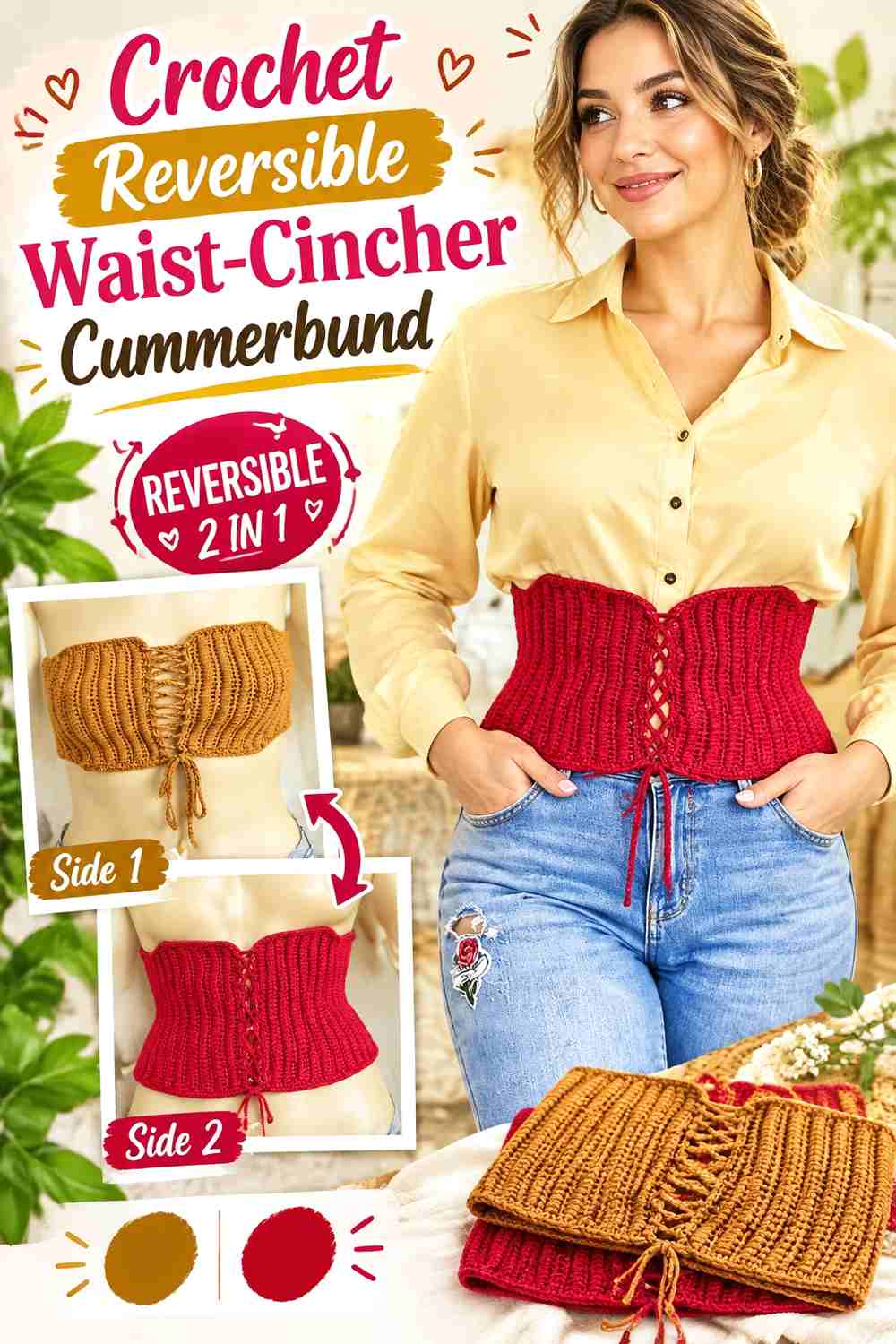
OhChives demonstrates a crochet waist-cincher construction that can also be used within a convertible corset-style project. The source specifically treats comfort and safe fit as important considerations rather than presenting extreme tightening as the goal.
For a cummerbund interpretation, the useful idea is the broad torso-hugging panel and reversible styling potential—not attempting to use crochet as rigid shapewear.
Treat It as an Outfit Belt, Not a Waist Trainer
Crochet fashion accessories are better approached as decorative waist definition than as devices for compressing the body. Fit the piece so you can sit, breathe, and move normally.
Reversibility Can Double the Styling Options
A belt that presents two usable surfaces can coordinate with more outfits without requiring another project. Consider two colors or subtly different textures rather than putting heavy embellishment on both sides.
Check the Edges After Turning the Belt
If both surfaces are intended to show, finishing becomes especially important. Tails, joins, and attachments that would normally remain hidden need to look neat from either orientation.
Creator Credit: OhChives
4. Crochet Wide Buckle Dress Cummerbund Belt
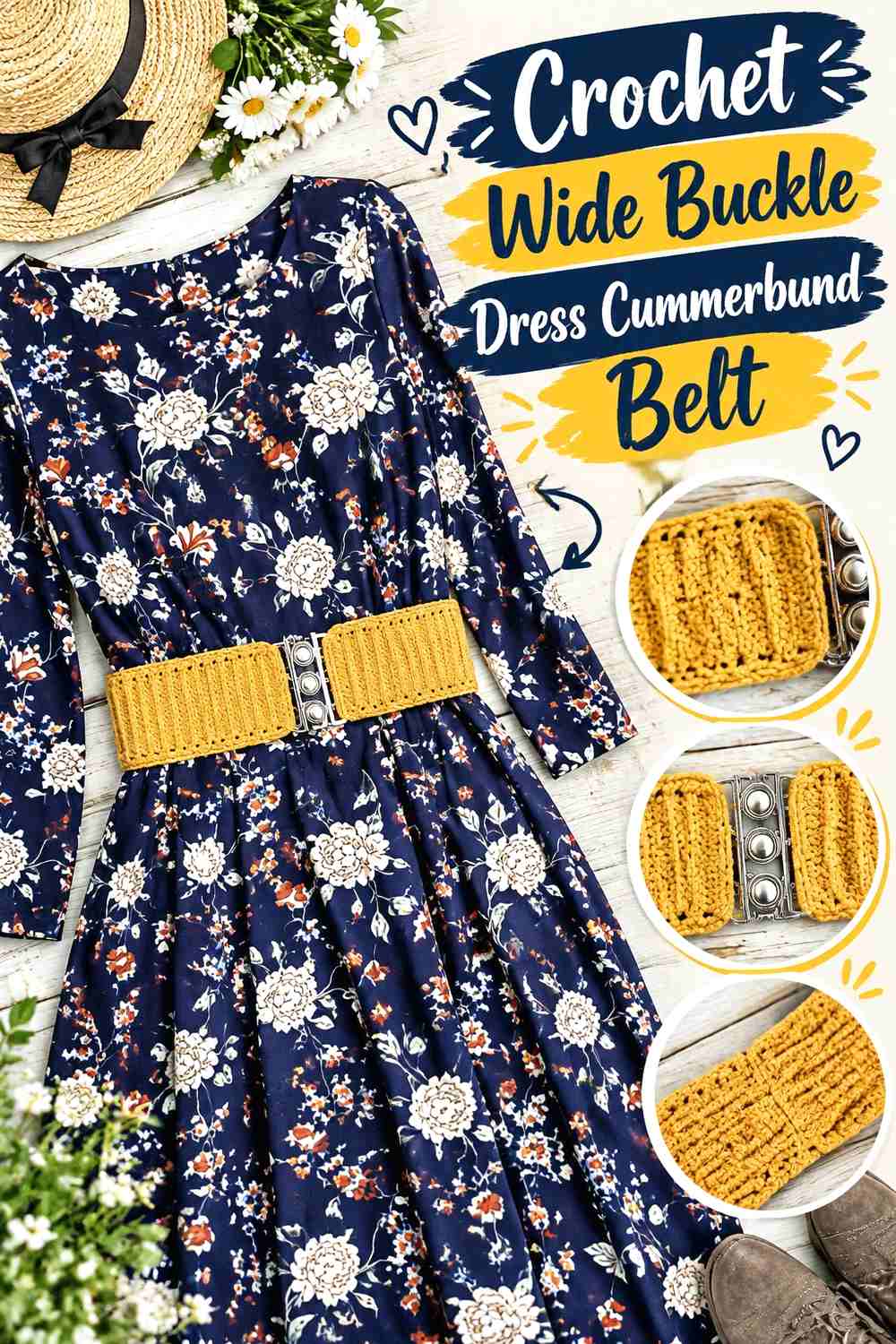
Yarn and Chai’s waist-belt tutorial is especially relevant because it produces a visibly wide belt intended to be worn with a dress and incorporates belt hardware into the design.
This is a strong option when you like cummerbund width but prefer a polished buckle to corset-style lacing or long ties.
Hardware Gives the Crochet a Tailored Finish
A buckle introduces a crisp material contrast against yarn. That can make a handmade belt look more structured when paired with dresses, shirt dresses, or smooth knitwear.
Match the Belt Depth to the Hardware
A very wide crochet panel with comparatively small hardware can look visually disconnected. Before committing to the body proportions, compare your buckle directly with the intended belt width.
Watch for Stretch Near the Closure
The area beside the hardware receives concentrated pulling. If your yarn substitution is considerably stretchier than the source fabric, evaluate the buckle section before completing the entire belt.
Creator Credit: Yarn and Chai
5. Crochet Tie On Waist Sash Cummerbund
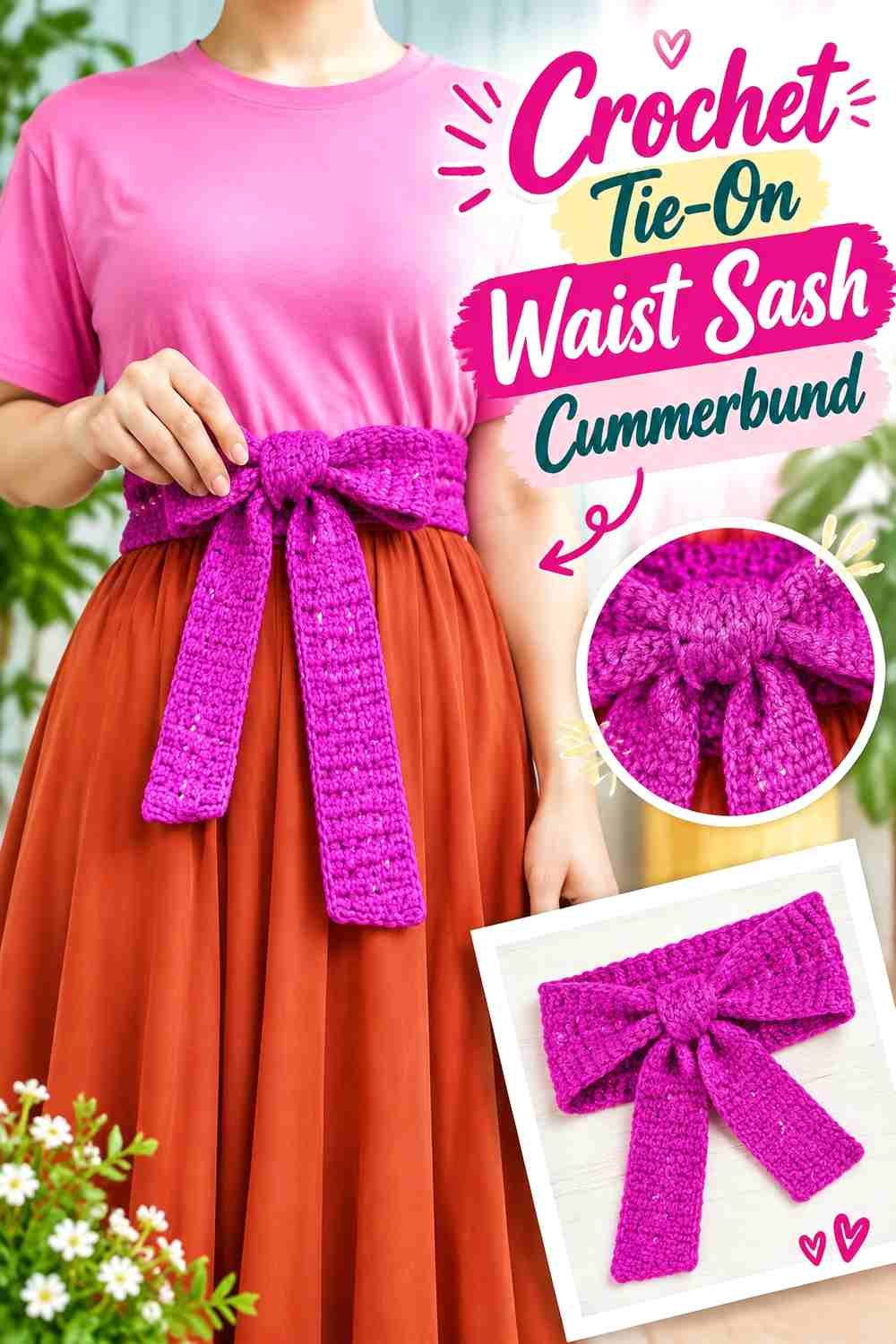
A waist sash is the softer alternative to a fitted corset belt. Smule of Cambodia demonstrates a crochet waist-sash project that can be wrapped and styled without relying on rigid hardware.
This makes a useful direction for layered Fall 2026 outfits where you want visible waist definition but do not want the belt to look overly structured.
A Sash Can Follow Soft Clothing Better
Cardigans, knit dresses, and flowing tops already move with the body. A tie-on crochet sash can preserve some of that softness instead of introducing a hard buckle or sharply defined closure.
Position the Knot Intentionally
A front knot becomes part of the outfit’s focal point. A side or back tie keeps the broad waist panel visually cleaner. Try different positions before determining how long the tie sections need to be.
Avoid Excess Fabric at the Waist
Wider does not always mean more elegant. If the sash starts folding over itself rather than lying flat, reconsider the depth or yarn structure instead of tightening it further.
Creator Credit: Smule of Cambodia
6. Crochet Tunisian Buckle Cummerbund Belt
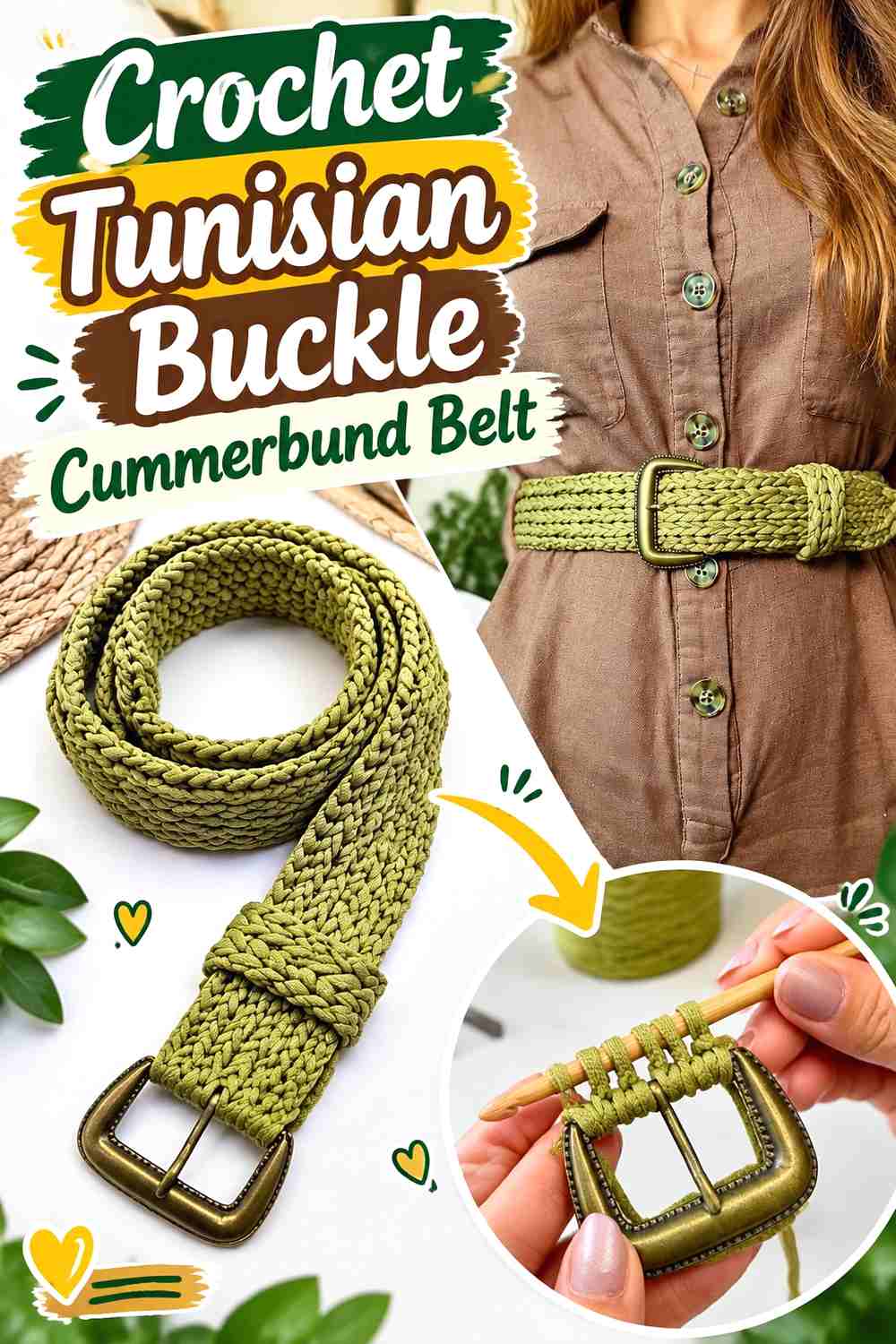
Brunaticality demonstrates a Tunisian crochet belt with a buckle and belt loop. The original is closer to a conventional belt than a full cummerbund, so use it as a technique and closure reference if you want to develop a wider structured version.
The appeal here is the comparatively smooth, woven-looking Tunisian surface, which creates a different visual character from traditional crochet lace or granny motifs.
Tunisian Fabric Can Create a Cleaner Surface
If you want the belt to resemble a textile panel more than an open crochet accessory, a compact Tunisian fabric is worth considering. It can give solid fall colors a strong uninterrupted presence.
Widening Changes More Than Appearance
A wider Tunisian project puts more loops in play and may change which hook setup is practical. Confirm the construction before attempting to turn the source belt into a much deeper waist panel.
Let the Buckle Remain Visible
A simple surface places greater emphasis on hardware. Choose the buckle before finalizing your color and width so it looks intentionally integrated rather than added afterward.
Creator Credit: Brunaticality
7. Crochet Recycled Buckle Tunisian Cummerbund
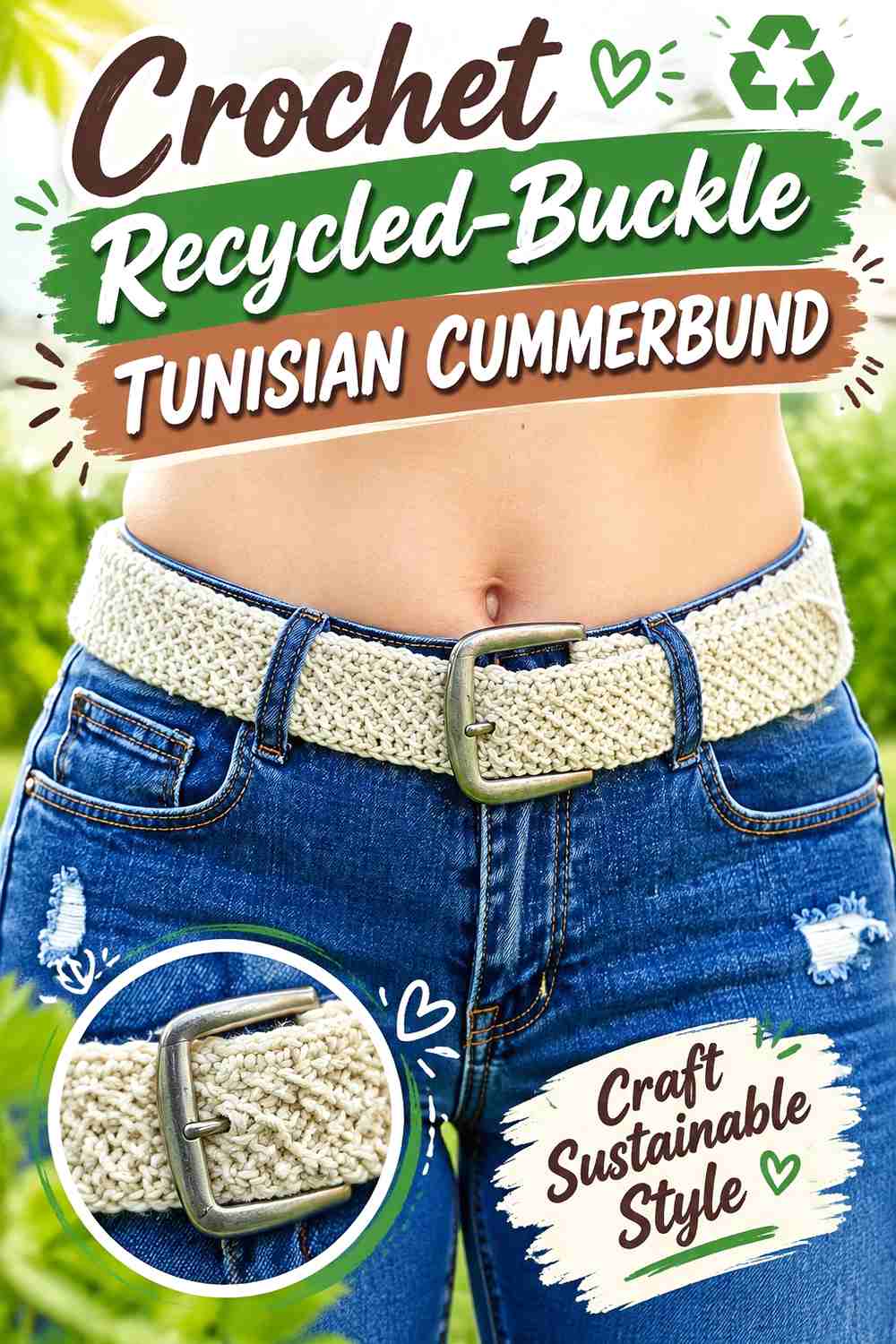
Francesca Uncinettando Crochet&Love demonstrates another Tunisian belt approach, this time incorporating an existing belt buckle into the crochet project. The source belt is narrower than a classic cummerbund, so the value here is the hardware-reuse concept and Tunisian construction rather than an exact wide-waist pattern.
Reusing a Buckle Can Determine the Whole Design
Instead of crocheting first and searching for hardware later, start with the buckle opening. Its scale places practical limits on how the crochet can meet the closure.
A Wider Center Can Taper Toward the Hardware
If your goal is a broader cummerbund silhouette, you do not necessarily need to force full belt width through a smaller buckle. A shaped panel that narrows near the ends may create a more workable transition.
Check Old Hardware Before Building Around It
A recycled buckle should still operate smoothly and have no rough edges likely to snag the yarn. The finished belt will only be as useful as its closure.
Creator Credit: Francesca Uncinettando Crochet&Love
8. Crochet Boho Tassel Cummerbund Sash
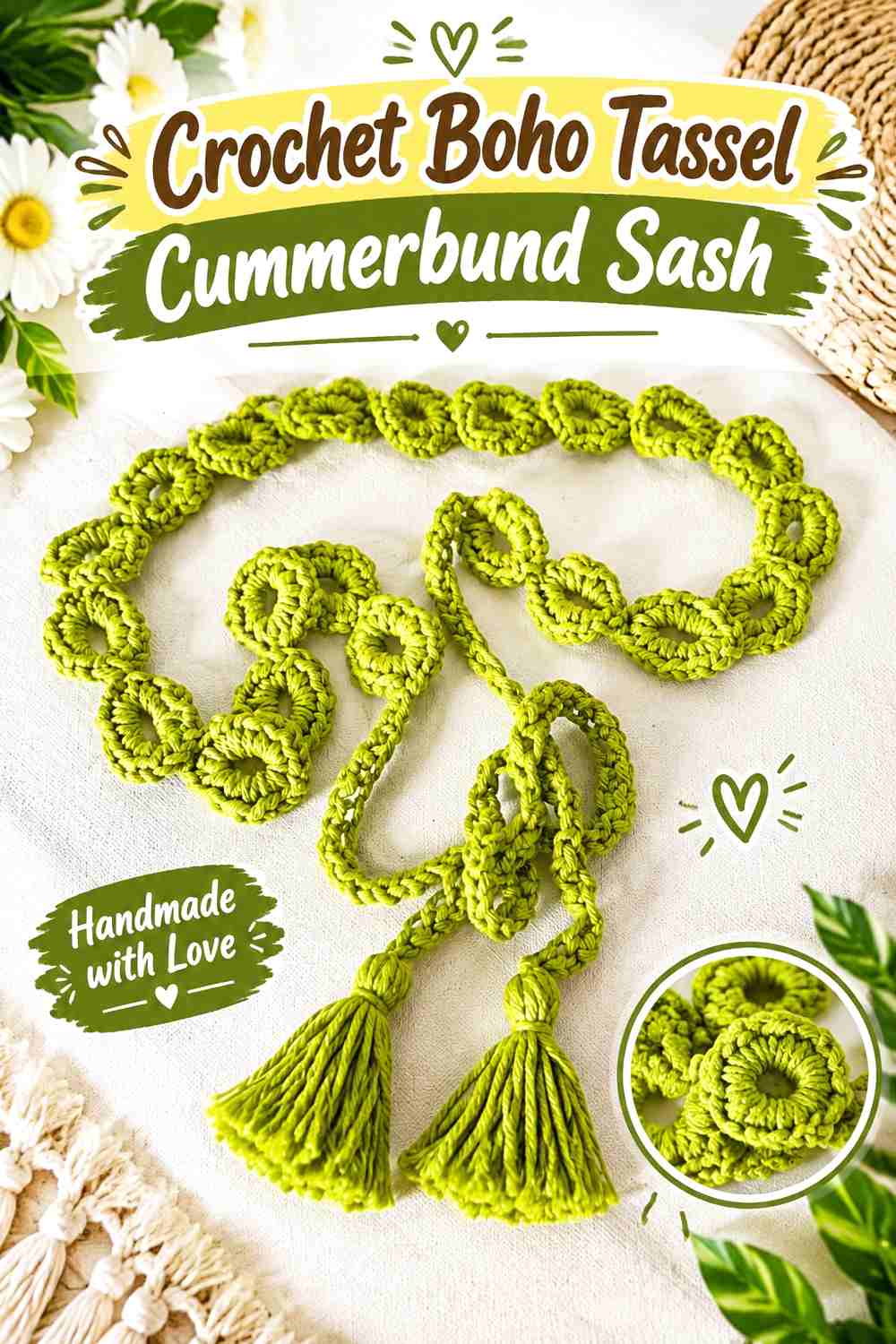
Hook & Loop Crochet Tutorials demonstrates a boho crochet belt finished with cords and tassels. Its original proportions are lighter than a traditional cummerbund, but the tie-and-tassel system offers a useful finishing direction for a wider crochet sash.
Tassels Shift Attention Toward the Closure
Unlike a buckle, which tends to create a compact focal point, tassels extend the belt visually beyond the waist panel. That works well when you want a softer bohemian silhouette.
Keep Tassels Away from Busy Motifs
If you widen the central portion with lace or texture, large tassels may be enough additional decoration. Multiple focal details can make a relatively small accessory feel overloaded.
Think About Where the Ends Hang
Long tassel cords can interact with pockets, bags, and coat openings. Test their position with the complete outfit rather than judging them only while the belt is lying flat.
Creator Credit: Hook & Loop Crochet Tutorials
9. Crochet Joined Flower Cummerbund Belt
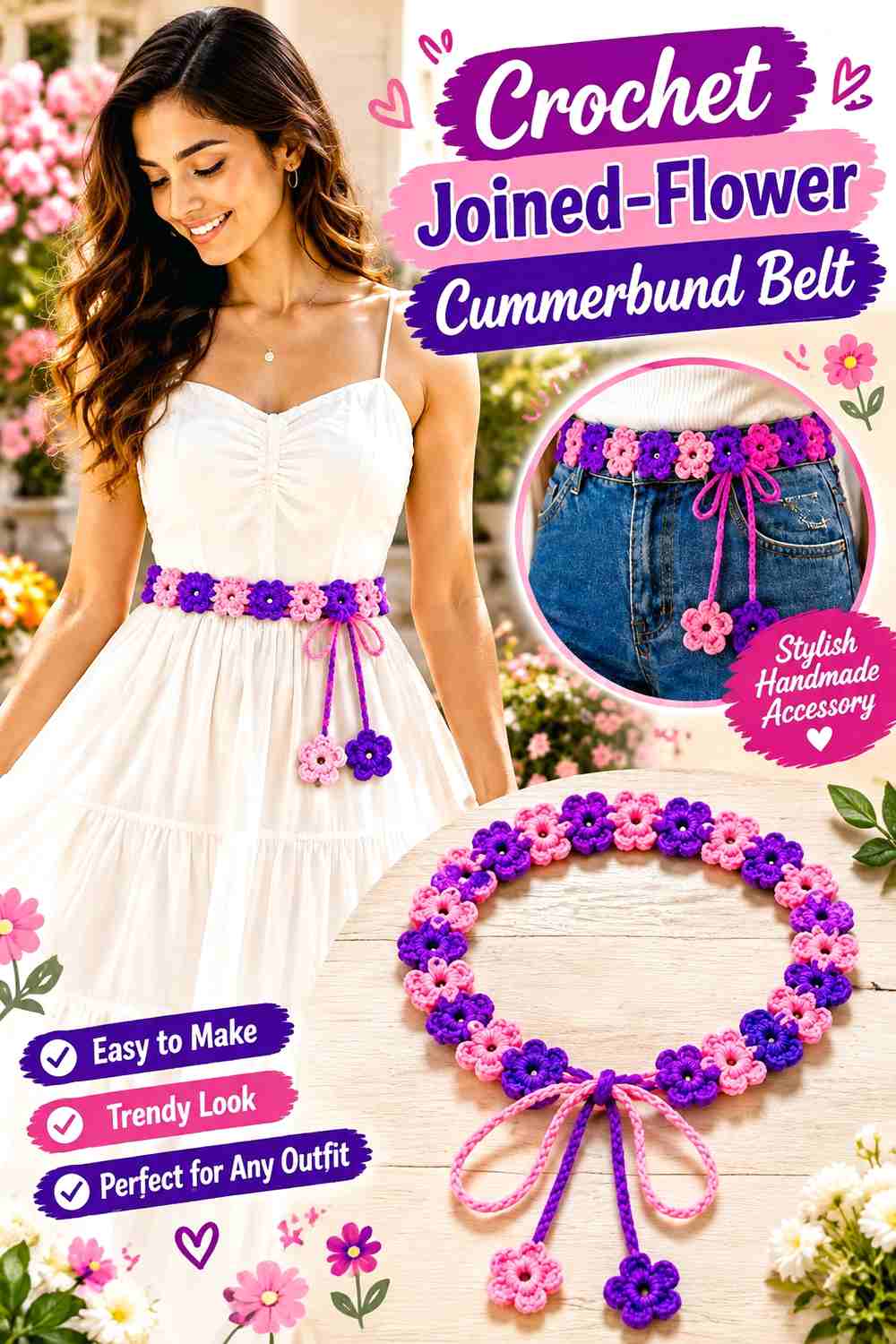
Knitting by Wajida demonstrates a waist belt built from individual flower motifs joined together and finished with ties.
This offers one of the most decorative adaptation routes in the collection. Instead of trying to imitate a solid formal cummerbund, the belt turns the broad waist area into a repeated floral panel.
A Second Motif Row Can Change the Scale
A single line of flowers reads as a conventional decorative belt. A broader arrangement can move closer to a cummerbund silhouette, but adding rows changes the joining requirements as well as the depth.
Lay motifs out around a waist template before deciding how many rows make sense.
Floral Belts Need Visual Breathing Room
When every unit already contains petal detail, adding multiple colors, beads, fringe, and elaborate ties can overwhelm the structure. One restrained palette can help the repeated flowers read as a unified band.
Joins Need to Handle Waist Movement
A decorative belt bends every time you sit or turn. Inspect motif joins for stability before relying on them to carry the tension of the tied belt.
Creator Credit: Knitting by Wajida
10. Crochet Floral Accent Cummerbund Sash
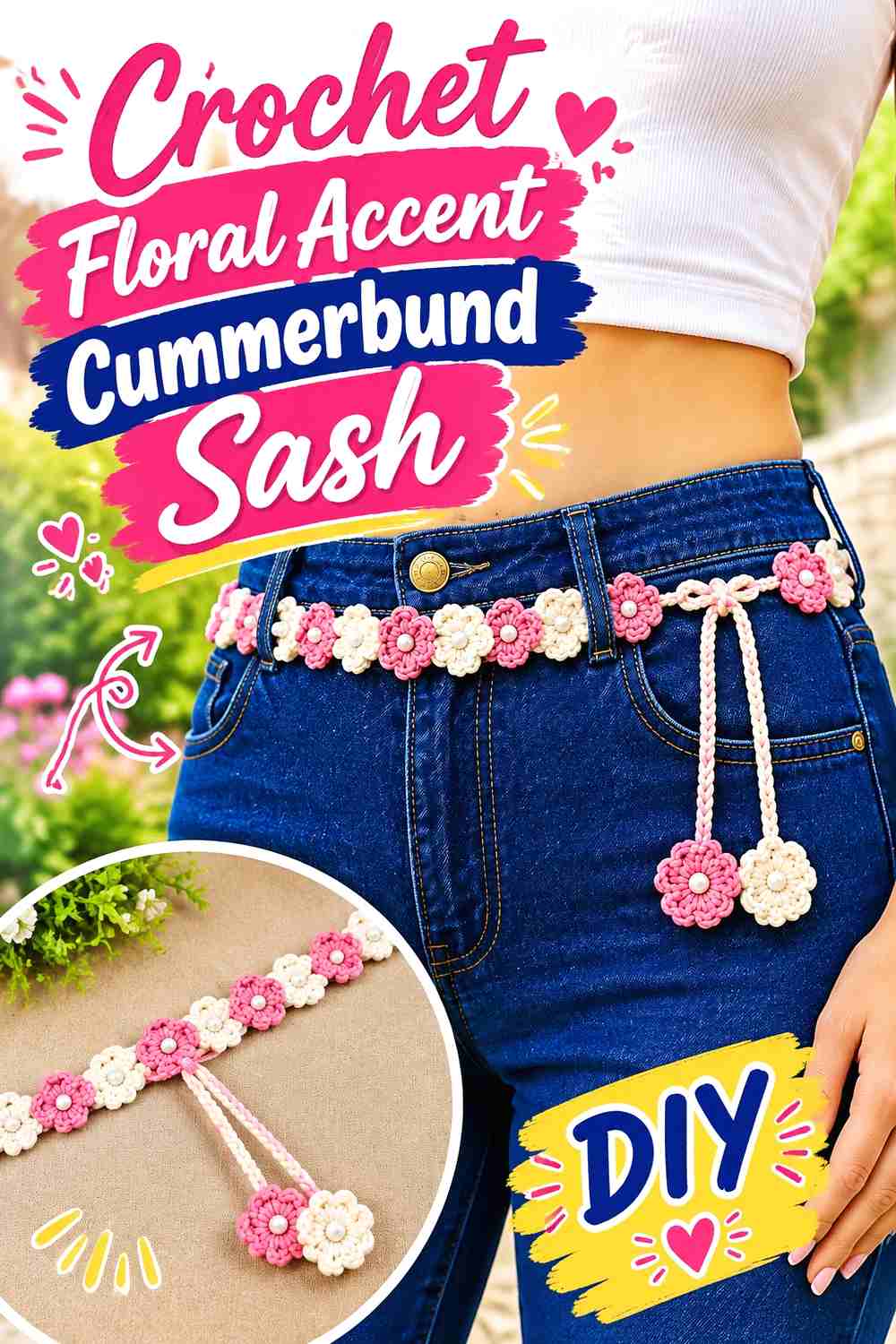
Crochet Kitchen demonstrates a crochet flower belt intended for styling with clothing. The source uses floral elements rather than a solid cummerbund panel, so this idea is best treated as inspiration for a lighter open floral waist sash.
Concentrate Flowers at the Front
You do not need identical decoration around the entire waist. A broader floral section at the front with simpler ties at the back can create a cummerbund-like focal area while reducing unnecessary thickness.
Use the Clothing as the Background
Open floral crochet allows the garment underneath to remain visible. A strong contrast makes each motif clearer, while similar tones create a subtler textured effect.
Avoid Making the Waistline Too Fragile
If you add more flowers to increase the panel width, check whether the joins can handle the tension required to keep the sash in place.
Creator Credit: Crochet Kitchen
11. Crochet Flower Motif Tie Cummerbund
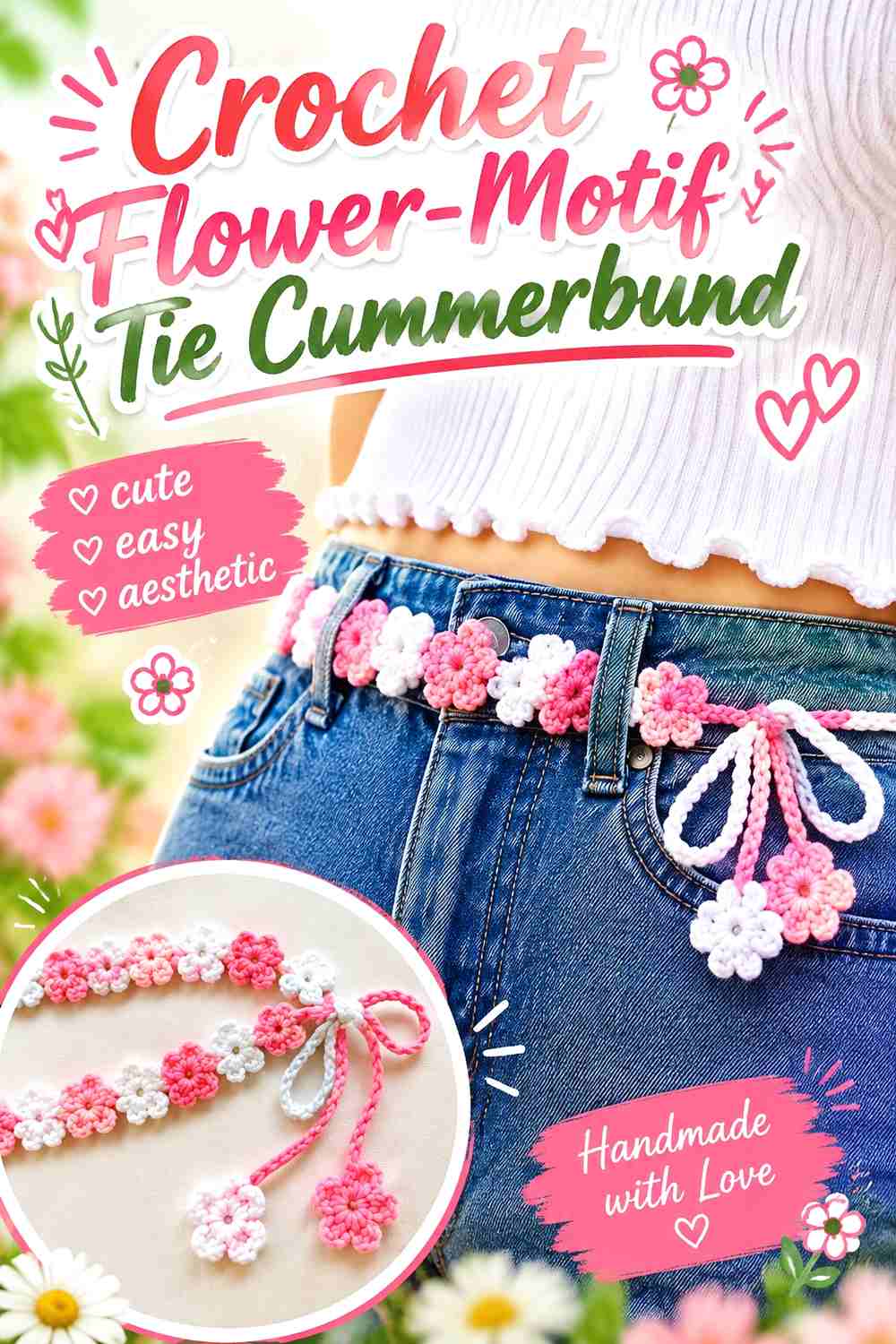
CraftyShikha demonstrates another flower-belt construction with ties, providing a useful base for a narrower, romantic alternative to solid corset crochet.
Its strongest distinction from the previous floral idea is the opportunity to plan motif spacing and tie placement around the garment instead of treating the entire belt as one dense block.
Space Can Be Part of the Design
A cummerbund does not necessarily need solid coverage. Strategically spaced motifs can create the impression of a broad waist treatment while allowing the outfit color to show through.
Keep Motif Scale Consistent
If you introduce a second flower style, compare finished dimensions before combining it with the source motif. Inconsistent sizes can cause the belt to wave or pull unevenly.
Tie Placement Changes the Front View
Side or back ties preserve the uninterrupted flower panel at the front. Front ties add another decorative element and may suit more relaxed dresses or tunics.
Creator Credit: CraftyShikha
12. Crochet Minimal Tie Waist Cummerbund Belt
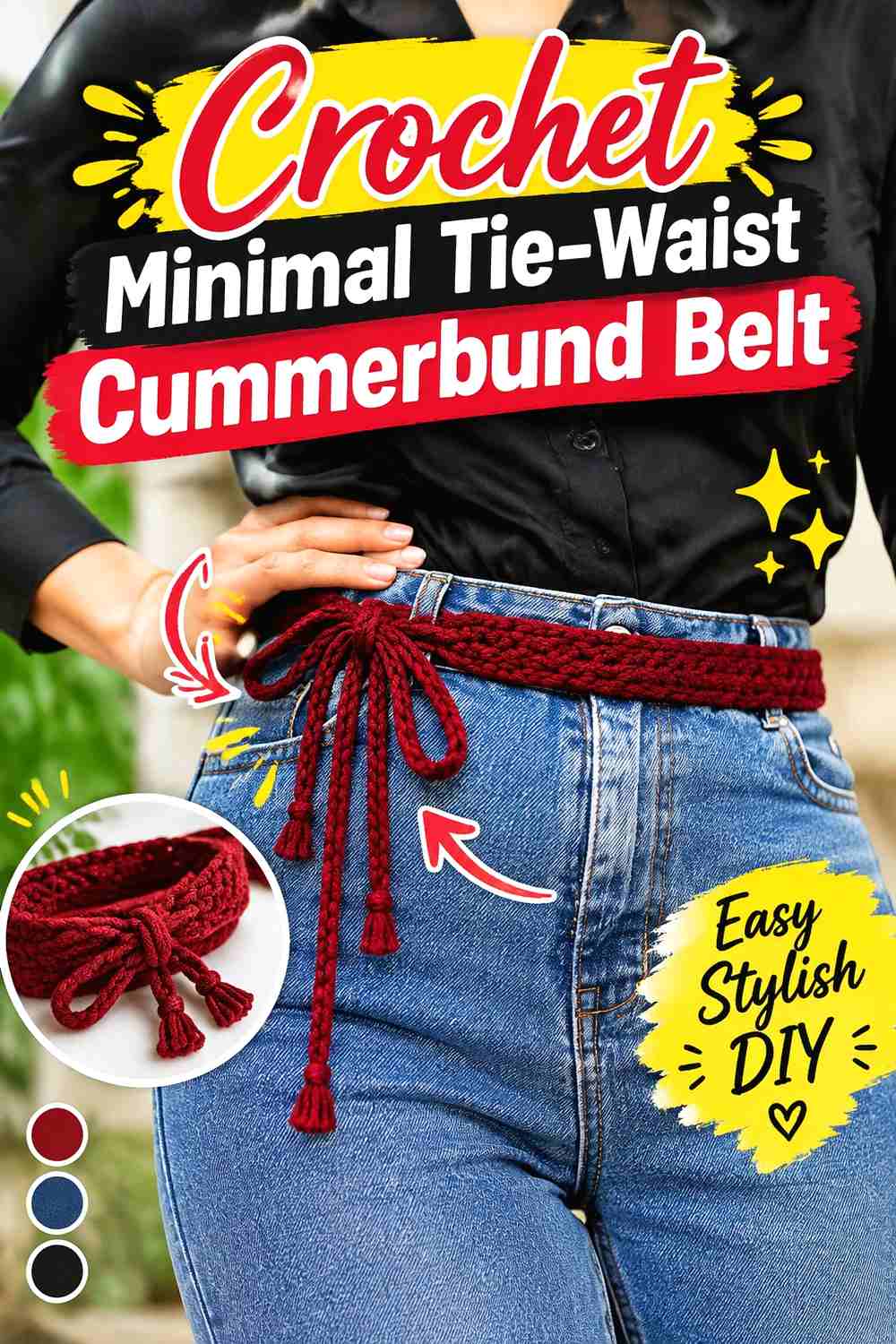
lumi.crochet demonstrates a straightforward crochet waist belt with a simple handmade construction. The original project is narrower than a traditional cummerbund, so it works best here as a clean base for experimenting with increased depth without introducing complicated motifs or hardware.
Simple Construction Makes Proportion More Important
Without cables, flowers, or a statement buckle, the eye notices the belt’s basic shape. A neatly proportioned wider panel can therefore look more intentional than excessive surface decoration.
Try a Solid Fall Color
Rust, chocolate, charcoal, cream, olive, or another wardrobe-compatible shade can allow the crochet texture to appear clearly without turning the belt into the only colorful element in the outfit.
Widen in a Test Section First
Before committing to an expanded version, make enough fabric to judge whether additional depth stays flat. A simple belt that behaves well when narrow can still fold when made substantially wider.
Creator Credit: lumi.crochet
13. Crochet Textured Tie Cummerbund Belt
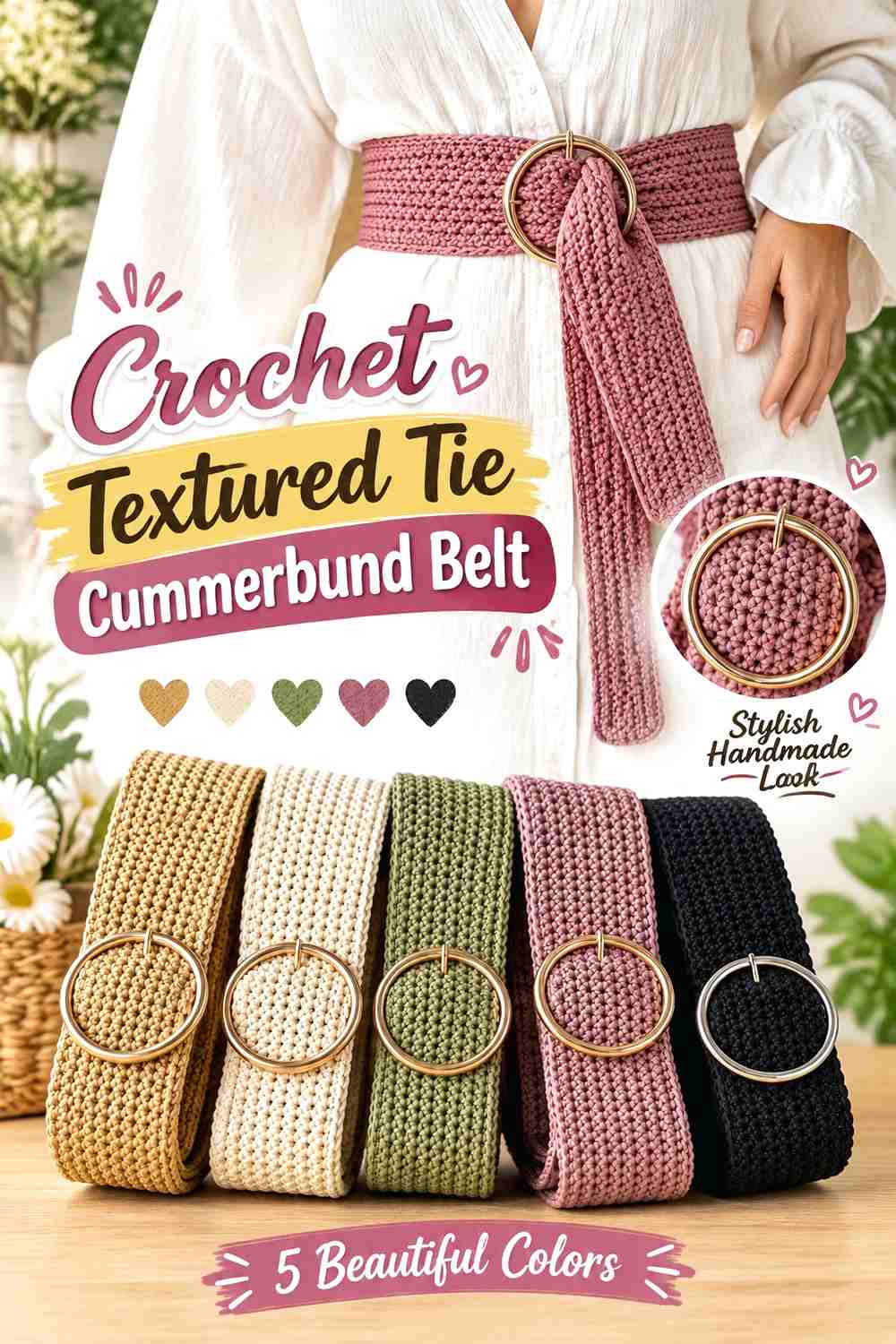
Yüksel’le Örgüler demonstrates a crochet belt made with yarn suitable for a visible fashion accessory. The source is another conventional belt rather than an exact cummerbund, so this idea focuses on translating its crochet texture into a broader tie-waist panel.
Texture Becomes More Noticeable as Width Increases
A stitch pattern that looks subtle in a narrow belt can dominate once repeated across a broad panel. Make a larger swatch before assuming the same texture will remain understated at cummerbund scale.
Tie Closures Keep Hardware Out of the Design
If you want the crochet itself to be the focus, cords or ties allow the project to remain entirely fiber-based. This can suit relaxed autumn dresses and long cardigans particularly well.
Check the Edge for Curling
Broad textured fabric needs reasonably stable upper and lower edges. If a sample curls strongly, address that behavior before making a full waist-length piece.
Creator Credit: Yüksel’le Örgüler
14. Crochet Classic Buckled Cummerbund Belt
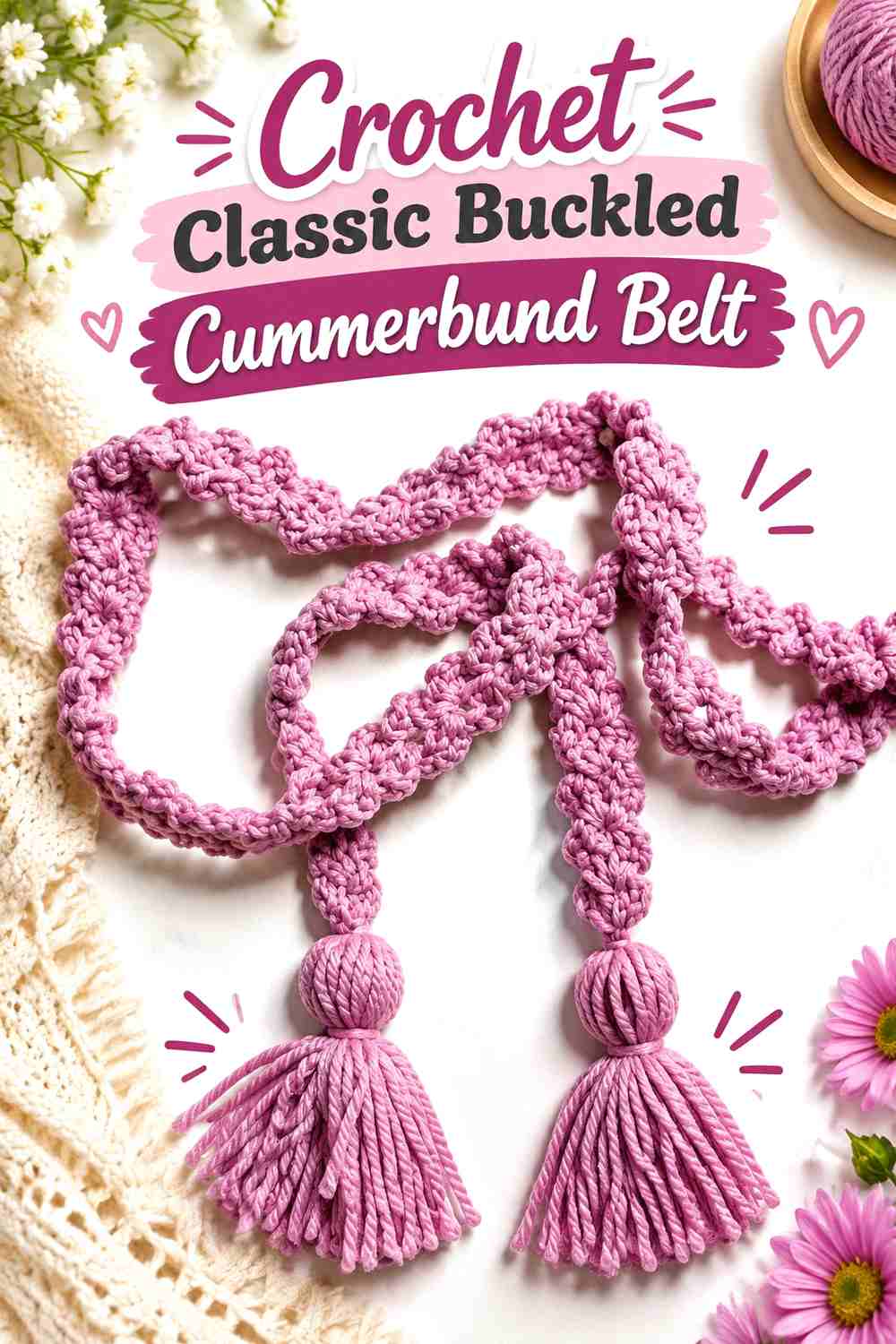
Atelier Crochet Serena لتعليم الكروشيه والتطريز demonstrates a classic crochet waist belt with a buckle closure. The original proportions are closer to a conventional belt, so this final idea uses the tutorial primarily as a reference for a clean buckled finish that can inspire a broader center panel.
A Classic Buckle Makes the Belt Easier to Style
Florals, corset lacing, and tassels all create distinct fashion directions. A conventional buckle is more neutral, which can make the belt easier to pair with several dresses, skirts, and cardigans.
Use Tapering to Connect a Wide Panel to Narrow Hardware
If your buckle is too narrow for the desired cummerbund depth, a shaped transition may look cleaner than trying to compress the entire broad panel into the closure.
Keep the Waist Section Firm Enough to Hold Its Line
A wide buckled belt looks most intentional when its edges remain reasonably even rather than collapsing around the buckle. Test the chosen yarn under gentle tension before deciding the final width.
Creator Credit: Atelier Crochet Serena لتعليم الكروشيه والتطريز
Which Crochet Cummerbund Belt Style Should You Choose?
For the closest match to a true cummerbund silhouette, begin with the shaped corset belt, chunky corset belt, reversible waist cincher, wide dress belt, or tie-on waist sash. Their construction already gives the waist a substantial center section.
If you prefer a cleaner tailored finish, the wide buckle design or either Tunisian approach provides less decorative visual noise. These can work especially well over smooth dresses and simple longline knitwear.
Choose the granny, flower, or floral motif options when you want the waistline to remain visibly handmade. They create more open space and surface pattern than solid corset belts, so the garment underneath becomes part of the finished look.
For boho autumn styling, a tie sash or tassel finish creates movement without requiring rigid hardware. These work particularly well with looser silhouettes where the belt is intended to gather the garment rather than look sharply tailored.
The narrowest conventional belt tutorials are most useful as adaptation references, not exact cummerbund patterns. Before widening one, check whether the stitch construction, buckle, edges, and closure can accommodate the new proportions.
Conclusion
A successful crochet cummerbund belt starts with proportion rather than decoration. Decide how much of your waist you want the belt to cover, whether it needs to feel soft or structured, and how it will interact with the clothing underneath.
Corset and cincher constructions create the strongest waist-defining silhouette. Wide buckle belts offer a cleaner tailored direction, while tie sashes move more naturally with soft autumn layers. Granny squares and flowers turn the belt into a decorative textile panel, and Tunisian crochet offers a smoother alternative when you want a more fabric-like surface.
Most importantly, do not assume a narrow belt can simply be made wider without consequences. Test the fabric, closure, and edge behavior at the intended depth, then use the original creator tutorial for its exact construction details.
Frequently Asked Questions
What makes a crochet belt look like a cummerbund instead of a regular belt?
The main difference is visual width and emphasis. A cummerbund-inspired crochet belt usually has a broad center section that covers more of the waist than a conventional belt. Shaped corset panels and wide sashes naturally create that effect, while narrow belt tutorials require adaptation.
How wide should a crochet cummerbund belt be?
There is no universal ideal width because torso length, waist position, and clothing proportions vary. Test the intended depth against your own body and outfit. The belt should define the waist without restricting normal sitting or bending.
Can I make a narrow crochet belt tutorial wider?
Sometimes, but the correct method depends on construction. A simple rectangular strip may be relatively straightforward to alter, while Tunisian crochet, motifs, shaped corset panels, and buckle-based designs can require different planning. Check the source before changing its proportions.
Which closure works best for a wide crochet waist belt?
Ties provide the most straightforward adjustment and suit sash or boho styles. Lacing works naturally with corset-inspired belts. Buckles create a tailored appearance but require hardware that works with the belt’s thickness and width. The best choice depends on how structured you want the finished accessory to look.
How can I stop a wide crochet belt from folding at the waist?
First check whether the belt is simply too tall for the area where you are wearing it. Yarn, stitch density, and stretch also affect whether the panel stays flat. Make a representative sample and test it while sitting and bending before completing the full project.
Can I wear a crochet cummerbund belt over a sweater?
Yes, provided the finished belt is sized for the additional clothing thickness. A structured belt can define an oversized sweater or cardigan, while a flexible sash may work better over softer knits. Test fit over the actual garment rather than measuring only against your body.
Are flower or granny-square belts structured enough for a cummerbund look?
They can create a broad decorative waistline, but they usually behave more softly than dense corset-style panels. Their strength is visual width and motif placement rather than rigid structure. Block the motifs consistently and make sure the joins can handle normal tension at the waist.