Crochet gajras and parandis can create very different hair looks even when both use the same basic ingredients: yarn, flowers, leaves, and a flexible base. A compact gajra keeps the decoration close to a bun or gathered section of hair, while a parandi extends the flowers down a braid and introduces more movement. Between those two shapes are clip-on gajras, rose arrangements, jasmine-inspired garlands, tassel finishes, and longer floral strands.
These 10 ideas cover those differences instead of treating every flower accessory as the same project. You can compare flower density, attachment style, length, visual weight, and how easily each design could be adapted to a particular hairstyle. The original tutorials provide the exact construction details; the guidance here focuses on choosing a design and planning the finished look.
Quick List
- Crochet Mogra Bud-Chain Gajra
- Crochet Separated Jasmine-Floret Gajra
- Crochet Malligai-Style Jasmine Gajra
- Crochet Flower Garland Gajra
- Crochet Juda-Wrap Gajra
- Crochet White-and-Green Gajra
- Crochet Maroon Statement Gajra
- Crochet Rose Bun Gajra
- Crochet Floral-Mandala Clip Gajra
- Crochet White-Flower Braid Parandi
Choose the Placement Before You Choose the Flowers
The first decision is where the crochet flowers should sit. A traditional bun-focused gajra concentrates the design around the back or side of the hairstyle, so flower density and flexibility matter more than overall length. A clip-based gajra puts more visual emphasis on one focal section and can support hanging floral details without wrapping the entire bun.
A parandi behaves differently because part of the accessory travels with the braid. Longer strands create more movement but also place more of the crochet below the attachment point. Before choosing a tutorial, picture the actual hairstyle: low bun, braided ponytail, full braid, or half-up style. Then compare the accessory’s finished shape with the available space rather than choosing only by flower color.
Keep the Attachment in Proportion to the Decoration
Large flowers, dense clusters, beads, tassels, and long crochet strands can all add visual interest, but they also increase the amount of material the hairstyle has to support. A secure-looking accessory is not automatically comfortable for every wearer or hairstyle, so attachment deserves as much planning as the flowers.
For a bun gajra, check whether the finished piece is flexible enough to follow the bun rather than creating a stiff gap. With a parandi, consider where the main weight begins and whether the braid can support the trailing decoration without pulling. Clip constructions are convenient when you want a defined focal point, but the clip still needs to suit the thickness of the intended hair section. Avoid adding extra beads or heavy embellishment without considering that change.
Let Yarn and Flower Scale Control the Mood
Small, closely spaced flowers give a gajra a denser garland effect, while larger roses or dimensional motifs turn the accessory into a stronger statement piece. Neither approach is universally better. The right scale depends on whether the crochet is supposed to frame the hairstyle or become its main decorative feature.
Fiber and yarn thickness also affect the result. A finer, smoother yarn can keep small petals and leaves visually crisp, while a thicker yarn makes each flower more prominent and can increase the overall bulk of a long parandi. When changing yarn from a tutorial, make one representative flower first and compare its finished scale with the hairstyle. That simple checkpoint is more reliable than assuming a different yarn will produce the same proportions.
1. Crochet Mogra Bud Chain Gajra
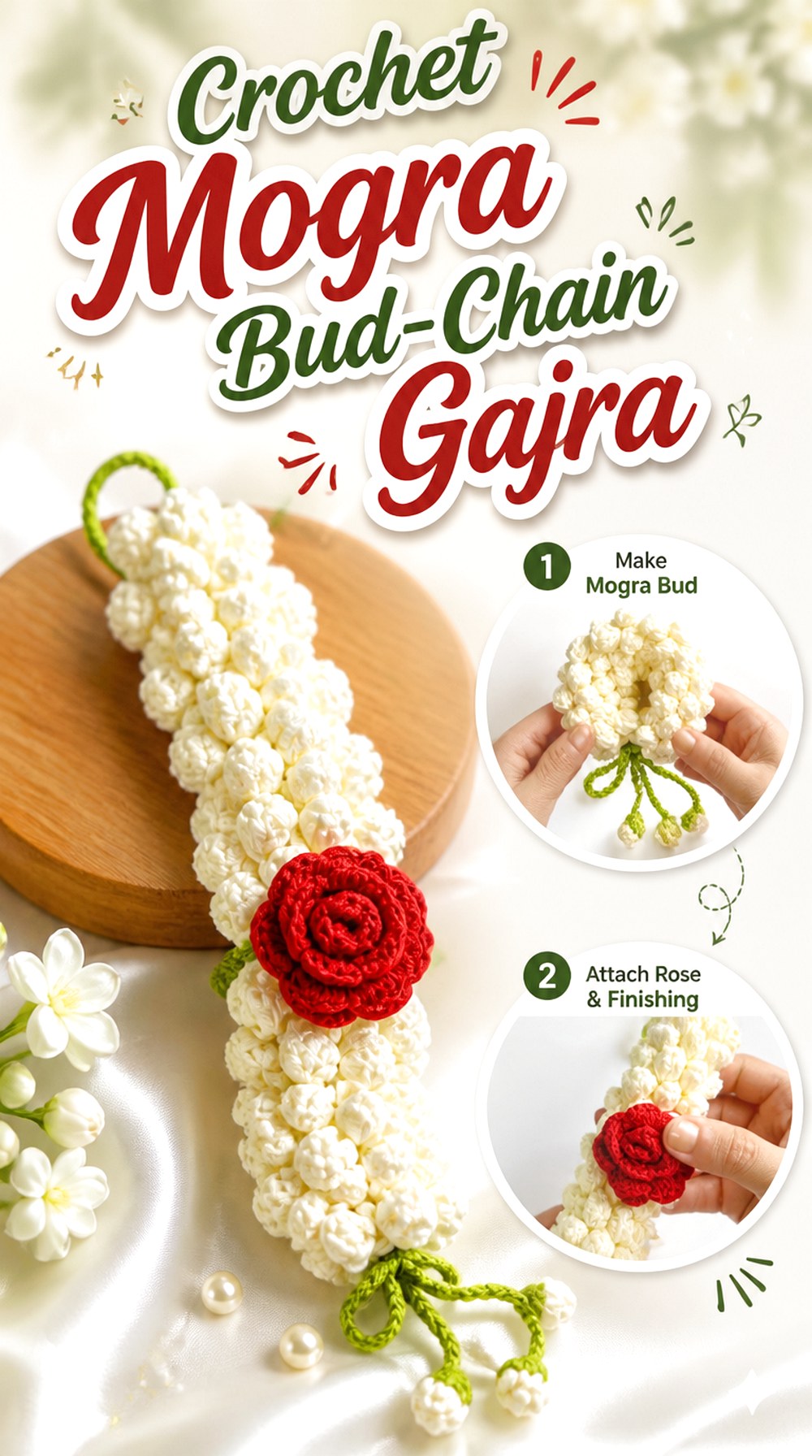
This gajra centers on the recognizable white-and-green look associated with jasmine or mogra hair garlands. The supporting tutorial combines the floral section with chain-and-bud details, giving the finished accessory more texture than a simple row of flat flowers. It is a useful direction for someone who wants a traditional-looking bun decoration without relying on large statement blooms.
Because the flowers and buds are visually small, spacing becomes important. A very open arrangement may lose the full garland effect, while crowding every element can make the crochet look heavier than intended. Plan the overall curve around the hairstyle before deciding whether to extend the floral section.
The Bud Detail Creates a Denser Jasmine Effect
Small bud-like elements fill visual gaps differently from broad petals. That makes this style useful when you want the crochet to read as a continuous floral garland rather than a row of individually obvious flowers. If adapting the colors, keep enough contrast between flowers, leaves, and connecting yarn that the bud texture remains visible instead of blending into one solid strip.
Check the Curve Around the Bun Before Finishing
A bun gajra works best when the accessory can follow the hairstyle without twisting its flower faces inward. Before final finishing, gently position the completed length around the approximate bun size. If motifs rotate unpredictably, correct their orientation or attachment before adding more decoration. This checkpoint matters more than making the piece longer simply because additional flowers are available.
2. Crochet Separated Jasmine Floret Gajra
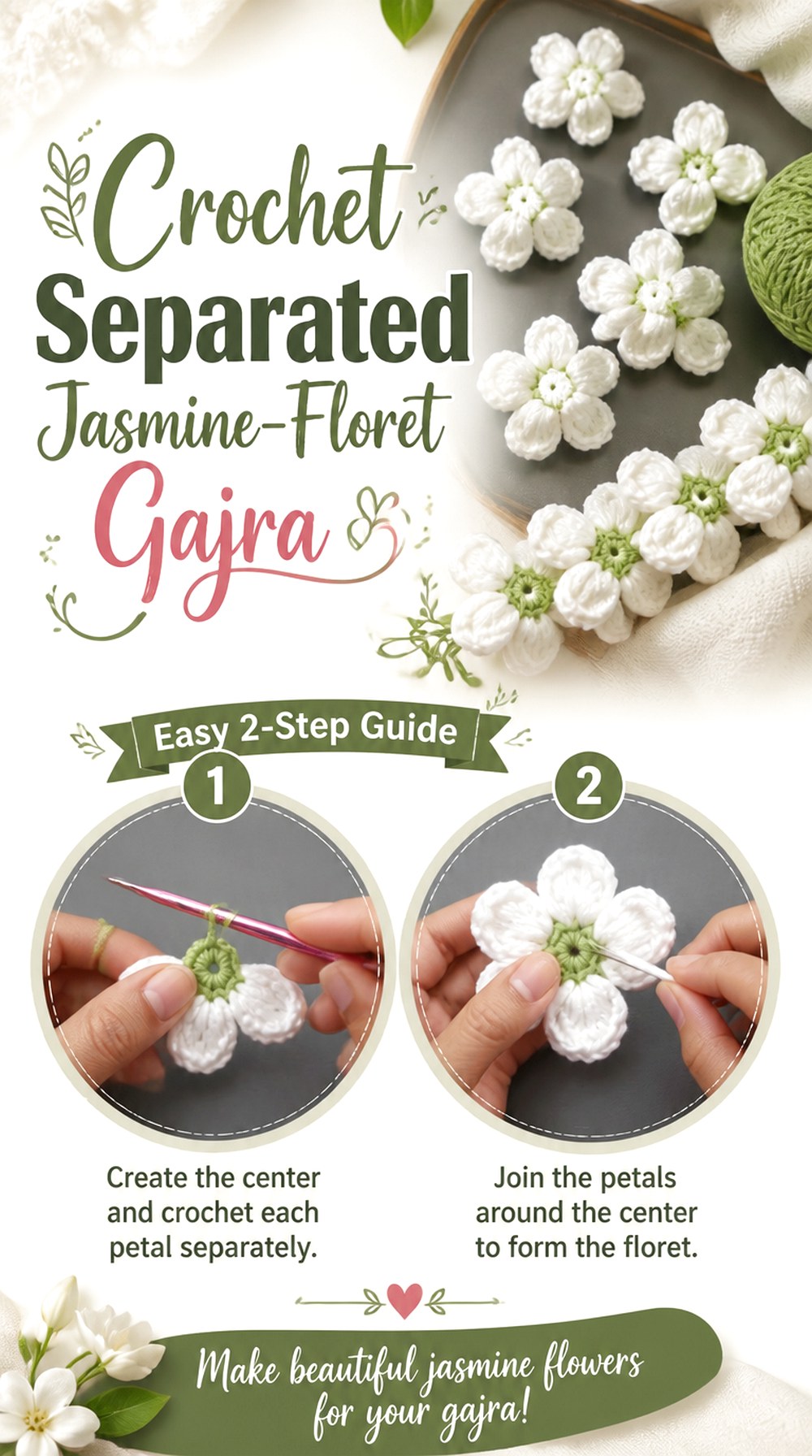
Instead of building the floral look as one uninterrupted crochet strip, this idea is based on individually crocheted jasmine flowers that are brought together into a garland. The source tutorial specifically shows separate flowers being strung into the finished gajra, which makes this construction worth considering when individual flower placement matters.
That modular approach gives you more control over spacing and orientation before the flowers become a complete accessory. It also makes inconsistencies easier to notice. If one flower is significantly larger, flatter, or more open than the others, it can interrupt the rhythm of the finished garland.
Separate Flowers Make Layout Changes Easier
Independent florets let you arrange the complete floral sequence before permanently assembling it. Lay out several flowers and compare their diameter, petal direction, and visual fullness. If some appear noticeably different, decide whether the variation feels organic or distracting. This is especially useful when working from several yarn leftovers that may not behave identically.
Flower Orientation Matters Once the Garland Curves
A flower that looks centered on a flat table may rotate when the gajra is bent around a bun. Before securing the final arrangement, test the curve and check where the most attractive side of each flower faces. Adjusting orientation at this stage can produce a cleaner finished look without adding any extra motifs or embellishments.
Original Tutorial and Creator Credit
Creator: Make It Yourself By Papari
3. Crochet Malligai Style Jasmine Gajra
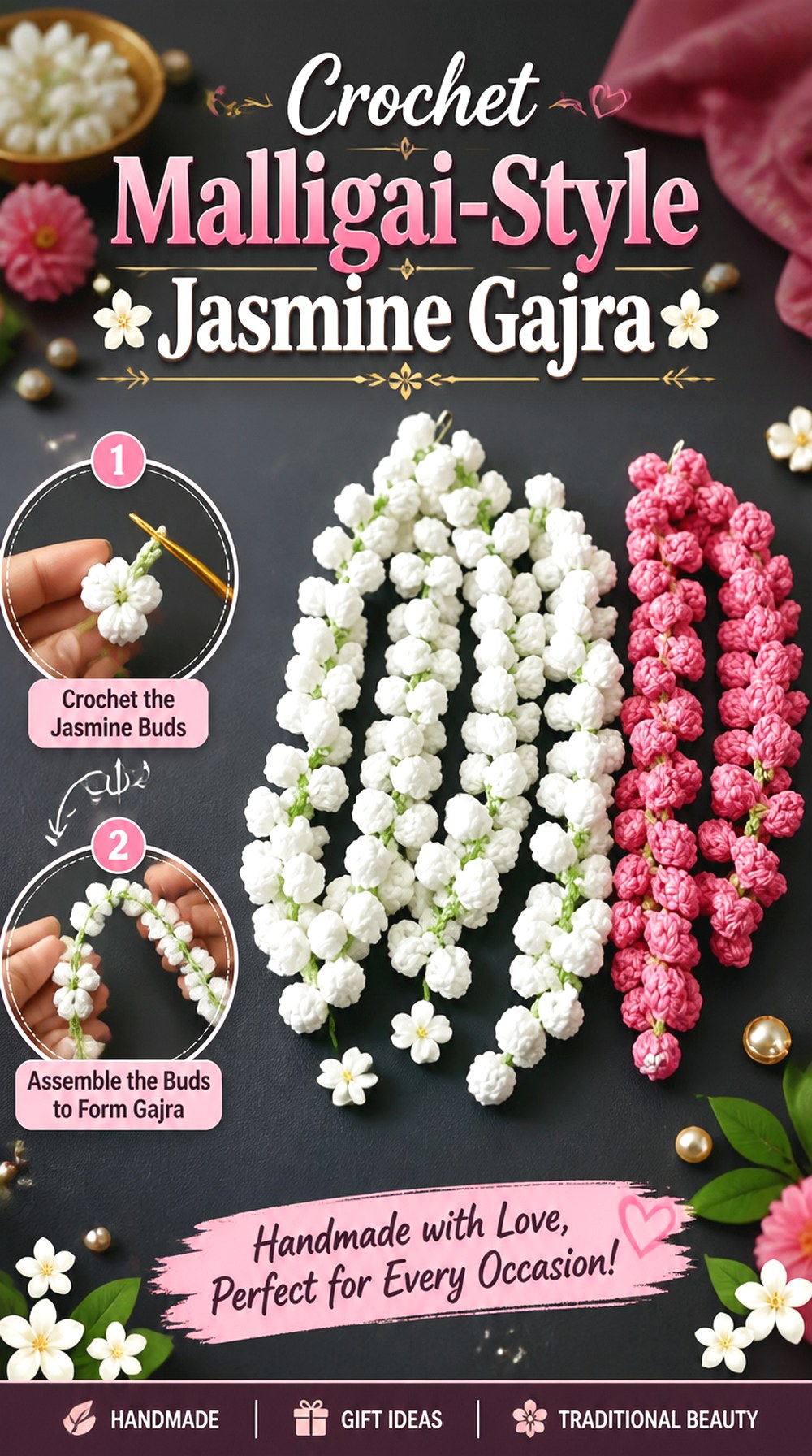
For a softer cluster of small white blooms, this jasmine flower gajra is another route. The tutorial presents small jasmine-inspired flowers intended for a traditional garland, creating a finished look that emphasizes repeated petite blooms rather than oversized petals.
This type of gajra works well when the floral texture should complement the hairstyle instead of dominating it. Repetition is the design feature, so consistency matters more than adding many different motif styles. If you plan to alter the yarn or hook from the tutorial, make a sample bloom first; even a modest increase in flower scale becomes noticeable when that motif is repeated many times.
Repeated Petite Flowers Need Consistent Scale
With a statement rose, a slight size difference may look intentional. In a closely repeated jasmine garland, inconsistent bloom size is easier to notice. Compare completed flowers before assembly and group unusually large or small ones separately. That gives you the option to place them deliberately rather than discovering the imbalance after the whole accessory is assembled.
Use Contrast Without Losing the Jasmine Look
White flowers with green accents create a familiar jasmine-inspired palette, but the structure can be adapted to other colors. If changing the scheme, decide whether you still want a jasmine reference or simply the compact flower shape. A single accent color can preserve the garland feel more clearly than using many unrelated shades across every repeated bloom.
Original Tutorial and Creator Credit
Creator: Vethavathi Nirmal
4. Crochet Flower Garland Gajra
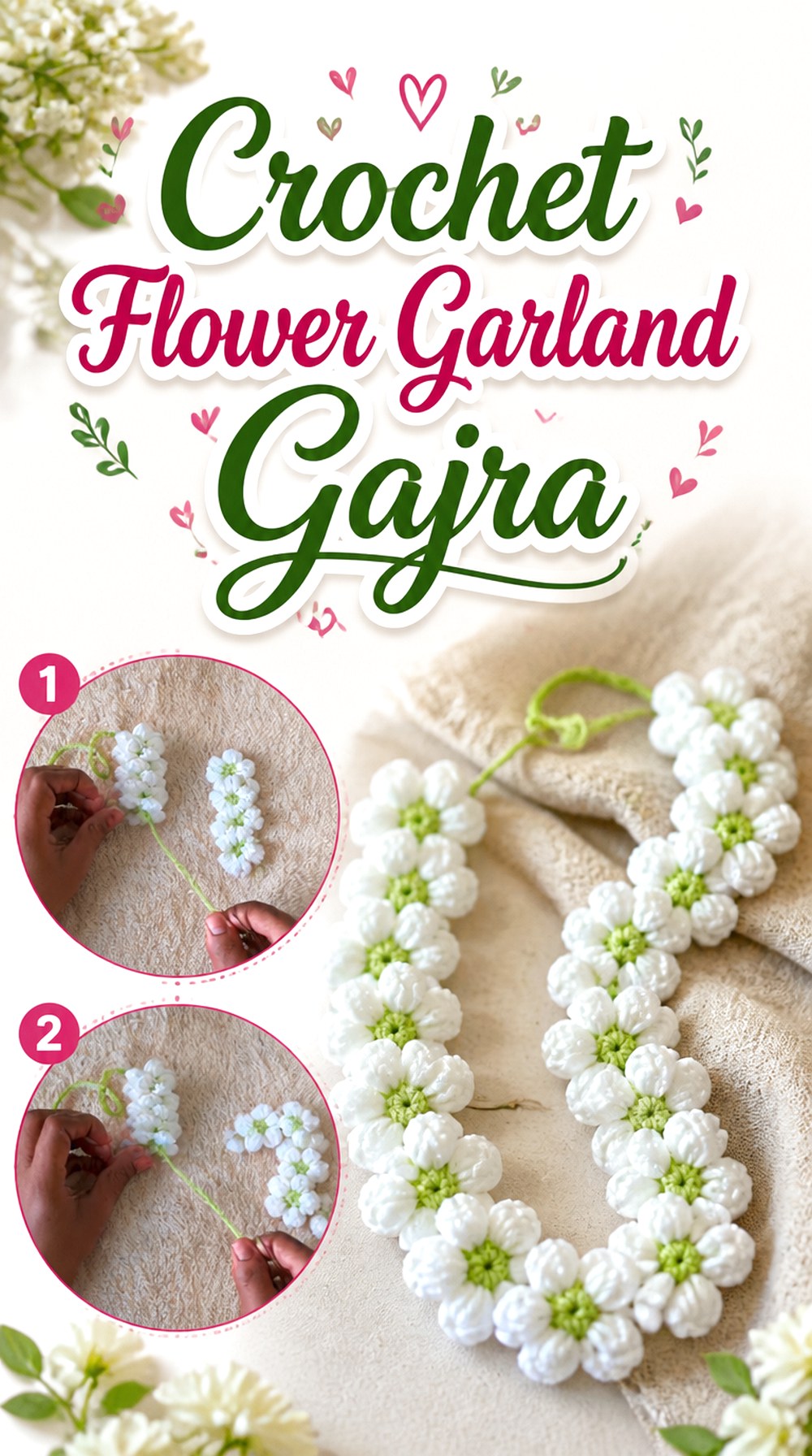
This option moves away from a strictly jasmine-specific identity and focuses on a broader crochet flower garland. The tutorial presents the piece as a gajra that can be used for hair, with flower and leaf elements forming the decorative length.
A general flower-garland format is helpful when you want more freedom with color than a white jasmine look naturally suggests. The key is maintaining a coherent rhythm. Multiple flower colors can work, but repeating a deliberate sequence usually looks more organized than introducing a new shade at every opportunity.
Build a Color Rhythm Before Joining Everything
If you want a multicolor version, place the finished flowers in their intended order before assembly. Look for accidental clusters where one shade dominates a section of the gajra. Alternating colors, mirroring a short sequence, or using one dominant shade with smaller accents can make the final accessory feel planned rather than random.
Leaves Can Separate Strong Flower Colors
Green or another foliage shade creates visual breathing room between saturated blooms. That is especially useful if you adapt this design to bright festive colors. Keep the leaf scale proportional to the flowers; foliage that becomes larger than the blossoms can shift attention away from the floral garland and make the piece visually heavier.
Original Tutorial and Creator Credit
Creator: Crochet with Meera
5. Crochet Juda Wrap Gajra
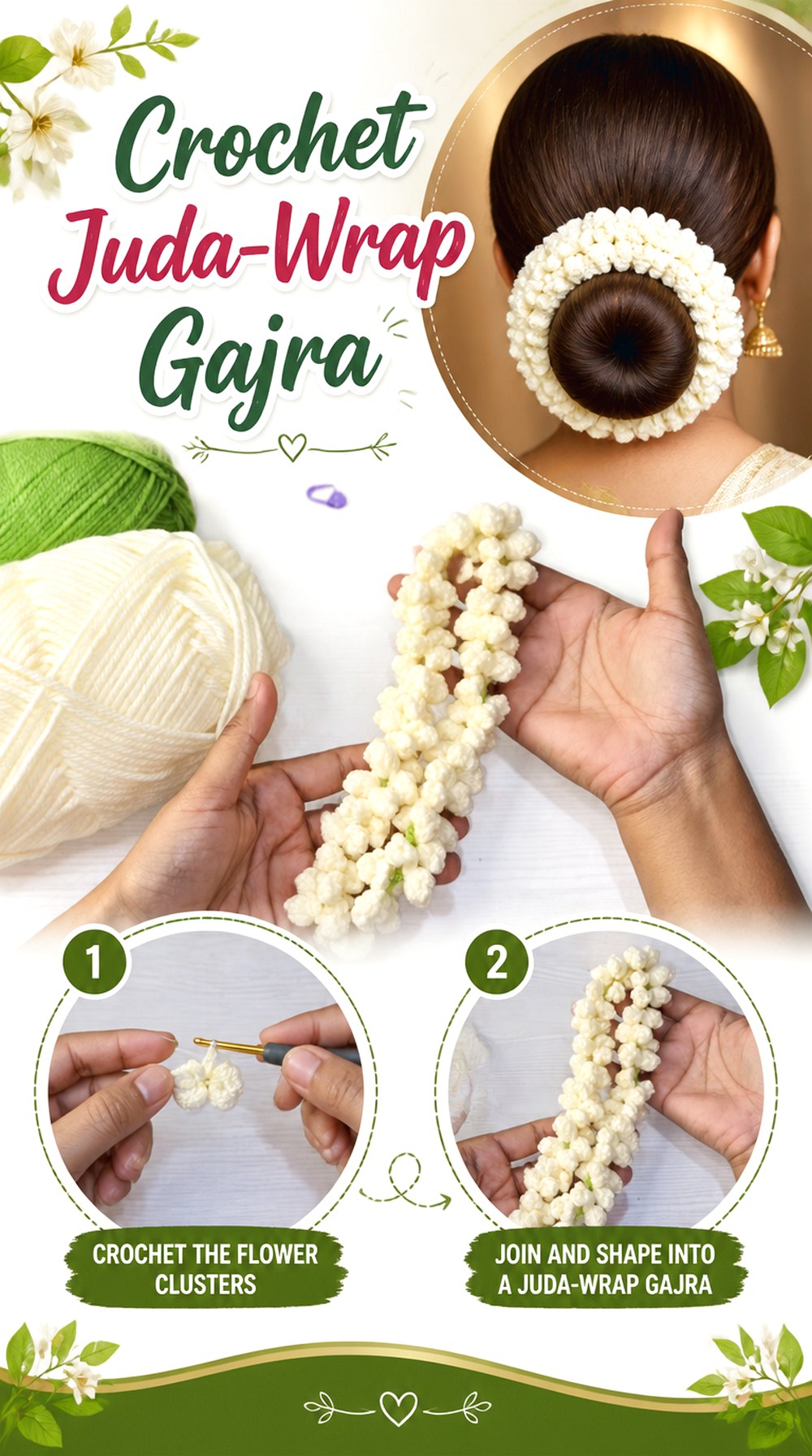
This design is specifically presented as a juda gajra, making bun placement central to the finished accessory. The tutorial allows for color customization and positions the crochet piece as a reusable hair decoration rather than a trailing braid accessory.
For this style, the most important comparison is not length alone but how the completed gajra sits around the bun. A small compact bun and a wide low bun may require very different placement even if the same accessory is used. Think about whether you want a complete circular frame, a partial crescent, or a floral section positioned to one side.
Decide Between a Full Wrap and a Floral Crescent
A complete wrap gives the bun an evenly framed outline, while partial placement can look lighter and leave more of the hairstyle visible. You do not necessarily need to alter the crochet construction to create that difference; placement can do much of the work. Test the finished piece around the intended hairstyle before deciding where it should be anchored.
Watch for Twisting at the Back of the Bun
Any long flexible floral piece can twist as it follows a curve. When trying on the gajra, look from several angles rather than checking only the front-facing flowers. If the backing or connecting strand becomes the most visible element at one point, reposition the attachment before securing the hairstyle.
Original Tutorial and Creator Credit
Creator: Mamuni Crochets
6. Crochet White and Green Gajra
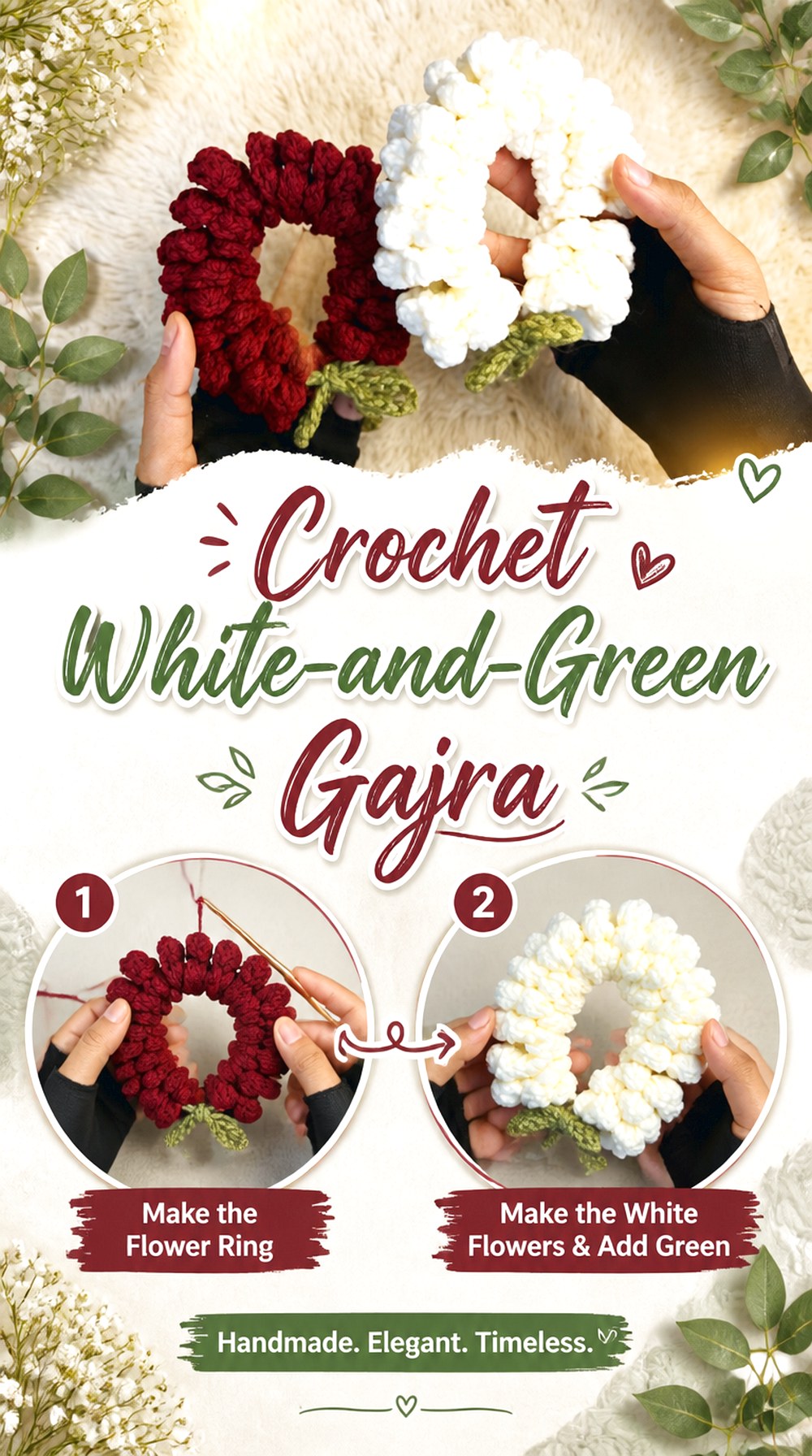
A clean white-and-green palette gives this gajra a simple floral identity without adding large roses or many competing colors. The tutorial uses white and green yarn and presents the finished gajra for hair as well as decorative wear.
This is a useful option if you prefer the silhouette of a handmade garland to be the main feature. With fewer colors competing for attention, stitch definition and even spacing become more visible. That makes neat finishing particularly important, especially along any connecting sections that remain exposed when the gajra curves.
Simple Color Schemes Make Finishing More Visible
When only two colors are doing the visual work, irregular joins and loose ends have fewer places to hide. Check the back of the accessory as carefully as the flower faces, particularly if the gajra may be seen from the side. Secure finishing also helps prevent stray ends from catching in hair during placement or removal.
Keep Added Embellishments Subordinate
Pearls, beads, metallic yarn, or additional flowers could all change this look, but add them with restraint if you want to preserve the clean white-and-green effect. One repeated accent usually integrates more easily than several unrelated decorations. Also consider the additional weight before attaching beads along the entire length of a hair accessory.
Original Tutorial and Creator Credit
Creator: Crochet vista
7. Crochet Maroon Statement Gajra
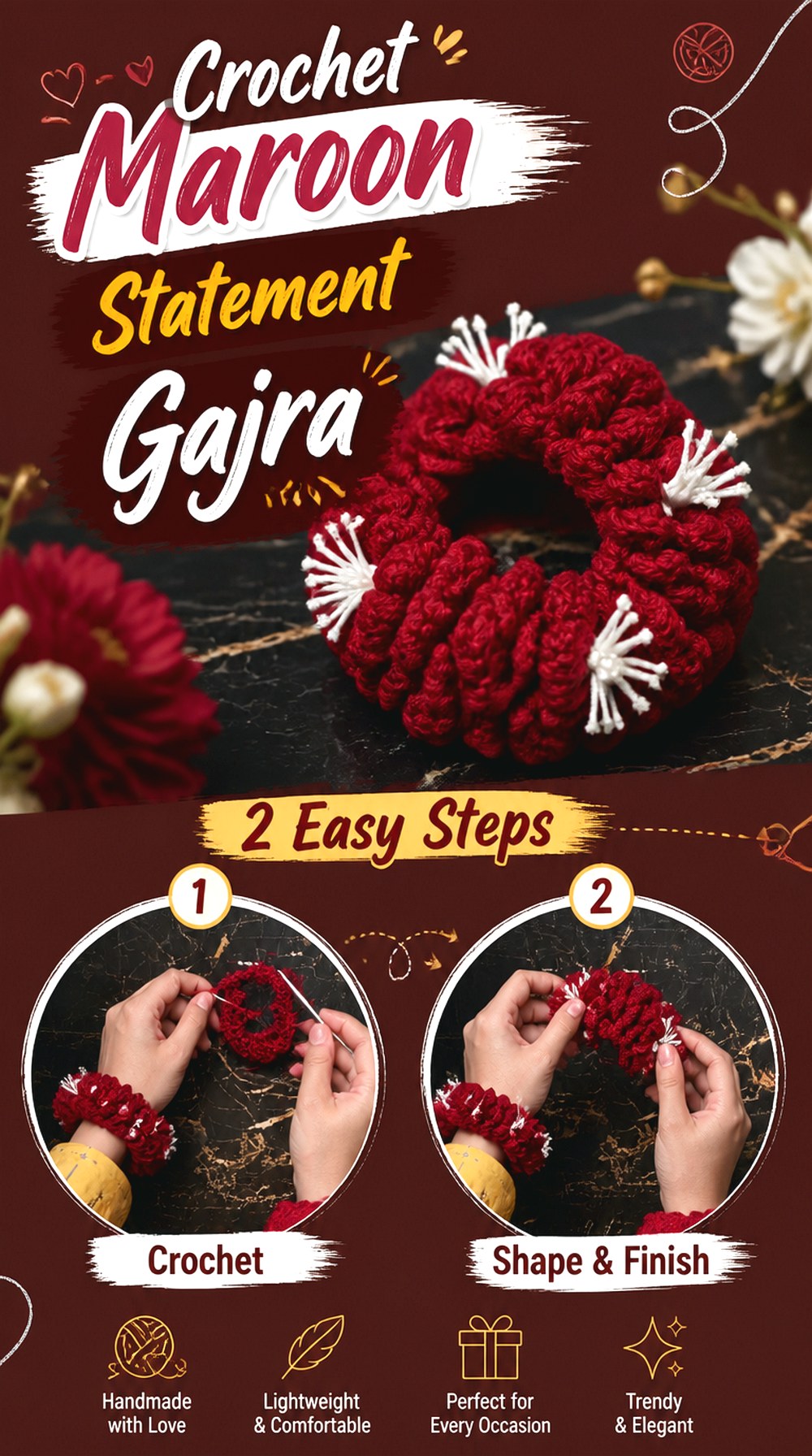
A deep maroon palette immediately changes the character of a crochet gajra. Rather than imitating the light appearance of fresh jasmine, this version leans into saturated color and makes the accessory more noticeable against dark hair. The tutorial is specifically presented as a maroon crochet gajra.
Because the color already carries strong visual weight, the design does not need extra ornament everywhere. This type of gajra can work particularly well when the goal is to coordinate with a specific outfit color, but compare yarn shades in natural light when possible; deep reds, wine tones, and maroons can look surprisingly different under warm indoor lighting.
Dark Flowers Need Enough Definition
Deep yarn colors can hide small stitch details more easily than pale shades. If the motif depends on layered petals or textured edges, choose a yarn with enough stitch clarity that the flower does not read as a single dark mass. A contrasting leaf or center can also help define the bloom without requiring a larger flower.
Coordinate With the Outfit Without Matching Everything
A maroon gajra can echo embroidery, a border, lipstick, jewelry stones, or one smaller color in an outfit. An exact head-to-toe color match is not necessary. Using the accessory as a repeated accent often gives it more separation from the clothing and keeps the handmade flowers visible in photographs.
Original Tutorial and Creator Credit
Creator: Crochet by nudrat
8. Crochet Rose Bun Gajra
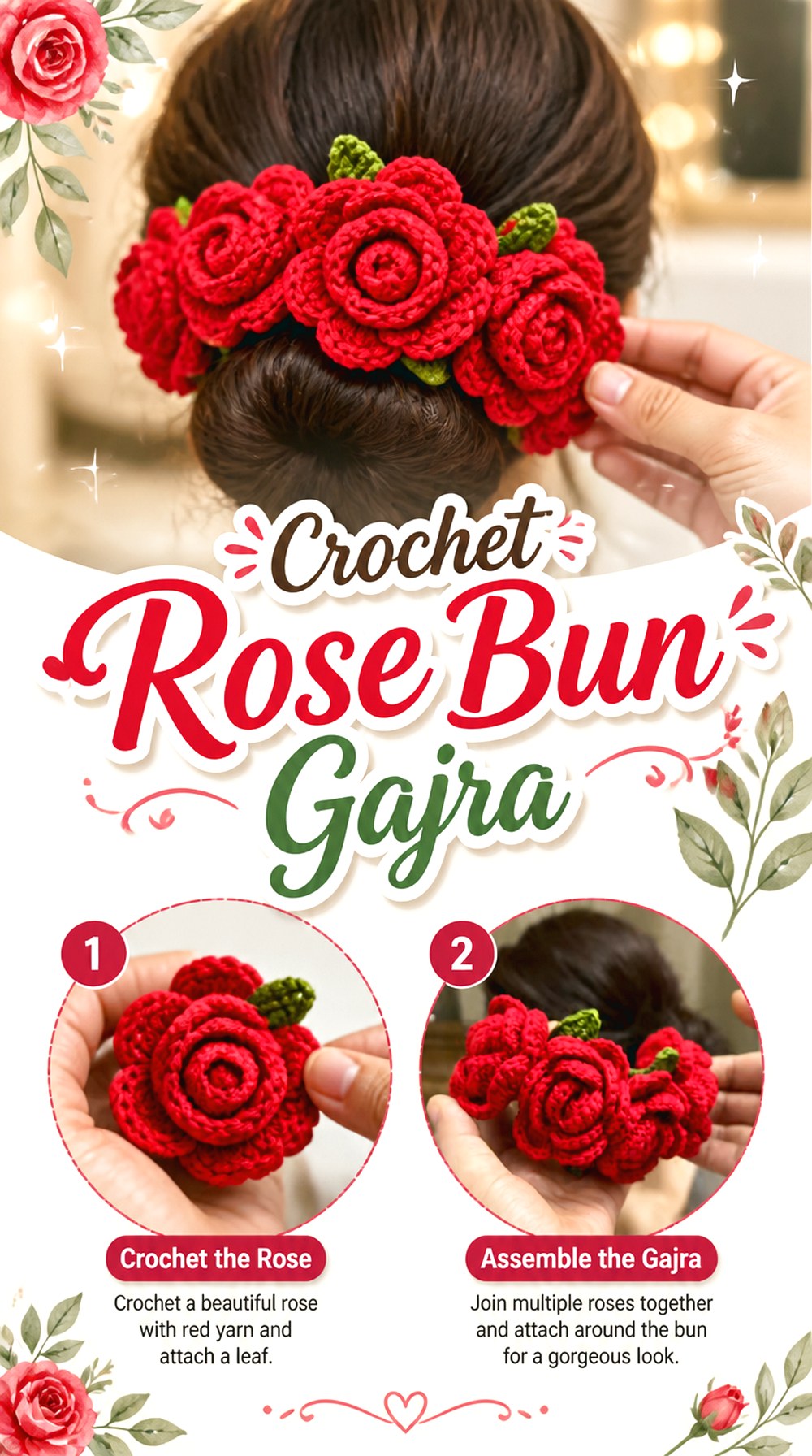
Roses change the scale of a gajra immediately. The tutorial for this project uses crochet roses assembled into a hair accessory intended for a bun, producing a more pronounced floral statement than the compact jasmine-inspired options above.
This style suits readers who want each individual flower to be noticeable. The trade-off is bulk: dimensional roses occupy more space, so a smaller number can create as much visual impact as many tiny florets. Before expanding the design, compare one completed rose with the bun and decide how much hair you still want visible.
Rose Scale Determines How Much Bun Remains Visible
Do not judge flower size only in your hand. Hold one completed rose next to the intended hairstyle. A rose that looks moderate on a table can appear much larger once several are grouped around a bun. If the flowers already create enough coverage, increasing their number may make the accessory feel crowded rather than fuller.
Leave Room Between Dimensional Blooms
Closely packing dimensional roses can flatten their edges and hide the layered petal shape that makes them attractive. Slight separation can help each bloom remain recognizable. If visible gaps feel too open, small leaves or a subtle connecting base may fill them more effectively than squeezing additional full-size roses into the same space.
Original Tutorial and Creator Credit
Creator: Knit Bucket By Pinki Mehta
9. Crochet Floral Mandala Clip Gajra
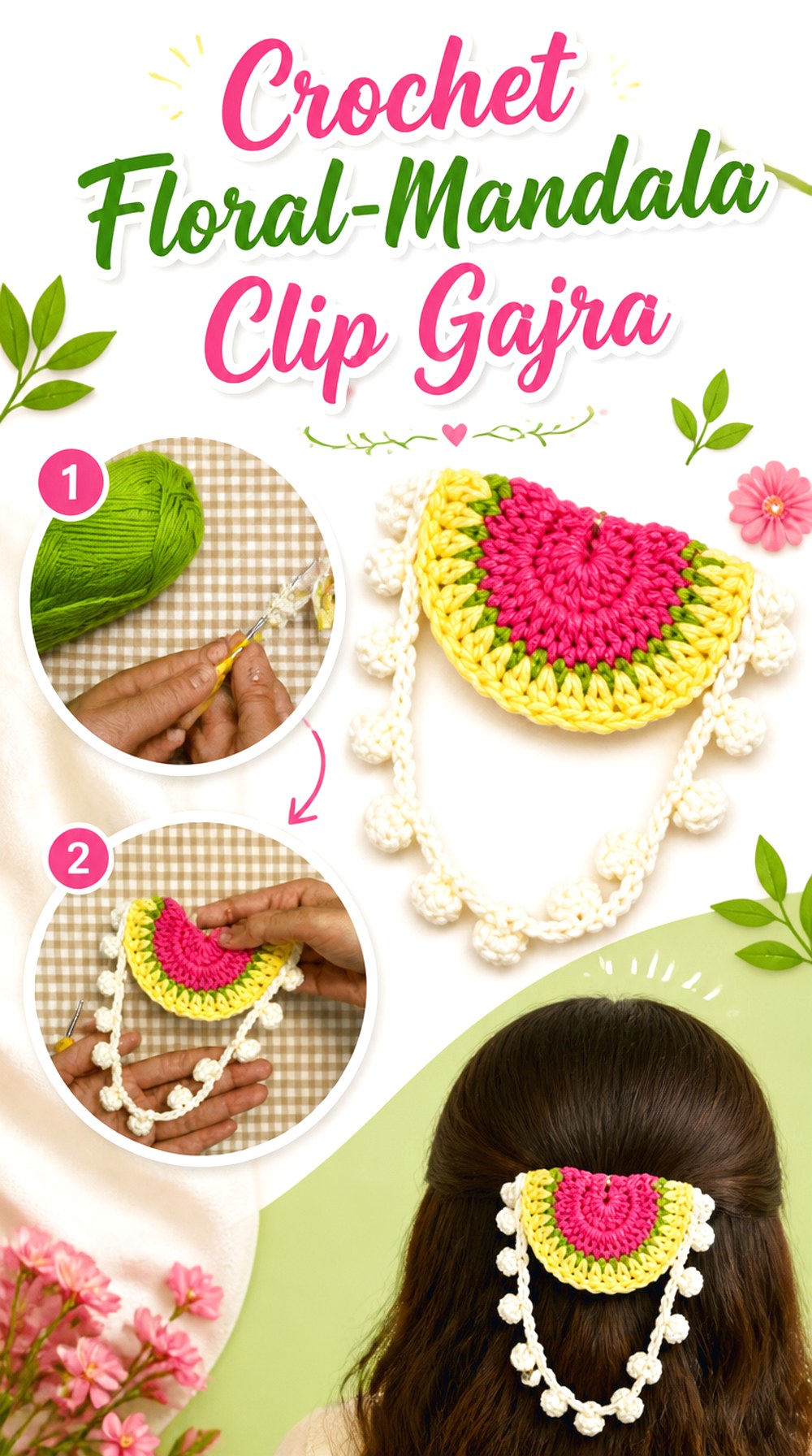
This project changes the attachment completely. Instead of relying on a simple garland alone, the tutorial builds a floral-mandala hair accessory with hanging floral elements and attaches the finished design to a hair clip.
That focal-center construction makes it a strong choice for half-up hair, a side placement, or a hairstyle where one decorative anchor is more practical than wrapping a full garland. The hanging portion still gives a gajra-like floral movement, but the clip concentrates the visual weight in one controlled area.
The Mandala Creates a Clear Focal Point
A circular or mandala-style center draws attention before the eye moves down the hanging flowers. Keep that hierarchy in mind when changing colors. If every hanging element is brighter or larger than the central motif, the accessory can lose its focal point. Repeating one or two central colors in the lower strands helps the design feel connected.
Check the Clip Against the Hair Section
A decorative clip needs enough hair to hold securely, but very thick sections can also be difficult for a small clip to manage. Test the undecorated clip or an equivalent size in the intended hairstyle first. This avoids completing a detailed crochet top section only to discover that the hardware does not suit the planned placement.
Hanging Elements Need Space to Move
The lower flowers are most effective when they can hang without becoming trapped beneath the bun or folded behind the central motif. Try the accessory with the intended hairstyle and turn the head gently to see how the strands fall. Shortening, repositioning, or separating crowded hangings can improve the silhouette without changing the flowers themselves.
Original Tutorial and Creator Credit
Creator: Crochet Chronicles
10. Crochet White Flower Braid Parandi
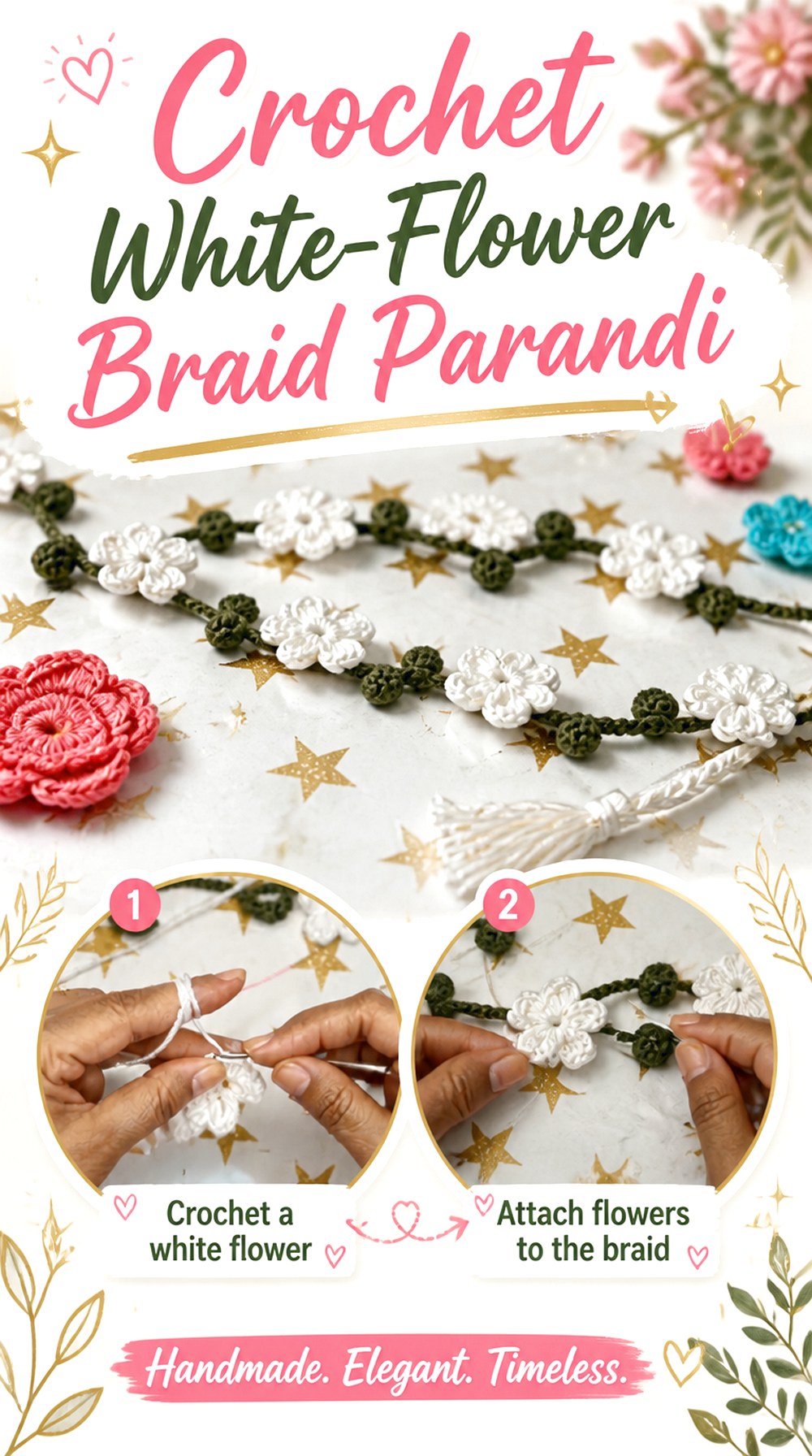
White flowers give this parandi a softer and more restrained appearance than heavily colored rose-and-tassel versions. The tutorial specifically uses white crochet flowers on a parandi base intended as a braid accessory.
Because the flower color is consistent, the eye notices spacing and the line of the base more clearly. This can be a good direction when the braid itself should remain an important part of the finished hairstyle. It is also easy to visualize with colorful clothing because the accessory does not introduce several competing shades.
Use White Flowers to Create Breathing Room
A monochrome floral strand can look lighter than a multicolor parandi even when the number of motifs is similar. Preserve that effect by leaving deliberate sections of the braid visible. If you want additional detail, a subtle foliage color or small accent is usually enough to separate the flowers without turning the accessory into a dense multicolor piece.
The Base Should Disappear Into the Hairstyle
A darker parandi base can visually merge with dark hair and allow white flowers to stand forward. If adapting the design for significantly lighter hair, consider how visible the underlying strand will become. The goal does not have to be perfect camouflage, but the base should look intentional rather than like an unrelated line between the flowers.
Original Tutorial and Creator Credit
Creator: Radhe Radhe Divine Threads
Gajra or Parandi: Which Shape Fits the Hairstyle?
Choose a gajra when you want the flowers concentrated around a bun, near a gathered section, or at one focal point. The jasmine and mogra versions create the lightest repeated-flower look, while rose and maroon gajras make a stronger statement. The floral-mandala clip is useful when wrapping a complete garland is not the desired effect.
Choose a parandi when the braid itself should become part of the decoration. The rose-and-tassel version emphasizes movement at the lower end, the customizable design gives more control over length, and the white-flower version keeps the braid visually prominent. In either category, select the attachment and overall scale first; color can be adjusted much more easily than an accessory that is the wrong shape for the hairstyle.
Conclusion
The biggest difference between these 13 crochet gajra and parandi ideas is not flower color but how each accessory interacts with the hair. Jasmine-style gajras work well when you want repeated small blooms around a bun, while rose gajras create stronger individual focal flowers. Clip-based gajras concentrate decoration in one area, and parandis extend the design down the braid with choices ranging from restrained white flowers to tassels and longer floral strands.
Choose the construction that suits the hairstyle before adjusting colors or adding embellishment. Once you have selected the right form, use the original tutorials for exact crochet construction, assembly, and creator-specific details.
Frequently Asked Questions
What is the practical difference between a crochet gajra and a crochet parandi?
A gajra generally concentrates its flowers around a bun or another gathered part of the hairstyle, so flexibility and curved placement are important. A parandi extends downward with a braid and therefore needs more attention to length, attachment, and how the decorative strands move. Some modern crochet designs blur the categories, especially clip gajras with hanging flowers, so compare the finished shape rather than relying only on the name.
Which crochet flower shape works best for a bun gajra?
Small jasmine- or mogra-inspired flowers are useful when you want a dense garland effect without a few individual blooms dominating the bun. Roses create a larger, more dimensional statement and need more room between motifs. Neither is universally better. Compare one finished flower with the intended bun before repeating it so you can judge coverage and scale realistically.
How can I keep a crochet parandi from looking too bulky?
Control three things: yarn thickness, flower scale, and motif spacing. A long parandi made with large dimensional flowers can accumulate visual and physical bulk quickly. Leaving sections of the braid visible often makes individual flowers easier to see. If you change the yarn recommended by a tutorial, create a sample flower first because thicker yarn can enlarge every repeated element.
Can I use flowers from one tutorial with a gajra or parandi construction from another?
Potentially, but check compatibility before committing. Compare the finished size and weight of the substitute flower with the original motif and consider how it will attach to the supporting strand. A larger rose cannot always replace a tiny jasmine flower one-for-one without changing spacing and balance. Make a short sample section first rather than adapting the entire accessory at once.
How should I choose the length of a crochet parandi?
Use the intended hairstyle as the reference. Decide whether you want the accessory to stop above the braid end, finish near it, or extend below it. Measure visually against the actual braid before completing all the decorative strands. Hair length alone is not the only factor; braid thickness, tassels, flower size, and the position of the attachment can all change how long the finished parandi appears.
What should I check before adding beads, pearls, shells, or extra tassels?
Consider weight and attachment first. Extra embellishments may alter how a gajra sits around a bun or how strongly a parandi pulls from its anchor point. Secure small additions carefully and make sure they do not catch easily in the hair. If the accessory will be used for a child, also consider whether detachable small parts are appropriate for the intended use and supervision.
How should a crochet gajra or parandi be stored?
Avoid crushing dimensional flowers beneath heavier items. Arrange the accessory so long parandi strands are not tightly knotted or folded, and reshape flattened petals gently before the next use. For cleaning, follow the care requirements of the actual yarn and any added hardware or embellishments rather than assuming every crochet hair accessory can be washed in the same way.