19 Crochet Gingerbread Cottage Mug Rug Ideas for Cozy Winter Mornings
A crochet gingerbread cottage mug rug can be much more than a brown rectangle with a house stitched onto it. You can build the cottage into the outer shape, create it with colorwork, add a flat appliqué to a practical mug-rug base, or use small seasonal details such as snowflakes, candy canes, trees, wreaths, and gingerbread characters to create a complete winter scene.
The tutorials supporting these ideas cover several different routes rather than nineteen identical gingerbread cottage mug rugs. Some demonstrate gingerbread houses directly, while others teach useful mug-rug constructions, flat holiday motifs, colorwork, or decorative elements that can be adapted into a cottage design. That distinction matters: measure your finished components before combining them, and use each creator’s original tutorial for the exact crochet instructions.
Quick List
- Crochet Full-Silhouette Gingerbread Cottage Mug Rug
- Crochet Flat-Façade Gingerbread Cottage Mug Rug
- Crochet Double-Panel Gingerbread Cottage Mug Rug
- Crochet Candy-Roof Gingerbread Cottage Mug Rug
- Crochet Gingerbread Family Cottage Mug Rug
- Crochet Mini Gingerbread Welcome Cottage Mug Rug
- Crochet Icing-Trim Gingerbread Cottage Mug Rug
- Crochet Candy Cane Doorway Cottage Mug Rug
- Crochet Christmas Tree Yard Gingerbread Cottage Mug Rug
- Crochet Snowman Garden Gingerbread Cottage Mug Rug
- Crochet Fringed Gingerbread Cottage Mug Rug
- Crochet Seed-Stitch Gingerbread Cottage Mug Rug
- Crochet Rustic Tassel Gingerbread Cottage Mug Rug
- Crochet Starry Gingerbread Cottage Mug Rug
- Crochet Snowflake-Roof Gingerbread Cottage Mug Rug
- Crochet Snowflake-Border Gingerbread Cottage Mug Rug
- Crochet Mosaic Gingerbread Cottage Mug Rug
- Crochet Wreath-Door Gingerbread Cottage Mug Rug
- Crochet Bobble-Trim Gingerbread Cottage Mug Rug
1. Crochet Full-Silhouette Gingerbread Cottage Mug Rug
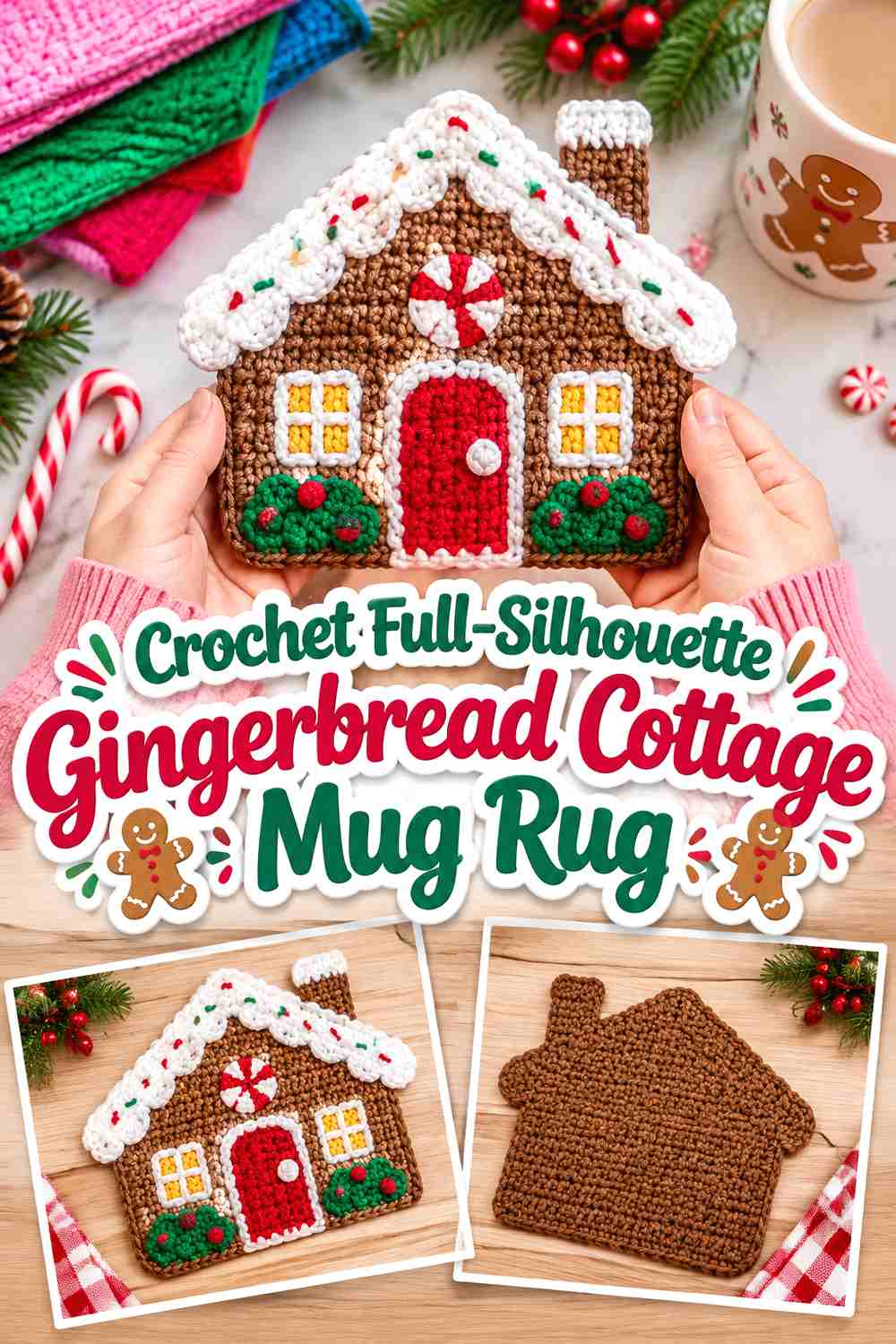
Instead of placing a gingerbread house on a rectangle, let the roofline and walls define the entire mug rug. Crafters Autonomous demonstrates a customizable three-dimensional gingerbread-house construction; for this adaptation, the useful idea is its recognizable wall-and-gable geometry rather than turning the mug rug into a stuffed house.
A House-Shaped Edge Makes the Cottage the Main Feature
A silhouette design works especially well when you want the project to read as a gingerbread cottage even before adding windows or icing. Keep the lower wall area broad enough for the mug while reserving the pointed roof for visual interest.
The trade-off is finishing. A rectangle can be blocked by checking four corners, while a cottage silhouette has roof angles and transitions between walls and gables that need to remain balanced.
Keep Architectural Details Outside the Cup Zone
Doors, windows, gumdrops, and snowy roof trim can create the character of the cottage without covering every inch. Place the more dimensional details toward the upper house and leave a calmer section of fabric for the cup.
Before adding anything raised, place the mug on the unfinished piece. That simple test makes it easier to see where decoration could interfere with stability.
Creator Credit: Crafters Autonomous
2. Crochet Flat-Façade Gingerbread Cottage Mug Rug
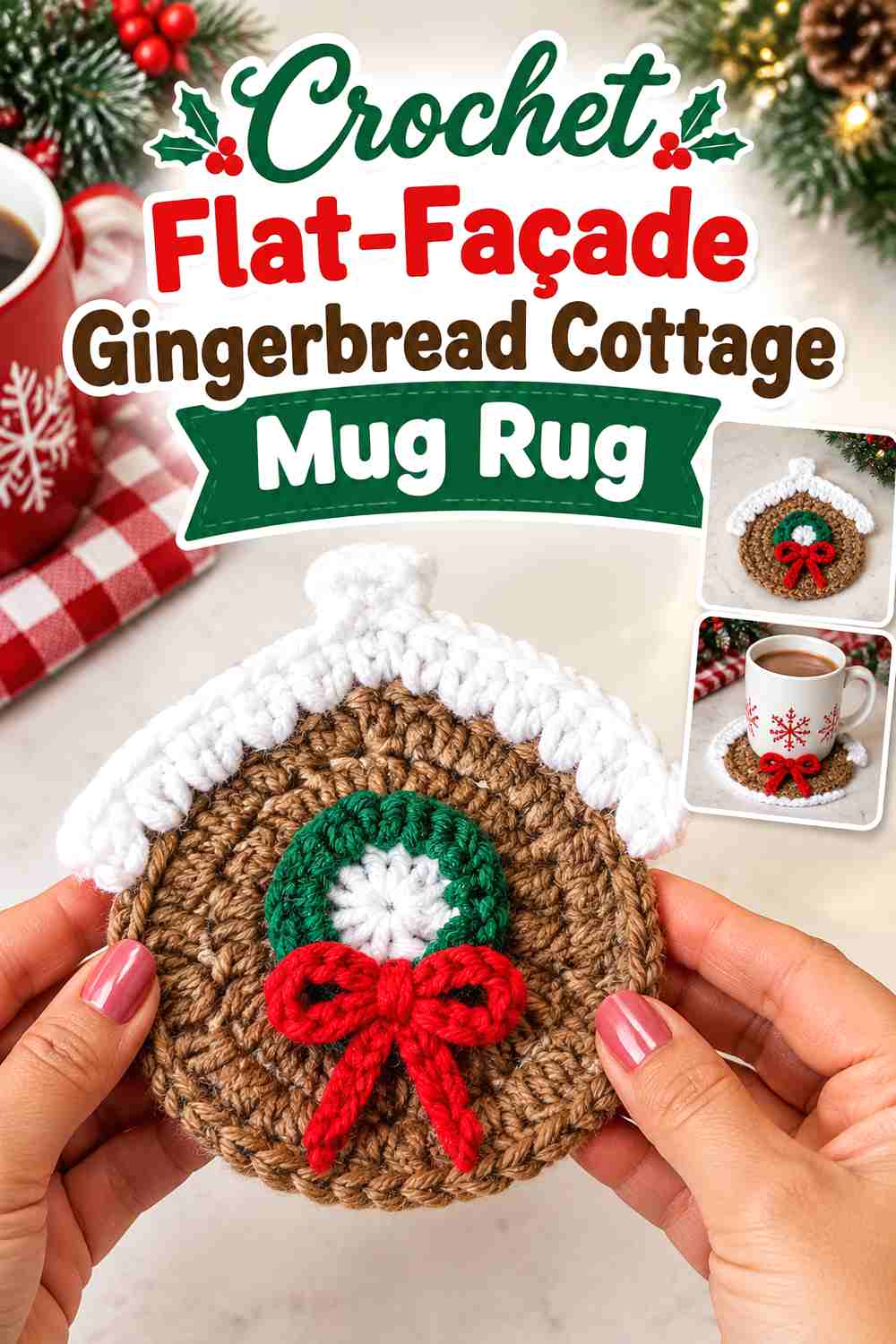
This version treats the cottage like a flat holiday illustration. Crochet Mili’s source tutorial creates a gingerbread house ornament with recognizable windows, roof, and candy-style decoration, providing a useful visual route for planning a flat cottage focal point.
A Flat Front View Gives You More Placement Control
Working with a front-facing cottage makes it easier to decide where the mug belongs. The house can occupy one side while the remaining area stays intentionally plain, rather than forcing the cup to cover the main motif.
This is also a good route when you enjoy decorative finishing but do not want the entire outside edge of the mug rug to follow the roofline.
Simplify the Candy Details When Function Matters
An ornament can carry decoration almost everywhere because nothing needs to stand on it. A mug rug has a different job. Translate raised candy pieces into flatter color changes, surface details, or embroidery when they would otherwise sit beneath the cup.
The result can still look richly decorated without sacrificing the useful flat section that distinguishes a mug rug from purely seasonal wall decor.
Creator Credit: Crochet Mili
3. Crochet Double-Panel Gingerbread Cottage Mug Rug
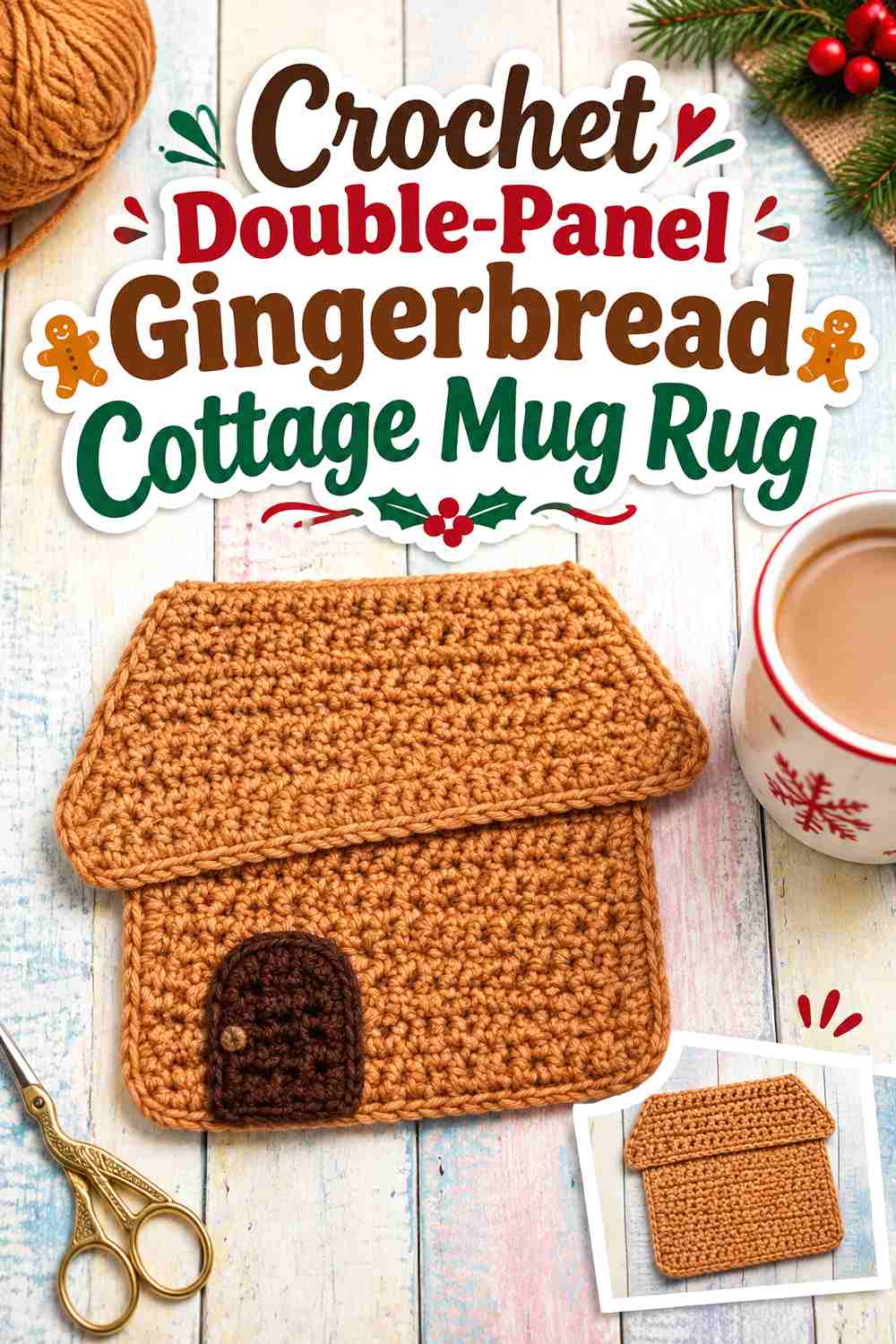
The Crochet Circle builds its gingerbread house ornament from separate house and roof components and covers additional decoration in a second tutorial. That component-based approach suggests a useful mug-rug variation: two flat layers joined around the outside for a more substantial cottage silhouette.
Two Layers Can Give the Outline More Definition
A double-panel construction can make a thin cottage feel more finished while hiding yarn ends between the layers. For a mug rug, however, the goal is a flat textile rather than a stuffed ornament.
Before joining the layers, smooth out every tail and check that appliqué attachments are not creating hard knots exactly where the mug will sit.
Match the Two House Panels Before Final Joining
Slight differences in tension matter more when two shaped pieces must line up. Block or gently shape the panels to comparable dimensions before committing to the outer join.
Pay particular attention to the roof slopes. If one panel is noticeably wider or taller, the finished edge can twist instead of lying neatly on the table.
Creator Credit: The Crochet Circle
4. Crochet Candy-Roof Gingerbread Cottage Mug Rug
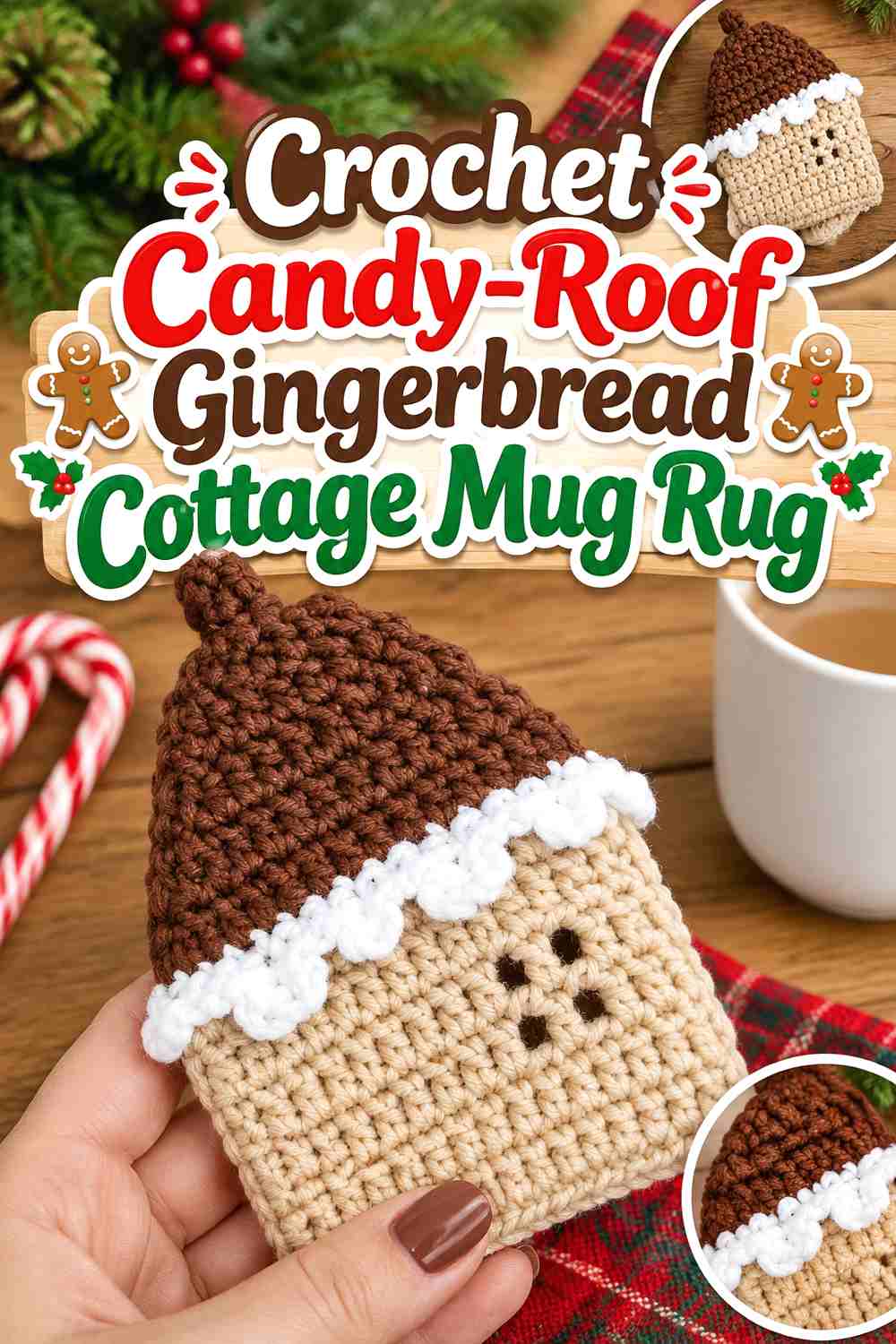
Kane Crochet’s gingerbread-house tutorial separates the visual house elements into a clear cottage, roof, and doorway composition. That makes it a useful reference for a mug rug where the roof becomes the decorative focal area and the walls remain comparatively quiet.
Concentrating Color on the Roof Prevents Visual Clutter
Instead of covering the entire mug rug with tiny details, use the roof as the “candy counter.” Contrasting dots, small flat motifs, or short icing-like lines can create a decorated-cookie effect while leaving the base more functional.
This layout works particularly well if the cup is intended to sit over the lower half of the cottage rather than its roof.
Test Each Embellishment Before Sewing It Down
Arrange the roof decorations loosely first. Crocheted candy motifs can look much larger when several are grouped together, and too many may hide the roofline that makes the design readable as a cottage.
Check the composition with the actual mug nearby, then attach only the details that still leave the design balanced.
Creator Credit: Kane Crochet
5. Crochet Gingerbread Family Cottage Mug Rug
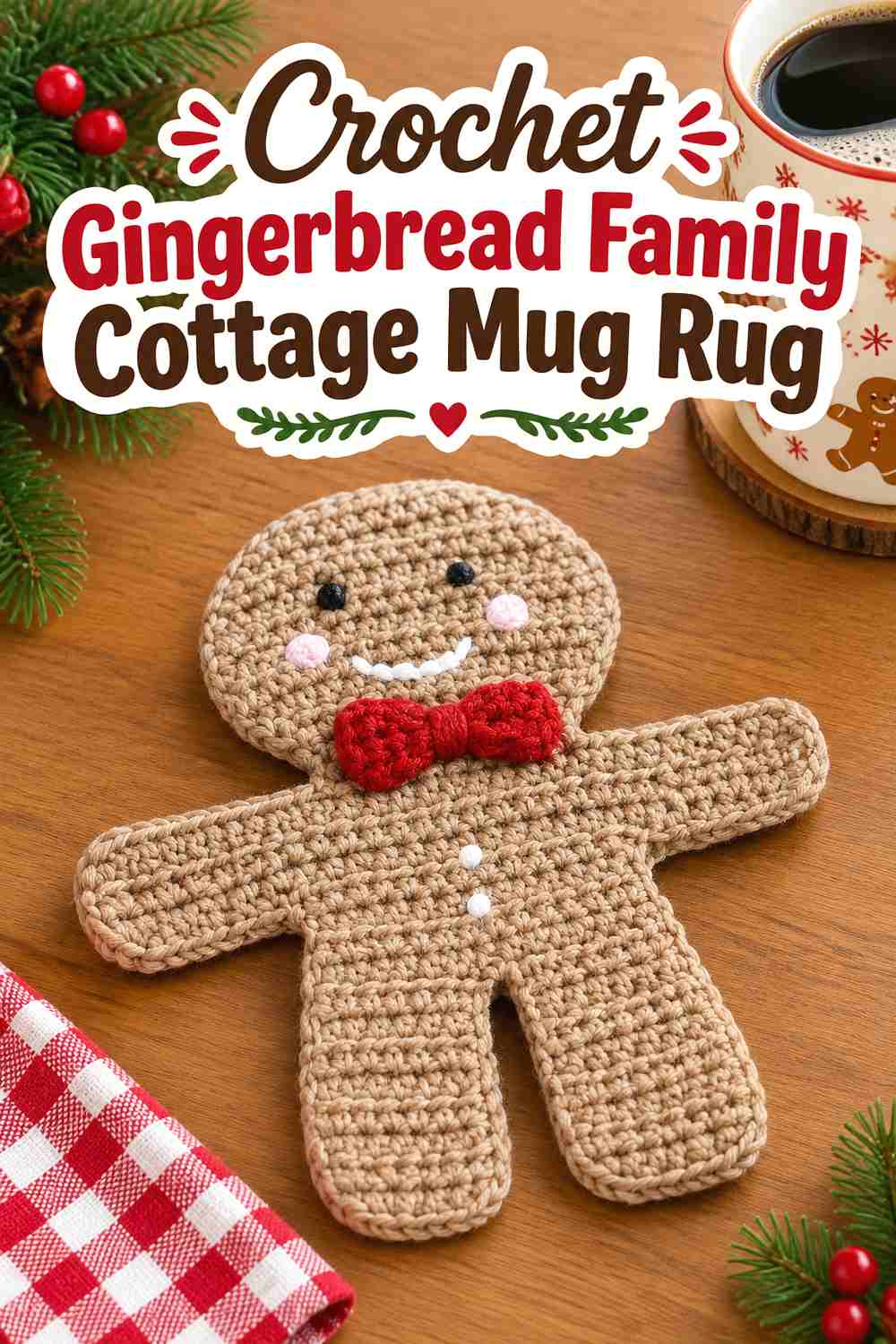
A cottage does not have to stand alone. Selina Veronique Crochet’s gingerbread-man tutorial provides a recognizable gingerbread character that can inspire a tiny resident beside a flat house motif rather than another piece of architecture.
A Character Changes the Design From House to Scene
Positioning a gingerbread figure beside the doorway creates a small narrative without requiring a complicated background. The cottage remains the largest form, while the character acts as a secondary focal point.
For a practical mug rug, a flat adaptation is more useful than attaching a fully stuffed figure. Keep the dimensional version for ornaments and use a flatter interpretation for tabletop placement.
Leave Breathing Room Between the Figure and Doorway
Small motifs often become visually crowded when stitched too closely together. Pin or loosely place the character before attaching it and check whether the doorway remains recognizable.
You can also shift the figure toward the outer edge, allowing the cup to occupy the opposite side without covering every decorative element at once.
Creator Credit: Selina Veronique Crochet
6. Crochet Mini Gingerbread Welcome Cottage Mug Rug
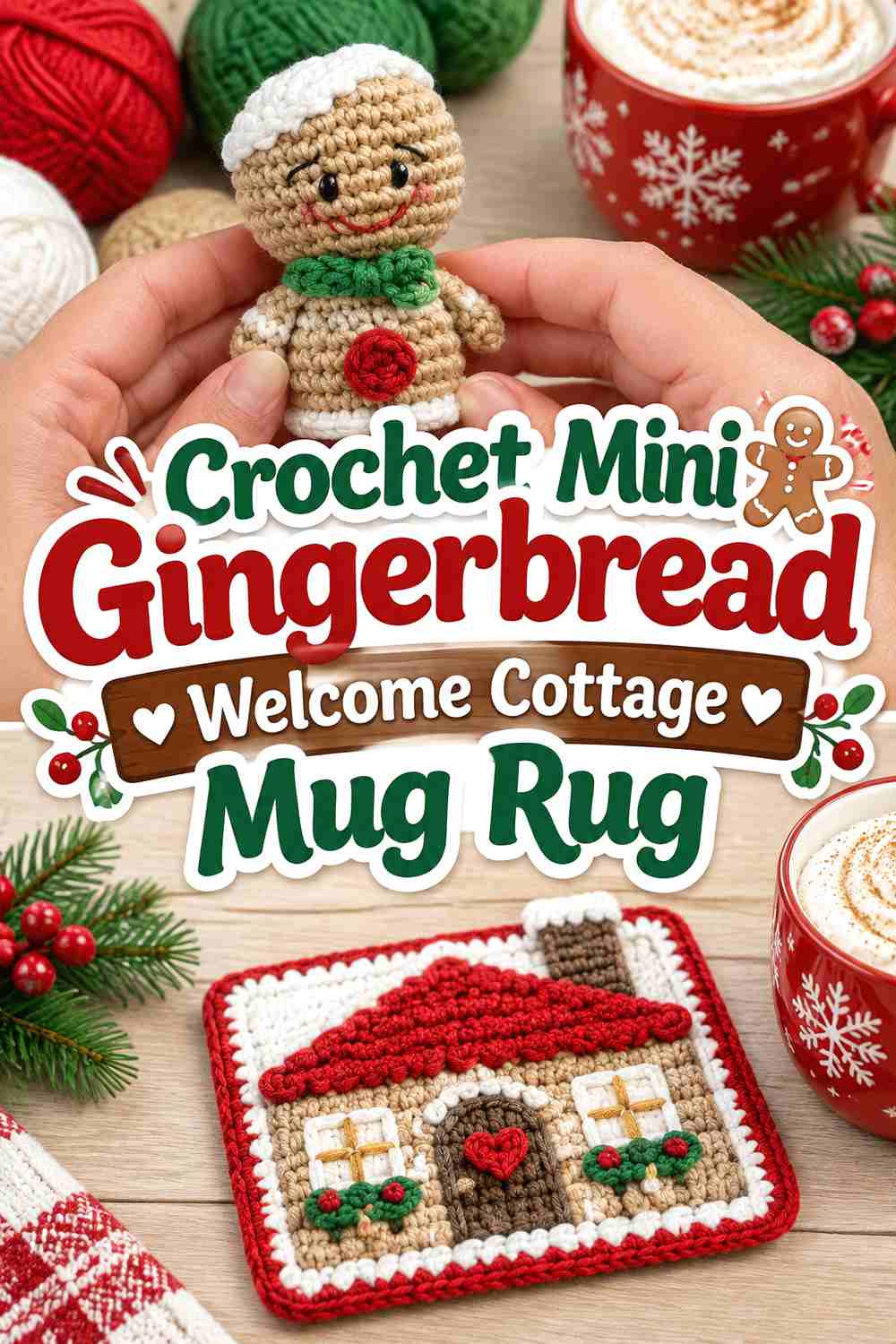
Little Crochet Farm’s tutorial focuses on a compact gingerbread character with a finished three-dimensional form. For a cottage mug rug, the useful design idea is scale: a much smaller gingerbread resident can sit at the door without competing with the house itself.
A Smaller Character Keeps the Cottage Dominant
When every motif is equally large, the finished piece can lose a clear focal point. Make the house the primary shape and treat the resident as a tiny welcoming detail.
If adapting a character from amigurumi, do not assume the original size will suit a flat mug rug. Yarn thickness and hook choice can change the scale considerably, so compare the finished character concept with your cottage dimensions first.
Use Facial Detail Sparingly at Mug-Rug Scale
Features that work beautifully on a three-dimensional figure may become visually busy when reduced. A simple face, icing line, or bow may communicate “gingerbread” more clearly than multiple tiny attachments.
Fewer pieces also make laundering and flattening the mug rug less complicated.
Creator Credit: Little Crochet Farm
7. Crochet Icing-Trim Gingerbread Cottage Mug Rug
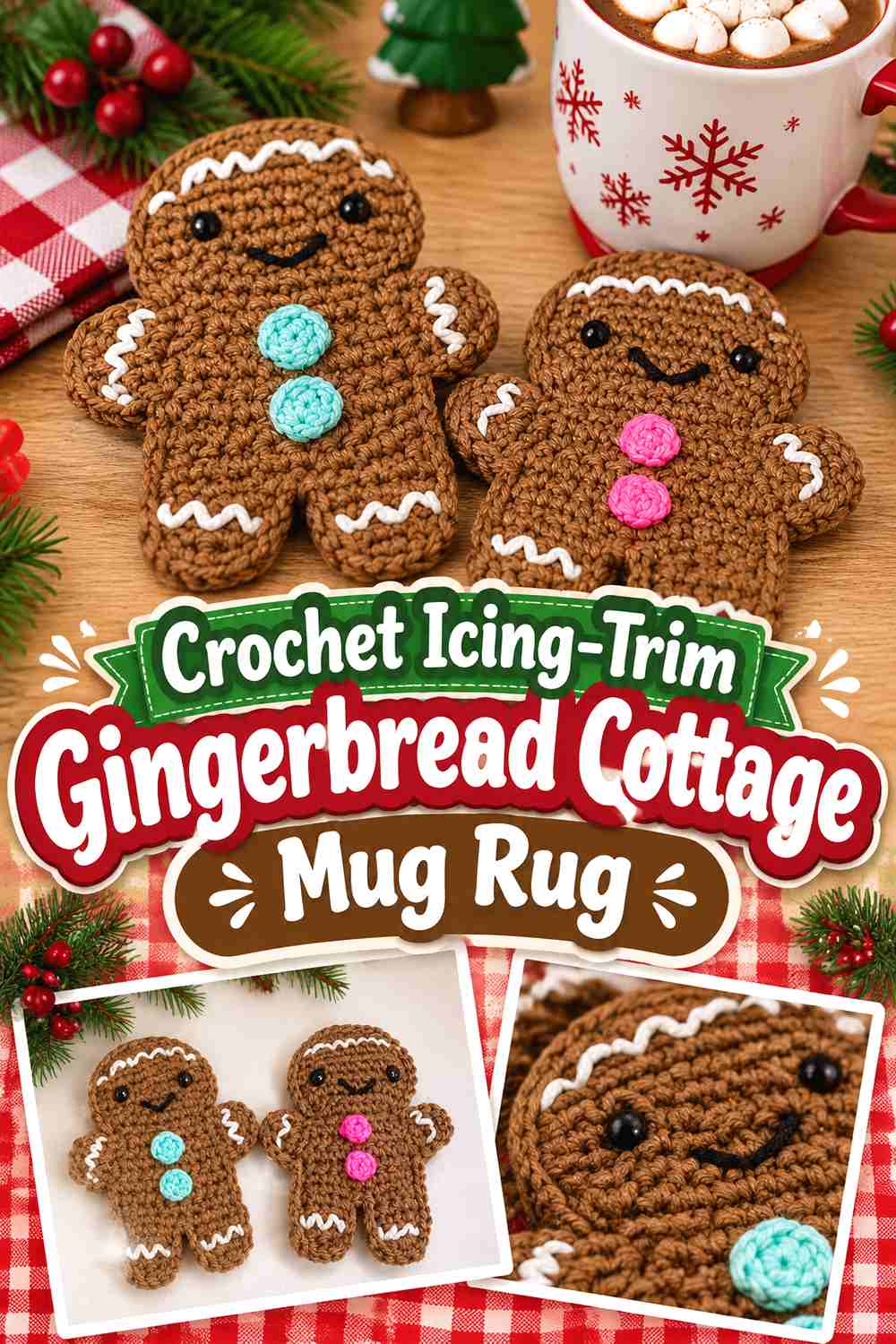
Heather Corinne Crochets demonstrates a flat-panel gingerbread character with frosting-style details before the pieces are joined and stuffed. That flat decorated-panel stage is particularly useful inspiration for a cottage mug rug because the icing effect can be borrowed without retaining the stuffed construction.
Icing Lines Can Define Shape Without Extra Appliqués
White decorative lines can outline the roof, window frames, or eaves while adding very little bulk. This is useful when you want a recognizable gingerbread-cookie look but need the surface to remain relatively level.
Keep the white detailing deliberate. Too many intersecting lines can make doors and windows harder to distinguish.
Finish the Flat Decoration Before Adding a Backing
If you plan to line or double the mug rug, complete decorative stitching first so the reverse side can later be hidden. This is especially useful when surface details create several visible yarn tails.
Before closing the layers, inspect the front from a normal viewing distance. Small placement differences that seem minor while stitching can become obvious once the complete cottage is visible.
Creator Credit: Heather Corinne Crochets
8. Crochet Candy Cane Doorway Cottage Mug Rug
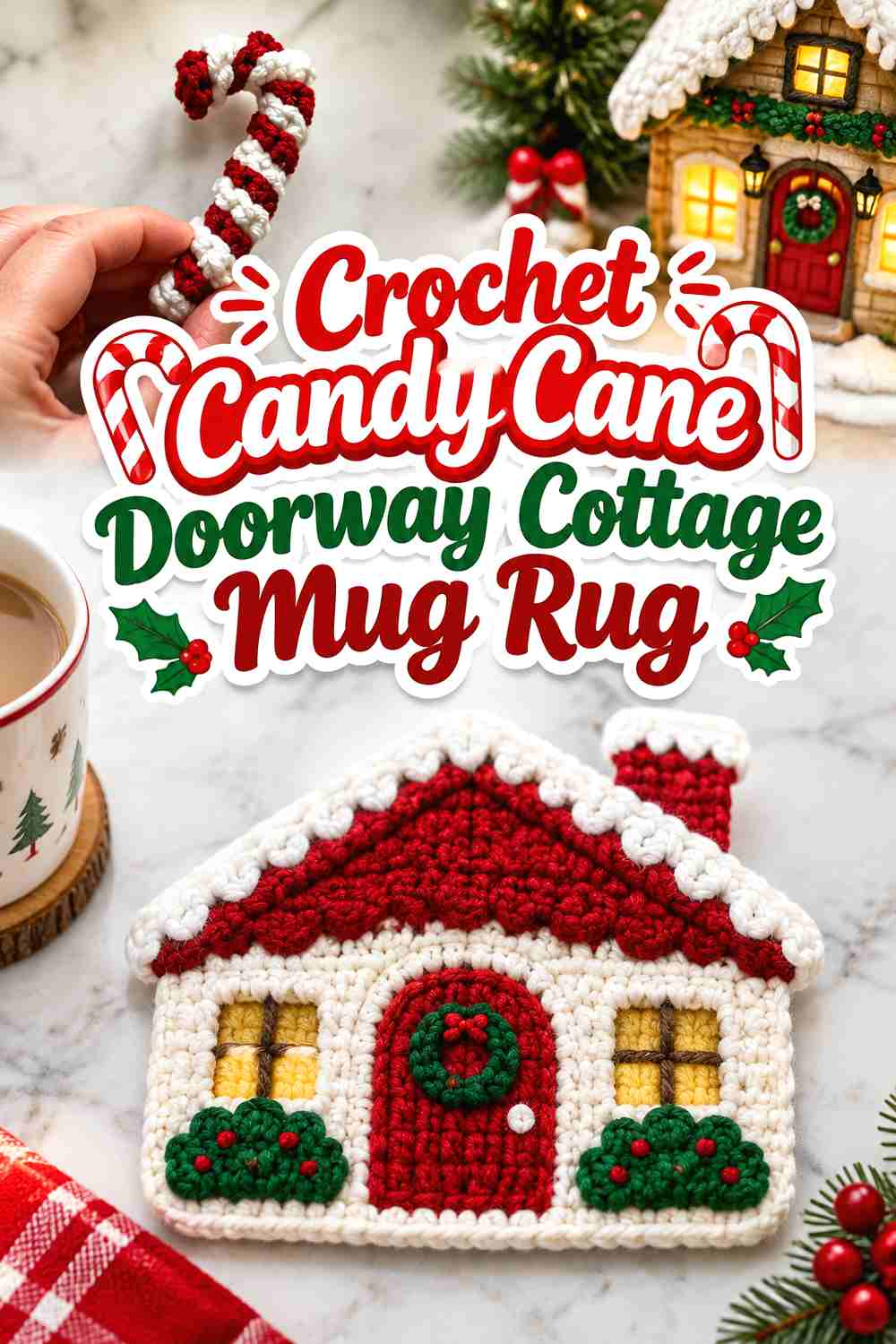
Ally Newbry’s candy cane ornament uses curled crochet pieces around wire to create its striped form. For a mug rug, borrow the red-and-white visual idea rather than embedding wire into an area meant to lie flat on a table.
A Candy Cane Makes an Effective Doorway Accent
A small hooked stripe beside the cottage door immediately reinforces the candy-shop look of a gingerbread house. It can also provide a bright accent when the rest of the piece uses mostly brown, cream, and white.
For a flatter interpretation, create the curved shape with stitching or a flexible crochet strip and sew it securely to the surface.
Skip Rigid Internal Supports for Tabletop Use
Wire is useful when an ornament needs to hold a freestanding crook, but a mug rug has different requirements. A rigid insert could create an uneven spot or an awkward edge.
If you want a dimensional candy cane, position it completely outside the planned cup area and make sure its ends are secured rather than loose.
Creator Credit: Ally Newbry
9. Crochet Christmas Tree Yard Gingerbread Cottage Mug Rug
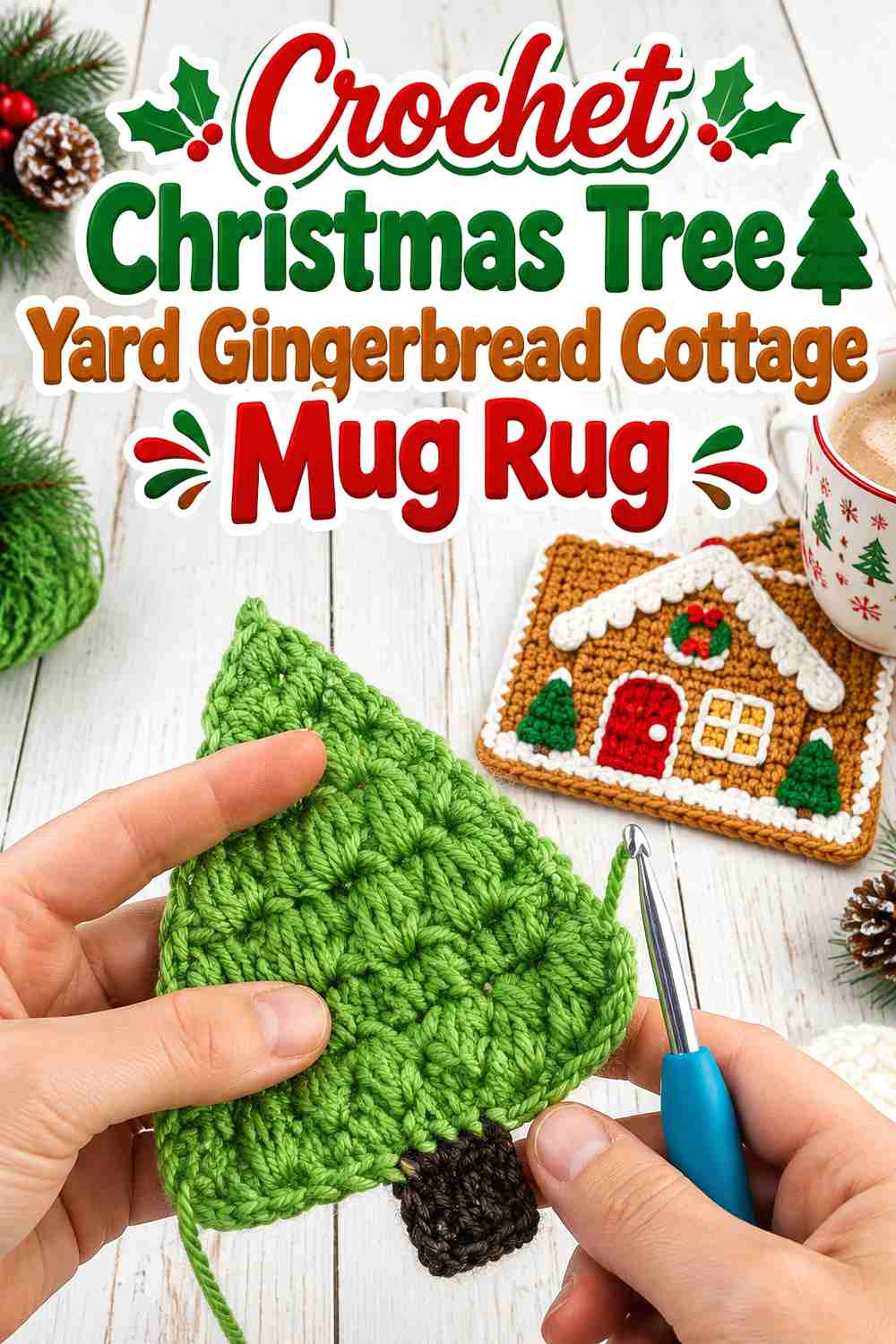
Desert Blossom Crafts demonstrates a flat Christmas tree that can also function as an appliqué. That makes it a practical source for adding a tiny evergreen beside a gingerbread cottage rather than using another raised decoration.
One Tree Creates a Clear Outdoor Setting
A cottage plus a single tree immediately suggests a winter yard. You do not need to fill the remaining background with several small motifs to make the scene understandable.
Place the tree slightly away from the cottage so the roof and tree outline do not merge into one large block of color.
Compare Tree Height With the Roof Before Attaching
A tall tree can make the cottage appear miniature, while an extremely small tree may look accidental. Lay both pieces together and choose a scale relationship that feels intentional.
If you resize by changing yarn or hook, make a sample first rather than assuming the proportions will shrink evenly.
Creator Credit: Desert Blossom Crafts
10. Crochet Snowman Garden Gingerbread Cottage Mug Rug
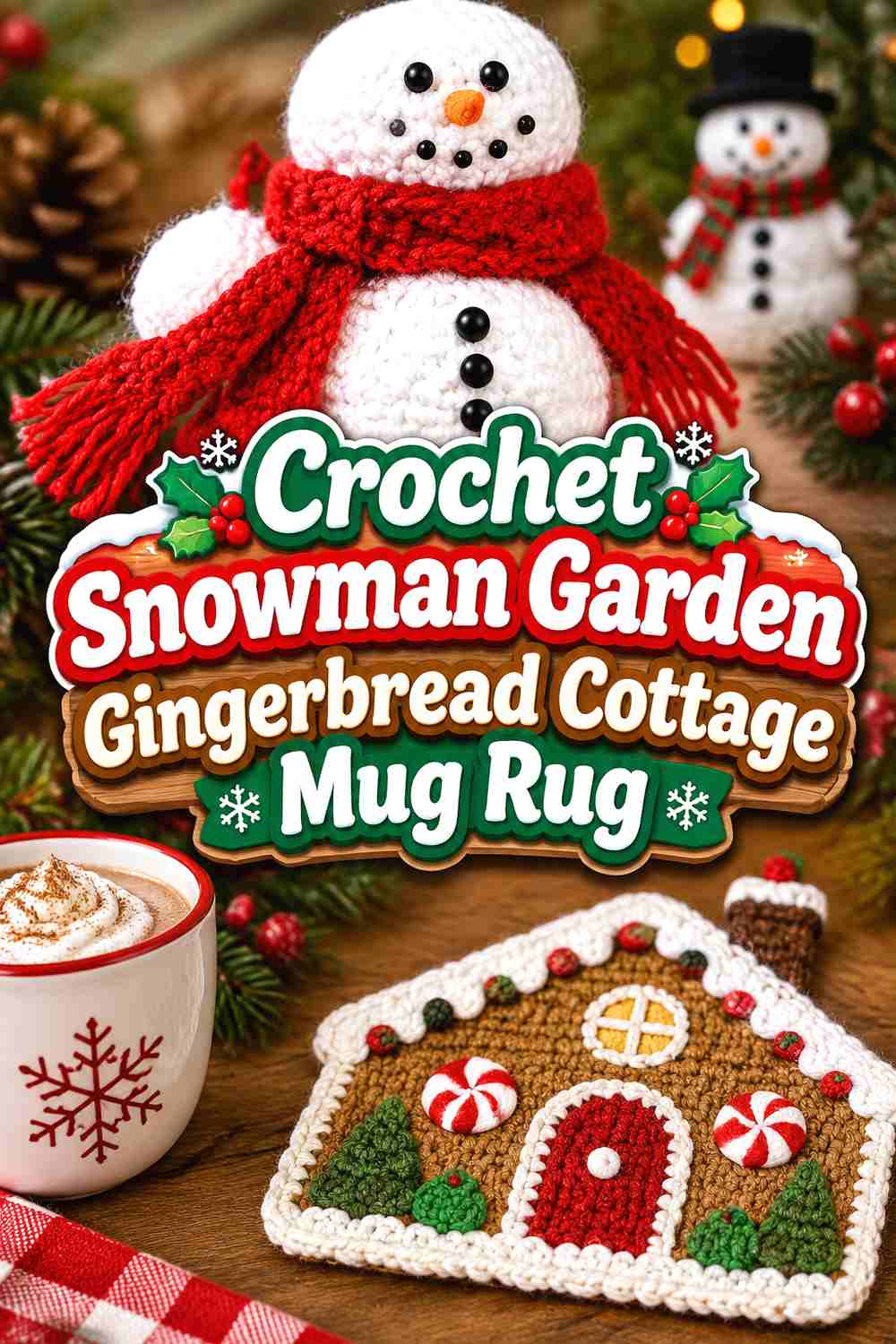
Crouton Crafts’ snowman tutorial creates a three-dimensional ornament with a scarf and hat. On a mug rug, a simplified flat snowman beside the cottage can bring a snowy garden into the scene without changing the house itself.
Treat the Snowman as a Secondary Winter Detail
The cottage should still read first. A small white snowman near the lower corner provides contrast against a brown house while connecting the gingerbread theme with a broader winter setting.
If the snowman becomes nearly as tall as the cottage, the composition starts to feel like two competing projects rather than one scene.
Avoid Bulky Stuffing Where the Mug Needs to Rest
The source project is stuffed, but that construction does not transfer directly to a functional mug rug. Keep any mug-rug version flat or restrict a dimensional accent to an outer corner well away from the cup.
For facial details, consider how securely every small piece is attached and how the embellishments will behave during cleaning.
Creator Credit: Crouton Crafts
11. Crochet Fringed Gingerbread Cottage Mug Rug
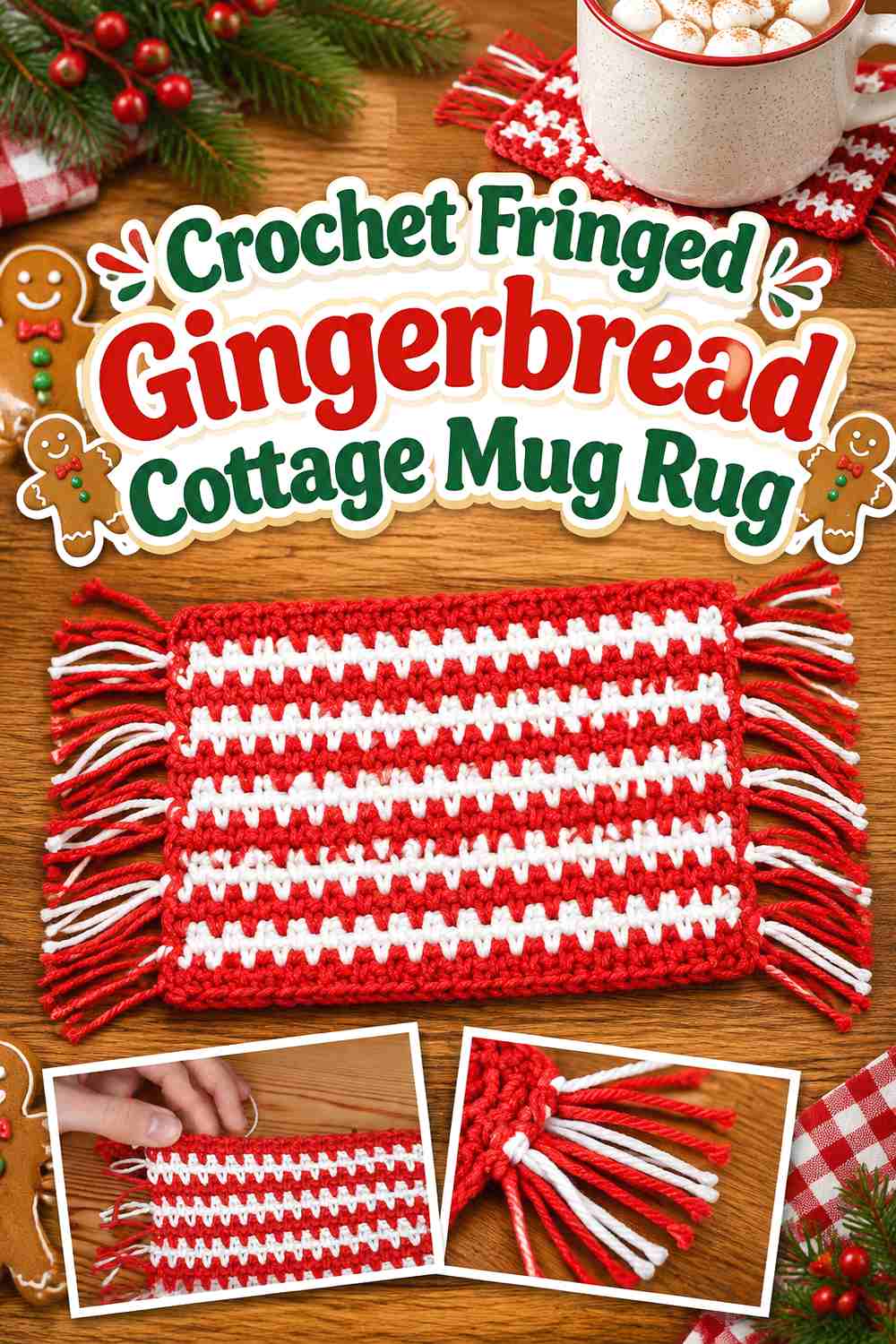
Blossom Crochet’s festive mug-rug tutorial uses a rectangular format with decorative fringe, giving this idea a noticeably different silhouette from the house-shaped versions.
Fringe Gives the Project a True Little-Rug Finish
A straight rectangular base can carry a gingerbread cottage motif in the center while fringe visually separates it from an ordinary coaster. The fringe also lets you keep the house itself relatively simple because the outer finish already adds character.
Keep fringe away from areas where it could trail into a drink or plate, and trim both sides consistently after the rug has settled.
Plan the Cottage Before You Commit to the Fringe
The usable textile area ends at the body of the mug rug, not at the tips of the fringe. Base your house placement and cup clearance on that central rectangle.
If the cottage nearly touches both short edges, adding fringe may make the whole piece feel crowded. Leaving some plain background helps both the architecture and fringe read clearly.
Creator Credit: Blossom Crochet
12. Crochet Seed-Stitch Gingerbread Cottage Mug Rug
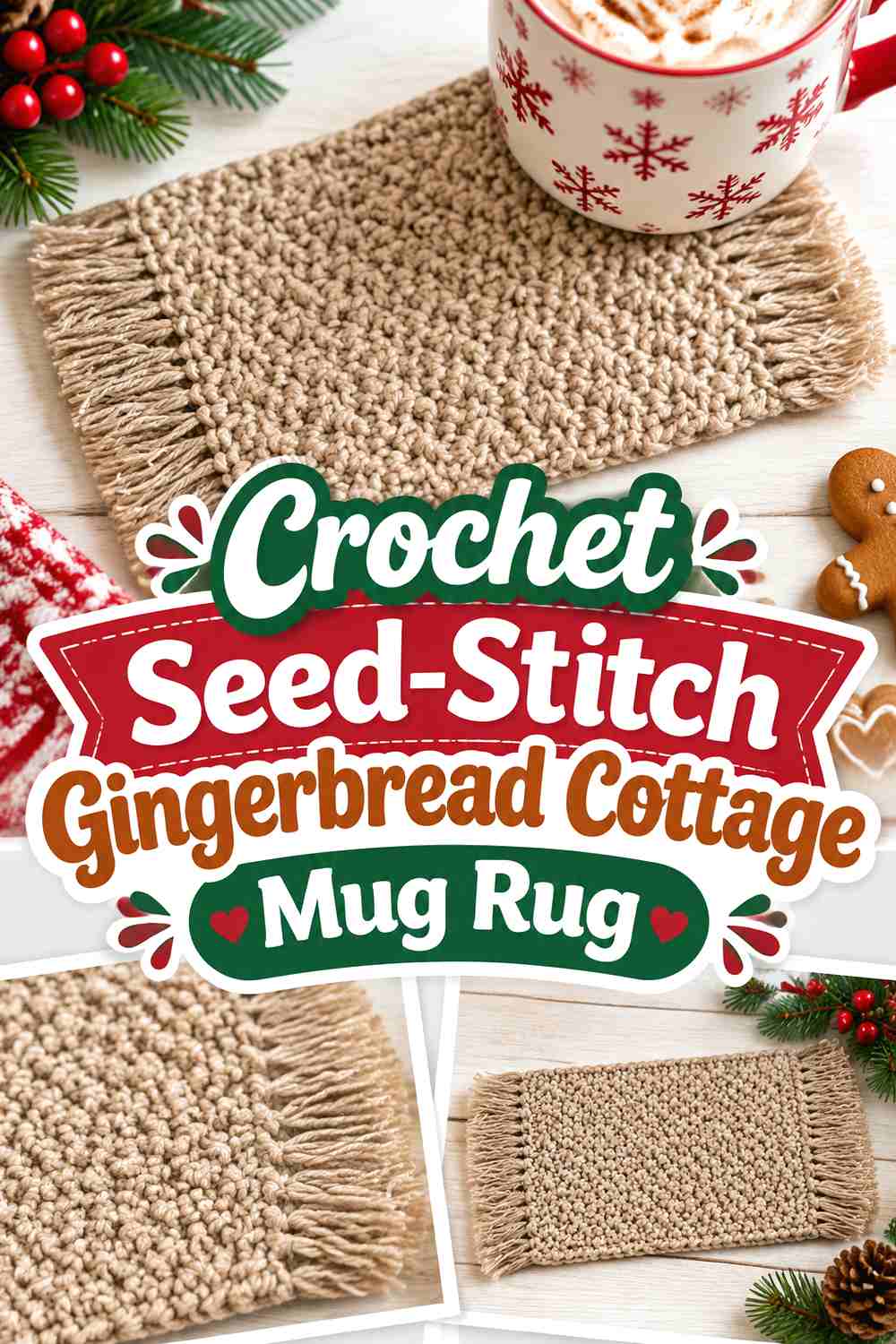
MJ Carlos demonstrates a mug rug using seed, or lemon-peel, texture with a fringed finish. That surface offers a different foundation for a cottage design because the base itself contributes texture before any seasonal motif is added.
Texture Can Suggest a Cozy Background Without Extra Motifs
A subtly textured base can act like the snowy or rustic landscape around the cottage. Instead of filling empty areas with appliqués, let the stitch pattern provide the visual interest.
The cottage will stand out most clearly if its fabric has a different surface character from the background.
Check Whether an Appliqué Sits Smoothly on the Raised Fabric
Texture affects how a flat house rests against the base. Before sewing around every edge, pin the cottage in place and check for rippling or gaps.
If the background is strongly textured, a simpler house outline may read more clearly than a cottage covered with numerous tiny decorative pieces.
Creator Credit: MJ Carlos
13. Crochet Rustic Tassel Gingerbread Cottage Mug Rug
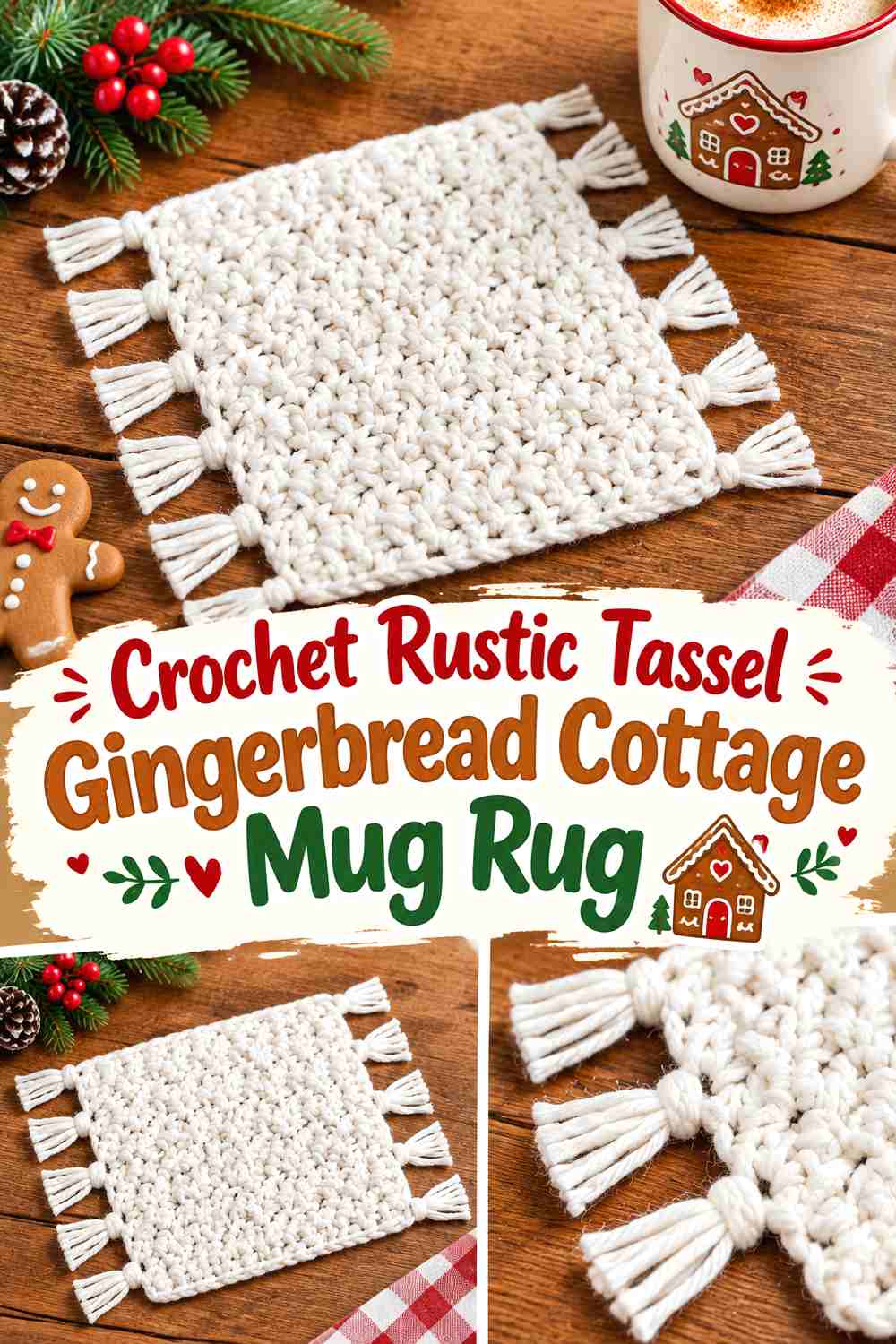
CJ Design’s mug-rug tutorial offers a practical flat foundation finished with decorative ends. Use that general format for a rustic cottage version where the house is concentrated toward one side and the mug has an intentionally quieter landing area.
Asymmetrical Placement Makes Room for Both Mug and Artwork
Centering the cottage may look balanced when the rug is empty, but the mug will then cover it. Shifting the house toward one side allows the finished design to remain visible in actual use.
A door, roof, and one or two windows can provide enough information to identify the cottage without making the decorative half too dense.
Decorative Ends Need Consistent Finishing
Tassels or fringe can magnify small differences in length. Finish the body first, allow the yarn to relax, and then evaluate the ends before final trimming.
If you plan to make several mug rugs as a set, measure the finished bodies against each other before adding the decorative edge treatment.
Creator Credit: CJ Design
14. Crochet Starry Gingerbread Cottage Mug Rug
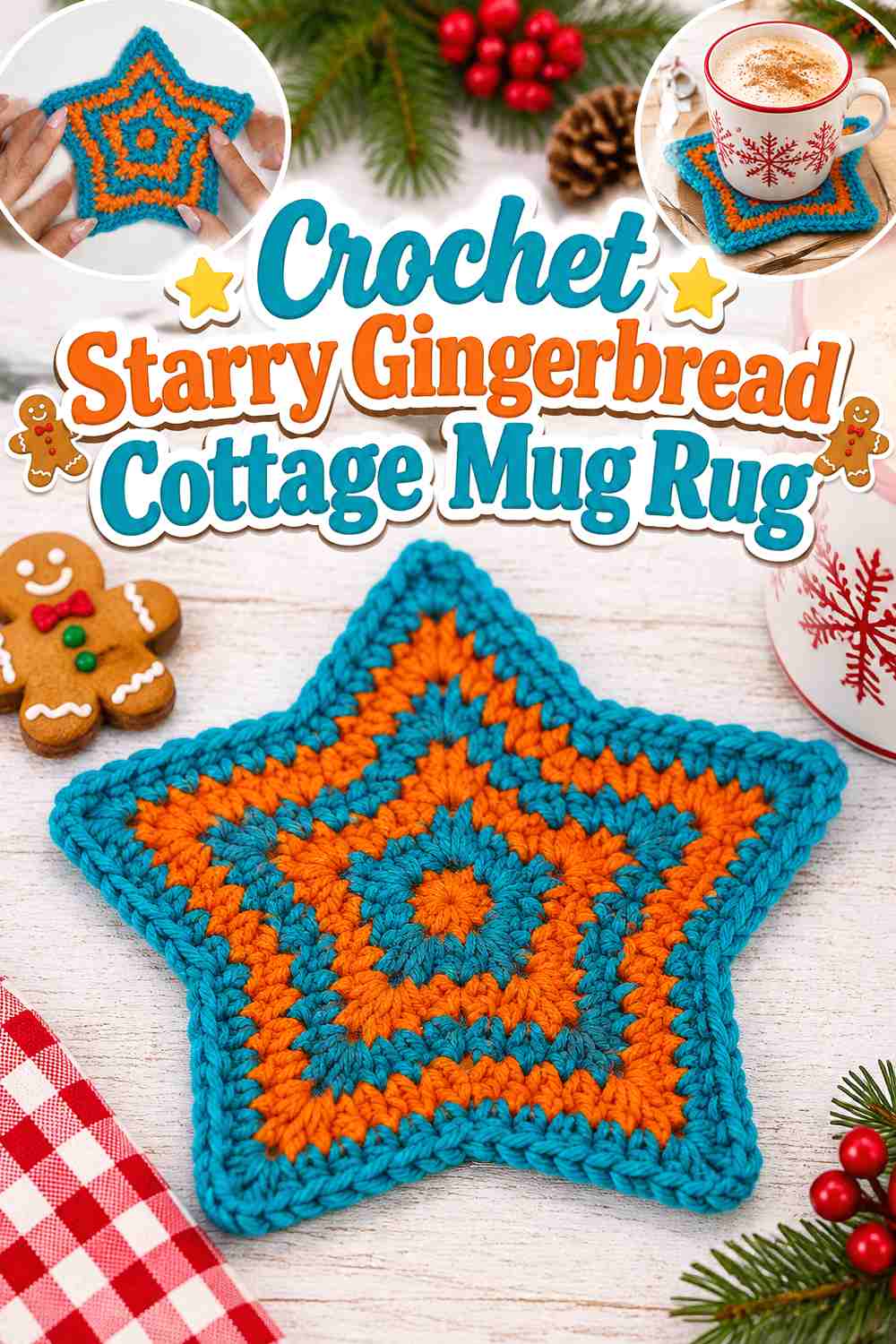
VivCrochets demonstrates a radiating crochet star that can function as a coaster or appliqué. A smaller flat star placed above the roof gives a gingerbread cottage mug rug a night-sky focal point without requiring a fully crocheted background.
One Statement Star Can Replace a Busy Sky
Rather than adding many tiny stars, use one recognizable motif above or beside the cottage roof. This gives the upper portion of the mug rug a focal point while preserving negative space.
The star can also help balance a house positioned off-center to make room for the mug.
Keep the Star Flat if It Sits Near the Cup
A layered or heavily textured star may create an uneven section. If it overlaps the intended cup zone, use a thinner version or move it toward the edge.
Check the star after blocking or shaping because the points can change the amount of space the motif occupies.
Creator Credit: VivCrochets
15. Crochet Snowflake-Roof Gingerbread Cottage Mug Rug
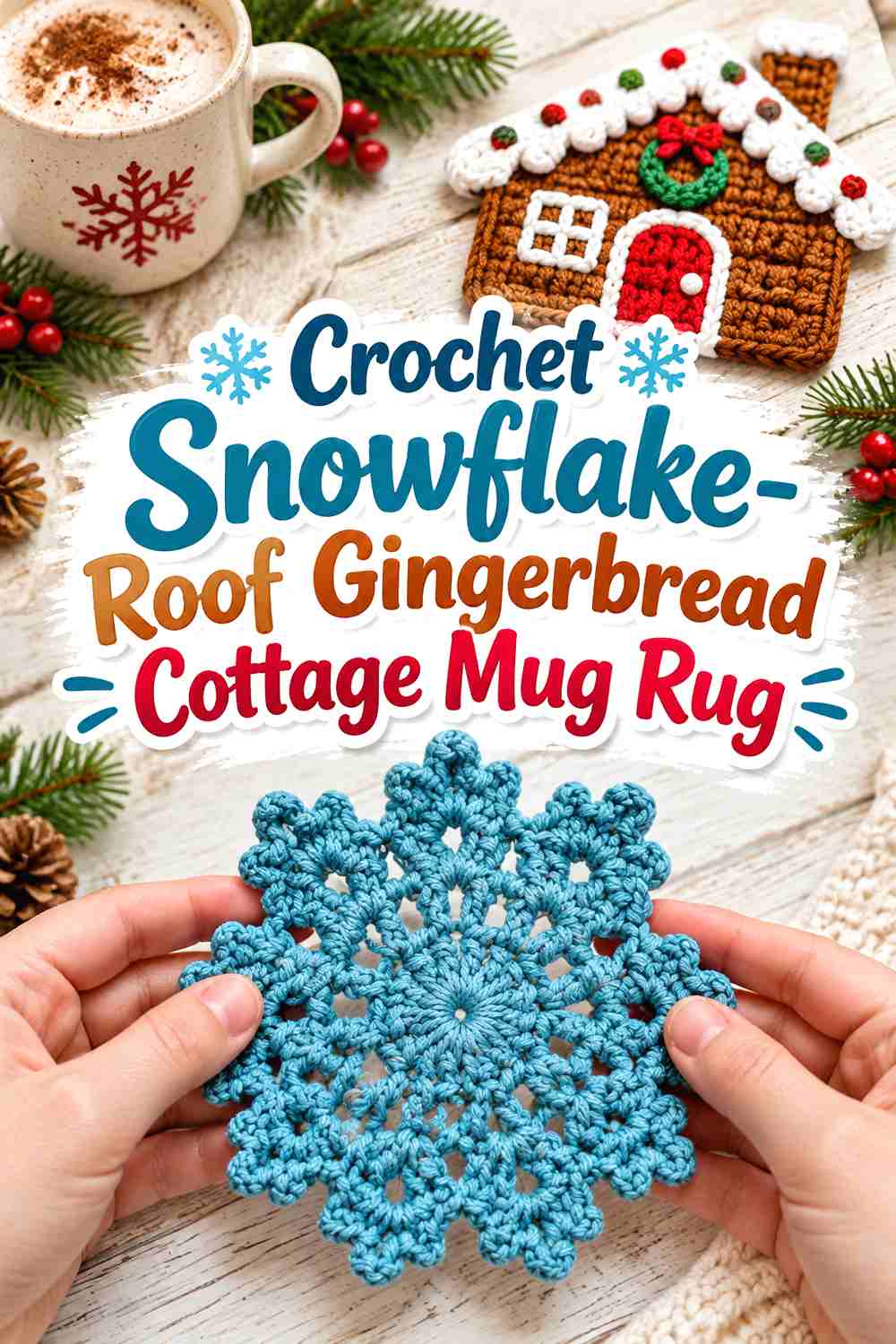
Loops and Knots Crochet demonstrates a six-armed snowflake coaster that can also serve as winter decor. For this cottage variation, treat a smaller snowflake as a roof or sky accent rather than using it as the entire mug rug.
A Snowflake Above the Roof Emphasizes the Winter Setting
White icing already suggests snow, but a distinct snowflake makes the scene feel more wintry without changing the gingerbread palette. Position it above the roof peak or toward one upper corner.
Avoid placing a detailed snowflake directly over equally detailed roof candy. One strong texture should have enough surrounding space to remain readable.
Openwork Needs Careful Attachment
A lacy motif can lose its shape if every open section is pulled tightly against the base. Secure the important outer points evenly and check the motif from the front as you work.
If the snowflake projects beyond the mug-rug edge, consider whether those points will withstand regular handling and washing.
Creator Credit: Loops and Knots Crochet
16. Crochet Snowflake-Border Gingerbread Cottage Mug Rug
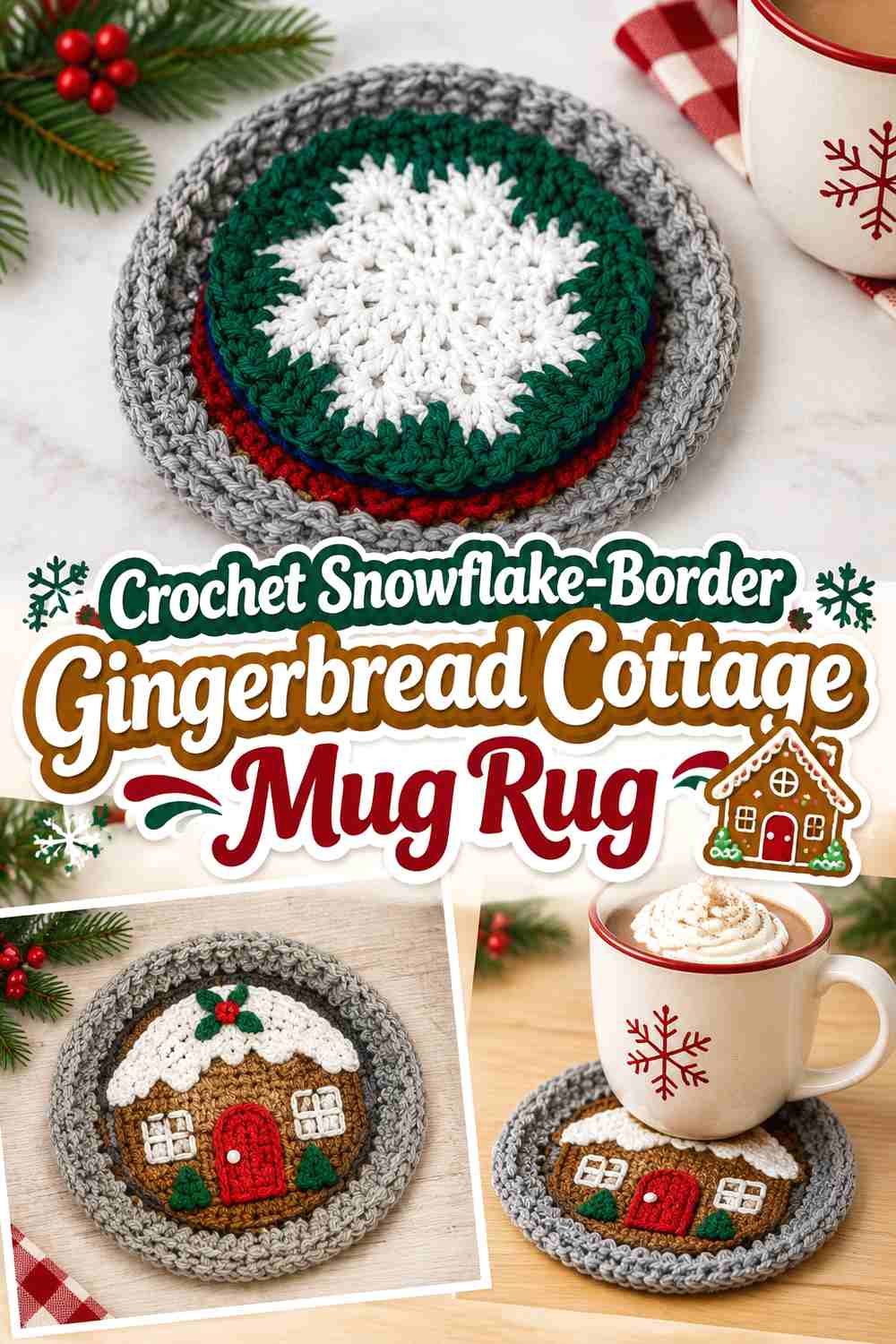
Jo to the World Creations demonstrates snowflake coasters and a matching holder. Instead of placing one snowflake above the cottage, this idea borrows the snowflake language for a surrounding winter border.
Border Motifs Change the Visual Weight of the Whole Rug
Repeated white points or snowflake-inspired edges can frame a simple brown cottage and make the project feel more decorative even when the house has minimal detail.
Because the border already attracts attention, keep the door and windows uncomplicated. Otherwise the eye has no quiet place to rest.
Test the Border for Flatness Before Continuing Around
Decorative edges can begin to ruffle if their stitch density exceeds the available perimeter. They can also pull inward if worked too tightly.
Pause after one side or section and lay the piece on a flat surface. Correcting the tension early is much easier than trying to reshape a completed border.
Creator Credit: Jo to the World Creations
17. Crochet Mosaic Gingerbread Cottage Mug Rug
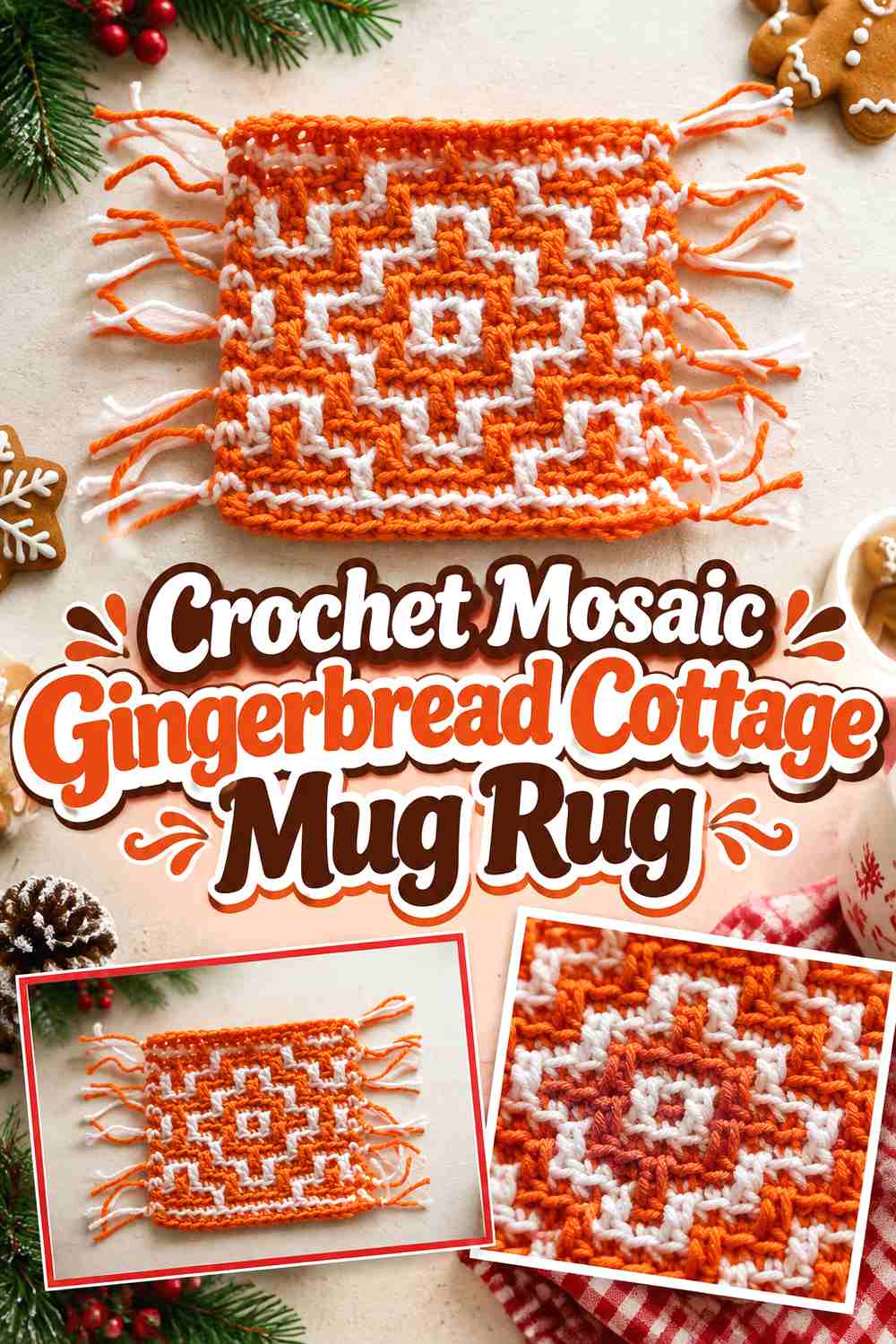
Pattern Paradise demonstrates the basics of mosaic crochet using a mug-sized project. This route is ideal when you want the cottage imagery built into the fabric rather than sewn on afterward.
Colorwork Keeps the Design Comparatively Flat
A graphic roof, doorway, or simple house silhouette can be interpreted through contrasting blocks of color. Because the motif belongs to the fabric itself, there are fewer separate appliqué edges to catch or curl.
The trade-off is planning. A recognizable cottage needs enough contrast between the gingerbread brown, snowy trim, and background.
Swatch the Color Combination Before Committing
Two colors that look distinct in skeins may blend once worked into small geometric areas. Make a short sample and view it from several feet away.
If the house outline disappears, increase the contrast rather than adding more decorative complexity. Clear color separation usually does more for a graphic cottage than additional tiny motifs.
Creator Credit: Pattern Paradise
18. Crochet Wreath-Door Gingerbread Cottage Mug Rug
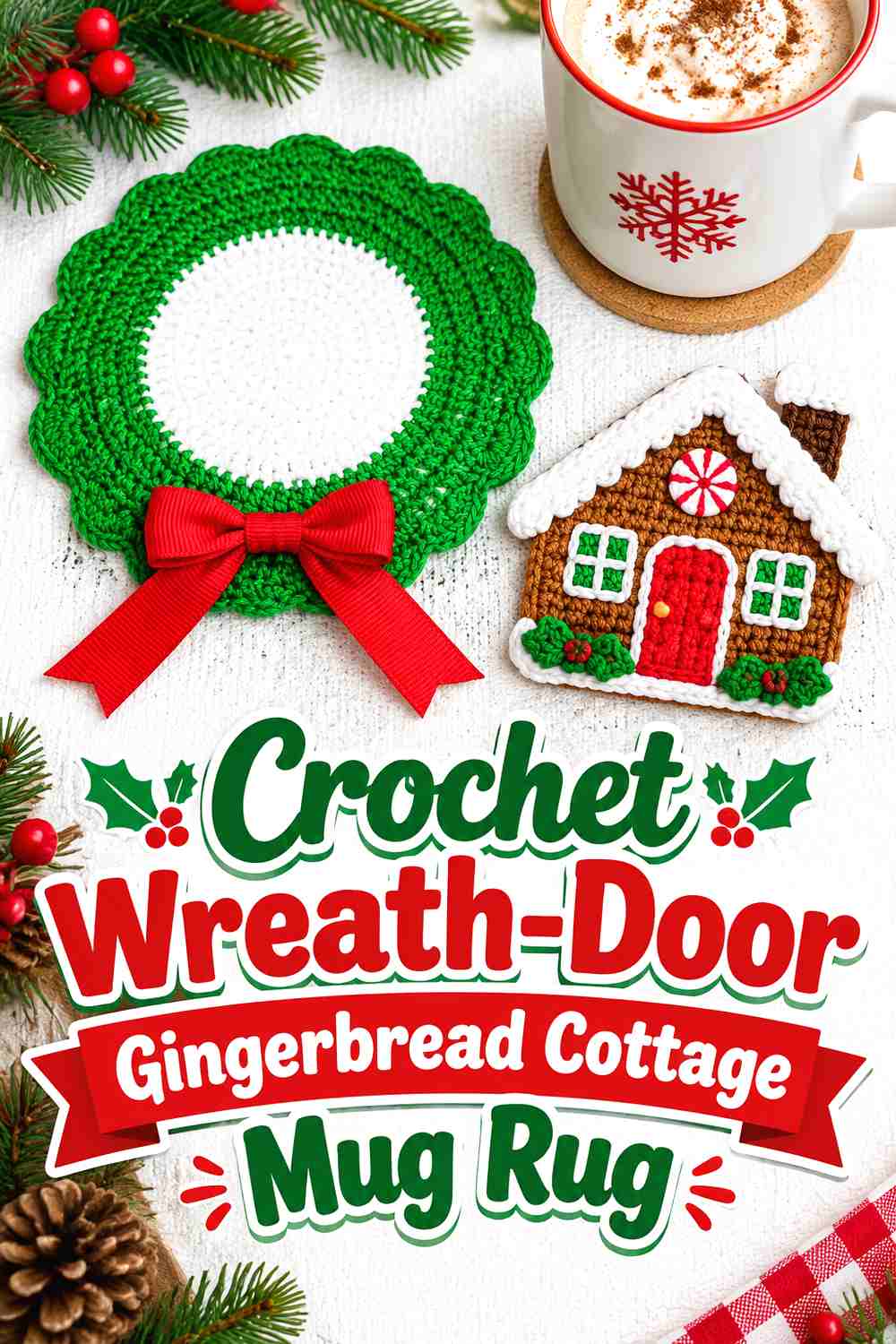
Banana Moon Studio’s Christmas wreath coaster is worked as a circular seasonal design and finished with a bow. A scaled-down wreath concept makes a natural door accent for a gingerbread cottage mug rug.
A Wreath Gives the Door a Strong Focal Point
When a house has several windows and candy details, the doorway can disappear. A contrasting circular wreath helps organize the façade and creates an obvious center of interest.
Scale matters more than detail here. The wreath should read as door decoration rather than a second coaster attached to the front of the cottage.
Consider the Bow Placement Carefully
A dimensional bow can be attractive, but it also creates additional bulk. If the door sits near the mug area, represent the bow with yarn or surface stitching instead.
If using an attached ribbon or another material, confirm its care requirements before assuming it can be washed exactly like the crocheted fabric.
Creator Credit: Banana Moon Studio
19. Crochet Bobble-Trim Gingerbread Cottage Mug Rug
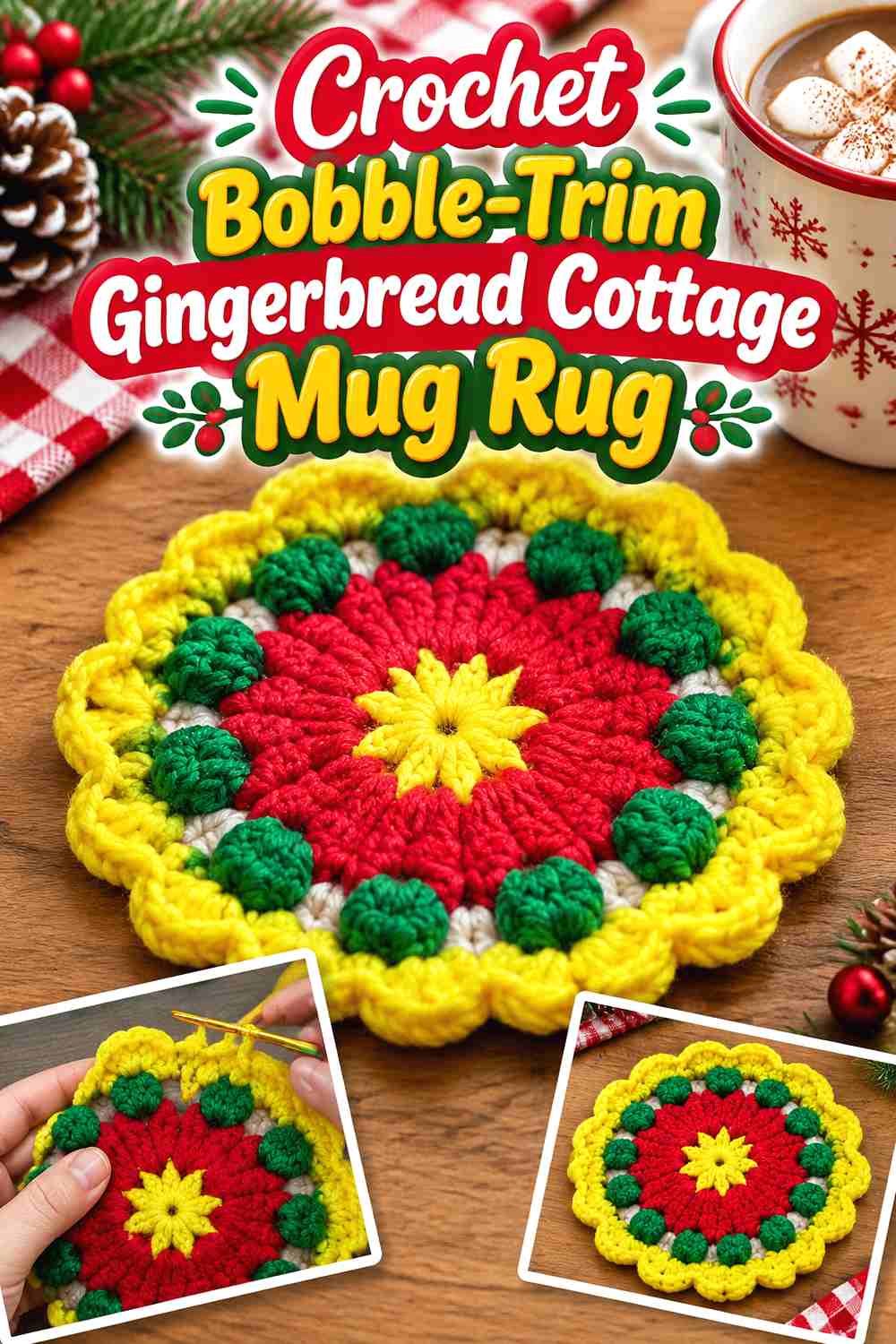
Crochet and Knitting Japan クロッシェジャパン demonstrates a Christmas coaster that combines several crochet textures, including a puffed decorative element. That makes it a useful reference for a final cottage variation where texture is concentrated around the outer edge rather than across the cup area.
Raised Texture Works Better as a Frame
Bobble or puff-like details can create the look of candy drops or snowy trim while leaving the center comparatively level. Position the more pronounced texture toward the outer perimeter or roof area.
This is especially useful when you want a richly decorated piece but do not want to sew on multiple separate appliqués.
Consistent Texture Keeps the Border From Looking Uneven
Raised stitches draw attention to differences in tension. If some are noticeably looser, the outer edge can appear irregular even when the main cottage is well shaped.
Work a short sample first if the texture is unfamiliar, then decide whether it suits the yarn and scale of the mug rug before applying it around the full design.
Creator Credit: Crochet and Knitting Japan クロッシェジャパン
Which Gingerbread Cottage Mug Rug Style Should You Choose?
If you want…
Good routes to compare
Main thing to check
A strong house silhouette
1, 2, 3, 4
Whether the roof and walls still leave a stable cup area
A practical rectangular mug rug
11, 12, 13
Base dimensions before adding the cottage
A flatter graphic design
7, 17
Contrast and clarity of the house motif
A detailed winter scene
5, 6, 8, 9, 10
Relative scale of the added characters and objects
Decorative winter framing
14, 15, 16, 18, 19
Whether raised or openwork details stay outside the main cup zone
The shaped-house ideas put the gingerbread cottage first, while the rectangular versions give you more predictable usable space. Colorwork is worth considering when you want fewer attached pieces. If seasonal embellishment is the part you enjoy most, the tree, snowman, candy cane, snowflake, star, and wreath variations offer more opportunities to build a miniature scene.
Conclusion
For a mug rug that still feels practical during everyday winter coffee or tea breaks, start with one of the flatter rectangular or colorwork options and reserve a clear section for the mug. If the finished piece is primarily seasonal decor, the shaped cottages, candy roofs, snowflake borders, and character scenes give you much more room to experiment.
Whichever direction you choose, plan the cottage, cup area, and embellishments as one composition before attaching the small details. When adapting any of these ideas, use the credited original tutorial for its exact construction and confirm your own finished measurements before combining separate motifs.
FAQs
1. Can I turn a crochet gingerbread house ornament into a mug rug?
Yes, the silhouette or flat panel can provide a useful starting concept, but ornament construction does not automatically suit tabletop use. Stuffing, hanging loops, beads, and heavily raised decoration may need to be omitted or repositioned so the finished surface can hold a mug securely.
2. Should a crochet gingerbread cottage mug rug be stuffed?
Usually not in the area intended to support the mug. A stuffed house becomes more like a decorative ornament or soft sculpture. If you like the look of a two-panel construction, joining two flat layers without stuffing can give the piece more substance while keeping it comparatively level.
3. What yarn should I use for a crochet mug rug?
Cotton is commonly used for coasters and mug rugs because it can create a firm, absorbent fabric, and several of the supporting mug-rug and coaster tutorials use cotton or cotton thread. Your final choice should also account for the care instructions, stitch pattern, desired structure, and any other materials you add. Do not assume a yarn is suitable for contact with very hot cookware simply because it works for a drink coaster.
4. How can I add appliqués without making the mug wobble?
Decide where the mug will sit before attaching anything. Keep thick appliqués, bobbles, buttons, bows, and other dimensional elements outside that area. Flat embroidery, surface details, and integrated colorwork are useful alternatives when decoration needs to cross the cup zone.
5. Can I put beads or buttons on a gingerbread cottage mug rug?
They can work as decoration when securely attached and placed away from the mug’s resting area, but they make the piece more dimensional and may change how it should be cleaned. For an item that will be used often, crocheted or embroidered candy details can be simpler to maintain.
6. How large should a crochet gingerbread cottage mug rug be?
There is no single size that works for every mug or design. Put the mug you expect to use on a sheet of paper, add any spoon or small snack you want the rug to accommodate, and use that footprint to judge the usable area you need. Remember that fringe, roof points, and decorative borders do not necessarily add usable cup space.
7. How do I keep a shaped cottage mug rug from curling?
Uneven tension, dense borders, mismatched layered panels, and heavily attached appliqués can all affect flatness. Check the project on a flat surface throughout construction rather than waiting until the end. If the design uses separate house pieces, compare their finished dimensions before joining them, and follow the yarn’s care instructions when blocking or shaping the completed piece.