Long crochet gauntlet arm warmers give you more coverage than ordinary wrist warmers while leaving your fingers free. Some finish around mid-forearm, while others reach close to the elbow and become a visible part of the outfit rather than a small cold-weather accessory.
The tutorials in this collection include several genuinely long arm-warmer designs along with shorter fingerless-glove constructions that can inspire an extended gauntlet. When the original tutorial is shorter, the added forearm length should be treated as a separate adaptation. Extending a glove is not simply a matter of repeating rows because the wrist, lower forearm, and upper forearm usually have different circumferences.
For winter wear, also consider where the gauntlets will sit in relation to coat and sweater sleeves. Dense ribbing and cables provide a more substantial look, while lace, scallops, and openwork are better suited to decorative layering than maximum cold protection.
Quick List
- Crochet Sleek Long Fingerless Gauntlet Arm Warmers
- Crochet Elbow-Length Ribbed Gauntlet Arm Warmers
- Crochet Cable-Texture Winter Gauntlet Arm Warmers
- Crochet Everyday Ribbed Long Gauntlet Arm Warmers
- Crochet Minimal Flat-Panel Gauntlet Arm Warmers
- Crochet Custom-Length Trimmed Gauntlet Arm Warmers
- Crochet Bow-Accent Long Gauntlet Arm Warmers
- Crochet Vintage Lace Winter Gauntlet Arm Warmers
- Crochet Starlight Openwork Gauntlet Arm Warmers
- Crochet Victorian-Inspired Long Gauntlet Arm Warmers
- Crochet Scalloped Flower Gauntlet Arm Warmers
Measure More Than Your Wrist for a Long Gauntlet
Short fingerless gloves can sometimes depend heavily on stretch because they cover only a small change in circumference. A gauntlet extending toward the elbow has much more arm shape to accommodate.
Decide where you want the upper edge to sit, then compare the wrist, lower forearm, and circumference at that final point. The widest section is particularly important with dense stitches or heavily textured crochet that may not stretch as freely as ribbing.
Try the developing warmer on with your elbow both straight and bent. An upper edge that seems comfortable while your arm hangs naturally can become restrictive or bunch against the elbow crease when you move.
Decide Whether the Gauntlet Goes Under or Over Your Sleeves
Long arm warmers can be styled in two very different ways.
A slim gauntlet can disappear beneath a coat sleeve, leaving only the hand section visible. This calls for relatively low-profile stitches and minimal bulky embellishment around the upper forearm.
A statement gauntlet is meant to remain visible with sleeveless dresses, short sleeves, pushed-up jackets, or wide coat cuffs. That gives you more freedom to use cables, lace, scallops, flowers, color blocks, and decorative upper edges.
Choose that relationship before adding texture. A beautiful raised cable may become uncomfortable when compressed under a fitted winter sleeve.
Thumb Placement Controls the Whole Gauntlet
The thumb opening anchors a fingerless glove to the hand. If it sits too high, too low, or too far toward one side, the crochet can begin twisting immediately above the wrist.
That problem becomes much more obvious on a long gauntlet because the twist can continue all the way along the forearm.
Establish the hand and thumb fit from the tutorial first. Only after the glove sits straight should you evaluate the extended portion, upper circumference, and decorative finishing.
1. Crochet Sleek Long Fingerless Gauntlet Arm Warmers
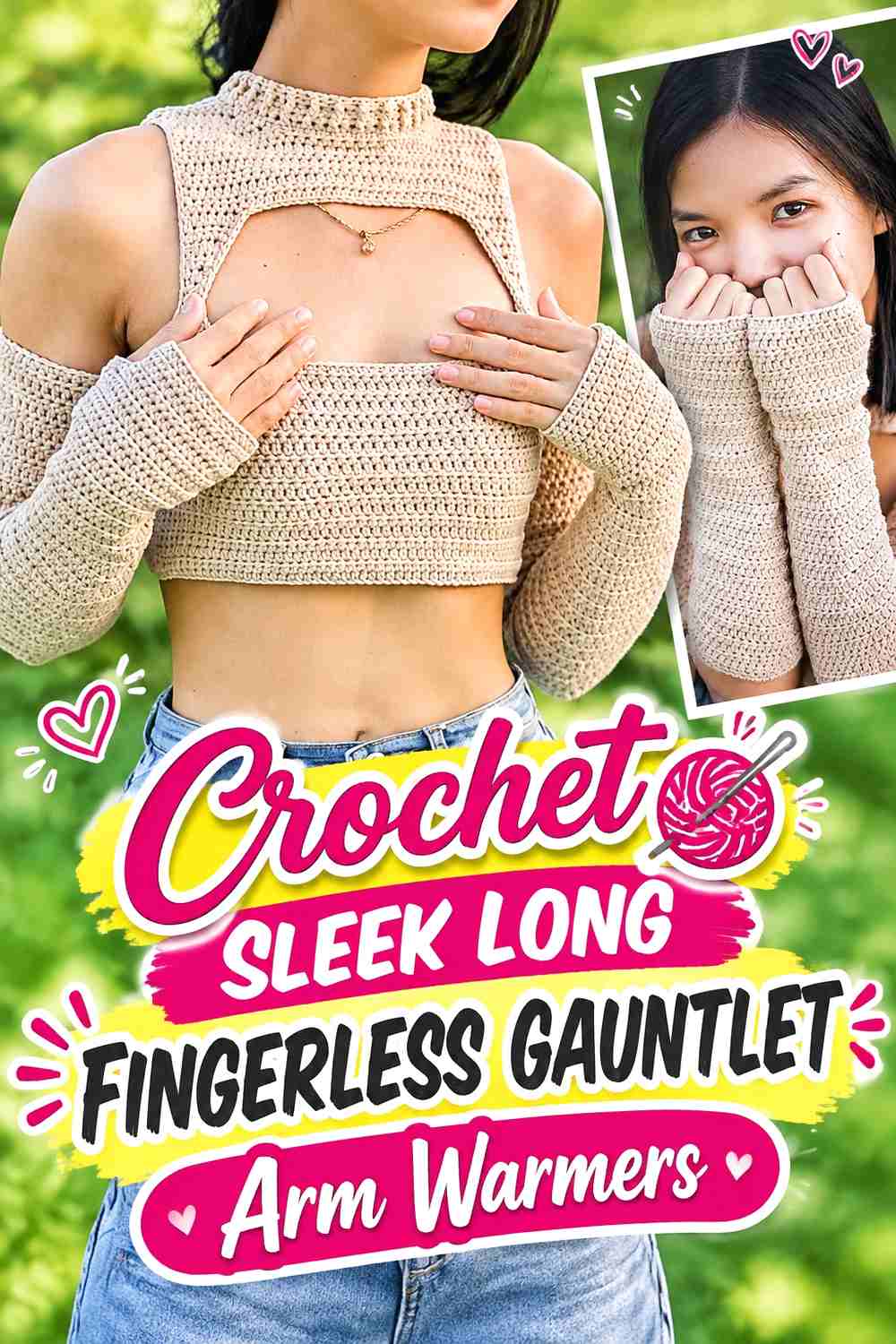
Chenda DIY provides one of the closest direct matches to this roundup because the tutorial already teaches an elongated fingerless-glove silhouette rather than a compact wrist cuff.
The relatively streamlined surface makes the length itself the main design feature. In a charcoal, cream, burgundy, forest green, or another winter solid, the warmers can create a continuous line from the hand well along the forearm.
Gradual Taper Looks Cleaner Than an Abrupt Width Change
The wrist is normally narrower than the fuller part of the forearm.
A sleek gauntlet looks most intentional when that change is accommodated without creating a sudden step in the silhouette. Check the developing glove on your actual arm rather than relying only on how the flat crochet looks.
Keep the Upper Edge Secure Without Making It Harsh
A long warmer needs enough stability to avoid sliding downward, but an extremely tight final edge can create an uncomfortable band.
Evaluate the overall fit first. If the whole forearm is too loose, tightening only the final edge may not solve the problem.
Match the Second Gauntlet Before Finishing
Minimal surfaces make mismatched lengths particularly noticeable.
Compare the pair by aligning the thumb openings, wrist positions, and upper edges before completing all finishing work.
Creator Credit: Chenda DIY
2. Crochet Elbow-Length Ribbed Gauntlet Arm Warmers
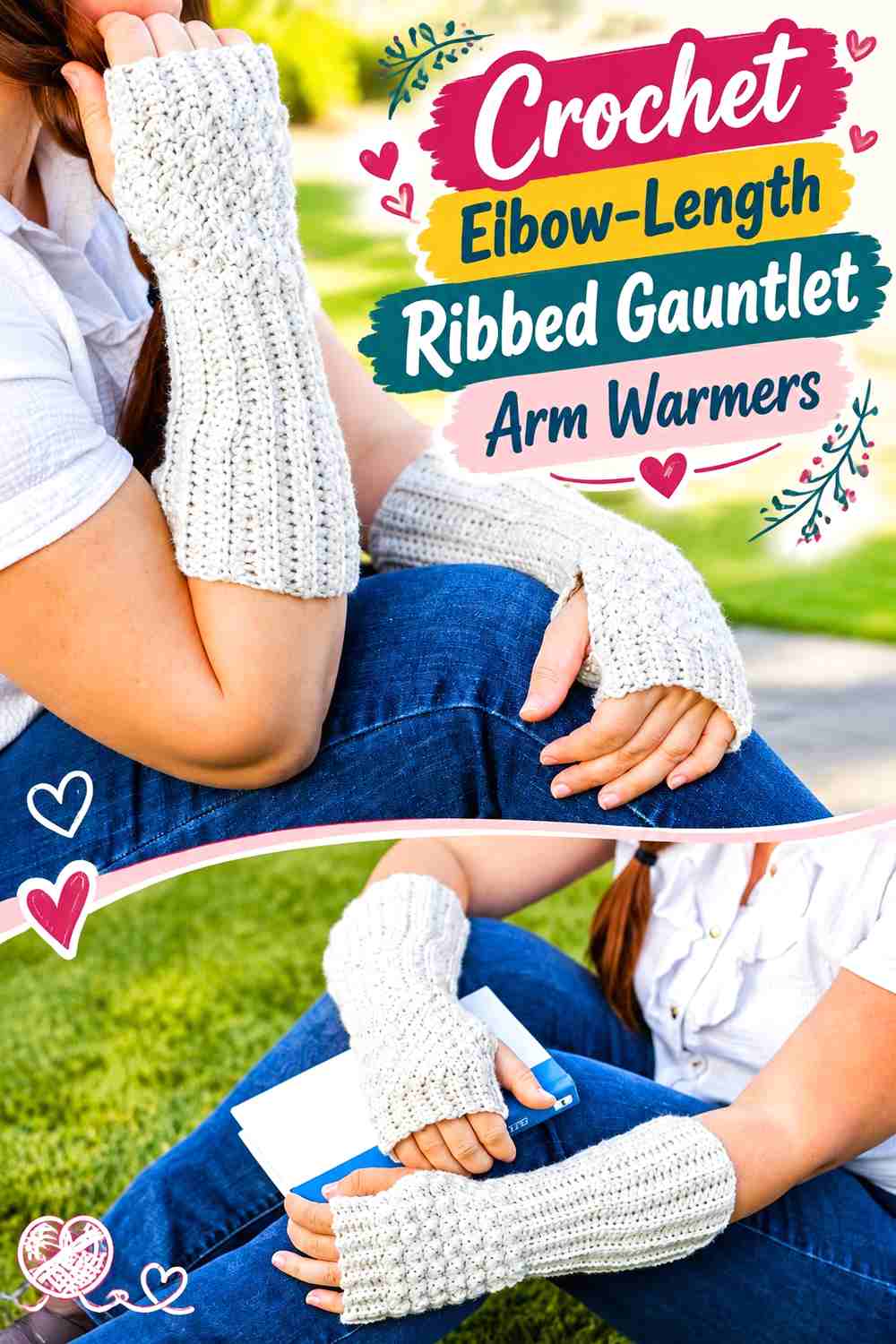
Winding Road Crochet offers a genuinely long wrist-warmer construction that reaches toward the elbow, making it particularly relevant for practical winter coverage rather than purely decorative opera-glove styling.
The textured ribbed appearance also gives the fabric enough visual interest to work beautifully in one understated color.
Stop Before the Elbow Becomes a Problem
Maximum length is not always maximum comfort.
Bend your arm fully and notice where the upper edge sits. Ending slightly below the elbow crease can preserve the dramatic long-gauntlet appearance while reducing bunching during normal movement.
Ribbing Helps With Changing Forearm Width
Stretchy-looking ribbing can accommodate the transition from wrist to fuller forearm more naturally than some rigid stitches.
That does not mean it has unlimited stretch. If the ribbing has to flatten almost completely around the upper arm, the size or shaping may need reconsideration.
Watch a Long Seam for Twisting
Any seam extending most of the way toward the elbow becomes a larger structural feature than the short join on an ordinary wrist warmer.
After joining, put the gauntlet on and make sure the seam follows the arm rather than spiraling around it.
Creator Credit: Winding Road Crochet
3. Crochet Cable-Texture Winter Gauntlet Arm Warmers
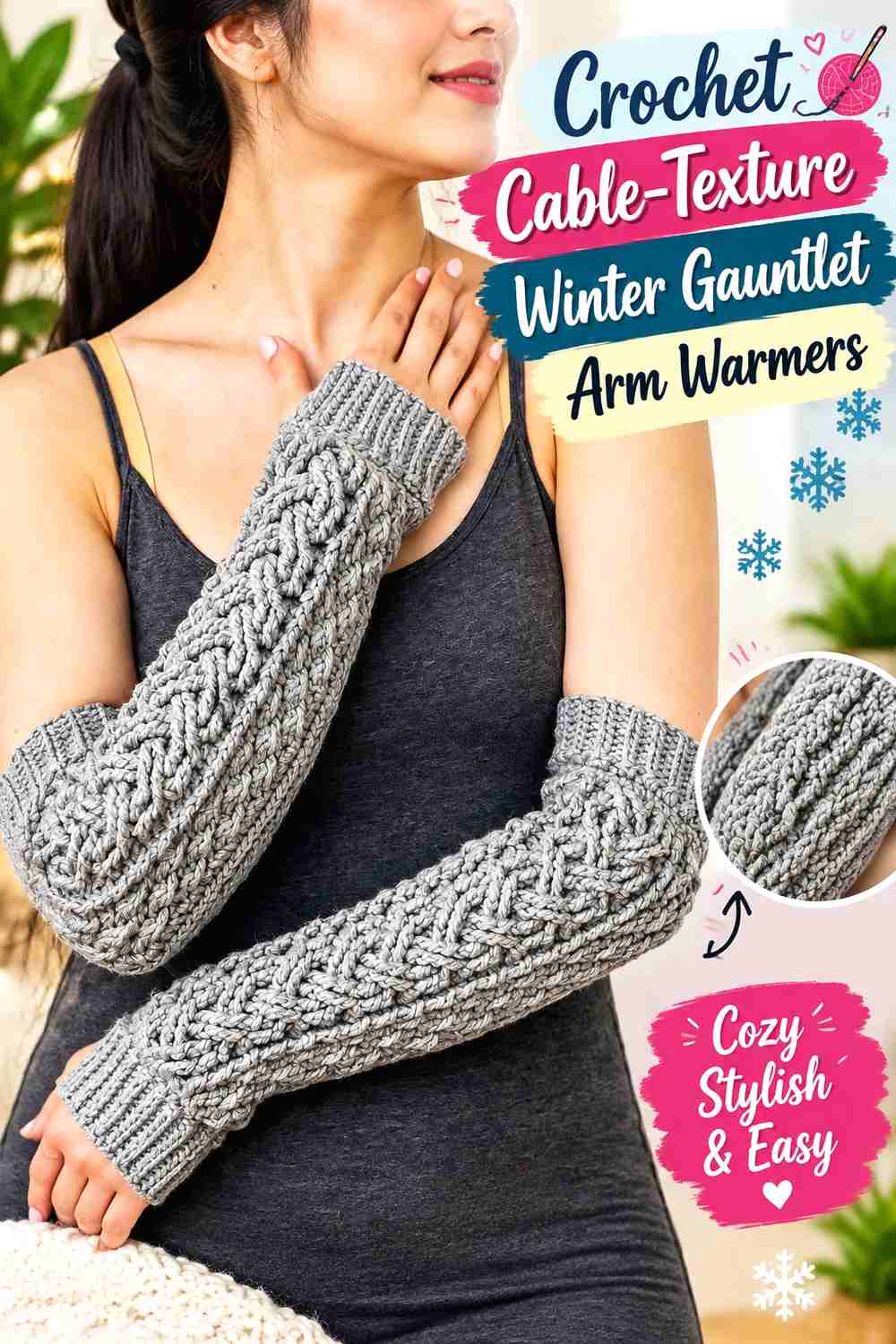
TCDDIY’s arm-warmer construction uses prominent raised texture, creating a much more architectural winter accessory than a plain fingerless tube.
This is the gauntlet to consider when you want crochet texture to remain obvious even with a simple monochrome wardrobe.
Raised Texture Adds Real Bulk
A cable or dimensional panel occupies more physical and visual space than flat crochet.
Test the finished fabric beneath the sleeve of the coat you expect to wear. A gauntlet that feels comfortable on a bare arm can become crowded under narrow outerwear.
Keep the Decorative Panel Facing Forward
Strong directional texture gives the gauntlet an obvious display side.
When making the second warmer, check orientation while both pieces are being worn. Simply laying them next to one another can accidentally produce two pieces with the main detail facing different directions.
Finish a Texture Repeat Intentionally
If you alter the length, avoid stopping halfway through the most recognizable decorative section.
First identify a comfortable upper-edge position, then check whether a nearby complete motif produces a cleaner visual finish.
Creator Credit: TCDDIY
4. Crochet Everyday Ribbed Long Gauntlet Arm Warmers
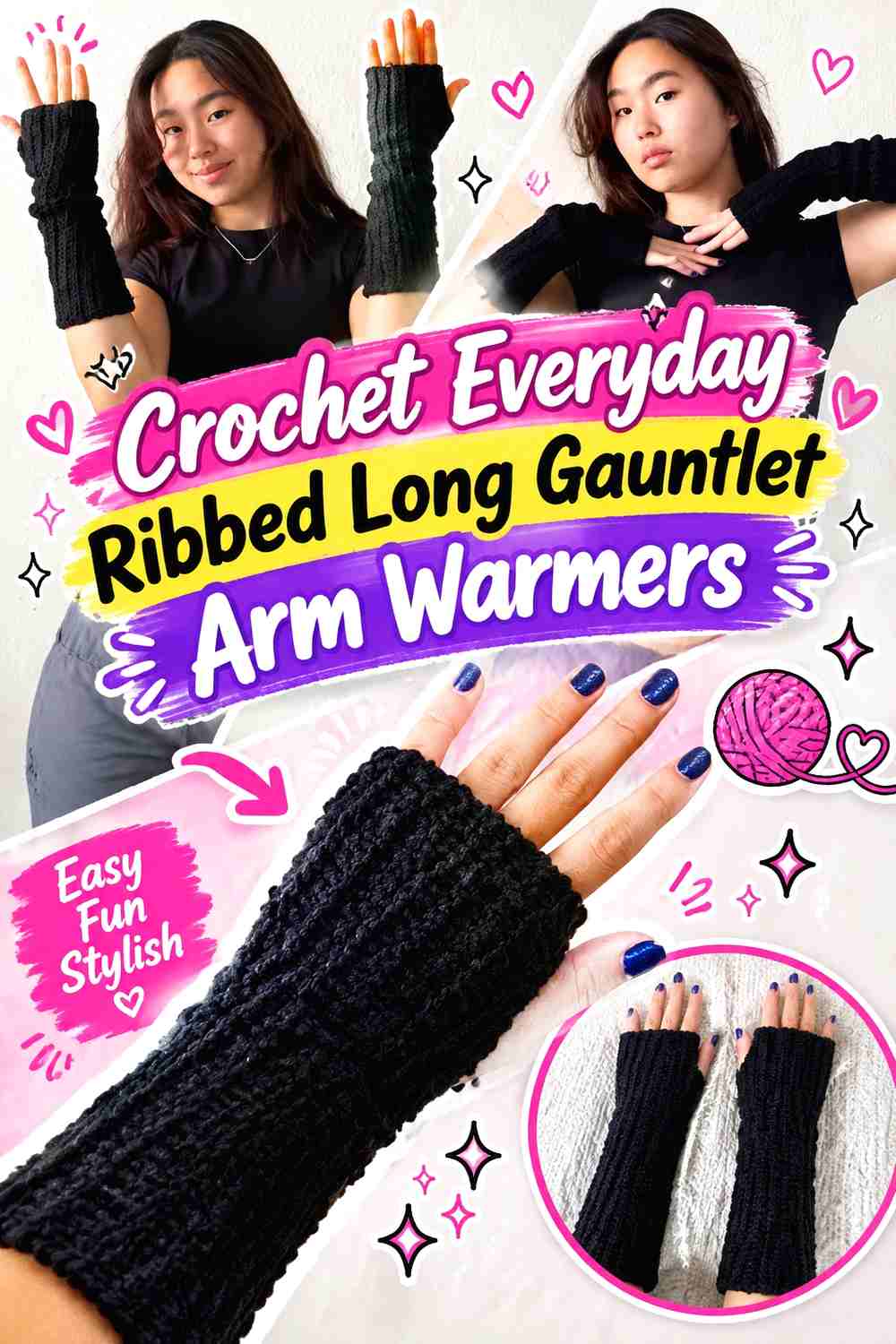
Ariel Tong’s arm-warmer and fingerless-glove construction offers a quieter foundation for an extended winter gauntlet.
Without large motifs or decorative attachments competing for attention, this direction works particularly well for everyday layering, casual streetwear, and winter outfits where you want texture without making the gloves the only focal point.
Do Not Depend on Ribbing for Unlimited Size Adjustment
Ribbed crochet can stretch, but a fabric that must remain fully expanded around the upper forearm may lose much of its intended appearance.
Check the fabric at the widest point and make sure some of the rib structure remains visible.
Coordinate Length With Your Clothes
A simple long gauntlet makes the relationship between glove and sleeve especially visible.
Decide whether you want a deliberate section of bare arm, the gauntlet to meet a short sleeve, or the upper portion to disappear beneath another layer.
Neutral Colors Emphasize the Long Silhouette
With a restrained construction, color can either support the shape or dominate it.
A single dark or winter-neutral shade keeps attention on the elongated ribbing, while a vivid color turns the entire arm warmer into a stronger outfit feature.
Creator Credit: Ariel Tong
5. Crochet Minimal Flat-Panel Gauntlet Arm Warmers
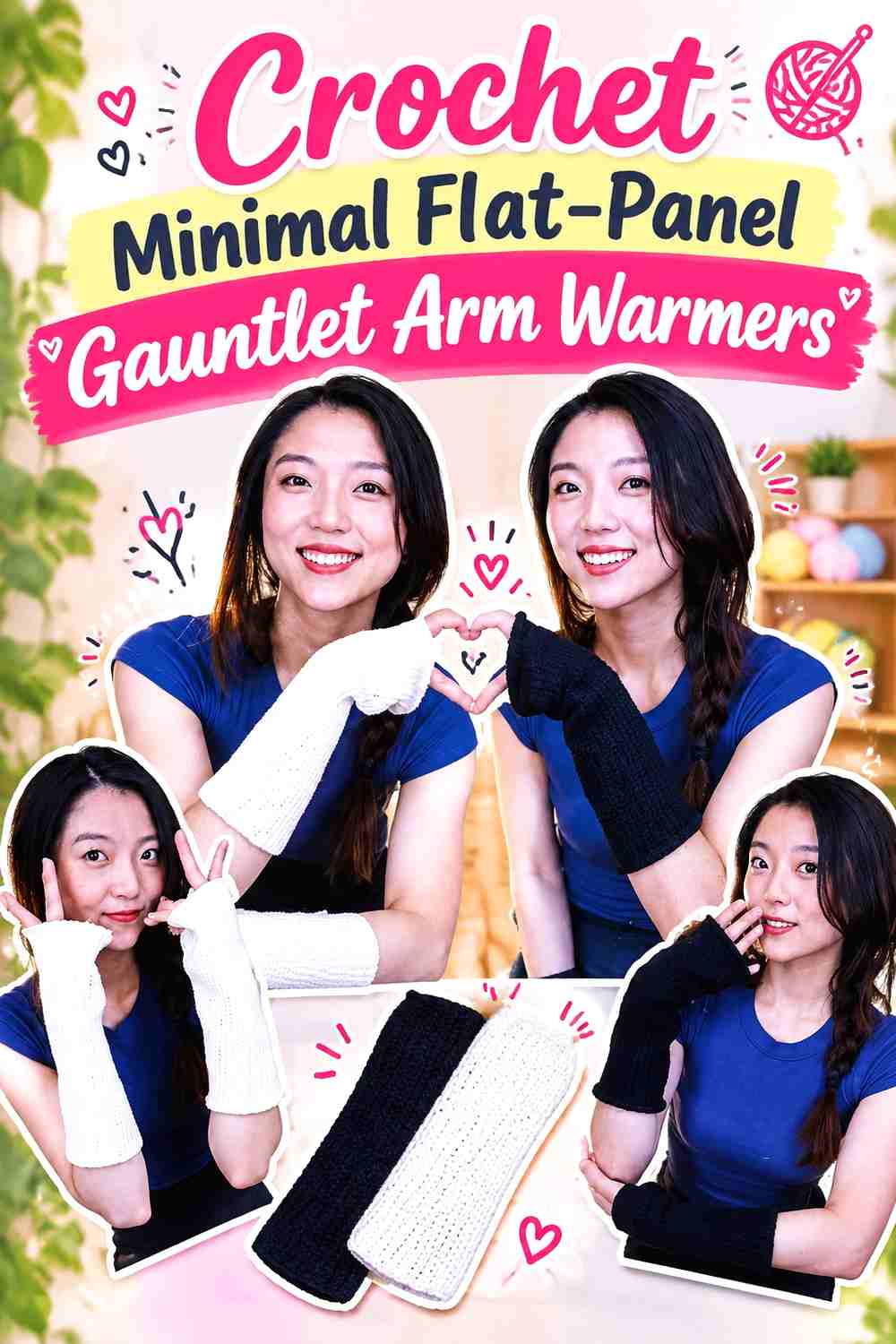
Yaejiyea’s arm-warmer video includes both knitted and crocheted versions, with the crochet construction providing the relevant reference here.
The straightforward shape makes this idea useful if you want to understand fit before moving into cables, lace, or more complicated decorative surfaces.
Flat Fabric Gives You an Early Fit Check
Before a flat panel is permanently joined, you can bring it around different points of the arm and see how much stretch is required.
That makes a long adaptation easier to evaluate because you can compare wrist and forearm fit while adjustments are still practical.
Keep the Crochet Section Separate From the Knit Instructions
Because the source covers two crafts, make sure you are following the crochet portion when returning to the tutorial for the second gauntlet.
Similar-looking finished accessories do not mean the knit and crochet constructions can be used interchangeably.
Color Blocking Works Well on a Plain Shape
A minimal gauntlet creates open visual space for deliberate color changes.
Consider one long forearm block and a contrasting hand section rather than many small stripes if you want to emphasize the extended silhouette.
Creator Credit: yaejiyea
6. Crochet Custom-Length Trimmed Gauntlet Arm Warmers
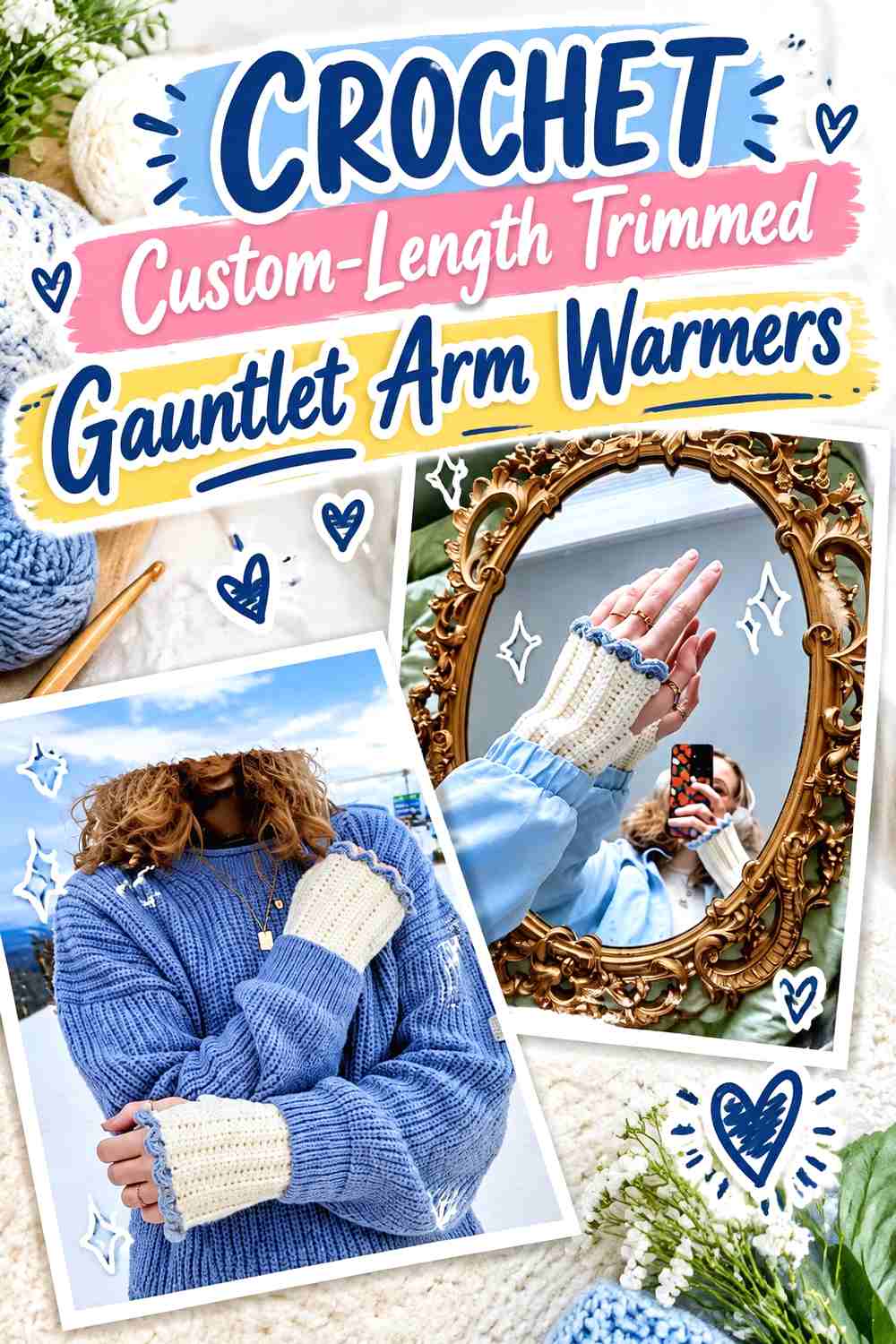
Savannah Fletcher’s fingerless-glove tutorial is useful for this roundup because the basic construction can be customized in length, making it a practical starting point for a longer forearm warmer.
Treat the extension as a fit decision rather than simply adding crochet until the piece looks dramatic.
Establish Length Before Adding Decorative Trim
A strong border creates a definite visual endpoint.
Decide where the gauntlet should finish and test that position with your elbow moving before committing to the decorative upper edge.
Recheck Width Whenever You Change Stitch Style
If you introduce a different stitch or color section during the forearm extension, its stretch may not match the original hand fabric.
Measure and try the new section rather than assuming that equal stitch counts or visual width will behave identically.
Use Color Changes to Show the Gauntlet Structure
A contrasting hand, wrist, or upper band can help break up a very long accessory.
Position those transitions deliberately so they relate to the shape of the arm rather than appearing at arbitrary intervals.
Creator Credit: Savannah Fletcher
7. Crochet Bow-Accent Long Gauntlet Arm Warmers
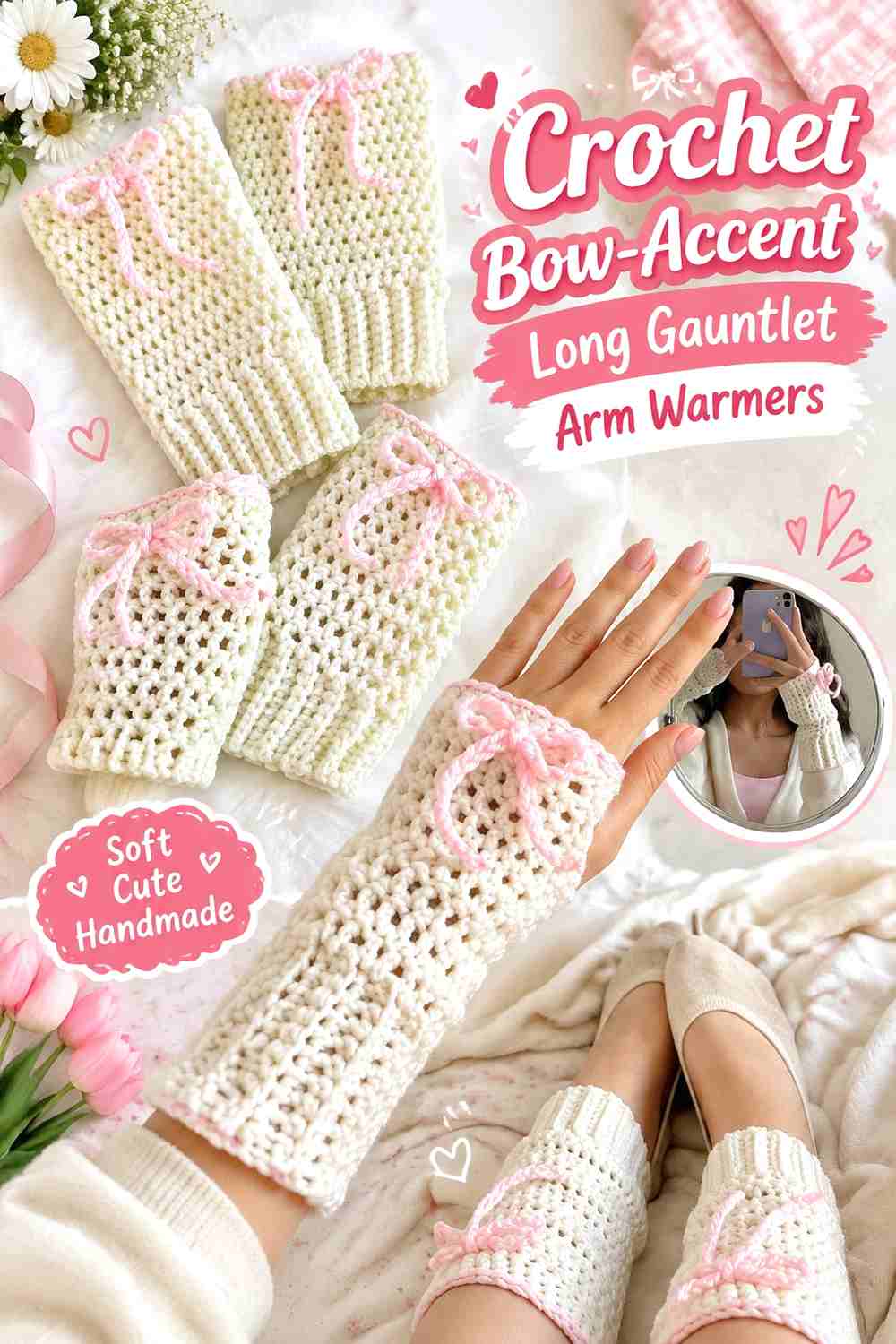
Mahum’s fingerless-glove tutorial provides a playful base with bow details. The original construction is shorter than a true elbow-length gauntlet, so the extended forearm needs separate measurement and fit planning.
The bow makes this option noticeably different from the minimal winter designs and works well for romantic, ballet-inspired, or deliberately playful styling.
Decide Where the Bow Belongs After Extending the Glove
A bow positioned perfectly on a short mitt can appear visually low once a long forearm section is added.
You can keep it close to the hand as a small accent or move the design emphasis toward the upper edge. Make that choice after viewing the complete gauntlet proportion.
Keep Decoration Away From High-Friction Areas
Think about bags, desks, coat cuffs, and the opposite hand.
A dimensional bow positioned where it is constantly rubbed or compressed may quickly become inconvenient even if it photographs well.
The Base Gauntlet Should Stay Up on Its Own
Do not use an embellishment to compensate for loose fit.
Resolve slipping or rotation through the underlying crochet first so the bow remains decorative rather than structural.
Creator Credit: mahum 🎀
8. Crochet Vintage Lace Winter Gauntlet Arm Warmers
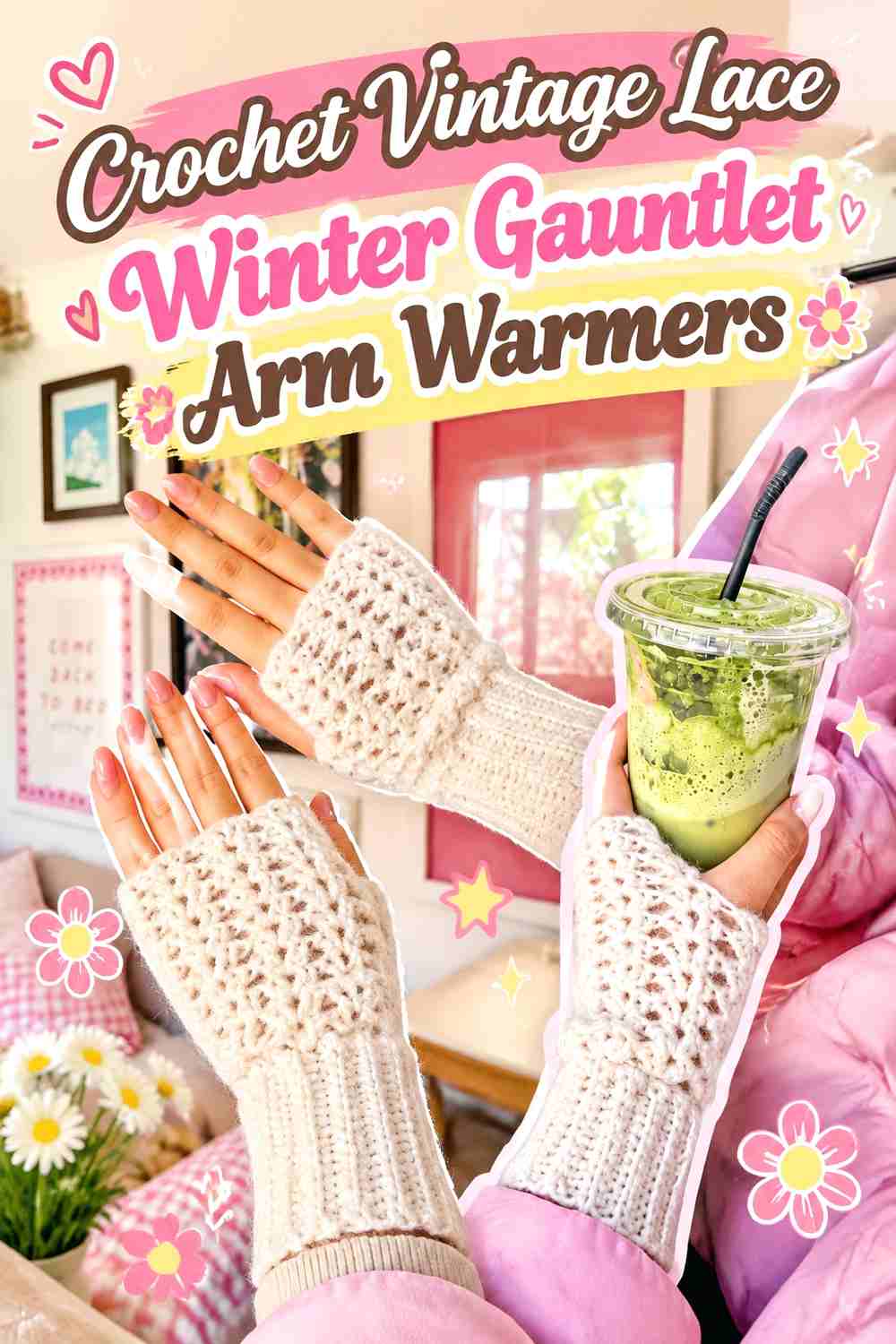
Mucie Studio’s lace fingerless gloves provide a softer vintage direction. The original source is a shorter glove rather than an elbow-length winter warmer, so extending it into a long gauntlet requires independent forearm planning.
This idea works particularly well when you want the accessory to look delicate while still covering a large part of the arm.
Lace Looks Different Once It Stretches
An openwork pattern can appear compact on a table and much more open around the fuller forearm.
Test the fabric while worn before repeating the lace over the entire gauntlet.
Combine Solid and Lace Sections for More Control
The whole warmer does not have to use identical openwork.
A firmer wrist or hand section can anchor the glove while the longer forearm carries the lighter lace. That contrast can also keep the design from becoming visually repetitive.
Match the Lace Repeats on the Pair
Long openwork gives the eye many points of comparison.
Finish both gauntlets at equivalent motif positions so their upper edges look intentionally matched even if tiny tension differences remain.
Creator Credit: Mucie Studio
9. Crochet Starlight Openwork Gauntlet Arm Warmers
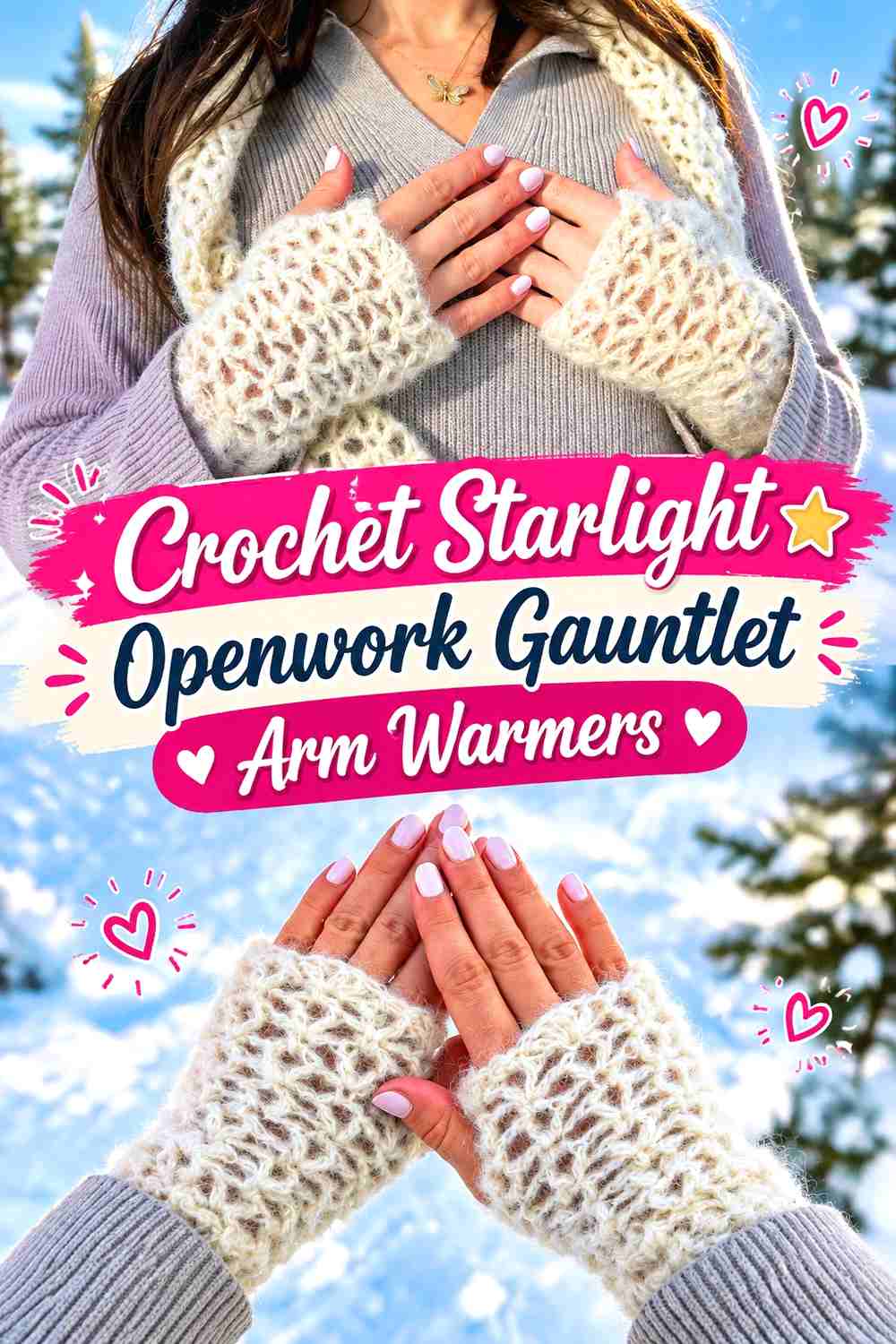
HookedOnViktoriya’s lace hand-warmer construction provides a geometric openwork direction that can be adapted into a longer winter-fashion gauntlet.
The airy structure gives it less visual weight than cables or dense ribbing, making it useful for indoor winter dressing and decorative layering.
Preserve the Shape of the Openwork
An open V-shaped or similarly geometric stitch should not need to stretch so far that its structure becomes unrecognizable.
Check the fabric around the widest part of your forearm before deciding how much width the long extension requires.
Decorative Borders Need the Right Circumference
An edging that lies neatly around the wrist may flare very differently when moved to the upper forearm.
If you relocate the decorative finish to create the long gauntlet, test it at that actual circumference rather than assuming the original behavior will transfer.
Use a Base Layer for Colder Weather
Open crochet leaves substantial areas exposed.
For winter styling, the gauntlets can be layered over fitted long sleeves if you want the lace pattern to remain visible while increasing coverage.
Creator Credit: HookedOnViktoriya
10. Crochet Victorian-Inspired Long Gauntlet Arm Warmers
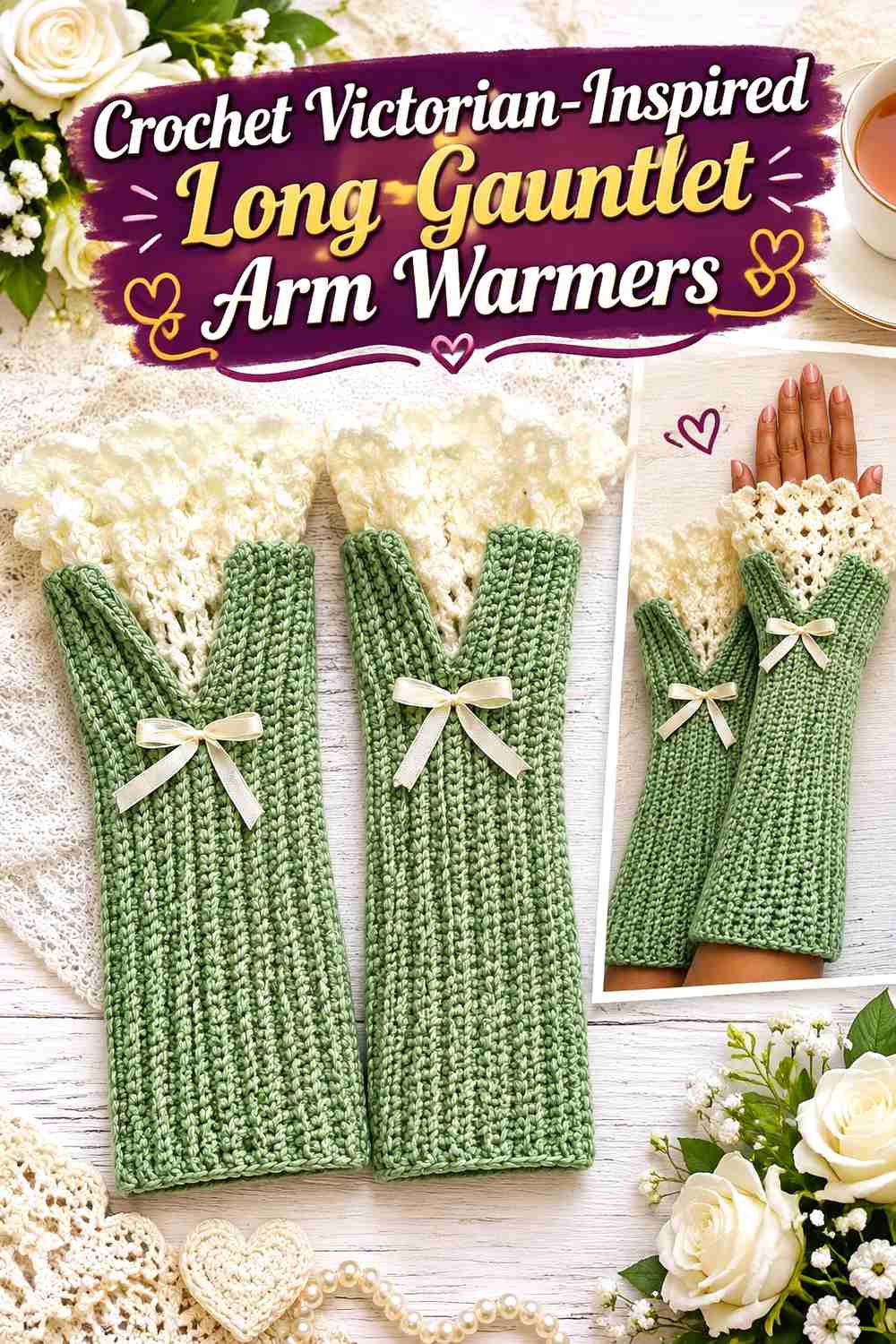
Ooty knitting and crochet’s vintage-style fingerless-glove construction provides the strongest historical-romantic direction in this collection.
The source glove is shorter than the final long-gauntlet concept, so use its hand and decorative treatment as the reference and plan the extra forearm separately.
Concentrate Vintage Detail in Focal Areas
A Victorian-inspired accessory does not need lace and ruffles across every inch.
Choose whether the strongest decoration belongs at the hand, wrist, or upper edge. Calmer crochet between those zones helps each ornamental section stand out.
Check the Upper Edge Against Your Clothing
A decorative gauntlet may compete with a lace cuff, puff sleeve, jewelry, or patterned winter dress.
Try the developing piece with the clothing you intend to wear and decide whether the gauntlet should meet, overlap, or stop clearly below the sleeve.
Avoid an Overly Wide Top Border
A substantial ruffle or decorative finish grows more visually dominant when placed at the wider upper forearm.
Test the proposed border there before repeating it on both arms.
Creator Credit: Ooty knitting and crochet
11. Crochet Scalloped Flower Gauntlet Arm Warmers
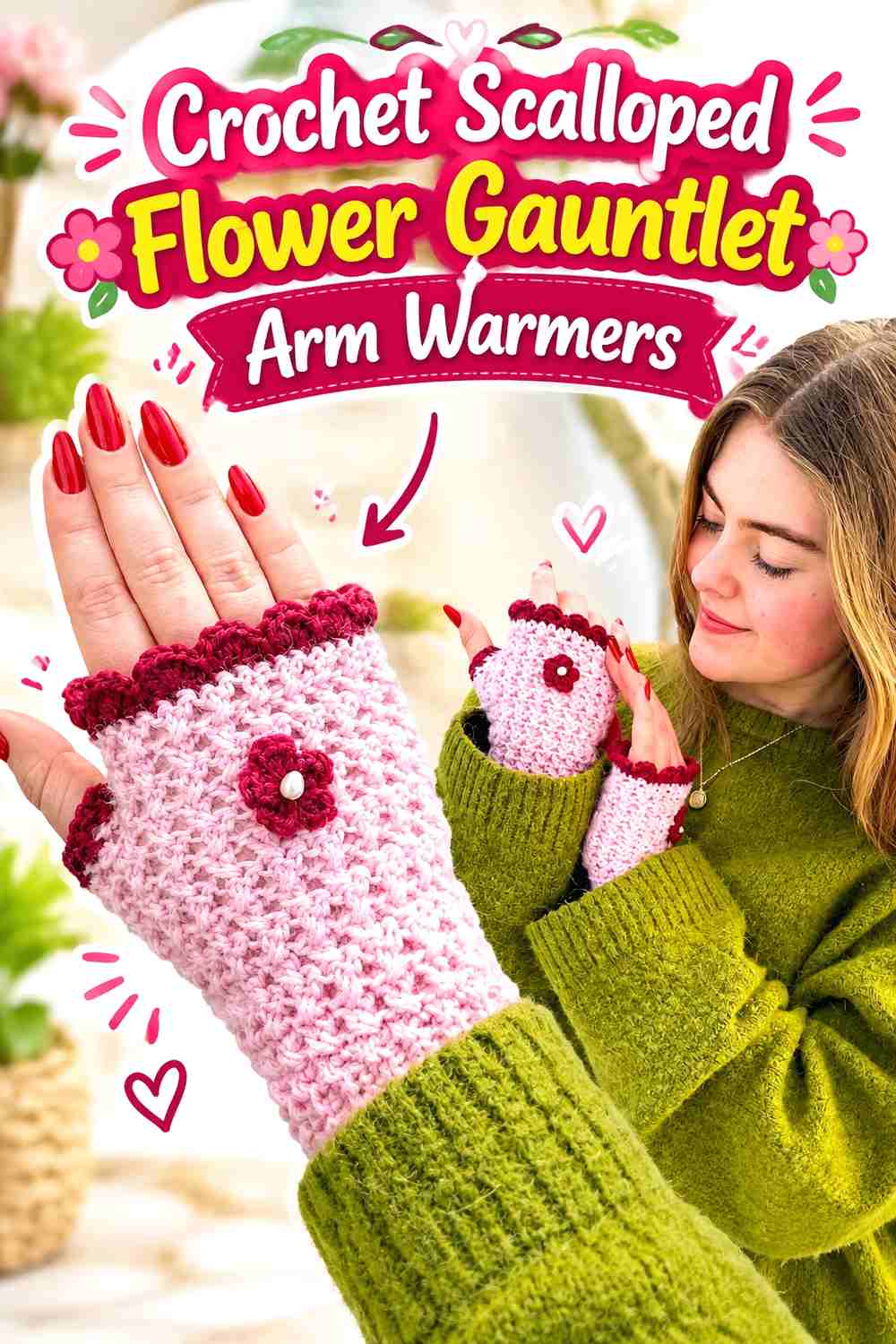
Crochet with Linni’s fingerless gloves combine crossed open texture with a scalloped finish and flower detail, providing a distinctly decorative source for the final idea.
The tutorial supports made-to-measure adjustment, but a true long gauntlet still deserves multiple forearm fit checks rather than treating extra length as a purely decorative addition.
Decide Where the Scallops Should Finish
A scalloped border creates a strong silhouette.
You can preserve the source’s decorative placement closer to the hand or make the long upper edge the major scalloped feature. Avoid using equally prominent scallops at every possible transition unless you deliberately want a very ornate result.
Keep the Flower Away From Constant Contact
A dimensional flower is most successful where it remains visible without repeatedly rubbing against a desk, handbag, or fitted sleeve.
Test the plain gauntlet during normal movement before fixing the embellishment permanently.
Crossed Texture Makes Alignment Important
A repeated surface pattern gives you obvious landmarks for comparing the two gauntlets.
Position both on the arms and check where the main texture begins, how it relates to the thumb, and where it ends before completing the second piece.
Creator Credit: Crochet with Linni
Which Long Crochet Gauntlet Style Should You Choose?
For the strongest practical winter coverage, start with the elbow-length ribbed, cable-texture, everyday ribbed, sleek long fingerless, or clean-column designs. They rely more on fabric coverage than decorative openwork and are easier to imagine as true cold-weather accessories.
For low-profile layering beneath coats, the sleek, minimal flat-panel, everyday ribbed, and custom-length designs are the most useful starting points. Keep the upper forearm relatively smooth so it does not create excessive bulk beneath a fitted sleeve.
For statement styling, look at the cable-texture, bow-accent, Victorian, and scalloped-flower directions. These treat the arm warmer as part of the outfit rather than something intended to disappear under outerwear.
The vintage lace and Starlight openwork gauntlets provide the lightest visual appearance. They offer long-arm drama but should be understood as decorative layering pieces rather than assuming the open fabric will provide the same cold protection as dense crochet.
Conclusion
Long crochet gauntlet arm warmers become more interesting—and more challenging—as they travel farther from the wrist. Extra length brings the changing shape of the forearm, elbow movement, sleeve interaction, and upper-edge stability into the project.
Choose ribbing or cleaner fabric when everyday winter layering is the priority. Use cables when you want substantial texture, or lace, scallops, flowers, and bows when the gauntlets are intended to remain fully visible as part of an outfit.
When adapting a shorter fingerless-glove tutorial, finish the hand and thumb fit first. Then measure the additional forearm separately and check the gauntlet repeatedly while worn. Use the credited tutorial for its original construction rather than assuming its stitch counts or proportions can simply be repeated until the piece reaches the elbow.
Frequently Asked Questions
How long should crochet gauntlet arm warmers be?
There is no universal length. A long gauntlet can stop around mid-forearm or continue close to the elbow. Choose the stopping point according to your arm proportions and clothing, then bend your elbow to make sure the upper edge does not bunch uncomfortably against the joint.
Can I simply add more rows to a short fingerless glove to make it elbow-length?
Not always. Your forearm normally becomes wider above the wrist, so a straight extension may become too tight or distort the stitch pattern. Compare circumference at several points and determine how the selected construction accommodates the changing shape.
What stitch style works well for winter gauntlet arm warmers?
Dense ribbing, textured crochet, and cable-style surfaces create more coverage than open lace or fishnet. The right option also depends on whether the gauntlets need to fit beneath coat sleeves. Heavy dimensional stitches may provide a substantial look but can become bulky under fitted outerwear.
How do I keep long crochet arm warmers from sliding down?
Fit should be balanced throughout the forearm rather than depending on an extremely tight upper edge. The fabric needs suitable stretch and recovery, and the upper circumference should relate to the part of the arm where the gauntlet finishes. A tight border cannot fully compensate for an oversized body.
Should long crochet gauntlets reach into the elbow crease?
They can, but check comfort before committing to that length. Fabric near the elbow may bunch or shift when the arm bends. Stopping slightly below the crease often preserves the long look while allowing easier movement.
Can I wear crochet gauntlets over sweater sleeves?
Yes, provided the upper circumference has enough room. Wearing gauntlets over fitted sleeves also highlights lace and decorative texture. For chunky sweaters, test the combination before finishing because the same gauntlet that fits a bare arm may be too tight over thicker fabric.
How can I make two long arm warmers match?
Compare them throughout the project rather than finishing one completely before checking the second. Align thumb placement, wrist position, overall relaxed length, texture repeats, color changes, and upper width. Long gauntlets make even modest differences in length or taper easier to see.