Statement earrings do not need metal, resin, or oversized stones to create impact. Crochet can build volume through bobbles, fringe, petals, open lace, layered motifs, and tightly worked thread, giving earrings a distinctly textile-driven look.
For a runway-inspired effect, scale is only one part of the equation. A small earring with pronounced three-dimensional petals can have more visual presence than a larger flat circle. Long fringe introduces movement, beads create contrast against soft fiber, while crisp granny squares or lace hoops turn familiar crochet structures into graphic jewelry.
The 13 tutorials below each approach texture differently. Some are complete statement-earring designs exactly as taught, while others provide a strong construction base for changing color, scale, fringe, or embellishment. Use the original tutorials for exact stitch sequences and assembly rather than trying to reproduce them from the editorial notes here.
Quick List
- Crochet Bobble Fringe Hoop Statement Earrings
- Crochet Long Tassel Statement Earrings
- Crochet Dimensional Flower Statement Earrings
- Crochet Sculpted Leaf Drop Earrings
- Crochet Graphic Circle Statement Earrings
- Crochet Loop And Dangle Earrings
- Crochet Beaded Hoop Statement Earrings
- Crochet Ring And Wood Bead Earrings
- Crochet Sculptural Heart Drop Earrings
- Crochet Sunburst Texture Earrings
- Crochet Chandelier Lace Earrings
- Crochet Silk Thread Beaded Statement Earrings
Think About Texture Before Making the Earrings Bigger
Statement jewelry is often associated with scale, but crochet provides another route: surface dimension.
Bobbles create raised points. Petals project away from the base. Fringe moves below it. Granny clusters form recognizable blocks of negative space, while lace combines solid stitches and openings to create a detailed silhouette.
That means you do not always need to increase the dimensions of a tutorial to make it feel more dramatic. Changing a flat-looking material to one with clearer stitch definition, emphasizing a textured edge, or introducing a controlled contrast can create more visual impact without adding significant size.
If you do enlarge a motif, remember that yarn and hardware weight increase along with it. Make one complete earring first and evaluate how it hangs before committing to the second.
Balance Fiber Texture with Jewelry Hardware
Hooks, hoops, jump rings, beads, and other findings affect how crochet earrings look and move. A delicate thread motif attached to heavy-looking hardware creates a different impression from the same motif on a minimal ear wire.
Hoops provide an especially useful frame because crochet can be worked around or attached to their shape. Beads introduce a hard, reflective surface next to the matte or softly lustrous appearance of fiber. Wooden beads move the design in a more organic direction.
Check hardware compatibility before finishing the crochet. Openings need to accommodate the intended attachment, and any bead incorporated directly into crochet needs to work with the thread or method demonstrated by the creator.
Make the Pair Match in Shape Before Worrying About Tiny Stitch Differences
Statement earrings place two similar objects on opposite sides of the face, so obvious differences in length or silhouette tend to be easier to notice than minor stitch variation.
For fringed earrings, compare the pair vertically before final trimming. For flowers, leaves, squares, and lace circles, block or shape both pieces under the same conditions when the source construction calls for it.
Also check orientation before closing jump rings or attaching hooks. A beautifully crocheted motif loses much of its impact if one earring hangs at a different angle from the other.
1. Crochet Bobble Fringe Hoop Statement Earrings
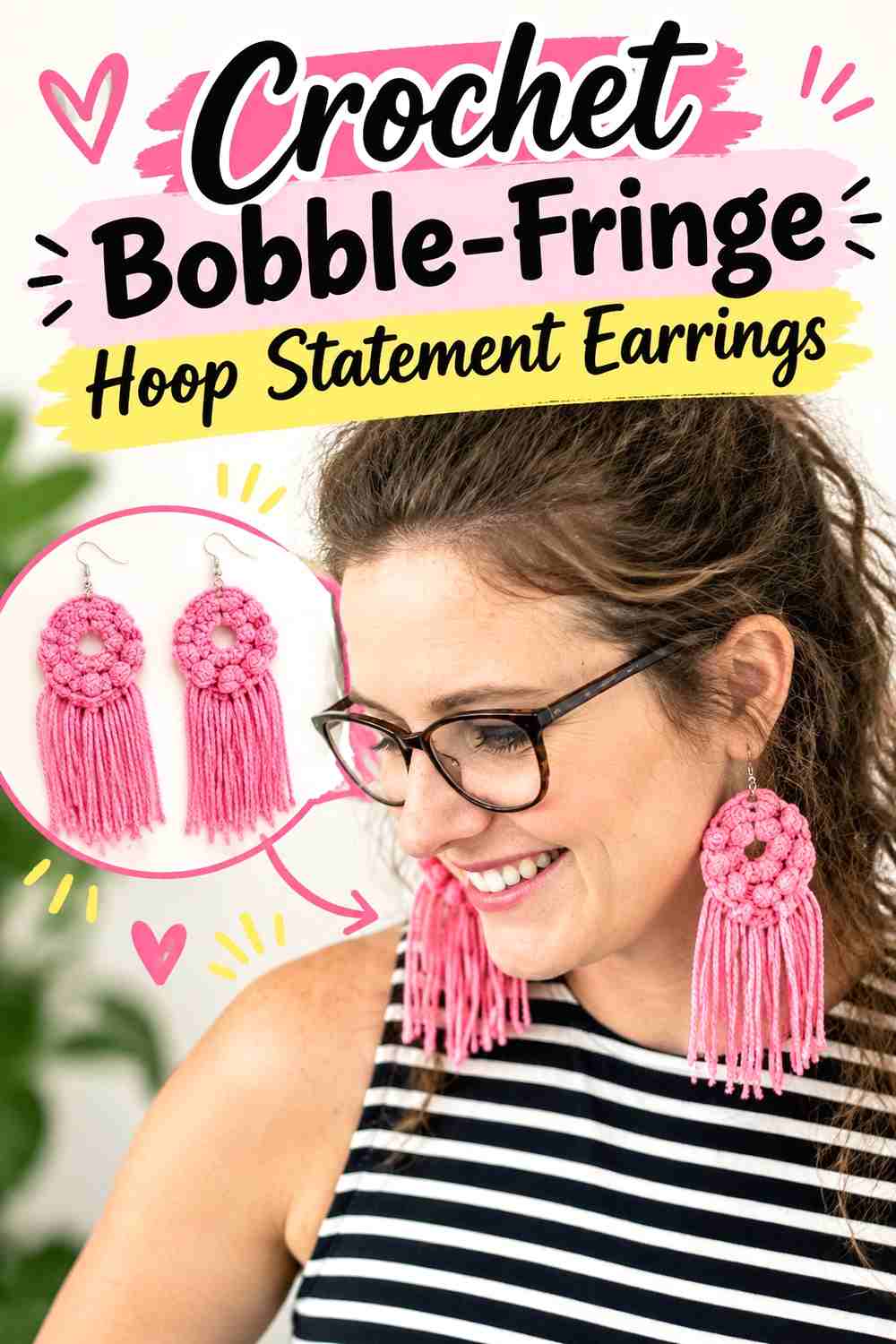
This design combines several types of texture in one compact statement piece. A crocheted circular section provides the body, bobbles add raised surface detail, and loose fringe creates movement along the lower edge. The hoop finding also gives the fiber a clear geometric frame.
It is a particularly useful direction if you want an earring that reads as textile jewelry rather than a small crochet motif attached to a hook.
Bobbles Give the Upper Section Enough Visual Weight
Fringe naturally attracts attention because it moves, so the textured crochet above it needs enough presence to avoid looking like a simple attachment point. Bobbles solve that by adding depth before the fringe begins.
If you change yarn, check whether the bobbles remain clearly defined. A very fuzzy fiber can soften the raised effect that makes this construction distinctive.
Fringe Length Controls the Drama
Short fringe keeps the design closer to the hoop silhouette. Longer strands produce a more theatrical vertical line.
Cut and attach a small test section first, then hold the earring in wearing position before trimming both pieces. Fringe that looks modest on a table can appear much longer once suspended from an ear wire.
Creator Credit: A Crafty Concept Verified tutorial
2. Crochet Long Tassel Statement Earrings
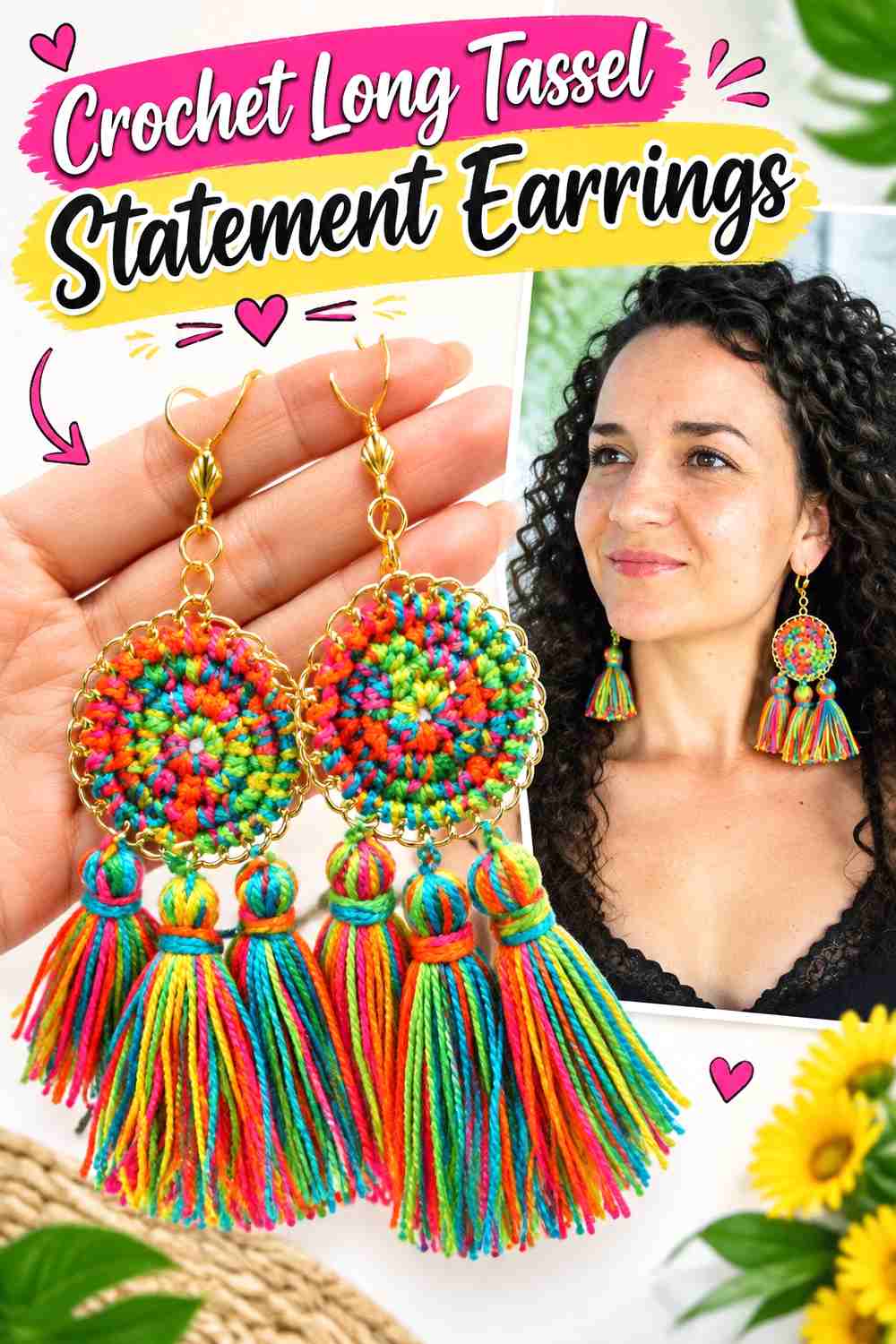
Crochet MC’s tassel design takes a more linear approach. Instead of creating most of the texture inside a flat motif, the earring relies on hanging fiber to produce movement and visual length.
This direction works particularly well when you want statement earrings to move with the outfit rather than remain close to the ear.
Tassels Need a Clean Top Transition
A long fringe section is visually dominant, so the area where it connects to the crocheted portion becomes important. Keep that transition neat enough that the tassel looks intentionally suspended rather than simply tied onto the bottom.
Match the Pair Before Final Trimming
With long vertical strands, even small differences in length can become visible. Hang both earrings side by side before making the final cut.
Do not judge the fringe while it is spread across a table. Let gravity pull the strands into their natural position first.
Creator Credit: Crochet MC Verified tutorial
3. Crochet Dimensional Flower Statement Earrings
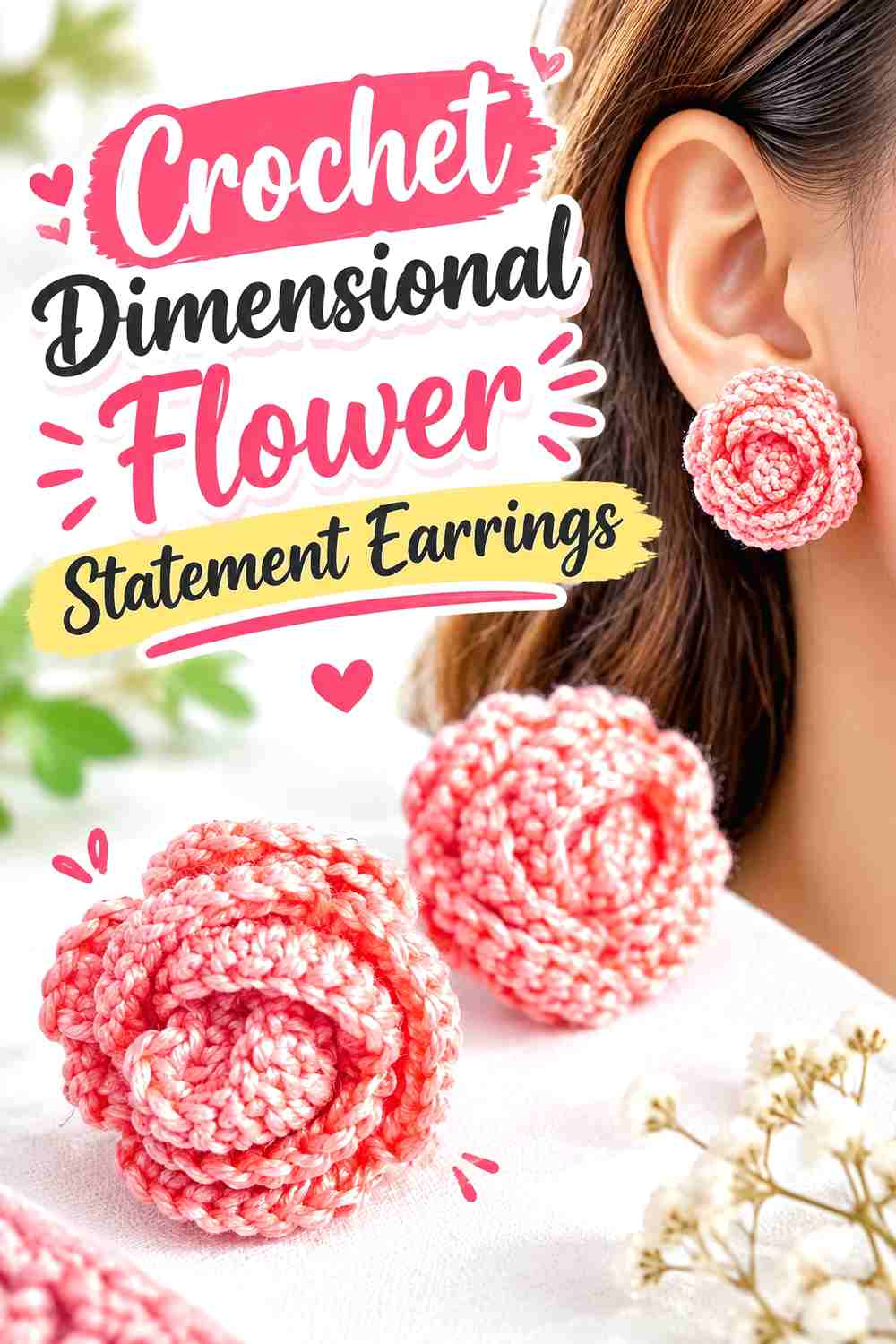
Flower earrings create statement texture without relying on fringe. Banoris Crafts demonstrates a recognizable crocheted floral form, making this a useful choice when you want the silhouette itself to supply the drama.
The petal structure also offers plenty of color flexibility. One shade emphasizes shape, while contrasting centers and petals can make the layers easier to distinguish.
Petal Definition Matters More Than Extra Embellishment
A dimensional flower already contains repeated edges, shadows, and curves. Adding beads, fringe, and charms at the same time can easily make the small design look crowded.
Start by deciding whether the petals are visually strong enough on their own.
Check How the Flower Faces Forward
A dimensional motif can tilt differently from a flat earring. Before permanently attaching the finding, hold the flower from its intended top point and check whether the front remains visible when hanging.
Creator Credit: Banoris Crafts Verified tutorial
4. Crochet Sculpted Leaf Drop Earrings
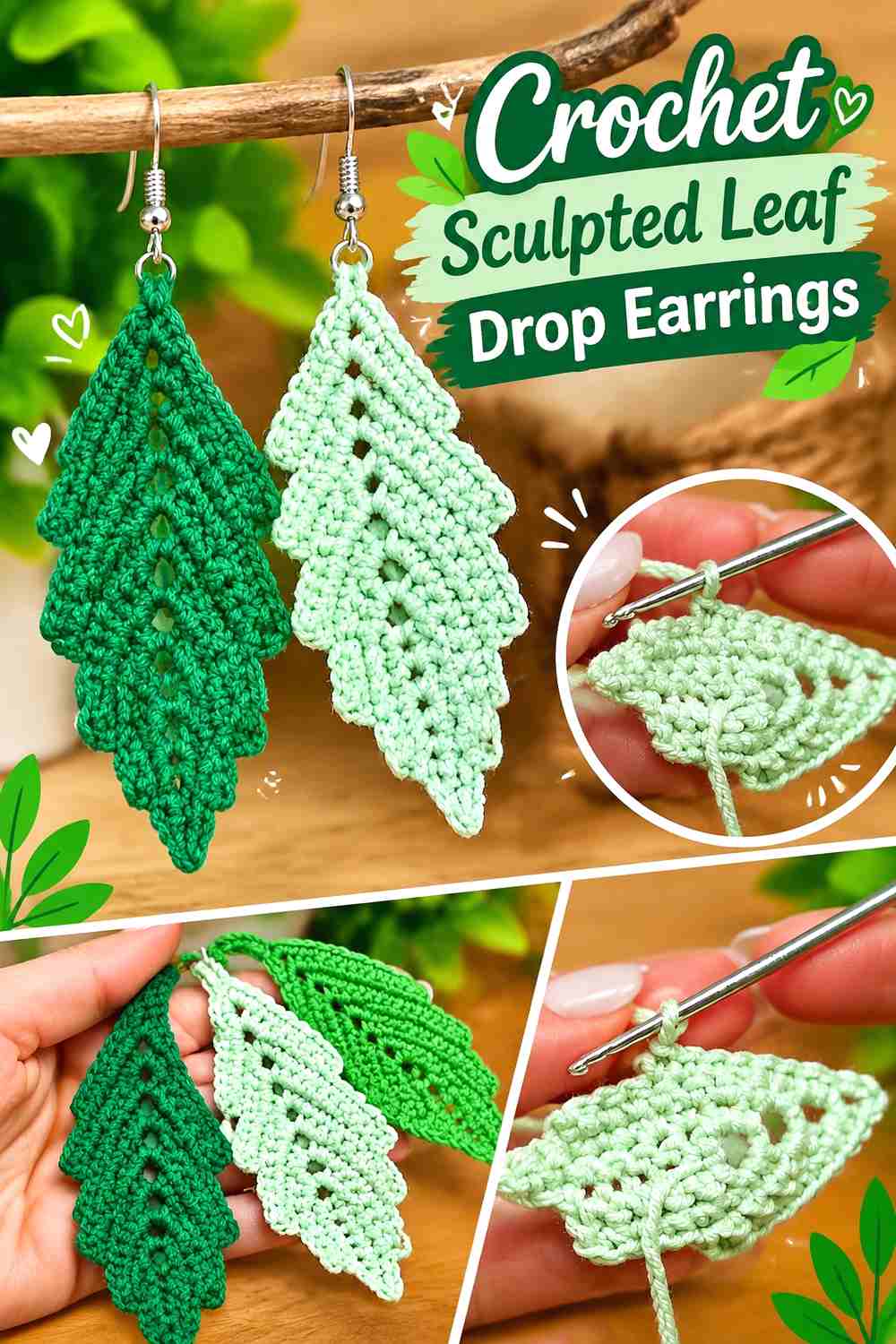
A crochet leaf creates texture through shaping rather than added fringe. The ElenaRugalStudio tutorial uses a central open detail and a clearly defined leaf form, giving the finished piece a more organic silhouette than circles or squares.
For statement styling, the elongated shape can provide noticeable movement while keeping the overall design visually narrow.
Stitch Direction Helps Create the Leaf Texture
The most effective leaf earrings make their construction part of the visual design. Directional stitches and openings can suggest veins, so a smooth thread that keeps those details visible may be more effective than one that obscures them.
One Leaf Can Be Stronger Than a Cluster
It can be tempting to attach several motifs together for more impact, but a single well-defined leaf already creates an elongated drop. Additional leaves will change the movement and increase the amount of fiber hanging from the finding.
Creator Credit: Вязание.ElenaRugalStudio Verified tutorial
5. Crochet Graphic Circle Statement Earrings
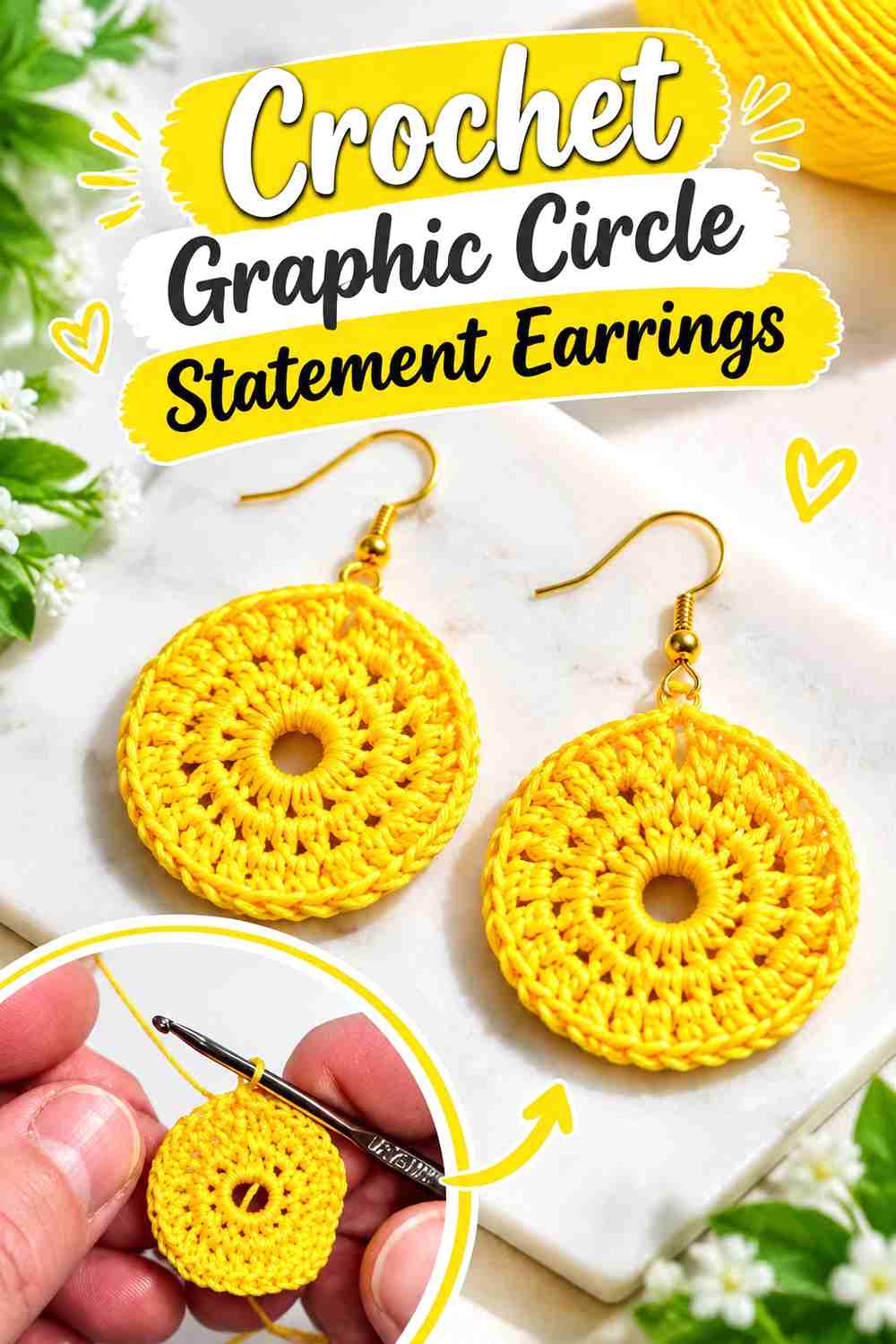
Pattern Princess’s circle earring construction provides a clean geometric alternative to petals and fringe. The basic round form makes color, scale, and attachment choices especially visible because there is little additional decoration competing with them.
This is also a useful foundation if you prefer statement earrings built from simple shapes rather than ornate motifs.
Scale Changes a Circle Quickly
A small circle reads as a subtle dangle. Increasing its diameter changes the design into a much stronger graphic element.
Before enlarging the source construction, consider how the fabric will behave. A larger circle may need more attention to blocking or structure than a small motif.
Multiple Circles Can Create Vertical Rhythm
If you want to experiment beyond the source format, separate crochet circles can inspire a linked geometric look. Keep the pieces proportionate and make sure additional components do not cause the finished earring to twist unpredictably.
Creator Credit: Pattern Princess Verified tutorial
6. Crochet Loop And Dangle Earrings
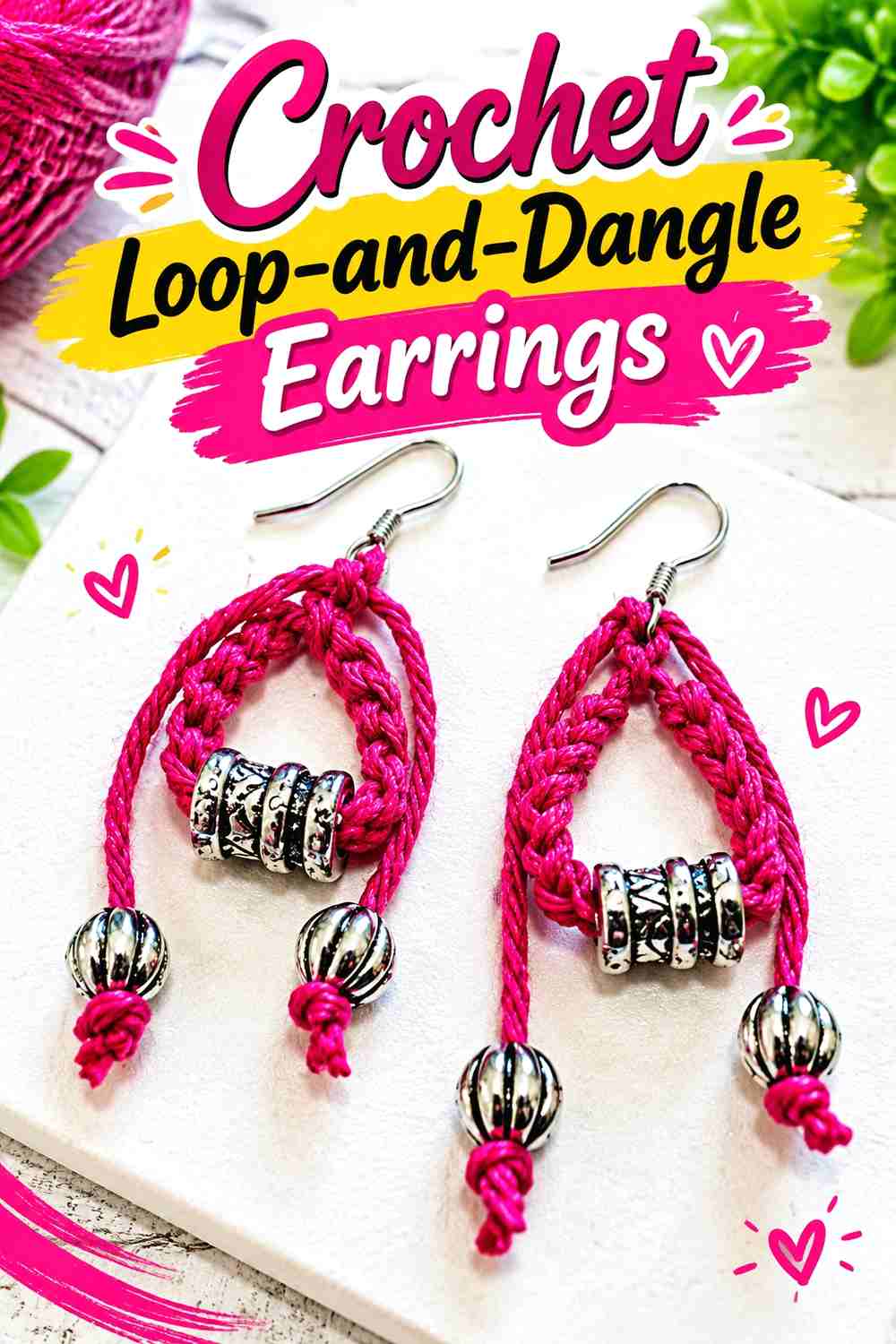
Hectanooga1’s loop-and-dangle approach creates statement texture through suspended components rather than a solid crocheted disk. Open loops leave negative space between the fiber elements, making the earring feel visually lighter than an equally long tassel.
This construction is useful when you want length and movement without filling the entire silhouette.
Negative Space Is Part of the Texture
Do not judge open earrings only by the amount of crochet they contain. The gaps between loops can be as important as the stitches themselves, particularly when the design is viewed against hair or clothing.
Keep Repeated Dangles Balanced
If you adapt the number or length of hanging elements, arrange the completed pieces before securing everything permanently. A noticeably heavier side can cause the design to rotate rather than hang forward.
Creator Credit: Hectanooga1 Verified tutorial
7. Crochet Beaded Hoop Statement Earrings
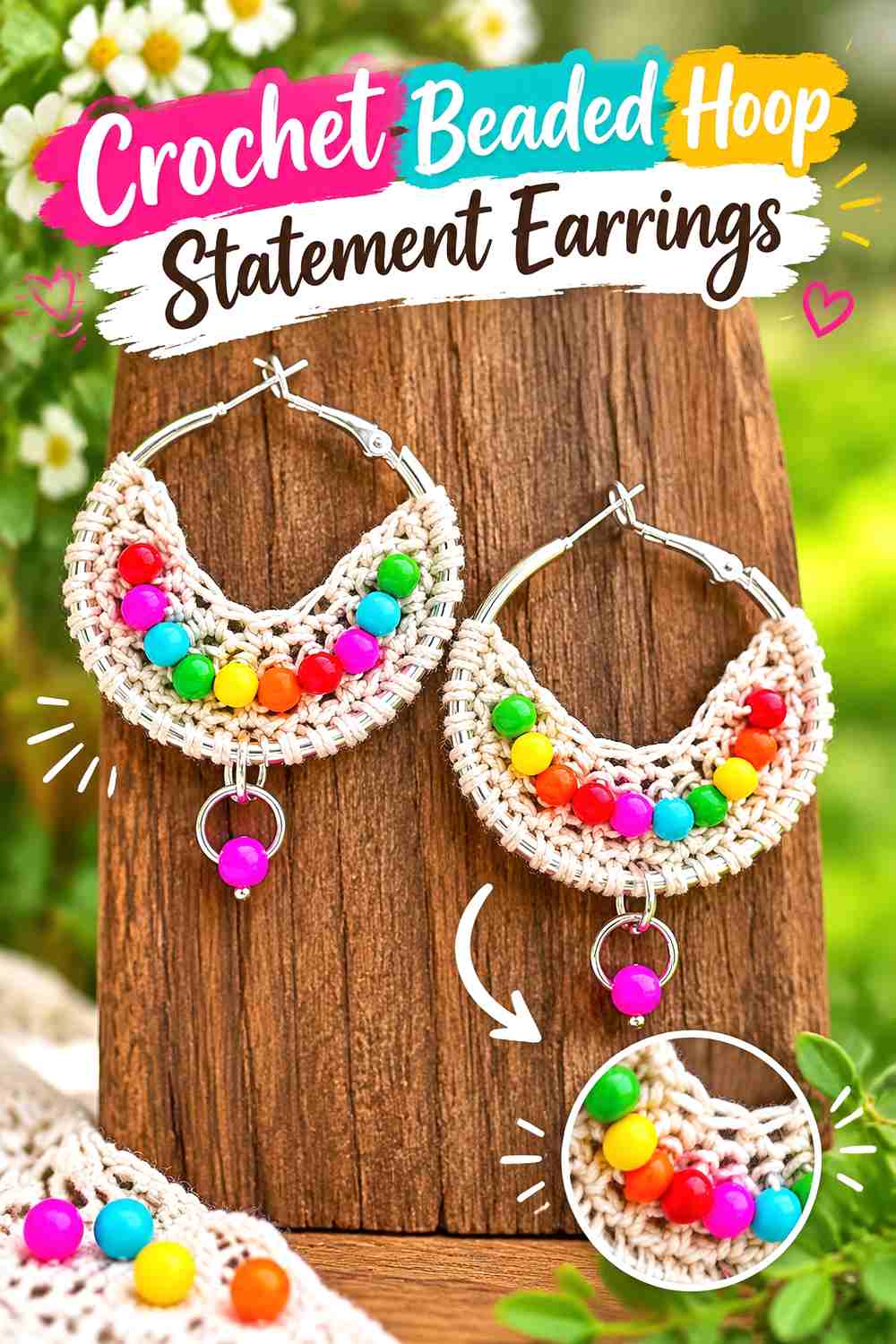
Naztazia’s boho earrings combine crochet thread, a metal hoop, and beads, creating three distinctly different surfaces in one design. The rigid hoop supplies the geometry, crochet softens the frame, and the beads introduce small points of shine and dimension.
This is one of the strongest choices when you want mixed-material texture rather than an all-fiber earring.
Beads Change Both Appearance and Balance
Adding more beads is not automatically better. Their placement affects where visual and physical weight is concentrated around the hoop.
When substituting beads, check compatibility with the construction demonstrated in the tutorial rather than choosing solely by outside diameter.
Let the Hoop Preserve the Shape
A rigid frame can be helpful when you want a clear circle that does not depend entirely on blocking. Keep crochet tension consistent around the hoop so the fiber covering does not visually bunch in one area.
Creator Credit: Naztazia Verified tutorial
8. Crochet Ring And Wood Bead Earrings
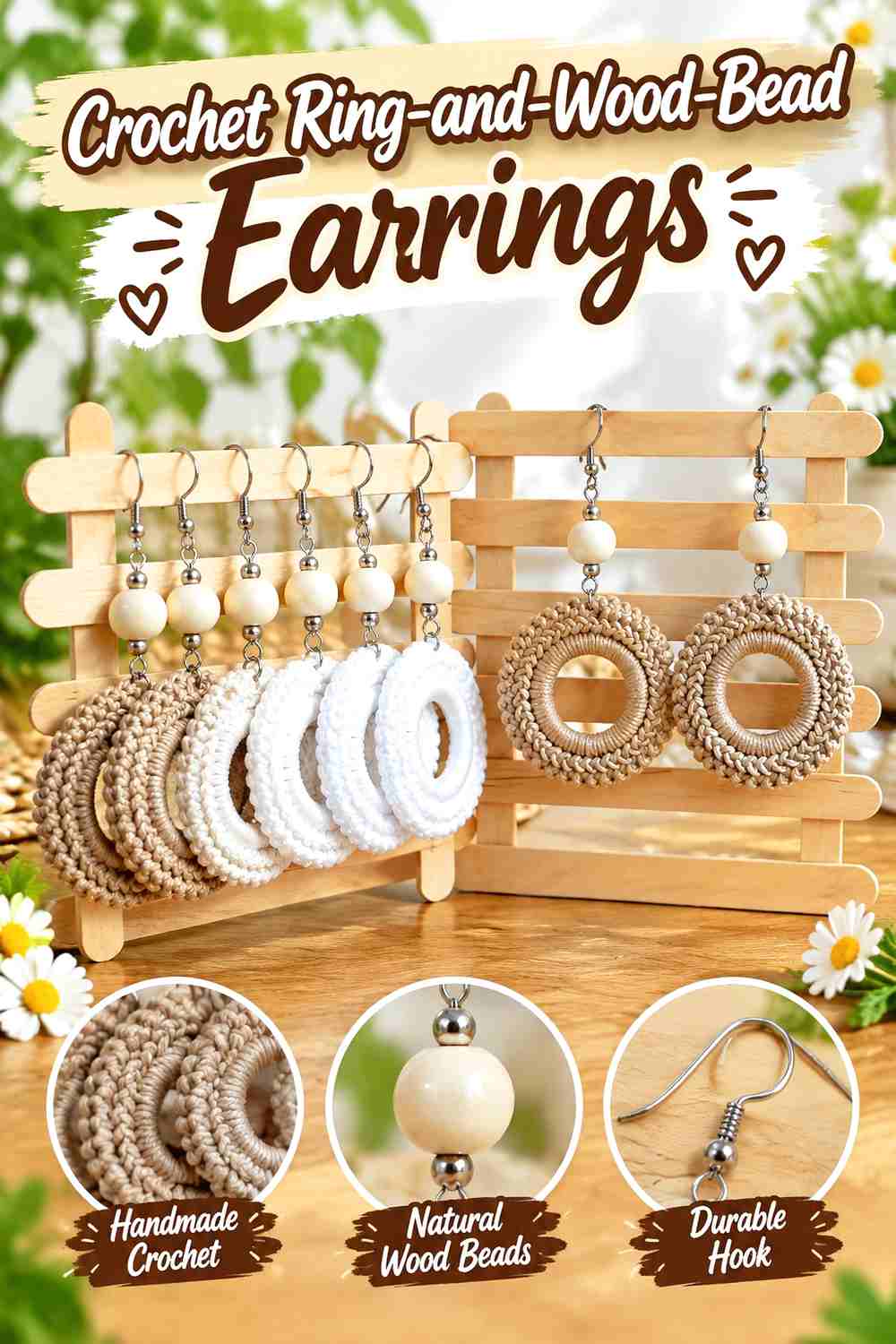
Mavic’s Crafts and Accessories combines a small ring structure with crochet and visible bead components. The result has a more assembled, jewelry-like character than a standalone thread motif.
The mix of mercerized-looking fiber, circular structure, metal details, and wood provides several contrasting textures without requiring fringe.
Wood Gives the Design an Organic Focal Point
A wooden bead reads differently from glass or polished metal. Its matte surface can reinforce the textile quality of the crochet rather than competing with it.
If you substitute another bead material, expect the overall mood of the earring to change even if the crochet remains identical.
Keep the Ring and Bead in Proportion
A very large bead can visually overpower the crocheted ring, while a very small one may disappear against a highly textured background. Compare the components together before assembly.
Creator Credit: Mavic’s Crafts and Accessories Verified tutorial
9. Crochet Sculptural Heart Drop Earrings
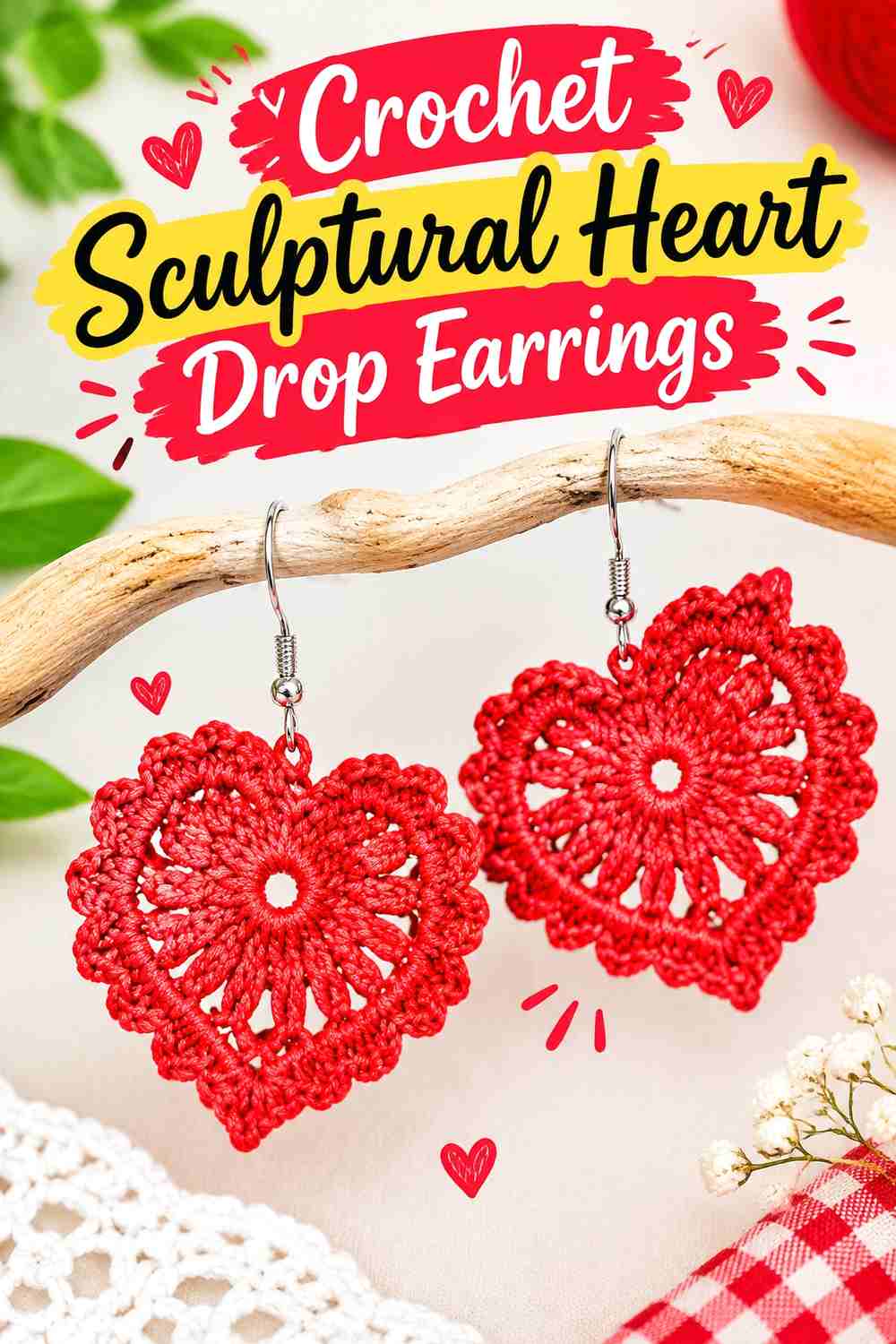
Sabrina Collati’s crochet heart earrings turn a compact motif into a recognizable statement shape. Compared with circles and hoops, the heart has directional curves and a strong lower point, making the silhouette interesting even in a single color.
For a runway-inspired version, consider the heart as a graphic textile form rather than limiting it to traditionally romantic color palettes.
Shape Clarity Is the Main Feature
The two upper curves and lower point need to remain readable when the motif hangs vertically. If a different yarn makes those areas too soft or fuzzy, the earring may lose the clean outline that gives it impact.
Unexpected Colors Can Change the Mood
Black, cream, metallic-looking thread, rust, cobalt, or another strong wardrobe color can move a heart motif away from obvious holiday styling and toward a more graphic accessory.
Color changes the interpretation without requiring changes to the creator’s construction.
Creator Credit: Sabrina Collati Verified tutorial
10. Crochet Sunburst Texture Earrings
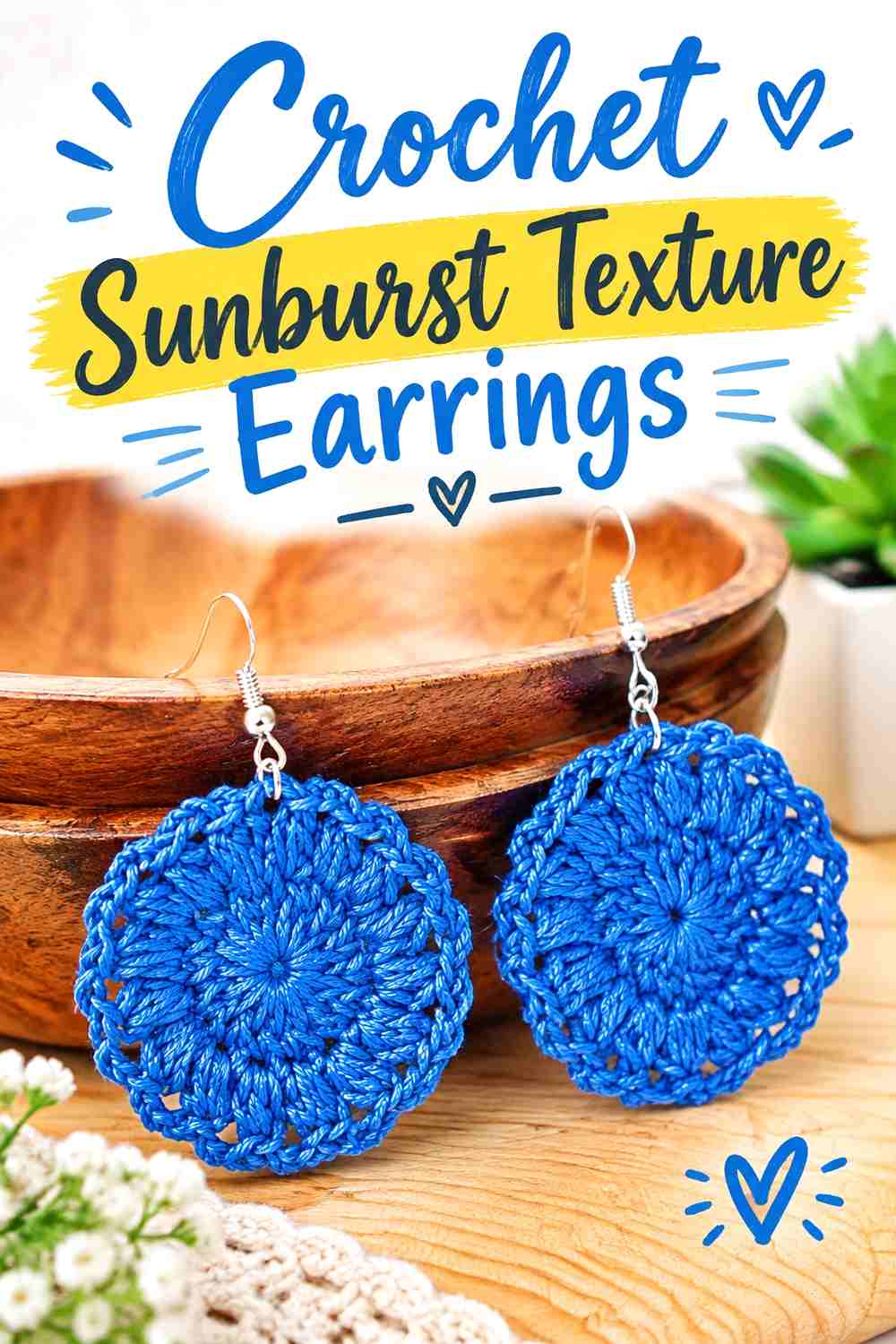
You Should Craft’s sunburst earrings translate part of the visual language of a sunburst-style granny motif into a small circular accessory. Radiating stitches create texture that moves outward from the center instead of concentrating detail only around the edge.
This makes the pair particularly effective when you want a small piece to have a strong graphic structure.
Radial Texture Draws Attention to the Center
Because the construction visually expands from one central point, color placement around that area can strongly influence the finished effect.
A high-contrast center emphasizes the sunburst geometry, while one-color thread makes the stitch texture do more of the work.
Blocking Can Clarify the Outer Shape
Small thread motifs can shift as they are worked. If the source finishing method includes shaping or blocking, treat that as part of the final appearance rather than an optional cosmetic step.
Creator Credit: You Should Craft Verified tutorial
11. Crochet Chandelier Lace Earrings
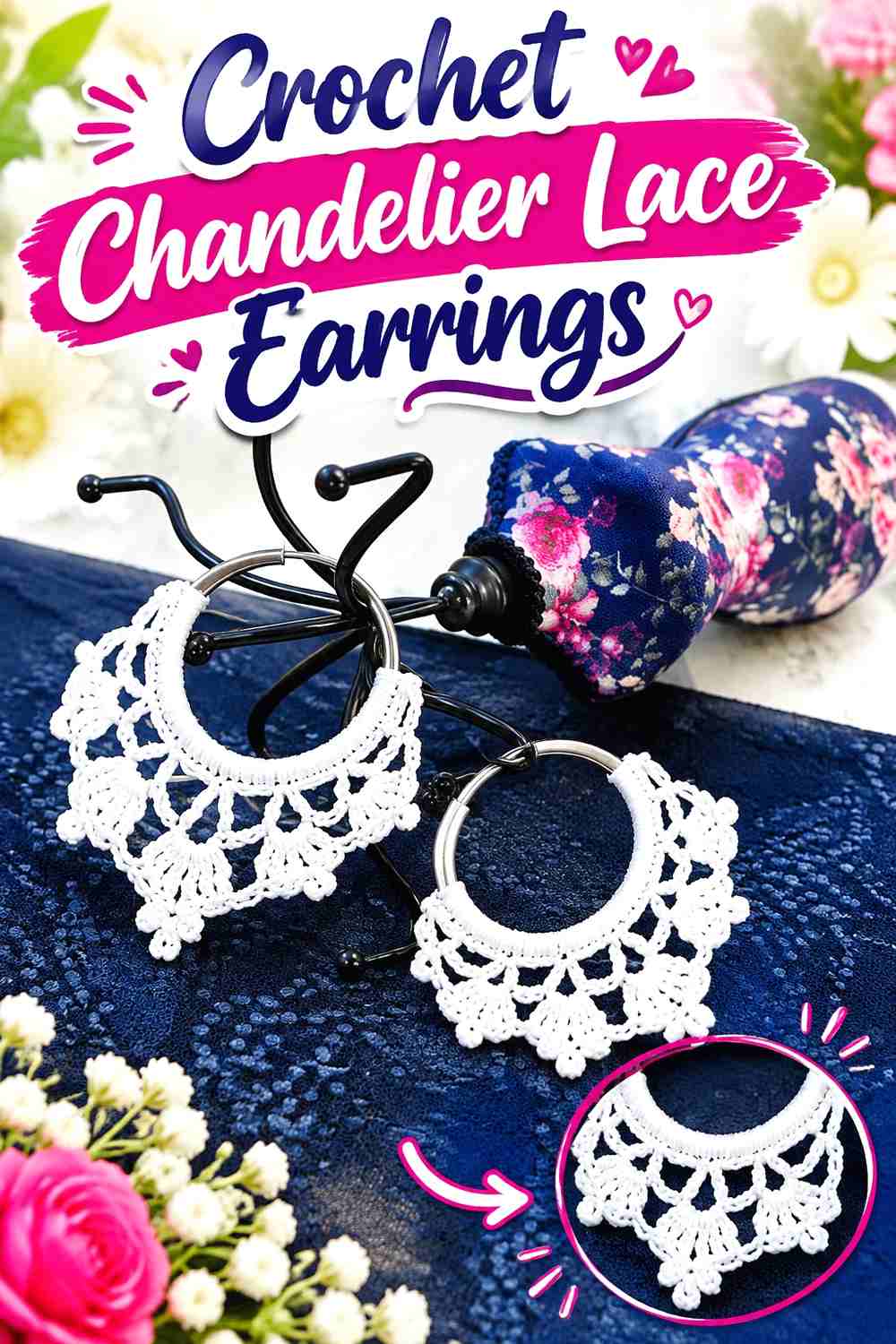
Giani Art’s chandelier-style tutorial creates a delicate open pattern within a hoop form. The repeated openings and elongated stitch structure give it a lace-jewelry appearance rather than the denser surface of a crocheted circle.
This is an especially strong option when you want intricate texture without fringe.
Lace Needs Clean Stitch Definition
The open spaces are part of the finished pattern, so they need to remain distinct. A smooth thread helps preserve the contrast between crocheted lines and empty areas.
The Hoop Provides a Visual Boundary
Intricate lace can become difficult to read when it has no clear outer shape. A circular frame contains the detail and keeps the statement controlled.
If you change the hoop diameter, confirm how the crochet needs to interact with that new circumference rather than assuming the same pattern placement will fit automatically.
Creator Credit: Giani Art Verified tutorial
12. Crochet Silk Thread Beaded Statement Earrings
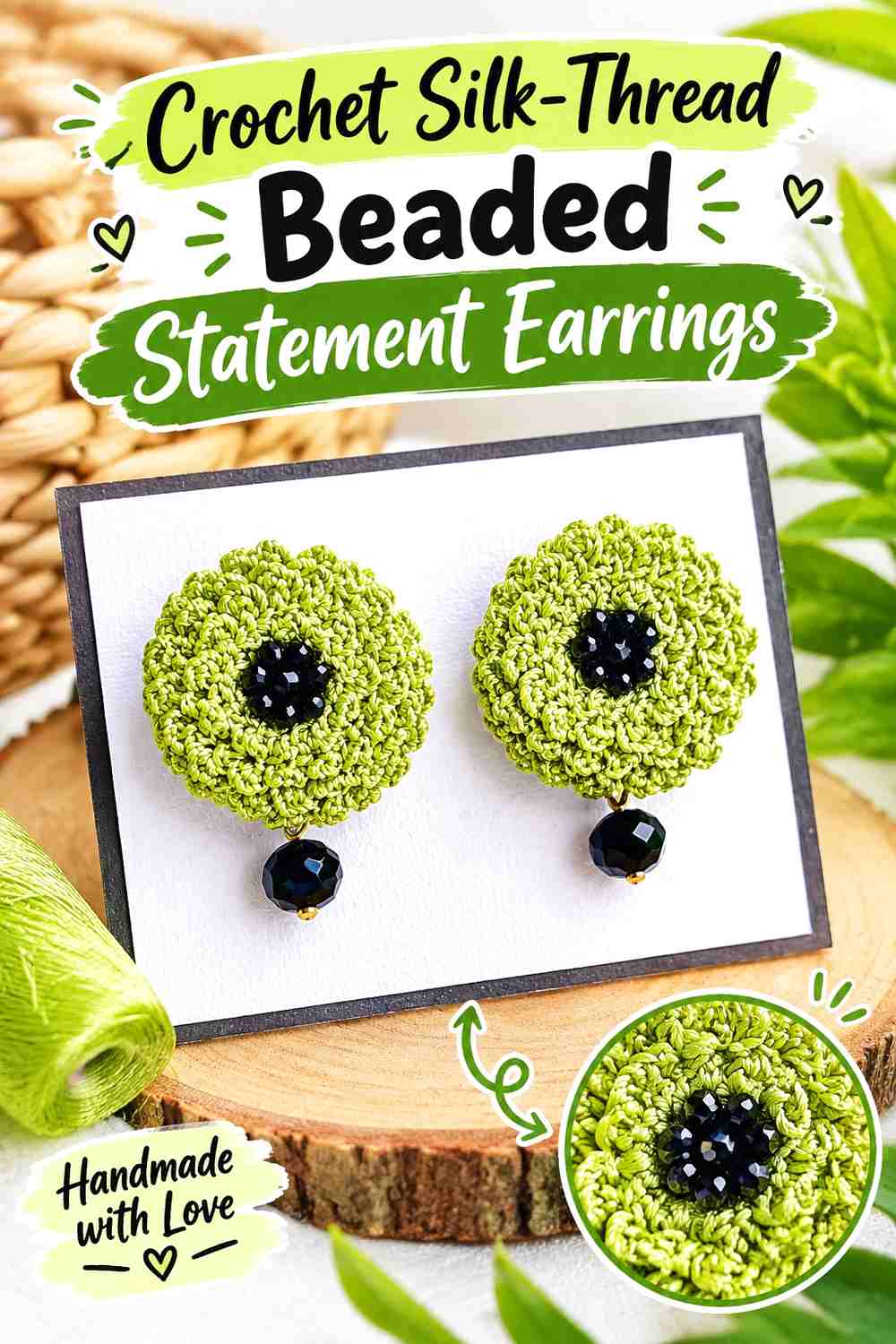
Adishka Crafts demonstrates earrings that combine fine silk thread crochet with bead details. This creates a noticeably different texture from cotton granny squares, fuzzy fringe, or dimensional flowers because the fiber surface appears finer and the beads become stronger visual accents.
The result is a good direction for statement jewelry that feels detailed rather than oversized.
Fine Thread Makes Small Stitch Differences Visible
When crochet is worked at jewelry scale, tension consistency becomes particularly important. Uneven sections that would disappear inside a larger garment can change the shape of a small earring.
Practice with the intended thread before making the final pair if the material behaves differently from your usual crochet yarn.
Beads Should Support the Crochet Structure
The beadwork and crochet should read as one composition. If you adapt the colors or bead sizes, compare them against the finished thread section before assembling both earrings.
A strong contrast creates a bolder jewelry effect; closer colors keep the focus on texture.
Creator Credit: Adishka Crafts Verified tutorial
Which Crochet Statement Earring Texture Should You Choose?
For maximum movement, start with the bobble-fringe, long tassel, or loop-and-dangle earrings. These designs change visibly as the wearer moves.
For sculptural fiber texture, the flower, leaf, heart, and granny-square options make the crocheted shape itself the focal point. They are particularly useful if you want statement jewelry without long hanging fringe.
Choose the beaded hoop, ring-and-wood-bead, or silk-thread bead design when mixed materials appeal to you. Hard beads and metal findings create contrast against the softness of crochet.
If you prefer graphic geometry, the circle, sunburst, granny square, and chandelier designs offer four very different approaches. The circle is comparatively minimal, the sunburst radiates from the center, the granny square emphasizes corners and clusters, and the chandelier uses lace-like negative space inside a hoop.
Conclusion
Runway-inspired crochet earrings work best when texture has a clear purpose.
Fringe creates motion. Bobbles and petals create depth. Leaves and hearts turn crochet into a strong silhouette. Granny squares and sunbursts transform familiar motifs into miniature graphic objects, while lace and beads create contrast between empty space, fiber, and harder jewelry components.
You do not need to add every detail to the same pair. A single strong texture usually has more impact than several unrelated embellishments competing in a small area.
Choose the tutorial whose structure gives you the effect you want, make one complete earring before altering scale or decoration, and use the original creator’s tutorial for exact crochet and assembly instructions.
Frequently Asked Questions
What makes crochet earrings look like statement jewelry?
Scale can help, but distinctive texture is just as important. Long fringe, dimensional petals, raised bobbles, large open lace, strong geometric shapes, beads, or multiple dangling elements can make an earring visually prominent without simply increasing its overall dimensions.
What type of crochet texture works well for large earrings?
Openwork, lace, fringe, and well-defined thread motifs can create visual size without filling the entire silhouette with dense crochet. The right choice depends on the construction, yarn, hardware, and how you want the earring to hang.
How can I make two crochet statement earrings look more symmetrical?
Make both with the same thread, hook, and tension, then compare them before attaching the final findings. For motifs that require shaping, treat both consistently. Hang fringed designs vertically before final trimming instead of cutting them while flat.
Can I enlarge a crochet earring motif to make it more dramatic?
Sometimes, but increasing yarn or hook size changes more than dimensions. The fabric may become softer, heavier, or less defined, and larger motifs may need different finishing. Test one complete earring before making a second enlarged version.
Do crochet statement earrings need fabric stiffener?
Not every design does. Some earrings rely on hoops, tight thread crochet, or their natural construction for shape, while other flat motifs may benefit from the finishing method recommended by the creator. Follow the source project rather than assuming all crochet earrings should be stiffened.
How do I combine beads with crochet earrings without making the design look crowded?
Decide what should be dominant. If the crochet already has bobbles, flowers, or elaborate lace, a few beads may be enough. Simpler hoops and thread motifs can support stronger bead accents because there are fewer competing textures.
Which crochet earring idea has the strongest runway-inspired look?
That depends on the effect you want. Bobble fringe gives strong movement, dimensional flowers feel sculptural, chandelier lace creates intricate negative space, and granny squares provide bold textile geometry. The strongest statement usually comes from committing to one of those visual directions rather than combining all of them.